By Zak Podmore — In the early 1980s, southeastern Utah was targeted as a potential dump site for high-level nuclear waste, the kind that comes from nuclear reactors. The Department of Energy considered storing 8,000 tons of this highly radioactive material near Canyonlands National Park, boosting the idea as spurring “nuclear tourism.”
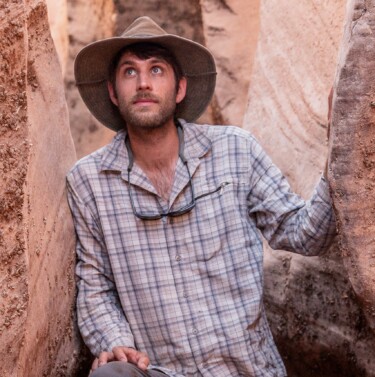
Zak Podmore
Who wouldn’t want to see Delicate Arch in the morning and casks of plutonium in the afternoon?
Like the radioactive waste itself, some bad ideas won’t disappear. Southeast Utah is in the crosshairs once again, aided by a $2 million Biden-era grant given to two pro-nuclear nonprofits based in California, Mothers for Nuclear and Native Nuclear, along with North Carolina State University.
San Juan County, where I live, is Utah’s only majority-Indigenous county and the state’s poorest. Last year, the county hosted a number of meetings as part of the Energy Department’s “consent-based siting consortia,” an attempt to get buy-in from residents for accepting radioactive waste. At local meetings, Mothers for Nuclear argued that the nuclear industry is much safer than the public has been told.
It’s true that 40 years ago some locals eagerly pushed for a nuclear dump. One pro-repository activist in Moab even called it preferable to national parks, because parks attracted “drugs, homosexuals, and environmentalists.” Utah’s governor opposed the dump plan, however, and after it was defeated, the town of Moab worked to create a new identity, Now, the Moab area has become an international tourist destination.
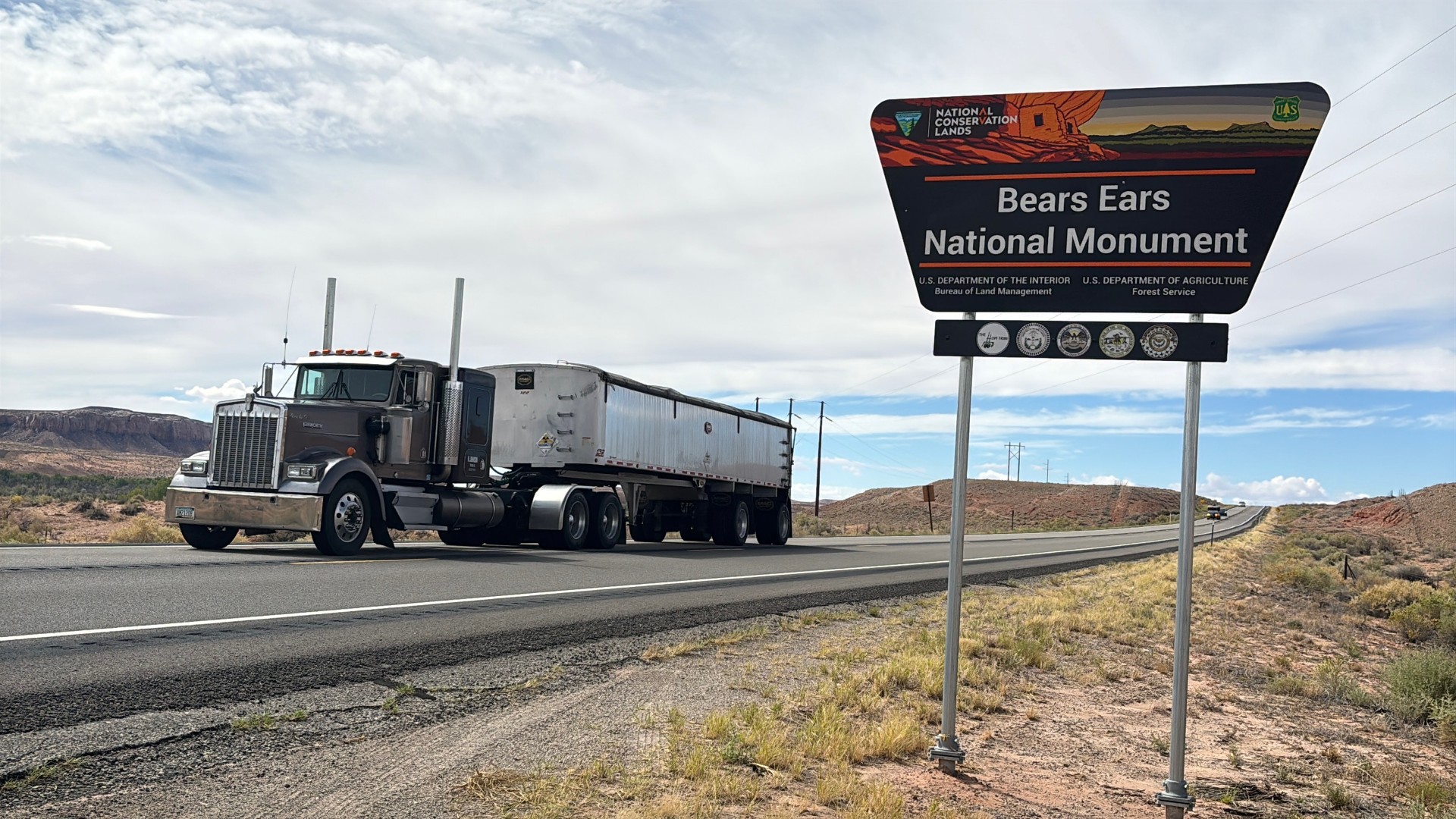
An Energy Fuels truck carries uranium ore from a mine near the Grand Canyon through Bears Ears National Monument to a mill in San Juan County, Utah. Photo by Zac Podmore
Yet the question of what to do about spent nuclear fuel remains, and the area surrounding Bears Ears National Monument and Canyonlands continues to be targeted as a suitable dumping ground.
Would welcoming radioactive waste lead to an economic revival? Probably not.
Though the Cold War rush for uranium created economic booms for San Juan County and Grand County’s town of Moab, prosperity spawned public health crises. Residents of Monticello, San Juan County’s seat, and the site of a uranium mill from 1942 to 1960, awoke to a fine yellow dust on windowsills during the mill’s heyday. Decades later, rates of lung and stomach cancer in the town were found in one study to be twice the state average.
The Navajo Nation experienced widespread uranium mining in the 20th century, followed by one of the highest incidences of uranium-linked health issues in the United States. In 1979, Tribal land was also the site of the second-largest accidental release of radioactive material in history, after a wastewater pond burst near Church Rock, New Mexico. Only the Chernobyl meltdown seven years later surpassed that disaster.
Mills for processing uranium are also harmful. After a mill site in Halchita, Utah, was capped in the early 1990s, workers who cleaned it up fell victim to some of the same diseases as uranium miners of the previous generation. Still contaminating air, livestock and humans are more than 500 unreclaimed uranium mines on Navajo land.
The Navajo Nation banned uranium mining in 2005 and uranium transport in 2012. But Energy Fuels, the company that operates the White Mesa uranium mill just outside San Juan County, secured an exemption from the transport ban in early 2025. The mill has been accepting radioactive waste for years, including waste from Japan and Estonia. Recently, it began processing ore from a mine the company owns just outside Grand Canyon National Park.
Around 10 trucks leave the Arizona mine each day, crossing unceded Havasupai and Hopi lands, the Navajo Nation, and the Ute Mountain Ute Reservation before reaching the mill—all over the objections of Tribal leaders and members of the tribes along the route.
But that waste and ore is far less radioactive than the spent nuclear fuel that Mothers for Nuclear promotes at San Juan County meetings. There, the group stays away from discussing cancer rates or birth defects, instead showing slides of pregnant, smiling women sitting next to containers of nuclear waste.
It is going to take time and vigilance, but once again my fellow residents of San Juan County intend to fend off the Department of Energy, which has adopted even more pro-nuclear policies under President Trump.
MOAB, Utah (January 20, 2026) — For the second year, Aim High Performance Coaching and Moab Rocks are partnering to offer the Moab Rocks Scholarship, a program designed to remove barriers and open access to one of North America’s most scenic and spirited mountain bike stage races — May 2–4, 2026.
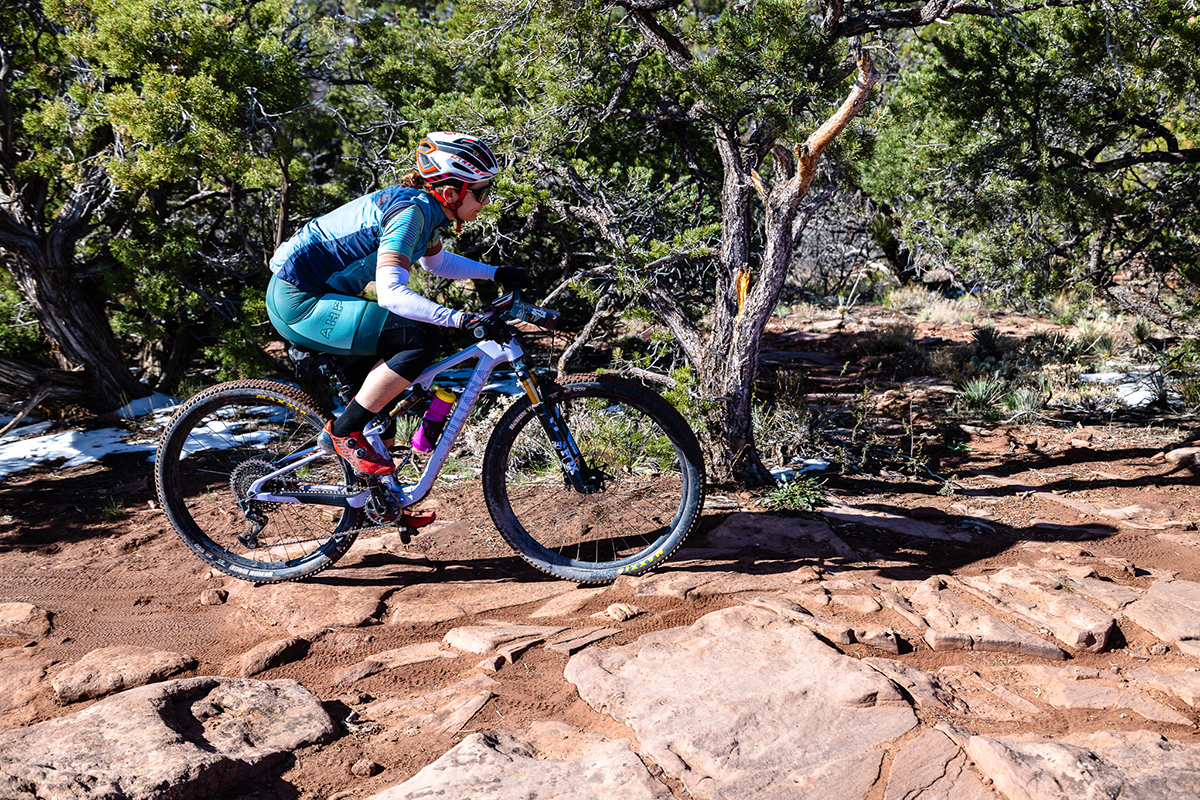
Amy at Moab Rocks. She was the 2025 scholarship recipient. Photo courtesy TransRockies
Created by veteran pro and coach Jenny Smith, the scholarship offers one female, trans, or non-binary rider the full race experience — including:
Complimentary entry to the 2026 Moab Rocks MTB Stage Race
A three-month personalized training plan with Jenny Smith
An Aim High Performance race kit
The scholarship is intended for riders who not only bring passion and potential but who will also share their journey to inspire others along the way.
Last year’s recipient, Amy, brought incredible energy to the event — finishing 3rd overall while embodying the connection and spirit that define the TransRockies community.
“This program captures the heart of what Moab Rocks is about — community, opportunity, and a love for the ride,” said Smith. “It’s proof that when we lower barriers, we raise up the whole sport.”
Applications are open through January 24, 2026, at [email protected].
Event info: May 2-4 — Moab Rocks, Moab Bike Fest, Moab, UT, Embark on a thrilling 3-day MTB journey through the rugged beauty of Moab. Epic trails, breathtaking views, unforgettable adventure, TransRockies, 866-373-3376, [email protected], TransRockies.com
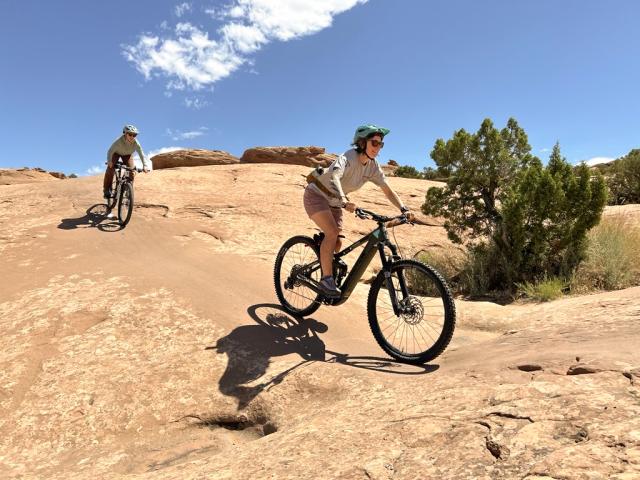
MOAB, Utah (September 29, 2025) — The Bureau of Land Management officials have announced that they will open more than 200 miles of mountain bike trails around Moab to class 1 e-bikes.
“Opening trails to class 1 e-bike users will expand recreational opportunities and experiences, while allowing users to disperse across the landscape, minimizing impacts,” said Moab Field Office Manager Dave Pals.
Class I ebikes will now be allowed on the Amasa Back Trail System and others in Moab. Danny and Kim Christensen riding up Amasa Back. Photo: Lukas Brinkerhoff.
After careful consideration of community and public input, the following areas will now be available to class 1 e-bike users:
Athena Mountain Bike Trail
Horsethief Mountain Bike Trail System
Navajo Rocks Mountain Bike Trail System
Gemini Bridges Area Mountain Bike Trail System
7-Up Mountain Bike Trail
Gold Bar Rim Mountain Bike Trail
Portal Mountain Bike Trail
Klondike Bluffs Mountain Bike Trail System
Baby Steps Mountain Bike Trail
Klonzo Mountain Bike Trail System
Moab Brands Mountain Bike Trail System
Amasa Back Mountain Bike Trail System
Jackson Mountain Bike Trail
Hunter Canyon Rim Mountain Bike Trail
Pipe Dream Mountain Bike Trail
Raptor Route Mountain Bike Trails: Hawks Glide, Falcon Flow, Kestrel Run
Kokopelli Mountain Bike Trail – 1.7 mile of non-motorized singletrack trail
The trails that will remain open to mountain bikes, but will not allow e-bikes, are Lower Porcupine Singletrack (commonly called LPS), Eagle Eye, Porcupine Rim Singletrack, Fisher Mesa, and Hidden Valley.
Class 1 e-bikes must have operable pedals, where power is only provided when pedaling. Power is only provided up to 20 miles-per-hour. Non-motorized, mountain bike trails will remain closed to class 2 e-bikes with a throttle and class 3 e-bikes that provide power up to 28 miles per hour.
The BLM will monitor these trail networks for public safety, visitor experience, and trail/resource impacts.
The environmental assessment, finding of no significant impact, decision record, and other project related documents, including an interactive map, are available online at the BLM NEPA register.
For questions about trail access, visitors can contact the Moab Field Office.
MOAB, Utah – Bureau of Land Management officials are considering the use of Class 1 (pedal assist) e-bikes on designated mountain bike trails within the Moab Field Office. They are inviting input from the public. The 30-day public comment period will begin today, June 30, and end July 30. Comments may be submitted on ePlanning by clicking the green Participate Now button.
Currently, Class 1 e-bikes are only permitted on 1.4 miles of trail, out of 216 miles of mountain bike trails managed by the field office. Otherwise, e-bikes are only authorized on routes designated for motorized use, such as the Slickrock National Recreation Trail.
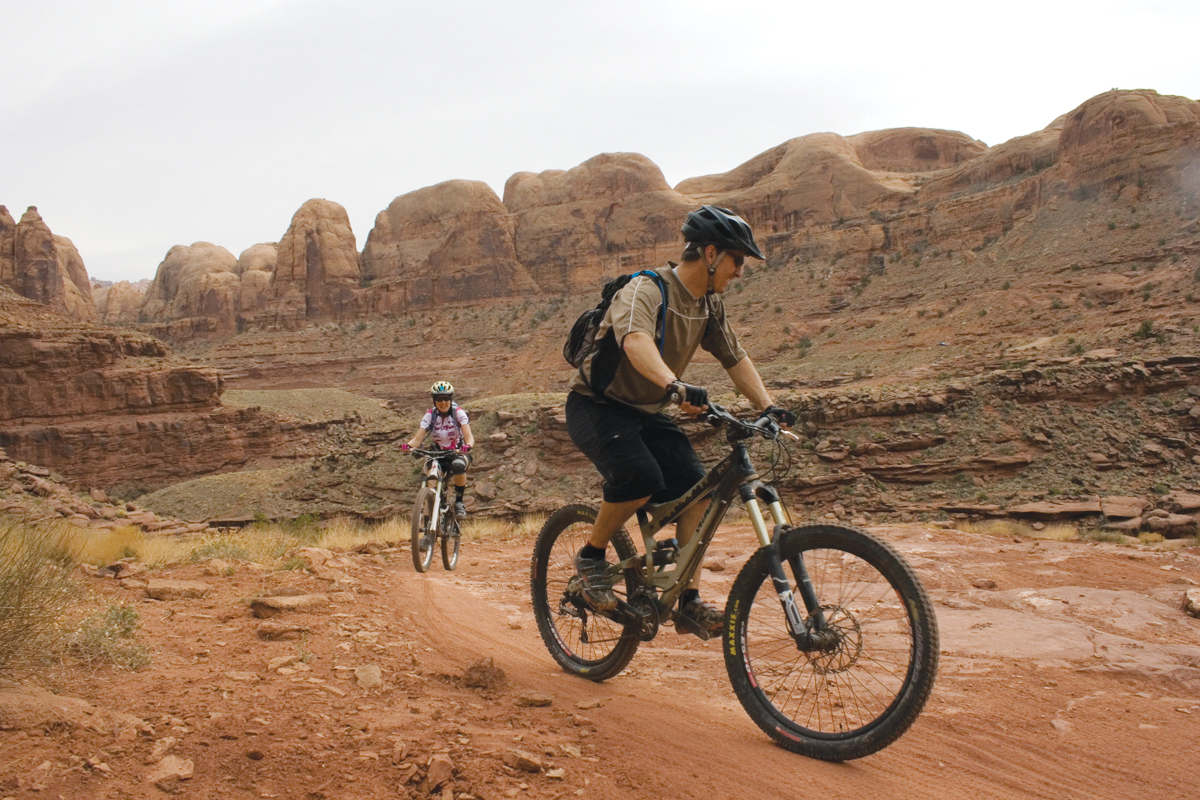
E-biker and mountain biker on the Slickrock Trail in Moab, UT
The intent of the environmental assessment is to determine what, if any, impacts allowing Class 1 e-bike use would have on existing designated mountain bike trails and other resources.
The most useful comments present new information relevant to the analysis, suggest additional reasonable alternatives, and/or question the accuracy of the existing alternatives and analysis.
Alternatives and additional information on the potential addition of e-bike usage on mountain bike trails within the Moab Field Office are available on the e-Planning website.
Desert Dreams and Dusty Trails: Moab Rocks 2025 Delivers an Unforgettable Mountain Biking Weekend
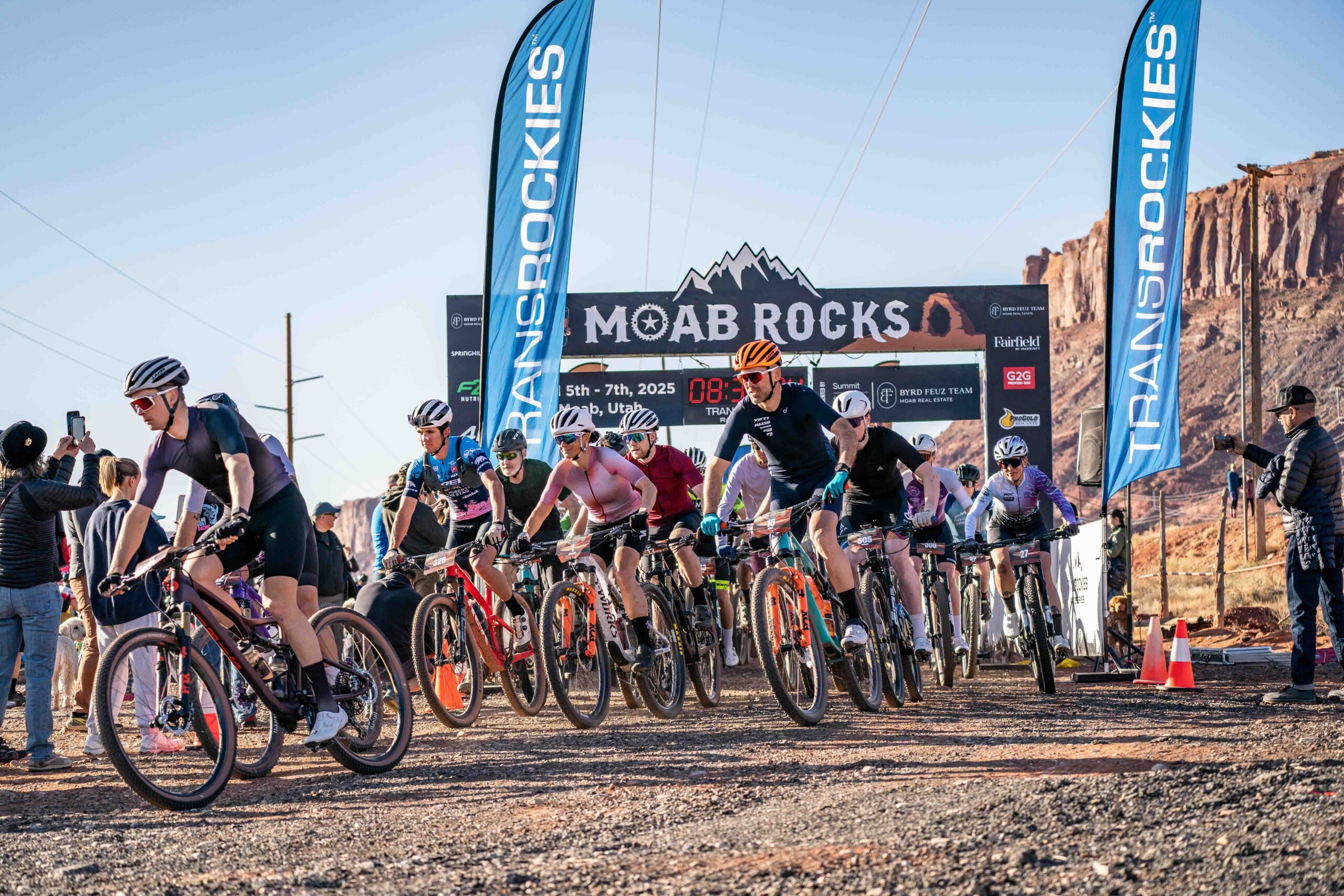
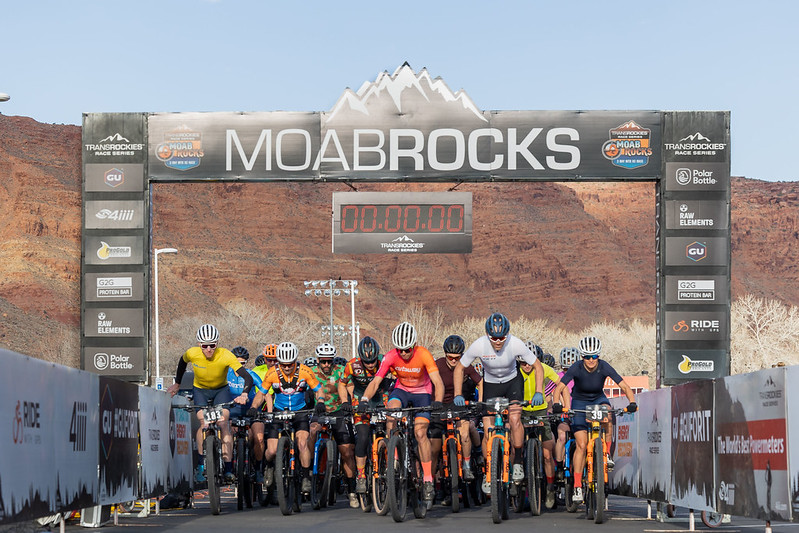
MOAB, Utah — The 2025 edition of Moab Rocks (April 5–7), once again proved why this 3-day mountain bike stage race is one of the crown jewels of early-season North American racing. With its stunning desert backdrops, iconic singletrack, and an energetic and supportive riding community, the event delivered a perfect blend of competition and camaraderie in the mountain biking mecca of Moab, Utah.
Over 300 riders from across the U.S., Canada, and beyond descended upon the red rock capital to tackle three unforgettable stages: Porcupine Rim, Bar M & Klonzo, and Mag 7—each offering its own unique flavor of fast flow, technical descents, and endless views.
Stage 1: Porcupine Rim – A Classic Kickoff
The race launched on Saturday with one of Moab’s most famous trails: Porcupine Rim. Riders were greeted with crisp morning temps and a burst of adrenaline as they dropped into chunky terrain with high-speed exposure and jaw-dropping vistas of Castle Valley.
Despite a chilly and windy start, the weather held off, and riders tackled 27.5 miles and 3,300 ft of vertical. In the Open/Pro Women’s field, cycling legend Katerina Nash made a statement with a commanding win, while Canadian ripper Carter Nieuwesteeg led the Open/Pro Men, narrowly edging out the competition.
Top 3 Open/Pro Women:
Katerina Nash – 2:07:28.0
Maghalie Rochette – 2:12:38.6
Amy Chandos – 2:16:27.2
Top 3 Open/Pro Men:
Carter Nieuwesteeg – 1:49:35.1
Cody Cupp – 1:49:38.6
Geoff Kabush – 1:49:39.4
Stage 2: Bar M & Klonzo – Tech, Flow, and Sunshine
Sunday’s stage brought blue skies, great vibes, and a fast-paced 28.5-mile course combining the best of the Bar M and Klonzo networks. Riders hit everything from slickrock slabs and techy punches to buttery descents.
Geoff Kabush—a legend in the MTB world—put in a powerhouse performance in the Men’s field, while Nash once again topped the Women’s leaderboard, solidifying her GC lead. The post-race scene back at ChillVille was filled with high-fives, snacks, and stories from the trail.
Top 3 Open/Pro Women – Stage 2:
Katerina Nash (2:25:17)
Maghalie Rochette (2:28:55)
Kait Boyle (2:34:41)
Top 3 Open/Pro Men – Stage 2:
Geoff Kabush (2:03:15)
Cody Cupp (2:03:38)
Carter Nieuwesteeg (2:03:38)
Stage 3: Mag 7 – Send It Home in Style
The race wrapped up on Monday with the iconic Mag 7 trails—famous for their rowdy terrain, chunky rock gardens, and unforgettable views. The course featured over 2,900 ft of climbing across 29.5 miles and tested riders’ endurance and skills on the final push for glory.
In a late-stage surge, Quinton Disera stormed to a win in the Men’s race, while Maghalie Rochette lit up the Women’s field. But in the end, it was Kabush and Nash who took the overall titles, both showcasing consistent dominance across all three days of racing.
Stage 3 Open/Pro Women:
Maghalie Rochette – 2:30:42
Katerina Nash – 2:30:43
Kait Boyle – 2:39:50
Stage 3 Open/Pro Men:
Quinton Disera – 2:04:36
Carter Nieuwesteeg – 2:05:02
Geoff Kabush – 2:05:05
Overall GC Open/Pro Women:
Katerina Nash – 7:03:29
Maghalie Rochette – 7:12:16
Kait Boyle – 7:31:01
Overall GC Open/Pro Men:
Geoff Kabush – 5:58:00
Carter Nieuwesteeg – 5:58:16
Cody Cupp – 5:59:26
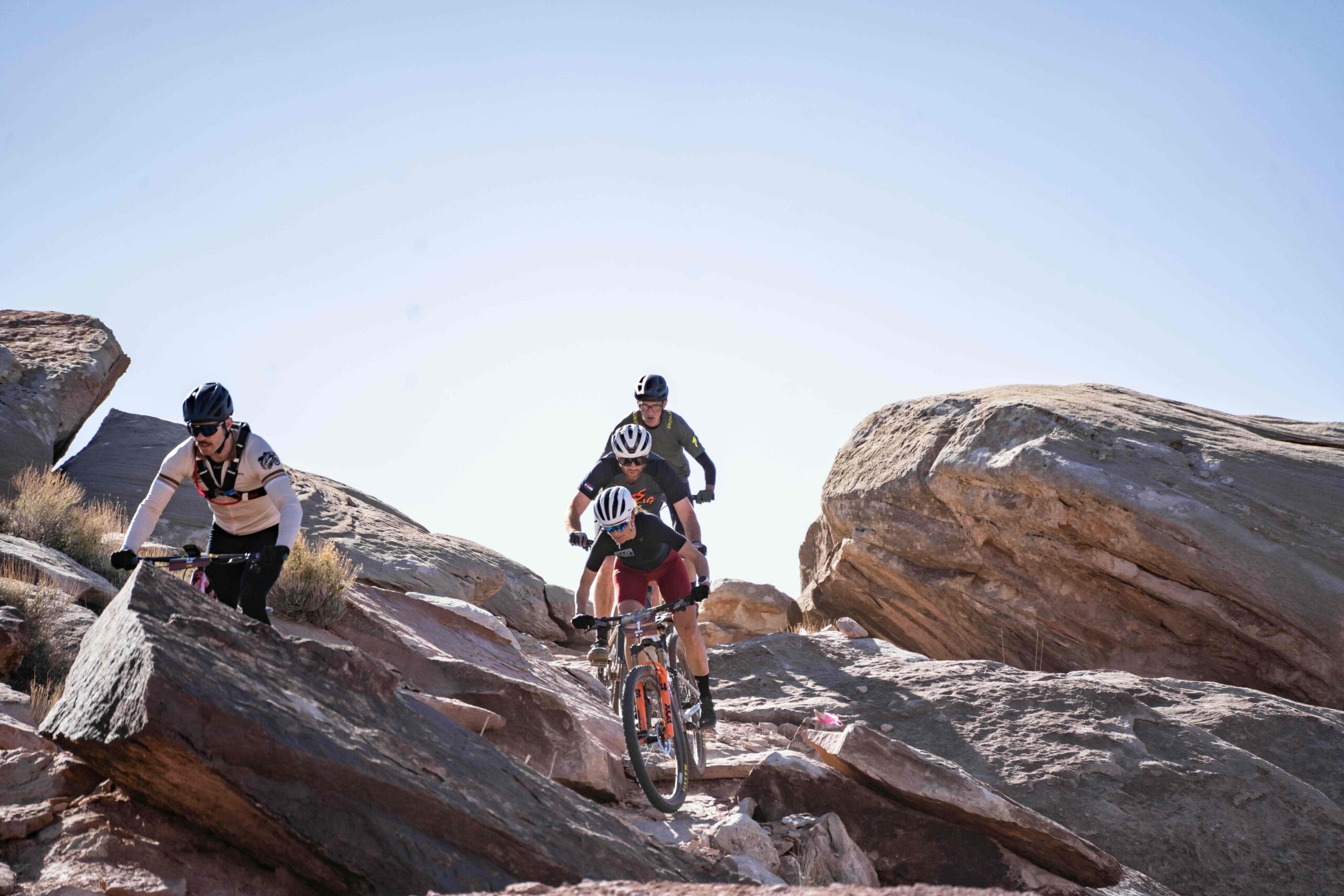
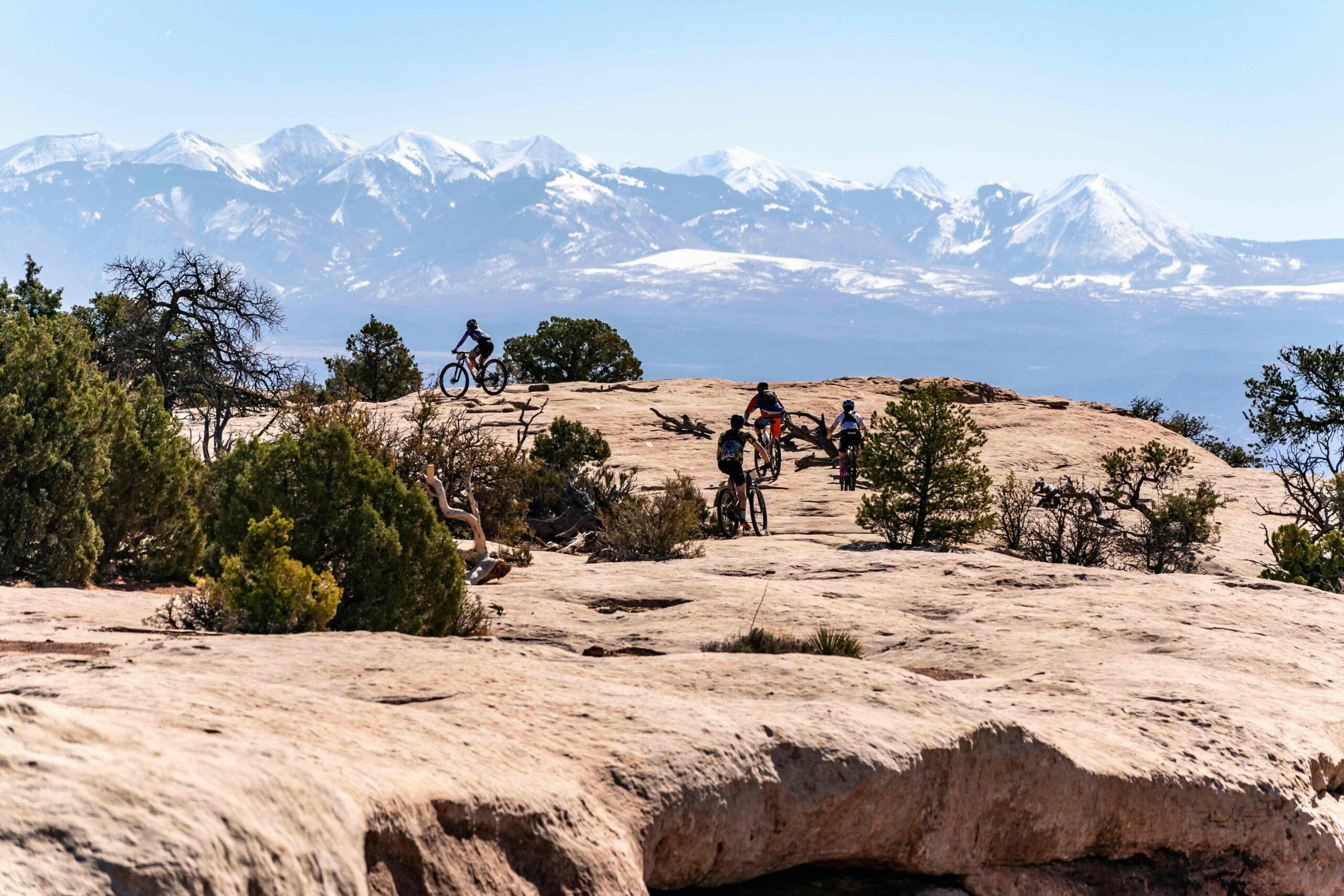
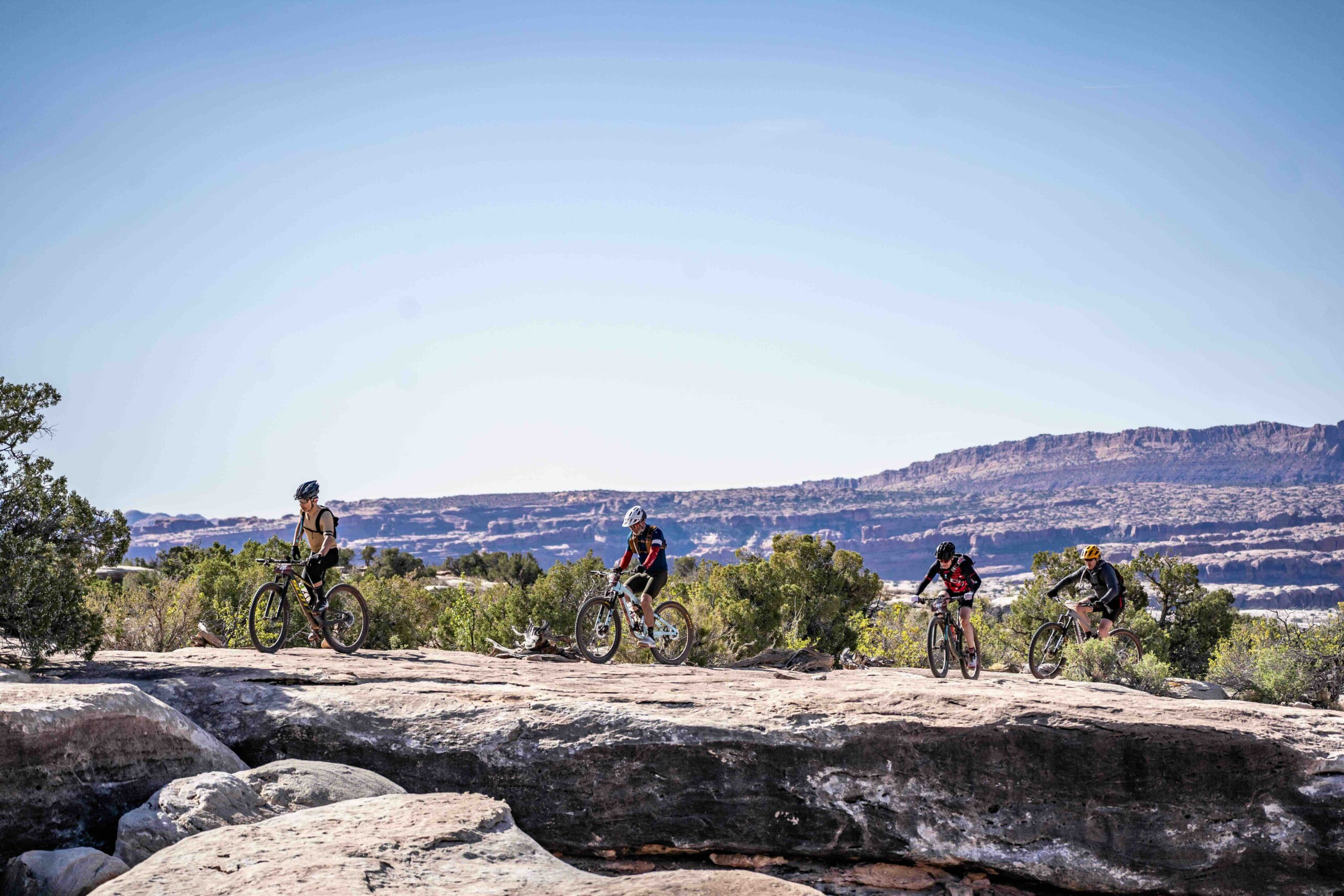
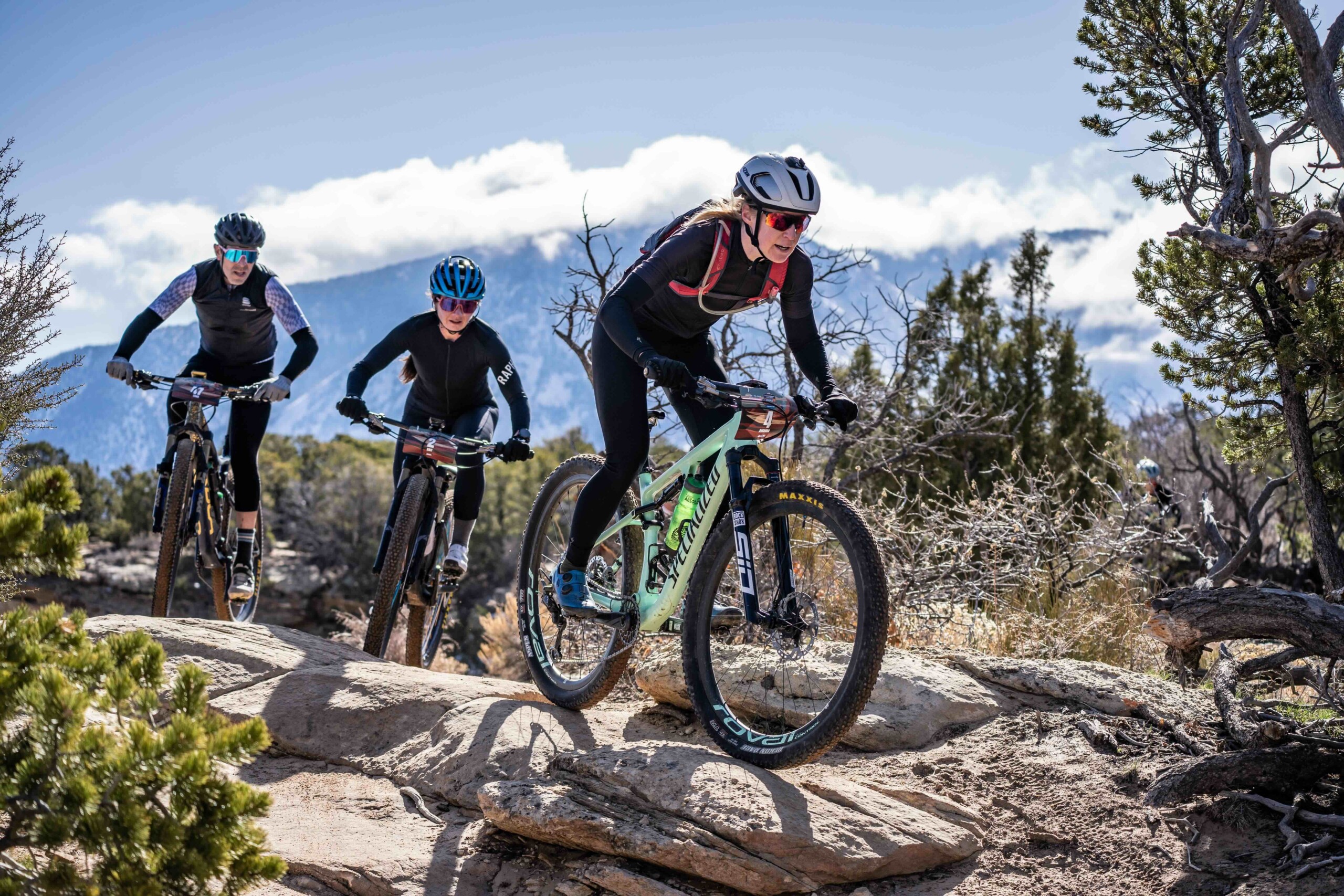
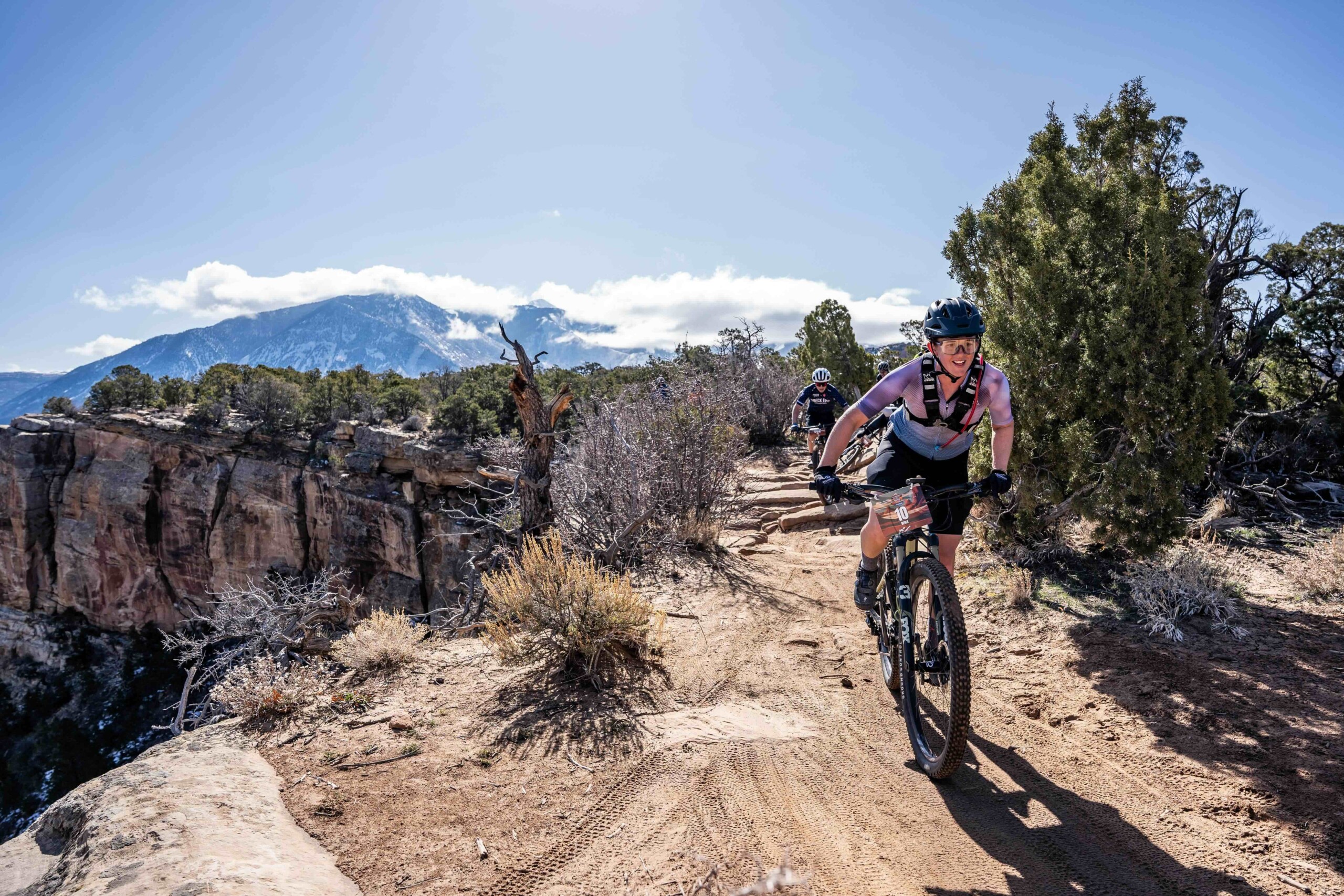
Action in the 2025 Moab Rocks MTB race, including eventual men’s overall winner Geoff Kabush (#16) . Photo Brendan Ladd, courtesy TransrockiesKaterina Nash, overall winner, in action in the 2025 Moab Rocks MTB race. Photo Brendan Ladd, courtesy TransrockiesAction in the 2025 Moab Rocks MTB race. Photo Brendan Ladd, courtesy TransrockiesAction in the 2025 Moab Rocks MTB race. Photo Brendan Ladd, courtesy TransrockiesAction in the 2025 Moab Rocks MTB race. Photo Brendan Ladd, courtesy TransrockiesAction in the 2025 Moab Rocks MTB race. Photo Brendan Ladd, courtesy Transrockies
MOAB, Utah – Moab Rocks, the premier 3-day mountain bike stage race set in the legendary red rock landscape of Moab, Utah returns to the TransRockies Race Series. Happening on April 5-7, 2025, this event delivers exhilarating racing combined with breathtaking scenery, world-class trails, and an unforgettable mountain biking experience.
Moab Rocks. Photo courtesy of TransRockies Race Series
Moab Rocks has become a must-do for mountain bikers looking to kick off their season with an epic challenge. Riders will experience fully-supported, timed stages on some of Moab’s most iconic trails, including Porcupine Rim, Bar M/Klonzo, and Mag 7. With a mix of technical terrain, flowy descents, and lung-busting climbs, Moab Rocks is designed for both elite competitors and passionate riders looking to push their limits and soak in the stunning desert landscape.
Moab Rocks. Photo courtesy of TransRockies Race Series
“Moab Rocks isn’t just about racing—it’s about the experience,” says Aaron McConnell, President of TransRockies. “The combination of world-famous trails, incredible scenery, and a welcoming race community makes this event truly special.”
Moab Rocks. Photo courtesy of TransRockies Race Series
addition to three days of epic racing, participants will enjoy a festival atmosphere, including daily post-stage celebrations, professional timing, and full race support. Whether you’re aiming for the podium or just here for the adventure, Moab Rocks delivers an unparalleled racing experience.
Moab Rocks. Photo courtesy of TransRockies Race Series
Registration is now open, and spots are limited! Secure your place at www. moab-rocks.com and get ready to take on the trails in 2025.
By Becky Hadfield – Moab is a magical, formally quaint, now bustling little city that exudes an energy unlike any other I know. If you’re looking for adventure in grandiose proportions, this is the perfect starting point, which is why the Moab Century ride, promoted by Skinny Tire Events, should be on every cyclist’s list.
Friday night, my girlfriends and I walked down Main Street after a satisfying meal at Pasta Jay’s, and I couldn’t help but wish that I had a week to spend enjoying the flavors and landscapes surrounding Moab. The Archway Inn teams up with Skinny Tire Events to host this ride that supports cancer research and survivorship, a cause dear to my heart after losing my very healthy 72-year-old mom to CNS lymphoma last year. The Inn has a beautiful lawn out back, with majestic views of red rock – perfect for hosting hungry, tired cyclists coming in from the ride. They provided a hot, abundant breakfast served early enough to fill every cyclist’s needs.
James David Price. Moab Century. Photo courtesy Skinny Tire Events
The event is a ride, not a race, and although there is a formal start at 7 am, riders trickled out onto the road for the next hour. The three of us pulled out at 7:20, and the air was brisk and inviting. Quickly, we were on the Moab Canyon pathway that parallels HWY 191, crossing the Colorado River on a pedestrian bridge, and within minutes, views of Arches National Park rolled into sight on our right. The bike path includes a surprising amount of climbing over the 7 miles and then enters a short, thrilling tunnel beneath the highway as it approaches Moab Giants, where we turned onto HWY 313 and began the climb towards Dead Horse Point State Park.
Moab Century. Photo courtesy Skinny Tire Events
If distraction is what you desire as you climb, this is the place to find it. The picturesque red rock provided a jaw-dropping panorama that just kept feeding my soul and powering my legs. There are dozens of places for photo stops if desired, but I chose to file the images away in my mind and absorb the energy of the land.
Arriving at Dead Horse Point was the culmination of the event. We parked our bikes and walked up the path to take in the breathtaking views. We visited with several riders, took pictures for one another, and stocked up on calories from the well-stocked support tent, complete with volunteers in costume. In the past, the ride provided a century option, but this year the long route was dropped for unknown reasons (rumor was that they didn’t have enough radio support) and changed to a metric century. My friends and I were aiming for more miles, so we turned left toward Canyonlands National Park, rode to the entry booth and back, which amazingly provided uniquely picturesque views, then took another trip to Dead Horse Point, waving to and cheering on the riders headed back.
I had done most of the pulling up until this point and was relieved that my friend took over for round two to the Point. Having a friend or two to ride with makes every day on the bike a better experience. Once we headed back down HWY 313, I was surprised to discover that the views were even more stunning than the ride up. I just can’t emphasize enough how beautiful this land is.
The ride was well supported, with rest stops available at very accommodating intervals, staffed by a host of friendly volunteers eager to provide nutrition and encouragement. Four or five SAG vehicles roamed the course, watching for riders in need of assistance. Even with the extra 28 miles we added, we made it back in plenty of time to enjoy lunch—smoked brisket and chicken with all the fixings, a live band playing on the stage, and a cooler of adult drinks up for grabs. The camaraderie of cyclists getting to know one another was another high point of the event.
After lunch and a dip in the pool and hot tub, my friends headed home and left me to ride day two on my own. I spent the afternoon resting, had a date with my roller and massage gun, then grabbed a juicy burger and a ginger beer from the Moab Grill in town.
We were strongly encouraged to begin with the mass start at 7 am for the 63-mile, 5500 ft LaSal Loop ride on Sunday. After some instructions and encouragement, they sent us off to conquer the Big Nasty, a 3000-foot climb over 7 miles. Again, the air was crisp and inviting, sending energy through my body. The route sent us down Main Street, then east to Milt’s Stop and Eat famous burger shop, where we turned onto Millcreek Drive and gently began climbing. Somewhere along this stretch, I met a couple of men from Park City, and we chatted as we rode. The one benefit of riding without friends is that I’m more motivated to introduce myself to other cyclists and enjoy the benefits of working together out on the road.
Soon the Little Nasty sign came into view, and the real work began, continuing upward through the Big Nasty. Luckily, the anticipation of such a monster climb meant that the reality of the thing was less intimidating, and soon the summit rest stop came into view. Photo opportunities included signage reading “I conquered the Big Nasty!” Perhaps the more difficult part of the road came next—a long stretch of rollers that I had not anticipated. But, working alongside my new friends, we pushed through and then welcomed the “steep grades ahead” sign that led us into a precipitous, hairpin-laden descent. Looking back, I was actually grateful for the chip seal that kept my speeds lower while navigating the descent. Disk brakes would have been nice on this section! The views through this section changed dramatically to include fascinating red rock formations, and I understood the sentiment shared by one of the cyclists earlier in the day: “the backside of the loop has some of the most amazing views in the U.S.”
The ride back into town snakes alongside the Colorado River, with the red rock cliffs climbing up on the left. Memories of former camping trips at some of these riverside sites flooded my mind, and I felt another strong desire to return and repeat. Thankfully, I was still with some of my newfound friends, and I enjoyed the drafting and took a few short turns pulling along the route. With a few miles left, we merged onto the pedestrian trail and slowed a bit as we navigated other Sunday nature-seekers on foot and bike. Soon the iconic pedestrian bridge at the entrance to Moab rose into view, and we were minutes from the finish.
Beth, one of the ride founders and organizers, was waiting to greet us and take our photo as the first riders to return. The food was hot and delicious, more “adult” drinks were available in the cooler, and there was great company to boot. I can’t wait to return for more of the beautiful Moab terrain and enjoy another Skinny Tire Event. Come join me next time!
2024 Event Information:
September 21-22 — Moab Century Tour, Moab, UT, The Moab Century Tour sends riders across Moab’s unique topography of mountain passes, canyons, and the mighty Colorado River. New this year…the route includes Bull Canyon Overlook. You’ll carve down red rock canyons, ride along the Colorado River and have the opportunity to see dinosaur tracks after a gnarly climb up to Bull Canyon Overlook. This event has landscape worth training for! Live music and great food await you at the post-ride party. Join us in September when temperatures cool down, the fall foliage comes alive, and cyclists from across the country unite in red rock country to experience awe-inspiring landscapes. As an annual fundraiser to benefit cancer survivorship programs, your registration includes a donation to Moab Healthcare Foundation, Austin Sellers, [email protected], skinnytireevents.com
‘Getting the record is nice for sure, but I’m just happy I had a good day out on that trail.’
Lachlan Morton shoved off in the dark at 2:31 am Saturday morning to ride the Kokopelli Trail, his aim to travel quick and beat the heat. By the end of the ride, he’d ridden the fastest known time on the classic 140-mile route from Moab, Utah to Loma, Colorado, at 11 hours and 14 minutes. The previous record was 11:52, held by Kurt Refsnider.
Along the way he overcame the dark (his headlight went out after 30 minutes) and a mechanical issue. He filtered his own water from the Colorado River and carried all his own provisions.
And when it was done, he took a swim in the Colorado River. Hear from Lachlan on his big day out below.
What was the experience like?
It was sweet! I got through the first two climbs in the dark but I think I made a mistake charging my front light, because it didn’t work very well. I say it didn’t work very well, but it worked well for half an hour and then it had no more battery.
So it was pretty dark for the first three hours and I was taking it pretty easy on the downhills, but then going as hard as I could on the uphills. And then I got a little rain actually up on top of the La Sal mountains, which made it a little muddy. It was nice when the sun came out. It sort of felt like I was just getting started, but I was already maybe three or four hours in. I got to the first place to get water which was at Dewey Bridge and filled up there. I got there earlier than I thought I would. But maybe 5km later I broke my back wheel. I was coming down one of the many rocky little descents and hit a rock on the side of the rim and the sealant came shooting out of the rim. I performed a botched change, which took me like 10 minutes. I just put a tube in it, pumped it right up, and hoped for the best.
For the next hour it started to get hot and I was trying to find my groove again. Then I found another little spot to fill up on water by the river and from then I knew I had enough food and enough water, so I just pushed on from there for the last four hours. It was one of those days where everything feels like it’s going smoothly. My body was feeling good, head’s good, and you could actually just enjoy it and not battle with yourself too hard.
In a normal race, mechanical issues like that would constitute a tough day. Yet you still felt like everything went pretty smooth despite all of that.
Yeah. I mean, I think if this had happened to me a year ago it would’ve put me off. I feel like it helped that I wasn’t obsessed with getting the record. I managed to stay calm about it. I also know now, that in these long events, 10 minutes feels like a really long time when you’re standing on the side of the road but you can bring that back pretty quickly. You can also lose it pretty quickly if you overcook it. But that’s just kind of part of it. I also knew that the whole situation was my error.
You didn’t set out to break the record, but it’s still a cool by-product. How does that feel?
I mean, it’s cool! I’ve got a huge amount of respect for Kurt for all that he’s done in ultra racing, and also for everything he’s done outside of racing with the big bikepacking routes, everything he’s done for cycling communities. To be able to go out there and have a smooth day was huge. Getting the record is nice for sure, but I’m just happy I had a good day out on that trail.
What about that route will you remember?
It’s a pretty crazy route in that you start in all the red rocks in Moab, but then you climb to nearly 9,000-feet and even at that height, somehow, the trails are still sandy. There’s snow up there but you’re still on a sandy trail. The coolest thing about this trail is that there’s something different every few kilometers. You go from it being really rocky, steep stuff but all still fun and manageable, and then you go around the corner and get two kilometers of sand, and then you’ll be back on a dirt road for a while or even on a paved road, and then you jump onto some single track. It’s just a super exciting trail. Time passes pretty quick. And it’s also really hot and there’s not much water.
You said you always get something different out of these rides from pushing your limit. Did you feel like you got there this time?
Definitely. It’s just great having that feeling again of being out, doing things. After the last few months, everyone’s sort of been questioning what they do and why they’re doing it. For me, it’s nice to be going out and doing something again.
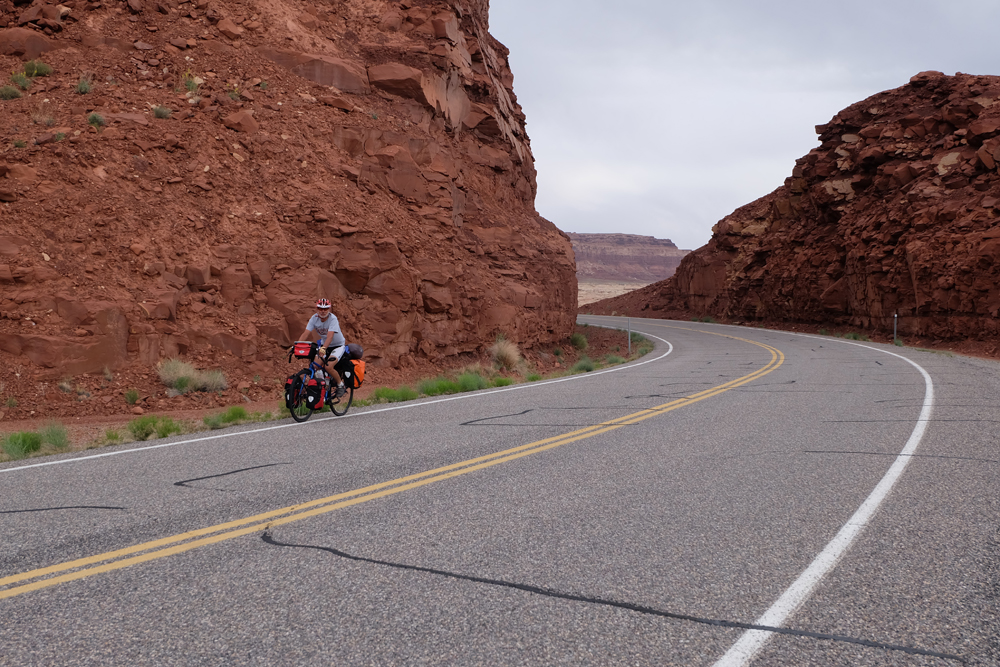
The starting point and timing (mid April of 2015) of this bike tour around Moab was chosen to coincide with a “celebration of life” for Arlo Tejada. Arlo battled cancer for several years. He is the son of Jose Tejada and Liz Ford, old friends of ours from the days I assisted with the Moab bicycle stage races held from 1985-1990. Jose, along with Rim Cyclery founders Bill and Robin Groff, initiated the cycling scene in Moab with the 3-stage “Moab Stage Race”. Jose currently owns Sherrie Griffith River Expeditions. Arlo worked as the marketing director for Jose but also guided some river trips; his last for the Bill Gates’ family. Julie and I left our car at Jose’s house for our own celebration of life, a 6-day bicycle tour starting and ending in Moab, Utah.
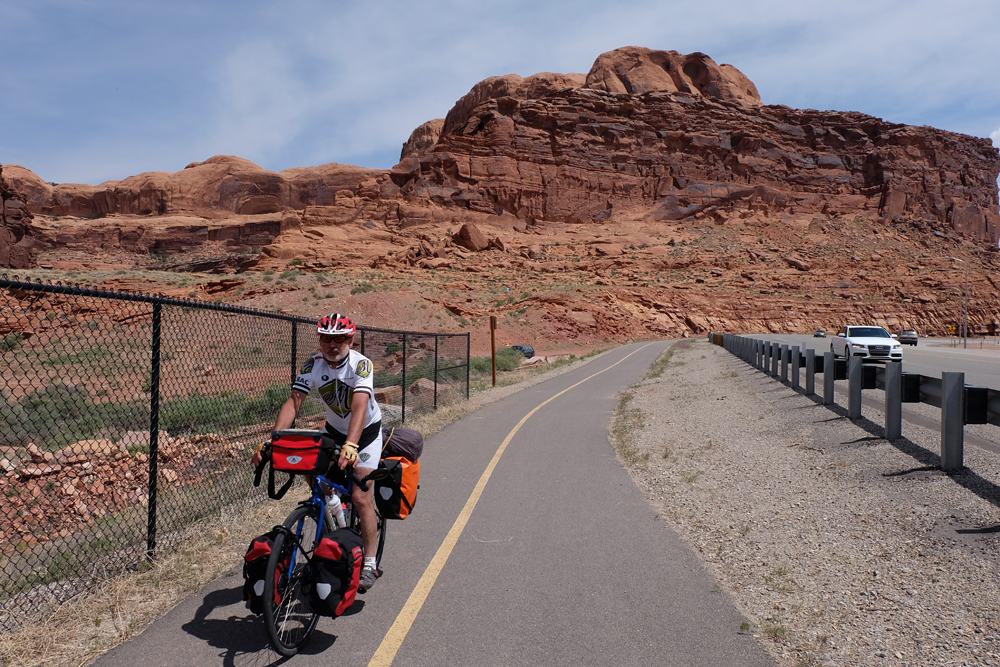
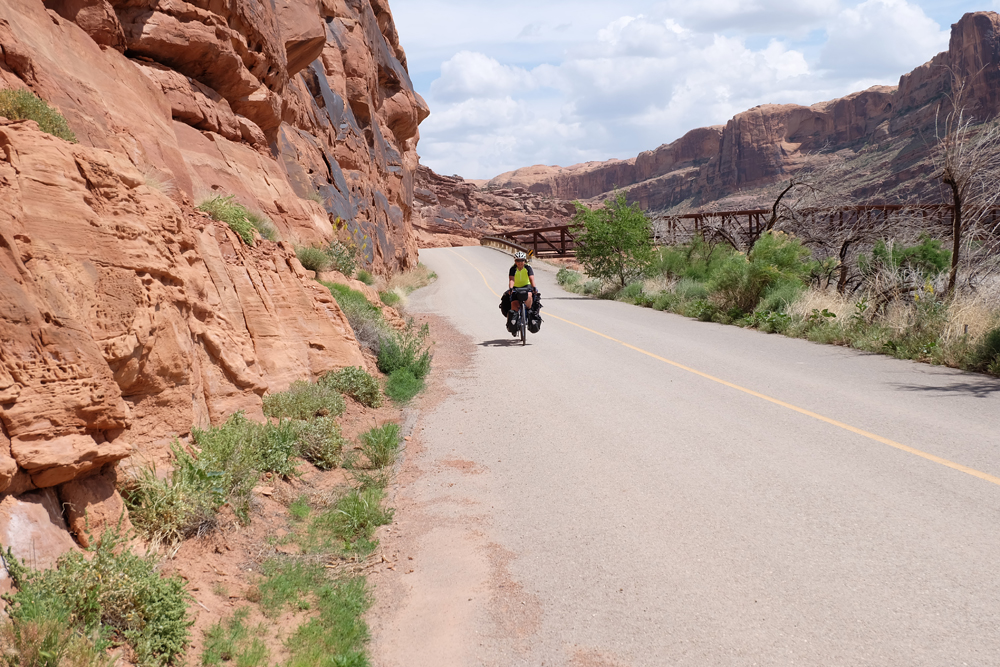
Julie on the bike trail showing off why the Moab Bike Trail may be the most scenic bike trail in the country. Photo by Lou Melini.
The plan was to ride to Monticello on day one then to Natural Bridges National Monument on day 2. That was the plan, but like some plans changes are necessary. The first day went well. Julie struggled a bit on the one long climb before Monticello, but overall did well. We stopped at the grocery store to find it closed. We were briefly puzzled until we realized “It’s Sunday!” The emergency dinner we keep became dinner at the Westerner RV Park on the south end of town, one of 2 RV parks in town. It looked cleaner than the RV Park at the north end of town. It was nice but the bathroom needed a serious cleaning/rebuilding. On day 2 we rode into Blanding to pick up supplies for the next 3 nights, 2 in Natural Bridges and one night at Hog Springs rest stop located 33 miles south of Hanksville.
A view from Natural Bridges National Monument. Photos by Lou Melini
The weather became hot as we left Blanding but we had “only” 35 miles to ride with “only” a 300-foot elevation change between Blanding and Natural Bridges National Monument, a stretch of road we have not previously been on. About 5 miles outside of town we quickly descended for over 2 miles. This wasn’t good. After a 2.5 mile 8% climb, we descended and again climbed for 2.5 miles. A third steep descent really had me concerned. Julie is not built for climbing but she usually does well on our tours but today would really challenge her. After 2 miles on this third climb she was lagging so I strapped her front panniers to my bike. At mile six of the climb she started walking and had difficulty drinking. I stuck out my thumb to try to get her a ride to no avail, though one couple provided us with 2 liters of water. After a quarter mile of walking Julie decided to stop when we saw a shaded shelf of rock just off the road. I obtained another 3 liters from a young couple for our impromptu camp, 12 miles from Natural Bridges National Monument.
Julie fully recovered for our ride to Natural Bridges the next morning. We planned to obtain a campsite and spend the day there. At 9:50 AM we were 20 minutes late for the last of 13 campsites though there is an overflow campground without water 3 miles outside of Natural Bridges. We now had a dilemma. If we stayed at Natural Bridges we would have 60 miles to ride to Hog Springs the next day, our next known source of water. Given what happened after Blanding, I was unsure of how well Julie would handle 60 miles, a normally easy day for her. In previous years, we could have stopped at Hite Marina and Campground but at the time of our departure the website said that no services were available so we were unsure of water availability. (Note: This section of our ride is part of the Western Express trail mapped by the Adventure Cycling Association (ACA). I contacted the ACA after our ride, and cartographer, Nathan Taylor, contacted the National Park Service. Water is now available at the ranger station at Hite.)
A view from Natural Bridges National Monument. Photos by Lou Melini
With a lot of back-and-forth discussion, we made a decision to ride the Natural Bridges loop road, fill up with 8 liters of water, and move on about 20 miles down the road to Fry Canyon. The senior ranger at Natural Bridges informed us that there was a high likelihood of pools of water just before the bridge at Fry Canyon. That was encouraging. Junior ranger remarked that the last time he was there, one pool was the size of an Olympic swimming pool. Upon further questioning, he admitted his last time to Fry Canyon was 2 years ago, not so encouraging. We had a good filter so we went the 20 miles.
It turned out that my concerns about Julie’s status were not necessary. Arriving at the bridge at Fry Canyon was a quick, mostly downhill ride. Finding shade was a problem so we set up a temporary camp under the bridge, cooking dinner and drinking our stash of good water. The pool of water mentioned by the rangers was the size of a small bathtub and brackish. As the weather cooled near evening we set up our tent on a small patch of sand, pumped enough water for breakfast and moved on the next day to Hog Springs.
<!–nextpage–>
Riding on route 95; It looks like a lot of dynamite was used to blast through the rock for this road. Photo by Julie Melini.
After the heat of the past 2 days we were relieved to have overcast skies on our 4th day of riding. We had mostly downhill terrain to the Colorado River, with the last 2 miles at a 10% grade. We had passed Hite with no signs indicating that it was shut down. Shortly after crossing the Colorado River we encountered a 2-mile 10% climb followed by a relatively flat ride to Hog Spring picnic area. With ample lunch, full water bottles pumped water from the very clean year-round spring and Julie feeling well, we pushed on to Hanksville, a relatively flat 33 miles. Despite her physical and mental breakdown 2 days ago, Julie did well on today’s 68-mile ride.
If you have ever been to Hanksville, you will know what I mean when I say it is not a commercial hotbed. It does have an “oasis” for the traveling cyclist, DJ’s Grill and Campground. For us it was paradise. It had fantastically clean bathrooms, hot showers that caused me concern when Julie luxuriated in one for a very long time, and a grassy tent area that would make the groundskeepers for an English Premier League soccer club envious.
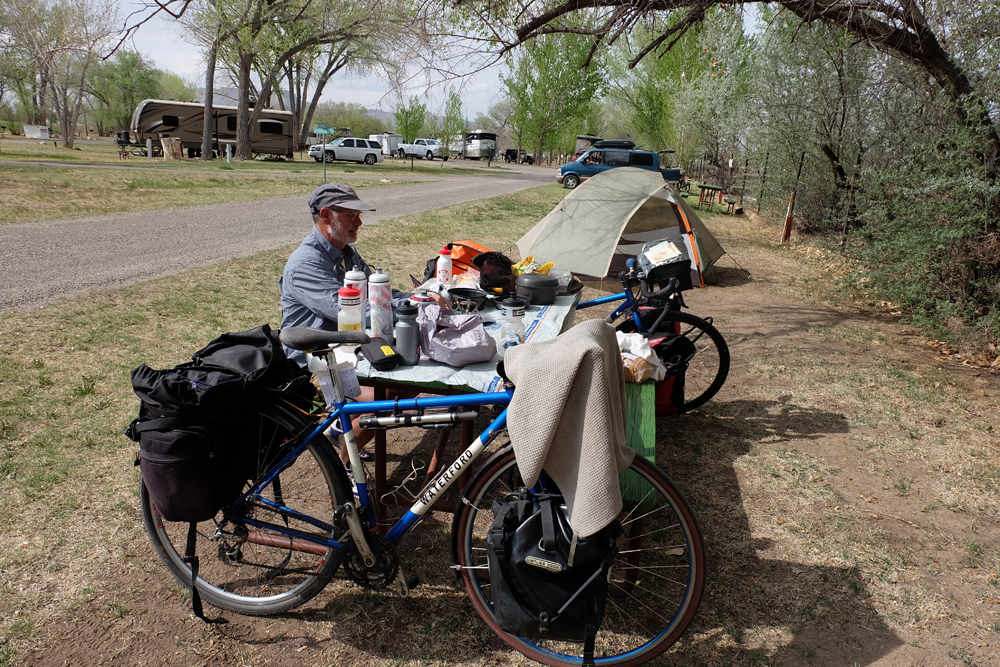
As I prepared dinner, I realized that my canister stove that lost the top screw shooting a single large flame in the air. Julie ran away thinking the stove was going to blow up as I replaced it with one of my spare bike bolts. Fortunately, MSR stoves are very simple to operate and fix. After dinner we had ice cream in the restaurant for dessert, at a total bargain-level cost of $20 for camping and dessert.
We shared the tenting area with a cyclist from the U.K. doing his 2nd 6-month ride in America. His plan was to ride the 124 miles to Blanding. I warned him about the website posting at Hite.
Getting dinner ready at Shady Oaks campground; or Not So Shady Oaks Campground. Photo by Julie Melini
Our final 2 days were again hot, but not oppressive. On day 5 of our ride, we stayed at the Shady Oaks RV Park in Green River, a nearly fraudulent name. Otherwise, it was a pleasant campground. Our last day saw us arrive in Moab. We rode on an 8-foot shoulder on I-70 out of Green River, where I found a total of $1.57 in coins scattered over a 50-yard stretch of road. The road to Moab (route 191/163) was a mix of narrow one-foot shoulder space in some areas and wide 6-foot widths in others. Traffic was heavy and fast. On the narrow sections of the road there were turnouts approximately every mile, the only place Julie and I dared change positions. Except for this section of our tour, traffic was sparse and polite. Our time on state road 95 was relatively devoid of traffic.
Despite the problem of our second day of riding, the trip went well. We would do the trip again with a couple of changes. I think the clockwise direction we traveled is better than going counter-clockwise for several reasons. As we drove out of Moab, I noted the complete lack of shoulder going north out of Moab in a few areas. Also one would avoid the long steady uphill from Hite to Natural Bridges National Monument.
After our experience with the steep climbs leaving Blanding, we would want to camp in Blanding, taking on the climbs in the morning and camp at Natural Bridges. Staying in the remote campground of Natural Bridges would be suitable, but we would cook our dinner at the Visitor Center picnic tables to avoid the 3-mile back-and-forth ride to fetch water. With the now availability of water at Hite, we would consider camping there. However with the amount of downhill, the 89-mile ride from Natural Bridges to Hanksville is a definite possibility for a relatively fit cyclist.
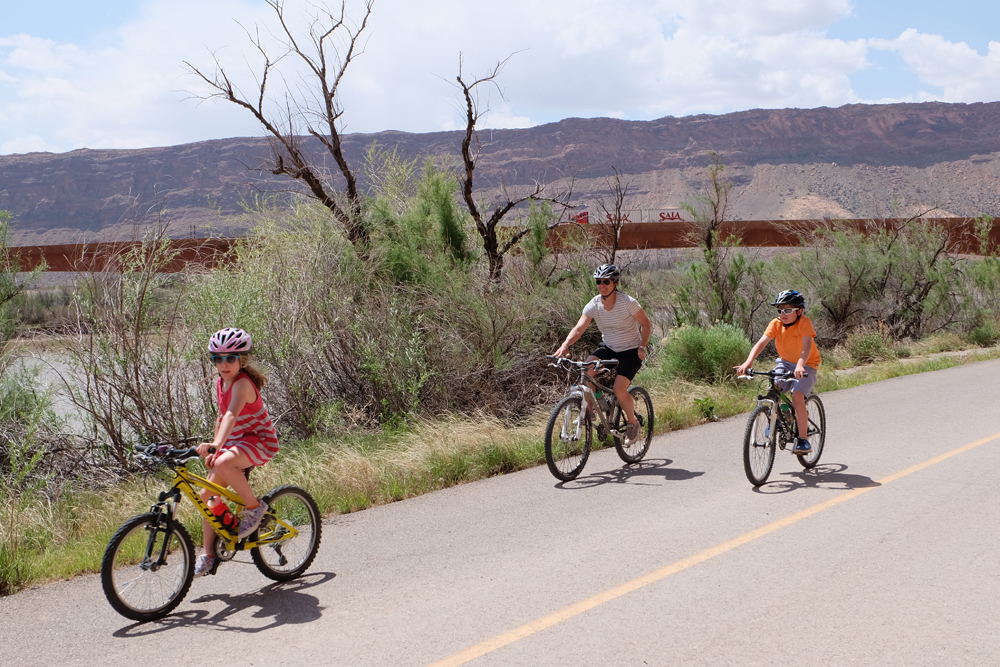
A random family enjoying the Moab Bike Trail. Photos by Lou Melini
The Moab-to Moab loop (or whichever city you choose to start from) is one of 3 loop tours one can enjoy in Southern Utah that take you through or very near all 5 of Utah’s National Parks. The 3 loops include the Adventure Cycling Association Red Cliffs loop with the loop passing through Zion. Julie and rode this loop in the very early 1980’s. In 2007 we rode from Torrey to Torrey, a loop that included stops at Capital Reef and Bryce NP. The Moab-to-Moab loop took us past Arches and Canyonlands National Parks and as mentioned Natural Bridges National Monument. There is also a State Park with camping in Green River. For those without a car there is a new bus service to Price, Green River ($53). Moab, Monticello and Blanding ($80) from Salt Lake City. It is called Elevated Transit and it advertises “plenty of room in our bay storage area for bikes and luggage.”
The Moab to Moab is a very scenic ride. I highly recommend it, but be prepared!
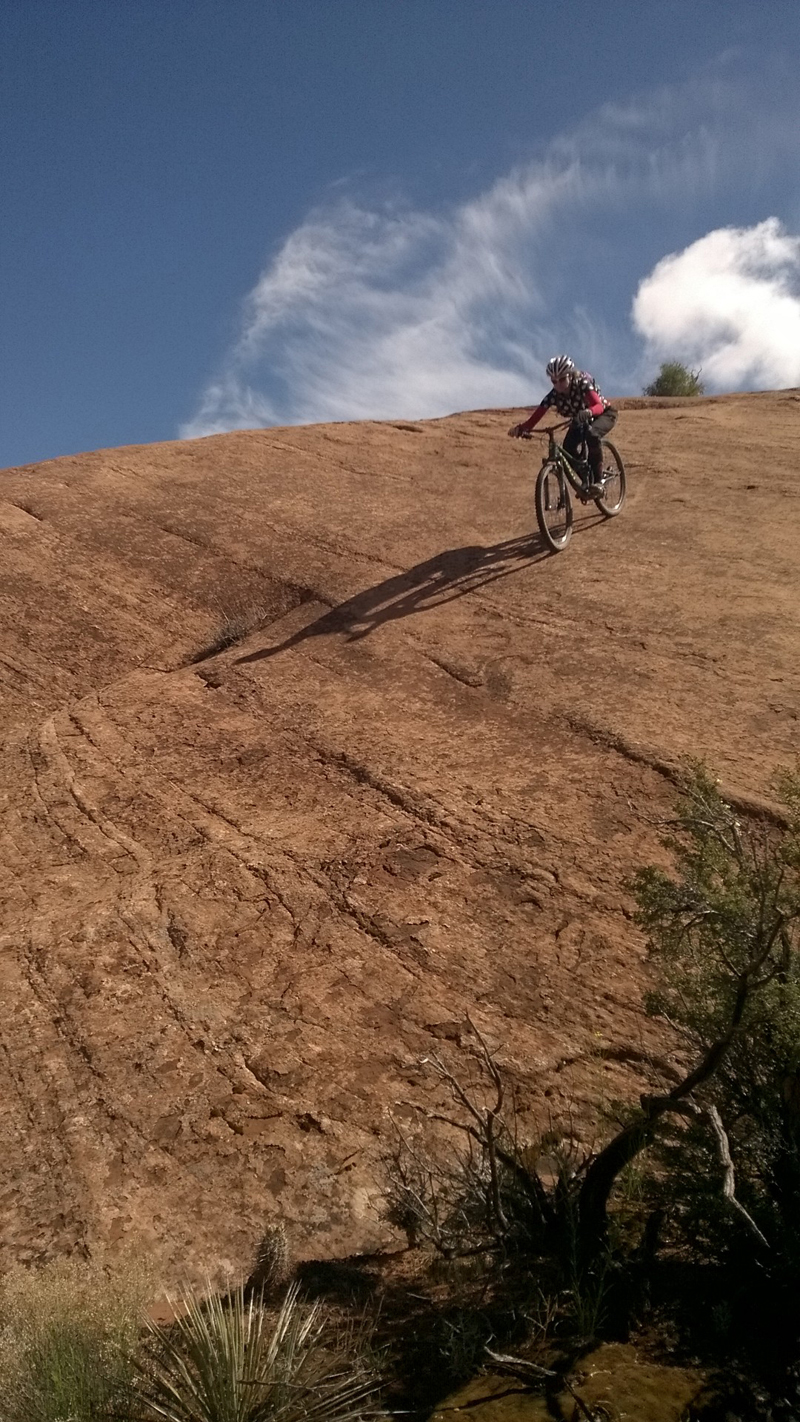
Heather Gilbert experimenting with grade versus traction. Photos by Lukas Brinkerhoff
By Lukas Brinkerhoff
4:14 AM – The wind that has been howling all night, ripping up the tent stakes that would keep things from flapping, is now accompanied by a torrential downpour. If the wind hadn’t been keeping me up all night, the nervous excitement of attempting to ride the White Rim in one day would have. Every rain drop, every gust of wind was just another reason that that ride was not going to happen. We all knew that this was a possibility, driving hundreds of miles with a forecast that, for once would be spot on, stating that the weekend would be dowsed in precipitation.
Wake up was at 6. The group slowly gathered around, everyone giving their opinion on the prospects. The rain continued to drizzle until the time had passed for even having sufficient daylight to complete the ride. And then it stopped. Once it was painfully obvious that no one was heading out on the White Rim, Plans B, C and D were thrown down on the table.
The forecast gave us a window of little or no rain for a few hours with thunderstorms dropping in the late afternoon. As we drove out of the muddy mess we had gotten ourselves in, someone made some calls to the local shops to find out what rides were possible given the circumstances. It wasn’t on the top of everyone’s list, in fact it was sixth on Heather’s, but the obvious choice was Slickrock. Given an hour or so to dry, the trail would be left unhurt by our tires.
Slickrock, sometimes the classics are the best. Photos by Lukas Brinkerhoff
In the last five or so years, Moab has seen a resurgence in legal trail building. Many of the newer trails have surpassed the old classics. I don’t know anyone that still rides up Amasa Back when Hymasa is there for the pedaling, but there is certainly something to be said for the trails that started it all. And Slickrock is on top of that list.
My favorite trails are known for their hurt to mile ratio. They aren’t long on miles but can make you feel like you’ve pedaled much farther than you have. Slickrock falls squarely in that category. Depending on your turn choices, you should end up with somewhere around a 10 mile ride. The sandpaper like surface allows for grades that far exceed what you would ever be able to ride on dirt. This allows for crazy steep rollers, but also for very steep climbs. Combine the two and you have a trail that feels longer than it is.
As we hit the trailhead, the sun had poked its head out from the clouds and we quickly forgot about our early morning disappointment. Instead of pedaling through caves that are dark with pain, we were standing on top of rollers encouraging each other to ride them by saying things like, “It rolls way nice at the bottom.” Or “Just stay back and keep your tires turning so you don’t lose traction.” As we made it back to the trailhead, the ominous clouds were hanging heavy over the sandstone cliffs in all directions. We made our obligatory after ride high fives and then split.
The rain set in heavy in the afternoon keeping us hunkered down in the tent hoping that our choice to stay through the weekend wasn’t another bad decision. The thunder head would move through dumping moisture and echoing its fury off the canyon walls and then be done allowing the sun to lure us back out of our nylon cocoons.
The motivation for our trip to this side of Utah was renewed as we sat around the camp fire analyzing the day and the decisions made. Everyone agreed that there was no way we would have been able to finish the White Rim, but that didn’t help ease the pain of knowing that big miles were promised and big miles were not had.
The solution – a biggish ride taking advantage of the 3-4 hour window of mostly sunny that was forecast for the next day. We assumed that if we began the ride as it was raining in the morning, climbing the 15 or so miles to the top, would put us at that perfect time to have some rays bounce off our helmets as we made the drop. And like that it was settled, we would ride 7 Up to Bull Run and make a loop out of the Mag 7 trails network.
7 Up is mostly an old dirt road. There are several sections of singletrack that intertwine the double that keeps you climbing. The recent rains left the soil damp. Our tires were not collecting any mud, but it felt like riding through sand. Every pedal stroke was a challenge and the energy put in didn’t always equate to forward motion once again creating a ride that felt longer than it was. By the time we hit the upper trailhead to drop into Bull Run, I wasn’t just ready for a beer and lunch, but was looking for the easiest way out. Luckily, I’m a sucker for singletrack and having ridden these trails before knew that the descent was going to be worth it.
Bull Run is a blast. There’s some uphill, but it is far outweighed by the down that you think that it is all downhill. There’s sandstone, there’s dirt, there’s tech and there’s flow. There’s a little bit of something for everyone. We then dropped into Great Escape continuing our fun as the trail continued toward its maxim where we would be forced to climb back out and to the car.
The weather held and we enjoyed the final pedal strokes to the top of the Gemini Bridges road. The wind was howling, but the rain never came. We regrouped and then bombed our way back to the cars.
As we rolled out the sleeping pads in the parking lot and opened the olives and beer, there was nothing about this weekend that was a disappointment. Sure, we didn’t get to ride what we came to ride, but riding is the goal and we chased the sun all over Moab with smiles on our faces.
Sidebar
Slickrock Trail
$5 fee to enter Sand Flats Recreation Area.
Both directions are fun, but clockwise is my preferred direction.
Mag 7 as a loop
Park the car at the info kiosk at the bottom of Route 313.
Pedal about 4 miles up the road past the first switch back and then watch on your left for a sandstone slab that drops off the road.
Follow 7 Up to the upper trailhead. There are several spots where you can take singletrack or dirt road, obviously always take the narrower route.
Once at the top, ride Bull Run to the Great Escape and then follow the road out to the Gemini Bridges turn off.
Use the paved bike path to pedal back to the cars.
Lukas Brinkerhoff blogs about mountain biking and life at mooseknuckleralliance.org.
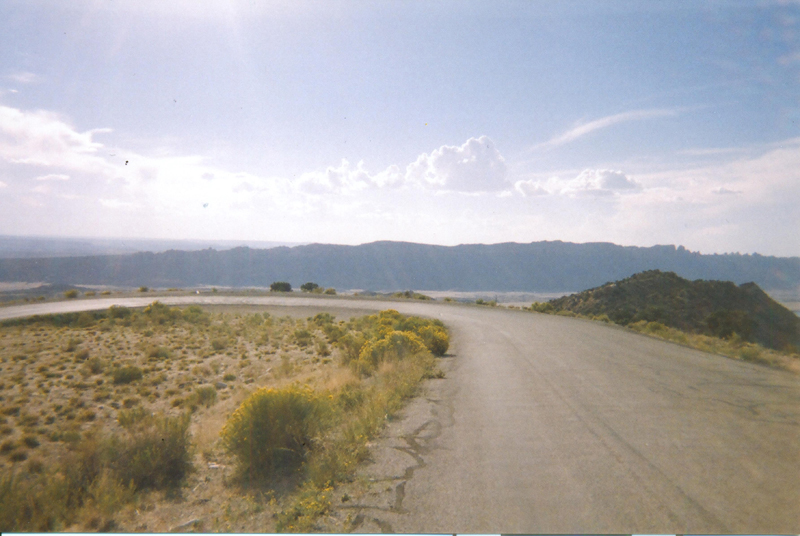
Descending toward a hairpin turn on the La Sal Loop.
By Wayne Cottrell
La Sal Mountains Loop Challenge
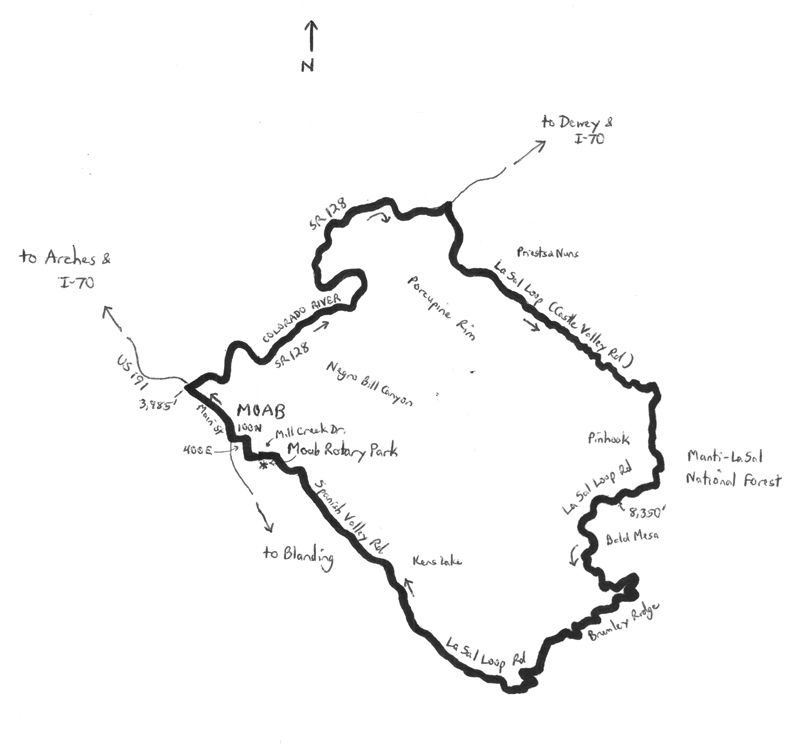
The La Sal Mountains Loop Challenge is a challenging-but-rewarding 63.6-mile tour of the mountains east and southeast of Moab. The ride starts and finishes in Moab, and makes a clockwise loop along the scenic La Sal Mountains Loop. This is a popular loop drive for touring motorists, although competition from nearby Arches and Canyonlands National Parks, and Dead Horse Point State Park, keeps traffic volumes dispersed and low. The loop is ridden in the annual Moab Gran Fondo, which is held during the first weekend in May. The fastest riders complete the loop in under three hours! The challenge begins in Moab which, with a population of 5,130 in 2013, is the seat of Grand County, home base for the aforementioned parks, the launching spot for numerous recreational opportunities, and the largest city for 100 miles in any direction. The city is thought to be named for the biblical city of Moab, but Moabites were described as incestuous and idolaters. Past attempts to change the name of the city failed; however, there is evidence that the name is actually derived from the Paiute word “moapa,” which means mosquito. Start the ride at Moab Rotary Park, located at 680 East Mill Creek Dr. From the parking lot, turn left and head west on Mill Creek.
Turn right onto 4th Street (400 East) at the stop sign, and head north. The Apache Motel at 159 South 400 East is on the National Register of Historic Places. Turn left onto 100 North (stop sign), and then right onto Main Street at the traffic signal, as you head right into the heart of Moab. Be sure to stock up on nourishment for the trip while in town. Note that Main Street can be busy, especially during the spring and summer, when you would swear that there are far more than 5,000 people in town. You are on Main Street, which is U.S. 191, as you head north and out of town. Just before the highway crosses the Colorado River, turn right onto State Route (SR) 128, 3.8 miles into the ride. This is the low point of the route (elevation 3,985 feet). Enter the Colorado Riverway Recreation Area – note the “Watch for Bicycles Next 10 Miles” sign. The highway is a scenic byway that parallels the river, winding its way between sheer canyon walls and dramatic scenery. There are numerous recreational pullouts along the way, including Oak Grove, Big Bend, and Takeout Beach, and others. Many of these have lavatories. Please note that the sight distance is poor on the many right-hand bends along this highway. Negro Bill Canyon is at mile 6.9 of the ride, named for William Granstaff, a cowboy who was actually of mixed race. A derogatory form of “negro” was used until the 1960s. The canyon was the site of 1979’s Sagebrush Rebellion. The ride’s first elevation change comes at mile 14.3, with a short uphill and downhill; at mile 17.6, SR 128 veers away from the river, and begins to roll.
At mile 19.6, turn right onto La Sal Loop Road. There is a large map display on the right, just after the turn. Get your bearings, and then find your climbing legs, as this is where you enter the mountains. The gradient from here is intermittently steep. The La Sal Mountains are Utah’s second-highest mountain range (the Uintas are the highest); Mount Peale is the tallest peak, at 12,721 feet above sea level. Enter Castle Valley at mile 21.2, noting the vivid red landscape, and the fascinating rock formations to your left. These include Priests and Nuns, Castle Rock, and the imposing Parriott Mesa. The road bypasses the town of Castle Valley, which is to your right. The road continues to climb steadily through the valley, as you pass 5,000 feet, and then 6,000 feet. The adjacent foliage gets denser, and the road gets narrower and rougher, particularly at mile 28.4, after crossing a cattle guard. The long, mostly straight valley road, with the massive Adobe Mesa to your left, starts to twist and turn at mile 29.3. Turn right at mile 30.5 (elevation 6,495 feet) to continue on La Sal Loop Road. After about one-half mile of more climbing, and passing the 7,000-foot mark, the steep drop-off to your right reveals a spectacular vista – you can see Moab from here! Enter Manti-La Sal National Forest at mile 32.3. Down in the valley to your right is the site of Pinhook Battleground. In 1881, this was the scene of a horrific battle between Native Americans and white settlers; a number of lives were lost. The climbing continues, finally reaching the high point of the ride at mile 36.7 (elevation 8,350 feet).
On the way to the top, you will have witnessed the tree-scape transforming from Pinyon pines and junipers to oak and larger pines, along with some whispering Aspens. From the high point, the road is predominantly downhill, with some intermittent breaks in the descent. Use caution when crossing the cattle guard at mile 39.9, as it is awkwardly placed in the middle of a right-hand bend. Another cattle guard, at mile 42.5, is on a steep downhill – use caution here, too. There are a few sharp downhill curves, including a couple of 180-degree bends – be sure to stay to the right. Leave the Manti-La Sal National Forest at mile 48.9. Around mile 50, note how the landscape has gradually changed from the green vegetation of the higher elevations, to the scrubby, sandy desert environment of the lower elevations. Broad vistas are among the descent’s features. Moab is in view at mile 53.3. Where the road bends to the right at mile 55.5, you are now on Spanish Valley Road on the very outskirts of Moab. The return to civilization is evident at mile 57.1, as the once narrow road with no striping now has a centerline! Note the “slick rock” to the right – you may see some mountain bikers plying this terrain. Spanish Valley Road bends to the right at mile 62.3; you have now returned to Mill Creek Drive. Turn left at the stop sign at Sand Flats Road to continue on Mill Creek. Moab Rotary Park is on the left, just down the road. End the ride here.
For more rides, see Road Biking Utah (Falcon Guides), written by avid cyclist Wayne Cottrell. Road Biking Utah features descriptions of 40 road bike rides in Utah. The ride lengths range from 14 to 106 miles, and the book’s coverage is statewide: from Wendover to Vernal, and from Bear Lake to St. George to Bluff. Each ride description features information about the suggested start-finish location, length, mileposts, terrain, traffic conditions and, most importantly, sights. The text is rich in detail about each route, including history, folklore, flora, fauna and, of course, scenery.
Wayne Cottrell is a former Utah resident who conducted extensive research while living here – and even after moving – to develop the content for the book.
It is one thing to read an article about a new bicycle lane or to listen to a presentation about a multi-use path. It is a completely different thing to experience these firsthand while hearing from the planners and engineers who implemented the project.
Mobile Active Transportation Tours (MATTs) are community rides that facilitate learning and networking among individuals interested in advancing active transportation (bicycling and walking) across Utah. Over the course of the MATT, planners, engineers, and officials from the host community will discuss the active transportation projects and programs they have implemented in their community. This includes how and why they planned it they way they did, how it was funded, and feedback from the public. These tours are typically two hours long and are at a casual pace. MATTs are meant to be accessible for all people and they are open to the general public.
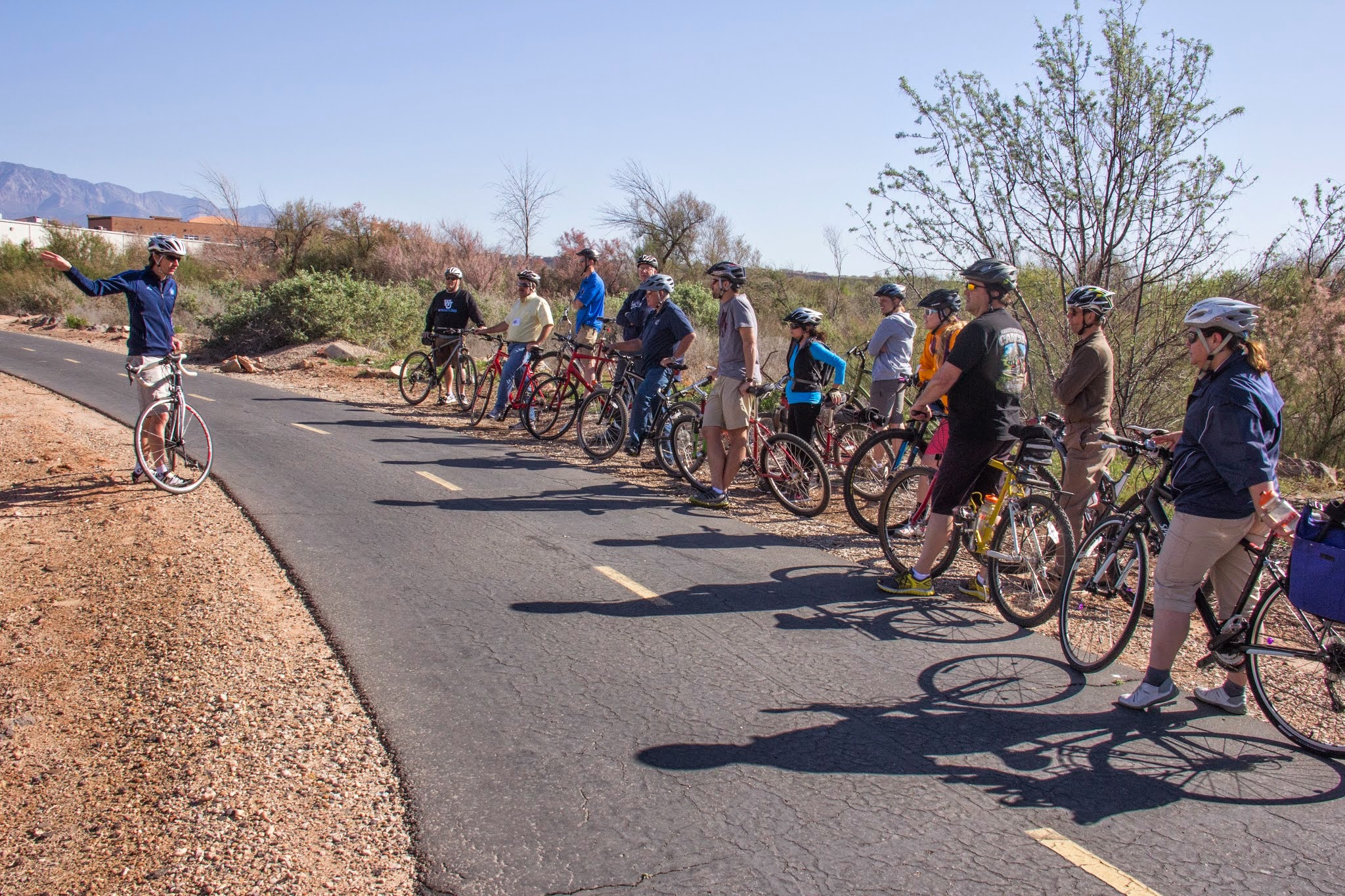
St. George MATT (Mobile Active Transportation Tour) on April 3, 2015. Photo by Richard Brockmyer
MATTs are modeled after a program through the organization People for Bikes. People for Bikes takes community leaders to international destinations, such as Copenhagen and Amsterdam, so they can see what a fully functioning, well developed active transportation network looks like. Through the MATTs, the aim is to show some of these facets that exist within Utah and to educate community leaders as to how they can be implemented in their own communities.
In 2014, MATTs took place in Salt Lake City, on the Murdock Canal Trail, Ogden, and Farmington. The first MATT in Salt Lake City saw more than 60 riders.
The 2015 MATT Schedule
April 3 – St. George
May 20 – Provo
June 1-2 – Moab
August 14 – Park City
September 10 – Draper
October 7 – Riverdale
Advanced registration is required for the MATTs. More information about each tour can be found at www.bikeutah.org/matt
I was sprawled out on my living room floor. Unfolded around me were three different maps of the Moab desert, La Sal mountains, and Colorado Plateau. On the screen of my nearby laptop was a fourth, a digital topographic map of the same areas. I was writing notes on a scrap of paper about possible road combinations–deciphering elevation profiles, looking for possible water sources, and making unsubstantiated guesses about the quality of the roads and trails.
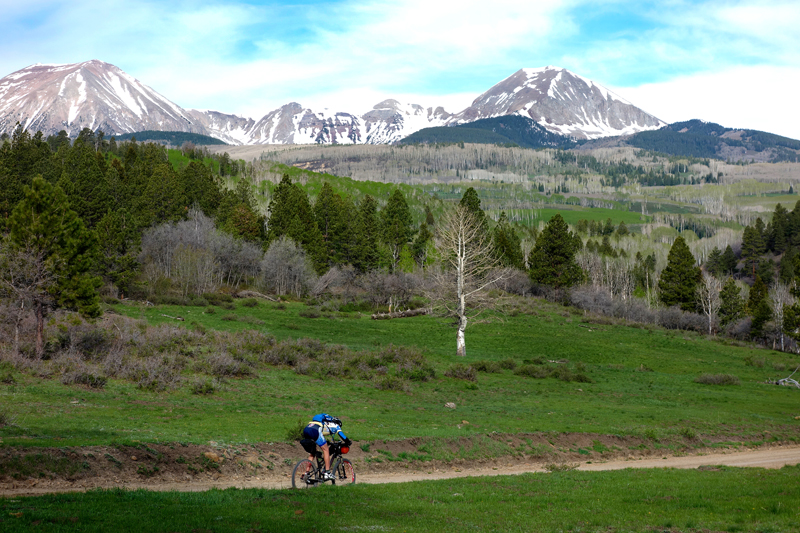
Ty Hopkins riding on 2 Mile Road with the La Sals in the background. La Sal Peak is on the right.
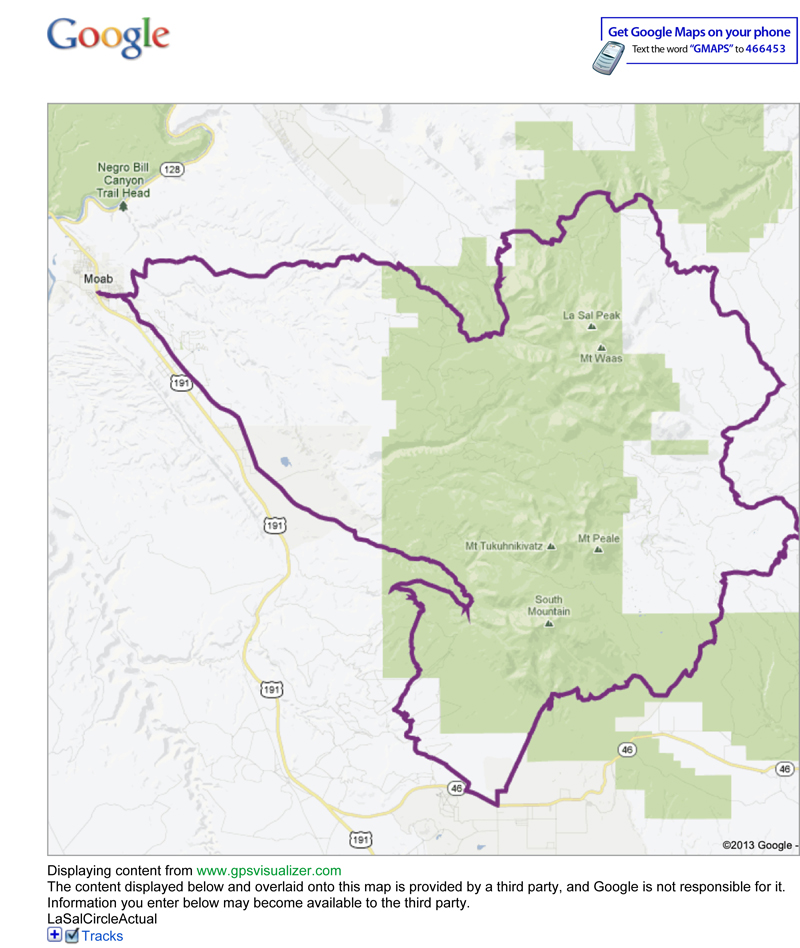
The objective, and the reason for the map-scouring and route-planning, was to spend two days riding a circle around the La Sal mountains. Could it be done? Geographically, yes. But physically? I’d have to do some pedaling to find out the answer to that question.
I continued to pour over the maps. Dirt roads dead-ended in box canyons, on mesa tops, and at the bottom of cliffs. A few connected with others, which looked promising, until they too terminated abruptly. But a few others did intersect with others still, until at last, a circle started to emerge.
On paper, the different route possibilities were legion. Lines, some solid, others dotted, criss-crossed the map arbitrarily and indiscriminately. Where many roads ended, many did not. Utah is, after all, a labyrinth of old mining, jeep, and forest roads. But which ones, if any, were rideable roads? Which ones were maintained? How many were covered in loose baby-head boulders? Would mud or snow be a hinderment? And did the Carpenter Basin Trail, clearly marked on the map, even still exist?
Sometimes maps can invoke more questions than they can answer.
I searched for information on the Internet, hoping to glean even a little bit of visual evidence about the conditions, scenery, and terrain. My searches mostly turned up empty. And that wasn’t entirely surprising. The La Sal mountains, and the world around them, are empty and vast. Some of the old roads are well traveled. But most of them seldom see any significant traffic.
After a couple of hours staring at the topographical reliefs, making notes, and drawing lines on the digital map, I felt like I had a reasonable route put together; starting and finishing in Moab, the line drawn on the map stretched just over 100 miles and climbed almost 13,000 vertical feet over forest roads, double-track, and maybe even a little bit of singletrack.
I passed along the circle to Ty Hopkins, my ride partner. “Yeah, looks fine. Should be fun.” He was right. It was a good circle. And it rounded some fantastic mountains.
I packed up the maps, and everything else I needed for the ride–8,000 calories, 4 liters of water and a UV purifier, a sleep system, bike tools, and other various necessities–and set out to circle the La Sals. The questions sparked by the map were going to be answered on the ground, one pedal revolution at a time.
I’ve always loved maps. A map is a lot more than a representation of terrain, distance, and topography. And it’s a lot more than a guide. A map is a possibility, and potential. Every road and trail, elevation contour, relief and landmark is an opportunity for adventure and discovery. A map is a mystery with but one solution: on-the-ground exploration.
Maps conjure expectation and possibility. They spark energy, and an eager exploratory ambition that flows through the heart and mind. Learning the myriad ways that trails connect, roads intersect, and mountains and valleys become one or the other is invigorating and exciting. And having a map with a well-researched circle drawn on it only compounds those feelings.
Map data from Adam Lisonbee, Google Maps, and GPSVisualizer.com
And so, it was with great excitement that Ty and I set out on another map-inspired adventure. “Time to make the donuts,” he said, as we pedaled into the unknown.
The wind was blowing from the south, into our faces. We pedaled through the outskirts of Moab, Utah, along the chip-sealed Spanish Valley Road. Cars whizzed past us in the summer sun. The nearby pastures and fields were already turning yellow. It was only May, but summertime had long displaced spring in this desert.
We rode past old trailer parks, farm houses, and junkyards. There was a disconnect between the natural beauty around us, and the crumbled, neglected housing it surrounded. Carcasses of old cars, rotting barns, and unidentified junk littered the corners of yards and fields. Dilapidated fences separated property lines. If a home had a lawn, it was dry and brown. Paint was peeling off of old siding, doors, and mailboxes, in thick, dry chips.
We followed the pink line that I drew on the map and had transferred to my GPS, now conveniently mounted to my handlebars. The line led upward. Away from town, away from the junk, and away from the encroaching summer heat. Slowly, the valley fell away as we climbed through the tawny tablelands and scrub oak. Red cliffs and sandstone domes became visible to the west. On the horizon behind us, Arches and Canyonlands National Parks were crowded with tourists. Beyond, the canyon country unfolded into a haze of time and space.
Juniper trees displaced the sagebrush and scrub oak. A rocky double track that lacked switchbacks or subtlety began where the pavement had ended. It went up. Straight up. We would soon learn that the west side of the La Sals are striped with roads just like this one.
But our spirits were high, and so were our energy levels. We happily struggled over the loose rocks and up the steep grade. We knew, or rather, we hoped, that we would soon be riding flowing mountain singletrack through patches of aspen shade. After all, the trail we were looking for was clearly marked on the map.
Originally named by Spanish explorers Sierra La Sal, or The Salt Mountains, the La Sals are laccoliths, formed through volcanic intrusions that pushed the sediment upward, forming domes and peaks. The La Sals are capped by abrupt, bald peaks that reach over 12,000 feet above sea level. Flanking the peaks is a defined timberline where the forest stops suddenly. Scree fields of shale, boulders, and year-round snow fields top the rounded summits.
The mountains are a dramatic contrast and backdrop to the canyon country that erodes away at the foot of the range. The red sandstone of Arches is offset beautifully by white snowy peaks, green pine and aspen groves, and a vertical incongruity that only the Rocky Mountains can provide. The Moab area is, as Edward Abbey claimed, “the most beautiful place on Earth.”
As early as the 1500s, Spanish explorers and traders were traveling through Sierra La Sals. The mountains were a part of what is called today the Old Spanish Trail, a rigorous, rugged trade route that connected Santa Fe, New Mexico and Los Angeles, California. John C. Fremont and Kit Carson followed the route in 1844, and upon learning that the Spanish had been using the network of trails for centuries, gave the trail its present-day name. Pack trains of horses and mules would carry hand-woven goods to California, where they’d be traded for the same horses and mules used to carry the cargo back and forth across the route.
As Ty and I pedaled, however, none of that history was on our minds. Our own exploration of the mountains, difficult in its own pneumatically enhanced manner, was starting to get rocky.
After riding through the windy and barren Spanish Valley, and climbing 2,000 feet through the boxed canyons of the La Sal foothills on loose, stony roads, we had finally arrived at where the Carpenter Basin Trail was supposed to begin. But there was no trail. We wandered around, looking for any sign of the singletrack. We found nothing. From our perch on the ridge, however, we could see dirt roads meandering below, in the direction that we ultimately needed to go. We abandoned the Carpenter Basin route, and improvised.
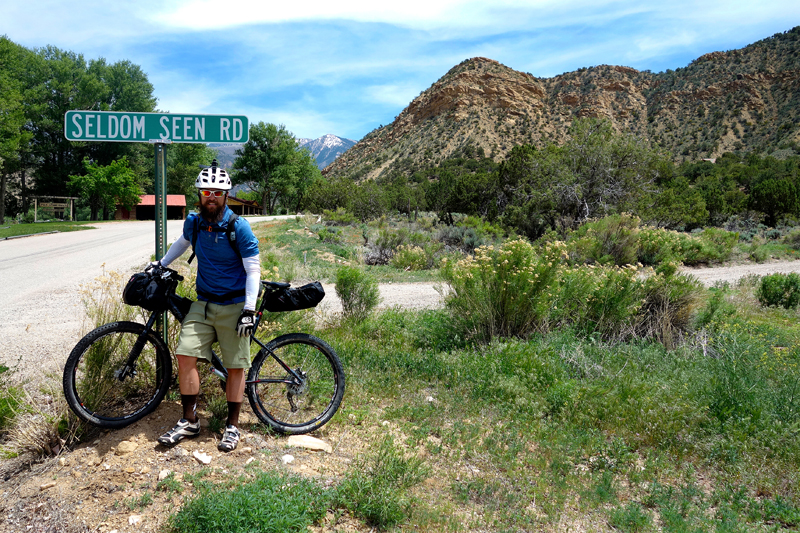
Adam at Seldom Seen Rd.
I was glad that I had brought the paper map. It, more than the GPS, guided us through the re-route. Eventually, we found our way back to where we had planned to go. But we lost several hundred feet of elevation in the process, and had to climb another no-switchback, no-mercy road. By the time we reached the top of that road, we were tired and hungry. “Time to stop. I need to eat,” Ty announced. I agreed.
The shadows were growing longer. The dull ache in our legs had migrated to our backs, shoulders, and wrists. We were thirsty, and out of water. Far below, Highway 46 snaked into the distant horizon, and into Colorado, where it became Highway 90. We ate a modest dinner while we watched the sun splash warm light onto the warm rocks of Canyonlands. The Abajo mountains to the south were a deep blue. The peaks behind us caught the afternoon light eagerly.
Doubt crept into our hearts. Why were we here? To prepare for the Colorado Trail Race, of course. But really, why were we here? That is, why had we each goaded the other into committing to do something like the Colorado Trail Race? If just a few hours of navigational frustration were taking such a toll, what sort of physical and emotional havoc would several days of difficulty incur? I forced food into my mouth, and swallowed it into a deep pit of despair.
There was nothing for it. And so we continued, uncertain of what the next bend would uncover, and increasingly worried about where, and when, we’d find water. “Time to make the donuts.”
Finding water didn’t take long. We heard it before we saw it. A running stream is always a wonderful sound. It’s musical, happy, and comforting. A stream doesn’t roar intimidatingly and dangerously like a river. And it doesn’t sit silent and stagnant like a pond. Instead, it trickles with an inviting melody.
The spring water was icy cold, and crystal clear. We filled our plastic bladders, our bellies, and washed our dust-crusted faces. The road turned mellow, and the riding became faster. The sunlight was golden, and for a few minutes, the world was perfect. The desert surrendered to the mountains, and suddenly we were riding through twinkling aspen groves and fir trees. We spun happily and joyfully. We had forgotten about the heat, the thirst, and the fear that had clouded our minds only minutes earlier.
The Colorado Trail race no longer seemed quite so impossible. Our enthusiasm for that adventure, and for this one, returned in a rush of natural wonder. We were sieged by beauty.
Mount Peale, the tallest of the La Sal range, was shrouded in shadow. Its snowy slopes were faded blue in the waning light. The vast approach to the steep slopes was covered in thick trees and open meadows. The moon rose in the west, round and bright. A pale light flooded the plain. “The most beautiful place on Earth”.
We made camp in a small meadow, built a fire, and ended the first day of our ride with a kingly meal of homemade rice cakes, beef jerky, and blueberry licorice.
There are easier ways to explore the wilderness. Motors for example–trucks, all-terrain-vehicles, motorbikes. There are even easier ways than motors too–the Internet, television, books. But the mountains and the deserts were not created to be easily experienced. They are not tame, forgiving places. Instead, they demand respect, intelligence, and reverence. And the best way to meet those demands is human powered. It’s too easy to forget the remote and terraced nature of nature while speeding effortlessly along a graded or paved road. Laborious and slow progress, along with blood, sweat, and tears, can create understanding, respect, and even joy.
Maybe that’s why so many mountain bike riders are trying to do things that the rest of the world says are stupid, crazy, or ridiculous. There has to be something more than physical accomplishment to riding a bike from Canada to Mexico, or from Durango to Denver. Something intangible is motivating this small but powerful ultra-racing movement. Maybe it’s the connection, and the understanding that accompanies the physical effort that is pushing more people beyond the established boundaries of sport.
Our technology is far superior than anything the Spanish traders, or Fremont ever used. But despite the lightweight bikes, the GPS computers, the water purifiers, the laser-accurate maps, and the other high-tech gear that we use today, the mountains and deserts are still difficult and dangerous places. Our reasons for traveling through them are different as well. But the pain and the fear is similar, if not identical, to what all men, in every age, have had to overcome in our efforts to move through inhospitable terrain. Those feelings of inadequacy connect us to Domiguez, Escalante, Fremont, Carson, and Powell. Our travels help us slowly understand, just as they did, the intimacies of the wilds.
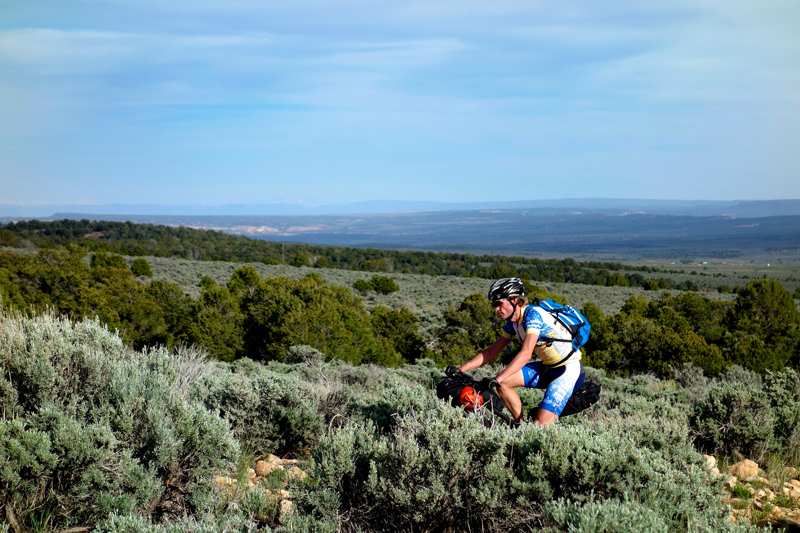
Ty Hopkins climbing up Lackey Basin Road.
A group of motorbikes sped by us. Ty and I were half way up La Sal Loop Road, with about 1200 feet behind us, and another 1200 to go. Below us, Castle Valley was distant and quiet. The small cluster of homes looked far away, and empty. The green grass in the front yards looked neon, compared to the brown and gray of the desert floor. Castleton Tower split the blue sky. North Beaver Mesa cast a long shadow over the valley. We could hear the engines of the motor bikes long after they had gone out of sight.
We both slept fitfully during the night. The moon was too bright, our bodies, too tired. And the bivvies, a little too cramped. Every hour a dog howled at the moon like a lunatic. The bellowing echoed through the still mountain valley. When dawn finally rose through the night, we broke camp, loaded our bikes, and set out once again. “Time to make the donuts.”
The morning was beautiful, and the scenery, too. We pedaled happily. Indeed, we were still happy, mostly, as we climbed the long twisted Loop Road. At last we topped out, and left behind the pavement for more dirt, dirt that tilted almost entirely downhill, all the way back to Moab. When we finally did arrive back where we had begun, only 24 hours had elapsed. But it felt like a lot more time than that had passed. We felt like strangers in a strange land.
But those foreign feelings soon conceded to the familiar rhythms of modern life–hot showers, hot food, cold milkshakes, and a fast car on a smooth highway.
When I returned home I unpacked my gear. As I did so, the feelings of uneasy excitement returned. “Can I really ride the 520 miles from Durango to Denver?” I pushed the thought away. Of course I can. One day at a time. One hour. One pedal. Just like riding a circle around the La Sal mountains.
The next day I pulled out a map of the Wasatch trails and spread it out on my floor, a notepad and my laptop nearby. “Now, where to next?”
Sometimes 1 + 1 equals one. 1 mountain biking mecca outside town + one good on-street bike lane system with a phenomenal bike-to-work percentage in town = one combined Silver Bicycle Friendly Community (BFC). The City of Moab and surrounding Grand County jointly applied to the League of American Bicyclists (LAB) for designation as a BFC. Cyclists don’t necessarily end their trips where government jurisdiction changes and the city and county effectively work together to advance all forms of cycling. So the combined application worked in their favor.
“Regional planning is very important. We like to see shared applications,” says Nicole Wynands, LAB’s BFC program manager. “Usually, cities do better than counties but here the county has a lot to offer.”
Indeed, the Moab Trails Alliance and Trail Mix Committee “have been doing a heck of a lot of good things inside the city and outside the city limits,” so a combined application made sense, notes David Olsen, Moab community development director.
The city also took the county trail plan and adopted it as its own.
But the city and county each know their strengths. The Moab Area Travel Council gets right to the point: the opening paragraph on its website states “(l)et Moab be your base camp for world famous mountain biking…” and later invites people to try its multitude of trails suitable for all levels of riders.
And when people aren’t mountain biking around Klondike Bluff or elsewhere, they’re likely to be biking to or from work in the city. LAB praised Moab for its amazing 7.6 percent of workers who commute by bike, considering that the national average is only .55 percent. (Of course, it’s easier to get a big ratio in a small town where fewer people live far from work.)
Additionally, LAB praised the city and county for sponsoring bike events, ample bike parking and Safe Routes to School (SRS) programs in all schools. Some stores even give free coffee if you bike to work.
So why didn’t they receive a higher rank (gold, platinum, yet-to-be-reached-by-anybody diamond)? What they’ve done is good enough to get there in the areas they’ve worked on “but they are not fulfilling other requirements. They have the potential because they have such a strong bike culture,” Wynands explains.
While Moab has created plenty of bike lanes, it hasn’t put them in key places on main roads and some aren’t up to standards, LAB judges noted. “We are very concerned about safety on the roads. If the city addresses that issue, it can get more people riding,” Wynands suggests. “They really need to get kids to school safely” and make roads safer for less skilled cyclists.
LAB also noted that while the city provides plenty of parking, the racks don’t all meet LAB’s recommended standards.
As to LAB’s suggestions, Olsen notes that the main drag through town, US 191 is in state, not local hands. To provide bike lanes, “they’d have to replace parking or reduce a lane or two. They won’t do that.” Olsen says he doesn’t agree that the parking facilities aren’t adequate. But he acknowledges that “half the people do and half the people don’t like to lift their bikes up” to use the racks at Dead Horse Point State Park, where people come to ride the popular Intrepid Trail System.
Meanwhile, the City of Orem applied and didn’t quite make BFC status this year but got an Honorable Mention, one of 18 American communities to achieve that status this year. (Nine applicants got nothing, Wynands says).
The judges were impressed with Orem’s low speed limits, road guides, Bike Month celebration, bicycle master plan and good SRS program. Its 1.6 percent bike-to-work share is treble the national average. The 34 miles of bike lanes “is pretty good” for a town of about 91,000, Wynands says. LAB likes the ordinance requiring bike parking for all new development.
Just in May, the city celebrated the opening of the Murdock Canal Trail and the mayor enthusiastically participated in a Bike to Work Day event.
“If they actually did something in all categories, they could easily get bronze (the level between honorable mention and silver) but they don’t do much encouragement and education beside SRS and we want to see a good amount of effort in all categories,” Wynands explains.
She also complained that “none of the bike lanes are on arterial streets. They may have them on low-traffic streets that may not need bike lanes. The ones that go places are the ones that need bike structure.”
The town has made great strides in the last few years, says Paul Goodrich, Orem’s transportation engineer. It started a plan in 2010 and more than 1,000 people participated in some way, mainly responding to requests to suggest infrastructure improvements. In two years, the town trebled the number of bike lanes from 11.6 to 34.2 miles. The city is planning to connect them, Goodrich adds. “We have a lot of bicycle advocates on the Transportation Advisory Commission.”
He states that “the only thing keeping us from moving any faster than we are moving are the budget constraints. We have had to do attrition on city staff. We have gone down from 18 to eight in engineering alone,” as about 50 positions were cut. “I’d love to have a bicycle planner on staff or an intern or somebody to help me. But it is one of those things when you have that much attrition and people expect the same level of service.”
Goodrich hopes the state can fill in some of the infrastructure and education components that the city can’t afford.
The bikepath connecting Moab with public recreation lands around it should be largely completed this fall. Grand County received a third grant from the Federal Transit Authority to complete the segment of the Colorado Riverway Path along Rt. 191 to Arches National Park. The county got the money under the Paul S. Sarbanes Transit in Parks Program.
The $900,000 grant will continue the trail for three miles on land owned by the Bureau of Land Management (BLM) along the Colorado River.
Previous grants have paved the trail further south along Rt. 191 through Moab to Canyonlands National Park, the Colorado Riverway Recreation Area and other public lands. Last year, the county got $2.5 million from the program to pave a segment further south. Two years ago, it got $2.9 million.
When this new section gets completed, no more than half a mile of the eventual trail will need to be paved, says Katie Stevens, recreational planner with the BLM Moab Field Office.