
By Tom Diegel — If you’re into bike packing/touring – or even if you’re not! – eventually you’ll be drawn to ride in Europe. Whether you have visions of leisurely days in rolling hills smelling of lavender with castles on the horizons between stops at great little bakeries tucked into quaint little cobble-streeted villages or long grinds up the iconic climbs you see skinny guys flying up on their way to mountaintop finishes in The Tour, Western Europe has it all. To be sure, France and Italy are the most logical and probably most popular destinations for American cyclists, but certainly not be overlooked is the home of the Other Big Tour, Spain. Doing your own Vuelta a España ensures that you’ll be able to get it all: rolling hills, big mountain climbs with endless rippin’ descents, fabulous food, fascinating history, plenty of dedicated cycle tracks, plenty of castles, friendly people who treat cyclists with high regard while both in their cars and out, and of course plenty of panaderias for amazing baked goods!
We had done a lot of tours in Europe: Italy, Switzerland, France, Scotland, Austria, Germany, and others, but Spain – taking up most of the Iberian Peninsula along with Portugal – was kind of out of the way of the rest of those countries, so we hadn’t quite made it there. But we knew that Spain was deserving of its own trip, and with a nice long window of time in the Fall of 2023 we decided to try to “do” Spain on our bikes, which was actually laughable: it’s such a big and diverse country that even two months enabled us to only get a taste of the country.
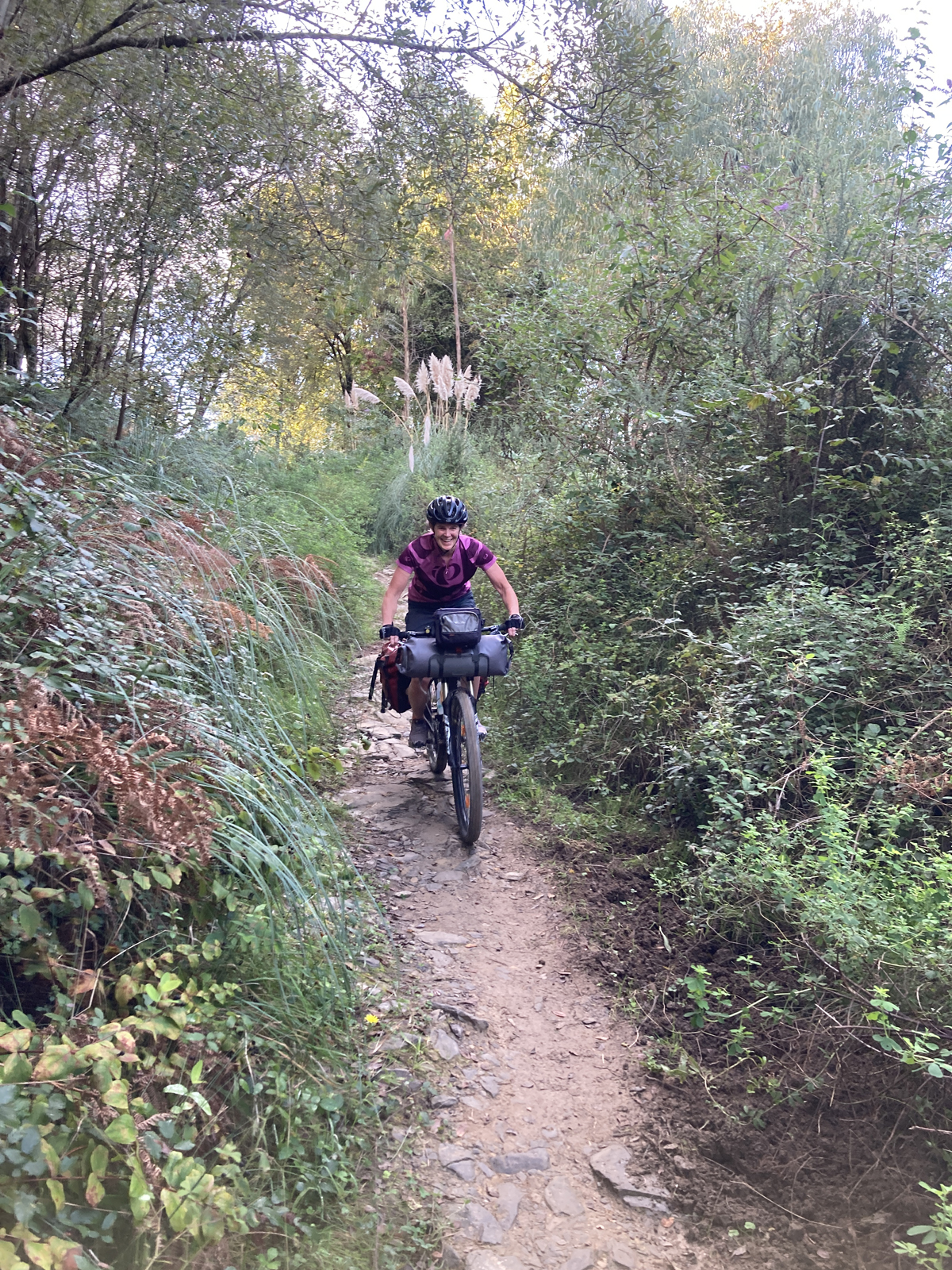
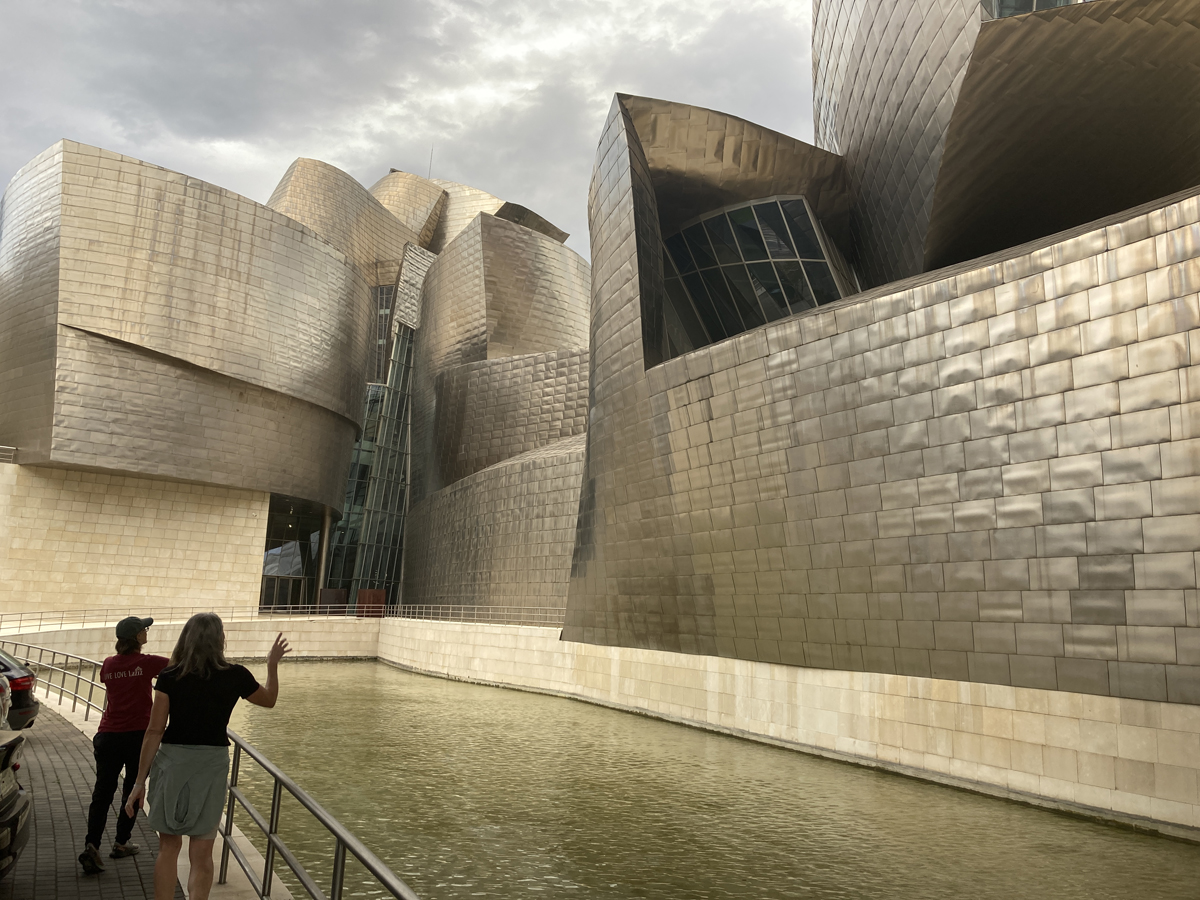
We started in early October; like many places, Fall is a great time in Spain, because the summer heat is off and as the fall wears on you can work your way south to maintain warmish weather. We began our tour in Bilbao, which is effectively on the north coast not far from the southwest coast of France and provided us with an opportunity to of course visit the famous – and worthy – Guggenheim Museum there before heading into the countryside. While we didn’t quite plan on it, we actually began riding on the famous Camino de Santiago. a pilgrimage inspired by the apostle Saint James that people from all over the world travel to Spain to do; it’s kind of like doing the Appalachian Trail but more urban, and while it’s “a form of spiritual path or retreat for the pilgrims’ spiritual growth” it also offers some fun and challenging singletrack riding!

With a quick detour into far SW France to the Euro surf capital of Biarritz to pick up my wife Ashley who’d been on a non-bike tour with her mom and other octogenarians, she and I and our friend Amy started a loop that we pretty much made up as we went to explore the hills south of Bilbao. While not tall mountains, these “hills” were steep, and most of our riding was on gravel to rugged double track, so we learned to adjust our daily kilometerage accordingly. But even our shorter days got us into cool little villages that all had cheap accommodations if we needed them and remote hills with decent water for easy camping (though wild camping is technically not legal in Spain – nor, really, in the rest of western Europe – no one really cares if you camp, and if you feel like you should ask permission due to the proximity to a house locals virtually always say “sure, camp here, camp there, no problem!). And some of the “hills” were real: we decided to do a late-day climb to stay at a converted monastery for a couple of nights, and the paved climb was probably 15 miles.

After 10 days of riding, we dropped Amy off in Bilbao, and on the advice of a climber friend of ours we headed for the Picos De Europa, a little-known limestone range rising over 8000 feet out of the Atlantic about halfway across the northern edge of Spain that’s sort a mini-Dolomites. These mountains proximity to the Atlantic means that they tend to get some weather, and indeed traversing the coast to get there we got impressive amounts of rain and 60 mph winds that sort of shut us down for a day, but gave us that much more incentive to visit one of Spain’s famous caves: Cuevas El Castillo, which has paintings on it that are over 40,000 years old! With clearing weather, we were able to indeed head into the Picos, which provided big gravel climbs and descents that were steep enough to actually be bit scary, especially while craning our necks to ogle at the craggy limestone peaks that loomed on all sides of us.

We had two other friends – the Megans – whom we were meeting in Valencia on the coast, so once we plunged out of the Picos we got into the mid-country flats north of Madrid, where we discovered Via Verdes. Via Verdes are the Spanish versions of our rails-to-trails, but particularly in the flatter interior they are far more extensive than our very spotty rail trails, and you can ride them for literally hundreds of kilometers of car-free, relatively flat cruising. Since we were running a bit behind to meet the Megans we were easily able to jump on the still-in-use rails (i.e. trains) to make up time, and soon enough we were flying down a long descent through – not surprisingly – endless orange groves as we approached Valencia. We rode singletrack pretty much right up to the airport’s runways, rendezvoused with the Megans, and started the next leg of our trip.

Bikepacking.com is a great website with incredible routes on it from all corners of the world, and Spain is no exception. The one that piqued our interest and prompted us to meet the Megans in Valencia is a tour called the “Altravesur” that goes for over 800 miles generally following one of the Great Trails of Europe – the GR 7 – from the east coast of Spain trending southwest, ending near Gibraltar, with the Sierra Nevada mountains and many national parks enroute. Our standard mode is to find a cool bikepacking route and use it as sort of a general guide; we ride the routes when convenient and of course always find them to have great riding and Ride With GPS provides the nice turn by turn instructions, but we get easily distracted by both near and far side attractions and have no problem veering off the established routes to satisfy our own curiosities. Most of the time these “side adventures” work out, but one memorable day had us in a dusty agricultural area reminiscent of California’s Central Valley with something like 60 mph crosswinds blowing us into the highway that one ended with us stuffing all four of us and our bikes into a van-taxi to get us off the highway and into a hotel!
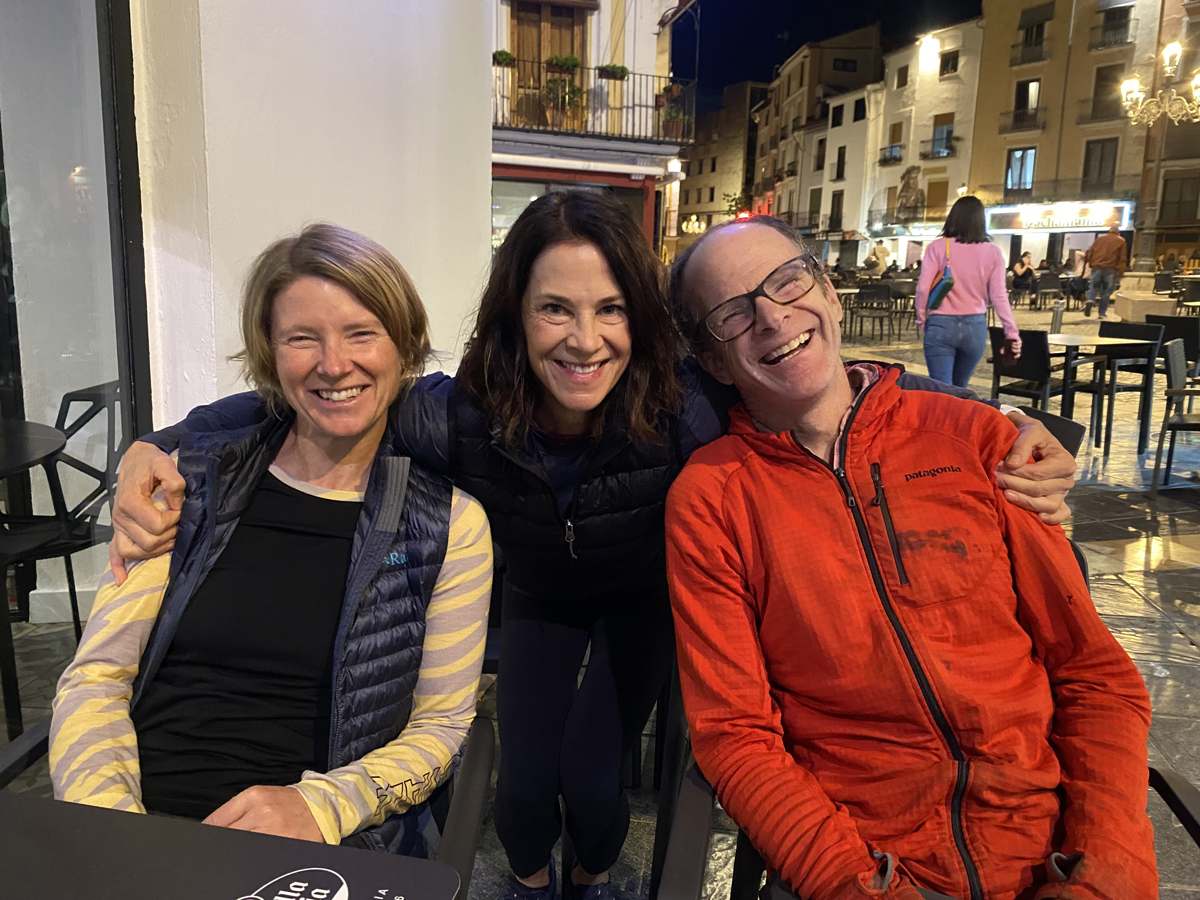
Another variation took us to Almeria (where one of the Megans flew home from) that had an incredible Moorish castle (the “Moors” were Muslims from Northern Africa who ruled Spain in the Middle Ages), while yet another took us into the Tabernas Desert, which is somewhat reminiscent of Southern Utah and – like our desert – was made famous by “Spaghetti Westerns” like Clint Eastwood’s “Fistful of Dollars” in the 70’s (we stumbled into a Universal Studios-type of Western movie set so Euros can get a sense of the American West … in southern Spain!).

Not far from the desert we climbed back up into the mountains and basically rode – in two days – a famous stage of the actual Vuelta a España (Almería to Alto de Velefique) that was last won by Ryder Hesjedal. Because we were on the periphery of the desert there’s not a lot of vegetation, so as we crested the pass, we could basically gaze down on all the twists of turns of our upcoming 4000-foot descent.
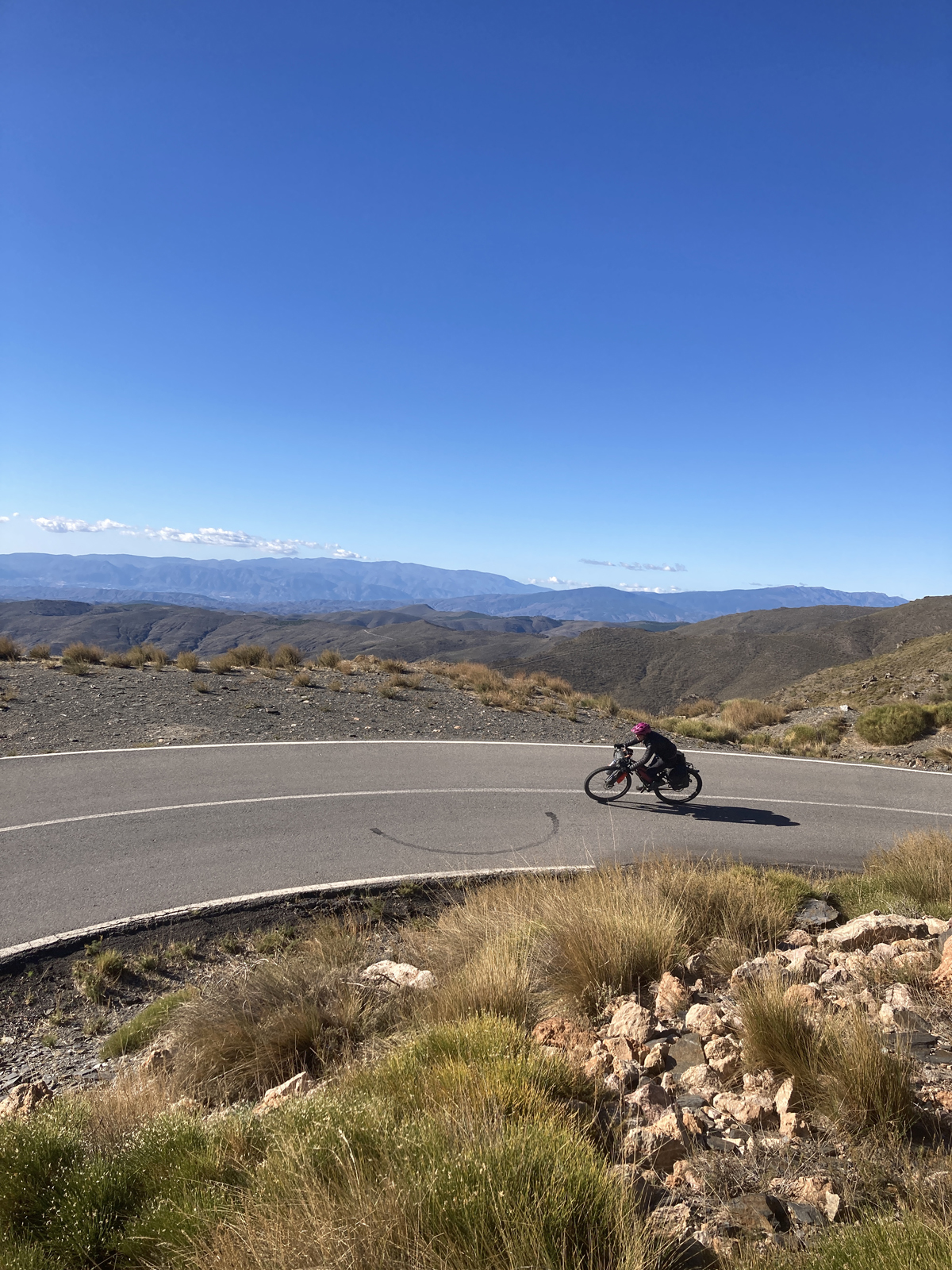
The Sierra Nevada mountains are the biggest and highest in Spain, rising basically out of the Mediterranean Sea to over 11,000 feet. We were back on the Altravesur to get to the Sierras, but once there we started doing our own variations to milk the range, which included a stop in a town famous for its pork products (complete with a pork museum), a great bed and breakfast with both a hike and a ride up to the highest peak in the Sierras, and lots of undulating roads that traversed around the lower flanks of the peaks. At the western edge of the Sierras is Granada, home to what may be Spain’s most famous site, the Alhambra. The Alhambra is a huge Moorish castle on a hill towering above Granada, and its grounds and interior museums are impressive and vast (and they need to be to hold the crowds).
As if the Alhambra wasn’t impressive enough, our next site – with many kilometers of fabulous, mostly-gravel roads in between – was Ronda, a town famous not only for its vaunted bullfighting ring (and associated museum; a weird spectacle but certainly an integral part of Spanish culture) but also the fact that it’s a full-on city that evenly straddles a deep and difficult-to-access gorge, with only a couple of ancient bridges going across the chasm that are perpetually filled with walking and gaping tourists; cars don’t rule in Ronda.

Getting back onto the Altravesur we wiggled our way down through remote hills laced with great double track to an overlook with a great view of Gibraltar and across the Strait to the 14,000-foot Atlas Mountains of Morocco.
We decided not to go to Gibraltar, which is a bit of an odd place since it’s a British Overseas Territory that is a tiny peninsula jutting off Spain between Europe and Africa. Instead, we rode to the city of Cadiz, one of the major ports of Spain since it’s at the intersection of the Pacific and the Mediterranean. We bade goodbye to our other Megan and carried on into Portugal, which can be left for a future tale.
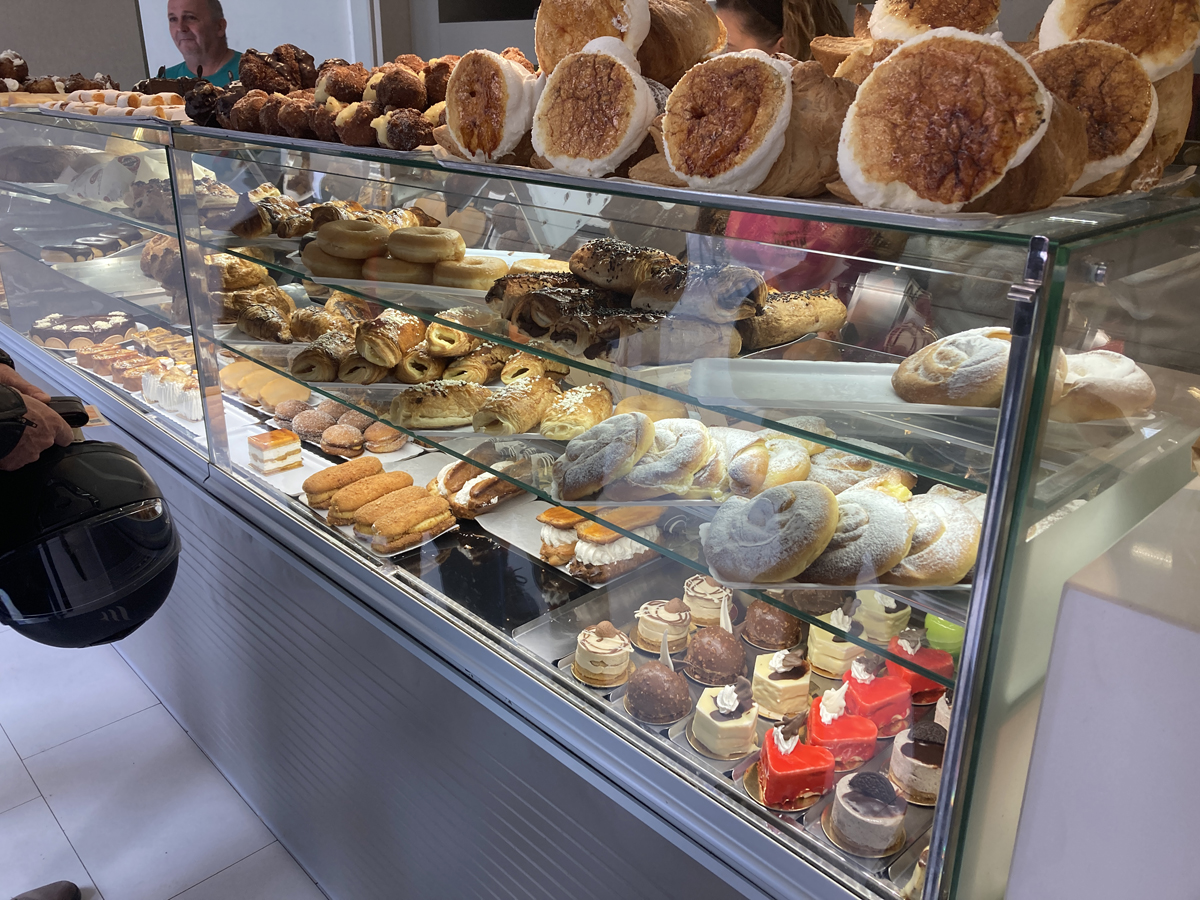
We went to Spain with very little knowledge of its history or culture and realized that it’s not just another European destination; between its Moorish occupation and long reign by the dictator Franco and somewhat isolated-yet-vast terrain Spain is a dramatically different place. But like its Euro neighbors to the north and east, it’s a fascinating country with incredible food, great people, a long and storied history of bicycling, drivers who treat cyclists with respect, and – importantly – great panaderias!

We had the luxury of being able to do a two-month trip to explore a lot of corners of the country, but we left a lot to return to, and focusing on any one of the many zones for a more-normal, couple-of-week trip would undoubtedly be an incredible bicycle journey for everyone.