
By Andrew Phillips – I see many crashes that seem to repeat themselves. Perhaps one of the most common cycling incidents is the Left Hook. By knowing what the left hook is and that it’s a frequent cycling vs car collision, you can be better equipped to avoid being “knocked out” by one while on a ride.
Here Is a Left Hook Scenario:
A cyclist is riding straight ahead on the right side of the road or in a designated bike lane. A motorist, coming in the opposite direction, prepares to turn left at an intersection or into a driveway. The motorist either: Fails to see the cyclist and turns left directly across their path. Or misjudges the cyclist’s speed, thinking they have time to turn. This results in the car cutting in front of the cyclist, leading to a potential crash.
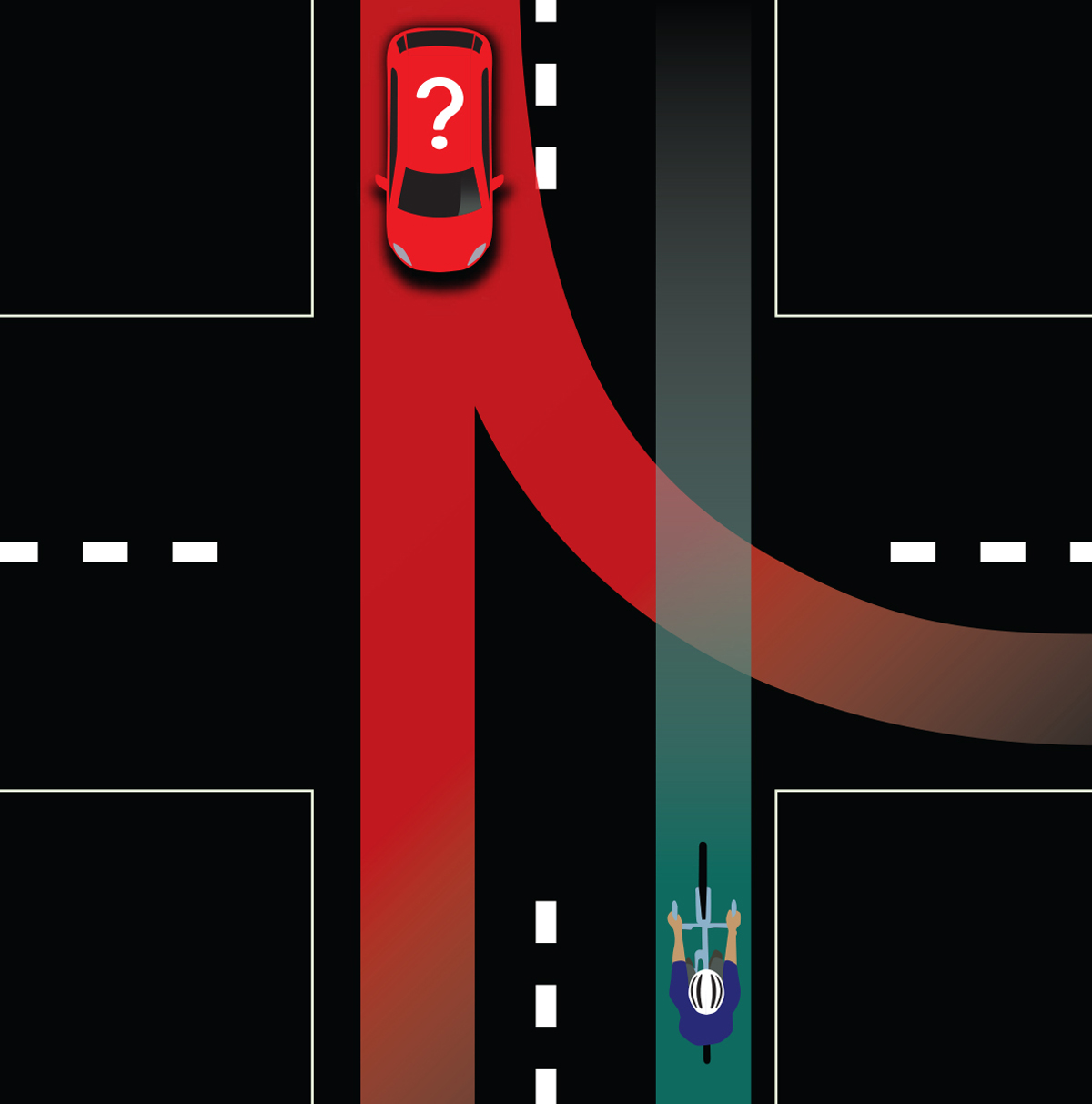
How Avoid or Reduce the Risk of a Left Hook Collision:
Be Extra Cautious at Intersections and Driveways. Slow down and be on the hoods/brakes when approaching any intersection. Look at the behavior of vehicles—are they slowing, signaling, or edging left? If so, that’s a potential red flag. If a motorist turns in front of you, make sure you know what your exit path is should you need to take it.
- Watch for Turn Signals and Body Language. Don’t rely solely on turn signals—many drivers forget to use them. Watch for wheel movement, slowing down, or drifting into the turn lane, which often signals an upcoming turn even without a blinker.
- Make Eye Contact. If a driver is waiting to turn left while you are going straight through, try to make eye contact so you know they’ve seen you. One of the most common things I hear from a motorist who hits a cyclist is, “I just didn’t see them. They came out of nowhere.”
- Take the Lane When Necessary. In certain situations—especially where there’s no bike lane, or you’re approaching a complex intersection—it may be safer to take the full lane to prevent a car from passing and cutting across you. This is legal in many places when necessary for safety.
- Use Lights and Bright Clothing. Especially in low-light conditions, use a bright front light, reflective gear, and contrasting colors to increase your visibility. A flashing white front light can help catch a turning driver’s attention.