
By Peter Abraham — Earlier this year, after recovering from various injuries, I signed up for the Lifetime Big Sugar Classic gravel race. It’s a hard race through the Ozarks, and I love visiting Bentonville, Arkansas. After all, it’s the bike capital of North America.
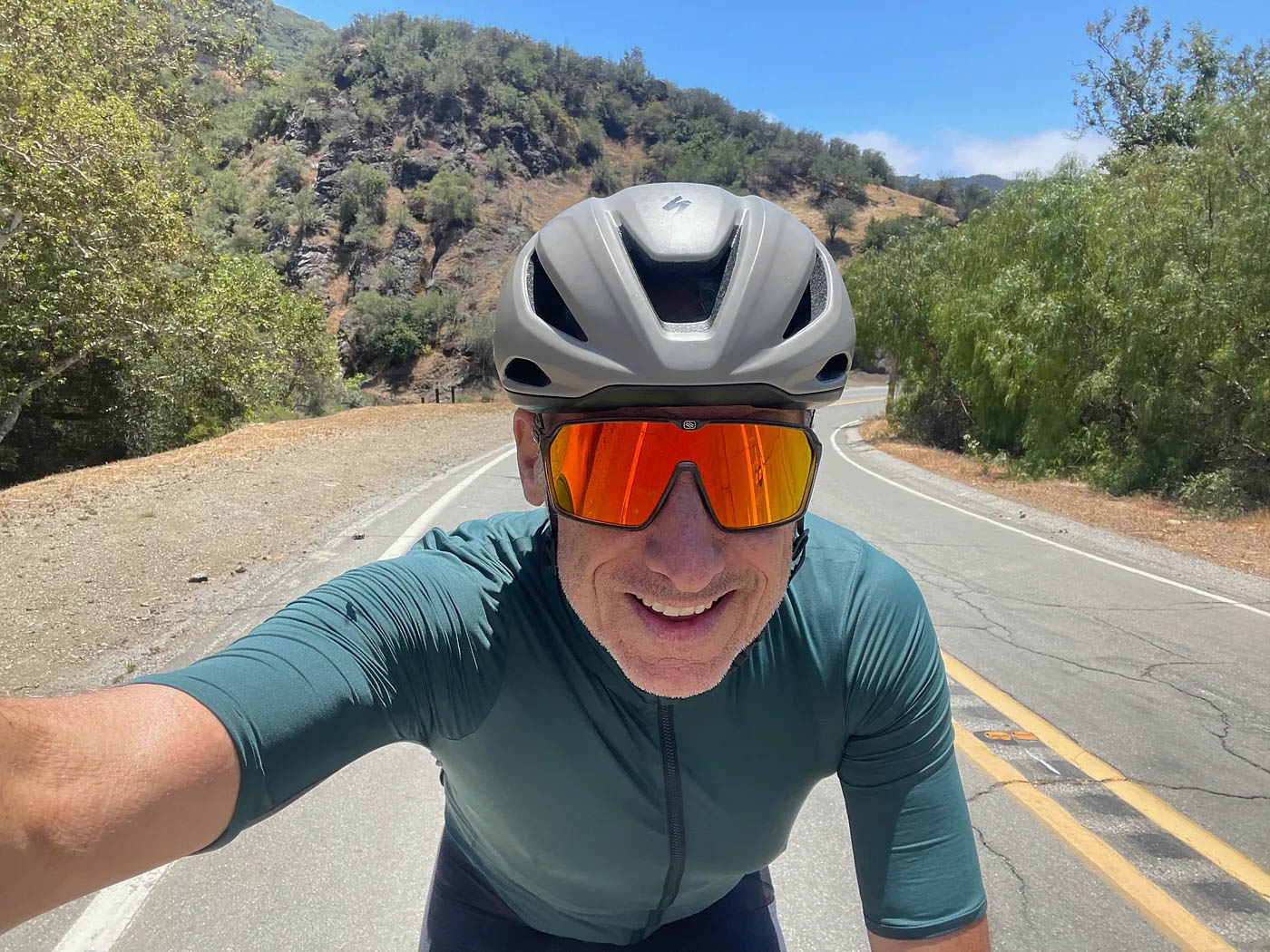
Due to travel commitments and not always prioritizing my health, my training in the spring was a little inconsistent. After my annual physical in May, with cholesterol numbers creeping slightly higher, I told my doctor that I was going to double down on my fitness and nutrition. And I asked to get another set of blood tests three months into that process. My doctor enthusiastically supported this idea, so my next call was to my friend & former client Frank Overton about getting on his FasCat Coaching training plan.
While I had used different FasCat training plans in the past, it had been a couple years since I’ve been on a program. Once I got going on his new app and AI-powered plan, here’s what I remembered about having a coach of any kind:
- What you’re doing on a given day is decided for you. For those of us who have wrestled with “what kind of ride should I do today?” this is kind of a luxury. I just open my plan in the morning, and it tells me what to do.
- It feels intentional to be on a training plan. Every ride has a purpose and an objective.
- Importantly, training designed by experts really does work, and you get in shape faster.
What was different this time around with FasCat was the AI part. How would that work? Would the training be better or more responsive based on AI? I would have to try it and see.
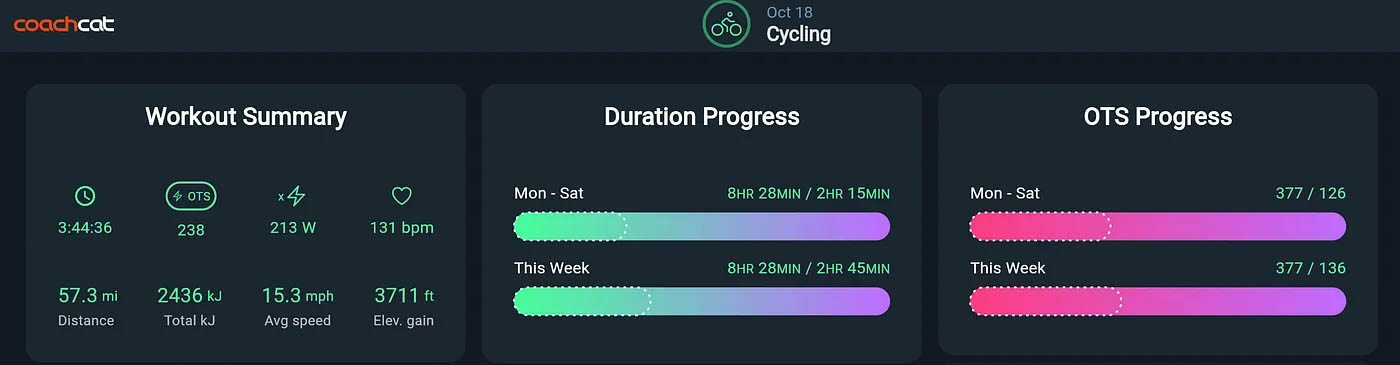
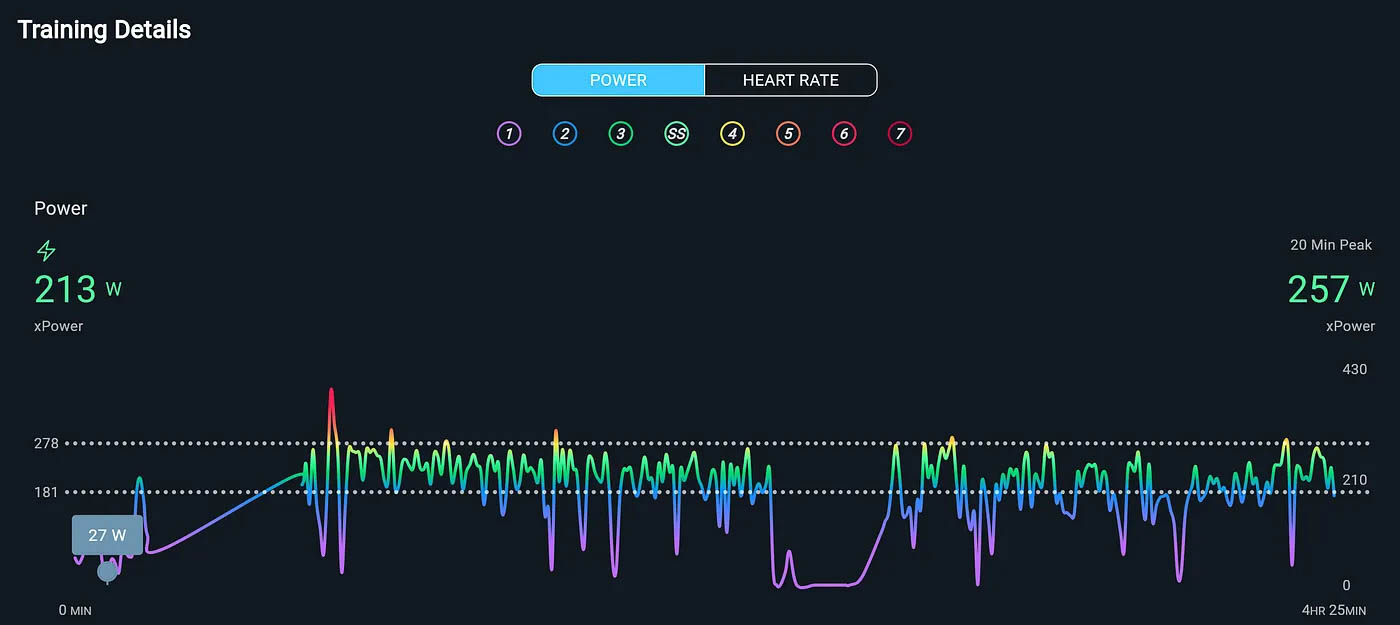
The FasCat app is generally well designed and easy to use. It seamlessly synchs with my Wahoo computer, so workouts are automatically uploaded to the app. My computer is also connected with my Strava account, so one issue I saw immediately is there was a lot of data to look at on different platforms. Frank has come up with his own version of the TrainingPeaks training stress score (TSS) called OTS. Lots of cyclists, including me, have used TSS for years to understand how hard a workout is by combining intensity (HR) and duration. A long workout with an elevated HR gets a higher TSS than a short, easy workout. I even use the Sauce plugin for Strava so I can see TSS (and normalized power) in my Strava workouts. On top of all this, Strava has their own version of normalized power, called weighted average power. Which data do you pay attention to? There’s a lot of it. It’s borderline data overload, if I’m being honest.
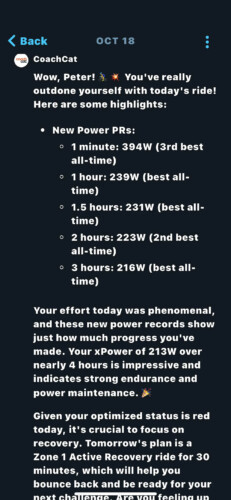
Strava is also starting to use AI, and it was interesting to see how FasCat’s AI workout description compared with Strava’s:
 |
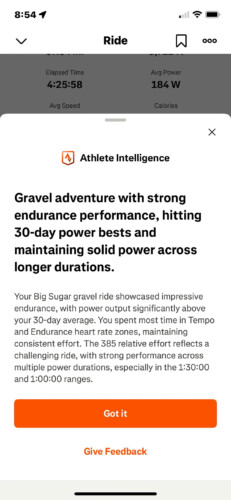 |
| The FasCat and Strava AI descriptions of the same gravel race | |
Here are my overall takeaways from training with FasCat’s AI-powered program:
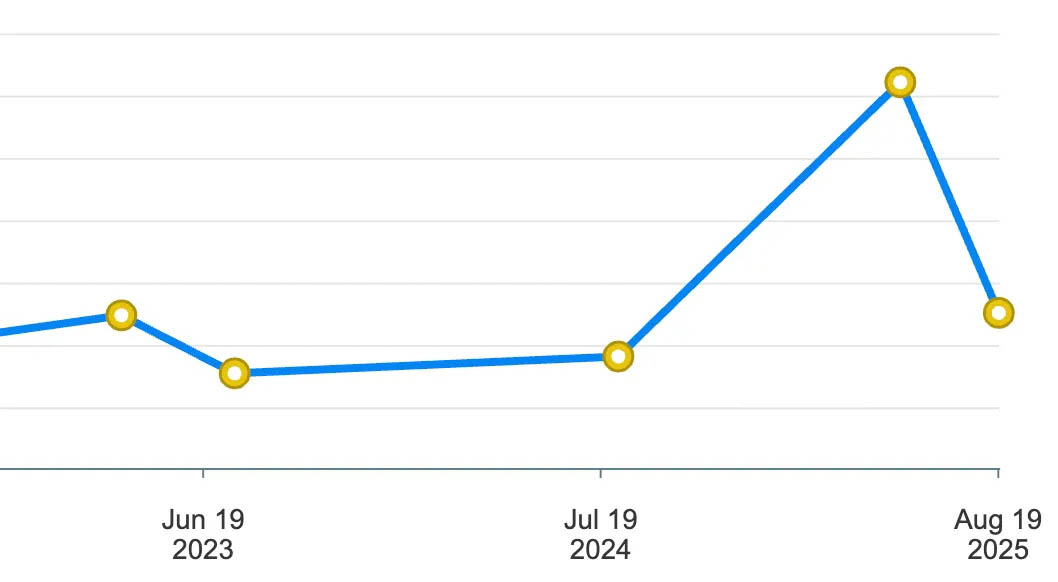
- It worked! I got really fit, and I felt like being on a training program was key to that. So chalk that up as a win. My 20-minute power increased by 20% (250w->300w) in five months, I lost 10 lbs, and my LDL cholesterol improved by about 10%. Imagine that: exercising and eating well are good for your health.
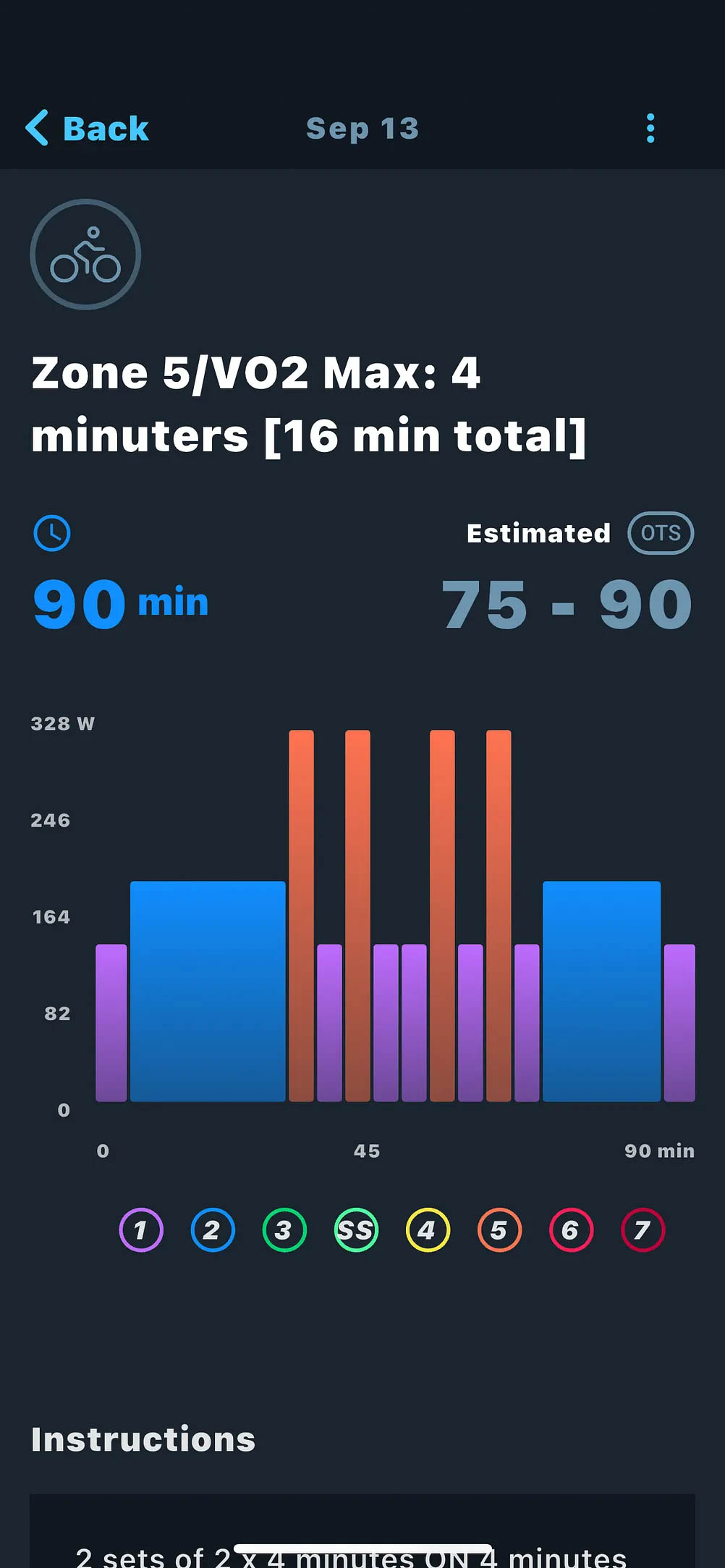
- Zwift integration — totally seamless. This came in really handy for intervals, which as designed are sometimes impossible to do outdoors. There’s so much variation in these interval workouts (particularly later in the training program) that you really need to do them on a trainer. With one click I could send the workout to Zwift and do the session there. That was great.
- Although FasCat says their app now updates your FTP automatically, based on your riding, I did not see this and had to go in periodically to manually raise my FTP, so the target power in workouts created by the program was appropriate. This felt annoying.
- Having to do periodic power tests (20 minutes all out up a climb so you can extrapolate your FTP) is, on one hand, stressful. I’d start worrying about these workouts a couple days ahead. But on the other hand, the numbers don’t lie and you learn a lot about where you stand at that point in time. And 20-minutes all out is a great workout on its own.
- Telling the AI in the app about how I felt (“I’m too tired to complete today’s hard workout”), so it could adjust my plan, seems smart. And the FasCat app was good at asking if I wanted to take a rest day. But often going through this turned into a task (either talking to the app or writing it in) I just did not have time or energy for.
- I do not use HRV (Oura Ring or Whoop Band), and the FasCat app does have a place to integrate this data. So I did not get that level of AI recovery analysis. But every morning I entered my hours of sleep, which is interesting to see. I consistently averaged 7.5–8 hours of sleep throughout the program. Sleep tracking is something I’ve never done before.
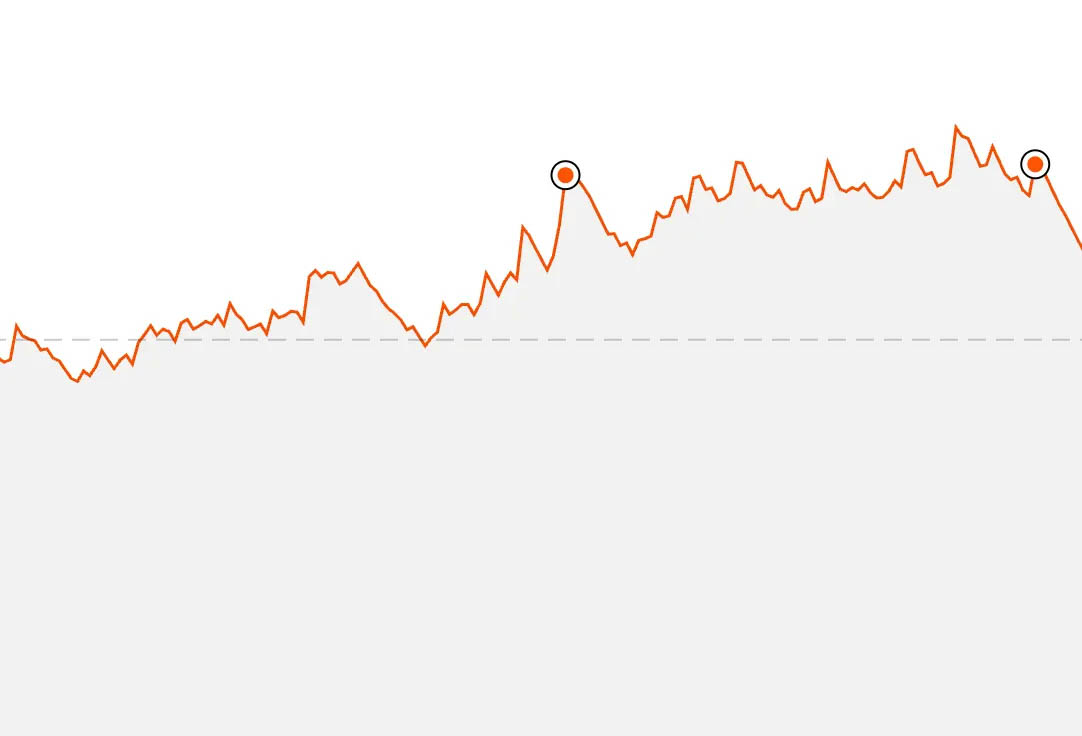
- FasCat tracks your fitness in real time with a feature called “Level.” I found this a little misleading, as this chart shows your training algorithmically by adding up your OTS scores (see above). It’s similar to cumulative training load (CTL) on the Training Peaks platform. And while this level number SHOULD track with your FTP, that was not the case for me. As my FTP was increasing the level graph was trending down and to the right.
- Even though I did not utilize all of the app features, I assume (but I’m not sure) that AI was subtly adjusting my training based on what it was seeing in my riding. That’s cool and a huge step up from the old “here’s your training on a pdf” kind of plan.
 |
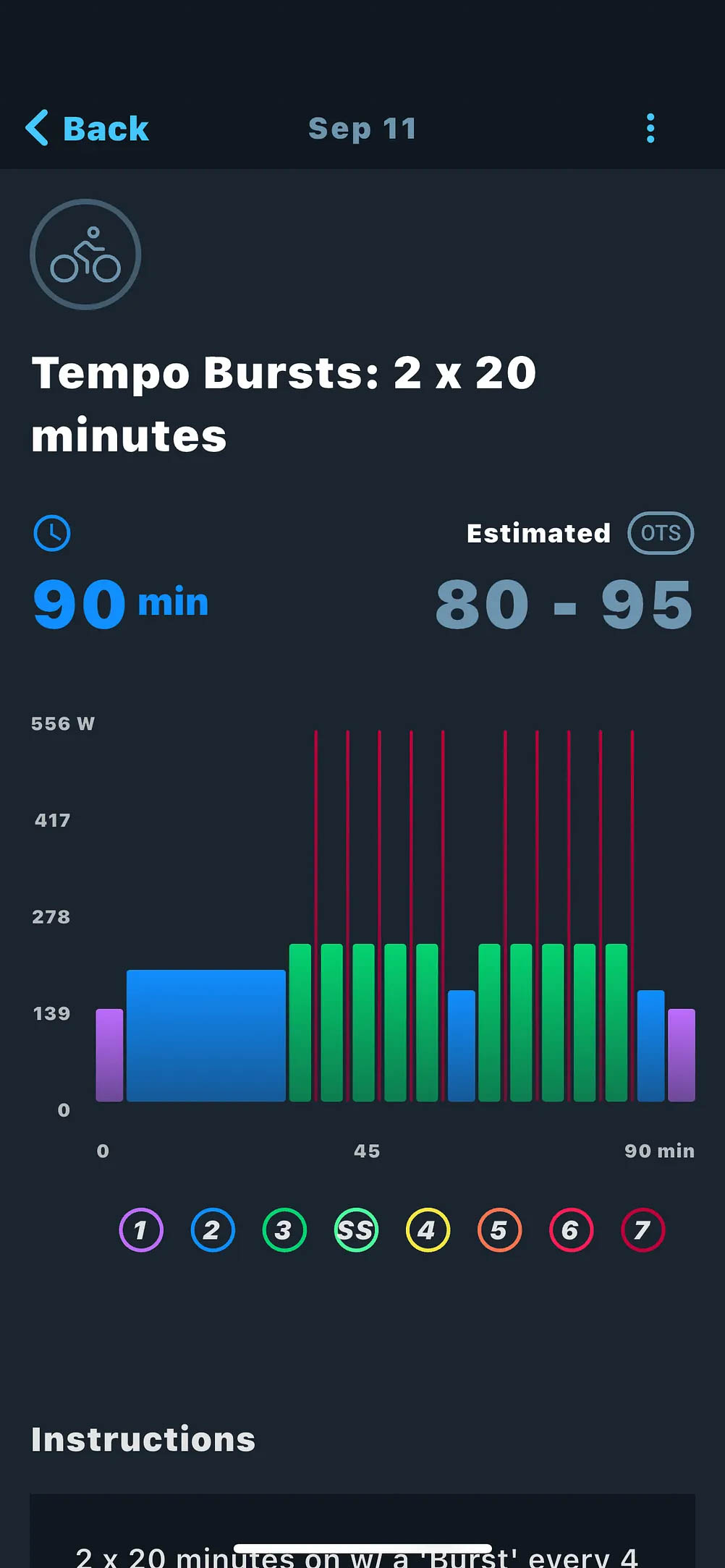 |
| Two of the interval workouts from the FasCat app. I dare you to get these done while riding outdoors. | |
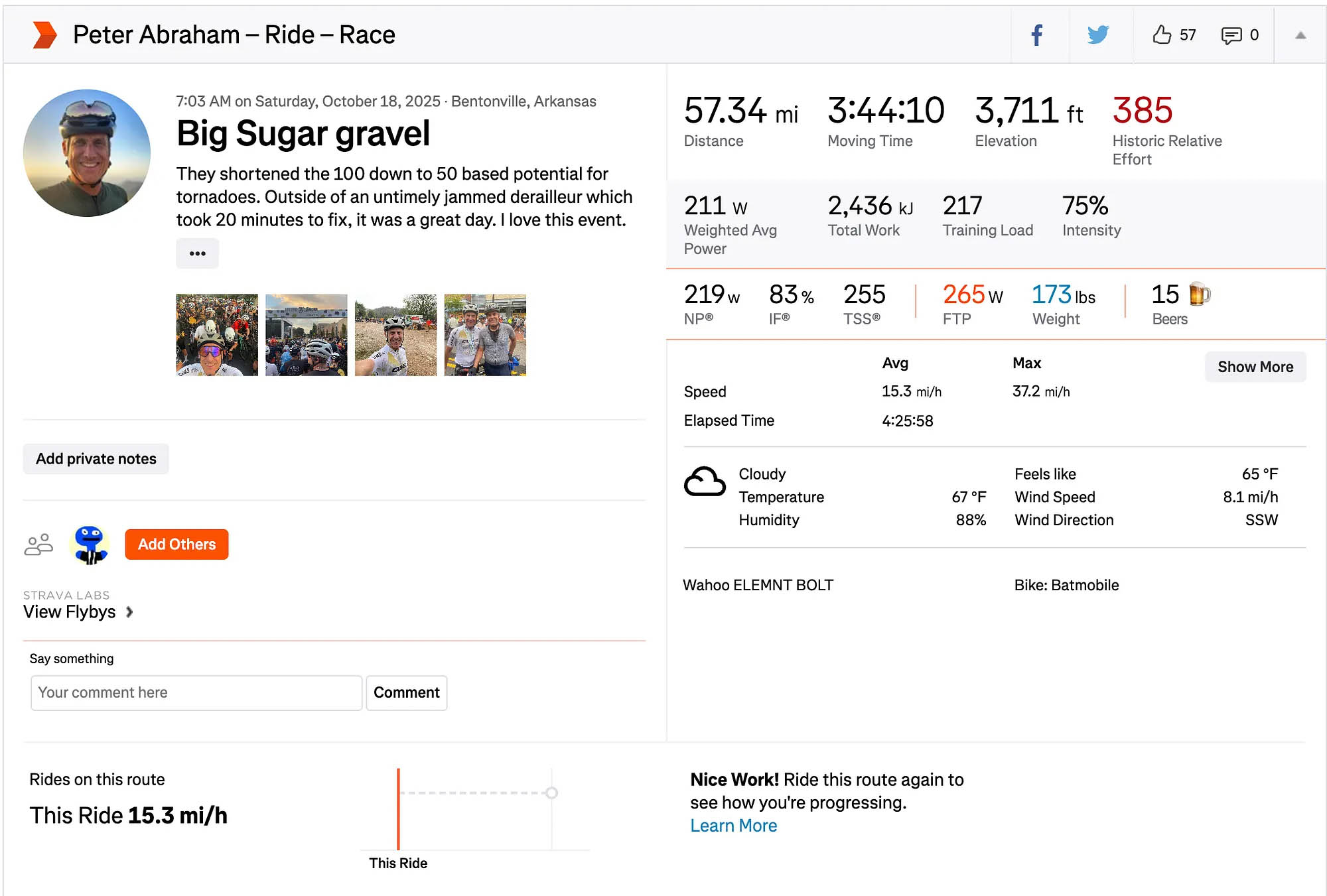
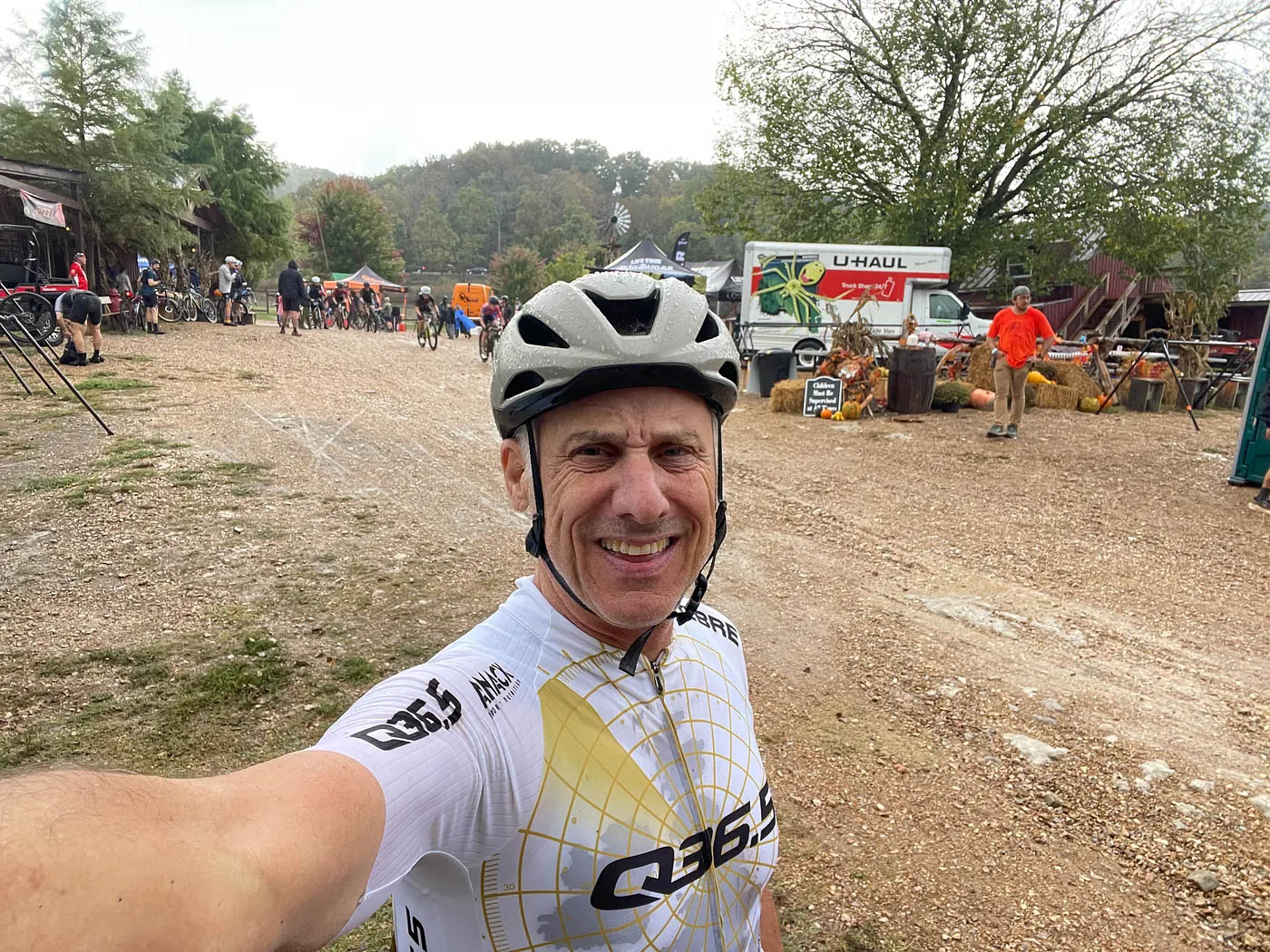
So how did the race go? Just before we took off at the start, we were informed that they’d shortened the 100 mile race to 50 miles, due to the potential for tornadoes from an incoming storm. Not surprisingly the race took off very, very fast. Overall I felt great, and my power numbers were good. But my derailleur got jammed into my freewheel just after the aid station in the middle of the race. So that was about 20 minutes while I walked back half a mile to the Shimano aid station for a fix. I had to let go of my goal to finish in the top 10 of my age group. And given my pace, I’m not sure I would have accomplished that anyway. Mechanicals are part of the gravel experience, so you just have to take these things in stride and enjoy the day. It was still a great day on the bike.
 |
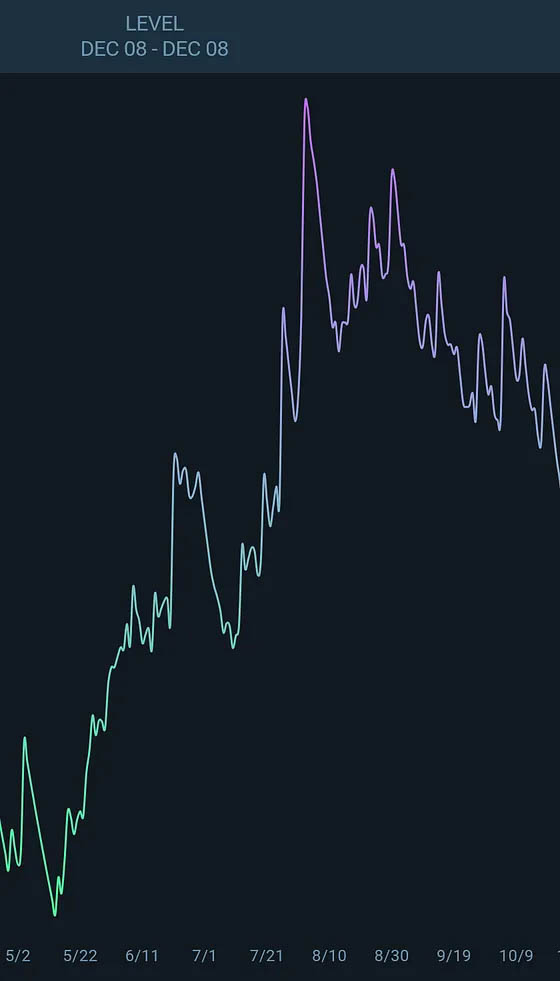 |
| My May to October fitness as tracked on Strava (“fitness and freshness”) and the FasCat app (“level”). I found the Strava chart to be more accurate in terms of my fitness. |
|
While I would change a few things about the FasCat experience, it really does work. Importantly, I’ve just started my next training block on the app, and I look forward to coming back to Big Sugar in 2026 and going for that top 10 result.
[Editor’s Note: Cycling West believes that AI can be a useful tool for many things, but should never replace human interaction and interpretation. Without knowing for sure if the AI adjusts training plans based on his daily number, the way a human coach would, there’s a very real possibility it could cause riders to push themselves too hard, causing injury.]