
By Dave Campbell — From 1975 through 1988, the premier American cycling event was the Coors International Bicycle Classic. Initially, it was a weekend event held in and around Boulder, Colorado, known as the Red Zinger and sponsored by the Celestial Seasonings tea company. Both paralleling and stimulating explosive growth in American cycling, the event seemed to get bigger and better every year. By 1978 the race was the premier women’s event in the world, became the Coors Classic in 1980 with an ensuing bump in sponsorship dollars, and by 1983 it was ten stages long and had expanded into neighboring Wyoming. In 1984 the event was the key pre-Olympic tune-up for most of the world’s amateur National Teams coming to race in the LA Olympics. The 1985 event expanded to two weeks and traveled from California and across Nevada before ending with the now well-known Colorado stages. 1985 also saw La Vie Claire, the best professional team in the world, take part with the two best riders in the world—Bernard Hinault and Greg LeMond. LeMond’s overall win added even more luster to the prestige of the race. By the following year, nearly all the best riders in the world were at the Coors, using it as their final preparation for the World Championships in Colorado Springs. This time Hinault triumphed, and many called it the fourth most prestigious stage race in the world.
In 1987, however, race promoter Michael Aisner finally had an unlucky year and, in Hollywood parlance, “jumped the shark.” He expanded the race again, this time starting the men in Hawaii. The extra expenses and lack of sponsorship meant the best European riders stayed home, and only 59 riders competed in the sixteen-stage event, while the women’s event maintained its status with ten stages in Colorado. By 1988 Coors passed on the automatic renewal option, and the event took on a last-minute amateur sanction to cut expenses. Many worried that the end of America’s flagship event was near. Ultimately, 77 men (25 pros and the rest amateurs) took the start in San Francisco in mid-August for a fourteen-day event featuring 1,077 miles and nearly 60,000 feet of climbing.
Davis Phinney discovered the sport of cycling when he saw the event pass by his house in 1975 and, by 1988, he was racing in his eleventh edition. Phinney had become synonymous with the Classic and had won the points jersey every year since 1981, as well as taking a record fourteen stages, but his best overall placing was ninth. He was, after all, primarily a sprinter, and the Coors involved major climbing. He suffered a horrendous crash in April of 1988 when he smashed into the back of a team car while attempting to chase back to the peloton in a Belgian Classic. He broke his nose, severed a muscle in his arm, and ultimately required 150 stitches, mostly to his face. Undeterred, he was back on his bike in a few days, racing again in ten, and winning within a month. In May he helped his 7-Eleven teammate Andy Hampsten win a historic Giro d’Italia, and in July he finished his first Tour de France, notching four top-five sprint finishes and ultimately ending second in the points competition. He hadn’t finished a Grand Tour since 1985, let alone two, and he finished strongly, notching fifth in the final charge up the Champs-Élysées. He was, quite simply, in the best form of his life.
Phinney’s teammate Ron Kiefel had won the Coors prologue four of the previous five years, but this time Davis pipped his good friend by two seconds to take the first leader’s jersey at San Francisco’s Coit Tower. Their main challenge appeared to be the feisty Alexi Grewal, leader of the Colorado-based Crest team, who was openly disdainful of the too-often domestically dominant 7-Eleven squad. Tour de France veteran Pablo Wilches led the Colombian Postobon-Manzana professional team, and there was also a Colombian National Amateur team headed up by the up-and-coming Oliverio Rincón to contend with. The Dutch National Amateur team, the U.S. Olympians, and the usual strong domestic squads rounded out a solid if not spectacular field.
7-Eleven’s Jeff Pierce, who led most of the 1987 race before finishing second overall, broke clear to win the opening road race around the Presidio and take the overall lead, but then the amateurs began to shine. U.S. Olympian Craig Schommer used his significant speed to come around Wheaties-Schwinn fast man Tom Broznowski to win the following day’s circuit race in Oakland. Day three was a spectacularly scenic road race through the redwoods of Sonoma County into Santa Rosa, and Schommer’s teammate Gavin O’Grady triumphed from the breakaway while Hampsten took over race leadership. Another Slurpee, Roy Knickman, powered away from a breakaway group for a solo win into Sacramento the following day with no change to the overall. Phinney earned bonus seconds when he notched another win in that evening’s criterium in Old Sacramento, with U.S. Olympian and future teammate Scott McKinley close behind. Hampsten stayed in the lead the following day as Pierce won the nearly 120-mile stage from Nevada City to Squaw Valley in front of Colombian Arcenio Chaparro.
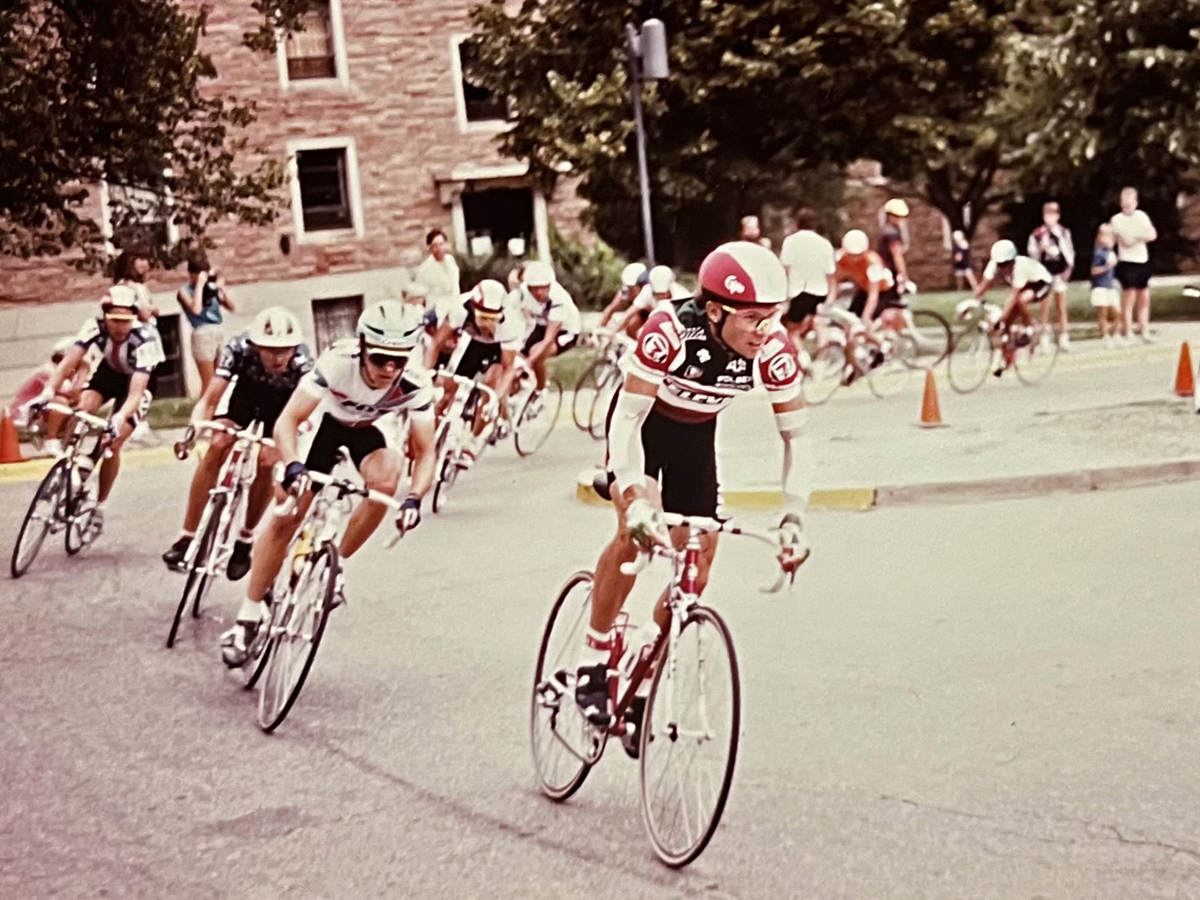
Stage 6a from Squaw Valley to Sparks, Nevada, saw nine riders move clear on the long climb towards Geiger Summit, including 7-Eleven riders Phinney, Kiefel, and Alex Stieda. With Hampsten and Pierce remaining in the main field, this would allow the team to bring more riders up the General Classification—except Phinney and Kiefel were dropped sixty-five miles in. Ahead were danger men Grewal, Wilches, and solid U.S. pro Bruce Whitesel. With only Stieda left in the break, and Pierce and Hampsten seven minutes behind, 7-Eleven was in trouble. Phinney, however, was a stronger and more well-rounded rider in 1988 and chased for eight miles through Virginia City, not only catching back on but ultimately attacking in the final miles to win the stage and move into second overall behind Stieda, the new race leader by 1:04. German Roland Gunther won the evening criterium in Reno, and the race moved into Colorado where Irishman Alan McCormack won the Tour of the Moon stage in Grand Junction.
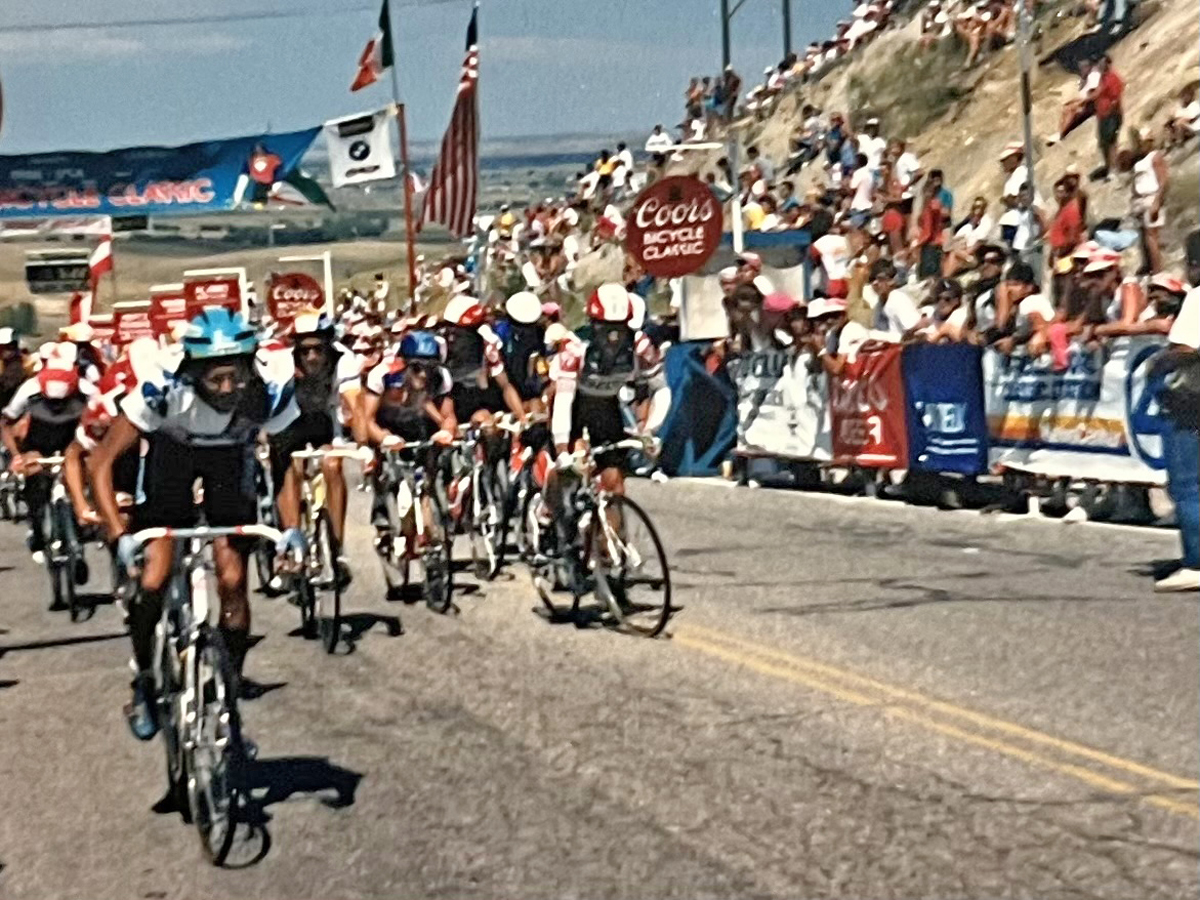
Grewal lost valued climbing teammates Glenn Sanders and Michael Carter to injury but was far from giving up his challenge and continued to attack at every opportunity. Despite his newfound climbing ability, however, Phinney showed he was still the king of the criteriums, and in Grewal’s hometown of Aspen no less. He spent 42 miles off the front, winning the stage and moving to within four seconds of Stieda’s overall lead. On the following day’s mountainous 107-mile road stage from Aspen to Copper Mountain, Grewal once more led an attack with the Colombians and held a four-minute lead over Phinney at the summit of 12,000-foot Independence Pass. The 7-Eleven squad rallied on the descent, leading a thirty-mile chase to close him down. Wilches survived for a solo win, but Phinney won a mid-race time bonus in Leadville as well as finishing third on the stage (another bonus) to move into the lead by six seconds. Even a downcast Grewal, second on the day and now fourth overall, was complimentary about the way his rival was riding.
Copper Mountain had become Phinney’s second home and the site of training camps with his wife Connie Carpenter, and it was here that he seemed to really start to consider the possibilities of winning. Despite “being pretty much tied with my twin brother Alex”—the one rider who had stayed with him and ridden along to the hospital in that ambulance in Belgium—he admitted he would “really love to win this race.” The next day’s time trial on Vail Pass would be decisive. Climbing specialist Hampsten won, with Rincón, now the KOM leader, just 14 seconds behind in second. Grewal was third, just 27 seconds in arrears, while two minutes further back, Phinney put another 12 seconds into his “twin brother,” and the team now put all their considerable resources behind his victory bid.
Disaster struck that very afternoon in the Vail Village Criterium, one of Phinney’s happiest hunting grounds over the years, and he desperately needed his teammates’ help. He had problems with his rear wheel early on, and Pierce dropped back to give Phinney his bike and then later helped him chase back on. The quest for every Slurpee to win a stage was thwarted when Bob Roll was relegated for an illegal maneuver in the sprint, giving McCormack his second stage victory.
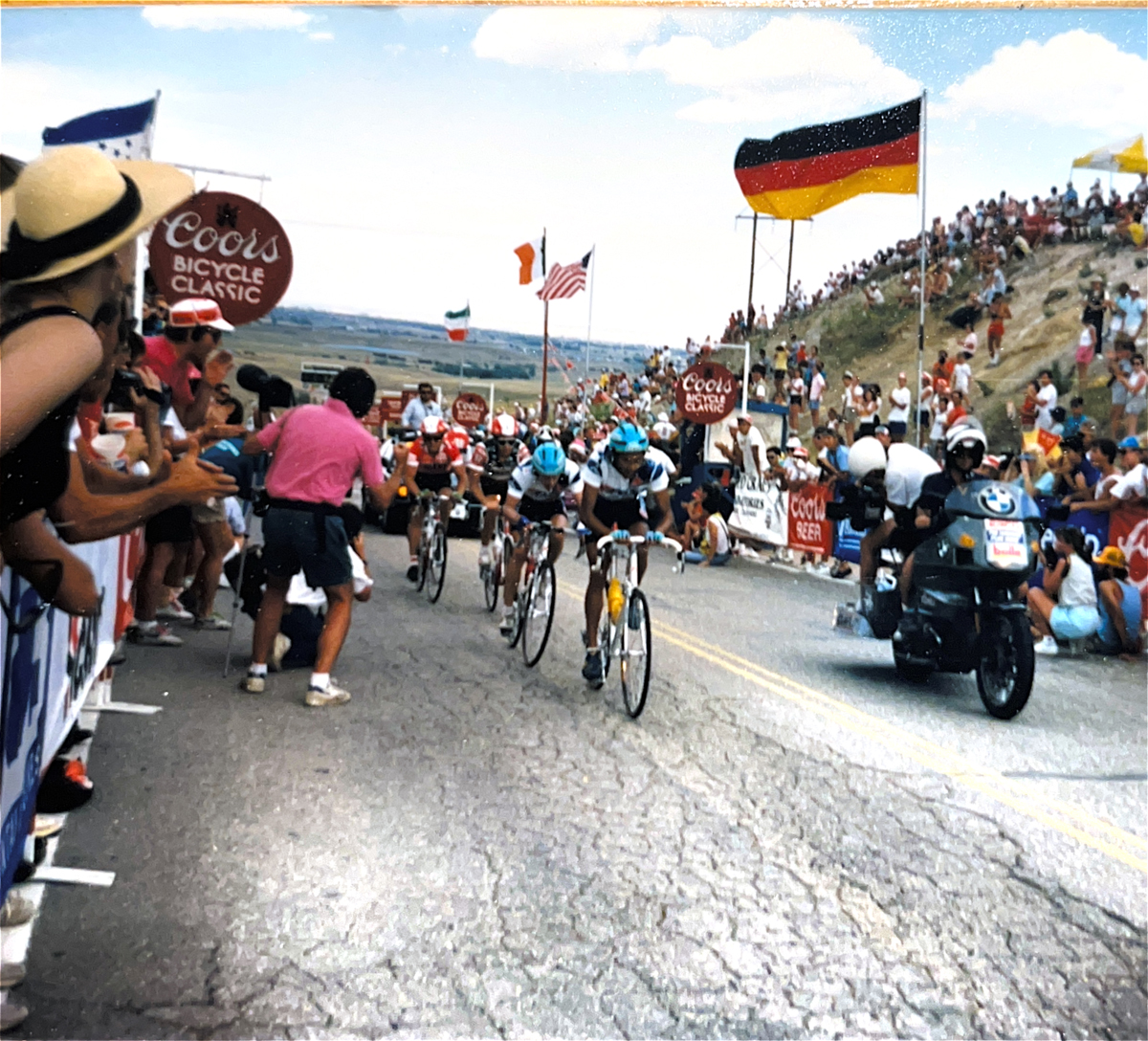
My friends and I traveled down from Wyoming to see the final two stages, the first the Morgul-Bismarck circuit road race outside Boulder and a new final-stage criterium around the campus of Colorado University. The Morgul, named after a local rider’s cat and dog, was a long-time staple in the Coors, and typically the last road stage. In 1988, it was Crest’s last chance to upset the Slurpees. The 13-mile rolling circuit is open, windy, and can get quite hot as riders cover eight laps for over 106 miles. But the biggest features are the two climbs at the finish, first the small but taxing “hump” and then the mile-long “wall” to the finish that gains nearly 350 feet, peaking at 15%. When I first rode it in 1983, some joker had painted “beam me up Scotty” on the steepest pitch! The Crest team put team riders Chris Bailey in the break and Todd Gogulski in a chase group, ready to help when Grewal attacked and bridged up, hoping to erase his 2:20 deficit. He tried repeatedly with mighty attacks up “the wall,” but Hampsten and Phinney thwarted his every move. Phinney then rubbed salt into the wounds by leaving Grewal behind at the finish to take fourth on the stage, ultimately scoring ten top-five finishes in the sixteen stages.
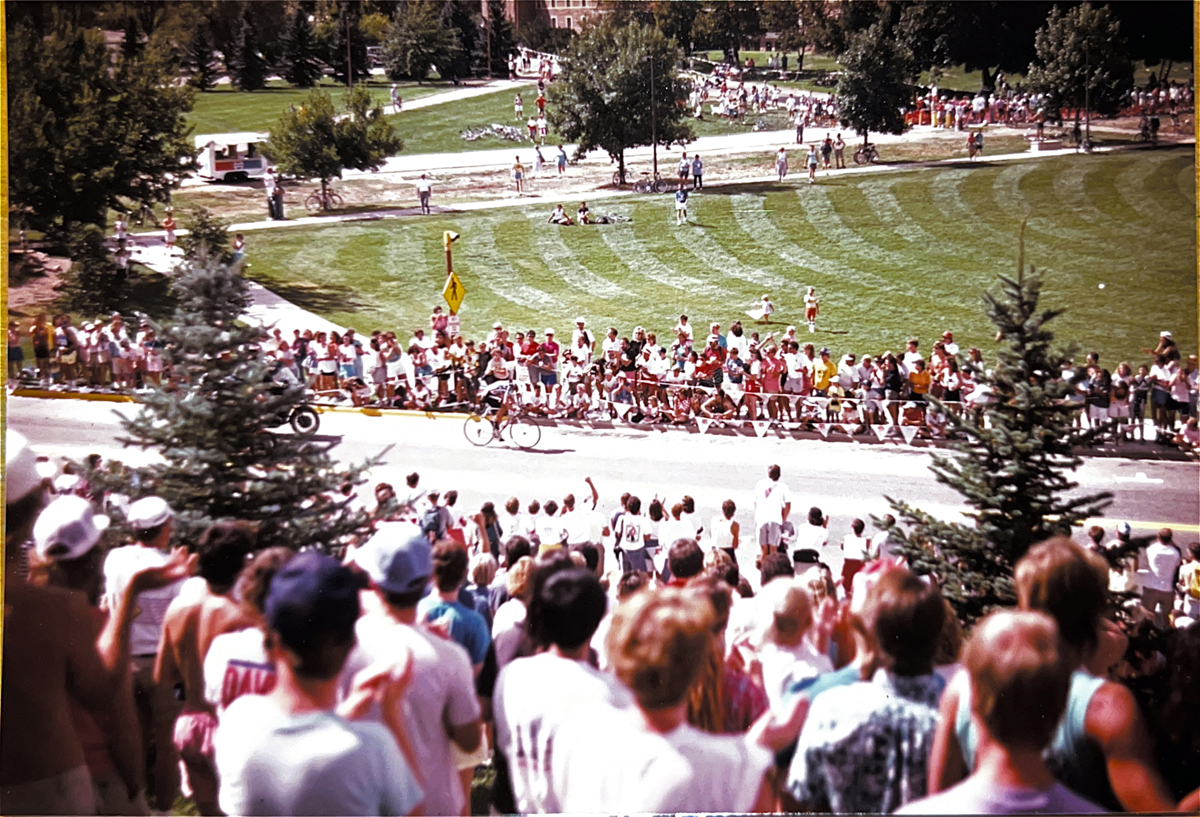
The crowds at CU were massive, reportedly numbering 35,000 to 40,000, which topped the legendary masses that would gather in North Boulder Park. Ron Kiefel broke away with McCormack to ultimately win solo in his stars-and-stripes jersey as reigning National Champion, and Phinney took the field sprint for third. As he joyously thrust his arms skyward to celebrate the overall victory, who should throw his bike at the line just inches behind in fourth? The never-say-die Alexi Grewal, of course, the highest-placed non-7-Eleven rider overall in fourth place. The Slurpees swept the final podium behind Phinney, with Hampsten placing second and Stieda in third. When Phinney was given the keys to the cherry-red convertible BMW awarded the race winner, he joyously handed them over to “Och,” who was delighted.
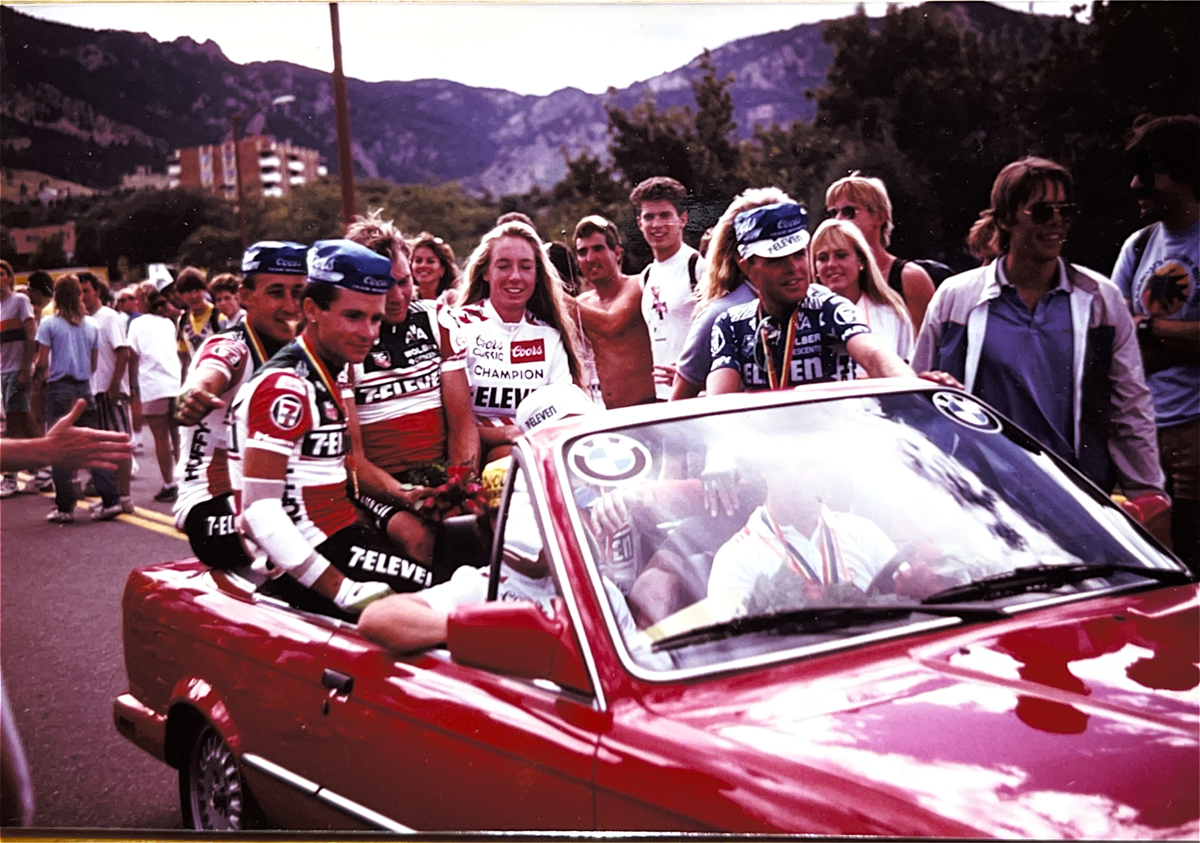
The crowd parted, the boys all piled in, and team member Inga Thompson jumped in as well. Preparing for her second Olympics, she triumphed over a star-studded women’s field, winning overall by a minute ahead of Kiwi Madonna Harris. Her win in the 264-mile Women’s race, replete with 17,000 feet of climbing, was the first by an American woman since 1983. The 1988 event ended up being the final edition of the storied American race, while Coors stayed involved in cycling, choosing instead to put its marketing dollars into the Coors Light cycling team, seeing the benefits of year-round brand exposure rather than just two weeks in August.
It seemed only fitting that the boy from Boulder who grew up with the race became its final champion, just as the curtain fell on America’s grandest stage race.