
[Editor’s Note: With Tadej Pogačar winning his first race of the season at this past weekend’s Strade Bianche, it seems appropriate to have a look back at his 2025.]
By Dave Campbell — Most cycling historians have long held Eddy Merckx’s amazing 1972 season as the greatest single year of performance in Professional cycling. Slovenian Tadej Pogačar clearly achieved similar heights this year. In my mind, 1972 and 2025 represent the two greatest seasons in the history of Professional cycling.
To be clear, ranking cycling accomplishments from different eras remains a fool’s errand. So many aspects of our sport have changed. Riders in Merckx’s era raced more often but faced a much smaller and less international peloton. Equipment, nutrition, and training methodology have vastly improved, and premier events now enjoy much higher levels of support and organization. While both riders competed in the Monuments and Grand Tours, other important events like the Montjuich hill climb and Baracchi Trophy have disappeared, and newer races such as Strade Bianche now command high esteem. Nonetheless, analyzing what both men achieved in their respective eras proves not just interesting but informative. The parallels and similarities strike me as quite remarkable. I make no claims about which rider achieved more, simply laying out the statistics for readers to judge (or not) as they will.
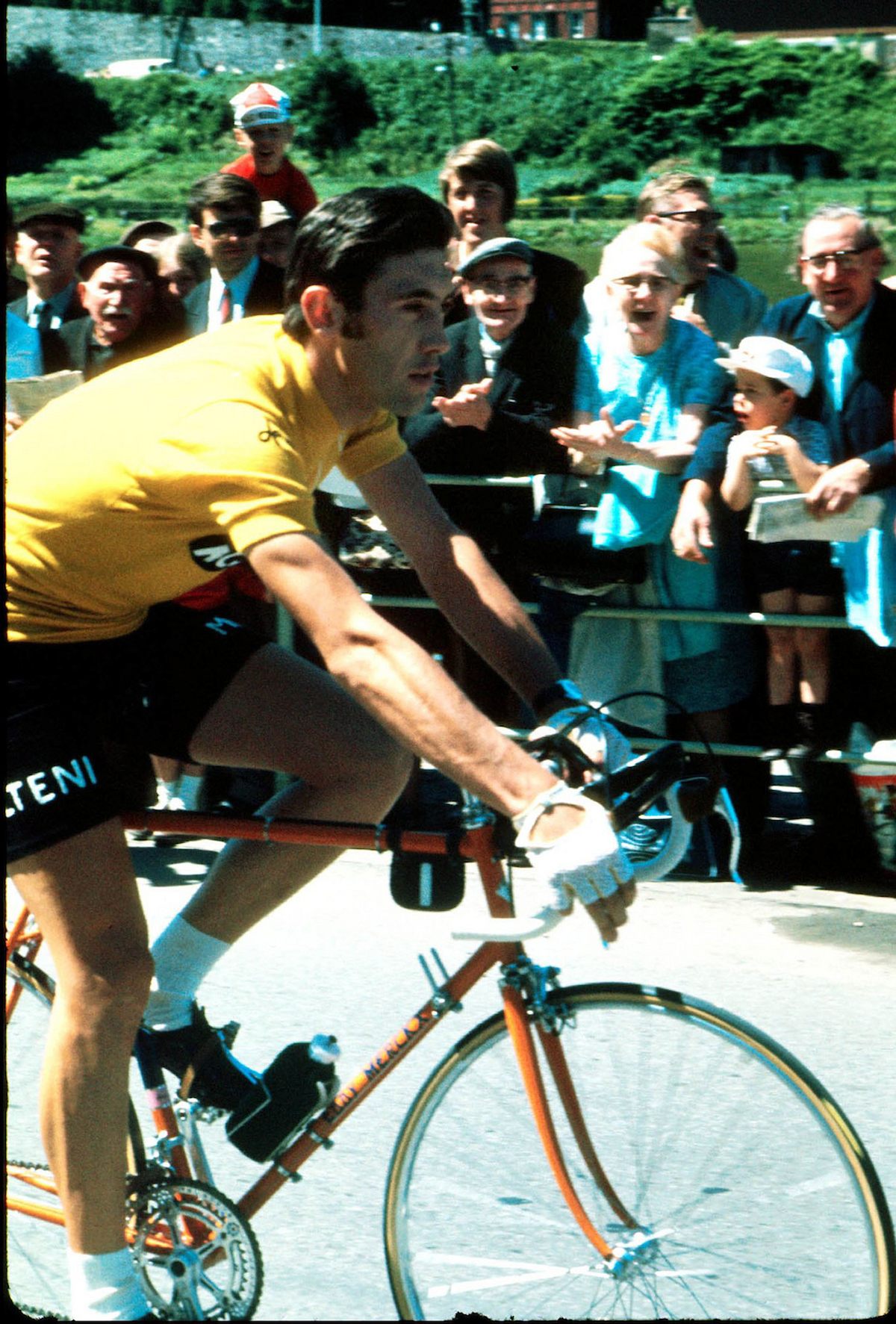
Both riders began racing in February wearing the rainbow stripes of defending World Champion and would turn twenty-seven during their respective monster seasons. Tadej began winning almost immediately, taking stages three and seven enroute to the overall win at the UAE Tour to launch his season of immortality. Eddy, on the other hand, opened with the Trofeo Laigueglia one-day race in Italy, finishing third, then rode the Tour of Sardegna, notching three top-ten stage results but finishing just 33rd overall. Het Volk saw him finish third again, with his first win coming on his eighth day of racing at the prologue of Paris-Nice, where he would win two more stages enroute to second overall. In very non-Merckx-like fashion, he lost the leader’s jersey on the final time trial. Pogačar, in contrast, won his next race, the “new classic” Strade Bianche over the white gravel roads of Tuscany.
Thus, Pogi began Classics season with four victories under his belt while the Cannibal had three. However, Merckx won Milan-San Remo for the fifth time in dominating fashion while Pogačar’s constant attacks could not dislodge Mathieu Van der Poel, undoubtedly the finest Classics rider of his generation, leaving him second. Merckx, for his part, distanced Roger DeVlaeminck, one of only three cyclists in history who claimed all five monuments.
Pogačar tackled Flanders next, indicative of the modern approach of racing less and targeting the biggest events. He triumphed decisively while Merckx managed only seventh. The Belgian, in contrast, had first tackled three prior semi-classics, earning two second places and winning Brabantse Pijl. The Cannibal then notched third in the (then) mid-week Ghent-Wevelgem before finishing seventh in Paris-Roubaix. Pogi skipped Ghent but achieved a fine second in his debut at the “Hell of the North”. All-time greats DeVlaeminck and Van der Poel defeated both riders, respectively. Both riders dominated in the Ardennes, winning Flèche Wallonne and Liège-Bastogne-Liège. Tadej finished a close second at Amstel Gold whereas Eddy missed the Dutch Classic but notched a second place at the now-extinct German Classic Henninger-Turm. Both riders won two monuments in their spring campaigns and stood equal on victories with seven at the conclusion of the spring classics.
At this point the differing approaches of each era become most clear as Pogačar took a six-week hiatus from competition while Merckx never went a week without racing and notched another win (GP Momignies) before tackling the Giro d’Italia. The Cannibal tore through the Italian Grand Tour, claiming four stages and wearing the leader’s jersey from stage seven to the finish in Milan in mid-June. Pogačar resumed racing in mid-June, and he picked up where he left off, winning the first stage of the Dauphine in France. After claiming two more stages, he won the race overall as well as the Points Classification.
Merckx took a rare two weeks away from racing after the Giro but then finished second in his National Championship prior to starting the Tour de France the following week. Pogačar, in contrast, had no more racing prior to his attempt at a fourth Tour win. Eddy faced a field of 132 riders in 1972 from nine different nations as he also chased his fourth Tour victory. Pogačar, in contrast, competed against 184 riders from twenty-seven different countries, highlighting the growth and globalization of the sport.
Merckx won the Tour’s opening prologue, and his Molteni squad claimed the Team Time Trial. Five more stages went his way enroute to overall victory, the points jersey, and a staggering seventeen days in the yellow jersey. Pogačar proved not quite as dominant, claiming four stages, notching thirteen days in yellow, and claiming the mountains jersey in addition to the overall title. 88 riders—66.7% of the starters—finished the 1972 Tour de France, which covered 3,846 kilometers. In 2025, in contrast, 87.0% of the starters made it to Paris after 3,302 kilometers of racing.
Whereas Pogačar, very vocal about his fatigue, took six weeks away from racing, Merckx won the Scheldeprijs a week after finishing the Tour and finished fourth in his World title defense the following week. In the final eight weeks of the season, he claimed a staggering twelve victories including every stage and the overall of the now-defunct Montjuich hill climb in Spain and the À travers Lausanne stage races. He won two Italian semi-classics (Giro del Piemonte and Giro dell’Emilia) before winning his third monument of the season with Il Lombardia and taking the Trofeo Baracchi two-man time trial with Roger Swerts. Capitalizing on his great form, he then set the Hour Record at the end of the season!
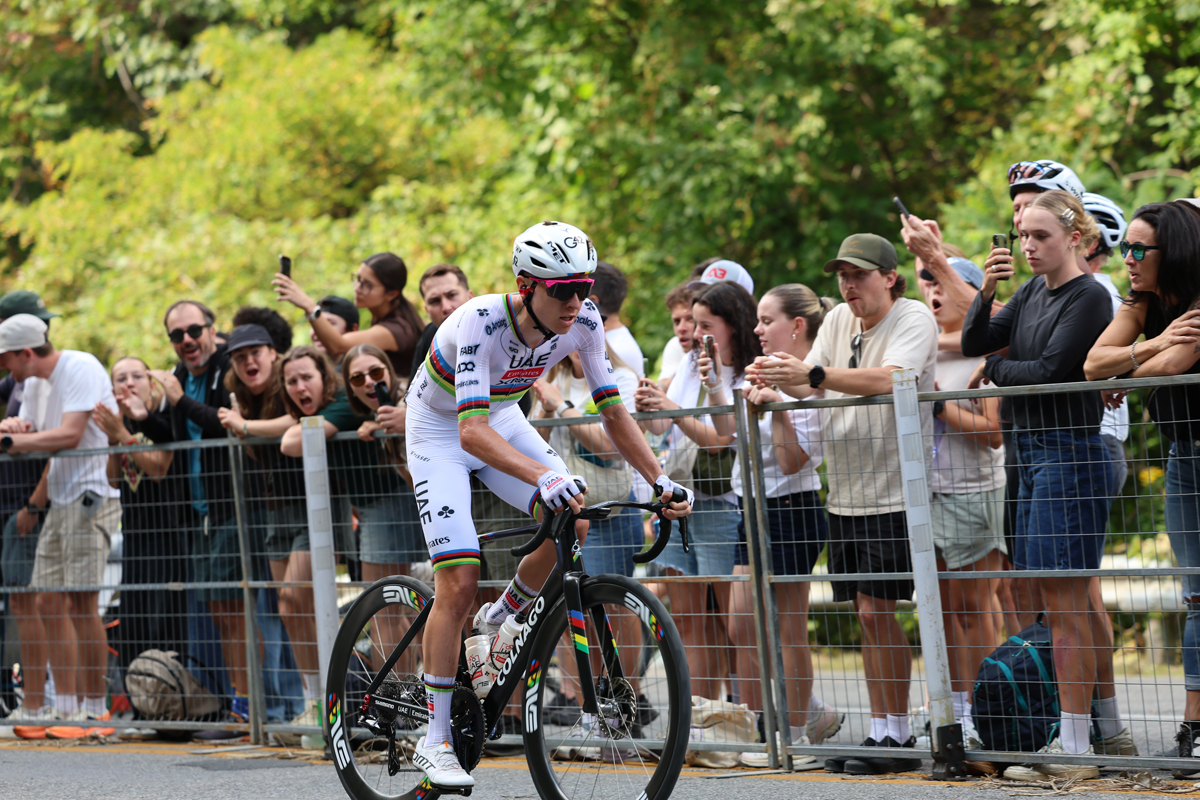
Pogačar returned to racing after the Tour at the two Canadian Grand Prix events which didn’t exist in Merckx’s day. He finished 29th in Quebec but then second in Montreal, after gifting the win to his teammate Brandon McNulty in a dominating performance. He appeared off his game with fourth at the World Championship time trial but rebounded with a performance for the ages, defending his title in the road race with an epic escape. Three more races to finish the year yielded three more wins at the European Road Championships, Tre Valle Varesine, and his third monument at Il Lombardia.
Despite some marked differences, many similarities emerge. Both riders claimed three monuments and won both Ardennes Classics. Both men won the Tour de France while taking an additional category (Points for Merckx and Mountains for Pogačar) as well as multiple stages (six for Eddy and four for Tadej). The second major stage race of the year differs notably—Merckx won the Giro while Pogačar took the Dauphine. Eddy wore the leader’s jersey on a staggering 32 of 43 days (74.4%) raced in the four stage races he won, while Tadej led 23 of the 36 (63.9%) days he raced in the three stage races he won. Pogačar went three for three on the stage races he contested while Merckx took four out of six.
The most striking result of this analysis remains the remarkable similarity between each rider’s win rate. Pogačar raced less, only fifty times, but won twenty races, achieving a stunning success rate of 40%. Merckx raced much more, notching eighty days of competition, but by winning thirty-four times, he won an astounding 42.5% of the time he raced. Adequate superlatives simply don’t exist for the staggering accomplishments of these two great champions. Just winning the events they claimed in ONE season would make for an outstanding career for a more mortal rider. Since I was too young to follow Eddy Merckx’s career, I feel grateful to have gotten to follow probably the only other rider at that caliber throughout an entire season of excellence. Chapeau to both campionissimos!
Source: www.procyclingstats.com