
Trail development to commence for world-class Northern California rail-trail system
UKIAH, California (20 March 2026) – The Great Redwood Trail Agency (GRTA) board approved its Great Redwood Trail Master Plan during yesterday’s meeting. After more than three years of robust community engagement and careful planning, the roadmap is set for designing, constructing, and managing the Mendocino, Trinity, and Humboldt County segments of the world-class, rail-to-trail project on the former Northwestern Pacific Railroad line in Northern California. This project achieves multiple goals at once: ecosystem restoration and protection, tourism and economic development, and major state investment in a rural region.
State Senator Mike McGuire celebrated on March 19th: “Today marks a major milestone for the Great Redwood Trail and for Northern California. This Master Plan is the result of years of hard work and partnership—bringing together thousands from across the region including Tribal and local government leaders, neighbors and outdoor enthusiasts to build a trail that will help advance generational change in the North Coast, spur economic development, create jobs, and provide the public unparalleled access to some of the most stunning landscapes in the world.”
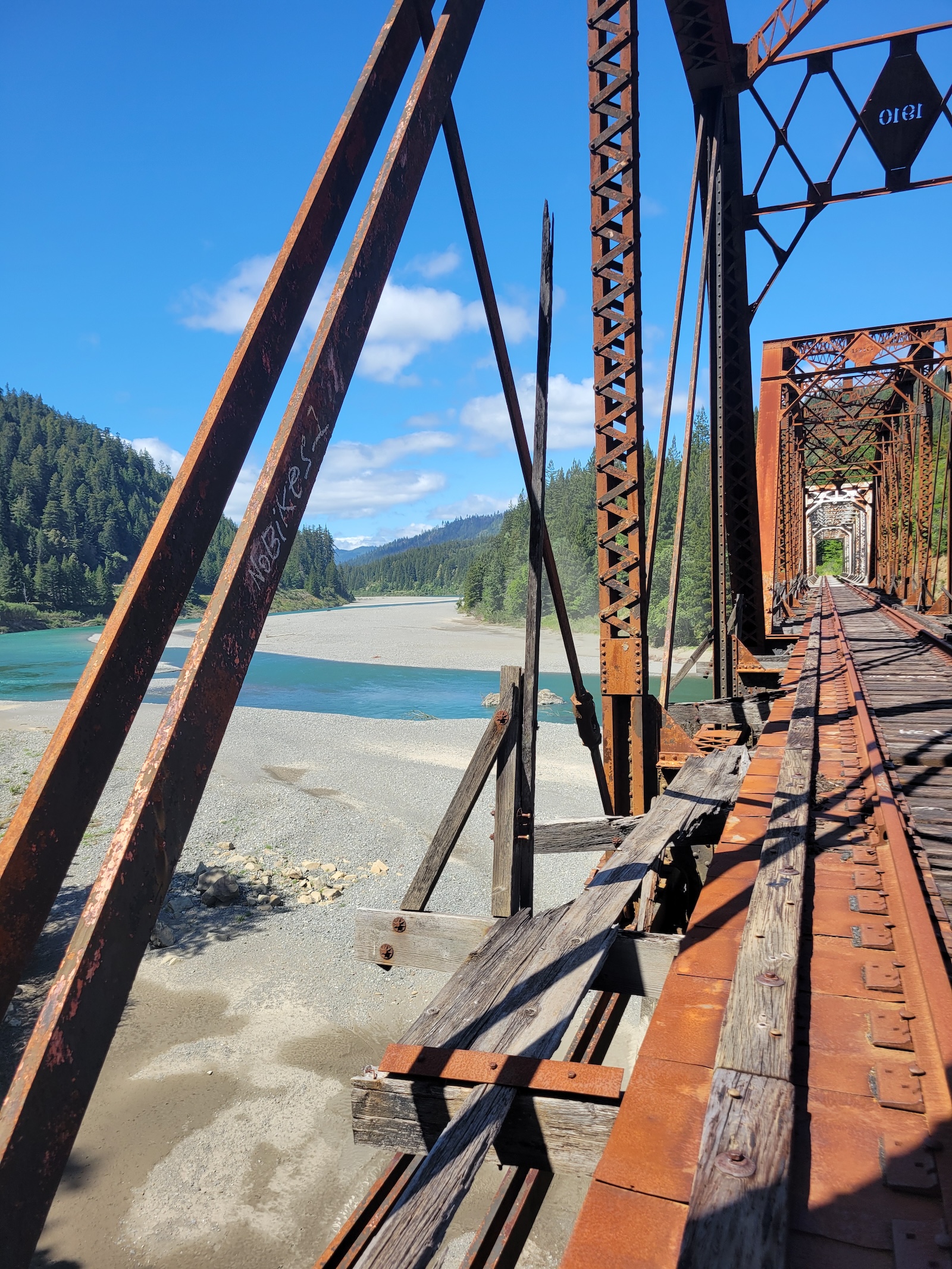
McGuire added, “As implementation gets underway, we’re not just building a trail but creating jobs, boosting tourism, and driving long-term economic growth in rural communities. The Great Redwood Trail is a once-in-a-generation investment, and I’m grateful to the thousands of residents who spoke out to shape this document and for the GRTA Board for helping bring this vision to life.”
“And stay tuned,” the Senator flagged. “Now that the Plan has been adopted, we’ll have another major announcement about the Great Redwood Trail soon.”
The Great Redwood Trail
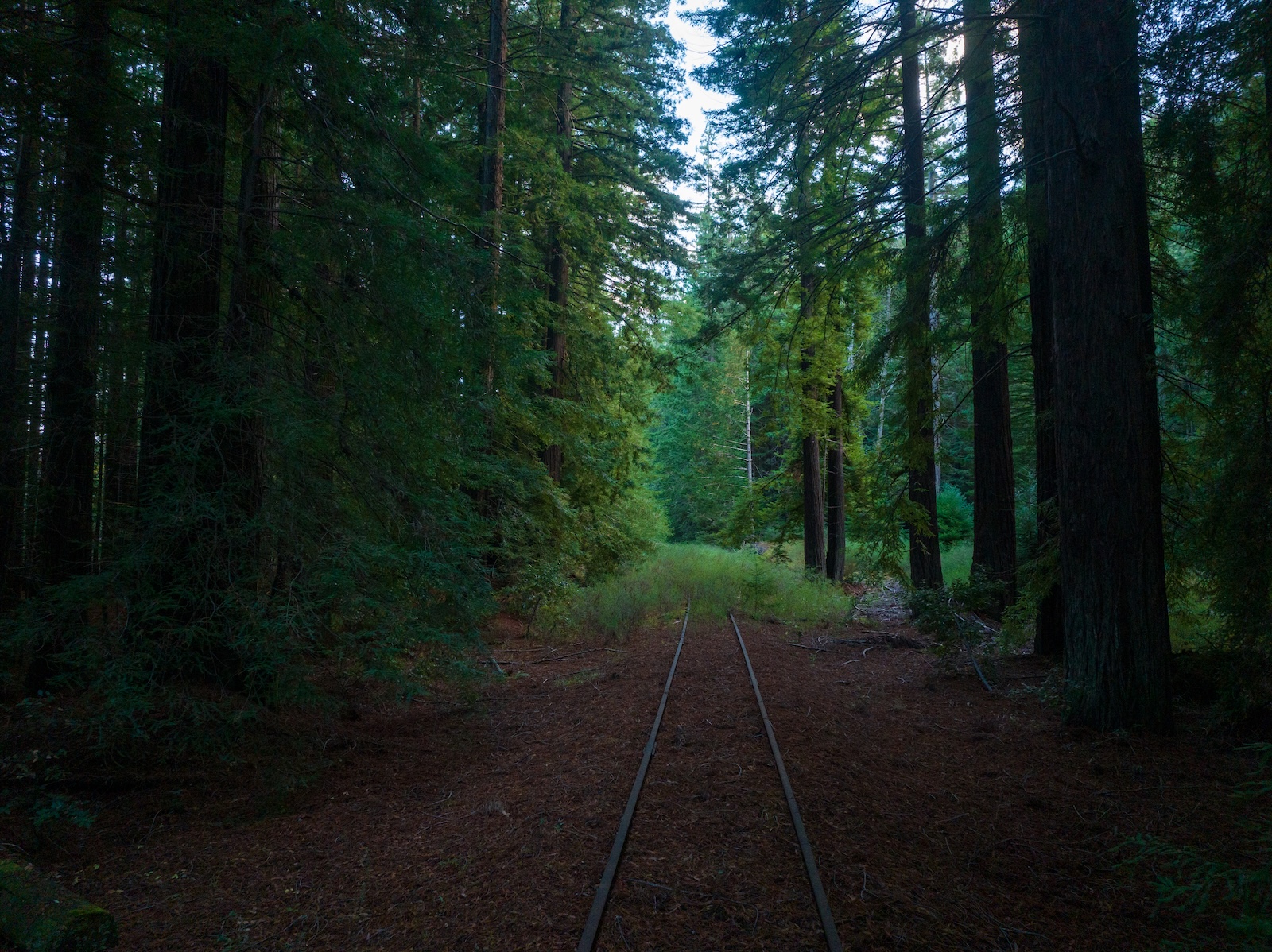
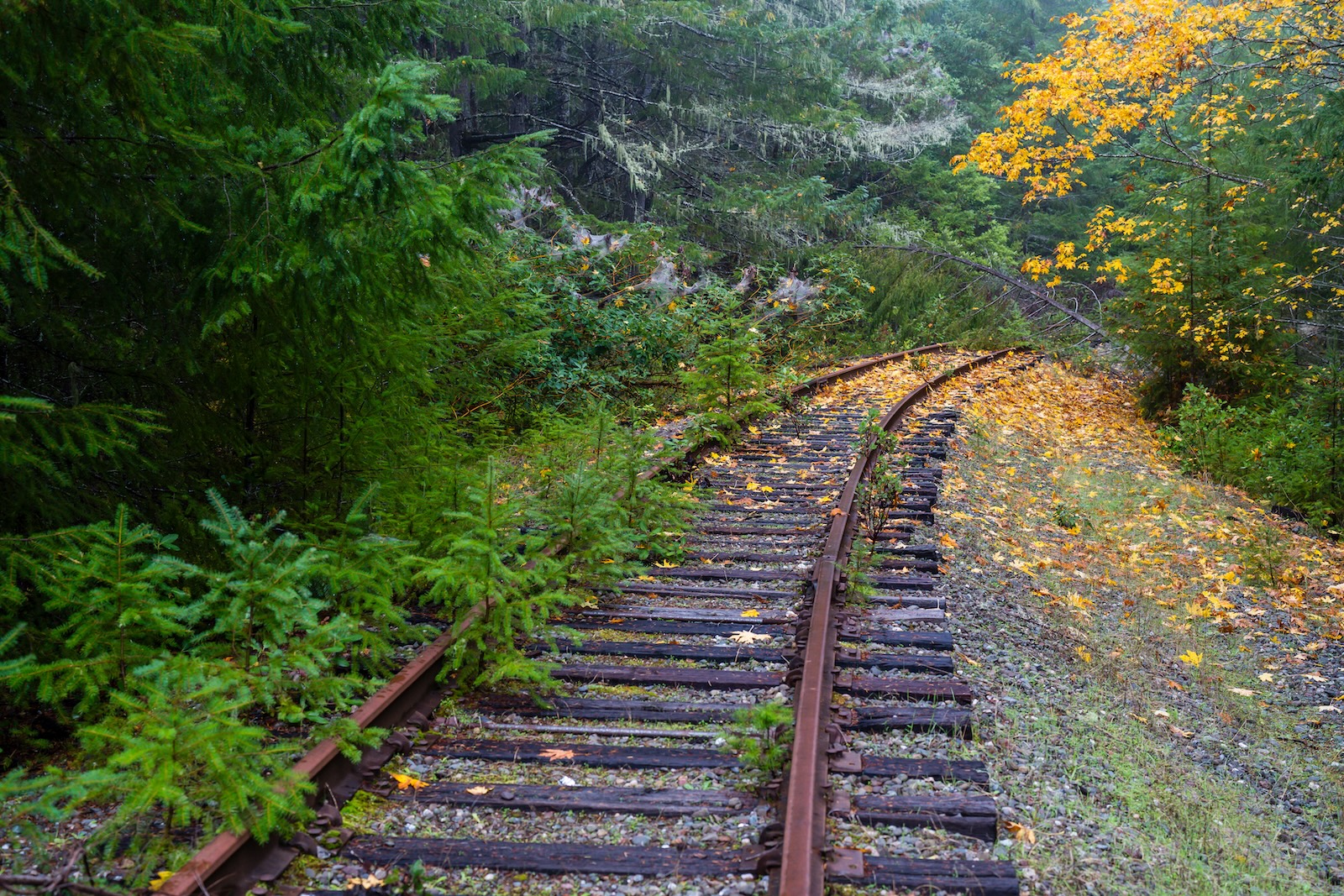
When completed, the 300-plus miles of the Great Redwood Trail (GRT) will be one of the longest rail-to-trail conversion projects in the United States, winding through five Northern California counties; from the San Francisco Bay through wine country, farm lands, mountains, Redwood forests, across rivers, to the Humboldt Bay and beyond. This newly-approved Master Plan covers 231 miles to be developed by the Great Redwood Trail Agency, traversing the northernmost three counties: Mendocino, Trinity, and Humboldt.
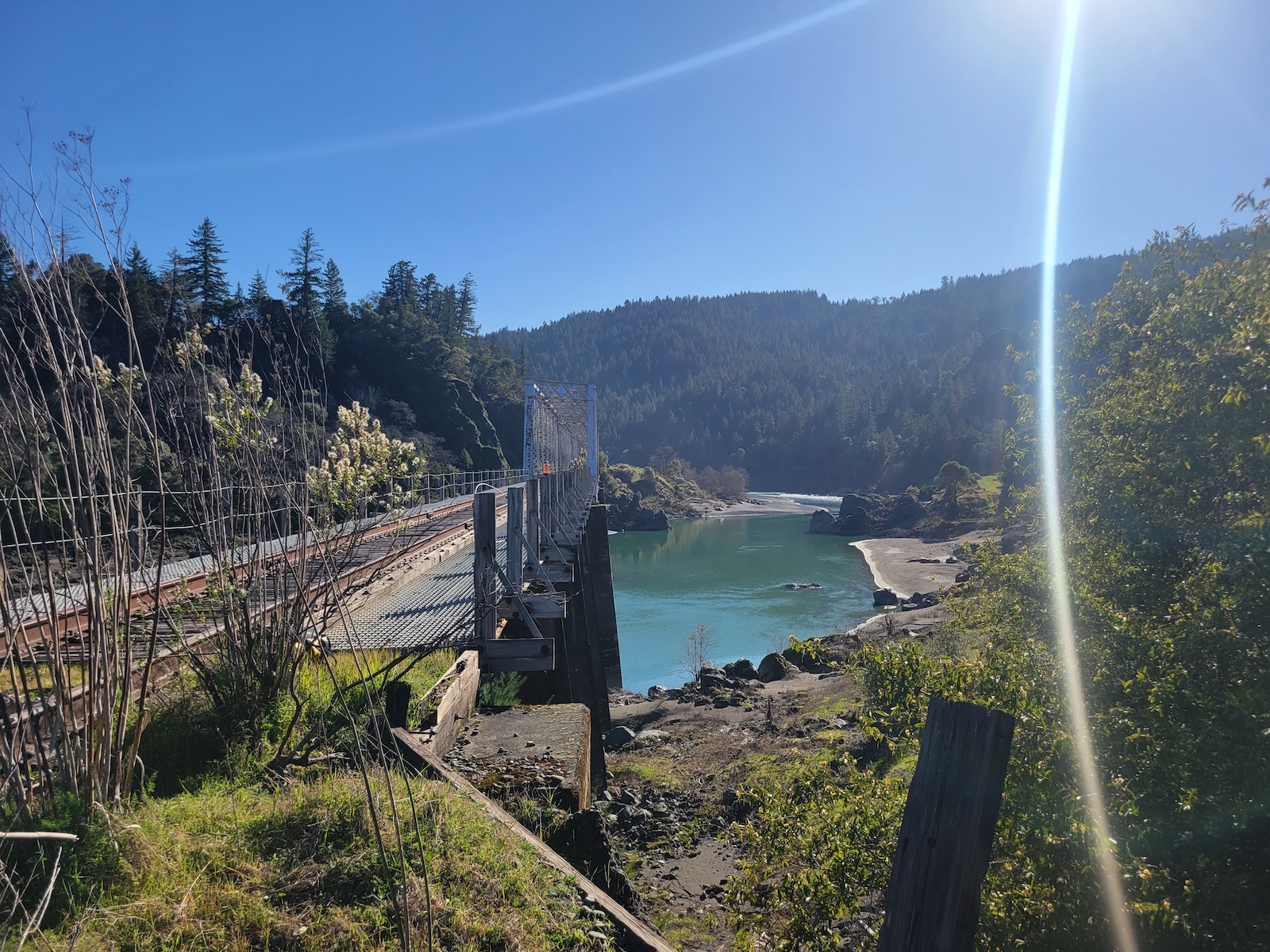
“We’re transforming abandoned rail and ecological damage into restoration and beautiful trails. The Great Redwood Trail will create lasting memories for thousands of locals and visitors,” shared Mary Sackett, Chair of The Great Redwood Trail Agency and Marin County Supervisor.
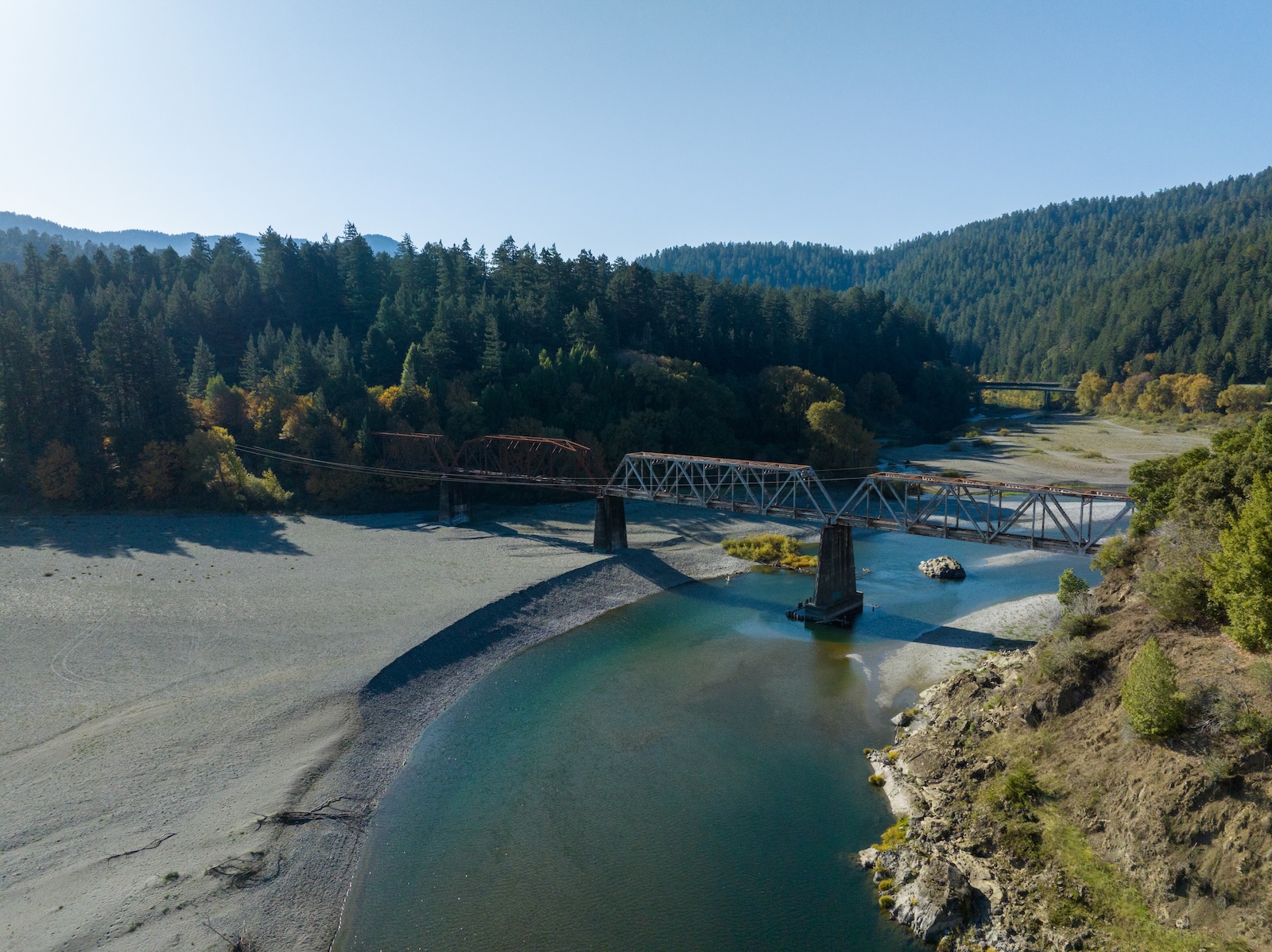
While locals and visitors alike benefit from hiking, biking, horseback riding, kayaking, wildlife watching, rural town tourism, and even commuting, at its core the GRT is an ecological restoration project. Transforming the neglected properties once owned by the now-defunct Northwestern Pacific Railroad will involve removing hazardous materials and equipment, shoring up damaged slopes, restoring and protecting wildlife corridors and habitats for riparian species like the steelhead and salmon, restoring local native plants, and much more.
“The Coastal Conservancy is proud to have supported the Great Redwood Trail Agency since its inception with staff time, expertise, and funding.” said Amy Hutzel, Executive Officer of the State Coastal Conservancy. “The Great Redwood Trail will be a landmark trail for the State of California, opening public access to some of Northern California’s most extraordinary landscapes in ways that protect and restore their ecological values.”
The GRT is also a major infrastructure project with impressive economic benefits. Most of the tens of millions of dollars invested through state awards will go directly to the local partners, staff, contractors, and vendors whose work will make the GRT possible. Once completed, the Mendocino-Trinity-Humboldt stretch of the Great Redwood Trail alone is forecasted to create more than $102.5 million in local economic benefit per year (in 2023 dollars.) That’s nearly $170,000 a day in daily business revenue connected to the GRT.
Hank Seemann, Public Works Deputy-Director with the County of Humboldt, expects that the Master Plan will be a catalyst for advancing projects similar to the recently completed trail between Eureka and Arcata along Humboldt Bay. According to Seemann, “The historical railroad corridor on the North Coast is an immensely valuable and important public asset. The State’s vision and investment in creating the Great Redwood Trail is an incredible opportunity to create paved paths and natural surface trails for transportation and recreation while also reducing flooding risks, cleaning up legacy contamination, and restoring degraded habitat.”
The Great Redwood Trail Master Plan
The newly-approved GRT Master Plan is a roadmap for all elements of trail development, including trail design, operations and maintenance, habitat restoration, funding, and management. Its enumeration of applicable protections for the environment and for sensitive California Native American Tribe cultural spaces and resources applies to segments directly developed by GRTA as well as those developed by Tribal, nonprofit, or local government partners.
This Master Plan covers Mendocino, Trinity, and Humboldt counties. The Great Redwood Trail in Sonoma and Marin Counties will be planned and constructed by SMART (Sonoma-Marin Area Rail Transit.) Thanks to significantfunding and technical assistance from the State Coastal Conservancy, the Master Plan was developed by AltaPlanning + Design, with support from North Coast Opportunities, Redwood Community Action Agency, and Jen Rice Consults.
Feasibility. The process that led to this completed Master Plan began with a feasibility study from 2018 to 2020, which was initiated by the California State Legislature through the passage of SB 1029.
Community engagement. Several years of robust engagement with trail-adjacent communities followed. After the 2024 release of the draft GRT Master Plan 725 participants across 32 community and Tribal events, six in-person and four online workshops weighed in. The GRTA project team also held more than 70 direct stakeholder meetings with business owners, trail users, environmental advocates, landowner groups, ranchers, farm bureaus, rural economic development organizations, tourism and visitor bureaus, vineyard owners, houseless service providers, law enforcement, first responders, youth-focused non-profits and Tribal, local, state and federal agencies.
The GRTA also received 767 completed surveys, and more than 600 written comments, including 37 substantive letters during the scoping comment periods for the draft Master Plan and PEIR (Programmatic Environmental Impact Report). The input resulted in clearer policy recommendations, expanded management strategies, and more defined implementation responsibilities in the final version. Sections 2.2 and 2.3 of the Master Plan explain in more detail how public and Tribal input impacted the process and outcomes.
GRTA’s Executive Director Elaine Hogan commented, “I am impressed and deeply grateful to the hundreds of people who contributed their visions, concerns, and creative thinking to the development of the plan.” She added, “These years of broad and lively community conversations and input have been invaluable to building a Master Plan that serves the needs of communities along the trail corridor.” Hogan summarized, “As many have said, ‘If legacy industry is going to leave behind a mess, let’s clean it up together and in theend get a publicly accessible trail with amenities for recreation and active transportation.’ This solution isbetter for the environment, the economy, and community connections.”
Tribal engagement included direct outreach to more than 35 California Native American Tribes and Tribal/Native interest associations; attendance at more than a dozen tribal community events; presentations at many tribal government and coalition meetings and workshops; and a webinar for Tribal leaders and representatives.
GRTA representatives also held multiple direct and in-depth conversations with tribal members and leaders,including formal consultation meetings with four Tribes, through AB 52 “Tribal Cultural Resources” and the State Coastal Conservancy’s tribal consultation policy.
Jason Ramos, Tribal Chairperson of the Blue Lake Rancheria, affirmed, “The Great Redwood Trail projectis a critical opportunity to restore fish habitat, protect cultural resources, and build an economy that benefits the north coast communities who have always called this place home. The Master Plan for trail development represents a meaningful step toward ensuring that Tribal communities are not just consulted, but are genuine partners in how this land is stewarded and celebrated. Blue Lake Rancheria is committed to staying at the table every step of the way.”
Organizing Trail Development. The Master Plan’s appendices dive deep into the complex planning and designparameters for each of the 43 segments. Segments were defined based on practical considerations like, “Doesthis stretch connect communities?”, “Are trail types and conditions similar across this segment?”, “Are there partners who could help develop this segment?”
Jurisdictions that have already designed and built segments of the GRT corridor covered by this Master Plan includethe Ukiah Rail Trail, Willits Rail Trail, Eureka Waterfront Trail, Humboldt Bay Trail, Arcata Rail Trail, Annie and Mary Trail, and sections of the California Coastal Trail.
Carol Vandermeer, long-time trails advocate and a member of The GRTA master planning team,reflected, “Never have I seen such sheer community joy as I did on the Bay Trail South opening celebration for the segment from Arcata to Eureka. I’m looking forward to seeing the segment continue to grow southwards from Eureka to College of the Redwoods, and then Loleta. Trail planning and development takes time, but I believe that piece by piece we will get there, learning and integrating knowledge as we go. Community and Tribal input and participation will be ongoing and an important partof realizing the full vision for the trail.”
What’s Next?
While a few GRT segments are already constructed or nearly done, the majority are not yet in development. With the Master Plan approved, GRTA can begin prioritizing development according to the criteria laid out in Section Six. These criteria ask, “Which segments will create the greatest and fastest benefits for trail users, adjacent communities, and the environment?”, “Which are low-hanging fruit, and could be developed efficiently because they have the fewest construction or permitting barriers, and the most community and trail partner support?”
Community engagement will continue as each segment is prioritized for development. The GRTA is developingmultiple modes for ongoing public communication and community engagement:
-
- Good Neighbor: The immediate priority is to make sure the owners of all 10,000 – 15,000 parcels adjacent toeach prioritized trail segment are fully apprised, every step of the way, of trail development plans,approaches, timelines, and opportunities to ask questions and discuss unique situations. Communications channels will include letters, emails, community meetings, direct negotiations, and a text/phone alert systemspecific to each trail segment.
- Collaborating: As trail segment priorities are announced, GRTA expects organized groups to contribute to or lead design and development of trail segment projects in their communities. Interested parties can sign up online to get notified about opportunities for ongoing community input and participation when a nearby Great Redwood Trail segment is being prioritized for development.
- Earning: GRTA prefers to hire locally whenever possible. They invite landscapers, engineers, contractors, truckers, fence-builders, heavy equipment operators, grant writers, and more to bookmark GRTA Bids for upcoming opportunities.
- Volunteering & Advocating: People with personal or professional dedication to outdoor recreation or tourism all along the GRT are invited to become a GRTA volunteer or advocate. Volunteerism opportunities will begin once a coordinator is brought on board. GRTA Advocates will receive spokesperson training and opportunities to tell their stories about how trails like this improve lives. Those interested can start by signing up for notifications. .
The Great Redwood Trail segments that have already been developed thanks to active local government andcommunity leadership are already seeing heavy use. Approximately 17 miles of trail are currently open to the public in Humboldt and Mendocino counties with about 40 miles in active planning or construction. The latest Ukiah segment is complete, with a grand opening celebration on April 26th in celebration of National Trails Day.
“For many of us, getting out on the trails is key to our health and wellbeing. In our rural communities people travel on highways and streets without sidewalks. And yet we all know that when you provide pleasant, convenient trails, people will hike, run, and bike more often. That’s why the local Ukiah Valley Trail Group has been working for more than ten years to mobilize volunteers to criss-cross Mendocino County with accessible trails through our beautiful landscapes. We’re thrilled to see this major state infrastructure investment in regional trail-building. This means taxpayer dollars are going directly into work that matches our local values and needs,” remarked Neil Davis, Director, Ukiah Valley Trail Group.
Resources:
- GRTA Master Plan Story Map (executive summary)
- Full, updated GRTA Master Plan PDF (March 2026)
- GRTA Web Site & GRTA Planning web site
- 3/19 GRTA Board Meeting Agenda & Packet & Recording