
By Steven Sheffield — Professional cycling’s spring season builds toward a series of one-day races that define careers and separate the merely great from the genuinely immortal. Among these, four stand apart — two rooted in the cobblestones and punishing climbs of Flanders, one in the rolling hills of the Dutch province of Limburg, and one in the forested Ardennes of eastern Belgium — all four falling within the span of a few extraordinary weeks each April. They are the Tour of Flanders, Paris-Roubaix, the Amstel Gold Race, and Liège-Bastogne-Liège, and together they represent the most concentrated test of one-day racing ability in the sport. To win even one of them is the ambition of a career. To win multiple, across multiple races, is the mark of a rider who has transcended the ordinary boundaries of the sport.
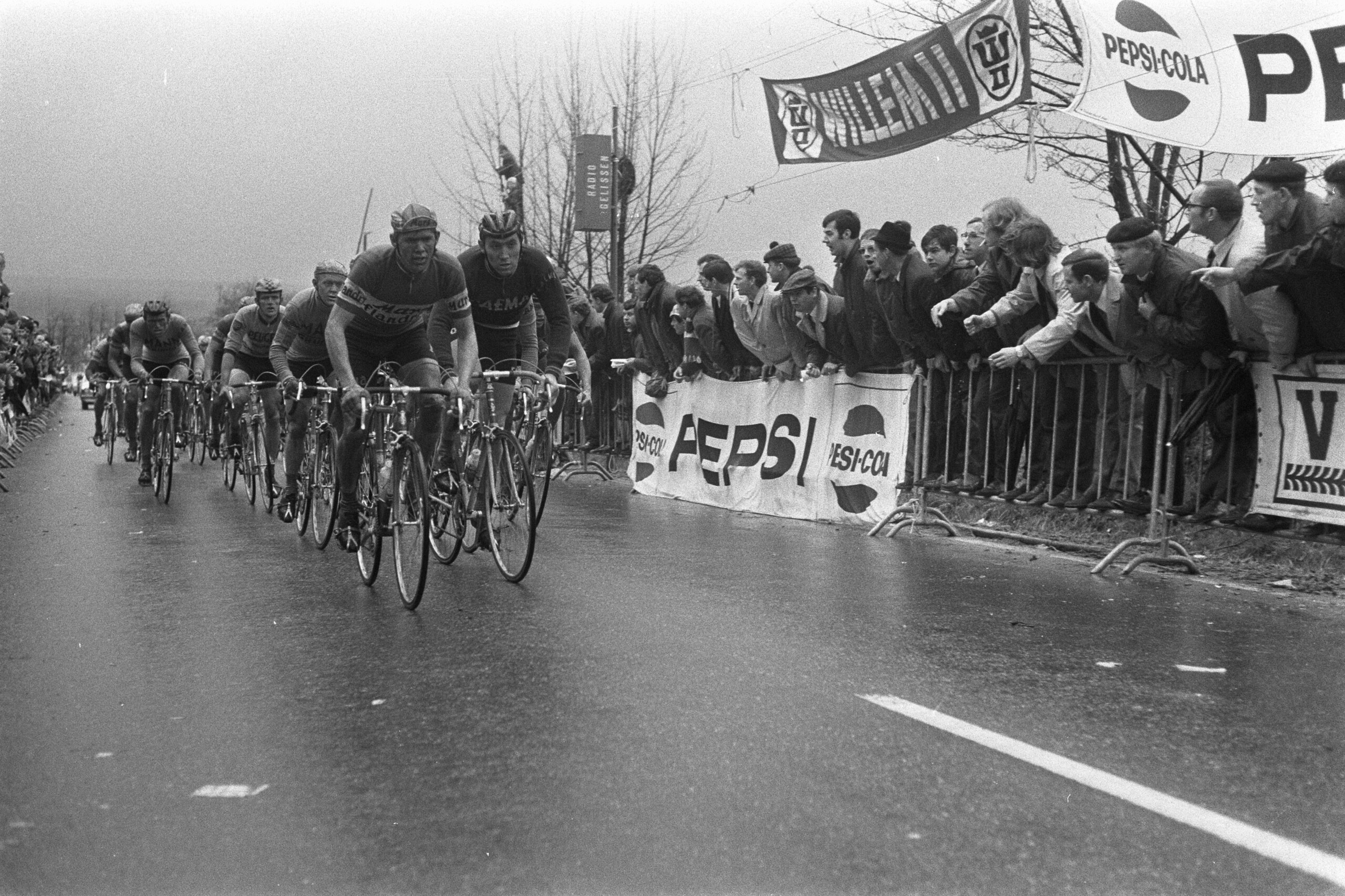
Each of the four has its own personality, its own history, and its own particular way of breaking a rider’s spirit. The Tour of Flanders sends its competitors over short, savage cobbled climbs that have become as famous as the race itself, their names — the Koppenberg, the Paterberg, the Oude Kwaremont — spoken with a reverence usually reserved for Alpine passes ten times their length. Paris-Roubaix abandons the climbs entirely in favor of something arguably worse — hour after hour of brutal cobblestone roads that punish bike and body alike, finishing in a velodrome that has become one of cycling’s most storied and atmospheric venues. The Amstel Gold Race moves the action to the Dutch province of Limburg, where short, punchy climbs arrive in rapid succession across rolling countryside, rewarding riders who can accelerate repeatedly over the course of a long and tactically demanding afternoon. And Liège-Bastogne-Liège, the oldest of the four and perhaps the most demanding of all, sends riders deep into the Belgian Ardennes and back through a relentless succession of longer, harder climbs that have, over more than a century of racing, produced some of the sport’s most legendary performances. The trivia questions that follow draw on all four races and the remarkable history they share.
Q1. The Tour of Flanders was first run in 1913, the brainchild of journalist Karel Van Wijnendaele, who wanted to create a race that celebrated Flemish identity and toughness. Over the decades the race has produced a long line of repeat winners, but in the modern era two riders stand alone atop the all-time victory list, each having won the Ronde three times — a record no one has since broken. Who are the two riders tied for the most Tour of Flanders victories in the modern era?
Q2. Paris-Roubaix has been called “L’Enfer du Nord” — Hell of the North — since a journalist used the phrase after the 1919 edition crossed a landscape still scarred by the First World War. The race rewards a very particular kind of rider: powerful, fearless on cobblestones, and able to suffer for hours in conditions that destroy lesser cyclists. Two riders share the all-time record for Paris-Roubaix victories, each having won the race four times — a total no one has come close to surpassing. Who are the two riders who share the all-time record, and in which years did each of them win?
Q3. Liège-Bastogne-Liège, first run in 1892, is the oldest Monument and is known as “La Doyenne” — the Old Lady. Its Ardennes climbs — the Côte de la Redoute, the Côte de Saint-Nicolas, the Stockeu — reward pure climbers, and the race has a long tradition of producing dominant repeat winners. One rider won it five times in a span of seven years, a record that two others have since equaled, but no one has ever surpassed. Who was the first rider to win Liège-Bastogne-Liège five times, and which two others have since matched him?
Q4. The Trouée d’Arenberg — a 2,400-meter, five-star cobblestone sector running through a dark pine forest — was not part of Paris-Roubaix’s original route. It was added in 1968 at the suggestion of a former winner who knew those particular roads from his life before professional cycling. The sector transformed the race and is now its most iconic stretch. Who suggested the inclusion of the Arenberg Forest, and in what year did he win Paris-Roubaix?
Q5. The Amstel Gold Race, youngest of the four April Classics, was first run in 1966 and takes its name from the Dutch brewery that served as its original title sponsor. Set in the rolling Limburg hills of the southern Netherlands, it has attracted a wide range of winners over its history, but one rider made it more his own than any other, winning it more times than anyone else in the race’s history. Who holds the record for the most Amstel Gold Race victories, and how many times did he win?
Q6. The Koppenberg is one of the most feared climbs in Flemish cycling — a short, savage cobbled ramp so steep that riders have been forced to dismount and walk mid-climb in wet conditions. It was removed from the Tour of Flanders route for fifteen years following a notorious 1987 incident in which an official’s car became entangled with a fallen rider on the climb itself, bringing the entire peloton to a standstill. Which rider was blocked by the car on the Koppenberg that day, and who won that edition of the race (and what was notable about his victory)?
Q7. Liège-Bastogne-Liège in 1980 was run in conditions that belong in another category entirely — a full blizzard, with snow covering the Ardennes roads and temperatures well below freezing. Most of the peloton abandoned. The rider who won did so with a solo effort of extraordinary courage, attacking on the climbs and riding the final stretch entirely alone through the storm. Who won the 1980 Liège-Bastogne-Liège, and what nationality was he?
Q8. Paris-Roubaix’s winner receives a trophy unlike any other in professional cycling — not a cup, a jersey, or a piece of crystal, but an object taken directly from the race itself, making each year’s prize unique and unrepeatable. The presentation ceremony takes place inside the famous Roubaix velodrome, itself nicknamed “the cathedral” for the near-religious atmosphere that descends on it each April. What is the trophy, and approximately how much does it weigh?
Q9. The 2019 Amstel Gold Race produced one of the most celebrated finishes in the history of the spring classics, with the race decided by millimeters after a frantic sprint from a small group. The winner was a rider who had announced himself as a generational talent capable of winning on virtually any terrain, and the finish-line photograph became one of the iconic images of that season. Who won the 2019 Amstel Gold Race, and who finished second?
Q10. Completing the Tour of Flanders and Paris-Roubaix in the same spring is one of cycling’s rarest achievements, requiring mastery of both the shorter, punishing Flemish climbs and the most brutal cobbled roads in northern France — typically within the space of a single week. Many great riders have managed it once. Only two in history have managed it twice, in different years, making the Flanders-Roubaix double their own personal territory rather than a fortunate confluence of form and luck. Who are the two riders who have each won the Flanders-Roubaix double more than once, and in which years did each of them do it?
Q11. The three late-April classics — Amstel Gold Race, La Flèche Wallonne, and Liège-Bastogne-Liège — are collectively known as the Ardennes Triple, a label that has stuck despite the fact that Amstel Gold is actually raced in the Dutch province of Limburg rather than the Belgian Ardennes. Winning all three in the same spring is extraordinarily difficult, requiring a rider to maintain peak form and health across 8-days, racing on terrain that suits a very specific physical profile. Only a small number of riders have ever achieved it, across both the men’s and women’s races. Name at least one rider who has won all three Ardennes classics in the same calendar year.
Click to next page for answers.