Home Blog Page 154

Make Recovery Rides Fun!

The Purpose of Recovery Rides 

Is there a really a good reason to ride easy? The answer is absolutely, yes! 

Your hard training sessions result in muscle damage. The rest and repair that occurs after this damage is the time for adaptation to occur and for you to get stronger. You can’t get stronger if recovery does not occur. Active recovery or recovery rides aid the recovery process by stimulating blood flow that carries the nutrients to help heal damaged muscles and tissue. This light pedaling also flushes your legs of metabolic waste that is the by-product of your harder sessions.

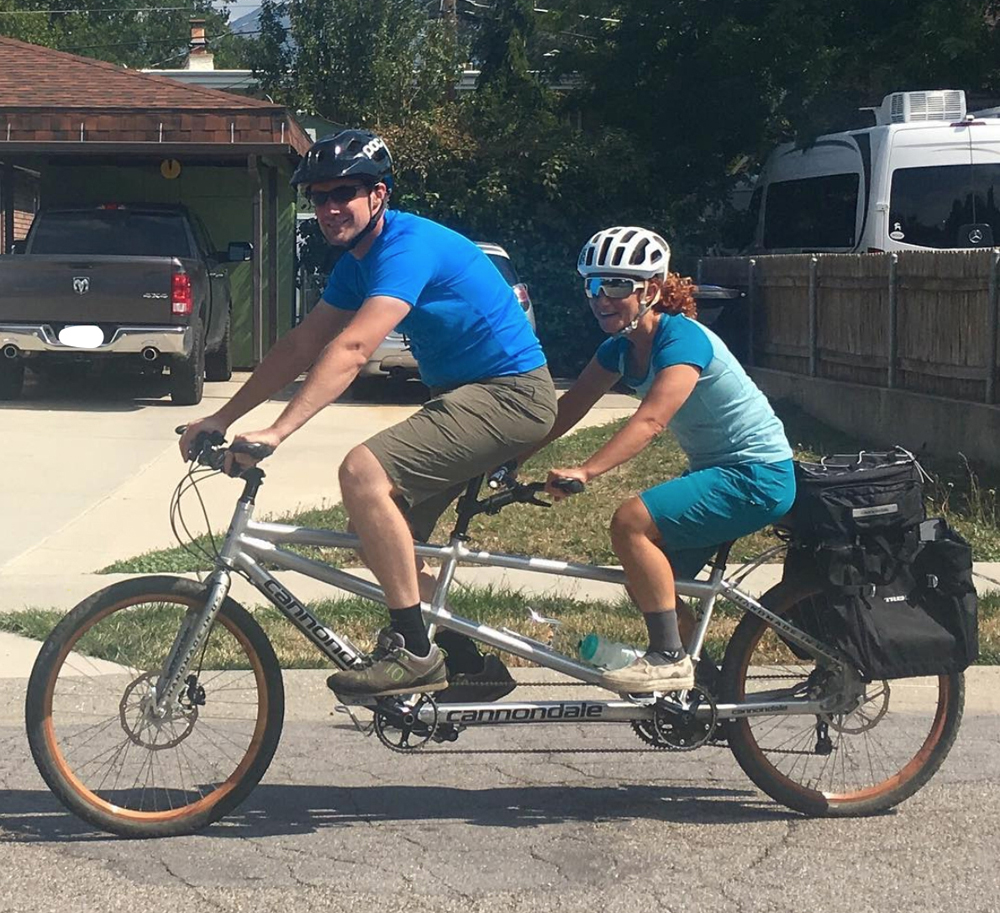
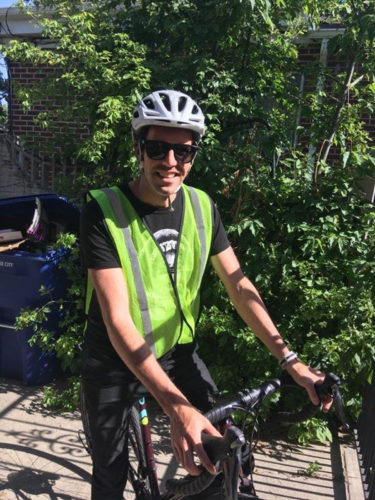
Make recovery rides fun! Photo courtesy Sarah Kaufmann

Most athletes do well with four hard days of training per week. Few can tolerate (and adapt to) more, and many athletes actually experience better adaptation with fewer hard days per week. If you train hard for four days, that leaves three days for light riding or off. For most of the riders I coach, that means two days of light riding and one day completely off.

If you are a very time-crunched athlete, take the three days off the bike and just do your four hard days of training. If you can prioritize riding time a little more, the two days of lighter riding will aid your recovery and adaptation. Usually one of those days will be a dedicated ‘Recovery Ride’. The other easy day should still be a lighter ride, with a slightly different goal (be that skills work or neuromuscular in nature), but still a shorter duration and lighter intensity than the dedicated hard training days.

The wording I use when I prescribe recovery rides is as follows; “Little to no resistance on the pedals, the only goal is to spin your legs out. Make an effort to breathe only through your nose. This ensures that you keep the effort low enough and it also elicits a lower stress hormonal response to the activity.”

These rides should be anywhere from 30 to 60 minutes and should leave you feeling refreshed. When in doubt, less is more with recovery rides. In cased you are wondering if your ride is too easy, it isn’t. If you are wondering if your ride is too hard, it probably is. Choose a flat route and keep it in a gear that allows you to lightly spin. You should stay below about 50% of your threshold power and about 70% of your threshold heart rate.

Recovery rides should be both a mental and physical break from training. If the weather is crummy or riding sounds like a chore, just take the day off. Recovery rides should not be an additional source of stress. Spin to the coffee shop, ride in jeans, or ride your beater bike. Add whatever outside cues you can to keep yourself from digging deep or trying to go fast. If you are eyeing a segment on STRAVA, turn STRAVA off that day, no PR’s on recovery rides.

Let recovery rides be your mental and physical reward for the work you put in during your hard sessions. Instead of dreading them as wasted time, appreciate the benefit you get from active recovery and soak up the lightness.

Sarah Kaufmann is the owner of K Cycling Coaching. She is an elite level XC and CX racer for the DNA Pro Cycling Team. She is based in Salt Lake City, UT and can be reached at [email protected] or 413.522.3180.

Interview with Professional BMX Rider Hayden Raymond

By Anthony J. Nocella II, Ph.D. — Anthony Nocella: Thank you Hayden Raymond for allowing me to interview for Cycling West. It is a pleasure to connect with you again, since I moved from Durango, Colorado. Not only were you an amazing student at Fort Lewis College, but you are also a professional BMX rider on the Pure Bicycle Company Professional Team. Can you tell me a few of the struggles of being a professional cyclist and a full-time student?

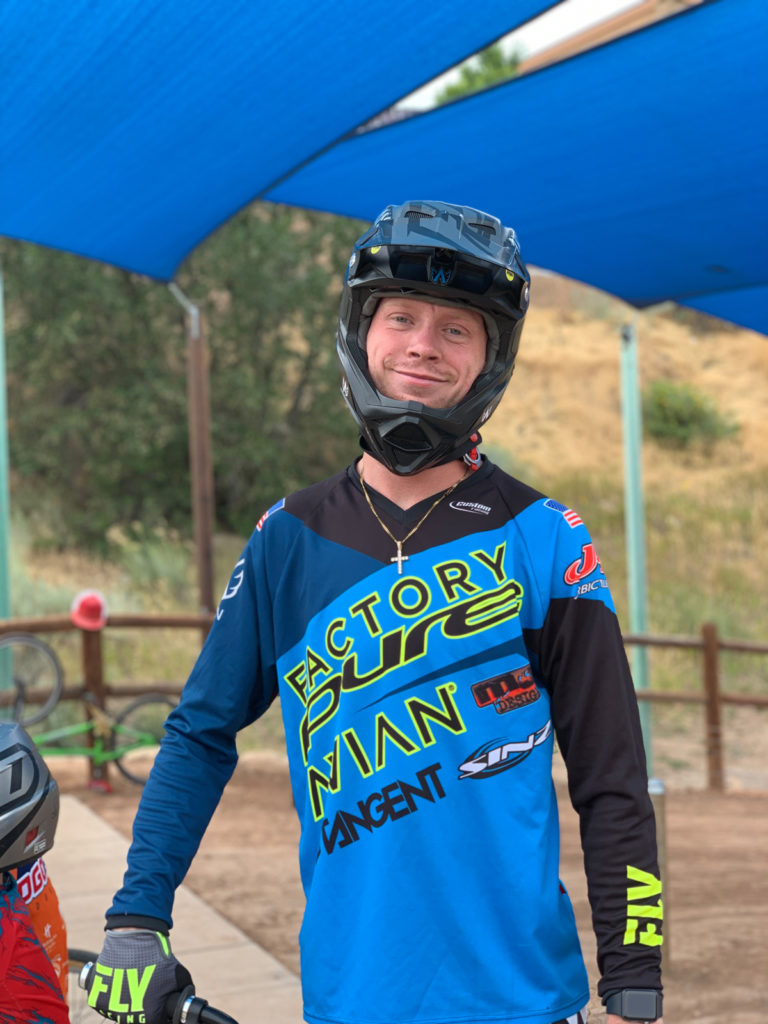
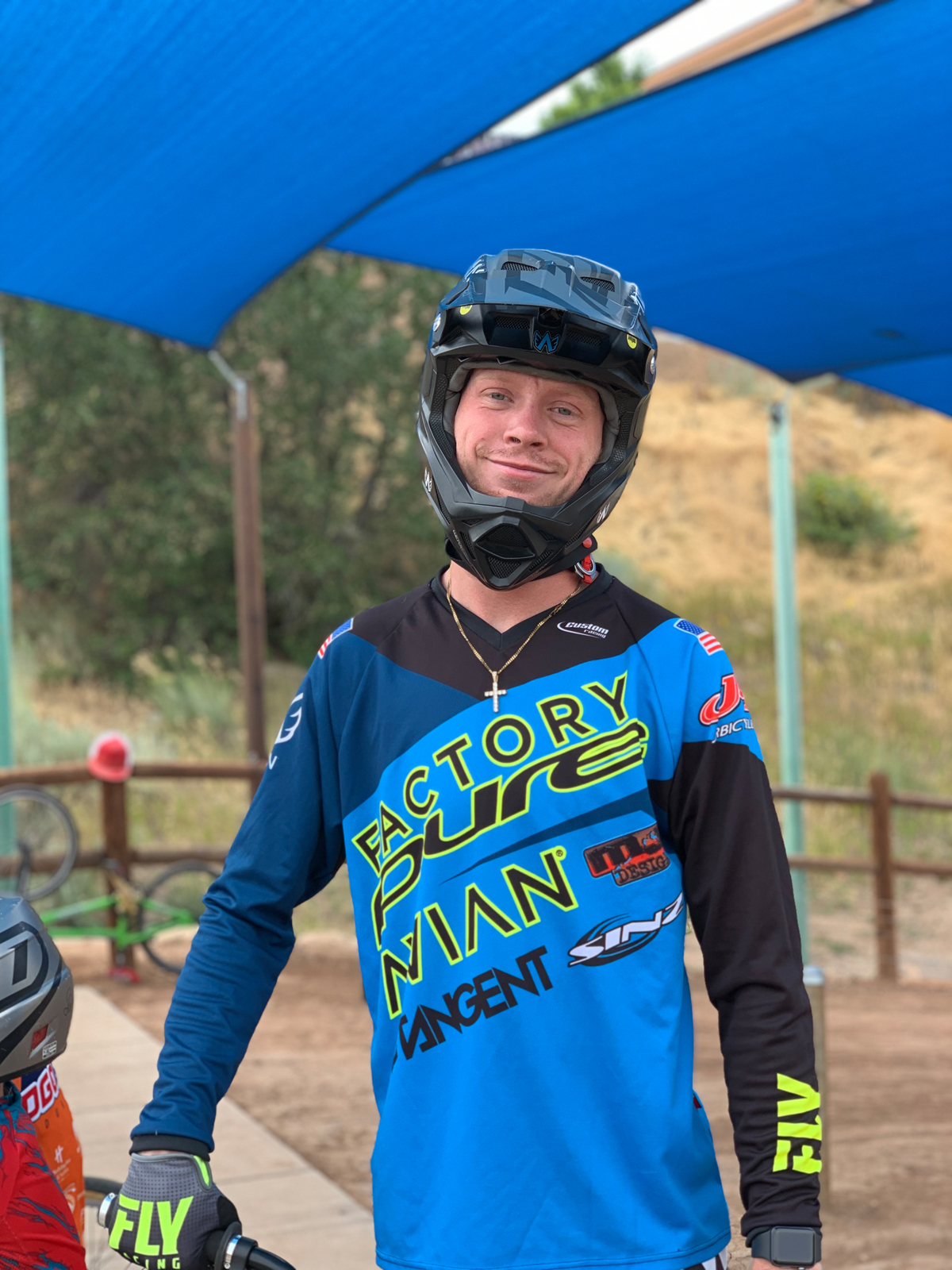
Hayden Raymond is a pro BMX rider living in Durango, Colorado. Photo courtesy Hayden Raymond

Hayden Raymond: When I was in school, I was actually racing on Pure’s American Factory team, which is a professional/amateur team. I was able to get picked up on that sponsorship my sophomore year, so my freshman year was in my opinion my hardest year on and off the bike, from trying to figure out a training schedule to still get school done to then trying to rearrange classes to make races to trying to build relationships with professors so I didn’t fail. It was all super stressful and it just became very hard to handle at seventeen years old. But once I got picked up factory and was able to make it to the races in a reasonable amount of time, a lot of stuff got easier. 

AN: Fort Lewis College is a small college in a small town, but has one of the best cycling teams in the country. What makes a college cycling team successful in your opinion and what should high school students who are cyclists look for in a college cycling team?

HR: So, for example, while Fort Lewis is in a small cycling town, Durango as a whole community supports every one of the riders here at the school no matter the discipline. The answer is community for sure. When I spoke to the staff in our program, they spoke to me as a student first and then cared about the athlete. For me that was huge in keeping me guided through my studies, because once you get contracts you start thinking of what you could be doing instead of sitting in classes. You definitely need to look for that support, and as a young kid the biggest thing that I’d say is know your worth. Go somewhere that you feel that you can get invested in by the program just as much as you invest yourself into that program.

AN: As a result of the COVID-19 pandemic there is no racing and there is very little connecting with other cyclists because of distancing rules put in place nationally. How are you training and preparing for future races currently? Do you have any training tips for BMX riders during the pandemic?

HR: This pandemic is definitely been crazy and thrown us for a loop. The whole training program has basically changed overnight so we’re basically in a giant block of off-season training. My biggest advice for the kids to get to the tracks is ride your bike as much as you can right now. Don’t worry about the gym being closed and all that stuff. I was told by a good friend of mine a while back that the skills aren’t made at the track, but brought to the track. So all the kids just really need to remember that you need to build your programs and your skills now, so that when the race is open we can go full throttle.

AN: What are the three best BMX tracks in the southwest to ride and why?

HR: The three best tracks in the southwest side are Red Canyon BMX in Salt Lake City, Utah because it’s just a nice open track. The National there is always nice with great people and a great community. Duke City BMX in Albuquerque, New Mexico is super fun; Tomas Fernandez kind of put a European twist on the track so it’s a little different. Durango BMX in Durango, Colorado because that’s the track that has built me into the rider I am today. It’s my home track, and the one I spend the most time on and yeah, it’s great.

AN: Is there anything else you would like to tell me?

HR: I would like to announce at this time, I have actually left Pure. I would like to say thank you to Don and Rich over there for everything they did for me, but for the rest of 2020 and 2021 I will be riding for Redman Bikes out of California, USA. Big thanks to Mike Redman. 

Anthony J. Nocella II, Ph.D. is a full-time professor at Salt Lake Community College, author of numerous books, trail runner, triathlete, competitive cyclist, and in his free time works at Hangar 15 Bicycles Millcreek.

Emigration Canyon Illustrates Need for Better Planning for Bicycles

2

By David Ward — I live on the main road heading up Emigration Canyon, a canyon located just east of downtown Salt Lake City. Emigration Canyon, so called because it was the canyon through which the first Mormon pioneers descended to settle in the Salt Lake valley (or just “the canyon” as us canyon residents refer to it), is a cyclist’s paradise.

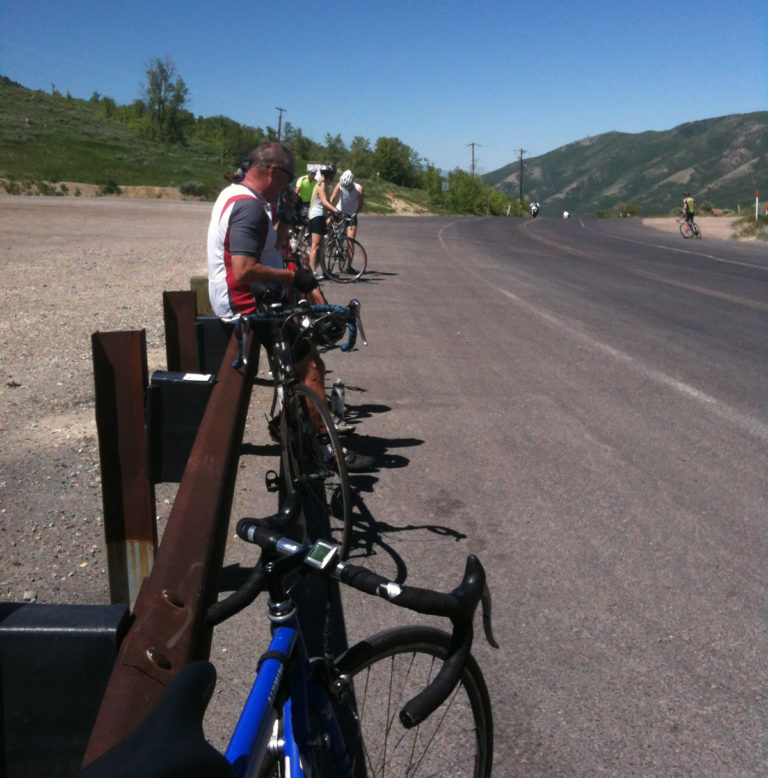
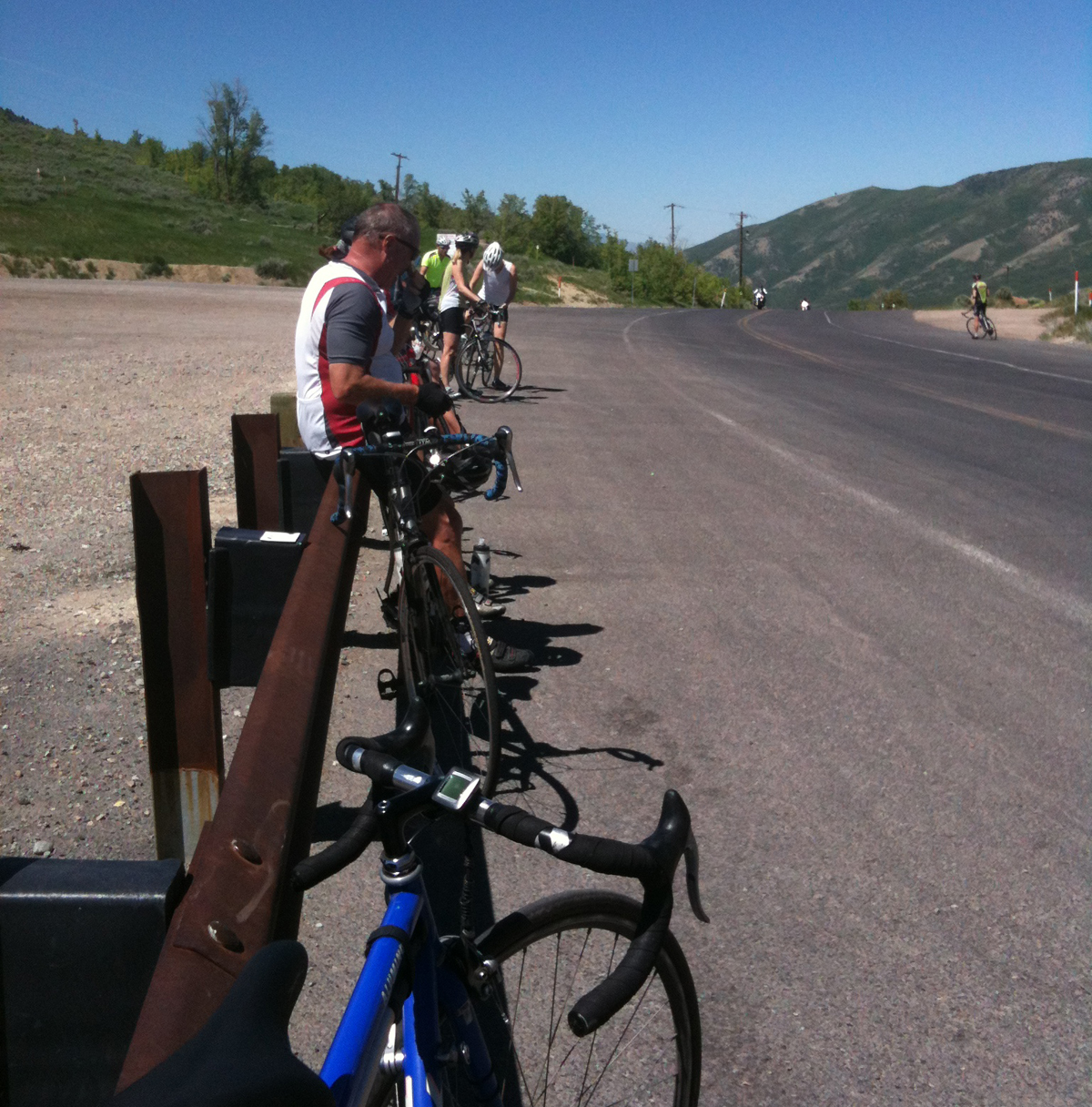
Cyclists congregate on the Little Mountain Summit at the top of Emigration Canyon. Emigration Canyon is the most popular recreational bike ride in Utah. Photo by Dave Iltis

The road here gently winds through beautiful wooded terrain with its adjacent creek for about 6 miles before it kicks up somewhat steeper for the last 1.5 miles to the summit of Little Mountain. Its grade is gentle enough that most cyclists with a little bit of fitness can reach the summit, while sufficiently steep enough to challenge the more hard-core among us. According to Strava data (thanks to Cycling West for this information), this is the most popular ride in the State of Utah, and the 4th-most popular ride in the country. On mornings, evenings and all weekend, my wife and I look out from our kitchen window onto a steady stream of cyclists heading up and down the canyon.

So, it was no wonder when electronic road signs placed the last week of May at both ends of Emigration Canyon, announcing it would be closed from June 15 to September 22 for road work, caused an uproar in the cycling community. I was not caught unawares as I had been so informed already by the mayor of our Emigration Township, and had even been enlisted by him to provide support and comment for a complete re-paving of this road rather than another chip and seal effort. But while I passed the word on to a few, most of the cycling community was not so informed, and so this came as a shock, and with little time to do much about it.

Nevertheless, there was an outcry once the signs went up and, thanks to the efforts of some good advocates, some changes occurred. First, the closure of the canyon was pushed back three weeks while preparatory work that did not require closure of the canyon was done. Second, it appears that re-paving will commence from the bottom (Salt Lake side) of the canyon and proceed in sections so that the canyon will be progressively re-opened as sections are completed. Also, it appears that canyon residents will be allowed on the road for commuting, and maybe even to access other areas for recreational riding.

As both a resident of the canyon and as an avid cyclist, I have mixed feelings regarding this entire affair. First, motorists and cyclists alike are going to love this new road. It will be smooth and free of the potholes, cracks, road patches and other issues that have plagued this canyon road for as long as I have been riding here. Kudos to Mayor Joe Smolka who recognized the need for a complete re-paving and advocated for it. Even if there had been no access during the entire re-paving project, the end product would be well worth the inaccessibility, though as outlined above, concessions and accommodations have been made.

What is more troubling, though, is the failure of Emigration Township and Salt Lake County planners and engineers to adequately seek input from cycling advocates and the cycling community generally. The popularity of this canyon road for, and its use by, cyclists is well-known to these people. As are the cycling advocacy groups and organizations, primarily the Salt Lake City Bicycle Advisory Committee, the Salt Lake County Bicycle Advisory Committee (SLCBAC), and our regional bicycling publication, Cycling West. It would have been easy and a no-brainer to reach out to these advocates during the planning process.

As a result of this failure, the opportunity for compromises in the design of this project, and in particular issues relating to lane and shoulder widths, speed limits, debris control, and maximized user benefit was lost. While the temporary accommodations were able to be addressed, it was too late to bring about positive discussion addressing these other issues.

I assume some responsibility for this. I was involved, as I said, in advocating for a complete re-paving of this road, but was not asked to be involved or kept informed beyond that. Nevertheless, I should have made certain, rather than assume, the more vocal voices named above were involved.

This issue of involving interest groups in road planning and design is not an isolated concern, relevant only to Emigration Canyon. Rather, anywhere there exists a popular and favored road or trail for riding, we need to remain alert, make ourselves visible to designers and planners, and make certain we are heard.

In the end, I am mostly pleased with what is happening in my canyon. But I recognize it could have been better. Indeed, it should have been better.


Riding Through the Staircase – The Grand Century

By David Collins —

123 Miles of Cyclist Friendly Scenic Byway Adventure

Although parts of this scenic byway show many faces and feature common nicknames, it seems to me The Grand Century is an appropriate name for rolling through it on a bicycle. The Grand Century is a suitable name for three reasons:

  1. It’s no ordinary byway and it entraps your attention with its beauty in a grand way.
  2. It’s 23 miles longer than the usual century ride of 100 miles
  3. It winds through the heart of the Grand Staircase-Escalante National Monument.
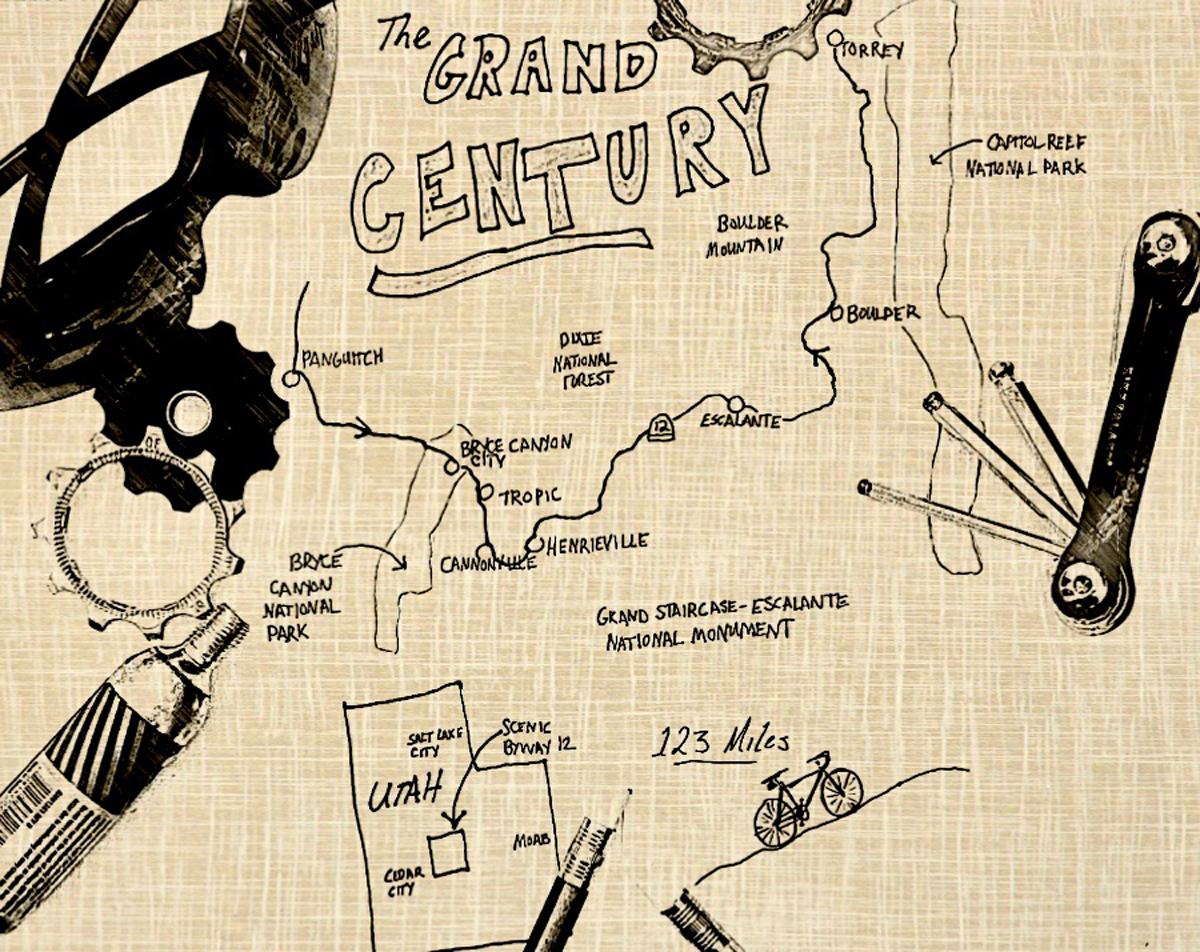
A map of the Grand Century, through the Grand Staircase area. Map by David Collins

The route is bathed in stunning scenery, clips a national park, features charming townships, dramatic alpine overlooks, red cliffs and a stretch dubbed “The Million Dollar Road”. It’s a cyclist’s dream – filled with unforgettable imagery and points of historical interest.

Extended shoulder seasons are usually the best time to ride but depending on your skills, equipment, local conditions and road closures, you might be able to ride it throughout much of the year. Be weather aware, riding conditions can swiftly change.

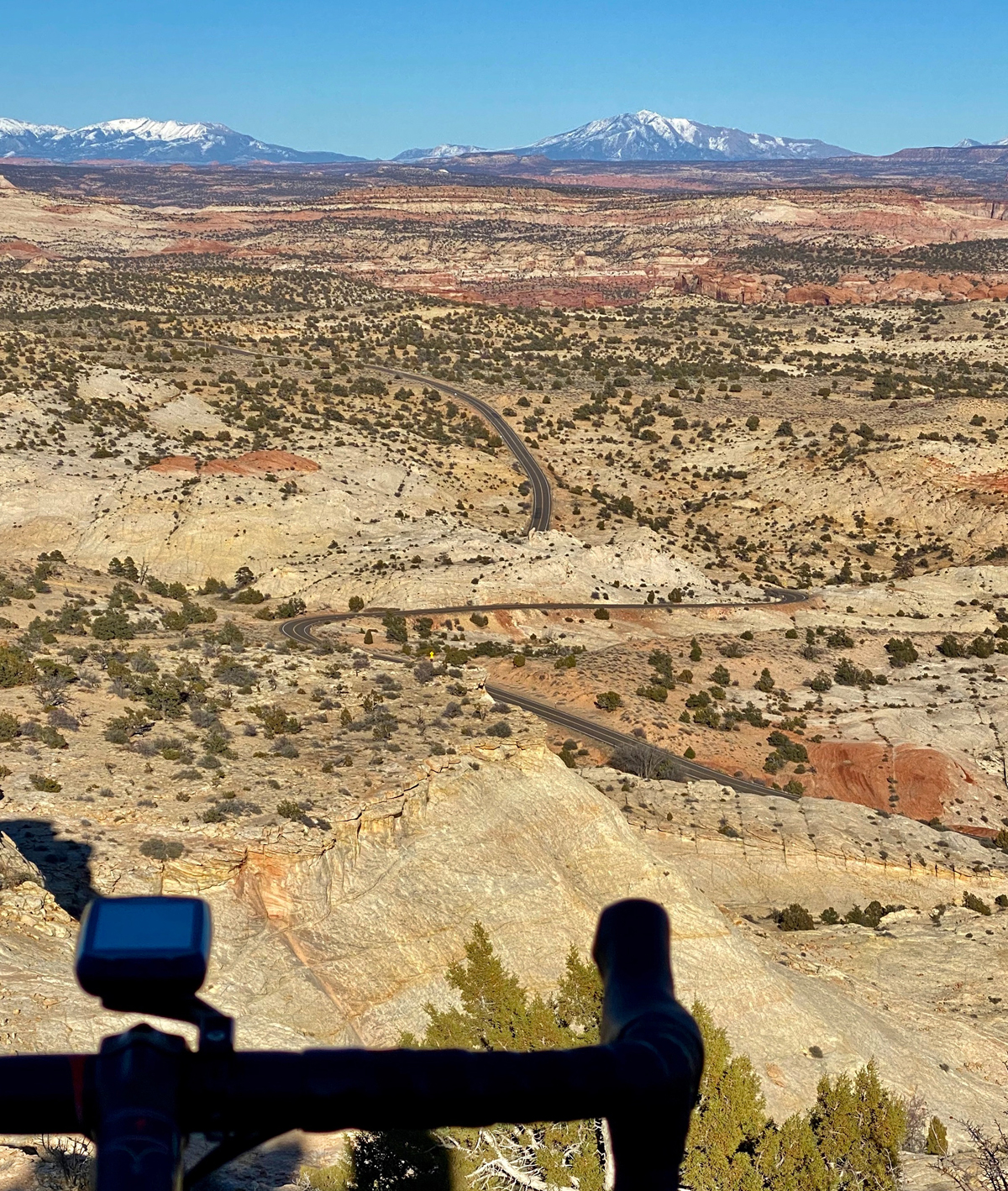
Overlook showing Scenic Byway 12 snaking through the colorful valley floor. Photo by David Collins

Excursions and explorations are part of the fun of unsupported bicycle touring at your own pace. Mileage estimates are approximate and may vary depending on your tracking system and whims of the ride. Be sure to tell someone your plans and allow them to track your location using a smartphone or other device.

Solo or unsupported distance cycling often presents potentially dangerous situations related to terrain, weather, equipment, traffic, navigation and mental awareness. Even experienced cyclists must plan carefully and use wise judgment to successfully mitigate inherent risks of the sport or terminate a ride before it turns injurious or deadly. If you are new to the sport or have never ridden a bicycle more than 100 miles in a single day, learn the ropes with a seasoned buddy or local cycling club before strapping on this ride.

Make sure to check maps, plan your route and check local road conditions before you go. As with any ride, be aware of your surroundings and of roadway traffic.

Time to fill water bottles, stuff gear bags, click in and start pedaling The Grand Century.

Route:

Scenic Byway 12. Begins in Panguitch and through Bryce Canyon City, Tropic, Cannonville, Henrieville, Escalante and Boulder – ends in Torrey. 123 miles.

Terrain:

All paved. Three high mountain passes (one of which tops out above 9600 feet), canyons; river bottoms; long rolling risers; open range; agricultural zones and winding/bending undulated miles throughout. Although there are multiple cycling (Share the Road) signs posted along the way, many segments have narrow (or no) paved shoulders and sharp curves.

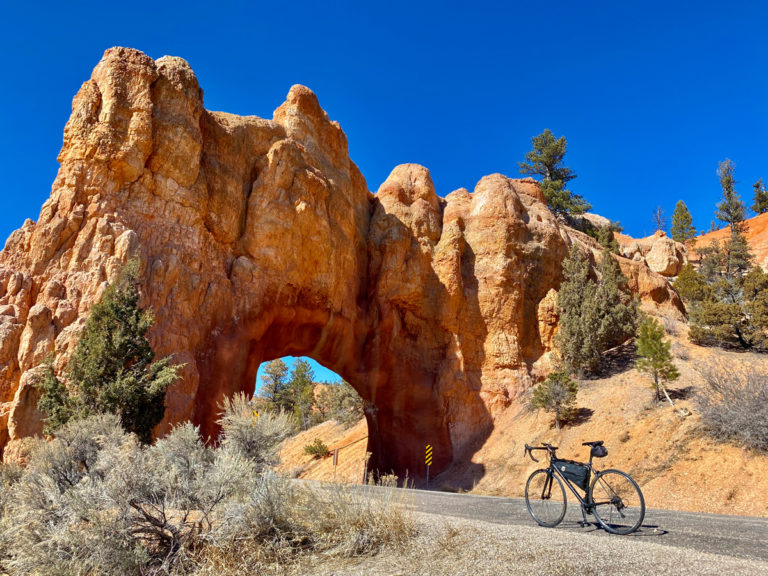
Rolling through the rock at Red Rock. Photo by David Collins

What to See:

Geologic wonders including volcanic tuff, prehistoric landslides, slumps, columnar joints, basaltic boulders, hoodoos, honeycomb cliffs, stonepecker holes, exposed ancient bedrock strata and bubble caves; active and temporarily dormant rivers (Pariah, Escalante); Red Canyon; Dixie National Forest; giant cliff curtain rising behind Cannonville; Kodachrome Basin (see Still Have Legs); The Hogsback section of The Million Dollar Road (a razor thin ridge road with steep cliff drops on either side – proceed with caution and enjoy breathtaking vistas); Anasazi State Park Museum; a short sip of Bryce Canyon National Park; a long swig of Grand Staircase – Escalante National Monument; a handful of charming and sometimes quirky towns (Panguitch, Bryce Canyon City, Tropic, Cannonville, Henrieville, Escalante, Boulder and Torrey); Visitor Centers including: Red Canyon, Bryce Canyon (three miles south of the byway’s junction), Grand Staircase-Escalante National Monument and Escalante Interagency; the original Torrey log schoolhouse; while not quickly accessible on the ride, it’s nice to know there’s evidence of giant prehistoric residents – multiple dinosaur tracks litter the Escalante area (one site contains more than 250, two of which include indications of tail drags).

Selfies and Photo Ops:

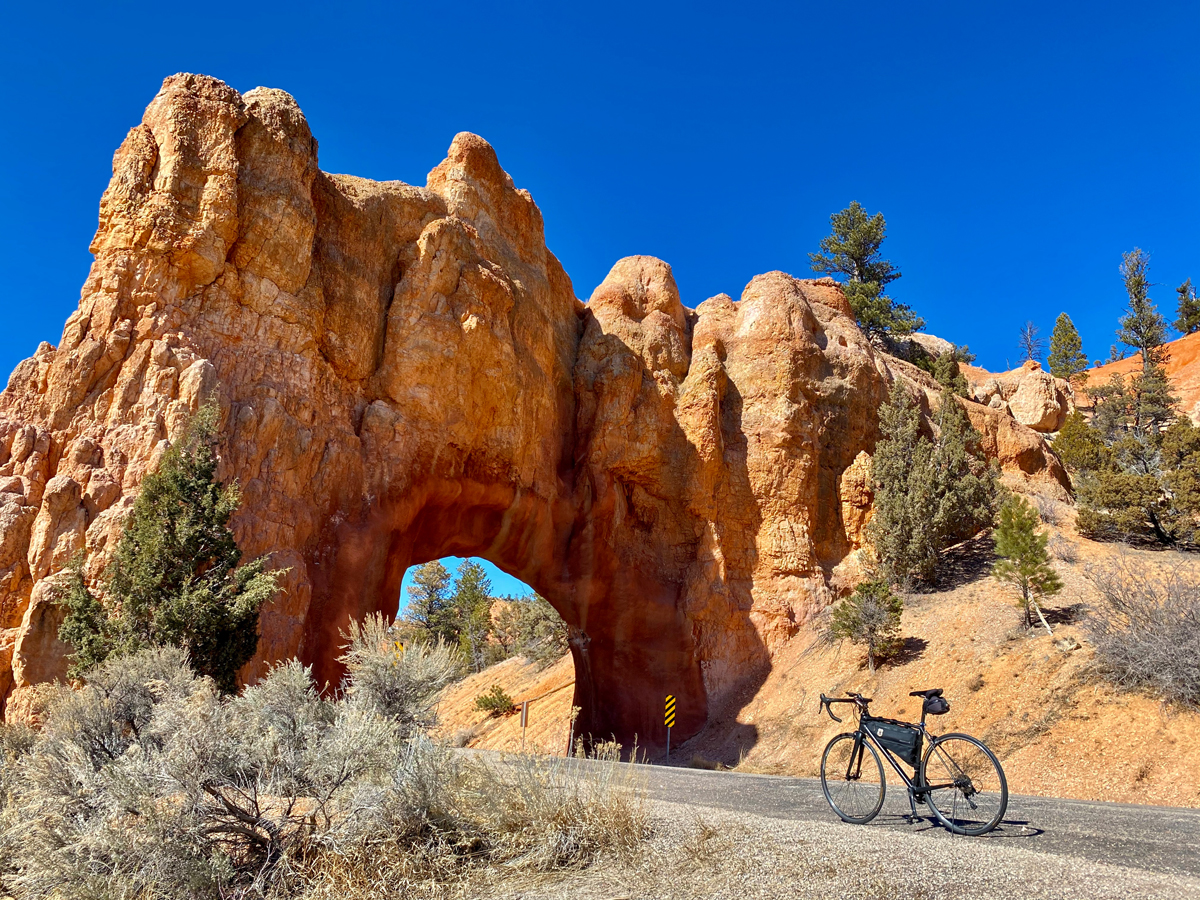
Several colorful roadside cliff backdrops (chocolate, vermilion, white, gray and banded); noteworthy overlooks including The Blues, Head of the Rocks, Boynton, Homestead, Larb Hollow and Steep Creek; Red Canyon archways (the road passes through); Bryce Airport sign; Dixie National Forest backdrops; Ebenezer Bryce’s cabin in Tropic; Kodachrome Basin State Park sign; laser-cut steel Welcome to Henrieville sign on the west side of town; Upper Valley Granaries cliff formation (a small stone structure constructed by ancient Puebloans is wedged into the cliff but can’t readily be seen without binoculars); The Hogsback – DANGER – be cautious and only stop when weather permits and the road is empty.

Wildlife:

Mountain lions, bobcats, elk, deer, pronghorn (antelope), black bear, red-tailed hawks, golden eagles, jays, lizards, snakes, fox, coyote, jack rabbits, porcupines and little ground scurriers.

Best Post-Ride Eats:

Red Cliff in Torrey. The table clothes are plasticky, your silver comes in a parchment sleeve and they serve pizza and steak burgers, but don’t let that fool you. Other places may have classier environs or even better fare, but nobody has Red Cliff’s homemade hot plate of meat lasagna. Every day the owner makes a batch of it – a lovely ode to all comfort food. Loaded with meatballish tang and served with shards of parm on top and sweet savory red sauce you’ll sop with breadsticks, it’s the perfect plate of protein and carbs after an extended day in the saddle. The portion is generous, but after you taste the first bite, you won’t be surprised to find yourself ordering another plate when the last bite is gone.

Still Have Legs, lungs and Sunlight?

Add a brief detour through Kodachrome Basin State Park. More than 50 sand pipes ranging from 6 to 170 feet tall can scratch anyone’s geological itch. If you’re carrying lightweight shoes in your gear, shod your dogs and stretch your legs on the wonderous 2.9 Panorama Trail. It won’t take long in your excursion to understand why a National Geographic Society Expedition named the basin after the color perfect Kodak film of the day.

Notes:

  1. The final major climb tops out above 9600 feet above sea level where weather may deteriorate rapidly and turn into volatile riding conditions including early summer snow showers.
  2. With three climbs, total elevation for the day is significant. You may want to split this ride into two days.
  3. Take a hardcopy map, GPS and cell service are often spotty or unavailable.

David Collins is a cycling enthusiast and amateur randonneur. Follow him on Instagram @rockypumpkin

Report: Wyoming Dead Last for Bicycle, Pedestrian Safety

0

By Angus M. Thuermer Jr., WyoFile.com

When bicyclist Geoff O’Gara came to his senses in the Lander emergency room, he couldn’t recall the incident that sent him to the pavement.

The experienced cyclist had been riding the main street of Wyoming’s 13th largest city — one with more than its share of cyclists — on the shoulder of a highway that lacked protected bicycle lanes. He recalls seeing a couple of pickup trucks that August 2019 day, but none that seemed threatening.

No eyewitnesses came forward, O’Gara, a WyoFile board member, said. People only reported seeing others helping the dazed rider up from the highway, large bruises ripening on his face and shoulder.

Every indication to him and an emergency worker who responded — from the outline of the bruises to their location to a lack of scuffing on his clothes and bicycle — indicate that a pickup truck side-view mirror smacked O’Gara and sent him to the asphalt.

His case, however, wasn’t thoroughly investigated by police, O’Gara believes. Despite the forensic evidence, the official report simply noted that he fell off his bicycle, O’Gara told WyoFile.

“I was extremely lucky,” O’Gara said. A hospital scan revealed the impact bruised his brain. He was too concussed and worried about his recovery in the weeks following his crash to follow up on the hit-and-run. But nobody else did, either.

O’Gara’s predicament underscores the dangerous conditions that exist for Wyoming cyclists and pedestrians. Wyoming is last among states when it comes to bicycle and pedestrian friendliness, a recent ranking by a nationwide group found.

A decade ago, Wyoming earned an 11th place among the 50 states for its policies and infrastructures for bicyclists and pedestrians, the League of American Bicyclists reported. The next year it demoted Wyoming to 15th, and then to 17th.

In 2019 it put the Equality State dead last on its Bicycle Friendly report card.

The 2019 ranking by the 139-year old nationwide advocacy group gave the state a D- in infrastructure and funding, a D+ for policies and programs, C- for both education and planning and a C+ for legislation and enforcement.

“It’s been declining every year,” Tim Young, executive director of nonprofit Wyoming Pathways, said of the state’s ranking.

Wyoming has fallen behind because other states have taken the league’s grading parameters — from funding to education to laws and road-construction standards — more seriously than Wyoming has, Young said. “That’s why we’re lower down.”

‘Disappointing’ assessment

O’Gara could have done more to protect himself, like wearing a helmet. The regular cyclist shunned it for the short ride from his home to a car dealership. But Lander’s layout and infrastructure contributed little to his safety. “I feel like people are at risk all the time when they ride,” he said.

The league report card says, “every federal data indicator for Wyoming suggests that bicycling is getting worse, and the core reason is a lack of state investment and a lack of using federal funds for bicycling and walking projects.”

That’s a “disappointing” assessment, Gov. Mark Gordon’s Spokesman Michael Pearlman said. He pointed to transportation-department funding challenges as an issue, questioned the report’s methodology and said Wyoming’s rural nature needs to be accounted for. Yet the report may lead the governor to “a conversation” with his new transportation director Luke Reiner on the topic, Pearlman said.

Overall the league gave Wyoming 31.7 points on its scale, compared to top-place Washington, which had 71. Wyoming neighbor Colorado ranked seventh, Utah eighth, Idaho 33rd and Montana 47th.

Wyoming needs to implement one of its recent cycle and walking plans and put money behind them, the league report said. Wyoming’s Department of Transportation should understand why the league’s indicators are trending the wrong way, the report continued.

The league spent three years tracking where drivers are killing people on bicycles. “It’s clear these deaths are disproportionately happening on state-owned roadways,” the report says. It ranked Wyoming second among states where local highways are over-represented in the grim statistic.

The state needs to incorporate protected bike lanes regularly in its plans, something most states achieved in 2017, the report said. Adopting a “complete streets” program would ensure the needs of non-motorized users are considered at the beginning of construction projects, Young said.

Wyoming should set goals that seek to improve, not just maintain, non-motorized safety, the report said. Lawmakers should act, too, the report said, adopting a law to further protect “vulnerable road users” like walkers and cyclists. Wyoming should improve its rumble strips to ensure there are gaps allowing cyclists to cross them easily.

Since 2013 WYDOT has distributed about $18 million in federal highway funds to cities, towns and counties for non-motorized projects, WYDOT Public Affairs Manager Doug McGee said.

Meanwhile, it struggles with essential maintenance funding. The department is $135 million short annually, “just to keep the roads in the condition they are now,” he told WyoFile. The state strives for a goal of zero highway deaths, he said.

“Every fatality on our highways, our system, is one too many,” McGee said. “I think we do our best to fulfill our mission.”

No new laws

A co-chairman of the Legislature’s joint Transportation Highways and Military Affairs Committee said lawmakers have adopted several safety measures in recent years, including one that requires vehicles to give cyclists three feet of space. Another allows cyclists to use a highway even when a pathway is available, enabling fast riders to separate themselves from slow-moving pedestrians, Sen. Michael Von Flatern (R-Gillette) told WyoFile.

“They were mixing the baby carriages with the pro bicyclists,” he said.

But he doesn’t envision passage of an enhanced penalty statue for those who injure or kill vulnerable non-motorized users. “I oppose enhancing penalties,” he said. It just doesn’t seem to me that it would be worth it.”

While Young agreed the league’s 2019 last-place ranking is bad, “it’s not as bad as it looks,” he told WyoFile. That’s because Wyoming is poised to make “some quick progress,” he said.

In addition to their other measures, lawmakers in 2016 established a task force to look broadly at safety issues. This led to a call in 2018 for the state to spend $10 million annually to build and promote walkable main streets, community pathways and rural cycling routes and trails.

At least 25 communities, from Story to Cheyenne and Casper, have plans that seek to add community pathways, main-street programs or initiatives like safe-routes-to-schools.

“There’s broad interest,” Young said, including in health and economic benefits. Yet, “there is no bicycle pedestrian program at WYDOT, for all practical purposes, compared to other states, that seeks to serve people however they travel, foot, bike, bus or motor vehicle.”

Agencies across Cheyenne could participate, including the office of State Lands and Investments that oversees the use of school trust property and Wyoming’s state parks department, a natural niche for cycling and walking amenities. Law enforcement could enhance officer training “so they can look for issues, like “was that a hit-and run?’” Young said.

Wyoming’s own 95-page report from 2018 contains 32 pages of recommendations, including that the governor assist the Legislature in establishing a state-level bicycle board. Gov. Gordon, however, is leery of long-term task forces, spokesman Pearlman said.

Perhaps this is where an advocacy group helps by playing a key role, he said.

Crash-victim O’Gara said he’s seen “so many close calls,” it’s unsettling. He has participated in the Tour de Wyoming several times, he said, and has encountered rude motorists.

“The traffic that is there is pretty dang inconsiderate of bikes,” he said. With the potential for bicycle touring the state holds, “it’s crazy not to make the effort to make it safer,” he said.

After two years of planning, Wyoming needs action, Young said, to bring it up to speed. “We should take this [League] report as something we can do better on,” he said.

WyoFile is an independent nonprofit news organization focused on Wyoming people, places and policy.

Cycling West and Cycling Utah’s Late Summer 2020 Issue is Now Available!

Cycling West and Cycling Utah Magazine’s Late Summer 2020 Issue is now available as a free download (12 MB download). Pick up a copy at your favorite Utah, Idaho, Wyoming, Nevada, Montana, Colorado, Arizona, New Mexico and Northern California bike shop or other location.

Download the Magazine Now!

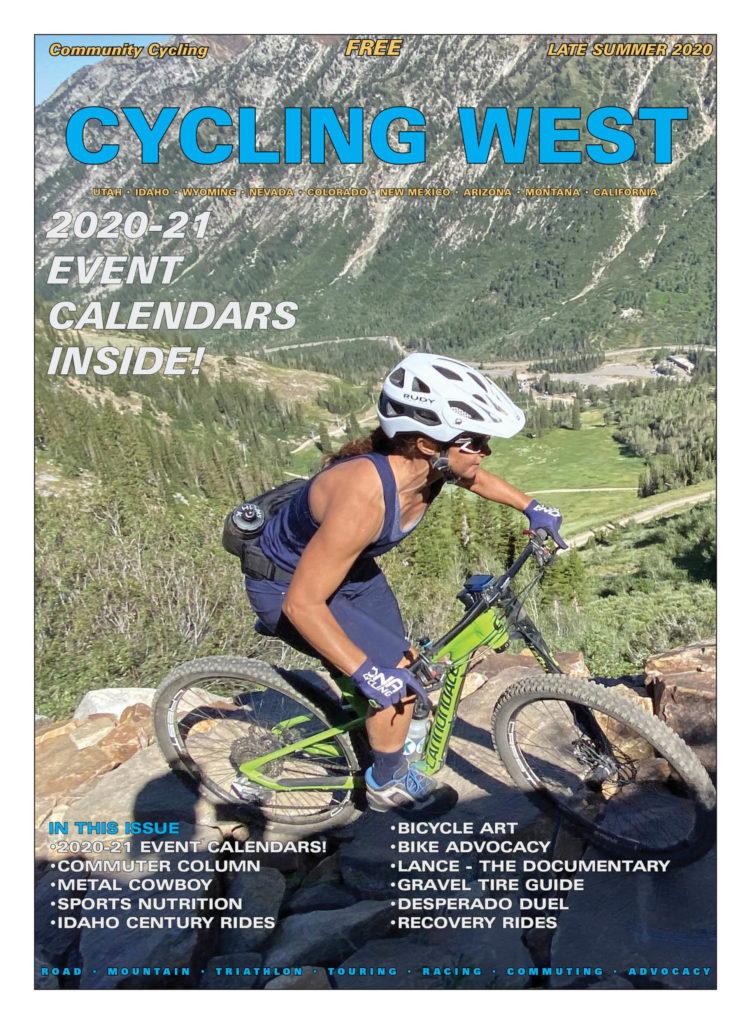
Cycling West Late Summer 2020 Cover Photo: Cycling West columnist Sarah Kaufmann at Snowbird, Utah.
Photo by Catherine Fegan-Kim, Cottonsoxphotography.net

Contents

  • Review: ESPN’s 30 for 30: LANCE — page 3
  • Advocacy Alert: Help Save Red Cliffs Desert Reserve Trails for Mountain Biking — page 5
  • “Stay Safe, Stay Active” Streets Provide a Possible Vision of the Future — page 6
  • Emigration Canyon Illustrates Need for Better Planning for Bicycles — page 7
  • Spinning Someone Else’s Wheels — page 7
  • A Guide To Gravel Bike Tires or A Theoretical Treatise on Tire Selection — page 8
  • The Athlete’s Kitchen: Hot Weather Hydration Tips — page 10
  • Make Recovery Rides Fun! — page 10
  • The Continued Adventures of a 40-Something Mom: The Desperado Duel — page 11
  • A Bike Tour around the Uinta Mountains — page 12
  • Calendar Notes for Summer 2020 — page 16
  • Five Great Central and Southeastern Idaho Century Rides — page 20
  • A Review of the Power Grips Pedal System — page 22
  • Gino Bartali – 1938 Tour de France – The Bicycle Art of Richard Vroom — page 23

Hydraulic Brakes Require Preventative Maintenance

By Eric Ramirez —

“My disc brakes started feeling a little sticky this spring.”

The Reason for a Brake Bleed

Over time, and especially with use, brake fluid (hydraulic fluid or mineral oil) goes bad. A sticky brake lever is not the only symptom, either. A bike owner can potentially experience several more problems, including the following:

  • Increased brake-fade during long, demanding descents
  • the caliper pistons may eventually get sticky – not fully retracting, preventing the brake rotor from freely passing between the pads
  • your mechanic might tell you that the fluid came out black or contaminated.
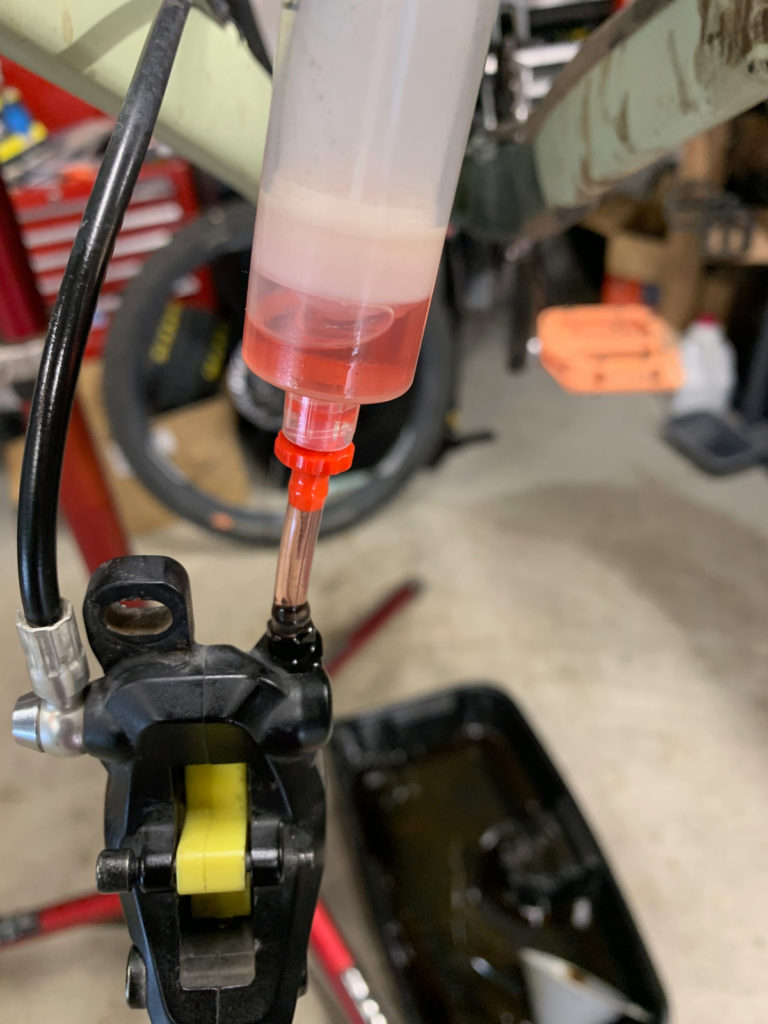
Shimano Mineral Oil - Going in fresh, is translucent pink, ideally when it comes out in the next bleed, it should still be transparent. Photo by Eric Ramirez
Shimano Mineral Oil – Going in fresh, is translucent pink, ideally when it comes out in the next bleed, it should still be transparent. Photo by Eric Ramirez

Break Down with Heat & Pressure

As the work horse of our disc brakes, hydraulic fluid (or oil) is exposed to a build-up of heat. Disc brake rotors and pads flash to excessively high temperatures when actuated. The heat transfers to the caliper, then partially up the line. It does not help that most brake systems are black or dark in color. This exacerbates the heat effect on the fluid.

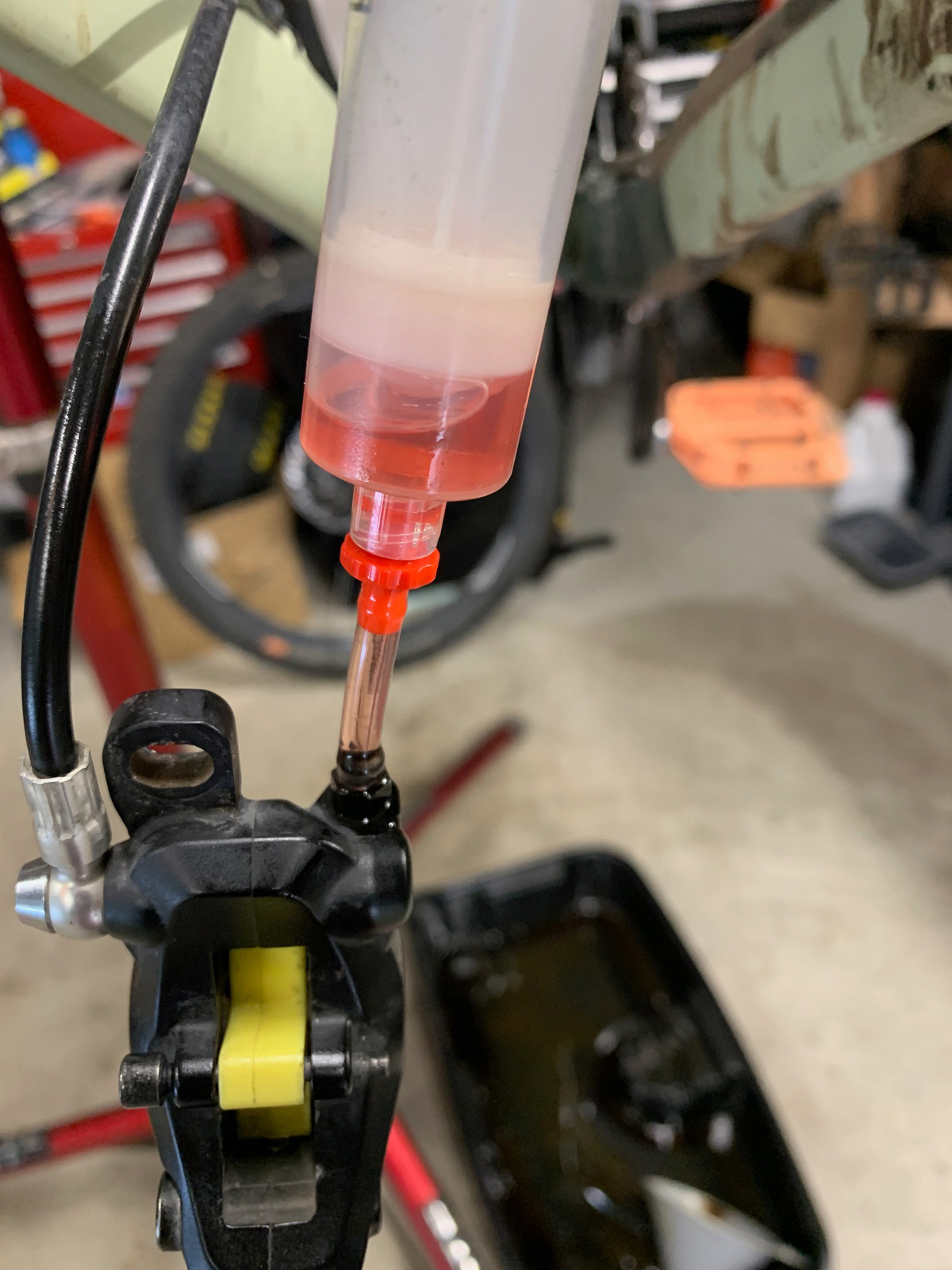
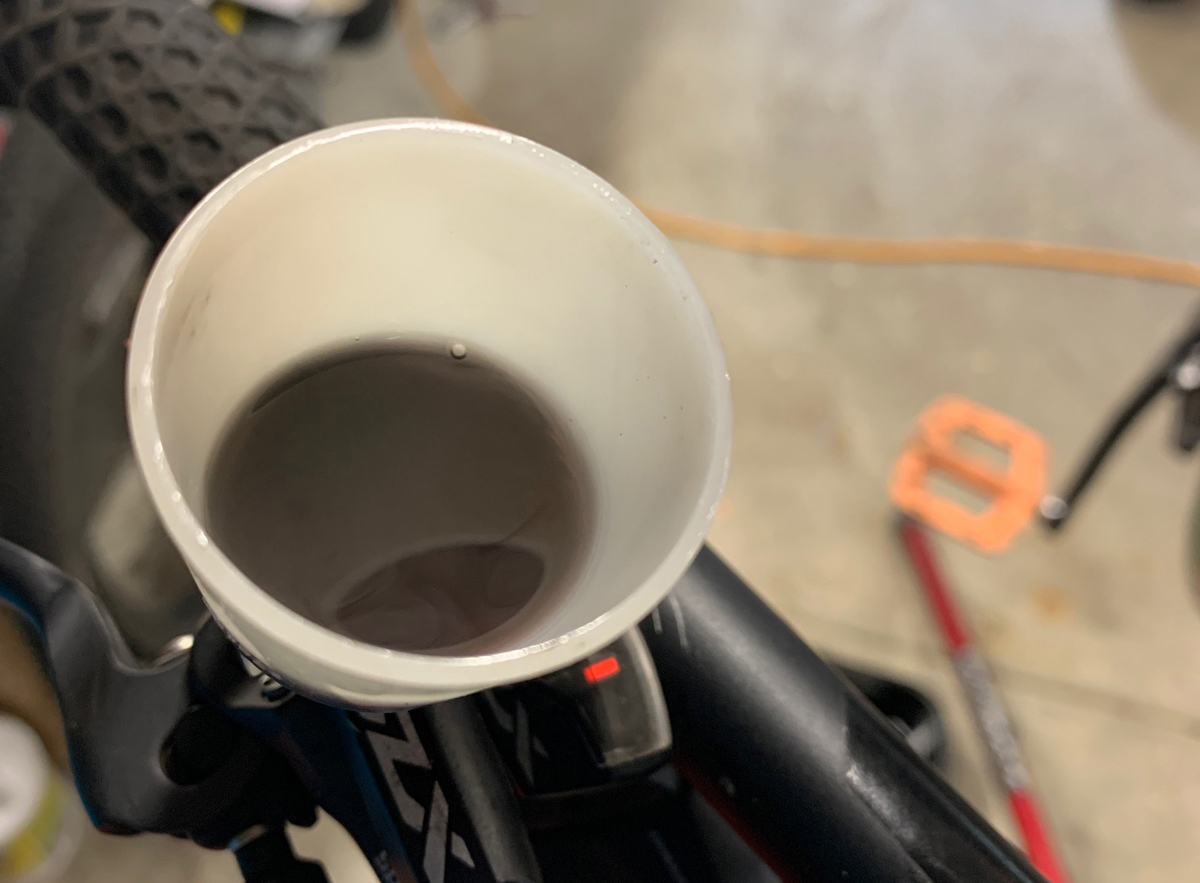
Shimano Mineral Oil: Blackened simply through use, can erode internal brake system workings. Photo by Eric Ramirez

Heat isn’t the only culprit, though. The very act of pulling back on the brakes increases the pressure on the fluid inside the lever, line, and caliper exponentially. Although hydraulic fluid is formulated for pressure, it is also one cause of its breakdown. Mineral oil may actually turn it black from pressure, and the phenomenon isn’t uncommon in hydraulic oil.

Exposed to heat and pressure, the hydraulic fluid degrades. It is designed for this purpose, but can only perform for a finite number of hours; thus, it needs to be replaced.

It Gets Worse

If the degraded fluid remains in use, it begins to release acids and becomes corrosive. Have you ever bled your brakes and seen little black particles escape with the old fluid? Or extract silvery fluid? That material is brake system structure: line material, metals, and seal fragments.

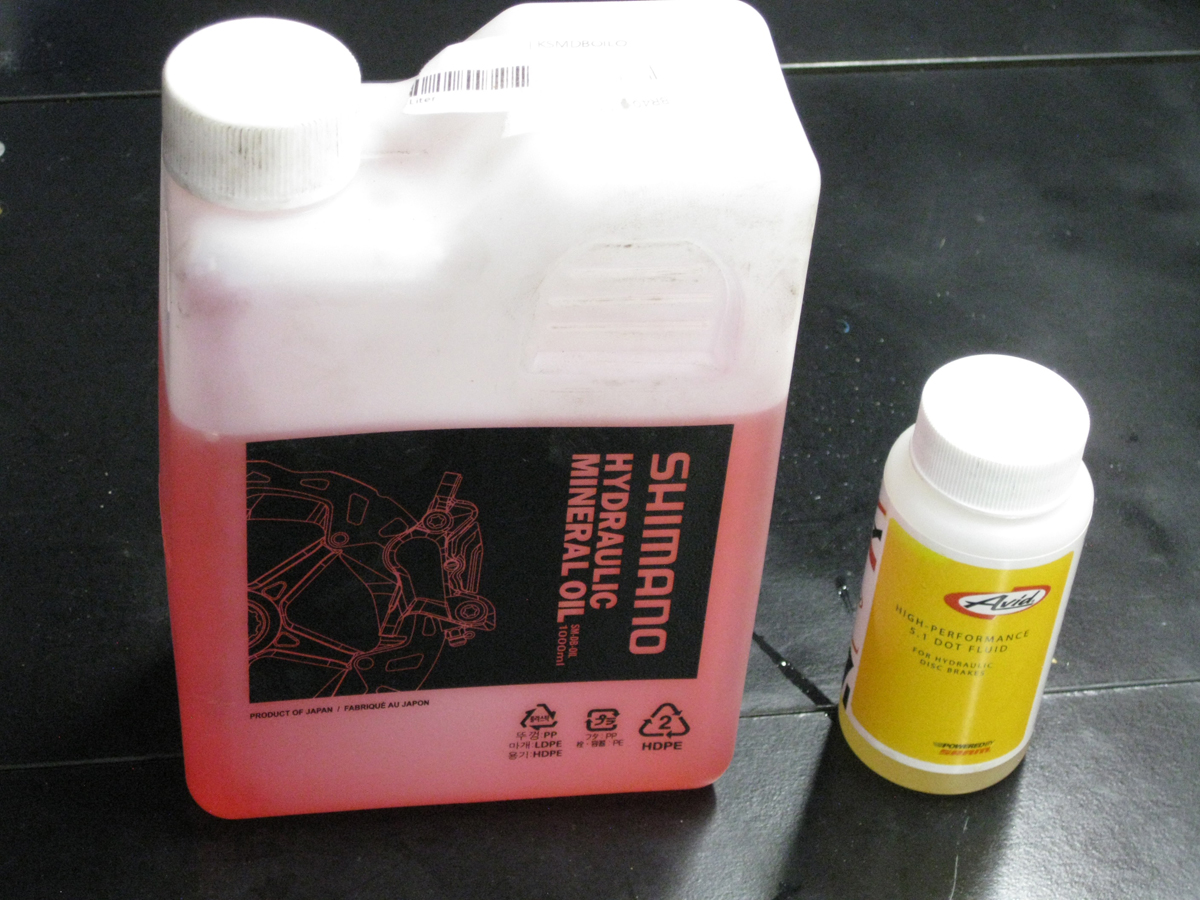
Mineral oil and DOT 5.1 packaging, Shimano and SRAM. Photo by Eric Ramirez

I have struggled with brakes that have had degraded fluid through sustained periods of use, and I have had them come back for service over and over, until finally, we replace the brake. Degraded fluid will take your system beyond the point of no return. Brake calipers and levers were not designed to be rebuilt, just bled. I have held a lot of dead brakes in my hands over the years. They did not have to die though.

The Remedy? Preventative Maintenance

Often, riders treat the brakes with the approach, “If it ain’t broke, don’t fix it.” Complex mechanical parts need preventative maintenance to keep working correctly. That’s why we change the oil in our cars. That’s why we service our forks and shocks. We replace chains when they’re properly worn out.

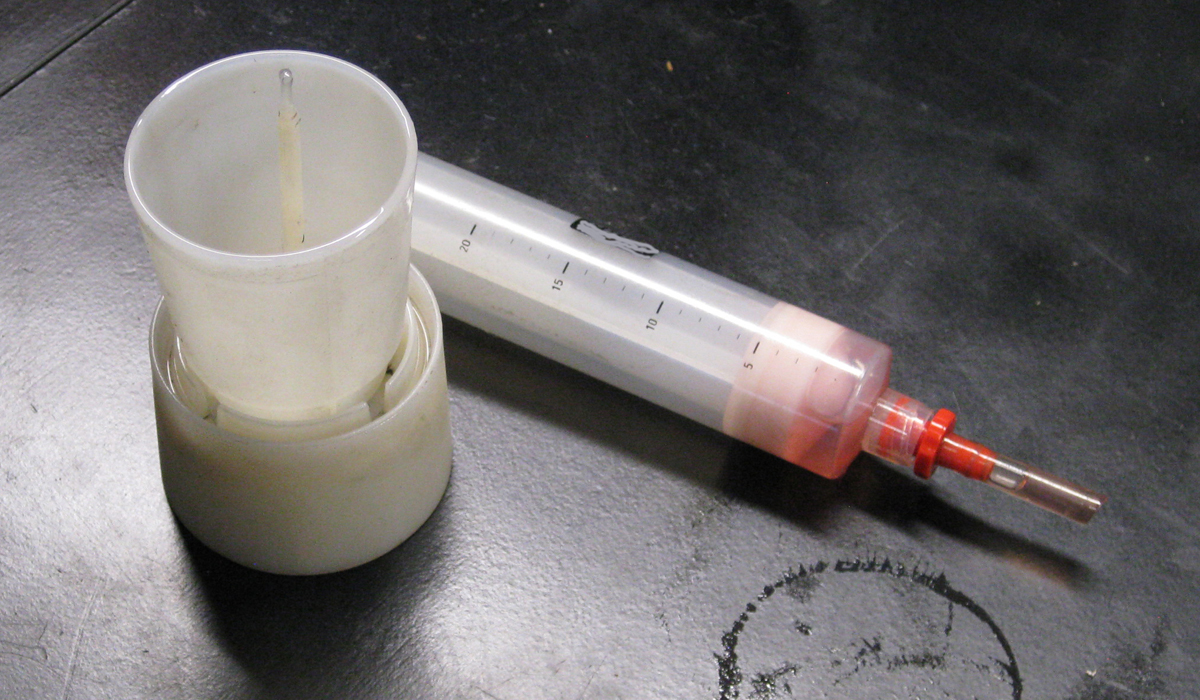
Bleed system for Shimano brakes. Photo by Eric Ramirez
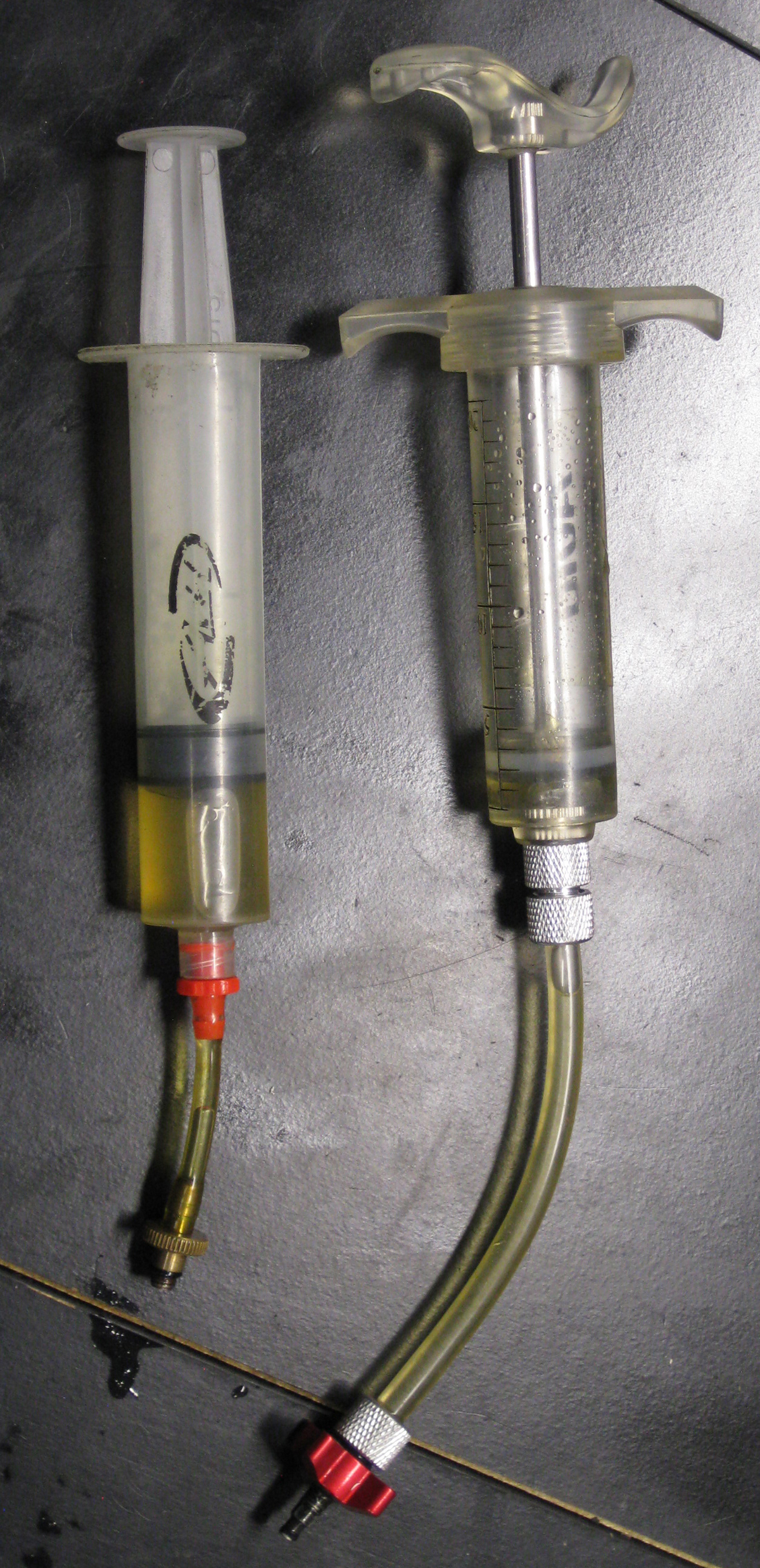
Bleed system for SRAM newer brakes. Photo by Eric Ramirez

Fixing the brake oil or hydraulic fluid problem requires bleeding the brakes at least once a season. I have had several customers who need to have it done more often than that, as they ride nearly twice as much as other cyclists. By bleeding a brake, I don’t mean exclusively purging the air from it. Bleeding is extracting air and purging old fluid via the introduction of new fluid.

Doing the Work

This is a process that you can learn on your own as there are instructional videos almost everywhere online. Bleed kits and oils or fluids are usually available from shops. But if you don’t have the time or energy to invest in doing the job a specific way, or troubleshooting potential problems, it might be best to take it to your local, expert bike mechanic.

Take-home on brake service? Bleed your brakes.

Eric has about 20 years experience working on bikes, starting in Park City. Today he’s a head technician at a shop.

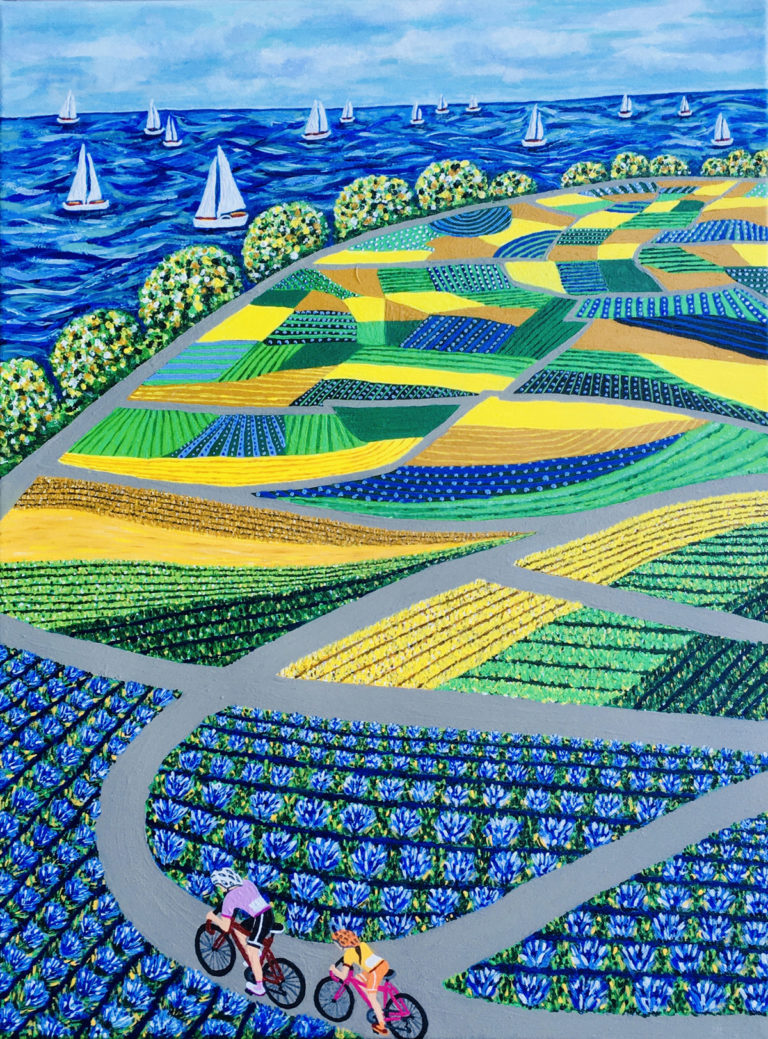
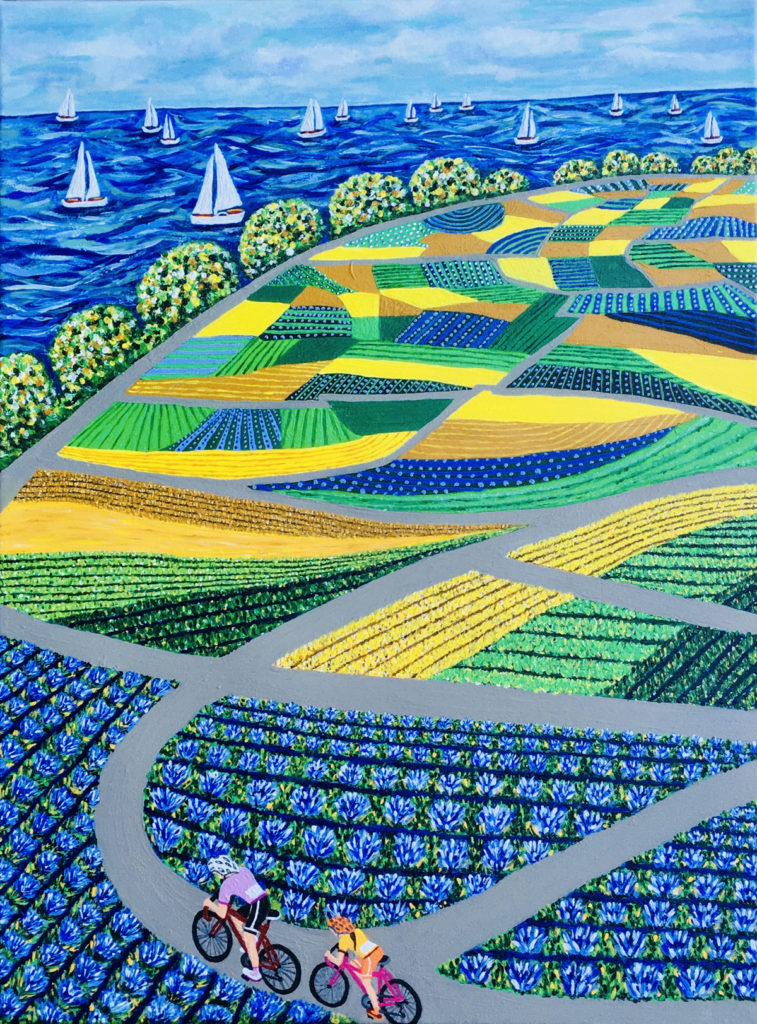
Coastal Cruz – The Bicycle Art of Mindy Larson

Artist: Mindy Larson, Title: “Coastal Cruz”, Medium: Acrylic on Canvas, Size: 18×24

Artist: Mindy Larson, Title: "Coastal Cruz", Medium: Acrylic on Canvas, Size: 18x24
Artist: Mindy Larson, Title: “Coastal Cruz”, Medium: Acrylic on Canvas, Size: 18×24


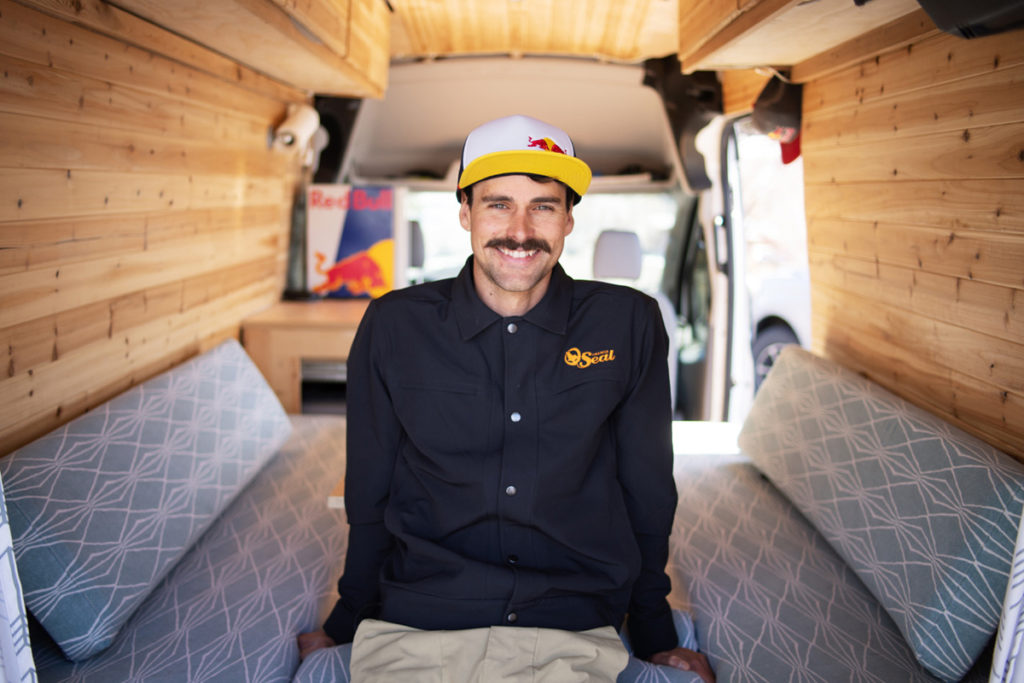
Interview with Professional Mountain Biker Payson McElveen

By Anthony J. Nocella II, Ph.D. — Anthony Nocella: I met you a few times quickly in Durango, Colorado when I lived there, and follow you via Instagram. I must say you are one of the most engaging Instagram professional cyclists in the world. How is it training and living in a small town such as Durango, Colorado as a professional mountain biker?

Pro mountain bike Payson McElveen. Photo courtesy Payson McElveen

Payson McElveen: Personally, I feel Durango, CO is the best place to live as an endurance off-road racer. First and foremost, the community is incredible. Durango has a long illustrious history of racing, but the riding community as a whole, whether competitive or not, is so healthy. Beyond that, the terrain is incredible. I’ve never been anywhere that has so many incredible, diverse trails so easily accessible from town. 

AN: What are the three best races in the Four Corners region that you have participated in and why?

PM: Somewhat ironically, the Four Corners area doesn’t have many races. We’re so rural and isolated in this area that there just aren’t that many people to support a large number of events. That said, the Iron Horse Bicycle Classic, 12 Hours of Mesa Verde, and some of the collegiate races are all local events that have a special place in my heart. 

AN: In your opinion, what are the five best places to ride in the Four Corners region, and why?

PM: Well, certainly Durango. Phil’s World near Cortez is also a special place. The Colorado Trail between Silverton and Durango, and the high mining roads around Telluride are also very unique.

AN: Earlier this year, we lost an amazing cyclist and kind person when Ben Sonntag, a professional mountain biker with Team Clif Bar, was killed by the driver of a pickup truck while riding on the road outside Durango, where he lived. Since you knew and rode with Ben, what is something that you would like to tell the world about him?

PM: Ben was a true professional, incredibly dedicated to his craft, but still put people first. He was one of the fiercest competitors on the circuit, but one of the nicest individuals at the races as well. I admired him as an athlete, but even more so as a person. 

AN: What is the most difficult part of training during the COVID-19 coronavirus pandemic, and what are a few training tips for other mountain bikers?

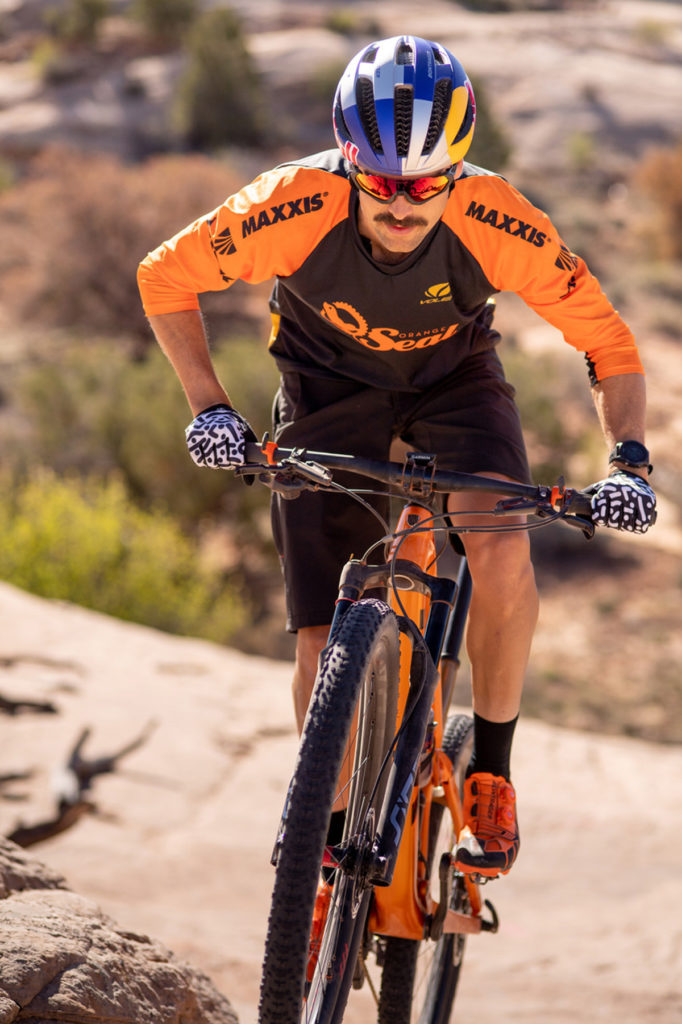
Pro mountain bike Payson McElveen. Photo courtesy Payson McElveen

PM: I miss group rides! I honestly love the process of training and haven’t had too much trouble staying motivated. We have some great competitive group rides here in Durango that I often utilize as a training tool, and it’s a bummer that those are on hold. That said, it’s definitely the right protocol right now.

In terms of training tips for mountain bikers, I have two top recommendations: first, ride with folks that are better than you. That’s the best and fastest way to improve. Another key tip is consistency. Even five short 45-minute ride per week is better training than two long 3-hour rides. 

Payson McElveen’s Bicycle Specs:

  • Trek Top Fuel 9.9, size Large (19.5”), with custom Orange Seal Off-Road Team Project One paint scheme
  • SRAM AXS Eagle drivetrain with 36T chainring and Quarq power meter
  • Bontrager Kovee XXX wheels
  • Maxxis Ikon 2.35 tires
  • Orange Seal tire sealant
  • Rock Shox SID Ultimate fork
  • RockShox Deluxe Ultimate rear shock
  • Rock Shox Reverb AXS dropper post.

Anthony J. Nocella II, Ph.D. is a full-time professor at Salt Lake Community College, author of numerous books, trail runner, triathlete, competitive cyclist, and in his free time works at Hangar 15 Bicycles Millcreek.

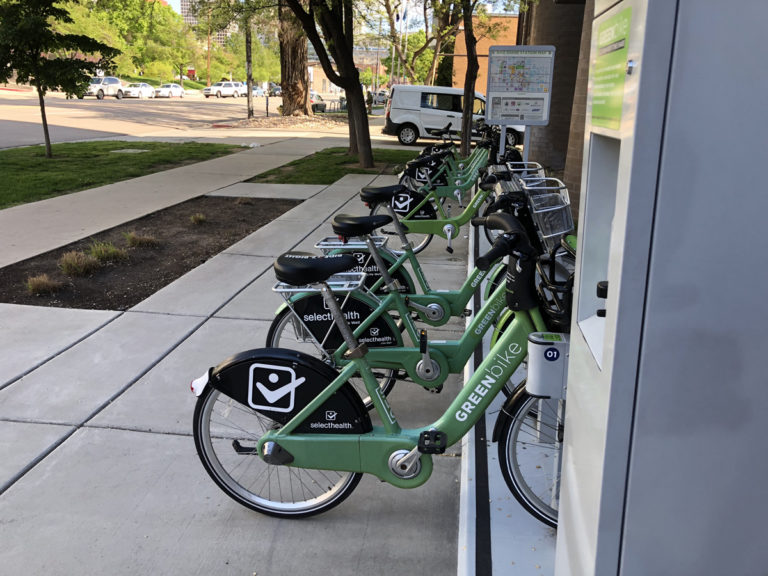
SelectHealth and GREENbike offer Salt Lake City Residents FREE Bike-share Rides on the First Day of Early Voting in Utah

0

SALT LAKE CITY (October 16, 2020) — GREENbike, Salt Lake City’s non-profit bike share system, and the nonprofit’s title sponsor SelectHealth are offering free GREENbike rides to the public on Tuesday, Oct. 20th to commemorate the beginning of the early voting period for the November General Election.

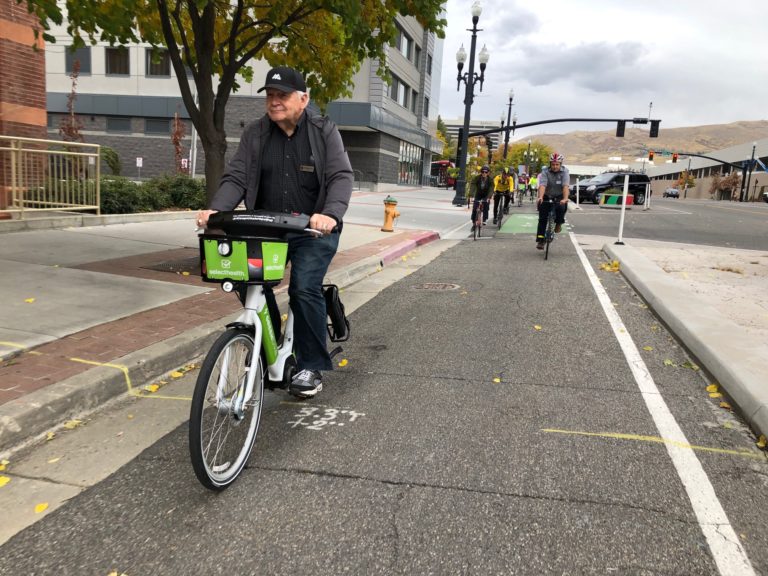
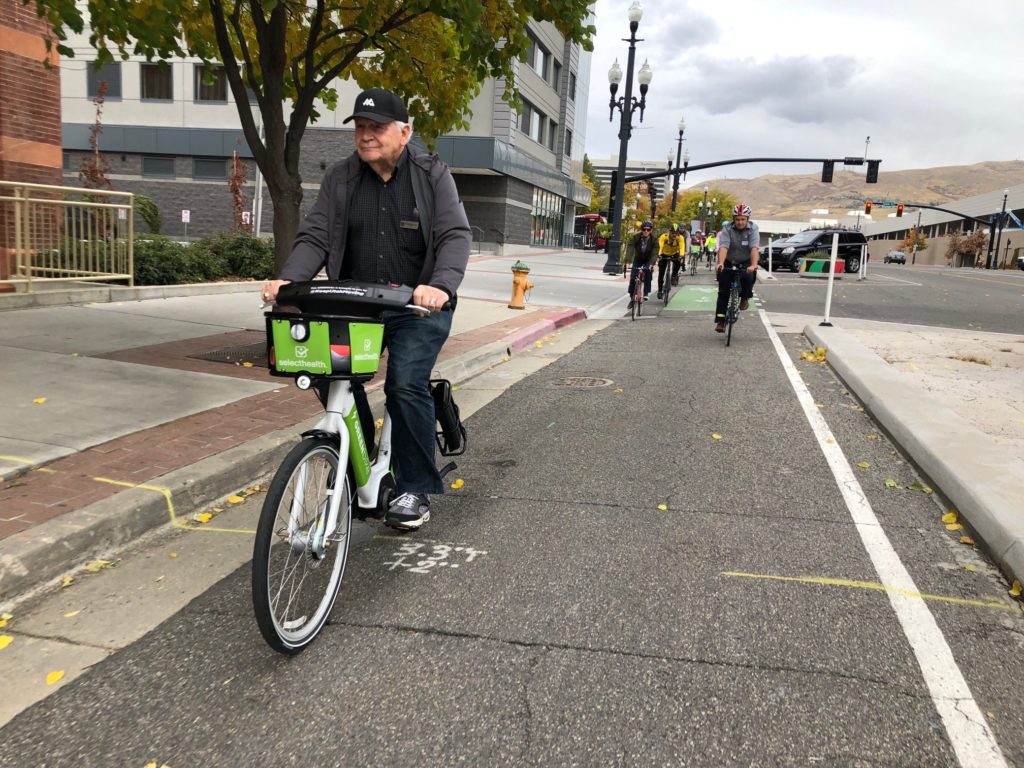
Midvale Mayor Robert Hale on a GREENbike electric bike. Photo by Dave Iltis

On Tuesday, all Salt Lake City residents will be able to ride GREENbikes for free during the 24-hour period by using the promo code “202020” at any GREENbike kiosk. Riders can take as many 30-minute trips as they want during the 24-hour window.

“We all need to enjoy some fresh Fall air on a GREENbike, it’s a great experience,” said SelectHealth Public Relations Manager Greg Reid.

Early voting runs from Tuesday, Oct. 20th to Friday, Oct. 30th. GREENbike and SelectHealth will also be providing Free GREENbike access to the public on Election Day Tuesday, Nov. 3rd.

Ballot Drop Box Locations near GREENbike stations include the drop box at the Salt Lake City Library at 420 S 200 E and the drop box at the Salt Lake County Government Center at 2001 S State St. Voters can drop off their ballots at these secure drop box locations 24/7 until 8:00 pm on Election Night.

“We are so grateful that SelectHealth supported this Free Ride Day, providing everyone in Salt Lake City the opportunity to ride our bikes for free,” said GREENbike Executive Director & Founder Ben Bolte. “We are proud to offer free access to our bikes as our community members exercise their right to vote.”

Over the past seven years, residents riding GREENbikes have offset more than 5.3 million pounds of CO2 from entering the air and avoided more than 5.9 million vehicle miles from impacting local roads. GREENbikers burned nearly 78 million calories—roughly 272,000 slices of pizza—in the process. The local non-profit bike share system is dedicated to offering the community an affordable, convenient, and sustainable transportation option.

To find a GREENbike station, download the BCycle app or go to https://greenbikeslc.org/station-map.

Salt Lake City Rose Park Intersection to Get Protected Bike Lanes

3

Community Street Painting to take place on Saturday, October 17, 2020.

Salt Lake City Transportation Division and Scooter-maker Spin Team Up to Transform Rose Park Intersection

SALT LAKE CITY — Salt Lake City’s Transportation Division and Spin, an electric scooter company, will join the Rose Park community on Saturday, Oct. 17 to transform the appearance of a significant neighborhood intersection to encourage multi-modal use.

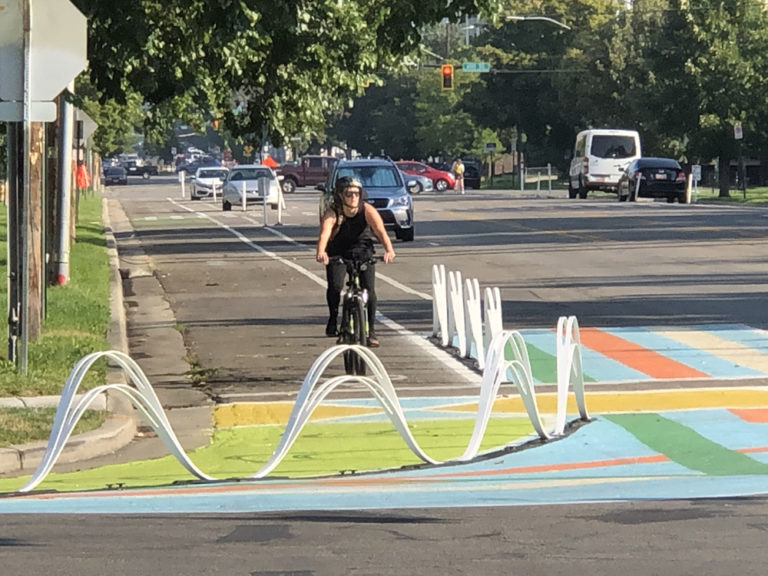
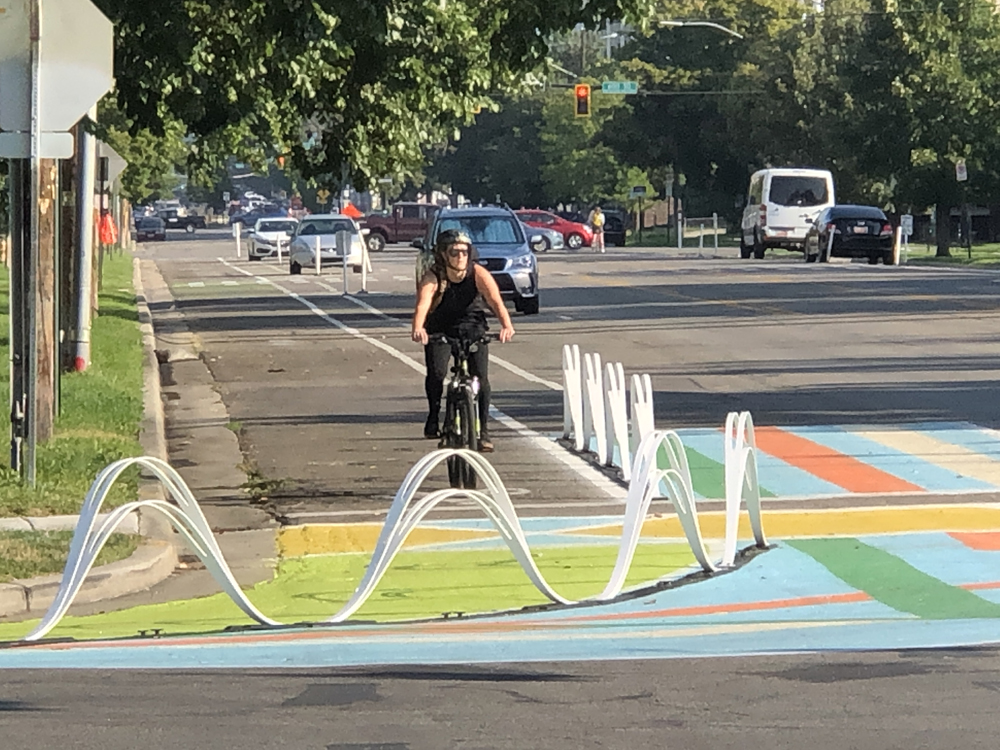
The new protected intersection at 300 E and 700 S is shown here. A similar project is planned for 1200 W and 600 N. Photo by Dave Iltis

The temporary, quick-build improvements will be located at the intersection of 1200 West and 600 North and will include painting a new community plaza and crosswalk and painted protected bike lanes. The effort is intended to drum up enthusiasm among the community and help residents visualize possibilities for permanent multi-use projects that could be included in the City’s 600/700 North Mobility, Safety, and Transit Improvements Study. The study is currently being drafted to improve this critical Salt Lake City corridor.

Bright red and pink roses will be incorporated into the mural designs, and enhance the identity of the spot and its role as an important neighborhood hub, which is surrounded by homes, a church, shopping and restaurants. Salvaged tree trunks will be brought in by the Parks and Public Lands Division to serve as a temporary tribute to the trees lost in the recent severe windstorm.  

The street painting party will be held from 11 a.m. to 3 p.m., and volunteers of all ages are encouraged to participate. COVID-19 precautions of maintaining 6-feet of social distance and wearing masks will be required.

“This community has been hit particularly hard by the impacts of the pandemic and the recent ‘inland hurricane’ that destroyed so many mature trees,” said Kyle Cook, a City transportation engineer. “We’re excited to do this project, which is a first step toward more permanent changes.”

The project would not be possible without the support of Spin, which is funding the $15,000 in project costs and providing volunteers.

“This project supports our vision to make outdoor spaces more usable for the community and more comfortable for micro-mobility users,” said Kay Cheng, Head of Policy Initiatives at Spin. “We’re proud to partner with Salt Lake City to provide resources that improve community infrastructure and provide safer streets for all users.”

Prior to the intersection project, the Rose Park and Fair Park Community Councils will also lead a community cleanup at 9 a.m. on the nearby 600 North overpass, which crosses Interstate Highway 15.

WHO: Salt Lake City Transportation staff, Spin staff and volunteers

WHAT: Rose Park 600 North/1200 West intersection project

WHERE: 600 North and 1200 West intersection

WHEN: Saturday, Oct. 17 from 11 a.m. to 3 p.m.

VISUALS: Street painting of intersection crosswalks and corners

PROJECT LINK: https://www.slc.gov/transportation/2020/02/18/600north/

ABOUT SPIN:

Headquartered in San Francisco, Spin is one of the leading micro-mobility companies and a unit of Ford Mobility. Spin has been recognized for launching the first station-less mobility program in the United States and was instrumental in crafting the world’s first mobility permit system. As a trusted and reliable partner, Spin currently operates electric scooters in many cities and universities nationwide in the U.S. and Europe. Spin consists of a diverse team of experienced professionals from government and private sectors, and the transportation advocacy world, all of whom are committed to fulfilling the company’s mission–giving people the freedom to move and bringing people, communities and their urban environment closer together.  https://www.spin.app


Custer Gallatin National Forest May Limit Mountain Bike Trail Access

By Charles Pekow — Mountain biking could be limited under a long-range plan for Custer Gallatin National Forest in Montana. The U.S. Forest Service (USFS) tentatively adopted a revision of its land management plan – unless anyone objects by September 8, 2020. USFS intends to issue a final plan early next year. The plan seeks to “limit mountain bike use to approved system mountain bike routes,” to preserve wilderness.

Under the preferred alternative, bikers would have to stick to approved routes. No new routes would be allowed in the Cook Mountain, King Mountain and Tongue River Breaks Backcountry Areas. No mountain biking would be allowed in the Bad Canyon Backcountry Area, but bikers could ride near it.

“I have decided that mountain biking is no longer a suitable use in this backcountry area in order to maintain the remote backcountry character of this area,” states the Draft Record of Decision. If adopted, about 14 miles of existing trail would be closed to bikers.

And while the Lionhead wilderness area will remain open to mountain bikers, the decision warns that if riders interfere with the nature of the area, it could get closed.

As part of an education program, the also indicates trailhead information might be updated to include asking mountain bikers and other trail users to remove seeds and burrs from their tires and shoes, in order to prevent creating projects to remove or mitigate invasive species.

Think you might encounter a creature bigger than a seed? Mountain bike trails run through bear territory in the forest. To avoid spooking or getting spooked by one, the plan suggests that when trails are being planned, trailbuilders try to minimize potential bear encounters by avoiding thick vegetation and steep hills to improve sight lines; minimizing sharp turns; and avoiding noisy areas like running streams.

For details, see https://www.fs.usda.gov/detail/custergallatin/landmanagement/planning/?cid=fseprd482956.


Reminder: GreenBike Memberships for Essential Workers

As many Utah residents are changing aspects of their lifestyle to take additional precautions amid COVID-19 (Coronavirus), GREENbike, Salt Lake City’s nonprofit bike-share program, is working to provide a safe and reliable source of transportation for those still commuting to the city or looking to stay active (while maintaining a safe six-feet distance).

The bike-share program is promoting its Annual Membership as a great way to get outside and is offering a $0.01 Annual Membership for all essential workers who still have to head into the office during this time. For more information about GREENbike and the precautions that the program is taking to keep riders who use its bikes safe visit greenbikeslc.org/covid19.


How to Ride a Bike (as told from the notes on my phone)

0

By Chiara Kim —

last edited on July 3, 2019 at 2:41 AM

(taken from a collection of inside jokes)

“Chairs [my nickname] was born in 2002 during the peak of Paris Hilton’s reign.”

My friend Ella announced this in the crowded backseat of a 2017 Toyota Tacoma as it crawled across the uneven path of the White Rim trail near Moab. It wasn’t quite dark yet, but the sun was slowly dipping past the top of the red rock canyons. The Tacoma followed the road that carved through the deep valley next to the Green River. The rock walls towered over us, and by towered I don’t mean the way someone describes a tall building. I mean the way that something so immense makes you feel really, really small.

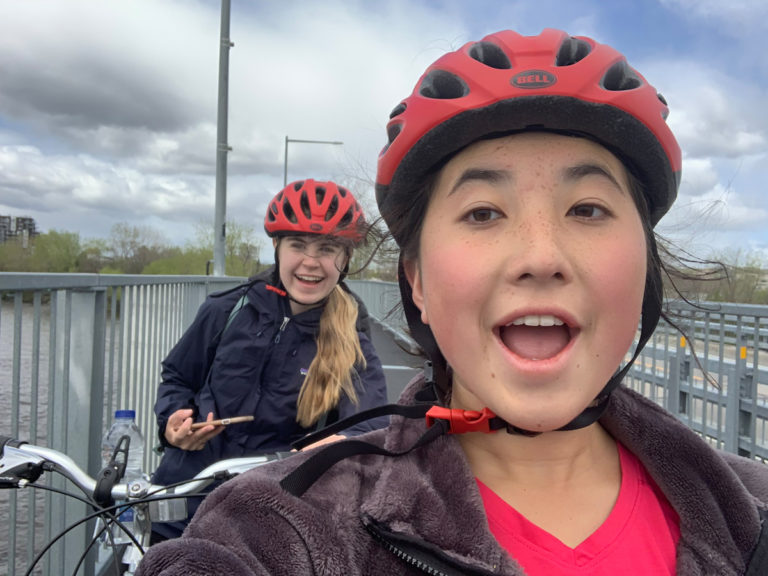
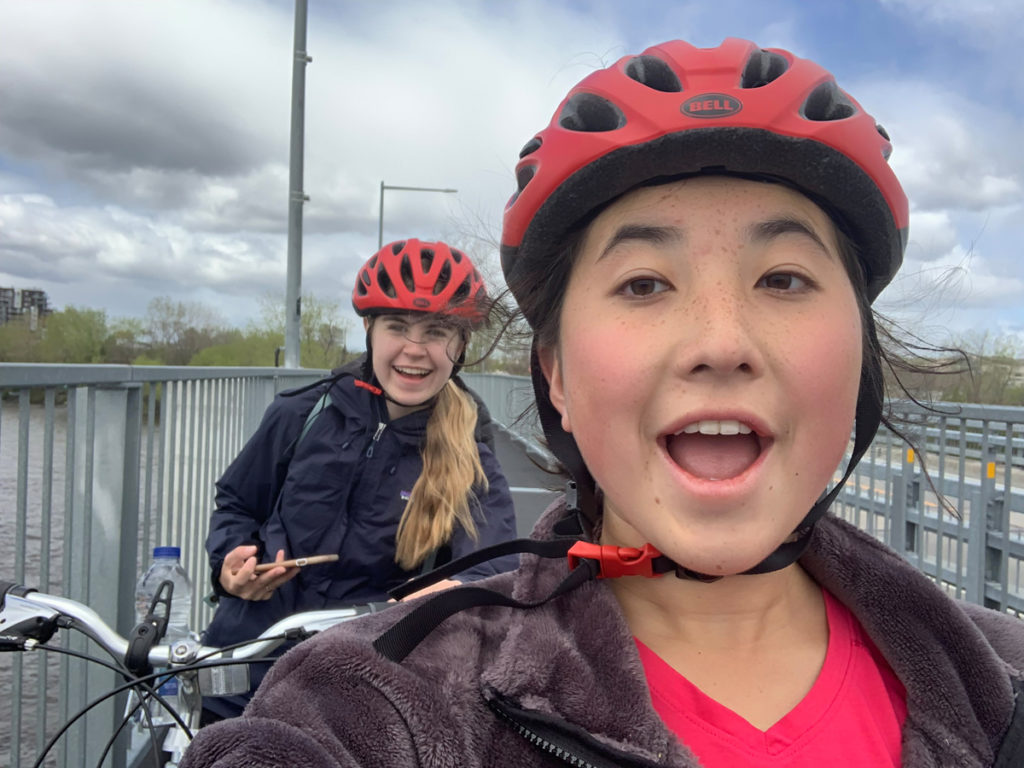
Chiara Kim (front) and a friend. Photo by Chiara Kim

The way going to a planetarium feels. Looking at all the stars and the galaxies and the universe that is constantly expanding but what’s outside of it? Is it just white? Is it blackness?? How can everything that exists be extending into what does not? How can something that does not exist still somehow… exist?

Earlier that day, when the sun still splashed across the desert, I walked my bike on a rounded corner and looked down onto a hill. It was steep, with rocks jutting out every so often, threatening to catch onto my tire and send me flying across the sand. Coerced by peer pressure (from Ella and my dad) and my own fear of not overcoming my fears (spiders and being alone and biking down hills), I climbed on my bike and started down the mountain. I rode the brakes all the way down. Then I abruptly hit a patch of sand and slammed into the ground. That’s where I got one of my only scars, red sand stained with blood.

I remember most of this hill so vividly, the jagged wall to my right, the path pressed down by the weight of cars. I remember how the descent became a long stretch that you could fly across if you didn’t crash. But I don’t remember what was to the left of me. It was probably a cliff.

last edited on July 3, 2019 at 2:41 AM

“Sadie with butter pecan”

(taken from a collection of inside jokes)

It was the second day of our school interim trip to the White Rim. We rode about 33 miles a day for two days (hills including but not limited to the one that I had fallen on a year before). The scenery was so vast and the canyons so deep, but I barely noticed because I was so focused on constantly pressing my feet into the pedals.

When we arrived at our camping spot, we lay on the curved edge of the rock that hung over an unbelievably high cliff. Have you ever kicked rocks over the edge of a cliff and watched them fall, and they fall for an insane amount of time and you think about how small the rocks are in comparison to the cliff and, subsequently, how small you are in comparison to the cliff and to the earth and to the 1,000,000,000,000,000,000,000 other stars?

Later that night, my friends and I laid in a tent for hours looking at the stars through the mesh fabric skylight that filtered the atmosphere into our eyes, pockets of darkness with pinpricks of white light. I stepped outside the tent to look at the enormous sky. There’s something about Southern Utah, in how the sky is an impossible black blanket dusted with light.

When I was little, I used to whisper a chant I learned from Dora the Explorer: “starlight, star bright. First star I see tonight. I wish I may, I wish I might, have this wish I wish tonight.” I was so excited to find that first star, the one that would make all my dreams come true. Luckily, I could only see a few stars every night because of the light pollution of the Salt Lake valley, and so I didn’t contemplate the vastness of the universe.

last edited on May 21, 2019 at 4:49 PM (taken from a list of good things in life)

“Things that make me happy: Hugging! Apparently biking”

A year later, on the same school trip, I went to Montreal. We took a bike tour around the city. The tour was led by my French teacher, who “felt like a 16-year-old again” as he sped away on a cherry red electric bike. My bike was pale yellow, and it jostled over uneven cobblestones. After hours of crossing bridges over the Saint Lawrence River and winding through city streets in designated bike lanes, we reached the park at the base of Mont-Royale.

Recalling the feeling of diving into the red sand that blankets the White Rim mountain biking trail, I hesitantly began to ride up the mountain (my French teacher said it would be worth it). My tires rolled over the asphalt unraveled in switchbacks up the mountain. The ground crackled under the wheels as they ran over dried leaves.

It started drizzling as I got closer to the top of the mountain. My teacher had said the view was stunning, so it was disappointing, to say the least, when I got to the top and the only thing besides the trees and me and some of my classmates and the raindrops was a cell phone tower (or whatever that green pole on a cement base was).

I went to the wrong place, obviously. I had passed the designated viewpoint twenty or so minutes ago, when a classmate told me to turn left rather than right at a fork in the road. So, as the sun began to stream onto the mountain, I rode down a rocky path to an enormous cross made of silver metal and lined with white incandescent bulbs. The cross was elevated on top of a structured base, which was guarded by an otherworldly shelter, metal and somewhat transparent and hard to explain. The monument itself looked like the metal bars above a stage, the ceiling dancers see when they release their heads to look to the starry bulbs, polychromatic lights interlaced between the cold metal. I stared at it for a while because it was fascinating and grand and strange. Someone said, “it’s kinda ugly though” and I agreed. Some things are too incomprehensibly big to be considered beautiful.

A few days earlier, we had visited a planetarium. We sat in a semi-spherical room, leaning back on the seats to watch a film that encompassed our vision, accompanied by French narration. I caught about 10 of the hundreds of words the narrator was saying, but I think I got the main idea. The universe is unexplainably big and Earth is infinitesimally small and we are smaller, thus we are the equivalent of flakes of stardust.

From the cross, we rode down to where the real view was, a panorama of skyscrapers beyond the treetops. The city was big and there were so many people in it, so many places to be. All of it under the boundless azure blue sky. It was worth it.

The road was wide and lined with trees whose leaves fluttered in the breeze. I rode the carving turns down the mountain, flying over the crackling pavement with the wind brushing my shoulders and running through my hair. And it felt like I was letting myself be hugged by the terrifyingly never-ending stars from the planetarium. It felt like I was exhaling after a long time of holding my breath, like slowly relaxing my fingers and releasing the brakes.

July 27, 2019 at 1:20 AM

(taken from a note of various understandings and epiphanies)

“So much in life is connected.”


Erik Lopez Offers Tips for Commuter Cyclists

By Turner C. Bitton — Erik Lopez is the Chairman of the Poplar Grove Community Council. Poplar Grove is one of six neighborhoods on Salt Lake City’s West Side. In addition to a variety of leadership positions, Erik is a passionate commuter cyclist.

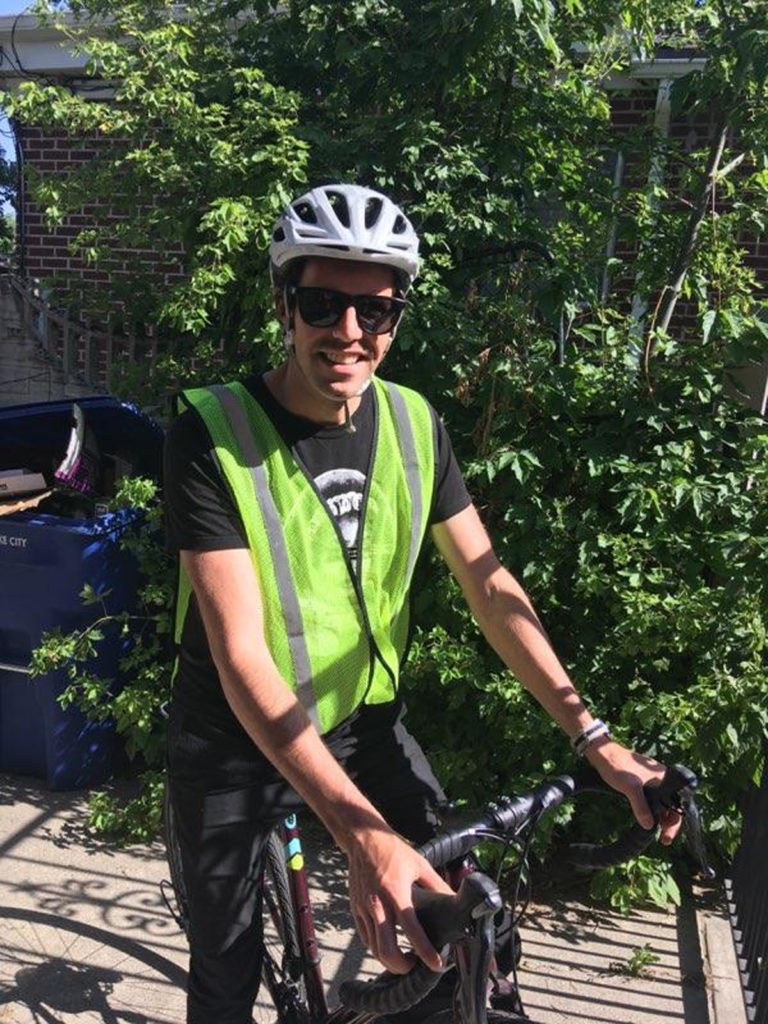
Erik Lopez is a bike commuter and chair of the Poplar Grove Community Council in Salt Lake City. Photo courtesy Eric Lopez

Cycling Utah had a chance to speak with Erik about his experience as a commuter cyclist.

Can you tell us a little bit about yourself? Are you from Utah? What brought you here?

I have lived in Utah on and off for about 10 years and have enjoyed every minute of living in Salt Lake. Originally, I was born in Torrance, California and moved around until college, where I went to the University of Utah. I have tried, yet failed, to leave Utah permanently; every time I leave, in a few years’ time, I return. That sent a signal to me that where I really belong is in Salt Lake and not some other city. When I am not riding my bike, I enjoy beer, books, brine shrimp, bread, and beds.

I understand that you commute by bicycle. What got you into commuter cycling?

When I was in college, I was too poor to afford a car. I was, however, in shape and enjoyed pushing some pedals. From there, I realized that driving a car really didn’t save any significant time and my whole world view of the city changed when riding a bike. The same pitch shift can be said when walking as well – mainly, that the streets, buildings, and passersby become more in focus when going slower and the relief of the city becomes more acute when traveling with your own locomotion. As I started to get the rhythm of the city, I became more enamored with bicycle riding – the ease of use, the affordability, and the near-same time savings as driving. Obviously if you needed to pick up furniture or big boxes, you needed a vehicle, but outside of that, nothing really beat the wind whipping through your hair.

What is your favorite bicycle ride in Salt Lake City?

Currently, nothing beats the JRPT – the Jordan River Parkway Trail. I really love living on the West Side and, for those contemplating a move to the West Side, my understanding is that no house is more than half a mile from the JRPT. Not only is it really accessible, it is a pleasant ride, North and South, through the city and beyond. It is a real gem of Utah to have such a great bike trail that brings through various locales, cities, etc. and is really close by! Of course, there are your City Creek, Millcreek, and Emigration Canyon rides that are a real pleasure for the mountain scenery. Regardless, there is always a special place in my heart and the joy it brings for the JRPT.

You are the Chair of the Poplar Grove Community Council and Salt Lake City recently closed Emery Street to make space for more cycling and pedestrian access. Can you share how your community is responding to that closure? Have you taken advantage of the closure?

If it is any indication, I haven’t heard hide nor hair of anyone complaining about the road closures; now surely this is because those that complain don’t go for the small packing peanuts but go straight to the top to voice their concern over road closures, their freedoms, etc. With that being said, it has been absolutely AWESOME to ride the streets as the primary traffic on a road – zipping down lanes, taking it slow, enjoying the cruising altitude of my bike on city streets. I have also had the pleasure of going down 500 North as well; both Emery and 500 North provide yet another way to experience the city in a way you might not have been able to experience before. In my experience, vehicular traffic has been, for the most part, respectful of the road closures. If you haven’t already, please take advantage of the major road closures and the primacy of place they give you as a cycle rider. It is a great way to reconnect with the city, get exercise, and understand your neighborhood better. I love it and highly recommend it!

What have you learned in your time as a bicycle commuter? What advice would you give to others who are looking into bicycle commuting?

I tend to gloss over my early commuter cycling as a college student where, unfortunately, I was a bit more aggressive than I care to admit. With that being said, I think there are a few things that I would love to pass on to other cyclists (in no particular order):

  1. Ride with, not against, traffic. I know it seems more appealing to see cars coming at you and that you may feel “safer” doing so but you are NOT. Absolutely not. If you can imagine that a car is used to looking at traffic in front of them and not, in terms of flow, riding against them, it is to your disadvantage to ride against traffic. It is a car’s responsibility, and their natural inclination in terms of learning to drive, to consider those driving in their lane of flow i.e. going with traffic. Don’t ride against traffic.
  2. Be respectful and aware. It is appealing to ride with earbuds on, but I find that to be less safe than to ride without. Listen, be cautious, and understand your surroundings. Give other riders, and cars, the benefit of the doubt and don’t become hot headed. I know this from first-hand experience and a fractured hip!
  3. Experiment with routes! There is more than one way to get to a destination and most destinations in the city are +- 10 minutes by car vs bike. The city has many great offerings both in terms of scenic roads but in terms of layout, pitstops, etc.
  4. Bike riding is a great way to learn about the various neighborhoods and communities that make up Salt Lake. Of course, I would be remiss if I didn’t mention to the East Siders reading this that going over the train tracks will show you a whole side of the vast city we reside in – from Paper Lane where Waterpocket Distillery resides, to Kiitos (for those that drink), to the Peace Gardens, Redwood Road (which has its own surprises!) to the many parks that make up the Westside!
  5. There are many places to get a bicycle and the Bicycle Collective is a great way to find a used bike, at fair prices, for getting around our city. We are lucky to have many bicycle shops like Saturday Cycles to get new bikes, get repairs, etc. Check them out for sure!

Turner C. Bitton is an avid cyclist and serves on the Board of Directors of several organizations and in many volunteer leadership capacities. He lives in Ogden with his fiancé Chase and their two dogs Charley and Moose.