A whole enchilada of new management actions will be necessary for upkeep of the Whole Enchilada Trail. Increased usage of the trail by a variety of users has necessitated a major overhaul of ways to encourage responsible recreational use and ecological maintenance. The multi-use trail runs more than 30 miles with elevation spans greater than 7,000 feet in the Moab Ranger District of Manti-La Sal National Forest in southeastern Utah.
The U.S. Forest Service (USFS) and Bureau of Land Management operate parts of the trail. The last needs assessment dates back to 2013 and is way out of date, given increased popularity of the trail. USFS plans to survey trail users onsite during its busiest season, mid-September through mid-October in 2019. It is going through the process of designing a survey and is taking public suggestions on what to ask. If you’ve got any ideas, send them along by the end of 2018. See this link to comment on the Whole Enchilada Trail.
USFS plans to pass out the survey at trailheads and exit points to see how people are using the trail and how they perceive it. The plan calls for a five-page survey with 20 questions and if users don’t want to complete it onsite, they could mail it in. USFS want opinions from a variety of users: bikers, hikers, tour guides, groups, environmentalists, maintenance volunteers, etc.
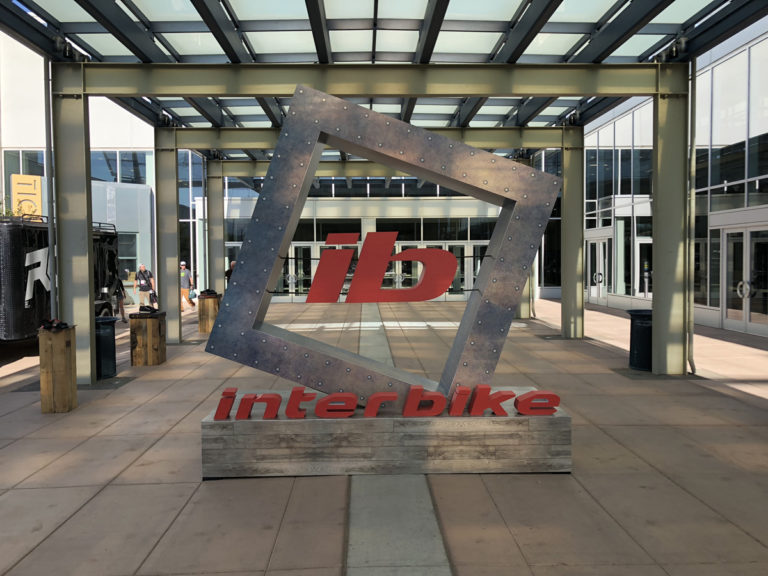
Interbike to Research Alternatives, Announces Show Will Not Take Place in 2019
Interbike was held in Reno, Nevada in 2018. Photo by Dave Iltis
Press Release – SAN JUAN CAPISTRANO, Calif. – December 6, 2018 – Interbike owner, Emerald Expositions, announced today that the Interbike tradeshow will not take place in September 2019 in Reno as previously scheduled. Instead, the company will research alternative plans for 2020 and beyond, including the opportunity to launch events featuring bicycling and bike-related components within or alongside its various successful, multi-sport trade show franchises.
“The past four years have been difficult for the U.S. bicycle market,” said Darrell Denny, Executive Vice President of Emerald Expositions’ Sports Group. “The substantial increase in tariffs on bike related imports during 2018, and announced for 2019, is compounding these challenges. As a result, we are rethinking how to best serve the cycling industry and will conduct a review of the possible timing, locations and formats with dealers, brands, distributors, reps, designers and media over the coming months. Our goal is to develop and deliver thoughtful solutions which provide strong returns on investment for all industry participants.”
As a result of this decision, Justin Gottlieb, Show Director, Andria Klinger, Sales Director, Andy Buckner, Art Director and Jack Morrissey, Marketing Manager, will be leaving the company, effective December 31, 2018.
“Justin, Andria, Andy and Jack have dedicated themselves to the cycling space and worked long and hard,” Denny said. “We will miss them greatly and wish them the best on their future endeavors.”
About Interbike
Established in 1982, Interbike has been the leading bicycle trade event in North America, bringing together manufacturers, retailers, industry advocates, distributors and media to conduct the business of cycling. Interbike and its events have provided an important platform for face-to-face business interaction, product line previews and media launches, sales lead generation, trend setting, networking and retail education.
Interbike is owned by Emerald Expositions, a leading operator of business-to-business trade shows in the United States. Emerald currently operates more than 55 trade shows, as well as numerous other face-to-face events. In 2017, Emerald’s events connected over 500,000 global attendees and exhibitors and occupied more than 6.9 million NSF of exhibition space.
Salt Lake City’s Green Lanes are in complete disarray
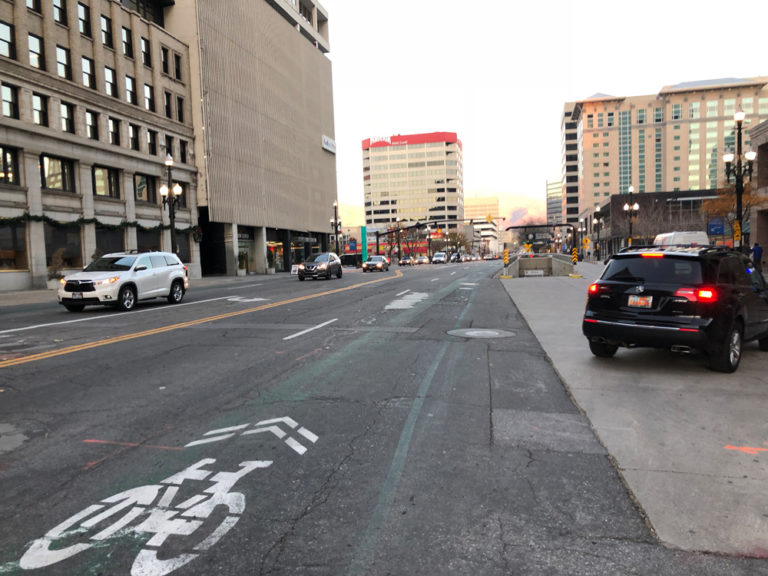
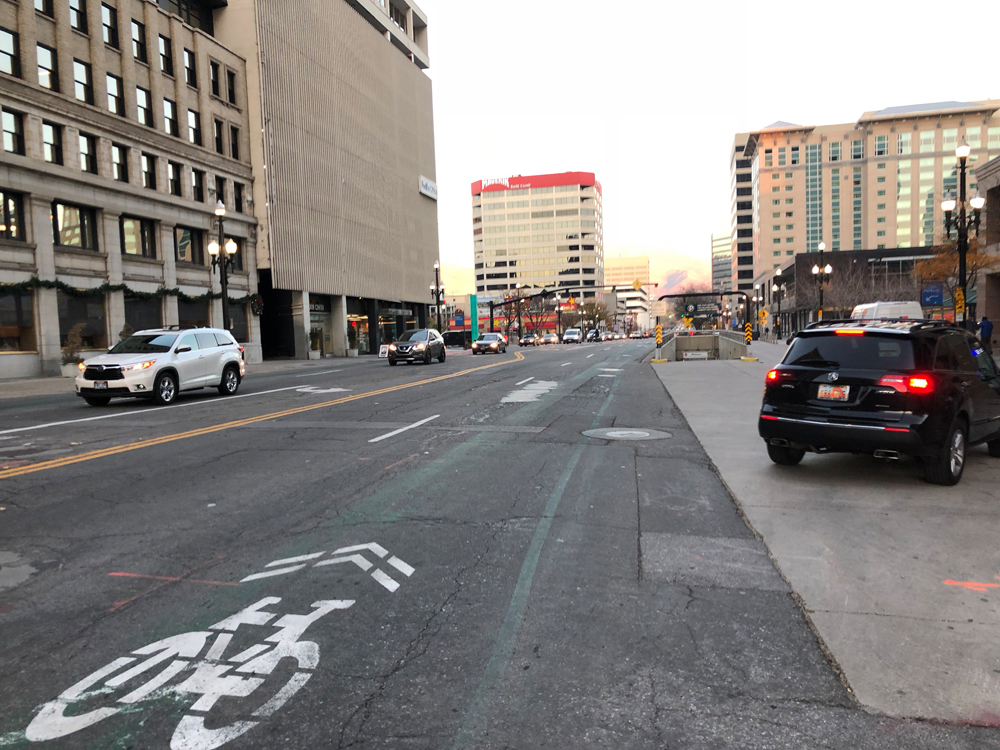
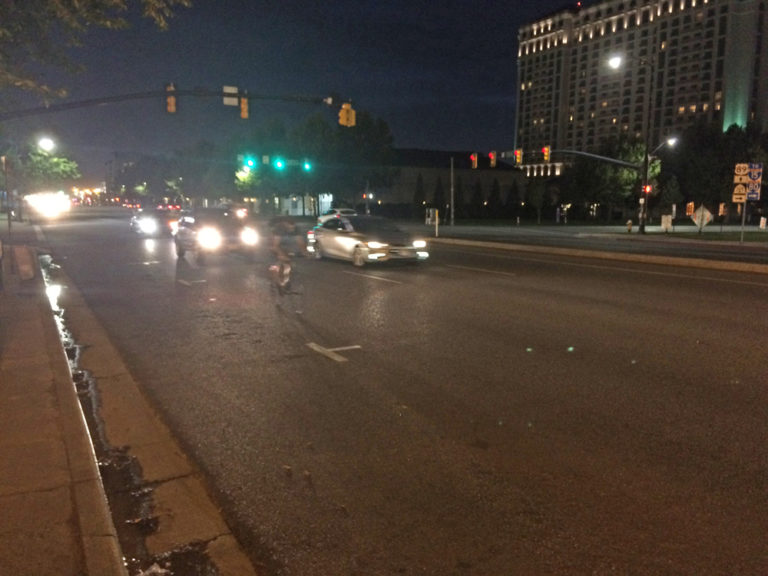
The green lane is almost gone on the south side of the street too. 200 S in Salt Lake City between State and Main has deteriorated and needs a protected bike lane on the south side (right of photo) by the Gallivan Center. Photo by Dave Iltis, Cycling Utah
November 23, 2018 – Just last Friday, we were riding eastbound on 200 S between State and Main where the Green Shared Lane is (used to be) when a white Forerunner came within 1 foot of sideswiping one of us. We were riding where we were supposed to be heading to a destination on 200 S. This was very disconcerting, and is prompting this editorial. Cyclists should have safe passage through safe road design on this key connector street. We were on our way to dinner at one of Salt Lake City’s fine downtown restaurants, looking to support local business and green transportation. Our ride almost turned into a nightmare.
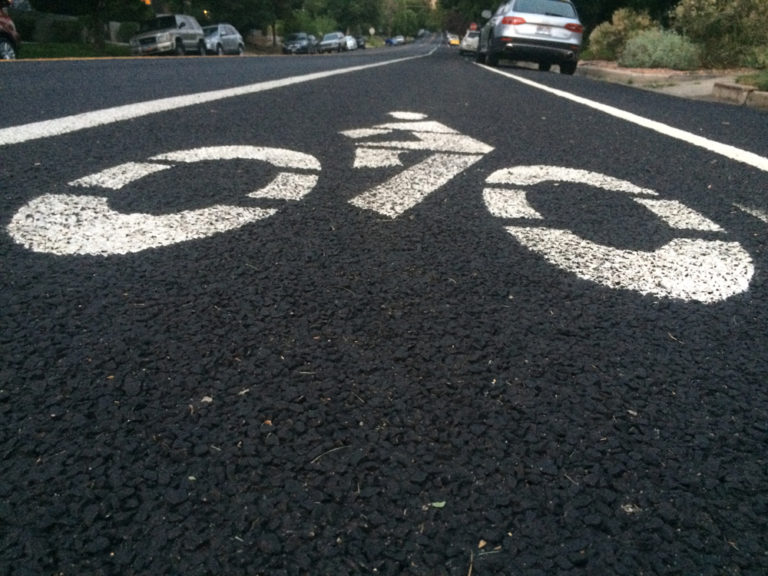
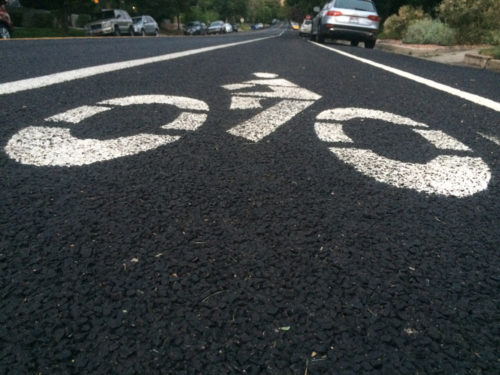
200 S is one of the only downtown streets running east-west past I-15 to the University, and the only one in the center of town. It has been a key commuter bike route for many years, and one that bike advocates pushed to be completed for many years. It was finally finished in August 2009 with the painting of the nationally trend-setting green shared lane markings between State and Main. These lane-within-a-lane markings give a visual signal to motorists that cyclists belong on this road. While they are not perfect, they are very useful on streets where there is no room for ordinary bike lanes; and they are not equivalent to sharrows either.
Sadly, while Salt Lake City was the site of the first of these green lanes in the nation, they have deteriorated to the point of being invisible and almost useless on several streets, including 200 S, as well as S. Temple. We are unsure of when the last time these were repainted, but it has been years.
Regarding 200 S, we advocate for the creation of a 1-block protected bike lane on the south side of the road between State and Main, and the repainting of the green lane on the north side of the street.
The one-block protected bike lane would run between the parking garage exit and the Gallivan Center and could easily be completed with a couple of signs, and a couple of jersey barriers. This would give eastbound cyclists a refuge from the 20,000 to 30,000 cars that pass by here each day. It could be completed in a day or two after a design is settled on. We made some of these suggestions to the previous Transportation Director, but no action occurred. We are hopeful that something will happen now. While 200 S is slated to be reconstructed as part of the recently passed $87 million Transportation Street Reconstruction Bond, this won’t happen until 2022 and 2023. That is not soon enough for basic maintenance and better safety for cyclists.
Our suggested treatment of the southern lane:
To the west of the Gallivan Center ‘way’ to direct cyclists away from the main road and on to the lane closest to the Gallivan Center.
Add a jersey barrier to the north of the parking garage exit on the east side to prevent cars from turning right illegally.
Add signage to indicate that cars exiting the parking garage may not turn right and must go east on 200 S.
Add a painted green skip lane across State Street indicating to cars and cyclists that cyclists may cross. Connect this to the bike lane east of State Street.
Or, have motorists stop at the exit from the parking garage, and direct cyclists to merge one lane left in order to cross State Street eastbound.
A bare minimum treatment would be to repaint the Green Shared Lane as soon as possible.
Our suggested treatment of the northern lane:
Please repaint the Green Lane.
Our suggest treatment of other Green Shared Lanes in Salt Lake City.
Please repaint all deteriorated Green Shared Lanes; particularly those on 200 S, and on S. Temple.
Please consider adding them in other key places such as N. Temple between 300 S and State Street.
This would be a simple improvement and would help to make this key downtown block safer for cyclists. We’d love to see a protected bike lane on the entire length of 200 S to complement the protected bike lane on 300 S, but as a minimum, this one block section needs to be safer. Salt Lake City proposed a 200 S Bicycle Greenway a number of years ago, but opted to create protected bike lanes on 300 S. instead. We’d like to see the revival of the 200 S proposal too.
Our proposal for a safer roadway design on 200 S between State and Main is low cost, and could be implemented quickly. Salt Lake City needs to do something here – the long term neglect is no longer acceptable or safe; and cyclist cannot wait for 4-5 more years for safety on this downtown street.
A neighborhood is like the spokes of a wheel, in that we are all interconnected, particularly when it comes to economics and commerce. I say that because as a small business owner of a local bicycle shop I see our interconnection every day.
Cris Pereira of Cranky’s Bike Shop wants you to know why it’s important to buy from your local shop. Photo by Dave Iltis
First, as the consumer and user of the Internet I am besieged hourly by slick advertisements about products I have expressed interest in by my Internet browsing habits. The onslaught also shows my desired item at significantly discounted price. And, on the other hand, I see these web-based products when I am asked frequently about to fix these products after my neighbor/customer who has gotten “a great deal” from Amazon or a big box store, but without adequate instruction or now that the product is not working.
I generally try to help my neighbor/customer, but I also remind them of how economically interconnected we are. That is, if they buy locally they not only help our economy, but they will have someone who will make sure their purchase works or is properly repaired.
Every time a small, locally owned business closes there are fewer jobs, more people on unemployment and less tax revenue for our community. For example, if my bike shop closes because everyone chose to save a few dollars and buy their equipment on Amazon, now besides not having an expert mechanic to fix your bike, that bike mechanic is without a job and maybe on welfare.
The closure of a local business has a negative rippling effect through our local economy. The unemployed certainly will not be partaking of the local restaurants, but more seriously, they may well lose their home, their car or other items of value without their local paycheck. And in some cases, the former might out of necessity become welfare recipient.
Small businesses have created over 8 million jobs since 1990. One of those jobs be yours and if not, not having local people employed will affect the local economic environment and potentially your job. Over 50% of the working population begin (120 million) is employed by small businesses and since 1995, those small businesses have generated 66% of all new jobs in the United States.
Small businesses are a big deal! What do you think will happen to our community if the small businesses are fewer in number? When you support a local business, you’re supporting your town, city, and neighborhood. Businesses pay sales taxes to your town, city and county where the small business is located. Wander off to a big box business elsewhere or on the Internet and that money isn’t benefiting your community. Plus, tax money is used to support your public schools, parks, roads, bike lanes, trails and sidewalks, as well as, funding public services such as police and fire.
Is Amazon, eBay or any of the other online retailers paying those taxes into your community? The great aspect about buying local is it your supporting people who live in your community, your friends and neighbors. Who knows if the local small business may someday end up being your own customer or if not, the money you spend locally will find a way to benefit your local community? Small business operators are experts. You are their friends and neighbors, and locally owned businesses have a vested interest in knowing how to serve you. They are passionate about what they do. Why not take advantage of these expert local services? Small business owners strive to survive and one of their biggest advantages they have over large retailers is the ability to provide more personable, hands-on and memorable customer experiences. If you go into a local bike shop and they don’t meet your needs, you have a choice, go to another local store. Does the Internet, or big box stores give you that choice?
Another aspect of shopping locally is an implicit guarantee of quality both for the work in the product. In today’s global economy it’s entirely possible that some product you believed was made in a certain location or was certain quality control has in fact been produced on a gray market where there is no known location or quality control. When this product fails if you have bought it from the Internet or a big box store your ability to return it for a refund is de minimis. If you purchased it from a local merchant, they are part of the community and have an obligation to correct the inadequacy of the product they sold. You have someone who can personally right the wrong.
In my business, a bike shop, we are not ripping you off! It might not seem like you need to support your local bike shop, because generally you’ll be able to get absolutely everything you need cheaper when you go online. But due to the gray market and some manufactures unwillingness to control their products, a lot of times you will be able to buy for example Shimano parts online for cheaper than Shimano sells the same parts to a local bike shop. What happens when those online retailers run all local bike shops out of business and suddenly, they hold a monopoly on what you need? No service, and you are stuck. Algorithms don’t right wrongs.
A website can’t thread brake cables through a frame. Unless you live next door to the Shimano factory in Japan or the Cathedral Della Campagnolo in Italy, your local bike shop will be the first port of call when you want someone who can properly re-true your wheels or accurately tune your gear? Buying and knowing your local bike shop, or local merchant will make your life easier and economically more productive.
Think about it. Who is more likely to help you, your neighbor or Amazon or a big box store? Your choice to this question should determine who you buy from next. A neighbor or an anonymous, antagonistic, algorithm? Act locally, think globally.
Utah Bill Would Allow Cyclists to Treat Stop Signs as Yield Signs
Will the Idaho Stop Bill finally pass in Utah in 2019? The bill would allow cyclists to treat stop signs as yield signs, and certain red lights as stop signs. Photo by Dave Iltis
November 7, 2018 – Utah state Representative Carol Spackman-Moss has reintroduced the Idaho Stop bill in the Utah Legislature to be considered in the 2019 Legislative Session. The bill will allow cyclists to treat stop signs as yield signs, and red lights as stop signs on roads with one lane of traffic in each direction. Representative Moss was optimistic that the bill would pass this session. In 2018, HB 58 passed the House, but failed to come to a vote in the Senate as time ran out in the session. In previous attempts in 2010 and 2011, the bill passed on branch of the Legislature but not the other. The bill would modify three sections of Utah Code: 41-6a-305, 41-6a-902, and 41-6a-1105.
In 1982, Idaho implemented a law that allows bicyclists to treat stop signs as yield signs, and stop lights as stop signs. (See: https://legislature.idaho.gov/statutesrules/idstat/title49/t49ch7/sect49-720/ ) So far, with 35 years of history behind it, cyclists are at least as safe, if not safer with the law in place. According to a 2010 paper and presentation, “bicycle injuries declined 14.5% the year after implementation” and cities in Idaho were 30.4% safer for cyclists than comparable cities without the law. (Meggs, 2010, https://meggsreport.files.wordpress.com/2011/09/idaho-law-jasonmeggs-2010version-2.pdf and https://meggsreport.files.wordpress.com/2012/07/meggs-jason-velo-city-2012-idaho-stops-law-srv2.pdf).
Utah has tried a couple of times to pass the law. The closest it came was in 2011, when it passed the house, and then failed in the senate on a tie vote. In 2010, it passed the house, but failed in the senate. More recently, Utah did pass a bill that allow cyclists and motorcyclists to proceed through a red light if the light doesn’t change within 90 seconds. This helps to remedy the issue that many stoplights are triggered by metal or weight, and cyclists and motorcyclists don’t always trigger the light to change. (41-6a-305. Traffic-control signal https://le.utah.gov/xcode/Title41/Chapter6A/41-6a-S305.html?v=C41-6a-S305_2015051220150512 )
Representative Moss said that she will be reintroducing the same version of the bill that passed the House last year.
The main part of the bill is as follows:
(5) (a) A person operating a bicycle approaching a stop sign shall slow down and, if
185 required for safety, stop before entering the intersection.
186 (b) Except as provided in Subsection (7), after slowing to a reasonable speed or
187 stopping as required by Subsection (5)(a), the person shall yield the right-of-way to any vehicle
188 or pedestrian in the intersection or approaching on another highway so closely as to constitute
189 an immediate hazard during the time the person is moving across or within the intersection or
190 junction of highways, except that a person after slowing to a reasonable speed and yielding the
191 right-of-way, if required, may cautiously make a turn or proceed through the intersection
192 without stopping.
193 (6) (a) (i) Except as provided in Subsection (6)(b), a person operating a bicycle
194 approaching a steady red traffic-control signal shall stop before entering the intersection and
195 shall yield to all other traffic and pedestrians.
196 (ii) Except as provided in Subsection (7), once the person has stopped and yielded to
197 all other traffic and pedestrians as required by Subsection (6)(a)(i), the person may cautiously:
198 (A) proceed straight through the steady red signal; or
199 (B) turn left onto a highway that is a highway with one lane in each direction.
200 (b) After slowing to a reasonable speed and yielding the right-of-way, if required, a
201 person operating a bicycle approaching a steady red traffic-control signal may cautiously make
202 a right-hand turn without stopping.
203 (7) Subsections (5)(b) and (6)(a)(ii) do not apply to an intersectionĤ→ :
203a (a) ←Ĥwith an active
204 railroad grade crossing as defined in Section 41-6a-1005Ĥ→ [ . ] ; or
204a (b) where any highway at the intersection has more than one lane of travel in each
204b direction, excluding turn lanes. ←Ĥ
The bill has been added to the Utah House bill list, but won’t receive a bill number until early December when this process occurs.
Representative Moss is hopeful that the bill will finally pass this year, but plans to keep reintroducing the bill until it does.
To find your legislator in the Utah Senate and House and to send in comments, see: https://le.utah.gov
In 2018, local cyclist, and Cycling West contributor John James Monroe created this video to explain the Idaho Stop, and why he thinks the law is good for cyclists and motorists:
The Salt Lake City Streets Reconstruction Bond will result in more bike infrastructure
Editorial: November 3, 2018 – Salt Lake City has the ‘Streets Reconstruction Bond‘ on the ballot for the November 6, 2018 election. The bond would authorize $87 million for Salt Lake City to use to rebuild its ailing streets. According to Salt Lake City’s Funding Our Future website, two thirds of Salt Lake City’s streets are in a state of such disrepair that reconstruction is the only option. Streets would be reconstructed with an eye towards road condition and the dovetail with master plans (Transportation (soon to be updated), Transit, Bike/Pedestrian, and others). 80 percent of the streets chosen would be heavier used, arterial and collector type streets, while 20 percent would be neighborhood type streets.
Bike lane! Salt Lake has made huge progress over the last decade. We need to accelerate the efforts. Photo by Dave Iltis
The funds from the bond would be added to those generated from the recent 0.5% sales tax increase, which will add approximately $33 million/year to the general fund, and a portion of this will be for Salt Lake City’s streets. This is expected to be $6.9 million in 2019. The rest of the sales tax increase would go towards housing, transit, and the hiring of more officers of the peace.
Shall Salt Lake City, Utah, be authorized to issue General Obligation Bonds in a principal amount not to exceed $87,000,000 and to mature in no more than 21 years from the date or dates of issuance; such bonds will be issued in accordance with Utah law solely to pay all or a portion of the costs to improve various streets and roads throughout the City and related infrastructure improvements.
For cyclists, the Bond could be a boon since with each reconstruction or repavement of a roadway, bike lanes and other bike infrastructure are generally added in accordance with the Pedestrian and Bicycle Mater Plan 2015 Update. Additionally, according to Salt Lake City’s Complete Streets Ordinance, when a roadway is reconstructed (note: reconstruction is a complete rebuild and may not apply to repaving or resurfacing projects), unless there is a large monetary factor, bike lanes and pedestrian infrastructure need to be added.
Salt Lake City has a number of existing and impending master plans that should ensure wise implementation of the Bond and sales tax monies. Existing are the Pedestrian and Bicycle Master Plan and the recently passed Transit Master Plan, Impending is an update to the decades old Transportation Master Plan; funding for which recently passed as part of the 2018-2019 CIP funding. We trust that the new Transporation Master Plan will follow progressive 21st century concepts that will modernize Salt Lake City’s transportation infrastructure; and that as a result, the Bond will help to modernize our streets. (Note that we have written a draft plan for a Sustainable, People First Transportation Plan for Salt Lake City).
With the guidance of the various plans, and the expected update to the Complete Streets Ordinance and the Transportation Master Plan, combined with the need to repair our failing streets, the Streets Reconstruction Bond will result in more bike infrastructure.
We strongly encourage all cyclists to vote yes on Salt Lake City’s 2018 Streets Reconstruction Bond.
Salt Lake City announces new roadway and additional street crews
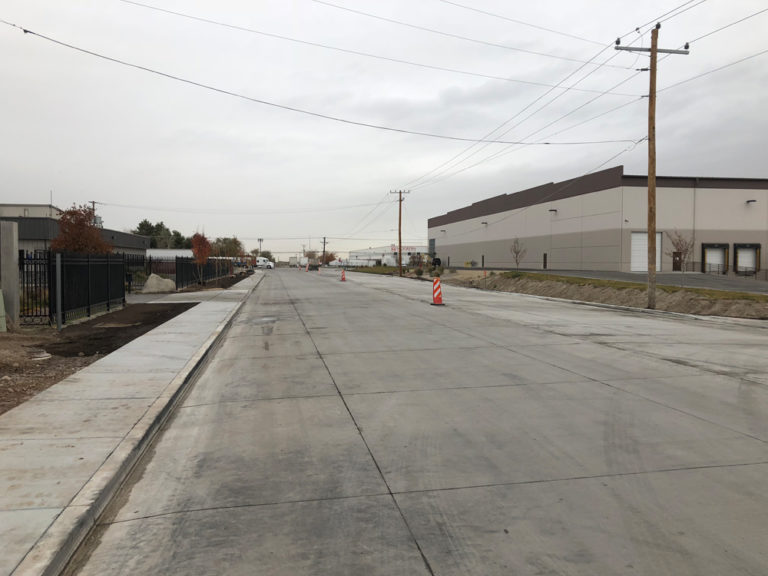
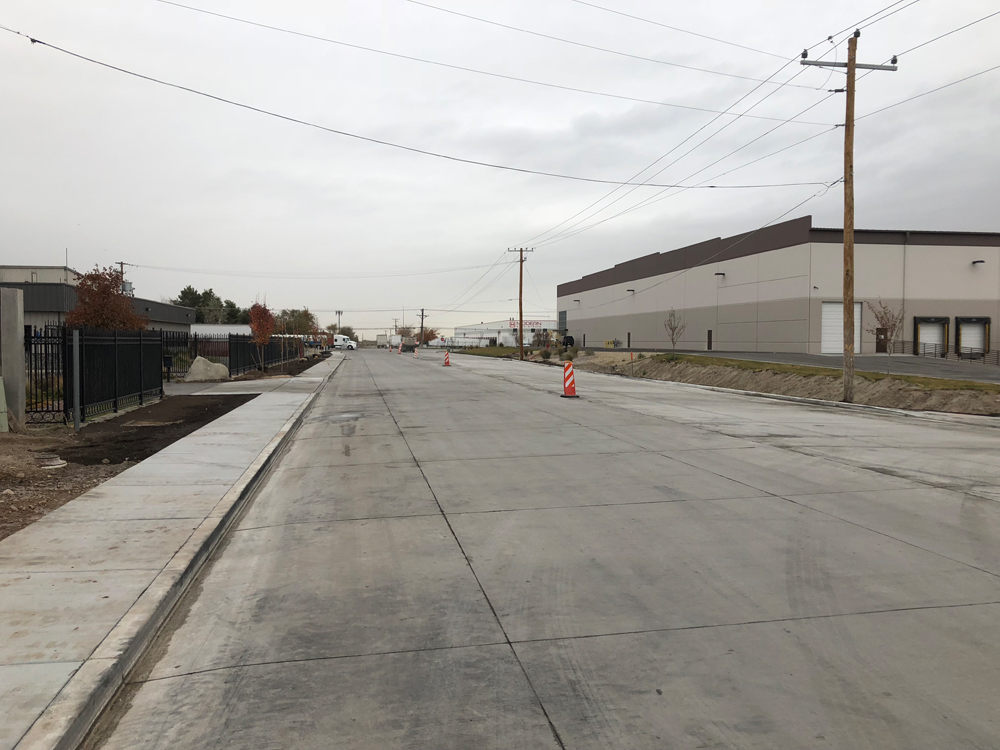
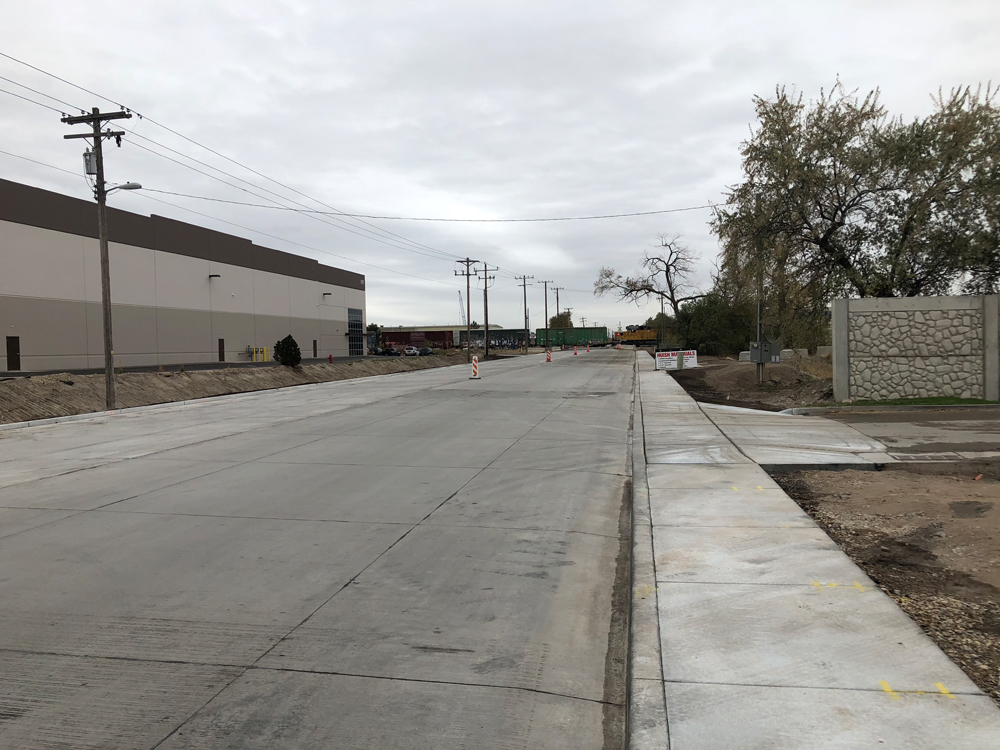
The newly reconstructed portion of Gladiola Street between 500 S and 900 S in Salt Lake City will get bike lanes. Photo by Dave Iltis
Press Release – November 1, 2018 – On Thursday, November 1st, Salt Lake City officials will mark the completion of the Gladiola Street reconstruction project. Mayor Jackie Biskupski and Council Member Andrew Johnston will join project team members in planting a ceremonial tree along the renewed corridor, an additional 40 trees are expected to be planted in the coming months.
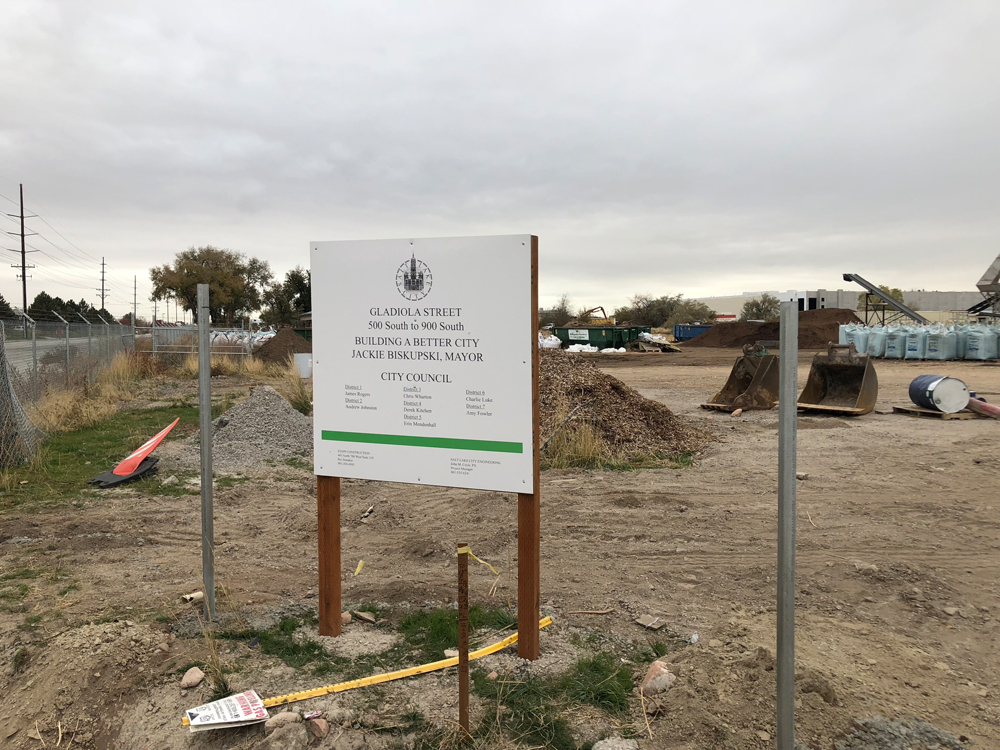
The Gladiola project, which began in June, was a complete rebuild of the roadway between 500 South and 900 South, including wider lanes, improved curb and gutters, sidewalk enhancements, new ADA ramps, and bike lanes. The City invested $3 million dollars in the project and plans to reconstruct another segment between 900 South and California Avenue in the next few years.
“Our City’s ability to remain competitive and a leading commercial hub depends on our timely efforts to invest on quality transportation facilities, like Gladiola Street,” said Council Member Andrew Johnston who represents District 2. “The benefits from the new Gladiola Street and Indiana Avenue, will be felt for years to come, not just in this district of our city but statewide.”
City officials will also announce the Streets Division is prepared to hire a new street maintenance crew, funded as part of the Funding Our Future 0.5% sales tax increase approved by Mayor Biskupski and the City Council in early 2018. The new crew will allow the City to double the number of lane miles that are maintained on an annual basis, including resurfacing and pothole repair.
“My Administration is committed to repairing our City’s aging infrastructure in order improve the lives of residents and businesses,” said Mayor Jackie Biskupski. “By fixing our failing roads and properly maintaining our good roads, we can drive down costs for residents and create opportunities for new bike lanes and transit enhancements to get people out of their cars to help clear our air.”
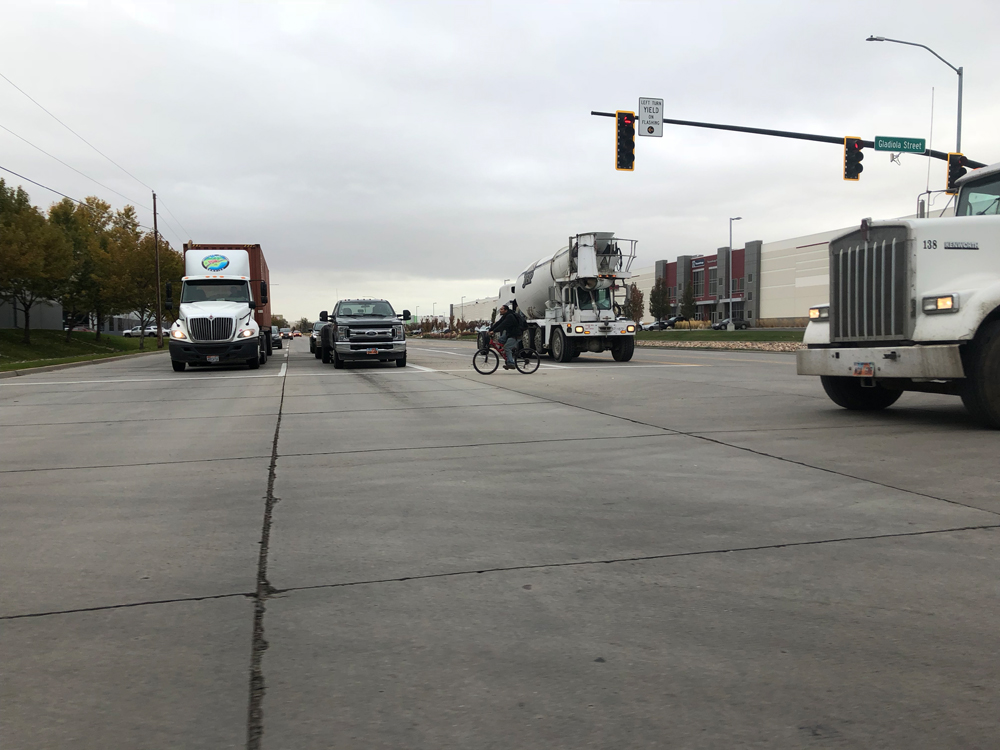
Analysis and Call to Extend the Bike Lanes on Gladiola: The Gladiola street reconstruction is in an industrial area with heavy (weight) truck traffic, that requires a solid street to move goods to the ever increasing number of warehouses and industrial sites in Salt Lake City’s northwest region. It is pleasing to see that the City is following their Complete Streets Ordinance with this roadway reconstruction and adding bike lanes.
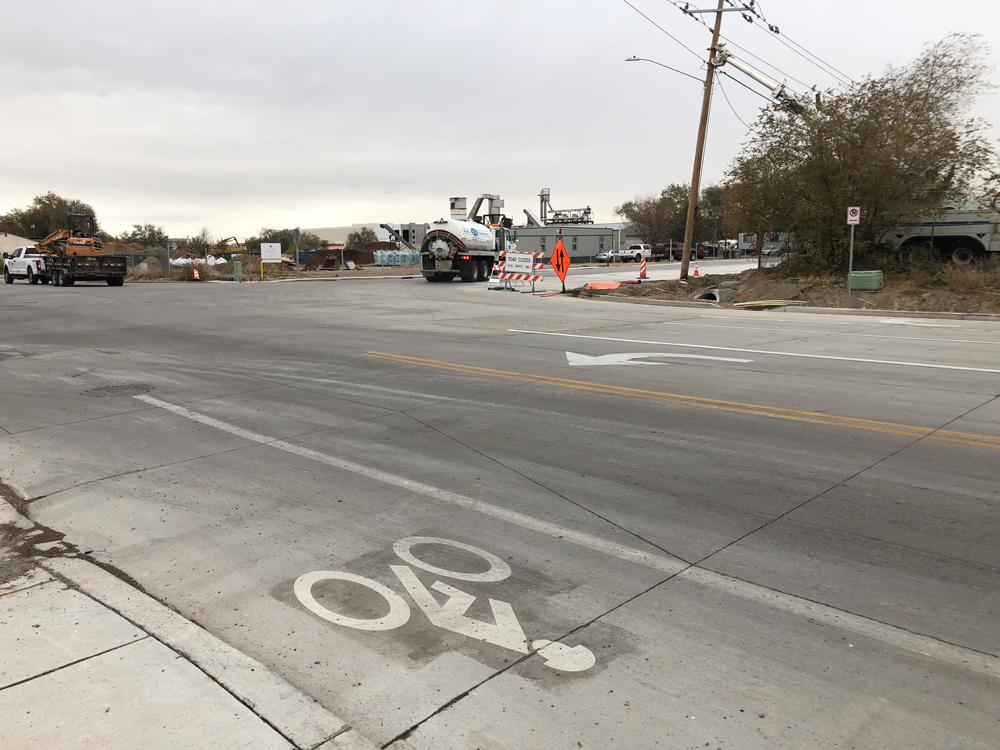
Although the lanes aren’t striped yet, we understand that this will be done as the roadway construction is completed. We are glad to see this.
Given this new development, we are calling for the addition of bike lanes on Gladiola Street from 900 S to approximately 2100 S. Gladiola is a thoroughfare in this area with truck and car traffic traveling on the road to and from the many worksites in the industrial park. Currently, the roadway from 900 S to 2100 S has bike lanes for a short section of the roadway from 1820 S to 2100 S. From 900 S, where the new reconstruction and bike lanes stop to 1820 S, the roadway is wide and has no striping of any sort. With the increased traffic in this area, adding bike lanes, as well as car-lane striping is necessary to maintain an orderly flow of vehicles and to reduce speeds in the area.
The key observation of Gladiola from 900 S to 2100 S is that it is very, very wide, and there is plenty of room for bike lanes, two car lanes, and a center turn lane, or just 2 car lanes and bike lanes. The bike lanes could go in tomorrow by sending out a paint crew when the new construction is restriped.
What benefit would this have? For starters, it would provide safer access for bikes to this work destination. Vehicle traffic would have literal guidelines as to where to drive, and bike lanes would provide dedicated room for cyclists. Secondly, this would extend the 3200 W/Gladiola bike lane all the way to 500 S. Gladiola curves and turns in to 3200 W, which currently has bike lanes from 2100 S to 4700 S. This would finish a 6.3 mile stretch of bike lanes by adding 2 miles of bike lane. At a cost of $5000 per mile for paint for the lanes, this is an inexpensive addition to a $3 million project.
Thirdly, the addition of bike lanes on Gladiola would connect E-W bike lanes on 500 S, 900 S, 1820 S (Director’s Row), and 2100 S. This helps to connect and fill in the bike network in this area.
Lastly, the intersection of 900 W and Gladiola could really use crosswalks, and at the least needs to have the sidewalk to the south of 900 S cleared of trees for safe walking.
Salt Lake City does plan to reconstruct Gladiola in the future from 900 S to California Ave (about 1300 S). While from looking at the roadway this would not seem like a priority (the pavement is in much better shape than many other roads in the city), this is no reason to wait to add bike lanes. Paint is inexpensive and has a great return on investment, and the bike lanes could be implemented as soon as possible, not years from now.
We will be submitting the above analysis to Salt Lake City, and hope they will follow our advice.
Photo Gallery:
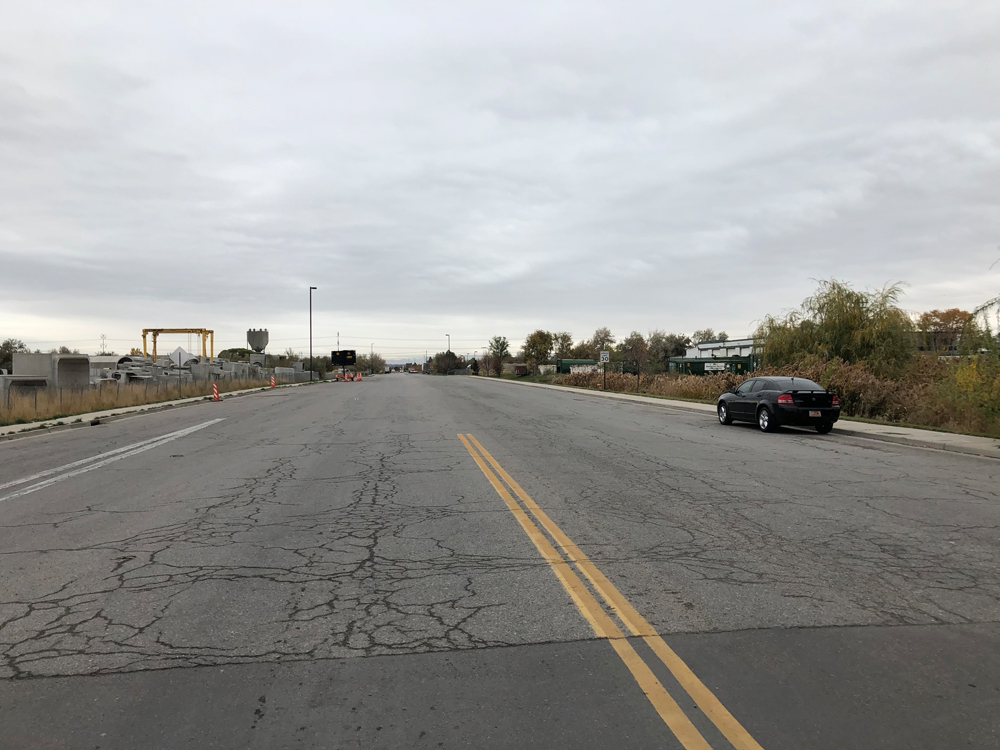
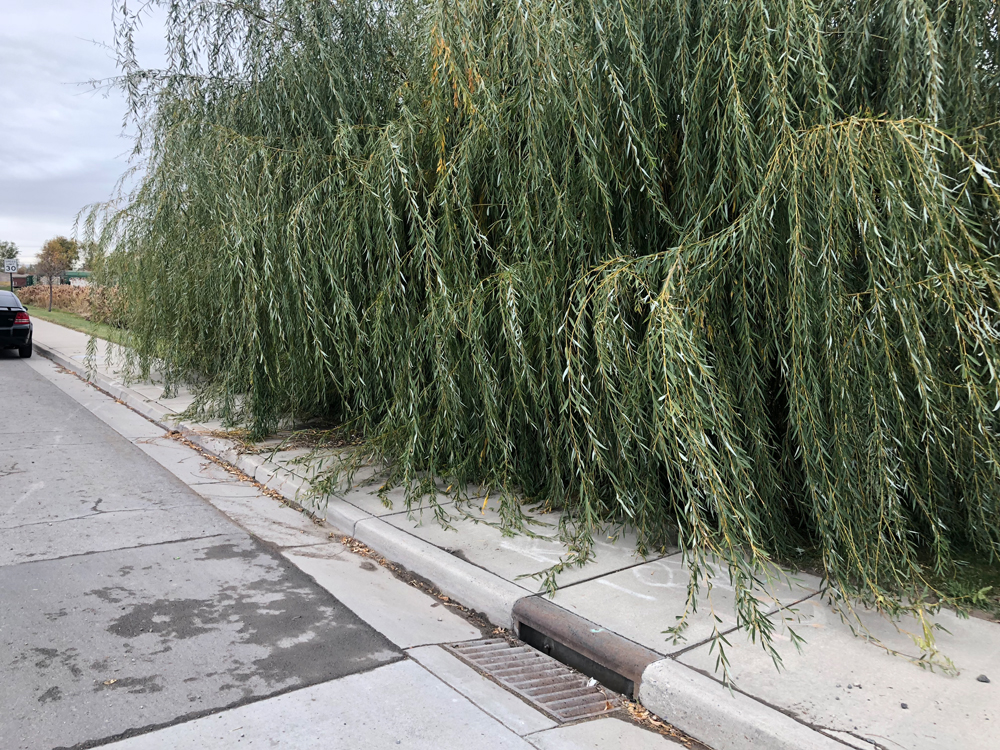
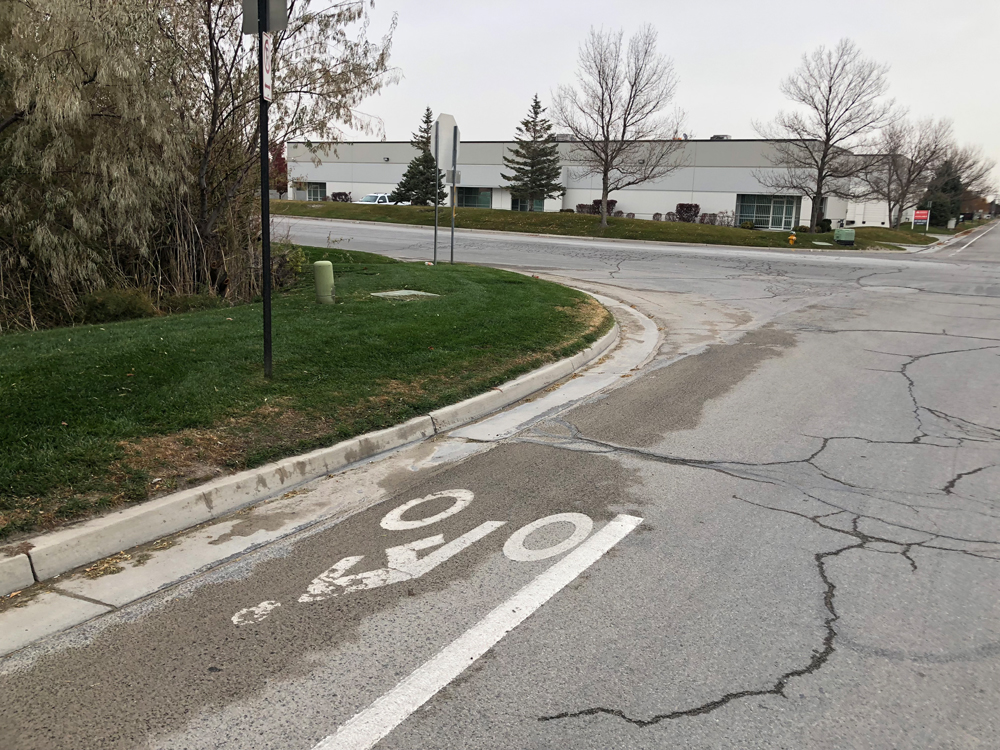
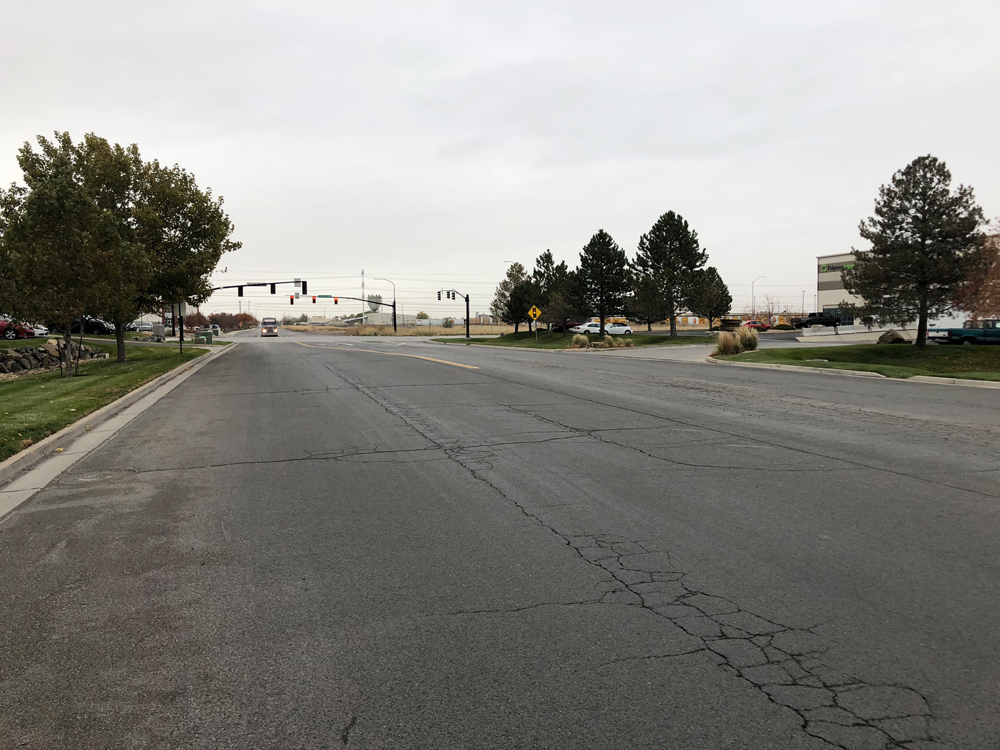
The newly reconstructed portion of Gladiola Street between 500 S and 900 S in Salt Lake City will get bike lanes. Photo by Dave IltisThe newly reconstructed portion of Gladiola Street between 500 S and 900 S in Salt Lake City will get bike lanes. Photo by Dave IltisBike lanes on Gladiola would provide safer accomodations for bikes. Photo by Dave IltisThe newly reconstructed portion of Gladiola Street between 500 S and 900 S in Salt Lake City will get bike lanes. Photo by Dave IltisBike lanes on 900 S would be connected to bike lanes on Gladiola. Additionally, a crosswalk is needed here. Photo by Dave IltisGladiola is wide enough to stripe bike lanes from 900 S to 1820 S currently. Photo by Dave IltisThe sidewalk at 900 S and Gladiola needs to be accessible. Photo by Dave IltisBike lanes on Gladiola would connect to this bike lane on 1820 S (Director’s Row). Photo by Dave IltisGladiola is wide enough to stripe bike lanes from 900 S to 1820 S currently. Photo by Dave IltisBike lanes on Gladiola shown here at 1820 S. Photo by Dave IltisBike lanes on Gladiola would connect to this bike lane on 3200 W and 2100 S and would result in a 6.3 mile strecth of safer accomodations for bikes. Photo by Dave Iltis
UDOT’s 5600 W Road Widening Project to Include Some Improvements for Bicycles But with an Unsafe Interchange for Bicycle and Pedestrians
Comments Due by November 2, 2018
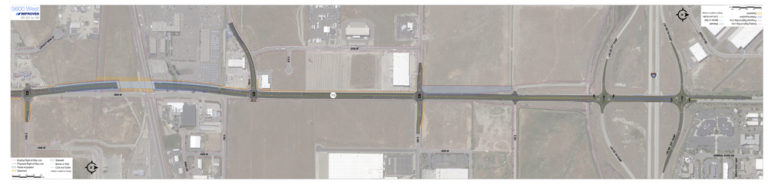
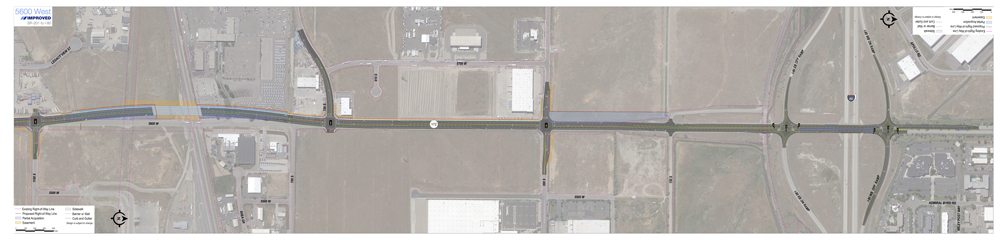
5600 W in Salt Lake City will be widened to 5 lanes in 2019 by UDOT. For complete diagrams, see the downloads tab of the UDOT 5600 W project page.
October 30, 2018 – UDOT held an open house last week on proposed changes to 5600 West in Salt Lake City from the 2100 S interchange to I-80 interchange – approximately 3.2 miles. The proposal has a few perks for cyclists – wider shoulders and a 12′ shared sidewalk/bike path that appears to run from 2100 S to about 150 S and does not extend over 1-80. The project cost will be $71,650,000- $65,548,097 from the Federal Government and $6,101,903 from the State of Utah. The industrial area is slated for more development with the impending Inland Port and the increase in warehouses and truck traffic. As such, the area, combined with the International Center and the Inland Port, will become a major employment center that will require safe ways for all users to access their place of work. The project is slated for constuction in Spring of 2019 through Fall of 2020.
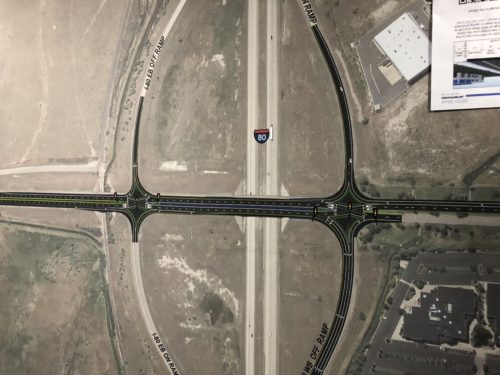
The 5600 W and I-80 Interchange will be converted to a Diverging Diamond Interchange. There appears to be no safe way for cyclists or pedestrians to navigate the DDI.
5600 W in this area is on the Salt Lake City Pedestrian and Bicycle Master Plan from 2015. The recommendations of the plan include a protected or buffered bike lane on the roadway. The UDOT project does not meet those recommendations across I-80. It is also listed as part of the priority bike network on the Wasatch Front Regional Council’s bike map.
Purpose: The purpose of the project is to improve mobility, increase roadway capacity, and reduce delay along 5600 West and at the I-80 interchange.
Need: 5600 West currently experiences unacceptable levels of congestion and delay due to the rail crossing, heavy vehicle use, and heavy freight truck traffic. Both AM and PM traffic is expected to exceed the available road capacity during peak hours in 2050 if no improvements are made.
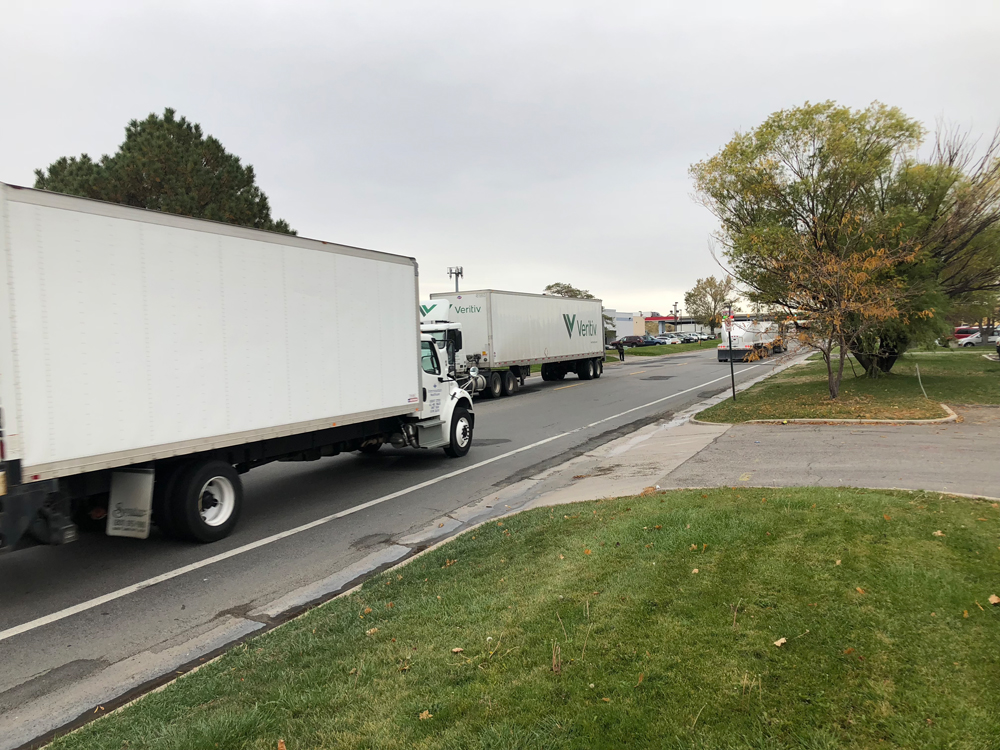
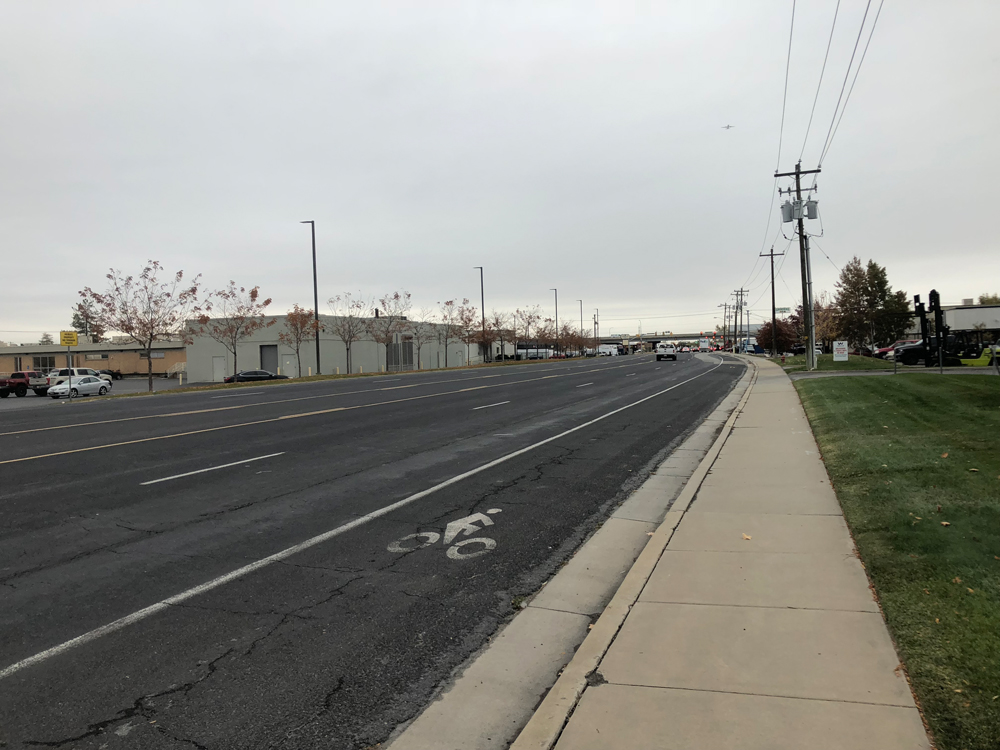
The current roadway conditions for 5600 W in this area are dismal for bikes – 50 mph traffic with essentially no shoulder – so commuting and recreational cyclists need steady nerves to navigate the roadway from West Valley to the International Center. In this view, the roadway plan is a great improvement for cyclists. They will now have a space to ride either in the shoulder (with a blender zone as intersections are approached) and a shared use pathway on part of the route. The proposed Direct Diamond Interchange (DDI) at I-80 and 5600 W. is severely problematic for cyclists, however.
The project would see the following changes according to the UDOT Project page:
Proposed Improvements:
Add sidewalk on east side and shared use path on west side
Convert existing I-80 interchange to DDI
Reconfigure all intersections and traffic signal phasing
Widen from two to five lanes with shoulders
Build bridge over UPRR tracks
Add curb and gutter and improve storm drain systems
With increased development in the area, pedestrian and bicycle traffic will increase along with increased car and truck traffic, as people will commute from West Valley City, Magna, and Salt Lake City to the project area and to the International Center. Additionally, recreational cyclists have long used this route to get from Salt Lake City to the International Center.
Analysis:
The Good:
Shared use path/sidewalk on the west side of 5600 W from 2100 S to 150 S
The shared use path will eventually provide a safe route to get from 5600 W to the Mountain View Corridor bike path alongside the Mountain View Corridor Freeway. It is unknown when the MVC will be constructed in the area as there is no current funding for it.
Wide shoulders where there are currently none.
A sidewalk on the east side for pedestrians.
The bridge at approximately 800 S over the Union Pacific Railway Tracks.
The Bad
Irrationally high speed limits – The current speed on the roadway is 50 mph. The project calls for keeping speeds the same. At 50 mph, from 2100 S to I-80 takes 3.84 minutes (for an estimated 3.2 miles). At 30 mph, the same distance is 6.4 minutes. Speed is a dominant factor in the severity of crashes. Lower speeds would protect bikes and pedestrians.
Blender zones at the intersections for cyclists that ride in the roadway – the shoulder disappears and turns into a shared turn lane.
Crossings of the side streets on the shared use paths – crossings like this are often problematic for cyclists when cars and trucks are turning across the crosswalk.
Wide lanes – 12′ lanes and a 14′ center turn lane encourage higher speeds and are not up to date with current roadway traffic calming. 10 to 11′ lanes would be better.
A proposed bike lane in the midst of the DDI. Yes, it’s good to have a bike lane, but the 4′ proposed lane (according to the consultants at the open house) would run between the right most through-traffic lane and the right turning lane onto I-80.
A short comment period that doesn’t allow time for the public to participate. Additionally, the project pages don’t contain complete information.
DDI’s can be problematic for drivers too and can result in head on collisions.
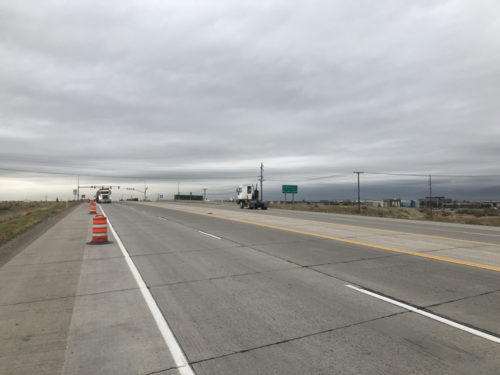
Is the DDI even needed? It’s expensive, and there doesn’t seem to be much need for it. See the photo below.
The impossibly awful, scary, and dangerous
The Diverging Diamond Interchange – is this even necessary? It’s unsafe, and if it were not constructed, project costs would be reduced dramatically.
The right turn lanes on the DDI. Here, cyclists would be riding in the midst of 50 mph traffic to the left and right of the rider. Cars and trucks would not be looking for cyclists to merge into the bike lane as they are turning right to accelerate onto I-80. This is bound to cause many severe injuries and potentially deaths to vulnerable cyclists.
The right turn lanes on the DDI and pedestrians. Crossing the right turn lane for a potentially non-existent sidewalk in the center of the DDI means that I-80 will remain an impenetrable barrier for pedestrians. The project diagrams show no crosswalks or pedestrian lights through the DDI. There doesn’t seem to be a pedestrian sidewalk or walkway across the bridge over I-80.
We firmly believe that the DDI, especially the right turn lanes, is not safe for cyclists or pedestrians, and will cause injuries or deaths.
What can be done to fix this?
Lower the speed limit to 30 mph from 2100 S to I-80. This would only add about 2 minutes to commute times. Lowering speed limits – contrary to current thinking among traffic engineers, who rely on the outdated and junk engineering 85 percentile rule of setting speed limits to what speed people are driving – do lower speeds according to a new study. Note that lower speed limits don’t generally lower throughput of traffic since there is less accordion effect at intersections.
Add a full width bike lane across the DDI in both directions, not the 4′ lane that the consultants spoke of in the open house.
Add a pedestrian sidewalk across I-80 to the International Center.
Narrow the traffic lanes from 2100 S to I-80. This would change the design to encourage lower speeds.
Add marked on-road bike lanes on 5600 W from 2100 S to the International Center in addition to the shared use pathway.
Lower the speeds on 5600 W in the International Center to be consistent with 5600 W.
Place pedestrian and bike activated signals in the DDI for safe ingress and egress.
Plan for a future bike and pedestrian bridge over I-80. At $71 million dollars, perhaps it could be included in this project.
Make sure that there is a safe route for cyclists from 2100 S and 5600 W to and through the International Center.
Make sure that there is a safe route for cyclists from 300 S to the International Center. This will include a safe crossing at 300 S.
Lower the speed limits in the project area. This is so important, we are stating this twice.
UDOT plans to install a diverging diamond interchange at 5600 W and Redwood Road to meet traffic demand. It’s not clear why this is needed at all. Photo by Dave Iltis
Editor’s Note: Look for a full photo gallery from Photo John in our upcoming Winter issue of Cycling West
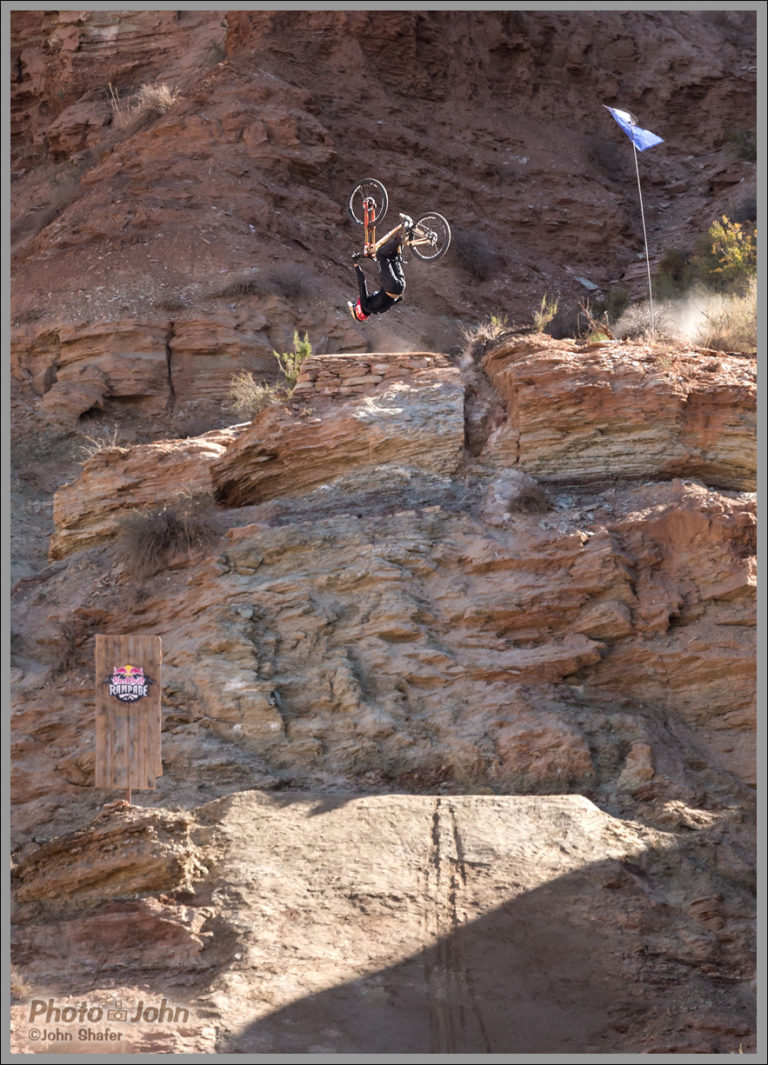
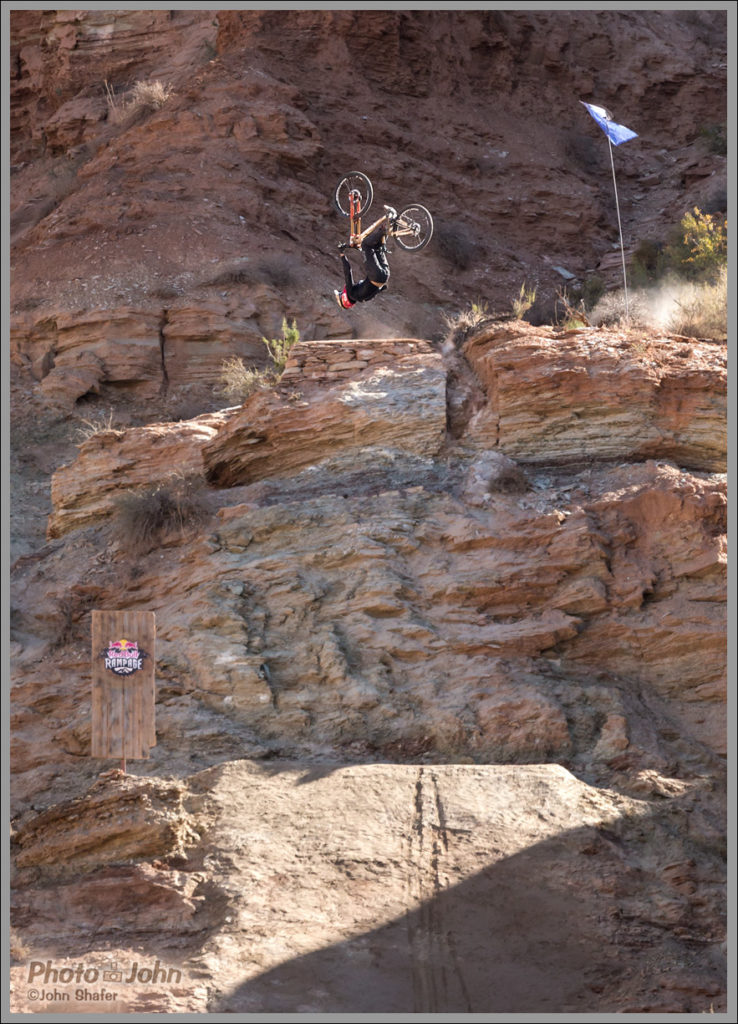
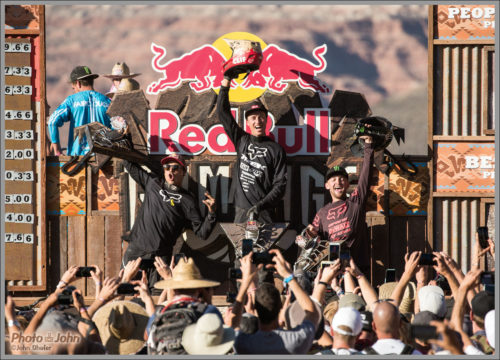
Brett Rheeder, doing a 360 backflip during his winning run in the 2018 Red Bull Rampage, October 26, 2018. Photo by Photo John, photojohn.net
Athletes From Around the World Compete at New Venue; Van Steenbergen Stomps Biggest Backflip in Event History
Press Release: Virgin, Utah (October 26, 2018) – Sixth time was the charm for Canadian Brett Rheeder who came out on top today at the 2018 edition of Red Bull Rampage. Winning freeride titles is not a first for Rheeder, but taking the win at freeride mountain biking’s biggest event is. Ontario, Canada’s Rheeder landed the heaviest hitting run of the day with his first run down the hill. Andreu Lacondeguy grabbed second place and his third podium in Red Bull Rampage history, and Utah-native Ethan Nell took third for the second consecutive year in only his second Red Bull Rampage appearance.
Nineteen of the world’s top freeriders participated in the 13th edition of the most legendary freeride mountain biking competition on earth. This year, thousands of fans from around the world tuned in to watch the action LIVE on Red Bull TV and for the very first time, had the opportunity to explore the venue through the latest augmented reality technology via a 3D model of the mountain on the Red Bull TV app.
2018 Red Bull Rampage Podium: Left to right: 2nd place Andreu Lacondeguy, winner Brett Rheeder and 3rd place, Utah’s Ethan Nell. October 26, 2018. Photo by Photo John, photojohn.net
The new Red Bull Rampage zone challenged the riders and their teams of diggers to a race against the clock to prepare their lines in time for competition. Each rider brought along two diggers and worked over the course of two weeks to prepare their lines down the newly selected venue. Ahead of the big day, only a handful of riders had managed to ride each feature in their runs, leaving tensions high as riders took to the start gate.
The day didn’t come without struggles for Rheeder who admitted he was “feeling a little bit low in spirit” coming out of a hard crash practice before finals. Luckily Rheeder’s unwavering determination outweighed any pre-jitters the second he dropped onto the mountain throwing down a title worthy first run.
“This is my sixth time competing at Red Bull Rampage and my first three years at Red Bull Rampage were tough,” said Rheeder. “I was way out of my element and it took a long time to finally be a contender for the title and it feels unreal.”
RED BULL RAMPAGE 2018 FINAL RESULTS
Brett Rheeder (CAN) – 89.66
Andreu Lacondeguy (SPN) – 87.33
Ethan Nell (Utah, USA) – 86.33
Tom van Steenbergen (CAN) – 84.66
Thomas Genon (BEL) -83.33
Tyler McCaul (USA) – 82
Kyle Strait (USA) – 80.33
Szymon Godziek (POL) – 75
Kurt Sorge (CAN) – 74
Brendan Fairclough (GBR) – 67.66
Adolf Silva (ESP) – 64.33
Vincent Tupin (FRA) – 63.00
Reed Boggs (USA) – 59.66
Rémy Métailler (FRA) – 55.66
Graham Agassiz (CAN) – 50.00
Brandon Semenuk (CAN) – 36.00
DJ Brandt (USA) – 33.33
Carson Storch (USA) – 0.00
Jordie Lunn (CAN) – 0.00
People’s Choice Presented by Utah Sports Commission
Thousands of fans voted online throughout the live Red Bull TV broadcast to determine the athlete that would take home the People’s Choice Award presented by Utah Sports Commission. Taking part in his very first Red Bull Rampage, Adolf Silva, took home the People’s Choice Award winning fans over with his energy and speed throughout the competition.
Best Trick Award Presented by Maverick
The best of the best tricks are displayed at Red Bull Rampage year after year, but this year, the Best Trick Award was a relatively easy decision. In his first run, Tom Van Steenbergen pulled off a massive flat drop backflip that set the bar for the rest of the competition and brought the entire venue of over 3000 screaming fans to their feet.
Kelly McGarry Spirit Award Chosen by the Athletes
To commemorate the life of mountain biking legend Kelly McGarry, the participating athletes named Brendon Fairclough as this year’s recipient of the Kelly McGarry Spirit Award. The criteria for the vote was to select the peer they thought most embodied McGarry’s spirit.
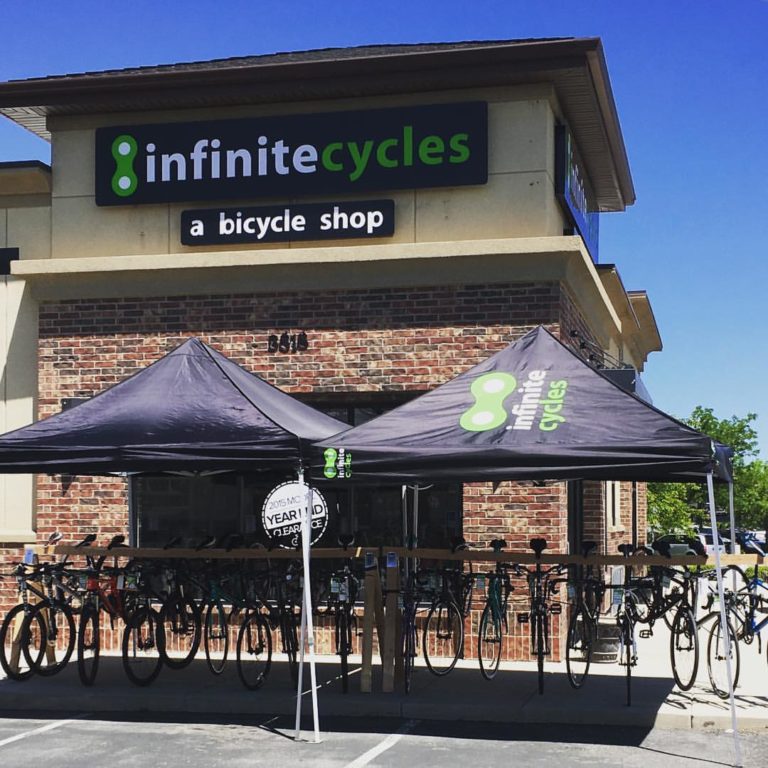
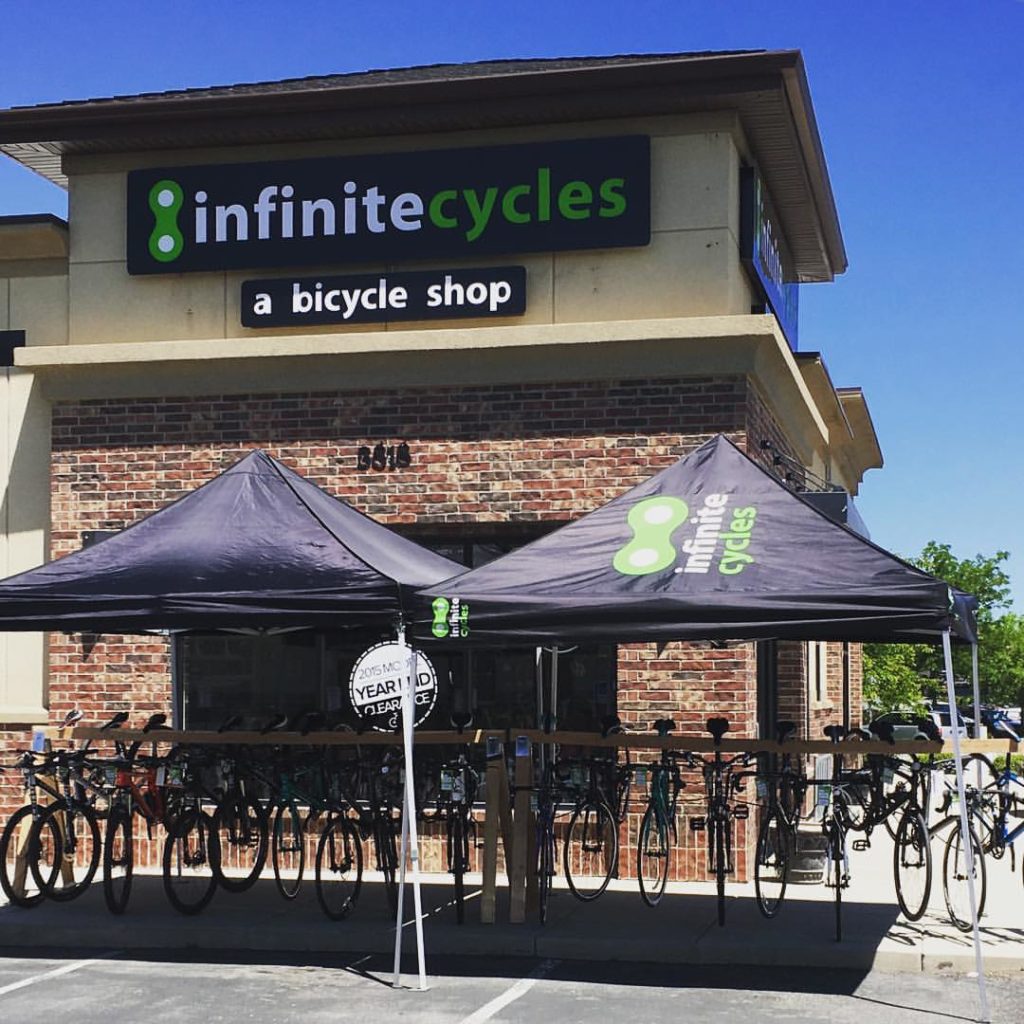
Infinite Cycles in Riverton is closing after 11 years in business. Photo courtesy Infinite Cycles
October 26, 2018 – Infinite Cycles, one of Utah’s leading Cannondale dealers announced yesterday that they will be closing their doors by November 10, 2018 after 11 years of business. The company at one point had three locations in Riverton, Lehi/Highland, and Cottonwood Heights. The Cottonwood Heights location closed last year, and the Lehi/Highland location was sold to Hangar 15 Bicycles earlier in 2018.
The following was posted on their Facebook page yesterday:
Dear Friends and Customers:
We regret to announce that after 11 years in business we will be closing our Riverton store location on November 10th. We have enjoyed creating relationships with you, working on your bikes, and we sincerely appreciate your business and support! We began Infinite Cycles in a tiny space while wives worked to help fund the dream. We grew quickly as we connected with the community and then we expanded to other locations. It has been an incredibly fun and rewarding journey.
Why are we doing this?
1. Consumer buying patterns continue to change in the bicycle and other industries – every year people are shopping more online and less in local retail stores, and that’s ok! Don’t we all want more convenience, more selection, and lower prices?
2. Expenses for building overhead and qualified staff have increased dramatically over the years and will continue to rise.
3. The bicycle industry is set to get hit with an additional 25% tariff on many foreign made goods the end of the year which is a little scary. Everything could get significantly more expensive almost overnight!
With these and other factors combined, we have made the difficult decision to close Infinite Cycles. We hope that you understand. Please visit the shop for final service needs, to take advantage of remaining inventory at clearance pricing, or just to give us the opportunity to say, THANK YOU!
The shop will be open with normal business hours through November 4, followed by hours of 10-5 from November 5-10. After November 5, they will not be taking special orders or repairs. Everything will be on sale.
After the shop closes, Infinite will still be online at https://www.cannondaleexperts.com where one can purchase a variety of Cannondale bikes, gear, specialty parts, clothing, and accessories.
GreenBike Salt Lake City, GreenBike Boise, Summit Bike Share Park City, LiveWell St. George Bike Share Will All Be Free to Ride on October 27, 2018
SelectHealth and GREENbike team up to offer the public FREE rides
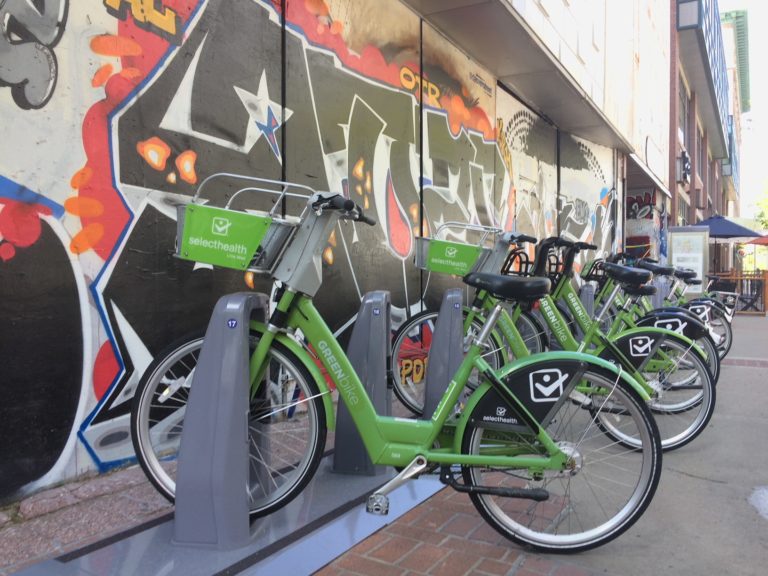
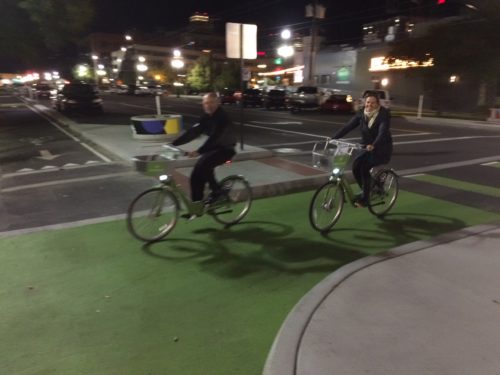
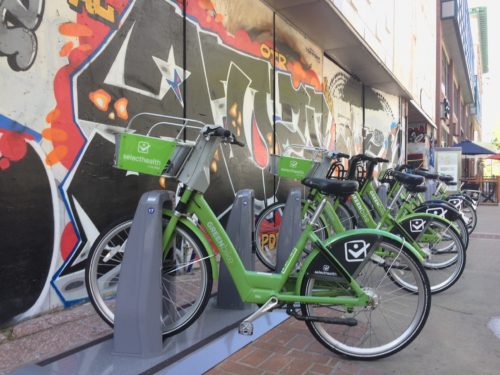
GreenBike has changed downtown Salt Lake City with 33 stations and hundreds of bikes. Photo by Dave Iltis
Press Release: SALT LAKE CITY, UT (October 26, 2018) — GREENbike, Salt Lake City’s non-profit bike share system is teaming up with SelectHealth to offer free rides to the public on Saturday, October 27.
This past June, SelectHealth and GREENbike Salt Lake City hosted their first ever FREE ride day and over 1,000 rides were taken burning over 155,208 calories and offsetting over 3,600 pounds of CO2 in one day! To date, the GREENbike program has prevented 3.8 million pounds of CO2 from entering the air, removed 4.2 million vehicle miles from local roads, while burning 63 million calories in the process.
“Thanks to SelectHealth, we have the opportunity to offer folks familiar or unfamiliar with the program another chance to ride for free!” Said Salt Lake City GREENbike executive director, Ben Bolte.
GreenBike has changed downtown Salt Lake City with 33 stations and hundreds of bikes. Photo by Dave Iltis
This Saturday, go to any GREENbike station in Salt Lake, Boise, St. George, or Park City, and:
In Salt Lake City: purchase a 24-hour pass using the promo code “1027” and ride for free!
Park City: Use Promo Code SH1012
Boise: No code needed, but sign up for a free membership first.
St. George: Use Promo Code: SH2018
“GREENbike is a fun and versatile way to exercise and enjoy our great city,” said SelectHealth Public Relations Manager, Greg Reid. “It complements our mission of helping people live the healthiest life possible.”
In addition to FREE bike share rides in Salt Lake City, SelectHealth will also be offering the public a chance to ride for free on the respective bike share systems in Park City, St. George and Boise!
GreenBike will be free to ride on October 27, 2018 courtesy Select Health. Use the code 1027 when checking out a bike.
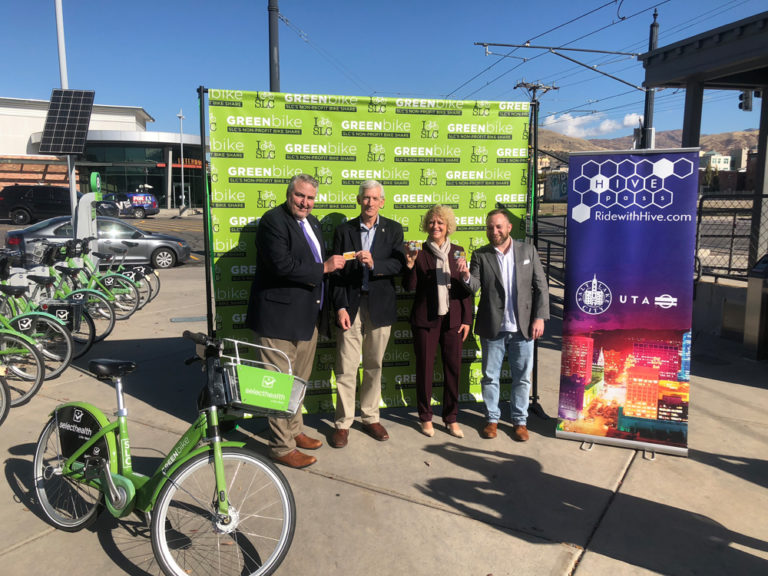
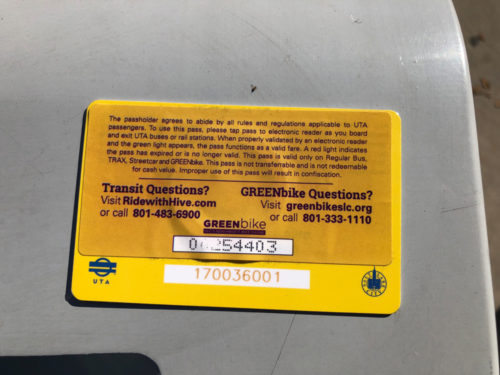
The Salt Lake City monthly Hive Transit Pass will now include a GreenBike yearly membership. Photo by Dave Iltis
October 24, 2018 – Salt Lake City – GreenBike bike share announced a new partnership with UTA, Salt Lake City, and Select Health that will include a yearly GreenBike membership with the Hive transit pass. Mayor Jackie Biskupski said, “All of us here today envision a capital city where traveling by car is not second nature, but a second thought.” She went on to say that the pass will help people to, “ditch their cars and become part of the clean air revolution.”
GreenBike will be free to ride on October 27, 2018 courtesy Select Health. Use the code 1027 when checking out a bike.
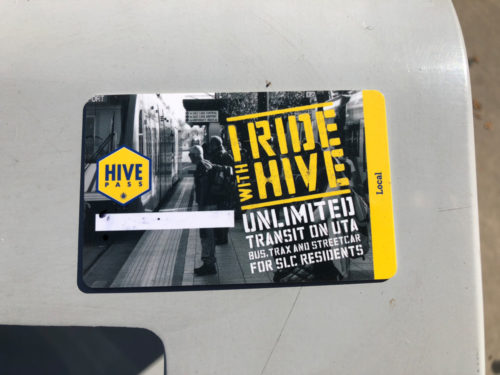
The Hive Pass is a Salt Lake City and UTA transit program that offers unlimited access to bus, rail and streetcar services for only $42 per month, a 50% discount. Your home address must be in Salt Lake City boundaries to be eligible for a Hive Pass.
The pass upgrade is available to all new Hive Pass subscribers, who will receive it when they order their card, and to existing Hive Pass holders by sending an email to [email protected].
Existing pass holders will get a stick-on back for the Hive Pass that will contain a GreenBike enabled RFID chip that will allow pass holders to check out a GreenBike from one of many stations throughout Salt Lake City. The pass will also work for any B-Cycle ride share program available in dozens of cities throughout the country. A GreenBike membership will need to be created once the add-on is received.
The Salt Lake City monthly Hive Transit Pass will now include a GreenBike yearly membership. Photo by Dave Iltis
The pass is a game-changing development with transit and bicycling in Salt Lake City. GreenBike is a perfect ‘first mile – last mile’ solution and with the new pass option, transit riders can easily transition to a bike to complete a journey. Additionally, once downtown, GreenBike reduces or eliminates the need for a car.
The new pass also opens the doors for more access to GreenBike for low income riders. The Hive Pass is currently available to some low income citizens of Salt Lake through partnerships. The new system is serving as a pilot so that low income riders may be able to access GreenBike without a credit card in the future.
“The Utah Transit Authority is proud to support GREENbike’s new program offering free annual passes to current and future Hive Passholders. UTA views its collaboration with GREENbike as an innovative partnership which will increase the transportation options available in our community.” Said UTA’s Interim Executive Director, Steve Meyer. “We’re excited to see the results of integrating emerging and disruptive transit alternatives such as GREENbike with the foundational transportation options offered by UTA. We hope more and more commuters will choose to leave their cars in the garage and use GREENbike to travel from their homes or places of work to a UTA bus stop or train station.”
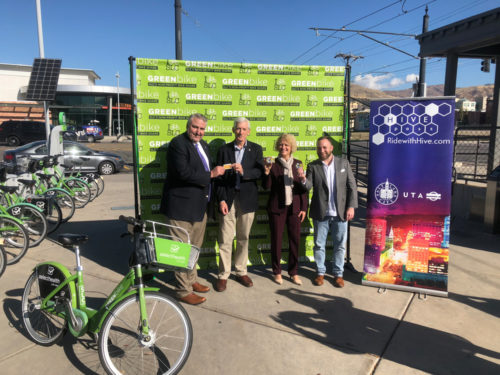
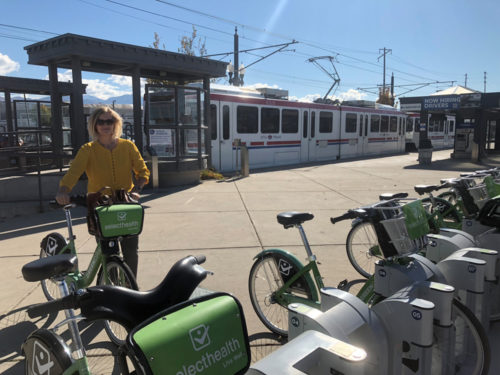
Greg Reid, Select Health, Steve Meyer, UTA, Salt Lake City Mayor Jackie Biskupski, and GreenBike executive directory Ben Bolte show off the new Hive One Pass. The Salt Lake City monthly Hive Transit Pass will now include a GreenBike yearly membership. Photo by Dave IltisGreenBike board member Amanda Smith rides a GreenBike at the Salt Lake City Central Station. The Salt Lake City monthly Hive Transit Pass will now include a GreenBike yearly membership so one can ride Trax, bus, or FrontRunner and transition to GreenBike to get to a final destination. Photo by Dave Iltis
GreenBike facts:
Over 4 million vehicle miles reduced through use of GreenBike
October 16 – At tonight’s Salt Lake City Council meeting, a public hearing will be held on the 2018-2019 Fiscal Year Capital Improvement Program budget. The budget covers larger projects within Salt Lake City with a useful life of 5 or more years and a cost of $50,000 or more. Several bike related projects are being considered, including improvements to 1700 South between State Street and 300 West, Foothill Trails construction and signage, and other trail and roadway projects. The project list is here: CIP Funding Log for Fiscal Year 2018-19 (Final For Adoption) – October 16, 2018 (Document from SLC Council Download). Additional project information is below.
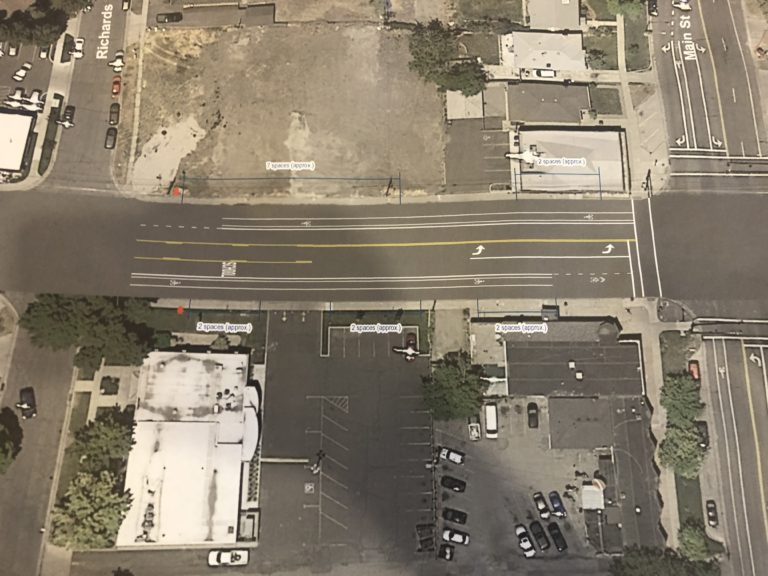
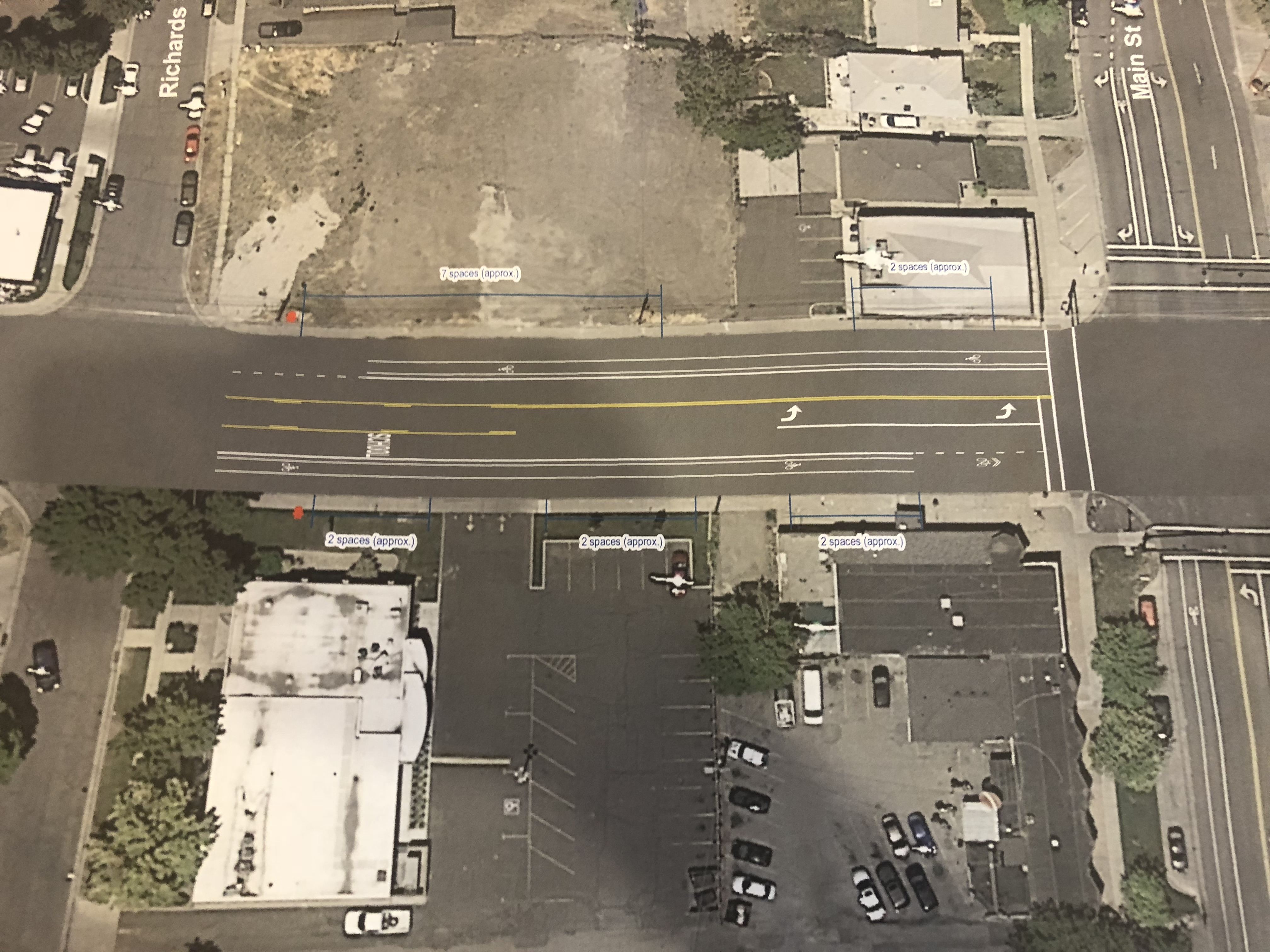
1700 S in Salt Lake City between State Street and 300 West would lose a traffic lane, and get buffered bike lanes under a 2018-19 CIP proposal. A preliminary design is shown.
The 1700 South project would remove a parking lane between 300 West and State Street, and move the bike lane from the curb towards the center of the street. The tradeoff is that cyclists would no longer have a curbside bike lane, but would have less traffic to contend with, a buffered bike lane, and potentially lower speeds too. A design that could still be implemented would be a parking protected bike lane (curbside), but this was not in Salt Lake City’s initial plan.
Local bike activist Taylor Anderson has been circulating a letter of support for the project. The letter is below.
September 2018
Salt Lake City Council
Statement of support for 1700 South CIP approval
Bike infrastructure helps to protect people on bicycles from vehicles on the city’s roadways and an effective way to transport people efficiently throughout a city. The lane realignment on 1700 South is one way to make the city’s bicycle network more robust, encourage people to ride bicycles throughout town and support the growing list of local businesses in town.
A robust network of bikeways encourages people to commute outside of cars, which research shows promotes local businesses and has clear benefits on the valley’s air quality.
With this project, the city could add parking for people in cars who visit, live and support the area’s businesses. It would separate people on bikes from vehicle traffic, and it would promote a thriving commercial node in an underserved but growing part of Salt Lake City.
We are firmly in favor of the Capital Improvement Project on 1700 South between State Street and 300 West, and we encourage the city to follow best practices when considering both appropriate speeds for the road and the placement of lanes for people on bicycles throughout the CIP area. We encourage the City Council to approve this proposal.
Sincerely,
Coalition supporters as of 09/14/2018
James Alfandre (Founding Principal, Urban Alfandre) Paul Svendsen (Owner, City Home Collective) Hasen Cone (Owner, Sweet Lake Biscuits & Limeade) Mike Christensen (Master of City & Metropolitan Planning) Taylor Anderson (Daily bike commuter on 1700 South) Steve Shoell (Daily bike commuter on 1700 South, 20 years) Sonja Berger (Avoids 1700 South out of fear of being hit) Chris Davis (Frequent bike commuter on 1700 South) Jeffrey Rock (Frequent bike commuter on 1700 South) Nick Kenworthy (Frequent bike commuter on 1700 South, 14 years) Jessica Kenworthy (Frequent bike commuter on 1700 South, 14 years) Dave Iltis, Cycling Utah
Cyclists wishing to support the 1700 South project can use the letter as a template, according to Mr. Anderson, and email the Council at [email protected]
Other projects with a bicycling component include:
Multi-use Loop Trail for Public Access at Rose Park Golf Course – $343,500
Traffic Signal Upgrades – These would better detect bicycles and pedestrians. $1,200,000
Street Improvements 2018/2019: Overlay. Bike facilities may be added in compliance with the Complete Streets Ordinance. – $700,000
Central Foothills Trail System Construction & Wayfinding. This would provide a match for a Recreational Trails Program Grants and Utah Outdoor Recreation Grants in 2019-2020. The funding for this would mostly come from Impact Fees (from new developments in Salt Lake City). This would go towards new hiking and biking, with some mountain biking specific, trails and signage in the Foothills. $196,000.
New Westside Trail Connections and Amenities – New trail improvments along the Jordan River between 800 S and 1300 S.
Transportation Safety Improvements – analysis of crash data and appropriate treatments. $250,000
Complete Streets Enhancements – From the CIP Document: “This project proposes to complement roadway projects that have been funded or for which funds are being requested, but which do not include incorporation of the City’s Complete Streets Ordinance and/or recommendations of City master plans. It will include the design and construction of bicycle, pedestrian, and transit elements within the public way in conjunction with the design and reconstruction of funded roadway projects. Examples of these elements include striping changes, crossing signals and treatments, ADA-compliant bus stop pads, and pedestrian refuge medians. Costs can range from 0.5 to 20% of a corridor reconstruction project, depending upon the level of changes that are needed. When constructed in conjunction with a larger corridor project, rather than independently, substantial cost savings can be realized. One example of this is the 900 West corridor, where the City incorporated multimodal access with a relatively small increase in overall project cost.” – $125,000
The following have no allocation for funding:
Cemetery Multi-use Roadway Repair (phase 1) – Bicyclists often use cemetary roads to travel through. Cost $2,400,000 – recommended allocation – $0.
The following are not recommended by the Council or Mayor for Funding
City-wide Wayfinding Study – $100,000
Sunnyside 9 Line trail – Matheson Nature Preserve – This would be a path and crossing near Hogle Zoo as part of the 9-Line project. The council did allocate $265,000 for this.
–
Projects that could have a bike component, but isn’t mentioned:
1300 E. Reconstruction – It is not clear if Salt Lake City will be adding bike facilities in accordance with the Complete Streets Ordinance on 1300 E between 1300 S and 2100 S. This could be explicitly mentioned in the CIP request.
700 South Bridge near 4800 West – Bicycle infrastructure is not mentioned in this project.
Comments Needed:
To comment on any or all of these projects, attend the public hearing at the City Coucil on October 16, at 7 pm. or email [email protected]. Comments can be emailed anytime up to the scheduled vote on November 13, 2018.
1700 S Letter of Support Complete List of Supporters as of 10-16-18.
James Alfandre (Founding Principal, Urban Alfandre) Paul Svendsen (Owner, City Home Collective) Hasen Cone (Owner, Sweet Lake Biscuits & Limeade) Dave Iltis (Publisher/Editor, Cycling Utah) Phil Sarnoff (Executive Director, Bike Utah) Jesse Hulse (Principal, Atlas Architects Inc) Liberty Wells Community Council Poplar Grove Community Council Bill Davis (Owner, GBR Service and GBR Utah on 1700 South) Amy J. Hawkins (Nearby resident and frequent jogger on 1700 South) Joshua Poppel (Executive Director, Village Bicycle Project) Kylee Howell (Owner, Friar Tuck’s Barbershop) Mike Christensen (Master of City & Metropolitan Planning) Zachary Bartholomew (Board Member, Liberty Wells Community Council) Dimitri Littig (Co-Owner, Vagabond Bicycle Bags) Taylor Anderson (Daily bike commuter on 1700 South) Steve Shoell (Daily bike commuter on 1700 South, 20 years) Sonja Berger (Avoids 1700 South out of fear of being hit) Chris Davis (Frequent bike commuter on 1700 South) Jeffrey Rock (Frequent bike commuter on 1700 South) Nick Kenworthy (Frequent bike commuter on 1700 South, 14 years) Jessica Kenworthy (Frequent bike commuter on 1700 South, 14 years) William H. Nesse (Nearby resident) Dennis Faris (Community organizer and transportation advocate) Lynette Randall (Salt Lake City bike commuter) Casey Kinnaman (Employee, Friar Tuck’s Barbershop) Andrew Knuth (Salt Lake City resident) Leslie Anderson (Salt Lake City resident) David Osokow (Salt Lake City resident) Erik A. Lopez (Daily bike commuter) Sara Adelman (Driver, cyclist and pedestrian on 1700 S) Taylor Lake (Property owner) Justin McAllister (Salt Lake City resident)
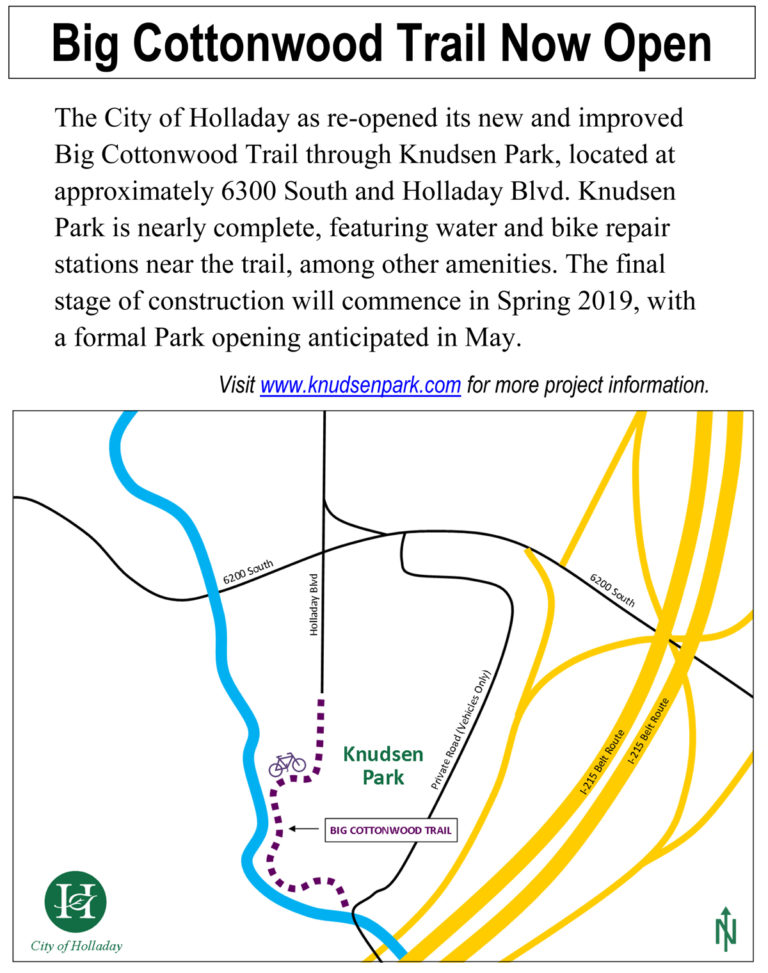
October 16, 2018 – The Big Cottonwood Bike Trail that runs through Knudsen Park in Holladay, Utah has re-opened. The trail section by 6200 S and Holladay Boulevard was closed for construction of the 6-acre new park. The new public park will, according to the park’s website, have a new playground, picnic facilities, and walking paths and “will also serve as a bicycle hub for the local and regional bicycle network, providing restrooms, water fill-up facilities, and bike repair stations.” The park is scheduled to be open in May 2019.
The Big Cottonwood Trail is approximately 2 miles and extends from 6200 S and Holladay Boulevard to the mouth of Big Cottonwood Canyon and runs along Big Cottonwood Creek and Big Cottonwood Canyon Road to the west of the mouth of the canyon in the Old Mill area.
A graphic is below:
The Big Cottonwood Trail near Holladay Blvd and 6200 S in Holladay, Utah is reopening.
A cyclist braves State Street. Multimodal, personal transportation, should be safe for all users on State Street in Salt Lake City, Photo by Dave Iltis
On October 2, 2018, the SLC Council will consider adopting the State Street CRA Plan. The CRA Plan doesn’t consider bicycling at all. This is incredibly dismaying and is the antithesis of a smart, sustainable, climate positive city. They should not adopt this plan without modifying the plan to include bicycle accommodations.
“The Council will consider adopting the State Street Community Reinvestment Area (CRA) Project Area Plan. The State Street CRA Plan outlines ways the City can use tax increment financing as a funding mechanism to advance the economic development goals of Salt Lake City and help facilitate the implementation of the community vision. The plan envisions the CRA as a way to revitalize State Street in a way that respects the corridor’s auto-oriented focus while expanding its uses to include more pedestrian-friendly and livable features.”
The quote above shows exactly what is wrong with the plan. State Street is auto-oriented, but it shouldn’t be. It should be a safe and complete street for all users – pedestrians, bicyclists, Greenbike riders, scooter users, transit, and drivers – in that order. If you want to revitalize the area, make it a liveable community.
The CRA Plan doesn’t consider bicycling at all. The only mention of this in reference to crossing State Street. Yet, bicyclists, like drivers and pedestrians use State Street currently because there are destinations for bicyclists on the street. But, you may say, “we want bicyclists to use other streets.” Why? Why not make the street safe for all? Why not encourage a healthy street? Why not encourage a healthy community?
The Life on State study, while flawed, has bike lanes in its full implementation scenario. This is the scenario with the highest level of economic impact, the one that will lead to a more liveable and vibrant downtown.
The first listed goal of Life on State, supported by 67% of stakeholders, is:
“Create a State Street that is welcoming, safe, and healthy by improving traffic safety for drivers, pedestrians, bicyclists, and transit riders, and use urban design to prevent crime and improve security.”
The State Street CRA plan ignores this.
The Full Implementation of the Life on State Study is:
Concept 4: Full Implementation
This design makes a major shift to prioritize multi-modal travel, and has two variations. Both give added space to pedestrians and bicycles, and priority to transit.
Scooters on State Street. Multimodal, personal transportation, should be safe for all users on State Street in Salt Lake City, Photo by Dave Iltis
While we think that Concept 4 should be the starting point for conversation, not the end point, as it is still not strong enough to include full bike lanes everywhere on the street, it is nonetheless the best option in the study.
The great outcome of this is that it has by far the greatest economic impact.
Scenario 4 (which modernizes the street for all users) has:
3 times as many jobs created as the do nothing alternative.
76% increase in walking trips
-15% change in vehicle miles traveled
4.5 times as many housing units created.
$4.4 billion in new development
$43 million in new property tax revenue
It is the scenario that includes bike lanes. Yet, the State Street CRA Plan IGNORES this. This is unacceptable.
State Street currently has room for bike lanes if the vehicle travel lanes were reduced to 10.5′. UDOT refused to allow this when the street was last repaved, and instead, there is a wide parking lane with some, but inadequate, room for cyclists. If the Council would start a conversation with UDOT on this, maybe some meaningful change would be possible.
There are many reasons to include bicycles explicitly in the State Street CRA.
• A healthy, friendly, and safe city should be built with the following transportation perspectives in order: pedestrians, bicyclists including Greenbike riders, scooter users, transit, and drivers.
• The new homeless shelter is right off of State Street. Individuals using the shelter need a safe way to get there which would include bike lanes on State Street and 700 S (which could be painted tomorrow).
• It’s better for air quality.
• It’s better for the collective health of Salt Lake City’s residents.
• State Street is a dangerous road for vulnerable road users – but it doesn’t have to be.
• There’s room for bike infrastructure on State Street if UDOT will cooperate.
• It’s in the Pedestrian and Bicycle Master Plan as requiring further study.
• It’s the preferred option in the Life on State Study.
• It’s better for businesses on State Street.
• People will use it anyway for bicycling – it’s a matter of whether Salt Lake City has the courage to make it safe for those users.
• It’s the right thing to do.
State Street should be the Grandest Boulevard in Utah. Please make it so.
Update: The Salt Lake City Council passed the Plan, but will add legislative intent language at next week’s RDA board meeting to address bikes in the plan. Given the difficulty in amending the plan, this is a big win for bicycles.
Scooters on State Street. Multimodal, personal transportation, should be safe for all users on State Street in Salt Lake City, Photo by Dave Iltis