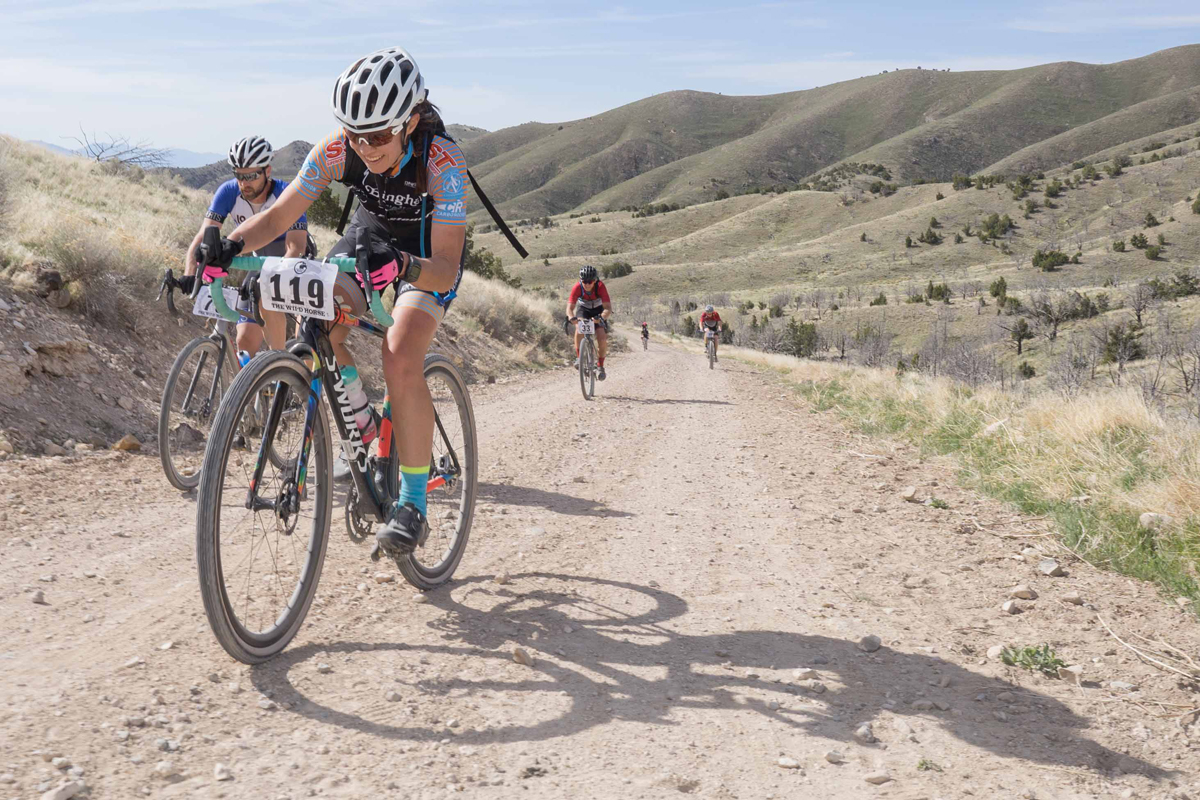
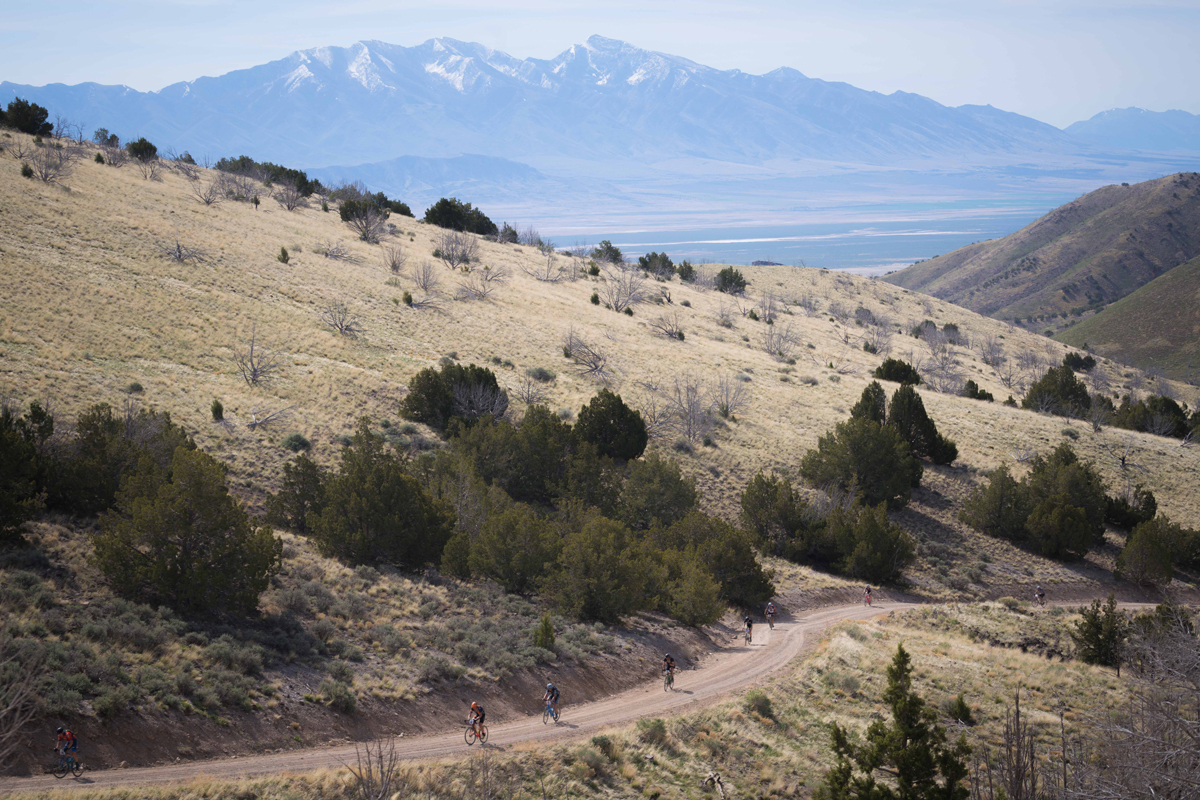
By Dave Iltis — The Sevier Valley Rooster Ride will be held in Richfield, Utah on August 25, 2018. The new ride travels through the backroads of Sevier County, and features beautiful scenery and few cars.
We asked organizer Chad McWilliams of Sevier County a few questions about the ride.
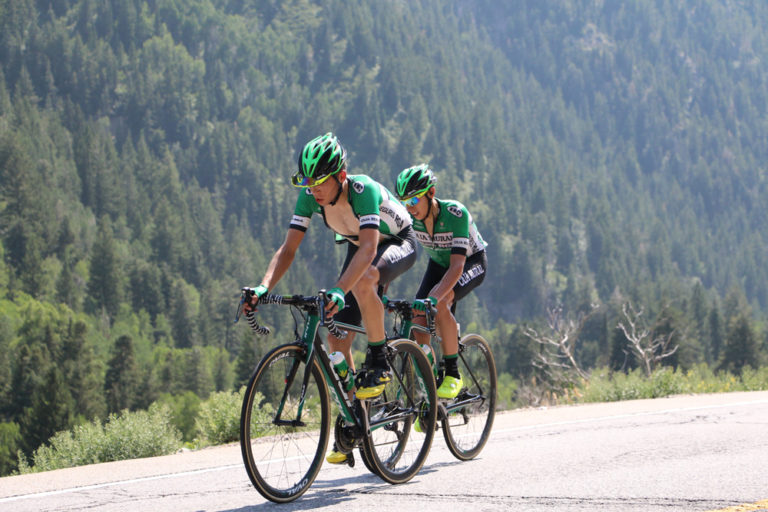
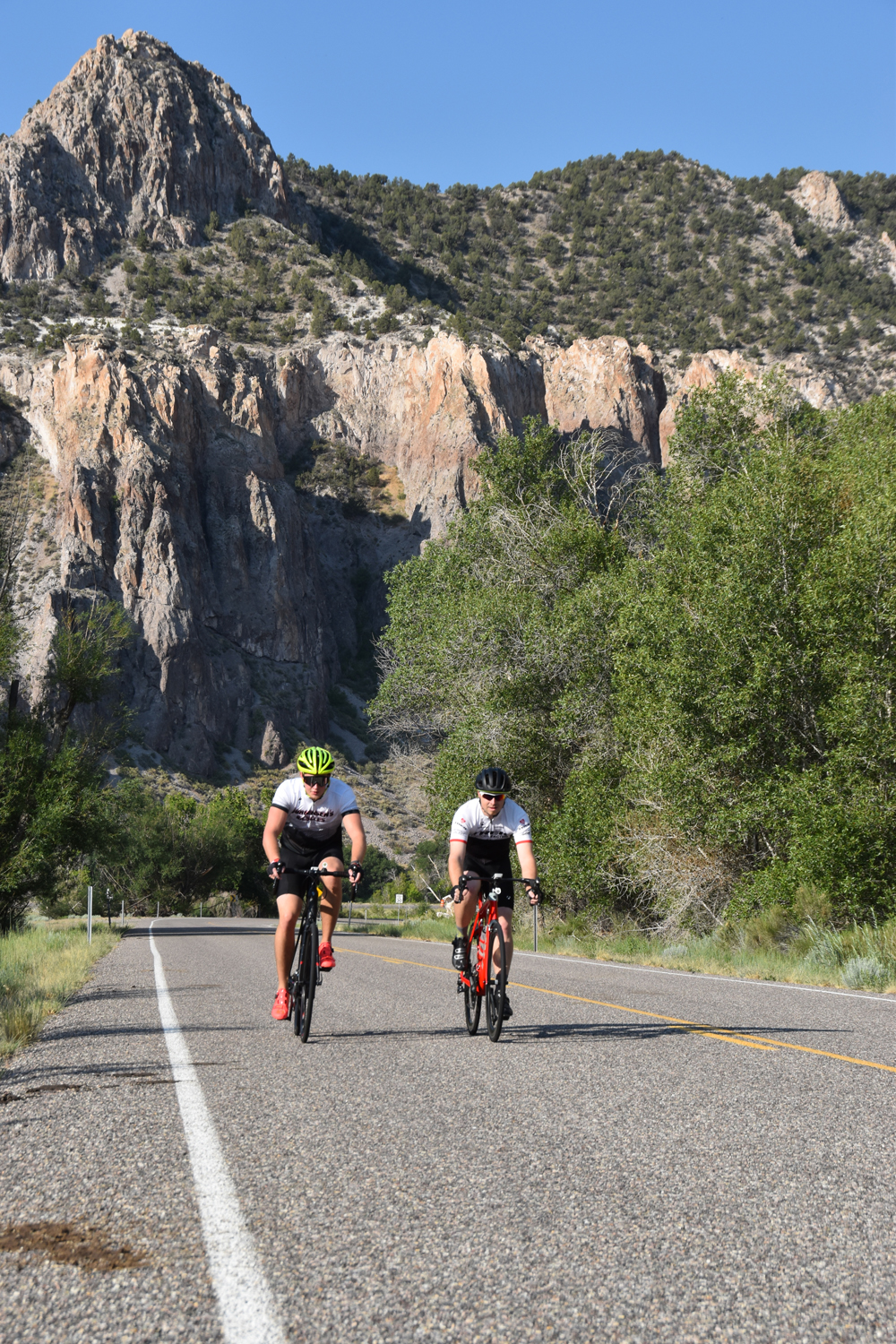
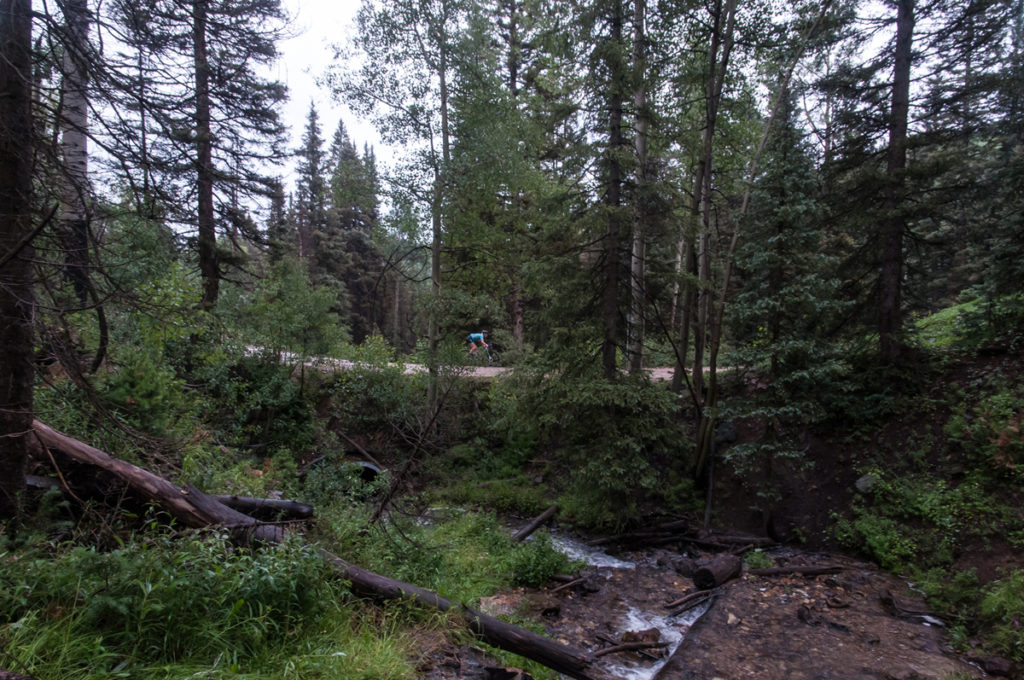
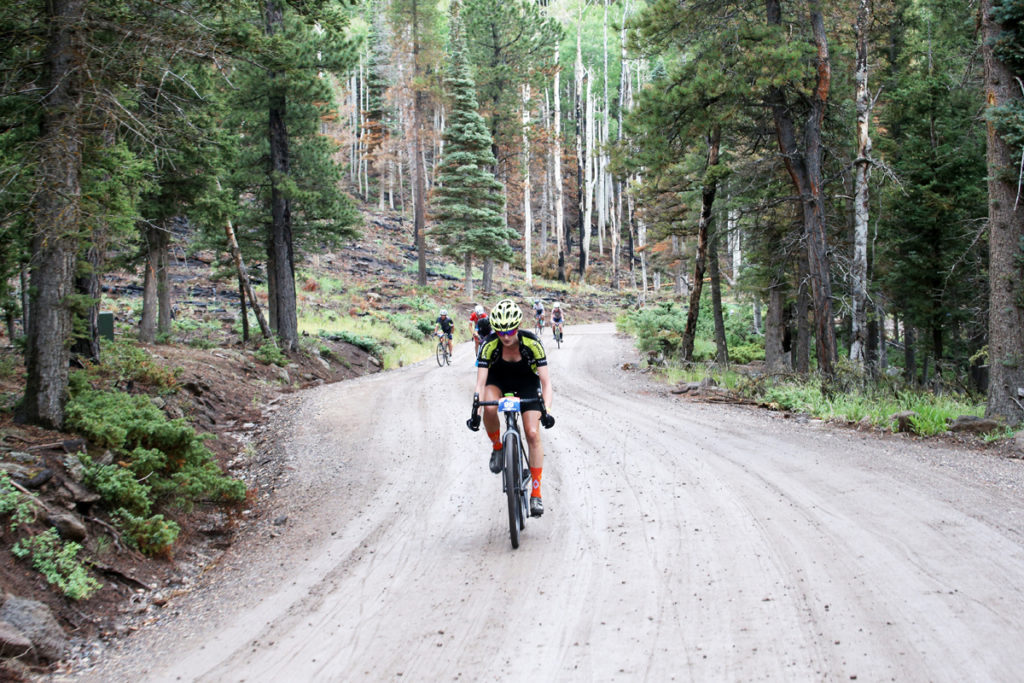
Riders in Clear Creek Canyon in Sevier County. The Rooster Ride will feature this canyon. Photo by Kirk Rasmussen
Cycling West: Tell us about the ride. What are the courses like, and what are the highlights?
Rooster Ride: We have teamed up with Jorgensen’s in Richfield for our first annual what we are calling the “Rooster Ride”. This ride will be tough to beat with our clean air and beautiful scenery with almost zero traffic. The ride will take you around the Sevier Valley from little town to little town. Where the locals will be there to take care of you in one of the six aid stations. Test yourself with a Century ride that offers over 4,000 feet of climbing in one of the most scenic canyons in all of Utah. While out riding you can stop at the aid station at the Fremont Indian State Park and take a quick photo of some the Fremont Indian rock art. This event will become one of the premier cycling events in south central Utah.
CW: What support will you have on the ride?
RR: The guys at Jorgensen’s along with Clif with keep you nourished and hydrated with 6 fully stocked aid stations. They will also help make any last-minute adjustments the night before at packet pick up.
CW: When people visit Richfield for the event, where can they stay or camp?
RR: We have tons lodging options in the Sevier Valley. Richfield is the host city and the start and finish line of the Rooster Ride. With over 20 hotels to choose from, you can find the place that is right for you. For those that want a chance to be outdoors we offer tons of camp sites and RV camping at places like the famous Big Rock Candy Mountain and Fremont Indian State Park and KOA right in Richfield. You can find all this by going to trailcountry.com.
CW: Tell us a little about the history of the area.
RR: Located in scenic Sevier Valley, Richfield is one Utah’s best-kept secrets. Why are we calling it the “Rooster Ride”: Way back in the day Sevier Valley was one of the premier pheasant hunting areas of Utah. You too can hunt for your own epic riding experience by “Riding the Rooster”. Sevier County is also known as “Utah’s Trail County” with over 2,000 miles of the best off-road adventures and located here is the word famous Paiute ATV/UTV trail system.
The first recorded inhabitants of Trail Country were the Fremont Indians and the century ride will take your right past an area where you can see from your bike their way of life. So after you come Ride the Rooster you will want to come back and find your new favorite trail.
CW: Is there anything else that you would like to add?
RR: The 1st 200 riders to register will get a pair of custom Rooster Ride socks along with a medal and tee shirt. For more information and to register go to traildaysutah.com also follow us on Facebook for updates: Sevier Valley Rooster Ride. So while you are off riding the family can enjoy “Trail Days” that will be going on at the same time. They will be able to enjoy golf and car and air shows, a relay run, and equestrian ride. There will food and live entertainment durning the day while you are off riding so they are not stuck waiting in the hotel.
Ride Details: August 25 — Sevier Valley Rooster Ride, Richfield, UT. Sevier County in conjunction with Sevier County Trail Days and Jorgensen’s is presenting a 33, 55, or 100 mile bike ride thru scenic Central Utah. Event will be chipped, with fully stocked rest stops, great swag and lunch. Metal and Tee shirt will be provided. 33 mile option has a 800 ft gain, 1,163 ft gain for the 55 mile option, and 4,061 ft for the 100 mile option., Chad McWilliams, 435-421-2743, [email protected], traildaysutah.com/sv-rooster-ride/
Riders in Clear Creek Canyon in Sevier County. The Rooster Ride will feature this canyon. Photo by Kirk Rasmussen
SLC has more free bike corrals available to install at local businesses
July 13, 2018 – Salt Lake City is making it easier to bike to your favorite restaurant, bar, coffee shop or even the aviary. The City has installed ten bike corrals at local businesses but another ten corrals are available for free at the request of a business owner.
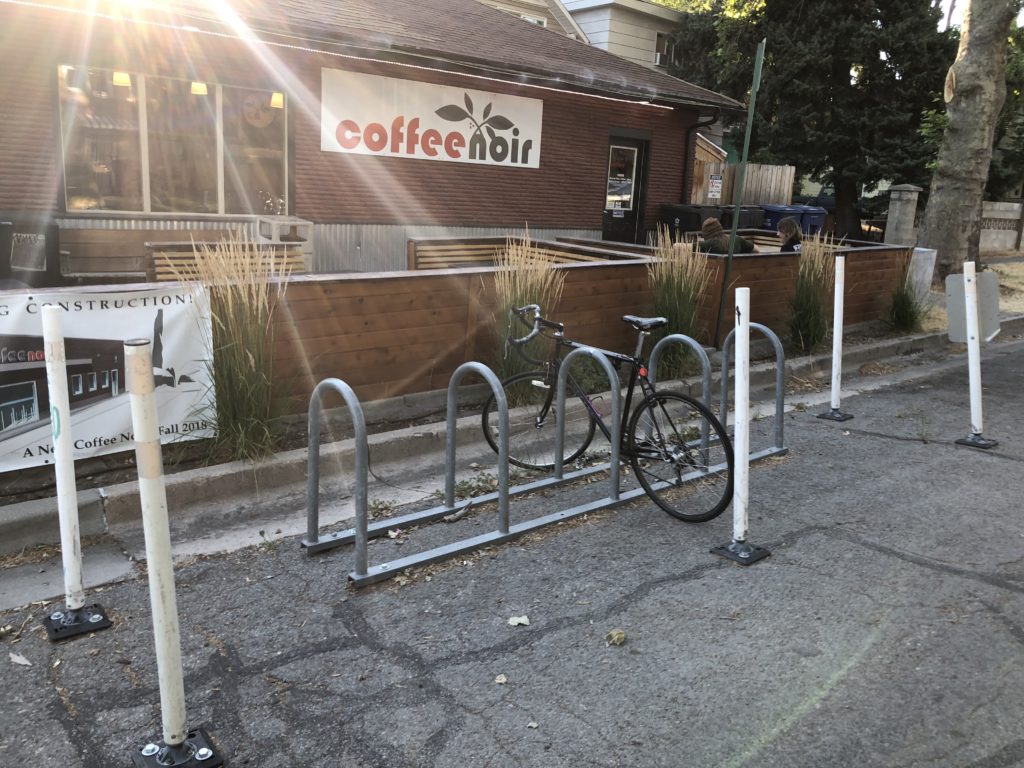
A bike corral at Salt Lake City’s Cafe Noir. More corrals are available free for businesses from Salt Lake City’s Transportation Division. Photo by Dave Iltis
Squatters Pub was the first business to install a corral in 2010. “It’s very cool,” said James Soares, Squatters director of operations. “We want to appeal to all kinds of commuters—especially bikers. These bikers help our air quality and come in thirsty.”
The expansion of bike corrals is part of Mayor Jackie Biskupski’s plan to make Salt Lake City a very bike-friendly place to live.
“We want to help people get out of their cars, get on a bike and help clean our air,” said Mayor Biskupski. “This is also a great opportunity for businesses to show how much they care about their customers and what we all breathe.”
Each corral takes up one parking space, but one corral allows up to ten cyclists to lock up their bicycles. The corrals are installed from April to November and then removed for snow plowing in the winter. Where sidewalk or park strip space permits, the City prefers to install permanent bike parking.
“Bike corrals have been very popular with customers and business owners at locations such as restaurants, coffee-shops and bars–social destinations where friends may ride together,” according to Becka Roolf, Salt Lake City active transportation planner. “At these locations, there’s a real need for bicycle parking, especially during the summer.”
Here are the locations of the bike corrals available now:
Squatters Pub – 147 West 300 South
Bruges Waffles and Frites – 336 West 300 South
Sugar House Pub – 1992 South 1100 East – SLC’s first double-corral
Tracy Aviary – Liberty Park
Bar X / Beer Bar – 155 East 200 South – double-corral
Twilite Lounge – 347 East 200 South
The Ruin – 1215 Wilmington Avenue, Sugar House
Coffee Noir – 1035 East 200 South
Eric Little is the manager of Bruges Waffles and Frites. He said the bike corral makes a lot of sense for the restaurant. “The number one way to get around in Belgium is by bicycle and the country’s air keeps getting better,” said Little. “Bikers see our corrals right away and so they become potential customers.”
De Crescenzo Returns To Racing With Crusher In The Tushar Women’s Title, While 21-year Old Calton Impresses In Men’s Win
62-year old Ned Overend finishes 7th in stacked Men’s Pro/Open field
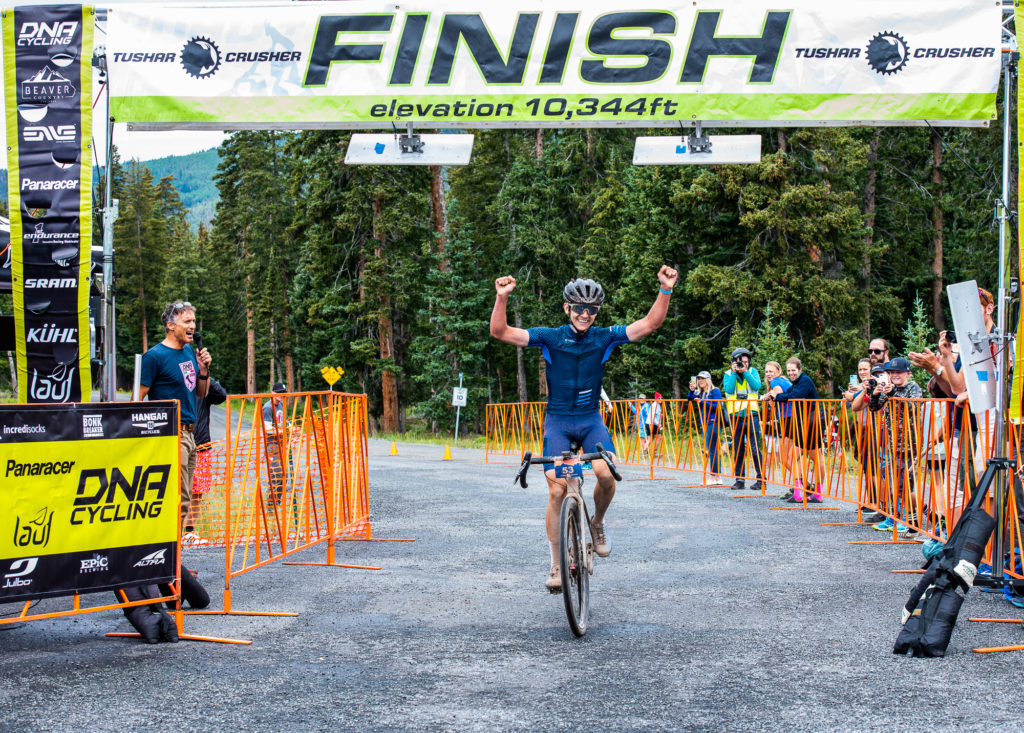
By Neil Shirley & Steven Sheffield — July 14, 2018 (BEAVER, Utah) — The Crusher in the Tushar once again proved anything but predictable in both the weather and riders that would be standing on the podium. By Saturday afternoon, two first-time winners provedto be up to whatever challenge the Tushar Mountains could dish out, with Lauren De Crescenzo (DNA Cycling) having an incredible return to racing after a two and a half year absence caused by a severe accident. On the men’s side, it was another unexpected name at the top, with 21-year-old professional mountain biker Zach Calton (Spry-LPW) putting in an impressive performance.
Lauren De Crescenzo (DNA Cycling) leads a group of riders at the base of the Col de Crush. She went on to win the women’s elite race by almost 10 minutes. Photo by Cathy Fegan-Kim, cottonsoxphotography,net
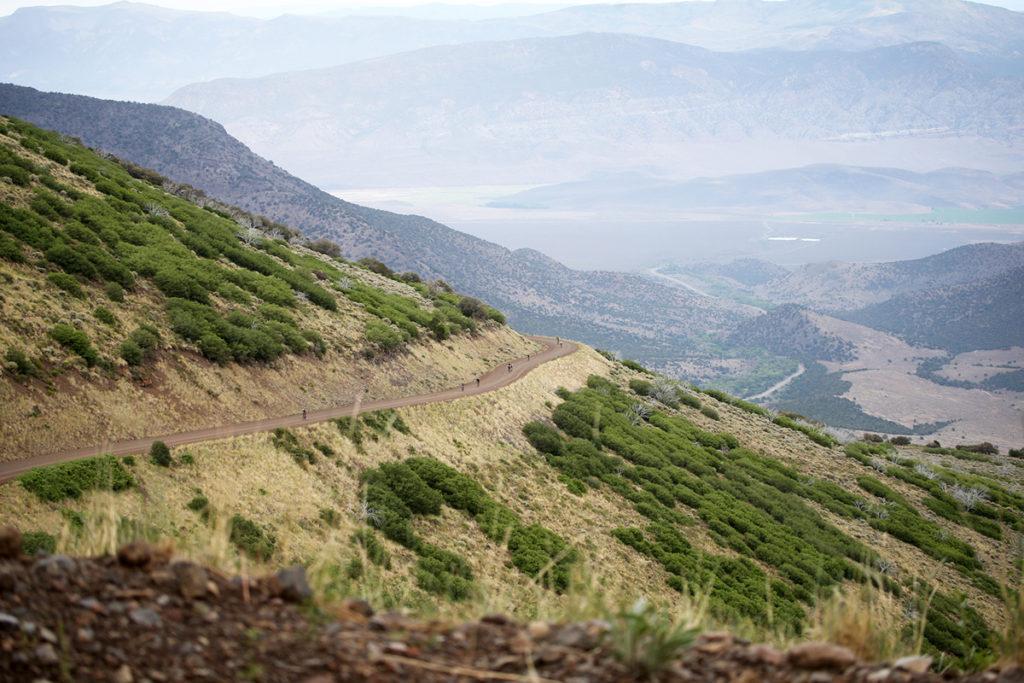
As the 600 riders arrived in Beaver for check-in on Friday, the weather picked up right where it left off last year with rain greeting everyone and rekindling the memories from the finish line hail storm. But by race morning, the clouds had lifted enough to allow full view of the mighty Tushar Mountains that would dole out 10,000 feet of climbing over the 69-mile course that featured a 60/40 split between dirt and paved roads.
Tacky, dust-free dirt roads made for a fast start on to the day’s first climb, with 15 riders separating themselves in the men’s group.
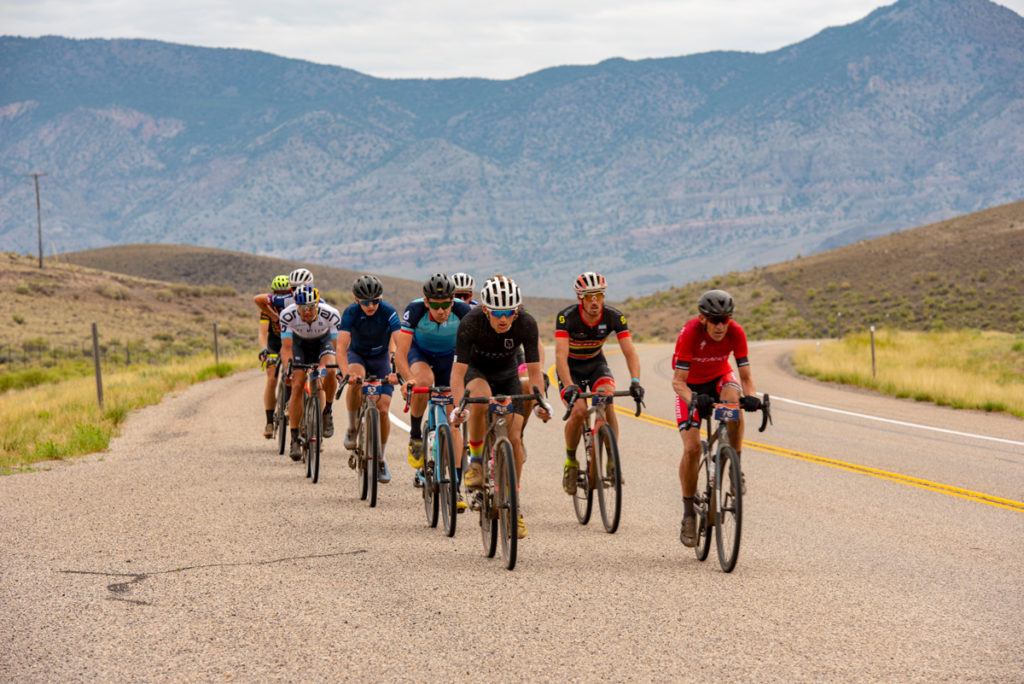
About halfway up the first climb, Utah local Cortlan Brown (Hangar 15) separated himself from the rest of the lead group, which included three-time winner Robert Squire (Hangar 15), James Driscoll (Pivot Cycles-Maxxis), Alex Grant (Cannondale-Gear Rush), as well as the 62-year old Ned Overend (Specialized) and young MTB pro and first-time Crusher Zach Colton (Spry-LPW).
Brown held his lead over the top of the first climb and through the paved sections from Junction to Circleville, opening up a gap of about 2:30 at one point before starting the climb back up Doc Springs Road (aka the Sarlacc Pit) towards the Col de Crush, as the chase group dwindled down to around 6 riders.
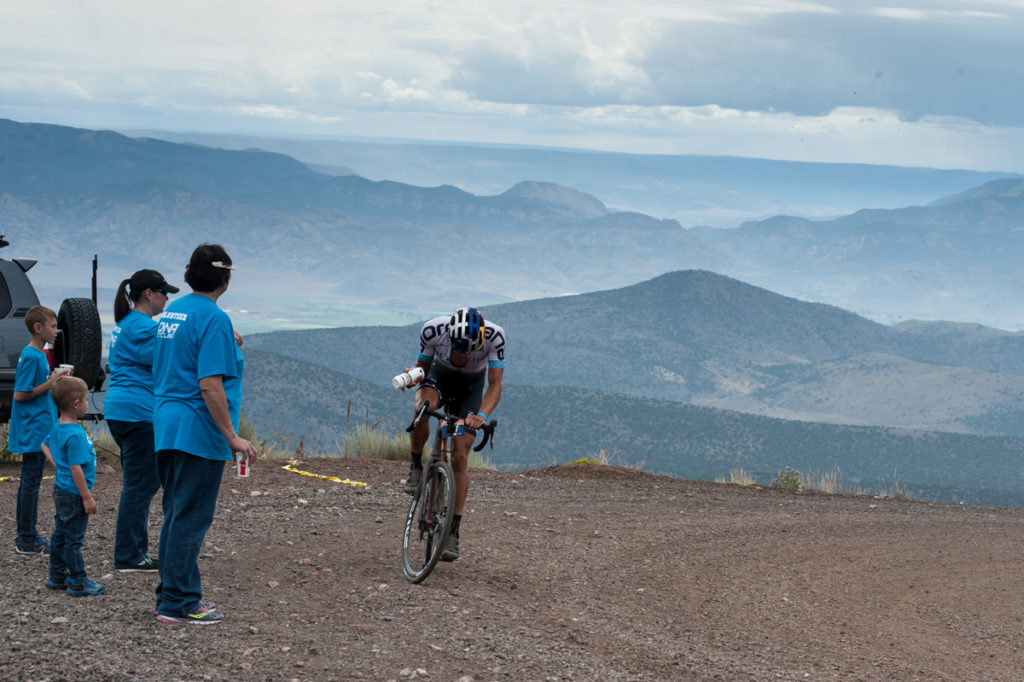
Further back, the majority of riders settled into a steady rhythm content to keep something in the tank for the second half. The final 20 miles can be unforgiving, beginning with the Col de Crush and providing little respite until crossing the finish line at Eagle Point Resort. Thankfully, cooler temperatures in the valley floor compared to last year’s triple digits took less of a toll on the riders and allowed finish times to be notably faster.
As Brown made the turn back onto Highway 153 at the base of the Col de Crush, his lead reduced to about a minute, and the question became not if he would be caught by the chase group, but when, with Zach Colton making the catch about half way to the KOM point.
Zach Calton takes a solo win in his first attempt. 2018 Crusher in the Tushar. Photo by Steven L. Sheffield
The five-mile, 2,300 foot Col de Crush KOM has always proven to be the decisive moment in sorting out the winners from the rest of the podium, and this year was no different as Calton made his move just a mile from the KOM line. “I looked back probably every two or three minutes from the top of the climb to the finish just because it feels like you’re going so slow; when that soft dirt starts to weigh you down, and you’re tired and your legs are starting to give out, and your back starts to hurt”, Calton said. “You just keep looking back wondering if they’re coming. But it worked out, and this is definitely my biggest win ever, for sure.”
Lauren De Crescenzo’s return to racing, and subsequent Crusher win, is something that few could have predicted after she suffered a traumatic brain injury in April of 2016 and spent two months in the hospital. De Crescenzo actually attributed part of her success to the injury. “I’m just saying that my pain receptors in my brain don’t work anymore, so now it’s just a matter of physical output, what I can actually put out.” She said at the awards ceremony, “The Crusher is definitely on the podium of races that I’ve done. It’s my style of racing. I just want to go really, really hard; and it’s not a matter of playing mind games, it’s just how hard can you go?”
Perennial favorites Ned Overend and Rebecca Rusch also had strong rides in their first appearance at the Crusher. Overend, who would go on to finish in 7th, is 41 years older than race winner Calton. Rusch, who recently won the 350-mile DKXL, and typically prefers distances much greater the Crusher’s 69 miles, went on to finish 7th in the pro women’s field.
Men’s Top-10
Zach Calton (Spry-LPW)
4:14:42
James Driscoll (Pivot Cycles-Maxxis p/b Stans-DNA Team)
A view of the Col d’ Crush. Photo by Cathy Fegan-Kim, cottonsoxphotography,netThe first chase group in the men’s pro/open in the 2018 Crusher in the Tushar, some 2:30 behind the leader. Photo by Steven Sheffield2018 Crusher in the Tushar, held in Beaver, Utah. Photo by Chris See, christopher-see.photoshelter.comA rider flies through the Fishlake National Forest in the 2018 Crusher in the Tushar. Photo by Chris See, christopher-see.photoshelter.comHalfway through the race Karen Jarchow was still in the lead but De Crescenzo’s had her in her sights. Photo by Cathy Fegan-Kim, cottonsoxphotography,net
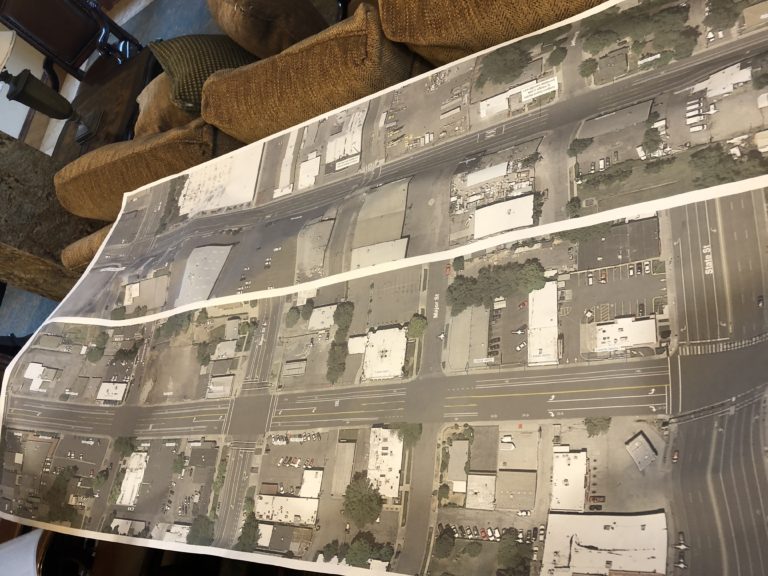
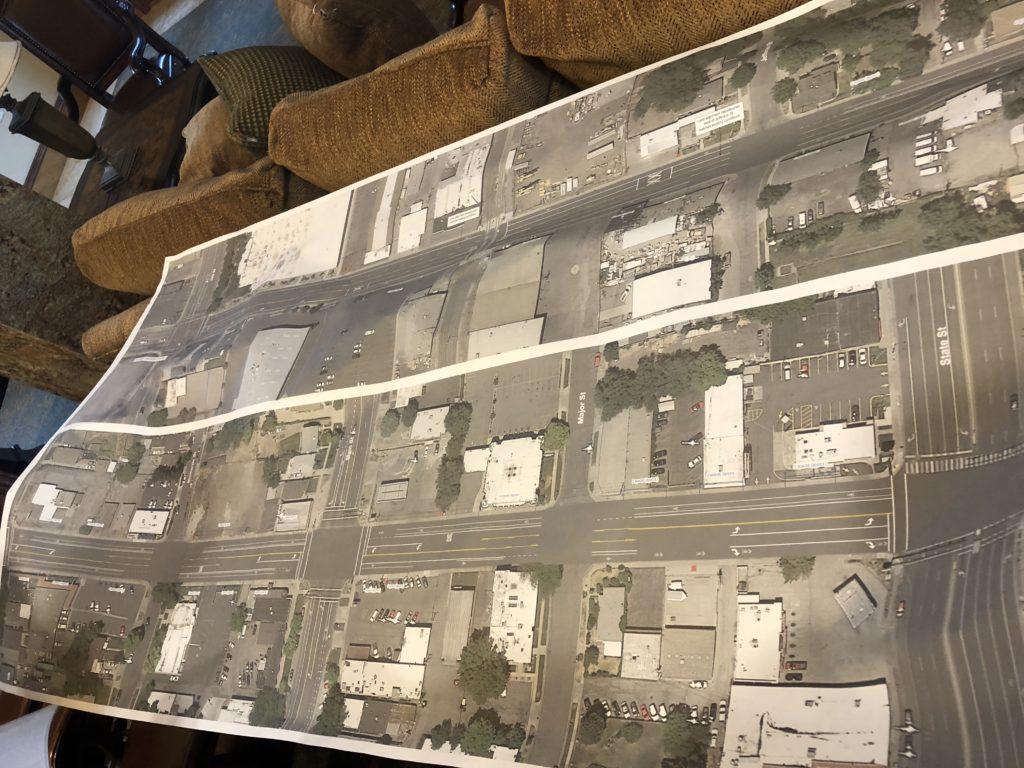
July 13, 2018, Updated Septembe 13, 2018 – At the Ballpark Community Council meeting yesterday, Kevin Young of Salt Lake City Transportation presented a potential makover of 1700 S between 300 W and State Street. The reconfiguration of the restriping would remove a lane of traffic, and replace it with parking. This would be done in conjunction with a slurry seal of the roadway, probably in 2019. Currently, bike lanes exist between 300 W and Main Street. Following the restriping, lanes would be added between Main and State and existing bike lanes would be enhanced (buffers added). This section currently just has sharrow markings (edit: sharrow are eastbound currently, with a westbound bike lane, the restriping would add buffered lanes in both directions except in the turn zone).
A potential new configuration is coming to 1700 S in 2019 with more parking and enhanced bike lanes. Photo by Dave Iltis
The project is being recommended by Mayor Biskupski as part of the 2018 CIP (Capital Improvement Projects) list. The cost would be approximately $105,000 for the restriping. The project next goes to the council for a vote sometime later this summer, along with the rest of the CIP budget.
The idea for the street redesign came from the owners of Manny’s Bar and Grill, and was generally well supported by the business community. Penny, one of the owners, was “excited for this” and was working to gather signatures in support of the project. She felt like her customers really needed the parking. Another business owner thought that the change would lead to a new neighborhood business hub at 1700 S and Main Street, akin to 9th and 9th. Sweet Lake, a restaurant, voiced there support as well.
Most residents who spoke were in favor of it as well, including Amy J. Hawkins, chair of the community council, who said that it would open up possibilities for wider sidewalks which would allow more residents to age in place.
Generally, the sentiment was that the change would result in a more walkable, bikeable neighborhood. However, there were concerns that traffic would use the sidestreets instead of 1700 S, and that the reconfiguration would cause bottlenecking on 1700 S.
Kevin Young presented other examples of ‘road diets’ in Salt Lake City that have resulted in safer roads, including 300 S, 400 S between 900 W and Redwood, and 900 W. Bill Knowles, also from Salt Lake City administration, noted that he didn’t like the term ‘road diet’, but preferred to view this as a way to get more use out of the street.
Erin Mendenhall, the city councilperson for the area, said it was a big deal that the restriping was on the Mayor’s short list, since few projects (relative to the length of the list) from the CIP list are funded. She noted that the funding was helped by the fact that it is closer to the new High Avenue Homeless Resource Center. The administration is analyzing an area in a 3 mile radius of the new shelter for sidewalks and Americans with Disabilities Act accomodations.
Another resident, Maxine Potter, noted that in 1978, 1700 S was widened from 2 lanes to 4, and many trees were removed. She thought the new project was a potential waste of money.
At the close of the meeting, Mr. Young also mentioned that Salt Lake City is applying for federal funds in the form of a BUILD grant (like a TIGER grant) to rework 300 W with better sidewalks and other accomodations.
Update: Salt Lake City has added the proposal to the Capital Improvement Program list with the above configuration, and with projected completion in Spring/Summer 2019. See below for how to comment.
Analysis:
Overall, the project looks pretty good for cyclists, with better lanes between State and Main. The reduction of traffic lanes will no doubt help make the street more inviting and safer for cyclists. The design that was presented was in no way a final design, and there will be many changes to before a final design is arrived at. While in general, more parking tends to encourage more driving, and hence make streets less bikeable and walkable, here, the tradeoff is a good one – a lane of traffic will be removed, and that is good for cyclists.
The bike lane configuration, especially in regards to the right turn lane from 1700 S to State St. needs to be rethought to give more priority to bikes.
We like that the street will have good biking for most of it’s length from Sugarhouse to the west side. That said, speed limits are too high on the road. They are mostly 30 mph, but should have dropped to 25 following the reconstruction of the street east of State Street. This new project would be a great opportunity to redo the speed limits. Note that our position is that speed limits are generally way to high in Salt Lake City and Utah, and that the 85th percentile ‘rule’ (that speeds should be set for 85% of the drivers) is junk engineering. Speeds should be set at the speed one wants drivers to go, and of course road design should be improved to slow traffic to that speed.
Lastly, but most importantly, we think that this is a great opportunity for a protected bike lane, but Salt Lake City didn’t seem to want to go that route. Hopefully they will shift their thinking and use a more modern approach. They did say that because of the number of driveways, a protected bike lane would be difficult to implement and would result in less parking, which is one of the key drivers of the project.
What you can do in the next month or so: Contact your city councilperson with comments of support: [email protected]
Eden, Utah (July 7, 2018)—Ryan Standish (Orange Seal/Merida Bikes Australia) and Sofia Gomez Villafane (Stans Pivot Protein p/b Maxxis) powered through the heat, dust and fierce competition to take top spot in the elite men’s and elite women’s respectively in the Intermountain Cup Battle at North Fork X-country MTB race.
Situated north of Pineview Dam in Ogden Valley with incredibly scenic mountain views featuring ubiquitous green scrub oak obscuring the trails and granite slabs protruding from the mountains above, the second iteration of the Battle at North Fork has become one of the more difficult X-country races of the Intermountain Cup series. Not only did the 200+ racers struggle with approximately 1,300’ of climbing in the seven-mile loop, but they also battled temperatures in the mid 90s and dry, dusty trails with respite coming only in some of the fast and flow singletrack.
Ryan Standish won the men’s elite division at the 2018 North Fork ICup. Photo by Nate Gibby
After trailing Anders Johnson (Whole Athlete p/b DNA) after the first lap, Durango-based Standish attacked on the second lap to take the lead in the elite men’s division. After the two battled for the next two laps, Standish created some separation on the fourth and final lap. “I gave it a little squirt near the top and pinned it on the descent, and tried to keep it smooth to open up a little bit of a gap” he said. “Coming into the last time up the road, I just kept it solid.”
Standish held off Johnson and Rylan Schadegg (Pivot Competitive Cyclist) to win by 1:09.
In the elite women’s division, Argentina transplant Gomez Villafane jumped to a quick lead after starting from the back of the group. “I nipped Nikki (Tittensor) right before the singletrack,” she said. “After that I rode at my own pace and then had a little bit of gap and rode consistent and I just kept chasing the guys in front of me.”
Sofia Gomez-Villafane won the women’s elite division at the 2018 North Fork ICup. Photo by Nate Gibby
Gomez Villafane added to her lead during each of the three laps to beat out Kelsey Urban (Whole Athlete p/b DNA) and Ellen Campbell (Pivot Summit Bike Club) by nearly two minutes.
In the varsity divisions, Porter Hawkes (ImpactDevo p/b Bountiful Bicycle), Andrew Draper (Maybird Reyes-Psych) and Brayden Johnson took the boys podium, while Layla Walker (ImpactDevo p/b Bountiful Bicycle), Jane Haight (Summit Bike Club) and Alisha Bacon (Rouleur Devo p/b DNA) rounded out the podium for the girls.
Full race results can be found at intermountaincup.com.
About the Intermountain Cup Mountain Bike Racing Series
Founded in 1991, the Intermountain Cup consists of X-country and endurance MTB races throughout Utah. With six X-country races of approximately 25 miles and one endurance race of approximately 50 miles, the series covers some of the most pristine and difficult rides in the state. With categories for kids and youth to the highly competitive elite segments, Intermountain Cup offers a competitive MTB race for every level of rider.
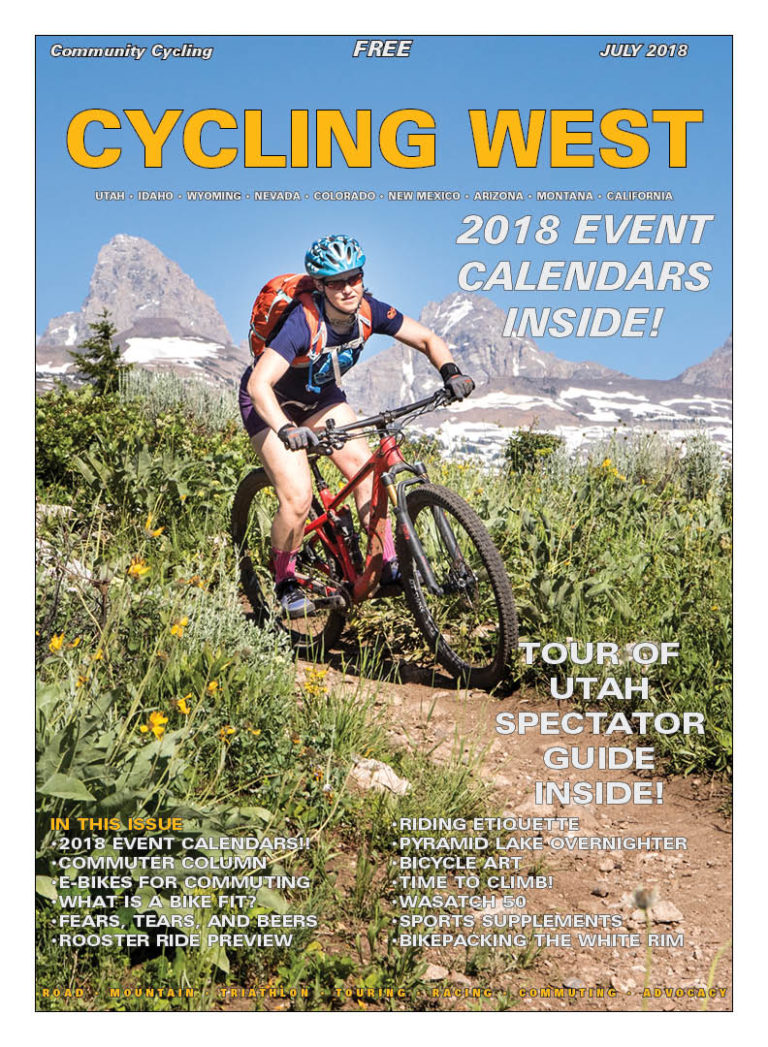
Cycling Utah and Cycling West Magazine’s July 2018 Issue is now available as a free download (8 mb download), Pick up a copy at your favorite Utah, Idaho, Wyoming, Nevada, Montana, W. Colorado, N. Arizona bike shop or other location!
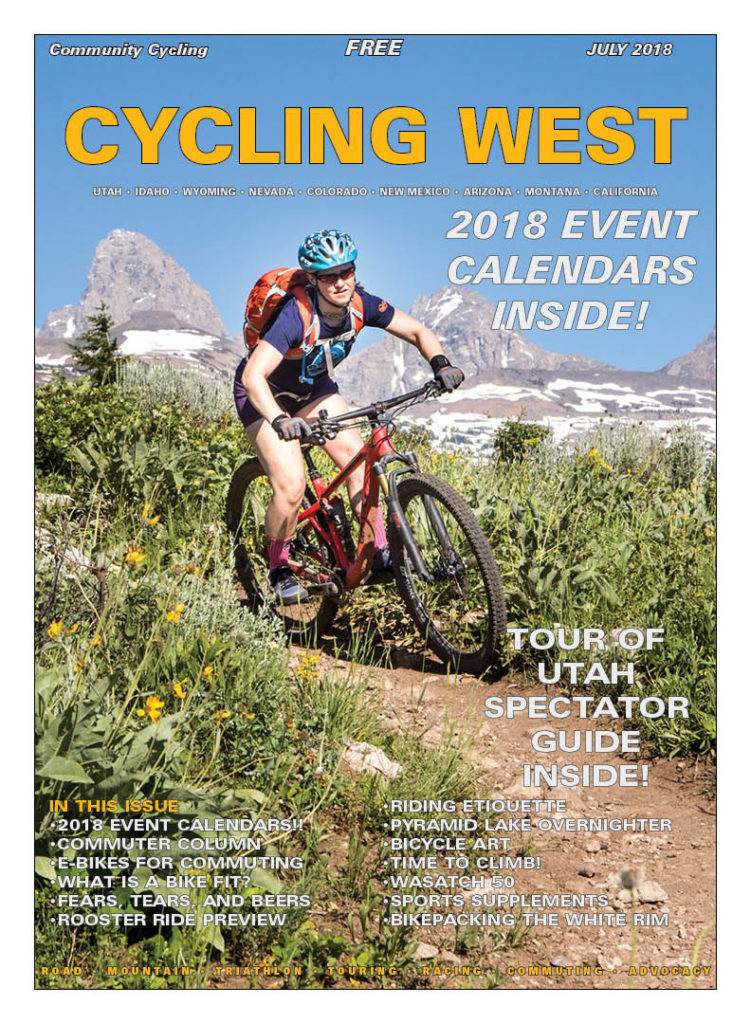
Cycling West July 2018 Cover Photo: Plentiful wildflowers, a fast descent and the eye-popping Teton backdrop make the Mill Creek trail just outside of Grand Targhee a top option for experienced mountain bikers exploring the Idaho side of the Tetons. You can shuttle it, too! Rider: Jenni Curtis Shafer Photo by Photo John, see more at photo-john.net
Contents
Discovering the Trails of St. George, Utah – page – 3
E-Bikes for Commuting, An Interview with Salt Lake E-Bikes – page – 4
It’s Time to Climb! – page – 7
What is a Bike Fit, and is it for me? – page – 8
Farewell To A (Cycling) Friend – page – 10
Grant and Harvey Power Through for Victories at 2018 Wasatch 50 – page – 11
‘Vintage Riders’ – The Bicycle Art of Trenton Higley – page – 12
Volunteers Needed for the Tour of Utah page – 13
Snek Cycling Introduces the Lifeboat Tire Lever page – 13
Become Better on Hills, Read ‘Climb!’ by Selene Yeager – page – 16
Etiquette for Road and Mountain Biking – page – 17
Rooster Ride, A New Road Tour in Central Utah, Showcases Beauty and Little Traffic – page – 18
Bike Utah Seeking Elementary Schools to Participate in Their Youth Bicycle Education and Safety Training Program – page – 19
Fears, Tears, and Beers Enduro Photo Gallery by Photo-John – A Few of Our Favorite Shots! – page – 20
New Bike Friendly Communities: Glenwood Springs, Colorado and Orem, Utah – page – 23
New Paved Trail Planned for Lake Mead, Arizona/Nevada page – 23
Montana’s 12 and 24 Hours of Flathead Features Adaptive and Bicycle Courses – page – 30
Study: Mountain Bikers are More Efficient, Hardier, and Have More Fun than Road Bikers – On the Road – page – 31
Sports Supplements: Buyer Beware? – page – 31
2018 Larry H. Miller Tour of Utah Where to Watch Spectator Guide – page – 32
Bikepacking Canyonlands’ White Rim Trail – page – 36
Backyard Rediscovery – Overnight Ride to Pyramid Lake, Nevada – page – 38
Wyoming’s Bridger Valley Historic Byways Ride – page – 39
Bike rider by the snake river canyon near Astoria Hot Springs south of Jackson Wyoming on hwy89 by Lucid Images
By Wayne Cottrell
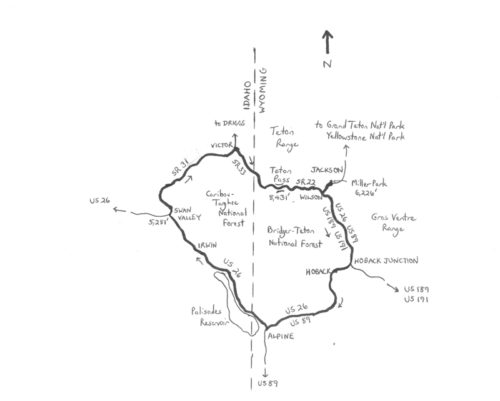
When summer’s heat starts to blanket most of Utah, a great escape is to head north to the milder temperatures of southwestern Wyoming, and southeastern Idaho. The Jackson Hole-Tetons Classic – known locally as “Around the Block” is a 109.2-mile loop through Jackson Hole Valley in Wyoming and Swan Valley in Idaho, and featuring a crossing of Teton Pass along the Idaho-Wyoming border. The entire ride is at over 5,200 feet altitude, with a lofty peak of 8,431 feet (Teton Pass). Be sure to check the weather and highway conditions before venturing out; the summer months are the best time of year for the ride. Old Pass Road to Teton Pass, for example, may not be open for riding until well into May. The main highway over the pass may be closed periodically during the snow seasons for avalanche control.
If ridden in a clockwise direction, then the Jackson Hole-Tetons Classic is net downhill for the first 64 miles, followed by gradual to arduous climbing for the next 33 miles, and concluding with a screaming descent and false flat for the final 12 miles. The low elevation is 5,281 feet in Swan Valley, Idaho, and the peak elevation is 8,431 feet over Teton Pass. This is a long ride, so be sure to dress appropriately and carry provisions with you, and be prepared to refill in one of the several communities through which you will pass along the way.
Start the ride in Miller Park, in the heart of Jackson. This thriving, small town surpassed the 10,000 population mark earlier this decade. Jackson is a popular gateway to the Teton Range and Grand Teton National Park, which are nearby, as well as Yellowstone National Park, which can be entered about 60 miles to the north. Jackson has its own airport; otherwise, it is a 279-mile drive northeastward from Salt Lake City. Alternatively, you can join over 1,500 other cyclists and bike from Logan to Jackson in the annual LoToJa Classic! It is a 206-mile ride that is held every September; the route described here covers a portion of the LoToJa course. Besides being a gateway city, Jackson is known for preserving its historical resources, such as buildings dating from the 19th century which are still found in the Town Square area. Jackson is also known for having the first all-female city council (1920), as well as a nearby ski resort (Jackson Hole) that has one of the steepest drops in North America (4,139 feet). The LoToJa Classic is the longest one-day bike race sanctioned by USA Cycling. The National Museum of Wildlife Art is here, as is the nearby National Elk Refuge. The summer-long Grand Teton Music Festival features near-nightly classical music concerts.
From Miller Park, which is at an elevation of 6,224 feet, head south on Jackson Street. Turn right onto West Broadway and head west. West Broadway is quadruple-signed as U.S. Highways 26, 89, 189 and 191, thereby confirming that Jackson is a major crossroads. Mountains of the Teton Range tower to your right. Cross Flat Creek 2.4 miles into the ride; shortly after the crossing, look to the right for the Paul Merritt Pathway. This paved path runs parallel to the highway for the next 5 miles, offering an alternative to the road. To your left are the mountains of the Gros Ventre Range which are, in turn, part of the Bridger-Teton National Forest. At mile 7.6, the pathway ends and you are back on the road. Cross the Snake River at mile 8.2. Enter the community of Hoback, bearing right at Hoback Junction at mile 13.1. While riding through town, you may experience the aura of “Hoback Nation,” which is a home-grown philosophic spirit. You are heading southwestward once beyond Hoback Junction, now on doubly-signed U.S. Highways 26 and 89 (U.S. 189 and 191 diverged back at the junction). The highway parallels the Snake River along this stretch. Enter denser forestation around mile 17.5; there are numerous pullouts to Bridger-Teton National Forest spots. Leave Teton County, of which Jackson is the county seat, at mile 21.6, and enter Lincoln County. The highway is gradually downhill as you ride adjacent to the course of the Snake River.
U.S. Highways 26 and 89 finally split at mile 35.9; bear right, onto U.S. 26, and enter Alpine (elevation 5,667 feet). This town of population 828 (2010) is a popular spot for snowmobiling, backcountry skiing, and hunting – and cycling, of course. Just to the north of Alpine is Palisades Reservoir, which will be on your left. Also nearby is the Idaho state line, which you cross at mile 38.3. The highway undulates over the next 8 miles, with a couple of climbs. After crossing the Palisades Dam, at mile 49.4, U.S. 26 continues its gradual descent. Enter Palisades at mile 54.3, followed by Irwin at mile 59.8, and then Swan Valley at mile 63.5. Turn right onto State Route (SR) 31, also known as Pine Creek Road, at mile 63.8, and head northeast. This is the low point of the ride (elevation 5,281 feet). Stay right at the split at mile 68.5, and enter Caribou-Targhee National Forest. Although you are on a long, gradual upgrade, the outstanding scenery is distracting. Leave Bonneville County at mile 78.0, now at an elevation of 6,777 feet, and enter Teton County (Idaho, not Wyoming). The highway descends into Teton Valley, entering the city of Victor. The population of Victor has nearly tripled since 2000 (1,928 as of 2010), and the city is now considered to be a suburb of Jackson.
Although, on a bicycle, with about 25 miles to go – including a mountain pass – you may feel as if you are nowhere near Jackson. Cross Main Street (SR 33) at mile 84.8, and then turn right onto North Agate Avenue at the next intersection (elevation 6,226 feet). This road heads south, and then curves to the left, becoming Old Jackson Highway. This is a quiet alternative to SR 33 for the next few miles. Junction with SR 33 at mile 88.8; turn left here and continue heading southeastward. Enter Wyoming at mile 90.4 (elevation 6,715 feet) – you are now on Teton Pass Highway, which is Wyoming’s SR 22, in Wyoming’s Teton County. The climbing starts at a 5% grade, increasing to nearly 9% after passing Coal Creek Meadows at mile 94.1 (elevation 7,243 feet). You finally reach Teton Pass at mile 96.8.
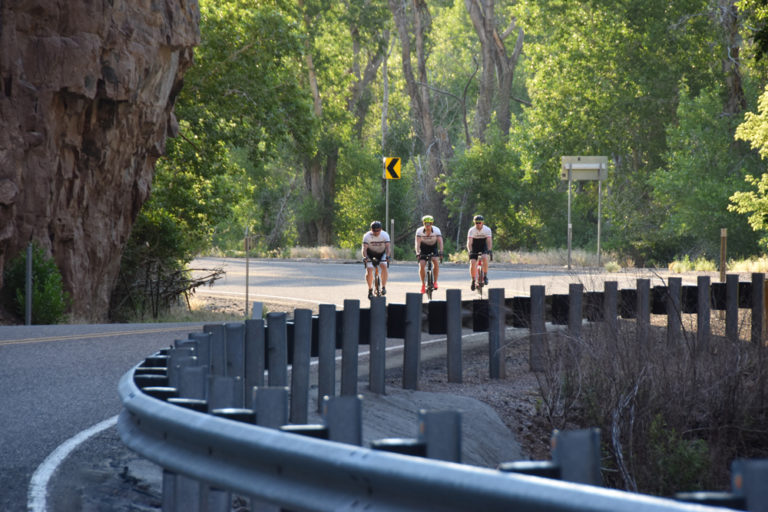
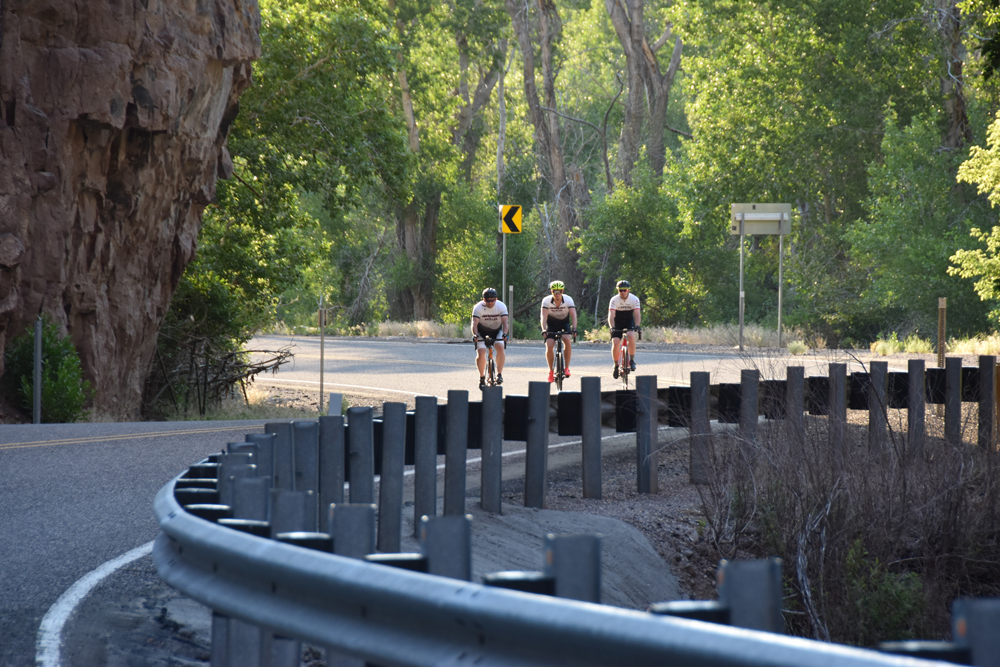
The descent from Teton Pass is rapid, as the highway drops over 2,000 feet at a 9% grade in just 4.5 miles. For an alternative to the highway, Old Pass Road can be used. This is a paved path, not open to motor vehicles, that starts from the crest of Teton Pass (off to the right). Note that the road was being upgraded as of this writing, with a surface that was not as “healthy” as that of SR 22. Also, the road features numerous switchbacks and tight turns. Old Pass Road rejoins SR 22 where the highway grade eases, at mile 101.3. Beyond the base of the pass, SR 22 descends gently into a valley that is bound by Fish Creek on the west, and the Snake River on the east. In the heart of the valley is the community of Wilson, Wyoming (population 1,482 in 2010, elevation 6,148 feet). Wilson acts as a gateway to Teton Village, and as a portal to the finish line of the annual LoToJa Classic. After speeding across the valley, the highway climbs ever so gradually to a junction with U.S 189 and 191. Turn left here, and enter Jackson. Turn left onto Jackson Street to return to Miller Park. Congratulations are in order for completing such an awesome ride!
For more rides, see Road Biking Utah (Falcon Guides), written by avid cyclist Wayne Cottrell. Road Biking Utah features descriptions of 40 road bike rides in Utah. The ride lengths range from 14 to 106 miles, and the book’s coverage is statewide: from Wendover to Vernal, and from Bear Lake to St. George to Bluff. Each ride description features information about the suggested start-finish location, length, mileposts, terrain, traffic conditions and, most importantly, sights. The text is rich in detail about each route, including history, folklore, flora, fauna and, of course, scenery.
Wayne Cottrell is a former Utah resident who conducted extensive research while living here – and even after moving – to develop the content for the book.
Cycling Utah and Cycling West Magazine’s June 2018 Issue is now available as a free download (8 mb download), Pick up a copy at your favorite Utah, Idaho, Wyoming, Nevada, Montana, W. Colorado, N. Arizona bike shop or other location!
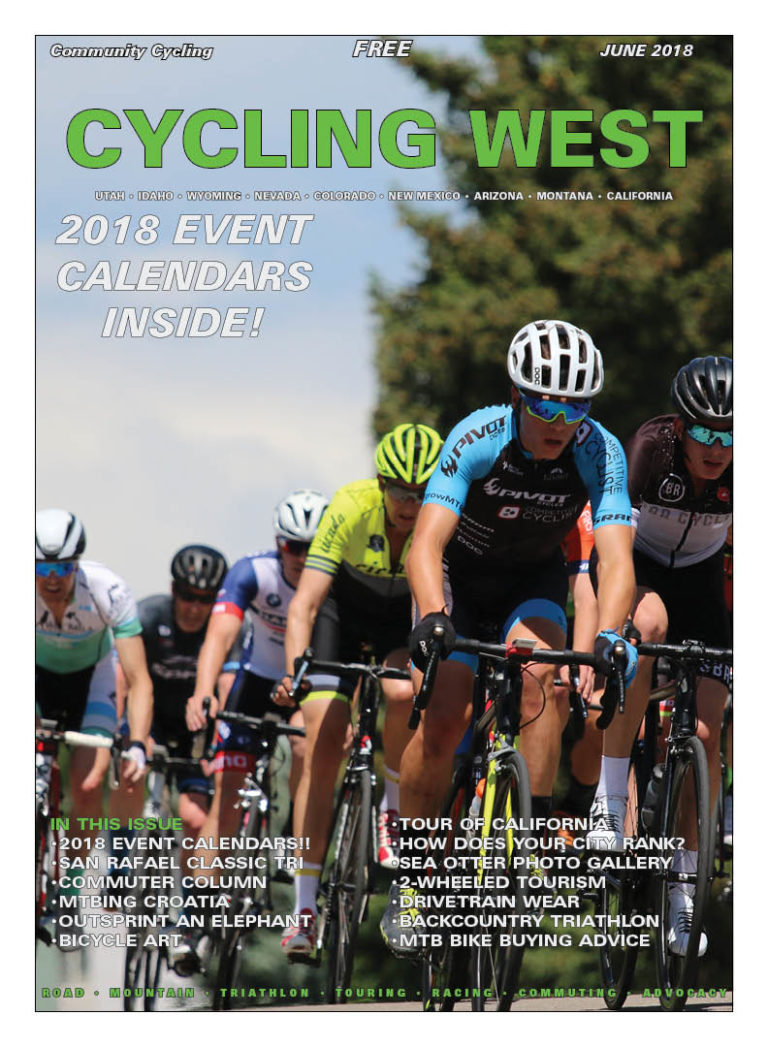
Cycling West June 2018 Cover Photo: The Category 3 field rounds a turn in the Sugarhouse Criterium on May 26, 2018 in Salt Lake City, Utah. Photo by Dave Iltis, see more at gallery.cyclingwest.com
Contents
San Rafael Classic Triathlon Showcases Closed Course, Beautiful Scenery – page – 3
Representative Brad Daw Commutes Through Utah County – page – 4
7th Annual Cache Gran Fondo of Logan, Utah to join the Gran Fondo National Series – page – 6
Two Hoosiers Brings Indiana Pride to Northern Utah – page – 7
How to Outsprint an Elephant – page – 8
5 Things to Consider When Buying Your First Real Mountain Bike – page – 10
The Bicycle Art of Tamia Wardle – page – 12
Mountain Bike Racing from the New World to the Old – A Trip to Croatia – page – 16
How Does Your City Rank for Bicycling? – page – 19
2018 Amgen Tour of California – Changing of the Guard? – page – 20
Tour de Fat Scales Back for 2018 page – 23
Ketchum’s Alden Gulch Trail to be Rebuilt page – 23
Researchers Develop Collision Warning System for Bicycles – page – 23
Electric Bikes May Help Health of People with Type-2 Diabetes – page – 23
New Programs for Cycling For Senior Citizens – page – 23
Wild Horse Men’s Record Smashed, Oh-so-close on Women’s Record – page – 32
Bike Choice For the Wild Horse page – 33
First-Time MTB Racer Goguely and Veteran Holley Win Intermountain Cup’s Three Peaks Classic – page – 33
Journey To The End Of The World – page – 34
Stevenson and Olsen Take Wins in 2018 Sugarhouse Criterium – page – 35
Drivetrain Wear – page – 36
I Did My First Triathlon – page – 37
What the Two-Wheeled Tourist Can Offer Tiny Towns – page – 38
Gold Lida Ride Visits Ghost Towns in West Southwest Nevada – page – 39
Tour of Utah Unveils 536-Mile Race Route with Nine King of the Mountain Climbs
SALT LAKE CITY (June 6, 2018) – True to its nickname as “America’s Toughest Stage Race,” the 2018 Larry H. Miller Tour of Utah will dish out 536 miles of racing and 43,780 feet of elevation gain this summer. Detailed maps and informational videos are now available online for the seven-day, men’s professional cycling stage race on Aug. 6-12.
The Tour of Utah course will offer a total of nine Utah Office of Tourism King of the Mountain (KOM) climbs. It is the fifth time in 14 years that the Tour has included more than 43,000 feet of climbing. The highest climb of the race comes on Stage 1 near the ski resort town of Brian Head at 10,600 feet above sea level. Returning to the Tour are the summits of three legendary climbs — Mount Nebo, Little Cottonwood Canyon and Empire Pass, the latter two classified as Hors Category (HC, or beyond classification). Mount Nebo is the highest mountain in the Wasatch Range. The six-mile ascent of Little Cottonwood Canyon will take riders to the “Queen Stage” finish at Snowbird Resort on Stage 5 and the seven-mile incline across Empire Pass with pitches of more than 20 percent will set up the showdown in Park City for Stage 6 on the final day of racing.
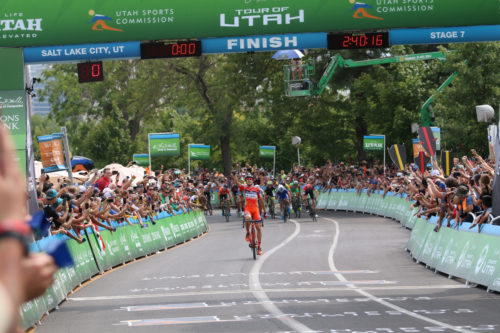
The Tour of Utah will visit Little Cottonwood again in 2018. Stage 6 of the 2017 Tour of Utah. Photo by Dave Iltis, CyclingUtah.com
The Utah Sports Commission, which is a founding partner of the Tour, returns as the presenting sponsor for 13 sprint lines along the course. Stages 1-6 will showcase at least one intermediate sprint location each day, with Farmington having two sprints on Stage 3 and Salt Lake City having three sprints on Stage 4.
Highlights for 2018 Larry H. Miller Tour of Utah Race Route
536 miles/ 863 kilometers
43,780 feet/ 13,344 meters of elevation gain
9 Utah Office of Tourism KOM climbs
13 Utah Sports Commission Sprint lines
First Prologue since 2011
Southern-most location for race start in St. George
Return to Park City for sixth time as overall finish
Start times for Stages 1-6 vary to accommodate live national television on FOX Sports Network (FSN), which will broadcast the final two hours of action each day in the 2-4 p.m. MT time slot. Monday’s Prologue in St. George will take place from 10 a.m.-12:30 p.m., before the heat of the day settles in the southernmost point of the Tour, and will be a tape-delay FSN broadcast. All seven days of racing will be shown live, start to finish, by TourTracker presented by Adobe free of charge on mobile devices and the Tour’s website. More details regarding TourTracker coverage and FSN regional programming will be made available in July.
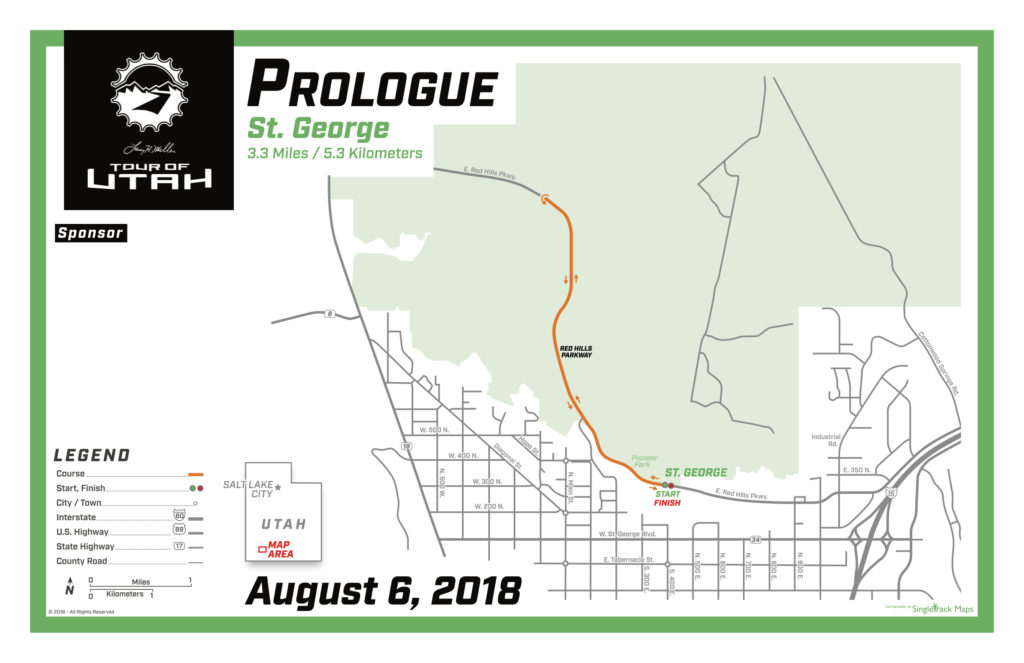
For just the second time since the Tour joined the UCI America Tour in 2011, a Prologue will be held on the opening day of racing on Monday, Aug. 6. The race against the clock will be a fast 3.3 miles (5.3 km) in St. George, the Tour’s inaugural visit to this sports mecca in the southwest corner of Utah. The out-and-back course will take place on Red Hills Parkway, adjacent to Pioneer Park. Just like the name of the road implies, athletes and spectators alike will be treated to inspiring views of the Red Cliffs Desert Reserve. It provides a mellow climb for the first two kilometers, followed by a short downhill to the turnaround. This provides a short climb to begin the return and a rapid, straight downhill track to the finish. The time gaps will be small for the 120-plus riders representing 17 professional teams, but it will set the stage for a great week of racing.
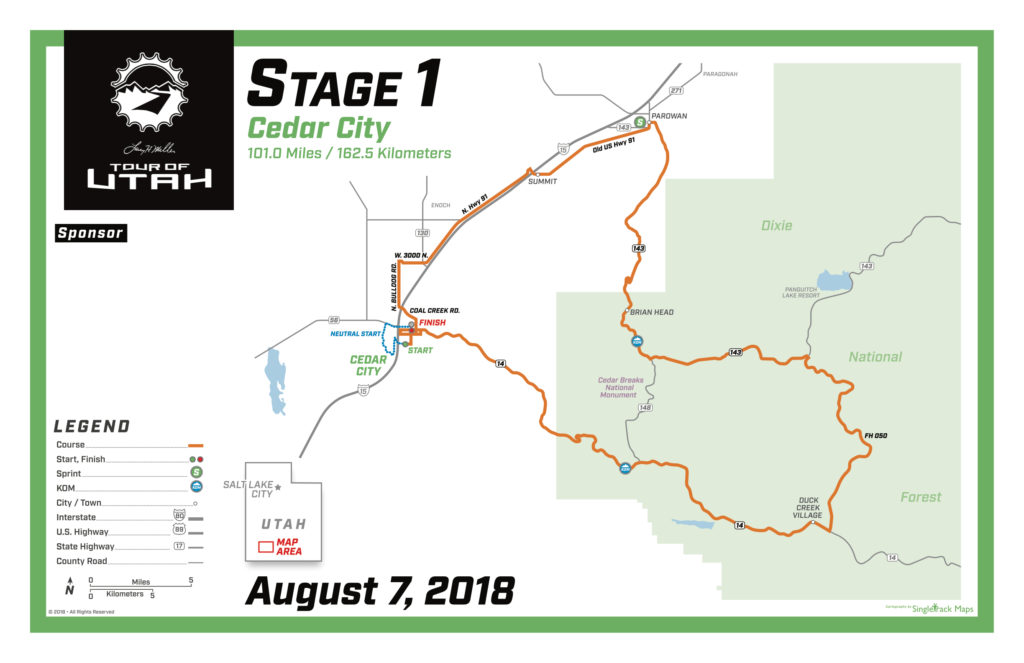
Stage 1 presented by America First Credit Union returns to Cedar City for a fourth time. Cedar City will also serve as race headquarters for overall start festivities, including the Team Presentation on Saturday, Aug. 4, which is free for spectators. Racing takes place on Tuesday, Aug. 7 for the 101-mile (162.5 km) Stage 1 route, which includes 8,950 feet of elevation gain. It also features the highest climb of the week through Cedar Breaks National Monument, topping out at 10,600 feet. The course is similar to the one used in 2016, this year with a new circuit finish in downtown Cedar City. The first Utah Sports Commission Sprint line will be contested in Parowan, then hit a Category 1 climb up Parowan Canyon through Brian Head. This ascent into Cedar Breaks National Monument climbs 4,500 vertical feet in 15 miles, with some sections challenging riders with a 15 percent gradient.
The riders will traverse the Markagunt Plateau and serpentine through the Mammoth Creek lava flows. After turning west in Duck Creek, the riders will face a KOM at Bristlecone, named after the 2,500-year-old Bristlecone pine trees that line the summit.
Then it’s all downhill into the college town of Cedar City. The riders will complete three circuits around Cedar City and the campus of Southern Utah University. A new finish line will be placed in front of the new Southern Utah Museum of Art, a student-centered experiential learning environment that collects, preserves and exhibits the visual arts of southern Utah and surrounding Colorado Plateau. Like the race, the Museum of Art is free for the public to enjoy.
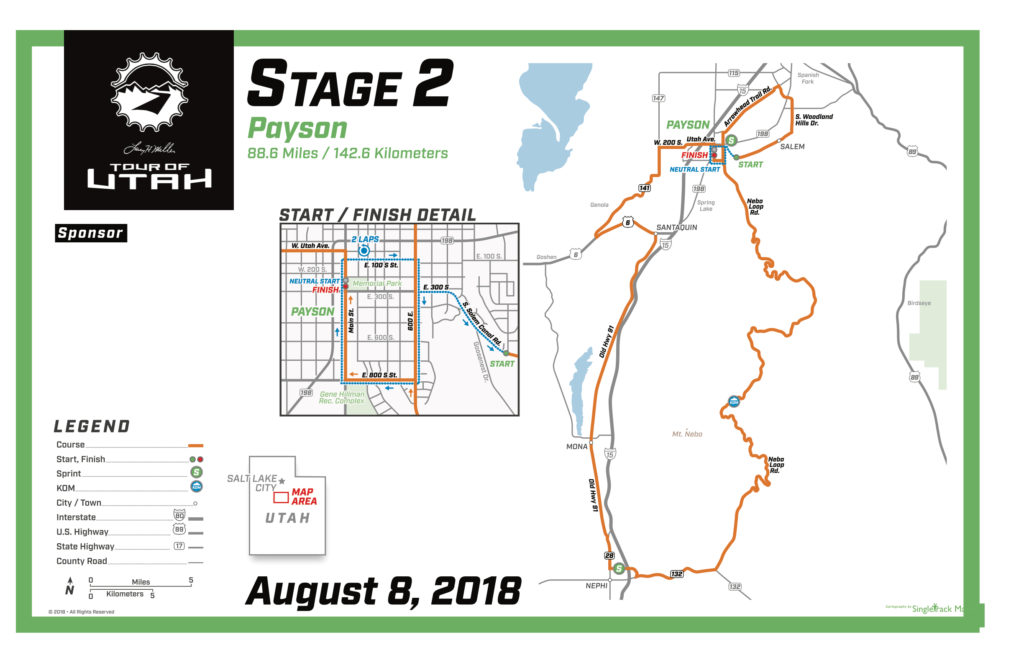
Stage 2 on Wednesday, Aug. 8, returns to Payson City for a third time. The focus of the day will be the towering peak of Mount Nebo, making a seventh appearance in the Tour and last featured in 2016. This year, the 88.6-mile (142.6 km) route will start and finish in Payson City for the first time. After a 12-mile circuit north of town into Utah County, the race will return to Payson for a sprint in front of historic Peteetneet Museum and pass through the start/finish area at Memorial Park.
The route will then travel south through the orchards and lavender fields along Old U.S. Highway 91 for a sprint line in Nephi, then the final push on the Category 1 ascent across Mount Nebo. Sitting at 11,928 feet, Mount Nebo is the southernmost and highest mountain in the Wasatch Range of Utah. The cyclists will summit the roadway at 9,300 feet for the one KOM on the day, then have a twisting 22-mile descent for the finish back into the classic western town of Payson.
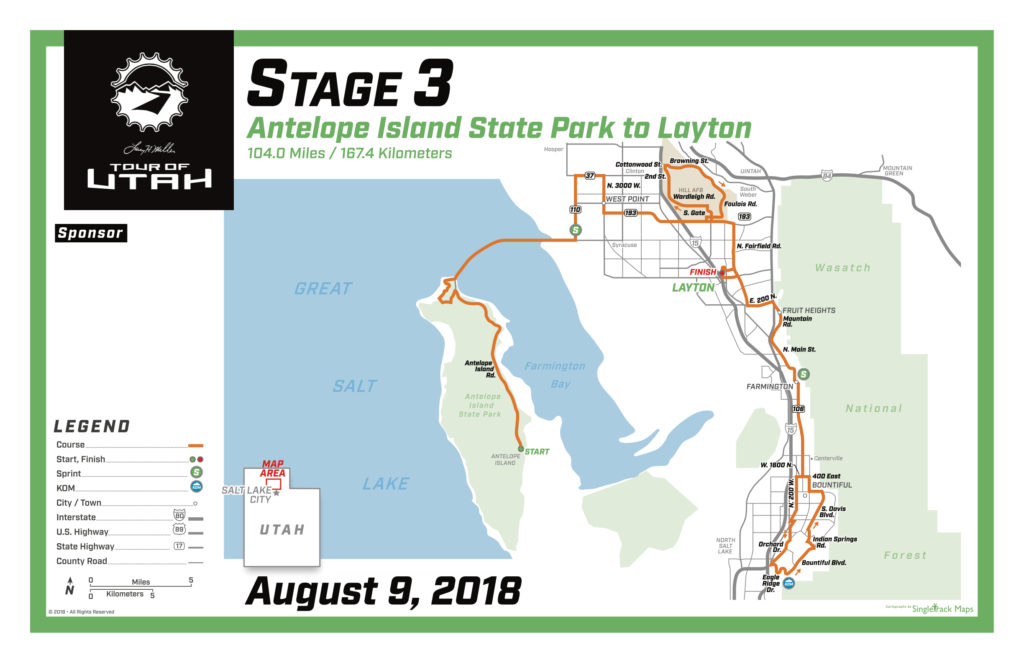
Stage 3presented by America First Credit Union on Thursday, Aug. 9 is the longest stage of the week at 104 miles (167.4 km). A new start on the far end of Antelope Island takes place at the Garr Ranch. It is the third time the Tour has started on the island that boasts more than 600 American Bison and large herds of mule deer. After a wind-swept seven miles over the causeway to cross the Great Salt Lake’s Farmington Bay to the mainland, the race will serpentine through Davis County to the new finish in Layton City.
It is the fourth consecutive year for Davis County to host the Tour, featuring an abundance of turns and a variety road widths that make for a tough and stressful day for the racers. Sprint lines will be contested once in Syracuse and twice in Farmington. One short, steep KOM up the Bountiful Bench could be the launching pad for a late breakaway. On the return stretch from Bountiful to the finish in Layton, the race will pass through Hill Air Force Base for a second year. After three circuits through Layton Commons Park, a stage winner will be crowned on North Wasatch Drive across from the park.
Marco Canola of Nippo-Vini Fantini winning stage 7 of the 2017 Tour of Utah. Photo by Dave Iltis
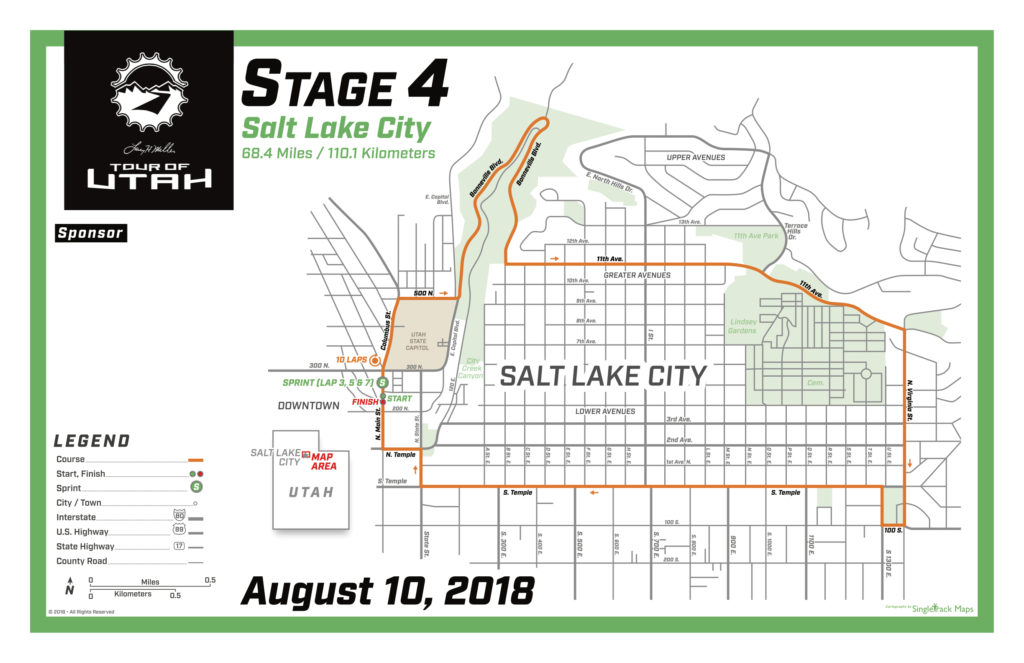
Stage 4 presented by Zions Bank returns to downtown Salt Lake City with a modified course. The start/finish line has moved from Capitol Hill to North Main Street, with an amazing backdrop of the Salt Lake City skyline. The riders will tackle 10 laps of the 6.8-mile downtown course for a total of 68.4 miles (110.1 km) and 5,500 of elevation gain. Utah Sports Commission Sprints will be contested at the start/finish line on laps 3, 5 and 7.
The course will flow north from Main Street through the Marmalade District to the steep ascent of 500 North, a section used for a finish line in 2015. The race will then follow the traditional route through City Creek Canyon and the Avenues neighborhood on 11th Avenue to a descent along Virginia Avenue by the University of Utah. Rounding Reservoir Park, the route returns downtown on South Temple and turns under the Eagle Gate on State Street to twist from North Temple to the uphill finish on North Main Street. It is the 11th year that Salt Lake City has served as a stage host, and a seventh time for a circuit course downtown.
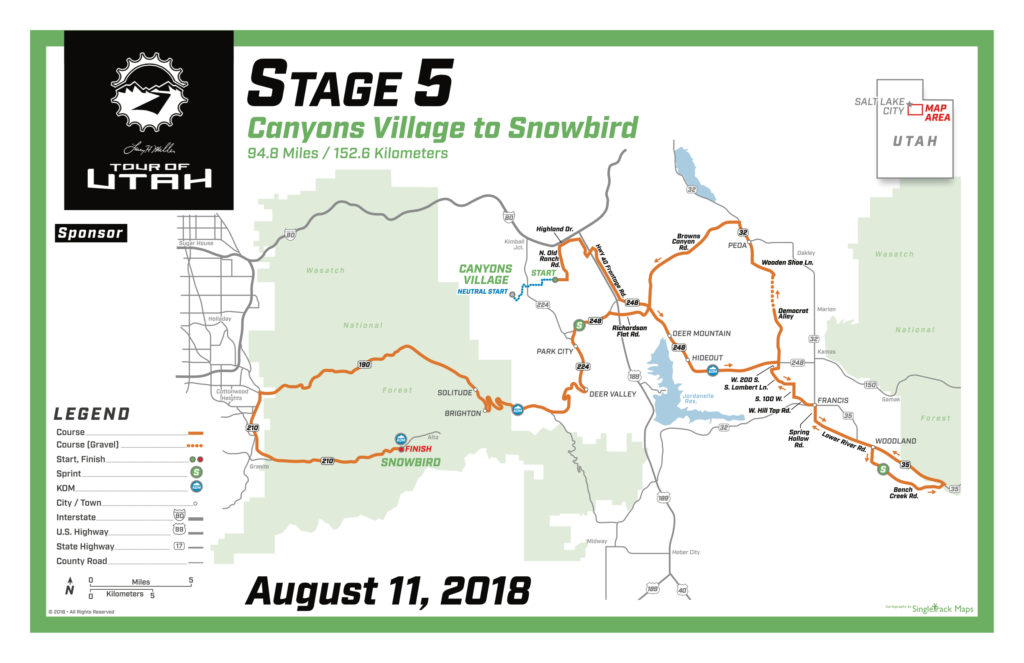
Stage 5 presented by University of Utah Health hails the return of the notorious “Queen Stage,” with 9,975 feet of elevation gain. On Saturday, Aug. 11, Stage 5 will feature 94.8 miles (152.6 km) of racing from a new start at Canyons Village in Park City to the signature finish at Snowbird Resort. In the winter, Snowbird Resort is known for 500 inches of annual snowfall and powder skiing. In the summer, Snowbird Resort is known for the fan frenzy of Tanners Flat along the climb and the shake out of contenders for the Larry H. Miller Group of Companies overall leader jersey at the finish. The race has finished at Snowbird Resort 11 times, and only twice has the winner of the stage worn the winner’s jersey at the end of the week.
The day begins at 7:30 a.m. MT in Canyons Village with The Ultimate Challenge presented by University of Utah Health, a unique cycling event for amateurs to traverse the same demanding mountain course as the pros. This marks the eighth year for this non-competitive, gran fondo-style bicycle ride.
The professional teams take off from Canyons Village at 11:30 a.m. The undulating terrain of Summit County includes an early KOM past Deer Mountain at Jordanelle Reservoir, a sprint at Wolf Creek Ranch, and a two-mile stretch of dirt road on Democrat Alley. The route then goes through Peoa and up Browns Canyon to reach historic Park City for a second sprint line of the day and the ascent of the Category 1 KOM, Guardsman Pass. A blistering 15-mile descent of Big Cottonwood Canyon leads to the Salt Lake Valley below and a short traverse along Wasatch Boulevard. Then it is on to the HC climb up Little Cottonwood Canyon for the signature six-mile battle across gradients of eight to 12 percent to the finish line at Snowbird Resort.
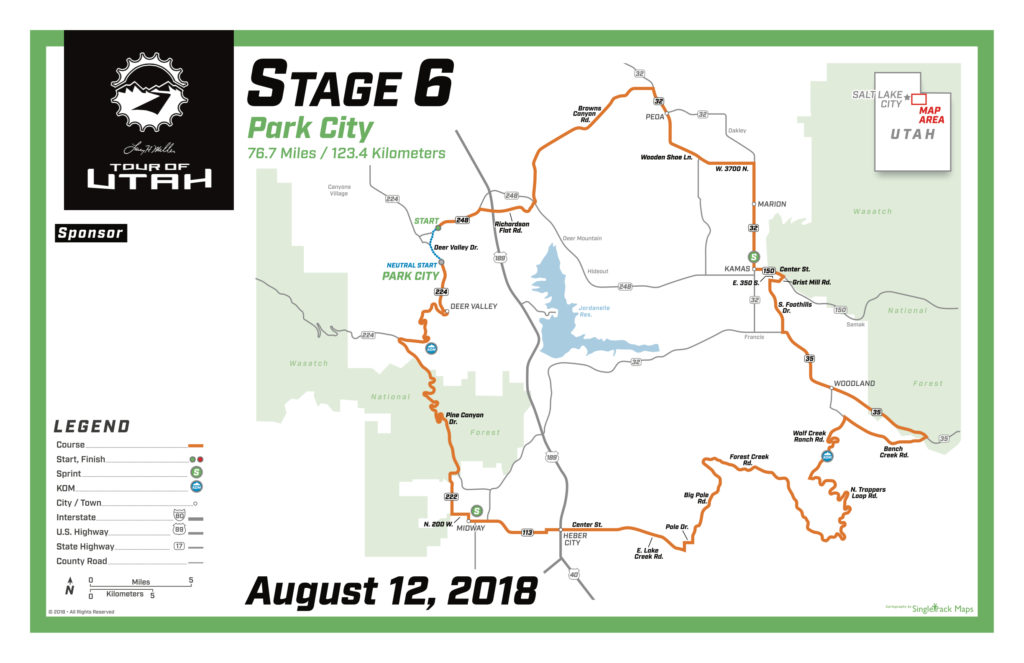
After a one-year hiatus, Stage 6 presented by Utah Sports Commission brings back the overall finish to Park City on Sunday, Aug. 12. Historic Park City entertains the Tour for a ninth time, and a sixth time for the overall race finish. The route will pass down Browns Canyon and encounter a Sprint line in the town of Kamas before tackling a short Category 3 KOM in the private community of Wolf Creek Ranch. A technical descent into Wasatch County will allow the riders to regroup through Heber City before the final sprint line in Midway. From there, riders will jockey for position at the bottom of Pine Canyon Road for the HC climb of Empire Pass. While the road conditions have improved with new pavement since it was last used in 2016, riders continue to battle road pitches of 10 to 20 percent. The race doesn’t end at the top of Empire Pass. Spectators are encouraged to arrive early and get a viewing spot on Upper Main Street in Park City for the exciting finish.
Stages
Start – Finish Locations
Times*
Utah Office of Tourism King of the Mountain Climbs
Utah Sports Commission Sprint Lines
Mileage and Elevation Gain
Monday, Aug. 6
Prologue
St. George
10 am to 12:30 pm
0
0
3.3 miles/ 5.3 km
305 feet/ 93 m
Tuesday, Aug. 7
Stage 1 presented by America First Credit Union
Cedar City
10:50 am to 3:45 pm
– Cedar Breaks
– Bristlecone
– Parowan Canyon
101 miles/ 162.5 km
8,950 feet/ 2728 m
Wednesday, Aug. 8
Stage 2
Payson City
11:30 am to 3:45 pm
– Mount Nebo
– Payson
– Nephi
88.6 miles/ 142.6 km
6,750 feet / 2057.4 m
Thursday, Aug. 9
Stage 3 presented by America First Credit Union
Antelope Island to Layton City
11:25 am to 3:45 pm
– Bountiful Bench
– Syracuse
– Farmington (two times)
104 miles/ 167.4 km
4,350 feet/ 1325.9 m
Friday, Aug. 10
Stage 4 presented by Zions Bank
Salt Lake City
12:40 pm to 3:45 pm
0
– Main Street in Salt Lake City (three times)
68.4 miles/ 110.1 km
5,500 feet/ 1676.4 m
Saturday, Aug. 11
Stage 5 presented by University of Utah Health
Canyons Village to Snowbird Resort
11:30 am to 3:45 pm
– Jordanelle Reservoir
– Guardsman Pass
– Little Cottonwood Canyon
– Wolf Creek Ranch
– Park City
94.8 miles/ 152.6 km
9,975 feet/ 3040.4 m
Sunday, Aug. 12
Stage 6 presented by Utah Sports Commission
Park City
12:15 pm to 3:45 pm
– Wolf Creek Ranch
– Empire Pass
– Kamas
– Midway
76.7 miles/ 123.4 km
7,950 feet/ 2423.2 m
*note: all times subject to change and are Mountain Time
note: neutral miles not calculated as part of race mileage
9 KOMs
13 Sprints
536.8 miles/ 863.9 kilometers
43,780 feet/ 13,344.15 meters
The Larry H. Miller Tour of Utah is free to all spectators, making professional cycling one of the most unique professional sports in the world today. The Tour of Utah remains a 2.HC-rated stage race on the UCI America Tour, making it one of the premier events for professional cycling teams in North America. It is also one of the prominent road cycling events that is also part of USA Cycling’s Pro Road Tour.
Registration for The Ultimate Challenge presented by University of Utah Health is available online for $140, with a team discount offered for groups of eight or more. More information about the Larry H. Miller Tour of Utah and The Ultimate Challenge can be found by visiting www.tourofutah.com, as well as social channels Facebook (tourofutah), Twitter (tourofutah), Instagram (thetourofutah) and YouTube (Tour of Utah).
Route Map of the prologue of the 2018 Tour of Utah.Route Map of Stage 1 of the 2018 Tour of Utah.Route Map of Stage 2 of the 2018 Tour of Utah.Route Map of Stage 3 of the 2018 Tour of Utah.Route Map of Stage 4 of the 2018 Tour of Utah.Route Map of Stage 5 of the 2018 Tour of Utah.Route Map of Stage 6 of the 2018 Tour of Utah.
SALT LAKE CITY (May 15, 2018) – Individuals and groups interested in supporting the Larry H. Miller Tour of Utah professional stage race are invited to volunteer for one or more days at this summer’s event, Aug. 6-12. Applications for a variety of volunteer positions are now available online, beginning today, using the Tour of Utah website at www.tourofutah.com/experience/2018volunteers.
Hundreds of people are encouraged to donate time and talent to fill more than 1,200 shifts for the weeklong international cycling event. Each Local Organizing Committee (LOC), which is hosting a stage start or finish at the Tour of Utah, will manage assignments and provide training. Cedar City will host pre-race activities on Aug. 4-5, as well as Stage One on Aug. 7. Racing will begin with a Prologue on Aug. 6 in St. George. Other host venues which will require volunteer support are Payson City (Aug. 8); Antelope Island State Park and Layton City (Aug. 9); Salt Lake City (Aug. 10); Canyons Village and Snowbird Resort (Aug. 11), and Park City (Aug. 12).
Individuals can request a specific assignment for one or multiple shifts. Group assignments for families, corporations, clubs and civic organizations are encouraged to inspire teamwork and support the local community. Each volunteer receives a commemorative Tour of Utah T-shirt, hat, sunglasses, and sun screen products. A box lunch will also be provided daily. The recommended age for volunteers is 18 and older. Applicants must sign a waiver, or have a signature provided by an adult or legal guardian if the applicant is 17 years of age or younger.
General registration will remain open through the end of July. A “Frequently Asked Questions” section is provided on the website to provide descriptions of specific positions, opportunities for groups and more information. Individuals interested in working as traveling course marshals for all seven days of race week should send a request via email to [email protected].
The Tour of Utah remains a 2.HC-rated stage race on the UCI America Tour, making it one of the premier events for professional cycling teams in North America. It is also one of the prominent road cycling events that is also part of USA Cycling’s Pro Road Tour. The event is free to all spectators, making professional cycling one of the most unique professional sports in the world today.
Heber City, Utah (June 2, 2018)—On a perfect morning with the late spring foliage blanketing Heber Valley and the majestic Mt. Timpanogos looking on, Alex Grant (Cannondale/Gear Rush) and Caedran Harvey (Fitzgerald’s Bicycling) powered through more than 40 miles and 3,500’ of gain for comfortable victories in the elite men’s and elite women’s categories respectively of the 2018 Wasatch 50 MTB race.
Jen Hanks flies down a descent in the 2018 Intermountain Cup with Timpanogos in the background. Photo by Nate Gibby
With more than 150 riders up for the challenge of the Intermountain Cup’s lone endurance race in its MTB race series, the course featured a 21-mile loop with more than 1,700’ of elevation gain per lap.
In the elite men’s category, a pack of riders competed throughout the first lap, with less than 25 seconds separating the top three. However, on the second lap, Grant created separation from Drew Free (KUHL/ Pivot Cycles/ Go-Ride) and Sam Sweetser to cruise to the win by almost six minutes.
On the elite women’s side Harvey, in only her second season of competitive MTB racing was able to create separation on the first climb and continued adding from there. With a plus three-minute lead after the first lap, she added to her lead for the second and final lap, beating out K.C. Holley (Kuhl Cycling) and Ami Stuart by more than eight minutes.
“I went off the line pretty fast and there was no one with me,” said Harvey. “That [first] climb suited me and I knew that that climb suited me, so that if I could make a dent in, like, a lead, it would be good for the second lap and for the decent. I had never ridden the course before, so I took the descent pretty conservatively and to make as much time.”
The Intermountain Cup returns to the X-country format with its next race at North Fork, near Liberty, Utah on July 7. The course features an amazing mountain backdrop on a seven-mile course with nearly 1,300’ of gain per lap. More information about the North Fork race and any other upcoming races is available at http://intermountaincup.com.
About the Intermountain Cup Mountain Bike Racing Series
Founded in 1991, the Intermountain Cup consists of X-country and endurance MTB races throughout Utah. With six X-country races of approximately 25 miles and one endurance race of approximately 50 miles, the series covers some of the most pristine and difficult rides in the state. With categories for kids and youth to the highly competitive elite segments, Intermountain Cup offers a competitive MTB race for every level of rider.
Alex Grant on his way to the win in the 2018 Wasatch 50, part of the Intermountain Cup. Photo by Nate GibbyCaedran Harvey won the pro women’s division in the 2018 Wasatch 50. This is only her second year of racing. Photo by Nate Gibby
By AJ Turner — Just over a year ago, in 2017, Ryan Kiel took a chance and pursued a life-long dream. With over a decade working throughout the bike industry, he set out to open his own bike shop – aptly named after his home state. While many might ask, “What is a Hoosier?” Kiel simply states, “It’s not only a tribute to Indiana, it’s synonymous, for me, with hard work and honesty”.
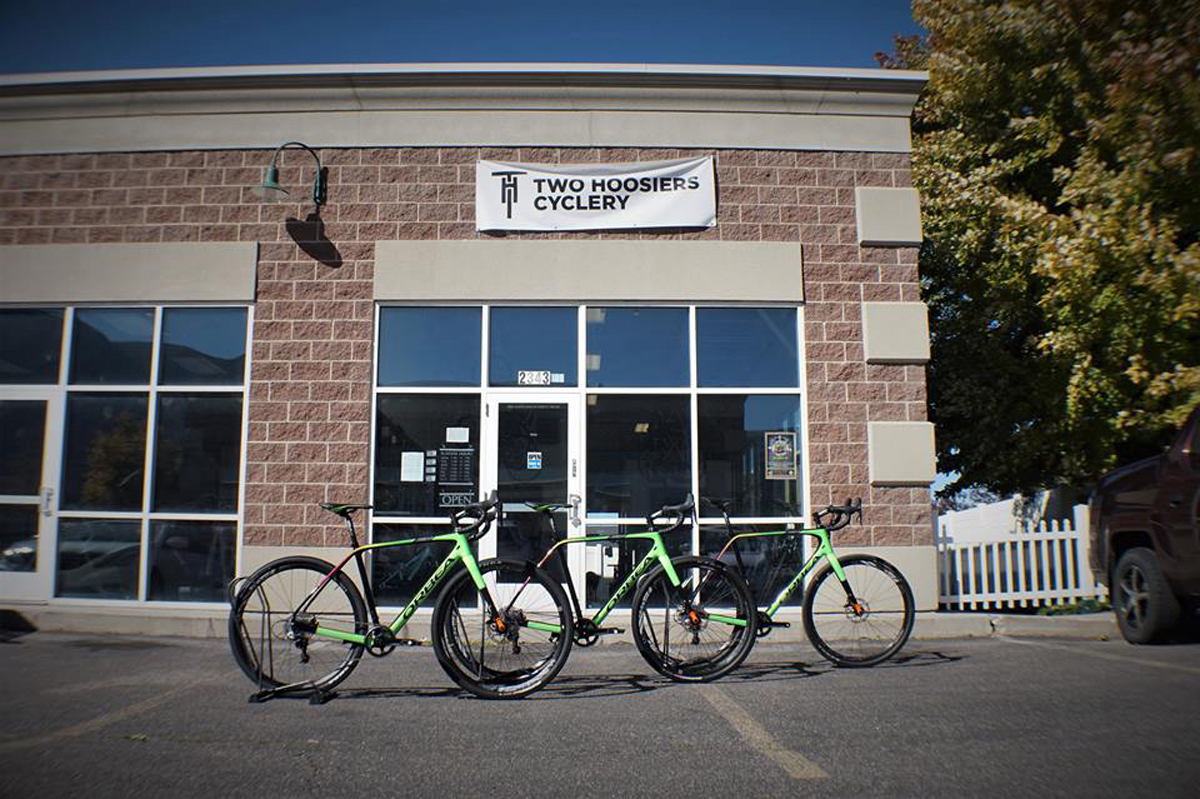
Two Hoosiers Cyclery opened in 2017 in North Ogden, Utah. Photo by Ryan Kiel
With the help of his friends and family, Kiel has just celebrated a successful first year in business. Bringing high-quality service and bikes to the growing North Ogden area, Kiel also plans to be actively involved with the community – on many levels. From supporting local events, to helping out with the local high-school mountain bike teams, Two Hoosiers Cyclery is making sure it gives back to the community that helps support its business.
When asked more, Kiel comments, “High school mountain biking is awesome. We employ high school mountain bikers, and their excitement is contagious. My brother and I got our start in mountain biking in high school too, and bikes have been a major part of our lives ever since. We would not be where we are today without them. We offer quite a few NICA programs because of this.”
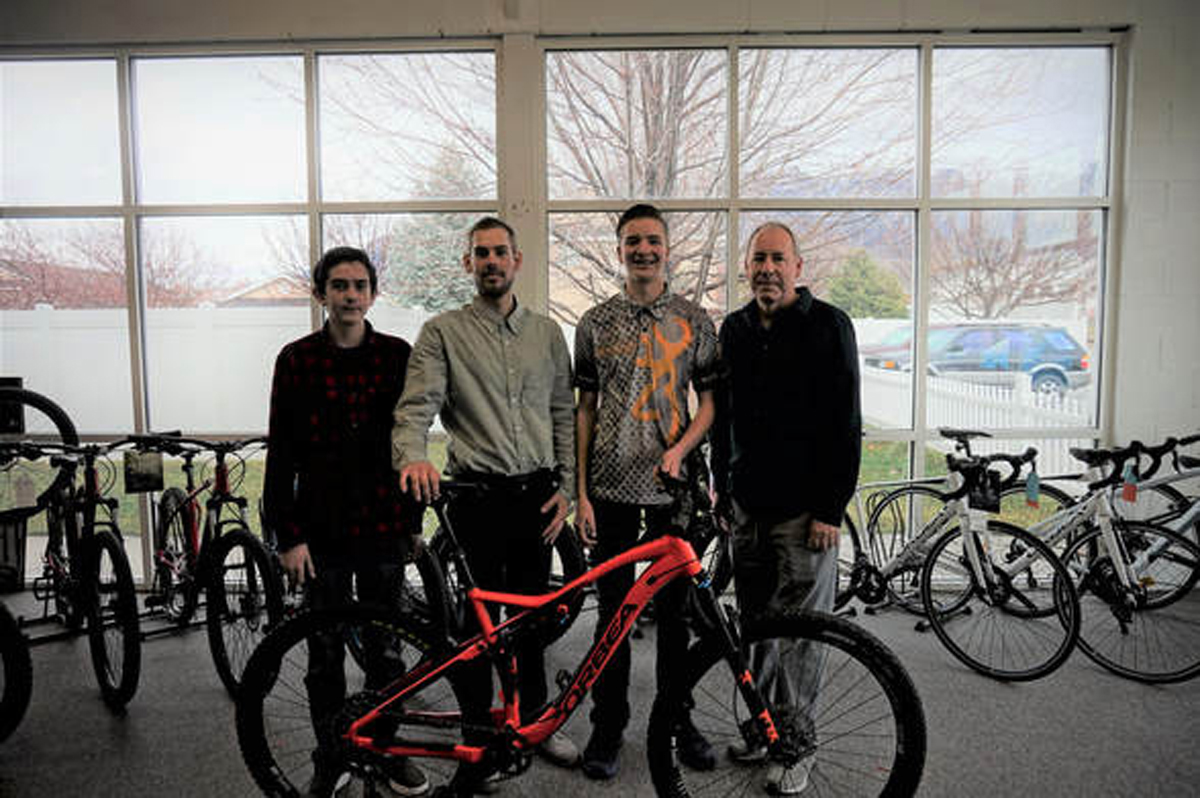
The staff at Two Hoosiers Cyclery in North Ogden, Utah. Photo by Ryan Kiel
Along with part and clothing offerings for nearly every segment of cycling, Two Hoosiers Cyclery also has an extensive women’s cycling section. In addition to the wide variety of bikes, apparel, and parts available – Two Hoosiers Cyclery also stands behind each of their bike sales with their ‘Lifetime Service Plan’. Purchase a new bike from the shop, and you are guaranteed free service for the lifetime of the bike and your ownership. Kiel mentions, “We’re excited about new-bike-day for each and every one of our customers. We think it’s only fair we see the relationship through, well after the sale, and we can’t wait to hear about all of your rides.”
When visiting the shop, it’s hard not get the family vibe. Kiel’s own father helps and works at the shop, while many of the Kiel’s friends and riding partners stop by to pick up a few parts, or just chat about a recent ride.
Feel free to swing by the shop, and keep up to date with their activities, group rides, and sales at www.twohoosierscyclery.com
Shop Name: Two Hoosiers Cyclery
Shop Owner: Ryan Kiel
Address: 2343 N Washington Blvd, North Ogden, UT 84414
Phone: 385-238-4973
Website: twohoosierscyclery.com
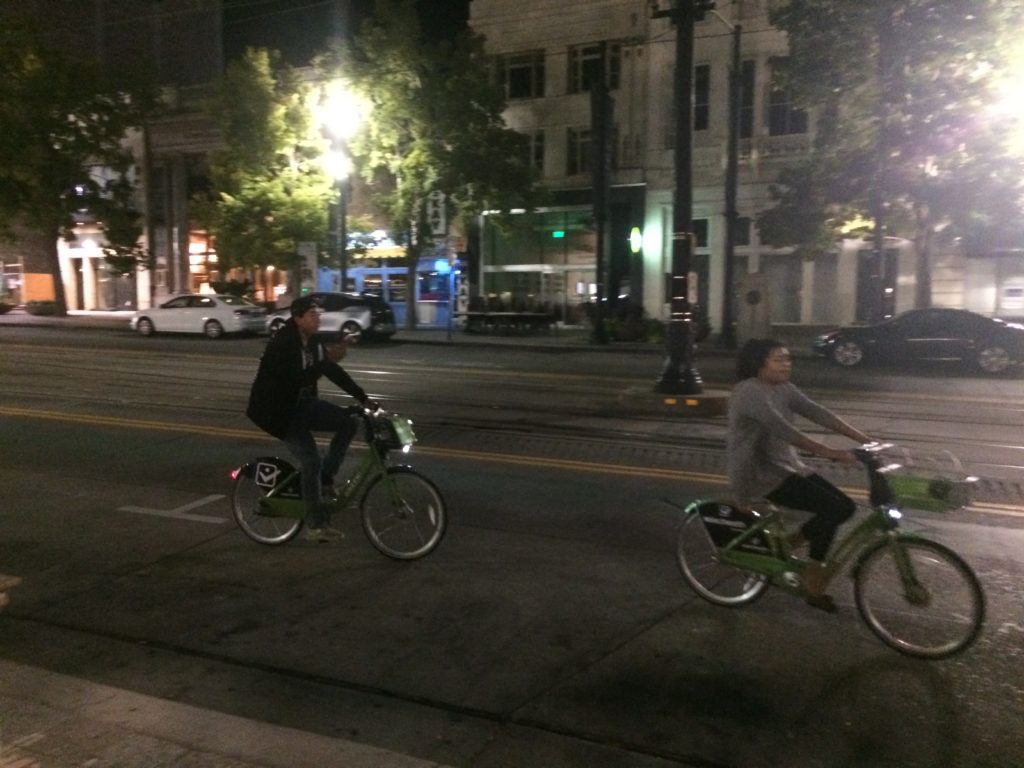
GreenBike bikeshare in Salt Lake City is a great way to get around town. Photo by Dave Iltis
SALT LAKE CITY, UT (June 23, 2018) — GREENbike, Salt Lake City’s non-profit bike share has surpassed 500,000 rides. Those rides have prevented 3.4 million pounds of CO2 from entering the air, removed 3.8 million vehicle miles from local roads, while burning 55 million calories in the process. To celebrate this milestone, GREENbike and its title sponsor SelectHealth are offering free rides to the public on Saturday, June 23. This Saturday, go to any GREENbike station, purchase a 24-hour pass using the promo code “2018” and ride for free!
“It’s been so exciting to see every bike used every day. And none of this would’ve been possible without the support of SelectHealth.” said GREENbike executive director, Ben Bolte. “I can’t think of a better way to celebrate half a million rides than to get some new riders. So this Saturday, folks familiar or unfamiliar with the program can ride for free!”
GREENbike attributes its high ridership to their annual users. GREENbike’s annual users receive an RFID card that allows them unlimited 1-hour rides for 365 days. They utilize the system to connect from downtown rail stops and apartments to major employment centers and commerce destinations. Nearly 70% of all GREENbike’s rides are taken by their annual users that utilize GREENbike during commuter hours.
“GREENbike is a fun and versatile way to exercise and enjoy our great city,” said SelectHealth Public Relations Manager, Greg Reid. “It complements our mission of helping people live the healthiest life possible”
By Charles Pekow — Why not encourage senior citizens to ride bicycles? The exercise can help them and it may be safer than driving autos, especially as they age and lose their driving skills may diminish. The Federal Government is taking some steps to encourage transportation safety for the older set – and the efforts will encourage bicycling and related safety to some extent.
The National Highway Traffic Safety Administration (NHTSA) plans to expand an electronic Clearinghouse for Older Road User Safety (ChORUS). State governments and other planners would be able to access the database for information and ideas to cope with issues surrounding older bicyclists and other road users.
The Roadway Safety Foundation currently operates ChORUS (roadsforseniors.org) but NHTSA wants to hire a private sector organization to expand it and get more people to use it, including separate sections for policy professionals and families of drivers aged 60-80. The contractor also should work on getting the issue into the media, especially those targeted to seniors and drivers. See goo.gl/ut5vUN.
NHTSA is also looking at hiring a small business to develop a course called Older Driver Safety for Continuing Education Health Care Professionals. “While driving is the most common form of transportation for adults, driving is not always the safest option as adult’s progress through the aging process-not necessarily correlated to age, but correlated to multiple emotional, physical or cognitive factors,” NHTSA explains in a solicitation. Some might be better off biking to some destinations. And health care providers should help people decide how to get around, NHTSA asserts. Professionals who take the course should get credit for it. See goo.gl/K5XGfd.
Finally, NHTSA is currently considering bids for a contract to develop and distribute traffic safety banners – at the U.S. Department of Transportation’s own headquarters to remind its own employees – and other passersby – of matters such as bicycle safety.
Speaking of safety for seniors’ transportation, the University of California Berkeley SafeTREC came out with a report called Safe Routes for Older Adults, in which it suggests that policies could and should encourage seniors to bike and walk more than drive, especially with the population of seniors growing. See https://safetrec.berkeley.edu/sites/default/files/srfoa_042518_final.pdf.
By Chris Magerl — With a gravel bike, a MTB tire on the front, road bike gearing, and a clearer understanding of what she was getting into. Breanne Nalder was going for the course record at The Wild Horse 2018.
But it is a hard 76 miles in the Cedar Mountain Wilderness, and Nalder came up just a bit short. Her time of 5:00:55 is 3:02 off the time set in 2016 by Meghan Sheridan. Sheridan, who finished in 5:03:24 this year, is still the only woman to go under five hours in the four years of The Wild Horse. She was gunning for her record time, and things were going pretty well, until her front derailleur slipped. That kept her chain locked in the big ring, with the derailleur striking the crankarm with every rotation, for more than 40 miles.
Meghan Sheridan cresting Hastings Pass. Sheridan would go on to finish second, behind Breanne Nalder. Photo by Pete Vordenberg
“As we got to the second QOM I realized it was worse than I thought and I just needed to try and finish the race,” Sheridan said. “I had to walk the steep parts of the rest of the climbs because I couldn’t get into the small chain ring. I was cramping from riding in such a hard gear the whole race and I couldn’t spin. The bike continued to sound like a trash compactor. Breanne and Amy (Dunleavy) passed me on Rydalch Pass at a very low point in my bike issues.”
Sheridan would pass Dunleavy and catch on to Nalder, but some punchy hills after Aid Station 3 were too much for the big ring, and Nalder created some space.
“The start was fast and bumpy, but super fun,” said Nalder. “From there it was a lot of leap frogging groups and finding my rhythm. I was, of course, saving my matches for the QOMs. Both climbs felt great and I was able to beat my own times by almost 2 minutes to secure those segments.”
Nalder’s race report? “Such a fun day out there with so many amazing riders and friends, a great after party, incredible raffle and prizes, enough watermelon to fill my entire belly, and maybe a brew with my buds.”
For the two riders topping the list of the men’s results, this was the first time riding The Wild Horse. Both crossed the line faster than the previous record.
“This was my first Wild Horse race, and first time riding in the Cedars,” said men’s winner Mark Currie. “I’d heard plenty of people talk about how relentless the course is, so I knew we were in for a good hard day!”
Thomas Cooke was also a ride novice. “Although this was my first Wild Horse, it had always been on my radar as a ride I wanted to do. I would say it delivered on my expectations of being bumpy, sandy, windy, and at times lonely, which means it was a perfect gravel experience! The views on the backside were pretty spectacular, and I had good company in my riding partner, Mark Currie, as we made our way around the Cedar Mountains.”
Riders in The Wild Horse nearing the top of Hastings Pass. Photo by Pete Vordenberg
Currie provided a replay of the day. “As soon as we hit the first climb about 7 miles in, Thomas Cooke and myself found our way to the front and gradually began to push the pace. Thomas set a blistering pace up the first punchy climb, and I just tried to match it the best I could. This effort distanced us slightly from a large chase group behind us, and over the top of Hastings Pass, Thomas had about a 45 second lead on me. I was able to make this gap up on the descent, and immediately got on the power again as soon as we hit the flats on the west side of the course.”
“Thomas and I would ride together, off the front of the race until mile 63. This included Rydalch pass, where again, Thomas was able to pull away from me slightly. I kept it consistent, caught him on the descent and immediately put the power down again as soon as we were reconnected.”
There was one last monster lurking. A short, but cruelly steep, climb after a small muddy section.
“At mile 63, we hit the last climb of the course,” Currie said. “True to form, Thomas got a gap on me again as we began the slightly wet and muddy climb. I took a drink of water from my Camelbak, realized that I was totally out of fluids and thought ‘Well, it’s do or die now!’ At this moment, I ramped up my effort pretty significantly, caught Thomas and was able to attack over the top of the climb to create a gap between us. At this point, I was 100% committed to either winning the race or absolutely exploding myself trying to. As it turns out, the attack would stick and I was able to hammer it home solo for the win and unbeknownst to me, a course record. Stoke level very high!”
Currie crossed the line in 4:18:15, taking ten minutes off the record.
Cooke felt that climb. “As confident as I was on the climbs, the last climb at about mile 63 was where the lights went out for me,” Cooke said. “I went from having a small lead that I thought I could stretch out to the finish to getting passed by Mark’s steady pace all the way to the top, and then watching him recede into the horizon while it seemed I was going backwards. The last 3 miles for me seemed like a bad dream as I hemorrhaged time and motivation and the only thing that kept me going was the old mantra of ‘The slower you go, the longer it takes.’ ”
The Wild Horse benefits the NICA Utah League high school MTB Scholarship Fund, and the aid station volunteers are all Utah League teams. Over the past four years, The Wild Horse has contributed more than $8,000 to the Utah League Scholarship Fund and Utah League teams. Currie met the TrueNorth Wealth Challenge by setting a new course record, earning an additional $250 for the Scholarship Fund.
Little Wild Horse
The Little Wild Horse, at 31 miles, offers an alternative for those not excited about the 76 miles of The Wild Horse. Jennifer Cherland owns this event on the women’s side. She was the first woman to cross the finish line in 2016, 2017 and again in 2018. At 2:09:34, she was about seven minutes faster than her two previous finishes. She is also the fastest woman in the four years of the Little Wild Horse.
Aaron Phillips crossed the line first in the men’s side of the Little Wild Horse, arriving just as the taco truck pulled into the parking lot. Great timing! Phillips rode the big loop the first two years, and has cranked out the Little Wild Horse for the past two years.
Phillips’ MTB tires helped him churn through three short, steep, very sandy hills at about mile 8. “I rather suddenly found myself alone, rolling through the beautiful, stark landscape, trying to admire the zen-like calm of this special place while staying out in front,” said Phillips. “A few miles later, as my eyes panned across the landscape, I saw a herd of wild horses.”
Riding solo off the front, Phillips still had a carrot dangling in front of him.
“I knew Adam Brown had set a blistering KOM record in the inaugural run of this race, and since I found myself alone with a decent lead on a hard-chasing Aaron Lael, I resolved to pin it on this segment,” Phillips said. “I found out when I uploaded my ride that I missed his record by a mere ten seconds. D’oh! Isn’t it always like that? You sit at home after a ride, going through it in your head, and thinking ‘I could have gone harder. I could have hit that hill with just a bit more power.’ Oh, well.”
The Little Wild Horse saw more finishers for both men and women than in any previous year. There were more families giving it a go, including 12-year-old Thor Yount completing the loop with his father, Michael Yount, a veteran of the big loop. Thirteen-year-old Sophie Penner was the youngest girl to finish the Little Wild Horse. There were several couples riding at a more relaxed pace, and extended (and soon-to-be) families enjoying the outing together.
For Wild Horse results, see the results section in this issue.



 The descent from Teton Pass is rapid, as the highway drops over 2,000 feet at a 9% grade in just 4.5 miles. For an alternative to the highway, Old Pass Road can be used. This is a paved path, not open to motor vehicles, that starts from the crest of Teton Pass (off to the right). Note that the road was being upgraded as of this writing, with a surface that was not as “healthy” as that of SR 22. Also, the road features numerous switchbacks and tight turns. Old Pass Road rejoins SR 22 where the highway grade eases, at mile 101.3. Beyond the base of the pass, SR 22 descends gently into a valley that is bound by Fish Creek on the west, and the Snake River on the east. In the heart of the valley is the community of Wilson, Wyoming (population 1,482 in 2010, elevation 6,148 feet). Wilson acts as a gateway to Teton Village, and as a portal to the finish line of the annual LoToJa Classic. After speeding across the valley, the highway climbs ever so gradually to a junction with U.S 189 and 191. Turn left here, and enter Jackson. Turn left onto Jackson Street to return to Miller Park. Congratulations are in order for completing such an awesome ride!