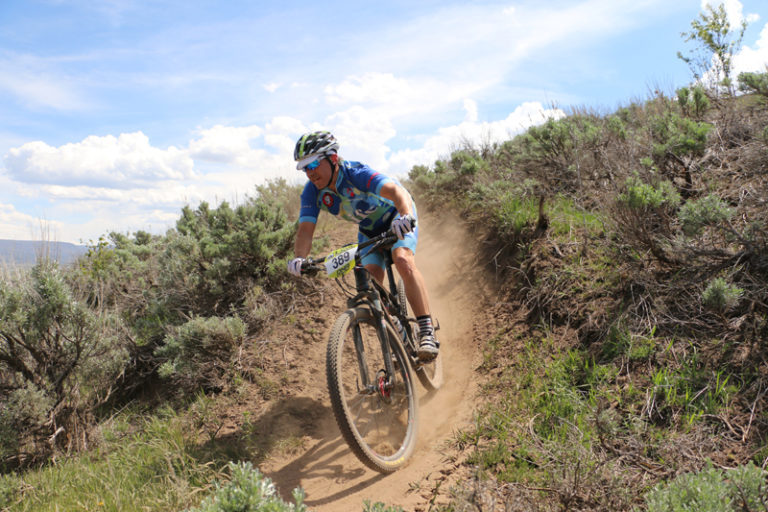
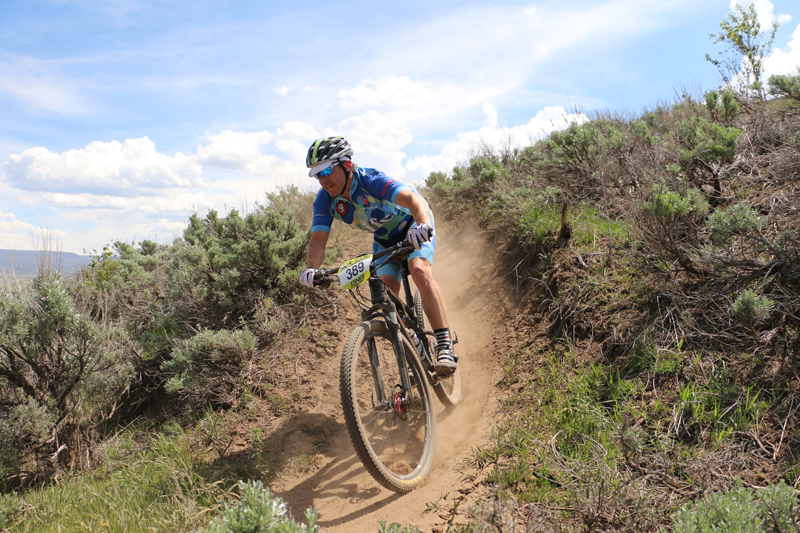
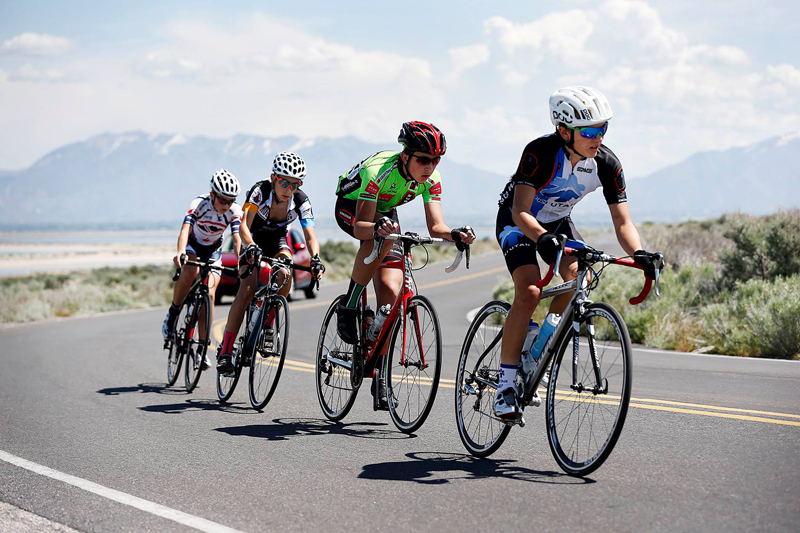
By Charles Pekow — The Alden Gulch Trail in Ketchum, Idaho will be rebuilt this summer if all goes according to plan. The U.S. Forest Service (USFS) is looking for a contractor to reconstruct the 4.65-mile single-track mountain bike trail in Sawtooth National Forest.
The trail has been closed since a fire and subsequent weather events destroyed it in 2013. USFS staff were preoccupied with other flood damage in the forest and haven’t been able to focus on this until now, according to the National Forest Foundation.
The contractor will have to build several banked corner switchbacks and “two rock armored ford stream crossings,” according to a solicitation for bids USFS released.
USFS hopes to start work in July and have the trail ready in mid-September. It budgeted between $25,000 and $100,000 for the project.
The north-south trail is steep and requires advanced mountain biking skills.
By Chris Magerl — “An ice cream headache of bike setup choices”
Like any gravel event, at some point you have the wrong bike. From multi-time participant Aaron Phillips after the 2018 event: “Gravel races provide an ice cream headache of bike setup choices, and the challenge of riding gravel is answered by a dizzying array of setups. Ultimately, if the gearing is not terrible, you have good tires and good luck, and you are comfortable on the bike, then I recommend letting go of the worry and running what you ‘brung’.”
What did the fast folks ride in recent years?
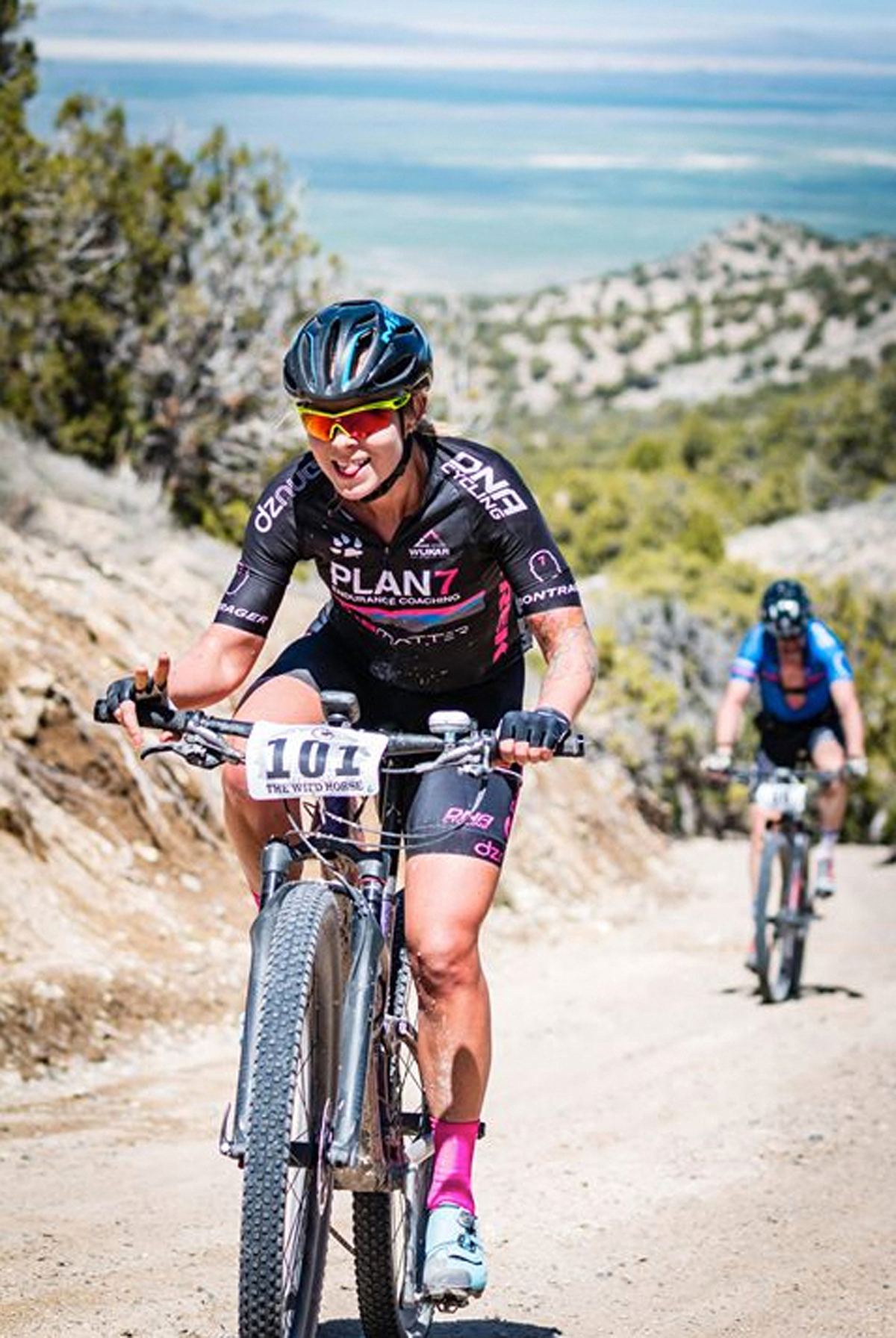
Breanne Nalder on her way to winning The Wild Horse (2019). Here, she climbs Rydalch Pass at the south end of the course, in the Cedar Mountain Wilderness. Photo by Andrew Newcomb
Breanne Nalder, second place (2017), first place (2018-19) woman, The Wild Horse: “Cannondale Slate with a fast rolling MTB tire on my front wheel and gearing similar to my road bike. With those two adjustments and a saddle positioned for off-road stability, I felt confident to get after it!”
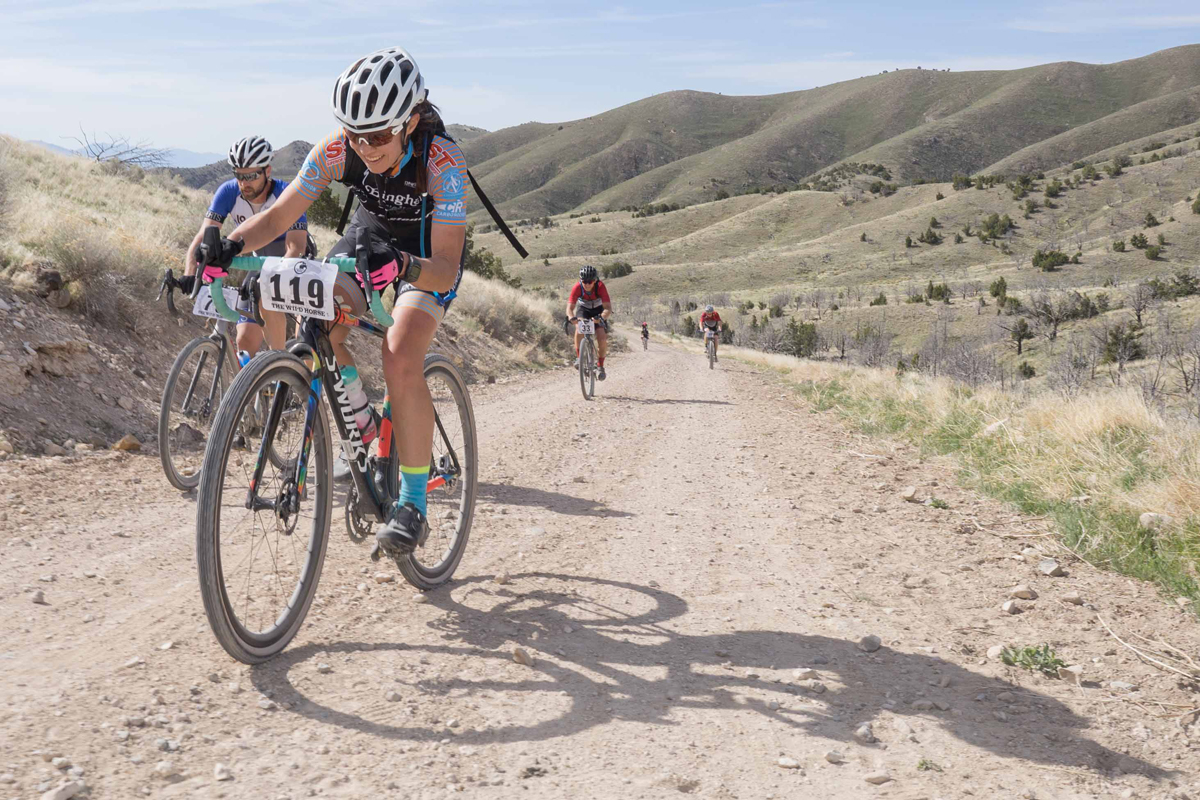
Meghan Sheridan cresting Hastings Pass (2018). Sheridan would go on to finish second, behind Breanne Nalder. Photo by Pete Vordenberg
Meghan Sheridan, first place (2016), second place (2018) woman, The Wild Horse: “This is my third year doing the race, and my first year doing it on a cross bike. In 2016 and 2017 I rode a hardtail mountain bike. Despite having my PR in 2016 on my hardtail MTB, I think a CX bike is more fun and a superior choice.”
Eric Flynn winning the 2016 Wild Horse Dirt Fondo on a gravel bike. Note the medium width tires, drop bars, and determination. Photo by Chris Magerl
Mark Currie, first place men, The Wild Horse: “I chose to ride a Why Cycles R+ frame, ENVE M525 wheels with WTB Resolute 42mm tires, ENVE cockpit and a SRAM 1×11 drivetrain. The equipment was absolutely dialed, and truly worked flawlessly. Already stoked for next year!”
Thomas Cooke, second place men, The Wild Horse: “I rode the same rig I rode in last year’s Dirty Kanza 200, Crusher, and RPI: an Open UPPER with a single front chainring. A little bird who raced last year, who may or may not be named Jamey Driscoll, told me to run my 650b wheels with fat tires, which was good advice that I ignored. Instead, I rode Gravel King 700c x 43c tires with waaaaay too much pressure. I should have stopped to let some out, but I doubt the winner would have waited for me!”
Aaron Phillips, first place men, Little Wild Horse: “Due to the fairly rough condition of the road in general and my tender spine (herniated disc), I opted for a full suspension race 29er equipped with suspension lockout with 2.2” tubeless tires. While perhaps 2% slower than a gravel bike on the course overall, I felt the comfort and confidence associated with this ride made the mental game of the race a bit easier, and I reasoned that it was probably “sixes” with respect to bike choice.”
By Charles Pekow — Tour de Fat is coming back this year – but not with as big a fizz as before. The annual fundraising events for bicycle advocacy put on by New Belgium Brewing Company will hit six cities this year, after the brewery overexpanded last year and scheduled 33 events, up from nine in 2016.
“Last year was by far the most we visited. We had good intentions,” explains Jesse Claeys, New Belgium public relations coordinator. “It was a risk. In hindsight, it really didn’t work. We need to focus more and get back to our roots.”
This year, the Fort Collins, Colorado-based brewery will host events in its home town on September 1, a week after hosting one in nearby Denver on Aug. 25. It will conclude the season in Tempe, AZ on Oct. 6. For ticket info, see goo.gl/wL8Fc2.
Last year, New Belgium scaled down the productions and charged admission for the first time, depressing turnout and upsetting some perpetual attendees. While the Fort Collins event sold out at 7,000 attendees last year, New Belgium estimates more than 10,000 attended the free event the year before, Claeys says.
The cities dropped from the list this year include Boulder and Colorado Springs in Colorado and Boise, ID.
But the Boise Bicycle Project sees life after death. It’s going ahead with its own fundraiser this summer. “We don’t like to use the word ‘replace’ Tour de Fat. We’re not doing the same thing but we’re doing something very unique to Boise and using the momentum and tools New Belgium gave us (to help) build a bicycle community over the last 13 years,” Project Executive Director Jimmy Hallyburton explains.
On Saturday, Aug. 4, the project plans “the world’s first and only Goat Head Festival,” in satirical honor of the invasive plant that has become literally the thorn in the tire of Boise trail riders.
Tour de Fat has raised about $500,000 for biking in Boise over the last 13 years and while New Belgium isn’t doing the work or sponsoring the event, it hasn’t completely abandoned the city. New Belgium is donating beer for a Goat Head planning event. “When people found they weren’t coming back, they were irritated and were upset about it. What people didn’t realize is New Belgium came into town and gave us the tools to create our own festival,” Hallyburton says.
“Of course, if they wanted to come back to Boise, we’d welcome them with open arms but we’re excited about creating something unique to Boise,” Hallyburton says.
For more information, see the calendar in this issue under events and visit: newbelgium.com/tour-de-fat
By Charles Pekow — Fort Collins and Boulder are the first and third best American cities to bike in respectively. That is, if you believe the new rankings from People for Bikes (PFB). But they – and every other ranked city – can still be much improved. Fort Collins ranked 3.5 on a five-point scale, while Boulder ranked 3.4. (Actually, Fort Collins scored a virtual tie for first with Wausau WI, a town of 39,138.)
Tucson, AZ ranked fifth, scoring 3.3. Colorado Springs finished 21st at 2.8; Denver 25th at 2.7; Crested Butte 30 at 2.6. Littleton, CO was 48th at 2.4. Colorado scored far ahead of any of the other Mountain West states, as no other city in the region landed in the top 50.
PFB ranked cities based on five criteria: ridership, network, safety, reach (into areas traditionally lacking bike structure) and acceleration (effort). PFB developed its own criteria, using federal and local government data and a Bicycle Network Analysis tool it developed. Criteria include examining existing and planned networks and a rider survey. PFB acknowledges the tool “is an evolving project.”
The rankings aim to reflect how many people ride, the number of injuries and fatalities, network connections, reach into underserved areas, and how well cities are improving. PFB ranked 480 municipalities across the country on its first round – it plans to do more but it costs money.
Rankings for other cities in the region show marked room for improvement:
Rexburg, ID: 2.2
Bozeman, MT: 2.2
Missoula, MT: 2.1.
Laramie, WY :2.1
Salt Lake City: 2.1
Lakewood, CO: 2.0
Steamboat Springs, CO: 1.9
Boise, ID 1.9
Jackson, WY: 1.9
Orem, UT: 1.9
Scottsdale, AZ: 1.8
Aurora, CO: 1.7
Henderson, NV: 1.7
Breckenridge, CO: 1.7
Billings, MT: 1.7
Casper, WY: 1.7
Tempe, AZ: 1.7
Reno, NV: 1.6
Richfield, UT: 1.6
Kalispell. MT: 1.6
Great Falls, MT: 1.5
Helena, MT: 1.5
Provo, UT: 1.5
Paradise, NV: 1.4
Wheat Ridge, CO: 1.4
Mesa, AZ: 1.3
Longmont, CO: 1.3
Avondale, AZ: 1.3
Carson City, NV: 1.3
Cheyenne, WY: 1.2
Chandler, AZ: 1.2
Thornton, CO: 1.2
Butte, MT: 1.2
Pocatello, ID: 1.2
Glendale, AZ: 1.2
Coeur D’Alene, ID: 1.2
West Jordan, UT: 1.1
Gillette, WY: 1.1
Peoria, AZ: 1.1
Meridian, ID: 1.1
West Valley City, UT: 0.9
Yuma, AZ: 0.9
Idaho Falls, ID: 0.8
Some cities got low scores because PFB lacked sufficient data to judge all they may be doing. PFB said, for instance, that it couldn’t tell if regional booby prize winner Idaho Falls is doing anything to improve. The criteria don’t seem to include mountain biking availability, of which the Idaho Falls areas seems loaded. The city does sponsor Bike Month and other events. We sent a missive to Dave’s Bike Shop in Idaho Falls on Facebook asking about the ranking and got a reply saying “They are right. Idaho Falls is terrible. Nobody should come here to ride or liveYou’re fine right where you are.”
Also, it’s important to note that not all cities provided all needed information. Some also may have built better bike networks than the data show but haven’t mapped them completely. These omissions would lower their rankings.
How do the rankings compare with the bicycle friendly community (BFC) rankings put out by the League of American Bicyclists (LAB)? The two differ in that BFC communities have to apply, bring staff from different departments together (education, engineering, etc.) and do a self-assessment. Those who do select themselves and are likely to have a strong bicycle culture in their government. On the other hand, PFB might rank you whether you want it or not.
In Colorado, top-ranked Fort Collins and Boulder have reached platinum status as a BFC, the highest rank any municipality has achieved yet. Crested Butte received gold and Denver silver. Littleton hasn’t become a BFC. But low-ranked Longmont also reached silver status. Thornton and Wheat Ridge don’t appear the BFC list. But in general, if Colorado is an indication, the two systems generally jive.
But in Montana, Missoula hit gold and Bozeman silver, though PFB ranks Bozeman slightly higher than Missoula. Lower-ranked Billings and Helena achieved bronze.
“Both organizations see our programs running well together. Their’s is a quick snapshot. Ours is a much more in-depth look” at matters from traffic to staffing, explains Amelia Neptune, LAB’s Bicycle Friendly America director. “We were in touch with their staff throughout the process as they developed the program.” PFB’s city rankings can be especially helpful in taking a look at where infrastructure exists, Neptune suggests.
PFB says it plans to update the ratings annually. Check them out at goo.gl/CXYpeY.
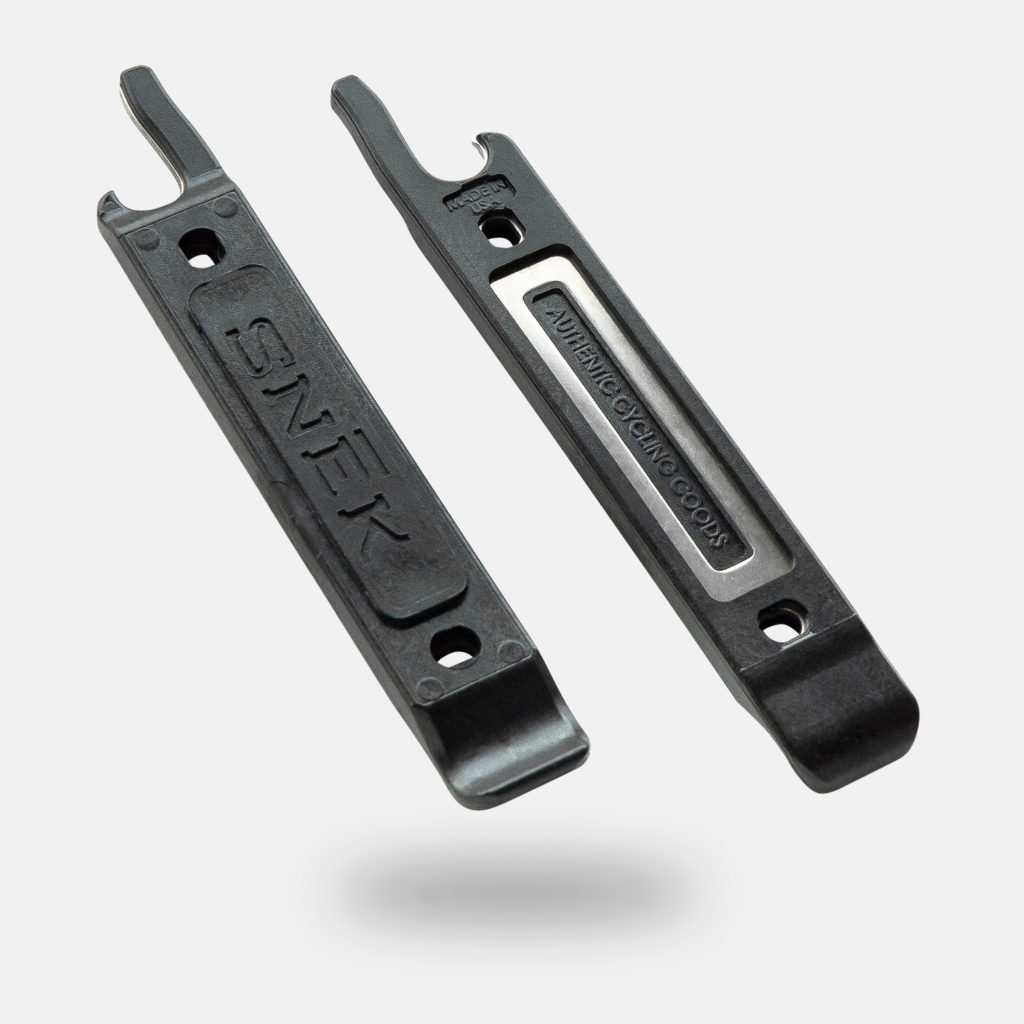
June 5, 2018, Salt Lake City, USA – Snēk Cycling is introducing the Lifeboat Tire Lever. The lever will be live on Kickstarter June 5, 2018 raising funds to bring the project to life.
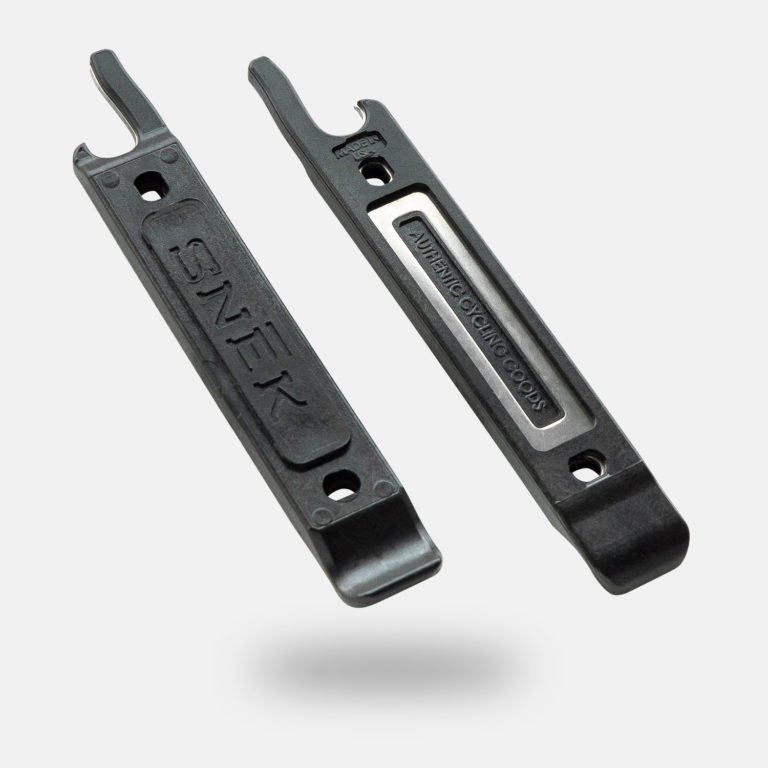
The Snēk Cycling Lifeboat Tire Lever features a metal core, offset valve core removers, and bottle opener.
The Lifeboat Tire Lever is an all in one tool that can change a tire, remove a valve core and open a bottle. The lever addresses the need for a valve core remover to service modern tubeless tire systems. With the trend of tubeless tires in cycling, and the inclusion of tire sealant for flat protection and repair, a tool is needed to service them. Traditional tire levers lack the ability to remove a valve core, and the easiest way to install sealant is through the valve. “I was tired of looking for a tool to remove the valve core of my tubeless tires everytime I wanted to add sealant. My valve core remover was hard to keep track of and always seemed to be missing. That’s when I thought, why not just have a valve core remover as part of the tire lever? That way only one tool would be required to service tubeless tires instead of two seperate ones.” adds Hintze. The result is this inclusive lever to service modern tubeless tire systems. “In addition, the lever includes a bottle opener for the post ride beverage. It was time for a tire lever that kept up with cycling trends and technology.” states Hintze.
Composed of a plastic outer and reinforced with a metal interior, ensures for a long lasting lever that won’t break or damage your rim. “I was also frustrated with levers breaking. I wanted a lever that was tough enough to handle the repeated abuse of tire maintenance, and was built to last rather than something that was disposable,” states Hintze. The result is a lever that is constructed to last, guaranteed for life, and made in the USA.
Founded by Jonny Hintze in 2015. Snēk is a brand based upon stylish, simple, and authentic cycling goods. Products born from ideas conjured up during actual rides. Never over thought, but stringent on detail. Brought together by years of cycling experience with a drive for hand-pick, high-quality materials. Slick and neat – Snēk.
Press Release: The United Nations has declared June 3rd as International World Bicycle Day, by adopting a resolution on April 12th 2018, during the 72nd Regular Session of the UN General Assembly, in New York City.
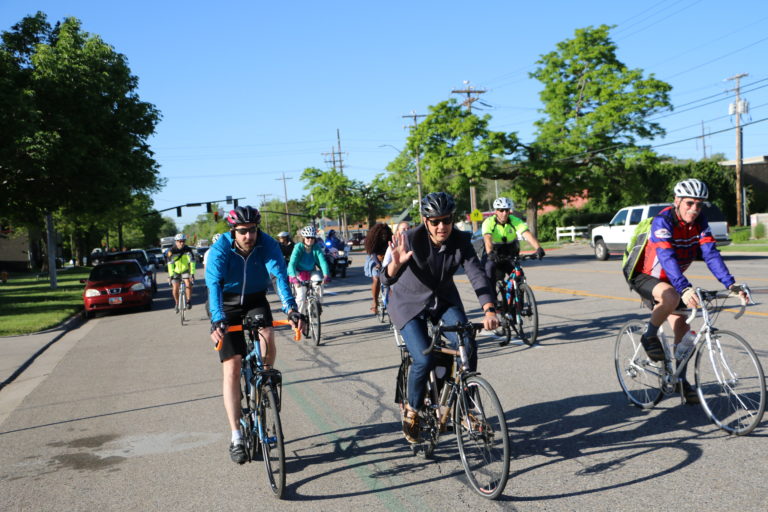
June 3, 2018 is World Bicycle Day. Photo: On the Salt Lake City Mayor’s Bike to Work Day, May 17, 2018. Photo by Dave Iltis, cyclingwest.com
The resolution was adopted by a consensus of 193 member states. The declaration invites all Member States and relevant stakeholders to celebrate and promote awareness of the World Bicycle Day. The declaration encourages Member States to devote particular attention to the bicycle in cross-cutting development strategies and to include the bicycle in international, regional, national and subnational development policies and programmes. H.E. Ambassador, Aksoltan Ataeva, Permanent Representative of Turkmenistan to the United Nations, introduced the draft resolution, co-sponsored by 56 countries, to the General Assembly for the vote. The Assembly adopted the resolution, declaring June 3rd as World Bicycle Day.
The World Cycling Alliance (WCA) and the European Cyclists’ Federation (ECF) welcome this resolution adopted by the UNGA, after having campaigned for a UN designated World Bicycle Day since 2016. WCA and ECF Secretary General Dr. Bernhard Ensink states “Cycling is a source for social, economic and environmental benefits – and it is bringing people together. WCA and ECF are extremely happy with this declaration. This UN declaration is an acknowledgment of the contribution of cycling to the sustainable development goals (SDGs)”. WCA and ECF delivered a document to the UN in 2015 in which it is shown that cycling delivers directly on at least 12 of the 17 SGDs, titled “Cycling Delivers on the Global Goals!”.
WCA and ECF acknowledge the extraordinary work of Leszek Sibilski, Professor of Sociology at Montgomery College, Maryland, US and his students campaigning for #WorldBicycleDay.
WCA will hold its next Annual General Meeting on the 11th June 2018 in Rio de Janeiro, Brazil, the day before ECF’s flagship conference Velo-city 2018 Rio kicks off. The WCA will celebrate in Rio the UN resolution on the World Bicycle Day! #June3WorldBicycleDay
May 26, 2018 – Sugarhouse is Utah’s classic criterium. The park has hosted races since at least the 1950’s, and possibly long before that. What better place to hold the 2018 Utah state criterium championships? What better day than a sunny May 26, 2018.
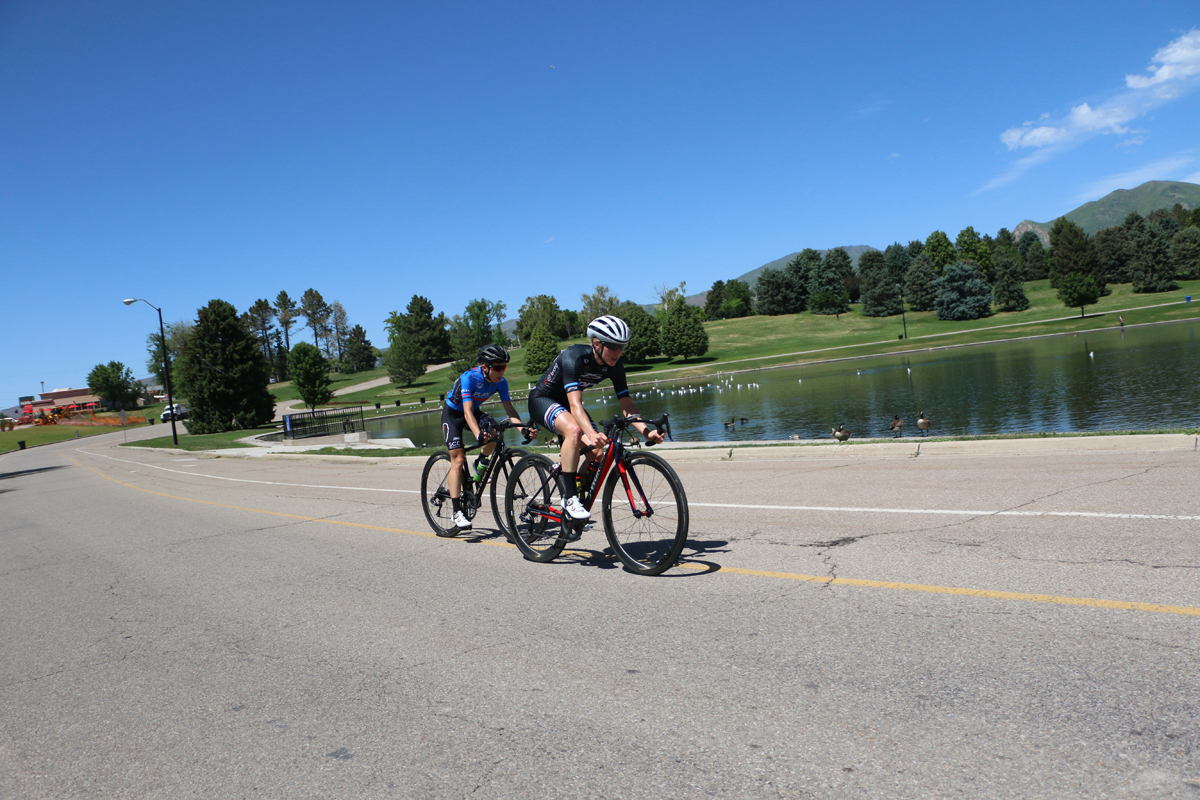
Women’s pro-1-3 race winner Lindsey Stevenson leads Marci Kimball at the Sugarhouse Criterium, Salt Lake City, UT, 5-26-2018, photo by Dave Iltis, cyclingwest.com
In the Pro/1/2/3 women’s race, an early 2 rider break formed when climber Marci Kimball (Plan 7 DS) attacked on lap 3 and all-arounder Lindsey Stevenson (Zone 5 Racing) went with her. The two worked together well and increased their gap with each lap. It didn’t hurt that each had teammates in the field who were content to let the break stay away. Stevenson won the sprint handily, “I hammered on the little downhill before the last kicker and then just went full gas on the hill sprint as was able to stay away.”
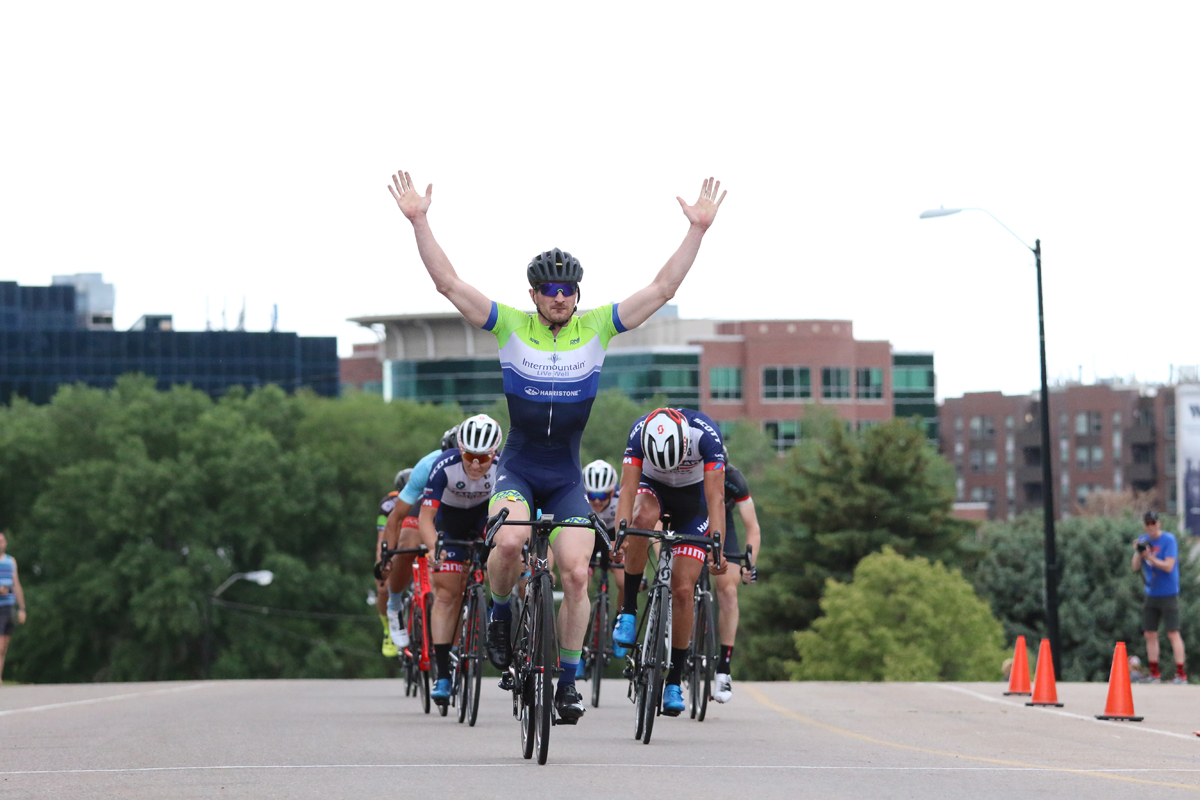
In the Pro/1/2 men’s race, a field of 41 riders started, and the action kicked off immediately. A break formed driven by Clinton Mortley (Intermountain LiveWell) and Cortlan Brown (Hangar 15), but this didn’t stick. Many counter attacks and attacks continued after this including a nice flyer by Chris Stuart, but with a bit of a wind, nothing stuck until the last few laps. A group of 4 was away, Clint Mortley and Michael Hawley brought the group close. Another set of 4 merged with them. The octet stuck it for the next couple of laps until the finishing sprint when Intermountain LiveWell’s Bryce Olsen kicked into high gear at the base of the hill. Everyone else was left in his wake. Jules Goguely and Cortlan Brown (both Hangar 15) rounded out the top 3. Olson described his winning sprint, “I was sitting on Jason Castor’s wheel” and then followed another rider before the hill, “I just hung on his wheel. As soon as we hit the bottom of hill, I gassed it and gave it everything I had and was able to pass him and hold the lead until the finish.”
Bryce Olsen takes the win in the Sugarhouse Criterium, Salt Lake City, UT, 5-26-2018, photo by Dave Iltis, cyclingwest.com
Olsen and Stevenson were crowned state champions, along with a host of other riders in the other categories.
Free Ride and Celebration on June 2 to Celebrate Completion of Over 100 Miles of Continuous Paved Trail from Provo to Roy
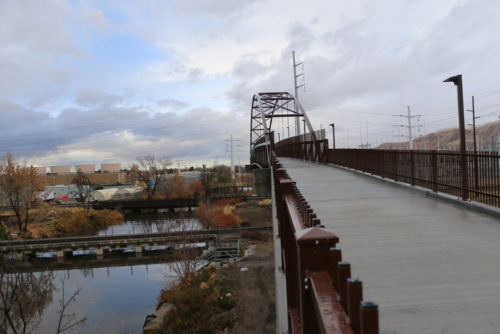
June 1, 2018 – The Golden Spoke Ride will be held on June 2, 2018 in celebration of the opening of the new Jordan River Parkway bridge at 200 S in Salt Lake City, and hence the establishment of over 100 miles of continuous pathways from Provo to Ogden, Utah.
The Golden Spoke will be held on June 2, 2018 in Salt Lake City, Provo, Ogden, and many other places along the Jordan RIver Trail.
The Wasatch Front Regional Council, in partnership with the Utah Department of Transportation; Utah Transit Authority; Bike Utah; Jordan River Commission; Mountainland Association of Governments; Utah Department of Health; Utah Governor’s Office of Outdoor Recreation; and Davis, Salt Lake, Utah, and Weber counties, invites cyclists to participate in a group bike ride and family-friendly event to celebrate the completion of the Golden Spoke network. The Golden Spoke consists of over 100 miles of safe, separated, and connected multi-use trails, including Ogden River Parkway, Denver and Rio Grande Western Rail Trail (funded gap), Legacy Trail, Jordan River Trail, Murdock Canal Trail, and Provo River Parkway, and links Ogden and Provo.
The new Jordan River Parkway Bridge over the railyard between 200 S and N. Temple is open for bikes and pedestrians. Photo by Dave Iltis
This free event includes two simultaneous group bike rides. One ride begins at Rainbow Gardens in Ogden Canyon and travels south (approximately 47 miles), while a second ride begins at Bridal Veil Falls in Provo Canyon and travels north (approximately 57 miles). The two group bike rides will converge in the center of the connected trails at the new Jordan River Bridge in Salt Lake City. Community members will have the opportunity to join at multiple points along the trails for a shorter ride, run, or walk. Additionally, there will be community events hosted along the way, as well as a final celebration at the Fisher Mansion in Salt Lake City, which will include guest speakers and family-friendly activities.
The group bike rides and event are free, but registration is requested. To register and for additional information, please visit GoldenSpokeUtah.org. For questions or interest in planning a community event, please contact Scott Hess at 801-363-4250 or [email protected].
Date
Saturday, June 2, 2018
Tentative Times/Places
5:15 am: Group ride begins at Bridal Veil Falls in Provo Canyon
6:45 am: Group ride begins at Rainbow Gardens in Ogden Canyon
12:30- 3 pm: Celebration event begins at the Fisher Mansion (1206 West 200 South, Salt Lake City)
1:30 pm: Estimated arrival time of group rides at the Jordan River Bridge in Salt Lake City
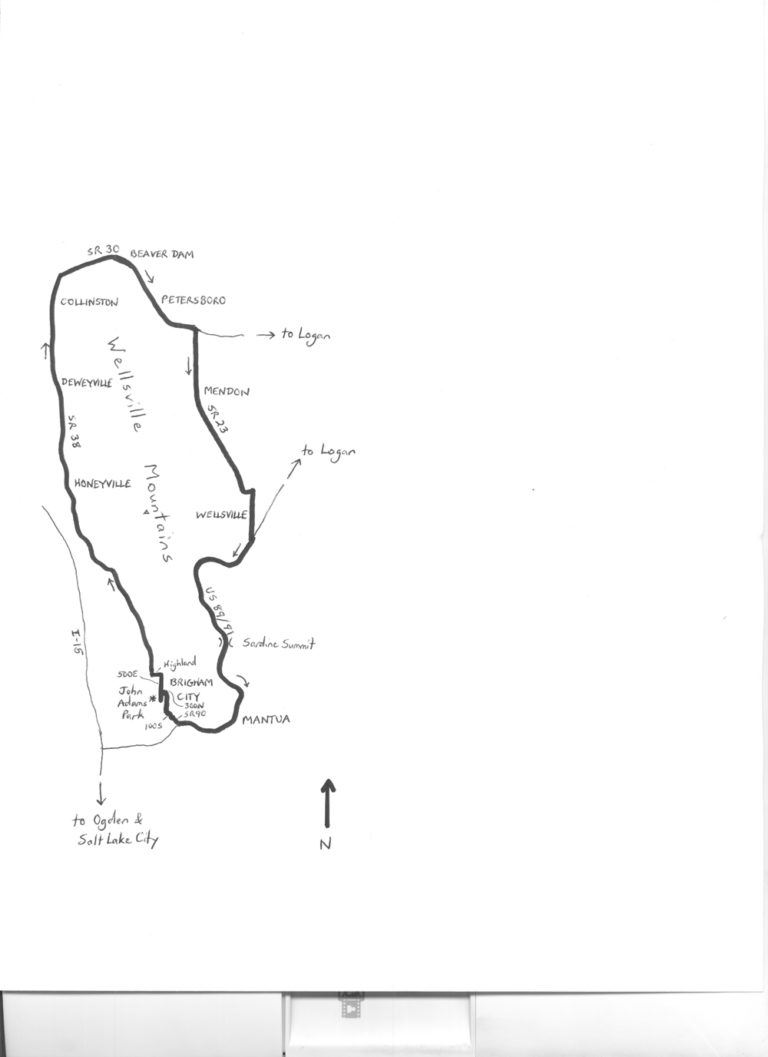
The loop around the Wellsville Mountains makes for a great ride.
By Wayne Cottrell
The Wellsville Mountains separate Cache County from Box Elder County in northern Utah. The highest point is Box Elder Peak, at 9,372 feet. The mountains are extremely steep, with an average gradient of 25% — steeper in places – and a prominence of nearly 5,000 feet. This 52.5-mile ride follows the perimeter of the mountains, passing up and over crests at the northern and southern ends of the range. No roads penetrate the mountains anyway, given their steepness.
The ride starts and finishes in Brigham City, and visits several cities, towns and communities along the way, including Honeyville, Deweyville, Collinston, Beaver Dam, Petersboro, Mendon, Wellsville, and Mantua. Most of the roads are lightly-traveled by motor vehicles. Shoulders are adequate along the busier segments, such as along U.S. Highway 89.
Although you may be awed by the Wellsvilles’ 5,000-foot prominence, the elevation differential of the ride is “only” 1,640 feet. With a safely-executed ride at a comfortable pace, your wellness should be enhanced by the end. (Although, note that Wellsville has little to do with “being well,” as it was named for Mormon pioneer settler Daniel H. Wells).
Brigham City is the seat of Box Elder County, serving as a gateway to far northern Utah, including Cache County. With a growing population of 18,454 in 2015, this is the largest city along the route. The city may be best known as the location of Brigham Young’s final sermon, in 1877.
The city is a launching point for some points of historical interest, including the Golden Spike National Historic Site, which is to the west northwest. There are also a number of historical sites within the city, such as the Box Elder Stake Tabernacle, and others that are concentrated around Main Street. The ride route avoids Main Street and the central part of the city, but a side trip is strongly encouraged.
Start the ride at John Adams Park in Brigham City, located at 600 East 100 North. Park on 500 East south of 100 North, within the park. Head north on 500 East; the starting elevation is 4,422 feet. The opening part of the ride is gradually downhill, through a residential area. At the end of 500 East, turn left onto Highland Boulevard. At the end of Highland, turn right onto State Route (SR) 38 (mile 1.25), and head north.
SR 38 leaves Brigham City, entering a long stretch of false flats and almost imperceptible elevation changes. The low elevation of the ride (4,256 feet) is reached at mile 5.3. Enter the city of Honeyville at mile 7.3 (population 1,421 in 2013); Call’s Fort Monument on the left is an unofficial gateway. A fort, on this site, was built in 1855 under the direction of Brigham Young, as a defense against Native Americans. Honeyville was originally established as a Bear River ferry crossing point, in the days before bridges.
Today, the city may be best known for the Crystal Hot Springs resort, on the left at mile 11.45. Just beyond the resort, which features hot and cold mineral springs, enter the town of Deweyville (population 333 in 2013). The town’s namesake, John C. Dewey, directed the construction of a schoolhouse and Sunday school, served as the town’s Postmaster, and was the bishop of the local church (LDS) ward!
Enter the community of Collinston around mile 19. Collinston may be best known for being near the point at which John C. Frémont crossed the Bear River during one of his famous 1840s’ expeditions. For you the cyclist, though, Collinston may be most memorable as the point at which SR 38 starts to climb gradually.
Leave Collinston and turn right onto SR 30 at mile 20.1, beginning a 3% grade climb to a false crest. Next, there is a short descent through the small community of Beaver Dam, and then a 3% climb to the crest of the passage along the northern flanks of the Wellsville Mountains. The crest, at 4,981 feet (mile 24.4), marks the entrance into Cache County.
From here, it is a speedy descent into Cache Valley. You may hardly notice coasting through the small community of Petersboro, also known as Peter, on the way down SR 30. The community’s population is nearly identical to that of Deweyville.
Turn right onto SR 23 at mile 27.5, and head south. This highway, like SR 38, features long, false flats and barely-noticeable elevation changes. Enter the city of Mendon at mile 29.6. This city, with a population of 1,315 in 2015, features a number of historical sites. While most of them are in town, to your left, a few are along the main highway (which is 100 West in the city).
These include the former Forster Hotel at 176 North, the George Washington Baker House at 115 North, the James G. Willie House at 97 North, and the William & Elizabeth Barrett Farmstead at 20 South. Continuing south on SR 23, enter the city of Wellsville (population 3,578 in 2014) at mile 35. The highway curves to the left, and then to the right (still heading south), becoming Center Street. Points of historical interest include the Wellsville Relief Society Meeting House at 67 South, and George Bradshaw House (and Barn) at 73 South.
Leave Wellsville, and turn right onto U.S. 89 (double-signed as U.S. 91) at mile 37.6. The highway has four lanes, and an adequate shoulder. Leave Cache Valley at mile 38.9, entering Wellsville Canyon. Thus begins the featured climb of the ride, at an average grade of 4.3%, to a false crest. After a short descent, the climb resumes, at a 4.0% grade, to Sardine Summit (elevation 5,896 feet). This is the highest elevation of the ride, and is the main gateway to Cache Valley, which is now behind you. The summit is at mile 44.5, with eight to go; it is all downhill from here to the finish.
The picturesque town of Mantua and Mantua Reservoir are on the left from mile 47.25. The town was originally settled by Danish immigrants; listen to how the residents pronounce the name of their town! And, be sure to use caution at the merge from the right, at mile 48.8 – this is where vehicles from Mantua enter the highway. Leave U.S. 89/91 at mile 50.55, via the exit ramp onto SR 90. Enter Brigham City as the road curves to the left; turn right onto 100 South, followed by a right turn onto 600 East. John Adams Park is on the left from 100 North, although you will return to the start by continuing north to 300 North, and turning left here, followed by a left turn onto 500 East to enter the park.
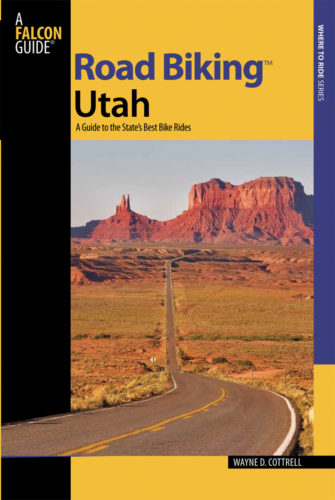
For more rides, see Road Biking Utah (Falcon Guides), written by avid cyclist Wayne Cottrell. Road Biking Utah features descriptions of 40 road bike rides in Utah. The ride lengths range from 14 to 106 miles, and the book’s coverage is statewide: from Wendover to Vernal, and from Bear Lake to St. George to Bluff. Each ride description features information about the suggested start-finish location, length, mileposts, terrain, traffic conditions and, most importantly, sights. The text is rich in detail about each route, including history, folklore, flora, fauna and, of course, scenery.
Wayne Cottrell is a former Utah resident who conducted extensive research while living here – and even after moving – to develop the content for the book.
By Dave Iltis — The San Rafael Classic Triathlon is a fundraiser for Emery County Search and Rescue. The triathlon is in it’s 10th year, and this year looks to be another fine event. Held in the beautiful San Rafael Swell region of Utah, a large geologic feature that is a giant dome-shaped anticline of sandstone, shale, and limestone that was pushed up during the Paleocene Laramide Orogeny 60-40 million years ago 75 by 40 miles (source: Wikipedia) and a perfect backdrop for a triathlon. We asked race organizer Wade Allinson a few questions about the race.
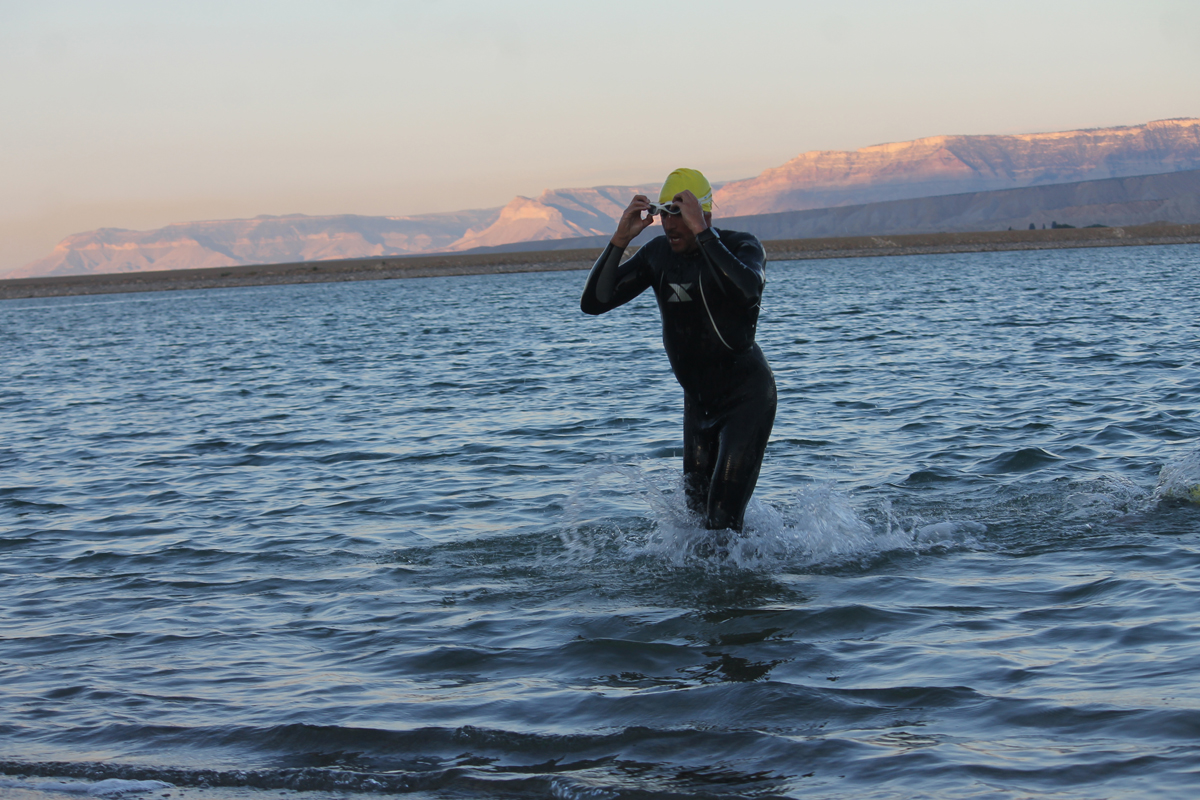
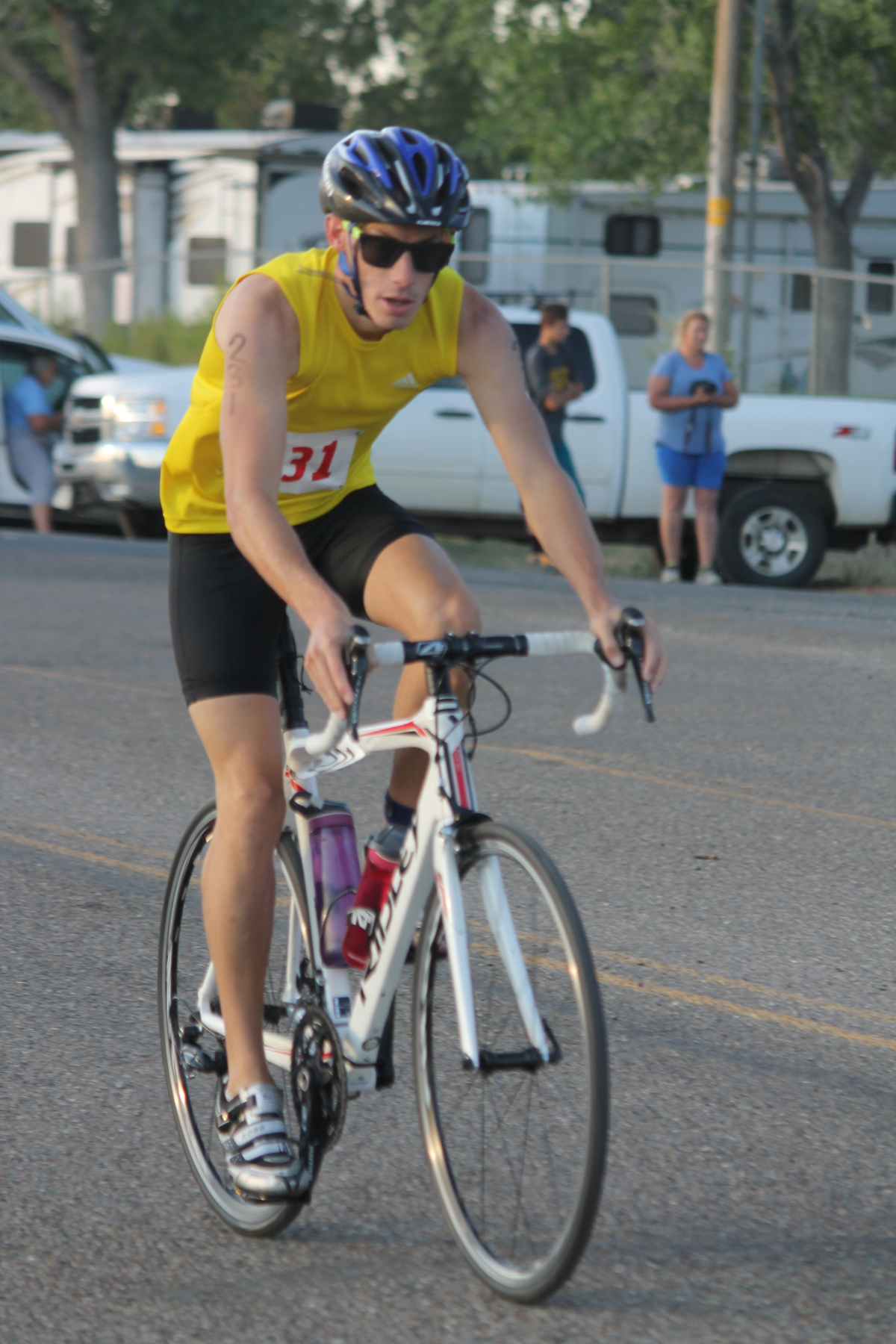
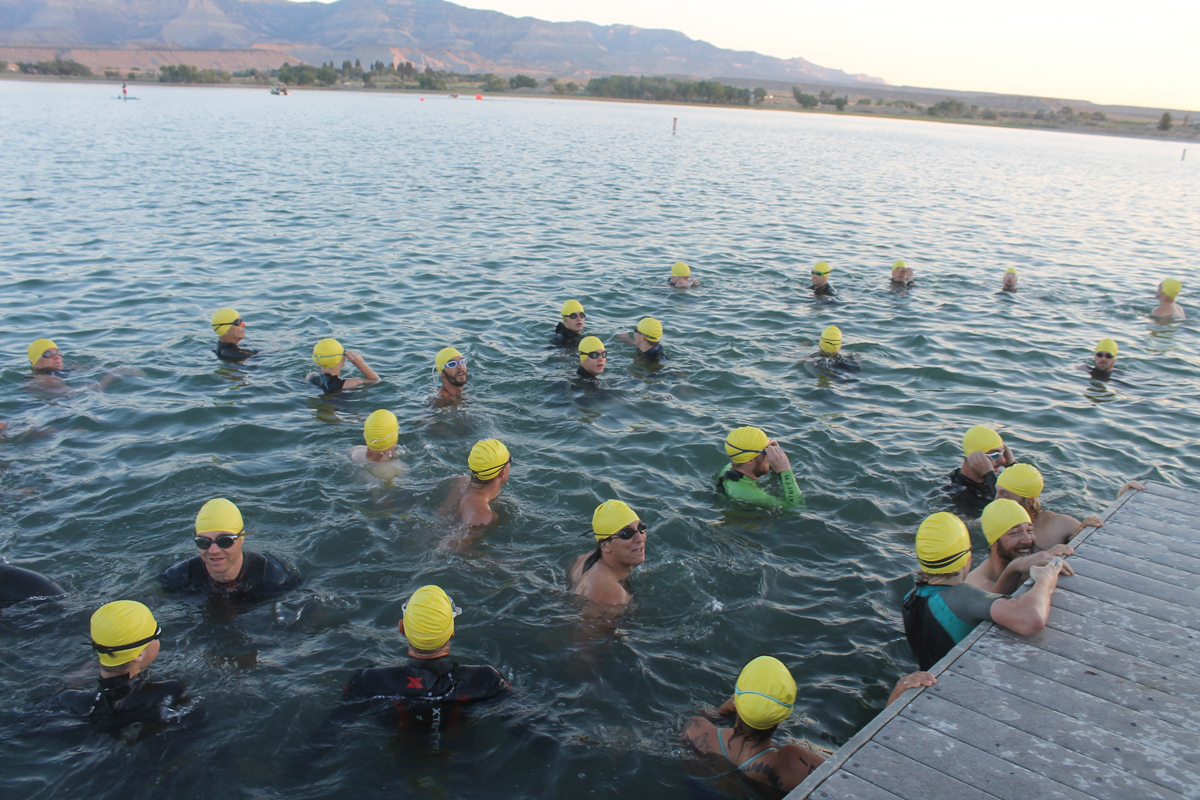
Coming out of the water during the San Rafael Classic Triathlon, Photo by Patsy StoddardOn the bike at the San Rafael Classic Triathlon, Photo by Patsy StoddardGetting ready for the swim at the San Rafael Classic Triathlon, Photo by Patsy Stoddard
Cycling West: What are some of the highlights of the race?
San Rafael Classic Triathlon: This event is a 100% closed course competition. Competitors do not have to compete with traffic and there is plenty of room in the water. The race starts at Huntington Lake. The entire park is closed for the race. The bike course leaves the lake area and goes up a road that is closed to other traffic. At the turned around point, the return has some spectacular views of the San Rafael Desert. The run goes around the lake and can be viewed by spectators. We also offer a youth event which is a big hit with families. We offer both an Olympic and Sprint event. The time it takes to finish varies from one hour and fifteen minutes to over two hours.
CW: The event raises funds for Emery County Search and Rescue. Tell us about the organization, what it does, and how the funds are used.
SRCT: This event is sponsored by the Emery County Search and Rescue Team. The team is composed of local volunteers. 100% of the proceeds from this race goes to support search and rescue operations on the San Rafael Desert and Manti La Sal National Forest. Last year our team assisted in over 100 rescue operations. We are one of the busiest teams in Utah. Many of our operations are recue and unfortunately some are body recoveries. Our rescues involve a variety of disciplines that require specific gear and rescue equipment. Money from this event helps us to support these operations.
CW: What support will you have during the race?
SRCT: This race is put on by the search and rescue team members. This race is heavily supported in terms of manpower which helps us to run a smooth and efficient event. We have support teams in the water and water/aid stations on the run and bike portions of the event.
CW: What sort of options are there for motels and camping? Tell us about the pre-event dinner too.
SRCT: Athletes have a variety of options for camping if they want to come down the night before. Camping is available in Huntington Canyon, Little Bear Campground and Mill Site State Park. There are two local hotels, one in Castle Dale and the other in Huntington. There are several bed and breakfast locations as well. This event is located 15 minutes from Price and hotels are also available there. Friday night we offer a spaghetti dinner. This meal is included with the sign up. Meals for other family members can be purchased as well.
CW: There’s a kid’s event. This isn’t common, tell us more about it.
SRCT: The kid’s event is very unique. Most triathlons do not offer kid events. This is a highlight of our event. The course is substantially shortened to make it fun for all levels.
CW: Racers have the opportunity to compete against Sheriff Funk. We understand that this is the last time he will be doing the race. What’s the scoop with this race within the race?
SRCT: All finishers will receive a finisher medallion. This year Sheriff Funk will be given a head start. Any athlete that passes the Sheriff during the event will be given a unique and limited edition, Emery County Search and Rescue challenge coin.
CW: The race is held in the San Rafael Swell. Please tell us a little about the history of the area.
SRCT: The San Rafael Swell is a great place to have this event. Much of the event is surrounded by public lands. The San Rafael Swell is one of the most scenic desert areas in the State of Utah. This area was first settled in 1879-1880, by Mormon Pioneers. Prior to the Mormons coming to Emery County, this area was inhabited by Fremont and Ute Native Americans.
CW: Is there anything else that you would like to add?
SRCT: Members of the Emery County Search and Rescue appreciate your support for this event that is a huge benefit to all visitors of the San Rafael Swell and the Manti National Forest.
Event details:
July 13-14, 2018 — San Rafael Classic Triathlon, Huntington, UT, Huntington State Park, Olympic distance tri, Olympic team relay, Sprint Tri, Sprint team relay, spring swim/bike duathlon, sprint bike/run duathlon, youth tri. Friday night activities offer live music during the pasta dinner. Body marking and packet pickup available Friday night. Camping available. Reservations necessary to ensure campsite. Held on a closed course. This will be Sheriff’s Funk last triathlon. Special prizes and awards will be issued to the athletes, Wade Allinson, 435-609-3126, [email protected], sanrafaelclassic.com
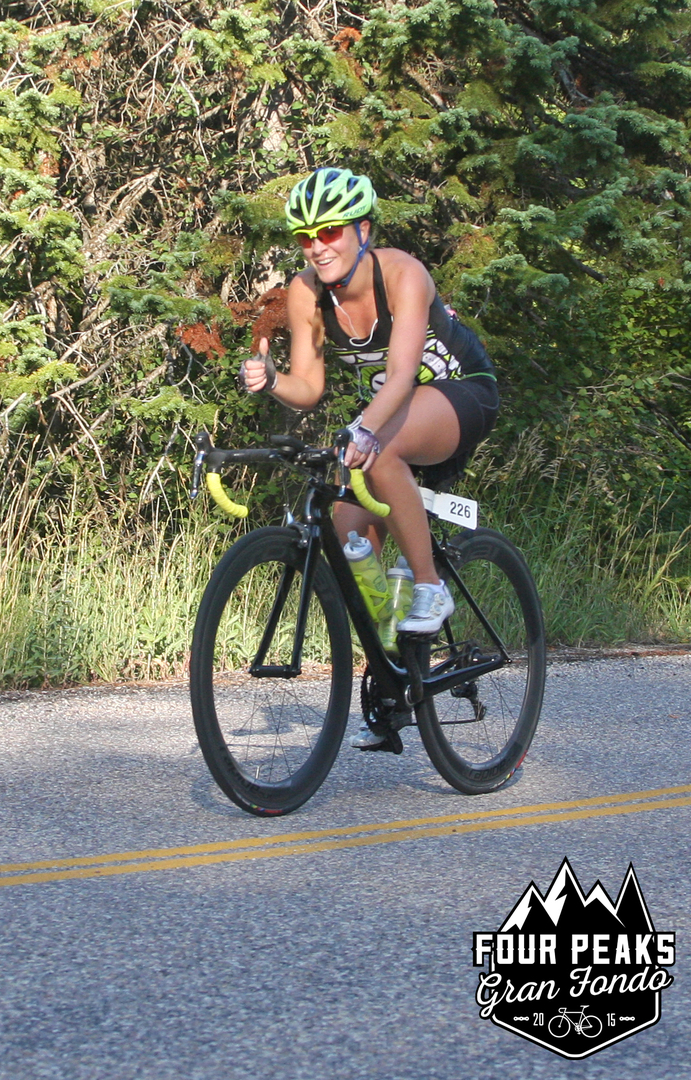
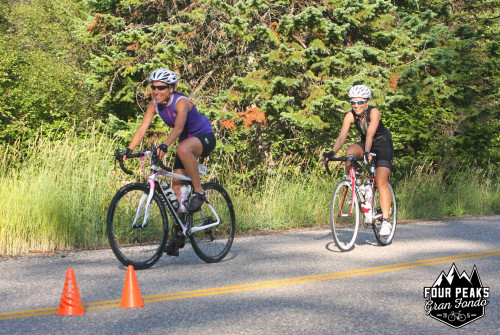
The 4 Peaks Gran Fondo features 4 great climbs in Pocatello, Idaho. It will be held on August 18, 2018. Photo by Nick Call
By Dave Iltis
May 28, 2018 – The 4 Peaks Gran Fondo is in its fourth year. The ride will be held in Pocatello, Idaho on August 18, 2018. The ride gets its name from the 4 summits it traverses over the 80 mile long course. The shorter courses cover some of the climbs too.
We asked organizer David George of 4 Peaks Gran Fondo about the ride.
Cycling West: The ride is in its 4th year, how is it going?
4 Peaks Gran Fondo: We have had great growth and interest over the last 3 years and are excited about this year’s upcoming ride. We have grown from 50 riders our first year to over 220 last year.
Cycling West: Tell us about the courses. What are the different course options? What are the highlights of each?
4 Peaks Gran Fondo: The course covers the 4 main peaks in and around Pocatello, Idaho. It is a beautiful course with rollers, great climbs, and nice scenery. As far as options go, we have added teams (2-4 people) and also what we call a valley ride for those who want to participate, but are newer to cycling. The valley ride takes you from base to base without any of the peaks. The highlights of each are that you can challenge yourself. You can ride it all yourself, or enjoy it with friends. It is hard to choose a favorite peak: Crystal is a good warm up, Scout is beautiful, there is a sense of accomplishment with Pebble, and you may see wild turkeys and some deer on Buckskin.
Cycling West: Part of the ride is timed. Can you tell us how that works?
4PGF: The ascents are the timed portion. The KOM and QOM are strictly for the uphill portions. We want people to be careful and safe on the downhills, which by the way are fantastic!
Cycling West: Tell us more about the climbs. How hard are they? What gearing might riders need?
4PGF: The climbs vary. Crystal, Scout, and Buckskin are nice climbs with their own challenges (Category 3-4), but you will just find that gear that works for you and crank away. Pebble, well she’s special. I think Pebble would be a Category 1 climb. I have a love/hate relationship with her. She will test you, but the sense of accomplishment when you hit the top is awesome. As far as gearing goes, you won’t need anything special for the climbs, just some determination. I climb them on my mid-compact (52-36) 11-28 cassette and some of my friends do it with their 53-39 and 11-28 cassette. You should be fine with what you have.
Cycling West: The event is a fundraiser. Can you tell us more about the beneficiary?
4PGF: 4 years ago Idaho followed suit with Utah and started their own Idaho High School Cycling League. It was a great success and we want to help it grow. We have already given over $2000 towards growing the sport and hope to increase our sponsorship every year, whether it is to the league itself or help kids get bikes who otherwise couldn’t afford it. Much of the proceeds goes towards the growth of the Idaho Cycling League and other non-profits.
Cycling West: Is there anything else that you would like to add?
4PGF: Many don’t know this, but the Pocatello area is really second to none as far as quality of cycling (road and mountain). We have beautiful scenery, great climbs, and typically, very little traffic. For us that get to enjoy it every day, we feel lucky, but now it is time to share. If you come and ride, you will not be disappointed.
Event Details:
August 18, 2018 — Four Peaks Gran Fondo, Pocatello, ID, One Day: 82 miles, Four Peaks: 7800ft total elevation gain. Climb the 4 peaks of the Portneuf Valley; Crystal, Scout Mountain, Pebble Creek, Buckskin. The hill climb portions are timed with timing chips. Downhill portions are not timed. Cumulative climb times will be combined to determine rank. Ride 1-4 peaks as you wish, Katie Loveday, 208-232-8996, [email protected], David George, 208-317-2225, [email protected], 4PGF.com
The 4 Peaks Gran Fondo features 4 great climbs in Pocatello, Idaho. It will be held on August 18, 2018. Photo by Nick CallThe 4 Peaks Gran Fondo features 4 great climbs in Pocatello, Idaho. It will be held on August 18, 2018. Photo by Nick CallThe 4 Peaks Gran Fondo features 4 great climbs in Pocatello, Idaho. It will be held on August 18, 2018. Photo by Nick Call
By Dave Iltis — Sugarhouse is Utah’s classic criterium. The park has hosted races since at least the 1950’s, and possibly long before that. What better place to hold the 2018 Utah state criterium championships? What better day than a sunny May 26, 2018.
Women’s pro-1-3 race winner Lindsey Stevenson leads Marci Kimball at the Sugarhouse Criterium, Salt Lake City, UT, 5-26-2018, photo by Dave Iltis, cyclingwest.com
In the Pro/1/2/3 women’s race, an early 2 rider break formed when climber Marci Kimball (Plan 7 DS) attacked on lap 3 and all-arounder Lindsey Stevenson (Zone 5 Racing) went with her. The two worked together well and increased their gap with each lap. It didn’t hurt that each had teammates in the field who were content to let the break stay away. Stevenson won the sprint handily, “I hammered on the little downhill before the last kicker and then just went full gas on the hill sprint as was able to stay away.”
Bryce Olsen takes the win in the Sugarhouse Criterium, Salt Lake City, UT, 5-26-2018, photo by Dave Iltis, cyclingwest.com
In the Pro/1/2 men’s race, a field of 41 riders started, and the action kicked off immediately. A break formed driven by Clinton Mortley (Intermountain LiveWell) and Cortlan Brown (Hangar 15), but this didn’t stick. Many counter attacks and attacks continued after this including a nice flyer by Chris Stuart, but with a bit of a wind, nothing stuck until the last few laps. A group of 4 was away, Clint Mortley and Michael Hawley brought the group close. Another set of 4 merged with them. The octet stuck it for the next couple of laps until the finishing sprint when Intermountain LiveWell’s Bryce Olsen kicked into high gear at the base of the hill. Everyone else was left in his wake. Jules Goguely and Cortlan Brown (both Hangar 15) rounded out the top 3. Olson described his winning sprint, “I was sitting on Jason Castor’s wheel” and then followed another rider before the hill, “I just hung on his wheel. As soon as we hit the bottom of hill, I gassed it and gave it everything I had and was able to pass him and hold the lead until the finish.”
Olsen and Stevenson were crowned state champions, along with a host of other riders in the other categories.
For results, see the results section in this issue.
Depending on where one looks for advice, a good cycling companion has the following traits; a good cyclist, a positive attitude, helpful in a number of ways, sociable yet capable of being alone, entertaining, able to repair a bike, comfortable with camping, humorous and resourceful. I had the pleasure of riding from Yellowstone NP with Rob Paull over 5 days in 2014. He has all of the listed traits plus as an added bonus he is a senior citizen like myself.
Cycling Utah: Rob, You caught the bicycle travel bug shortly before I did. Tell me about your experience as a bike traveller.
Rob Paull: I did my first tour in 1974 in Michigan, it was a supported 4 day tour from Lansing to Mackinaw City, called DALMAC put on by the Tri-County Bicycle Association. I guess I got hooked as I did 27 more of those tours over the years, 10 of them with my son. Got so I knew every good restaurant and bar between Lansing and Mackinaw. It was always a fun ride. On a number of those trips through Michigan I returned home on my bike as well. I’ve also had the opportunity to do some longer tours as well including a couple of cross country’s as well as a trip up to Alaska and a West Coast trip.
Since moving to Utah I’ve done several Southern Utah Parks tours and a number of self supported tours organized by the Wasatch Mountain Club most of which were a week or so long. I’ve also ridden a number of solo trips around the Southwest of varying time and length during my time in Utah.
C.U.: If a young couple, (anyone under 55 in your case), wanted to do a 2-3 week bike tour say to Yellowstone National Park and back, how would you counsel them?
R.P.: I would say to someone considering this trip or any trip is to just do it. You might want to talk to someone who has done it before or read some trip reports by others who have done this trip, go to one of your (Lou Melini’s) touring talks at REI, etc. Give yourself plenty of time so you’re not going to be pressured to be back at an unrealistic date. Another good thing to try is to load up your bike with everything you think you’ll take on the trip and do an overnight to a campground near your home of 30- 40 miles. That way if you find you’ve forgotten anything it’s no big deal and you will not forget on the longer trip. Also more importantly you might find things you took that you really don’t need and can leave at home. But still the most important thing to do is JUST GO!!! You will quickly learn.
C.U.: When we traveled home from Yellowstone, I was impressed by your simplicity, yet completeness of gear. What do you look for in tents, stoves, sleeping bags, tools, spare parts, etc.?
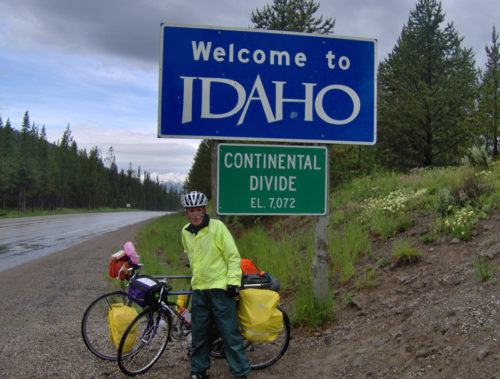
Top of Targhee Pass in the rain during a tour of Yellowstone in 2014. Photo by Rob Jones.
R.P.: Over the years, as I’ve gotten older and the miles have gone by, I’ve looked at my gear and have learned what, for me, is important to carry along on a trip. I’ve tried to lighten my load as much as possible and now carry about 20lbs. or less, not counting food or water. I use the lightweight backpacking ideas as much as possible. The tent I use most of the time is a one-person single wall self-standing model that I’ve found works well for me in the Southwest climate. Most of the time I use a small canister stove or a homemade alcohol one. As for sleeping I use one of the inflatable insulated mattress that are available and in the summer a 40 degree down bag. To me getting a good night sleep is one of the most important things to achieve in order to have a successful tour. For tools and spares, I only carry on the bike those tools that I need to work on the bike I’m touring on; I only take the Allen wrenches that fit the bolts on the bike. Four Allen’s are lighter that a whole tool set of Allen’s most of which don’t fit anything on the bike. Also I carry a small chain tool and lightweight wrenches to fit bike. I carry a small container with a few various size bolts and nuts, a master link for the chain also spare brake and shift cable.
I guess I would advise looking at all your gear, and seeing where you can eliminate stuff and still be safe and comfortable, it’s sometimes hard to do, as there always seems to be a new gadget available that seems indispensable, and probably is.
C.U.: What are your clothing choices for either on or off the bike?
R.P.: Ah, clothing choices. This is one area where a lot of bulk can be eliminated from your bags. Of course what you carry will depend on when you tour and where you go. This is what I find comfortable to wear on the bike while touring. I use padded bike underwear with light nylon zip off leg pants with leg clips, a long sleeve light colored seersucker cotton shirt, wool socks and light hiking shoes or sandals, (I use flat BMX type peddles on my touring bike), helmet and cycling gloves. In my bags I carry an extra pair of bike underwear, wool socks, cotton underwear, nylon running shorts and shirt, light pile shirt, light rain pants and bike jacket, and a down vest in a stuff sack.
C.U.: One can find a number of opinions regarding bike choices for traveling. What are your suggestions?
R.P.: Bike choices are another personal thing. Everybody has ideas on what one needs for touring. My advice is don’t let not having a “touring bike” prevent you from touring if you want to!! You can tour on any bike as long as it fits you and is mechanically sound. I’ve toured on a number of different bikes over the years from a ’72 Viscount 10 speed with a flimsy rack to modified mountain bikes to true touring bikes. I currently have several mid 1980’s steel touring bikes that I have purchased and restored to make very nice touring bikes once again. These bikes are out there and if you have the skills to bring them back to good condition they make wonderful touring machines. A number of bicycle manufacturing companies made very nice touring bikes in the mid 1980’s just before the introduction of mountain bikes. My current favorite ride is a 1985 Trek 620 which is a true touring bike with long chain stays and relaxed frame geometry. It has a 6 speed rear cluster which some don’t think is enough gears, but I have found that it’s not how many gears a bike has but how the ratios are set up, and how low a gear ratio you can get on your bike. I like steel and I like simple.
C.U.: What are some key mechanical skills one should have for bike travel? What problem solving tricks have you had to employ on the road?
R.P.: You have to know how to repair a flat first and foremost. It’s also good to know how to adjust your brakes and shifting mechanism. Learn how to break a chain and what you need to splice it together again. Field replacement of a spoke and truing a wheel are also good skills to have. If you do rebuild a bike yourself you will learn most of these skills plus you will know how all the parts of your bike go together. REI offers bike repair classes or volunteering at the Salt Lake Bicycle Collective will give one a wealth of skills. I’ve broken a couple of rear shift cables over the years without having a spare. One time I jammed a tapered stick I made into the parallelogram of the derailleur to hold the chain in a comfortable gear to get to the next town with a bike shop, another time I just tied a knot in the cable by the rear cable hanger to keep in a chosen gear. I’ve also broken chains and spokes and had to repair them in the field.
C.U.: One issue bike travellers face is the decision to travel solo, with one other person or with a group. Do you have a preference?
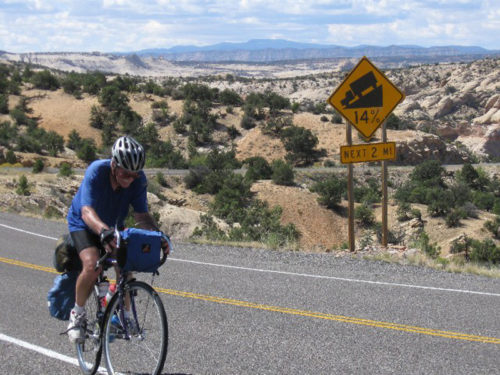
Near top of climb out of Calf Creek in Southern Utah. Photo by Rob Jones.
R.P.: I have done most of my tours solo and I do enjoy going that route. I like the total freedom solo touring provides. I can go as far as I feel like, stop whenever it suits me, eat when it seems right, and stay in or out as I choose. If I decide to change my route plans I can just do it, no problem. I find I interact with the people I meet along the way more when I tour by myself and I enjoy that, as most everyone I’ve met has been pleasant and interesting. Of course the down side of solo touring is you have no one to share the joys and hardships of the trip with, no one to help if you have a break down, no one to go for help if you need it.
The things that I brought up as a negative point in solo touring is a plus when touring with a partner. And the positive points of solo touring become negative when touring with another. You have to always work out how far to go, when to eat, and so on. Choosing ones partner for touring then becomes quite important as you must be able to get along and be compatible which each other or it could make for a very unpleasant trip for both of you. Of course one of the big plusses with a partner is a reduction in camping fees, food costs, and the equipment load can be shared. When I went to Alaska it was with a partner and a good trip.
Group touring is like touring with a partner only requires much more planning as places to stay have to be planned to accommodate a group, no camping in the ditch. Compatibility issues will be more pronounced, and the probability of mechanical problems will increase. But if all the problems are handled well, group touring is a whole lot of fun, and a great way to go.
You asked what type of touring I like and I guess my answer is I like them all. The main point is to just GO!!!! Last year when we did the tour up to Yellowstone and back, I had the opportunity to do all three types of touring. The first five days I went solo from SLC area to Coulter Bay in Teton Nat. Park where I hooked up with the rest of the group and toured the next five days with them, and had a great time. And of course the last five days I had a very pleasant trip back to SLC with you, Lou. On that trip I enjoyed every phase as I enjoyed my road time alone, then road with a great group of people on a well organized tour through the parks, then had a great trip home with you, as we had a lot of fun and I thought were very compatible partners. All in all a great trip!
C.U.: Do you have any favorite 1-3 week tours one could do in Utah?
R.P.: One of the tours I enjoy is of course the Teton – Yellowstone trip we did last year. That was the third time I’ve done it. Also I like the loop trip starting and ending in Cedar City, going down to Zion N.P. to Bryce Canyon up to Cedar Brakes and back to Cedar City. A nice weekend mountain bike overnight bikepacking trip, I’ve done twice, is the Cathedral Valley Loop in Capitol Reef N.P. A couple of nice road overnighters I’ve done are to ride from Salt Lake or take FrontRunner to somewhere convenient and ride to Antelope Island. Also take Front Runner to Provo ride to and up Hobble Creek Canyon to the campground at the end of the paved road. A few years ago I went on a Wasatch Mountain Club trip to do a loop from Green River to Hanksville to Natural Bridges to Blanding, Moab, and back to Green River. I had to drop out due to a medical condition and want to finish that trip. I’m planning on going in early May, so that should be fun. Utah has some of the best biking country in the U.S. just open a map and pick a route and just GO!!!!
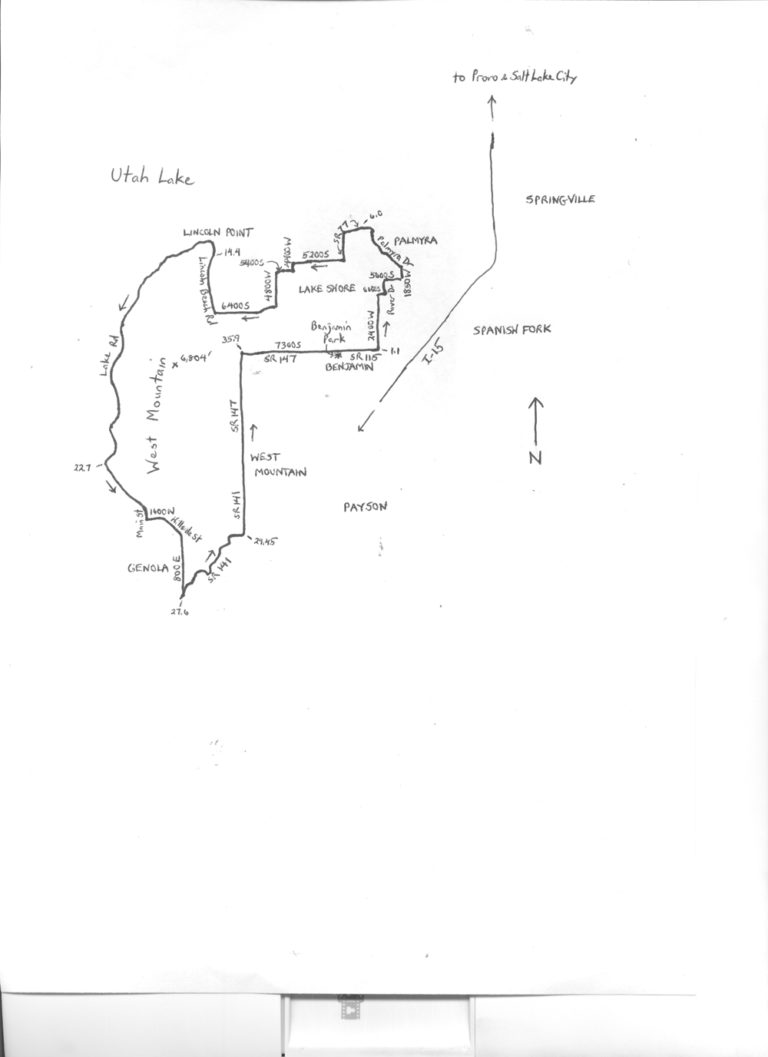
The South Shore Utah Lake Ride is a 38.75 mile ride on lightly traveled roads. Map by Wayne Cottrell.
By Wayne Cottrell
Riding around Utah Lake is popular, in that it is much smaller than the Great Salt Lake, and is encircled with roads, none of which are mountainous. It is nonetheless a long ride to make it around the entire lake. This shorter ride covers just the southeastern area near and along the lake, west of Springville, Spanish Fork and Payson.
The ride visits the communities of Benjamin, Palmyra, Lake Shore, Genola, and West Mountain. The largest of these is Genola, which had a population of 1,397 in 2013. The region’s total population of about 5,100, and a setting away from the through traffic of the I-15 freeway, assures that the roads of the route are lightly-traveled. The landscape is predominantly farmland, growing varieties of fruit.
The Utah Lake: South Shore Cruise is a 38.75-mile counterclockwise loop. Counterclockwise is the preferred direction, to keep Utah Lake’s water on your right. The net elevation difference is small, at just 318 feet, although there are plenty of undulations along the way, making the ride not entirely flat. Start at Benjamin Park, located at 7300 South 3200 West in Benjamin.
Benjamin is an unincorporated community, located west-southwest of Spanish Fork. Benjamin is 58 miles south of Salt Lake City; there is a “Benjamin” exit from I-15. Benjamin was not named for the Biblical character; rather, it was named for Benjamin Franklin Stewart, one of the community’s founders.
Start by heading east on 7300 South, which is State Route (SR) 147 until 3200 West, and then SR 115 beyond 3200 West. This part of the route is nearly pancake flat, as you are essentially riding in a basin formed by several waterways that drain from nearby Mount Nebo into Utah Lake. These include Spanish Fork River, Beer Creek, Benjamin Slough, and Spring Creek. Turn left onto 2400 West, 1.1 miles into the ride, and head north. The riding out here can be peaceful and pastoral, as you pass by farms and country homes. Turn right onto 6000 South at mile 2.75 and head east, followed by a left onto River Drive. This road is parallel to the Spanish Fork River. Turn right onto 5600 South and head east, followed by a left onto 1850 West. Next turn left onto Palmyra Drive, which runs diagonally toward the northwest, with the Spanish Fork River now off to your left.
Palmyra Drive enters the unincorporated community of Palmyra (population 491 in 2010). The original Palmyra was absorbed into the city of Spanish Fork years ago; later, this settlement, a “new” Palmyra, was established. Bear left at 5000 South, and then bear right, just up the road, to continue on Palmyra Drive. At the end of Palmrya Drive, keep straight onto SR 77 (mile 6.0). The highway curves to the left and heads south. Turn right onto 5200 South (mile 7.45) and head west, now on the fringes of the Lake Shore community (population 817 in 2010). Turn left onto 4400 West, followed by a right onto 5400 South, followed by a left onto 4800 West. Plenty of turns, but these all come at the ends of the respective roads. After heading south on 4800 West, turn right onto 6300 South (mile 10.8) and head west, toward West Mountain. West Mountain rises to 6,804 feet, and is considered to be part of the Wasatch Mountains, even though it is entirely detached from the rest of the range. 6300 South becomes 6400 South as it descends, gradually, to cross Benjamin Slough.
After climbing away from the slough (6.2% grade), the road curves to the right, becoming Lincoln Beach Road. The road hugs the east side of West Mountain. A dirt access road, on the left, leads to the top, where there are radio towers and an observatory. Lincoln Beach Road approaches Utah Lake, at Lincoln Point, with Lincoln Beach Park on the right. The park features camping, boating and fishing, and was formerly an active beach.
Follow Lincoln Beach Road as it curves around Lincoln Point, with Utah Lake immediately to your right. You are now on Lake Road. This is the ride’s lowest elevation (4,490 feet), although it is not much lower than the starting elevation (4,531 feet). Off in the distance is Bird Island, Utah Lake’s only island. The island is not large enough for habitation, but is a popular fishing spot. Beyond Lincoln Point, you are on the west side of West Mountain, with unobstructed views of the lake to your right.
The next eight miles are along this undeveloped stretch – not a park, but certainly having a park “feel.” The southern end of Utah Lake, which is Goshen Bay, can be seen from the road. Utah Lake’s shallow depth (14 feet maximum), dominant carp population (some 90% of all fish), and sewage dumping that continued until 1967, all contribute to a damaged lake ecosystem. At the 21.2-mile mark, after some mild undulations, the road climbs at a 2.5% grade to 4,630 feet. Leave the lake’s side at mile 22.7, as the road curves left to enter Genola. Although Genola is the largest town along the route, you won’t witness much hustle and bustle.
Lake Road curves to the right at mile 24.55, becoming Main Street. Turn left onto 1600 North; the road curves to the right, becoming Hillside Drive, and then curves to the right again, becoming 800 East. You are now heading south, through Genola. At mile 27.6, make a hard left onto SR 141 and head northeast. The highway climbs gradually to the highest elevation of the ride (4,808 feet), before beginning a gradual descent into the community of West Mountain. After winding its way off the flanks of West Mountain, the highway curves to the left and heads north (mile 30.45). SR 141 becomes SR 147 at 10400 South – keep straight, heading north. It is long, straight stretch to 7300 South (mile 35.9), where SR 147 curves right to head east, returning you to Benjamin. The ride ends at Benjamin Park, on the right, at mile 38.75.
For more rides, see Road Biking Utah (Falcon Guides), written by avid cyclist Wayne Cottrell. Road Biking Utah features descriptions of 40 road bike rides in Utah. The ride lengths range from 14 to 106 miles, and the book’s coverage is statewide: from Wendover to Vernal, and from Bear Lake to St. George to Bluff. Each ride description features information about the suggested start-finish location, length, mileposts, terrain, traffic conditions and, most importantly, sights. The text is rich in detail about each route, including history, folklore, flora, fauna and, of course, scenery.
Wayne Cottrell is a former Utah resident who conducted extensive research while living here – and even after moving – to develop the content for the book.
By Keith Payne — For all would be racers out there who haven’t yet embraced competition.
Yes, head to head, a hare is certainly going to out sprint a turtle, but not all races are sprints.
I’ve been racing bikes since 1990. 25 years of riding and racing mountain bikes, road bikes, single speeds, cyclocross bikes and now fat bikes. I’ve met many people over the years while riding and racing, we have different backgrounds, interests, goals, motivations, beliefs, but what makes us alike is our love of biking. Riding a bike elicits various emotions and sensory experiences in each individual, but for most the freedom, adventure, adrenaline, euphoria, and clarity that come through riding make it a lifestyle that takes hold and molds your perspective on everything else.
Keith Payne has been racing for 25 years and hopes that you too will try it this season. He’s shown here at the 2015 Soldier Hollow Intermountain Cup. Photo by Dave Iltis.
While many of us have participated in other sports or hobbies in the past, cycling is our home. We love to ride, we live to ride, we think about when we can ride next, we eat in order to be fitter or maybe we ride in order to able to eat those things we perhaps know we shouldn’t. Riding is all encompassing for us because it is our touchstone, our center, our therapy.
Racing bikes is the natural progression for many cyclists. Once we become proficient cyclists we will likely, at some point, be invited or encouraged to try racing. Racing bikes is the same as just riding them, only there’s no waiting. Yet there’s something about the additional element of competition engenders real fear and doubt in your average cyclist. After a casual invitation, of which I’ve proffered many, the excuses start to dribble from the mouths of the uninitiated. “Well, I don’t know.”, “I’m not really into racing.” “I’m not fast enough.” “I can’t spend the money/time.” Somehow they all seem turn into the loveable hypochondriac Bob Wiley from “What about Bob?” In the film he responds to an invitation to go sailing by saying “It just makes my lips numb to think about it.” That’s the sort of response I get almost every time.
I try to hide my incredulity and smile supportively but in my mind I’m thinking, your excuses really don’t make sense to me. My perspective has changed after so many years of being involved in the amazing race community.
I understand family commitments and financial constraints might limit one’s ability to participate in a full season of racing. I also understand personal doubt and concerns about the aggressiveness of other racers, the speed of the field, or the distance to be completed. Being the new kid on the block certainly makes one a little gun shy. However I’m here to tell you that racing your bike will make you a better cyclist, period! But there are many other reasons to consider racing.
Here are my five reasons why you should start racing.
You will learn. Cycling is progression. It is driven by momentum and in order to improve you must embrace that momentum. Enhancing your cycling skills is a natural product of racing. You will be forced to ride trails that you have never ridden, with obstacles you don’t normally experience and all at a speed that is faster than you are used to. This will demand that you learn how to be a better bike handler, how to corner at speed, how to climb efficiently and much more. Stopping on your personal plateau that you’ve reached as a cyclist to enjoy the view is fine, but there are more mountains to climb. Racing will help you improve and go further than you though possible.
You will get fit. Sure you might not go out and crush the field your first race but racing requires you push your limits and by doing so you make your body do things it hasn’t before simply because there’s someone in front of you trying to ride away, and for some reason you want to catch them. As you continue to race and push your pace you will become fitter AND faster and that will only serve to make cycling more fun.
You will make friends. Shared experiences create bonds of friendship. You will meet people with whom you might never have typically engaged. Over time you will get to know them. They will challenge you and you may challenge them. It’s a great opportunity to expand your circle of friends and learn from others. Your fellow competitors will push you, encourage you, taunt you, tease you, congratulate you, and if that’s not the definition of a best friend I don’t know what is!
There’s a race for you. In today’s cycling community the variety of race opportunities are numerous. There are weekly races that are relatively inexpensive and close to home. The distances are short and time constraints brief. There are typical cross country or criterium or road races on Saturdays that are a bit longer, a bit more money and perhaps more competitive. There are endurance style races where distance is the challenge and just completing the course can be a major accomplishment for you, regardless of who actually wins the race. In short there are race venues, distances and prices that will accommodate your sense of adventure, experience, and budget. There really are no excuses. Start small and work your way up. Be forewarned, it’s more addictive than chocolate…ok, maybe AS addictive as chocolate.
It’s hard, but oh so worth it. Yes riding your bike fast and making yourself uncomfortable in the process is not what most would consider “fun.” It is physically taxing and requires some preparation and skills development. It’s certainly not as simple as strapping on a pair of running shoes and run/walking 13 miles down the pavement (which I don’t do anymore). Hence the reason fields of cyclists are significantly smaller than your typical running race in the city. But the sense of accomplishment, the improvement of skills and fitness, the beautiful venues, make cycling a more rewarding and hence more engaging experience for the long term.
Skylar Patten (Ski Utah) leads the junior men’s field. Patten went on to win the Junior 15-16 state championship. Photo by Ravell Call.
How to prepare for your first race:
Are you convinced yet? There’s no better teacher than experience so here’s what you do:
Get your bike prepared. Make sure it’s functioning properly, tires inflated adequately, brakes working, shock functional. Your local bike shop should be able to run through it and ensure it’s ready to race.
Ride your bike, perhaps with someone more experienced who can coach you a bit. Do this more than 1x/week.
Pre-ride the course of your first race. Find the map or find a friend and have them show you the course. Then ride it, more than once if possible. Re-ride technical sections a couple of times until you feel confident about your line.
Register for the race. Plunking down your money commits you mentally and helps you anticipate and prepare.
Eat and Sleep. Eat properly, downing a Double Double from In and Out the night before your race is not typically a wise strategy. Get plenty of sleep the night before and remember to hydrate.
Go have fun. Who cares if you are first, last, or middle of the pack. Just ride your best, measure your effort and challenge yourself. In time you will improve and will need to move up to a harder category with a longer distance and stronger competition, but for now just do your best and finish.
Don’t quit. Unlike most sports, there are no time outs, no medic to spray your cramping legs, no water boy, no mechanics, no pit crew, few spectators, and no coach yelling from the sidelines. It’s just you and your ability to pedal. So just keep spinning!
Finally, repeat the process, next race, next year, wherever and whenever you can. Over time you will be able to measure improvement and that will build your confidence.
For many years I taught snowboarding and the three rules we had for our students were these: 1. Learn something, 2. Be Safe, 3. Have fun. If you aren’t learning you aren’t progressing, there are always ways to improve your cycling so never stop learning and improving. Safety is critical, no one wants to be injured so improving your skills and your fitness helps prevent injury, assuming you ride within your limits and don’t take silly risks. Finally having fun is what cycling is all about. Despite the exhaustion, the hunger pains, the cramping, the feeling of being utterly spent, I get to the end of every race and think wow, that was hard, but so worth the effort.
Yes I know some of you consider yourself purists and just ride for the sheer enjoyment and don’t want to be bothered with race plates, fees, timing chips, arrogant racers who won’t yield, and race directors who aren’t well organized or bark out instructions like a marine sergeant. But if you can look past all these minor issues you will see an opportunity to improve your cycling ability and thus enhance your riding in a way that just can’t be done by going out on your average Saturday group ride. I invite you to try a race, or two, or ten this summer and see what happens. You may feel like the turtle, but just finishing one of these races makes you a hare compared to most of the world.
“When man invented the bicycle he reached the peak of his attainments. Here was a machine of precision and balance for the convenience of man. And (unlike subsequent inventions for man’s convenience) the more he used it, the fitter his body became. Here, for once, was a product of man’s brain that was entirely beneficial to those who used it, and of no harm or irritation to others. Progress should have stopped when man invented the bicycle.” ~Elizabeth West, Hovel in the Hills




 Wayne Cottrell is a former Utah resident who conducted extensive research while living here – and even after moving – to develop the content for the book.