The film Peloton had a special screening in Park City in January. It was the passion project of writer/director John Lawrence who has succeeded in bringing to life this story of a man who finds redemption through the sport of cycling. This inspiring film grabs you with its visually artistic opening sequence of cyclists just flying down a hill. The stunning cinematography by Geno Salvatori brings the story alive and is aided by the film’s soundtrack which pulls the viewer into the film’s story within the first few minutes.
While it’s true that Peloton was a locally made and limited budget film, and as such has some limitations. Yet the cinematography, engaging characters, and the story of redemption with a cycling world backdrop all make it a very engaging film. The film’s theme of finding a way to meet and overcome life’s challenges can be identified and felt by those who aren’t cyclists. As writer/director John Lawrence put it: “Sport in general, is the ultimate metaphor for how you live your life, how you learn anything. Working at it, we break down physically…we take the process apart and proceed step by step. It’s part slavery at first and part passion. Sport takes so much work but as you get better, you achieve this flow where it looks natural, effortless and enjoyable.”
The title “Peloton” wasn’t just an offhand choice for the film. Lawrence explains, “In life you sometimes want to break away to achieve your goals, but then there are those rough days where you finally learn to turn to those people who will support you. The movie is not so much about winning amateur cycling races as it is about redemption and the main character coming back to commune with his friends. It’s also about learning to respect himself and the people in his life.”
Making a film about cycling has its challenges. An avid cyclist, Lawrence had “grand aspirations” of capturing and filming more cycling footage, but the film’s budget established some limits. Another challenge was putting non-cyclist actors on bikes and getting them to the point where they could do realistic bike racing scenes. Chris MacKay was brought in to help the actors learn the necessary skills such as riding in a pace line and clipping in. The actors were willing to take on the physical challenges and kept on riding in the August heat through take after take. Extras weren’t used to step in for the main actors’ most physically demanding scenes, although there were some nervous moments during the filming of the high-speed downhill race segments. In the end, the only cycling mishap happened when an actor pulled into a parking lot and forgot to clip out.
It took several years of persistence to bring a film such as Peloton to the screen. A few friends in other states had tried to entice Lawrence to film in their states, but in the end, filming in Utah was a perfect fit. Utah had the ready-made support and connections, not to mention the beautiful scenery. The film certainly received strong local support and one of those early and enthusiastic supporters was Terry McGinnis, the executive director of Tour of Utah. When they first discussed the making of the film, Lawrence was unaware that McGinnis was waging a private battle against cancer. Ironically, it was during one memorable ride when he finally learned that McGinnis was seriously ill, and made a solemn pledge to go through with the making of the film, even if it meant that he had to dip into his retirement savings to do so. He wanted to dedicate his efforts and the film to all those who, like Terry, had believed in him and were stepping into help.
Local support for the film didn’t stop there. Karen Weiss, who had stepped in as executive director of the Tour of Utah after McGinnis’ death, gave the filmmakers liberal access to film on site of the 2010 race. Local bike shops such as Contender and Cole Sport lent their support as well. And they weren’t the only locals. Much of the film’s crew and the entire cast came from Utah. The film easily qualified for a new incentive fund from the Utah Film Commission which had been set up to keep local filmmakers in Utah and were awarded UFC’s first such grant.
Film Synopsis:
Peloton tells the story of Phillipe Nash, a bike messenger, who longs to race bikes, but lacks the commitment and dedication that cycling requires. In one day, a series of bad decisions leads to him losing his job and his apartment and having an unexpected and embarrassing confrontation with his ex-girlfriend, Kate. Nash turns to his childhood friend Jack, who takes him in and helps turn him around. Jack and Kate challenge Nash to commit to bike racing, which begins to have a positive effect on his life.
Just as Nash begins to pull his life together, a tragic event shakes him to the core and he runs away from everyone to retreat into the desert country near Moab. While there, he has an unexpected meeting with some tourists and they help him to understand what is really important in life and help him find the strength to go back. Nash returns, determined to race with his team, and win back the woman he loves.
The film was shot over a three week period mostly in the Salt Lake area with one day in Park City during July and August of 2010. Filming continued for three additional days in the Moab area later that season. Local viewers and cyclists will find that part of the fun in watching Peloton is looking out for the easily recognizable locales around Salt Lake City and the surrounding area including some iconic road cycling routes.
Even if you had no part in the filming of the movie, the local pride will be felt as you watch this film. The actors, all locals, also do a great job of bringing this engaging story to life. The film also does a good job of capturing the excitement and feel of amateur bike racing and the training that goes into it. Avid cyclists can note some beautiful moments captured in this film: those sublime rides on a perfect day, the close camaraderie of a cycling group or team, the moments where the hard work pays off. In essence it will bring to mind why we love to ride….
Peloton has had only a limited release and has been screened at 3 film festivals and counting. But look for a special screening in Salt Lake in May or June.
For more information on the film, visit pelotonthemovie.com.
Tara McKee is editor for cycleandstyle.com, an online women’s cycling magazine.
The Salt Lake City Bicycle Collective (SLCBC) and most of Utah decided to skip winter. In honor of the longest spring ever, they have opened a location in Provo; given away over 700 bikes to various goodwill organizations and expanded Ladies Night in Salt Lake City; become an official program of Commuter Services at the University of Utah; celebrated their first season in a physical space at Westminster College; and worked towards securing their own building in Ogden. The new Provo location is at 49 North 1100 West #2; the Ogden operation is at 2404 Wall St. This success continues our tradition of celebrating every year, as their biggest year, and, all on the eve of its 10 year anniversary. Look for an upcoming announcement about their 10th anniversary celebration and new Ogden building.
In addition to attendance at our big party, the SLCBC (Ogden, Provo, SLC) needs bicycles and volunteers for their rewarding programs: Earn-a-Bike (EAB) and the Community Bike Shops. If you have a bike to donate, the Collective can use it, whether it is currently functional or not. Become a mentor and help EAB kids learn to diagnose and repair their future bike, while creating life-long cyclists and community connection.
The SLCBC-Salt Lake City is continuing to offer free bicycle mechanic classes every week. Professional mechanics teach a chapter of the Park Tool School every Monday at the Community Bike Shop starting at 5pm. Each class focuses on a specific aspect/component, so jump in at any time and round out you knowledge. See the SLCBC’s website for class topics.
The mission of the SLCBC is to promote cycling as an effective and sustainable form of transportation and as a cornerstone of a cleaner, healthier, and safer society. For more information, visit bicyclecollective.org.
Stephen James is planning Daybreak as a bike friendly community. Photo: courtesy Stephen James.
By Lou Melini
Daybreak is a planned community on Kennecott Copper land. It is located between 10400 and 11400 South and west of Bangerter Highway. You can also get there via the Mid-Jordan Trax line (the Red line). We will hear from Stephen James who is involved in the planning of Daybreak.
CYCLING UTAH: Stephen, What is your position in the development of Daybreak?
Stephen James: I run community planning, neighborhood design, and architecture for Kennecott Land. Much of my work revolves around exploring design for healthy community lifestyles.
C.U.: I understand that you have taken the extra step to help with your job.
S.J.: I figured I could learn something about creating livable, walkable and healthy community form by leaving the car at home, riding my bike and utilizing public transit. The transition has changed my life dramatically and affected the way I think about the resources I consume and the world that I live in. I have also found a new pace for life, one that is less rushed. I suppose this slower pace is due to the fact that my 25-mile bike commute from my home on the Avenues to my office in Daybreak takes an hour and fifteen minutes.
C.U.: What was your initial experiences bike commuting to Daybreak?
S.J.: The commute does have challenges, but I have learned to adapt. Most communities between here and there did not consider much more than the needs of automobiles when they were built, but the recent addition of bike lanes along the way has really helped. I ride year round, but rely more on TRAX when the road is wet in the winter. I discovered that maintaining the bike day in day out in the winter when my hose is frozen is a big hassle. I rusted out the drivetrain of a bike two winters ago, because I have no practical way of rinsing the salts off the bike. Now, when the weather is tough I’ll commute to work with colleagues that live in the area. They have been quite gracious to let me play it by ear and text them in the morning or hook up at the end of the workday. I find riding in the winter to be tough because of the decreased daylight hours. My dual Newt LED Lights are great for about an hour, so there comes a point in the season when the commute is just too long. In past years I’ve taken TRAX from downtown to Sandy in the dark and then and pedaled a quick eight miles up to the office in Daybreak as the sun is rising. The Red Line now runs between the U of U and Daybreak. Service began in August and I have taken it a number if times. It is quick and easy, so I’ll have to resist the temptation to take it too often.
C.U.: How far into the planning or development stage is Daybreak?
S.J.: Daybreak is various stages of planning and development. A master plan was developed to organize the neighborhoods around trails, parks and open space. We develop more detailed plans for each 1500 home village based on demand in order to keep the neighborhoods fresh and to evolve the vibe that appeals to people who are looking for a fun place to live. Of the 20,000 residences in the plan, nearly 3,000 are built. We have also built recreation facilities, pools, community gardens, shopping and dining streets, apartments, office space that are all organized into a small town.
C.U.: Currently your wife Julie and 3 daughters are able to bike and shop at the Smith’s on 6th Ave. Would they be able to travel around Daybreak on their bikes?
S.J.: Funny you ask. Three or four years ago, a business guest that I was taking on a neighborhood tour (He has designed communities around the world that are based on similar principles) remarked how incredible it was to see a handful of unattended children with their bikes parked at the side of the lake skipping rocks across the water. Somehow in the last 30 years, especially in the suburbs, children have been isolated to their street or cul-de-sac, unable to safely explore the towns in which they live without being driven. This is not the case for Daybreak neighborhoods. We built a large park network that radiates from a large lake in the center of the community. The lake itself is over a mile long from North to South and is wrapped with parks and dedicated bike/ped paths that reach back into the neighborhoods. The vision that we continue to build is that everyone can get anywhere in the 8 square mile community without having to cross a wide, high speed road. We have just finished building a significant new bridge to carry the traffic over the trail network on South Jordan Parkway at 10400 South. Another series of bridges are built for the same purpose on 11400 South. So far, about 14 miles of our trail network is built.
C.U.: In my opinion car speeds are a big deterrent to cycling on roads. . Are roadways being designed to prevent higher rates of auto speeds or will the roadways simply have a speed limit sign?
S.J.: The neighborhood roads are designed to slow traffic without increasing the time of travel. We do this by pulling the homes closer to the street and providing garage access off of rear lanes, encouraging street parking for guests, narrowing the pavement, and establishing frequent and consistent tree plantings. The approach creates visual friction with the edge of the roadway so people in cars feel like they are traveling faster at lower speeds. We also have a fine grain street network, so that bikes, pedestrians, and cars have many alternative and more direct routes. The comfortable travel speeds on these roads range from 15-25 mph depending on how many cars are parked. We tend to agree with the new NACTO bikeway standards that streets with these speeds do not require additional biker accommodations. They are inherently bike friendly.
C.U.: Will commercial areas be accessible by bikes or pedestrians?
S.J.: They certainly are. Our first commercial district is called SoDA Row. This is short for South Daybreak Row. It is a hip new neighborhood reminiscent of Salt Lake City’s remaining neighborhood retail districts that are directly imbedded within the neighborhoods. Currently located along SoDA Row, which by the way is right across the street from Oquirrh Lake, where you can sail and kayak, there is a gelato shop, sushi bar, clothing boutique, single chair barber, beauty salon, Mexican restaurant, bakery, day care, offices, bank, gym…. You get the picture. Bike and stroller parking is out front, and cars are parked around back. The bike trails goes right through the middle of it, By bike, it is accessible to anyone in the community in about five minutes. We’ve planned a number of these village centers that we will build over time.
C.U.: How motivated is the team of designers, Kennecott and anyone else involved in the project to make it into “the healthy community lifestyle” that you envision?
S.J.: We are motivated to create the type of place that people along the Wasatch Front demand. We are an active bunch without a lot of healthy neighborhood options. The vision for Daybreak was spawned by the Envision Utah process that took place over ten years ago. The broader community asked for development to occur in a manner that could improve or at least maintain our quality of life. I think the place speaks for itself.
On my bike ride in to work in the morning, I see more people on the street or trails at Daybreak than anywhere else along my 25 mile commute. The open space network and the beautiful setting draws people outside. We also have about three hundred community garden plots, parks, playgrounds that are well utilized. Researchers at the University of Utah published a study last fall to that concluded that the physical design of a community influences behavior by either creating or eliminating barriers to healthy behaviors. We look forward to further studies that link public health to community form. We are also trying to improve air quality by eliminating car idling and working out how to measure vehicle miles traveled so that we can compare our community against other more auto-reliant suburbs.
C.U.: What is the reality that somehow this will become a little European community vs. a bedroom community full of cars?
S.J.: This might be a bit of a stretch, at least in the near term. We are currently trying to put walking, biking, and transit use on an equal footing with driving. This is done by providing local amenities and services that are convenient and close, located along walkable routes. People still have the choice to behave how they will. This concept is new to many suburbanites that have always driven everywhere they go. But, we are certainly working to get the message out about alternative modes of transportation.
C.U.: Can a truly well designed community change attitudes away from car use?
S.J. I think so. That is part of the reason why I sold my car; to get a better handle on how community design impacts lifestyle. I have though a lot about this in my work and personal life. To be honest, I have developed a greater appreciation for why people choose to drive. We’ve been duped. Often, the distance to be covered and time required are simply too great for most people with hectic lifestyles. The American Dream demands an investment in time and energy. The automobile has become a crutch or prosthesis that has helped us adapt to greater distances. There is a cost however.
We expect less from our neighborhoods now. Our time on the road has dulled our senses. We don’t demand the character and craftsmanship in our homes and neighborhoods when we look at them while traveling 45 mph. Walking and biking speeds are another story. There is much more time to immerse ourselves in the environment. Unfortunately, we leave our homes through the garage door and park our car somewhere in a large asphalt lot only to return home through the same garage door we left. Have you ever noticed how absurd it is to sit in a car during rush hour, so close to so many people, and not interact with them? That never happens on a bike. This might offend some people, but it is true. Most people don’t even consider alternative modes of mobility because we have come to accept the auto-centric lifestyle. I digressed here a bit only to set up an alternative approach. Community design does affect behavior. Just visit neighborhoods that were developed prior to the Great Depression and you discover homes located on smaller blocks with many connected intersections, garages are generally in the back, and there was a corner store or neighborhood market. The point here is that the distances were manageable and the walks pleasant. Most suburbs now don’t have the physical connections that even make walking or biking possible. They were not planned holistically. Land ownership is too fragmented making coordinated city planning as difficult as herding cats. I digressed again, but yes I see a change in parts of Salt Lake City, and certainly in Daybreak.
C.U.: What examples from other parts of the country can you give to support this?
S.J.: What seems to work best is the price of gasoline. I am amazed by the increase in cyclists I see commuting when the price of gas goes up and during the Clear the Air Challenge. Given the high price of car payments, gasoline, insurance etc, I surprised that there are not more people who lose the car. You can buy a new bike pretty quickly with the money you save. There are a number of cities in the US that have developed great biking cultures such as Madison, Minneapolis/St Paul, Portland, and Berkeley. These are all places where significant investment has been made biking infrastructure. I spent some time in Brisbane, Perth and Sydney, Australia in August, where the biking infrastructure is incredible… and so is the weather.
C.U.: Does pushing the “healthy community lifestyle” in marketing affect who lives there?
S.J.: We do market the possibilities related to a healthy lifestyle. We even host triathlons. We try to attract buyers who value both a home and a fun, safe place to live, regardless of the demographics. This means there is something for everyone, from apartments next to the restaurants and shops to larger homes next to the lake and trails.
C.U.: Let’s move on to your commute. If you rode your bike the entire way what are some of the streets that you would say are bike friendly for others to use? Are there any streets that are to be avoided? What is your general route?
S.J.: I have become accustomed to riding on busier streets and will generally take the lane if my speeds are high enough. UTA’s route 209 bus makes things fun along 9th East. It paces me and I often race the bus down Ninth East to about 53rd South in a game of cat and mouse. My approach depends on the season. In the hot summer months I enjoy the cool morning ride down South Temple to 9th East. The route transitions to 7th east in Murray and gets a bit sketchy until the bike lane shows up in Sandy. There are generally a number of people on bikes along the way, so we are not completely unexpected by those driving in cars. Once I reach 98th South, I turn west where a bike lane winds through the Sandy Civic Center, before crossing under I-15 on 10000 South. At the Jordan River, the bike lane winds back to 9800 South which is a pleasant 8-mile uphill ride to my office at SoDa Row. This road is a single lane in each direction with a wide shoulder. Most of the road is posted 35mph, but a significant stretch is 25 mph. That is the type of road I prefer. The route also affords long stretches between stoplights. Waiting at lights can slow things down quite a bit on a long commute. I’ve ridden State street as well, but it gets really sketchy in Midvale and other places. The Jordan River Parkway trail is another route I’ve taken. There are still a few gaps that required me to bushwack or backtrack.
C.U.: If you use Trax are you doing so to reduce distance or avoid certain roads?
S.J.: I use TRAX less now that I figured out that it is just as fast to ride. Although now that it goes straight to Daybreak, it will provide me with options when I end up working late. I must admit that I do not enjoy riding an hour or more in the dark on icy streets.
C.U.: How would your commute look once the Daybreak Trax line is operational in the summer and in the winter months?
S.J.: I’ll probably switch from my Orbea Orca to my single speed Trek belt drive and shorten my commute by utilizing TRAX sometime in late September or early October through March. I’ll have to see how it goes. I’d rather ride my bike than stand by politely on the train.
C.U.: What has your experience been with the belt drive bike?
S.J.: I fell in love with the belt drive concept a few winters ago after rusting out my drivetrain on my mountain bike. Keeping the bike clean of salts was too troublesome, when you arrive home long after dark and you have no place to rinse off the bike. The carbon belt does not have these challenges. It just hums along salt or no salt. I have not had problems with belt slippage. The rear triangle comes with a tensioning preset that is quite easy to deal with. Belt replacement would be no problem, but I am to expect about 20,000 miles from the belt. The bike makes a nice low humming noise, kind of like a cats purr. Small pebbles will flip up in the cog from time to time that will generate a startling snapping sound, the design jettisons the pebble quickly enough. Now that I know what the sound is, I rarely notice it anymore. I got the bike primarily for riding around town, but I have ridden it to work. I love the no-to-low maintenance of the belt system.
C.U.: Tell me more about the bike.
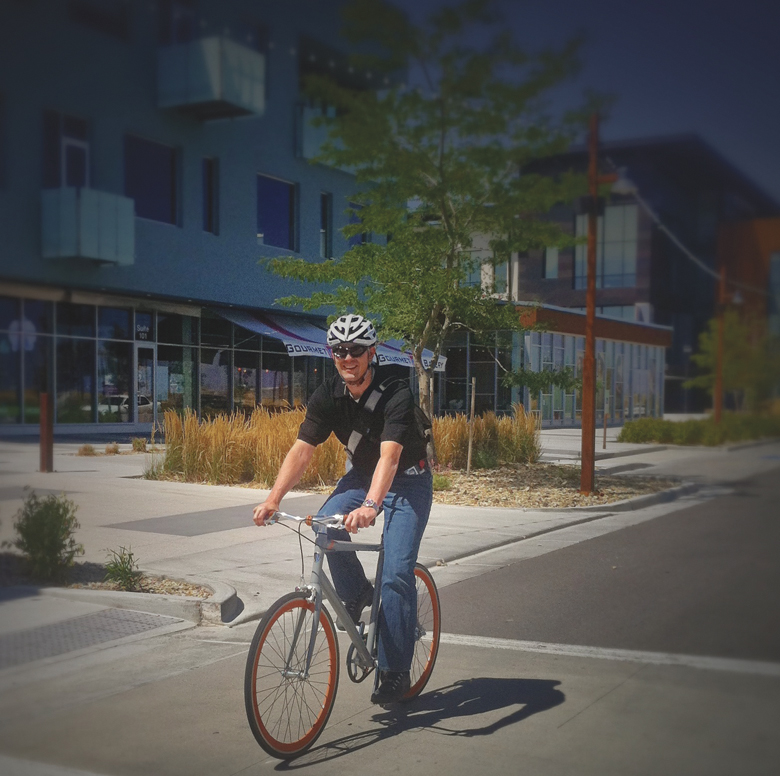
S.J.: I got the bike primarily for riding around town, but I have ridden it to work. I put a flip flop pedal on it so that I can clip in on longer rides, but I have to admit that 25 miles is a little far on the single speed. I put a leather saddle and grips that I picked up in Copenhagen a few years back. To be honest, I’m a sucker for simple clean design. It is the original Trek District. It is grey with a few orange pinstripes and chrome accents. It comes with a chain guard. If I were more technically inclined, I’d consider rebuilding the rear wheel with a Rohloff or Alfine rear hub. This would certainly put the bike up for longer commutes. I have not put a rack or fenders on it. The black stripe I get up my back when it is wet is a point of pride. I did pick up a messenger bag made of bicycle tubes to keep my change of clothes dry.
C.U.: Thanks Steve, I’m looking forward to Daybreak’s completion. The 50-mile commute is quite the challenge but I’m glad you have options with Trax.
S.J.: Great. You should ride your bike out there some time. We are working hard to connect our trails to others in the region.
Note: Correction and comments from previous articles: In some recent articles the numerical one-half for some reason did not print. For example the Urbie mirror in the September article about mirrors stated a 3 X 2 size when it is actually 3.5 X 2.5 inches. I will need to use decimals in the future. The dropping of the numerically written one-half also happened in the Germany touring article when mentioning tire sizes.
In addition, I forgot to mention in the “need to know” section of the Germany touring article that Germany is a cash society. Over 80%, perhaps 90%, of our purchases were transacted with cash. Discover Card is not taken at all in Germany.
It’s been a not-so-well-kept secret among endurance athletes for a few years.
Utah-based First Endurance’s PreRace powder has helped runners, cyclists and triathletes find that extra focus, extra alertness and, well, that extra buzz that helps give them a competitive boost at the start line and throughout the race.
Loaded with caffeine and other performance boosting ingredients, PreRace has found its way into the water bottles of athletes of all abilities. It is among the favorite pre-competition supplements on the market.
And yet, the folks at First Endurance knew it wasn’t perfect. Is popular as PreRace was, there was a fair amount of feedback from customers about what they didn’t especially like about the product.
As a result, First Endurance took its powdered powerkeg back to the lab and has rolled out the good stuff in capsule form.
“The biggest reason is that we got quite a bit of feedback from customers and sponsored athletes who wanted us to offer PreRace in capsules,” First Endurance vice president Mike Fogarty said. “They told us that, while they love the formula, they felt like the powder delivery system limited their ability to use the product in some situations.”
Whether it was the occasional mess of scooping the powder into a bottle or the bitter taste of the raw materials, PreRace came with a few drawbacks and the new capsules are designed to reduce serving size confusion while also coming in handy during those extremely long events such as Ironman distance triathlons or LOTOJA where multiple doses pulled out of jersey pockets come in extra handy.
“Capsules are a lot more convenient, easier to take, easier to carry and take and don’t require any planning or preparation (mixing beforehand, etc…), like using the powder does,” Fogarty said. “We also got feedback that some people were struggling with the taste of the powder. Having a capsule option is an easy solution for this.”
PreRace Caps still come with the 100 mg caffeine punch per serving dosage. Compare that to the 80 mg serving you get from a can of Red Bull or the 100 mg from the average trip to Starbucks and it’s no secret why athletes have had PreRace in their cabinets for years. You’d need nearly a three cans of Coca Cola to get the same buzz as PreRace provides. Throw in the 1,000 mg shot of Taurine, a 200 mg helping of Quercetin and 500 mg of bonded Citruline Malate and you’ll be ready to race.
This differs from the powdered PreRace not insignificantly. The powdered form packs 3,000 mg of Taurine, 1,000 mg Citruline Malate, 350 mg Quercetin and a 570 mg blend of the neuro stimulant proprietary blend (Caffeine, DiMethyl Amino Ethanol, Metabromine and Catechin) so any athlete using PreRace should carefully ease their way into use to determine personal tolerance.
Citruline Malate is, perhaps, one of the key ingredients that makes PreRace so effective. Studies, with resources provided on the First Endurance website, show the additive improves oxygen consumption, blood flow and increased exercise to exhaustion times.
Levi Leipheimer, a threat to land on virtually every stage-race podium in the world, is a fan of PreRace.
“I started using PreRace in the Tour de France…and take it in time trials,” Leipheimer said on FirstEndurance.com. “I don’t drink coffee so when I take PreRace, I really feel it, it’s a huge boost. I find even half a scoop is enough for me.”
Sponsors of the Radio Shack-Nissan-Trek, Bissell Pro Cycling and Specialized-Lululemon professional teams as well as the Pearl Izumi Ultra Running Team, First Endurance takes every precaution to ensure its products fit into UCI, WADA and USADA regulations.
First Endurance recommends taking three capsules 30-45 minutes before racing and adding “1-3 capsules for each two hours of exercise as tolerated and needed.”
Providing a chance to more accurately self-regulate servings was important to First Endurance.
“The final reason is that we also received feedback that some people weren’t taking a full scoop of the powder because they felt it was too intense and too powerful,” Fogarty said. “The capsule option gives these people flexibility in their personal dosage preferences.”
Starting with athletes already familiar with PreRace, First Endurance tried out the capsules to see how performance was affected. The ability to accurately limit doses proved to be a big hit with athletes who carefully dial in their training and competitive diet strategies.
“We tested the capsule prototypes with sponsored athletes and the feedback was overwhelmingly positive. After the sponsored athletes had the prototypes of the capsules, it was just a matter of time before other people found out we had a capsule prototype and asked us to make it available to them, too,” Fogarty said. “Because of the number of people that contacted us about the capsules, we decided to make it available on our web site to see just how popular they are.”
The response has been overwhelming.
“We still have a ton of athletes that want to use the powder so we plan on offering PreRace in a powder and also in a capsule form,” Fogarty said. “The powder is great for certain circumstances and the capsule is great for other situations.”
The introduction of the PreRace capsules has been such a success, First Endurance further modified the product and is now introducing PreRace Sustained Release capsules which are “designed to deliver a steady level of energy and mental acuity over an extended period of time,” First Endurance says. “Athletes benefit with an immediate and delayed release effect that reduces stomach irritability in the gut and extends the benefits up to five hours.”
Bike Utah began 2012 with re-vamped goals and objectives to better serve Utah and renewed focus on its mission to preserve and promote safe cycling which includes four primary areas.
Government Relations – As an advocacy organization Bike Utah’s primary goal is to organize cyclists to strategically address cyclist’s interests on a local and federal level. To positively affect change, Bike Utah’s first goal is to develop an informative relationship with policy-makers in the Utah State legislative body, executive branch, Utah Department of Transportation (UDOT), State Transportation Commission, and U.S. Congress.
Education/Encouragement – Bike Utah is working on improving two of the Five E’s the League of American Bicyclists (see http://www.bikeleague.org) use to award their Bronze, Silver, Gold or Platinum Bike Friendly Community awards. Within education Bike Utah will work with UDOT to promote the Road Respect campaign and Safe Routes to School program. Bike Utah also intends to develop relationships with the Utah Department of Health to encourage individuals to get out and ride. The 2012 Benchmark Report from the Alliance for Biking and Walking found that bicycling and walking levels fell 66% between 1960 and 2009, while obesity levels increased by 156%. Bike Utah aims to promote a healthier lifestyle and community through biking.
Infrastructure – Bike Utah will take the lead on developing a statewide infrastructure tracking system that will eventually map all trails, bike lanes, and bike paths in the state. In 2012, Bike Utah intends to identify existing and planned state bike infrastructure by surveying the four metropolitan planning organizations (Cache, Dixie, Mountainland Association of Governments, and Wasatch Front Regional Council) and working with communities within the state and publish an end of year report.
Building Statewide Advocacy Groups – Cycling advocacy is a grassroots effort that starts at the local level. As the statewide umbrella advocacy organization, Bike Utah’s goal is to identify and help develop new groups throughout the state. Bike Utah will develop and make available on its website a “how to” template for organizing a community bicycle advisory group.
These goals and objectives won’t be possible without the help of YOU, the cycling enthusiast. Please support Bike Utah’s efforts by either becoming a member at www.BikeUtah.org, volunteering with Bike Utah, or purchasing a “Share the Road” license plate at your local DMV.
Colorado Springs, Colo. (Feb. 27, 2012) –Following an unprecedented bevy of strong bids, USA Cycling has selected Boulder, Colo., Austin, Texas and Asheville, N.C. to host its 2014, 2015 and 2016 Cyclo-cross National Championships respectively.
“We had three outstanding bids making the only logical choice to award all three communities,” said USA Cycling Managing Director of National Events Micah Rice. “The decision to award one-year contracts for the championships will also help foster cyclo-cross racing in three distinctively different parts of the country.”
USA Cycling evaluated potential host cities using various criteria, including: accessibility, community support, course options, technical expertise and the organization’s commitment to volunteer recruitment, marketing and lodging. Each community will be required to host an international-caliber test event ahead of the national championships.
With a handful of top-caliber cyclo-cross events already in place at Boulder’s Valmont Bike Park, the northern Colorado cycling-hotbed was the obvious choice to host in 2014. The tried and true, permanent cyclo-cross course and facilities will offer the ideal structure to host the nation’s best.
“We are very excited that Valmont Bike Park will host the 2014 USA Cycling Cyclo-cross Nationals,” said Michael Eubank, the City of Boulder’s Valmont Bike Park director. “This is like the Super Bowl of cycling and tremendous news for Boulder—but especially for all of the local cyclists and bike organizations who were involved in creating this one-of-a-kind bike park. Valmont Bike Park was specifically designed and built to accommodate daily recreation users as well as USA Cycling racing events and we can’t wait to bring this event to Colorado.”
Austin’s Zilker Park will then host the 2015 version of the USA Cycling Cyclo-cross National Championships. The beautiful urban park will offer an exciting venue near the heart of downtown Austin, a thriving city with a strong cycling community recently rated one of the Top 20 Most Bike-Friendly Cities in America by Bicycling Magazine.
Austin is pumped, declared Matthew Payne, executive director of the Austin Sports Commission. “This event will be another chance to showcase our dynamic city to cyclo-cross athletes all over the country. Austin is long overdue for an event of this caliber and we’re excited about working closely with USA Cycling officials and sharing this with our strong cycling community.
Asheville, N.C. and the historic Biltmore Estate will be on tap to bring the cyclo-cross national championships to the southeast for the first time in 2016. The national championship course will be set amongst the 8,000 acres of America’s largest home, nestled in the mountains of western North Carolina.
“Asheville is pleased to be chosen as the host for the 2016 USA Cycling Cyclo-cross National Championships,” said Ben VanCamp, Asheville-Buncombe Regional Sports Commission senior advisor. “We are looking forward to showcasing our strong and supportive cycling community.”
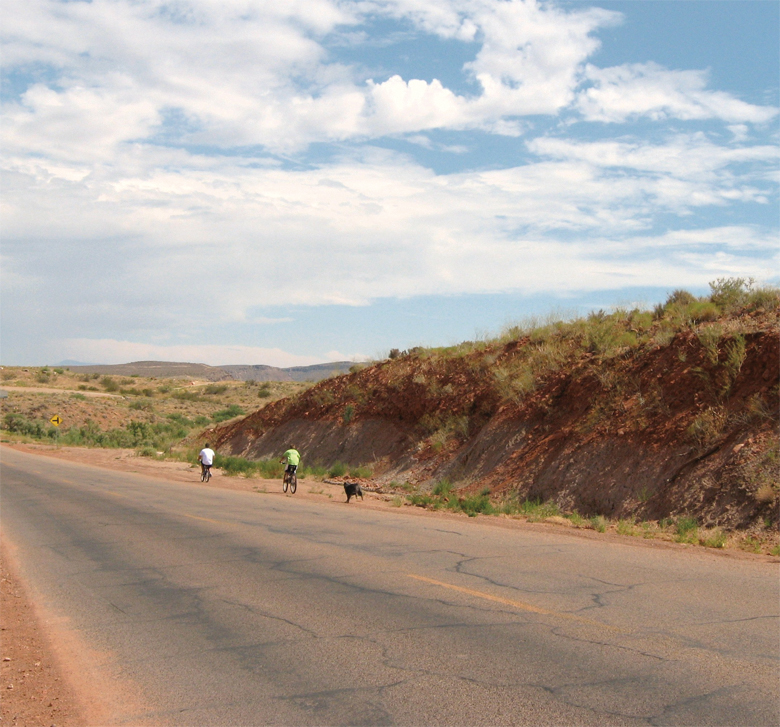
A dog joins the paceline on Santa Clara Drive near Ivins. Photo: Wayne Cottrell
By Wayne Cottrell, From the Fall/Winter 2011 Issue
The Beaver Dam Mountains Classic is a 66.9-mile, out-and-back ride through mountainous and desert terrain. The ride starts in Santa Clara, ascends the Beaver Dam Mountains in extreme southwestern Utah, and then descends through an increasingly barren landscape, crossing into Arizona before entering the settlement of Beaver Dam. The return route reverses the outbound route. The elevation ranges from 1,880 feet in Beaver Dam, Arizona, to 4,721 feet at the crest of “Utah Hill,” in the Beaver Dam Mountains. The elevation in Beaver Dam, Arizona, is lower than Utah’s lowest elevation, and is the lowest altitude reached by any course in Road Biking Utah. The region is typically dry, hot, and windy, especially during the summer months, so be sure to bring plenty of fluids. Water can be replenished at the Dam Store or Dam Deli at the turnaround; otherwise, be self-sufficient.
The Beaver Dam Mountains are located in the extreme southwest corner of Utah, straddling the border between Utah and Arizona. The mountains are a collection of contrasts, at times jagged and at other times gently sloping; at times populated with trees and scrub and at other times barren. Also, despite the peak elevation of 7,680 feet (West Mountain), the region immediately adjacent the mountains includes Utah’s lowest elevated land. Regarding the trees, a large sector of the mountains is designated as the Joshua Tree Natural Wilderness Area. The Joshua Tree is of the yucca genus, and is found almost exclusively in the Mojave Desert. The name was concocted by Mormons who crossed the Mojave during the nineteenth century; the unusual shape of the tree reminded them of a biblical story in which Joshua reaches his hands up to the sun. The tree is known for its heavy branches, slow growth, and longevity. Animals indigenous to the Beaver Dam Mountains area include bighorn sheep, desert tortoise, raptors, and lizards.
Start at Santa Clara City Park (also referred to as Canyon View Park), at 1400 Canyon View Drive in Santa Clara (adjacent the Spencer Gunn Memorial Fields). Santa Clara is located to the west of St. George, in southwestern Utah. The terrain is mountainous, with one long climb and descent outbound, followed by the same inbound. To get there from I-15, head west on St. George Boulevard to Bluff Street. Turn right onto Bluff Street, then left onto Sunset Boulevard. Head west on Sunset Boulevard to Canyon View Drive. Turn right onto Canyon View Drive; look for the City Park on the right, just beyond the high school signs.
Santa Clara, a suburb of St. George, had a population of 6,866 in 2008. The city is named after the river that flows through the city on its course from the Pine Valley Mountains to the Virgin River. The name also refers to the region’s good weather. Head south on Canyon View Drive to Santa Clara Drive. Turn right at the traffic signal. Enter the Santa Clara Historic District at mile 0.8. There are a number of historic buildings along Santa Clara Drive, including the George and Bertha Graff House at 2865 Santa Clara Drive, the Frederick and Anna Maria Reber House at 2988–2990 Santa Clara Drive, the Hans George Hafen House at 3003 Santa Clara Drive, the Santa Clara Relief Society House at 3036 Santa Clara Drive, the Santa Clara Tithing Company at 3105 Santa Clara Drive, and the Frederick and Mary F. Reber House at 3334 Santa Clara Drive. Also, the Jacob Hamblin House (the Mormon missionary) is just off Santa Clara Drive, near the western end of the district.
The road curves right at mile 1.8, leaving the historic district. Begin climbing at mile 2.0. The gradient eases at mile 2.8, although the road continues uphill. Note the reddish color of the ground in this area. The imposing mountains on the right are named the Red Mountains. The highway traverses the western edge of Ivins starting around mile 3.9. There is a short descent at mile 4.8, followed by rollers. Enter the Shivwits Paiute Reservation at mile 6.4. The highway crests at mile 7.5, followed by a descent to a crossing of the Santa Clara River. Beyond the crossing, the highway starts to wind and climb. Stay left at the junction at mile 9.3, toward Old Highway 91. You are now following the Old Spanish Trail. Note the red rocks on the surrounding hillsides (“red rocks” is a theme heard and seen repeatedly throughout Utah). The highway continues to roll upward through this landscape; there are several false crests, and the roadway width varies between two and three lanes to accommodate climbing segments. Enter the Beaver Dam Mountains at mile 13.2—from here, the hillsides “close in” on the highway as it winds toward the summit. During my field visit in July 2008, most of the surrounding trees were blackened, as evidence of a recent wildfire. Exit the Shivwits Paiute Reservation at mile 15.2. The trees and desert scrub become denser around mile 16.4, an indicator of the higher elevation. The highway crests at mile 16.9; a long descent begins here.
The passage through the Beaver Dam Mountains is along Old Highway 91, a north-south route that formerly stretched from California to Canada. Although portions of the highway currently exist—designated as US 91—most of the older segments have been replaced by I-15. The route through the mountains also follows the Old Spanish Trail, used in the early nineteenth century to connect Santa Fe, New Mexico (which was then part of Mexico), with Los Angeles, California. The route avoided the extremes of the Mojave Desert and established a trade route between the United States and Mexico.
The landscape becomes increasingly barren around mile 19.3. The vista is wide and encompassing. The mountains in the far distance include Bunkerville Ridge and the Black Rock and Virgin ranges. The floor of the Virgin Valley can be seen clearly below; the highway eventually takes you there. Enter the Joshua Trees Wilderness Area around mile 20.7. These protected yucca trees have an unusual shape—nearly all branches, with very little trunk. The trees can survive the harsh desert environment, provided that there is some rainfall and at least one winter freeze. The trees are pollinated entirely by the yucca moth. Enter Arizona at mile 26.2; you are now in Mohave County, on CR 91. The downhill gradient eases at mile 28.4. After a long, straight segment, the highway finally bends right at mile 31.6. Enter the Beaver Dam settlement at mile 32.2. The I-15 freeway is less than 2 miles from here. Beaver Dam, and the immediately adjacent Littlefield settlement, are located about 10 miles from the booming border town of Mesquite, Nevada. Turn around at Old Pioneer Road, just past the bridge over Beaver Dam Wash, adjacent the Dam Store. Note that the Dam Deli and Dam Bar are next door, making this a dam good place to turn around and restock on fluids. (Please consult Road Biking Utah for a description of the return ride, and for further historic details about the route).
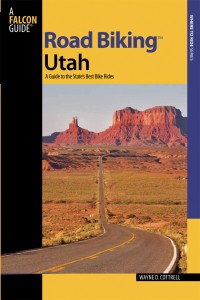
Excerpted from Road Biking Utah (Falcon Guides), written by avid cyclist Wayne Cottrell. Road Biking Utah features descriptions of 40 road bike rides in Utah. The ride lengths range from 14 to 106 miles, and the book’s coverage is statewide: from Wendover to Vernal, and from Bear Lake to St. George to Bluff. Each ride description features information about the suggested start-finish location, length, mileposts, terrain, traffic conditions and, most importantly, sights. The text is rich in detail about each route, including history, folklore, flora, fauna and, of course, scenery.
Wayne Cottrell is a former Utah resident who conducted extensive research while living here – and even after moving – to develop the content for the book.
RIchard Schwinn of Waterford BIcycles. Photo: Courtesy Waterford Bicycles
By Lou Melini
There are over 300 bike companies (past and present) in the world according to Wikipedia. The most recognizable name from that group that symbolizes American bicycling manufacturing is Schwinn. If you are old enough, you may remember the sleek precision built Paramount. The Schwinn Paramount was one of the most coveted bikes by racers and bike aficionados all across the country. I had the pleasure to converse with Richard Schwinn who has continued the tradition of precision built bicycles through Waterford Bicycle Company. Waterford is located southwest of Milwaukee, Wisconsin in the town of Waterford, Wisconsin. On the web it’s Waterfordbikes.com.
Cycling Utah: I see on your website Schwinn catalogs going back to 1895. Is that when Schwinn was founded?
Richard Schwinn: Yes. Schwinn was originally named, Arnold, Schwinn and Co, because Arnold was the money guy and Schwinn was the engineer. Arnold had top billing.
C.U.: What is your relationship to Schwinn?
Richard Schwinn: My great grandfather Ignaz immigrated to the United States after being an engineer in both piano and bicycle factories. Ignaz’ father, Frank had been a master carpenter, and I had the honor of playing his masterpiece, a pump organ.
C.U.: Do you have other family members also in the bike business?
R.S.: Our children both work in the bike industry. Our son works for SRAM and our daughter works for Quality Bike Parts, designing their All-City line of bikes. The husband of one of my cousins still sells bikes for Schwinn – and does a terrific job of it. Outside of that, the family’s pretty much out of the industry.
C.U.: Do you have relatives remaining in Germany in the bike business?
R.S.: The German side of the family never touched bikes. They are farmers and regular people living about 40 miles from Frankfurt. The town of Hartheim has several dozen Schwinn cousins living there – but the bike business is but a footnote to them. The biggest town hero is the guy who designed the lens for the camera that went to the moon.
C.U.: When and how did Waterford come into existence?
R.S.: Waterford started in 1993 when Marc Muller and I took over Schwinn’s Paramount Design Group (PDG) factory in Waterford, Wisconsin. Mark had been the head of PDG, which was Schwinn’s “Skunk Works”- style R&D department.
C.U.: How would you describe Waterford today regarding its manufacturing capability compared to other manufacturers in America?
R.S.: Waterford is one of the largest framebuilders in America, and the largest producer of steel frames and forks. In addition to our showcase Waterford custom frames and forks, we have a line of economical custom bikes named Gunnar. In addition, we build for companies like Rivendell, Terry, Volae (recumbents) and Rene Herse. We even build and occasional Paramount for our friends at Schwinn.
C.U.: What can the customer expect with a Waterford built bike?
R.S.: Waterford is all about superior craftsmanship and custom design. When you need a bike built specifically for you, we’re the place to go. There are lots of people who’ve started building custom steel bikes, but we offer relatively quick order turnaround – typically 6 weeks – instead of the 6 months to 2 years for the little builders. We also have capabilities for a wide range of designs from hot road race and time trial bikes to loaded tourers and commuter bikes.
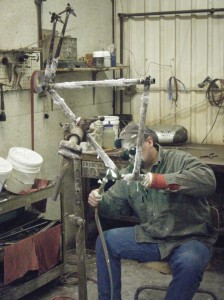
EJ Muller is Waterford's top brazer. Photo Courtesy Waterford Bicycles.
C.U.: What were some of the steel tubing used in bikes say 30 -40 years ago and how has steel tubing evolved?
R.S.: Up until about 35 years ago, if it was good steel, it was pretty much Reynolds 531. Reynolds was the company that invented tube butting (where the walls in the middle of the tube are thinner then the tubing by the ends). In the 30’s, Reynolds introduced high alloy aircraft tubing, which they called 531. No, there’s no formula behind the name. It’s just a name. 531 dominated the pro cycling world until the early 70’s when Italy’s Columbus started to challenge them. Reynolds then introduced a heat treated version of 531, named 753. Heat treatment jacks up the strength of the tube allowing Reynolds to lighten them up. The process is quite tricky, so they suffered a number of early disasters. By the time Waterford came into existence, they’d gotten it down to a science and we were able to build a terrific palette of tubes for use with the first-generation Waterfords.
In the mid-1990’s, Reynolds had introduced a new generation of steels known as air-hardening alloys – called 853. Higher in performance than 753, it was also more tolerant of TIG-welding. TIG welding has revolutionized bike building by dramatically increasing our design and fabrication flexibility. 853 was a real hit, as was the American-made version, True Temper’s OX Platinum. We created an entire brand – Gunnar (named for our recently deceased dog) – built with TIG-welded, heat treated tubing. By 2002, Waterford added TIG-welded designs to its regular line-up. Things have been rockin’ ever since.
Four years ago, Reynolds introduced a new high performance stainless steel alloy- 953. It has many of the same properties as 853, as well as corrosion protection. We expect this and similar alloys to grow in the coming years.
C.U.: What tubing is used now at Waterford and do you use specific types of steel tubing or thicknesses for specific applications? For example, what would you use if a customer was going to use the bike for commuting applications vs. touring vs. riding century rides.
R.S.: You heard me use the term, “palette” of tubes. We stock 60-80 different steel-alloy tubes to support a wide range of riding. Many are custom tubes – dimensions we specify to Reynolds and True Temper. Others are “off the shelf”. The combination lets us tune the ride for each individual rider. Commuters and tourers need beefier tubes to provide a solid, efficient ride while carrying a load. Other riders, like bike racers and club riders, appreciate a lighter blend. We factor in rider size, weight, preferences and the bike’s intended use when designing a bike frame.
C.U.: Waterford makes bikes both in stock sizes and custom sizing? What is the best way to order a bike from Waterford?
R.S.: Waterford is now pretty much a custom bike house. We still publish geometry tables, but these days we design from the ground up. That way, we figure out how we can meet your needs, instead of you figuring out if you can fit what we have to offer. If you go on-line, we have an extensive three page questionnaire that walks you through the steps in designing your own bike. We divided the process into the four “F’s” – function, fit, feel and finish. By function, we mean designing around your intended use and your designed components. That means things like tire sizes, derailleur systems, brakes, fenders, racks and so on.
With fit, we depend very much on talented fitters in various areas. You guys are lucky because you have Mike Hanseen in your area. He’s one of the most talented fitters in the country and his shop, Millcreek Bicycles, is right in Salt Lake City.
The concept of “feel” means handling and stiffness. Handling is also tied to fit, so it’s important that we settle on the right fit before we tune the ride qualities. If you look at the Waterford web site, you’ll see all sorts of models – Road Race, Stage Race, Road Sport and so on. We now treat these really as handling platforms.
Finally, there’s finish. It’s amazing how much people struggle through the issues of color and styling. Our feeling is that if you like the ride, the color, no matter what it is, gets prettier with every pleasurable mile.
Many people might think the order form way too daunting. It’s really designed for people like Mike to use as a checklist for working with their clients. We find lots of riders who use the form just to think through what they want for their next Waterford.
The Gunnars are our stock bikes. Technologically, they are similar to our 14-Series Waterfords. We’ve put together a nice range of designs to fit nearly the full spectrum of riding today. This includes cyclocross, road racing, light and heavy touring plus a range of off-road hard-tail designs. We’ve recently added disc brake cross and commuter designs which offer great tire clearance and wet weather braking.
C.U.: Since I do commuting and touring articles, what should one look for in a commuter bike and a touring bike?
R.S.: Commuter and touring bikes are in pretty much the same part of the design spectrum. They should be sturdy, stable and functional. Reliability is the key. We err toward a more upright riding position, and, in general, we like drop bars.
C.U.: People may not understand that there is more to Waterford than building bikes. What does Waterford do to promote cycling?
R.S.: First, we support the Bicycle Federation of Wisconsin and their efforts to build cycling infrastructure in the state. Second, we also support our local bike club, helping out with their annual fundraising ride. Finally, we put on three rides from the factory each summer. We work with area bike clubs to put on the ride, which are free and open to the public.
C.U.: How would you describe the riding where Waterford is located? What is your favorite ride?
Our area is ideal for cycling. You can ride to the city of Milwaukee if you want, but to the west and south is a network of rustic roads through the rolling hills of the southern Kettle Morraine area. We don’t have the dramatic scenery and climbs you have in Utah, but we have a wide variety of nice routes in every direction from the shop.
Favorite ride? I’ve been blessed with so many great riding experiences – whether it’s the Elroy Sparta trail in western Wisconsin with its 3/4 mile tunnel, off-roading in the Needles District at Canyonlands National Park or even weaving in and out of traffic on a congested evening on the Strip in downtown strip in Las Vegas.
C.U.: Schwinn bicycles did their manufacturing at one time entirely in America. How large of a facility was Schwinn?
R.S.: Schwinn’s factories got to be pretty big in the 1970’s. I’d guess that Schwinn at one time had well over a million square feet under roof in their Chicago factory compared to the 8000 sq. feet Waterford has.
C.U.: Do you see bike manufacturing returning to the U.S.? What would it take to bring more manufacturing jobs back to the U.S. in bike industry?
R.S.: It’s ironic that America is seen as the world leader in bicycle design – from race bikes to utility bikes. It’s hard to imagine rebuilding meaningful production capacity without a number of structural changes in our economy and our society. We’re primarily a consumption and investment driven economy, as opposed to our competitors in Taiwan, China and India, who emphasize exports and economic efficiency. We want low prices and high returns on our investments. They want full employment and the efficiency needed to earn a vibrant export business. This issue transcends political parties, so the partisan bickering we’ve endured for the past 20 years serve our competitors more than it serves us.
Little niche players like ourselves can eke out a living, but don’t look for any shifts until we see a shift back to a more self-sufficient and even export oriented economic philosophy.
C.U.: While I was in Europe, nearly all of the bikes were very utilitarian with fenders, racks, and lights. Do you think that that could happen here in America?
R.S.: There are plenty of race bikes, riding clubs, and all the kinds of riding popularized in the big bike rags. The race scene in London is way bigger and more intense than in a place like Chicago. A Tuesday night bike race there might have 250-300 riders, not 20-30. The same goes for mountain biking, cyclocross and touring.
What you see in Europe is a commuter world we are just starting to see here. This is particularly true in areas with good cycling infrastructure, like most of the German and Scandinavian cities. Since it’s easy and safe to ride, and since it’s hard and expensive to drive, people are biking. It’s as simple as that. The cities have figured out that by converting car into bike trips, the quality of life goes up and the cost of government goes down.
Many US cities are doing the same and getting the same results. Just this year, Chicago has created protected commuter areas, with barriers from cars. That’s quite a breakthrough. Interestingly enough, weather is not a factor. The biggest biking cities are in the northern half of the country. Minneapolis has an incredible bike commuter population – winter and summer. That’s because it has dedicated transportation corridors that are maintained just like other roadways.
C.U.: How have bike sales been for you and the industry?
Bike sales have been cyclical since the early 1970’s. There have been shifts, but bike sales per capita have actually fallen. Average bike revenue has gone up, though, and the total miles ridden have also gone up – just by a somewhat smaller number of “riders”.
I remember the “boom” days of the 1970’s, seeing people going for a few rides and then getting frustrated by dangerous traffic, flat tires and sore butts. There are millions of unused bikes hanging in garages throughout our nation. In 1990, this pattern was still true, with 80% of people who call themselves cyclists riding an average of only 15 miles per year. With the growing US cycling infrastructure, the miles per bike will continue to rise. Because the bikes are also of better quality, the need to replace them is not as great as it was 20 or more years ago. So, sales may not be going up, but companies like ours can benefit from the trend toward better bikes.
C.U.: Thank you Richard for your time. I should get out on one of my Waterfords and go for a ride.
January 18, 2012 – WASHINGTON, D.C. – The U.S. Consumer Product Safety Commission, in cooperation with the firm named below, today announced a voluntary recall of the following consumer product. Consumers should stop using recalled products immediately unless otherwise instructed. It is illegal to resell or attempt to resell a recalled consumer product.
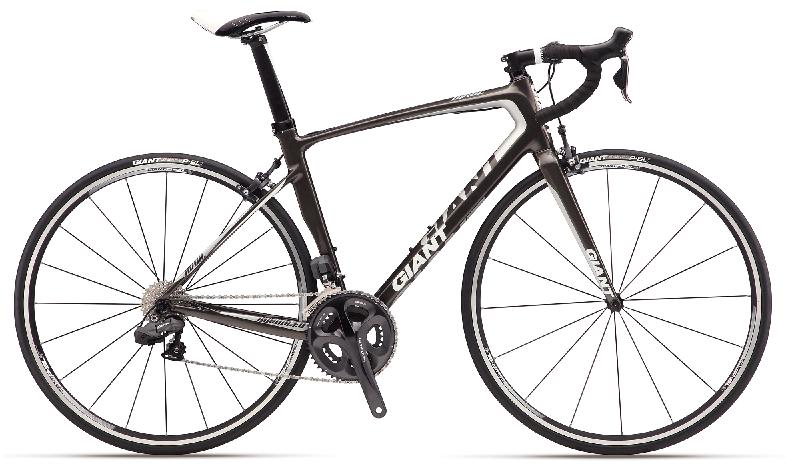
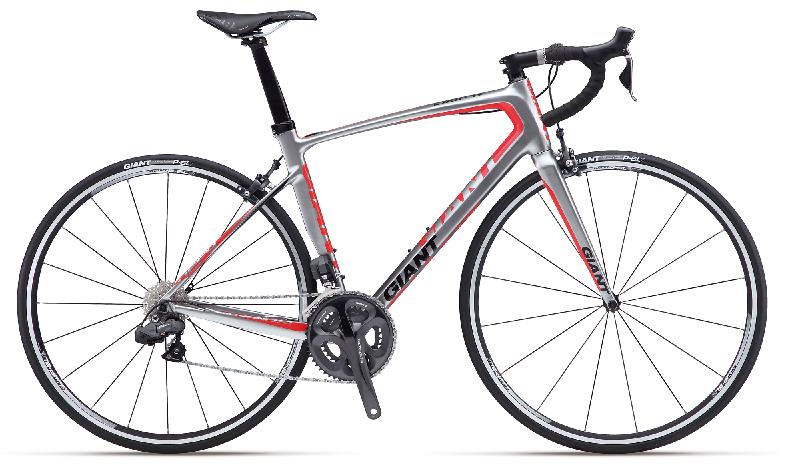
Name of Product: 2012 Model Year Giant Defy Advanced and Avail Advanced Bicycles
Units: About 900
Importer: Giant Bicycle, Inc., of Newbury Park, Calif.
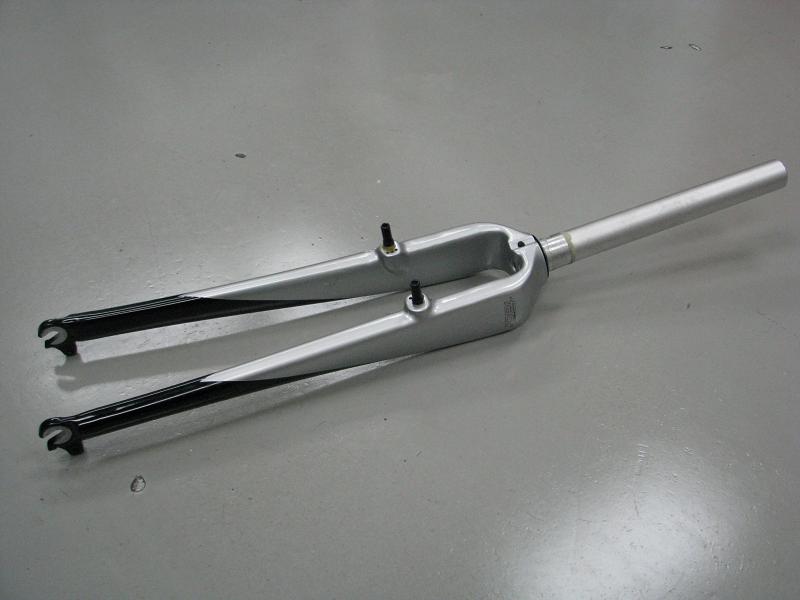
Hazard: The fork can crack, posing a fall hazard to riders.
Incidents/Injuries: None reported
Description: This recall involves all 2012 model year men’s Giant Defy Advanced 0, 1 and 2 model bicycles and the women’s Giant Avail Advanced 0, 1, and 2 model bicycles. “Giant” and the model name are printed on the bicycle. The bicycles are various colors and sizes.
Sold by: Authorized Giant Bicycle dealers nationwide from August 2011 through November 2011 for between $3,000 and $4,550.
Manufactured in: Taiwan
Remedy: Consumers should immediately stop riding the recalled bicycles and contact any authorized Giant Bicycle dealer for a free inspection and replacement of the fork.
Consumer Contact: For additional information, contact Giant Bicycle toll-free at (866) 458-2555 between 9 a.m. and 4 p.m. PT Monday through Friday or visit the firm’s website at www.giant-bicycles.com/en-US/
WASHINGTON, D.C. – The U.S. Consumer Product Safety Commission and Health Canada, in cooperation with the firm named below, today announced a voluntary recall of the following consumer product. Consumers should stop using recalled products immediately unless otherwise instructed. It is illegal to resell or attempt to resell a recalled consumer product.
Name of Product: Mountain Bicycle Handlebar Stem
Units: 213 in the United States; 83 in Canada
Manufacturer: Post Moderne Corporation, Taiwan
Importer: Shimano American Corporation, Irvine, Calif.
Hazard: The bolts holding the front plate of the stem to the stem body can be pulled out of the threads while the bike is being ridden, causing the rider to lose control of the bike and fall.
Incidents/Injuries: Shimano has received one report of an incident in which the rider fell and received torso and arm injuries.
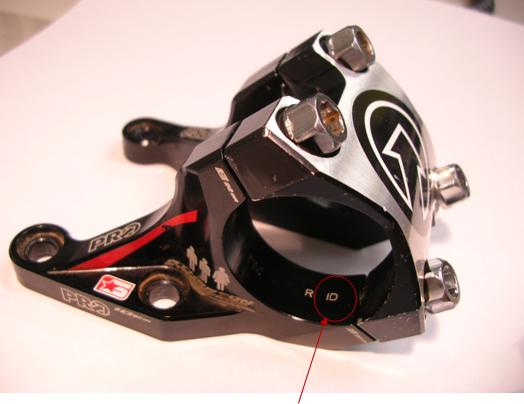
Description: This recall involves PRO Atherton direct mount bicycle handlebar stems with the model number PRSS0049 and supplied from October 2009 to November 2010. The stem consists of a metal alloy body and front plate and four alloy bolts. The stem body is black with red markings. It has the word “PRO” in four places on the sides and the word “Atherton.” The front plate is black and silver with the PRO logo in the center. The model number is located on the barcode sticker on the backside bottom of the packaging material. Stems with the following identification codes are being recalled: HH, HJ, HK, HL, IA, IC, ID, IE and IF. Some of these stems were outfitted with 18mm bolts instead of 21mm bolts. The identification code is located on the stem body where the handlebars are seated.
Sold at: REI, bicycle specialty stores and dealers nationwide from October 2009 to November 2010 for about $120.
Manufactured in: Taiwan
Remedy: Consumers should immediately stop using bicycles with PRO Atherton handlebar stems and take them to an authorized retailer to determine if the stem on their bike is subject to the recall. Authorized retailers will replace 18mm bolts with 21mm bolts free of charge.
Consumer Contact: For more information and to find an authorized retailer, contact Shimano American Corporation at (800) 353-4719 between 8 a.m. and 5 p.m. PT Monday through Friday, or visit the company’s website at www.shimano.com
February 21, 2012 – WASHINGTON, D.C. – The U.S. Consumer Product Safety Commission, in cooperation with the firm named below, today announced a voluntary recall of the following consumer product. Consumers should stop using recalled products immediately unless otherwise instructed. It is illegal to resell or attempt to resell a recalled consumer product.
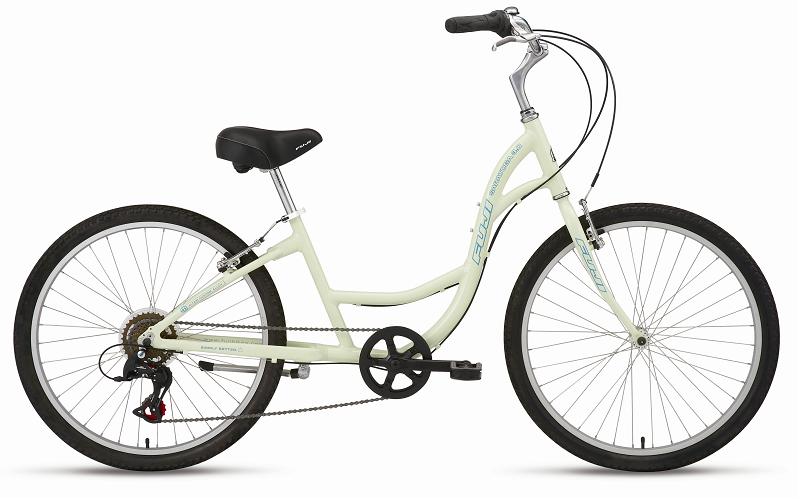
Name of Product: Fuji Saratoga Women’s Bicycles
Units: About 10,500
Importer: Advanced Sports Inc. of Philadelphia
Hazard: The bicycle’s frame can break in the center of the downtube during use, causing the rider to lose control and fall.
Incidents/Injuries: The company is aware of 12 reports of bicycle frames breaking, including two injuries, a head laceration requiring 20 stitches and scrapes and bruises.
Description: The recalled bicycles are Fuji women’s cruiser bicycles. The 2008 through 2010 models Saratoga 1.0, Saratoga 2.0, Saratoga 3.0 and Saratoga 4.0 are included. The bicycles are various colors. “Fuji” and “Saratoga” alone or “Saratoga” along with the model number is printed on the frame of the bicycle. Serial numbers beginning with ICFJ7, ICFJ8, ICFJ9, ICFJ10 and ICFJ11 are included in this recall. The serial number is located on the bottom of the frame near the crank.
Sold by: Specialty bicycle stores nationwide from November 2007 through December 2011 for between $300 and $500.
Manufactured in: China
Remedy: Consumers should stop riding the recalled bicycle immediately and return it to any authorized Fuji Bicycle dealers for a free replacement frame.
Consumer Contact: For additional information, consumers should contact Advanced Sports Inc. toll-free at (888) 286-6263 between 8 a.m. and 4:30 p.m. ET Monday through Friday or visit the company’s website at www.fujibikes.com
WASHINGTON, D.C. – The U.S. Consumer Product Safety Commission, in cooperation with the firm named below, today announced a voluntary recall of the following consumer product. Consumers should stop using recalled products immediately unless otherwise instructed. It is illegal to resell or attempt to resell a recalled consumer product.
Name of Product: 2012 Bicycles with Advanced Group carbon forks
Units: About 460 (About 14,200 were recalled in September 2011)
Distributor: Specialized Bicycle Components Inc., of Morgan Hill, Calif.
Manufacturer: Advanced Group of Taiwan
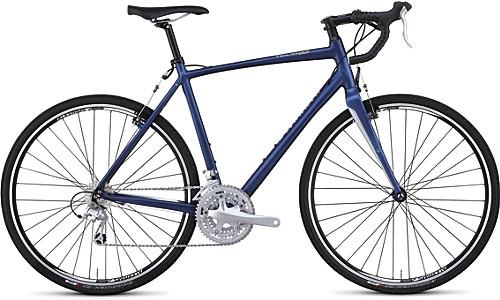
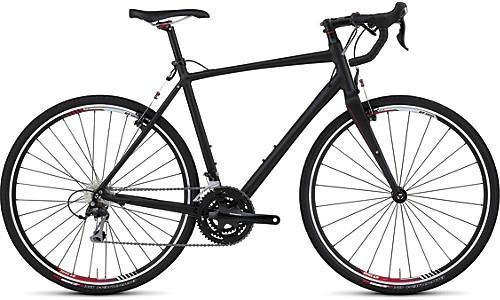
Hazard: The brake component housed within the bicycle’s carbon fork can disengage from the fork and allow the brake assembly to contact the wheel spokes while rotating, posing a fall hazard.
Incidents/Injuries: None
Description: This recall involves the 2012 Tricross Sport and 2012 Tricross Comp model bicycles. The bicycles are various colors and have the brand name “Specialized” on the lower front frame tube. The model name “Tricross Sport” or “Tricross Comp” is on the top tube.
Sold at: Authorized Specialized retailers nationwide from June 2011 through November 2011 for between $1,250 to $2,000.
Manufactured in: Taiwan
Remedy: Consumers should immediately stop riding these bicycles and return them to an authorized Specialized retailer for a free repair or replacement carbon fork.
Consumer Contact: For additional information, contact Specialized toll-free at (877) 808-8154 from 8:00 a.m. to 5:00 p.m. PT Monday through Friday, or visit the company’s website at www.specialized.com
WASHINGTON, D.C. – The U.S. Consumer Product Safety Commission, in cooperation with the firm named below, today announced a voluntary recall of the following consumer product. Consumers should stop using recalled products immediately unless otherwise instructed. It is illegal to resell or attempt to resell a recalled consumer product.
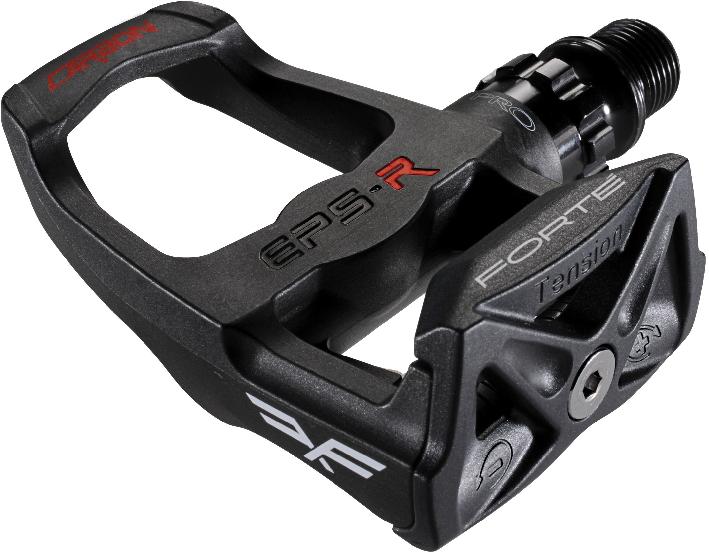
Name of Product: 2011 Forté Pro Carbon Road Pedals
Units: About 2,900
Importer: Performance, Inc, of Chapel Hill, N.C.
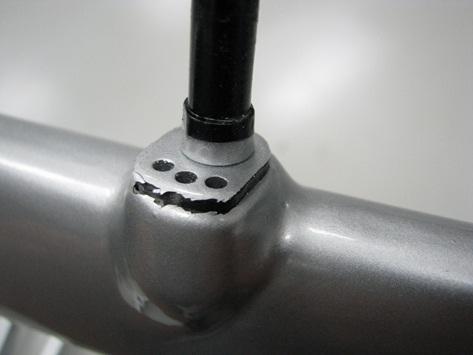
Hazard: The pedal body can break or crack during use, causing the rider to lose control and posing a fall hazard.
Incidents/Injuries: Performance has received three reports of the pedals breaking. No injuries have been reported.
Description: Forté Pro Carbon Road Pedals are sold in sets of two bicycle pedals that attach to cycling shoes. The pedal body is black and is made of lightweight carbon injected thermoplastic. The axle is a black and made of chromium molybdenum steel with a black steel axle. The front, top of the pedal has “Carbon” printed in red; the top middle has “EPS-R” embossed in the body with the “R” in red and on the top rear of the pedal the word “Forté” printed in white. The outer edge of the pedal has the Forté logos, crossed F’s, in white. The catalog number, 50-8128, is used in all catalogs.
Sold at: Performance’s website, catalogs and Performance retail stores from February 2011 through October 2011 for about $100.
Manufactured in: Taiwan
Remedy: Consumers should immediately stop using these bicycle pedals and contact Performance to obtain a full refund.
Consumer Contact: For additional information, contact Performance at (800) 553-8324 between 9 a.m. and 8 p.m. ET Monday through Friday, or visit the company’s website at www.performancebike.com
DZNuts InHeat will keep your legs warm on cold rides.
By Jared Eborn
So it’s a little chilly outside when you intend to start your winter ride. But the forecast says it might warm up nicely before too long and, if possible, you’d really rather not hit the road with too many extra layers.
DZ Nuts, the makers of that tingly chamois cream Dave Zabriskie simply can’t live without, have you covered – literally if you’d like.
DZ Nuts InHeat, an embrocation cream which comes in three intensities, will get you on the road and keep the legs warm when the temperatures go south.
“This pro-grade embrocation combines both the traditional components and qualities of the Belgian “home brewed pastes” with modern science to create a medicated liniment that loosens and prepares muscles for maximum exertion, as well as providing warmth, protection, and comfort during the most nasty weather conditions,” states the product description at DZ-Nuts.com. “Developed and tested on the European roads by Garmin Transitions and Columbia HTC professional cycling teams to be an essential training and racing tool.
With temperatures in the low 40s when my cyclocross race at Ogden’s Fort Buenaventura, I decided to put the Medium intensity to the test. Rubbing the embrocation into the legs about 30 minutes prior to the race, I immediately felt the warming sensations I expected.
While many other races in my flight wore leg warmers or tights, I felt comfortable with bare skin.
After the race began and I splashed through the numerous mud puddles and stretches of standing water as a light rain fell, my legs never felt the elements. They got plenty dirty, but never uncomfortable, unlike a handful of other racers who commented on the chilly conditions after the suffering was done.
Some 45 minutes after the race, while driving home in the warmth of my car, the InHeat was still in full effect. In fact, I had to redirect the fan away from the legs to avoid overheating.
The cyclocross experience reinforced that of my LOTOJA experience a few weeks earlier.
Unsure of how the conditions might be for the early hours of LOTOJA when the race begins in the dark and rolls through the frequently frigid Cache Valley and Idaho’s Emigration Canyon into Bear Lake, I opted to apply a layer of embrocation instead of bulking up with the added layers and weight of knee warmers.
In addition to not needing the layers because the temperatures were moderate at start time, my legs felt invigorated by the added sensations the InHeat provided. By the time we reached Emigration Canyon, my legs were grateful for the added warmth as the sun had not yet brought the canyon road out of its early fall chill.
Though more expensive than many other embrocation creams found at your local bike shop – DZ Nuts InHeat is listed at $20 for a 6 ounce tube of the Low and Medium intensities and $22 for the High variety – the product is a valuable addition to any cyclists winter biking arsenal.
The folks who represent Utah across the continent in our nation’s capital like to ride bicycles. But the Republican-dominated Utah congressional delegation’s fondness for two-wheeling doesn’t mean it will support guaranteed federal funding for bicycling next year. In fact, quite the contrary: their philosophy means being tight with federal dollars and giving states maximum leeway with the federal dollars they get. This means they don’t favor guaranteed funding for bicycle-related projects that have come from the U.S. Department of Transportation for years.
Cycling Utah contacted the Washington offices of Utah’s two senators and three representatives to ask how they stood on bicycling-related issues facing Congress. We also asked if the representatives and their staffs enjoyed bicycling themselves. None of the legislators consented to be interviewed. Some of the staffs answered some of our questions by phone or email.
Like Utah, the Washington, DC area offers plenty of opportunities to ride. Just in the last two years, the city has been becoming an example to other urban communities by building bike lanes through the downtown area to encourage cycling to work. Even Pennsylvania Avenue, the nation’s main street that connects the Capitol to the White House, includes new bike lanes right in the middle of the road. And the city and environs include multiple bike trails among the national monuments, along the Potomac River, on abandoned rail lines, and in national and local parks.
But funding for bicycle projects has become endangered in this tight budget era. The largest threat comes from House Republicans who have drafted a surface transportation reauthorization bill to replace current law. It will come up next year and the plan involves removing the 10 percent setaside of highway funding for Transportation Enhancements. The Enhancements program has become by far the largest source of federal aid that benefits bicycle infrastructure. Utah got almost $8 million in FY 11. Since the program’s inception in 1992, the state has spent most of its Enhancements money on bicycle and pedestrian projects. If Congress approves the measure, states could – but would not be required to – spend any of their federal highway money on bicycling and pedestrian projects; they could spend it all building and maintaining highways. It would all be up to the Utah Department of Transportation (UDOT).
So where does the Utah delegation stand (or sit if we’re talking about a bike seat)? Do they appreciate biking firsthand? And what about the staffers who work for them in Washington? Many, it seems like to enjoy the fruits of the many bicycle facilities in the Washington area where they live.
Senior Senator Orrin Hatch, a Republican now in his 6th term, voted to make the Enhancements setaside optional during a failed effort to eliminate the earmark in the Senate two years ago. But he is a member of the Senate Bike Caucus.
(Congressional caucuses are non-partisan groups that usually meet only a few times a year to discuss issues. Generally, most attendees are staff. Senators and representatives can sign up for as many as they want though few will attend many meetings. Topics range from brain injury to zoos and aquariums to India. While they serve as forums to educate Congress, they carry no official legislative duties. Legislators may officially list themselves as members and never attend a function.)
The Republican-dominated Utah delegation indicated it favored the idea of leaving the decisions up to the states.
Hatch gave Cycling Utah a statement saying “Washington’s out of control spending has forced states across the country to make some tough decisions, such as how to best prioritize transportation funding. It is my belief we should focus the available funding in ways that will benefit the largest number of Utahns. Utah’s transportation officials are the most appropriate to address our state’s transportation needs, and that’s why I support UDOT’s surface transportation priorities as the most efficient and responsible way to maximize taxpayer dollars.”
Utah’s junior Senator Mike Lee, also a Republican, is now serving his first term and hasn’t established a bike track record, so to speak.
Lee has not joined the Senate Bike Caucus and doesn’t plan to, says his press secretary, Emily Bennion. She gave us a statement saying the senator “supports all kinds of transportation methods which most certainly includes bikes and biking issues (Safe Routes to School, Transportation Enhancements and Recreational Trails programs). That being said, these issues are really state issues and to help these programs and any others that Utah feels strongly about, Sen. Lee has co-sponsored the State Transportation Flexibility Act (S. 1446), which would unshackle the state of Utah from the restrictions on the use of federal transportation dollars so that they can be dedicated to those programs that will most benefit the citizens of Utah.”
The bill to which she refers (also cosponsored by Hatch) is pending before the Senate Committee on Environment & Public Works. It would allow state legislatures to opt out of using surface transportation funding for bicycle-related programs. Similar legislation, the State Highway Flexibility Act (H.R. 1585) is pending in the House. Both of Utah’s Republican representatives, Rob Bishop and Jason Chaffetz, cosponsored it.
“Rep. Chaffetz supports legislation to give states greater control over transportation,” explains his Legislative Director Mike Jerman. “Gas taxes are user fees paid by motorists, and these user fee revenues should be used to cover the costs associated with building and maintaining roads. These fees should also be used for non-road projects such as mass transit if such projects are a cost-effective way to reduce congestion on roads,” Jerman stated in an email.
Jerman added that “recreational trails; like parks, rec centers and other forms of recreation; should be funded at the state and local level. This is mostly quality-of-life issue. Bike trails clearly provide a benefit to local communities, and local taxpayers are generally supportive of funding these programs with local tax dollars. Bike trails do not have a significant federal nexus because they do not play a significant role in moving goods and services from one state to another.”
Chaffetz has not joined the Congressional Bike Caucus (the House equivalent of the Senate group). “He has cut back on joining caucuses unless it relates to one of his committee assignments or to Utah,” Jerman explains. “When he came here, he joined a lot of caucuses but he cut back. We get requests all the time.”
Chaffetz keeps a bike in his office that he uses to ride around town sometimes but he doesn’t need to bike to work as he sleeps in his office when he’s in Washington.
Bishop, meanwhile, has also shown animosity toward mandatory federal funding of bike trails. He voted against Enhancements back in 2003, the last time it came for a House vote. Two years ago, he sent a letter to the Committee on Transportation & Infrastructure listing 19 priority projects he wanted funded in his district, ranging from streetcars to the Utah Transportation Center. None involved bicycling. But he said he was merely passing on a list of projects proposed by constituents, so the omission may have been caused by a lack of lobbying on behalf of bike enthusiasts.
Bishop Press Secretary Melissa Subbotin indicated that the representative is not inclined to support federal funding for bike projects. “We’re trillions of dollars in debt” and have to look for ways to cut federal spending, which means even worthwhile programs need to face the chopping block, she says. “We just don’t have the money at the end of the day.”
Subbotin wouldn’t say specifically how Bishop would vote on the transportation reauthorization bill but said he thinks states should probably have the right to determine whether they want to spend all their highway money on highways instead of Enhancements.
Utah’s lone Democrat in Congress, Rep. Jim Matheson, expressed more sympathy for ensuring that states keep spending at least some money on bike projects. He gave us a statement saying “I believe that it strengthens our economic competitiveness when we modernize our transportation system. Infrastructure upgrades also improve safety, efficiency and enhanced quality of life for our communities. Programs such as Safe Routes to Schools and the Recreational Trails should continue to be part of the federal surface transportation portfolio. However, given the tough circumstance we face with balancing the federal budget, every dollar we allocate must be carefully scrutinized and belt-tightening is inevitable. I don’t think any one program should bear a disproportionate share of the budget cuts, however.”
Matheson voted to maintain Enhancements in the 2003 House vote. He also joined the Congressional Bike Caucus.
The Safe & Complete Streets Act of 2011 has been introduced in both houses (S. 1056 and H.R. 1780). The bill would require states to consider the needs of all users (including bicyclists) in most federally-funded transportation projects. No member of the Utah delegation has cosponsored it.
But the staff and reps do like to ride. “The majority of staffers in our office do own bikes, any many of them enjoy the beautiful trails around the area,” says Bennion of Lee’s office.
Matt Harakal, Hatch’s DC press secretary told us the senator “does not ride (he prefers the elliptical). But we do have a number of staff who enjoy getting out on the trails when possible (both DC and our Utah staff).”
Matheson said “as a husband and father of two young sons, I enjoy bicycling with my family here in Utah on the bike paths near my home and in the foothills around Salt Lake City. Several members of my Congressional staff, both in Washington, D.C. and in Utah, either cycle to work, or for recreation or both.”
Bishop doesn’t have much time to ride, Subbotin says. Several of his staffers do, including the chief of staff, who participates in triathlons. But Subbotin declined to make him available for an interview. Subbotin says she sometimes uses the growing Capitol Bikeshare program to take a bike to work or to a farmers market. “I’ve had two bikes stolen,” she says.
Chaffetz likes to ride the scenic bike trails around Washington (on the National Mall and along the Potomac, where a popular trail connects Washington with George Washington’s Mt. Vernon plantation, and to run errands. With one exception, everyone working in Chaffetz’s Washington office owns a bike but only one rides to work regularly, according to Jerman.
But Jerman found Utah a better place for mountain biking than Washington.”When I lived in Utah, I rode quite a bit.” He says he especially enjoyed the Ridge Trail in American Fork Canyon. But “it’s been a long time since I’ve done that. I had a serious accident on that trail, so I didn’t go back.” No place he found in the Mid-Atlantic can match it, he says.
But the Washington area bike trials are more well used, he found. “In the summertime in Utah, I could just go out on a trail and not share it with anybody.”

 By Tara McKee