Friday, January 23, 2026
Home Blog Page 319

Larry H. Miller Tour of Utah Announces Host Cities

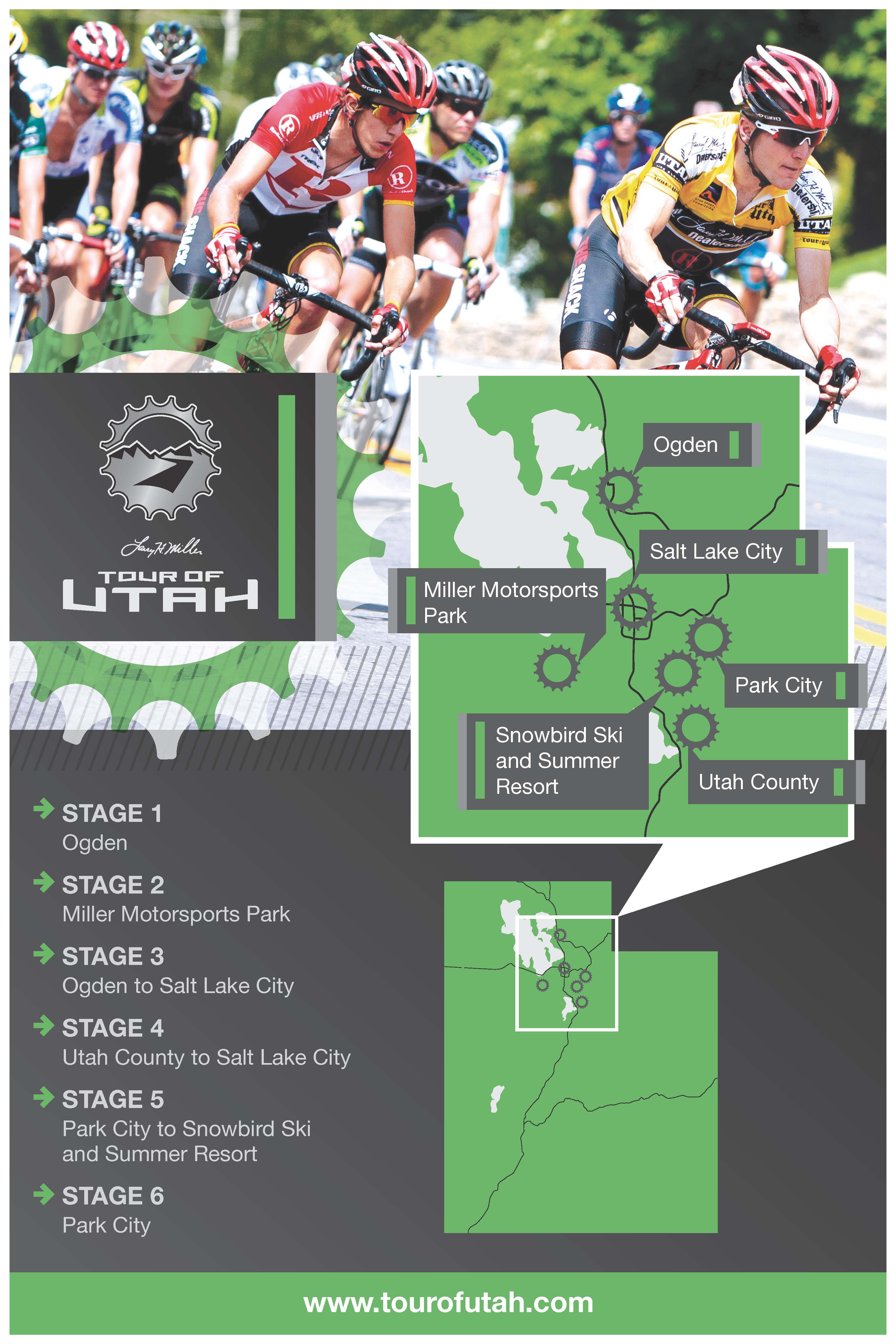
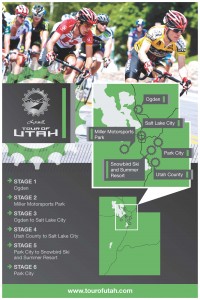
Host Cities for the 2012 Larry H. Miller Tour of Utah. Click on image for a larger version.

Salt Lake City, UT (February 1, 2012) – The Larry H. Miller Tour of Utah organizers announced the host cities for the 2012 event. The six day, UCI 2.1 rated stage race will be held from August 7-12, 2012 and will feature 16 teams, including at least five top pro teams.

This year’s tour will include six stages: five road races, and a team time trial. It promises to be one of the most challenging to date.

The race will be headquartered this year in Ogden, which will host the stage 1 road race.

Stage 2 will feature a Team Time Trial and will be held at Miller Motor Sports Park in Tooele. The Team Time Trial is one of the most unique features of the 2012 Tour of Utah.  This is a technical discipline which holds special interest for cycling fans, and is the only race against the clock for teams at a North American UCI stage race this year.

Salt Lake City will host finish lines for Stages Three and Four, with plans underway for a large community celebration on Friday, August 10 following the road race. Stage Four will begin in the Lehi area of Utah County, which has seen Tours in past years.  This stage is still under development.

The signature climbing route from Park City to Snowbird, known as the “Queen Stage”, moves from the final Sunday of race week to Saturday.

Park City will also host the final stage 6 road race on Sunday, August 12th.

“The Tour of Utah continues to grow in stature as a major cycling event in North America.  When you get calls from teams around the world to come to Utah, then you know you are doing something right. We thought the timing was right this year to launch a new brand for the event, and you’ll see more changes in the coming months. It takes a great deal of support from all our partners, the State of Utah, civic and county leaders, special venues, sponsors, volunteers and our loyal fans. We value all this support as it keeps Utah at the forefront of professional sports around the calendar,” said Steve Miller, president of the Utah Cycling Partnership which owns the Tour of Utah.

“Last year, my goal clearly was to repeat as the overall champion of the Larry H. Miller Tour of Utah.  It was an unbelievable victory and a great event. It’s exciting to watch the Tour of Utah succeed and rise in the ranks as a world-class, UCI race,” said Leipheimer, the two-time champion of the Larry H Miller Tour of Utah.  The Butte, Montana native, who went to high school in Utah, will race this year for the top-rated Omega Pharma – Quick-Step Cycling Team based in Belgium.  “With all the elevation gains and climbing, I feel that the Tour of Utah is one of the toughest stage races in America today.

“I am also very excited for the addition of the Team Time Trial, as being the only opportunity in the U.S. this year to see and participate in one.  The fans are going to love that. I look forward to hopefully defending my title with my Quick-Step teammates in 2012.”

The Larry H. Miller Tour of Utah began as a three-day Thanksgiving Point Stage Race & Cycling Festival over Memorial Day weekend in 2004.  The Utah Cycling Partnership, owned by family members from the Larry H. Miller Group of Companies, purchased the event in 2007 and re-launched the cycling event in 2008 as a five-day National Racing Calendar event. Last year the Tour of Utah was elevated by the Union Cycliste Internationale (UCI), the worldwide governing body of cycling, to a 2.1-rated event for the UCI America Tour.    The Tour of Utah is sanctioned by both USA Cycling, Inc. and the UCI.

The Larry H. Miller Tour of Utah continues to be free to all spectators, making professional cycling one of the most unique pro sports in the world today.

For more information, visit tourofutah.com.
WickWërks Chainrings Provide a Faster Shifting Experience

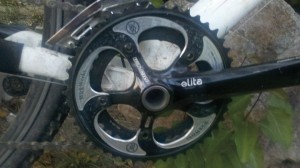
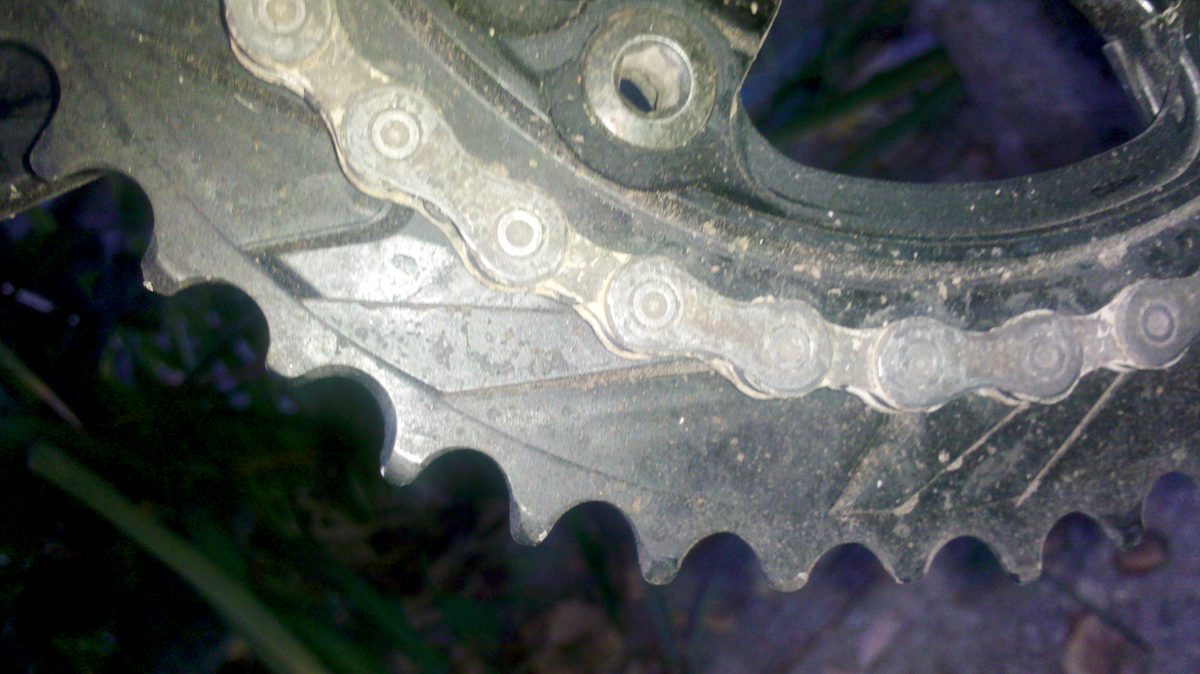
Utah’s WickWerks chainrings use special bridges to move the chain more easily than traditional rings. They are available for road, mountain, and cyclocross.

By Jared Eborn

You’re rolling along, through the mud and gunk with an eye on that guy in front of you, just around the next turn. With time running out and each pedal stroke valuable in your effort to close the gap, you reach the left fingers out and tap the shifter as you move into the big ring for that final push.

But the chain slips, almost unnoticeably, and your acceleration is delayed – for only a second or so – and your attack is softened and you charge comes up just a little short leaving you deflated and wondering why your effort wasn’t quite good enough.

WickWërks, an innovative chain ring manufacturer based in Ogden, wants to eliminate this problem and has created a line of chain rings it claims improves shifting and power transfer.

The company has a line of rings for bikes of all sorts, ranging from mountain bikes where shifting from the big to smaller rings is more frequent, to cyclocross and road bikes.

“I’ve always been frustrated while shifting the front derailleur on my bike, as most people have,” said Chris Wickliffe, founder of WickWërks. “The chain rings and front derailleur interface continue to be the worst performing components on a mountain bike. The design is outdated and has always performed poorly so I decided to build my own. The old lateral slam, drag and lift method had to go.”

The technology Wickliffe adopted is called BRIDGE — Brilliant Radically Integrated Design Generates Efficiency – and is designed to slide the chain from ring to ring rather than lifting and dropping it into place.

“I went back to square one and looked at what really needed to happen to accomplish shifting the chain up and down the chainrings.” Wikcliffe said. “My goal is to perfect the front drivetrain so it shifts smoothly every time by guiding the chain directly from chainring to chainring and decreasing the amount of contact with the chain (drag). “

The bridges create a smooth transition and more effective rider experience when shifting gears up front.

“WickWërks chainring bridges provide more contact area than pins and lift directly below multiple load points of the chain,” Wickliffe said. “Traditional chainrings use pins that have very little contact area between the chain and the pin.”

Though a small company, WickWërks has one very impressive believer. Katie Compton, the most dominating cyclocross racer on the planet, rides with the chain rings and is working on her eighth consecutive national championship this season and another run to the top of the World Cup standings.

The cyclocross rings come in a trio of sizes – 46/36 and 44/34 in the 110 BCD set up or a 46/38 set at 130 BCD and weight just 111 (44/34), 129 (46/36) or 135 (46/38) grams. Pricing ranges from $129.50 to $134.50.

Road options include a 53/39 double ring, a 50/34 compact and a 53/39/30 triple chainring. Mountain bike options range from 44/32/22 triple to a 40/26 SRAM XX compatible set. Prices range from $129.50 to $149.50 for the road triple.

Rider reviews have been positive.

“You know how a good, well-tuned rear derailleur just works on the rear cassette? You shift, it changes gears, and it does it quickly and cleanly, with no fuss. Now imagine having that up front,” one cyclist from Massachusetts wrote. “That is the WickWërks chainrings. These chainrings dramatically reduce the time you have to wait for a shift. It almost always feels instant, clean, and quiet. All in all, these are far better than any other chainrings I have ridden.”

I demoed the WickWërks rings at a recent cyclocross race and left impressed with the shifting. Despite constant starting and stopping as I took sharp turns, encountered stretches of path strewn with rocks and sand and powered through long straightaways, I was able to keep a solid cadence and experience no noticeable skipping or delays when shifting from the big to small ring or vice versa.

The course at Fort Buenaventura in Ogden didn’t feature a lot of climbing or obstacles, but required a sharp mind and frequent flicks of the shifting fingers. With WickWërks chainrings onboard, I had my best finish ever — for me, a solid middle of the pack finish instead of the usual bottom third.

New Methods Sought for Bike Counts

By Charles Pekow

Let’s face it: planners just don’t know enough about how many bicyclists and pedestrians are using the roads. Transportation officials have long used established methods to count motorists but the data on non-motorized users aren’t good enough to plan rationally.

Or so determined the Transportation Research Board (TRB), which is planning to hire a contractor to rememdy that. TRB is offering $400,000 and two years to come up with better methods to count cyclists and walkers so planners can make more informed decisions about what facilities they need for them.

TRB stated that most of the time, planners decide where they want to build a bike facility, then try to find data about cyclists. With the proper tools, they could work in reverse: find out how many cyclists ride where, then determine where they need to plan.

In its request for proposal (RFP) for someone to develop a better way to gauge bicycle and pedestrian use, TRB noted that transportation and planning officials often overlook plenty of data sources. They don’t bother to use video cameras, for instance, because it takes a long time to count riders videotaped. But often, planners don’t even have to install cameras to count them because security cameras already in place could do the trick.

Additionally, plenty of other technology is available, including microwave, infrared sensors, loop detectors, pressure sensitive mats, and communication devices. Plus, software can extract bicycle data from other sources. “Research is, therefore, needed to develop guidance for practitioners on existing, new, and innovative methods and technologies to capture pedestrian and bicycle volume data,” according to the RFP.

The contractor will first find out what tools planners can currently use, then come up with a guide for state and local officials on how to effectively use existing methods of counting cyclists and pedestrians and use new technological devices. The guide will also show how to use data to determine needs, develop projects and improve safety on both site-specific and general planning.

The deadline to respond to the RFP is November 17. You can see it at http://apps.trb.org/cmsfeed/TRBNetProjectDisplay.asp?ProjectID=3159.

Charles Pekow on Google Plus

2011 Sees 27% Increase in Cyclists in Salt Lake City

By Dave Iltis

Wondering if making a city more bike friendly results in more bike trips? Look no further than Salt Lake City. The state’s capital city has worked hard to add bike lanes, bike paths, bike racks, and bike corrals, to improve the responsiveness of the police department, clean up goat heads on the Jordan River, among many other efforts. The programs are paying off not just with the Silver Bike Friendly City medal earned in 2010, but with increased trips taken by bike. The annual bike count conducted in September showed an increase of 27.15% over 2010 totals! The study was conducted over the same locations and times as 2010, and will be conducted again in September 2012.

News from Bike Utah

Winter is just around the corner, but that doesn’t mean that Bike Utah isn’t hard at work preparing for 2012.

The Utah Bike Summit planning committee is hard at work planning for the annual spring conference. We are excited to build off of last year’s success. The State of the Bike reports were a great addition, and we will continue to offer advocacy workshops. The summit is tentatively scheduled for May 4, 2012 in Ogden.

The Road Respect campaign continues this year with the kick-off event, Ride Across Utah, scheduled in early June. The organizing committee is busy planning the route, seeking sponsorship and working with the media to build publicity for the campaign. Visit roadrespect.utah.gov for more information.

Bike Utah is partnering with a group of University of Utah students on a proposal for the Reworking of BikeUtah.org. The goal of the refashioned website will be to further the mission of Bike Utah by offering cyclists a simple and attractive main page, expanded information on current and past legislation, and integrated Google maps. The new website should be up and running before years end.

Bike Utah is a non-profit member supported organization. We hope that as the year comes to an end you will consider becoming a member or making a donation to Bike Utah, www.BikeUtah.org/Membership.

We still need 20 more Share the Road license plates sold to reach the 500 threshold. The money raised through the $25 annual fee goes to directly to support bicycle advocacy that promotes education, trail and road accommodations, law enforcement, legal resources, commercial development, and cycling as a part of healthy lifestyle. Please order your Share the Road plates at your local DMV or visit: http://dmv.utah.gov/licensespecialplates.html#sharetheroad

For up to date information please visit www.BikeUtah.org or follow us on at facebook.com/bikeutah.

Off Road Bike Rack

0

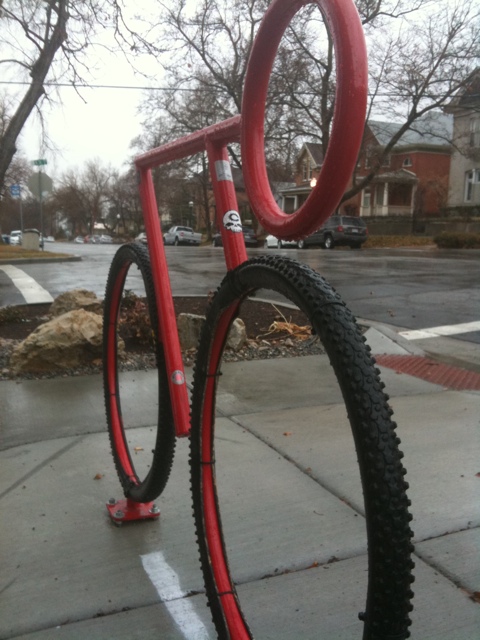
The latest in bike rack technology: the Offroad Cyclocross Bike Rack.

The Off Road Bicycle Rack. Seen at Wild Rose, 3rd and K, Salt Lake City.

Cycling Utah’s March 2012 Issue is Now Available!

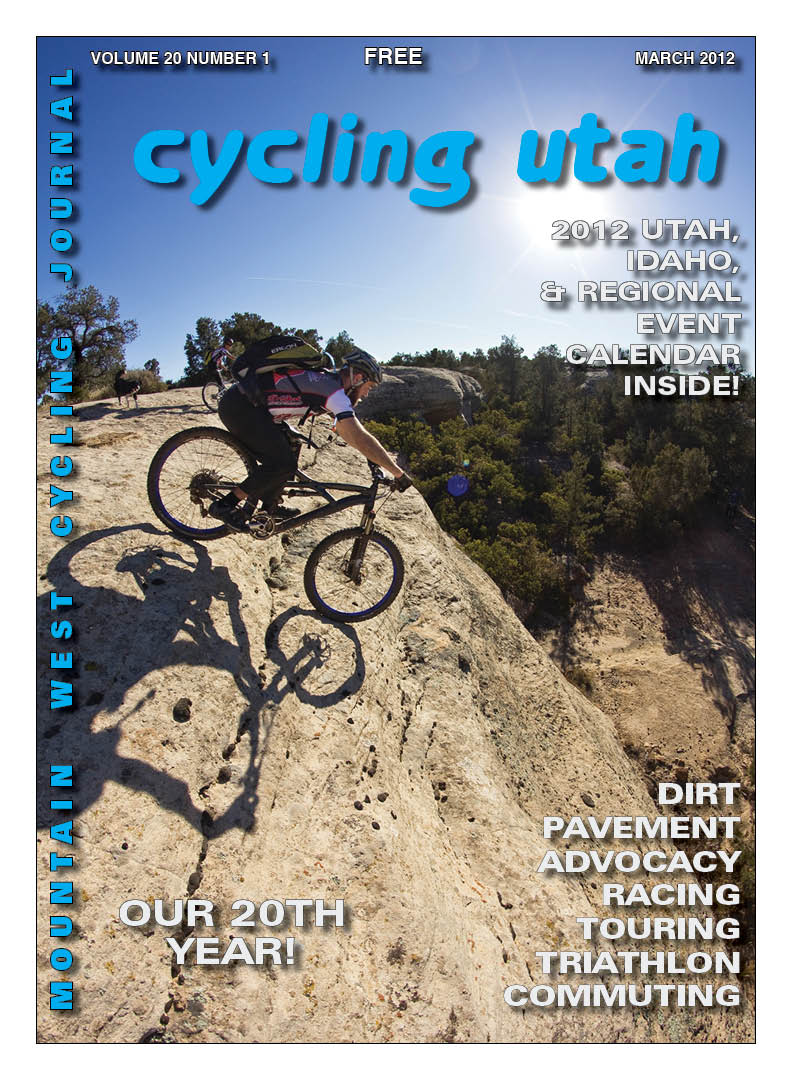
Lukas Brinkerhoff drops in at Gooseberry Mesa taking the steep line off of the practice loop on January 1, 2012. Photo: Shelby Meinkey Shelbymeinkeyphoto.com

Our March 2012 Issue is now available as a PDF (7.8 mb download), Pick up a copy at your favorite Intermountain bike shop or other location!


Featuring:


Contents

And That Just Ain’t Right –  page – 2

Filmed in Utah, Peloton is a Story of Overcoming Life’s Challenges Through Cycling –  page – 3

To Catch a Thief –  page – 4

Joyride: Pedaling Toward A Healthy Planet –  page – 5

Utah and Idaho Rank in the Middle for Biking and Walking –  page – 6

Report Shows that Transportation Enhancements Create More Jobs Than Other Road Work page – 6

Bike Utah Sets Goals for 2012 page – 6

Utah High School Cycling League Ramps Up –  page – 7

A Season Preview for Cycling Fans –  page – 7

First Endurance PreRace review –  page – 9

Bike Shop Comings and Goings page – 11

Walker and Rollins Win Cyclocross National Championships; Walker Second in Worlds page – 11

Bicycle Collective News page – 11

HB 327 Addresses Cycling Issues page – 11

Larry H. Miller Tour of Utah Announces Host Cities page – 11

Inspired by Cycling Utah, Layne Packer Becomes a Bike Commuter –  page – 12

Utah Health Department Releases Bicycle and Pedestrian Master Plan Guide page – 13

Is Your Bike Ready for an Overhaul? –  page – 14

Utah Cyclocross Series Season Wrap Up –  page – 16

Cycling Elevated: Every Rider Plays A Crucial Role –  page – 18

Fall Tour de St. George: The Perfect Mid-Autumn Ride –  page – 28

Islands in the Sky Cruise –  page – 29

‘Round the Canyonlands Tour –  page – 30


House Bill 327 Addresses Unresponsive Signals, Definitions, and Passing for Cyclists

0

HB 327, currently under review with the 2012 Utah State Legislature, will accomplish a few things:

1) It will allow operators of motorcycles and bicycles to proceed through an unresponsive signal after 90 seconds when it is clear.

2) It allows motorists to pass a cyclist by crossing the double yellow line or use the two-way center turn lane when safe.

3) Defines a bike lane and its use statewide.

4) Updates the definition of a bicycle.

5) Allows lights and reflectors on the rider to meet the visibility requirements.

The American Motorcycle Association, ABATE (a motorcycle group) and Salt Lake City are all in support of the bill.  The opposition comes from AAA, UDOT, and the Department of Public Safety, all citing the possible decrease in safety.

On the issue of stoplights, the rider will have been at the intersection for some time.  Unlike the situation where most accidents occur at intersections and those involved were both in motion, they will have had ample opportunity to assess the situation before proceeding and wait for other traffic to clear.

13 states have already passed similar (but less restrictive) legislation on unresponsive stoplights. To the best of my knowledge, none have been repealed.

On the passing situation, motorists all the time are choosing to endanger our lives by passing to close or too soon rather than utilizing part of the rest of the roadway to safely pass.

Currently at the time of this writing, the bill is still under review at the House Transportation Committee.  Details can be found at www.safe-route.org about the bill and how to contact your representative.

It is important that everyone contact their representative and urge their support of the bill.

-Dan Fazzini

Larry H. Miller Tour of Utah Announces Host Cities

Salt Lake City, UT (February 1, 2012) – The Larry H. Miller Tour of Utah organizers announced the host cities for the 2012 event. The six day, UCI 2.1 rated stage race will be held from August 7-12, 2012 and will feature 16 teams, including at least five top pro teams.

This year’s tour will include six stages: five road races, and a team time trial. It promises to be one of the most challenging to date.

The race will be headquartered this year in Ogden, which will host the stage 1 road race.

Stage 2 will feature a Team Time Trial and will be held at Miller Motor Sports Park in Tooele. The Team Time Trial is one of the most unique features of the 2012 Tour of Utah. This is a technical discipline which holds special interest for cycling fans, and is the only race against the clock for teams at a North American UCI stage race this year.

Salt Lake City will host finish lines for Stages Three and Four, with plans underway for a large community celebration on Friday, August 10 following the road race. Stage Four will begin in the Lehi area of Utah County, which has seen Tours in past years. This stage is still under development.

The signature climbing route from Park City to Snowbird, known as the “Queen Stage”, moves from the final Sunday of race week to Saturday.

Park City will also host the final stage 6 road race on Sunday, August 12th.

“The Tour of Utah continues to grow in stature as a major cycling event in North America. When you get calls from teams around the world to come to Utah, then you know you are doing something right. We thought the timing was right this year to launch a new brand for the event, and you’ll see more changes in the coming months. It takes a great deal of support from all our partners, the State of Utah, civic and county leaders, special venues, sponsors, volunteers and our loyal fans. We value all this support as it keeps Utah at the forefront of professional sports around the calendar,” said Steve Miller, president of the Utah Cycling Partnership which owns the Tour of Utah.

“Last year, my goal clearly was to repeat as the overall champion of the Larry H. Miller Tour of Utah. It was an unbelievable victory and a great event. It’s exciting to watch the Tour of Utah succeed and rise in the ranks as a world-class, UCI race,” said Leipheimer, the two-time champion of the Larry H Miller Tour of Utah. The Butte, Montana native, who went to high school in Utah, will race this year for the top-rated Omega Pharma – Quick-Step Cycling Team based in Belgium. “With all the elevation gains and climbing, I feel that the Tour of Utah is one of the toughest stage races in America today.

“I am also very excited for the addition of the Team Time Trial, as being the only opportunity in the U.S. this year to see and participate in one. The fans are going to love that. I look forward to hopefully defending my title with my Quick-Step teammates in 2012.”

The Larry H. Miller Tour of Utah began as a three-day Thanksgiving Point Stage Race & Cycling Festival over Memorial Day weekend in 2004. The Utah Cycling Partnership, owned by family members from the Larry H. Miller Group of Companies, purchased the event in 2007 and re-launched the cycling event in 2008 as a five-day National Racing Calendar event. Last year the Tour of Utah was elevated by the Union Cycliste Internationale (UCI), the worldwide governing body of cycling, to a 2.1-rated event for the UCI America Tour. The Tour of Utah is sanctioned by both USA Cycling, Inc. and the UCI.

The Larry H. Miller Tour of Utah continues to be free to all spectators, making professional cycling one of the most unique pro sports in the world today.

For more information, visit tourofutah.com.
 

Gear For Your Winter Bike Commute

1
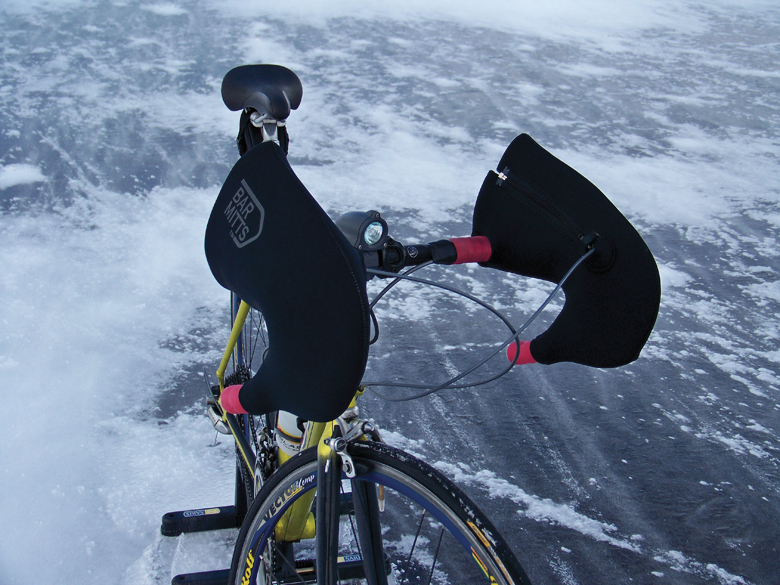
Bar Mitts will keep your hands warm when the temperature drops.

By Lou Melini


The winter of 2010-2011 gave me time to evaluate a few products that may be of use to commuters. Most dedicated winter bike commuters have their favorite products, so I would like to hear any comments about products in response to this article.


Visibility: I’m not going to rant again about lack of or inadequacy of lights among many of the cyclists that I see, but I am going to comment on the use of vests with reflective material and illuminated vests. I’ve been impressed by the “illumination” of cyclists from the reflection of my headlight off of their vests enough to start wearing one as an adjunct to my light system. This was very apparent one night when I spotted a rider wearing a reflective vest much sooner than his solitary blinking light (though obviously running on a nearly dead battery). But don’t take my word for this. Bob Mionske had a good article in Bicycling Magazine on reflective clothing. In summary the article stated that reflective material has a perception distance (how far something is first spotted but not recognized) of 1200 to 2200 feet at night with actual recognition distance (distance a driver will recognize what is being seen) of a cyclist from 260-700 feet (vs. 75 feet with dark clothing) with motion of the reflective material aiding recognition. Additionally, fluorescent clothing increases a driver’s perception distance in the daytime from 400 ft. to 2200 ft. and at night from 150 feet to 560 ft.

Reflective vests can be purchased for as little as $10 for a cheap added means of being visible. The only downside is the loss of many “style” points.

I did purchase my wife an illuminated vest that has multiple flashing LED’s. These go for $30-40. The LED’s are definitely eye-catching, but not enough to replace blinking lights on one’s bike in my opinion. Change is difficult, so I may need more evaluation before I can endorse these as a solo unit. My vest is a NetBridge Electroluminescent safety vest (contact at [email protected]). I haven’t had any problems but I have heard from another person with the same vest that some of the LED lights did not hold up very well. Nathansports.com also makes a LED vest ($30) and Trek has a strap with LED’s that can be strapped to your arm, leg or wherever ($8). REI sells both LED and non-LED vests.


Warmth: Unfortunately I had the opportunity to experience several commutes with temperatures below 5°F this winter. I have issues with my hands getting cold when the thermometer drops below 15. In the past, I have used mitten style gloves with a liner that work well, though one loses a little dexterity with mittens. I had seen advertisements for BarMitts and received a set for my birthday in 2010 (www.Barmitts.com). For a similar product try: (http://www.trails-edge.com/retail/te_shirts/amfbikemits.htm ). BarMitts are a Neoprene sleeve that attach to your handlebars. You then slide your gloved hand into the BarMitt to operate the brakes and shifters for either flat or drop style handlebars. I found that the BarMitts helped by about 10° of additional warmth to a glove I commonly use, perhaps more as the temperature dropped. The BarMitts are slightly restrictive so reaching for the brake may be a small fraction of a second longer a well as shifting, but certainly not dangerously so. I could not fit my bulky mittens in the BarMitts, but I found my gloves that normally work down to around 25° kept me very warm in the BarMitts. I use a handlebar-mounted mirror on my commuter bike so I had to cut a small hole on the one BarMitt so I could slide the mirror through the Mitt. Above 15-20° (and up to 30) I use either a bulky full finger ski glove or my new Giro gloves with the 2-finger “lobster” style (these replaced my 15 year-old duct taped lobster gloves). If you use a handlebar-mounted mirror as I do, you will run into a small complication mounting a BarMitt. I cut a small hole on the one BarMitt so I could slide the mirror through the mitt.

BarMitts (BarMitts.com) and MooseMitts (by Trails Edge) are $60-65.


Ice and Snow: There are good reasons to be concerned when the roads are snow-packed or are ice covered. Fortunately the roads are well salted in Salt Lake County, so there are few days when conditions are, in my opinion, nasty. Without going into details why, let’s just say I acquired a Surly Pugsley. This bike has 4-inch tires that roll over anything. It seems to be well designed for snow packed roads or trails. It is a confidence builder in a snowstorm. I did use this bike in less than optimal conditions on 6 or more occasions this year. Visions of a Chevy commercial where the SUV plows through a snow bank can be applied to this bike. Given that, I have some reservations about the Pugsley. In my opinion, it’s best utility is in towns that are flat and are snow packed for more of the winter than we experience here in Salt Lake City. The bottom bracket is wide to accommodate the wide tires so you will note that your foot placement on the pedals is a little wide, sort of like wearing snowshoes for the first time though you will get used to this rather quickly. You will also feel like your sitting a bit high on the bike perhaps a combination of high bottom bracket and large tires.

For those that know me, I can go uphill rather well due to my being 130 lbs (though being 60 years old is becoming a negative factor). The Pugsley definitely challenged me on steeper roads or the slopes of a certain golf course (of course I will deny riding on a snow covered golf course if that is illegal). Using the term “sprinting across traffic lanes” becomes an oxymoron on the Pugsley so give your self a little extra time. Perhaps the Pugsley would “sprint” better, but I keep the tire pressure at about 18 lbs, for riding across ice and snow. Finally, despite having multiple eyelets for racks and fenders, good luck trying to find such accessories that work around 4 inch tires. I made my own rear fender using thin metal flashing and modified a wide front fender with duct tape to give adequate coverage for the wide tires. I had a pair of extra long rack stays in an old parts box that enabled me to attach my Axiom rack.

When you have 4-inch tires, weight is considerable, so it seems that the tread thickness of the “Endomorph” tires are thin to keep the weight down. As a result, I did pick up the last remaining thorn on Feb. 1st of this year. Using my CO2 cartridges (2) I inflated the tire and rode to a meeting after work. After the meeting, on what was the coldest night of the year for me (5° with very windy conditions) I decided to go to plan C for the 2nd time in over 28 years of marriage. “C” is for Call (wife). Changing a tube in a Pugsley for the first time was shall I say different and challenging compared to my normal commuter bike. It turned out that the road was not as ice and snow covered as I anticipated on that day, so I would not have picked up the thorn had the conditions been worse. As I mentioned earlier, the Pugsley is best on snow packed roads. I think next year I will try out a set of studded tires.

Service: I now have a Park chain checker, tool # CC-3. This is a solid metal piece that you set in your chain. It is really simple to use. It has 2 markings, 0.75 and 1.0. If the 0.75 slides easily into the chain, it is time to replace it. If the 1.0 slides easily into the chain, you may be facing not only a new chain but also a new cassette. In addition, excessive chain wear could also result in needing new chain rings on the crankarms. Chains should last 3000 miles, but due adverse weather conditions perhaps less. For the year-round commuter consider this for the toolbox.


Lights: I’ve used NiteRider lights for 20 years. I like the lights but I’ve had some issues. This year I had a cracked cable wire. Given that I use lights for about 100 nights a year (or more) I put my lights through a lot of use. I do have smaller backup light, but it is not adequate for daily commuting by my standards. So I would also like to thank Mike Hanseen at Millcreek Bicycles for lending me his NiteRider light set for several weeks while mine was being serviced. (Repair service is not rapid). This is an example of how your purchases and support at your local bike shop pays off more than the savings of web based or catalog bike stores.


Walker and Rollins Win Cyclocross 2012 National Championships; Walker Second in 2012 Worlds

Verona, Wisc. (Jan. 5, 2012) — The 2012 USA Cycling Cyclocross National Championships took place near Madison, Wisconsin in January. Nearly 150 of the country’s best 45-80 year-old cyclo-cross bike racers tackled the course at Badger Prairie Park on an unseasonably warm January day in Wisconsin.

In the women’s 50-54 competition, the action came late in the race. Kris Walker (Pocatello, Idaho/The Contender Club) built a lead approaching 15 seconds heading into the last of the four-lap affair. Approximately midway through the last lap, Walker heard cheers for Catherine Walberg (Topeka, Kansas). Much to Walker’s surprise, Walberg had made up the gap and was close to passing Walker. Walker stepped on the gas and sprinted to the finish line, holding off Walberg by only four seconds to win her fourth cyclocross National Championship.

“They’re all really special to me,” Walker said. “The first one was just awesome because it was my first. Today’s is also special because Catherine is really on her game. To beat her is really special because she is a tough, tough competitor.”

The men’s 65-69 contest was won by Lewis Rollins (Salt Lake City, Utah/Contender Bicycles). Rollins, who employed a healthier diet to lose 12 pounds heading into the event, collected the second national title of his career today.

“This year was a little different than other years. I’ve only raced twice before nationals,” Rollins said. “This course suits me. It’s not a technical as I’d like, but it has just enough climbs that are slippery and muddy, downhills that are muddy. If you can bike handle and not fall down, you’ll make more time than guys who go fast, fall down, get up, go fast, fall down. I don’t know that I’m a steady Eddie kind of guy, but that’s just the way it was.”

Ten days later on January 15th, in the 2012 UCI Masters Cyclocross World Championships in Louisville, Kentucky, Walker capped her season with a second place.

With conditions changing throughout the day, the women 50-54 took to the course while it was still covered in a coating of snow and frozen ruts. Karen Brems (Redwood City, Calif./Team Rambuski Law) claimed victory, followed by Walker (Pocatello, Idaho/Contender Bicycles).


Pura Vida – La Ruta de los Conquistadores Report from Alex Grant

Pura Vida

That’s the national motto or slogan of Costa Rica. While it translates literally to “pure life,” they use it so widely that its come to have a timeless quality that transcends meaning. It’s a greeting, a goodbye, and a response. Maybe it’s overused, but I like it — it really is an expression of the Costa Rican culture and their outlook on life. It’s a culture that places a great emphasis on family, friends, nature, and enjoying the fact that we are alive.

For that reason I have come to love visiting Costa Rica and look forward to going down to La Ruta de los Conquistadores each year, despite my knowledge of how brutally hard the race is. I know that regardless of how the race goes I will be able to experience the culture and natural beauty of the country and hopefully take a little bit of that home with me when I return to the States. I can’t speak for other countries but it seems like American culture is so focused on growth, doing more, doing it faster, and with less, that people’s lives become a blur of time. It’s refreshing to visit a small town in Costa Rica and see the simple life some people lead.


That said, the first item of business on the trip this year was the race. Ben Sonntag and I had great luck and great form down there in 2010, pulling off an upset 1-2 finish. We knew that it would be difficult to defend our positions from 2010, but we were ready for the challenge. La Ruta is a unique race that requires good form, good luck, and depends on a lot of external factors. One of those is the competition, and it was top notch this year.


Sometimes you are the hammer and sometimes you are the nail. This year we were the nail. One hour in to Stage 1 Ben crashed in Carara National Park and broke his handlebar, having to run many kilometers to the next checkpoint. As for myself, I was giving it my all to stay with the lead group in the jungle hiking sections and began to notice cramps in my legs… after only two hours of racing. That was not encouraging, as I knew that I still had four hours to go. I had to back off the pace, but the cramps never went away, and I was almost completely locked up by the finish. Though, somehow, I found the energy to outsprint Federico Ramirez for 5th. I am not sure why I cramped up like I did, but I had barely recovered from them by Stage 4.


By the time the race hit the beach in Limon after four days of racing, I finished 7th overall and Ben 8th. Congrats to Todd Wells who took an impressive win in his first ever La Ruta and became the first American to win the race. Well done.


Also thanks to Cannondale for the great support, and to Javier and Daniel for all the help at the race this year and last. We couldn’t have done it without you guys!


Check out the below links to videos made by Cannondale’s Matt Ohran who followed the race on a moto to film:


Stage 1:

Stage 2

Stage 3:

Stage 4:


Thanks for reading!


Alex Grant


(This report also appeared on cyclingnews.com)

Exergy Tour International Women’s Stage Race to be Held in Idaho in 2012

December 15, 2011 – Boise, ID – The Exergy Tour, a new international women’s pro cycling race, will be held in Idaho from May 24-28, 2012.  Sponsored by Boise-based Exergy Development Group, the race is expected to become one of the most significant international pro-cycling events on the women’s pro cycling calendar, and will set unparalleled standards for gender parity and opportunity in the sport for women.

 “The Exergy Tour shall showcase the power and excitement of women's professional cycling and its growing influence globally, while working at all levels to engage our communities in teaching young girls the benefits that individual and team sports competition can bring throughout their lives,” said James Carkulis, CEO, Exergy Development Group. “Our vision with the Exergy Tour is to communicate this global message and align with relevant organizations dedicated to advancing self confidence, self-esteem and overall well-being of girls and women through physical activity.” 
 
 The world’s top women cyclists and teams are expected to compete, with the Exergy Tour positioned on the race calendar as one of the last to provide international ranking points crucial in qualifying for the upcoming Olympic Games. The five-day race shall include alpine, high desert and sprint stages highlighting the splendor of Idaho and its welcoming communities. Based on success, the Exergy Tour shall grow quickly to a seven-stage event over eight days of high performance racing, as well as incorporate other stage venues throughout Idaho.

 
"The Governor and I are thrilled Idaho will host the Exergy Tour in May, bringing with it international attention and inevitably new business opportunities for Idaho as well," First Lady Lori Otter said. "We're proud the rest of the country and the world are continuing to notice Idaho for the active lifestyle it offers, and especially for its growing popularity as a premier cycling community. Sporting events such as the Exergy Tour will spotlight Idaho, drawing economic activity and generating worldwide interest in our state."

 
Current plans for the inaugural year shall showcase Idaho’s capitol and the surrounding Treasure Valley. The city of Boise shall play an anchor role in this inaugural year, with other host city locations to be announced in early 2012. 
 
"I'm thrilled to see such a world-class cycling competition emerge in our community, Mayor David Bieter said. "Boise has long been a training ground for many local Olympians, and it’s wonderful to see it become a major hub for premier athletic events. The Exergy Tour will shine the spotlight of international cycling on our city as it attracts some of the best athletes in the world to compete prior to the 2012 Olympics. I encourage all Boise residents to volunteer and get out to see what promises to be an exciting and inspirational event. You won't be disappointed."


 The Exergy Tour is sanctioned by USA Cycling and shall be the only women’s race in North America with a 2.1 designation by the International Cycling Union (UCI). 
 
“Thanks to the support of Exergy we now have, for the first time in many years, a world-class, UCI women’s stage race in the U.S.,” said USA Cycling President & CEO Steve Johnson. “This event will provide our top American women, who are among the best in the world, with the opportunity to showcase their talent and race on home soil.”

 
The Exergy Tour marks the return of international women’s stage racing to Idaho. The now defunct International Women’s Challenge was held in Idaho from 1984 to 2002 and was last won by Judith Arndt. The race was known as one of the toughest women’s races in the world. [See some past coverage here: https://www.cyclingwest.com/july/july99/july99.html]   


Medalist Sports will oversee the competition and technical production of the Exergy Tour, as well as the development of the local organizing committees in each start and finish venue. Medalist also is the event management arm for the Amgen Tour of California, USA Pro Cycling Challenge in Colorado and the Tour of Utah. H2 BrandWorks, a Boise-based sports marketing and brand strategy company, has been contracted to manage overall marketing, communications, event and title sponsor support for the Exergy Tour.


 Volunteer registration is now open for the Exergy Tour, and sponsorship opportunities are available. An estimated 1,500 volunteers will be needed to assist the 5-day Tour in various functions and positions.

For more information, or to register to volunteer for the Exergy Tour, please visit http://www.ExergyTour.com. Official event logo and website set to be unveiled in January 2012.


Salt Lake Sugarhouse Street Car Project Needs to be Combined with Good Options for Bicycles

4

Guest Editorial:

Recent coverage of the Sugar House streetcar project has emphasized the “necessity” for greenspace amenity and the “tragedy” of bicycle/pedestrian overpasses. UTA, SSLC, and SLC proponents have sold the community on the economic and community development impacts of this project, with a $55 mil cost. Local project funders and Citiventure Consultants, hired to develop a project vision, say that the Streetcar should act as a “zipper,” stitching together adjacent neighborhoods, while fostering business development on the corridor.


Unfortunately, these entities have ignored many business and urban landscape realities, failing to recognize that, first and foremost, the Sugar House streetcar project is the development of a transit corridor, as evidenced by historic use, the project funders and PRATT elements. With scarcely enough funding, paid consultants recommend “urban perfuming” (their words, really) and greenspacing in an effort to leverage the investment into a viable public space. Apparently, the existing greenspace opportunities in and around SLC, including near the line ends at the Jordan River, Fairmont and Sugar House Parks, are insufficient for the residents. Because SSLC and SLC plan not to spend money on amenity, this greenspacing is expected to be footed by the local business community.


Similar projects (Tampa, San Diego, New Orleans) recognize that the key to success is efficient, permeable transit, supporting adjacent businesses. For the Sugar House streetcar, at $55 mil., transit is core asset being created and to be leveraged. Adjacent businesses see opportunity in the transit market, but only if the transit and business interface is a priority. Key to this success are the intermodal opportunities of the PRATT trail, the construction of a plaza-type environment and access to adjacent businesses.


What cyclists, transit planners and UDOT know, is that cyclists insist on continuous, safe routes for commuting. Every successful urban bike path depends on over/underpasses to create this efficiency and safety. The recently released Utah Bicycle and Pedestrian Master Plan Design Guide defines over/underpass alternatives as the preferred alternative where automobile traffic flow exceeds 12,000 per day (corrected) at path crossings. The State St. and 700E crossings each see more than four times that figure. Anyone who has been to the U of U campus, driven down Hwy. 51 in Phoenix, or seen the works of Santiago Calatrava knows bicycle/pedestrian bridges can evoke and enhance the cityscape, with beauty that borders on art.


Similarly, the greenspacing “amenity” is the cheapest possible option, short of creating an urban canyon with no enhancement for businesses and transit users. So why would UTA, SSLC, and SLC want to under-develop this legacy project? The short answer is that these entities would like to get something for nothing, or nearly nothing: in SSLC’s case about $2.5mil; for SLC about $5.5mil. SLC’s portion is a mere 5% of the estimated total cost of the recently approved Utah Performing Arts Center (“Broadway Style Theater”). Which begs the question “Do SLC and SSLC believe in this project, or are they hedging their bets, knowing that even if the project is a market failure, the federal government and UTA have footed most of the bill?” Making the streetcar project an economic success requires real investment from SSLC and SLC.


The success of this corridor will be defined by the leveraging of a real and costly asset: the transit opportunities being developed. Bicycle and pedestrian overpasses at State and 700E (supporting the only E-W dedicated bike path in the valley) will make this project an economic and community success by creating connection. A “linear plaza” framed by vibrant local business will become a destination for shopping, public art and street scene. Alternately, the lack of these critical infrastructure pieces will isolate the corridor, slow its development and further divide the communities. While I support the efforts of SSLC and SLC to make the streetcar and PRATT trails a reality, these entities need to up the ante and fully fund the necessary elements of the project without burdening the construction impacted business community and/or leaving the project underfunded. In this light, “urban perfuming” smells like something else.

Note: The SLC City Council is meeting this Tues. night at 7pm to discuss the signing of an inter-local agreement w/ SSLC specifying the amount of funding that they will be providing (about $5.5mil from SLC, total).

<http://www.slcgov.com/council/agendas/2011agendas/Dec13/12132011.pdf>

Kevin Dwyer


Chair, Salt Lake City Bicycle Collective, Board of Directors

Telling stories of free bicycle culture at: http://spokenaboutbicycles.blogspot.com/


USA Pro Cycling Challenge Announces Host Cities for 2012

0

Boulder, Telluride, Durango and Montrose Are Newest Additions to Second Annual Colorado International Cycling Stage Race


DENVER (Dec. 8, 2011) – With nearly 40 cities across the state expressing initial interest in the 2012 USA Pro Cycling Challenge, race officials have unveiled the 12 host cities that will serve as starts and finishes for the second annual stage race. After drawing more than 1 million fans in the inaugural year, the 2012 race will return to several cities and also visit new locations, showcasing the majestic beauty of the state.


Recently upgraded to a 2.HC ranking, the highest registration level next to the Tour de France, the race will visit a total of 12 official host cities over the course of the seven days, from August 20-26, 2012.


The host cities and stages of the 2012 USA Pro Challenge include:

·         Monday, Aug. 20              Stage 1                 Durango – Telluride

·         Tuesday, Aug. 21              Stage 2                 Montrose – Crested Butte/Mt. Crested Butte

·         Wednesday, Aug. 22      Stage 3                 Gunnison – Aspen

·         Thursday, Aug. 23            Stage 4                 Aspen – Beaver Creek/Vail Valley

·         Friday, Aug. 24                  Stage 5                 Breckenridge – Colorado Springs

·         Saturday, Aug. 25             Stage 6                 Golden – Boulder

·         Sunday, Aug. 26                Stage 7/ITT         Denver


“The host cities selected for the 2012 USA Pro Cycling Challenge will enable us to showcase the beauty and hospitality of Colorado to a worldwide audience,” said Shawn Hunter, CEO of the USA Pro Challenge. “These cities are valued partners who will work with us, hand in hand, as we continue to raise the bar for professional cycling here in America.”


Overall winner of the 2011 USA Pro Cycling Challenge, Levi Leipheimer said, “What makes Colorado uniquely challenging is the Rocky Mountains.  Knowing that in 2012 we will start in one corner of the state and suffer through more mountain passes than any other race of this caliber in the North America is exciting.  Add in the altitude factor and you’ve got one beast of a race.”


The four new cities joining the 2012 race – Durango, Telluride, Montrose and Boulder – each offer breathtaking scenery, as well as a unique cycling history, that will add to the overall impact of the race.

·         The “Four Corners” area is home to Bob Roll, one of professional cycling’s most iconic commentators, as well as the Iron Horse Classic Bicycle Race.

·         Durango is home to more professional cyclists, national champions and Olympians per capita than any other town in the United States.

·         Often referred to as the birthplace of American cycling, Boulder is consistently ranked one of the best cycling cities in the country.


“By incorporating iconic cycling cities like Boulder and Durango in our second-year race we will further build the virtual postcard for the state of Colorado that we established in our inaugural year,” added Hunter.


Also new in 2012 is the placement of the Individual Time Trial on the final day of racing in Denver, keeping fans holding their breath to the very end to see who will be awarded the overall victory after the seven days of fiercely competitive racing. Fans in Denver will have multiple opportunities to cheer for any given rider, as well as the benefit of both start line access to riders along the traditional team “pit row” and the thrilling finish line excitement.


A number of criteria were taken into consideration when evaluating potential host cities, including full city services support. The race also considered commitments in the areas of lodging, volunteer recruitment, marketing and local tourism, as well as an ability to host world-class athletes and promote the State of Colorado.


Further details of the start and finish line locations, as well as the specific, detailed route will be announced in the spring.


About the USA Pro Cycling Challenge

For seven consecutive days, the world’s top athletes race through the majestic Rockies, reaching higher altitudes than they’ve ever had to endure – more than two miles in elevation. One of the largest cycling events in United States history, the 2012 race will feature the best of the best in professional cycling, competing on a challenging course through some of America’s most beautiful scenery.


Referred to as “America’s Race,” the second annual USA Pro Cycling Challenge will take place August 20-26, 2012. More than 1 million spectators are expected to once again line the route to see if Levi Leipheimer will defend his title as winner of the 2011 USA Pro Cycling Challenge, while millions more around the world will watch the race on television and online through the Tour Tracker.


More information can be found on the website http://www.usaprocyclingchallenge.com.