
By Tom Jow — A month or so ago we were riding back to town on the Millcreek Pipeline trail. It was one of the cool(ish) evenings when it is a little warm in the sun, but perfect in the shade. As we rounded a corner, my friend called out to look left. The reddish-brown cliffs and the trees were bathed in the golden light of the setting sun. Did I stop to take it all in? Not this time and honestly, hardly ever. I admit I am guilty of riding with a bit of tunnel vision, focusing on riding and enjoying the view from the corner of my eye. Flowers, on the other hand, I seem to pay a little more attention to. Perhaps because they are a little easier to look at without risk of riding off the side of the trail. These are some of my favorites.
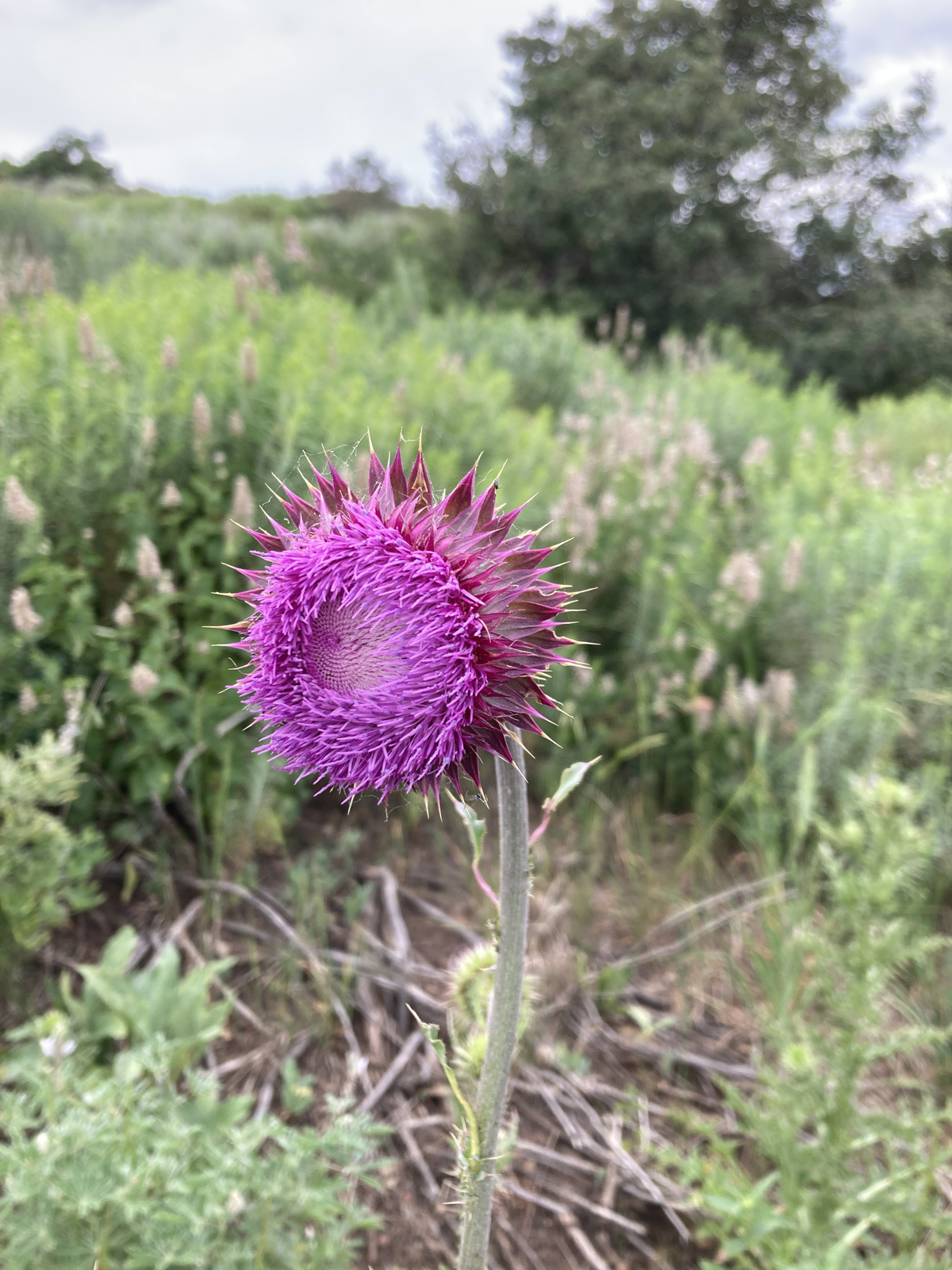
A few years ago in Park City, I noticed how deep the purple color of these blooms can be. When I pointed it out, my friend told me, “Tom, you can’t like poisonous plants.” While the Musk Thistle plant is not truly poisonous, brush across it and it may make you itch at the least, and could give a rash at the worst. However, a good reason not to like it is its status as an invasive species. First found in Pennsylvania in the 1850’s, one thistle plant can produce up to 20,000 seeds that can lay dormant in the soil for up to 20 years.
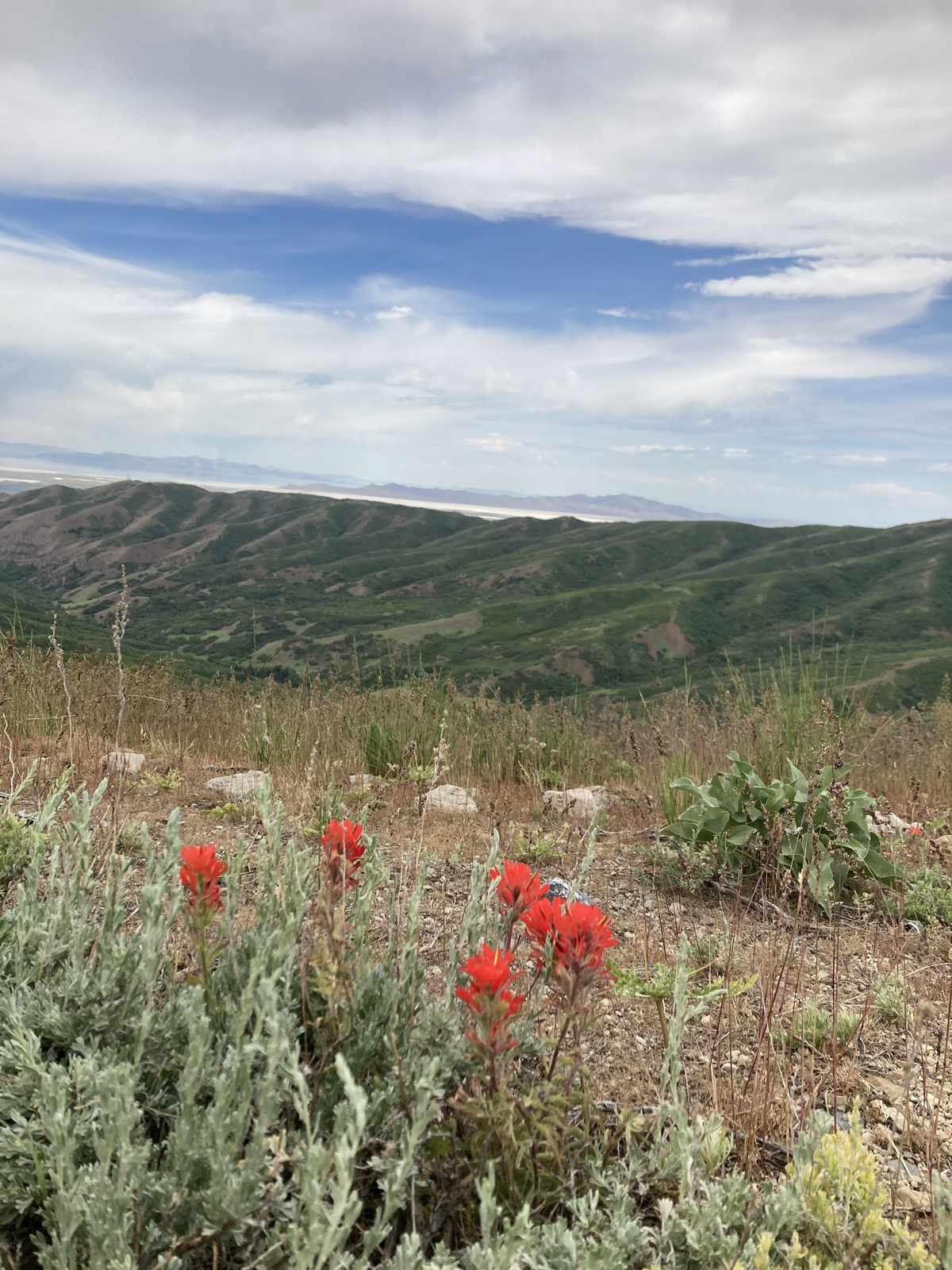
Commonly known as “Indian Paintbrush”, this easily recognizable wildflower is found all over Utah. From desert to foothills and mountains, they are native to western North, Central and South America. This is just 1 of more than 200 paintbrushes included in the genus Castilleja. The family of paintbrushes bloom in a multitude of shapes, sizes and colors. What is unique to all of them is their “hemi-parasitic” nature. Parasitic in that paintbrushes attach themselves to a host plant to “feed” itself. “Hemi” or half, meaning that paintbrushes also synthesize sunlight for nutrition.
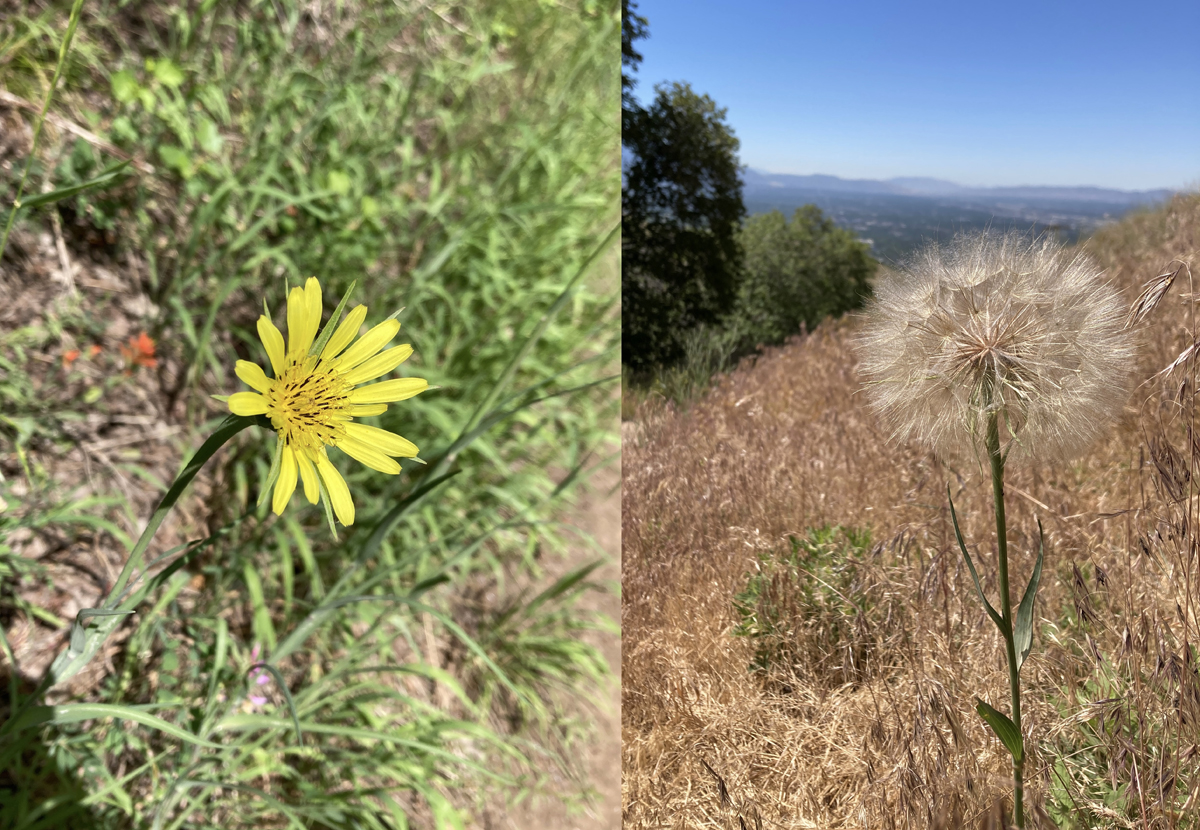
The first thing I noticed about the Yellow Salsify are the distinctive black stripes in the yellow bloom. It took me a while to figure out that the giant dandelion-like seed globes came from that yellow flower. Those seed globes are pretty amazing. While it looks perfectly at home in both the foothills of Salt Lake and the mountains above Park City, the Salsify is an invasive species, being native to southern and central Europe as well as western Asia.
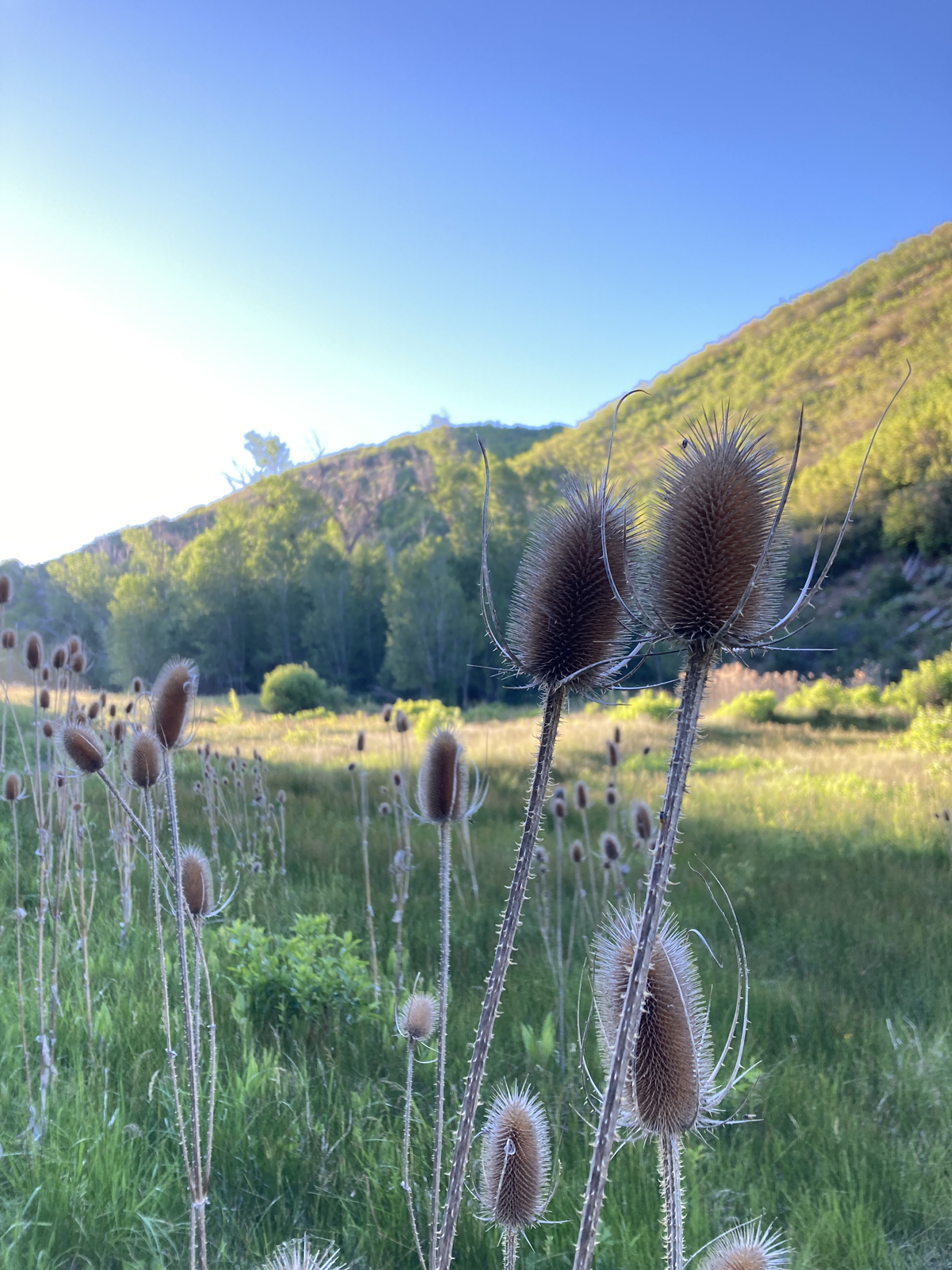
I don’t know how many times I have ridden past the Wild Teasels on the east side of the Pioneer trail. Down low at the end of a grassy meadow is a small stand of them. Native to Eurasia and North Africa, Teasels were imported for textile production. The spiny seed cones were used to comb and raise the nap on fabrics, particularly wool. Seeing them, I immediately remembered this time in elementary school we had a project where we glued some together in the shape of a teddy bear.
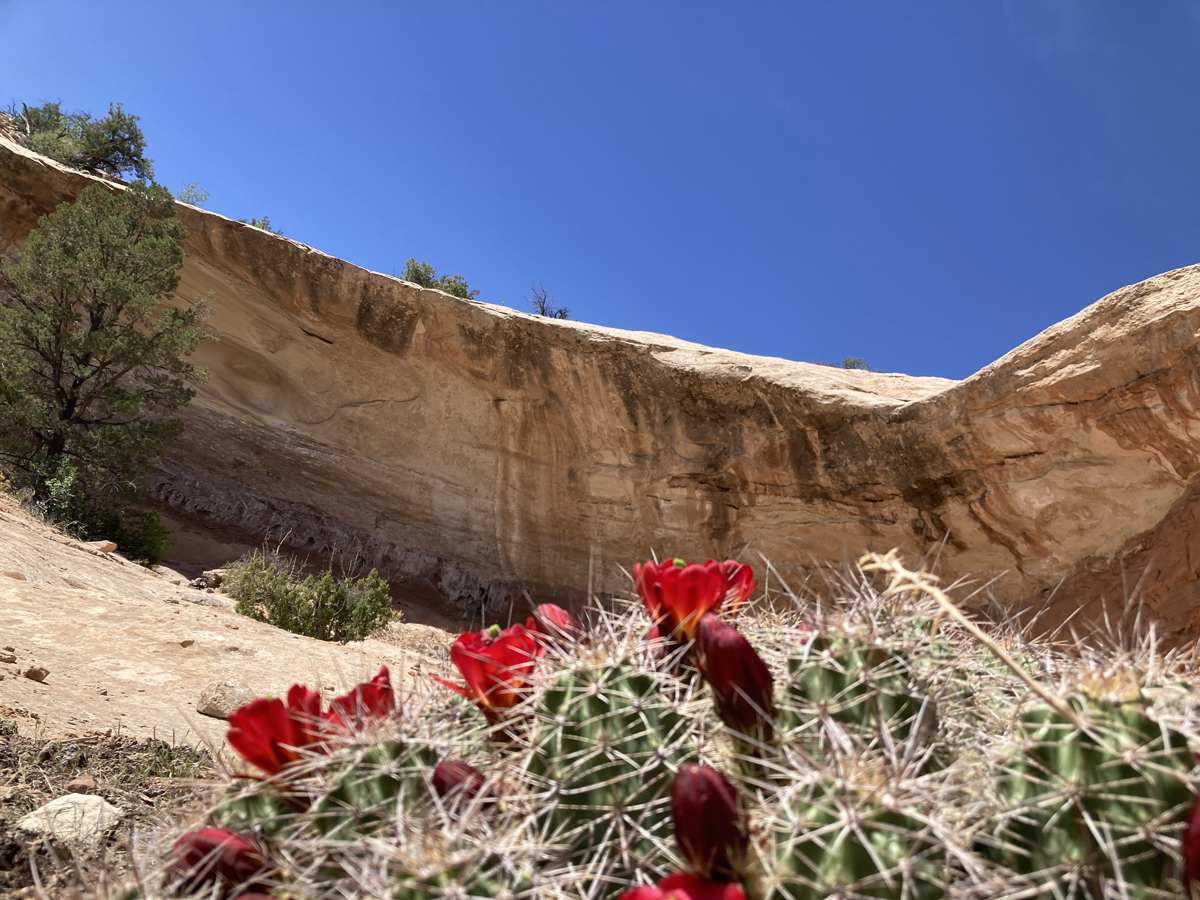
I don’t really stop just to look at flowers. This day in the Navajo Rocks area we needed to take a snack/shade break. This overhang was just the spot. Then I found this Scarlet Hedgehog cactus. It is always a joy to see the cactus in bloom because to see them, the timing has to be perfect. A mild warning to mountain bikers, don’t fall on one of these, the spines as they can grow to lengths up to 7 centimeters.
This is just the smallest sample of wildflowers on the trails of Utah. Just yesterday I noticed so many others. Pink, purple, dark blue, white, it is nearly impossible to count. At the end of one trail section my friend asked, “did you see those [place flower name here] back there?” “Umm, no” I replied. For better or worse, it’s just too difficult to pay attention to flowers on the downhills.
Source: Wikipedia and A.I. which are known to make mistakes. The text was written completely by a human.