
On cycling’s most feared ascent, Ben O’Connor exorcised demons while Pogačar faced his greatest nightmare—and both emerged transformed
COURCHEVEL, France (24 July 2025) — The morning mist clung to the valley floor like a shroud as 162 riders assembled in Vif, their breath forming small clouds in the Alpine air that would soon thin to nothing. Above them, invisible behind gray clouds, the Col de la Loze waited—a 2,304-meter colossus that had twice witnessed Tadej Pogačar’s rare moments of mortal frailty. The devil has many faces on the Col de la Loze, and the yellow jersey knew them all.
At this altitude, La Loze stands as the highest summit in this edition, making it the Souvenir Henri Desgrange—a special prize named after the iconic creator of the race, who took riders over 2,500 meters as early as 1911 at the Col du Galibier. La Loze might be slightly lower, but its irregular slopes have already carved themselves into cycling legend through just two previous appearances in the Tour de France—both times serving as the theater for the Slovenian’s most profound suffering. In 2023, on these very slopes, Pogačar uttered the words that haunt him still: “I’m gone, I’m dead,” as Jonas Vingegaard (Visma-Lease a Bike) inflicted a five-minute defeat that all but sealed the Tour. It remains the most striking defeat Pogačar suffers in his otherwise dominant Tour history.
As Carlos Rodriguez (Ineos Grenadiers) and Cyril Barthe (Groupama-FDJ) withdraw from the race due to injuries sustained in yesterday’s crash, 162 riders now remain to face Stage 18 of the 2025 Tour de France—the queen stage with three hors catégorie climbs packed into 174 kilometers with a staggering 5,450 meters of elevation gain, the highest single-day total of the race. The weather forecast reads like a climber’s nightmare: overcast skies bleeding into intermittent rain, with thunderstorms predicted for the final ascent. At the summit, temperatures will plummet from the valley’s deceptive 23°C to a bone-chilling 10°C. Epic weather for a stage that promises to rewrite the race’s narrative.
But this edition explores a slightly different side of the devil’s playground—26.4 kilometers at 6.5% average gradient, with gradients above 10% on several stretches, compared to the more brutal Méribel approach used in 2023. The yellow jersey’s demons await, but this time, it will be another man entirely who dances with the devil and emerges victorious.
The Mathematical Certainty of Green
The morning began with mathematical certainty disguised as competitive theater. At precisely 12:20, after a ceremonial 4.6-kilometer parade through streets lined with anticipation, the real race began. The opening 30 kilometers unfolded with deceptive tranquility, Lidl-Trek orchestrating a controlled 50 km/h tempo to protect Jonathan Milan’s commanding 72-point lead in the green jersey competition. Jasper Stuyven (Lidl-Trek), Edward Theuns (Lidl-Trek), and the indefatigable Milan himself took turns at the front, their blue, red, and yellow jerseys cutting through the peloton like sharks through still water.
The large contingent of Lidl-Trek riders at the front of the peloton had sent an unmistakable message to any potential attackers: the green jersey was very interested in the points at the intermediate sprint at kilometer 23, and no one was foolish enough to challenge him. At the intermediate sprint in Rioupéroux, Milan fulfilled his first mission of the day with ruthless efficiency, claiming another 20 points—his sixth such victory of the Tour. Behind him, Biniam Girmay (Intermarché-Wanty) and Anthony Turgis (Total Direct Énergie) completed the podium, but the mathematics were already cruel.
Milan’s advantage over Pogačar stretches to 92 points—a margin that renders the points classification all but decided with only 180 points remaining until Paris. The Italian powerhouse transforms what was once cycling’s most unpredictable competition into a procession of inevitability. The green jersey, it seems, finds its owner.
But as the riders pass through Vizille—hometown of the late Thierry Claveyrolat, “L’Aigle de Vizille,” whose own Tour dreams ended in tragedy—the race’s true character begins to emerge. The road tilts upward, imperceptibly at first, then with growing malevolence. The battle to form the day’s breakaway begins immediately after the sprint, and everyone understands that whoever makes the right move now will be riding for glory eight hours later on the Loze’s unforgiving slopes.
The Glandon’s Cruel Arithmetic
Tim Wellens (UAE Team Emirates-XRG) fired the opening salvo, his acceleration at kilometer 34 splitting the peloton like an axe through kindling. The Belgian’s attack drew immediate responses: Wout van Aert (Visma-Lease a Bike), that master of calculated aggression, launched the first serious acceleration, followed by Wellens. Kaden Groves (Alpecin-Deceuninck) bridged across to join the initial move, but it was the names that followed that transformed a typical early break into something more dangerous.
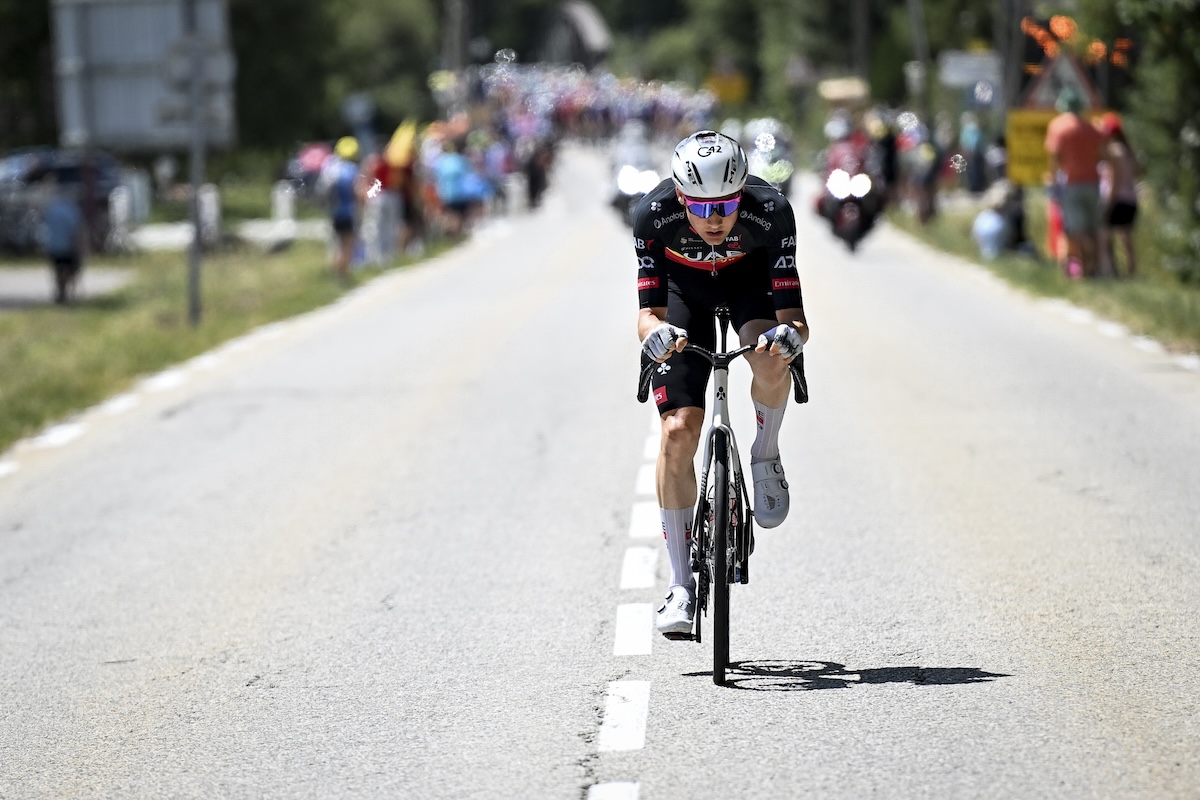
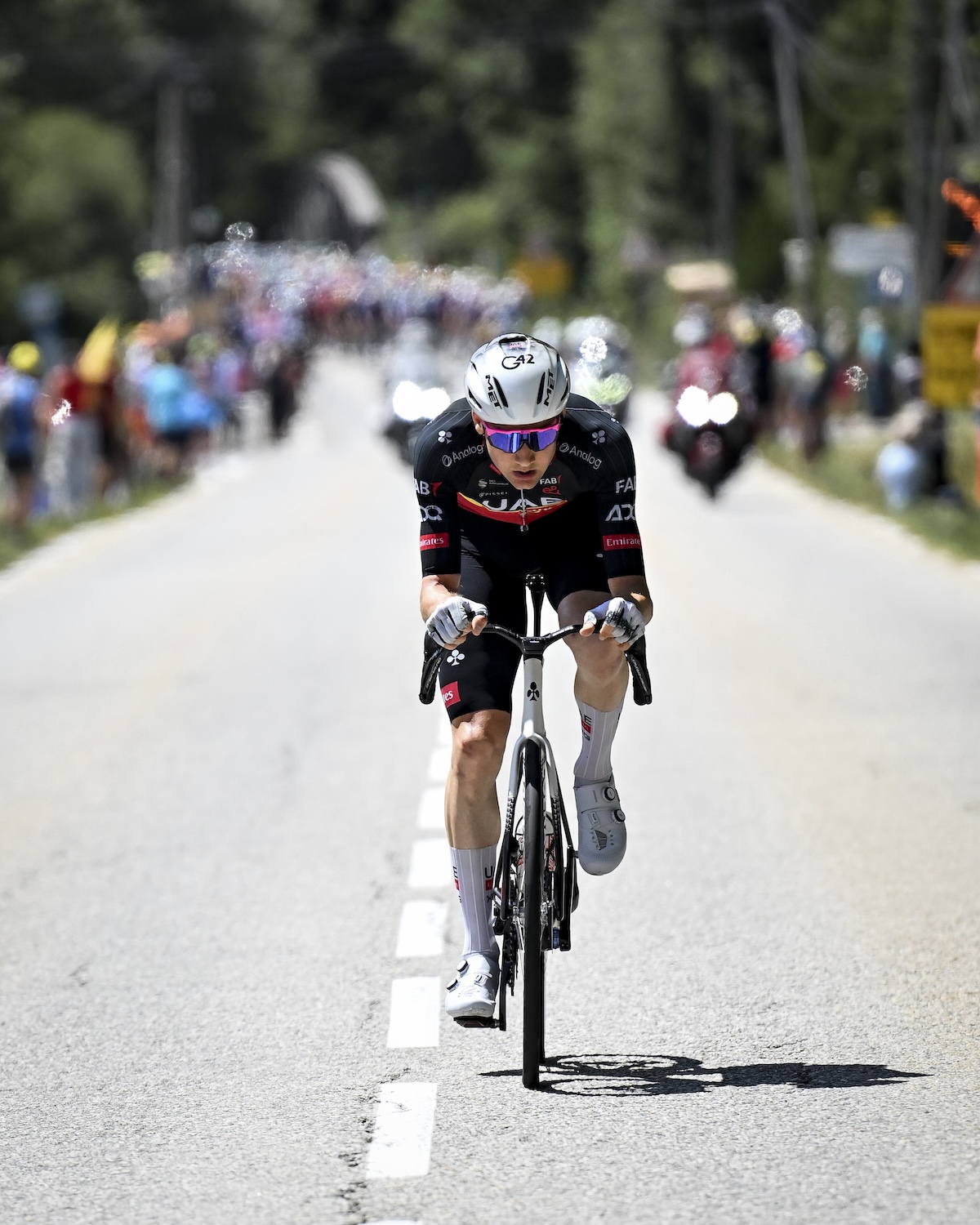
After numerous attacks and counter-attacks that shred the peloton’s composure, two distinct groups emerge on the 21.7-kilometer ascent to the Col du Glandon. At the front, a formidable 15-rider selection forms: Wellens, Matteo Jorgenson (Visma-Lease a Bike), Lenny Martinez (Bahrain Victorious), Thymen Arensman (Ineos Grenadiers), Primož Roglič (Red Bull-Bora-hansgrohe), Ben O’Connor (Jayco AlUla), Raúl García Pierna (Arkéa-B&B Hotels), Will Barta, Gregor Mühlberger, Einer Rubio (Movistar), Felix Gall, Bruno Armirail (Decathlon AG2R La Mondiale), Michael Woods, and Alexey Lutsenko (Israel Premier Tech). Michael Storer (Tudor) drops due to a mechanical issue, his Tour dreams derailed by the cruel randomness that defines cycling’s grandest stage.

The American Jorgenson, still smarting from a difficult second week, sees redemption in the breakaway. Martinez, the 21-year-old Frenchman tied with Pogačar on 60 King of the Mountains points, understands that today might be his last chance to claim the polka dots outright. Arensman, the quiet Dutchman whose steady consistency goes unnoticed, senses opportunity in the chaos.
In pursuit at 30 seconds halfway up the climb, a chase group featuring Andreas Leknessund (Uno-X Mobility), Luke Plapp (Jayco AlUla), Cristian Rodríguez (Arkéa-B&B Hotels), Enric Mas, Pablo Castrillo (Movistar), Jordan Jegat (Total Energies), and Frank van den Broek (Picnic PostNL) fights desperately to bridge the gap that could determine their entire Tour.
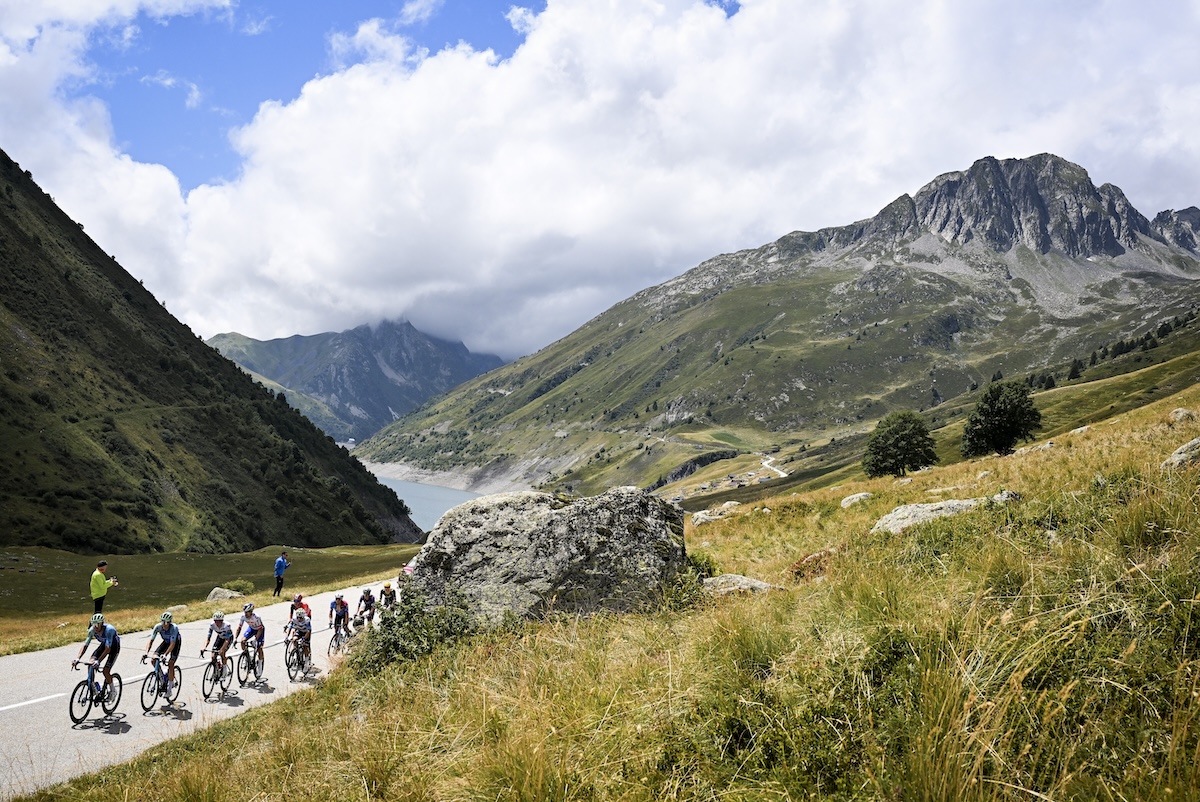
By the base of the Col du Glandon—at a deceptively moderate 5.1% gradient—the fifteen leaders forge clear, their gap to the yellow jersey group hovering at a dangerous 1’50”. Nils Politt (UAE Team Emirates-XRG), that most reliable of domestiques, maintains tempo for his leader Pogačar, but the controlled expression on the Slovenian’s face betrays nothing of his intentions.
The Glandon’s opening kilometers pass in relative harmony, but climbing at over 25 km/h leaves no room for weakness. Will Barta (Bahrain Victorious) cracks first, his American dreams evaporating in the thin air. Michael Woods (Israel-Premier Tech), the Canadian who harbors stage ambitions, finds himself distanced as Bruno Armirail drives the pace with metronomic precision.
Lenny Martinez manages to take the 20 points at the summit, claiming the crucial King of the Mountains points—his 25.5 km/h ascent on the 21.7-kilometer climb (5.1% gradient) earning him crucial markers in his duel with Pogačar, a small but significant blow to the yellow jersey’s hopes of claiming the polka-dot jersey. Behind him, Arensman collects 15 points, Jorgenson 12, with Mühlberger earning 10 points and Armirail 8 to complete the top five. The peloton trails by 1’50″—close enough to maintain control, far enough to allow the drama to unfold naturally on the climbs ahead.
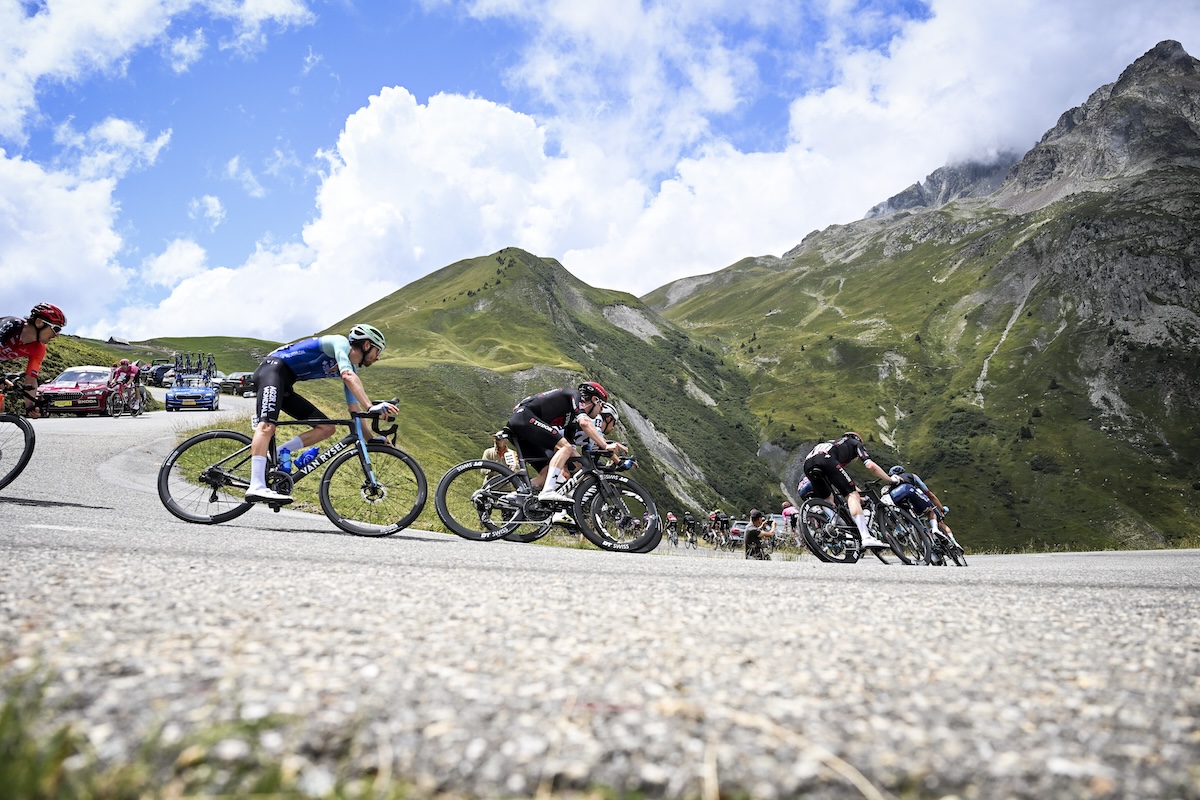
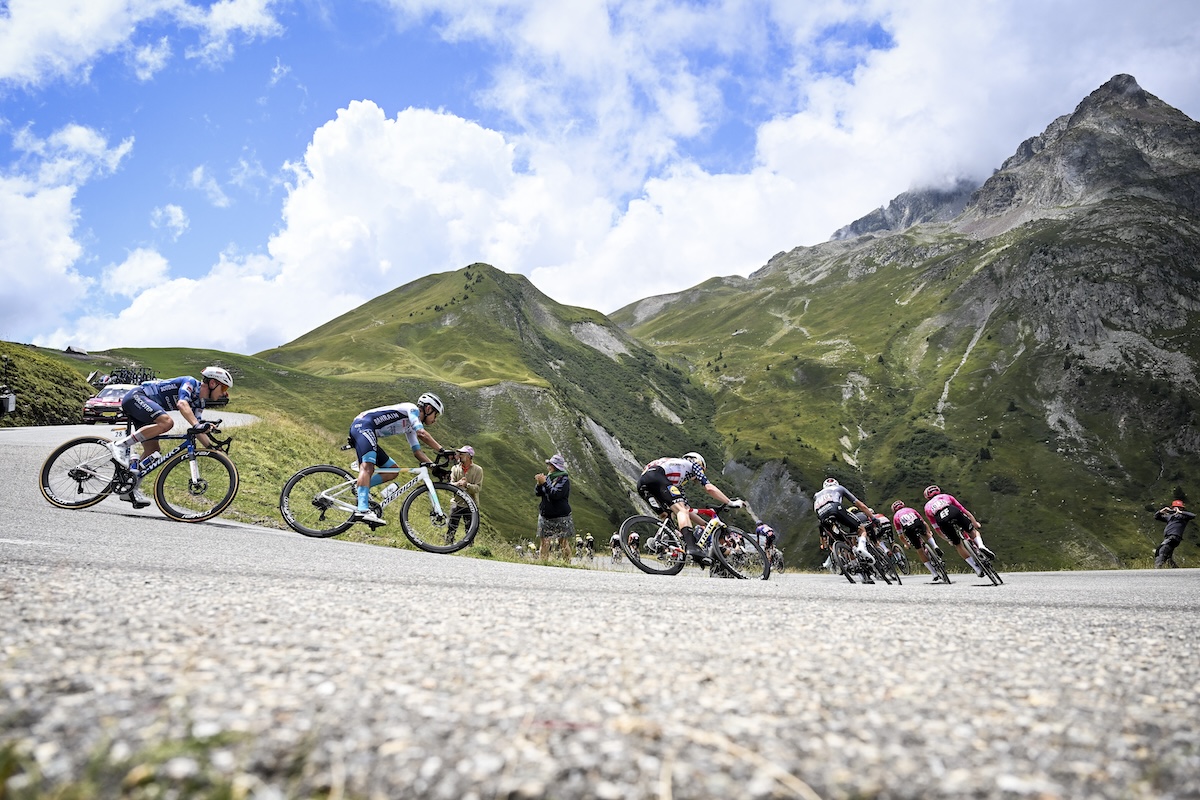
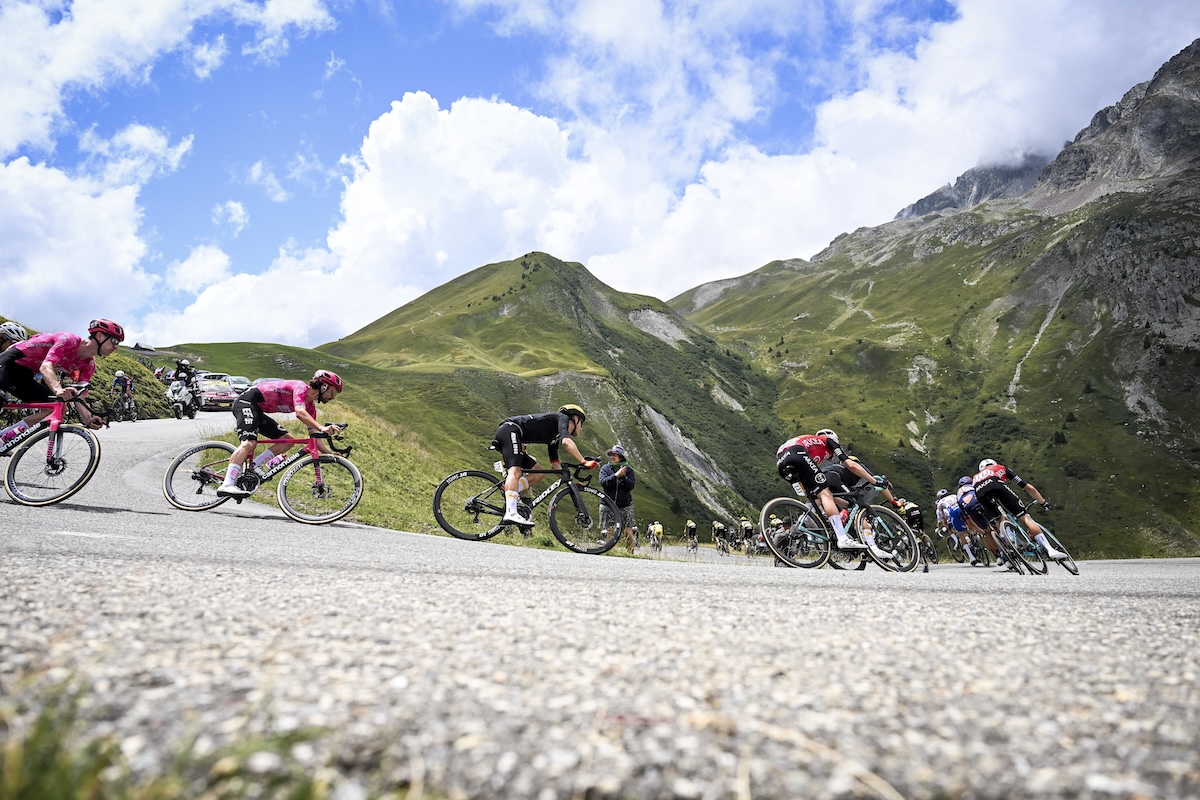
For O’Connor, the Glandon becomes a revelation and a torment in equal measure. “I tried a lot,” he reflects later, “but it came back and I was feeling in the box.” The Australian sees Felix Gall and Roglič make their moves and thinks simply: “Just do it, get yourself there.” But cycling’s cruelest lesson is that effort alone guarantees nothing—sometimes the harder you try, the deeper you sink into the quicksand of your own limitations.
Visma Changes the Script on the Madeleine
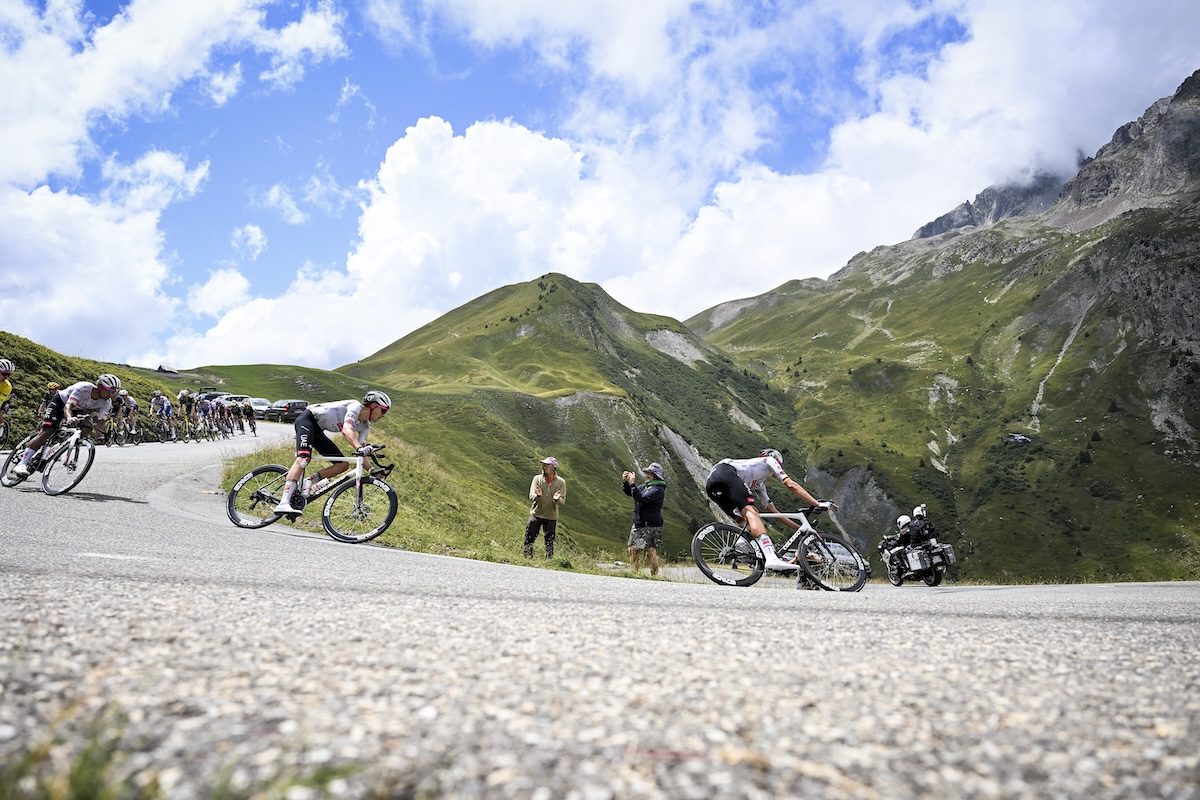
On the descent from the Glandon, Jorgenson and Arensman break clear, their technical skills and tactical awareness opening a dangerous gap over their former companions. The Jorgenson-Arensman duo descends at over 62 km/h to escape the breakaway, their move seeming audacious, perhaps foolhardy—but it proves prescient.
The Col de la Madeleine—19.2 kilometers at 7.9%—announces itself with typical Alpine brutality. Here, where the gradient bites deeper and the air grows thin, cycling’s harsh arithmetic plays out without sentiment. But the configuration changes again on the approach to the 29th ascent to Col de la Madeleine in Tour history (the last rider to go first at the summit was Richard Carapaz in 2020), where Martinez—the young Frenchman who starts the day tied with Pogačar for the mountains classification lead—finds himself no longer in contention.
Enric Mas (Movistar), the Spanish climber who enters the Tour with podium ambitions, tries to attack early in the stage but drops rapidly, lasting barely three kilometers before abandoning the race entirely. His Movistar teammate Pablo Castrillo follows soon after, their Spanish dreams dissolving in the mountain mist. At the front of the race, the breakaway begins to fracture under the Madeleine’s relentless pressure.
Some 11 kilometers from the Madeleine’s summit, the Jorgenson-Arensman duo gets reeled in by a regrouped chase featuring Roglič, O’Connor, Rubio, Gall, Armirail, and Alex Baudin (EF Education-EasyPost). Their advantage swells to 2’30” over the peloton, but behind them, Visma-Lease a Bike prepares to change the entire complexion of the race—preparing Vingegaard’s attack.
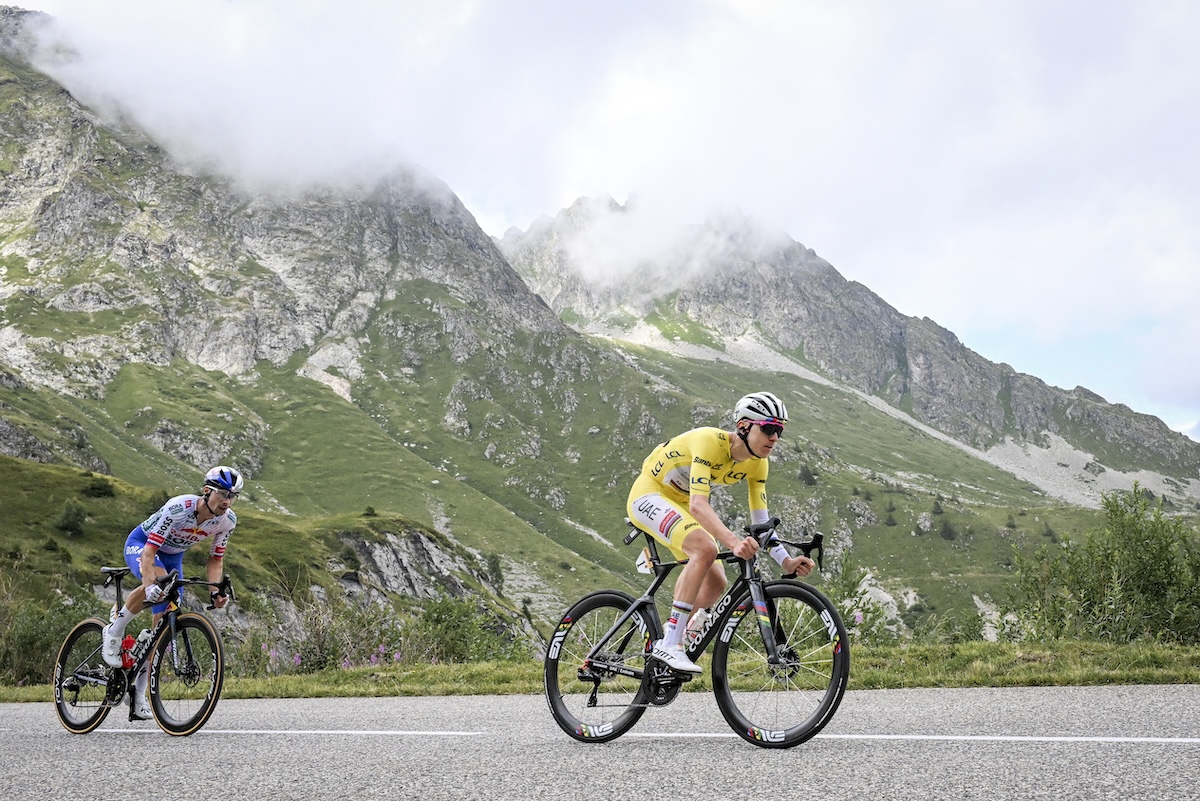
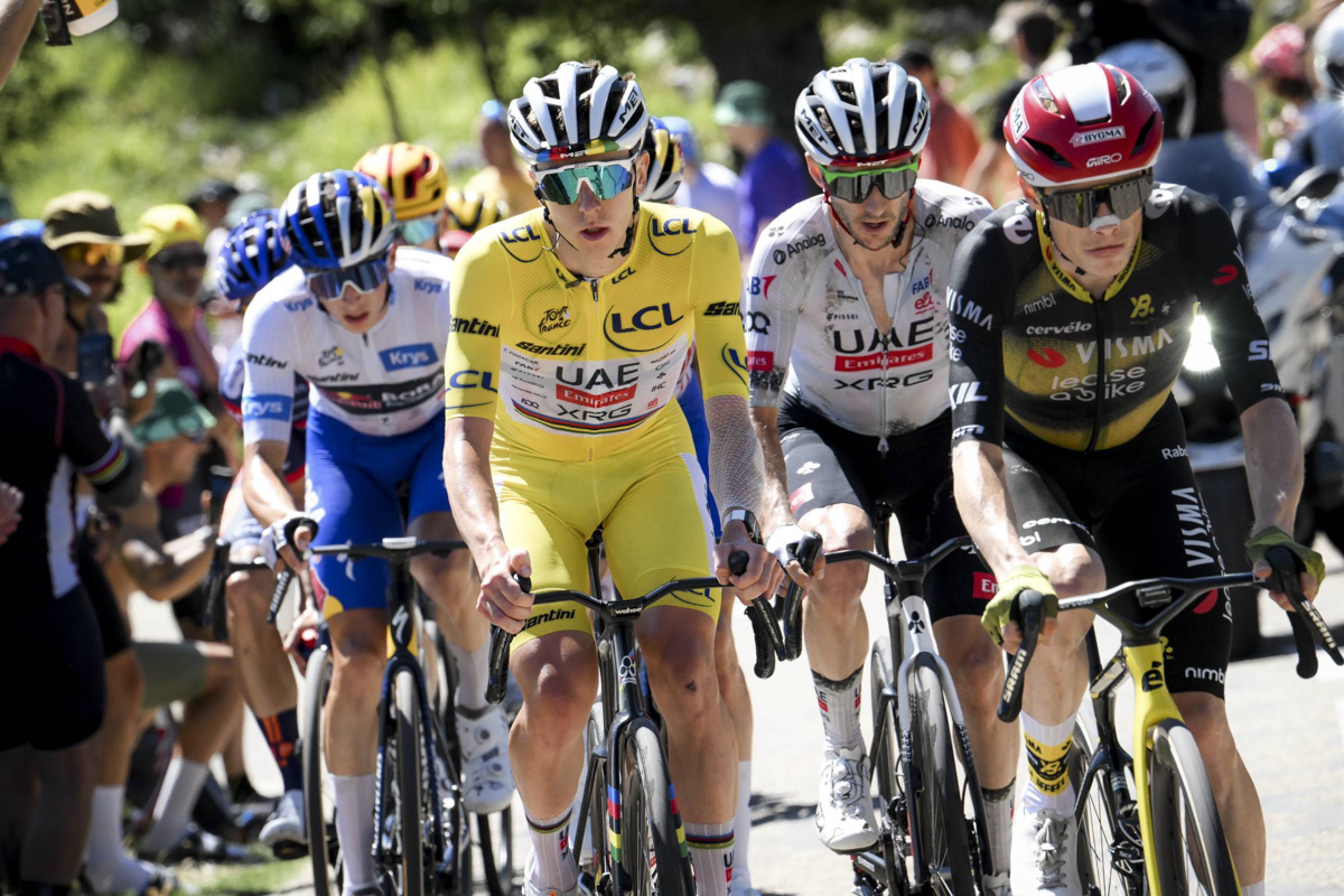
With 72 kilometers still remaining to the Col de la Loze—an eternity in Tour de France terms—Vingegaard launches an attack 5 kilometers from the Madeleine summit that splits the race like lightning through dark clouds. The shake-up becomes radical, with only Pogačar remaining on the Dane’s wheel. The move’s violence proves immediate and devastating—suddenly, the two protagonists of cycling’s greatest rivalry find themselves isolated together, chasing down a breakaway that no longer seems so dangerous at all.
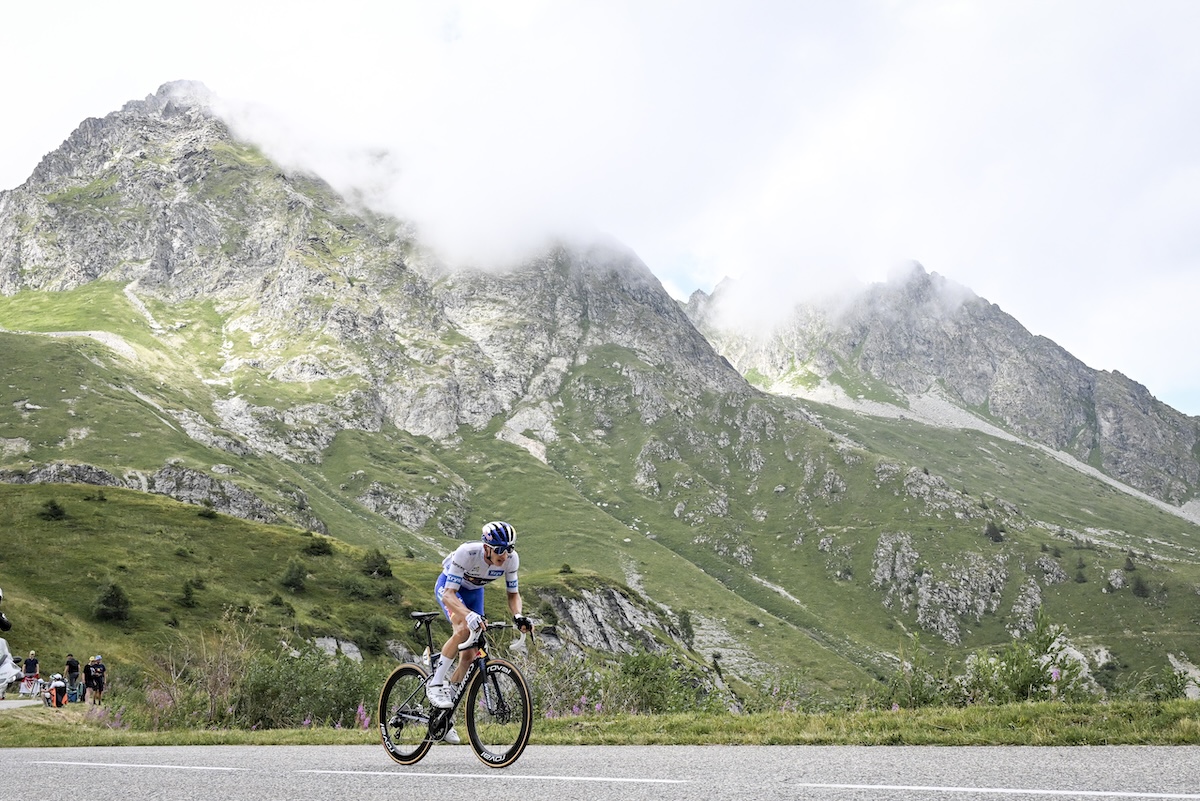
The shake-up becomes radical in its simplicity: where once there exists tactical complexity, now there is only the pure arithmetic of power and will. The leading duo in the general classification catches up with the rest of the breakaway 4 kilometers from the Col de la Madeleine and finishes the climb with this group, their arrival transforming what has been a stage-hunting expedition into something far more significant.
Vingegaard’s pace up the 19.2-kilometer climb (7.9% gradient) at an average speed of 21 km/h becomes a statement of intent. When he goes first at the summit—collecting 20 precious points and the psychological advantage of leading Pogačar over a major climb, ahead of Pogačar (15 points), Jorgenson (12 points), Gall (10 points), and Roglič (8 points)—he merely joins the leaders rather than distances his greatest rival.
More ominously for Danish hopes, Pogačar matches every acceleration with apparent ease, his face betraying no sign of the suffering that etches itself into every other rider’s features. The Slovenian shows no signs of the distress that marked his 2023 capitulation. If anything, he appears to bide his time, waiting for the moment when the Col de la Loze will reveal its true character.
The Valley of Decision
Back in the valley between the Madeleine and the final ascent, the pace drops as both leaders wait for their teammates to rejoin them. This tactical lull proves costly—not for the protagonists themselves, but for their chances of controlling what happens next. Between the Madeleine and the final ascent lie 15 kilometers of deceptive terrain on the flat—rolling roads that appear benign but serve as cycling’s most ruthless sorting ground.
Here, where tactical acumen matters as much as raw power, Ben O’Connor (Jayco AlUla) writes his name into Tour de France legend. The 29-year-old Australian, whose previous Grand Tour victories have each come via audacious long-range attacks, studies the group dynamics with the calculating gaze of a predator. O’Connor has won stages in all three Grand Tours: 17 kilometers solo to Tignes in the 2021 Tour, 28 kilometers alone to Yunquera in the 2024 Vuelta, 8 kilometers clear to Madonna di Campiglio in the 2020 Giro. His signature writes itself in kilometers of solitude, in the art of measuring suffering against the ticking clock.
With 41 kilometers remaining, O’Connor strikes. The Australian sets off as the pace drops in the valley, his acceleration not explosive but inexorable, the steady pressure of a man who understands his own limits and calculates the risk precisely. Jorgenson follows him, then Rubio joins them. The others look at each other, their hesitation fatal to their chances of maintaining control.
“On Glandon and then at the bottom of Madeleine, I was really close to pulling the pin,” O’Connor admits later. “But these are days that you have to be mentally resilient and trust yourself. I really needed self-belief today, from myself and from the team.”
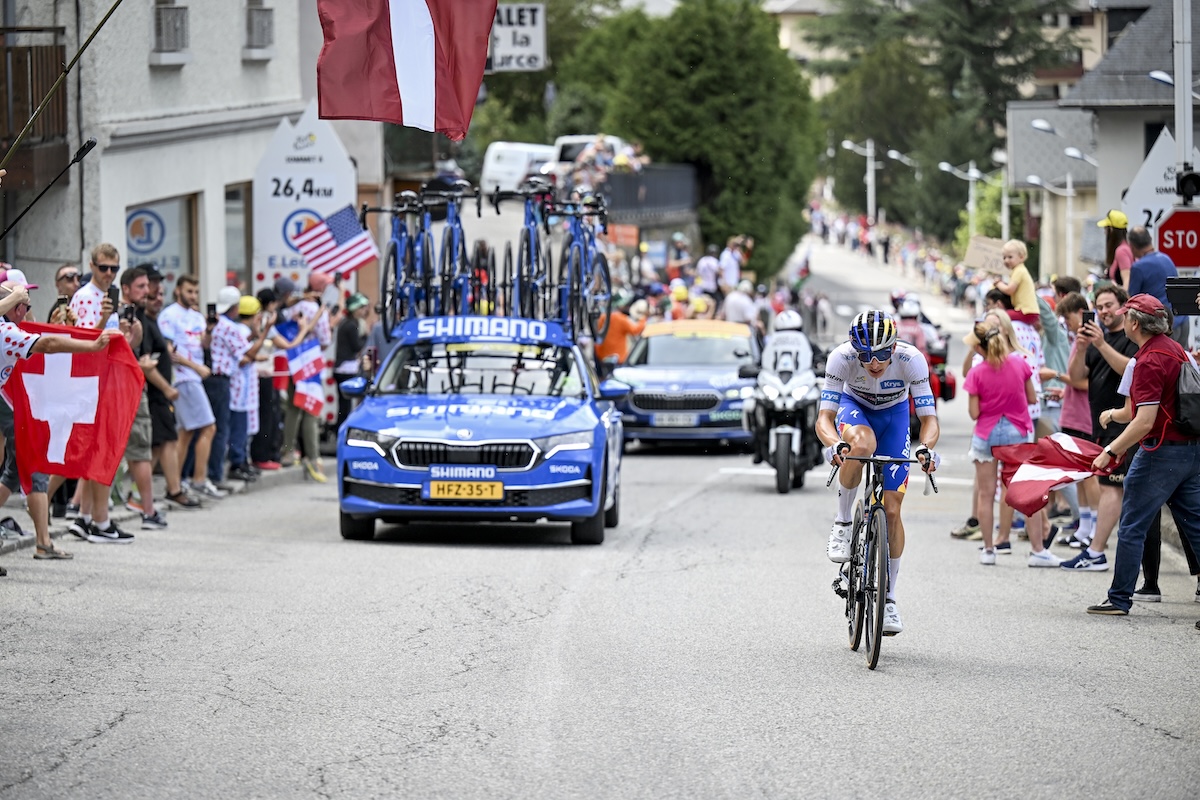
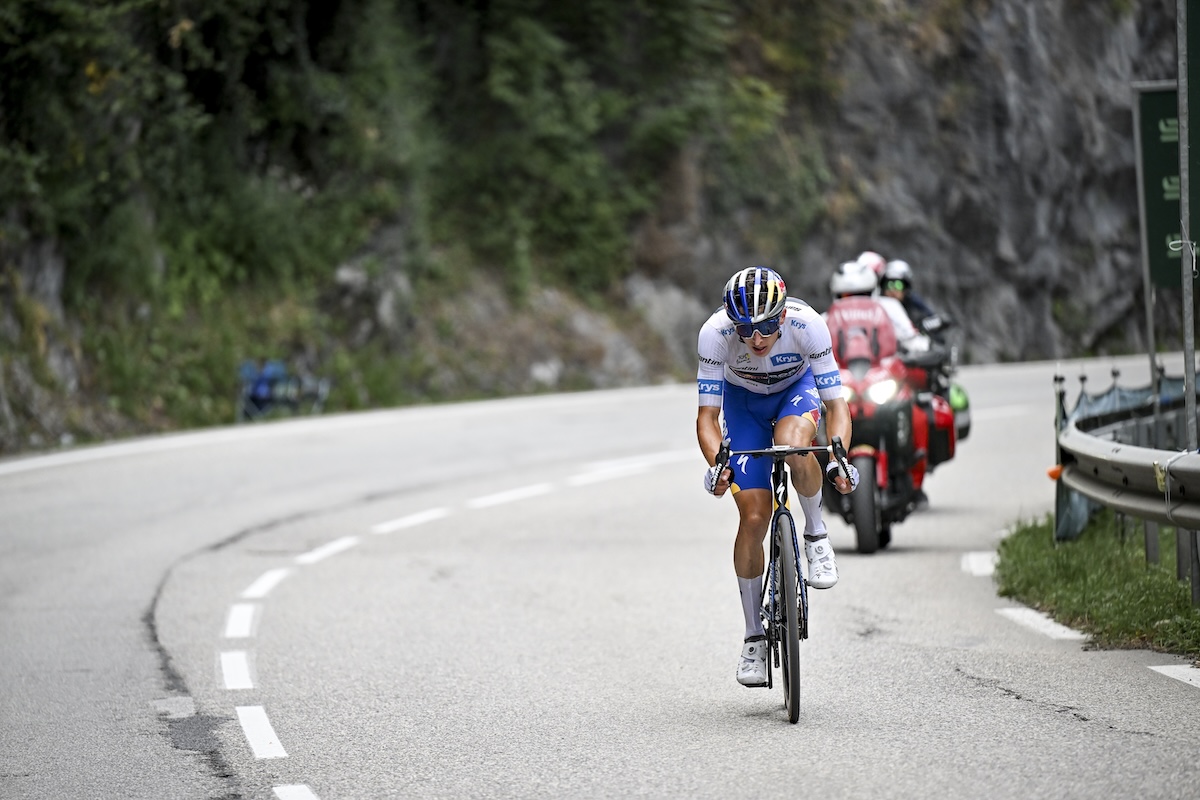
Behind the three leaders, Lipowitz seizes the opportunity to return and attack with 34 kilometers remaining, his white jersey a blur of ambition against the alpine backdrop. The young German’s move creates yet another tactical situation ahead of the final ascent of the day, but by now the race fragments beyond anyone’s ability to control. race was fragmenting beyond anyone’s ability to control.
At the bottom of the Col de la Loze, the mathematics become stark: the three attackers lead by 1 minute over Lipowitz, while a strong group of chasers—with the likes of Oscar Onley (Picnic PostNL), Kevin Vauquelin (Arkéa-B&B Hotels), and Tobias Johannessen (Uno-X Mobility)—get back to the Pogačar-Vingegaard group. They start the climb with a gap of 3’50” to the leaders—manageable for riders of their caliber, but only if O’Connor’s strength proves finite.
Into the Crucible of La Loze
The Col de la Loze via Courchevel presents a different challenge than its infamous Méribel incarnation. This marks the third time that the Tour de France visits the Col de la Loze, and the third different version of this colossal climb. In 2020, the Méribel slope was climbed (21.5 kilometers at 7.8%, with the final four kilometers a veritable wall, averaging around 10% and with gradients of 24%), while in 2025 it climbs via Courchevel. The 2023 climb (28.1 kilometers at 6%) mixed both slopes: riders climbed through Courchevel to Le Praz (1,258 meters above sea level) and then connected with the Méribel slope at Mussillon (1,378 meters above sea level) and finished with those final four kilometers of impossible ramps.
At 26.4 kilometers with an average gradient of 6.5%, but with sections above 10% that can shatter dreams in moments, this version proves less steep but longer—a sustained test of will that separates the merely talented from the truly great. As O’Connor begins the ascent, his gap to the chasers already at 45 seconds, the weather begins to deteriorate exactly as forecast. Gray clouds press down from above, and the first drops of rain begin to fall. The temperature plummets with each meter of elevation gained, transforming breath into vapor and making every gear change an act of faith.
O’Connor and Rubio dropped Jorgenson with 21 kilometers remaining, their collaboration suddenly transformed into a two-man pursuit of glory. But with 16 kilometers to the summit, O’Connor made the decision that would define his Tour de France. He went solo, his acceleration subtle but decisive, leaving Rubio to contemplate the cruel mathematics of professional cycling: sometimes, being very good simply isn’t good enough.
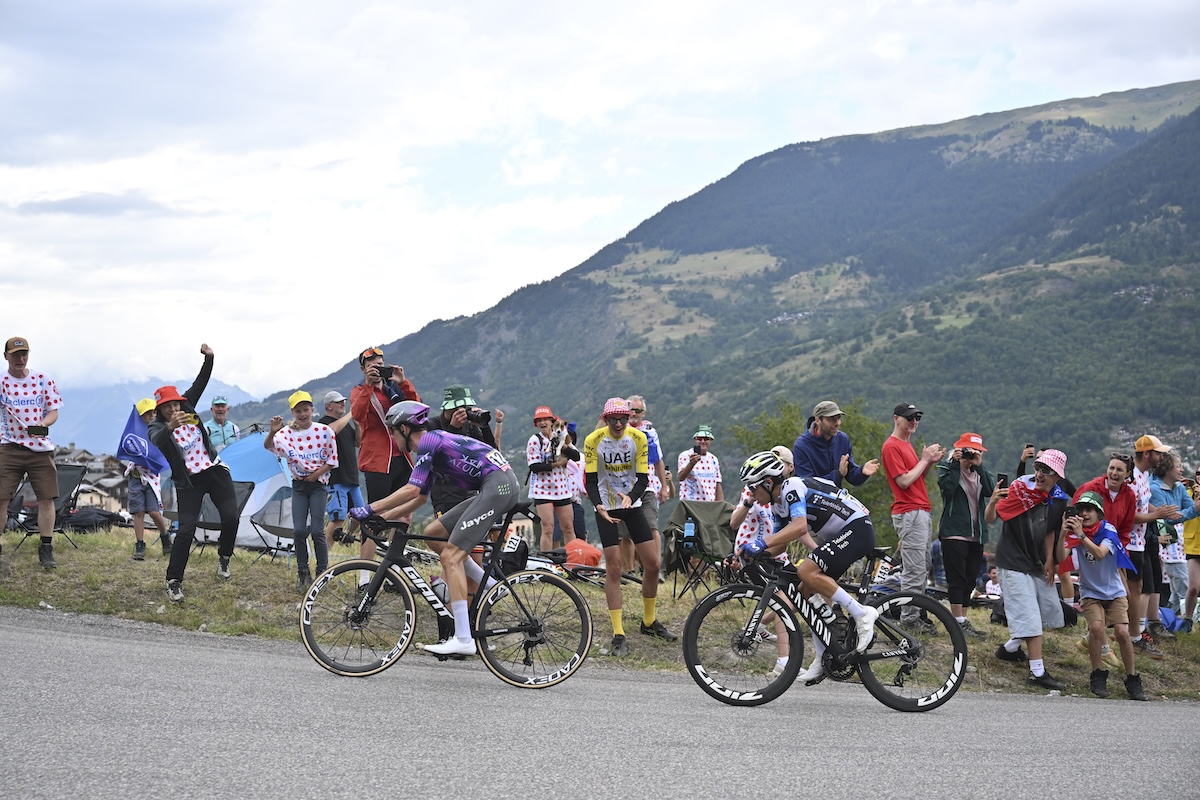
At that point, Lipowitz trails by 1’50”, while Simon Yates (Visma-Lease a Bike) drives the GC group with a gap of 3’05”. O’Connor, climbing at 22.5 km/h—a pace that breaks most professional cyclists—looks neither left nor right, his focus absolute. The Australian doesn’t look back while UAE Team Emirates-XRG takes control of the GC group with Jhonatan Narváez and then Adam Yates, whose pace prevents further attacks until the last kilometer.
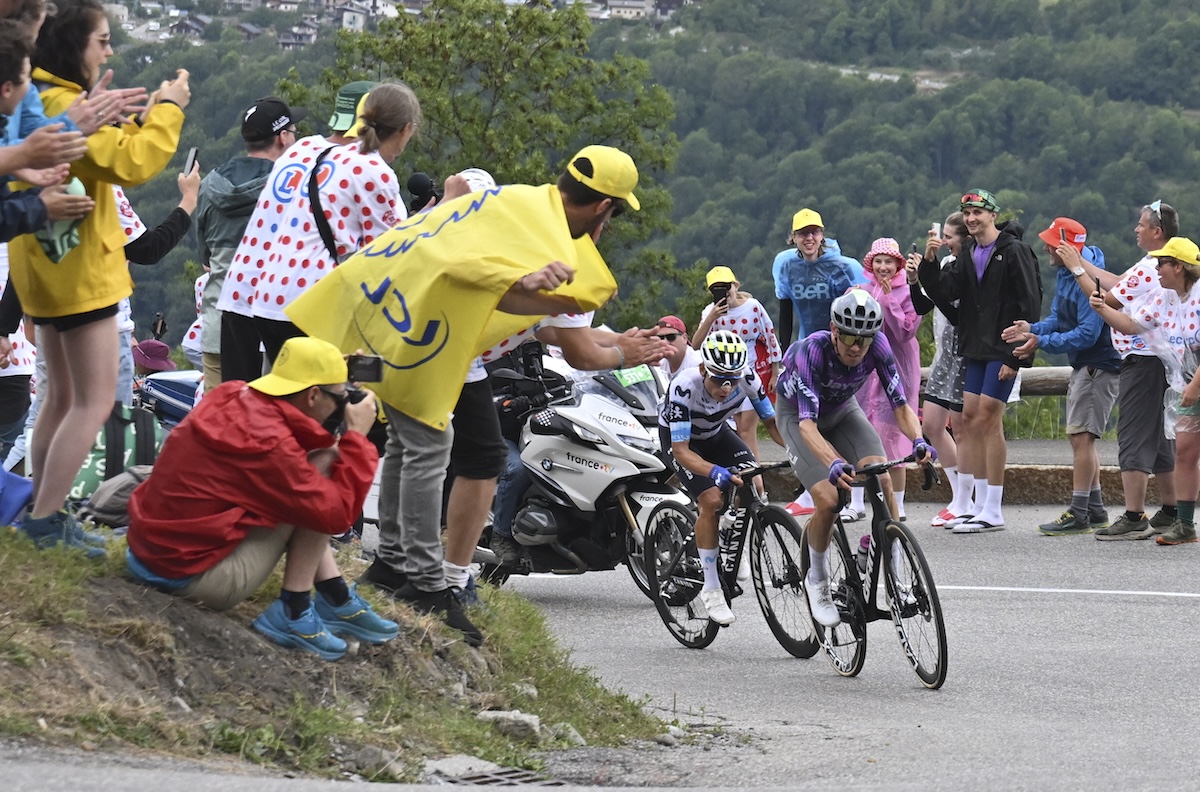
Behind him, the chase disintegrates with brutal efficiency. Rubio, his earlier enthusiasm for the breakaway now a liability, cracks at 13 kilometers from the summit. Jorgenson, despite his evident class and the support of his Visma-Lease a Bike teammates below, cannot sustain O’Connor’s relentless rhythm.
By 10 kilometers from the finish, the Australian rides alone—a solitary figure ascending through the mist toward cycling immortality, his advantage growing with every pedal stroke. The mathematics become stark: O’Connor climbs at a pace that suggests he will finish the 65-kilometer solo effort—from his initial attack to the summit—in around 1 hour and 15 minutes. It represents a masterclass in pacing, a display of climbing prowess that belongs in cycling’s pantheon of great solo performances.
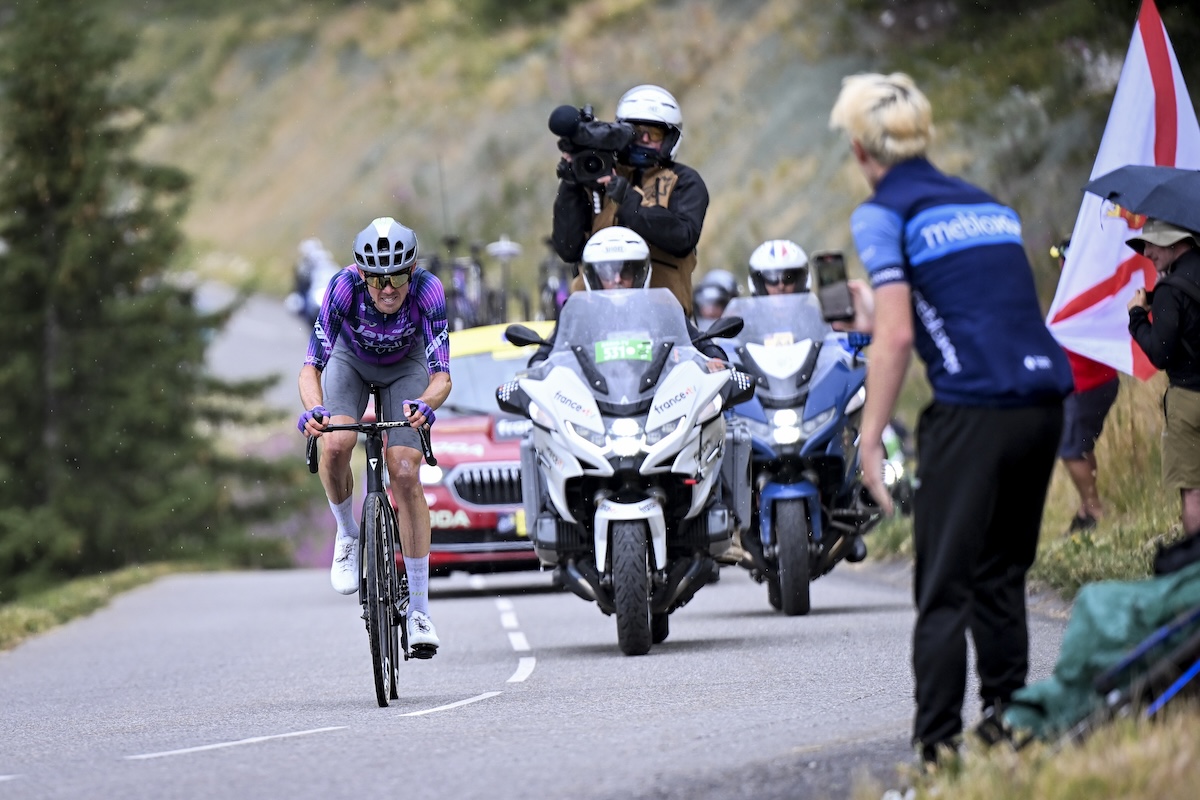
Behind them, the chase organizes with ominous efficiency, their deficit holding steady as UAE Team Emirates-XRG begins to mobilize their resources. First Narváez, then Adam Yates take up the pace-setting duties, their rhythm designed to prevent further attacks while gradually eroding O’Connor’s advantage.
For the Australian climbing alone through the Alpine air, the final kilometers become an exercise in controlled suffering. “Once Rubio was gone, I just didn’t want to be caught by the Yellow Jersey group in the final 5km,” he explains later. “When I heard it was still 3 minutes with 3 kilometres to go, it felt so good.”
The Champions’ Final Dance
Three minutes and 20 seconds behind O’Connor, in what remains of the general classification group, the real race for the Tour de France reaches its climax. Pogačar, showing the tactical maturity that defines his ascension to cycling’s summit, waits with the patience of a master. Vingegaard, desperate to claw back time before Paris, pushes the pace, but the Slovenian champion remains unmoved.
The group whittles down to its essential elements: Pogačar and his lieutenant Soler; Vingegaard with Kuss and Simon Yates working in support; Roglič, isolated but dangerous; Onley, the young Briton fighting for his first Tour podium; and a handful of others clinging to relevance by their fingernails. The gap to the group with Onley, as well as Michael Storer (Tudor) and the Yates brothers, stands at 1’50″—a reminder that even the most tactical of races can splinter into fragments when the mountains bite deep.
At 9 kilometers from the summit, Simon Yates cracks and gets distanced. Johannessen and Sepp Kuss follow, their Tour hopes evaporating in the thin air. Felix Gall, the 2023 stage winner on this very climb (who took off from the breakaway to take his maiden stage win in the Tour, ahead of Simon Yates and Pello Bilbao), finds himself fighting just to stay within a minute of the leaders and is about to suffer the same fate.
But it is with 5 kilometers remaining that Pogačar finally shows his hand. The acceleration becomes sudden, violent, and immediately decisive. Only Vingegaard can follow initially, the Dane’s face a mask of concentration and pain. Behind them, Onley responds gamely but clearly suffers, while Roglič—that master of late-race surges—finds himself with nothing left to give.
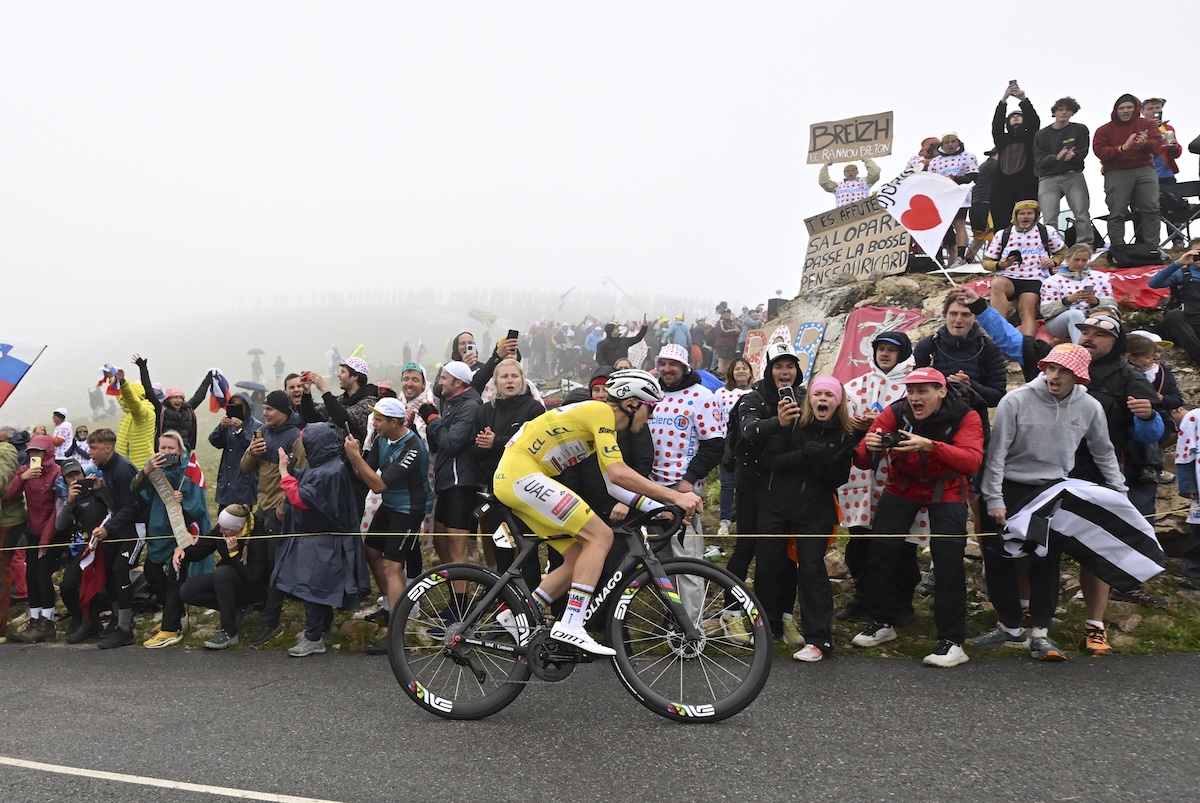
As the gradient steepens to 15% in the final three kilometers, cycling’s cruel hierarchy asserts itself with mathematical precision. O’Connor, still alone at the front, climbs through clouds now, his red and black Jayco AlUla jersey a beacon in the gathering gloom. His time splits show no signs of weakness—if anything, he climbs faster as the finish approaches, the psychological boost of certain victory propelling him toward his greatest triumph.
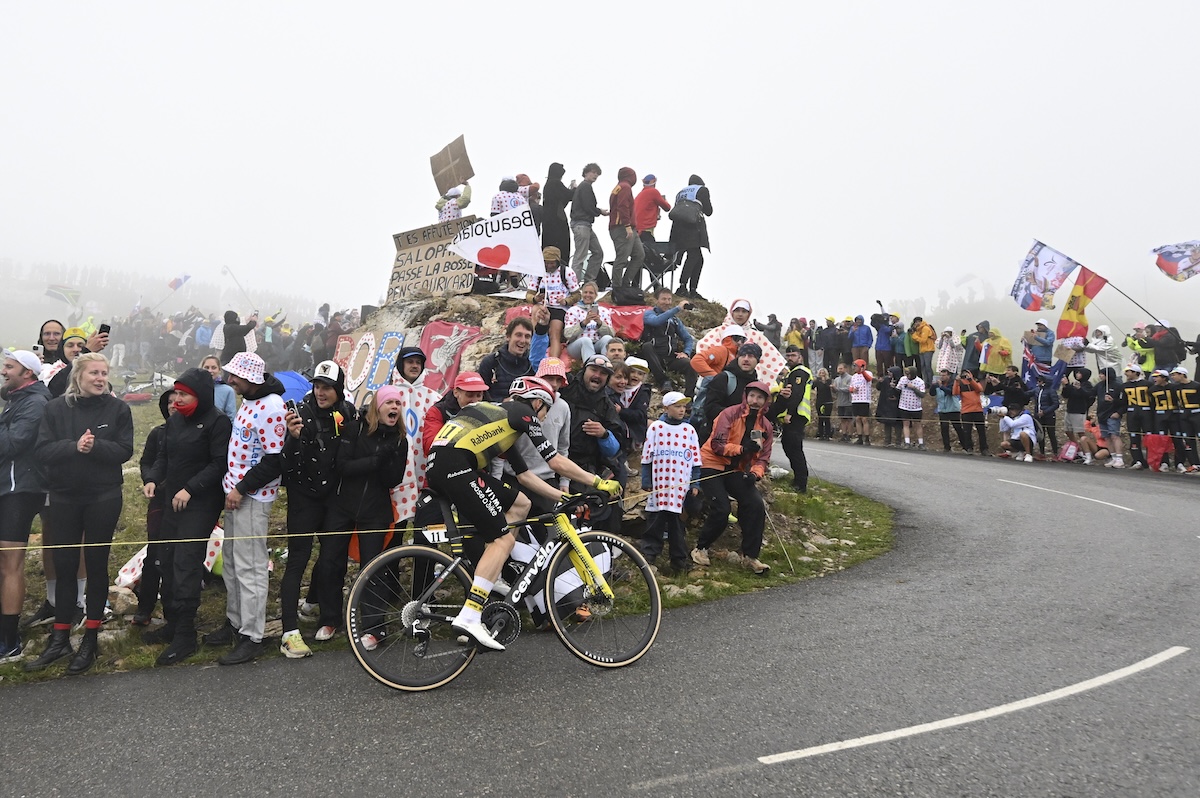
Behind him, cycling’s brutal hierarchy asserts itself with mathematical precision. Vingegaard tries again, but he cannot resist when Pogačar pounces in the final 500 meters—flying past Rubio to take second place. The Dane’s capitulation becomes total. Where once he could match Pogačar’s every acceleration, now he can only watch as the yellow jersey pulls away with what appears to be contemptuous ease. It represents the kind of moment that defines Tours de France—not the gap itself, but the manner of its creation, the visible breaking of a champion’s will.
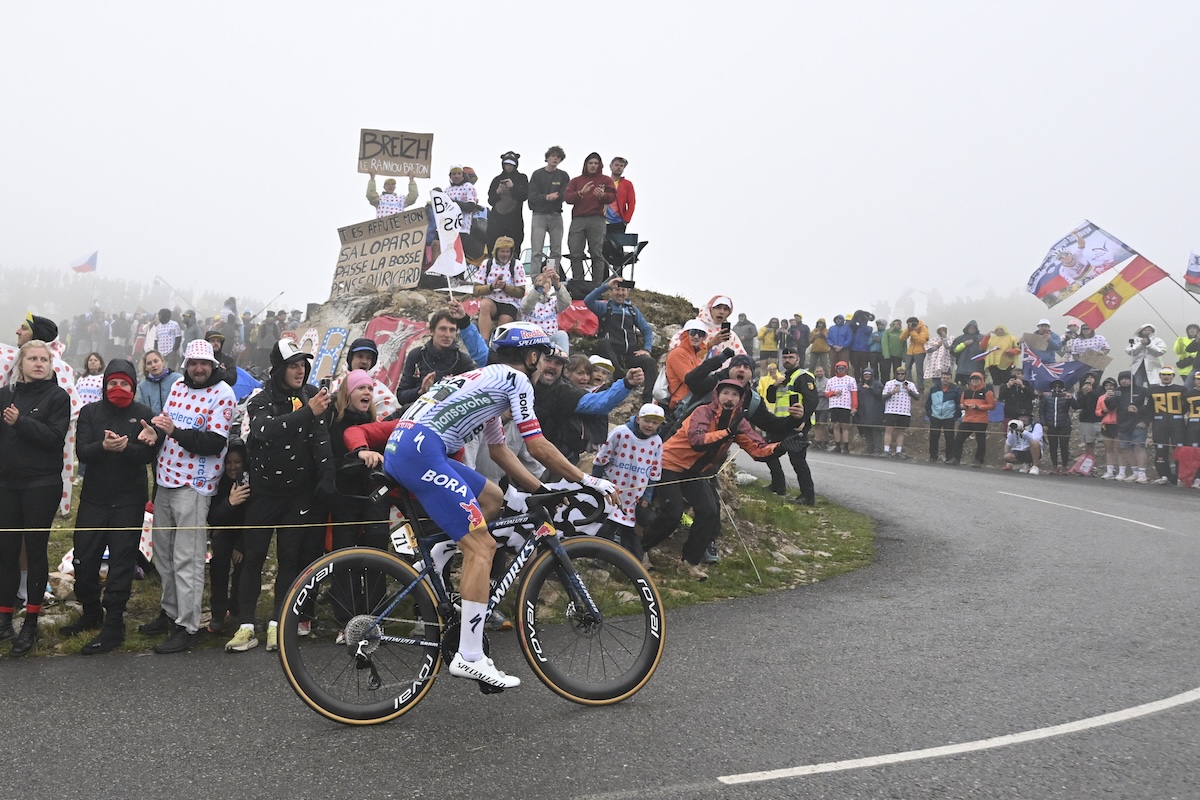
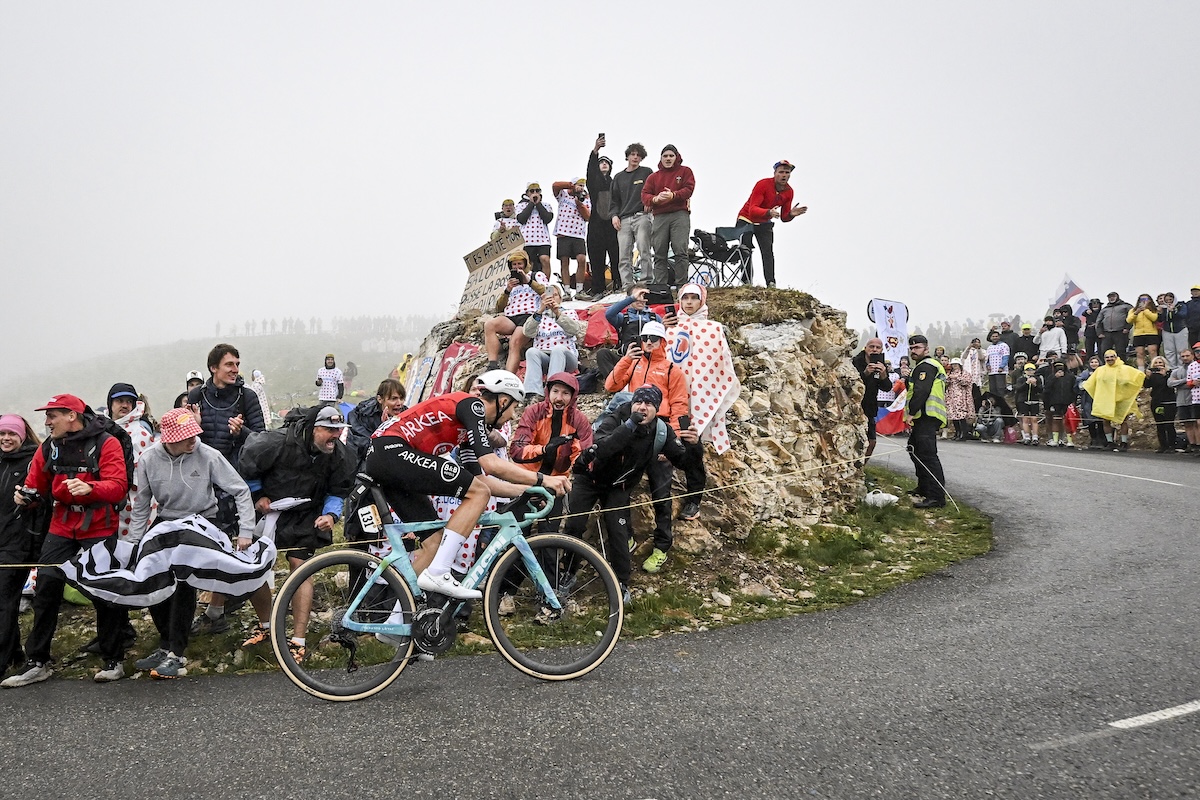
The Slovenian faces his demons on the Col de la Loze and emerges not just unbroken, but strengthened.
The Summit’s Truth
At 17:24 local time, after 5 hours, 3 minutes, and 47 seconds of racing, Ben O’Connor crossed the line atop the Col de la Loze with his arms raised in triumph. At 2,304 meters above sea level, as storm clouds gathered around the highest point of the 2025 Tour de France, his margin of victory—1’45” over Pogačar, with Vingegaard another 9 seconds back—represented more than just a stage win. It was vindication for a career built on calculated risks and audacious solo efforts.

The Australian’s celebration was brief but heartfelt—a man who understood that such moments are rare and precious in cycling’s unforgiving arena. He had ridden the race of his life on the Tour’s hardest day, and the mountain had rewarded his audacity with immortality. His average speed of 22.5 km/h up the final climb on the 26.4-kilometer ascent (6.5% gradient), achieved while carrying the weight of a 65-kilometer solo effort, represented climbing of the highest order. It was his second Tour de France stage victory and arguably the finest performance of his career.
“It’s special to do it again here in the Tour de France,” O’Connor reflected, his voice thick with emotion and exhaustion. “The last time in Tignes was a complete shock but this time I got to enjoy much more. I had a super day today, I was finally back to being me after struggling for the past 17 days. My knee is absolutely screwed now, it’s really painful. It’s lingering there and it’s not going to stop until the end of the race. But to finally get it done… I chased that win on day 10, it was a lot of frustration when Simon [Yates] won. Having that moment today is absolutely massive. You always want another win at the Tour and you can’t get enough of these. I was afraid behind they would be dropping bombs and I would explode in the final kilometres. They closed the gap in the finale but I had enough. Once Rubio was gone, I just didn’t want to be caught by the Yellow Jersey group in the final 5km. When I heard it was still 3 minutes with 3 kilometres to go, it felt so good. On Glandon, I tried a lot, but it came back and I was feeling in the box. I saw Felix Gall and Primož Roglič go and I thought: ‘Just do it, get yourself there.’ On Glandon and then at the bottom of Madeleine, I was really close to pulling the pin but these are days that you have to be mentally resilient and trust yourself. I really needed self belief today, from myself and from the team.”
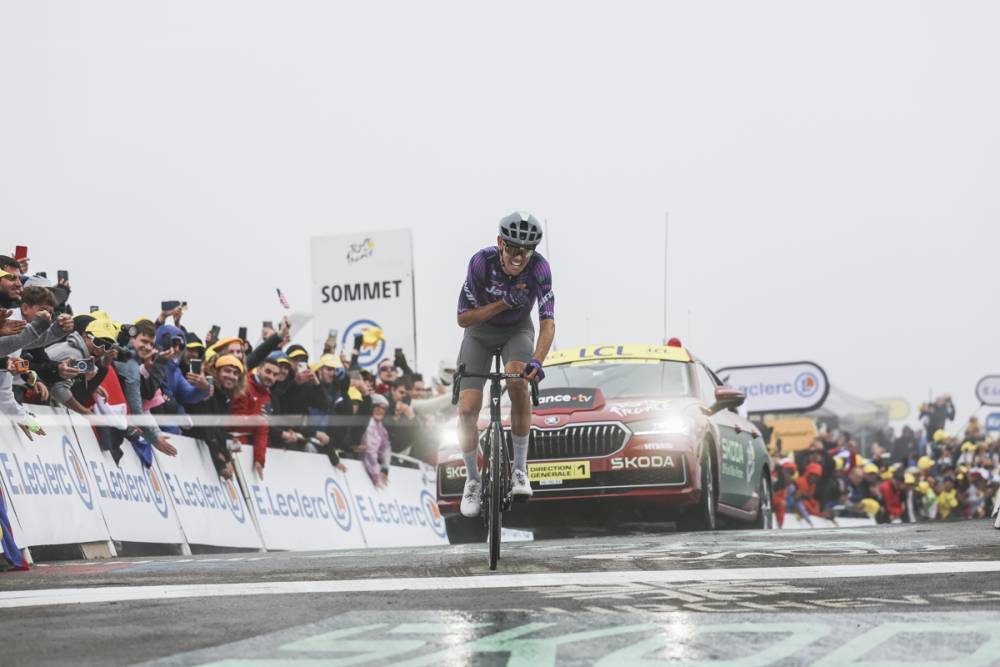
Pogačar followed 1 minute and 45 seconds later, close enough to Vingegaard—who trailed by another 9 seconds—to reclaim the lead in the mountains classification. The Slovenian’s performance had been masterful in its control: he had waited while others attacked, responded when necessary, and struck when it mattered most. His return to the polka-dot jersey was the cherry atop a comprehensive display of championship cycling. After climbing the Col de la Loze at 23.3 km/h, Pogačar took the opportunity to retake the lead in the mountains classification, dethroning Martinez.
For Pogačar, the stage represented a different kind of victory—the conquering of psychological demons that had haunted him since 2023. “To be honest, I wanted the stage win today but our clear priority was staying in the overall lead,” he explained with characteristic honesty. “This side of the Col de la Loze is easier than the one we did in 2023—that was much worse. Whenever we climb that side again, I’ll definitely go for the win. As for today, when Visma accelerated in the Madeleine I thought we may get a good shot to play for the stage. We were quite fast on the downhill, but then the group got super small and there was no cooperation whatsoever in the valley, so I waited for my teammates to come back and it took a long time. At the bottom of the climb, my guys started to pull and I was hoping we would bring the break back—yet Ben O’Connor was very strong and managed to defeat us. I’m happy I had good legs and kept the Yellow Jersey. It was difficult to make any difference today. I was a bit scared of this stage, but it turned out to be a beautiful day. I expect tomorrow to be another big day, similar to today. Visma will try everything, yet we are strong as a team and I hope we will survive so we can reach the Champs-Élysées in yellow on Sunday.”
But perhaps the day’s most significant development occurred in the battle for third place overall. Onley’s fourth-place finish, just 1’58” behind O’Connor, allowed him to gain 1’37” on Lipowitz, narrowing the gap for the final podium spot to a mere 22 seconds. Right behind them, Onley gained 1’37” on Lipowitz and narrowed the gap to the third place in the overall standings to just 22″. The young German, who had shown such promise earlier in the Tour, was left to confront the harsh reality of his limitations.
“The stage was super hard. I felt quite good and when I joined the group with Jonas [Vingegaard] and Tadej [Pogačar], they were looking at each other,” Lipowitz explained, his disappointment evident. “I tried to pace myself but I ran out of energy on the final climb. Onley and Johannessen were strong. Tomorrow will be another day. I hope I can recover well and then we go again. I gave my best today so I don’t think I can change anything. We have to see tomorrow. Primož [Roglič] also showed that he was strong. We’ll make a plan for tomorrow and then we’ll see what happens.”
Einer Rubio (Movistar) completed the top five at 2’00”, his early aggression earning a place in cycling history.
The Devil’s Due
In the thin air atop the Loze, as O’Connor savored his moment and Pogačar pulled on the polka-dot jersey once again, the race’s hierarchy had crystallized with brutal clarity. Lipowitz, the young German, had finished 3’37” behind O’Connor but retained his white jersey and third place in the overall standings, though his advantage over Onley had shrunk to a precarious 22 seconds—the battle for third place and the white jersey now extremely close.
The time cut, calculated at 31 minutes and 30 seconds after O’Connor’s victory, had been generous enough to keep 137 riders in the race—17 minutes and 7 seconds after O’Connor’s triumph marked the time since the finish for the last riders. But numbers told only part of the story—this had been the kind of stage that separates Tours de France from mere bike races, the kind of day that lives in cycling’s collective memory long after the statistics have been forgotten.
As the last riders crossed the line in the gathering dusk, the Col de la Loze had rendered its verdict with characteristic brutality. O’Connor had claimed his second Tour de France stage victory, matching his 2021 triumph at Tignes with another masterpiece of long-range attacking. His victory was a reminder that in cycling’s grandest theater, audacity and calculation can still triumph over pure power.
But it was also a footnote to a larger story—Pogačar’s psychological resurrection on the climb that had once broken him. The Slovenian’s lead over Vingegaard now stood at 4’26”, with only one mountain stage remaining before the ceremonial procession to Paris. Heading into the final mountain stage to La Plagne on Friday, the yellow jersey had emerged not just unbroken but strengthened. The demons of La Loze had been faced and conquered, not through domination, but through the quiet confidence of a champion who had learned to dance with the devil and lead the dance himself.
Better the devil you know than the devil you don’t—Pogačar had been marked for life by this ascent, but last week he had shown at Hautacam that he could turn the tables at venues that had seen him crumble. And while everyone considered he wanted to win at La Loze as well, he had insisted his main ambition was to keep the Maillot Jaune all the way to Paris for a historic fourth triumph. Unlike in 2023, when it had witnessed Pogačar’s greatest defeat, this time the mountain had confirmed his supremacy.
Tomorrow would bring La Plagne and one final chance for Vingegaard to overturn the inevitable. As for Vingegaard, he had said he was ready to do everything to regain supremacy in the Tour, but the sequence of HC climbs on stage 18—with the Col du Glandon and Col de la Madeleine ahead of La Loze—had given him the perfect terrain to dance with the devil, and still he had come up short.
But as the Alpine air grew thin and cold around the Col de la Loze’s summit, one truth had crystallized with brutal clarity: sometimes the greatest victories come not from winning, but from surviving the places where you once feared to tread.
The devil shows many faces on this July afternoon, but only one man faces them all and emerges with his dreams intact. For Tadej Pogačar, the road to Paris has never looked clearer—even as Ben O’Connor soars above the clouds, reminding the cycling world that greatness comes in many forms, and sometimes the most beautiful victories belong not to the inevitable champion, but to those brave enough to risk everything for a moment of transcendence.
The Australian eagle had soared magnificently, claiming the stage with a performance that belonged in cycling’s pantheon of great climbing displays. But the sun still belonged to Slovenia, and the road to Paris had never looked clearer for the man in yellow. The essential truth of this Tour de France—Pogačar’s inexorable march toward a third title—remained unshaken by even the most audacious of attacks.
By the Numbers
4: O’CONNOR LIKE VAN DER POEL AND MERLIER
Mathieu Van der Poel, Tim Merlier, and Ben O’Connor have one thing in common since today. All three won their first Tour stage in 2021, then had to wait 4 years before winning again. After the Dutchman and the Belgian a few days ago, the Australian raised his arms for the 2nd time in the race. He won in Tignes 4 years and 20 days ago.
4/5: FROM SPRINTERS TO CLIMBERS
Since Caleb Ewan won 5 Tour sprints in 2019/2020, Australians conquered 4 of their 5 wins in mountain stages: Ben O’Connor in Tignes 2021, Col de la Loze 2025; Michael Matthews in Mende, 2022; Jai Hindley in Laruns, 2023. The exception is Simon Clarke winning the cobbled stage in Arenberg, 2022.
9: POGAČAR ALWAYS AHEAD OF VINGEGAARD
Since his victory at Le Lioran last year, Jonas Vingegaard has not beaten Tadej Pogačar in the mountains. The Slovenian has finished ahead of the Dane in the last 9 mountain stages, often arriving one place ahead of his rival (8 out of 9 times).
22: SO TIGHT BETWEEN THE YOUNG RIDERS!
Florian Lipowitz saved his white jersey, but Oscar Onley stands only 22 seconds behind. This is the first time the young rider classification is so tight after 18 stages since the Tour 2006, 19 years ago! At the time, 5 seconds were separating Damiano Cunego and Markus Fothen.
750: THE END OF THE AUSTRALIAN DROUGHT
The Tour 2024 was the first without an Australian victory since 2018; it will not be the case in 2025. Ben O’Connor claimed Australia’s 39th victory, the first since Jai Hindley at Laruns in 2023, 750 days ago. The Australian drought hasn’t been this long since the 1,080 days separating the stages of Prato Nevoso 2008 (Simon Gerrans) and Mûr-de-Bretagne 2011 (Cadel Evans).
22: SPAIN LOSES TWO OUTSIDERS
Carlos Rodriguez and Enric Mas, respectively 10th and 18th in the general classification yesterday, have withdrawn. The former wasn’t at the start this morning, the latter abandoned during the stage. The leading Spaniard is now Cristian Rodriguez in 22nd place. A Tour without a Spaniard in the top 20? It would be a first in the 21st century.
23: POGAČAR LIKE HINAULT
Tadej Pogačar retains his polka-dot jersey thanks to his two 2nd-place finishes at the Col de la Madeleine and the Col de la Loze. This is his 23rd, equal to Bernard Hinault, whom he ties for 6th place among the riders with the most polka-dot jerseys. He will catch Lucho Herrera (5th, 26 times) if he keeps it until the end.
151: THE BIGGEST COLLECTION
Tadej Pogačar now has 151 Tour distinctive jerseys (51 Yellow Jerseys, 2 green jerseys, 23 polka-dot jerseys, 75 white jerseys). The Slovenian is the first to reach the 150-jersey mark. Among his contemporaries, he is ahead of Peter Sagan with 148 jerseys (4 Yellow Jerseys, 130 green jerseys, 14 white jerseys).
5,450: THE CLIMBERS’ KINGDOM
The 5,450 meters of elevation gain climbed today is the highest total for a Tour 2025 stage! This is due to the three HC climbs (Col du Glandon, Col de la Madeleine and Col de la Loze). This is the 14th time that a stage has included three HC climbs, the highest number ever achieved. The last time was on stage 12 of the Tour 2022 between Briançon and L’Alpe d’Huez.
2,304: HIGHER THAN HIS NATIONAL SUMMIT
The Col de la Loze stands at 2,304 meters, and never before has an Australian won this high in the Tour. By doing so, Ben O’Connor also triumphed at an altitude higher than his country’s highest point, Mount Kosciuszko (2,228 meters). This is only the second time an Australian has won at over 2,000 meters… and that was O’Connor’s first victory in Tignes in 2021 (2,089 meters)!
Stage 18 Results
-
- Ben O’Connor (Team Jayco Alula) – 5h03’47”
- Tadej Pogačar (UAE Team Emirates XRG) – +1’45”
- Jonas Vingegaard (Team Visma | Lease A Bike) – +1’54”
- Oscar Onley (Team Picnic PostNL) – +1’58”
- Einer Rubio Reyes (Movistar Team) – +2’00”
- Felix Gall (Decathlon AG2R La Mondiale Team) – +2’25”
- Primož Roglič (Red Bull-Bora-Hansgrohe) – +2’46”
- Adam Yates (UAE Team Emirates XRG) – +3’03”
- Tobias Johannessen (Uno-X Mobility) – +3’09”
- Sepp Kuss (Team Visma | Lease A Bike) – +3’26”
General Classification After Stage 18
-
- Tadej Pogačar (UAE Team Emirates XRG) – 66h55’42”
- Jonas Vingegaard (Team Visma-Lease a Bike) – +4’26”
- Florian Lipowitz (Red Bull-Bora-Hansgrohe) – +11’01”
- Oscar Onley (Team Picnic PostNL) – +11’23”
- Primož Roglič (Red Bull-Bora-Hansgrohe) – +12’49”
- Felix Gall (Decathlon AG2R La Mondiale Team) – +15’36”
- Kevin Vauquelin (Arkéa-B&B Hotels) – +16’15”
- Tobias Johannessen (Uno-X Mobility) – +18’31”
- Ben Healy (EF Education-EasyPost) – +25’41”
- Ben O’Connor (Team Jayco Alula) – +29’19”
Jersey Leaders after Stage 18
-
- Yellow Jersey (Overall Leader) – Tadej Pogačar (UAE Team Emirates XRG)
- Green Jersey (Points Classification) – Jonathan Milan (Lidl-Trek)
- Polka Dot Jersey (King Of The Mountains) – Tadej Pogačar (UAE Team Emirates XRG)
- White Jersey (Best Young Rider) – Florian Lipowitz (Red Bull-Bora-Hansgrohe)


Correction:
Timelimit 16%, or 5:52:23 (+0:48:36)
SOURCE: https://www.procyclingstats.com/race/tour-de-france/2025/stage-18
Comments are closed.