
By Steven Sheffield — The Tour de France was born on the flat roads of France, but it found its soul in the mountains. From the moment race director Henri Desgrange ordered his riders into the Pyrenees in 1910, the great cols and summits of France became the true arena of the Grande Boucle — the place where courage, suffering, and legend are manufactured in equal measure. Over more than a century, the race’s climbs have produced triumph, fury, tragedy, myth, and some of the most indelible images in all of sport.
Test your knowledge of those mountains and the extraordinary stories attached to them. They range from the first great experiments in high-altitude cruelty to the modern summit finishes that can still overturn an entire Tour in a single afternoon.
Q1. Near the summit of one of the Tour’s great Alpine climbs, riders pass through a landscape so strange and lunar — a barren scree field studded with wind-carved limestone pinnacles — that researchers have compared it to the surface of Mars. This zone has a name, and within it stands a memorial to two of the greatest riders in Tour de France history, both of whom forged defining moments of their careers on this very climb. What is the climb, what do people call this otherworldly landscape, and which two riders does the memorial honour?
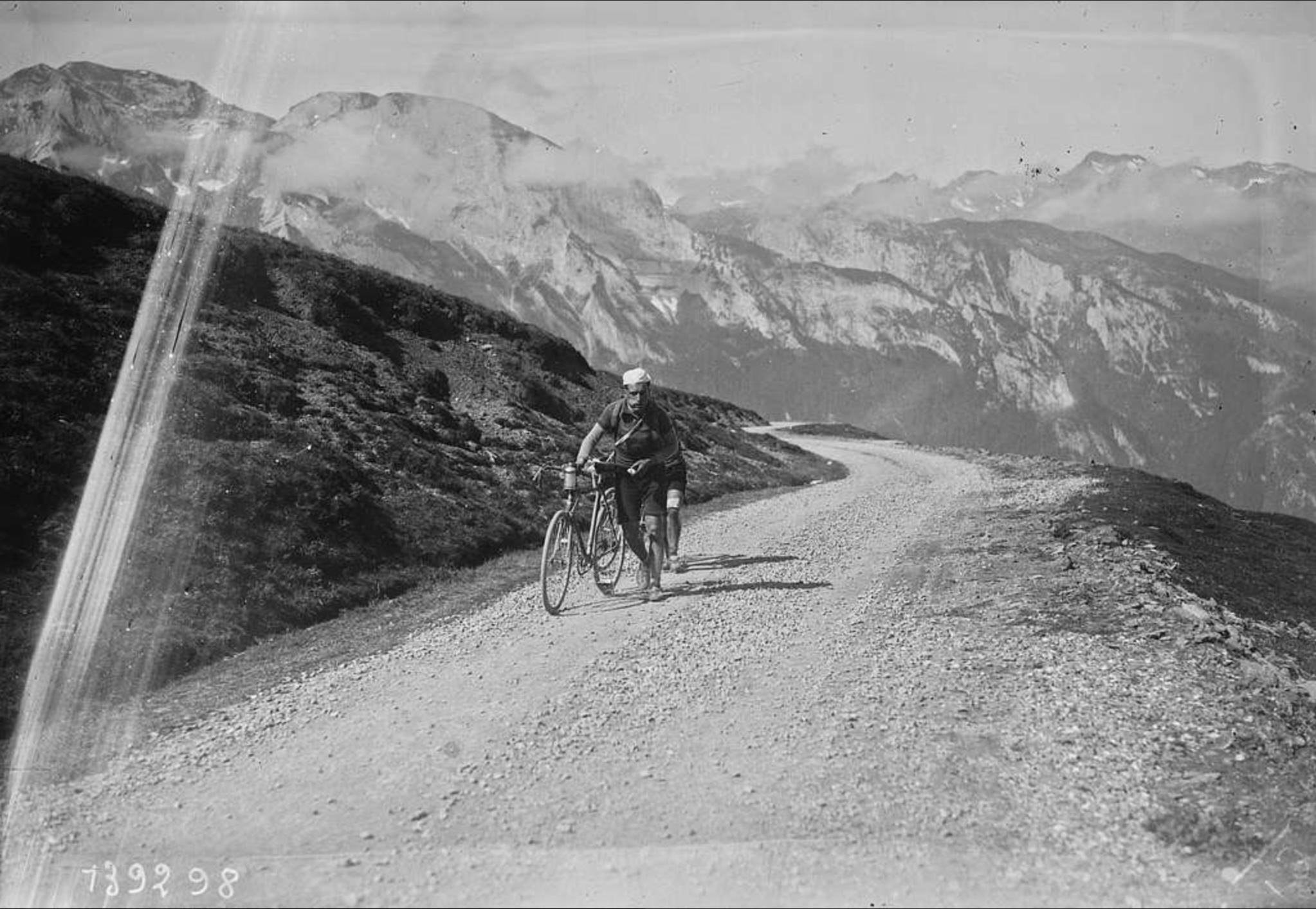
Q2. In 1913, the leading rider in the Tour de France descended the Col du Tourmalet and discovered partway down that his front fork had snapped — either from a collision with a race vehicle or from the sheer violence of the road. The rules of the era required riders to perform all their own repairs without assistance. What followed was an hours-long ordeal that became one of the most celebrated stories in the history of the race, and ended with the rider’s Tour aspirations in ruins. Who was the rider, what did he do, and what absurd penalty did officials later hand him?
Q3. This mountain stands apart from all the others in the Tour de France — geographically, visually, and in terms of the dread it inspires. It rises in isolation from the plains of southern France, its treeless upper slopes a ghostly white from limestone and scree, swept by winds that can exceed 200 kilometres per hour. In 1967, during Stage 13 of the Tour, the race produced one of the most tragic episodes in all of sporting history on its slopes. What is the mountain, and what happened?
Q4. Of all the climbs in Tour de France history, one mountain has appeared in the race more times than any other — over ninety times since its debut in 1910, when its inclusion required one of the most audacious acts of deception in the history of sport. A scout dispatched to assess the road in winter conditions lost his way in the snow, fell into a stream, and had to be rescued by locals nearly frozen in the early hours of the morning. The following day he sent a telegram to race director Henri Desgrange in Paris that was, to put it charitably, a gross misrepresentation of the facts. Which mountain is this, who was the scout, and what did his telegram say?
Q5. Henri Desgrange, the journalist and race director who created and shaped the Tour de France in its formative decades, had a favourite mountain. He rhapsodised about it in writing, famously declaring that next to it every other climb was “as weak as dishwater,” and that before this “giant” one could do nothing but bow down. A monument to Desgrange stands to this day at the south portal of the tunnel near its summit, and the organisers named the annual prize given to the first rider over the highest summit in each year’s Tour in his honour. Which mountain inspired such passion?
Q6. Not every important climb in the Tour de France is ancient. One summit finish in the Vosges Mountains of eastern France made its Tour debut as recently as 2012. Short, steep, and immediately decisive, it shot to fame that first year when a young rider won the stage in a manner that suggested he might one day eclipse his own team leader. Eight years later, it hosted one of the most dramatic penultimate-stage time trials in Tour history, in which one rider overturned what seemed an insurmountable deficit to seize the yellow jersey on the final competitive day of the general classification. Which climb is this, and who won that 2020 stage?
Q7. During the 1910 Tour de France — the first edition to include Pyrenean mountain stages — one rider crested the final climb of the day in a state of barely contained fury. As he reached the summit with race officials standing nearby, he unleashed a now-legendary outburst at those responsible for routing the race over such savage terrain. Who was the rider, and what did he shout?
Q8. One of the most storied climbs in Tour de France history stands apart from the great Alpine and Pyrenean passes in every sense: it is a dormant volcano, it rises from the heart of the Massif Central, and for nearly four decades it vanished from the race entirely — not because of snow, terrain, or organisational preference, but because of an unresolved dispute over road access. When it last appeared before its long absence, in 1988, few imagined it would stay away so long. The climb is most famous for a single moment from 1964, when two riders — one of them already a four-time Tour champion — rode shoulder to shoulder near the summit in what became perhaps the defining image of rivalry in the sport’s history. Name the climb, the two riders, and the year it finally returned to the Tour.
Q9. One mountain in the Alps carries such a wealth of Tour de France drama that observers have called it the “Hollywood climb” of the race. It hosted the Tour’s first-ever summit finish, and it has since become perhaps the most iconic climb in professional cycling — a place where careers are made, yellow jerseys change hands, and tens of thousands of spectators line the road every July. Which mountain is this, and in which year did the Tour first finish at its summit?
Q10. Not every climb in Tour de France history carries the weight of decades of appearances. Organisers use one col sparingly — it has featured only a handful of times since the Tour first visited it in 1938 — and when it does appear, it is usually the highest point of that year’s race. Standing at 2,764 metres, it is the highest paved mountain pass in the Alps. When the Tour visited in 1938, workers had not yet fully paved the road. Which pass is this?
Click to next page for answers.