New Bernard Kerr Edit Showcases Wins, Whips & Whistler
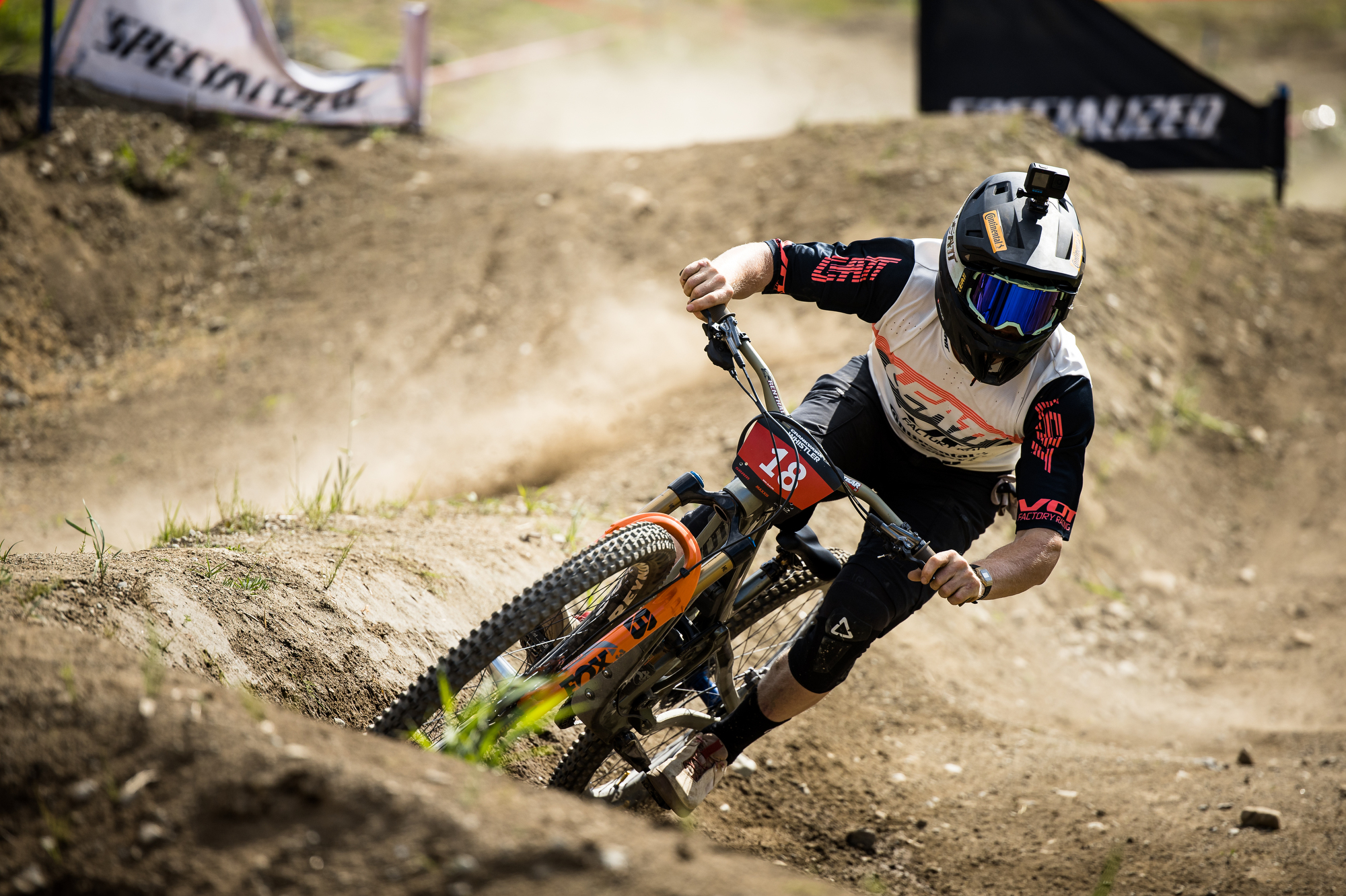
TEMPE, Arizona (December 13, 2022) — Following a monumental season, Bernard Kerr gives viewers the riders point of view for all the wins, whips and Crankworx Whistler action. Pivot Factory Racing team owner and Pivot Cycles professional athlete, Bernard Kerr, travels to Canada’s west coast for Crankworx Whistler 2022. Kerr gives viewers a look at the Dual Slalom, Whipoff competition and general Whistler vibes from an athlete’s perspective in “A Week in Whistler.”
“Coming to Whistler after my two best world cups in a long time, and ever, is pretty cool. Everyone here is pretty hyped. It’s a good feeling to come and just ride your downhill bike in the best place on earth to jump.” Said Kerr on the Whistler visit. “I’m hoping the fun and excitement had in Whistler comes through in the video, it really was a great way to cap off the year.”
Photo by Boris Beyer, courtesy Pivot Cycles
Bernard Kerr became a Pivot athlete 12 years ago and started Pivot Factory Racing 9 years ago. Kerr is a 3x Red Bull Hardline winner and placed top of the podium for the Crankworx Whistler Dual Slalom. “A Week in Whistler,” features fellow Pivot Factory Racing members Emilie Siegenthaler and Jenna Hasting, as well as Pivot Factory Racing Next Gen’s Ryan Griffith and Dane Jewett.
By Nancy Clark MS RD CSSD — Thanks to the Internet, we have abundant access to high quality, science-based nutrition podcasts. We also have access to a lot of questionable nutrition information. To help guide your nutrition education options, I have identified a few credible podcasts that focus on general nutrition, sports nutrition, dysfunctional eating, injury recovery, and other topics of interest to athletes who strive to improve their performance. In these podcasts, you’ll find trustworthy information about what, when, and how to fuel your body for optimal sports performance, good health, and high energy.
While you are spinning, running, walking the dog, or washing dishes, I hope you enjoy listening to these podcasts (some of my personal favorites). They offer an amazing opportunity to learn (for free!!!) from some top-notch researchers and clinicians.
Podcasts focused on daily nutrition topics
SoundbitesRD.com/podcast hosted by Melissa Joy Dobbins RD. Posted twice a month; about an hour long.
Melissa is among the first dietitians to jump into podcasting. She now has recorded more than 226 episodes and has thousands of listeners. Her information is popular with dietitians and the general public alike. You’ll learn about all things related to your daily diet, with a focus on current food topics and controversies. Melissa does an excellent job of delving into the science, psychology and strategies behind good food and nutrition. A few examples of topics covered include:
Body Image and Your Relationship with Food
The Science of Sweetness
Difference Between Animal Welfare & Animal Rights
Spot On! Podcast hosted by Joan Salge Blake RD. Posted twice a month; about 30-45 minutes long
Joan teaches nutrition at Boston University. Hence, her podcast is geared towards college students, but is of interest to everyone. Joan’s lively, engaging style will hold your attention. She interviews top experts who offer accurate and practical health and wellness information on a variety of current topics and trends, including:
What Really Is a Sustainable Diet?
The Latest on Food Allergies
Do You Need to Beef Up on Protein to Bulk Up?
Podcasts focused on Sports Nutrition
The Long Munch – Nutrition for Runners, Cyclists & Triathletes hosted by two Australian sport dietitians: Stephanie Gaskell has a special interest in gastro-intestinal nutrition and Alan McCubbin researches hydration and sodium for endurance sports at Monash University. Posted weekly, about an hour long.
To familiarize yourself with the rich variety of topics addressed on The Long Munch, I suggest you listen to the Birthday Year in Review. You’ll hear a 3-5 minute summary of each weekly podcast. You then can go back for more in-depth information by listening to the episodes that interest you. Sample topics include:
Should I get regular blood tests? If so, what should I test for?
Marc is Director of Performance Nutrition for Canada Basketball. In his podcast, he connects you with leading experts from around the globe and discusses nutrition topics related to performance. A sampling of topics:
Nutrition & Training for Stronger Tendons & Ligaments
Impact of Dehydration on Teams & Endurance Athletes
The Misunderstood Science of Metabolism
Nail Your Nutrition Podcast hosted by sports dietitians Marita Radloff RD & Sarah Schlichter. Posted weekly; about 60 minutes long.
Given the podcasters are athletes and moms, as well as registered sports dietitians, they handily address a variety of topics from many perspectives, such as:
Nutrients of Concern for Plant-based Athletes
What my Eating Disorder Took from Me
Taper nutrition for the marathon
Podcasts offering support to athletes struggling with food, injuries & life.
Voice in Sport hosted by Stefanie Strack, former athlete and advocate for advancing women in sports. Posted weekly, about 45 minutes long.
Stef interviews women who have excelled in sports, asking about their journeys. Her guests share untold stories on topics rarely discussed, such as their struggles with body image, dysfunctional eating, mental health, and nutrition. Young athletes will find hope and inspiration from this podcast by listening to how these women survived their tough journeys. Listeners will learn they are not the only ones having a hard time transitioning from high school sports to collegiate teams to pro sports. Sample episodes include:
Andi Sullivan, soccer pro, talks about how she built confidence and improved her mental approach to sports.
Elyse Kopecky, author of Run Fast, Cook Fast, Eat Slow, shares her experiences as a runner facing many injuries.
Allie Ostrander, 3-times NCAA champion runner, shares her journey with disordered eating.
Heath coach Brad Cooper interviews best-selling authors, world-renowned researchers, elite athletes, and respected coaches in an engaging format. The overall focus is on wellness; the varied topics will expand your self-care plans. A few episodes I really enjoyed:
Conflict: Why We’re Trapped and How to Escape
Redefining Rich: Keys to True Wealth
Our Hungry Brain: Why We Choose Junk and How to Change
The Injured Athletes Club hosted by mental skills coach Carrie Jackson and health/fitness journalist and runner Cindy Kuma. Posted weekly; about an hour long.
Part of being an athlete includes being injured (boohoo). That’s why these two athletes joined forces to create a community that offers support and hope to help make the recovery journey easier. They interview athletes who have recovered from injury (and also injury after injury after injury…) Topics include:
Surviving setbacks
Recovery from RED-S
Expanding your identity
I hope you find this list of easy-listening podcasts to be educational, helpful for enhancing your athletic performance and well-being, and hope-filled for facing the challenges presented to athletes of all ages and abilities. Listen-up!
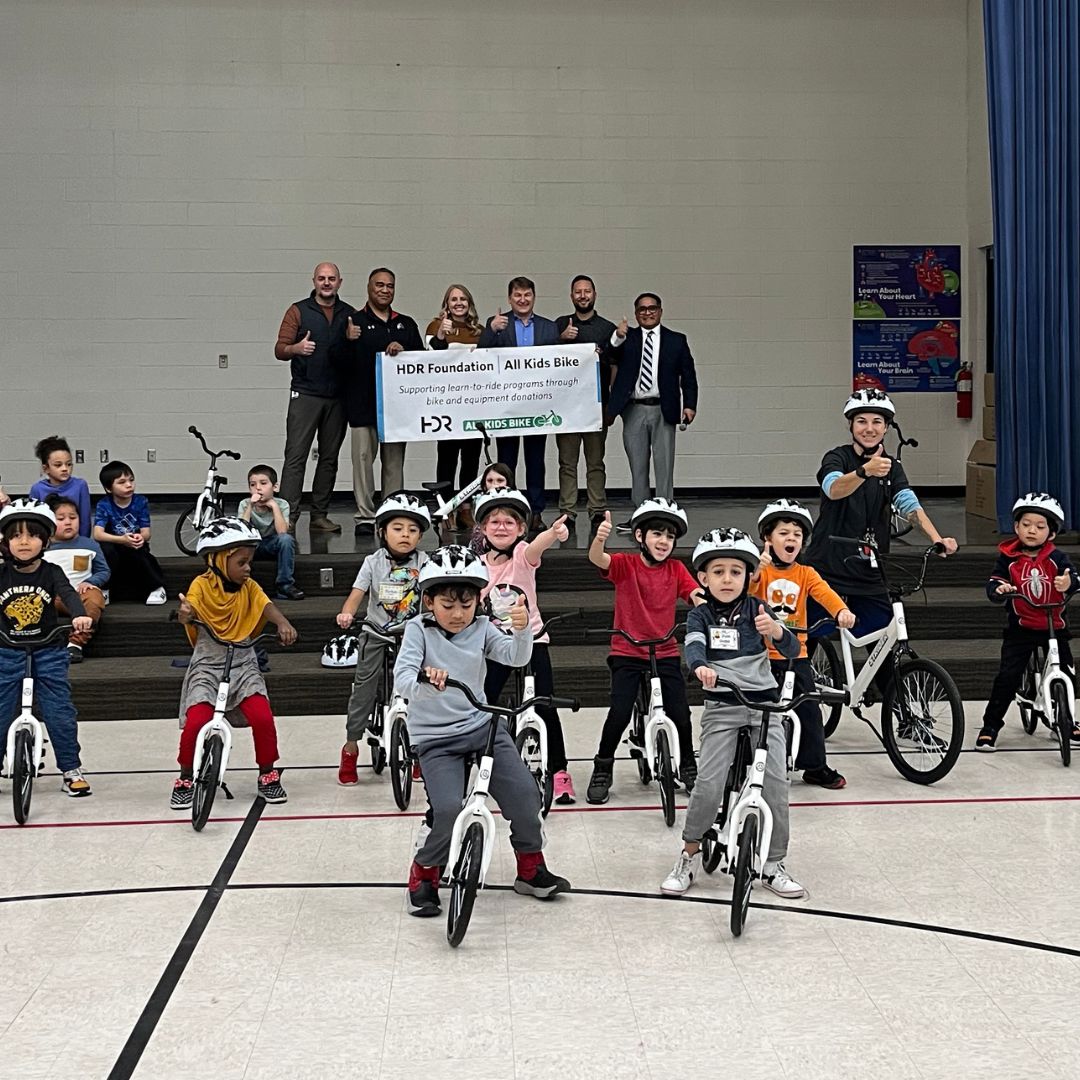
SALT LAKE CITY, Utah (December 13, 2022) — All Kids Bike is on a mission to teach every child in America how to ride a bike in kindergarten PE class. They’re starting in three Salt Lake City School District Elementary Schools; Escalante Elementary, Mary W Jackson Elementary, and Nibley Park School. Funding for this program was graciously made by HDR Foundation, who focuses their efforts on supporting education, healthy communities, and environmental stewardship.
All Kids Bike is on a mission to teach every child in America how to ride a bike in kindergarten PE class.
“We enjoyed the enthusiasm and teamwork among colleagues assembling the bikes and saw the happy fun and excitement as the young students received the gift and rode the bikes,” said Brent Jensen, HDR’s area manager for Nevada and Utah. “The All Kids Bike program is truly heartwarming and a donation that’s an ongoing investment in our community’s quality of life!”
Lisa Weyer, Executive Director of the Strider Education Foundation explains, “The ability to ride a bike develops physical and mental well-being and instills confidence which can lead to better focus in the classroom. Kindergarten is the perfect age to teach kids to ride a bike focusing on gross motor skills, balance, and coordination. By teaching bike riding at the entry-level in a public school system, we are providing the knowledge and a positive foundation of a lifelong skill.”
The program reveal for all three schools was celebrated at Escalante, where donor representatives were gathered alongside Bryce Williams with Salt Lake City Board of Education, James Yapias with Salt Lake Education Foundation, and Dr. Martin Bates Salt Lake School District Interim Superintendent, and school representatives for the bike delivery to a very excited group of kindergartners! The students were surprised with the bike reveal and were then able to take the new bikes for a spin. This event serves to represent a multi-school gift in which HDR provided a donation of $150,000 to All Kids Bike, designating $18,000 to 3 schools in Salt Lake City, where HDR employees live and work.
At Escalante, Mary W Jackson, and Nibley Park, this program will teach approximately 147 kindergarten students how to ride a bike on an annual basis. With the equipment lifespan of 7-10 years, this will impact up to 1,470 kids over the next decade.
“It was beautiful to experience seeing the smiles on the kids as the bikes were revealed and when they were learning to ride the bikes. That was priceless! I’m so grateful for the generosity and love that HDR has for our kids.” shared Escalante Elementary’s Principal, Haloti Livaa.
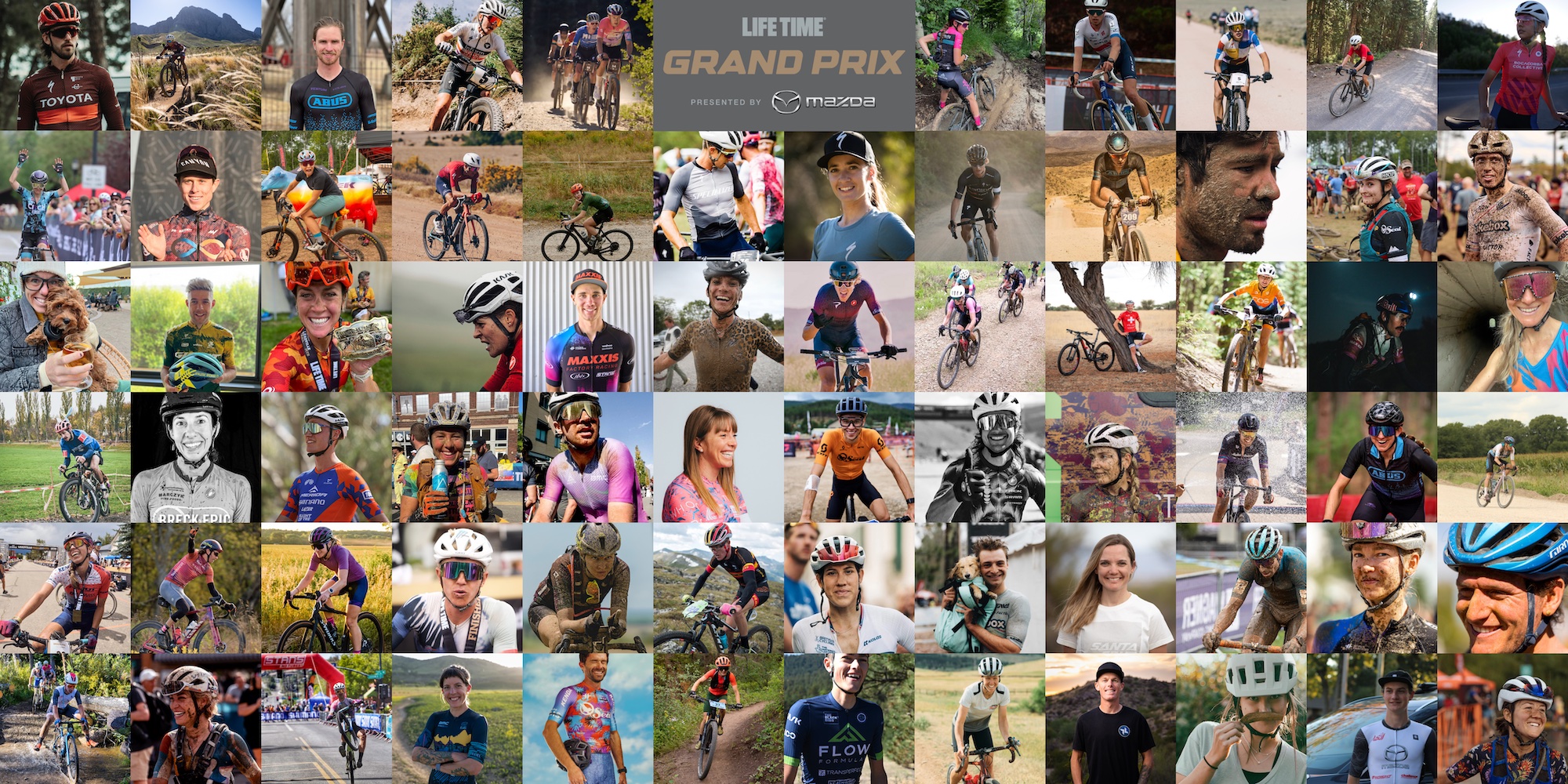
BOULDER, Colorado (December 15, 2022) — Life Time (NYSE: LTH), owner and producer of more than 30 renowned athletic events across the nation and the nation’s premier healthy lifestyle brand and event producer, today announced the 70 athletes who have been selected to compete in the 2023 Life Time Grand Prix series. This year’s series will include seven events including Garmin Unbound Gravel presented by Craft Sportswear, the Stages Cycling Leadville Trail 100 MTB, Life Time Big Sugar Gravel presented by Mazda, as well as a seventh ‘Wild Card’ event that will be announced on January 11. The field size has been expanded for 2023, with 35 women and 35 men competing for a $250,000, equally-split prize purse.
Life Time Grand Prix presented by Mazda: Elite Women
Crystal Anthony, 42, Bentonville, Ark., “In 2022, competing in the Life Time Grand Prix provided challenge, growth, and adventure…the series is definitely the premier series in the US, and as someone who wants to compete with the best, this is where I want to be!”
Ella Bloor, 27, Kingston, Australia, “Cycling is Life! Well, my life at least. I have a strong sense of determination and commitment to live true to my core values, including courage and adventure, and cycling has been one of the biggest gifts in my life to guide me closer to these values.”
Chelsea Bolton, 33, Park City, Utah,“I love riding and racing in off-road events, and I am grateful that Life Time has provided so many opportunities for so many athletes in the off-road racing scene!”
Ellen Campbell, 25, Durango, Colo., “The cycling world is growing and evolving in many ways and the Grand Prix has changed the game for endurance cycling which I was lucky enough to experience in 2022. I see how this series has transformed the cycling community to step it up a notch.”
Catherine Colyn, 26, Paarl, South Africa, “I am a Professional Cyclist from South Africa. It would be amazing to be given the opportunity to be able to race against some of the best female cyclists in the USA. I have raced on the road in the States in 2019 and in Europe and I have also raced on the mountain bike but for me nothing compares to how racing on gravel brings my soul alive.”
Lauren De Crescenzo, Atlanta, Colo., 32, “I’m ready to compete in North America’s premiere off-road series! I wasn’t ready in 2022, but I’ve put in the work by MTBing 3x per week and racing cyclocross for the first time ever this off season. I’m ready to take on 2023 and go for the overall in the series.”
Rebecca Fahringer, 33, Bend, Ore., “How many times can I say “redemption” before I realize I am a broken, washed up lifestyle athlete? I entered the Grand Prix last year…and I’m glad I stuck it out because I 1) maybe found the spirit of gravel while riding around not at the pointy end and 2) I realized that to race well I need to want to fight, and though I currently don’t have it, I want to get that fight back so badly.”
Maude Farrell, 31, Redwood City, Cali., “Finishing 11th this past year has also ignited a fire in me to try again with perhaps a different context for the 2023 season, to test my limits and do what I can to break into the top 10. I had mostly a rough, difficult, and not awesome season so the question I want to answer is – if things were a bit different, would my result have been even better? I think the answer is yes.“
Sofia Gomez Villafane, 28, Heber City, Utah, “To give it another go. Be more consistent“
Emma Grant, 31, Reading, England, “I see the Grand Prix as an incredible opportunity to evolve as an athlete and ultimately as a person. The broad range of events and unique skill sets they require appeal as a challenge to up my game. I want to compete with the best and rise to the occasion.”
Isabella Hyser, 19, Huntsville, Ala., “I want to be a part of the Life Time Grand Prix because it is a race series like no other. It combines all of my favorite things about bike racing, community, camaraderie, and passion for sport.”
Heather Jackson, 38, Bend, Ore., “I want to race these iconic off-road events against some of the best women in the world! I absolutely loved the Series racing format and following the movement of all the riders this past year versus just individual results at all of the races.”
Isabel King, 32, Los Angeles, Cali., “I participated in the first inaugural LTGP and it was an incredible learning experience. I want to be part of the 2023 GP because I want to take what I learned this year and improve on my results…I want to show people that you can be fast and also be friendly.”
Caroline Mani, 35, Besancon, France, “I’m excited for a new challenge in my career. It will be a great opportunity to learn more about myself and push my own limits. I really love the format of the series and how people are excited about it.”
Holly Mathews, 34, Longmont, Colo., “While I feel that through coaching, sponsorship and mentoring younger athletes, I have had a meaningful impact, I believe that being a part of the Life Time Series will inspire *me* to expand my reach and be a larger part of creating an environment in cycling that is welcoming, inclusive and, most of all, fun for everyone.”
Sarah Max, 47, Bend, Ore., “I’m interested in the challenge of trying to do well at seven premiere races; the comradery of being part of this unique and diverse group of athletes; and the opportunity to be inspired and inspire other athletes who, like me, don’t fit the typical mold of pro cyclist.”
Deanna Mayles, 29, Colorado Springs, Colo., “The Grand Prix series is an exciting multi-discipline adventure race series and I want to compete with the best off-road endurance cyclists in the US. I believe I am one of them and I want to prove it by being a part of the Life Time Grand Prix.”
Julie Momber, 35, Grand Rapids, Mich., “I want to be a part of the highest level of female competition in off road racing!”
Jessica Mullins, 44, Littleton, Colo., “I bring diversity to the Life Time Grand Prix as a 44-year-old mom who got into mountain biking in her thirties. Maybe not your typical athlete for this event, but I am someone that can inspire so many women (And I do have good race results and endurance experience to back me up!).”
Angela Naeth, 40, Brewster, Mass., “One of my goals for last year’s Grand Prix participation was to help introduce and bring triathletes, especially female triathletes, over into the world of gravel. I have seen, felt, and directly experienced this momentum, and would love the opportunity to further it. I have drunk the “Kool-Aid” of off-road cycling. I love the challenge of off-road racing, the community and the simple joy of racing with so many others, particularly the world’s best!”
Emily Newsom, 39, Fort Worth, Texas, “I participated in the 2022 Life Time Grand Prix and through it, discovered my love for off-road racing. The unique format the Grand Prix provided kept the racing exciting and motivating throughout the year, as well as giving me opportunities to make new friends and see some awesome places.”
Raylyn Nuss, 31, St. Louis, Mo., “After following this past season, I became interested in the format and the skill set required to win the overall. I think the most well rounded cyclist comes out on top. I’m excited for the chance to be a part of the premiere gravel series in the world, and embrace the culture of gravel.”
Paige Onweller, 33, Grand Rapids, Mich., “I want to return for year #2 of the LTGP because I respect this series and the depth of competitiveness it brings to the women’s pro field. The series has given me an incredible opportunity in 2022 to showcase what I was capable of despite being new, so I want to continue to improve my performance as I learn.”
Hannah Otto, 26, Millcreek, Utah, “I believe that the Life Time Grand Prix is elevating cycling in North America and I want to be a part of that growth. One of my goals in cycling is to stand on start lines that challenge me to be a better racer and a better human being and after the 2022 season of the Life Time Grand Prix, I can definitely say that this series fulfills those goals.”
Jenna Rinehart, 38, Mankato, Minn., “I want to participate in the Life Time Grand Prix to inspire other riders in the Upper Midwest that they too can compete at the highest level. Life Time has done a great job of bringing attention to how awesome the Midwest cycling scene is. I want to show that you don’t need to live in the mountains and that we have some really awesome trails, roads, and riders in unexpected places.”
Hannah Shell, 31, Longmont, Colo., “I want to participate in the Life Time Grand Prix in 2023 to test my personal growth and have another chance to compete at the highest level. The LifeTime Grand Prix in 2022 elevated the gravel and off-road racing scene, bringing in the best racers across all disciplines to one series of events. Participating in the Grand Prix gave me the motivation I needed to push fear aside and keep moving forward.”
Danielle Shrosbree, 28, London, England, “Women’s cycling has grown massively over the last few years. With the UK gravel scene only just getting started I think by spreading the work through my profile and sponsors of the Life Time events this could only contribute more to the growth.”
Alexis Skarda, 33, Grand Junction, Colo., “I had a lot of fun with the challenging events last year. I’d like to make some improvements with the experience I have now to push myself even further. I like how the Life Time Grand Prix brings athletes from many cycling disciplines together to form a new inclusive culture and community of athletes. It’s really exciting for all the participants to race together and get to have the shared experience of the challenge and triumph of such amazing races and locations.”
Haley Smith, 29, Waterloo, Quebec, “I believe this style of event is the future of the sport. It’s refreshing and motivating to be part of an event style that is focused on mass participation and getting more people involved at all levels of ability. I very much think pros have a role to play in this equation, and part of my purpose is to inspire people of all abilities to take up bike riding. These events accomplish just that!”
Sarah Sturm, 32, Durango, Colo., “Bring on dirt, bring on endurance, bring on 7 races! I feel like I learned a lot racing this season and I am excited to carry that over to next year too. I am hoping to get to be a part of the “traveling circus” again, it was really exciting to be a part of an off-road series for the year, people were stoked to follow and it was a huge learning for me as an athlete.”
Starla Teddergreen, 43, Longmont, Colo., “I want another crack at it, I was selected this season but had to withdraw. The 2023 season is a new opportunity to see what I can accomplish as an athlete with a new set of unknown limitations.”
Caroline Tory, 32, Snowmass, Colo., “I want to be part of the LTGP for three reasons: the opportunity, the races and the community. I was fortunate to race with some of the LTGP athletes in 2022 and every time I walked away thinking, “I’d love to spend more time with these rad women. Being a part of the LTGP is a chance to learn from and contribute to that community and the growth of women’s cycling.”
Leah Van der Linden, 28, Boulder, Colo., “I want to be part of the Life Time Grand Prix as it will give me the chance to get my feet wet and muddy “literally” in 7 world class off-road events, competing against some of the best in the world. I love the path less traveled, always have, and can’t wait to give it everything I can next season!”
Ruth Winder, 29, Nederland, Colo.,“I want to try to win these races! I was a participant last year and still did fairly well. This year I want to come back with more hunger for results! Bike racing has been my life for so long and I thought when I stopped racing in Europe that it would be the end for me, but this series and the excitement around it has made it possible for me to continue doing this and it blows my mind. “
Anna Yamauchi, 22, Truckee, Cali., “To be honest, I still feel like I have imposter syndrome. I have results to prove my abilities and even more to represent the potential I hold. The Life Time Grand Prix is the best proving ground possible. I believe I am representative of the wider outdoor sports world beyond cycling, and can relate to people in those communities as they take on bike racing for the first time.”
Life Time Grand Prix presented by Mazda: Elite Men
Matthew Beers, 28, Cape Town, South Africa, “I think I can show that racing in Europe isn’t the only way for South Africans to show their strength. And showing that gravel is becoming a viable option for riders in the future.”
John Bortselmann, 31, Lincoln, Neb., “I still believe my experience and fitness are at a level to put me in contention for the overall Grand Prix podium.”
Robert Britton, 38, Victoria, British Columbia, “The previous season helped to confirm the choice I made to leave road racing behind and really helped to regain the hunger to train and hustle again.”
Zach Calton, 25, Ogden, Utah, “I am a pure competitor and I plan to compete as hard as I can at the front of the race. I spend my time, money, and energy being the best athlete I can be and I want to show that.”
Griffin Easter, 31, Park City, Utah, “I want to be part of the Life Time Grand Prix in order to both compete at the highest level of US Off-Road racing as well as represent OpiCure Foundation and showcase the recovery tool the bicycle can be for individuals struggling with opioid use disorder.”
Russell Finsterwald, 31, Colorado Springs, Colo., “I want to be a part of the Life Time Grand Prix because it’s where you currently find the highest level of competition in the US.”
Howard Grotts, 29, Durango, Colo., “My proudest result would probably be the Cape Epic overall win with Jaroslav Kulhavy, but I’m also proud of my Leadville performances and also XCO National Titles.”
Lance Haidet, 24, San Luis Obispo, Calif., “I want to be involved in a series that brings out the passion for cycling within each athlete, and I believe the multidisciplinary nature of the Grand Prix accomplishes this.”
Alex Howes, 34, Nederland, Colo., “I have unfinished business at the Life Time GP. Last year was a mess with hard crashes, long Covid, multiple illnesses and far too many last minute trips across the Atlantic for team requests.”
Dylan Johnson, 27, Brevard, NC, “Since my first participation, Unbound has been on my list for races I’d like to win one day. The likelihood of that happening seems to get smaller every year as the competition just continues to climb but regardless I won’t stop trying.”
Brendan Johnston, 31, Canberra, Australia, “As an Australian, most sports in the US are seen as bigger and better, and this is how I see the Life Time Grand Prix and all the events it encompasses.”
Andrew L’Esperance, 31, Halifax, Nova Scotia, “The balance of community and competition at these events really resonated with me.”
Bradyn Lange, 23, Mendocino, Calif., “My win at Chequamegon was a career altering performance for me. Being the youngest in the Grand Prix, I never expected to win a stage, or even podium.”
Taylor Lideen, 33, Bentonville, Ark., “Growth in the US cycling community means being inclusive and humble, yet fiercely competitive.”
Konny Looser, 33, Hinwil, Switzerland, “As an international athlete, I like to see the growth in the cycling market in a very positive way. Cycling connects people and it is also good for the environment if more people start to cycle and skip the cars, etc. Cycling creates nice communities!”
Payson McElveen, 29, Durango, Colo., “As many of the top US events begin to reach capacity attendance-wise, I believe the next step is effective storytelling via various media channels that can grow awareness of these events and the athletes that do them.”
Lachlan Morton, 30, Boulder, Colo., “I’ll come ready this time.”
Tasman Nankervis, 27, Bendigo, Australia, “For myself coming from Australia it means opportunity. Opportunity for the athletes like myself who don’t fit the XCO World Cup or the Road World Tour constraints and who finds more enjoyment competing where the people are, in mass participation events.”
Logan Owen, 27, Bremerton, Wash., “Connections are what fans of bicycle racing want, that’s how its fandom will grow. Encouraging young new racers to focus on the fun and the challenge is paramount to developing new fans for the next generation.”
Cole Paton, 25, Cashmere, Wash., “The mixture of events and accumulation of overall points keeps me motivated and excited for the entire season of racing.”
Kiel Reijnen, 35, Bainbridge Island, Wash., “We want to create new fans and harden the resolve of existing fans to continue supporting and enjoying the sport.”
Adam Roberge, 25, Prevost, Quebec, “Cycling is one of the most accessible sports, and seeing it grow, especially on the gravel side, is amazing.”
Nathan Spratt, 27, Salt Lake City, Utah, “I would love to compete at the highest level of gravel racing while showing that you don’t have to quit your “day job” to race with the best.”
Peter Stetina, 35, Santa Rosa, Calif., “I take a more balanced life approach that can hopefully be relatable while still challenging for the win.”
Keegan Swenson, 28, Heber City, Utah, “I like to encourage people to try new disciplines of cycling and show them that you can have fun on any sort of bicycle in almost any location.”
Kyle Trudeau, 29, Tucson, Ariz., “I am constantly looking for ways to push myself physically and mentally and there is no better place to do it than the Life Time Grand Prix.”
Alexey Vermeulen, 28, Boulder, Colo., “My goal is to be a role model of what it means to be a professional on and off the bike and have that inspire and motivate people to find the cycling bug.”
Kerry Werner, 31, Vinton, Va., “It’s about riding and showing people how bikes can be integrated into any lifestyle and provide joy, as well as an outlet for stress relief and creativity.”
Brennan Wertz, 25, Mill Valley, Calif., “I see this as a really great opportunity to show people what is possible, regardless of who you are. I am 6′ 5″, 190-205 lbs, and don’t look like what most people picture when imagining what a pro cyclist looks like. I have been able to make a career out of this sport, with my physique being what it is.”
Innokenty Zavyalov, 31, Minneapolis, Minn., “I am a first generation immigrant in the United States, I travel full time in a Sprinter van going race to race, I became an athlete later in life. I was never a world tour rider, never a national champion, yet I have found success in off road racing.”
Ryan Standish, 29, South Salt Lake, Utah, “Through my off-bike personality and positivity towards life, I can help share the stoke for riding bikes and keeping it fun and light hearted. This, combined with raising awareness and funds for Multiple Sclerosis (and sharing my dad’s story with the disease) and being more involved with the National MS Society, I want to help others affected by the disease get involved with cycling and adaptive options within the sport as well.”
Jack Odron, 20, Denver, Colo., “I also want to get young people excited about ultra distance races. There’s room for the next generation on this side of the sport!”
Ian Lopez De San Roman, 19, Sebastopol, Calif., “I turned down a spot to race in Europe on the road to pursue gravel. I could have been one of the many other kids in the euro talent pool fighting for a shot at a world tour contract. But instead, I chose to stay and ride the gravel wave.”
2023 Life Time Grand Prix presented by Mazda Event Lineup:
“After an overwhelming success with the inaugural 2022 Life Time Grand Prix, our team is stoked to be back in 2023,” said Kimo Seymour, President of Life Time Events. “Thanks to guidance and input from our athletes, sponsors, communities and team members, we’ve implemented changes to the series as we strive to bring more fans to the sport of professional cycling in North America. We are all looking forward to 2023 and beyond!”
With the series expanding to seven races, athletes will have the option to drop up to two events versus just one last year. Additionally, entry fees will be covered by Life Time and doping controls will also be expanded to include more races and athletes.
The $250,000 prize purse will pay out ten-deep based on overall series results, which are determined by a points-based ranking system. First place will earn $25,000, second place will earn $20,000, third place will receive $16,000, and so forth. Three events—Crusher in the Tushar, Chequamegon MTB Festival, Sea Otter Classic—offer individual event purses, which Life Time Grand Prix athletes are also eligible for.
Athletes will be ranked against other Life Time Grand Prix competitors by points received based on their finishing position at each event. Similar to the 2022 series, the first athlete will earn 35 points, second, 34; third, 33; and so forth. The overall results will use an athlete’s best five finishes out of the seven events. The final event of the series, Big Sugar Gravel, will be mandatory for all riders and will serve as a tiebreaker in the event of a tie.
The Center of Southwest Cultures “Story Riders” program, and Trails Utah included in distribution
BOULDER, Colo. (December 14, 2022) –PeopleForBikes, a national bicycling advocacy organization and the U.S. bicycle industry’s trade association, announced its latest round of community grants totaling $92,000. The 11 projects funded in 2022 will support bicycle infrastructure and advocacy projects across the U.S.
PeopleForBikes’ Industry Community Grants Program is funded through the Employee Pro Purchase program, which collects donations from individuals who work in the bike industry and take advantage of pro-pricing discounts on new bikes and bicycling equipment. Cannondale and Trek currently participate.
Since 1999, the PeopleForBikes Industry Community Grants Program has funded more than 400 projects in all 50 states totaling more than $3.6 million in direct funds. The total funding this year represents more than 1,000 individuals in the bike industry who gave back to grow bicycling through an employee pro purchase.
“Seeing the industry come together to support community grants big and small continues to be incredibly inspiring,” said Jenn Dice, president and CEO of PeopleForBikes. “We thank the companies and thousands of employees that contribute to this important program. These projects will make a tangible difference in 11 communities while aiding our larger mission of getting more people on bikes more often and making biking better for everyone.”
The Center of Southwest Culture Albuquerque, NM
This grant will support Story Riders, a program at The Center of Southwest Culture, Inc. that empowers Indigenous and Latino youth to reconnect with their natural and cultural heritage, all while providing practicaltraining in bicycle safety, maintenance, and guided cycling experiences. Each student will take home the bike they work on and a new helmet.
BikeHouston
Houston, TX
BikeHouston will use funding to launch Gear Shifters, an advocacy training program for BikeHouston staff and volunteers. Gear Shifters will expand and enhance advocacy efforts by representing the needs of people who ride bikes at public meetings, as well as in conversations with elected officials, community groups, and developers.
Bike Works Seattle
Seattle, WA
Bike Works Seattle’s mission is to promote the bicycle as a vehicle for change and a tool for building resilientcommunities. This grant will be used for general operating support, more than 80% of which will go directly to youth, adult, community, and environmental cycling programs and services.
Trails Utah Salt Lake City, UT
Trails Utah will use this grant to launch a pilot project to modify existing trails with the specific goal of accommodating adaptive mountain bikers. Funds will be used to purchase equipment and signage, as well as pay for physical trail work by the Utah Conservation Corps.
Trailnet St. Louis, MO
Trailnet works to foster healthy, active, and vibrant communities where walking, bicycling, and the use of public transit is a way of life. Funding will help accelerate the installation of safer mobility networks in St. Louisby focusing on high-crash corridors, which are predominantly in Black and underserved communities.
Red Line Parkway Initiative
Austin, TX
The Red Line Parkway Initiative empowers diverse communities to enjoy, develop, and enhance the Red Line Trail and Parkway, a 32-mile, multimodal rails-with-trails project. Grant funds will support a portion of 2023 engagement activities with an emphasis on social equity and physical and mental health.
Girls in Gear NJ, DC, VA, and MD
Girls in Gear teaches life skills through bike skills to help young female riders build confidence on and off their bikes. Funding will be used for coach training and support, as well as program supplies, to ensure every girl hasthe chance to safely and confidently bike through life.
Community Action Duluth
Duluth, MN
Community Action Duluth’s BikePlus program provides those recently released from incarceration with a free bicycle, helmet, and bike lock. This grant will allow Community Action Duluth to continue its efforts and reach more people in need.
CorpsTHAT
Baltimore, MD
This grant will fund bikepacking trips for those in Deaf community in the Mid-Atlantic region, offering environmental education, leadership training, and essential bicycle maintenance. Funds will also be used to provide a day trip for groups to a gravel or mountain biking trail, allowing for local community connections.
Salem Bike Vision
Salem, OR
With this grant, Salem Bike Vision (SBV) will host three community rides in 2023, working to educate the public about what makes for effective bike infrastructure and helping identify areas where safety is lacking. Theorganization will also engage local decision-makers around opportunities to use the city’s recently passed bond for safe bike infrastructure.
Dunn Gardens
Seattle, WA
Dunn Gardens will use funding to purchase and install two bike racks, which will allow for more car-freecommuting and send a welcoming message to the many visitors in the neighborhood who rely on bicycles for transportation.
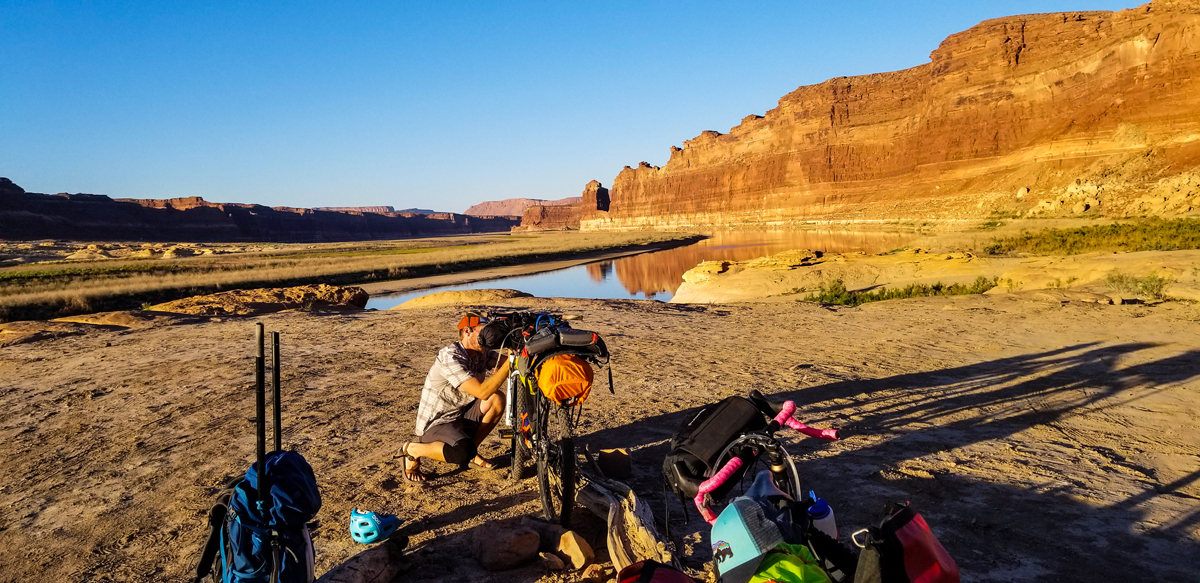
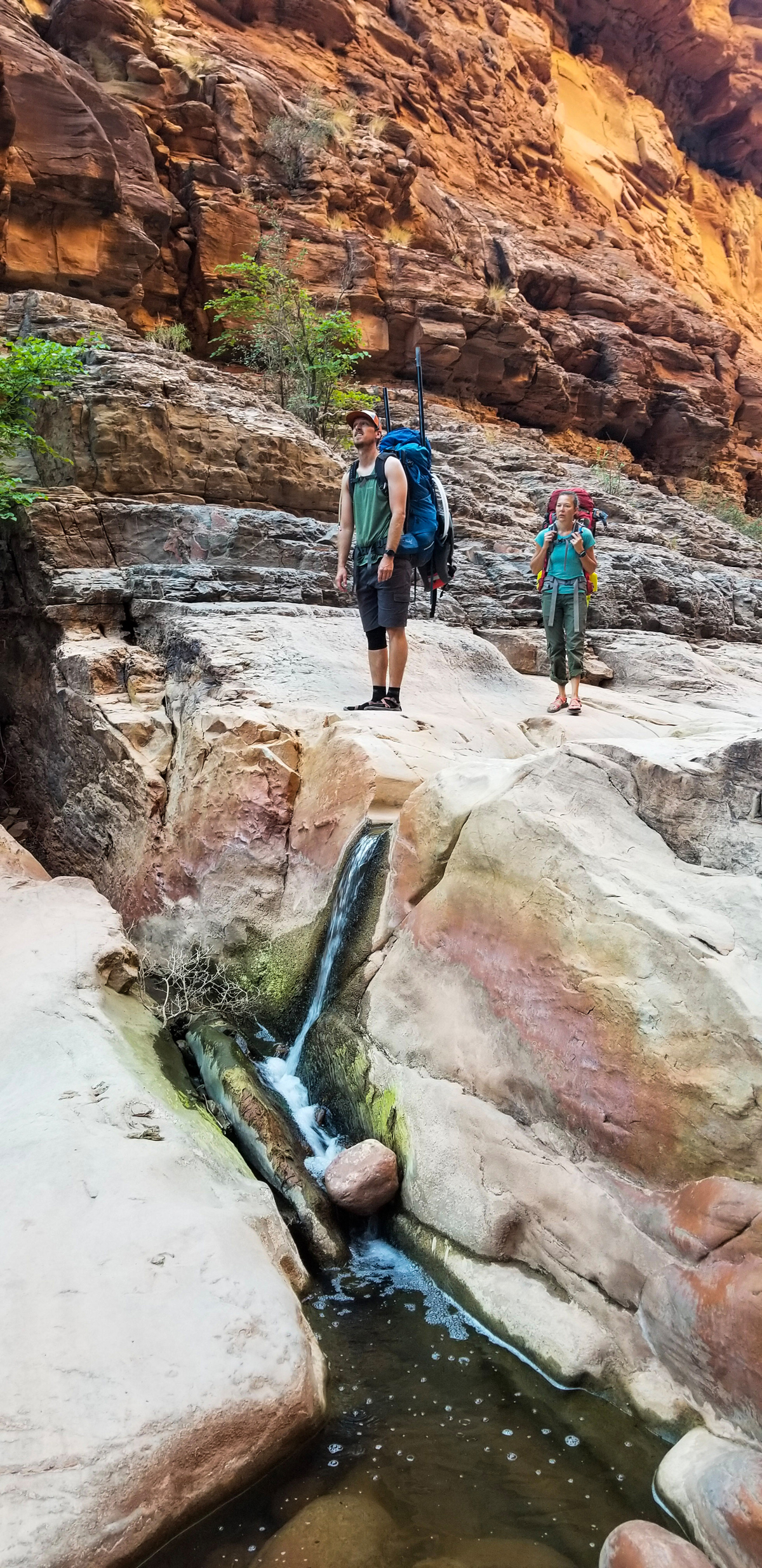
Now before you start asking who I am and what I did with Moose, let’s just say this wasn’t your typical triathlon. There weren’t any aero helmets, one of us even went, “Gasp!” without one. The only shoes worn were Chacos and all of our water came out of a hose, but only after it went through a water filter. It also lasted two days even though we had planned for three.
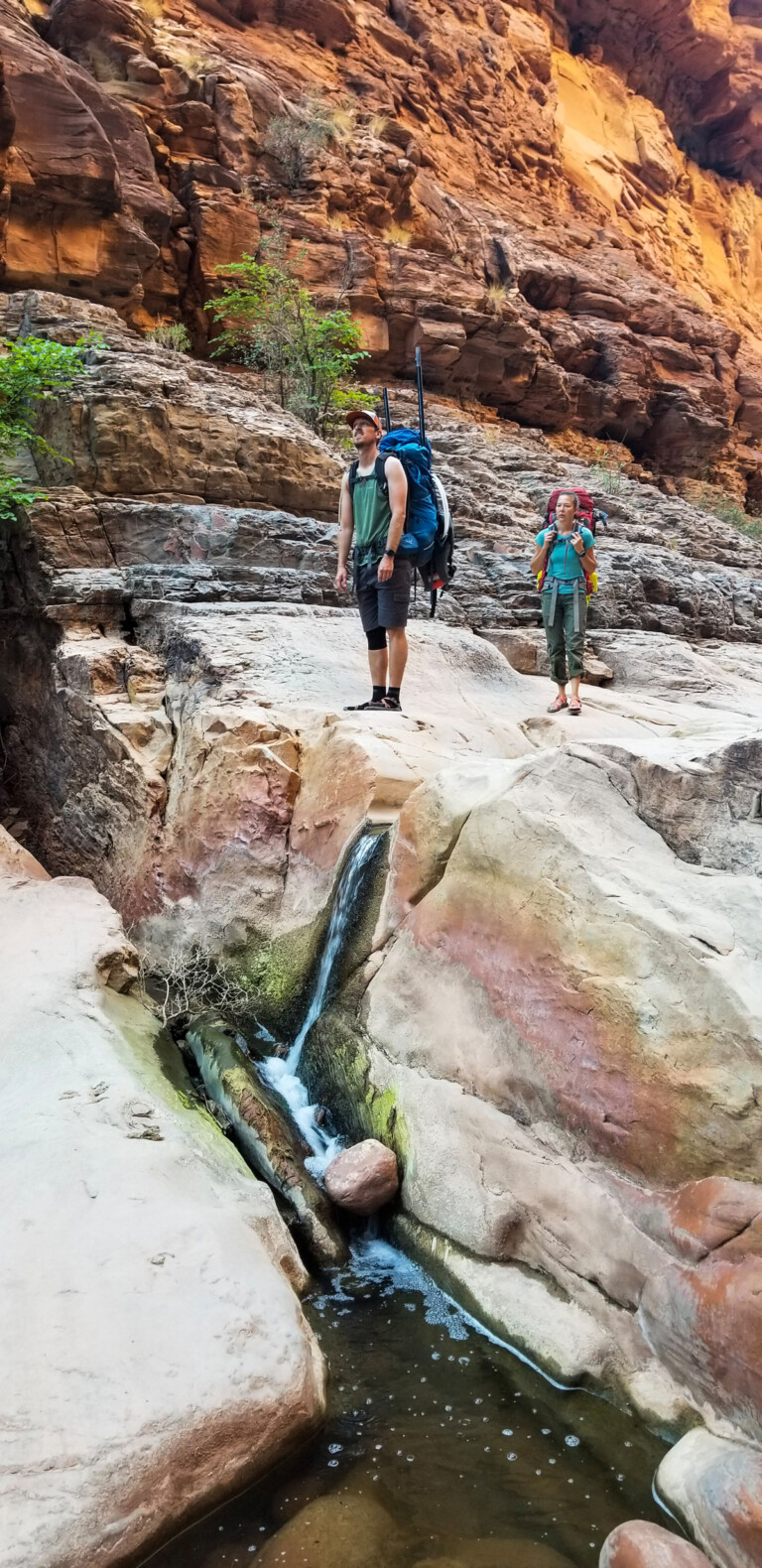
There are places you go to because they are amazing. There are others that folks like myself go to because they are amazingly remote. When you combine the two, it’s kind of perfect. Dark Canyon, Utah is one of those places. Look at a map and there aren’t many ways in our out. It’s sandwiched by better known locals like the Dirty Devil, Lake Powell and Bears Ears. And, let’s be honest, the name has bit of a draw to it as well. There’s something mysterious about a canyon named Dark.
From the moment Mooseknuckler Alliance laid eyes on a map that had a canyon by this name, we have been intrigued with what was there and how to go about exploring it. We found a pack trail called Sundance that drops into the canyon about 8 miles above its confluence with the Colorado. We found some beta about some peeps hiking down and then using packrafts (the Alliance loves packrafts) down the Colorado to a takeout just downriver from the Hite Crossing.
This became our plan. The only problem is the 5 hour drive to the take out and the way they did it, is a shuttle. We don’t hate people who drive cars, but we certainly don’t like driving them ourselves so a double 5 hour drive was kind of out of the question. Good thing we have bikes. We modified the above trip to use our bikes to accomplish the 20-mile shuttle from the Colorado to the trailhead for the Sundance Pack Trail.
Depending on who you talk to, this is now known as the Dark Canyon Triple Threat or the Dark Canyon Packing Triathlon. I’m in the latter camp.
We arrived just after the sun had set on the horizon leaving us with the shapes of the cliffs that surrounded us but without any of the colors. Due to the forecasted 90+ degree weather for our start day, we decided to get up and get going. But first a couple of beers.
Last minute adjustments before the first leg. Photo by Lukas Brinkerhoff
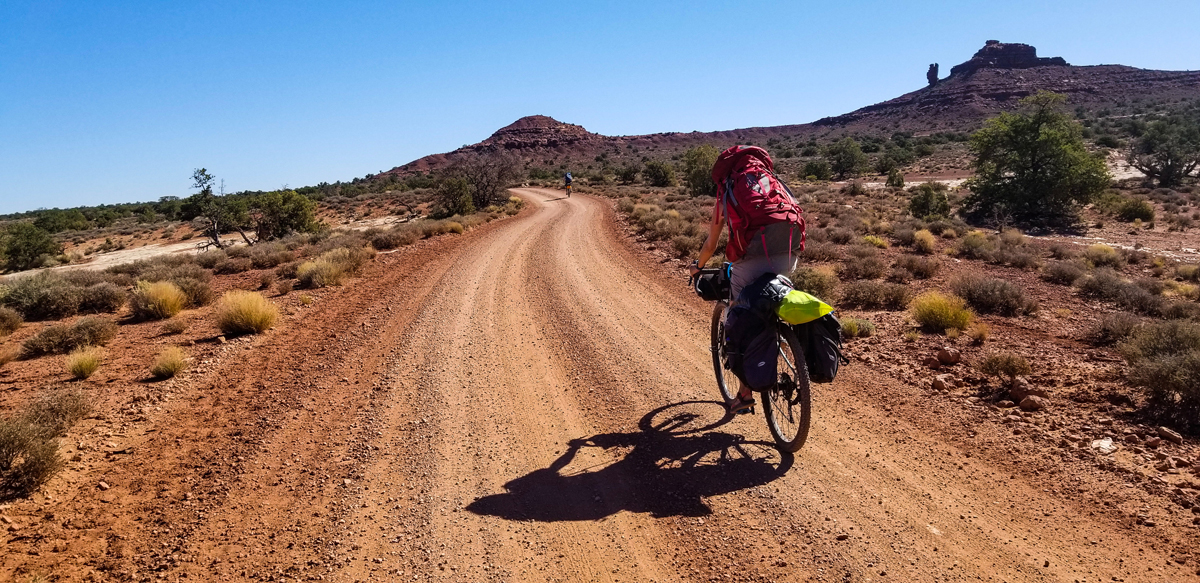
We awoke to the Colorado River flanked by the red cliffs of what is now Lake Powell. Had we been here a few years ago, this would be a lake and not a river. A quick breakfast, a few last-minute adjustments (note: you will probably have to adjust your backpacking pack for use with a bike so you can look up) and we were on the road a few minutes before 7. Our cycling leg of our triathlon was 8 miles of pavement and 12 miles of dirt. We expected it to be all climbing at mostly easy grades and outside of one exception, that was the case. During our highway experience that took us about 45 minutes, we saw three cars. Once we were on the dirt, we only saw one couple camped on the side of the road, still not sure what they were doing. We could hope for less people, but that isn’t bad for Memorial Day Weekend.
Kathleen Berglund packing in the bike ride toward Dark Canyon. Photo by Lukas Brinkerhoff
After a 3-hour pedal, we transitioned to bipedal mode. We certainly could improve on our transition times as this took us about 45 minutes. We stashed the bikes and began to walk into the canyon.
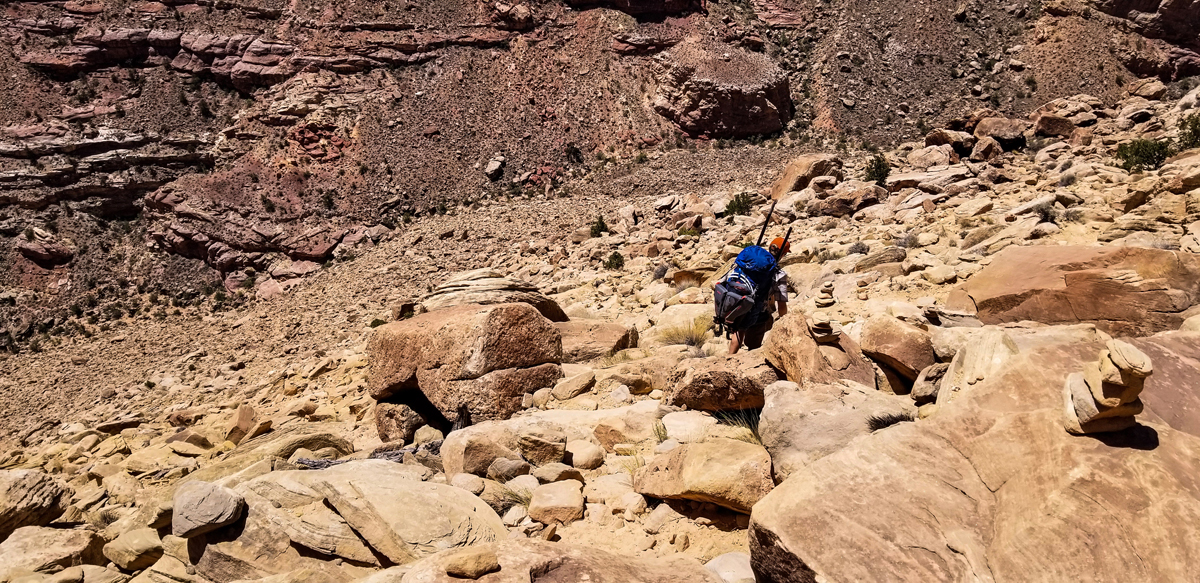
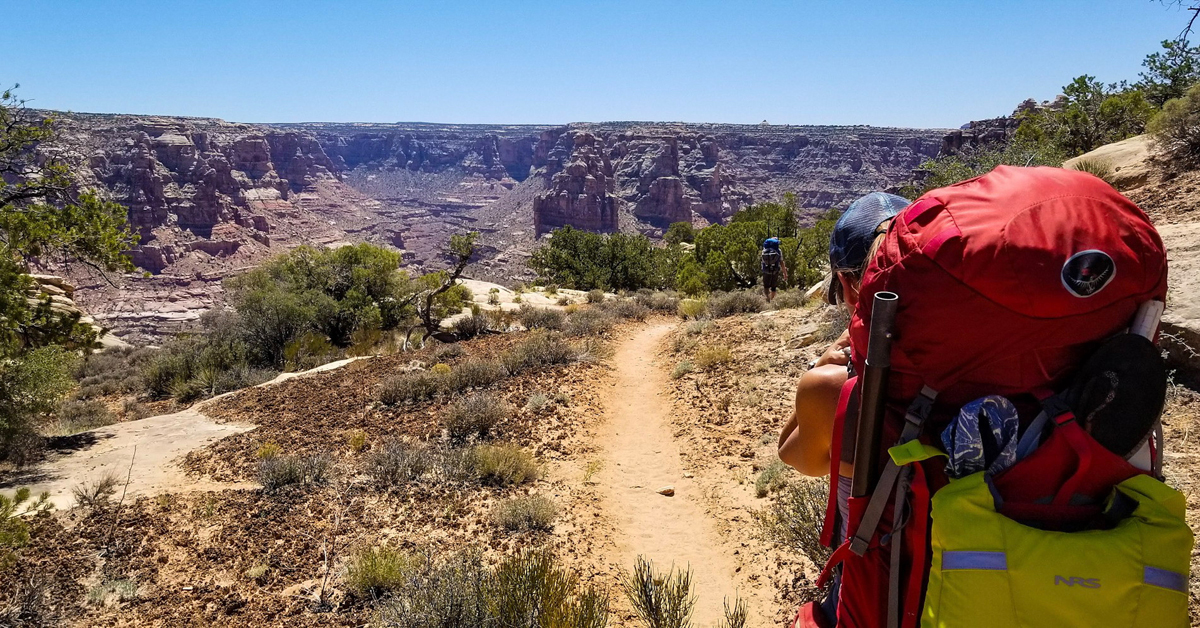
When you read “pack trail” on a map it’s a pretty good indication that the trail isn’t maintained and is what most would call rugged. The Sundance is just that. The first couple of miles are fairly straight forward except for a couple of drops that required butt scooting and route negotiation. And then there is the drop into the canyon. The sign at the trailhead says it 1200 feet in less than a mile, I have no reason to think that is not accurate. The trail comes to the edge of the canyon where a rock-strewn cliff drops off in front of you. There are routes everywhere you just pick your favorite and hope it gets you to the bottom. Don’t forget that you are picking your way down this slope with a 40-pound pack on your back. We used our hands at least, if not more, than our feet. That one mile took us about an hour to descend.
I wasn’t kidding, less than a mile 1200 feet of down. Photo by Lukas Brinkerhoff
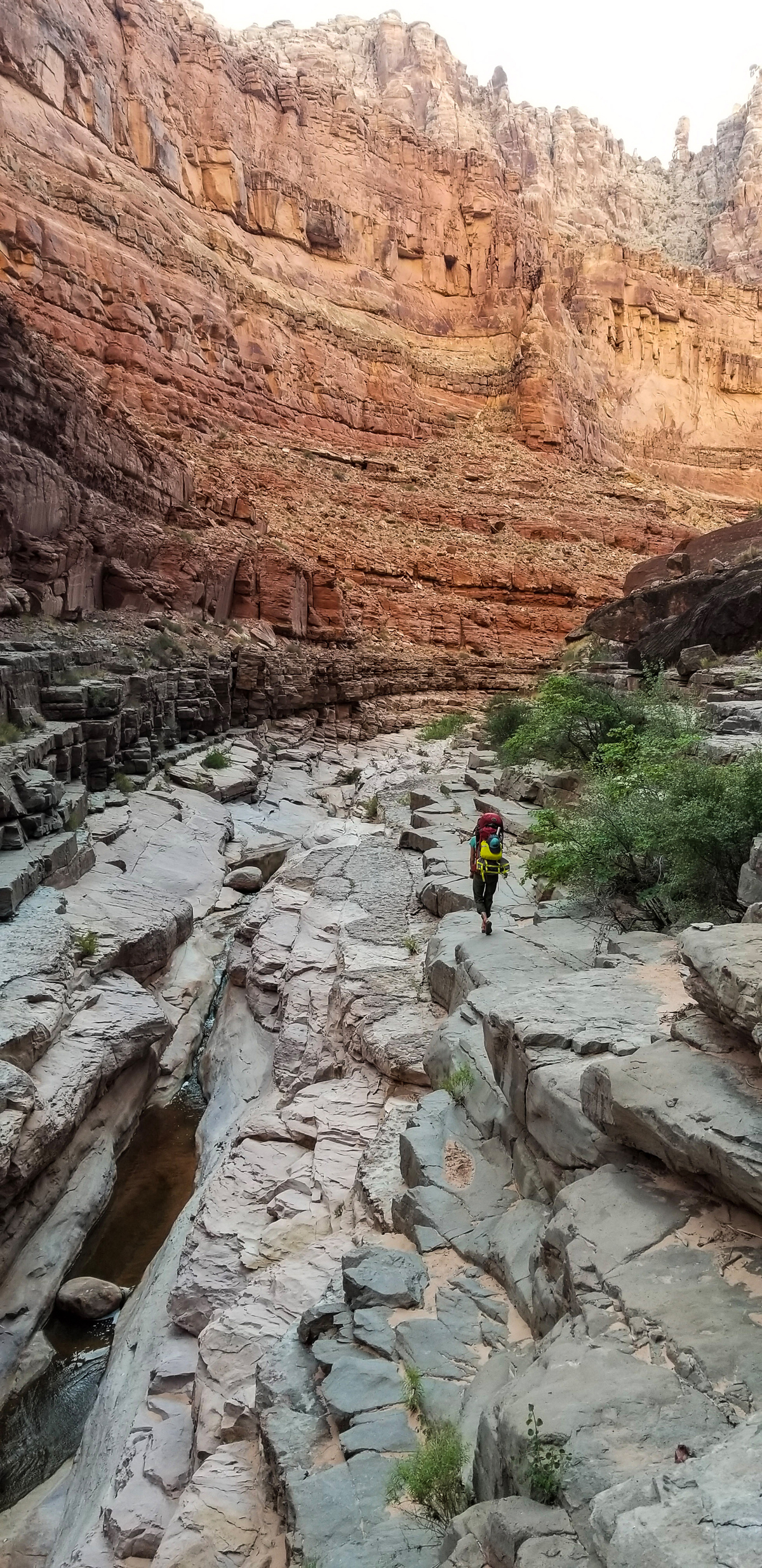
Once in the canyon, the trail meanders downstream. At this juncture, not only was it getting hot, but we were starting to reach our point of needing a break for the day. We passed the camp where the girls were sunbathing topless, the camp where it looked like way too many people had come down, and the one where the occupants peered out trying to not make eye contact so they wouldn’t have to interact with us. And then we found a spot with some shade, a big pool for swimming and procuring water and two flat spots where we could pitch our tents to keep the cedar gnats off us.
All by ourselves. Photo by Lukas Brinkerhoff
We spent the rest of the day getting fat off our supplies and enjoying the shade, the water and the animals poking about. We discussed in depth the unknown of the next day, the wind. The beta we had pretty much said there would be a headwind. The forecast called for a tailwind. There may have been thoughts and prayers for the latter.
Sometimes you have to stop and look around. Photo by Lukas Brinkerhoff
We got an early start. From our camp, it was about four miles to the confluence with the Colorado. The canyon choked up multiple times forcing us up onto the benches above the creek and our short jaunt to the river turned into an exposed, loose trail that required 100% of our attention to navigate safely. Typically, we would finish that distance in just over an hour, this took us almost two, but we got through and stood on the beach of the river. We had seen no one all day long.
When you need water and happen upon a spring pouring out of a canyon wall. Photo by Lukas Brinkerhoff
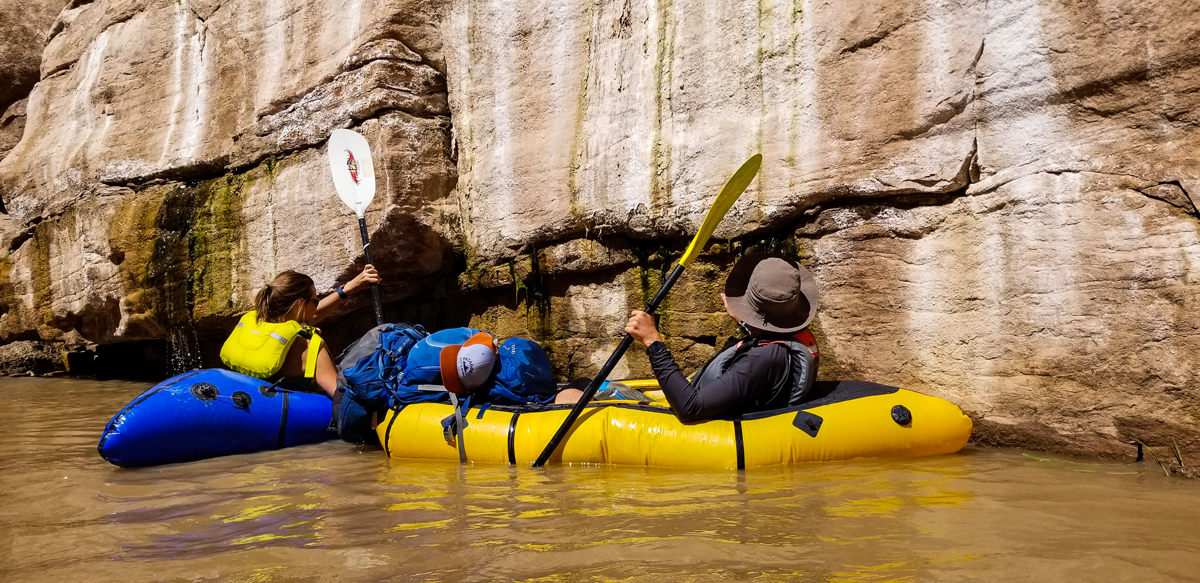
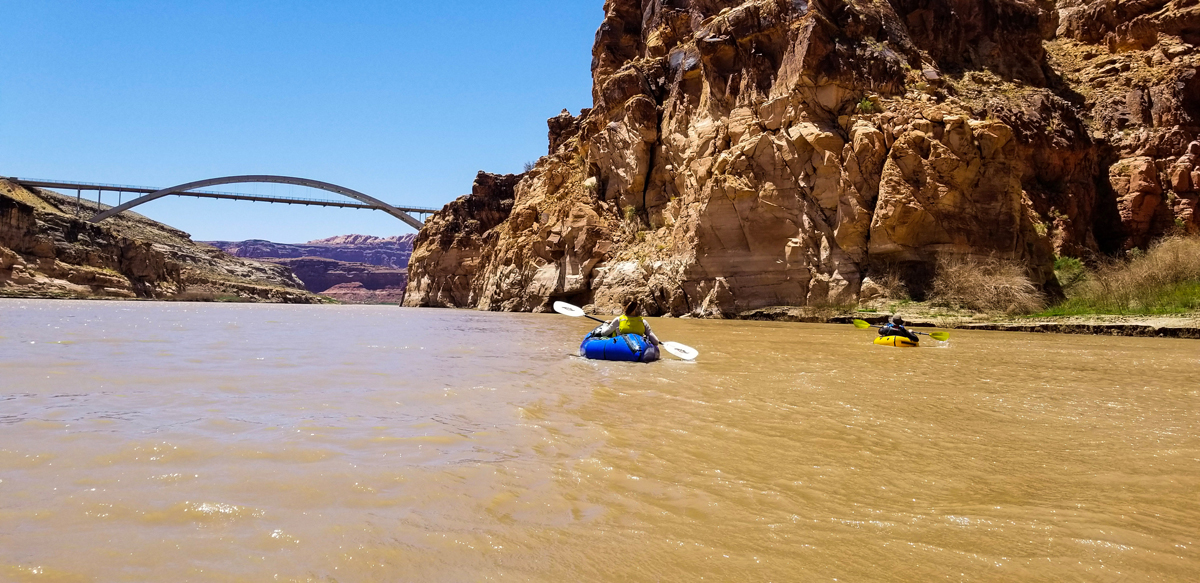
It was time for Transition #3. We pulled our packrafts out of our packs and rearranged everything to fit inside them before inflating our boats for travel. The confluence had a swirling wind and we ran into two motor boats finishing a river trip. The wind varied from head to tail to side to calm for the first 15ish miles. And then turned into a full on, you have to paddle to go downstream wind for the last three. We had planned on taking 8-10 for this section depending on the wind, the river and other things. We had knocked out half of it in three hours at which point we knew were finishing a full day early.
Hite Crossing, killer headwind but we’re almost done. Photo by Lukas Brinkerhoff
Right around 2 PM, our boats pulled up to the boat launch. The wind was ripping, our shoulders would take a few days to recover from the intense paddle, but we were done. We had seen Dark Canyon in all its glory. Done some paddling and some pedaling and finished in less the 36 hours. A full day sooner than expected. Not too bad for our first triathlon.
Heading toward Dark Canyon on the Bipedal portion of our triathlon. Photo by Lukas Brinkerhoff
Lukas Brinkerhoff blogs about mountain biking and life at mooseknuckleralliance.org.
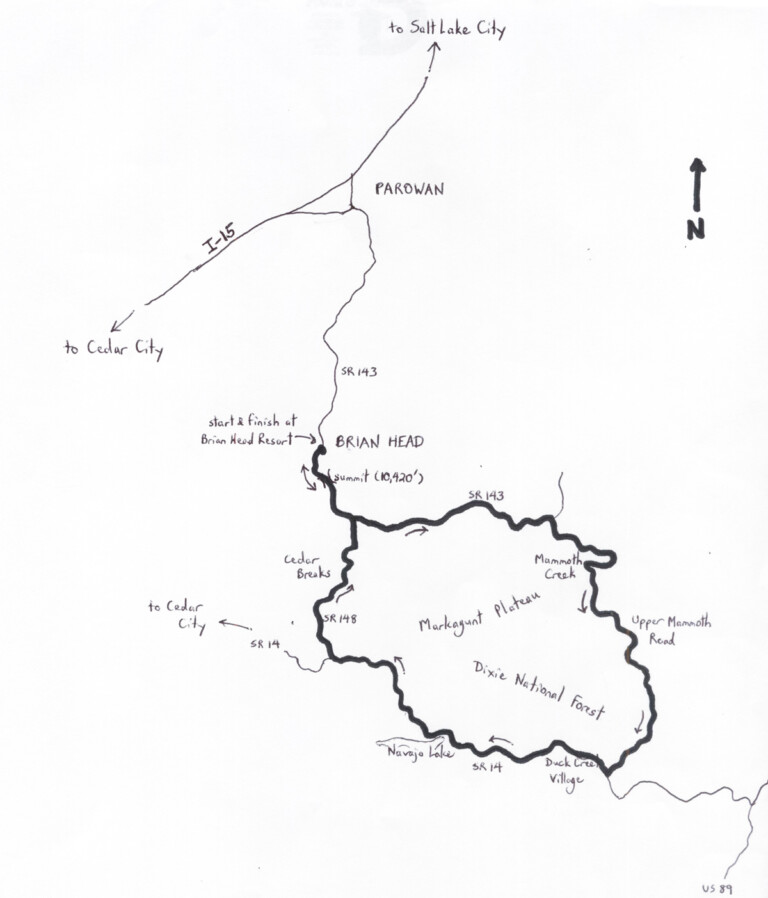
By Wayne Cottrell — The Markagunt Plateau Classic is a 53.2-mile lollipop-shaped loop in southern Utah’s high Color Country. The entire route is at high altitude, with a maximum elevation of over 10,000 feet. The ride is best done during the late spring, summer, and early fall months. There are passages through Cedar Breaks National Monument, Dixie National Forest, one National Scenic Byway (Utah’s Patchwork Parkway), and two Utah Scenic Byways (Cedar Breaks and Markagunt High Plateau). There are quite a few hills to climb, but the practically nonstop scenery makes this a must-do, cannot-miss ride. Please note that portions of the route may be inaccessible between November and April.
The Markagunt Plateau – Markagunt meaning “highland of trees” in Piute – is an elevated, forested plateau that covers a large area between the I-15 freeway and U.S. Highway 89 in southern Utah. Volcanic activity created the plateau thousands and thousands of years ago; in fact, a lava flow, named the Black Rock Desert, can be seen when looking toward the south from certain vantage points when on the plateau. Mother Nature is at her most dramatic in certain locales on the plateau, creating such remarkable features as Cedar Breaks, Mammoth Cave, Pink Cliffs, and Black Rock Desert.
The ride starts and finishes in the town of Brian Head, located at a lofty 9,800 feet (one of the highest in America) in Iron County, in southwestern Utah. The best way to get to Brian Head is to exit I-15 in the city of Parowan, and then head southeast on State Route (SR) 143 – which is Utah’s Patchwork Parkway. The climb to Brian Head is strenuous even for a motor vehicle – thankfully, you will not be riding this portion of SR 143. Brian Head is a small resort town named for nearby Brian Head Peak which, at 11,372 feet, is the highest point in southwestern Utah. Mountain biking events are regularly held here during the summer.
Exit the Brian Head Resort (large parking lot) and turn left onto SR 143. The highway climbs steeply as you exit the town and enter Dixie National Forest. At mile 2.65, the highway crests (at 10,420 feet) – catch your breath, and enter Cedar Breaks National Monument. About one mile into the monument, turn left to continue on SR 143 – you will re-enter the monument later on in the ride. You are still on the Brian Head-Panguitch (Patchwork Parkway) Scenic Byway. After a short climb, to mile 4, the highway begins a long descent along the sloping reaches of the Markagunt. The gradient of the highway is 6% along certain segments. In the distance are Mammoth Ridge and the Paunsagunt Plateau, beyond which is Bryce Canyon (which cannot be seen from here). You will also notice the dense trees of Dixie National Forest. You may be able to catch glimpses of ancient lava flows to your right, although they are mostly obscured. There are numerous pastoral settings along the highway, with meadows, small lakes, and a wide variety of trees. After a short climb, at mile 10.5, SR 143 descends into Black Rock Valley. Enter Garfield County, arguably Utah’s most scenic, at mile 12.3.
At mile 13.5, turn right onto Upper Mammoth Road. There was no street sign when I rode through here a few years ago, but the turn is just beyond a “Mammoth Creek” sign. (The sign is at the entry to a campground). Upper Mammoth is a paved U.S. Forest Service road. The road begins with a brisk descent around a few sharp curves. Enter the community of Mammoth Creek at mile 17.7; take note of the intriguing residential architecture. After crossing the “real” Mammoth Creek, begin a nicely shaded 1.8-mile climb – thus begins a series of scenic “climbs through the pines,” eventually taking the rider to a right turn onto SR 14 at mile 28.4.
You are now on the Markagunt High Plateau Scenic Byway, passing through the community of Duck Creek Village, at 8,507 feet elevation. There is a mini-mart here. Begin to climb at mile 30.3, with Duck Creek babbling on your right. Both sides of the highway are lined with black lava rock through here. At mile 35, look left, between the trees, for glimpses of Navajo Lake. Enter Iron County at mile 37.1; the highway finally crests at mile 38.3, crossing an idyllic meadow, with a dense grove of trees on its perimeter.
Turn right onto SR 148 at mile 41.8; you are now on the Cedar Breaks Scenic Byway. Following about three miles of climbing, the road enters Cedar Breaks National Monument. The Visitors Center is on the left at mile 45.3. Although the Breaks are visible through the trees from the road, a short detour at the Center, to get an unobstructed view, would be worthwhile. Walk out to the scenic view point for a breathtaking vista. The ride out of Cedar Breaks, although hilly and strenuous, is rewarded with spectacular views to the left. Rejoin SR 143 at mile 49.5, as the highway returns to the route’s high point, to the south of Brian Head. After reaching the 10,420 foot summit again, at mile 50.6, and re-entering Brian Head, the highway begins a steep 13% descent into the community. Watch your speed on the descent, and enjoy coasting back into the Brian Head Resort to conclude the ride.
For more rides, see Road Biking Utah (Falcon Guides), written by avid cyclist Wayne Cottrell. Road Biking Utah features descriptions of 40 road bike rides in Utah. The ride lengths range from 14 to 106 miles, and the book’s coverage is statewide: from Wendover to Vernal, and from Bear Lake to St. George to Bluff. Each ride description features information about the suggested start-finish location, length, mileposts, terrain, traffic conditions and, most importantly, sights. The text is rich in detail about each route, including history, folklore, flora, fauna and, of course, scenery.
Wayne Cottrell is a former Utah resident who conducted extensive research while living here – and even after moving – to develop the content for the book.
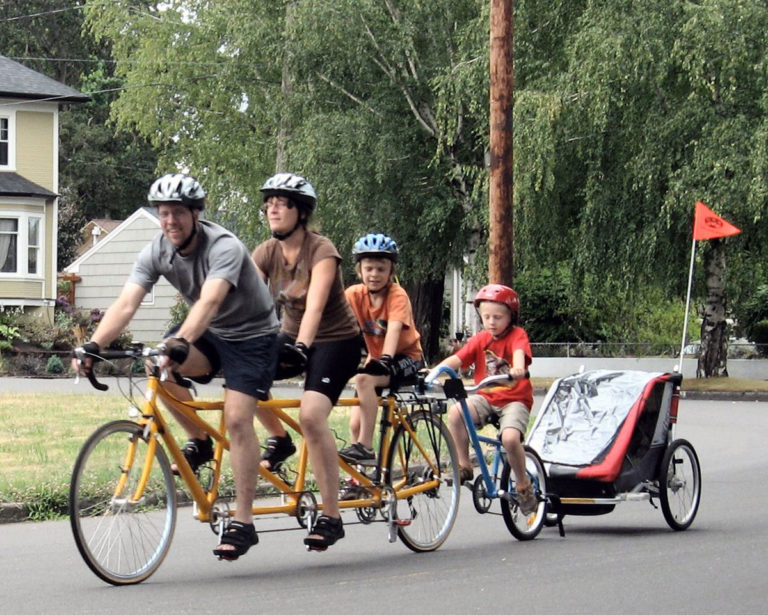
By Joe “Metal Cowboy” Kurmaskie — I’m often asked “What’s the hardest part of a bike tour?” Whether we are talking about towing the family around Oregon for a week, planning a cross country summer adventure or an international odyssey, the answer is always the same… and it’s not weight, equipment, training, mapping, packing, money, lodging, food, timing traffic and it’s almost never the actual pain or suffering exacted by hills and wind … it’s attitude. In the words of the Avett Brothers, “Decide what to be, then go be it.” The biggest obstacle to any bike ride is to end the planning and talking and dreaming about the project and actually get into the saddle and pedal. This is not to say that planning and training should be ignored, but I can’t count the number of times people let the planning and training and thinking overwhelm them, letting that trip of a lifetime become the never-ending story of the ride that never happens.
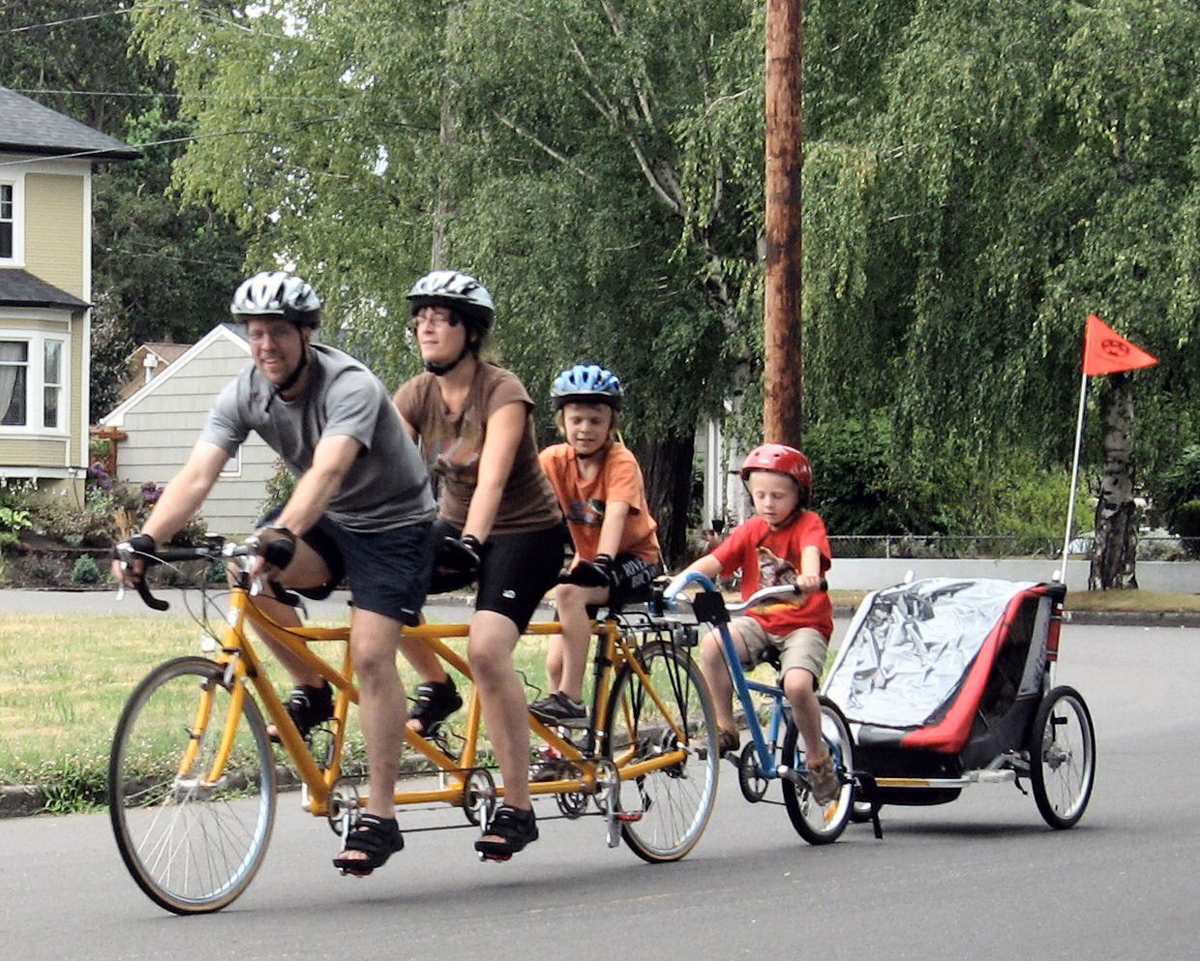
To bicycle tour or not to bicycle tour? The Kurmaskie family embarks on a Trans-Canada epic tour. Photo courtesy Joe Kurmaskie
Take maps for instance. It’s good to bring some along, paper and/or electronic, and picking a general direction with a few highlights to see along the way, but don’t let the map dictate the journey because it will ruin the adventure. Steinbeck said it best in Travels With Charley. “A trip, a safari, an exploration is an entity different from all other journeys. it has personality, temperament, individuality, uniqueness. A journey is a person in itself; no two are alike. And all plans, safeguards, policing and coercion are fruitless. We find after years of struggle that we do not take a trip, a trip takes us.
So basically, only when you relax and go with the opportunities that the road reveals, will you get the most satisfaction and complete experience of seeing a country by bicycle.
More from Steinbeck. “For weeks I had studied maps, large scale and small, but maps are not reality at all – they can be tyrants. I know people who are so immersed in road maps that they never see the countryside they pass through, and other who, having traced a route, are held to it as though held by flanged wheels to rails.
Food. Touring cyclists, to a person, load down the rig with too much of it on their first few rides. It’s an easy trap. Cyclists pedaling all day every day burn 4,500-8,000. They crave food and lots of it. So it’s a quick walk across the street from laying in adequate supplies to hold a rider over during longer stretches to hauling around punishing extra weight – food stuff that you will never get to or will get crushed and rot before you get to it. In the first world, you are never more than five or ten miles from supplies.
Training. It makes sense to ride your bike before you ride your bike. And it even makes sense to set up a regular schedule of increasing miles as the tour departure date gets close. Do a ride with the bags loaded with your gear even. But don’t let the training and riding around town become a burden or a distraction or an excuse for postponing the adventure, “Oh, I wasn’t able to do two back to back weekend rides of 100 miles a piece so I can’t go until that happens.” I actually heard this statement from a pair of riders who were more than ready for the rigors of the road. Here’s the thing. Leave your front door in reasonable shape and the road will do the rest. There’s nothing better than ten hours a day in the saddle to whip you into shape. No matter what sort of training schedule you put together beforehand, the first week on tour will leave you sore and tired. It’s called hell week or adjustment week. Once your body understands this is what it does now it will work like a well-oiled machine.
In every aspect of bike touring, it’s the attitude you bring to it that decides your fate. So get on the bike, point it where you want to go, put a grin on your face and a ten years old child’s joy for the moment… and send me a postcard or two – I need to work up a good steam of jealousy, motivate me to stop talking about my next tour and follow my own advice.
Researchers Jennifer Dill, Jiahui Ma, Nathan McNeil, Joseph Broach and John MacArthur of Portland State University have published a new article in the November 2022 issue of Transportation Part D: Transport and Environment. The open-access article, “Factors influencing bike share among underserved populations: Evidence from three U.S. cities,” examines bike share use and interest among lower-income residents and people of color in New York, Chicago, and Philadelphia.
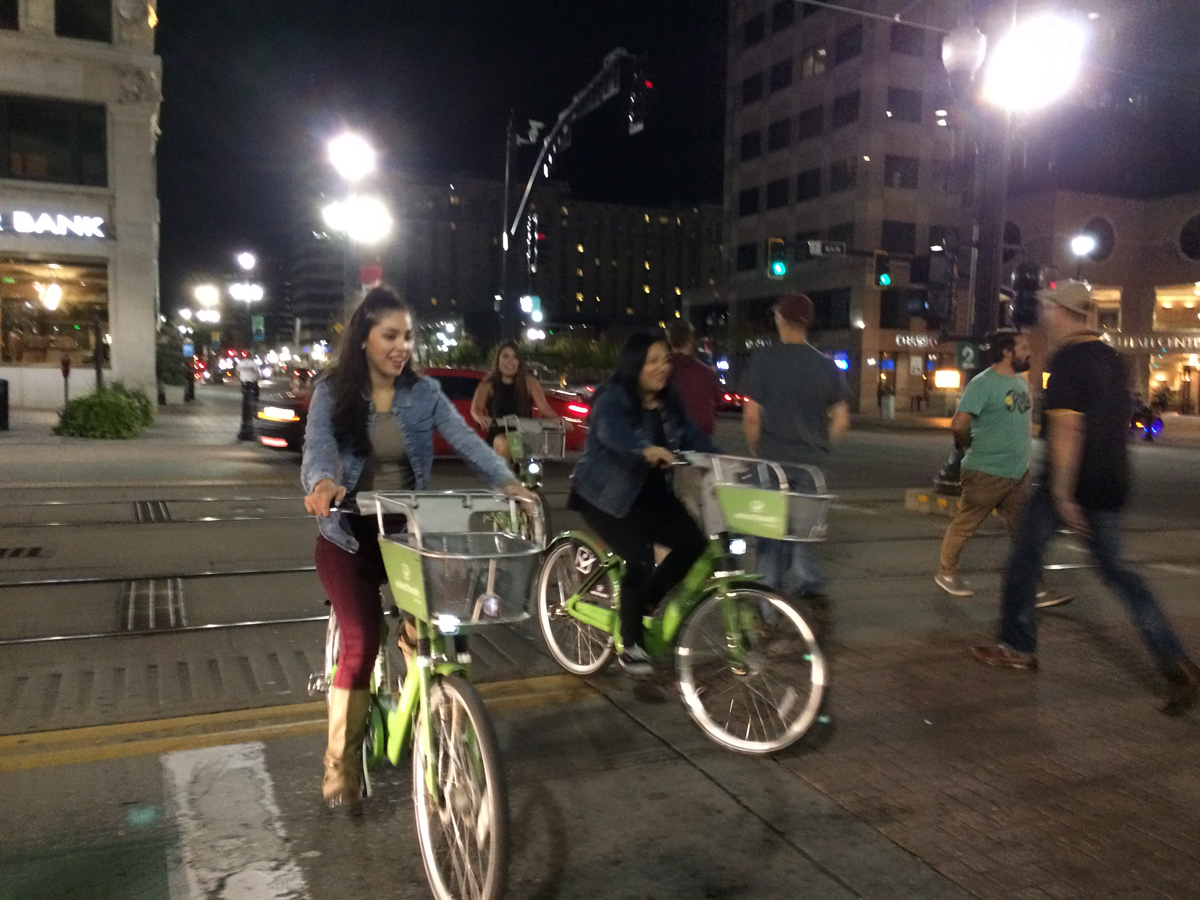
GreenBike Bike Share has changed downtown Salt Lake City! Photo by Dave Iltis
There is evidence that lower-income and people of color (POC) in the U.S. do not use bike share as much as higher-income and white people. Using data from residents living near bike share stations in New York, Chicago, and Philadelphia, the paper examines reasons for these disparities. Researchers looked at many factors that might explain bike share use and interest in lower-income, racially diverse, traditionally underserved neighborhoods. They focused on residents who live near bike share stations, so that proximity would not be a barrier.
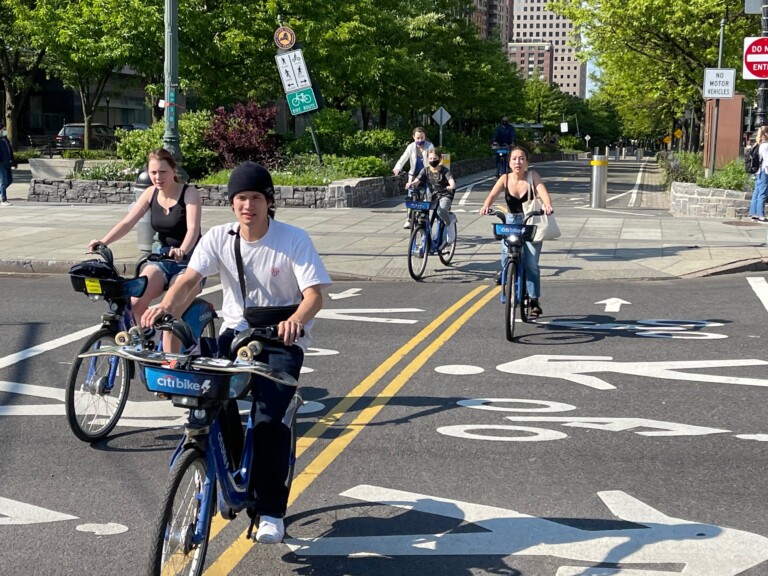
Bike Share in New York City. Photo by Dave Iltis
A few key findings:
People who are not members, but are interested in using bike share, including POC, are motivated to use bike share for fun, recreation, and social reasons (as opposed to utility).
Knowledge of bike share and receiving information from interactive sources (for example, bike share ambassadors) are associated with bike share use.
Cost is a barrier for people who are interested in using bike share, but are not members. Discounted memberships are one solution, but survey results indicate that many people do know know about them.
Some reasons for not using bike share among people of color and lower-income people may also be related to reasons for not bicycling, generally. These include concerns about traffic safety as well as personal safety.
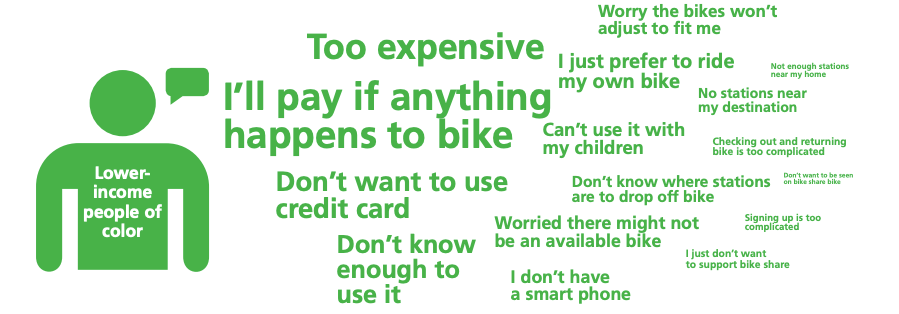
Some of the barriers to bike share reported by low-income respondents of color in a 2017 survey
This paper is an analysis of data collected in a “Breaking Barriers to Bike Share” project funded by the National Institute for Transportation and Communities (NITC) and the Better Bike Share Partnership (BBSP). Read more about the original study and explore some of the products to come out of this research, including a set of ten bike share equity briefs to help operators establish equity programs based on what’s been shown to work.
Portland State University’s Transportation Research and Education Center (TREC) is home to the U.S. DOT funded National Institute for Transportation and Communities (NITC), the Initiative for Bicycle and Pedestrian Innovation (IBPI), PORTAL, BikePed Portal and other transportation grants and programs. We produce impactful research and tools for transportation decision makers, expand the diversity and capacity of the workforce, and engage students and professionals through education and participation in research.
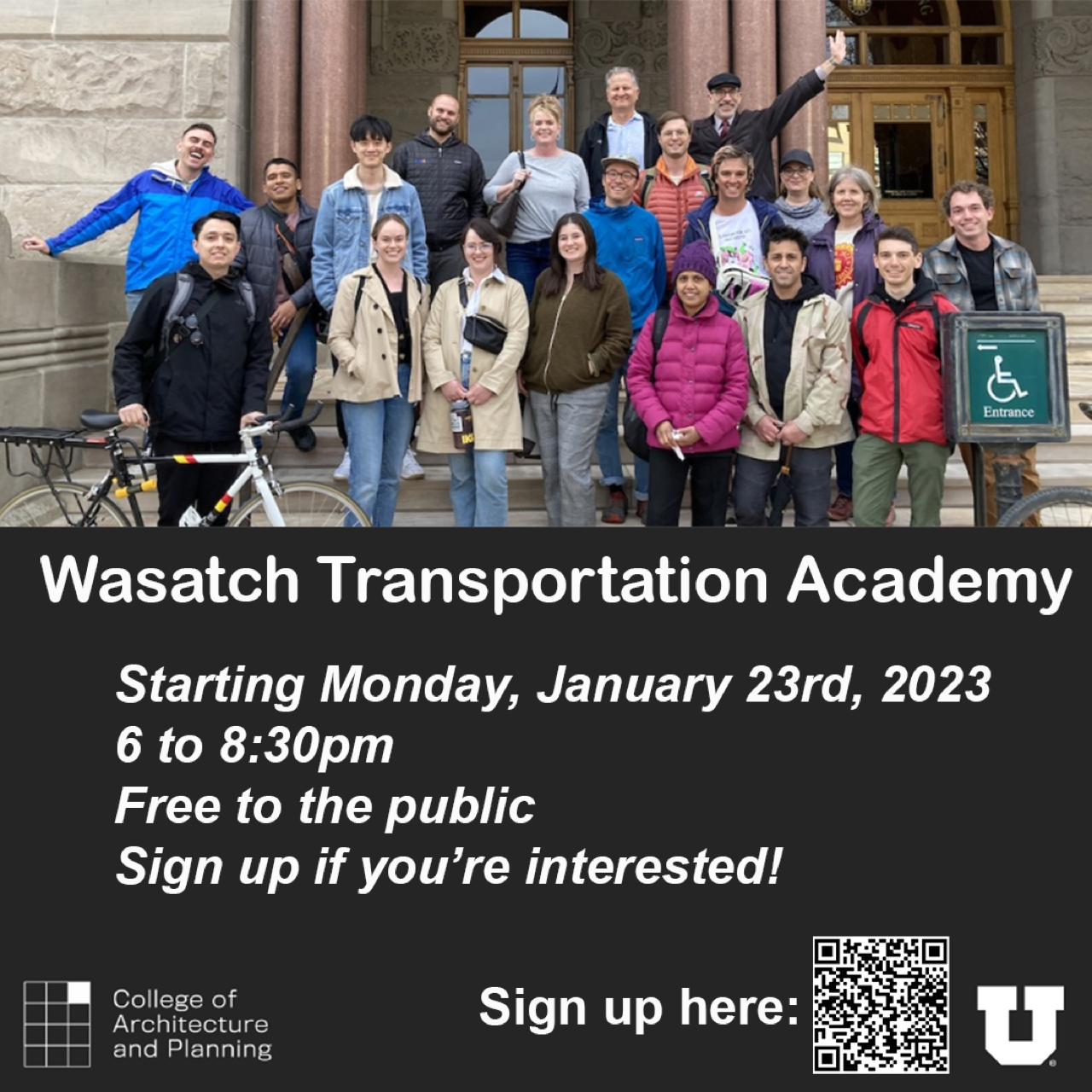
Article courtesy of TREC (Transportation Research and Education Center) — Individuals and groups can learn to effect powerful change, but success requires some familiarity with how civic processes work. Community Transportation Academies, or CTAs, provide a basic technical understanding of how a city or region’s transportation system operates, along with the decision makers and decision-making processes that determine how the system is shaped.
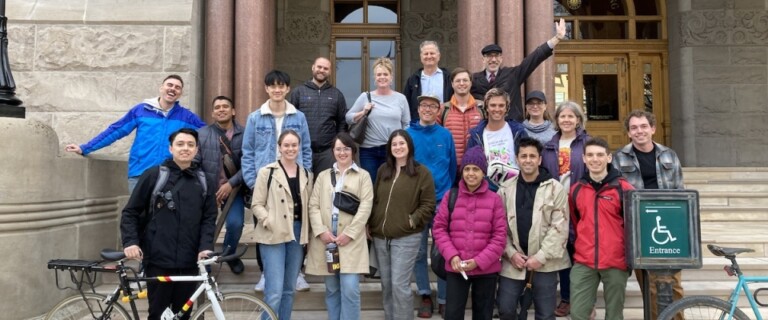
Students celebrate the end of the Spring 2022 Wasatch Transportation Academy pilot class with a field trip to look at transportation infrastructure in the Salt Lake City region of Utah.
Supported by the National Institute for Transportation and Communities (NITC), the newWasatch Transportation Academy (WTA) at the University of Utah was piloted in 2022 in the Salt Lake City region. The research team developed a course vision, topics, and logistics for the WTA by interviewing stakeholders in the Utah Governor’s Office of Planning and Budget, the Utah Department of Transportation, the Utah Transit Authority, Salt Lake County, Salt Lake City, and the Wasatch Front Regional Council. Led by Nathan McNeil of Portland State University and Keith Bartholomew of the University of Utah, the WTA used the established Portland Traffic and Transportation class in Portland, Oregon as a framework.
Community transportation academies provide community members the knowledge and tools to get involved and help make the transportation system a reflection of their input and values.
“This is an investment in community capital [in the Salt Lake City region], and that’s how we are thinking of it. Like most investments, the rewards are substantial, but they are built off of a long arc,” Bartholomew said.
Thinking far into the future means there is no shortage of possibilities. Andrea Olson, Planning Director of the Utah Department of Transportation, encourages community members to become proactively involved in transportation projects in the early stages: “As a resident, the earlier on you can get involved, the more influence you can have on what a transportation project looks like. The further you get along in the life of a project, the less opportunity there is for changing it. It can be hard to get people engaged in a 30-year planning process, but once they understand that’s really where everything is on the table, that provides some motivation,” Olson said.
Olson, who was an instructor in this year’s WTA, says she hopes the course continues to grow in popularity. “I want to see people out at transportation meetings and open houses. One of the things I encouraged the course participants to do was, get on your planning commission or get elected, because that’s a great way to really have some say in what’s happening,” she said.
In addition to instructing students on how transportation decision-making works behind the scenes, transportation academies let community members work on their own transportation problems. The WTA included community-led project presentations and an in-person field trip of a local transportation project in the process of being implemented. Feedback showed a high degree of satisfaction, with around 40 percent of participants indicating that they were, or would be in the near future, more engaged in various transportation-related community activities after taking part in the academy.
“The biggest takeaway for me was the level of coordination between agencies that is required for these projects, especially when different agencies may have different goals or metrics for success. It was also helpful to learn that getting involved earlier in the planning process can have a greater impact on the final form a project takes on than just responding to plans that have been put out,” shared one WTA participant.
Ted Knowlton, deputy director of the Wasatch Front Regional Council, served as an advisor on the project and believes that increasing the number of advocates in the region is one key function of the academy. “Advocacy punches above its weight – it’s way more effective than you would guess from the number of people involved. Those residents that are opinion leaders, that show up to public meetings, that volunteer on committees or what have you: When that component of the population is knowledgeable, it tends to elevate the quality of the dialogue and ultimately the quality of the outcomes in planning. Because they have a high level of knowledge, they’re pushing the state of the practice towards generally good ends,” Knowlton said.
The WTA course was held on Monday evenings for eight weeks during January-March 2022 (view class recordings here), reaching 49 community members. Taking notes from the locally-focused Portland course, the Utah team gave the Wasatch academy a broader regional focus. Using a online format facilitated this, as students could attend from anywhere.
“The curriculum handbook documents the structure of this sort of class and offers a set of potential topics that you could cover, along with some advice and wisdom from the places that have done it before. Drawing on the experiences of Portland and Salt Lake, it gives you the outline. You still have to do the work, and you still have to find the champions and the supporters, but it is important to learn from those that have done it,” McNeil said.
The Course Curriculum and Implementation Handbook (PDF) offers an overview of the key elements of a CTA, as well as class assignments that help participants develop an idea for a transportation improvement in their community. The handbook also includes:
Feedback from previous course graduates;
Guidance for practical items like establishing a budget, finding presenters, developing course materials and recruiting students;
Detailed outlines for ten class sessions covering topics like transit planning, active transportation, how to be involved in decision-making, transportation equity, and the history of transportation in your city or area;
Advice to get the ball rolling for a new academy. An important first step is finding a “champion,” someone willing to fight to get funding and rally leadership to support the class. Other key operating principles include recruiting top agency staff to participate, building an advisory network, fostering communication between community members and agency staff, and establishing a neutral setting for the course, such as a university or community center.
“The WTA is going to be more fully integrated as part of the master’s curriculum here at the University of Utah. It’s becoming a practicum in community engagement for master planning students as well as being a community class open to the public.” Bartholomew said. Establishing more communication between existing CTAs is also part of his vision for the future. The final report introduces a few CTAs beyond Portland and Utah, including the Surrey Transportation Talks Program in the City of Surrey, Canada and the Tampa Bay Citizens Academy on Transportation, launched by the University of Southern Florida and the City of Tampa in the fall of 2021.
Matthew Ryan, a second-year masters student in UU’s College of Architecture + Planning, worked on the project as a graduate research assistant, digging deeper into the Portland surveys and examining other academies around the country. One goal of this work, which the authors hope to share at the 2023 annual meeting of the Transportation Research Board (TRB), is taking a deeper look at the intersections between emerging transportation academies, and how those connections might be further leveraged to improve and expand the reach of CTAs.
This research was funded by the National Institute for Transportation and Communities, with additional support from the University of Utah, Utah Transit Authority, Wasatch Front Regional Council, Utah Department of Transportation, Salt Lake County, Salt Lake City Transportation Division, and the Portland Bureau of Transportation.
The National Institute for Transportation and Communities (NITC) is one of seven U.S. Department of Transportation national university transportation centers. NITC is a program of the Transportation Research and Education Center (TREC) at Portland State University. This PSU-led research partnership also includes the Oregon Institute of Technology, University of Arizona, University of Oregon, University of Texas at Arlington and University of Utah. We pursue our theme — improving mobility of people and goods to build strong communities — through research, education and technology transfer.
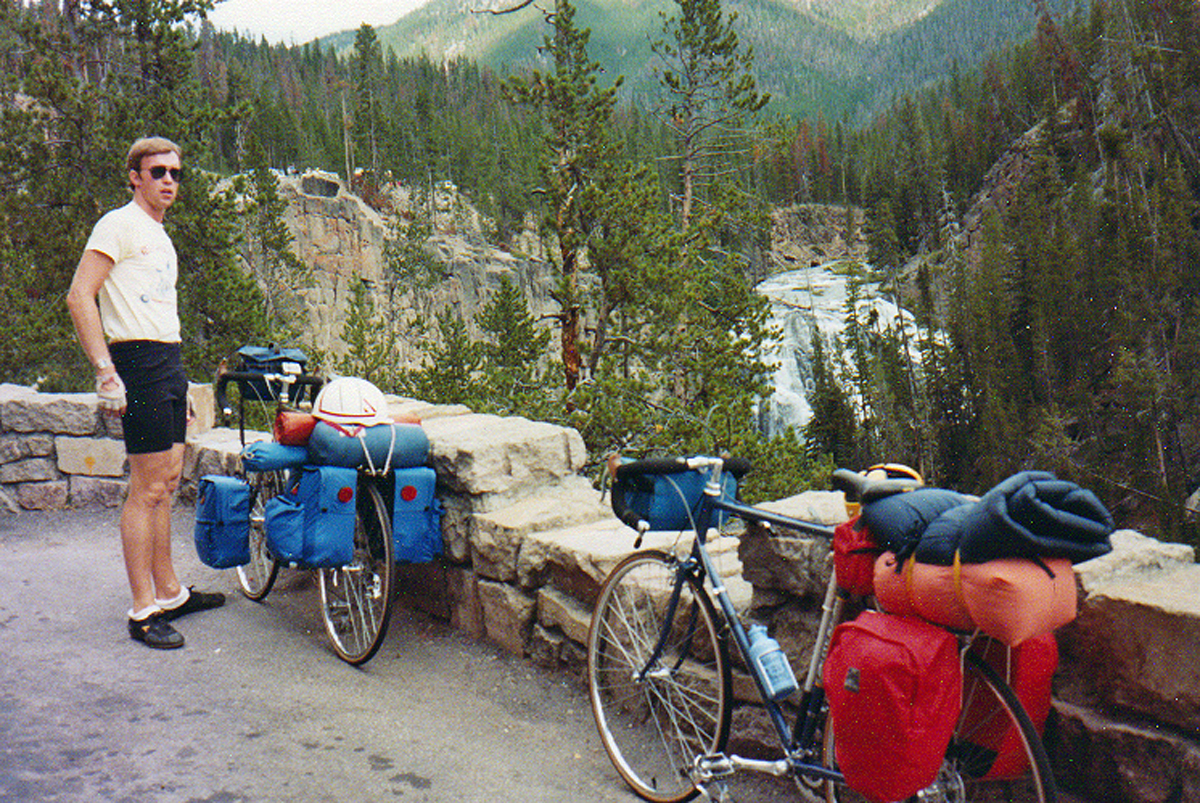
By Jay Hudson — My riding buddy Mike Woolman, and I stood on the sidewalk making the last adjustments to our panniers and multi-day stuff. Mike wanted a challenge to find if he could make the trip. I had self doubts. We had just filled our bellies at the Old Town Café there at the tourist town of West Yellowstone, Montana. We topped off the water bottles, secured the commissary bag of “GORP” (good old resin’s and peanuts) checked the tires pressure and blessed each other for the long haul ahead. Our panniers were full of stuff designed to make a bandit feel cheated. We were fit, confident and prepared to ride through buffalo herds, out pedal chasing bears, stare down wolves and stand in the spray of erupting geysers. Our wives were left wondering if they would get a phone call in the middle of the night from a gravelly voiced sheriff. The sun was up and the wind was down leaving us anxious to “mount up!” as my old Sgt. used to yell. Mike is a medical doctor which added to my confidence. If an old shaggy haired griz came out of the woods I was ready to take the lead even if it did mean I had to break wind.
Mike Woolman in Yellowstone. Photo by Jay Hudson
This trip was not going to be the same as the time in 1947 with my family. Then you could hand roll down the car window and hand feed the black bears. Years ago, I was in the emergency room and the blackboard had statistics on how many people had been thrown into the air by buffalo or elk. They came from the east and the park was nothing less than a petting zoo. Back then you could get up close and personal with Old Faithfull geyser (Icelandic word) but crowd control now means standing way back.
We cleared the park entrance booth and soon we were riding next to the Yellowstone River. The Yellowstone is the last undammed river in the lower 48. An old friend once canoed the Yellowstone, then down the Missouri and then rowed down the Mississippi.
What I was about to do seemed like a short trip. Now we were in the “wilderness”. We were there because President U.S. Grant had a vision and created the park in 1872. He knew the developers were coming and the speculators were ready to mine, cut, wash, make money and walk away. And then I saw a buffalo grazing across the river. I imagined I was truly in the wilderness. Then I realized the truth. We had trees, running water, wild animals and asphalt. We were burning daylight and had to cross a mountain range to get to a public camp site on Yellowstone Lake. There would be more wild animals, and we pedaled on.
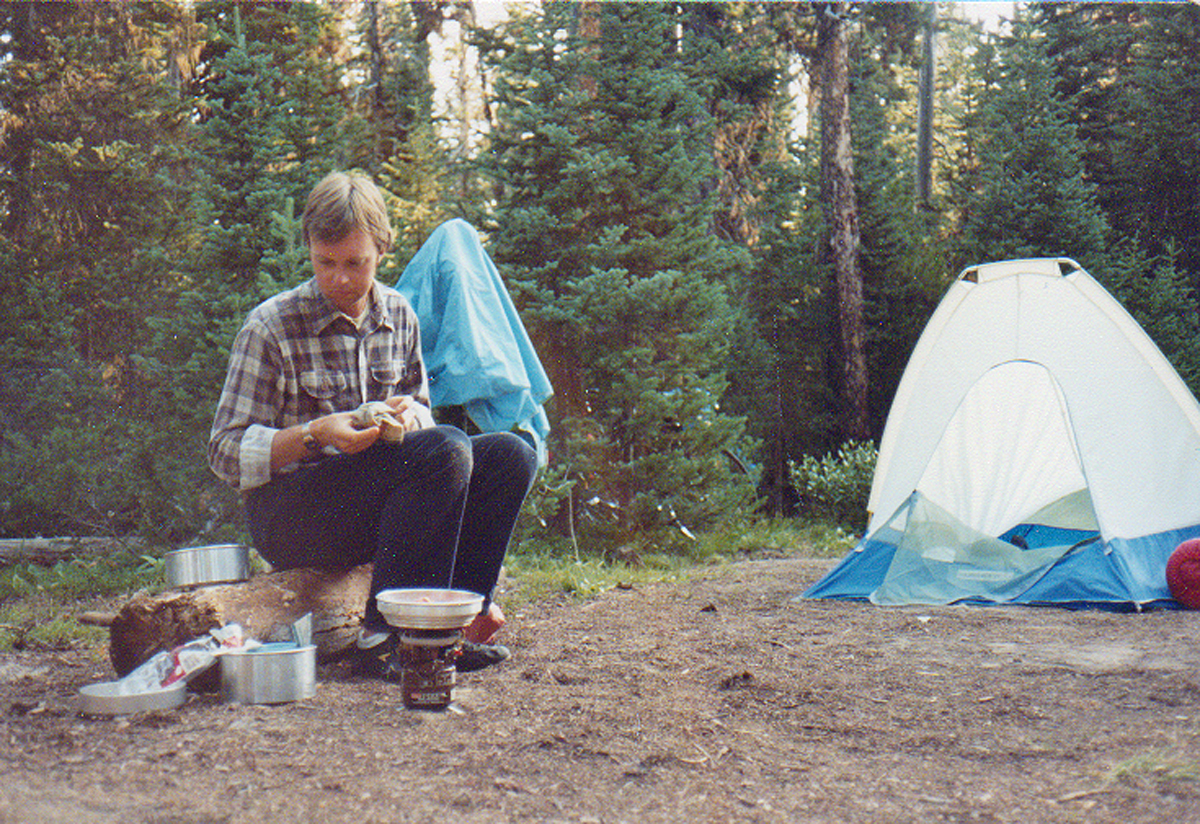
Camping at West Thumb in Yellowstone National Park. Photo by Jay Hudson
This section of road tested our quads. There were no downhills until we mastered the summit and freewheeled to Yellowstone Lake and West Thumb/Grant Village. After setting up the tent we took a long hot shower, which was probably the best I ever had. I asked Mike how many calories we had spent only going 81 miles. My riding shorts weren’t falling off but I was feeling thinner. Mike estimated we had burned off about 7-8,000. We stocked up food at the store for dinner and breakfast with a couple of chocolate bars; just because.
After eating dinner, we ate the breakfast supplies. We had to go back to the store and stock up again for breakfast. Sometime in the dark of night we heard rustling sounds. Peeking out of the tent, we saw a black bear trying to get to our food stocks that we had hung on a branch higher than the bear could reach. The bear gave up and looked for food not so well protected.
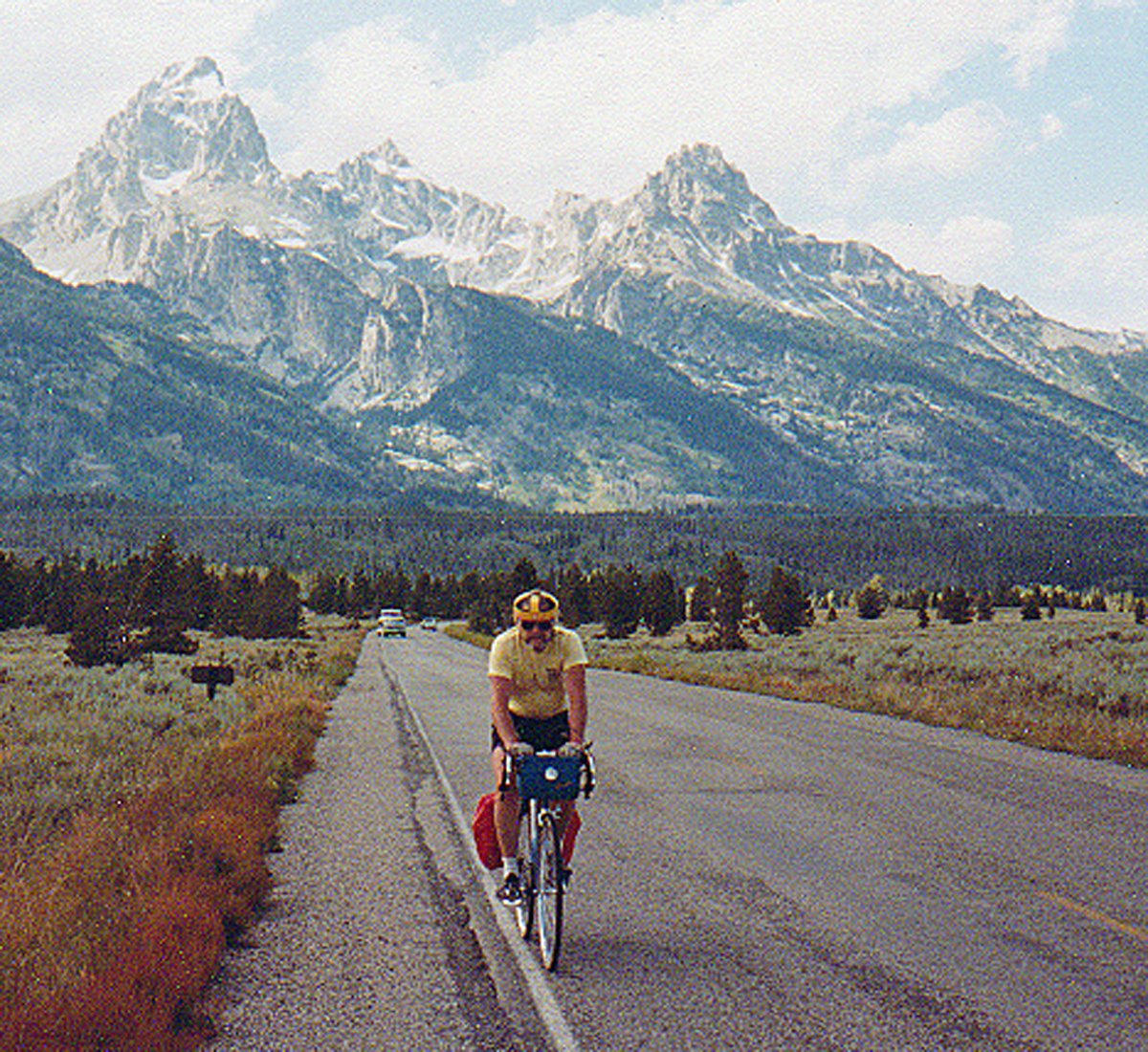
We saddled up and started day two of crossing Yellowstone going south on a very narrow Highway 191. A bus passed me on a long downhill and was so close I could have reached out to leave my initials. That gave me the gillywamps! Leaving the park, the road to the Tetons was safer and seeing these majestic mountains named after women’s breasts, worked my imagination. Jackson, Wyoming was calling!
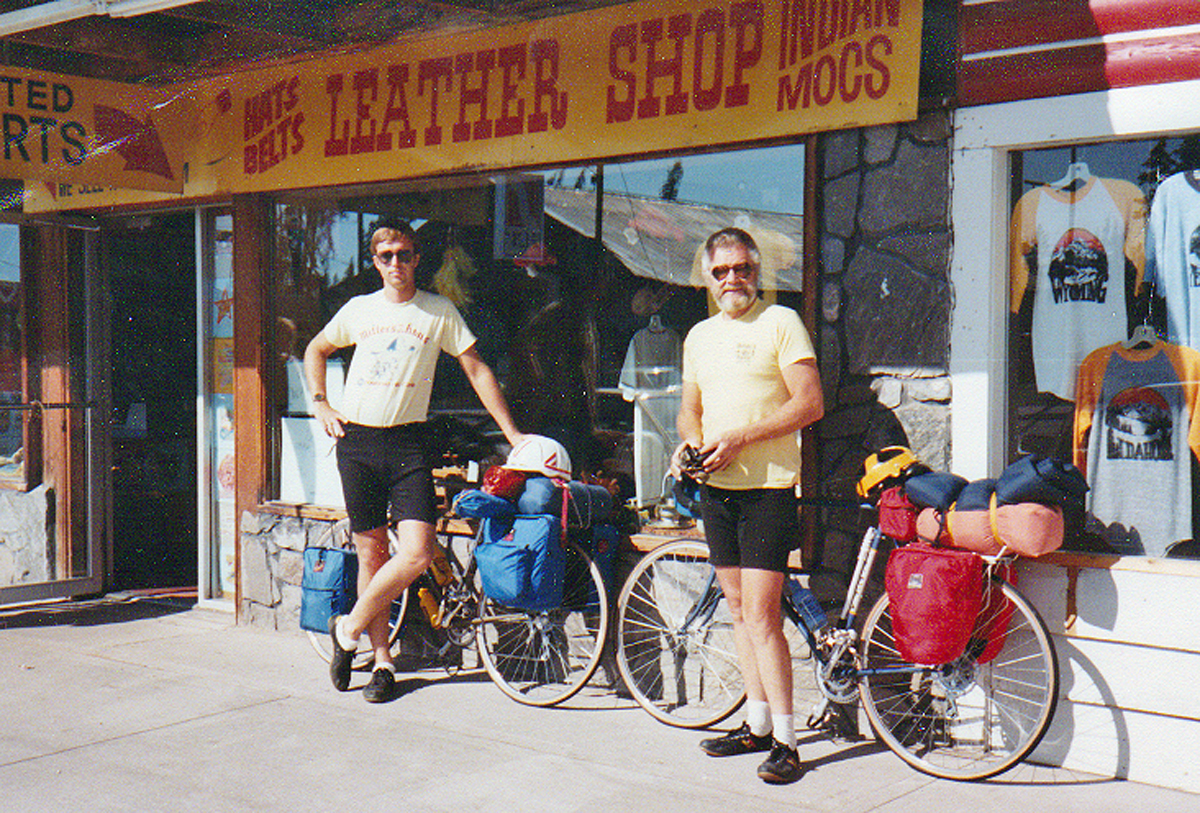
MIke and Jay. Photo courtesy Jay Hudson
I took Mike into the Silver Dollar Saloon to show him the saddles that lined the bar and told him of the sarsaparilla I sipped sitting on a saddle in 1948. Jackson has changed and lingering brought only tourist shopping around the town square with its weathered arch made from hundreds of cast off dried elk antlers. It was time to leave the updated rustic feel of Jackson, and head for Star Valley and the best cheese factory in the Intermountain West.
The road was good and the free cheese samples gave us renewed energy. The road now became a challenge. Highway 89 on a loaded bicycle is a long, long uphill drudge. When we reached the pass, we still had daylight and we decided to continue the long downhill on the way to Bear Lake. The downhill cooled us off. I felt like we had out run the bears. We passed a campground but decided to roll on, hoping there would be a modern day Pony Express station where we could bath in the horse trough.
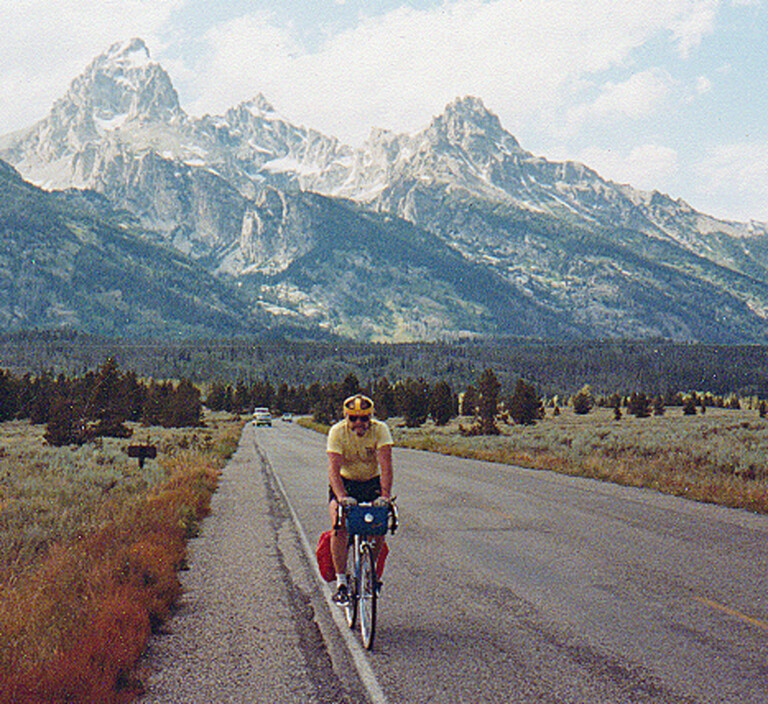
Jay Hudson in Grand Teton National Park. Photo courtesy Jay Hudson
When we came to the junction of Highway 89 and 30 there were no facilities, no nothing! We calculated we had covered 105 miles of hard riding. I was disappointed we had no altimeter to prove our prowess in hill climbing. There was another small mountain range between us and Bear Lake so we decided to camp for the night. The land was well covered with barbwire fencing but there was a small bridge covering a dry creek. It would be our haven for the night.
As we set up a pukka camp bats surrounded us. They didn’t bother us as we cooked and they provided a bit of amusement. The sand under the bridge was a soft base for our sleeping bags and it didn’t take long to fall asleep. We slept well and accepted the occasional car traffic above us. In the morning we said goodbye to the sleeping bats and rode off toward Garden City on Bear Lake. We rode past Paris, Idaho and wondered why the name and hit the flat road going south. We had a lot of light when we rode into Garden City and we went straight for a berry milkshake.
ay Hudson at the end of the Yellowstone to Salt Lake bike tour. Photo courtesy Jay Hudson
Garden City became my Waterloo. I knew, I just knew I was too tired to make the climb from the lake over another mountain range and on to Ogden. Mike gave me that doctor’s look of sympathy while I looked for a phone to call my wife to come fetch me. Mike left me in the dust, conquered the next mountain and continued to Ogden. He had tested himself and owns bragging rights. I have my photographs for proof I almost made it. I blame my failure on the 15 years I had on Mike.
DURANGO, Colorado (Dec. 6, 2022) — Registration for the 51st Annual Iron Horse Bicycle Classic will open on Friday, Dec. 16. There will be a local registration party on Thursday, Dec. 15 from 5:00-8:30 p.m. at the Fort Lewis College Center of Southwest Studies in Durango.
Photo courtesy Iron Horse Bicycle Classic
The annual celebration of cycling in Durango, Colorado will take place over Memorial Day Weekend, May 26-28, 2023. In addition to the world renowned Durango-Silverton road race and ride, the Iron Horse offers mountain bike and gravel races as well as a festive cycling-centric community atmosphere. Last year, celebrating the 50th anniversary of the event, the Coca Cola Road Race and McDonald’s Citizen Tour events sold out. Interested riders are encouraged to register early.
“We’re excited to build on last year’s 50th anniversary momentum to put on another incredible cycling weekend in Durango. The Iron Horse is a world-class bike weekend that cyclists in Colorado and beyond won’t want to miss,” said Ian Burnett, IHBC Race Director.
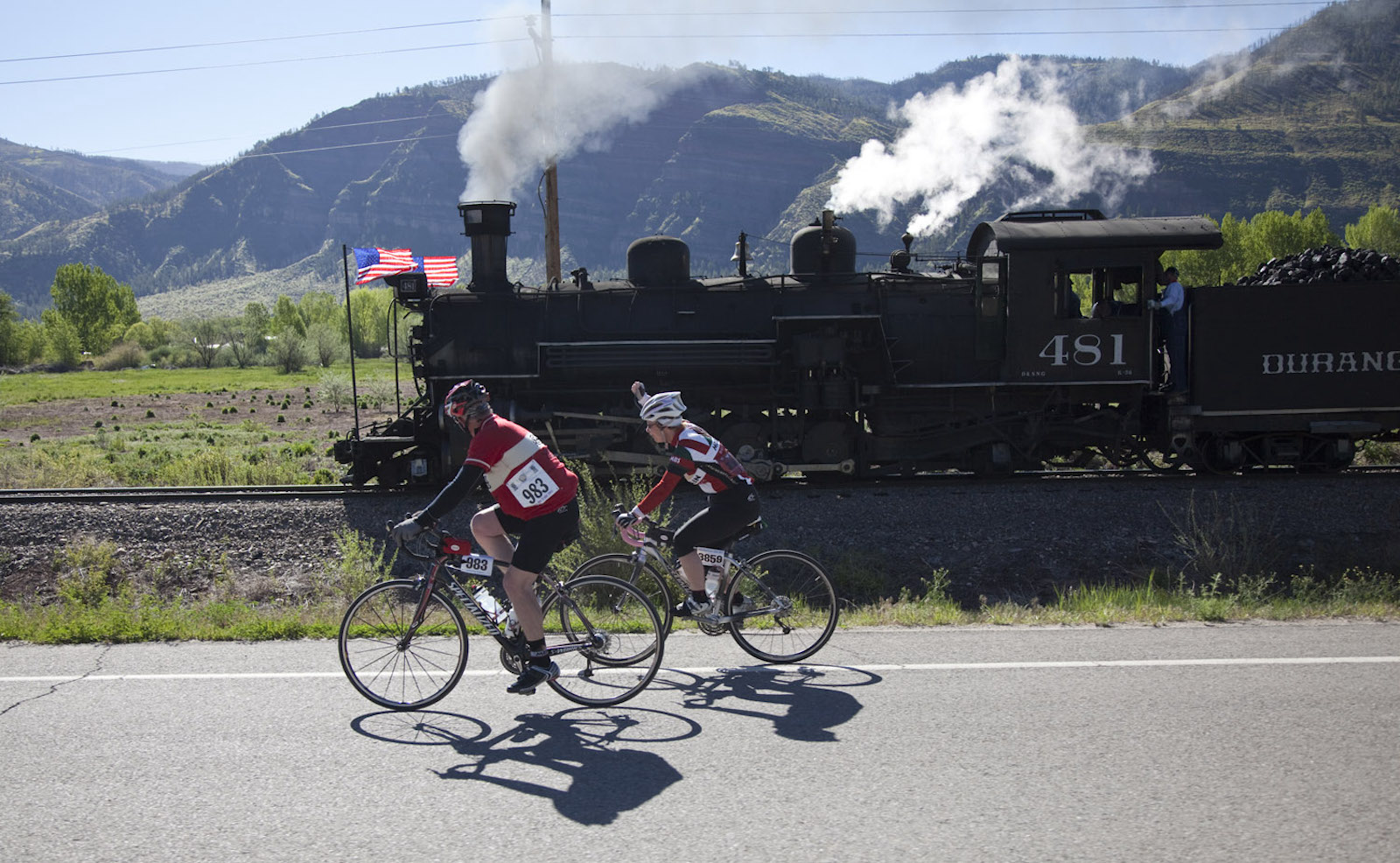
The backbone of the Iron Horse Bicycle Classic is the Durango-Silverton route, where riders “race the train” over two mountain passes for a total of 50 miles and 5,700’ of elevation gain. The tradition began in 1971 when Tom Mayer, a cyclist, challenged his brother Jim, a railroad worker on the Durango & Silverton Narrow Gauge Railroad, to see who could get to Silverton faster. Tom was able to pedal the distance faster than the steam engine, and the legend of the Iron Horse was born.
Back in Durango, off-road riders will be challenged by the Subaru Mountain Bike Race and the La Strada La Plata Gravel Ride, both starting at Durango Mesa Park. The Mountain Bike Specialists King & Queen of the Mountain is an omnium competition featuring the professional road race and mountain bike races.
The Iron Horse Bicycle Classic celebrates all that the Durango cycling community has become over the past five decades–a home and training ground for Olympians, national, and world champion cyclists as well as the 600-rider strong Durango Devo youth development program. With over 300 miles of trails and diverse terrain within city limits, Durango has become a premiere destination for traveling cyclists and a limitless pedaling playground for the locals.
In addition to thousands of amateur riders and racers, last year’s event attracted professional athletes such as Savilia Blunk, Kira Payer, Ruth Holcomb, Quinn Simmons, Brayden Johnson, and Howard Grotts.
This year, there will be a festival atmosphere at Durango Mesa Park on Sunday for the mountain bike and gravel races with music, food & drink, plenty of spectating options, and fun for the whole family. The top gravel finishers will race to the line around the same time as the elite mountain bike races start. The mountain bike course will feature new trails being built in the area this spring as a part of the bike park being planned at the 1,850-acre property just East of downtown Durango.
2023 Iron Horse Bicycle Classic Schedule
May 26
1:00-7:00 pm – Local packet pickup at Chapman Hill
May 27*
7:30 am – Durango Coca-Cola Road Race start
8:00 am – McDonald’s Citizen Tour start
3:00-7:00 pm – Bike pickup at Durango Transit Center
*Return transportation from Silverton will be offered to participants
May 28
8:30 am – La Strada La Plata Gravel Race start at Durango Mesa Park
9:00-4:00 pm – Durango Mesa Cycling Festival at Durango Mesa Park
9:00 am – Mountain Bike wave 1 start at Durango Mesa Park
11:30 am – Mountain Bike wave 2 start at Durango Mesa Park
2:00 pm – Mountain Bike wave 3 start at Durango Mesa Park
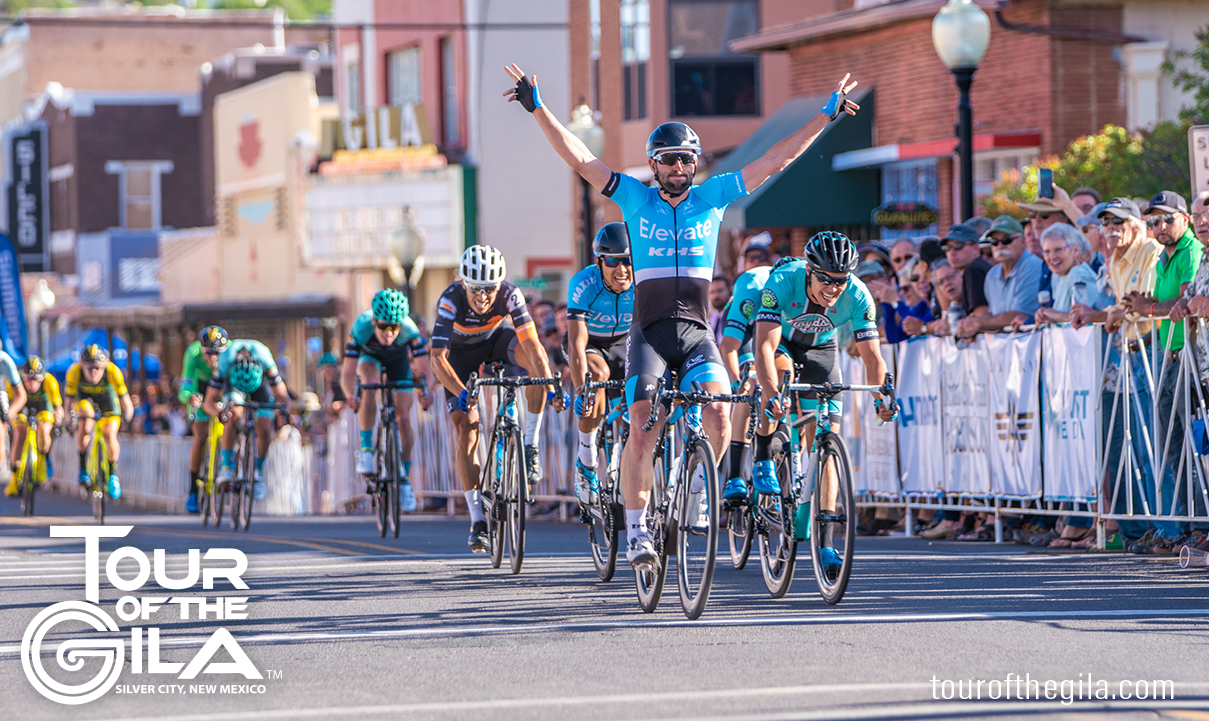
SILVER CITY, New Mexico (December 6, 2022) — The three-stage Virtual Tour of the Gila will be happening December 16, 17, and 18, 2022. People who wish to watch pro road cyclists compete while riding their trainers can watch via any device online by going to TouroftheGila.com. There is no cost to watch the races.
The Virtual Tour of the Gila is a part of the Echelon Racing League using modified, virtual versions of the in-real-life courses. The Echelon Racing League features men’s and women’s teams from across North America, as well as select esports and international teams.
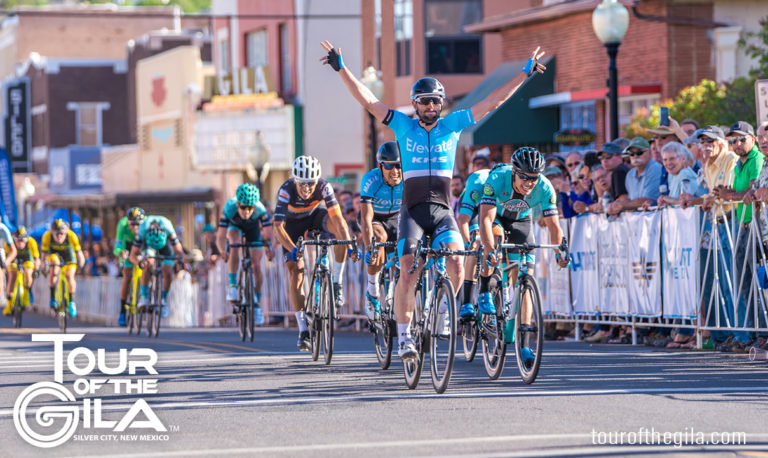
Photo courtesy Tour of the Gila
The Echelon Racing League will be on the virtual platform RGT Cycling. What is unique about RGT is that they have the capability of making virtual versions of our real Tour of the Gila racecourses. GPX files of our 3 race courses, the Tyrone Individual Time Trial, the Mogollon Road Race, and the Gila Monster Road Race, were created and sent to RGT.
“The folks at RGT created our in-real-life racecourses onto their cycling platform,” explained Jack Brennan, Tour of the Gila Race Director. “When the Pro Men and Pro Women race the Virtual Tour of the Gila, they will be actually racing and experiencing, on-line, the road profiles that make up our Tour of the Gila. That is really cool!”
The Virtual Tour of the Gila livestream race schedule:
Tyrone Individual Time Trial: Friday, December 16
Pro Men: 5:05PM MST
Pro Women: 6:00PM MST
Mogollon Road Race: Saturday, December 17
Pro Men: 8:05AM MST
Pro Women: 10:10AM MST
Gila Monster Road Race: Sunday, December 18
Pro Men: 8:05AM MST
Pro Women: 10:10AM MST
“Life should not be a journey to the grave with the intention of arriving safely in a pretty and well preserved body, but rather to skid in broadside in a cloud of smoke, thoroughly used up, totally worn out, and loudly proclaiming “Wow! What a Ride!” – Hunter S. Thompson
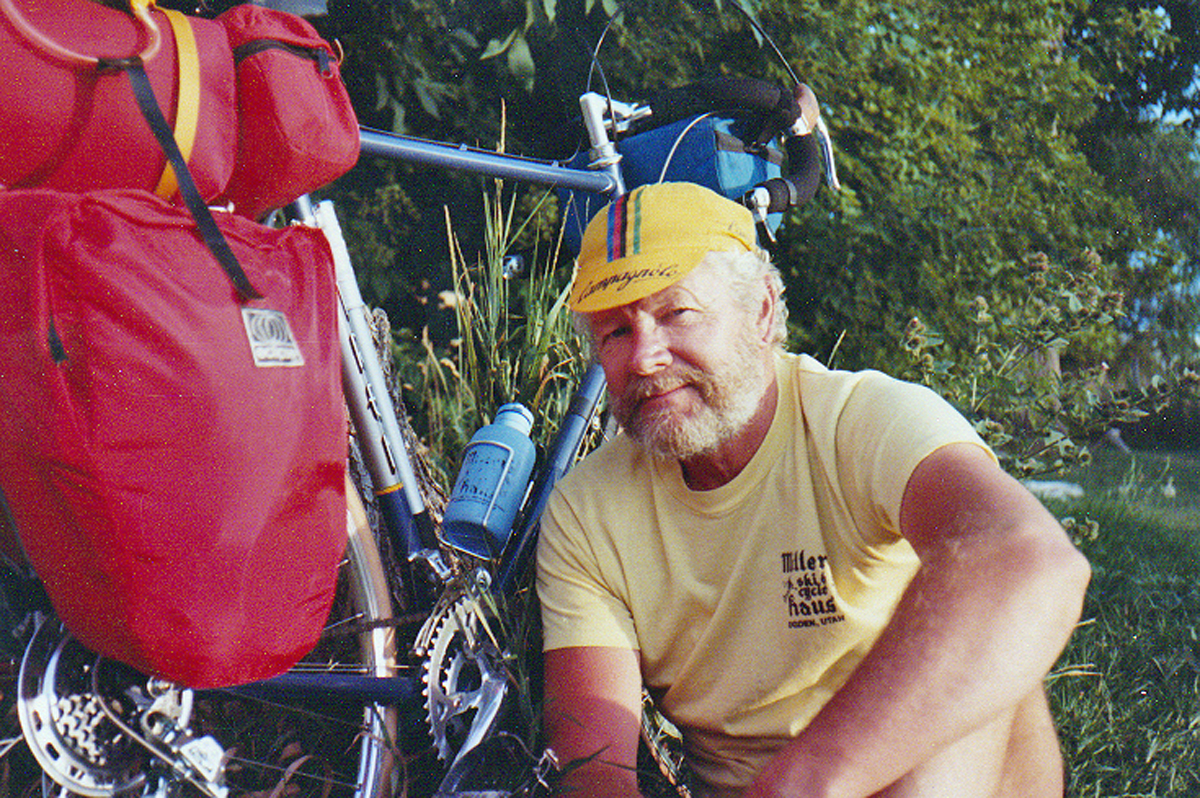
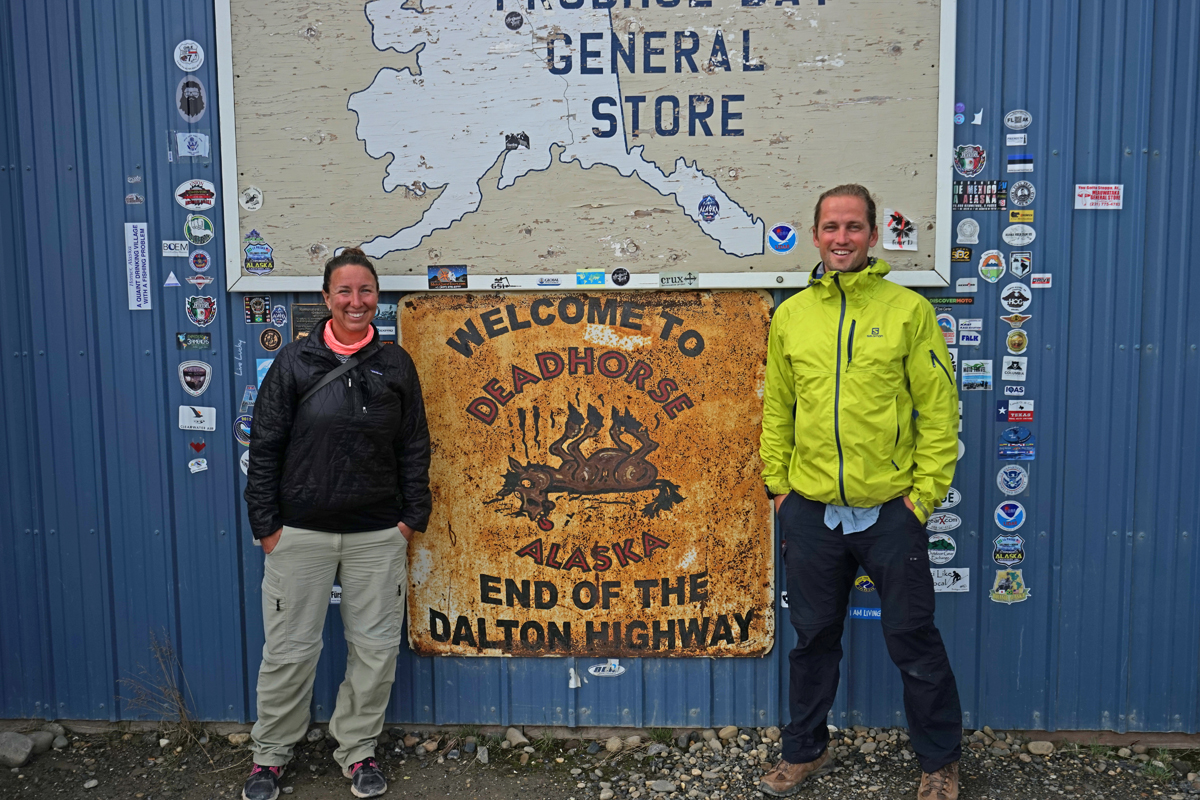
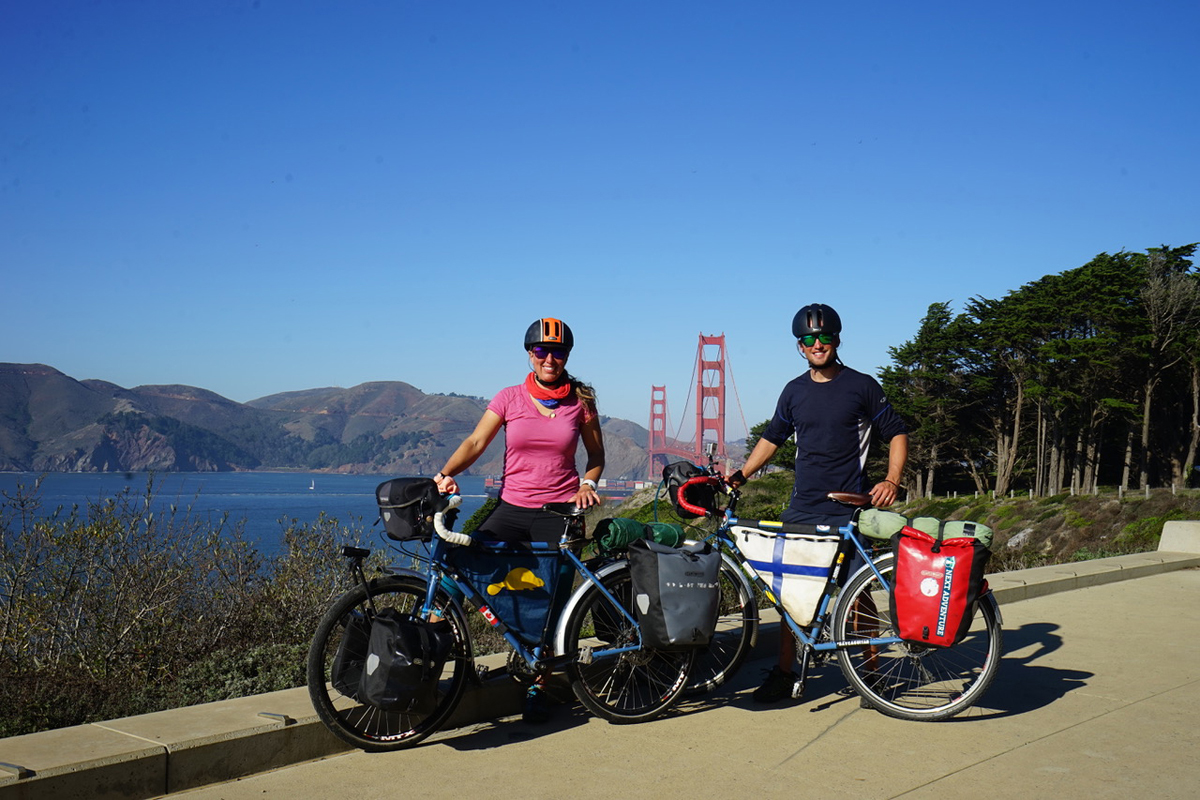
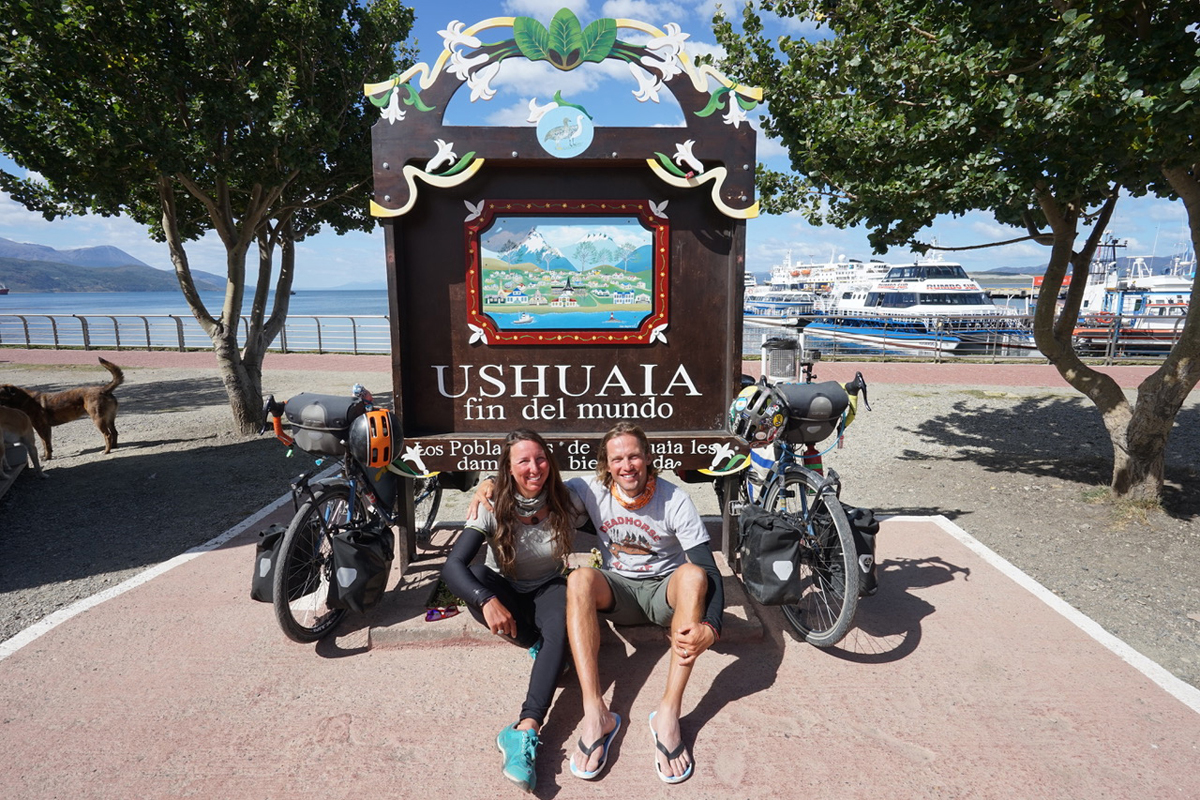
Kristen has a smile that lights up any room she enters. I first noticed her and Ville one day in the gym onboard our ship heading towards Patagonia. A few days later there was an announcement of a spur-of-the moment lecture by a couple that had bicycled down the Pan-American highway. It sounded interesting so we went. The show was unscripted and very entertaining mostly because of the two people with the oversized personalities. It was then that I knew their story needed to be told.
Kristen and Ville at the start of their journey in Deadhorse, Alasaka. Photo courtesy Kristen and Ville
Their journey begins in Bend, Oregon, one of my most favorite places on the planet. In 2011 they had hiked the Pacific Crest Trail with no real prior experience to prepare them. “All it took is one foot in front of the other, and just like life, you get through it. And professional backpackers we soon became.” This is the attitude they took with them when they decided to bike from Prudhoe Bay, Alaska to Fin del Mundo outside of Usuhaia, Argentina. With some help from their friend John Frey from Hutches Bike shop in Bend, they soon assembled their Surly Disc Trucker bikes, put together a rough route of the trip, then headed up to Alaska. Kristen’s advice is simple for those that want to try an epic adventure, “Don’t think about and plan everything, just get a bike, some gear together and go. Over-planning is pointless because everything changes once you start.” This is a metaphor for life: know where you are, where you want to be, then get going.
Photo courtesy Kristen and Ville
“Why ride over 20,000 miles? Because the voice of reason flew out the window a long time ago telling us not to. And why not do it? Ever changing scenery for nearly 2 years will be mind-blowing and intense, but honestly, we really do this for the people we meet. The characters we met hiking the PCT pretty much just redeems your faith in humanity. Some of the kindest, coolest, wackiest, neatest, people that helped us just because it felt right. And for no reason other than to help someone in need.” Her words definitely apply to the bicycling community where the spirit of helpfulness abounds. This was also an opportunity to help out several organizations. One that is particularly near and dear to them is Carly’s Kids (http://www.carlyskids.org) which raises money to send disadvantaged children to outdoor school.
Alaska to San Francisco. Off to South America. Photo courtesy Kristen and Ville
The trip was punctuated with random acts of kindness, everything from letting them stay in a home, providing food and water, to donating to help fund the trip. These acts added to a large group of data points that indicated that people truly are good no matter where you go in the world and that kindness begets kindness.
Their adventure covered 18,235 miles across innumerable countries and took them 20 months to complete. Along the way, they experienced encounters with a bear, and contracted dengue fever which kept them on a couch in Costa Rica for five weeks.
Camping in the Redwoods. Photo courtesy Kristen and Ville
The bear story is best told in their own words, “It was late one evening biking south on the Cassiar Highway in British Columbia, Canada. We were just about to start our search for a good spot to camp and made our way down a steep hill with an uphill straight in front of us, when a large black bear wandered up onto the pavement right in front of us. The sides of the roads were cleared of trees for ease of visibility for cars, and allowed for lots of berry bushes to grow. This bear had been feasting on the plump berries right along the road when we had startled her and she came up on the road directly in front of us. We braked hard, and climbed off our bikes, putting the bikes between her and us. Unfortunately for us, two little black balls of fluff popped right out behind her from the bushes and we realized with a sinking feeling that this unfortunate situation was about to get a lot worse. As the mother bear pinned her ears to her head, started to grunt and snort, and then began her charge no more than 20 feet from us, we both froze realizing our bear cans were buried deep in our panniers. Very bad planning on our part for such a situation as the one we were currently in. Trying to think fast, we couldn’t remember what advice we had been given when confronting a bear. And an angry, protective mother bear at that. Stop, drop and roll? Nope. That was fire. Hide under your desk? Earthquake. Oh, make yourself big, loud, yell, wave your arms in the hopes it scares them away. And luckily for us, it worked! Mid-charge, she turned, and headed straight for the bushes with babies in tow. Phew! That was a close one. After dodging that bullet, we decided to ride at least another fifteen miles before looking for a camping spot, pulling all our food up into a tree and loudly making all bears in a few miles radius aware of our presence.”
At the end of the earth, Ushuaia, Argentina. Photo courtesy Kristen and Ville
Their faith in humanity has been renewed along with their spirits and their desire to explore the world further. Ville is working on a film of the trip, which, hopefully, will be shown at next years Wasatch Mountain Film Festival as well as several others and Kristen is looking to publish a book on their adventures within the next 6 months. I would highly recommend that you go to their website, www.welostthemap.com to get to know them better and to learn more about this and upcoming adventures.
On November 30, 2022, 11-year-old Winnie Wolfgramm was tragically killed in a crosswalk on 1300 South and 2100 East by a driver, while crossing the street with a friend. Details from the Salt Lake City Police Department are sparse, but it appears that her friend had made it safely across the street before Winnie was hit.
According to a witness (who asked not to be identified for privacy reasons) who saw the crash, the driver of a Nissan Titan pickup truck turned left from 1300 South westbound to 2100 East southbound and hit the child in the crosswalk on a green light.
We are heartbroken by this avoidable death and are calling for action from Salt Lake City.
The site of the death of Winnie Wolfgramm on 1300 South and 2100 East. She was hit and killed in the crosswalk on the right of the photo. Photo by Dave Iltis
If you would like to Vision Zero implemented in Salt Lake City, please email Mayor Mendenhall at [email protected] and/or sign the petition below:
[emailpetition id=”6″]
When is one more death or injury too much?
Cycling Utah is calling on Salt Lake City Mayor Erin Mendenhall and the Utah Department of Transportation (UDOT) to immediately adopt Vision Zero to eliminate all traffic fatalities and injuries in Salt Lake City.
In Cycling Utah’s survey sent to mayoral candidates prior to each of the last two elections (in 2015 and 2019), we asked candidates if they would be willing to adopt Vision Zero. Both Jackie Biskupski, who served as Mayor from 2016-2020, and Erin Mendenhall (serving from 2020-2024) agreed to do so. Former Mayor Biskupski never followed through. Current Mayor Mendenhall still has a chance to do so.
Erin Mendenhall: As Mayor, I will convene a committee of interested stakeholders and SLC transportation experts to review Vision Zero opportunities–including speed limits–for Salt Lake City. Pedestrian and cyclist safety is critical, particularly amid such population and transportation growth.
Mayor Mendenhall needs to follow through on this immediately.
So, what is Vision Zero? From the Vision Zero Network Website:
Vision Zero is a strategy to eliminate all traffic fatalities and severe injuries, while increasing safe, healthy, equitable mobility for all.
“Committing to Vision Zero will take the following strategies:
Building and sustaining leadership, collaboration, and accountability – especially among a diverse group of stakeholders to include transportation professionals, policymakers, public health officials, police, and community members;
Collecting, analyzing, and using data to understand trends and potential disproportionate impacts of traffic deaths on certain populations;
Prioritizing equity and community engagement;
Managing speed to safe levels; and
Setting a timeline to achieve zero traffic deaths and serious injuries, which brings urgency and accountability, and ensuring transparency on progress and challenges.”
In May 2022, following a spate of traffic deaths, Mayor Mendenhall and UDOT Director Carlos Braceras announced the creation of a “Safe Streets Task Force” which is intended to be a “multi-department effort with the Salt Lake City Police Department and Transportation Division to identify the most critical areas of the city where intervention may be necessary to prevent future crashes, injuries, and deaths.”
Mendenhall and Braceras also announced a partnership with the State of Utah’s Zero Fatalities program.
The site of a traffic fatality on 600 North in Salt Lake City, Utah. Photo by Dave Iltis
According to Salt Lake City, the task force has met, but there have been no announcements, goals, or programs to come out of the task force. The task force supposedly will include 4 working groups: analytics, education, capital projects, and enforcement. While it’s a step in the right direction, it’s not Vision Zero, and it’s not nearly as aggressive an approach as needed.
UDOT program Zero Fatalities, not to be confused with Vision Zero, has as a goal “to eliminate fatalities on our roadways.” While this is of course what we want, Zero Fatalities is an admirable education program to ask drivers to drive safer. It does not address speed limits, road design, car and truck design, traffic signals, stop signs, bike lanes, pedestrian bulbouts, or any of the multitude of necessary physical or legal changes to our streets and highways.
The site of the death of Edwin X. Cardoso in a traffic fatality on 600 North in Salt Lake City, Utah. Photo by Dave Iltis
Earlier this year, after the task force was formed, Cycling Utah asked UDOT and Salt Lake City to make 400 South and 300 West safer when the streets were repaved. Nothing happened. The two streets were restriped and repaved with no additional safety measures.
While projects like the 9 Line Trail, Folsom Trail, and the 300 West Trail are wonderful, there are many other recent examples of road projects and safety measures, on both UDOT’s and Salt Lake City’s streets, that have not put the pedestrian and cyclist first, but which have instead prioritized automobiles. Enough is enough is enough.
Cycling Utah’s Plan for Salt Lake City to get to Vision Zero and eliminate deaths and injuries on our streets:
UDOT and Salt Lake City need to publicly and strongly commit to Vision Zero and do everything they can to eliminate all fatalities on the streets and roads in the city. This means following through on the Vision Zero commitment (https://visionzeronetwork.org/wp-content/uploads/2018/05/VZN-9-Components.pdf). And, it means that not only Salt Lake City maintained streets would be made safe, but UDOT’s would as well. This would be accomplished through:
Political Commitment
Multi-disciplinary leadership
Action Plan
Equity
Cooperation and collaboration
Systems based approach
Data Driven
Community Engagement
Transparency
Rename the task force the Salt Lake City Vision Zero Task Force to show the city’s clear commitment to no more traffic deaths.
To get to no more traffic deaths and injuries means that every single decision regarding streets, transportation, and roads within Salt Lake City shall prioritize in order:
People on foot, wheelchairs, and other person mobility devices.
People on bikes, scooters, skateboards, one wheels, and other micromobility options.
People on transit – buses, trains, and trams.
People delivering goods to our local businesses and homes.
People in cars or personal trucks.
Salt Lake City and UDOT should complete an immediate reevaluation of all speed limits in the city. While the recent #20IsPlenty change of the default limit on Salt Lake City streets to 20 mph was a huge step forward, it is not enough. Every single speed limit signed street in Salt City needs to be reevaluated and changed downward.
Seattle not only changed their default speed limit to 20 mph, but they also changed the default speed limit on arterials to 25 mph. This could easily take place during the winter when road paving and striping cannot happen due to weather.
Despite several opportunities on newly-configured streets (Main Street and South Temple for example) to take this step, this has not happened. Salt Lake City is supposed to be in the process of reevaluating speed limits, but change has not yet occurred. For critics who say that signs don’t matter, remember on a 2-lane street or road-dieted street, it only takes one driver to go the speed limit to require everyone behind them to go the speed limit.
Accelerate the City’s new Livable Streets program. While still in the planning stages, the program holds great promise, but we have not seen any new initiatives yet. A main goal is for “measures should be implemented to calm traffic and improve the overall safety, livability, and attractiveness of residential streets in Salt Lake City.” Salt Lake City has not had a traffic calming program in 15 years, so this will be a welcome change. A recent report found that 403.5 miles of streets are eligible for traffic calming. For details: https://www.slc.gov/transportation/wp-content/uploads/sites/11/2022/05/SLC_Livable_Streets_Final_Report_compressed_short.pdf
Reinstitute Salt Lake City’s successful Stay Safe, Stay Active Streets program that was a savior to many during the height of the COVID-19 pandemic in 2020. The program closed off a number of streets to all but local car traffic using nothing more than temporary barricades and signage. The program was a simple but extremely effective way to allow people to have priority on the streets. https://www.slc.gov/transportation/wp-content/uploads/sites/11/2020/05/FINALSafeActiveStreetsSummaryReport-2.pdf
Add speed bumps everywhere that will truly slow cars down, rather than the anemic ones recently added to 500 East. With better engine design going towards more power rather than better fuel economy, good road design and lower speed limits are not enough. We need a massive investment in new speed bumps, raised crosswalks, traffic diverters and other road furniture that will force drivers to slow down.
Create a standard of a maximum of 10-foot-wide travel lanes on all UDOT and Salt Lake City streets to slow traffic and make more room for bicycles.
Reinvigorate the city’s efforts to increase walkability and bikeability, both of which help to get people out of cars and make our roads safer for all. This is a combination of planning and cheerleading.
Continue expansion of our rapidly improving transit network along with a program for free fares for all residents. This is likely best accomplished at the State of Utah level with taxation, financing, and reprioritizing of transportation measures. Better public transit will lead to fewer drivers behind the wheel and thus makes our streets safer for all.
Continue planning efforts to increase housing density and walkability and bikeability in the city to reduce the need for a car.
Ban right turns on red. This simple measure would keep cars from traveling across crosswalks where pedestrians have the right of way. The law does not allow cars to travel perpendicularly across routes where other cars have the right of way when the light is red, so why does it allow cars to violate pedestrian right of way?
The right turn on red became Federal Law in 1975, intending to encourage energy conservation. In 1992, the law was apparently changed to allow safety as a reason for not allowing right on red (https://www.law.cornell.edu/uscode/text/42/6322). New York City has banned the practice since pedestrian safety was clearly diminished.
Right on Red is inherently dangerous to people on foot and it’s time to eliminate this practice not only locally in Salt Lake City, but statewide, and ultimately federally. With cars increasingly equipped with automatic shutoff devices at a stop along with the rise of the electric car, energy conservation arguments hold less weight. By making it safer for cycling and walking, more people will cycle and walk which is orders of magnitude more energy efficient than driving.
Follow through with the 2015 Bicycle and Pedestrian Master Plan goal of completing the Neighborhood Byway network by 2025. Sweetstreetsslc.org has made this a current campaign.
The use of red-light cameras and speed limit cameras to identify and ticket violators is currently banned at a state level. Legislation needs to be introduced to overturn this myopic me-first policy.
We also need a better approach to reduce impaired driving from alcohol, drugs, cell phones, and other distractions. This could include making sure that public transit runs later at night to allow people to take alternative transportation rather than a car.