Name of Product: Model Year 2022 Cervélo R5 and Caledonia-5 bicycles and Cervélo ST31 LT replacement stems
Hazard: The handlebars on the bicycles can slip in the stem and cause the rider to lose control, posing a fall hazard.
Remedy: Repair
Recall Date: September 15, 2022
Units: About 1,800 bicycles and 182 stems (In addition, about 243 bicycles were sold in Canada)
Consumer Contact
Cervélo toll-free at 833-416-8605 from 10 a.m. to 5 p.m. PT Monday through Friday, email at [email protected] or online at https://www.cervelo.com/product-recalls, or at www.Cervelo.com and click on “Recalls” for more information. Cervélo dealers can be located at https://www.cervelo.com/store-locator or at Cervelo.com.
Recall Details
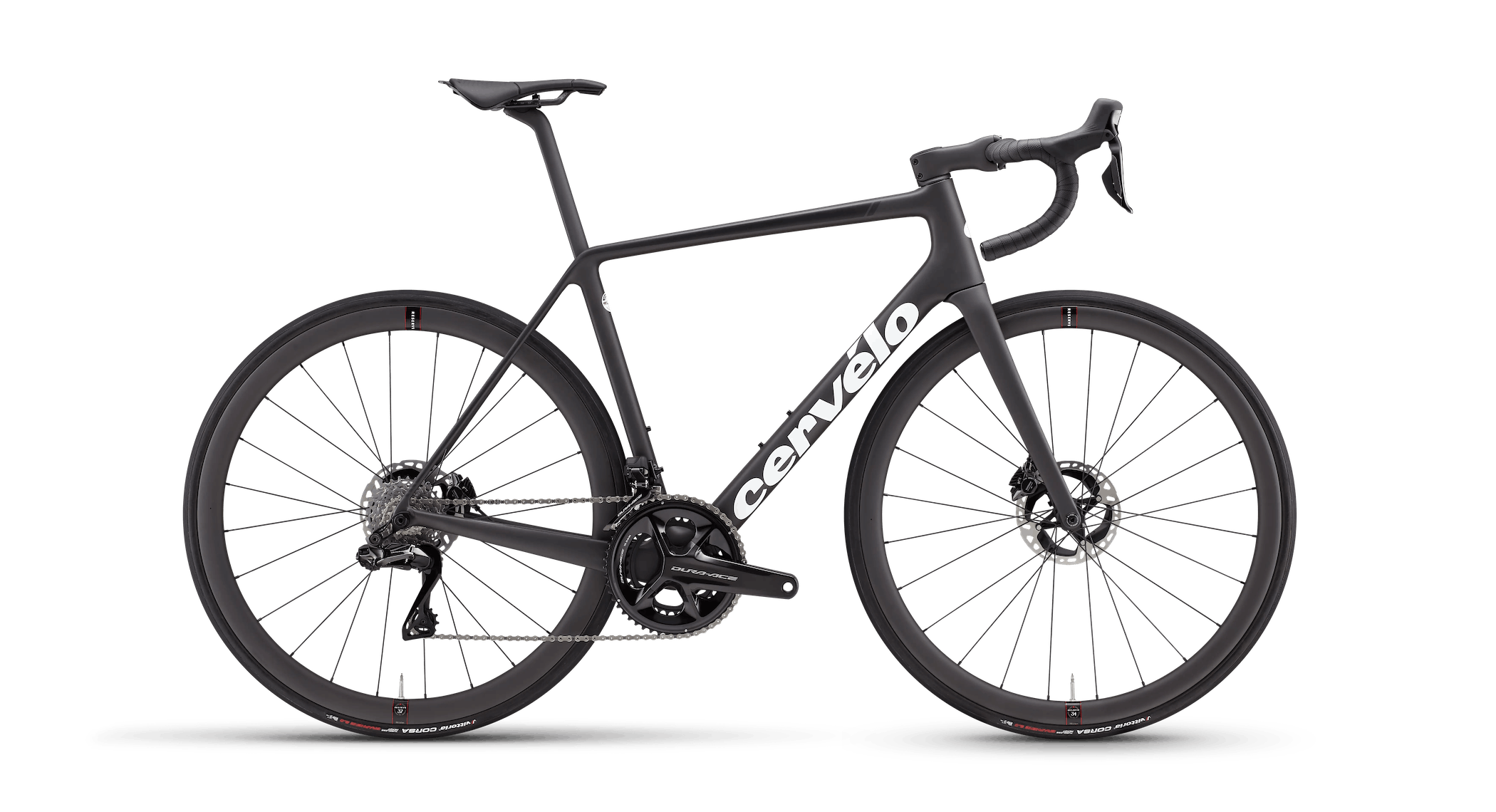
Description: This recall involves Model Year 2022 Cervélo R5 and Caledonia-5 bicycles and Cervélo ST31 LT replacement stems. Cervélo and R5 or Caledonia-5 are printed on bicycle’s frame. The ST31 LT replacement stems were sold only in black. The recalled bicycles and framesets were sold in the following colors/SKUs.
Only the Cervélo bicycles or stems listed below are included in the recall.
Model Description
Color Description
R5 Dura Ace Di2
Five Black
R5 Red eTap AXS
Five Black
R5 Force eTap AXS
Lime/Black
R5 Force eTap AXS
Five Black
R5 Ultegra Di2
Lime/Black
R5 Ultegra Di2
Five Black
R5 Frameset
Five Black
R5 Frameset
Lime/Black
R5 Frameset
Jumbo-Visma Replica
Caledonia-5 Dura Ace Di2
Oasis
Caledonia-5 Red eTap AXS
Five Black
Caledonia-5 Frameset
Five Black
Caledonia-5 Frameset
Aqua Pearl
Caledonia-5 Frameset
Oasis
ST31 LT Replacement Stem
Black
Remedy: Consumers should immediately stop using the two recalled models of Cervélo bicycles and Cervélo replacement stems and contact their authorized Cervélo dealer to arrange for a free repair to replace the faceplate.
Incidents/Injuries: The firm has received 13 reports of handlebar slippage. One injury has been reported, resulting from a fall.
Sold At: Cervélo dealers nationwide sold the bicycles and replacement stems from May 2021 through July 2022 for between $5,000 and $13,000 (bicycles) and about $300 (ST31 LT replacement stems).
Importer(s): Cervélo USA Inc., of Aliso Viejo, California
By Anne Lusk, Harvard University — Designing for bikes has become a hallmark of forward-looking modern cities worldwide. Bike-friendly city ratings abound, and advocates promote cycling as a way to reduce problems ranging from air pollution to traffic deaths.
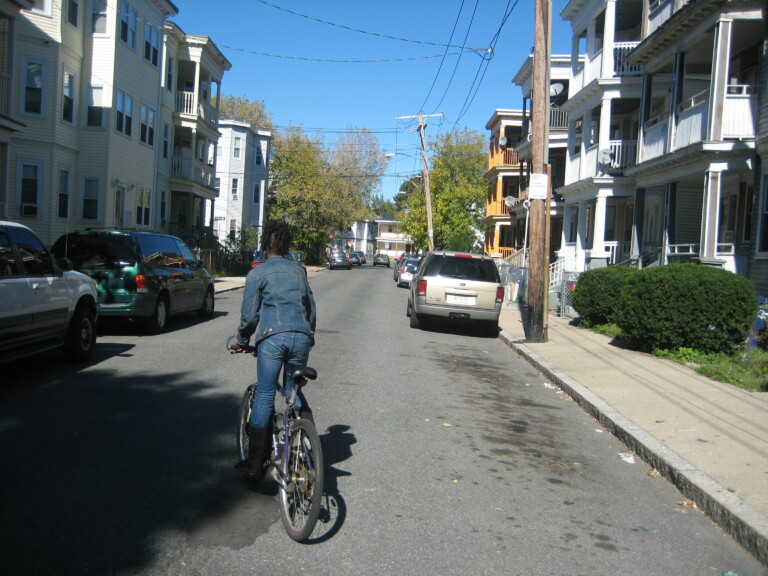
This narrow street, lined with parked cars but devoid of people, is both unwelcoming and unsafe for cyclists. Anne Lusk, CC BY-ND
But urban cycling investments tend to focus on the needs of wealthy riders and neglect lower-income residents and people of color. This happens even though the single biggest group of Americans who bike to work live in households that earn less than $50,000 and this group includes many who earn less than $10,000, and studies in lower-income neighborhoods in Brooklyn and Boston have found that the majority of bicyclists were non-white.
I have worked on bicycle facilities for 38 years. In a newly published study, I worked with colleagues from the Harvard T.H. Chan School of Public Health and Boston groups focused on health and families to learn from residents of several such neighborhoods what kinds of bike infrastructure they believed best met their needs. Some of their preferences were notably different from those of cyclists in wealthier neighborhoods.
Thanks to recent investments, New Yorkers can ride an almost continuous stretch of protected bike lanes, greenways and bridges for 25 miles through four boroughs of the city.
Cycling infrastructure and urban inequality
Bike equity is a powerful tool for increasing access to transportation and reducing inequality in U.S. cities. Surveys show that the fastest growth in cycling rates since 2001 has occurred among Hispanic, African-American and Asian-American riders. But minority neighborhoods have fewer bike facilities, and riders there face higher risk of accidents and crashes.
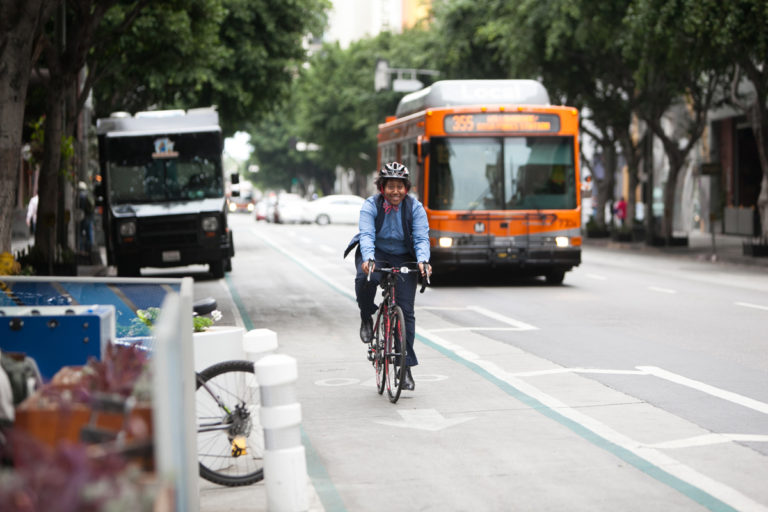
Many U.S. cities have improved marginalized neighborhoods by investing in grocery stores, schools, health clinics, community centers, libraries and affordable housing. But when it comes to bicycle infrastructure, they often add only the easiest and least safe elements, such as painting sharrows – stencils of bikes and double chevrons – or bike lane markings, and placing them next to curbs or between parked cars and traffic. Cycle tracks – bike lanes separated from traffic by curbs, lines of posts or rows of parked cars – are more common in affluent neighborhoods.
Compared with white wealthier neighborhoods, more bicyclists in ethnic-minority neighborhoods receive tickets for unlawful riding or are involved in collisions. With access to properly marked cycle tracks, they would have less reason to ride on the sidewalk or against traffic on the street, and would be less likely to be hit by cars.
In my view, responsibility for recognizing these needs rests primarily with cities. Urban governments rely on public participation processes to help them target investments, and car owners tend to speak loudest because they want to maintain access to wide street lanes and parallel parking. In contrast, carless residents who could benefit from biking may not know to ask for facilities that their neighborhoods have never had.
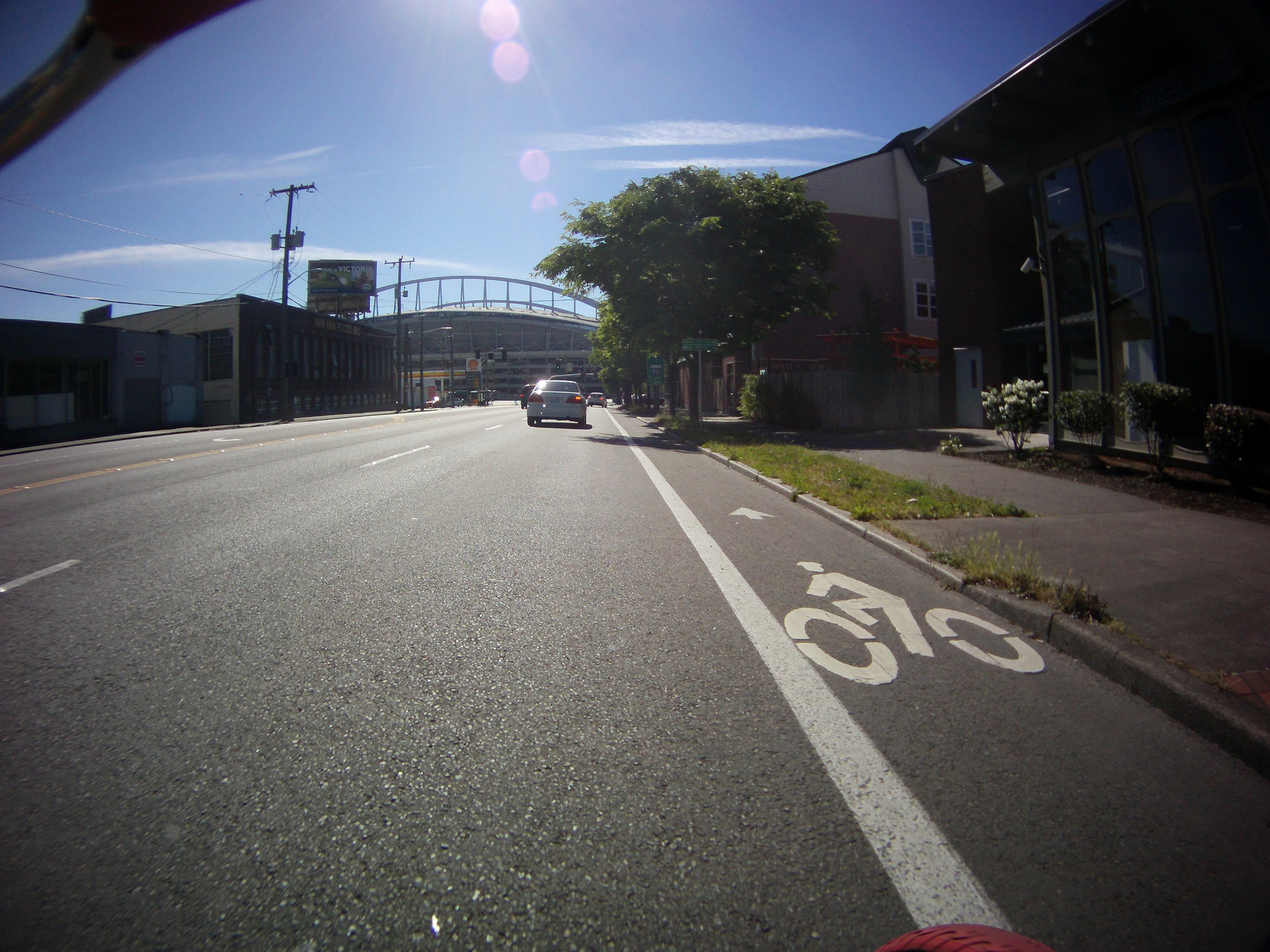
Substandard bike lanes, like this one in Seattle, expose cyclists to unsafe passing by motorists and collisions with cars turning right at intersections or pulling out of driveways. Joshua Putnam, CC BY
Protection from crime and crashes
For our study, we organized 212 people into 16 structured discussion groups. They included individuals we classified as “community-sense” – representing civic organizations such as YMCAs and churches – or “street-sense,” volunteers from halfway houses, homeless shelters and gangs. We invited the street-sense groups because individuals who have committed crimes or know of crime opportunities have valuable insights about urban design.
We showed the groups photos of various cycling environments, ranging from unaltered streets to painted sharrows and bike lanes, cycle tracks and shared multi-use paths. Participants ranked the pictures according to the risk of crime or crashes they associated with each option, then discussed their perceptions as a group.
Studies have shown that awareness of criminal activity along bike routes can deter cyclists, and this is an important concern in low-income and minority neighborhoods. In a study in Boston’s Roxbury neighborhood, I found that African-American and Hispanic bicyclists were more concerned than white cyclists that their bikes could be stolen. Some carried bikes up three flights of stairs to store them inside their homes.
From an anti-crime perspective, our focus groups’ ideal bike system was a wide two-way cycle track with freshly painted lines and bike stencils plus arrows, free of oil or litter. Conditions around the route also mattered. Our groups perceived areas with clean signs, cafes with tables and flowers, balconies, streetlights and no alleyways or cuts between buildings as safest. They also wanted routes to avoid buildings that resembled housing projects, warehouses and abandoned buildings.
For crash safety, participants preferred cycle tracks separated from cars by physical dividers; wide cycle track surfaces, colored red to designate them as space for bicyclists; and bike stencils and directional arrows on the tracks. In their view, the safest locations for bike facilities had traffic signals for bikers, clearly painted lines, low levels of traffic, and did not run near bus stops or intersections where many streets converged.
Rules for the road
We compared our results with widely used bicycle design guidelines and Crime Prevention Through Environmental Design principles to see whether those sources reflected our participants’ priorities. The guidelines produced by the American Association of State Highway and Transportation Officials and the National Association of City Transportation Officials provide engineering specifications for designing bicycle facilities that focus on road elements – paint, delineator posts and signs – but do not describe design features that would protect vulnerable humans bicycling through an environment at night. Our study asked people about what kinds of surface markings and features in the surrounding area made them feel most comfortable.
As an example, our groups preferred street-scale lighting to brighten the surface of cycle tracks. In contrast, tall highway cobra-head lights typically used on busy urban streets reach over the roadway, illuminating the road for drivers in vehicles that have headlights.
In higher-income neighborhoods, cyclists might choose bike routes on side streets to avoid heavy traffic. However, people in our study felt that side streets with only residential buildings were less safe for cycling. This suggests that bicycle routes in lower-income ethnic-minority neighborhoods should be concentrated on main roads with commercial activity where more people are present.
Decisions about public rights-of-way should not be based on how many car owners or how few bicyclists show up at public meetings. Our study shows that city officials should create networks of wide, stenciled, red-painted, surface-lighted, barrier-protected, bicycle-exclusive cycle tracks in lower-income ethnic-minority neighborhoods along main streets. This would help residents get to work affordably, quickly and safely, and improve public health and quality of life in communities where these benefits are most needed.
This article has been updated to clarify the number of bike commuters in different income groups.
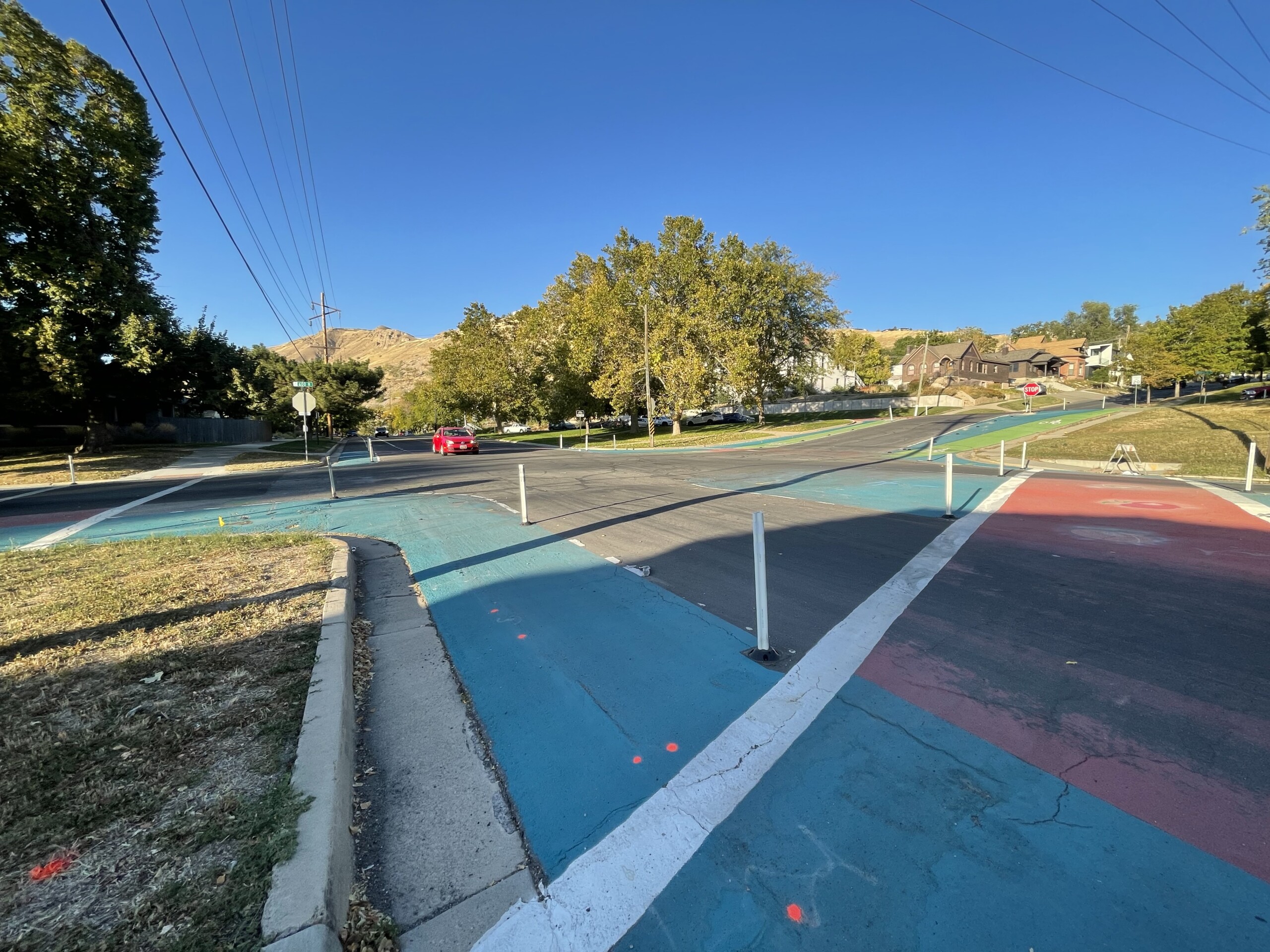
By Darrell Owens — It’s time to stop playing games with city governments who lack the willpower to make their streets safer and employ tactical approaches instead.
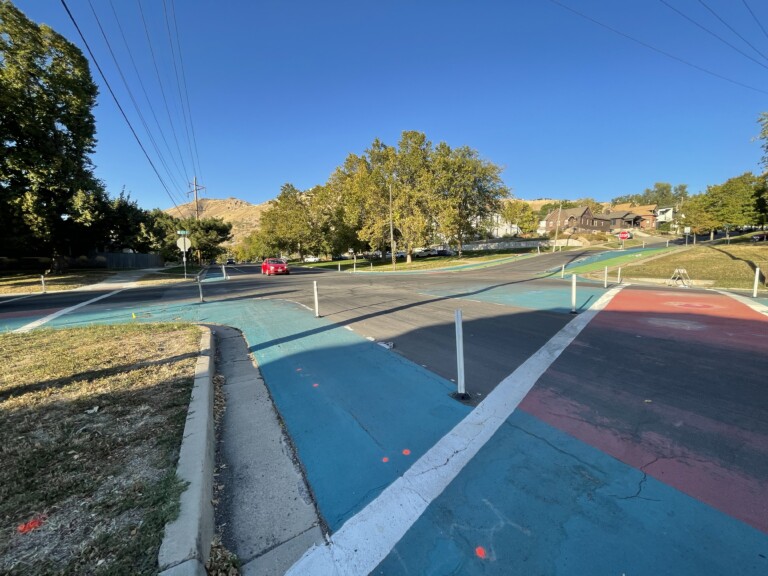
A (sanctioned) tactical urbanism painted intersection. Photo by Dave Iltis
Americans are increasingly abandoning the church but if there’s one religion they cling onto it is the automobile. 29% of national emissions—the relative majority—come from the transportation sector[1]. Of the 1.9 billion metric tons of annual transportation emissions, 58% of them come from cars[2]. Cars rival gun homicides and suicides combined having killed 38,000 people just in the last year alone through traffic accidents[3]. A leading cause of children deaths in the U.S. is a car crash[4] and a leading cause of non-natural death for anyone under the age of 54 is also a traffic accident[5].
So why don’t American politicians do something? Because they’re cowards. Because they only listen to the loudest voters who email them incessantly about parking. They don’t view the transit rider or the cyclist as a true voter. Many of them haven’t even heard from a non-driving voter. Elected officials think there’s nothing that can be done about traffic violence and pollution beyond performative signs and electric cars.
This has not been the case in Paris. The mayor Anne Hidalgo has been radically removing cars from Paris’s main city center, converting streets for bikes only, pedestrianizing roads and turning boulevards into parks. Initially when the program was first proposed many scoffed at her like they do in the U.S. But now Paris’s anti-car program has been a huge success with broad popular support among Parisians enjoying their healthy city.
“Okay,” you may say. “This is America, we all drive here.”
At the start of the pandemic lockdown, Warren Logan, a city policy director on mobility in Oakland, decided to just shut several streets down to car traffic. No meetings. No consultants. No “phases”. He just went for it and it too became widely popular. It had a few growing pains of course. Academics and culture pundits were predictably quick to lash out against the lack of a so-called “community process” as they always do. Many motorists were irritated by not being able to exert their God-given right to drive on a piece of paved land. But the actual “Slow Streets” as they were called became immensely popular among neighbors.
When I walked on a Slow Street, I saw things I thought I’d never see in a city with a traffic violence problem as bad as Oakland’s. 15 elementary aged children riding on bicycles; seniors doing a morning walk in the middle of the street; disabled folks in wheelchairs strolling alongside parents pushing strollers. Many cities followed Oakland and shut down neighborhood streets. San Francisco went as far as shutting down a highway, which activists are now fighting to keep shut down.
We didn’t have to wait for density or competitive alternatives because most American cities were not built as car-centric places. Our cities were turned into car-centric places and they can be reverted. But they will NOT be reverted under the current planning regime of process. Cars are a lucrative transportation that through state policy was given total dominion over entire cities and they will not be dismantled through incrementalism from the planning department.
The reality is that the good intentioned refrain of “I would take transit if it were good” or “I would ride a bike if the infrastructure was safer” is not an invitation for carrots over sticks. We cannot afford to run empty buses every 5 minutes hoping a driver is seduced, or build more bike lanes if that same driver is complaining it’ll take away their parking space.
You’re going to have to fight to make driving more inconvenient than riding a bike or taking transit. Planners must make driving harder by adding walls, barriers, taking away lanes and prohibiting entire streets to cars. Politicians have framed physical obstacles like these and bumper-to-bumper traffic as making driving more dangerous because motorists fear collisions, but it’s their fear that actually makes driving safer.
That is why despite driving having declined by 13% in 2020 as shelter in place reduced commuting, traffic deaths increased by 7% over the previous year. Because when drivers weren’t slowed down in traffic and instead operated under the illusion that the streets were clear, they sped up, got reckless and killed people or themselves.
Next, not a single additional parking space should be built in your city. Drivers getting frustrated with the lack of parking is precisely why they often opt for transit. For example, in 2018 the Bay Area ranked #2 behind New York City in commuters who don’t drive, including 60% of San Francisco workers and residents[6]. Why? Not just because transit is decent but because parking is really hard. Driving into downtown San Francisco carries a big risk. Not only are you stuck in soul crushing traffic on a single bridge, but once you get to San Francisco, parking is hard to find and expensive. If you don’t park perfectly the vigilant meter maids will quickly ticket your car. Parking enforcement, unlike the uselessness and abusiveness of traffic enforcement, is a highly valuable tool in dislodging people into sustainable transportation.
But elected officials as mentioned earlier are cowards, so this is where you come in. When development is proposed with any amount of parking, file lawsuits on environmental grounds. Use tactical urbanism as well. Organize with your neighbors to shut down your streets on weekends, as a starter. Just do it, don’t ask for permits. Once it’s done and you’ve ignored the initial blowback from motorists who mostly don’t live in your neighborhood anyways, your neighbors will love it. Residents will defend it and that’s what your city council will have to see in order to make it permanent. Chris Hayes recently admitted this on MSNBC shortly after buying an electric bicycle: “You take cars away from any street and it becomes a party.”
It’s time for tactical urbanism to become widespread. Take matters into your own hands. Sick of cars rampaging down your street? Block the street off on Sunday and call it a block party every week. Then use that as a beachhead to shut down your street on even more days.
You see a bus stop without a bench? Go to Home Depot and put down a bench.
You see a dangerous, unprotected bike lane? Get something like a bollard or planter box, the heavier the better, and put in barriers yourself.
Someone gets killed on a dangerous street and the city council does nothing? Screw it, block the whole street off with heavy barriers or protest with a banner tied up on both sides of the intersection.
Form broad coalitions, starting with your neighbors and friends, especially those who can finance it. Above all, keep the focus on cars and not motorists. Vehicular violence is a systemic problem, not an individual driver behavior problem. People don’t choose to drive because it’s a better option, they choose to drive because all other alternatives are insufficient or non-existent. That’s not an individual’s personal preference. So we cannot exclusively try to seduce people out of their cars, rather you must make the car an untenable form of transportation.
I commend the work of climate activists shutting down streets and I give major applause to the work of activists in San Francisco fighting to keep the Great Highway for the people. We have a lot of work to do to reverse decades of fossil fuel and car domination so don’t wait.
The one-hour show featuring Super Final action starts streaming on NaturalSelectionTour.com Friday, Sept 23 at noon PT, broadcasts on ESPN2, Sept 25
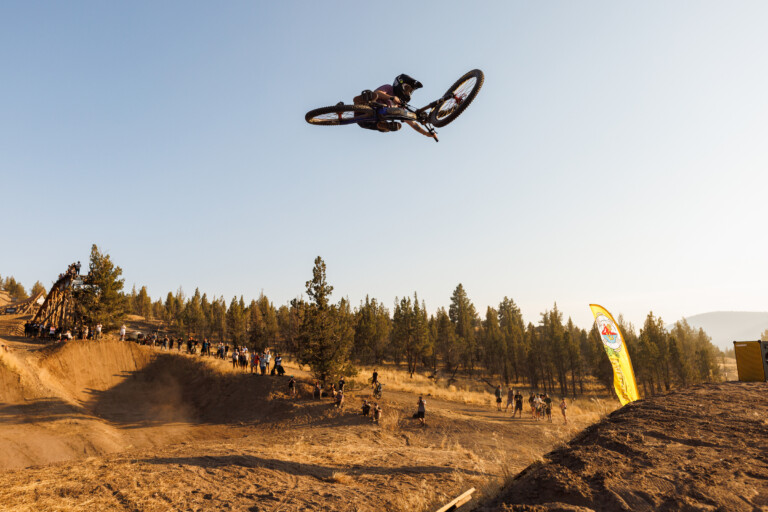
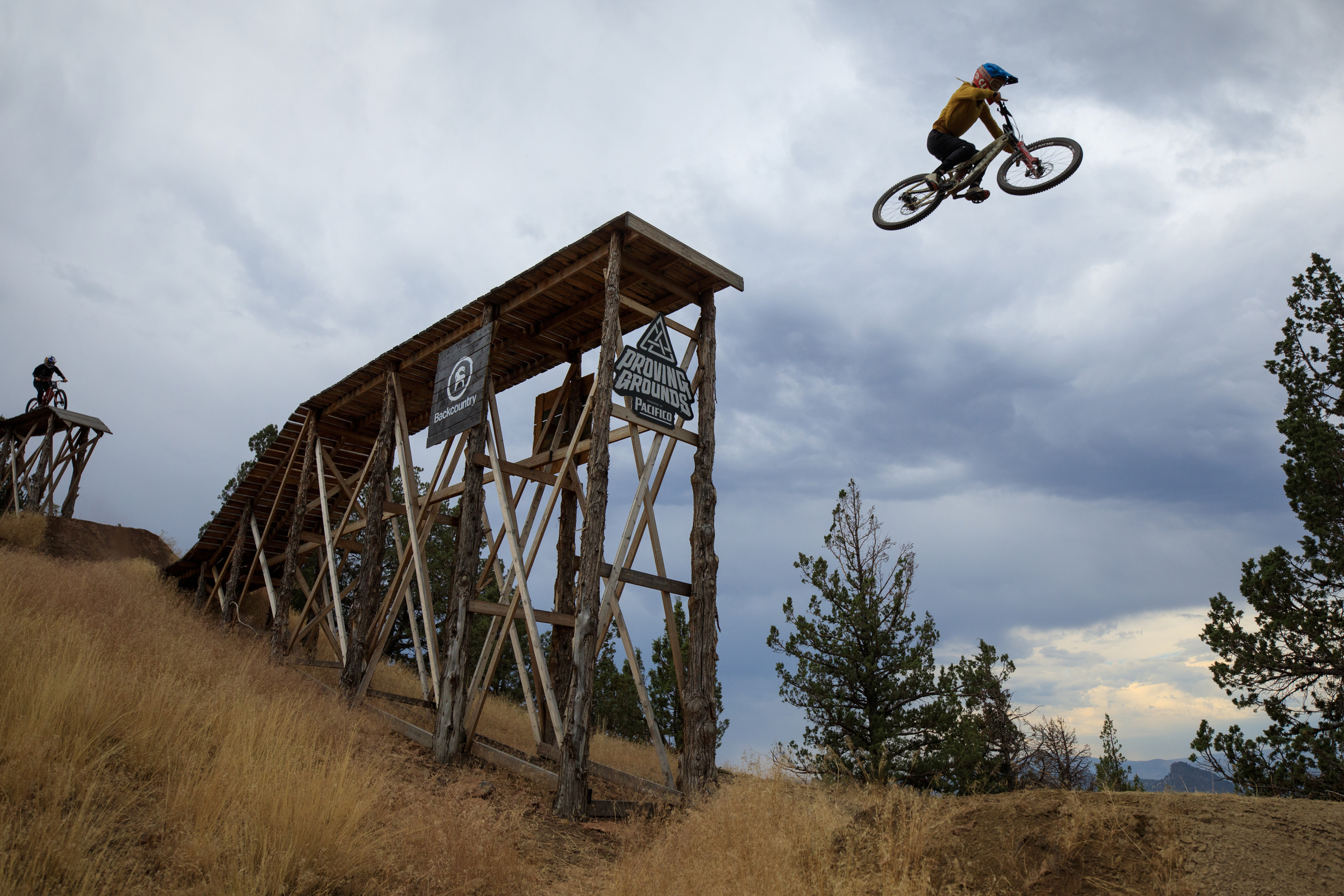
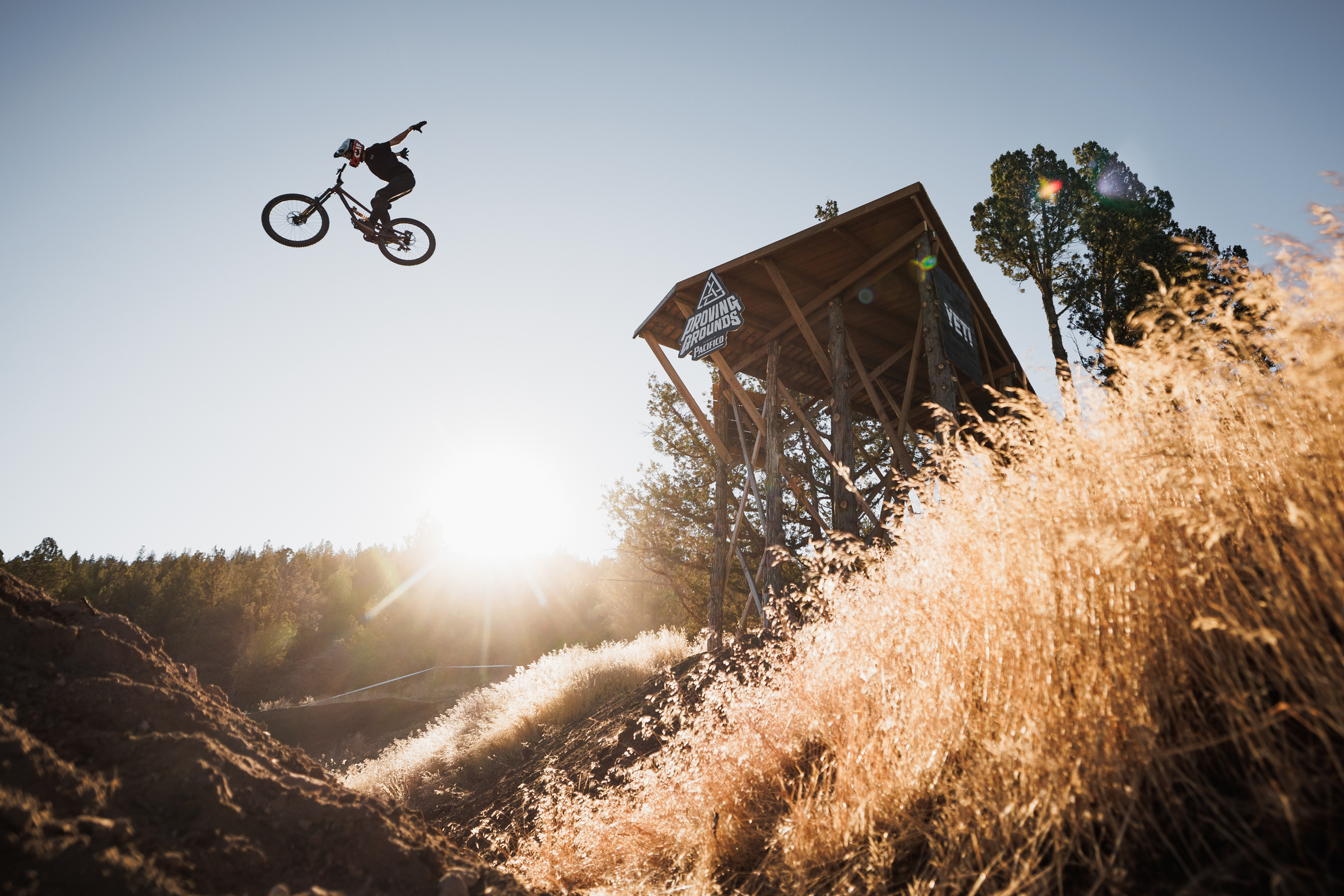
PRINEVILLE, Oregon (September 10, 2022) — Brett Rheeder (USA) soundly marked his comeback to competition and Camila Noguiera (ARG) defended her title from 2021 putting down the best runs of the day to win the Natural Selection Proving Grounds presented by Pacifico. In the contest’s most heated edition yet, riders blended big mountain freeriding with slopestyle tricks in a choose-your-own-adventure-style course designed to support the sport’s progression in real time.
The Natural Selection Proving Grounds Super Finals featured a stacked field of the world’s 30 best men and women in freeride mountain biking linking creative lines through massive wooden features and prime dirt jumps, gaps and berms. A one-hour show produced by Natural Selection and Freeride Entertainment under the lens of the Natural Selection Tour’s signature, Emmy-nominated racing drone POV angle flown by Gab707 (DRL) will stream for free on NaturalSelectionTour.com starting Friday, September 23 at noon PT and will broadcast on ESPN2 on Sunday, September 25 at 3PM PT.
Casey Brown sending it hard. Photo credit Lear Miller / Natural Selection Proving Grounds
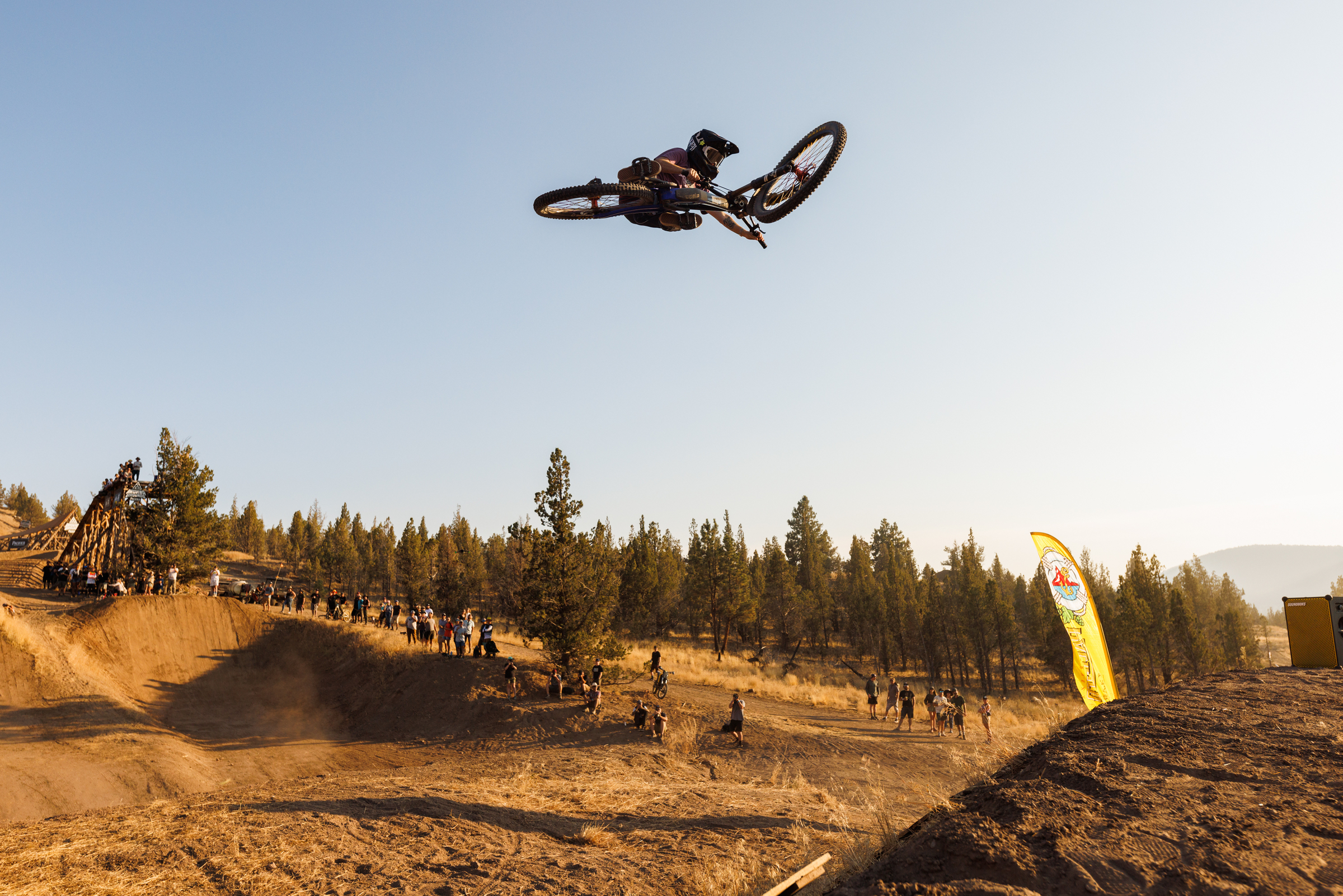
Rheeder arrived at the venue this week to support girlfriend Casey Brown, and seeing the course decided to enter as a wild card, notably in his first contest appearance in nearly three years. Rheeder qualified in first. He put it down on his first run in the Super Finals, earning the top score of 93.25. Rheeder dropped in on his downhill bike modified with a single crown fork hitting the gas from the go with a flat drop backflip off the upper drop, into the left hip with an opposite flat spin, a high-speed tail whip off the Meat Cannon, into the big Moto Jump mid-course spinning a regular flat spin, into a bar spin off the massive Bomber Drop, finishing on the last jump with a backflip tail whip.
Rheeder shared that he now has different goals coming into competitions, “It’s me against myself. Today I battled myself and I won. And it happened to win the contest—which is sick. But I wasn’t prepared to go and try to battle it out.” He added, “Seeing everyone again and seeing freeride mountain biking right now, all the spectators, everyone here—that’s the most important thing and that’s the reason I came, so the win, that’s the cherry on top of the whole experience.” Rheeder also had enthusiasm for his single crown fork, “Now I get to implement the riding I used to do in slopestyle here on a freeride bike and it’s super exciting. It’s like the most exciting thing to take all that experience and knowledge and put it into this new thing, which is Proving Grounds.”
Dylan Stark with a well-intentioned middle finger for the judges. Photo credit: Lear Miller / Natural Selection Proving Grounds
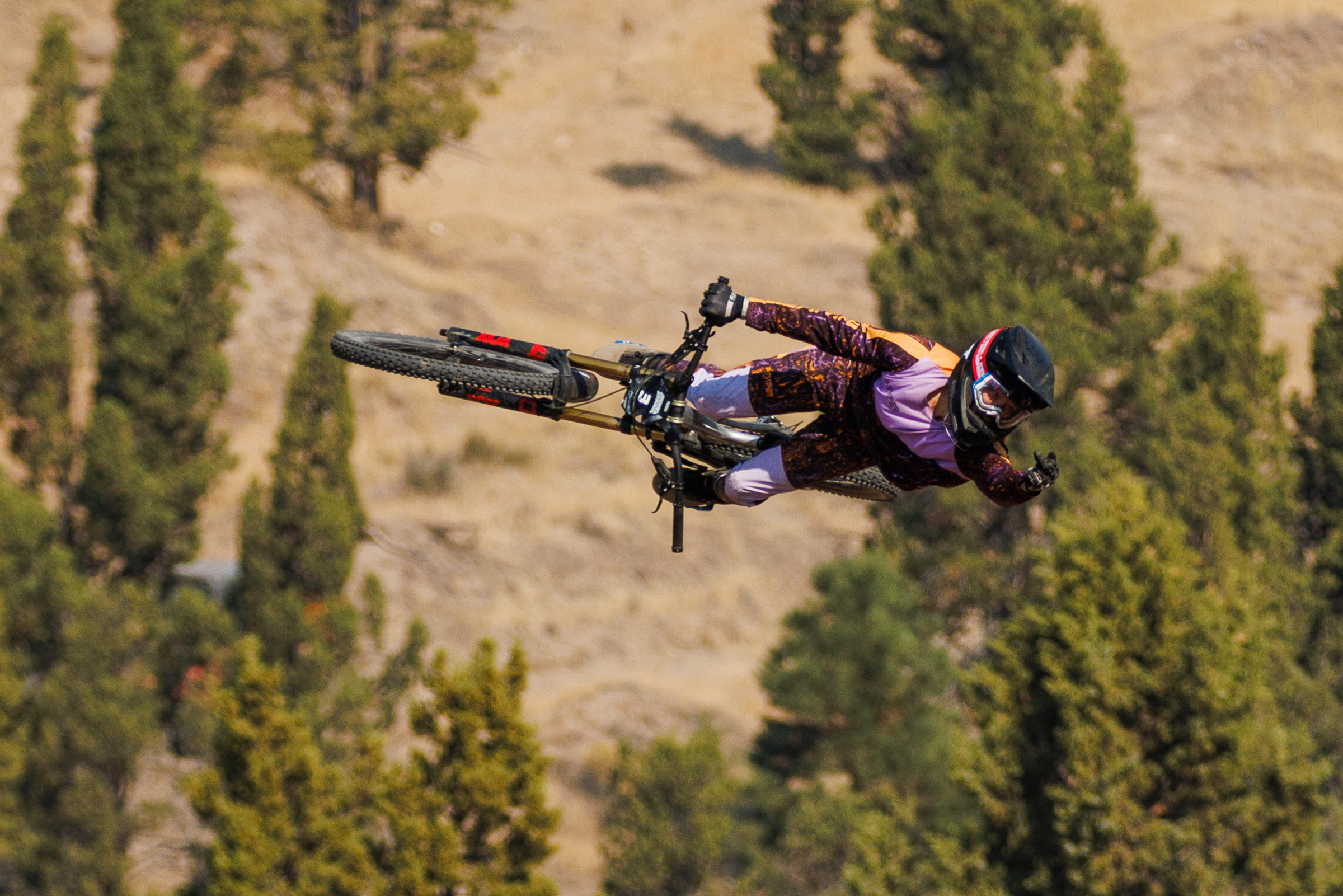
Dylan Stark, who has a BMX background and is newer to freeriding competition taking a surprise third at Proving Grounds in 2021, moved up the podium to second place this year with a score of 92.25. His tricks, including a stylish 360 off the shark fin and massive 360 at the bottom jump with a lighthearted middle finger to the judges, paired with his color and joy also won him the i9 Heart & Soul Award. In his second run, Stark rode to the top on an e-bike and with a break in the wind, decided to take it for a lap for fun.
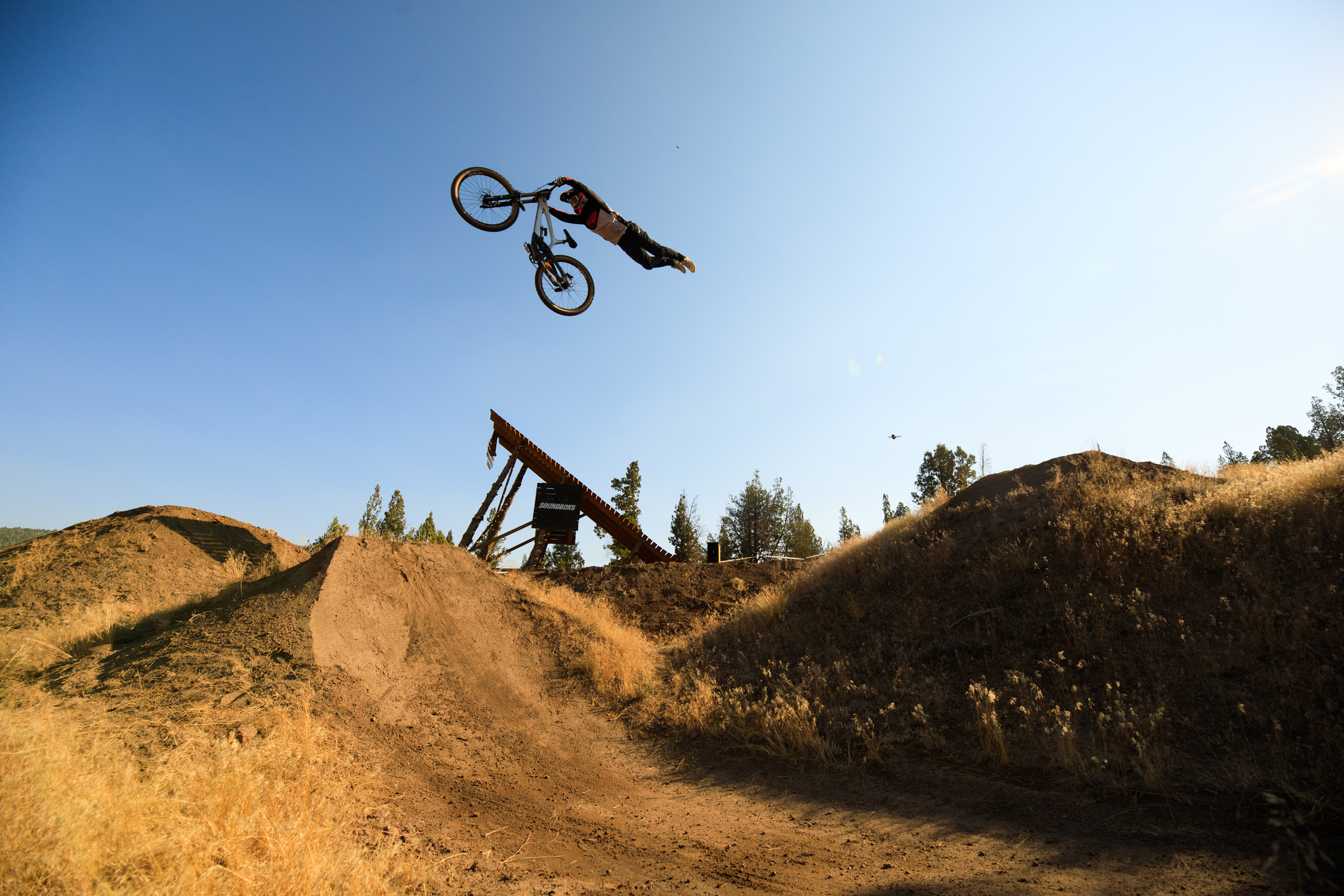
After a tough first run, Spain’s Bienvenido Aguado Alba finished his second run both in third place and complete disbelief earning a score of 91.25. Coming off major injuries including a broken tibula and with a background exclusively on dirt jumps and slopestyle. He brought a bag of tricks as he stepped out to bigger features with a 360 off the Meat Cannon and Superman on the Canyon Gap. Nicholi Rogatkin took home the Backcountry Best Trick for throwing down a cash roll mid-run, this frontflip 360 is a go-to, big trick for the veteran rider.
Camila Noguiera off the bomber drop in the super finals. Photo credit: Lear Miller / Natural Selection Proving Grounds
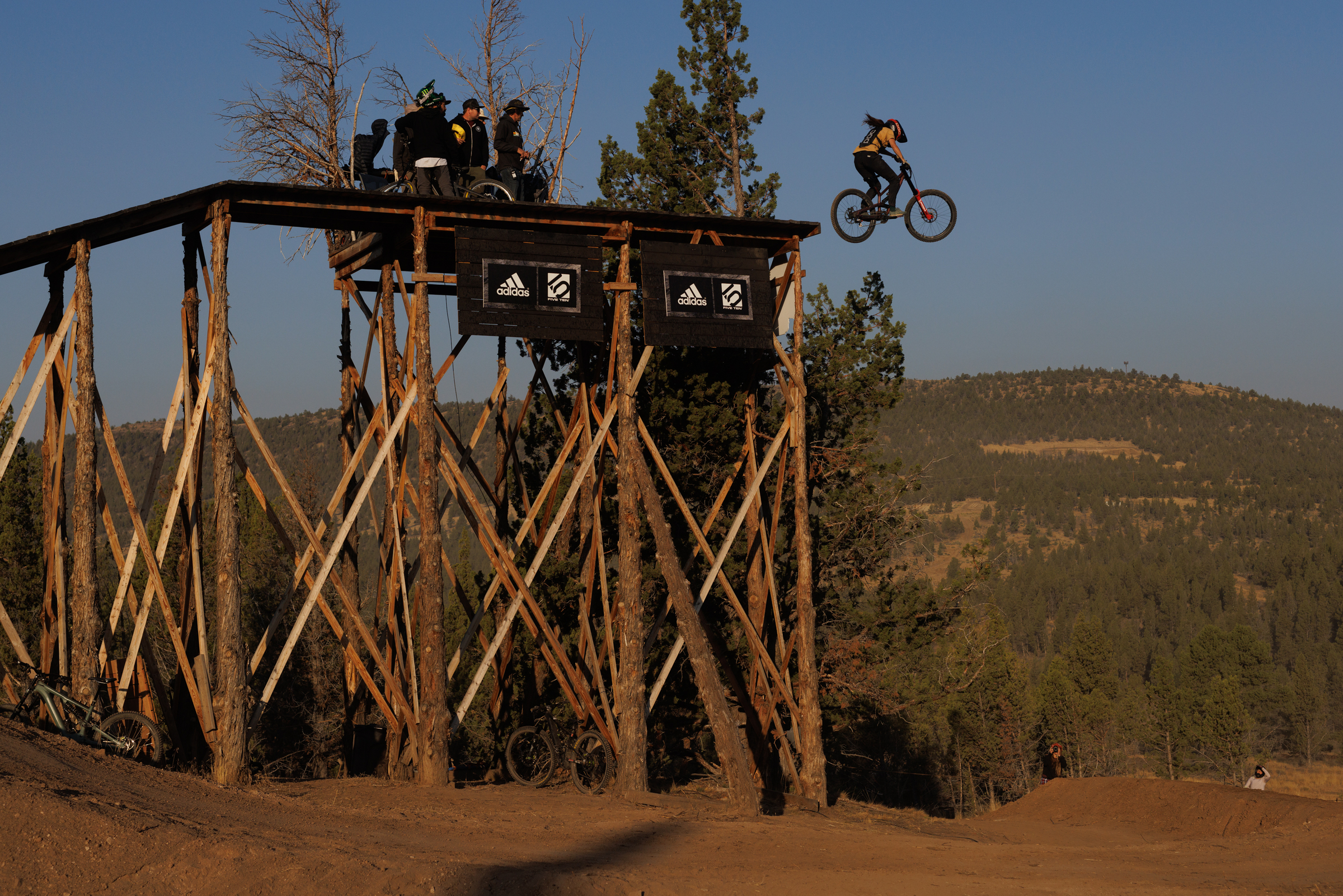
In the women’s field, last year’s winner Camila Noguiera returned confident and ready to go big. She left it all on the course, tackling huge features from top-to-bottom and earning the claim as the lone woman to hit the 26-foot Bomber Drop at the bottom. “I wanted to do something gnarly and was looking for the last big drop. I’m strong and can do big things and that’s what I did. My focus was on doing a huge line with the biggest features.” She earned the top women’s score of 82.75 and the i9 Heart & Soul Award.
Vinny Armstrong (she/her) full send. Photo credit: Lear Miller / Natural Selection Proving Grounds
Casey Brown, the first woman to ride Proving Grounds in 2019, picked up second place with a score of 80.50 on her second run and the Pacifico Best Style award for the day. She charged with amplitude and smooth style, hitting the big hip up top and going deep off the final jump. Vinny Armstrong took third for a score of 78.75 with flowing runs and, as the smallest athlete in the event, she handled the late morning wind and looser dirt confidently making the massive jumps look even bigger.
This is the first bike event under the newly-formed Natural Selection Tour and Proving Grounds partnership. Travis Rice, professional snowboarder and Natural Selection Tour co-founder says, “There are a lot of parallels to what led us to create Natural Selection Tour including a need from the riders, the industry and culture. With Todd Barber at the lead, we decided to partner with Proving Grounds because we see incredible potential for what this event is and what it can be.” Rice adds, “Today was completely incredible, and ultimately we are just here to support this event and the riders, and appreciate that working together we all have better chances to succeed in realizing the vision for the future.”
Natural Selection Proving Grounds Super Final Results
Women’s Results
Camila Noguiera (ARG), 82.7
Casey Brown (CAN), 80.50
Vinny Armstrong (NZL), 78.75
Vaea Verbeeck (CAN), 75.5
Harriet Burbidge-Smith (AUS), 61.75
Kirsten Van Horne (CAN), 55.75
Robin Goomes (NZL), DNS
Georgia Astle (CAN), DNS
Chelsea Kimball (USA), DNS
Gemma Corbera (ESP), DNS
Men’s Results
Brett Rheeder (CAN), 93.25
Dylan Stark (USA), 92.25
Bienvenido Aguado Alba (ESP), 91.25
Emil Johansson (SWE), 90.00
Carson Storch (USA), 88.50
Nicholi Rogatkin (USA), 88.00
Conor Macfarlane (NZL), 87.25
Thomas Genon (BEL), 86.25
Reed Boggs (USA), 85.75
Juan Diego “Johny” Salido (MEX), 85.25
Clemens Kaudela (AUT), 83.75
Kyle Strait (USA), 82.50
Adolf Silva (ESP), 81.00
Louis Reboul (USA), 74.75
Ethan Nell (USA), 71.00
David Lieb (USA), 69.75
DJ Brandt (USA), 68.50
Jaxson Riddle (USA), 66.50
Talus Turk (USA), 49.25
Cam Zink (USA), DNS
Backcountry Best Trick: Nicholi Rogatkin – Cash Roll
Since the initial team announcement, there have been several changes to the team heading to Wollongong this week.
COLORADO SPRINGS, Colorado (September 12, 2022) — On August 26, USA Cycling announced the athletes representing the United States at the 2022 UCI Road World Championships in Wollongong, Australia, on September 18-25, 2022. Since that announcement, there have been several changes to the team. Between the UCI points chase for the WorldTour teams, riders being fatigued and injured from an extremely packed season, and the last-minute logistics with VISAs, getting a team to Australia is proving to be very challenging.
Brandon McNulty (Phoenix; UAE Team Emirates) and Quinn Simmons (Durango, Colo.; Trek-Segafredo) are two riders that declined consideration to the team after deciding to end their seasons early after the strenuous World Tour schedule. In addition, Matteo Jorgenson (Boise, Idaho; Movistar Team), Kevin Vermaerke (Rancho Santa Margarita, Calif.; Team DSM), and Sean Quinn (Sherman Oaks, Calif.; EF Education-EasyPost) are all part of the UCI World Tour Team relegation points chase and need to help their trade teams secure valuable points in the upcoming races, making them unable to travel to Australia.
These absences left several spots open for top domestic riders, including Volta Portugal stage winner Scott McGill (Fallston, Md.; Wildlife Generation) and off-road phenom Keegan Swenson (Park City, Utah; Santa Cruz Bicycles).
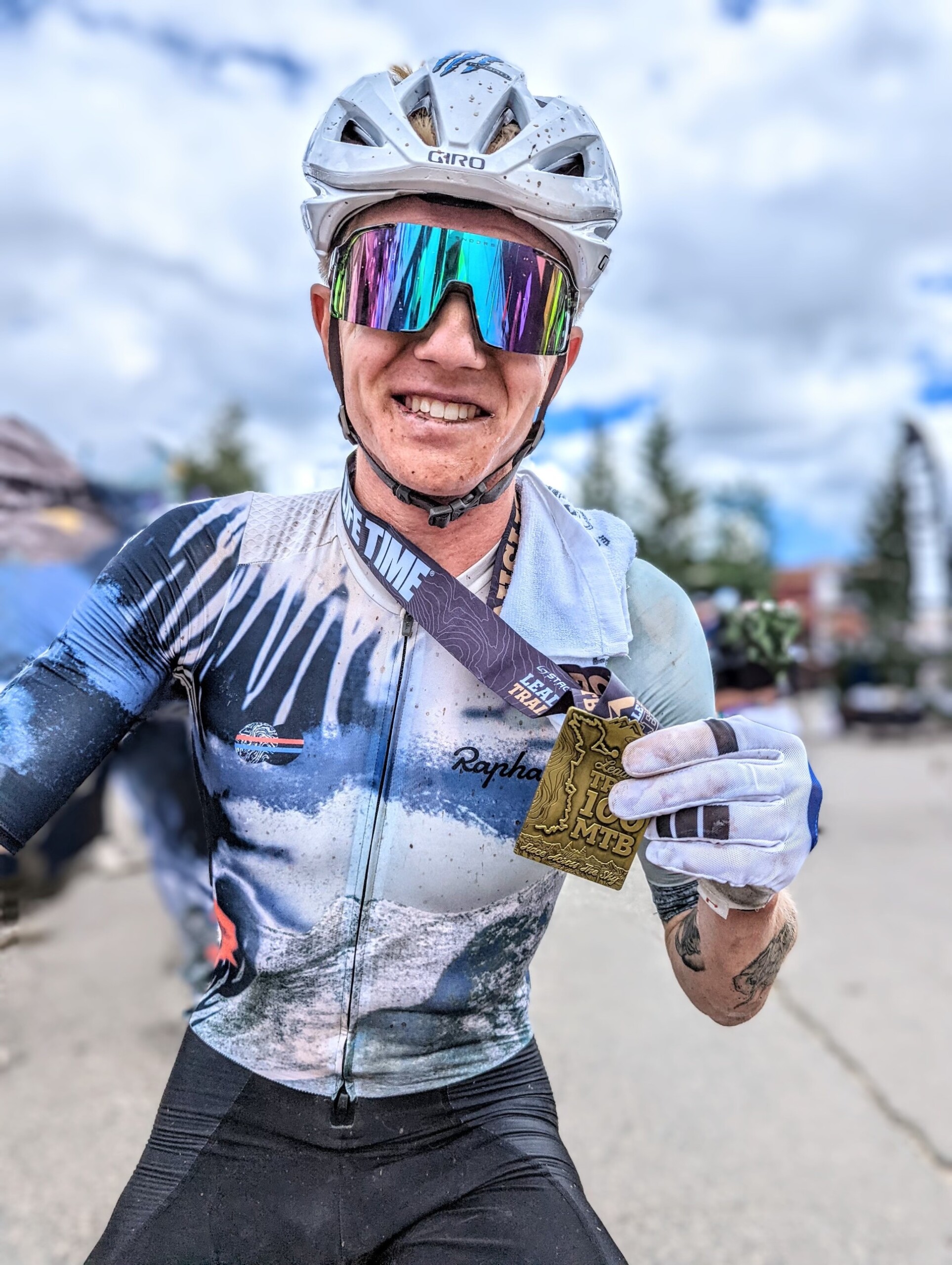
Keegan Swenson after the finish of 2022’s Leadville Trail 100 MTB Race. Photo courtesy Life Time
USA Cycling’s CEO Brendan Quirk commented on the Road Worlds selection. “This has proven to be an unusual year for World’s team selection. Between the WorldTour relegation battle and the daunting trip to Australia, our selection pool is far smaller than normal. I’m a big fan of the phrase ‘let no good crisis go to waste.’ And that’s why the selection committee decided to add Keegan to our Elite Road team. We know he has a WorldTour engine; we know he’s not intimidated by anything or anyone. And we know that the most incredible phenomenon going on in road right now is crossover riders diving in from other disciplines. This is an amazing opportunity for Keegan to show how talented he really is,” said Quirk.
In the U23 category, the two additions to the roster are 18-year-old Colby Simmons (Durango, Colo.; Jumbo-Visma Development Team) and 22-year-old Finn Gullickson (Colorado Springs, Colo.; CR4C Roanne).
Unfortunately, broken collarbones have plagued the Elite Women’s team. Coryn Labecki (Tustin, Calif.; Team Jumbo-Visma) is missing her eighth World Championships with Team USA after a crash in the Simac Ladies Tour. Most recently, Krista Doebel-Hickok (Marina Del Rey, Calif.; EF Education-TIBCO-Silicon Valley Bank) abandoned the Ceratizit Challenge by La Vuelta after a crash in the peloton resulted in a broken clavicle.
Labecki and Dobel-Hickok’s accidents opened up two spots on the women’s team, adding returning Team USA member Lauren Stephens (Dallas; EF Education-TIBCO-Silicon Valley Bank) and newcomer Heidi Franz (Seattle, Wash.; InstaFund Racing). Franz, along with Skylar Schneider (Milwaukee, Wis.; L39ion of Los Angeles), have both been nominated to the World Championships team after spending part of their season racing with USA Cycling’s new women’s development program with Cynisca Cycling.
The finalized roster is as follows:
Road Race
Elite Men
Lawson Craddock (Houston; Team BikeExchange-Jayco)
Scott McGill (Fallston, Md.; Wildlife Generation)
Kyle Murphy (Washington, D.C.; Human Powered Health)
Neilson Powless (Roseville, Calif.; EF Education-EasyPost)
Magnus Sheffield (Pittsford, N.Y.; Ineos Grenadiers)
Keegan Swenson (Park City Utah; Santa Cruz Bicycles)
Elite Women
Veronica Ewers (Moscow, Idaho; EF Education-TIBCO-Silicon Valley Bank)
Kristen Faulkner (Homer, Alaska; Team BikeExchange-Jayco)
Heidi Franz (Seattle, Wash.; InstaFund Racing)
Emma Langley (Richmond, Va.; EF Education-TIBCO-Silicon Valley Bank)
Skylar Schneider (Milwaukee, Wis.; L39ion of Los Angeles)
Lauren Stephens (Dallas; EF Education-TIBCO-Silicon Valley Bank)
Leah Thomas (Santa Clara, Calif.; Trek-Segafredo)
U23 Men
Finn Gullickson (Colorado Springs, Colo.; CR4C Roanne)
Luke Lamperti (Sebastopol, Calif.; Trinity Racing)
Matthew Riccitello (Tucson, Ariz.; Israel Premier-Tech)
Colby Simmons (Durango, Colo.; Jumbo-Visma Development Team)
Patrick Welch (Northfield, Minn.; Kelly Benefits Strategies)
Junior Men
Alex Gustin (San Diego; LUX Cycling Development Team)
Viggo Moore (Feldberg, Ger., LUX Cycling Development Team)
Artem Shmidt (Cumming, Ga.; Hot Tubes Development Cycling)
Junior Women
Makala Jaramillo (Black Forest, Colo.; Virginia’s Blue Ridge TWENTY24)
Chloe Patrick (Carson, Calif.; Serious Cycling)
Katherine Sarkisov (North Potomac, Md.; LUX Cycling Development Team)
Samantha Scott (Boise, Idaho; Virginia’s Blue Ridge TWENTY24)
Time Trial
Elite Men
Lawson Craddock (Houston; Team BikeExchange-Jayco)
Magnus Sheffield (Pittsford, N.Y.; Ineos Grenadiers)
Elite Women
Kristen Faulkner (Homer, Alaska; Team BikeExchange-Jayco)
Leah Thomas (Santa Clara, Calif.; Trek-Segafredo)
U23 Men
Patrick Welch (Northfield, Minn.; Kelly Benefits Strategies)
Junior Men
Alex Gustin (San Diego; LUX Cycling Development Team)
Artem Shmidt (Cumming, Ga.; Hot Tubes Development Cycling)
Junior Women
Chloe Patrick (Carson, Calif.; Serious Cycling)
Katherine Sarkisov (North Potomac, Md.; LUX Cycling Development Team)
Shoe memorial to honor pedestrian fatalities and spark conversations about pedestrian safety
SALT LAKE CITY, Utah (September 12, 2022) — The Utah Department of Transportation (UDOT) is hosting the 5th annual Utah Pedestrian Summit on Wednesday, September 14, 2022, at the Utah Valley Convention Center in Provo. This summit is an opportunity for planning, design, health, education, law enforcement, safety officials, and advocates to share experiences, opportunities and successes in improving pedestrian experience throughout Utah.
The eight-hour summit will focus on a variety of topics including pedestrian safety, design, and encouragement. In-person and virtual options are available, as well as continuing education credits. Those interested in attending need to register, here.
“This summit is meant to foster discussion, learning, listening and brainstorming between presenters and participants,” said Heidi Goedhart, Active Transportation Manager at UDOT. “It’s always incredible to see how we come together with a common passion and goal of improving the safety and experience of all pedestrian experiences in Utah.”
The keynote speaker will be Dan Burden, a national leader in reinventing streets, neighborhoods and towns with walkability solutions. The White House recognized Burden as one of the top ten Champions of Change in Transportation, TIME magazine called him “one of the six most important civic innovators in the world,” and his peers at Planetizen list him as one of the 100 most significant urban thinkers of all time.
Pedestrian safety is a top priority at the summit, especially as pedestrian fatalities have been and continue to be on the rise. With 39 pedestrian fatalities already this year, Utah is close to surpassing any other year-end total in the last decade. The highest year was 49 pedestrian fatalities in 2013.
To bring awareness to the importance of pedestrian safety, those in attendance will experience a shoe memorial designed by Move Utah and Zero Fatalities. Forty-six shoes will be on display in remembrance of those who have tragically lost their lives in 2021 while walking on or near Utah roads.
Partner agencies and programs include the Utah Department of Transportation, Move Utah, TravelWise, Zero Fatalities, Safe Routes Utah, Utah Department of Health, Utah Department of Public Safety, Utah Transit Authority, Wasatch Front Regional Council, Mountainland Association of Governments, Salt Lake County, Get Healthy Utah, Utah APA, and Federal Highways Administration.
By Greg Hoole — The Five Canyons Ride is celebrating its 5th anniversary by adding several additional course options for those who want to enjoy the beauty of the Wasatch Mountains in early fall but are not necessarily interested in tackling all five of Salt Lake Valley’s canyons in a single day.
Starting this year, riders will be able to choose to ride one, two, three, four, or all five canyons in any combination they want. Or they can simply choose to ride the 25-mile “Straight Shot” course from start to finish.
Riders in the 5 Canyons Bike Challenge. Photo by Sawyer Pangborn,Riders in the 5 Canyons Bike Challenge in Big Cottonwood Canyon. Photo by Sawyer Pangborn,
Five years ago, at the inaugural 5 Canyons ride, only 20 or so riders threw their hats into the ring to climb all five canyons—and only seven finished. The ride has grown significantly since then and draws high praise from its participants.
“Riding all five canyons has long been a goal of mine,” Daniel Blaiser commented, “and knocking that off the bucket list was awesome. I really appreciated the well-stocked aid stations and the eager cheer section that greeted me at each one.” Daniel was not alone in his praise. “It was brutal but awesome,” added Wyn Barnett.
Brian James elaborated: “I’ve been riding three years. I found out about this ride a week before, and being honest, I signed up with a little trepidation thinking about all the hardcore fit men and women who would be riding. I decided to go for it and glad I did! [I] felt a huge sense of accomplishment at the finish line. If anyone was on the fence like I was, I would tell them to go for it and sign up! [I] look forward to next year’s event!”
The ride is sponsored by Wheels of Justice, a confederation of individual cyclists and cycling teams working to put an end to child abuse. Nicknamed “Ain’t No Mountain High Enough,” the ride is meant to show victims of child abuse that they can overcome any challenge to become survivors. It also shows them that there is no mountain too high to keep us from helping them to do so.
And mountains high the ride has. Comprising three HC climbs and two Category 2 climbs, the ride has more vert (over 14,000 feet) than almost any other ride in America and certainly the steepest average gradient.
“Parts of me hurt that never hurt before,” Jeanette Peterson, laughed. “Hopefully I can do more things like this in the future.”
Of those riders who have completed both 5 Canyons and the other September epic, LoToJa, there is consensus: 5 Canyons is harder.
“I’m telling anyone that has done LoToJa that they need to try their luck at 5 Canyons,” offers Wade Olsen. “[It is] an amazing event!! Extremely challenging, amazing scenery, iconic climbs, well supported with supper people, and a lot of difficult fun—more than I expected and likely one of my top 3 rides.”
One of the keys to the success of 5 Canyons is the on-course support it receives from UtahSAG, a team of volunteer HAM radio operators that work to ensure rider safety and more. Their work is not unnoticed by the riders.
“Please pass along my thanks to the awesome on-course support team yesterday,” wrote Anne Findlay regarding last year’s event. “They were incredible! [T]he gentleman on the motorcycle who accompanied me along 11th Ave and to the finish, [the gentleman who encouraged me] up City Creek, and the other on-course and aid station volunteers were so friendly and helpful. This year has been so stressful—wasn’t sure I was going to be able to finish, and it meant a lot to me that I did.”
From their perspective, UtahSAG agrees that the event is a huge success. The group’s leader, Mickey Applebaum, noted “that virtually every one of our folks helping out [at 5 Canyons] says that this is one of the best events of the year.”
All riders, regardless of how many mountains they conquer, will enjoy fully stocked aid stations, lunch, event drawstring backpack, Specialized water bottle, event t-shirt, finisher’s medal, discounted pasta dinner at Caputo’s, and good karma!
Riders can also earn a virtual 5 Canyons jersey as they train for the ride or on the day of the event. Simply download the MyCols app and connect to Garmin or Strava. Join Wheels of Justice on Strava. Then, begin riding the 5 canyons. When you have completed all five canyons, you will be awarded the jersey.
Always held on the second odd-numbered Saturday in September, 5 Canyons takes advantage of Utah’s most brilliant month for riding. The canyons provide cool temperatures, colorful foliage, and stunning views. There is no more abundance of beautiful canyons in all the world than along Utah’s Wasatch Front. The event is literally a breath of fresh air from start to finish.z
To learn more about the ride, visit www.5canyons.org. To learn more about Wheels of Justice, including how you can join for free, visit www.teamwheelsofjustice.org.
Event Info:
September 17 — 5 Canyons Bike Challenge, Sandy, UT, One of the most daunting and beautiful cycling challenges in the country, ascending more than 14,000 feet over 116 miles through all five of Salt Lake City’s picturesque riding canyons before finishing at the Utah Capitol building. Comprising three HC climbs and two Category 2 climbs, the ride has more vert than almost any other ride in America and certainly the steepest average gradient. Participants may elect to ride one, two, three, four or all five of the canyons, Greg Hoole, 801-272-7556, [email protected], 5Canyons.org
Team USA will take on the challenging mileage and course in Haderslev, Denmark, in mid-September.
COLORADO SPRINGS, Colorado (September 7, 2022) — Ten athletes will take on the 2022 UCI Marathon Mountain Bike World Championships in Haderslev, Denmark, on September 17. The marathon mountain bike course will test riders’ skills and endurance, with the men racing 75 miles and the women racing 54 miles through the rough terrain of Haderslev.
Mountain Bike Olympians Haley Batten (Park City, Utah; Specialized Factory Racing) and Lea Davison (Jericho, Vt.; Allied / SRAM) will headline the team, with Batten coming off an incredible World Cup season and Davison finding her flow in her new endeavors of long-distance racing. In addition, 2021 Road Race National Champion and multi-time Unbound 100 winner, Lauren Stephens (Dallas; EF Education-TIBCO-Silicon Valley Bank), will also put on a great race. Returning to the team on the men’s side is Alex Wild (San Jose, Calif.; MI3 Petroleum Engineering), Will Foley (Golden, Colo.; MI3 Petroleum Engineering), and Jules Goguely (Ogden, Utah; MDW Sports).
Men
Will Foley (Golden, Colo.; MI3 Petroleum Engineering)
Jules Goguely (Ogden, Utah; MDW Sports)
Chris Mehlman (Manchester, Mass.)
Jake Sitler (Marietta, Penn.)
Danny Van Wagoner (Farmington, Utah)
Alex Wild (San Jose, Calif.; MI3 Petroleum Engineering)
Women
Haley Batten (Park City, Utah; Specialized Factory Racing)
Kelly Catale (Pepperell, Mass.)
Lea Davison (Jericho, Vt.; Allied / SRAM)
Lauren Stephens (Dallas; EF Education-TIBCO-Silicon Valley Bank)
The month-long initiative is designed to bring locals together to embrace its inclusive cycling community and celebrate hometown as one of the nation’s top cycling destinations
Photo courtesy Visit Durango
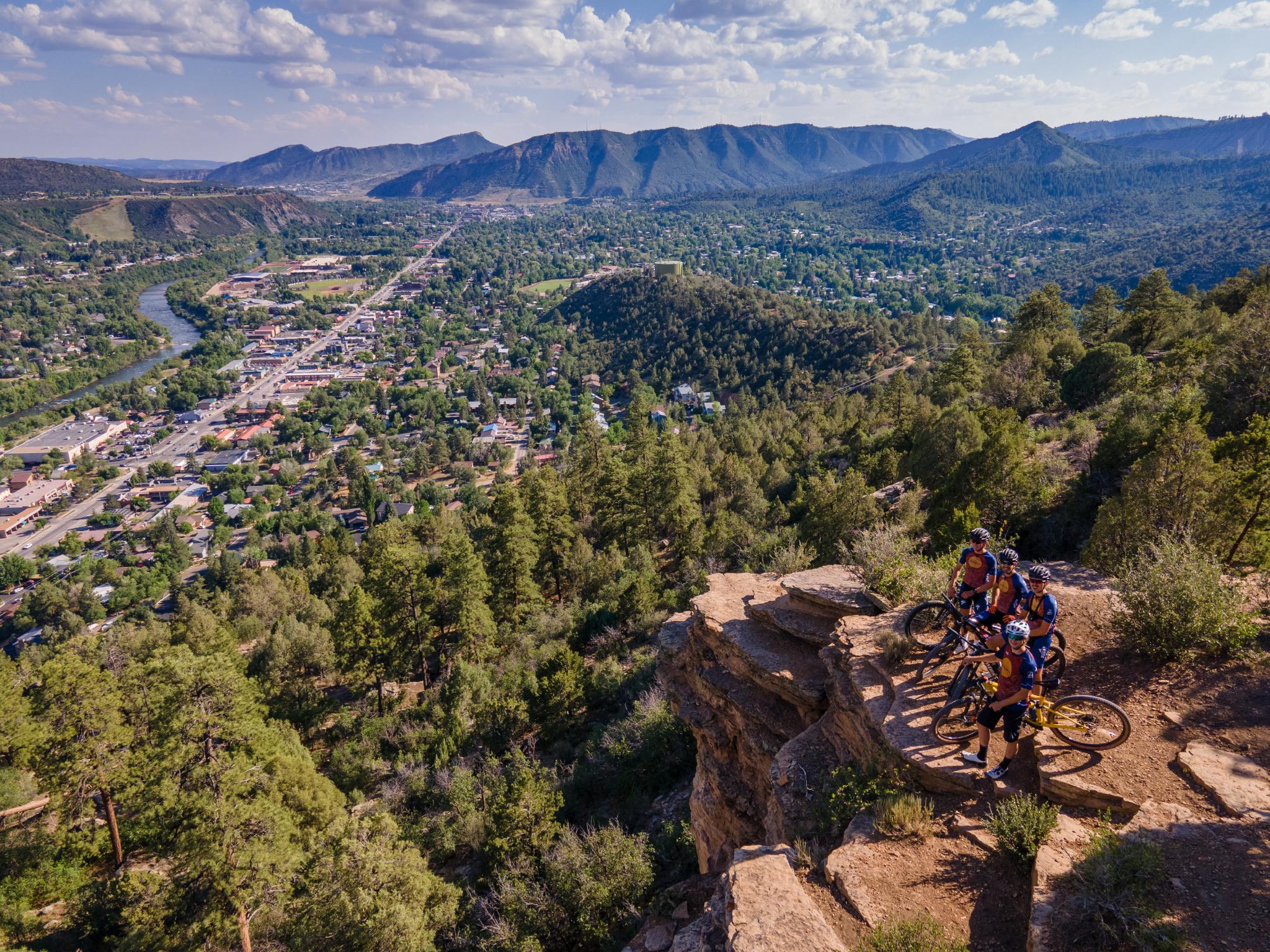
DURANGO, Colorado (Sept. 8, 2022) — Visit Durango is excited to announce its inaugural Spoketober, a community cycling event that will take place throughout Durango and La Plata County, Colo. for the entire month of October 2022. Spoketober is a celebration of Durango’s tight-knit and passionate cycling community, highlighting the decades of dedication and sweat equity its residents have committed to make Durango one of the top cycling destinations in the nation featuring over 300-miles of singletrack trails and being home to numerous Olympians.
Spoketober Durango will bolster this cycling legacy and feature a wide variety of inclusive cycling centric events for all levels and disciplines, organized by local organizations, cycling teams, and retailers.
Photo courtesy Visit Durango
Spoketober is designed to be inclusive of all members of the cycling community and will include events such as a bike commuting empowerment group ride, a bicycle recycle and upcycle clinic, a costume bike parade with DEVO and a community cruise with the Adaptive Sports Association. Additional activities to participate in throughout the month include sweepstakes and giveaways, virtual events, bike races and other organized rides open to the community.
“Spoketober aims to bring together all aspects of Durango’s multi-faceted cycling community. We hope to create a fun month of programming for locals and visitors alike, all amid a time when Durango and La Plata County is flourishing with incredible fall colors,” said Rachel Brown, Executive Director of Visit Durango.
Photo courtesy Visit Durango
Spoketober will kick off on Oct. 3rd at 5 p.m. at Mountain Bike Specialists featuring a Meet & Greet with Durango Cycling Legend Ned Overend, Todd Wells, Payson McElveen, Howard Grotts, Ellen Campbell and other local pro riders. Other notable events include “Share the Love Cycle” Bicycle Recycle & Upcycle Event benefiting the Navajo Nation at Buckley Park on Oct. 7 – 9 and a Group Ride from Fort Lewis College to Buckley Park on Oct. 9. The month will finish with Durango Devo’s Kids Halloween Bike Parade on October 28 and a Homegrown Adventure Film Fest at the Durango Welcome Center on October 31. A full calendar of events can be found here.
Riders on Segment 28. Photo courtesy Visit Durango
“Durango is a very special place for cyclists because of the trails we have and our cycling community. Our extensive trail system welcomes riders of all levels, beginners to professionals. Our cycling community is diverse, supportive and inclusive. Whatever bike you enjoy riding, Durango is a lovely place to be a cyclist!” said Rotem Ishay, Director of Team Durango Segment 28, a local development race team named after Segment 28 of the Colorado Trail which finishes in Durango.
Oct. 7-9 – “Share the Love Cycle” Bicycle Recycle & Upcycle Event | Buckley Park | 9 am – 3 pm
Oct. 9 – Group Ride from Fort Lewis College to Buckley Park “Share the Love Cycle” Event | 12 pm Meet up at Fort Lewis College | 1 pm departure of the group ride
Oct. 19 – Durango En Masse: Cycle Commuting Empowerment Group Ride | Meet at the Durango Welcome Center and Ride to Ska Brewing | 5:30 – 7:30 pm
Oct. 27 – Durango DEVO Kid’s Halloween Parade | Parade departs from the Rec Center at 4:00 pm and ends at the Durango Powerhouse for a Halloween Party and Fundraiser | 4 – 6:30 pm
Oct. 31 – Homegrown Adventures Film Fest | Durango Welcome Center | 6 – 8 pm
Participating organizations include: Durango Trails, the Adaptive Sports Association, Fort Lewis College Cycling Team, Team Segment 28, Bike Durango, the Collegiate Mountain Bike National Championships, Durango DEVO, Durango Hot Springs, and Mountain Bike Specialists.
Enter to win a $7,000 Durango cycling adventure vacation package by entering the Spoketober Sweepstakes running from Sept. 7-Oct. 30. The prize package includes a 3-night hotel stay in Durango, a 3-day guided tour of Durango’s world class singletrack, a bike shop shopping spree, bike and helmet rentals for two, a trip to the Durango Hot Springs for 2, plus travel and meal expenses. More details about entry can be found here.
Be sure to follow Spoketober @SpoketoberDurango and use the #SpoketoberDurango hashtag to keep up to date with the latest events and giveaways.
[Editor’s Note: This was about the 2017 Spring Outerbike. Things are different now, and the article has been reflected to update that.]
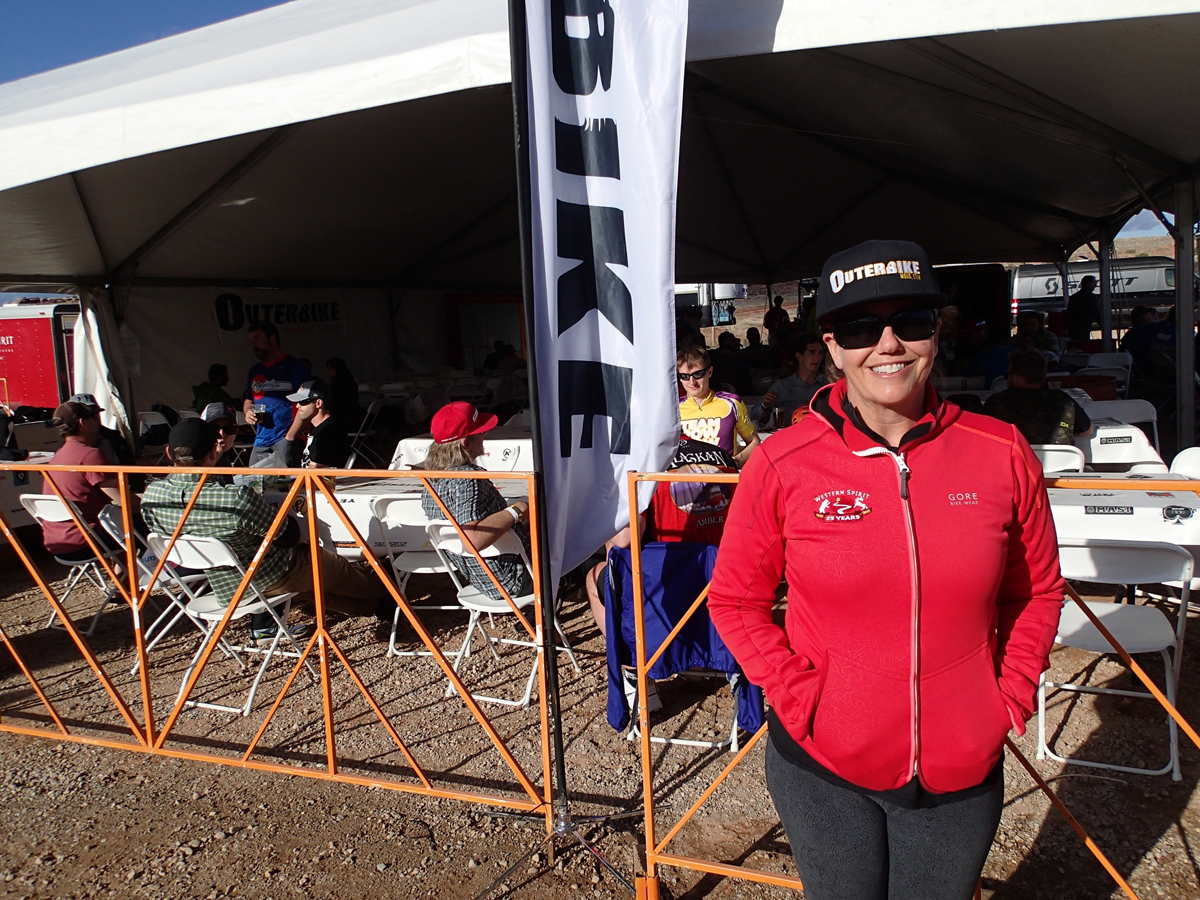
By Chris Magerl — Sascha Anastas met The One at the first Outerbike. She had seen him before, and even spent time on the same trips. But there was something about the time spent together at that Moab gathering in October 2010 that sealed the deal. She and Simon Stewart became a couple.
Outerbike organizers can’t promise you will find a life partner. But they are serious about helping you find your next great ride.
Ashley Korenblat of Western Spirit Cycling started Outberbike in 2010. It has become a stellar desert bike festival, and a great way to shop for a new bike. Photo by Chris Magerl
Outerbike is about bikes. About riding bikes, checking out a lot of options, seeing how all that exciting newness fits your unique style. You’ve heard about that new model, seen photos online, perhaps even passed each other on the trail. Outerbike is a chance to throw a leg over the toptube and go for a ride. A real ride, on real Moab trails. A chance to find The One.
Outerbike is not Interbike. Interbike was an industry insider affair. It happened in Las Vegas in the autumn, and includes an on-dirt demo where shop workers, distributors and journalists can ride all the new models. If you can’t claim industry affiliation to finagle an Interbike pass, you are left out of the party.
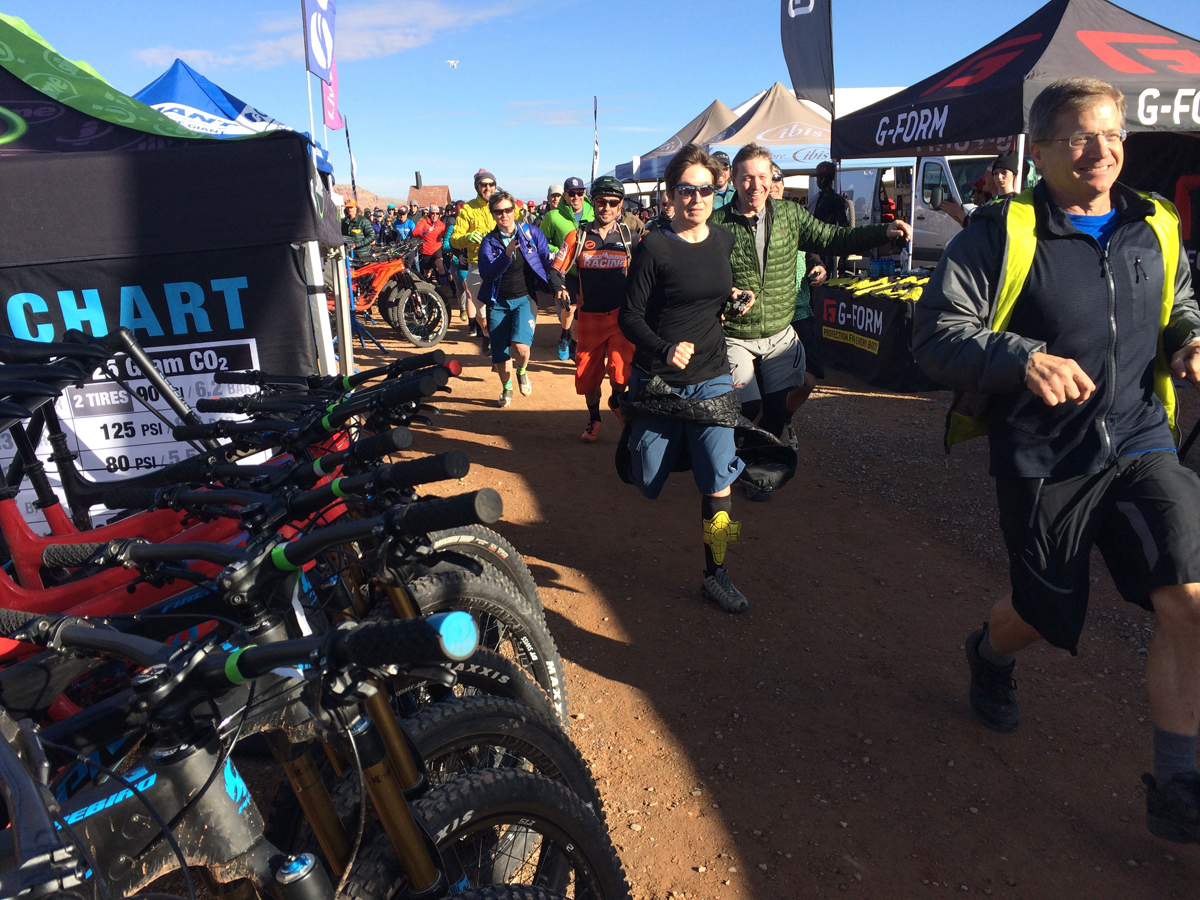
The morning sprint for the demo bikes. Photo by Chris Magerl
Outerbike brings that party to everyday riders. You pay for your pass and get three days of riding all the bikes you can handle. Ride that carbon 27 Plus on Bar B, and then hand it back, grab the aluminum 29er and go hit Bar B again. Return, repeat, and find The One for you.
A full three day pass at the Fall Moab Outerbike costs $250. For that, you’ll have access to bikes from more than nine manufacturers, shuttles to other Moab trails, a tasty and filling lunch (fresh fruits and vegetables, pasta, meat, all in ample portions), post-ride beers on Friday and Saturday, a Saturday night party in town and a great festival feel.
Outerbike includes shuttles to some of Moab’s best riding. The offerings this spring included Navajo Rocks, Mag 7 and Amasa Back. Photo by Chris Magerl
There is also a BYOB (bike) option that gets you access to the festival and shuttles, but no bike demos, for $155, or the Social card, which gets you lunches, party, beer, but no bike demo or shuttles, for $75.
The autumn event has become a MTB world mainstay in only six years. World is not an overstatement. The Spring Outerbike drew riders from all over, including South America and Europe. Outerbike has become a cornerstone of a US MTB vacation for international riders.
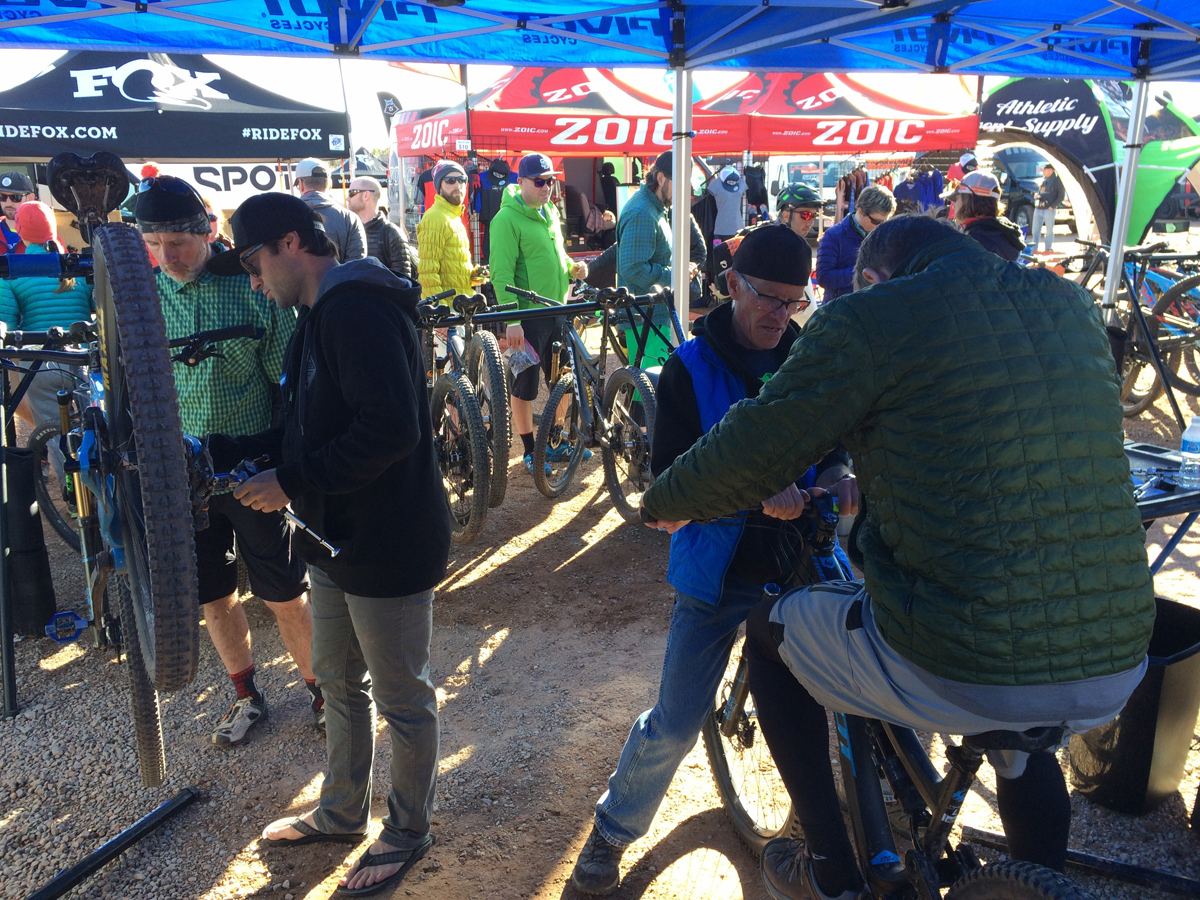
Pivot mechanic Brad Pastir, second from left, installs pedals on a demo bike about to be ridden by John Shuld of Chicago. On the right, Pivot’s Tom Noaker steadies the bike to set front and rear sag for Romuald Mineyko of Montreal. You bring your pedals and the bike folks set up the bike to your weight, height and riding style. Photo by Chris Magerl
Most riders are at Outerbike because they are in the market for a new bike. When contemplating a $5,000 (or greater) MTB purchase, it is hard to feel confident based on a ride around the parking lot or down the street. You really want to take it on the trail, ride it hard, and see how it compares to other models. Outerbike is your place.
This is especially true if you are a rider who is very tall or shorter than the average female. Few shops can offer you one bike to test, much less four or five or six options. Outerbike can.
To be certain they get to test the bike they want, many folks line up well before the gate opens at 9 A.M. On Friday and Saturday at a recent Spring Outerbike, Romuald Mineyko was the first person in line. He traveled from Montreal to be a part of his third Outerbike, and was in line at 7 A.M. each morning. On Sunday, Joel Mikle of Minnesota was four minutes earlier, putting Mineyko into the second spot in line. Not to worry, Mikle was after a Pivot Switchblade. Mineyko had his eye on a Pivot Firebird.
“I am looking to buy a bike,” said Mikle, and was drawn to Outerbike from Minnesota. The second day of the festival, he rode four different bikes from three manufacturers.
Some riders show up just to be a part of the festival, or to take advantage of the shuttles. One midwest rider on Saturday did three complete laps on the Mag 7-Bull Run-Gemini Bridges route, pedaling back down to the Moab Brands parking lot and jumping onto the next shuttle.
There were former college friends from various regions meeting up for a Moab MTB weekend. Families from different regions gathered at Outerbike. If you add up what you get (top-end bike rental, shuttles, lunch, beer, over three days), it is cheaper than doing the standard bike shop demo and shuttle routine.
Bring your pedals, shoes, helmet and bike clothes. No need to bring a bike. This makes for an easy bike vacation, without the hassle of traveling with a bike. Top-end bikes abound. Before you head out, a mechanic tunes the bike to your weight, adjusting shock pressure, fork pressure, rebound rate, tire pressure and seat height. They want the bike set up for you. They want you to think this is The One.
On the shuttle, during lunch, in the morning line or over afternoon beers, Outerbike participants embraced the chance to interact. “I really liked the chance to meet other riders,” said Dave Gontrum, a participant from Salt Lake City who was looking to upgrade his 10 year old Santa Cruz. He was really smitten by the Ibis Mojo 3 set up with Plus tires, in red.
Vendors showing and selling bike parts and accessories keep you busy when you are not riding, eating or drinking. Want to demo a pair of bike shorts? You can do that (bring your own liner, please). Checking out tire or wheel options for your current ride, protective gear, glasses, helmets, riding clothes, components, racks? It’s all there.
There will be two more Outerbikes in 2022. First to Moab for the now-traditional autumn event, this year September 30-October 2. Then off to Bentonville, Arkansas from October 21-23. More chances to see if you can find The One.
As for that romance that took shape at the first Outerbike? Sascha and Simon were married in 2015, and they had their first child in September 2017, about four weeks before the October Outerbike.
Easter holds off Zach Calton and Kyle Trudeau, while Chelsea Bolton lights up her home-town race over veteran climbers
Photo courtesy Wasatch All-Road
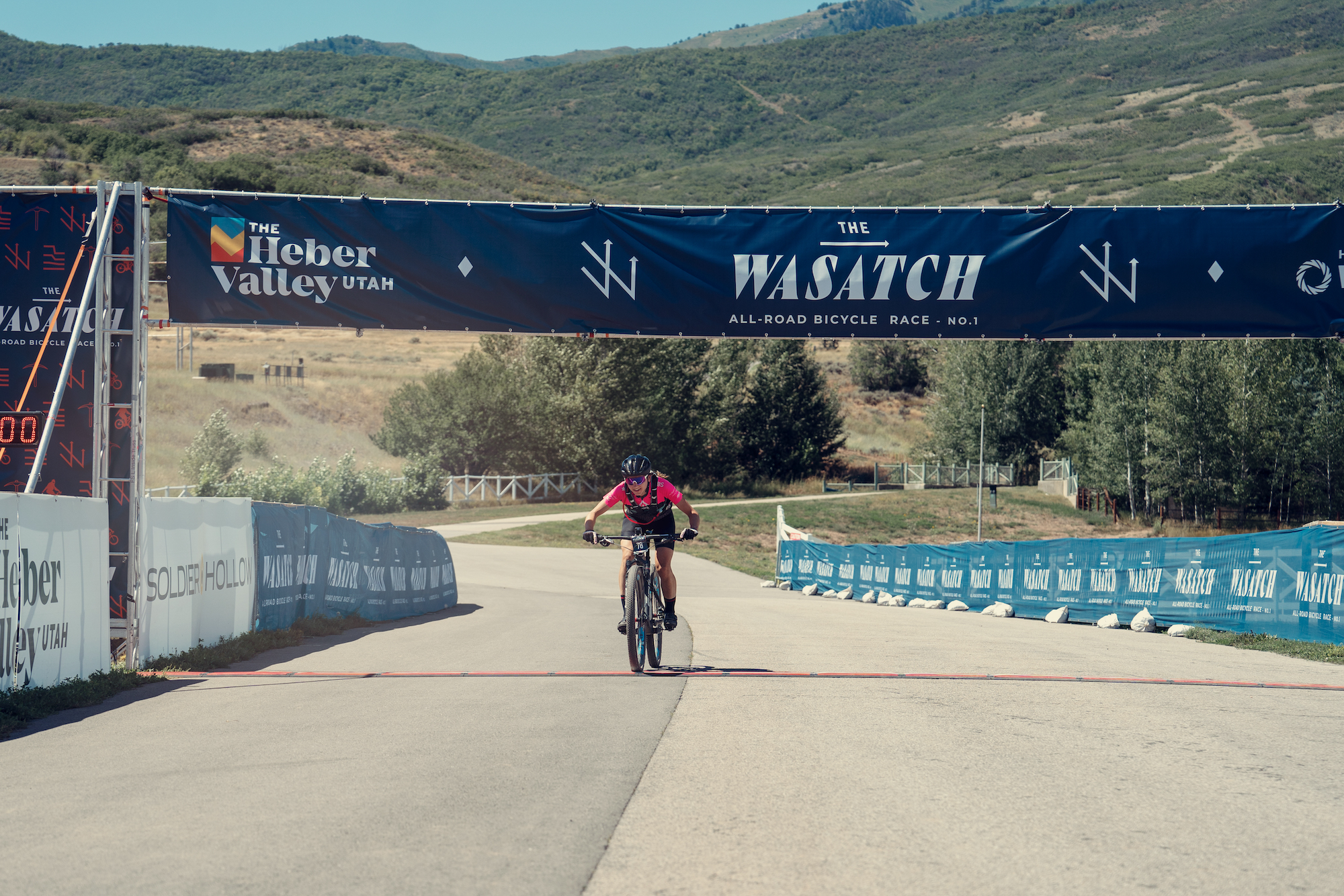
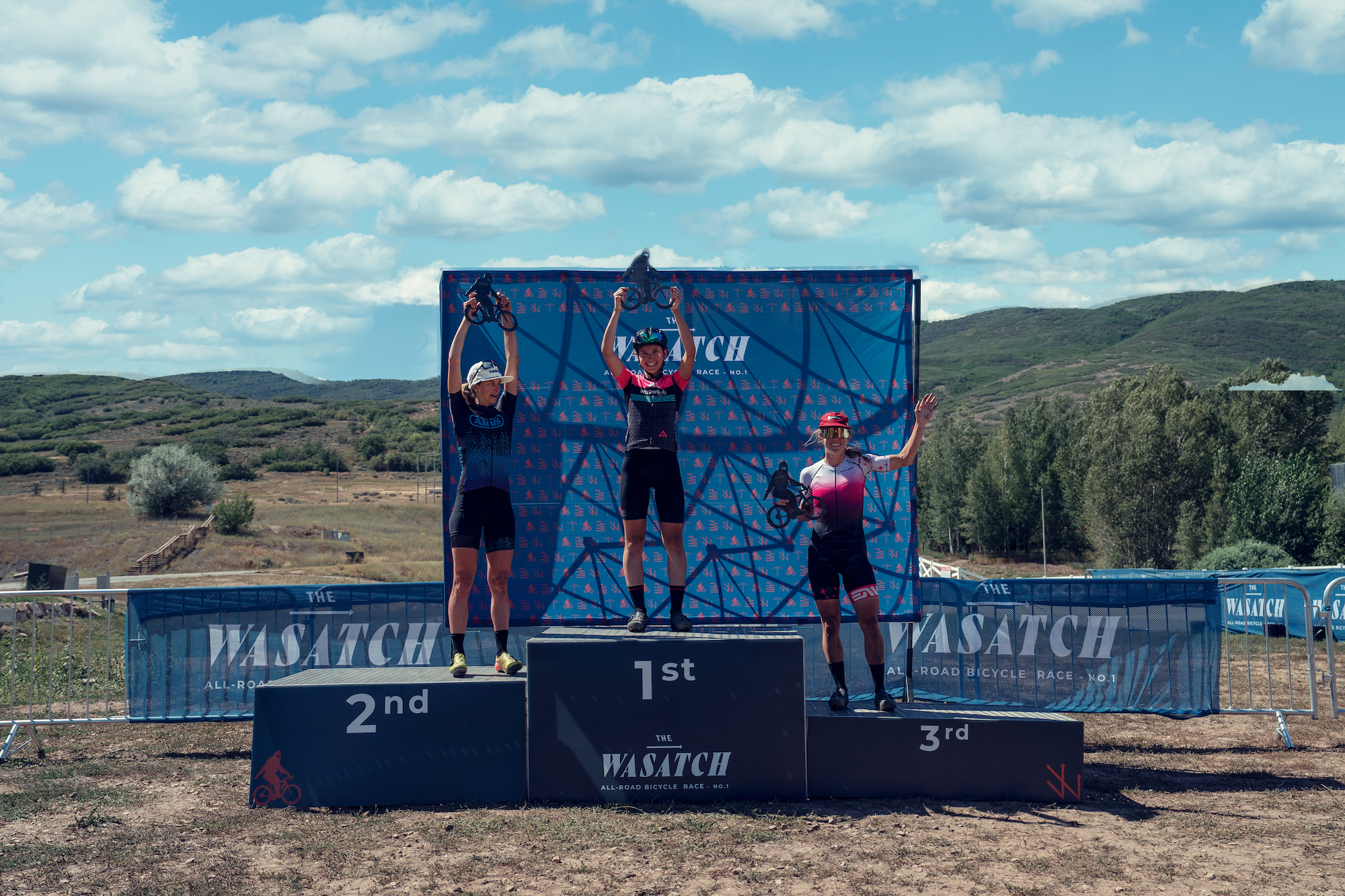
SOLDIER HOLLOW, Utah (August 27, 2022) — Chelsea Bolton (Stay Park City Cycling), improved upon her previous year’s third place to take her biggest win to date over climber Emma Grant and Lindsey Stevenson. Crystal Anthony finished just behind in fourth.
Chelsea Bolton crosses the line to win the Pro/Open Women at the 2022 Wasatch All-Road. Photo courtesy Wasatch All-Road.
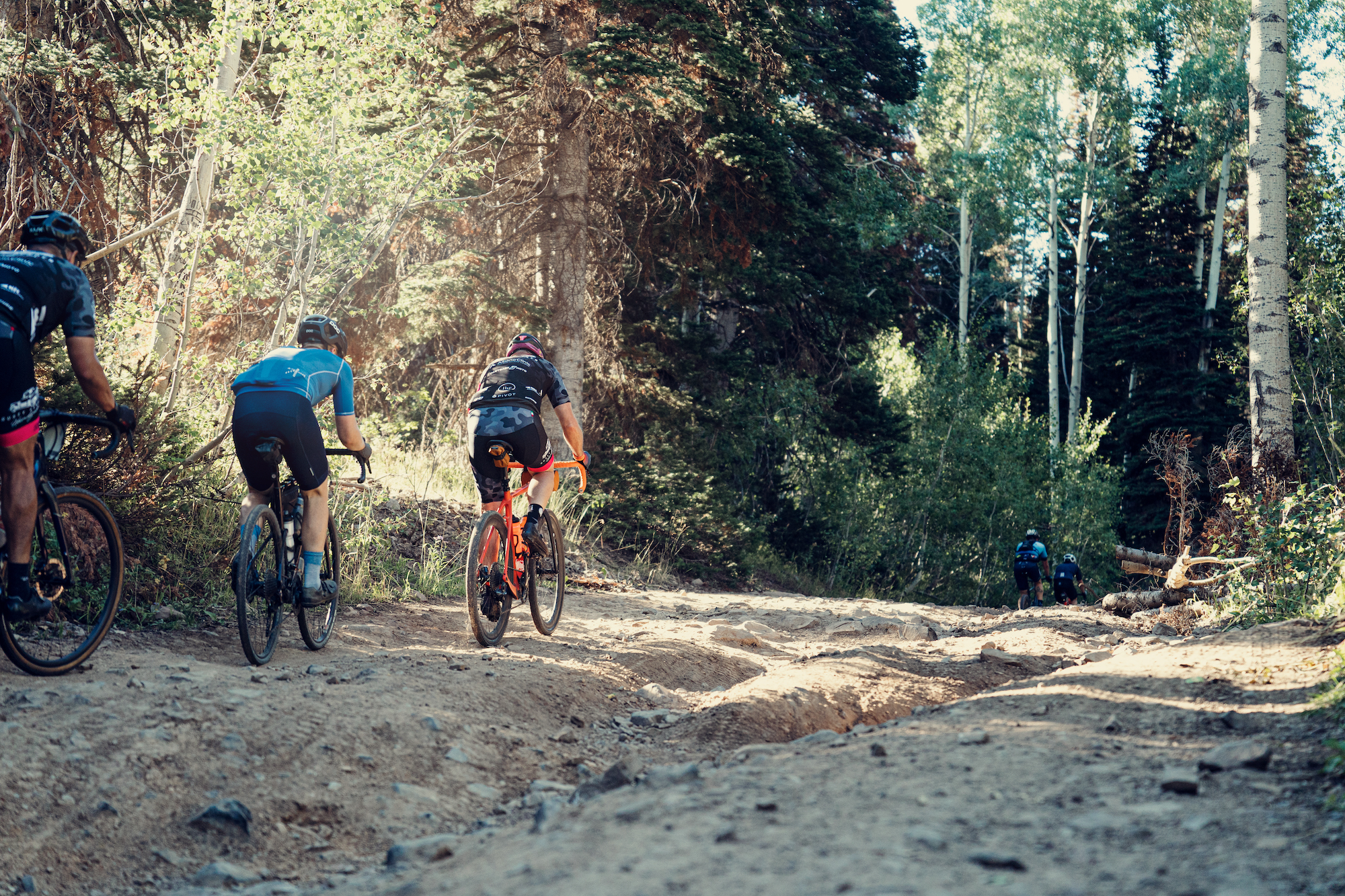
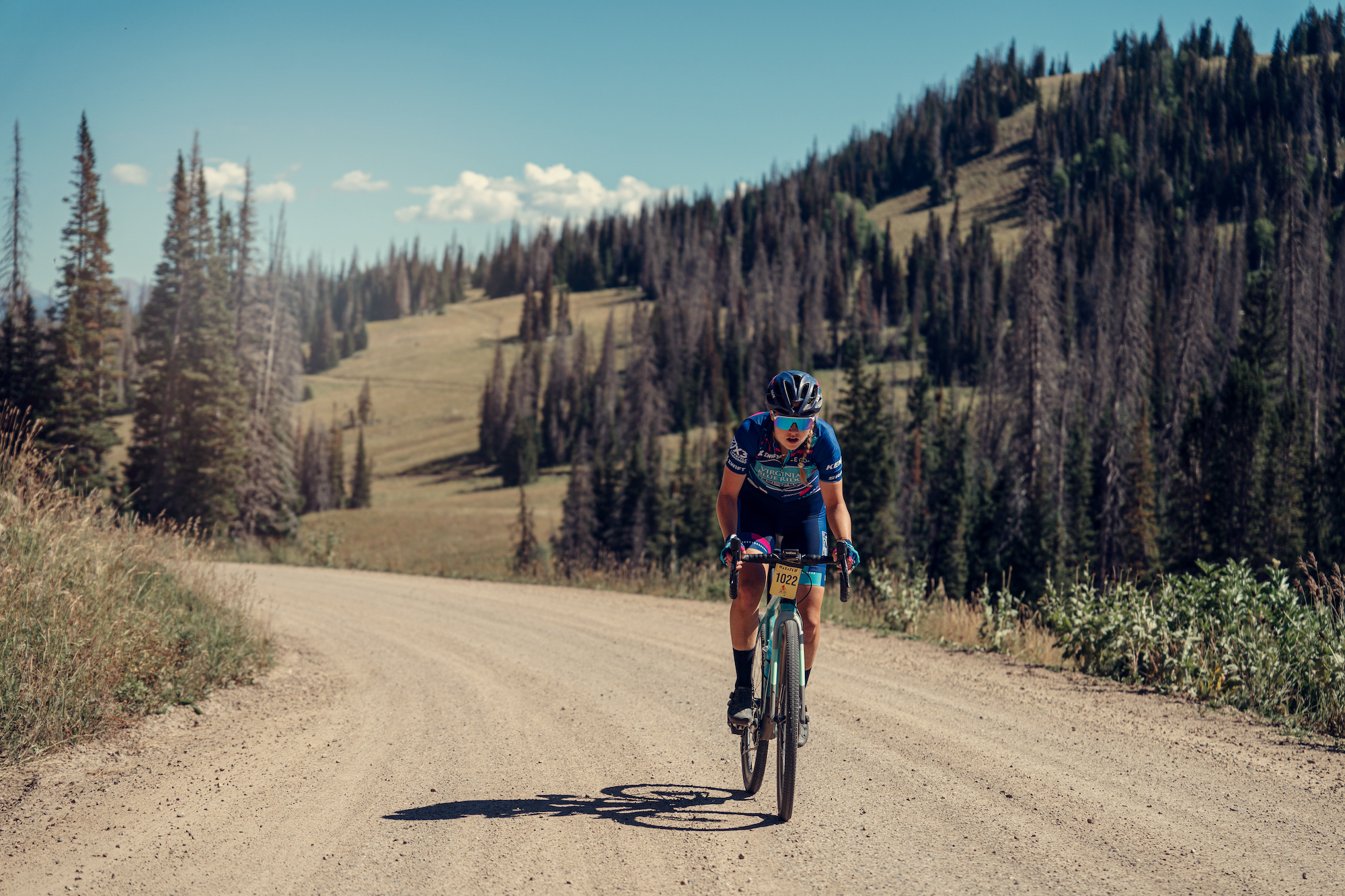
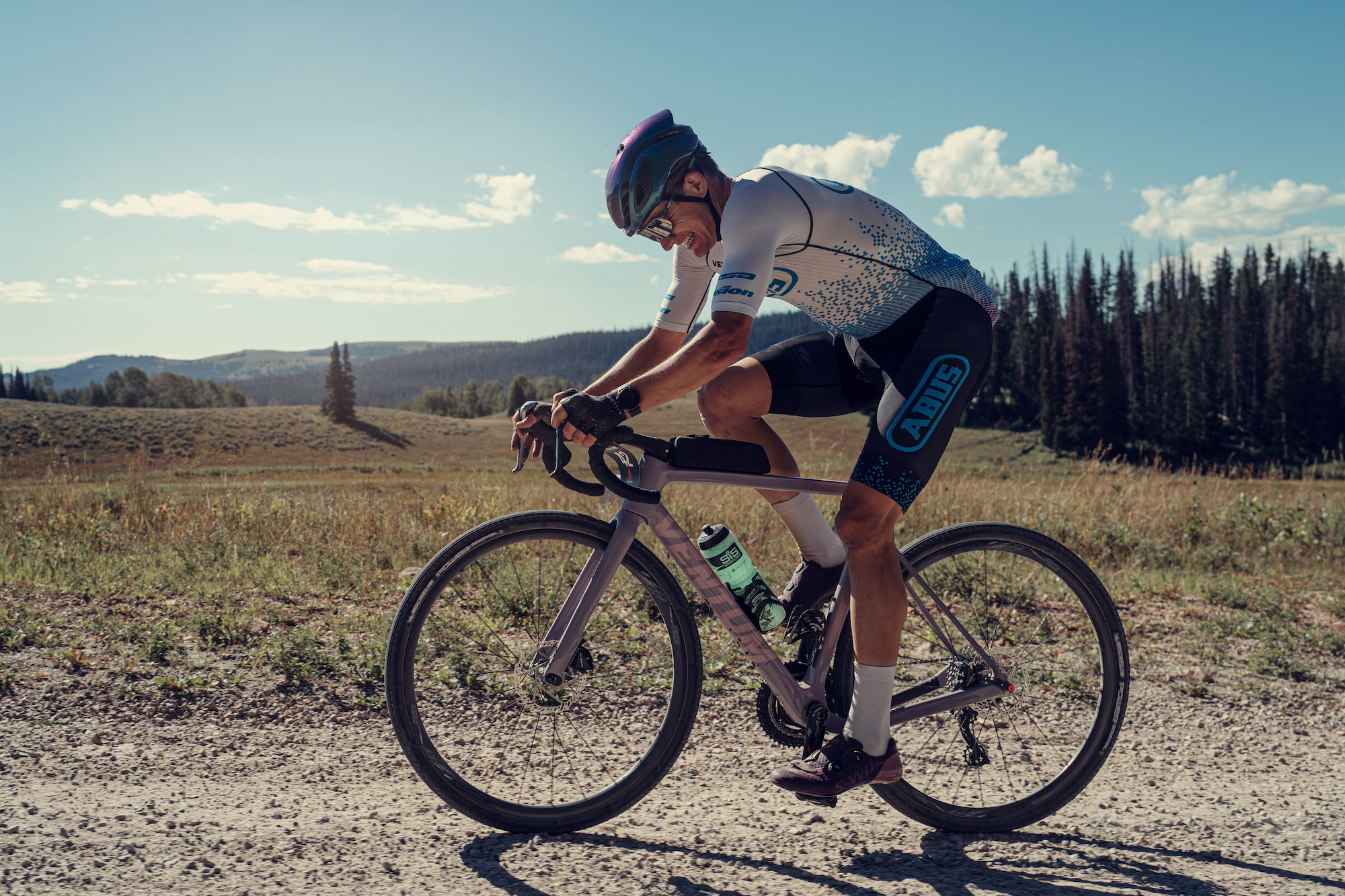
Bolton set a torrid early pace up the Wasatch Wall, which is a nearly 5000 ft behemoth of a climb that defines the opening miles of the 100 mile (Full Yeti) gravel race. The early gap proved crucial, as the remaining quartet of Grant, Stevenson, Anthony and Caroline Tory all traded places throughout the remaining 75 miles with Bolton clear off the front.
Photo courtesy Wasatch All-Road
“It was awesome! I am a super fan of the Wasatch Wall … I’m a pretty slow descender so I figured if I had any chance at getting in the top 3, I’d have to go hard up that Wall,” said an effusive Bolton.
Behind her was a tight race for second as all 4 women entered the finishing circuit on the Soldier Hollow Olympic Ski Venue together. Grant, who finished runner-up at the climbing-friendly Crusher in the Tushar last month was able to dispatch her companions and hold on to second.
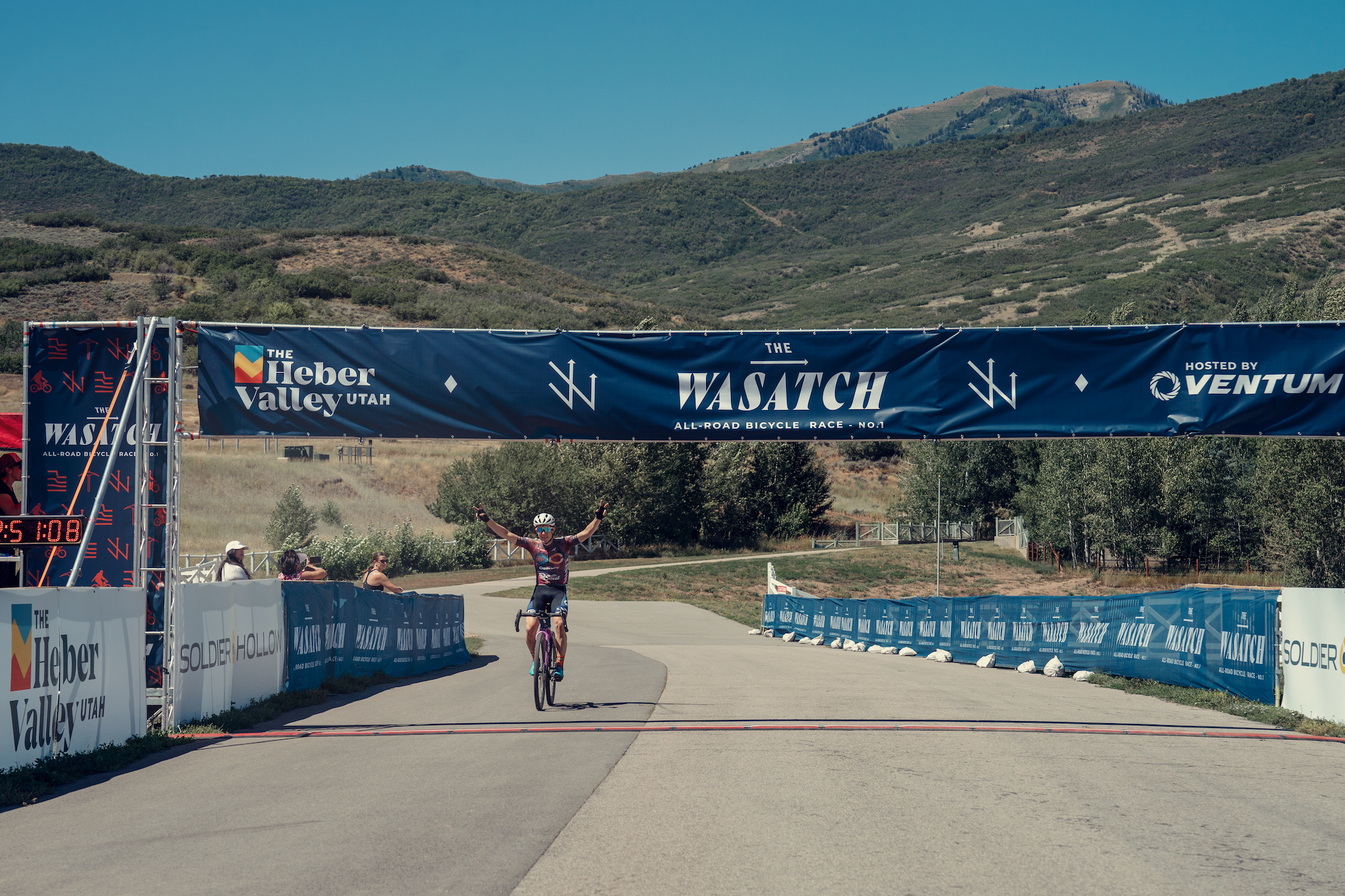
Griffin Easter crosses the line to win the Pro/Open Men at the 2022 Wasatch All-Road. Photo courtesy Wasatch All-Road.
The men’s race came down to a three-way battle between Utah locals Griffin Easter (OpiCure Foundation p/b OrangeSeal Gravel Team), Zach Calton and Kyle Trudeau from Tucson.
Photo courtesy Wasatch All-Road
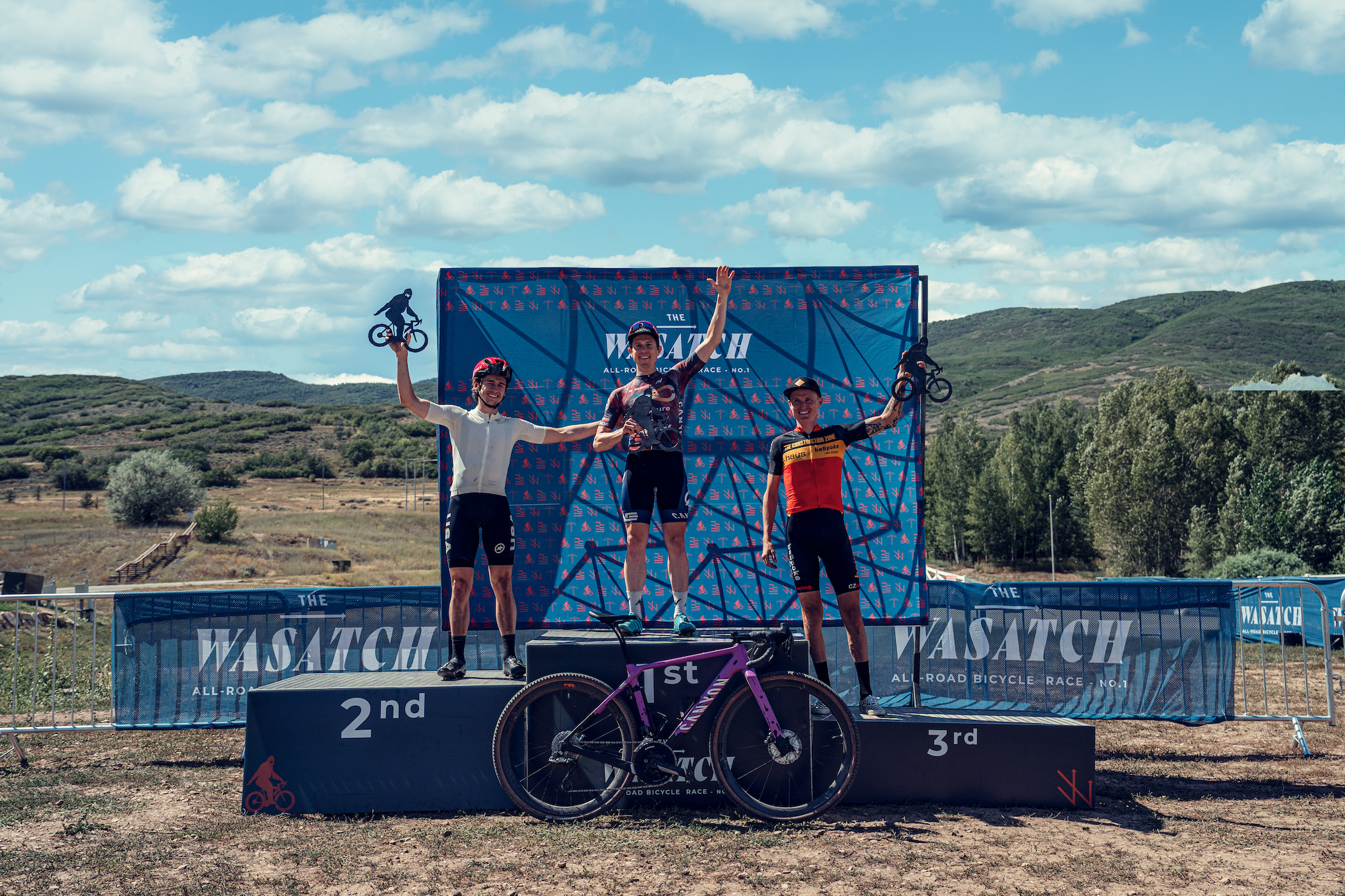
While there was no separation from the podium placers during the almost 11,000ft of climbing in the first 95 miles of the men’s race, the finishing circuit proved crucial as all three entered together. Trudeau and Calton each launched the first attacks up the steep dirt pitches on the famed Olympic venue, but Easter was patient and able to power away with 2 miles to go, taking victory in a time of 5:51:10 with Calton 40 seconds back. Trudeau hung tough for the final podium spot.
“Awesome day out there! Super stoked to be back again for the second year in a row. They put on a fantastic race, it’s a brutal course but well worth it,” said Griffin post-race.
ALBUQUERQUE, New Mexico (September 6, 2022) — Registration is open for the 16th Annual Day of the Tread presented by Sunny505 and benefitting various non-profit organizations that serve New Mexico’s children. The event is scheduled for October 23, 2022.
Photo courtesy Day of the Tread/Sunny505
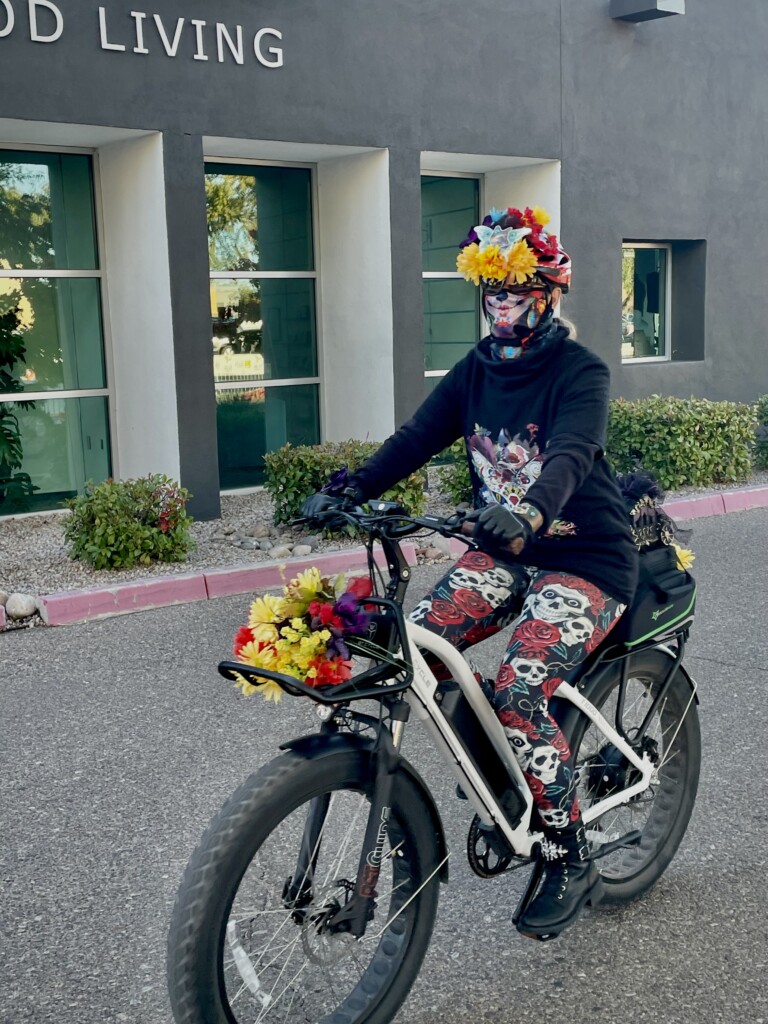
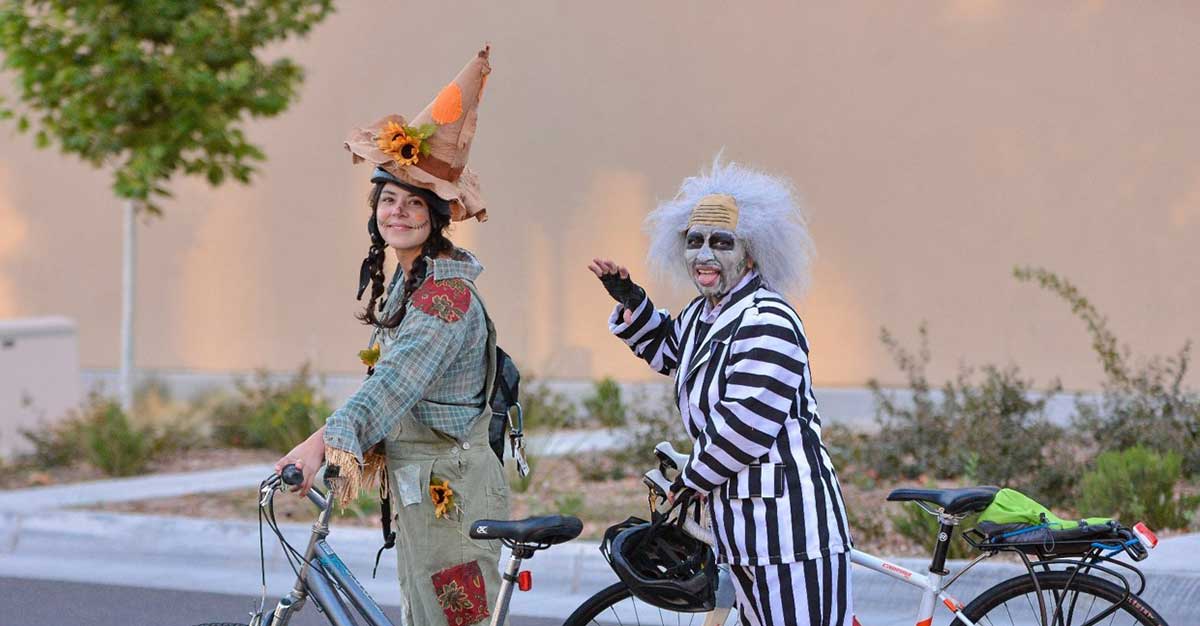
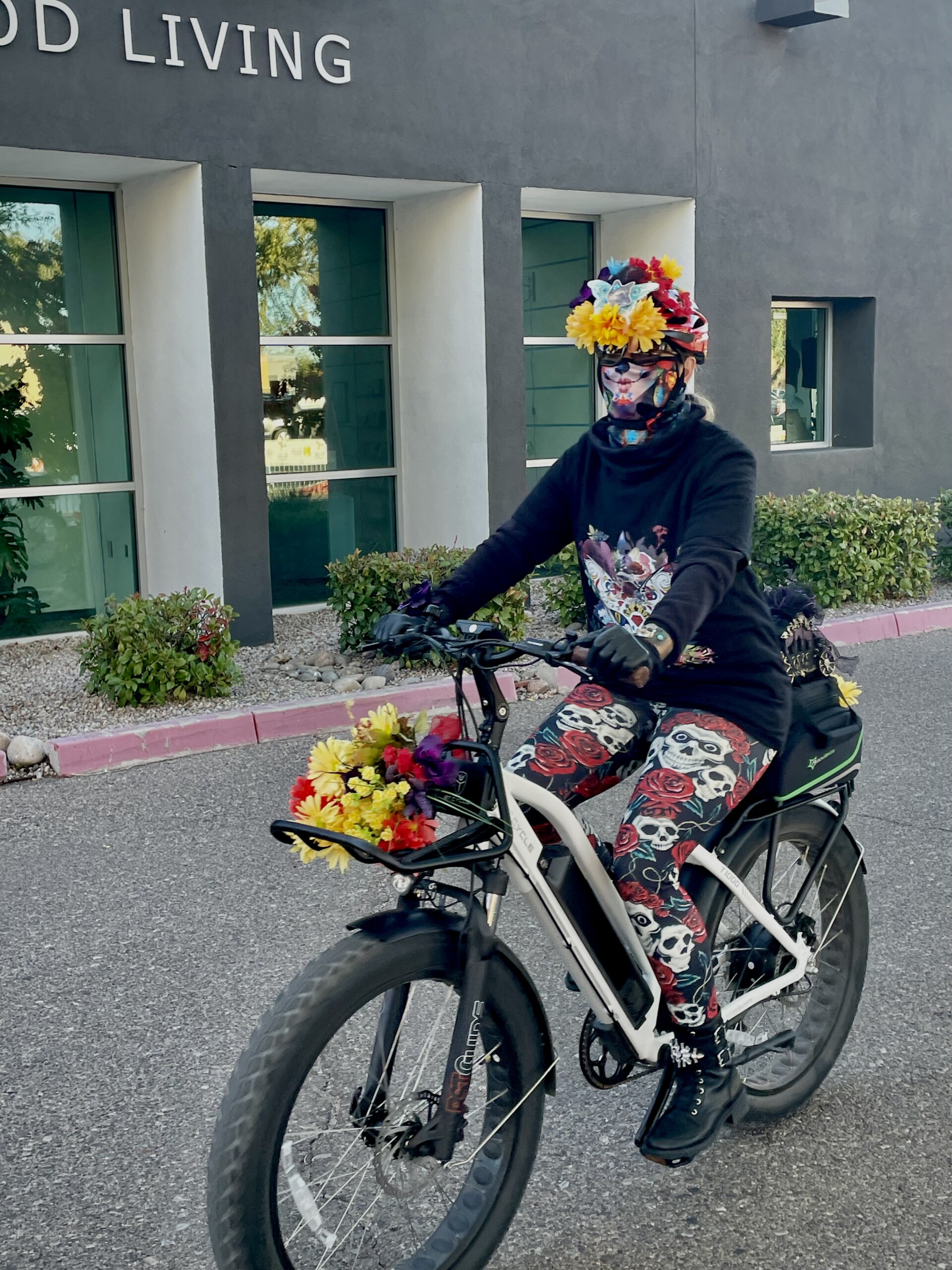
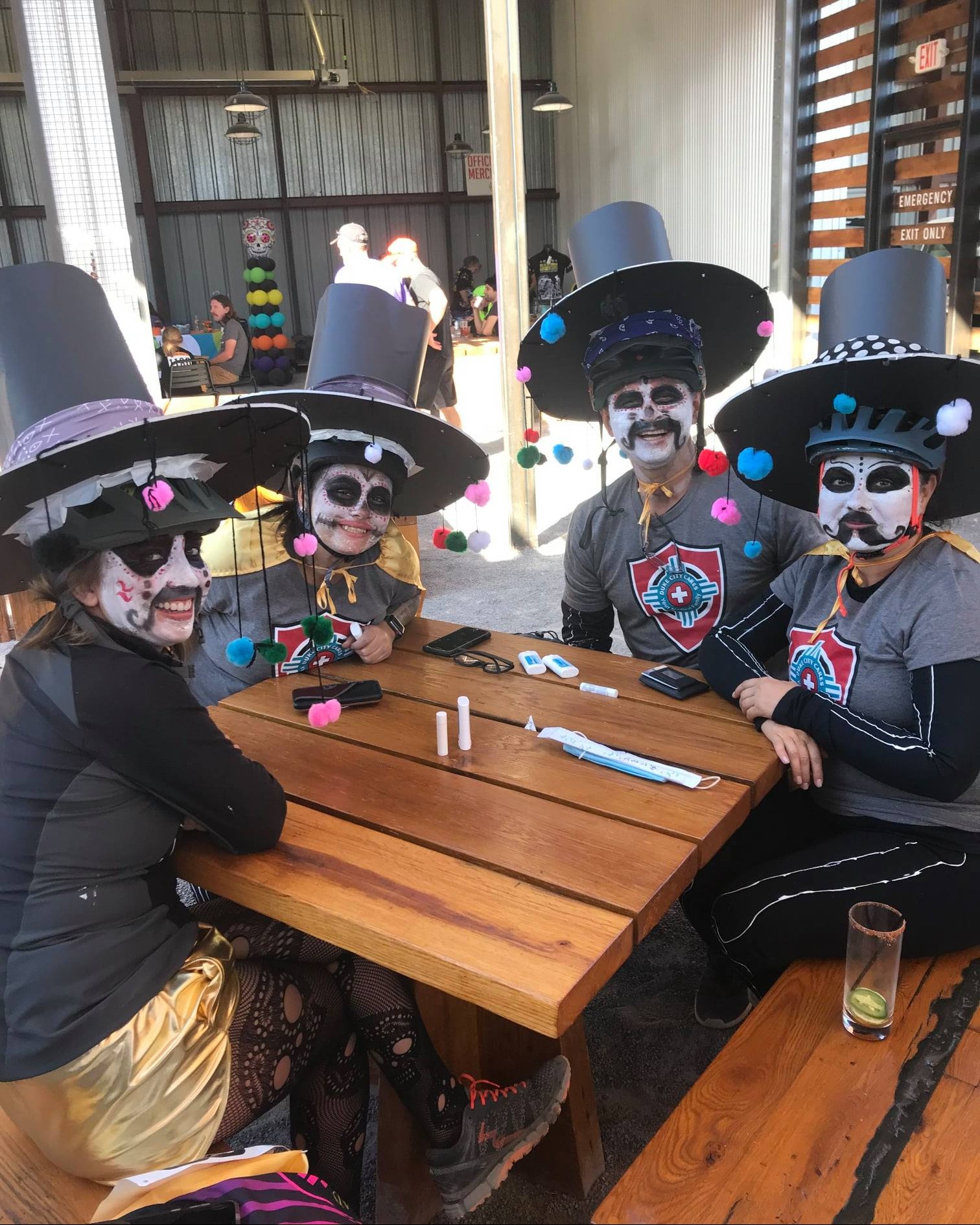
In the last 15 years, more than 20,000 cyclists have participated in the annual fundraising event. Day of the Tread is known for its fun Day of the Dead inspired costumes that are seen on the roads surrounding Albuquerque one day every year. This year’s event brings back the favorites and some new twists including:
Start and finish area in the Sawmill District of Albuquerque, anchored by the Sawmill Market Artisanal Food & Beverage Hall. Various routes are available including 7-mile, 18-mile, 25-mile, 47-mile, 60-mile and 100-rile routes.
The Rail Runner nine-mile Family Ride, a 12-mile ride that includes a ride on the Rail Runner, 26-, 50-, 64-, and 100-mile routes. Tandem categories are available for the 25-, 47-, 60- and 100-mile routes.
Back is a favorite – the Tramway timed Hill Climb event sponsored by Prevender Financial.
A 4k Walk around Old Town.
Photo courtesy Day of the Tread/Sunny505
One of the highlights and favorite recharge zones is the famous El Pinto, located in Albuquerque’s scenic north Valley. El Pinto has supported the event every year since its inception.
Last year, people from 26 states participated in the event. A video link that shows the event can be seen at dayofthetread.com.
Photo courtesy Day of the Tread/Sunny505
The presenting sponsor, Sunny505, is a New Mexico-based communications firm. “Fall in New Mexico is by far the best season. We are proud to partner with Day of the Tread and showcase our great state,” said Joanie Griffin, CEO.
All proceeds benefit Carrie Tingley Hospital Foundation’s Zia Freewheelers Adaptive Cycling program and other area non-profit organizations.
Free Bikes 4 Kidz Utah is a 501(c)(3) non-profit organization that believes every kid deserves a bike. Too often, bikes that kids have outgrown sit unused in garages or end up in the landfill. Meanwhile, many children grow up without a bike of their own. FB4K wants to help solve both of these problems by collecting and refurbishing used bikes and distributing them to kids in need.
Photo courtesy Free Bikes 4 Kidz
To accomplish our mission, we need bikes! Please help us get the word out to your audience about our collection day…
October 1st from 8:00am – 12:00 noon.
At the FB4K Warehouse 2250 S. Main St in South Salt Lake City
Photo courtesy Free Bikes 4 Kidz
We are looking for all sizes of bikes from kids to adults and accept bikes in any condition. Last year we gave out 400 bikes and this year we are hoping to double that!
Additional information can be found on our website: www.FB4Kutah.org, Facebook page, or contacting us directly at [email protected].
Photo courtesy Free Bikes 4 Kidz
This is a Collection Event only. No bikes will be distributed at these events. Distribution will take place later in the year.
Interested in helping out? Become a Community Collection Captain! Help collect bikes in your neighborhood. Check out our website for more information or email [email protected].
The working paper encourages policymakers to overhaul laws, including eliminating those used to unfairly criminalize people on bikes.
The National Association of City Transportation Officials (NACTO) published a new working paper today that finds bicycle laws across the U.S. often fail to improve safety while leading to harmful over-policing that disproportionately punishes Black, Latine/x, low-income and unhoused bike riders.
The working paper, entitled “Breaking the Cycle: Reevaluating the Laws that Prevent Safe & Inclusive Biking,” concludes there is little evidence that many laws regulating bicyclist equipment and behavior have substantial safety benefits, and calls on policymakers to refocus policies on the wellbeing of all road users, including by eliminating laws used to unfairly criminalize people on bikes.
Tamika Butler in downtown Los Angeles outside of the Los Angeles County Bicycle Coalition offices. Photo by Serena Grace
The paper evaluated the three most common types of laws that are enforced by police, and found that:
Laws regulating equipment–from bike registration requirements and helmet mandates to penalties for dirty tires–rarely contribute to safety
Laws regulating behavior–including the direction of travel and strict adherence to stop signs and markings–fail to distinguish between a 40-pound bike and a 4,000-pound car
Laws regulating location–including prohibiting bike riders from riding on sidewalks, vehicle lanes, greenways and bridges–are most often enforced when a bike rider has no safe alternative to the facility they’re using.
In the U.S., the fatality rate for Black people on bikes was 25 percent higher than it was for their White counterparts between 2015 and 2019, and Black pedestrians were twice as likely to be killed while walking as White pedestrians in that period. This is largely the result of unsafe infrastructure: cities and neighborhoods that have been systematically disinvested tend to lack protected bike lanes, sidewalks, and safe crossing points.
As a result, people on bikes are often forced to use sidewalks and vehicle lanes in ways that were not intended—especially in neighborhoods where investments and routine maintenance have been withheld. Yet studies show that Black, Latine/x, and low-income people are policed for violating bike laws at much higher rates than other demographics, often for infractions like biking on the sidewalk, even where there are no safe on-street bike facilities.
In New York City, for example, Black and Latine/x bikers received 75% of all tickets for bike-related infractions in 2021, despite constituting just under half of all people on bikes. A Los Angeles Times analysis of more than 44,000 bike stops made between 2017-2021 across L.A. County revealed that 70% of stops involved Latine/x bicyclists, even though only 50% of the County’s population is Latine/x.
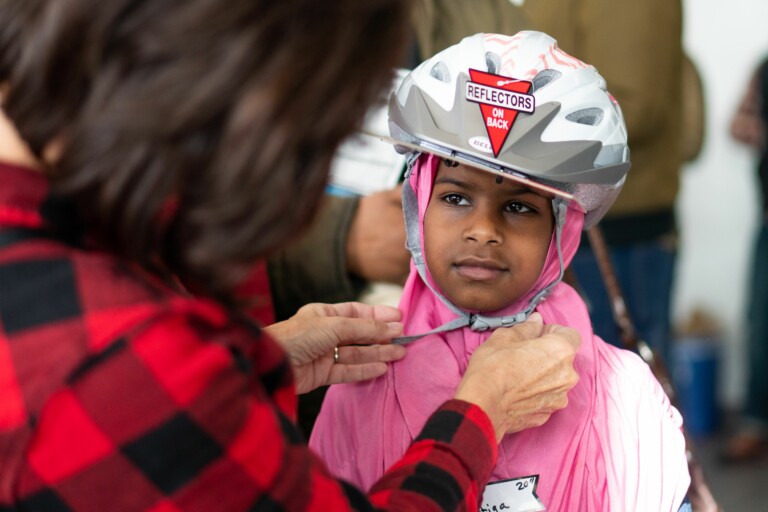
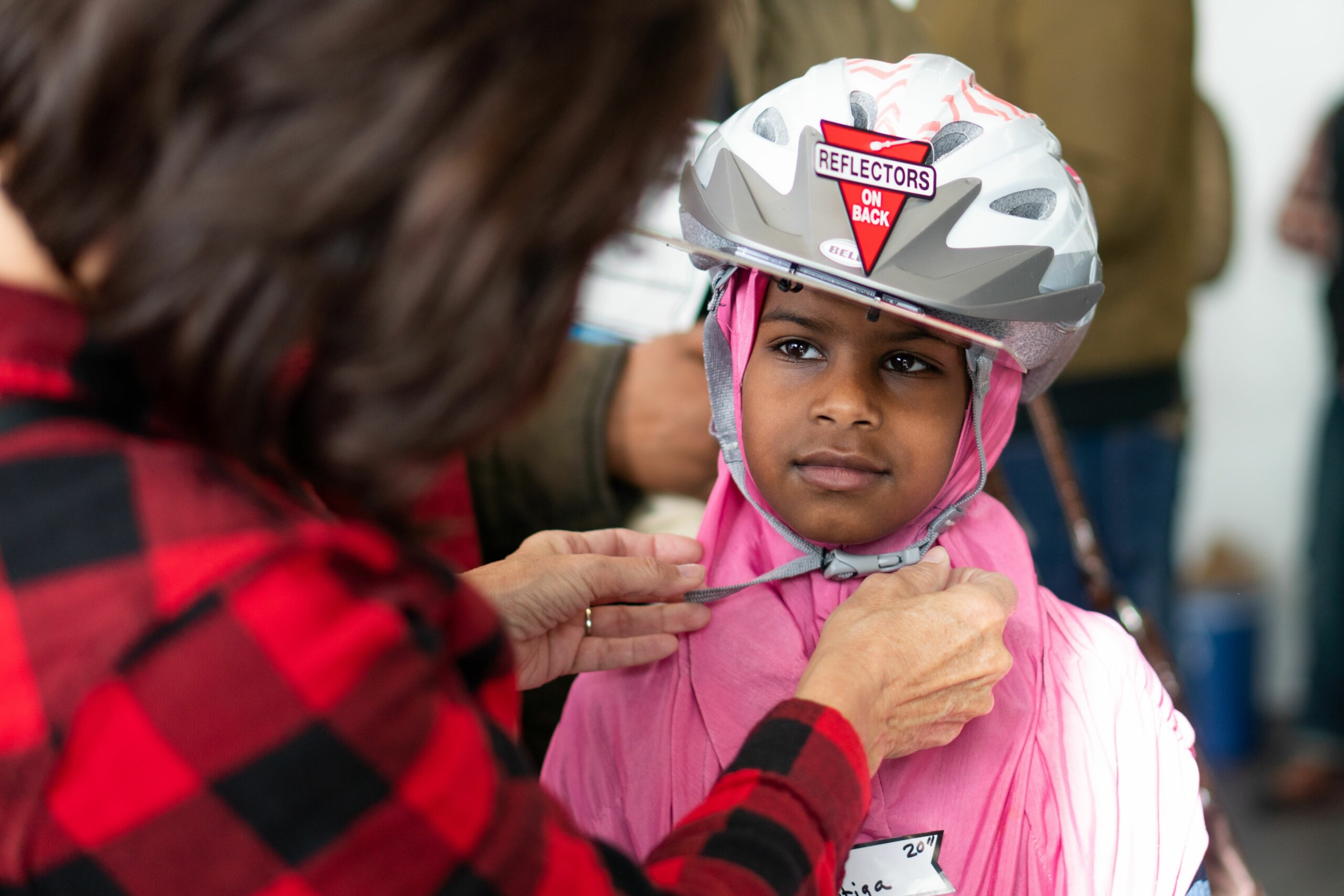
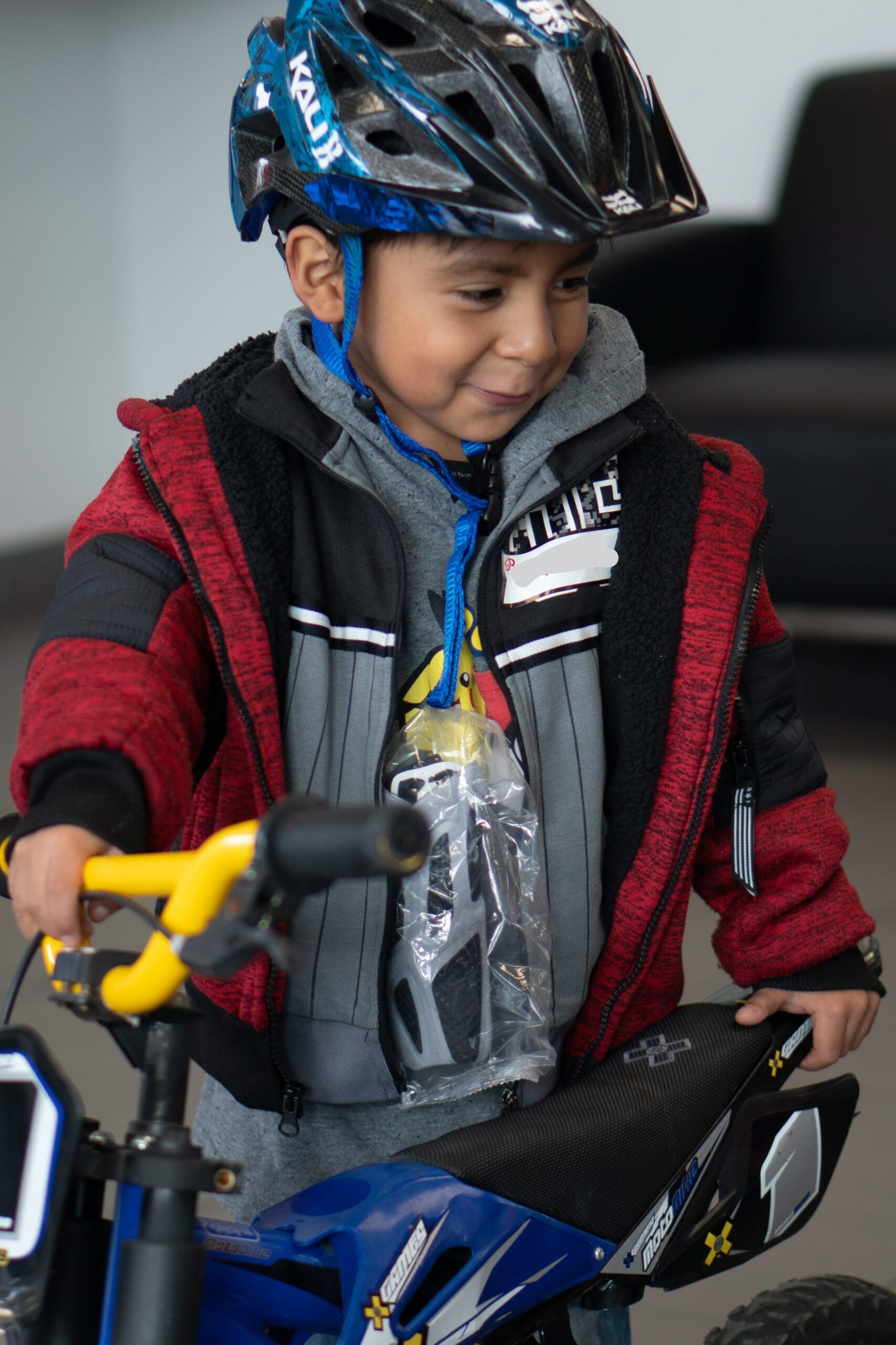
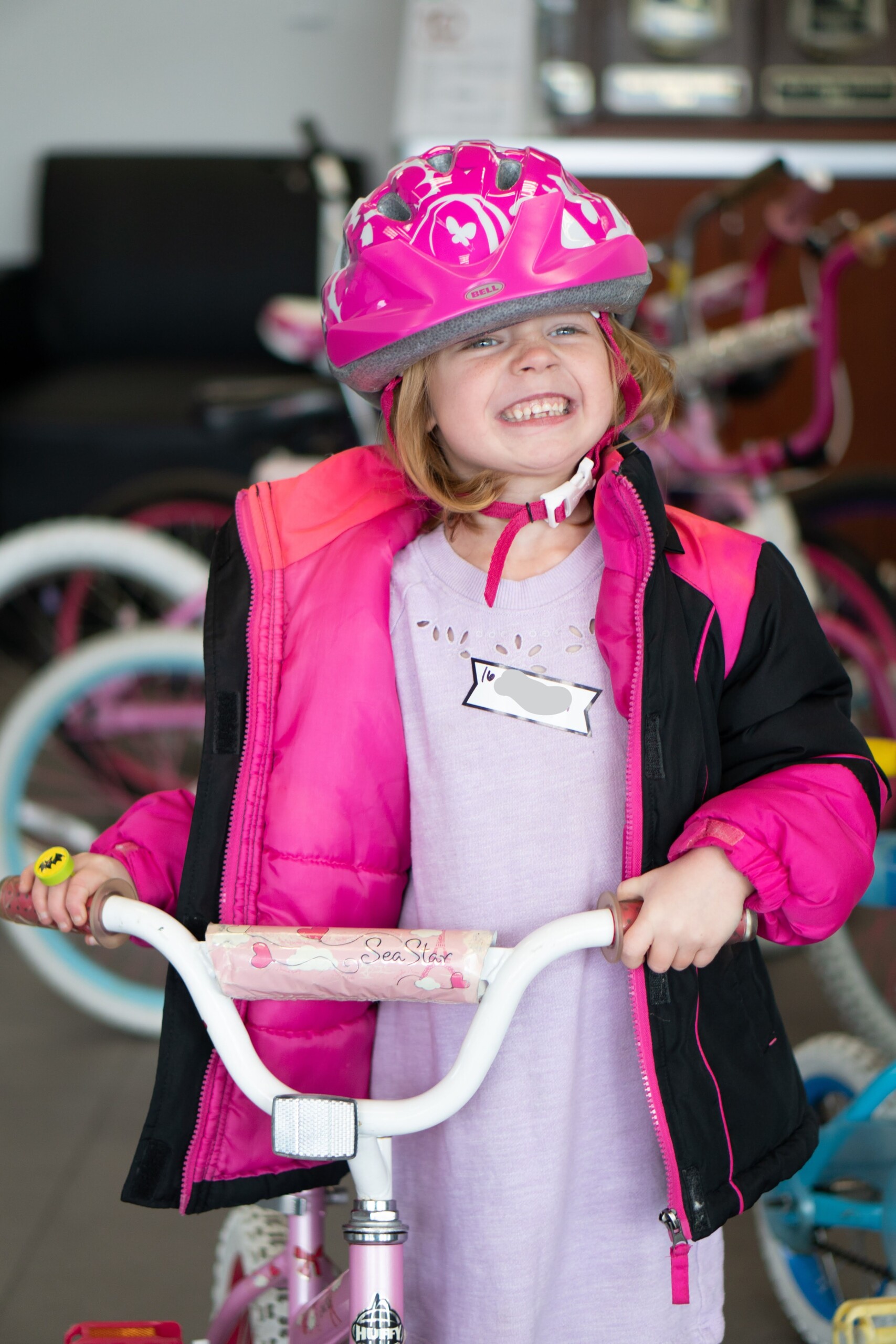
NACTO’s new working paper is a resource to help policymakers, advocates and practitioners understand the adverse impacts of biased enforcement of bicycling laws, and includes recommendations for how to refocus policies on the safety and wellbeing of all road users. The paper also suggests short-term actions local leaders can take, like better informing bike riders about laws, providing free helmets and other required equipment, and educating police officers about why people choose to violate a law like biking on the sidewalk to preserve their own safety.
“America’s over-use of policing in an attempt to correct for systemic safety issues leads to devastating outcomes, especially in Black and Latine/x communities,” said Corinne Kisner, Executive Director of NACTO. “To truly curb the epidemic of traffic deaths in the U.S., we need to focus on what we know works: equitably redesigning streets and public spaces to make them safe and inclusive for everybody who uses them. We want to thank and acknowledge the many leaders who have called attention to the harms of biased enforcement, and are honored to have partnered with several of them in researching this report.”
“As NACTO cities, we must cultivate a practice of ongoing critical reflection, community-based engagement and a focus on building inclusive, inviting and connected infrastructure to overcome the undue burden that people of color can experience navigating public streets,” said Richard Mendoza, Interim Director of the Austin Transportation Department.
“Ultimately, smart policing is about keeping our communities safe,” said Terrence Miller, Planner at the Professional Standards Division of the Orlando Police Department. “Policies that are not equitable and that punish people unfairly on bikes make it more difficult for law enforcement officers to effectively do their jobs. By rethinking our bike laws, we create cities that are healthier, stronger, and safer for everybody.”
“To achieve our Vision Zero goal of eliminating traffic deaths, we need to be honest and transparent about which strategies actually keep people safe,” said Laura Hardwicke, Vision Zero Project Manager with the City of Orlando. “That means taking a holistic approach and re-designing streets to be safe and accessible for everyone, rather than unfairly punishing individuals struggling to navigate outdated, dangerous and inequitable transportation infrastructure.”
“Baltimore City DOT is committed to undoing legacies of inequitable, unjust enforcement,” said Meg Young, New Mobility Manager at the Baltimore City Department of Transportation. “We know that Black and Latine/x bikers and pedestrians are already over-policed; it only adds insult to injury when already contending with the dangers of sharing the road. It is our responsibility to proactively advocate against laws that unfairly criminalize people of color while pushing forward policies that increase connectivity and ensure safer streets for all people and road users.”
“We are excited to see conversations around equity and transportation justice moving into action,” said Kristen Simpson, Interim Director of the Seattle Department of Transportation. “Decoupling punitive practices, such as helmet law enforcement, from transportation safety supports the movement toward a more just transportation system, which we are working hand in hand with the BIPOC community to advance through Seattle’s Transportation Equity Framework. Of course, we continue to emphasize the importance of wearing a helmet, while knowing that our most important work is continuing to expand our network of connected bicycle facilities so that everyone–no matter their age, gender, race, income, or ability–feels safe on our streets.”
“For too long too many in the transportation space have separated conversations about enforcement and racism in this country,” said Tamika Butler, Founder and Principal of Tamika L. Butler Consulting. “I’m excited to participate in putting together this working paper that urges us all to confront the disproportionate punishment inflicted upon Black and brown communities–punishment many of us in those communities have been harmed by personally and speaking out about for years. NACTO elevating these voices and this research is a positive step forward in rethinking transportation decisions and infrastructure throughout its member cities.”
“I strongly believe in our collective capacity to unapologetically eradicate all systems of oppression in pursuit of freedom for all,” said Charles Brown, Founder & CEO of Equitable Cities LLC. “I applaud and am honored to work with NACTO on taking this critical first step toward more equitable cities. I’m also eager to continue critically examining other unjust policies, planning efforts, and the ever-growing impact of self-deputized citizens on Black mobility via my work on #ArrestedMobility.”
“BikeWalkKC felt it necessary to contribute to this working paper because it directly aligns with our mission to redefine our streets as places for people,” said Michael Kelley, Policy Director of BikeWalkKC. “We can’t push for changes to the built environment without confronting decades of bad policy and design decisions that have led, among other things, to the over-policing of Black bicyclists and other vulnerable road users.”
“As we saw with King County’s helmet mandate, laws intended to protect bicyclists have too often backfired by enabling the over-policing of marginalized community members, while offering minimal safety benefits,” said Ethan C. Campbell, advocate with Central Seattle Greenways. “I’m grateful that NACTO is so powerfully highlighting the need for a course correction away from criminalization and towards policies and streets designed to create true safety for all people on bikes.”
“This report raises serious concerns about inequitable enforcement of fines on cyclists,” said Priya Sarathy Jones, national campaigns and policy director at the Fines and Fees Justice Center. “To improve everyone’s safety on the road, local governments must invest in upstream solutions that will save lives and correct inequities in their communities. Enforcement and financial penalties can’t solve problems that stem from dangerous design and infrastructure.”
“Breaking the Cycle” is one in a series of working papers being released by NACTO in 2022 as part of an ongoing update to the NACTO Urban Bikeway Design Guide. The working papers will cover topics related to equitable planning, engagement, and implementation, and will help inform project delivery concerns and policy considerations that should accompany the design updates in the guide. NACTO will develop a complete update to the Urban Bikeway Design Guide in 2023 by synthesizing these working papers with state-of-the-practice design guidance. See all of the working papers at the Cities for Cycling page on NACTO.org.

 Remedy: Repair
 Consumer Contact