
Home Blog Page 12

Merckx vs Poulidor – The Bicycle Art of Robby Becker

Name of artist: Robby Becker

About the artist:  Born in the majestic mountains of Montana and raised in the serene surroundings of Pocatello, Idaho, I have always felt a deep connection to the world of art. From my childhood, my passion for creativity found expression through various mediums, whether it was sketching or photography. After earning a bachelor’s degree in photography from Idaho State University, I ventured to Las Vegas, seeking new perspectives and inspiration.

My love for travel fuels my artistic journey; I strive to capture the essence of a place or event through pictures and drawings. These photographs and sketches serve as a pivotal foundation for future paintings. 

As an avid cyclist, I follow the world of bike racing with an artistic eye, and translating the energy and atmosphere of races into captured moments has become a natural extension of my creativity process. I take great pleasure in portraying the dynamic motion and vibrant atmosphere of the cycling world through my art.

Racers Racing; Merckx vs Poulidor. Thin acrylic on watercolor paper. Art by Robby Becker

Title of piece: Racers Racing; Merckx vs Poulidor

About the piece: Eddy Merckx and Raymond Poulidor in the 1972 edition of the Tour de France.

The enduring rivalry between Eddy Merckx and Raymond Poulidor represents a profound narrative in the realm of competitive cycling, akin to a timeless masterpiece in the world of art. Poulidor, an enigmatic figure, seemed to embody the very essence of struggle and perseverance, yet he remained perpetually shadowed by Merckx’s brilliance.

For my part, just revisiting such classic moments and events is a genuine inspiration for getting out there in the world to do something challenging. 

Medium and size: Thin acrylic on watercolor paper.  Presented 12×16 with a 2” matte boarder…

Artist’s statement: Most of my art is a personal journey, created for my own exploration and expression. My passions for travel, cycling, and adventure inspire me to capture moments and feelings that reflect my experiences along life’s path. 

Typically, I begin a project with a photograph or a sketch, leading me into a mixed media painting process. I start with a loose outline and then add layers of mixed media (thin acrylics, watercolor, and occasionally ink). 

While I usually have a clear vision of my intended direction, my expressionist style often nudges the artwork toward abstract forms, which I find particularly appealing.

As an artist, I find that viewing the world through a creative lens enriches my appreciation for the intricate beauty around us. It brings me joy to express and share these interpretations of my journey with others.

Where can people find or buy your art: My art is “out there”! 

Thanks to the vast reach of the internet and my lively online sales approach, my artwork has found a home with collectors across almost every state and even in several European countries. 

I’m thrilled to showcase my art in person too, capturing the excitement of live events like bike races and beach getaways. 

And yes, I’m always open to commissions. 

Website and social media for your art:
  1. [email protected]
  2. https://www.etsy.com/shop/RobbyBeckerArt
  3. https://www.instagram.com/robbybeckerart


Congress Expected to Target Grand Staircase-Escalante Management Plan

GAO Opinion Raises Prospect of Congressional Challenge to National Monument Management Plans, Sparking Outrage from Local Communities and Businesses

KANAB, Utah/WASHINGTON, D.C. (January 22, 2026) A new opinion from the Government Accountability Office (GAO) has opened the door for Congress to overturn the current management plan for Grand Staircase–Escalante National Monument, setting up what conservation groups say would be a first-of-its-kind challenge to how national monuments are administered.

The GAO opinion, released January 15, concludes that federal land management plans qualify as “rules” under the Congressional Review Act (CRA), making them subject to reversal by Congress. The opinion was requested by Rep. Celeste Maloy (R-Utah), whose 2nd Congressional District includes much of southern Utah.

In response, Utah’s federal delegation—Sens. Mike Lee and John Curtis, along with Reps. Burgess Owens, Blake Moore, Celeste Maloy, and Mike Kennedy—is expected to introduce a resolution of disapproval under the CRA. If passed by simple majorities in both the House and Senate, such a resolution would nullify the Bureau of Land Management’s (BLM) existing resource management plan for the monument and prohibit the agency from issuing another plan that is “substantially the same” in the future.

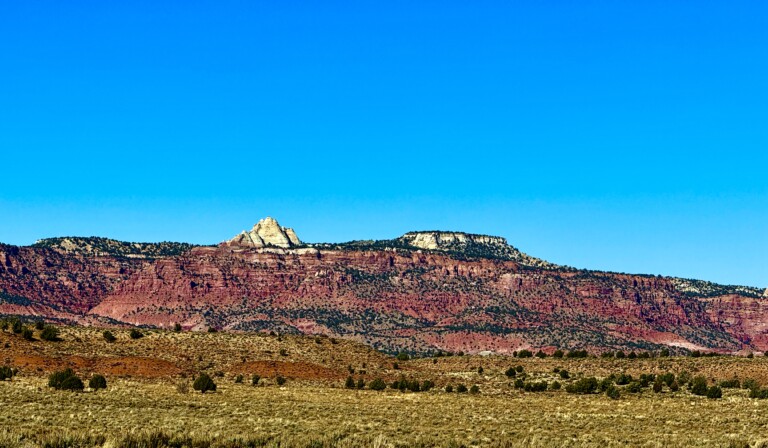
Grand Staircase-Escalante National Monument would be . Photo by Steven Sheffield

If enacted, it would mark the first time Congress has used the CRA to overturn a national monument management plan, a move conservation advocates warn could have implications far beyond southern Utah.

Chris Hill, chief executive officer of the Conservation Lands Foundation, called the potential use of the CRA “a deeply dangerous misuse” of the law. “Congress has never before attempted to use the CRA to revoke a national monument management plan,” Hill said. “Doing so would be a direct attack on America’s national monuments and the communities who have invested time and resources to ensure they are managed properly.”

Grand Staircase-Escalante National Monument. Photo by Steven Sheffield

Hill said the Grand Staircase–Escalante plan was developed through years of public involvement and Tribal consultation, and warned that setting it aside would create a precedent that could leave other national monuments vulnerable to political shifts in Washington.

Local organizations echoed those concerns, emphasizing the role the management plan plays in guiding conservation, research, and recreation. Jackie Grant, executive director of the nonprofit Grand Staircase Escalante Partners and a Kanab resident, said the CRA approach would disregard extensive local and Tribal input.

Grand Staircase-Escalante National Monument. Photo by Steven Sheffield

“This plan reflects years of hard work by the people who live nearby, work in, and care deeply about this place,” Grant said. She added that stable, large-scale landscape management is increasingly recognized as essential for protecting water resources, wildlife habitat, and community well-being.

Economic concerns have also been raised by businesses that depend on the monument. Nate Waggoner, board chair of the Grand Staircase Regional Guides Association, said uncertainty over monument management could threaten local livelihoods.

“Guides and outfitters require clear-cut management to run safe operations, promote our businesses, and support local jobs,” Waggoner said. “Rescinding this plan negates years of collaboration with land managers and public engagement.”

The Grand Staircase–Escalante National Monument remains protected under Presidential Proclamation 10286, which establishes its boundaries and legal status. However, critics of the proposed congressional action say eliminating the management plan would inject uncertainty into how the monument is stewarded and how recreation, conservation, and local economies are balanced on the ground.

The Resource Management Plan for Grand Staircase-Escalante National Monument was developed over years of public engagement, Tribal consultation, and scientific review to guide multiple-use and responsible management of one of the nation’s most significant cultural and natural landscapes. Whether Congress will move forward with a CRA resolution—and how it might reshape federal land management nationwide—remains to be seen.

Durango’s In-Town Trails Take Center Stage at 2026 Durango Derby

DURANGO, Colo. (January 28, 2026) — Now entering its third year, the Durango Derby returns on Saturday, September 12, 2026, continuing to push the boundaries of what cross-country mountain bike racing can look like. Equal parts race and rolling celebration of Durango’s trail culture, the Derby blends fast, technical racing with an inclusive, rider-first atmosphere.

Often described as an MTB stage race distilled into a single, action-packed day, the Durango Derby features multiple timed race stages linked by untimed transfers that wind riders through downtown Durango. The result is a format that feels as social and scenic as it is competitive.

Race stages draw from all three of Durango’s in-town trail systems, serving up premium singletrack that tests elite riders while remaining accessible and achievable for everyday racers. Whether riders are chasing podium spots or riding hard with friends, the event is designed to make everyone feel at home on the start line.

Scenes from the 2024 Durango Derby. Photo by Garrett Payer, courtesy of Durango Derby

Lower Entry Fees and Free Youth Racing

For 2026, organizers have lowered barriers to entry across the board. Entry fees have been reduced by more than 30 percent in all categories, and all riders 18 and under will race for free.

Early registration is encouraged. Prices increase by $25 on March 15 at 9 a.m., with an additional $25 increase on July 31 at 9 a.m. Riders who register before July 31 will receive a free Durango Derby T-shirt with their entry (excluding free youth categories).

Scenes from the 2024 Durango Derby. Photo by Garrett Payer, courtesy of Durango Derby

Race Categories for Every Rider

The Durango Derby continues to expand its lineup to meet riders where they are:

  • Original Full Derby – 4-Stage Solo: The classic single-day stage race, featuring all four timed stages with untimed transfers, starting and finishing at Durango Mesa Park.
  • New 3-Stage Solo: Designed for riders seeking the full Derby experience while skipping the queen stage on Animas Mountain.
  • New 2-Stage Solo: A shorter, punchier option ideal for newer racers, riders stepping up from team formats, or anyone looking for a fun, approachable challenge.
Scenes from the 2024 Durango Derby. Photo by Garrett Payer, courtesy of Durango Derby

What’s New for 2026

  • New 2-stage and 3-stage solo categories
  • Free racing for all participants under 18
  • Updated courses featuring additional Durango singletrack
  • Expanded category options

With its blend of top-tier trails, innovative format, and rider-focused approach, the Durango Derby has quickly become one of the most distinctive MTB events in the Southwest.

The Durango Derby takes place Saturday, September 12, 2026. Registration opens March 1. More information and registration are available at bikereg.com/durangoderby.


Before the Cowbells Ring in Hulst: How Much Do You Know About Dutch Cyclocross?
The 2026 UCI Cyclocross World Championships arrive in Hulst this winter, bringing the sport’s pinnacle event to a fortified Dutch town in Zeeland where land and sea have contested boundaries for centuries. Located near the Belgian border, Hulst will draw massive crowds from both nations—fitting for a sport whose identity has been shaped by Low Countries rivalry. Belgium and the Netherlands share cyclocross’s heartland, yet their approaches diverge in revealing ways: different terrain, different developmental philosophies, different relationships between cyclocross and road racing. For decades Belgium dominated through sheer depth and tradition; more recently the Netherlands has challenged that supremacy through methods distinctly its own. With Hulst on the horizon, we offer a half-dozen questions to test your knowledge of Dutch cyclocross—its history, its heroes, and the structures that have made the Netherlands a force capable of matching its neighbor to the south.
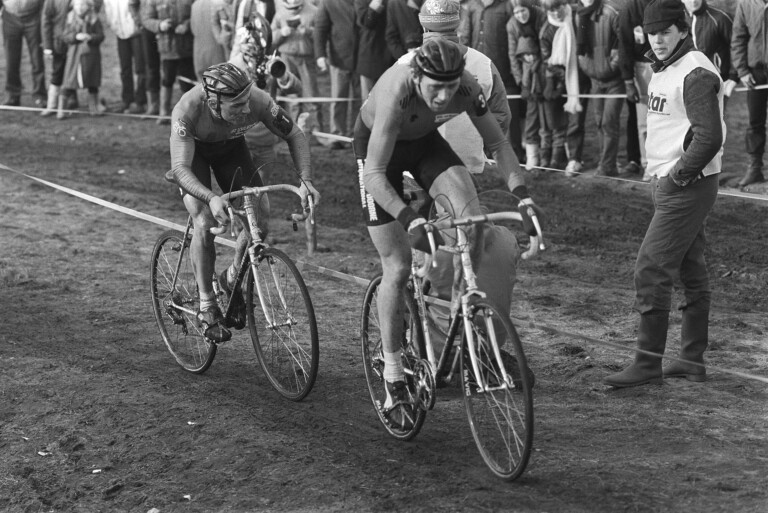
World Cyclocross Championships in Oss, Netherlands (19 Feb 1984); 1981 World Champion Hennie Stamsnijder (NED) in the lead, followed by the eventual winner, Roland Liboton (BEL). Photo by Marcel Antonisse / Anefo, courtesy Nationaal Archief, under Creative Commons CC0 1.0 Universal Public Domain Dedication.

Q1. Cyclocross has produced world-class riders across multiple generations, from early pioneers who competed on frozen pastures with minimal prize money to today’s athletes racing before global television audiences. One rider bridged these eras—winning world titles when cyclocross was still a niche winter pursuit and continuing to dominate as the sport professionalized and races expanded beyond traditional European strongholds. This career has spanned rule changes, equipment revolutions, and the emergence of cyclocross as a viable year-round profession. Which rider holds the all-time record for elite cyclocross world championship victories?

Q2. Cyclocross world championships rotate among nations, but the Netherlands has hosted more editions than geography alone would suggest—10 in total—a reflection of organizational capacity, fan passion, and national federation investment. One Dutch city has become particularly synonymous with world championship cyclocross, hosting the event multiple times and establishing itself as a spiritual home for the sport’s biggest single-day races, with crowds exceeding sixty thousand and partisan fervor rivaling football derbies. Which Dutch city has hosted the UCI Cyclocross World Championships more than any other location in the Netherlands?

Q3. Course design in cyclocross reflects both sporting philosophy and local terrain, with different nations emphasizing different challenges. Belgian courses often feature steep run-ups and technical barriers; American courses have incorporated stadium sections and artificial features. Dutch course designers have developed their own distinctive approach, leveraging natural terrain to create courses that reward specific skill sets developed through the nation’s multi-discipline system. Which two design features characterize elite Dutch cyclocross courses and distinguish them from Belgian or other international venues?

Q4. The rivalry between Dutch and Belgian cyclocross has defined the sport for generations, but the competitive dynamic has shifted dramatically over the past decade. Where Belgian riders once dominated with numerical superiority and depth across every category, Dutch athletes have increasingly claimed the sport’s most prestigious victories—often with fewer elite-level riders but superior results at the very top. What fundamental difference in developmental approach helps explain why Dutch riders have recently outperformed Belgian rivals despite Belgium’s larger cyclocross participation base?

Q5. Equipment technology in cyclocross has evolved dramatically since the sport’s early decades, when riders contested races on modified road bikes with slightly wider tires and little else distinguishing their machines from summer racing equipment. Modern cyclocross bikes represent purpose-built racing instruments with geometry, tire clearance, and componentry optimized specifically for the discipline’s demands. Dutch riders and their equipment sponsors were at the forefront of one technological development now standard throughout the professional peloton. Which equipment innovation, now universal at the elite level, did Dutch riders help pioneer and popularize in professional cyclocross?

Q6. Pit areas in elite cyclocross serve as strategic nerve centers where mechanics perform bike changes that can determine race outcomes—a clean exchange costs seconds while a fumbled handoff can cost positions or worse. The organization, staffing, and protocols governing pit operations have professionalized dramatically as cyclocross stakes increased, with top teams employing multiple mechanics per rider and developing systems to ensure bikes remain race-ready despite accumulating mud and mechanical stress. What distinguishes elite Dutch pit operations from those of less sophisticated programs?

Answers on the following page.

Photo Essay: Maryland Cycling Classic, by Cottonsox Photography

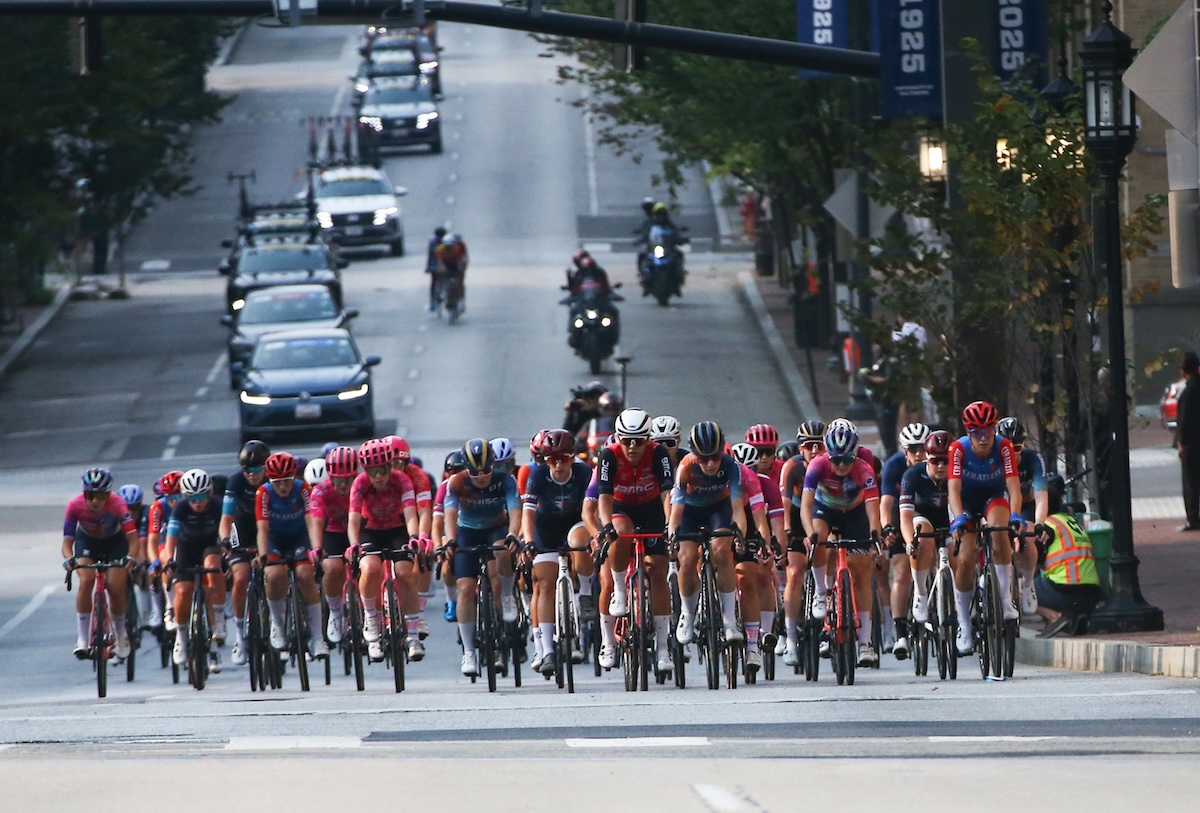
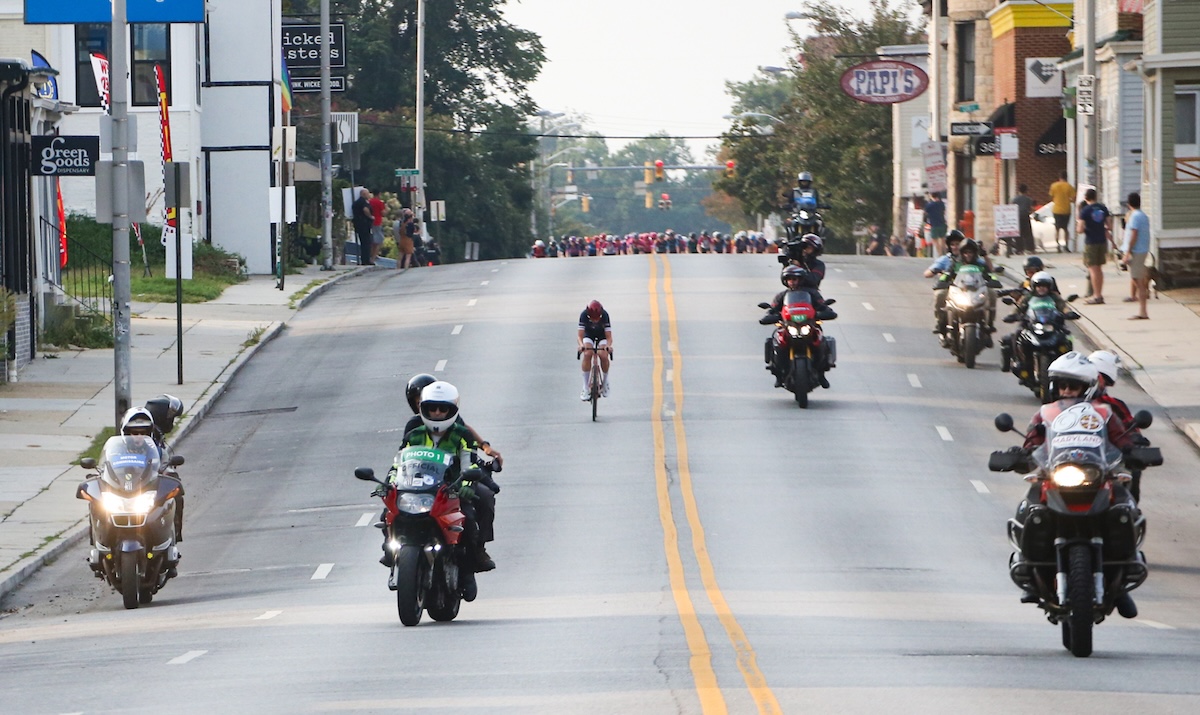
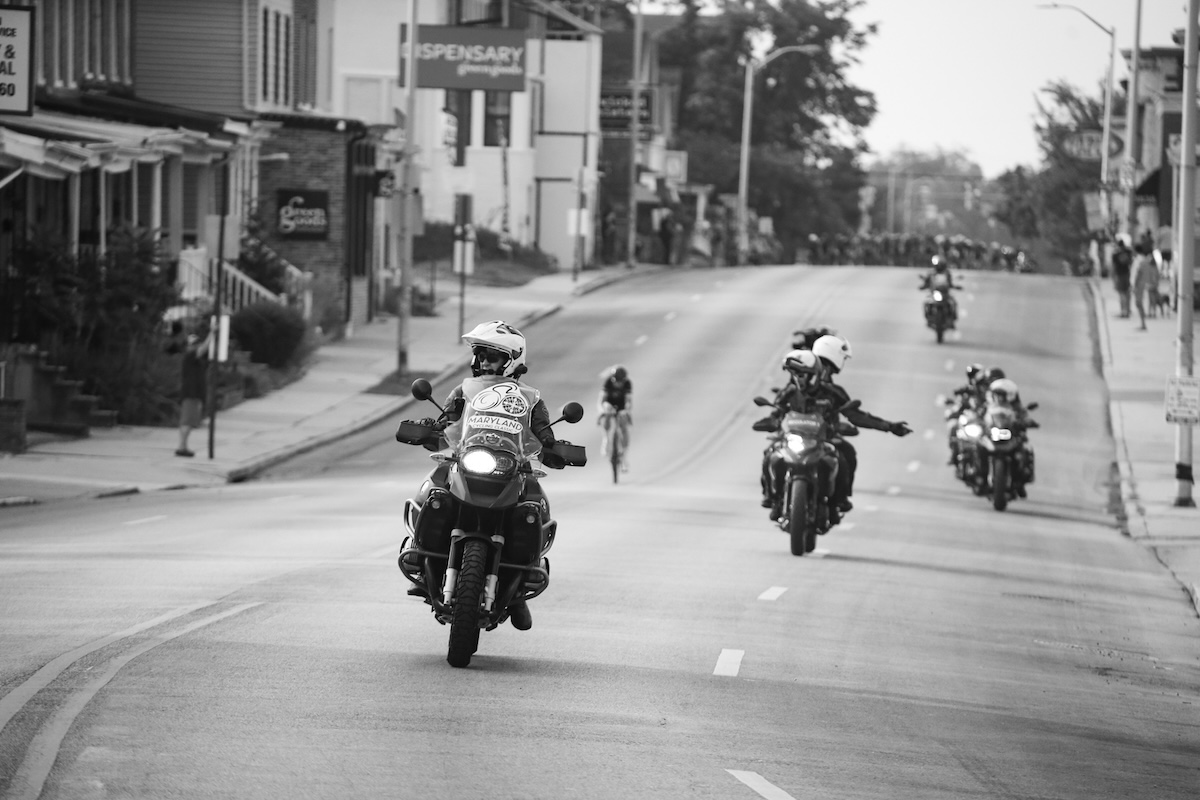
My photo essay for the Maryland Cycling Classic 2025 (MCC25) is not your classic race gallery, as one of my assignments for shooting the event was not the traditional “12 to 30 photos” of the UCI 1.1 one day Road Race. Rather, it was for a special project that my friend, old teammate, and rider on my now-retired team, DNA Pro Cycling – Heather Fischer – is working on. It entailed me shooting not only the Men and Women’s races but the behind-the-scenes and the workings of all the staff and crew of the race – in particular “the motors.”  

As I have been on various sides of the sport (including co-founding a team that ran for 12 years, during which I raced pro, then directing and managing the team, all while shooting many races as a professional cycling photographer), I really love the fact that everyone (not just the racers) that is involved in an event experiences it as “their race.” This photo gallery for Cycling West was an opportunity to showcase what motivated me to once again kit up with my photog gear – to see many of my former riders racing on various teams in the race, along with all the familiar faces, from the announcers to the UCI and USAC officials to the media ops and all the photogs working the major international race. This gallery gives you my POV on the happenings of MCC25. Anyone that knows me is aware for my love of BTS and using my photo essay as a form of storytelling, and I hope that you enjoy seeing more than just some race shots and podium photos!

Women’s Race

Maryland Cycling Classic 2025
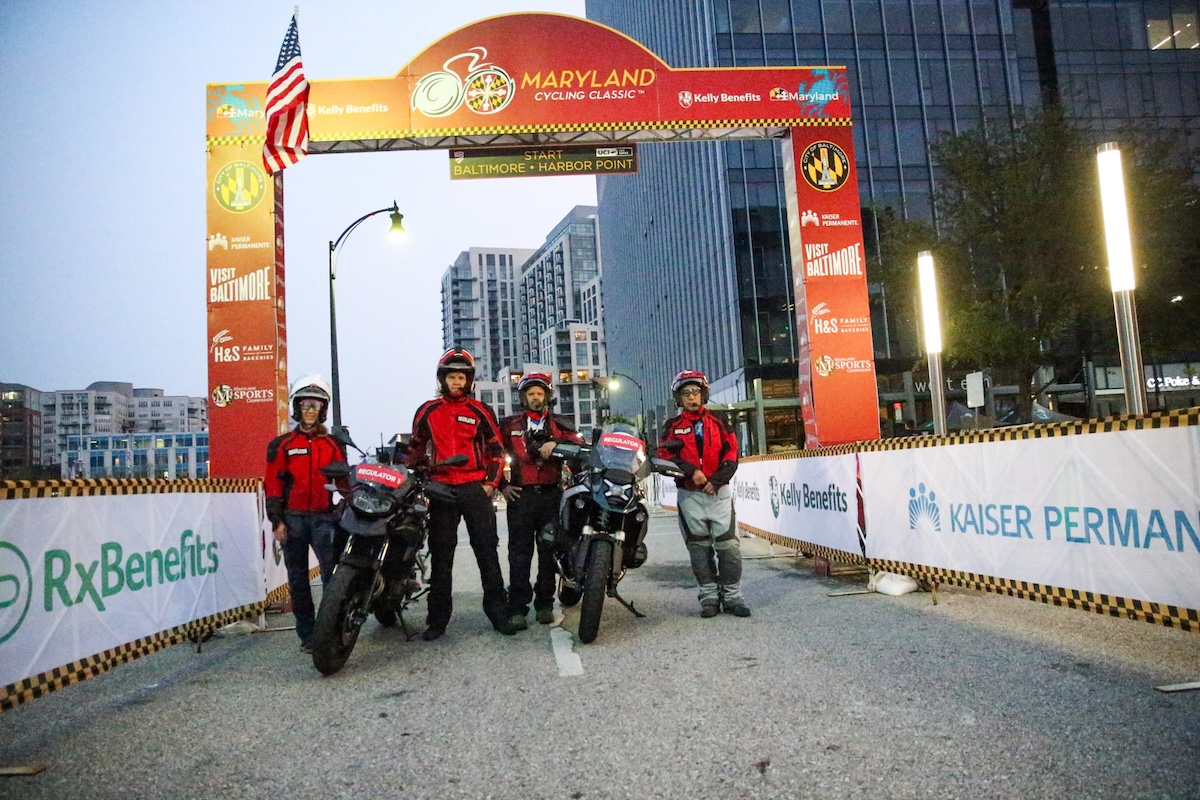
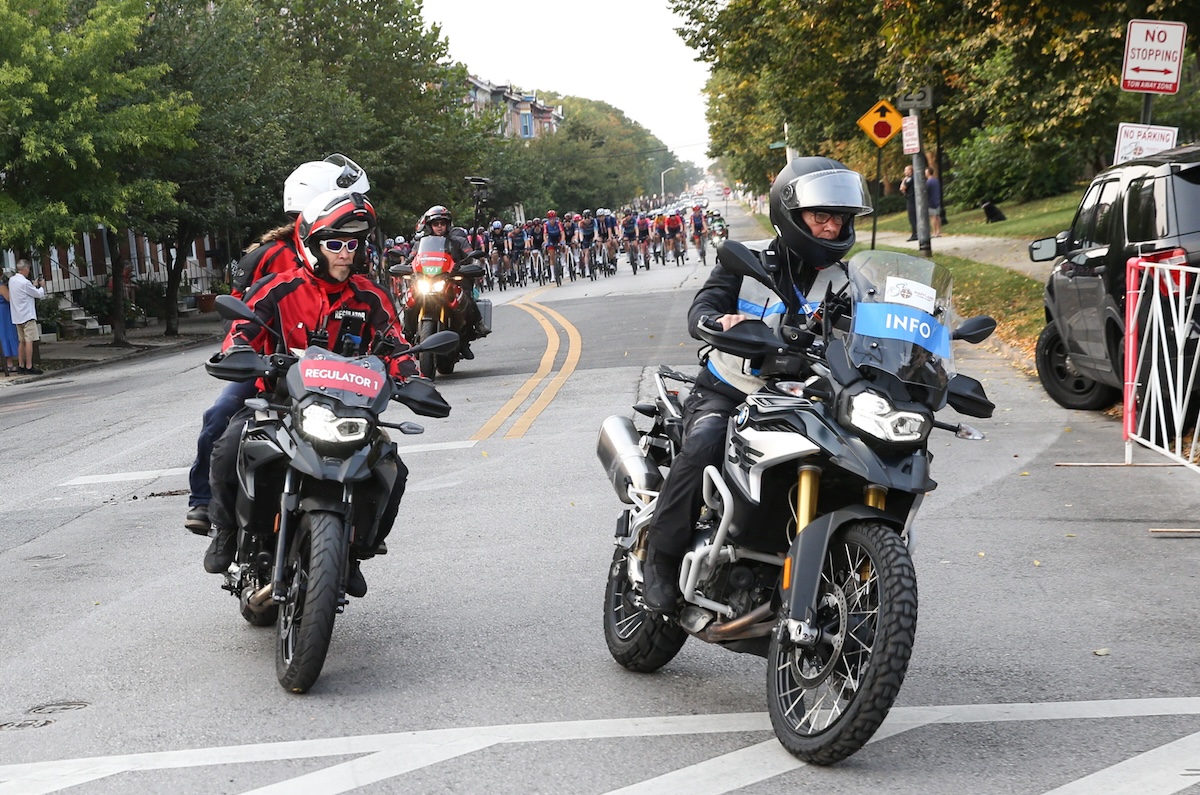
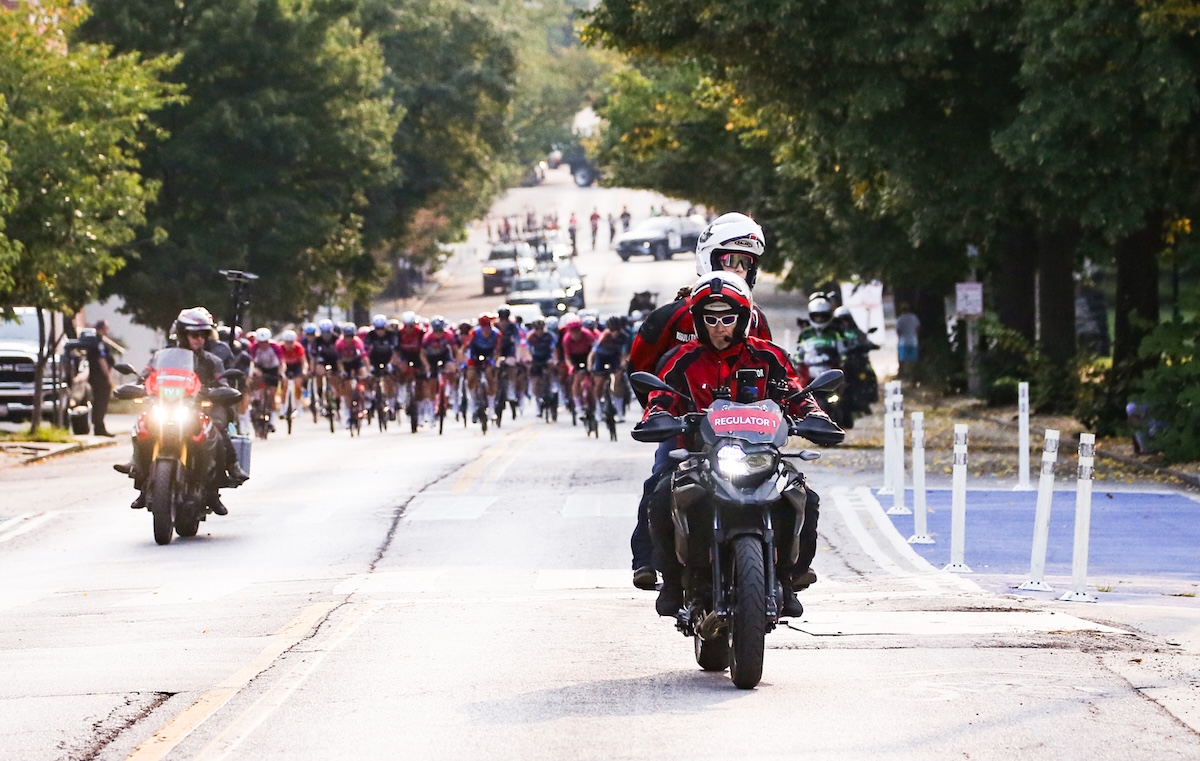
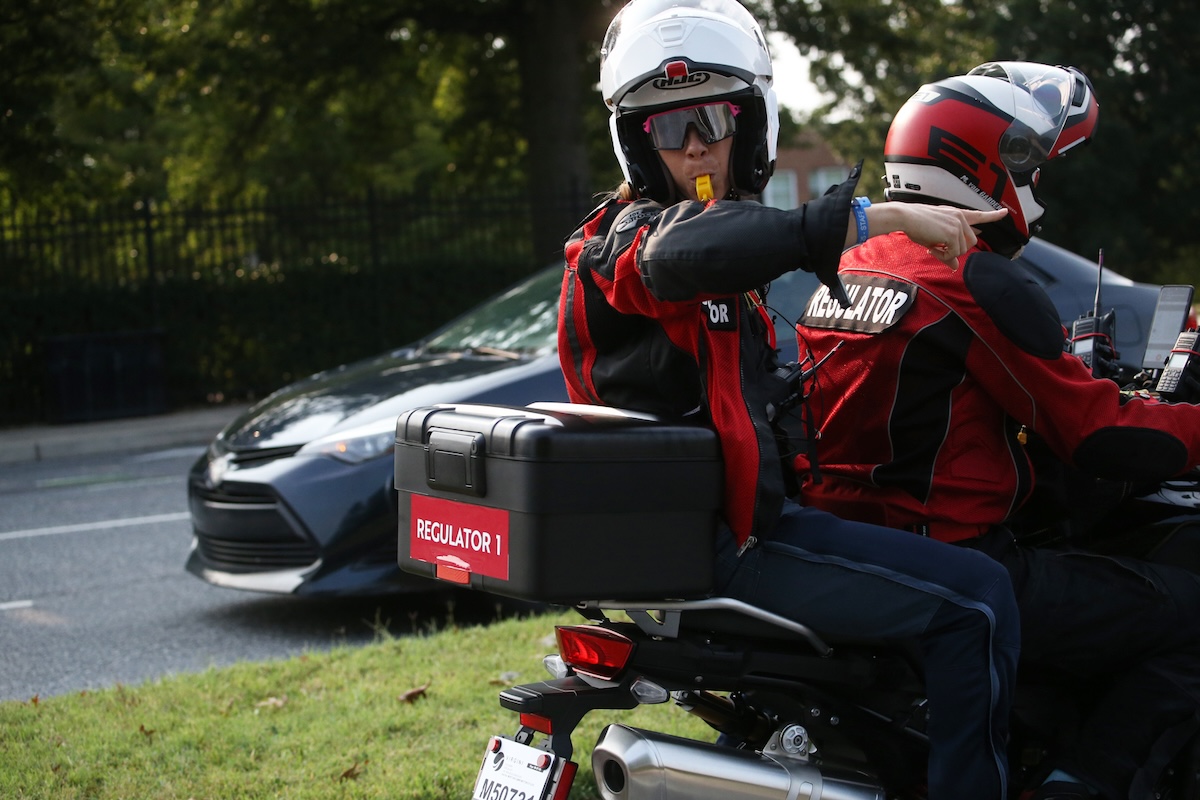
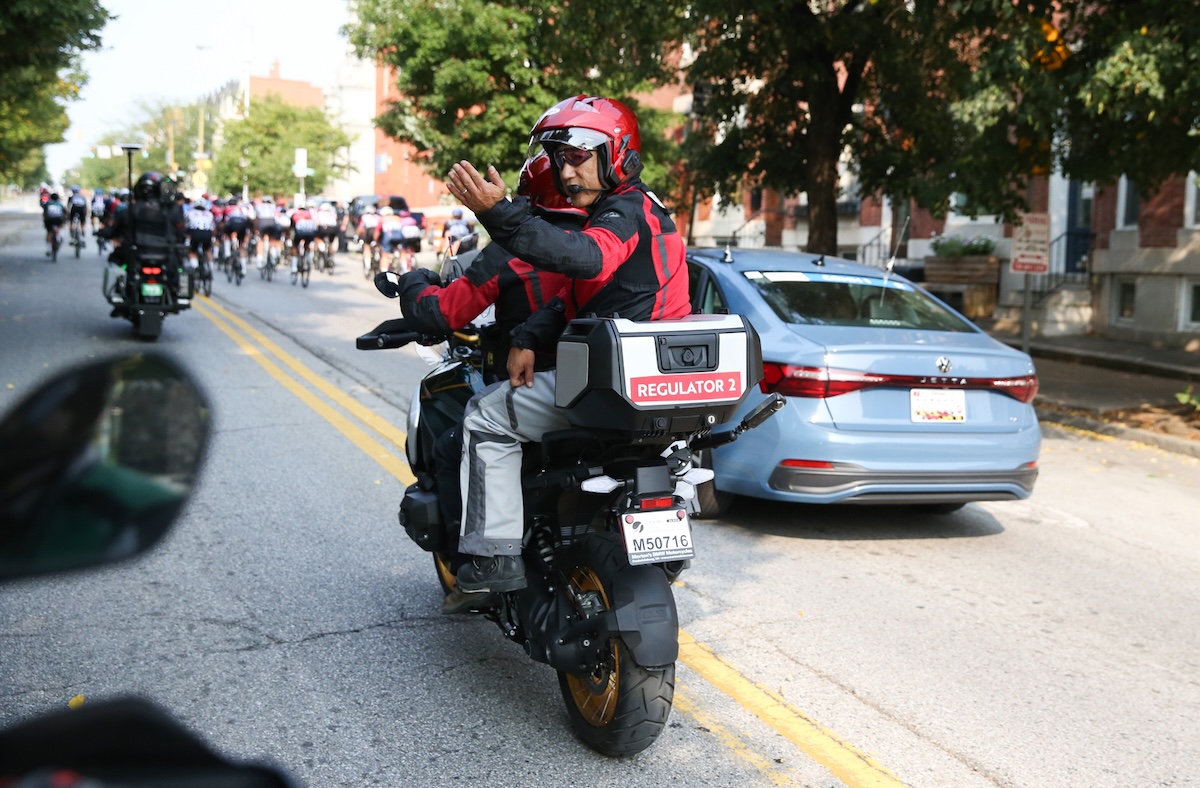
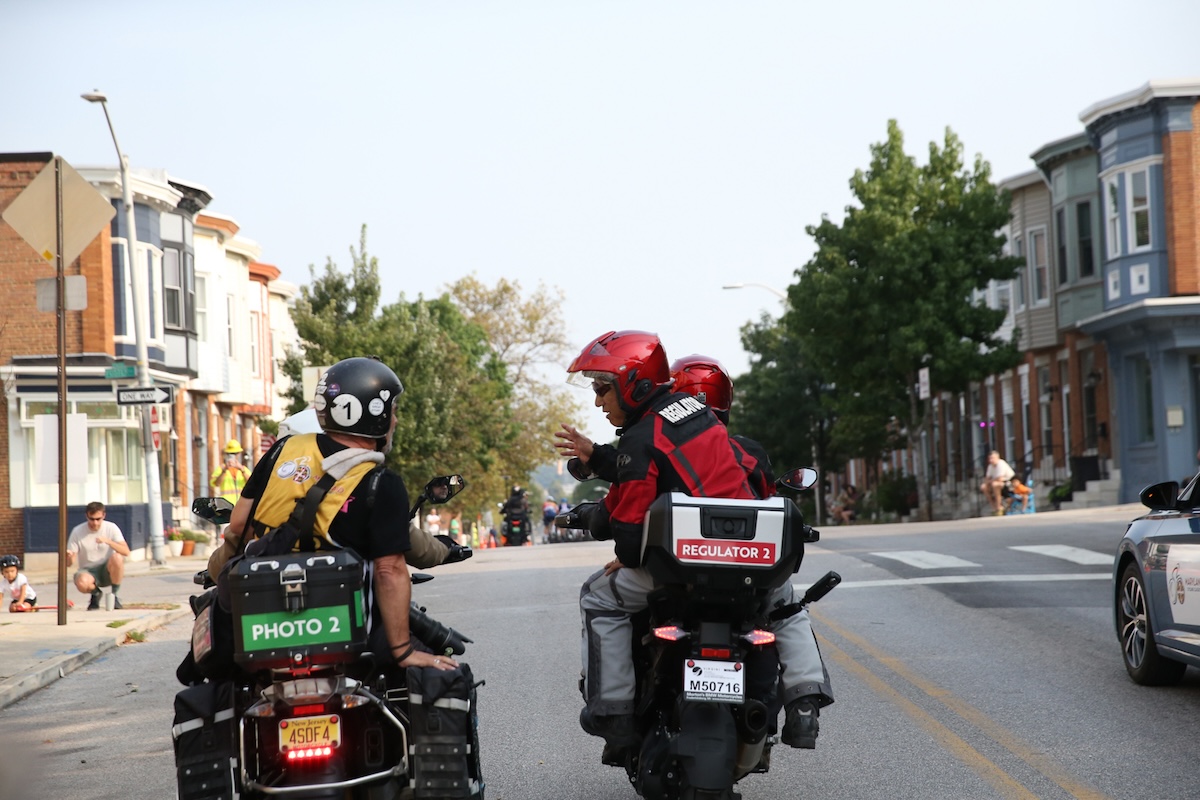
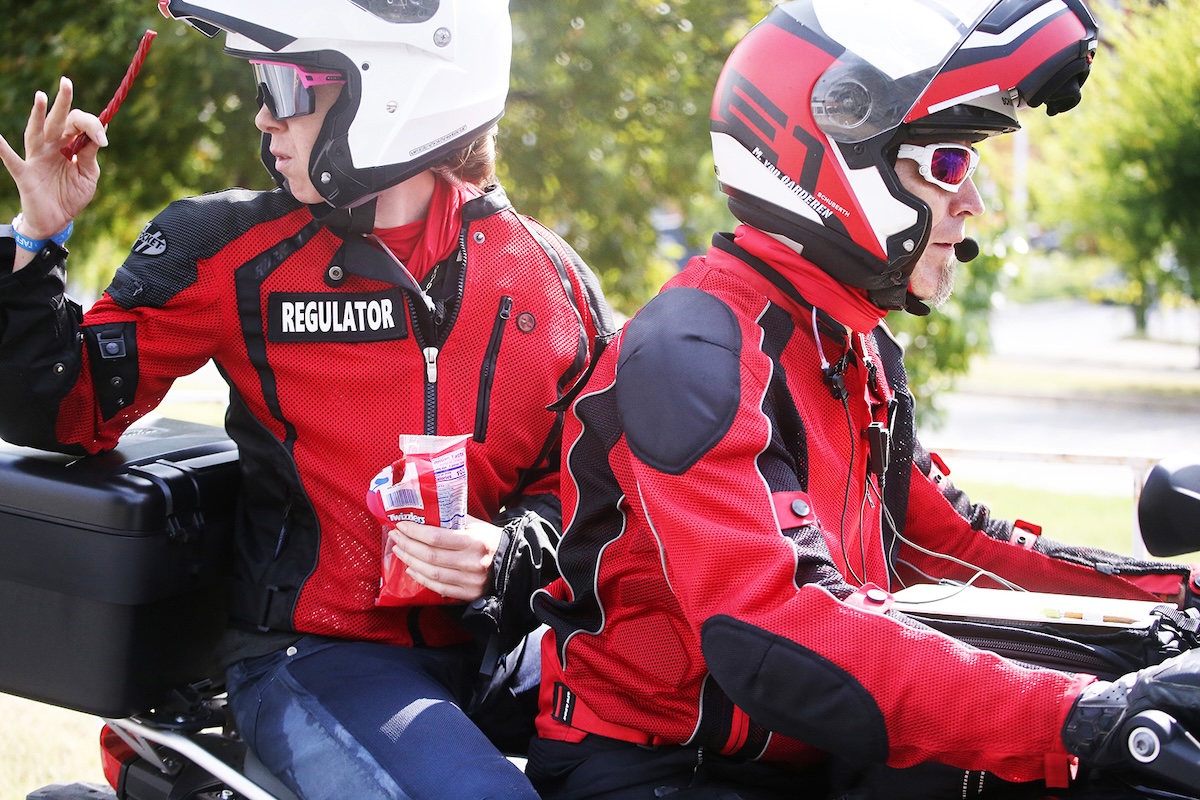
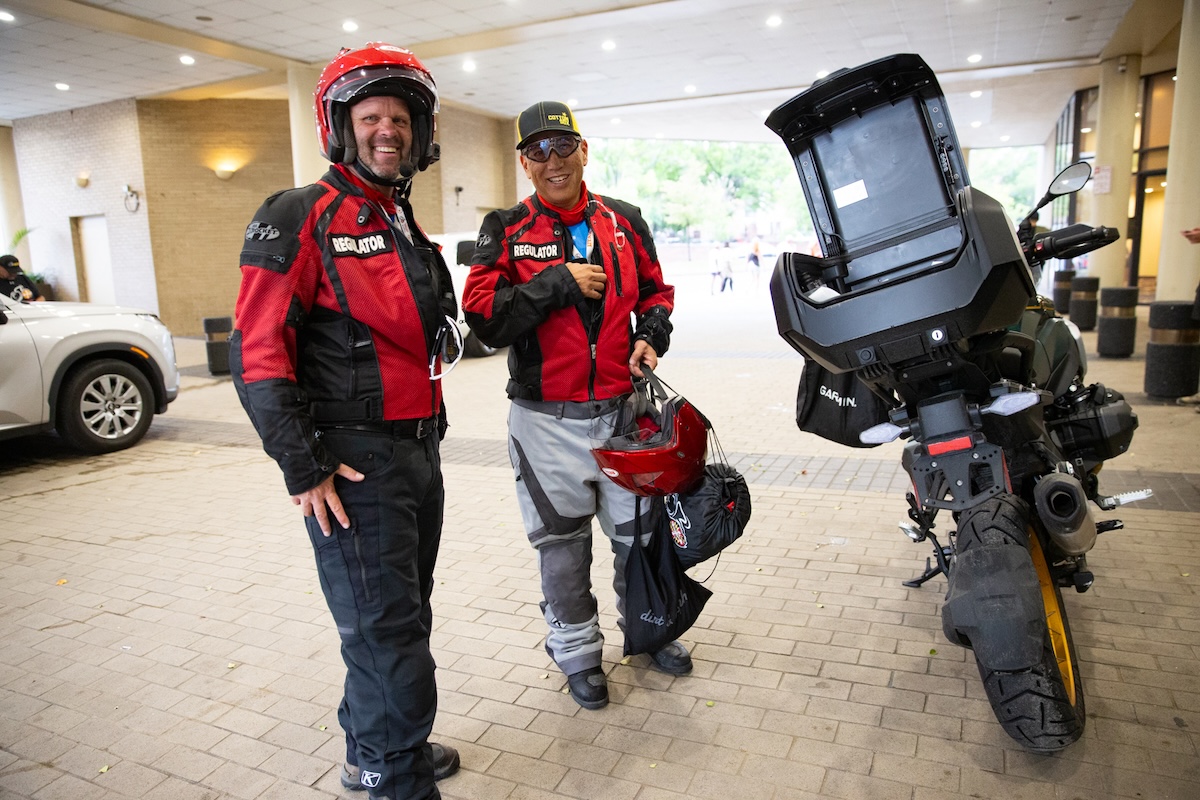
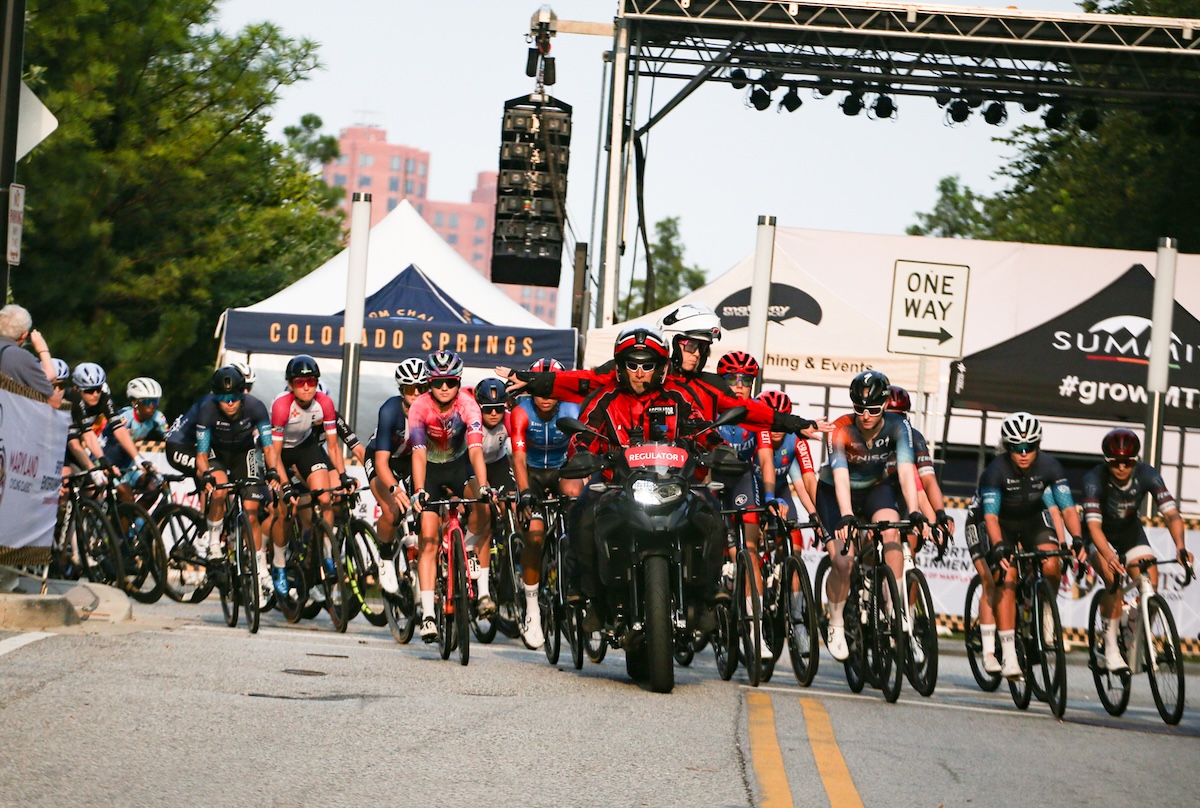
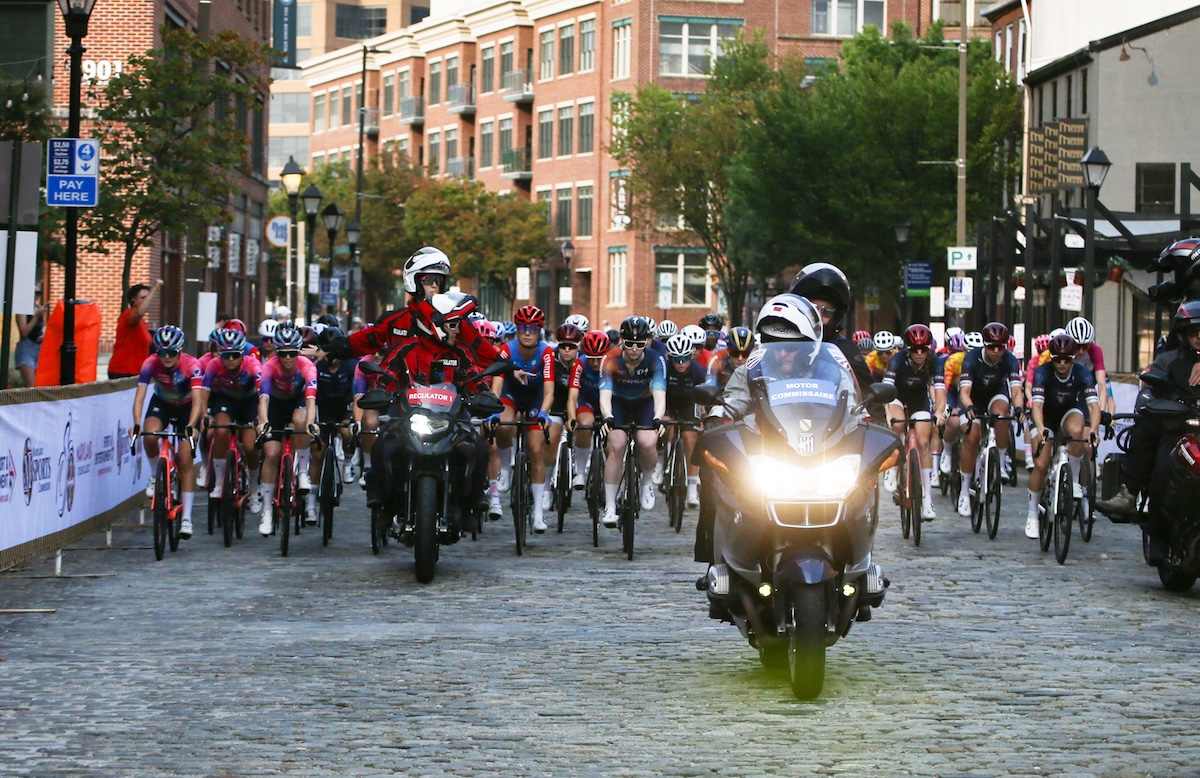
The regulators go 2-up on the moto and this team were all trained by A.S.O at Amgen Tour of California and/or at the Tour of Utah.
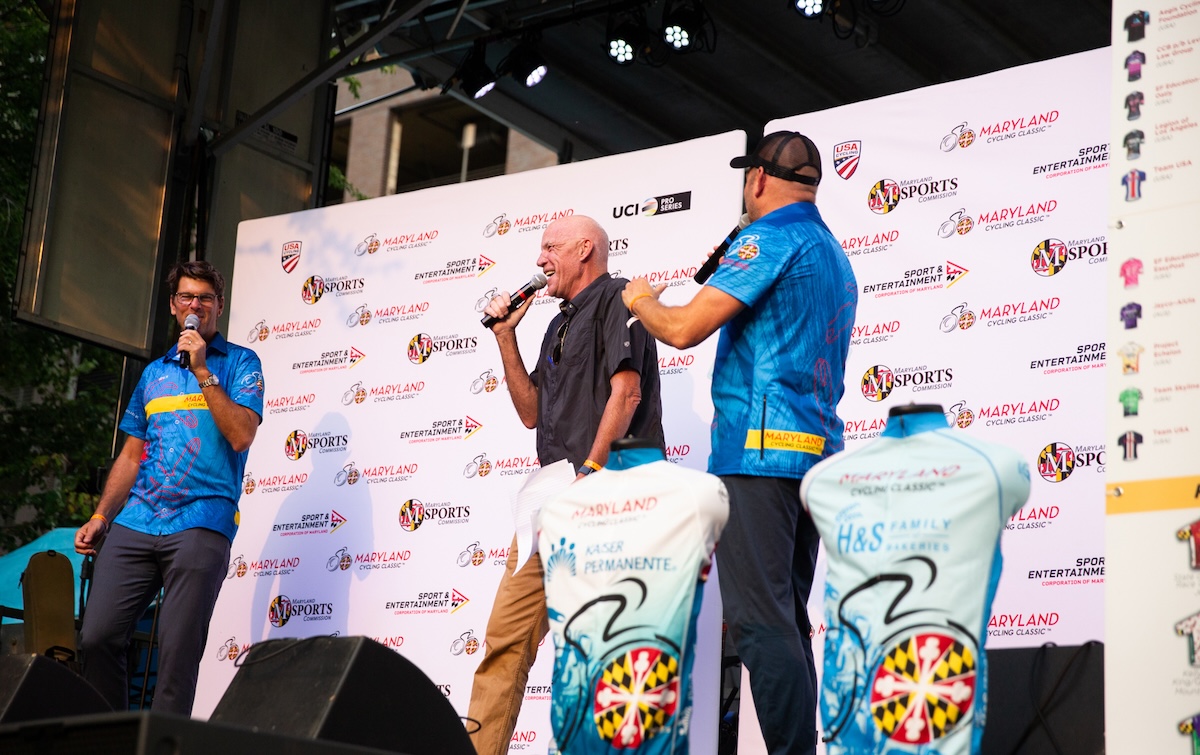
The voices of the race – Frankie Andreu (former pro cyclist, multi time Tour de France finisher and Olympian), Dave Towle (as a former pro, I liked my races to start with Dave yelling into the mic “Andiamooooo!” ), Chad Andrews (Chad = southern crits & many more).
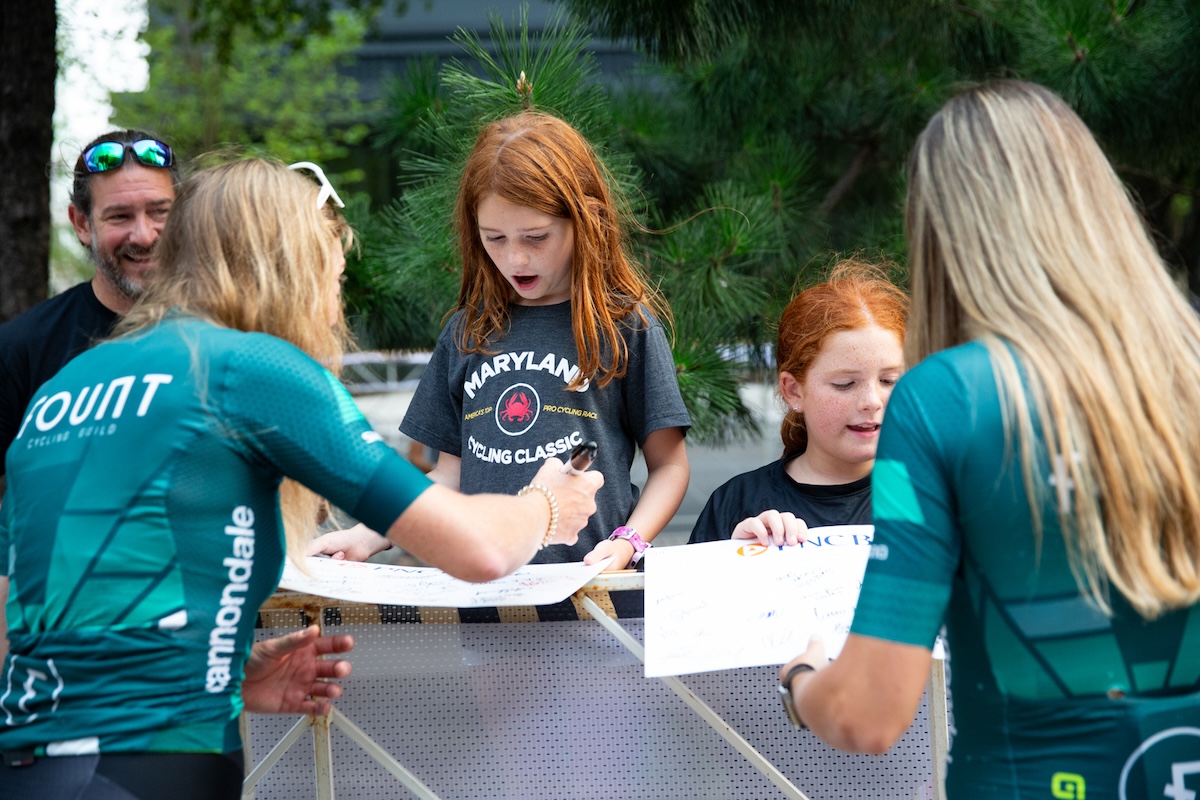
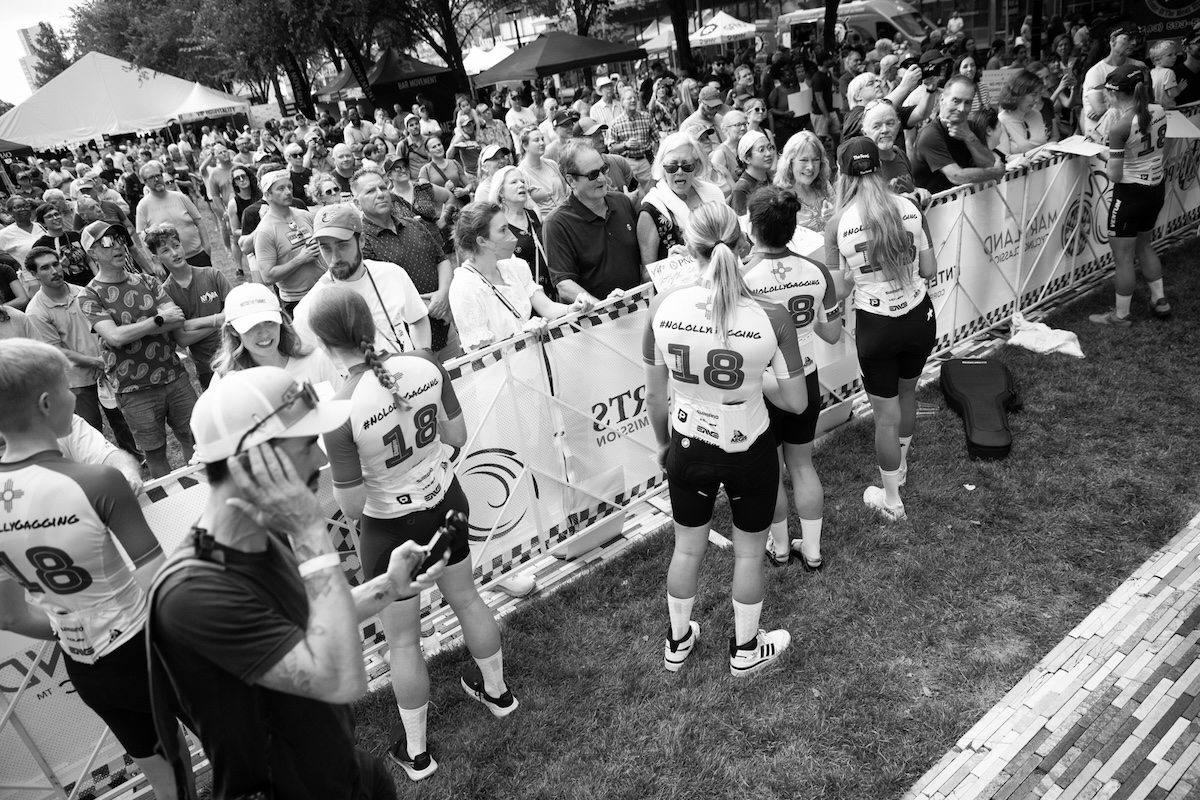
Inspiring future cyclists down Autograph Alley
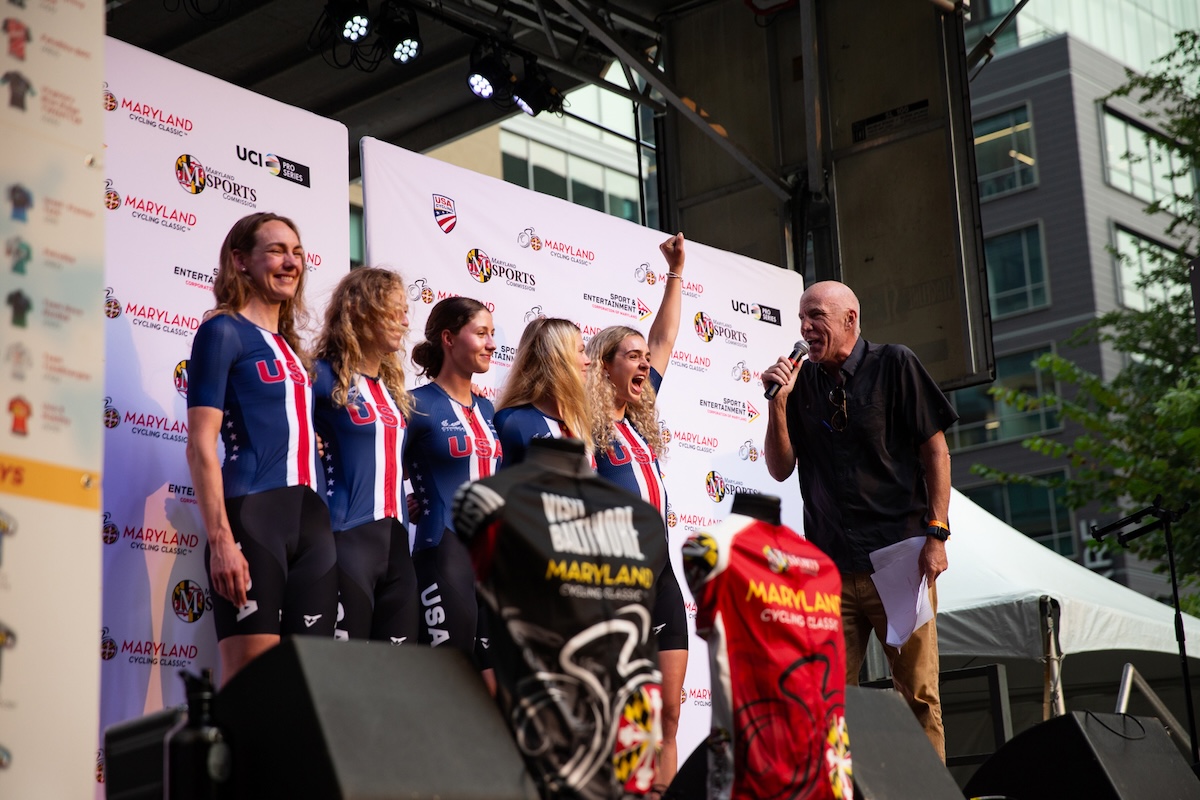
Maryland’s very own: Kenna Pfeiffer of Team USA getting the hometown crowd excited at Team Presentation with announcer, Dave Towle.
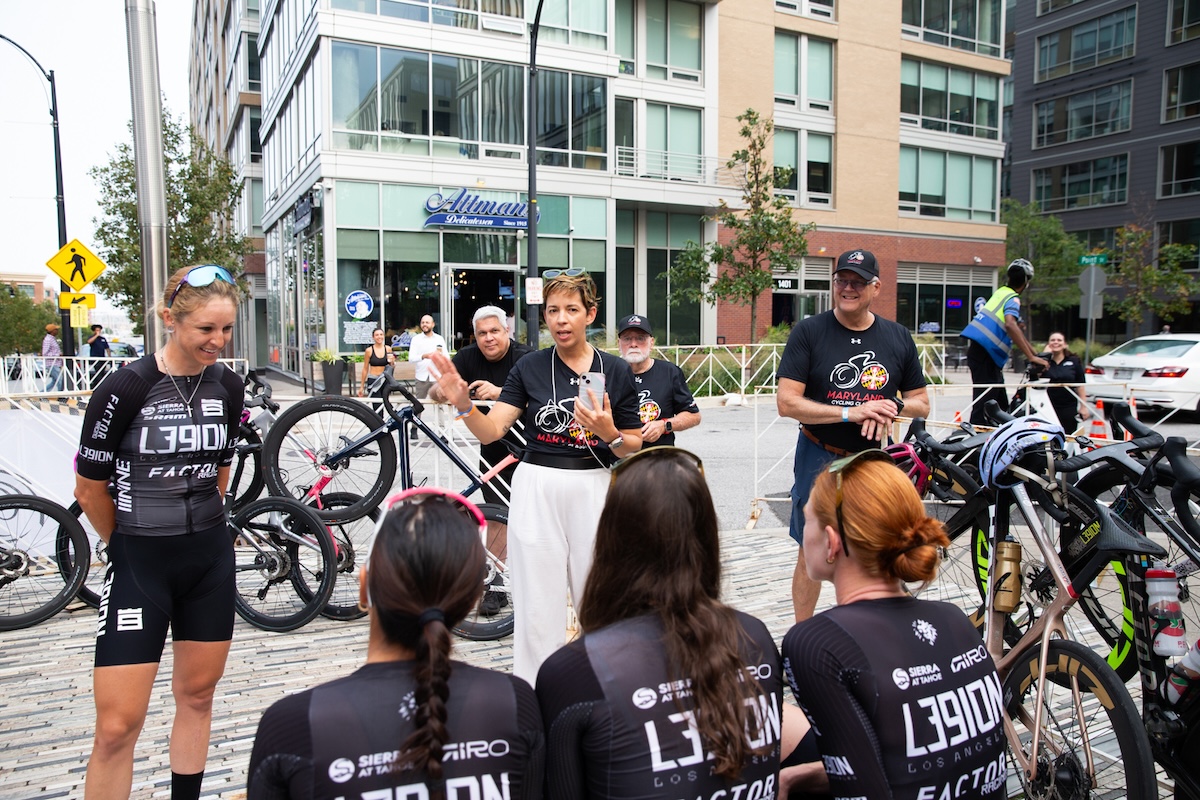
Rosael Torres-Davis interviewing L39ION riders before Team Presentation including former DNA Pro Cycling rider Holly Breckk who had an incredible 2025 season with a number of wins. The biggest of which was the Redlands Cyclinc Classic’s Stage 5, Sunset Road Race – her long time goal.
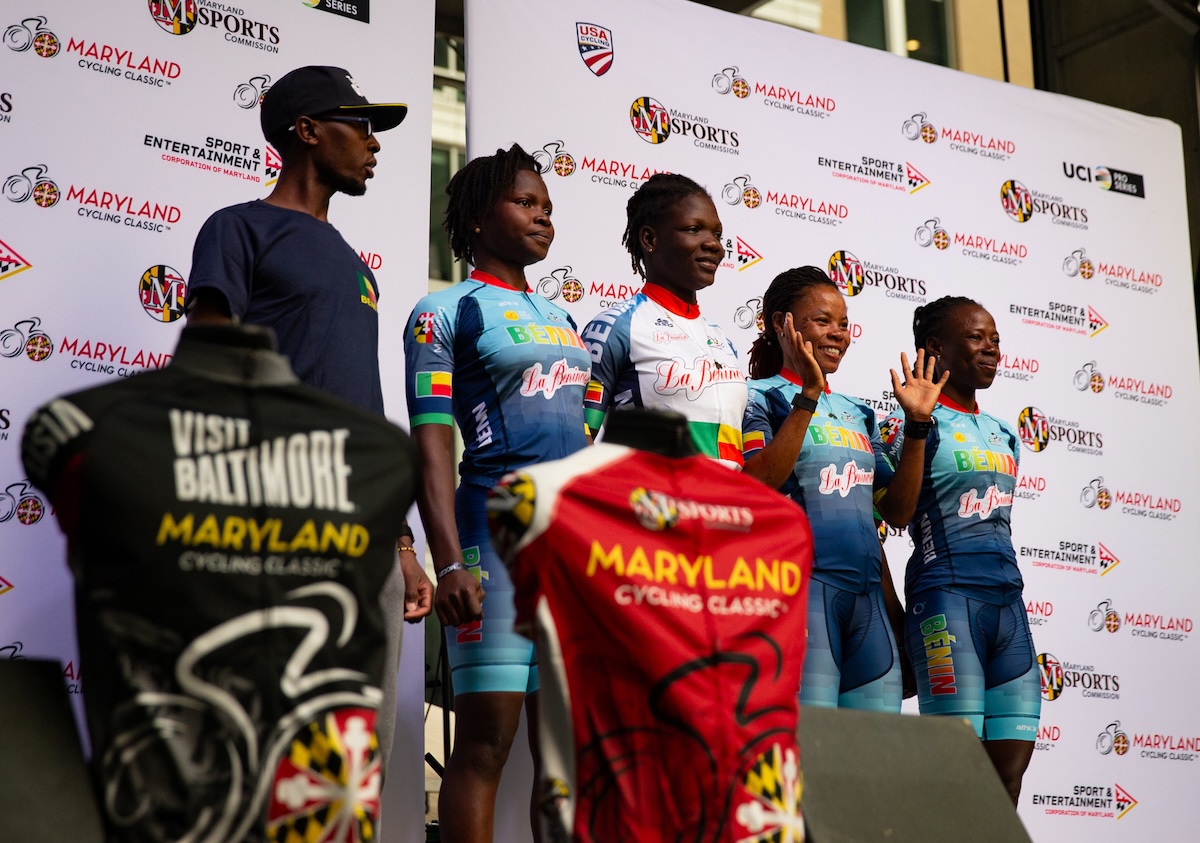
Team Benin made history by being the first black African female team to participate in a major internationally sanctioned race according to Maryland Cycling Classic.
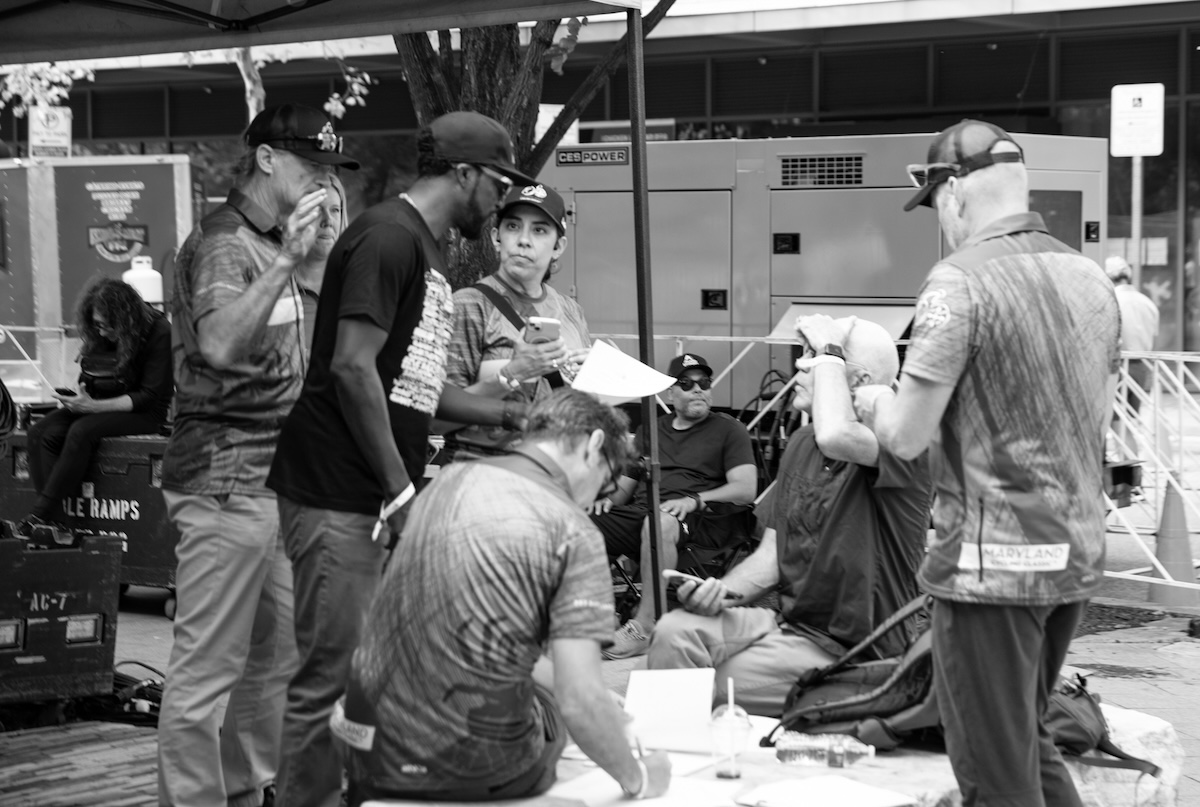
Behind the scenes of pre MCC25 Team Presentation – the Media Team (Rebecca Reza and Rahsaan Bahati) prep together with the Stage Announcers.
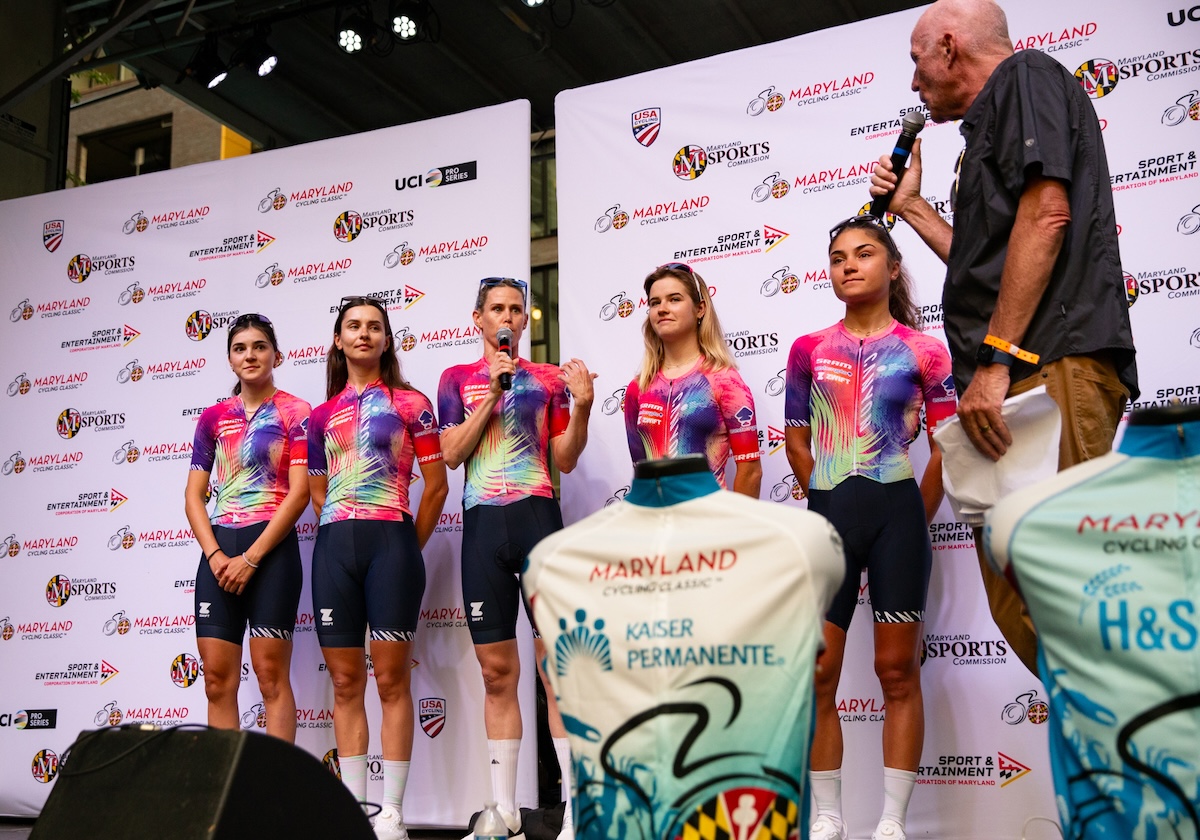
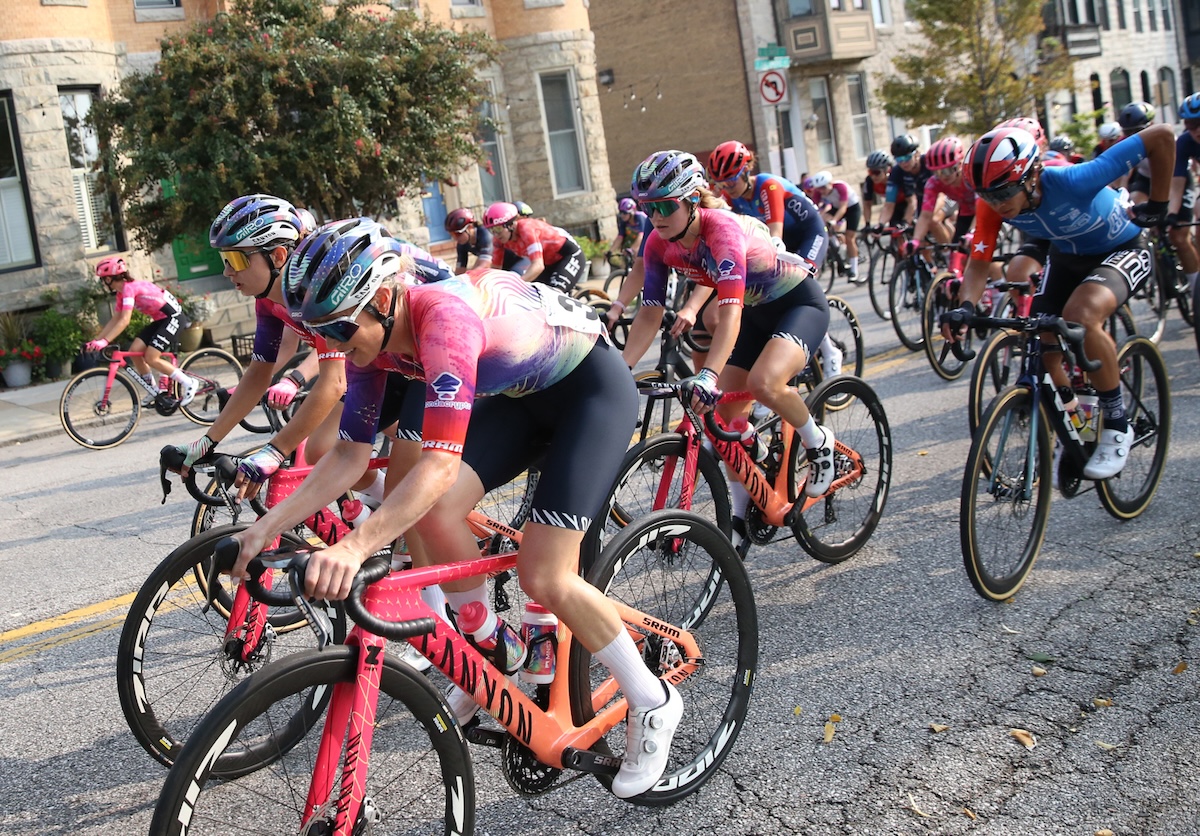
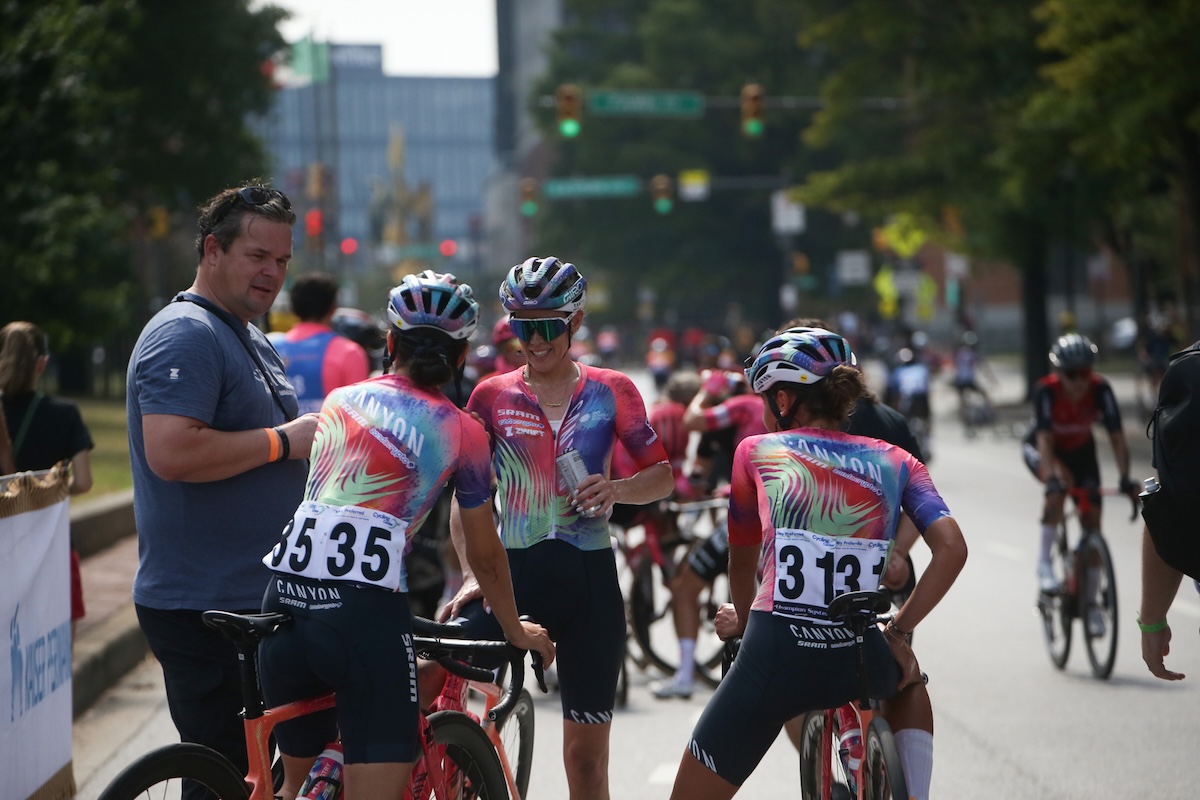
One of the two World Tour Teams to race Maryland Cycling Classic 2025 (MCC25) – CANYON//SRAM & long time team member Tiffany Cromwell chatting about how she started her racing career in the US.
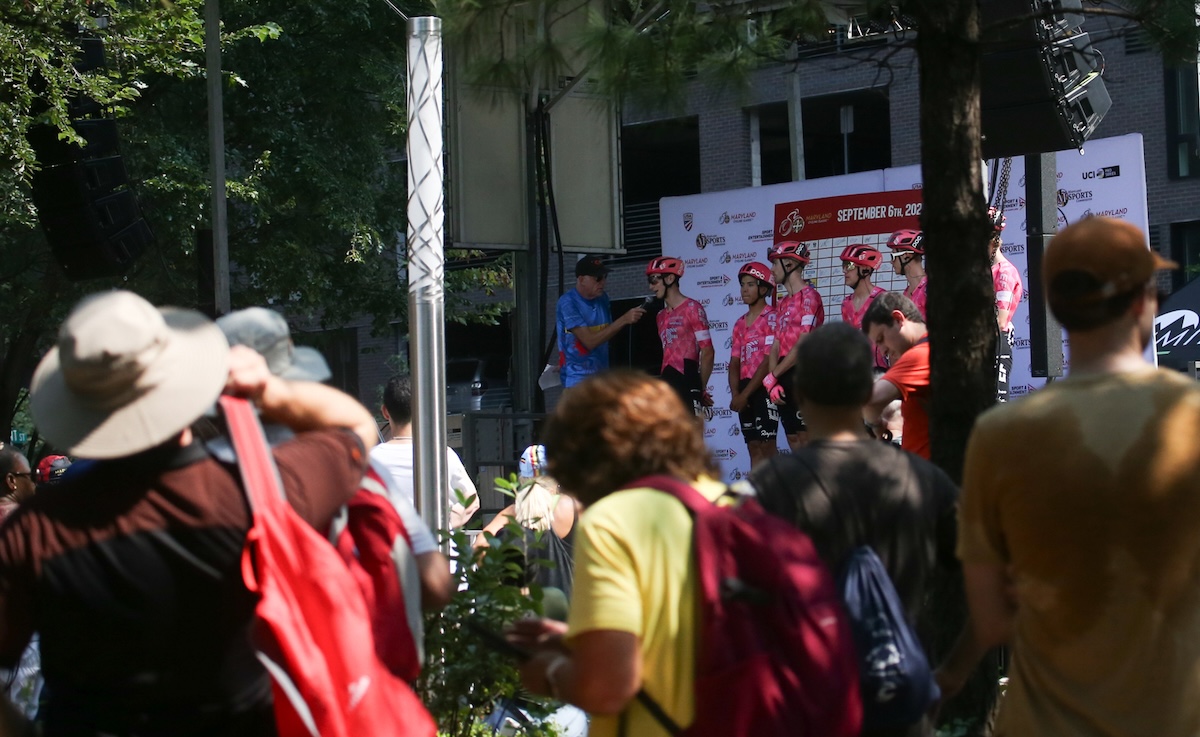
Men’s Team Presentation with Neilson Powless representing World Tour team: EF Education-Easy Post. Fun fact: Neilson’s sister – Shayna – was on my team for 2 years. Good “DNA “runs in that family.
Little fans
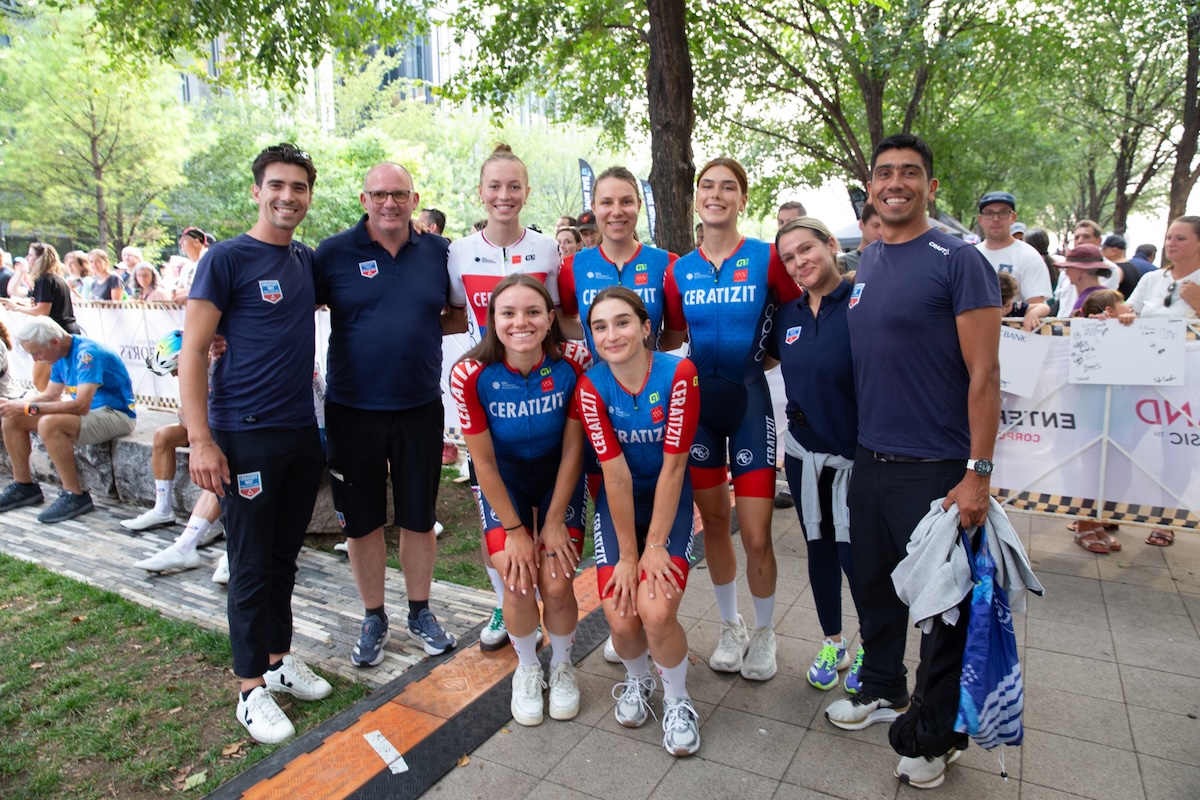
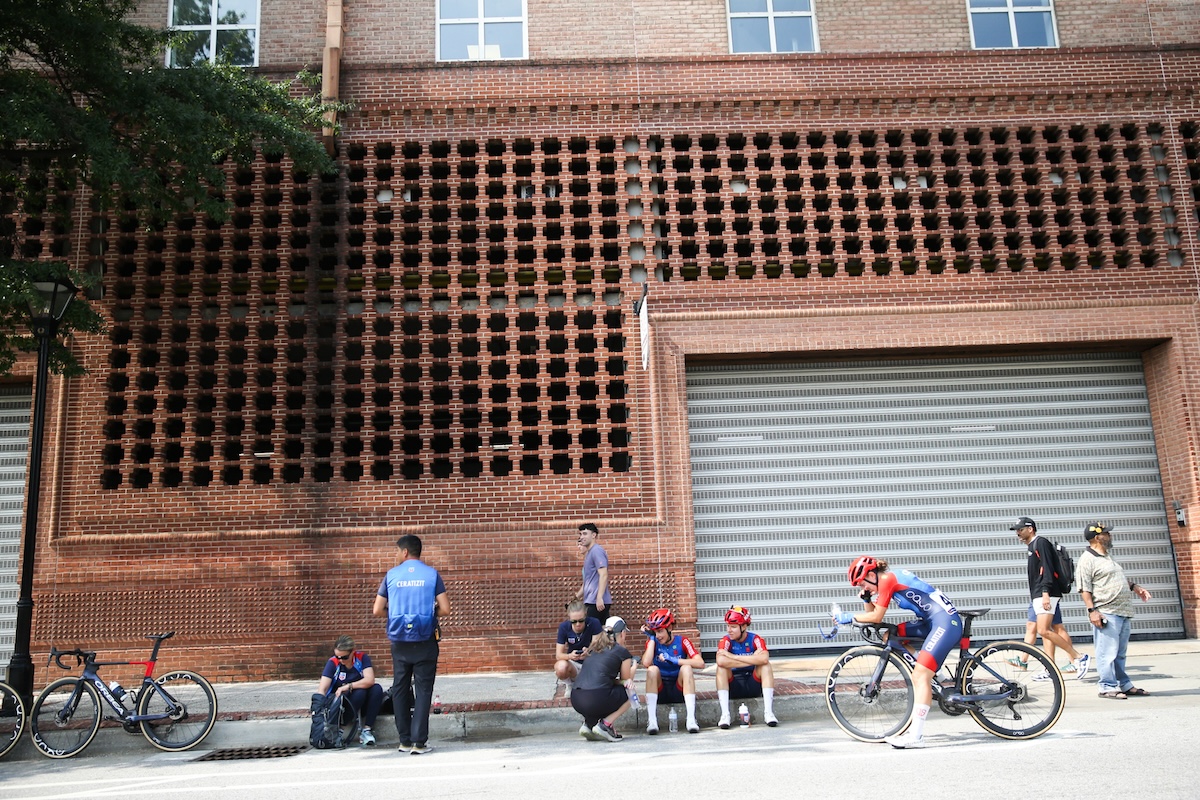
Last and final race for World Tour team – Ceratizit. GM & DS Dirk Baldinger is a friend of mine who I first met at the UCI Directors Course in Aigle Switzerland in 2018.. Our DNA riders Gaby Pilote Fortin & Sarah Van Dam went onto his team over the years. Was super sad to see an incredible team fold but hoping to see a comeback in the near future.
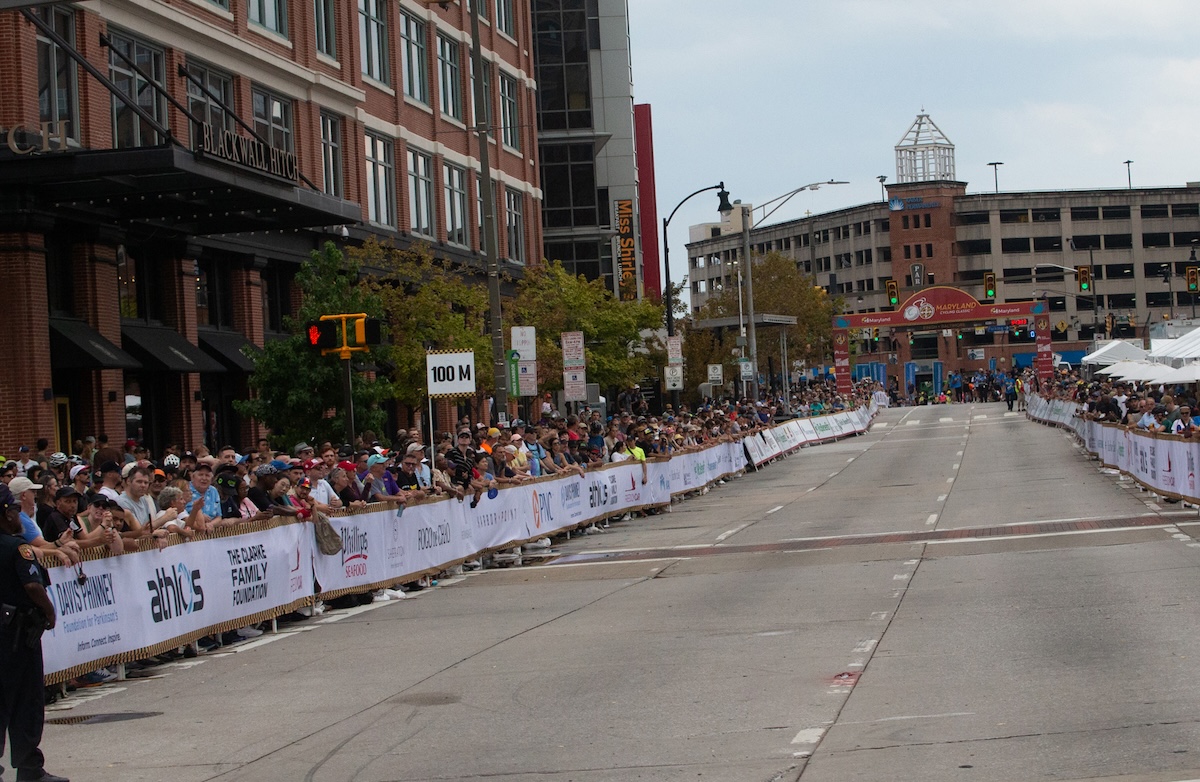
Baltimore local news and social media outlets referred to the weekend as “Traffic Jamageddon” because of the three major events occurring concurrently in a half-mile radius in downtown Baltimore – MCC25, Benson Boon concert and & the Orioles vs Dodgers game.
Aegis Cycling Foundation team with two former US elite national road race champions: Lauren Stephens and Emma Langley meet the Maryland crowd..
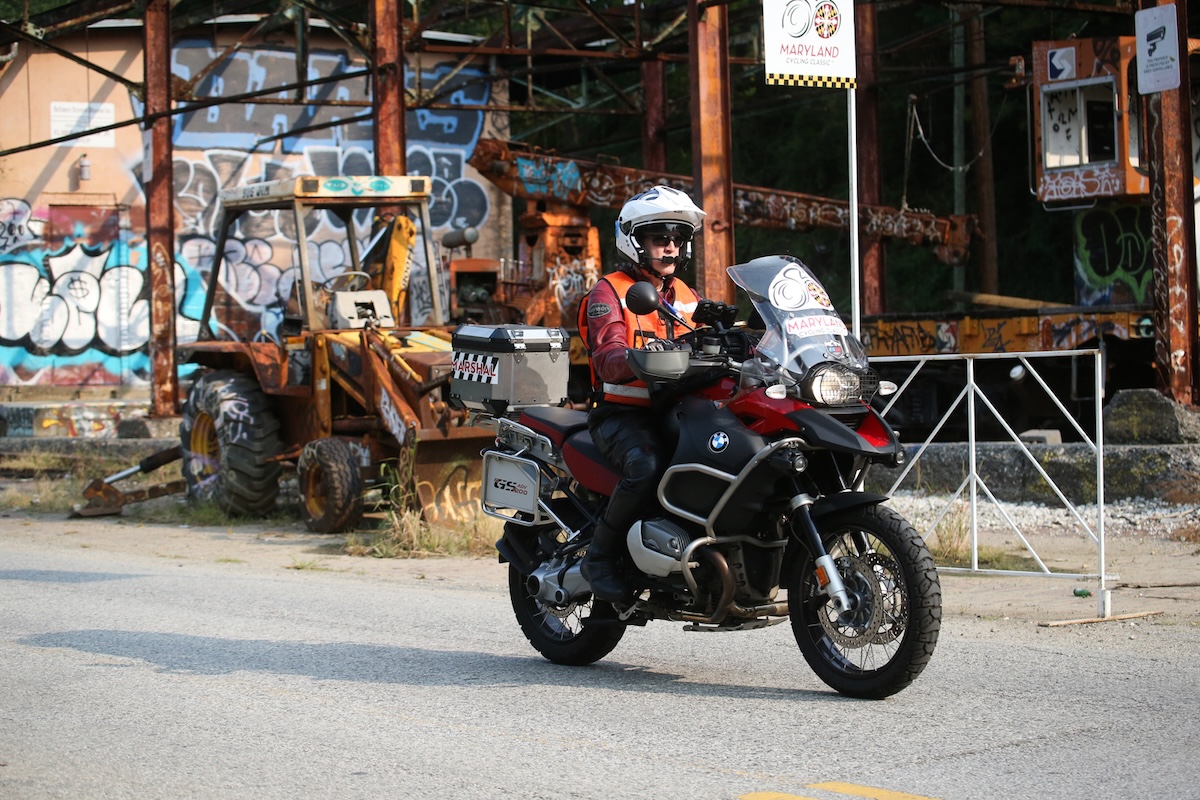
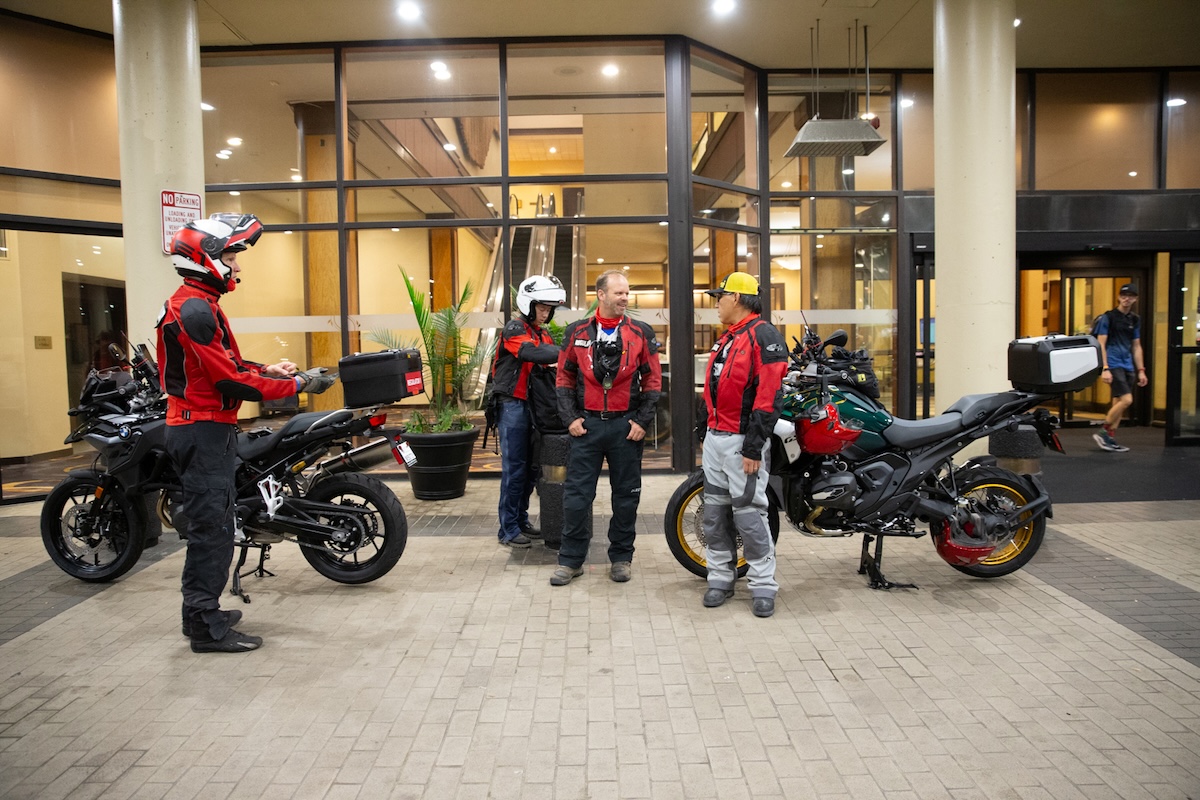
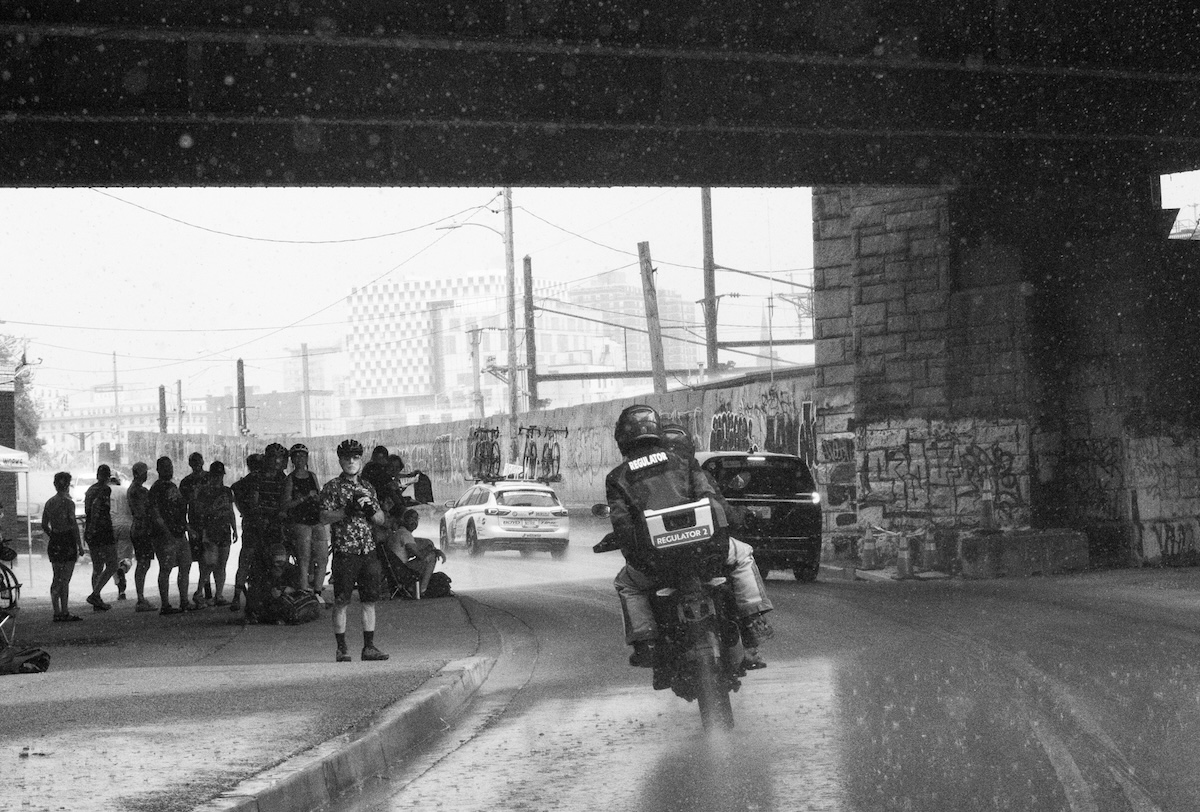
Regulators are one of the first to leave the Race Hotel at 5am.
For posterity’s sake – team photo of the Regulators: Regulator 1 Heather Fischer & Marcel van Garderen, Regulator 2 Tim Schaars & Alex Kim.
Regulator directs Race Marshals and other Motors on where to stage their bikes before the race start.
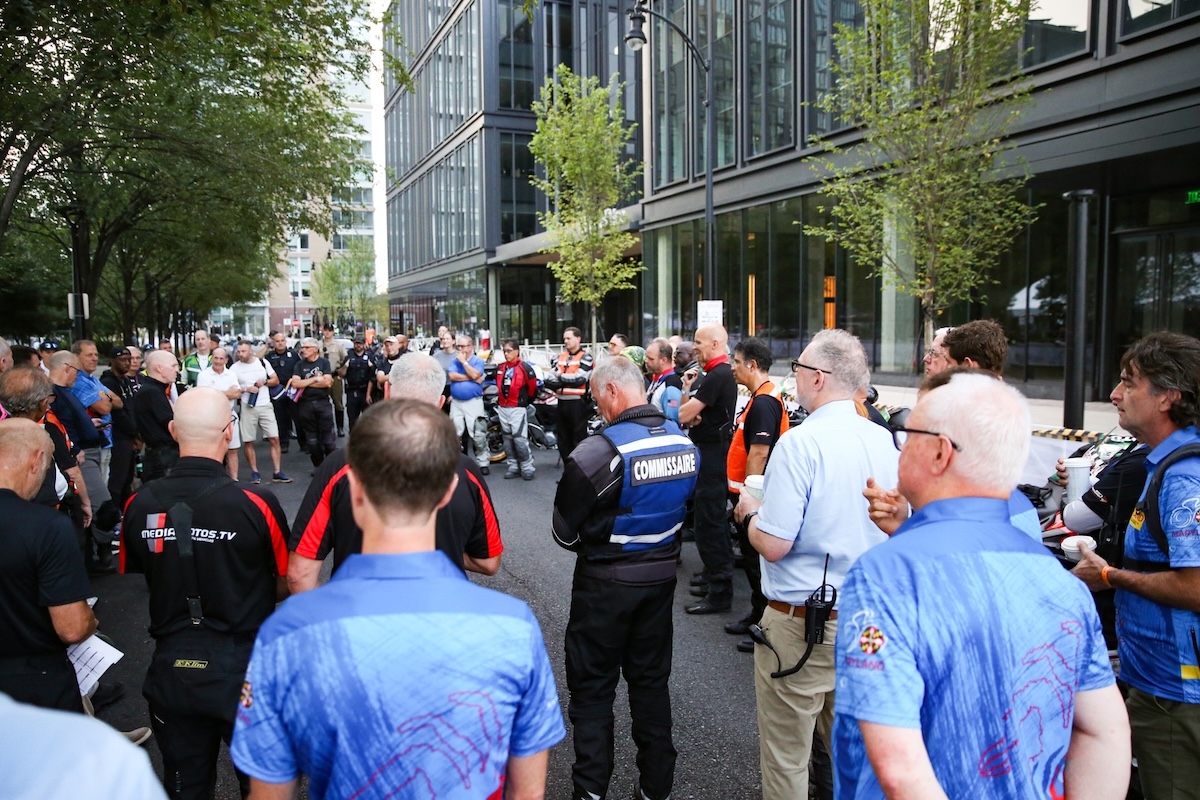
An hour and fifteen minutes before race start , all the motors, officials, police, medical and neutral support has a meeting.
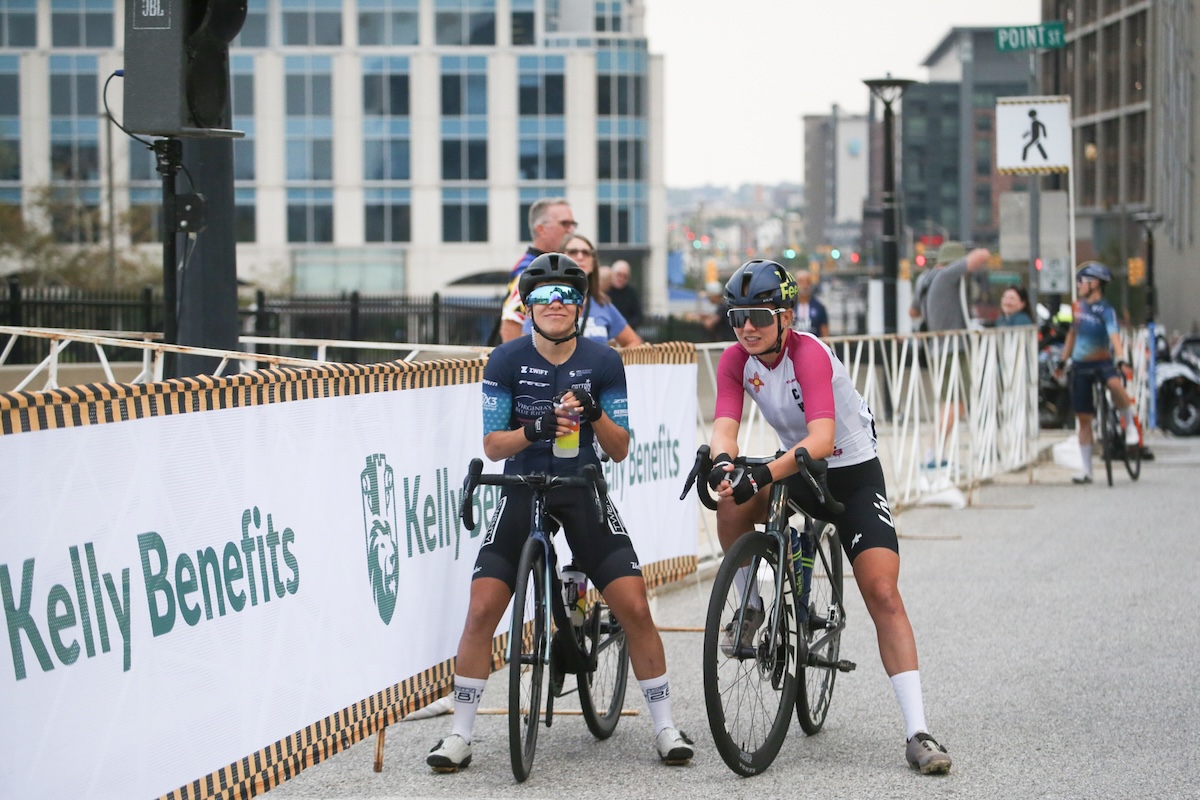
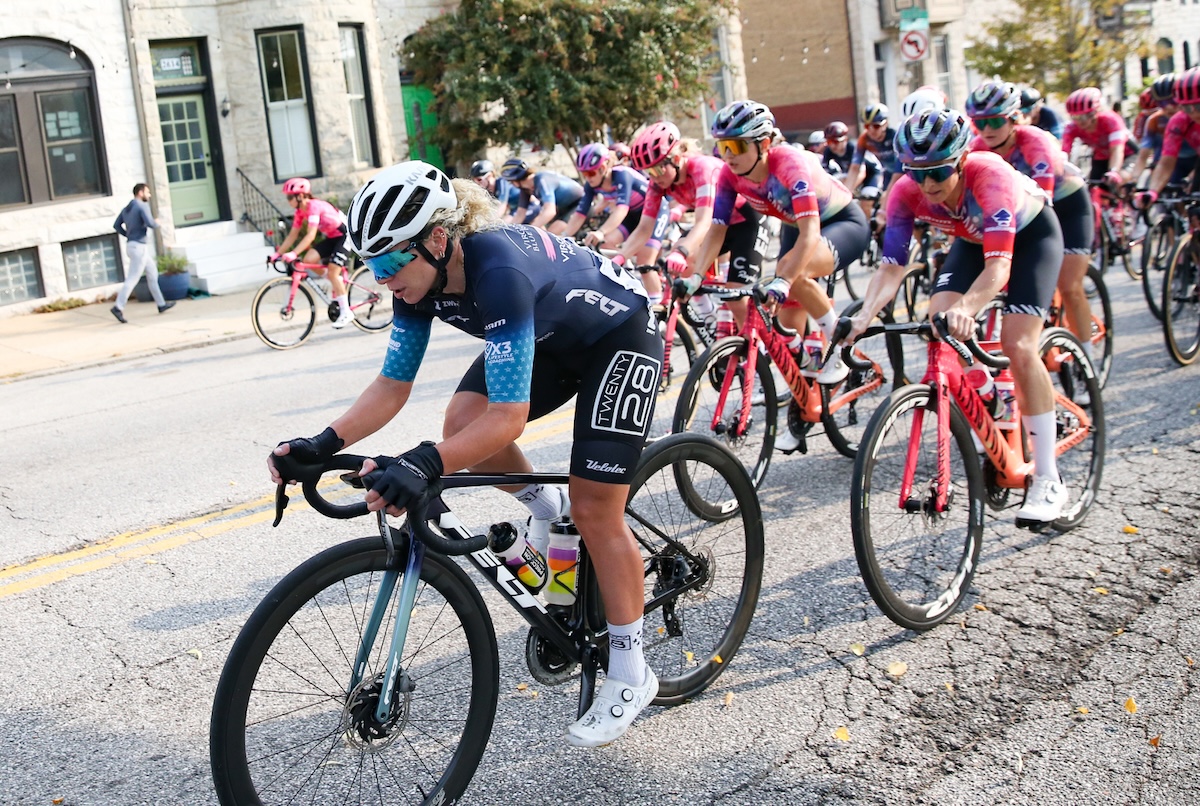
There are advantages to be at the front of the race at the start (eg., higher chance of avoiding crashes plus you save energy by not working your way up to the front) & guaranteed you will see seasoned pro, Sofia Arreola of Virginia Blue Ridge Twenty28 staging early at every race she’s at (here with former teammate, Mellisa Rollins).
Another team of familiar faces at the race – Media Motos.
Former DNA Pro Cycling rider Heidi Franz
Utah local and 2025 SBT Gravel and 2024 Leadville 100 winner – Melisa Rollins – guest rode for Lauren Stephen’s team: Aegis Cycling Foundation.
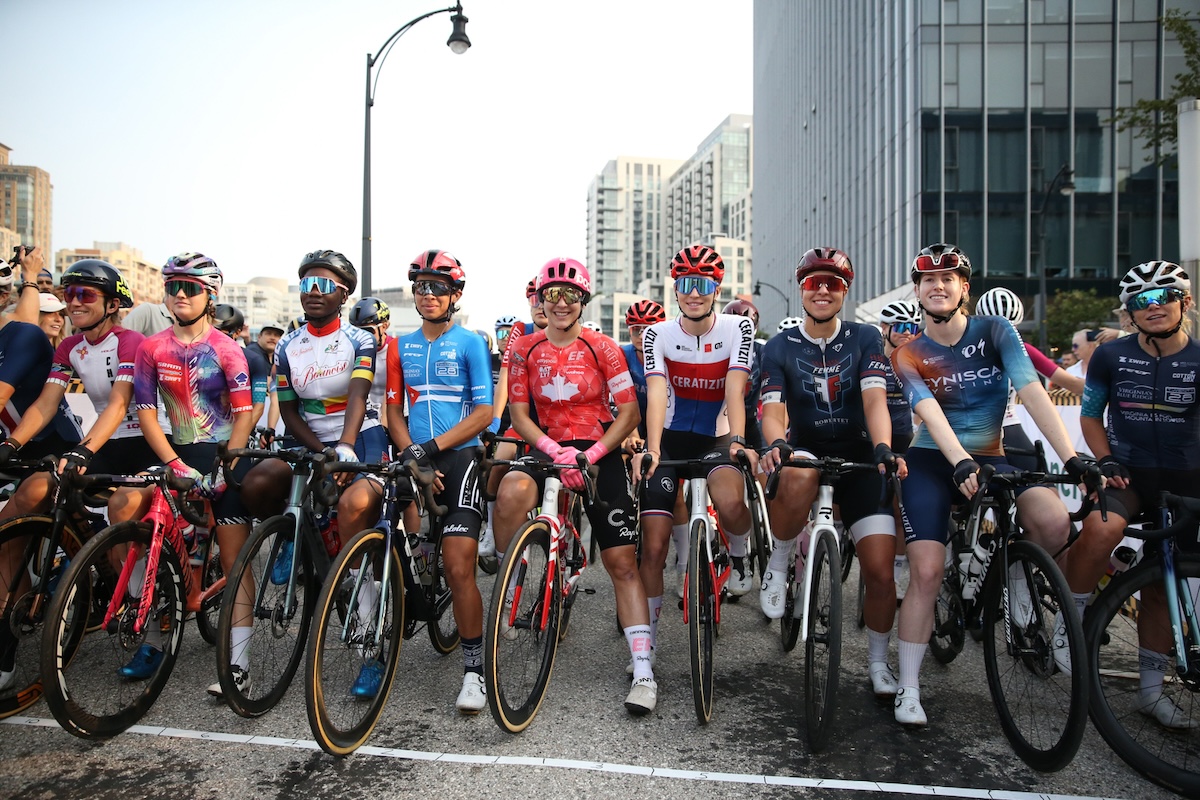
Front row alone represents 7 countries .
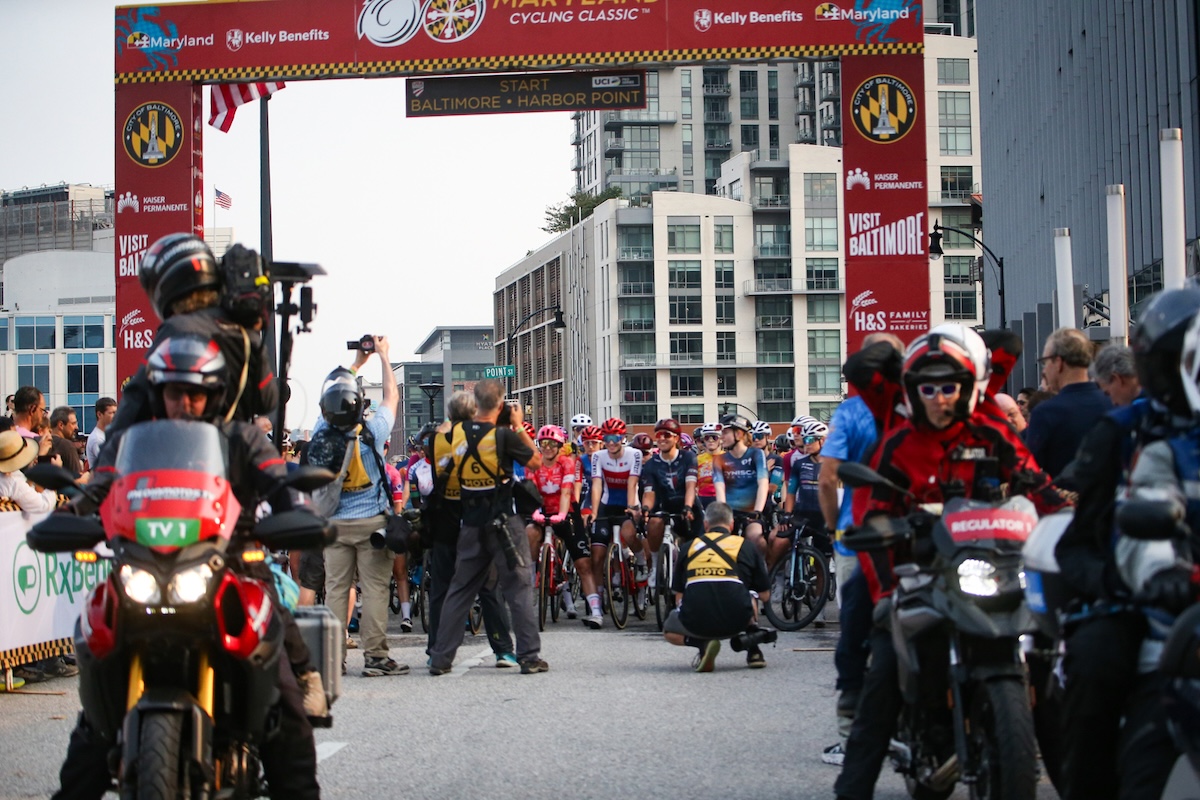
My favourite moment – after the call ups and right before the national anthem, the photogs are getting their final start line shots and teh motors are all staged to start…
MCC25 predictions.
Former DNA Pro Cycling rider & privateer racer (Gravel and Crits) – Heather Fischer – got injured at Unbound while racing which took her out of racing for the rest of the season but was able to respond to the call up for Regulator and work MCC25.
Closing in on 0km – teammates find each other and ride together.
Trish Black (Info) and Marcel van Garderen (Regulator) lead the peloton to 0Km Start.
Big smiles from friend and photog colleague Nathan Schneeberger aka Snowy Mountain Photography.
Once the women hit the 0km Start – back to back attacks started to happen.
Emma Langley, former US national RR champion and rider for Aegis looks back to check if any riders are following her move.
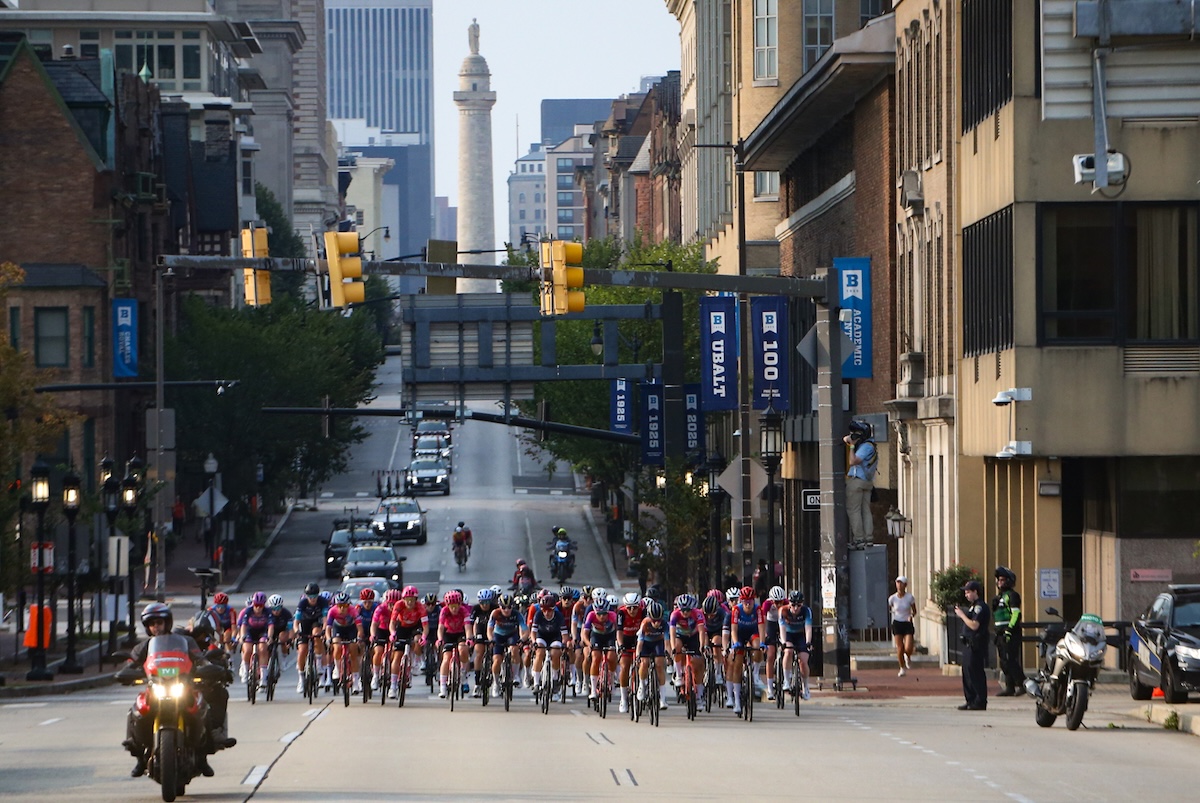
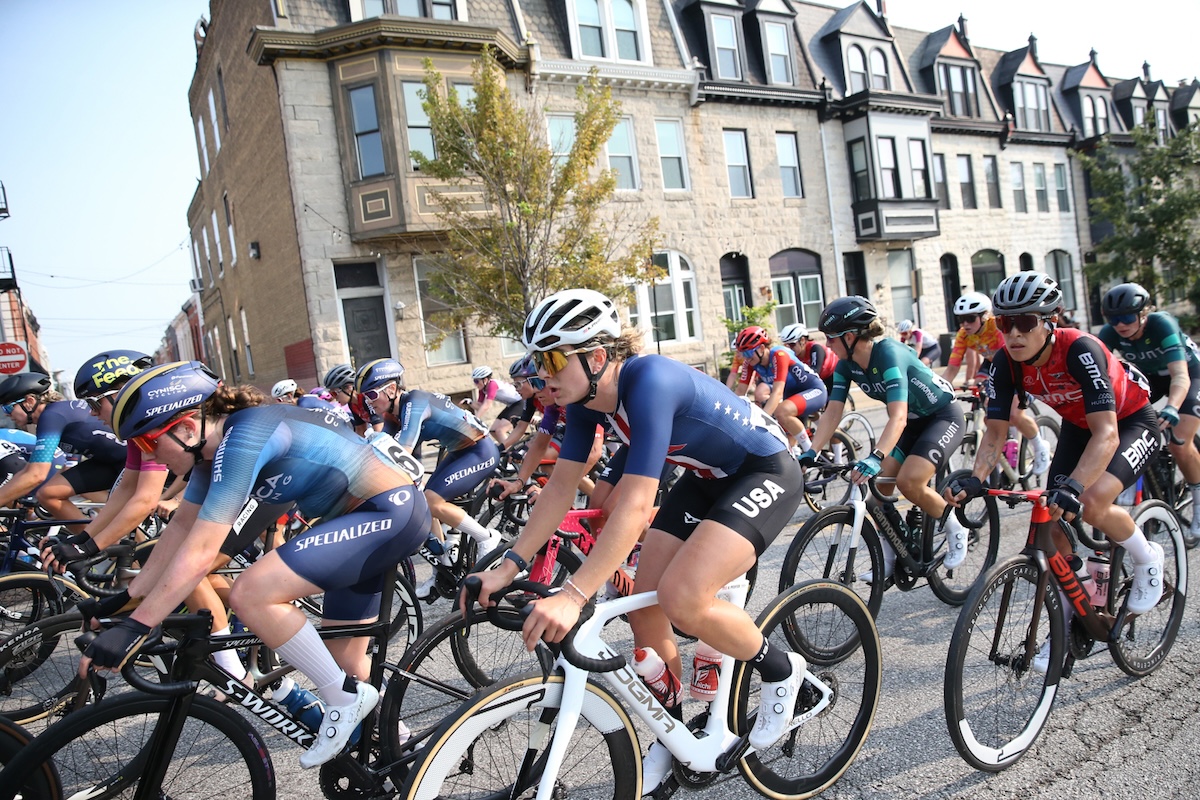
Lap 1 of MCC25, the women’s peloton still all together.
Photographer Brian Hodes / Veloimages getting a shot from behind the peloton during one of four circuits of the Women’s MCC25.
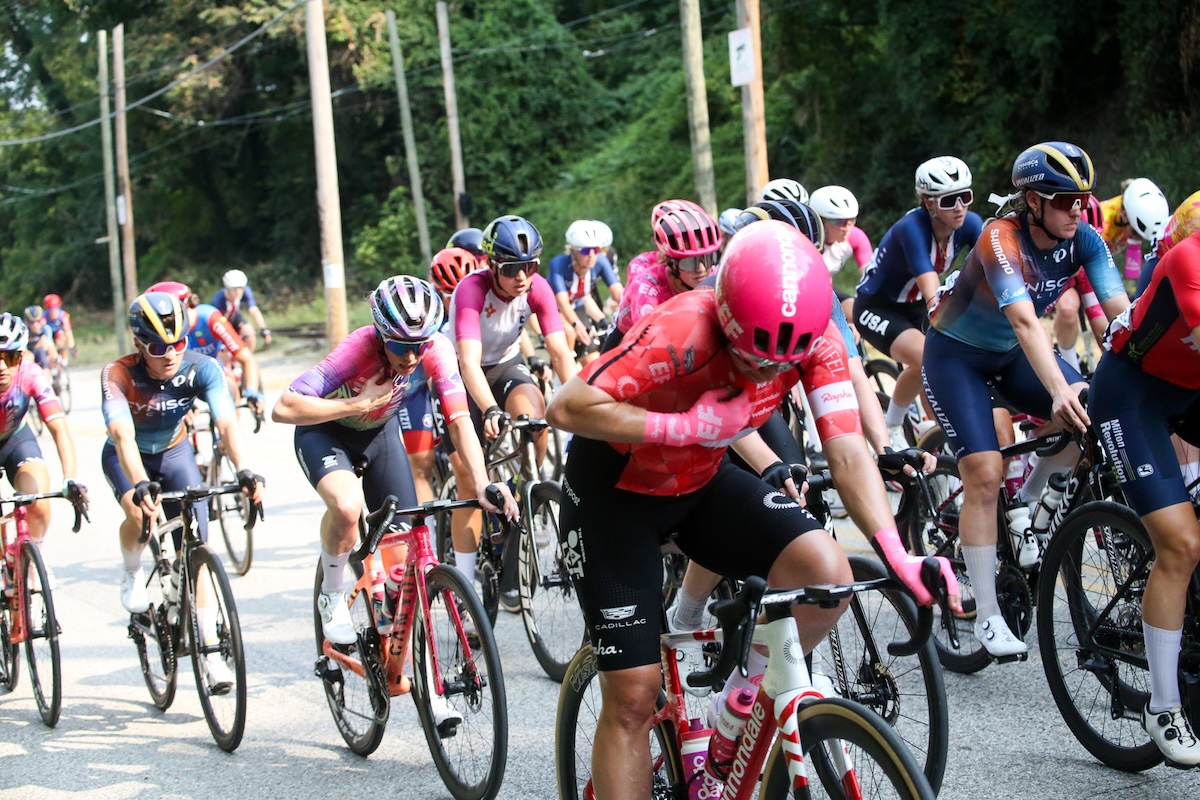
With rolling hills before the QOM, riders were getting dropped early in the race.
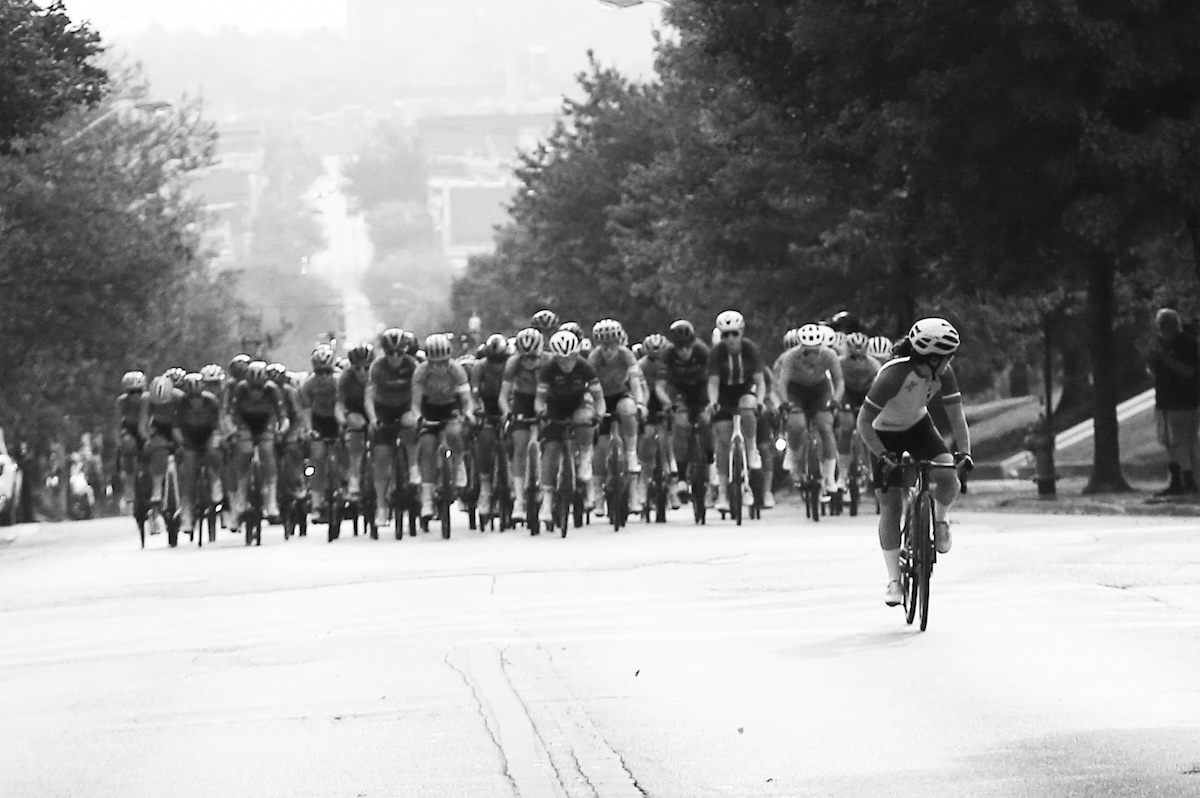
A Fearless Femme rider gets off the front solo early in the race.
My POV.
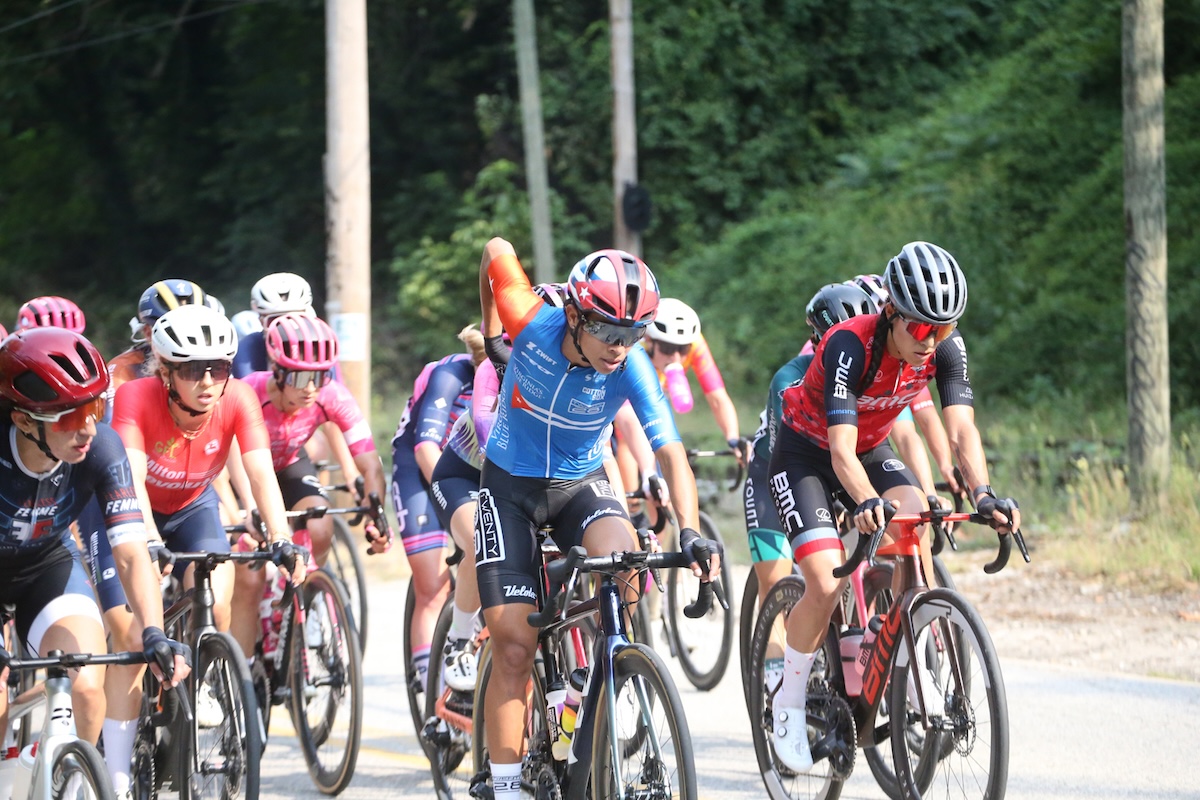
Riders going for QOM points.
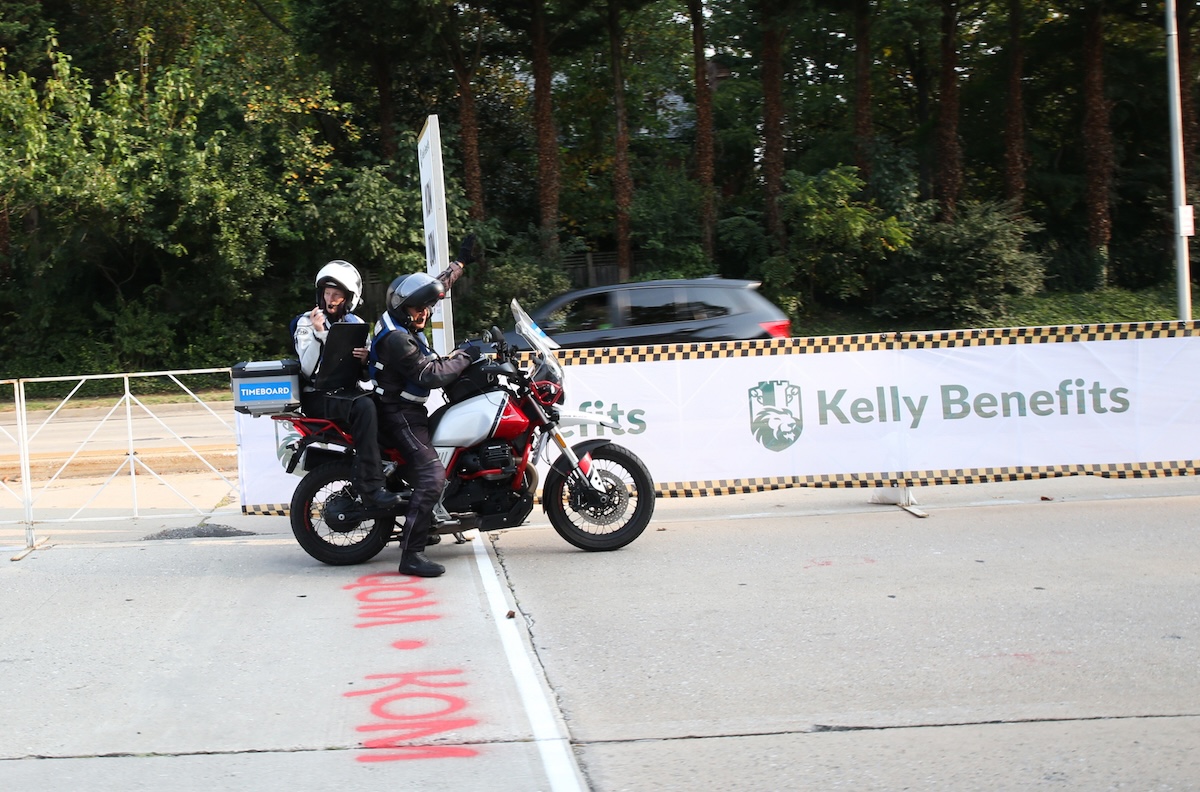
Timeboard also monitoring the QOM / KOM.
Cuban national champion and rider for VBR Twenty28, Marlies Mejias Garcia, grabs fuel for the race.
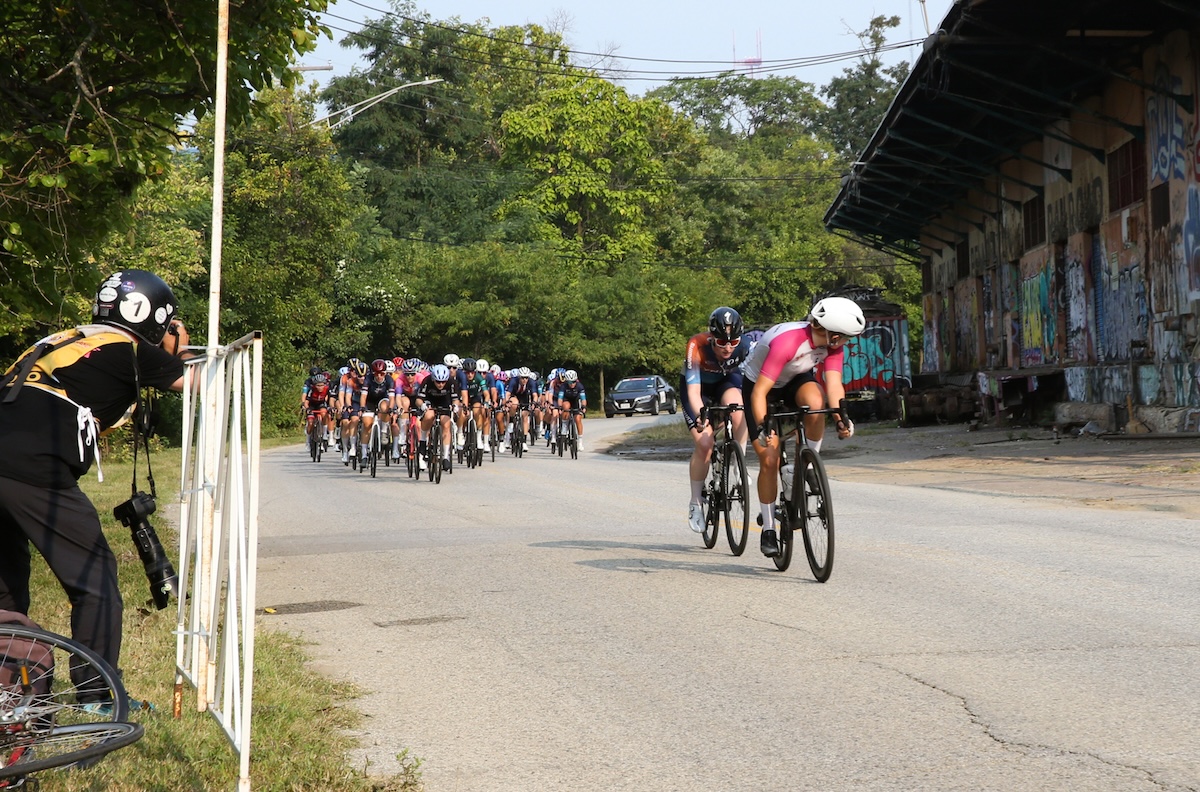
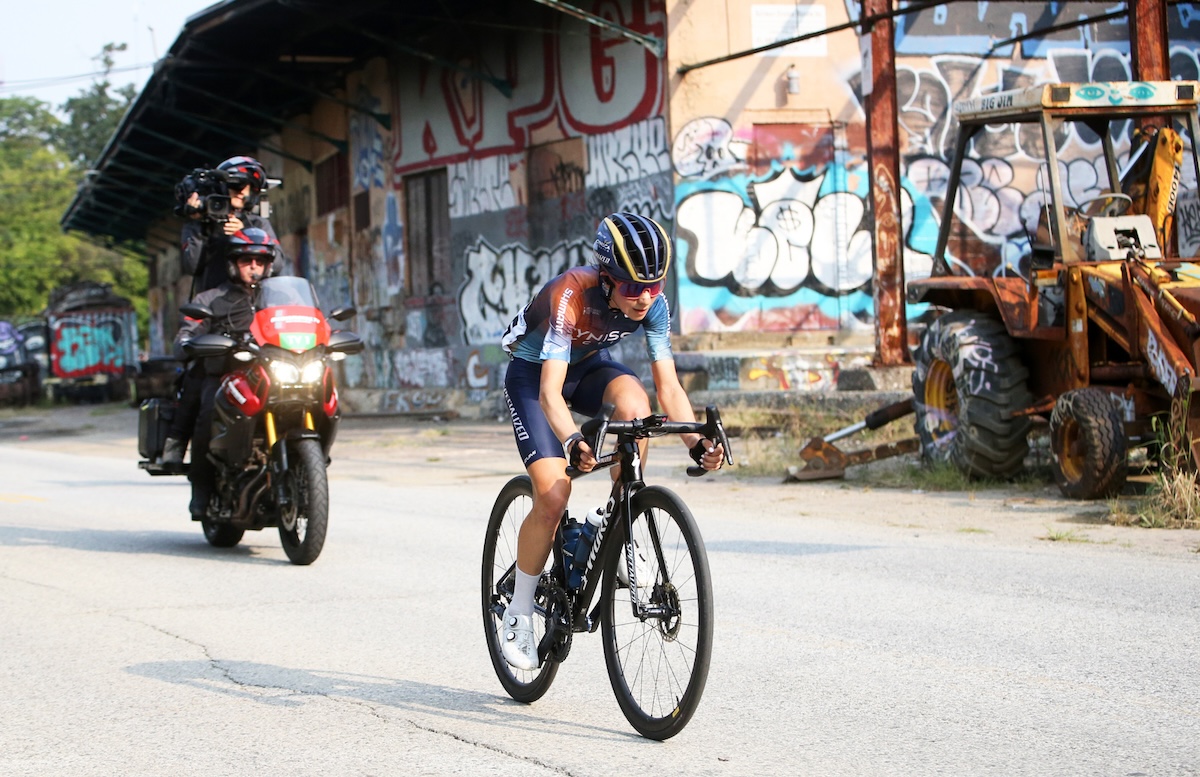
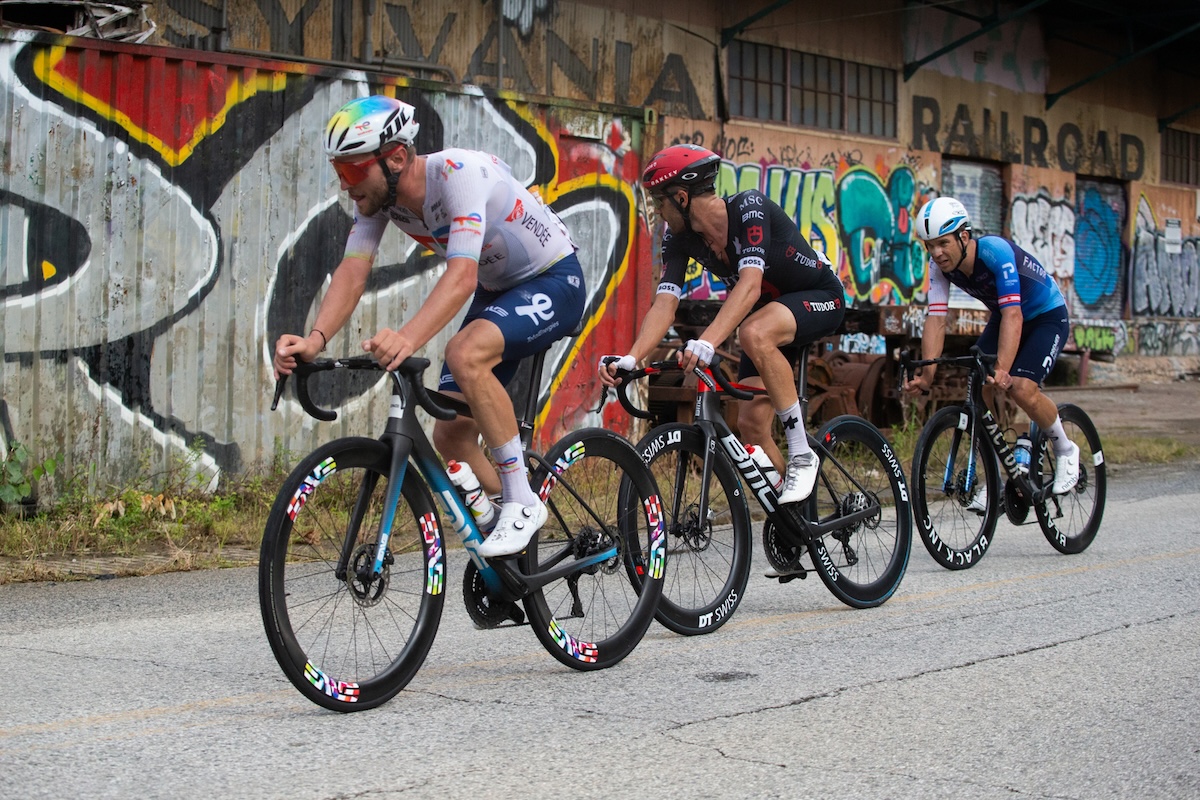
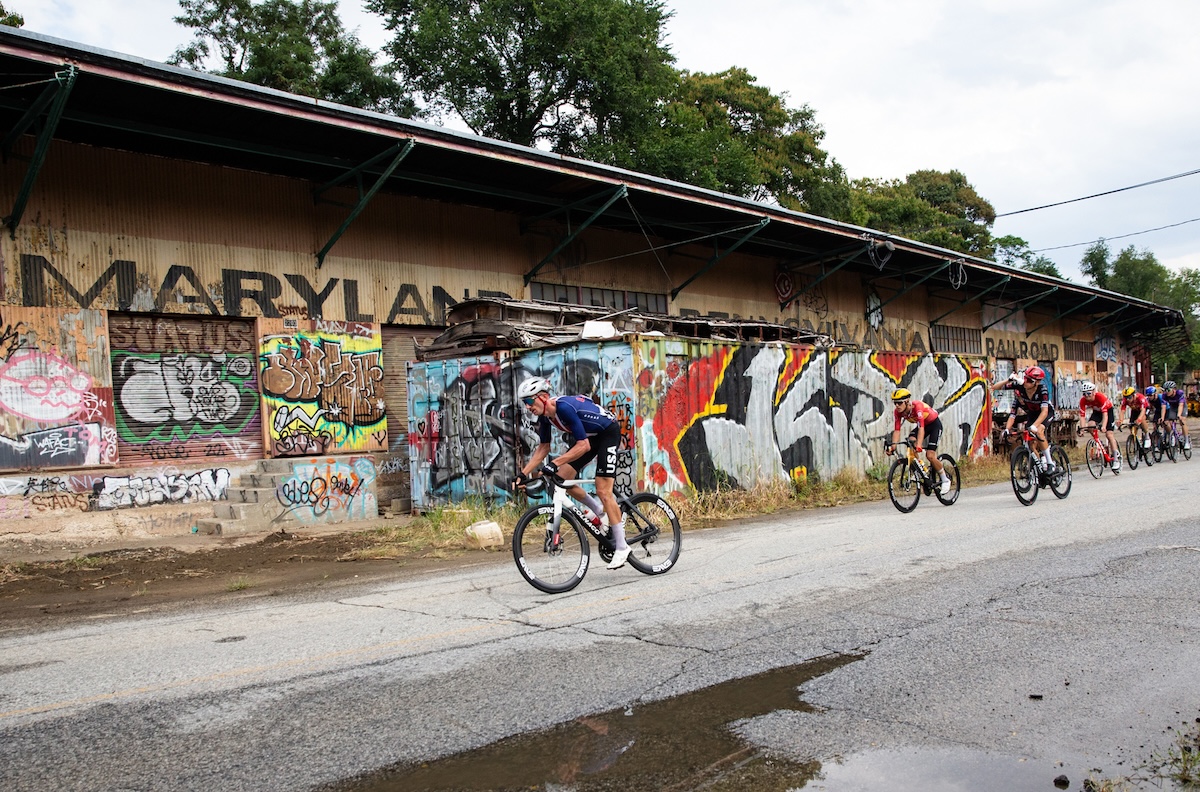
Brian Hodes / Veloimages hops off his photo-moto to get some shots of the women’s field witht he graffiti backdrop.
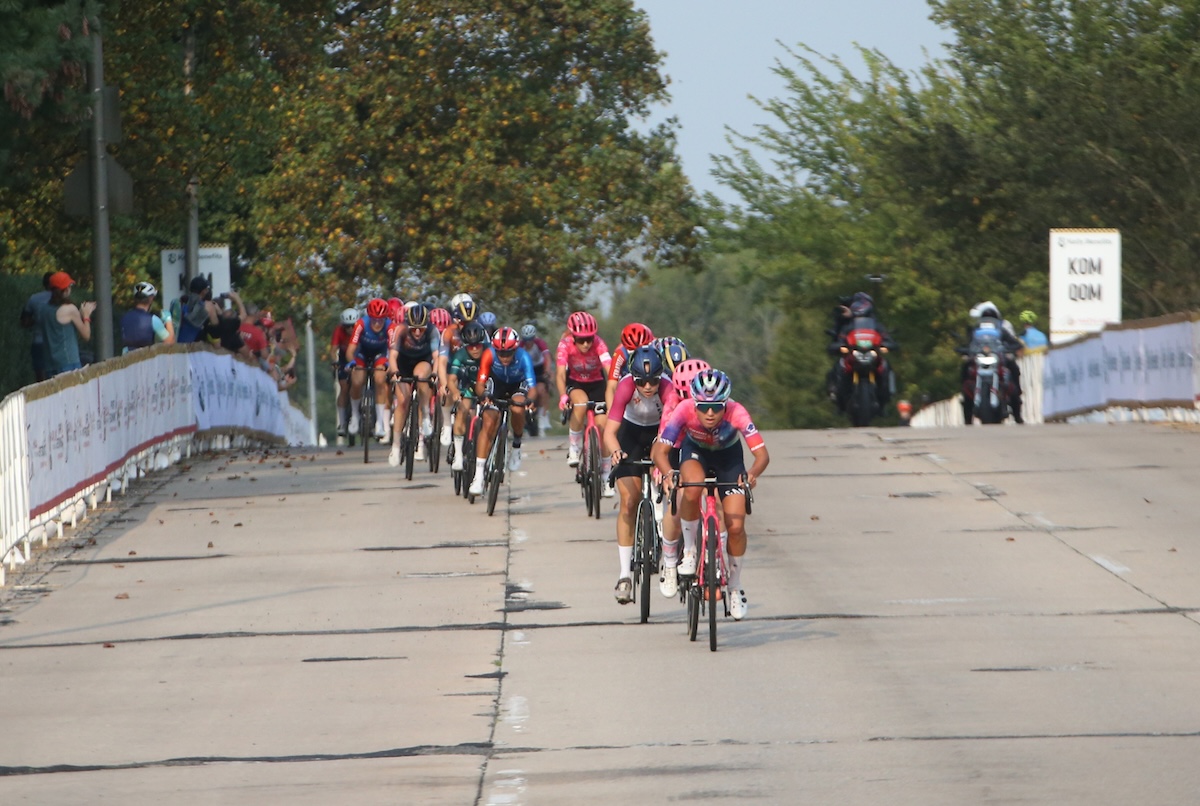
Field getting animated up and over the QOM climb.
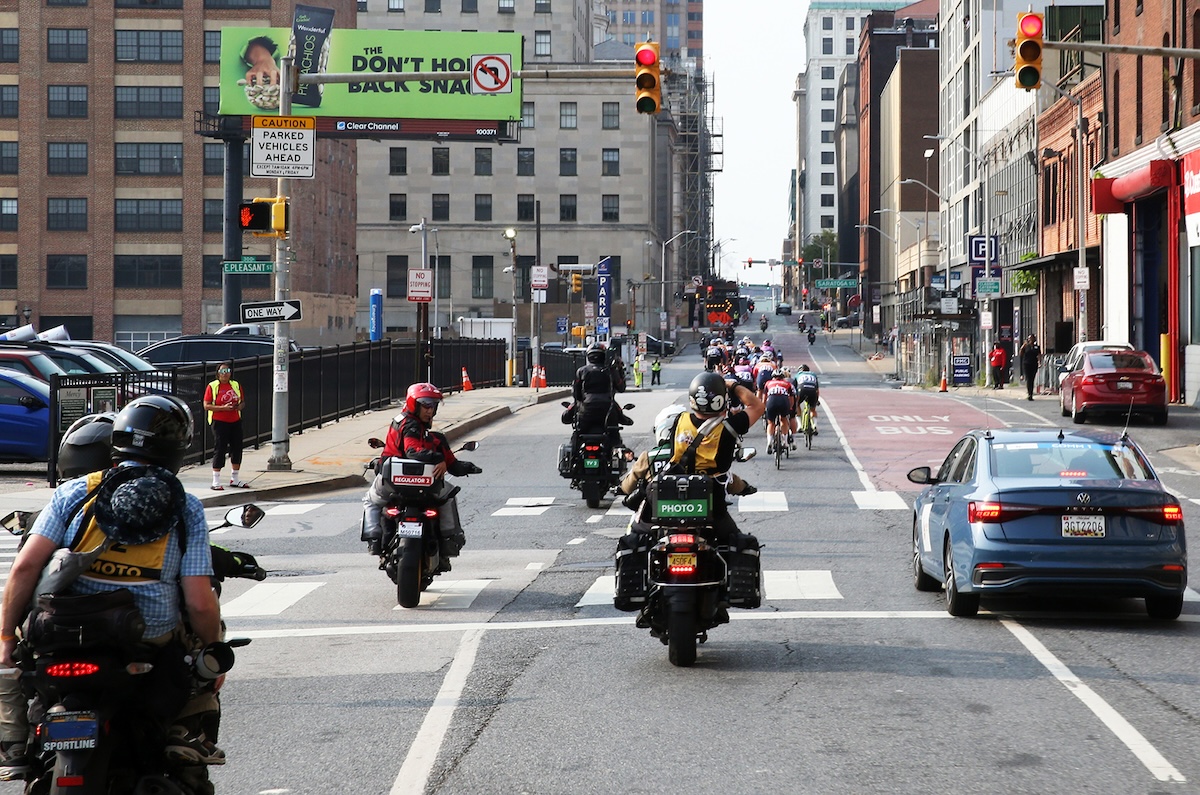
This is Regulator Heather Fischer telling me and my driver to move along using her whistle – it was after the QOM and going into the descent where an attack happened and the peloton was getting close to us.
A rider to watch – Anna Hicks (Virginia Blue Ridge Twenty28) has insane power and here she is putting on the hurt.
Regulator / my husband – Alex Kim – giving me and my photo moto driver permission to pass the peloton.
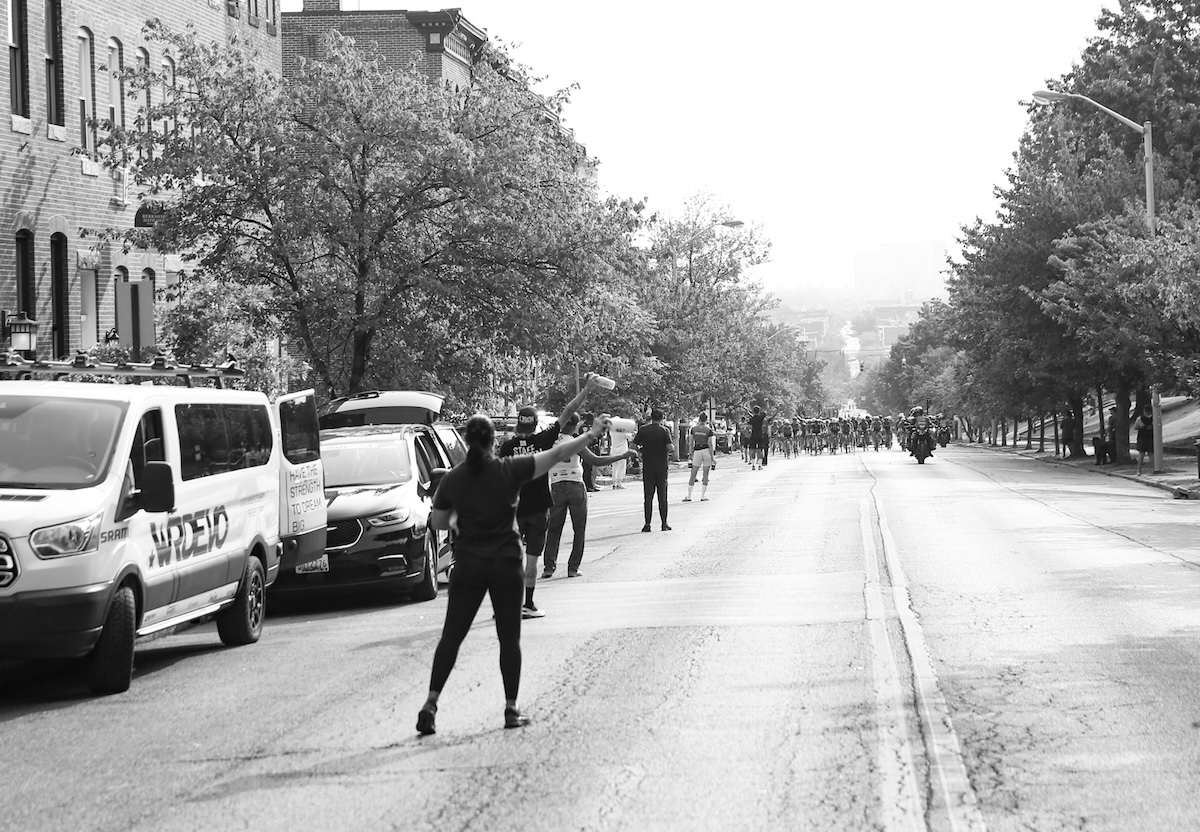
MCC25 FeedZone.
Kayla Davis (Cynisca) getting some TV time during a solo break.
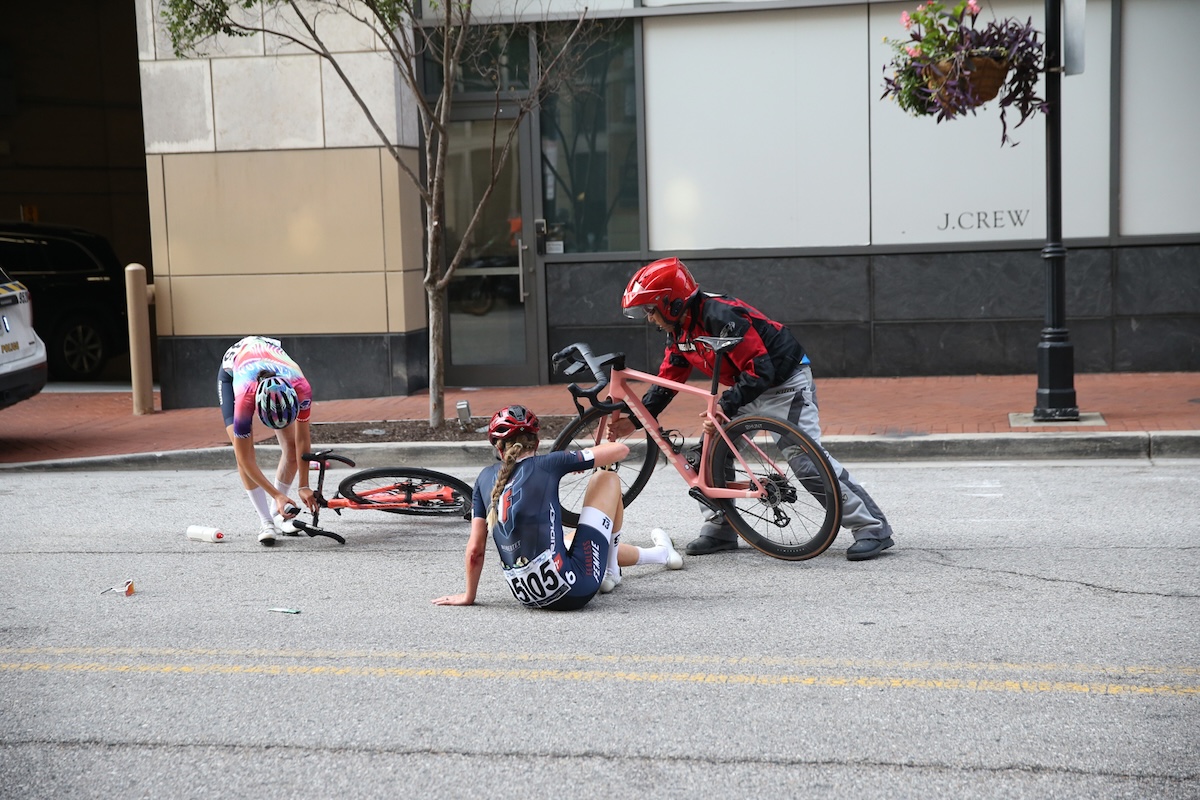
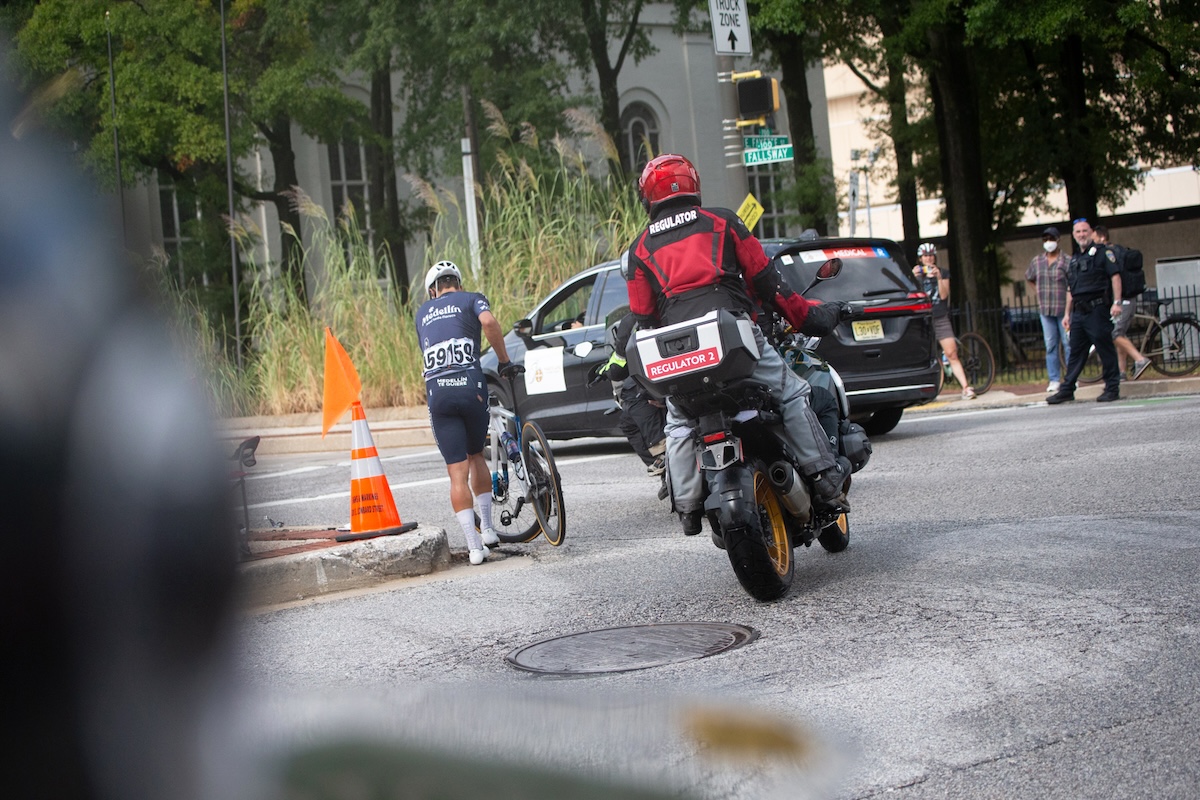
Regulator – Alex Kim – helps crashed riders move off the road as quickly and safely as possible.
The devo riders of Team USA are fortunate to be directed by former pro cyclist and amazing DS – Rachel Hedderman who has been a Director for successful pro teams such as UHC and Rally.
Photog , my mentor and great friend – Brian Hodes otherwise known as Veloimages who has shot most major races around the world including Le Tour de France talking to the Regulator (Alex Kim)
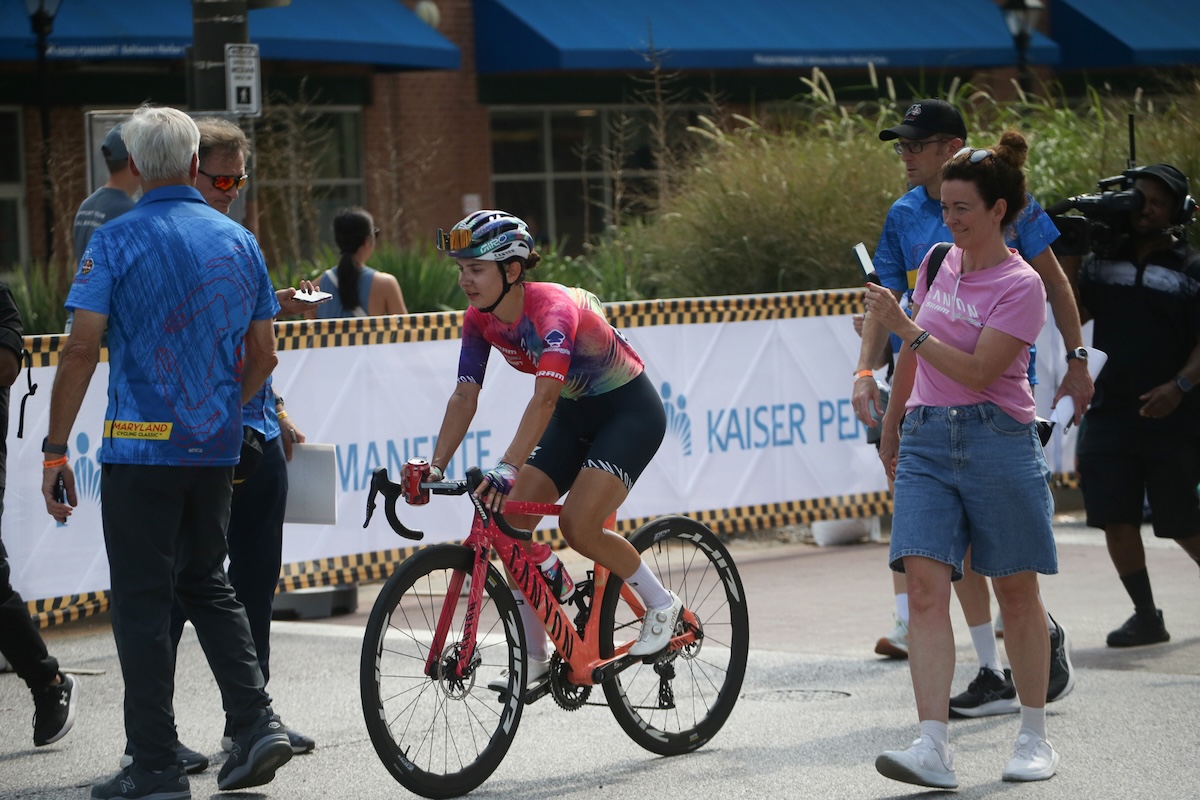
Alison Jackson (EF Education-Oatley) & Tiffany Cromwell (CANYON//SRAM) use their race radios to talk to their DS’s (Directeur Sportif) in the team cars back in the caravan.
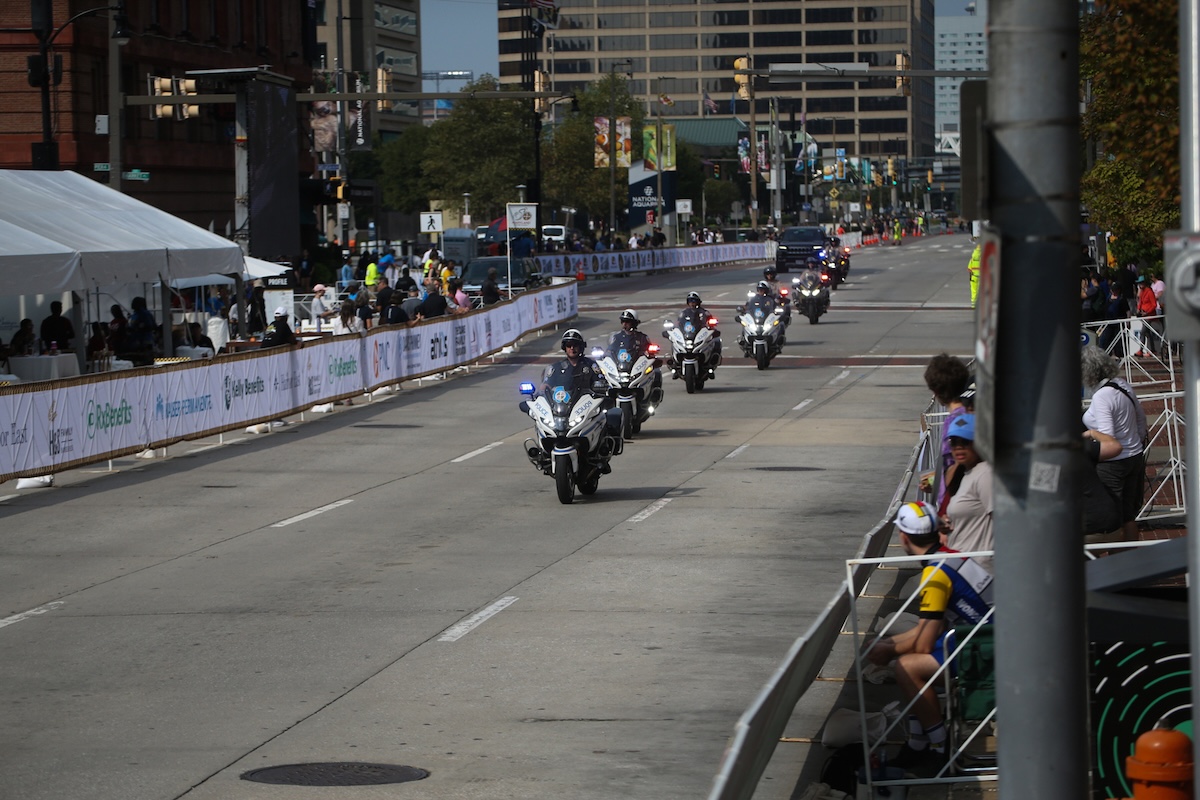
Races cannot happen without the support of the local police force.
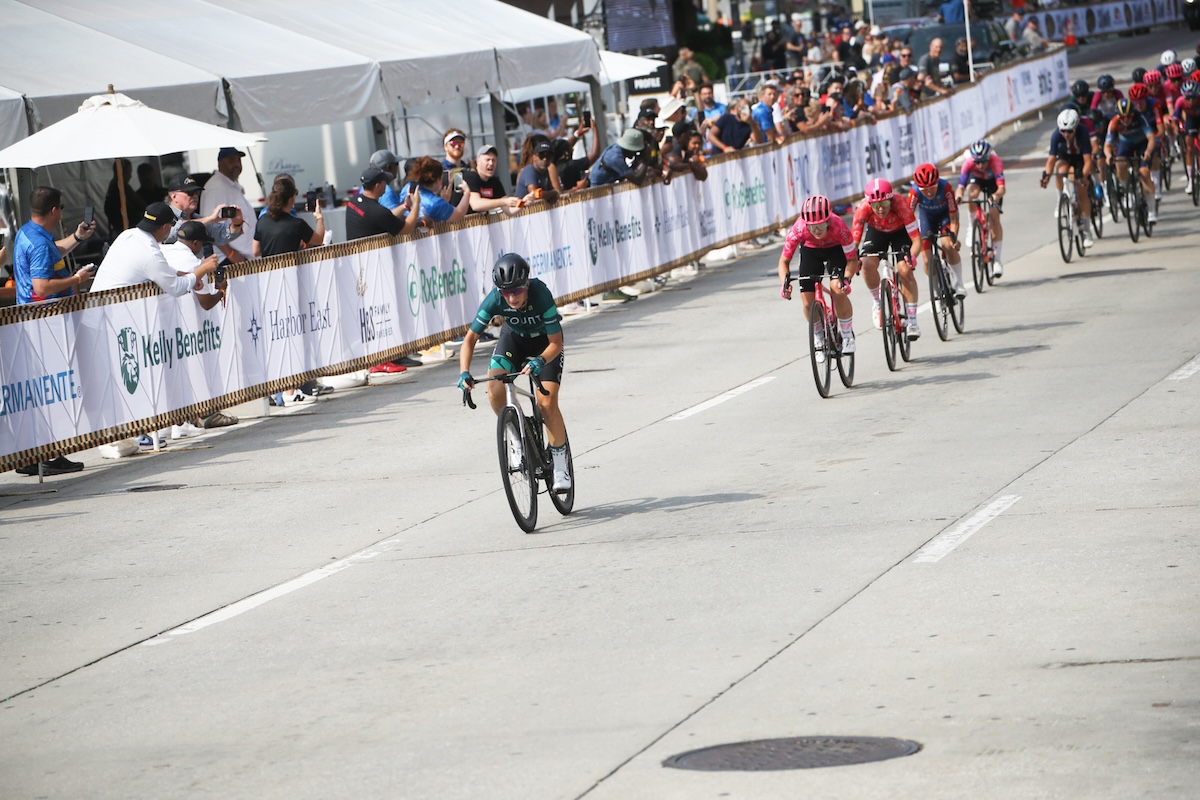
Andrea Cyr (Fount Cycling Guild) going after mid-race points for the Sprint Competition.
Fun fact – Rider for CANON//SRAM Tiffany Cromwell’s boyfriend is F1 Driver and gravel racing enthusiast, Valtteri Bottas.
Fuel for the ride…
U23 talent Kenna Pfeiffer (Team USA) and Maryland local finished 10th at MCC25 an impressive result at a UCI 1.1 race just after one year transitioning into elite cycling from speed skating. She joined Virginia Blue Ridge Twenty28 for 2025-2027.
Info – Scott Patton – was also in charge of the Motors for MCC25 and took the time to take me on a course recon ride the day before MCC25.
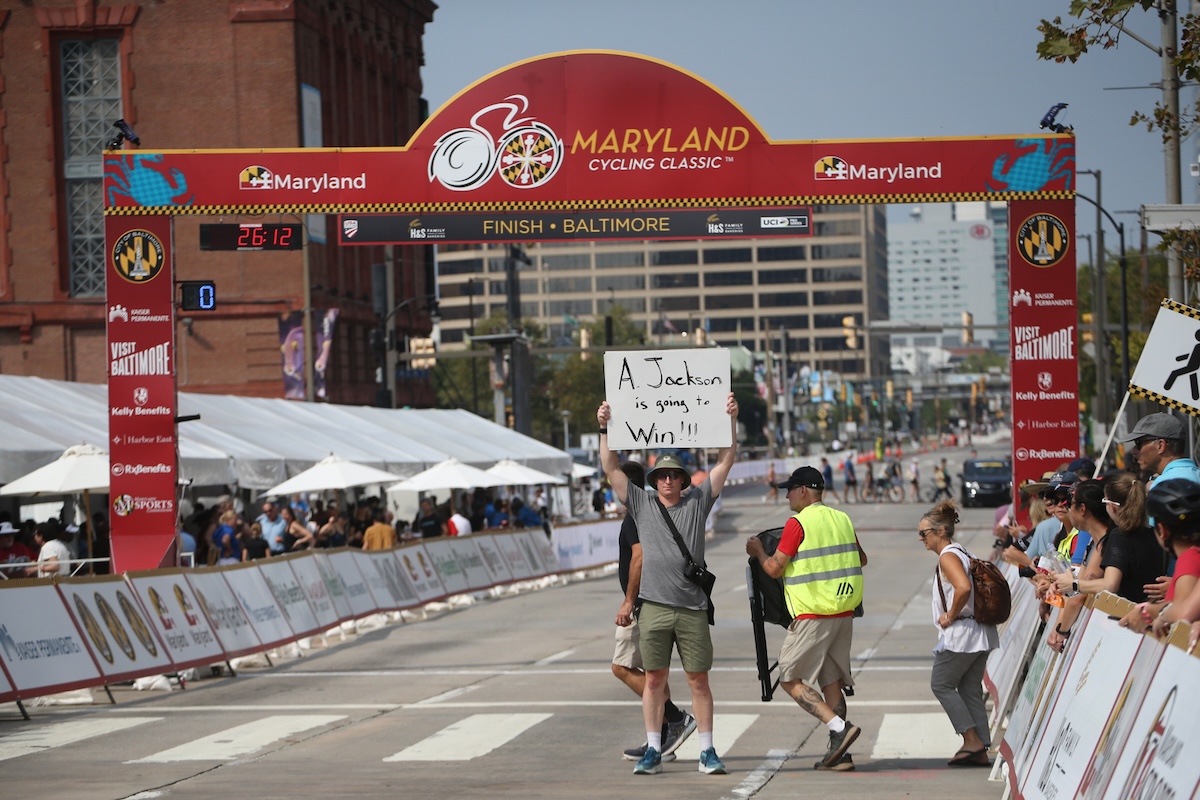
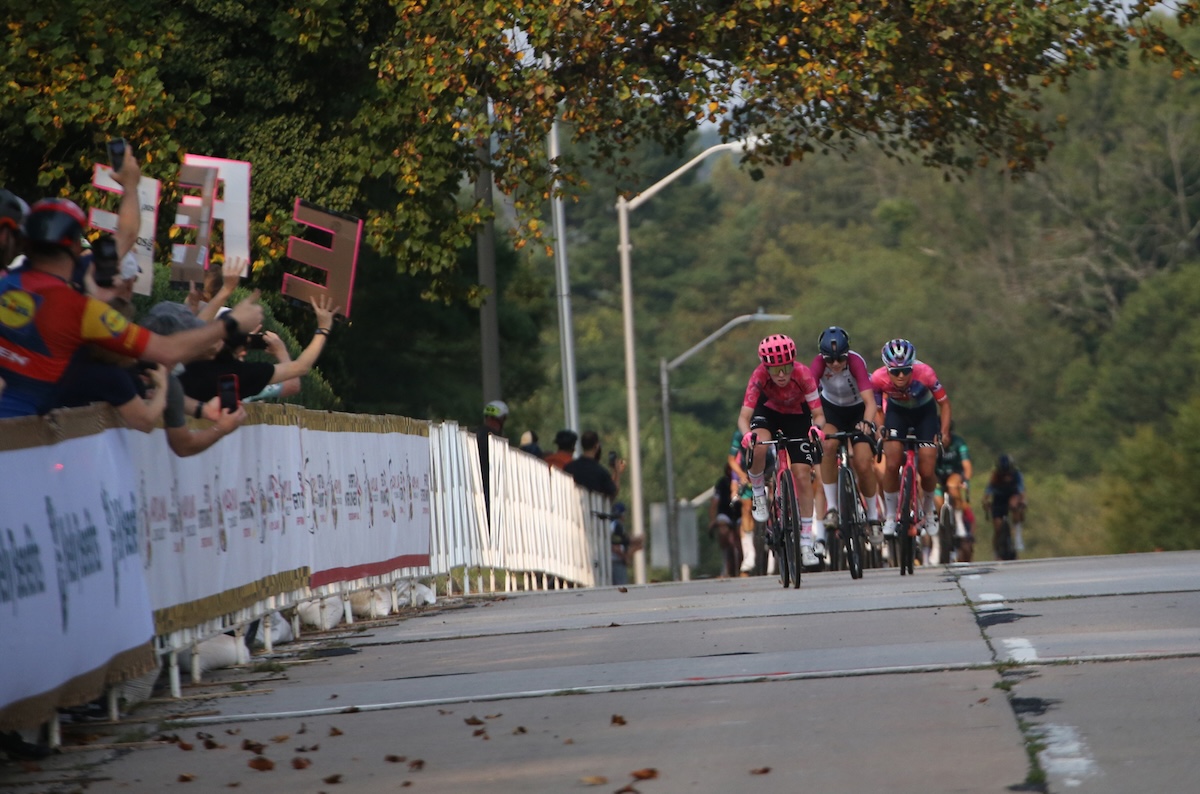
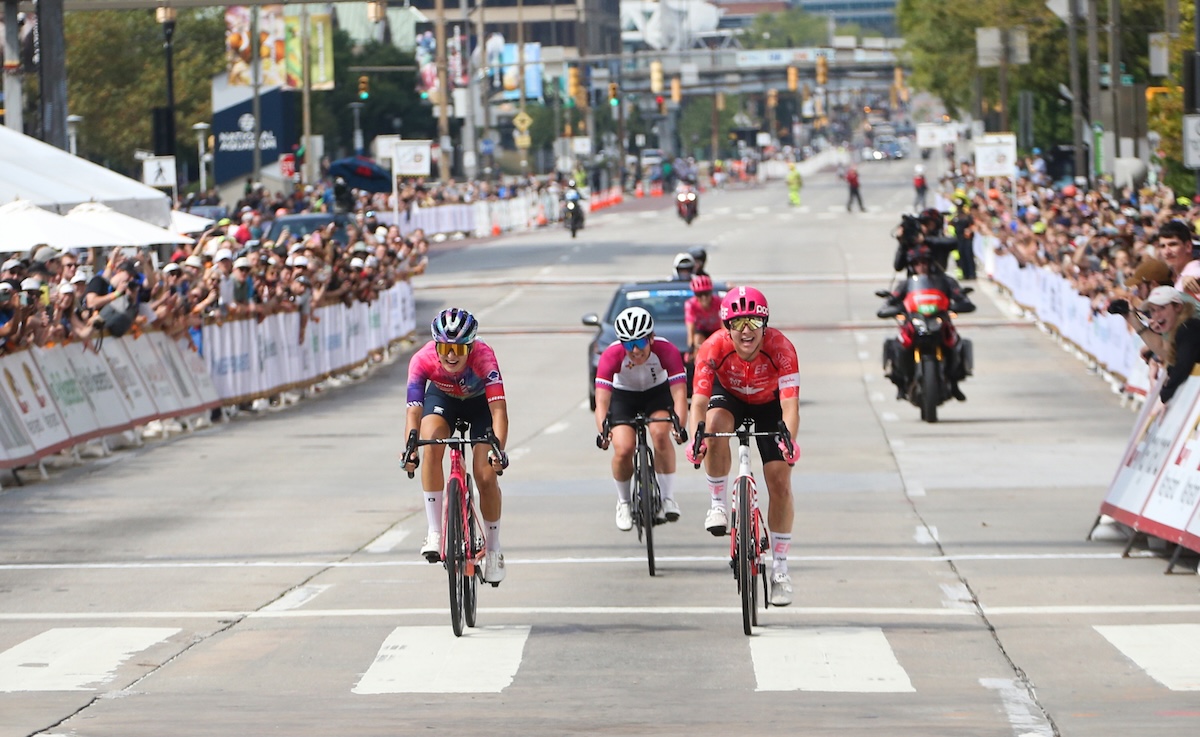
Women’s sprint – an exciting photo finish. Jackson almost got Skalniak-Sojka at the line.
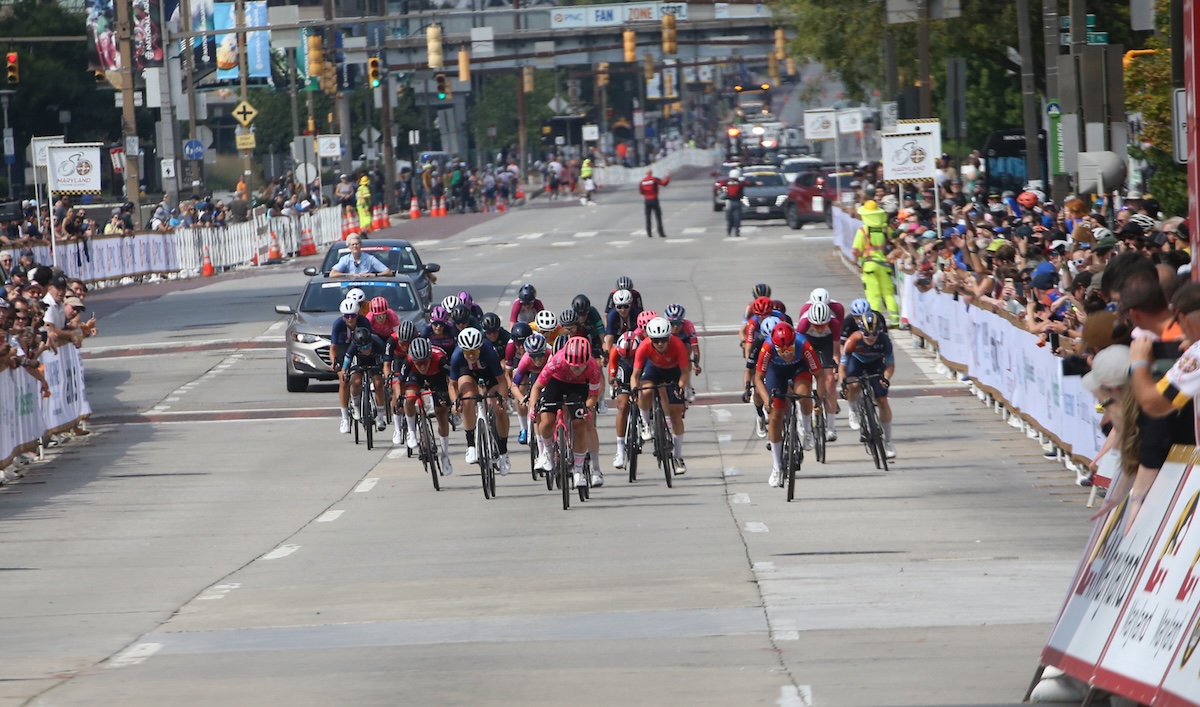
With UCI points on the line, the field sprint got rowdy.
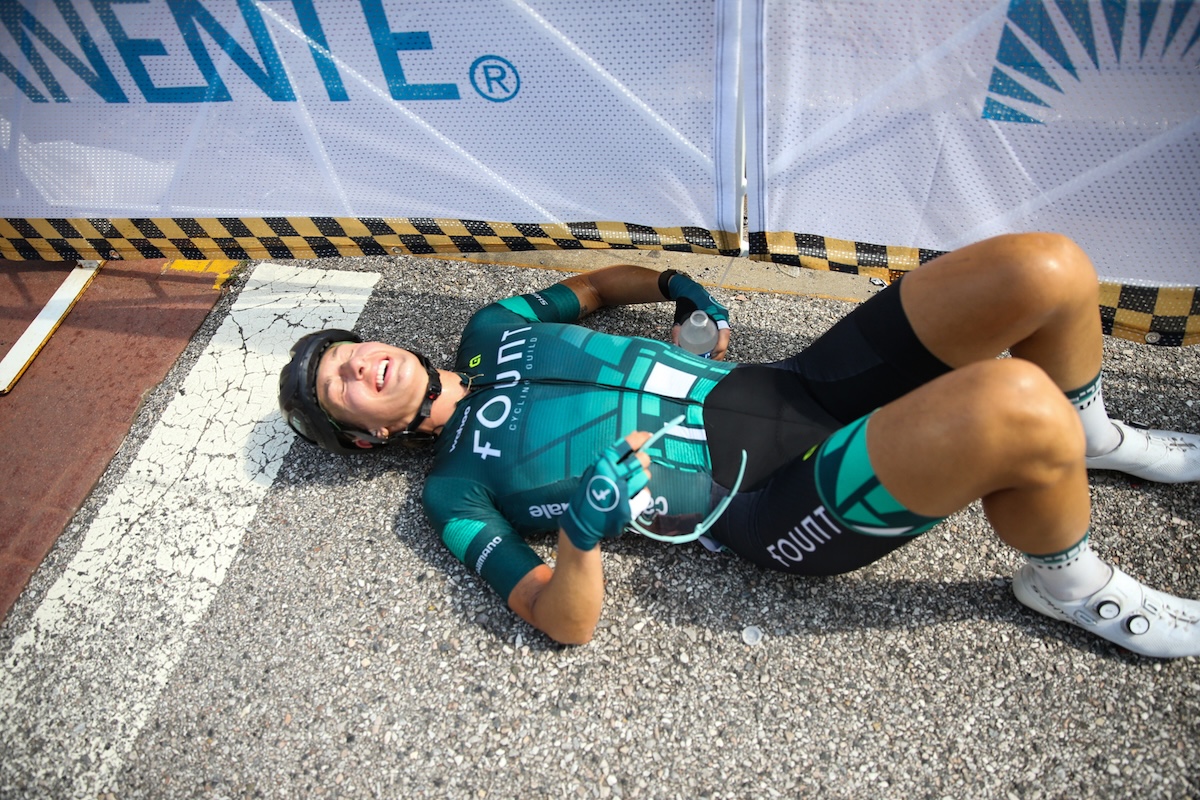
Moments after the race finished Andrea Cyr (day job: MD) suffered cramping but were all smiles when I told her that she nabbed the Sprint Jersey.
Team Manager, Sports Director of CANYON//SRAM – Ronny Lauke – was at the finish the congratulate his riders. He was another team director that was my classmate at the UCI Directors Course in Aigle, Swiitzerland in 2018 (to have the certification is mandatory to DS at World Tour races).
End of an era for Certizit…
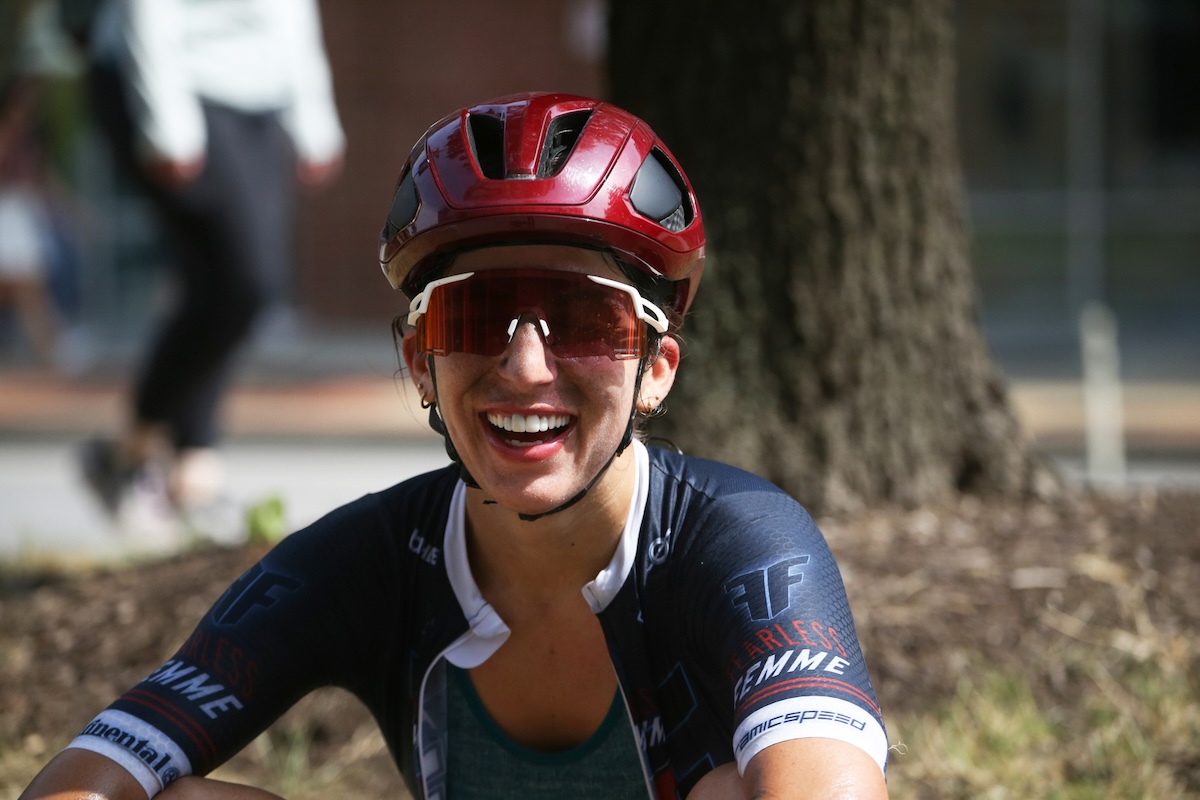
Another DNA Pro Cycling alum rider, Erica Wirski (Fearless Femme Racing) – all smiles post race.
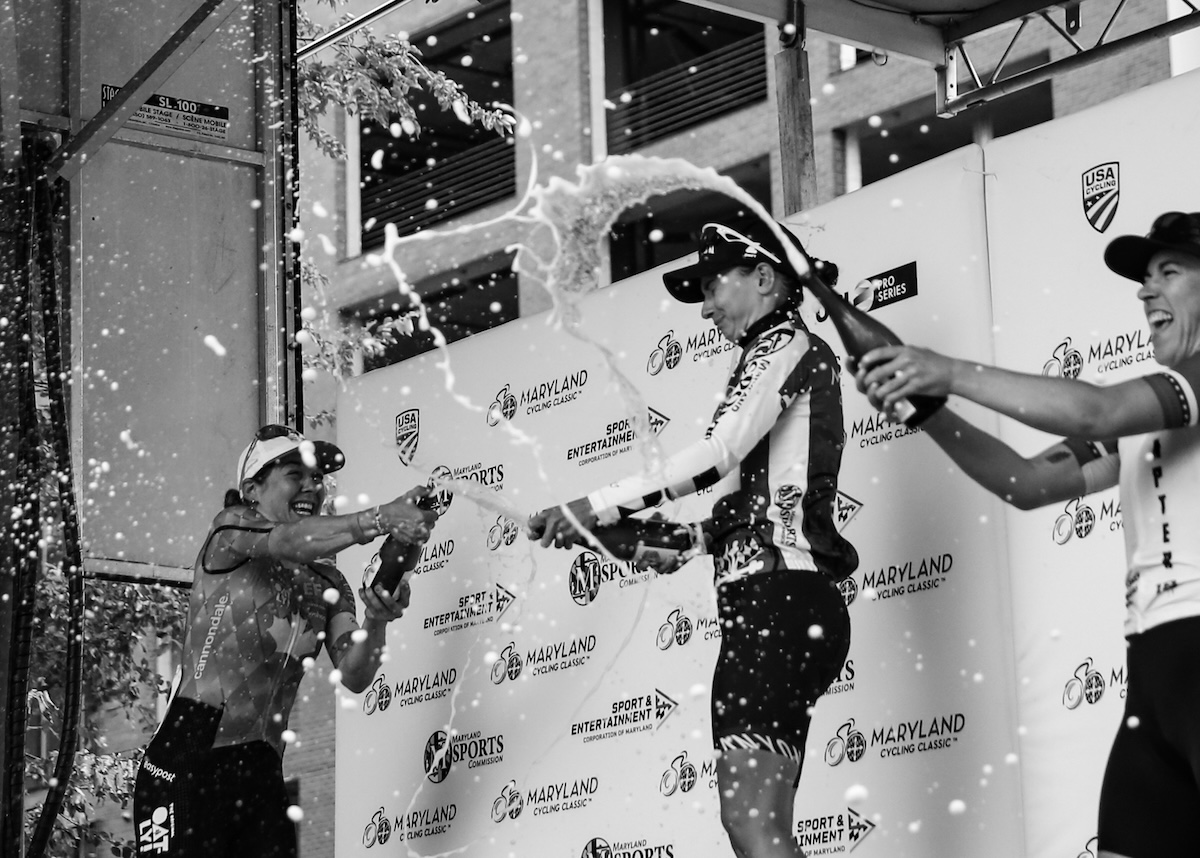
MCC25 Women’s Podium. 1st Agnieszka Skalniak-Sojka (Canyon//SRAM), 2nd Alison Jackson (EF Education-Oatley), 3rd Emma Langley (Aegis Cycling Foundation).
Cycling Living Legend: Connie Carpenter-Phinney (1984 LA Olympic Gold Medalist in cycling, 12 US national championship titles, multiple podiums at World Championships in both road and track cycling) and competed at the Winter Olympics -speedskating) awards Andrea Cyr (Fount Cycling Guild) the MCC25 Sprint Jersey.
Team staff wear many hats – including social media content provider.
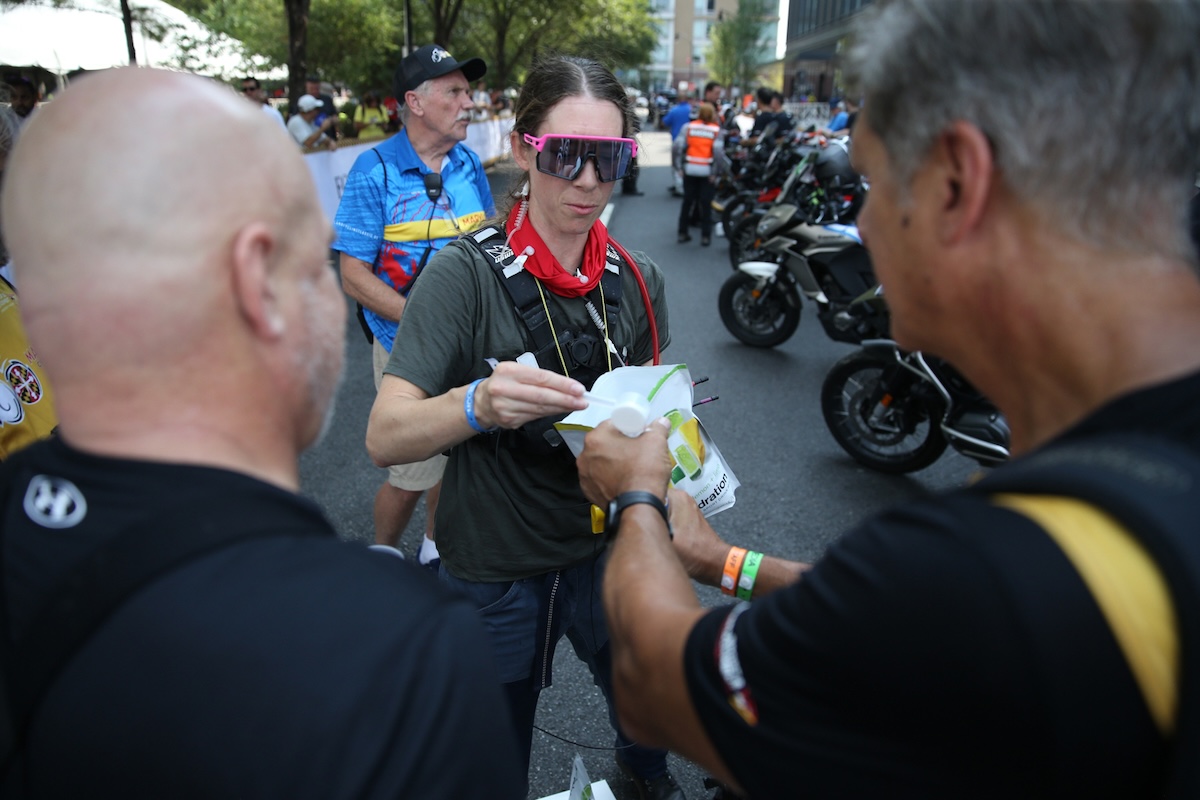
BTS with Regulator and Skratch Labs sponsored rider, Heather Fischer helps the photographers and photo moto drivers hydrate with some electrolyte mix between the Women’s and Men’s MCC25 races.

Men’s Race

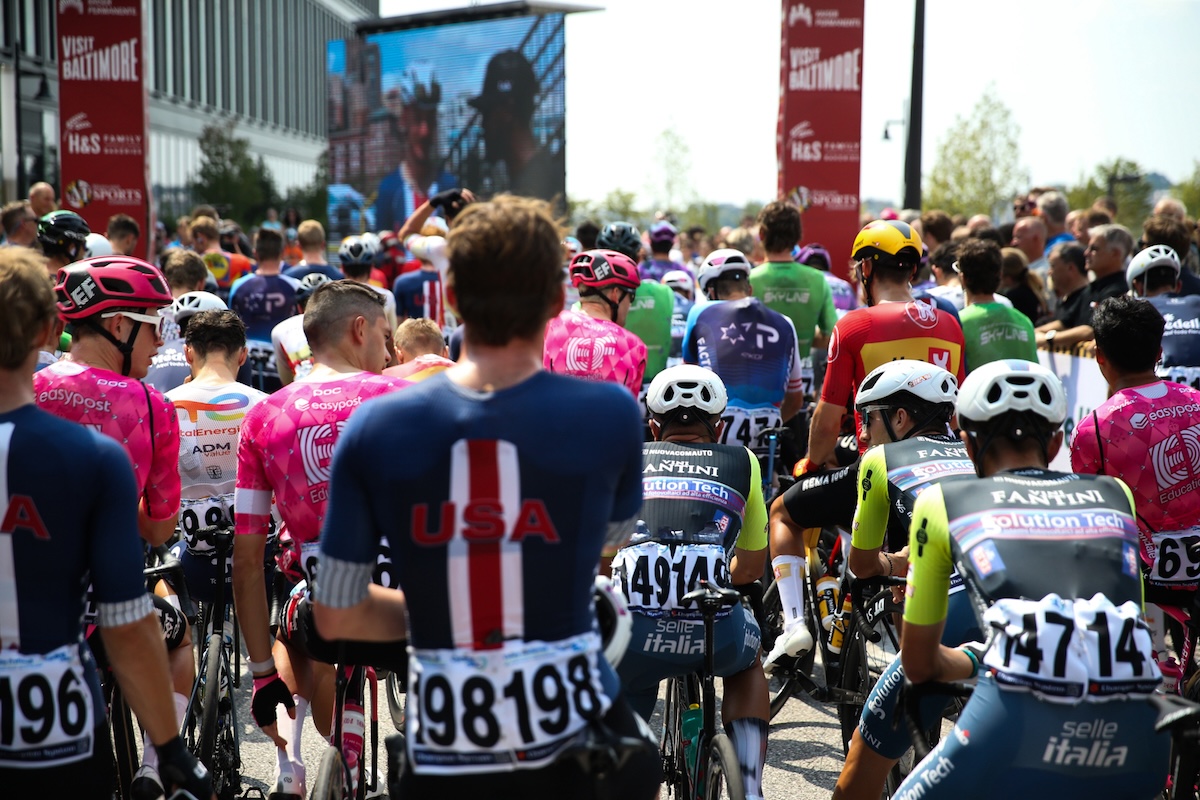
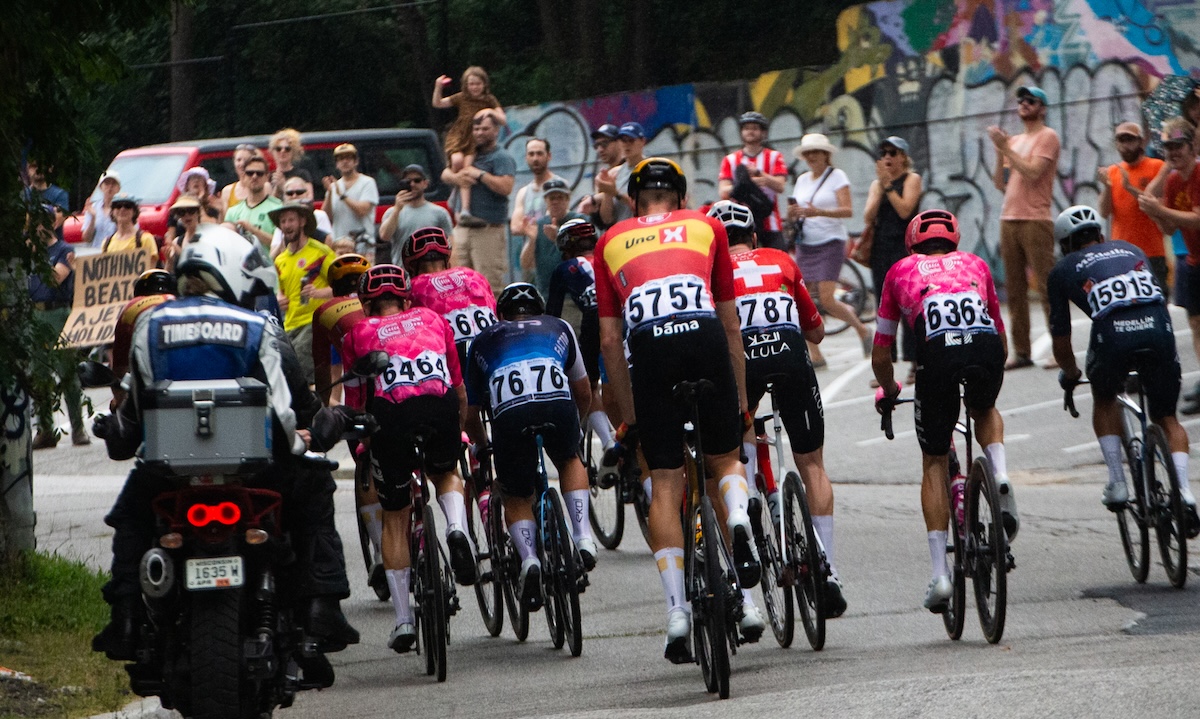
Men staging at Harbor Point for their 107.4 miles (172.8kim) / 6 Circuits MCC25.
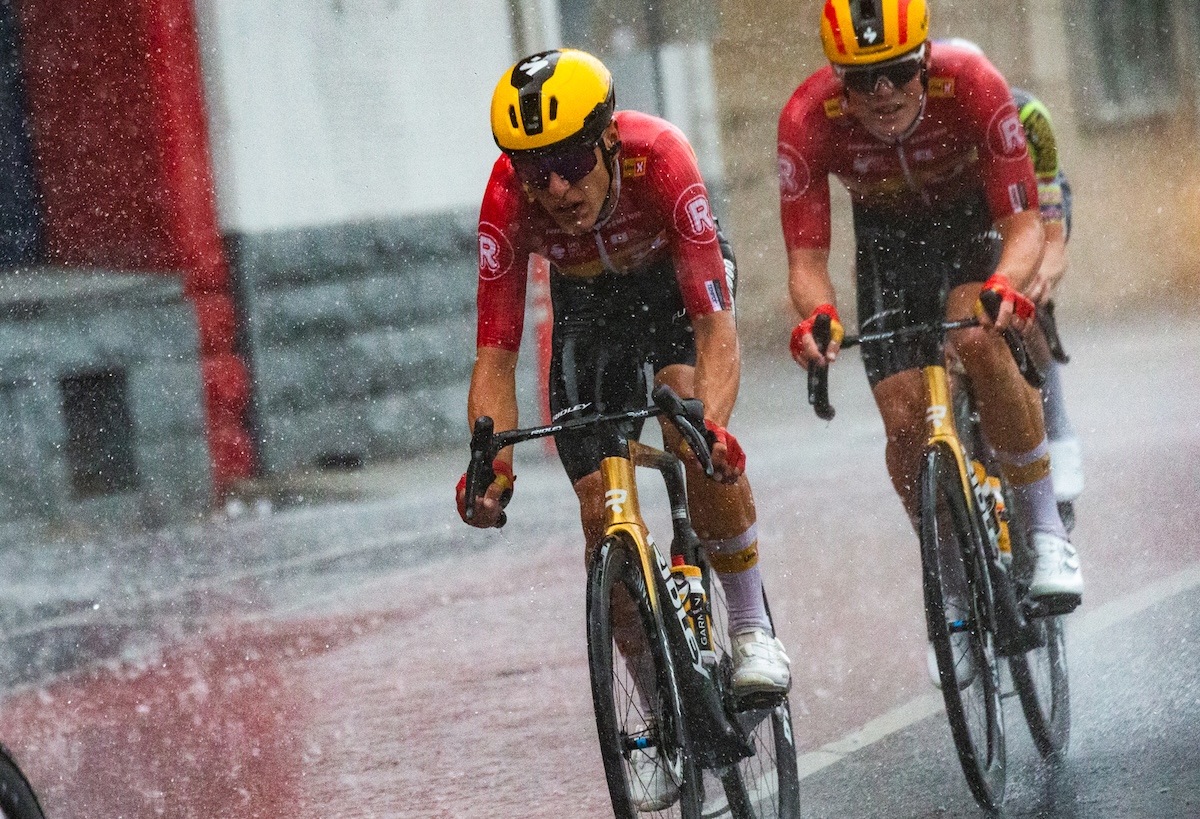
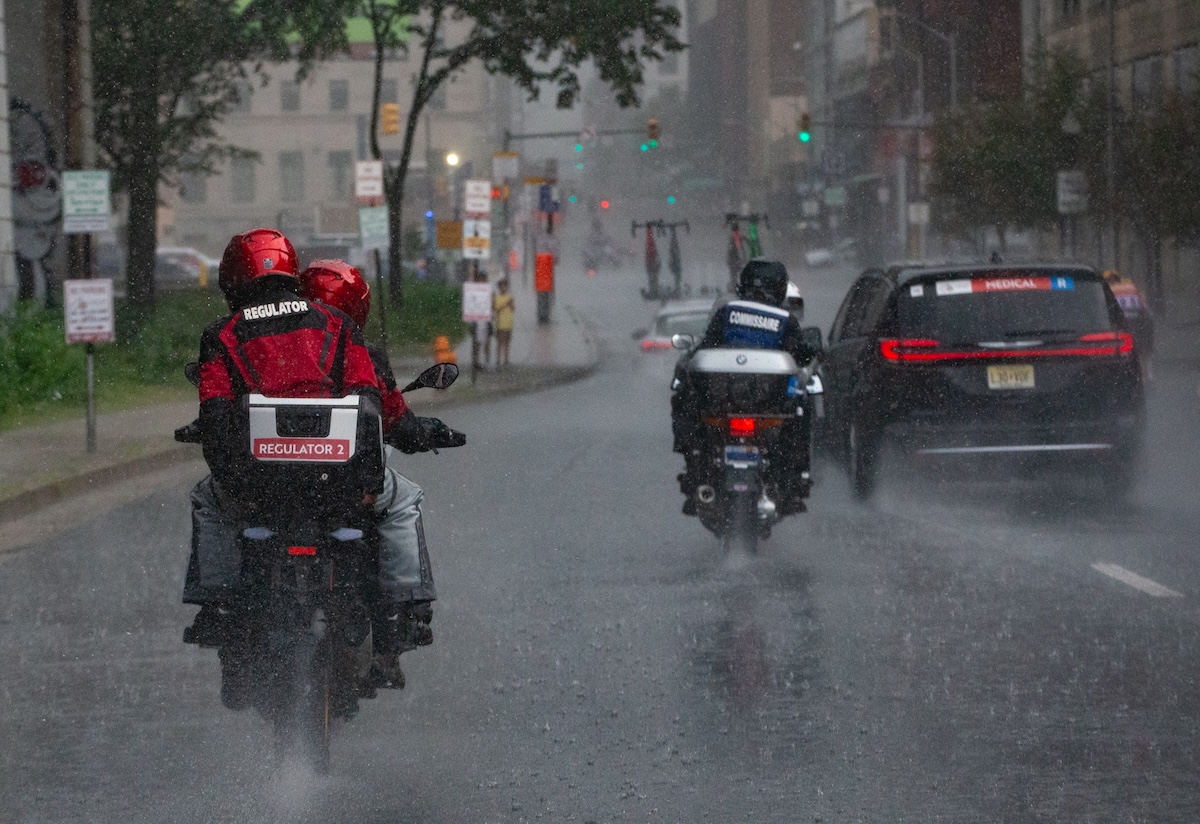
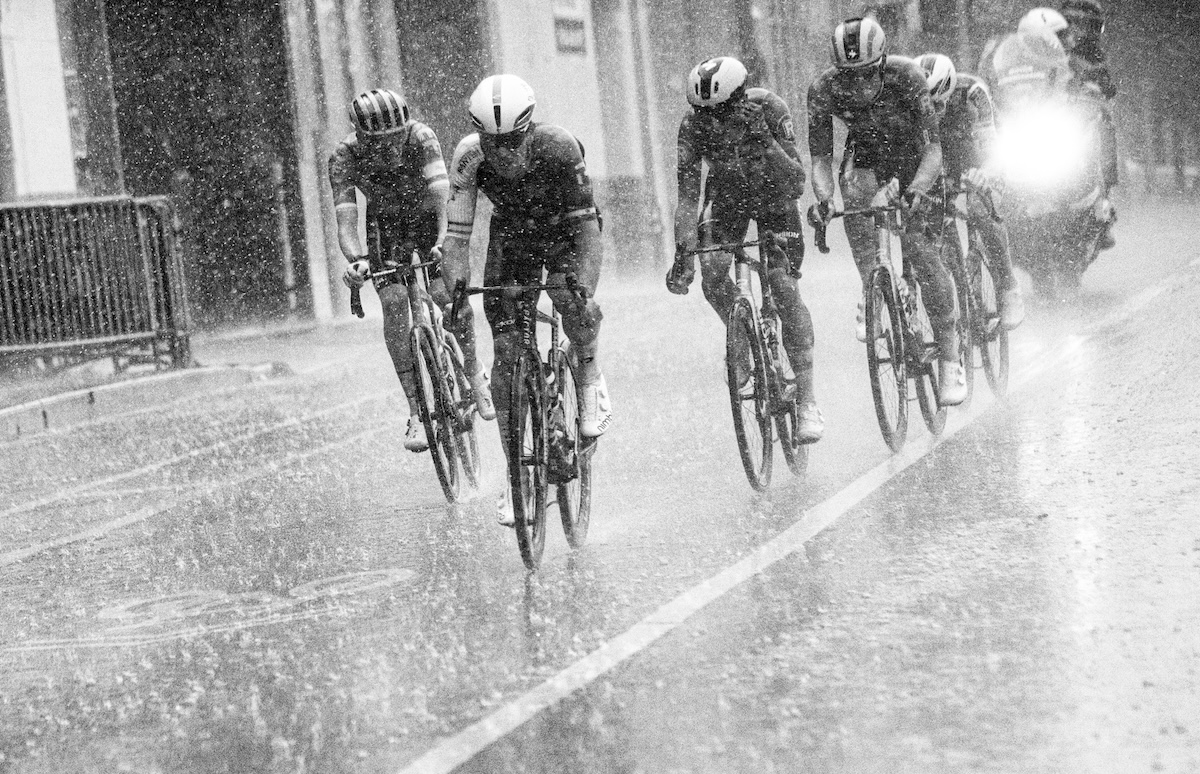
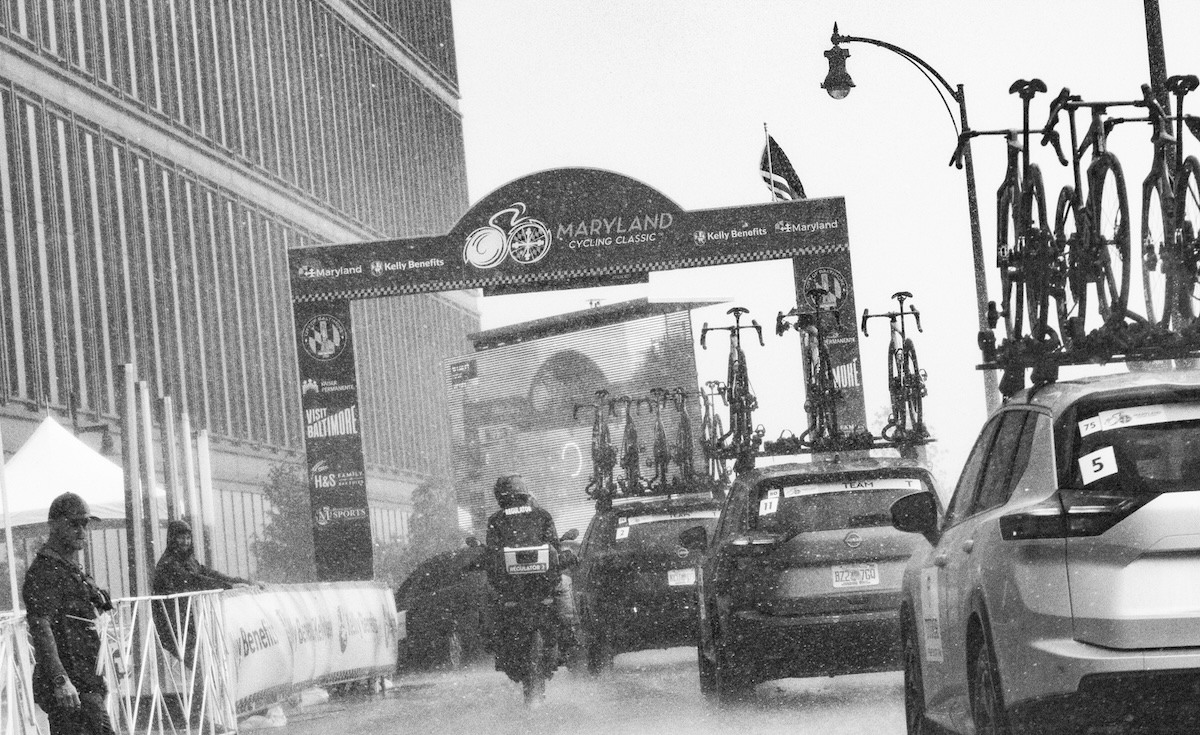
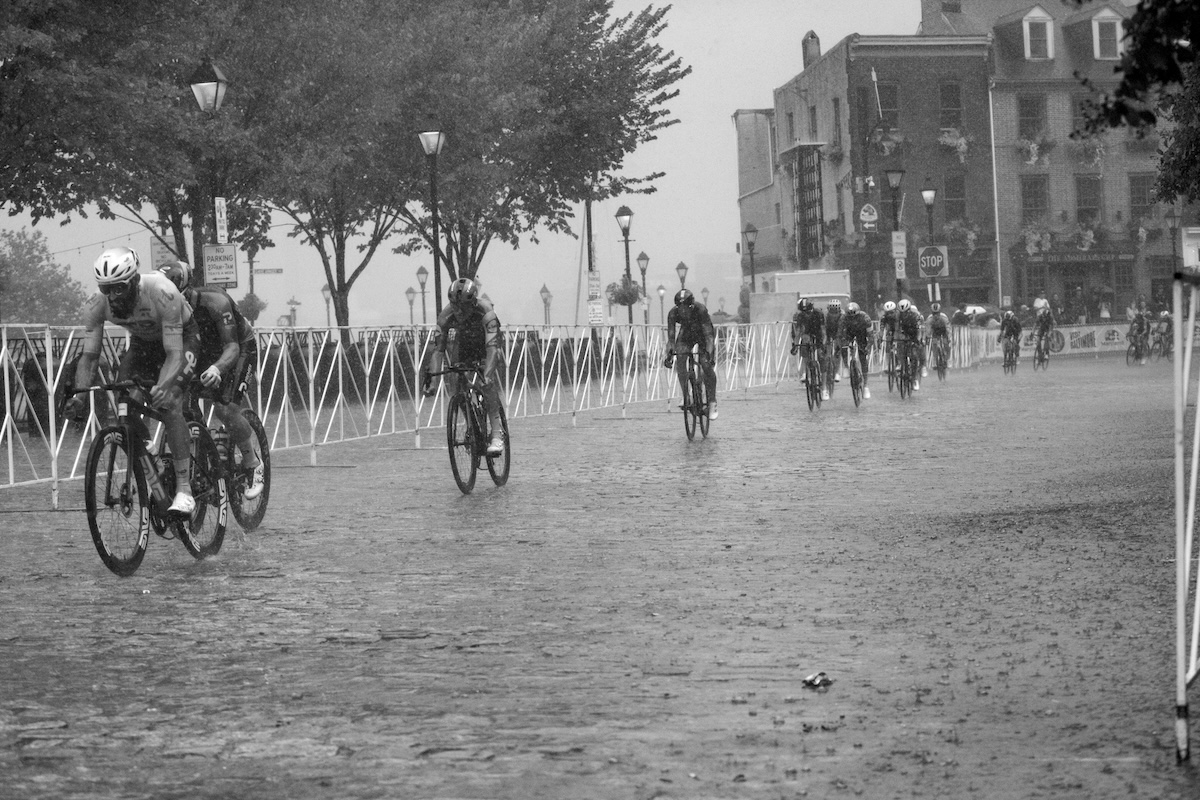
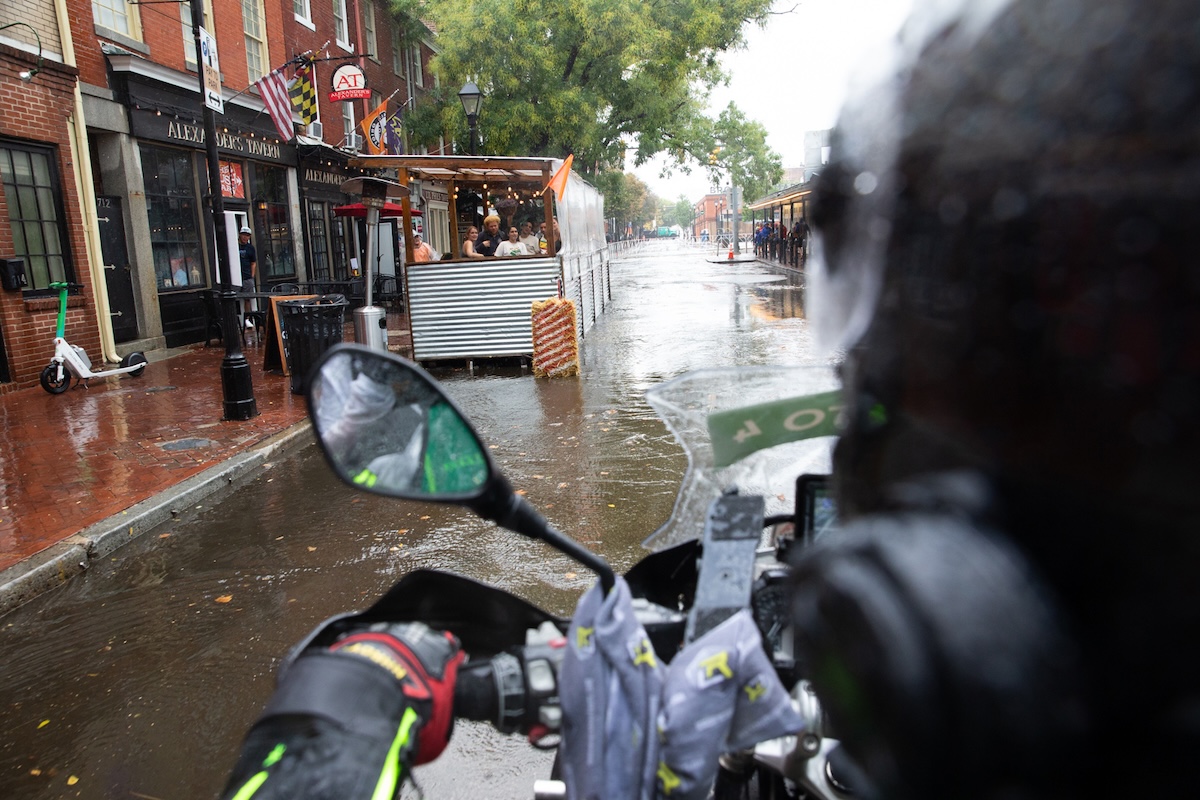
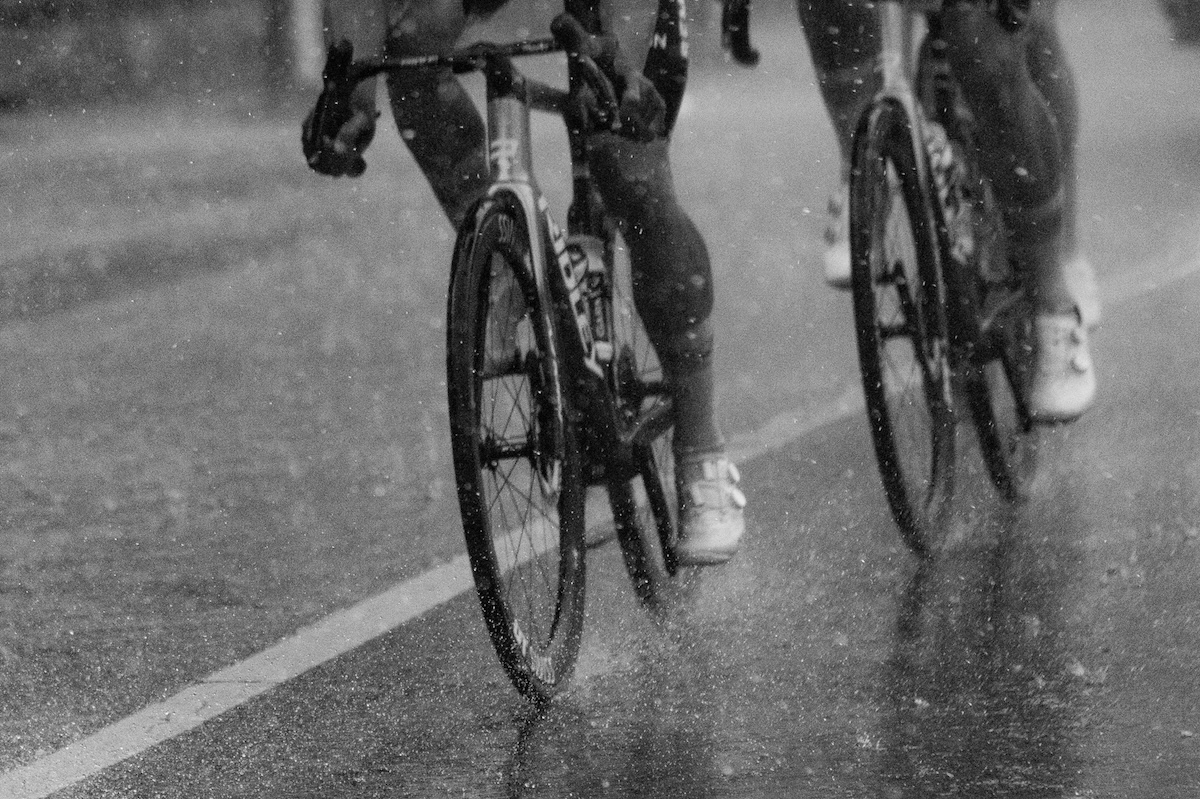
Torrential downpour hit the race halfway through the 107.4 miles (172.8km) race.
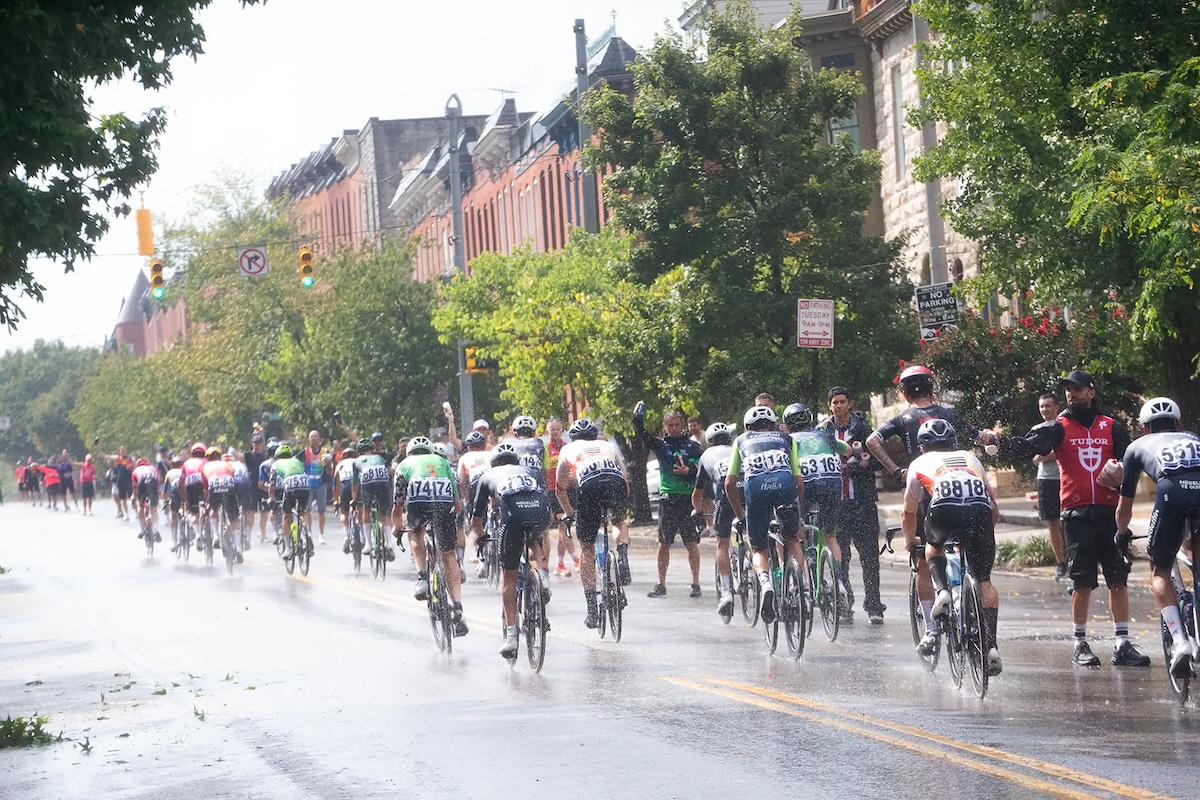
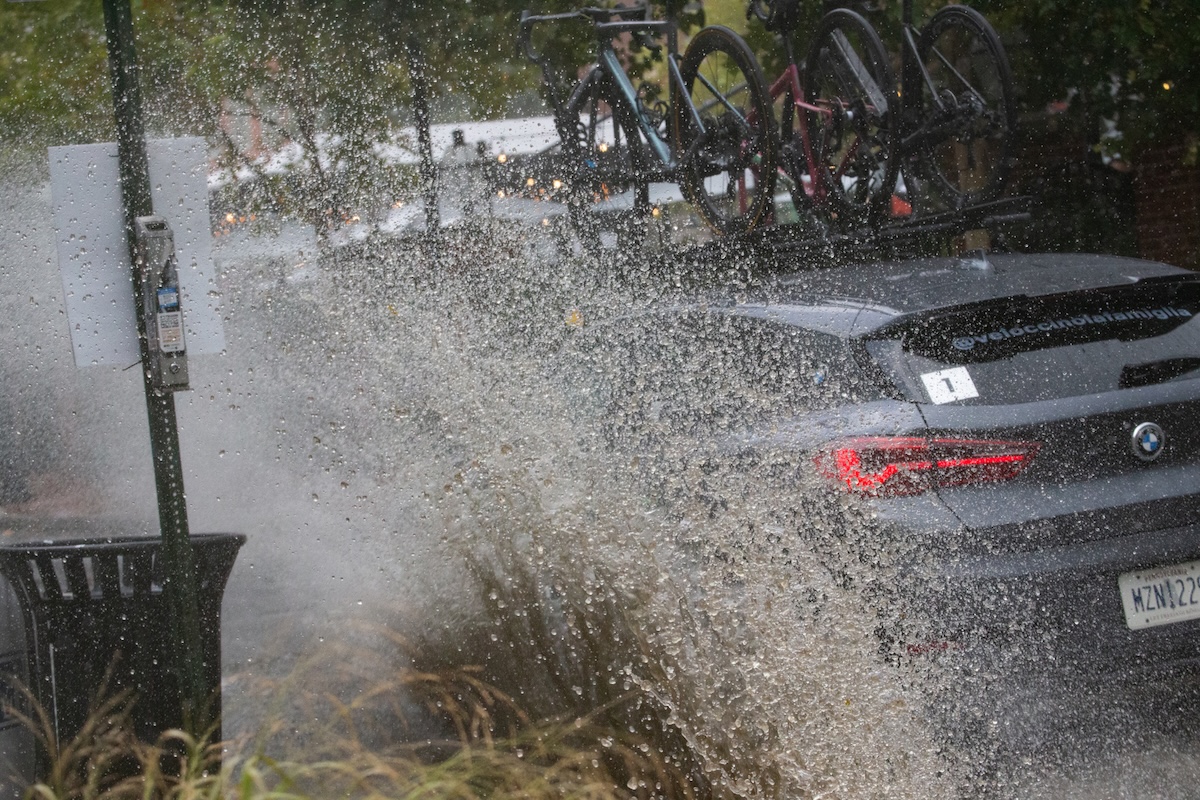
Rained cats and dogs
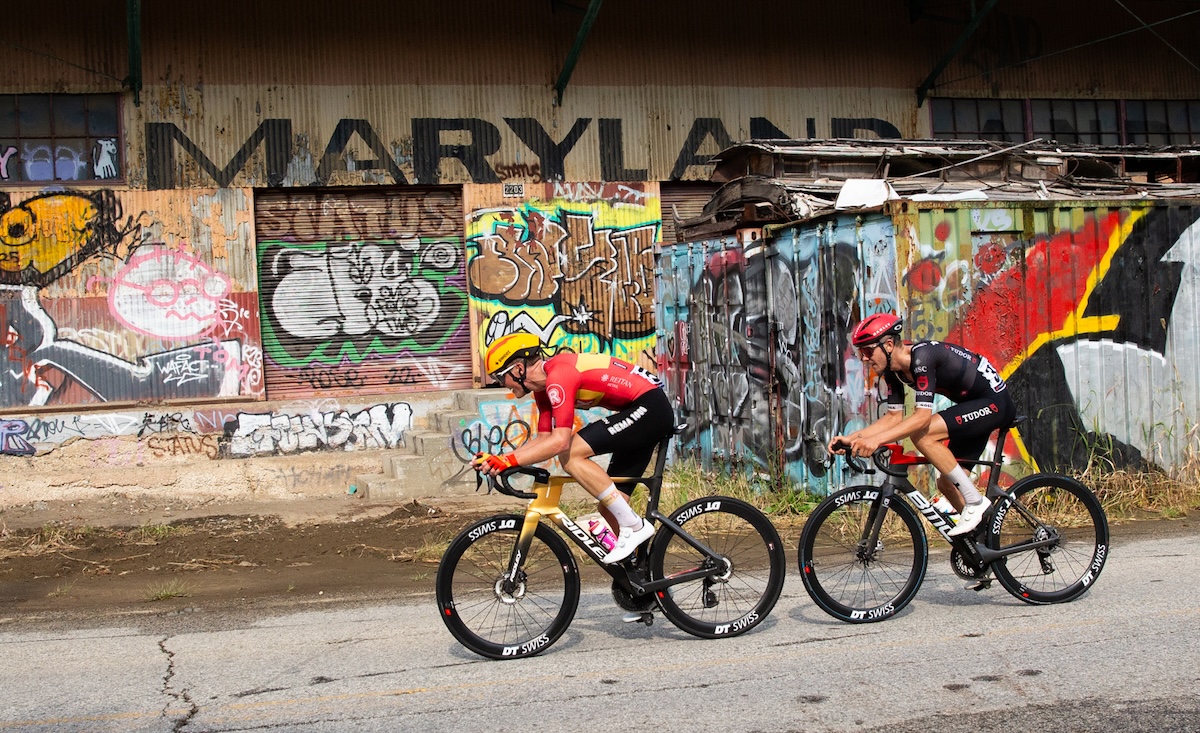
Maryland.
“Nothing beats a JetBlue holiday…”
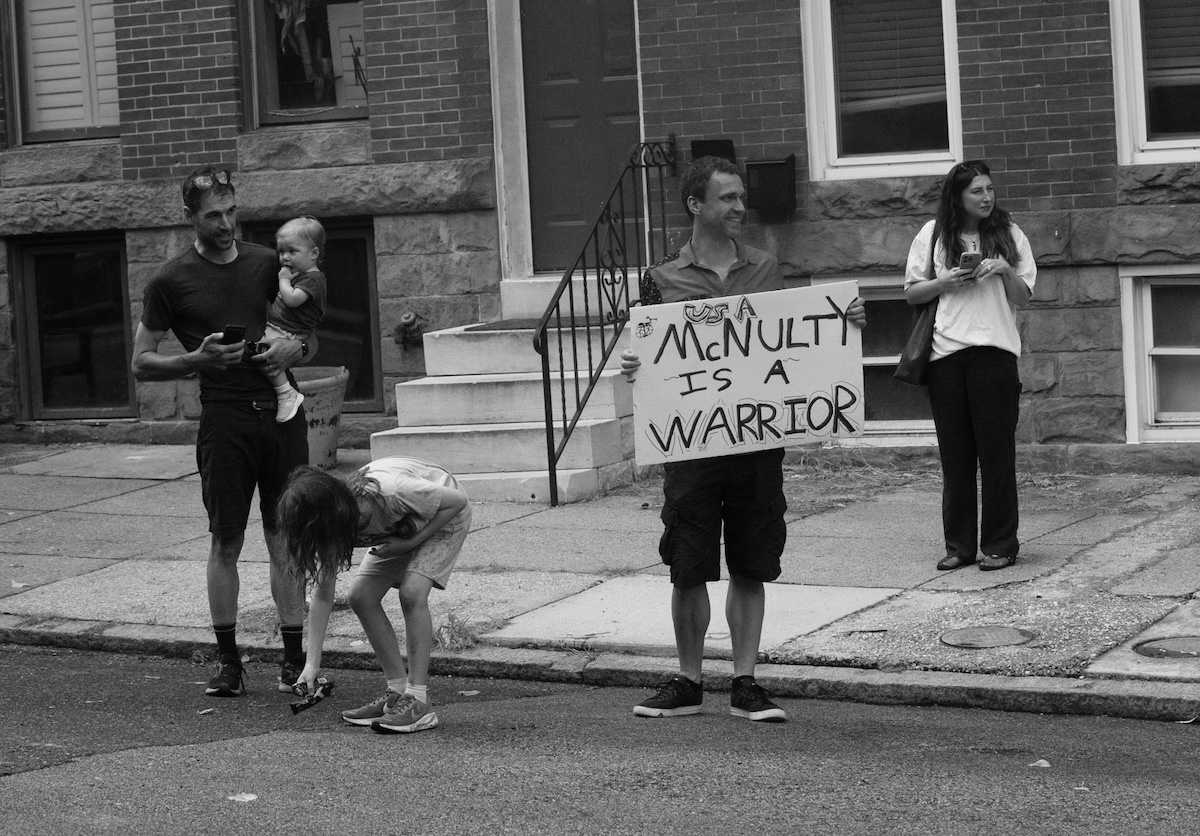
Fan of Brandon McNulty (Team USA)
Epic conditions for everyone.
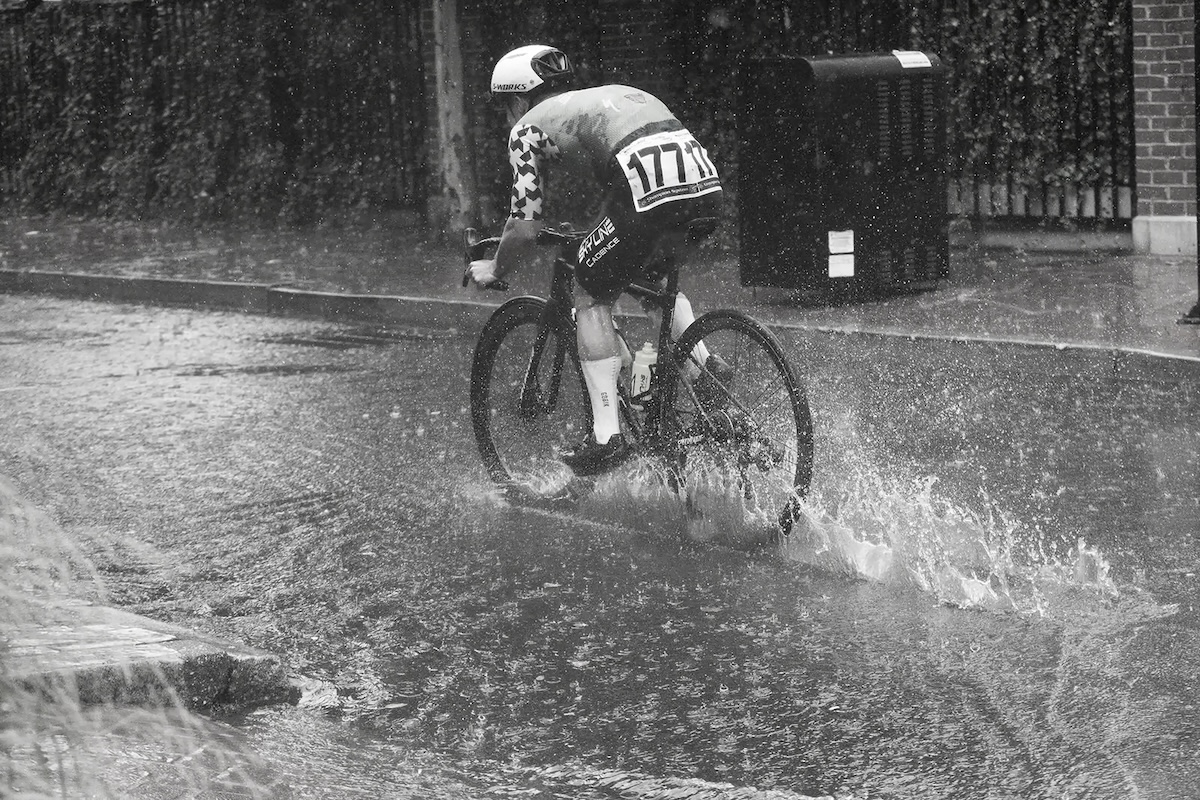
Riders persevere in the rain.
Soigneurs endured the rain at the FZ. Our team mechanic from DNA Pro Cycling was one of the mechanics for Team USA and was helping out at the Feed Zone.
Fans seaked shelter during the torrential downpour mid-race.
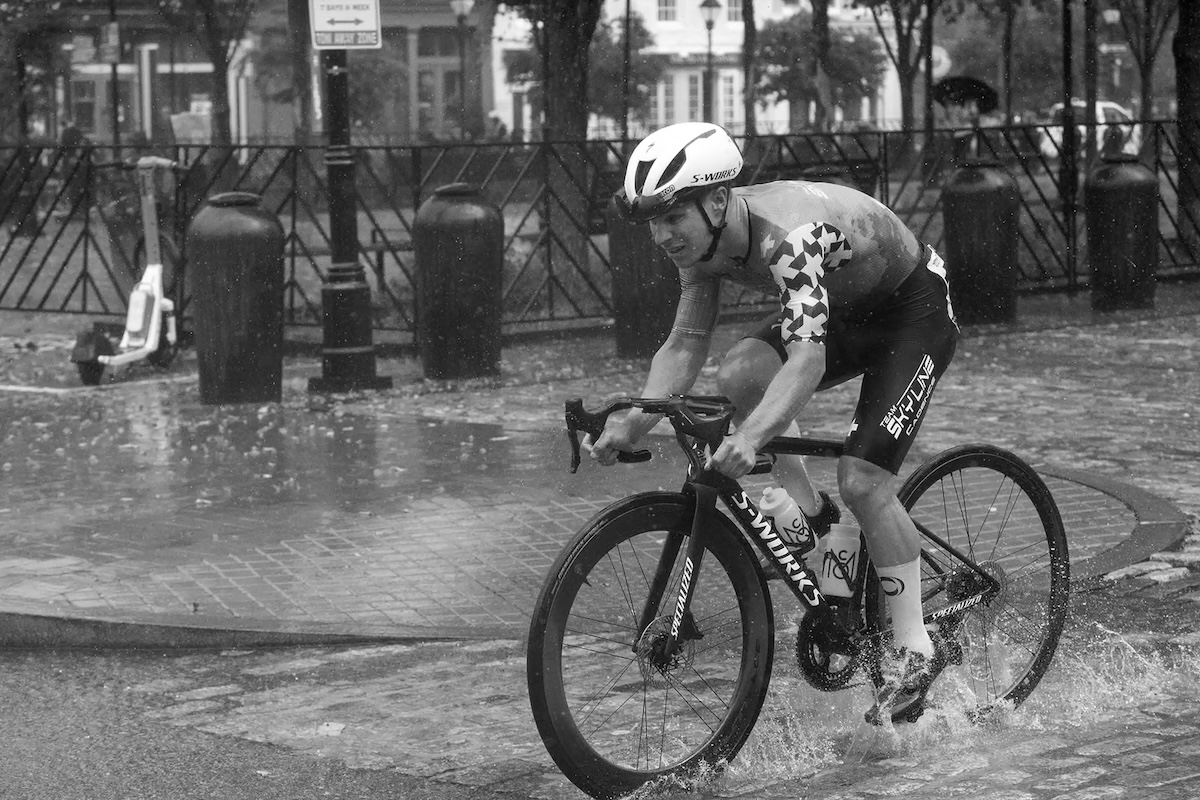
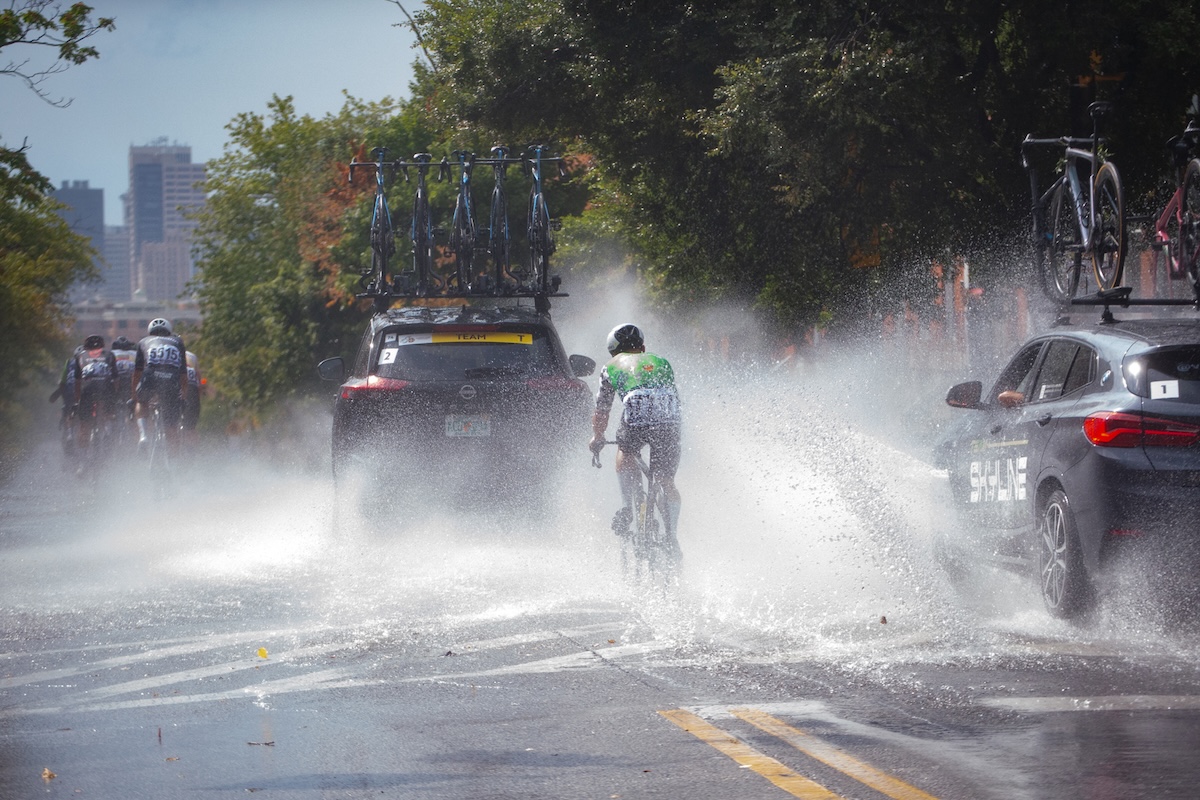
Splash!
Race staff working in the rain ensuring rider safety.
Good thing there were no spectators at that corner.
Flats happen…
Got deep!
The rainstorm shattered the field.
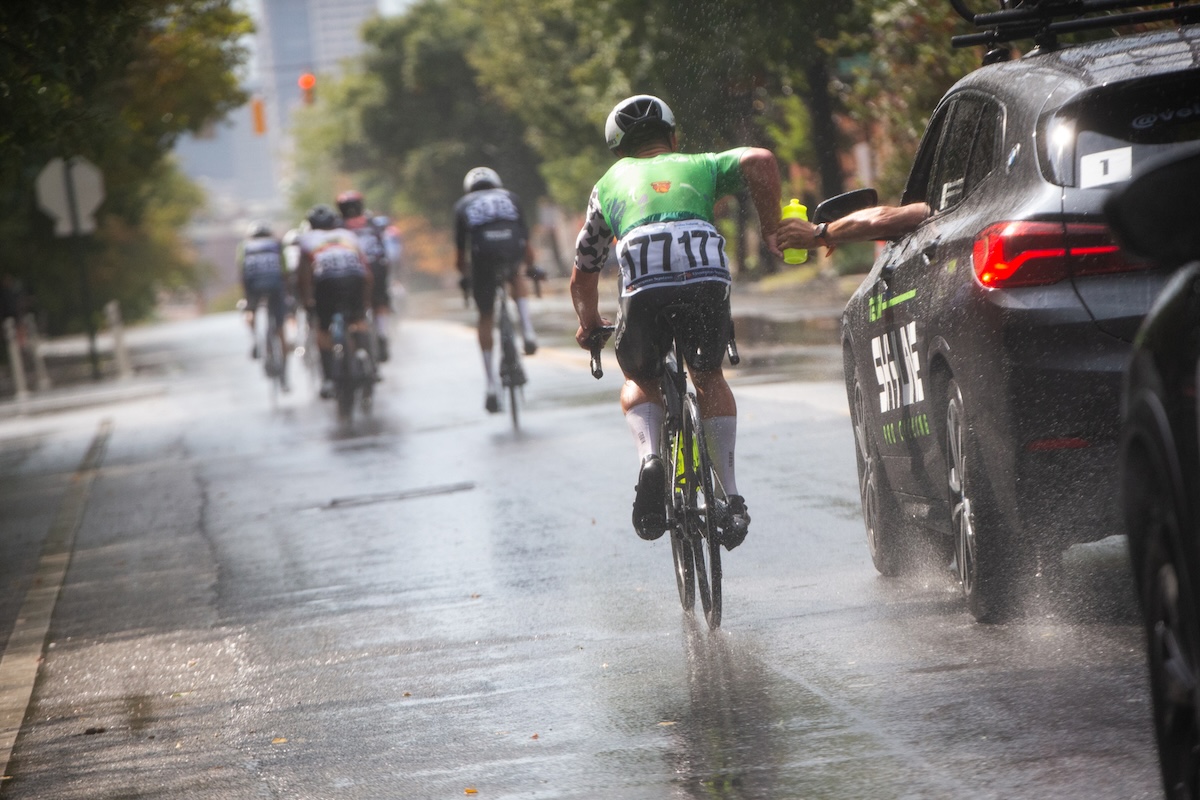
“Sticky Bottle”
The rain lasted about 1.5 circuit laps from about half-way through lap 4.
POV
EPIC. Love shooting stormy races.
Steve Johnson – in his signature red leather jacket.
Team USA’s Brandon McNulty attacks.
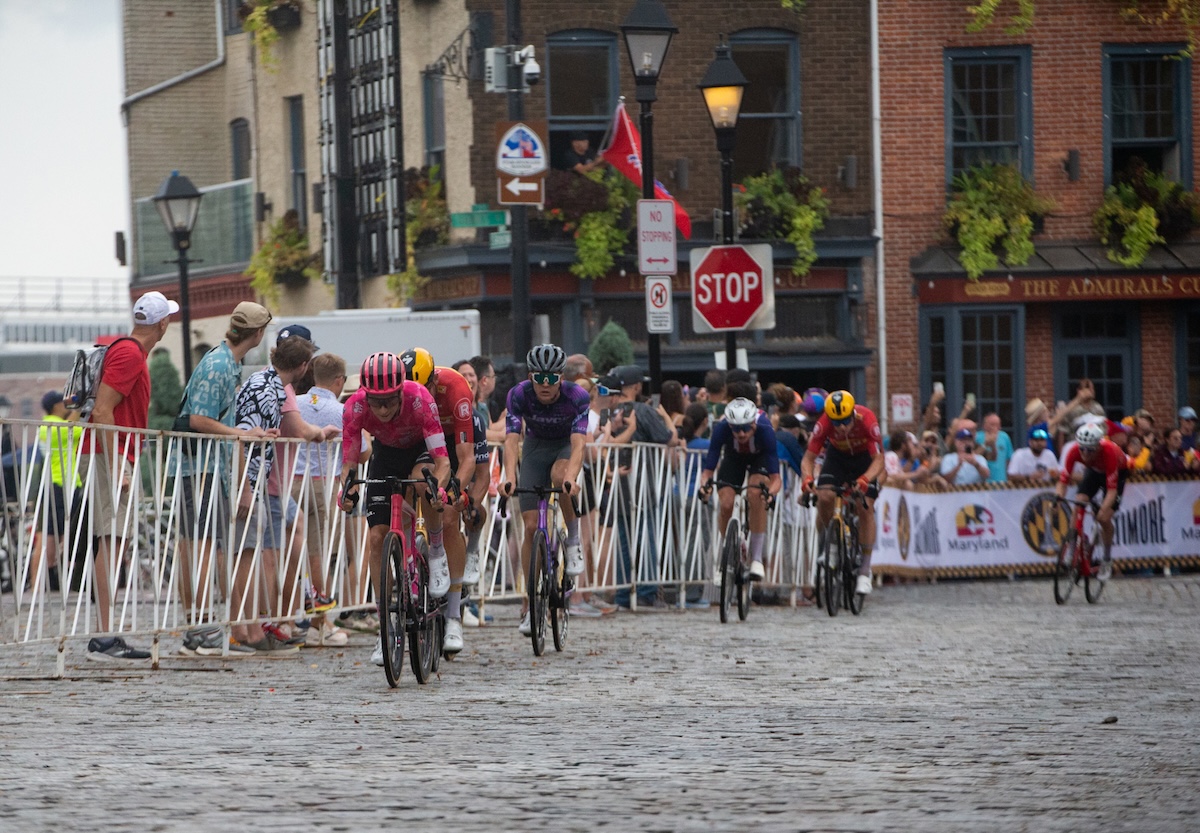
Riders finding the smoothest line through the cobbles.
The rain dried up swiflty – final lap.
Women’s MCC25 Race Director (and former DS for DNA Pro Cycling & 3 time Olympian representing New Zealand) – Joanne Kiesanowski pops her head out in anticipation of the Men’s race finish.
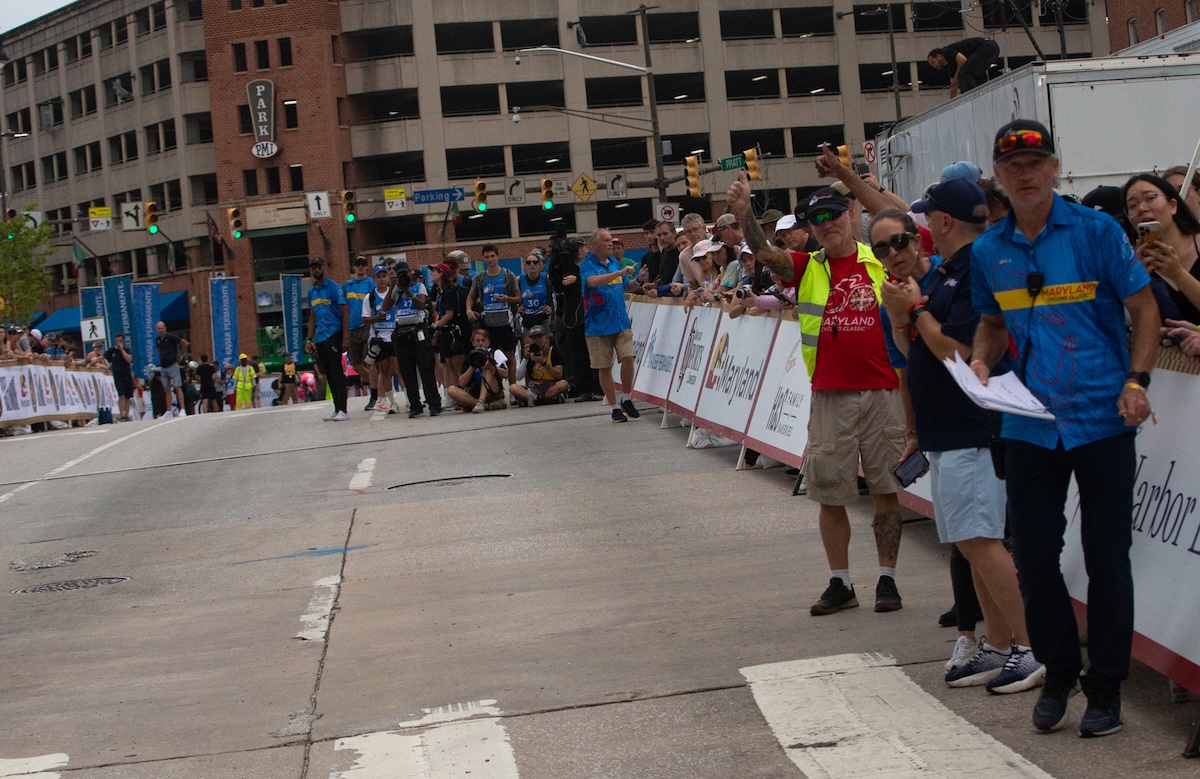
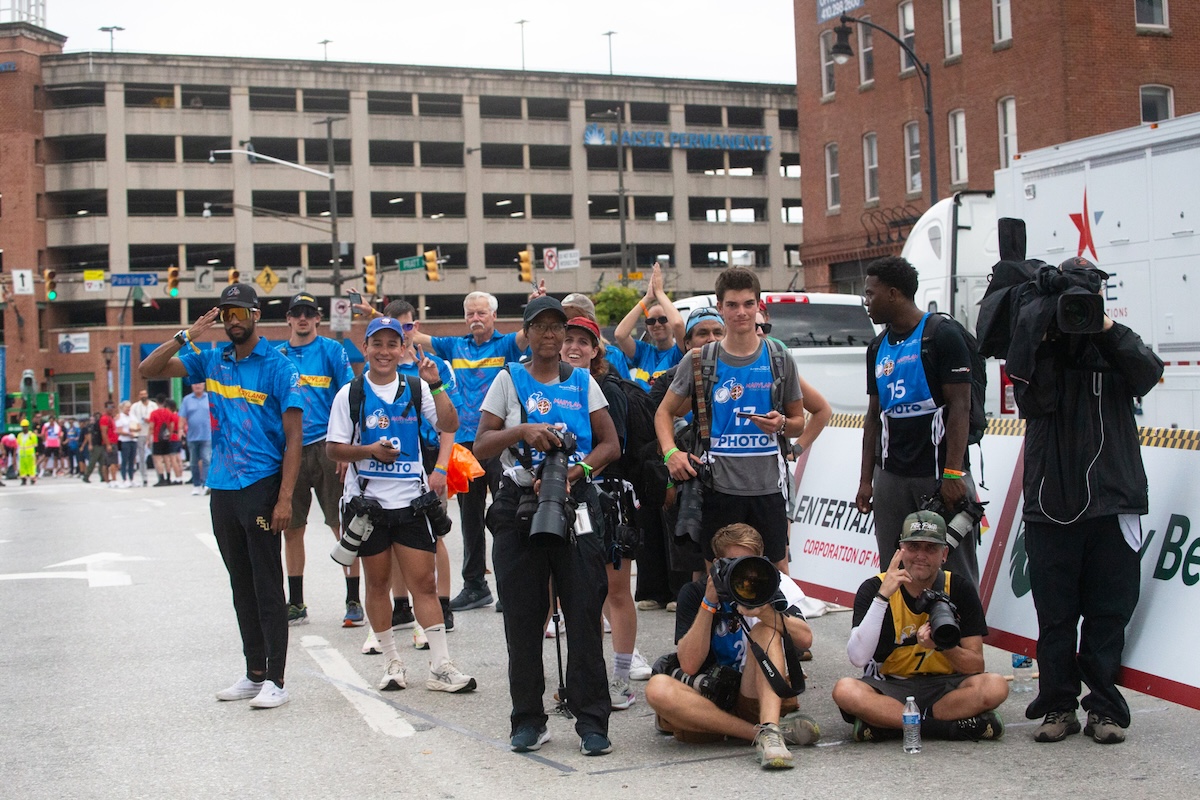
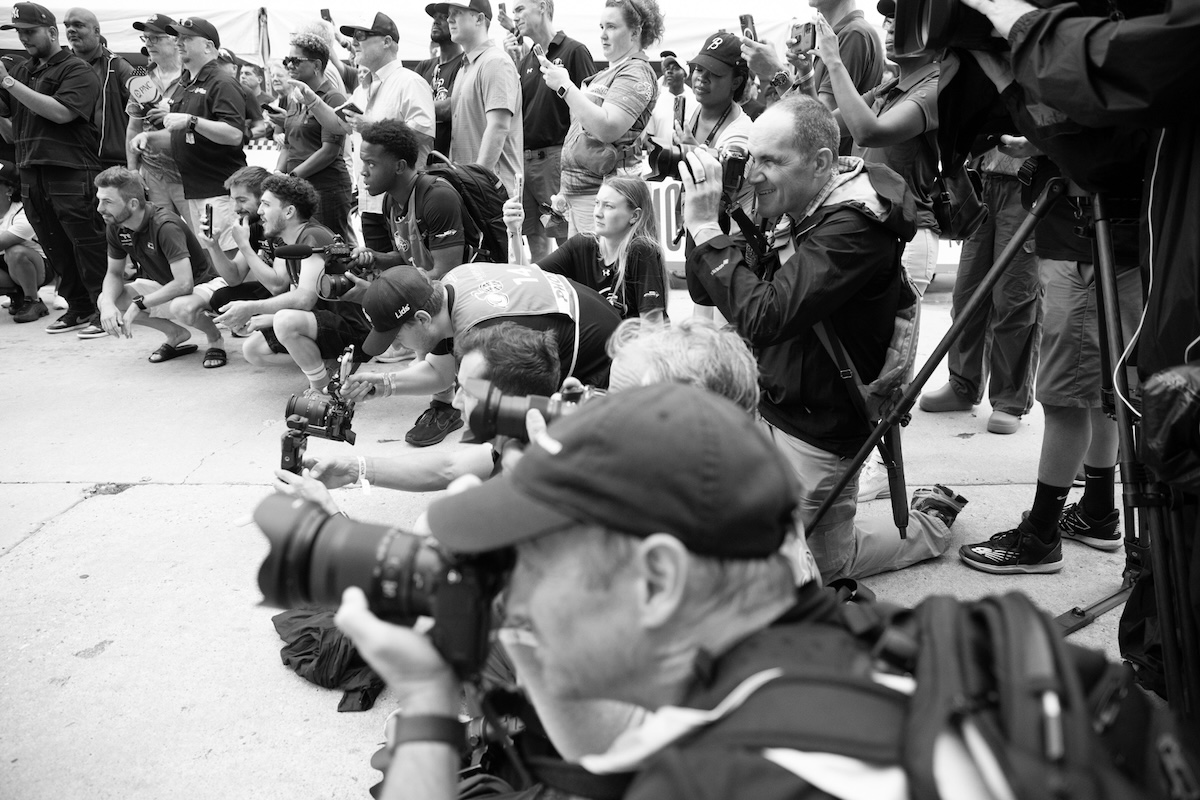
Right before I hopped off my photo moto I took a quick photo of the photographers staged to shoot the finish – was a good crew of people. I was happy to see the media op moved us over to this side of the course as I had requested it for the women’s race – it just has a better angle for the crowd etc.
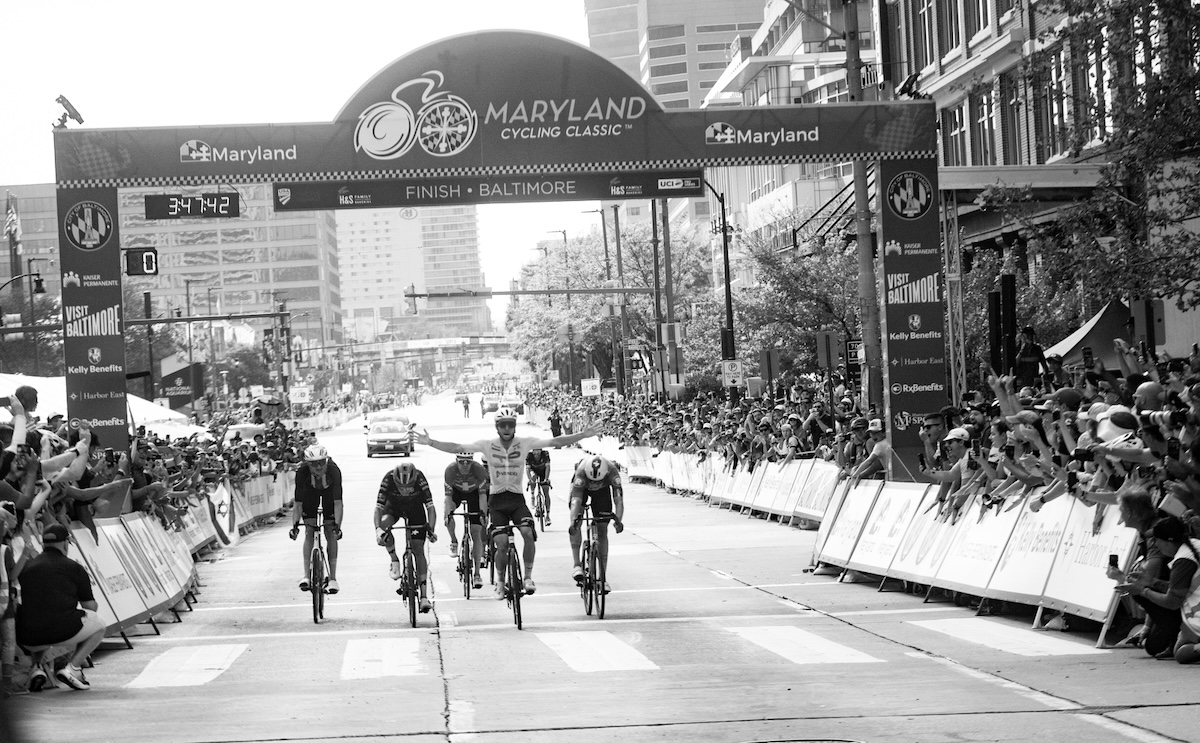
The rain stopped in time for the crowd to fill the streets of Maryland for an exciting sprint finish.
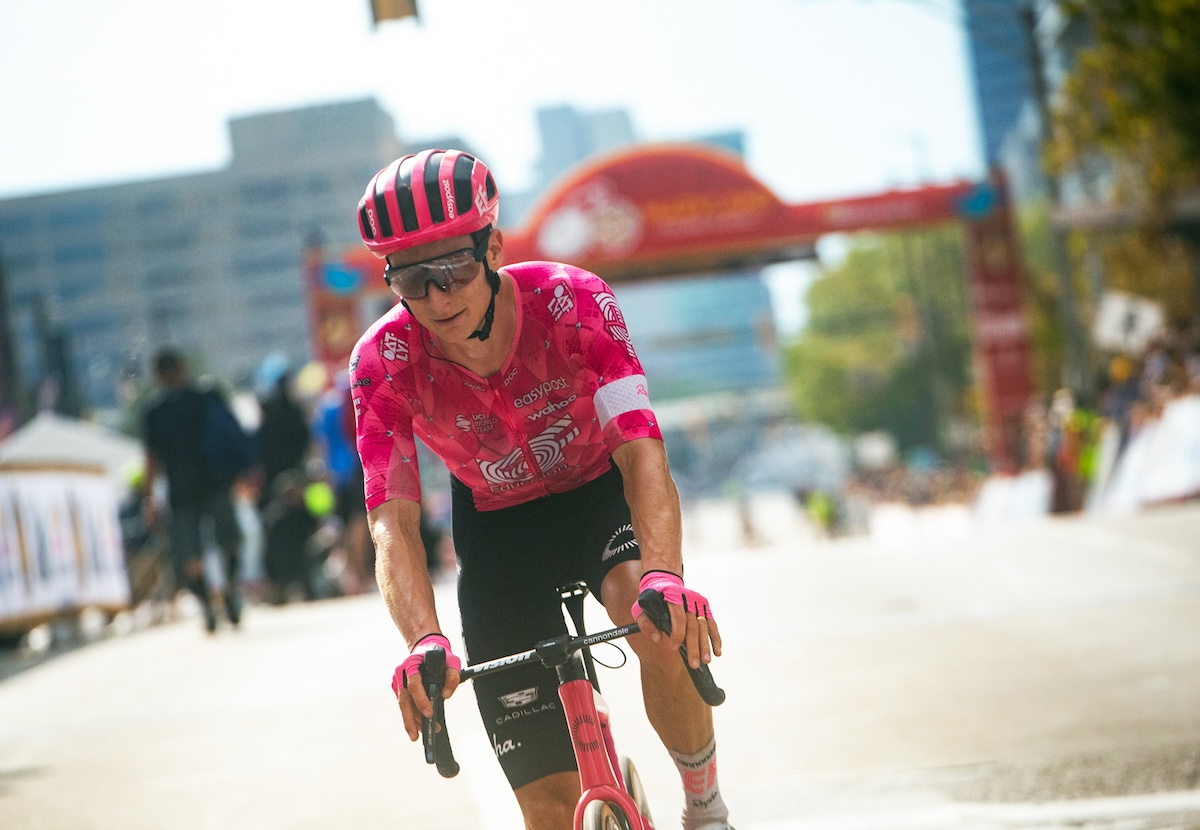
Rough day for Neilson Powless of EF Education-EasyPost with an untimely flat and a bike change disaster during the final lap of MCC25 (which included a 500 meter run with the bike) took him out of the fight for the win.
Media crowds around the winner.
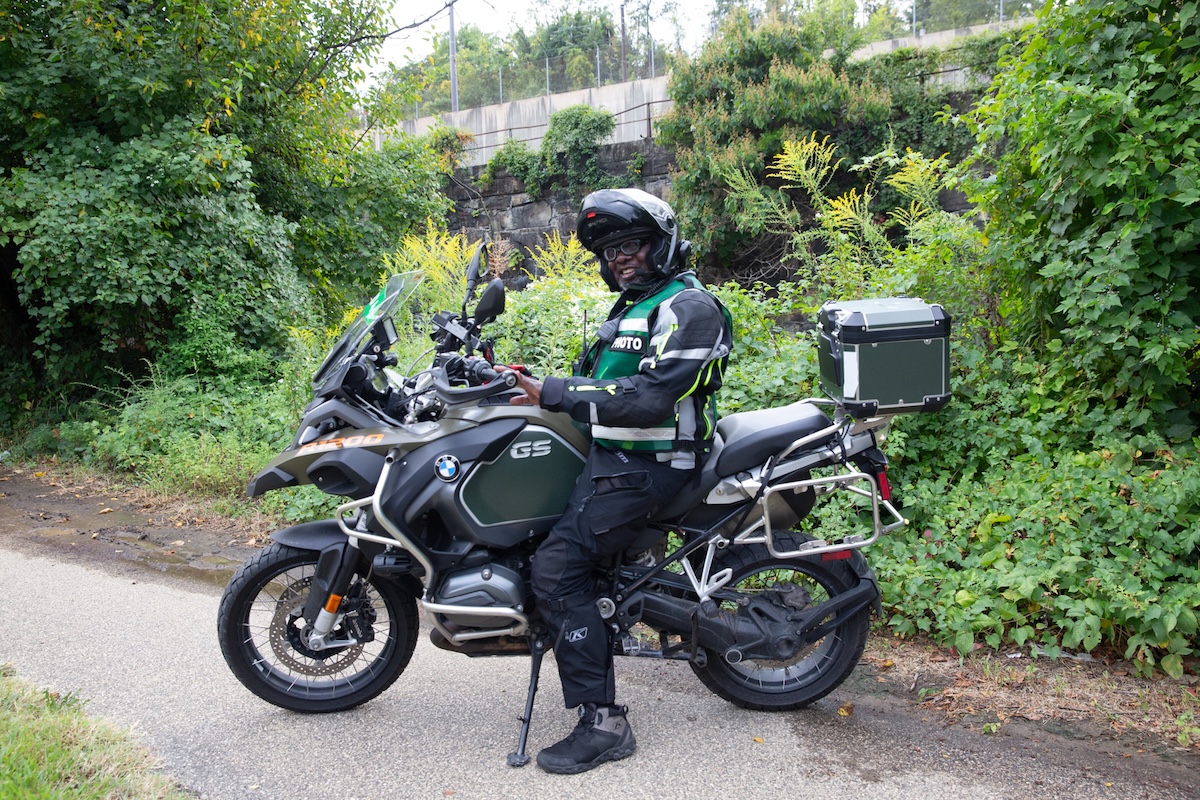
My PhotoMoto pilot: Ben Otunu. We made a great team and I was grateful for his amazing skills in the torrential rain storm.
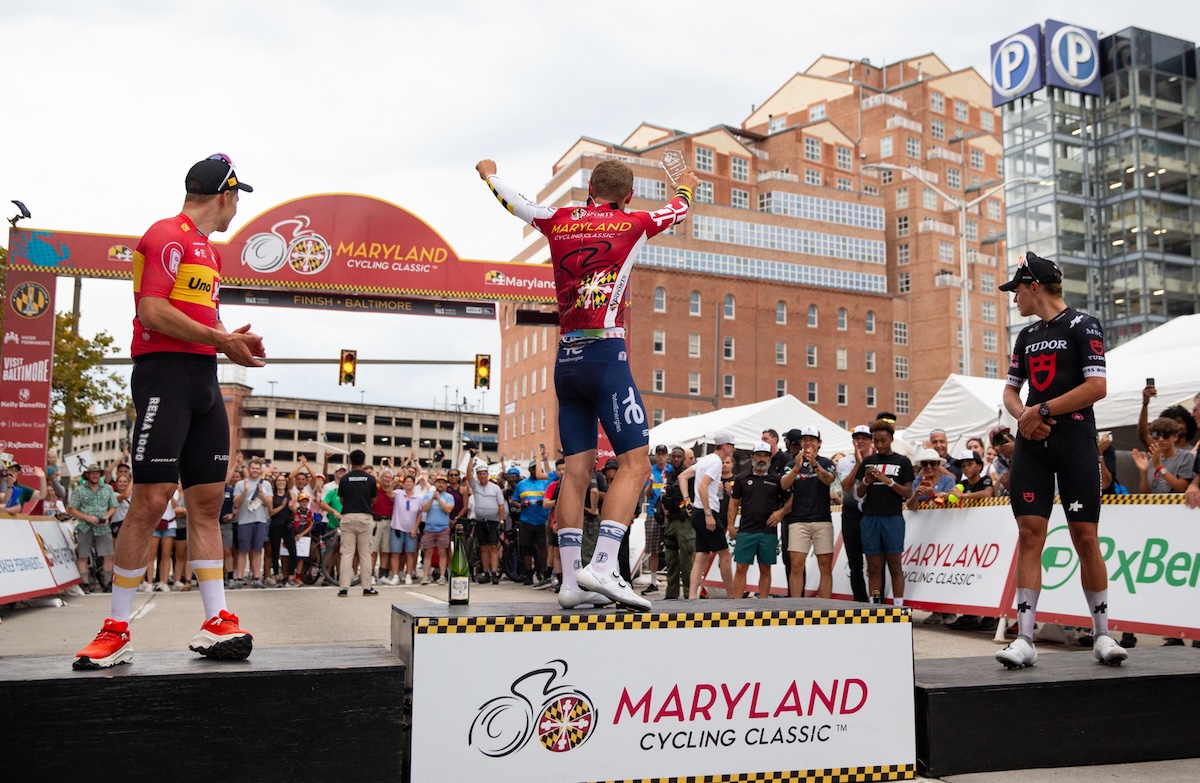
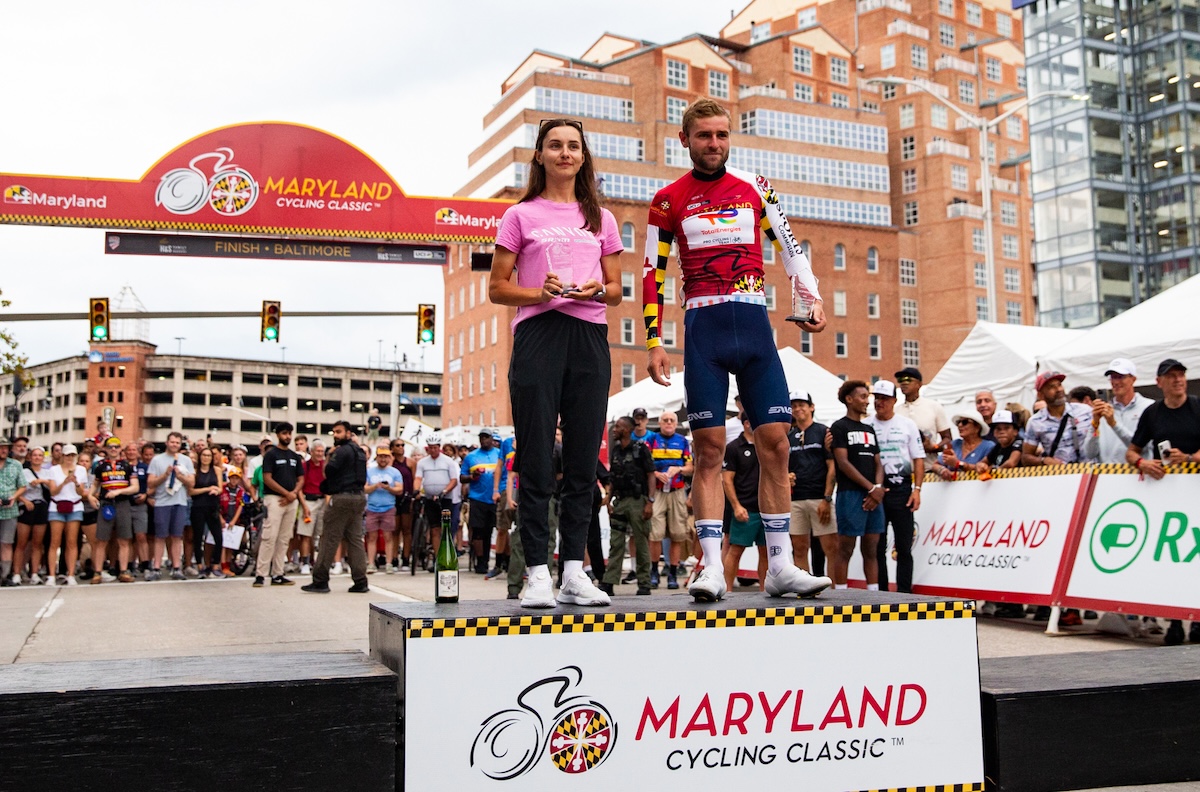
And that’s a wrap for MCC25 with winner of the Women’s and the Men’s race on the podium. Agnieszka Skalniak-Sójka (CANYON//SRAM) and Sandy Dujardin (Team TotalEnergies).
Agnieska was about to leave for the airport to fly back to Europe but fortunately the race MCC25 was able to get this photo op just in time.
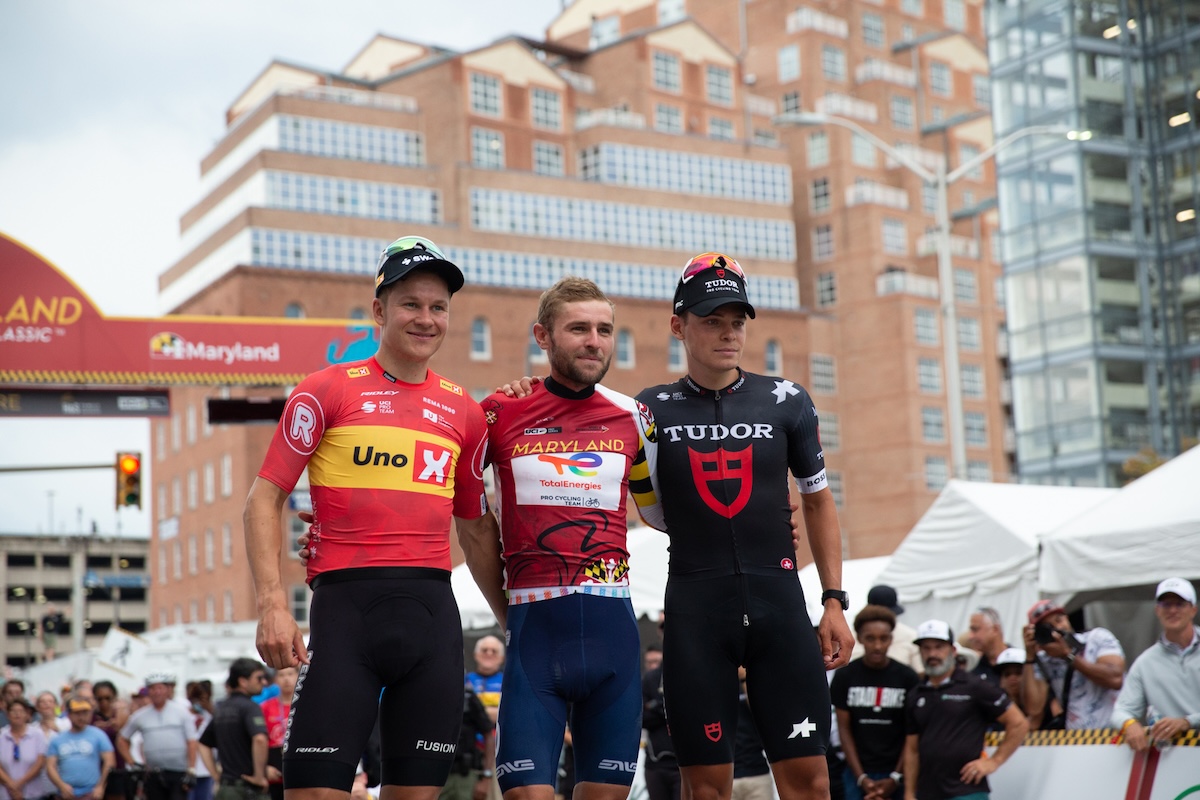
MCC25 Men’s Podium: 1st Sandy Dujardin (Team TotalEnergies), Jonas Abrahamsen (UNO-X Mobility Cycling), Marius Mayrhofer (Tudor Pro Cycling Team).
Shooting podium
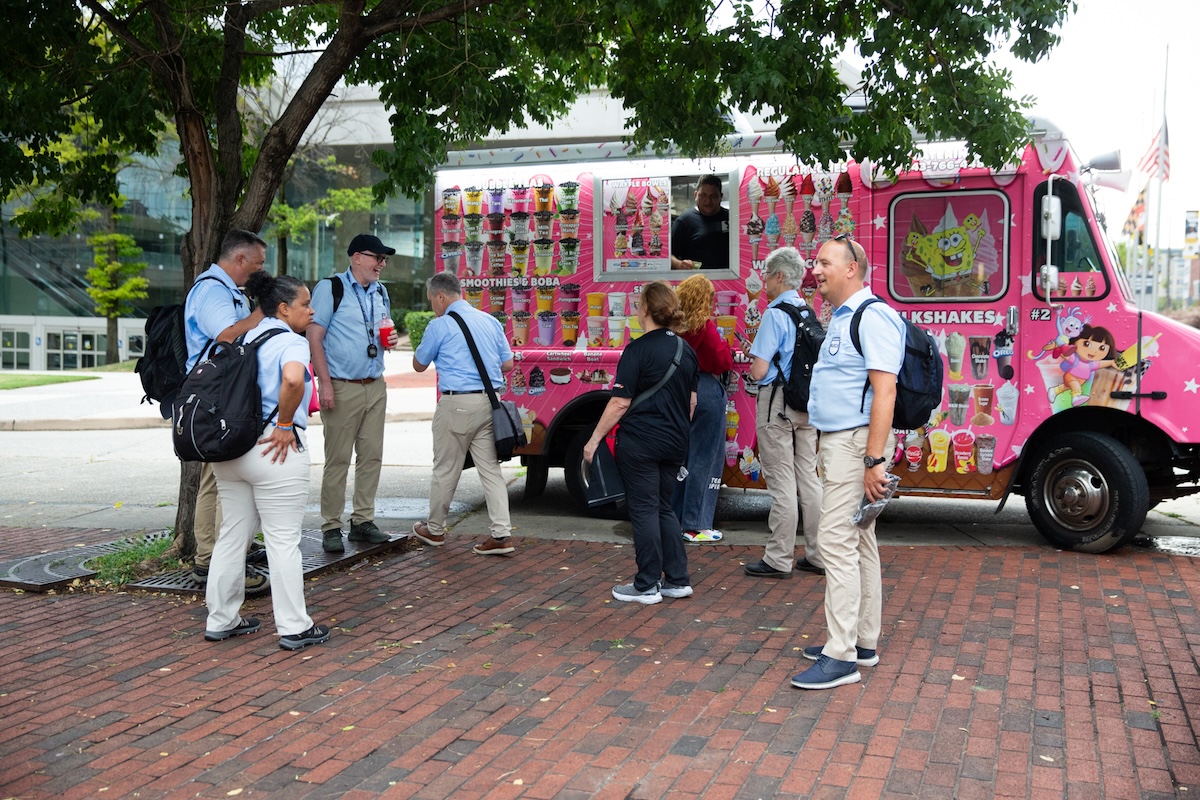
UCI officials enjoy some well deserved ice cream and slurpees post MCC25.
Huge smiles after a long day at the office.
See you next year Maryland Cycling Classic!

County in Southeastern Utah has a Radioactive Target on its Back

0

By Zak Podmore — In the early 1980s, southeastern Utah was targeted as a potential dump site for high-level nuclear waste, the kind that comes from nuclear reactors. The Department of Energy considered storing 8,000 tons of this highly radioactive material near Canyonlands National Park, boosting the idea as spurring “nuclear tourism.”

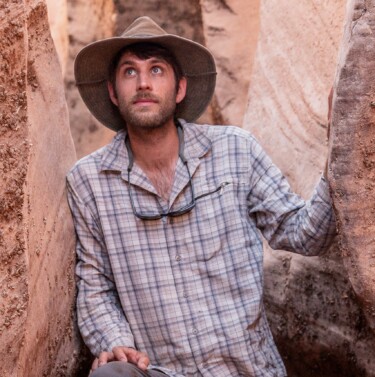
Zak Podmore

Who wouldn’t want to see Delicate Arch in the morning and casks of plutonium in the afternoon?

Like the radioactive waste itself, some bad ideas won’t disappear. Southeast Utah is in the crosshairs once again, aided by a $2 million Biden-era grant given to two pro-nuclear nonprofits based in California, Mothers for Nuclear and Native Nuclear, along with North Carolina State University.

San Juan County, where I live, is Utah’s only majority-Indigenous county and the state’s poorest. Last year, the county hosted a number of meetings as part of the Energy Department’s “consent-based siting consortia,” an attempt to get buy-in from residents for accepting radioactive waste. At local meetings, Mothers for Nuclear argued that the nuclear industry is much safer than the public has been told.

It’s true that 40 years ago some locals eagerly pushed for a nuclear dump. One pro-repository activist in Moab even called it preferable to national parks, because parks attracted “drugs, homosexuals, and environmentalists.” Utah’s governor opposed the dump plan, however, and after it was defeated, the town of Moab worked to create a new identity, Now, the Moab area has become an international tourist destination.

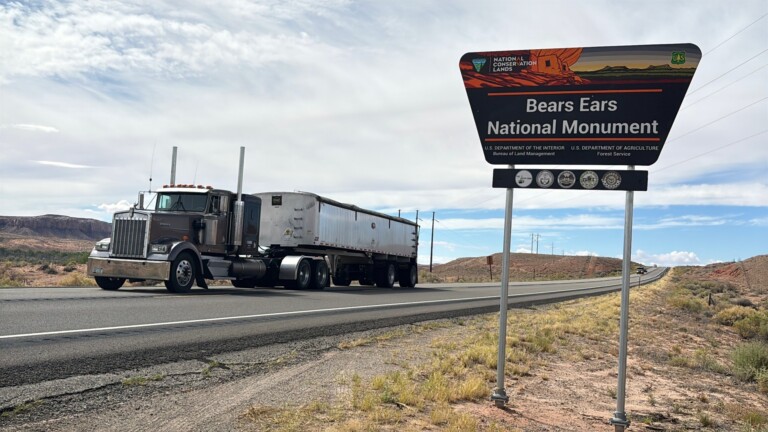
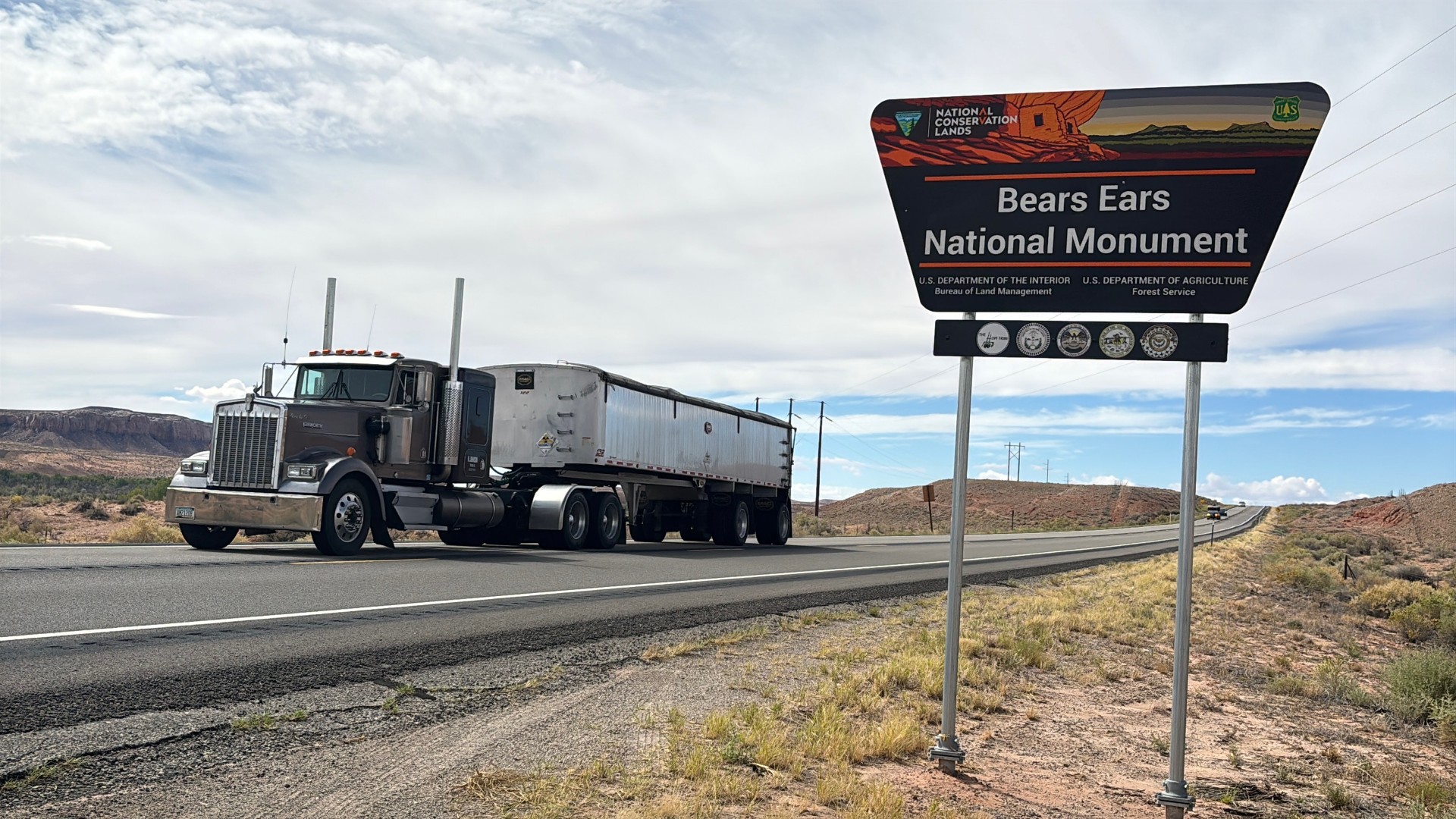
An Energy Fuels truck carries uranium ore from a mine near the Grand Canyon through Bears Ears National Monument to a mill in San Juan County, Utah. Photo by Zac Podmore

Yet the question of what to do about spent nuclear fuel remains, and the area surrounding Bears Ears National Monument and Canyonlands continues to be targeted as a suitable dumping ground.

Would welcoming radioactive waste lead to an economic revival? Probably not.

Though the Cold War rush for uranium created economic booms for San Juan County and Grand County’s town of Moab, prosperity spawned public health crises. Residents of Monticello, San Juan County’s seat, and the site of a uranium mill from 1942 to 1960, awoke to a fine yellow dust on windowsills during the mill’s heyday. Decades later, rates of lung and stomach cancer in the town were found in one study to be twice the state average.

The Navajo Nation experienced widespread uranium mining in the 20th century, followed by one of the highest incidences of uranium-linked health issues in the United States. In 1979, Tribal land was also the site of the second-largest accidental release of radioactive material in history, after a wastewater pond burst near Church Rock, New Mexico. Only the Chernobyl meltdown seven years later surpassed that disaster.

Mills for processing uranium are also harmful. After a mill site in Halchita, Utah, was capped in the early 1990s, workers who cleaned it up fell victim to some of the same diseases as uranium miners of the previous generation. Still contaminating air, livestock and humans are more than 500 unreclaimed uranium mines on Navajo land.

The Navajo Nation banned uranium mining in 2005 and uranium transport in 2012. But Energy Fuels, the company that operates the White Mesa uranium mill just outside San Juan County, secured an exemption from the transport ban in early 2025. The mill has been accepting radioactive waste for years, including waste from Japan and Estonia. Recently, it began processing ore from a mine the company owns just outside Grand Canyon National Park.

Around 10 trucks leave the Arizona mine each day, crossing unceded Havasupai and Hopi lands, the Navajo Nation, and the Ute Mountain Ute Reservation before reaching the mill—all over the objections of Tribal leaders and members of the tribes along the route.

But that waste and ore is far less radioactive than the spent nuclear fuel that Mothers for Nuclear promotes at San Juan County meetings. There, the group stays away from discussing cancer rates or birth defects, instead showing slides of pregnant, smiling women sitting next to containers of nuclear waste.

It is going to take time and vigilance, but once again my fellow residents of San Juan County intend to fend off the Department of Energy, which has adopted even more pro-nuclear policies under President Trump.

Zak Podmore is a contributor to Writers on the Range, an independent nonprofit dedicated to spurring conversation about the West. He is the author of Life After Deadpool and lives in Utah. Article originally published at https://writersontherange.org/southeast-county-in-utah-has-a-radioactive-target-on-its-back/

Raise the Jolly Roger: Little Red Opens 2026 Ride Registration

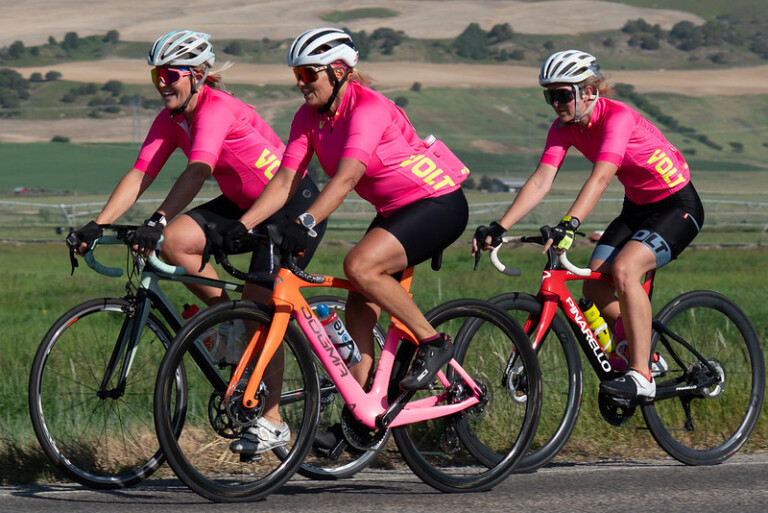
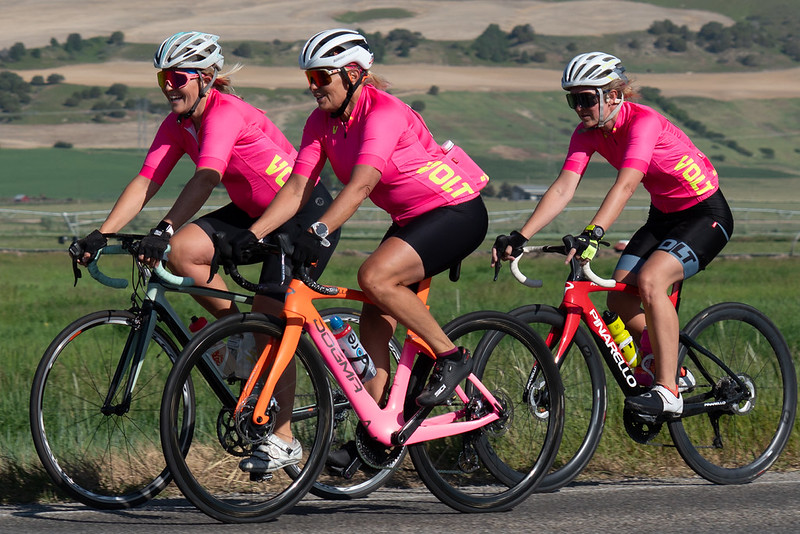
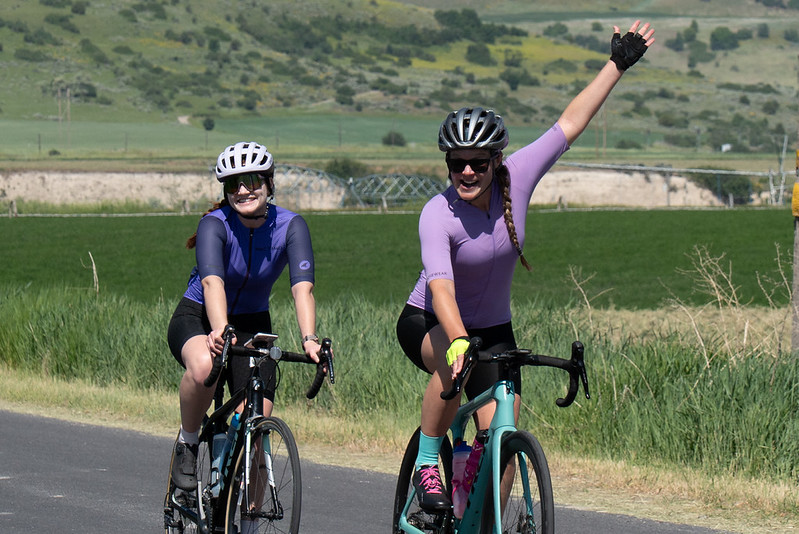
SALT LAKE CITY, Utah (January 15, 2026) — Registration is now open for the 2026 Little Red, the nation’s largest women’s cycling event, set to return on June 6. Organized by the Bonneville Cycling Club, the non-competitive ride will once again roll through the scenic backroads of Cache Valley, spanning northern Utah and southern Idaho.

Photo courtesy of Bonneville Cycling Club

Event organizers have set a participation cap of 3,000 riders for 2026. Founded in 1988, Little Red has grown into a marquee event on the cycling calendar while maintaining its charitable mission: raising funds for breast and ovarian cancer research at the Huntsman Cancer Institute.

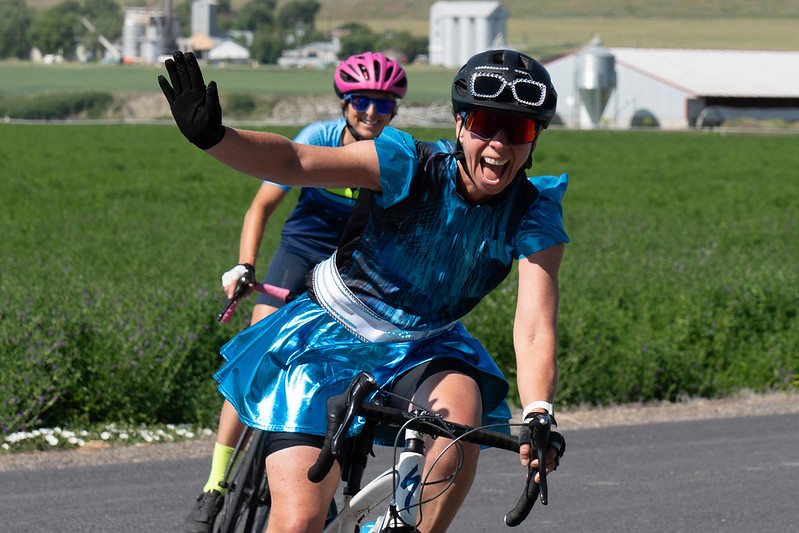
Photo courtesy of Bonneville Cycling Club

Participants can choose from five route options ranging from 17 to 100 miles, making the event accessible to riders of varying abilities. The ride is supported by more than 300 volunteers who help manage routes, aid stations, and rider support throughout the day.

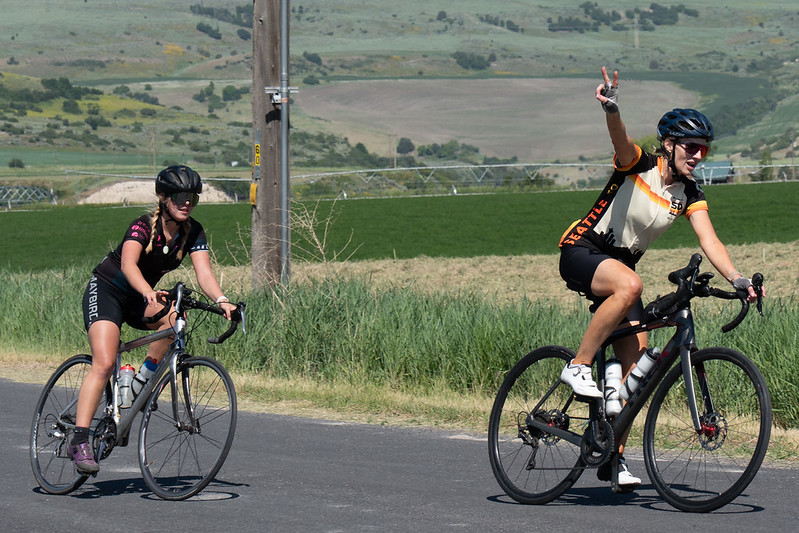
Photo courtesy of Bonneville Cycling Club

The theme for the 2026 edition is “Pedal Like a Pirate.

Registration is scheduled to close on January 27. More information and registration details are available at www.lrrh.org.

Photo courtesy of Bonneville Cycling Club

June 6, 2026 — Little Red Riding Hood, Lewiston, UT, Women-only ride. 17, 30, 55, 70 and 100 mile distances in Cache Valley, Expo too, fundraiser for Women’s Cancer Research at the Huntsman Cancer Institute. Registration each year opens in January, Tim Shea, 801-598-0294, [email protected], lrrh.org

From Pendleton to the Cascades: Mudslinger Events Unveils 2026 Oregon Lineup

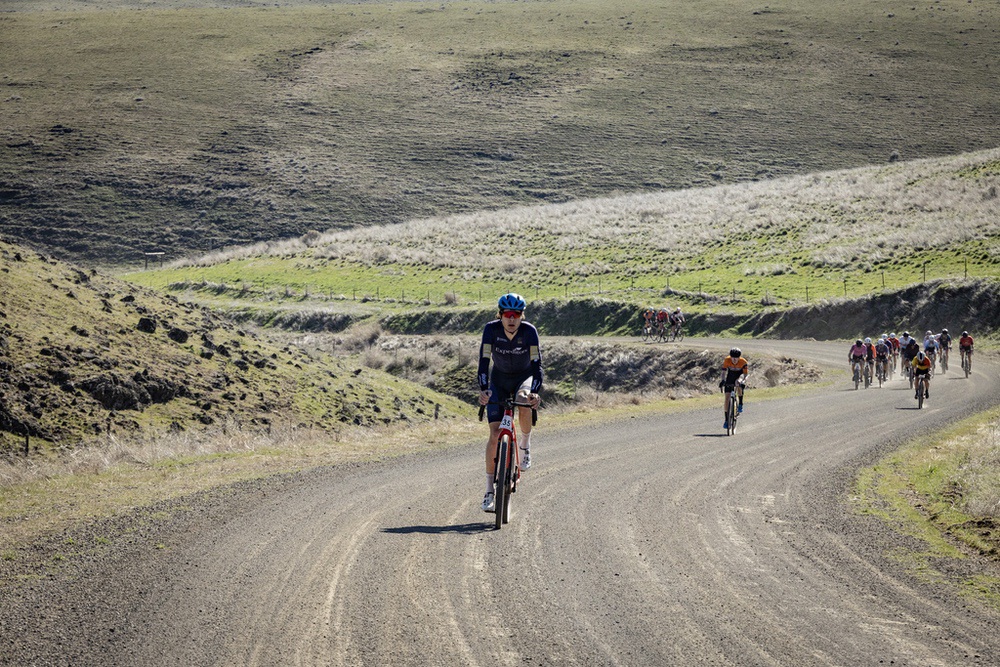
MONROE, Oregon (January 15, 2026) — Mudslinger Events will open its 24th season of Oregon cycling events on March 15, 2026, with the Real West Gravel in Pendleton. Staged from downtown Pendleton, the event also serves as the opening round of the Oregon Triple Crown Series. The early-season gravel race features a rolling course averaging 50–60 feet of climbing per mile, making it an approachable yet tactical season opener for riders throughout the Pacific Northwest.

Photo courtesy of Mudslinger Events

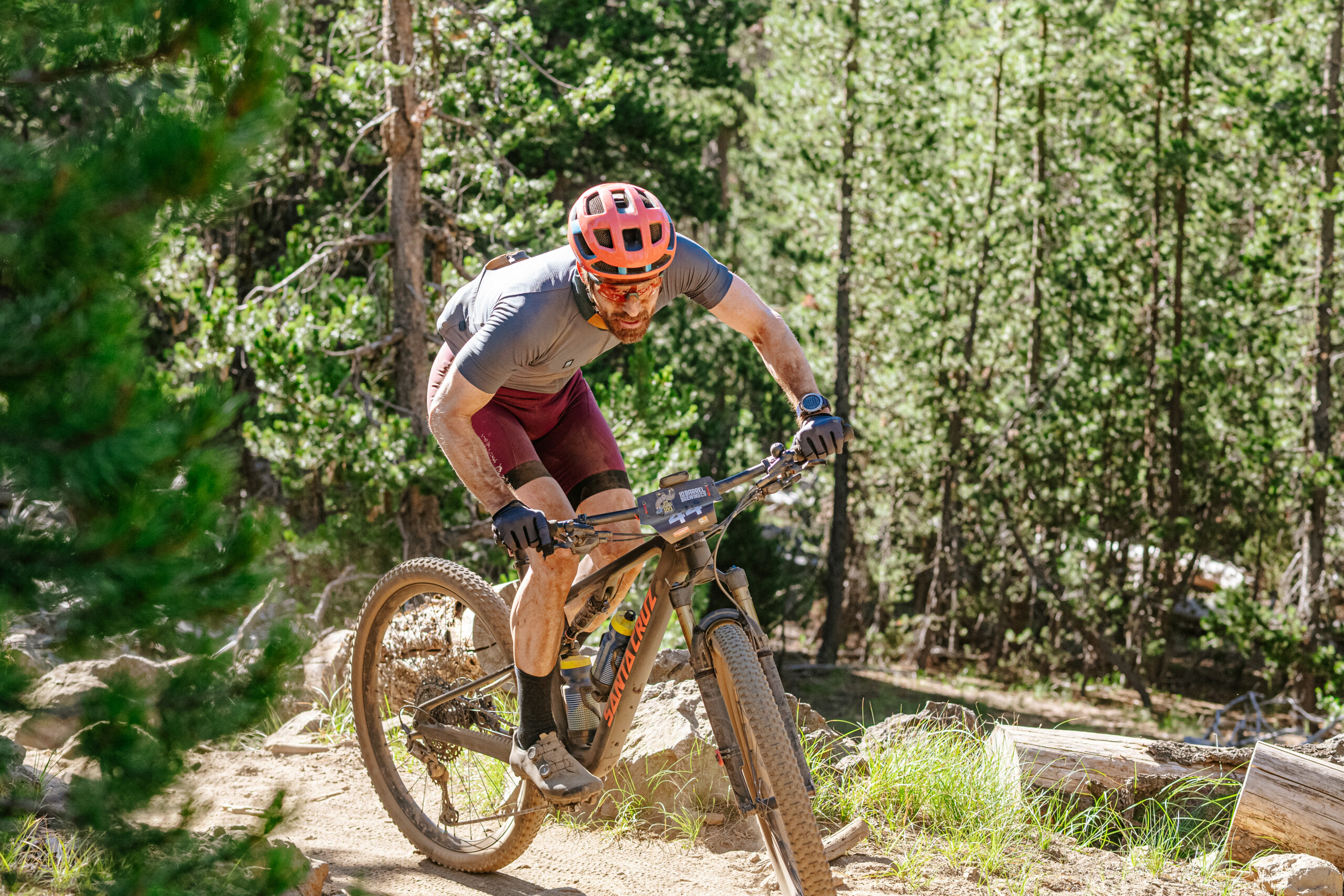
Mountain biking remains a cornerstone of Mudslinger Events, whose history dates back to the inaugural Mudslinger XC in 1987. The Central Oregon calendar continues with the popular Sisters Stampede, which regularly reaches its 500-rider capacity, followed by the High Cascades 100. Returning for its 18th edition, the High Cascades 100 remains one of the region’s longest-running and most respected endurance mountain bike races.

High Cascades 100 – 2025 by Mudslinger Events

The schedule expands one week prior to the High Cascades 100 with Bend Dirt Fest, offering competition for both gravel and mountain bike racers while serving as the finals for the Oregon XC Series and the Oregon Triple Crown. The season wraps up on September 26 with the Ring of Fire, a 50-mile race known for its technical and demanding terrain.

The full 2026 schedule is available at www.mudslingerevents.com/events.

Events: 

I Used AI to Train for a Gravel Race. Here’s How it Went.

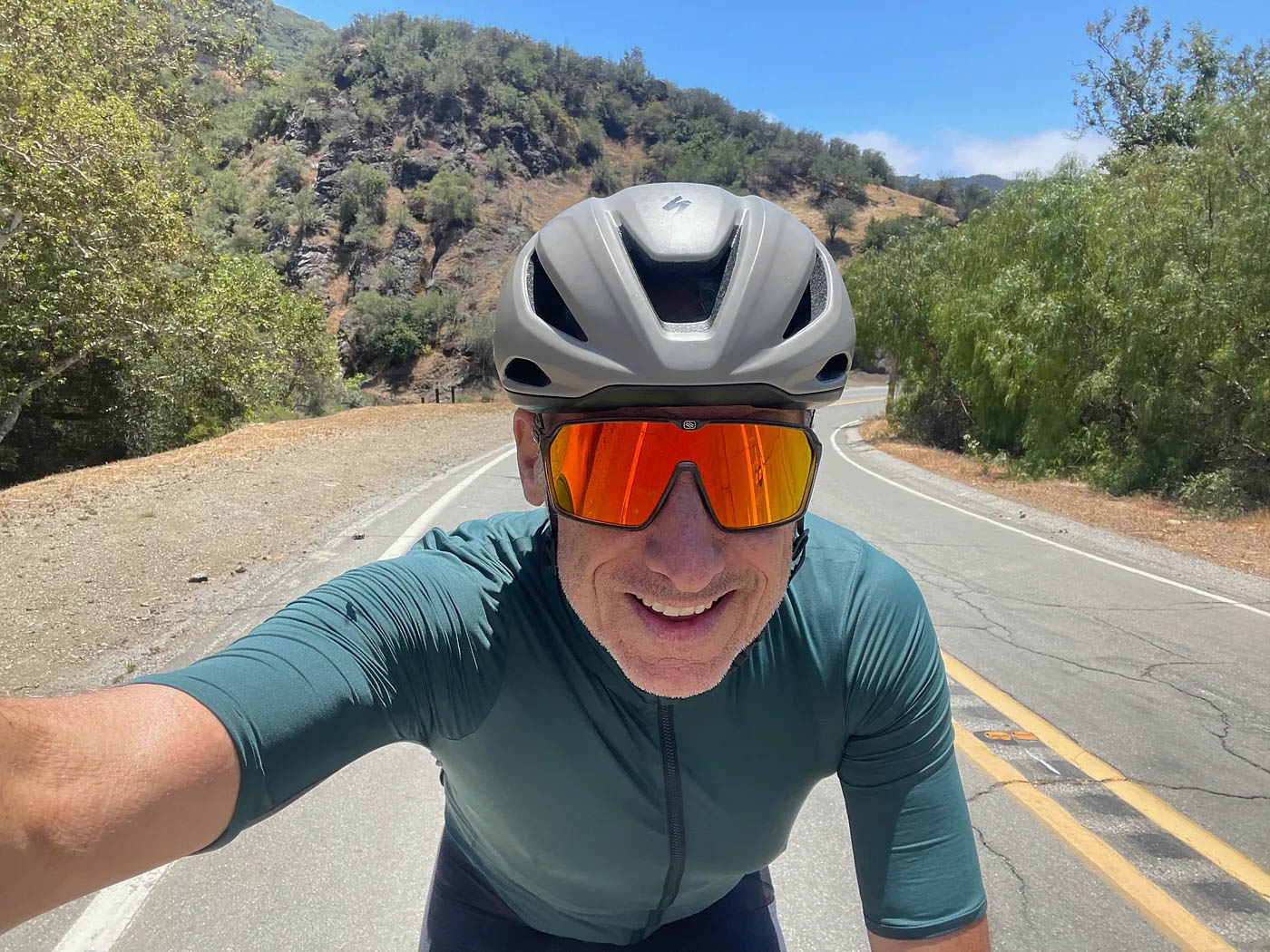
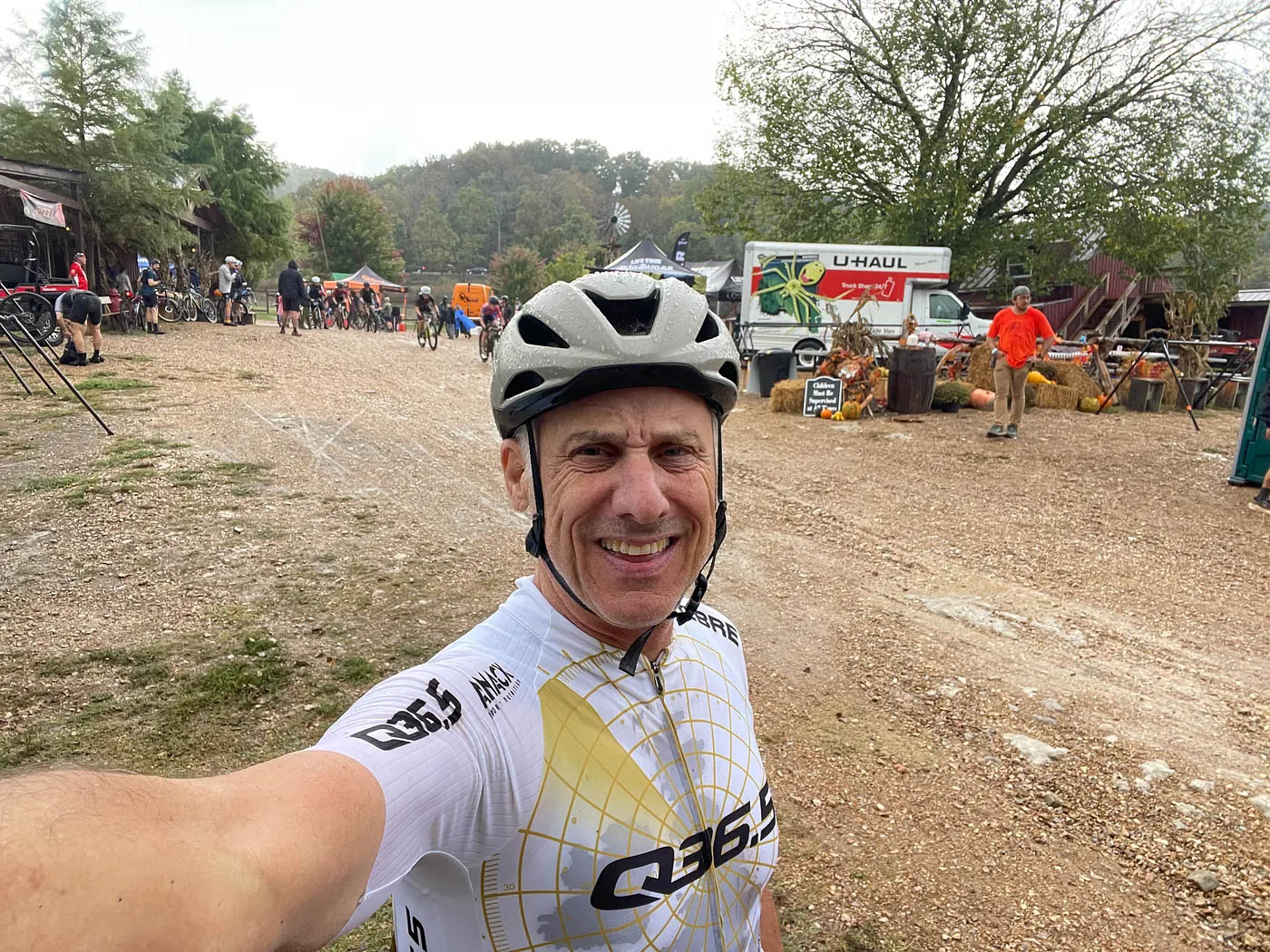
By Peter Abraham — Earlier this year, after recovering from various injuries, I signed up for the Lifetime Big Sugar Classic gravel race. It’s a hard race through the Ozarks, and I love visiting Bentonville, Arkansas. After all, it’s the bike capital of North America.

Out on one of my local climbs. Photo by Peter Abraham

Due to travel commitments and not always prioritizing my health, my training in the spring was a little inconsistent. After my annual physical in May, with cholesterol numbers creeping slightly higher, I told my doctor that I was going to double down on my fitness and nutrition. And I asked to get another set of blood tests three months into that process. My doctor enthusiastically supported this idea, so my next call was to my friend & former client Frank Overton about getting on his FasCat Coaching training plan.

While I had used different FasCat training plans in the past, it had been a couple years since I’ve been on a program. Once I got going on his new app and AI-powered plan, here’s what I remembered about having a coach of any kind:

  1. What you’re doing on a given day is decided for you. For those of us who have wrestled with “what kind of ride should I do today?” this is kind of a luxury. I just open my plan in the morning, and it tells me what to do.
  2. It feels intentional to be on a training plan. Every ride has a purpose and an objective.
  3. Importantly, training designed by experts really does work, and you get in shape faster.

What was different this time around with FasCat was the AI part. How would that work? Would the training be better or more responsive based on AI? I would have to try it and see.

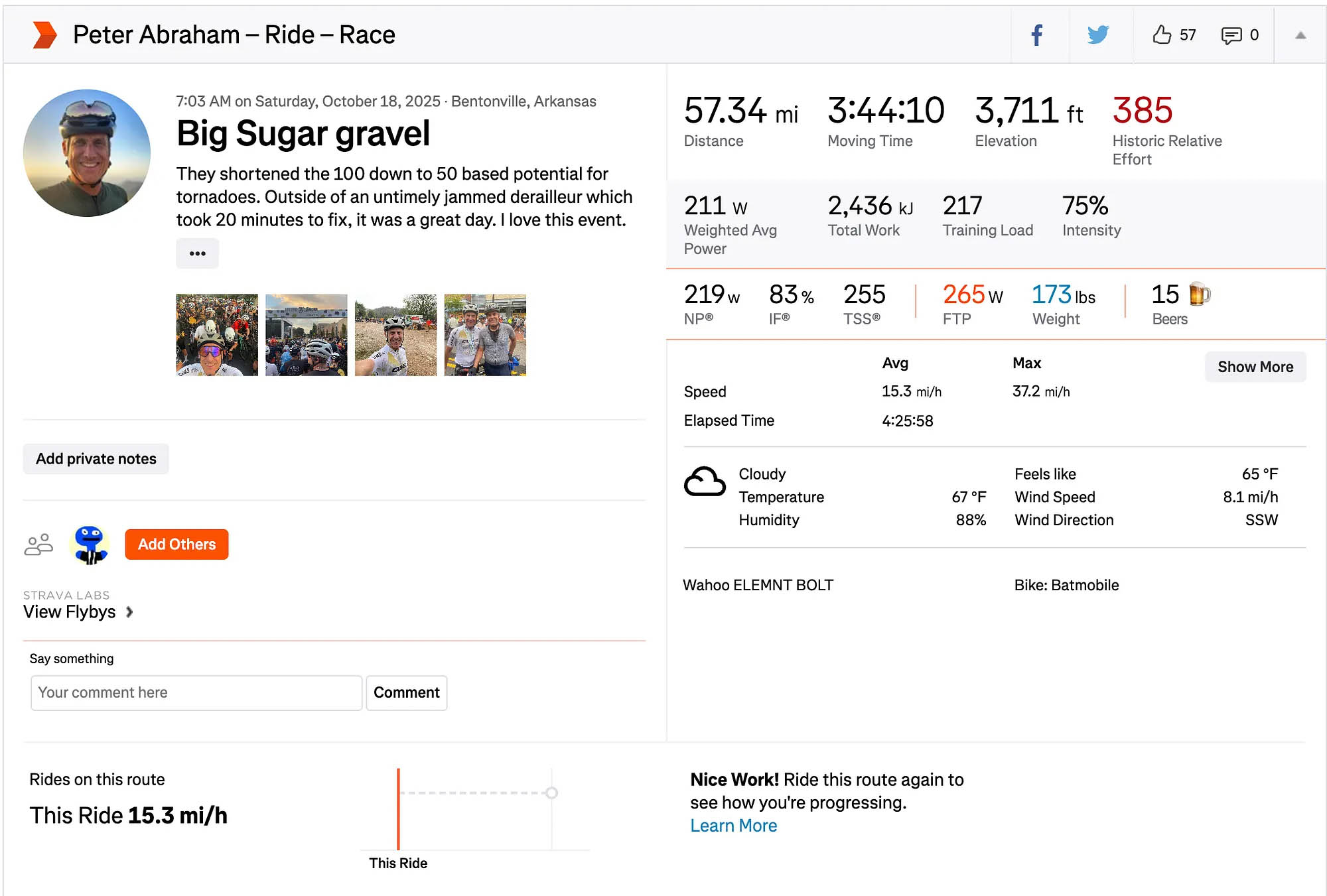
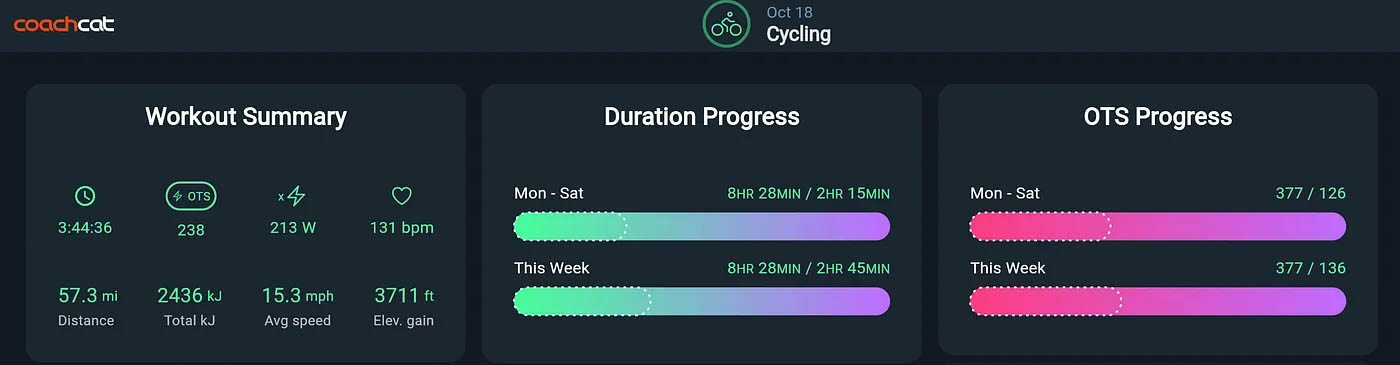
The FasCat app is generally well designed and easy to use. It seamlessly synchs with my Wahoo computer, so workouts are automatically uploaded to the app. My computer is also connected with my Strava account, so one issue I saw immediately is there was a lot of data to look at on different platforms. Frank has come up with his own version of the TrainingPeaks training stress score (TSS) called OTS. Lots of cyclists, including me, have used TSS for years to understand how hard a workout is by combining intensity (HR) and duration. A long workout with an elevated HR gets a higher TSS than a short, easy workout. I even use the Sauce plugin for Strava so I can see TSS (and normalized power) in my Strava workouts. On top of all this, Strava has their own version of normalized power, called weighted average power. Which data do you pay attention to? There’s a lot of it. It’s borderline data overload, if I’m being honest.

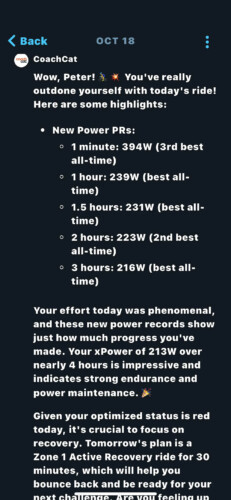
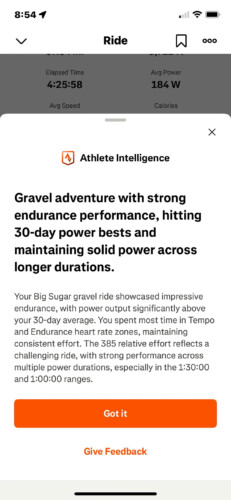
Strava is also starting to use AI, and it was interesting to see how FasCat’s AI workout description compared with Strava’s:

The FasCat and Strava AI descriptions of the same gravel race
The main Strava data page for my race, with Sauce plugin data between the orange lines.
This is the FasCat data summary for the same race
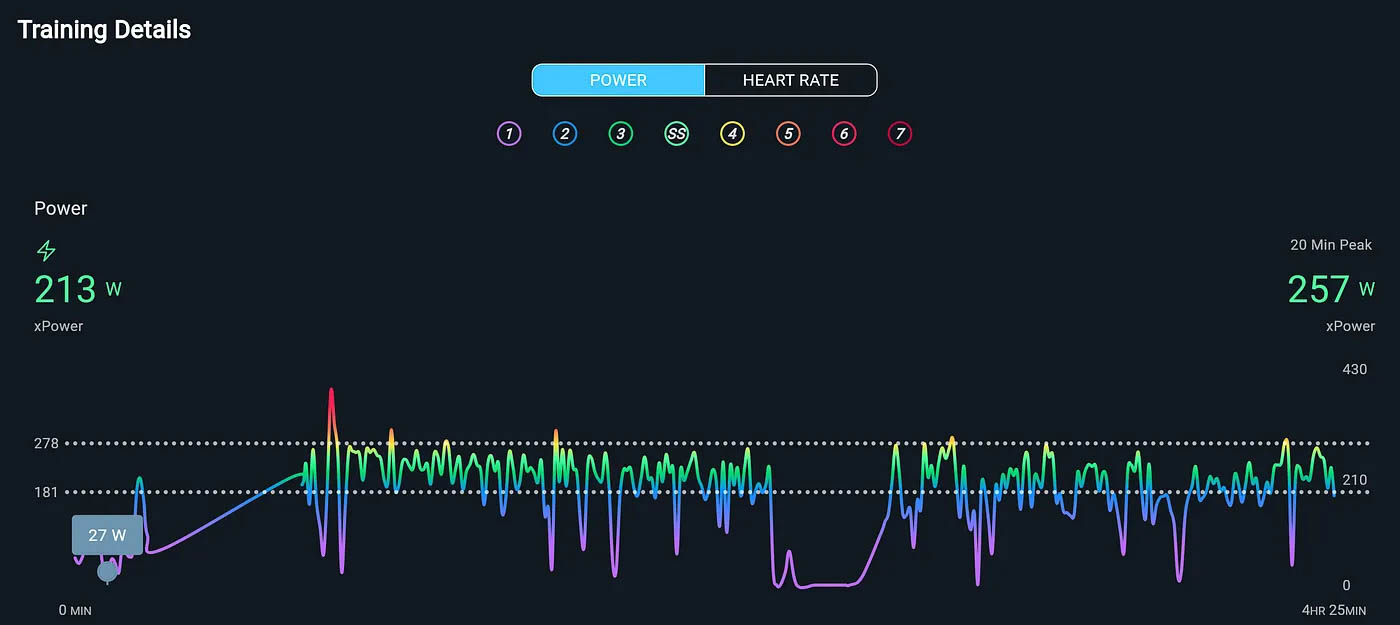
My FasCat power graph from Big Sugar

Here are my overall takeaways from training with FasCat’s AI-powered program:

  1. It worked! I got really fit, and I felt like being on a training program was key to that. So chalk that up as a win. My 20-minute power increased by 20% (250w->300w) in five months, I lost 10 lbs, and my LDL cholesterol improved by about 10%. Imagine that: exercising and eating well are good for your health.
  2. Zwift integration — totally seamless. This came in really handy for intervals, which as designed are sometimes impossible to do outdoors. There’s so much variation in these interval workouts (particularly later in the training program) that you really need to do them on a trainer. With one click I could send the workout to Zwift and do the session there. That was great.
  3. Although FasCat says their app now updates your FTP automatically, based on your riding, I did not see this and had to go in periodically to manually raise my FTP, so the target power in workouts created by the program was appropriate. This felt annoying.
  4. Having to do periodic power tests (20 minutes all out up a climb so you can extrapolate your FTP) is, on one hand, stressful. I’d start worrying about these workouts a couple days ahead. But on the other hand, the numbers don’t lie and you learn a lot about where you stand at that point in time. And 20-minutes all out is a great workout on its own.
  5. Telling the AI in the app about how I felt (“I’m too tired to complete today’s hard workout”), so it could adjust my plan, seems smart. And the FasCat app was good at asking if I wanted to take a rest day. But often going through this turned into a task (either talking to the app or writing it in) I just did not have time or energy for.
  6. I do not use HRV (Oura Ring or Whoop Band), and the FasCat app does have a place to integrate this data. So I did not get that level of AI recovery analysis. But every morning I entered my hours of sleep, which is interesting to see. I consistently averaged 7.5–8 hours of sleep throughout the program. Sleep tracking is something I’ve never done before.
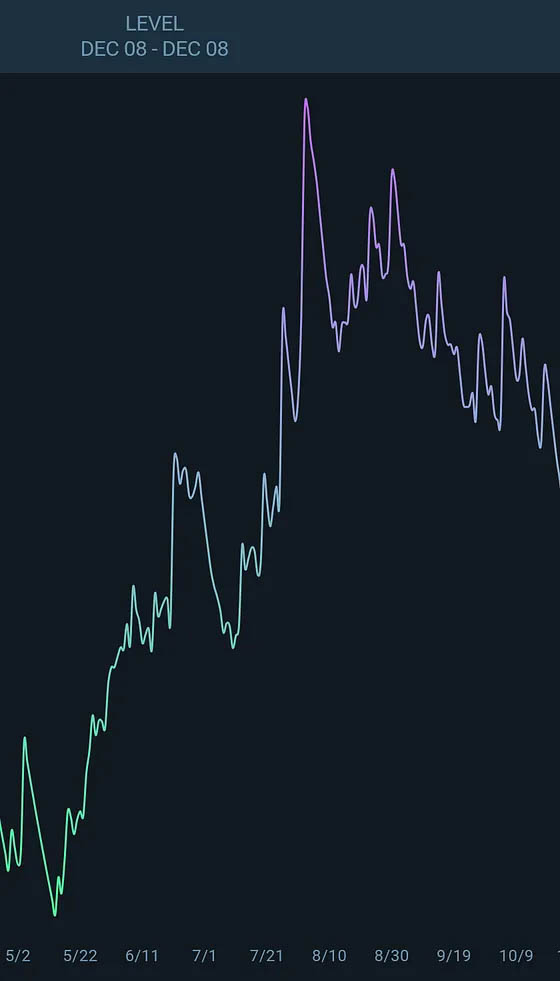
  7. FasCat tracks your fitness in real time with a feature called “Level.” I found this a little misleading, as this chart shows your training algorithmically by adding up your OTS scores (see above). It’s similar to cumulative training load (CTL) on the Training Peaks platform. And while this level number SHOULD track with your FTP, that was not the case for me. As my FTP was increasing the level graph was trending down and to the right.
  8. Even though I did not utilize all of the app features, I assume (but I’m not sure) that AI was subtly adjusting my training based on what it was seeing in my riding. That’s cool and a huge step up from the old “here’s your training on a pdf” kind of plan.
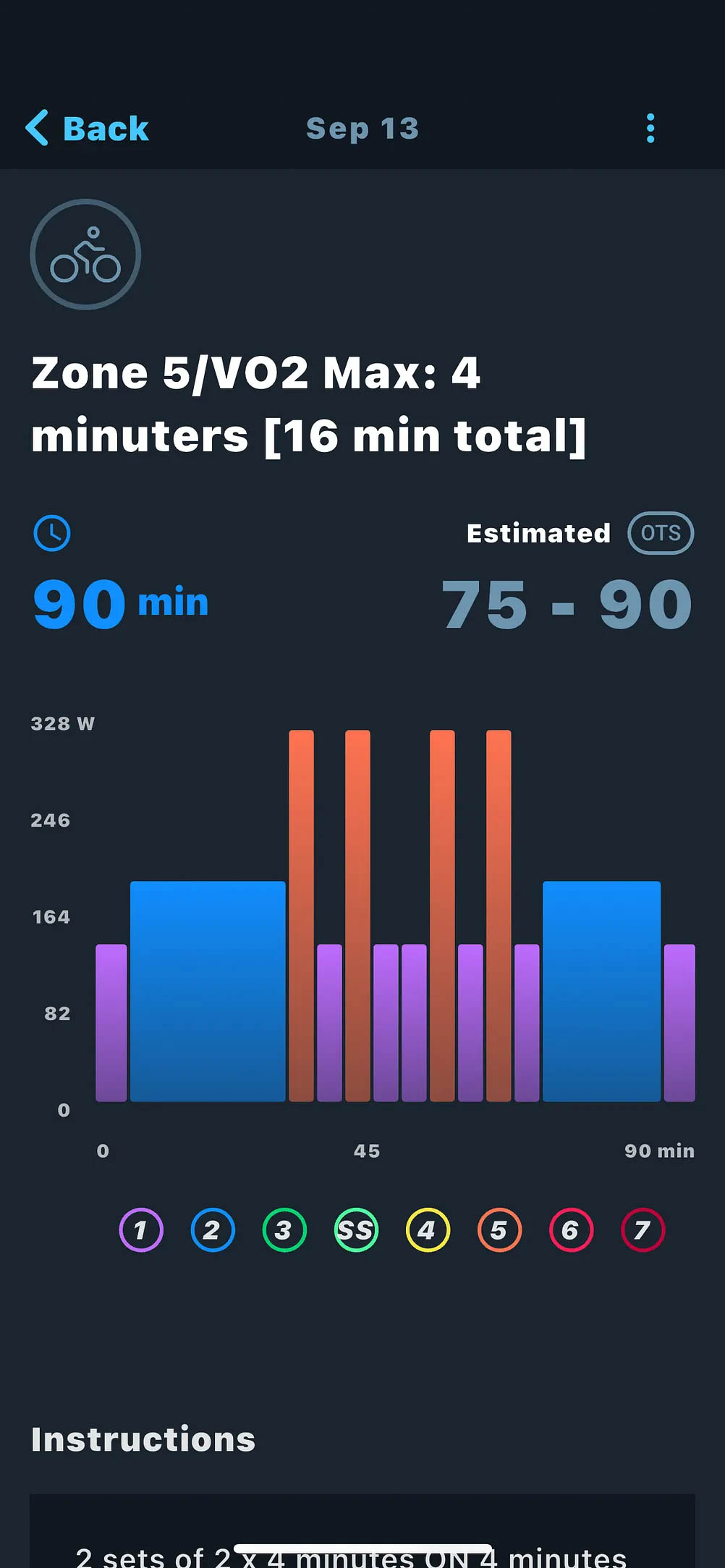
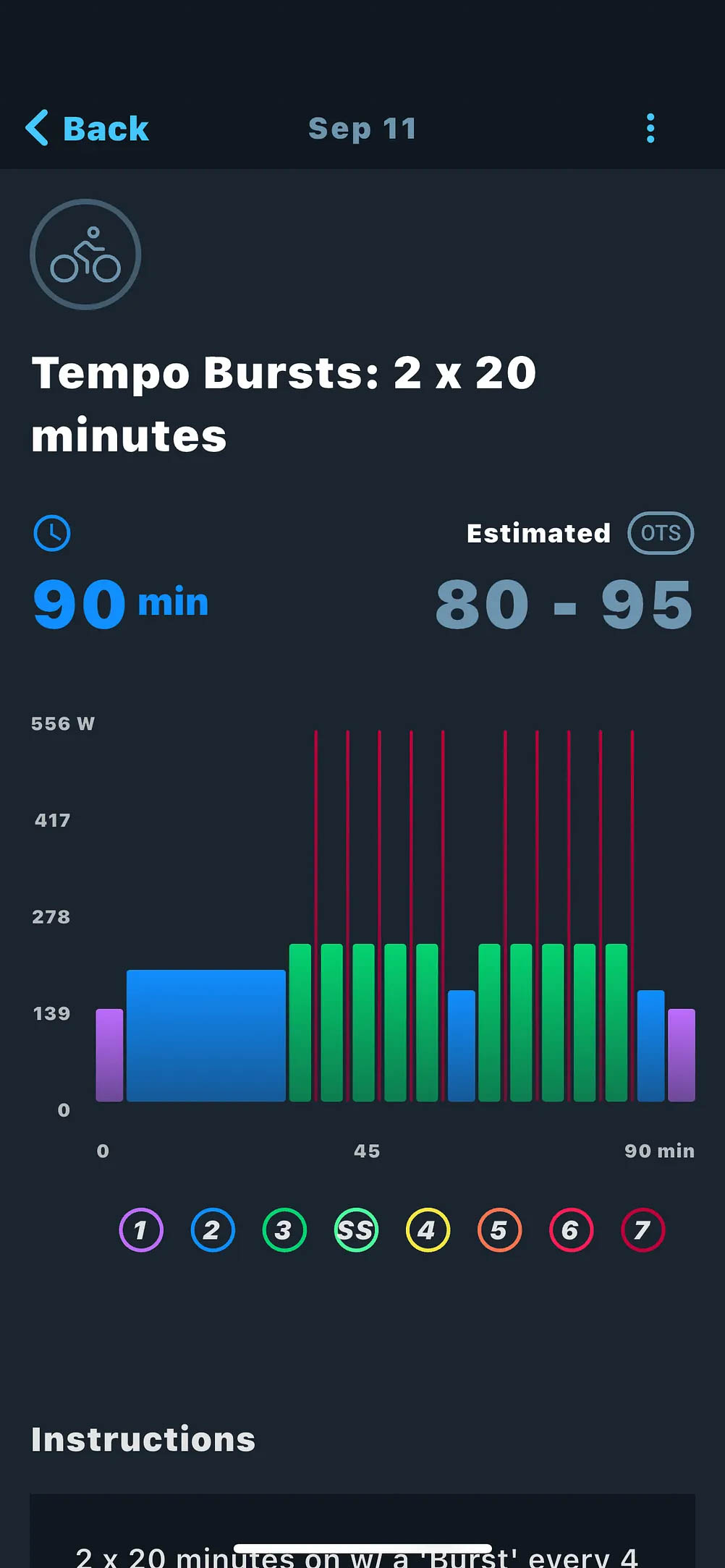
Two of the interval workouts from the FasCat app. I dare you to get these done while riding outdoors.

So how did the race go? Just before we took off at the start, we were informed that they’d shortened the 100 mile race to 50 miles, due to the potential for tornadoes from an incoming storm. Not surprisingly the race took off very, very fast. Overall I felt great, and my power numbers were good. But my derailleur got jammed into my freewheel just after the aid station in the middle of the race. So that was about 20 minutes while I walked back half a mile to the Shimano aid station for a fix. I had to let go of my goal to finish in the top 10 of my age group. And given my pace, I’m not sure I would have accomplished that anyway. Mechanicals are part of the gravel experience, so you just have to take these things in stride and enjoy the day. It was still a great day on the bike.

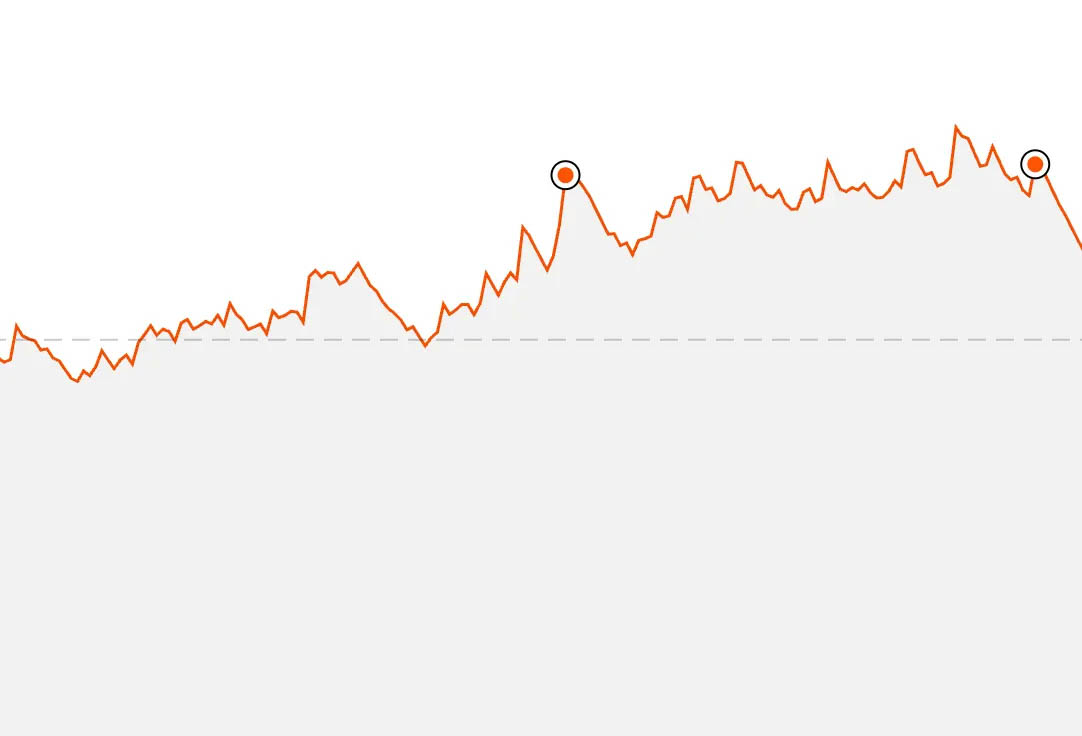
My May to October fitness as tracked on Strava (“fitness and freshness”) and the FasCat app (“level”).
I found the Strava chart to be more accurate in terms of my fitness.

While I would change a few things about the FasCat experience, it really does work. Importantly, I’ve just started my next training block on the app, and I look forward to coming back to Big Sugar in 2026 and going for that top 10 result.

During my unplanned mechanical stop in the middle of the race. Photo by Peter Abraham
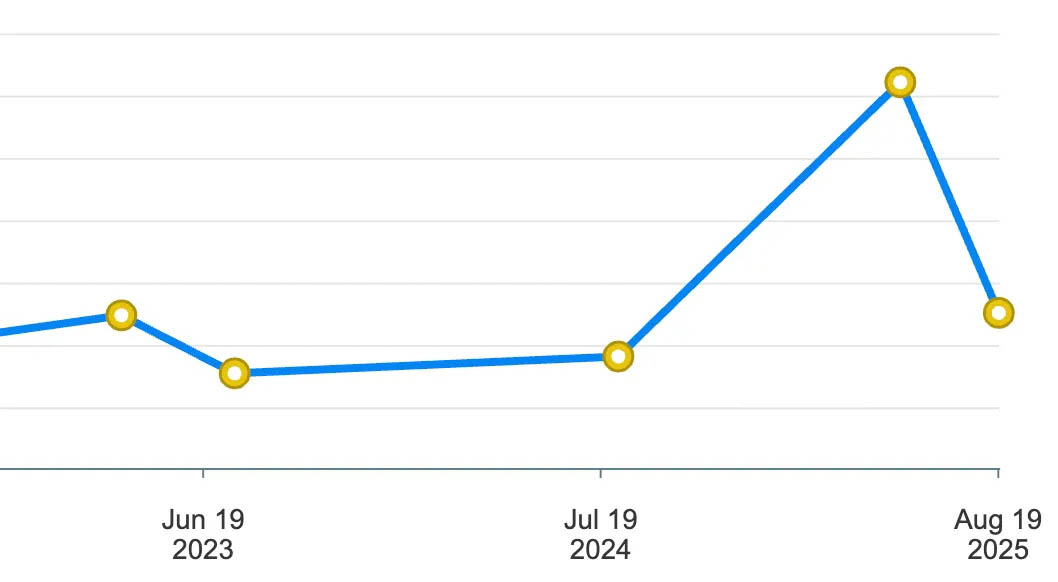
My LDL cholesterol number went down dramatically (on the right) after 3 months of training and eating better

[Editor’s Note: Cycling West believes that AI can be a useful tool for many things, but should never replace human interaction and interpretation. Without knowing for sure if the AI adjusts training plans based on his daily number, the way a human coach would, there’s a very real possibility it could cause riders to push themselves too hard, causing injury.]

TransRockies Race Series Expands North American Footprint with New Cycling Events for 2026

CALGARY, Alberta (January 20, 2026) — The TransRockies Race Series is expanding its cycling footprint with three new marquee U.S. events and an elevated calendar for 2026.

Action from a TransRockies race. Photo courtesy TransRockies

From the desert mesas of Colorado to the high-alpine trails of the Southwest, TransRockies invites riders and runners to push their limits, share the challenge, and experience adventure at its best.

“Our goal has always been to help people connect with nature, themselves, and each other through challenge and shared experience,” says Aaron McConnell, President of TransRockies Race Series. “Expanding our U.S. presence allows us to bring that spirit of adventure and community to new landscapes while maintaining the world-class support participants have come to expect from TransRockies.”

Building on a Legacy of World-Class Cycling Events

The TransRockies 2026 season solidifies the organization’s position as a North American leader in off-road adventure, with new events joining an already world-class lineup of gravel, mountain, and road experiences.

  • Desert Gravel (April 25, Fruita, CO) – Now officially part of the TransRockies family, Desert Gravel deepens the Series’ gravel portfolio. This beloved event—founded by Morgan Murri—blends soulful desert routes, strong local roots, and the hallmark TransRockies experience of community and support.
  • Moab Bike Fest (May 2–4, Moab, UT) – A reimagined weekend celebration bringing together Moab’s most iconic rides for cyclists of every kind. Whether you’re seeking three days of legendary singletrack with Moab Rocks or a curly-bar road and gravel challenge through Moab Fondo Fest, Moab Bike Fest delivers a family-friendly, festival-style experience where everyone finds their perfect ride.
  • Rough Rider Gravel (October 30–November 2, Prescott, AZ) – Showcasing Arizona’s untapped gravel terrain, Rough Rider Gravel invites riders to explore a new frontier of high-desert roads, pine forests, and mountain vistas. As part of the expanding TransRockies Race Series, this event embodies the spirit of discovery and adventure. Adding a bold new chapter to the Series’ diverse lineup of unforgettable cycling experiences.
  • New Mexico Singletrack MTB Stage Race – A new three-day mountain bike stage race debuting September 19–21, 2026. Featuring a $20,000 equal-payout prize purse and three distinct stages across Los Alamos, Galisteo Basin, and Glorieta Adventure Park.

Across the border, TransRockies’ Canadian roots remain strong:

  • Fernie Singletrack 3 (June 24–26, Fernie, BC) – A classic of the Series, known for its hospitality, world-class trails, and camaraderie.
  • Gran Fondo Badlands (July 5, Drumheller, AB) – A 1,600-rider celebration through Alberta’s breathtaking badlands.
  • The Range Gravel (July 11, Claresholm, AB) – Rolling prairie roads and open skies define this growing gravel event, where over 500 riders gather to test their endurance and celebrate the spirit of exploration.

Trail Running Remains a Pillar

While the cycling series takes center stage in 2026, TransRockies’ trail running events, including the legendary TransRockies Run in Colorado and Moab Run the Rocks, continue to draw athletes from around the world, united by endurance, grit, and a love for the terrain

Guided by Core Values: Place, Community, and Support

At the heart of every TransRockies event are three guiding principles that define both the experience and the organization’s culture:

  • Place — Connecting with nature responsibly and discovering new terrain through sport.
  • Community — Creating environments where participants build lasting friendships and feel part of something genuine.
  • Support — Delivering world-class operations, safety, medical care, nutrition, and logistics—so every athlete can focus on the experience, not the details.

For more, visit TransRockies.com

Moab Rocks Expands Access: 2026 Scholarship Opens for Emerging Riders

MOAB, Utah (January 20, 2026) — For the second year, Aim High Performance Coaching and Moab Rocks are partnering to offer the Moab Rocks Scholarship, a program designed to remove barriers and open access to one of North America’s most scenic and spirited mountain bike stage races — May 2–4, 2026.

Amy at Moab Rocks. She was the 2025 scholarship recipient. Photo courtesy TransRockies

Created by veteran pro and coach Jenny Smith, the scholarship offers one female, trans, or non-binary rider the full race experience — including:

  • Complimentary entry to the 2026 Moab Rocks MTB Stage Race
  • A three-month personalized training plan with Jenny Smith
  • An Aim High Performance race kit

The scholarship is intended for riders who not only bring passion and potential but who will also share their journey to inspire others along the way.

Last year’s recipient, Amy, brought incredible energy to the event — finishing 3rd overall while embodying the connection and spirit that define the TransRockies community.

“This program captures the heart of what Moab Rocks is about — community, opportunity, and a love for the ride,” said Smith. “It’s proof that when we lower barriers, we raise up the whole sport.”

Applications are open through January 24, 2026, at [email protected].

Event info: May 2-4 — Moab Rocks, Moab Bike Fest, Moab, UT, Embark on a thrilling 3-day MTB journey through the rugged beauty of Moab. Epic trails, breathtaking views, unforgettable adventure, TransRockies, 866-373-3376, [email protected], TransRockies.com

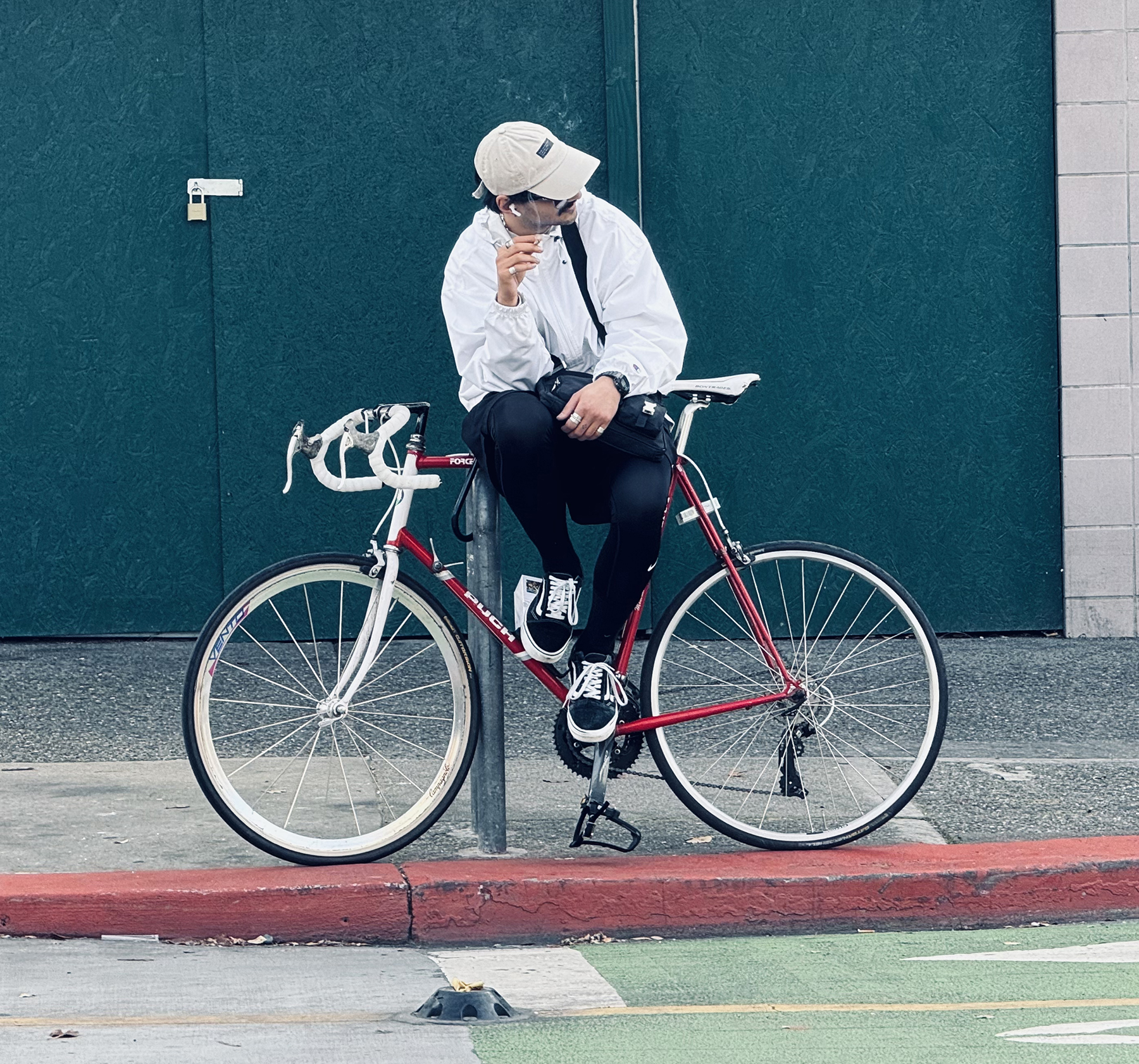
Cyclist. Bancroft. Hella. Cool. Berkeley. California.

Cyclist. Bancroft. Hell of. Cool. Berkeley. California. Photo by Dave Iltis

Protected Bike Lanes Protect Bike-Share Users

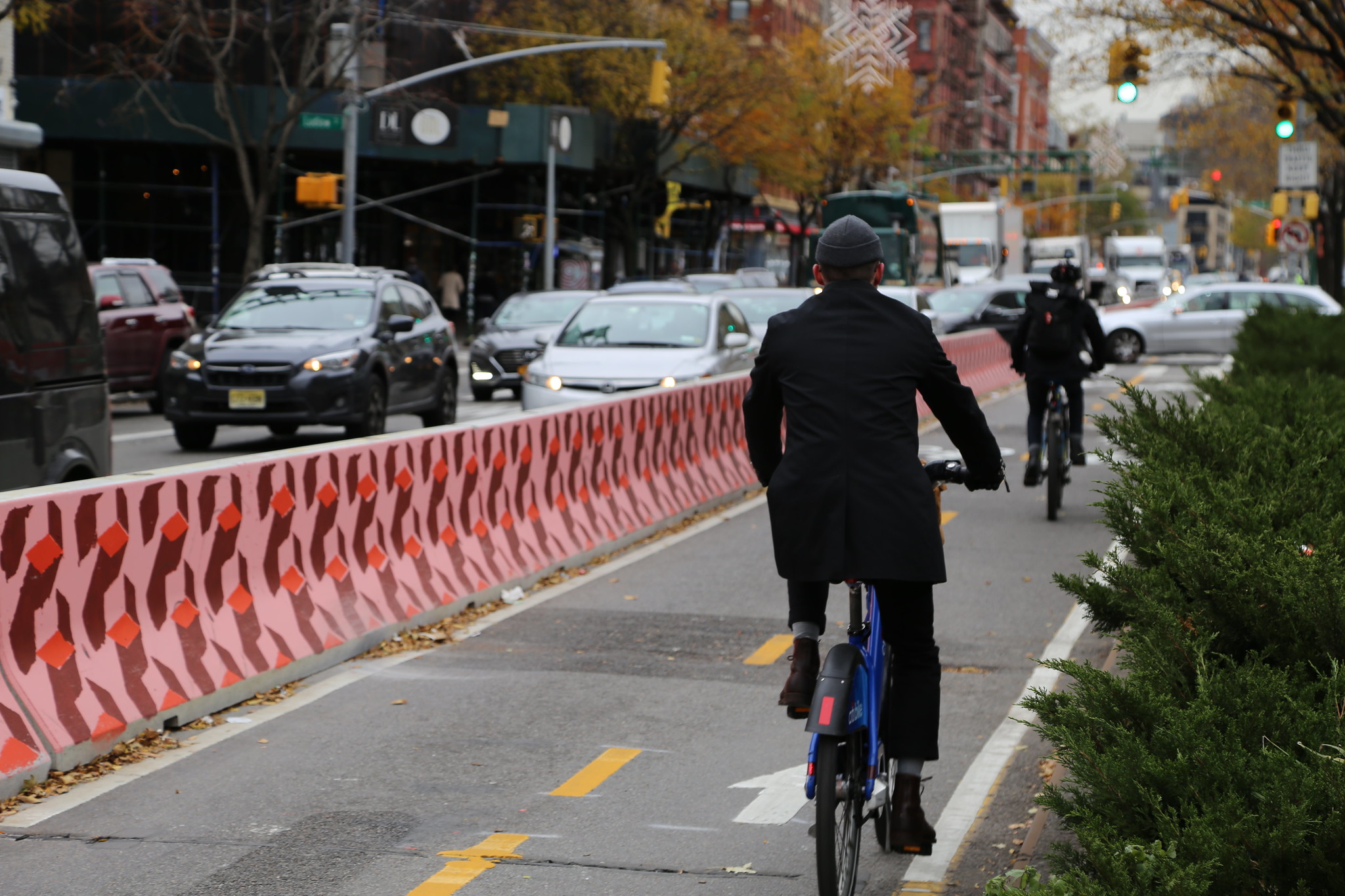
By Charles Pekow — Bike share use increased by about 18 percent when protected bike lanes were installed—and by 14 percent with painted lanes or sharrows. That’s what researchers found when studying Citi Bike use in New York City.

Delancey Street Protected Bike Lanes. Photo courtesy of NYCDOT, CC BY-NC-ND 2.0

But when researchers from New York University factored in demographic differences between neighborhoods—such as race and age—they found that only the addition of protected bike lanes significantly increased ridership, and even then, the effect was smaller in predominantly Black neighborhoods.

“These findings indicate that planners must emphasize protected bike lanes to spur ridership, and simultaneously target policies and programming to communities of color, to ensure that such infrastructure makes urban cycling a viable option for all residents,” the report suggests.

According to the study, after protected lanes were installed, ridership increased by an average of 341 trips per month at nearby stations in the following year compared to the previous one. (However, the study does not clarify whether other variables—such as weather, economic shifts, or demographic changes—also played a role.)

Read Causal Impacts of Protected Bike Lanes on Cycling Behavior with Demographic Disparities.


An Old Peugeot

1

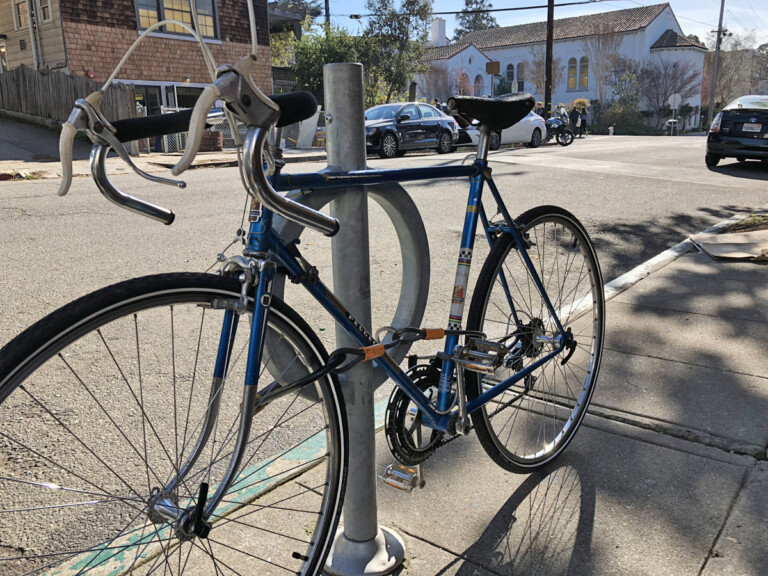
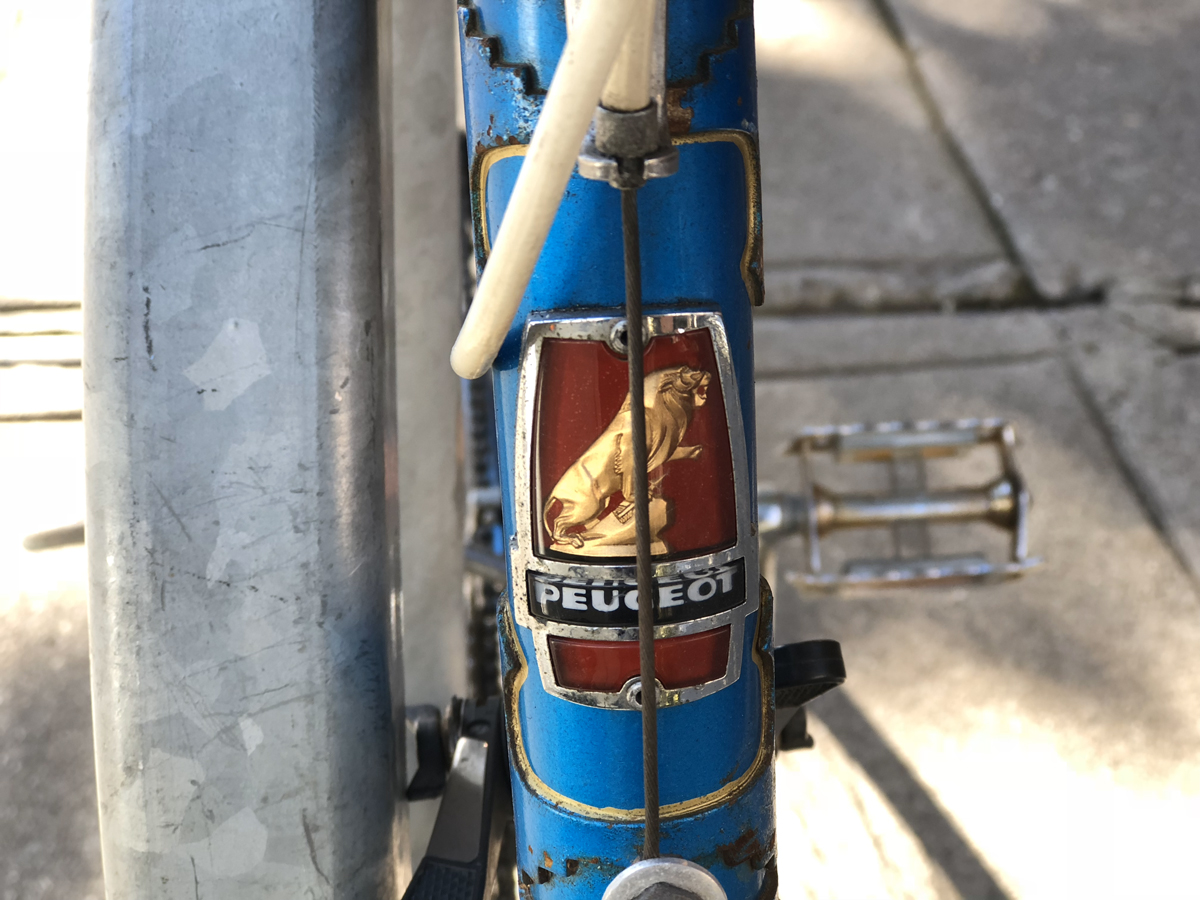
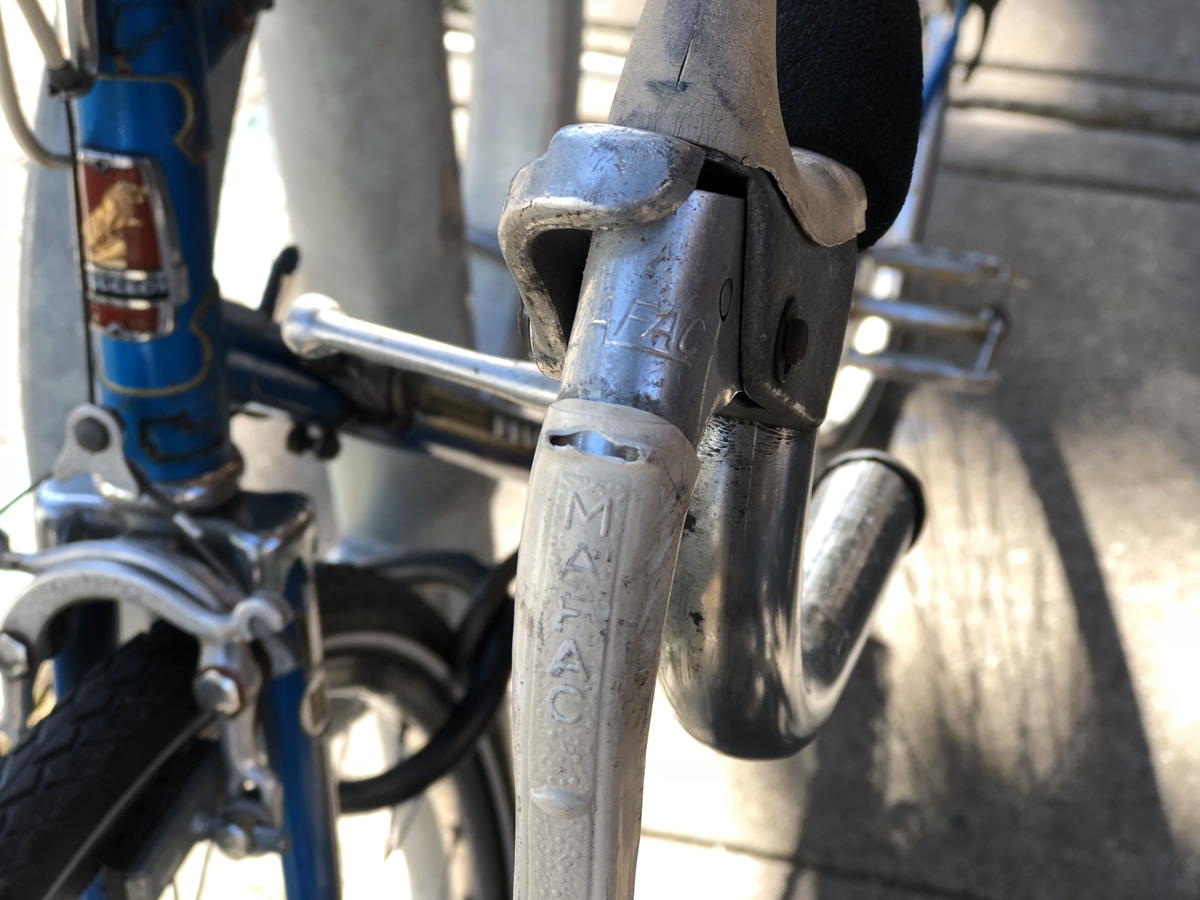
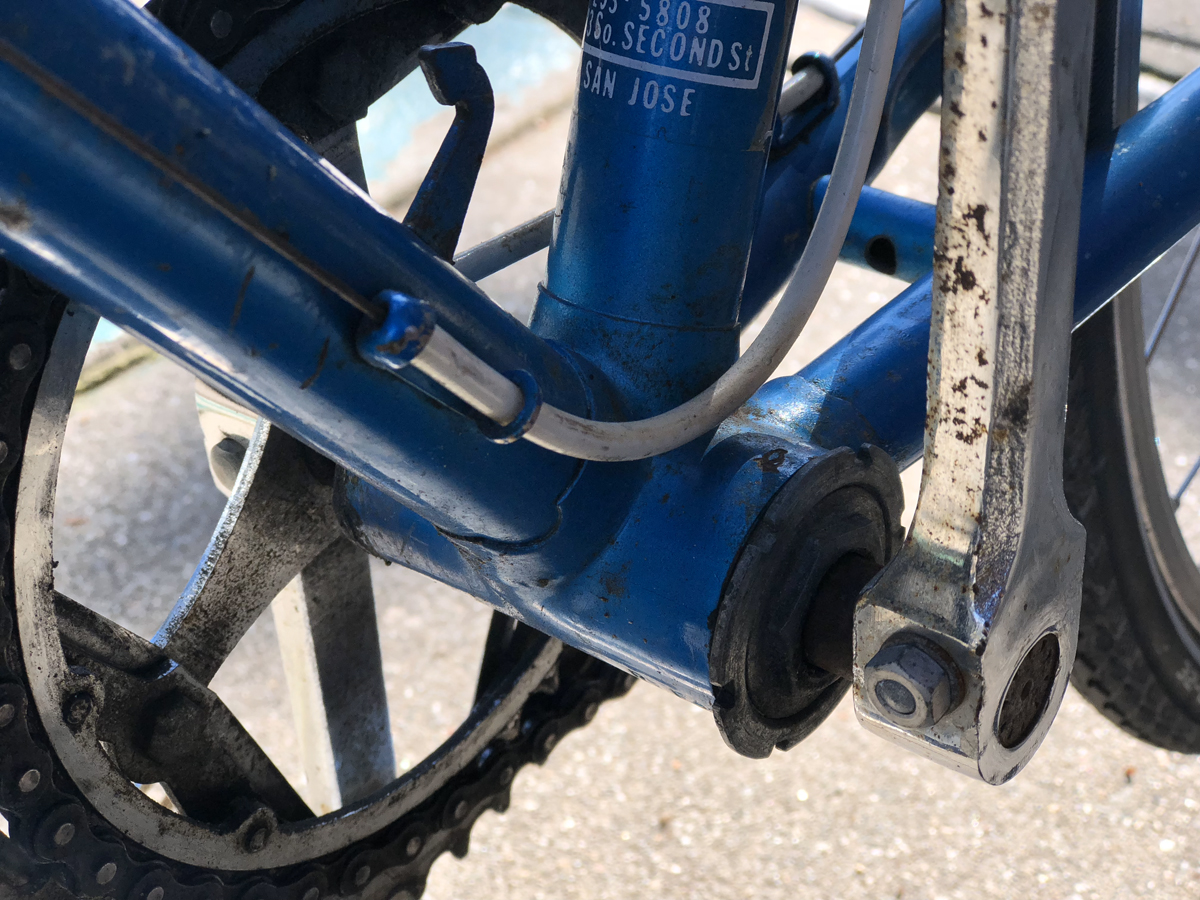
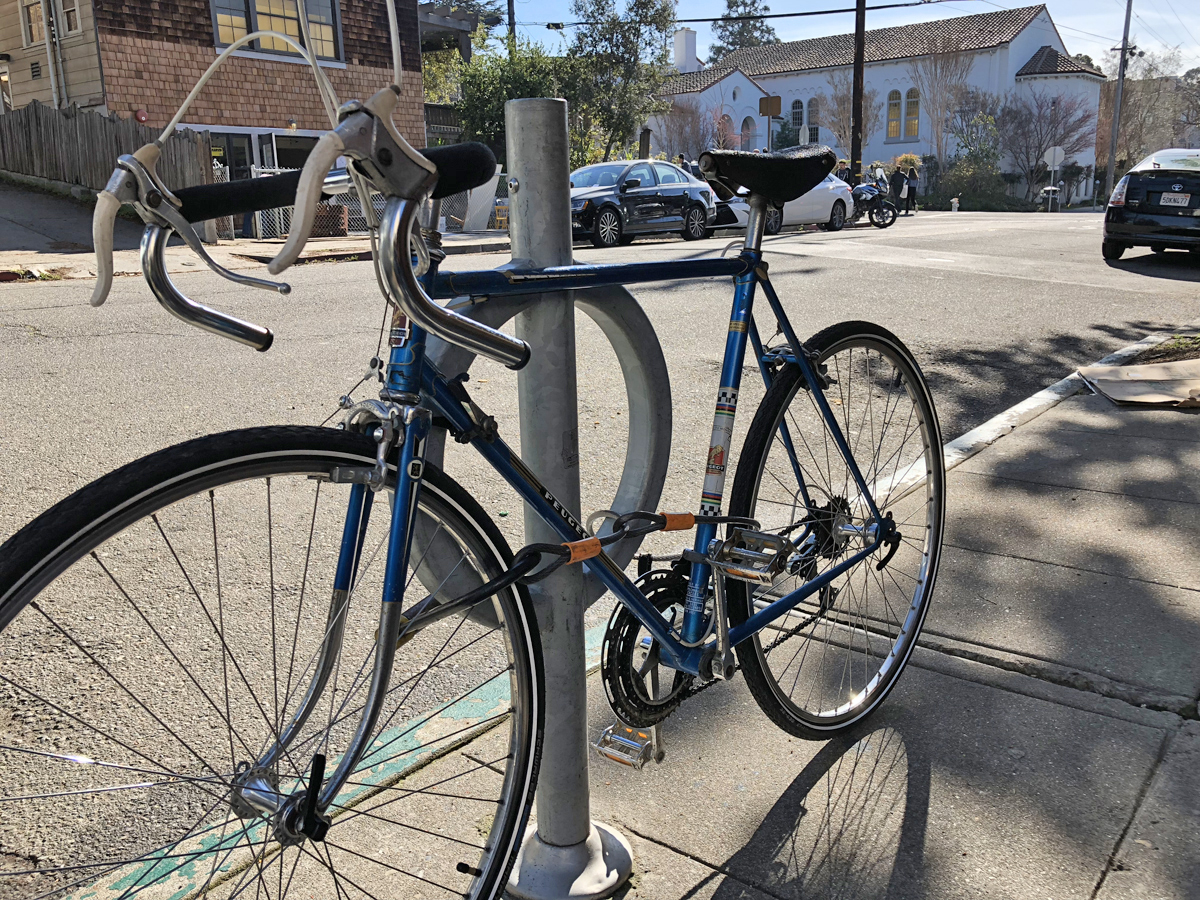
I came across this old Peugeot on the streets of Berkeley, California. The bike is probably from the early 1970’s. 

An old Peugeot on the streets of Berkeley, California. Photo by Dave Iltis
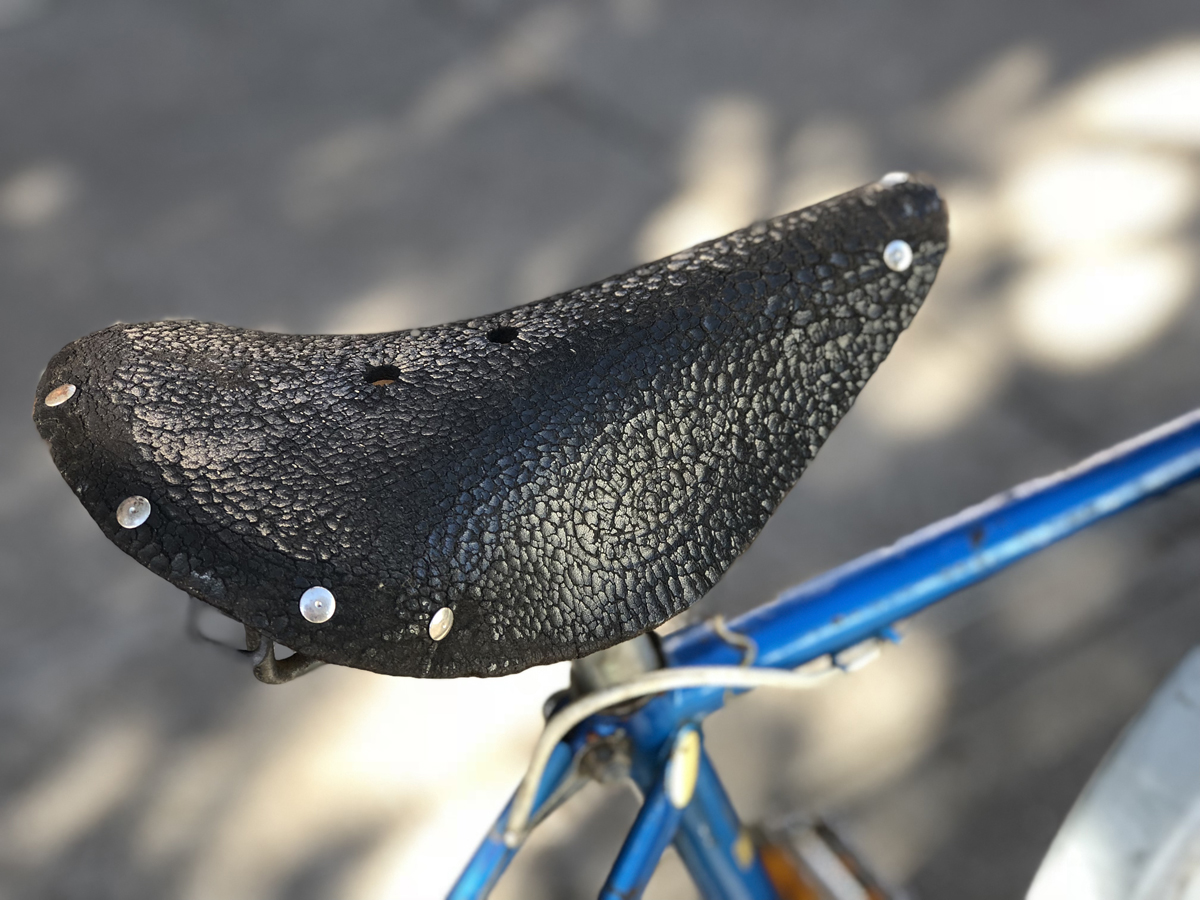
A leather saddle on an old Peugeot on the streets of Berkeley, California. Photo by Dave Iltis
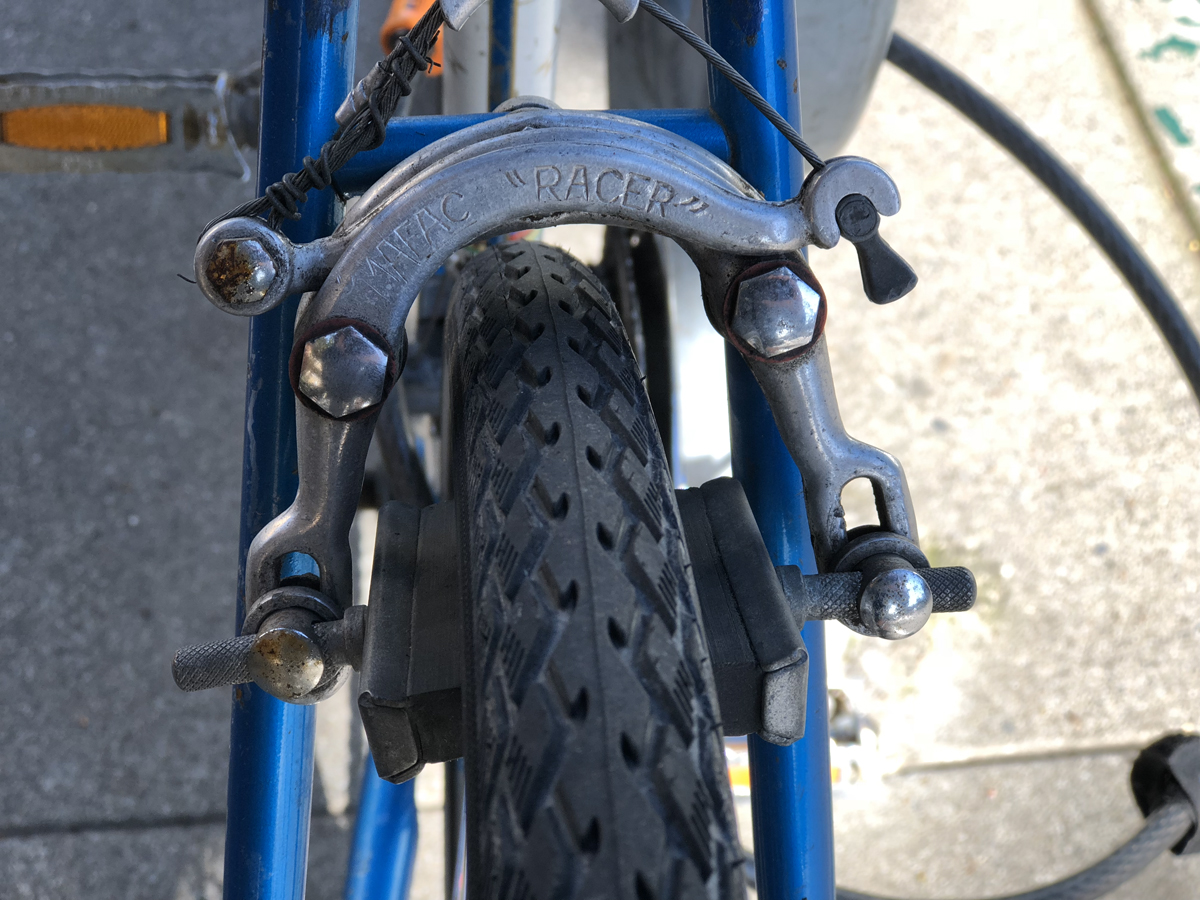
Mafac Racer center pull brakes on an old Peugeot on the streets of Berkeley, California. Photo by Dave Iltis
Mafac Racer brakes on an old Peugeot on the streets of Berkeley, California. Photo by Dave Iltis
Cotter pin cranks on an old Peugeot on the streets of Berkeley, California. Photo by Dave Iltis
An old Peugeot on the streets of Berkeley, California. Photo by Dave Iltis

Utah Cyclist Matthew Clark Provisionally Suspended by UCI for Adverse Analytical Finding at UCI Gran Fondo World Championships

SALT LAKE CITY, Utah — The Union Cycliste Internationale (UCI) has provisionally suspended Matthew Clark, a cyclist from North Salt Lake, Utah for alleged violations of its anti-doping regulations involving anabolic androgenic steroids.

According to the UCI’s official Provisional Suspensions – Anti-Doping Rule Violations and Prohibited list, Clark is cited for alleged breaches of Article 2.1 and Article 2.2 of the UCI Anti-Doping Rules. The UCI listing states that the test date was October 16, 2025, which means it was conducted in connection with the UCI Gran Fondo World Time Trial Championships in Australia, where Clark won the men’s 40–44 age group.

Article 2.1 relates to the presence of a prohibited substance or its metabolites or markers in an athlete’s sample, while Article 2.2 concerns the use or attempted use of a prohibited substance or method.

A provisional suspension means Clark is temporarily ineligible to compete or participate in any cycling activity governed by the UCI while the case proceeds through the results management and disciplinary process. The suspension is not a final determination of guilt.
The UCI has not released additional details regarding the specific substance involved, nor has it issued a separate press release beyond the published listing.

What This Means

Because USA Cycling (USAC) is a UCI-affiliated federation and a signatory to the World Anti-Doping Code, UCI provisional suspensions are recognized across USAC-sanctioned events. While the suspension remains in effect, Clark is not eligible to compete in USAC races, national championships, or other UCI-governed competitions.

Anti-doping rules apply equally across elite, amateur, and masters categories, including Gran Fondo World Championship events, which are subject to UCI testing protocols.

Explainer: The Charges and the Process

Article 2.1 — Presence of a Prohibited Substance

This article covers cases in which a prohibited substance, or its metabolites or markers, is detected in an athlete’s sample. Under anti-doping rules, athletes are held to strict liability, meaning intent is not required for a violation to be established.

Article 2.2 — Use or Attempted Use

This article applies when there is evidence of the use or attempted use of a prohibited substance or method, which may be supported by analytical results or other admissible evidence.

Anabolic Androgenic Steroids (AAS)

AAS are prohibited at all times, both in and out of competition, under the World Anti-Doping Agency (WADA) Prohibited List.

What Happens Next

During a provisional suspension:

    • The athlete may request analysis of a B sample, if applicable.
    • The case proceeds through the UCI’s results management and adjudication process.
    • The suspension remains in place unless lifted by the UCI or a competent tribunal.

Any final decision, including the confirmation or lifting of the suspension or the imposition of sanctions, will be published by the UCI and recognized by USA Cycling.

Cycling West will report further developments if additional information is released.