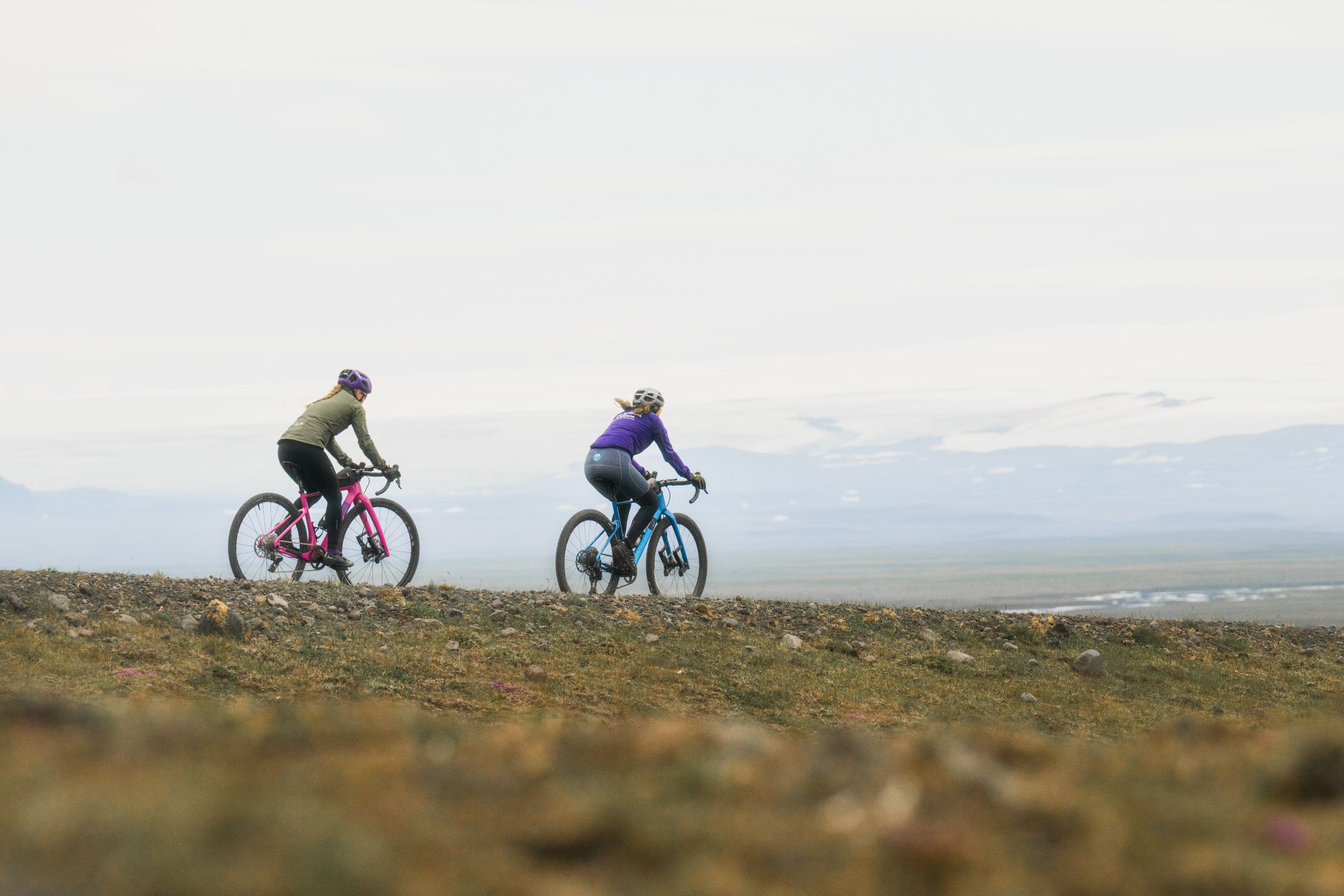
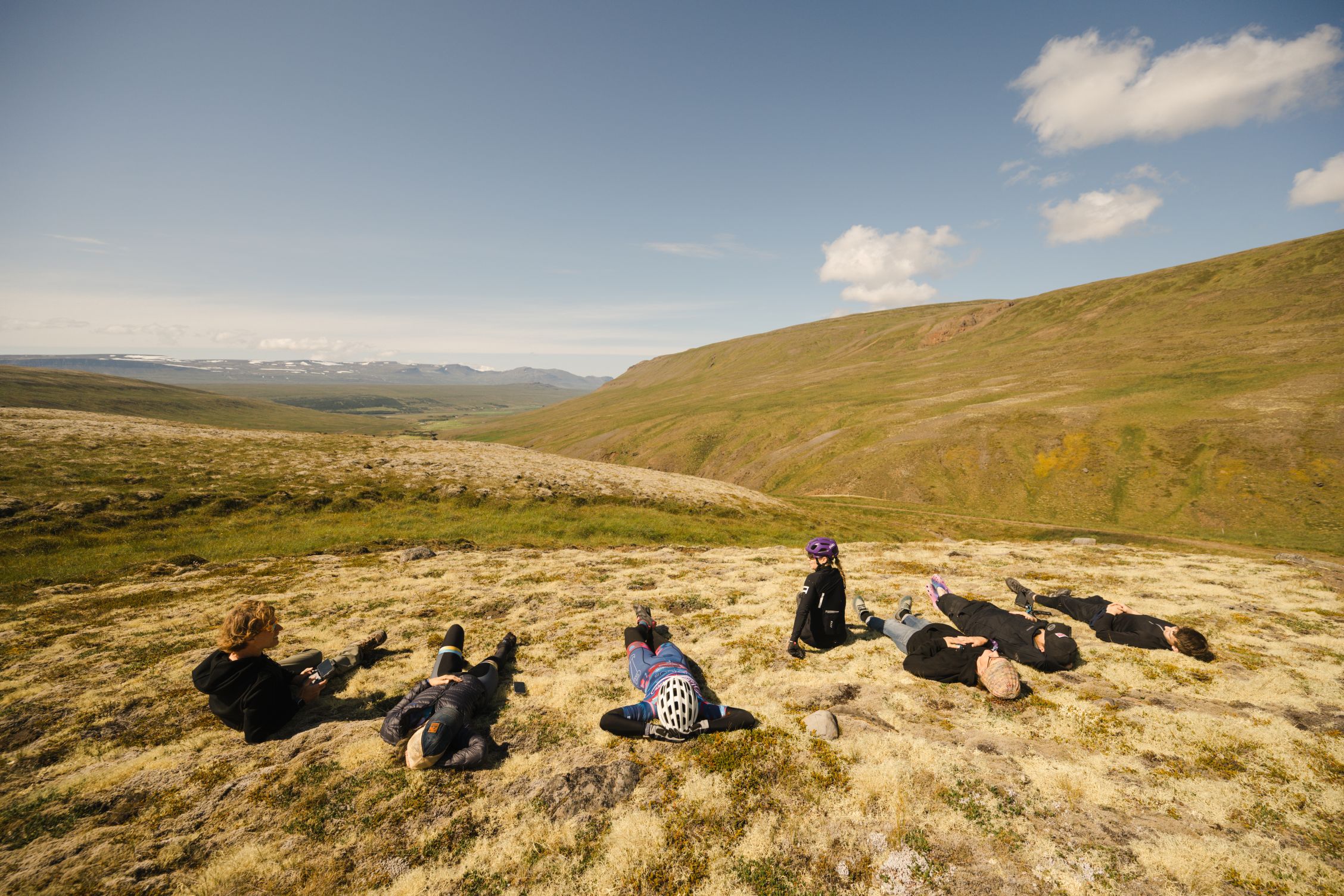
BLÖNDUÒS, Iceland — North Bound Grvl will debut July 29–August 1, 2026, bringing a multi-day gravel cycling adventure to the raw, remote landscapes of North Iceland. Organizers designed the event for endurance racers and expedition-minded cyclists who want challenging terrain, long distances, and immersive travel through one of Iceland’s most untouched regions—all under the continuous light of the Midnight Sun.
Blönduòs – Photo courtesy of North Bound Grvl
The event anchors itself in Blönduós, a small coastal village between the Arctic Ocean and the Blanda River. With its historic Old Town, traditional architecture, and strong ties to Icelandic culture, Blönduós serves as a gateway to the highlands and the vast interior. North Bound Grvl has partnered with local accommodations to offer private hotel rooms, shared cabins, and camping options. Riders will also experience northern Iceland’s regional cuisine, with meals prepared to reflect local traditions and ingredients.
A Journey from Coast to Highlands
The flagship event features a three-day stage race offered in 330 km and 440 km distances. The route travels from the northern coast into the Icelandic highlands, crossing two expansive valleys and remote corridors that few visitors ever see. Organizers will transport riders’ gear, creating a bikepacking-style expedition without the added weight.
Highland Girls. Photo courtesy of North Bound Grvl
On the second night, participants stay at Hveravellir, a remote mountain lodge in the heart of the Central Highlands. Known for its geothermal activity, Hveravellir features a natural hot spring where riders can recover in warm mineral waters surrounded by geysers and glaciers—one of Iceland’s most iconic and isolated settings.
The 440 km route challenges riders seeking a demanding test of endurance and pace. The 330 km option allows participants to move at a more measured tempo and spend more time absorbing the wildlife, silence, and vast landscapes that define the region.
Moss Pillow. Photo courtesy of North Bound Grvl
Additional Race Options
The North Bound 100 takes place on Saturday and combines the shorter routes from Days Two and Three into a single, fast-paced gravel race. The format offers a competitive yet accessible entry point into the North Bound experience.
For riders seeking a shorter option, the Svinavatn 50 km loop starts and finishes in Blönduós. The route welcomes e-bikes and provides a scenic and approachable way to experience the terrain and event atmosphere.
Finish and Celebration
North Bound Grvl concludes at Húnaver, a guesthouse and campground located 20 minutes east of Blönduós. The setting gives riders space to recover, connect, and celebrate their journey through northern Iceland.
Event Details
Dates: July 29 – August 1, 2026
Registration Opens: January 29 at 00:01
Organizers will share course previews and event updates on Facebook and YouTube:
By Tom Jow — Lately I find myself around a lot of old bicycles. Really old. Not just ten or fifteen years, but twenty, thirty, and forty years old. Bicycles that I have seen, sold, repaired and owned. Seeing them brings up many memories. Places I went, how I rode, new technologies. Each bike was unique. Of the many bikes I have owned, these four have just crossed my path.
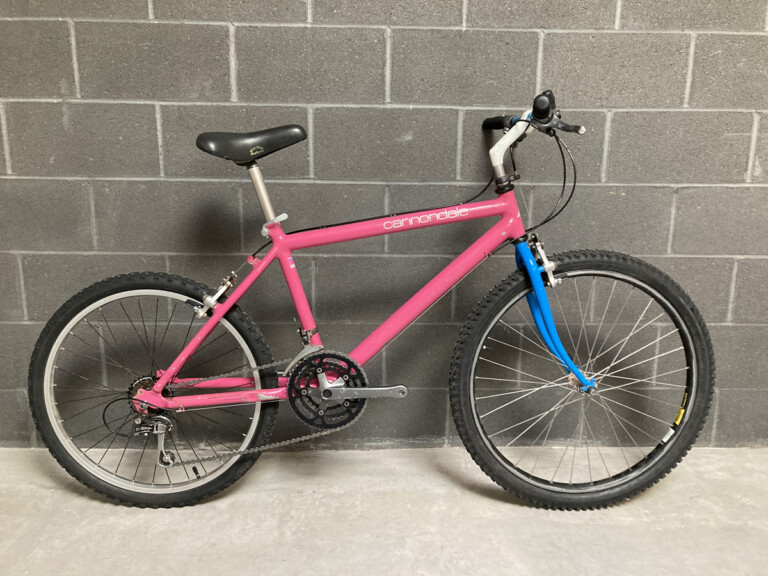
This pink Cannondale reminds me of my second mountain bike, the SM 700. With 26 inch front and 24 inch rear wheels was it the first “mullet” bike? Photo by Tom Jow
Cannondale SM700
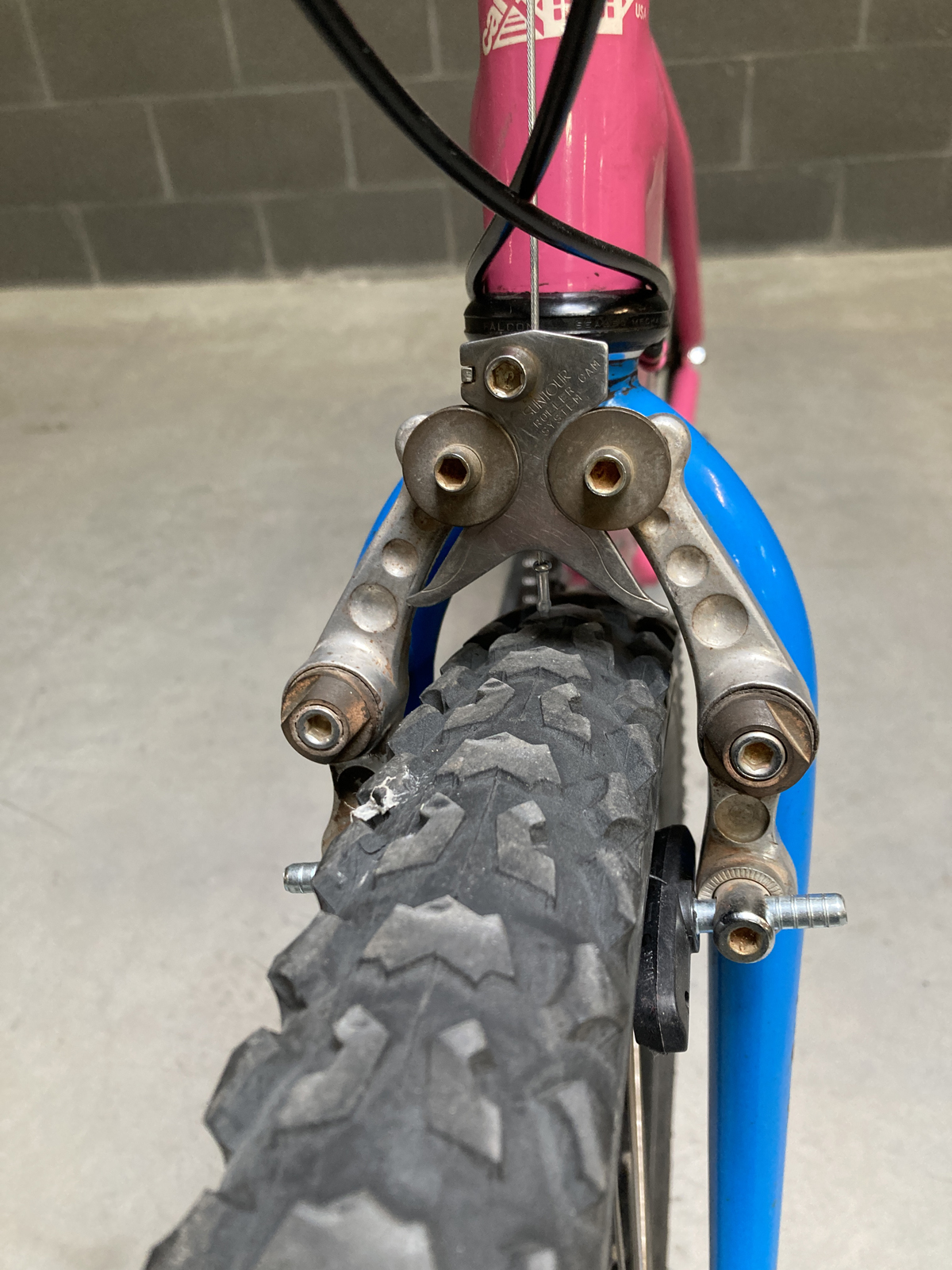
A pink Cannondale SM400 reminds me of my second mountain bike ever, the SM700. In the mid-1980’s, my younger brother got me a discount from the shop he was working at. Painted a metallic British racing green with top of the line Suntour XC Pro components, the polished aluminum components brought out the sparkles in the paint. The Suntour branded WTB roller cam brakes were not only a marvel of CNC machine work, but super powerful. Equipped with a 26 inch front wheel and 24 inch rear, that SM700 may have been the first “mullet” mountain bike.
The Suntour roller cam brake. Perhaps the strongest rim brake ever. Photo by Tom Jow
The smaller rear wheel gave the bike the strange sensation of pivoting around turns. The trails we rode back then in California were mostly roads and didn’t require a tight turning radius. How I wish for that now sometimes for the steep, tight switchbacks of some current trails. The granny gear, it was so low it seemed like I could climb any hill. However, across the flats and even downhill, the 24 inch rear wheel didn’t feel all that fast. The next year, I upgraded to a full 26 inch version. My brother still has his.
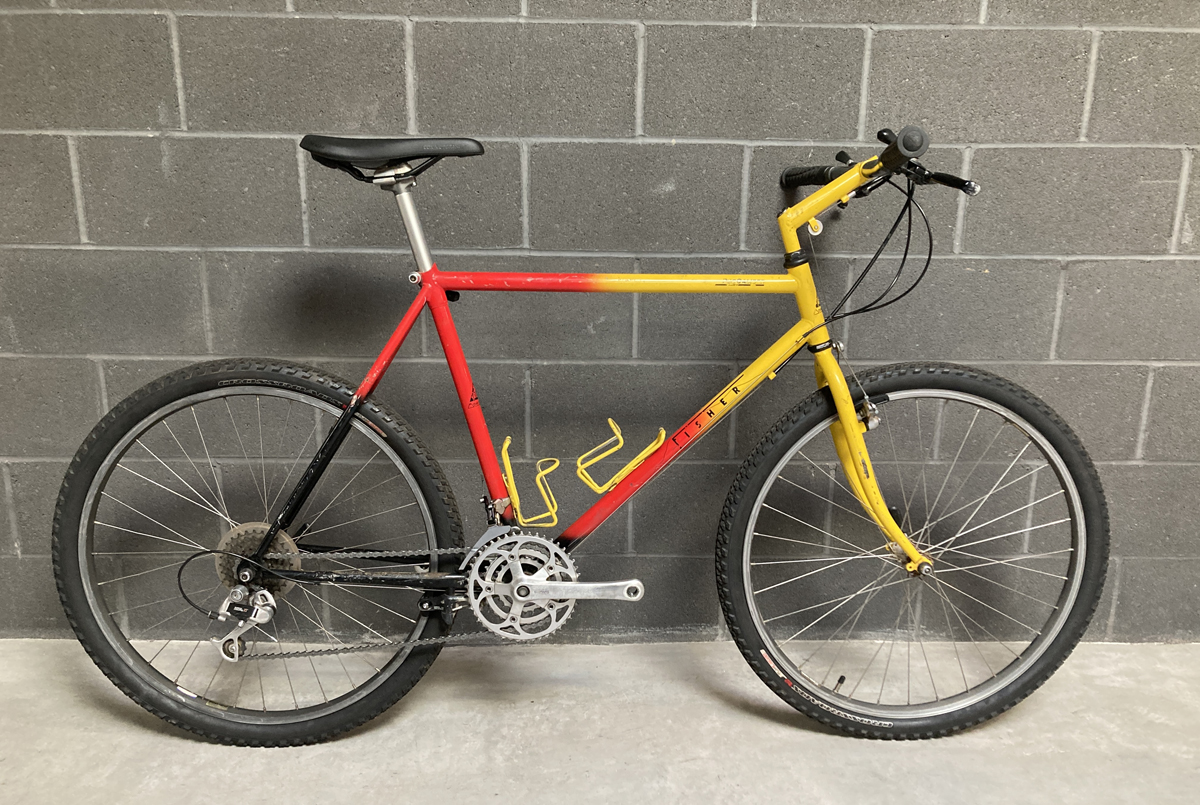
1989 Fisher Pro Caliber. Possibly my favorite bike ever owned. Photo by Tom Jow
Fisher ProCaliber
At the end of summer 1988, I began working at Marina Cyclery in San Francisco. My first job at a mountain bike pro shop. We were a dealer for both Fisher and Ritchey mountain bikes. Believe it or not, I knew absolutely nothing about Gary Fisher or Tom Ritchey when I started.
The ProCaliber was made of Tange Prestige steel tubing with top of the line (at the time) Shimano XT components. I did some huge rides on that bike. From my parents place near the bay, up to the ridge above Crystal Springs and halfway to Half Moon Bay on trails. Or from my apartment in the Richmond district, across the Golden Gate bridge to the summit of Mt. Tamalpais.
I could do these big rides because the bike was so light! Everyone I had heard of that owned one had broken it. I thought about that occasionally while bombing down one of my favorite trails in the Marin Headlands. The last 50-60 yards were steep and straight. It was also really roughed up by horses. Seemed like some days the trail was a blur, my head and eyeballs bouncing up and down so much. Everytime I challenged myself to wait as long as possible to apply the brakes.
The bike never broke. Worse, the bike was stolen. Too bad because I loved that bike. The ProCaliber might be the favorite of all bikes I have owned.
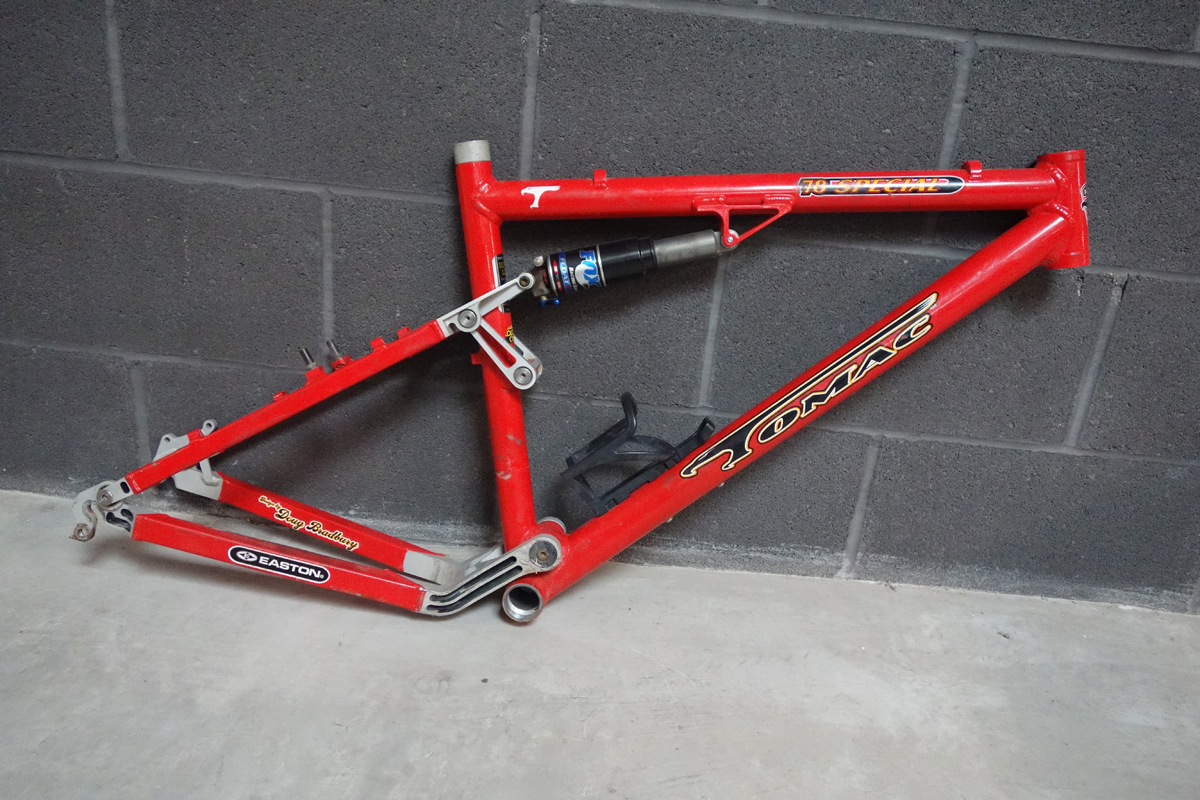
The Tomac 78 Special. Who can argue with a multi-time world champion and a hall of fame bike designer? Photo by Tom Jow
Tomac 78 Special
Developed by world champion John Tomac and Manitou designer Doug Bradbury, the 78 Special was my second full suspension bike. It was also my first bike with disc brakes and tubeless tires. The frame was built with Easton Ultralight aluminum, and equipped with Shimano XT, Avid disc brakes and the new Mavic Crossmax tubeless wheelset. In addition to being very light, the bike was an efficient climber and had nimble, predictable handling.
With 80 millimeters of travel, the suspension worked incredibly well. Combined with the tubeless wheels and tires, it seemed like there was more traction than I knew what to do with. I was amazed at how smooth the Bobsled trail suddenly was. Descending the Mill D trail was scary fast. I scared the heck out of myself many times on that bike. The 78 Special was far and away a better bike than the one it replaced.
Cannondale Scalpel
In 2002 I began working for a team that was sponsored by Cannondale. They were the first and only mountain bike team I ever worked for. We competed in the NORBA National Series, traveling to the east and west. I say “we” because my teammates convinced me to enter some races. Of all the places West Virginia was my favorite. The 24 hours of Snowshoe course was so fun. Technical trails with wet rocks and roots in the deep dark forest. It felt like I was out in the middle of nowhere.
Anyway, we had this new bike called the “Scalpel”. It was an aluminum frame with carbon fiber flex stays and Fox shock. I think it had 2 inches of travel. What was really unique about this bike was the front suspension. It had just a single leg and was called the “Lefty”.
The Scalpel was probably the lightest full suspension bike I have owned. As such, it was fast. My fastest times up the Dry Creek trail are probably on that bike. It was fast on the downhills too. The Lefty suspension worked way better than I expected. Despite this, I don’t remember crashing on any single bike as much as I did on this one.
This got me thinking, how many bikes have I owned? Somewhere around 20 mountain bikes. They include every category: XC, downhill, enduro, single speed. Even full suspension tandem! What is more important than the bikes though is the memories they have been a part of. Places I’ve been, people I met and friendships made. What is your bikes story?
Former WorldTour Pro and Industry Veteran to Oversee Retail, Services, and Warehouse Operations
SALT LAKE CITY, Utah (January 13, 2026) — Contender Bicycles today announced the appointment of Mike Sayers as General Manager. In this role, Sayers will oversee retail, service, and warehouse operations across Contender’s Salt Lake City and Park City locations.
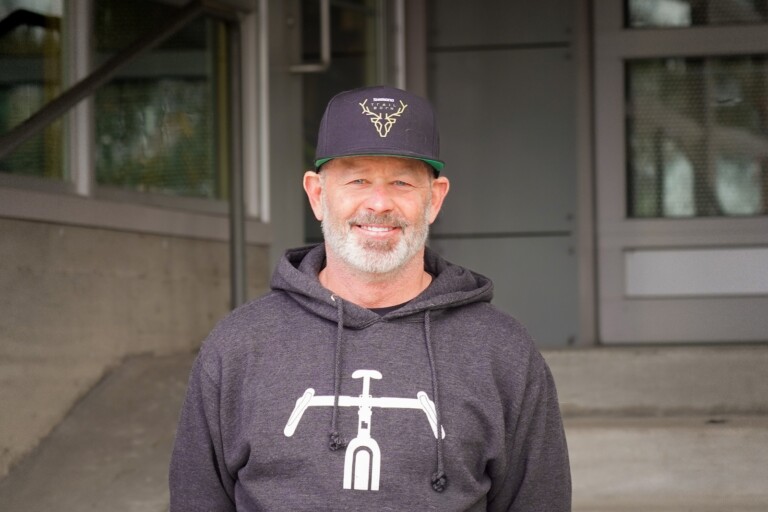
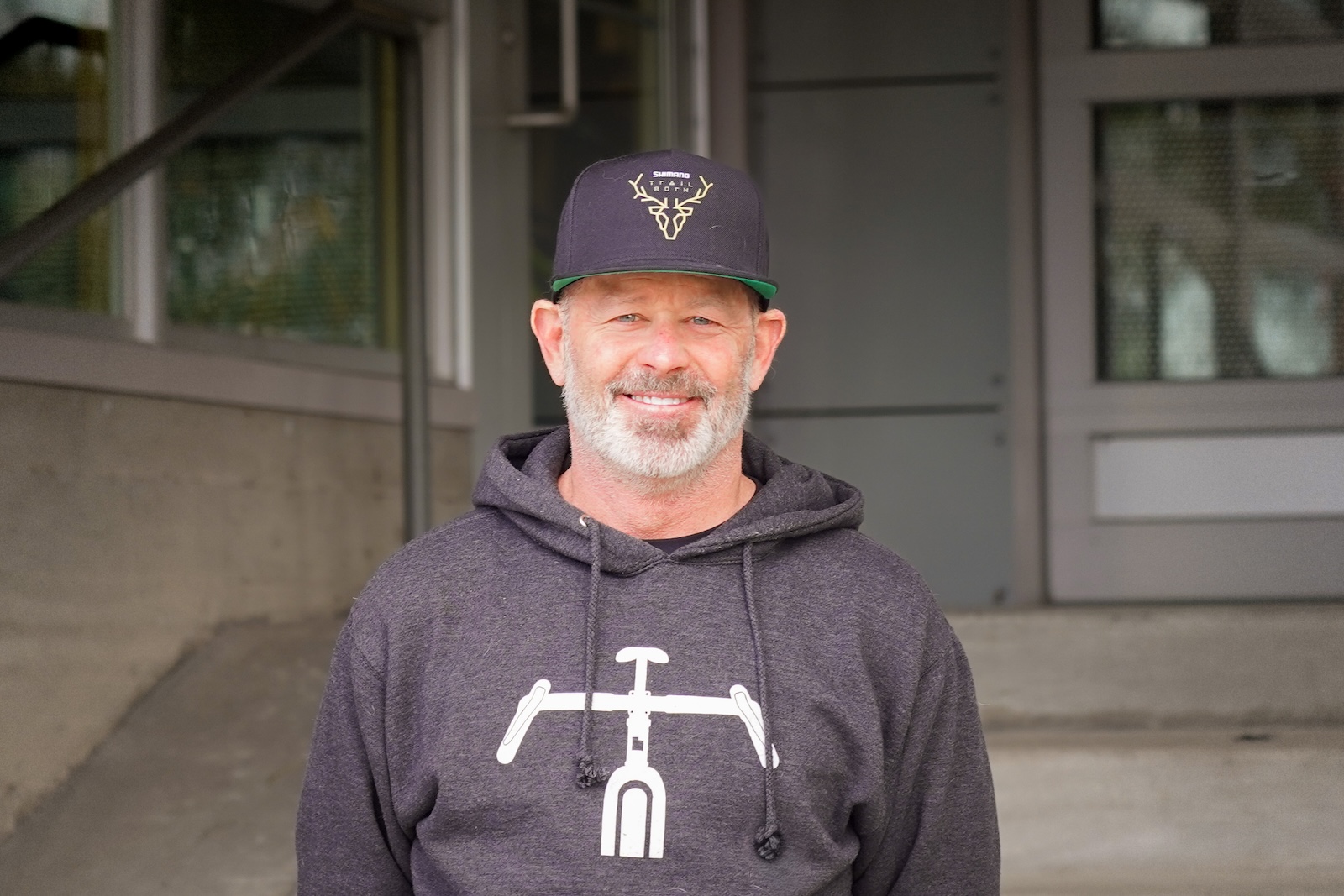
Mike Sayer. Photo courtesy of Contender Bicycles.
Sayers joins Contender at a time of continued growth, with a mandate to strengthen systems while upholding operational excellence across the business. Reporting to Contender President Ryan Littlefield and working closely with the broader leadership team, he will focus on team development, operational discipline, and process improvement.
“As Contender continues to grow, we needed an exceptional General Manager to help guide our evolution while maintaining world-class operations. After considering more than 50 candidates, it was clear that Mike Sayers was the right leader for our business,” said Ryan Littlefield, President of Contender Bicycles. “Mike’s breadth of experience—from professional racing and elite coaching to industry consulting and retail management—makes him uniquely qualified for this role, and we’re thrilled to welcome him to the team.”
A lifelong cyclist who worked his way to WorldTour professional, Sayers competed at the highest levels in Europe and the U.S., racing iconic events such as Liège–Bastogne–Liège, the Tour of Flanders, the Philadelphia Classic, the U.S. National Championships, and the Tour of California. Following his time with the BMC Pro Team, Sayers moved into team leadership as Assistant Sports Director with BMC, and later held senior coaching roles with USA Cycling, guiding top American riders to multiple Olympic Games and World Championships. His industry experience also includes roles with Speedplay, managing a Trek retail location, and operating his own consulting, coaching, and bike fitting business.
“I’m incredibly excited to join Contender Bicycles,” said Sayers. “Ryan and I go back many years to our racing days in the mid 1990s, and I’ve long admired the way he and the team have grown the business while staying deeply connected to the customer experience and the Utah cycling community. I see my role as helping to protect and extend that culture, while continuing to serve cyclists across all disciplines and ability levels.”
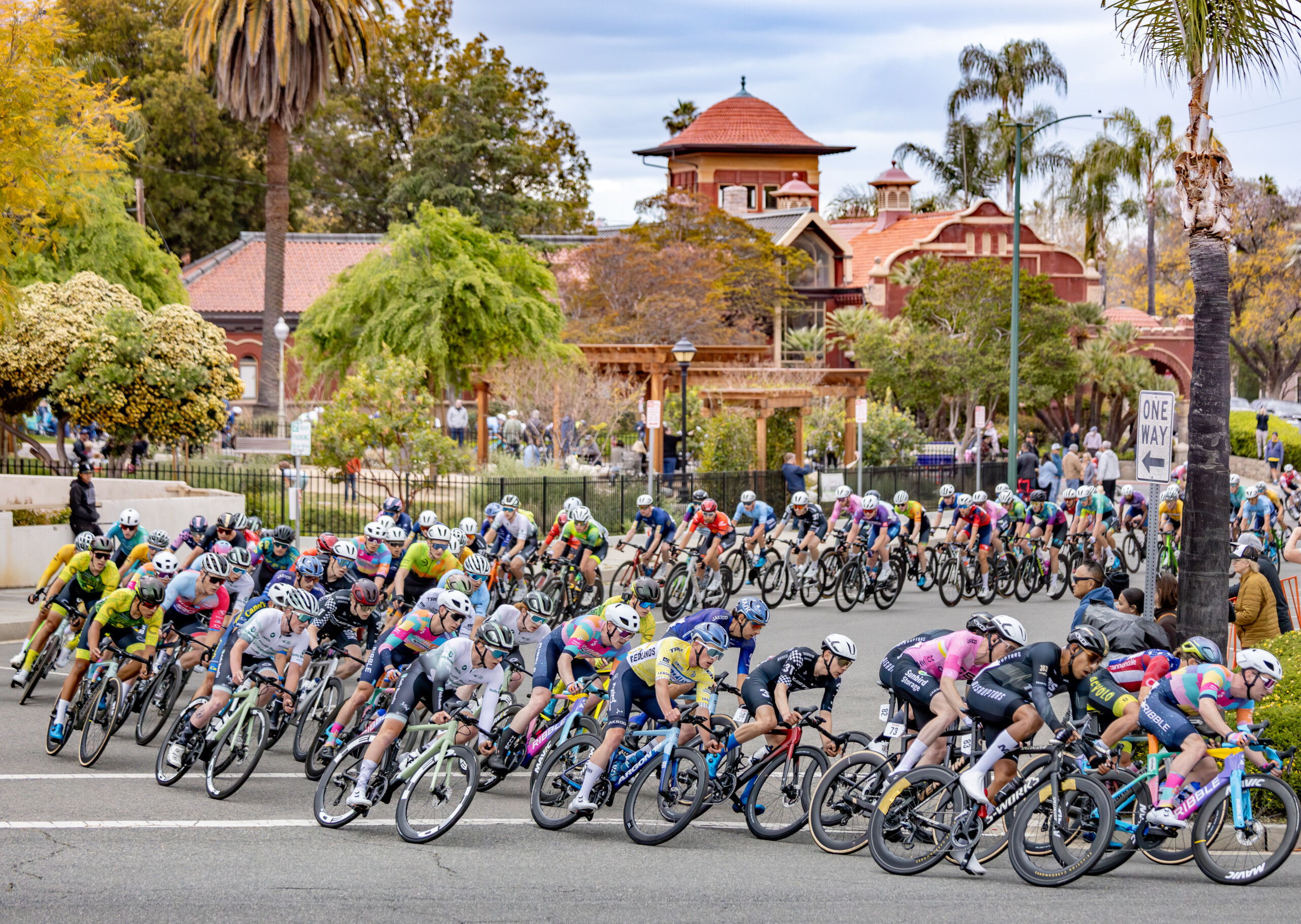
REDLANDS, California (February 8, 2026) — The Redlands Bicycle Classic (RBC), the longest-running professional stage race in the United States, will enter its 40th year in 2026 with a new presenting sponsor. Event organizers announced that SERVPRO of South Redlands / Yucaipa will take on the top sponsorship role for the first time, reinforcing the race’s long-standing connection to its host community.
Photo courtesy of Redlands Bicycle Classic
Locally owned and operated, SERVPRO of South Redlands / Yucaipa is a restoration services leader known for its 24/7 emergency response and expertise in water, fire, mold, storm, and commercial restoration. The company has built a strong reputation across Redlands, Yucaipa, and surrounding communities for fast response times and dependable service—values that align closely with the Classic’s community-first approach.
Founded in 1985, the Redlands Bicycle Classic has become a fixture on the American cycling calendar. The five-day invitational stage race consistently attracts top domestic and international talent, while also offering a full week of community events, youth activities, and family-friendly festivities. From road races and time trials to criteriums and vendor villages, the Classic blends elite competition with a festival atmosphere that draws fans well beyond the cycling crowd.
A partnership built on local pride
The presenting sponsorship underscores a shared emphasis on community engagement and hometown pride. For Redlands, the Classic is more than a race—it’s a civic celebration that brings together residents, volunteers, athletes, and visitors for a week of tradition and high-energy sport.
“We are incredibly honored to step into the role of presenting sponsor for the Redlands Bicycle Classic,” said Jeff Padgett, owner of SERVPRO of South Redlands / Yucaipa. “Our team is deeply rooted in this community, and supporting an event that brings so much energy, pride, and togetherness to Redlands is truly exciting. Just as we’re committed to being ‘Faster to Any Size Disaster,’ we’re equally committed to lifting up the people and places that make this region special.”
RBC Executive Director Marc Shaw welcomed the partnership as the race looks ahead to its milestone anniversary.
“We are thrilled to welcome SERVPRO of South Redlands / Yucaipa as our presenting sponsor,” Shaw said. “Their dedication to serving the community aligns perfectly with the spirit of the Classic. This partnership strengthens our ability to deliver a world-class event that celebrates athletic excellence, family fun, and the incredible community that makes Redlands such a unique place.”
Looking ahead to 2026
As the Redlands Bicycle Classic prepares for its 40th edition, organizers say the new sponsorship will help support both the professional racing and the community programming that have defined the event for four decades. Alongside elite competition, the Classic will again feature youth races, kids’ fitness events, live music, food vendors, and activities designed to welcome fans of all ages.
Additional information about the Redlands Bicycle Classic, media inquiries, and sponsorship opportunities can be found at RedlandsClassic.com.
Event info:
April 8-12 — Redlands Bicycle Classic, Redlands, CA, The longest continuous running invitational, professional stage race in American bike racing. Each year, the City of Redlands and surrounding communities open their homes, their hearts and their streets to world-class athletes. From humble beginnings on a Memorial Day weekend in 1985, the event, featuring 350 elite racers, has hosted future stars of the Olympics, Tour de France, and World Championships. The Redlands Bicycle Classic’s long heritage of attracting future stars has earned its position in history: “Where Legends Are Born!”, Eric Reiser, [email protected], redlandsclassic.com
By Nancy Clark MS RD CSSD — Professionals In Nutrition for Exercise & Sport (PINES) is an international organization whose mission is to educate athletes around the globe about how to fuel for optimal performance. Each year, PINES members present cutting-edge information at the annual meeting of the American College of Sports Medicine. (ACSM). This summary highlights hot topics discussed at this year’s meeting (May 2025), comparing natural vs. commercial sports foods.
Can athletes get enough creatine from a diet targeting creatine-containing foods without needing creatine supplements?
Likely yes IF they are eating a meat-centric diet; otherwise, no. The recommended creatine intake for athletes is 5 grams a day. Humans produce daily about one gram of creatine and we eat about one gram a day of creatine from meats. A pound of raw meat contains about 2 to 2.5 grams of creatine; cooked meat has less. Athletes—especially vegans—who listen to health advice to eat less meat can easily consume less than the recommended amount of creatine. Should you care? Yes, according to Eric Rawson of Messiah University. Creatine is linked with both improved athletic performance as well as better brain function in people older than 60.
Is stevia an effective sugar replacement to reduce calorie intake?
Depends. Stevia, a calorie-free sugar substitute, can effectively offer a sweet taste to a cup of coffee, tea, or soda. Eimear Dolan of the University of Sao Paulo says it unlikely reduces calories enough to contribute to significant weight loss. A teaspoon of sugar has only 16 calories, so replacing sugar with Stevia in your morning brew could save you about 15 to 30 calories. Not much. However, if you are a soda drinker who guzzles two cans of cola a day, you could save 300 calories. That is significant!
A beef jerky stick or chocolate milk provides enough leucine, making Branch Chain Amino Acid (BCAA) supplementation unnecessary?
Plausible. Of the three BCAAs (leucine, iso-leucine, valine), leucine is the primary trigger for optimal muscle growth and repair. Consuming 2 to 3 grams of leucine a day maximizes muscle protein synthesis. Athletes who limit their intake of calories and/or protein can miss the 2-gram per day leucine target.
If you are among the 37% of gym-goers who buy BCAA supplements, you could more enjoyably refuel with beef jerky (2.3 g leucine in 3.5 oz jerky) or chug 24-ounces of chocolate milk (2.3 g leucine) for your recovery food. Leucine is readily available in food, so think twice before paying $4.50 for a supplement with 5-grams of BCAA.
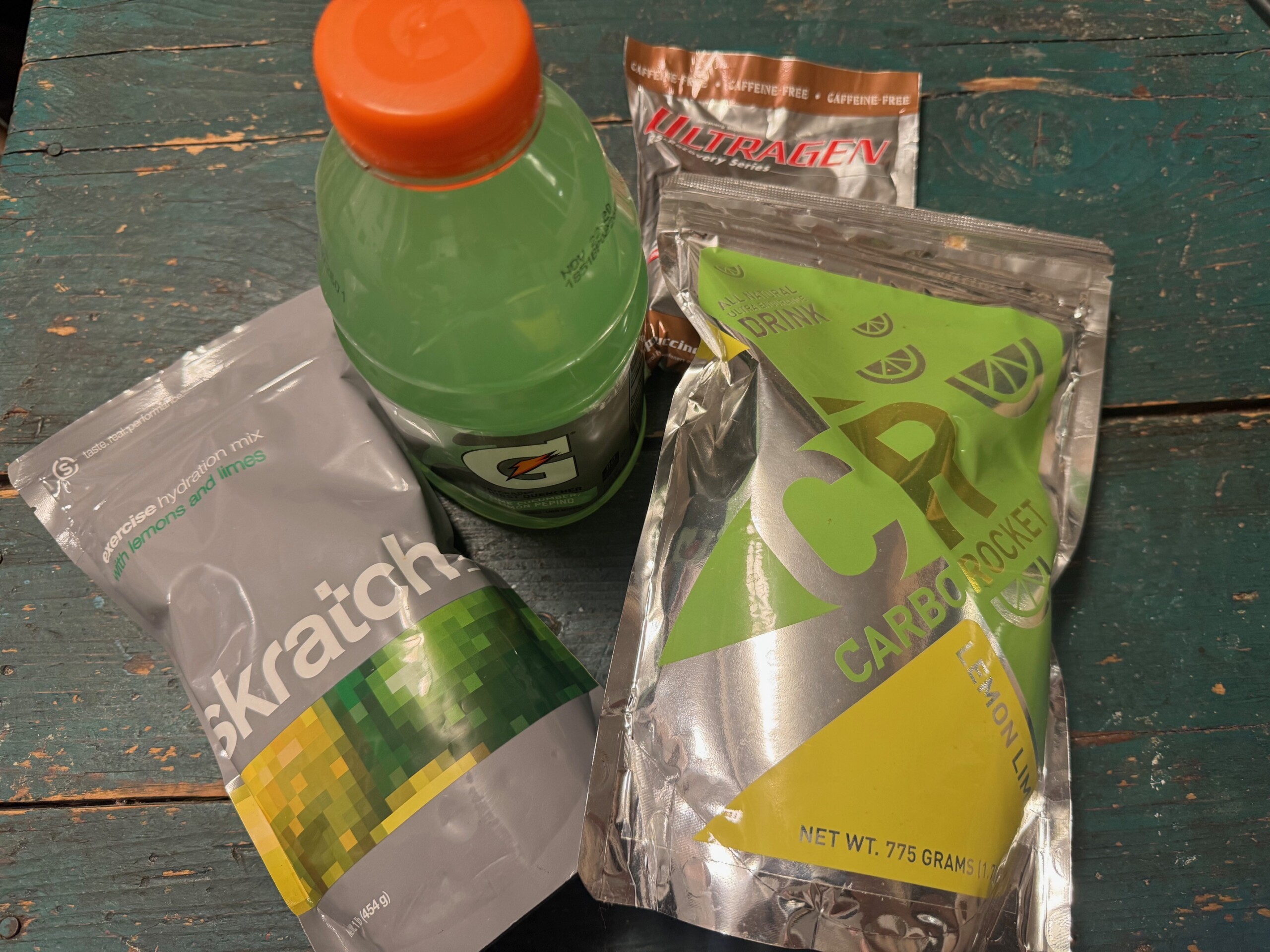
G. Gatorade and other sports drinks. Photo by Dave Iltis.
Is a homemade sports drink made from juice and a bit of salt as effective as a commercially available sports drink?
Plausible. Athletes can easily create a homemade sports drink that matches the nutrient profile of, let’s say, Gatorade: 55 calories, 105 mg. sodium in 8 ounces (240 ml). You can even add ingredients of choice, such as caffeine (brewed coffee or tea?), honey, a splash of juice or other flavoring of your choice. Stavros Kavouras of Arizona State Uni. warns: Just don’t put a sports drink of any kind into a fluid carrier, such as CamelBak. Doing so creates a breeding ground for bacteria!
Can honey, applesauce, or other foods effectively replace carbohydrate gels for fueling exercise?
Yes. Research has compared different foods with commercial sports products, such as honey vs. gels; raisins vs. gummies; banana vs. sport drink; mashed potato vs. gels. In all cases, the commercial product offered no performance advantage over the natural food; both helped improve performance equally.
Catalina Fernandes of Costa Rica adds “real food” might offer more fiber, be harder to carry and bulkier (when matched for calories). Hence, each athlete should experiment with both natural and commercial foods, paying attention to intolerances and gastro-intestinal distress. For travelling athletes, knowledge that real food “works” can be helpful if their favorite commercial products are not available (or get lost with their luggage).
Is coconut water a sufficient replacement for electrolyte drinks?
Plausible. Coconut water is as good as rehydrating with plain water, but it is not better than a sport drink. Kinta Schott of Arizona State U. adds coconut water is certainly a more natural beverage than a commercial sports drink! It is higher in potassium and lower in sodium than most commercial sport beverages. Here’s how 8-ounces of coconut water compares with 8-ounces of Gatorade:
Coconut water can “do the job” for exercise less than 3 hours that does not involve high sweat sodium losses. If salt is a concern, sprinkle extra on your pre-exercise meal.
Do B-vitamins and beet juice influence urine color enough to hinder accurate assessment of how well an athlete is hydrated?
Plausible. Urine color charts are useful tools that help athletes determine their level of hydration. Darker urine indicates more dehydration. Yasuki Sekiguchi of Texas Tech University reminds us that athletes who consume B-vitamin supplements or beets/beet juice have a slightly darker urine that could lead to assuming the athlete is under-dehydrated. Hence, beet-consumers shouldn’t use urine color when needing to precisely assess hydration status.
Can athletes get enough calcium from dairy if they want to curb bone loss related to exercise?
Yes, but doing so maybe not practical. Calcium in your blood drops at the onset of exercise; that triggers calcium-release from the bones. Athletes in non-weight-bearing sports (such as cycling and rowing) have increased risk for poor bone health due to low bone density. Research that boosts pre-exercise calcium intake (to potentially curb bone loss) has used calcium supplements. A study with rowers and cyclists has shown it’s possible for those athletes to consume 1,000 mg. of pre-exercise calcium from milk, yogurt, and cheese— but Louise Burke of Australia Catholic University says it’s not always practical. Weight-conscious and dairy-avoiding athletes might balk at the plan—and we don’t yet even know if doing so will translate into better bone health. No harm in trying!
BOISE, Idaho (February 7, 2026) — The Idaho Walk Bike Alliance (IWBA) has added a new Safety Resources section to its website, expanding access to bicycle and pedestrian safety education statewide.
The new hub—available at idahowalkbike.org/resources—features animations, videos, activity plans, and lesson plans focused on non-motorized transportation safety. The resources are designed for kids, families, educators, and community members to use independently.
The Safety Resources initiative is a collaboration between Idaho Walk Bike Alliance, the Southeast Idaho Council of Governments (SICOG), Cowboy Ted’s Foundation for Kids, and Southeast Idaho Safe Routes to School. While the partners continue to host in-person Safe Routes to School programs and human-powered transportation events in Southeast Idaho, the online platform allows those materials to reach communities across the state.
Cowboy Ted Hallisey with a couple of participants at a Human Powered Rodeo. Photo courtesy of Idaho Walk Bike Alliance.
“I absolutely love hosting live events for kids and families,” said “Cowboy” Ted Hallisey, executive director of the Idaho Walk Bike Alliance. “But we also want parents, teachers, health professionals, and kids to be able to access our safety resources on their own. With fun animations for younger kids, lesson plans and activity plans for educators, and videos for families, we’re helping Idahoans walk, bike, and roll safely.”
Hallisey and SICOG Safe Routes to School coordinator Haley Reed will continue to collect, create, and share new materials regularly, with a goal of adding a fresh safety resource each week. More than 30 resources are already available. The site also links to cowboyted.com for additional content.
“We hope these safety resources will help kids and families learn how to travel safely in a new and fun way,” Reed said.
IWBA is also coordinating internships and fellowships with Boise State University and the University of Idaho, inviting college students to help create lesson plans, safety videos, animations, and community events for Safe Routes to School and IWBA programs statewide.
“We’re also partnering with media outlets across Idaho to help create and share safety resources and continue growing our online library,” Hallisey said.
University of Utah review debunks ‘Roadblocks to Quality of Life’ paper used to hamper traffic calming in Salt Lake City
“Liveable Streets and the Quality of Life”, a new report by the University of Utah’s Metropolitan Research Center, states, “The evidence is overwhelming. Traffic calming is not a roadblock to quality of life. It is one of its strongest foundations”. The report was authored by Reid Ewing, Alessandro Rigolon, et al.
The report begins with a chapter tearing down the paper ‘Roadblocks to Quality of Life’ by University of Utah professors Daniel Mendoza and Mark Jansen. The paper was used by the Utah Legislature to justify the 2025 SB195 bill, which forced Salt Lake City to get permission from UDOT for traffic calming road projects on collectors and arterials. The Livable Streets report is thorough in its condemnation of the Mendoza paper, “After a comprehensive review of federal guidance, peer-reviewed research, and real-world case studies from cities across the United States, this report finds those claims to be inaccurate, misleading, and unsupported by credible evidence.”
The Livable Streets report reviews over 700 studies and shows that traffic calming “reduces total crashes by 20–60 percent and severe or fatal injuries by 40–75 percent” with the most benefit coming from road design improvements such as road diets and speed bumps. Additionally, it looks at 40 case studies in cities across the US to show how traffic calming reduces crashes, reduces speeds, and improves quality of life.
The executive summary concludes:
“The evidence is overwhelming. Traffic calming is not a roadblock to quality of life. It is one of its strongest foundations. Leading professional associations that provide guidance for transportation planning in the United States such as the Institute of Transportation Engineers (ITE) and the American Society of Civil Engineers (ASCE), have explicitly endorsed traffic-calmed, safer streets, supported by foundational work like Ewing’s Traffic Calming State of the Practice (1999), published by ITE, and the U.S. Traffic Calming Manual by Ewing and Brown (2009), published by ASCE and supported the U.S. Department of Transportation. Decades of research and real-world practice do not support a debate nor leave room for doubt about whether traffic calming works. That question has already been answered repeatedly and conclusively. The only question now is not if, but where, how, and how fast communities should scale up these life-saving interventions. Legislators and policymakers should reject misleading critiques and rely instead on the extensive, consistent, and credible evidence documented in this report. Safer streets are more livable streets, and traffic calming is one of the most effective tools we have to achieve them.”
The Legislature is doubling down in 2026 with SB242, which would take away even more control of Salt Lake City’s streets and hand it over to UDOT, while requiring unsafe 12’ travel lanes, and threatening to remove bus lanes and protected bike lanes on 200 S, 300 W, and 400 S.
Livable Streets and Quality of Life should be mandatory reading for any legislator voting on transportation bills. According to the cover of the report, it was prepared for the Salt Lake City Transportation Division by the University of Utah’s Metropolitan Research Center. However, Salt Lake City Communications Manager Sofia Jeremias offered this comment on the report’s origins, “Salt Lake City did not execute a contract for the research. Our understanding is that discussions were had between the former transportation director and Reid Ewing. At that time, Salt Lake City was exploring the best options to fulfill the requirements for a mobility plan as outlined in SB 195. The City has still not executed a contract for this work, has not completed a review, and did not authorize its release.”
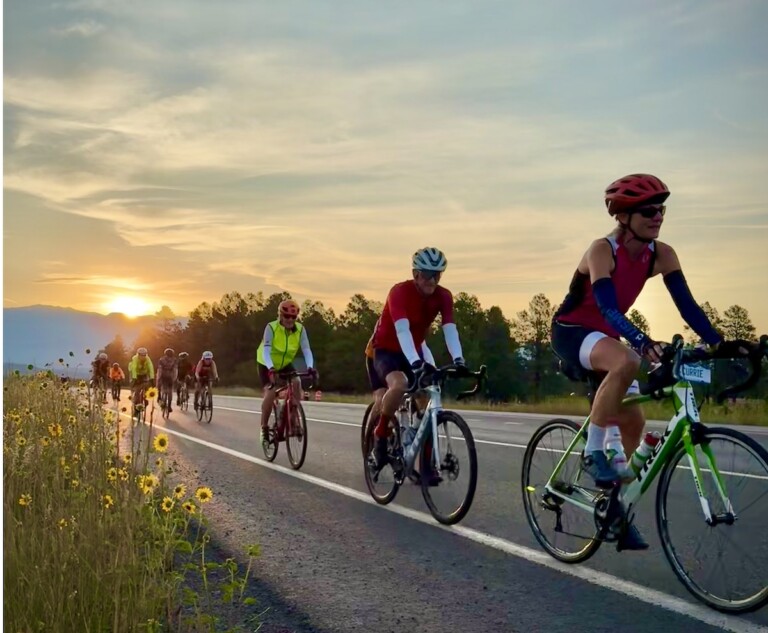
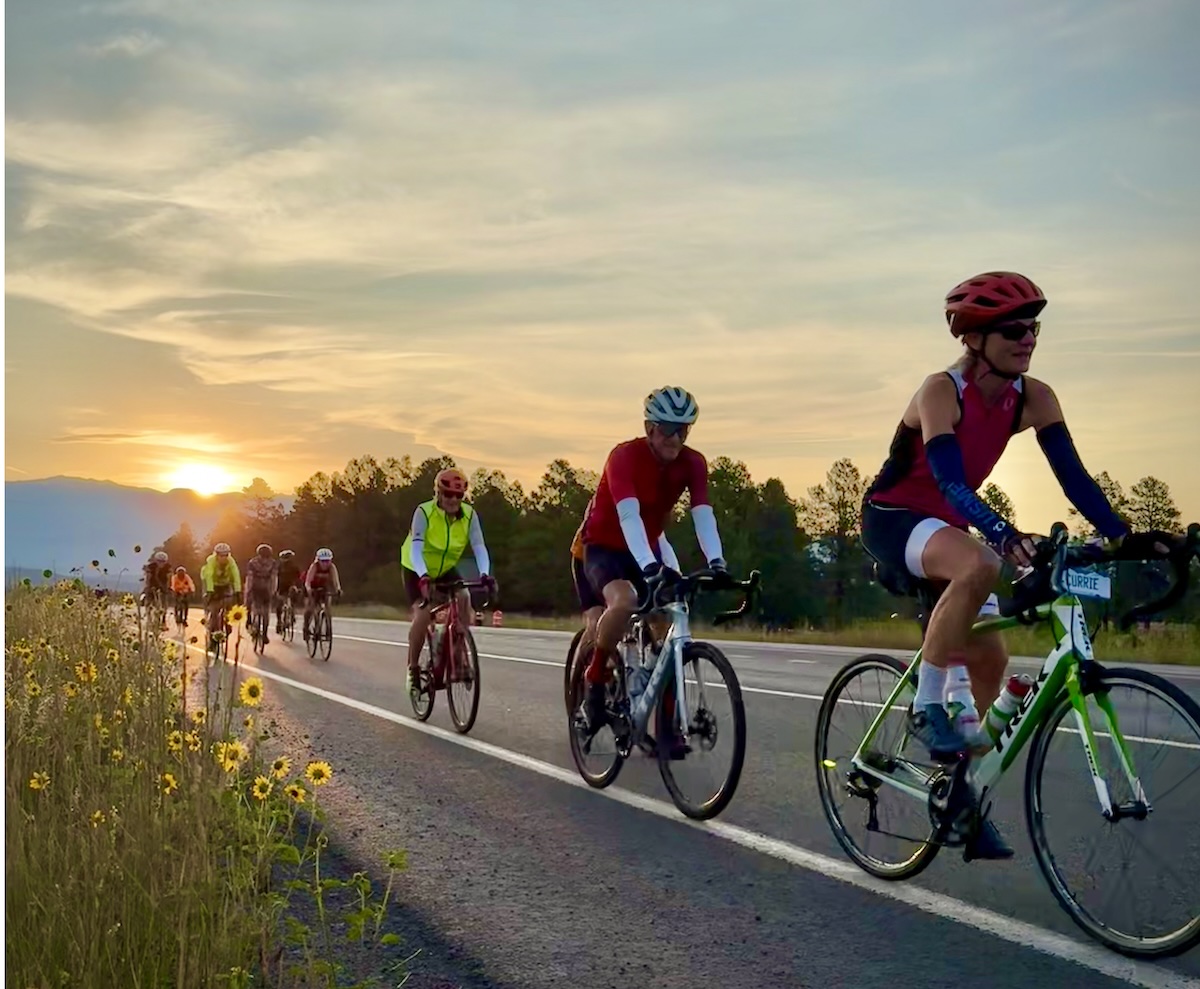
CRESTED BUTTE, Colorado (January 15, 2026) — Colorado’s Ride will return in August 2026 with a redesigned five-day route that showcases some of the state’s most scenic and challenging road cycling, while continuing to emphasize community and connection over scale.
The fourth edition of the event is scheduled for August 10–14, 2026, with the tour beginning and ending in Crested Butte. Riders will travel through Buena Vista, Salida, and Gunnison, covering high-altitude terrain in the heart of the central Rockies.
Photo courtesy of Colorado’s Ride
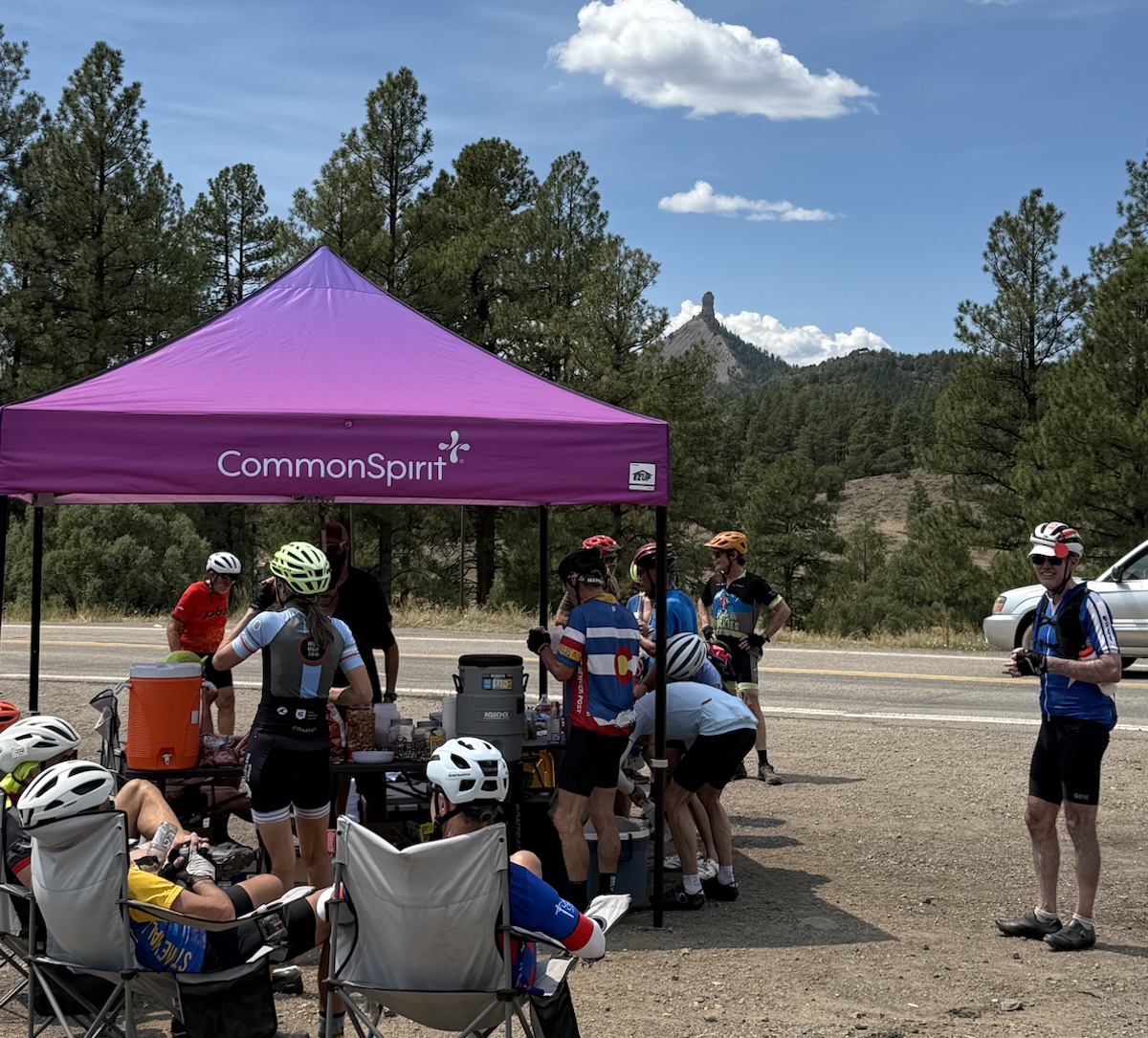
Approximately 350 cyclists from across the United States are expected to participate. The fully supported tour includes daily rides, stocked aid stations, and overnight camping in each host community, creating what organizers describe as a rolling village that moves from town to town.
Event director Bill Plock said the tour’s relatively small size is intentional.
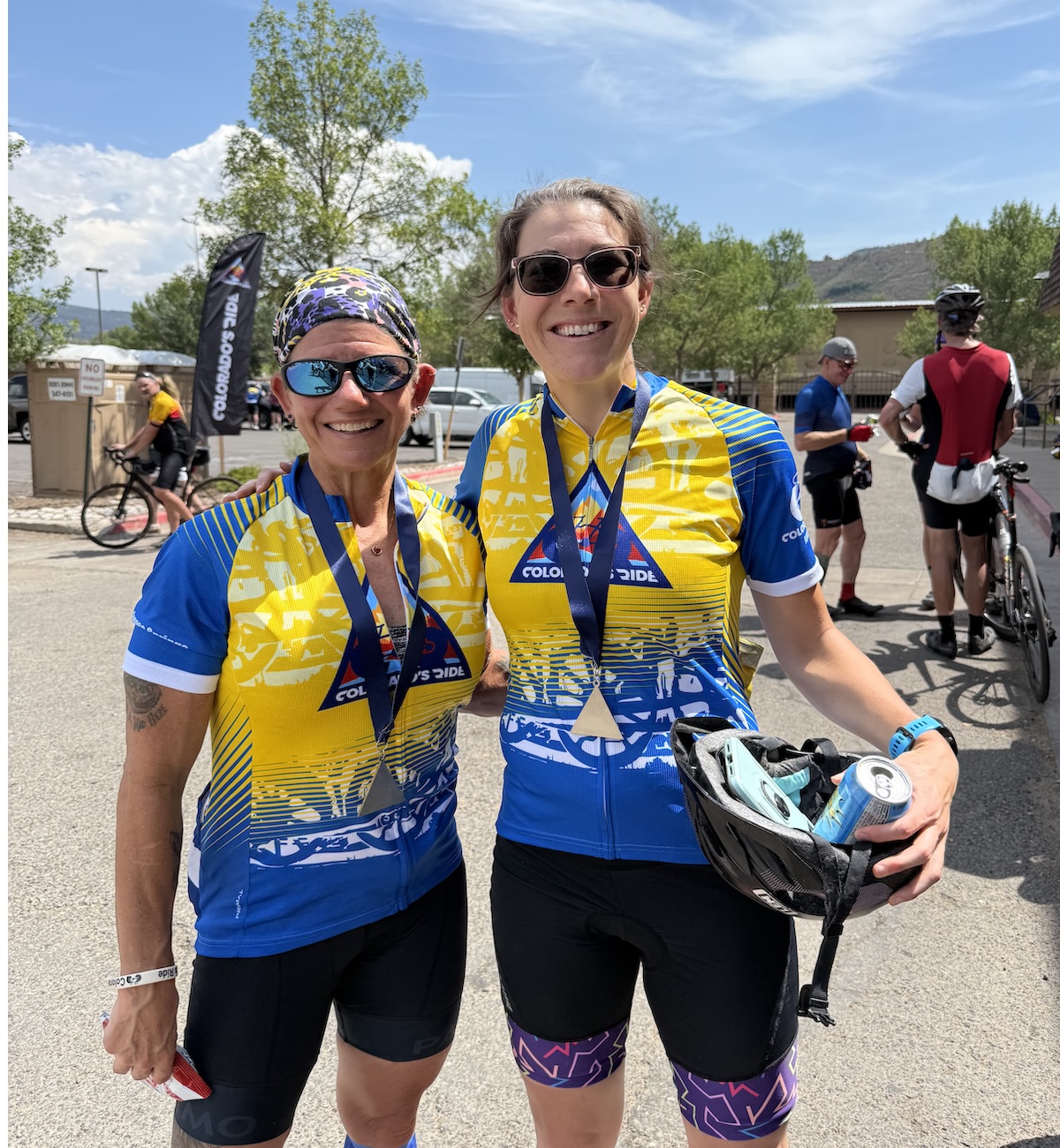
“What makes Colorado’s Ride special is the camaraderie,” Plock said. “Because we’re a smaller tour, riders really get to know each other over the course of the week. By the end, it feels like a moving community.”
Photo courtesy of Colorado’s Ride
A highlight of the 2026 route includes a ride toward Gunnison and the Black Canyon area, offering expansive views and terrain that reflect the rugged character of Colorado cycling.
Safety remains a core focus of the event. Colorado’s Ride works with the Colorado State Patrol to provide professional road support, while experienced staff and volunteers assist riders throughout the week. The tour also partners with local non-profit organizations, whose volunteers support the route and benefit directly from the event.
Photo courtesy of Colorado’s Ride
In addition to the ride itself, participating teams raise money for charitable causes of their choosing, extending the tour’s impact beyond the road and into the communities it passes through.
The 2026 event is presented by CommonSpirit, whose support helps keep the tour focused on wellness, community engagement, and giving back.
With its blend of alpine scenery, manageable scale, and emphasis on connection, Colorado’s Ride continues to carve out a niche as a community-driven alternative to larger cycling tours.
More information, including registration and volunteer opportunities, is available at coloradosride.com.
COLORADO SPRINGS, Colo. (Dec. 19, 2025) — USA Cycling has announced an expanded 2026 Paracycling National Calendar designed to increase race opportunities, improve access to classification, and strengthen the athlete development pathway nationwide.
Running from January through July, the 2026 calendar features eight race weekends, including three national classification events, with multiple race starts offered at nearly every stop. The expanded schedule is intended to boost visibility, lower barriers to entry, and create a clearer progression for paracycling athletes across the United States.
Several events are integrated into well-established race weekends, including the Valley of the Sun Stage Race, Tulsa Tough, and the Tour of America’s Dairyland. By embedding Paracycling into high-profile events, athletes will compete on professional-level courses, in front of larger crowds, and with robust logistical support.
“This expanded calendar is about opening more doors for current and future para-athletes,” said Eric Bennett, USA Cycling’s Director of Membership. “By adding more classification sites and building Paracycling into major events, we are making it easier to get started in the sport and stay on a clear development path.”
2026 Paracycling National Calendar
National Classification Events noted with an asterisk
January 31–February 2 — Swamp Classic* (Gainesville, Fla.)
February 13–15 — Valley of the Sun* (Phoenix, Ariz.)
February 27–March 1 — Victor Valley Omnium (Victorville, Calif.)
March 21–22 — Outdoor Capital Classic (Jackson, Ga.)
April 11–12 — USA Cycling Paracycling National Championship* (Bentonville, Ark.)
June 5–7 — Tulsa Tough (Tulsa, Okla.)
June 18–28 — Tour of America’s Dairyland (Southeast Wis.)
TBD — Midwest Event (Location TBD)*
Each event will offer multiple race opportunities for handcycle, C-class, T-class, and visually impaired tandem athletes, with disciplines including time trials, road races, criteriums, and circuit races.
In a significant shift, USA Cycling is expanding from one primary national classification event to three in 2026. The move provides athletes with greater flexibility in completing the classification process while also supporting the training and deployment of additional national classifiers to meet growing demand.
“Visibility leads to participation, and participation builds stronger athletes,” said Gordon Harrison, USA Cycling’s Senior Manager of Sport Development Programs. “This calendar puts Paracycling on national-level courses and in communities that are ready to support and celebrate these athletes.”
Additional details, including race formats and registration information, will be released in the coming months.
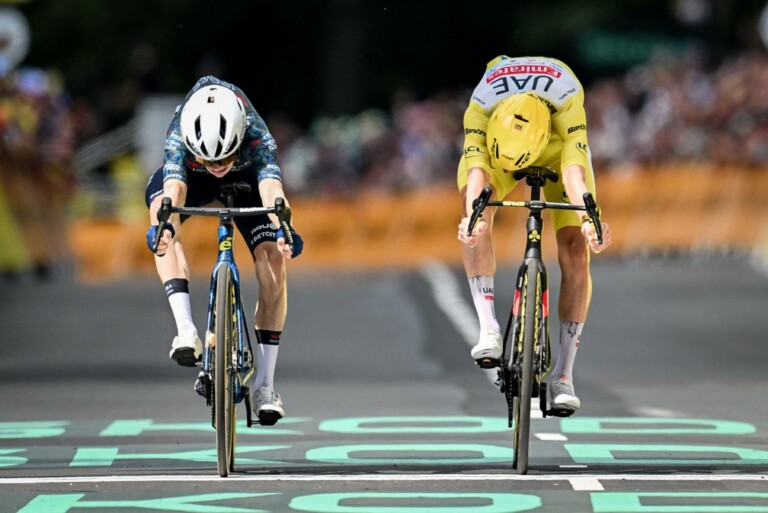
Q1. For the past five years in the Tour de France, Tadej Pogačar and Jonas Vingegaard have placed first or second, with Pogačar winning three in front of the Dane while Jonas took two ahead of the Slovenian. Has such a dominance of two riders ever happened before?
Q2. This past year was the fiftieth anniversary of the Tour de France finishing on the Champs-Elysees with these finishes usually ending as field sprints on the famous avenues. There have been exceptions in these past fifty years, notably last year’s TT finish in Nice to accommodate the Olympics and the historic 1989 individual time trial. Additionally, the circuit was changed this year making the traditional field sprint virtually impossible and instead seeing an all-star breakaway enter the final lap together and eventually a solo winner. It does beg the question of how many times a breakaway has prevailed on the Tour’s final stage…can you name the years and the victorious riders?
Q3. Irishman Ben Healy won the “combativity” award this year as the most aggressive rider in the race. This prize has been in existence since 1952 and is voted on by a panel with amount of time spent in breakaways also considered as part of the decision. Notably American Quinn Simmons was also in the running for this award. Two questions: 1. Has another Irish rider ever won this title and 2. Has an American ever won this prize?
Q4. Pauline Ferrand-Prevot of France was the first home winner of the Tour de France for MANY years. How long has it been since a French man or woman triumphed in their homeland’s crown jewel?
Q5. Most people are aware that the inaugural Women’s Tour de France (1984) was won by American Marianne Martin. She also took the Queen of the Mountains category. Since that time, only TWO other Americans have won final classifications (jerseys) at the Women’s Tour de France. Can you name them?
SALT LAKE CITY (February 3, 2026) — A transportation bill in the Utah Legislature (SB 242 See lines 3181-3274) will continue the assault by out of area legislators Sen. Wayne Harper and Rep. Kay Christofferson on Salt Lake City’s safe streets efforts that began in 2025 with SB195. The bill would require Salt Lake City to “mitigate” street safety, bike lane, and bus projects on 200 S, 400 S, and 300 W, and to provide a timeline for the potential removal or modification. The bill does not define what “mitigate” means.
SB242 repeals SB 195 from 2025, but replaces it with an even greater reduction in Salt Lake City’s ability to manage its own streets, further eroding local control.
Under SB 242 (2026), 800 S and other Tier 1 streets, would be restricted from lane narrowing, preserving a design speed of 55 mph. Photo by Dave Iltis
Senate Bill 242 expands the study area south to the city’s southern border (roughly 2100 S to 2700 S) and west to Redwood Road.
The bill explicitly requires “mitigation” of the brand new bike lanes on 300 W, 400 S, and the bus lanes on 200 S.
“includes plans and timelines for the city to mitigate the impacts of traffic calming measures and highway reduction strategies previously implemented on: (A)300 West from 400 South to 900 South; (B)200 South from 300 West to 300 East; and (C)400 South from West Temple to Interstate 15;”
This is ironic since the new 300 W protected bike lanes from 400 S to 900 S were just completed under permission from UDOT, as were the new bike lanes on 400 S.
The “mitigation”, while not defined, requires the following: “(d)To develop the plan for mitigation described in Subsection (1)(a)(v), the city: (i)may engage and consult with stakeholders and the department to assess potential impacts and alternatives; and (ii)shall obtain approval from the department of the proposed plan for each highway.”
Since the 200 S project is part of the Davis-Salt Lake City Community Connector Bus Rapid Transit Project, removal or “mitigation” of this project could jeopardize funding for the Davis County Bus Rapid Transit line design grant. The Davis-Salt Lake City Community Connector Bus Rapid Transit Project received Federal funding including $1.5 million awarded for design beginning January 5, 2026.
The 200 S street reconstruction including its bus and bike lanes were paid for by the Funding our Future bond. It remains unclear what obligations Salt Lake City or the State of Utah would have to repay construction costs if the project is altered or removed.
The bill also strips Salt Lake City’s ability to safely size travel lanes by mandating 12 foot travel lanes wherever possible on Tier One streets (like 800 S), with a minimum of 11’ travel lanes. 12’ travel lanes are for a design speed of 55+ mph, clearly inappropriate for a street like 800 S.
NACTO (National Association of City Transportation Officials) states,
“Lanes greater than 11 feet should not be used as they may cause unintended speeding and assume valuable right-of -way at the expense of other modes.
Restrictive policies that favor the use of wider travel lanes have no place in constrained urban settings, where every foot counts. Research has shown that narrower lane widths can effectively manage speeds without decreasing safety and that wider lanes do not correlate to safer streets.3 Moreover, wider travel lanes also increase exposure and crossing distance for pedestrians at inter-sections and midblock crossings.4
…
Lane width should be considered within the overall assemblage of the street. Travel lane widths of 10 feet generally provide adequate safety in urban settings while discouraging speeding. Cities may choose to use 11-foot lanes on designated truck and bus routes (one 11-foot lane per direction) or adjacent to lanes in the opposing direction.”
It is unclear why the bill sponsors are choosing lanes widths that nationally recognized transportation planners don’t recommend. Given the high speeds at which Salt Laker’s tend to drive, this clearly will not make the streets any safer.
Even the staid and conservative AASHTO (American Association of State Highway and Transportation Officials) recommends 12′ lanes only on streets with speeds higher than 45 mph, of which Salt Lake City has none in the study area — and to our knowledge, none at all — with speeds that high.
“AASHTO Lane Width Standards Overview (from Google AI):
• Interstate & Principal Arterials: 12-foot (3.6 m) lanes are the standard, especially for high-speed (>45 mph) and high-volume routes.
• Urban/Suburban Arterials: Lane widths may range from 10 to 12 feet.
• Low-Speed/Local Roads: 10 to 11-foot lanes are acceptable, particularly in urban areas with speeds under 35 mph or where space is constrained.
• Auxiliary Lanes: Often 10 to 12 feet, but not less than 10 feet.”
Ask them first to not only repeal SB195 (from 2025), but to remove the new language in SB242 as well. This section of the bill is legislative overreach.
State your support of the existing infrastructure on 300 W, 200 S, and 400 S, without changes, and that all bill language targeting these projects be removed.
State your opposition to the 12′ lane mandate and ask for that to be removed from the bill as it contradicts guidance from both major transportation engineering organizations.
State your opposition to removal of local control of Salt Lake City’s own streets, which runs counter to frequently stated principles of the legislature.
To contact bill sponsors Sen. Harper and Rep. Christofferson, see:
DOYLESTOWN, Pennsylvania (January 26, 2026) — Pushworks LLC has been named the exclusive U.S. distributor for CyclingCeramic, expanding American access to the French brand’s lineup of ceramic drivetrain components aimed at reducing friction and improving efficiency.
Based in Doylestown, Pennsylvania, Pushworks will handle distribution, marketing, and dealer support for CyclingCeramic products across the United States. The agency is led by longtime industry figure Matt Reece, who has worked with a range of endurance-focused cycling brands.
Photo courtesy Pushworks Creative
CyclingCeramic, founded in France in 2012, has built its reputation on precision-engineered ceramic bearings, oversized pulley wheel systems, and bottom brackets used by road, gravel, and mountain bike riders. The company hand-assembles its components in France using Grade 3 silicon nitride ceramic balls, a process it says results in significantly lower friction than traditional steel-bearing systems.
According to CyclingCeramic, its bearings can reduce friction by as much as 72 percent compared to standard steel bearings, delivering measurable efficiency gains often described by riders as “free speed.”
Photo courtesy Pushworks Creative
“CyclingCeramic was built on one obsession: efficiency without compromise,” said Henri Deroche, head of marketing for CyclingCeramic. “Every bearing and system we produce is hand-assembled in France with meticulous attention to detail. With Pushworks, we’re bringing that level of precision to the U.S. market with the support riders and dealers expect.”
Reece said CyclingCeramic’s technical approach and performance data made the brand a strong fit for Pushworks’ portfolio.
Photo courtesy Pushworks Creative
“Our focus is on working with quality brands that can clearly demonstrate performance benefits,” Reece said. “CyclingCeramic’s craftsmanship and testing back up the claims, and we see strong potential to grow the brand through a well-supported dealer network.”
The CyclingCeramic line now available in the U.S. includes oversized pulley wheel systems compatible with Shimano, SRAM, and Campagnolo drivetrains; ceramic bottom brackets designed for durability and power transfer in adverse conditions; wheel bearing kits for major wheel brands including DT Swiss, Zipp, and ENVE; and a range of drivetrain waxes and lubricants intended to maintain peak efficiency.
Pushworks is currently onboarding independent bicycle dealers and specialty retailers interested in carrying the CyclingCeramic line, with initial availability focused on performance-oriented shops serving competitive and enthusiast riders.
I’ve cut out sugar. Gurus on social media say it’s fattening,
a waste of calories, and toxic.
I have a sweet tooth. Given the choice of eating more dinner
or having dessert, I’ll always choose dessert!!!
Is Coke healthier if made with cane sugar instead
of high fructose corn syrup?
By Nancy Clark MS RD CSSD — If you are like most of my clients, you are confused about the role of sugar in your daily sports diet. The anti-sugar “experts” (who speak to the general public, not specifically to athletes) report sugar is health erosive. Sports nutrition researchers claim sugar enhances performance. Does that leave you wondering: Is sugar friend or foe for athletes? This article addresses both sides of the sugar debate.
Sugar: Avoid it!
Limiting sugar intake does not harm anyone. Sugar is not an essential nutrient. Our bodies can make sugar (glucose) by breaking down muscle and fat tissue, or by converting fat and protein that we eat into glucose.
It’s not the sugar that’s toxic, but the dose. Photo by Umberto Salvagnin, CC BY 2.0, Attribution
The average American consumes about 17 teaspoons of added sugar a day (60 pounds a year). That’s a lot of empty calories. Populations with a high intake of added sugars tend to have health issues. By reducing added sugar to less than 10% of total calories, they can reduce tooth decay and the risk of overweight, obesity, and associated health issues.
Dietary sugar can drive up blood sugar. The risk of diabetes increases by 1% in those who routinely consume the sugar-equivalent of a can of soda a day.
Drinking Coca-Cola made with cane sugar is no better for you than Coca-Cola made with high fructose corn syrup.
Cane sugar (also called sucrose) is comprised of 50% glucose, 50% fructose.
High fructose corn syrup is 45% glucose, 55% fructose.
Both are metabolized similarly. Although President Trump says all-natural cane sugar “is just better,” science does not support that belief. Both contribute to health problems. Drinking Coke made with cane sugar will not make America healthier.
With very high sugar consumption (sports drinks, gels, soda, candy), one could become nutrient depleted. Empty calorie sugar offers no nutritional value yet displaces nourishing food, which can make a lackluster sport diet.
Sugar and athletes: Moderation!
Sugar consumption increased from less than 10 pounds per person a year in the late 1800’s to about 100 pounds per person a year by 1945. It remained relatively flat until 1980. Yet, our health improved between 1880 and 1980. We can’t blame just sugar for health problems. Low exercise, high stress, and poverty are also health erosive.
Sugar (a “carb”) is in breast milk, dairy food, fruit, vegetables, honey, potato, corn, quinoa, and all grains. People around the globe have consumed these foods for years. So why now are sugar and “carbs” deemed responsible for creating human obesity and diseases?
The fear-mongering terms of unhealthy, poisonous, toxic are simply unscientific. People who lack knowledge of physiology fail to understand sugar is not inherently fattening, nor is one food healthy or unhealthy. Note: An apple is a healthy food; a diet of all apples is a very unhealthy diet.
Our present state of poor health is not because we consume sugar and our diets are unhealthy. Rather, we are physically inactive. Too little exercise reduces our ability to metabolize sugar optimally. That, along with environ-mental factors, endocrine disrupters, stress, etc., explain the fundamental causes of obesity and metabolic disease.
In terms of diabetes prevention, you should be concerned about blood sugar, not dietary sugar. A rise in blood sugar that occurs after eating is not pathological—unless unfit muscles and liver fail to take up the sugar. It’s not what you eat, but what your body does with what you eat.
With inactivity, the body becomes less able to transport sugar out of blood and into muscle. This erodes metabolic health. Also with inactivity, a person can easily overeat because energy intake gets dissociated from energy expenditure.
Remember: athletes’ bodies are metabolically very different from sedentary bodies. You want to stay active to preserve your ability to enjoy some sweets without hurting your health!
Sugar cravings happen when the body needs fuel. If you eat before you run out of fuel, you will tame your sweet tooth. Have a second lunch when you are droopy and low on energy in the afternoon instead of devouring sweets in the evening. That said, a desire for sweets can also be a genetic preference.
Concluding comments
Lack of physical activity is the bigger threat to health than sugar. For people who are overfat and underfit, a diet low in sugar and starch is likely a wise idea. But for athletic people (who are at lower risk for heart disease, diabetes, and obesity), sugar and carbs are not toxic; they are an important fuel for enhancing athletic performance.
The one size diet does not fit all. No one is suggesting that athletes should eat more sugar. Rather, understand that as an athlete, you can embrace a sport diet that includes an appropriate balance of sugars and starches (carbohydrates) in each meal. Strive for a healthy eating pattern that offers 85% to 90% quality foods and 10% to 15% fun foods, such as apple pie instead of an apple.
If you are fearful sugar will harm your health, note that fearmongering relies on cherry-picked research that can prove what the “expert” wants to prove. Fear-mongering “experts” have created distrust of the food industry and have shaped opinions that support raw foods, super foods, whole foods, organic foods, and clean eating. Confusion reigns!
My suggestions are:
Enjoy a variety of foods to get a variety of nutrients.
Limit added sugar to less than 10% of your total calories (~250 sugar-calories/day for an active woman; ~300 sugar-calories for an active male).
If you currently limit your sugar intake to a weekly “cheat day,” try this experiment: Enjoy a small sweet daily as a part of lunch or afternoon snack. This can curb your urge to binge on sweets in an unhealthy way on a cheat day. Sugar binges are what gives sugar a bad name…
COLORADO SPRINGS, Colo. (Dec. 17, 2025) — USA Cycling has announced the full schedule for the 2026 USA Cycling National Championships, outlining dates and host locations across road, mountain bike, track, cyclocross, gravel, BMX, paracycling, and esports disciplines.
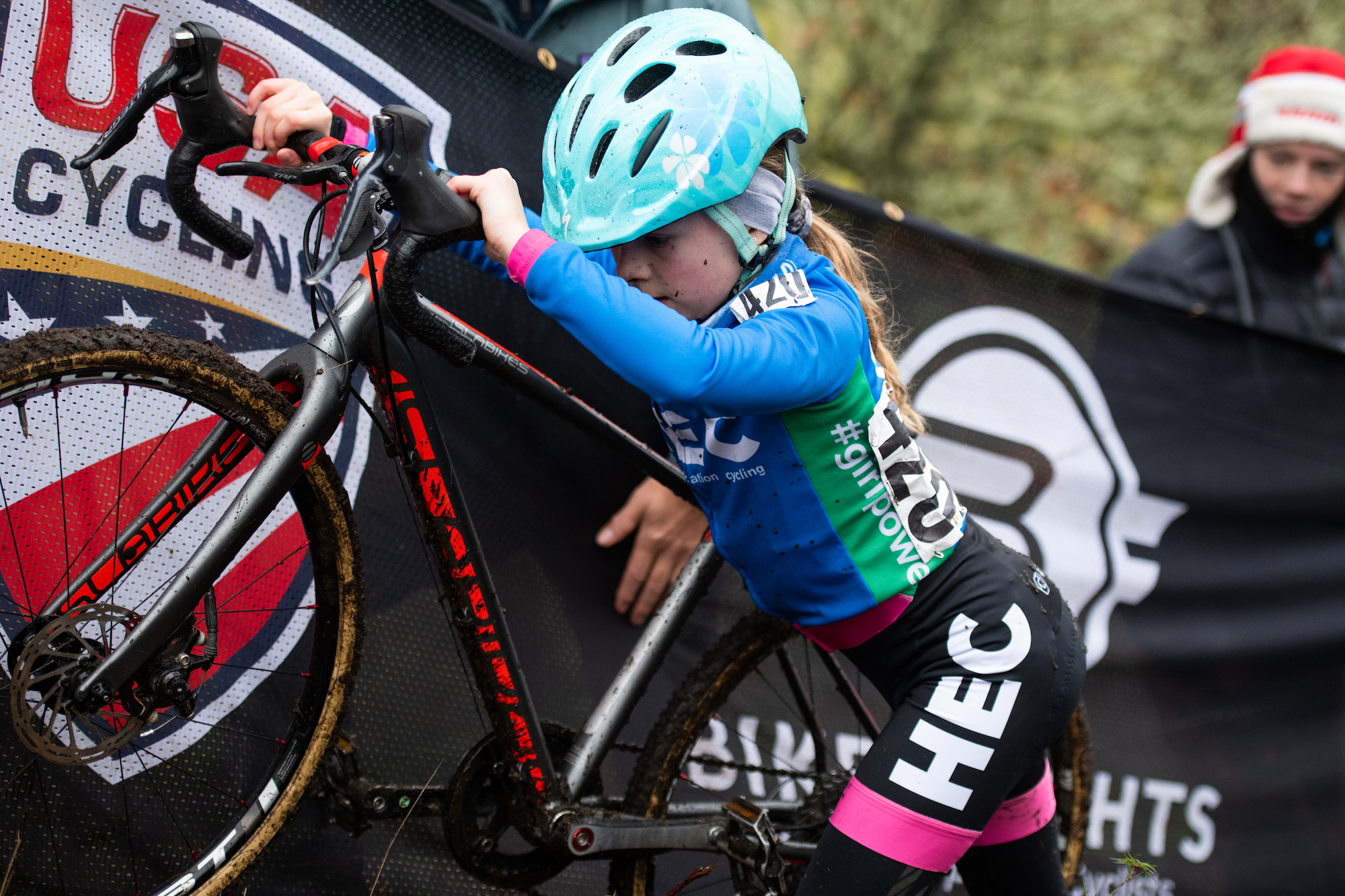
Pennsylvania’s Haley Cline (Health Education Cycling) pushes her bike through the mud on Day 5 of the 2019 US Cyclocross National Championships. Photo courtesy USA Cycling/Dejan Smaic
The 2026 calendar spans the entire racing year and is expected to draw thousands of competitors and spectators from across the country, all competing for national titles and the coveted Stars and Stripes jersey.
“The pinnacle experience of a USA Cycling member is competing in a National Championship event,” said USA Cycling President and CEO Brendan Quirk. “Whether your goal is to win a Stars and Stripes jersey or simply to finish in the top half of your age group, nothing is as motivating as Nationals. We’re excited to return to so many proven, high-quality venues. Communities such as Fayetteville, Charleston, Roanoke, and Milwaukee are proving their wholehearted commitment to bike racing. 2026 will be another fabulous season.”
Several familiar host cities return in 2026. Pro Road National Championships will once again take place in Charleston, West Virginia, featuring Elite, Under-23, and Junior 17–18 categories. Endurance Mountain Bike Nationals return to Roanoke, Virginia, with a full week of racing that includes short track, cross-country, and marathon events. Gravel Nationals head back to La Crescent, Minnesota, while Cyclocross Nationals close out the year in Fayetteville, Arkansas.
Wisconsin will once again serve as a national championship hub. Trek Bicycle will host Collegiate Road Nationals in Madison, while the Tour of America’s Dairyland will host Masters and Junior Road Nationals in the greater Milwaukee area.
The 2026 schedule also includes several new additions and standalone events. Esports National Championships, presented by TrainingPeaks Virtual and delivered in partnership with Echelon Racing Promotions, will open the championship season. Collegiate Gravel Nationals will debut in Texas, BMX Freestyle Nationals will take place in South Jordan, Utah, and Paracycling Road Nationals will be held as a standalone championship in Bentonville, Arkansas. Junior Track Nationals move to the Valley Preferred Cycling Center in Pennsylvania, while Elite Track Nationals will be contested at the Velo Sports Center in Southern California.
2026 USA Cycling National Championship Schedule
Jan. 31–Feb. 1 — Esports (TrainingPeaks Virtual)
March 7 — Collegiate Gravel (Turkey, Texas)
March 20–22 — Collegiate BMX (West Monroe, La.)
March 27–28 — BMX Freestyle (South Jordan, Utah)
March 27 — Elite BMX (Rock Hill, S.C.)
April 11–12 — Paracycling Road (Bentonville, Ark.)
May 7–10 — Collegiate Road, presented by Trek Bicycle (Madison, Wis.)
June 6–7 — Enduro Mountain Bike (Kellogg, Idaho)
June 17–21 — Pro Road (Elite, U23, Junior 17–18) (Charleston, W.Va.)