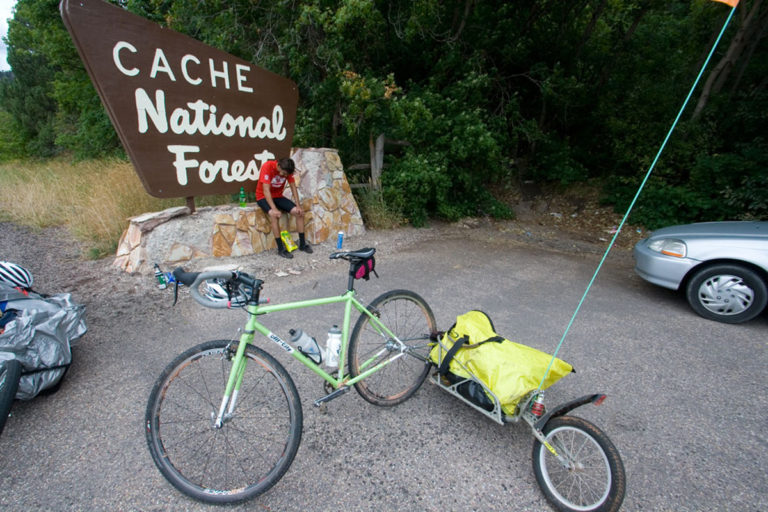
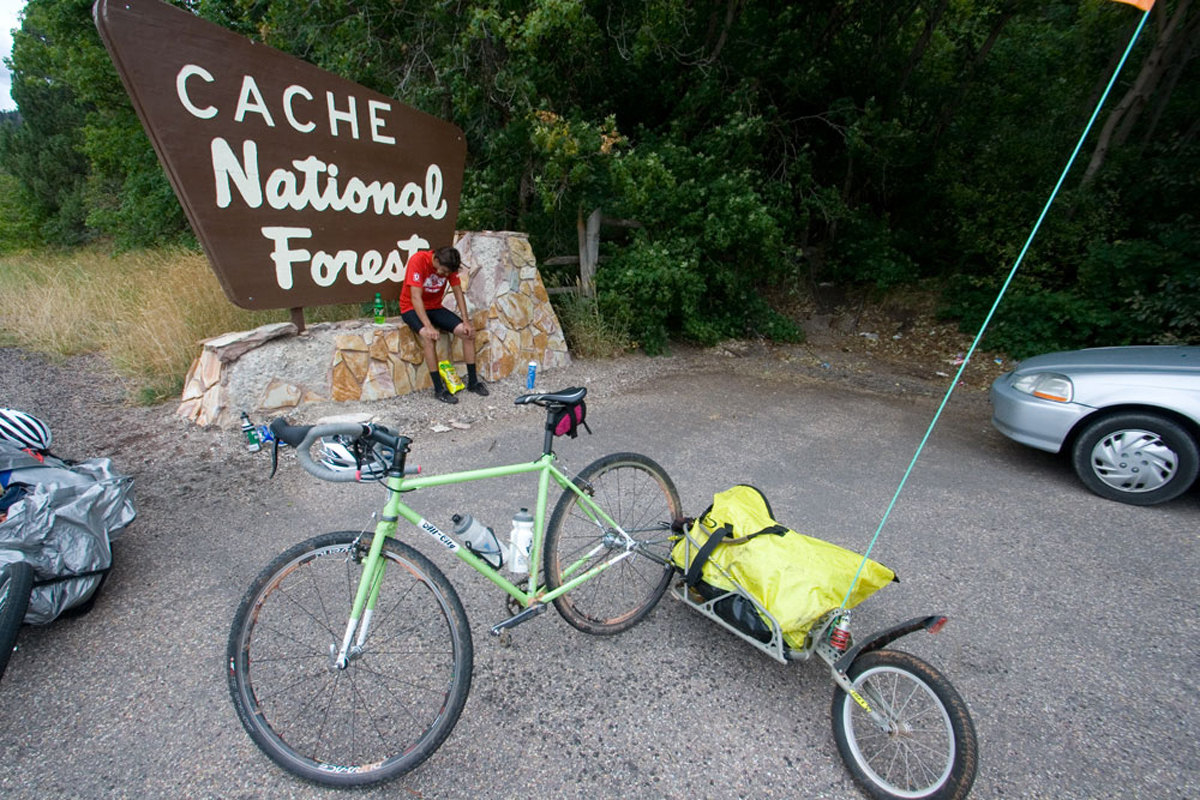
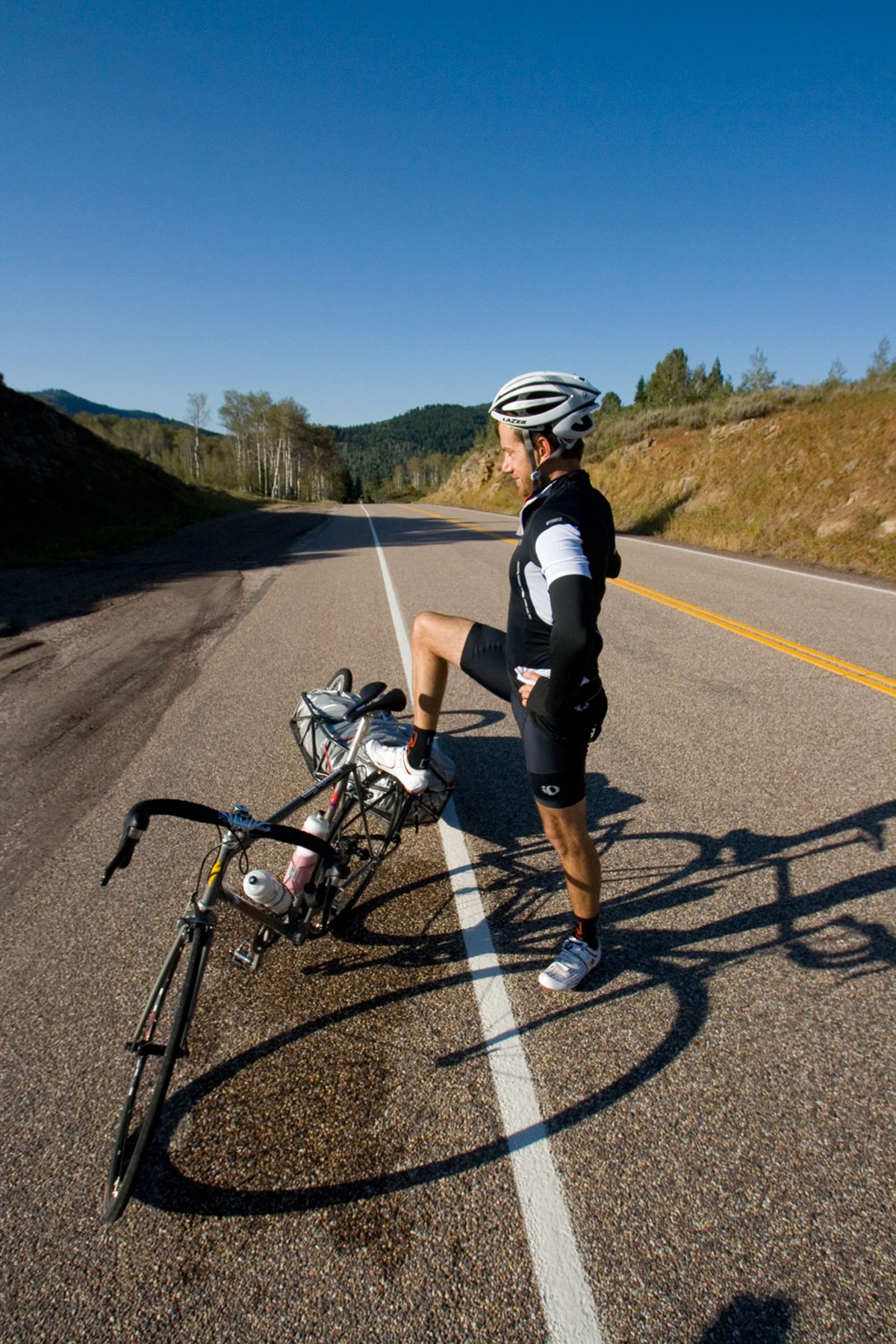
By Lukas Brinkerhoff — We had half a bottle of Tequila, 2 beers, ¼ bag of Funyuns and about 6 granola bars. There was four of us and two of us didn’t drink. We had hit the climb up Strawberry Pass much later than we had anticipated. The deafening cracks of thunder started as we began the climb. We had watched as the storm clouds rolled in the valley and hoped they would stay to the west of us. The thunder was not a welcomed sound.
The rain began close to the midway point of the pass. None of us were really prepared for a downpour and once it hit, our only solution was to get tents set up as quickly as possible as an attempt to keep our gear dry. The rain came down on us around 5:30 and continued for just under an hour. When we all emerged from our nylon shelters, we knew it was going to be a long night. The light had faded and was darkened by the storm clouds. We were a couple of hours from Montpelier and a couple of hours from Preston.
Mike Peterson pondering why the only food we have is a bag of Funyuns. Photo by Lukas Brinkerhoff
We discussed our options as if we really had any. It was going to be a hungry camp and a long ride the next morning. I pulled out the bottle of Tequila, might as well make the best of this.
There are three stages to the learning process of becoming a long-distance, multi-day bike rider (AKA amateur hobo): Desire, Suffer and Embrace.
Desire is the beginning. It’s also the easiest. If you don’t desire to go on long-distance, multi-day trips, then you probably won’t. Bikepacking has made these types of adventures accessible and more and more people are trying them. It’s easy to scroll through your Instagram feed, see Ultra Romance’s photos and think, yes, I want to go bikepacking. You might even attend a clinic on how to get started, feel the excitement, buy some bags and start planning your first trip. It sounds exciting and this is definitely the romantic stage. It’s mostly about dreams.
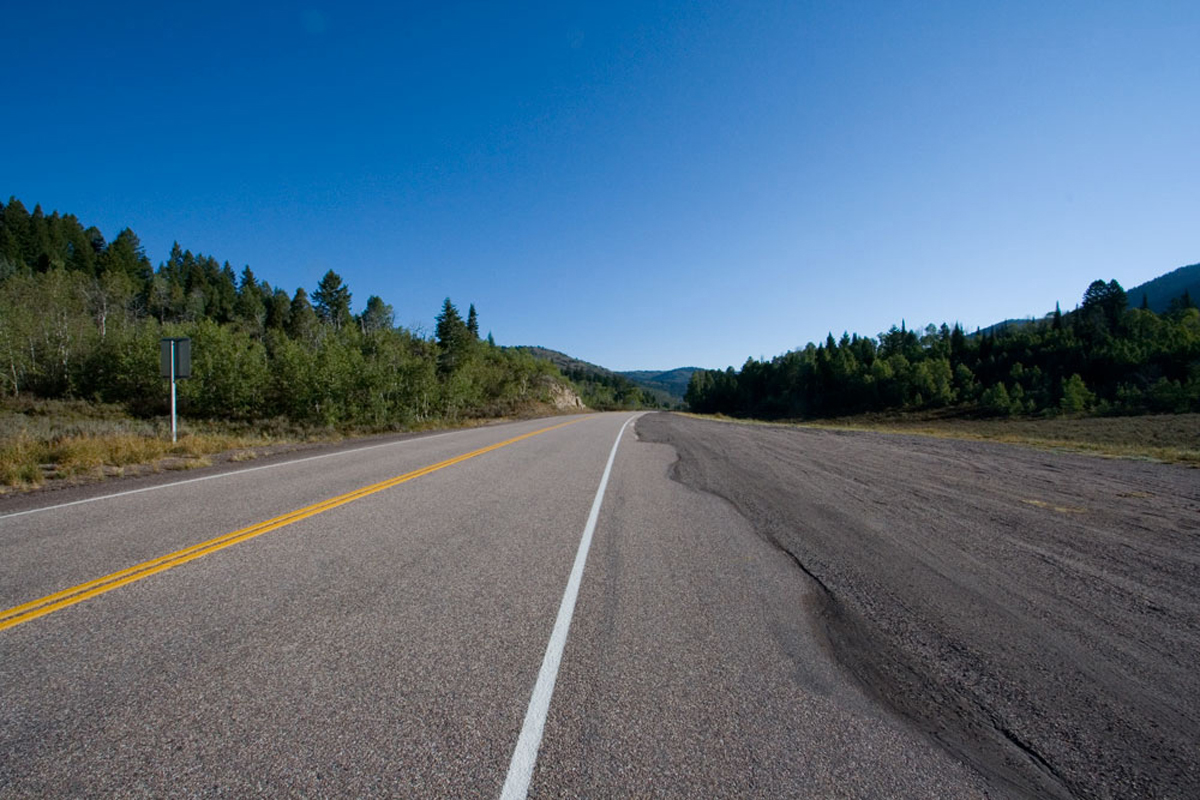
Realizing you aren’t at the top was almost as empty as our stomachs. Photo by Lukas Brinkerhoff
And then we get to Suffer. You’ve purchased the bags, read the blogs and you are ready for your first adventure. You can tell you’re ready because you are heading out the door. You will have some butterflies in your belly, but the excitement of doing what you dreamt about will overwhelm them and you will begin to have a good time. Mile 10 will click by. You might stop and have a snack, you know, eat before you need to. Mile 20. And then you are in the thick of it. You are too far from home for it to be easy to return and the end of the day is still at the end of the day.
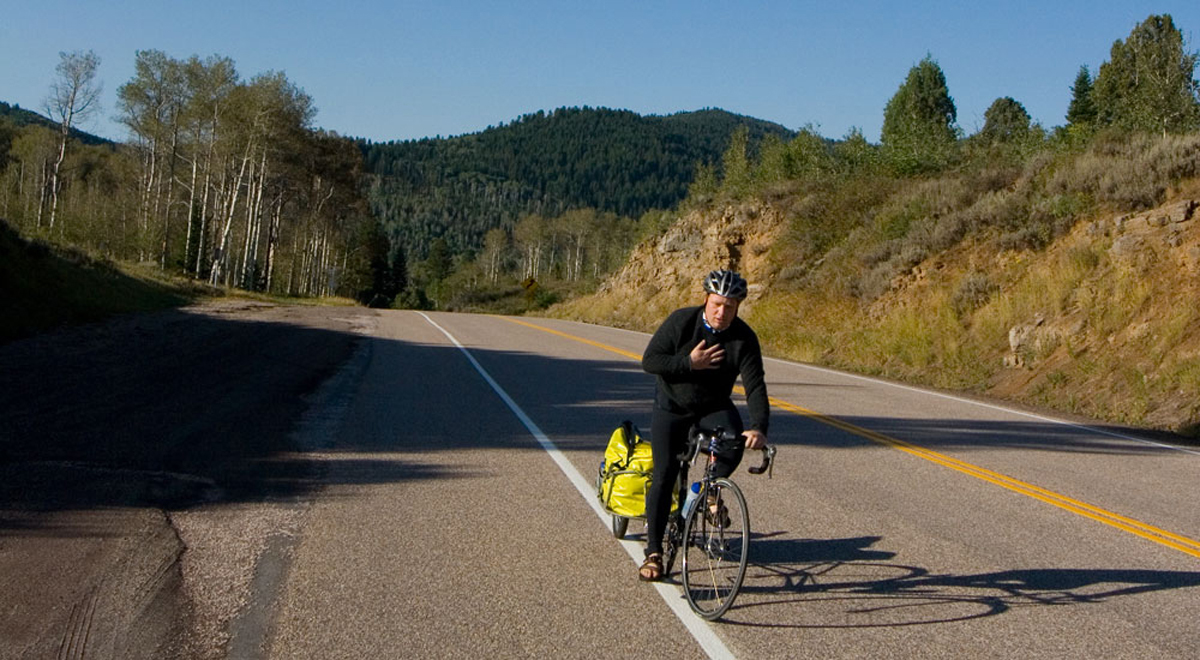
Mr. Anderson was suffering from Bronchitis on this trip and this is him dying. Photo by Lukas Brinkerhoff
All those pretty photos you dreamt about taking fade away as the sweat accumulates on your brow and rips into your eyes. The climb is stiff and having your bike loaded is making your legs feel like lead. This is the moment when you decide. You either determine that this was a horrible idea and after this trip you will be done or a smile spreads across your face because you are realizing what you had desired. Being able to do long trips has more to do with your ability to suffer than it does with your fitness level. I’ve watched seasoned cyclists, fit from years of riding, break down and lose it while the chubby guy on a bike he purchased a few months ago is smiling even though I know he is hurting, hard.
Dan Dalton celebrating our victorious ascent to the summit. Photo by Lukas Brinkerhoff
Embrace is a place that doesn’t come easy. It’s a stage that can only be achieved through years of suffering that has hardened your soul to the point that you no longer worry. The self-doubt is gone. You don’t think, I might not be able to do this. Instead, you are in the moment and you handle what is there with the improvisation that you have learned through all those trips. You planned on 50 degree nights and it dipped below freezing, ok, you are where you are. Instead of focusing on the fact that you can’t move your hands, you realize that the sun is coming up and in a couple of hours you will be fine.
We woke up hungry. We had saved a beer for breakfast, but if memory serves we didn’t drink it. Our tents were covered in dew, the ground was soaking wet and our bikes were cold to the touch. We didn’t talk about food until we were moving and then it became our motivation. We began our climb up the pass, reached the false summit, celebrated like it was the top only to realize we were wrong and suffer for another few miles before truly topping out.
We stopped and took some appropriate and other less appropriate pictures capturing our elation of being done with the climb. Despite our outward appearances, we were all past bonking and only had food on our minds. We took advantage of the kinetic energy we had earned and coasted for the next few miles toward the valley. The flat of the valley leading into Montpelier seemed to go on forever. And then there was the overpass to get over the train tracks which turns an otherwise flat ride into one that ends with a short climb right before you enter the city. One last obstacle in our search for food.
We raided the Maverick with the ferocity of Vikings, pillaging anything that had carbs or sugar. If memory serves, someone bought a bucket of red vines.
That year’s Slotoja taught me a couple of things. Firstly, being hungry and bonking are two different things. And secondly, there’s a freedom that exists in not having a choice. As we lay next to our hobo fire just off the road, sipping tequila and wondering what the morning was going to be like, there was only one choice and that was to embrace where we were.
Lukas Brinkerhoff blogs about mountain biking and life at mooseknuckleralliance.org.
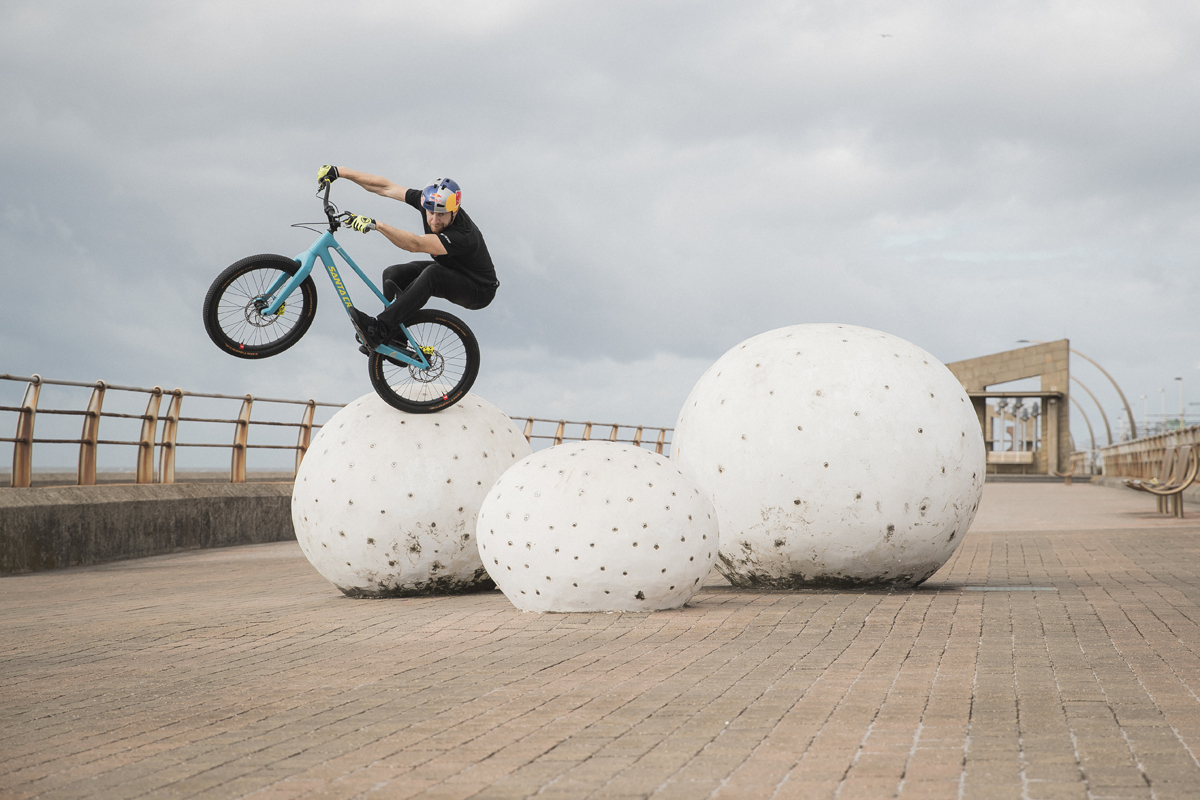
MUNICH, Germany (May 4, 2021) — Not all videos need a deeper story or a whole lot of moving parts. Sometimes the best way to achieve a great result can be to keep it simple; Take two friends who happen to be one of the best Street Trials riders and one of the best BMX riders on the planet and follow them on a mountain bike ride into the woods and to the streets of a random city. In “This and That”, Danny MacAskill and Kriss Kyle give the best example that the most important thing on two wheels is enjoying yourself and having fun. Enjoy watching “This and That” on Danny MacAskill’s YouTube Channel:
For his latest edit, Danny MacAskill teamed up with fellow Scotsman Kriss Kyle and their partner Endura. In the first half of the video, they explore the woods and magic unfolds on features where most people wouldn’t even think of riding their bikes. Both riders transfer their very own style of riding to their mountain bikes and get inspired by each other. This first part displays a good dose of trail shredding, followed by tree hops, wallrides, creative trick combos and even a couple of crashes in an all-natural environment.
The Crash Reel:
In the second half, the two Endura riders take us to their original playground – the streets. In Blackpool, a town on the north-west coast of England, they cruise around the sea front and make any given trick look easy. Smooth as always, Kriss Kyle puts on a show on his BMX and even uses his backpack to master a wallride to flair while Danny goes big on his trials bike and one more time leaves us speechless with a balancing act at the very end.
Interview with Danny and Kriss:
Rasoulution: We’ve seen you and Kriss riding together a lot in the last years but this is the first bigger edit you teamed up for. How did you come up with the idea?
Danny: Last September I had originally planned to produce a bigger project involving Kriss and another two riders from abroad. But of course as most thing in 2020 those plans fell through because my other two friends weren’t able to travel. So instead we thought we’d change our plans and still go ahead and try do a little bit of filming. This time involving our mutual partner Endura which is a Scottish brand that supports us with helmets and protection pads. I wanted to make a video with Kriss for a number of years now as I think his riding is extremely creative. He is definitely one of the top riders in the BMX community. He has also moved on to the mountain bike in the recent years doing a few really cool films which show of his different style coming from the BMX.
Danny MacAskill in This and That. Photo courtesy RASOULUTION
How did you guys come up with the idea of having two separate parts – MTB and street?
Kriss: I guess we just wanted to do something fun and a bit different. We both absolutely love riding all types of bikes so we might as well have as much fun as possible and film on the two different bikes. I absolutely loved it as it was the first proper trip I had been on since lockdown and twice the amount of fun.
What’s Endura’s role in the whole project?
Danny: Endura recently launched their new helmet – the Pisspot, which is focused on sort of anything Trials, BMX and skatepark related. We wanted to celebrate its launch with this new video. They have also been keeping us safe with their MT500 helmet which we used for mountain biking and of course their range of knee pads.
How is Kriss’s riding inspiring you?
Danny: His riding has really inspired me over the last years. He is always doing really creative moves. Especially the wallrides to flair and the spin variations he does on the BMX. It’s something I would love to try to replicate in some of my riding.
How is Danny’s riding inspiring you?
Kriss: Danny has been a massive inspiration to me for years. The way he looks at spots is insane. He’s a creative genius and inspires me to think more outside the box of what’s actually possible on a bike. I love working with Danny as he brings the best out of you.
What’s the craziest trick the other one does, you can’t get over and can’t imagine doing yourself?
Danny: On the BMX in Blackpool Kriss did a wallride to flair off this slightly slope bank using his bag with a metal sign on top of it as a ramp. That trick blows my mind and is definitely one of Kriss’s signature moves. On the mountain bike one of the hardest things that Kriss does is what you call a 90 degree pocket wallride to wallride to 180. Kriss had a real battle with this trick as the mountain bike really doesn’t like to roll backwards so his gears kept on skipping when he was landing. It was really impressive to watch him doing that.
Kriss: Haha there is so many, it’s hard to just name one. I just can’t get over how he can ride along absolutely anything you put in front of him. When he rode along the chain on the sea front, it absolutely blew my mind to bits, I could never imagine even trying that.
Are we gonna see more projects of the two of you in the future?
Danny: Yes, for sure, Kriss and I have always been good friends but I think in recent years we have become a lot tighter and I would love to do way more projects with Kriss in the future.
Kriss: I’d be hyped to keep this going for sure. I’ve always wanted to do something with him and we had such a blast filming this video. So there’s to many more to come.
Film credits:
A Danny MacAskill project
Presented by Endura
Directed by Robbie Meade (Peny)
Produced by Duncan Shaw
For most of the past 40 years, dieters have been told to limit dietary fat, believing it leads to obesity and heart disease. Today, dieters hear messages to indulge in a very high-fat (ketogenic) diet and limit the carbohydrate-based foods that fueled their low-fat diet. Confusing, eh? The bottom line is: calories count. You can lose weight by limiting carbs and/or fat. Let’s look at the weight management picture, as we understand it to date. (Nutrition is an evolving science!)
Are carbs fattening?
Foods such as white bread, pasta, rice and potato (“carbs”) have been demonized as being fattening because they have a high glycemic index. That is, they digest quickly and can spike blood glucose when eaten solo in 50-gram carbohydrate (200-calorie) doses. That happens when the average (unfit) American devours a basket of warm dinner rolls. Blood glucose rises quickly; the pancreas secretes insulin to carry glucose out of the blood and into the muscles. Insulin can stimulate hunger, the desire to eat, and the potential to gain weight.
But how often would you eat rolls without butter? A plate of pasta without sauce and Parmesan cheese? A large potato all by itself — with no butter or protein? Most likely, rarely. Eating “carbs” as part of a meal elicits a lower glycemic response than eating them solo. Protein and fat slow their conversion into blood glucose, thus blunting the glycemic response.
The advice given to the general public to limit high-glycemic foods often results in eating fewer calories (and losing weight). The advice can appropriately help stabilize blood glucose in women with polycystic ovary syndrome (PCOS), and unfit people with obesity, pre-diabetes, and Type II diabetes. But the advice may not pertain to YOU, an athlete. The bodies of athletes eagerly take up blood glucose to fuel exercise and replenish depleted muscle glycogen stores. Too little carb (grain, fruit, vegetable) results in needless muscular fatigue if you train hard day after day.
That said, some very athletic people live in large bodies. They tend to be frustrated they don’t shed fat despite religiously abiding a low calorie diet plus rigorous exercise. As one triathlete complained “I should be pencil thin by now, for the exercise I do…” What’s going on? The answer might relate to that athlete’s personal insulin response to carbohydrate. Research suggests genetics causes some people to be high insulin secretors. Just as not all couch potatoes secrete excess insulin, not all lean athletes escape Type II diabetes.
What does this mean for you, a weight-conscious athlete? If you struggle to lose weight, you might be a high insulin secretor. Take a look at your family genetics: Do your relatives gain weight easily? Do they have diabetes? If yes, you want to talk with your doctor. You might be better off choosing a low glycemic diet, trading processed carbs for whole grains and combining them with lean protein and healthy fats such as nuts, nut butter, and avocado. And plan to keep exercising, religiously.
Keto or veto?
You have undoubtedly heard people rave about the keto diet. This very rigid high fat, low carb food plan with more than 70% of the calories from fat and less than 5% of the calories from grains, fruits and veggies is touted to reduce weight and risk for heart disease, diabetes, cancer, and Alzheimer’s. Here’s some food for thought on the current keto rage. You can figure out if you want to jump in or think twice.
Nutritional ketosis (NK) (as opposed to diabetic ketoacidosis, a life-threatening condition) curbs hunger due to the appetite suppressing effect of ketones. To induce NK, a person needs to restrict carbohydrate to about 20 to 50 grams a day. That means eating only a few berries, some leafy greens, mushrooms, no milk, yogurt or grains. You’d eat lots of avocado, olive oil, nuts, nut butter, and some cheese, bacon, and fatty meats.
When carbohydrate is not available for fuel, the body adapts (painfully over several weeks of feeling lousy, hence the term “keto flu”) to burning fat and makes a byproduct called ketones. Infants burn ketones; the adult body needs to relearn how to use them.
Due to lack of carbohydrate, keto dieters secrete very little insulin, which contributes to reduced appetite which, when combined with limited food options and consumption of fewer calories, leads to fat loss—and the health benefits associated with weight loss, including reduced risk of diabetes, heart disease, etc.
The questions arise:
Would following a ketogenic diet suit your lifestyle? No bananas, beer, or birthday cake. What would you eat on Meatless Monday? Plant proteins like beans come with too many carbs. No hummus, burritos, chili.
Would a high intake of saturated fat (bacon, sausage, spare ribs) create cardiovascular issues?
Does the low fiber intake have a negative impact on your gut (constipation)?
If you happen to love crunchy apples, fruit smoothies, and roasted veggies (to say nothing of a social life) how long could you sustain the keto lifestyle?
What would happen when you get out of “Keto Jail”? Would you end up binge-eating carbs? Would that leave you with rebound weight gain, feeling depressed and being worse-off than your pre-keto status?
Would changing the nutrient-poor food choices in your current lifestyle be the wiser weight management solution? Meeting with a registered dietitian (RD) could help you make those changes more easily than you may think.
You have to figure out your answer to the keto or veto question. For serious athletes who do intense exercise,take note: It is a lot of work with no proven performance benefits to date.
In celebration of Bike to Work Day, SelectHealth and GREENbike offer the public FREE bike-share rides
SALT LAKE CITY (May 19, 2021) — In celebration of Bike to Work Day GREENbike, Salt Lake City’s non-profit bike share system, and the nonprofit’s title sponsor SelectHealth are offering free GREENbike rides to the public on Friday, May 21.
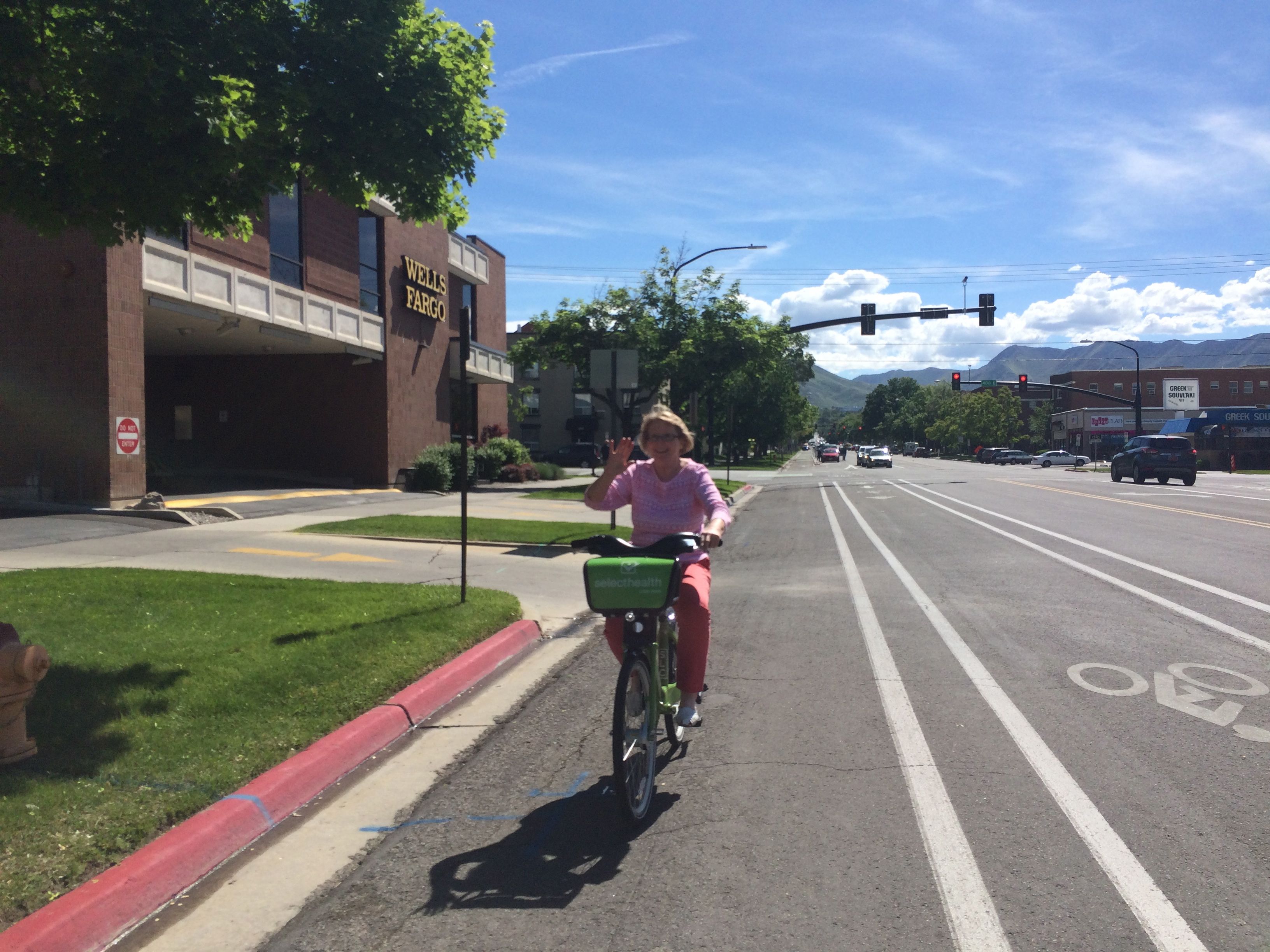
Greenbike is accessible to all riders. Photo by Dave Iltis
On Friday, all Salt Lake City residents and visitors will be able to ride GREENbikes for free during the 24-hour period by using the promo code “2021” at any of GREENbike’s 47 stations. After using the code, riders can take as many 30-minute trips as they want during the 24-hour window.
“Biking continues to be an active part of healthy living for many,” said SelectHealth Community and Public Relations Senior Manager Greg Reid. “Working from home or the office, the month of May is a great time to bike to work.”
Over the past eight years, GREENbike riders have offset more than 5.8 million pounds of CO2 from entering the air and prevented more than 6.4 million vehicle miles from impacting local roads. GREENbikers burned nearly 79 million calories—roughly 277,700 slices of pizza—in the process. The local non-profit bike share system is dedicated to offering the community an affordable, convenient, and sustainable transportation option.
“Thanks to SelectHealth’s generosity, anyone heading into the office on Bike to Work Day can do so for free on a GREENbike,” said GREENbike Executive Director & Founder Ben Bolte. “We appreciate SelectHealth’s continued support and we are excited to see who turns out to enjoy the great weather!”
By Steph Meyer — “Nothing compares to the simple pleasure of riding a bike,” said John F. Kennedy. But for those with disabilities, this statement often holds even more truth.
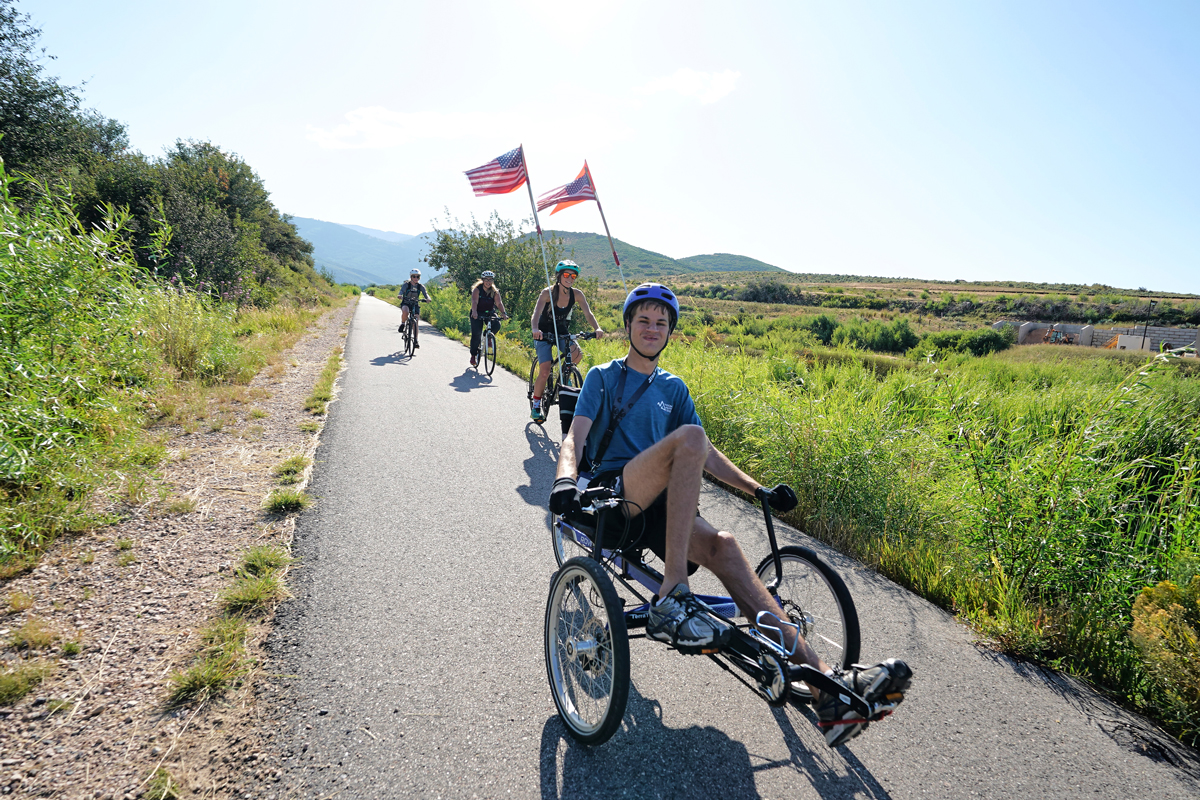
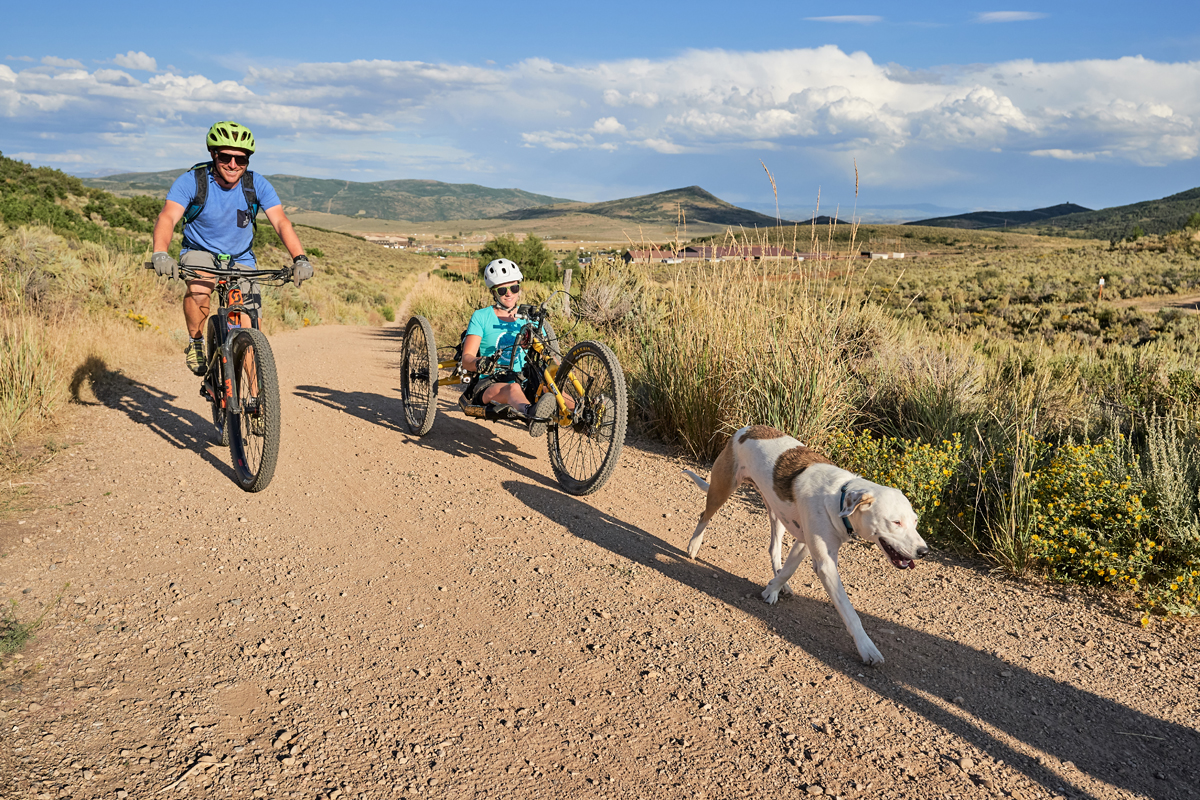
Here, in the cycling mecca of Park City, Utah, the National Ability Center is making that simple pleasure accessible to all and proudly offers one of the largest fleets of adaptive bikes in the nation. On the trails and roads near NAC, you may encounter recumbent or hand-powered cycles, which sit close to the ground and roll on three wheels rather than two – these are great for individuals with balance concerns, as well as cyclists riding with spinal cord injuries, amputations and more. Or you may be overtaken by a team of cyclists, one with a visual impairment, pedaling in sync on a tandem.
But specialized equipment is just one piece of the picture.
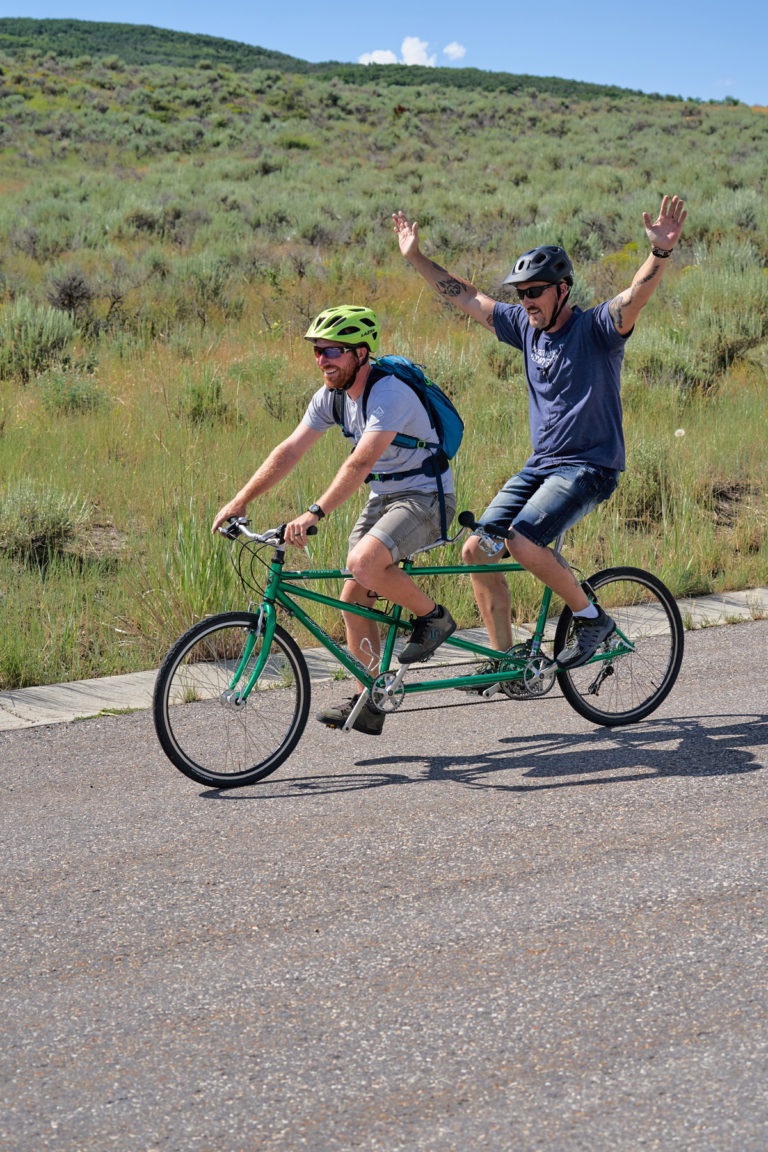
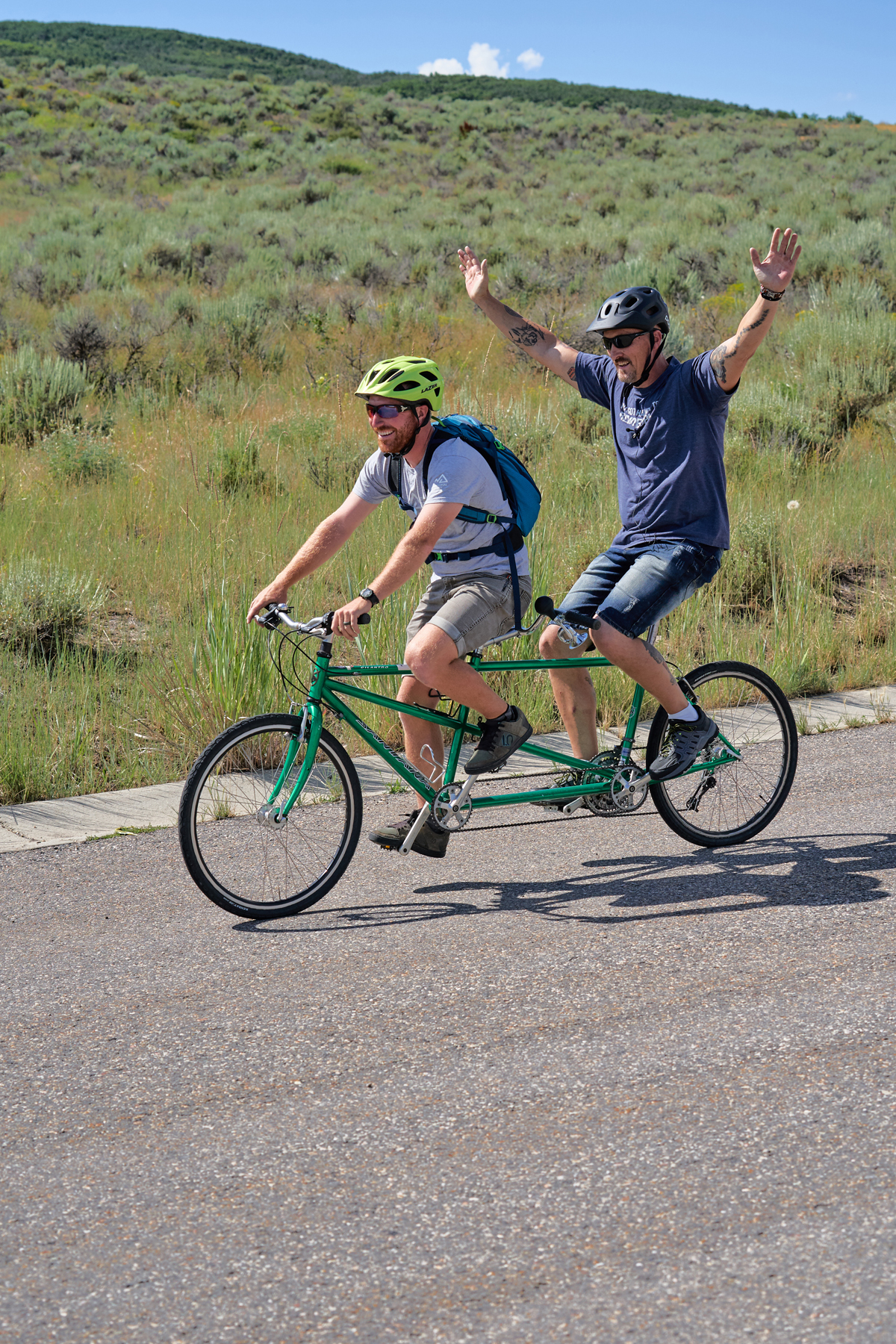
Two National Ability Center riders cycling on tandem bike during summer 2019 cycling session. Photo by Berin Klawiter
At the NAC, we encourage individuals to take the leap into adaptive cycling by providing hands-on guidance and preparation through a multi-step approach which empowers cyclists with both physical or cognitive disabilities to ride through the mountains, on trails and through local roads using this innovative, adaptive equipment or a “standard” upright bike. When first-time participants inquire about lessons, someone from the NAC program team speaks directly with them to learn more about their background, skill and comfort level. From there, our team is dedicated to ensuring each rider, no matter their ability, has the opportunity to experience Utah’s outdoors while striving towards personal goals and learning new activities, including cycling, mountain and fat tire biking.
At the NAC, we routinely hear from riders how adaptive cycling “makes them feel normal again” – allowing them to forget they have a disability, if only for a couple of hours. Those of us who cycle can agree that riding with the breeze in your face and being able to do that independently is a feeling like none other.
National Ability Center Team Flyers members cycling on Park City trails, summer 2019. Photo by Berin Klawiter
We tapped into our network to ask about the emotions cyclists experience when they bike with the NAC. Maggie Gettys has a spinal cord injury, and recently joined the NAC team as a recreation instructor to provide handcycling lessons. Maggie spoke to how the cycling program has impacted her over the years, saying “The NAC cycling activities — whether it be on the road or the Round Valley trails — gives me the chance to see amazing views. Some of the views I wouldn’t have been able to access in my wheelchair, so having the NAC staff guide us there in bikes is a special experience. It’s hard work and takes lots of balance and concentration, but the reward of feeling your heart pumping and blood flowing is so great!”
These moments give people of all backgrounds and abilities the opportunity to step away from the “I can’ts” in life and to say, “I can,” opening doors to get out and play again.
Adaptive mountain biking session on Round Valley trails, March 2019. Photo by Berin Klawiter
Like many riders, adaptive riders face the number one barrier to entry in the cycling world — access to high-caliber equipment. In fact, most adaptive bikes start at several thousand dollars, can be difficult to transport and aren’t typically sold at your local bike shop. That’s where organizations like the National Ability Center come in. We help riders get started, connect them with sources for these highly specialized cycles, allow them to try a range of equipment and eliminate the barrier to entry so they can ride at little to no cost in comparison to the steep cost of adaptive cycles. Through grants and support from organizations like the Kelly Brush Foundation, Vail EpicPromise and other corporate and community supporters, the NAC and countless other organizations are able to offer these tools, while guiding riders on life-changing outdoor recreation experiences.
Cycling is an amazing opportunity for adventure and I highly suggest you get involved or branch out to try new disciplines of cycling if you can. My favorite four tips for success are:
Don’t be scared to try: everyone has their first day on the bike.
Find someone who you want to adventure with and bring them with you.
Make room for progress: practice and pedal, because cycling can take you to a lot of places
Like bikes, cyclists come in all shapes, sizes, colors, ages and aspirations. Whether you are cruising for a mile or taking on a century, embrace your inner cyclist.
I challenge you to see how outdoor adventures, like cycling, can positively impact your life – and the lives of those around you. Make it a goal to get out and pedal, but also to invite someone new to the sport to discover the rush of freedom it provides.
Steph Meyer is the Recreation and Adventure Program Manager at the National Ability Center
COTTONWOOD HEIGHTS, Utah — A non-partisan, community coalition, Save Not Pave, holds march & rally 10am-12pm, May 22, at Golden Hills Park in Cottonwood Heights (cyclists & runners begin at mouth of Big Cottonwood Canyon and end at park).
Concerned SLCO residents will converge onto Wasatch Blvd. in Cottonwood Heights to celebrate quality of life and also outcry the need for safe roads. The peak period of the march will occur 10:20-10:40am between Bengal Blvd (7200 South) and 8300 South along Wasatch Boulevard.
UDOT is proposing to make Wasatch Blvd 5 lanes with a high design speed. Photo by Dave Iltis
Utah Department of Transportation’s imminent Wasatch Blvd. Expansion within their Little Cottonwood Canyon Environmental Impact Statement (LCC EIS) to turn 2.2 miles of SR 210/Wasatch Blvd from mouth of Big Cottonwood Canyon through the turn off to La Caille into a high volume, fast-moving, multi-laned highway is being met by community push back.
Offering education and camaraderie for the community, Save Not Pave (SNP), with co-directors in Cottonwood Heights and Sandy, has arranged the opportunity for elected officials to begin cycling, running or walking from mouth of Big Cottonwood Canyon Park & Ride to Golden Hills Park in order for them to experience this roadway from an active transportation perspective.
Dangerous arterials designated at 50mph (as currently approved by the city and state) run through residential areas. Within the past year, a boy and an elderly woman have been struck by a vehicle while in a crosswalk within Cottonwood Heights. Save Not Pave members, 680 strong, cite the need for change to city, Wasatch Front Regional Council’s (WFRC) 2050 RTP (Regional Transportation Plan), and the UDOT LCC EIS Wasatch Blvd Expansion.
“Clean air for Salt Lake Valley is reliant, in part, on reducing VMT (Vehicle Miles Travelled). Save Not Pave has become a strong advocate for “less asphalt, more transportation alternatives” for Salt Lake County,” says Aaron Dekeyzer of Sandy. “We accept growth and development, but we disagree with the direction WFRC and UDOT are taking for southeastern and southwestern Salt Lake Valley residents. On May 22nd, we’ll be enjoying the scenic beauty of Wasatch Blvd. and building awareness for the need to improve its roadway design for the safety of pedestrians, runners, drivers and cyclists.”
SNP instructs participants to observe traffic regulations, and practice social distancing andmask-wearing inside Golden Hills Park.
By John Higgins — Bikepacking websites and blogs are full of trip ideas and reports, but it’s always satisfying to scheme one up from scratch and have it roll out as planned, with all expectations met. Such was the case in late Fall when I declared a mental health break from the pandemic, work, and house moving to circumnavigate Bryce National Park over several days of leisurely bike packing / bike touring / gravel grinding. Call it what you like but it was delightful.
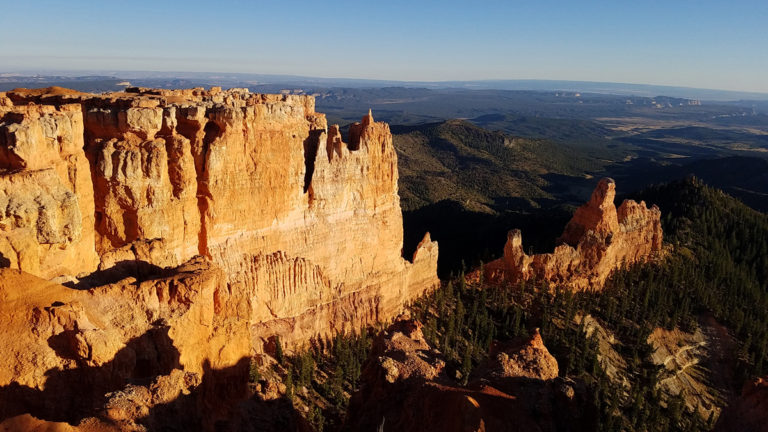
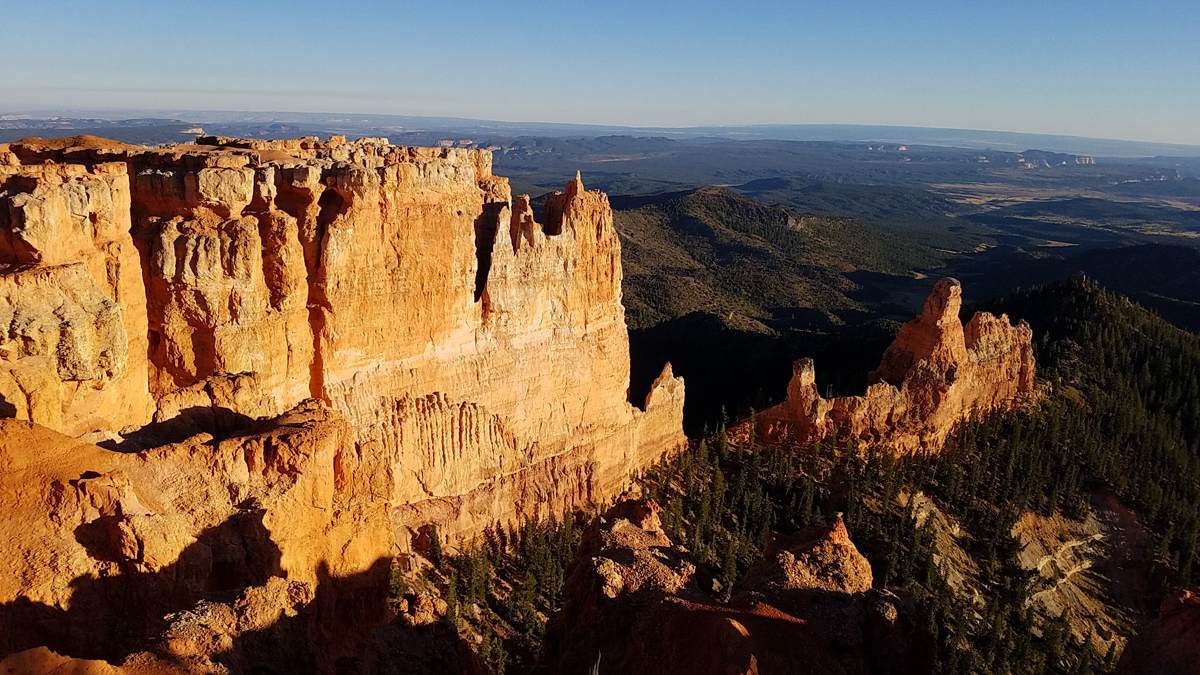
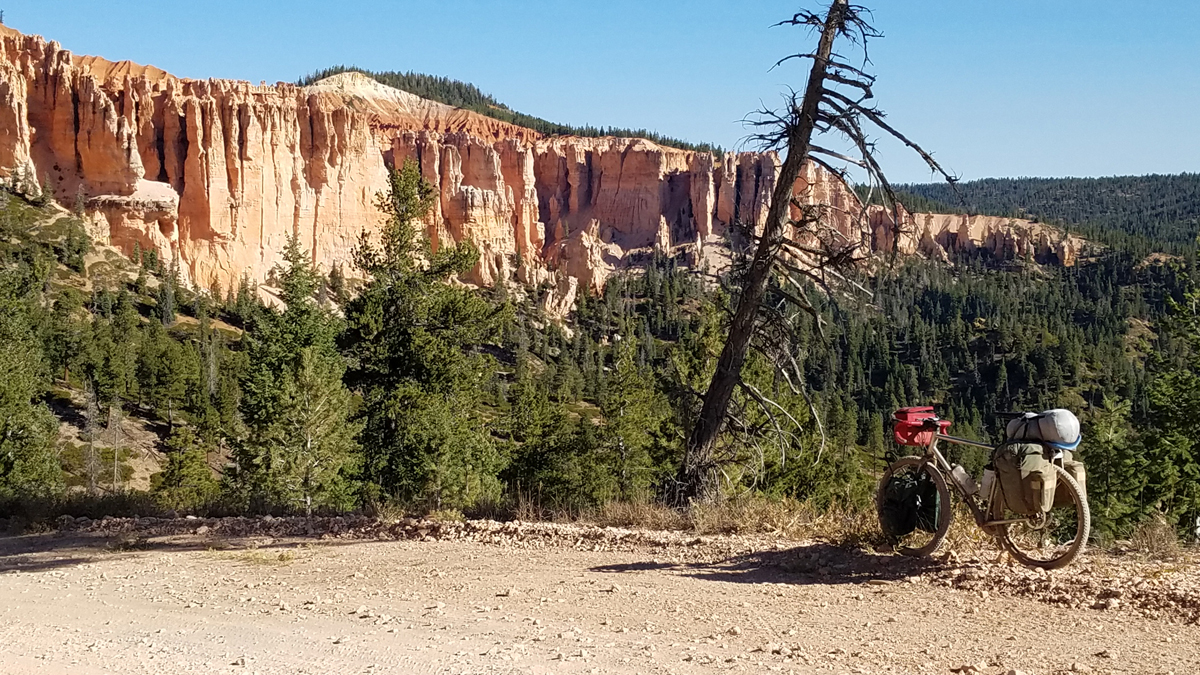
Plateau Precipice. Photo by John Higgins
The route concept arose several years ago during an abandoned trip in Grand Staircase-Escalante National Monument due to uncommonly wet weather and tire mugging bentonite clay. Whilst implementing Plan B of hiking instead of biking, I started pouring over maps to scheme up a future tour. This led to periodic peering at paper maps and Google Earth, and internet trawling for trip reports and trail gossip. The idea was to circumnavigate around Bryce Canyon National Park, taking in the East Fork of the Sevier River and the Paunsaugunt Plateau, and to keep to gravel roads as much as possible. In theory and on paper there was a route, but it more than likely included substantial hike-a-bike sections on the Grandview Trail. I’m no stranger to self-inflicted suffering but on this tour, I wanted my bike to carry me, instead of the other way around. Once I relaxed my criteria to include pavement an 80-mile circular route fell into place quickly, plotted out on ridewithgps.com.
Cliff Amphitheatre. Photo by John Higgins
The next step was to determine feasible water resupply points, camping options, and direction of travel. I elected to travel counterclockwise starting and finishing in the hamlet of Cannonville, and knocking out a substantial elevation gain on paved highway 12. This added driving time from Salt Lake City, but worked better for my route itinerary. I choose to split the route up into 3 half day chunks of riding, with two nights camping out. With vehicle commuting time it was a full 3-day outing. A devoted gravel racer could blast through this route in a day. A committed bike packer travelling light could easily do it over two full days. I wanted time to relax, lounge at campsites, and enjoy the scenery.
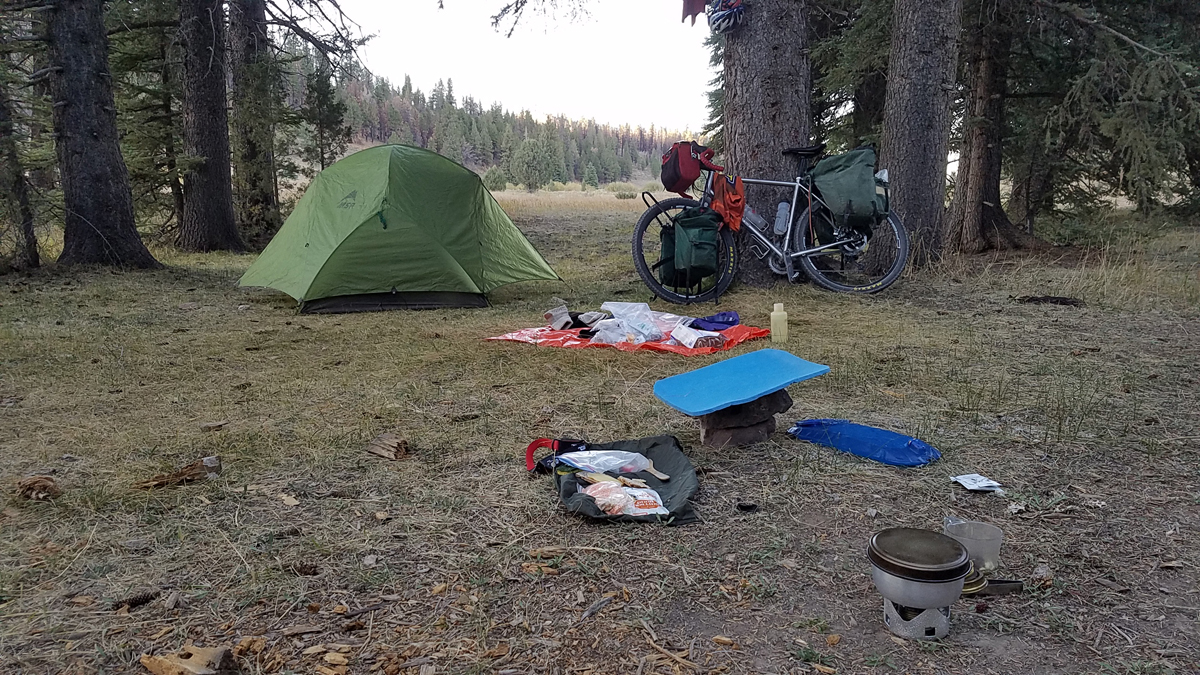
The campsite on the East Fork of the Sevier River. Photo by John Higgins
After travelling from Salt Lake City one morning at the end of September, I wheeled out of Cannonville in the early afternoon and up Hwy 12 towards Bryce. Due to road works and lane closures I had long stretches of car-free bliss, and then a concentrated burst of traffic blowing by me. It actually made this stretch of somewhat sketchy road riding far more palatable than it might have been. Once I reached the turnoff to Bryce Canyon National Park, I scooted onto the bike path that parallels the road towards Red Canyon. This kept me going for a few miles until the turnoff to Tropic Reservoir. A wide smooth-ish gravel road (FR#087) beckoned, and the gravel riding began. From online research I knew there was a water resupply point in the form of a spring somewhere near the head of the reservoir. This proved to be well signed and right next to the road, diminishing the challenge of finding it. Camping is restricted to designated sites along the East Fork of the Sevier River, and I got lucky finding the first site vacant. Forsaking the dustbowl parking lot for a grassy swale near the burbling stream made for a pleasant evening with warmer than expected temperatures, and a well-earned meal after 4 hours of turning the cranks. Day 1 and 28 miles down.
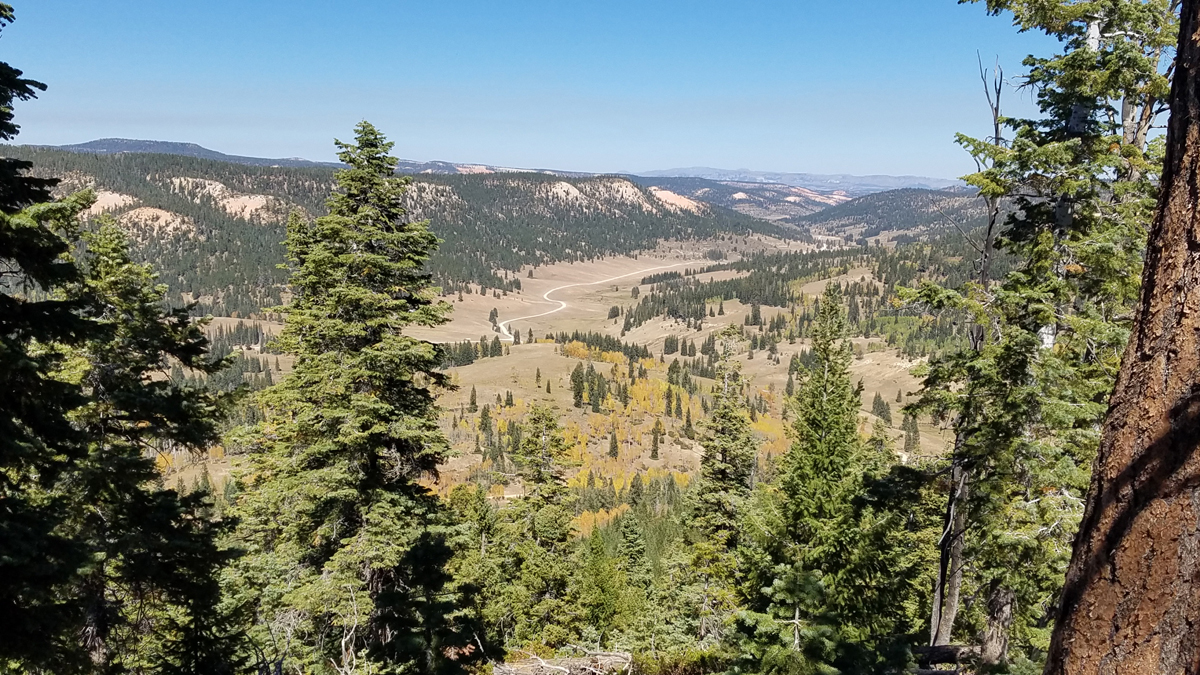
Valley View, East Fork of the Sevier River. Photo by John Higgins
The destination for the end of Day 2 was the Pink Cliffs Viewpoint, which came highly recommended from those who have travelled before me. The main road along the river would convey a rider there swiftly, but I took the scenic side route in the form of the Great Western Trail / Paunsaugunt ATV trail to Crawford Pass. No ATVs were sighted, and the doubletrack was in great condition and made for perfect riding, as well as offering up picturesque valley views. Along the way I passed another piped spring which a smarter person would have used to tank up for a dry campsite, but I thought I’d find more water further on. The maze of roads and trails converging on Crawford Pass made for a navigation stop. I made a choice and exited the pass on a relentlessly steep grade (the main ATV route), which gave me plenty of grunting time to contemplate the wisdom of my decision. There are a couple of gentler but longer alternatives, either of which would have been more sensible, but I persevered and reached the top of the plateau, where increasingly impressive views gradually unfolded. The Pink Cliffs did not disappoint, and having arrived in the early afternoon I had plenty of time to wander around and soak in the expansive views.
There was however the small matter of having only a couple of bottles of water left. Pouring over my map collection, one indicated a spring about 4 miles away. The 4 miles downhill to get to it was of no concern, but what was of concern was if I could not find it, or it was dry, and then I had 4 uphill, water consuming miles to ride back to camp which would make for a parched evening. Having assessed the risk/reward outcomes of the situation I set forth with an unloaded bike, empty Camelbaks and bottles, filter and map. The descent was fast and fun, but I got to a point beyond where the spring would have been without success. Dejectedly retracing my pedal strokes, I caught the gleam of water off to the side of the road, masked by floating aspen leaves. Going past the first time, the leaf covering and angle of light made it difficult to see the trickle that was routed under the road by a small culvert. While collecting water from the source of the spring a hundred yards off the road, I discovered I was being filmed by candid wildlife cam. Fortunately the water supply was too tiny to have warranted a stripped-off dip, or the Utah DWR officers reviewing the camera might have gotten more of an eyeful than they expected.
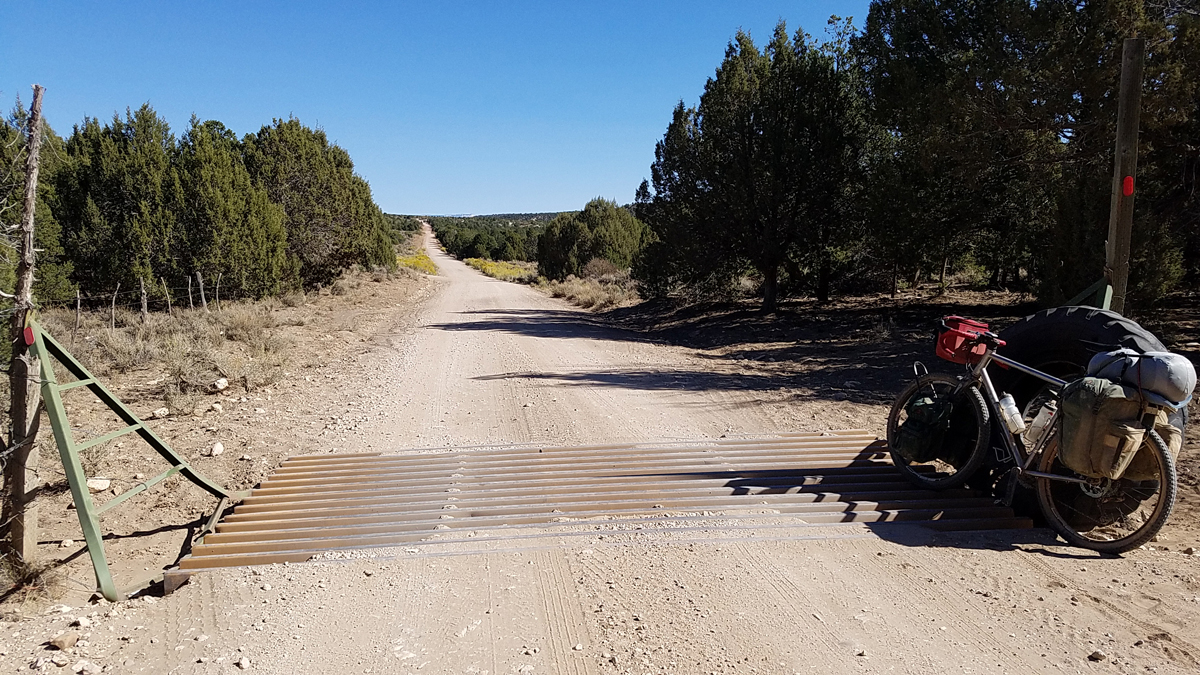
A cattle guard on Skutumpah Road. Photo by John Higgins
Day 3 dawned as another perfect day in paradise. Having packed up my stealth camp, the way forward was enjoyably downhill on FR203, the surface of which varied from smooth and firm to loose, rocky and very dusty. The reward was more spectacular views of the cliffs around the plateau, before speeding out the private road/public access route between Dixie National Forest and the Skutumpah Road. There ensured a very different scenery of low elevation desert riding complete with sand traps. Passing the hiking temptations of the Bull Valley Gorge and Willis Creek trailheads and slot canyons, I encountered a jackknifed horse trailer blocking the road to motorists in both directions. This proved of little obstacle to a bike tourer, and I arrived back into Cannonville on schedule, washed off the dust at a spigot in the local park and motored back to the metropolis, revived and refreshed by a few days in the woods.
Route Notes
The entire route was on vehicular roads and trails, ranging from paved highway to good quality ATV trails, and most of it was within Dixie National Forest. Being a circular point to point route, it is possible to pick a start / end point and direction of travel to suit your intentions. The route I did, and the time taken / mileage per day would be an excellent outing for beginner bike packers who are confident cyclists. The East Fork of the Sevier River Valley is promoted as an ATV playground, and there are many roads and trails in this area which could be added into the mix by way of side trips or clover leaf add-on loops. There is more bike exploring to be had there. I choose to go mid-week to minimize interactions with other recreational users, and enjoyed a largely vehicle-free outing.
My gravel touring bike is an Otso Warakin with a Rodeo Labs Spork 3.0 front fork. I prefer front and rear racks and panniers over soft strap-on bags for nontechnical gravel touring. I ran a mountain bike wheelset (27.5 x 2.1) but the route would be suitable for 700 x 40 tires or similar. I like the extra traction and comfort of the mountain bike tires for being as loaded as I was. I’m more interested in travelling with camp comforts and emergency gear than going as light as possible, so had a tent, sleeping bag, camp stove, water filter, emergency equipment (GPS, location transmitter) and a selection of spares and tools.
Although I had the route loaded into my Garmin, it is advisable to carry “real maps” to show not only the big picture, but alternative routes and resources should the need arise. Maps used: National Geographic #714: Grand Staircase Paunsaugunt Plateau; Adventure Maps: Bryce Canyon and Brian Head.
PARK CITY, Utah (5/14/21) — The Big Gear Show has become the go-to outdoor industry event for summer 2021 as it heads into the final push toward its inaugural invite-only edition, held August 3-5 in Park City, Utah. Some of the most recognizable brands in the camping, climbing, cycling, and paddlesports industries – including Black Diamond, Camelbak, Diamondback, Giro, Johnson Outdoors, La Sportiva, Liberty Mountain, Osprey, Petzl, Pinarello, Tahe Outdoors, and Yakima – have signed on to exhibit at the show, reconnect with their key dealers, and do both outdoors.
“We are thrilled with how the industry is responding to our event,” said Sutton Bacon, co-founder of The Big Gear Show. “Our goal is to deliver an affordable retailer-centric experience with the right format, at the right time, and in the right place. We are overwhelmed by the support of our exhibitors. As the first national outdoor industry event to stage since COVID began, I know that our retailers will be fired up to see so many of their important brand partners face-to-face.”
Photo courtesy The Big Gear Show
Retail enthusiasm is illustrated by the variety of shops already registered; from specialty stalwarts like Appomattox, Bill Jackson’s, Sunlight Sports, and The Trail Head, to regional and mass merchants like Scheels and Moosejaw, to e-commerce retailers like Backcountry.com and Outdoorplay, and leading independent bike shops including Global Bikes, Landry’s, Motion Makers, and Wheel & Sprocket. The Big Gear Show is endorsed by the National Bicycle Dealers Association, People for Bikes, and Grassroots Outdoor Alliance.
The Big Gear Show is meant to fit into a modern marketing plan and budget—in a manner that directly supports retailers—and as illustrated—fits seamlessly with the brands mentioned here. In the cycling category, this intention resonated with many committed brands including Camelbak, Diamondback, Giro, Pinarello, POC Sports, Stan’s NoTubes, Tern Bicycles, Troy Lee Designs, Wahoo Fitness, and Yakima.
Visit www.thebiggearshow.com for more information or for an application to this invite-only event.
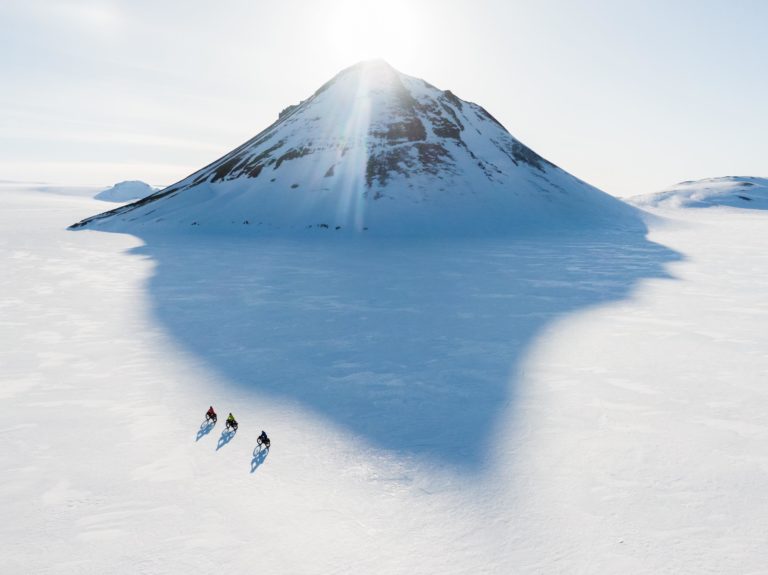
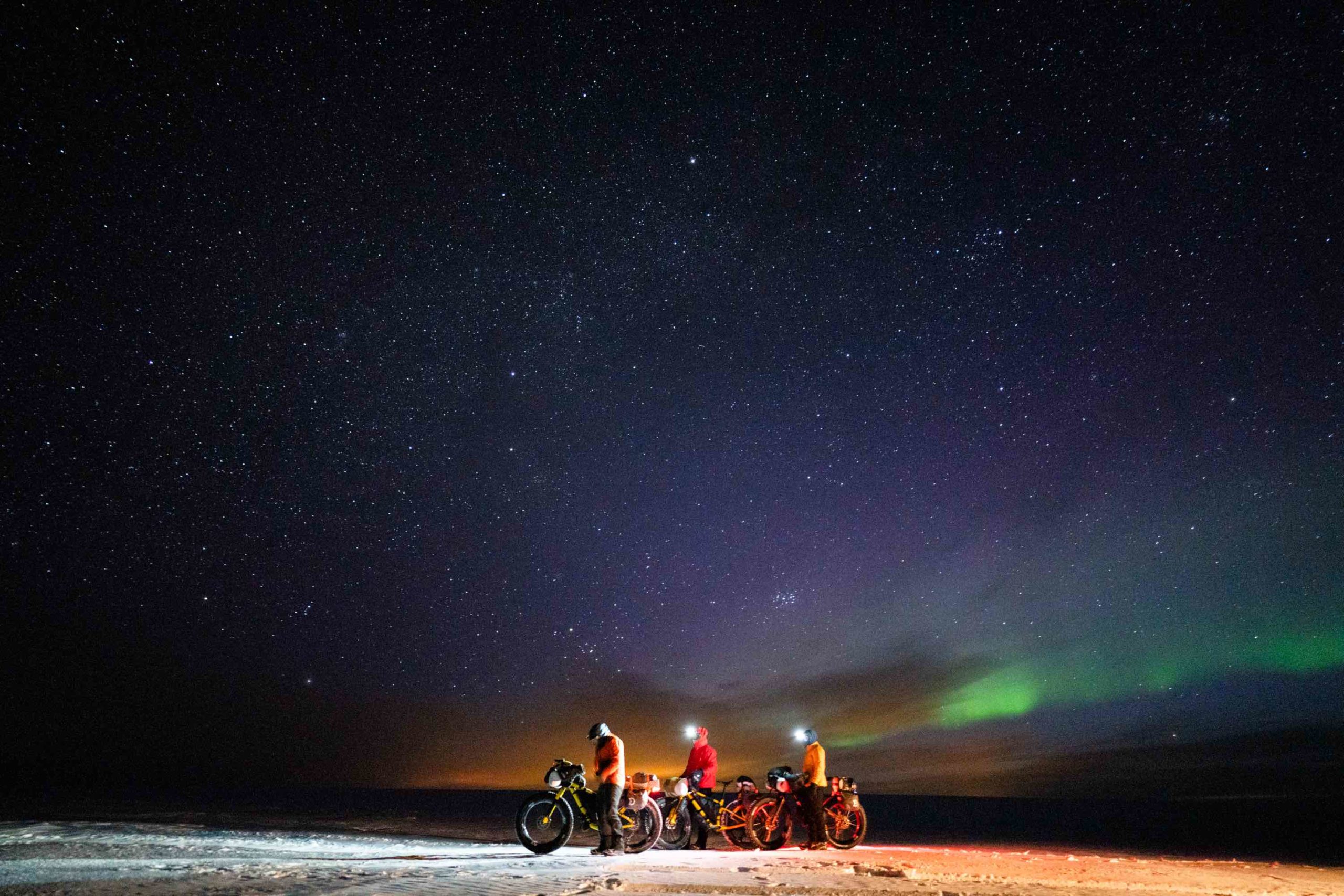
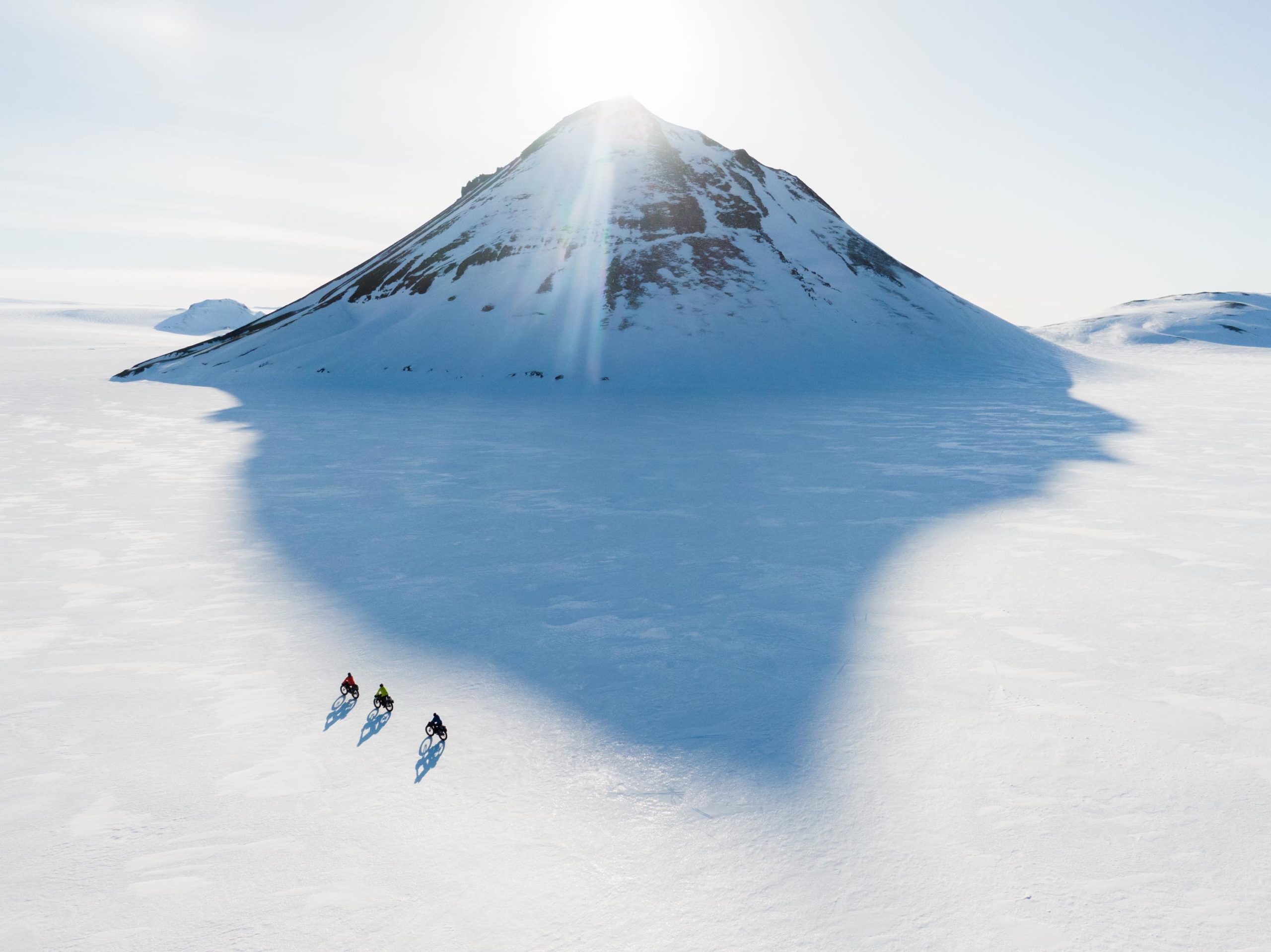
REYKJAVIK, Iceland (May 4, 2021) — As Chris Burkard’s images of Iceland’s active volcano dazzled the world, endurance athlete Rebecca Rusch and cyclist Angus Morton joined the photographer in the land of fire and ice for an epic journey that was recently completed. The goal: to establish and ride a new north to south interior route across Iceland in winter. The trio rode for six days in early April, covering 327-miles across snowfields, mountains and glaciers. They climbed 25,600 vertical feet to reach the island nation’s southern shore. Their route meandered south from Akureyri through the rugged glacial interior to Vik, traversing some of the most remote, beautiful and difficult terrain the country has to offer across an exposed landscape famous for biting winter winds.
2105 was a stills and video project for Redbull, Sony Xperia, POC sports, Chamois butter, fezzari bikes, Old Man Mountain Racks, 45 North, 66North. The goal of the expedition in a winter crossing from Iceland’s most Northern point to its most southern through the interior of the country. Athletes: Rebecca Rusch, Chris Burkard, & Angus Morton. Photo by Ryan Hill, courtesy Protect Our Winters Action Fund.
This was Burkard’s 44th trip to Iceland, which has become a favorite muse for the renowned adventure and nature photographer. But this was the first time an expedition was in winter and pioneering a completely new route. Burkard noted, “There is something special that comes from forging a new path, especially when the elements are against you. We aren’t the first to fatbike in Iceland and certainly won’t be the last, but our goal in attempting a first ascent that went from coast-to-coast crossing the Myrdalsjokull glacier was certainly one of my proudest moments. This route was something I have dreamed about for many years and to see it come to life in a way that was pure and unsupported made me realize what is truly possible on a bike.”
Being told again and again by locals that “no one crosses in winter,” the crew’s route was 90% covered in snow. It concluded with a final push across the Mýrdalsjökull glacier, the fourth largest in Iceland concealing the top of a large volcano. With only one progress-halting weather day, they rode fully self-supported carrying their own food and gear for the entire expedition. Along with being accomplished cyclists, each rider brought a unique skill set to the team: Rusch’s winter expedition experience, Burkard’s knowledge of Iceland and photography, and Morton’s film and TV production.
2105 was a stills and video project for Redbull, Sony Xperia, POC sports, Chamois butter, fezzari bikes, Old Man Mountain Racks, 45 North, 66North. The goal of the expedition in a winter crossing from Iceland’s most Northern point to its most southern through the interior of the country. Athletes: Rebecca Rusch, Chris Burkard, & Angus Morton. Photo by Ryan Hill, courtesy Protect Our Winters Action Fund.
Rusch said of the journey, “Being invited as a member of this bold expedition was a highlight of my career. There are few things more committing than moving unsupported through Iceland in winter. The inhospitable terrain, the distance, the landscape and the unknown nature of the route required a deep well of skills. This ride was exactly the kind of exploratory expedition I’ve been training for my whole life. In so much ice and cold, there was so much warmth and energy. We were so small against this backdrop, but our team was solid and we moved gracefully in a place I never dreamed I would be able to ride my bike.”
Rounding out the three-pack was Angus Morton, who wore two hats: former pro cyclist and film/TV director. Morton’s production company Thereabouts uses sports to help people better understand the world. “As an Australian who grew up on the mid-north coast I hadn’t grown up ever experiencing a true winter, so to find myself cycling across the Icelandic highlands at -20c was rather surreal,” said Morton. “It’s a far cry from racing bikes on the road that’s for sure. Capturing an adventure whilst being immersed in it – allows us to provide a different perspective. Sport is a very personal experience and it’s often hard to convey that to an audience. By sharing the experience from within, my hope is that I can articulate the internal experience more clearly.”
Over the last three years, Rusch has set her sights on winter endurance expeditions. She had initially shied away from winter for physiological reasons including poor circulation. She adds, “I’m hugely intimidated by the cold—I’ve never been good in the cold. It’s always been this last frontier for me to try to tackle.” She put her full effort into overcoming the challenges of athletic performance in a deep freeze, incorporating the preparation and experience she has accrued for years as an expedition athlete, including breathing techniques, nutrition, mindfulness, and of course, completely dialing in her gear. Rusch shared this knowledge with the team.
Burkard explains of the additional challenges that traveling in winter brought, “There was a lot of anxiety in just not knowing what in the world we were getting into. It was a big unknown, as all expeditions should be. But we had an epic team, who put in the time to train and then support one another when things got scary, daunting and at times…freezing.”
Rebecca Rusch is living proof that midlife can be a time when a woman can truly hit her stride. The 52-year-young athlete is recognized and ranked as one of the world’s top endurance mountain bikers and adventure athletes. Her career has seen her excel in everything from rock climbing and whitewater rafting to cross-country skiing and most notably in biking, where she has truly made her mark. Rusch recently won the 2021 Iditarod Trail Invitational (ITI), a 350-mile bike race along the famous mushing trail across Alaska—her second win in three starts, and her first win competing completely self-sufficiently.
Ride along on the journey through the land of fire and ice, as a film being produced by Chris Burkard Studios and Thereabouts will feature the stunning landscape and the triumph of this winter crossing in late 2021.
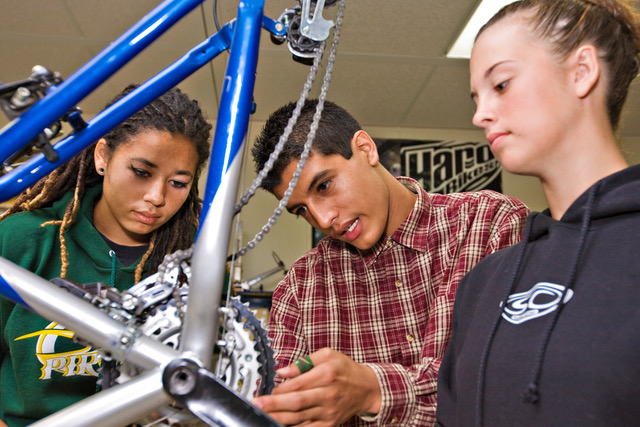
FRISCO, Colorado (April 27, 2021) — Project Bike Tech (PBT) plans to launch four bicycle technician–training classrooms for some of America’s neediest kids in the Four Corners area. Utilizing a $148,000 grant from the Catena Foundation, PBT will introduce their program to high schools in Carbondale, CO; the Ute Reservation in Towaoc, CO; and two Dine communities in New Mexico.
Project Bike Tech students learn hands on about the drivetrain of a bicycle. Photo courtesy Project Bike Tech
“Native Americans, like all minorities, have been disproportionately affected by the COVID-19 pandemic, and now more than ever could benefit from a program that boosts physical and mental health and job opportunities,” says Mercedes Ross, Project Bike Tech National Director.
The first high school bicycle education program of its kind, PBT in School is an accredited high-school elective that uses bicycle mechanics as a conduit to teach Common CORE and STEM elements to students. The program provides over 200 hours of intensive classroom instruction.
PBT hopes to have all four classrooms in the Four Corners area running by August 2021. The goal is to graduate 20 students per class (80 in total) annually, starting in June 2022, with a longer-term target of 320 students in four years.
“Historic poverty, geographic isolation, and lack of resources has led to some of the highest rates of COVID-19 transmission and deaths in the nation in these Native American communities,” says Tawn Kennedy, PBT Regional Coordinator.
PBT’s proprietary curriculum currently is classified under several career pathways in high schools around the nation. PBT incorporates career-building skills as a component of their class, so students leave the program knowing the basics of portfolio building, resume writing and interview tactics. As the student enters the bicycle industry, employers know the training is standardized and supported by the cycling industry. Other partners in the Four Corners effort include the Outride Foundation and Free Bikes 4 Kids, a youth bicycling nonprofit based in Minneapolis.
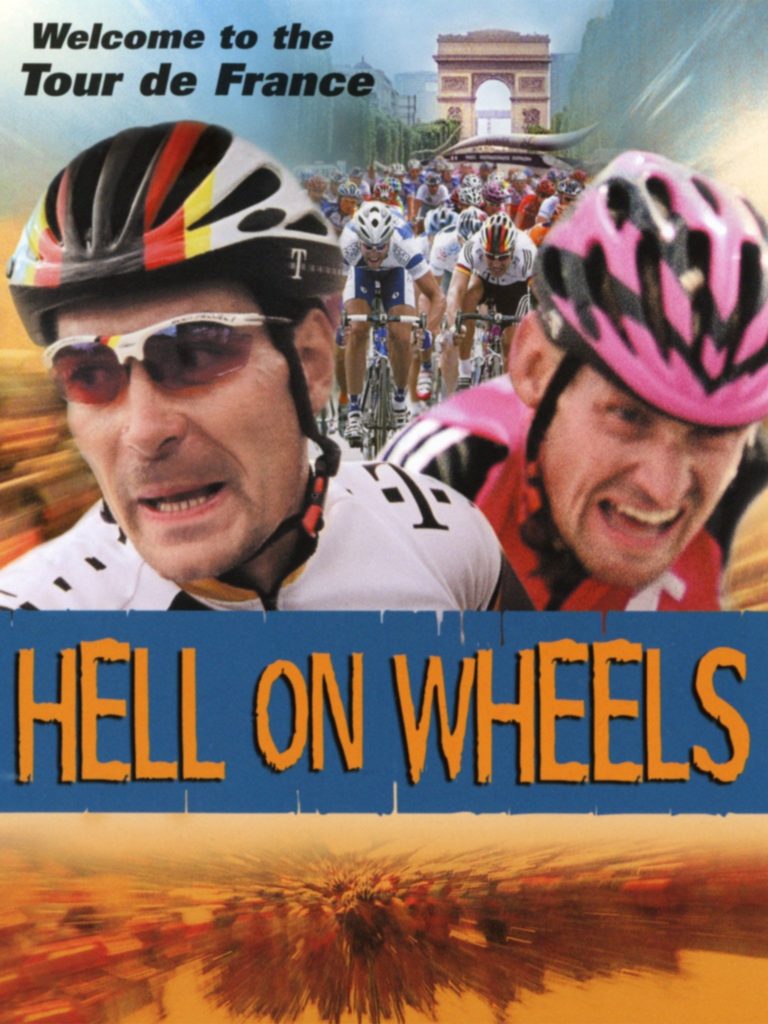
By Mike Newberry — An old friend of mine, one that I used to spend hours on the bike with, and I were discussing bike racing … again. Among the usual topics, he asked if I’d ever watched the movie “Hell on Wheels”. “No … never saw it,” I responded. He told me a little about it, that it was a documentary about the European professional bicycle Team Telekom team, and since I love watching cycling documentaries, I gave it a shot.
Hell on Wheels follows Team Telekom through their daily regimen during the 2003 Tour de France.
Directed by German filmmaker Pepe Danquart, the movie is set during the 2003 Tour de France (its 100th anniversary edition) and follows Team Telekom through their daily regimen for the 3-week race. The 2003 edition of the race marked the 5th consecutive win by Lance Armstrong, but the camera is not trained on that, but focuses mainly on the German superstar sprinter, Eric Zabel, and his trusted domestique and roommate of 11 years, Rolf Aldag.
If you’ve ever thought you’d want to make a go of being a bike racer, you know that bike racing is hard. Professional bike racing is really hard as exhibited by what is shown in this movie.
Some of the back stories of the movie: the first stage brings a crash in the sprint and takes down Andreas Klöden (Team Telekom) and another rider, Tyler Hamilton (CSC). Hamilton breaks his collar bone and goes on, infamously, to continue the race (actually winning a mountain stage!) while Klöden’s tour spirals down and he eventually pulls out of the race. Zabel comments on that win that he’s “never seen anything like that,” meaning someone riding away from the group and not being reeled back in. Our knowledge, now, of Hamilton’s’ (and most of the other Pro riders of that era) use of EPO make for an interesting retrospective.
The ups and downs for the veterans Zabel and Aldag spotlighted are telling. Zabel was an unbeatable sprinter (in his day) and this movie shows his decline as he is continually beaten to the line by the up-and-coming Alessandro Petacchi (“Ale-jet”). Zabel’s’ realization that his star might be dimming can be witnessed throughout the film as he confides in his soigneur, “Ulle”, about his fears of not being able to come around the new sprinter. Aldag succeeds in winning the mountain climbers “polka dot” jersey during a courageous stage and the trash talking (all in good fun) between the two roommates is very interesting to witness.
There are plenty of racing highlights to keep you glued to the screen and well-placed scenes of the history of the race by one of the French journalists/historians. The movie rates right alongside “Hell of the North”, the 1976 documentary of the Paris-Roubaix, for pure watching pleasure for the bicycle enthusiast and bike racer.
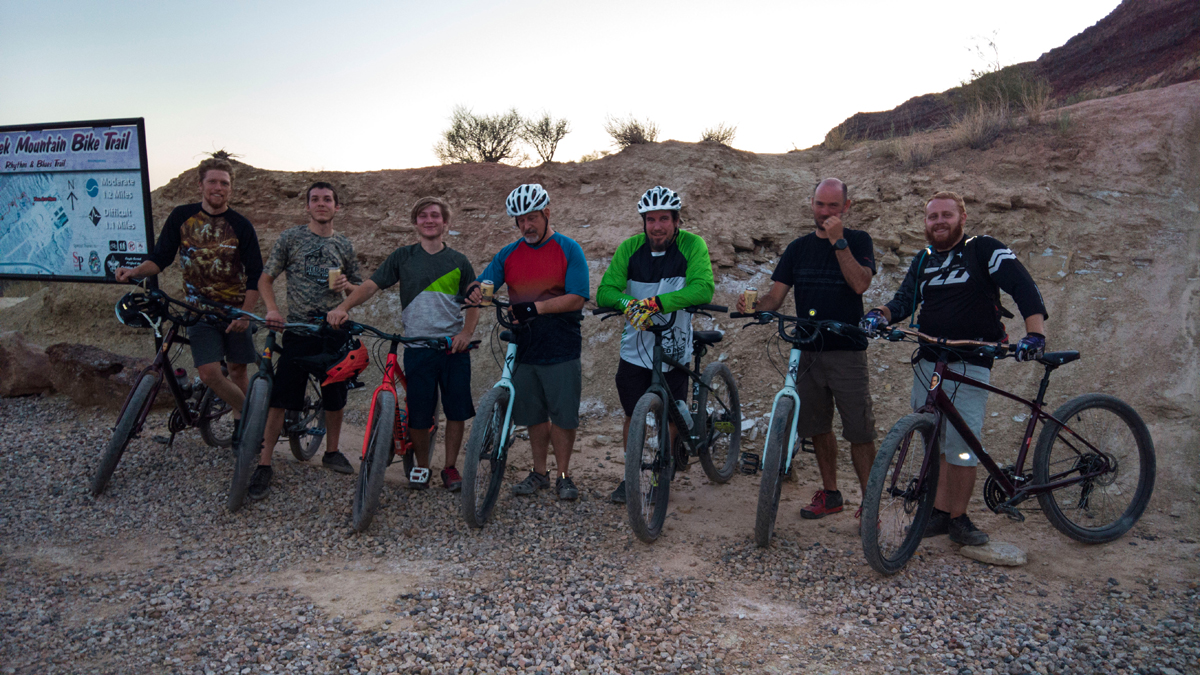
By Lukas Brinkerhoff — Imagine, if you can, a group of grown men fully kitted out in the latest pastel colored lycra riding quickly down some single track, probably a section of single track that isn’t considered easy. They’re in a pace line, or at least as much of a pace line as the trail will allow. Everything about their attire screams “serious” cyclist, but everything else about them screams “we have no idea what we are doing.” And that’s kind of by design. The one thing you would probably be the most confused about is why they can’t stop giggling.
The crew after a good comfing session. Photo by Lukas Brinkerhoff
A few weeks ago, probably about six of them, Judd Freeman approached me at work with an idea. I could tell by the excitement in his eyes that this was probably going to be big. He said, “Let’s buy some Rolls.” Referring to the Specialized Roll which is by definition a comfort bike. I was confused, but he let it set in before continuing with, “and ride them on single track.” Ok. I’m listening. He continued to more or less describe the same scenario to me as I did in that previous paragraph. And ended it with we’re going to ride the Goose.
I was in. Full stop.
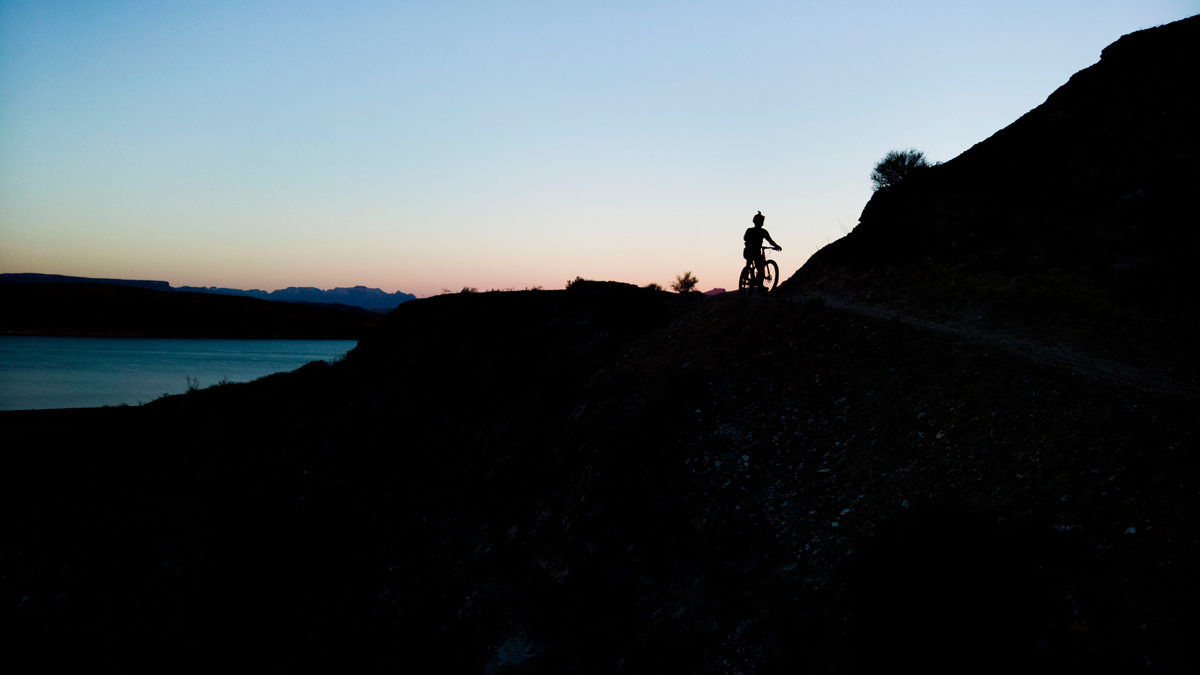
Trent Stallard on the horizon enjoying the last rays of the evening. Photo by Lukas Brinkerhoff
We spent the next couple of days pitching the idea to everyone who would give us more than a couple of minutes of their time. Slowly the momentum began to grow. Three, seven, ten, sixteen. Sixteen sounds like a good number and it corresponds to how many Rolls we ordered. We waited. Lord Byron of the Specialized Kingdom hooked us up with some sweet pricing and within a few days we had 14 Rolls sitting on the porch (2 were backordered). The same excitement that I saw in Judd’s eyes when he first told me about it, pulsed through the shop. The stoke level had gone full to 11.
This little sport that we all love and can’t get enough of isn’t very old. 30 some odd or more years ago a motley crew started to ride old Schwinn Cruisers on trails. Jamming in balloon tires, modding them out to be able to handle long descents, naming trails after the fact that you had to repack the coaster brake hub after one run. Yes, mountain biking started by a bunch of granolas riding bikes in a way they were not designed to be ridden. Stuff broke, people may or may not have gotten hurt and most importantly our sport was born out of the ashes of messed up cruiser frames, or klunkers.
Lord Byron was specific. These bikes are not designed for off road use.
Comfing – the act of riding a comfort bike off road.
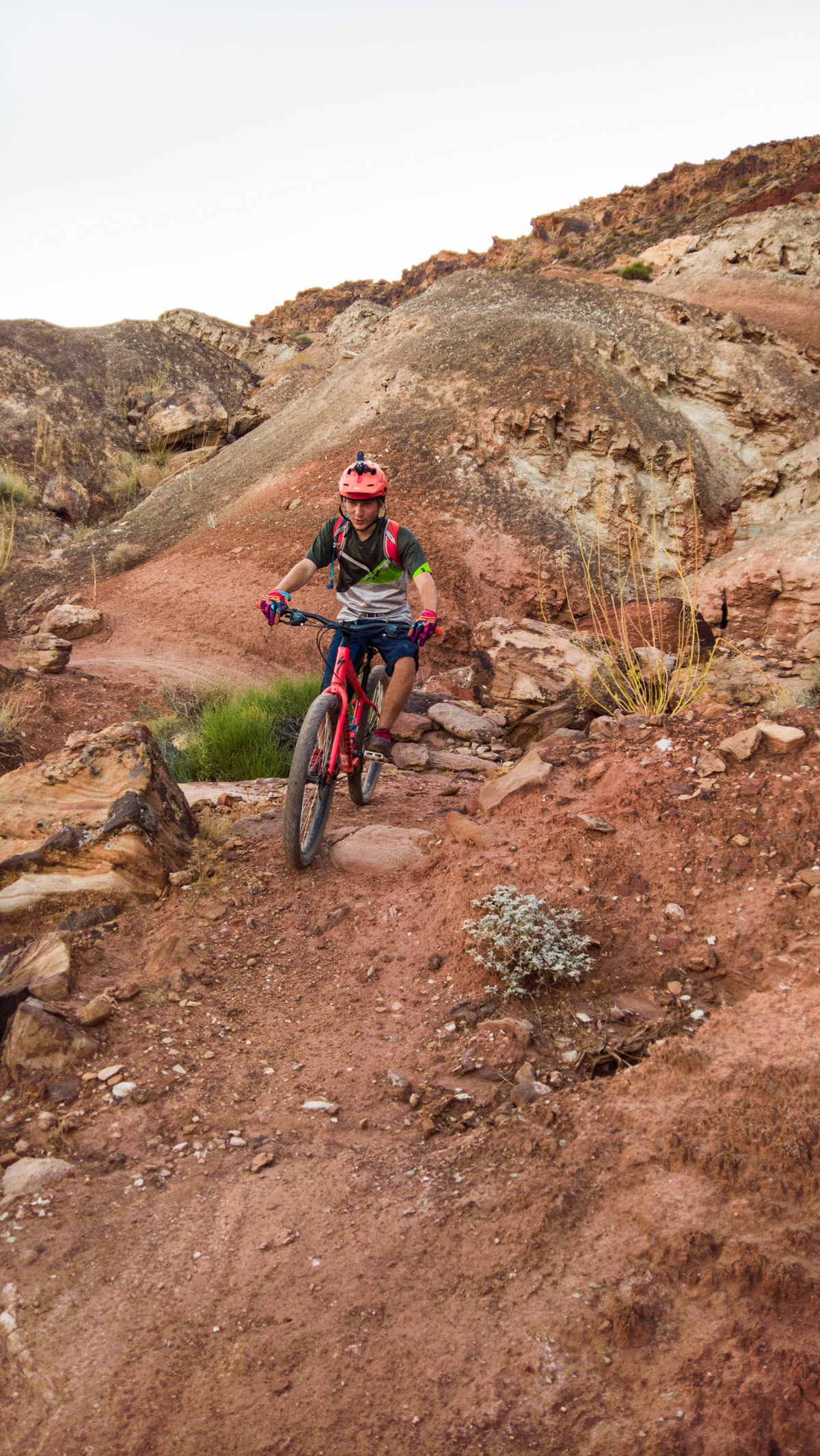
Trent Stallard rolling through Rhythm and Blues. Photo by Lukas Brinkerhoff
My first comfing experience was a few weeks ago, just a couple of days after receiving my Roll. Trent Stallard, Scott Gates and I headed out to the Bear Claw Poppy Trail to see what, if anything, was going to become of this idea that seemed like a really bad, but good one. I was sold before we even hit the trail.
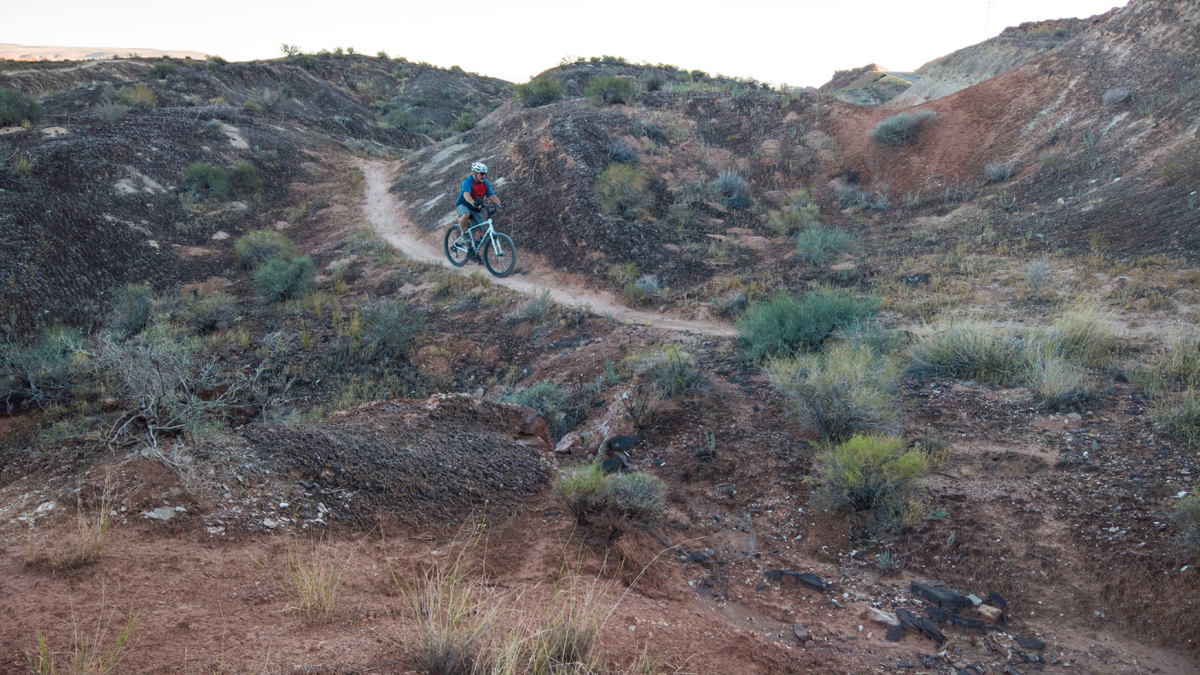
Despite it being the most trafficked trail in Washington County, the BCP is not my favorite and I rarely spin my tires on it. Maybe it’s because I’ve been riding it for well over 20 years or that I just like a different style (think Zen or Kentucky Lucky Chicken). However, there is a certain appeal to riding a trail that is “old” on a new bike to see what that new bike can throw at it. The Roll rockets off the top of the ridges and wants to get sideways. Mr. Stallard was going so hard in the paint that I couldn’t keep up with him and witnessed as he almost careened off the trail multiple times. Sounds awful, right? It wasn’t. It was the most fun I had had on that trail in ages.
Comfing pioneer Scott Gates shows us how to use that suspension seatpost correctly. Photo by Lukas Brinkerhoff
It was unanimous. Comfing was a thing and we were all stoked on it. A few days later, another comfing trip was planned. Seeing that it had transformed the BCP, we thought it might be cool to hit Rhythm and Blues or the One Hit Wonder as I like to call it. The comfs were loaded and we all dropped in like there was no tomorrow. Repeating the original trip, there was a lot of giggling, a lot of “oh shit” moments and probably the most fun any of us had experienced in months, if not years, decades, a lifetime. Yes, it was that good.
It’s important to point out, that yes, I’ve been using the wrong tool for the right job for longer than I should probably admit. I ride cross bikes off stupid stuff, commute on fat bikes, tour on a singlespeed, it’s my MO. Comfing has brought this idea to a much bigger group and they love it. The bicycle industry has built itself around the idea of designing the perfect bike for whatever you want to do with it. Want to go uphill only, sure we have a bike for that. Planning on riding on gravel? Yup, those exist. Planning on riding on pavement and then gravel and then pavement followed by cobbles? Ok, that might be a bit of a stretch, but you get the point. The industry has categorized bikes beyond recognition. Bikes are bikes. Ride them where you will.
You might be thinking to yourself, this is a horrible idea. And you’re entitled to your opinion, but we’re pretty sure that if you give comfing a try, you’ll find it to be everything good that can be found in a bad idea. You’ll find yourself giggling and have that same excitement for comfing that you did the first time you throw a leg over a mountain bike and hit some singletrack.
ENVE’s Grodeo ride and Builder Round-Up weekend is set for June 25 & 26, 2021. It kicks off on Friday at ENVE HQ with the Builder Round-Up and Open House (a mini-NAHBS of sorts) with more than 30 of the most renowned custom builders displaying their latest works of art. Meet the builders with live music, food, drink, and the chance to test your skills on ENVE’s Ogden Trackline Gravel TT.
The Grodeo ride on Saturday takes inspiration from some of the ENVE crew’s favorite gravel events, and travels the dirt roads and trails that the G Series gravel products were developed on. The Wasatch Mountains that cast their shadow on the town of Ogden are not for the faint of heart; the route will cover 92 miles and 8,500 feet of climbing with Strava-times sections along the way. Less race, more adventure ride, share the day with friends new and old.
Photo courtesy ENVE Composites
Although the Builder Round-Up is open to everyone, the Grodeo ride is limited to 200 riders. The full course will be announced in June. Registration opens May 1st at 8 AM MST and is expected to sell out. Details and sign-up info here: https://www.enve.com/grodeo/
By Kelly McPherson — When the road turns upwards, I have always really struggled. I can’t tell you how many group rides, events and races I have stayed away from because the profile of the proposed course had a few hills on it. To me, it is really demoralizing to be pedaling as hard as I can and see the group pedal farther and farther into the distance to be left alone, once again. Early last spring I decided to take on my fear and learn how to climb. I am not a great climber and am certainly not fast at it, but I do get up the mountain and have managed to tackle a few of our areas toughest and live to tell about it. For those of us who struggle, just like I do, below are some of the lessons that I have learned. Please understand that these tips are not for the seasoned hill climbing cyclist, but are for those of us who are just trying to get up the mountain for the first time.
Kelly McPherson at the summit of a climb. Photo courtesy Kelly McPherson
Know the course ahead of time. Strava is a fantastic tool for looking up rides. You can bet that if it is a nasty hill climb, someone has done it and has put it on Strava. Take a look at these files. Find out how long the climb is, how much climbing is involved and how long it has taken other people to climb it. Usually, I look at the list of people who have tried it and then scroll down to the bottom and see how long it took the slowest person to do it. That will likely be how long it will take me. I am not being self-deprecating, simply trying to find a good estimate of how long it is going to take me and how much time I need to budget for the climb. Knowing how long I am going to be working helps a lot in trying to get my head wrapped around what I am planning on doing.
Go with people, but ride without them. There is something about the pressure of knowing that someone is at the top of the climb waiting for you that makes it difficult to just not get there. That is great! Start the climb with them and then let them disappear ahead of you around the next curve. When riding with “climbers,” you may be tempted to push harder than the intensity you need, to be able to get to the top. Blowing up half-way up does not make for a successful climb! Sometimes, it is nice to have someone to talk to and to encourage you, but holding a conversation and maintaining a somewhat civil dialogue can sometimes take more energy than you have. For me, it has been important to be able to just go my own pace and cuss and be grumpy when I need to without feeling like I have to put on a happy face for the insanely cheerful person “encouraging” me up the hill at a seemingly easy effort.
Give yourself permission to stop for time-limited breaks. Depending on how tough the hill is, I will tell myself that I can stop every 15-30 minutes for 1 minute. A 1-minute break is long enough to let your heart-rate come down and some of the lactic acid clear from your legs a bit, but not long enough for you to decide that it is time to quit and flip. The first time I rode Big Mountain, I think I stopped every 5 minutes. It took forever, but I did manage to get to the top. The second time I rode it, I only stopped twice.
Stay hydrated. There is nothing that will make a tough ride tougher, mentally and physically, than dehydration. Bring lots of fluids, particularly with electrolytes and maybe even a little caffeine and drink regularly. On flat roads, I make sure to get a good sip from my water bottle every 15 minutes. On a climb, I drink every 10. Remember that hydration does you a lot more good inside you than it does having to be carried up the hill on your bike.
Stay fueled. Just like hydration, low blood sugar can make you feel weak and grumpy and not in a place where you can get to where you want to go. If you can stomach solid fuel, do. Otherwise, make sure that you are taking in adequate calories through drinks or gels or some other high calorie, easy to digest food of your choice. As a heavy cyclist, I understand the need to short yourself calories in order to lose a few pounds. Skimping on calories on a climb is not smart. Learning to climb is good for you, in your overall weight loss plans. If you give up doing it because your blood sugar is too low to get to the top, you lose that benefit.
Pay attention to temperature. Heat is very demoralizing and can suck every bit of energy out of you. If you can, go early in the morning when temperatures are cool. Take off layers at the bottom of the hill to put back on for the trip down.
Find some mantras. I have used things like “Up the hill. Up the hill. Up! Up! Up!” or “Give it to the legs. Your legs have got you.” Or “comfortably uncomfortable.” Use whatever works and stick to it.
8. Vary your position, but mostly spin. Sit, stand, push your bum back on the seat, mash, make good circles with your pedals, whatever you need to do to vary the muscles you are using up the hill. Mostly, though, you will find yourself just sitting and spinning. Granny gears have a purpose and climbing nasty hills is that purpose.
Worry about cadence, but not too much. Try to keep your cadence over 70 rpm, if possible. Sometimes, it just isn’t possible.
Ignore your HR monitor. Your heart rate is going to do funky things. It is going to go high. Don’t let that scare you into quitting. If necessary, turn off your HR monitor and just get up the mountain.
Reward yourself. I have been known to ask my husband to place some of my favorite beverage and some rice crispy treats at the top of a climb, waiting for me. Now that the climbs I have been doing are significantly longer and more difficult for him to get to, I tend to reward myself when I get back down.
Just keep going. It doesn’t matter how long it takes, how many stops you make or how much it hurts, keep pointing that front wheel upwards. You CAN do this! When you finish climbing this hill, there will be another and another. Each time you successfully climb, the next climb will get easier to start and finish. Soon the you will have conquered the mountains rather than letting the mountains conquer you.
By Clara Hatcher — On the morning after our first day of riding, Rain Felkl and I woke up beneath the pine trees around Lake Baron in Meyer, California. Rain’s Niner RLT and my Surly Long Haul Trucker leaned against nearby trees with our gear and clothes strewn across the tops of our panniers and over branches. We slept without a tent, having been too tired the night before to set it up; we would never set up that tent for the entirety of our five-day bikepacking trip. Since it is Rain’s, I’m still not sure what it looks like.
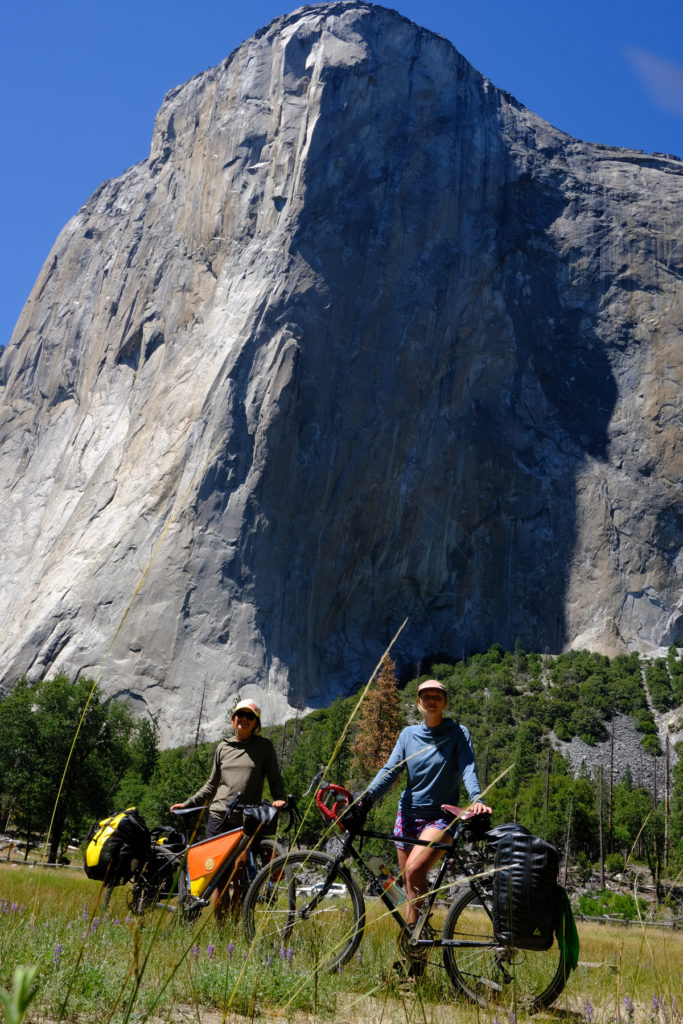
Rain (left) and Clara stand with their bikes in the meadows below El Capitan at the end of their bikepacking journey. Photo by Clay James
We rolled over in our bags and pulled out our phones to plan. This morning, we had a choice to make. In preparation for our trip, Rain and I mapped out two routes. The first took us from Truckee to Yosemite National Park by way of Highways 89 and 395. We’d see less than 16,000 feet of elevation gain, and we’d have the opportunity to stop by hot springs and lakes along the way. The second followed Highway 4 through Monitor and Ebbetts passes, and more than 24,000 feet of elevation gain. It’s the route racers take on the Tour of the California Alps, called the Death Ride. Bogged down with gear, food, and constrained by a five-day window, we chose the former. The Death Ride would have to wait.
Rain and I planned this trip hoping it would be an escape from the stir-craziness and, at least for me, the uncertainty of being without a job and far from family during a pandemic. For us, biking over the summer while the world’s crises raged gave us both purpose and relief. After months of anxiety and quarantine, we were ready for a longer ride. We settled on California, on Yosemite National Park, on sunshine and on day after day of pedaling with our life in our panniers.
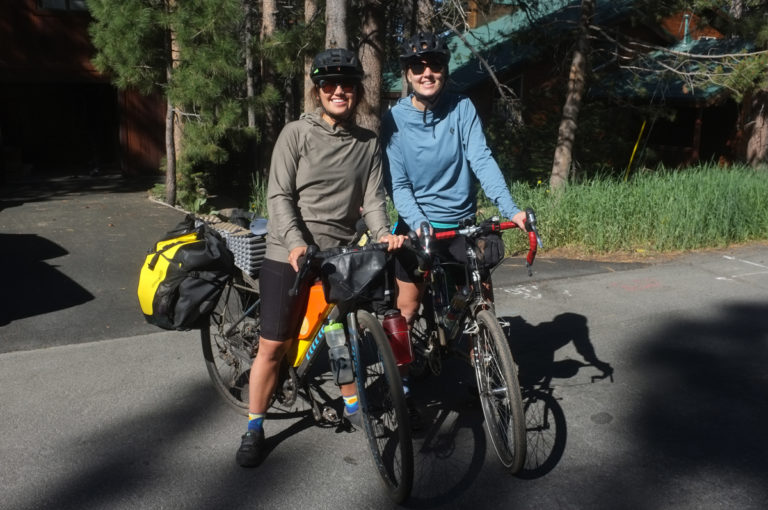
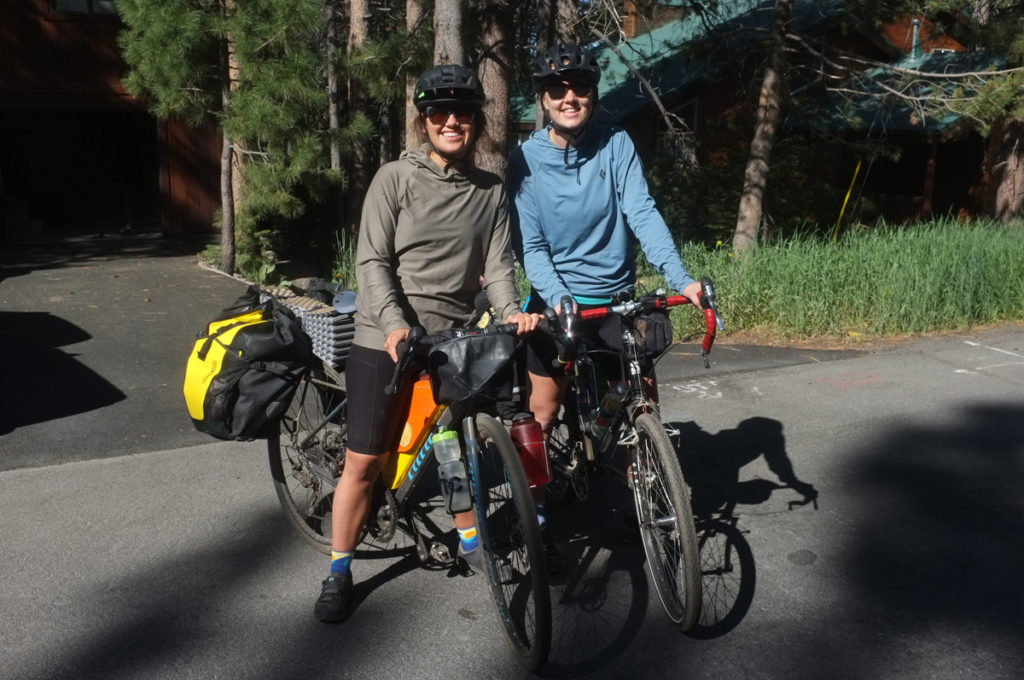
Rain Felkl (left) and Clara Hatcher prepare to start their bikepacking journey from Truckee, California, to Yosemite National Park. Photo by Clay James
Day one found us in the driveway of Rain’s friend, Freddy Mondale, shoving bars in our handlebar bags and water bottles in cages. Freddy and his girlfriend, Lisa Lacampagne, housed us the night before our departure, fed us affogatos and tomato-mozzarella salad, and saw us off with the promise that Freddy and Rain’s partner, Clay James, would meet us in Lee Vining, at a legendary gas station called the Mobil Mart. That would be our final stop before descending into Yosemite Valley from the Tioga Pass entrance.
We plugged in our route, our headphones and double-checked our gear before heading off down the hill out of Truckee. But, no more than five miles into our ride, I realized I couldn’t shift into the largest chainring on my Surly. I could only coast downhill, and I could barely get momentum going otherwise. We pulled over in a school parking lot down the hill from Freddy’s house, and I tightened the cable that had come loose. I rode in circles until I was confident in my ride, and we took off again. By the time we reached the Truckee River Trail, we were coasting and smiling big from the exhilaration of our first day. Sometimes, as cyclists passed by, they would holler at us, “Where are you headed?”
“Yosemite!” We’d shout back over the wind. We’d see big smiles, hear whoops and encouragement in return.
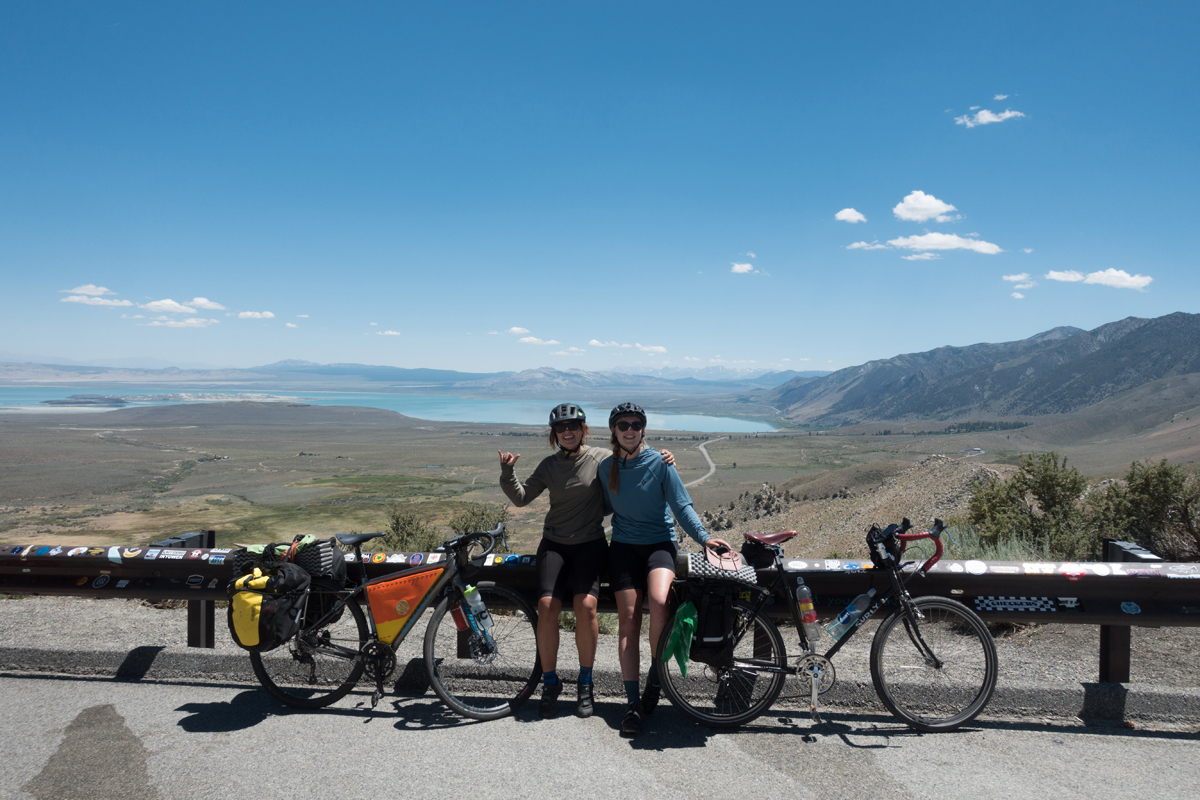
With Mono Lake and the road to Lee Vining in the background, Rain and Clara share a victory break at the top of their last big climb of the day. This was the hottest day of the trip, and also the shortest at just under 30 miles. Photo courtesy Clara Hatcher
We were overjoyed with the fact that we would be riding every day. It seems like it’s too good to be true, sometimes, to wake up to blue skies with a bike at your side and know that all you have to do is pedal. But, no matter how good it sounds, pedaling can still be a challenge. Just like hiking and running, biking long distances means pushing yourself to certain limits and challenging your body. It’s a shame that we don’t stay in the same shape as when we finished our last epic, but we don’t, and it’s a kick in the butt to relearn that each time a new adventure starts. For me, that realization came on our first climb from Lake Tahoe up to Emerald Bay State Park.
Most of the time pedaling through California, I rode behind Rain. She’s strong, she’s fast, and she dances her way through climbs. Sometimes literally, since she’s mostly playing surf rock on repeat. On this first real ascent, I was breathless early on. I wasn’t used to the weight and the miles. I was frustrated by how little I had been riding at home, despite my loving it. I thought about the time I spent on the couch over the last few months, and I could feel my legs protesting while I pushed through, pedaling uphill slowly. I thought I must be suffering for good reason, but when I looked up at Rain, I only saw her cruising uphill, grooving with her headphones in. Lightened by Rain’s mood and still paradoxically discouraged by my own abilities, I hopped off my bike and walked partway up the pass before pushing through and pedaling on.
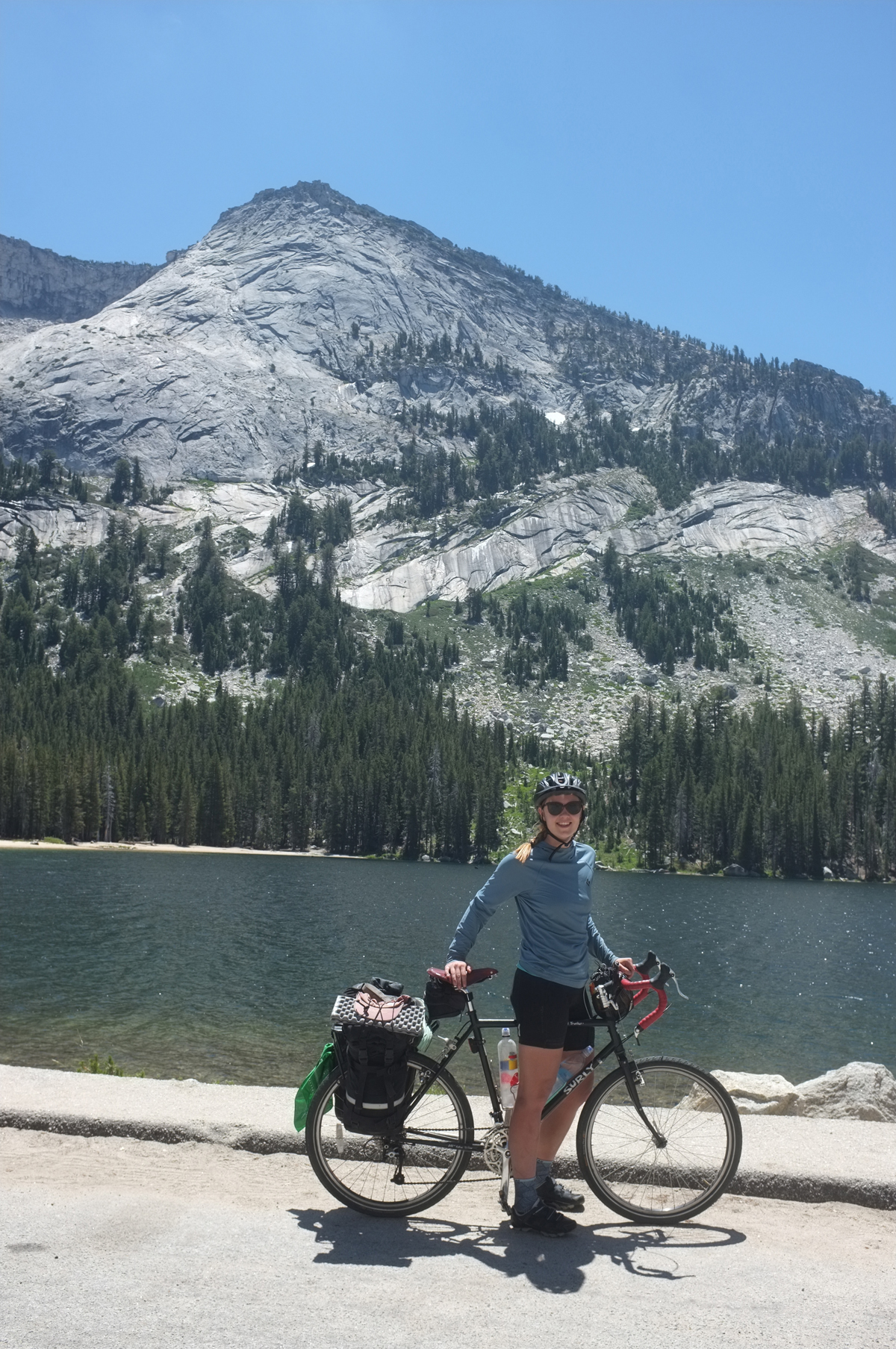
With a light pack on her final day of riding, Clara Hatcher pauses for a break next to Tenaya Lake after biking through Tuolumne Meadows. Photo by Rain Felkl
At the top, I sat down next to my friend. “How did you do that?” I asked. “How did you keep pedaling?”
She looked at me and said that, with her headphones in, she can focus up and push through all of the resistance from her brain and body until she reaches the top of whatever mountain she’s climbing.
“At a certain point,” she said, “you just have to block it all out and keep going.”
We rode south the next morning from Lake Baron with Topaz Lake in mind as our endpoint. We were stiff, but not sore, and we were already stronger than our first day. I shoved my headphones in my ears on the way out of town and listened to an audiobook while I started to climb Daggett Pass. I blocked it all out and, at the top, I realized I had only forgotten what it was like to physically suffer from exertion. It’s easy to ride up mountains when suffering is your friend. Being comfortable, I remembered, would not get me anywhere.
That day, I alternated between music and audiobooks with some stretches of silence in between. Silence, that is, apart from the sheep and the goats yelling from the farms we passed. After Daggett Pass, we were rewarded with 30 miles of flats and farmlands, and one shorter climb at the end of our day. We decided to camp at Topaz Lake, at a site we thought would be nice, maybe even peaceful.
Near midnight, Rain and I woke up in the small, bushy space we tucked ourselves away in. Our bikes were stowed away in some brush on the other side of the massive tree next to us, by the rocky shore of Topaz Lake. I heard voices and saw flashing lights and we, two women cowboys camping in the middle of California, stayed right where we were. It wasn’t until 3 a.m. that we woke up again, heard the voices getting louder, and got up to get our bikes, so they wouldn’t be stolen by the unknown people on the previously empty beach.
The voices turned out to be a man and a woman, who were camping out of their car with a massive German shepherd. The dog barked at us when we approached, and the man turned into the light to see what the commotion was for. He had a space between each tooth and a wild look on his face. He smiled at us.
“Didn’t mean to wake you ladies,” he said, brandishing an old pot. “Just making some steaks.”
We excused ourselves and grabbed our bikes, walked them back over the rocky shore, and slept with them at our feet. In the morning, their car was still parked under the tree by the shore, but they were nowhere in sight. After a quick swim with the pelicans that brightened my mood, we packed up our site and rode away.
Halfway to Bridgeport on our third day, Rain and I found ourselves pedaling into a headwind on a gradually climbing pass. We were treated to a fairly easy day of riding and, once we reached Bridgeport, beer and cheese-covered tater tots.
By the time we made it to town, we were already six miles past the turnoff to the various Bridgeport Hot Springs. After the turnoff, we’d have to go another six miles down a gravel road, adding another 12 miles onto our day. We almost didn’t go, but we decided to buck up and ride to the Hot Springs anyway. When we reached the river with its naturally heated stone pools carved into the sides of the ravine, we couldn’t believe we would ever keep riding south. With a small, heated pool to ourselves, we chatted, relaxed, and watched the sun set on our third day of the trip.
In the morning, Rain and I woke up early. We grabbed our coffee, the stove, and all of our oatmeal prep before heading down from our camp on the hill to the largest stone-lined pool at the river, which was too crowded to feel comfortable sitting in the night before. We made oatmeal and drank coffee from the comfort of our pool while the river rushed by. Our fourth day was the shortest at just under 30 miles, and we were fine with taking our time that morning. The trip, we thought, was going by too quickly.
No matter the mileage, we were sweating on our ride from Bridgeport to Lee Vining. We were biking through California in July. The heat was not so bad climbing our last big pass. There was even a light wind. When we descended into the valley, though, that wave of heat hit like a wall, and we were sweating through our sun hoodies long before we reached Lee Vining. We stopped at Mono Lake, which, like the Great Salt Lake, is a disappointment if you’re thinking about swimming. The ancient lake was formed 760,000 years ago and now, with nowhere to go, it has dried up to become salty and parched. It was, at least, a spot that deserved a snack break.
We stopped as soon as we got into town to get ice cream. We sat on a bench with our bikes loaded down at our sides and ate a vanilla cone each. Half an hour later, we walked across the grass in front of the Tioga Pass Mobil Mart toward Freddy and Clay, who sat waiting at a picnic table with a pitcher of mango margarita in hand. We camped that night near the Tioga Pass gate, and I tried to imagine what Yosemite would look like. I had never been, but I had images in my head of it all from movies, books and so many photos from friends. I pictured vast green fields and huge cliffs, the enormity of Half Dome and El Capitan.
Our route for our last day followed Tioga Road from the Tioga Pass entrance to the Upper Pines campground in Yosemite Valley, totaling just under 70 miles and more than 8,000 feet of elevation loss. The four of us—Clay and Freddy with climbing gear on their backs—rode until the boys branched off to climb, and until Rain and I saw Tenaya Lake. We rode to a trail by the water and sat our bikes down on the rocky shore. We were 15 miles in and it was the perfect opportunity, finally, to swim. The water wasn’t so icy, and the walls of rock towered around us. When we got going again, we rode through innumerable ups and downs that snaked around the valley. Just when we thought we were done with our climbing, there would be another quick uphill fight.
Rain and I ate tuna on the rocks overlooking the valley and planned our hike up Half Dome for the following day—we managed to get permits despite us thinking they would be hard to come by—before hopping back on our bikes for our ride down to Crane Flat. At that point, we would have more than 20 miles of victorious descent into the valley. We were nearly alone on the road, and we barely touched our brakes flying through tunnels and turns around the mountain. On the valley floor, we rode past a coyote by the bus stop and two brown bears shuffling around downed trees in the woods. When the forest thinned out, we got our first view of El Capitan and Yosemite Falls, and I was reminded why National Parks are so special, and so sought after. The enormity of it all was hard to absorb. I could see a pair of climbers on the lower section of El Cap—a pair of ants on a massive sheet of rock—and realized, finally, that we were in Yosemite.
When we had called for information at the start of our trip, the park rangers at Yosemite assured us that we would be okay to go through the gate on a bicycle. We might have been some of the only people to be able to go through Yosemite without a hitch. Reservations for car trips into the valley are harder to come by, and we heard more than one group talking about their lack of a permit. As cyclists, we were free to go. We were even free to stay at the backpacker’s campground, where we would be able to grab a campsite on a first-come-first-serve basis.
When I thought about Yosemite all of those times before, I always pictured it with an overwhelming amount of people taking pictures, hiking around and standing in awe of the views from the valley. But, when we rode from Tioga Pass, there were little to no cars on the road and few people stopped at viewpoints. It was more of the same in the valley, where there were plenty of open campsites and a reasonable amount of people stopping to eat at the marketplace. The pandemic thinned out the crowd in Yosemite to what it probably looked like more than 20 or so years ago, devoid of crowds, quiet and natural.
With our bicycles against trees by our heads, sun shirts thrown over our panniers, and wrappers shoved in pockets, Rain and I lay in the grass of the meadows with our two friends, in the shadow of El Capitan, and said goodbye to the valley, thinking of our long drive home to Utah.
It’s nearly three months after our ride and only a few things have changed. The pandemic, still, is raging around us and maybe more aggressively than when we were able to take our bike trip. We both feel lucky to have jobs and places to call home. The uncertainty about what the future will look like is still present, but so is our ability to escape, for now. It’s rapidly shifting from biking for release to skiing. Bikepacking acted as a perfect remedy for our angst and, when the snow melts away, it will be that for us again.