Name of product: Brompton Electric Folding Bicycles
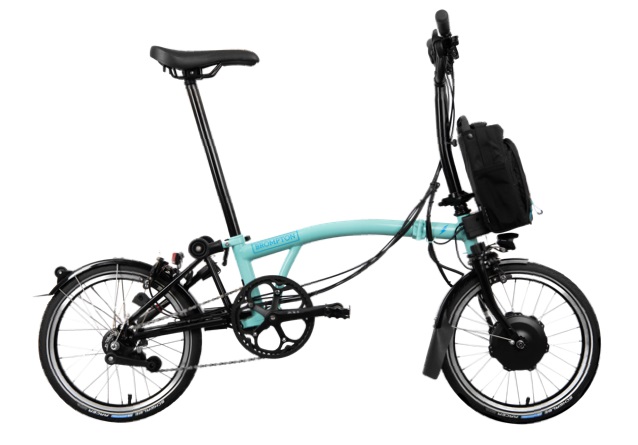
Hazard: Due to a software malfunction, the electric system can continue to provide assistance to the motor, causing continued forward momentum, when the rider is not actively pedalling, posing fall and injury hazards.
Description: This recall involves Brompton Electric Folding Bicycles. The bicycles have a three section folding frame, 16-inch wheels and were sold in black, white, Turkish green & bolt lacquer. The serial number is printed on a label on the frame of the bicycle. For a full list of the serial numbers included in the recall, visit https://us.brompton.com/recall.
Remedy: Consumers should stop using the recalled bicycles immediately and contact the nearest authorized Brompton Electric dealer for a free software upgrade to Version 1-2-10-2.
Incidents/Injuries: The firm has received one report of a software issue that caused a bicycle to provide continued assistance when the rider had stopped pedalling. No injuries have been reported.
Sold At: The Brompton Junction Store in New York and authorized Brompton Electric Dealers nationwide from June 2020 through March 2021 for between $3,500 and $3,800.
Importer(s): Brompton Bicycle Inc., of Brooklyn, N.Y.
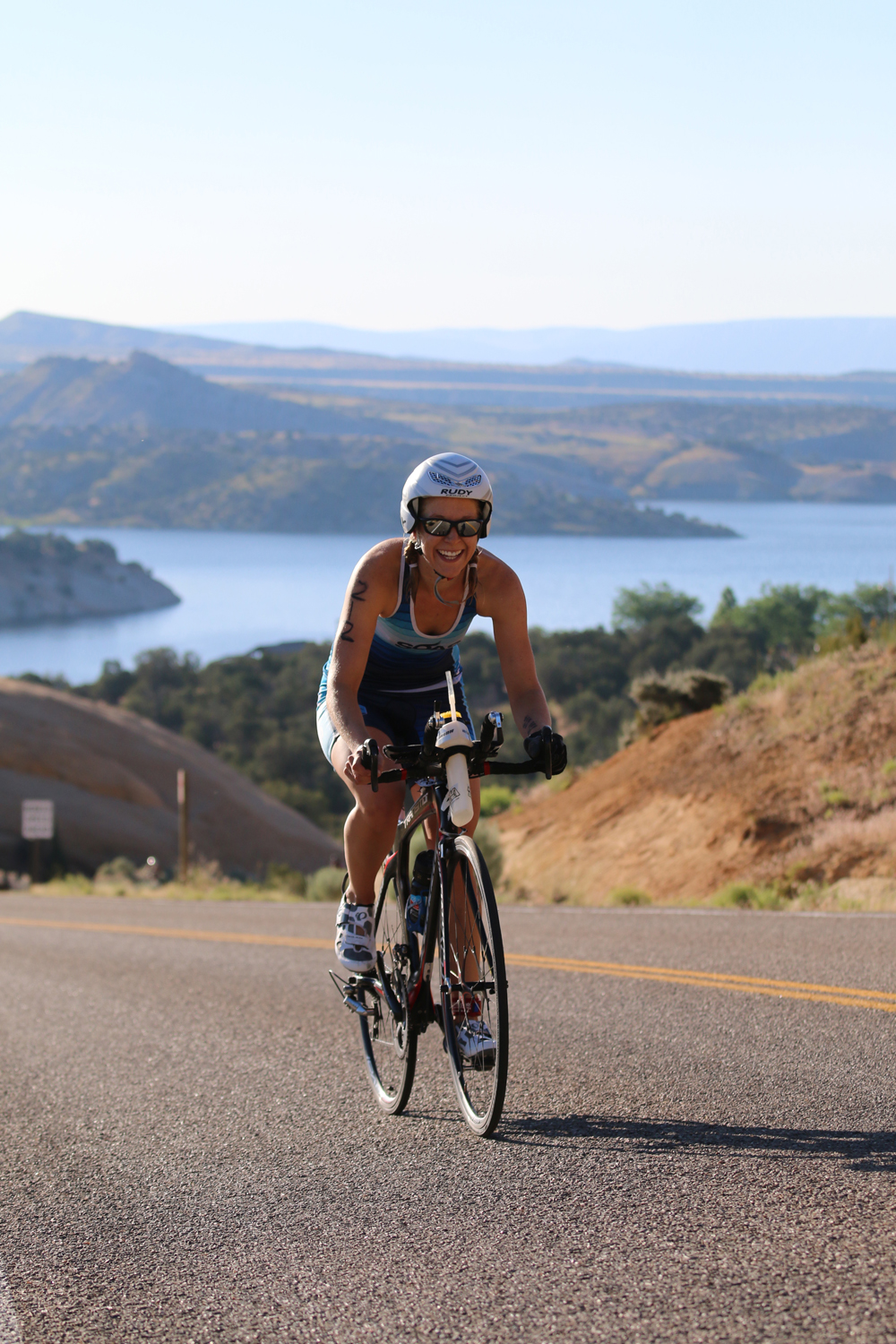
By Lora Erickson — If you are new to triathlons I highly suggest doing brick workouts. This is when you run immediately after cycling. There are many reasons to do them; Not only do they provide variety in training but they also help with neuromuscular adaptation so the transition between the two activities becomes smoother and easier and can improve performance. As a long-time triathlon coach I recommend 2-3 brick workouts a month and more as you approach key races. Here’s one of my favorite short brick workouts:
• 15-20 min warm-up on the bike
• 3 x 8 min strong efforts with 4 minutes rest
• 15 min. steady effort then right into a 15-20 min steady effort run.
I try to hold the same higher cadence for both disciplines.
Happy Training!
Lora Erickson is certified coach and All-World athlete placing top 5% in the world in her division. She has a passion for health promotion. To learn more visit BlondeRunner.com
On February 6, 2021, a horrible avalanche in Millcreek Canyon in Salt Lake City, Utah took four amazingly beautiful lives from the world: Stephanie Hopkins, 26, of Salt Lake City, Utah; Sarah Moughamian, 29, of Sandy, Utah; Thomas Louis Steinbrecher, 23, of Salt Lake City; and Louis Holian, 26, also of Salt Lake City.
Louis Holian. Photo courtesy Ally Marringa
I saw my friend Louis for the last time the previous Wednesday night, February 3, at Hangar 15 Bicycles in Millcreek, where we both worked. Our mutual colleague, Chuck, went skiing with him on that Thursday. I had planned to go with them, but stayed home to work on grading papers for the courses I teach at Salt Lake Community College. I wish I could have gone with them both that Thursday to play in the snow.
I had a lot of fun times riding bikes and trail running with Louis on the Parley’s Trail, Emigration Canyon, Millcreek Canyon, Z Trail, and Bonneville Shoreline Trail over the three years we knew each other. He was one of the first people I rode bikes with when I moved to Salt Lake City. He was humble, fun, kind, hilarious, and honest.
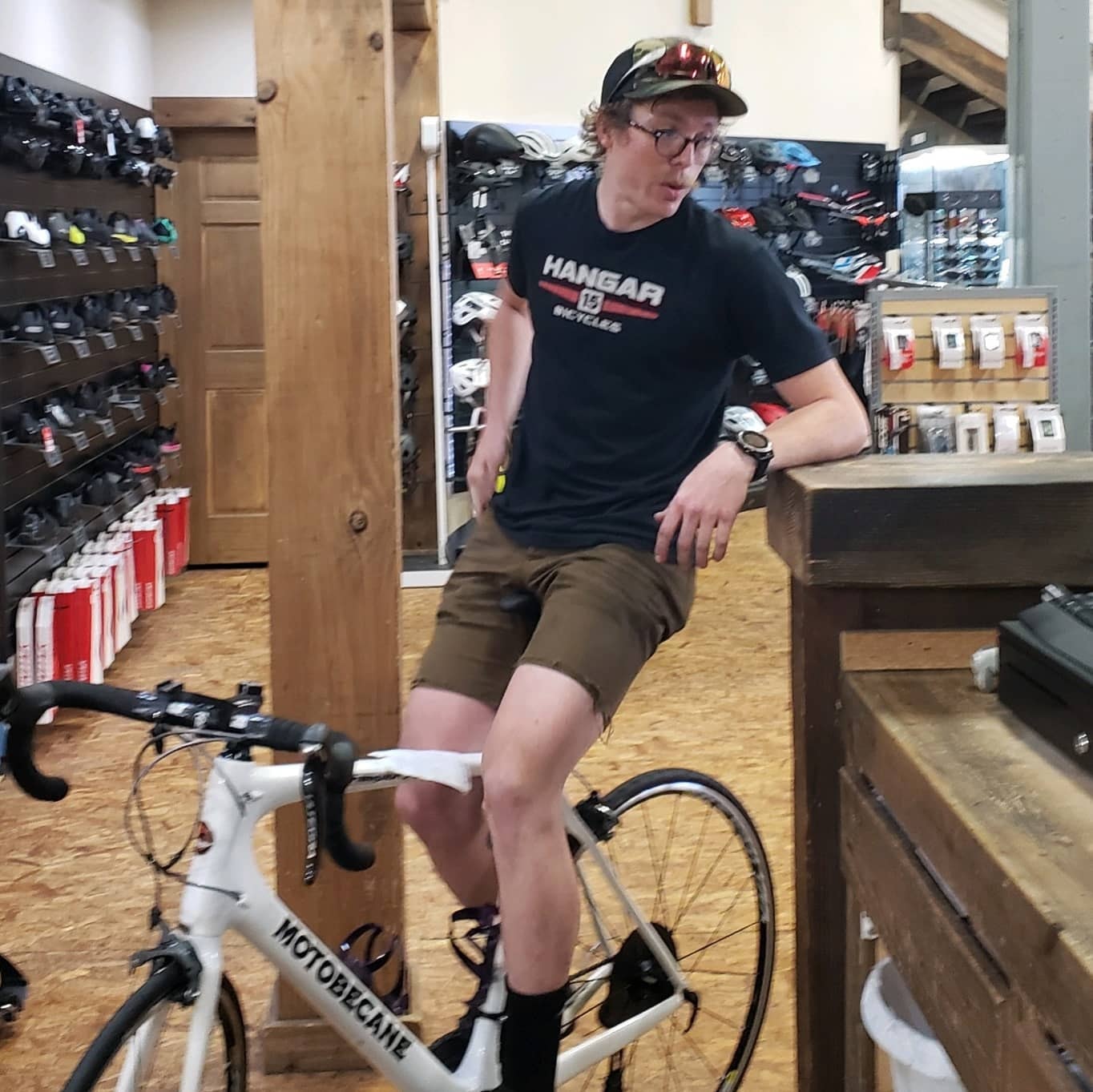
Louis Holian working at Hangar 15. Photo by Anthony Nocella
We agreed the sports we love are dangerous. On July 30, 2019, he picked me up, covered in blood and with a broken helmet, at the hospital after I was involved in a hit-and-run with a car while riding my bike up 4500 South to Millcreek Canyon. After asking if I was okay, he took my hospital paperwork as we walked to his white van with my bike in his arms, and the only thing he said was “Damn, you’ve got a good heart rate” and compared it to his. Classic Louis. If Strava had heart rate competitions, he would have taken part. He loved beating everyone because he could.
I first heard about the avalanche the morning it happened, and later that afternoon I learned four people had died. I called Hangar 15 and asked if anyone knew if Louis was one of the victims. No one knew, but we felt in our guts that something was wrong.
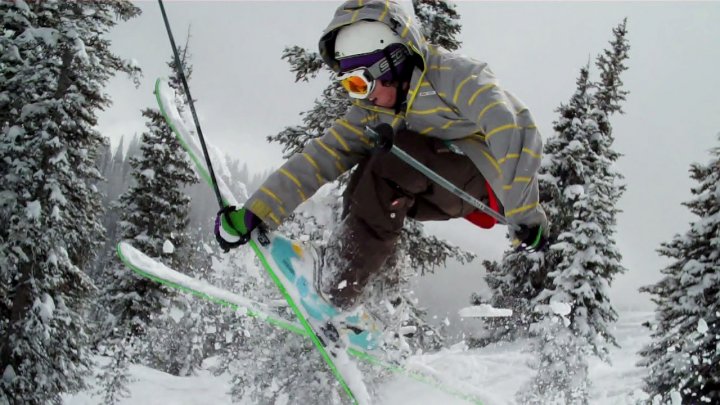
Louis Holian skiing. Photo courtesy Ally Marringa.
I called The Gear Room and could not get through. Many of Louis’s friends were calling his phone, but the calls went to voicemail all day. I finally got through to The Gear Room about 5:30 pm while in my car leaving Millcreek Canyon, shortly after I left Hangar 15. I asked, and they confirmed the horrible news. Everyone was crying, and there were voices of pain in the background.
One of the last serious conversations Louis and I had was how he really loved Hangar 15, especially working with Ryan Hanseen whom Louis believed to be one of the best mechanics in this region.
Ryan Hanseen: Louis and I both started working for Hangar 15 around the same time. I trained him and he was my right-hand man from day one. He had an amazing way to lighten up the room with his goofiness and unique sense of humor. Louis and I would occasionally disagree and argue at work but at the end of the day, we always left as friends. Outside of work, we would occasionally go bar hopping or hang out and drink a beer together and just talk about life. We always had a mental connection and shared many of the same viewpoints on life. There was never a dull moment or a frown when we hung out. He had a wonderful ability to turn something as simple as walking around downtown into an adventure.
Mike Hanseen, manager of the Millcreek location of Hangar 15 had this to say about Louis:
Mike Hanseen: I first met Louis via a hilarious circumstance at the shop. I was working the floor Burke Swindlehusrt (a very taleneted former pro cyclist) came into the shop to pick up some random supplies. Most local riders know of Burke and if they don’t know him, they have seen his KOM’s on Strava throwing down some amazing hill climb times up all the local canyons.
We started talking the small talk then Burke, maybe looking puzzled or curious, proceeded to tell me how this kid in cut-off jeans and Vans riding a fixie passed him going up Emigration Canyon. Burke isn’t one to let someone drop him, especially when it gets steep. Burke told me that once he hit the switchbacks towards the top he had to put some serious hurt in to drop this kid, which he did but not by much.
Wouldn’t you know it, but a few hours later this kid comes in on a fixie, wearing cut-off jeans and Vans. I had to know. I mean what are the odds? I approached “this kid” asking if there is anything I could help him with. He said he was looking for a road bike. I interrupted and asked him if he had been riding Emi a few hours previously. He replied “yes” with that big, goofy curious smile of his. I told him that he impressed one of our fastest climbers in the states when he passed him going up Emi. If I remember correctly he humbly smiled again. A few days later he bought his first road bike from me.
See, Louis was humble and competitive. He didn’t mind losing, but he really enjoyed the win, hence why he bought the road bike. After several months of helping Louis as a customer, I offered him a job, which he accepted. Louis was one of the funniest employees I have had to work with. He took his work seriously, but made it fun. There are times in the summer when everyone is with a customer and all phone lines are ringing, and it can be very stressful. Louis would answer the phone “Hangar 15 Bicycles, this is Ashley”. The first time he did this in front of me, he looked at me, I looked at him and we both laughed internally keeping our composure. Well, a month goes by and now we have customers asking for Ashley. This antic paid comedic dividends all season and for seasons to come.
Another fun one is when he would take the label-maker that we use to mark our parts drawers and he would mark random objects. There was a label on the door that was labeled “door”, another label marked “microwave” and another “refrigerator” and of course the repair shop work station was labeled “Louis’ computer”. You know, so we could find our way around the shop. Well, our GM didn’t like this, but everyone else thought it was hilarious. Louis could argue with you about whatever it may be and strongly disagree with you. And a few hours later you’re at the local watering hole having a great time. I won’t forget Louis, ever.
Mike Thomas, co-owner of Big Rack Shuttle, also used to work with Louis at Hangar 15.
Mike Thomas: I met Louis at Hangar 15 when he was hired, and I had been working there for about 2 or 3 years. His name on Strava was “My Dad is stronger than your Dad”, and it cracked me up. I can’t remember if we started riding together or running together first, but we ended up doing both. I know our friendship really started by listening to each other’s suffer-fest endeavors, hearing about our hard runs and rides that we had done or were dreaming about doing. It is difficult to find someone at your level that loves big and intense adventures, while wearing Lycra. Louis turned out to be a great partner.
One of our most memorable rides was when we rode up Little Cottonwood Canyon on our bikes, ditched them close to the top, and ran up the ridge of Superior and back, and then rode home. It was one of those ideas I randomly threw out there and Louis jumped on it. He always made for good company; and those big days on the bike or running, he always had a smile on his face, even when it turned out to be extremely rough.
I really loved that he always kept smiling when things were rough and kept it upbeat. I had so many other awful days planned for us. He was someone I could count on wanting to do pretty much anything I could think up. I have had some cycling bibs made with his image on them with the idea that I’ll wear them on those hard days in the mountains. That way he’ll still be with me. The image of Louis that I have on my bibs captures that memorable smile that always helps keep the happy thoughts going when you’re really suffering.
Will Marringa is Louis’s brother-in-law, who also bonded with him through cycling.
Will Marringa: Louis was the one who really got me into cycling five years ago when I moved to Utah and we started living together. It started with short rides around the city or to Ruth’s Diner since that’s all I could muster. All the while, Louis encouraged me to keep going.
Louis Holian (right) and Will Marringa. Photo by Ally Marringa
Over the years I developed into a competent cyclist thanks to the imparted knowledge from him, and the pressure to keep up with him on all of those steep climbs. Living with somebody as deep into the sport as Louis can lead to a lot of spontaneous rides planned the night before or early on a summer morning. I’m thankful for all of the memories I have of us suffering on canyon roads chatting about life, aspirations and trivial stuff like the recovery benefits of $1.50 cinnamon roll trays. It’s hard for me to put to words how special our bond was. We were each other’s biggest fan, competitor and advocate. He was my brother.
Louis liked the challenge of pushing himself to get better along with the fun and freedom that bikes bring. He talked about how rides offer some peace for reflection after a long day, a time for you to blow off some steam.
Louis used to be a delivery cyclist for Jimmy Johns at the Cottonwood Heights location back in the day, which meant biking up lots of hills on his fixie and developing a taste for the pain that comes with climbing the steep streets in the city. His passion really kicked off when he began working at Hangar 15 as a mechanic. His knowledge of bikes really began to grow as he learned more about how to build and fix them. The employee-discount pricing may have also played a small part in the slow accumulation of different bikes at our house. We spent lots of summer nights planning rides for the morning or discussing the new buzz-words being dropped by big bike manufacturers. Without Louis’ passion for cycling, I don’t think mine would have developed at all, or in the same way it did.
Back in 2018, Louis and I had decided we were going to do the Porcupine Hill Climb, but Louis had a different plan for his equipment than I did. He got in contact with the race organizer (Jared Eborn, I think) to clear him doing the hill climb on his fixie. After some liability discussions, he got the green light as long as he got a ride back down the canyon. So, the day of the race comes and Lou’s parents fly in for the race and we all load up in his Sprinter van and head to the base of Big Cottonwood.
As the Cat-5 field started out, Lou was at the front, mostly because he needed to maintain his speed on his fixie which isn’t exactly suited to coasting in packs. As was usual, anytime we started a race together, he and I were joking around and psyching each other out before the course started getting steeper. Once we hit the base of the Storm Mountain climb, Louis broke away, primarily due to the fact that he had to push hard to keep his legs moving going up such a steep grade. I followed the break, and the chase only made it past him because we had actual gearing.
As the race went on, Louis would smash the climbs, then spin out a bit on the flats because of his gearing and get caught by part of the pack, still slowly dwindling their numbers. I finished the race 3rd, and headed back over to the finish line for Louis, not knowing he was only 3 minutes behind me. Louis finished in 4th with a finishing time of 1:11:39, a great time for most people on road bikes but absolutely insane to have been done so fast on a fixie. It makes me happy to know the whole family got to see him perform at his best and have fun doing that day. It will always be one of my fondest memories.
Kevin Gmitro was one of Louis’s colleagues at The Gear Room. Here’s what he had to say:
Kevin Gmitro: Louis was a rare breed. He was the kind of guy who loved to suffer. Many in the outdoor community love Type-2 fun, which is the kind of fun that is only fun in retrospect. Louis truly thrived on Type-3 fun; the kind of fun that might never be considered fun, or sufferfests, as we affectionately call them. He could ride dozens of miles in wind on the most heinous gravel, on a road bike, and ski thousands of vertical feet in a morning before work. He would still be early to work and work harder than anyone else in our shop and with a smile on his face. All he needed was a cold beer at the end of the day. He enthusiastically would remind anyone who would listen that beer had the perfect carb to protein ratio. His spry humor kept everyone on their toes. And his jovial, shit-eating grin kept him out of trouble on many occasions. His candor and childlike enthusiasm were his most endearing qualities.
A favorite Louis story of mine was when I got tipped a beer for some work I did in one morning and Louis saw it in the fridge at closing. We always shared beer. When he saw this particular beer, he gasped and begged my brother if he could drink it. Chris replied that no one cared, but Louis went on a rant about how this austere beer was his favorite beer of all times. It was from his hometown, nostalgic, delicious, hoppy, flavorful and the perfect carb to protein ratio. Chris asked if he could try a sip. Louis coyly declined. “I’m taking it home,” he said, “to savor and fully enjoy it.”
In a whirlwind of glee and emotion, he dropped the beer, juggled it 2-3-4 times before letting it drop to the ground and explode! He panicked. Picked it up and looked at Chris. “Shotgun it!” Chris shouted. Louis obliged and spilled most of the remaining beer in the process. He looked at Chris and defeatedly said “that was the worst thing that ever happened to me. I didn’t even enjoy it.” I opened the store the next morning to find sticky & smelly beer all over our desk.
Louis’s friend Trista spoke about him at the Celebration of Life Memorial Ride for Tom and Louis.
Trista Sanderson Winder: From the first time I met Louis, him out on some road run for miles, me out on the bike, I felt at ease and comfortable. I knew my boyfriend Michael had talked all about the crazy adventures he liked to do with Louis, and I was skeptical he’d be the type who would have time for a smile when suffering seemed to be his joy. I really got to know Louis, out on the White Rim Trail, blazing hot and dehydrated. Michael and Louis were both severely dehydrated and going slower than my easy pace: they were hurting.
Louis still greeted me with excitement, gratitude for the water, and no complaints. I was touched by how fun and easy he was to be around, and an hour later I saw him eagerly riding up behind after I’d left to go get water and the truck to drive back and get the boys. He finished the White Rim, gave me water from his car, and chatted happily with us despite the rough situation only 2 hours earlier.
Louis was not only eager to suffer, but I realized he was just as eager and seemingly happier to connect and live life to the fullest. It seemed to ooze out of him, and it still brings a smile to my face. I was touched by how playful, genuine, and authentic his desire was to help. Louis made me feel comfortable to be myself even after meeting him twice, and reminded me to not come at life from fear, but from joy and wonder for adventure. He was full of life, vibrant, and genuinely kind and thoughtful. I move forward with more courage and am touched by his memory to live life more from a place of passion, courage, and a smile on your face, whenever you can muster.
And finally, from Louis’s friend Chuck:
Chuck: Louis’s antics always had me laughing. His flowing mullet, handlebar mustache and a big smile. Declaring himself to be a “level 40” mechanic. Answering the phone at work as “Ashley’” and asking what your favorite color is. I’m so sad that he is gone and so happy to have known him.
For more photos of Louis, see his instagram page: @altalpine
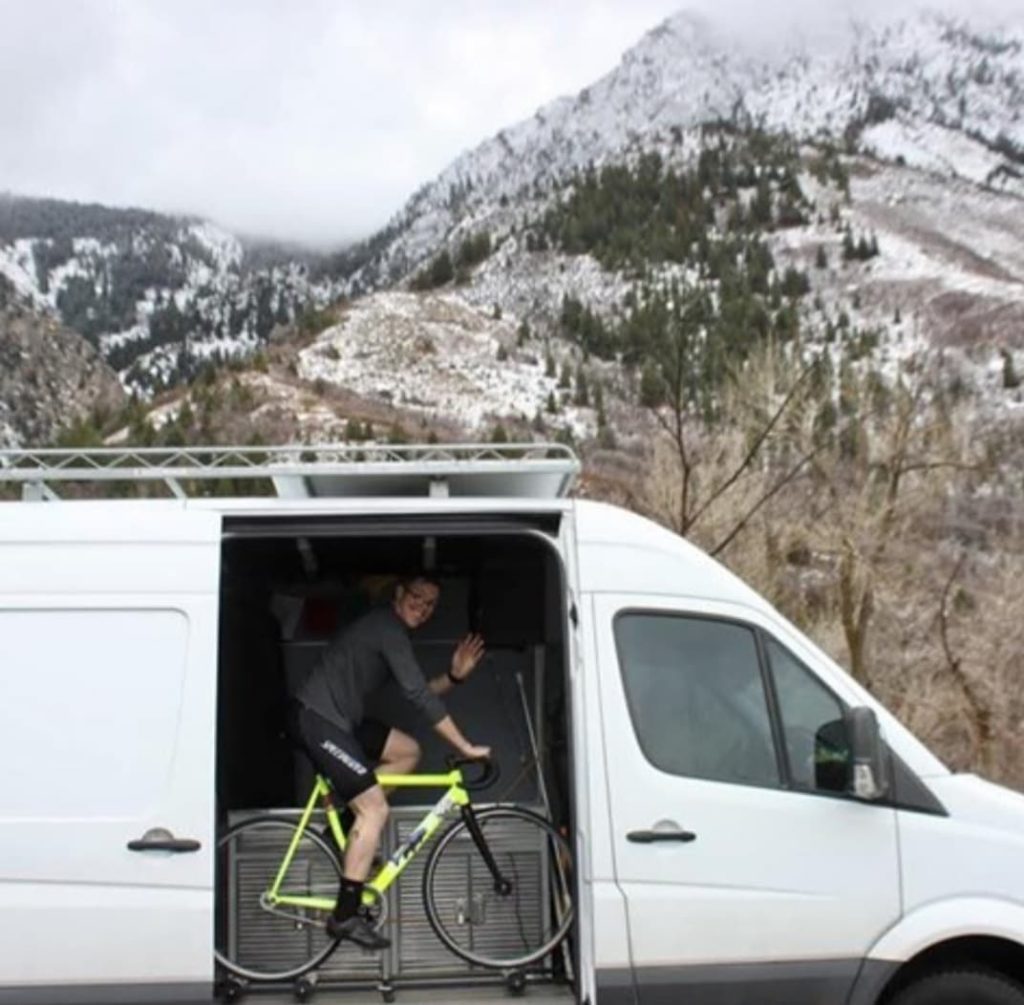
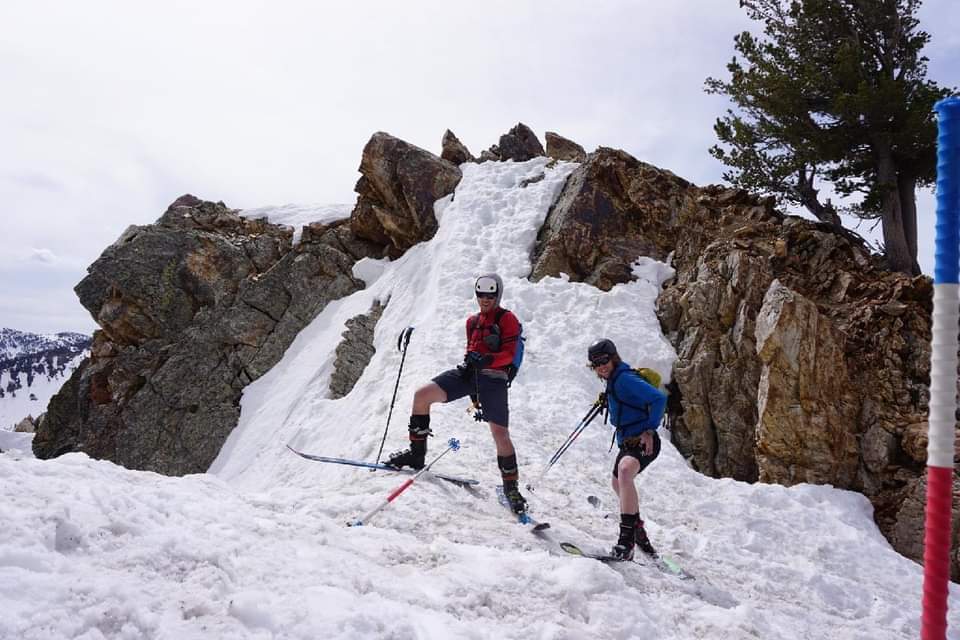
Louis on the trainer in his van. Photo courtesy Ally MarringaLouis Holian and Tom skiing. Photo courtesy Ally Marringa
Millcreek Canyon Sees New Singletrack and Pavement Improvements
Millcreek Canyon has been beloved by Salt Lake Valley cyclists for as long as people have been riding bikes in the valley; the long and varied stair-step climbs, cool downcanyon breeze, beloved shade in the heat of summer, and proximity to a vast swath of the valley are all attributes that road cyclists love. Anyone who owns a mountain bike has plied the canyon’s Pipeline trail, and when that gets too hot on summer afternoons the lovely, cool network of trails at the top of the canyon are a haven for all levels of mountain bikers. There are a few changes coming to Millcreek Canyon soon, and indeed there are some rules that should be clarified so that the many people who love the canyon can share it equitably.
Cyclists climbing Millcreek Canyon. Photo by Lisa Hazel
The Millcreek Canyon road is a county road overlaid atop National Forest land, so it is multi-jurisdictional. Just like on all other county roads, cyclists are obligated to follow the same traffic laws as cars, which includes a 30mph speed limit, and cannot ride more than two-abreast. Unlike most other county roads, however, when the winter gate is closed (officially from November 1 to July 1) the road above becomes a “trail” administered by the Forest Service, even after it melts back down to pavement.
This does not affect cyclists using the road; cyclists can use it all year long (including fat bikes on snow in the winter) but it does mean that cyclists need to watch out for pedestrians in the couple of miles above the gate. Since this “trail” is so easy and accessible, many of the pedestrians are little kids, which as we all know are not known for their predictable behavior! Do not “buzz” the unsuspecting pedestrians; no one likes to have anyone whiz past them at high speed, and the closer you come to them the higher the likelihood that you will hit them, which will ruin everyone’s day.
Many of these pedestrians have their dogs with them, since Millcreek is the only canyon nearby with nice hiking that allows dogs. Per Forest Service rules, since the road becomes a trail, dogs must be on (short, i.e., less than 6-foot and not extendable) leashes on even days, while on odd days leashes are optional. However, many dog owners either are unaware of this rule or flaunt it, so – particularly in that zone above the closed gate – be aware of dogs gallivanting about every day; hopefully you’ve gotten your speed buzz in the upper canyon and can back off a bit in that popular section as you approach the winter parking area (especially in the that-much-faster section below Elbow Fork); having that section above the gate as car-less in the shoulder seasons is great, but the user groups need to be patient with one another.
Once the gate is open, of course the upper canyon is very popular with folks driving up – like you – to escape the heat and enjoy the mountains, but the road gets ever-narrower, so even with sweat pouring into your eyes as you grind past the Alexander Basin trail and you are seeing stars up the last pitch to the Big Water lot, keep an eye out for your fellow riders – who are in turn staying to the right, of course – and potentially aimless motorists looking for a parking place.
A good option – if you are up for it! – is the new pavement on the Porter Fork road for a steep mile and a half to the end of the road and the Mount Olympus Wilderness boundary. Go around the gate at the mouth and be respectful of the cabin owners up there as well as the walkers strolling up the mostly-car-less road.
Everyone in the valley who rides a mountain bike has ridden the Big Water trails, and a great new addition is a section of trail connecting Elbow Fork and Big Water on the south side of the road. Yes, that is right: you can now ride singletrack from Guardsman Road all the way to near the mouth of Millcreek Canyon! The last section of the trail to be finished is in the rugged terrain just upcanyon from Elbow Fork, and there is also the need to rebuild the bridge across the creek above and across the road from the upper trailhead for the old Pipeline that was crushed by a falling tree in the September “hurricane”, but these should be finished by early summer. As of this writing, the Forest Service is debating on the management of this new trail; it could be subject to the same odd/even day restrictions of the upper Millcreek trails (bikes are allowed on even days) and/or directional restrictions day to day. Regardless of the decision, cyclists should be quite pleased that we finally have a long-sought new trail section to ride to bypass the pavement in the upper canyon and therefore respect the well-intentioned rules that the Forest Service could invoke to maintain the equity of pedestrian and wheeled users.
And speaking of the Forest Service; they have been busy in Millcreek Canyon, putting those kiosk fees to some appropriate use. You have no doubt seen the nice new parking lot with toilets at the Rattlesnake trailhead, and to add to that the FS’s other main trail project for the summer is a much better switchbacking climb up to the Pipeline as an alternative to the steep erosion-fest of a trail that exists now.
Speaking of the Pipeline Trail, historically there have been no restrictions for bikes on that trail, but if you’ve visited Millcreek Canyon at all over the last few years you’ve noticed dramatically increased use on the Pipeline trail and its spur trails even before COVID-19 created a spike in use, so it’s become even more important to be acutely aware of runners/walkers/dogs on this swift trail and its blind corners.
Millcreek Canyon is now seeing over one million visitors a year, and this use has been hard on the canyon and created increased management challenges. The Forest Service itself is perpetually strapped for resources, and the Wasatch Forest is the most heavily used in the country, so it is nice that we have gotten some “love” in our beloved little Millcreek Canyon.
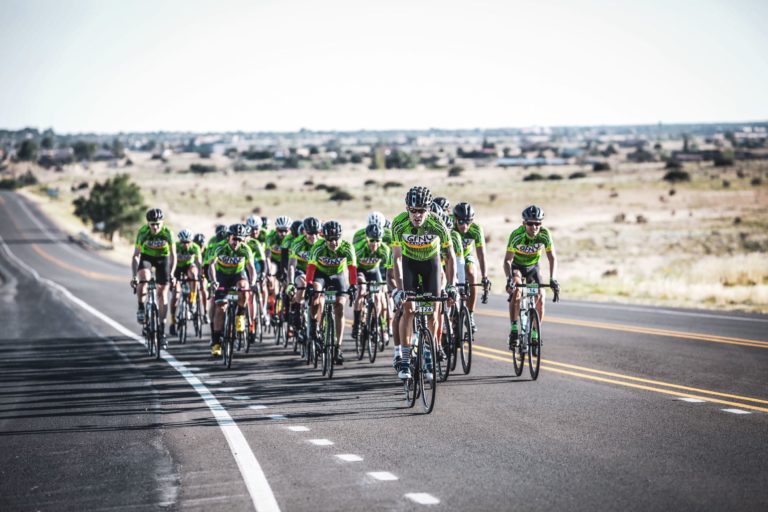
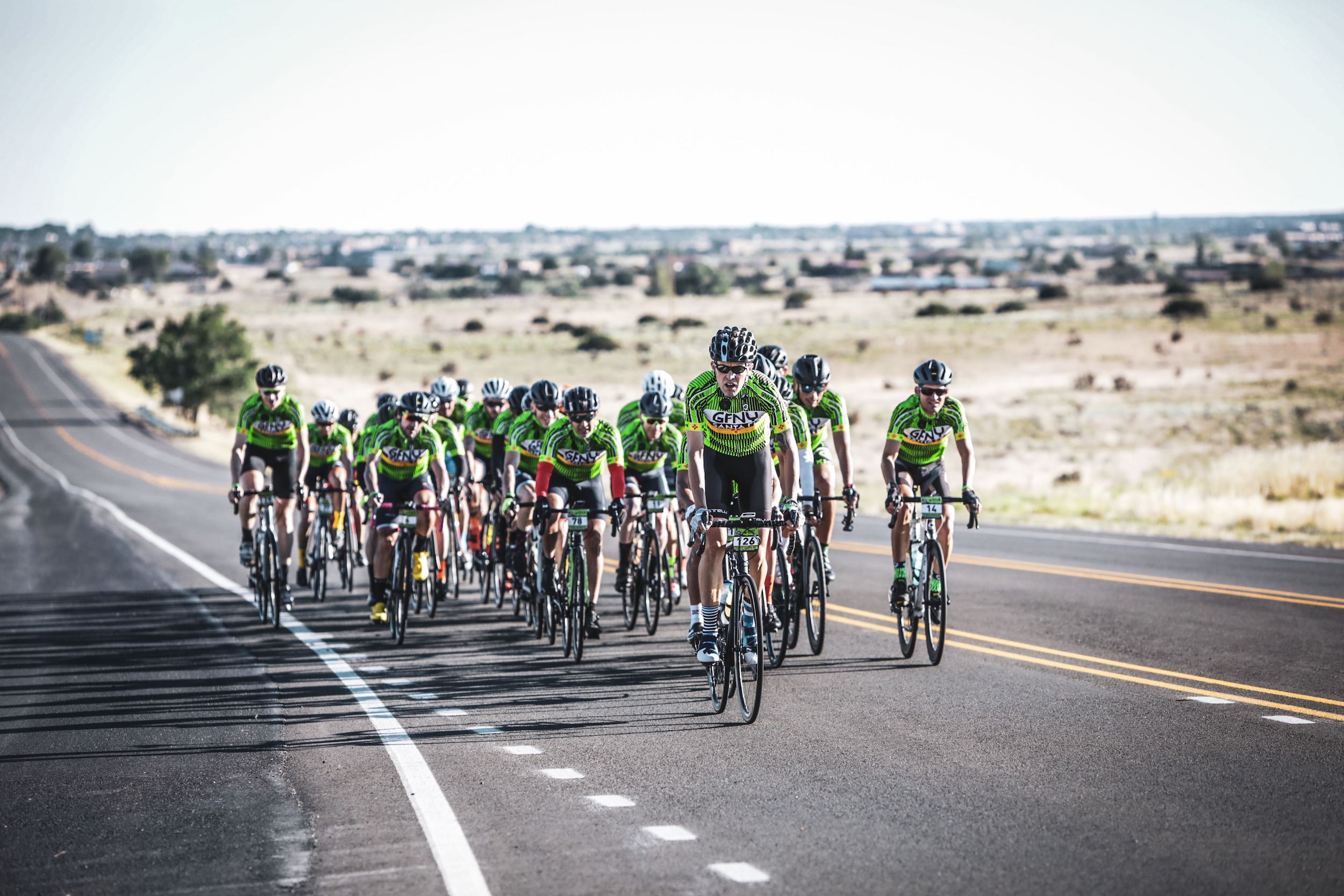
SANTA FE, New Mexico (April 12, 2021) — GFNY Santa Fe returns to the GFNY World racing calendar on September 19, 2021. Riders will get to race the challenging 75-mile high-altitude course with 7,150 feet of climbing and a peak elevation of 10,350 feet at the finish high atop Santa Fe. The course transitions from the open plains and high desert to the dense pine, fir, aspen and spruce forests of the high mountains. The event moved from June to September to take advantage of the cooler weather and fall scenery in the Santa Fe area.
Santa Fe, NM is a city unlike any other, truly living up to its tagline, The City Different, at every turn. With legendary history and culture around every corner, an art scene that spans from traditional to contemporary, accommodations with a local feel yet world-class status, award-winning cuisine that’s as eclectic as it is sumptuous, and countless experiences to encounter, you’re sure to uncover something different about yourself when you visit.
Race Director Michael McCalla is thrilled to be back for a second event. “It’s an honor to return to New Mexico with a first-class cycling event that showcases some of the best of my home state. The event highlights both the geographical and cultural diversity that makes the southwest such a special place. We’ll have a post-race “block-party” which will showcase our New Mexican cuisine and local microbrews.”
TOURISM Santa Fe Executive Director Randy Randall adds: “Santa Fe in the fall is epic. We’ve put together great packages for all race participants and their families. We look forward to showing off our Santa Fe hospitality.”
Santa Fe County Manager Katherine Miller adds: “The Santa Fe County region is spectacular, and the ride goes through some of the highlights. Our location at the foot of the southern Rockies will make this event challenging and spectacular at the same time.”
GFNY Santa Fe is one of the currently rare opportunities on American soil for riders to actually race a long-distance cycling marathon with roads closed or traffic moderated by police. All riders will be required to follow current COVID mandates and restrictions in order to ride in the race.
By Chris Magerl — Bike tech is again catching up with riders’ desires. The past decade has seen far more riders taking to the unpaved roadways. Road bikes, mountain bikes, cyclocross bikes, all are a fun way to follow new routes. All have limitations.
[Editor’s Note: This piece appeared originally in Cycling Utah in April 2018.]
When you are headed out to explore mixed terrain, no matter which bike you are on, at some point you will have the wrong bike. That’s part of the fun.
Eric Flynn winning the 2016 Wild Horse Dirt Fondo on a gravel bike. Note the medium width tires, drop bars, and determination. Photo by Chris Magerl
In a recent visit to Salt Lake City, legendary bicycle designer Gerard Vroomen said that bigger tires marked the most exciting bicycle design change in the past 10 years. Vroomen was the master behind Cervelo, and created time trial bikes that won World Championships and Kona Ironmans, and road bikes that won the Tour de France as well as the cobbled classic Paris-Roubaix. But for him, the element that is driving cycling performance, exploration and enjoyment now is wide tires.
Vroomen’s Open and 3T frames give tires ample room and that encourages riders to roam. A bike like the Open U.P. has geometry that supports 700c x 28 tires or 27.5 x 2.1 MTB tires. A true go-anywhere ride. On a high-performance frame from a builder who has produced some of the most successful race bikes of the past fifteen years.
This is quite the change from even three or four years ago. Blog sites are littered with posts from riders struggling to find the right ride for the Dirty Kanza or the Crusher in the Tushar. Riders frequently chose to stuff the fattest CX tire into a CX race bike and hope for the best. Often that fattest tire that could fit was 33 or 35. And often that was really not enough.
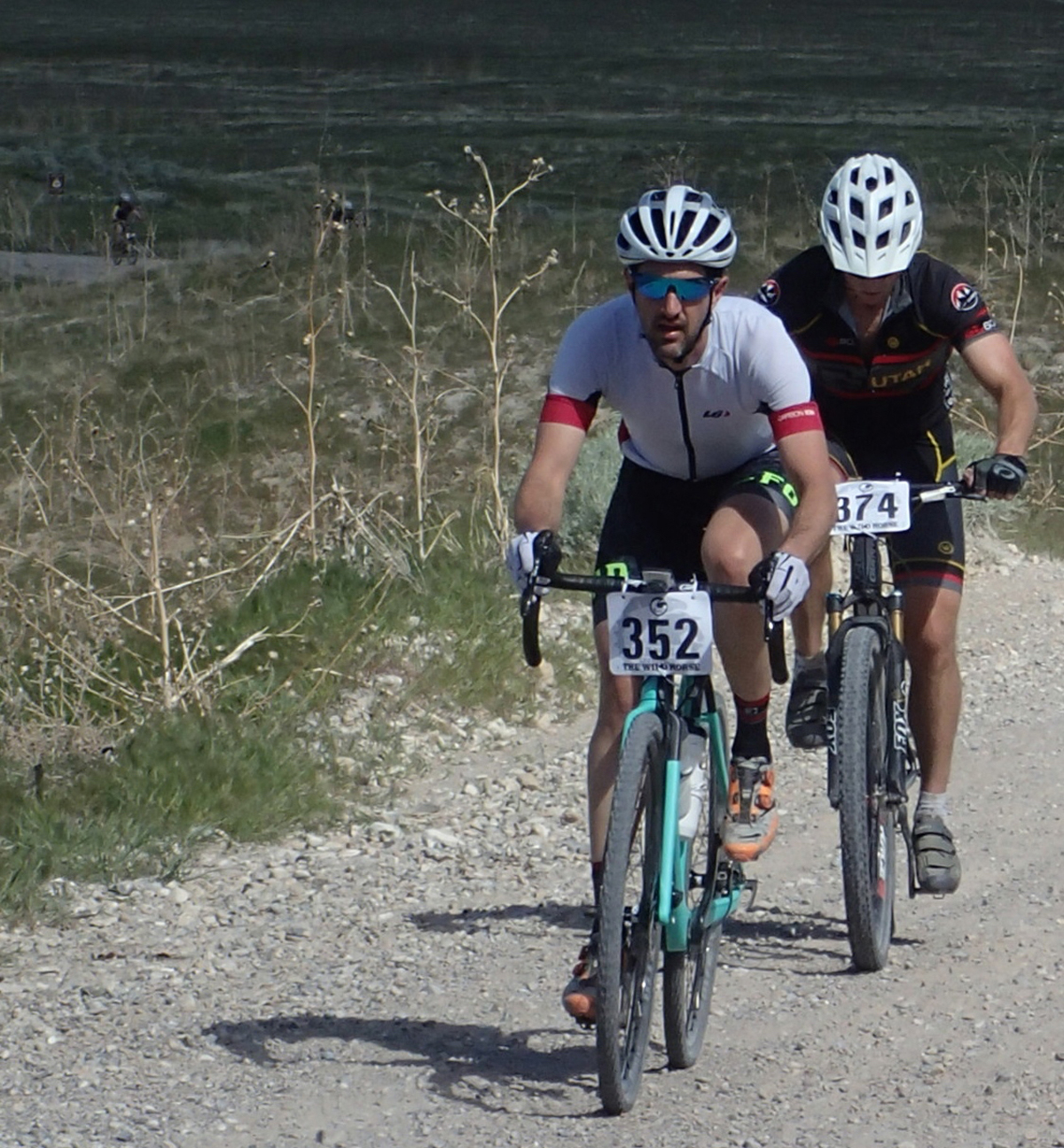
For The Wild Horse, a dirt fondo of 76 miles or 31 miles held each May about 45 minutes west of SLC in the Cedar Mountain Wilderness, the bike tech was just not quite there. But options are now everywhere.
Cyclocross bikes are made for races that last 45 to 90 minutes. That is quite a bit different than riding for five hours with zero pavement. For the fastest riders at The Wild Horse, five hours is doable. For most average finishers, six to seven hours is more realistic.
Todd Henneman of Storm Cycles in Park City knows gravel, having ridden the Crusher and the past two editions of The Wild Horse. “My personal pick for the past two years of The Wild Horse has been a gravel type bike that will take wide tires. At least a 45 width,” Henneman said.
Eric Flynn of Flynn Cyclery in Holladay is also a Wild Horse veteran. He likes the new offerings that mix performance road geometry with larger tire clearance. “Anything similar to the Norco Search XR or the Open U.P./U.P.P.E.R will provide a rider with the options needed for a course like the Wild Horse. They’ll both allow 700c up to at least 40mm and a 48mm with the Norco. Both bikes also have the ability for a 27.5″ wheel with up to a 2.1″ in width for anything you could put in front of the two be it 2 track beat up jeep road or straight up single track.”
For both Henneman and Flynn, advise keeps returning to tire selection. “Some of the newer gravel bikes will accept up to 2.1 mountain bike tires. The Wild Horse has so much diversity that a standard cyclocross bike just doesn’t cut it. Most ‘cross bikes will only go up to about a 35 or 38 width tire. Those skinny tires are nasty in the rocky and soft sections of the course!” said Henneman. “My main concern with a bike out there is tire size! Don’t take a bike that will only do a 32 or 35 tire.”
Flynn urges riders to choose a tire suited for the tougher parts of the course “The west side of the course is where a larger volume tire is going to really shine. The gains made from having the efficiency and comfort on the west side of the course will pay big dividends when you get to the east side where all you’ve got to do is put the pedal down and rally back to the finish line.”
Gravel-specific bikes are great, but Henneman also sees the benefit of a hardtail mountain bike. “Preferably a 29er. Mainly for the tire size and width. Having a suspension fork is also nice in several sections of the course. Any lightweight XC race bike would be a safe bet,” Henneman said.
Flynn has raced The Wild Horse on bikes that seem the opposite ends of the spectrum. “I’ve done The Wild Horse on a full suspension mtb and a ‘cross bike with 40mm tires. I was glad to have both but always wished I had another bike depending on where I was on the course.”
Flynn knows that bike selection only goes so far. “At the end of the day The Wild Horse is just going to be a hard day on the bike no matter what you’re riding. There’s nothing that’s going to make it easy. Do your best to prepare and just know you’re going to suffer regardless of what you’ve got underneath you.”
By Nancy Clark, MS, RD CSSD — Athletes get injured. It’s part of the deal. Be it a torn ACL, Achilles tendonitis, or a pulled muscle, the questions arise: What can I eat to recover faster? Would more vitamins be helpful? What about collagen supplements? At this year’s virtual Food and Nutrition Conference and Expo (FNCE) of the Academy of Nutrition and Dietetics (AND, the nation’s largest group of nutrition professionals), several presentations offered updates on nutrition for injuries.
Pre-injury diet
You never know when you will break a bone that requires a surgical fix, get hurt in a car accident, or end up with COVID. That’s why you want to prepare your body for the worst by eating wisely on a daily basis. While you need not eat a perfect diet, you certainly want your meals and snacks to include at least 90% quality calories. Ten-percent fun foods are allowed!
If you know you’ll be having surgery for, let’s say, a rotator cuff injury, you certainly want to enter into the surgery being well nourished, with your liver stockpiled with the vitamins and minerals needed for healing. (A well-nourished person’s liver stores enough vitamin C to last for about six weeks.) Well-nourished patients have shorter hospital stays and faster recoveries. A light-weight rower who restricts food intake or a runner with anorexia could easily be under-nourished. Be proactive; eat well every day. Pre-habilitation makes (unexpected) rehabilitation easier!
By focusing two-thirds of your plate on wholesome grains, fruits and vegetables, you’ll not only optimize your intake of vitamins and minerals, but also fiber. Fiber feeds the microbes in your gut. These microbes influence the strength of your immune system. Other foods that boost health of the microbiome include yogurt, kefir, blue and other moldy cheeses. In contrast, low-fiber ultra-processed foods do little to enhance gut health and immune power. Keto-athletes, take note: some (but not all) studies suggest low fiber keto diets may be detrimental to the microbiome.
Post-injury diet
Injured athletes may be tempted to over-restrict calories, believing they don’t deserve to eat because they are not exercising. Wrong. Even when you are on bedrest, your body burns about 10 calories per pound of body weight just for your resting metabolic rate (energy used to fuel organs such as heart, lungs, liver, brain—and just be alive). That means, if you weigh 150 pounds, you likely need about 1,500 calories for your resting metabolic rate + more fuel for your (limited) daily activity (brushing teeth, getting dressed, etc.) + 10% to 20% additional calories for healing the injury. When healing injuries, you do not want to severely restrict your intake of valuable nutrients!
On the other hand, you don’t want to over-indulge and smother your injury-related grief and/or boredom with ice cream. Rather, add structure to your day with scheduled meals and snacks. A sports dietitian (RD CSSD) can offer a nutrition rehab plan that identifies the amount of protein needed to prevent loss of lean muscle, an appropriate calorie intake to optimize healing without gaining undesired body fat, offer suggestions for ways to boost your intake of iron and zinc (to optimize healing), and identify anti-inflammatory foods such as berries, leafy greens (spinach, arugula, kale), cruciferous vegetables (Brussel sprouts, broccoli), and anti-inflammatory fats (extra virgin olive oil, salmon, nuts).
Ruptured tendons, torn ligaments, and muscle pulls
So called soft tissue injuries such as ruptured tendons, torn ligaments, and muscle pulls (muscle torn off tendons) can be season-ending injuries. Preventing them from happening in the first place could save a lot of angst. Research suggests strength training (more so than stretching) reduces the incidence of these injuries.
Speaking at FNCE, Keith Barr PhD, a researcher at University of California at Davis, explained tendons and ligaments have a collagen-filled matrix. To heal tendon and ligament injuries, Baar reports loading (stressing) them helps to increase collagen synthesis and make them stronger. For example, the anterior cruciate ligament (ACL) gets thicker (i.e., stronger) during a training season.
Unlike muscles, your tendons and ligaments get nourished with little blood flow to provide nutrients. Rather, fluid in connective tissue gets squeezed out when the muscle stretches during exercise; nourishing fluid then gets sucked in when the muscle relaxes. Consuming a collagen supplement 30 to 60 minutes before exercise assures having collagen-building amino acids circulating around the damaged tissue. This has been shown to enhance healing.
To create tissues that are more injury-resistant, athletes in sports that include explosive movements (basketball, track and field, soccer) might want to take collagen supplements prophylactically. Doing so may also enhance their performance. One study suggested hydrolyzed collagen during training also improved explosive performance compared to a placebo.
While research is limited (and commercial collagen products are exploding), hydrolyzed collagen, collagen peptides, and yes, Knox gelatin all offer the amino acid glycine, needed to heal these tissues. Dana Lis PhD RD, researcher with Baar at UC-Davis, reports not all collagen supplements are created equal. Bone broth, for example, has low levels of glycine. Hydrolyzed collagen seems to be absorbed better than gelatin and tends to be more palatable.
Lis notes vitamin C is a co-factor needed to repair damaged tissue, so athletes should consume 50 mg vitamin C (for example, the amount in 4-oz. orange juice or ½ cup of cooked broccoli) along with the collagen supplement. To date, research has not been done to determine if glycine-rich foods (meat, fish, and poultry, or lessor amounts in soy, nuts and plant-proteins) are as effective as supplements. Would eating pre-exercise chicken + orange juice do the same job? Stay tuned.
The bottom line: Don’t underestimate the power of nutrition in preventing and healing injuries!
(April 9, 2021) — Skol Sporting Management has acquired TriUtah, Utah’s premier multi-sport event management company.
Sage Maaranen won the women’s Olympic open category at the 2016 DinoTri in Vernal, Utah. Photo by Dave Iltis
Brogg Sterrett, the previous owner of TriUtah stated, “I’ve absolutely enjoyed being at the helm of TriUtah these last few years and meeting new friends while reconnecting with old ones. I’ll miss all the smiles, energy and high 5’s at each of the start lines this year, but trust that Dan will continue to put on some high caliber races that our beautiful state and dedicated athletes deserve.”
Dan Aamodt of Skol Sporting Management was the owner of TriUtah from 2012-2018. He said, “We are extremely grateful for Brogg entrusting Skol in providing high quality triathlon and running events in Utah and look forward to carrying on this rich tradition for years to come” – Dan Aamodt, Skol Sporting Management.
TriUtah, founded by was created in 1998, with nationally recognized events including Woman of Steel Triathlon, East Canyon Triathlon, Echo Triathlon, Jordanelle Triathlon, and the Brineman Triathlon.
As a fan of handmade steel bicycle frames, especially those of English design, one of my favorite framebuilders was a gentleman named Ron Cooper. Ron got his start working at A.S. Gillott as a teenager in 1947, before branching out on his own in the late 1960s. The British bicycle industry was robust during this time, but also very close-knit, with some individual builders working for a variety of different companies throughout their career.
Arthur S. Gillott started trading as cycle retailer A.S. Gillott in 1921 at 179 Southampton Way, S.East London. Shortly thereafter, 177 Southampton Way was rented, and eventually purchased. 181 Southampton Way later became the corner showroom. Mr. Harry Carrington was hired by Mr. Gillott in 1929 as an assistant. At this time, the firm was a cycling equipment trader and retailer.
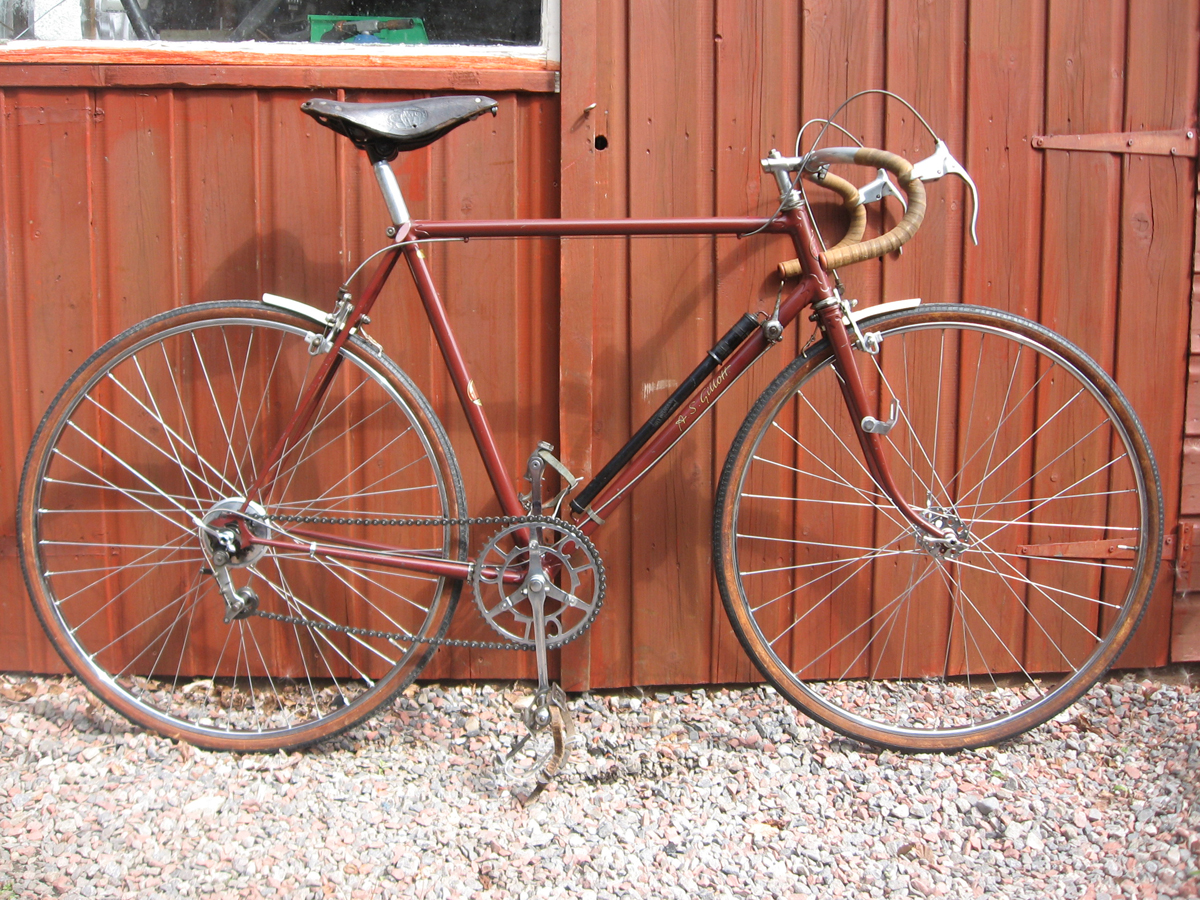
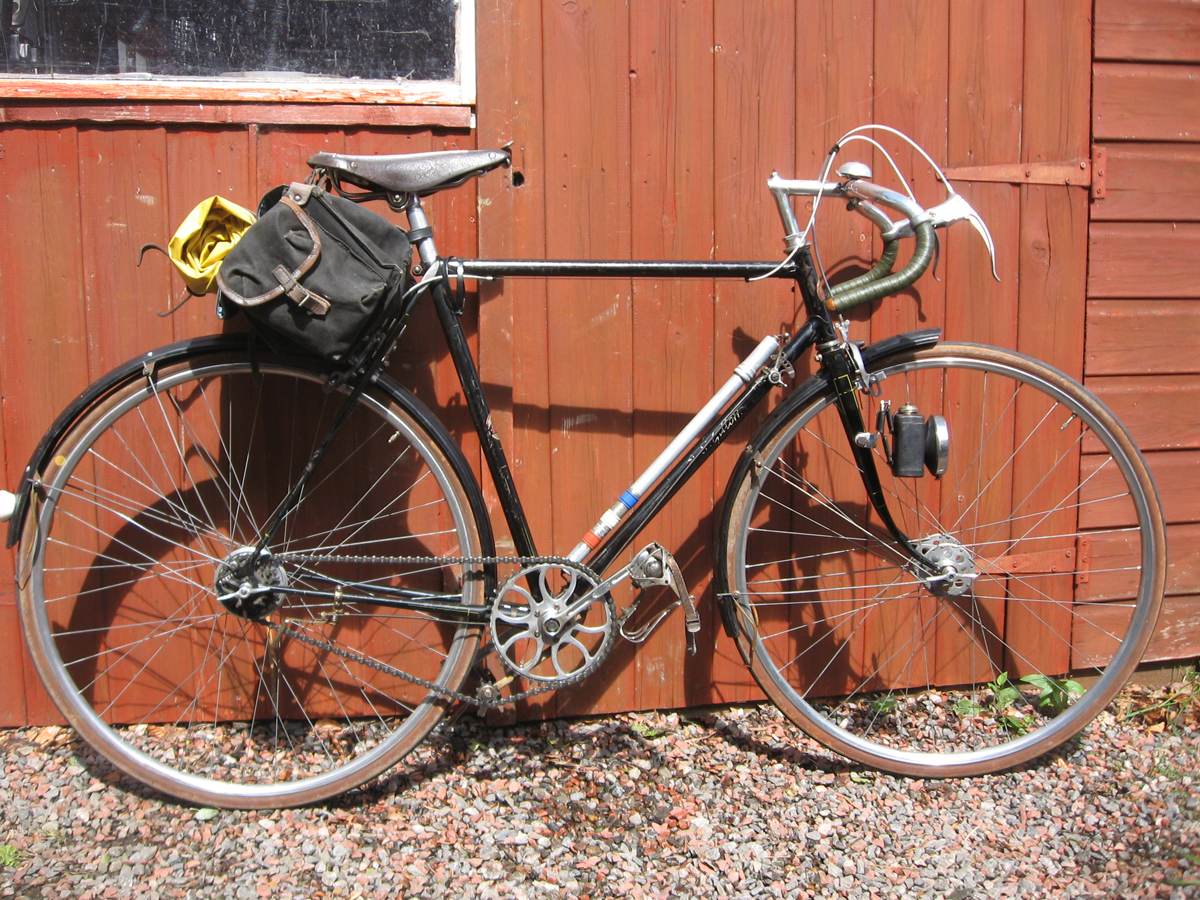
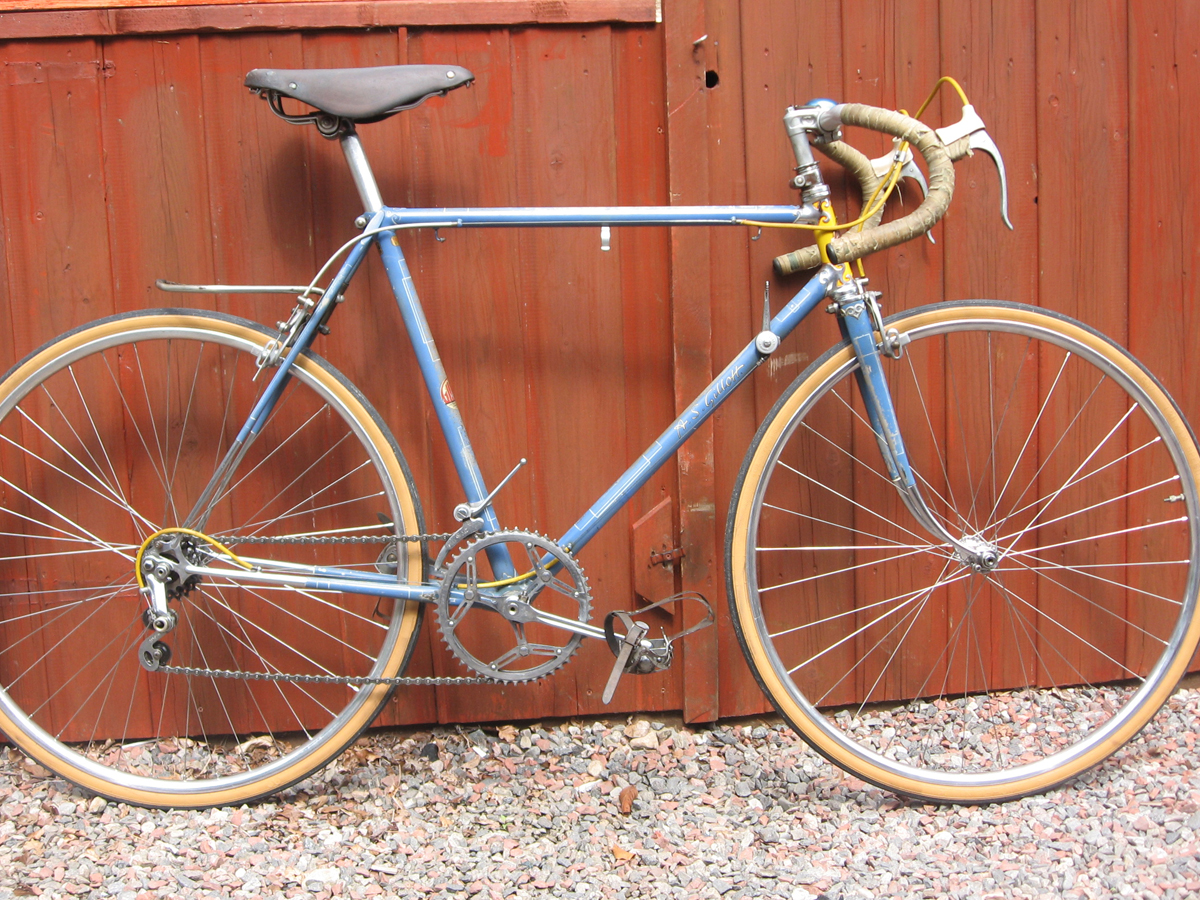
1946 A.S. Gillott. Serial #94636, indicating that it’s the 36th frame built. Simplex Champion Mondiale components. Photo by Mark Stevens.
By the early part of 1943, most of the day-to-day business operations effort was taken over by Harry Carrington, as Mr. Gillott was in ill health. Around this time Mr. Gillott signed over 49% of the business to Harry.
In 1945, Harry developed a keen interest in the development of lightweights, and felt the company had to move into the framebuilding market in order to flourish. To this end, he employed a builder by the name of Jim Collier (rescuing him from doing war work at Woolwich Arsenal) and commenced frame construction, concentrating mostly on the needs of local clubmen and racing time trialists (“testers”), as did most specialists at the time.
1949 A.S. Gillott Spear, fitted with Osgear and a Hurtu chainring. Photo by Mark Stevens
Up until this point, 177 Southampton Way was the stockroom, but then became framebuilder Jim Collier’s workshop. Before the war, Collier had been a framebuilder at Hobbs of Barbican, another classic British frame company.
The first Gillotts were produced in 1945 and carried frame number 945–. The earliest registered A.S. Gillott is number 94631, the 31st frame built in 1946.
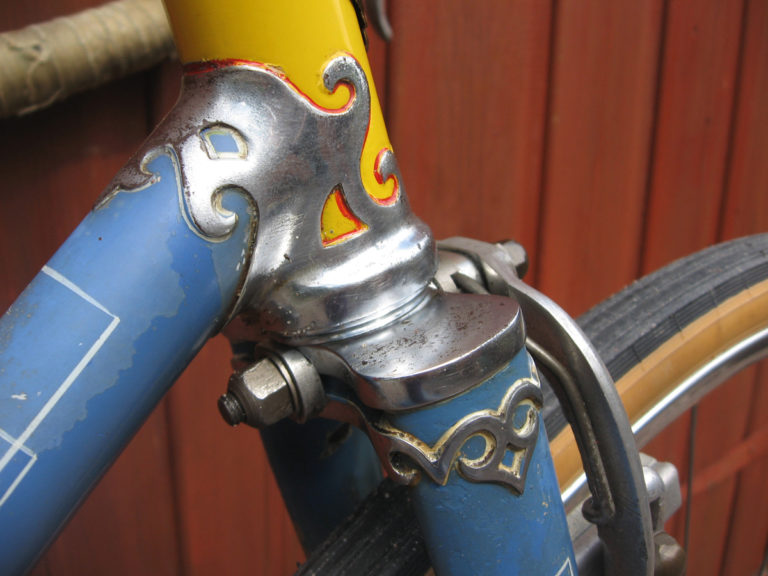
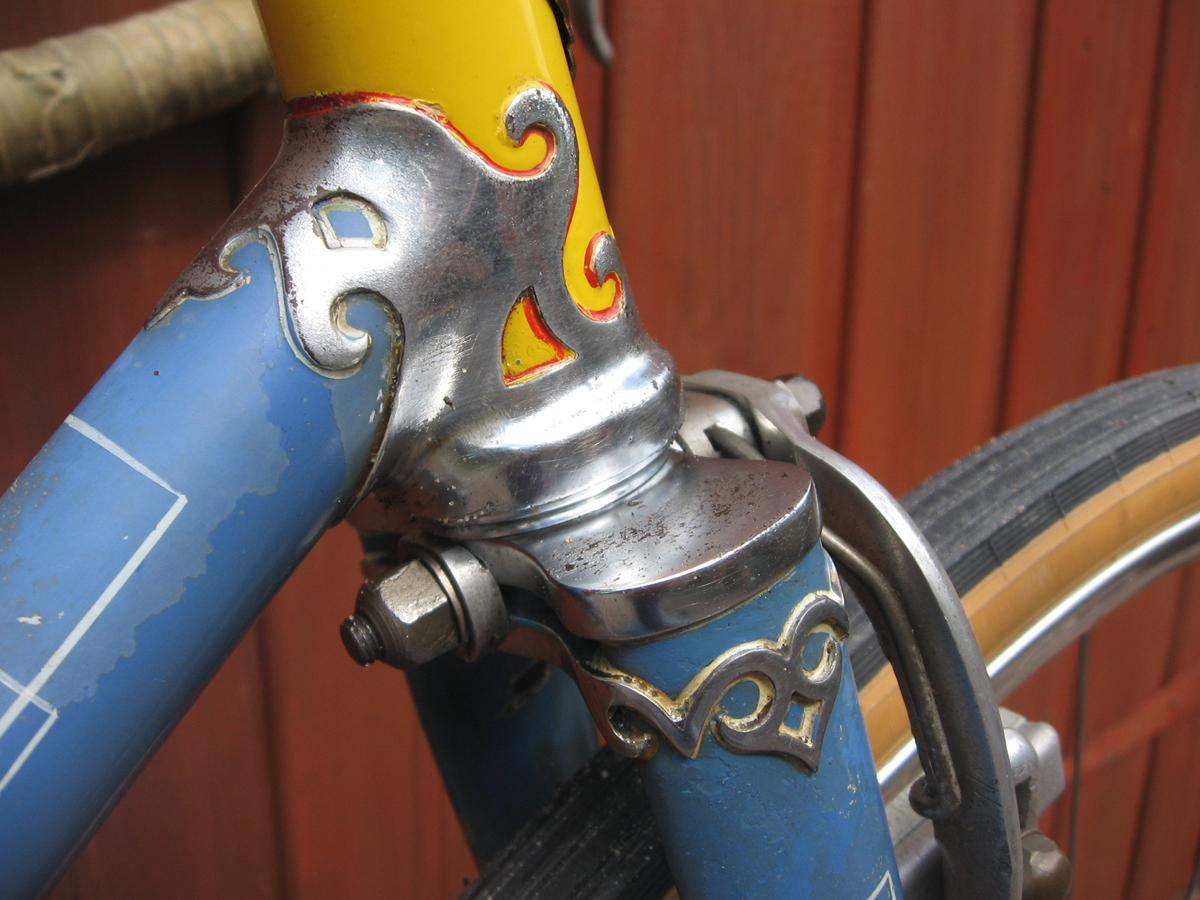
1950 A.S. Gillott “Fleur-de-Lis”. Photo by Mark Stevens1950 A.S. Gillott “Fleur-de-Lis” headtube detail with “filigree” fork crown. Photo by Mark Stevens
Harry was a stickler for detail and had a keen eye for what was right in a frame. The frames they were building at this time were inspired by best continental practice including mandrelling the lugs to the desired angles. The lugs were initially made by Vaughans of Birmingham and were full of hard inclusions. Oscar Egg lugs became available circa 1949-50.
Also working in the shop at this time were a pair of gentlemen named Len—Len Truman, a talented framebuilder who would likely be better known were it not for some unfortunate personal issues; and Len Hart, mechanic and lug filer (the unsung heroes of all fancy lugged frame suppliers). Bill Philbrook and George Holt were also members of the A.S. Gillott staff at the peak of production, around 1950.
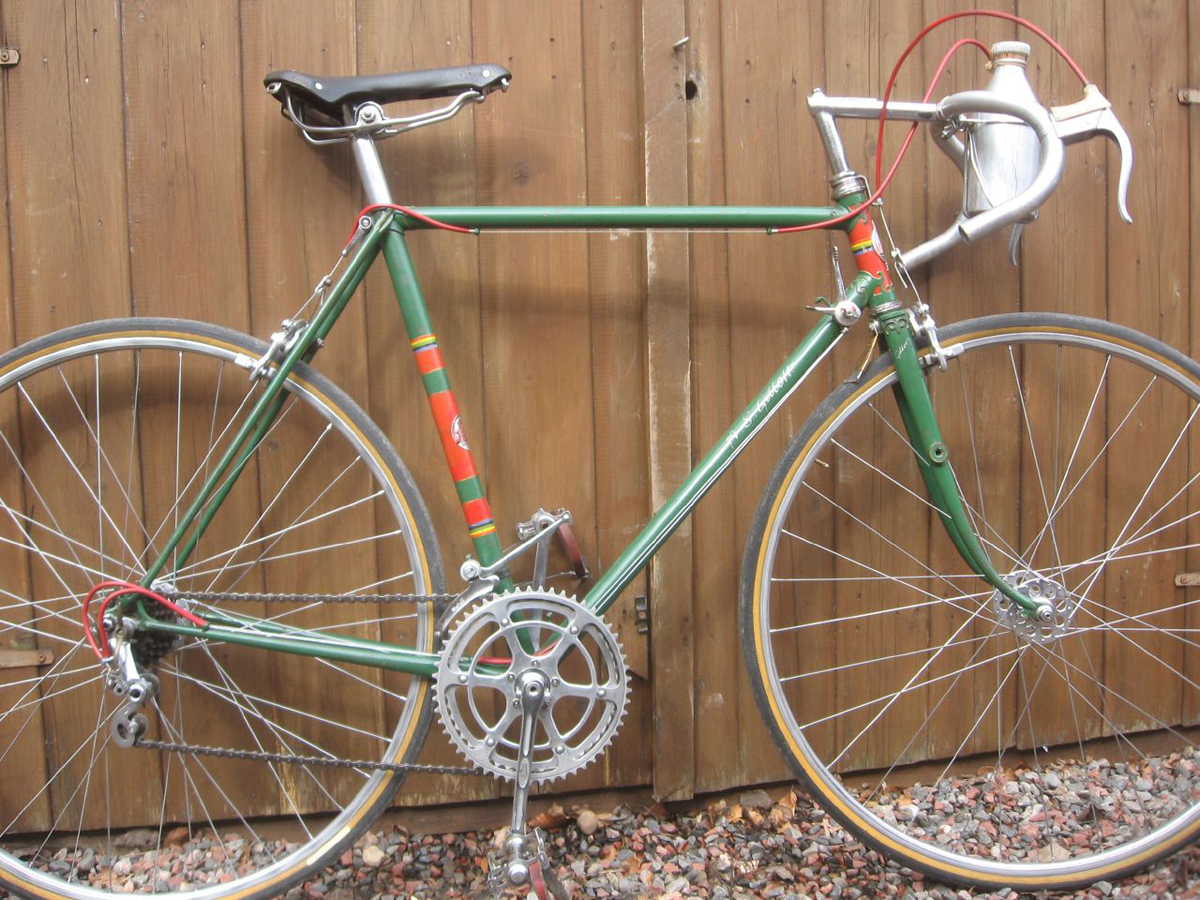
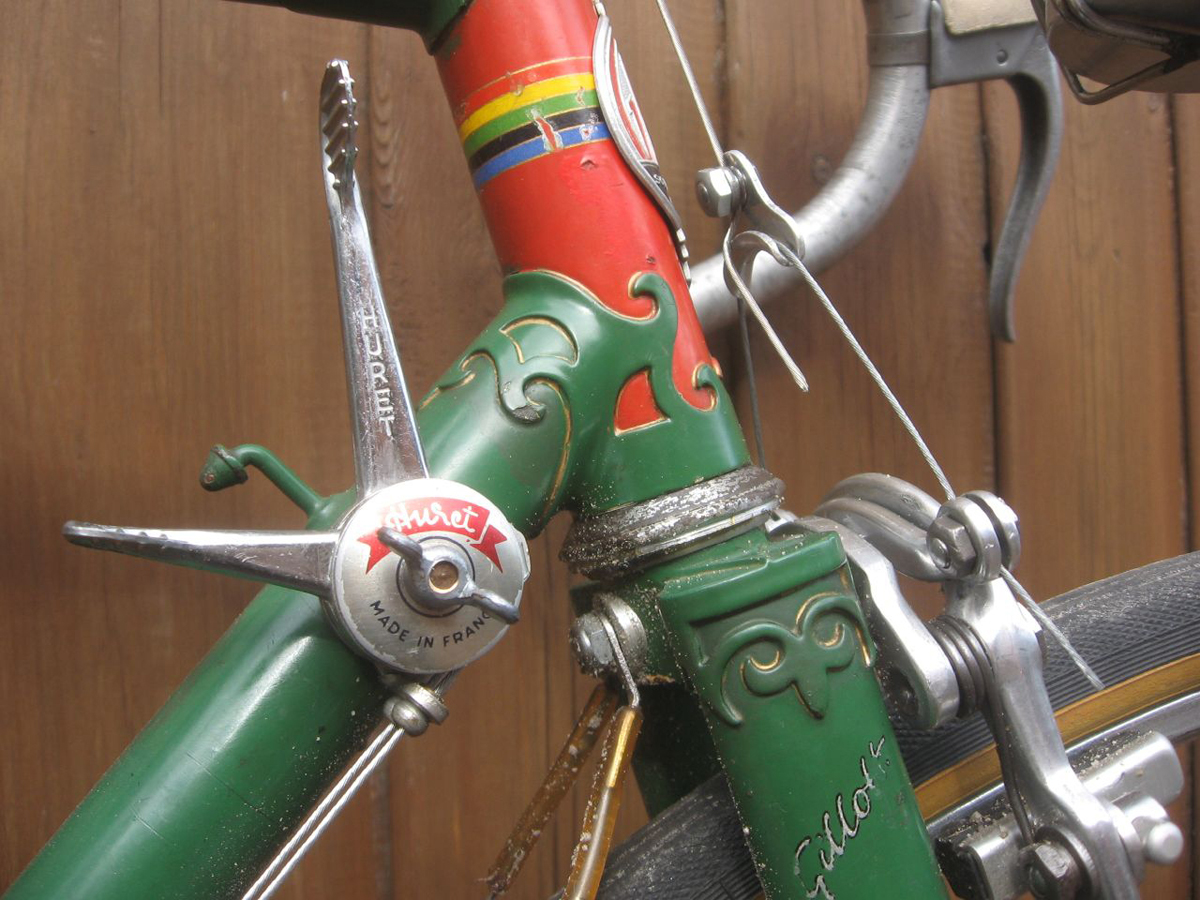
1955 A.S. Gillott “Fleur-de-Lis” in original paintwork, built with Huret components. Photo by Mark Stevens1955 A.S. Gillott “Fleur-de-Lis” in original paintwork. The Olympic band around the headtube is a paean to Louison Bobets’ Tour de France winning machine. Fork crown and twin Huret lever are noteworthy. The control lever boss is unusually close to the head on this frame. Photo by Mark Stevens
By contemporary standards, the frame building business was very successful, and reached frame number 1000 in 1949. As a consequence, the ‘9’ had to be dropped from the stamping to allow room on the dropouts for the serial numbers to continue to fit. In 1951, the numbering moved to the bottom bracket to allow for future room.
By 1967 it had reached over 6000. All the frames built from 1945 to 1967 were made at the shop in 179 Southampton Way, S.East London; itself a heritage building of the Victorian period. One former tenant of the building was the famous poet Robert Browning.
In 1947, Ron Cooper joined the firm as an apprentice, and worked to craftsman status in just a few short years training under Jim Collier. All the employees at Gillott’s, including the one-armed Ron Brown, were racing men, and had a profound influence on Cooper, who stayed with A.S. Gillott through the late 1960s.
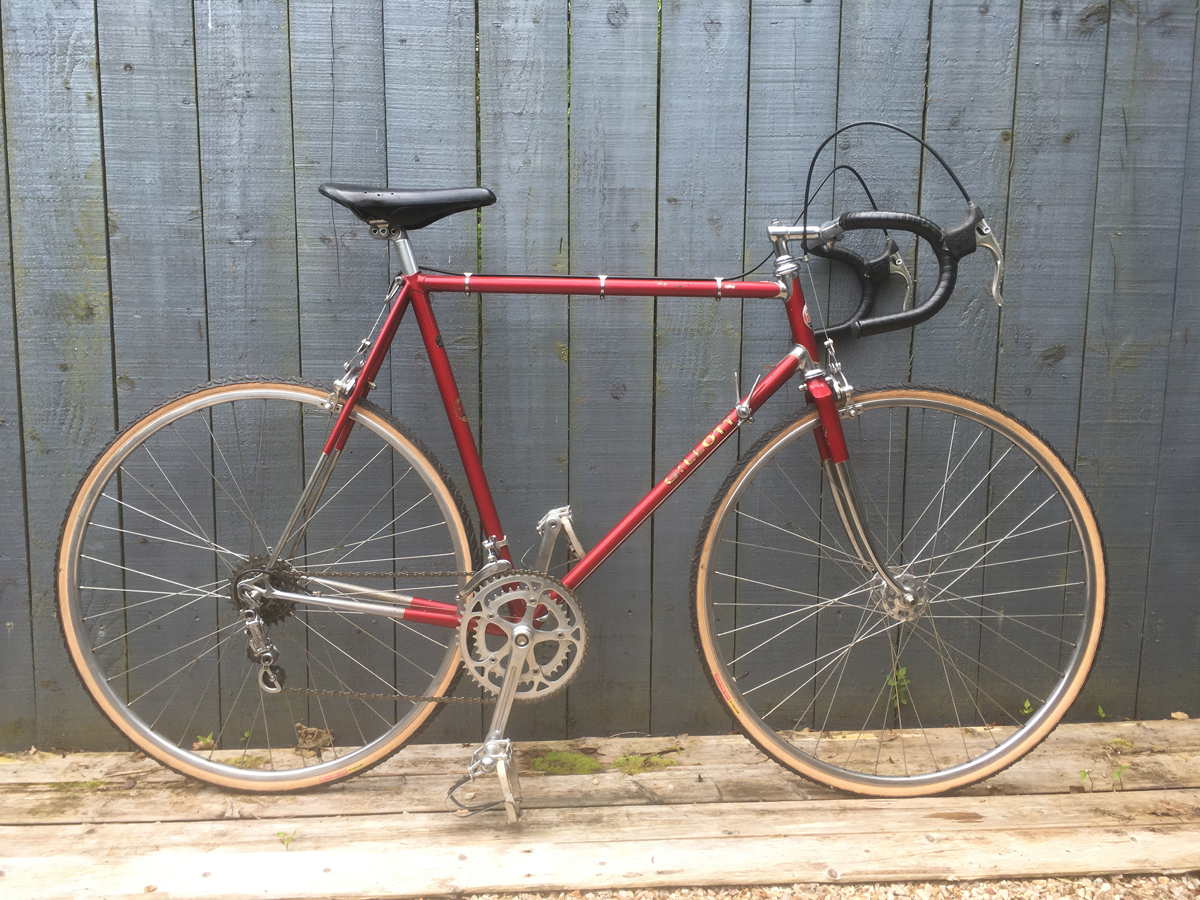
1969 A.S. Gillott Italo, built by Ron Cooper. It has an unusual Fastback treatment, short wheelbase and the top tube slopes down forwards, a Continental trend at the time. Cinelli crown. It came back to Edwardes (or Ron Cooper’s) in the mid 70’s and carries the “Renovated by Gillott” transfer, built with period Zeus components. Photo by Mark Stevens
Upon the death of Arthur Gillott in 1957, Harry Carrington took over the business entirely, buying it from Gillott’s widow.
The finish of the early Gillotts was usually stove enamel, or flamboyant (“flam”) finish, nothing elaborate, generally a simple one-color or paneled design. Use of chrome was discouraged, as it was felt the chroming process would weaken the delicate brazing, and the incidence of hydrogen embrittlement dictated caution.
Transfer sets included the downtube script “A.S. Gillott” and an Art Deco style round headbadge, although the block letter “A.S. GILLOTT” transfers more commonly seen in the 1970s were available as early as 1952. They made a complete line of track irons due to their proximity to Herne Hill. They also produced a number of tandem, cyclocross, grass track, and touring cycles, along with a few trikes, but these were a secondary product line to their road and track cycles.
According to A.S. Gillott enthusiast Ken Denny, “The nicest Gillotts are the early ones from 1947-52. These used the high tolerance Oscar Egg spear-point lugs, and wonderful sweeping fork blades, on both oval and round. At this time they also produced frame with tapered tubes and ‘British Made’ bottom bracket sets.”
Numbering in this fashion continued into the mid-1960s when the firm was taken over by Edwardes of Camberwell (221 Camberwell Road, S.East London).
After the sale of the company to Edwardes of Camberwell was completed, Harry Carrington stayed on as manager until 1966 and tried to make a go of it, but left because Edwardes were respraying all sorts of mass production bicycle frames and badging them as Gillotts. They also reneged on a payment and altered copy of a catalogue Harry had spent much time on.
Ron Cooper continued building for A.S. Gillott / Edwardes of Camberwell off and on through the 1960s as orders began to dwindle, until he ultimately left Edwardes in 1967. As such, Ron built the vast majority of the A.S. Gillott frames from the late 1950s through the 1960s, the latest confirmed frame being #686037, which indicated that it was built in 1968, and was the 6037th frame built to date. There is supposed to be an A.S. Gillott Fleur-de-Lis track bike built in 1969, but it’s not listed in the A.S. Gillott register.
By November 1970, Ron started his own shop at Honor Oak, S.East London.
According to a number of sources, Harry destroyed all the previous company records. It has been said that he didn’t wish to pass any company information to the new owners for two reasons: because the heirs to the Gillott estate (Mr. Gillott’s sisters) allegedly prohibited it; and because Mr. Carrington felt that the new Gillott designs would be lacking in integrity if he no longer had a hand in the operation and quality control.
He therefore did not want the same frame designs, serial numbers, etc. to be passed on, and thought that the new owners should start from scratch. However, A.S. Gillott frames built by Ron Cooper from 1966 were still in sequence. Around the same time, the graphics were officially revised from the traditional A.S. Gillott script to the more “modern” A.S. GILLOTT block letters.
According to Mark Stevens, the A.S. Gillott Marque Enthusiast at the Veteran-Cycle Club, in later years, Harry claimed that he did not destroy the records, although no one was able to confirm this.
According to Terry Lack, who spent 12 years at Edwardes of Camberwell, Witcomb Cycles, Deptford, made the frames from 1972 until approximately 1974. Mark Stevens, the A.S. Gillott Marque Enthusiast for the Veteran-Cycle Club, says that batches of frames were also brought in from Holdsworthy and Raleigh in the early 1970s.
During this same period a young Richard Sachs was at Witcomb Cycles, learning the basics of framebuilding from Jim Collier, the former A.S. Gillott framebuilder who trained Ron Cooper during his apprenticeship. By this time, Collier was at least in his 60s, if not older, still building a frame a week, and still never seeming ready to be done with it all.
Because of his time at both A.S. Gillott and Witcomb Cycles, Jim Collier has the distinction of training both the top British and the top American framebuilders.
Harry Carrington, who until his later years lived in Honor Oak, S.East London, near Ron Cooper’s original shop at 49 Honor Oak Park, passed away on June 29, 2007 at his residential home in Peterborough, at the age of 96.
[Editor’s Note: This history could not have been without the assistance and contributions from Mark Stevens, Ken Denny, Chuck Schmidt, Terry Lack, Bruce Robbins, and other members of the Classic Rendezvous mailing list.]
By Charles Pekow — Riding your bike on the road or across the railroad tracks may get safer.
First, the Federal Highway Administration (FHWA) plans to revise the Manual on Uniform Traffic Control Devices for Streets and Highways, the nationwide standards for street signs and markings.
FHWA is proposing final standards for pedestrian-actuated rectangular rapid-flashing beacons at uncontrolled marked crosswalks and green-colored pavement for bicycle lanes. Currently, interim regulations govern them.
The agency says revisions will boost bicycle safety “with traffic control devices to improve safety and operation for bicyclists, including intersection bicycle boxes, two-stage turn boxes, bicycle traffic signal faces, and a new design for the U.S. Bicycle Route sign.
Among many other proposals, the revision would add language on expectations of bicyclist behavior and encourage use of EXCEPT BICYCLES signs where traffic restrictions don’t apply to them.
Meanwhile, the Federal Railroad Administration ordered states to develop or improve (if they already have one) their train track crossing safety plans and to consider bicyclists in their “action plans” to improve safety. The order complies with a mandate in the Fixing American’s Surface Transportation (FAST) Act.
The new rule, which took effect in January, requires states to consider bicycles “highway users” when compiling accident/incident data. It also requires states to consider at-grade bikepaths in their safety plans.
April 8, 2021 – Move Utah, the UDOT program for Active Transportation and Active, Healthy, and Connected Communities, is having a Utah Bike Month Poster Contest. Note that the contest closes on April 11, 2021.
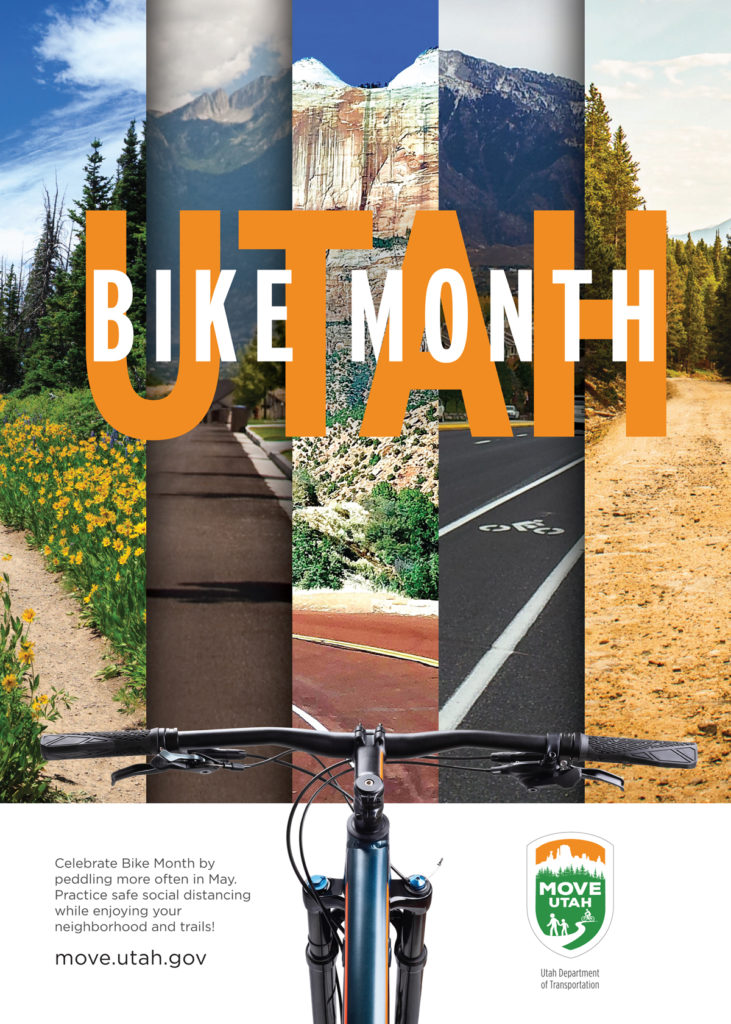
Celebrate Bike Month in May! 2020’s Utah Bike Month poster.
The winner of the contest will get a $250 prize. They state,
“Each year during National Bike Month, Move Utah and the Utah Department of Transportation promote biking in Utah by encouraging people to get out and pedal more during the month of May.
This year, you can join in the fun by creating our Bike Month poster. We’ll send the winning submission to 2,000+ businesses and organizations statewide. In addition, the poster theme may be used throughout all bike month promotion, including the Bike Month Strava Challenge, social media promotion, Zoom and Google Meet backgrounds.
The first-place winner will receive a $250 cash prize. Second place will receive $100.”
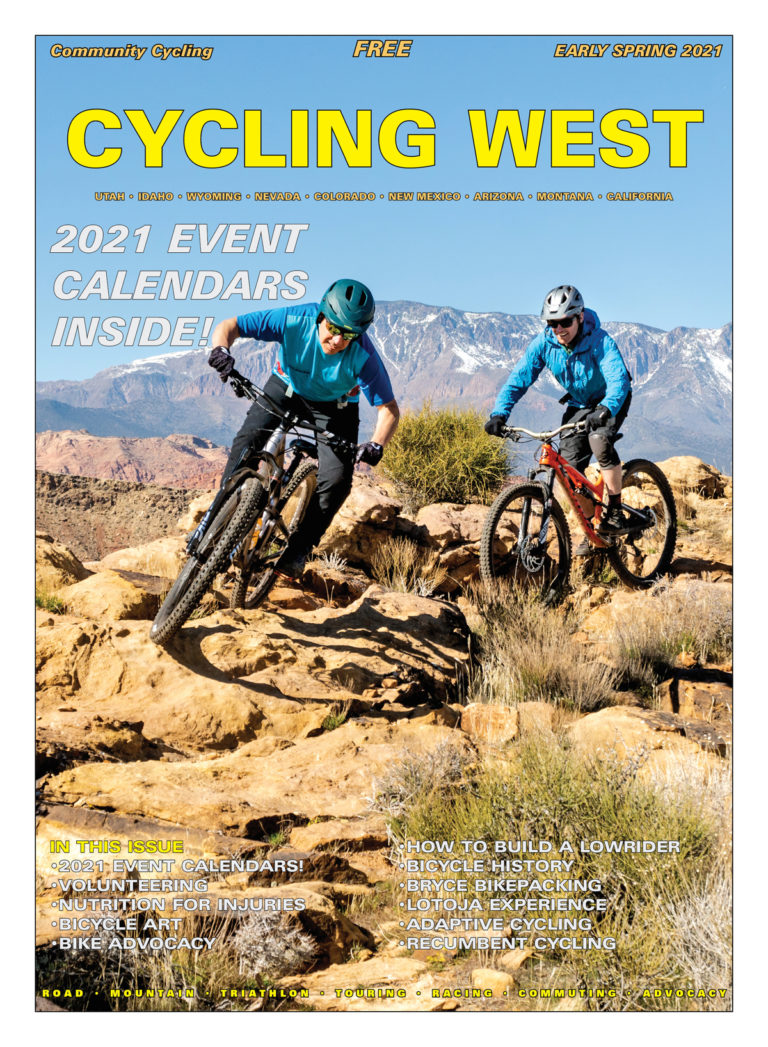
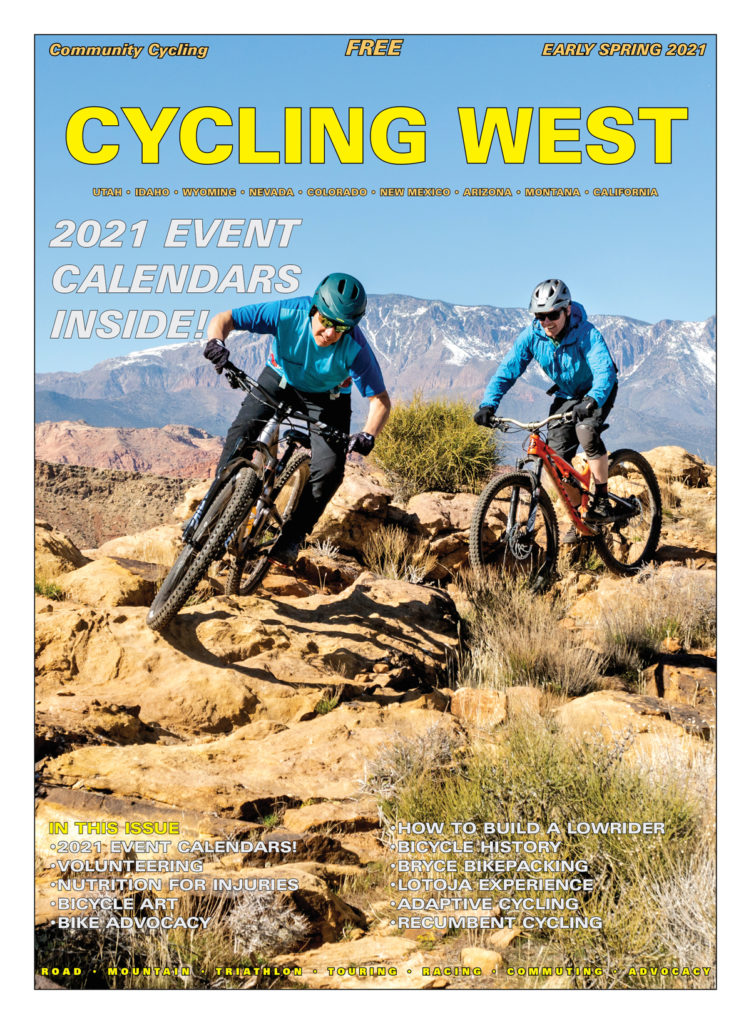
Cycling West and Cycling Utah Magazine’s Early Spring 2021 Issue is now available as a free download (14 MB download). Pick up a copy at your favorite Utah, Idaho, Wyoming, Nevada, Montana, Colorado, Arizona, New Mexico and Northern California bike shop or other location.
Cycling West Early Spring 2021 Cover Photo: Over the Edge, Hurricane’s service manager, Todd Cramblett, followed by Jonathan Morgan, Assistant Director of Alta Ski Area’s Avalanche Office, on the Boy Scout Trails in Hurricane, Utah. This photo was taken last February, before we knew anything about a pandemic. Since then, both Todd and Jonathan needed surgery after mountain bike crashes. Todd is back on his bike now and Jonathan will be riding again soon, as well. Everybody takes a turn on the injured list. Photo by John Shafer, Photo-John.net
Contents
Volunteering During the Pandemic: Doing Good and Staying Safe — page 3
A New Perspective: How Adaptive Cycling Can Impact Lives— page 6
Charly Wegelius’s Domestique Is No Fairy Tale — page 7
Life at a 45-Degree Angle — page 7
States Incorporate More Local Bicycle Data in Transportation Studies — page 7
Bryce Gravel Getaway: A Gravel Touring Gem — page 8
Athletes, Injuries and Nutrition — page 9
Triathlon Tips: Brick Workouts — page 9
So You Want to Build a Lowrider — page 10
Complete Streets Mean More and Better Bike Riding — page 10
DNA Pro Cycling Team Announces 2021 Roster — page 11
Bicycle Safety Improvements Proposed by Federal Government — page 11
Nancy, do you offer different nutrition recommendations for elite athletes as compared to recreational exercisers? I am highly competitive, work out intensely, and often wonder if I am eating to be the best athlete that I can be.
Answer: My nutrition recommendations are based on the assumption we all want to get the most benefits from our workouts so we can perform the best we can, given the effort we are willing to invest. The following describes the different recommendations I might make for serious athletes, as compared to recreational exercisers.
Keep in mind, each athlete / exerciser is unique and I do not use a one-diet-fits-all approach. Rather, I encourage my clients to be curious and experiment with a variety of foods and fueling practices, and learn what works best for his or her body. Maybe some athletes do perform better with more fat than carbs, or more beef than beans? Sports nutrition is a new science. In ten years, with the coming of personalized sports nutrition based on genetics, sports dietitians will likely be able to help athletes even more. Til then, here are my science-based recommendations.
Carbohydrate requirements
Carbohydrate needs vary according to how hard and how long you exercise. In this protein- and fat-praising era, the biggest deficiency I see among sportsactive people is carbohydrate. Your goal is to consume adequate “quality carbs” (grains, fruits and veggies) to fuel your muscles and prevent “dead legs.” Elite athletes who burn a lot of calories often find it hard to consume adequate carbohydrate without balancing in some sugary “fun foods.” (up to 10% of calories. These are the carb guidelines:
Amount of exercise/day
gram carb/lb. body wt.
gram carb/kg body wt.
1 hour moderate exercise
2.5 to 3
5 to 7
1-3 h endurance exercise
2.5 to 4.5
6 to 10
>4-5 h extreme exercise
3.5 to 5.5
8 to 12
For a 140-lb recreational exerciser who trains moderately hard for an hour a day, this might be 350 g carbs (1,400 calories) For the competitive athlete who works out harder and longer, this might be 630 g carb (2,500 calories) a day. Divide that into 3 meals (400-800 calories from carbs/meal) and 2 snacks (100-200 calories from carbs/snack). Start reading food labels to see how well you do! You’ll discover a chicken Caesar salad for lunch doesn’t hit the target.
Protein requirements
A competitive athlete who has fully developed musculature might actually utilize less protein than a novice exerciser who is building new muscle. The small difference in protein needs tends to be moot, however, given that most athletes consume more protein than they need (assuming they are not restricting calories, in which case protein needs increase while food intake decreases. Some of the protein consumed to build muscle gets diverted to fuel muscles instead of build and repair muscles.
Protein needs/lb. body wt.
Protein/kg body wt.
Recreational exerciser
0.6-1.0 g
1.2-2.0 g/kg
Competitive athlete
0.6-0.8 g
1.2-1.7 g/kg
Note: If you are significantly over-fat, your protein needs should be estimated using an adjusted body weight. This weight might be halfway between your goal weight and your current weight. For example, if you weigh 200 pounds but 160 is a better weight, base you protein needs on 180 pounds.
Competitive athletes can easily meet their protein requirement by targeting about 20 to 30 grams of protein per meal and 10-20 grams/snack. No need for supplements! The protein in real foods is more effective than from supplements, because natural foods offer a complex matrix of nutrients that interact in a synergistic effect.
Fluids
Competitive athletes can lose a lot of sweat when exercising for hours on end. But so can recreational exercisers who are out of shape and pushing themselves hard. That’s why everyone who sweats heavily wants to learn his or her sweat rate. You can learn this by weighing yourself (without clothing) before an after you exercise for an hour at XX pace and in XX degrees of heat or cold. For each pound lost, you are in deficit of 16-ounces of fluid. Drink enough during exercise to minimize this deficit, and throughout the day, your goal is be able to void light-colored urine every 2 to 4 hours. (No need to pee every 1/2-hour; that’s excessive.
Electrolytes
Most recreational exercisers don’t exercise long enough to have to worry about replacing electrolytes (generally called minerals: potassium, sodium, magnesium, calcium). Food is loaded with electrolytes. If you want some potassium, eat a banana. If you want some sodium, shake salt on your oatmeal or pasta. Choose (chocolate) milk over Gatorade for an electrolyte-filled recovery drink.
Highly competitive endurance athletes who are exercising for more than three hours in the heat can benefit from supplemental sodium if they are not eating electrolyte-containing food (PB&J sandwich, energy bar, etc.) while exercising. They want to add extra salt to their pre-exercise food (helps retain water and delay dehydration) and consume salted foods/fluids during extended workouts. Popular choices include endurance sports drinks, broth, jerky, salt, and commercial salt replacers. If you are craving salt, consume salt! Afterwards, most sweaty athletes intuitively seek salty chips, soup, pickles, pasta sauce, or simply sprinkle lots of salt on their recovery meal.
Pre-exercise
Fueling up before your workout adds pleasure to the workout as well as enhances your ability to perform at your best. Recreational exercisers, in particular, want to know they should appropriately eat 200 to 400 calories within the hour before they workout. They need to teach their intestinal tract to tolerate this fuel. They’ll stick with the exercise program much more when they have the energy to enjoy the workout! Here are the pre-exercise fueling guidelines:
Competitive athletes also benefit from fueling up pre-exercise. That said, “training low” (exercising on empty) once a week or so can trigger adaptations that might help pull them through the end of a competitive event when they are “gassed” and “running on fumes.”
Recovery
Are “old fashioned” orange sections OK after a highly competitive soccer game? Or are they just for kids who play recreationally?
Recreational exercisers who workout three or four times a week are unlikely to deplete their muscles of glycogen, and if they do, they have another 24 to 48 hours to replenish them. Muscles stay in muscle-building mode for the next 24 to 48 hours after a weight-lifting session. Recovery nutrition can easily be handled by backing the workout into a meal.
Competitive athletes, in comparison, want to rapidly refuel, particularly if they will be exercising within the next 6 hours, be it in a tournament situation or a simply doing a second workout that day. The sooner they eat, the sooner they replenish depleted glycogen and water. That said, once a week or so, highly competitive athletes might want to purposefully avoid refueling with carbohydrate so they train depleted the next (low quality) workout session. Doing so can trigger metabolic adaptations that can be helpful at the end of a competition.
Weight
Recreational exercisers commonly train with a goal of losing undesired body fat. If exercise contributes to creating a calorie deficit for the day, the person will lose weight. However, some recreational exercisers report exercise makes them hungry, so they end up eating enough to stay in energy balance (and maintain weight). Or, they become more sedentary the rest of the day. (“I worked out today and now I feel like reading a good book instead of cleaning the house. I’ll clean tomorrow…”) Competitive athletes who struggle with weight need to assess the cost of losing a few pounds of fat (poorly fueled muscles?) vs. the benefit of being lighter. The desired number on the scale may not be easily attained if the athlete is already far leaner than others in the genetic family. how to best lose weight deserves a personalized conversation with a sports dietitian.
Vitamins
Vitamins get re-used, like spark plugs in a car. Hence, exercise does not leave athletes “depleted” nor in need of vitamin supplements. Whether you are a recreational exerciser or a competitive athlete, you want to look to food as your primary source of nutrients. The good news is, the more you exercise, the hungrier you get and the more vitamins and minerals (electrolytes) you consume. For example, one stalk of cooked broccoli offers 100% of the vitamin C you need for the day. Most hungry exercisers devour two or three stalks of broccoli, no problem.
Of course, there are exceptions to every rule. Vegans can benefit from B-12, D and iron. Females who do not eat red meat might benefit from supplemental iron. A sports dietitian can give you a “nutrition check-up” to help you learn how to consume the nutrients you need from quality foods. You can then figure out if you want to buy supplements for “health insurance” (and expensive urine).
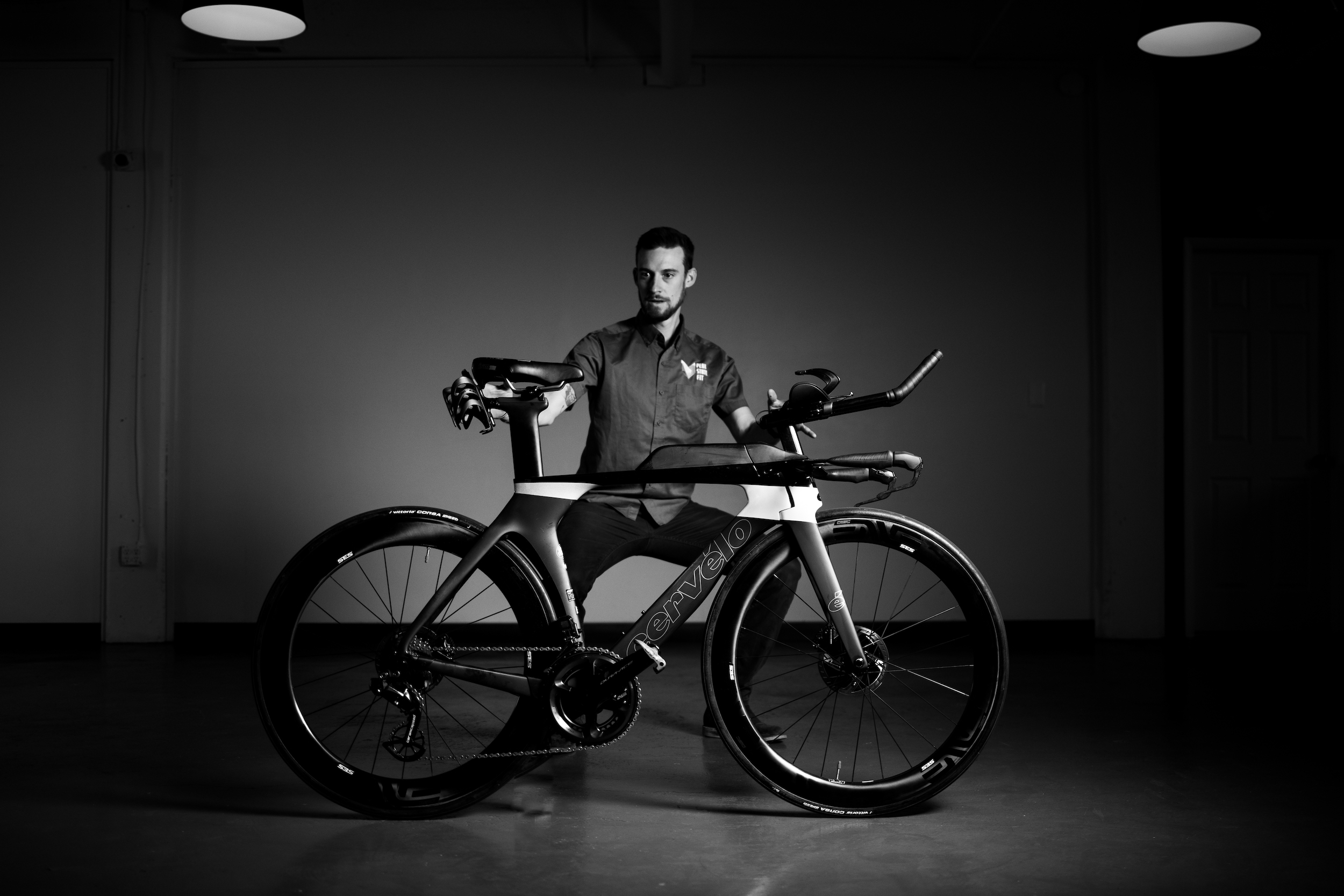
Team USA Coach Pat Casey of Peak State Fit, Salt Lake City will host an event for cyclist and triathletes week of April 5-12th in St. George.
SALT LAKE CITY, Utah (April 2, 2021) — Peak State Fit, a nationally recognized sports performance company specializing in professional bike fitting and metabolic testing announces a special event for Southern Utah athletes looking to optimize their training.
Peak State Fit is offering Bike Fitting and metabolic testing services in St. George, Utah between April 5 and April 12, 2021. Coaches Pat and Heather Casey are professionally trained and certified by Retul Technology, IOG, Ivan O’Gorman andPrecision Fit education by Trek Bikes in Madison Wisconsin.
In November 2017, Pat was accepted to receive his USAT Level 2 Certification at the Olympic Training Center in Colorado Springs. Pat was hired as Head Coach with USAT for Team USA, and was selected to coach the Duathlon and Cross Triathlon Age Group teams competing at the World Championship Festival Fyn, Denmark. He then served as Head Coach for all multisport teams at the World Championship Festival in Pontevedra, Spain in 2019. He will return as Team USA Age-Group Coach for the 2021 World Championship Festival in Almere, Netherlands.
Photo courtesy Peak State Fit
Their unique fit approach provides an encompassing, comprehensive, and pragmatic service to addressing each athlete’s anatomical characteristics, functional imbalances and movements, strengths and weaknesses. Pat Casey begins with a discussion about your goals, previous injuries, and known imbalances or weaknesses. Pat’s background in strength and conditioning, corrective exercise, and mobility allows him to readily apply this information to culminate with your optimal position on the bike, all while providing an experience that’s interactive and educational. You will leave with an improved knowledge of why your body moves the way it does, and a roadmap to help you to move better both on and off the bike!
“Pat Casey was so friendly, professional, and has clear expertise in all things cycling! He was able to analyze and adjust my bike to get the most effective output for my effort. Since the fitting I have experienced reduced numbness and pain in my hands, more comfortable riding, and the ability to ride longer/farther than I was. I would highly recommend Peak State Fit!” – Heidi Trimble
Visit PeakStateFit.com for more information about this event.
By John Higgins — If you have ever had the opportunity to attend the North American Handmade Bicycle Show (NAHBS), you may have had your eyes opened to the possibility of a new bike, made just for you. A custom handmade bicycle is the pinnacle of bicycle ownership for many riders, and the cost is comparable to what you would pay for a premium model from a major manufacturer, or less!
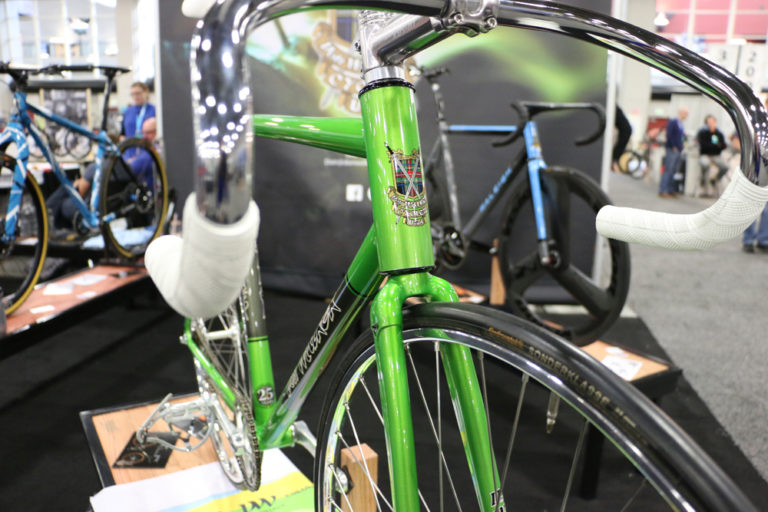
This Don Walker handmade track bicycle was one of hundreds of incredibly beautiful handcrafted bicycles at the 2017 NAHBS. Photo by Dave Iltis
Don Walker, frame builder and the show organizer, gave two criteria for defining a “handmade” bicycle:
production of the bicycle does not start until after the customer places an order (i.e. the bike is not yet made), and
traditional building methods are used, that are hands on. There is no robotic welding, assembly, or mass production techniques used.
Furthermore, you get to have considerable input into the look, feel and selection of parts for the bicycle.
Handmade is often synonymous with “custom”, and if you are thinking custom, this needs to be defined. Not all handmade frame builders offer the same level of customization. Custom can refer to:
Frame material selection (steel, titanium, carbon) and tube joining (e.g. lug or fillet)
Geometry and sizing, specifically for your measurements
Paint job / graphics
Components (drivetrain, wheels, etc)
Most builders specialize in using a single frame material, and in choosing the frame builder, you are choosing the material. Typically you get a choice of component packages, or can specify exactly what you want, as well as the color of the bike. However not all handmade builders offer custom geometry. That is not an issue if you fall in the middle of the bell curve for your height, weight, proportions, health and your riding style. But if you are an outlier who has trouble getting well fitted on a stock production bicycle, you are a potential candidate for custom geometry.
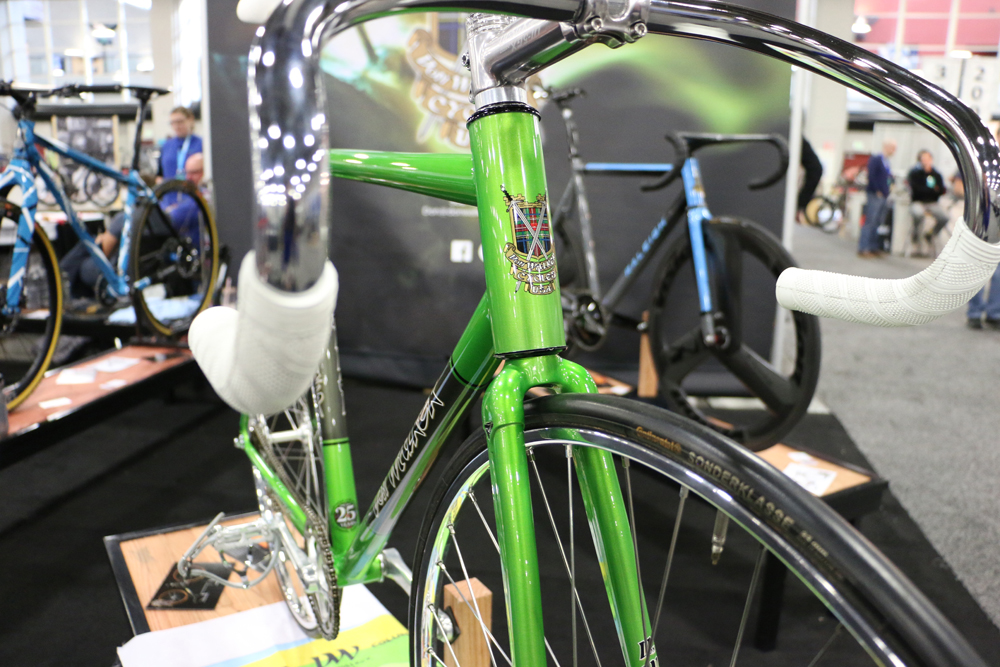
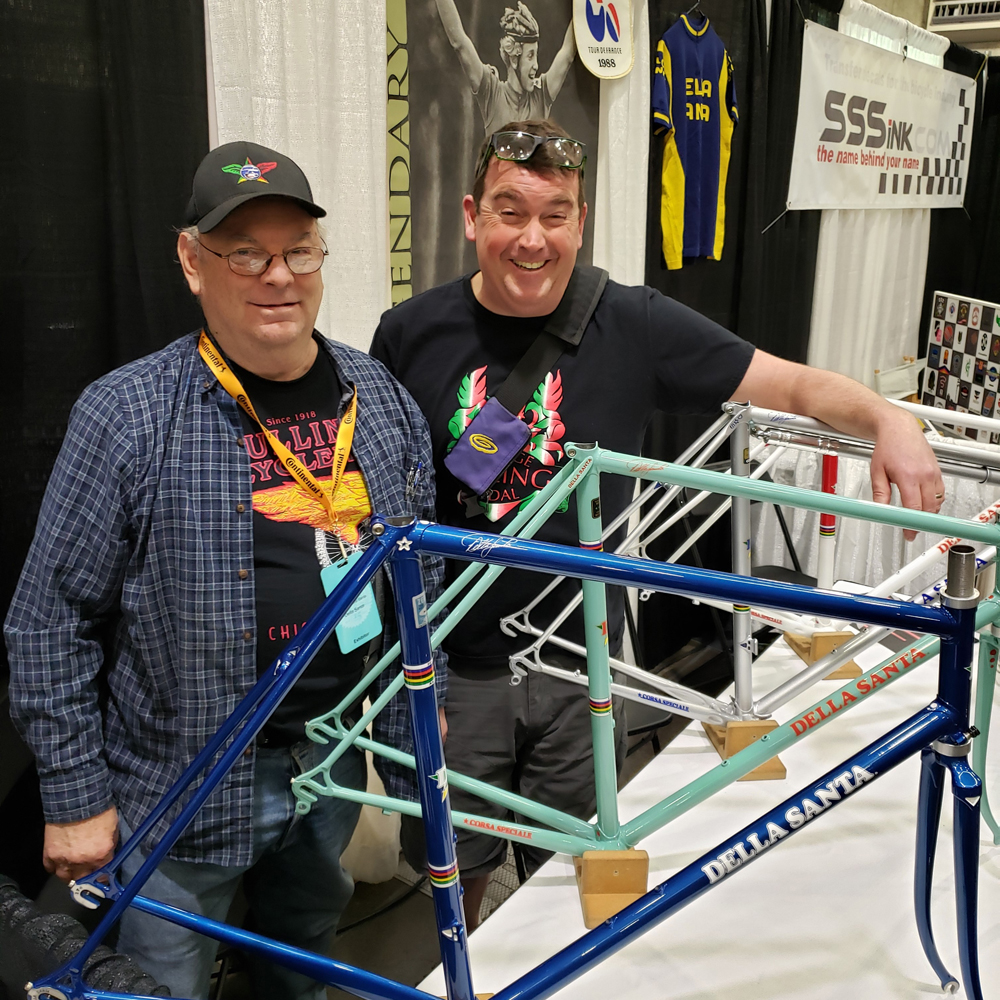
Della Santa shows off their beautiful steel bikes. 2019 NAHBS. Photo by Patrick Walsh
Frame builders with a long established reputation like Richard Sachs and Roland Della Santa make a signature frame, and you are buying that frame geometry and their craftsmanship in making it. Customization is limited. Other frame builders go to great lengths to understand what you experience while riding, your future intentions, and design a bike that is exquisitely built for you.
[Editor’s Note: Roland Della Santa sadly passed away in May 2019, two years after this article was originally written.]
All frame builders want to make sure you are riding a bike that is the correct size and shape for you, but they are not pretending it will be a perfect fit on arrival. Dialing in your fit happens after you have your new dream machine, but the frame builder wants to make sure this is easily achievable. To ensure the right size, and a good fit, the frame builder is going to want to gather information from you. In 2017 walked the aisles of the NAHBS show in Salt Lake City, Utah for 2 days asking frame builders what information they wanted from a prospective customer to ensure they built the right size bike.
Matthew Nelson shows off one of his new SaltAir bicycles.
As expected, answers varied but there were some consistent and recurring themes. Frame builders want to know where you bike-body contact points are in relation to each other when you are in a riding position that feels great. Ideally this comes from a “reference bike” i.e. a bike that you feel great on when you ride. If you have a reference bike the 4 key measurements, which you can obtain yourself are:
Saddle height (from bottom bracket)
Saddle set back (tip of saddle nose behind bottom bracket)
Saddle nose to center of handlebar at the stem clamp
Saddle to bar drop (height of the top of the bars relative to top of saddle)
Alternative measurements to these are: Handlebar X and Y and Saddle X and Y, which are more likely to come from a session on a size cycle (bike simulator) with a bike fitter. Some builders will ask for a lot more measurements, but these are the key metrics.
From these measurements the frame builder positions you in space on the pedals, saddle and handlebars, and then designs the frame beneath you, considering weight distribution, bike handling and responsiveness.
Now let’s say you want a custom handmade bicycle because you never feel great on a bicycle, and don’t have a good reference bike to take dimensions off. There are a couple of approaches you can take. An experienced frame builder will be asking about your current bike, what your fit position is (same measurements from above) and how you feel on your current bike and what irks you when riding it. They may also ask for your body measurements of height, foot, inseam, torso, and arm length. From this information they will determine how to position you for a better riding experience.
Alternatively the frame builder may recommend you see a local bike fitter to get assessed and measured, and to gather information to pass onto the builder. This is a common recommendation as often the frame builder of choice is nowhere close to home, and you are unlikely to meet in person. A fitter will interview the rider, assess them on a current bike, and may take body measurements and/or use a size cycle to simulate a riding position. From this information the fitter can provide key metrics for the frame builder to work from. Most bike fitters are not frame builders, and most frame builders are not fitters, but they offer complementary services and can help each other out for the benefit of the rider. When you take delivery of a handmade bicycle (or any bicycle for that matter), the fit still needs to be dialed in, but this can be achieved without gross distortions of the stem or seat post as the bike is designed to be a close fit, and will look great and ride better.
Here in Utah we are fortunate to have an increasing number of local frame builders, as well as a multiple bike fitters. Your next (or first) handmade bicycle may be closer than you thought.

 Hazard: Due to a software malfunction, the electric system can continue to provide assistance to the motor, causing continued forward momentum, when the rider is not actively pedalling, posing fall and injury hazards.