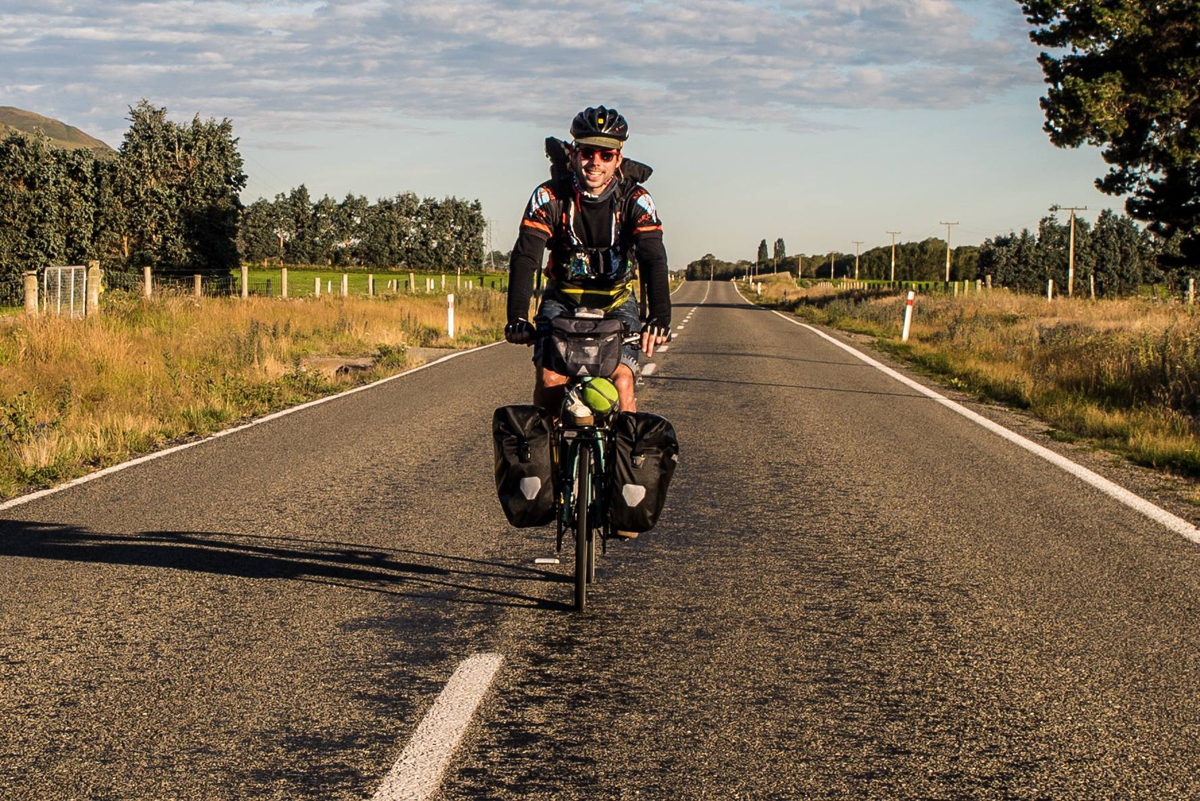
The combined 29th Annual America’s Most Beautiful Bike Ride, that was postponed to merge with the 18th Annual Tour de Tahoe, scheduled for Sunday, September 13, 2020 has been postponed to their traditional dates in 2021. This due to COVID-19 restrictions and setbacks with reopening phases governed by local, county and state health agencies.
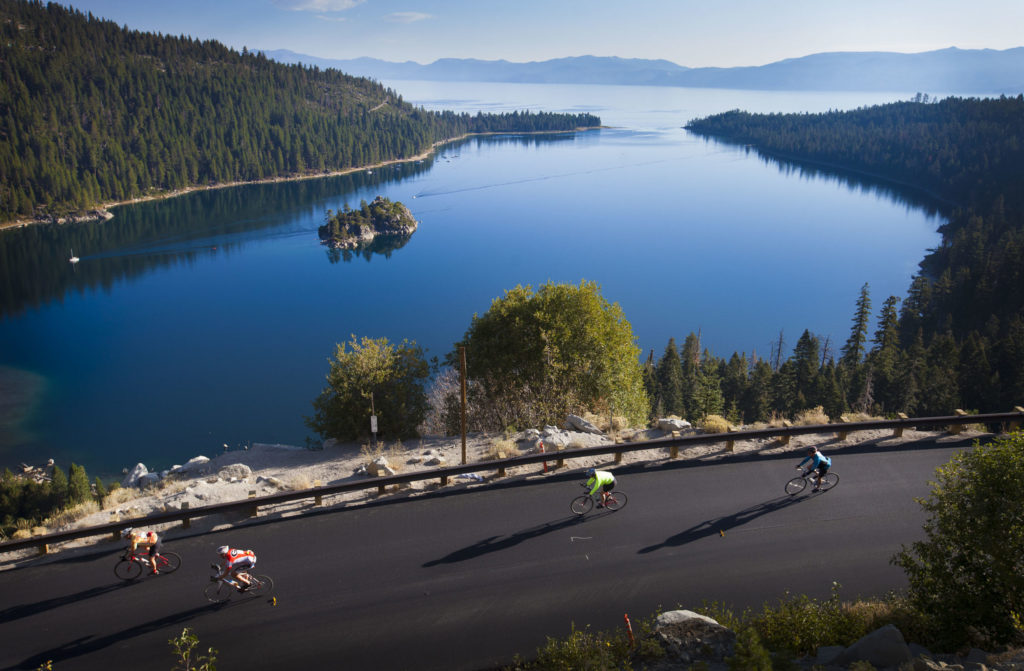
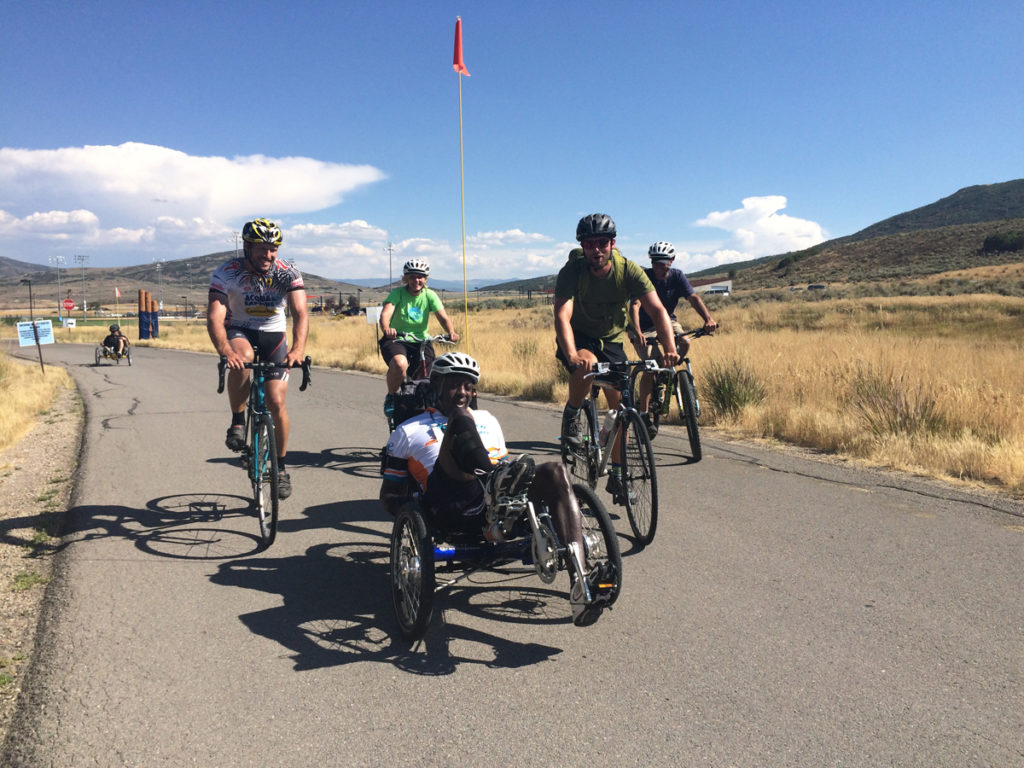
Photo by Rick Gunn, courtesy Bike The West
Bike the West continued to monitor reopening phases and have developed rules of the road and rules of the ride for all participants to comply with all COVID-19 protocol restrictions, but it appears that mass participation sports events or gatherings of 50 or more persons will be the last in Phase 4 and in the order of reopening by state, county and local health agencies.
“After nearly 30 years of producing our Lake Tahoe bicycling events, it is disappointing for Bike the West as well as for the thousands of loyal participants that traditionally attend,” stated Curtis Fong, event director.
“This includes both The Leukemia & Lymphoma Society’s (LLS) Team In Training and the National Psoriasis Foundation’s National Fundraising Team, that depend on raising funds for their organization. We feel this is the responsible and right decision to make for the health, safety and welfare of all participants, our volunteers and the local community’s surrounding Lake Tahoe,” he added.
“As a health based organization that serves a community of immunocompromised patients, The Leukemia & Lymphoma Society supports Bike the West’s postponement decision and taking proactive action to help prevent the spread of COVID-19,” said Amy Moore, The Leukemia & Lymphoma Society’s National Director of Event Strategy.
“We are thankful for more than two decades of valued partnership with Curtis Fong and Bike the West. LLS and our Team In Training teammates look forward to returning to America’s Most Beautiful Bike Ride in 2021, and adding to the more than $105 million raised to support LLS’s investment in groundbreaking research to advance blood cancer cures, and its first-in-class patient education and services, including financial support and clinical trial navigation.”
“The National Psoriasis Foundation understands the difficult decision that Bike the West has had to make to postpone Tour de Tahoe, but the safety of their employees, volunteers and the participants has to be a priority. We look forward to bringing a team back to the event in 2021,” stated Kris Brockmier, Director of Field Operations for the National Psoriasis Foundation.
“The health and safety of our guests remains top priority, and while we are saddened that this year’s events have been postponed, we look forward to hosting participants in 2021,” said Hard Rock Hotel & Casino Lake Tahoe General Manager Joelle Shearin.
“Whether participating in a group ride, or visiting as an individual, Tahoe is lovely year round and we look forward to continuing to welcome the cycling community.”
Individuals who still plan to head to Tahoe in absence of this year’s event are welcome to keep their booking at Hard Rock Hotel & Casino. The resort will honor the special room rates offered to Tour de Tahoe guests. The resort will also assist those who prefer to cancel or rebook their rooms for 2021. For any questions or changes to current reservations, please email [email protected] or call 775-589-7666.
The 29th America’s Most Beautiful Bike Ride is scheduled Sunday, June 6, 2021 and the 18th Tour de Tahoe is scheduled for Sunday, September 12, 2021. Both events traditionally provide over $5 million in economic benefits to Lake Tahoe communities and over $35,000 in donations to many local non-profit organizations.
All preregistered participant registration fees will be transferred to ride both events next year, offering a two for one value as refunds are not possible.
“We hope that our loyal riders will understand that we will not be able to refund registration fees and encourage all registered riders to take advantage of riding both events for their one event registration fee,” stated Fong.
Organizers double-down on commitment to women’s racing for 2021 event
DENVER, CO (July 17, 2020) — Despite its fierce commitment to creating a safe live racing model and advancing the sport of professional women’s cycling, the Colorado Classic presented by VF Corporation today announced that their four-day race will not take place this year, citing COVID safety concerns.
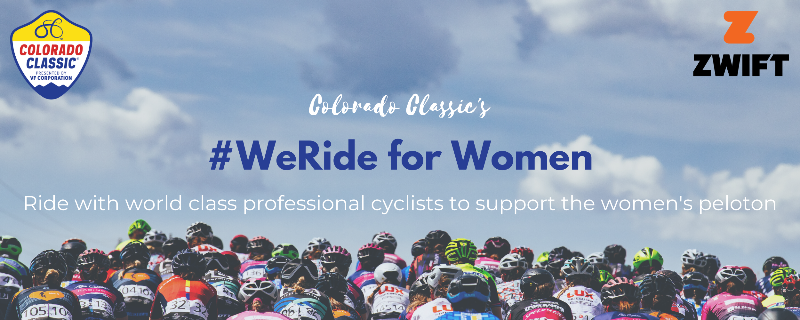
Instead, the race organizers are doubling down on championing support of women’s racing under their #WeRide umbrella, and are proud to announce the #WeRide for Women fundraiser and virtual ride. This campaign is intended to financially support the teams who would have attended the Colorado Classic, many of whom rely on competition and prize money to support their livelihoods. For the next two weeks, fans, industry, and sponsors will have the opportunity to donate to the #WeRide Team Development fund — which will be directly distributed to women’s race teams — and join the teams on a Zwift ride on July 29th.
For months, the organizers behind America’s premier women’s event worked tirelessly with State, County and City organizations, health authorities, and the sports governing bodies to create protocols and processes that ensure the health and safety for everyone.
The resulting COVID mitigation plan and new race format — one that eliminated crowd gathering, amplified their innovative live streaming model and prioritized health and safety — would have made live professional racing possible, in a context similar to other professional sports that have re-started competition. But as new COVID-19 cases are on the rise in Colorado, and throughout the nation, the decision was taken in consultation with teams, riders and all race partners that canceling the race and eliminating all risk of contributing to the COVID spread was the correct path forward.
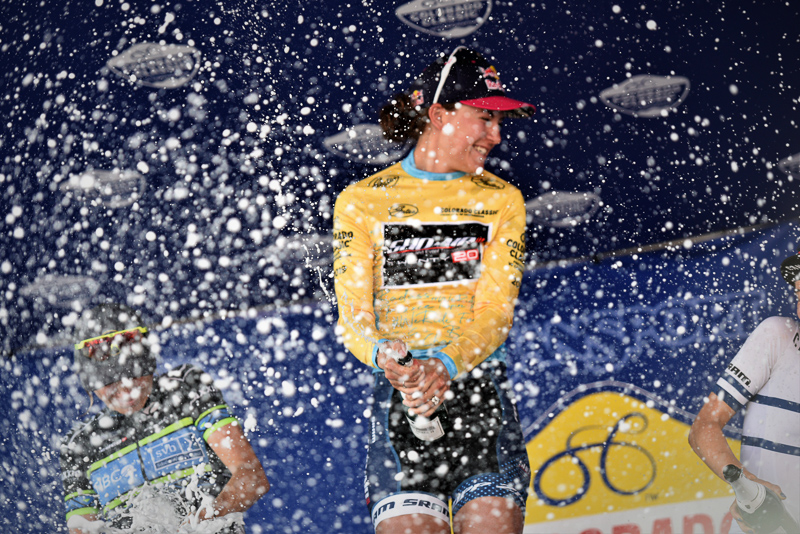
Chloe Dygert (Sho-Air Twenty20) celebrates her overall win after dominating the 2019 Colorado Classic. Photo courtesy Colorado Classic/RPM Events.
“We had great confidence in the COVID-19 mitigation plan we had developed for the race, and we were well on our way to becoming the first professional women’s bike race to be held in the U.S. since the onset of the COVID pandemic,” said Lucy Diaz, CEO of RPM Events Group LLC.
“However, as the pandemic appears to be spiking again across the U.S., and after discussion with our various stakeholders, we feel it is the most prudent decision to cancel the race for 2020. We would only hold the race if we thought it was a safe, healthy environment for the athletes and that all stakeholders felt fully comfortable to move forward. At this time we do not have full confidence from all stakeholders, so we will pivot our energy and efforts to continue to support the women’s peloton through our other initiatives.”
Since reimagining its entire business model in 2018 by foregoing its men’s race and focusing 100 percent on women, the Colorado Classic recognized that a four-day event alone wouldn’t be enough to bring about social change and have a lasting impact on the sport of cycling.
Instead, they developed a platform that celebrates the sport and athletes while creating meaningful connections in the community and business worlds. Built on the fundamental pillars of creating opportunity, fostering empowerment and demonstrating equity, the Colorado Classic launched a host of initiatives to amplify women’s voices, foster corporate dialogue among partners and the community, and bring world-wide exposure to women athletes through storytelling.
These initiatives included an ongoing Business in Sport Webinar Series to educate and inform female athletes of all disciplines about matters like branding, marketing, sponsorship and media training and a collection of conversations with leaders in both sports and business through the Breakaway Dialogue Series. VF Corporation, together with the Colorado Women’s Chamber of Commerce, hosted the first one on Wednesday, July 15th and this series will continue with partners FirstBank and Gates Corporation throughout the summer.
Even without the four days of racing, Colorado Classic’s sponsors remain committed to the event and its mission. FirstBank committed the initial funds of $10,000 to make the Team Development Fund a possibility and will continue their commitment despite the cancellation.
The #WeRide for Women fundraiser will run between now and August 1, and the campaign culminates in a virtual community ride on Zwift on July 29th. Led by retired Olympic Silver Medalist and World Champion, Mari Holden, this virtual ride is open to the public and will include riders from each of the 2020 Colorado Classic invited teams. Donations are optional but encouraged. All funds will be divvied out to the teams in August.
“This was an incredibly hard decision, but it was the right one to make. We are so grateful for all of our partners who have supported us this year and continued to believe in our mission. It has been an extraordinary year, with extraordinary challenges, and it has taken a complete effort from everyone to find a way forward,” said Ken Gart, Chairman of RPM Events Group.
Learn more about the #WeRide for Women campaign at https://www.coloradoclassic.com/zwift And stay up to speed on all things related to the Colorado Classic at www.coloradoclassic.com and via social media: @coloradoclassicpro on Instagram and Facebook.
July 16, 2020 – In tonight’s Emigration Township meeting, the council approved 11′ vehicle travel lanes throughout the canyon. This has the effect of creating 1′ more for bicycles in each direction in much of the canyon, especially from the Donner Monument/Emigration Township line to the fire station. This would allow for full bike lanes in 1.69 more miles of the canyon, and more room for cyclists throughout.
Several cyclists spoke in favor of narrow travel lanes including Rob Macleod, former chair of the Salt Lake City Mayor’s Bicycle Advisory Committee, Dirk Cowley, world champion master cyclist, Blaire Tomten, Chair of the Salt Lake County Bicycle Advisory Committee, George Chapman, community activist, and Dave Iltis, Editor for Cycling Utah.
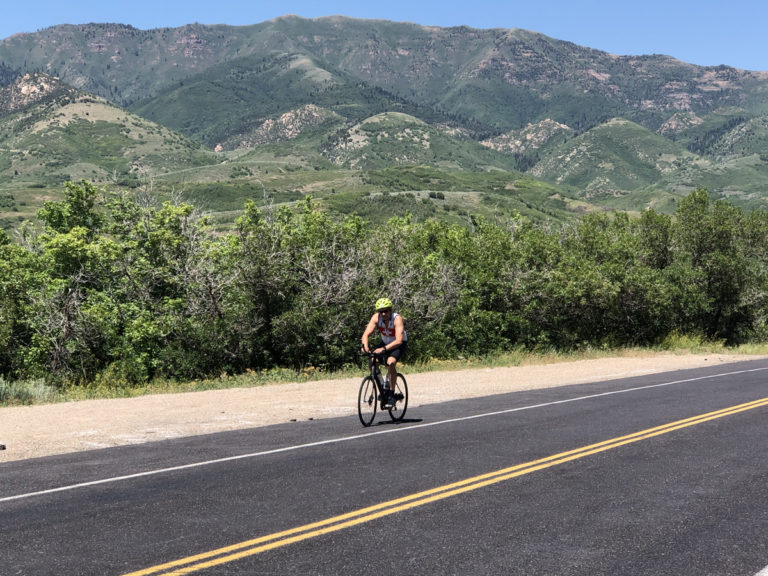
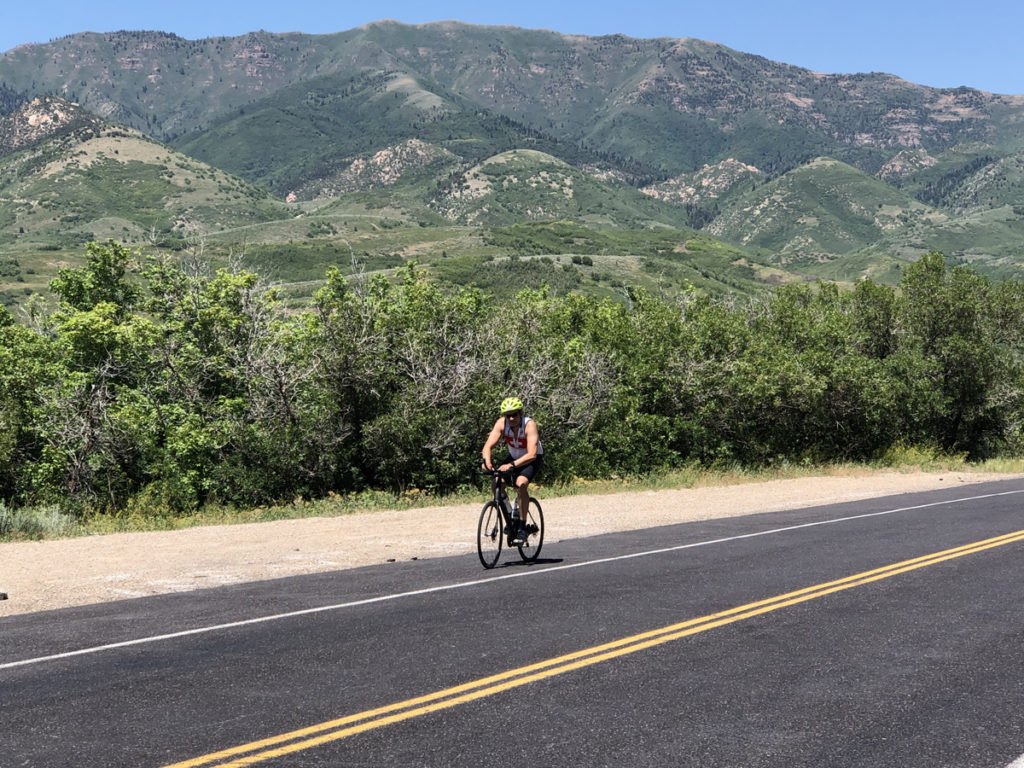
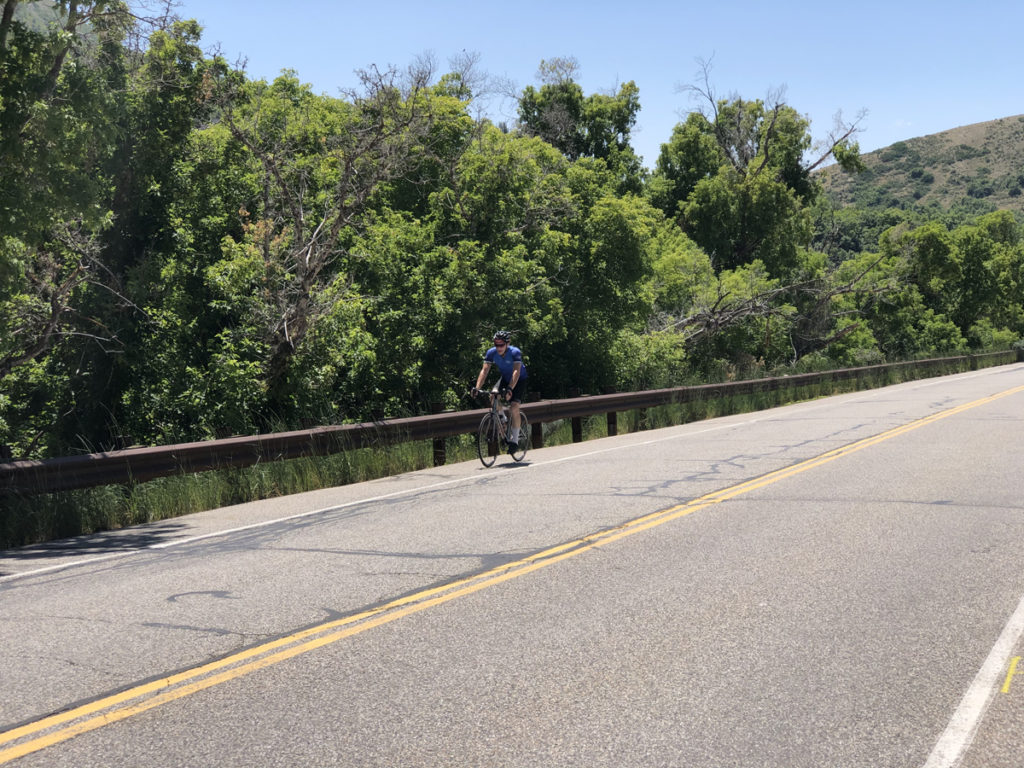
Emigration Township okayed 11′ travel lanes, which allows for wider shoulders and bike lanes in the canyon. Here, a cyclist rides from Pinecrest to the Little Mountain Summit. Photo by Dave Iltis
David Brems proposed the motion which passed unanimously.
The motion also included a directive to study the possibility of adding 1 foot buffers between the vehicle travel lane and the bike lane or shoulder. Note that depending on the width of the shoulder, there is room for standard bike lanes, or just shoulders if the width is less than 4′.
Additionally, the plan for Emigration calls for signs to give cyclists 3′. Signage design will be revisited and likely based on current UDOT standards.
The road is currently being reconstructed. The paving project, approved by the Salt Lake County Municipal Services District (MSD) will cost $3 million.
[Editor’s Note: Cycling Utah worked tirelessly on this advocacy issue. We are very happy with the outcome.]
In a rare example of bipartisan cooperation, on June 17, 2020 the US Senate voted 73-25 in support of the Great American Outdoors Act (H.R. 1957), which if it becomes law will allow for billions of dollars for the construction and maintenance of trails on public lands. The House of Representatives is expected to vote on the bill on Wednesday, July 22, 2020.
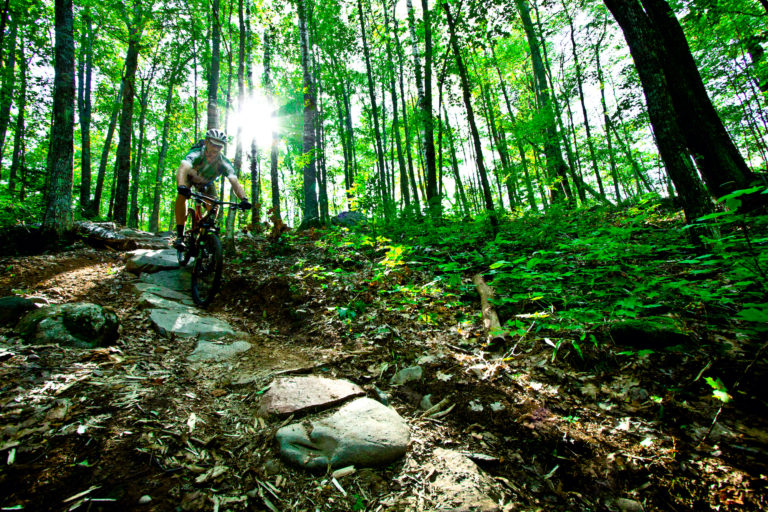
Photo courtesy International Mountain Bike Association/IMBA
In an email sent to members, the International Mountain Bike Association (IMBA) is asking for mountain bikers to contact their Representatives to urge them to vote in support of the bill, saying:
We can’t overstate it: this bill means billions for trails. This funding is unprecedented and long overdue. For decades, the recreation community has worked to protect programs with funding levels in the millions. Now, the Great American Outdoors Act would fund trails, parks and public lands to the tune of $2.8 billion per year. It fully funds the Land and Water Conservation Fund (LWCF) and addresses the trail maintenance backlog for the National Park Service, the Forest Service and the Bureau of Land Management. IMBA and our partners worked hard to include the Forest Service and Bureau of Land Management in the bill, as those agencies are vital for mountain biking.
Cycling West urges its readers to join IMBA’s call to action. You can contact your Representative though the link below:
By Julian Agyeman, Tufts University — As states and workplaces prepare to open up after the lockdown, many people are looking for alternatives to public transit to get to work.
The National Association of City Transport Officials reports an “explosion in cycling” in many U.S. cities. Bike stores are selling out, and global supply chains are struggling to meet demand. But the post-pandemic ride will be more bumpy for some.
Low-income and minority groups are often more reliant on cheaper modes of travel such as cycling. Back in 2013, the League of American Bicyclists reported that “the fastest growth in bicycling is among the Hispanic, African American and Asian American populations.” Yet these groups may find cycling to work more problematic.
As a professor of urban and environmental policy and planning, I believe it critical that city planners, lawmakers and bike advocates fully understand how barriers to cycling faced by people living in poorer neighborhoods are interconnected. Design-related, infrastructural challenges, such as providing more bike lanes, or better still, protected bike lanes – paths separated from both road and sidewalk – are important. But the more fundamental barriers are political, cultural and economic in nature. Failure to acknowledge and act accordingly, risks compromising the ability of low-income and minority groups to enjoy the full benefits of cycling.
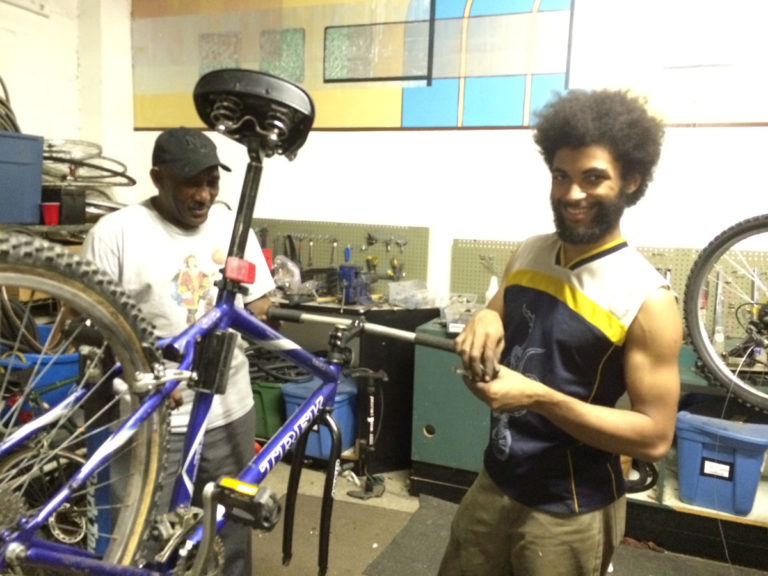
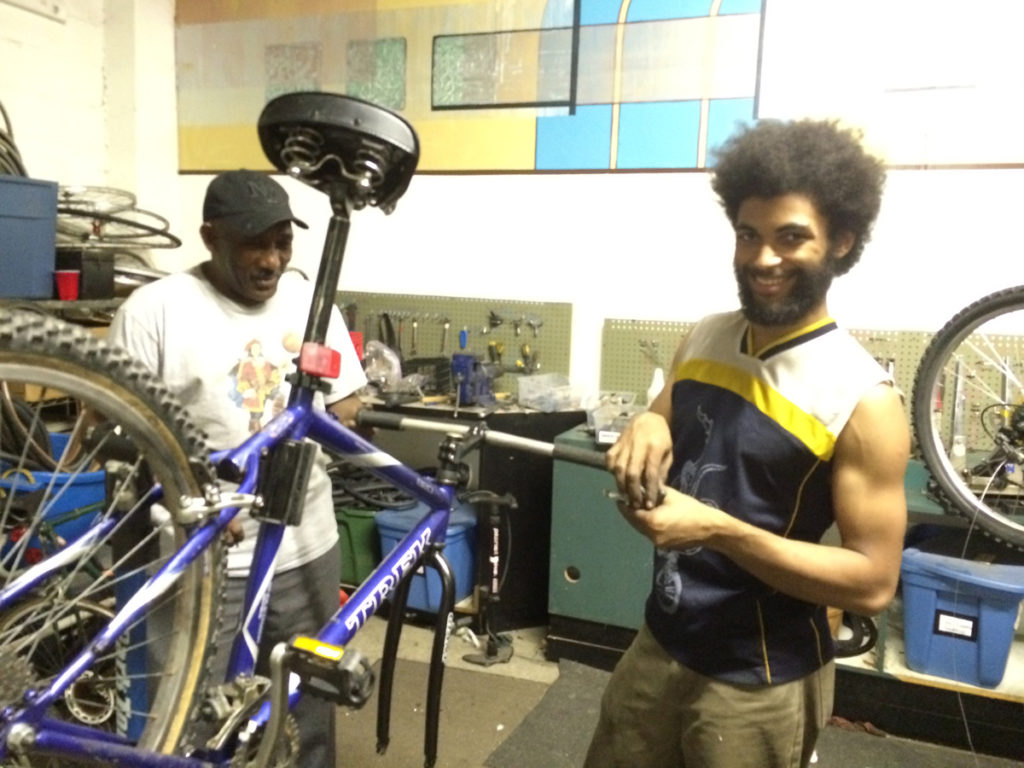
“African Americans were more than twice as likely as whites (38% vs 14%) to agree that their perception of bicyclists would improve if people on bikes represented a “broader cross section of Americans, such as women, youth and people of color” in their community.” (from the League of American Bicyclists The New Majority, Pedaling Towards Equity Report). Here, two bicycle mechanics work at the Freewheel Community Bike Shop in Madison, Wisconsin. Photo by Dave Iltis
Not reflected
One crucial barrier relates to the increasingly used political concept of “recognition” – acknowledging and respecting another human, their status and rights. This is the foundation of the #BlackLivesMatter and #MeToo movements.
Yet as urban planning scholar Aaron Golub and colleagues explain in “Bicycle Justice and Urban Transformation: Biking for All?” city planner counts of cyclists in any given area may provide data on usage, which guides decisions on where to install bike lanes, but seldom is the race, ethnicity or gender of the rider recorded. Furthermore, cycle counts typically take place in downtown areas, not in a city’s peripheral areas where, in large part due to gentrification and displacement, many low-income and minority groups may be cycling. This results in cyclists in poorer areas being underreported in official data.
As bike lanes are put where urban planners demonstrate need, this skewing of data has real-world consequences. It is part of the reason why bike lanes are mockingly referred to as “white lanes” by critics of gentrification – controversial and disputed symbols of displacement.
This, together with the whiteness of the bike advocacy community, can act as a major barrier to people of color. In a 2019 study by Tufts University students for the Boston Cyclists Union, one interviewee said that people of color see cycling as “something that white people do” and that they are simply not represented in Boston’s biking culture, or many other U.S. cities. This poses as much a challenge as infrastructure because it speaks to deep-seated perceptions of who should, or should not, be cycling. Bluntly put, there is a population of cyclists of color in the U.S., who are largely unrecognized, underreported and unrepresented.
Bike advocates call them “invisible cyclists.”
Cycling while black
Cyclists of color tend to miss the eye of city planners, but the same can’t be said of the law. Relations with the police can and do affect their daily spatial and cycling practices, governing where and how they ride. Of particular concern is the issue of racial profiling and harassment of cyclists.
A study of bike citations in Chicago, revealed that between Jan. 1 and Sept. 22 of 2017, 321 tickets were issued in the majority African American, low-income area of Austin, compared with five in the nearby white, wealthy neighborhood of Lincoln Park. Similarly, a 2015 investigation by the Tampa Bay Times found that 80% of the 2,504 bike citations issued by the Tampa Bay Police Department were issued to black bikers, despite black people making up just 25% of the city’s population. This phenomenon of “biking while black” not only affects those who may want to cycle to work but those whose job depends on cycling, like food delivery workers.
Physical safety concerns are often considered to be one of the most significant barriers to cycling. Here too the burden of injury and risk is wildly disproportionate. Latino cyclists face fatality rates 23% higher than whites, and for African Americans, they are 30% higher. In these communities, some, or all of the following hazards are more prevalent: higher vehicular traffic volumes, trucking routes, major arterial roads, intersections that are unsafe or impassable by foot or bike, and an overall lower level and quality of walking and cycling infrastructure. Contributing to such safety-related issues is the well-established, disproportionate exposure experienced by low-income and minority communities to air pollution.
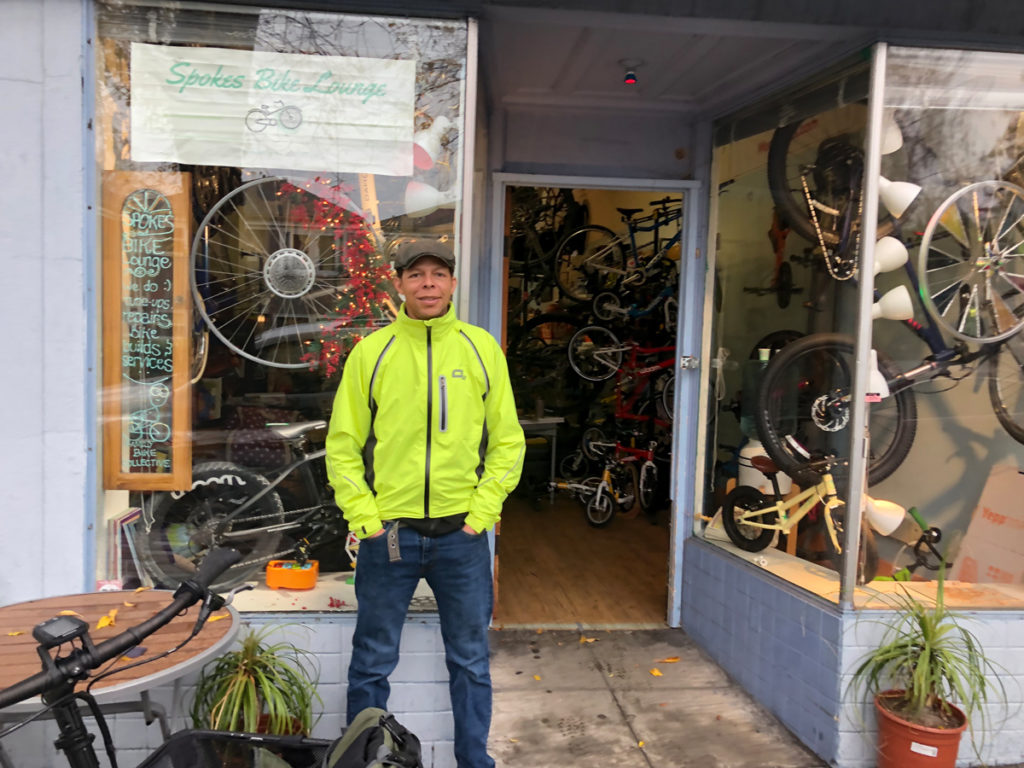
“The fastest growth in bicycling is among the Hispanic, African American and Asian American populations. Between 2001 and 2009, those three groups grew from 16 to 23 percent of all bike trips in the U.S. Within those groups, the percent of trips taken by bike has grown much faster than in the white population.” (from the League of American Bicyclists The New Majority, Pedaling Towards Equity Report). Brian Drayton of Spokes Bicycle Lounge in Berkeley, California. Black owned bike shops like Spokes are a key reason for this growth. Photo by Dave Iltis
Pedal power
The push to eliminate traffic fatalities, known to planners as “Vision Zero” is based on the five E’s: engineering, education, enforcement, engagement and evaluation. However, some cities, such as Austin, Texas, are now adding a sixth E: equity, in recognition of the fact that nearly a third of the most dangerous road segments are in areas where more than 25% of the population is black or Hispanic and nearly two-thirds of pedestrian fatalities occur in parts of Austin where more than 30% of residents are living in poverty.
Meanwhile, growing numbers of minority-organized bike groups such as Black Girls Do Bike and for-profit bike businesses such as Bike and Brunch Tours are working to overcome barriers to cycling. Across the U.S., several advocacy organizations and bike share programs such as New Orleans’ Bike Easy and Nice Ride in Minneapolis are making progress toward bike equity in their communities. Uniting these efforts are groups like Untokening, a multiracial collective that centers the lived experiences of marginalized communities to address mobility justice and equity.
The primacy of recognition in overcoming barriers to minority cyclists cannot be overstated. As cities reimagine their streets in a post-pandemic world, politicians, city planners and bike advocates could better recognize that cyclists have differing status, rights, needs and capabilities depending on their social and racial background. Representation is also critical. The huge growth in cyclists of color is not mirrored in city decision making and bike advocacy circles. As part of any reimagining of how best people can move around their cities, people of color in lower income areas ravaged by the coronavirus could be placed front and center as we look for cheaper, more healthy ways for all to get to work.
“According to the Outdoor Foundation, “road biking, mountain biking and BMX” was the second most popular outdoor activity for both Asian/Pacific Islanders and Hispanics (14% of respon- dents choosing it as their top activity) and third most popular for African Americans (10%) in 2010.” (from the League of American Bicyclists The New Majority, Pedaling Towards Equity Report). Adaptive cyclist Michael Ray completing the Summit Challenge ride. Photo by Dave Iltis
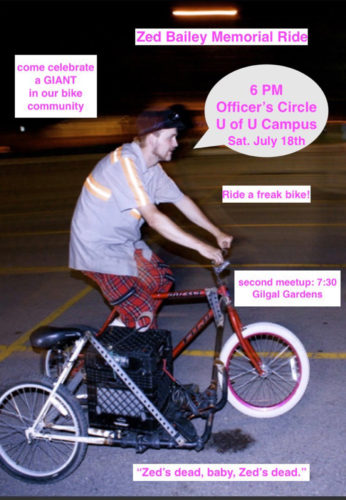
Salt Lake City, Utah – Salt Lake City’s cycling community lost one of its countercultural luminaries. Cory ‘Zed’ Bailey, or Zed Sonder as they were later known, committed suicide in Hilo, Hawaii sometime in June. Zed (who went by they/them pronouns later in life) was avid about inclusion of the weird, unconventional, and strange in local two-wheeled culture, and was most active in Salt Lake City from around 2005-2013. They founded SaltCycle, a local forum and blog for underground cycling events, and under their design it was a thriving community resource that shaped the city’s culture of casual cycling events.
A ride for Zed will take place on Saturday, July 18, 2020. Details Below.
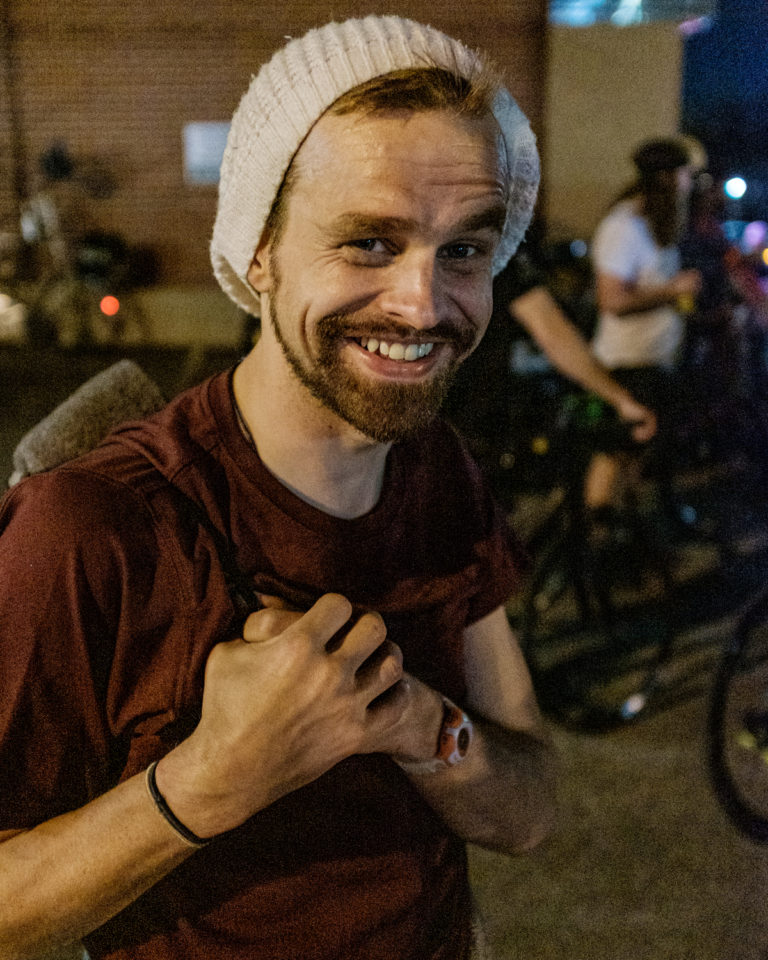
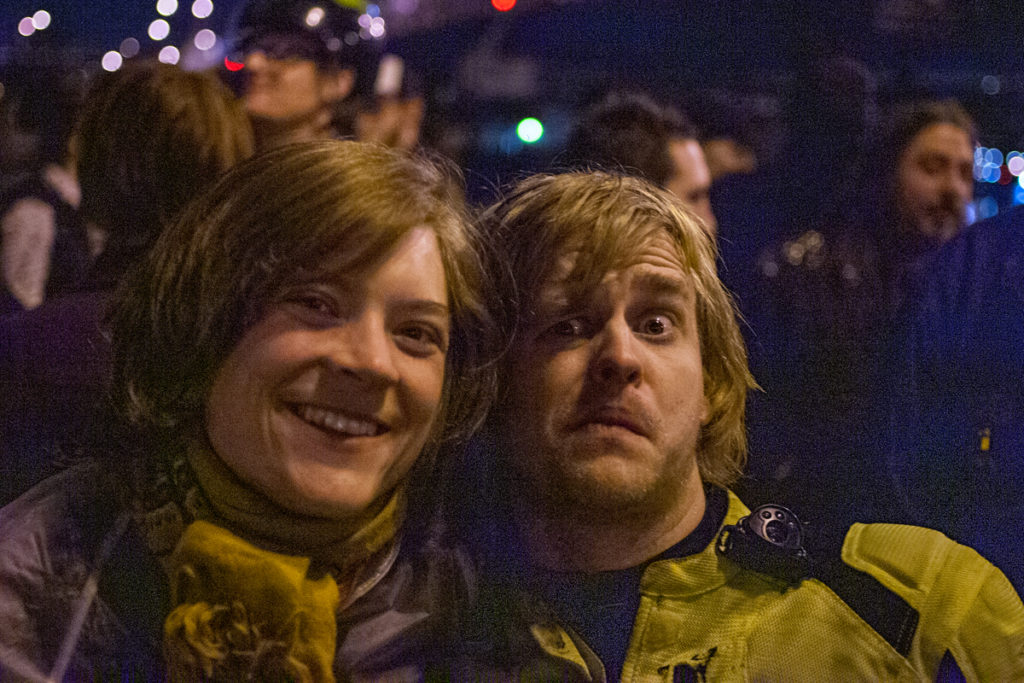
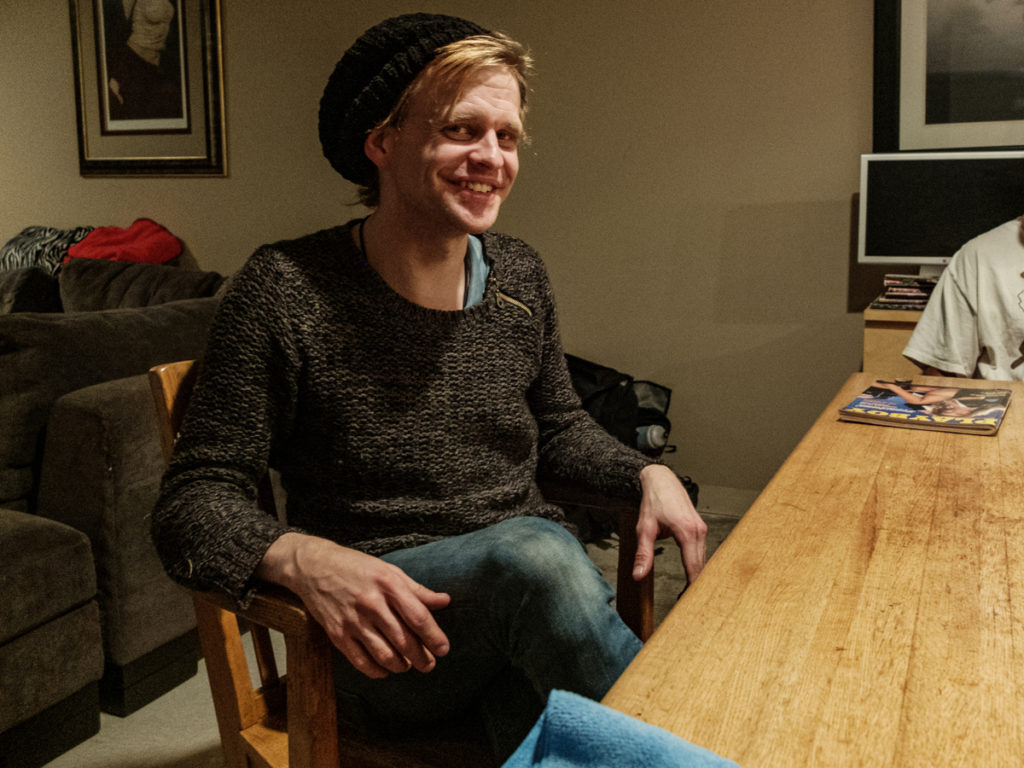
Cory Zed Bailey passed away in 2020. Photo by Ryan Wade McCalmon
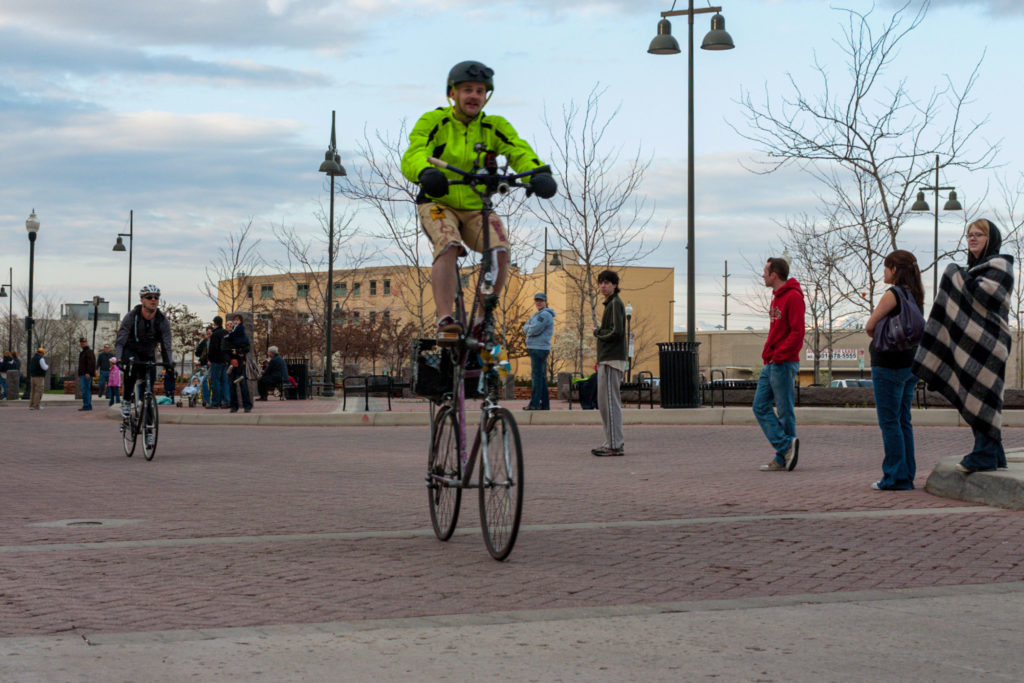
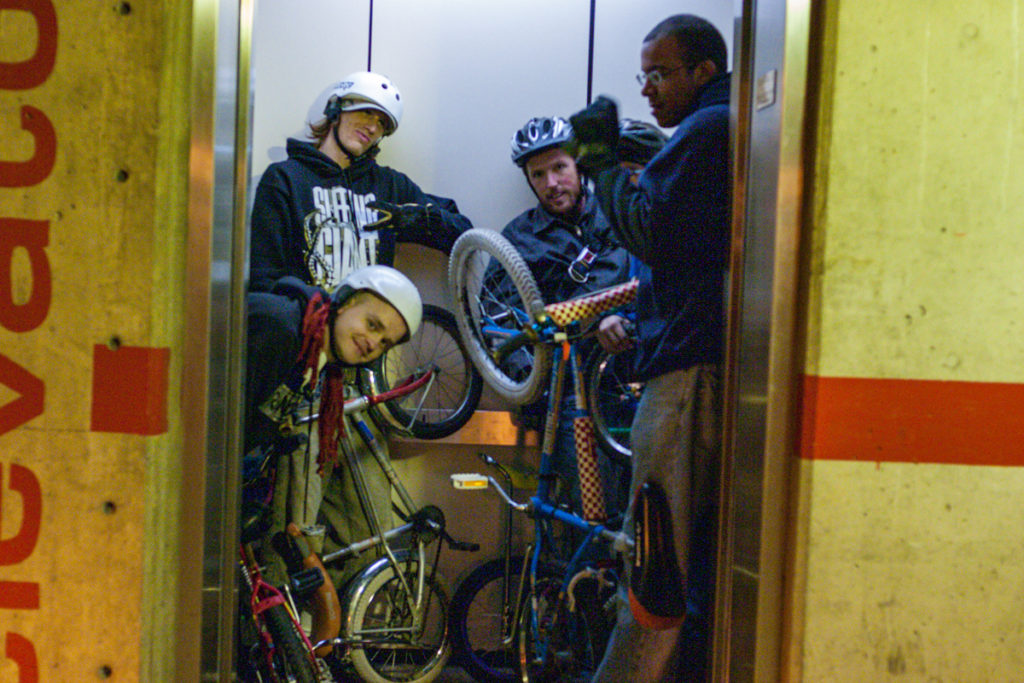
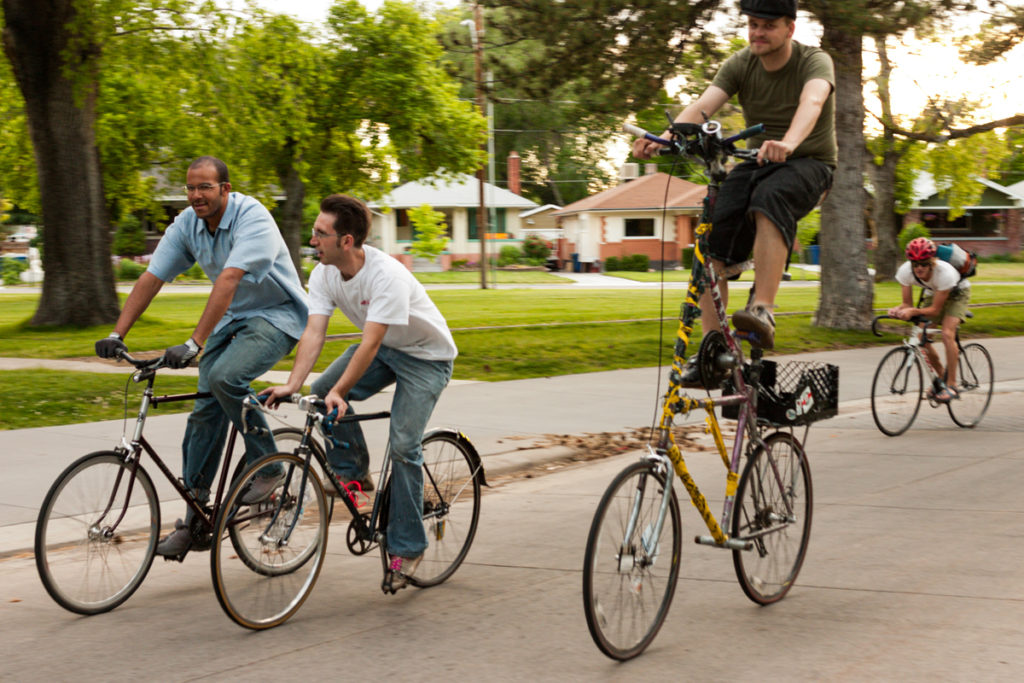
Zed was a mercurial, passionate community builder and a truth seeker. They had a joy and drive about the things that inspired them that was truly remarkable to witness. Zed loved ‘freak’ bikes (welded together from pieces of kids’ bicycles or abandoned frames) and was central to encouraging others to build these bikes. They would throw Tall Bike Jousts and U Bombs: cycling activities where participants did ridiculous things on these shaky, home-made machines. Bicycling in Salt Lake owes a ton to them. Their influence certainly allowed many people to consider themselves part of a bicycle community without needing to be a macho athlete or avid mechanic.
Cory Zed Bailey passed away in 2020. Photo by Ryan Wade McCalmon
Zed was a freak in the best sense of the word. They were too punk for punks, too strange for burners, and too queer for queers. I considered them a friend, co-ran SaltCycle with them, and we probably organized a dozen events together, but I still don’t feel like I knew them at all. When Zed’s old friends and collaborators were made aware of their death, a thousand little threads came together: Zed’s pursuit of reformed spirituality in the form of religious ideas that forefronted compassion over dogma, activism and filmmaking that re-thought homelessness, and many more. They made hundreds of youtube videos, scattered across many accounts, and re-wrote sections of the New Testament to fit their humanitarian vision for the world.
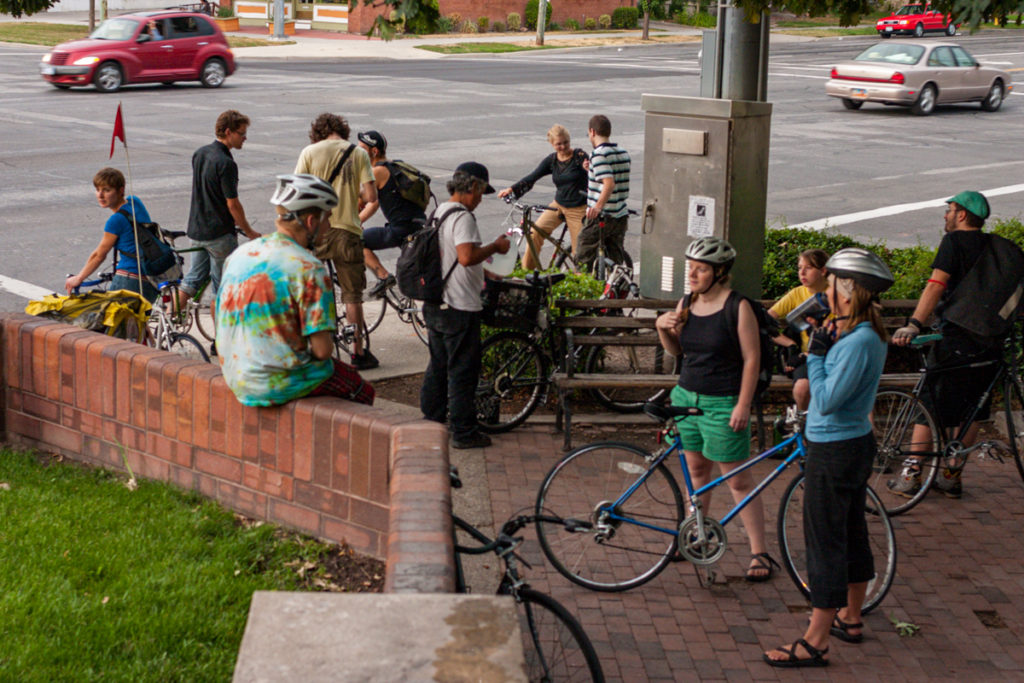
A ride will be held to remember Cory Zed Bailey.
Zed’s identity, name, social media profiles, and enthusiasm would flicker and change with the seasons, and they were open about their mental health challenges. Zed’s unique nature and struggles were not without their very real downsides. They could spiral into depressive episodes, which could manifest to their friends as spite. After living in Salt Lake City, Zed moved to Portland, Oregon and was similarly involved in bicycling activities there, until their alleged socially inappropriate behavior toward women caused people there to ban them from participating in community events. But unfortunately, nobody was harder on themselves than Zed. When I think about Zed’s death, I think Zed would want us to take the occasion to encourage everyone to push for a better world. To be better members of society, and to evolve beyond the norms that we’re stuck in, mentally or communally.
In remembrance of Zed at their best, on Saturday, July 18th we’ll be riding ridiculous bikes down through the University of Utah campus, starting at the Officer’s Circle Bandstand at 6:00 PM. Join us, or tune into the livestream that will be posted on Facebook’s Saltcycle Page: facebook.com/groups/saltcyclecommunity.
To wrap up, here’s a goofy supercut Zed came up with for an alleycat in about 2010: They had people sing Queen’s Bohemian Rhapsody line by line which I edited together into the following masterpiece. In many of the shots you can see Zed grinning like an idiot and eyeing the camera in giddy anticipation of how stupid, and silly, and wonderful the art piece they were working on was going to be, which is how I choose to remember them.
Zed Bailey also created this video to promote Pedalpalooza in Portland:
Cory Zed Bailey passed away in 2020. Photo by Ryan Wade McCalmonCory Zed Bailey passed away in 2020. Photo by Ryan Wade McCalmonCory Zed Bailey passed away in 2020. Photo by Ryan Wade McCalmonCory Zed Bailey passed away in 2020. Photo by Ryan Wade McCalmonCory Zed Bailey passed away in 2020. Photo by Ryan Wade McCalmonCory Zed Bailey passed away in 2020. Photo by Ryan Wade McCalmonCory Zed Bailey passed away in 2020. Photo by Ryan Wade McCalmonCory Zed Bailey passed away in 2020. Photo by Ryan Wade McCalmonCory Zed Bailey passed away in 2020. Photo by Ryan Wade McCalmonCory Zed Bailey passed away in 2020. Photo by Ryan Wade McCalmonCory Zed Bailey passed away in 2020. Photo by Ryan Wade McCalmonCory Zed Bailey passed away in 2020. Photo by Ryan Wade McCalmonCory Zed Bailey passed away in 2020. Photo by Ryan Wade McCalmon
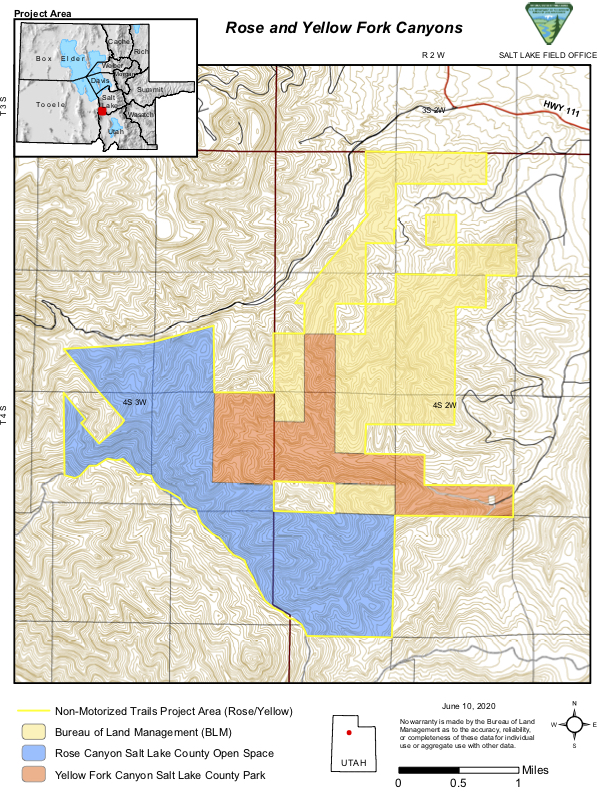
MTB Trails Advocacy Alert: July 14, 2020 – The Bureau of Land Management (BLM) is proposing new non-motorized trails in the Lake Mountains, Oquirrh Mountains, and Rose and Yellow Fork Canyons, located in Utah County, Tooele County, and Salt Lake County, Utah. The trails would be open to mountain biking, hiking, and equestrian use. Up to 50 miles of new trails could be constructed with a possibility of 25 miles in the Lake Mountains, 15 miles in the North Oquirrh Management Area (NOMA) in Tooele County, and 10 miles in Rose and Yellow Fork Canyons.
Map of the Rose and Yellow Fork Canyon areas where the BLM is proposing new mtb trails. Additional maps are on the project website.
The trail proposals would likely also be open to Class 1 e-bikes, as a result of a BLM order to increase opportunities for electric bicycles. Class 1 electric bikes are pedal assist only (no throttle) with a maximum assisted speed of 20 mph.
The Bureau of Land Management (BLM) is preparing an environmental assessment (EA) to analyze the development of non-motorized trails to facilitate outdoor recreation opportunities on BLM-managed lands within three areas (maps are enclosed) including: 1) Lake Mountains, Utah County. Approximately 17,250 acres in Township 5 South, Range 1 West; Township 6 South, Range 1 West; Township 7 South, Range 1 West; Township 7 South, Range 1 East; Salt Lake Meridian. 2) North Oquirrh Management Area, Tooele County. Approximately 5,285 acres in Township 1 South, Range 4 West; Township 2 South, Range 4 West; Township 2 South, Range 3 West; Township 3 South, Range 4 West; Township 3 South, Range 3 West Salt Lake Meridian; west of the ridgeline and at elevations lower than approximately 6,200 feet. 3) Rose and Yellow Fork Canyons, Salt Lake County. Approximately 1,520 acres in Township 4 South, Range 2 West. The BLM recognizes the importance of providing quality recreation experiences on public lands that are adjacent to growing population centers. The project would not change the availability of any existing motorized access but would facilitate the expansion of a non-motorized trail system that support hiking, biking, horseback riding, or other human-powered recreational uses. The trails would most likely be authorized under a right-of-way to a municipal government or other partner organization, and/or may be built with BLM and volunteer labor.
BUTTE, Mont. – The hills around Helena could soon see a new trail system for those seeking additional recreation opportunities close to home. The Bureau of Land Management’s Butte Field Office opened a public comment period today on a proposed Recreation Area Management Plan and environmental assessment for the Scratchgravel Hills northwest of Helena.
The Scratchgravel Hills, which already see heavy recreation use, are located just five miles from Helena and cover approximately 5,500 acres of BLM land. The Scratchgravel XC Cup is held here each year.
Based upon input from the public, and in response to scoping comments by local recreationists, the proposed RAMP includes the construction of a new 40-mile trail system that would be open to biking, hiking, trail running, disc golf and equestrian use. The proposed new trail system would also allow e-bikes less than 1 horsepower.
“The BLM looks forward to working with the public and area partners to develop a trail system that meets the community’s needs,” said Lindsey Babcock, Acting Butte Field Manager.
Among other things, the RAMP would identify specific trail use zones; improve signage and visitor information; and provide sustainable options for continued use of the existing trails.
To view details about the plan, go to the BLM project e-planning site at https://eplanning.blm.gov/ and, choosing the Montana/Dakotas and Butte Field Office options, search for “Scratchgravel.”
The field office is taking public comments on the RAMP until Aug. 7. Comments may be emailed to [email protected] or, via mail, to Bureau of Land Management-Butte Field Office, ATTN: Scratchgravel RAMP, 106 N. Parkmont, Butte, MT 59701
Field office staff members will also be on site at the Norris Trailhead in the Scratchgravel Hills on July 16 and 22 from 6 to 8 p.m. to answer questions about the RAMP. The trailhead is located just west of the junction with Green Meadow Drive and Norris Road in Helena.
Background: The Scratchgravel Hills are a Special Recreation Management Area, designated in the Butte Resource Management Plan in April 2009. SRMAs are administrative units where the BLM has committed to emphasizing recreation by managing for specific recreation opportunities, experiences and settings on a sustained, long-term basis. The Butte Field Office issued a scoping letter and press release on the RAMP in March 2018.
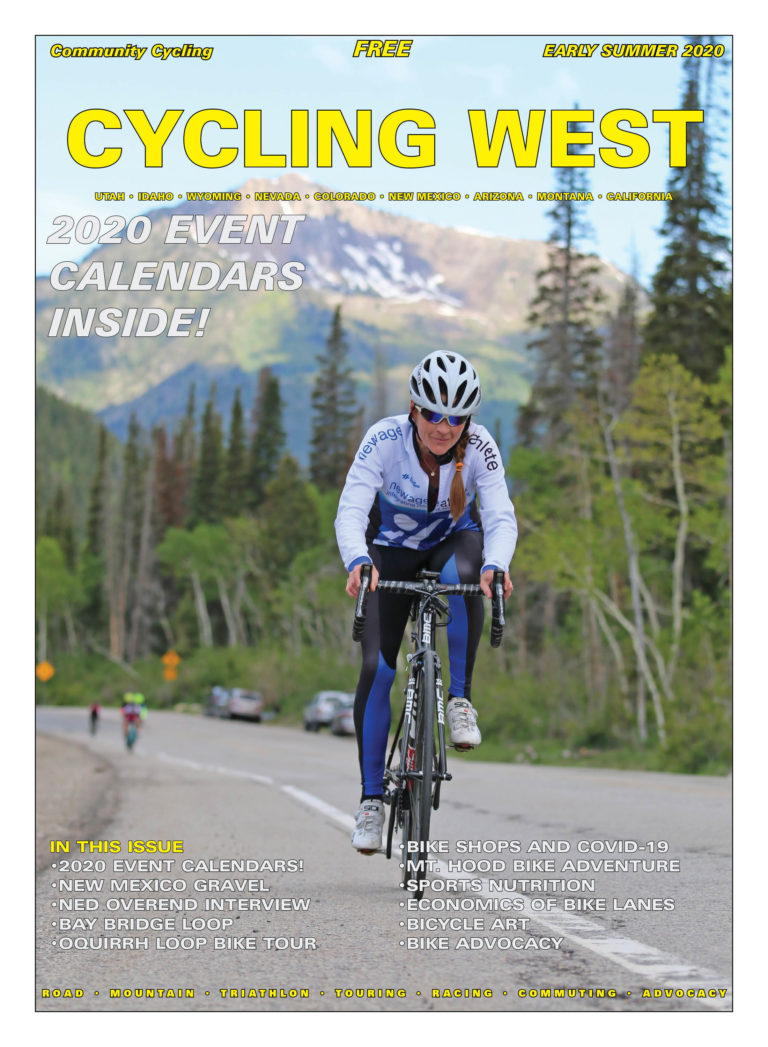
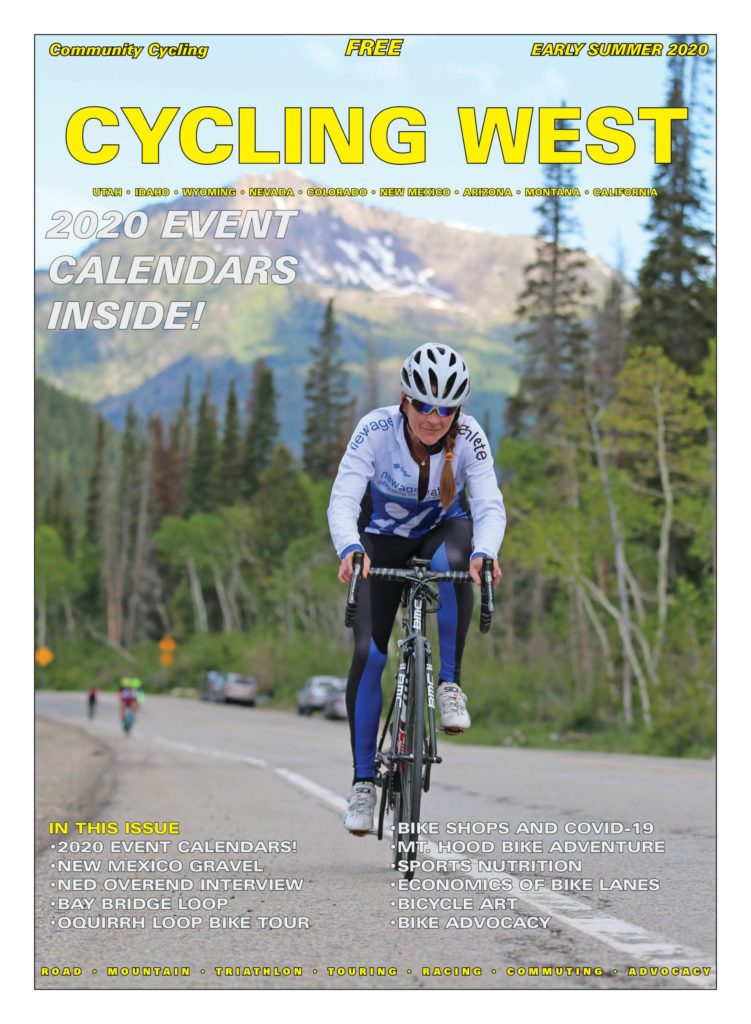
Cycling West and Cycling Utah Magazine’s Early Summer 2020 Issue is now available as a free download (8 MB download). Pick up a copy at your favorite Utah, Idaho, Wyoming, Nevada, Montana, Colorado, Arizona, New Mexico and Northern California bike shop or other location.
Cycling West June 2020 Cover Photo: Rachel Cieslewicz rides Big Cottonwood Canyon during the 2019 Porcupine Hill Climb. Unfortunately, the race was cancelled for 2020, but the canyon is open for cyclists. Photo by Dave Iltis
Contents
La Joya de la Corona of Staycations — page 3
Mountain West Cities Named Bicycle Friendly Communities — page 4
Best Practices For Bicycle Retailer COVID-19 Safe Operations — page 5
A Shining Moment On Mt. Hood: How To Ride Down Winter In The Middle Of July — page 6
Interview with Mountain Biking Legend Ned Overend— page 8
Sports Nutrition: Fads, Facts and Fallacies — page 9
San Francisco Bay Bridge to Treasure Island Ride — page 10
Making Utah a Better Place to Ride: Bike Utah 2020 Update — page 11
Circling Cabezon – A New Mexico Gravel Ride — page 12
Calendar Notes for Summer 2020 — page 16
Study: Bike Lanes Are Better for Business — page 22
Pedal On – The Bicycle Art of Susan Adamé — page 23
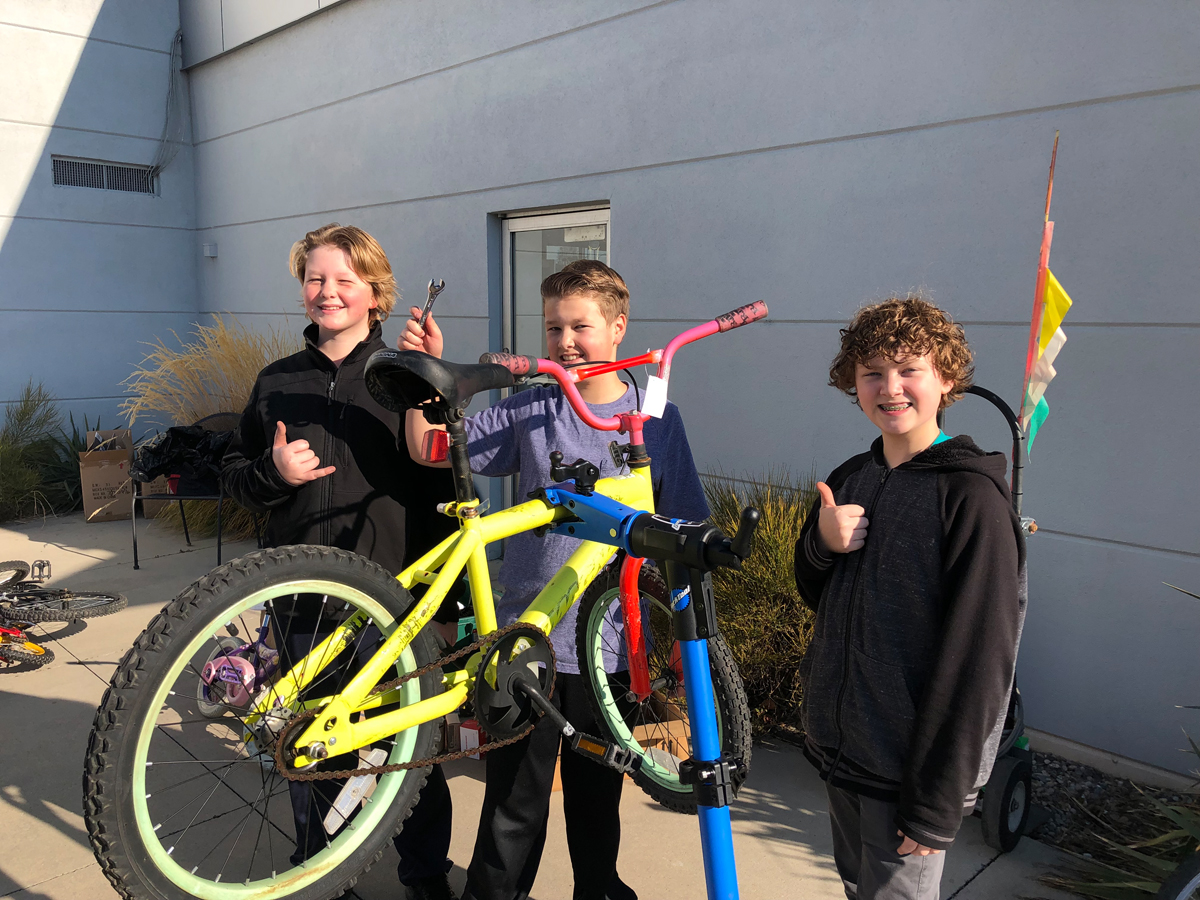
Free Bikes 4 Kidz Utah is a 501(c)(3) non-profit organization that believes every kid deserves a bike. Too often, bikes that kids have outgrown sit unused in garages or end up the landfill. Meanwhile, many children grow up without a bike of their own. FB4K wants to help solve both of these problems by collecting and refurbishing used bikes and distributing them to kids in need.
Photo by Dave Iltis
FB4K Utah will be hosting four Bike Collection Events in July:
Saturday, July 4th from 10:00 am to Noon
Saturday, July 11th from 10:00 am to Noon
Saturday, July 18th from 10:00 am to Noon
Saturday, July 25th from 10:00 am to Noon
Please help us get the word out to your readers to bring their used bikes during those hours to:
FB4K Warehouse 2250 S. Main St in Salt Lake City
These are outdoor events. Face masks, physical distancing, and sanitary procedures will be observed. Bikes for kids (including tricycles and striders) are our primary focus, but we accept adult bikes too. We accept bikes in any condition.
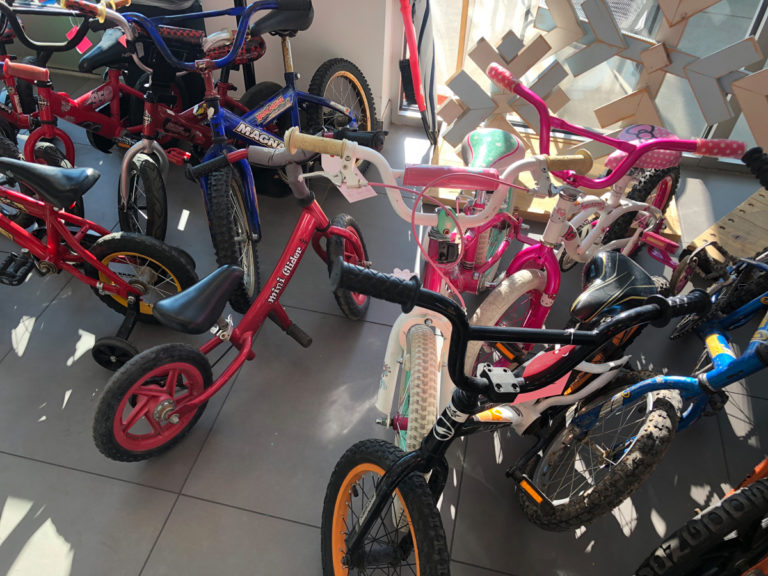
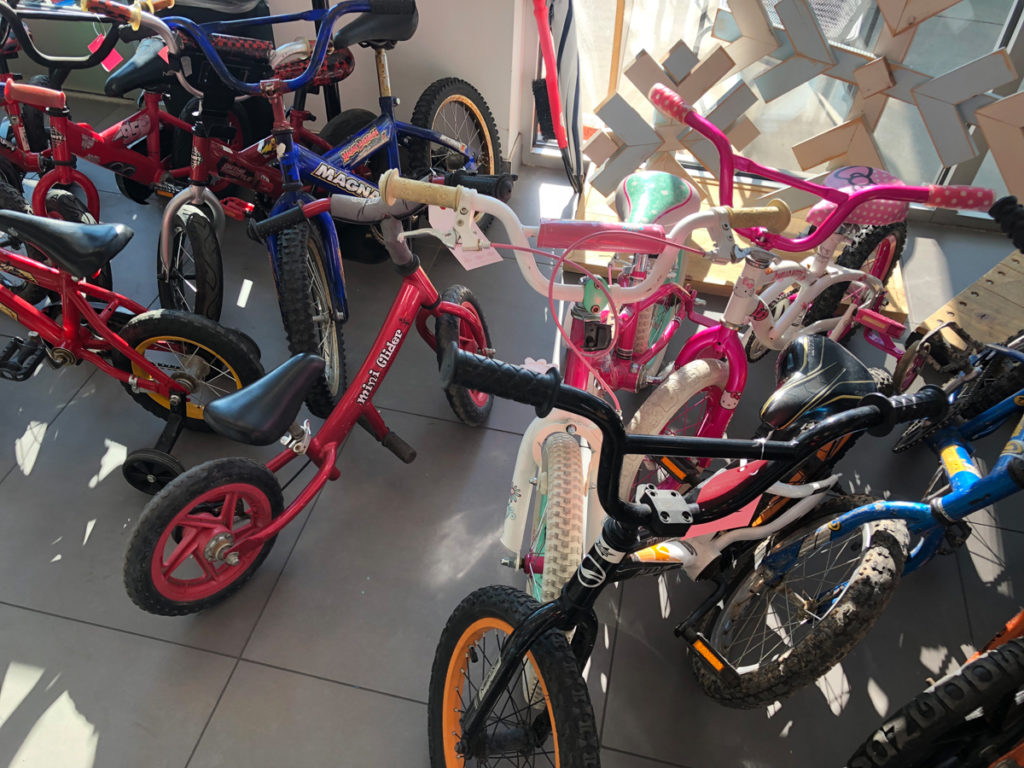
Some of the bikes collected at previous events. Photo courtesy Dave Iltis
This is a Collection Event only. No bikes will be distributed at these events.
What happens next? Volunteer mechanics and non-mechanics sort, clean, and repair donated bikes. The refurbished bikes along with new helmets are distributed to low-income families. FB4K does not distribute bikes directly to the public, but instead works through Community Partners which currently include Circles Salt Lake, The Road Home, South Salt Lake Promise, Millcreek Promise, Head Start, and Hartland Community for Youth and Families.
Additional information can be found on our website: FB4Kutah.org
For more information on the organization, please visit www.fb4kutah.org, or contact Executive Director Nick Ekdahl. Email: [email protected] Phone: 801-243-4263
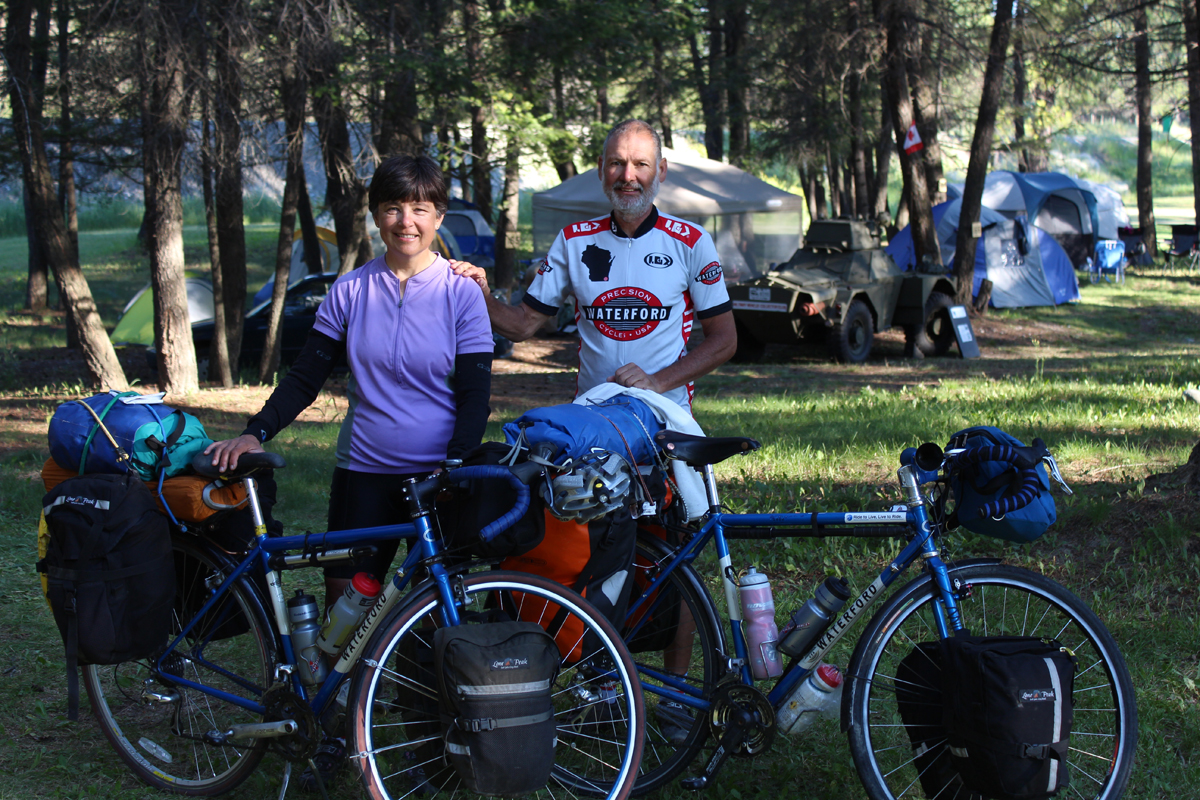
By Lou Melini — Riding the Going-to-the-Sun road in Glacier National Park has been on the “bucket” list of tours for Julie and I ever since I acquired a Monte Dolack print of a bicyclist riding the the road in 1987. It is described as one the most scenic road in America by several websites.
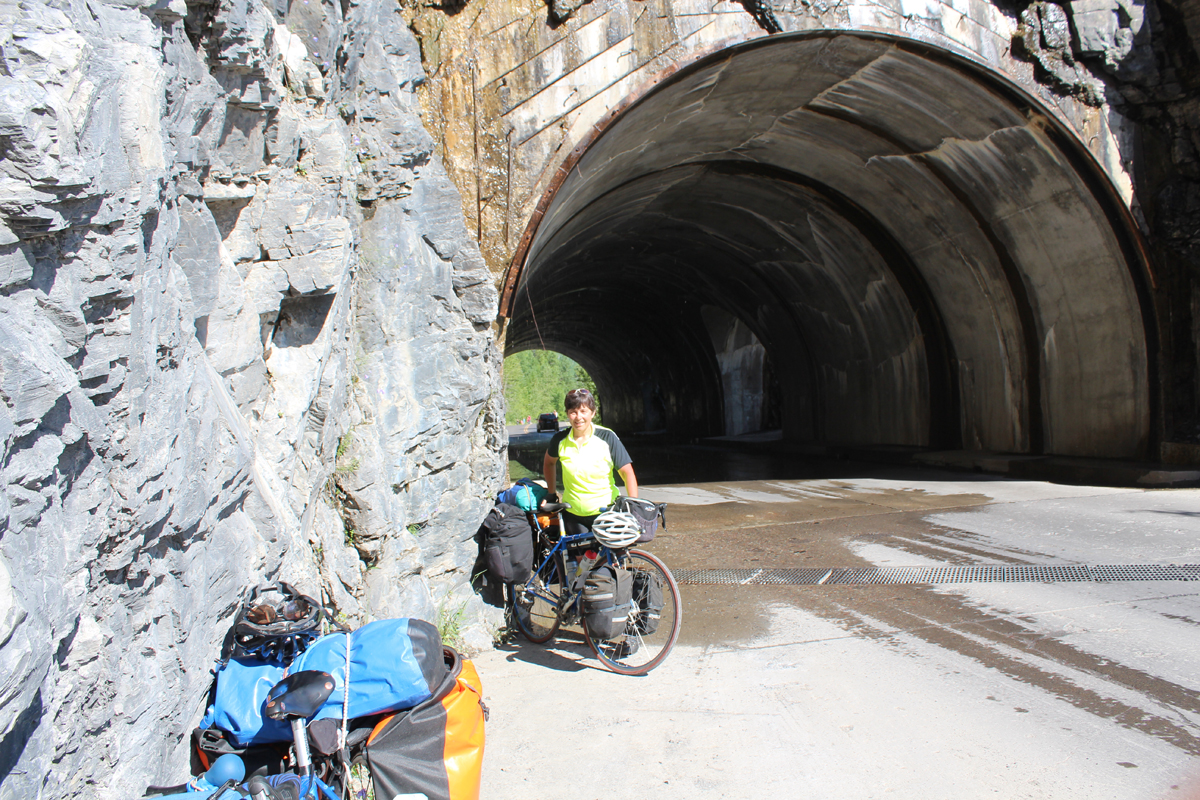
Julie at the tunnel on Going to the Sun Highway, Glacier National Park. Photo by Lou Melini
The road officially received its name, “The Going-to-the-Sun Road,” during the 1933 dedication at Logan Pass. The road borrowed its name from nearby Going-to-the-Sun Mountain. Local legend, and a 1933 press release issued by the Department of the Interior, told the story of the deity, Sour Spirit, who came down from the sun to teach Blackfeet braves the rudiments of the hunt. On his way back to the sun, Sour Spirit had his image reproduced on the top of the mountain for inspiration to the Blackfeet. An alternate story suggests a white explorer in the 1880s concocted the name and the legend.
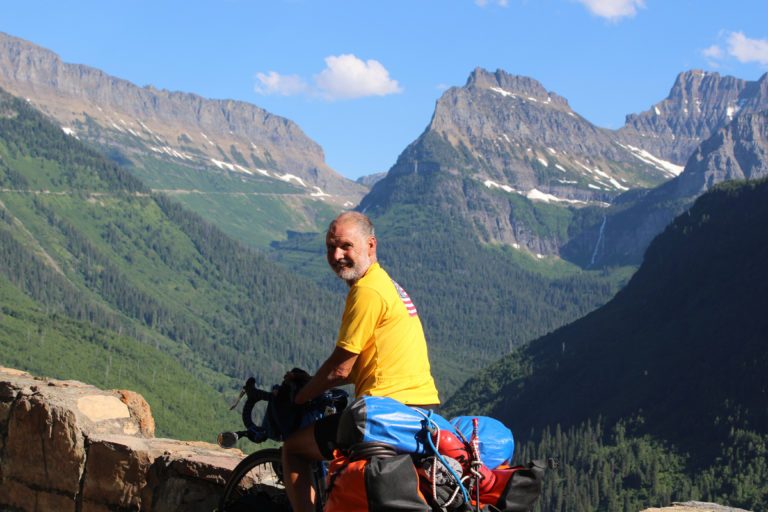
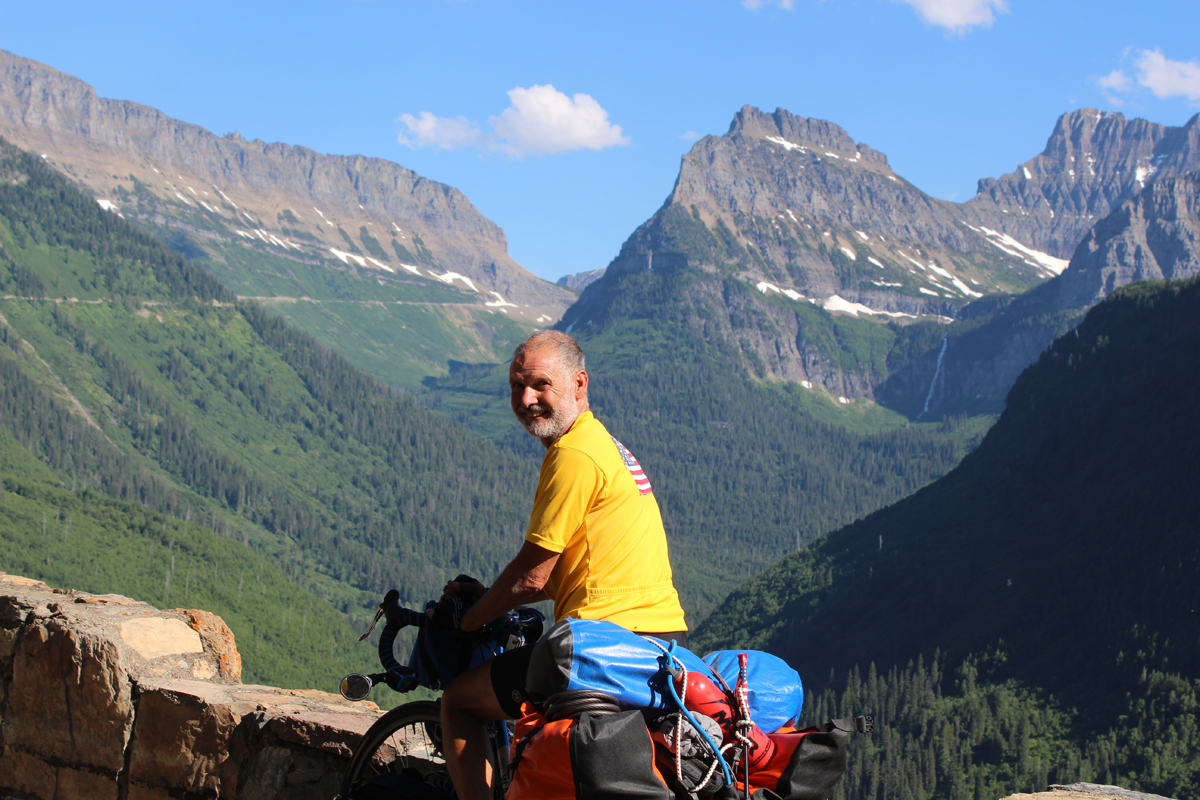
Lou at the location that inspired the Monte Dolack painting, Going to the Sun Highway, Glacier National Park. Photo by Julie Melini
Despite years of discussion, I had a concern that the trip may not happen. Julie and I had planned on leaving Salt Lake on June 19th, riding Glacier on June 22nd, the day after Going-to-the-Sun was to open for the season. However there was a slight complication. This is the discussion at Thanksgiving dinner in 2012.
Daughter-in-law: “Julie, Lou; I’m going to have a baby. The due date is June 16th.
Julie: “Oh Wow! I can’t wait! Congratulations! I am so excited! I’m going to be a grandmother! I will be able to help in whatever way!”
Lou: “Uh honey, we leave on June 19th for our bike trip. Oh, congratulation!”
The little “Lewie” was born on June 10th. He was 3-weeks-old when we left on July 4th for Missoula Montana, the home of the Adventure Cycling Association (ACA).
Another reason for starting in Missoula is that I had a place to leave my car. In July of 1969, I walked across the parking lot at Rider College (now University) that is located just south of Princeton, New Jersey. Coming towards me was another freshman entering the dorm for several days of freshman orientation. Bob Luceno and I shook hands and introduced ourselves. Forty-four years later we re-united I was able to take advantage of our friendship.
Julie and I have now done 6 long trips. We sometimes get asked which was our best trip. Our honest answer is all of them as each one has unique features. However, we both think that if you want a bike tour with endless days of beautiful scenery then do the Great Parks North Tour mapped by the ACA. Huge granite slabs reaching high in the sky with thick green pine forests below. Water is everywhere in the form of huge picturesque lakes, raging rivers, and too numerous to count waterfalls. Water is also seen frozen in massive glaciers tucked into the mountains, though reportedly disappearing rather quickly in geological time.
Trip Summary:
Montana:
We used the Adventure Cycling Association (ACA) maps exclusively for this trip save for a very short detour. For that we used the BC Rockies map that we picked up at a visitor information center. Our bike weights (weight of bike and everything on it) were high with mine at 95# and Julie at 85# to start the trip. We left Missoula anxious to get to Glacier National Park. We rode 160 miles the first 2 days to Columbia Falls along Montana route 200 (good road) and route 83 (not so good road). We passed the large scenic Salmon, Swan and Seeley Lakes and in Bigfork, the north end of Flathead Lake, We also passed numerous deer and 4 Rocky Mountain sheep that were very close to the road. I had reasons to start in Missoula. My advice would be to start in a town north of Flathead Lake to avoid route 83 with its long stretches of no shoulder and high-speed traffic.
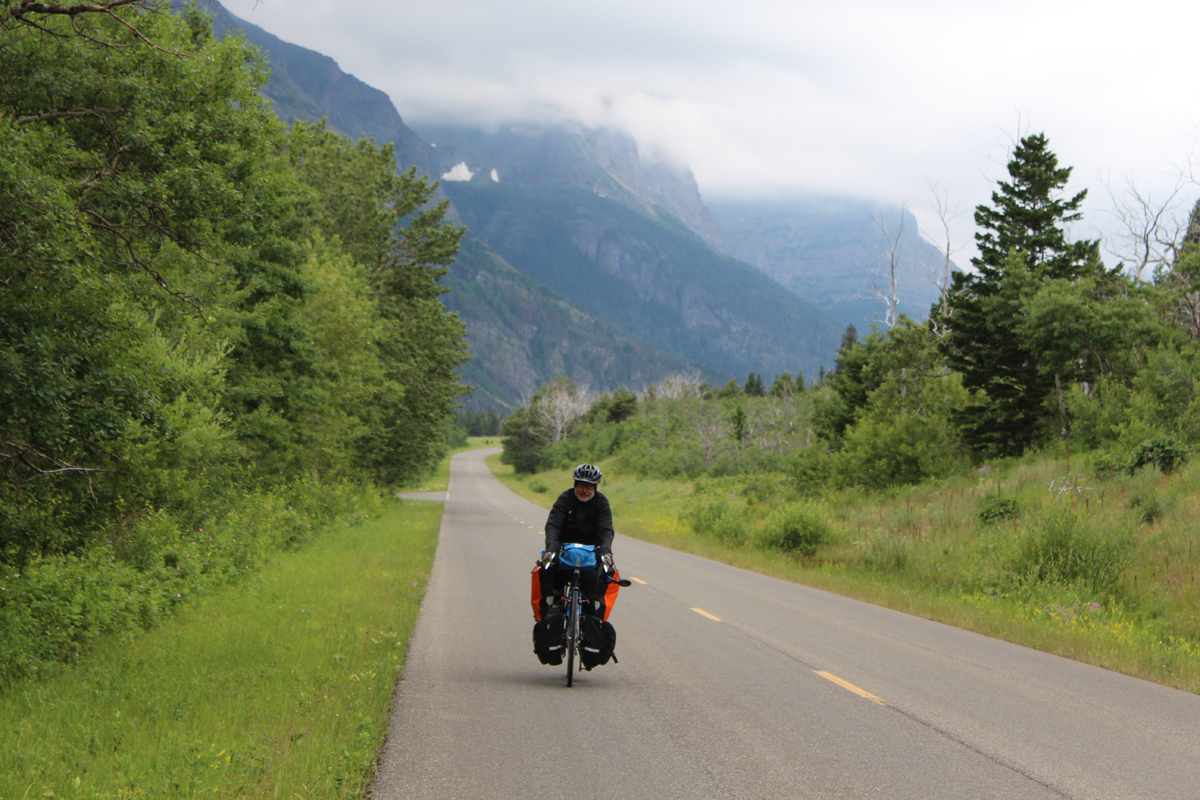
Lou on a cool morning exiting Glacier National Park. Photo by Julie Melini
After Bigfork, the ACA maps take you onto some low traffic back roads. We entered Glacier in mid-morning of day 3, free courtesy of my National Park Senior Pass. We took a short break and quickly rode to Lake McDonald lodge. The road on the west side of Glacier is closed to bicycles from 11 AM to 4 PM between Apgar campground near the entrance of the park and Avalanche campground another 5 miles from McDonald. So we killed time at Lake McDonald sitting on the back porch of the lodge viewing the lake, reading and eating an early dinner.
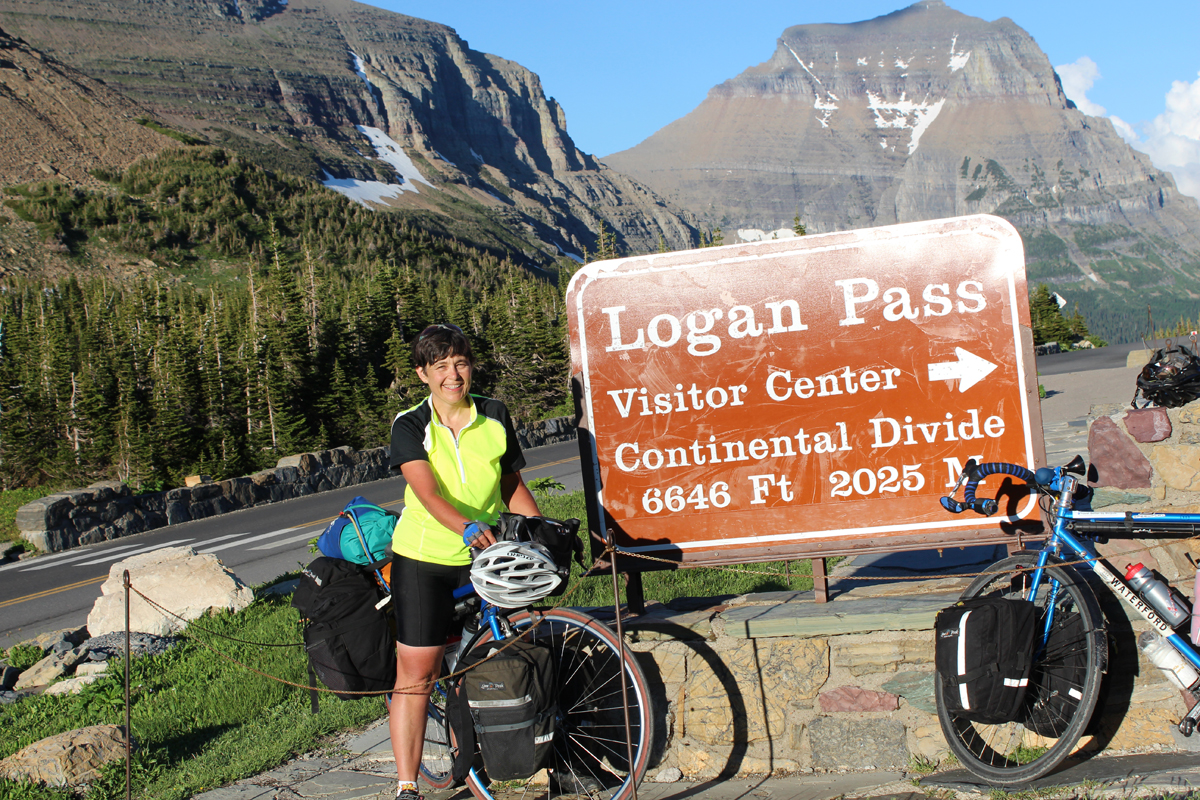
Julie at Logan Pass, Going to the Sun Highway, Glacier National Park. She made it!!! –check that off the bucket list!
The uphill portion of Glacier to Logan Pass from the west entrance is also closed to bicycles during that same time period. We left Lake McDonald area at one minute before 4 and quickly did the 5 miles to the start of the climb to Logan Pass. The road for the final 16 miles has a profile very similar to riding to Snowbird ski resort. Julie did great cresting the summit at 8 PM. We even took time to take a picture of the wild goats near the top. The ride up to Logan Pass is stunning with numerous waterfalls cascading off the mountain scenery. We found the spot that matched our Monte Dolack poster and took a picture of that as well. Traffic was heavy and the road is very narrow, but there were enough pullouts that we didn’t affect flow too much. Most people seemed to cheer us on. It was hot and each of us went through our 3 bottles. I was able to buy a $1 bottle of Powerade from a tourist that pulled off the road. We did need to put on warm clothes for the 12-mile ride down to St. Mary’s campground due to the time of night. We knew there was a Hiker/Biker area so getting in just before 9 PM was not a problem. Unfortunately the line for the showers was 8 deep and the showers close at 10 so we gave our tokens to a family of 8 camped near us that really needed and appreciated the tokens. If I go through Glacier again I will most likely do it from the east side to avoid the time restrictions.
Alberta, Canada:
We left the campground at St. Mary’s and proceeded into Canada on day 4. Just past the border we met a Montreal family doing a 3-year cycle trip with their 7- year-old daughter. Later in the afternoon we were caught in a massive downpour with hail. The thunder sounded like it was coming from above our heads and the wind was difficult. With 2 miles of uphill and another 6 to a private campground we pushed on with our rain-suits. It was laundry day anyhow so we passed the time doing laundry. The weather cleared the next morning.
Day 5 put us in Blairmore, one of several “towns” that make up the municipality of Crowsnest. Our ride to Blairmore was hot, mostly with headwinds. We resupplied our food in Pincher Creek, a town of 3600 and large enough for a decent sized grocery. We also stopped at a local bakery for bread, chatting with some of the locals and their guests from the Netherlands. We had lunch at a Provincial historical site where we took a short tour of the local coal mining history and the landslide that buried part of the town and 100 people. Overall it was a good day. Our campground was nice, shady with a sleep-inducing stream 10 feet from our tent. On the other side of the stream were railroad tracks. About 6 trains rumbled through during the night negating the effects of the stream. In the evening I did my bike checking duties that I was behind on. I found a spoke that had nearly pulled through Julie’s rim. She had been riding all day with the rim out of true and rubbing the brake. With 1100 miles to go we planned on getting a new wheel in Fernie, the lunch spot on day 6.
British Columbia:
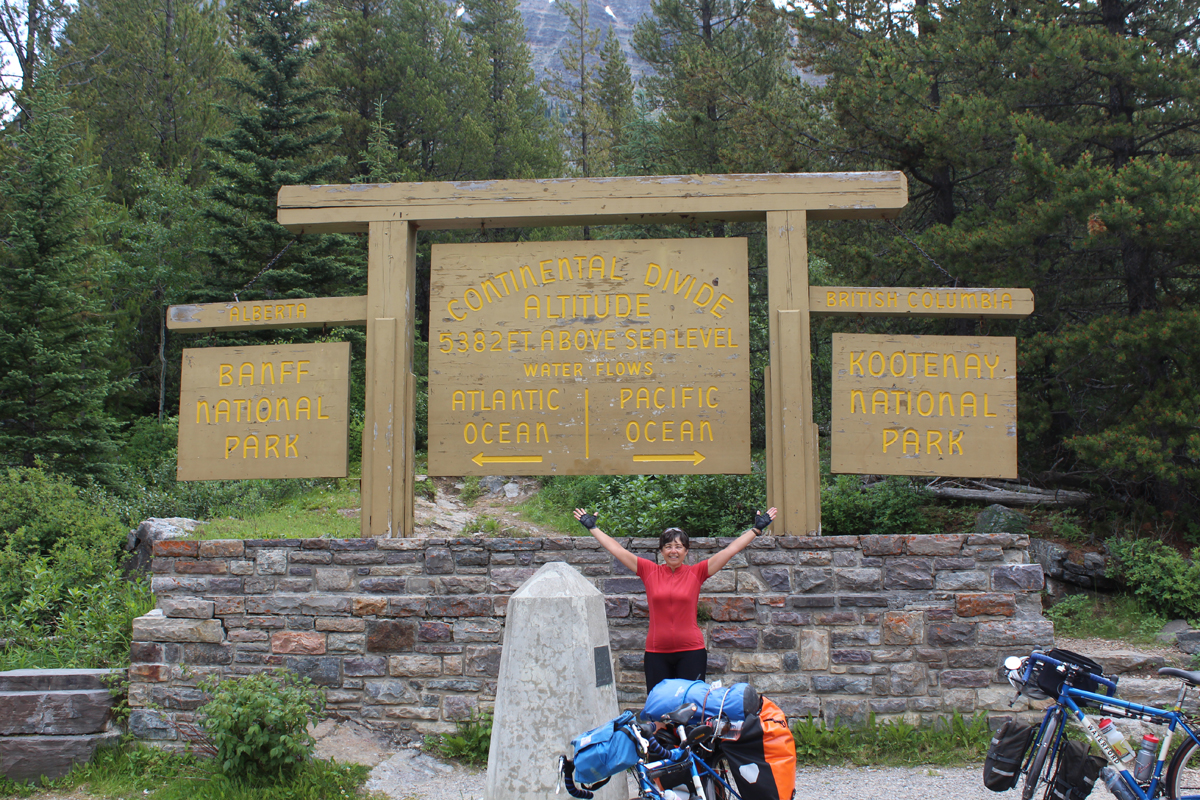
We had crossed the continental divide riding over Crowsnest Pass, one of several crossings. Helmets are now mandatory in the Province of British Columbia. Our ride went quick today with a long break in Sparwood. While in Sparwood we chatted with the first of several Great Divide riders on the road due to the flooding. The broken wheel that I trued held well. Fernie, like many of the towns we passed through have been re-invented in tourism after the coal and lumber industries declined. We knew there were 3 bike shops in Fernie. Fortunately there is a 4th. We went to all 4 before finding a wheel with a 130 mm spaced 700C wheel and that was taken off the only road bike in stock. After obtaining our wheel, we shopped for food, had lunch and took off in the heat to Baynes Lake Provincial Park. Camp fees for the night were $30 cash, no credit cards at this provincial park. Visa is accepted in Canada at all of the other campgrounds. Do leave your Discover card at home as it was not accepted at anywhere we went in Canada.
Julie at the 2nd of 3 crossings of the Continental Divide on this trip. Photo by Lou Melini
Kootenay National Park:
Favorable south winds pushed us quickly northward to Radium Hot Springs for lunch on day 8 at the visitor/information center. We were on the border of Kootenay National Park. We read that passes were necessary to be in the Park. The day passes cost $9.80 or $67 for an annual pass ($10 less for being a senior). We elected the annual pass, as we would be in the parks for more than a week. We were only asked once to show our pass.
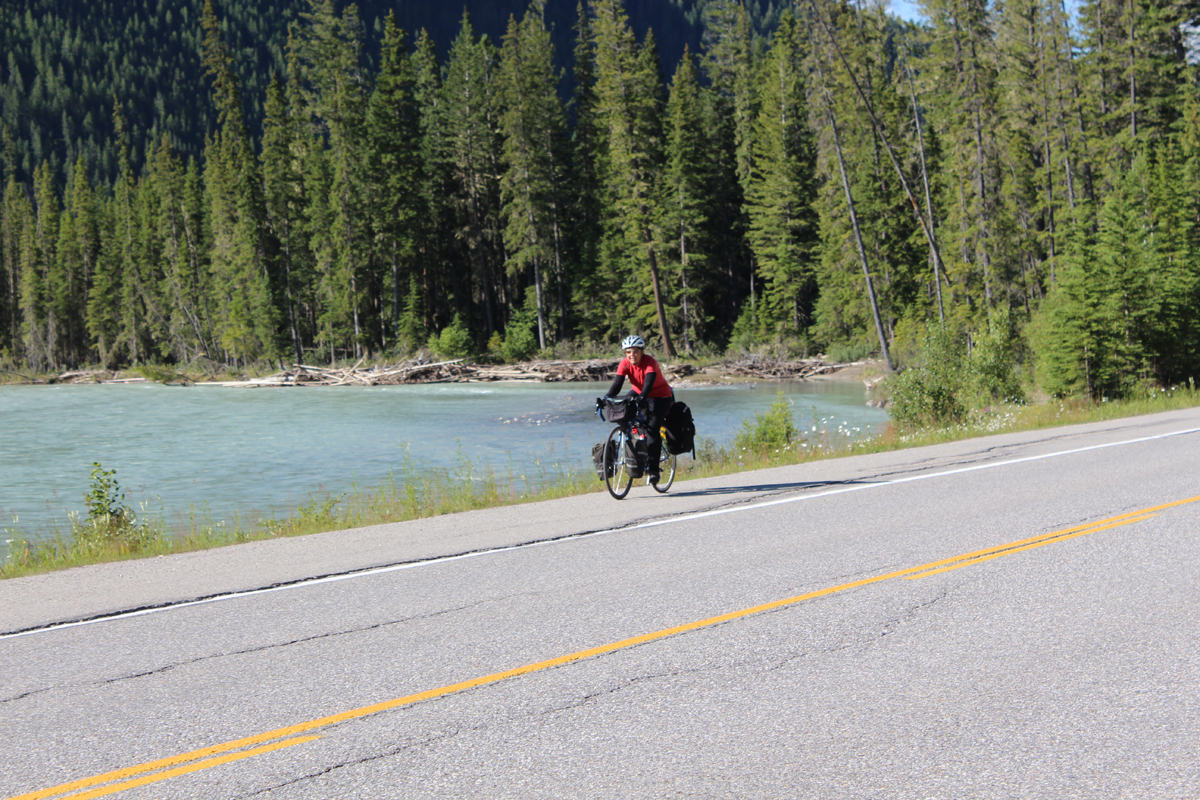
Julie riding along the Kootenay River, Kootenay National Park, Canada.
We had been riding quickly until we entered the park. The first mile was at 11% and was 2-lane, broken pavement with no shoulder. I elected to jump on an adjacent sidewalk. The next 8 were at 6-8%. Ten miles before Radium Hot Springs we had a similar one-mile climb out of Invermere but there was an adjacent, steep, but narrow bike path that Julie needed to walk. Invermere is also the last of the “normal” grocery stores before entering the national parks. Kootenay National Park is the start of a lot of “Wow, what beautiful scenery” that continued into Banff and Jasper National Parks.
Back to Alberta to enter Banff National Park:
Day 9 and we returned to the Province of Alberta entering Banff National Park. Our goal was the legendary Lake Louise, plus the not as famous but equally beautiful Lake Moraine. These 2 lakes are worthy of at least a one-day layover for hiking along the trails. So we did the tourist thing and spent one “rest day” at Lake Louise, riding nearly 30 miles walking for 9-miles along Lake Louise. Not the rest day I imagined. The Lake Louise campground does not have a hiker/biker area and always had a “full” sign. We did not have a problem obtaining a site. Shopping at the market at Lake Louise will give you sticker shock. The pear and pecorino cheese ravioli sounded good and was reasonably priced considering that a can of Campbell’s Chunky soup went for $5.
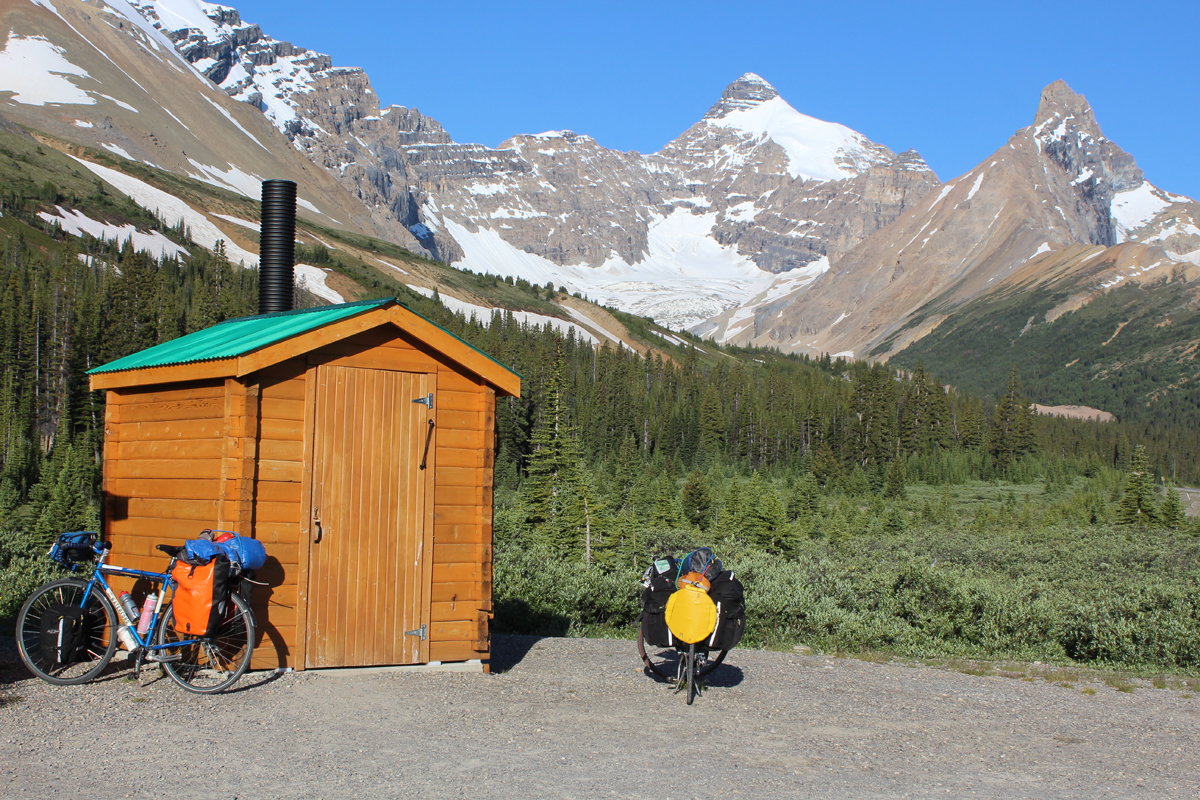
One of the most scenic outhouses in North America (base of Sunwapta Pass, Banff National Park, Canada). Photo by Lou Melini
The weather changed on the 2nd night at Lake Louise. It rained most of the night so that in the morning we moved under the convenient shelters found in Canadian Parks. These shelters have tables, benches and wood burning stoves. We had breakfast, dried our tent and packed to head north.
I had a case of the sniffles the day we left following Julie’s case of the sniffles. However when I get any illness, despite being mild, I end up with rather severe muscle aches. For the next 2 days riding north I had problems getting on and off the bike. In addition I had muscle stiffness in my neck making it difficult to turn my head.
It remained damp with a few minor showers and cooler for the next 2 days ride northward. At one lunch break at a campground someone had started a fire in the shelter stove, a nice luxury as we encountered a brief heavy rain as we approached the campground.
Jasper National Park:
On our second to last night heading north we camped next to 4 other cyclists that just happened to meet up. They had started with 3 separate “groups” heading in various directions. The weather was still changing as we woke up to a morning chill of 22° according to Julie’s stem mounted thermometer. There was frost.
Our last night traveling north was at the Columbia Icefield campground on day 12. It was my decision to turn around here and not go the next 60 miles into Jasper city, though this may have turned out to be a good decision in retrospect. However, The scenery, with massive glaciers, waterfalls and jagged mountain peaks more than made up for my discomfort that lasted for less than 2 days. The weather was also improving. This last day of traveling north was a short day of 25 miles, with 15 of it uphill, the last 6 at close to 8%. The night at the Columbia Icefield campground was great. I woke up around midnight with a full moon illuminating a glacier capped mountain peak. A fantastic sight! I almost woke up Julie to ask her how to best take a night photo. I am not a “stop and take pictures” kind of person, but the view was that good.
Return trip through Canada:
The return trip back to Radium Hot Springs was uneventful as we rode over the same passes except from the opposite side. In total we did 9 passes with Logan Pass in Glacier the worst though Bow Pass made our 84-mile day back to Lake Louise “interesting”! Fortunately most of our climbs were aided by thermal updrafts in the late morning and afternoons.
The weather was again getting warmer though we had a heavy rainstorm on the afternoon we returned to Lake Louise. I was definitely feeling better than the previous 2 days. Again the campground sign said full. A park ranger waved me to the front of the line away from the cars. I asked for a shady campsite near the showers and bear containers, bingo the perfect campsite. Camping at Lake Louise was a bit odd as it is surrounded by electrical fence due to bear issues. We shared our rather generous campsite with a young couple hitchhiking across Canada.
Lou and Julie at the campground in Ft. Steele, British Columbia.
One of the interesting aspects of bike touring is meeting the same person(s) in different places. As we traveled south we did a short detour in our trip that put us in Fort Steele for one night. Maggie one of the cyclists that we met 5 days earlier came a couple of minutes behind us. Earlier when I went shopping I couldn’t find a package of hamburger less than a pound. Fortunately for Maggie, we were all able to share a campsite and the hamburger. Maggie is quite the traveler having solo hiked the Pacific Crest Trail a few years ago.
Entering the U.S.:
Entering the U.S. was easier than we thought. We were asked the standard questions. We told the border patrolman we had oatmeal, peanut butter and a turkey sandwich for lunch. He smiled and waved us through. The line to get back into Canada on this Sunday night was over a mile long at 5 PM. We camped at the city park in Eureka, Montana meeting a father/son duo that planned to cycle through Glacier. The city park had a shower, but both Julie and I used my sandals to stand in the shower. The toilet was backed-up and non-functional. Fortunately the gas station across the street was open 24 hours. The toilet got fixed just as we were leaving. We did leave the $10 suggested donation for using the park.
We were at this time ahead of schedule so I was planning to possibly go off route and travel west from Whitefish to Libby Montana for 2 or 3 days. Julie was having some issues with her front derailleur not shifting into her smallest ring. Then, while riding up a short but very steep (12%?) grade her chain suddenly shifted into the big ring but she managed to power over it. This happened a second time with an equally steep hill and again “big-ring Julie” powered over it. It turned out that the top pivot pin had fallen out so I replaced it with some thin rope and secured the front derailleur from moving. She could only use the middle ring. There was only one more short, steep climb for the remaining 40 miles to Whitefish, Montana. As we got closer to Whitefish, the traffic increased and the quality of the road severely decreased especially the final 10 miles. The heat was also getting to us. In Whitefish we decided to not replace the derailleur and simply ride the remaining 180 miles back to Missoula in her middle ring. We knew there were no climbs requiring her small ring but not having her big ring meant a top speed under 20 mph. In Whitefish, we shared the campsite with a girl from West Virginia that had just finished riding the Great Divide trail from south to north. She did most of the trip alone as her boyfriend left her after entering Colorado. Inspirational that she finished the ride.
We had an uneventful 3-day ride “home” from Whitefish for a total of 21 days. I did get my first flat tire equaling Julie’s one flat tire. My tire was notably worn. It had a total of 1400 touring miles on it. This was the 3rd time we needed the spare tire that we carry in our 6 tours. We also experienced being turned away at a private campground due to it being full on a Tuesday night. There was a Forest Service campground about 1 mile away, making it our 6th non-shower night. (Half-price with my senior pass)
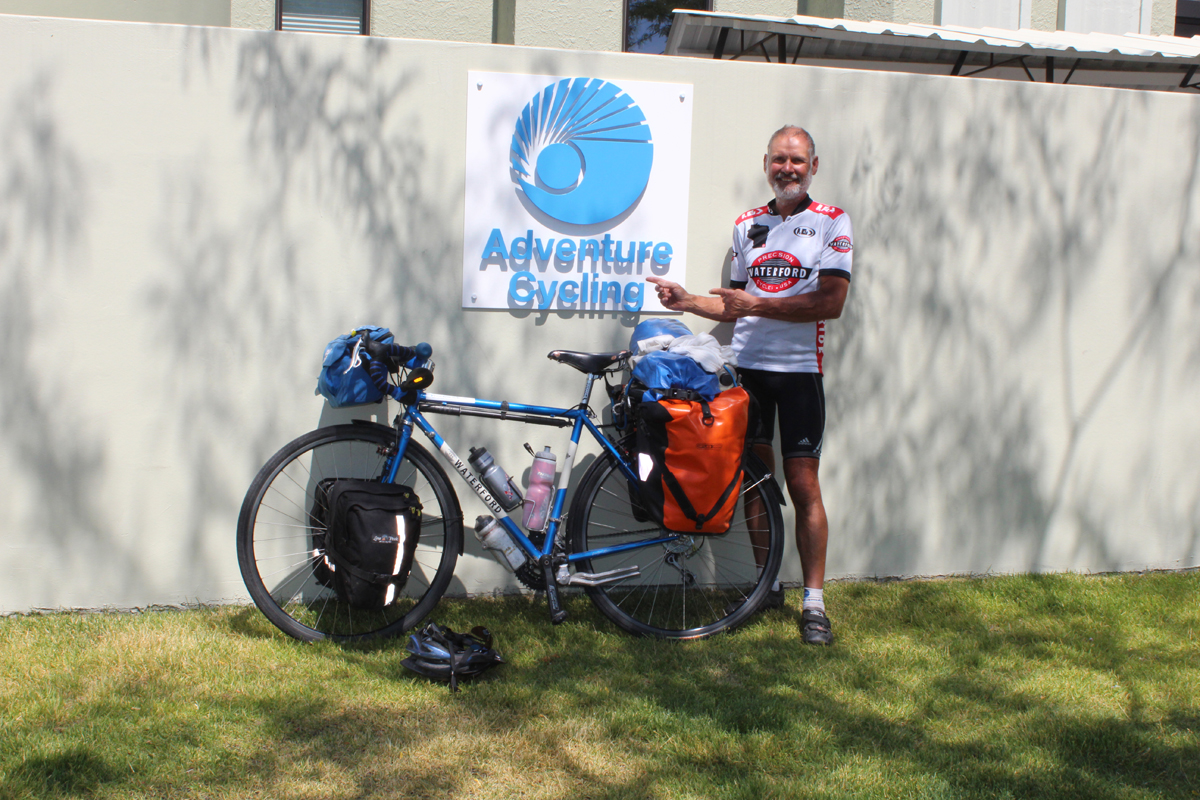
Lou at Adventure Cycling Headquarters, Missoula, MT. Lou has been a lifetime member since 1976. Photo by Julie Melini
We cruised into Missoula on our last day, Thursday the 25th. We went to the Adventure Cycling Association Headquarters for the free ice cream, a picture for placement on their wall of visitors and an interview and pictures with Greg Siple, one of the founders of the ACA. We then returned to Bob’s house and our car. We left the next morning for Salt Lake. When we came home that Friday evening there was an email for me from Lorenzo, a Basque cyclist that stayed in our home for a few days in April of 2012. He is in his 16th year traveling by bike. He was passing through Missoula riding the Great Divide trail. He went to the ACA headquarters on Friday and saw our pictures from the day before. We missed him by one day. Small world!
Miscellaneous Trip Nuts and Bolts:
Julie is really into trip statistics. So for the finally tally 1340 miles in 119 hours and 17 minutes of riding time. The high mileage day was 84 (twice) and the low mileage was 27 and 25 on “rest” days. The daily miles-per-hour ranged from a low of 8.2 (our last day traveling north) to 12.9 (5 times above 12.5 mph). We spent $510 on food (though I packed quite a bit to start the trip) and $429 on campgrounds. With miscellaneous expenses such as the Parks passes ($125) and Julie’s wheel ($145) we spent $1277, nearly one dollar per mile or $60/day – our most expensive trip in North America. Even little Lewie, our grandson, received a small cardboard infant bear book that Julie carried from Lake McDonald in Glacier for 17 days.
By John Shafer — Every year my wife and I try to make a road trip to a new place. Since I’m primarily a mountain bike and adventure photographer, I look for destinations with great landscapes and trail systems. My wife Jenni writes about beer at Craftybeergirls.com so we also look for breweries to visit. This year, we decided on the Santa Fe Mountain Fest. It checked a lot of our travel boxes: we’d never been to New Mexico and the festival combines bikes, beer, food and music. Bonus: it’s in September – the best time to visit New Mexico because it’s chile season!
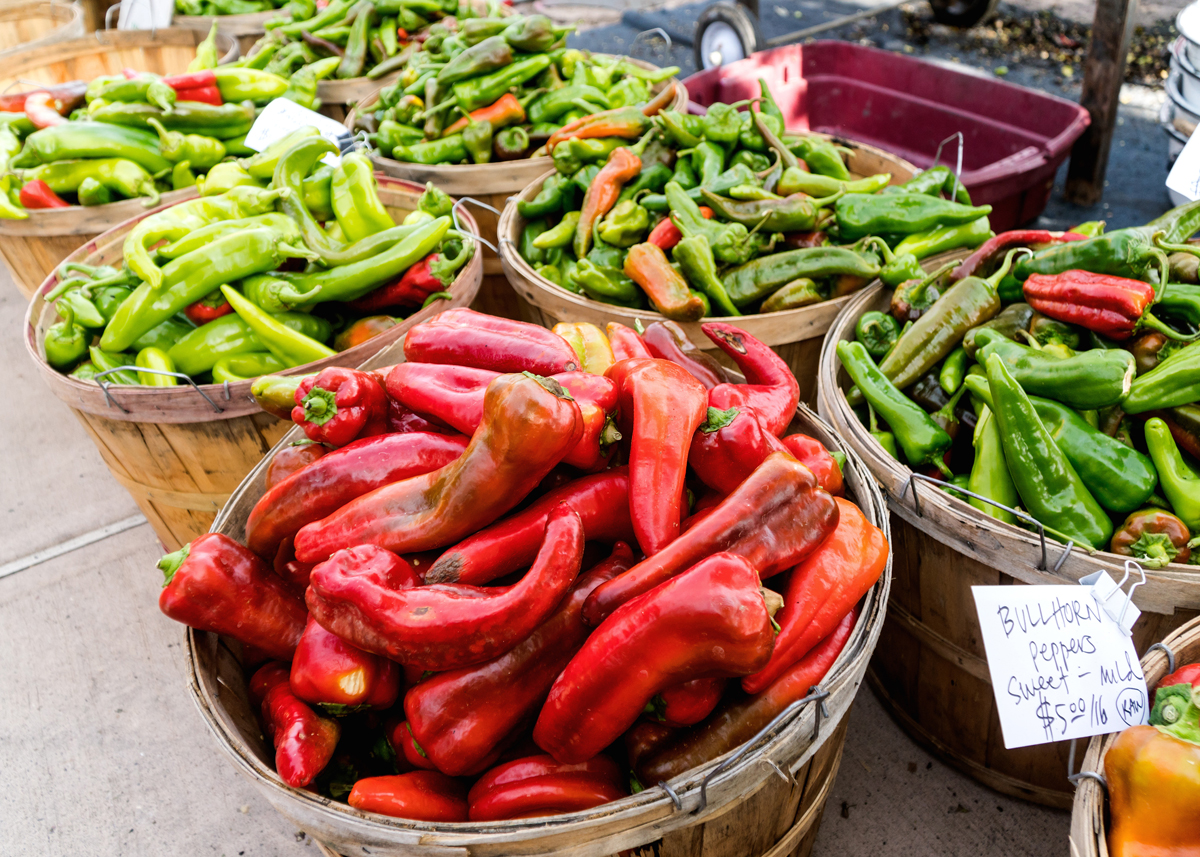
Chile peppers – the real reason for our New Mexico trip – at the Santa Fe Railyard Park Farmers Market. Photo by John Shafer, photo-john.net
As cool as the Santa Fe Mountain Fest looked on paper, it was really just an excuse for a New Mexico road trip. We had a week to explore on our way to the festival so we took our time getting to Santa Fe. We spent a couple of days in Durango, Colorado then headed into New Mexico with stops in Farmington, Chaco Canyon and Truchas, where we spent a couple days visiting my aunt and uncle before driving to Santa Fe for the festival.
We found New Mexico to be a strange juxtaposition of familiar Southwestern landscapes in what felt like a different, much older country. In fact, New Mexico is a different, older country. Although it was “discovered” by the Spanish, the culture is separate and unique from Mexico with deep native roots and influence. The city of Santa Fe was founded in 1610 and New Mexican culture is ancient compared to most of the US. Coming from Salt Lake City, it feels mystical and old European-Catholic, with crumbling, abandoned adobes, centuries-old churches and roadside memorials called, “descansos,” around every bend. There’s also New Mexican cuisine, which is similar to Mexican food but with its own smoky, chile-based flavors.
My wife Jenni, pedaling at nearly 12,000 feet, on Kennebec Pass, the southern end of the Colorado Trail. Photo by John Shafer, photo-john.net
We started our trip by driving to Durango where we spent a couple of days at a friend’s house, visited some breweries and rode the southernmost section of the Colorado Trail. Our Durango ride was actually one of the highlights of the trip. It started with a shuttle to Kennebec Pass (11,600 ft. /3600 m) courtesy of Hermosa Tours. It’s a 20+ mile ride down into Durango with 6000 feet of descending and a 1000 foot climb in the middle. It’s a rowdy ride with a lot of rocks and exposure and not recommend for inexperienced riders. However, if you like big, rowdy backcountry rides, it’s not to be missed. Don’t underestimate that climb in the middle, though – it’s a bitch.
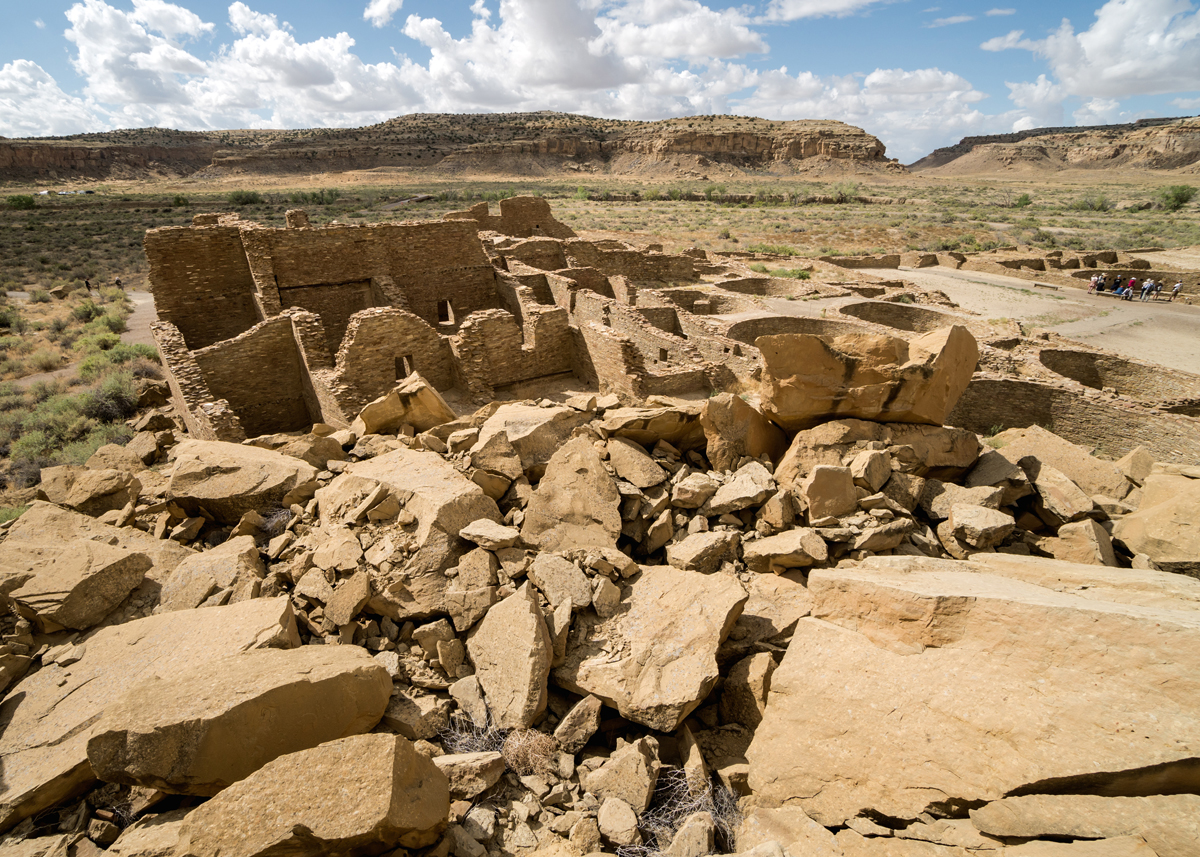
Native Great House ruins at Chaco Canyon. Photo by John Shafer, photo-john.net
We spent our first night in New Mexico camped at Angel Peak, a badlands basin a bit south of Farmington. The next day left the main highway to see the ruins at Chaco Canyon, a place I’ve wanted to visit for decades. It’s a long drive on a washboard dirt road to get to Chaco Culture National Historical Park, but it’s worth it. Between 800 and 1300 AD, Chaco Canyon was the center of a huge native community that stretched for hundreds in every direction. It has some of the best-preserved Great Houses in the Southwest. Besides being of historical significance, it’s a beautiful location and well worth the long, rough drive. We didn’t have a lot of time so we only toured one of the pueblos but it was still worth the trip. Next time we’ll see about staying in the campground and spending more time exploring the canyon and ruins.
From Chaco Canyon, we continued southeast on US 550 through a classic Southwestern landscape of small mesas, sage, and scrubby pinyon pines. Just north of Cuba, New Mexico we turned off the main highway and headed east into the mountains. We drove through tiny, seemingly-abandoned mountain villages with crumbling adobes and ancient-looking cemeteries. After a couple of hours of 45 mile-per-hour roads, we descended into a high-desert valley, passed the road for Georgia O’Keeffe’s Ghost Ranch and followed the Rio Chama until it merged with the Rio Grande. After over 24 hours of seeing not much but high desert and a few native villages, we were back in the world of strip malls, Walmart and traffic. In Española, we made a left and wove our way east through the old New Mexico communities of Santa Cruz and Chimayo, then up a long grade into Truchas.
Truchas is about forty miles north of Santa Fe on the “High Route” to Taos. It’s in the foothills of the Sangre de Christo Mountains at an altitude of 8000 feet, in the shadow of 13,000-foot Truchas Peak. There’s not much to Truchas. The local gas station, bar & grill and convenience store are all closed. Aside from a few artist’s studios and beautiful views of the mountains above and valley below, there’s no reason to stop. However, it does have some fame as the location for Robert Redford’s 1988 movie, “The Milagro Beanfield War.” It’s a great movie and Truchas hasn’t changed much, except you see far fewer people there in real life.
We spent a day exploring Truchas, Chimayo and the surrounding area. Highlights of our time in Truchas were the Santuario de Chimayo, visiting local artist studios and eating at a couple of the outstanding local restaurants. El Santuario de Chimayo is an adobe chapel that dates to the early 1800s. It’s famous for its healing dirt and is sometimes called the “Lourdes of America.” There’s a small pit in a room at rear of the chapel where believers can take some dirt to heal their ills. It’s a registered National Historic Landmark and according to Wikipedia it gets nearly 300,000 visitors a year.
Chimayo is also famous for their local chiles. The Chimayo pepper is an heirloom chile with its own US Patent and Trademark Office certification mark. Adjacent to the Santuario are a few small shops that sell religious souvenirs, local art and all kinds of Chimayo chile products. Just up the street is Rancho De Chimayo, a popular restaurant that specializes in New Mexican cuisine. We ate there our first night in Truchas. A typical meal includes New Mexican specialties like sopapillas, posole, handmade tortillas and Chimayo red and green chile. My favorite is carne adovada, pork in Chimayo red chile sauce. Just thinking about it makes my mouth water.
On Friday morning, we finally headed down to Santa Fe for the festival. Our plan was to visit a bike shop, explore the city a bit and then head over to the festival venue for the opening evening’s festivities. Unfortunately, we found the city tough to navigate in our big, four-door F150 – especially with bikes on a hitch rack and a cab full of camera gear. If we’d known, we might have reserved a motel for the night instead of camping. We’ll just have to save playing tourist for our next visit.
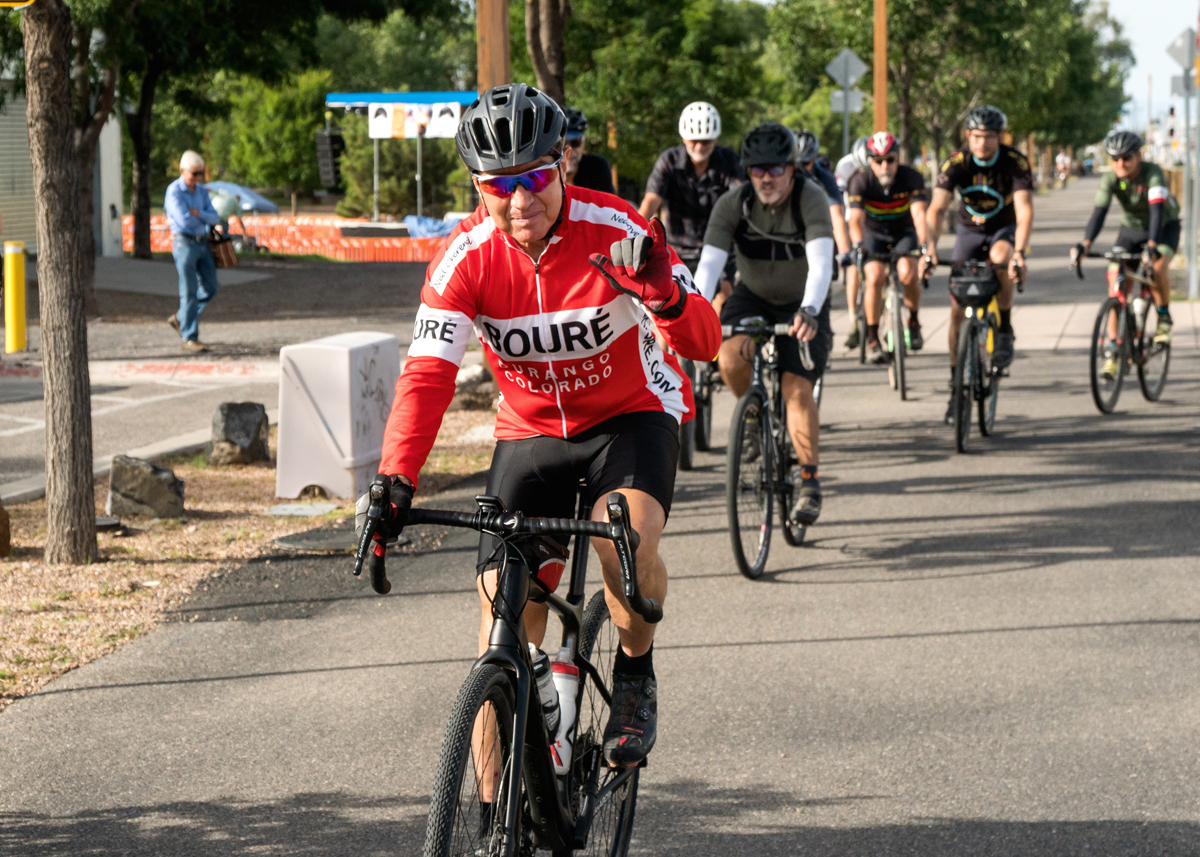
Dropbar dirt riders rolling out from Santa Fe’s Railyard Park at the start of the Caja del Rio Gravel Grinder. Photo by John Shafer, photo-john.net
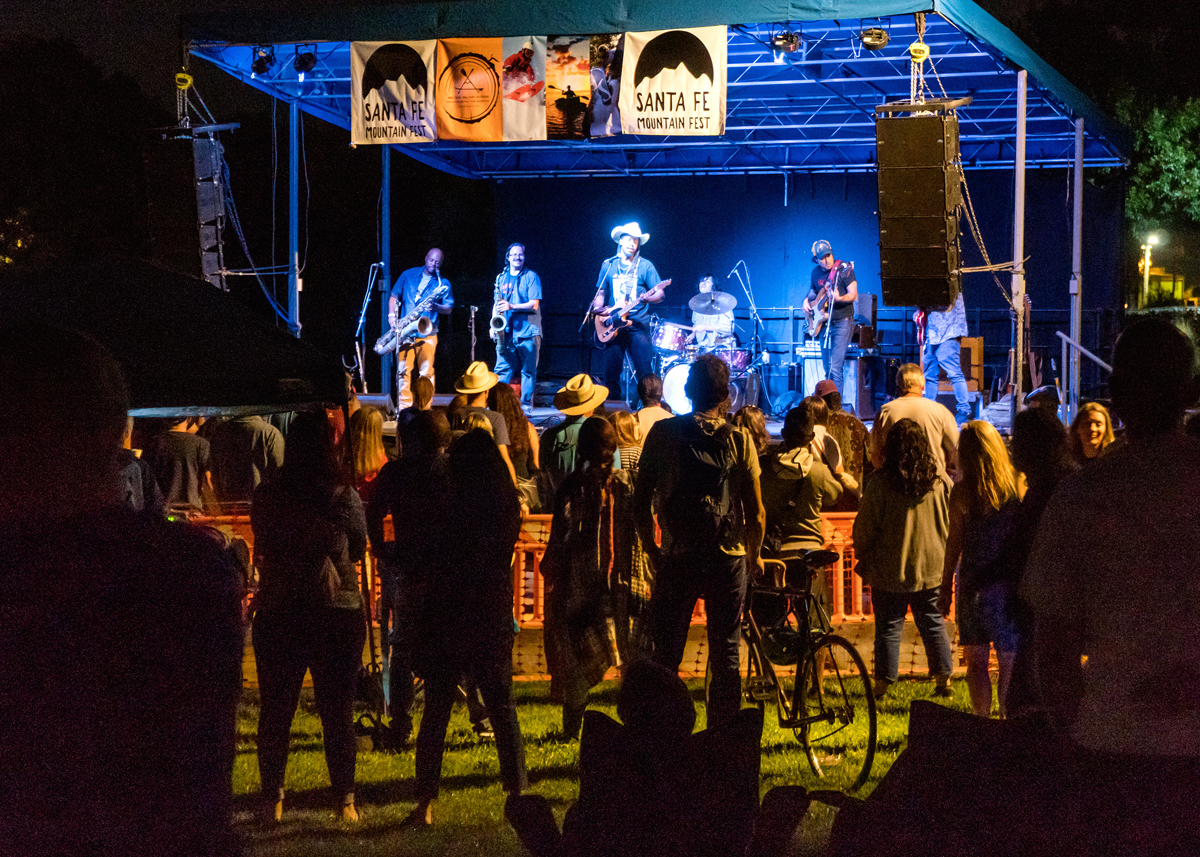
The Santa Fe Mountain Fest was held at the Santa Fe Railyard Park in the middle of the city – not the kind of location we’re used to for a bike festival. The opening night had food trucks, beer vendors and an outdoor concert with Black Joe Lewis & the Honeybears, a fantastic, guttural blues/funk act from Austin, Texas. The concert was free to the public and thanks to Santa Fe’s great network of bike paths, a lot of people left their cars home and pedaled to the event.
Saturday was the busiest day of the festival, with all kinds of activities, including a trail run, guided bike rides, a climbing wall, gear expo and food trucks. There also happens to be an excellent farmer’s market just a block away with all kinds of food, chile roasting, coffee, art, jewelry and more. I enjoyed the scent of roasting chiles and had a tasty lunch of green chile papusas and green chile focaccia.
Santa Fe Mountain Fest attendees enjoying Black Joe Lewis & the Honeybears on the first night of the festival. Photo by John Shafer, photo-john.net
A bunch of bike rides were scheduled on Saturday, most of which started and finished at the Railyard Park. The Santa Fe Mountain Fest has a refreshing diversity of bike activities – from guided mountain bike rides to an urban ride called, “Funky Trails & Short-cuts.” One thing they don’t have is racing. All the rides are designed for fun and inclusion.
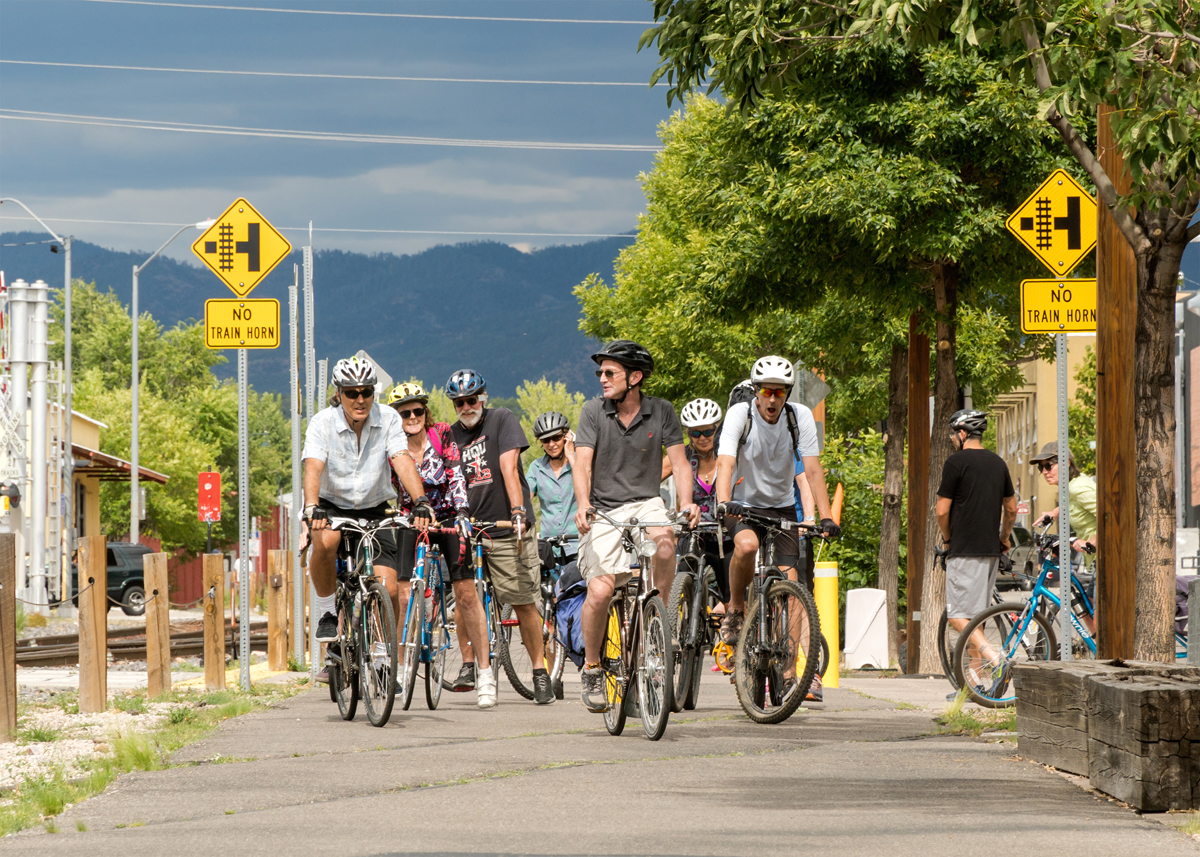
Heading out to explore Santa Fe on the, “Funky Trails & Short-cuts,” guided ride. Photo by John Shafer, photo-john.net
The most ambitious events were the Santa Fe Haka and the Caja del Rio Gravel Grinder. The Haka was a, “mountain bike marathon,” in the mountains above Santa Fe. It offered two options, a short 17 mile course and, “a serious undertaking,” a 31-mile course with over 8000 feet of climbing. The Caja del Rio Gravel Grinder took drop bar riders on a dirt tour of the desert outside Santa Fe. My wife Jenni joined a group doing a pedal-powered brewery tour. They rode bike paths to three local brewers, Second Street Brewery, Blue Corn and Santa Fe Brewery, for guided tours, beers and food. She had a great time. You can read her story about this trip on her web site, craftybeergirls.com.
Saturday evening was to be a repeat of Friday’s concert, beer and food trucks program. Unfortunately, it started raining that afternoon and the evening’s festivities were canceled due to thunderstorms. We were disappointed but took advantage of the free time to eat at nearby Cowgirl Café. It’s a fun, Southwestern BBQ-focused restaurant and we enjoyed the best green chile burgers we’ve ever had.
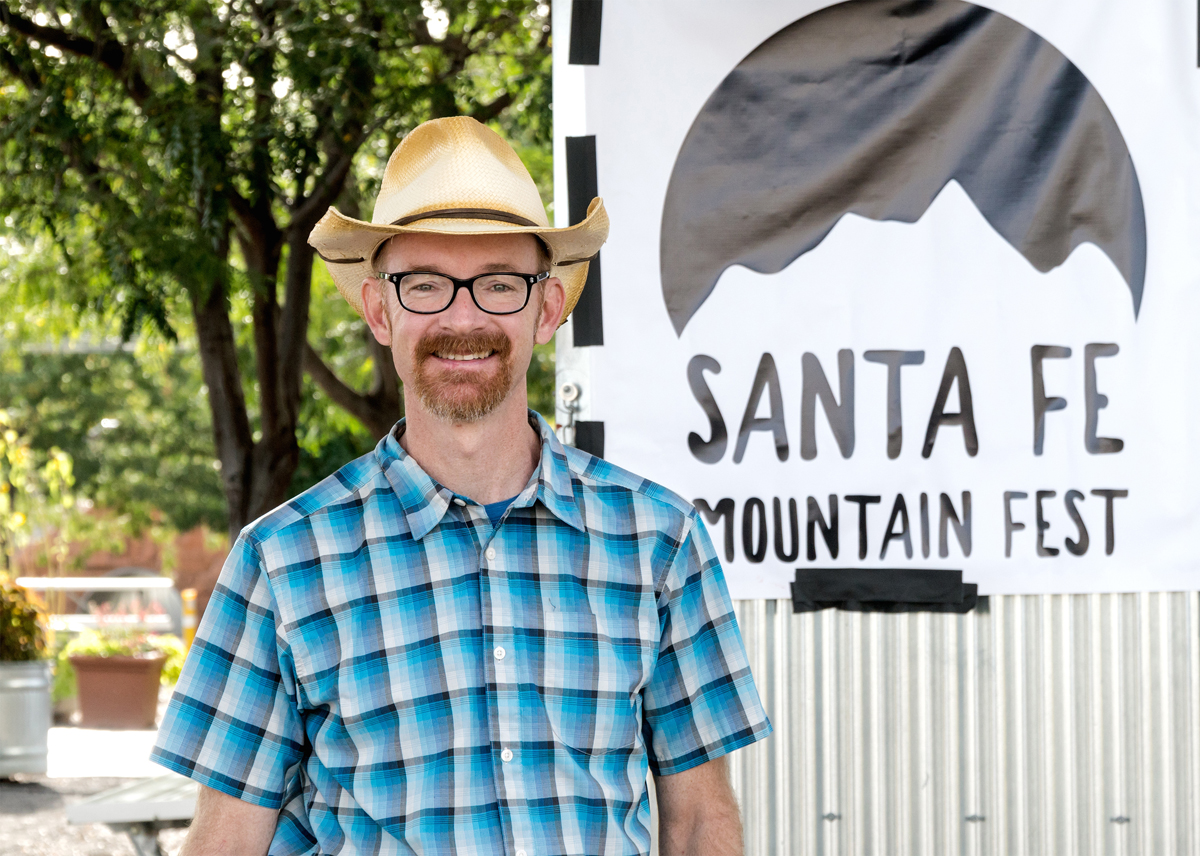
Tim Fowler, our lovely host, trail guide and the main force behind the Santa Fe Mountain Fest. Photo by John Shafer, photo-john.net
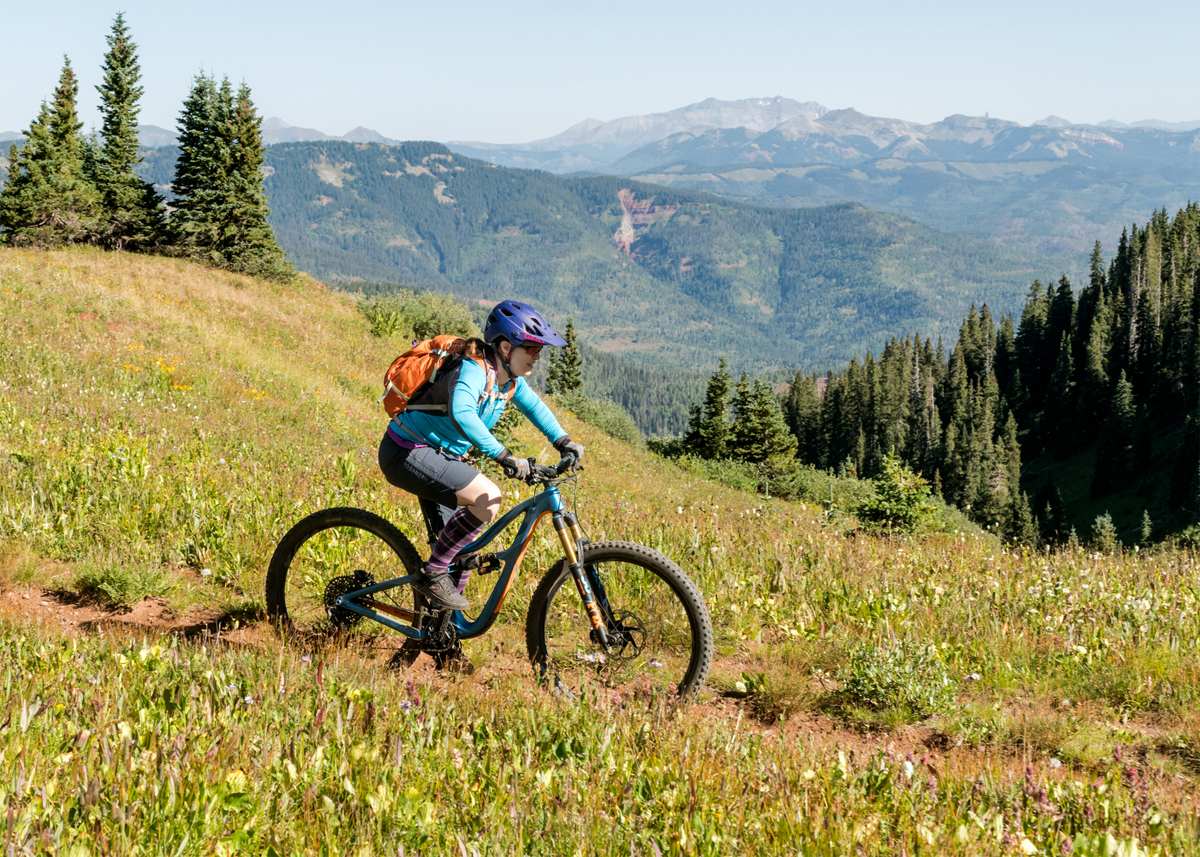
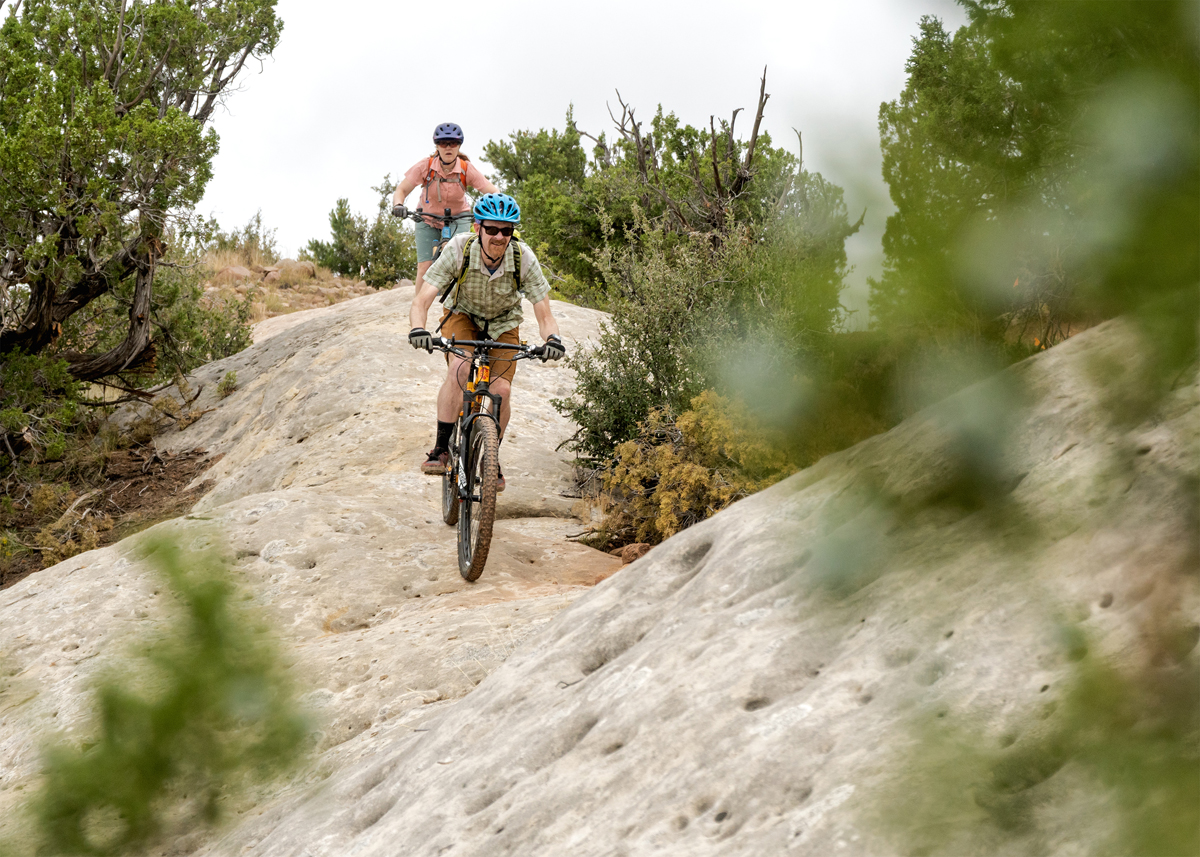
Sunday, the final day of the festival, was what I’d been waiting for. The event moved to Galisteo Basin Preserve, about 20 miles away in the desert south of Santa Fe. Festival promoter, Tim Fowler, was kind enough to show us around and we had a good time exploring the Preserve trail system. The landscape, dirt and trail quality reminded us a lot of blue trails at Fruita’s Eighteen Road trail system and the green and blue stuff at Moab’s Brand Trails (a.k.a. Bar-M). The trail build and flow was great and they’ve taken good advantage of natural features. There isn’t a lot of rock and the riding isn’t exactly technical but they’ve built some fun and spicy optional lines on some of the slickrock formations. While it may not be the most challenging riding we’ve done, it’s certainly fun and a great place for beginning and intermediate mountain bikers to develop their strength and skills.
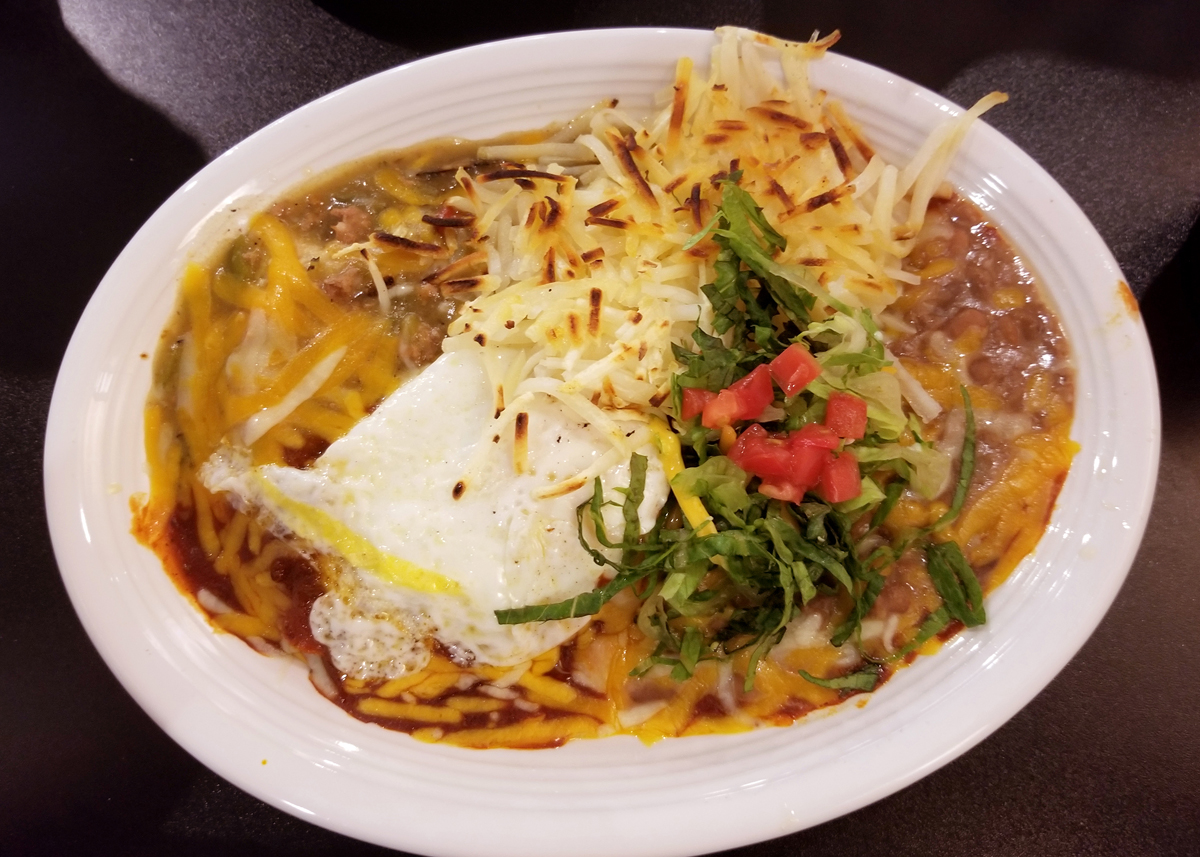
Classic New Mexican cuisine: adovada enchiladas with eggs, Christmas-style; at the Chile Pod Cafe, in Farmington, NM. Photo by John Shafer, photo-john.net
After Galisteo Basin Preserve we packed up, said our goodbyes and headed north, for home. We spent that night camped at 9000 feet in an aspen grove overlooking the Cuba Valley. In the morning, we continued north to Farmington where we stopped for a late, last hurrah New Mexico breakfast of adovada enchiladas and eggs – Christmas-style. When in New Mexico, always order, “Christmas-style,” so you get both red and green chile.
Festival promoter Tim Fowler and my wife Photo-Jennic, on one of Galisteo Basin Preserve’s optional A-Line slickrock sections. Photo by John Shafer, photo-john.net
After our final plate of New Mexico chile, we headed back up through Colorado into Utah, where we spent the night camped outside of Moab. Moab was an easy drive from Farmington and left time for one more ride the next day, before we finally headed home. Since we didn’t actually get to do a lot of mountain biking in New Mexico, we planned to make up for it in Moab. Since Moab is nuts in September, we kept it simple, stayed away from the popular trails and did a comfortably-paced lower Navajo Rocks loop. It was a perfect way to wrap up our trip – mellow, scenic and fun.
As I was writing this story, I found out the Santa Fe Mountain Fest will not be held in 2020. We thought it was great but they had issues with sponsors, conflicts with other events, marketing issues, and bad weather so it wasn’t as successful as they’d expected. Hopefully this will just be a brief hiatus while they get things sorted out. Regardless, the festival was a perfect excuse for us to travel to Santa Fe, pedal some new trails and explore parts of the Southwest we haven’t seen before. Even if the festival doesn’t continue, the mountain biking, landscape, food and culture of New Mexico will all still be there. We barely skimmed the surface of New Mexico’s mountain biking options. So, I guess we’re just gonna to have to make another trip. Maybe you can join us.
10 Foot Travel Lanes Would be Safer For Cyclists, Pedestrians, Wildlife, and Motorists
July 7, 2020 – Emigration Canyon in Salt Lake County, Utah is currently being reconstructed from Donner Monument to SR 65 (the road to East Canyon). While cyclists have been concerned about the short term lack of access to the canyon, the problems with the roadway design have far greater long term consequences for cyclists’ safety.
The current plan is to keep the road striping the same as it is now, with mostly 12′ wide travel lanes from the Salt Lake County line to approximately the Fire Station, 11′ foot lanes from there to the Pinecrest turnoff, and 12′ lanes to Little Mountain Summit, and finally 11′ lanes from the summit to SR 65.
Pictured is an example of where Emigration Canyon would benefit from wider shoulders and narrower vehicle travel lanes. Photo by Dave Iltis
More on the striping plan is below, this from the Emigration Project Team:
Concerning the new striping and lane widths, here is the planned layout.
From the County line to the Fire Station in the eastbound (uphill) direction there will be a five (5) foot bike lane. Twelve (12) foot travel lane to Skycrest. Eleven (11) foot travel lane from Skycrest to the Fire Station.
From the County line to the Fire Station in the westbound (downhill) direction it will remain “Share the Road”. Twelve (12) foot travel lane.
Between the Fire Station and Pinecrest it will continue to be “Share the Road” because there is insufficient room through that section to strip for bike lanes. Eleven (11) foot travel lanes in both directions.
Between Pinecrest and the Summit there will be five (5) foot bike lanes on both sides of the road. Twelve (12) foot travel lanes in both directions.
From the Summit to SR-65 once again it will be “Share the Road” because of how narrow the road is. Eleven (11) foot travel lanes in both directions.
We very much wanted to expand the bike lanes, but the project simply was not funded to be able to add the width necessary to support additional bike lanes. Travel lanes were only adjusted where necessary to provide five (5) foot bike lanes.
Why are lane widths important? Road design, and in particular lane widths, impact the speed at which motorists feel comfortable driving. According to Jeff Speck’s Walkable Cities Rules, 12′ lanes have a design speed of 70 miles per hour, while 10′ lanes have a design speed of 45 miles per hour. The speed limit in Emigration is 40 mph. So, why are 12′ lanes specified?
We asked this question of the project engineers, and they indicated that the leadership of Emigration Township did not want this. We are unclear on the reasoning here.
The new Township encompasses one of the most beautiful areas in Salt Lake City, where hundreds of cyclists and tourists ride and sight see. The canyon is also the site of Brigham Young’s Last Camp, prior to declaring “This is the place!” in the Latter Day Saints journey west.
According to Strava data, it is likely the 4th most popular recreational bike route in the country, and the most popular in Utah.
In the Salt Lake City section near the mouth of the canyon, there are adequate bike lanes, although we would like to see narrower travel lanes here, and wider bike lanes, this section is not part of the reconstruction. We do plan on asking Salt Lake City about this.
In the Salt Lake County section, there are really no true bike lanes, but rather just wider shoulders. Riding up the canyon, having adequate room is paramount to cyclists’ safety as the speed differential between cyclists and cars is much higher. 10′ lanes would provide in some sections 1 to 2 more feet of space to ride. Additionally, this provides more room for pedestrians. We would think that one of the desires of canyon residents is to be able to walk along the road safely, with enough room to not get buzzed by car traffic.
In the downhill direction, there are some parts of the canyon where cyclists can reach 30-35 miles per hour, and can easily take the lane. However, there are many sections in the canyon where cyclists cruise along at lower speeds, and generally will want to ride in the shoulder / ‘bike lane’.
A wider shoulder and narrower travel lane would give more room for cyclists to ride, and would lower conflict between motorists and cyclists.
Additionally, in a conversation with one of the Unified Police Department officers that patrol the canyon, they stated to us that motorists in speeding vehicles are one of the main issues that they deal with. Narrower travel lanes by design reduce motorist speeds. This is better on many levels. It would reduce enforcement issues. Slower motorist speeds would reduce the speed differential between cars and cyclists, thus reducing conflict. And, slower motorist speeds would reduce crashes with wildlife.
We would offer specific recommendations as to where to go to 10′ travel lanes, but despite several requests, Salt Lake County would not respond to requests to share the striping plan with us. Additionally, as far as we are aware, no cyclists were contacted for feedback on the current plan.
The 2015 Emigration Canyon Roadway Improvement Committee study (ECRIC study) recommends, “Meet or exceed AASHTO standards regarding road
widths, bike lanes and road shoulders.” But, as far as we can tell, the study is silent on vehicle travel lane widths. The only way to gain more width for bike lanes and road shoulders without widening the road (which is difficult because of cost) is to narrow the travel lanes.
The study contains a number of other recommendations. We are not able at this time to tell which of those will be implemented.
All in all, the striping plan in Emigration needs to be reevaluated as soon as possible and needs to take in to consideration modern road design standards that will result in safer conditions for all canyon users and residents.
[Note: Cycling Utah does plan on sharing this editorial with Emigration Township.]
EMPORIA, Kan., July 7, 2020—Life Time, the nation’s premier healthy lifestyle brand which owns and produces the Garmin DK (formerly known as the Dirty Kanza), the world’s premier gravel event, today announced the 2020 DK, which had been rescheduled for September 12, 2020, has been cancelled due to persisting COVID-19 concerns. The decision to cancel comes after thorough input from community leaders and reviewing the latest scientific data trends on the Coronavirus pandemic.
“Our team has worked hard for many weeks to determine if an event could take place in Emporia this Fall and we have been in regular communication with local community and health leaders to determine our best path forward,” said Lelan Dains, DK Race Director at Life Time. “While we hoped that something could be done, if even with an altered capacity, we now realize the safest and most responsible thing to do for our athletes, volunteers, and community is cancel the 2020 event.”
Life Time is offering registered athletes their choice of four options. Participants have been requested to select their choice by August 7:
Complimentary deferral into the 2021 event (June 5, 2021)
Complimentary deferral into the 2022 event (June 4, 2022)
Donation of original entry fee to the Life Time Foundation (benefitting the Emporia Unified School District 253 school lunch program) and receive a guaranteed, non-complimentary entry into their choice of the 2021 or 2022 event
Full refund (excluding processing fees)
Danny Giefer, Mayor City of Emporia added, “The decision to cancel an event is never an easy one, and I appreciate the thought and work that Life Time has put into planning the 2020 race. While we are all disappointed the event can’t occur as planned, we can look forward to 2021 and a continued long-term relationship hosting the world’s premier gravel cycling race right here in Emporia.”
The DK team at Life Time is looking ahead with both reflection of the past and excitement for the future. With a promised new name, fresh look and a continued focus on growing the sport, the 2021 event is promised to be a first-of-its-kind experience for athletes, volunteers and community members. In addition to the rebrand, which is set to roll out over the coming months, Life Time is in the process of creating an event industry-focused diversity, equity and inclusion coalition.
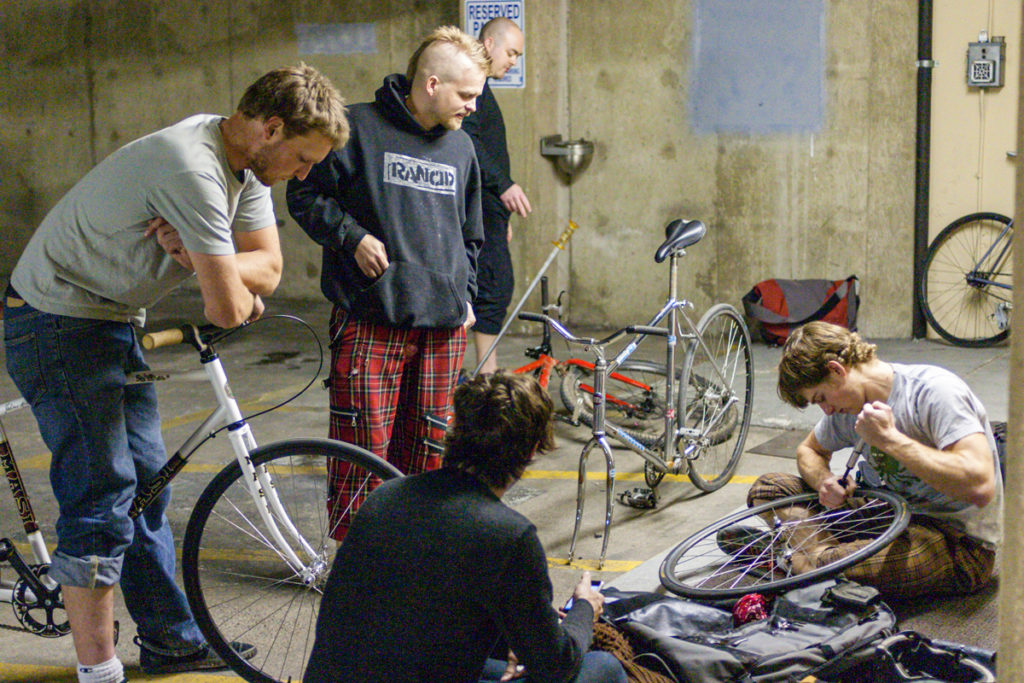
History: Hardcourt bike polo is the modern version of grass bike polo. The original version was born in Ireland at the end of the 19th century and was included as a demonstration during the Olympics in London, 1908. Hardcourt bike polo was reinvented by Seattle messengers who had downtime in between deliveries in the late 90’s. They built mallets with ski poles and gas pipes and rode their fixed gear bikes while smashing beer cans (used for the ball)!
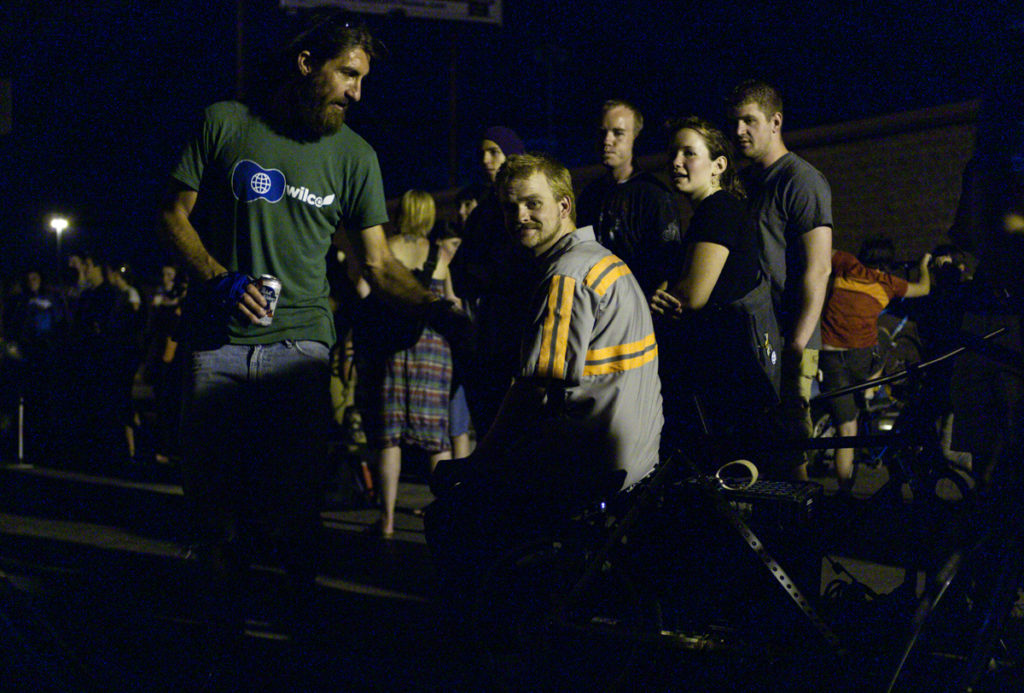
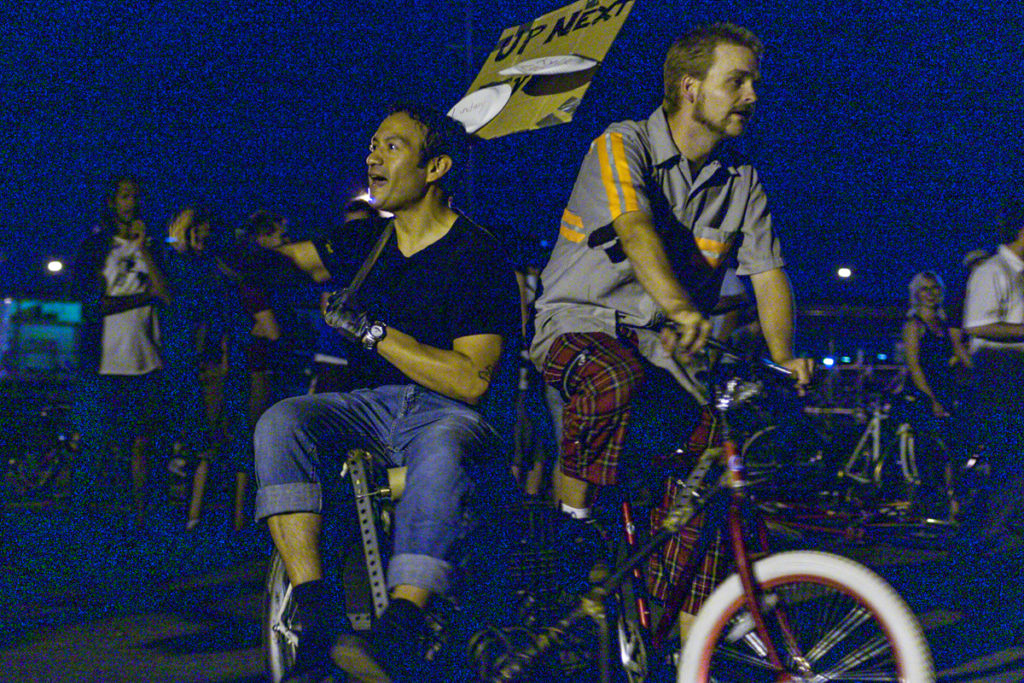
Les Beehive Boys at the National Championships.
Today: Hardcourt is now played all over the world in every major city. NAH (North American Hardcourt) is the American organization leading the sport and supporting the events in NA. Since 2009, we have North American Championships and World championships. USA, France, England, Germany are the countries where the major teams come from but Asia, South America and Oceania are also into it!
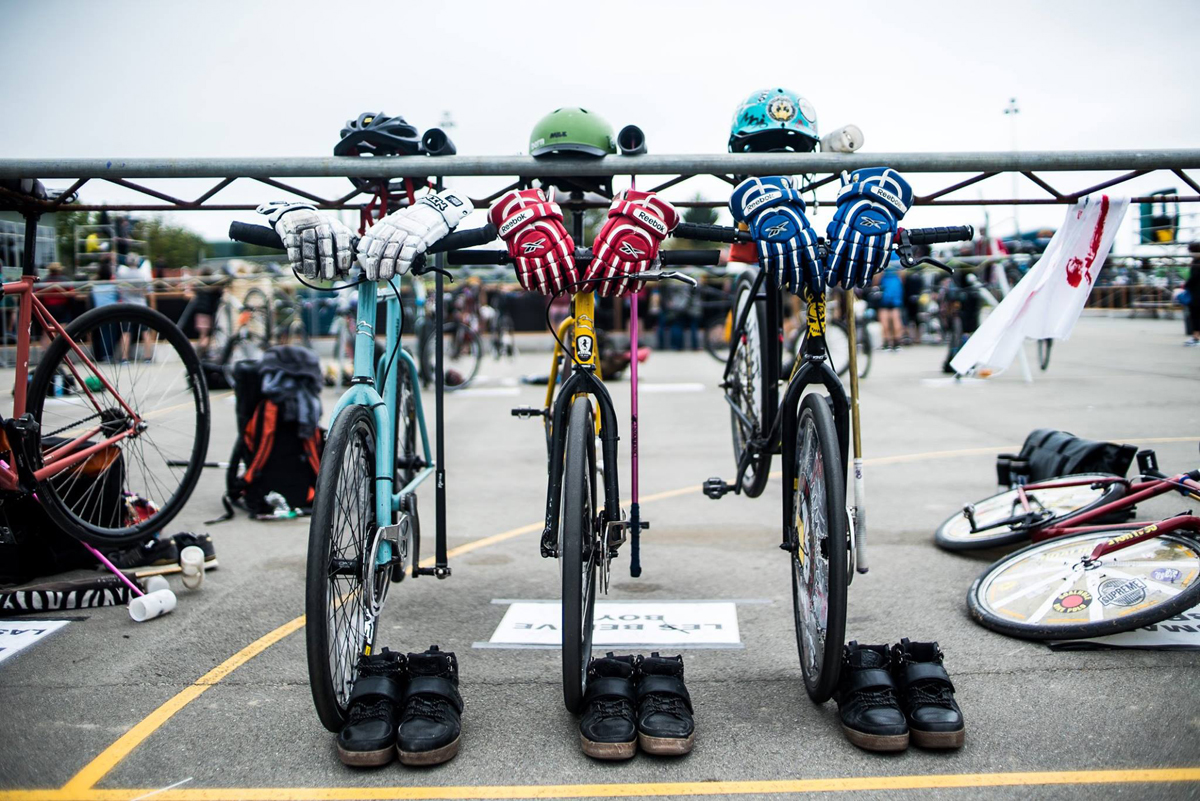
Bikes and gear – ready to play!
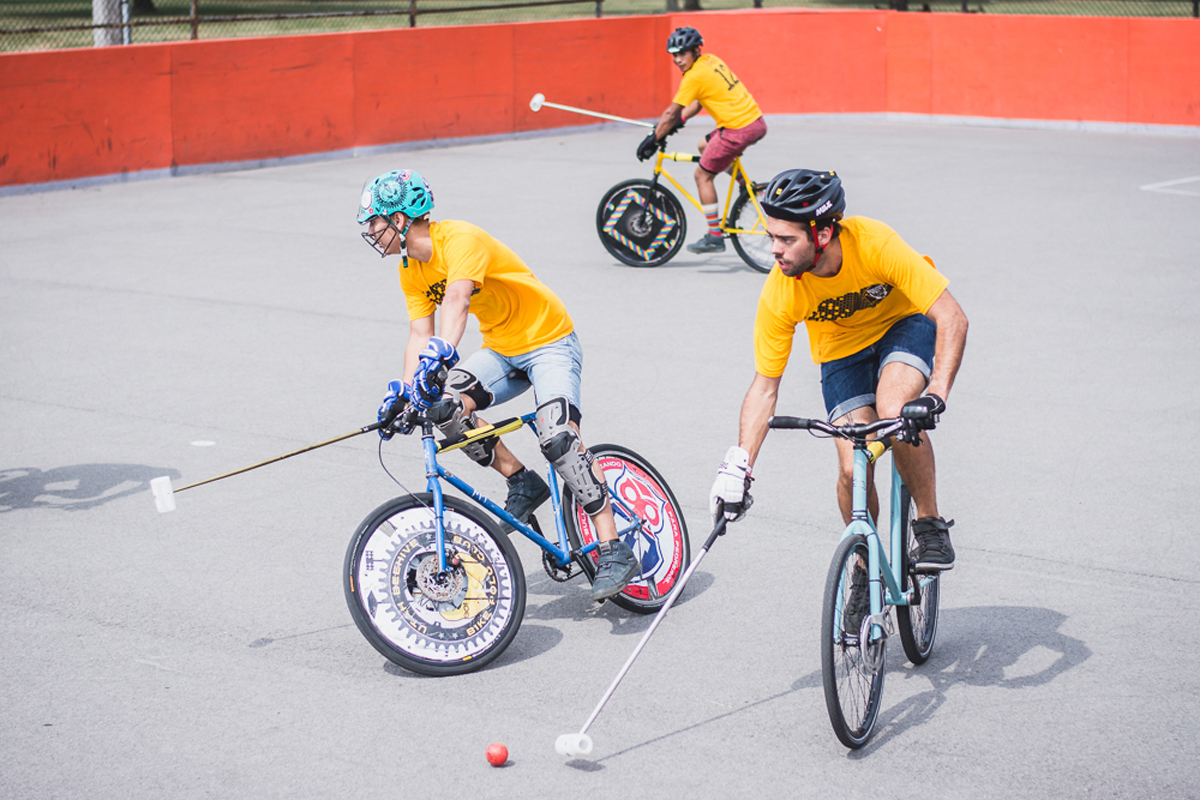
Equipment: A 700c or 26” single-speed bike, a mallet and a helmet are the main gear needed to play. Then, it’s all about the players’ choice: wheel covers, frame pads, knee pads, flat or clipless pedals, disc or V-brake (mostly front), etc. The ball is identical to the street hockey one made in PVC.
Court: Most of the clubs play on street hockey, tennis or basketball courts. Sometimes a parking garage is used. Court size does vary a bit but should have boards to keep the ball inside the court. A smooth surface is of course nicer!
Rules: 3 vs. 3 players play against each other. 10 minute games or the first team to 5 goals. There is not fixed goalie and body checking is authorized only to the ball carrier. The rules are evolving year after year making the sport faster, cleaner and more attractive to watch. For more details, check the NAH ruleset: http://www.nahardcourt.com/wp-content/uploads/2012/11/2015Ruleset-V4.5.pdf
Current NAH Champs: Outlawz Birds (France, Hungary)
Current World Champs: Monster Truck (Portland, Seattle)
Bike Polo videos: http://mrdovideo.com/
Utah Bike Polo Information:
Beehive Bike Polo Club — Salt Lake City, UT, Weekly hardcourt and grass bike polo. Tuesdays at 8pm, Saturday afternoons. Check out the Beehive Bike Polo Club on Facebook for location, Chuck Heaton, 801-688-7268, [email protected], facebook.com/groups/189631497724953/, beehivebikepolo.wordpress.com