
Home Blog Page 163

League of American Bicyclists Rankings Indicate All Mountain West States Need to Invest More in Bicycling

All the states in the Mountain and West Regions need to greatly improve their investment in bicycling, if you believe the latest annual state rankings from the League of American Bicyclists (LAB).

Some are doing much better than others, though. What follows constitutes a summary of LAB’s latest analysis of where the states need to go.

  • California scored first in the region and 3rd nationwide. It “seems to be getting serious about biking and walking,” LAB says. California is adopting a statewide bicycle and pedestrian plan and “has long led in many aspects of bicycle culture and has the highest number of bicycle commuters of any state. With a state (department of transportation) that is increasingly committed to ensuring the safety and comfort of people who bike rather than maintaining a status quo, the state seems on the verge of establishing new standards and practices that will be a model for other states…” But LAB doesn’t like California’s mandatory bike lane law, which generally requires cyclists to use a bike lane when present (California Vehicle Code 21208), because such laws don’t consider the quality of the lanes. And the state needs better data on existing facilities.
  • Colorado did 2nd best in the Mountain region and ranked 6th in the nation, as the state has picked up on LAB’s efforts, with 110 LAB-designated bicycle friendly businesses, 22 bicycle friendly communities and seven bicycle friendly universities. But LAB found room for improvement, noting that the state hasn’t significantly increased funding for bicycling and spends less per capita than most states. The state should appoint a bike coordinator for each region and insure that cyclists are included in every bridge/tunnel project.
  • Utah scored 3rd best regionally and eighth in the nation. But despite its high ranking, LAB severely criticized the state because “Utah’s federal spending on bicycling and walking is conspicuously low.” The state also scored poorly for use of its own money, as the Utah Dept. of Transportation’s “staffing levels are well below leading states such as Washington and Minnesota.” The state also needs to improve its driver’s education to teach motorists about interactions with bicyclists.
  • It’s a long way down to Arizona, which scored 21st. While many Arizonans bike to work, the state suffers from a high casualty rate. And with no complete streets policy or up-to-date performance measures, “there does not appear to be a consistent push for the safe inclusion of bicyclists in Arizona’s transportation system.” The Arizona Dept. of Transportation also doesn’t guarantee that federal money intended for biking and walking gets spent for them.
  • Idaho ranked 28th. LAB referred to a “state Department of Transportation and legislature more concerned with travel or freight movement between communities than the benefits of bicycling within or between them.” But Idahoans are forging ahead despite a lack of government support. “Idaho spends the fifth least per capita of federal funds on biking and walking of any state despite having a high percentage of commuters who bike and walk to work. Idaho needs to create internal processes that ensure that bicycle and pedestrian projects can be regularly delivered with federal funds to address the needs of people who bike and walk and prevent the revocation of funding authority.”
  • Nevada crossed the finish line in 31st place. The Silver State even lacks a statewide advocacy group. The state recently passed a complete streets policy but it’s too early to say if it’s working. The state faces special challenges as the federal government owns most of the real estate and communities generally are rural and spread out. The state needs to educate planners and engineers on bicyclists’ needs.
  • As we get deeper into Hall of Shame territory, Wyoming ranked 42nd. Wyoming cyclists suffer from “the lowest category scores in the nation for both LAB’s Policies & Programs and Evaluation & Planning” criteria. The state also doesn’t do much to promote bicycle tourism or transportation. The state is rapidly crashing as it ranked 11th as late as 2009. The state created a Bicycle & Pedestrian System Task Force, which is still trying to come up with something. But the state needs a complete streets policy.
  • New Mexico did worse, at 44th. But unlike Wyoming, it has always been near the cellar, never scoring higher than 40th. It did take some steps last year toward complete streets policy and a Statewide Prioritized Bicycle Network Plan, but LAB found “a lack of design and access policies that ensure that bicyclists are considered during the course of all roadway projects and that appropriate design guidance and training exists.” LAB also wants New Mexico to adopt laws to protect cyclists, such as a three-foot passing requirement and increased penalties for killing or injuring a cyclist.
  • Montana did worst in the region, at 45. Though some communities are doing very well, the state government’s not doing much when it could encourage cycling between communities or promote bicycle tourism. It also lacks adequate roadway safety laws and even a statewide bicycle advisory committee.

For the record, Washington state scored 1st, Oregon 5th, and Nebraska last. Only the states were ranked, so the District of Columbia, Puerto Rico, etc. got a pass. You can read all LAB’s latest state reports at bikeleague.org/content/state-report-cards
 

Mountain Bike Fluids Change – A Preventative Approach

There you are, not quite stranded. Snacking on an energy bar hidden in the bottom of your riding pack from last season, you’re trying to figure out what went wrong with that rear shock. It won’t hold air. Five miles from the trailhead it fully deflated after you filled it at the trailhead. You can put some more air in it, but clearly it doesn’t want to stay there. The culprit: worn air seals. A pre-trip shock service would likely have replaced these seals and simultaneously identified any other concerns.

“We get caught up riding, not servicing, our bikes. It’s then that the bicycle reminds us that it is the medium of the experience.” – Eric Ramirez

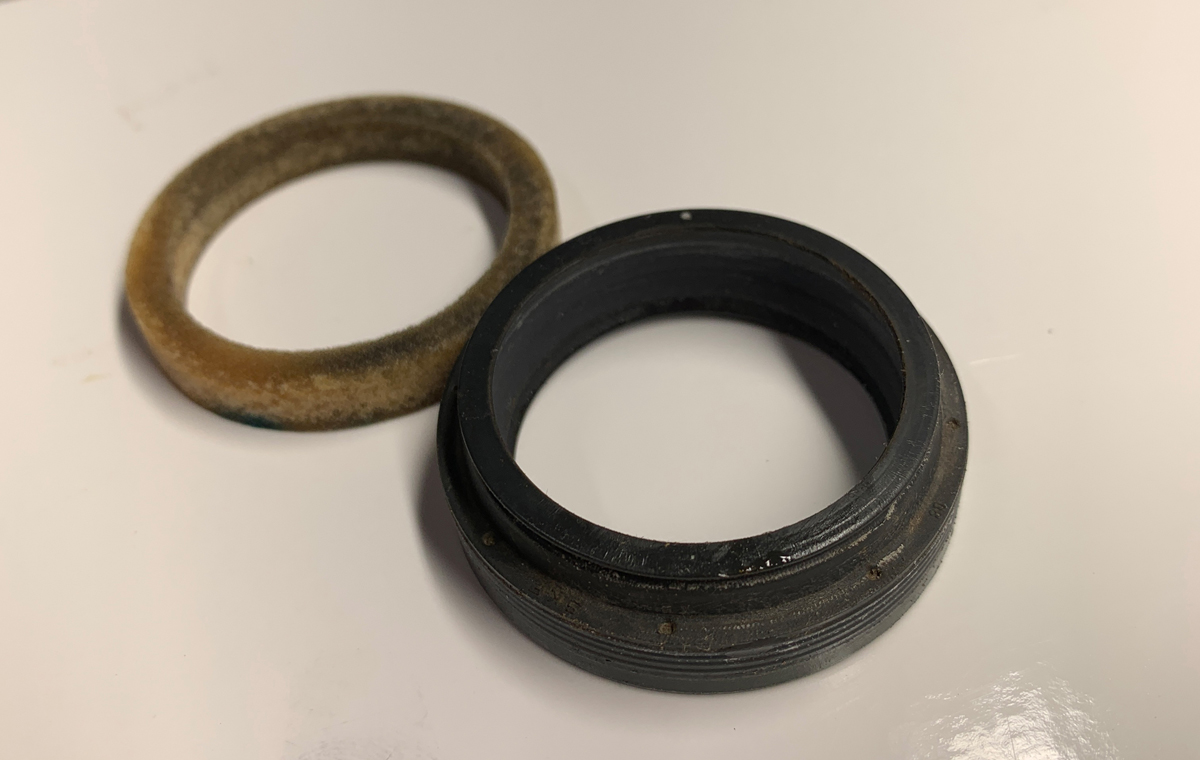
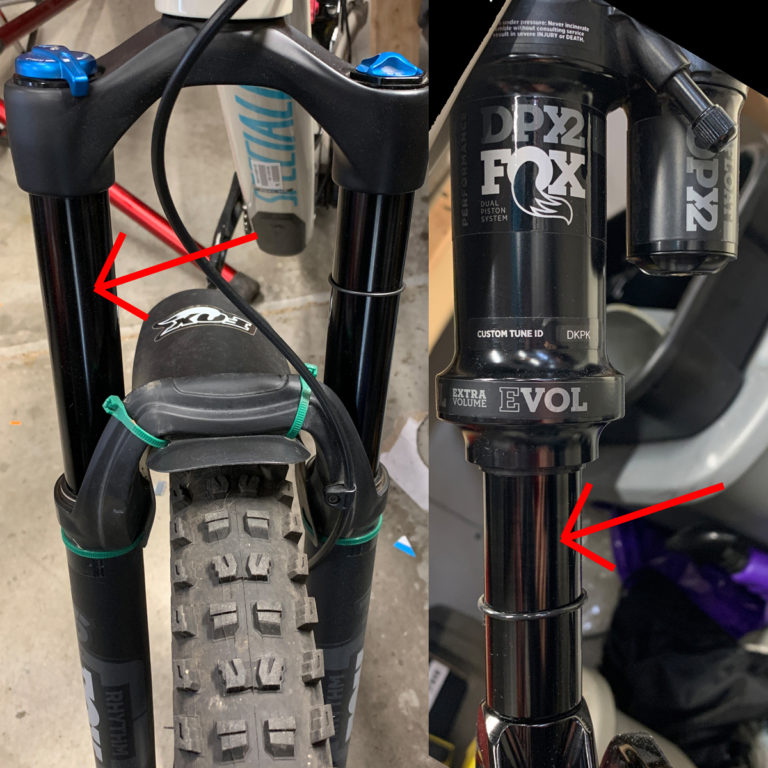
Stanchion surface of the the front shock (L) and shock body of the rear shock (R) should be wiped clean after each ride. As they glide, they become points of friction that wear out the shock seals. Photo by Eric Ramirez

Service – It Isn’t Broken

Regular maintenance procedures like replacing the chain and gears, brake pads, truing wheels, and preloading bearings, tend to take precedence. Typically, this is because your equipment exhibits some issue that is preventing a great riding experience, but is less likely to lead to failure.

While the need for regular fork, shock, and hydraulic brake service is no less important, its nature means that it tends to get put on the back burner. We tend to give these items less attention, because they seem to work fine, until they don’t.

When hydraulic systems fail, your ride experience could be severely impaired or even end catastrophically. Preventative maintenance on suspension and brakes will help minimize inconvenient ride-ending mechanicals.

Suspension Fluid & Seals

Most suspension manufacturers recommend full overhauls every 100 hours. Air seals and dust wipers should be serviced at higher frequency intervals, generally at 30 to 50 hours. It’s best to get familiar with manufacturer service recommendations for the specific suspension units on your bike, as maintenance frequency varies across all shocks. Adhering to these service intervals ensures minimal wear by reducing friction and possible contamination.

Dirty seals cause degradation of the shock and can cause increased wear of other internal parts. Photo by Eric Ramirez

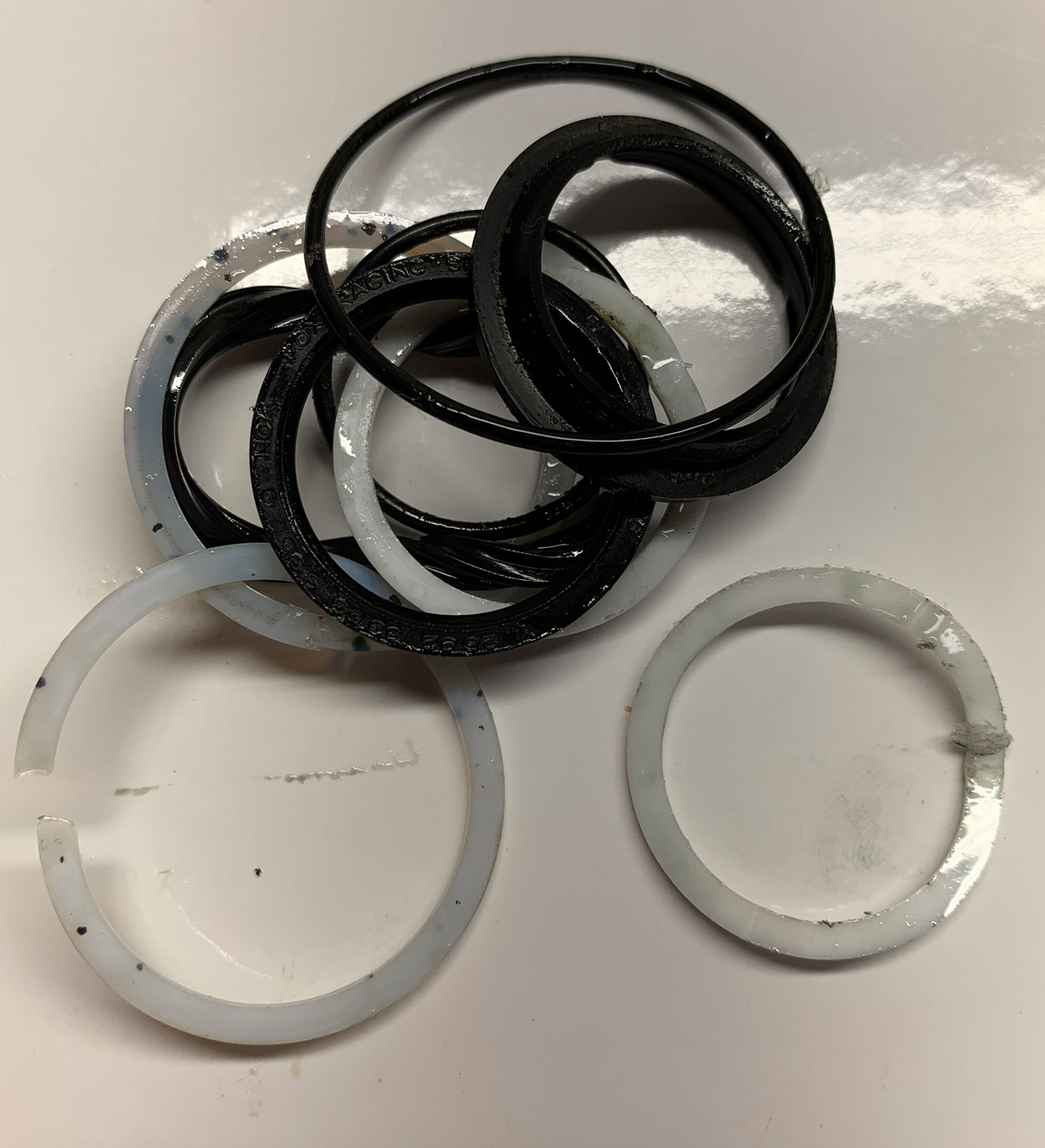
As suspension cycles through its travel, the stanchion tube (or shock body) passes into the lowers (or air can) with the wiper seals scraping off the contaminants of the wet and/or dirty outside world. The friction of this motion eventually causes the dust wipers to wear and allows oil and air to pass to the outside and dust pass to the inside.

The combination of dirt mixed with the suspension’s oil creates an abrasive that will wear out the smooth anodized stanchions (or shock body), bushings, seals, air springs, and many of the other working parts inside at an exponential rate. The most notable first symptoms of wear are a rear shock failing to hold air or a fork leaking valuable open-bath oil.

Performance loss presents itself as increased stroke friction, play or rattling sensation, and messy oil leaks – that often get into brake pads. These will continue to worsen as rides fill your Strava calendar.

Suspension units tend to have a high price-point, so periodically spending even more to keep them running in factory condition may seem counter-intuitive. Should you forego service, however, wear and future problems are unavoidable. In contrast, many riders religiously, and perhaps over-zealously, lubricate their chains, which are on average a $40 part.

Dirty seals cause degradation of the shock and can cause increased wear of other internal parts. Photo by Eric Ramirez

Shock Service Interval

For perspective on the service intervals, 30 hours is not that much riding time and most riders tend to go way beyond that before servicing their equipment. If your average ride is 2 hours long, then recommended service will be after just 15 rides. For some, that’s just over a month into the season.

Brake Fluid

Hydraulic brake systems have different service requirements than suspension, but still have fluids that need changing as well. Rather than seals letting fluid out or dirt in, the actual DOT 5.1 fluid or Mineral Oil that are used in hydraulic brake systems lose pressure continuity. This is, in part, due to the miniscule amount of fluid in the system, but also from seemingly impossible contamination in what are supposed to be closed systems.

Symptoms indicating a need to service your brakes include a lack of braking power and the lever pulling back to the bar, which typically means that air has gotten into the system. Hopefully, at least one brake still works well enough to get you safely back to the trailhead.

Bleeding your brakes annually meets most manufacturers suggested maintenance schedule. Sometimes when following this schedule, your brakes won’t seem to need bleeding. Unlike with suspension, you’re not going to wear out parts by not bleeding the brakes with fresh fluid on a regular basis. Your levers, lines, and calipers will all be okay. However, think of the hydraulic fluid as the brake. If the fluid doesn’t work, the brakes don’t work, so it is important to service your brakes, even when there doesn’t appear to be any problems.

Conclusion

Preventative maintenance is key to keeping your bike in good working order and preventing component failure leading to consequences ranging from ride-ending inconvenience to serious injury. Bleed your brakes, service your suspension.

The feel of your next trail ride will always be more dependent on how well your suspension sustains your weight and how well your brakes prevent you from colliding with a moose, than on most other factors.

Eric’s experience reaches about 20 years back of working on bikes, starting in Park City. Today he’s a head technician at a shop.

Cycling and Neck Pain

Neck pain and shoulder tension are reasonably common complaints amongst cyclists, and usually resolved quickly once the primary underlying cause is identified and addressed.

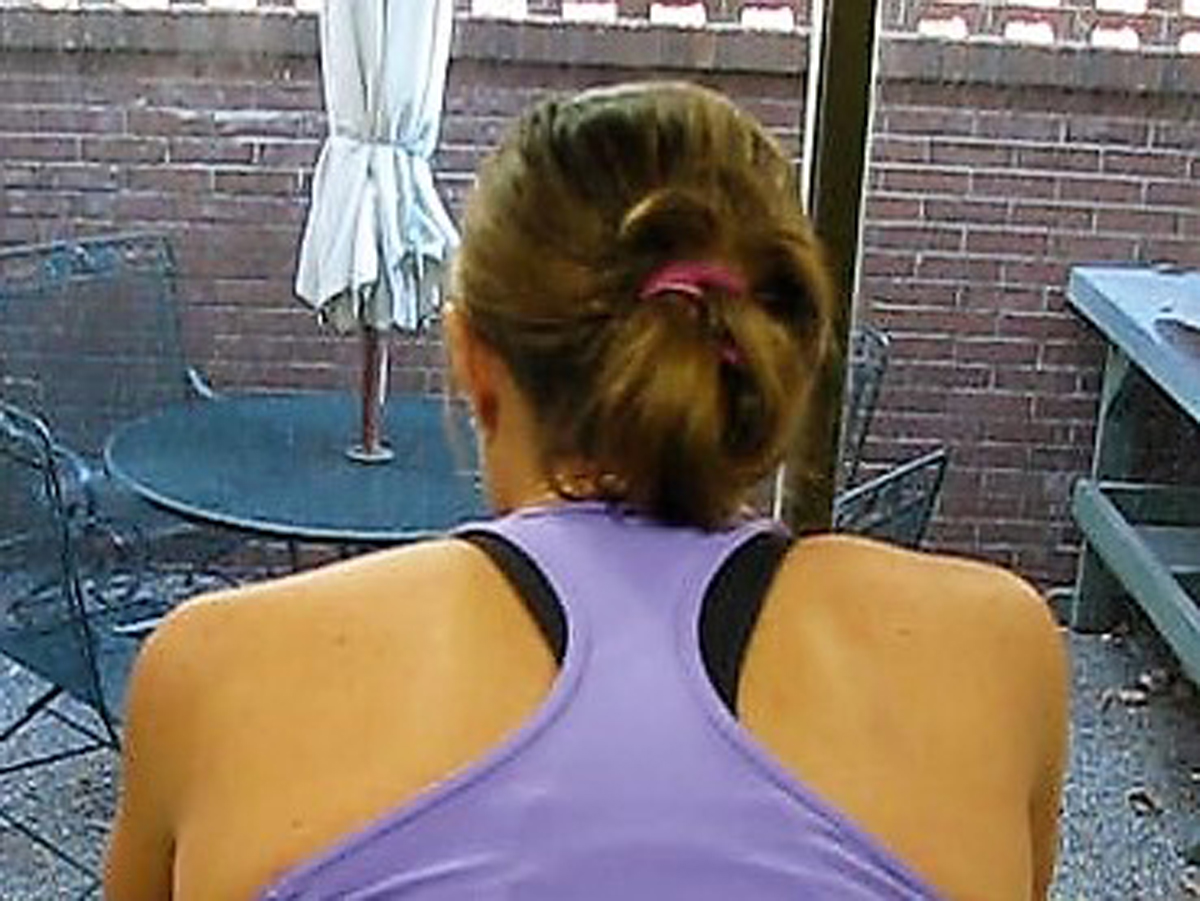
This discomfort is usually due to sustained muscle tension leading to aches and fatigue in the neck and upper back / shoulder muscles, mostly due to trying to hold your head more upright than is sustainable. Upright in this situation needs explaining. Upright enough to see where you are going, which may mean your neck is hyper-extended (flexed backward). You could mimic this by walking around looking at the sky for a period of time equivalent to a bike ride. It won’t take long before your neck and shoulders start muttering in protest.

Neck pain and shoulder tension are reasonably common complaints amongst cyclists, and usually resolved quickly once the primary underlying cause is identified and addressed. Photo by John Higgins

There are two main causes of hyper-extension leading to muscle fatigue and discomfort: pre-existing injury, and head posture:

If you’ve had a pre-existing injury like a cervical fracture, you’re going to know about that. Modification to your on-bike positon and posture may be needed to provide relief.

  • Head posture that is hyper-extended. There are several possibilities that could be a factor in causing this:
    1. Riding position stress. A handlebar or aerobar position too low for your riding comfort is the most common fault, causing you to have to tilt your head up more to look ahead. A secondary factor can be a handlebar too far away from you, requiring extra reach which adds strain to the stabilizers in the shoulders. Handlebar reach and drop need to be appropriate for your fitness, flexibility, strength and riding duration.
    2. Indoor training adaptation. Been sweating it out on the stationery trainer all winter? If you zoned out with prolonged periods of ground stare, you’ve been training yourself to look down at your front wheel, not ahead at road or trail conditions, hazards, traffic and other threats to riding safety. The first few rides outside looking ahead may cause some fatigue, which should back off with more outdoor practice. If most of your training is inside, make sure whatever you are looking at is positioned to mimic your outdoor riding sightlines, or that first century ride or half ironman is going to be a literal pain in the neck.
  • Equipment compensation. From a helmet, eyewear or handlebars.
    1. Helmets: A helmet that is too big and slips forward on your head; sits too low on the front of your head; or has a visor, may mean you have to tilt your head up more than necessary to get past the visual obstruction to see ahead. This creates neck strain.
    2. Eyewear: Sunglasses or prescription glasses that are perfectly fine for hiking and other “upright” sports may restrict your vision when you are bent forward in a riding posture. If you look ahead and find yourself gazing into or over the rim of the glasses, they are not suitable for cycling (for you). I tried on dozens of pairs of sports sunglasses (many sold as cycling specific) before I found a style I could wear riding without getting “rimmed out”.
    3. Handlebars. A handlebar significantly too wide or narrow for your physique puts your arms in a structurally unsound place, requiring compensatory muscle action to stabilize your body and control the bicycle. This is more likely to cause shoulder/ upper back tension than neck pain, but is an often overlooked factor than can have an outsized impact on riding comfort.

Remember, any riding discomfort that is not simply due to lack of riding fitness is a message that something is out of harmony in your bike-body relationship. You can put up with it, or put it up for evaluation and correction because there is no gain with pain in this situation. Enjoy your riding!

John Higgins wants to elevate your cycling experience. He operates BikeFitr – an independent bike fitting studio, and Fit Kit Systems – supplying equipment and education to bike retailers and fitters. Contact: [email protected]

Ebikes on Federal Land?

Federal land agencies are taking public comment on implementing a directive to allow ebikes on federal land. Under proposed rules issued by the Fish and Wildlife Service (FWS), National Park Service (NPS) and Bureau of Land Management (BLM) in April, low-powered ebikes would get treated as regular bicycles and allowed to travel on paths where motor vehicles generally are prohibited. The Interior Department last August directed its agencies to accommodate ebikes. The proposed regulations would apply to Class 1, 2 and 3 ebikes that assist human power.

Comment periods last till early June 2020. See https://www.govinfo.gov/content/pkg/FR-2020-04-07/xml/FR-2020-04-07.xml#seqnum19418 (FWS); https://www.govinfo.gov/content/pkg/FR-2020-04-08/html/2020-07163.htm (NPS); and https://www.govinfo.gov/content/pkg/FR-2020-04-10/html/2020-07099.htm (BLM).


Study: Do eBikers Drink Less?

A study in Holland found no differences in the severity of injuries of conventional and electronic bike users when taken to two trauma centers. As you might expect, eBikers tended to be older (average age about 67) than conventional bike riders (about 45). The study looked only at users aged 16 and up, including 78 electronic and 91 conventional bicyclists.

Conventional cyclists were twice as likely to have used alcohol, however. It certainly appeared to be a problem, since 40 percent of the former group had been drinking. See Bicycle-related Injuries in the Emergency Department: a Comparison between E-bikes and Conventional Bicycles: a Prospective Observational Study at https://www.ncbi.nlm.nih.gov/pubmed/32306122.


Warming Up for Cycling Events

Before any bike race, no matter the discipline, you see riders pedaling on trainers, pedaling around the venue; riding hard and riding easy, as they warm up for their race. It is an integral piece of most racers’ pre-race routines. The exact protocol varies but generally follows a similar format; starting with easy riding, ramping the intensity up, and including one or more maximal or submaximal efforts.

The main purpose of a warm-up is just what it sounds like – to literally warm muscles, tendons, ligaments, and joints. This increase in temperature means the hemoglobin in the blood releases oxygen more readily to working muscles. Increased heart rate means there is more blood going to the working muscles. A warm-up also increases the sensitivity of nerve receptors, which speeds up the timing of nervous impulses.

Warm-ups are pretty individual, and as an athlete gains experience, they usually learn how they need to warm up. For the athletes that I coach, I usually provide a warm-up protocol, with the caveat that if they have a warm-up that they know and like, they should use that. It is worth the time and effort to experiment with warm-ups and determine what works for you to feel your best in your event.

Of course, even after you have spent the time to figure out your optimal warm-up routine, keep in mind that what you need to do to warm-up on any given day will vary depending on your level of fatigue coming into the event, the temperature, the duration/intensity of the event, and other factors. Generally, the deeper you are into a training cycle (with more fatigue in your legs), the longer you will need to warm up.

If your race or event is short and very fast (like a short track or criterium race), you should be good and warm on the start line and ready to go fast right away. If you are doing a long race or an event with a neutral start or a road event that will stay together for a while, you can plan on doing less to warm up. Conversely, as you get deeper into a stage race or multi-day event, you usually need less of a warm-up each day, because the body is still relatively primed from the previous day’s efforts.

Because one priority of a warm-up is to physically warm muscle tissues, you need less of a warm-up on a hot day. In fact, if it is warm enough that heat will be a factor in the event, you can do damage by getting too warm prior to the event. It is vital to keep this in mind if your routine is trainer-based. If you don’t have access to a fan or shade, you might be doing more harm than good.

Another important aspect of a warm-up is increasing mental readiness. Just like your muscles, your brain needs tuning and fueling to stay engaged during demanding physical work, and just like your muscles, it needs to be primed for the event to focus.

I often recommend that athletes I coach should do some visualization of their race or event during their warm-up, but typically that also happens organically. When you wake up on race day, nerves are usually high already. When you get on your bike to start warming up, it is natural to start imagining different race scenarios and how you expect or want to feel. This all helps your readiness for the event. These nervous system reactions are a big factor for narrowing your mental focus as well as prepping your body for efforts during a race or hard ride.

Warm-ups also serve for injury prevention. Warmer tissues are more resistant to tearing or straining. The studies in this area are difficult to administer as most athletes do not want to voluntarily undergo a muscle stress test to the point of a tear, but EKG data does support this.

Although the research and conventional wisdom does recommend a warm-up for all age populations, anecdotally, most masters athletes say that they need a longer warm-up as they age and many juniors tend to have no problem riding fast from cold.

Regardless of the specifics of your warm-up routine, make it repeatable. If you prefer to warm-up on a trainer, make sure you have a trainer available for all of your events. If you prefer to warm up “on the road,”, keep your intervals simple so you can perform them on whatever terrain is available at any event.

The main purposes of a warm-up are to improve performance and limit injury potential. The general protocol is usually similar, but individual athletes often have their own specific routines. Figure out what works best for you. Let a coach help you design pre-race timing and warm-up routines. Do this effectively and you will nail your next goal event!

Sarah Kaufmann is the owner of K Cycling Coaching. She is an elite level XC and CX racer for the DNA Pro Cycling Team. She is based in Salt Lake City, UT and can be reached at [email protected] or 413.522.3180.

Leadville Race Series to Cancel All 2020 Leadville-Based Events

LEADVILLE, Colo. (May 13, 2020) — Life Time, the nation’s premier healthy lifestyle brand which owns the Leadville Race Series, announced today all 2020 Leadville-based mountain bike and run events will be cancelled amidst the COVID-19 pandemic.

“The Leadville Race Series is near and dear to us at Life Time, as it is to our athletes and the family and friends that support them, but we have to do what’s ultimately best for the Leadville community and our participants.  Given the decision of the Lake County Commissioners, which we fully support, we will be cancelling the series for 2020, for the health and safety of all,” says Kimo Seymour, President, Life Time Athletic Events.  “Our team will look forward to bringing the events back in 2021 when we get to the new normal, but for now, we’re sure going to miss our athletes and sponsors.  Our sincere hope is that our friends and business partners in the community can survive the financial impact of this difficult decision.”

Riders starting the 2019 Leadville 100. Photo courtesy Life Time.

After the Climax Mine shut down and thousands were left jobless in 1982, the Leadville Trail 100 was created with the sole purpose of impacting the local Leadville community. Since then, the Leadville Race Series has evolved to include 9 Leadville-based events that stretch from June through August. This brings nearly 6000 athletes plus their friends and family to Leadville throughout the summer. In 2019, the series brought $18.5 million in local economic impact to Lake County.

“Believe us when we say that we’re going to miss you, and we’re going to be thinking about all of you, big time,” says Ken Chlouber, founder, Leadville Race Series. “Our team is already starting to prepare to make 2021 something special. We’re so thankful to have the backing of Life Time, who we’ll be working closely with to find solutions to help the Leadville community this year. We can’t wait to see you on the starting line soon.”

Riders at the 2019 Leadville 100. Photo courtesy Life Time.

For the last few months the COVID-19 pandemic has made waves around the world. The Leadville Race Series staff spent that time working in close partnership with city and county agencies to make the best, safest and most educated decision possible for the wellbeing of the local community as well as those of our participants. Here is the reality:

    • Leadville’s hospital and medical resources are limited and cannot assume the risk of widespread outbreak.
    • Our participants come from 40 countries and 50 states. We can’t control the precautions taken in communities outside of our own, and that comes with risk.
    • Colorado has placed capacities on event gatherings that would greatly impact our event starting lines. It is undetermined when these will be lifted, but we’re told it will not be this summer.

After countless conversations and exploring many options, the Lake County officials voted yesterday, May 12th, in favor of the decision to cancel all special events through the summer of 2020. While it’s tragic and heart-breaking for the Series and community, Life Time fully supports the County’s decision. The events impacted includes the entire Leadville-based events of the Series:

    • Leadville Trail Marathon and Half – 6/13
    • Leadville 100 Run Training Camp – 6/19
    • Leadville 100 MTB Training Camp – 6/25
    • Leadville Silver Rush 50 Run – 7/11
    • Leadville Silver Rush 50 MTB – 7/12
    • Leadville Stage Race – 7/31
    • Leadville Trail 100 MTB – 8/15
    • Leadville Trail 10K – 8/16
    • Leadville Trail 100 Run – 8/22

*Epic Challenges: Silver King & Silver Queen, Leadman & Leadwoman and LeadBoat will not be happening this year.

For more information on available athlete options, visit the FAQs here.

“The Leadville Race Series has connected and grown our Lake County community far and wide and we will miss the joy and inspiration that the series brings year after year,” said County Commissioner Mudge. “The race series is part of our identity and has accomplished the goal of sustaining the economy of Leadville. I know we will come back stronger than ever,” followed County Commissioner Marcella.

“The Leadville Trail 100 has been an honored tradition in the Labbe family for 31 years.  Whether cycling, running, pacing, crewing or volunteering, we have been involved every year, said Greg Labbe, Mayor of Leadville. “Personally, I have paced 17 different years, have crewed in the midst of that, and have acted as the captain of the Twin Lakes Aid Station for the past six years. Needless to say, this year is a crushing disappointment for me as it is for so many of you who have dreamt and trained in earnest for the chance to participate in one of the greatest athletic events in the world. We will miss you this year but will look forward with glad hearts to seeing you all next year. Keep training, keep the faith and be twice as determined in 2021.”

The Austin Rattler Run and MTB have previously been postponed to the weekend of November 7 – 8, 2020 and the Wilmington Whiteface MTB in New York has been postponed to October 3, 2020. The Lutsen 99er in Minnesota that was scheduled for June 27, 2020 has also been cancelled.

On the heels of a successful Dirty Kanza Virtual Camp, the Life Time team will also be offering additional opportunities to support the local Leadville, Colo. community, as well as build virtual engagement to keep the fire burning for the Leadville Race Series run and bike community of athletes. More info on these opportunities coming soon.

The full announcement video from the Leadville Race Series team can be viewed here. For more information, please visit: https://www.leadvilleraceseries.com/2020-lrs-cancellations-faq/.

Utah’s Walk and Wheels to End Epilepsy Goes Virtual

It is time to get out and (following social distancing guidelines) walk or ride to support the Epilepsy Foundation Utah and our mission of advocating for those living with epilepsy throughout the state of Utah.

We are excited to present the 2020 virtual Walk and Wheels to END EPILEPSY. This event will kick off on May 30th at 10:00 am with an online gathering that will begin a month of weekly activities and contests which include: scavenger hunts, favorite photo contest, and sharing your favorite music playlist that motivated you during the month.

Come join us and grab your walking/running shoes from the closet or dust off your bike and set some goals for the number of steps or miles to ride to support your own wellness and the more than 30,000 living with epilepsy in Utah.

Registration is free, if you are able, we encourage you to donate and reach out to family and friends to join and support your efforts to make a difference in our community. To register, choose whether you want to walk or ride and click here:

1 out of every 26 people will develop epilepsy at some point in their life. The Epilepsy Foundation Utah trains the public about epilepsy; has support groups; advocates locally and nationally for families and people with epilepsy; Kids Crew; educate at the Epilepsy Symposium; and 24/7 Helpline: 1.800.332.1000. While considering the prevalence of epilepsy, come have fun and support the work and service done by the Epilepsy Foundation Utah.

The Bicycle Art of Claire Taylor

Artist name: Claire Taylor
Title: Untitled

About the piece: The image is a mind-map of wildlife I have met during my walks, runs and bike rides in Salt Lake City. 

Medium: Watercolor, gouache and colored pencil

Brief artist’s statement: I am an artist in residence at the Natural History Museum of Utah, where I have been creating this painting in association with the museum’s special exhibit “Nature All Around Us.”

For more of Claire Taylor’s art, visit: www.clairetaylor.art


10th Anniversary Crusher in the Tushar Postponed to 2021

BEAVER, Utah (May 19, 2020) — Life Time, the nation’s premier healthy lifestyle brand announced today that their newest acquisition, Crusher in the Tushar, will be canceled amidst the COVID-19 pandemic. Crusher in the Tushar was acquired by Life Time at the end of 2019, and was originally scheduled for Saturday, July 11, 2020. Crusher will celebrate its 10th anniversary in 2021.

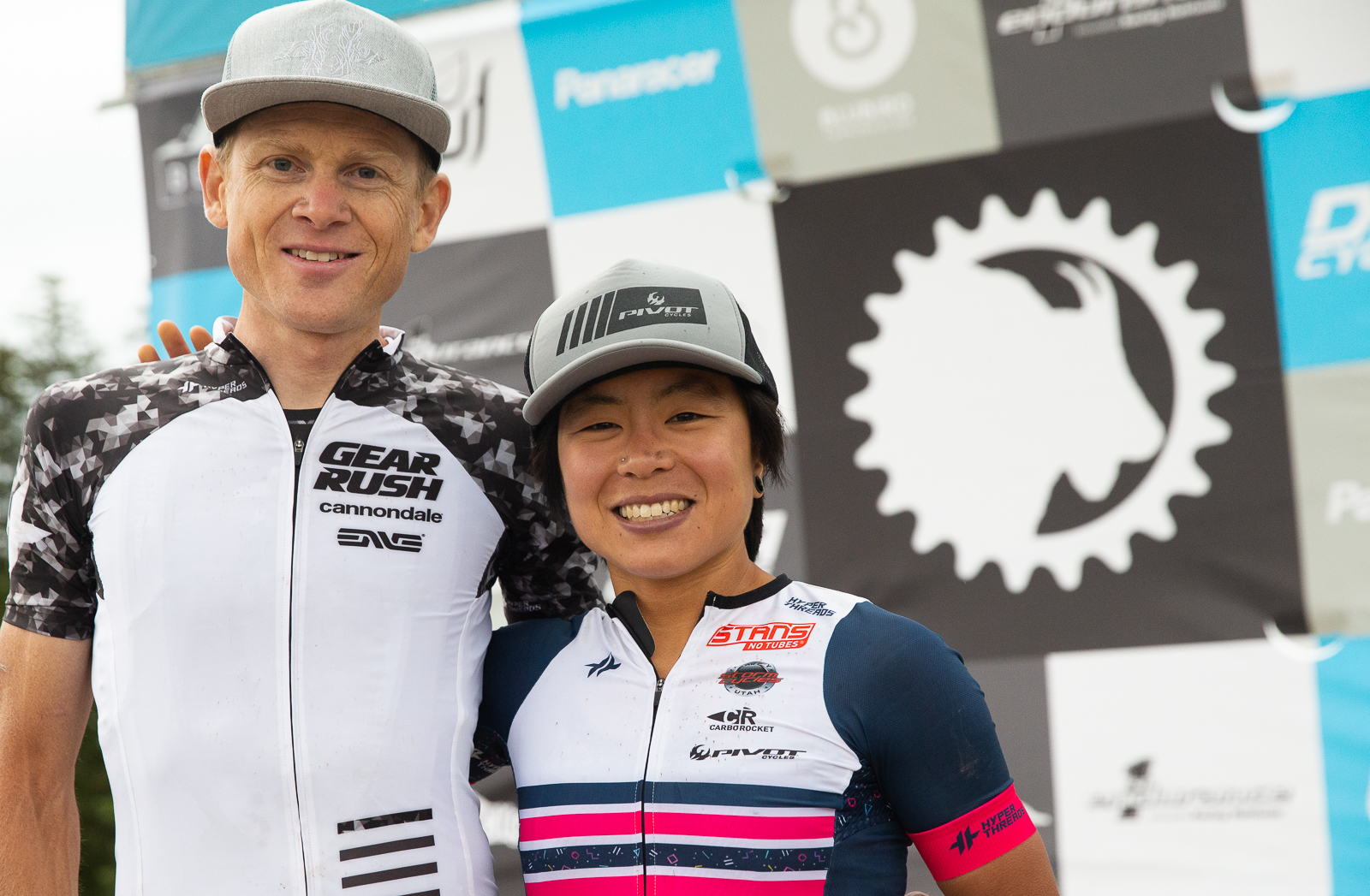
2019 Crusher in the Tushar winners Alex Grant & Evelyn Dong will have to wait until 2021 to defend their titles. Photo: Cathy Fegan-Kim

“In looking at balancing the safety of our riders, volunteers and the community in concert with guidelines, directives and what’s known and unknown, it became painfully clear that providing an experience that is up to snuff with our standards and yours just wasn’t going to happen in 2020,” said Burke “T-bird” Swindlehurst, Founder and Event Director of Crusher in the Tushar.

“While we are heartbroken to not be able to host Crusher in partnership with Burke this year for it’s 10th anniversary, the health and safety of our athletes, staff, volunteers and the community are more important,” says Kimo Seymour, President, Life Time Events and Media. “We know our riders have trained for months ahead of the event, and don’t make this decision lightly, but are excited to give everyone the event they deserve in 2021.”

The Crusher staff has worked closely with city and county officials to make the safest and most educated decision possible. Race directors considered the wellbeing of participants, friends, family, volunteers and local communities when making this decision. You can view Burke Swindlehurst’s full letter to participants here.

Four options will be available for 2020 Crusher in the Tushar registered participants 1) defer to 2021 at no charge 2) refund of your entry fee, minus processing fees 3) donate your 2020 entry to the Life Time Foundation which will go directly to the Beaver and Piute County COVID-19 relief school meals program and defer your spot to our 2021 or 2022 event 4) donate your 2020 entry to the National Interscholastic Cycling League (NICA) league and defer your spot to our 2021 or 2022 event. For participants who choose option 3 or 4, your entry will be guaranteed into the year of your choice (2021 or 2022), but you will still be required to pay an entry fee.

“Keep your chin up Buttercups and be nice to each other, because we’re all in this thing together. We will come out the other side. And we HAVE to make sure we’re better for it. Don’t think for one second I plan on letting the Crusher flame dim or flicker in 2020. You never know what I might have up my sleeve, so keep your eyes peeled!”, said Swindlehurst in a letter he sent registered participants earlier today.
Registered participants must make their selection at no later than Monday, June 22, 2020 at: https://runsignup.com/Race/UT/Beaver/CrusherintheTushar

For more information please check out the FAQ here: http://tusharcrusher.com/2020-crusher-cancelled

SBT GRVL Cancels August Event Due to COVID-19

STEAMBOAT SPRINGS, Colo. (May 13, 2020) —

SBT GRVL, a world-class gravel bike experience presented by Canyon Bicycles, has cancelled the 2020 event due to COVID-19 concerns. Based on guidelines from the Centers for Disease Control and Prevention, the federal, state, and county governments, and after discussions with local authorities in Steamboat Springs, the SBT GRVL team determined the safest scenario for the community will be to cancel the event this year.

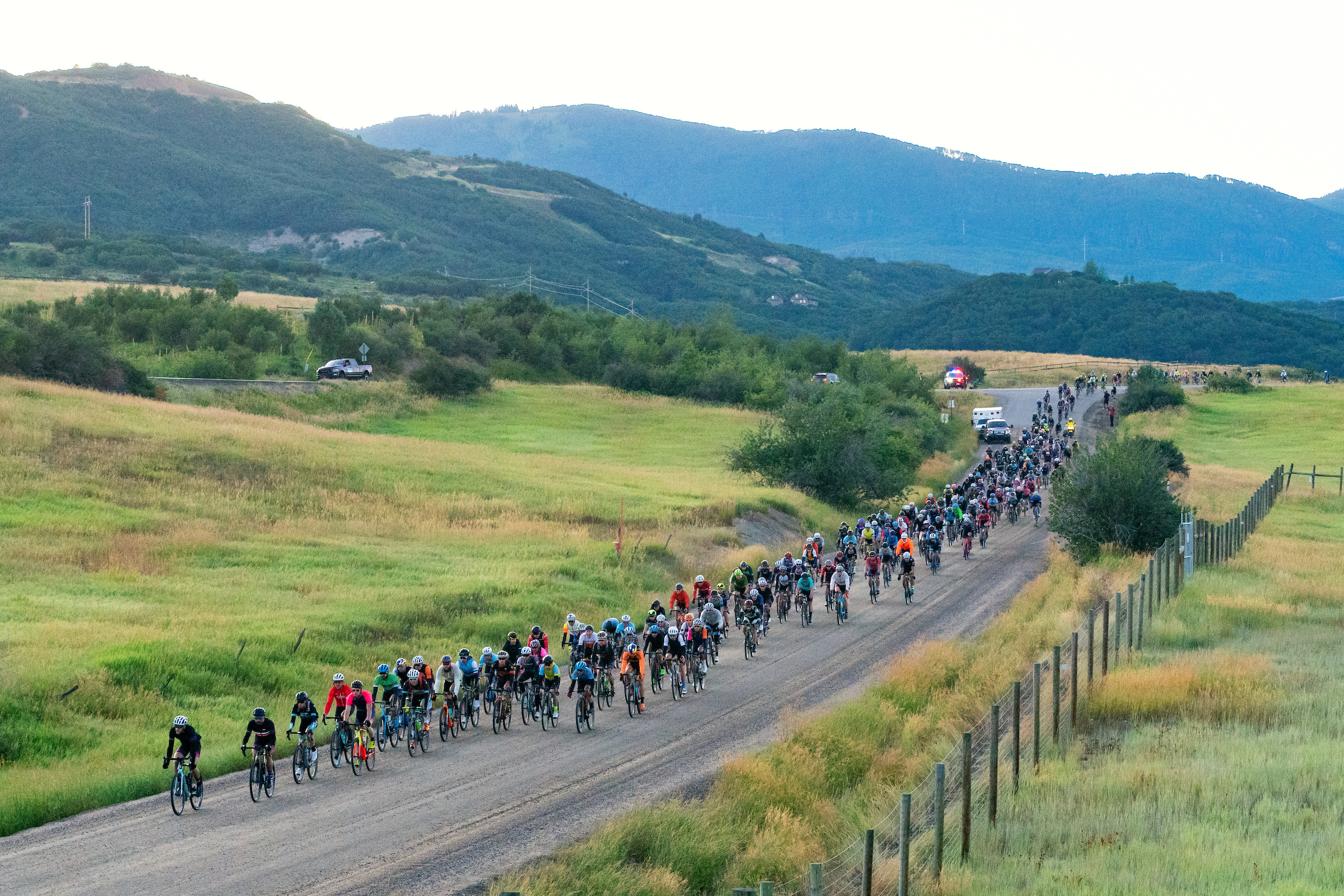
A rider participates in the 2019 Steamboat Gravel cycling race held near Steamboat Springs, Colorado. Photo courtesy SBT GRVL

“The SBT GRVL experience remains rooted in our core values including safety, fun and credibility,” says Mark Satkiewicz, co-founder and race director of SBT GRVL. “Taking these values into account, it became clear to us that the required changes needed to keep every rider, spectator, volunteer, sponsor, vendor and members of our local community safe would result in a significantly compromised version of the SBT GRVL experience.”

“Like so many folks in the endurance community, we were looking forward to this year’s SBT GRVL experience and all that it offers. We live for these events and the opportunity to support athletes as they challenge themselves on the beautiful gravel roads around Steamboat,” says Brian Vaughan, chief endurance officer of GU Energy Labs. “It’s disappointing to hear that the 2020 edition will be cancelled, but we totally understand that the SBT GRVL team made the responsible choice. We believe that movement is essential, and racing with our friends at events like SBT GRVL feeds our need to move. As a family owned business, we know firsthand that short term sacrifices are essential for long term gains and happiness.”

“The team at SBT GRVL showed courage today to postpone their event which in its introductory year, set a new standard in gravel events: a race, a community gathering and a party done on a world class level putting the riders safety first! As the title sponsor we fully support their decision and we are excited to work with them for years to come,” says Blair Clark, president of Canyon Bicycles. “On a personal level, it was something I was really looking forward to doing, but when it happens again in the future, it will be such a sweet appreciation. I’ll be back for what John Denver described as: ‘The serenity of a clear blue mountain lake…you can talk to God and listen to the casual reply’…to get my ‘Rocky mountain high’ at SBT GRVL!”

Participants who signed up for one of the four distances in the 2020 event have the option to defer to 2021 or receive a race refund. Participants wishing to defer to 2021 will not need to do anything at this time. Participants wishing for a refund will need to reach out via email to [email protected] and request a refund.

The SBT GRVL team remains committed to keeping the gravel community connected and providing an experience to look forward to on August 16th. Working with sponsors and pro athletes in different regions, the SBT GRVL team introduces SBT VRTL – a localized plan to connect people all over the world and ride one of the four distances of SBT GRVL together, while apart.

The SBT VRTL experience will be free and open to everyone to participate. Regional routes will be created for all four distances, easy to find and follow using Ride with GPS. There will be prize giveaways from sponsors and opportunities to continue to support advocacy partners.

The Big Gear Show Postpones Inaugural Event to 2021

0

SALT LAKE CITY, Utah (May 15, 2020) — The Big Gear Show (BGS), a new outdoor industry trade show focused on hardgoods, with an emphasis on paddling, cycling, climbing, and camping gear, announced the cancellation of its inaugural event, originally planned for July 22-25, 2020. After holding out as long as possible to make a final decision, show organizers have determined that the ongoing COVID-19 public health crisis will not allow for a show this year. Instead, The Big Gear Show will first stage August 3-5, 2021 in Salt Lake City.

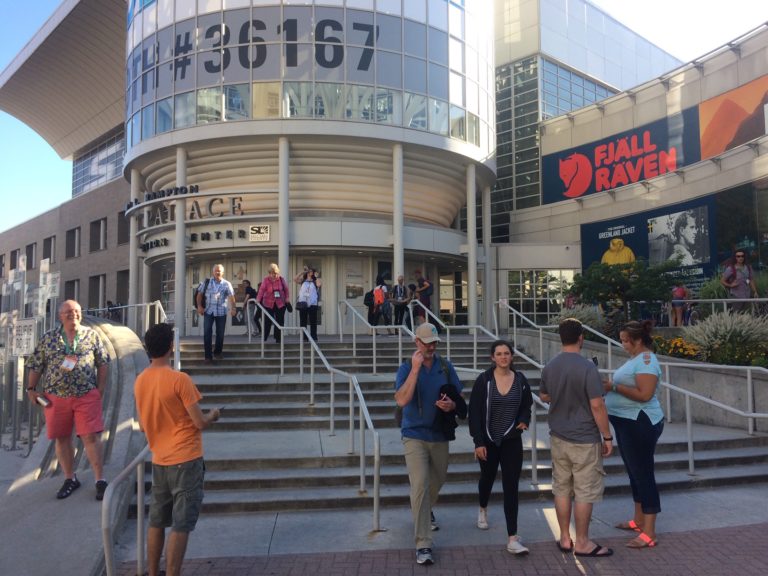
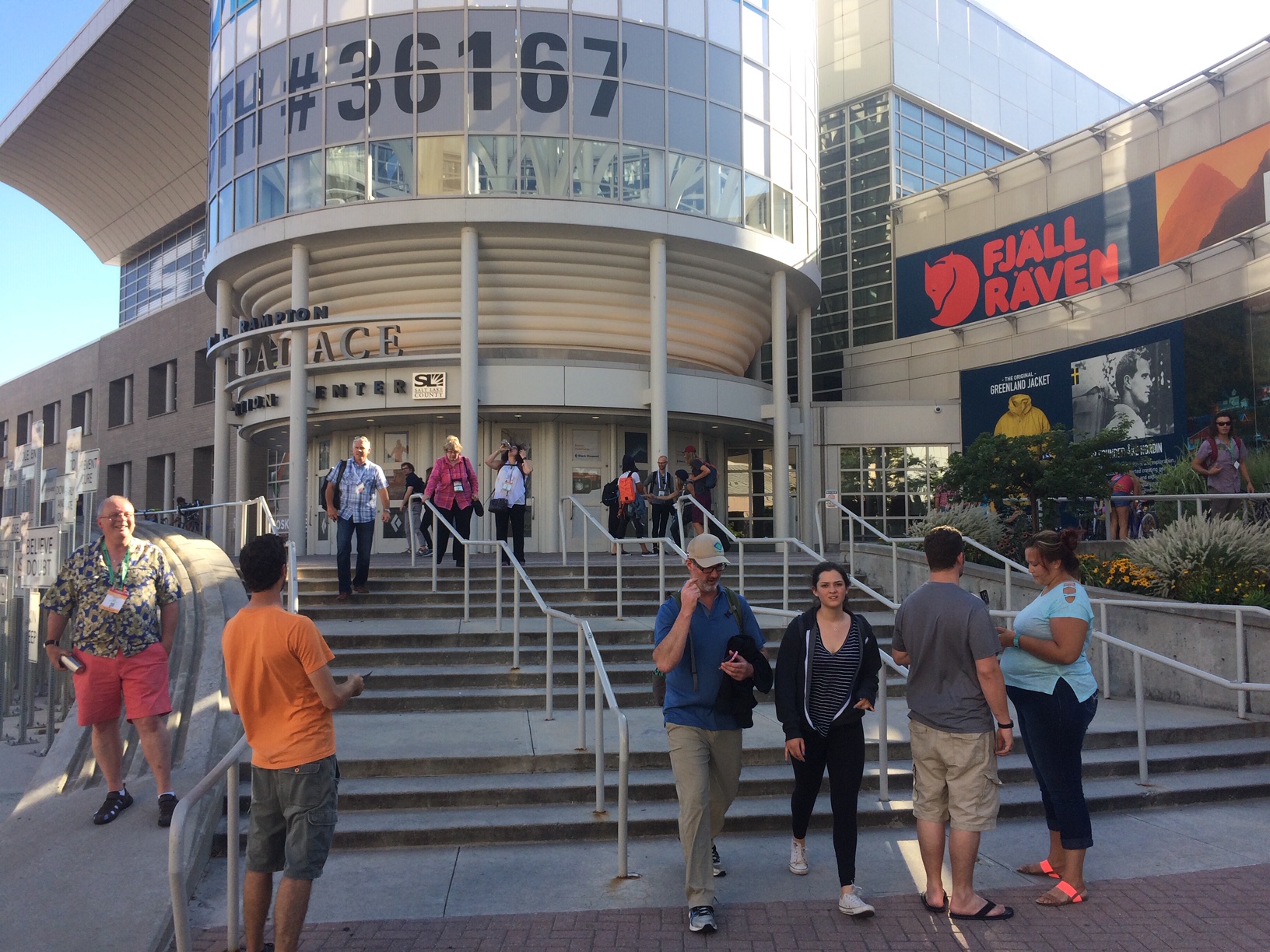
Convention goers at the old Outdoor Retailer show, which has since moved to Denver. The Big Gear Show expects to bring people back to the Salt Palace in 2021. Photo by Dave Iltis

Though the cancellation of the first-year event is difficult, The BIg Gear Show’s management is confident their model, which offers a hardgoods-focused, low cost, retailer-centric show with an unsurpassed demo opportunity, will be even more necessary in 2021, as brands and manufacturers take a hard look at their marketing budgets and finances. “Now’s definitely the time to reconsider ‘business as usual.’ We hope that brands will continue welcoming an alternative show like ours that allows them to meet with their specialty customers and effectively demo and launch new products for a fraction of the cost of traditional shows,” says show founder Sutton Bacon.

Bike Show Director Lance Camisasca adds, “The extra time gives us an opportunity to tailor the first-year event to our exhibitors’ new realities. We had already decided to establish dynamic, cutting-edge features for the inaugural event, but now we’ll be able to push that even farther and rethink every element of our show and optimize it for 2021’s new landscape.” Camisasca, former Show Director of Interbike, will be working alongside the former Show Directors of Outdoor Retailer, Kenji Haroutunian, and Paddlesports Retailer, Charles Conner to create an experience that’s in-step with the new reality of the outdoor industry and of hardgoods manufacturers in particular.

“In addition to helping brands right-size their budgets, we’ll be focused on providing specialty retailers the support they need during recovery. We’ll bring in experts to give advice and facilitate discussions on what’s working, and what’s not. Opening these discussions across the different channels of retail will help retailers learn how to emerge from the crisis in the best shape possible” commented Haroutunian.

The Big Gear Show team has already begun working on its 2021 event, scheduled on August 3-5, 2021. Registration for the 2021 event is expected to open by mid-summer. 

Bike Shop Best Practices for COVID-19 Safer Operations

By Salt Lake Valley Trail Society — We have developed this guide for bicycle retailers in an effort to keep the bicycle community safe during this pandemic. In consultation with the Salt Lake County Health Department, these protocols meet or exceed all current CDC and CISA recommendations and are designed to allow for the continued operation of your essential business. Please use this as a guide and stay current with the health department and CDC recommendations.

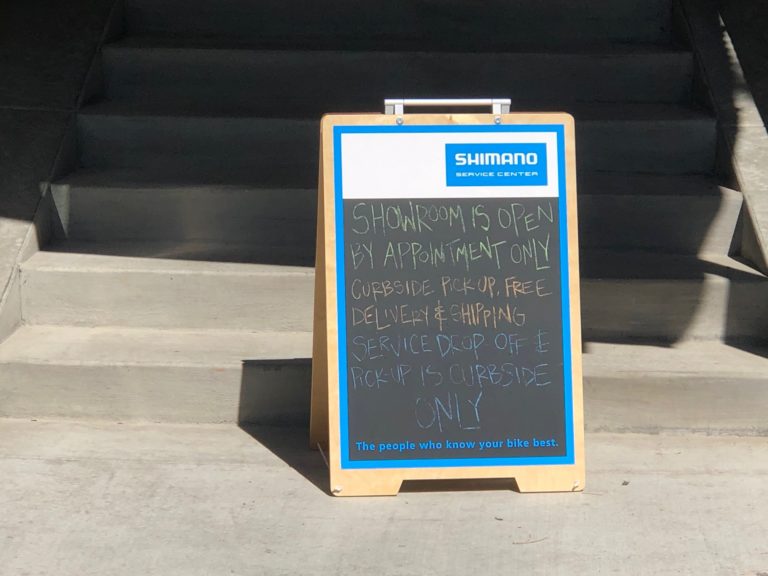
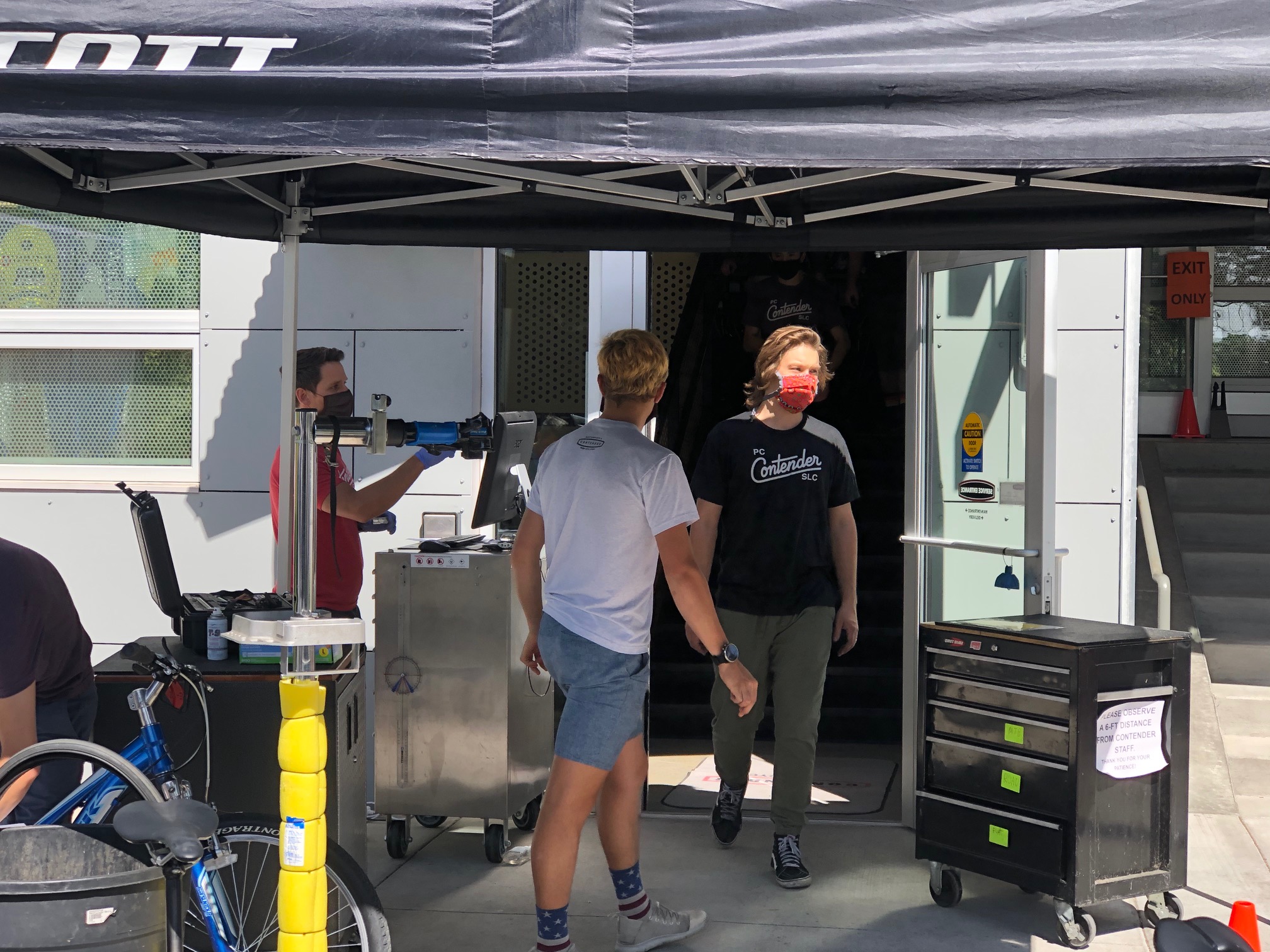
Contender Bicycles has instituted several safety practices to prevent coronavirus transmission. Photo by Dave Iltis

Protecting Customers

As much as possible, interact with customers outside.

Staff dealing with customers should maintain a 10-foot distance.

Staff dealing with customers indoors should wear masks (This is consistent with the Utah Leads Together 2.0 recommendation for all retail businesses that employees should wear face coverings).

Customers should be limited to 1 per 500 square feet of retail showroom space.

In order to minimize the number of customers in the store you might consider: 

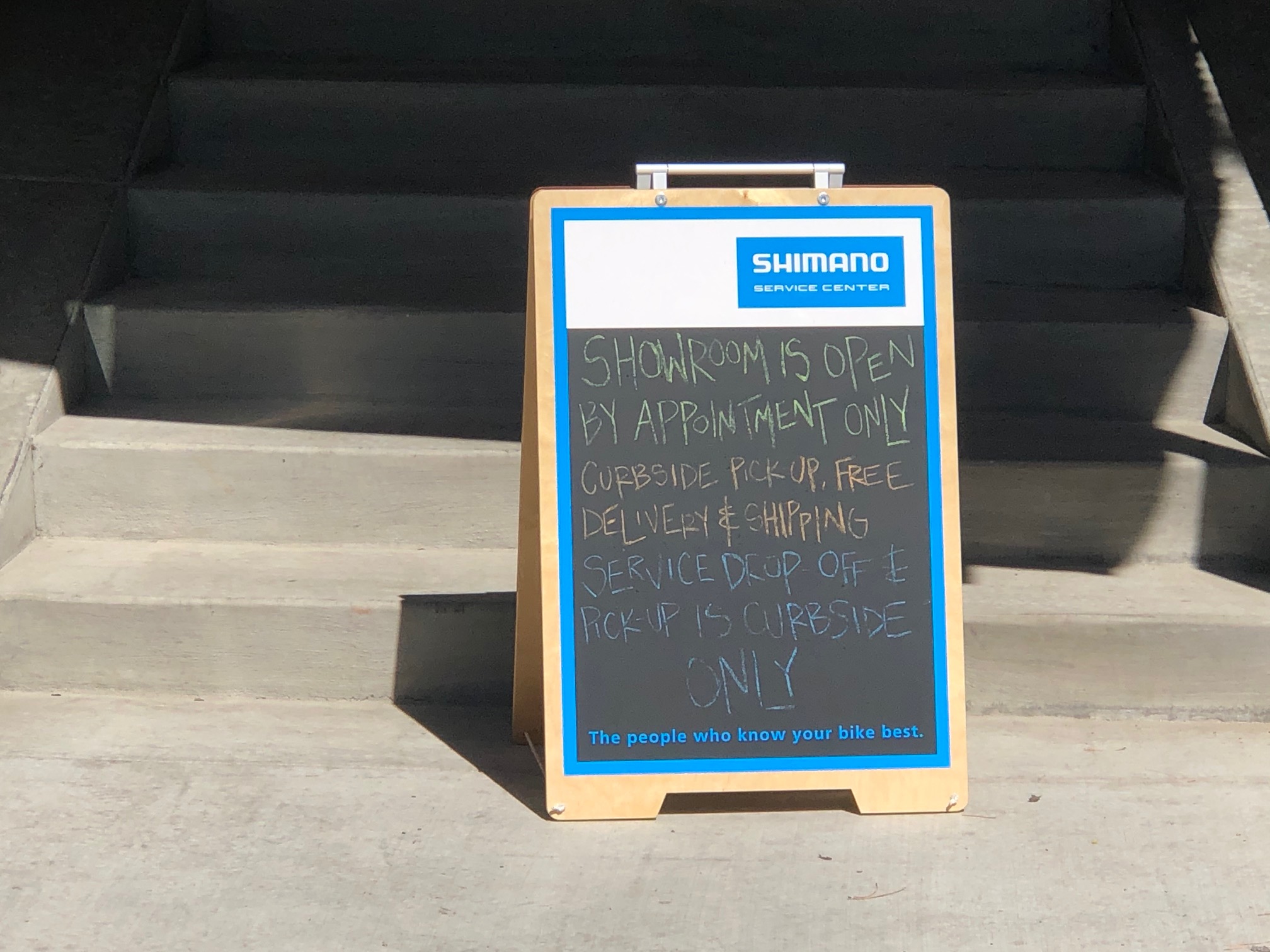
    • Pick-up and delivery service
    • Locked door policy (staffed or phone and we will answer door)
    • Appointment only showroom
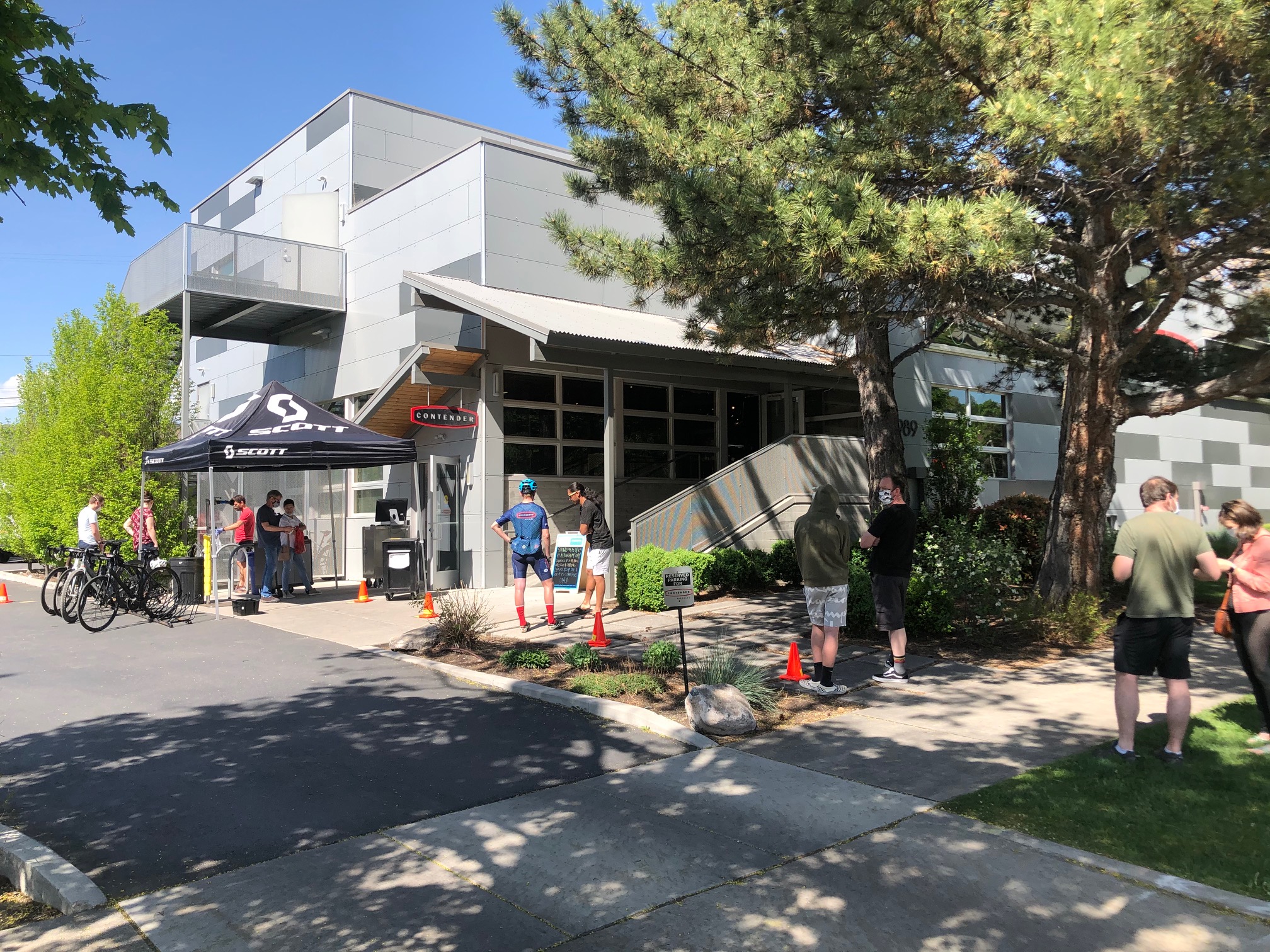
    • Use outdoor repair check-in and pick-up, sales and service as much as possible

Conduct daily sanitizing of retail space including phones, countertops, door handles, tools, pumps, bathrooms and other surfaces that customers may come in contact with.

Encourage card payment methods with machine sanitization after each use.

Have hand sanitizer or other sanitizing readily available for customers and employees.

Post a sign requesting that customers with Covid symptoms not enter the store.

When exchanging paper and coin money:

    • Do not touch your face afterward.
    • Ask customers to place cash on the counter rather than directly into your hand.
    • Place money directly on the counter when providing change back to customers.
    • Wipe counter between each customer at checkout.

Move the electronic payment terminal/credit card reader farther away from the cashier in order to increase the distance between the customer and the cashier, if possible.

Consider the use of screens in checkout and cashier locations.

Contender Bicycles has instituted several safety practices to prevent coronavirus transmission. Photo by Dave Iltis

Protecting Employees

Limit employees to 1 per 500 square feet or 1 per room (bathrooms, storage and changing rooms excluded), whichever is greater.

Maintain 10-foot distancing for employees.

Avoid having employees work across from each other.

All bicycle contact surfaces should be sanitized before and after service.

Demo/rental and test ride bikes should be cleaned and sanitized after use.

Screen and identify employees with symptoms of illness consistent with COVID-19 and send them home.

 If tested, don’t allow employees to work until test results have been received and employee verified as negative.

Discourage handshaking – encourage the use of other non-contact methods of greeting.

Reinforce key messages about coughing and sneezing etiquette and proper, regular handwashing.

Disinfect and clean regularly common surfaces, such as counters, work areas, door handles, doorknobs, railings.  (Depending on the shop being open and type of shopping this may need to be hourly, whereas if an appointment you know areas that have been contacted).

Use signs, markings, tape or other means to ensure employees and customers maintain appropriate social distancing, including in lines.

Have hand sanitizer or other sanitizing readily available for customers and employees.

Encourage and make available masks and gloves for employees, even if they don’t deal with customers.

Workers should be encouraged to work remotely when possible and focus on core business activities (at-home bicycle assembly?). In-person, non-mandatory activities should be delayed until the resumption of normal operations.

Consider the impact of workplace sick leave policies that may contribute to an employee decision to delay reporting medical symptoms. Sick employees should not return to the workplace until they meet the criteria to stop home isolation.

Conduct frequent cleaning of employee break rooms, rest areas, and other common areas.

Implement a system in which workers rotate into the cashier station to allow cashiers to leave the station to wash their hands regularly.

Remove or rearrange chairs and tables or add visual cue marks in employee break rooms to support social distancing practices between employees. Identify alternative areas such as closed customer seating spaces to accommodate overflow volume.

Be aware that some employees may be at higher risk for serious illness, such as older adults and those with chronic medical conditions. Consider minimizing face-to-face contact between these employees or assign work tasks that allow them to maintain a distance of ten feet from other workers, customers and visitors, or to telework if possible.

Inform employees who are well but who have a sick family member at home with coronavirus should notify their supervisor and refer to CDC guidance for how to conduct a risk assessment of their potential exposure. If an employee is confirmed to have coronavirus, employers should inform fellow employees of their possible exposure in the workplace but maintain confidentiality as required by the Americans with Disabilities Act (ADA).

Contender Bicycles has instituted several safety practices to prevent coronavirus transmission. Photo by Dave Iltis

Protecting vendors/deliveries

Maintain 10-foot minimum distancing.

Minimize or eliminate in person gatherings of vendors and employees occurring for marketing and product education purposes.

Accept shipments out of doors.

Utilize gloves when signing for, receiving, unpacking and handling goods.

Why are we recommending 10 foot distancing and masks?

    1. https://www.wnycstudios.org/podcasts/radiolab/articles/dispatch-4-six-feet

More information available:

    1. https://www.cdc.gov/coronavirus/2019-ncov/community/guidance-business-response.html
    2. https://www.cisa.gov/sites/default/files/publications/Version_3.0_CISA_Guidance_on_Essential_Critical_Infrastructure_Workers_3.pdf
    3. https://coronavirus.utah.gov/the-utah-leads-together-plan/

See for disinfectant methods:

    1. https://www.cdc.gov/coronavirus/2019-ncov/community/disinfecting-building-facility.html


Panaracer Introduces Gravelking SS; New Tread Pattern

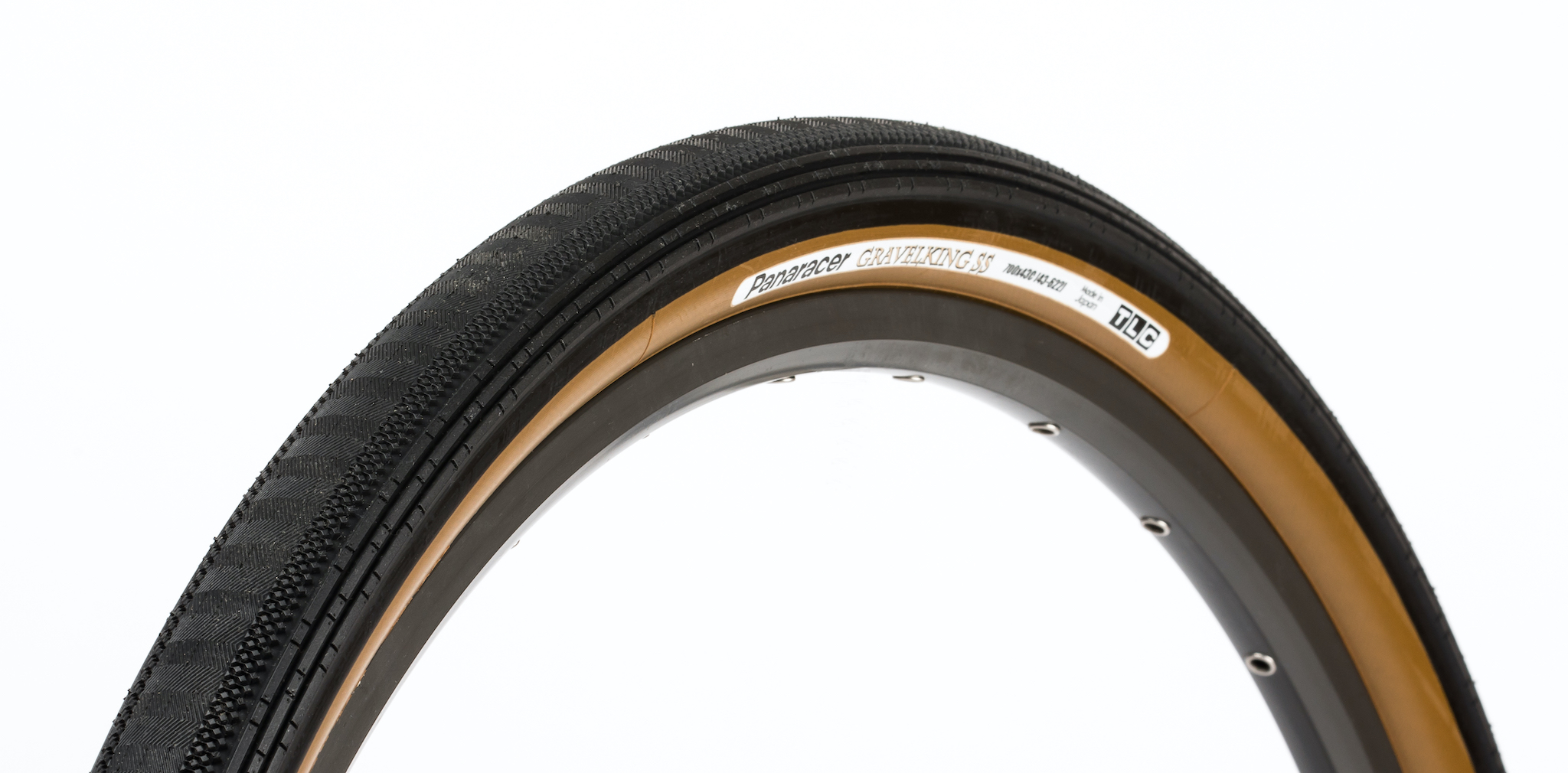
HAYWARD, California (May 18th, 2020) — Panaracer is proud to announce the latest addition to the Gravelking family, the Gravelking SS and SS+.

Building on the success of the standard Gravelking and the Gravelking SK —both industry leading tires in the gravel category— Panaracer has developed the next generation of the gravel tires in the Gravelking SS and SS+

Designed as a dryer condition, race day ready and fast rolling tire, the SS/SS+ was made for those riders who want to go fast while maintaining great control, traction and climbing prowess.

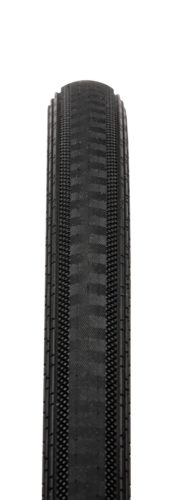
The SS and SS+ feature an all-new tread pattern consisting of a smoother, diamond pattern center with more aggressive side lugs. This tread pattern allows the rider to keep speed going into corners and maintain control throughout any transition a gravel ride could present.

“As more and more races and events appeared on the gravel calendar with a wider variety of terrain, it became apparent that we needed a tire that sat firmly between the slick version of the Gravelking and the more robust Gravelking SK,” said Jeff Zell, Panaracer’s Global Go-To Guy.  “We performed extensive testing with our gravel team in events like The Mid South, The Hondo, Georgia Grinduro, and others where the SS tire really shines.”

The Gravelking SS incorporates a supple 126 TPI casing with a nylon puncture resistant belt and Panaracer’s proprietary ZSG (Zero Slip Grip) compound.

The SS+ uses the same build as the SS but adds a bead-to-bead layer of Panaracer’s ProTite puncture material for even more protection against tread and sidewall cuts for those extra demanding courses or rides with sharp flint rock.

Both SS and SS+ tires will be available in black and brown sidewall options and in the following sizes: 700 x 28, 32, 35, 43c or 27.5 x 1.9 (650b x 48).

The SS will be available in early June 2020 and the SS+ in early July, 2020. Pre-sale for both tires is open now on panaracerusa.com.

Mike Hanseen Talks Bike Fit

Mike Hanseen, manager of Hangar 15 Bicycles in Millcreek, is one of the pillars of the Salt Lake City bicycle community. Mike has been in the bike industry for forty years, having owned Millcreek Bicycles for twenty-five years. He was also a National-level competitive cyclist. I recently have had the pleasure of meeting, working with, and seeing him do what he does best, bicycle fit.

Bicycle fit is a process, and it differs for everyone. Some people think getting a fit and getting sized is the same, but the two are very different.

Sizing takes a few minutes, whereas a proper fit can take a few hours. As someone that has managed three bike shops and worked at about a dozen others around the United States over the past twenty-five years, I can say bike fitting is not the same everywhere. For this article I had the opportunity to sit down with Mike and ask him a few questions about fitting.

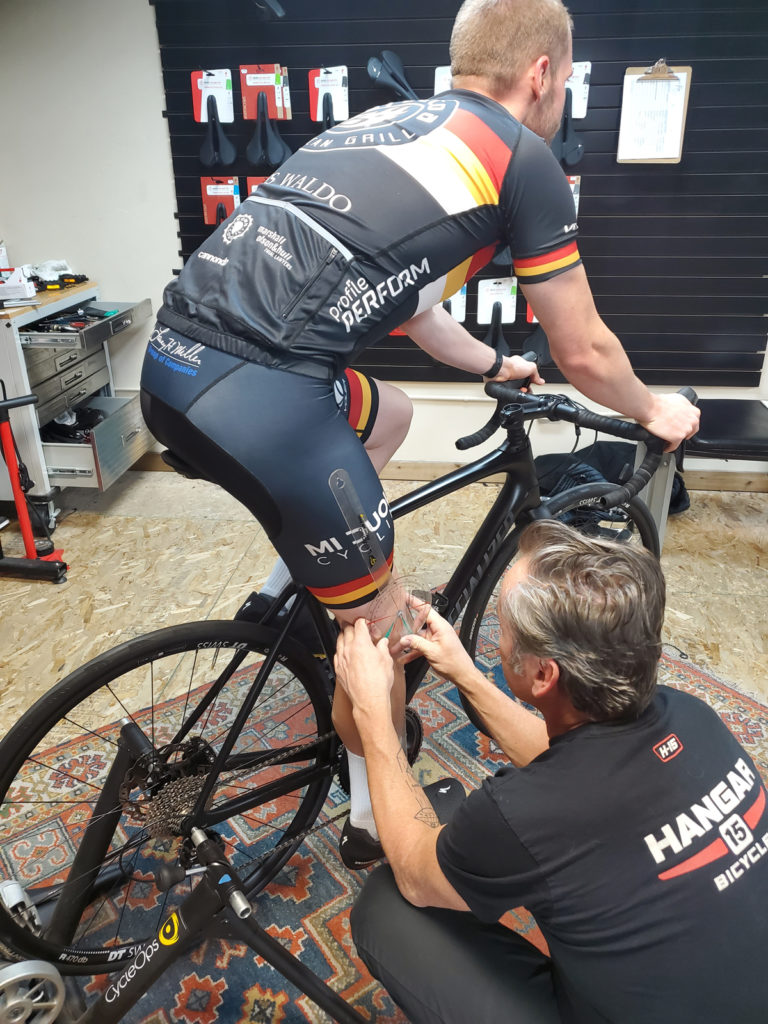
Mike Hanseen adjusts Graydon Braithwaite's (Mi Duole Cycling Team) bike fit. Photo by Anthony Nocella II
Mike Hanseen adjusts Graydon Braithwaite’s (Mi Duole Cycling Team) bike fit. Photo by Anthony Nocella II

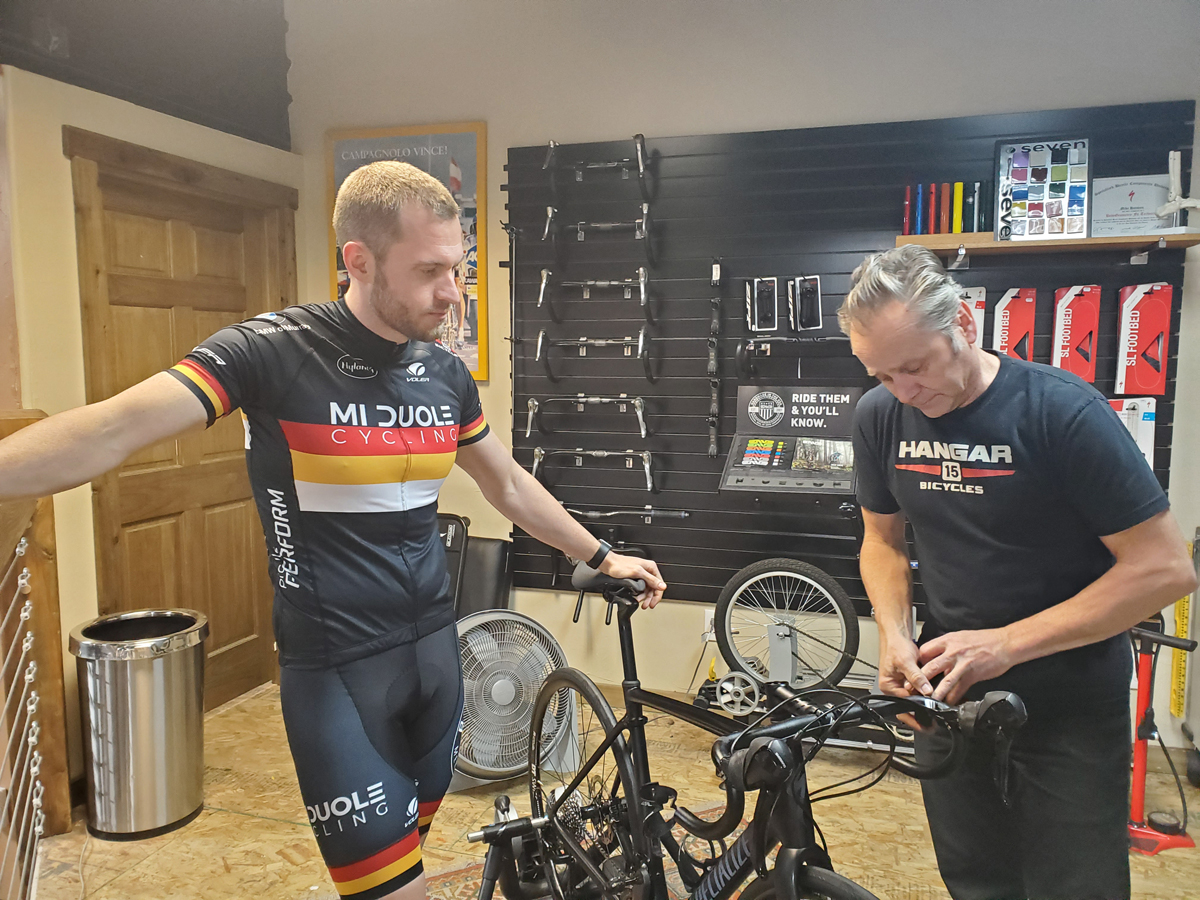
Mike Hanseen working with Graydon Braithwaite’s (Mi Duole Cycling Team) on his bike fit. Photo by Anthony Nocella II

Anthony Nocella: Mike, when did you get into fitting and why?

Mike Hanseen: My first dabble in bicycle fitting was in 1989 after I read Greg Lemond’s Complete Book of Cycling. Lemond’s book had, for the time, a formula to be “properly fit” on a road bike.

My primary goal at the time was to improve my own cycling performance and heal a unilateral strained hamstring. It was moderately successful so I started applying Lemond’s formula to friends’ bicycles as well as to my customers when they would purchase a road bike. I soon discovered Lemond’s formula worked for the youthful racer but not the 50 year old wanting to find fitness on the bike. The very first lesson for me was not to fit everyone as if they were me.

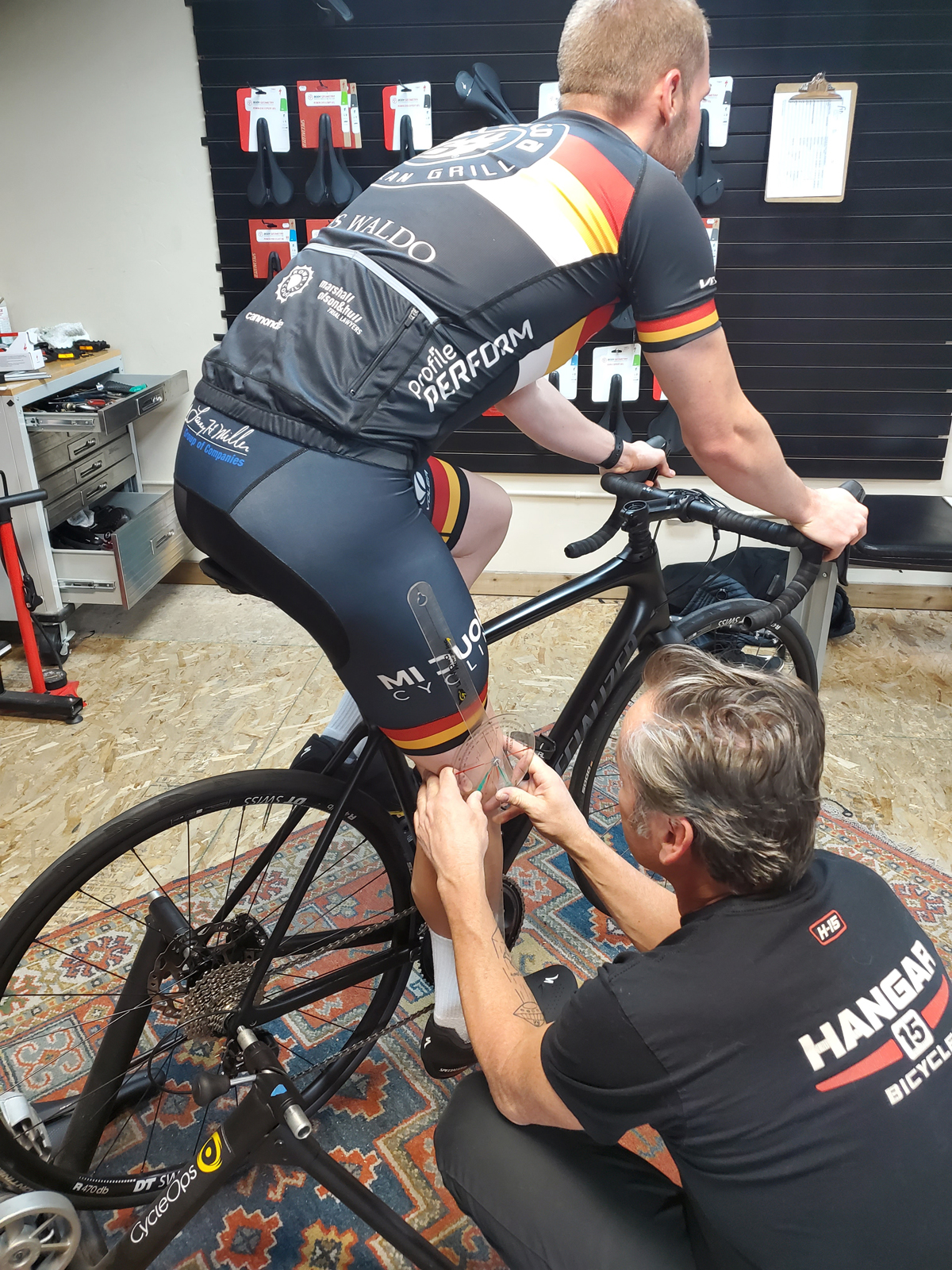
Mike Hanseen adjusts Graydon Braithwaite's (Mi Duole Cycling Team) bike fit. Photo by Anthony Nocella II
Mike Hanseen adjusts Graydon Braithwaite’s (Mi Duole Cycling Team) bike fit. Photo by Anthony Nocella II

Mike Hanseen adjusts Graydon Braithwaite’s (Mi Duole Cycling Team) bike fit. Photo by Anthony Nocella II

In 1990, I was able to start working with a Serotta Size Cycle. The Serotta Size Cycle was designed to get accurate geometry for Serotta’s custom program as well as, for the era, being a cutting-edge tool for fitting. This fit bike was extremely adjustable and could be set up as any size bike possible. This was a true game changer as it made changes in a fit very quick, giving me and my clients instant feedback, and increased my learning curve as a fitter.

AN: Can you tell me a great story when you were fitting?

MH: About 15 years ago, I had a customer come in with her bike asking me how much her bike was worth. The bike was like new and maybe 2 years old. I asked her why she was selling her bike. She said she loved to ride when she was younger but just can’t ride any longer because it was too painful and she’s too old. She had just turned 52.

I told her it shouldn’t hurt to ride and suggested a fitting. She was skeptical as she was “fit” when she bought the bike. I told her all fits are not the same and at the end of the fitting, if she wasn’t comfortable, then the fit would be free. During the fitting, with every change I made she became more and more optimistic. At the end of the fitting as I’m recording her position she was crying with joy. Literally, with tears she said “I thought I would never ride a bike again”. She is still a customer to this day.

AN: Can you tell me how your fitting has changed over the years and why?

MH: My fitting has completely changed since 1989 for many reasons. When I first opened my shop, I sought out a proprietary method of fitting. One of my main goals was to be able to fit the same person multiple times and get the same result, a goal that no one was achieving at the time.

I dabbled in formulas. Though better than nothing and a decent starting point, formula fittings do not work well. If used they are merely a starting point and should never be used as the final position. It took me about 3 years and 1000 fittings to finally understand what was causing my large margin of error in dynamic fittings.

My knowledge of the human body has come a very long way since I started which has given me the ability to be a better fit tech. Looking at flexibility, muscle recruitment, cycling technique and efficiency, is something I do now that I didn’t understand in 1989.

My understanding of biomechanics and how they integrate with the bicycle have improved immensely. My understanding of bicycle geometry, body position relative to bike handling is another aspect I apply in fittings. One must remember that handling always trumps fit, for a good fit is no good if you’re rubber side up.

AN: Did fitting, which is different than sizing, always exist in the bicycle industry?

MH: A sizing is much different than a fitting but sadly, is often sold as a fitting. Many cyclists are out there thinking they have been fit but were sized. A sizing is very basic but again is better than nothing.

Fittings or fit methods to some degree have existed for a very long time. We’ve all heard to stand over the bike and have 2 inches of clearance, right?

At my first bike shop job in 1980, we fit bikes by having you make a fist then putting your elbow on the nose of the saddle and your fist should just touch the stem bolt. We also would set the saddle height to the point where the customer could barely touch the pedal with their heel., which worked decently unless they had a size 12 foot.

Hamley and Thomas had a formula that dates back to 1967. The Fit Kit was invented in 1982 and Lemond’s method, which was derived from Dr. Ginet’s research, was published in 1989. In my opinion these fit methods have become archaic.

AN: When did bicycle fitting become popular?

MH: Based on my observation, I would say approximately the year 2000. I was averaging 340 bike fits a year from 1995 to 2001. However, I was the only one doing them as a primary fulcrum point of their store.

From 2001, my yearly averages started to fall due to other shops and manufactures applying their efforts in bicycle fitting. I currently perform about 250 fittings a year.

AN: What are the most important issues that must be addressed when fitting someone?

MH: Every detail is important. We are only as strong as our weakest link. If I miss one aspect of a fit and that aspect causes discomfort or pain the cyclist will be drawn too that one negative result.

Every client is different, and their needs are as well. Getting to know a client’s past cycling experience, their current riding volume and future goals is critical. Knowing about past injuries both on and off the bike is also a must.

AN: What are issues that are commonly overlooked when fitting someone?

MH: I think the number one issue overlooked is saddle width. So many fit techs, to this day still do not measure ischial tuberosity width, a very key data point to prevent many injurys; some which can last a lifetime. Another common oversight is the pedal stroke, the linear path of the knee and the causes for the lack thereof.

AN: Can you tell me a horrible example of fitting that you have heard of?

MH: I have seen some insane outcomes at the client’s consequence. In one extreme, I had one client have a saddle set 50 mm too high, causing lumbar degeneration followed by a lumbar fusion. I fit him after his back surgery. This of course is an extreme example. The most common horrible example is when the customer is sold and fit on the wrong size bike.

AN: If someone is going to have a fitting done, what questions and information should be relayed by the customer to the fitter?

MH: Every detail is important even if it seems insignificant. Many clients assume certain types of pain and numbness are normal. I say they are common, but not acceptable. Some clients have a hard time mentioning pain and numbness because of the area of the body the pain and numbness is occurring. Don’t be shy, we need to know and trust me, we have heard it all before.

Mike Hanseen can be reached at the Hangar 15 location in Millcreek, Utah at (801) 278-1500.