Mesquite Madness Road Tour, Spring Tour of St. George, Desert Rampage, Cactus Hugger Intermountain Cup Postponed Due to COVID-19 Concerns
March 17, 2020 – Ride Southern Utah and the Intermountain Cup today announced the postponement of four spring calendar mainstay events due: The Mesquite Madness road cycling tour, the Spring Tour (of St. George), Desert Rampage and Cactus Hugger Intermountain Cup mountain bike races. The rides and races are held in the St. George, Utah area, and in Mesquite, Nevada. The events are being postponed in order to follow CDC guidelines limiting gather size to prevent the spread of the COVID-19 coronavirus.
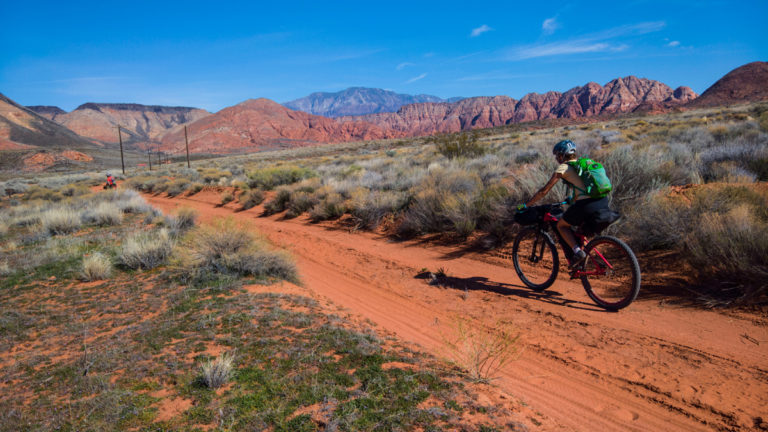
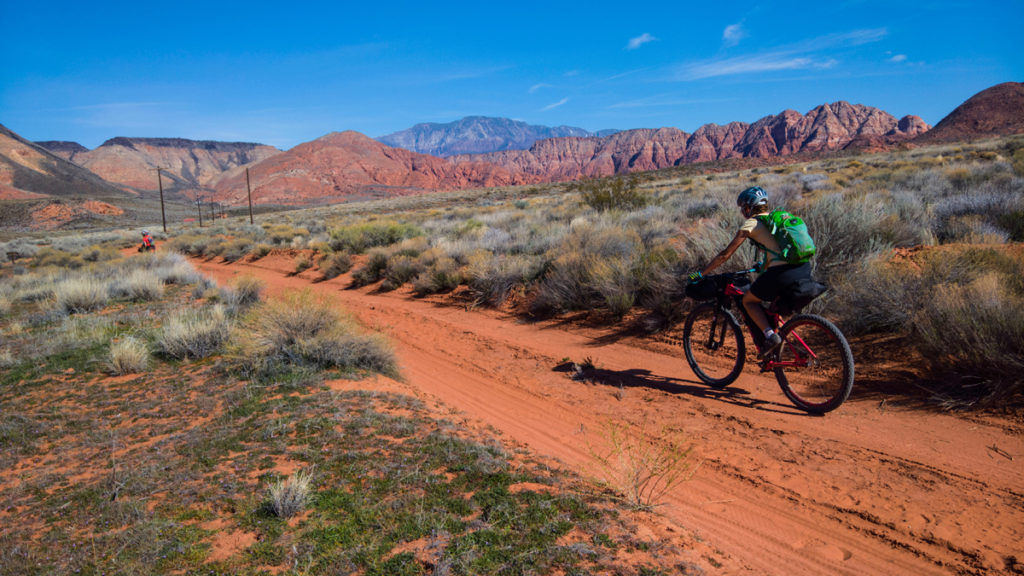
2 riders in the Desert Rampage Mountain Bike Race. The 2020 race has been postponed. Photo courtesy Ride Southern Utah
The Mesquite Madness road cycling event scheduled for March 21, 2020. The Desert Rampage was to be held on March 28, 2020. The Spring Tour was to be held on April 25, 2020. And, the Cactus Hugger was to be held on Apri. 18, 2020. New dates have not yet been announced.
Ride Southern Utah, the organizers of the event, sent out these statements today:
Dear Riders, We’d like to let everyone know that after carefully considering all options, we have decided to postpone the Spring Tour as well as the Mesquite Madness rides. We are working out what our next move is and will let you know as soon as we do. We appreciate your patience and understanding in this unprecedented situation. We are grateful for all the support and kindness that we have been shown by the cycling community.
All the Best, Ride Southern Utah
And, regarding the Intermountain Cup Races:
Dear Racers, We’d like to let everyone know that after carefully considering all options, we have decided to postpone Red Rock Rampage & Cactus Hugger races. We are working out what our next move is and will let you know as soon as we do. We appreciate your patience and understanding in this unprecedented situation. We are grateful for all the support and kindness that we have been shown by the cycling community. All the Best, Intermountain Cup Racing Series
They also posted the following on their website regarding their reasoning:
March 16, 2020: Due to the new CDC regulations stating the cancellation of events with 50 or more people on March 15th, 2020, The City of Mesquite has requested that we postpone Mesquite Madness to a later date. We are still working on the details, including transfers and cancellations, and will announce them on this website when they are available.
I know you are smart enough to be mindful of choosing a bike the right size when shopping for a new steed, whether you are buying a “screaming deal” used bike, or a new dream bike. But there are some bikes where knowing the right size is not quite enough to guarantee the bike will be a good fit for you. You need more than a frame size. You need a prescription for selecting not only the model and frame size, but also components like the handlebars (width, drop, and reach), stem (length and rise) and cranks (length) for example.
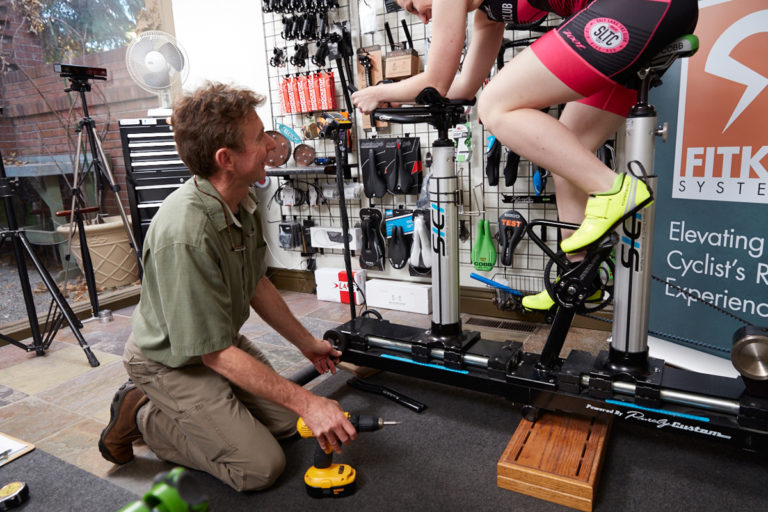
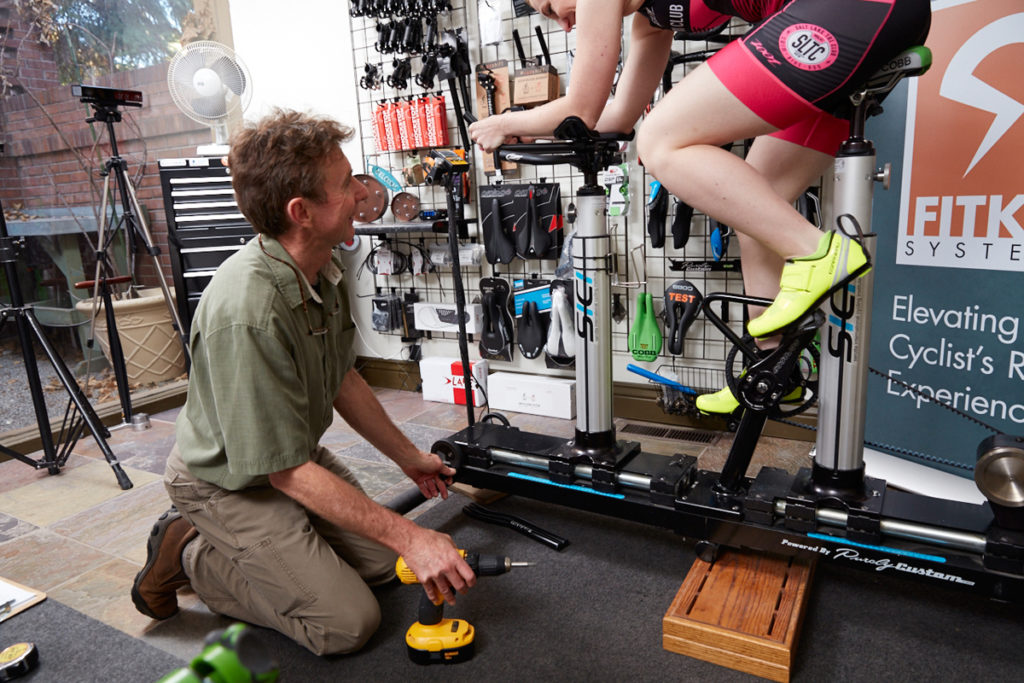
Using a Size Cycle to prescribe a bike choice. Photo by Derek Israelsen Photography.
Sizing deals in generalities, but fitting deals in specifics and a pre-purchase fit helps identify the specifics. Beyond helping choose components, the specifics can also define the saddle-to-handlebar position in space in relation to the frame.
This is more important for some bikes that others. Buying a “regular” bike from a bike shop? No big need for a pre-purchase fit, although it can be helpful. However, in the following situations, going shopping for a bike without a more detailed buying prescription ignores the wisdom of the proverb: “measure twice, cut once.”
Buying a triathlon “superbike”, with a brand-proprietary front end that can’t be adjusted up / down in or out without hiring, marrying, or becoming your own personal and proficient bike mechanic;
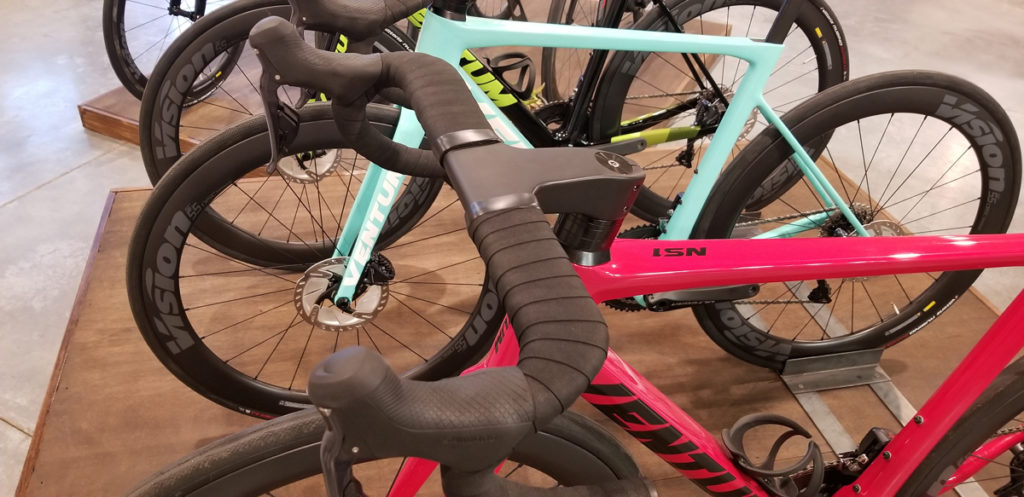
Buying an “aero” road bike with an integrated handlebar/stem combination
Buying either of the above through an online, direct to consumer channel.
Why might these bikes present an issue, and warrant a pre-purchase fit?
Proprietary and/or integrated bar-stem combinations are usually composite (carbon fiber), expensive and not easily swappable like a regular stem and bar due to the internal cable routing. This makes it hard to test out different equipment choices (eg longer stem, shorter stem, narrower bar, wider bar), or different positions (more or less reach and stack to the bars or aero-pads), to find out what works best for you.
There are limits to both the interchangeability and adjustability of these front-end parts, and your riding position for optimal comfort and performance may not fall within those limits. Meaning you will have dumped a lot of dosh into a bike that is not fun to ride, and may even be painful!
Aero Road bikes and Triathlon superbikes are more likely to have both the brake and gear cables (or electronic leads) internally routed through handlebars and stem to reduce aerodynamic drag. This makes for a clean look and enhanced performance, but comes at the cost of ease of position adjustability.
Both triathlon and road bikes have adopted hydraulic disc brakes, which adds time and cost to adjusting brake hose length if needed when the handlebar position is changed. In some designs the brake hose has to be removed even if you want to move one spacer under the stem.
For some bikes the handlebar/stem size can be selected at the time of purchase if you know what you need. In other cases it is pre-determined. If you don’t know what is going to work best for you, the fate of your riding experience is being left to the brand product manager. Who do you want in control?
Integrated bar/stem on the Ventum NS1 Road Bike. Photo by John Higgins
There are a couple of other things to consider with an integrated bar/stem. The stem is not “flip-able”, meaning it cannot be taken off and turned over to increase or decrease the angle, like a regular stem. That significantly reduces the height adjustment of the handlebar position to what is available with the underlying spacers. That limits the height adjustment of the handlebars to say 30mm (a little over an inch) compared to 3 times that by being able to change both spacers and stem angle with a regular bar/stem combo. If your body doesn’t like where the handlebars are there isn’t much you can do about it, brothers and sisters.
Another factor is that the handlebar cannot be rotated up or down (there are some exceptions) to find the sweet spot for pressure distribution and ergonomic optimization, which is tech talk for hand comfort. It is what it is, and if you don’t like it, tough.
There is a saying in bike fitting that “big changes can make small differences and small changes can make big differences”. However, the change and perceived difference are not always predictable. Let’s take handlebar width, for example.
For some people the small change between two sizes is profound. For others, “meh.” But the reach to the bar might be the difference that makes a difference, and a 10mm stem length change is very noticeable to most cyclists.
Let’s look at a couple of examples from the category of online Aero Road bike, as far as front end options go.
Aeroad from Canyon Bikes. This well know direct to consumer brand offers a svelte Aero Road bike. The integrated bar/stem is available in 3 widths (39, 41, 43 cm), but only one stem length for each width except for the 41cm bar, which is available in 2 lengths. The choice of bar/stem is allocated to a specific bike size, and you get no say in which one you get other than through choosing the bike size. Will this specification work for you? Depends on your riding (fit) position. What if it doesn’t? You may be able to change bars if Canyon has a better size available. It will also set you back an extra $399 + time and labor to change it out. Or you can return the bike within 30 days.
NS1 from Ventum Racing, who now call Utah home. The NS1 is a lean mean racing machine that also offers 3 handlebar widths. The company empowers the consumer to decide which one, and they offer 4 different stem lengths for each width. That is 12 choices in the integrated bar/stem. Now we are getting some genuine customization options so the bike will suit more people. But will this bike still fit you and which bar/stem do you choose at the time of order?
These questions (and more) can be answered through a pre-purchase fit session with a reputable bike shop or bike fitter, but it requires special equipment like a “size cycle”, a selection of bars, and frame finder software to help get the answers. If you have strong interest in a specific aero road bike or tri superbike, the bike can be mocked up so you can see how it feels to ride on the simulator, or your riding position can be worked out and then the fit co-ordinates can be compared to the bike candidates.
Let’s say you are considering one of the aero road bikes from above. It is possible that neither may be a good fit for you, that both may be a good fit for you, or that one may be a good fit for you but not the other. You can take a guess as to the outcome or you can make an informed buying decision. If you’d like to learn more about pre-purchase fitting, especially for aero road bikes, I’ll be presenting a talk / demonstration in March. Event details will be announced on the BikeFitr Facebook page.
[Editor’s Note: John Higgins is hosting an Open House at the BikeFitr Studio in Salt Lake City on Saturday March 21, from 4:00pm to 6:00pm MDT. See the event page on Facebook at https://www.facebook.com/events/505286443517577/ for details.]
John Higgins is a professional bike fitter and purveyor of unique and boutique bicycles and fit-related components and accessories in Salt Lake City. More info on bikefitr.com
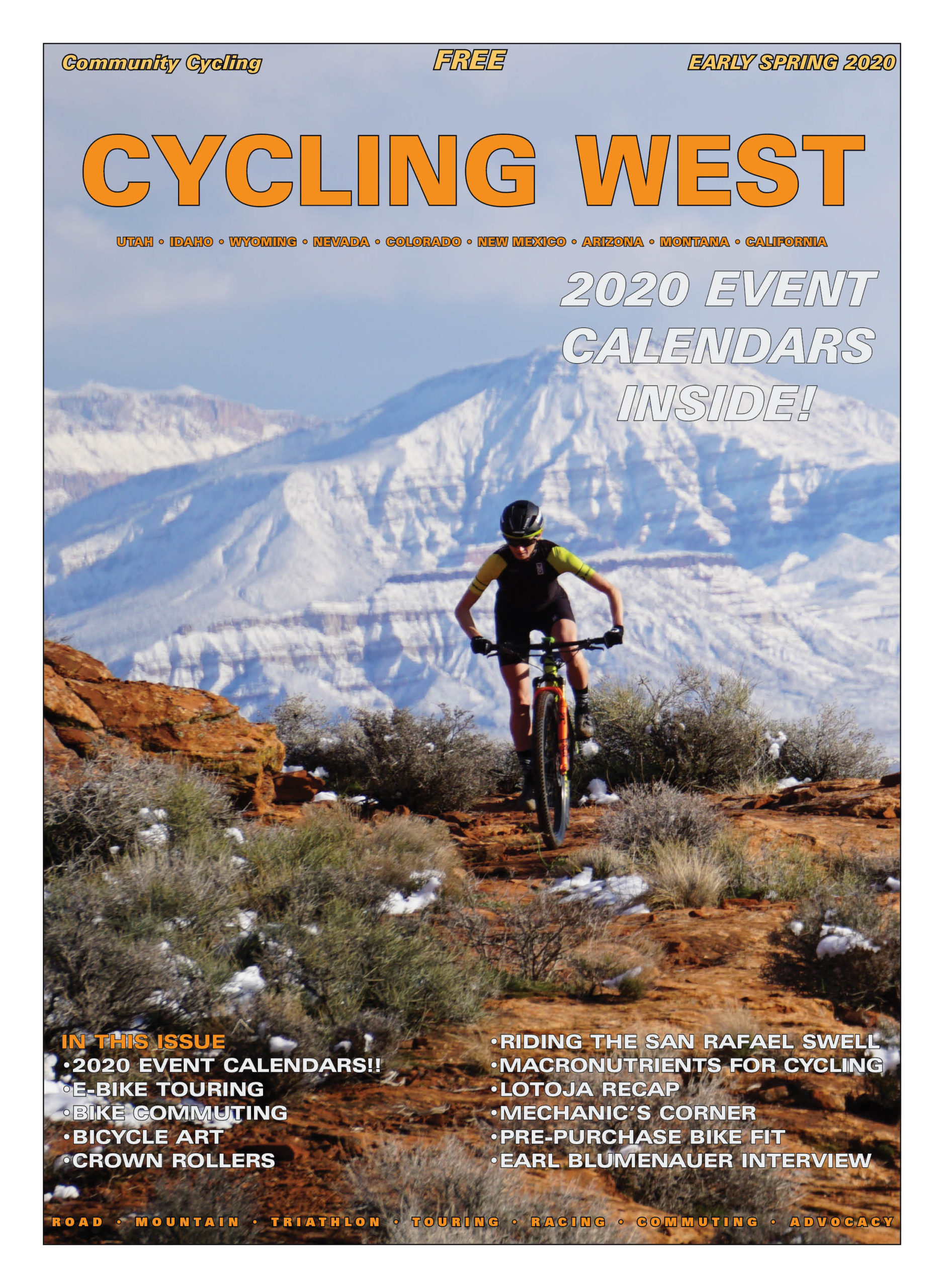
Cycling West and Cycling Utah Magazine’s Early Spring 2020 Issue is now available as a free download (14 MB download). Pick up a copy at your favorite Utah, Idaho, Wyoming, Nevada, Montana, Colorado, Arizona, New Mexico and Northern California bike shop or other location.
Race Director Marc Shaw sent out the following email on Friday:
Throughout the past week, the Redlands Bicycle Classic Organizing Committee has remained steadfast in our desire to host the Classic in April. Unfortunately, the ever-increasing risks associated with widespread Coronavirus (COVID-19) have led us to a decision that undoubtedly will be disappointing to many, although we are confident it is appropriate under these unique circumstances.
Considering the latest information, projected timelines, expert analysis, and after consultation with the leadership of our host cities of Redlands, Highland and Yucaipa, we have jointly decided that the 2020 Redlands Bicycle Classic should not occur.
Ultimately, the health and well-being of everyone associated with the event, including the citizens of our local communities led us to this difficult decision.
I would be remiss if I did not publicly thank our entire organizing committee and the liaisons with our local government entities for their tireless efforts. In order to continue to provide the world-class bicycle race you have become accustomed to; our plan is to return in April 2021.
As COVID-19 continues to impact the lives of people everywhere, we appreciate you understanding our decision. The lives of those affected by this outbreak are far more important than our event. Therefore, please keep them in your thoughts and prayers and we’ll see you next year in Redlands.
Sincerely,
Marc Shaw, Executive Director
Redlands Bicycle Classic
From the organizers about the race: The Redlands Bicycle Classic is an all-volunteer organization, managed by the Redlands Bicycle Classic Organizing Committee, comprised of active community members that seek to see the promotion of cycling and its benefits in Redlands and its surrounding communities. The 36th Annual Redlands Bicycle Classic is scheduled for April 22nd -26th, 2020. The event was founded in 1985 by a community group, chaired by then-Mayor Carole Beswick, to promote awareness of Downtown Redlands. Since that time, professional cyclists from around the world have been racing the event, which is centered in the city of Redlands, California. The event continues today invigorated by the RBC Organizing Committee’s adoption of, and commitment to, the events’ core virtues of Health, Diversity, and the Environment. The Redlands Bicycle Classic is on the USA Cycling Pro Road Tour and is the third round of the 17-race series.
And, about the San Manuel Band of Indians: The San Manuel Band of Mission Indians is a federally recognized American Indian tribe located near the city of Highland, Calif. The Serrano Indians are the indigenous people of the San Bernardino highlands, passes, valleys and mountains who share a common language and culture. The San Manuel reservation was established in 1891 and recognized as a sovereign nation with the right of self-government. As an indigenous community the origins and history of the San Manuel Band of Serrano Mission Indians stem from our relationship with the land and to all who share it. Since ancient times we have expressed ourselves through a culture of giving. Today, San Manuel is able to answer the call of Yawa’ (Serrano word meaning “to act on one’s beliefs”) through partnerships with charitable organizations. We have drawn upon our history, knowledge, expertise and cultural values to direct our philanthropic giving in our local region, as well as to Native American causes nationwide. For more information, visit http://www.sanmanuel-nsn.gov.
We all have experienced being “hangry,” feeling so hungry you get angry, right?! Well, its not surprising considering cyclists and other endurance athletes need more nutrients than most people. And I’m not only talking about calories. Our bodies demand more vitamins and minerals to keep up with the massive hours of exercise we put them through, so we must compensate with nutrient dense foods or supplements to keep performance and recovery at their peak. The wear and tear of intense activity necessitates increased intake of micronutrients, so choosing nutrient dense foods can help us perform better, feel stronger, and lend to our long-term health. Here is a list of essential vitamins and minerals we should all be sure to incorporate daily, along with food examples for snacks and meals. So, in no particular order of importance, here are 10 crucial nutrients to put on your daily menu.
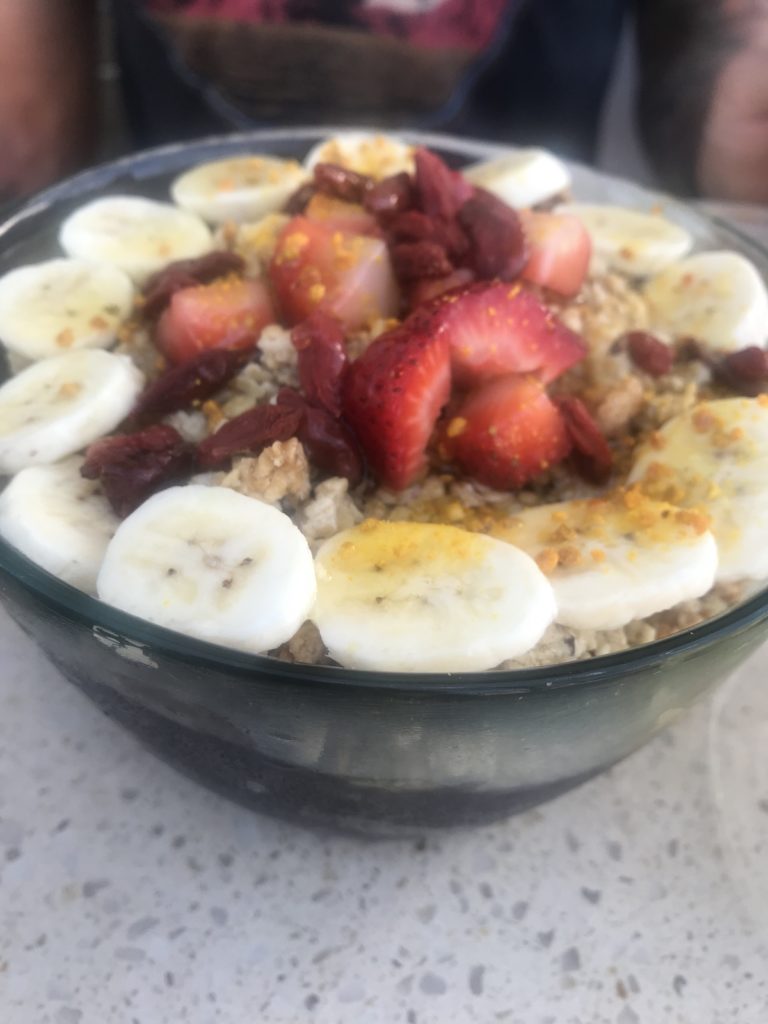
A healthy breakfast to fuel your day. Photo by Breanne Nalder
1. Vitamin B
Lacking the energy to push out those last few intervals? Chances are you’re low on this group of micronutrients, which includes vitamins B6 and B12, thiamin, riboflavin and folate. The body uses these to convert protein and sugar into energy and to produce red blood cells.
*Foods to Fuel with: Tuna, black beans, lentils, and peanuts. Add a few to sandwiches or tacos!
2. Calcium
Excessive training may cause hormonal declines that can compromise bone formation, possibly leading to premature, irreversible osteoporosis. Recent research shows that endurance athletes of all ages and gender experience testosterone deficits that also can cause osteoporosis. All athletes should make sure they get 1,200 to 1,500 mg of calcium daily from food or supplements.
*Foods to Fuel with: dark leafy greens, dairy products, beans, fortified cereals, and broccoli. A little of each in every meal!
3. Vitamin C
This antioxidant is abundant in many foods so you likely don’t need to supplement. It is crucial in tissue regeneration and helps the body absorb Iron, so be sure to get lots in your fruits and veggies.
*Foods to Fuel with: Oranges, strawberries, bell peppers, and kale. Sounds like smoothie time!
4. Vitamin D
Soaking up some sun doesn’t just boost your mood – it can pump up your power, too. Why? Sunlight helps your body make vitamin D. Without enough vitamin D, the mitochondria in muscle fibers can’t adequately regenerate energy after your muscles contract, making you feel tired more quickly. It also helps the body absorb calcium and has many other uses, so get your sunshine!
*Foods to Fuel with: Milk, salmon, trout, egg yolks. All while recovering on the beach!
5. Vitamin E
Athletes have an increased need for this vitamin because their cells undergo more oxidative damage. Aerobic exercise places additional demands on the molecular free radical scavengers of the body, and vitamin E is a well-known scavenger.
*Foods to Fuel with: Sunflower seeds, almonds, and peanuts. Sprinkle on salads!
6. Iron
To help your muscles work efficiently, you need to pump some iron — literally! An hour of working out could deplete 5.7 percent of your level of this mineral, which helps red blood cells carry oxygen to muscles. It is rare in healthy athletes, but it can result in iron-deficiency anemia, which causes fatigue and reduces endurance. The recommended dietary allowance (RDA) for iron ranges from 10 to 15 mg/day—an amount easily acquired from food. In the absence of anemia, athletes shouldn’t take any supplemental iron because it raises the risk of heart disease and colon cancer.
*Foods to Fuel with: Beef, eggs, spinach, broccoli, and fortified cereals. Hearty foods for bigger meals!
7. Magnesium
This mineral is a powerhouse for weekend warriors to pro endurance athletes alike. Magnesium is a component of more than 300 enzymes involved in energy metabolism, plus it plays a role in bone formation. You lose magnesium through sweat, so munch on some good sources of it before and after a hard workout. The recommended intake for endurance athletes is 500 to 800 mg daily.
*Foods to Fuel with: Dark leafy greens, almonds, halibut, and quinoa. Great dinner options!
8. Potassium
Another electrolyte present in intracellular fluid with sodium and magnesium, Potassium is responsible for regulating total body water and stabilizing muscle contractions. It is lost through sweat and urine, so when you are properly hydrating, it works with sodium to help your muscles and nerves work properly.
*Foods to Fuel with: Sweet potatoes, bananas, avocados, tuna, and pistachios. So many ways to get these gems into breakfast, lunch, or dinner!
9. Sodium
It seems like “sodium” is a swear word in the health-o-sphere, and with its prominence in processed and take-out food, it’s true that many people need to cut back. But athletes must replenish salts as they are lost to avoid cramping and/or hyponatremia (see previous articles I have written such as my July 2015 nutrition column or contact me directly for specific recommendations)
*Foods to Fuel with: Electrolyte drink mixes, pretzels, and other salted foods. We crave chips and soda around workouts for a reason!
10. Zinc
Aiding in tissue repair and in the conversion of food to fuel, athletes have lower serum zinc levels compared with sedentary individuals. Those who train without days off lose zinc even more quickly. Athletes should take 30 to 60 mg zinc daily to keep stores at appropriate levels and avoid compromising the immune system. We all know being sick ruins or training!
*Foods to Fuel with: Red meat, chickpeas, pumpkin seeds, and quinoa. Mix together with some spices and make a tasty dish… Yum!
A well-fueled body will undoubtedly perform better. But, going overboard with some nutrients can be as detrimental as skimping on them, so talk with a dietitian (like me!) or your physician before changing your diet or reaching for any supplements. Figure out the right balance for you, and you’ll be able to reach your true athletic potential with a well fueled machine of a body.
Breanne Nalder-Harward, MS, RDN, earned a BS in Biology and Sociology from Westminster College and received a Master of Science degree in Nutrition and Sports Dietetics from the University of Utah. She is licensed as a Registered Dietitian Nutritionist (RDN) and is the nutrition coach at PLAN7 Endurance Coaching and Utah Sports and Wellness. You can find more info on her at plan7coaching.com and utahsportsandwellness.com or follow her on social media @breezysaycheezy.
SILVER CITY, NM (March 12, 2020) — Coming just three days after announcing that the race had been saved by an influx of funding from Leah Sturgis via partnerships with Cyclestream TV and Wildlife Generation, the Tour of the Gila, a leading UCI stage race held in New Mexico, has been cancelled for 2020 due to concerns about the novel coronavirus COVID-19.
The race was to be held from April 29–May 3, 2020 and was scheduled to be the 34th edition.
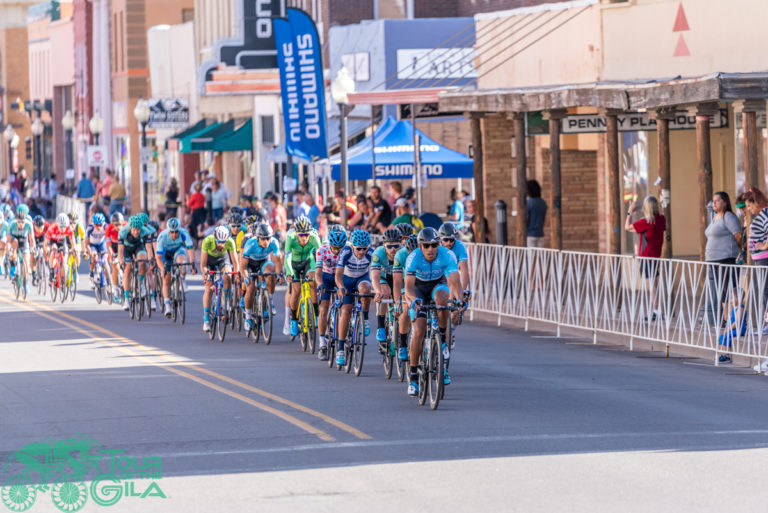
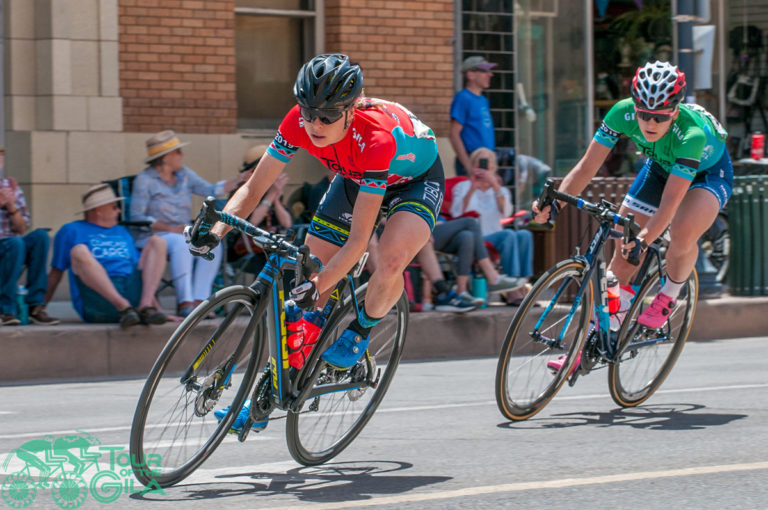
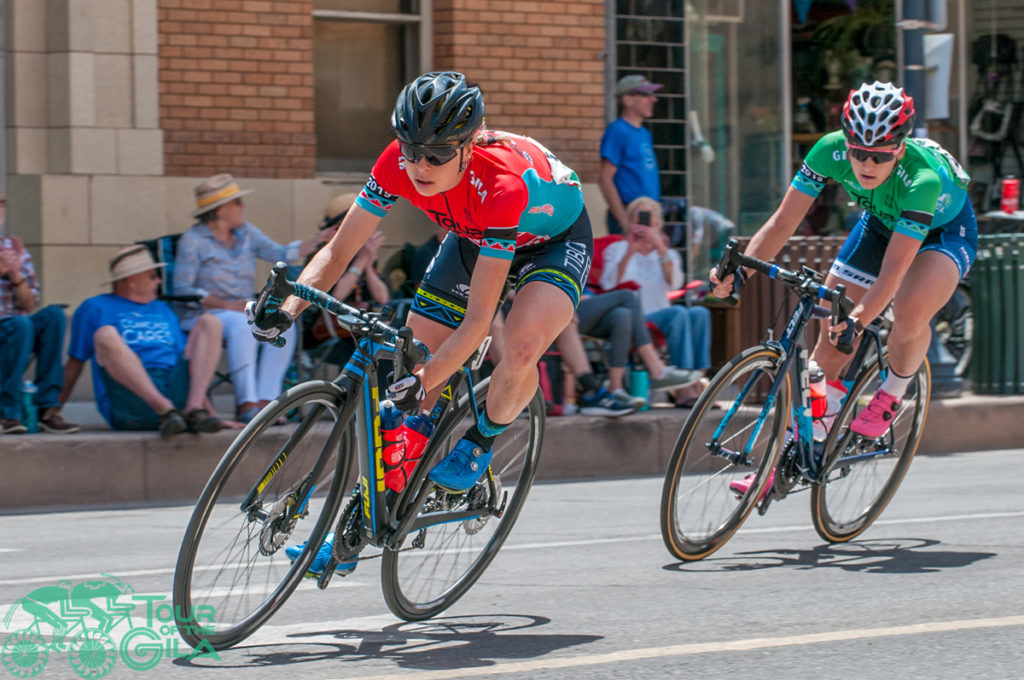
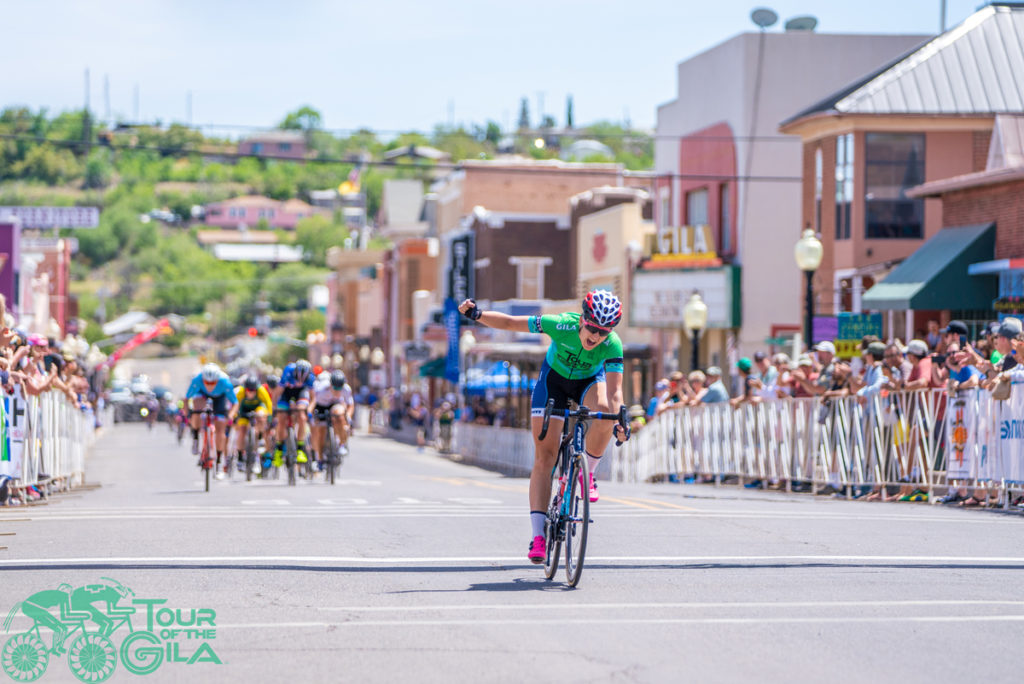
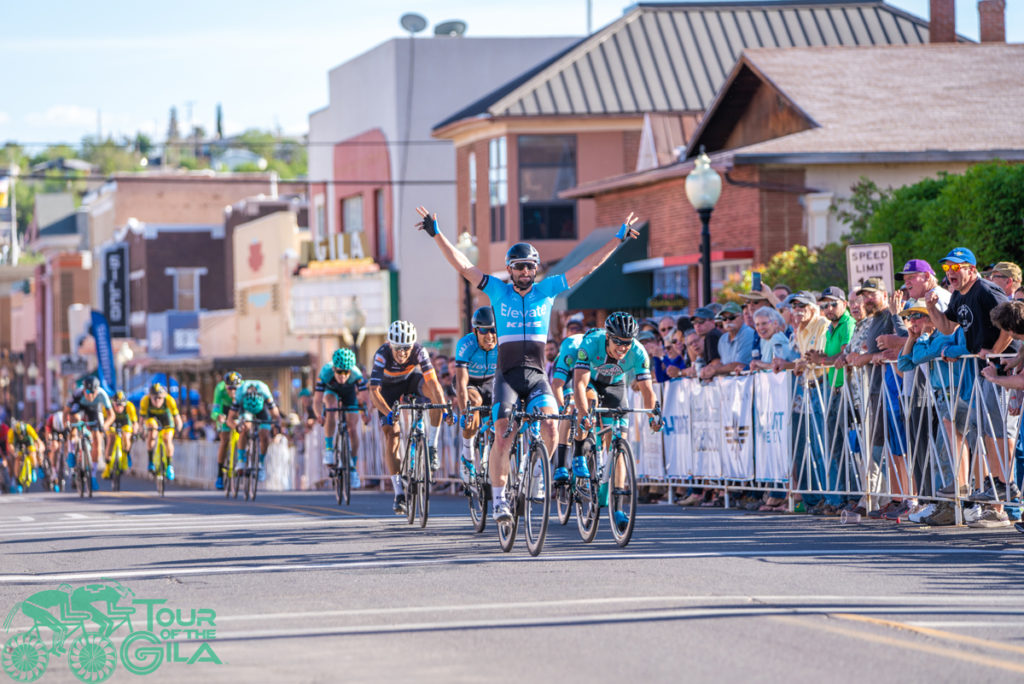
Action in the 2019 Tour of the Gila. Photo courtesy Tour of the Gila
The event posted the following release on their Facebook page today:
Tour of the Gila is Cancelled for 2020
Jack Brennan, Tour of the Gila race director, is saddened to announce the cancelation of the 34th Annual Tour of the Gila, which was scheduled for April 29 through May 3, 2020. Due to the COVID-19 health concern, Brennan carefully considered the situation and after discussions with local officials and others associated with the event, the race was canceled. Brennan really appreciates the guidance on this matter. Brennan states, “Silver City Mayor, Ken Ladner and Silver City Town Manager, Alex Brown, provided leadership and guidance that was important in making this difficult decision. Public and participant safety is always of most importance; thus, this hard decision had to be made.”
Brennan shared, “The event planning started almost a year ago and was well into its final preparations. The UCI Men’s and UCI Women’s race had 11 foreign teams registered to participated from all over the world, including Ecuador, France, New Zealand, Canada, and Mexico. There were going to be 19 professional men’s teams and 12 professional women’s teams. The amateur field was looking big and strong. Overall, Tour of the Gila was staged to be one of the largest and best caliber races in its 33 years.”
“Special thanks is extended to all the sponsors, all of the state, county, and municipal agencies, and all of the wonderful volunteers. I am disappointed we are not racing this year, but looking forward to 2021. Plans are beginning now. We will see you in Gila 2021 and also for Gran Fondo, Saturday, October 10, 2020,” Brennan shared.
For more information on the Tour of the Gila, visit https://tourofthegila.com. For more information on all there is to see and do in Silver City, or to plan your visit, go to www.visitsilvercity.org.
Southern Utah is treated, perhaps, to the first signs of spring in the State. With the exception of extreme southwestern Utah, southeastern Utah begins to see climbing temperatures as early as late March. For example, in April, it is usually warmer in Bluff than in Cedar City. Thus, a great springtime escape for northern Utahns would be to head for the moderate climes of southeastern Utah. This ride travels through some of southeastern Utah’s amazing scenery, enabling the cyclist to see some of the State’s most well-known sights and images, while getting a fantastic workout.
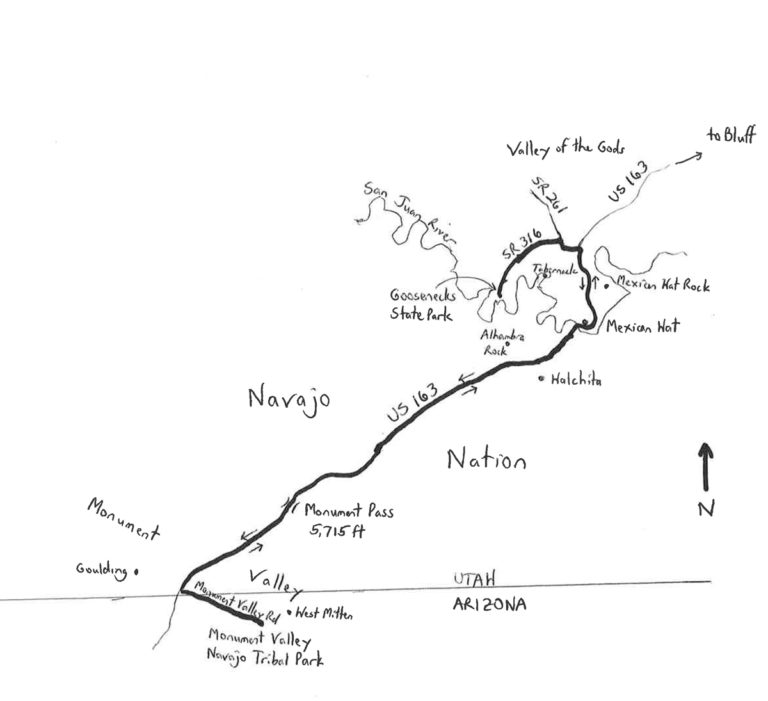
The Monument Valley ride is full of scenic beauty. Map by Wayne Cottrell
The Meanders to Monuments Classic is a 64.9-mile out-and-back ride having a net elevation difference of 1,605 feet. There are no steep climbs or descents, but there are several long, gradual upgrades and downgrades. The ride starts at out-of-the-way Goosenecks State Park, located along the San Juan River, north of the Navajo Nation boundary, just beyond the far eastern boundary of Glen Canyon National Recreation Area. If names such as Moki Dugway, Valley of the Gods, Mexican Hat Rock, and The Tabernacle ring a bell, thing you know where this is. If not, then the best way to get here – and the out-of-the-way location adds to the mystique – is to head southeast from the Salt Lake City area to Moab, via I-15, U.S. Route 6, I-70, and U.S. Route 191. Continue heading south from Moab on US 191, through Monticello, Blanding, and Bluff. Beyond Bluff, continue heading westward on U.S. 163 rather than on U.S. 191, which heads south into Arizona. Turn right on State Route (SR) 261, and then left onto SR 163. Drive 3.5 miles to the end of the highway, at Goosenecks State Park. This is where the ride begins.
Goosenecks State Park overlooks the deep meanders of the San Juan River. The depth of the canyon here is about 1,000 feet. The dramatic incisions made by the river, carved over thousands of years, create a stunning visual. From your left to your right, panning the near horizon, the river “goosenecks” through ten miles over a straight-line distance of about three. I arrived here at dusk once, running late, such that the darkness prevented me from seeing the bottom of the canyon. I was the only soul around, and I could hear the faint sounds of the chasm, only imagining its depth! There are vault toilets at the park, but no water, so be sure to bring your own. From a starting elevation of 4,980 feet, SR 316 descends gradually to the junction with SR 261 (which is part of the Trail of the Ancients Scenic Byway). Turn right here, at mile 3.5, and ride to US 163 (mile 4.4). Turn right and head south. Along the way, well off to your right, you may be able to spot the top of The Tabernacle, which is a nearly island land mass that has been carved out by the twisting San Juan River. To your left, along SR 163, is Mexican Hat Rock, a formation that resembles a balancing sombrero. The formation is so famous that the next town is named Mexican Hat! This a small but extremely scenic settlement, established adjacent the river. There is a lodge and a trading post here. At the edge of town, SR 163 makes a sharp, left-hand bend to cross the San Juan River. This is the low elevation of the ride (4,110 feet).
From the river, SR 163 climbs gradually. The only real negative aspect of this segment of the ride is the highway’s narrow shoulder. Yet, the highway is famous, even in cycling lore, having been ridden as part of the Race Across America route, and as a regular segment in the Race Across the West. Nonetheless, ride cautiously, especially on curves. The turnoff to the town of Halchita is at mile 9.55. This segment of SR 163 is essentially entirely within the Navajo Nation, as reflected in that fact that some 98% of Halchita’s several-hundred residents are Native-American. The traffic volume on SR 163 increases southwest of Halchita (up to 2,100 vehicles per day). The landscape out here is marked by a vivid red color, generated by iron oxides exposed within the mostly siltstone floor of the valley. There are also some darker, blue-gray colors generated by manganese oxide. The numerous fissures and canyons have been carved by washes and springs over the years. Millions of years ago, this area featured volcanic activity. With the extinction of the volcanoes came the subsidence of the land, exposing volcanic “plugs” that have remained resistant to erosion. Hence, the peaks, spires and spikes that you see out here are the remnants of ancient volcanoes. The high elevation of the ride at Monument Pass (5,715 feet), crossed at mile 19.2, marks the gateway to Monument Valley. Here, the numerous sentinels of the valley come into clear view, including the iconic West and East Mittens. It is a gradual descent across the valley.
Monument Valley is etched into many a person’s vision of the old American West, in part because of filmmaker John Ford’s repeated use of the region for his Westerns. These included such classics as “Stagecoach” and “The Searchers,” among others. As the monuments get close enough to touch, turn left onto Monument Valley Road (elevation 5,202 feet at mile 24.8), and head southeast. The road enters Arizona, climbing gradually to the end of the road, at the Monument Valley Navajo Tribal Park’s visitor center (elevation 5,607 feet). There may be a fee ($20 for motor vehicles; unknown for bicycles). This is the turnaround point of the ride (mile 32.45). Be sure to replenish your water here. If you have time, though, take a break and visit the center. Or, better yet, take a guided tour!
The return ride features a gradual descent to SR 163 (2.1% grade), a long, gradual climb to Monument Pass (1.7% grade), an even longer, gradual descent to Mexican Hat (2.0% grade), and then a gradual climb to Goosenecks State Park (2.0% grade). The scenic views and icons along this ride, now seen from a different perspective, keep things interesting and memorable for the entire route. As you return to Goosenecks State Park, be sure to slow down at the end of the road, as there is no barrier between you and the incisions!
For more rides, see Road Biking Utah (Falcon Guides), written by avid cyclist Wayne Cottrell. Road Biking Utah features descriptions of 40 road bike rides in Utah. The ride lengths range from 14 to 106 miles, and the book’s coverage is statewide: from Wendover to Vernal, and from Bear Lake to St. George to Bluff. Each ride description features information about the suggested start-finish location, length, mileposts, terrain, traffic conditions and, most importantly, sights. The text is rich in detail about each route, including history, folklore, flora, fauna and, of course, scenery.
Wayne Cottrell is a former Utah resident who conducted extensive research while living here – and even after moving – to develop the content for the book.
By Lukas Brinkerhoff — It was Wednesday. I had already spent 2-3 weeks prepping. Gear had to be organized, packed, unpacked and checked off the list. The room for error was minimal so our prep work had to be thorough. I fitted each bike with bags and then we stuffed them with everything we would need for the journey. Everything was ready. Well, almost everything. Food, we still needed a few food items, but there was time. Our escape was scheduled for 2 PM on Saturday.
The Tandem Duo, Kenny Jones and Heather Gilbert, dropping into Powerline. Photo by Lukas Brinkerhoff.
Jedidiah Jenkins, a man you’ve probably never heard of, quit his job because he didn’t want to wake up one day and realize that thirty years had passed and he hadn’t lived the life he wanted. Instead of living the ordinary life, he decided to ride his bike from Oregon to the southern tip of South America. In a short film made by a friend titled The Thousand Year Journey: Oregon to Patagonia, he answers the why of his journey saying, “The routine is the enemy of time, it makes it fly by.”
All of us know the routine. Wake up. Go to work. Wade through work. Go home. Say hi to the significant other. Go to bed. Wake up. It’s the circular torture that even Sisyphus would call never ending. I don’t know about you, but I’m with Jedidiah. I don’t want to wake up some morning after I retire and think, “Wow! Where did all those years go? What the hell was I doing?” because I spent way too much time making sure the routine was followed, the bills were payed and I was doing the adult thing. The routine is the enemy.
Kathleen Berglund rocking the singlespeed and making sand look easy. Photo by Lukas Brinkerhoff.
Our destination was a measly 20 miles each way to a place all of us had been multiple times. The first time I had been there was close to 20 years ago and for the sake of full disclosure, I had already gone bikepacking there before. There was nothing particularly special about our weekend’s escape other than every one of us needed it. The Doctor needed it. The teacher needed it. The marketing guy needed it, even more than just to get pictures for his social media posts. He needed it just like the rest of us, to break free from the enemy and take control of time.
The break was to take us from St. George to the Red Cliffs Desert Reserve, a place easily reached by pavement, but easy was not our objective. There were five of us and one more to meet us if possible somewhere along the way. We all pedaled our loaded rigs to Red Rock Bicycle for one last chance for supplies before pedaling the short, steep pavement climb up to the Red Hill where we hit dirt and made a go of it.
Our route was to use trails that most locals don’t even know about mostly because they aren’t what you would call “fun” to ride. Off the pavement, we began our dirt journey on T Bone which is a dirt/sandy two track that follows a pipeline up to the Turkey Farm Road. The five of us represented a rainbow coalition of bikes, there was a tandem, a fat bike, a singlespeed and a bikepacking specific rig. T Bone made it obvious which bike was going to be the best for the first half of the ride.
Sitting at the top of the first sandy climb, I stopped and stepped off my Fat Boy and watched as the rest of the group pushed, pulled and pedaled through the sand to the top. It’s not bikepacking until you’re pushin’.
Joey Dye smiling because he’s finally done with sand. Photo by Lukas Brinkerhoff.
Once to the Turkey Farm Road we had a stint of pavement to the Middleton Powerline Trailhead. As the names suggests, this road parallels the powerline meaning it drops directly down and then goes directly back up. Then repeats several times. Plus some sand. At the end of Powerline, there was yet another sandy road awaiting us. While the first 10 miles was technically half of the trip, it constituted 2/3 of the time it would ultimately take us to reach our camp because of the sand.
And then there was singletrack, ten miles of it stretching out in front of us. After the sand bogs we had just traversed, even being loaded, the trail felt like we were ripping. The broken, thousand mile stares were replaced with smiles, whooping, the occasional attempted bunny hop and, well to be honest, fun.
A short corridor of pavement completed our route to get us to our campsite. We dropped off of the Prospector trail just as the sun was dropping behind the horizon giving us a light show as our tired legs carried us to our escape.
Jake Miller ripping down Prospector on the last leg of our journey. Photo by Lukas Brinkerhoff.
Obviously, not all of us have made the decisions that would put us in a place where we can decide to quit our job, strap everything we own to our bicycles and ride into the sunset hoping that somehow writing and blogging about our adventures will provide sustenance when needed. However, it’s a lot easier than that to escape the routine, to shake things up. When was the last time you threw everything in the back of your car, put the bike on top and drove through the night for a one-day bike trip just because? Or even took the long way to the grocery store aboard the cargo bike because you could?
The routine is the enemy.
I’m not sure that we were put here or that we have a purpose so I can’t say we were meant for more than the 9-5 grind. During my soujourn in Chile, I learned a phrase, “Trabajo para vivir. No vivo para trabajar.” Which is to say, “I work to live. I don’t live to work.” The escape doesn’t have to be big, it doesn’t have to be long, but it is just as important as showing up to work on time.
Plan your escape:
Destination: it doesn’t really matter, but ours was the Red Cliffs Recreation Area, http://www.blm.gov/ut/st/en/fo/st__george/recreation/day_use_areas/red_cliffs_recreation.html.
The route: T Bone to Turkey Farm, Turkey Farm to Middleton Powerline, Powerline to Mill Creek, Mill Creek to Grapevine, Grapevine to Prospector which takes you to the Red Cliffs Recreation Area.
Lukas Brinkerhoff blogs about mountain biking and life at mooseknuckleralliance.org.
By Wayne Hansen, DC — The topic of concussion has been in the news a lot lately. With the release ‘Concussion’, the new Will Smith movie, I have been getting more questions about the signs and symptoms of a concussion. It is important to get those who are suspected of a concussion immediate help. Here is a list of physical, cognitive and behavioral features related to a concussion:
Physical features can include loss of consciousness, headache, pressure in the head, neck pain, nausea, vomiting, blurred vision, dizziness, prolonged or greater than expected fatigue.
Cognitive features can include confusion, feeling slowed down, sensitivity to light, sensitivity to noise, impaired balance, feeling in a fog, difficulty concentrating and difficulty with memory.
Behavioral features can include more emotional, irritability, restlessness, drowsiness, sadness, anxiety, nervousness, sleep disturbances and personality changes.
Even if the cyclist is able to continue with their activities, the athlete with symptoms of a concussion or any other concerning changes in their health should get immediate medical attention and avoid any activity that can exacerbate the symptoms listed above.
Wayne Hansen, D.C. is a Chiropractic Physician practicing at Solutions Clinic in Cottonwood Heights. He specializes in treatment of athletes, particularly cyclists. [email protected]
An iconic tradition in New Mexico and one of the most challenging bicycle race courses in North America—the 34th Annual Tour of the Gila—takes place April 29–May 3, 2020 in Silver City. The Tour of the Gila will draw in hundreds of participants from across the U.S. and internationally for top-notch, endurance-testing cycling at over 6,000 feet altitude in scenic and historic southwest New Mexico.
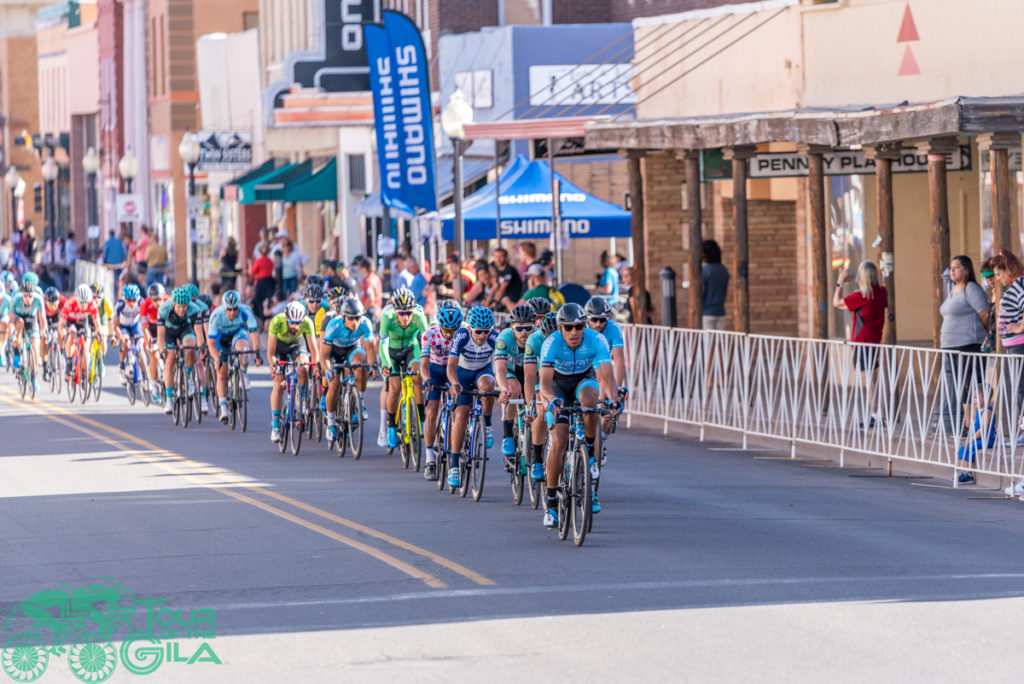
Action in the 2019 Tour of the Gila. Photo courtesy Tour of the Gila
A renowned UCI stage race with categories for both men and women, the Tour of the Gila takes place over the course of five days. Each day of the race presents a new course to push riders’ performance to the next level, while taking them through beautiful natural landscapes surrounding Silver City.
“In addition to a spectacular and thrilling course, participants will have the chance to see and experience Silver City, its history, its breathtaking views, and its unique culture,” said Alex Brown, Town of Silver City Manager. “This race brings in the best of the best from across the globe to our town, and allows participants—both amateurs and professionals—to push themselves and experience top-level competition.”
Stage 1—The Mogollon Road Race—kicks off on Wednesday, April 29, beginning at Gough Park and ending on Mogollon Climb. On Thursday, April 30, Stage 2—The Inner Loop Road Race—takes place at Ft. Bayard. Stage 3—Tyrone Individual Time Trials—takes place Friday, May 1 in the Village of Tyrone throughout the day, as riders take the course alone for individual times.
On Saturday, May 2, Stage 4—the Downtown Silver City Criterium—is one of the most popular race days for spectators and a beloved day for racers, taking place in historic downtown Silver City, and offering fun events like the free children’s bicycle rodeo and a citizen race mid-day. Set amidst vibrant downtown galleries, shops, businesses and restaurants, the downtown portion allows spectators optimal places to watch, explore the town, and enjoy the festivities. Events culminate on Sunday, May 3 with Stage 5—The Gila Monster—one of the most difficult courses in North America that proves challenging for even the most seasoned professionals. The Gila Monster, with 10,000 feet of climbing, features steep descent and rolling hills with incredible mountain views and towering pines, and ends at Piños Altos.
“Whether you’re taking part as a competitor, you’re in town to support a loved one, or you’re attending as a spectator, the Tour of the Gila is an incredible event for all involved,” added Brown. “With options to participate for beginners—with the children’s bicycle rodeo and citizen race—everyone is welcome to join the fun, grow their talent, and take part in one of the most iconic events in New Mexico.”
After the race, participants and spectators can enjoy Silver City’s arts, outdoor recreation, culture and history. With the Gila National Forest just minutes outside of town, avid adventurers can hike, camp, and explore nature. As a well-known art community, Silver City is home to over 30 art galleries, offering competitors an ideal location to relax and browse galleries downtown. Additionally, Silver City has a rich history to discover, as home to the third largest open pit copper mine in the world and the Gila Cliff Dwellings, as well as ties to Billy the Kid and Geronimo.
“Once the competition has ended and riders have put their bodies through a true test of endurance, it’s an optimal time to take a few days of relaxation and exploration,” added Brown. “For those looking to stay in town after the race, there are a variety of one-of-a-kind activities and attractions to explore, ranging from our arts and culture to our history and recreation.”
To register for Tour of the Gila or for more information, visit https://tourofthegila.com. For more information on all there is to see and do in Silver City, or to plan your visit, go to www.visitsilvercity.org.
The August race will course through Snowmass Village, Avon, Boulder and Denver
Denver, CO (March 9, 2020) — The Colorado Classic presented by VF Corporation today announced the four cities that will host the prestigious race this summer. At a press event at the Colorado State Capitol, race organizers and State Governor Jared Polis welcomed Snowmass Village, Avon, Boulder and Denver as the host communities for the 2020 race.
Held August 27-30, 2020, the Colorado Classic is the premier women’s road race in the Western Hemisphere and North America’s only stand-alone women’s professional stage race. After a successful 2019 debut as a women’s-only race, organizers will continue to provide unheralded financial support, global exposure and competitive opportunities for the best female cyclists from around the world, while also showcasing some of the most scenic surroundings Colorado has to offer.
While the courses have yet to be finalized in each location, the four-day event will follow iconic Colorado routes featuring tough climbs, premier gravel roads, spectacular sprints and fan-favorite circuits. With public events held at each location, the race will truly be a four-day, family-friendly celebration of health, fitness, community and of course, some Colorado pride.
“We are thrilled to have such a strong line-up of communities for the 2020 event. Each market offers a notable connection to pro cycling, an ideal landscape for competitive racing and a strong commitment to bringing unique and engaging events to their community.” said Lucy Diaz, CEO of RPM Events Group, LLC. “Each partner also aligns with our mission to advance women in sports and we are excited to work together to build out programming around each race stage that celebrates the athletes and engages the community.”
“We are happy to support the Colorado Classic as it continues to build momentum as the pinnacle event for women’s cycling in North America,” added Cathy Ritter, director of the Colorado Tourism Office. “The latest race route will not only create a challenging course for these top women cyclists, but showcase some of the most beautiful landscapes in Colorado.”
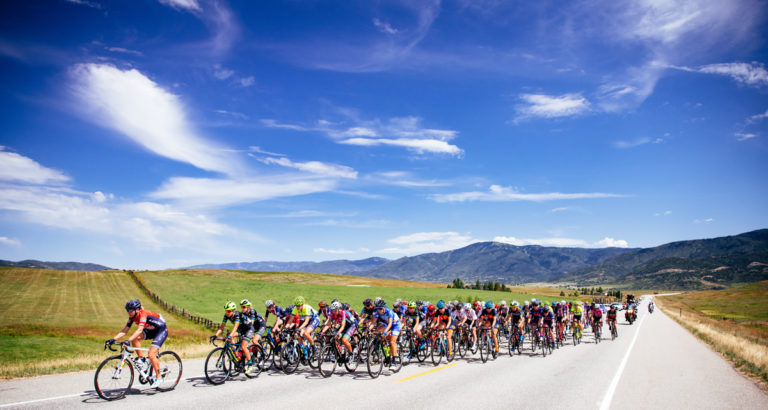
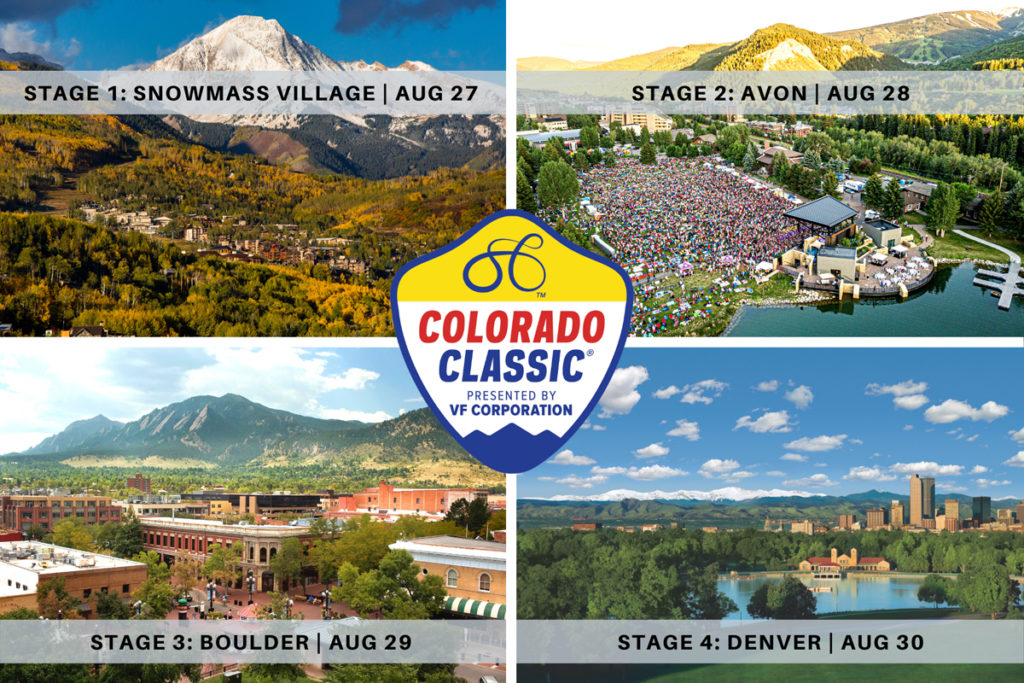
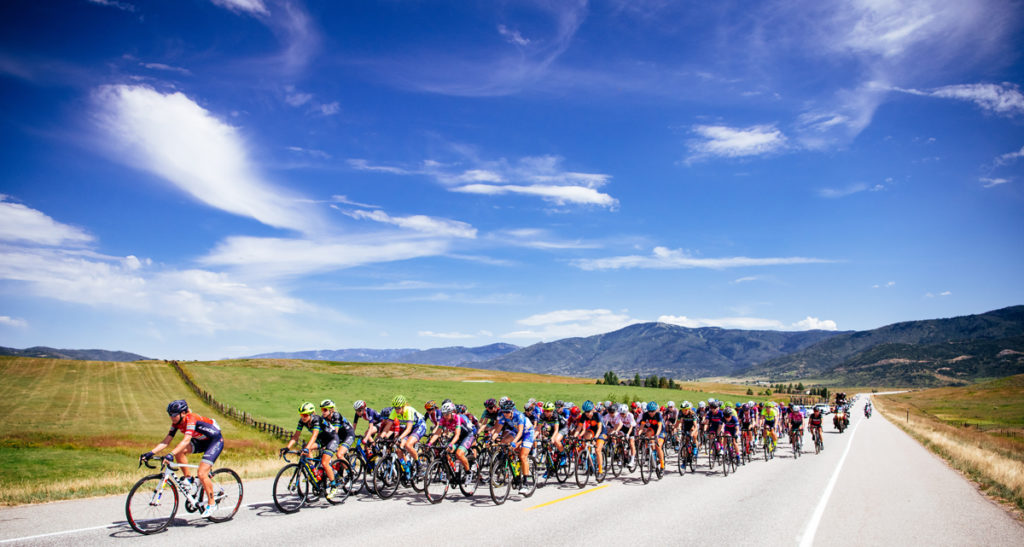
The 2020 Colorado Classic will visit Snowmass Village, Avon, Boulder and Denver. Photo courtesy Colorado Classic
The 2020 Colorado Classic host cities are:
– August 27th, Snowmass Village. The race will kick off in the mountain town of Snowmass Village, approximately 200 miles west of Denver. Surrounded by many of Colorado’s most beautiful mountain peaks, this town is home to world class skiing and snowboarding in the winter, as well as some of the top whitewater rafting, fly fishing, hiking, and events that North America has to offer in the summer. The race course here will be a dynamic one with screaming descents, punchy hills, two larger climbs with gravel sections and a climb to the finish line! 10 out of the 60 miles will be on gravel.
“Snowmass Village is a world renowned destination for biking,” says Rose Abello, Tourism Director, Snowmass Tourism. “We were recently designated as an IMBA Gold-Level Ride Center for our mountain biking, and we look forward to shining a light on our fabulous road riding by having pro women enjoy Snowmass and the area.”
– August 28th, Avon. For the second stage, the race returns to Avon, at the base of Beaver Creek Resort and eight miles west of Vail. Where the city may be lacking in oxygen, it makes up in generosity. At the 2019 event, the crowd-sourced “Bonus Cash Prime” — benefitting the winning rider and a local non-profit — raised an impressive $10,000, one of the largest in history of women’s cycling.
“The Avon community and our partners Beaver Creek and Bachelor Gulch welcome the return of the Colorado Classic this year. We are thrilled to host this amazing race that features top female athletes from around the world.“ Mayor Sarah Smith-Hymes.
After last year’s riveting race action and surprise winner, the course will again be a hybrid. Part fast and flat criterium, and part mountain stage with grades up to 14%, the final descent and run for the finish line will be epic.
– August 29th, Boulder. On the third day, the race will travel to the cycling mecca of North America: Boulder. Just 30 minutes outside of Denver and tucked into the foothills of the Rocky Mountains, Boulder has it all: acres of vast open space, mountainous terrain and a quaint cityscape with a rich foodie and university culture.
“We’re pleased to host the third day of the Colorado Classic,” said City Manager Jane Brautigam. “Boulder has a long history of professional cycling and is home to many of the world’s top cyclists. This is an excellent opportunity to see elite athletes competing on the Front Range and showcasing Boulder’s amazing community.”
While Boulder hasn’t hosted a professional road race since 2014, many racers call Boulder home, and the community is expected to be out in large. For the race action, organizers have designed a route with something for every type of racer. The course will feature nine miles of rolling gravel roads, one steep climb, and a potential for a sprint finish.
– August 30th, Denver. The Mile High City has been a generous host for the finale of the Colorado Classic for the past three years, and continues to be a fan-favorite. Large crowds flock to the state capital to watch riders zoom by dozens of times before one final fast-and-furious dash to the finish line.
“It is an honor for Denver to once again support and host the grand finale of the Colorado Classic,” said Rachel Benedick, Executive Vice president of Sales & Services at VISIT DENVER. “We are proud to be a part of this trailblazing, world-class women’s race, and we look forward to welcoming the riders and fans for another exciting event and finish in The Mile High City.”
For this year’s stage, the course will be a nod to its predecessor, the USA Pro Challenge. As riders battle for the last remaining bonus seconds or stage glory, the Denver Circuit is sure to offer an exhilarating sprinter and spectator-friendly finale.
The full routes in each community will be released in the coming months, including key details for riders and spectators about start/finish locations, mileage, circuit laps, elevation changes, sprints and Queen of the Mountain (QOM) climbs.
Race fans are encouraged to see the action live by visiting these wonderful communities. However, for those unable to travel, the Colorado Classic will once again offer free start-to-finish TV streaming coverage to showcase the world-class racing and its surroundings.
Cyclestream TV announced today that they had reached agreements with two major US professional races to provide free live coverage.
Action in the 2019 Tour of the Gila. Photo courtesy Tour of the Gila
Following a successful pilot streaming the Redlands Bicycle Classic in 2019, Los Angeles based CycleStream TV will return to Redlands in 2020, and add free live streaming coverage to the Tour of the Gila in Silver City, New Mexico. Cyclestream will continue to push the envelope of technology, offering both streams in full 4k for the first time ever.
Cyclestream owner Leah Sturgis chose to expand live coverage to Tour of the Gila after visiting the race last year and learning the event had failed to secure a title sponsor for 2020 and faced the possibility of folding after 33 years. Sturgis stepped in with funding from Cyclestream TV and Wildlife Generation to allow the event to continue in 2020, and hopes the livestream will bring renewed interest in the iconic American race.
“Gila is one of the most unique races in America, and plays an important role for teams like Wildlife Generation and others looking to develop top American talent. After seeing what our coverage of Redlands last year was able to do for the event, I knew we had to expand the model to other races.”
Tour of the Gila race director Jack Brennan said the livestream will allow the race to court more and larger sponsors across the state and region. “This partnership not only saves the race for 2020, but allows our organization to showcase Silver City and Tour of the Gila to partners across the state, and secure more broad funding to ensure the lasting security of the race.”
Sturgis will direct the live show, and tapped Brad Sohner to produce. Sohner will join racing veteran Dave Towle in the booth for both events as well. Both Redlands and Gila will feature high definition cameras, aerial drone coverage, and on board cameras as part of the free livestream. Cyclestream will also produce daily highlights from both races that will go out each night. The streams will be offered free of charge on Cyclestream.TV, and outside media will be able to embed the shows on their site as well.
Action in the 2019 Tour of the Gila. Photo courtesy Tour of the GilaAction in the 2019 Tour of the Gila. Photo courtesy Tour of the GilaAction in the 2019 Tour of the Gila. Photo courtesy Tour of the Gila
By Keith Payne — A cautionary tale of loss and recovery (eventually) and loss. No one wants their bike stolen. No one!
Aside from the obvious inconvenience of NOT having your bike to ride, it’s also a heart wrenching experience. Bikes, for those of us who value them more than most other objects in our life, are integral to our existence. Yes, even more important than chocolate!
[Editor’s Note: This article originally appeared in the April 2016 issue of Cycling Utah Magazine. References to time & dates should be taken in that context.]
We spend countless hours with them, maintaining them, riding them, thinking about riding them, washing them, obsessing over them. Bikes are our ticket to whatever it is we value about riding – Fitness, Friendships, Adventure, Exhilaration, Solitude, Endorphins, Freedom.
When a bike is sold and another purchased we make a mental transition, but it’s one we’ve prepared for and rationalized as the proper or timely choice. However when our bike is taken from us without warning, well then, it’s another situation entirely.
The theft of a bike creates the typical emotions associated with a loss. We can experience the five stages of grief.
Denial (“This can’t be happening to me!”)
Anger (“What kind of person would do such a thing? And where’s my baseball bat!?”)
Bargaining (We may appeal to a higher power, “Please help me find it and I’ll take better care of it from now on, I promise.”)
Depression (“I’ll never have a bike as good as that one, I had it dialed.”)
and finally Acceptance.
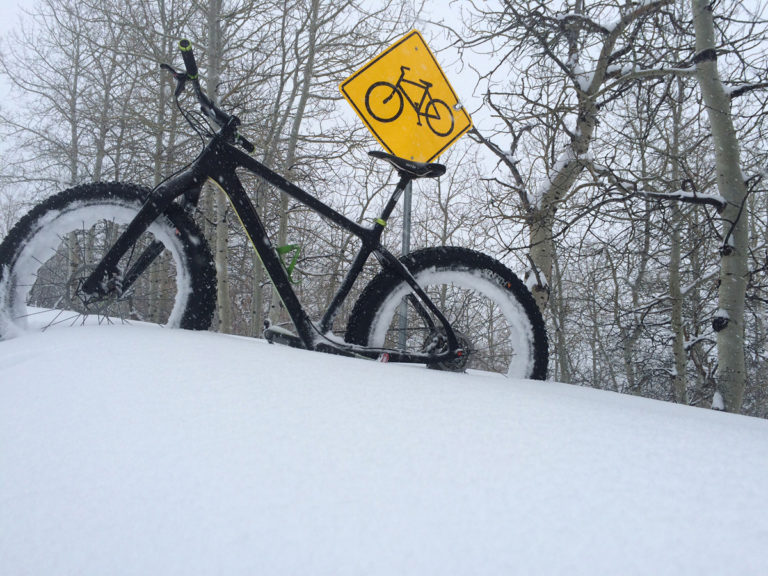
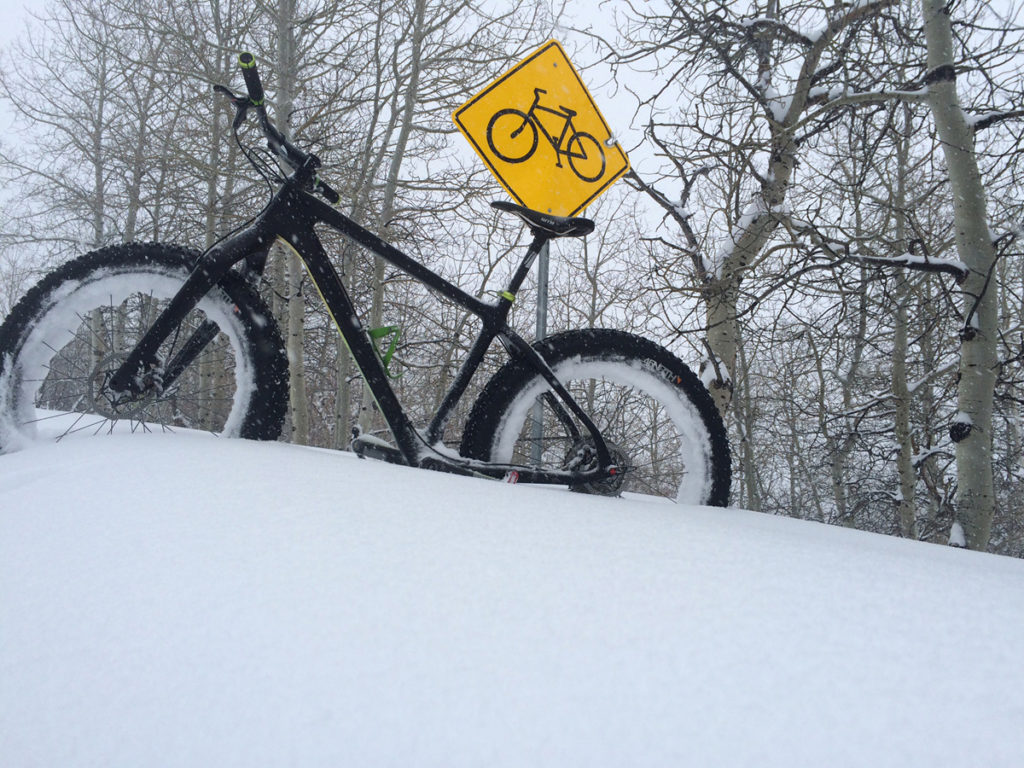
Keith’s Beargrease – before it was stolen.
Recently my beloved Salsa Beargrease (Fat Bike) was stolen from off my Yakima Rack while sitting outside my office. Upon discovery my heart sank and the flood of emotions started to hit me. I couldn’t believe it, was angry at the thief and myself, wondering how I would ever recover it. I cannot fully explain the process but it was quick and painful. Eventually, depending on your perspective on life and the truly important things, you come to a point of Acceptance and start working toward a resolution. Which of course involves a new bike.
Dealing with Insurance
So if you are fortunate and your insurance company is understanding and your policy is written in an accommodating manner you may get some funds to purchase a new bike. Typically you only get a portion of the funds to replace the bike with a comparable replacement and then after you prove you purchased said replacement you get the depreciated value check as the second portion of the payment. First you must get an invoice showing what a comparable replacement would cost and send that to the insurance company. Your total reimbursement is after whatever deductible you need to satisfy. So for example if your bike was worth $5K and you had a $1K deductible you might get $3K up front from the insurance and then, after you proved purchase of a comparable replacement, you’d get the other $1K for a total of $4,000 ($5,000 minus your responsibility which is the $1,000 deductible).
Back to the story
After I and my coworkers drove through the neighborhoods around our office hunting for the Fat Bike riding thief, we returned to the office to file a police report, we also found a witness from another office to give a description to the police of the perpetrator. After this I called the insurance broker to get his counsel and then called the insurance company and explained the situation to the adjustor and provided the police case number. The insurance company as I mentioned needs to know the cost of a replacement, see photos of the bike I had, and then verify that the replacement bike is comparable. So after some research they let me know what they will do for my claim. Of course nothing can offset the emotional attachment one has to a bike, but at some point Acceptance will kick in and you mentally move on, somehow…
Then the waiting commences. Until that special day when a new bike arrives and I am free again to ride and explore and suffer and smile.
But what of my former bike you ask? Out there in the hands of another, or perhaps dumped in a ditch somewhere or leaning (gasp) against a pile of other stolen bikes in some storage unit or garage. What will become of the lost companion? I call pawn shops and check KSL and Ebay incessantly hoping to find a glimmer of hope.
Then a few weeks later the local Police Department calls one morning and the detective says, “Hey, will you get on KSL Classifieds and take a look at this posting, we think it’s your bike.” Frantically my fingers type the words in the search bar and sure enough, there it is, my bike! No doubt about it. If you are true cyclist you know your bike intimately, every nuance, scuff mark, and blemish. So now I begin thinking redemption may be possible and recovery may actually occur, just…maybe.
Things get squirrelly
So the Detective lets me know they he will track down the seller and see about getting it back. However, when he finally gets ahold of the seller he learns the bike isn’t actually in the seller’s possession. Instead it’s at a pawn shop in Salt Lake City. The KSL poster was in the process of trying to buy the bike from the pawn shop and was making payments on it. So the Detective calls the pawn shop and the pawn shop says “No way, we’ve had this bike since 2014.” The Detective then relays this information to me and I’m in disbelief. I’m thinking there’s no way they could make such a statement! So the police tell me it can’t be my bike, but just looks like it, which of course I know is impossible. The bike set-up is too unique, too customized. It IS my bike. The officer indicates he will go check it out anyway and look at the serial number. Meanwhile I’m in utter disbelief that this can be happening. There’s no doubt it’s my bike, but somehow they are gaming the system? Have they removed the serial number? Will it even still be there when the Detective arrives? I’m at a loss.
Later than day I get a call from the officer. “It is your bike” he says. He had given the wrong information to the pawn shop during his call so they reported what they knew about the bike he did reference. But upon arriving at the shop he found that the serial number did match and the bike is indeed my bike.
Now what?
Well, then the officer informs me about Utah law and the pawn shops. He can’t get the bike from the shop until the case is resolved, which means he has to find and prosecute the thief, not an easy task if the person who sold the bike to the Pawn shop used a fake ID or was not the actual thief. The pawn shop cannot sell the bike, so it’s being held by the shop (they too are considered a “victim”) which is absurd because they choose to overlook the possibility (a very likely one) that this was stolen merchandise and take possession of it. So it’s a waiting game. With a little paperwork I could be allowed to go purchase the bike from the shop for what they paid for it (this should soon change thanks to the new Utah law). However the officer recommended against this course of action. Probably because it causes no disincentive for the pawn shop and they will continue to take stolen merchandise without consequence. This behavior, while reprehensible, is completely legal and allows them to buy and then sell stolen merchandise with impunity. It’s amazing that our State has allowed this practice to continue.
But it’s really not my bike
So now the harsh reality. I loved that bike, it was a trusted and loyal companion for many Winters of snow riding. But it’s not mine anymore. The problem with losing a bike, and replacing it thanks to insurance, is that now the bike is not yours but property of the insurance company. So while I could claim that it IS my stolen property, because the insurance company has compensated me for the loss, the lost item (should it be recovered) is now theirs. So when/if I get the bike back it does not get to come home to me, it will then need to be dealt with by the insurance company and disposed of in what manner they see fit.
Tale of the tape
The pawn shop purchased the stolen bike for: $200 (which they could easily research and see the MSRP on this carbon fat bike was more than 25 times their offer.)
They offered to sell it to the KSL poster for: $1,200 (likely in an attempt to dispose of it quickly)
The KSL poster had it listed (without even owning it yet) for: $2,100
The real cost of the bike: over $5,000
The warning
So here are the things you should do in order to safeguard against theft and prepare for it if it does end up happening to you.
Lock your bike, everywhere, in your garage, on your rack, no matter where you are, use a lock. A good one!
Check with your insurance. Make sure your bike(s) is/are covered not only in your home but when you are on a trip. Ask what it would take to add it as a specific item. This is called “scheduling” which is important for high dollar possessions like cameras, jewelry or of course bikes.
Consider using a “Tile” or other blue tooth tagging device and putting the chip inside your frame so that thieves don’t know it’s traceable.
Don’t give up hope, but don’t expect miracles either. My bike has still not been recovered and it’s been over 2 months since the theft and over month since it’s been located. It’s a slow process which benefits the pawn shops since anxious riders would rather pay the recovery cost of getting their bike back from the pawn shop rather than go through the insurance process which may be more costly depending on their insurance deductible. But this should change with the new law (see below).
So although my bike has been found by the diligence and skill of the Orem P.D., it has not yet been recovered and a full resolution remains to be seen. I hope this never happens to you, but if it does hopefully you now know what to expect.
I hate getting old. Can I just say that? Hearing, eyesight, arthritis . . . it’s all a pain. Physically, mentally and emotionally. I have been an active person all my life because it was fun and good therapy. Now I find myself at the stage where, in addition to fun and therapy, I pursue physical activity to retard the ravages of advancing age.
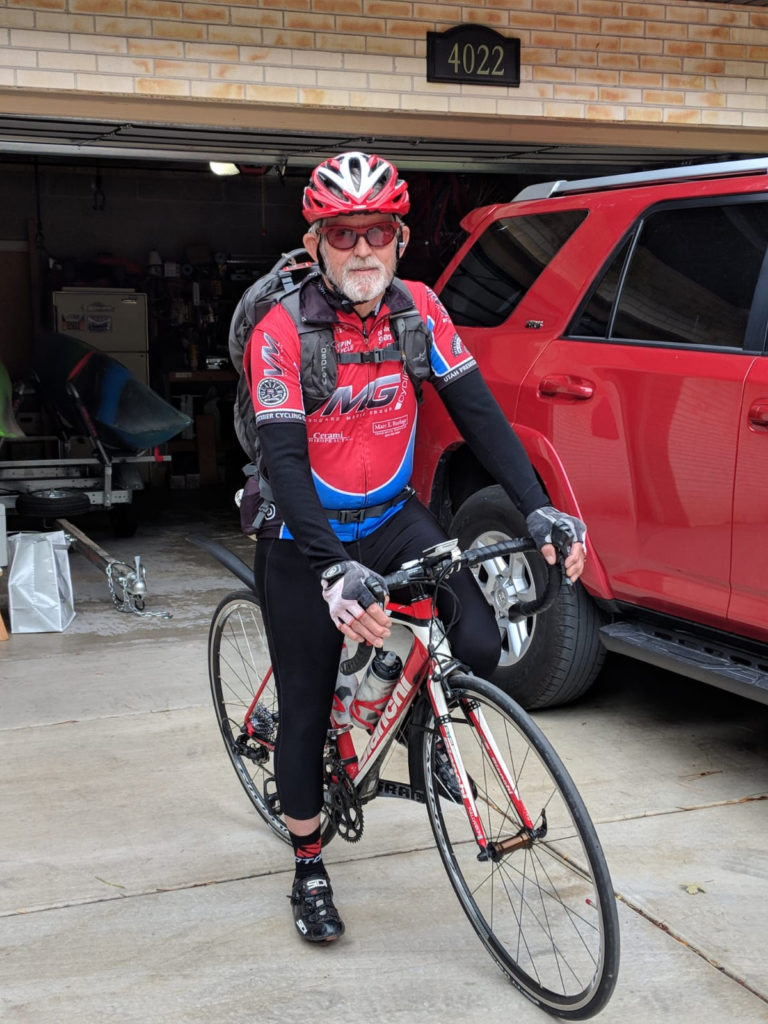
Dave Ward at the start of the ride. Photo by Karma Ward
I have ridden the LOTOJA, solo, 30 times, and I used to tell people that it was my annual battle against aging. Well, I have now retreated from that particular battle front and adopted a different tactic: Multi-day touring. So it was that last April I made the decision that come fall I was going to pedal from my driveway in Salt Lake City to the driveway of my daughter, Marielle, in Mesa, Arizona. It was a good decision, and what a grand experience it turned out to be.
I have to confess, this was not hard core touring. My wife, Karma, bless her soul, offered to drive support for me. And each night, except once, we stayed in motels (and one Airbnb). So I was able to ride, instead of a loaded touring bike, my light weight carbon fiber racing bike, a Bianchi Sempre.
Still, riding 60-80 miles a day, day after day for 11 days, was a new challenge for me, especially at 68 years of age. Back in April, it seemed like a very doable thing. As it approached, however, I started becoming concerned. First, many people worried about the traffic, telling me to be careful. Of course, I have ridden in traffic my whole cycling life. So looking at it rationally, I knew that needn’t be a concern. But at a deeper level, a little anxiety began to build.
Then, people also worried about autumn’s unpredictable weather. Given I would be riding a lot at higher elevations, that was a fair concern. But I also knew I had the gear for inclement weather, and at worst, I might have to wait out severe snow conditions. Still, as the start drew near, predictions were nearly 100% for some heavy rain storms, at least for the first few days. And a little more anxiety began to build.
Finally, as my departure day approached, I began to worry about being able to grind out 60-80 miles a day for 11 days. I have recognized, as the years have passed, that my strength and speed were waning. This also added to my increasing anxiety.
September 28: Finally, on the morning of Saturday, September 28th, I mounted my bike and with Karma taking departure photos rode out my driveway and headed south. With heavy, dark clouds overhead, I fully expected it to rain. And indeed, just a few miles from my home it did. But it only lasted about 45 seconds and as I began to approach the south end of the Salt Lake valley, the clouds had mostly cleared.
But that is when I was greeted by a southwest head/cross wind. It wasn’t too bad till I reached the north end of Utah Lake. But then, for the next 30+ miles, I was pummeled by a vicious wind all the way to Goshen. From there, I picked up a nice tailwind into Santaquin, where we were spending the night. I had logged 77 miles, and I was beat. And being only Day 1, I was definitely worried being able to log 60 miles the next day, much less each of the next 10 days.
September 29: It lightninged, thundered and rained during the night. When I headed out, it was still overcast and threatening rain. About 10 miles into this day’s 60 mile ride to Gunnison, though, the clouds began to thin and it eventually cleared up. In fact, for the rest of my sojourn to Mesa, I had sunny days with no or very few clouds. The gods were smiling on me.
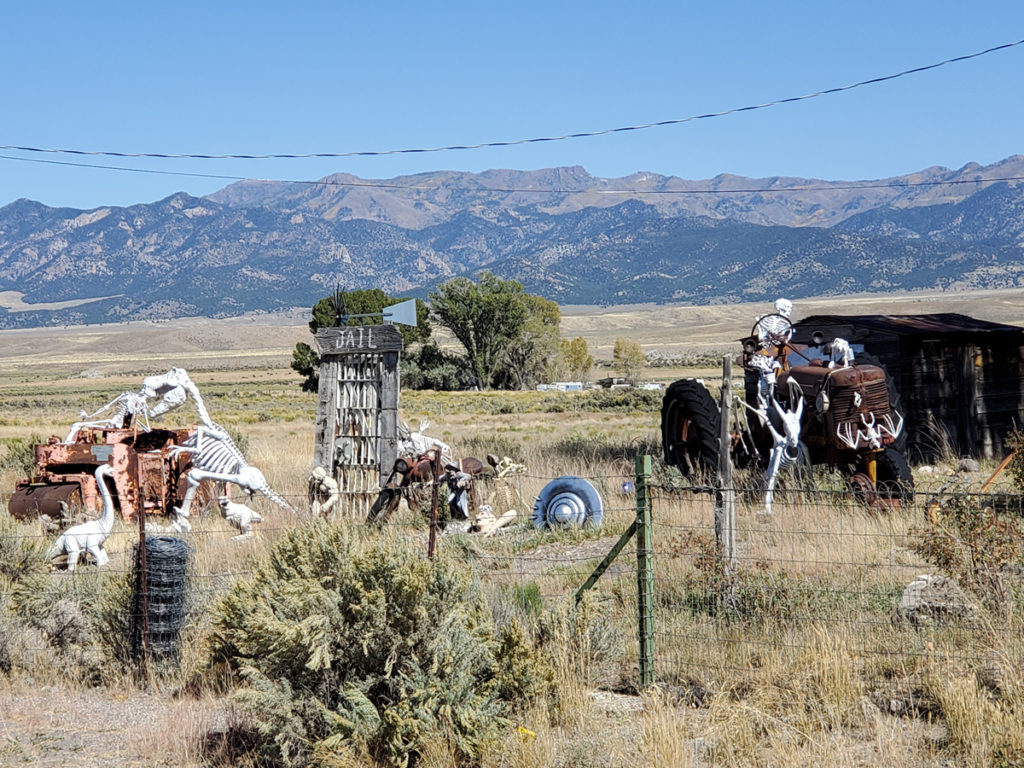
The weird place. Photo by David Ward
For her part, Karma drove to the top of the Mt. Nebo Loop and did a 3 mile hike. Then, after driving to Gunnison, she rode her bike back to meet and accompany me the final 5 miles into Gunnison.
I was pleased that I had recovered well, and the ride this day, while cool all day, was pleasant and scenic. Indeed, this was the first time I had ever ridden through Levan, the first of many small rural towns and communities I would pass through and a treat for my rural grown soul.
September 30: This day’s ride took me 69 miles from Gunnison to Marysvale. Highway 89 is the main road through this valley. Indeed, it is the main road all the way to Kanab, just north of the Arizona border. But I followed the less traveled country roads through Axtell, Redmond, Salina, Aurora and Venice before meeting Karma for lunch in Richfield. This was the most refreshing, charming and scenic morning of my trip. I loved rolling through these pleasant small towns and the fields and pastures surrounding them.
From Richfield, I continued on the less-traveled roads through Monroe, Joseph and Sevier before arriving in Marysvale, our resting place for the night. Except for Richfield, I had never been through any of these towns. But this is an area I would love to come and ride again.
October 1: A short but stiff climb out of Marysvale was the start to today’s ride. One of my shorter rides on this trek, 52 miles, my route led me alongside Piute Reservoir and the Sevier River, through Junction and Circleville and all the way to this day’s destination, Panguitch. Lunch was purchased at Stan’s Merc in Circleville, a small mercantile store which I feel certain has a little bit of everything. As I ate my lunch just outside of Stan’s, I watched and listened as people came in and out, greeting and conversing with each other. Clearly this was a community where most people know and accept each other, and it fondly reminded me of the small Idaho community in which I grew up.
A highlight of the day was Butch Cassidy’s childhood home just south of Circleville. Karma, who had done a 5 mile hike just outside of Marysvale, happened to arrive there just as I did, and we were able to stroll through this historic site together.
From there, I followed the Sevier River up Circleville Canyon till it crested onto the plateau and the final 15 mile push into Panguitch. And push it was, as I faced for the first time since Day 1 a stiff headwind through that stretch. But this stretch also brought me the unique sight, virtually out in the middle of nowhere, of a . . . well, I am not sure what to call it. It was a scene of dinosaur, human and other skeletons atop a tractor, motorcycle and steamroller, in jail and generally just hanging around. So cool. This is why I love exploring on a bike.
Dinner that night found us at the Cowboy BBQ being served by a waiter from Serbia working there for the summer (and returning home the next day). Having visited Serbia twice, we formed a quick connection with him that made for a fun evening. And the food was great.
It was also just outside this restaurant where I encountered the first cyclist I had seen since leaving Salt Lake. He was on a loaded touring ride from California to Florida.
October 2: Covering 75 miles, today’s ride was varied and very beautiful. Leaving Panguitch, I again followed the Sevier River through Hatch, and then later crossing over it before starting the climb up to Gravel Pass, my first real climb of this trip. It was also my first entry into forested terrain, a nice change. From the top of the pass, I had a nice, very long descent through beautiful alpine countryside to Glendale where I met Karma for lunch.
After lunch, I rode through Orderville and Mt. Carmel, passing the summer home of famed painter, Maynard Dixon. Who knew he had a summer home in southern Utah? Well, now I do, thanks to bike touring.
Shortly thereafter, I passed through Mt. Carmel Junction and the turnoff to the east entrance to Zion’s National Park. At this junction I saw some cyclists, a tour group preparing to ride to Zion’s. About a mile after that, I encountered a stiff 2 mile climb, at the top of which I saw another cyclist. I debated whether to stop and visit but felt an impulse to do so. Good thing. Turns out she was with the tour group I had seen back at Mt. Carmel Junction. The first one ready to ride, she had decided to get a head start. But now she was wondering where the others of her tour group were, having expected some to catch up to her by this time. “This is the road to Zion’s Park, isn’t it?” she asked. No, it is not. Fortunate for her that I came along, and that I stopped. I turned her around, with instructions on the correct road to take. Thankfully, it would be a steep descent back to Mt. Carmel Junction where she could get on the right path.
For my part, it was then a fast descent and followed by a pleasant rolling ride to Kanab and on to Fredonia, the day’s destination and my entry into Arizona. Karma, who had found a scenic hike to do just above Kanab, met me in Fredonia, and we drove to St. George to spend a rest day with my daughter and her family.
October 4: Today we drove back to Fredonia and I picked up where I had left off two days before. The route for this day took me on a slow incline before tackling the long, steep climb up to Jacob’s Lake where I met Karma for lunch. After lunch and while stopping at Jacob’s Lodge to use the restroom facilities, I was greeted by a man from a tour group whose bus had passed me on the climb. He asked if he could buy me a cookie, saying he had told his fellow tourists he was going to do just that if he later saw me. Having just had lunch, I politely declined the cookie and thanked him for the compliment. Outside the lodge, the tour bus driver also complimented me on the climb. To be honest, it is not that bad a climb. I just set my pace and had a good ride up. But it is fun that it appears so impressive to others.
I then had a fast 10 mile descent off the plateau and a nice tailwind that pushed me the remaining 30 miles to Marble Canyon and our hotel for the night. Though I had logged 73 miles, I was feeling good, so Karma and I decided to ride the six miles from there to Lee’s Ferry and back, adding an additional 12 miles for a total this day of 85 miles.
Dave Ward in Lee’s Ferry, Arizona. Photo by Karma Ward
October 5: My ride today took me from Marble Canyon to Cameron. This stretch of 73 miles looked to be the most boring day of my Salt Lake to Mesa trek. But I have learned that when riding my bike, there is no such thing as boring. You are not in a fast-moving box of metal and glass, but rather out in the elements. And while you are moving fast enough to cover a large chunk of miles, you are also going slow enough to really observe your surroundings. Today was no exception. The varying patterns and color of soil, rock and cliff through this stretch of desert was actually quite fascinating.
The real excitement for this day, however, was after my arrival in Cameron. We never made reservations anywhere during this trip. It was off-season so we did not expect motels to be full, and we could not be certain where we might end up on any given day. Also, we had brought a tent, mattress and sleeping bags, planning to camp a couple of nights. As it turned out, I realized that at the end of each day a warm room, comfortable bed and shower really sounded good, so the camping idea kind of went out the window.
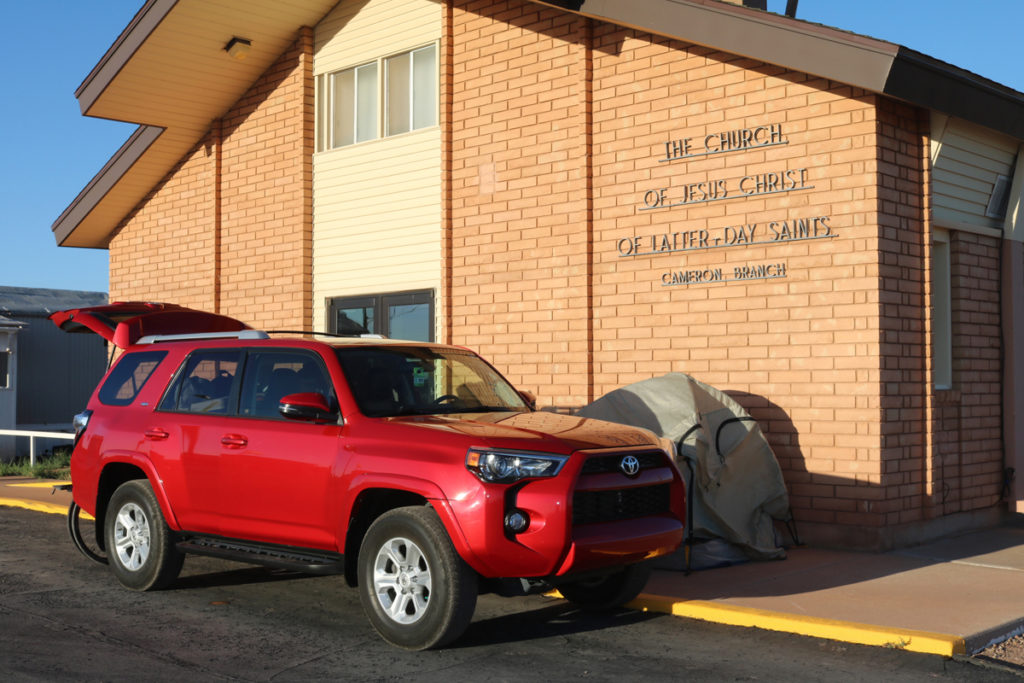
Camping in front of the LDS Church. Photo by David Ward
But on this day, there was only one hotel in Cameron, and it was full. The next nearest hotel was in Tuba City, nearly 30 miles away. And there were no campgrounds nearby. Thanks to the Mormon missionaries, though, we were able to camp in the church parking lot. But that is a story for another day.
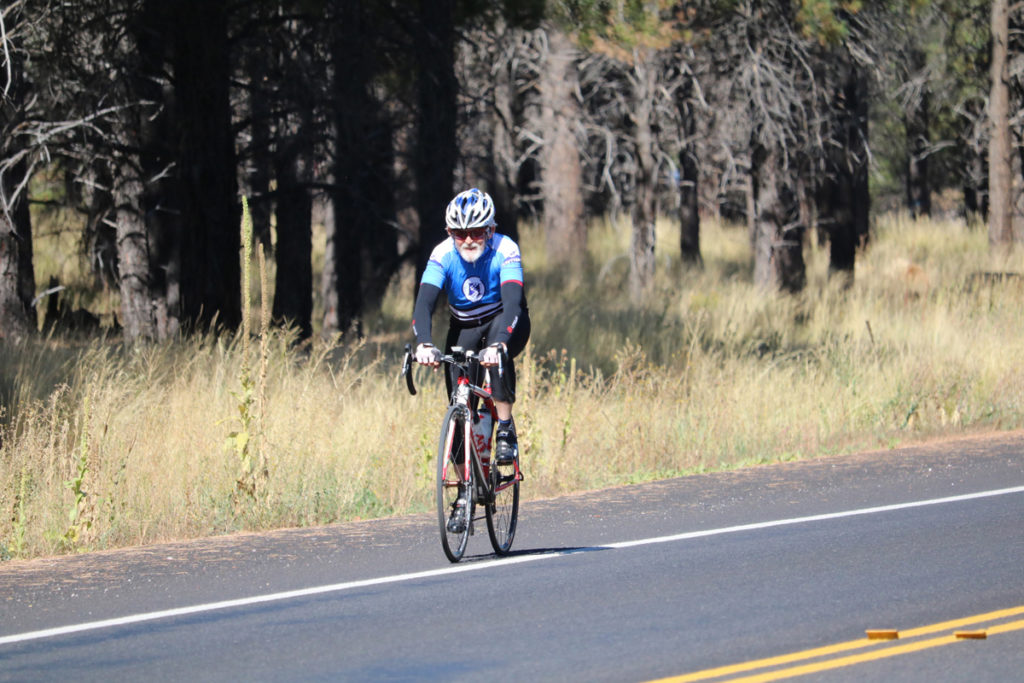
October 6: Getting from Cameron to Flagstaff was my shortest ride of this journey, 50 miles. After about 20 miles, the road rose from the desert as it climbed up into the Ponderosa forests surrounding Flagstaff. The view of San Francisco Mountain with its fall colors rising up to Humphrey’s Peak was a beautiful sight as I made my way from Cameron.
David Ward riding through the Ponderosas outside of Flagstaff. Photo by Karma Ward
Shortly after reaching the summit of the climb, I descended a few miles before meeting Karma for a lunch break prior to riding the last leg into Flagstaff and to our hotel where a relaxing hot tub awaited us.
October 7: This marked my first real change in plans. Originally, I planned to ride down through Sedona to Camp Verde, and the next day from there to Payson. However, taking a close look at the map and after some consideration, I altered my route to head to Mormon Lake and, the day following, on to Payson. This had the advantage of a somewhat shorter distance, a lot less climbing, and riding through Ponderosa forests all the way to Payson.
Mormon Lake is more of a pond than a lake. It came about when a large section of land simply sunk into the ground (a very non-geologist’s quick explanation), and the lake is created by each year’s runoff. The road to there from Flagstaff provided a beautiful, undulating ride past Lower Lake Mary and Upper Lake Mary.
Upon arriving, we discovered that what was once a very rough road circling around Mormon Lake had been closed all summer for repaving and had just been reopened a day or so before. So Karma got out her bike and we pedaled the 17 mile loop around the lake. It was a beautiful late afternoon ride, with the newest, smoothest asphalt I have ever ridden. Coupled with the 35 miles from Flagstaff, this gave me a total for the day of 52 miles. Also, it was during this ride that we learned Mormon Lake got its name because the first settler there was a Mormon who established a dairy farm adjacent to the lake.
October 8: My penultimate day was a 69 mile hilly ride from Mormon Lake to Payson with several steep climbs In exchange for these climbs, though, I had a seriously steep, fast, winding and exhilarating descent to Strawberry, and then further on to Pine. Climbing out of Pine, I had my first flat of this trip. While that was a bummer, I was grateful to have made it that far without a flat.
October 9: This was it. The last day of my grand adventure, my final 73 miles. While this day included some good climbs totaling 3700′, I also enjoyed 7000′ of descending. Much of my riding on this trip had been on less traveled roads. But there is only one road most of the way from Payson to Mesa. It is a busy but divided highway with a good shoulder all the way, so it was fine. And it passed through two little towns with the cool names of Rye and Sunflower.
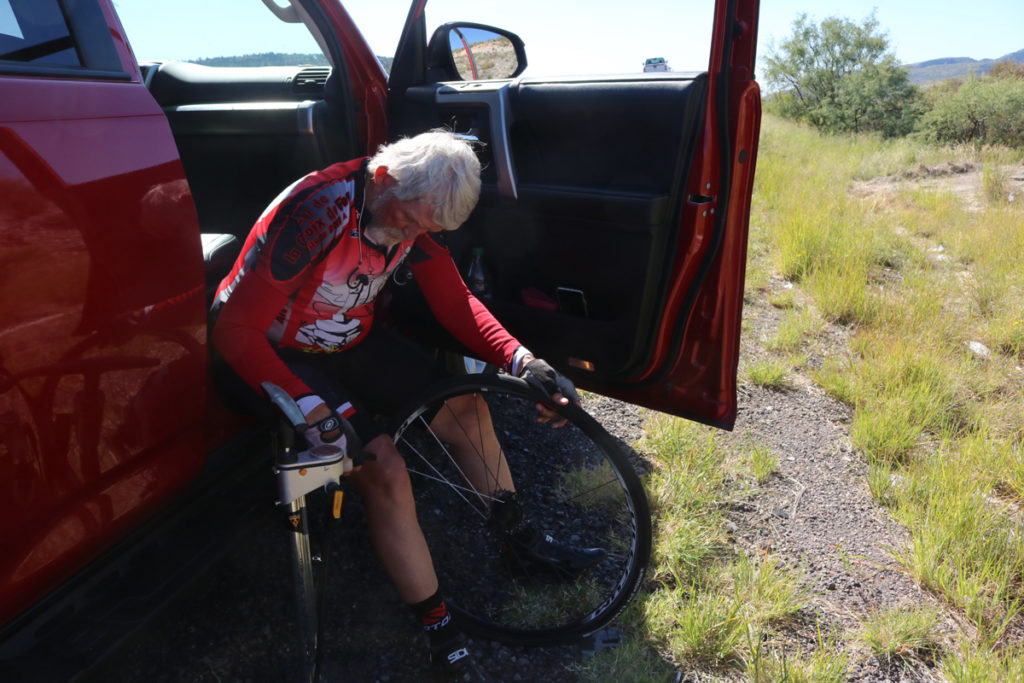
Dave fixing his last flat. Photo by Karma Ward
Interestingly, after having no flats till yesterday’s ride to Payson, I had another flat on this last day. But getting out of the car after having lunch, my rear tire was flat. It was fine when I met Karma for lunch, so this was a surprise.
As this was my final day, I had expected to feel exhilarated. So I was surprised to find myself regretting that my adventure was coming to an end. Yes, I was excited to be successfully finishing my bike tour. But I had enjoyed this trip so immensely that I hated for it to finish.
Aftermath: During those long hours on the bike, I had visions that, during the days after my arrival, I would lounge by Marielle’s poole, glad to leave the bike in the garage. In fact, the morning of the next day, my body was telling me we needed to get up and get going. So Karma and I went for a ride, after which I felt compelled to put in a few extra miles. And I rode every day, except one, while I was in Mesa. I just felt compelled, and it felt good.
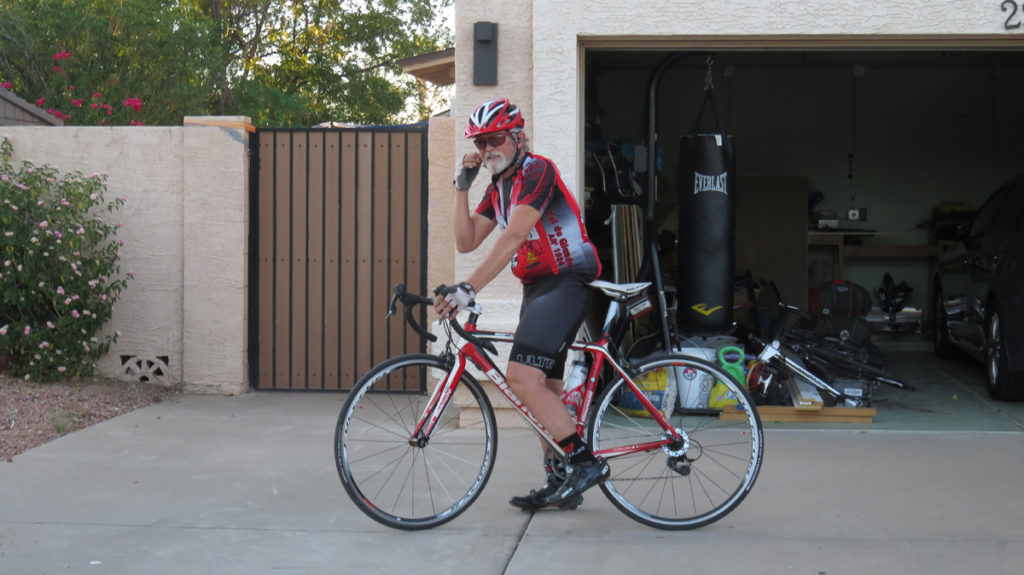
In Marielle’s driveway at the end of the ride. Photo by Karma Ward
A little word on nutrition. Being worried about cramping and having enough energy to do these long rides day after day, I made a very conscious effort to eat well and stay hydrated. I supplemented that with metabolytes and pickle juice, both of which seem to help. Anyway, it all worked. I never had any cramps, and I never bonked or lacked energy (though I was certainly fatigued by the end of each day’s ride).
Also, I was very fortunate with the weather. I was rained on for only 45 seconds the first day and it was overcast for a couple of hours the second. Thereafter, I had nothing but sunny skies. It was generally cool in the morning, but it always warmed up to between 55-75 degrees during the day. The conditions were ideal.
Finally, a big shout out to Karma. She is my wife, my best friend. All my experiences are better when shared with Karma, and having her along with me just made this experience even greater. But on top of that, she planned our meals, made sure we had what we needed, and was always there for me.
So, with the great success of this trip, Karma and I are planning our next cycling adventure. Here is the preliminary brainstorm: A relay ride from our home to the home of our daughter, Rachel, in Fort Worth, Texas. Karma and I will both ride sections each day, handing off to each other along the way. While one rides, the other will drive. We expect to take 4-6 weeks to complete this.
This is a big plan for us. But given the success and enjoyment of this bike tour from Salt Lake to Mesa, I feel confident we can do it.
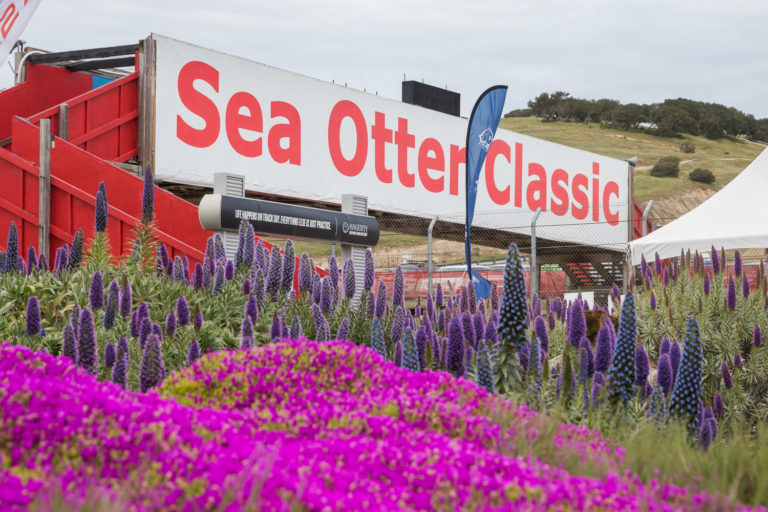
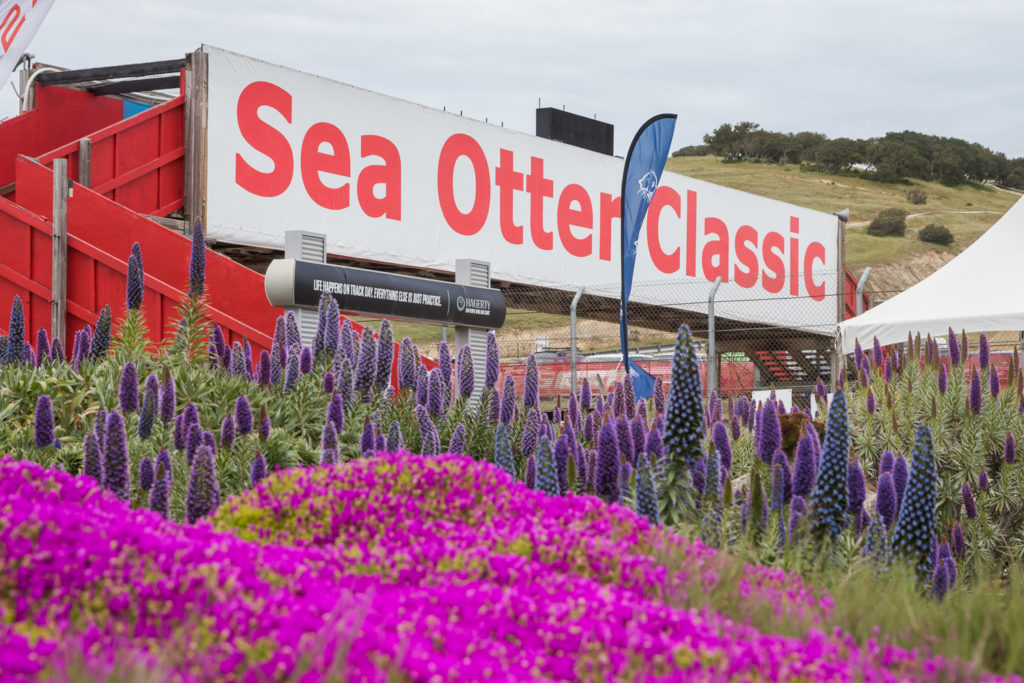
March 5, 2020 – The Sea Otter Classic, a major bike festival, races, and expo held each year in April in Monterey, California has been postponed due to fears regarding the COVID-19 coronavirus. California Governor Gavin Newsom recently declared a state of emergency in California because of the virus. The announcement followed Tuesday’s news that the North American Handmade Bicycle Show has been postponed until August.
Dates for the rescheduled events will be announced in the future.
In a statement via email, Frank Yohannan, President & CEO of the Sea Otter Classic said:
Sea Otter Classic Supporters,
After a thorough review of the coronavirus threat, we’ve decided to reschedule April’s Sea Otter Classic. Additionally, People for Bikes and Sea Otter Classic will reschedule the Bicycle Leadership Conference.
We are coordinating with local authorities to determine the best dates to host the 2020 Sea Otter Classic and Bicycle Leadership Conference. We anticipate announcing those dates by the middle of next week.
Information regarding registration refunds and rollovers will be posted on our website once the new dates have been finalized.
Thank you again for your understanding and support during these challenging times.
Sincerely,
Frank Yohannan
President & CEO
Sea Otter Classic, Inc.
The Sea Otter is self-described as The four-day “Celebration of Cycling”, and hosts nearly 9,000 professional and amateur athletes and 74,000 fans. The 30th Annual Sea Otter Classic was to have taken place from April 16-19, 2020 at the Laguna Seca Recreation Area, Monterey, California. For more information visit www.seaotterclassic.com.

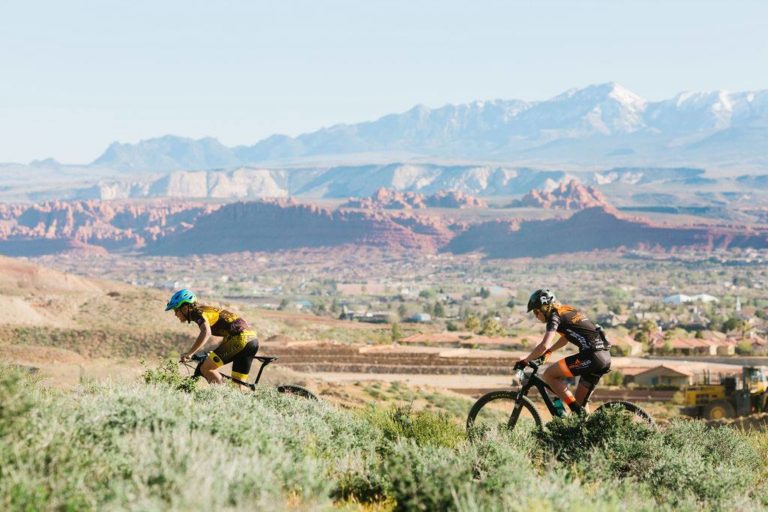
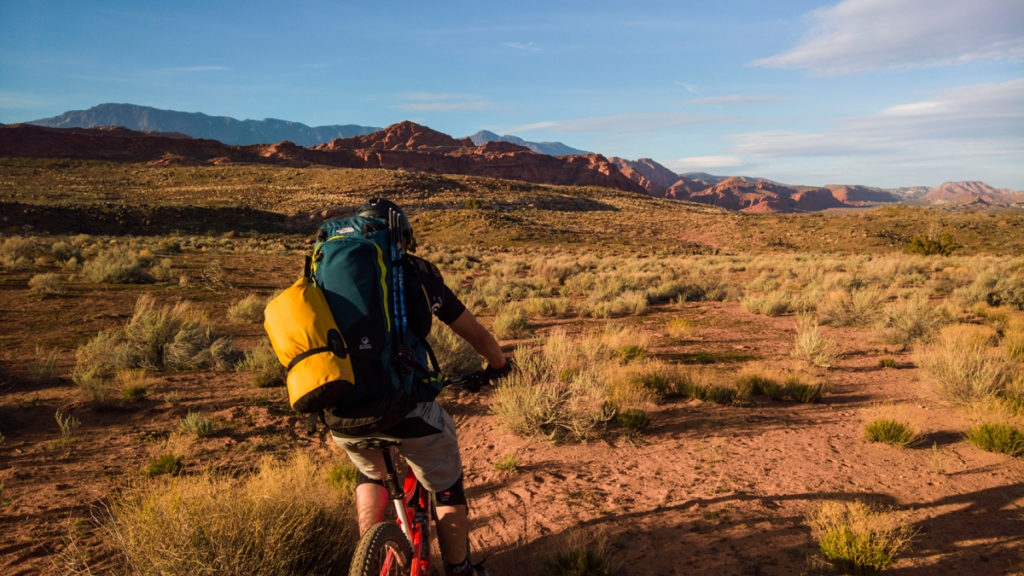
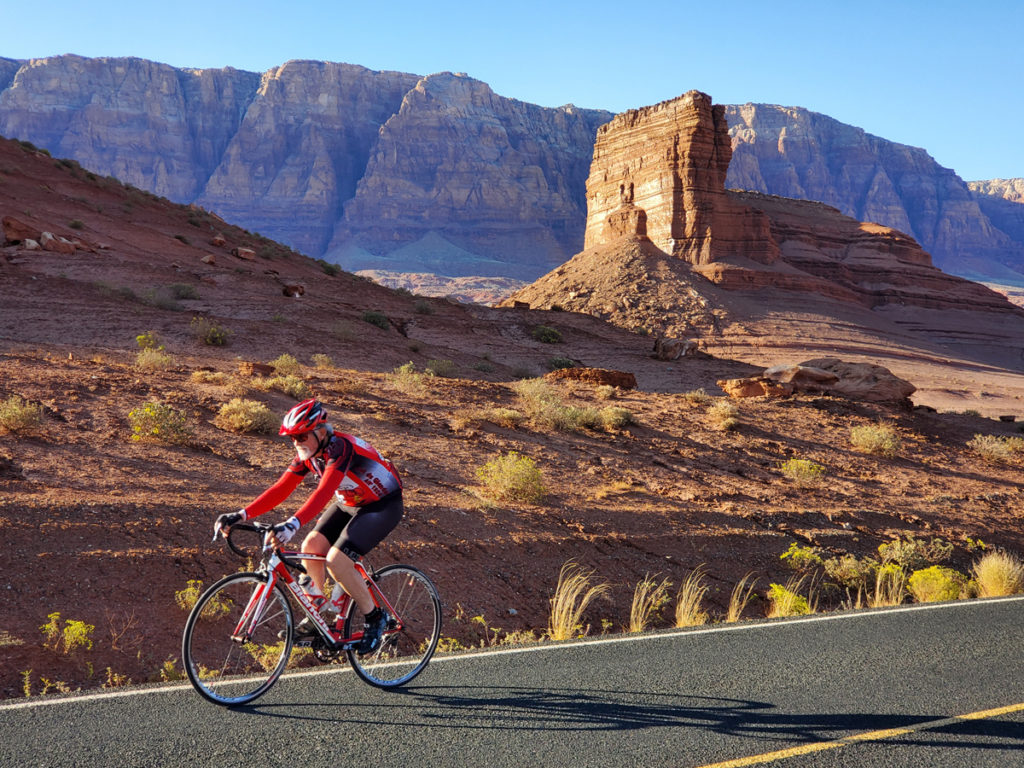
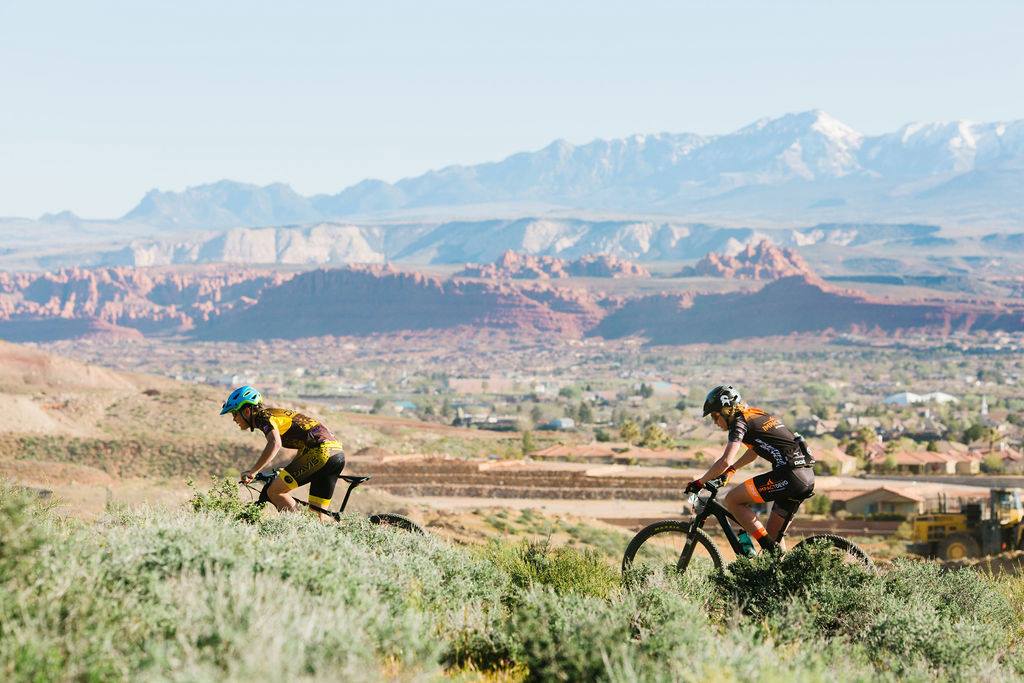 2 riders in the Desert Rampage Mountain Bike Race. The 2020 race has been postponed. Photo courtesy Ride Southern Utah
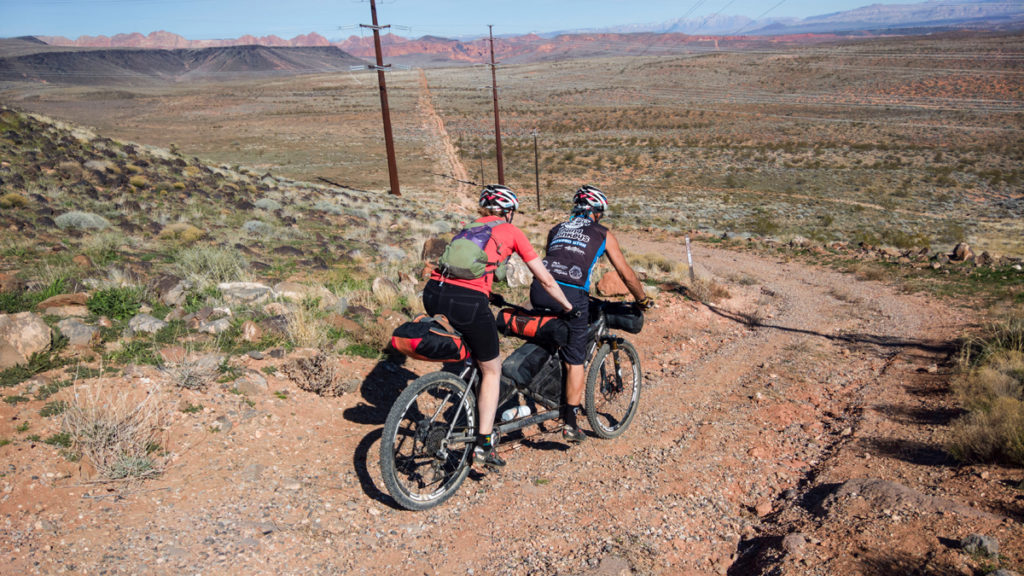
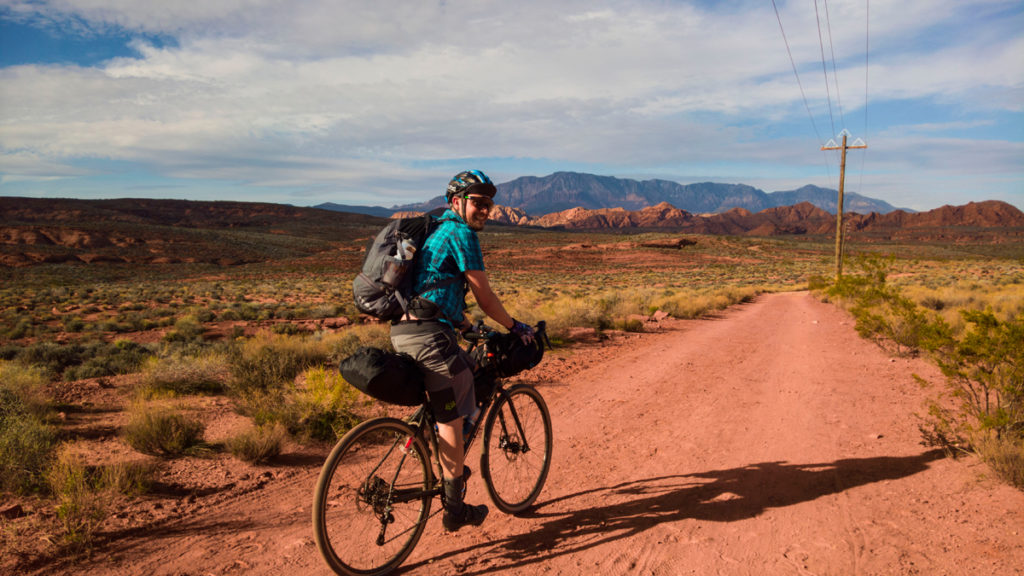
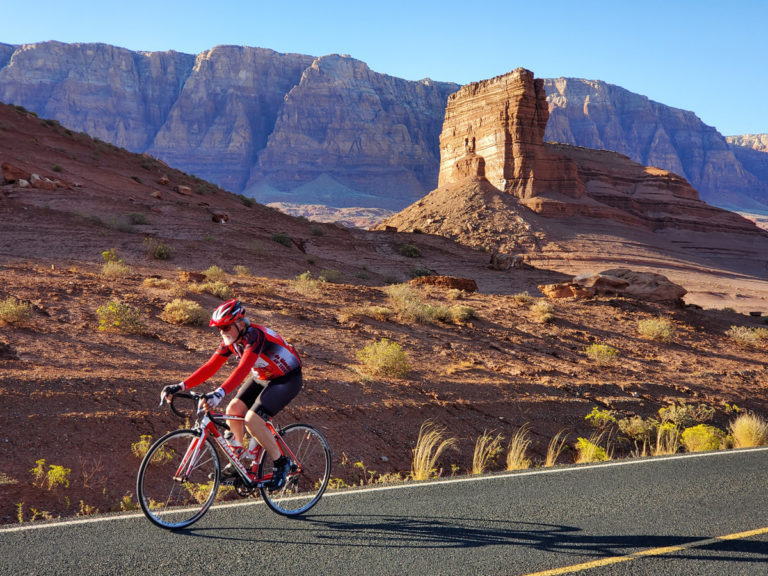
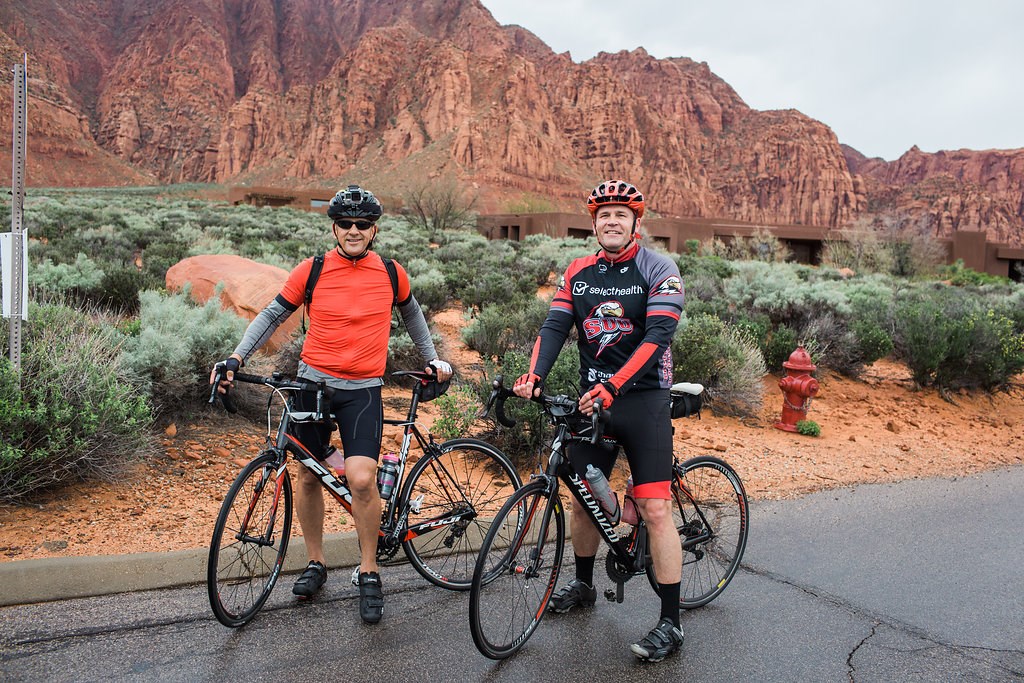 2 riders enjoying a Ride Southern Utah event. The 2020 Mesquite Madness tour and Spring Tour have been postponed. Photo courtesy Ride Southern Utah