Home Blog Page 168

Utah’s FrontRunner Century Reschedules to 2021

0

March 30, 2020 – Citing concerns with the COVID-19 virus and restrictions on mass gatherings in Utah, the organizers of the FrontRunner Century have cancelled the 2020 ride and rescheduled it for 2021. The FrontRunner Century is a unique point to point metric century ride in Utah where cyclists travel north from Salt Lake through west Davis County and Weber County to Ogden, and then take the FrontRunner train back to Salt Lake City. The ride has sold out the last two years, and was on track to do so in 2020. Event organizers Matt and Robyn Storms were expecting 1100 riders this year.
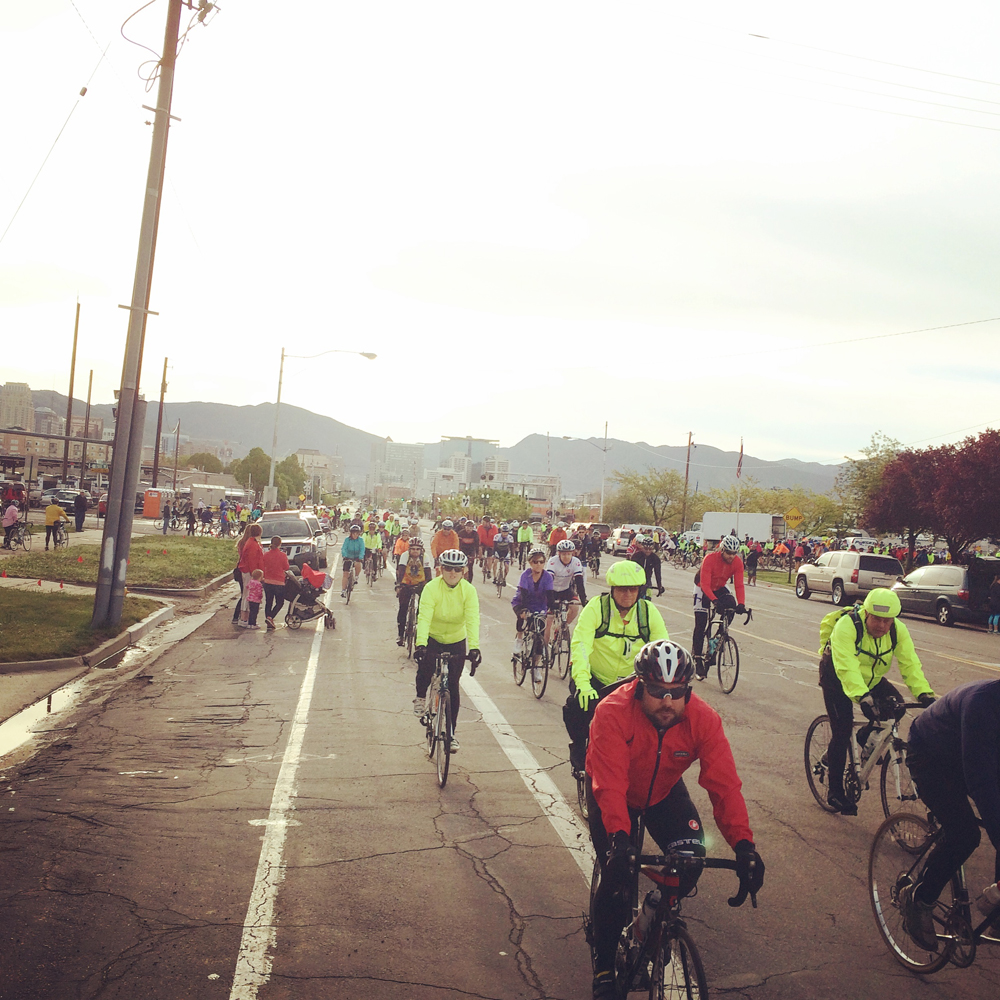
The FrontRunner Century is unique in that cyclists travel from Salt Lake to Ogden and then take the FrontRunner train back to Salt Lake. This is the start of the 2015 event.

The FrontRunner Century sent out an email earlier today. In it, they explain to riders why the cancellation, and ask that riders defer their entry until 2021 or donate it to the Crohn’s and Colitis Foundation. They are also offering a refund for those riders that would prefer that option.

The text of their email is below:

We’re sure many of you have been wondering, especially in light of recent changes to mass gathering restrictions in Utah, whether or not the Front Runner Century is still going forward on May 2, 2020. Unfortunately, we are going to have to cancel the event this year.
This, of course, isn’t how we envisioned this year happening. But with schools extending how long they will be closed, and local, state, and national government urging everyone to stay home as much as possible, we feel it would be irresponsible of us to go forward with the ride this year. Due to the novelty of Covid-19, there is no way of knowing how long these protocols will be in place. And there is just no way to ensure the minimum social distance at packet pickup, before, during and after the ride, as well as at aid stations along the route. This would be especially difficult on the train ride back to the start. 
As we stated in our previous email, your health and well-being, and that of our volunteers is our top priority.
We have put this event on for the past nine years and sold out the last two, and we were excited to be celebrating the 10th Annual Front Runner Century with all of you. We had big plans to celebrate our “birthday” but will now just have to put those plans on hold and come back bigger and better next year. 
So what does this mean for you and your registration?
We are offering you three options:
  1. Transfer your entry to next year. Though we recently changed our policy to no longer accept deferments, we are making an exception due to the situation. Next year’s ride is May 8, 2021. If you wish to defer, please click here.
  2. Donate your fees: As you know our ride raises money for the Crohn’s and Colitis Foundation. As a result of us having to cancel this year’s ride, we won’t have the funds to give them a donation this year. If you would like to donate your fees, including any meals and hats purchased, if applicable. Please click here if you wish to donate your fees.
  3. Refund your registration : If you are unsure if next year’s date works for you and would like a refund, please click here. You will receive a refund for your registration (minus any registrations fees incurred from imAthlete), as well as for any meals or hats purchased, if applicable. Refunds will be issued mid-May.
Hopefully one of the above three options is satisfactory. We are so grateful for all of you for your continued support of our ride. We were inline to have our biggest year yet and were looking forward to being able to donate more to charity than we have in years past.
Please let us know of your choice regarding your registration no later than April 30, 2020. If we do not hear from you one way or the other, we will automatically defer your registration to the 2021 ride, and you will no longer be eligible for a refund.
We know you are most likely disappointed about the event being canceled. We are too, but we want to do our part to flatten the curve, and most importantly want everyone to remain healthy and safe. Keep riding and we will see you next year!
Matt & Robyn Storms
For The Win Racing, Inc
Paul Maunder’s The Wind at my Back Faces Some Headwinds

By Lou Melini — Paul Maunder is a writer and a cyclist. He has combined his profession and his passion to write The Wind at my Back, which the New York Times would likely characterize as a good summer read.

I define a “good summer read” as a book that is well-written and holds some interest, but that you can easily put away, perhaps for a couple of weeks, and then pick up the book again to continue reading without feeling like you need to start over. In general, there isn’t much to this book that would push you to read it quickly.

Mr. Maunder intersperses non-cycling info about his life, of his home country of England, and other tidbits of information throughout the book to break up what is primarily an autobiographical account of his life on the bike, as implied by the book’s subtitle, “A Cycling Life.”

This style of writing is familiar to me, as it brings variety to what would be a one-topic book, a very short book. In my opinion, for this style to be successful, a large portion of the sub-topics need to be as interesting as the primary. Unfortunately, in this, Mr. Maunder didn’t quite succeed.

The writing that was about cycling was good and held my interest.

“Most Saturday mornings he and my father would go for a ride and sometimes I’d tag along. They rode side by side, chatting, while I tucked in behind, sheltered from the wind, listening to their conversation and watching the miles slip by. John had something of the fifties cycle tourist about him. He rode a dark green bike, always clean and well maintained. From his saddle hung an old but robust Carridice saddlebag of black canvas and leather …”

At a later age:

“From the first pedal stroke I was climbing. Soon out of the village, legs complaining at being asked to work so hard, the road turned gently back and forth. The gradient was manageable but unrelenting. As my muscles began to soften, sweat rose to my skin, then began to bead on my forehead and run down from my temples.”
You may have noted in the above paragraph that the saddlebag is made by Carridice, a British company. Mr. Maunder is from and the book is set in England. I could relate to his rides through the countryside, but with some difficulty. He uses some British colloquialisms that at times can be difficult for Americans to grasp. For example, the use of “kerb” for curb is easy and “boot” for trunk of a car was obvious in its use, but it took me some time to figure out that “casquette” is a cycling cap, and I am still wondering over “chivvied by fear”.

The non-cycling aspects of Mr. Maunder’s story were mostly lacking in interest to me. His use of metaphors and other descriptors left me puzzled at times.

“Its cover has a picture of Cheever standing on a railway platform. Hands in pockets, wearing a heavy blazer and an oatmeal jumper, he gazes into the camera with an expression that seems to combine boredom, confrontation and bemusement.”

I have no idea how to picture someone looking bored, confrontational, and bemused all at the same time. There are too many other passages similar to that small piece that prevented the book from capturing my full attention, and which allowed me to put the book away for a few days.

I managed to read the book, but it took longer than I had originally anticipated when I received it from the publisher’s U.S. distributor. It is not a book that will hit any of my top-10 lists. Overall, however, I enjoyed the writing as it pertained to cycling.

The Wind at my Back: A Cycling Life, by Paul Maunder (Bloomsbury Publishing PLC, London, 2018, ISBN: 978-1-4729-4813-7)


GFNY Santa Fe Postpones Event to September 19, 2020

0

SANTA FE, NM (March 27, 2020) — In response to the evolving Covid-19 health crisis, the second annual GFNY Santa Fe has been rescheduled to run on September 19, 2020. Previously planned for June 7, 2020, the ongoing global health crisis forces the City of Santa Fe and GFNY officials to pursue the safest course of action. Current registrations will automatically transfer to the new date.

Photo courtesy GFNY Santa Fe.

“This was difficult but necessary decision, but we are happy to still be able to have the event this year,” said director Michael McCalla. “September is a magical time in Santa Fe, and we are fortunate to have the support of the City of Santa Fe to help us produce a world-class experience for our riders.”

With a larger field expected in the second year, planners determined rescheduling was the most prudent action to take. Riders will start in Downtown Santa Fe and proceed on much of the same route as in the inaugural 2019 event.

The new race date also means riders will experience Santa Fe’s serene high desert landscape, as the fall colors begin to change in the aspen forests. Daily temperatures averaging 70 degrees will provide picture-perfect conditions.

“We are committed to delivering a first-class experience, but our primary responsibility is the safety of our riders. The new date should help give everyone enough time to plan to be in Santa Fe in my very favorite times of the year in northern New Mexico,” said McCalla.

GFNY Santa Fe gives riders a chance to test their climbing skills before celebrating with a block party in Downtown Santa Fe. The festivities will feature gourmet food trucks, local craft beers, and the unique Southwestern culture that makes Santa Fe a favorite international destination.

During their stay, riders can sample Santa Fe’s highly praised local cuisine and world-class museums. Experience the renowned artist community, including Canyon Road – home to landmark galleries, unbeatable scenery, and southwest charm.

GFNY Santa Fe is part of the GFNY Global Cycling Marathon Series; riders get a chance to “Be a Pro for a Day” with police moderated intersections, start to finish chip timing, and awards for competitive categories. For more information, go to GFNYSantaFe.com.

Is My Fit Position Accommodated or Optimal?

A bike fitter is a therapist whose role it is to facilitate agreement between your body and your bike so that you want to hang out and play together happily. If one partner is complaining (usually your body), then is the issue with the other partner (your bike) or could it be that your body is contributing to the disharmony? And who gets the therapist’s attention – your bike, your body, or both?

Often the focus is on adjusting the bike to suit the body. This is based on the guiding principle that it is easier and better to adjust the bike to the body, than to ask the body to adapt to the bike. This may result in what is called an “accommodated fit” in that the bike is changed to accommodate the body. For people carrying the result of some significant injury or surgery history, especially to the spine, then an accommodated fit is usually required in order minimize pain and maximize comfort. The focus is on changing the bike to support the body “as is”.

However an accommodated fit position may not be an optimal position from the perspective of sustainable power output, aerodynamics, handling, metabolic efficiency, or long term protection of joint surfaces from wear and tear. Now those things may not be relevant or important to your riding experience, but if they are then you are probably more interested in achieving an “optimal fit”. But an optimal fit needs an optimal body, and not one that has muscular tightness or imbalances and restricted or asymmetrical movement patterns. Now if you don’t have an optimal body, and who does, then how do you get set up in an optimal fit position?

You need to consider another therapist – a body therapist. Because to achieve an optimal fit, your body needs to get worked on, so that you have the range of motion and movement patterns available to be comfortable and functional in an efficient way that doesn’t wear you out through long term repetitive cycling motions.

Body therapy could be approached in a DIY manner through learning and practicing stretching and myofascial release techniques; by going to yoga or pilates classes; or getting a personalized assessment and treatment plan from a physical therapist or movement specialist. You need to seek out practitioners who take a whole of body perspective and are experienced with active sports participants, not therapists who focus on localized post-op or injury rehab.

As your body’s functionality improves, then your fit position can be changed and progress from accommodated toward optimal. This is obviously a longer, more involved and costly process than simply getting a “bike fit” but is recommended if you are aiming to be your best.

If optimal is not for you, then you can be accommodated!

John Higgins offers bike fitting services at BikeFitr in Salt Lake City, and can suggest several body therapists. Contact [email protected]

Mojave Desert Death (Valley) Ride

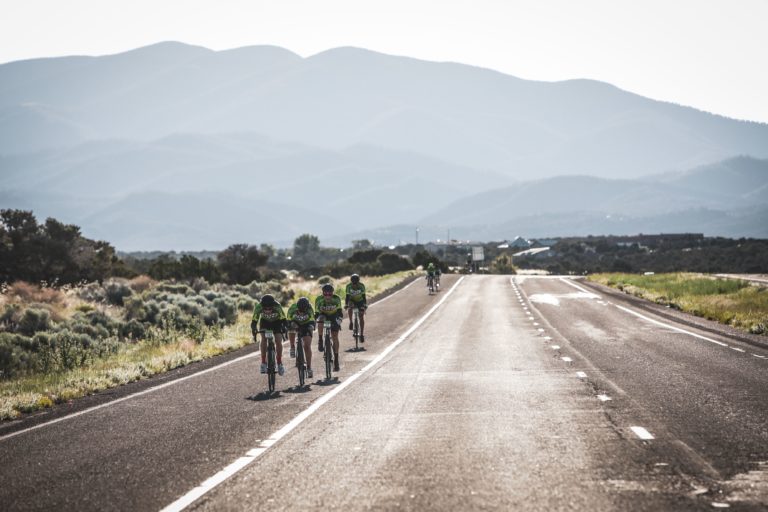
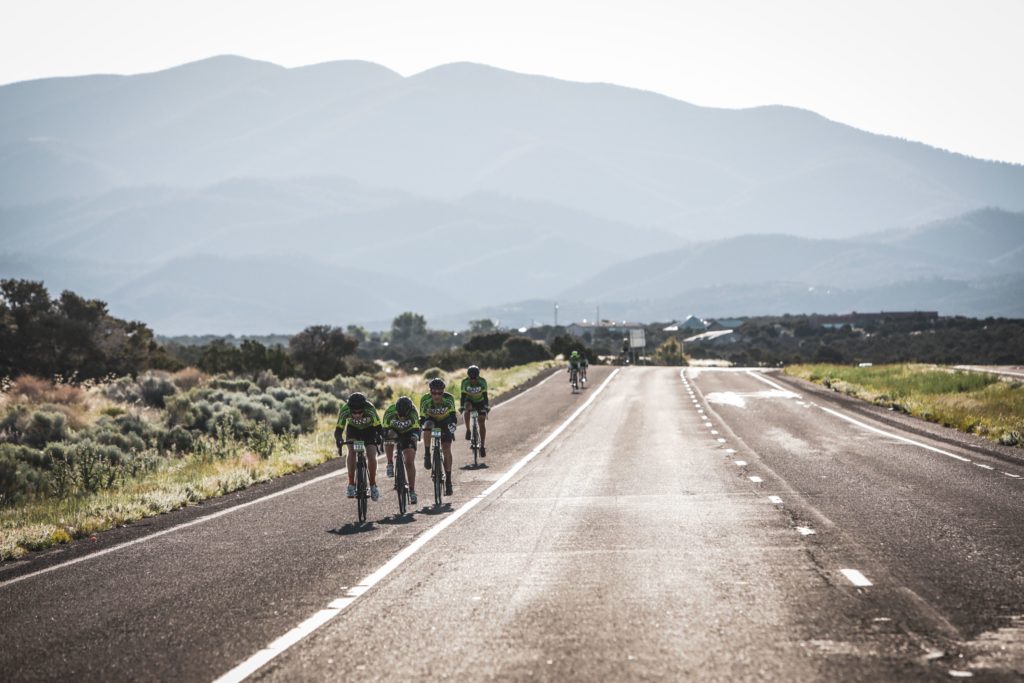
Utahns looking for a winter escape might consider continuing south of St. George, past Mesquite, and even past Las Vegas, to Baker in California. This unincorporated community is the first settlement reached by I-15 motorists after crossing the California border, heading south (just over 500 miles from Salt Lake City). Baker’s population was 735 in 2010. The community was founded in 1908 as a stop along the Tonopah and Tidewater Railroad. Once the I-15 freeway was completed between Nevada and southern California, Baker transformed into an important roadside stop for travelers. The community features a few restaurants, motels and gasoline stations. To cement its image, and to attract visitors, Baker is home to the self-proclaimed “World’s Tallest Thermometer.” Well, it actually is the world’s tallest, at 134 feet, built by a Salt Lake City-based electric sign company in 1991. Otherwise, Baker’s main attraction – certainly for the purposes of this ride – is that it is a launching point for travel into the Mojave Desert, to the north and south of the I-15 freeway. This route does not really take you into Death Valley, which is too far to the north of Baker for a one-day bike ride. But, the ride does venture through the Mojave, a visit to which is well worth the trip. In fact, National Geographic listed the Mojave Desert as one of the “100 most beautiful places on Earth.” A must see!

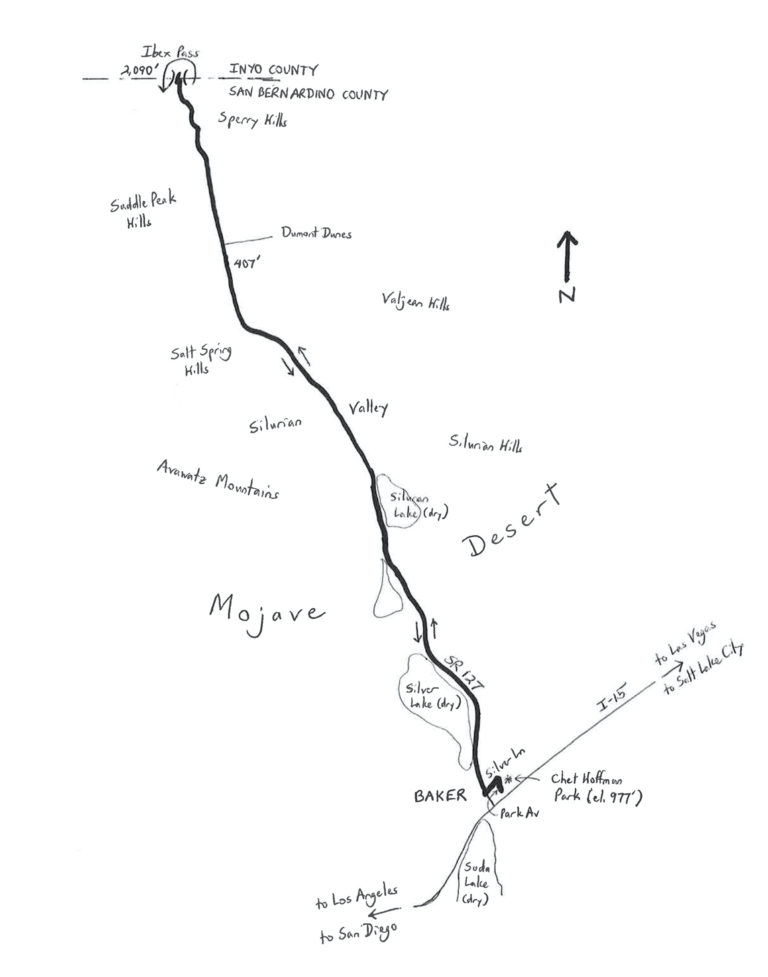
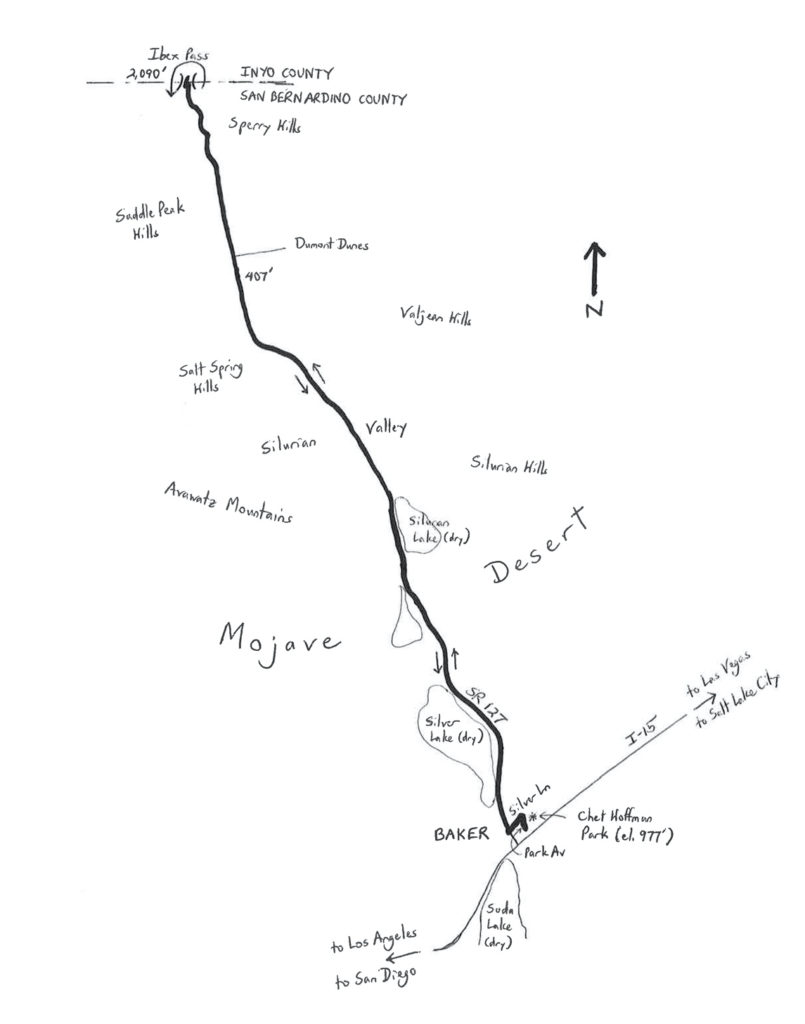
The Mojave Death Ride is a great wintertime ride in the heart of the Mojave Desert. Map by Wayne Cottrell

The Mojave Desert Death (Valley) Ride is 80.9 miles in length. Paved roads across the Mojave Desert are sparse, such that a loop ride would be hundreds of miles long. The only option for a day ride is an out-and-back course. I once rode this route as part of an 80-mile, point-to-point road race across the desert. A point-to-point ride is an option for riders who can arrange a pickup at the destination. This ride assumes that you do not have a pickup, though, and will need to return to the origin. Be aware that the Mojave Desert is subject to extreme temperatures that can exceed 120 degrees during the summer. The ride is probably best done during the winter, late autumn, or early spring. Whatever the temperature, the desert is arid and dry – bring plenty of fluids, as there are no facilities (and no easily-accessible water) along the route. Start at Chet Hoffman Park in Baker, from the intersection of Park Avenue and Hillview Drive. To get to the park, exit I-15 at State Route (SR) 127, also known as Kelbaker Road (and as Death Valley Road). Turn right on Kelbaker, and then turn right onto Baker Boulevard. Turn left onto Park Avenue; look for the park on the right.

Head north on Park, and then turn left onto Silver Lane. At the end of Silver, make a hard right onto SR 127, also referred to as Death Valley Road, and head north. Just one mile into the ride, you are already outside of town, aiming for the vast expanses of the Mojave. The stretch of SR 127 that you are about to ride is listed as “scenic highway-eligible” by the California Department of Transportation (meaning that it has not yet been officially designated). To your left, to the north of Baker, is the dry bed of Silver Lake. Silver Lake, along with Soda Lake, which is farther to the south, were once part of ancient Lake Mojave. The lake fills after rainfall that is heavy enough to cause flooding, the most recent of which occurred in 2005. SR 127 follows the alignment of the aforementioned railroad. Evidence of the old railroad still exists, including remnants of the stations – you can search for artifacts as you ride along. Some of the rails were removed in the 1940s, as there was a need for their metallic content during World War II. If the riding seems easy, it is because SR 127 is gradually downhill, from a starting elevation of 938 feet at Silver Lane, to a low point of 407 feet as you cross the Silurian Valley (note that this is not Death Valley). To your far left are the Avawatz Mountains; to your right are the Silurian Hills. Although venturing off the road is not recommended, the neighboring hills are home to bighorn sheep, desert tortoises, kit foxes, burrowing owls, and even golden eagles, all of whom move through the area. As you move through the area, you may catch sight of the odd marker here and there, such as a shoe tree (i.e., an old, possibly dead tree that has been decorated with old shoes – one of several such trees found in the Mojave).

The low elevation of the ride (407 feet) is at mile 29.9, as you cross the (dry) Amargosa Wash. The southern boundary of Death Valley National Park is to your left, as SR 127 now travels along the edge of the park. Nearby, a well-marked trail leads to the Salt Creek Hills, in which one can find the remains of Ibex Spring, a former mining town that was inhabited until the 1960s. From here, the highway climbs gradually to Dumont Dunes Road (mile 32.9, elevation 488 feet). For those who make it out this far, the Dumont Dunes offer some great off-highway vehicle action. SR 127 then enters the Saddle Peak Hills, and then the Sperry Hills, as part of a 7.5-mile climb to Ibex Pass. The pass is at an elevation of 2,090 feet, at the San Bernardino-Inyo County line. This is the turnaround point, 40.45 miles into the ride. Be sure to soak in the desert aura for a moment before heading back. The return ride begins with a rapid descent into the Silurian Valley. From there, it is a long 30-mile, very gradual climb back to Baker. You will catch sight of the World’s Tallest Thermometer from a long distance out, and can use it as a target. Once on the outskirts of town, turn left onto Silver Lane, followed by a right turn on Park Avenue, to return to Chet Hoffman Park.

Start/finish coordinates: 35.274747oN 116.063228oW

For more rides, see Road Biking Utah (Falcon Guides), written by avid cyclist Wayne Cottrell. Road Biking Utah features descriptions of 40 road bike rides in Utah. The ride lengths range from 14 to 106 miles, and the book’s coverage is statewide: from Wendover to Vernal, and from Bear Lake to St. George to Bluff. Each ride description features information about the suggested start-finish location, length, mileposts, terrain, traffic conditions and, most importantly, sights. The text is rich in detail about each route, including history, folklore, flora, fauna and, of course, scenery.

Wayne Cottrell is a former Utah resident who conducted extensive research while living here – and even after moving – to develop the content for the book.

Tips for A Happy Bicycle Vacation

By Kelly McPherson — Cycling while on vacation is one of the best ways to explore an area. Some might argue that walking is just as good, but I feel that is too slow to see very much and whizzing past in a car you miss some of the best area treasures and sights. On a bicycle, however, one can go fast or slow, stop to take a picture or sample something yummy along the route. You get to see the views and tiny roadside flowers as well as have a casual chat with a local who can tell you where to find the best out-of-the-way hole-in-the-wall diner. Perfect! The rides I go on while on vacation are always my favorites and well worth the trouble of making them happen.

Bring your bike on vacation, and have fun while staying fit. Photo by Kelly McPherson

Taking a bicycle on vacation requires a little planning. Below are some tips to getting you started on a great vacation on two wheels.

Getting your bike there:

  • By car – This is the way I usually go. My family likes to take a lot of road trips. Buy, borrow or rent a good bike rack. I prefer a secure hitch mount, but there are tons of options. I wouldn’t recommend the roof racks. I have ruined three bikes running them into the tops of garages and carports. On vacation, you aren’t likely to remember it’s there and might run it into the top of bridge or something. That would be a very bad ending to a great vacation.

I have also been known to put my family’s luggage on a hitch-mount rack on the back of my minivan while my bike rides safely wrapped up in blankets inside the van. It has also ridden, wrapped up in a utility trailer with all our camping equipment. A good bike box would be helpful with these methods. I don’t have one, but it’s not absolutely necessary.

  • By bike shipper – I haven’t had a lot of experience shipping my bike, so I reached out to someone who does it regularly.

The following tips are from Sarah Kaufmann professional MTB racer and owner/coach at K Cycling Coaching, [email protected], 413.522.3180

Traveling with your bike can be smooth and easy or miserable. For travel within the US, BikeFlights.com is an exceptional resource. Shipping your bike with BikeFlights is less expensive than almost any airline bike fee and it eliminates having to drag your bike through the airport. It also eliminates much of the risk of damage to your bike as TSA will open your bike box and they will not repack it with the care and concern that you have taken. Make sure you mark your seat-post and handlebar angle so you can recreate your fit easily when you rebuild your bike. I recommend taking along the tools that you used to dissemble your bike. You will be happy to have the full-size tools rather than your travel-size multi-tool. Or find a local bike shop where you are headed, ship the bike there and have them do the build for you. They will probably be happier to give you free advice on the best group rides and routes in the area after you have given them some business!

  • By bike – This might seem overly obvious, but there is nothing like an epic ride on your bike getting to your vacation. One of my favorite rides is from my Dad’s house to our campsite at the beach. I get a head start while my husband drives our van with the kids. Usually he will pit crew me somewhere along the way to refill my water bottles and fuel.
  • Rent a bike – Many shops will rent a bike to tourists. The benefit of this option is that you don’t need to transport your bike. Someone else maintains it and you get to save space in your vehicle.

[Editor’s Note: Bike Share systems such as GreenBike in Salt Lake City or Ford GoBike in the San Francisco Bay Area are great for getting around bigger cities and are a perfect way to see the sites. They typically only allow one to ride for 30 minutes at a time however.]

Great adventures are possible when you bring your bike with you on vacation. Photo by Kelly McPherson

Where to ride:

  • Strava – Strava is awesome for seeing where others have ridden in the area. Do some searches for rides near where you are headed. If there have been a lot of riders on those segments, the roads should be good for you to ride.
  • Local clubs – Do an online search for local cycling clubs. Check to see if they have any open group rides that you might be able to join. Sometimes the best routes are only known to locals.
  • Organized rides – Coordinate your vacation with an organized ride event or race. It’s a fun time with some SWAG for souvenirs!
  • Local bike shops – Research the local shops and plan on dropping by to restock your tubes and CO2 cartridges. At the same time, as the employees about some good routes. They are usually a great source of information.
  • Just explore – Sometimes you just have to go ride and see what you can see. This isn’t a great time to have any kind of training goal for the ride as you never know what you are going to find. It might be a great route or it might end up being a pastry shop bike hike. You just never know.

Other random helpful thoughts:

  • When to ride – Time this for what works for your family. For me, this is early in the morning before my teenagers are even conscious. I love riding through quiet streets before most of the tourists are up. Oftentimes I will see something cool that I want to show my family later. Make sure to discuss your plans with who you are vacationing with. You don’t want to make someone upset that you weren’t where they thought you were supposed to be when you were supposed to be there.
  • Bike storage – Make sure to plan to securely store your bike. Check with the hotel before you book to make sure they allow bikes in the rooms. Lock it in a trailer or store it inside your vehicle. Don’t let a bike theft ruin your vacation!
  • Take a bag – You never know when you might find something fun on the road or in a shop along your route that you want to take with you. A small string bag folded up in a jersey pocket works great for this.
  • Be prepared – Make sure to ride with a little extra fuel, an extra water bottle, tire changing tools as well as your ID, some extra cash and your cell phone. You don’t want to be in trouble in someplace you don’t know well with no way to take care of things.


Interview with Rep. Earl Blumenauer (D-OR), Chair of the Congressional Bicycle Caucus

Rep. Earl Blumenauer (D-OR) founded and co-chairs the Congressional Bicycle Caucus. An avid cyclist himself, he has perhaps championed bicycling more than anyone else in Congress. Since being elected, he has introduced or cosponsored more than 100 bills that would improve conditions for bicyclists. In this Congress, he introduced legislation to clarify that bikeshare programs can get federal funds, to restore and expand tax benefits for bicycle commuters, and to implement Vision Zero to end bike fatalities.

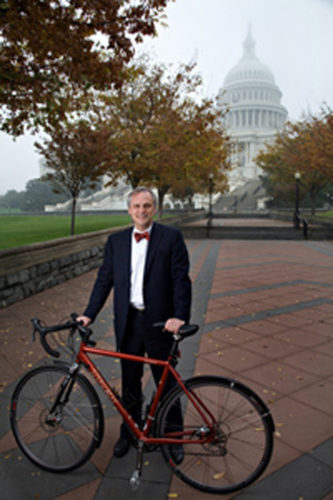
Rep. Earl Blumenauer is a strong proponent of bicycling in the House of Representatives. Photo from blumenauer.house.gov

Blumenauer answered questions put to him in writing by Cycling West:

Cycling West: How many members does the Congressional Bicycle Caucus currently have?

Rep. Earl Blumenauer: The caucus has 108 members, more than a quarter of the House of Representatives.

CW: What activities are planned and have been recently conducted? What has CBC accomplished to promote bicycling across the country?

EB: The leadership of the Bike Caucus has introduced multiple pieces of legislation that would incentivize biking to work, encourage greater multimodal connectivity, and improve safety for vulnerable roads users. The caucus has also educated members and staff about federal bike programs through congressional briefings and kept congressional offices engaged and aware of recent developments in the cycling community.

I hope to work with caucus members to improve the surface transportation legislation in the Senate by further increasing Transportation Alternatives funding and seeking to better incorporate transit and cycling as well as the work cities are doing around Vision Zero and Safe Streets.

CW: How can the caucus work with cycling advocates to further the goals? What can cyclists and their associations do better? State and local advocacy groups focus on state & local issues, as they should, but should they also pay attention to how federal policy can affect their communities? Perhaps by staying more in touch with their delegations and commenting on federal polices, ranging from National Park Service and Forest Service plans to Metropolitan Planning Organization regulations, local groups can help effect national change.

EB: You can’t give up on the federal partnership. It is true that the federal government has been missing in action while local governments have been making immense strides toward improving connectivity and accessibility for active transportation. But with your help, the federal government can be far more impactful.

Every year, the federal government spends tens of billions of dollars on transportation improvements, yet only a small portion is provided for bike infrastructure. The cycling community needs to be at the table in far greater numbers, demanding that all road users are provided with federal transportation benefits. As the climate crisis grows more devastating, cyclists are an even more important part of the solution. Staying in touch with your congressional delegations, inviting members of Congress and their staffs on bike rides, and actively engaging with your lawmakers is critical.

CW: As you know, recently the tax break for cyclists was lost, it was probably underused when it was available. I know you want to restore the tax break in a way that will benefit more people, but were advocates too weak to defend it? How did we let it get away, and how did we allow cuts to Transportation Alternatives and related programs, such as the Safe Routes to School earmark, enabling funds to be transferred to other non-cycling programs?

EB: It is tempting to attribute these setbacks to a decline in federal engagement from the cycling community. To a certain extent, that is true. It is frustrating that advocacy has declined.

The tax bill is a different issue. It was hatched in secret and the provisions related to cycling and to commuter benefits were never subjected to a hearing. Indeed, the whole bill never had a hearing and was literally being rewritten while we were voting on it. The Republican tax bill negatively affected many different advocacy communities, which was part of their strategy to provide the largest transfer of wealth in American history.

Whether it is a bicycle commuter tax benefit, the Transportation Alternatives program, Safe Routes to Schools, or Vision Zero, it is critical that cyclists are at the table early and often. Certainly, every other mode of transportation comes to Washington to advocate for themselves; we need to be there as well.


Vintage Race – The Bicycle Art of Trenton Higley

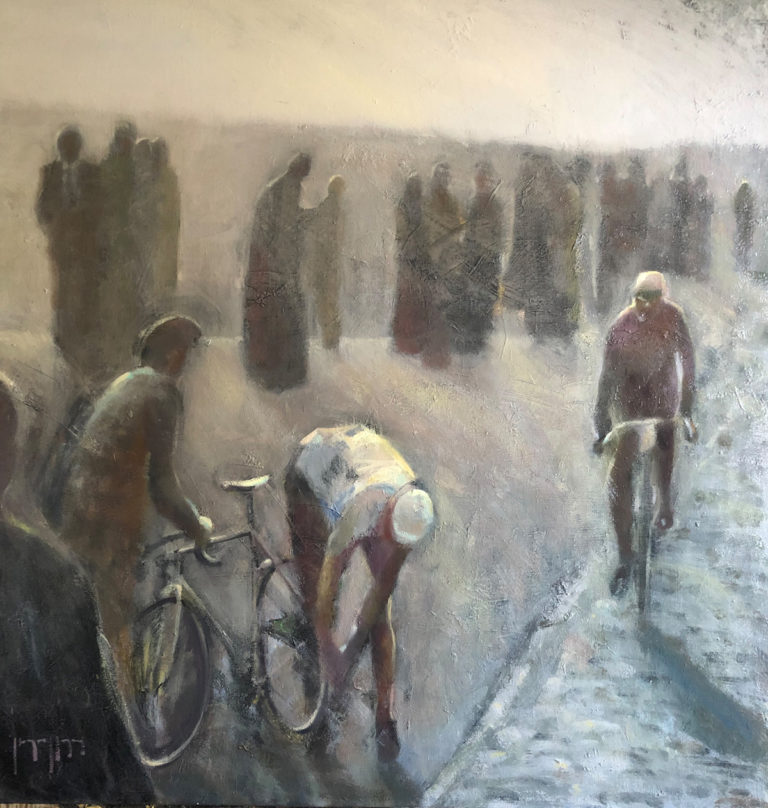
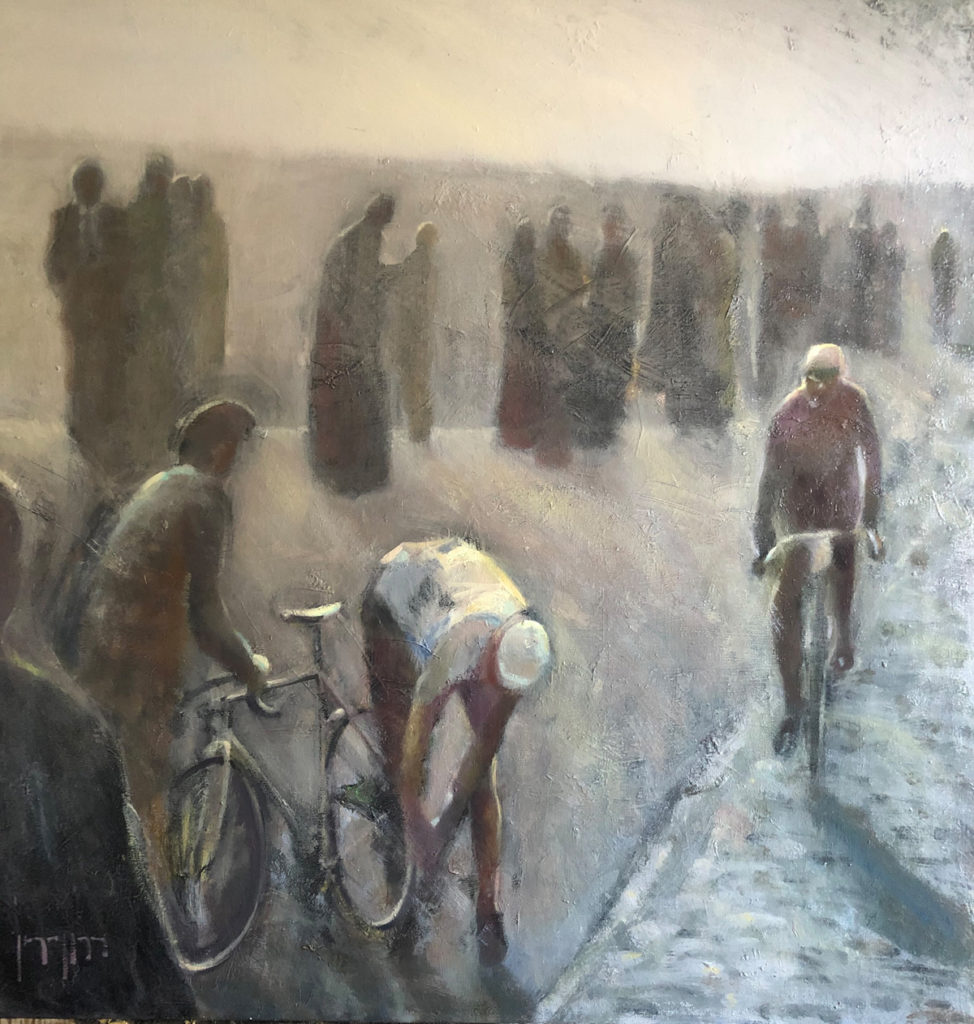
Artist bio: Trenton Edwin Higley (b. 1970) is a American Artist specializing in beautifully handcrafted representational figures, landscapes and narrative works in oil and watercolor.

Often set within and around the Wasatch Mountains near by, his timeless paintings of strong alluring figures placed in intriguing situations or simply posed in a Landscape, strike a pleasing balance between the classical and the contemporary. His paintings are part of his desire to be in the outdoors riding his bicycle or skiing with his family.

Along with solo, joint and group shows in Jackson Hole Wyoming, Park City and Salt Lake City Utah and countless commissions, his artwork has been in many collections including Robert Duvall and Stetson inc.

Artist: Trenton Higley
Title: Vintage Race
Medium: Oil on canvas
Size: 36″ x 36″

Upcoming show: Trenton’s work will feature in an exhibition at 15th Street Gallery in Salt Lake City from March 10-30, 2020. The gallery is located at 1519 1500 E, Salt Lake City, UT 84105. The gallery is open by appointment only currently- call 801-468-1515; 15thstreetgallery.com

Find Trenton’s art here: trentonhigley.com.


Trump’s Proposed Budget Eliminates Funding for Cycling

The Trump Administration’s proposed budget for FY21 does not appear to be very kind to bicycling. The proposed transportation budget would eliminate the largest source of federal aid for cycling: Transportation Enhancements.

Instead, the proposed budget would fold the money into general surface transportation funding to states, without any guarantee for programs that have funded trail construction, safety, Safe Routes to School, etc. The administration claims this will give the states flexibility to meet their own needs.

The proposal does increase funding for Better Utilizing Investments to Leverage Development (BUILD) Transportation Discretionary Grants from $800 million to $1 billion. Several communities are using these competitive grants to improve and expand cycling access (https://www.cyclingwest.com/advocacy/build-grants-to-help-bicycle-infrastructure/), but again, there is no requirement to do so.

Communities have until May 18 to apply for a BUILD grant this year. See https://www.transportation.gov/BUILDgrants.


Bureau of Land Management (BLM) Releases Proposed Resource Management Plan for the Four Rivers Area near Boise, Idaho

A resource management plan for the Four Rivers area (a popular mountain biking area) in Southwest Idaho has been released by the Bureau of Land Management (BLM).

Mountain biking has increased in the area over the past decade, notes the Proposed Resource Management Plan and Final Environmental Impact Statement from the Four Rivers Field Office, Boise District, Idaho. The proposal notes an increasing demand “for certain non-motorized events like mountain bike races, adventure trail runs, and triathlon type events,” especially in the Boise area.

The plan outlines four alternatives for future actions, as follows:

  1. “No Action Alternative,” which is essentially a continuation of current policy and management plans.
  2. Increased protection of natural and cultural resources, which could lead to more restriction in availability for recreation or development.
  3. Increased growth, making more land available for development, including extractive energy resources, and increased recreation, with less focus on wilderness protection.
  4. Management of public lands to accommodate both economic and recreational development, while promoting conservation of the most sensitive natural and cultural resources.

The full report is available online at https://eplanning.blm.gov/epl-front-office/eplanning/planAndProjectSite.do?methodName=dispatchToPatternPage&currentPageId=10301


A Perfect Day: Alpine Dam Loop, Marin County

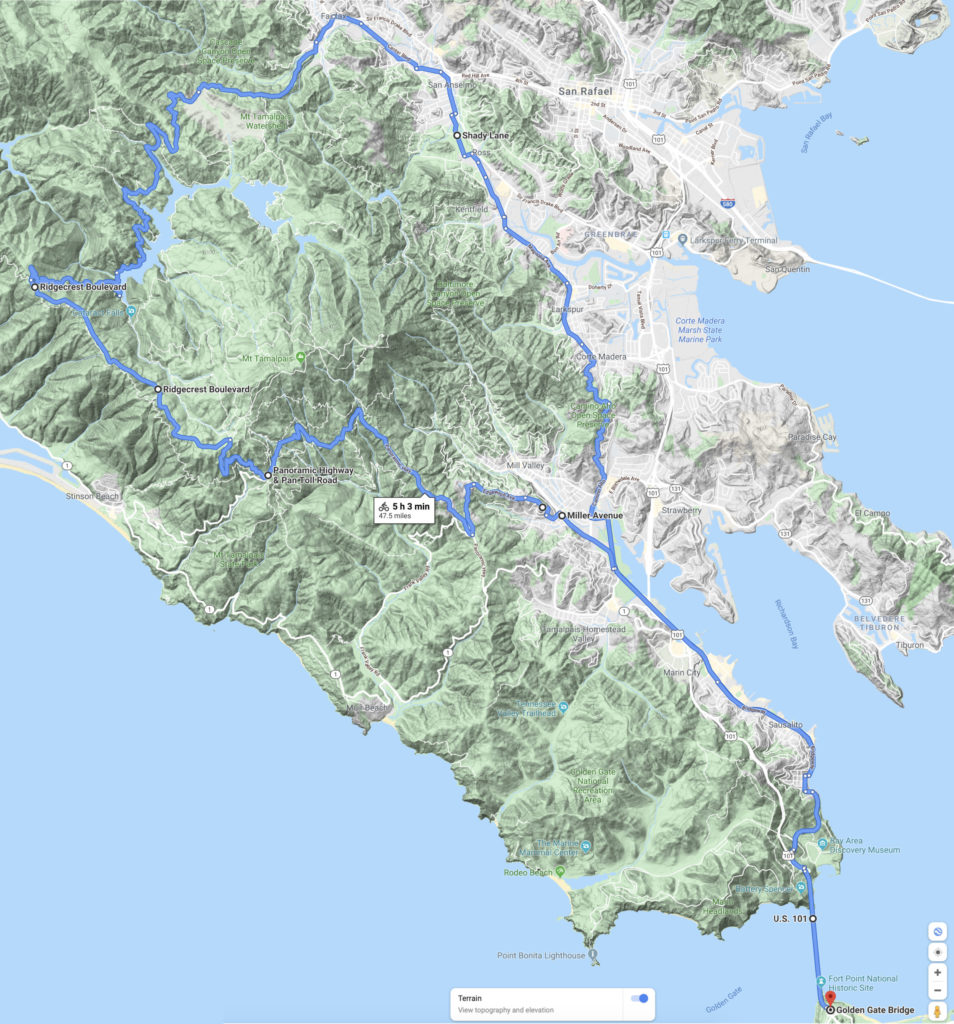
One of the most popular routes to ride in Marin County, California is known as the Alpine Dam Loop. I can’t tell you how many times I’ve done the loop, but I remember one 4th of July ride over twenty years ago clearly, as if it just happened yesterday, because for me, it was absolutely the most perfect day I have ever had on the bike.

Of course, these were the days before smart phones were ubiquitous and people didn’t generally stuff film cameras in their jersey pockets, so there are no pictures. One had to rely on their actual brains to create memories.

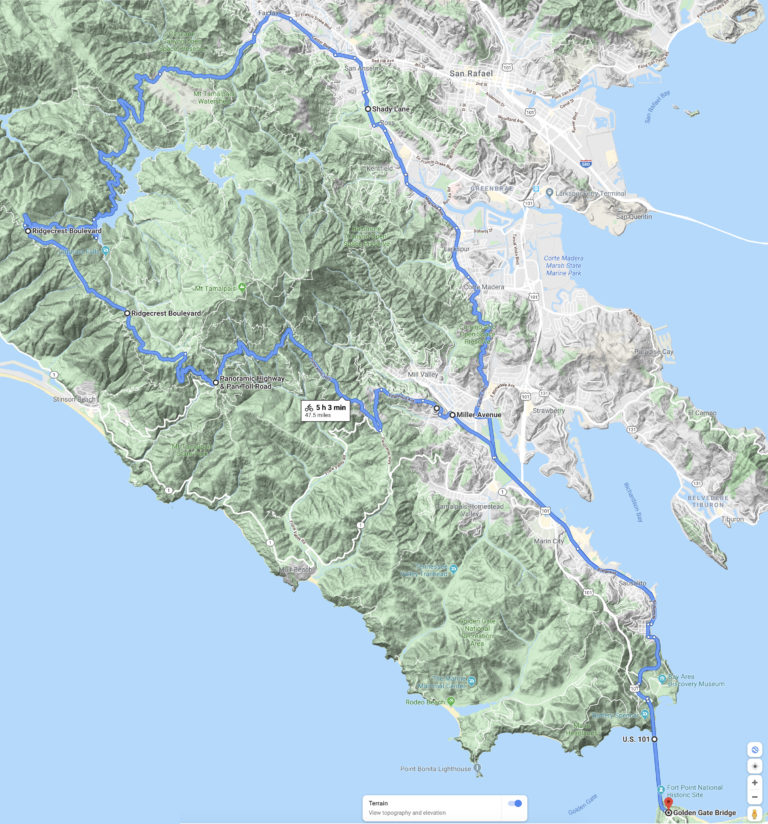
Map of the Alpine Dam Loop in Marin County, California. Click to view full-size. Map data © 2020 Google.

From my apartment on Nob Hill, I left fairly early that morning and headed towards the Presidio and the Golden Gate Bridge via Polk Street and through Cow Hollow, as was my typical route to get to the Bridge. It was a typical San Francisco morning, foggy and grey. Since there was a bit of a chill in the air, I was wearing arm warmers and knee warmers, as well as a light jacket over my bibs, jersey and base layer.

As I rode across the Bridge, you could start to see the sun peeking through to the east as the fog began to burn off over the Bay and the City, but it was still rather foggy west of the Gate. As I dropped down Alexander Avenue into Sausalito the sun finally came out, so once I hit Bridgeway at the bottom, I stopped to take off my jacket and stuff it into a jersey pocket.

After a quick stop at A Bicycle Odyssey (the shop at which I worked at the time) to grab a Clif Bar, I continued north along Bridgeway to the Mill Valley Bike Path, and then to East Blithedale Avenue at the other end. A quick jog left on East Blithedale and right onto Camino Alto took me up and over the hill into Corte Madera.

At this point the sun had been out long enough that it was warming up, so I stripped off my arm and knee warmers, and then rode north along Magnolia Avenue to where it changed into College Avenue near the College of Marin in Kentfield, then along Kent Avenue onto Ross Common, a quick left on Lagunitas, and right on Shady Lane into San Anselmo.

From there, I continued north along San Anselmo Avenue and Center Avenue into Fairfax, and then left up Bolinas-Fairfax Road. By this time, the sun was high in the sky, and it was baking on the exposed climb of Pine Mountain, but once the climb was crested, a rapid descent under the redwood canopy followed down to Alpine Dam.

Once across the Dam, I kept climbing Bolinas-Fairfax Road up the backside of Mount Tamalpais, but I was now being “rained” on by the condensation and dew dripping off the trees, until I finally crested at the intersection of Bolinas-Fairfax and Ridgecrest Boulevard.

As I rode along Ridgecrest, the fog was so socked in that I could barely see 10 feet in front of me, and I definitely could not see Highway 1 or Bolinas at the bottom of the mountain to the west. As I came over the top of each of the Seven Sisters on Ridgecrest, I would break out of the fog and into the sun, with a blanket of pure white below me on all sides, before dropping back into the soup until I reached the next roller in line.

Ridgecrest curves back east around to the front side of Mount Tamalpais, which was protected from the fog by mountain, which allowed me to drop down Pan Toll Road to the Panoramic Highway, and then back into Mill Valley via Sequoia Valley Road and Edgewood Avenue at full-speed, then along Miller Avenue back to the Mill Valley Bike Path back to Sausalito to begin the climb back up Alexander Avenue to the Bridge.

Once back on the Golden Gate Bridge going south back into the City the fog coming through the Gate was literally so thick that it was rolling like a wave over the cables on the Bridge, a fact that made me glad that I stopped on the north end to put my warmers and jacket back on.

I then dropped back down through the Presidio, back into Cow Hollow, to Polk Street, and home on Nob Hill where a lovely hot shower was waiting for me. From my apartment, it was about a 58 mile round-trip ride. Starting from the parking lot on the south side of the Golden Gate Bridge it is 47.5 miles with about 3,500 feet of total climbing; a challenging ride, but not a ridiculously difficult one.

Cycling West is looking for a new Commuter Column editor

0

By Lou Melini — Since July of 2004, I have written the commuter column for Cycling West. Currently, Jamie Morningstar and Turner Britton write several columns each year, helping to reducing my responsibility substantially, in addition to writing features that have provided a more diverse format for the column.

Having retired a few years ago, I need to step back and give up being the lead writer, and reduce my responsibility to writing a few columns each year.

Feedback that we have received over the years tells us that the column has been effective by increasing the number of bike commuters. In addition, cyclists have reported expanding the commute season earlier and later in the year, as well as increasing the frequency that they ride each week. E-bike commuting has substantially increased, putting more people on bikes, and fewer in cars.

Taking over the Commuter Column will give the new editor a chance to independently be creative in how the column is written.

Applicants with writing and/or bike commuting experience would be helpful.

Interested parties should email a short cover letter to Cycling West publisher Dave Iltis at [email protected].

I would like to thank the dozens of bike commuters that gave me their time and attention, allowing us to make Cycling West’s Commuter Column the most successful column focusing on bike commuting in the U.S.!


Prepared… With A Bike

So, Texas is big. I had my first full realization of that five years ago. My daughter and her family had just recently moved to Fort Worth, and we decided to make the drive to see them. Being the ambitious people we are, and we decided to make a triangle of the trip, driving first to Fort Worth, then to Phoenix to visit another daughter and her family, and then back to Salt Lake. To be efficient with our time, we chose to drive the first leg to Fort Worth in one day.

Dave outside Marielle’s house in Phoenix. Photo by Karma Ward

So, we left about 1:30 a.m., drove to Denver where we stopped four hours to visit a couple of nieces, and then headed on to Fort Worth. About dusk, we crossed the border from New Mexico into Texas. Good, I thought. We are getting close. So on we drove . . . and drove . . . and drove. It felt like we were driving forever, and we finally pulled into Fort Worth about 3 a.m. That is when I realized how big Texas really was. It took almost all night, and we were only two-thirds of the way across the state.

Since then, we no longer drive to Fort Worth. We fly. That takes just over two hours. But one good thing about having made that drive. I took a bike along to park at her house for future visits. I now have a bike at her house as well as another at my daughter’s home in Phoenix. When you are a cycling junkie, you need your fix wherever you go.

Lest you think this article is about Texas and cycling, it is not. Rather, it is about having the freedom to ride, and to explore, wherever you may travel. With one daughter in Texas, two in Phoenix and one in Serbia (soon to be Rwanda), we tend to travel a lot. Since Phoenix and Fort Worth tend to be repeat destinations, I get a chance to re-ride routes I have found I enjoy, while still exploring new ones.

For example, I have now been to Fort Worth several times, including just this last week. I have an established route I enjoy that allows me to get in a 1-2 hour ride on less traveled, winding and rolling roads. I did that ride twice this last week. On other visits when I could fit in a longer ride, I have searched my way to Eagle Mountain Lake and Grapevine Lake, two destinations in different directions from my daughter’s home. And true to Texas tradition, much farther away than they appear on a map.

In Phoenix, I have found there is at least one fun place to ride, Usery Pass. I’m sure there are more, but they seem hard to find in this flat metro area of straight streets. Thankfully, Usery Pass is somewhat close to my daughters’ homes so I don’t have to drive to get there. If there is time for a longer ride, I can extend this route to a loop around Mount McDowell (more commonly know as Red Mountain).

As for my daughter in Serbia, she works in U.S. embassies around the world, and moves with her work every couple of years. I proposed leaving a bike with her, but storing it with sometimes limited space, and moving it every couple of years, becomes an issue. So, she was not too enthused about that idea. Still, when riding is reasonable, I am usually able, with her help, to find a mount. (See my article on riding in Serbia, Bosnia and Croatia in the July, 2015 issue of Cycling Utah).

In this age of smart phones and map apps, exploration by bike is easy and interesting. I never worry about getting lost and not being able to find my way home without stopping to buy a street map. My maps app can instantly show me where I am, and map a ride, designed for a bicyclist, to my destination. And when on a bike, I can take short cuts, go the wrong way on one way roads (if not busy), and get through and to places I could never hope to maneuver in a car.

I love to explore on a bike. I can cover quite lot of ground, and yet at a speed and with an openness that allows me to soak my surroundings. I can pick a destination, and see what I can find along the way. Or, I can just wander. No matter the destination (or lack of one), every ride is a sensory experience of places, people and sights (usual and unusual). And having a bike at my two daughters’ homes has allowed me to better know their environs and community while continuing to satisfy my cycling addiction.


Training, Overtraining, and Stress – Less Can Be More

As a coach, I usually get requests from athletes from one of two groups. There are those who reach out looking for accountability to motivate them to train. And there are those who reach out for guidance and structure but who already innately possess the motivation to do the work. For the purpose of this article, I am writing about the latter group. For the vast majority in this group, they are overtrained, stressed and fatigued. Many have gotten quite fast on the bike, maybe peaked and can’t seem to find their form again. For this group, my biggest job as a coach is to get them to dial back the volume on the bike, remove some of the non-bike exercise and, as much as possible, mitigate the additional stress in their lives.

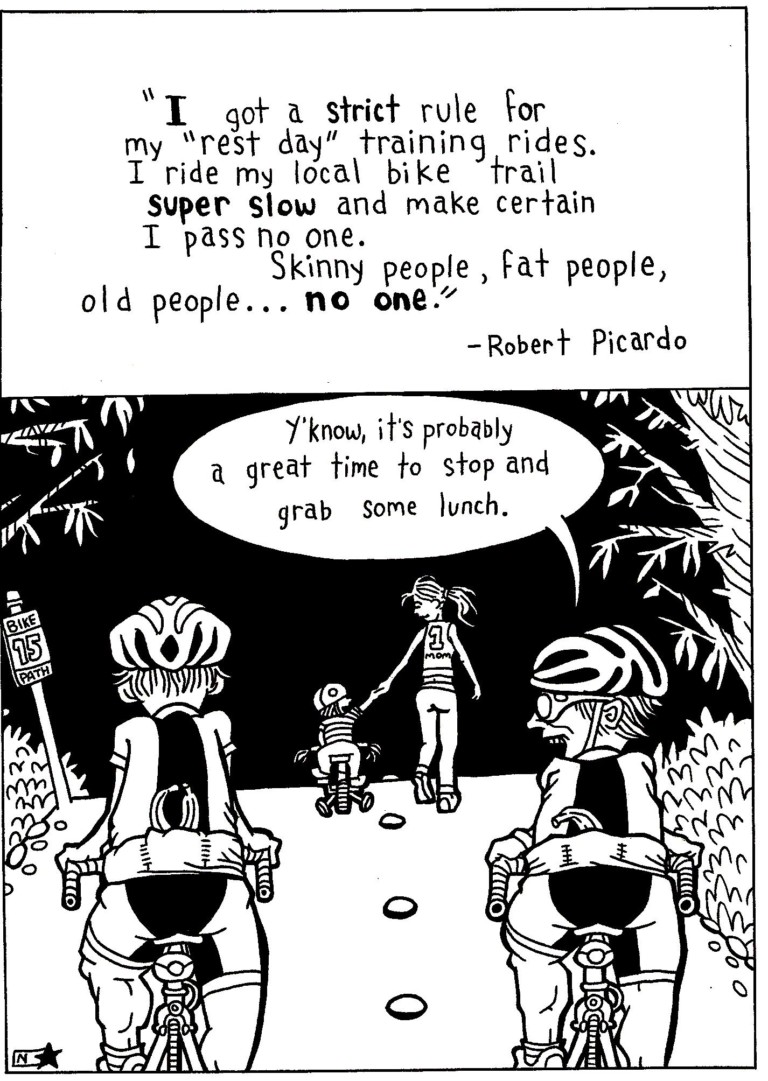
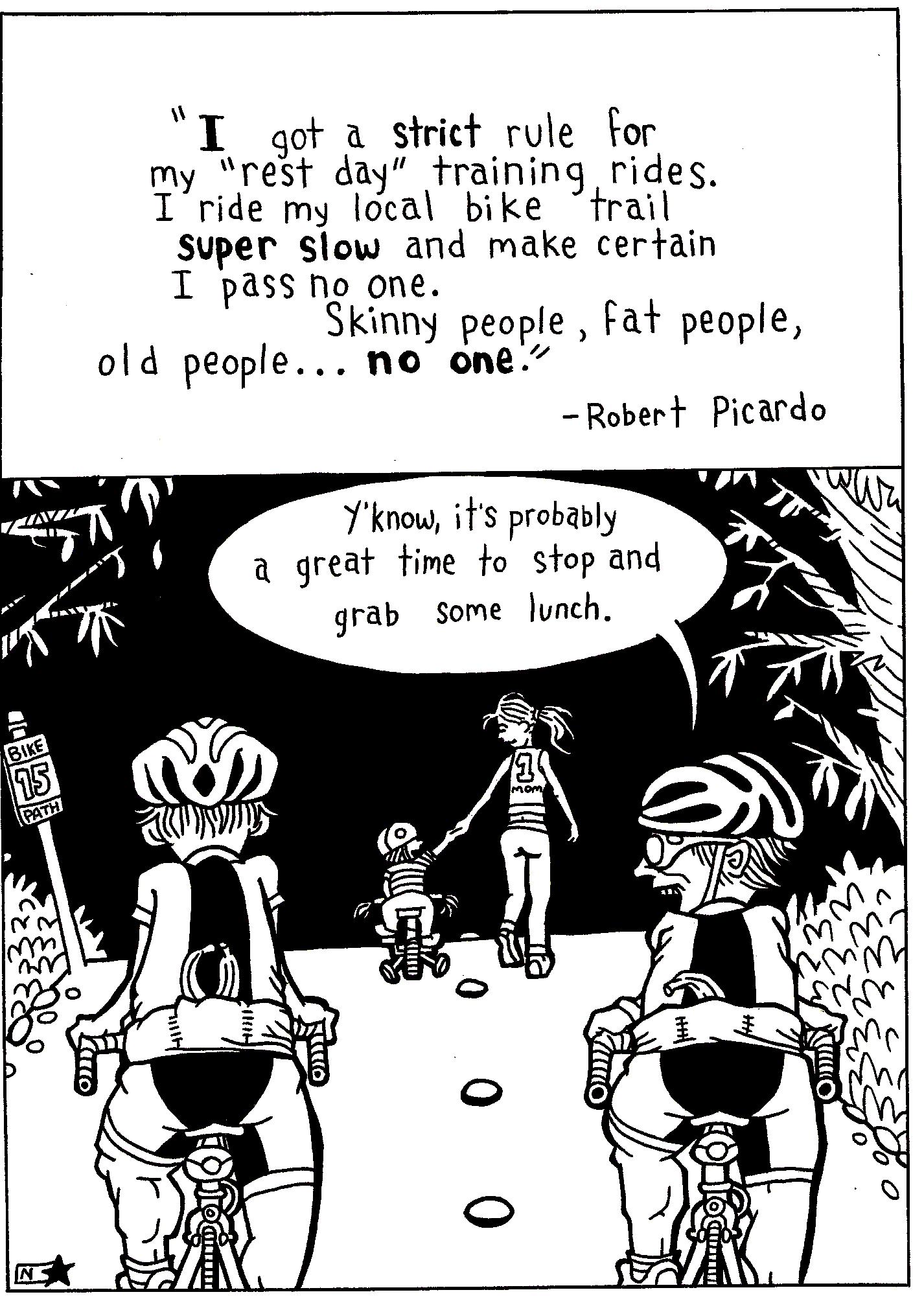
Quickshot: Rest Days, by Chad Nichols

Most people get fast on the bike by riding a lot. As the adage goes, ‘if some is good, more is better.’ But for this highly motivated group, this can be their biggest downfall. Riding a lot is a major physiological stress. That constant state of stress and fatigue means the athlete is never rested and fresh enough to dig really deep for especially hard workouts or race efforts. The biggest difference most people find when they go from training on their own to structured training with a coach is that the easy days get easier and the hard days get harder. The key here is that if you are fully rested for your hard training sessions and races, you will be able to dig that much deeper for a bigger training effect and physiological response – not to mention race results!

In preparation for my upcoming professional MTB racing season, I generally take two weeks off the bike. Once I am back on the bike, I only ride three to four days per week and utilize other types of exercise two to three days per week. This is especially nice during the Utah winter where riding outside creates its own set of challenges and riding indoors can be very mentally taxing. All of my athletes take this two week break once, usually twice throughout the season. Mindy McCutcheon, who I coached to a SS National CX Championship, a top 10 in the elite Championship race, several UCI podiums and wins followed a similar schedule, including a long break in the summer in preparation for cyclocross season.

Mindy shot up through the ranks of professional road and CX racing in the last couple of years, surprising many as a relative newcomer and 2016 as her first season on a UCI trade team. She is incredibly gifted and she is diligent in her training. But I believe that much of her success was also due to her commitment to balance and rest. A dedicated yogi, she complimented her riding and racing with strength, stretching, and meditation through yoga. Her volume on the bike was low compared to many of the women she raced against. As a result, she did not experience the slump so common among professional cyclists (especially women), who see massive improvement when they dedicate to training, but fade in the second or third professional year as the accumulated fatigue catches up. As an interesting aside, I also believe this was due in part to the fact that Mindy holds down a demanding full-time job. She simply does not have the hours available to toil away on the bike and burn herself out.

Many people fall into the overtraining cycle because they believe more training will always lead to more fitness. But many people overtrain for other reasons. Often, riding and exercise in general are coping mechanisms for stress. As a coach, this is a struggle; I understand that my athletes need the stress release but if it’s my job to make them faster, that often means directing them to cut back. Less can be more. I recommend other protocols to manage stress. Some great strategies include restorative yoga, stretching, meditation and walking. People also ride and exercise excessively as a result of body composition and/or issues with food. This is a separate issue that I am not going to delve into here but I feel it warrants mentioning.

As winter moves into spring, it is easy to get over excited and put in excessive hours on the bike. Enjoy the warmer weather but keep riding and exercise to a sustainable level. The goal is not to finish every training session feeling completely depleted. Finish training sessions with something left so you will be ready to tackle the next hard sessions. Get adequate recovery and save the efforts where you completely drain the tank for races or especially hard workouts. Utilize healthy stress management and take on the ebbs and flows of the season with a fresh and ambitious outlook.

Sarah Kaufmann is an elite level MTB racer for the DNA Pro Cycling Team. She is also a private coach based in Salt Lake City and can be reached at [email protected] or 413-522-3180

Southern Utah Centuries and Intermountain Cup Races Postponed Due to COVID-19 Concerns

Mesquite Madness Road Tour, Spring Tour of St. George, Desert Rampage, Cactus Hugger Intermountain Cup Postponed Due to COVID-19 Concerns

March 17, 2020 – Ride Southern Utah and the Intermountain Cup today announced the postponement of four spring calendar mainstay events due: The Mesquite Madness road cycling tour, the Spring Tour (of St. George), Desert Rampage and Cactus Hugger Intermountain Cup mountain bike races. The rides and races are held in the St. George, Utah area, and in Mesquite, Nevada. The events are being postponed in order to follow CDC guidelines limiting gather size to prevent the spread of the COVID-19 coronavirus.

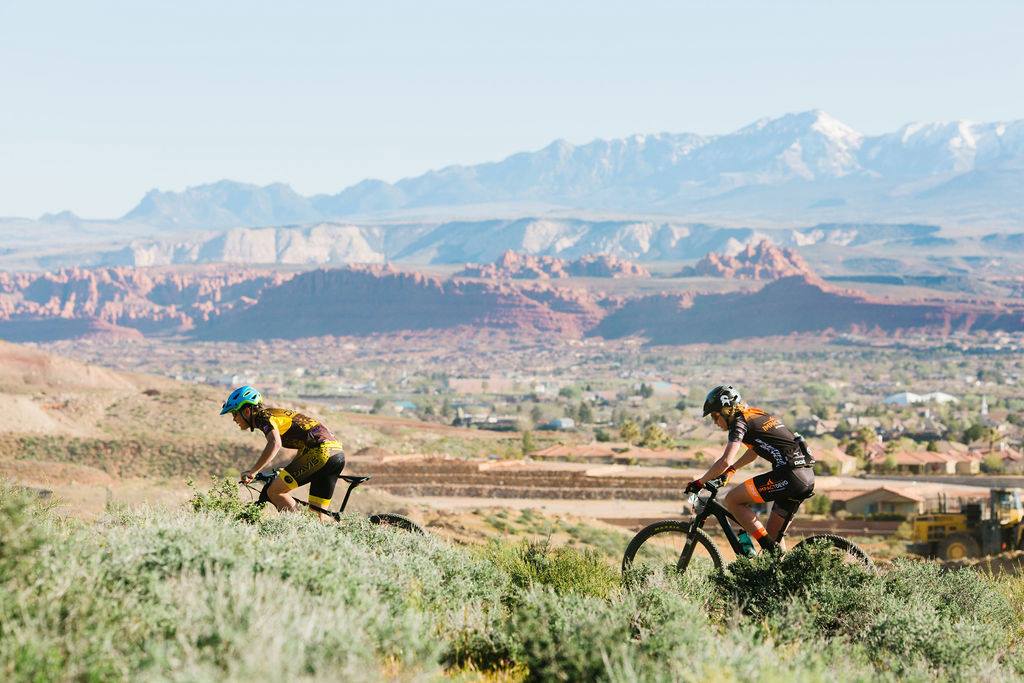
2 riders in the Desert Rampage Mountain Bike Race. The 2020 race has been postponed. Photo courtesy Ride Southern Utah

The Mesquite Madness road cycling event scheduled for March 21, 2020. The Desert Rampage was to be held on March 28, 2020. The Spring Tour was to be held on April 25, 2020. And, the Cactus Hugger was to be held on Apri. 18, 2020. New dates have not yet been announced.

Ride Southern Utah, the organizers of the event, sent out these statements today:

Dear Riders, We’d like to let everyone know that after carefully considering all options, we have decided to postpone the Spring Tour as well as the Mesquite Madness rides. We are working out what our next move is and will let you know as soon as we do. We appreciate your patience and understanding in this unprecedented situation. We are grateful for all the support and kindness that we have been shown by the cycling community.
All the Best, Ride Southern Utah
And, regarding the Intermountain Cup Races:
Dear Racers, We’d like to let everyone know that after carefully considering all options, we have decided to postpone Red Rock Rampage & Cactus Hugger races. We are working out what our next move is and will let you know as soon as we do. We appreciate your patience and understanding in this unprecedented situation. We are grateful for all the support and kindness that we have been shown by the cycling community. All the Best, Intermountain Cup Racing Series

They also posted the following on their website regarding their reasoning:

March 16, 2020: Due to the new CDC regulations stating the cancellation of events with 50 or more people on March 15th, 2020, The City of Mesquite has requested that we postpone Mesquite Madness to a later date.  We are still working on the details, including transfers and cancellations, and will announce them on this website when they are available.

For more information, see: https://ridesouthernutah.com

and https://intermountaincup.com

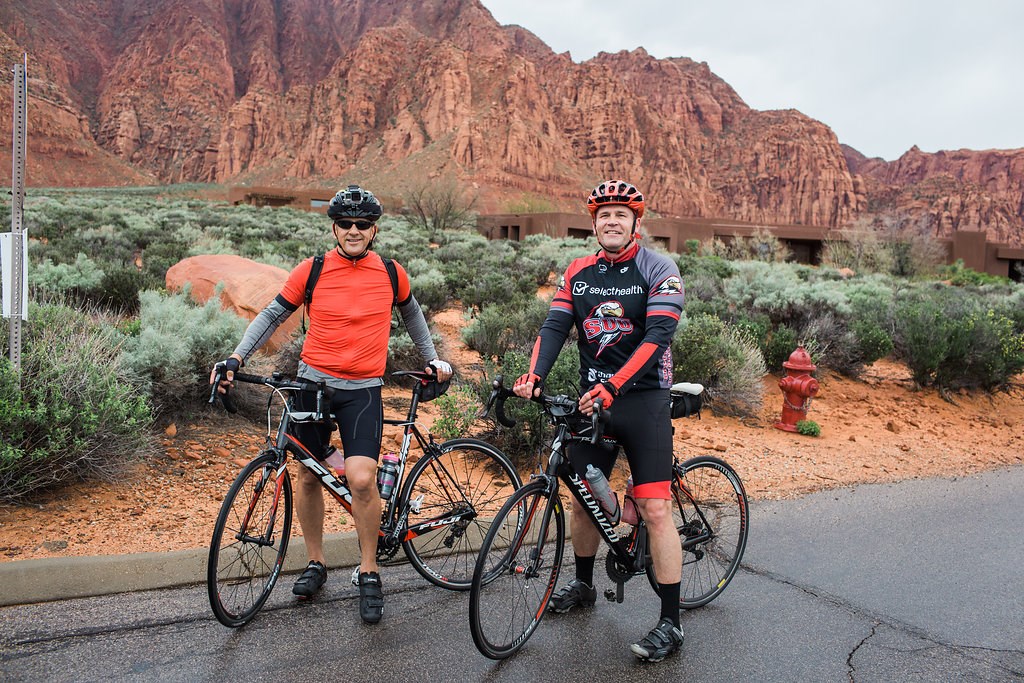
2 riders enjoying a Ride Southern Utah event. The 2020 Mesquite Madness tour and Spring Tour have been postponed. Photo courtesy Ride Southern Utah