By Madison Baumann – On June 20th, 2005, my world turned upside down. I was eleven years old and on the precipice of what could have been the greatest summer of my life. We were set to kick-off the season with a road trip from Washington state to southern Utah, then head abroad with a trip to Europe. I was ready for an incredible adventure with my family and friends. But, it all came to a shattering halt.
All I remember is leaving our hotel in Park City, and then it is blank. We were in a car accident. We were hit by a dump truck, and I had taken on all the impact.
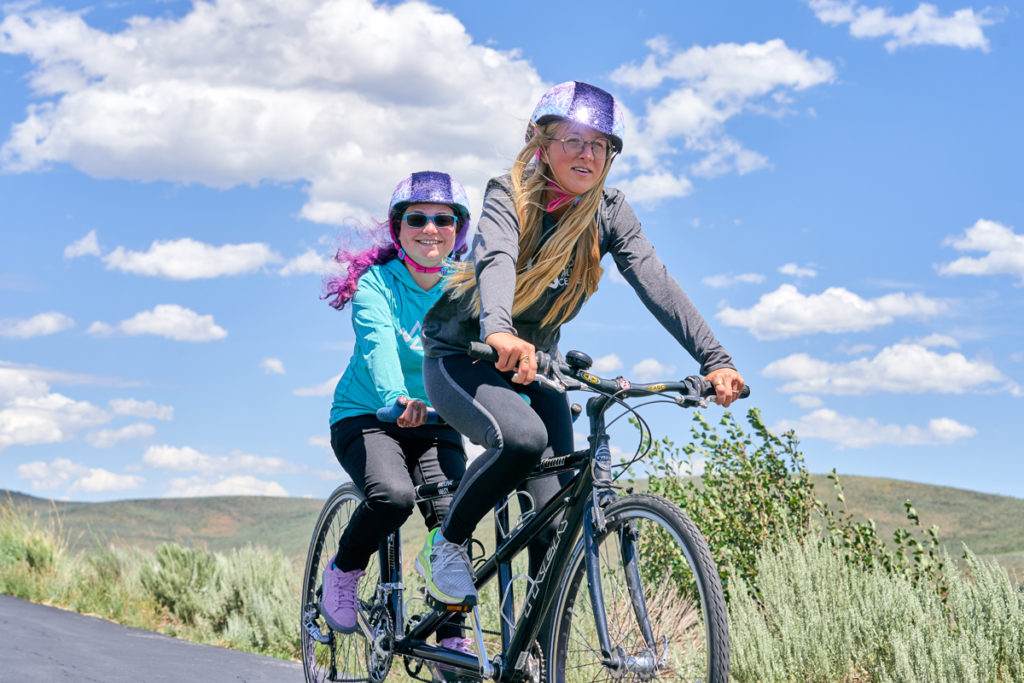
Madison Baumann (left) is riding stoker in the Summit Challenge with Laura Dusold as captain. Madison has a visual impairment and by riding a tandem through the National Ability Center, she will be able to participate in the 50 mile ride. Photo by Berin Klawiter
Fast forward two months. I was discharged from Primary Children’s Hospital, blind in my left eye with only partial vision in my right and tasked with building a whole new outlook on life.
Because of my injuries, I was no longer allowed to play the contact sports like soccer, softball, and skiing that I had enjoyed throughout my childhood. And, my dreams of becoming a professional soccer player in the summer or a professional skier in the winter no longer seemed within reach. I had no idea what I was going to do with my life.
This is where my new journey began, leading me to the most amazing adventure ever – I just didn’t know it yet.
A summer later, and I was going crazy. My life and friendships had revolved around sports, and now I was stuck on the sidelines. I turned to books, trying to figure out what sports I could still play. That is how I found golf, which was my jumping off point. With golf under my belt, I was able to convince my mom to let me start skiing again, albeit at a much lower level than before. Five years later, I had been enjoying an active life of golfing, skiing, and looking for my next challenge. I learned about the National Ability Center, or NAC, an adaptive center for individuals with differing abilities – Individuals just like me.
I moved to Utah, excited to get involved with the ski program at the National Ability Center. At first, I was only interested in skiing as a hobby. But then I discovered that, not only did the NAC have a high performance ski team for skiers with differing abilities, they also had openings for visually impaired skiers. I had found the right place for me.
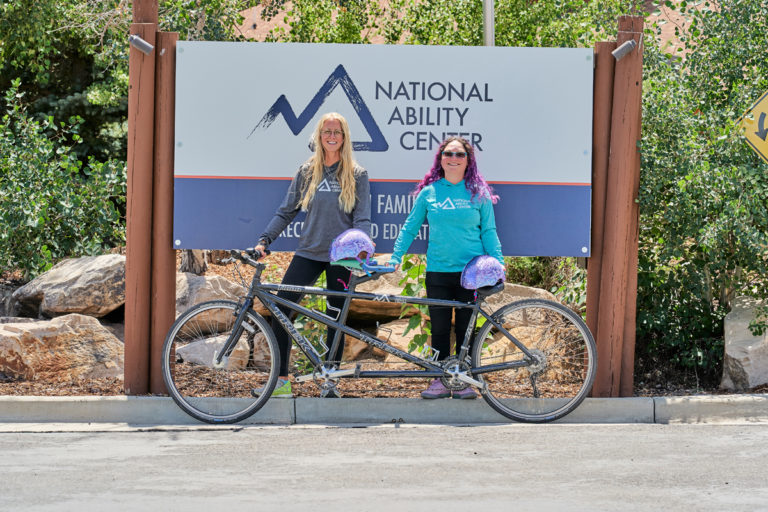
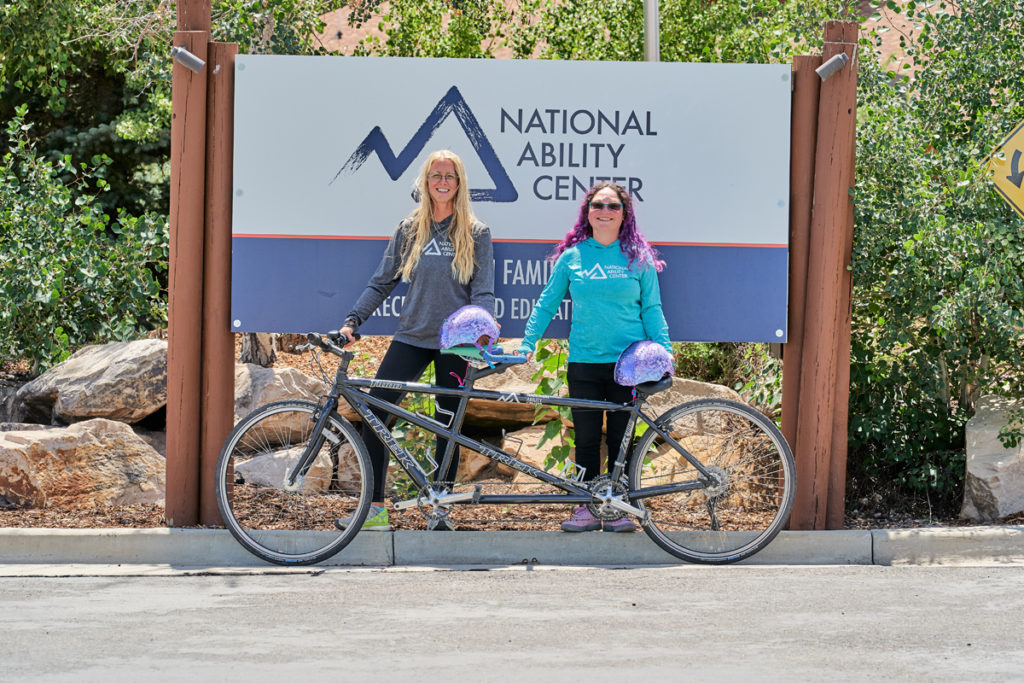
Madison Baumann (right) and Laura Dusold at the entrance to the National Ability Center. Photo by Berin Klawiter
The NAC quickly became my new family. Thanks to the help of the incredible instructors and coaches who guided my training, I was back to my old crazy skier ways of flying down the race hill.
I soon discovered that NAC also offered a large variety of outdoor recreation, ranging from cycling and whitewater rafting to rock climbing, archery and more. Many of these activities sparked my interest. After a long debate with myself, I decided to take the leap and try cycling for the first time in over 13 years. I went out on a tandem bike with my friend Tom. It was amazing! With Tom at the helm I was confident I wouldn’t hit a pothole or fall off a curb that I was unable to see. It was just what I needed. And it lit a new fire inside me.
I decided to train for the NAC’s Summit Challenge, an inclusive road ride for cyclists of all abilities that travels some of Summit and Wasatch County’s most scenic roads. But, I still needed a buddy rider. I needed someone to lead the way on the tandem bike and pedal together with me for the 16-mile ride. And so, it began.
I asked around, looking for a reliable buddy rider until I found the perfect person. While chatting with coworkers, one of them, Laura Dusold, looked up from her desk and, without hesitation, said “I’m in.”
Laura was ready to go all-in and cycle to the moon and back on the 100-mile loop for the Summit Challenge. As for me, I was not quite ready for that big of a climb. After much discussion we compromised on the 50-mile loop and began training.
To say that our first ride was a little nerve racking would be an understatement. We did manage to make it around the parking lot a few times, without falling, but that was it.
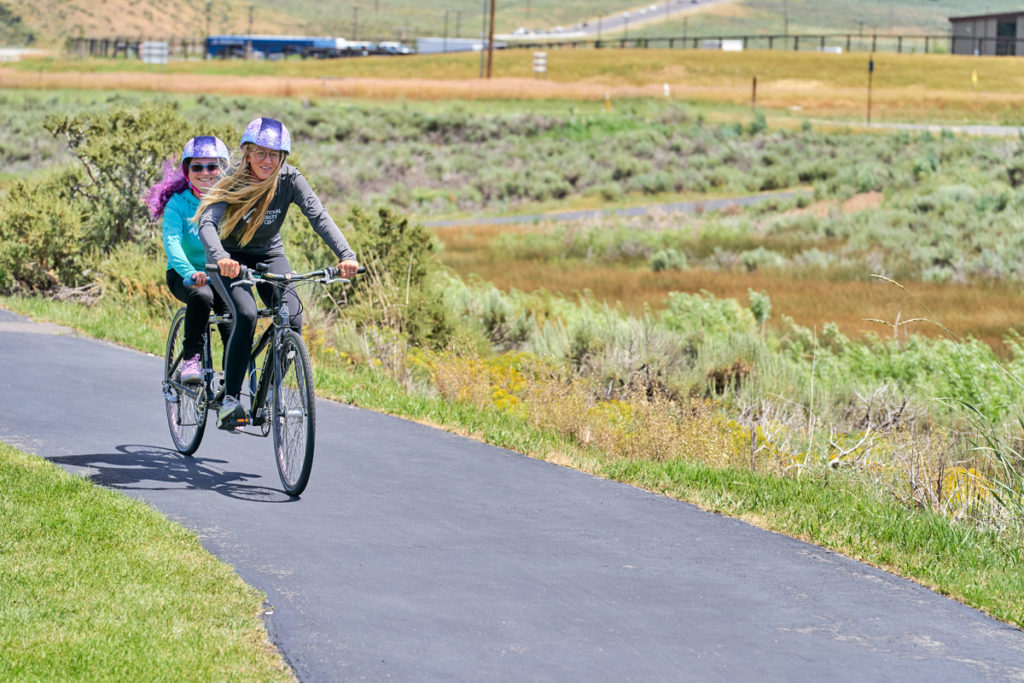
Madison Baumann (left) and Laura Dusold training for the Summit Challenge in August. Photo by Berin Klawiter
As you can probably guess, trusting somebody else to guide you on a bike is very challenging. When you are on your own bike you make all the decisions, where to ride, how fast to ride, how long to ride, and how much risk you are willing to take. When you are on a tandem bicycle, those decisions are not just up to you. Everything is up to the team. So, Laura and I took the slow and steady approach to our ride. For me, it was about learning to trust her to make the right choices on which path to take and at what speed to take us. For her, it was about learning how to communicate to me what was happening. From a bump on the path to a sharp curve along the road, Laura has had to learn how to share what I need to know in order to help keep us both on the bike, and she is absolutely crushing it!
So far, we have only had one spill, which we recovered from quickly. And, we have enjoyed every single ride together. While in the saddle, we’ve discussed serious topics and shared silly stories to become great friends.
Come ride with us at the Summit Challenge on August 24th. Whether you are taking on the 16-mile, 50-mile, 80-mile, or 100-mile route, riding as a team or getting back on an adaptive cycle after years away from the bike, let’s take this challenge on and shoot for the stars together!
The Summit Challenge is a benefit road ride for the National Ability Center on August 24, 2019 in Park City Utah. To learn more, sign up or support adaptive cyclists like Madi and Laura, visit summitchallenge100.org.
Ride information:August 24 — Summit Challenge, Park City, UT, Riders of all ages and abilities will hit the pavement for a 100, 80, 50 or 16-mile road ride event in support of the National Ability Center’s mission. All three fully-supported routes of this event follow paved roads in and around the beautiful Park City mountainside. This exciting event promises to serve up a challenge for a wide range of cycling levels and abilities. And don’t forget – all Summit Challenge riders who have a disability can register and ride for free! The 100 ride goes through the prestigious Wolf Creek Ranch property which is usually closed off to road bikers. Enjoy a ride length of your choice and end up back at the National Ability Center for food, drinks and music., Tommy Youngblood, 435-649-3991, 435-200-0990, [email protected], Whitney Thompson, 435-649-3991, [email protected], summitchallenge100.org, discovernac.org
STEAMBOAT SPRINGS, Colo. – The eve of the 2019 Colorado Classic presented by VF Corporation tallied excitement from not only the favorites competing in the UCI 2.1-designated women’s pro cycling race, but also from the one and only Billie Jean King, who Tweeted her support for the landmark event.
The tennis legend encouraged her followers to tune into the Colorado Classic via the live-streaming Watch Now page and to support “women’s cycling on a global stage,” which is exactly what the 2019 event aims to do this year, becoming a women’s standalone event and the only one of its kind in the Western Hemisphere.
“To have a women’s only, 2.1 race in the U.S., it’s been a really long time since we’ve had one of those,” said veteran cyclist and former World Champion Amber Neben (Cogeas Mettler Look) at Wednesday’s opening press conference. “What’s special right now is you see more support on the women’s side. There’s more and more opportunities for women, creating more depth and that creates better racing. I love what Colorado is doing to bring people out and be a part of it. I think it’s pretty innovative.”
https://youtu.be/Jor8Zcz6JWU
Nearly 100 of the world’s top cyclists from 20 countries are competing in the 2019 Colorado Classic, which kicks off Thursday in Steamboat Springs with Stage 1 presented by Smartwool. Stage 1 features a beautiful but grueling 54-mile loop course that includes 4,255 feet of climbing and a technical, 10-kilometer gravel segment.
“There are a lot of opportunities in this year’s race,” said 2018 Colorado Classic champion Katie Hall, who returns to defend her title this year riding for the U.S. National Team and mentoring a group of collegiate All-Star cyclists. “I am so excited to race with these girls and help them have a positive experience. For them, it’s a bigger race than they’ve done before. It might take a brave move by somebody when the opportunities arise.”
The stacked field also features 2017 Colorado Classic champion Sara Poidevin (Rally-UHC), who commented on the race’s growth since its inception three years ago.
“I think this year will favor really dynamic racing each day,” she said. “In 2017 there were just a few decisive moments, whereas this year, I think this race will present a lot of opportunities for a lot of types of riders.”
Following Thursday’s opening stage, the race moves to a circuit course for Stage 2 in Avon presented by FirstBank on Friday, including a demanding final climbing lap through Beaver Creek. On Saturday, Stage 3 takes place on a series of hilly laps through Golden and the event wraps up Sunday with Stage 4 Denver presented by Gates Corporation over a series of spectator-friendly loops through downtown Denver.
Fresh off of a double gold-medal performance this month at the Pan American Games in Lima, Peru, Chloe Dygert (Sho-Air TWENTY20) said that her team has been eagerly anticipating the Colorado Classic for months.
“This race was definitely something we’ve all looked at all year,” she said. “It’s an important race for us. Being women’s only is definitely a step in the right direction. It’s exciting for our sport. It’s going to be a good one.”
The 2019 Colorado Classic kicks off at 11:30 a.m. in Steamboat. There will be live streaming coverage from start to finish as well as live broadcasts on Altitude Sports & Entertainment. Follow statistics and race progress by downloading Tour Tracker.
Once again, Rep. Earl Blumenauer (D-OR) has introduced legislation to clarify that bikeshare is eligible for federal grants. Blumenauer, perhaps Congress’ greatest cycling advocate, introduced the Bikeshare Transit Act of 2019 (H.R. 4001) which would allow federal money to be used to build bikeshare stations and buy and replace equipment. The law would apply to the Congestion Mitigation and Air Quality program and other federal funding for mass transit. Currently, federal law doesn’t mention bikeshare and local authorities don’t know if they can use federal money for it.
The bill was referred to the Transportation and Infrastructure Subcommittee on Highways and Transit.. It picked up two immediate cosponsors. Blumenauer introduced the bill in 2017 but Congress didn’t act.
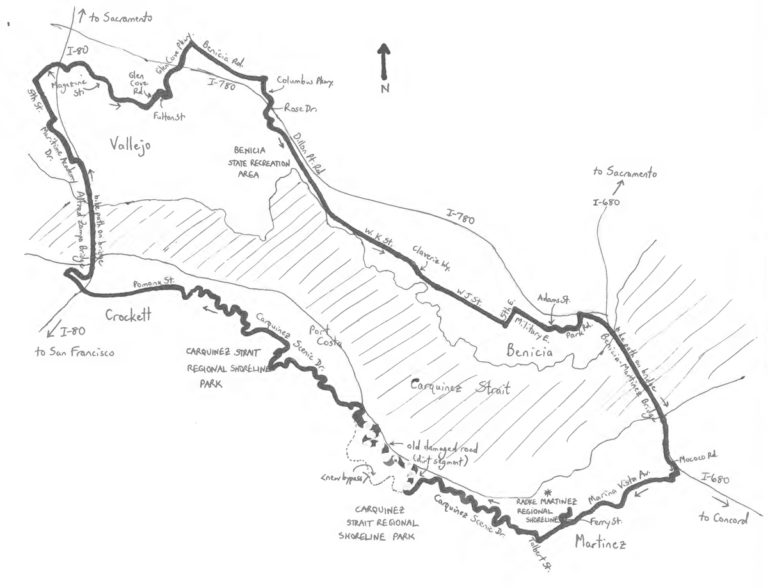
The Carquinez Strait Loop – a mild play on words – is a fun northern California ride that crosses two bridges in the northern Bay Area. The clockwise loop is 22.9 miles in length. Do not be fooled by the apparently short(!) distance. The highest elevation reached is 250 feet above sea level, and the lowest is just four feet, but there is just over 1,200 feet of climbing in between. Some of the climbs are short, steep spurts. The featured segments of the ride include two bridge crossings, and an optional half-mile of off-road. One of the bridge crossings is not for the squeamish, as the experience can be unsettling to riders with acrophobia.
Ready for the challenge? Note that the route details may seem complex, but the objective is simple; that is, ride as close to the shoreline as possible on one side of Carquinez Strait, cross a bridge, then, ride near the shoreline on the other side of the Strait, cross a second bridge, and then ride near the shoreline to complete the loop. There are no roads along the shorelines, though, so the route uses inland options. Start the ride at Radke Martinez Regional Shoreline, located on the northern edge of the city of Martinez. Martinez is located 35 miles to the northeast of San Francisco, in California’s Bay Area. To get there from San Francisco, take the I-80 freeway to the East Bay, crossing the Bay Bridge. Stay on I-80 as it turns to head north. After passing through several cities, exit to State Highway 4 (CA 4) and head east. Exit at Alhambra Avenue, turn left, and head north toward Martinez’ waterfront. Enter the shoreline park from Ferry Street. Turn right on Joe DiMaggio Drive, followed by a left on Court Street. Park in the lot off of Court, on the left. Legendary pro baseballer Joe DiMaggio was born in Martinez (1914), hence the street name. Martinez had an estimated population of 38,400 in 2018. The city is the seat of Contra Costa County; the majority of the employed population works for the county government.
The Carquinez Strait Loop is a fun northern California ride that crosses two bridges in the northern Bay Area and covers 22.9 miles with 1200 feet of climbing. Map by Wayne Cottrell
From the lot, exit the park by heading north on Court, which curves to the right to become Joe DiMaggio. Next, turn left on Ferry Street to cross the railroad tracks (note that the park is separated from the city by the tracks). Turn right at Marina Vista Avenue – behind you is the city’s compact commercial district, which is worth a visit. Next, turn right at Talbert Street. At Foster Street, hang an easy left onto Carquinez Scenic Drive, and tackle the ride’s first climb (8.7% grade, just over one-tenth of a mile). From here, Carquinez Scenic Drive twists and winds through Carquinez Strait Regional Shoreline and private lands, with the Strait to your right, and bluffs to your left. When I rode this, the scenic drive was lightly-used by motor vehicles, as a 1.9-mile portion of it had been closed since a 1983 mudslide took out part of the road. That segment had always been passable to hikers and bikers on a narrow dirt segment, though. As of this writing, construction was in progress on a paved bypass of the damaged segment. True die-hards might continue to use the old dirt segment, however, to sustain a 35-year tradition. After snaking and rolling along Carquinez Scenic Drive to the 2.5-mile mark, with a number of short climbs and descents (average 4.5% grade), the road enters a hairpin curve. The new bypass starts here – stay to the right for the old, damaged road. The dirt segment is only about one-half mile in length, narrowing to single-track for a stretch. The damaged road, now back on rough pavement, continues to mile 4.3. Beyond the barriers, “normal” riding resumes (the barriers might remain once the bypass is complete). From here, the road climbs to the highest elevation of the entire ride, at 250 feet above sea level. A quick descent follows, including an awkward crossing of Reservoir Street; use caution here, as the sight distance is poor. At mile 5.7, the road curves to the left; the community to the right is Bull Valley, part of the small settlement of Port Costa (population 200). The town was, at one time, the nation’s busiest wheat port.
Carquinez Scenic Drive continues to wind and twist its way across the valley. Note that, intermittently along the road, there are trailheads, all of which are worth exploring. At mile 7.55, after a 90o bend, the road enters the community of Crockett, becoming Pomona Street. Crockett had a population of 3,100 in 2010 and is, perhaps, still reeling from a longtime association with C&H Sugar. The company at one time employed about 95% of the town’s residents, but business began to decline in the 1960s. The local refinery finally shut down in 2017. The ride through Crockett is a straight shot on Pomona Street, first on a gradual descent, and then a gradual climb, through the small commercial district. After just one mile, the street passes under the massive I-80 freeway structure. One-quarter mile later, at the intersection with the freeway ramps, move right onto the walkway, after crossing the intersection. Turn right and ride along the walkway, which, after curving to the left, adjacent the ramps, continues onto the Carquinez Strait Bridge. The bridge consists of two spans, one for northbound and one for southbound traffic (although the official orientations are eastbound and westbound). The bike path uses the westbound span, which is the Alfred Zampa Memorial Bridge, where motor vehicles will be moving in the opposing direction, separated by a barrier. Prior to the Zampa span’s completion in 2003, it was not possible to bicycle across the bridge(!). OK, I was a little uncomfortable on this crossing, perhaps because the railing to the left is open, with a clear view of the water, which is 156 feet below. The path’s surface is opaque, though.
Touchdown comes after 1.05 miles – you are now in the city of Vallejo, in Solano County, 10.9 miles into the ride. Vallejo had an estimated population of 121,900 in 2018, and is associated with the California Maritime Academy, Six Flags Discovery Kingdom (formerly Marine World-Africa USA), and Mare Island Naval Shipyard (decommissioned in 1996). Stay on the path as it parallels I-80, and then veers away, abruptly depositing you onto Maritime Academy Drive, adjacent the Academy. From here, the fact that Vallejo is Solano County’s largest city is evident in the busier streets. The next four miles of the ride cross the city. Maritime Academy curves to the right; cross busy CA 29 at the traffic signal, and then turn left onto 5th Street. At the end of the 5th, turn right onto Magazine Street. Magazine crosses over I-80. At Lincoln Street, bear left to remain on Magazine. After a little over one mile, Magazine makes a hard left, becoming Glen Cove Road. Next, turn right onto Fulton Drive, then left on New Bedford Drive, and then another left onto Glen Cove Parkway. Glen Cove crosses over I-780; next, turn right onto Benicia Road. This awkward segment is downhill (3.7% grade); control your speed, because there is a retail center on the right, with plenty of turning vehicles. Ride safely along this 0.9-mile segment. At the end of Benicia, turn right onto Columbus Parkway, followed by a right turn onto Rose Drive. Rose crosses over I-780, and then becomes a freeway ramp – whoa; rather than riding onto the freeway, turn right onto the connector road.
At the end of the short connector, now at mile 13.1, turn left onto Dillon Point Road and enter the Benicia State Recreation Area. The passage through this park is pleasant, with few motor vehicles. After riding through a large parking lot, leave the park and enter the city of Benicia (now at mile 14.0). Turn right onto West K Street. West K climbs very gradually past Benicia residences. Bear right onto Claverie Way, and then turn left onto West J Street, to continue crossing the city. Benicia had an estimated population of 28,300 in 2018, and is best known as a former California State capital (for just one year, from 1853 to 1854). The city’s historical sites and commercial district are worth visiting. Turn left at 5th Street, followed by a right onto Military East. Adjacent the old Benicia Arsenal – another historical site worth visiting – Military splits into three roads. Take the middle road, which is Adams Street, passing through a corner of the Arsenal. Turn left at Park Road, and climb the steepest hill of the entire ride (10.2% grade). The climb is short. Keep straight to the I-780 freeway. Underneath the structure, turn right onto the bike path (mile 19.35). The path runs underneath the freeway for a stretch, and then crosses a ramp – keep straight, and then curve right onto the Benicia-Martinez Bridge. The path is notably more comfortable than that on the Carquinez Strait Bridge, given the height and secure feeling of the barriers and railings. The bridge was built in 1962, and was critical in making Benicia more accessible. The ride across is a net downhill; in fact, the touchdown point is at the lowest elevation of the ride, at just four feet (at mile 21.3). Turn right onto Mococo Street. After a short segment, turn left to cross the railroad tracks, followed by a right onto Marina Vista Avenue. Shell Oil has a very large refinery along this stretch, as evidenced by all of the tanks, and heavy industrial feel. (The refinery may have transferred ownership by the publication of this). Continue on Marina Vista as it makes a couple of turns, and then enters central Martinez. Continue to Ferry Street; turn right to cross the railroad tracks, returning to Radke Martinez Regional Shoreline. Continue to the parking lot to conclude the ride.
Starting & ending point coordinates: 38.019875oN 122.137297oW
For more Utah rides, see Road Biking Utah (Falcon Guides), written by avid cyclist Wayne Cottrell. Road Biking Utah features descriptions of 40 road bike rides in Utah. The ride lengths range from 14 to 106 miles, and the book’s coverage is statewide: from Wendover to Vernal, and from Bear Lake to St. George to Bluff. Each ride description features information about the suggested start-finish location, length, mileposts, terrain, traffic conditions and, most importantly, sights. The text is rich in detail about each route, including history, folklore, flora, fauna and, of course, scenery.
Wayne Cottrell is a former Utah resident who conducted extensive research while living here – and even after moving – to develop the content for the book.
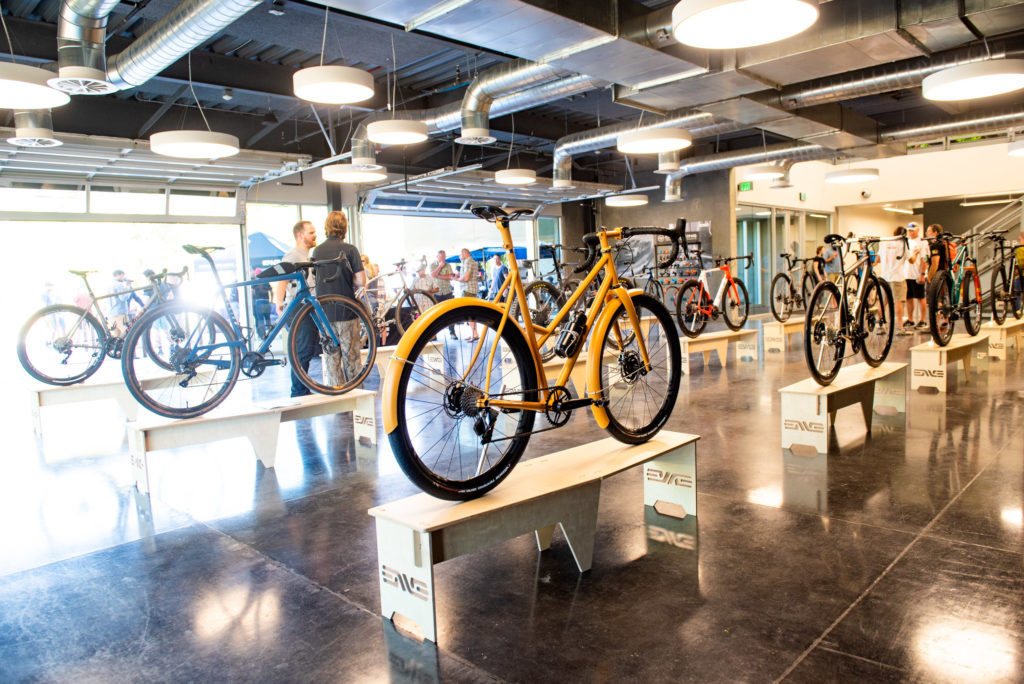
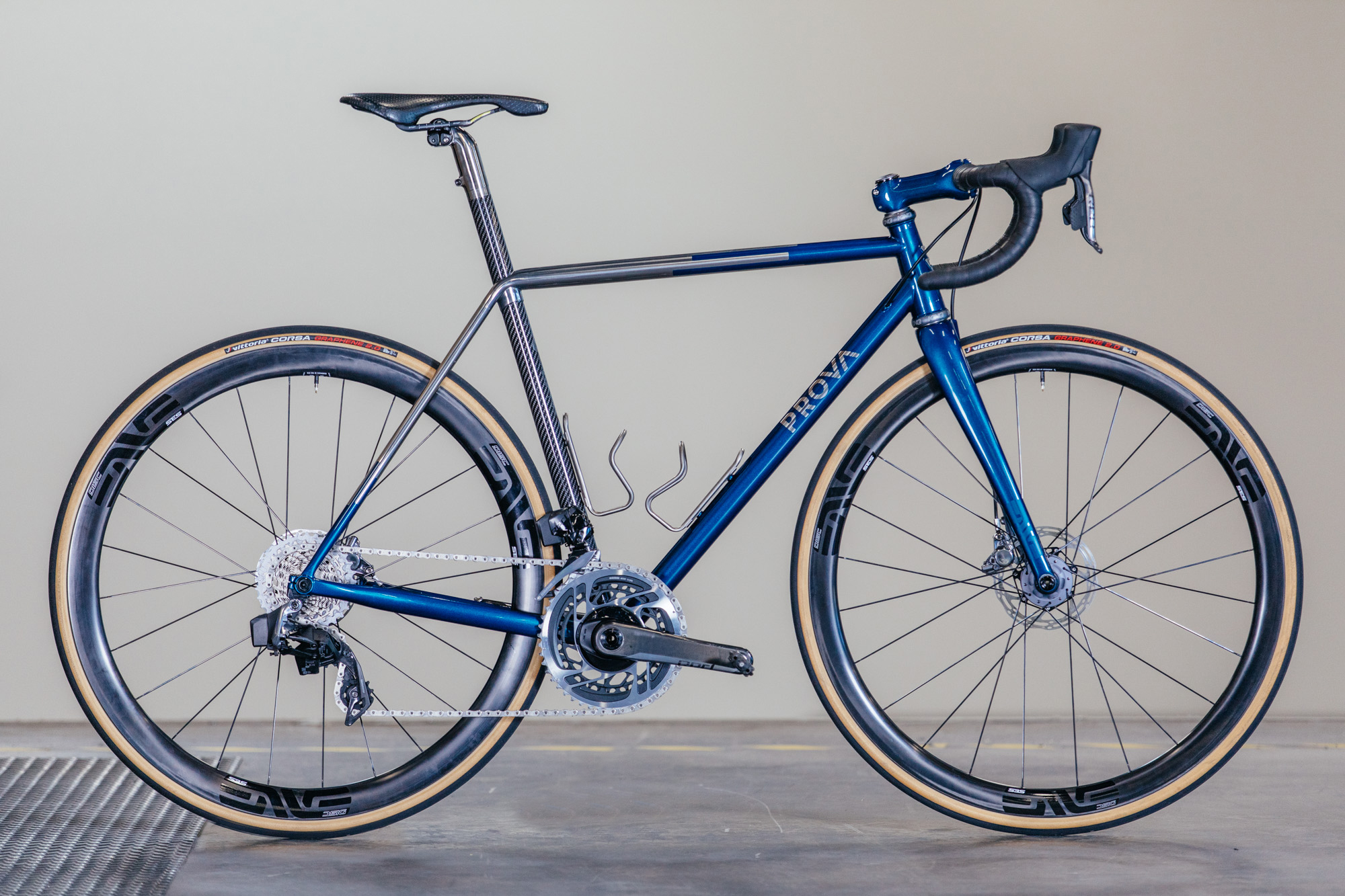
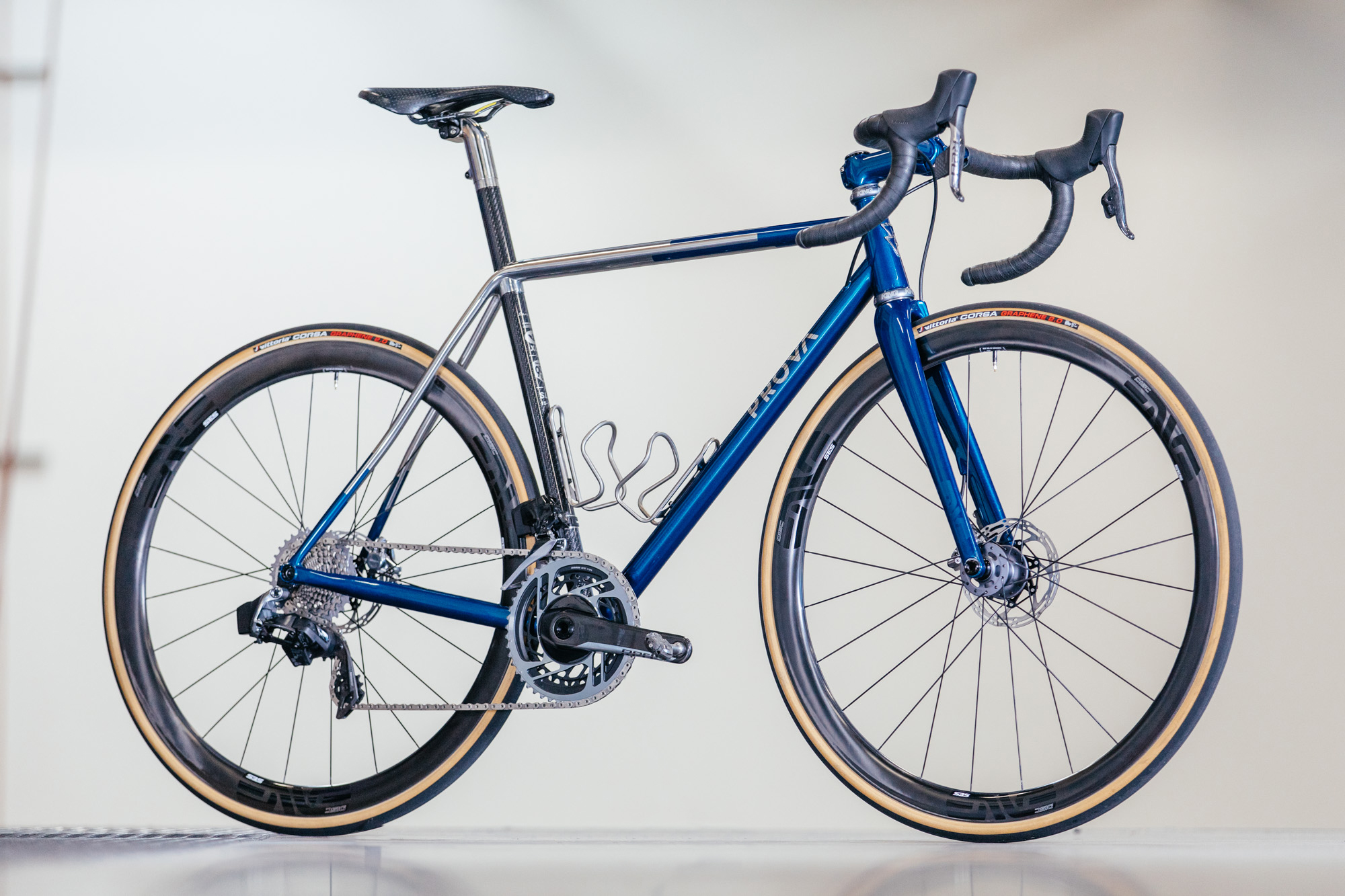
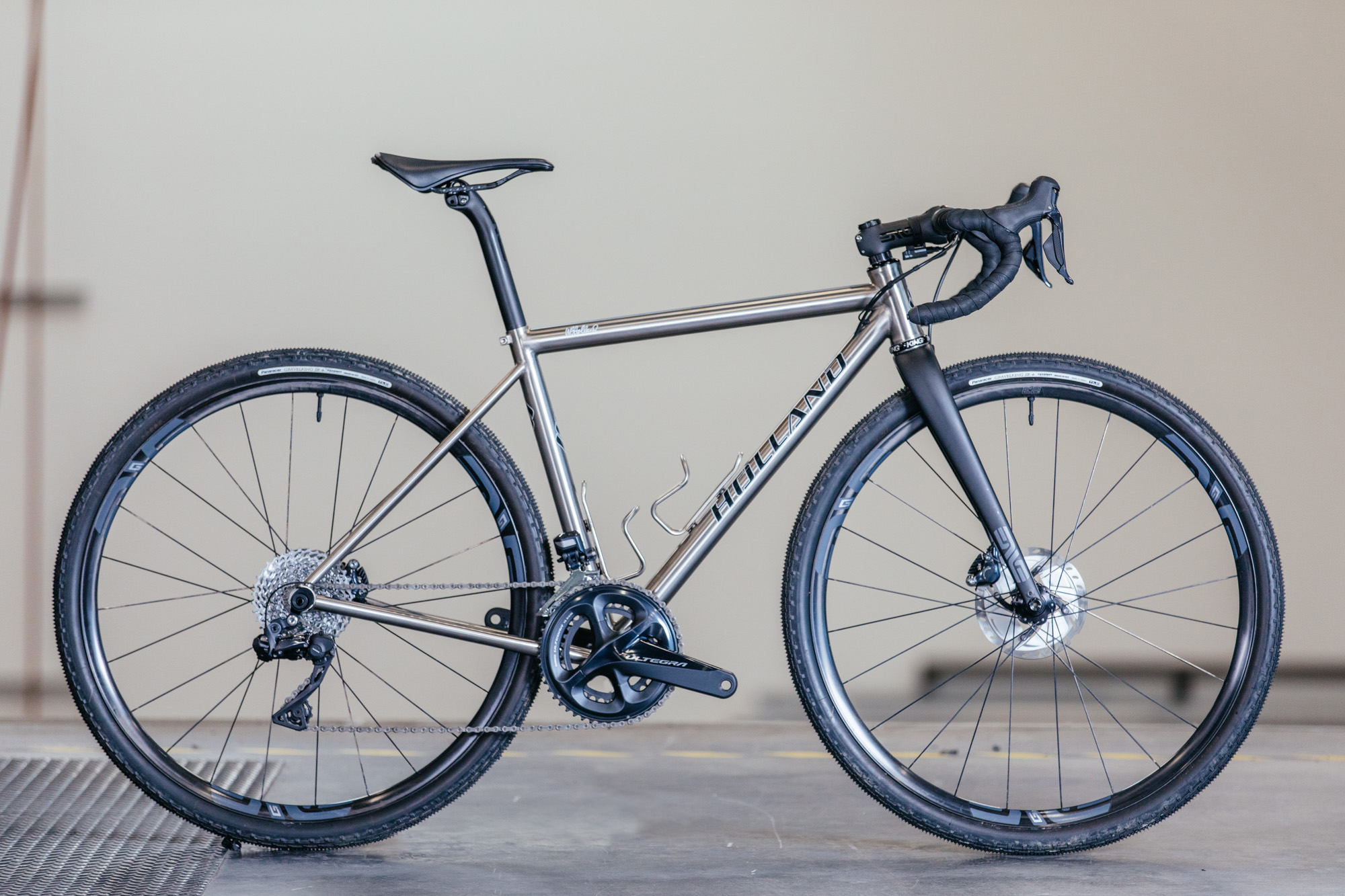
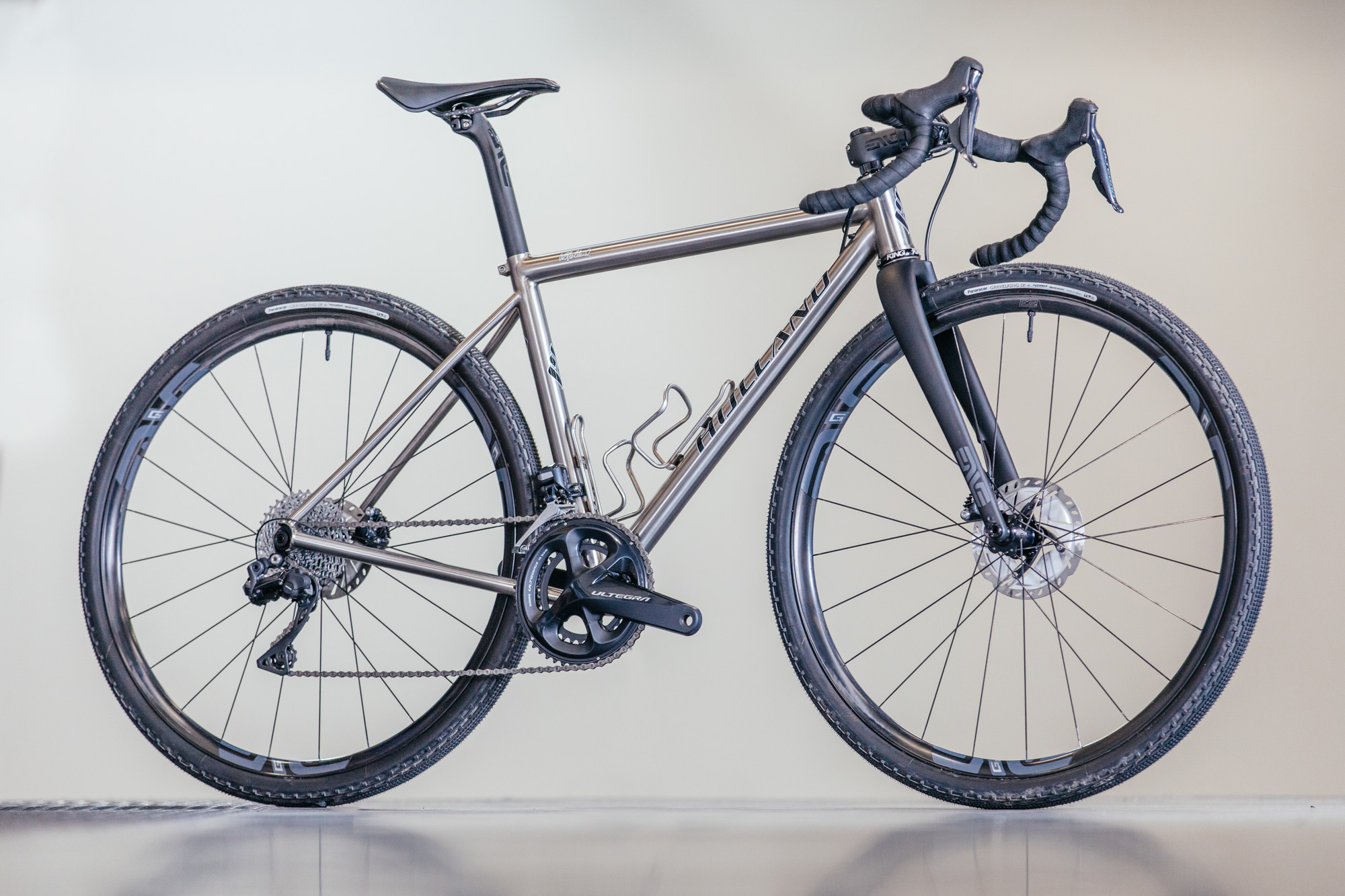
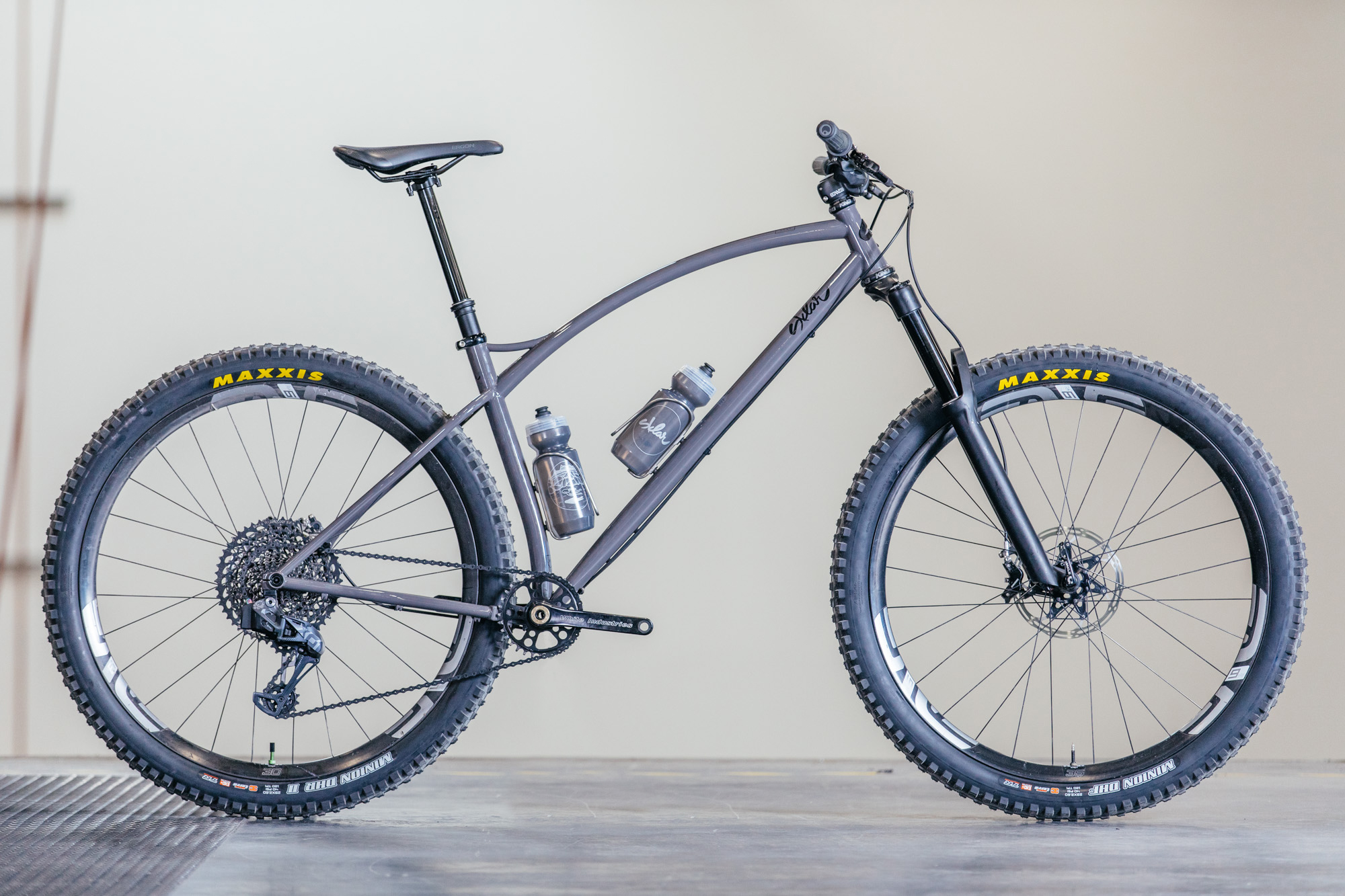
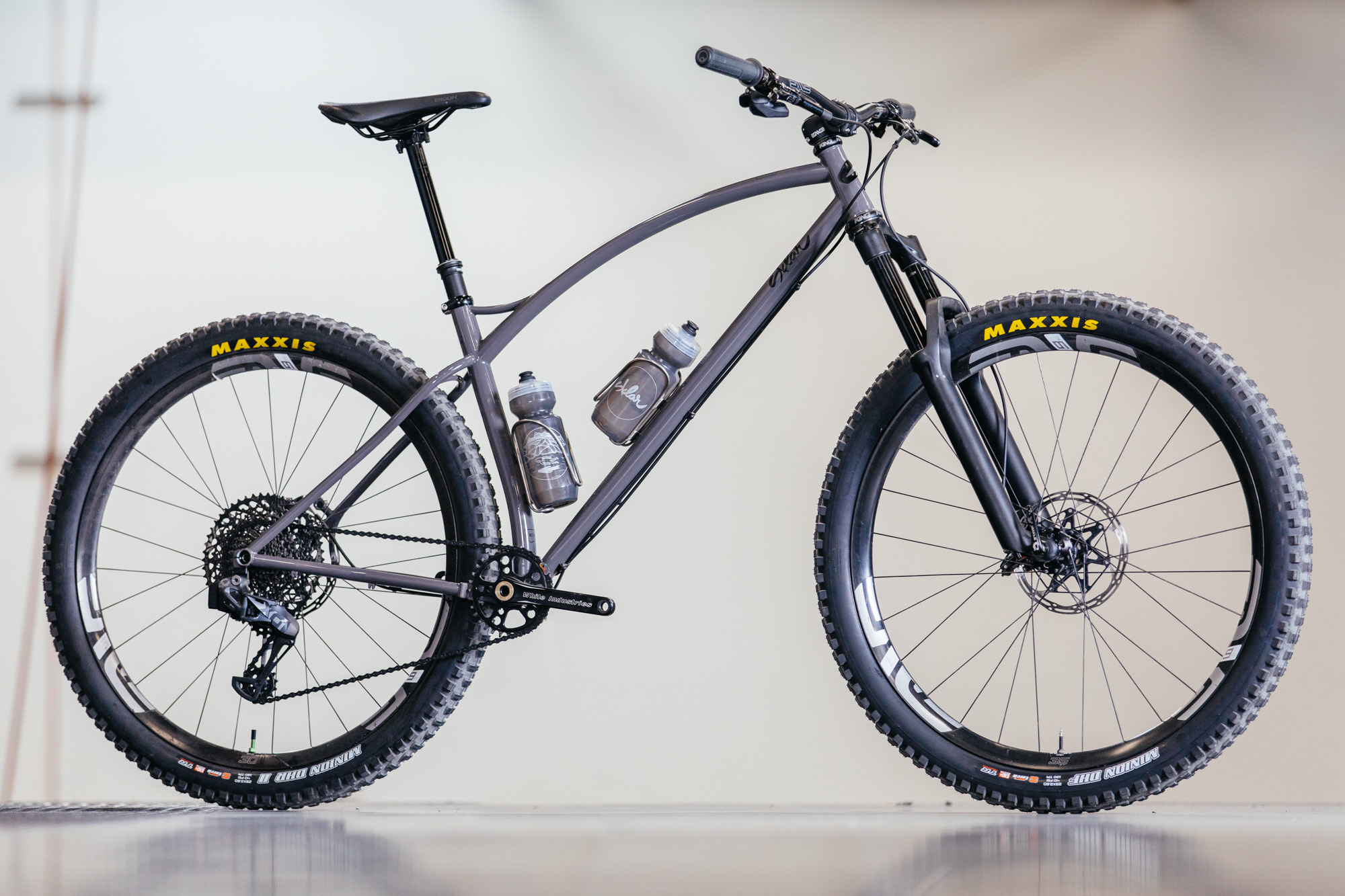
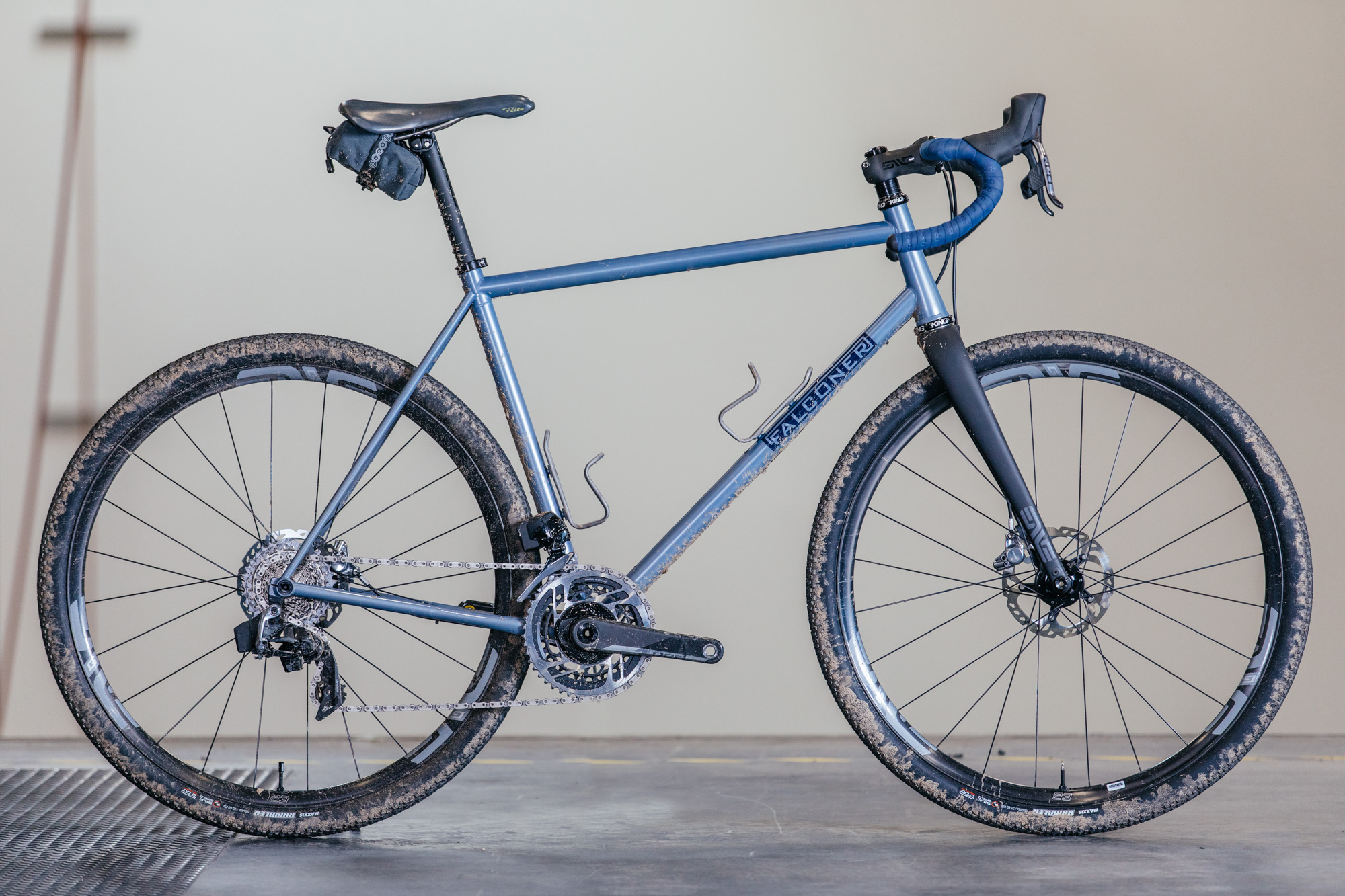
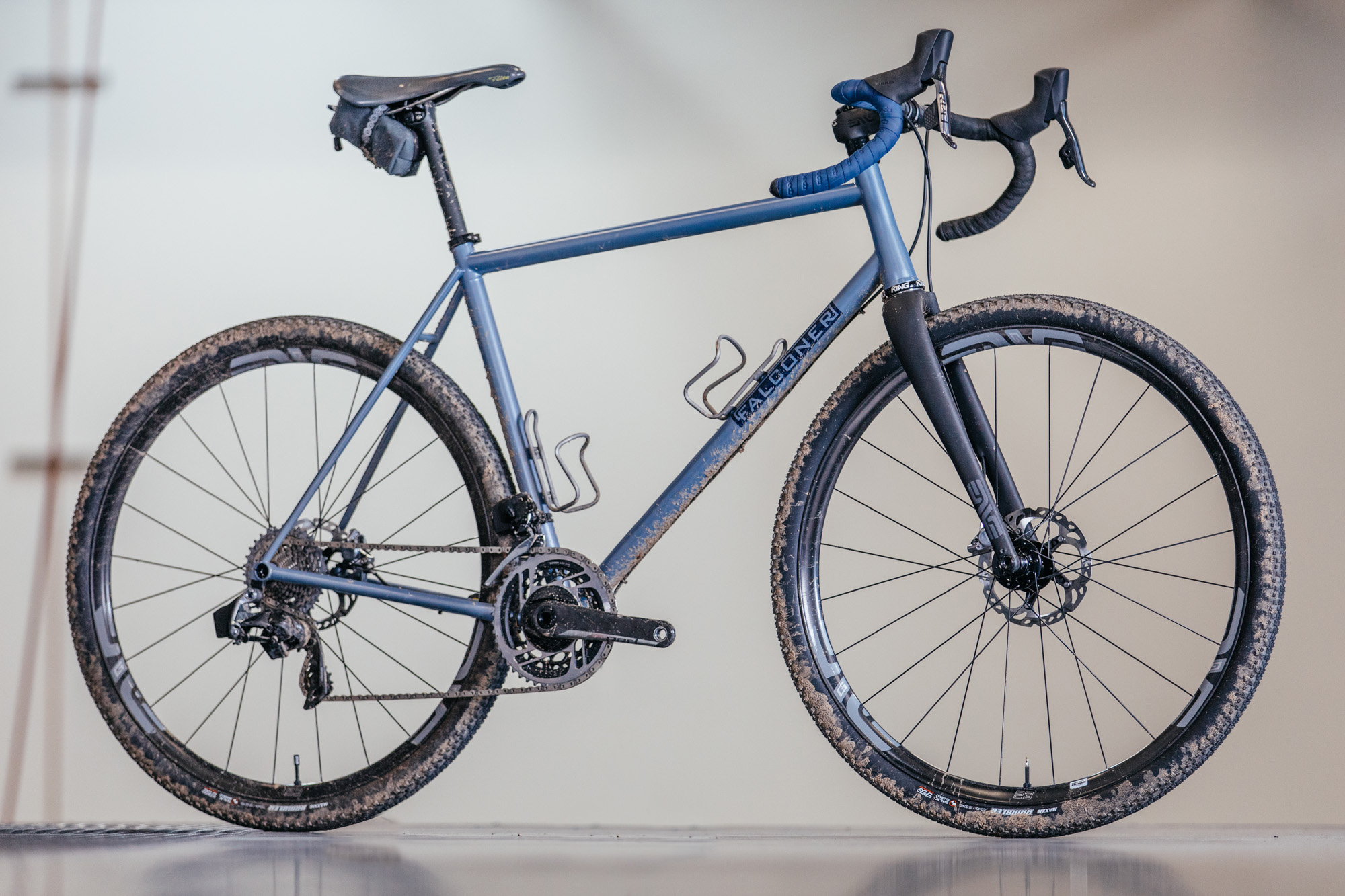
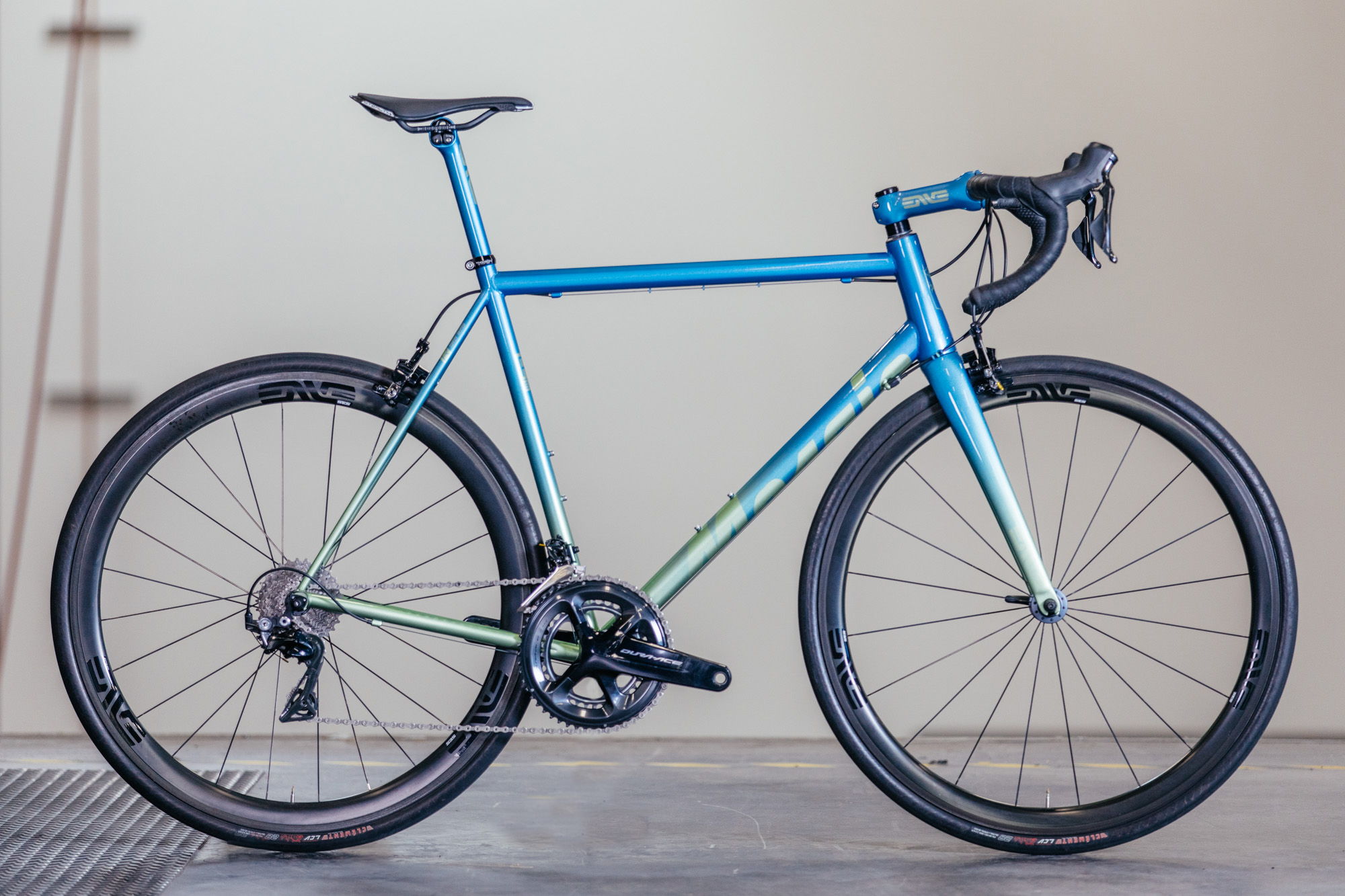
OGDEN, Utah (August 19, 2019) – This past week, 20 custom frame builders gathered at ENVE Composites for the first annual Builders Summit and Open House, a multi-day event that brought some of the most renowned frame builders to Ogden, Utah. The collaboration between ENVE and the handmade builder community was multi-faceted and included discussions around current and future trends, and exercises in composite layup. Additionally, each builder displayed one of their latest builds during a Friday evening public open house, attended by 200 consumers.
Photo by Ian Matteson
The handmade builders have been an integral part of ENVE’s success over the past 12 years and creating an event to celebrate their artistry and innovation had been a longtime goal. Held at ENVE’s headquarters, the event offered a unique opportunity to bring together ENVE’s builder partners with a consumer element.
ENVE’s VP of Product and Brand Jake Pantone said, “When we decided to build our new manufacturing facility and headquarters, which we moved into nearly three years ago, one of the objectives was to create a hub for the cyclists who live in and visit Ogden. Opening our doors to the public is something we enjoy more than anything as it delivers a unique perspective and insight into our operation and what we do to create the best products available. Having our custom frame builder partners in house to discuss their needs, the state of cycling, and showcase their latest creations was icing on the cake.”
Video courtesy ENVE Composites
Following the Friday evening open house, things shifted gears on Saturday and went from looking and talking about bikes, to actually riding them. A new gravel event that ENVE plans to officially introduce in 2020 called the Grodeo offered 88- and 47-mile route options, starting and finishing from ENVE. The ride served as a test for next year and treated a select group of 40 riders to some of the most memorable dirt roads and singletrack Utah’s Wasatch mountain range has to offer.
Look for ENVE to release dates of the 2020 Builders Summit Open House and Grodeo gravel event later this year.
The next law governing federal support for biking cleared its first hurdle. But replacement for the FAST Act still has a long way to go. The Senate Environment and Public Works Committee approved the first draft of the America’s Transportation Infrastructure Act (S. 2302). It would require a federal research plan on roadway design and safety to make transportation safer for “vulnerable users” such as bicyclists. The plan would have to include ways to design roads more safely, look and the relationship between traffic speed and bike safety etc.
The bill also calls for an Accessibility Data Pilot Program to improve transportation planning that would include connections to safe bicycling corridors.
The bill directs states to enact Complete Streets policies that would have to include bike trail connections between communities, business centers, etc.
Another program would provide a Formula Carbon Reduction Incentive Program for metropolitan planning agencies that would call on them to find ways to reduce single-occupancy auto trips with other means of transit such as bicycling.
And the bill would start a Disaster Relief Mobilization Pilot Program of grants to communities. Disaster relief plans would have to include use of bicycles and involve local bike/ped advocacy groups in planning. First responders and emergency workers could get trained in biking skills and maintenance, including the use of cargo bikes and ebikes.
Also, the bill would require a study of distribution and use of Recreational Trails Program money.
Finally, the bill would create a Center of Excellence on New Mobility and Automated Vehicles to fund research on matters such as bikesharing, including ebikes.
The League of American Bicyclists called the bill “great for biking and walking.”
People for Bikes issued a statement saying it “welcomes legislation that, if passed, would fund and modernize bike infrastructure, prioritize the safety of bicyclists and pedestrians, and recognize the environmental benefits of biking.”
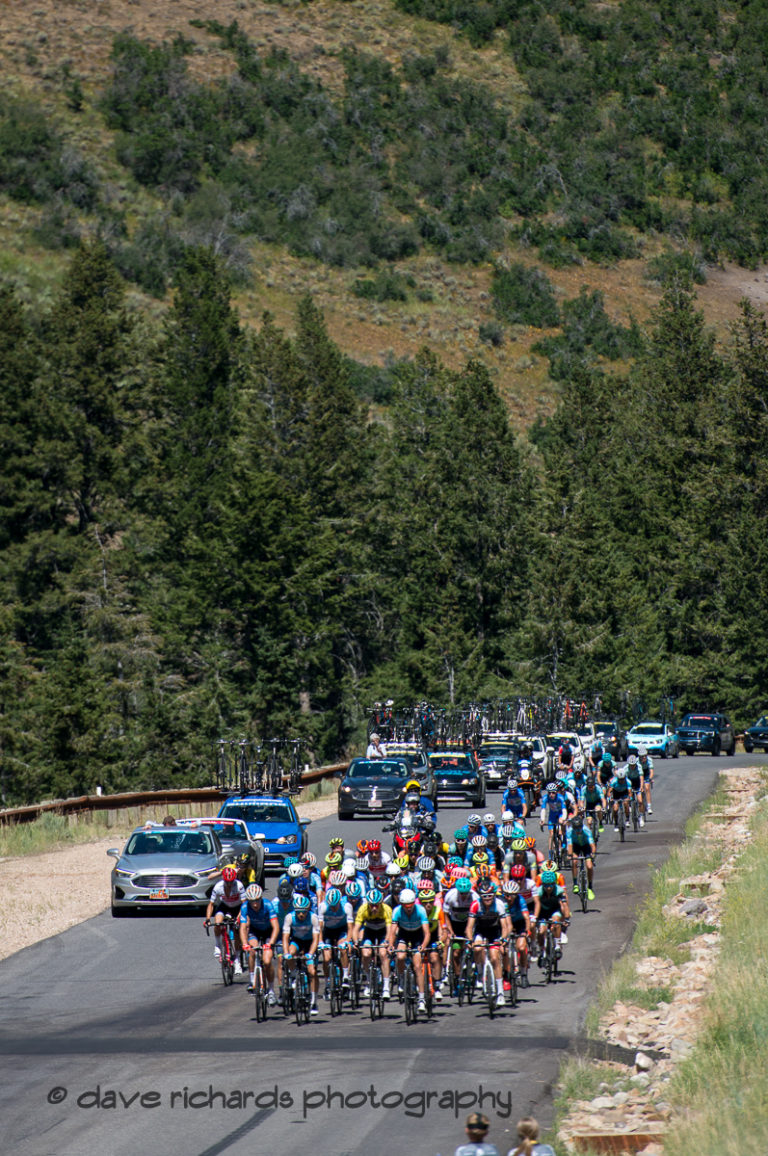
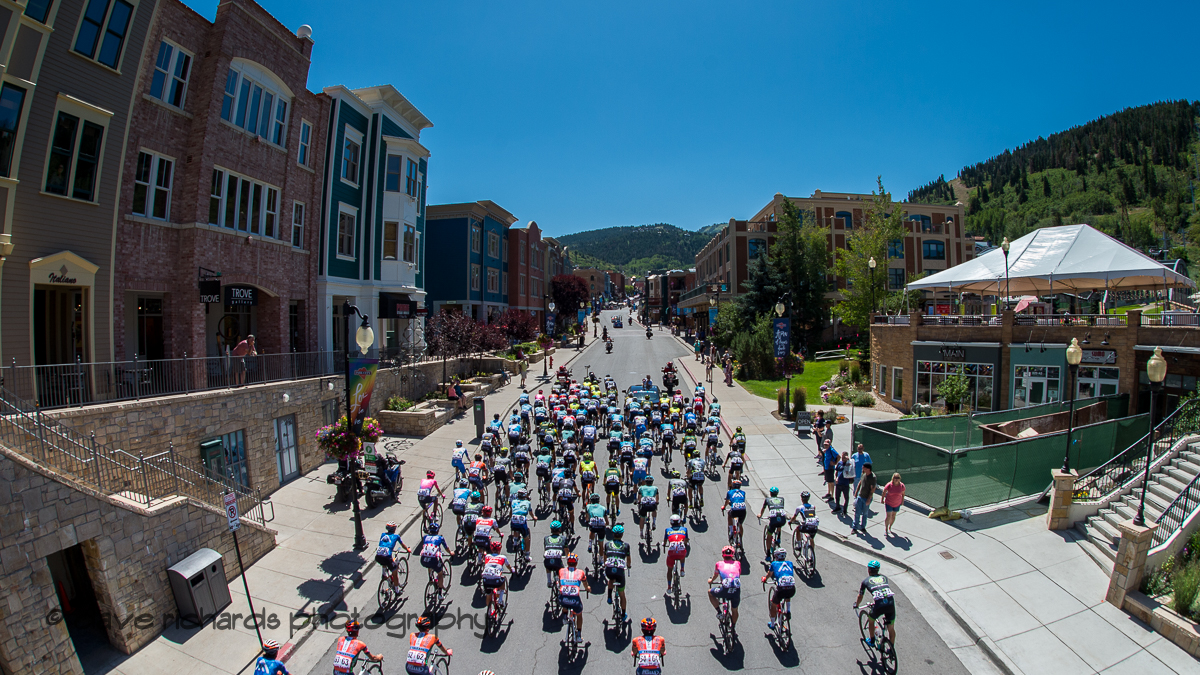
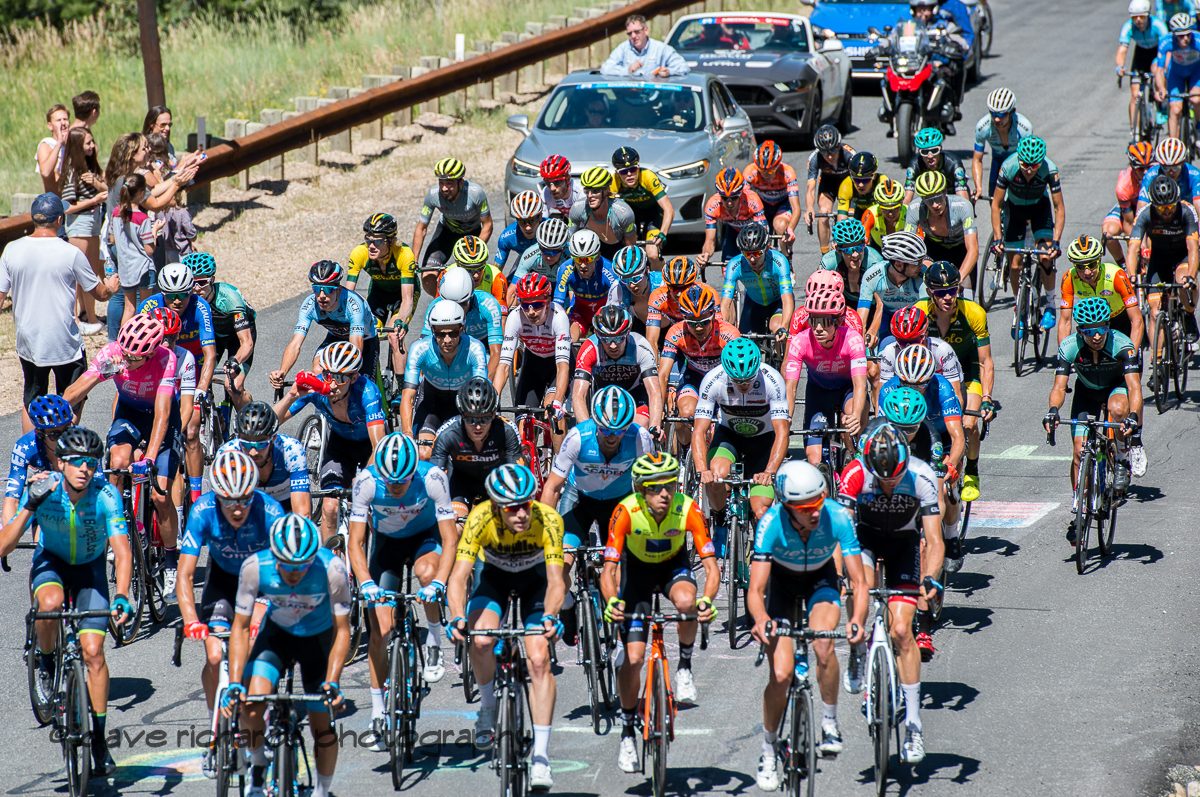
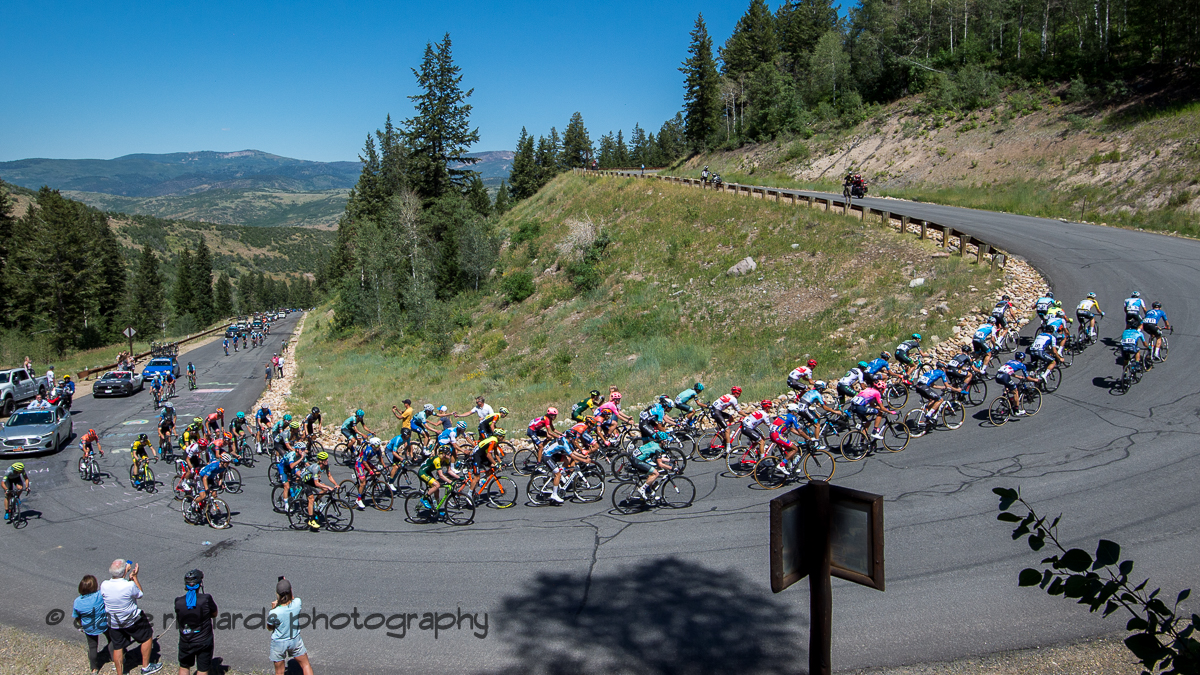
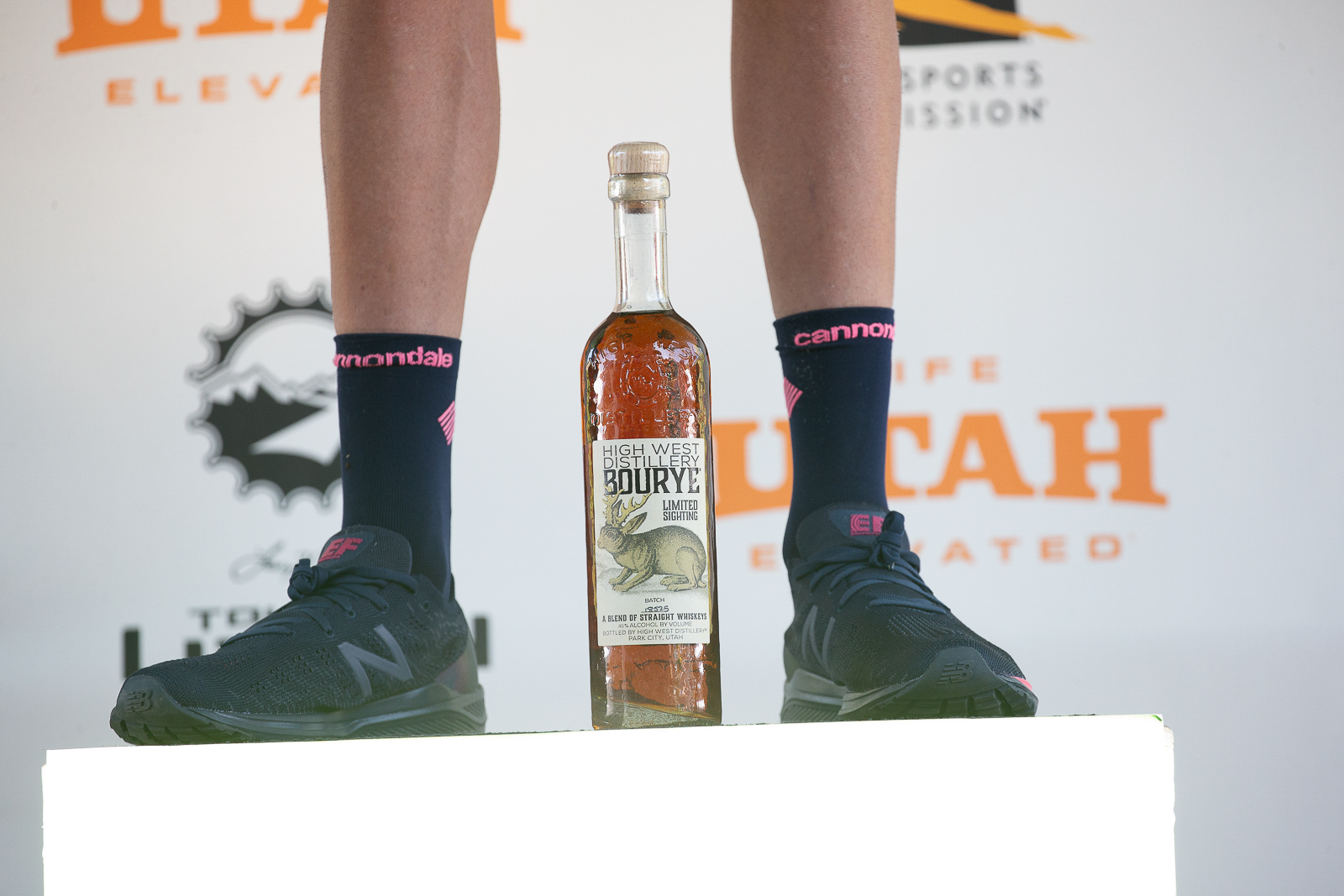
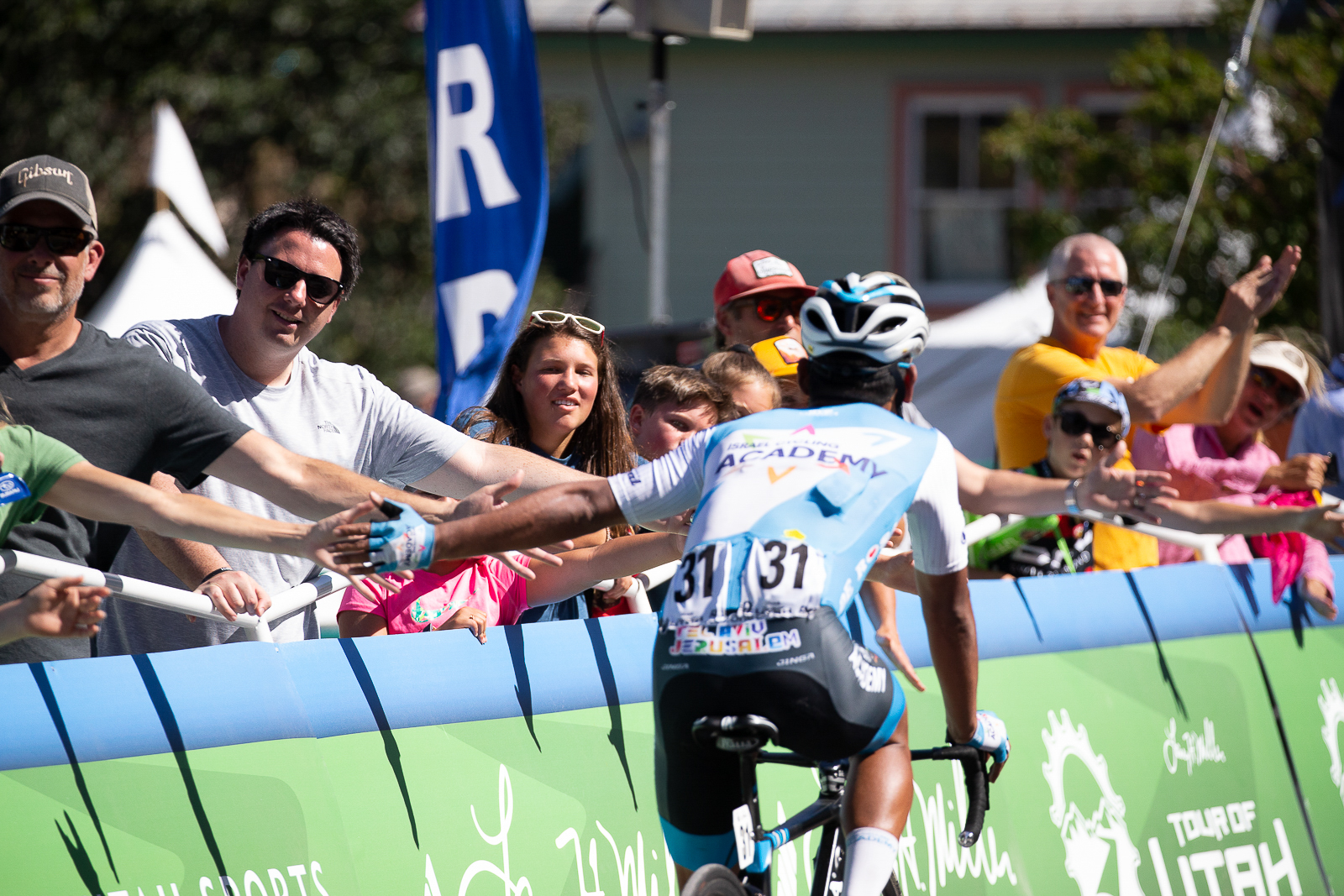
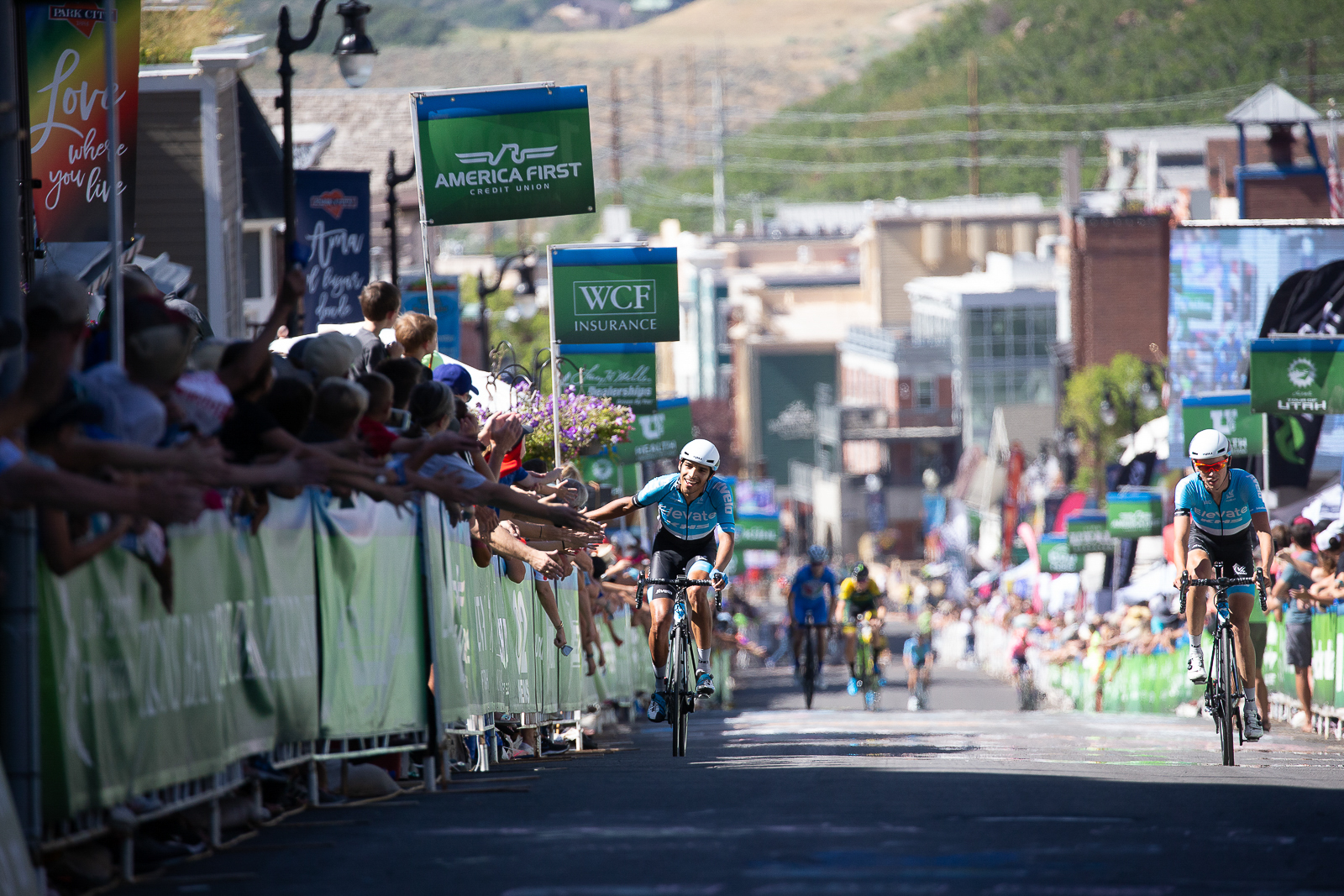
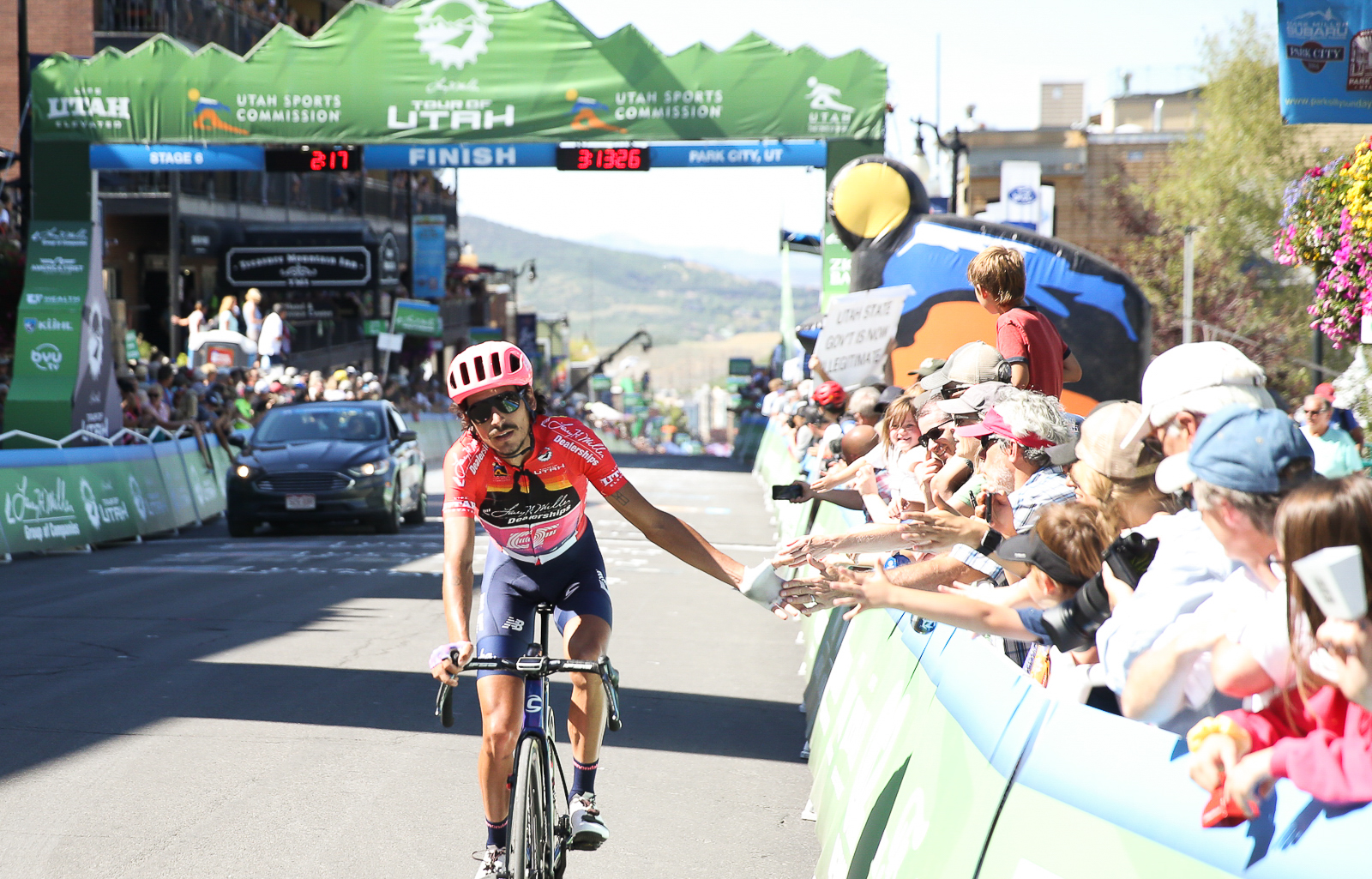
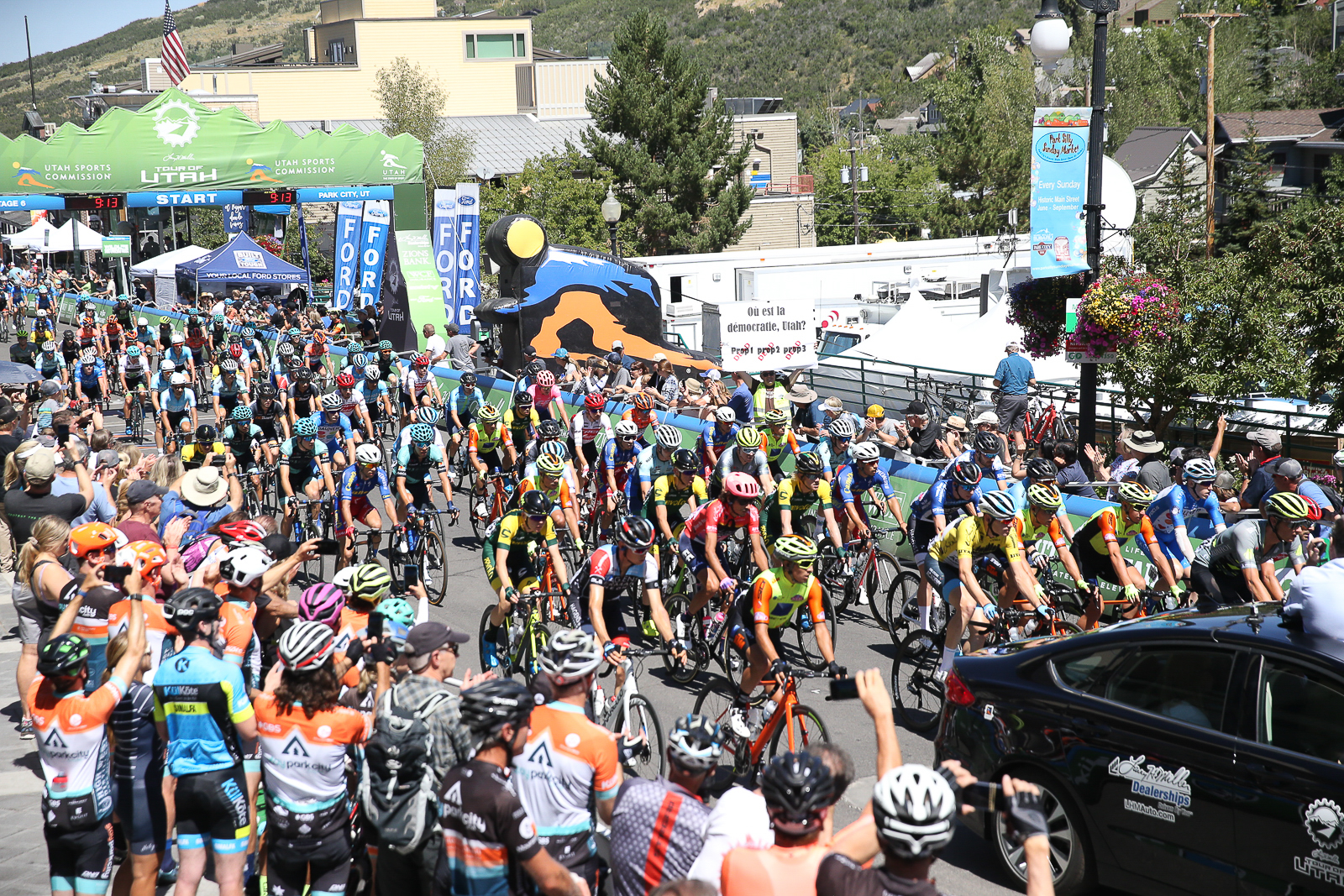
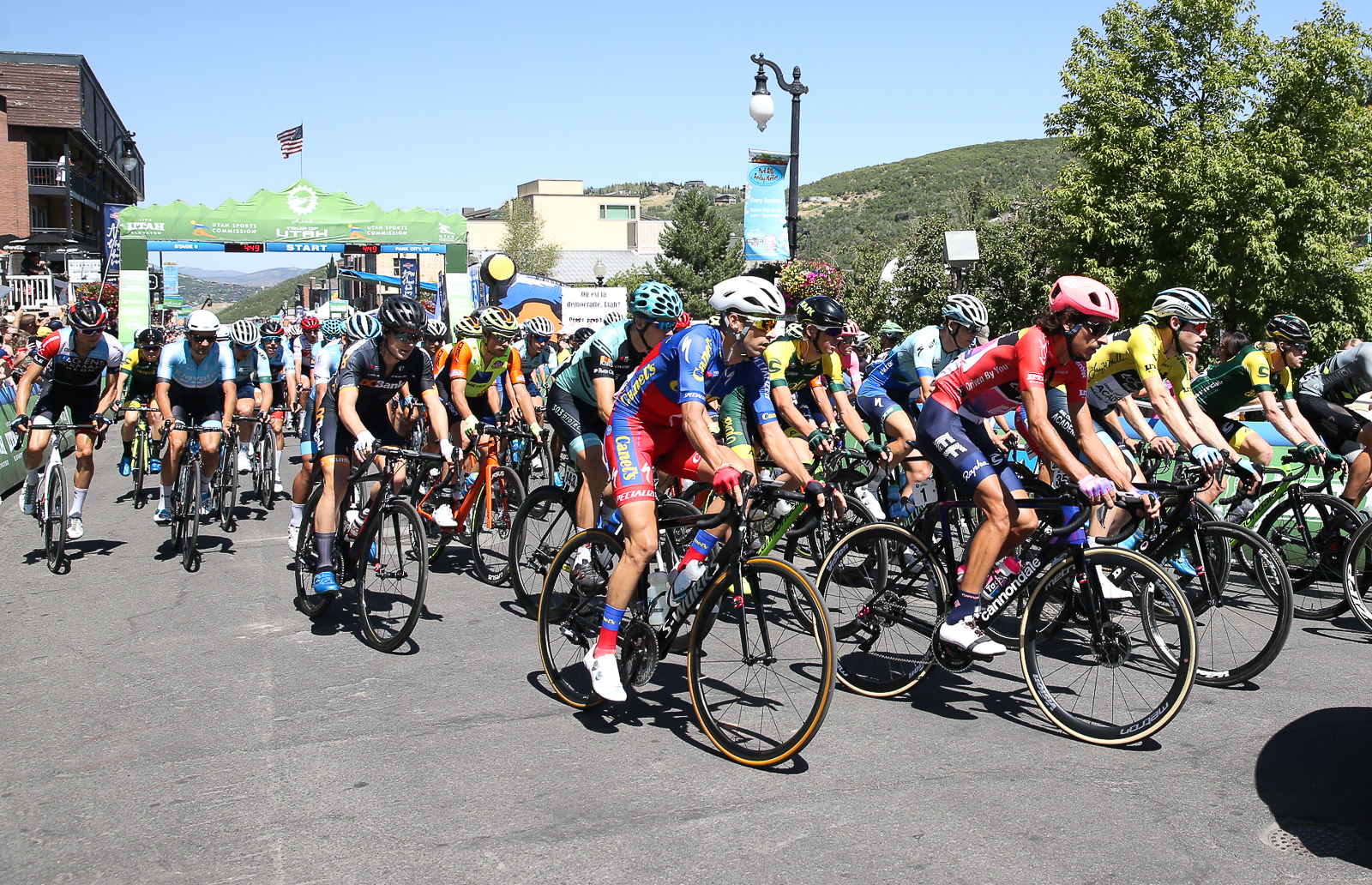
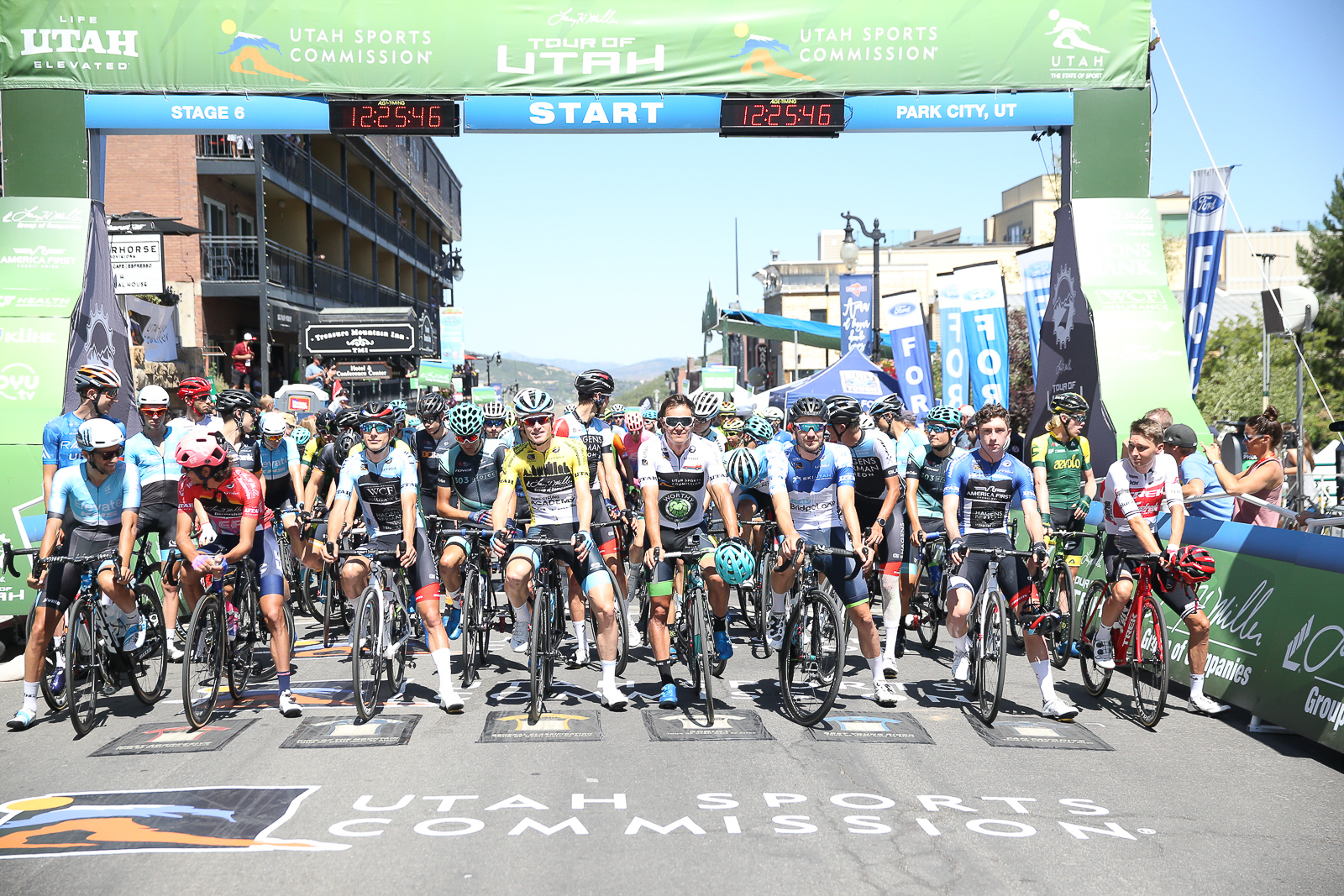
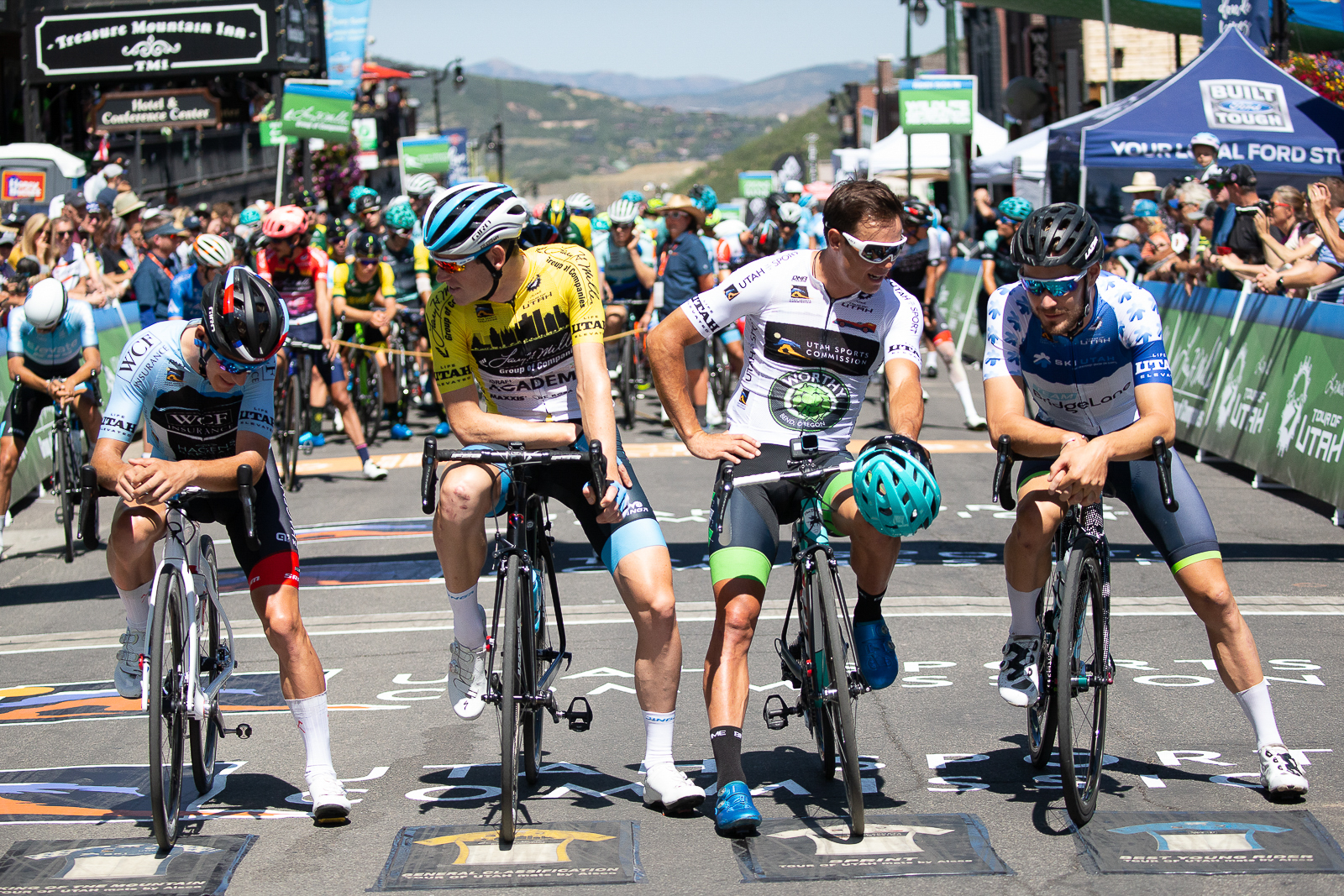
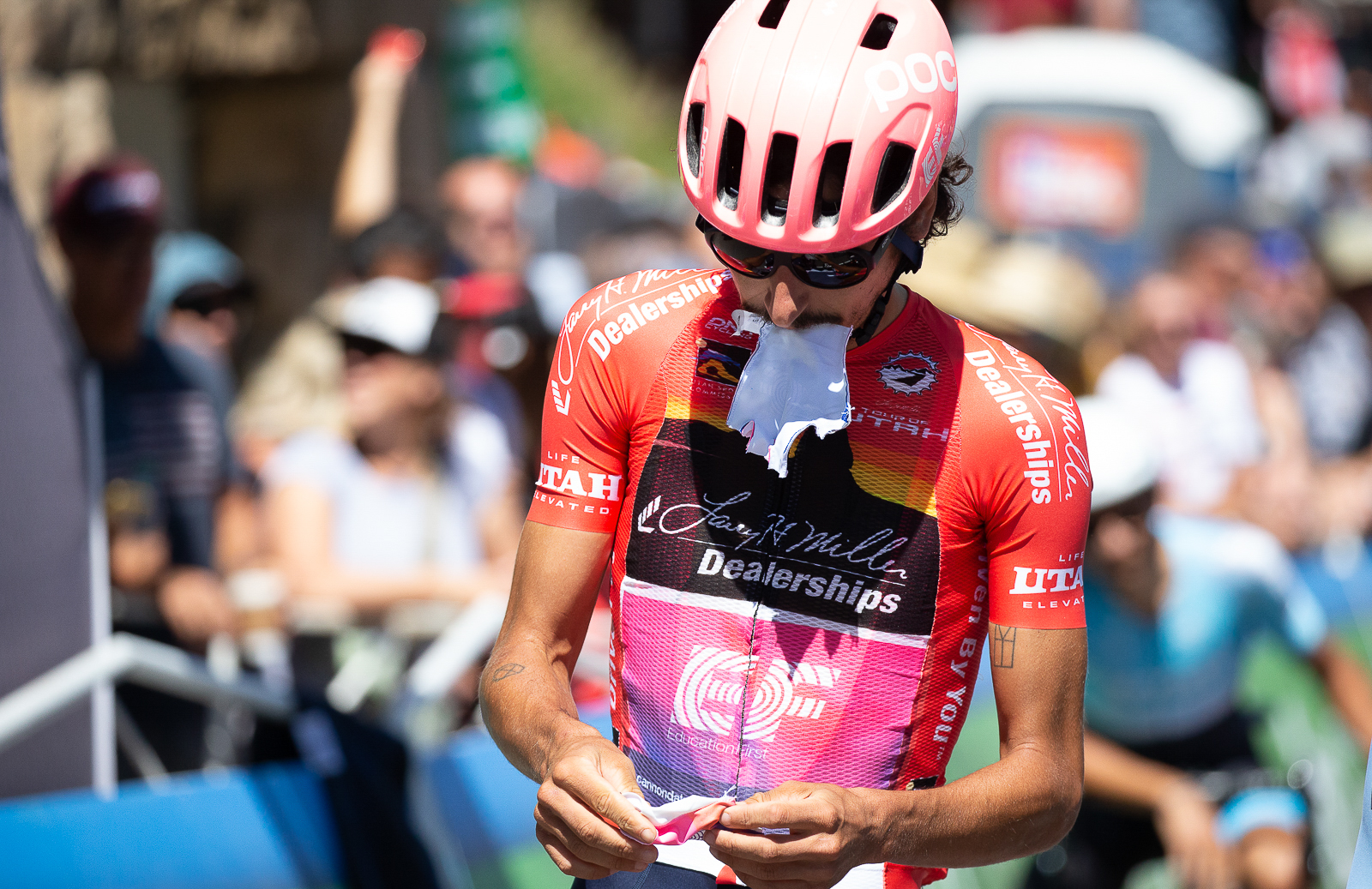
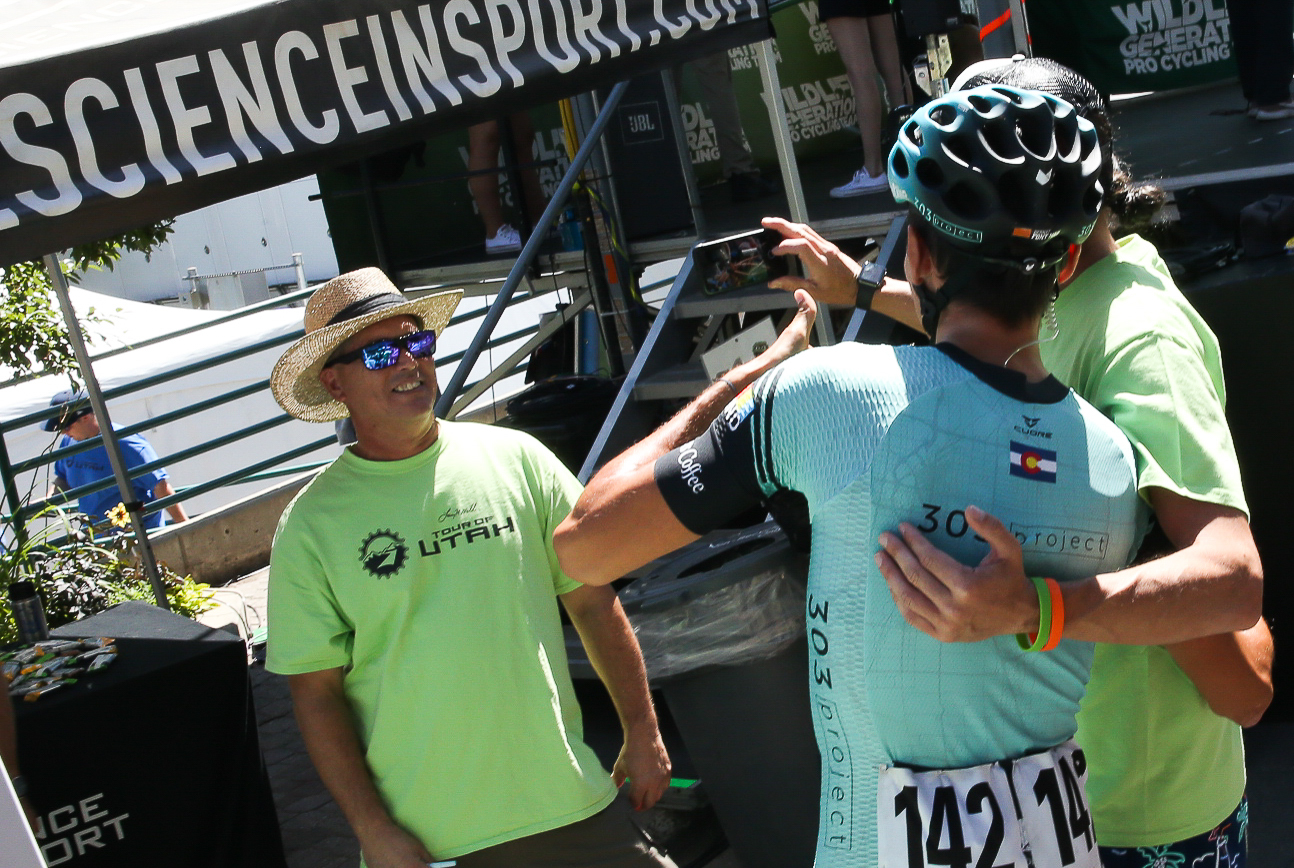
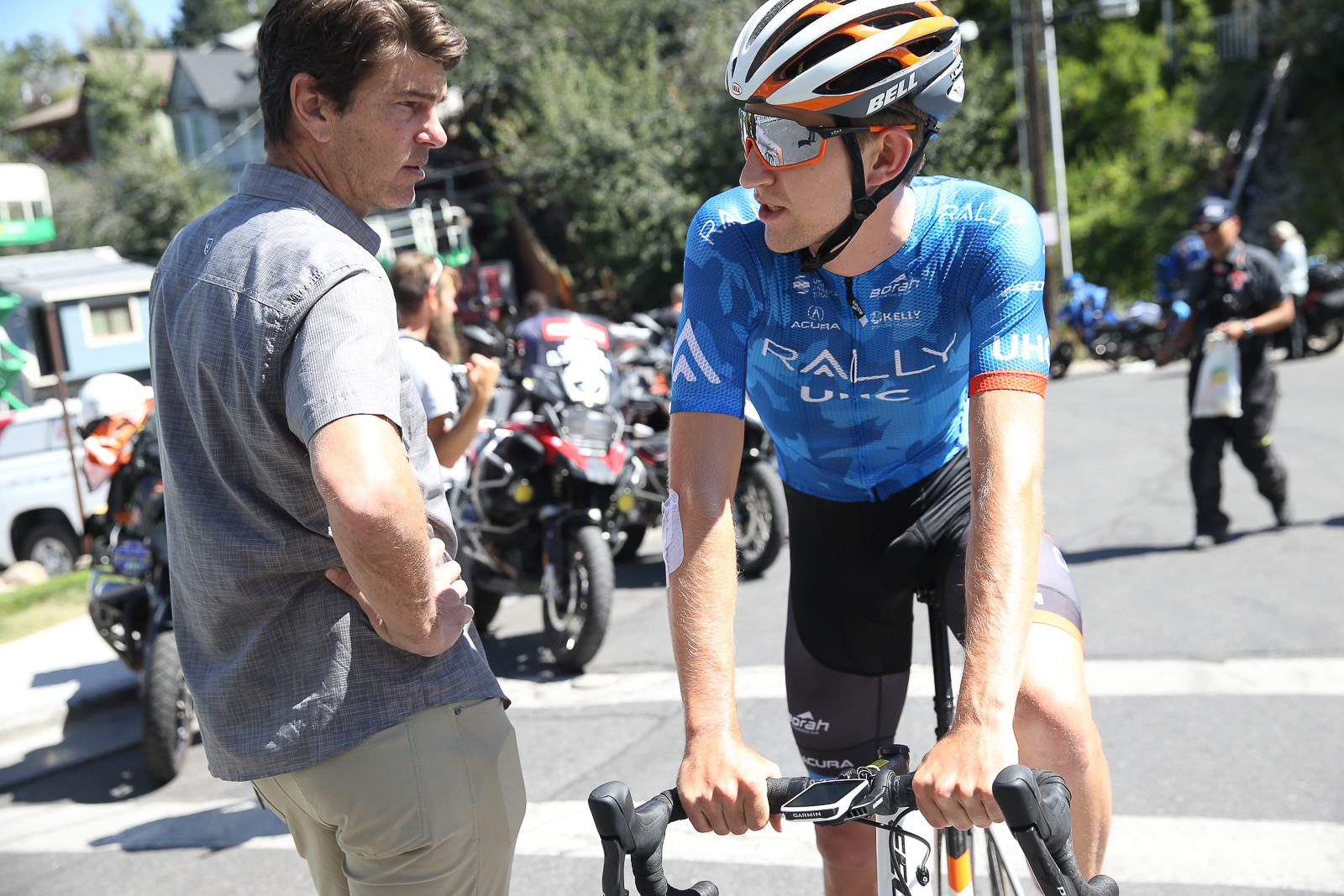
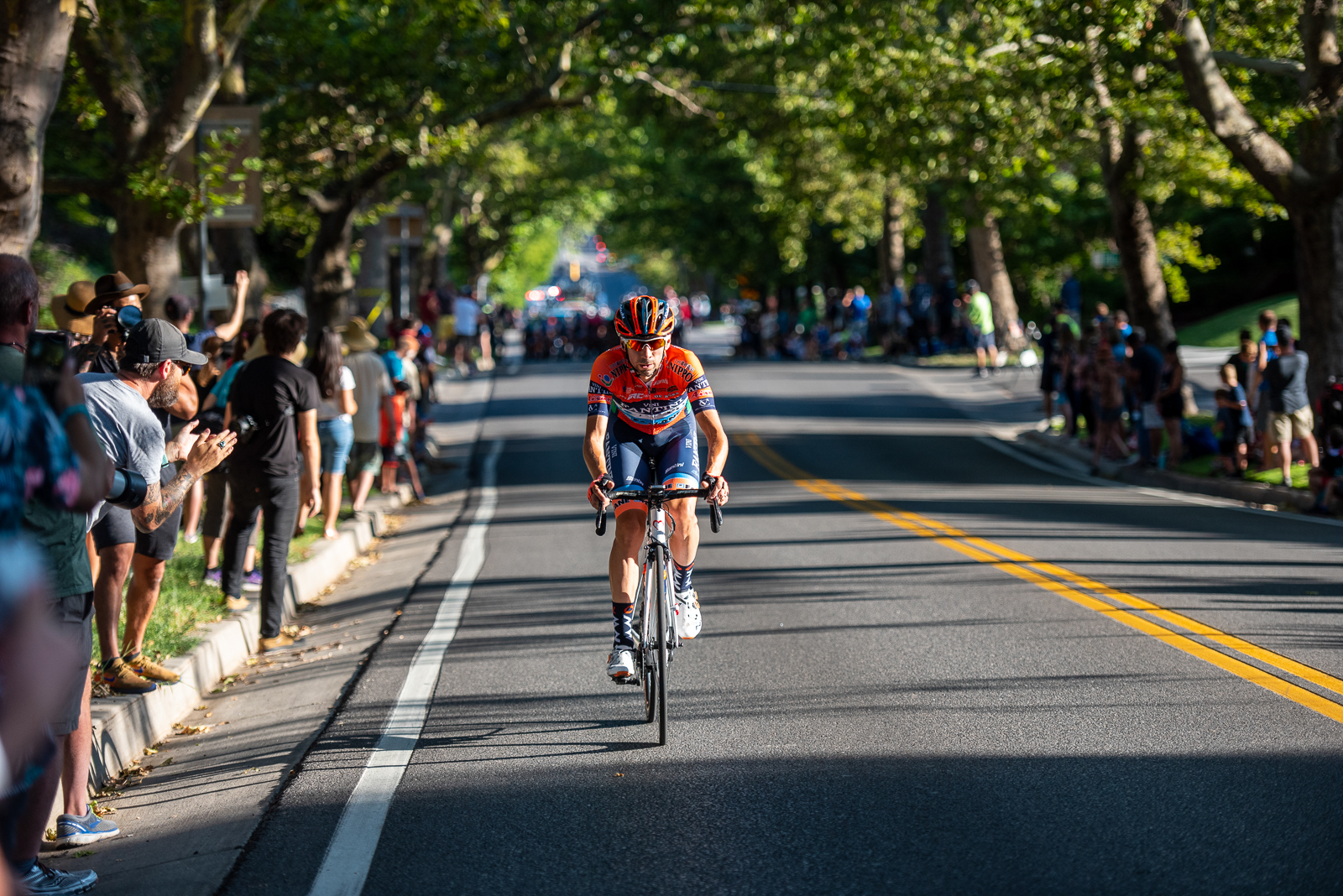
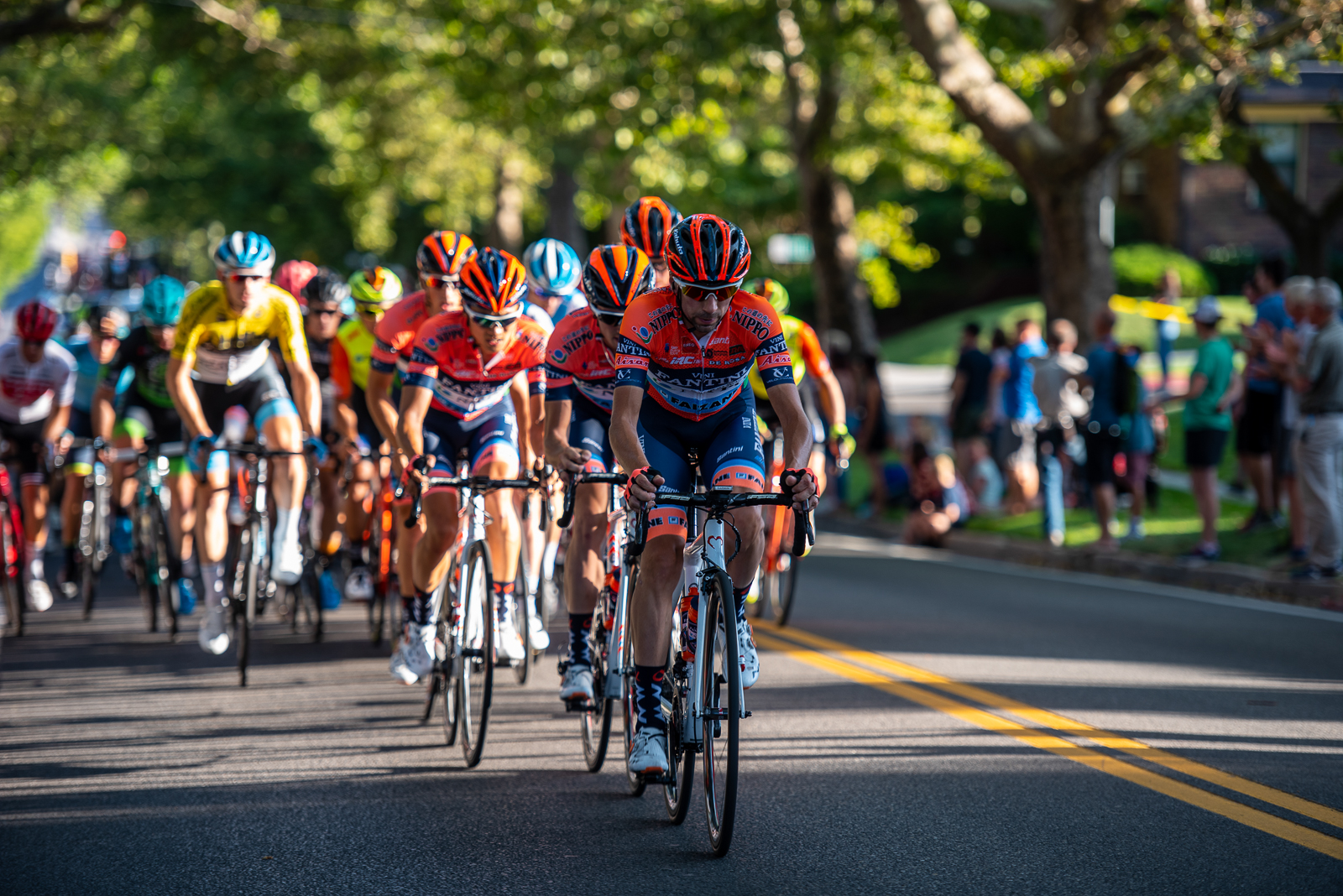
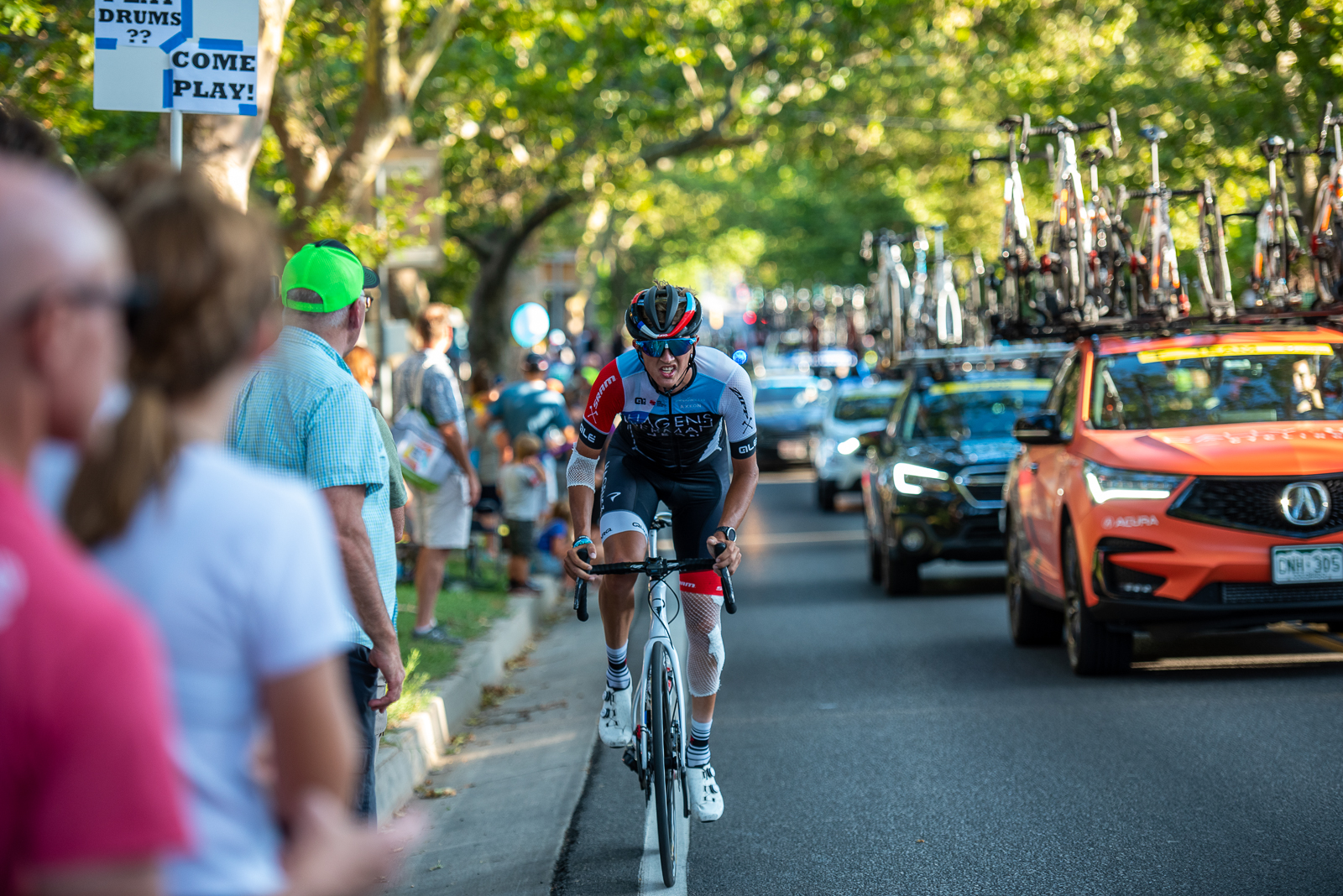
At Cycling West, we love the Tour of Utah. We may be biased, but as far as we’re concerned “America’s Toughest Stage Race” actually means “America’s Best Stage Race”, and we hope that you’ve enjoyed our coverage as much as we’ve enjoyed bringing it to you. With this, Dave Richards’ gallery of photos from Stage 6, we conclude our coverage of the 2019 Larry H. Miller Tour of Utah.
The Sevier Valley Rooster Ride will be held in Richfield, Utah on August 24, 2019. The ride travels through the backroads of Sevier County, and features beautiful scenery and few cars.
We asked organizer Chad McWilliams of Sevier County a few questions about the ride.
Cycling West: Tell us about the ride. What are the courses like, and what are the highlights?
Rooster Ride: We have teamed up with Jorgensen’s in Richfield for our annual what we are calling the “Rooster Ride”. This ride will be tough to beat with our clean air and beautiful scenery with almost zero traffic. The ride will take you around the Sevier Valley from little town to little town. Where the locals will be there to take care of you in one of the six aid stations. Test yourself with a Century ride that offers over 4,000 feet of climbing in one of the most scenic canyons in all of Utah. While out riding you can stop at the aid station at the Fremont Indian State Park and take a quick photo of some the Fremont Indian rock art. This event will become one of the premier cycling events in south central Utah.
A rider at the 2018 Rooster Ride. Photo by Chuck Hawley
CW: What support will you have on the ride?
RR: The guys at Jorgensen’s along with Cliff with keep you nourished and hydrated with 6 fully stocked aid stations. They will also help make any last-minute adjustments the night before at packet pick up.
CW: When people visit Richfield for the event, where can they stay or camp?
RR: We have tons lodging options in the Sevier Valley. Richfield is the host city and the start and finish line of the Rooster Ride. With over 20 hotels to choose from, you can find the place that is right for you. For those that want a chance to be outdoors we offer tons of camp sites and RV camping at places like the famous Big Rock Candy Mountain and Fremont Indian State Park and KOA right in Richfield. You can find all this by going to sevierutah.net
A rider at the 2018 Rooster Ride. Photo by Chuck Hawley
CW: Tell us a little about the history of the area.
RR: Located in scenic Sevier Valley, Richfield is one Utah’s best-kept secrets. Why do we call it the “Rooster Ride?”: Way back in the day, Sevier Valley was one of the premier pheasant hunting areas of Utah. You can hunt for your own epic riding experience by “Riding the Rooster”. Sevier County is also known as “Utah’s Trail County”, with over 2,000 miles of the best off-road adventures on the world-famous Paiute ATV/UTV trail system.
The first recorded inhabitants of Trail Country were the Fremont Indians, and the century ride will take you right past an area where you can see their way of life from your bike. After you ride the Rooster, you will want to come back and find your new favorite trail.
CW: Is there anything else that you would like to add?
RR: The 1st 100 riders to register will get a pair of custom Rooster Ride socks. All Rooster riders will get a medal and tee shirt and lunch of their choice from one of the many food vendors that will be joining us. For more information and to register go to traildaysutah.com. Follow us on Facebook for updates: Sevier Valley Rooster Ride. While you are off riding, the family can enjoy the “Trail Days” festivities that will be going on at the same time. They will be able to enjoy golf and air shows, or a relay run. There will food and live entertainment throughout the day.
Ride Details: August 24, 2019 — Sevier Valley Rooster Ride, Richfield, UT, Sevier County in conjunction with Sevier County Trail Days is presenting a 33, 55, or 100 mile bike ride thru scenic Central Utah. Event will be chipped, with fully stocked rest stops, great swag and lunch. Metal and Tee Shirt provided. 33 mile option has a 800 ft gain, 1,163 ft gain for the 55 mile option, and 4,061 ft for the 100 mile option., Chad McWilliams, 435-893-0457, 435-421-2743, [email protected], traildaysutah.com/sv-rooster-ride/
PRESS RELEASE – DENVER (August 15, 2019) – The 2019 Colorado Classic presented by VF Corporation will put women’s racing on a world stage with game-changing live start-to-finish coverage each day of the race (August 22-25) and distribution to fans around the world over a pioneering streaming, social media and TV network.
“We are putting women’s pro racing on a world media stage like never before,” said Rob Simon, RPM Events Group CMO and Executive Producer. “With unprecedented live coverage from the start of the race through the podium award ceremonies, and free worldwide distribution through streaming and TV partners, we’re creating a game-changing media platform for professional women cycling. For most of the teams and riders in our race, it will be the first time they can tell their fans to tune-in and watch the race every day, start-to-finish.”
The distribution network will include live streaming on the Colorado Classic “Watch Now” page and syndication through an embedded Livestream player on nearly 25 partner and cycling media websites, including the teams and racers themselves. The production will be simulcast on social media on Colorado Classic’s Facebook page and YouTube channel, where it can be watched, shared and commented on around the world.
Global Cycling Network (GCN) will provide an English-language show with commentary from Marty MacDonald and ex-pro cyclists Dani Rowe (Stages 1-2) and Hannah Walker (Stages 3-4), and a Spanish-language show with commentary from Andres Canovas Rubio. Both will be distributed on GCN’s English and Spanish Facebook and YouTube channels. GCN provided similar live coverage of the race last year as well.
The distribution will break new ground with a pioneering “localized” broadcast powered by Kiswe and its award-winning CloudCast technology, enabling a commentator to call the race — live — in their native language from anywhere in the world. This is the first time that Kiswe technology will be used to cover a cycling event. The Colorado Classic will be CloudCast by cycling media reporter Rebecca Reza in Spanish from her base Texas and distributed through a new cycling media company in Costa Rica, GPSeries1, on their website, Facebook and YouTube channels.
For mobile app fans, the race will be distributed live on the Colorado Classic Tour Tracker mobile app, available for Apple and Android phones. The Tour Tracker app, the fan-favorite cycling app, also provides real-time GPS tracking of the riders, text commentary, photo feeds, video replays, race standings, stage previews, results and more.
Domestically, Altitude Sports and AltitudeNOW, the official cable and satellite partner of the Colorado Classic, will broadcast each day’s race live with additional evening replays. “Couldn’t be more excited to have the Colorado Classic back on Altitude and with a great new format showcasing the strength and competitive spirit of women’s professional cycling,” said Doug Ballmer, Altitude’s Senior Director of Programming.
Seen in more than 2.5 million homes in a 10-state territory, Altitude TV is the television home of the Denver Nuggets, Colorado Avalanche, Colorado Mammoth, Colorado Rapids, Denver Outlaws, University of Denver sports (hockey, basketball, soccer, volleyball, gymnastics and lacrosse), University of Colorado and Rocky Mountain Athletic Conference shows, CHSAA High School Football Game of the Week, as well as other local and regional sports, entertainment and public service programming. A full list of Altitude TV programming and other information can be found at www.altitudesports.com
For a schedule of streaming and Altitude TV times, click HERE.
The race broadcast is being produced with innovative story-telling and immersive production values by Citizen Pictures, a Colorado-based Emmy-winning TV production company. They will be using new technologies such as cellular HD mobile cameras, POV cameras in the caravan and on bikes and drones to create a more immersive and engaging experience. The announce team includes pros Brad Sohnerand Meredith Miller. As part of its story-telling, Citizen Pictures also produced nearly a dozen HERoes videos — up-close-and-personal profiles of women racers and cyclists that tell the women’s stories on and off the bike. The HERoes videos will become part of the broadcast and are also available on YouTube.
This production approach and streaming network will not only give the race greater potential reach around the world, and help the race find new audiences, it also will allow fans to watch the race the way they watch TV today — on any device, anytime and anywhere — and with the ability to engage with the coverage — sharing, liking, and commenting on social while the action is happening.
The Colorado Classic® presented by VF Corporation (Aug 22-25, 2019) is one of the premiere standalone pro women’s cycling races in the world. Nearly 100 of the world’s best racers from 16 teams will compete in the UCI 2.1 four-stage race, coursing through Steamboat Springs, Avon, Golden and Denver. More than a race, the Colorado Classic is a game-changing movement, advancing opportunity in women’s pro cycling with harder, longer routes; higher prize money; unprecedented team support; and daily live TV streaming coverage start-to-finish that puts women’s racing on a global stage like never before. Bicycling Magazine named the Colorado Classic one of 13 races in the world not to be missed this year.
To learn more about the Colorado Classic presented by VF Corporation, visit coloradoclassic.com or follow @coloradoclassicpro on Instagram and Facebook for the latest updates.
E-bikes make urban air clearer by getting people out of their cars. But less clear is if making e-bikes more affordable will expand their use. So conclude a pair of studies from an ongoing e-bike research project at the Transportation Research and Education Center (TREC) at Portland State University in Oregon.
TREC and other research institutions are collaborating on the Light Electric Vehicle Education and Research (LEVER) Initiative, which is studying all aspects of the use of e-bikes from policies to impacts to getting people to use them.
Cities around the world in recent years have added to bicycle infrastructure for, among other reasons, the need to reduce smog by moving people out of their autos. And despite some success, the level of bicycling has only gone up so much and may have come close to peaking. E-bikes could increase the level of biking and reduce the level of carbon emissions both by getting more people onto bikes and by encouraging bicyclists to go further, suggests TREC’s recent white paper The E-Bike Potential: Estimating the Effect of E-bikes On Person Miles Traveled and Greenhouse Gas Emissions (https://ppms.trec.pdx.edu/media/project_files/E-bike_Potential_Paper_05_15_19_Final_jHFUiVl.pdf).
TREC, naturally, did its research in Portland, Oregon. It concluded that the “strategy of increasing e-bike mode share within a given region can…be used confidently as a tool to help meet that region’s carbon emission reduction goals.” If 14-15 percent of trips were on bikes or e-bikes, emissions could drop 11 percent, the study estimates.
An experiment in Switzerland that gave 1,800 people free use of an e-bike for two weeks on the condition they not drive their cars found that 27 percent of them liked their trial two-wheelers so much that they bought one. A program in Holland in 2013 paid people per mile ridden on an e-bike. It increased use for sure, but only about half of the extra miles came at the expense of auto trips and it’s not clear to what degree people continued riding e-bikes once the trial ended.
Several other programs in Great Britain and the United States showed that giving people access to an e-bike for a limited period even without compensating them will encourage some to buy one, because they’ve had a cost-free positive experience. A problem, though was that e-bikes tend to cost more than people wanted to spend.
Would rebates work? Programs in Vietnam and California found that waiving the tax proved a better incentive than offering buyers a rebate equal to the tax.
Employers and communities have tried everything from discounts to cheap loans, government subsidies and employer subsidies. The Cycle to Work program in Britain allows employers to write off the cost of e-bikes that they loan to employees to commute to work.
Incentives work better with some employers than others. Live Electric offered a discount program to Utah state employees and employees of Rocky Mountain Power in Utah starting last fall. TREC reports that the University of Utah eagerly promoted the program and got a good response but other agencies didn’t sell as many as they didn’t promote it as well.
People bought about 400 e-bikes in Boulder County, CO in a program that called on the vendors to offer discounts in return for the county government marketing the offer. But the program only worked for so long. Vendors quit when sales slowed.
TREC researchers acknowledge that they couldn’t determine the long-term effects of e-bike incentives, nor the relationship between the size of the incentive to the cost of the bikes.
And what’s next for LEVER? Consortium members are working on a project called Novel Approaches to Model Travel Behavior and Sustainability Impacts of E-Bike Use. They are looking for volunteer e-bike users to participate in a year-long study that will “leverage smartphones to conduct ad-hoc travel surveys to supplement the passive data collection and, using machine learning algorithms, create the largest and richest dataset to support the growth of e-bike use as a transportation option.”
And in a continent that you can’t get to from America by e-bike, researchers wanted to examine whether riding one will result in a net increase or decrease in physical activity. The answer, as you might have expected, depends on whether you switch to an e-bike from a regular bike or from an auto. The study looked at 10,000 e-bikers in seven European cities.
The study reports “e-bike use leads to substantial increases in physical activity in e-bikers switching from private motorized vehicle and public transport, while net losses in physical activity in e-bikers switching from cycling were much less due to increases in overall travel distance.”
But e-bikers rode longer distances than conventional bikers, and thus used more pedal strokes. But the research didn’t explain to what degree e-bikers were former conventional cyclists who switched to longer rides vs. those who didn’t bike before.
See Castro, Alberto, et al. “Physical activity of electric bicycle users compared to conventional bicycle users and non-cyclists: Insights based on health and transport data from an online survey in seven European cities.” Transportation Research Interdisciplinary Perspectives (2019): 100017., https://doi.org/10.1016/j.trip.2019.100017.
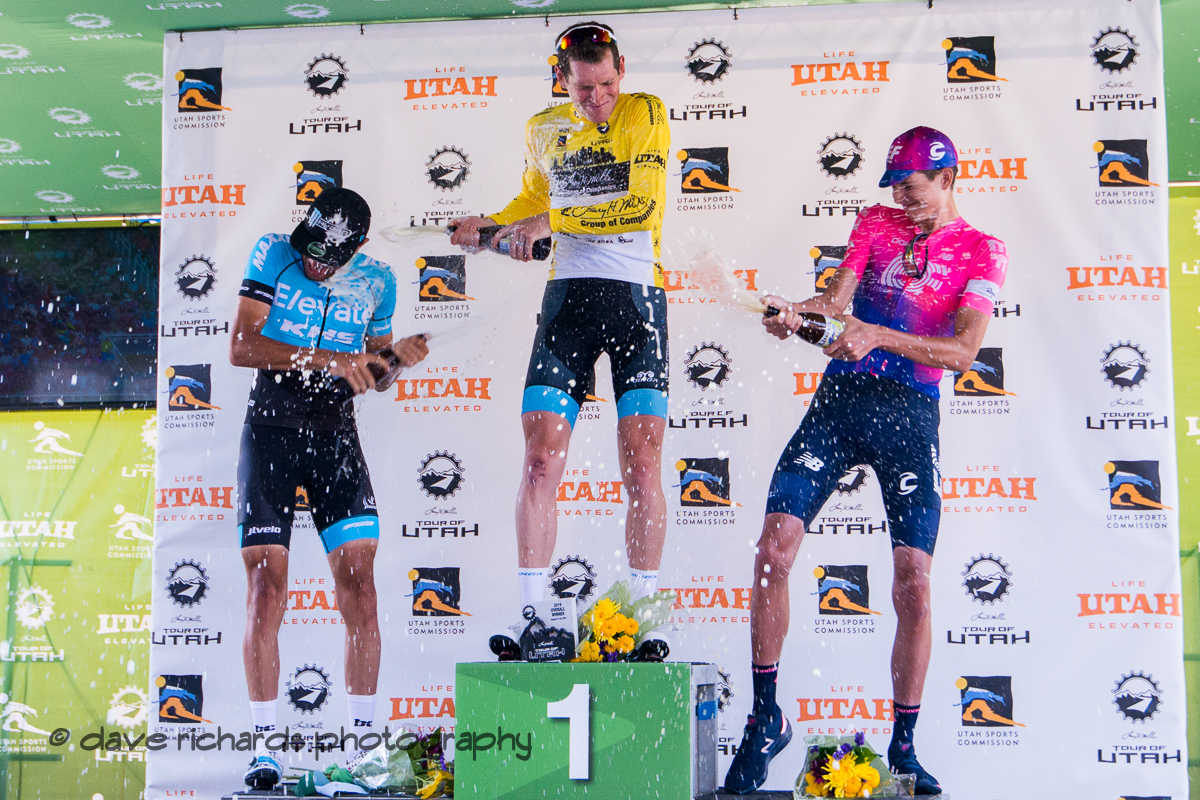
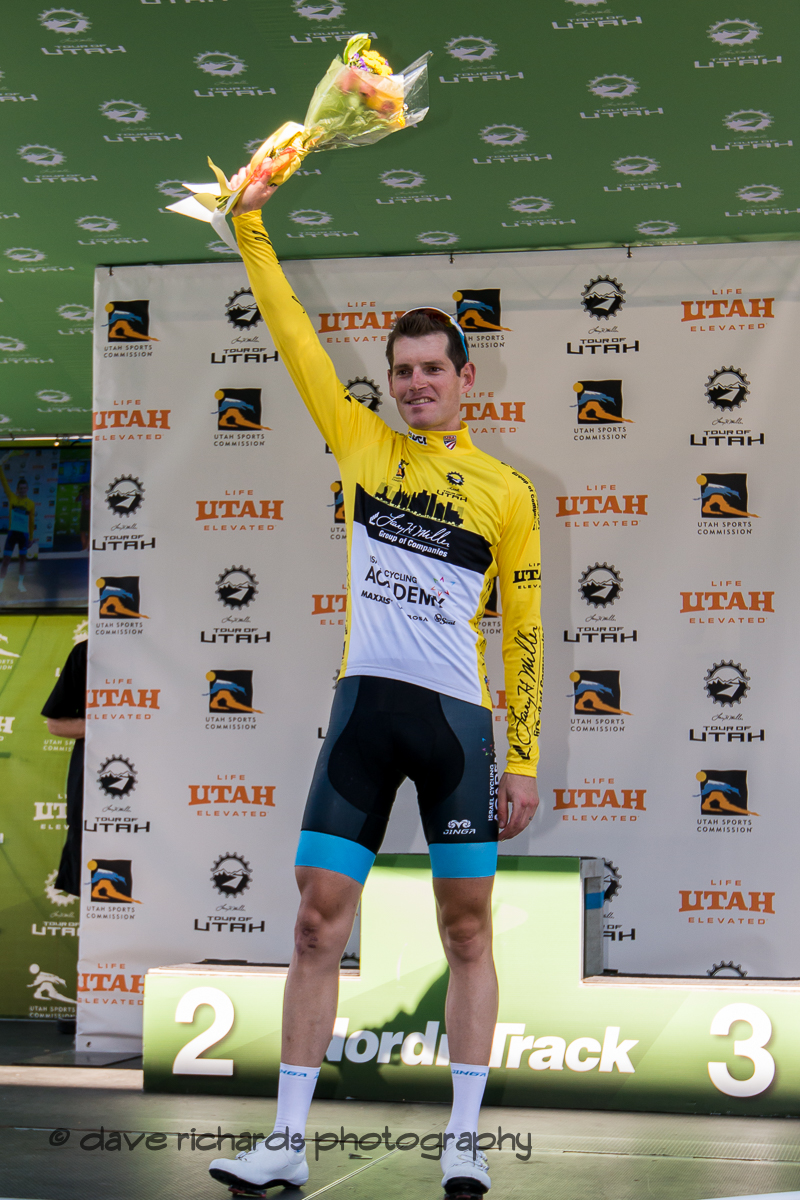
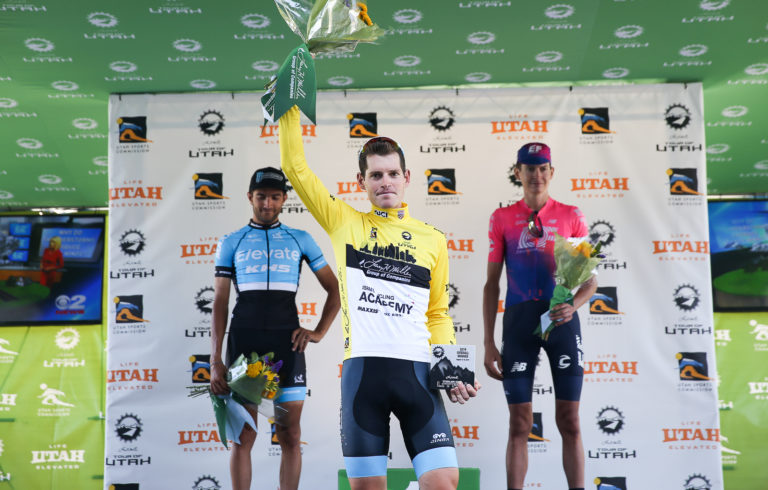
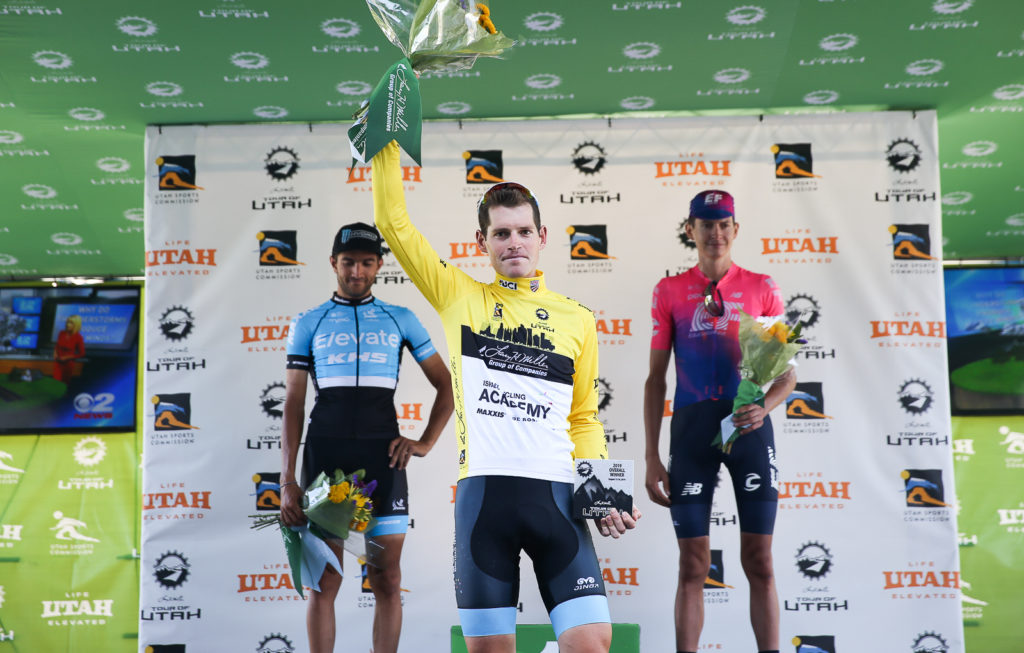
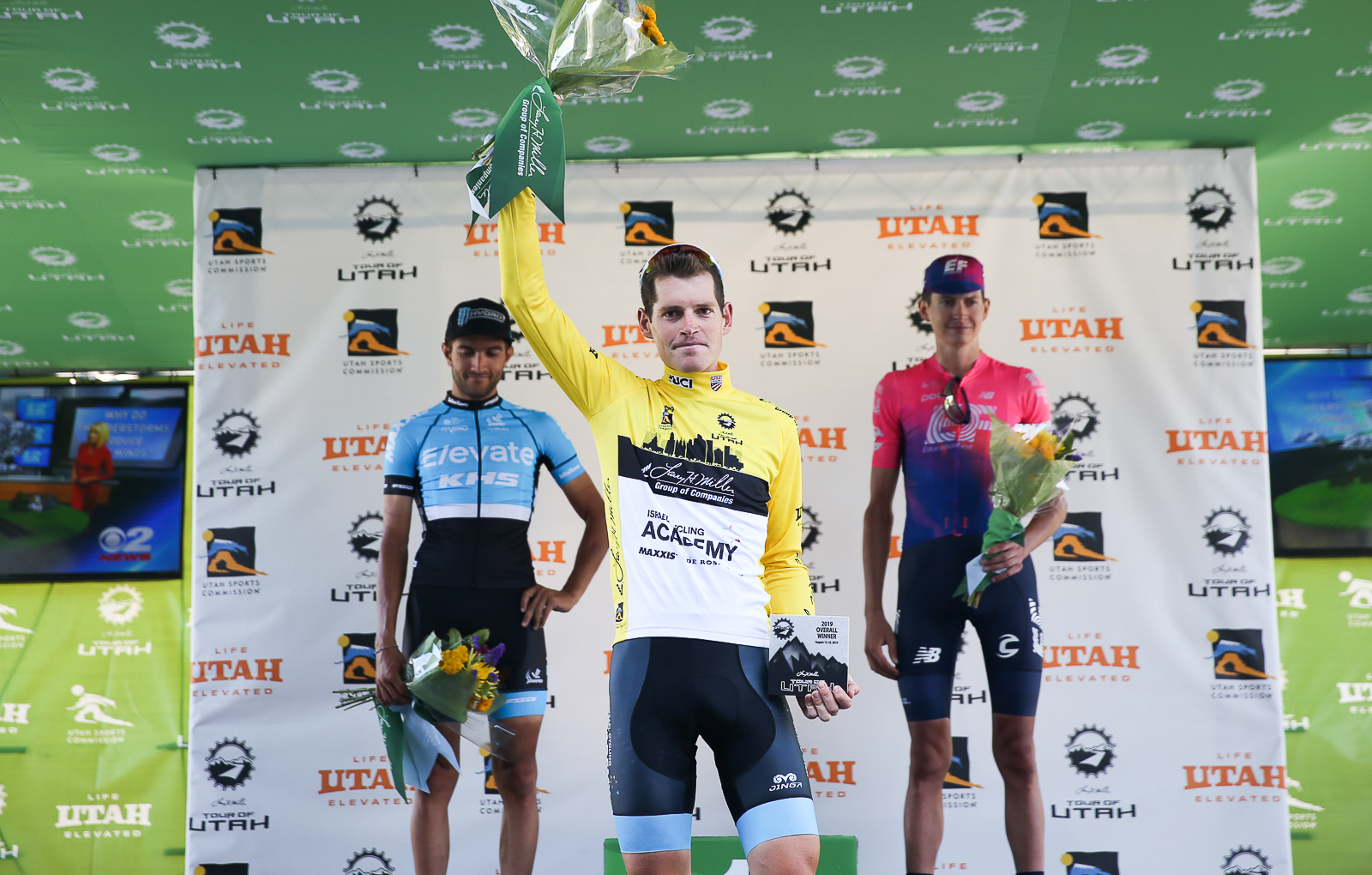
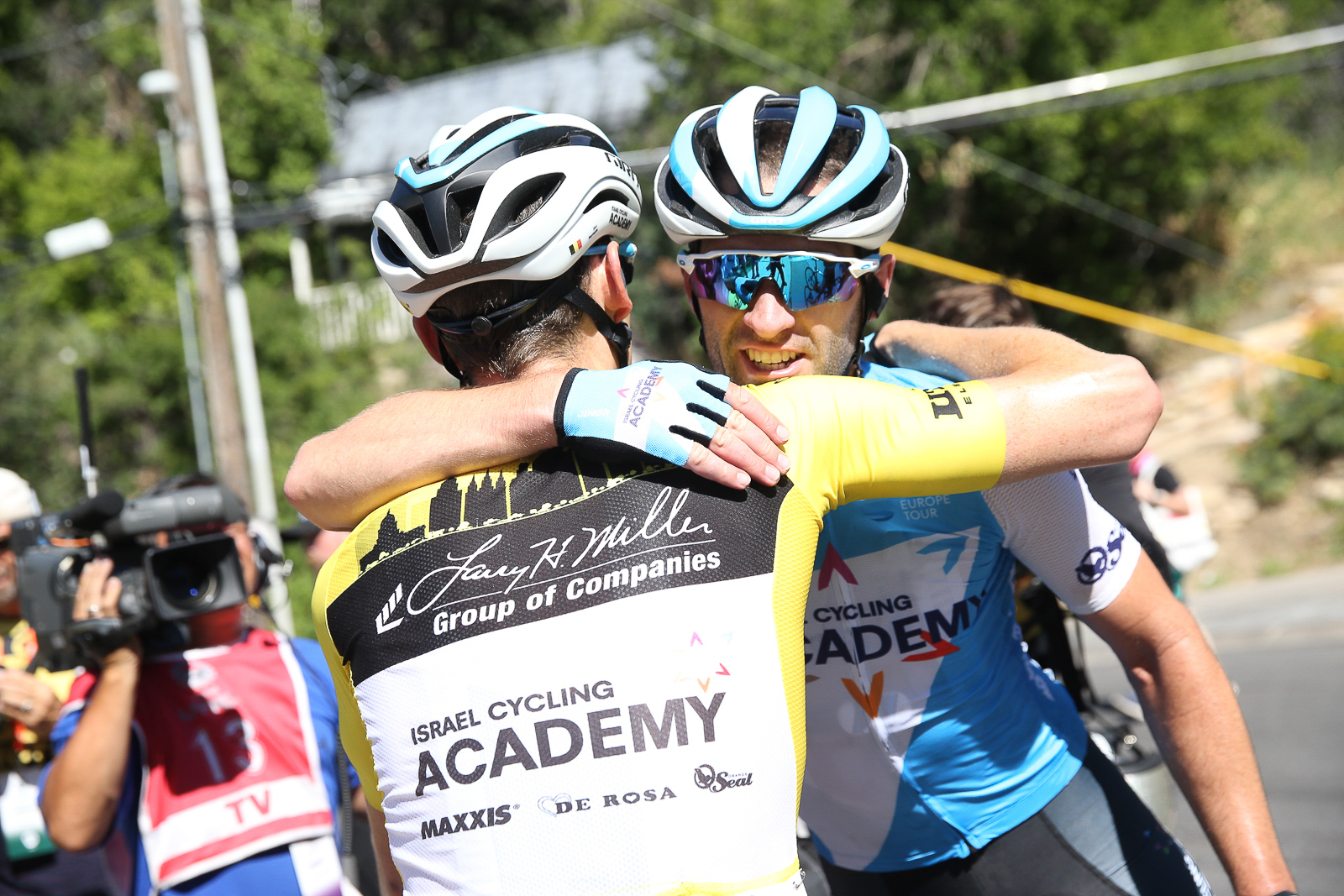
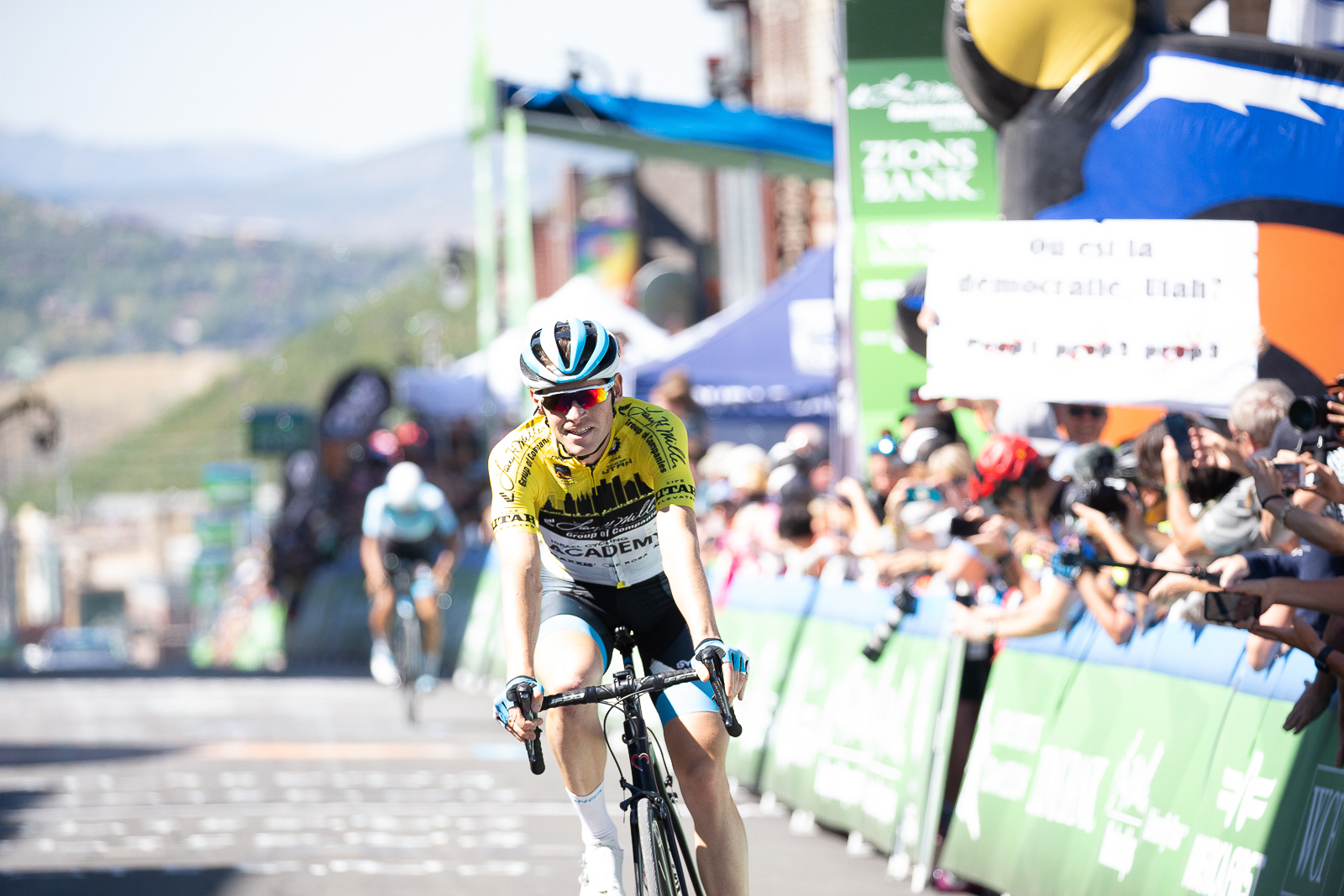
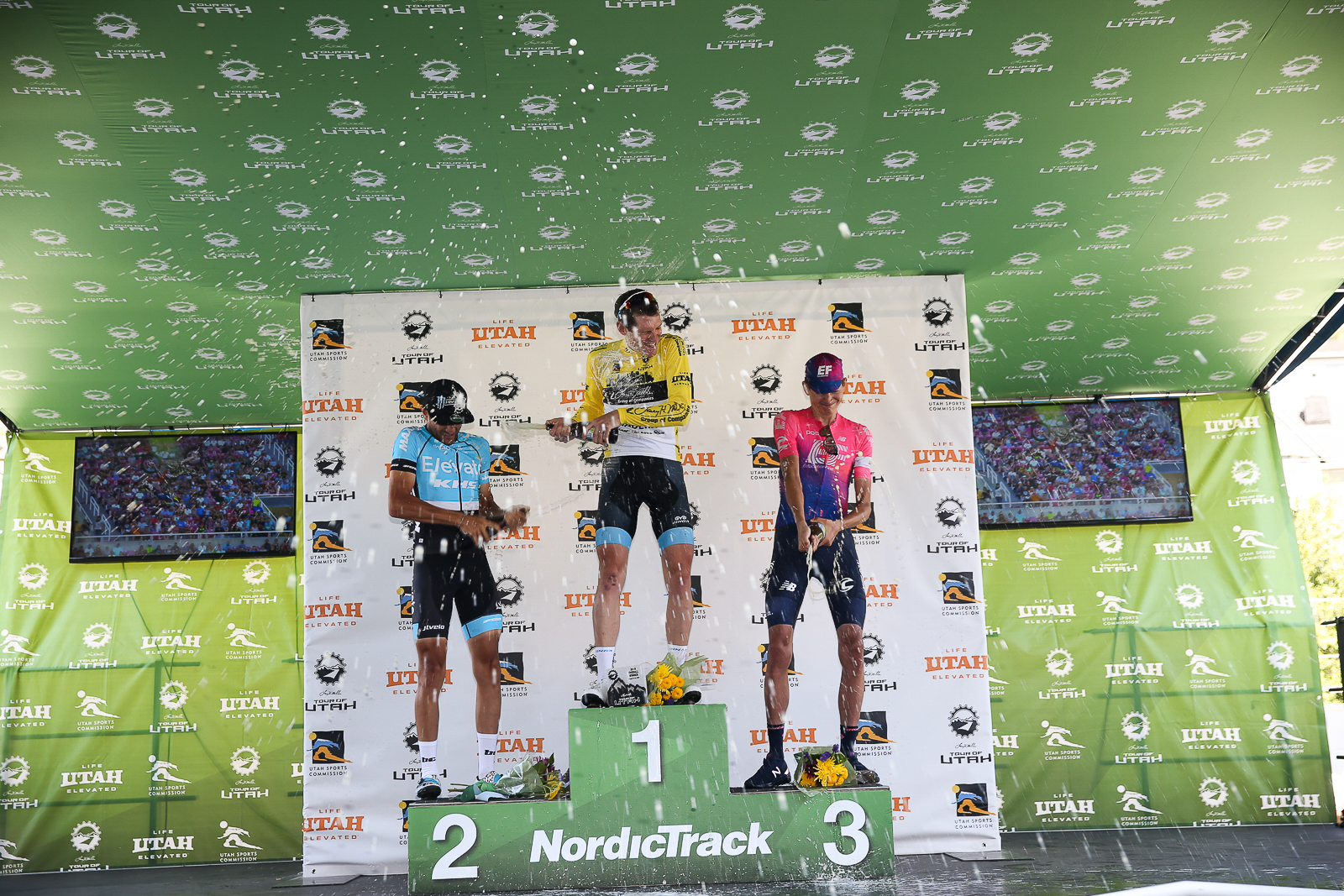
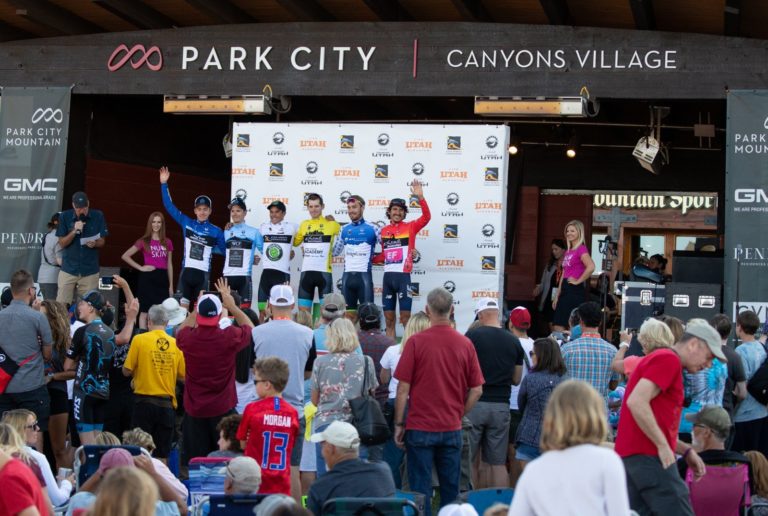
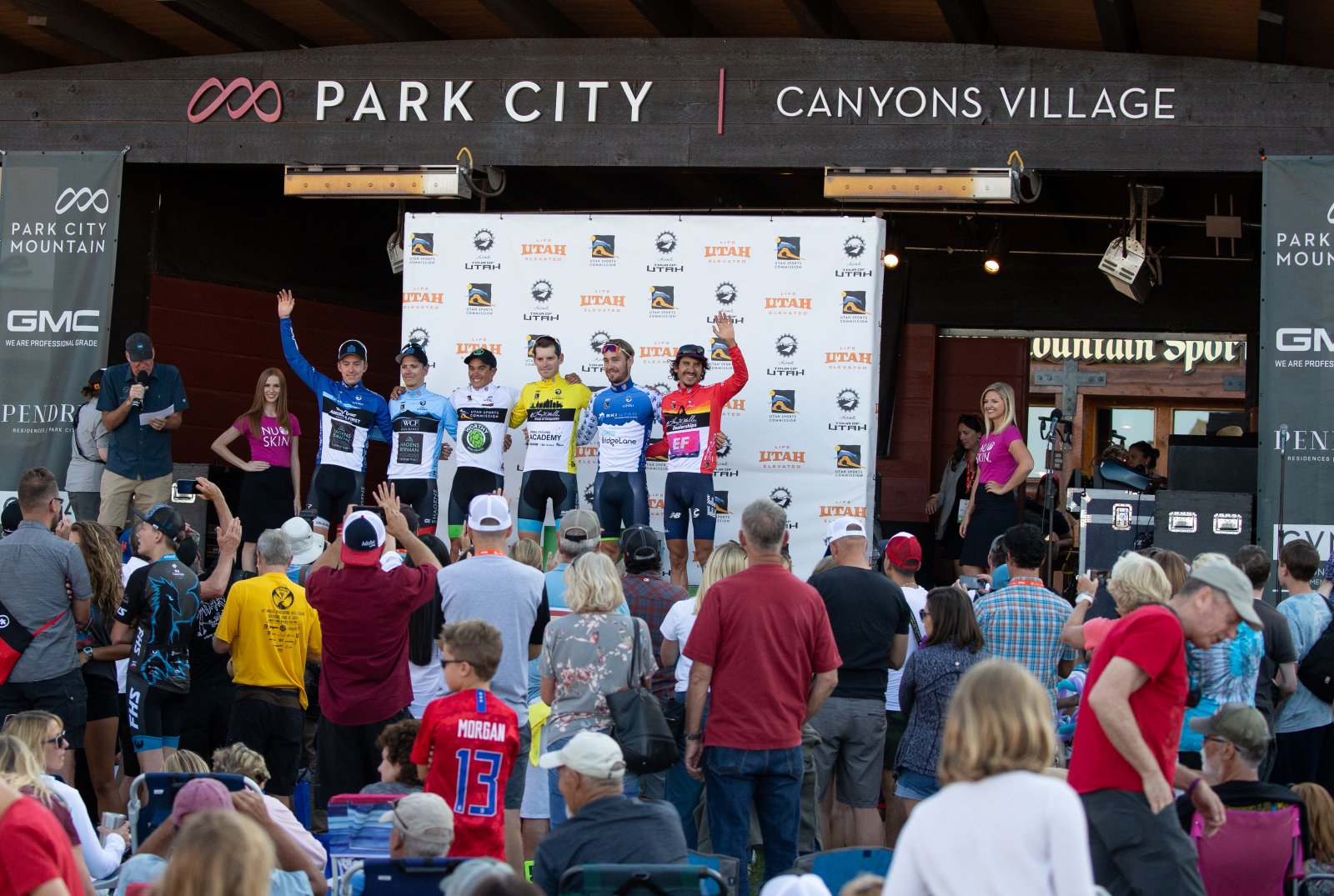
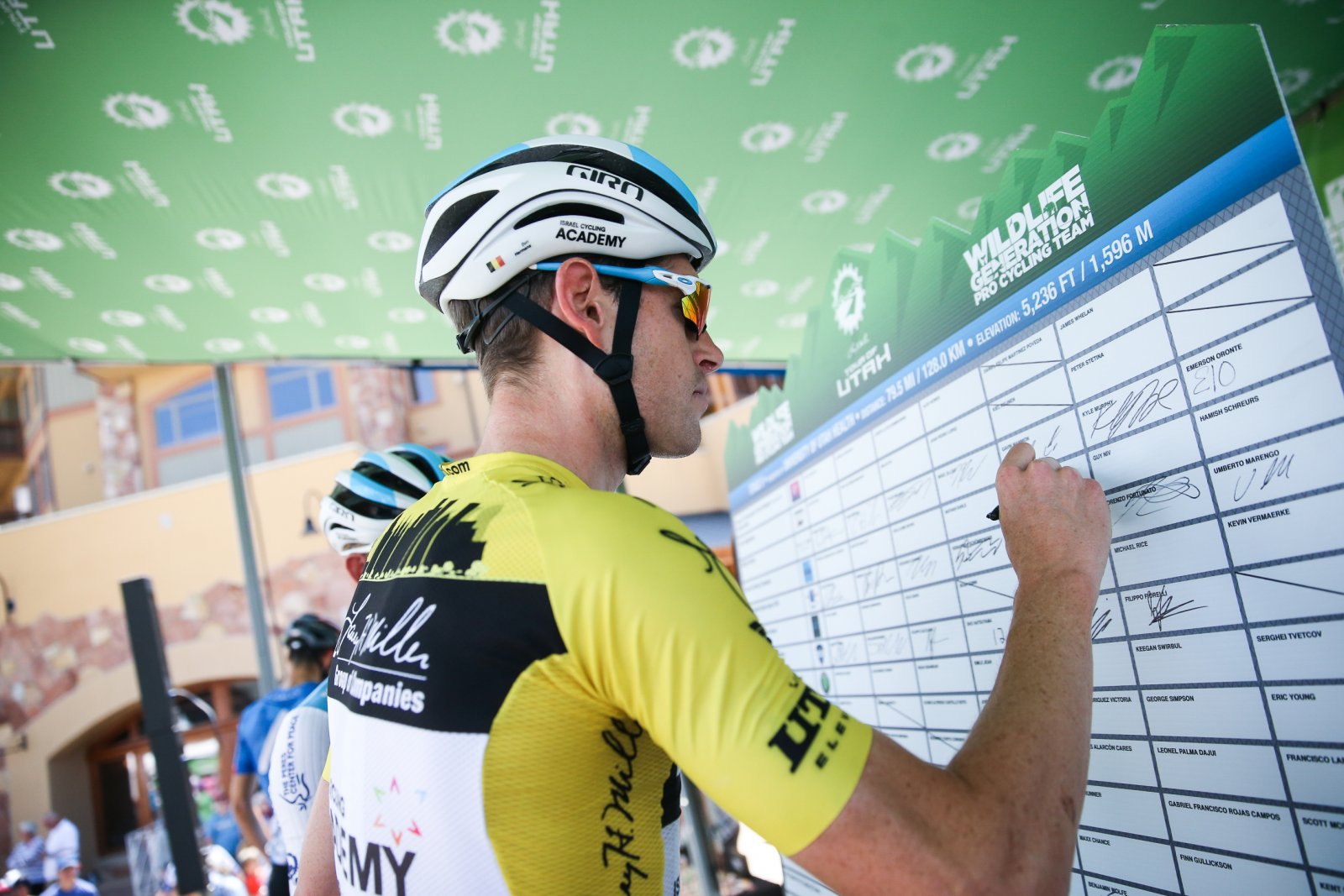
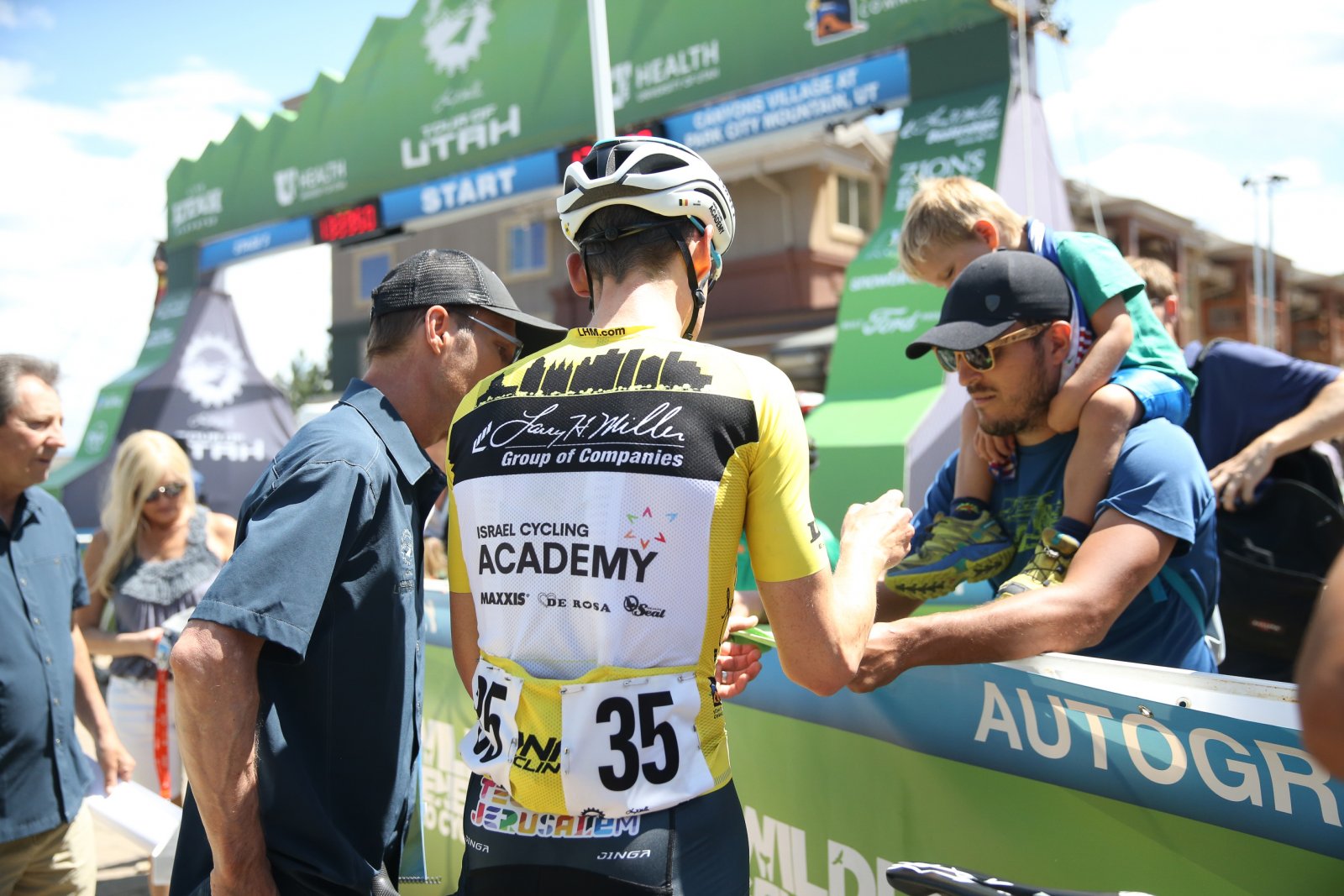
By Lyne Lamoureux – PARK CITY, Utah (August 18, 2019) – Belgian Ben Hermans of Israel Cycling Academy successfully fended off all challengers to earn the top prize at the 2019 Larry H. Miller Tour of Utah in front of huge crowds in Park City on Sunday. Hermans rode a masterful race to finish fourth on Stage 6 presented by Utah Sports Commission and take the Larry H. Miller Group of Companies Overall Leader title.
“From the first time that I did this race in 2014, I had a good feeling with this race and I kept getting better results in the G.C.,” said Hermans, who was fourth overall in 2014 and runner-up in 2017 at the Tour of Utah. “It’s really amazing. I really enjoy it here. It’s amazing to ride for these crowds. And to be there on the podium in the yellow jersey is really, really nice.”
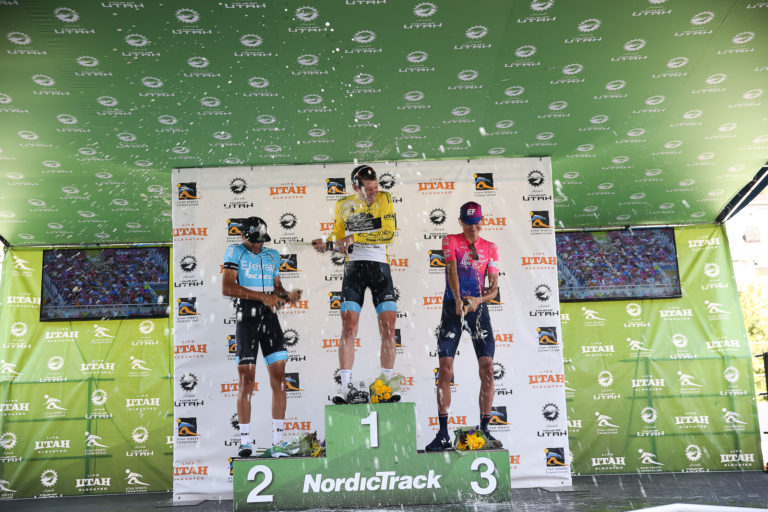
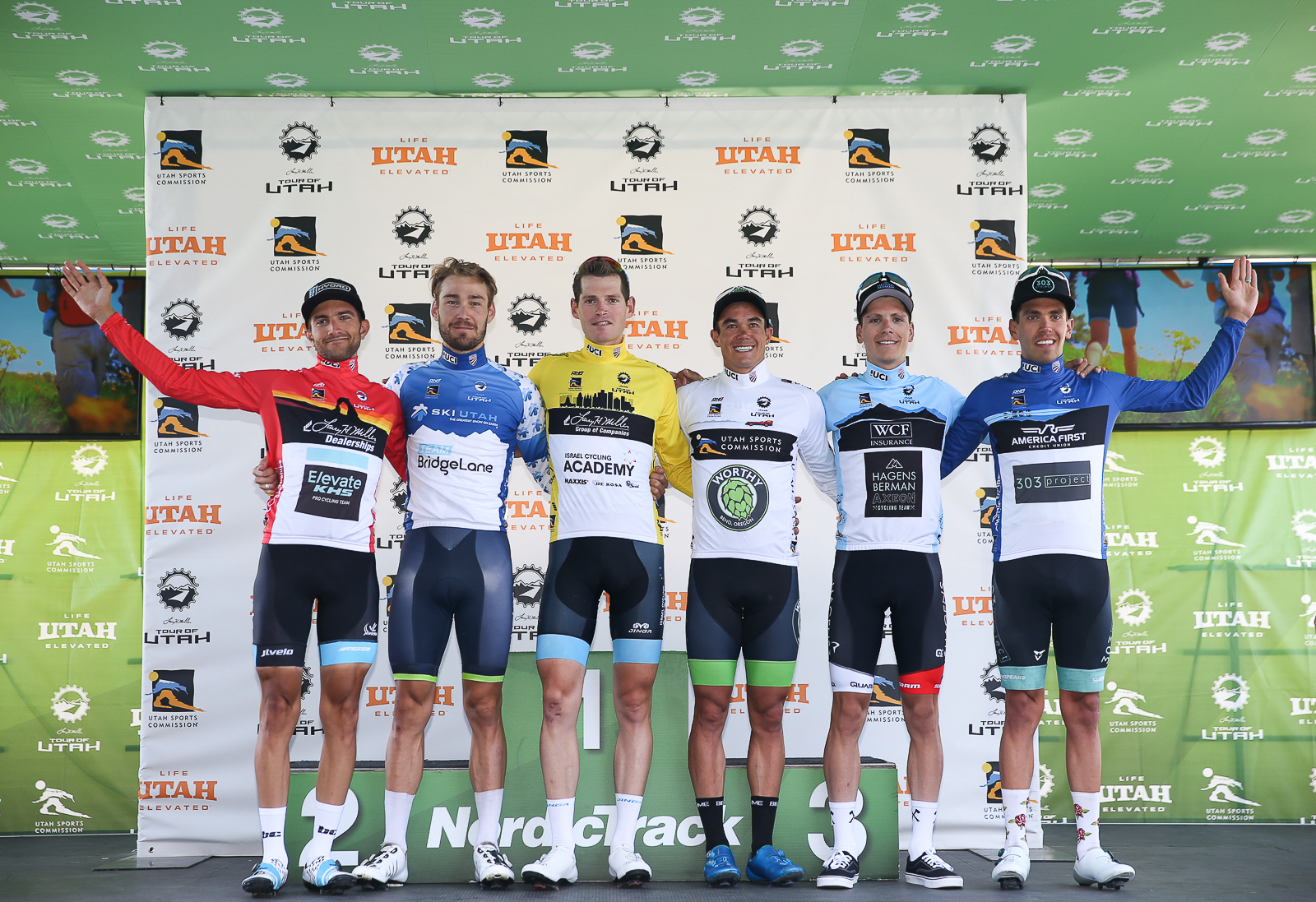
2019 Tour of Utah GC Podium: Ben Hermans (Israel Cycling Academy), James Piccoli (Elevate KHS Pro Cycling) Joe Dombrowski (EF Education First). Photo by Cathy Fegan-Kim
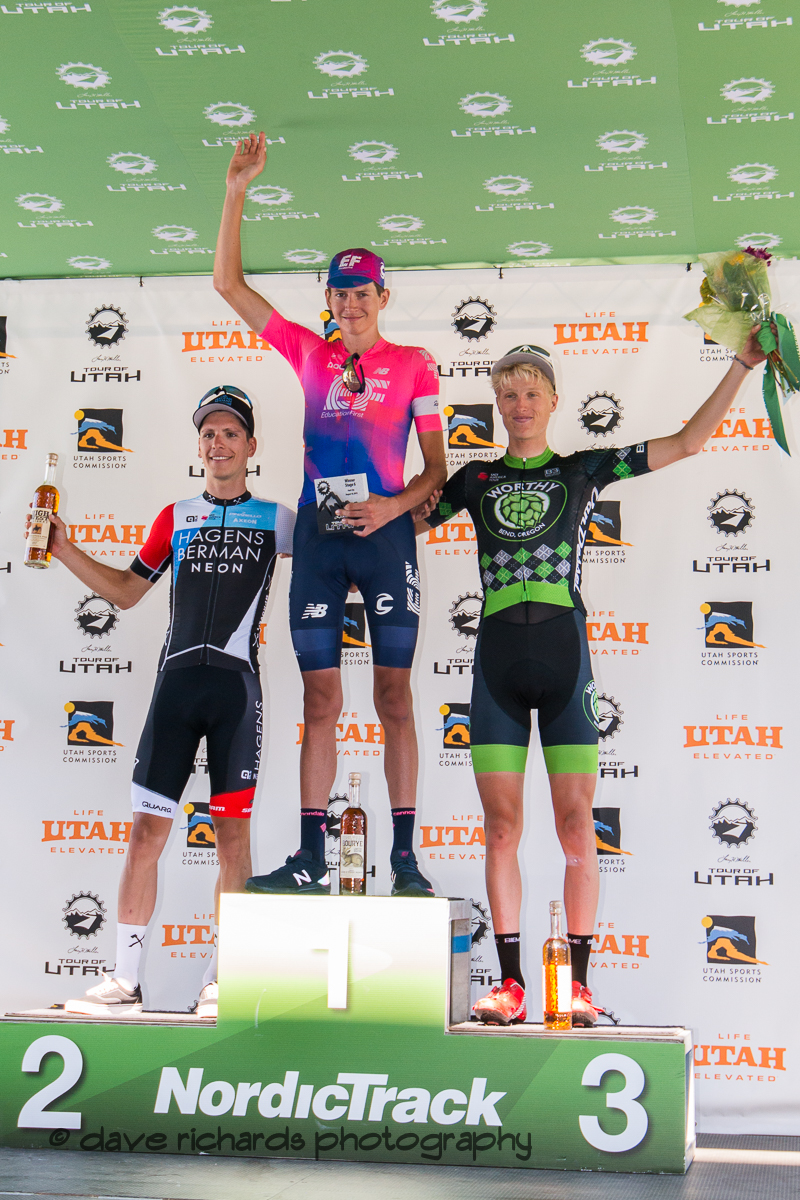
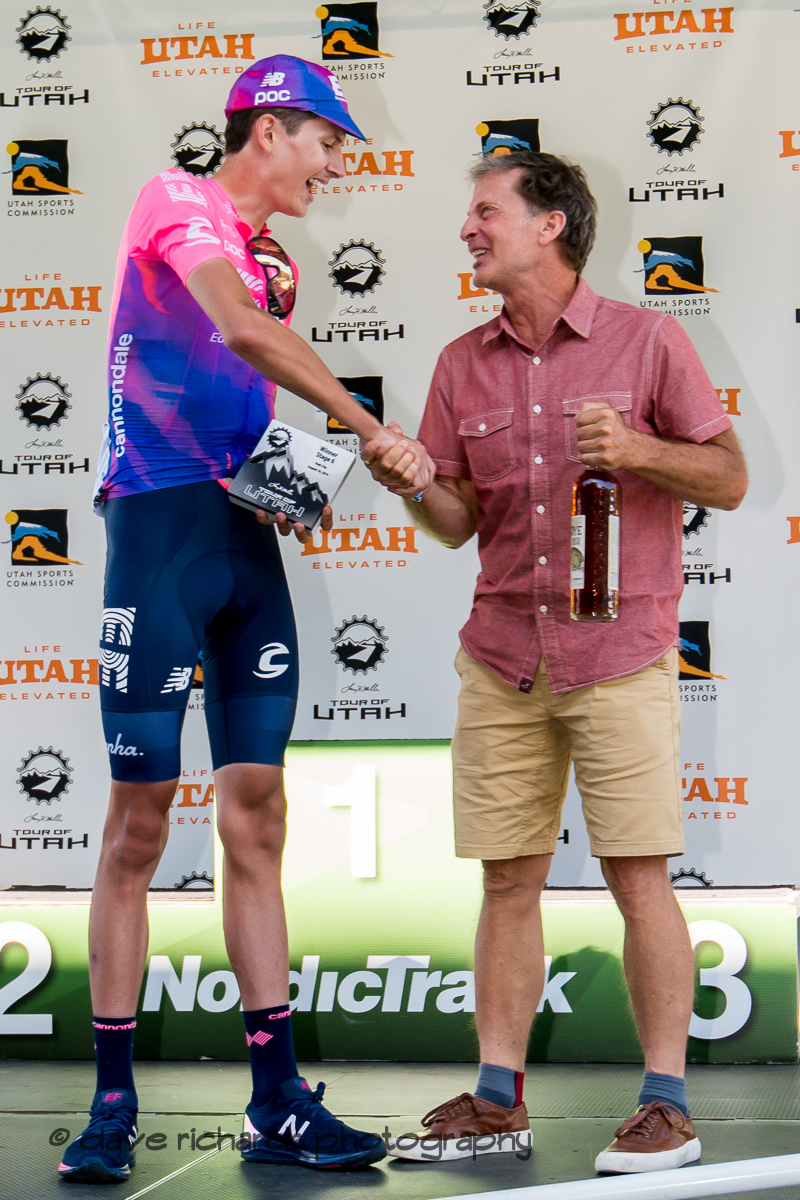
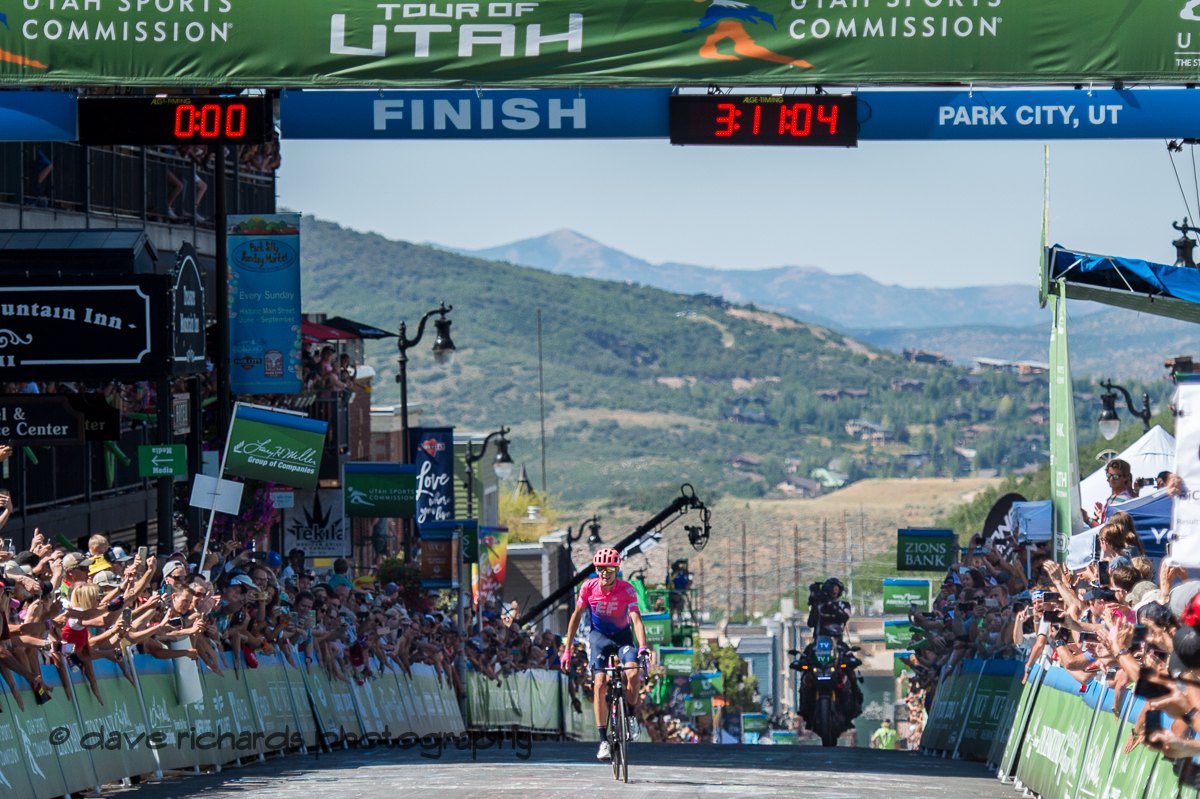
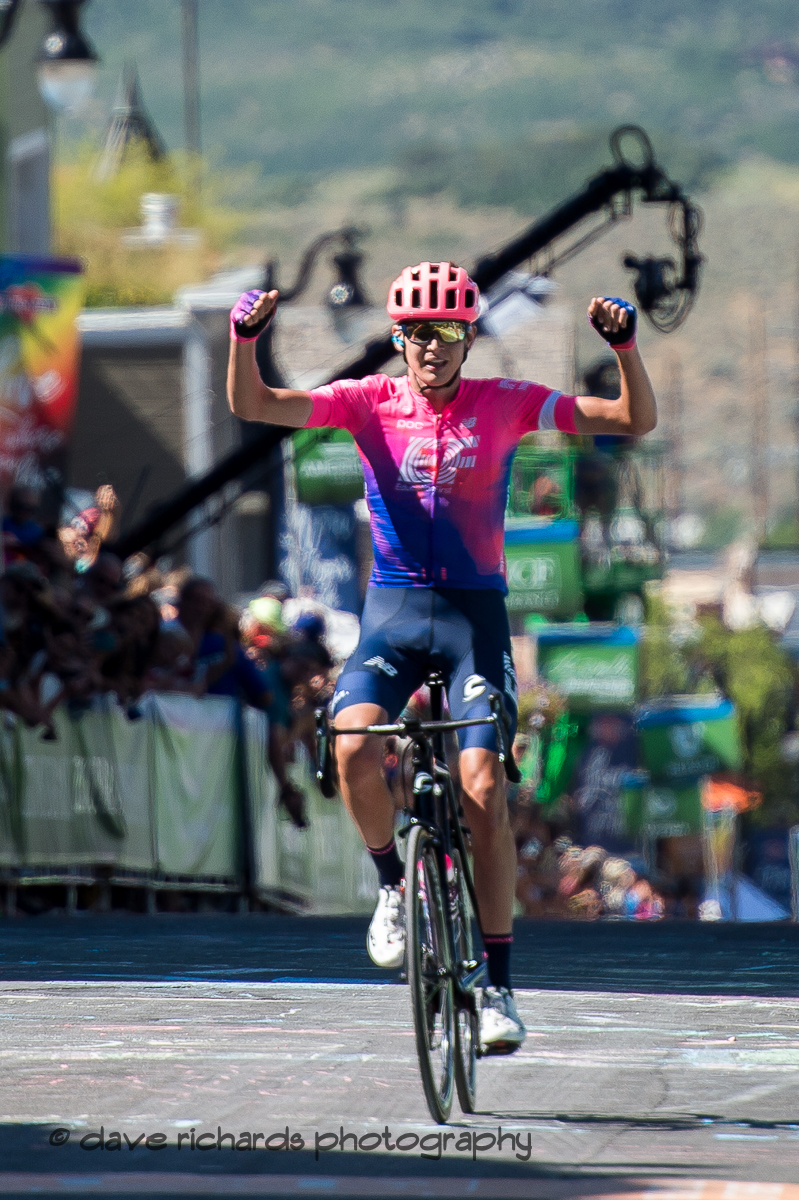
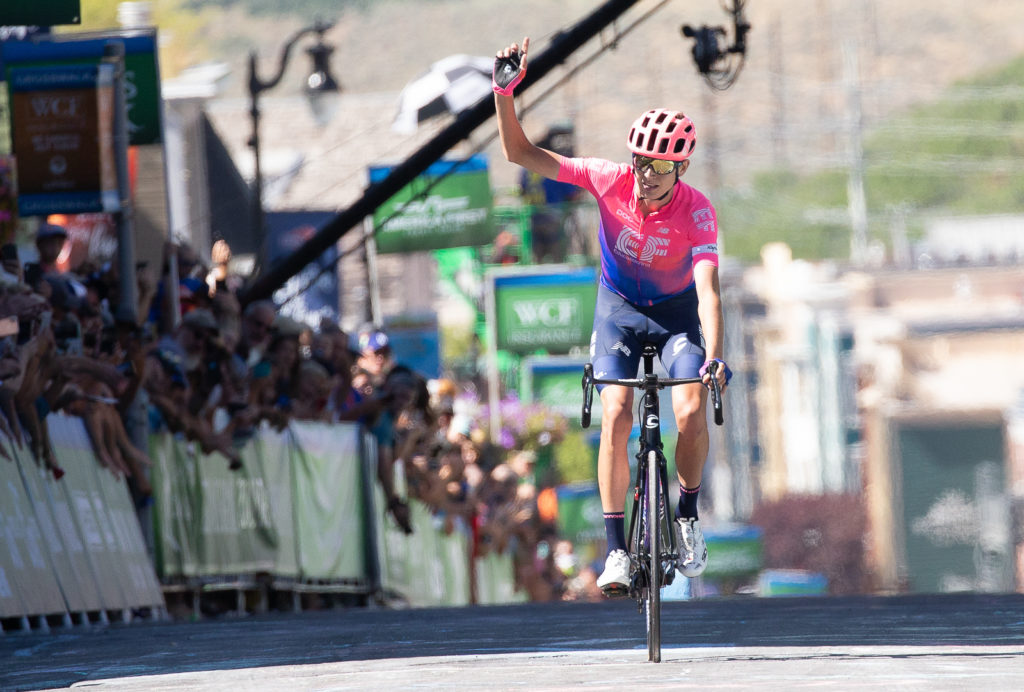
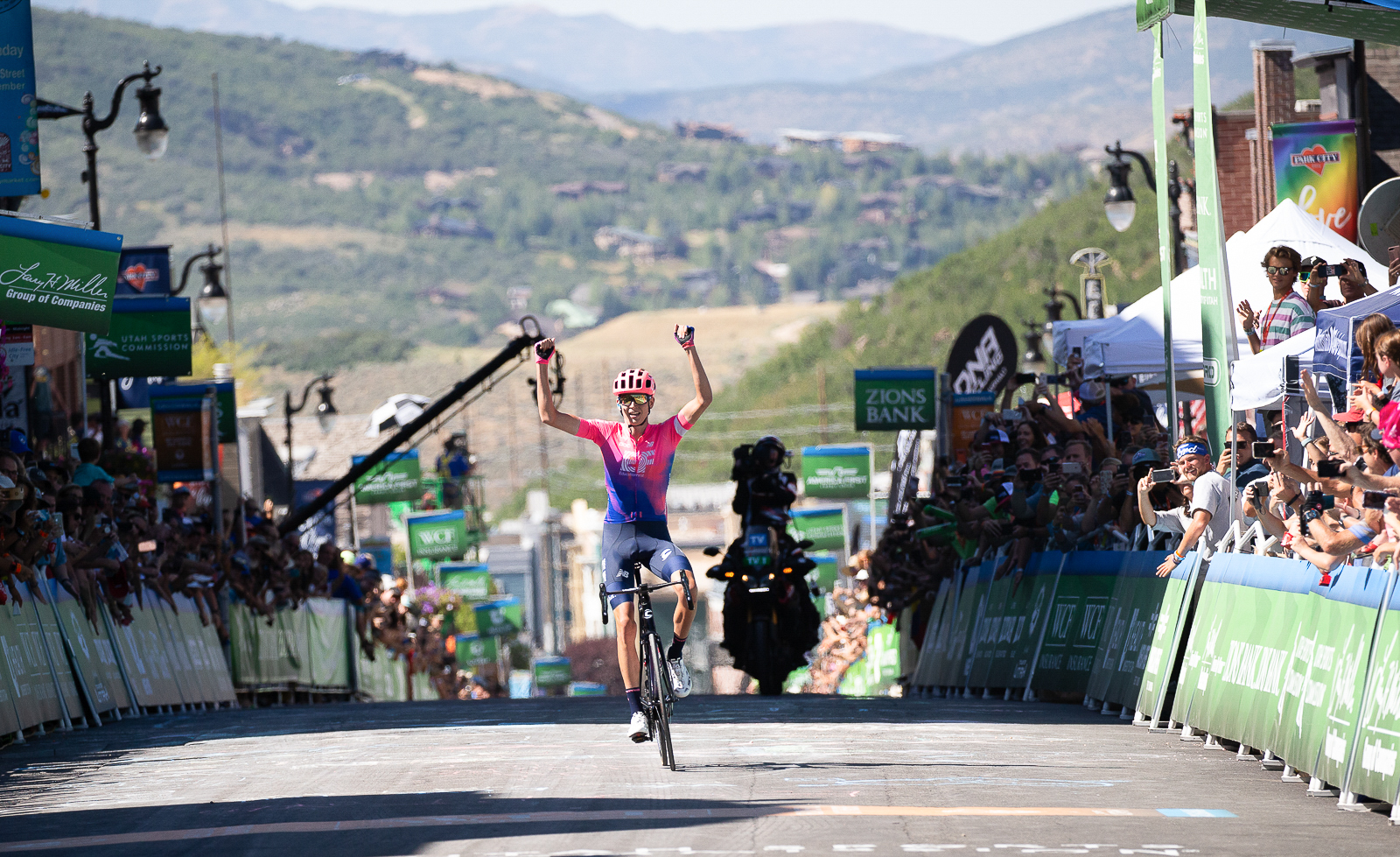
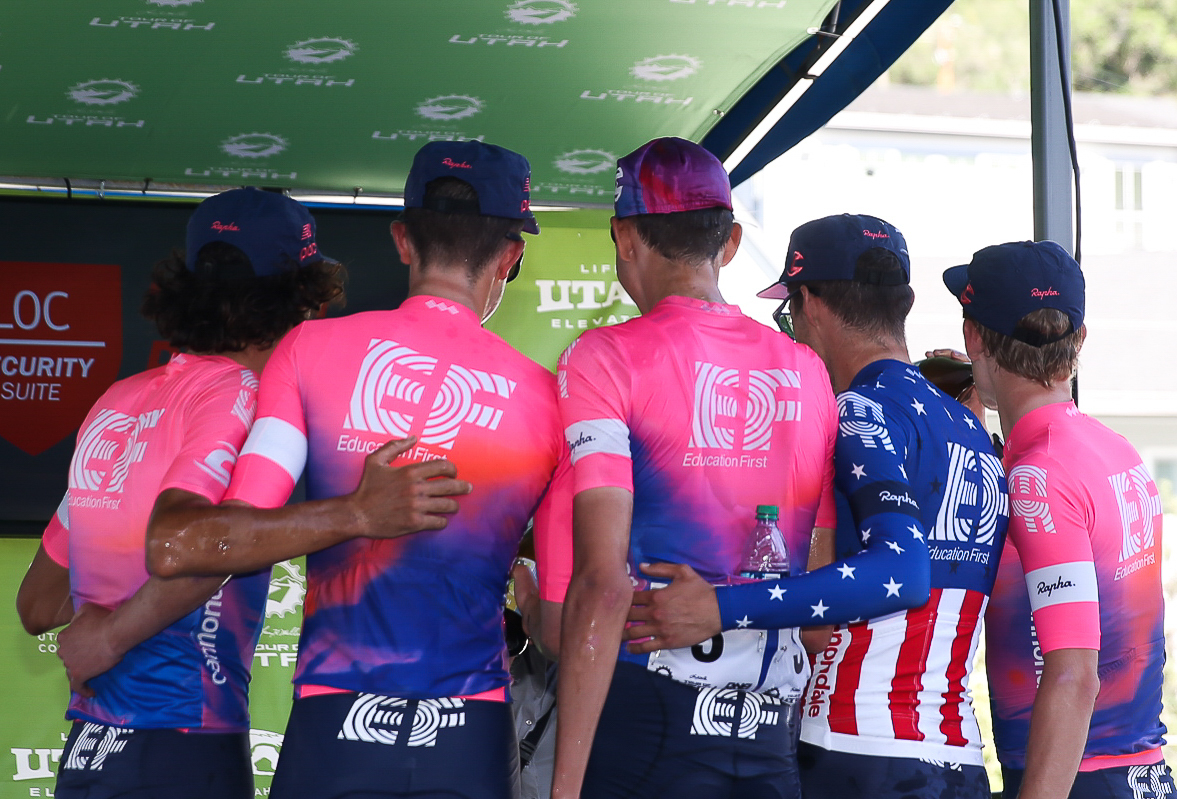
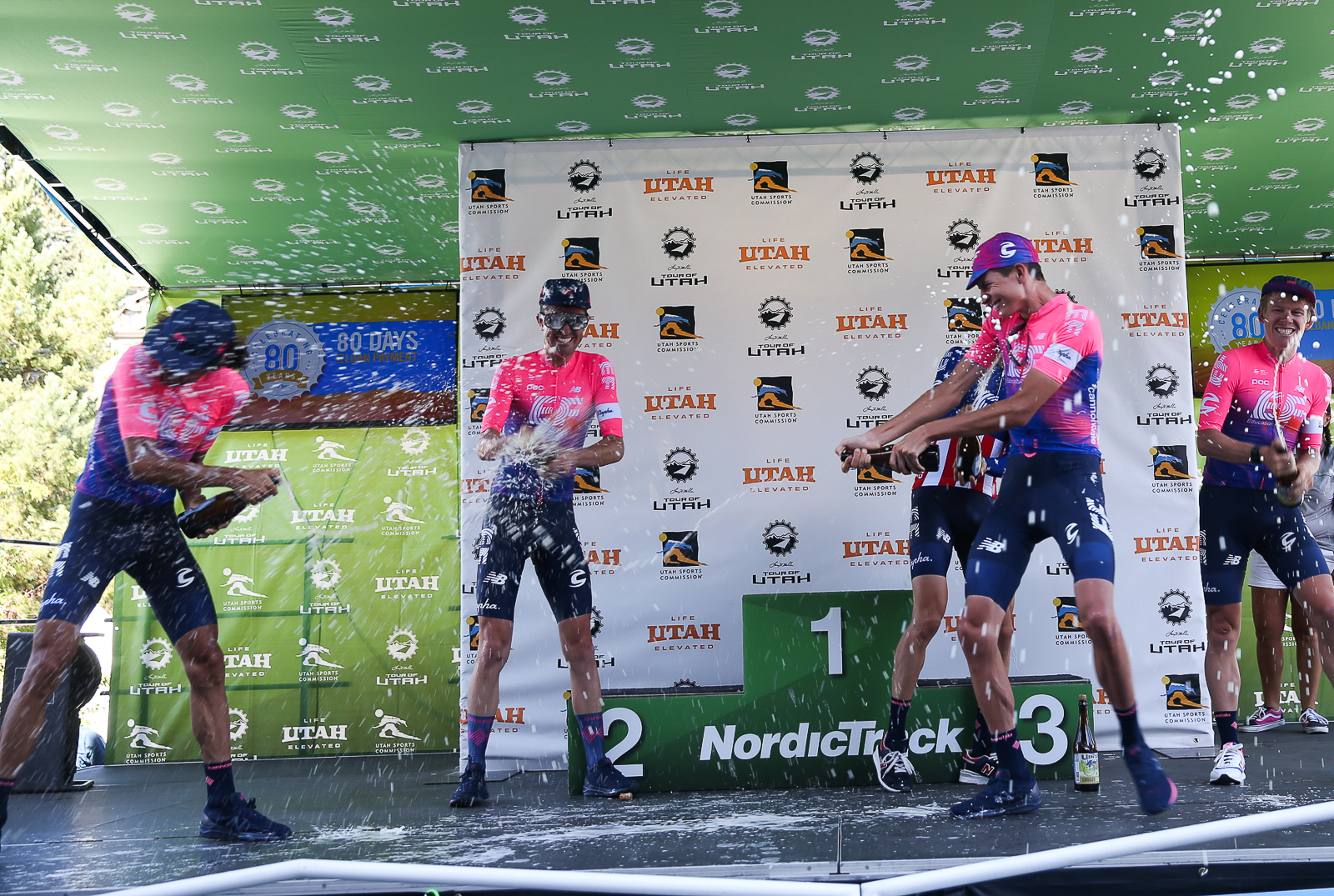
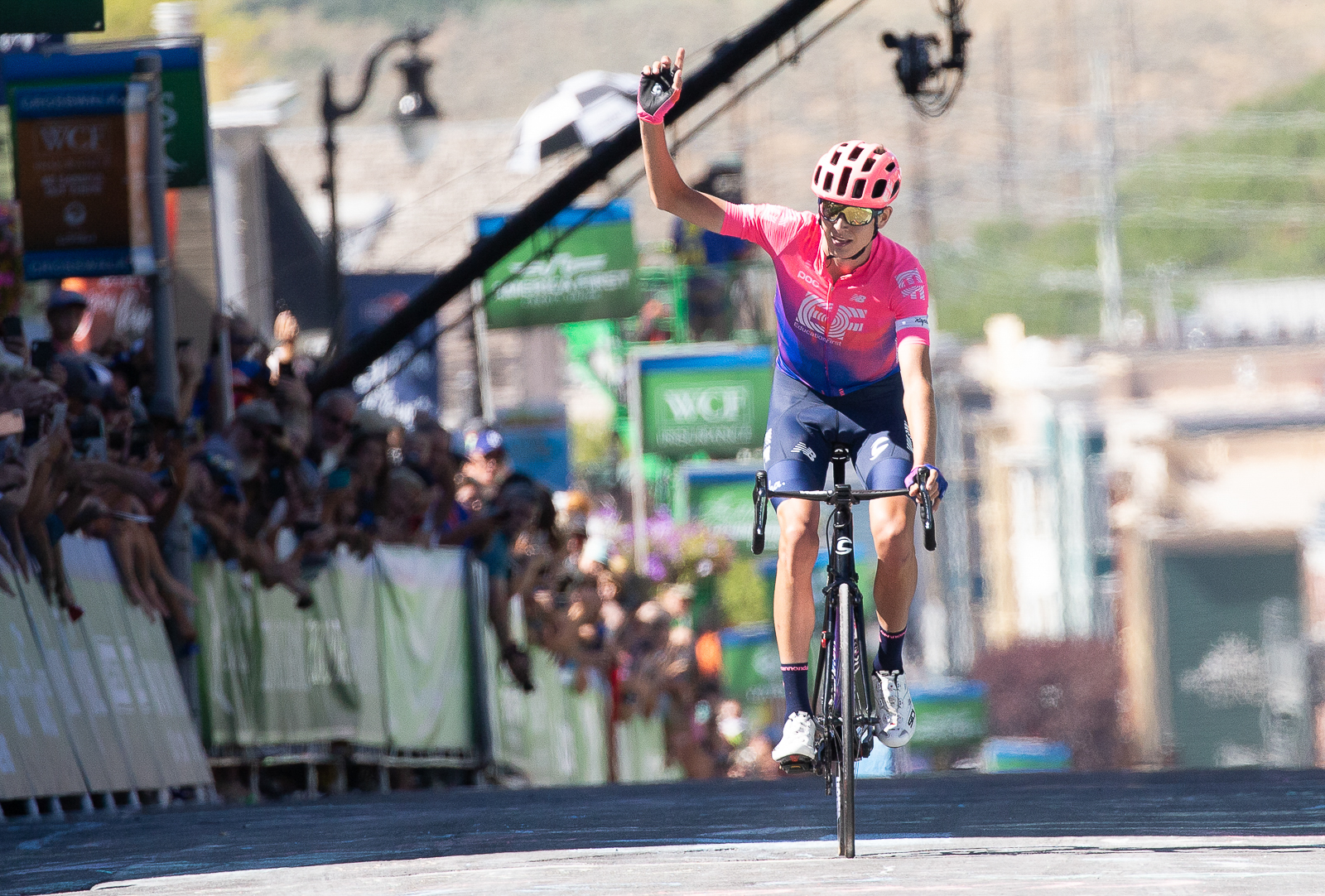
Stage 6 presented by Utah Sports Commission found a select group of riders battling for the overall victory on the Hors Category climb of Empire Pass, followed by the thrilling descent into Park City. Joe Dombrowski (EF Education First) attacked multiple times on Empire Pass before blasting downhill solo at speeds reaching 70 kilometers per hour and took his first victory in four years.
“I wanted to win the stage today. I know Empire. I’ve done this climb a number of times in training and obviously have done this climb quite a few times in the race,” said Dombrowski, whose last time on the top step of the podium came in 2015 at the Tour of Utah at Snowbird Resort, when he also won the G.C. title. “Eventually I decided to ease off on the climb and hopefully some guys would come back. And then, maybe it would present another opportunity to go just at the very top (of the climb), because if you have a gap on the descent, normally you can keep it to the line. And it worked out.” Dombrowski finished the 78.2-mile (125.9-kilometer) stage in a time of 3 hours and 11 minutes.
João Almeida (Hagens Berman Axeon) led the four-rider chase group across the finish line, 24 seconds behind Dombrowski for second place. Keegan Swirbul (Worthy Pro Cycling) was third and Hermans fourth.
The 15th edition of the Larry H. Miller Tour of Utah, known as “America’s Toughest Stage Race,” included 477 miles of racing and 37,882 feet of elevation gain. Over the course of seven days of hard racing, three different riders wore the Larry H. Miller Group of Companies Overall Leader’s yellow jersey. Hermans climbed into the lead on Stage 2 presented by Monster Hydro in Powder Mountain Resort and never lost time.
“I think now it’s for sure the toughest race, I did the USA Pro Cycling Challenge in the past, that race was really tough, it was over climbs of 3,600 meters of altitude but now for sure, it’s tougher than California.” Hermans noted. “It’s even the toughest race of Europe I think. It’s hard to climb at this altitude.”
The final G.C. time for Hermans was 18 hours and 46 minutes. James Piccoli (Elevate – KHS Pro Cycling), who won the Prologue, was fifth on Stage 6 and finished second in the G.C. With the stage win, Dombrowski moved to third overall. Placing fourth overall was Almeida, who claimed the WCF Insurance Best Young Rider jersey. Swirbul jumped up three spots to finish eighth overall.
“It feels really good. My main goal was the G.C. The jersey is really good, I’m really happy to have it, it means something,” Almeida said.
“I think the heat, the altitude, the short(er) stages, everything adds up to making it one of the toughest races in the U.S. It’s full gas every day. There’s no respite, there are no days that are easy,” Travis McCabe (Worthy Pro Cycling) said after claiming his third consecutive Utah Sports Commission Sprint jersey.
“We really wanted to come out, showcase Worthy Brewing, showcase how strong of a domestic team we have, and also just get the results. Keegan (finishing) third today, me taking the sprint jersey, Serghei (Tvetcov) third in the Prologue and me second in the Salt Lake City stage, I think we’ve showed the depth that we have on a smaller team. It feels great. I love Utah, it’s one of my favorite races all year long, and proud to have the Utah Sports Commission Sprint jersey again,” McCabe added.
The start of Stage 6 presented by Utah Sports Commission featured a group of 23 riders who broke away from the 101-rider peloton at the first of two Utah Sports Commission Sprint lines in Kamas. Cooperation was not the best in such a big group with only a handful of riders working at the front.
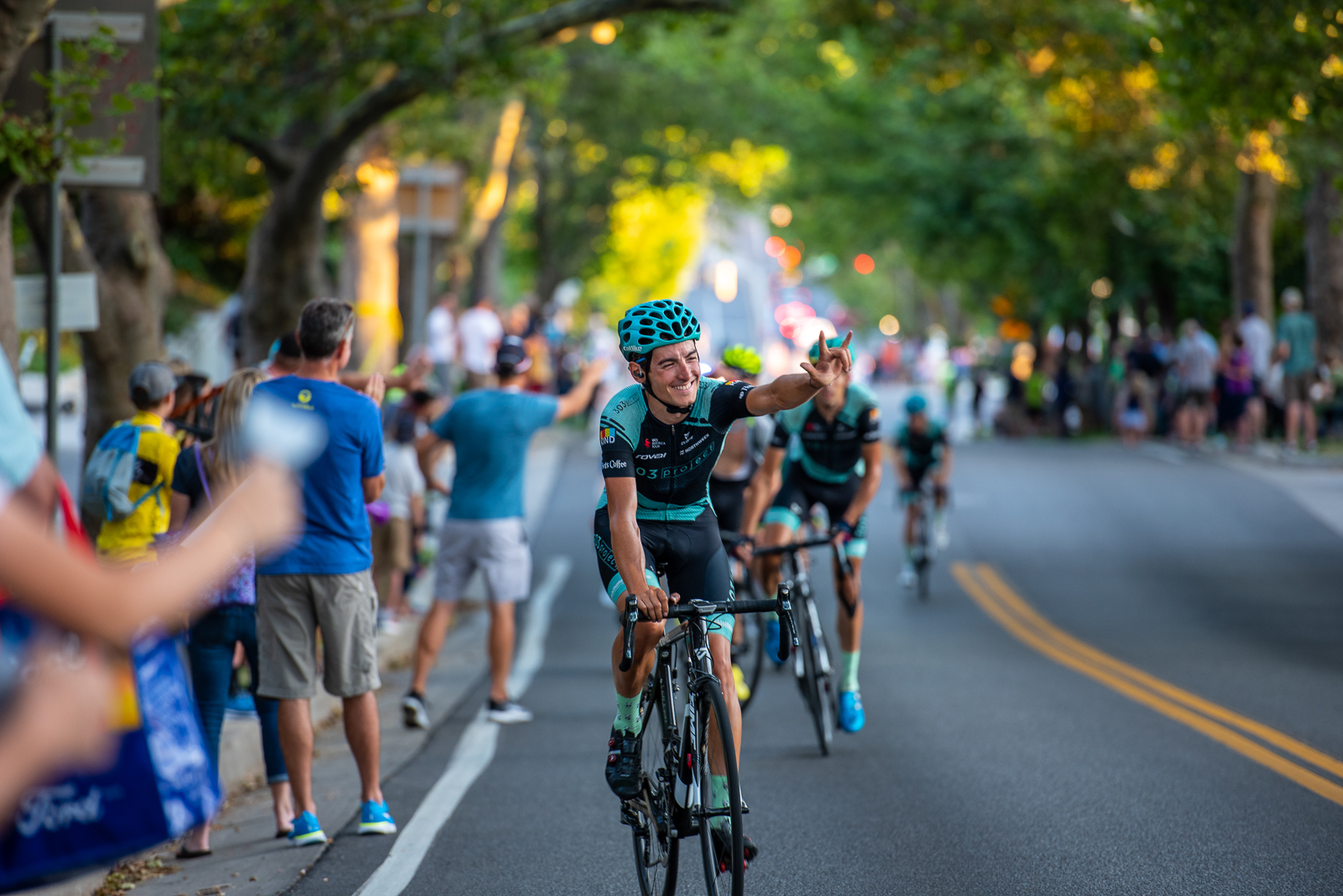
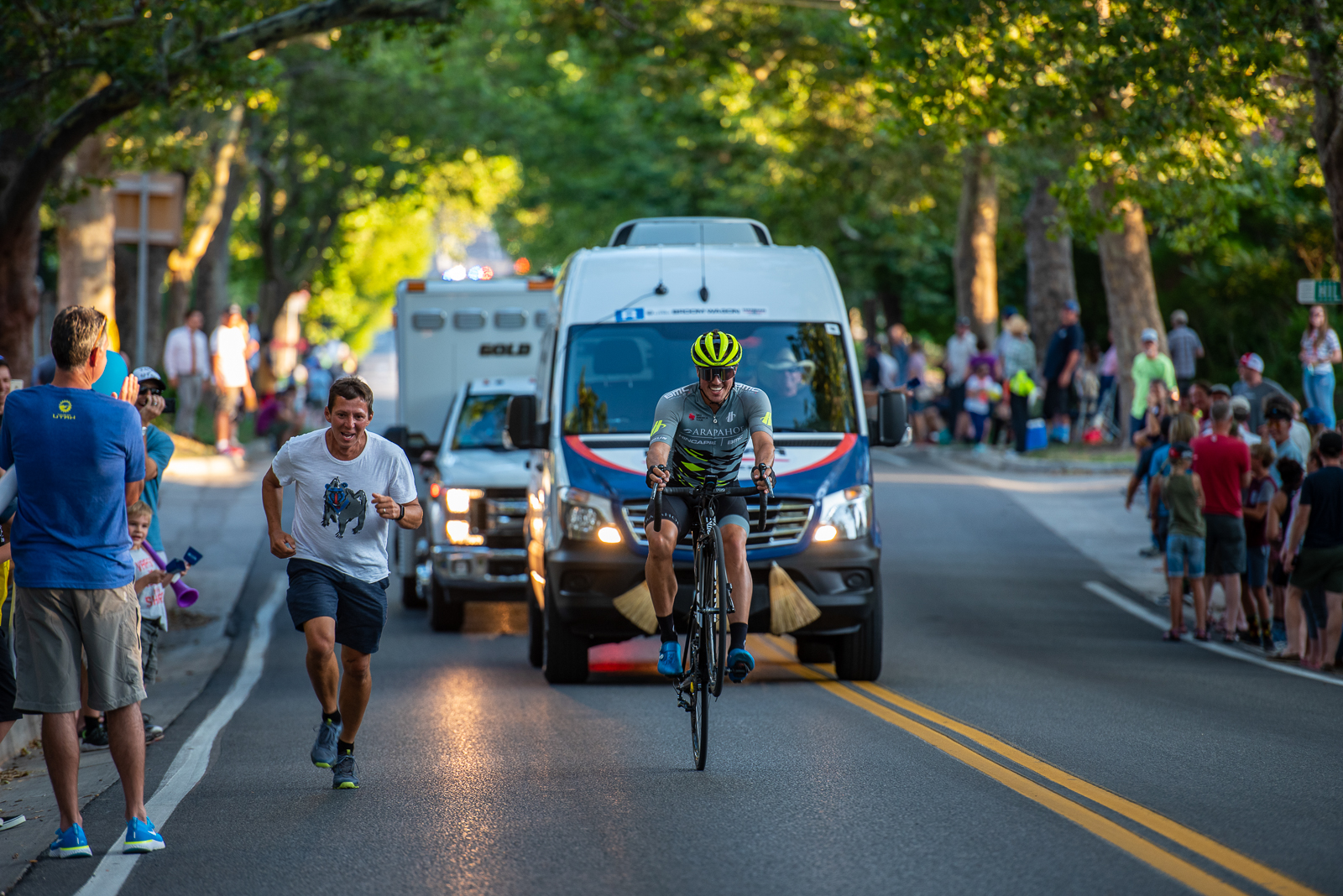
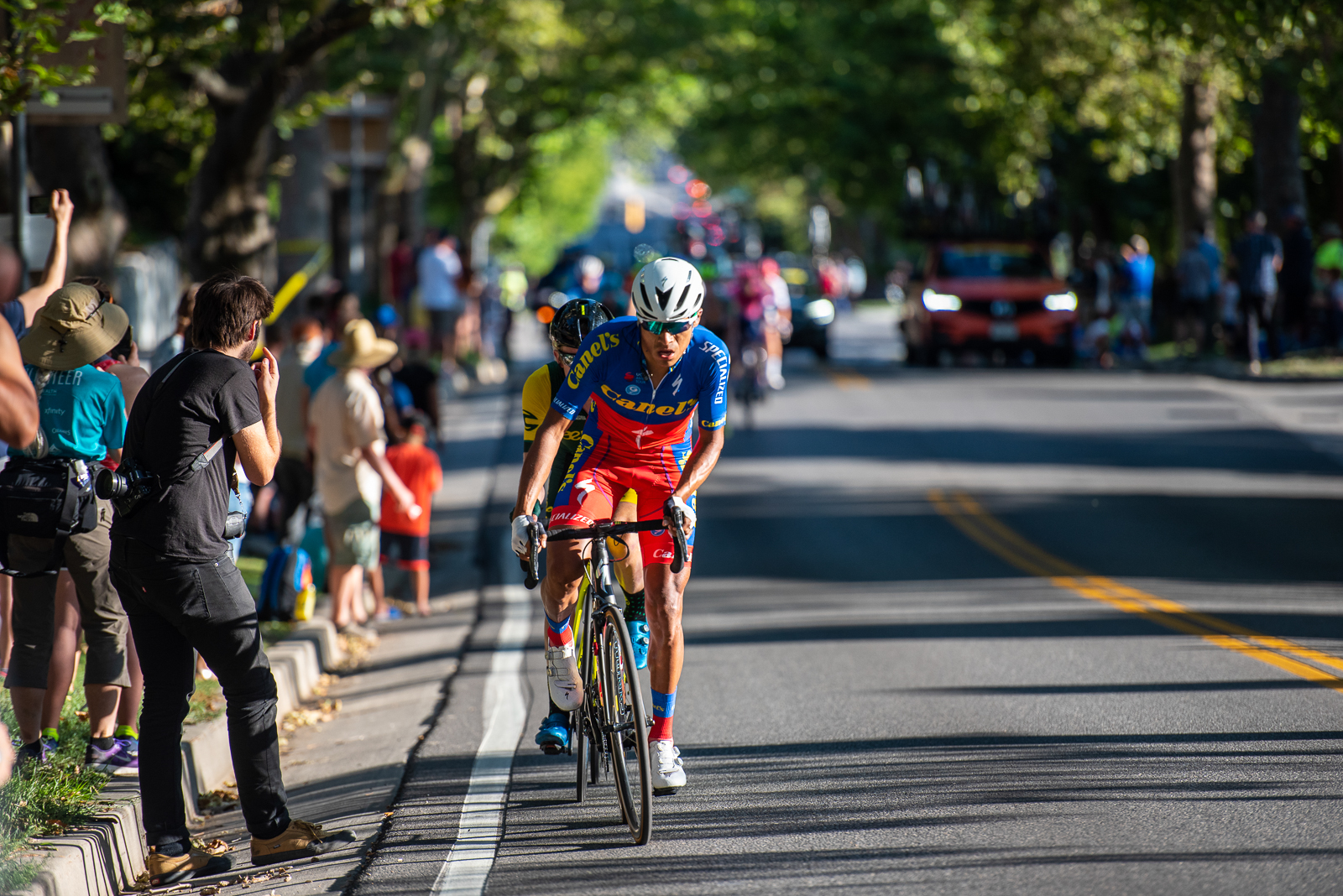
The break included the Neri Sottoli-Selle Italia-KTM trio of Dayer Quintana, Umberto Marengo, and Edoardo Zardini, Worthy trio of Serghei Tvetcov, Alec Cowan and Noah Granigan, Aevolo trio of Gabriel Rojas (CRC), Cade Bickmore and Scott McGill and Ben Wolfe (USA), Arapahoe-Hincapie trio of Ben Wolfe, Brendan Rhim and Tanner Putt, Rally UHC’s Gavin Mannion and Ty Magner and 303 Project’s Cullen Easter and Tony Baca. Joining the move were also Giovanni Lonardi (NIPPO-Vini Fantini-Faizanè), Jacopo Mosca (Trek-Segafredo), Pablo Alarcón (Canel’s-Specialized), Edwin Ávila (Israel Cycling Academy), Matt Zimmer (DC Bank Pro Cycling), and Jimmy Whelan (EF Education First).
The first major climb of the day, the Cat 2 KOM climb up Wolf Creek Ranches dropped many riders from the break though most were able to catch back on. Meanwhile behind, Kevin Vermaerke (Hagens Berman Axeon) closed a 2-minute gap to join up with the break on the descent.
Kept on a short leash by Israel Cycling Academy, the escapees were reeled back in on the bottom of Empire Pass, the second Utah Office of Tourism King of the Mountain climb before the battle for stage and G.C. podium places.
“Everybody did their job this week, even Edwin Avila our sprinter was pulling for, I think, 2 or 3 kilometers on the last climb. I’m really impressed also by Hamish Schreurs on how he controlled the race. I only can be happy with the team’s work. Also the previous races, they did really good work for me. It’s really nice to finish it off with a victory and not a third or a fourth place.” Hermans said of his team’s efforts in Utah.
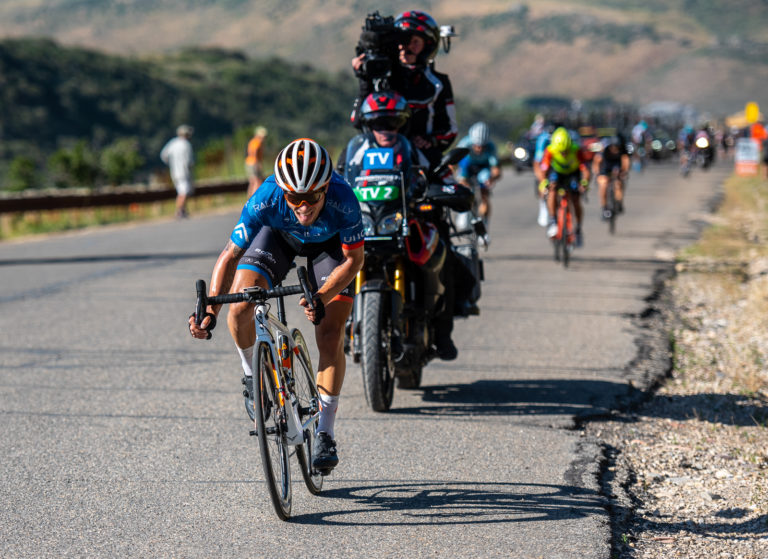
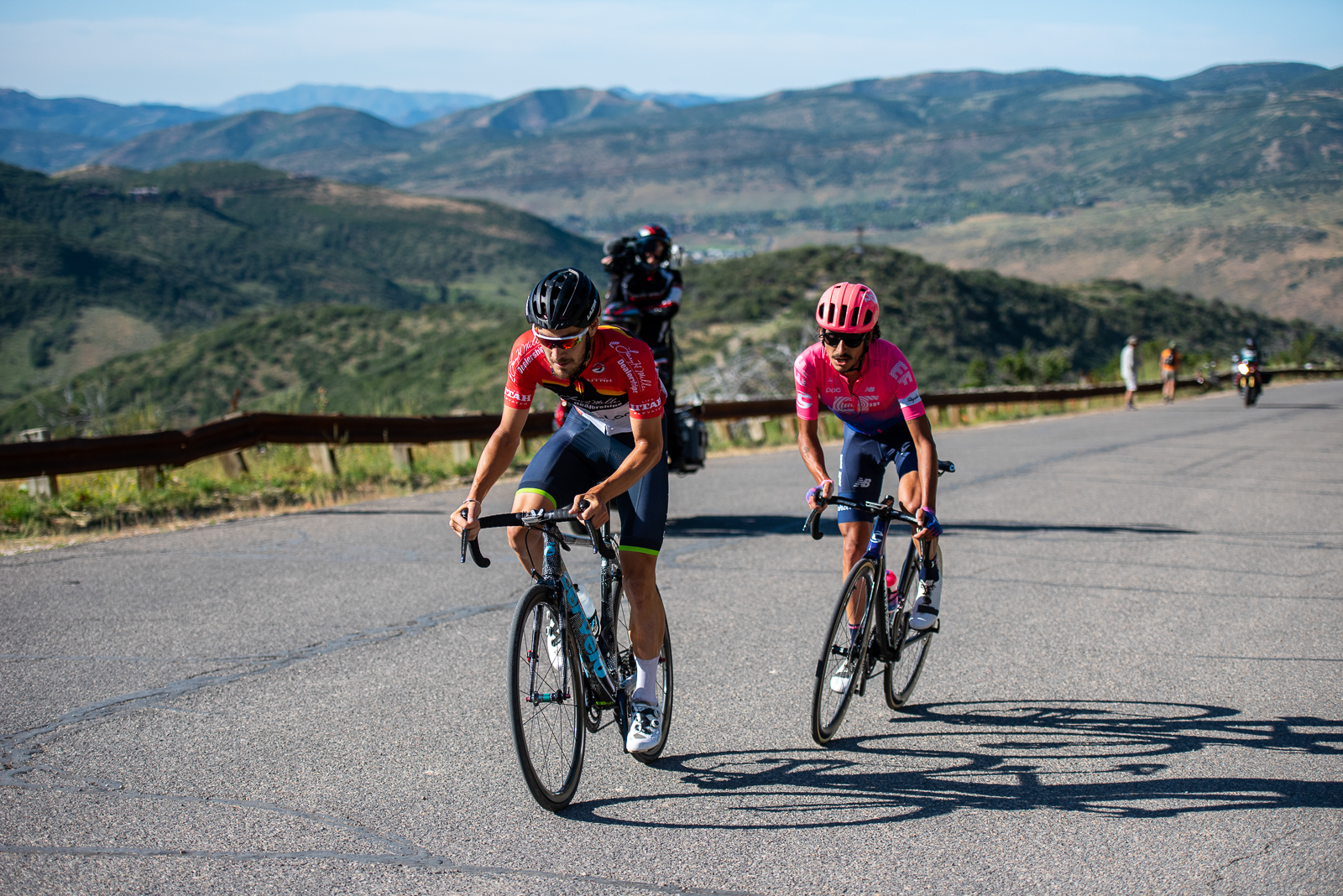
With 20 kilometers to go, Lachlan Morton (EF Education First) attacked the dwindling peloton down to around 25 riders. Once he was reeled in, Dombrowski countered immediately only to be re-absorbed by a select group which included Hermans and Piccoli. Dombrowski went again and Piccoli tried to drop Hermans forcing the three riders together. Dombrowski settled in a the front, pushing the pace on the punishing climb.
“It’s a different climb,” Dombrowski said of Empire Pass, “in that it’s one that typically the selection can happen at the bottom because it’s consistently steep. But once you get to the second half of the climb, it rolls, there are even some downhills. So if you’re with the group, it’s more difficult to get away. So I tried at the bottom, Ben and James were with me. They didn’t have any real obligations or reasons to work with me because I was a couple of minutes back on G.C. We were racing different races I suppose.”
Behind them, a chase group formed with Almeida, Rally UHC’s Rob Britton and Kyle Murphy and Lawson Craddock (EF Education First). Almeida put in two major surges to first drop Britton and Murphy, then Craddock.
With 5 km to the top of the KOM, Almeida caught and went straight to the front of the lead trio of Dombrowski, Hermans and Piccoli. The young Portuguese rider put in another acceleration which put Piccoli in trouble for the first time. One kilometer later, Almeida, Dombrowski and Hermans were together at the front while Swirbul caught and passed a dropped Piccoli. Not long afterm Swirbul caught the lead trio Behind them, Peter Stetina waited for his Trek-Segafredo team mate Niklas Eg to try to pace him up the mountain to salvage his top three G.C. placings.
With 2 km to top the of the KOM, Dombrowski made his move, quickly getting a gap. he had 20 seconds by the time he crested Empire Pass. Not taking any chances, Hermans went to the front of the group on the fast descent into town. With one kilometer to go, Piccoli caught back onto the Hermans, Swirbul and Almeida group to battle it out for stage placings.
Joe Dombrowski (EF Education First) wins Stage 6. Photo by Cathy Fegan-Kim
Dombrowski was all in for the stage win and not really thinking of his chance to move up on G.C. “If you win the stage then obviously there’s a chance you can move up,” he said. “But I think I would prefer to race to win a stage than think about the G.C. Whether I’m 2, 3, 4, 6… I would prefer to try and win. I wouldn’t say that I was thinking about that too much.”
Hayden McCormick (Team BridgeLane) defended the Utah Office of Tourism King of the Mountain Leader jersey. Racing aggressively throughout the seven days of racing,
“Obviously that was the goal today,” McCormick stated. “It was a bit fast today to my liking today. We knew that we had to watch Alex Howes going into the break, he was the main threat. That was sort of it. I was pretty happy once the break went because I’m feeling a bit sore.”
Piccoli was awarded the Larry H. Miller Dealerships Most Aggressive Rider jersey. Fans selected Tony Baca (303 Project )as the America First Credit Union Fan Favorite in the Overall Fan Favorite category. EF Education First finished as the best overall team.
All the riders agreed that the decision to shorten the stages for this year’s edition of the Larry H Miller Tour of Utah was the right decision.
“For us, we’re not in the heat as much. Everyone has a little bit fresher legs, and also I don’t think it changes the results. No matter what, you’re going to see Ben win. It was on Powder Mountain, Powder Mountain decided everything and then after that, it added another element into how the tactics played out, and what racing was like. So it made it more aggressive,” McCabe noted. “I think it made it more exciting for the fans and then also it made more exciting for the riders too because you have to change up tactics quite a bit when it’s 20 miles shorter than what you’re used it. But for sure, it made it harder.”
“Not just here, but bike racing in general, we should do a little bit shorter stages in general,” Dombrowski agreed. “Bike racing has a script, the breakaway goes away, someone chases the breakaway and if it’s a stage that someone is pretty confident that they can win then they’re going to bring the breakaway back and they’re going to race for the win. And there is this period in between where we’re riding around and the longer the stage, the longer the amount of time that we’re just riding around. It’s not really interesting. In the Tour de France, that’s when they start showing helicopter shots of castles and whatever else, so I think actually it’s a good move. I think you see other races doing that.”
Dombrowski continued, “From my perspective, in this race, there wasn’t much time where we were sort of noodling which I think is boring, I don’t think it’s particularly exciting for the people watching. In the end, I don’t think it really changes the result, other than there are certain times when I think you need a big day. In general, I think it that’s a really good way to go, I think this race was pretty exciting. Lots of good, different finishes that suited different guys and I think it was pretty well put together.”
“It was a great week of racing. We are so proud of this state and we wanted to showcase it to the world. Thank you to the Miller family, for our nine host communities, for the over 50 corporate partners that step up to make this race happen, and most importantly, to the volunteers that step up and really contribute to pull this thing off,” said Tour of Utah Managing Director John Kimball. “This is our 15th year. The Larry H. Miller Tour of Utah is proud to say that we’re going to be back next year. We look forward to working with the UCI in getting those dates this fall and we’re excited to see where we are going to go next year.”
RESULTS AND STANDINGS
Stage 6 presented by Utah Sports Commission– Top 10
DOMBROWSKI Joseph Lloyd (USA) EF EDUCATION FIRST 3:11:09
ALMEIDA João (POR) HAGENS BERMAN AXEON 3:11:33 +0:00:24
SWIRBUL Keegan (USA) WORTHY PRO CYCLING 3:11:35 +0:00:26
HERMANS Ben (BEL) ISRAEL CYCLING ACADEMY 3:11:35 +0:00:26
PICCOLI James (CAN) ELEVATE-KHS PRO CYCLING 3:11:39 +0:00:30
CRADDOCK Lawson (USA) EF EDUCATION FIRST 3:12:33 +0:01:24
BADILATTI Matteo (SUI) ISRAEL CYCLING ACADEMY 3:12:48 +0:01:39
You know that feeling you get when you finish a long week’s work; the sense of accomplishment of a job well done, but also the sense of “wow, is it really over so soon?” Yeah, we do too. Cathy Fegan-Kim caps off her week at the Larry H. Miller Tour of Utah with the following gallery. We like it, and hope you do as well.
The last climb on the penultimate day is always a good place to see who still feels good, and who is completely wasted. Sometimes, completely wasted is feeling good. Here are Steven Sheffield’s photos from atop Olympic Park.
Steven’s been so busy making sure that everyone else’s work is posted in a timely manner, that he hasn’t had much of a chance to work on his own photos … but we say better late than never for his gallery of photos from State Street during the Stage 4 Salt Lake City Circuit.
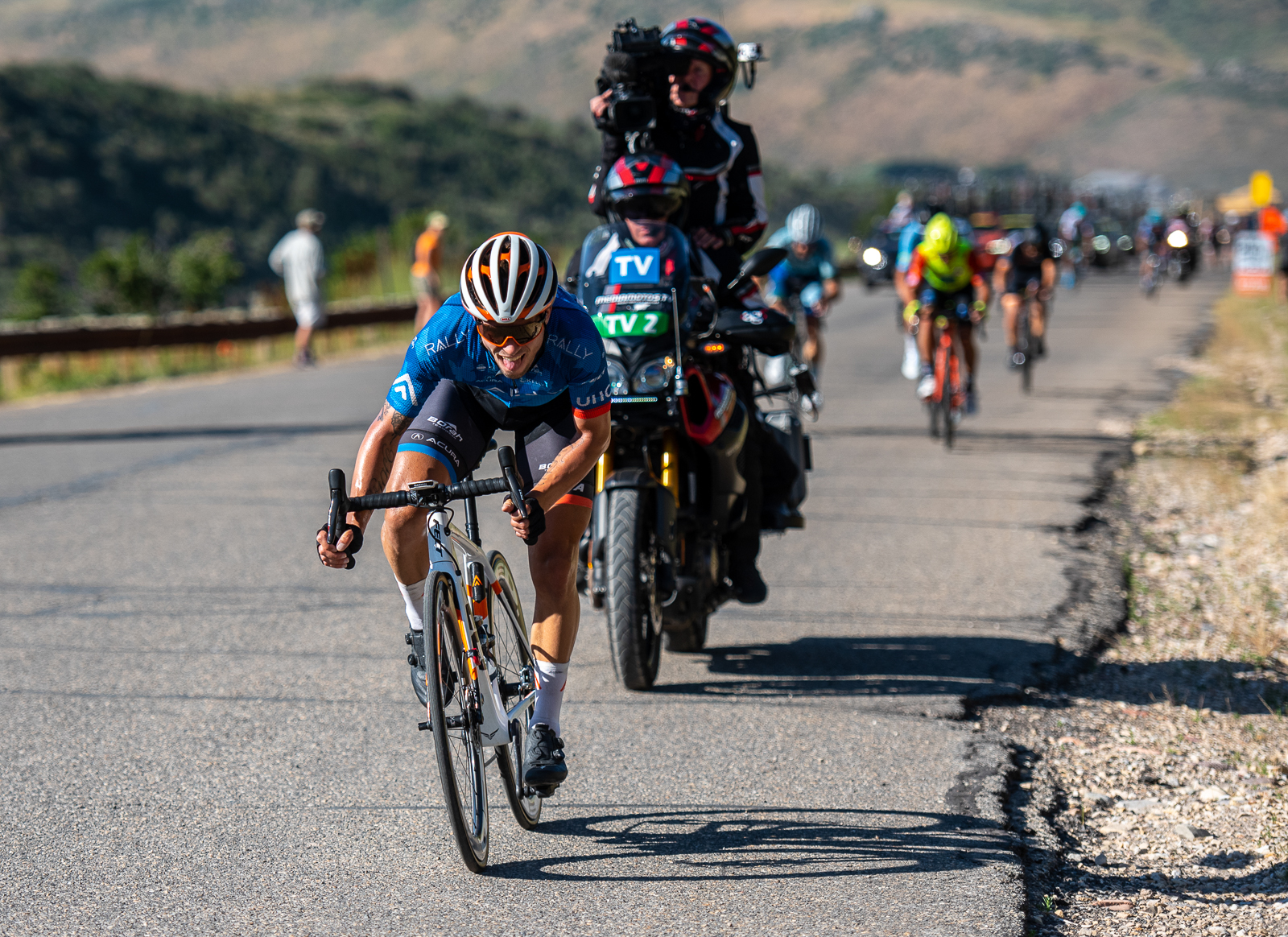
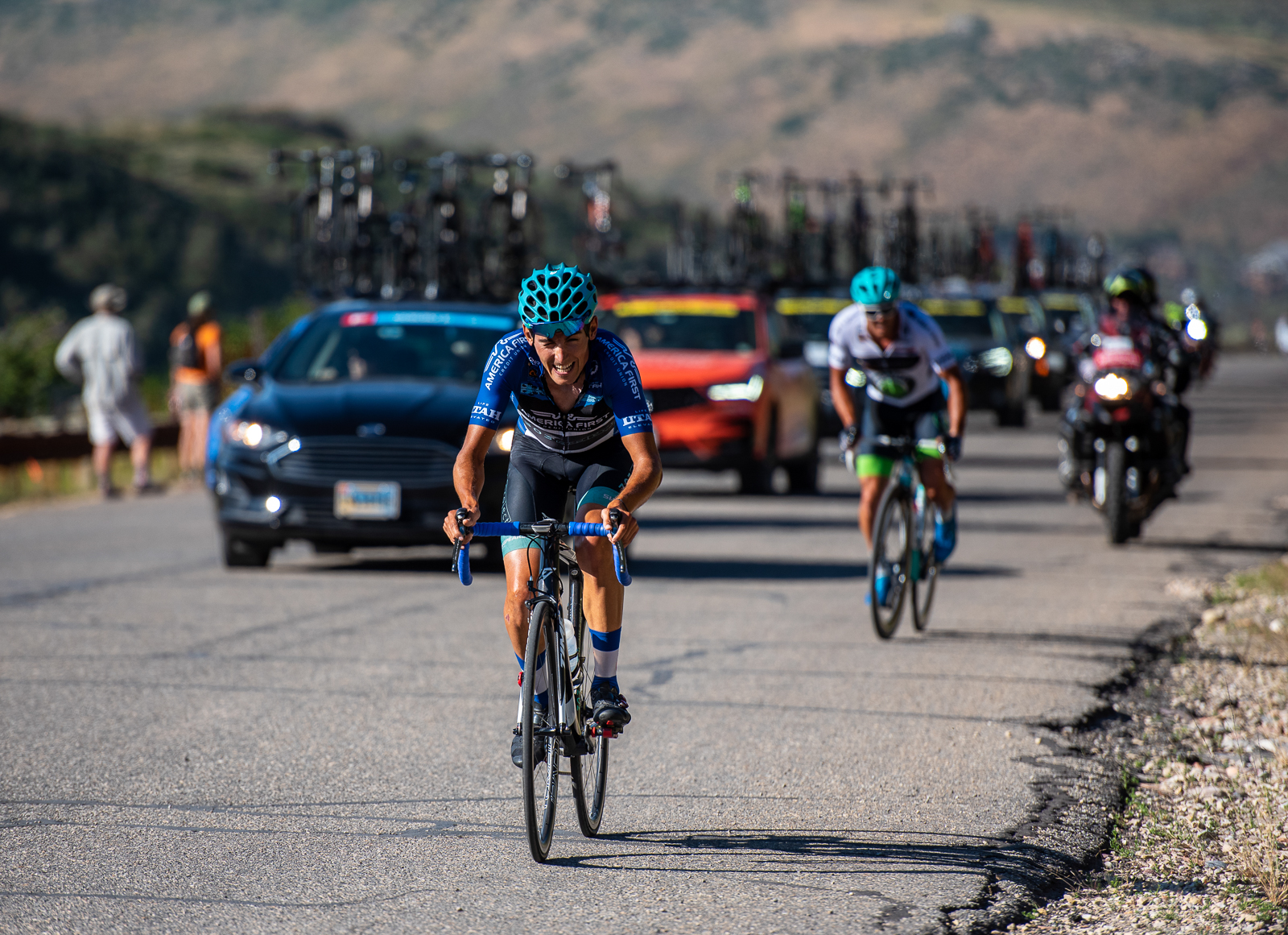
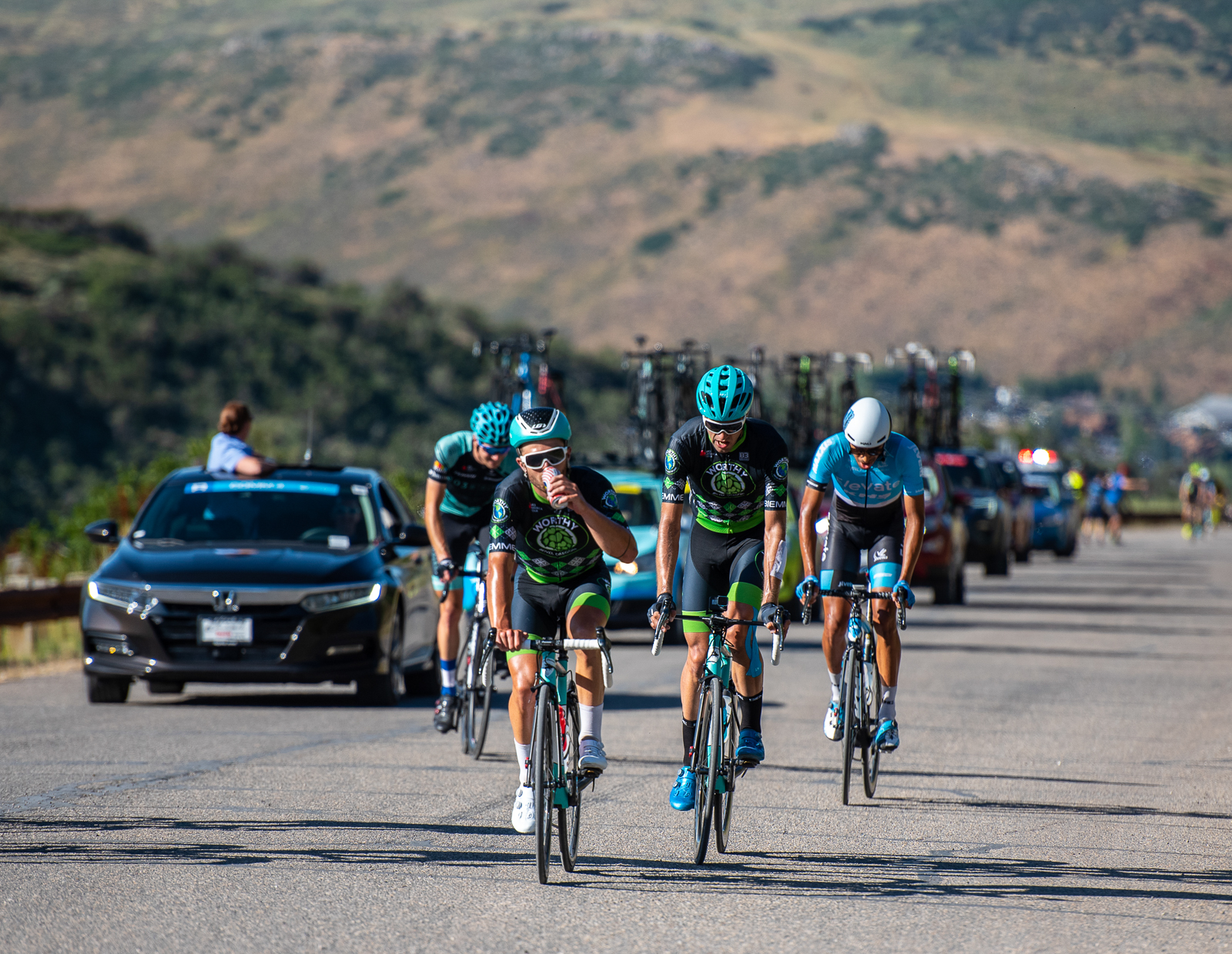
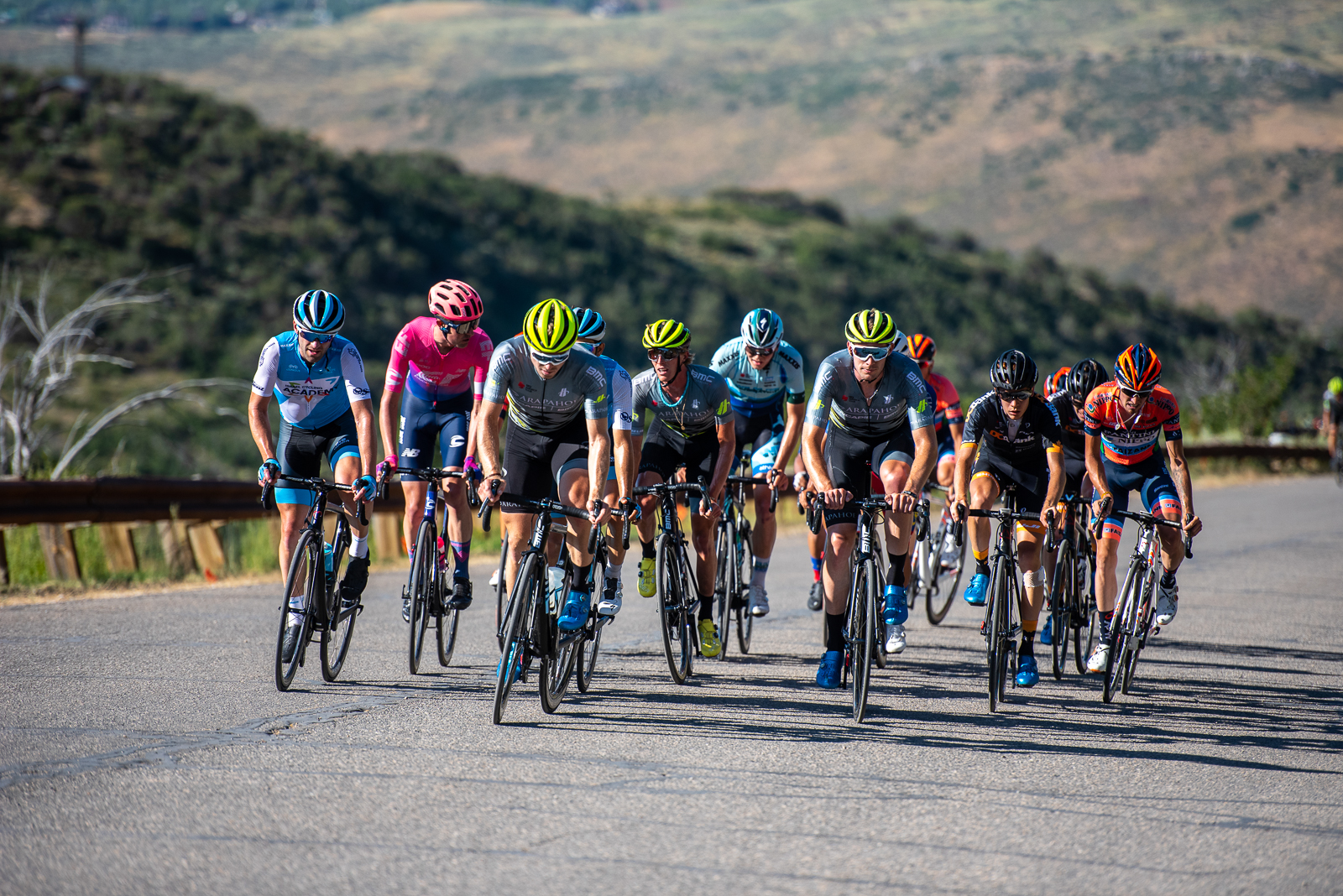
With just one stage of the Tour of Utah remaining, Cathy Fegan-Kim brings us her photos of Stage 5 of the 2019 Tour of Utah as seen from the back of one of the motos in the caravan. The stage was an 85 mile jaunt starting and finishing at the Canyons Resort and traveling through the backroads of Summit County.
[Note: Click on an image to bring up the Lightbox, and then use your right and left arrow keys to get the best view of this gallery]