Wednesday, January 21, 2026
Home Blog Page 207

Cyclists Make The Best Triathletes

Cycling West - Cycling Utah Magazine logoBy Lora Erickson

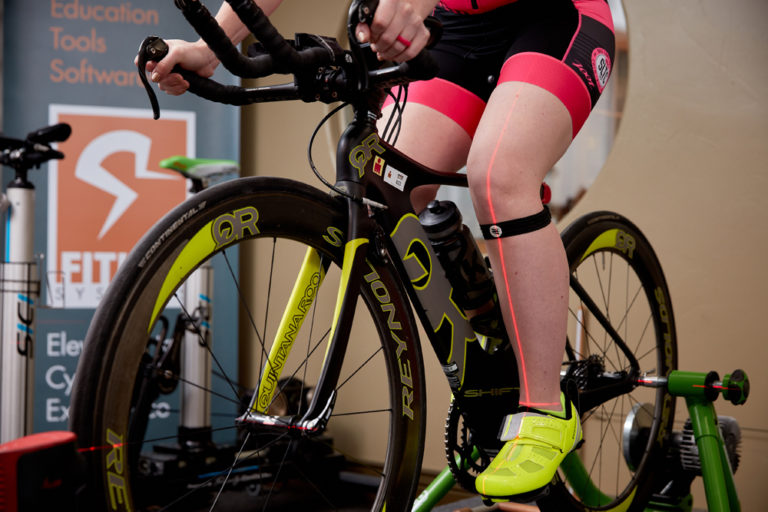
Ten years ago I embarked on a journey that changed my life. I did my first triathlon. I come from a long distance running background and was recruited from Colorado to run on athletic scholarship for several local Utah colleges. By the time I found triathlon I had already had three small children and running had grown stale. I was looking for a new challenge but didn’t want to give up running all together. Triathlon training made sense; I could enjoy challenging my body by swimming, cycling, and continuing to run. The variety triathlon training provided was a welcome change but as an experienced triathlon coach I can tell you that it’s not just a simple as adding in two more sports. Each discipline affects the other and adjustments have to be made to prevent overtraining and prevent injury.

If you are looking for a change I can tell you from my experience that cyclists make really good triathletes. The reason for this is because cycling is the longest portion of triathlon event so good cyclists have an advantage. Not to say that runners can’t become good cyclists too!

I quickly learned after doing my first triathlon that I would have to spend more time in the saddle if I was going to really excel at this sport. My first triathlon was a sprint distance pool triathlon. This is generally a good starting place if you’re thinking about getting into triathlons. Traditional triathlons start with a swim, continue to cycling, and then finish with a run. Each event is one right after the other and your overall time includes the transition time from one sport to another. These transitions are also known as T1 & T2. Most people have heard of the Ironman distance, but this is not the only distance available. The shortest distance is known as a sprint triathlon and can be done in a pool or open water setting. Sprint distance triathlons generally swim 350 meters in a pool or 750 meters in open water followed with a 12 mile bike ride and finishing with a 5K run. The Olympic or International distance is usually done in open water with a 1500 meter swim, ~25 mile bike ride and a 10K run. The next distance would be the half Ironman or 70.3; starting with the 1.2 mile swim, 56 mile bike ride and finishing with a 13.1 half marathon run. The Ironman distance or 140.6 is a 2.4 miles swim, 112 mile ride followed by a 26.2 mile marathon. If you’re looking for a new challenge I highly suggest you look into doing triathlons. Not a swimmer? Check into doing duathlons; a run-bike-run event.

Happy training!

Coach Lora Erickson aka Blonde Runner is a USATF running, USA Triathlon and USMS Level 1 & 2 Swim coach. She enjoys working with all level athletes and offers on-line, in-person or team coaching programs as well as community classes. To learn more or for help with training contact Lora, or visit BlondeRunner.com

Salt Lake County Bicycle Advisory Commmittee News for Early Spring 2018

By Marcus Kaller — With spring just around the corner, people will be back on their bikes to enjoy the warm weather. Many, of course, for recreational purposes, but many for commuting to work as well. And for many, the issue of where you can ride can be frustrating, especially in some parts of Salt Lake County. While some cities have implemented active transportation plans, such as Salt Lake City, there are other cities that have little to no infrastructure for cyclists to ride on.

Cycling West - Cycling Utah Magazine logoTwo years, SLCBAC and the Salt Lake County Office of Planning and Transportation held several open house meetings in several cities, within the county, to gather public opinion on which roads should serve as bike routes. Through a combination of public feedback and stakeholder meetings, the county enacted an active transportation implementation plan (ATIP). Then last year, through a collaboration of the governments of both Salt Lake County and Salt Lake City, a bike map covering the entire county was printed, using the routes from ATIP as a basis. Each route is either an existing bike route, or one recommended by public input. It is the goal creating a countywide network of bike paths, and making the recommended routes into existing routes.

There are obstacles with this goal. One, especially in cities with little to no bike infrastructure, are city officials. Many have said, with anticipated population growth in coming years, that roads should only be for car traffic, with no accommodation for bikes. And there is still a good size of the populace who do not ride bikes because they cannot get to destinations on time, or they don’t know about bike maintenance, or it doesn’t suit their lifestyle.

However, there are numerous studies that extoll the benefits of riding bikes. For one thing, riding a bike is excellent for exercise, creating healthy habits and lowering health care costs. Also, bikes are much cheaper to buy and maintain than a car, thus more people have access to them. And with bike lanes, people would be able to reach for opportunities, be it economical or recreational. And with more people biking, it would help reducing air pollution as well.

As part of the biking community, we should reach out to people, ask them why they don’t ride and encourage them to get one and ride in their neighborhoods. Another method would be to use Strava. People are using this app to record their routes, and policy makers would like to use this data to determine routes that people use and how many. Finally, we should reach out to city officials, but not limit contact to mayors and council members. We should also contact city planners, transportation managers, and public works engineers. Talk to them about active transportation, attend planning commission meetings, and build working relations in sharing thoughts and means of implementing bike lanes.

That’s all for now. Let’s get to work.

SLCBAC meetings are open to the public and held on the second Wednesday of each month at the Salt Lake County Government Center at 2001 S. State Street, Salt Lake City in room N2-800 at 5:30pm. For more information, visit http://slco.org/bicycle/


Cycling Utah and Cycling West: A Brief History of 25 Years

By David Ward — 25 years. That’s a quarter century. It is more than a third of my life (37%, to be exact). It is also a silver anniversary. Cycling Utah’s silver anniversary, actually. With the 2017 Winter issue, Cycling Utah completed its twenty-fifth year of publication.

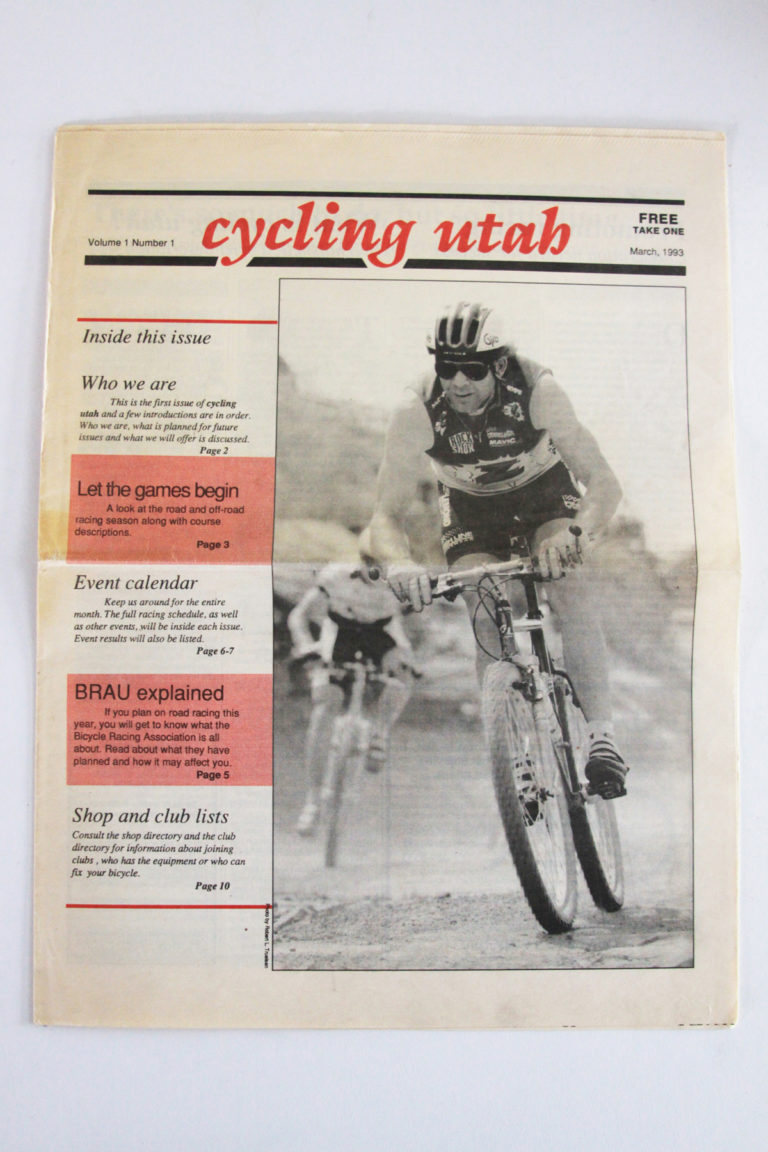
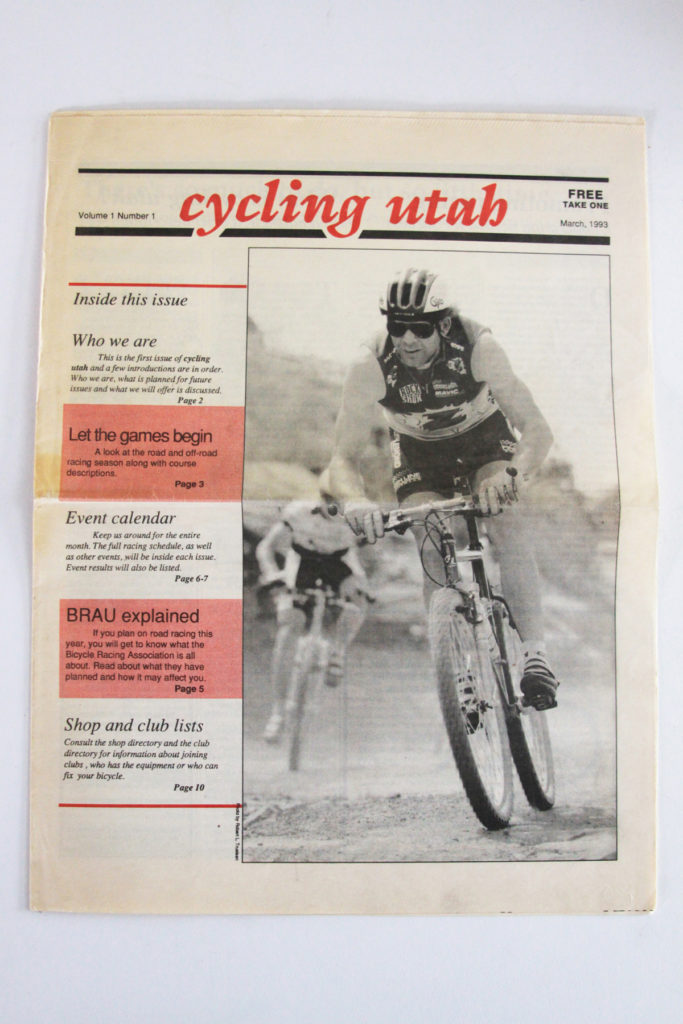
Cycling Utah’s first issue was published in March of 1993. David Ward and Bob Truelsen started the paper. It has thrived for 25 years as the voice of cycling in Utah and the Intermountain West.

It was 25 years ago this issue, March of 1993, that Bob Truelsen and I published Cycling Utah’s first issue. I clearly remember the day we set out to deliver Cycling Utah for the first time. It had just dumped a foot of snow on the ground, and I was driving around in slush and on slick roads to bike shops to drop off our inaugural issue for their customers to pick up. It was a rather inauspicious beginning for this 25 year ride.

Bob and I had both been involved in road racing for several years. Bob was the president or our racing club, Utah Premier, and would prepare and print a periodic newsletter. I remember reading an article he had written, and was impressed with how well he wrote. Due to the lack of available information on cycling events and race results, the idea of putting out a small publication as a central location for such information had been rolling around in my mind for awhile.

So, I approached Bob about starting a cycling newspaper, and learned that not only was he a journalist, but that he had, as a school project, developed a plan for just such a publication. Long story short, we both threw in $700, Bob and I both wrote articles and sold advertising, Bob put the paper together and I handled the financial matters. Thus was Cycling Utah born.

It would take a book to recount 25 years of my history and experiences with Cycling Utah. So I will simply share some history and thoughts about this significant part of my life. First, let me make clear that Cycling Utah was never a vocation or significant money maker for Bob or me. He had his career with the Deseret News and I had my law practice. We started Cycling Utah because of our love of cycling, and we saw a need and took steps to fill it. Our hope, especially that first year, was that we would make back the $700 we had each put into it.

One thing I remember after the end of our first year was discussing with Bob whether we were going to continue for another year. Indeed, that was our discussion each winter for the first 4-5 years of publication. Fortunately, we were younger and more energetic than I feel these days, so we continued to plug along.

We reached a turning point in 1998. We approached David Iltis about selling advertising for Cycling Utah. We knew by then that the interest in our publication was there. So we hired Dave, strictly commission of course. But his efforts allowed us to take Cycling Utah to a new level and we were able to increase our size and coverage.

By this time, Bob handled all the editorial aspects and printing of Cycling Utah, Dave Iltis sold the advertising, and I was responsible for the business end of things and distribution of the paper. We rolled along for several years like this, and it was an arrangement that worked well. Cycling Utah continued to grow and enjoyed wide spread acceptance. During these first years of publication, the paper grew in size and distribution. Our first issue was 12 pages long and printed in black and white, except for the front page where the name Cycling Utah was in red. Looking at our current issue, we have come a long way.

In 2001, we reached our next turning point. Bob decided it was time to pass the editorial responsibilities to someone else. By this time, David Iltis had become an integral part of Cycling Utah and desired to take over the editorial duties. So, we made that shift, and Dave has been the heart and soul of Cycling Utah’s editorial content ever since. Bob wrote articles periodically before finally bowing out for good. For my part, I passed the full baton of responsibility for Cycling Utah and Cycling West to David Iltis a couple of years ago. But since Cycling Utah’s inception and through all these years, I have continued to write articles and a monthly column.

Bob and Dave will have different experiences and memories they can relate. For me, much of my experience relates to my family’s involvement with Cycling Utah. Each year until two years ago my wife, Karma, and I had delivery routes we would often run to deliver Cycling Utah along the Wasatch front. Also, every one of our children, and even a couple of their spouses and friends, has earned money running these routes. It was not a bad gig. In addition to meeting and talking with people at the shops, we could spend the day listening to NPR, or books on tape (then CD, then downloaded to our smart phones), all while earning a little money.

In addition to running delivery routes, each month we would package Cycling Utah and ship it off by UPS to other destinations within Utah and surrounding states. Initially, we had to hand write shipping documents, then take all these packages to a UPS store where we had to have each package scanned. It was an hours long process. It finally evolved to where we set up shop in our garage to package Cycling Utah, and UPS would come by the next day and pick up all the packages.

Cycling Utah has taken me to a lot of events I otherwise might not have attended. In addition to having fees waived or paid by Cycling Utah, I was able to meet the promoters and ride some very scenic countryside. Writing about these events gave me the opportunity to reflect on the experience and to share it with our readers.

Writing articles for Cycling Utah has also led me to seek out cycling opportunities when I have traveled. In addition to various areas around the country, having a daughter employed by the State Department and who works in embassies around the world has led to cycling experiences in countries as diverse as Bangladesh, Nepal, Austria, Serbia, Croatia and Bosnia-Herzegovina. All of these have been shared in the pages of Cycling Utah.

In the pages of Cycling Utah I have been able to express opinions, tell of humorous experiences and share some of my more personal thoughts and musings. These are topics that might otherwise have never been written or shared. Now, they are available to me and my posterity, a way for us all to know me better.

As I have pondered over the last 25 years of Cycling Utah and its history, where it started and where it is now, it is somewhat overwhelming to recognize the major role it has played in my life. I have been blessed in my life with a good family, all of whom are my close friends. I have a faith in whose goodness I choose to believe. And I have been able to provide for my family through a law practice that I have been able to nurture for forty years.

Next to these major aspects of my life, and running concurrently and often intertwining with them, there has been Cycling Utah. Like them, it is an integral part of my life. Make no mistake. It has also been a burden. But the experiences and influences I have had because of Cycling Utah have helped to shape and form my life, and fill it with excitement, satisfaction and meaning.


Bike Utah: Reflecting on 2017: Where we are and where we need to go

Over the course of 2017, Bike Utah had another great run of advocating for and educating on behalf of bicycling. Here are some of our accomplishments from 2017:

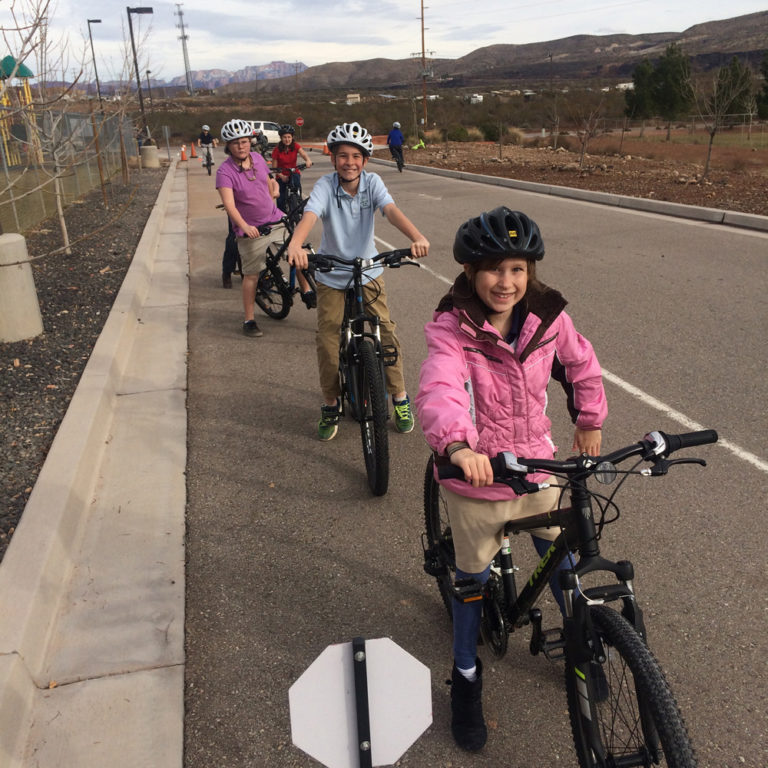
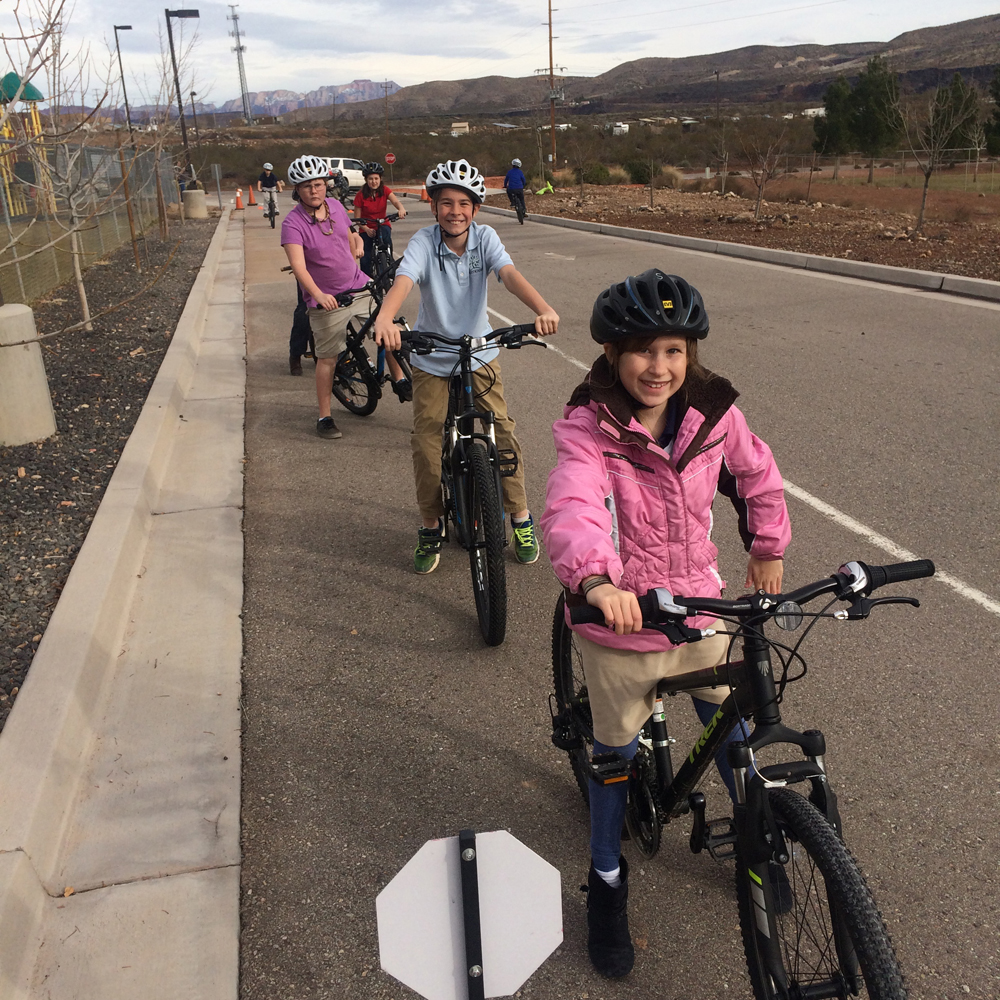
Young bike riders in bike education program
Bike Utah conducted a successful youth education program in 2017. Here, kids from Hurricane, Utah’s Valley Academy learn bike skills. Photo courtesy Bike Utah

Youth Bicycle Education and Safety Training (BEST) Program

In August, Bike Utah wrapped up the first year of the Youth BEST Program. Here are some of the high points from year one of the program: 

  • 3,053 students (13% of the number of 10-year-olds in Utah) at 44 schools and community organizations have completed the program
  • 77% increase in bicycle safety knowledge after completing the program
  • 145% increase in bicycling and a 65% increase in walking at participating schools
  • 34% increase in parents reporting that their child is interested in bicycling or walking to school
  • 62% of parents are reporting that, as a result of their student’s participation in the bicycle education, they or other members of their household are more interested in bicycling or walking

Find out more at http://bikeutah.org/youth

Active Transportation Benefits Study

One of Bike Utah’s big campaigns over the past few years has been championing and fundraising for a study to quantify the benefits that bicycling and walking bring to the State of Utah.

  • Bicycle related business and tourism have an economic impact of $425 million and are responsible for more than 3,500 jobs across the state
  • For every mile Utahns walk they can save $3.07 in annual healthcare costs
  • For every mile Utahns bike they can save $0.75 in annual healthcare costs
  • The Murdock Canal Trail in Utah County costs $113,000 each year to maintain, however it generates over $3,600,000 million annually in economic impact. This is in addition to a one-time economic impact of $26 million and 234 jobs to build the trail.
  • Bicyclists who visit Dead Horse Point trails in Moab generate $19 million annually in economic impact (more than $11 million from overnight trips).

Find out more at http://bikeutah.org/atbenefitsstudy

1,000 Miles Initiative

Bike Utah worked with Governor Herbert’s staff on setting a goal for new miles of bike lanes, paths, and trails. The Governor unveiled a goal of 1,000 miles of new family-friendly trails and bike paths over the next 10 years. Bike Utah will be continuing to work with the Governor’s staff to ensure this goal is not only achieved, but exceeded.

Bicycle Friendly Driver

Bike Utah worked with UTA to implement a bicycle component into all new bus operators training. Over the course of the training, bus operators learn about: common crashes and how to avoid them; the principles behind sharing the road; different types of bicycle infrastructure; and the safety techniques taught to bicyclists, including taking the lane. The training also reviews numerous roadway scenarios. At the time of writing, more than 110 operators have gone through the training and they are on pace to exceed 200 by the end of 2017.

Mobile Active Transportation Tours

In conjunction with our partners, Bike Utah took 95 advocates, planners, engineers, and elected officials on our Mobile Active Transportation Tours (MATTs). Participants were able to experience first-hand bicycle and pedestrian projects and learn how to implement similar projects in their own communities. This year’s tours were held in Springdale, Murray, Davis County, and Minneapolis.

Find out more at http://bikeutah.org/mobile-active-transportation-tours/

Bike Park Tour

In May, Bike Utah took representatives from nine communities on a tour of two Utah bike parks. Bike parks are dedicated parks and recreation facilities that include features such as purpose built trails, pump-tracks, flow trails, jumps and progressive skills areas for all ages and abilities. Bike parks are one of the fastest growing segments of the bicycling because they provide an opportunity for people of all ages and abilities to build their skills in a community-based facility. Over the course of the tour, attendees learned how the parks were designed, funded, built, and maintained. As a result of the 2016 and 2017 tours, at least five new communities are working on implementing bike parks.

Active Transportation Pilot Grant

The Utah Department of Health EPICC/Bike Utah Active Transportation Pilot Mini-Grant supports small-scale (less than $1,000) bicycle and pedestrian projects that facilitate greater opportunities to engage the public with new active transportation ideas. In 2017, the Provo Bicycle Committee used this grant to install a two-week project to show how a street can be redesigned to be more inclusive of bicycling and walking. On a three-block stretch from 200 West and 500 West, there were buffered bicycle lanes, pedestrian bulbouts, raised crosswalks, and wayfinding signs. 

The 2018 grant period is open until January 26, 2018. Find out more here http://bikeutah.org/atpilotgrant

Utah Bike Summit

For the 9th year we produced the Utah Bike Summit, which brought together riders, advocates, planners, and elected officials in order to learn how to make biking better in Utah. The 2017 Utah Bike Summit had more than 270 attendees.

Find out about the 2018 Utah Bike Summit here http://bikeutah.org/utah-bike-summit/utah-bike-summit-2/

National Bike Summit

Bike Utah, for the 9th straight year, led a group to Washington D.C. for the National Bike Summit. The Utah delegation met with staff from our federal legislative offices in order to advance active transportation efforts.

These are just a small sampling of what Bike Utah accomplished in 2017. In order to find out more about what we do and how you can get involved, sign up for our email list at http://bikeutah.org/newsletter/

Just because the weather is getting cooler doesn’t mean that our work is done. Bike Utah works year round to ensure that all of Utah continues on the path towards being more bicycle friendly. All of the work we do is not possible without the generosity of our members and donors. Please consider an end of the year, tax-deductible contribution to Bike Utah by becoming a member or making a donation at http://BikeUtah.org


UPDATED: Call to Action: Idaho Stop Bill to Full Utah Senate, Cyclist Action Needed Soon

Cyclist Action Needed – Call or Email the Utah Senate to Support HB58

Editorial/Call to Action
 UPDATE: March 2, 2018 – The Senate Transportation Committee passed the Idaho Stop bill (HB58) yesterday by a vote of 4-1. The bill now moves on to the Senate floor. The bill is not yet on the agenda for a vote.
We have updated the contact info at the bottom of this page for the full senate. Cyclists are encouraged to contact their senator at the least, and the full senate if time permits. We have also included a chart of possible voting status for 2018.
Rep. Carol Spackman-Moss, the house sponsor, presented the bill to the Senate Transportation Committee. The committee was generally receptive, but asked some tough questions. Several bike advocates testified both for and against the bill. Ultimately, Senators Mayne, Dabakis, Anderegg, and Buxton voted for the bill, while Sen. Harper voted against it.
 
February 28, 2018 – The Idaho Stop bill, HB 58 passed the Utah House of Representatives last week on a vote of 58-11, with 6 not present. The bill would let cyclists treat stop signs as yield signs (proceed without stopping only if safe), and some stop lights as stop signs (proceed after stopping only if safe).
 
Track the Senate calendar here:
 
 
The Idaho Stop may be coming to Utah. It would allow cyclists to treat stop signs as yield signs, and stop lights as stop signs. Photo by Dave Iltis

Your calls/emails are needed as soon as possible so that the bill passes the full Senate.

 
Talking points: 
• Idaho has safely had this law in place since 1982.
• Crashes dropped in Idaho after implementation.
• Cyclists often treat stop signs as yield signs currently. The bill legitimizes behavior that cyclists do anyway.
• The bill does not encourage cyclists to blow through stop signs or stop lights. They can proceed only if safe.
• The bill makes the state more bike friendly, and encourages more people to ride.
• The bill helps cyclists to maintain momentum at stop signs, which is generally safer for cyclists.

• A recent study on Policies for Pedaling from the Chaddick Institute for Metropolitan Development of DePaul University suggests that Chicago should adopt the Idaho Stop: 

I. Considering permitting “Idaho Stops” at four-way stop intersections, which would enable cyclists
to determine whether to stop or yield based on traffic conditions in order to maintain their momentum. The study shows that only about one cyclist in 25 presently complies with the law to come to a complete stop. A pilot program to allow Idaho Stops at certain traffic signal intersections when traffic volumes are relatively low may also be considered.

Locally, please see this informative video editorial by John James Monroe of Pedal Traffic: 

 
Editorial by Jim Greene:
 
Bill info:
 
The bill has been modified somewhat by amendment. For stop lights, it would only apply to roads with 1 travel lane in each direction. Not 4 lanes, etc. This isn’t great, but it was a compromise that needed to be made to move it forward.
 
Full Senate Roster emails:
Find Your Senator here:
Full Senate Roster:
The Idaho Stop bill has been presented several times in the past, including in 2010 and 2012, when it failed in the Senate. In 2013, a bill that allowed cyclists to proceed after 90 seconds at a traffic light passed. The voting history is below with possible vote based on their history.
Dist Senator Email 2018 Status 2010 HB 91

Idaho Stop

2011 HB 155

Idaho Stop

2013 HB 316

90 Second Wait Bill

No History
1 Escamilla, Luz (D) [email protected]         x
2 Dabakis, Jim (D) [email protected] Yes     Y  
3 Davis, Gene (D) [email protected]   Y Y Y  
4 Iwamoto, Jani (D) [email protected]         x
5 Mayne, Karen (D) [email protected] Yes Y Y Y  
6 Harper, Wayne A. (R) [email protected] No     Y  
7 Henderson, Deidre M. (R) [email protected]       Y  
8 Zehnder, Brian (R) [email protected]         x
9 Niederhauser, Wayne L. (R) [email protected] Yes Y Y Y  
10 Fillmore, Lincoln (R) [email protected]         x
11 Stephenson, Howard A. (R) [email protected]   N Y Y  
12 Thatcher, Daniel W. (R) [email protected]     N Y  
13 Anderegg, Jacob L. (R) [email protected] Yes       x
14 Hemmert, Daniel (R) [email protected] Likely Yes       x
15 Dayton, Margaret (R) [email protected]   N N Y  
16 Bramble, Curtis S. (R) [email protected] Likely No N A A  
17 Knudson, Peter C. (R) [email protected]   N N A  
18 Millner, Ann (R) [email protected]         x
19 Christensen, Allen M. (R) [email protected]   N N Y  
20 Buxton, David G. (R) [email protected] Likely Yes       x
21 Stevenson, Jerry W. (R) [email protected]   N N Y  
22 Adams, J. Stuart (R) [email protected]   Y A Y  
23 Weiler, Todd (R) [email protected] Yes     Y  
24 Okerlund, Ralph (R) [email protected] Likely No N N (yes in cmte) Y  
25 Hillyard, Lyle W. (R) [email protected]   A A Y  
26 Van Tassell, Kevin T. (R) [email protected] Likely No N (yes in cmte) N Y  
27 Hinkins, David P. (R) [email protected]   Y (no in cmte) N Y  
28 Vickers, Evan J. (R) [email protected]         x
29 Ipson, Don L. (R) [email protected] Possible Yes       x
               
    Yes   5 4    
    No   8 8    
    Absent   1 3    

Southern Accents

By Joe Kurmaskie —

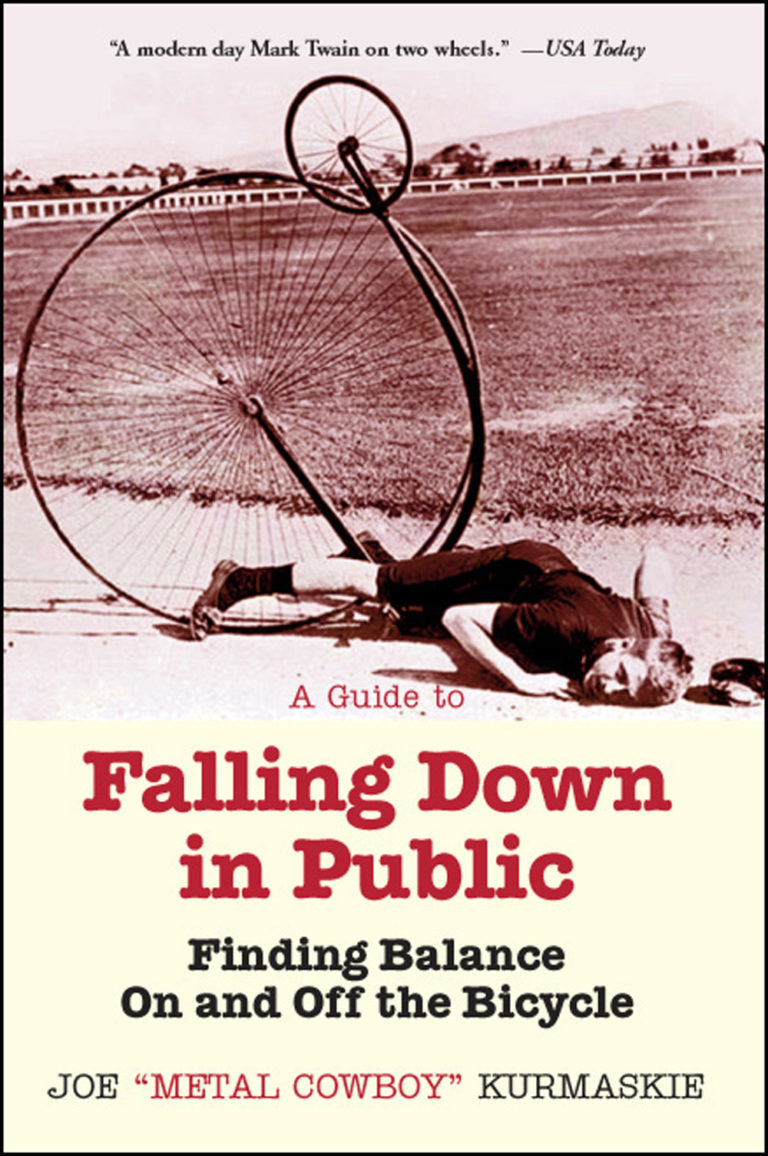
Excerpt from A Guide To Falling Down In Public

I’m learning to fly, but I ain’t got wings. Coming down is the hardest thing. —Tom Petty

During the spring of 1987, through a general lack of planning and letting life blow me around like a dandelion seed, I found myself running a bike and canoe touring company north of Gainesville, Florida, in the hamlet of White Springs.

Looking back, it was one of the most unfettered times in my life.

Falling Down inPublic book cover

What wasn’t to like about White Springs? A place that time had passed over. The kudzu fought with the Spanish moss for dominance and everyone else was happy to abide. I encountered no stoplights, signs or impediments of any kind to my forward progress on bicycle, except the occasional family of mule deer, which appeared to intentionally hide in waiting for me as if it were a game. I’d pedal along at full steam only to find deer darting and dashing in front of the bicycle. It became a test of my abilities to weave and dodge and remain upright any hour of the day. I rather enjoyed it. I also enjoyed rent-free living in an ancient, rambling old plantation-style home falling down in all the right places. In the South, as long as the porch is still intact they tend to wave away those pesky structural engineers and carpetbagging renovators. If that doesn’t stop ’em, there’s dogs out back or a shotgun just inside the screen door.

I lived there by the kindness of my bike touring company partner in grime, Nancy. We’d started sleeping together almost immediately. She was ten years older than me, which made her all of thirty- one. Our running joke was I called her Mrs. Robinson in private, Nancy in public, and she called me Sid all the time . . . these versions of Sid and Nancy were far removed from the reality of the actual star-crossed rock-’n’-roll lovers, in both lifestyle choices and how it ended so badly (death and murder charges) for them. But we thought it was a bit of cheeky fun. In many ways that year was unplanned Utopia, so it couldn’t last. Sometimes to speak about your life as it’s happening is to bring it crashing down around you.

So we kept our mouths shut and cooked elaborate meals that featured collard greens, tabouli salads, and fried catfish. We put in three to four hundred miles of road work a week, leading groups on bike up backwoods bayous where the cypress knees hold court, then down the thinnest, most alluring rebel roads in northern Florida. We’d paddle up peaceful, spring-fed rivers the rest of the time.

Gainesville lay thirty miles to the south. The way its college radio station announced the release of U2’s new album, Joshua Tree, that morning, was by playing it in its entirety. I reclined the touring van’s seat and grooved to it while waiting for Nancy to paddle up with the group. We’d agreed on a pullout spot in Micanopy. I spied a no-name roadhouse bar tucked in the woods framed by Spanish moss and live oaks so thick you might have missed the place. A sign out front for Shiner Bock beer and cooked shrimp was nearly covered by kudzu.

I looked at the time, made a decision, left the van, tied the laces of each shoe to the other and put them around my neck. Then I swam, head up, across the river.

I shook off the river like a shaggy dog does to bathwater, stood in the sun a few moments, then stepped up to claim my prize. When I eased into the darkness I could hear the AC working overtime and feel peanut shells crushing underfoot against the dirt floor. Hot damn.

A glorified homestead with iced beer and spiced-up seafood gumbo, perhaps some live music on the weekends. I walked up to the bar and noted, out of the corner of my eye, a swamp rat of a guy with matted blond hair, wearing the hell out of an army jacket bastardized with nonstandard emblems. Jeans, boots, drinking a Shiner Bock at 11 a.m. on a Tuesday. A man who knew something about living in the moment.

“I’ll have one of those.” I pointed at swamp rat’s beverage of choice, and that’s when it hit me. That was Tom feckin’ Petty leaning against the bar with his sweaty, contorted cowboy hat pulled low, drinking a beer from Texas. Born and raised in Micanopy, Petty had come back home. The Gainesville radio station DJ had just been talking about the killer show he’d thrown down on the U of F campus to end a long concert tour.

He was off the clock and the map. Hanging in a place that probably made him feel fifteen again. A place where it’s likely he played one of his earliest gigs. A moment to catch his breath and wet his whistle in a sugar shack at the end of the road.

Which was a fine idea, except I needed to tell him all about how Southern Accents had changed me on a molecular level. How his songs show that you can love the South but loathe the racism and backward thinking parts of it simultaneously. How it was a complicated, bipolar place to spend your formative years, and if it didn’t kill you, you couldn’t help but come out of there with an artist’s soul. I wanted to make him understand that seeing him on Halloween in 1983 had finally given my Springsteen concert experience a run for its money. And his encore performance of “Rebels” had wrecked me for many concert experiences to come.

I turned and looked at him with such intensity he was forced to make eye contact. Yeah, it was him.

Then, in what I’m certain was my last show of restraint for the next twenty years, I simply tapped the neck of my beer against his, waited for that mischievous, signature Petty smile—part sage, part smart-ass—to reveal itself. Then I nodded and walked away.

In a quiet booth in the back I could almost make out, echoing from somewhere down the lazy river of time, the opening chords of “American Girl” being struck into existence from the heart and hands of a straw-haired boy in a backwoods little bar.


New Regional Bike Friendly Communities Awarded

Cycling West - Cycling Utah Magazine logoThe League of American Bicyclists, one of the top advocacy organizations in the U.S., presented their awards for new and returning Bike Friendly Communities this fall.

Several regional cities and counties were recognized.

Park City, Utah upped the ante and received a Gold Bike Friendly Community Award. They are now the top bike friendly community in Utah. Logan, Utah debuted with a Silver award.

Clark County, Nevada (which includes Las Vegas and Henderson) received a Bronze. East Placer County, California (North Lake Tahoe area) received a Bronze.

Prescott, Arizona earned a Bronze.

With the announcement of 65 new and renewing BFCs, these cities join a leading group of communities, in all 50 states, that are transforming our neighborhoods.

“We applaud these communities for making bicycling a safe and convenient option for transportation and recreation,” said Bill Nesper, Executive Director at the League of American Bicyclists. “We are encouraged by the growing number of leaders who see bicycling as a way to build more vibrant, healthy, sustainable and connected communities and be a part of the solution to many complex challenges faced at both the community and national levels. We look forward to continuing to work with these communities as we move closer to our mission of creating a Bicycle Friendly America for everyone.”

The BFC program is revolutionizing the way communities evaluate their quality of life, sustainability and transportation networks, while allowing them to benchmark their progress toward improving the ease of navigating by bicycle. With this impressive round, there are now over 400 BFCs in all 50 states.

“A bike ride or a walk on a beautiful street or trail while gazing across our beautiful valley is a key part of what makes living in Logan great. As we grow, we’re committed to celebrating that part of valley life by making sure that bicycling stays as safe, healthy, and as fun for us and our children as it has been for our grandparents. This recognition by the League of American Cyclists is a true feather in the cap of the city, and has been won thanks to quality leadership and hard work by Logan’s leadership, staff, and her community members.” said Craig Petersen, Logan City Mayor.

For a complete list of all BFC’s, see bikeleague.org/sites/default/files/BFC_Fall_2017_Master_List.pdf

For more on how to work with your community to become a Bike Friendly Community, see bikeleague.org/community

Idaho Stop Bill Amended Version Set for Utah House Vote – Cyclist Action Needed

0

February 23, 2018 – House Bill 58, the Idaho Stop bill that was introduced in the Utah Legislature during the 2018 session, is set for a vote as early as Friday, February 23, 2018. The bill would allow cyclists to treat stop signs as yield signs, and stop lights as stop signs. That is, cyclists can proceed cautiously through the intersection if it is safe to do so after yielding at stop signs, or stopping at stop lights.

The initial bill had some conflicts with a different section of Utah code which states that cyclists can go through a controlled signal if they wait at least 90 seconds and it is safe to proceed.  https://le.utah.gov/xcode/Title41/Chapter6A/41-6a-S305.html The conflict arises since if HB 58 passed in its original form, there would be two sections of code governing the same issue.

As such, Rep. Carol Spackman-Moss has amended the bill to remove this conflict in the code. The new bill can be found here: https://le.utah.gov/~2018/bills/static/HB0058.html (See the amended version on the right side of the screen under 1st Substitute. The amended bill would leave in place the 90 second rule for motorcycles and mopeds, but change the code for bicycles.

The Idaho Stop may be coming to Utah. It would allow cyclists to treat stop signs as yield signs, and stop lights as stop signs. Photo by Dave Iltis

Commentary and Call to Action:

Cycling Utah supports this bill for multiple reasons. In Idaho, crashes dropped after the 1982 law went into effect. The bill legitimizes typical cyclist behavior at stop signs and many stop lights. Additionally, at stop lights, for the most part, the bill moves code governing cyclists from one section of the code to another. The bill does not allow cyclists to blow through stop signs or stop lights.

A recent study on Policies for Pedaling from the Chaddick Institute for Metropolitan Development of DePaul University suggests that Chicago should adopt the Idaho Stop: 

I. Considering permitting “Idaho Stops” at four-way stop intersections, which would enable cyclists
to determine whether to stop or yield based on traffic conditions in order to maintain their momentum. The study shows that only about one cyclist in 25 presently complies with the law to come to a complete stop. A pilot program to allow Idaho Stops at certain traffic signal intersections when traffic volumes are relatively low may also be considered.

Locally, please see this informative video editorial by John James Monroe of Pedal Traffic:

What you can do:

Email or call your Utah House Representative as soon as possible. House members contact information can be found here: https://house.utah.gov/

If the bill passes the Utah House, then please contact your senator via phone call or email. Senate contact information can be found here: http://senate.utah.gov

Track bill progress here: https://le.utah.gov/~2018/bills/static/HB0058.html


Mountain Biking in Thailand

Two winters ago I had the opportunity to spend time mountain biking in Chiang Mai, Thailand. I had just competed in and won a three day stage race in Vietnam for the second year in a row. It seemed like a shame to just head back to the US when I was already there, on the other side of the world. So I took my prize winnings from the race and bought a plane ticket to Chiang Mai. I had decided on Chiang Mai based on recommendations for the best nearby places to ride and interesting things to see that were also considered safe for a woman traveling alone.

Mountain Bike Thailand
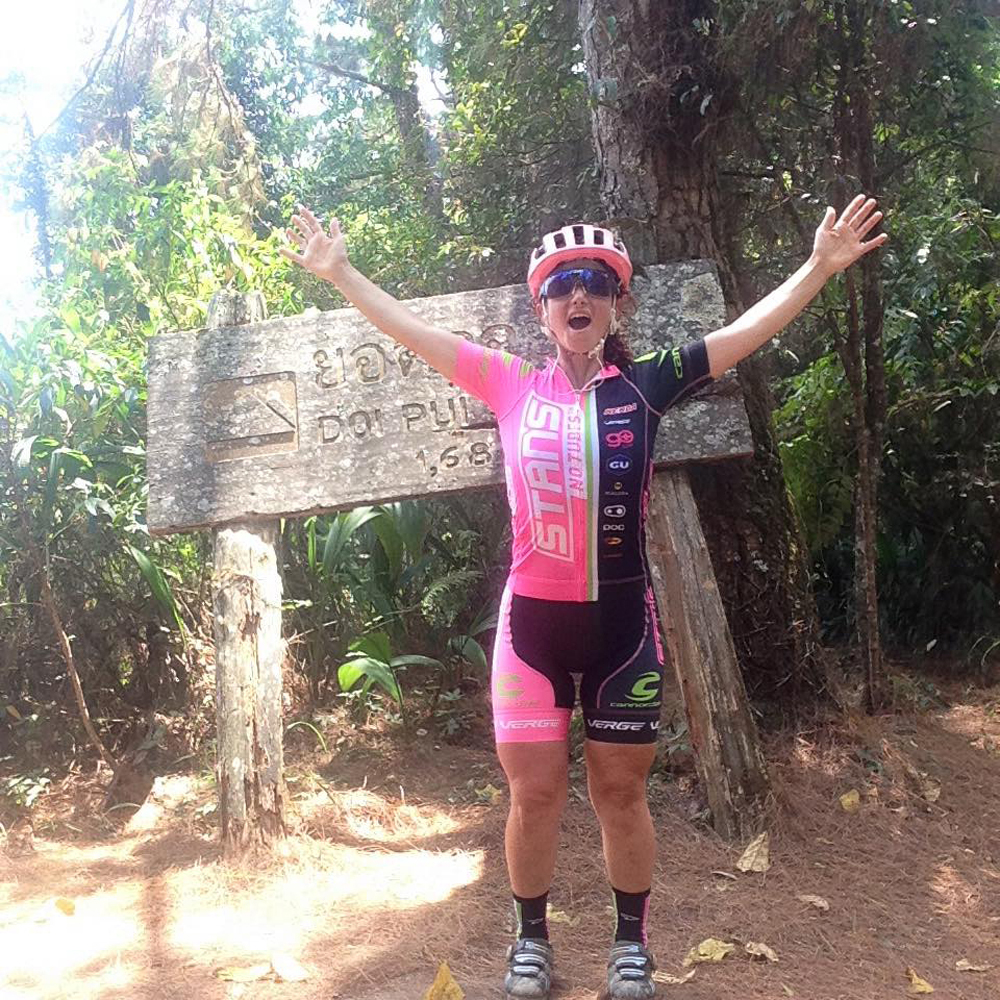
After a 2.5 steady climb out of city smog, through temples and palaces, I reached the jungle peak of Doi Suthep. It was quiet, peaceful and I felt the power of the jungle around me. Photo courtesy Sarah Kaufmann

I had a week in Chiang Mai. The timing was nice; as I had just finished a stage race, my training volume was low and I was open to exploring and seeing the local trails, visiting the local attractions and I could keep up with my coaching work.

Chiang Mai is arranged around a large central square that was originally a military fortress. From my accomodation just outside the square, I was close enough to walk to many of the attractions I wanted to see or take a tuktuk taxi for the equivalent of a few American dollars worth of Thai baht. I walked to street markets and tasted foods I couldn’t recognize or pronounce. I walked to and through temples, though some I could not as they are closed to women. I rented a scooter and scooted 100k away to an elephant conservatory. (A task made more complicated as I could not read or understand any of the road signs)!

Mountain Bike Thailand
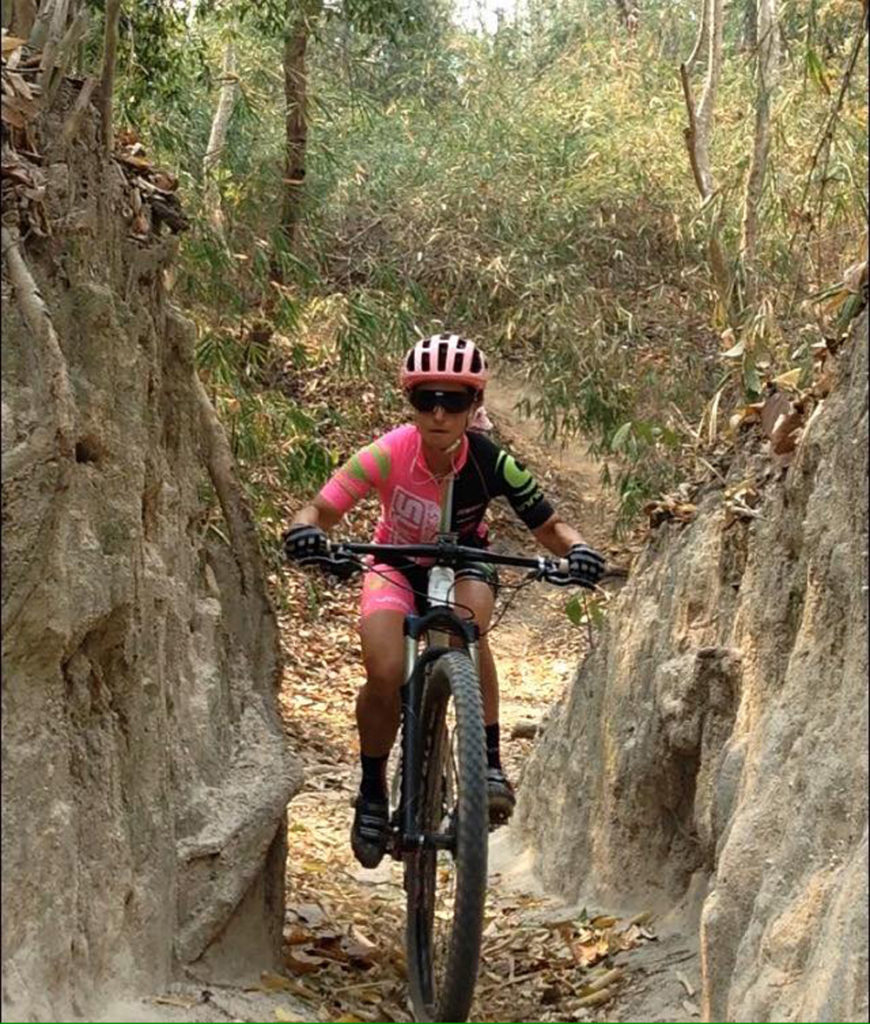
Riding through a naturally carved tunnel in the jungle. Photo courtesy Sarah Kaufmann

As I recovered from the stage race, I got back to training and found that if I got out in the morning before the heat, Chiang Mai was a great place to ride and train. The valley where the city sits is flat but, much like the Wasatch, the mountains rise just outside the city limits. In 15 minutes of pedaling (through a maze of tuktuks, street vendors, cars, trucks and pedestrians), I was at the base of a two hour climb. The road was tight and narrow but there were plenty of other cyclists and vehicle drivers were respectful. Just before halfway up the climb is a temple and major tourist destination. Fortunately for me, any tourist destination is also the location of vendors of fresh, ice cold coconut water, which was always the perfect post-interval stop to recover before the descent back into the city.

Love or hate social media but Facebook came through for me in Chiang Mai. Through some of the friends of friends who suggested I visit the area, I connected with a local riding group who showed me the Chiang Mai downhill MTB trails. The trails were mostly developed from farming/hiking cuts and were rough and raw. They varied from thick jungle trees and vegetation to dry/sandy to embedded or loose rocks.

Mountain Bike Thailand
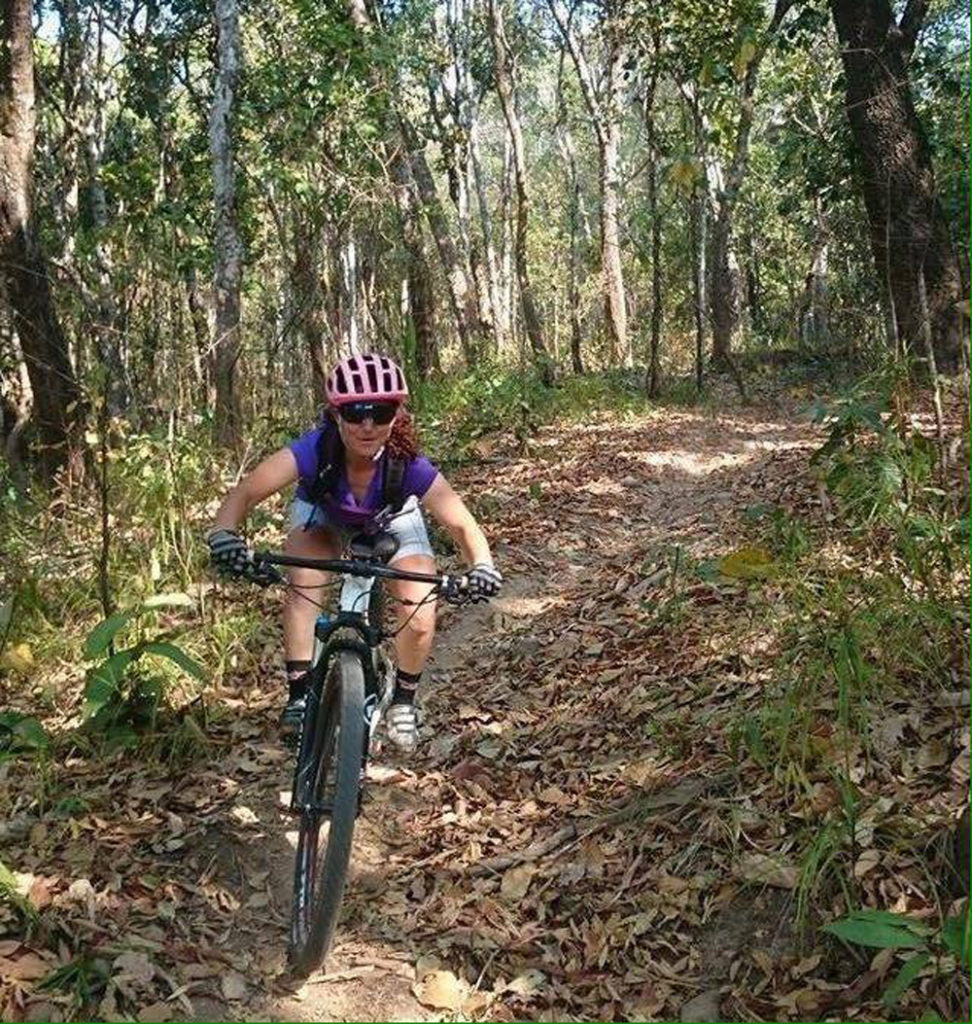
Big smiles getting a taste of the steep, raw singletrack the Chiang Mai riders call theirs. Photo courtesy Sarah Kaufmann

And they were steep! I never saw switchbacks, the trails just went up or down. The riders who showed me around were fantastic guides; we may not have spoken much of the same language but it turns out the language of MTB is universal. It was an unbelievable day and I came away from it filled with gratitude and genuinely touched by an incredible experience.

Mountain Bike Thailand
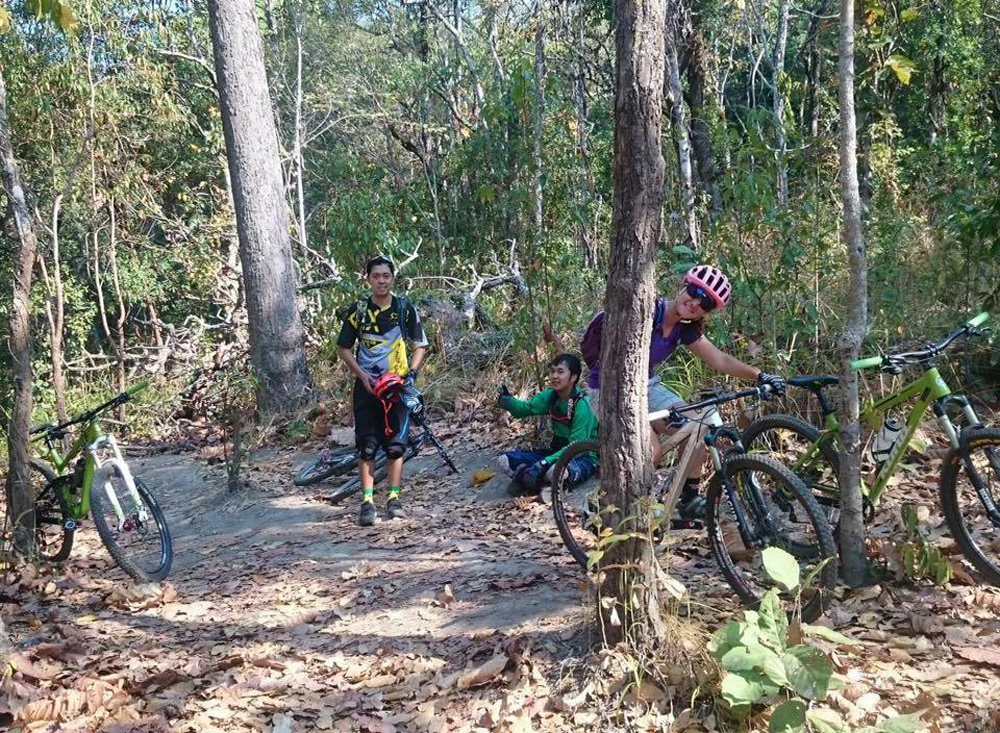
Thai friends showing me the trails. Photo courtesy Sarah Kaufmann

My days in Chiang Mai passed quickly but generally followed the same pattern; I would wake up and walk a few blocks to the street market. The Thai people are much more laid back than we are in the west and I found it amusing that coffee shops generally opened at 7 or later – and those were the ones that catered to foreigners like me, desperately seeking coffee at that hour. As I usually wanted to ride before it got too hot, I would have a coffee and light snack while doing some work and then head out on my bike for a training ride. By the time I finished and descended back into the valley, it was already pretty steamy and I would stop for coconut water and fruit.

After a shower and late breakfast, I would spend a few hours on my coaching work. At that point, it was the middle of the night at home so I usually had plenty to catch up on while my clients all slept. Later in the afternoon, I would find a touristy activity or attraction to check out.

Mountain Bike Thailand
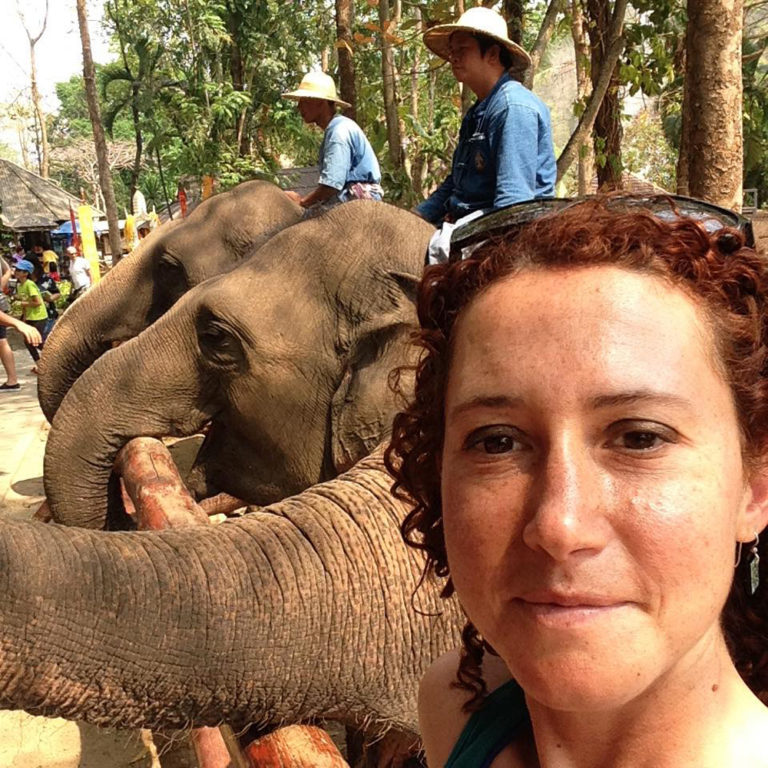
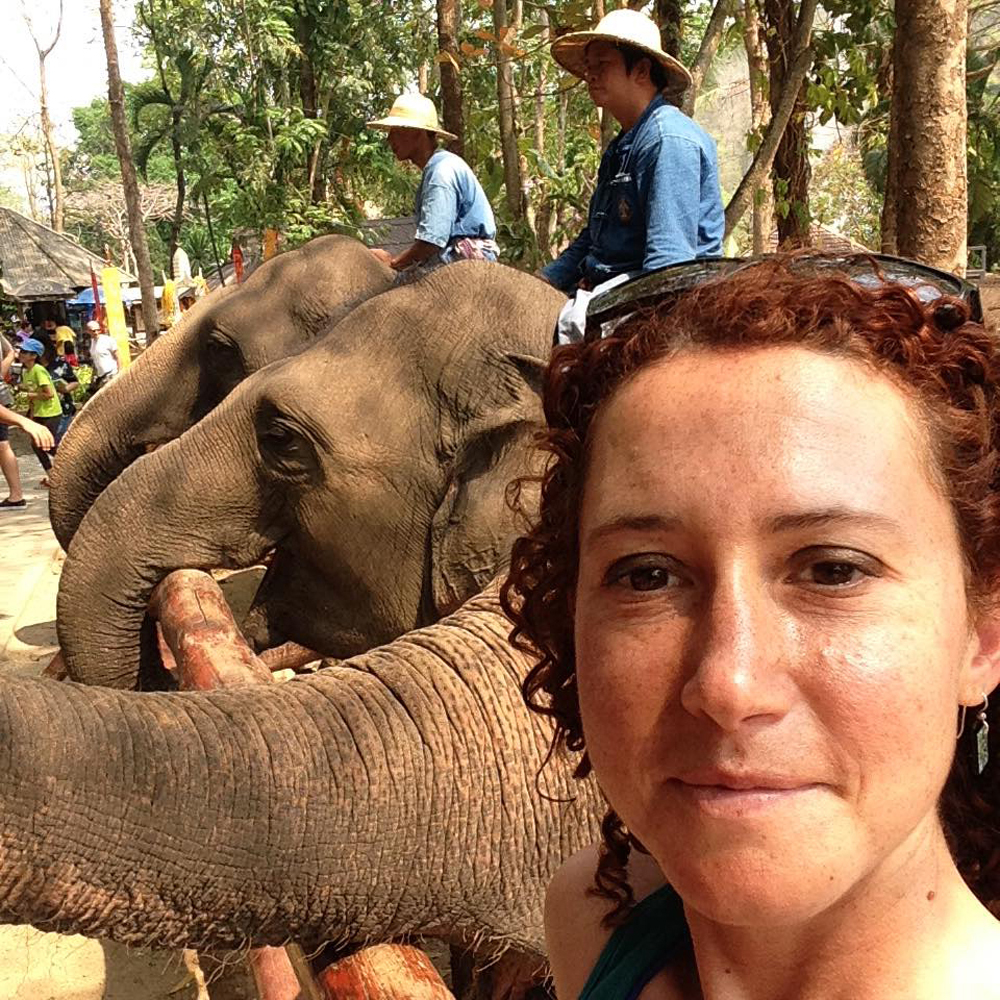
A 90 minute scooter ride to an elephant conservancy was a great chance to see these beautiful animals up close. Photo courtesy Sarah Kaufmann

Though honestly there were many days, I skipped a dedicated activity and just found myself walking and wandering for hours, always catching some candid Thai moment that would never be found on the checklist. After dinner at a street market or restaurant, I would head back to do some more work and get to sleep. As I was a woman traveling alone, I didn’t check out much of the night life. A couple nights walking through street fairs and festivals but that was it.

Mountain Bike Thailand
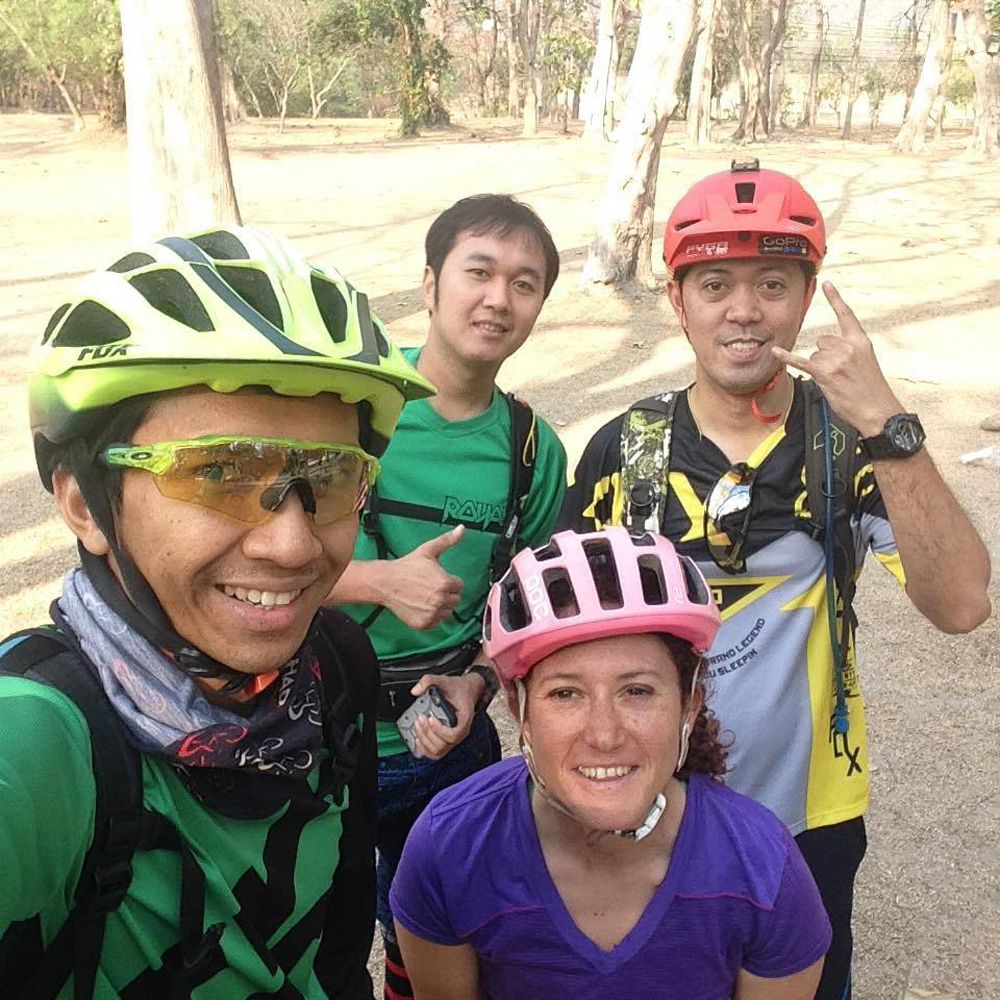
A few of the locals kind enough to show me their trails (of which the entries are carefully hidden so not findable to outsiders). I don’t think I could find them again… Photo courtesy Sarah Kaufmann

Truly my time in both Vietnam and Thailand were such amazing experiences and I am so grateful to have had the opportunity. Bicycle riding with people of different cultures and traditions informs the way I coach. Time spent with those people changes my experience as a human being.

Sarah Kaufmann is an elite XC and CX racer and the owner of K Cycling Coaching. She is based in Salt Lake City, UT and can be reached at [email protected] or 413.522.3180.

New Pathways and Trails Coming to Utah, Idaho, Montana, and Wyoming

Cycling West - Cycling Utah Magazine logoBy Charles Pekow

If you ride in Utah, Idaho, Montana or Wyoming, you can find some new trails and access in the next few years. The federal government has approved projects and a soon as next fall, some may be ready for riding.

Utah: West Davis Corridor

The Federal Highway Administration (FHWA), the Utah Department of Transportation (UDOT) and local officials have given their blessing to a revised West Davis Corridor (WDC) plan that will include new and improved bike trails and crossings along the highway between Centerville and West Point in Davis County, running from I-15 in Farmington to Antelope Drive.

While the governments have settled on a plan, they need to work out some details with contractors and citizens. UDOT has pledged to work with communities and the Davis County Active Transportation Committee about trail design. The plan calls for minimizing at-grade crossings so cyclists won’t have to wait for lights or get hit by vehicles when crossing streets but planners haven’t figured out the exact mix of tunnels and bridges.

The plan includes a new trail segment along the corridor between I-15 in Farmington connecting to the Legacy Parkway Trail (LPT) and going north to meet the southern end of the Old Emigration Trail in Jensen Park in Syracuse. The new trails will fit in a 25-foot wide right-of-way along the corridor. The trail will run east of the highway between I-15 and 950 North in Farmington, where it crosses to the west side. It adds about 12 miles, doubling the length of LPT.

The plan also calls for building a new crossing of I-15 on Park Lane in Farmington connecting LPT to the Oakridge Preserve Trail.

Meanwhile the Kays Creek Trail will connect the new WDC trail with the Kays Creek Subdivision. The Kays Creek Trail would connect to the WDC trail via an overpass near Weaver Lane in Layton.

But the Old Emigration Trail will be relocated between about 500 South and 2100 South in Syracuse. Its new alignment will lie along Bluff Road with a new overpass or underpass crossing Antelope Drive. A new grade-separated trail will also connect the trail to Fremont Park. The plan calls for adding a spur trail heading north on the west side of the highway to the Syracuse Arts Academy, where users will have to use a new crosswalk instead of an overpass or underpass, unlike elsewhere in the plan.

You can expect some disruptions during construction and it’s not clear exactly where cyclists will be rerouted. FHWA’s record of decision requires a “maintenance-of-traffic” plan to “minimize” impact on cyclists and others. The record acknowledges construction “could disrupt bicyclists or pedestrians using existing facilities. However, the impacts would be temporary because all crossings will be accommodated to maintain continuity and access after construction. During construction, UDOT will coordinate with the local municipalities and/or trail groups to post information regarding any temporary trail closures or detours.”

If all goes well, UDOT can start construction in 2020 and finish by 2022, says Project Manager Randy Jefferies. “Money is lined up. For Farmington to Syracuse, we have $610 million (for the highway). That’s the first phase,” he says. The communities and transportation officials have been designing the project since at least 2010.

“This is a great project for Davis County and gives us another regional arterial system on the west side of the county, a tremendous benefit to residents,” says Davis County Planning Manager Jeff Oyler.

“I think there are other solutions,” says Roger Borgenicht, cochair of Utahns for Better Transportation, who doesn’t object to the bicycle improvements. But he adds “I think they could do these things without building the road…(One day) people will wake up and see building more highways won’t help us. Congestion will grow to fill those roads.”

Anyone who doesn’t like the plan can file suit until March 5. But Borgenicht says he doesn’t plan to.

Idaho: Redfish Lake Trail to be Built

A nearly five-mile trail connecting Redfish Lake to the Stanley Trail should open next year in Custer County, ID. FHWA is seeking bids, expecting to spend between $1 million and $2 million for the project, tentatively scheduled for completion next fall. The trail will connect Pioneer Park in the City of Stanley to the footbridge at Forest Road No. 214 at the recreation complex at Redfish Lake in Sawtooth National Forest. Two-thirds of the trail will lie in the national forest and the northern third on an obtained easement.

The 2010 Census listed the population of Stanley at 63, down from 100 a decade earlier. But the Stanley-Sawtooth Chamber of Commerce calls the city the “Trailhead to Idaho Adventure.” It says of biking “Stanley, Idaho has earned a reputation for its variety of epic back-country rides, large quantity of single track trails, and zero crowds. If you have not ridden in Stanley, you will.”

Montana: Bozeman to Bridger Mountains Trail

It should become easier to bike from Bozeman to the Bridger Mountains Trail in Gallatin National Forest in Montana a year from now. FHWA is planning to build a 2.2 mile bike trail along Montana Hwy. 86 (Bridger Canyon Road). FHWA plans to spend between $3 million and $5 million on the trail, which will start at Story Mill Road and run to the Drinking Horse Mountain trailheads. Cyclists will be able to use their own path to get between parking lots and trailheads. Now they have to ride the roads.

FHWA, USFS and the City of Bozeman started looking into the idea in 2014 because trailhead parking lots can’t handle demand and overflow parking crowds the roads. The contractor will build as part of the trail an underpass near the Fish Technology Center and a bridge over Bridger Creek.

Also in Montana, the United States Forest Service (USFS) is planning to clean up some of the overgrown trails in Nez Perce-Clearwater National Forest. USFS hired three contractors for brushing work on parts of 10 trails over the next year. The schedule of work will depend on when no snow covers the trails.

Mountain bikers use some of the trials, including Windy Bill, Windy Creek and Cache Creek. The contracts call for brushing the trails eight feet wide and 10 feet high (to accommodate equestrians). The work won’t include any repair to the trails, except drainage, says Trail Technician Tim Weber.

Wyoming: A Roundabout Way to Get to Grand Teton

Grand Teton National Park will be easier, more pleasant and safer to ride to a year from now. FHWA is planning to build a roundabout at Gros Ventre Junction with a bike path by next fall in Teton County, WY, about five miles north of Jackson. FHWA has budgeted between $3 million and $5 million for the project. Construction is slated to start this spring.

“We are trying to increase safety…in that busy intersection,” FHWA Project Manager Kevin Gray explains. The aim is to slow traffic in all directions, he says. The roundabout will replace stop signs and should make it safer for cyclists, he says, with improved visibility and islands for them.

The project also includes installing a bikepath along Hwy 89 to connect to the path along Spring Gulch Road. As a subsequent step, FHWA plans to connect the bikepath to an existing one leading to Jackson Hole Golf & Tennis Club.

On a good summer day, hundreds of bicyclists cross the junction to get to the park, Gray says.

FHWA hopes to have a contractor start construction in April and finish by October 2018. In the meantime, the plan calls for building temporary bikeways along both sides of Highway 89.


 

Riding in the Mojave: Cibola Roll-a

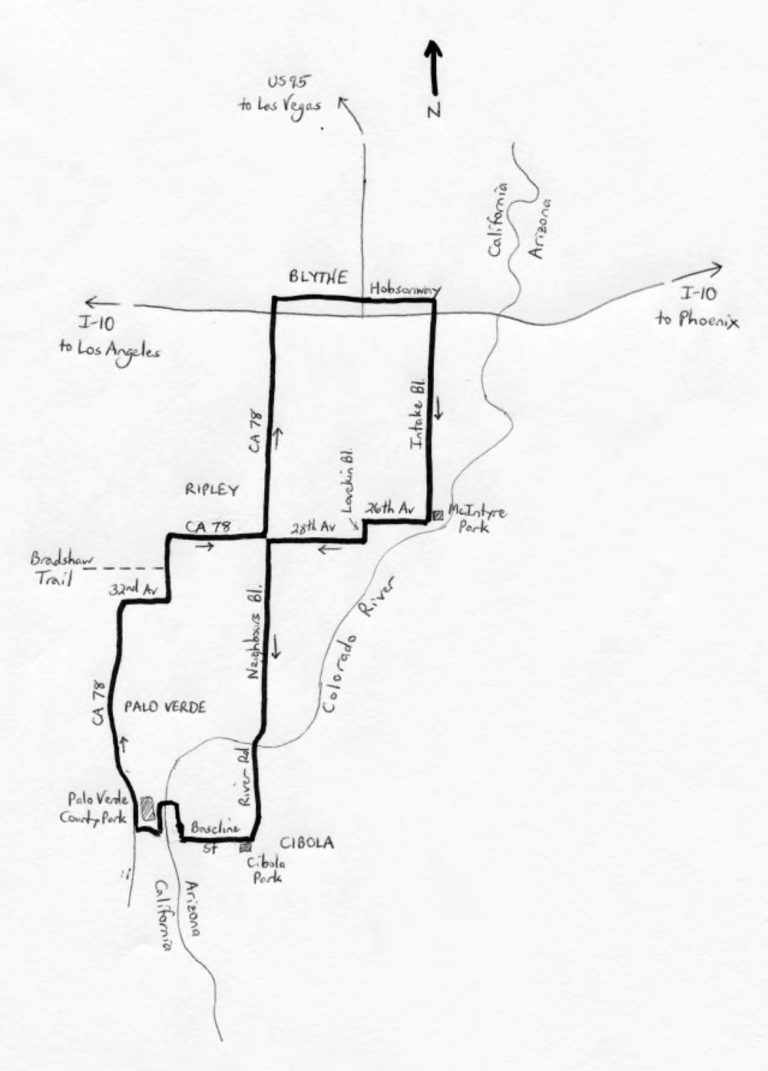
Mojave Desert Cibolla Bicycle ride map
The Cibolla Roll-a Ride is a 50.65 mile ride through the Arizona and California in the Mojave Desert. It starts in Cibolla, Arizona. Map by Wayne Cottrell

By Wayne Cottrell

Any bike ride in the Mojave Desert must be mercifully short, mainly because of the potential for extreme temperatures. This 50.65-mile ride begins and ends in Cibola, Arizona, located along the California border, in southwestern Arizona. The route consists of two clockwise loops that meet roughly at the midpoint of the ride. Cibola is located about 15 miles south of Blythe, California which, if one follows regional and national weather reports, is regularly one of the “hottest spots in the country.” In fact, Blythe’s all-time record high temperature was broken just last year, when the thermometer reached 124oF on June 20th. I was there one year earlier, when the temperature reached a much milder 111oF. As for the cycling, depending on the season, expect 90 degrees or higher from April through October. The winter months should present highs ranging from 60o to 80o. Also, expect some wind, as well as the luring, refreshing appeal of the Colorado River, which straddles this route. The ride is entirely flat, with the elevation ranging from 228 feet in Palo Verde to 268 feet in Blythe. The only “hill” is a freeway overpass!

Start the ride at Cibola Park in Cibola, adjacent the intersection of River and Baseline Roads. To get there, note that Cibola is 15 miles from Blythe, and that Blythe is 200 miles south of Las Vegas, along U.S. 95, or 150 miles west of Phoenix, along I-10. From Blythe, head south on California Highway 78 (CA 78). Just south of Ripley, head south on Neighbours Boulevard, which becomes River Road. Once across the Colorado River, enter Cibola; the park will be on the right, at Baseline Road. Cibola had a population of 170 as of 2000. At least one website lists Cibola as a ghost town, probably because of some abandoned structures. It is not a ghost town, though, and there is a resident population. Start the ride by heading west on Baseline. As you leave Cibola, the predominant land use will be agricultural. At mile 1.3, as you near the Colorado River, to the left will be the Cibola National Wildlife Refuge. The greater portion of the refuge is to the south. Because of the Colorado River waters, and several backwaters, the area is an important ecological environment within the otherwise dry desert surroundings. The refuge is on the Pacific Flyway, making it an important stopover (for birds) during their migration. At the end of Baseline, turn right onto Levee Road. Next, look for a bridge (unnamed) across the Colorado River. The bridge is a bit bumpy over the old-fashioned wooden roadbed. Note that there was a time when there were few if any bridges across the river, and one had to take a ferry boat to cross over. So, be ever thankful for the bridge. The pavement ends on the other side of the bridge. Once across, now in California (Imperial County), turn left onto the levee road on the opposite side (graded dirt). Next, take the first right onto another unnamed dirt road; you are now heading west, toward the (paved!) CA 78. The highway carries no more than 1,800 vehicles per day, so you should not expect to see more than two or three cars or trucks per minute, if that. Turn right and head north. On your right will be Palo Verde County Park, which is right along the river. There are enough trees to offers some shade. North of the park, enter the community of Palo Verde (mile 7.5). The population is nearly identical to that of its across-the-river “cousin,” Cibola, at about 170. There is a convenience store in town, in case you need refreshments.

North of Palo Verde, CA 78 enters Riverside County. The highway curves to the right, and then to the left. The intersection at 30th Street marks the endpoint, to your left, of the Bradshaw Trail, which is a scenic, backcountry byway. The trail was established in 1862 by William Bradshaw, and was used by miners and other travelers to cross the Mojave Desert, between California and gold fields in La Paz, Arizona. North of the trail, CA 78 turns to the right, and then to the left, to continue heading north. Note that, at the latter left turn, you have the option of turning right to head south – a turn here would eliminate the upper loop of the ride, making it a 26.4-mile trip. Knowing this may be useful if the temperature is exceptionally high. Continuing with the longer route, next, CA 78 enters the community of Ripley (mile 18.4), which had a population of just under 700 in 2010. The community was founded in 1920, and was intended to be a resort. A flood swept through the valley just two years later, however, thereby quashing any thoughts of that type of development. A large water tower in Ripley serves as a landmark. North of Ripley, it is a long, straight shot to I-10. After riding over the freeway, turn right onto Hobsonway (mile 24.4), which is the I-10 Business Route, and enter the city of Blythe. Hobsonway was formerly U.S. Route 70, before the construction of I-10. Blythe, with a population of 19,700 in 2016, is substantially busier than the other communities along the route. Given that the population of Blythe and the surrounding area can exceed one-half million during the winter season (when folks are looking for warmer climates), be sure to stay alert as you ride through the city. There are multiple opportunities for refreshment as your ride through Blythe.

Turn right at Intake Boulevard (mile 29.6), pass under I-10, and head south. The road leaves Blythe, and enters the agricultural lands of the Palo Verde Valley. In an interesting twist, some farmers have been paid by water authorities to NOT grow crops, as a means of conserving water. It is an interesting tradeoff strategy during periods of drought. So, you may notice a few dry areas, in between cultivated fields. McIntyre Park, another riverside park (and another opportunity to refresh), is on the left at mile 36.0. Turn right here and head west on 26th Avenue. At the end of 26th, turn left onto Lovekin Boulevard and head south, at mile 38.0. Lovekin then curves to the right, becoming 28th Avenue. At Neighbours Boulevard (mile 41.6), turn left and head south. You passed through this intersection earlier. As you near the Colorado River, Neighbours veers to the right, and then crosses over the river on a narrow bridge. The view of the river can be dramatic, particularly if there is a boat or two down there. From here, it is two and one-half miles back to Cibola, and the end of the ride.

Starting point coordinates: 33.374928oN 114.659747oW

For more rides, see Road Biking Utah (Falcon Guides), written by avid cyclist Wayne Cottrell. Road Biking Utah features descriptions of 40 road bike rides in Utah. The ride lengths range from 14 to 106 miles, and the book’s coverage is statewide: from Wendover to Vernal, and from Bear Lake to St. George to Bluff. Each ride description features information about the suggested start-finish location, length, mileposts, terrain, traffic conditions and, most importantly, sights. The text is rich in detail about each route, including history, folklore, flora, fauna and, of course, scenery.

Road Bike Utah Book CoverWayne Cottrell is a former Utah resident who conducted extensive research while living here – and even after moving – to develop the content for the book.
Salt Lake City to Reconstruct 900 S., Add Bike Path – Open House to be Held on 2-8-18

0

Cycling West - Cycling Utah Magazine logoFebruary 8, 2018 – Salt Lake City is hosting an open house to discuss the reconstruction of 900 S and the construction of additional sections of the 9 Line Trail.

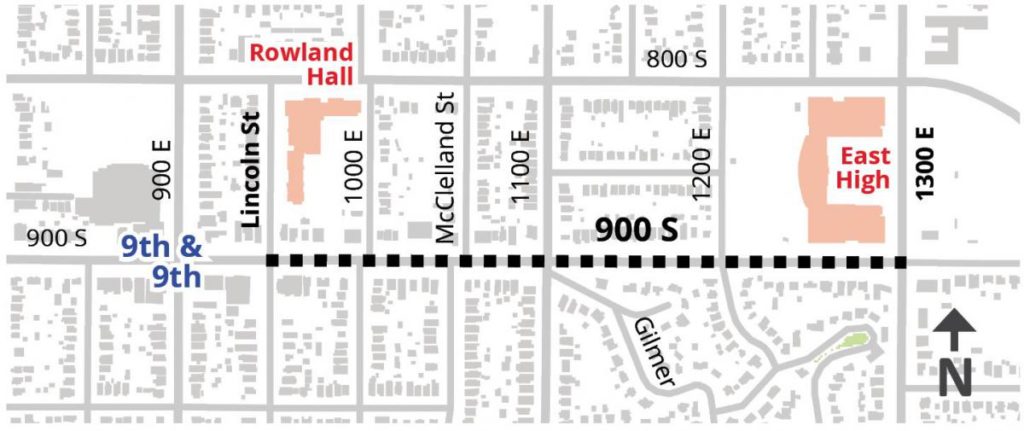
The street is in bad shape with rough pavement and potholes in many places. The reconstruction is expected to begin in May 2018 and will run from 950 E to 1300 E.

A new section of the 9-Line bike path will be built on the south side of the roadway. The roadway itself will undergo a road diet and will be converted to 1 lane each way and a center turn lane and bike lane on the north side in addition to the bike path. This configuration is safer than 2 lanes in each direction with no center turn lane. As part of the project, the intersection of 900 S and Gilmer will reconfigured as a new T-Intersection, which should give cyclists safer access to the Col de Gilmer.

The open house will be Thursday, February 8 from 6-8 pm at the Tracy Aviary Chase Mill House in Liberty Park. The public is encouraged to attend.

900 S will get a bike path as part of a 2018 reconstruction. Graphic from SLC Transportation

For more information and to take part in the survey, see: http://www.slcgov.com/transportation/900south

Larry H. Miller Tour of Utah Introduces Summer of Cycling

Cycling enthusiasts to participate in four organized rides plus training, support and swag

SALT LAKE CITY, Utah (February 7, 2018) — The Larry H. Miller Tour of Utah announced today a new public program that invites cycling enthusiasts to participate in a series of group training sessions, organized rides and special activities to create an all-inclusive summer experience that includes the marquee events along the Wasatch Front.

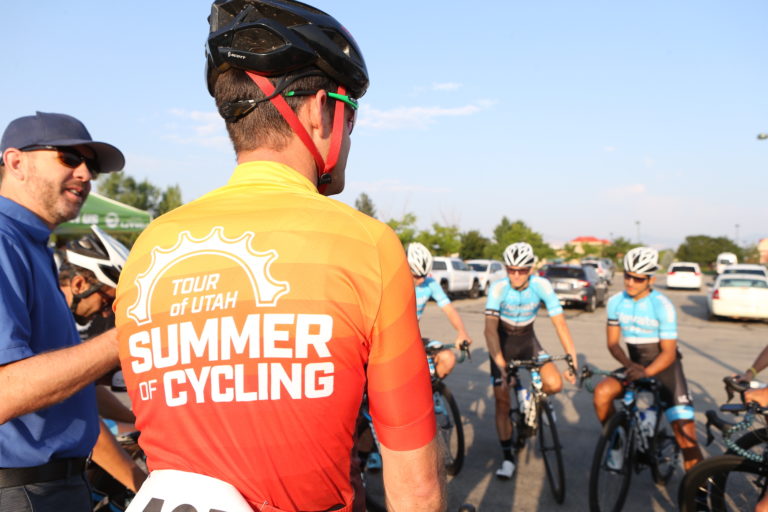
Photo courtesy Larry H. Miller Tour of Utah/Melissa Majchrzak

The Tour of Utah Summer of Cycling is partnering with the Salt Lake City Marathon Bike Tour on April 21, the Huntsman 140 on June 16 and the Snowbird Hill Climb on July 28 to create a series of rides that culminate in taking on the Ultimate Challenge presented by University of Utah Health citizens ride on Aug. 11 during the Tour of Utah.

Registration is now available directly at www.usacycling.org/register/2018-847 or through www.tourofutah.com with a singular entry fee for all the rides and activities. To register, participants need to have free USA Cycling account.

“The Larry H. Miller Tour of Utah is actively engaging the cycling community with a six-month program that encourages people at all levels to be participants in this great sport,” said John Kimball, managing director of the Tour of Utah. “The Summer of Cycling is designed to provide the support, motivation and opportunities for recreational cyclists to have their best year of riding thanks to a partnership with these classic rides.”

The Summer of Cycling begins in March with group training and nutrition sessions designed by University of Utah Health and rides hosted by the Huntsman 140 coaches. Participants will have access to neutral support, call-up and starting line preference and a designated Summer of Cycling tent at finish line areas for all events.

The Salt Lake City Marathon Bike Tour follows the same 26.2-mile running course as the Salt Lake City Marathon in a first of its kind ride in Utah. The non-competitive, family-friendly ride starts at the Olympic Legacy Bridge at the University of Utah and finishes at Library Square with a one hour, 45-minute time limit.

The Huntsman 140 is a fundraising road cycling event finishing at Fort Douglas on University of Utah campus. It is a ride of all distances for survivors and supporters and a fundraiser in honor of all cancer patients. Proceeds raised through this one-day, non-competitive ride go to Huntsman Cancer Foundation to support cancer research at the Huntsman Cancer Institute. Participants will also have access to all Huntsman 140 VIP events.

The Snowbird Hill Climb, a 10-mile ride up Little Cottonwood Canyon, adds a new challenge with 3,500 vertical feet of climbing as a final preparation for the Ultimate Challenge. The 40th edition of this ride starts at 9400 South near Highland Drive before summiting at Snowbird Resort. Participants will also receive discounted activity passes at Snowbird Resort.

The fourth and final ride of the Summer of Cycling is the Ultimate Challenge, the non-competitive, gran fondo-style bicycle ride that mirrors the Tour of Utah’s Queen Stage as the precursor to Stage 5. Cyclists can experience the same demanding mountain course as the professionals from the Canyons Resort to Snowbird Resort. Entry in the Ultimate Challenge presented by University of Utah Health also includes accommodations at the Canyons Resort on Aug. 10 and passes to the pre-ride Pasta Party and meet and greet with pro cyclists.

Throughout the Summer of Cycling, group riding opportunities will be scheduled with professional cyclists. Four exclusive “Rides with the Pros” will occur in Davis and Utah counties in May, Salt Lake City in June and Park City in July. Another benefit of the package is cycling swag, including a Tour of Utah/Summer of Cycling kit from DNA Cycling, T-shirt and participation medal.

The 14th edition of the Tour of Utah will be held on Monday, Aug. 6 through Sunday, Aug. 12. The Tour of Utah will start in St. George for the first time with a prologue and conclude in Park City after six days of stage racing. Additional host cities or venues are Cedar City, Payson City, Antelope Island State Park, Layton City, Salt Lake City, Canyons Village, and Snowbird Resort.


Healthy, Happy Holidays: A Nutrition Survival Guide for Endurance Athletes

By Breanne Nalder, MS, RDN, and Lauren Tamburrino, Plan 7 intern — We’re all thinking it, “I’ve worked hard all year to get my body looking and feeling great, and don’t want to throw it away to the holiday temptations” or something to that effect, right? Well, off-season months do not have to coincide with losing fitness or physique. You can avoid the winter weight fluctuations, maintain your training, and still enjoy yourself at parties. It simply takes a little planning and discipline. You are an athlete though, so you’re used to that already! Here are some tips to devise an eating plan and help you enjoy the holiday season while still meeting your performance goals.

  • Take preventative measures: If you tend to overeat at parties, try eating a low-calorie snack to help curb your appetite before leaving the house. Chances are if you arrive at the party ravenous, you will overeat.
  • Don’t rush to eat: Instead, be apart of the food making process with your loved ones and take some time before you dig in.
  • Bring the healthy dish: When contributing to the party, take something low in calories and high in nutrition, such as raw vegetables and hummus, fresh fruit, or a less guilty dessert.
  • Focus on fruit and vegetables: Find the veggie tray and use carrots or celery to taste a dip rather than crackers or bread. The fiber will make you fuller faster anyway!
  • Eat mindfully: Have the foods you truly enjoy and pass up the foods that don’t interest you.
  • Move away from the food: Socialize away from the buffet table to minimize excessive snacking.
  • Remember to hydrate – Focus on drinking water throughout the day, as well as enjoying more festive beverages.
  • Take a break: When you start to feel full get up, walk around and socialize. This will help decrease overeating.
  • Don’t vow to eat nothing at a special event: In doing so, you will just be setting yourself up for failure and subsequent guilt. Instead, limit your selections to foods you don’t typically eat and keep your portion sizes under control. Make a plate rather than standing at the table and mindlessly grazing.
  • When it comes to seconds, use the 20-minute rule: It typically takes 20 minutes after you have eaten for your satiety center to kick in and register that you are full. Thus, before going back for a second helping, wait 20 minutes. If you still feel hungry, go for seconds but keep your portion sizes small and go easy on the high-fat, high-calorie foods.
  • Share the wealth: If you host a party or dinner, have disposable containers available for guests to take home leftovers. This will help get tempting foods out of your house entirely!
  • Go easy on the alcohol: On top of the food, drinks are a huge culprit for packing in the calories. A standard 2 oz. pour typically has 100-150 kcals, and that’s not including the mixer, which can easily add another 100-300 kcals! An eight-ounce glass of eggnog with rum contains 400 kcals. Beer and wine may be smarter options, with 150 kcals for a typical serving (i.e., 12 and eight ounces, respectively). In addition, alcohol tends to distort our nutritional judgment, causing us to consume more high-calorie, high-fat foods than we would if we were not under the influence.

No one can deny that food is a big part of the holidays, but it is not the only part, and certainly is not the most important. So, when it comes to food, forget the all or nothing mindset. Depriving yourself of holiday treats or feeling guilty after eating isn’t part of a healthy eating strategy. Its up to you to keep yourself healthy and satisfied during the winter so you’re proud of your body and fit for next season!

Substitutions to lower the calories in classic recipes

  • Use two egg whites instead of a single egg to lower dietary cholesterol but keep the same flavor!
  • Make an egg with flax seeds! Mix 1 Tbsp ground flax with 2 Tbsp water and let it gelatinize.
  • Use low sodium vegetable broth in your mashed potatoes instead of butter or margarine.
  • Instead of oil/butter/margarine try applesauce. It adds a sweet moisture that will please any palate
  • Fat-free Greek yogurt or coconut yogurt are great swaps for any dip or pie topping. Yum!

Simple Healthy Side Dishes to bring to your holiday party

Pumpkin Hummus

  • 1/2 cup pumpkin puree
  • 1 (15 oz.) can chickpeas, drained and rinsed
  • 1/2 lemon, juiced
  • 2 garlic cloves
  • 2 tablespoons tahini
  • 4 tablespoons extra virgin olive oil, divided
  • 1/2 teaspoon sea salt, plus more to taste as desired
  • 1/2 teaspoon ground cumin, plus more to taste as desired
  • 1/2 teaspoon chili powder
  • 1/2 teaspoon ground cinnamon
  • 1/2 teaspoon cayenne pepper

Combine all ingredients in the bowl of a food processor or high-speed blender. Process or blend until smooth, stopping occasionally to scrape down sides of bowl or pitcher. Drizzle 1 tablespoon extra virgin olive oil over the top and serve with raw veggies, chips and/or crackers. Also, wonderful as a topping for sweet potatoes, salads and wraps.

Baked Parmesan Zucchini Boats

  • 4 zucchini, quartered lengthwise
  • 1/2 cup freshly grated Parmesan
  • 1/2 teaspoon dried thyme
  • 1/2 teaspoon dried oregano
  • 1/2 teaspoon dried basil
  • 1/4 teaspoon garlic powder
  • Kosher salt and freshly ground black pepper, to taste
  • 2 tablespoons olive oil
  • 2 tablespoon chopped fresh parsley leaves

Preheat oven to 350 degrees F. Coat a cooling rack with nonstick spray and place on a baking sheet; set aside. In a small bowl, combine Parmesan, thyme, oregano, basil, garlic powder, salt and pepper, to taste. Place zucchini onto prepared baking sheet. Drizzle with olive oil and sprinkle with Parmesan mixture. Place into oven and bake until tender, about 15 minutes. Then broil for 2-3 minutes, or until crisp and golden brown.

Serve immediately, garnished with parsley, if desired.

Cinnamon Roasted Sweet Potatoes & Cranberries

  • 6 cups chopped sweet potatoes
  • 8 ounce bag of cranberries
  • 1 tablespoon coconut oil (melted)
  • 1 tablespoon maple syrup
  • 2 teaspoons cinnamon
  • 1 teaspoon salt

Preheat oven to 400 degrees. In a large bowl combine sweet potatoes, cranberries, coconut oil and maple syrup. Stir mixture until potatoes and berries are evenly coated. Then sprinkle on cinnamon and 1/2 teaspoon of salt and stir to coat evenly. Pour onto a cookie sheet lined with parchment paper. Roast for 40 – 50 minutes for until a fork easily pierces through the sweet potatoes. Remove from oven and sprinkle with remaining 1/2 teaspoon of salt. Enjoy!

Bell Pepper Candy

  • 2 red bell peppers, remove seeds, core and membrane
  • 1 tablespoon pure maple syrup (less to taste)

Preheat oven to 150 degrees F. Slice the peppers into 1/2″ pieces, drizzle with maple syrup and toss to coat. Place a wire rack on top of a cookie sheet, cover wire rack with parchment paper. Place peppers on parchment covered rack, making sure they don’t touch. Place the cookie sheet on the middle oven rack, leave the oven door ajar, about 4 inches. Allow peppers to dehydrate until crispy enough to snap in half, approximately 8 hours to 10 hours (depending on individual ovens.

Kale Chips

  • 1 bunch Kale, thoroughly washed and cut into small pieces
  • 1 tbsp olive oil
  • Salt & pepper to taste
  • 1/4 cup grated Parmesan

Preheat oven to 350 degrees. In a large bowl, mix together the kale with the olive oil, salt and pepper. Spread kale out on baking sheet evenly. Bake ~10 min, until starting to crisp, remove from oven and sprinkle with Parmesan. Return to oven for another 5 minutes.

Breanne Nalder, MS, RDN has a Master’s degree in nutrition with an emphasis in sports dietetics at the University of Utah. She is a Registered Dietitian, the nutrition coach at PLAN7 Endurance Coaching, and races for Visit Dallas DNA Pro Cycling team. For individual custom nutrition coaching, you can reach Breanne at 801-550-0434 or [email protected].

Take Care of Your Knees for Happy Cycling

Your knees are a critical component of the whole cycling experience, and unhappy knees make for unhappy cyclists. Although cycling is a low impact sport and often recommended for athletes with knee issues from running, there are still risks to the knees with cycling. The knees are trapped in the middle between the pedals and the saddle, and thus assume “victim status” for problems that originate elsewhere. When your knees complain, they are often pointing the finger of blame at some other aspect of your cycling set up.

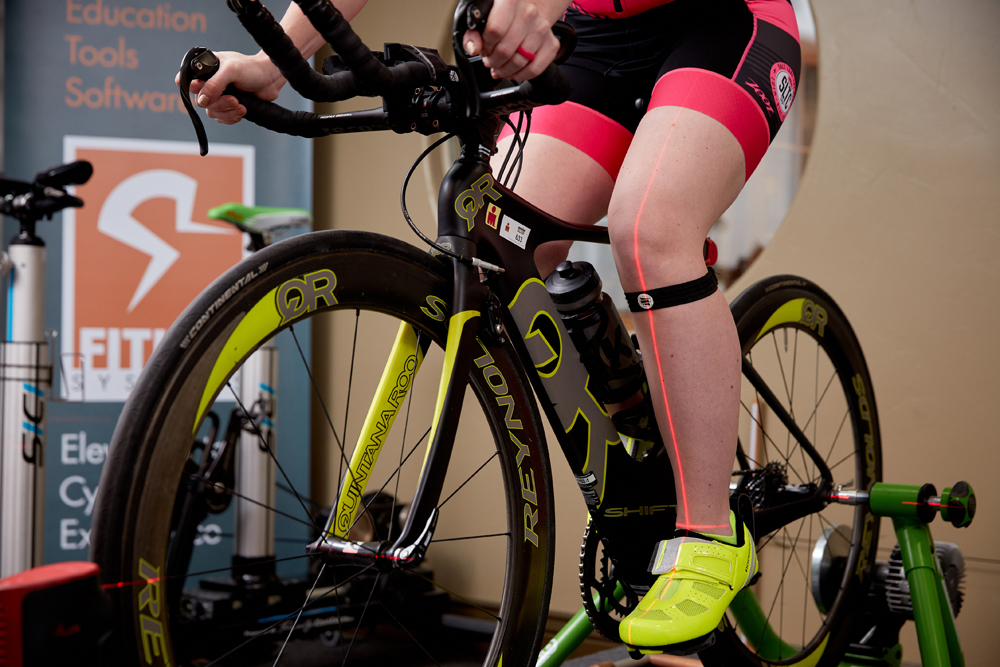
knee alignment in bicycle fit
Proper pedal, shoe, knee alignment will help keep knees happy. Photo by Derek Israelsen

There are exceptions though. If you have arthritis, torn meniscus, damaged ligaments or other physical problems in the knee joint, then the blame stops there. But if your knees are fundamentally sound and you suffer from periodic or persistent knee pain when riding or as a result of riding, then something is going on to cause the aggravation. What could it be?

  • Change in work-load (play-load!) – Knees can protest when you suddenly increase your mileage, elevation gain or intensity. The common term is “spring knee” as it is more likely to occur when ramping up outdoor riding duration and intensity in spring. Muscles, tendons and ligaments need time to adapt to increased load. Ramp up slowly. Common symptoms can be pain on the outside of the knee (IT band inflammation), or at the front below the knee cap (patellar tendon inflammation).
  • Reduced circulation – there is not a lot of insulation around the knee and the chill air of fall, winter and spring reduces circulation and makes for creaky hinges. Cover up the knees, using knee warmers, leg warmers or cycling tights. If the ambient air temperature is below 550 F, cover up.
  • Saddle height too low – You increase compressive forces in the knee. Pedal too hard or far like this and you will get pain in the knee behind the knee cap, or in the front of the knee.
  • Saddle height too high – You may feel a strain behind the knee, or might not feel anything in the knee but experience hamstring tenderness.
  • Saddle setback – a saddle too far forward can have a similar effect to a saddle which is too low, meaning pain in the knee joint at the front of the knee, behind or below the knee cap.
  • Cleat rotation – Although you are probably using cleats with float, the cleats need to be set so that the float range is centered for your leg action. As you pedal your tibia (lower leg bone) rotates slightly in and out, applying a twisting action. If that is unnecessarily constrained at the foot by the pedal, then it seeks an outlet in the knee. Add thousands of repetitive pedal strokes and you can see why your knees might get unhappy about this arrangement. A misaligned cleat is most likely to cause pain on the sides of the knees, either inside or outside.
  • Stance width – is how far apart your feet are when on the pedals. This is influenced by the bike design, crankset design, pedal axle length and lateral cleat placement. If you are pinned too close together or forced to far apart for your body’s preferred biomechanics, this will put strain on the medial and lateral ligaments in the knee, meaning pain on the inside or outside of the knees. The wider the tires the wider the chainstays, bottom bracket, cranks and therefore pedals. Road bikes have the narrowest pedaling platform, fat bikes have the widest. It is easier to widen a pedaling stance than it is to reduce it. There is a very limited range of lateral movement available in the cleat positioning, but some pedal brands offer different length pedal spindles, and pedal spacers are available to boost width.

If you are jumping onto a fat bike this winter after a season on your road or mountain bike, your knees and quad muscles may protest for a few weeks due to the different stance position and pedaling forces. There is not a lot that can be done to narrow the stance width, but some refinements may be available to help with this.

With knees, there is no gain with pain. Pain is a warning sign that something is amiss. Unlike a muscle strain or a bruise, aches or pains in the knee are usually associated with ligaments and tendons, and these can take an unreasonable amount of time to settle down and come good again – if at all. Take care of your knees. They have joint command of your cycling pleasure and performance.

John Higgins wants to elevate your cycling experience. He operates BikeFitr – an independent bike fitting studio, and Fit Kit Systems – supplying equipment and education to bike retailers and fitters. Contact: [email protected]