By Charles Pekow – New multi-use trails in Utah and Juab counties, Utah got the official green light. The Federal Highway Administration and Utah Department of Transportation (UDOT) approved a reconstruction and widening project of I-15 between Payson and Rocky Ridge, which will include new bike paths. The agencies found the project will not cause significant environmental damage. Anyone who objects can file suit until Dec. 5.
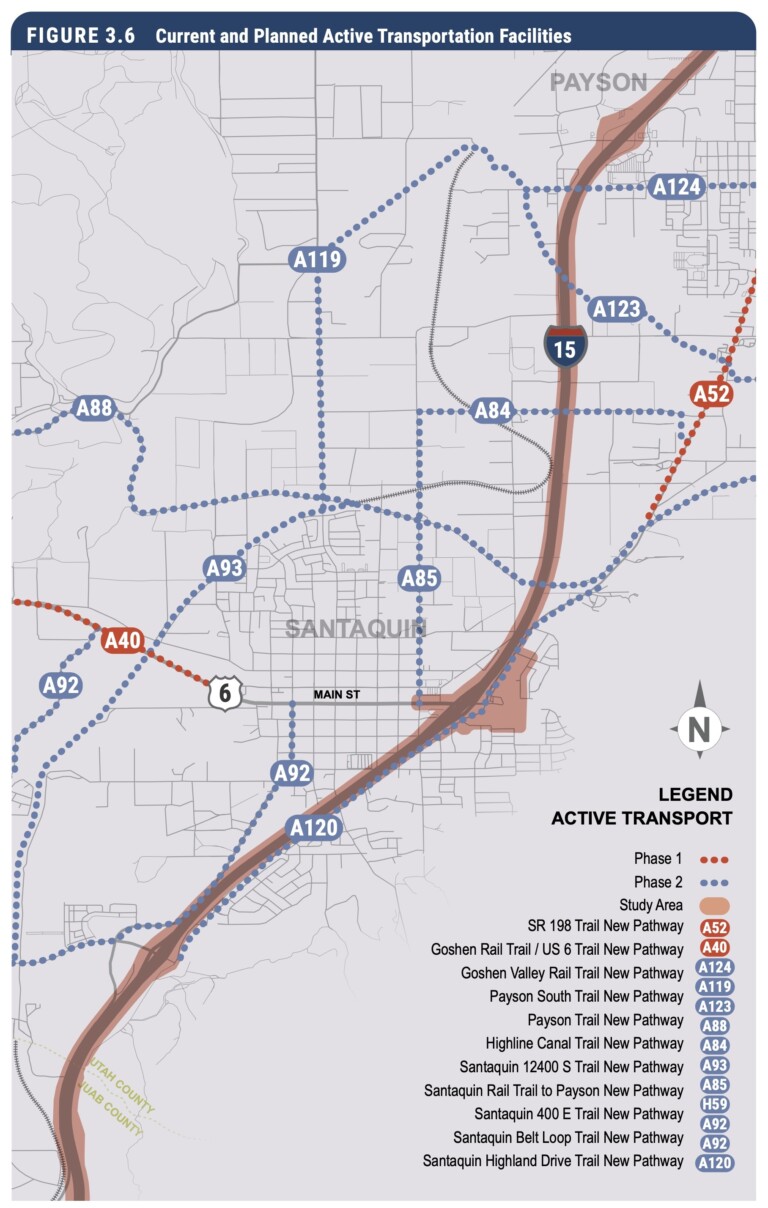
Current and Planned Active Transportation Facilities. Image courtesy of UDOTPreferred Alternative Pedestrian and Bicyclist Facilities. Image courtesy of UDOT
Current bike facilities along the route don’t meet UDOT standards. The plan includes trials on both sides of I-15 in Santaquin. Also, it calls for a “Goshen Rail Trail/US-6 trail (to) run from Goshen to the I-15 Santaquin Main Street Interchange, paralleling Main Street (US-6) …. (A) 400 East Trail would begin at Main Street (US-6) and travel north, paralleling 400 East terminating at 12400 South. On the east side of I-15 the (plan) includes the Santaquin Highland Drive Trail. This trail would begin at Summit Ridge Parkway and travel north, paralleling Highland Drive and SR-198 before joining the planned Highline Canal Trail.
By Charles Pekow — If you want to hunt or fish in the National Wildlife Refuge System, you could go by bike. In fact, you’re not allowed to drive. But you would have to stick to the designated trails and roadways. The Fish and Wildlife Service has proposed regulations that would expand or open hunting and fishing opportunities at 16 national wildlife refuges and one national fish hatchery, opening more than 87,000 acres of land and water for the first time.
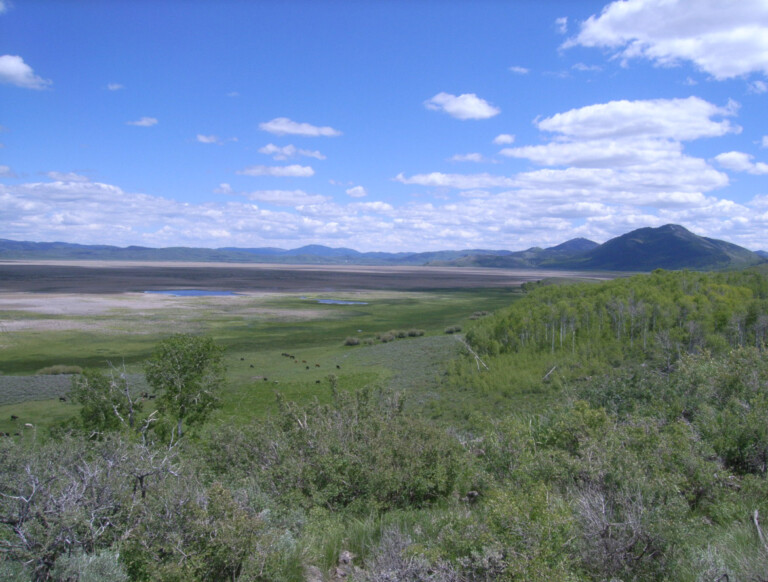
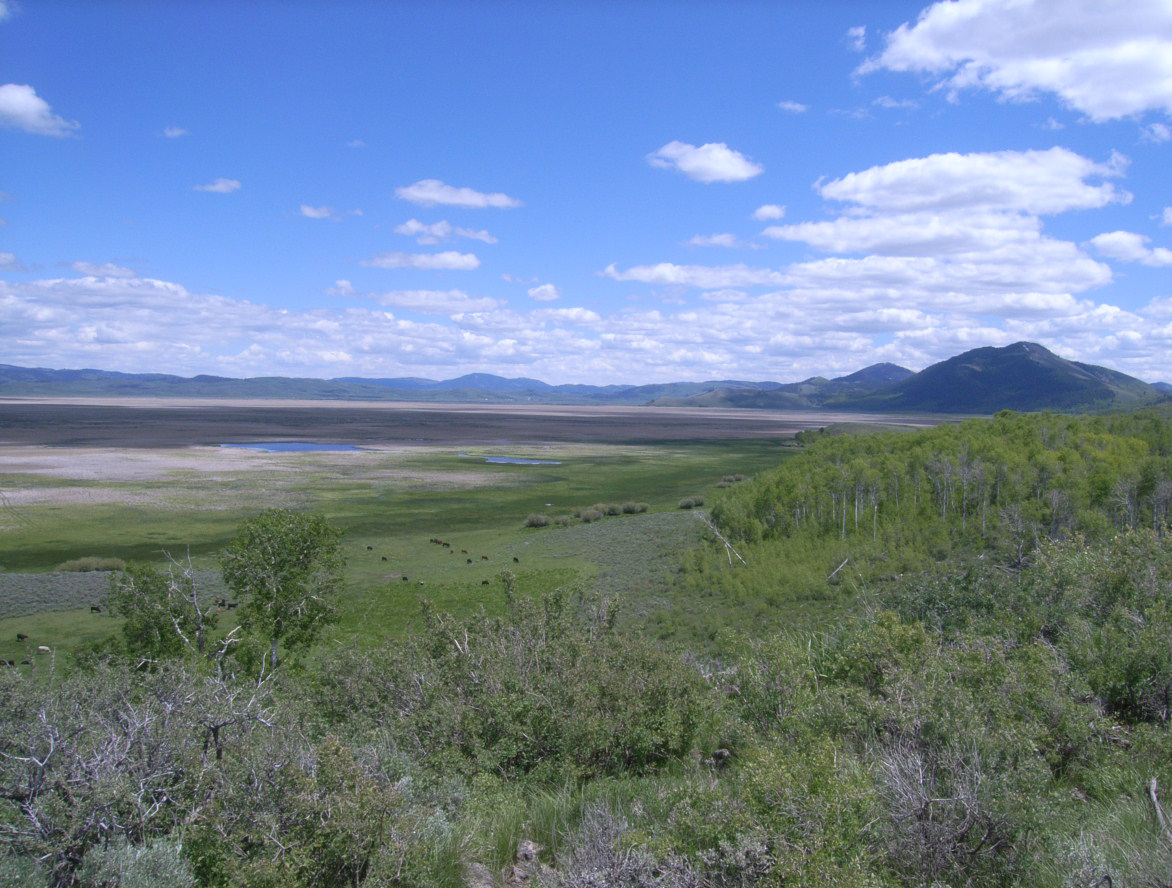
Grays Lake National Wildlife Refuge. Photo credit: USFWS. CC BY-NC 2.0
The sites include the refuges of Black Coulee, Bowdoin, Creedman Coulee, Hewitt Lake, and Lake Thebadeau in Montana, plus Grays Lake in Idaho.
The rules state that “hunters may access hunt units only by foot or bicycle, including electric bicycles. You may only use a bicycle on designated routes; we prohibit off-road use of a bicycle.”
Good luck carrying that dead moose on your carrier rack!
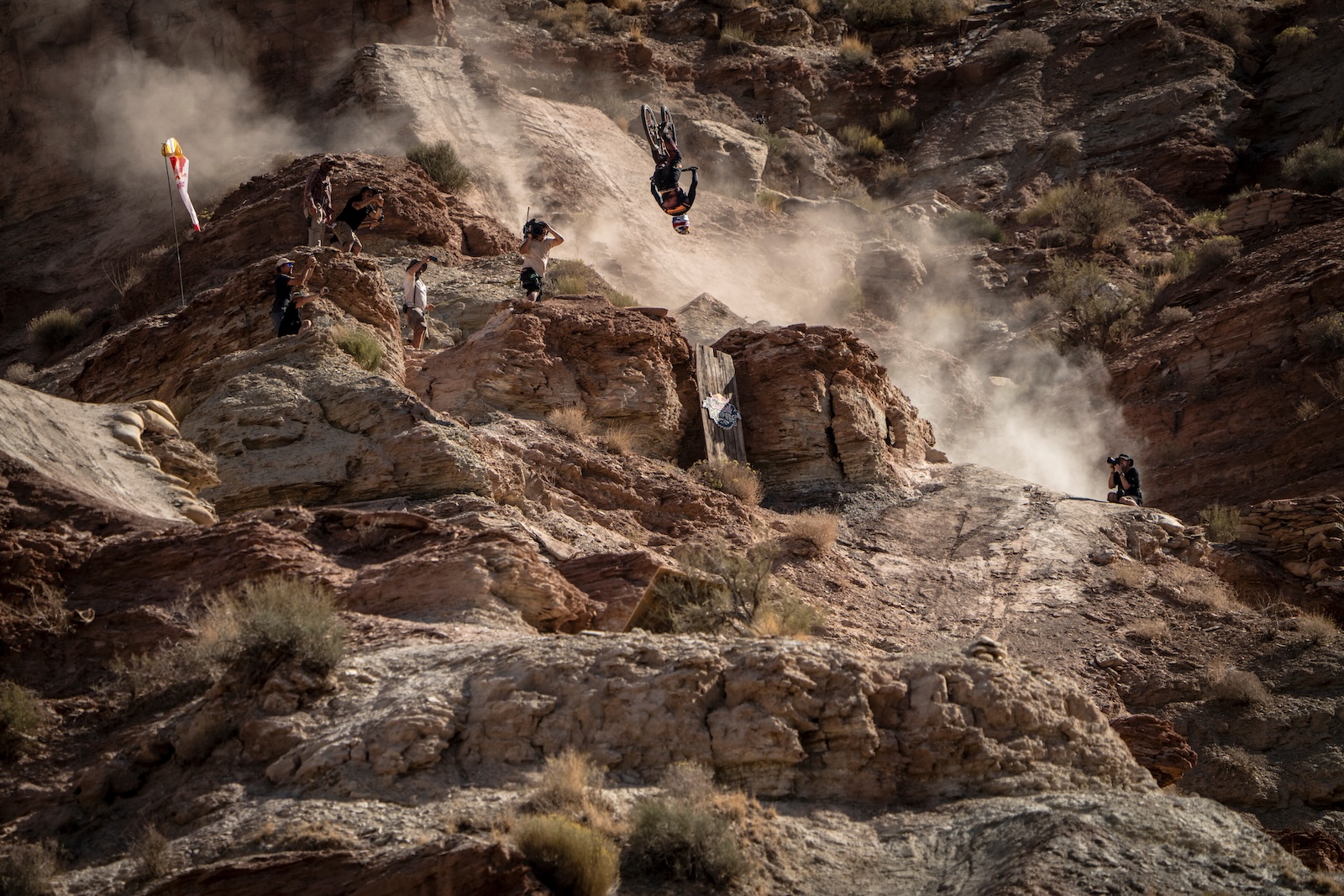
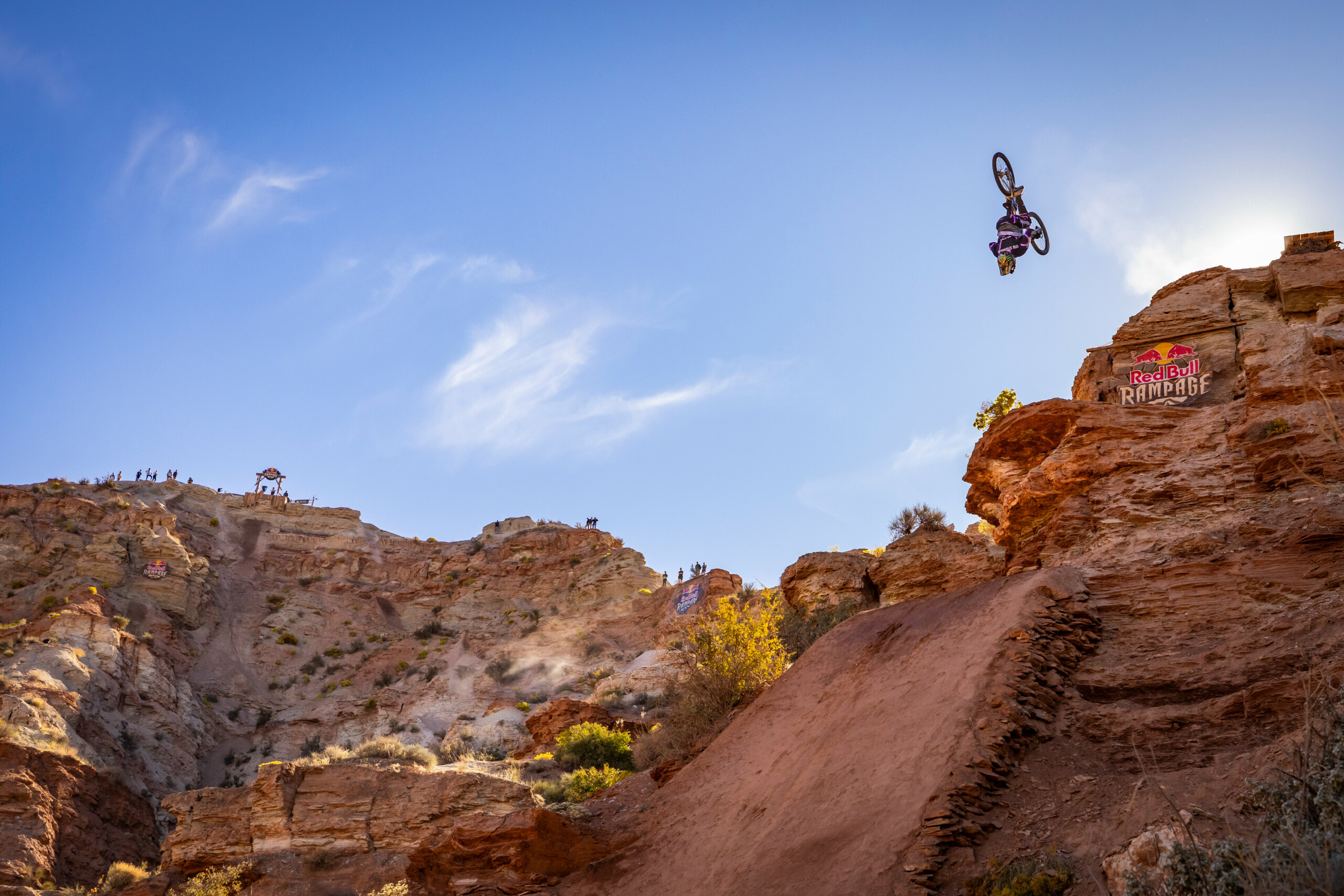
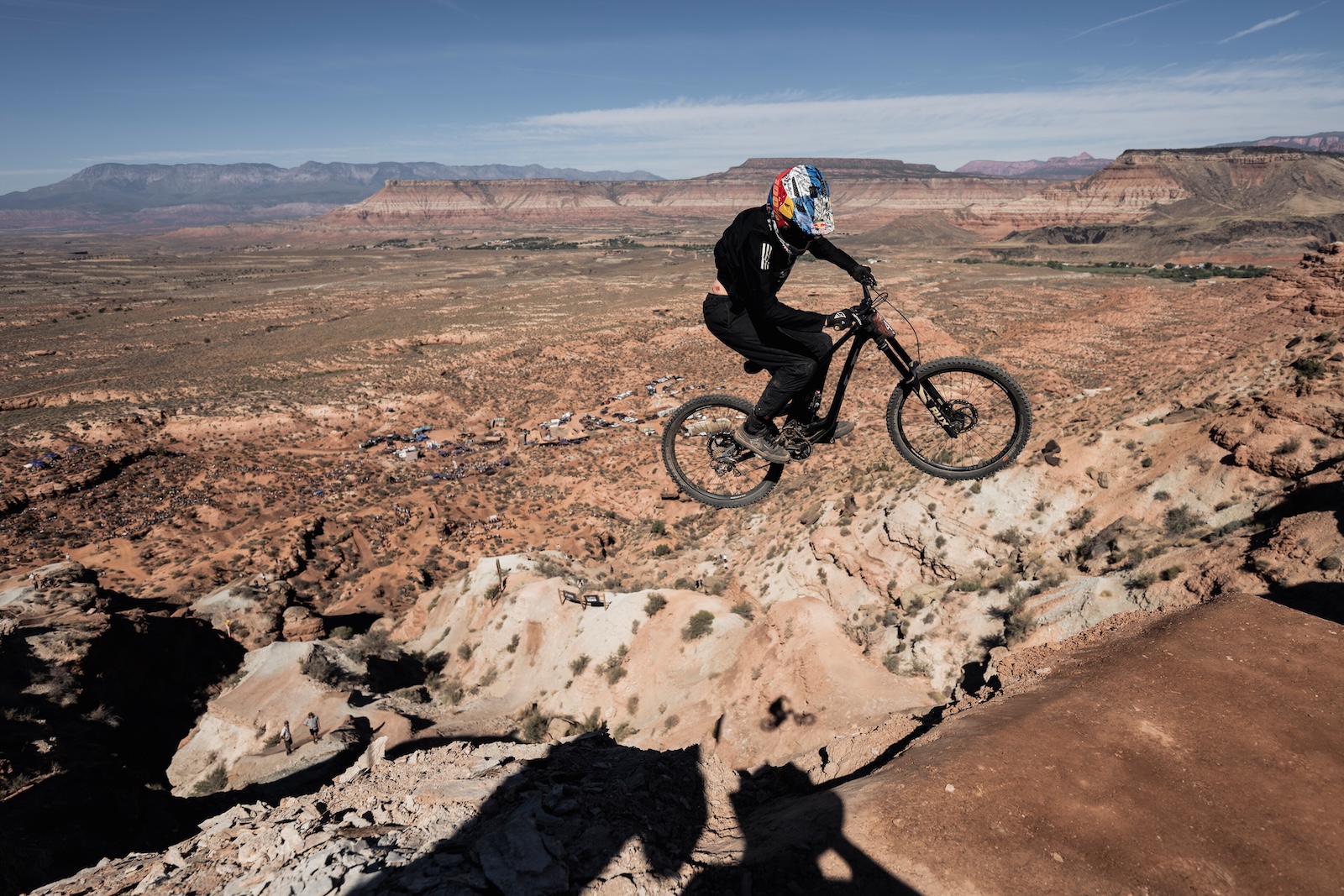
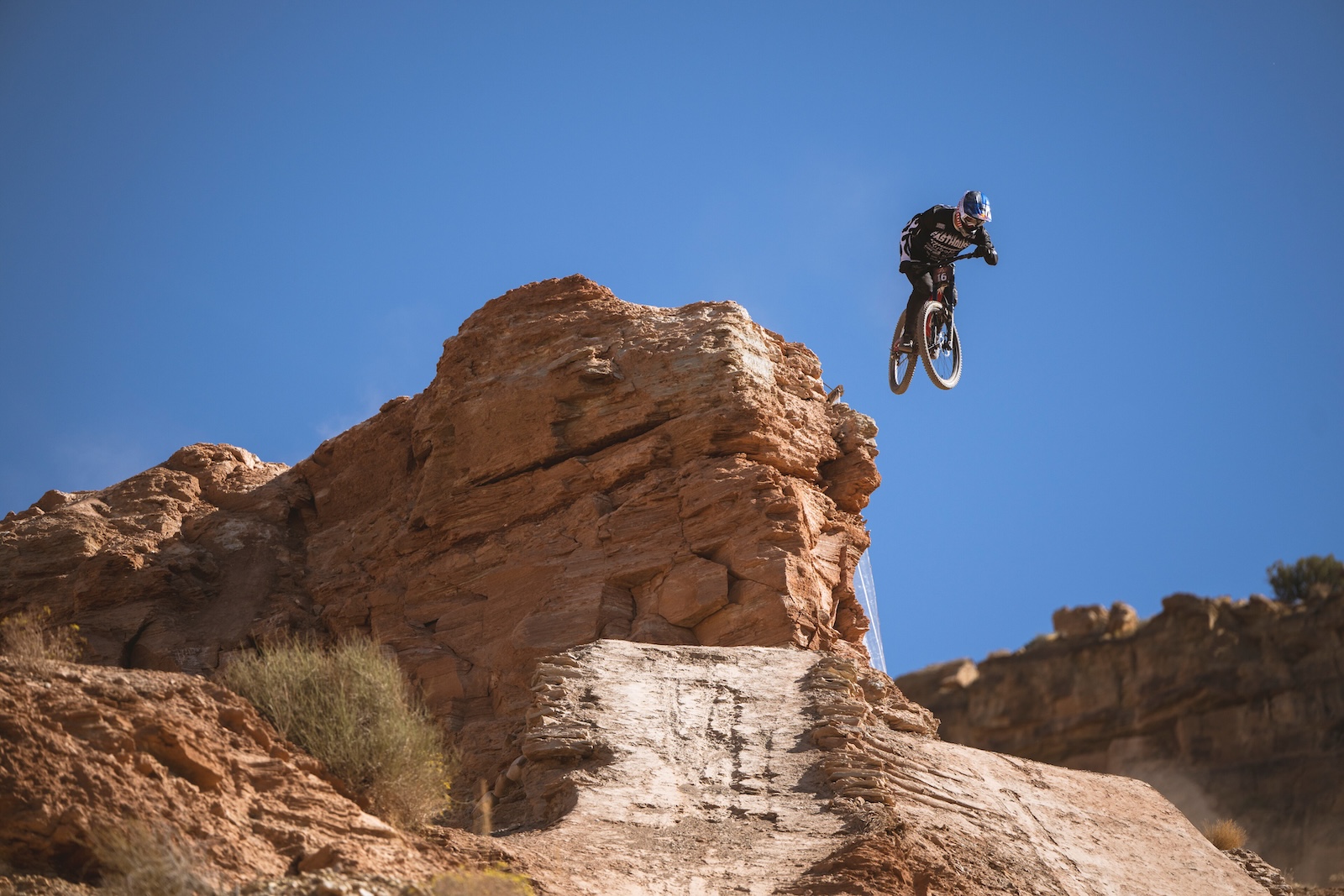
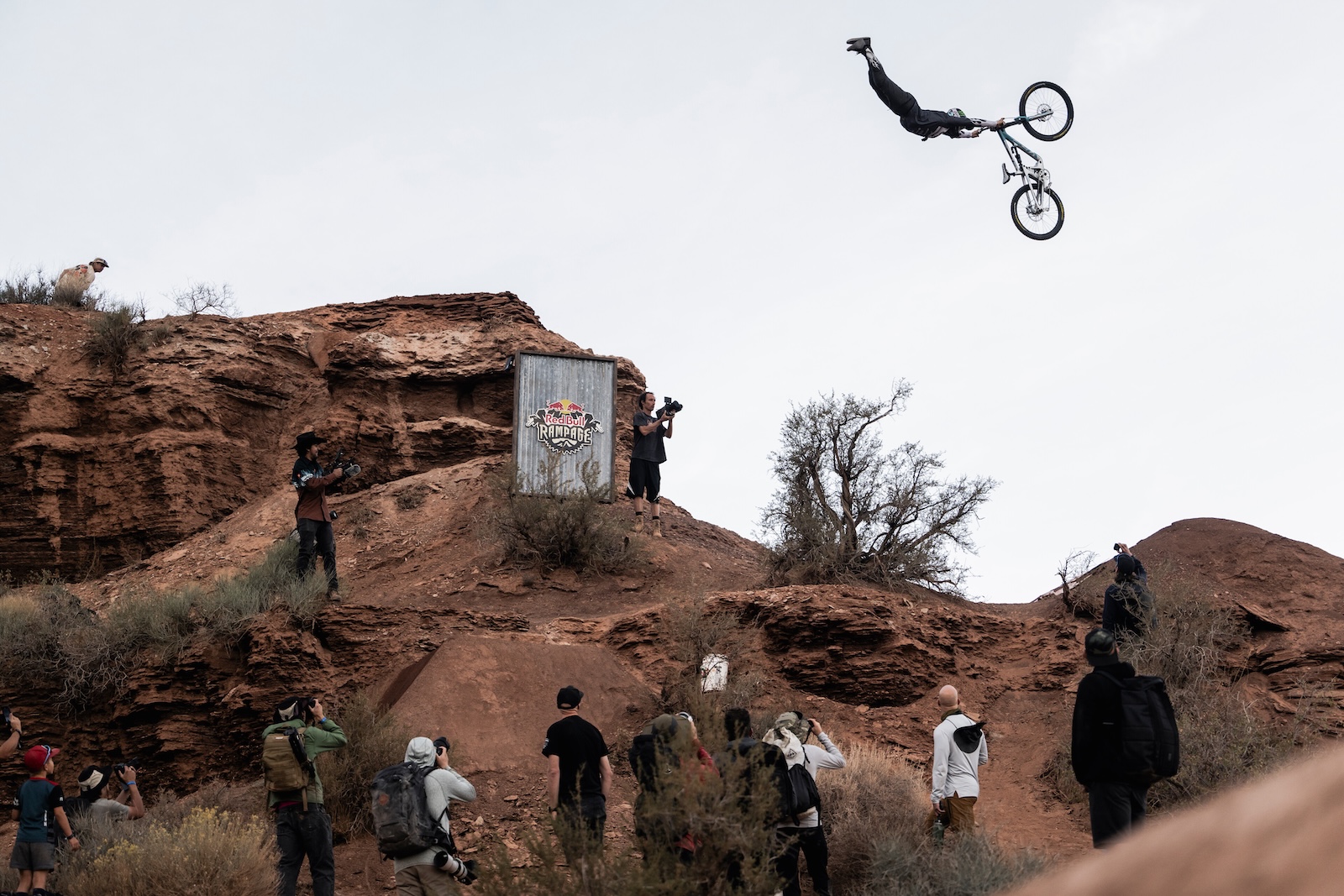
Top 18 male mountain bikers in the world are confirmed to compete in the most savage big-mountain freeride competition on the planet.
Eighteen of the top male freeride athletes were invited to compete in the 2025 Red Bull Rampage, the ultimate action sports competition, where a rider’s skill, mental fortitude and physical capacity on a mountain bike is tested. The men’s contest will return on Saturday, October 18th following the women’s event two days beforehand. Here is all you need to know:
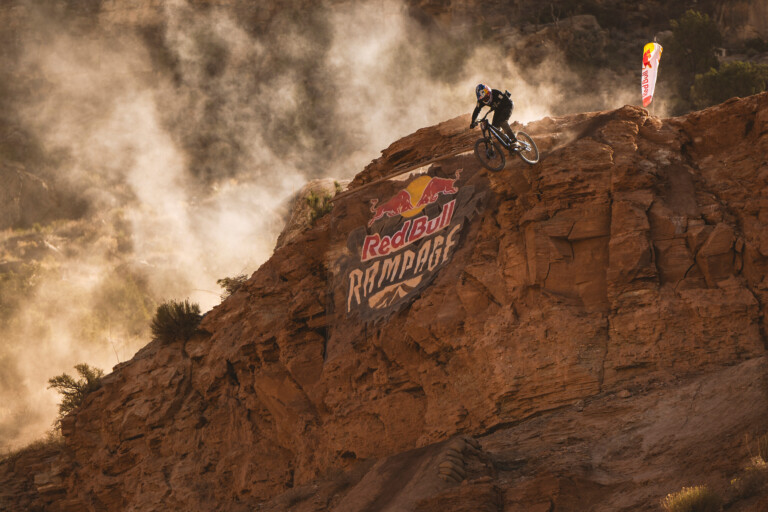
Szymon Godziek rides during the finals of the Red Bull Rampage in Virgin, Utah, USA on October 12, 2024. // Christian Pondella / Red Bull Content Pool // SI202410130106 // Usage for editorial use only //
– “It’s amazing that this will be my seventh year competing at Red Bull Rampage. This contest is always the ultimate event of my season as it elevates and pushes my limits,” said 2024 Red Bull Rampage second place finisher Szymon Godziek. “This terrain holds a special place in my heart, and I’m looking forward to returning to Utah and putting together my dream run.”
Tom Van Steenbergen competes at Red Bull Rampage in Virgin, UT, USA, on Oct 12, 2023 // Long Nguyen / Red Bull Content Pool // SI202310140058 // Usage for editorial use only //
– Five riders from the 2024 competition earned automatic pre-qualification for this year’s event, while the 13 wildcards and three alternates were selected by a committee of former Red Bull Rampage competitors, pro athletes, judges, and industry experts.
Thomas Genon performs at Red Bull Rampage in Virgin, Utah, USA on 12 October, 2024. // Bartek Wolinski / Red Bull Content Pool // SI202410130078 // Usage for editorial use only //
– Selection was based on competition results, video submissions, and overall riding ability. One former winner and four event rookies are among those set to compete, bringing a diverse mix of skills, disciplines and riding styles to this year’s contest.
Carson Storch competes at Red Bull Rampage in Virgin, Utah, USA on October 12, 2024. // Paris Gore / Red Bull Content Pool // SI202410130046 // Usage for editorial use only //
– The inaugural Red Bull Rampage was held in 2001, and since then, 18 different events and 10 different winners have earmarked their place in the history books. Only time will tell which rider will add their name to the list of champions.
Adolf Silva performs at Red Bull Rampage in Virgin, Utah, USA on 12 October, 2024. // Bartek Wolinski / Red Bull Content Pool // SI202410130057 // Usage for editorial use only //
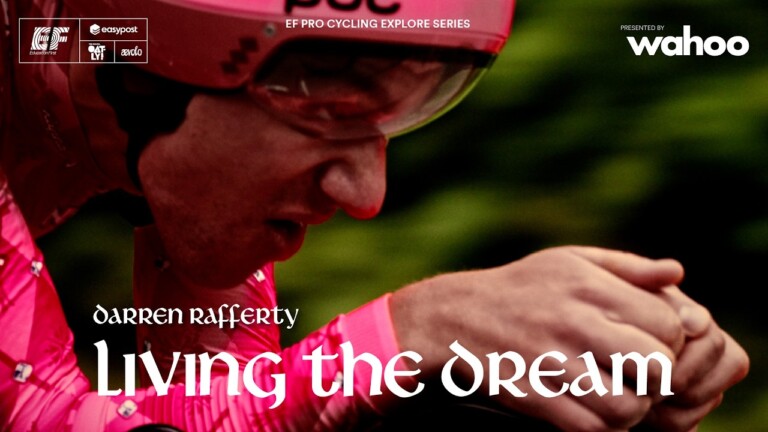
Darren Rafferty dreamed of racing professionally since childhood. Weekend family trips to Irish club races—fueled by volunteers, tea, and sandwiches—sparked his passion within cycling’s tight-knit community.
Strong junior results at home and across Europe, including victory at the U23 Giro Ciclistico della Valle d’Aosta-Mont Blanc, earned him a WorldTour contract. The dream became reality.
Now with two grand tours and Irish champion’s stripes behind him, Darren chases new ambitions. Director Sam Davis explores this transition in EF Pro Cycling’s latest Explore Film presented by Wahoo.
By Charles Pekow – You might suffer the misfortune of falling forward when your bike hits an object. You also might not be aware of structural defects on your bicycle. A few new studies looked at these problems.
Boom! Your front tire hits something on the road and over the front of the vehicle you land. Ouch! Such a “pitch-over” can occur when the forward momentum of the vehicle and rider gets stopped. A paper released by Engineering Systems Inc, a self-described “forensic engineering and scientific investigation firm,” looked at the issue from a unique perspective based on Newton’s Second Law of Motion, which states that the force of a moving object equals its mass multiplied by its acceleration.
The researchers examined differing heights of obstructions and how they interacted with the speed and weight of the bike and rider. The greater the force, the taller the obstruction needed to create a pitch-over.
Meanwhile, an Australian study suggests that accidents may occur due to structural defects in bicycles that riders might not be aware of. These defects can arise from manufacturing issues or previous crashes and are often not visible. Researchers have yet to thoroughly examine what users know about these defects or how they inspect for them, according to the Cross-Sectional Survey to Investigate Bicycle Riders’ Knowledge and Experience of Structural Weakness in Bicycles in Australia.
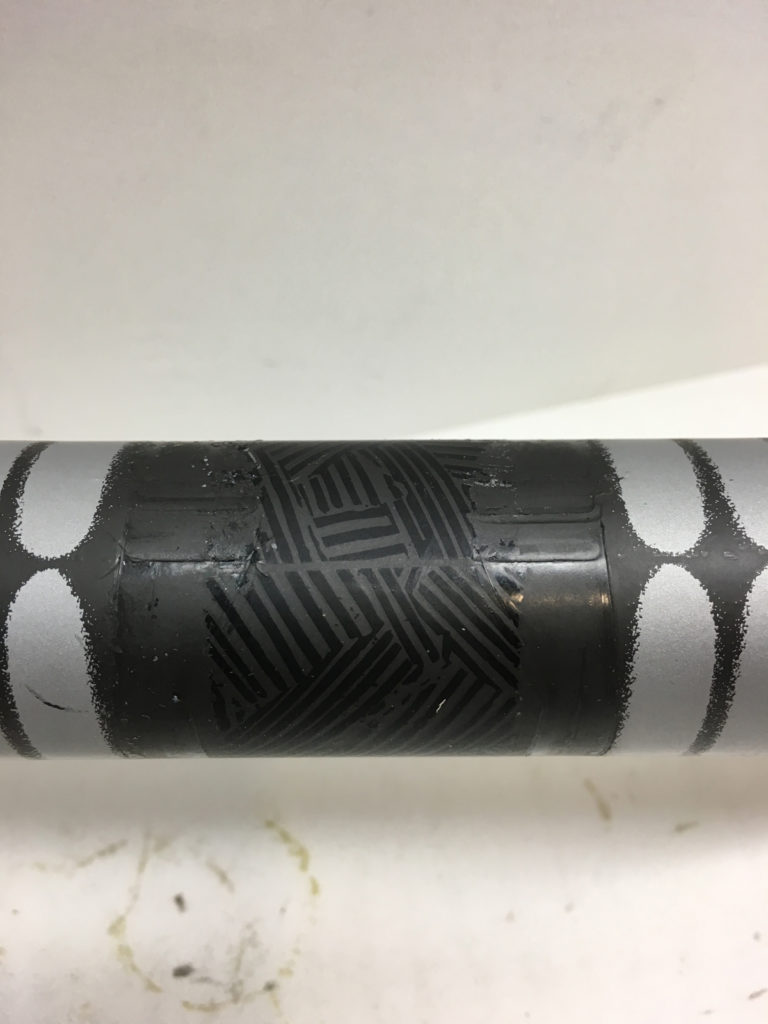
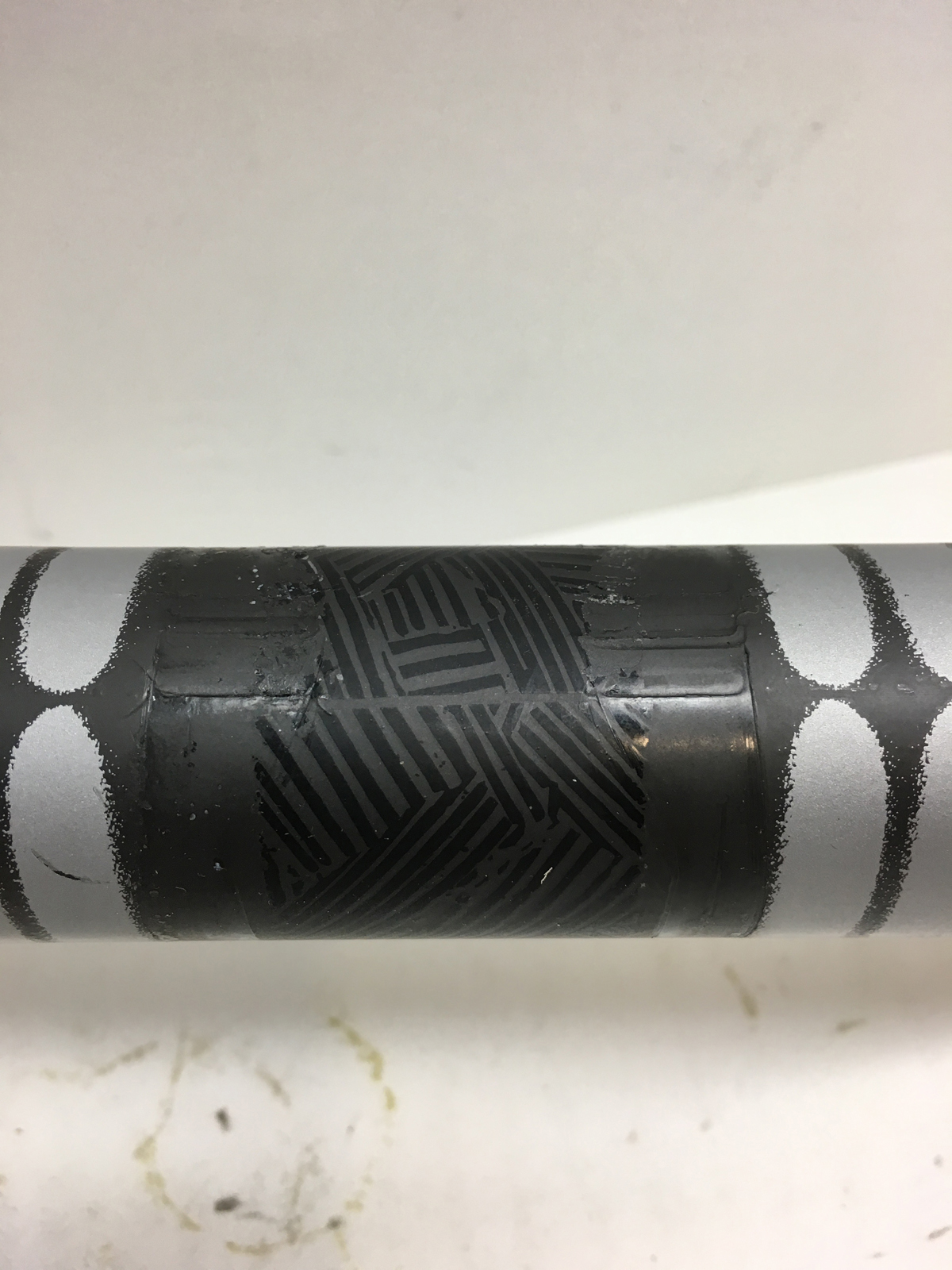
A damaged handlebar from over tightnening. Note small cracks on the left side. One should always thoroughly inspect a bike and its components when buying a used bicycle. Photo by Tom Jow
About 25 percent of surveyed riders said they replaced a part they suspected had been damaged but more than a third didn’t see the need to check for flaws when buying a used bike. “Results suggest that structural weakness in bicycles is fairly common while awareness of the issue, and methods of testing for it, is limited,” the study says. It calls for more public education.
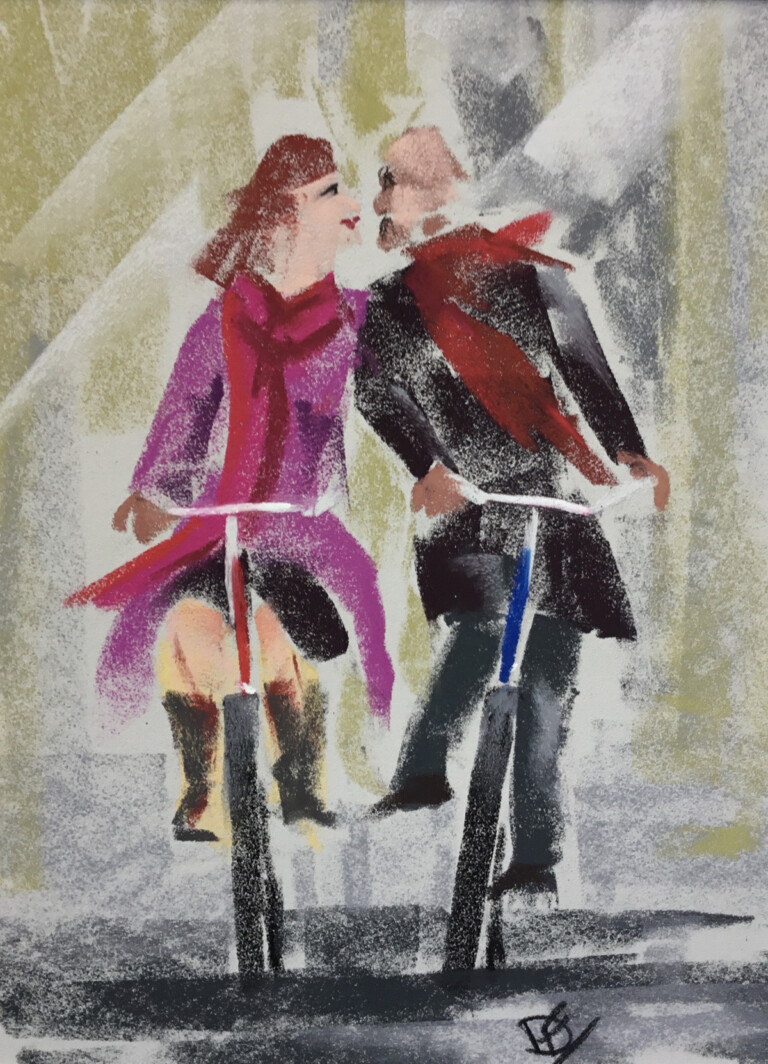
About the artist: Dave lives in Charente, South West France. A long time cyclist and tandem tourist, he and his wife settled in their favourite part of France in 2009, where he now works as a full time artist.
Parting Kiss. Art by Dave Flitcroft
Title of piece: ‘Parting Kiss’
About the piece: This vignette is a sketch inspired by a couple on a morning commute in Paris. The original sold. Prints are available.
Medium: soft pastel on paper.
Artist’s statement: Dave aims to capture the feeling of a bike ride through art. Whether it’s the silence and isolation of a cobbled track in a forest, the thrill of a descent, the effort of a climb, or the joy of seeing wildflowers and animals in the roadside verge. He finds art and cycling to be perfect companions, one feeds the other.
Where can people find or buy your art: Dave’s art is available on Etsy. He ships free to USA from France. https://artfromthebikeshed.etsy.com
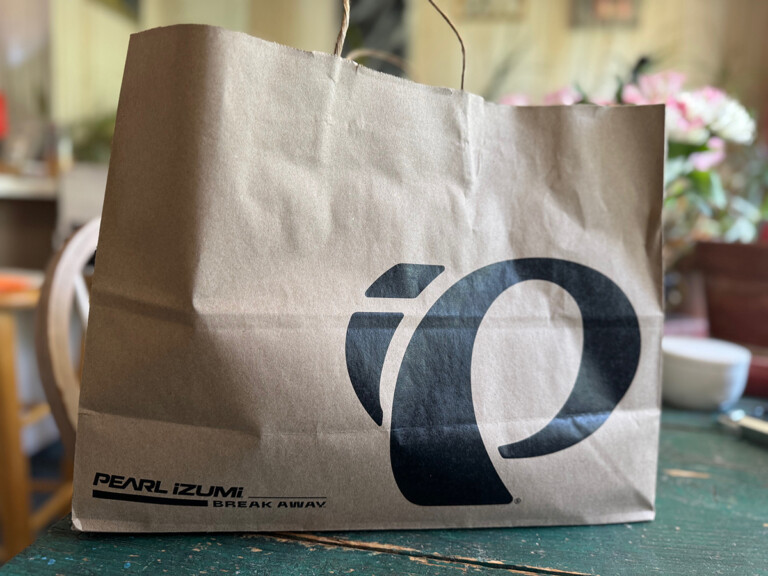
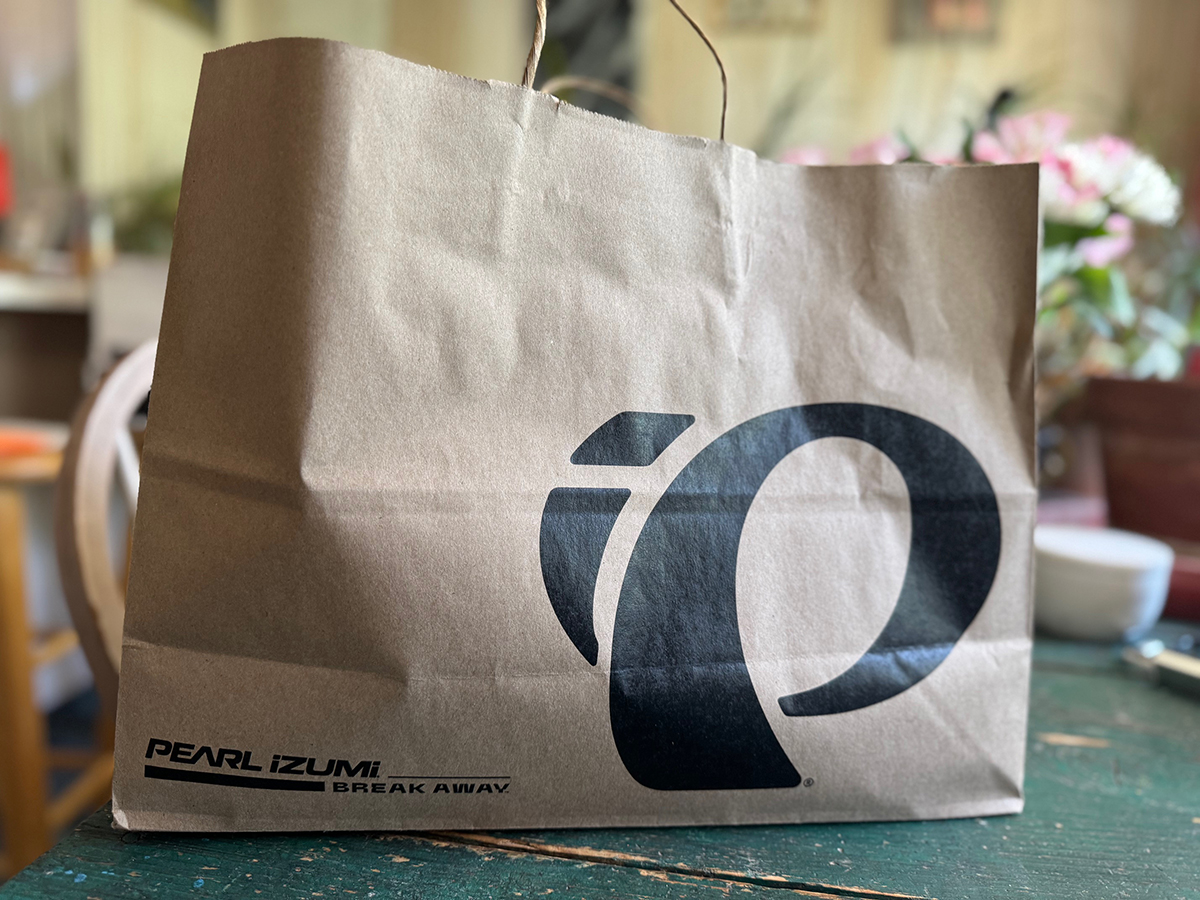
August 11, 2025 — Pearl iZUMi, a leading cycling apparel brand is closing its last three remaining outlet stores this month, two in Colorado, and one in Park City, Utah.
Pearl iZUMi is closing their three remaining outlet stores in August 2025. Photo by Dave Iltis
Gregg Bromka, store manager of the Park City location, said, “After serving the local and world-wide cycling community for 24 years, the PEARL iZUMi Factory Store, Park City UT, is closing [on August 16, 2025]. The staff at PEARL iZUMi has taken great pleasure in assisting first-time to veteran cyclists to make every ride the best it can be: road, gravel, MTB, ebike, spin, etc. PEARL iZUMi, as a brand, is still strong and will continue to be an innovative leader of cycling apparel. You can purchase PEARL iZUMi product at pearlizumi.com or at your local authorized PEARL iZUMi dealer. Thank you to everyone who entered our doors.”
Closing Dates:
Park City – August 16, 2025
Silverthorne, CO – August 17, 2025
Castle Rock, CO – closed already.
The Park City store currently has a 30% off of the lowest marked price sale, with additional discounts on some items.
Pearl iZUMi was founded in 1950 in Tokyo, Japan. The company was owned by Shimano from 2008 to 2022 when it was sold to United Sports Brands. They will continue to to sell products online and a bike shops throughout the U.S. They previously had numerous retail outlets throughout the U.S.
By Nancy Clark MS RD CSSD – Athletes get hungry—and feeding hungry athletes can get quite expensive. I commonly hear comments such as:
My teenage athletes are eating me out of house and home.
Protein bars and powders are expensive. Do athletes really need them?
When I’m too tired to cook, I spend way too much money on take-out meals.
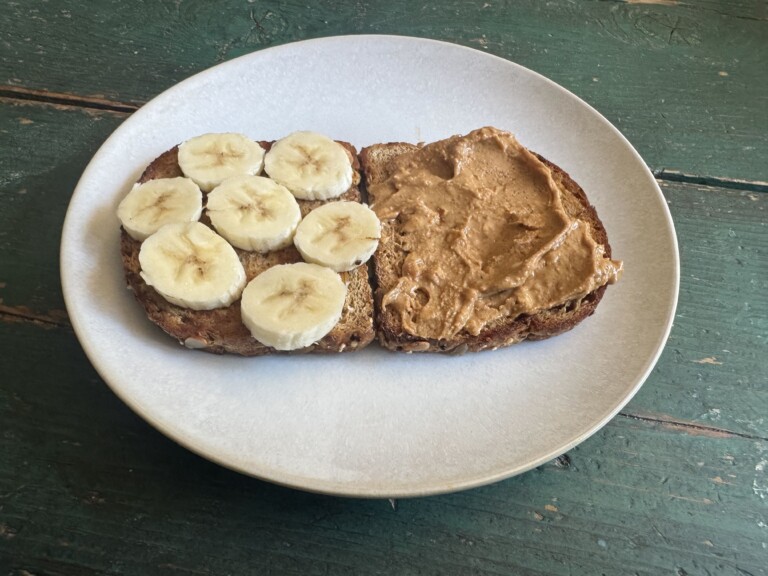
A sports sandwich of champions is peanut butter + banana! Photo and sandwich by Dave Iltis
Any way you look at it, athletes can easily over-spend their food budget. Here are practical suggestions to help you get more for your food dollar, so you can thrive on a budget-friendly, performance-enhancing sports diet.
Good nutrition starts in the supermarket. Add food shopping to your schedule. Before shopping, come up with a rough menu for the week. Here’s a 5-day meal planning worksheet. Ideally, the plan will include foods on sale that week at the grocery store. If you want some low-cost menu ideas, google budget-friendly healthy meals. You’ll find lots of helpful websites, such as BudgetBytes, SpendSmartEatSmart, and $5Dinners.
Don’t overdo protein. The easiest way to lower your food budget is to eat less meat/animal protein and more grains (pasta, rice, oats), beans, breads, and other starches. While you need adequate protein (0.5 – 0.8 g protein/lb. body weight; 1.2-1.8 g/kg), filling up on excess protein displaces the carbs you need to optimally fuel your muscles. Including some protein-rich food at each meal and snack easily provides enough protein for the day. A small 4-ounce (deck-of-cards size) serving of chicken offers about 30 grams of protein. Hungry athletes commonly eat twice that much! No need for costly protein bars, powders, and supplements.
Budget breakfast suggestion: Eat more oatmeal! It’s much less expensive than dry cereal or eggs. Plus, oats have heart-healthy fiber that helps lower cholesterol. Oats are carb-rich; they do a good job of fueling muscles. They also offer 6 grams of protein/half-cup (uncooked) to build and repair your muscles. Buy the big 42-ounce cannister (~$8 for Quaker; ~$4.60 for the store brand). A half-cup (uncooked) serving costs less than $0.25. Skip the individual packets ($0.50 each) and microwaveable tubs ($1.80 each).
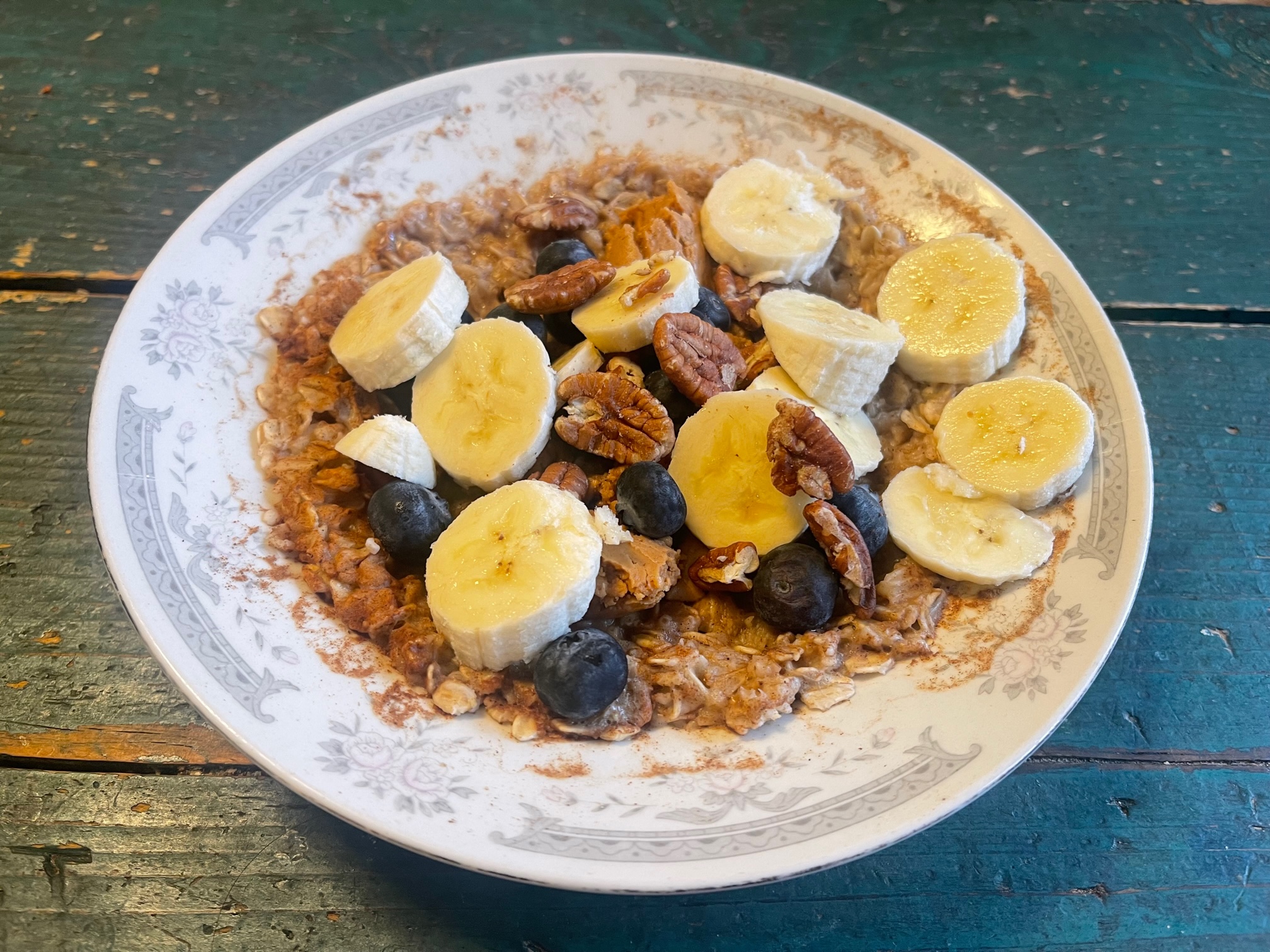
To easily make your Oatmeal of Champions, put 1/2 to 1 cup of oats in a microwavable bowl, stir in 1+ cup of milk (instead of water, for more protein and calcium), add some salt (enhances flavor) and microwave for two-ish minutes. Swirl in a spoonful of peanut butter and some raisins. Voila, a yummy carb + protein meal that fuels you up for (or refuels you after) your morning workout. The oats + milk + pb gives you at least 20 grams protein. That’s the equivalent of protein in 3 (more expensive,~$1.35) eggs.
Oatmeal is a great way to include oats in your diet. Photo by Dave Iltis
Fruit on a budget: Seasonal fresh fruit is a smart choice: strawberries in Spring; apples in Fall. Off season, canned and frozen fruits are just as nutritious—but with a lower price tag and no spoilage. A small box of blueberries can cost at least $4 to $6, depending on the season. Frozen blueberries cost about $4 for a 12-ounce bag. Frozen berries (and other fruits) are perfect for adding to oatmeal, smoothies, and yogurt.
Frozen fruit doesn’t spoil. Wasted food = Wasted money. Be sure to peel then freeze that brown-speckled banana (and other produce) before it gets too ripe.
Dried fruit also doesn’t spoil and offers nutritional value similar to fresh. Drying removes water and concentrates the nutrients. Choose dried fruits with differing colors—orange apricots and mango, yellow pineapple, brown dates—to boost your intake of anti-inflammatory, immune-boosting phytochemicals. Munch on a handful of dates or raisins, instead of snacking on ultra-processed and expensive energy bars ($1.50 to $2.50 or more). Pair dried fruit with nuts for a handy carb-protein sports snack. Both can be bought in bulk for significant savings at BJs and Costco.
Frozen berries (and other fruits) are perfect for adding to oatmeal, smoothies, and yogurt and are much less expensive than fresh. Photo by Dave Iltis
Vegetables: Frozen veggies, as compared to fresh, are a money-saving choice. Plus, they can be more nutritious. That’s because they’re flash-frozen at their peak of ripeness. Freezing retains nutrients that otherwise get lost when being transported from, let’s say California to NYC. A 1-pound bag of store-brand frozen green beans costs less than $2.00; fresh are twice that price. Frozen veggies are simple to cook. They require no prep-time, leave no waste—and won’t spoil (like the head of broccoli you bought last week and never quite got around to cooking…).
Lunch: A sports sandwich of champions is peanut butter + banana! For only $1.40*, you can get about 500 satiating calories that cost less than making a turkey-cheese wrap ($3.85**) or buying a McDonald’s Quarter-pounder ($6.40)
*2 sl. Dave’s Killer Bread ($0.80) + 2 Tbsp Teddie Peanut butter ($0.30) + medium banana ($0.30) = $1.40
**1 burrito-size flour tortilla ($0.55) + 4 oz deli turkey ( $2.75) + 1 sl Swiss cheese ($0.55) = $3.85
—A grain-bowl for lunch can be budget-friendly: Toss into a bowl last night’s leftover rice + canned beans + shredded cheese + salsa… less costly than buying lunch at Chipotle!
Snacks: Single-serv sports snacks, such as applesauce pouches and yogurt cups, add up in terms of money as well as landfill space. Purchase reusable small containers that you fill with yogurt, trail mix, or pretzels. Prep a week’s worth of these grab-n-go snacks, so they will be ready and waiting.
—Instead of granola bars, enjoy peanut butter + graham cracker snack-wiches. Crunchy and tasty—just like a granola bar, but costs less and is better for the environment.
Note: Peanut butter (much less expensive than other nut butters) is an anti-inflammatory, nutrient-rich source of protein that blends well into all meals, be it PB in oatmeal for breakfast, PB&J for lunch, PB + crackers for snacks, and even peanutty pasta for dinner.
Dinner: Fresh fish is expensive! Canned tuna and salmon are less expensive—and offer cook-free options for adding omega-3 fats into your diet.
—If you are a die-hard meat eater, stretch out the meat by making stews, stir-fries and casseroles.
—Enjoy eggs for dinner (instead of breakfast).
—Vegetarian meals are budget-friendly options to meat-based meals. Bean burritos, anyone?
The bottom line: By planning ahead, buying store-brands, taking advantage of frozen fruit and veggies, buying in bulk the foods that don’t quickly spoil (oats, nuts, dried fruits), and making leftovers into planned-overs to minimize food waste, you can enjoy an effective sports diet despite a tight food budget.
To reduce costly restaurant-eating, curb your dinner-appetite by enjoying peanut butter + apple for an afternoon snack. You’ll then have energy to cook dinner and will spend far less than succumbing to takeout food. Give it a try?
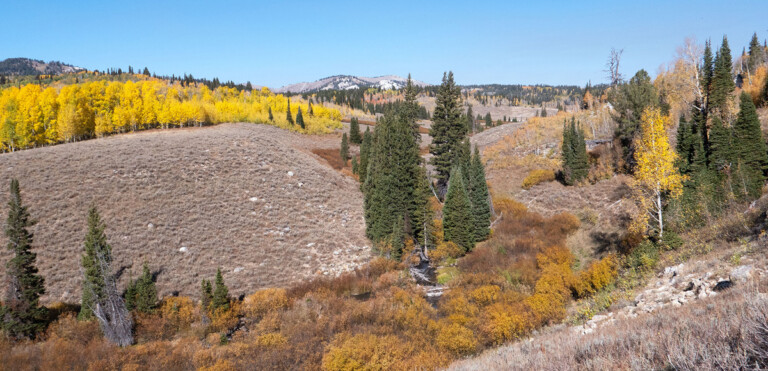
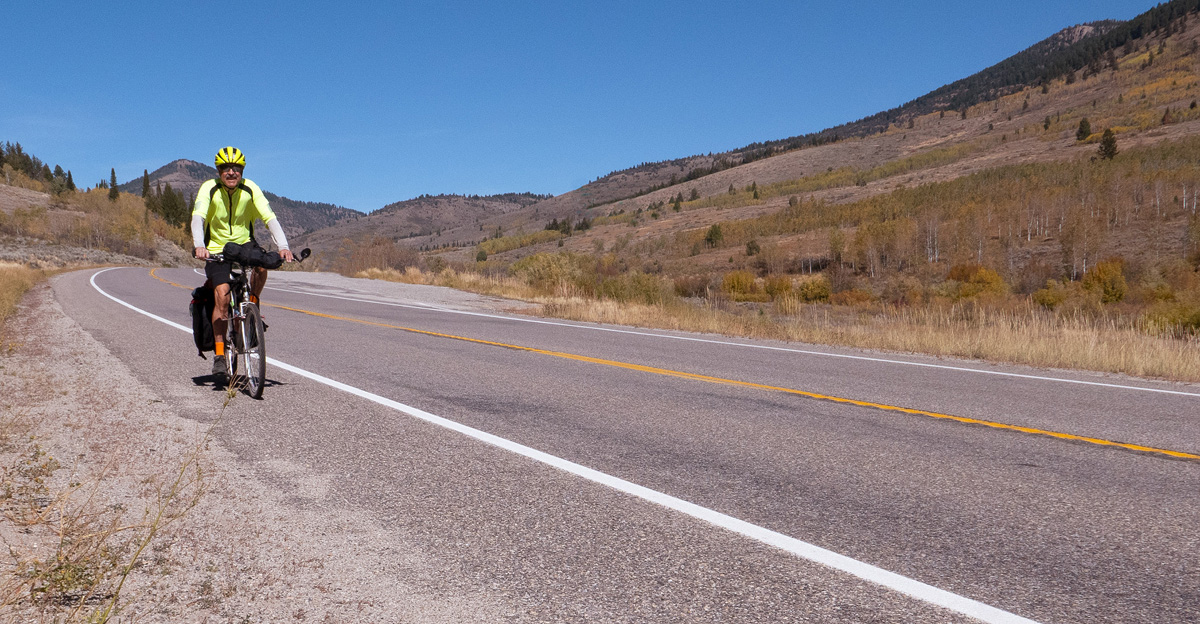
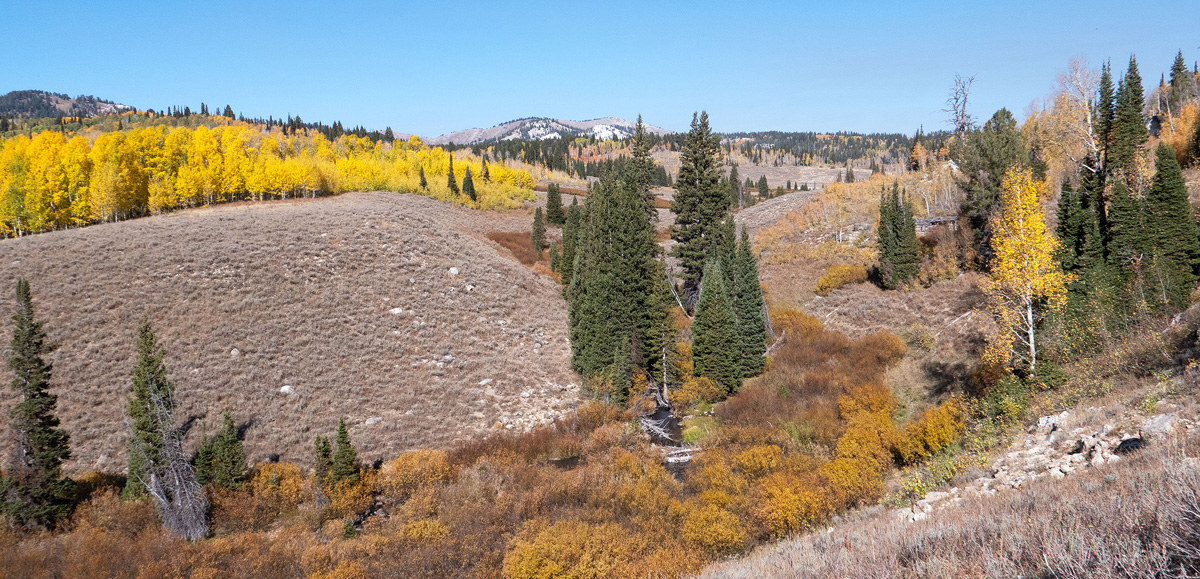
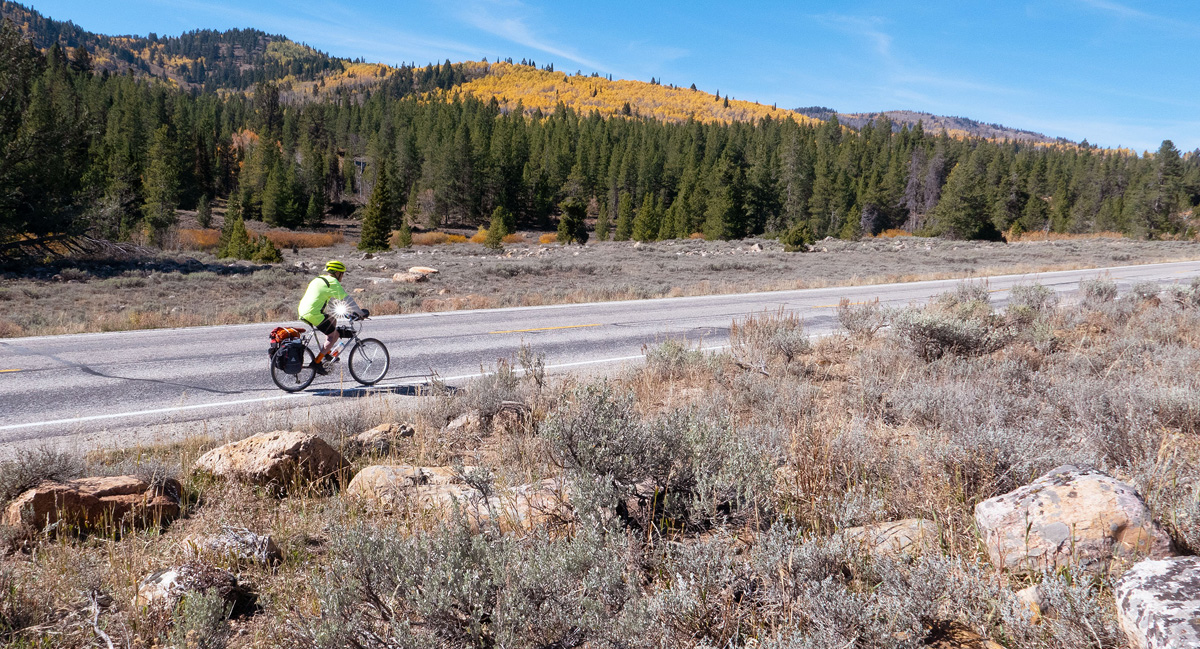
By Martin Neunzert — On the first weekend of October 2024, I cycled a two-day interstate loop around Beaver Mountain, Utah. A huge number of MyTube videos and blogs describe ultimate bikepacking routes with low-carbon access via public transport, a wide variety of resupply points, consistently great weather, secluded wild camping spots, quiet roads without goathead stickers, hard-packed gravel, some singletrack adventure, epic climbs with stunning views, open vistas and yurts.
Martin Neunzert back on the highway. Photo by Martin Neunzert
Of course, no such route exists, and if you paid for an app promising that, they took your money.
I had in mind an almost car-free world-class two-day G2 tour, without having to drive six hours and without feeling like I had to produce a Reb Dull suffer-fest video with drones and a rap-track.
Of course, many of you will look at my photos and conclude “You’re not a real bikepacker!” Since I’m not an influencer—and cannot be influenced—I learned long ago carrying all my water in small panniers gives me the freedom to go as slow as I want, turn around if I want, go out on any spur road I want and camp wherever I want totally unconstrained by water supply issues. Your app doesn’t tell you which streams are dry in late season (none of them in this case) and which are cow-polluted (all of them in this case).
I found almost what I went looking for and came back with a conclusion I hadn’t expected.
The keystone to any great tour is parking. That sets your times, and, therefore, your effort, regardless if the rest of your planning is any good.
I parked in a place I knew was free of NO OVERNIGHT PARKING signs. This constraint is becoming more common, and no app contains that information. I’m not going to tell you where that spot is because this is not a route guide. You can figure it out because you have access to all the same information I did. Would it help to know it was near where I started a backpacking trip to Mount Magog one August with an umbrella because of chucking down rain?
International Gravel Road Surface Scale.
I had to ride on the highway for a few miles because the phrase “mixed surface” is still trending. Or whatever. Churro balls got me through.
Along the way, I caught just a brief glimpse of an unnamed 9,000+-foot point west of Steam Mill Peak where I passed some sinkholes while on a ski tour. There are a shedload of alpine caves in that area.
I could see the ridge east of Beaver Mountain where I talked a couple friends into skiing ridiculous breakable crust. Curiously, no one was injured.
Steam Mill Peak is an obvious landmark, where I once biked to clear some trees that had fallen on the trail (no chainsaw).
I saw a great panoramic view of Steam Mill Peak and Doubletop Mountain, bringing back memories of a two-day ski tour—too cold to snow.
I noticed where I started a day of mountain biking and trailwork in Steam Mill Canyon (no chainsaw).
I passed the spot where most people start to get to a yurt near Steam Mill Peak. I skied three days in that area once, only yurtless.
I remembered a time, long ago, where my wife and I did a ski tour in Sink Hollow to the Idaho border, untracked snow the whole way.
I’ll not forget taking my wife backpacking to the site of the steam-powered sawmill where we found steer’s head flowers (if you Joogle that, you’ll learn it was early season and muddy).
The cut logs you see along Shorty’s Cutoff Trail? Some of those are mine (no chainsaw).
Best corn skiing ever? Maybe, on a memorable April Fool’s Day ascent of Steam Mill Peak. Or maybe it was just all 142 types of snow.
I still haven’t figured out quite where we were when I pioneered a ski route east of Beaver Mountain and discovered the largest mountain mahogany forest in North America.
I was reminded of yet another two-day backcountry ski trip in Hells Kitchen, with an ascent of Steam Mill Peak—whipping wind all night.
Oh, and if you’re bored, try Joogling “Pat Hollow crash site.”
Two of my friends still talk about the best powder day ever in Long Hollow, not diminished by having to pole for three miles on a horrible beaten-out snowmobile track.
View across the upper Logan River, Idaho. Photo by Martin Neunzert
Like climbers on Chomolungma spanning crevasses, I once used an aluminum extension ladder to cross the upper Logan River for a quiet ski tour with friends.
I still have slides documenting ski touring in lower White Pine Creek with just my wife.
I still have slides documenting ski touring in lower White Pine Creek with five friends the next weekend.
Only I know where the “Lost Aspen Glades” are. Ski porn stuff, on the right day.
Martin Neunzert passing Beaver Mountain Ski Resort, Utah. Photo by Martin Neunzert
The point of all this? My most vivid trip memories were from human-powered adventures. This bikepack is certainly right up there. Someone will eventually create a Human Power Recreation Zone (HPRZ). Shouldn’t Beaver Mountain be the world’s first?
A recent meta-analysis covering 10 studies titled “E-bikes and travel behavior change: systematic review of experimental studies with meta-analyses” shows transitioning from normal cars to active modes of transportation is key to reducing transport related greenhouse gasses, emissions, and promoting physical activity. The review looked at 10 studies on electric bicycles from northern Europe and focused on the substitution of e-bikes for cars and the effect of e-bike use on other types of transportation.
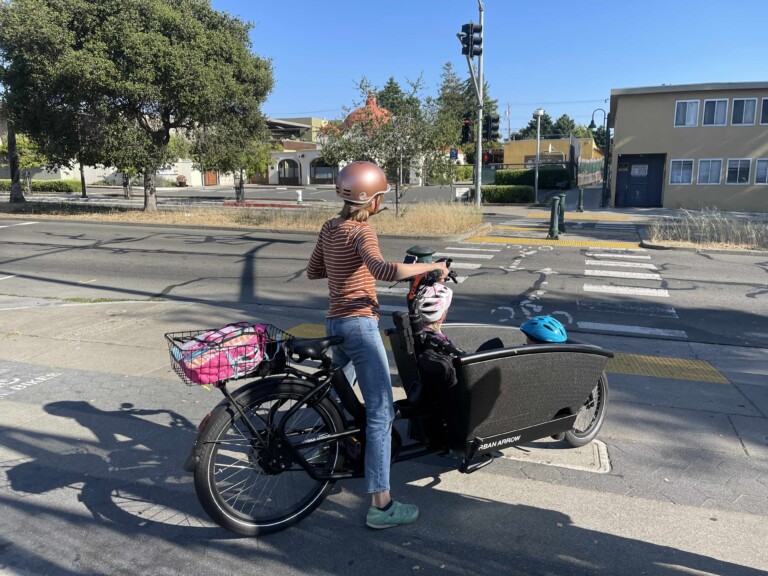
Electric bikes can lead to decreased car use. This Berkeley person is driving her kids around in an electric cargo bike. Photo by Dave Iltis
While e-bikes are limited to a speed of 25km/h, and thus have a slower maximum speed than conventional bikes, they also overcome some obstacles associated with normal bikes such allowing the rider to adapt to the weather and adjust for fatigue. Electric bicycles not only overcome these obstacles; they also provide major advantages. These bikes allow the less athletic rider to handle hilly and difficult terrains more easily. Despite some belief that riding an e-bike can be considered “cheating”, studies have shown that riding e-bikes is comparable to “modern physical activity.”
The meta-analysis concludes that e-bikes have also been found to be a significant replacement for other transport modes, especially cars. It also concluded that those who have access to an e-bike report a daily decrease in car travel by 2.4km, which adds up to an average of a 10% reduction in car travel. Having more access to an e-bike has also led to substantial increases in e-cycling. The study shows a 5km daily increase after acquiring an e-bike, a 26% increase in e-bike usage compared to other transport modes. The authors indicated that more studies are needed not just in Northern Europe.
Reference: Chevance, G., Bourne, J., Foley, L., Green, J., Sundfør, H. B., Fyhri, A., & Bernard, P. (2025). E-bikes and travel behaviour change: systematic review of experimental studies with meta-analyses. Transport Reviews, 1–22. https://doi.org/10.1080/01441647.2025.2474556
Most sports look to support their athletes to become “faster, higher, stronger” – in reference to the Olympic Games’ original motto – so it is perhaps surprising that cycling’s world governing body is trying to slow down elite riders.
However, there’s good reason the Union Cycliste Internationale (UCI) recently announced new rules to slow riders down.
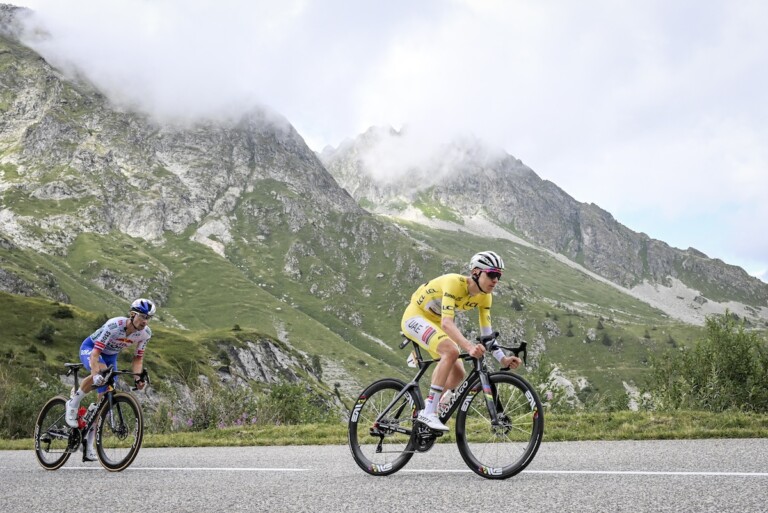
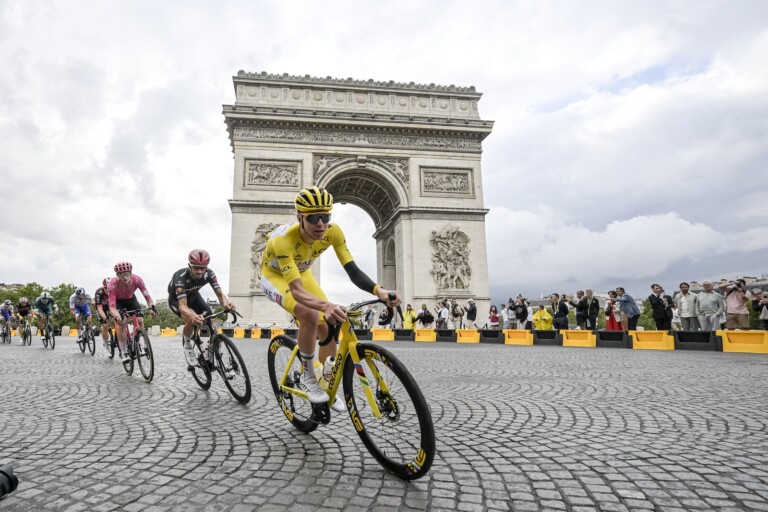
These rules – which apply to elite road and cyclo-cross mass-start events for men and women such as the Tour de France – come into place shortly and are aimed at improving rider safety.
From August 1, a new bicycle gearing regulation will kick in.
Professional cyclists will only be allowed to use a 54-tooth front chainring with an 11-tooth rear cog.
This replaces the current common setup of 54-10.
To put this into context, a 54-tooth chainring is the big front gear on a bike and the 11-tooth cog is a small rear gear. Moving to a slightly bigger cog (54-11) makes it harder to hit top speeds: the change from a 54-10 to a 54-11 gear setup could reduce the top speed by about 2.4 kilometres per hour.
Then, from January 1 2026, handlebars must become wider, increasing from a minimum 350–360 millimetres width (depending on the event) to at least 400mm wide.
The handlebar width affects how a rider controls their bike: narrower bars reduce frontal surface area, making a rider more aerodynamic which again means a faster ride.
This is especially useful in time trials or sprints.
Wider bars offer better stability and control, helping navigate tight turns, peloton traffic, or crosswinds.
The UCI has also announced plans to introduce a formal helmet approval protocol in 2027, which will include separate standards for helmets used in mass-start events and time trials.
This shift suggests helmets may soon be subject to the same pre-race approval process as frames and wheels, potentially leading to safer, more regulated head protection.
As a result, high-speed crashes, especially downhill or in crowded sprint finishes, have become more common and more dangerous.
The UCI maintain the new regulations are part of a broader strategy to mitigate speed-related risks, enhance safety and uphold the integrity of the sport.
However, these measures have sparked debate within the cycling community.
Some elite cyclists, particularly those who have suffered severe crashes and injuries, suggest it is time safety caught up with technology.
Wout van Aert, who suffered a severe knee injury in September 2024 during a wet descent, said: “Limiting the number of gears would make the sport much safer.”
The Professional Cycling Council supports testing gear ratio limits.
It is also likely these changes could limit cutting-edge innovations that only wealthy teams can afford. This would in turn narrow technological disparities across teams.
Former pro Michael Barry though believes gear restrictions are not the answer, and the UCI should instead focus on improved course design and inspection, better barriers and crash protective clothing.
Technology experts agree, arguing speed is determined more by a rider’s power output and aerodynamic drag than by gear ratios. To enhance safety, they propose alternative solutions such as real-time rider tracking, crash-protective clothing, improved course design and inspection and faster medical response.
The wider handlebar rule has also stirred controversy, especially among smaller-framed riders, many of whom are women, who typically ride with 360–380mm handlebars for better comfort and control.
Under the new regulation, those forced to use bars that exceed their optimal fit range could end up suffering from poor wrist alignment, increased fatigue and a higher risk of repetitive strain injuries.
Despite the growth of women’s cycling, the UCI has not made exemptions for smaller riders, raising concerns a one-size-fits-all solution may compromise inclusively and safety.
Even though regular riders can continue to use the equipment they prefer, what happens in the pro world often shapes non-elite rider preferences and trends, and the bikes sold in stores. If narrower bars are banned at the top level, manufacturers may stop offering them.
Historically, advancements in aerodynamics, gear ratios and component weights seen in the pro peloton have become standard features on consumer bikes.
A delicate balance
The UCI’s new regulations mark a likely shift towards standardised equipment and heightened safety. This deliberate emphasis on safety naturally elevates awareness among all cyclists about the crucial link between equipment choices and rider wellbeing.
While these restrictions may foster a more level playing field, they also risk curbing the sport’s long-standing tradition of engineering innovation.
The very appeal of professional cycling has often been intrinsically tied to the relentless pursuit of technological advancements that yield even fractional competitive advantages.
Striking a balance between ensuring safety and preserving this spirit of ingenuity remains a crucial challenge for the sport’s future.
By Bill Plock — Biking over Rollins Pass was epic but far from historical. For thousands of years, people have been traversing Rollins Pass, connecting the front range of Colorado with Grand County and the headwaters of the Colorado River.
Native American hunting parties built rock walls near the top to funnel game long before the first horse-drawn wagons paid a toll to cross the Continental Divide in the 1870s. In 1904, trains began the arduous trip from Denver, passing through 46 tunnels, twisting like a corkscrew, making their way to the summit at 11,600 feet. The road grade had to be kept less than four percent to make it possible, but the biggest challenges came in the Winter when massive snow drifts made it impassable.
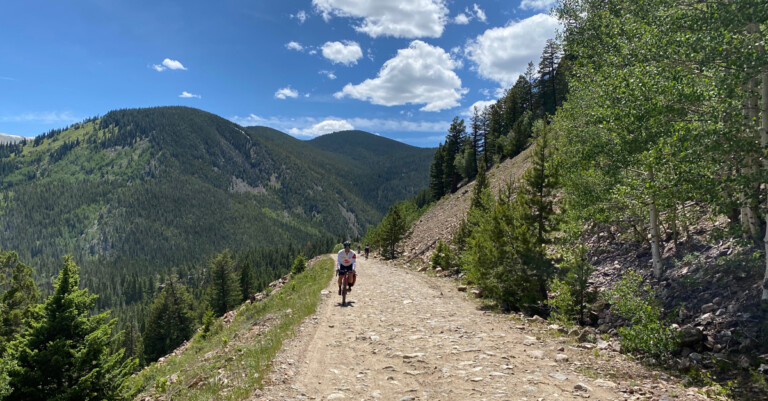
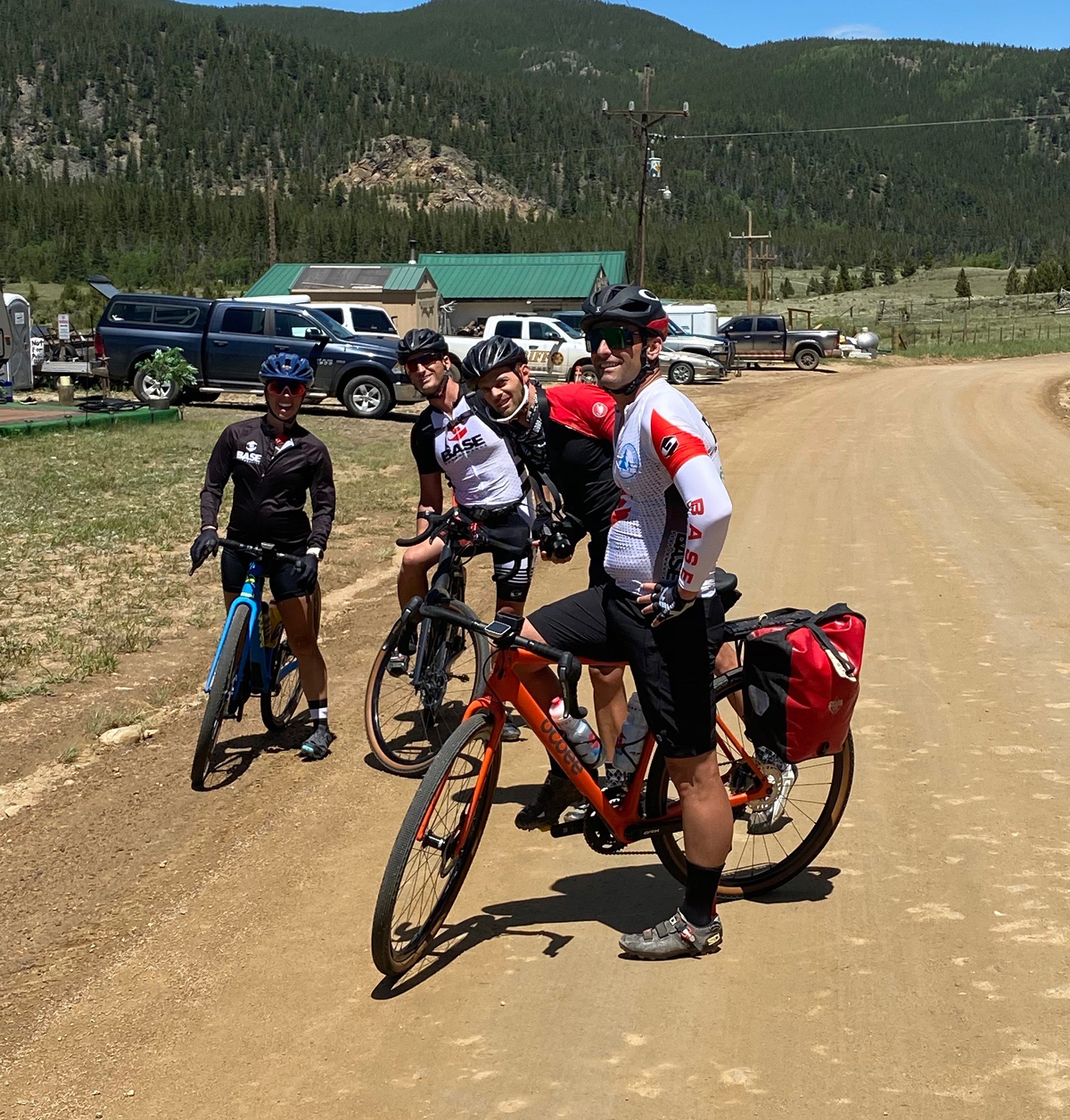
Scenes from a Rollins Pass, Colorado gravel ride. Photo by Bill Plock
On our ride, we learned all about those drifts, but back in the day, particularly on the West side of the pass, huge snow sheds, miles long, were built in an attempt to keep the tracks clear. In fact, near the top, above the tree line, a small town named Corona sprouted from the harsh landscape and housed stranded train crews and service personnel to provide brief respite from the bitter conditions. A few miles down the track a larger town, Arrow came to life with nearly 2,000 people living there in 1907. The town later burned and once the tunnel opened in 1928 it quickly faded away.
Gazing at the once-used timber still cluttering the landscape made me long for its protection as we crossed the Continental Divide, barely beating the sun as it dipped under the horizon. The long summer twilight lit our way most of the way down to Highway 40. I imagined what it must’ve been like somewhere around 1920 emerging from a long trip from Denver to play in the summer snow and take a snort from the lodge that once stood. Back then, tourists would escape the summer heat by playing in the advertised “Arctic in July” that was the playground we know as Rollins Pass.
Scenes from a Rollins Pass, Colorado gravel ride. Photo by Bill Plock
We had been on our playground for about 13 hours when we arrived at the Summit. We left Longmont at 7 am and rode up Left Hand Canyon to Ward, rich in its mining history, now home to an eclectic mix of residents, some coming from California in the late 1960s, fearful of the “big quake”. One must wonder if some of those cars parked along the road got them here and never started again.
After a lengthy, most enjoyable lunch in Nederland, a town with an interesting vibe as almost a suburb of Boulder (about 20 miles away) with notable ex-pro cyclists and Olympians living there among those with a lifestyle rooted in the outdoors, music and arts. The notable Nedfest Festival and Frozen Dead Guy Days (since moved to Estes Park in 2022) attract a wide variety of artists and followers, and it feels like a festival is about to break out every time I’m there. People just seem to want to hang out after playing in the mountains.
Scenes from a Rollins Pass, Colorado gravel ride. Photo by Bill Plock
But for us, and many times on this journey, the song Ramble On by Led Zeppelin crept into my head often as a tribute to another group of adventurers seeking more than a treasure, perhaps an understanding of themselves as they encountered perils and people of all descriptions. Was this us? A group of five similar but very different people coming together in this perfect adventure of known and yet unknown. Maybe looking for a treasure like the Hobbits? Looking for an answer to the mysteries of an ancient ring drawn by Mt. Doom? Looking for our own mysteries and answers?
In my head were the lyrics as we rolled toward Rollinsville, where a new adventure would begin:
Got no time for spreadin’ roots The time has come to be gone And though our health we drank a thousand times It’s time to ramble on
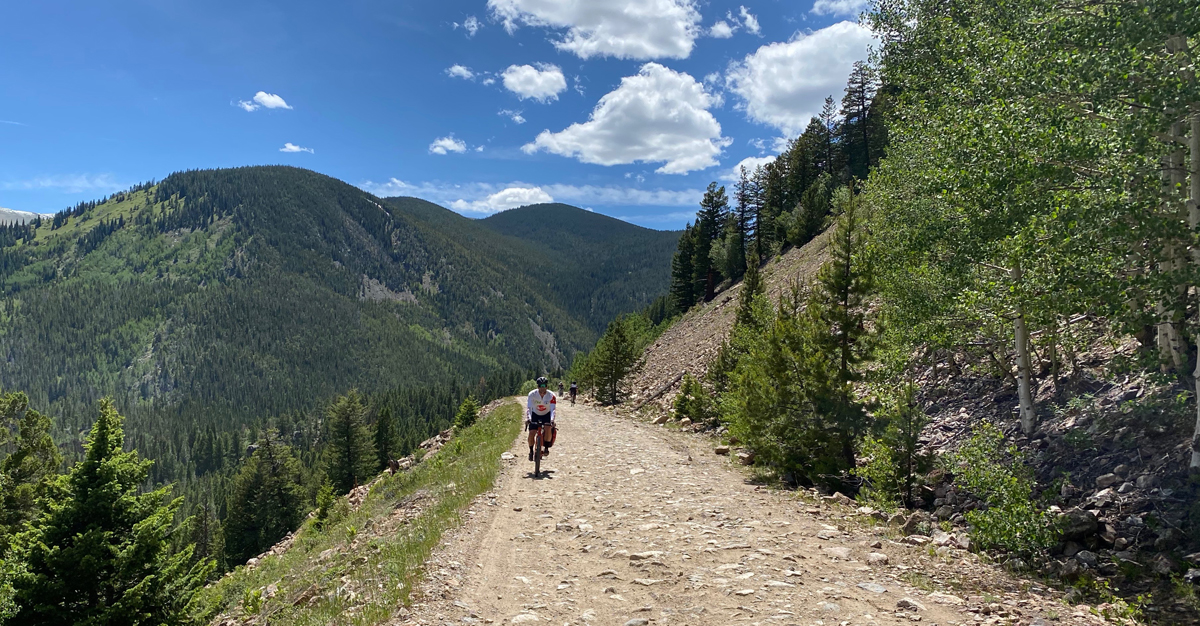
In Rollinsville, we left the pavement for good. By then we had ridden 50 miles and gained over 5,000 feet of elevation and the hard part hadn’t started. We then hit the dirt for 16 miles to the top. It was the last two hours after departing the protection of the trees where things began to feel Epic. Where we could feel the ghosts of all of those before us.
Epic and Rollins Pass go hand in hand. From the days of hunters to pioneers, to railroaders and tourists, whether through feats of endurance or acts of engineering, to cross the continental divide here is no gimme.
Scenes from a Rollins Pass, Colorado gravel ride. Photo by Bill Plock
The “vehicle” we chose was a gravel bike, or for those unfamiliar, basically a road bike with wide tires. Some would argue that wasn’t the wisest choice as the last eight miles clearly warranted a mountain bike, or at the very least, for me, a bike with gearing more suitable for the slow-moving, rocky, somewhat boulderish road. Front shocks like on a hardtail mountain bike wouldn’t have hurt either, especially on the first five miles descending on the west side. But I do believe with the right gearing, a gravel bike is doable as well, especially depending on your approach to Rollins Pass.
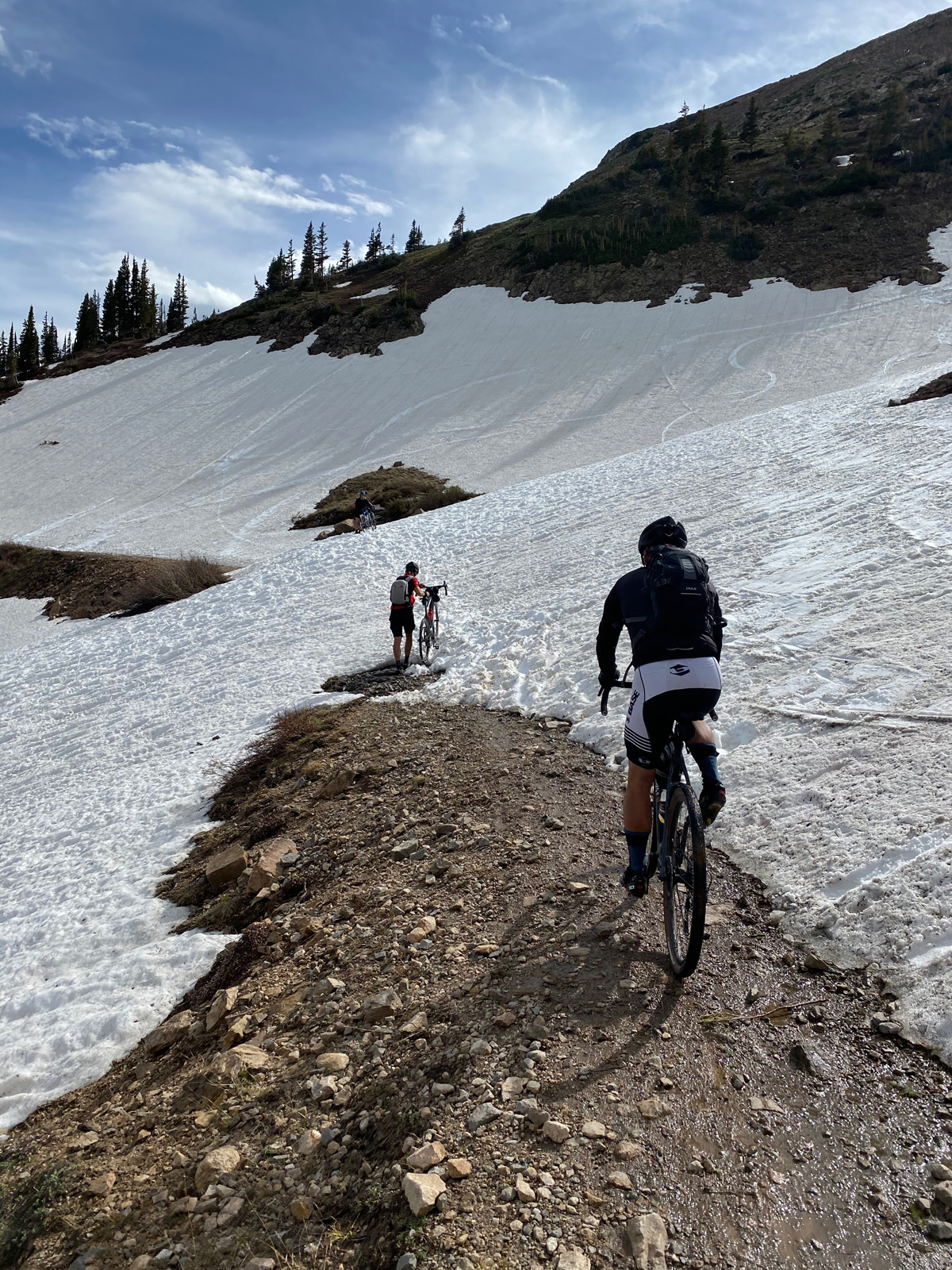
Greeting us above the treeline were several snow slides forcing us to “post hole” while trying not to slide down the hill as we carried our bikes. Wearing something other than bike shoes would’ve helped, but it was all part of the adventure. I love history and kept thinking about those before us who endured far harsher conditions. Many of them at least got paid to endure, we were there for fun—remember that Bill….find a smooth path??
Of the 80 miles traveled, about five miles were on foot. Other than being sore and tired, I never once thought we wouldn’t make it. Luckily, optimal weather prevailed and only the threat of darkness threatened our will.
As I wrote this a couple of weeks later, I find I am missing my friends who shared this ride with me. There was an equal vulnerability, and we all had our moment of hitting the wall. Luckily, we avoided injuries or any mechanical failures. All of us are IRONMAN veterans, so we knew when each other entered those dark times so familiar, we knew we could pull out of them. But for the rest of our lives, even if we never saw each other again, I have so many fond memories of each person on the ride, and that, for me, elevates this to Epic. Had I been alone, I think it would’ve been miserable. I know at some point I would’ve felt elation and joy, but I would’ve thought about quitting many times. Not once did I think about quitting—thanks to Matt, LJ, Courtney and Kenny.
But for me the journey was far from over when we arrived in Winter Park.
In our team’s gear drop the day before, I left my road bike thinking I would spend the night and ride home over Berthoud Pass. What I hadn’t planned on was waking up feeling so spent.
I think the combination of the rough ride and the toll the bouncing took on my body, and pedaling and walking for 14 hours added up to more than I anticipated. This is where having done triathlons is a blessing and a curse. I often think “I can do anything,” no matter the training or amount of preparation, which in general serves me well. But in this case, waking up feeling so spent, made me rethink the riding home! Because we arrived so late, getting a good meal was next to impossible. My lack of proper refueling, combined with fatigue, screamed loudly not to ride home.
But it was Father’s Day—oh there is that! And while I could’ve stayed another night and lavished in Winter Park’s finest dining, my daughter had been planning to make me dinner. Now that’s real pressure!
But how to get home? As I thought of various ideas, I heard the screeching of a freight train on the distant tracks, and bam, there was my possible answer. The TRAIN.
Amtrak’s California Zephyr travels through Winter Park daily and arrives in Denver at about 6 pm. I could then ride home or take the light rail to Old Town Arvada.
After a couple of clicks on my phone and a $45 charge, I was all set. I was so excited. I love traveling by train. Sure, it’s not as fast as driving, but it’s the same feeling I get sitting around a campfire. There is something nostalgic, soothing, and reflective about train travel.
The quiet of the steel wheels rolling on the smooth steel tracks interrupted occasionally by the horn of the train announcing itself at crossings, is mesmerizing. It harkens to an era I have only read about or seen in the “moving pictures.” Trains remind me of a time when people traversed the country in lavish pullman cars wearing suits and dresses with some sort of mystery. Or a generation or two before that when land grabbers and gold seekers pushed through the very same mountains in not so much luxury, toiling and rattling along with no idea what greeted them at the end of the line. My mind bounced back and forth in time between coal, steam, and diesel, all while seeing some of Colorado’s most remote scenery an hour west of Denver.
As soon as we passed the Winter Park ski area, we entered the famed Moffat Tunnel—a seven-mile tunnel under the continental divide. A twin tunnel exists that delivers water that normally would make its way to the Pacific Ocean to Colordo’s front range and eventually the Atlantic Ocean (side note, Colorado is the only state where all rivers lead out of the state—thus our complicated water laws as we feed so much of the nation with our headwaters).
The Moffat Tunnel was a true game-changer for the state of Colorado. Until its completion in 1928, trains either utilized the treacherous and time-consuming Rollins Pass route we had just ridden, or headed north along what is today basically I-80 through southern Wyoming. The Moffat Tunnel brought national train travel through Denver. The long-standing “war” between Cheyenne, Denver, and Pueblo as supply towns became a lot more interesting. Had Pueblo not been flooded a few years earlier, and millions of tax dollars been diverted to its rescue, the location of the “great tunnel under the divide” was being hotly contested between the Moffat Tunnel (owned by Denver) and a route out of Pueblo. Back then both cities were similar in size and stature and constantly competed for Colorado supremacy. But the state legislature having previously diverted millions of dollars to Pueblo, gave the nod to the group building what would be the Moffat Tunnel. It was not an easy route to build as there are dozens of tunnels between Eldorado and the Continental Divide.
As we rolled for more than 10 minutes in the pitch-black tunnel, I reflected. Just 24 hours earlier, and a few thousand feet higher I had navigated an ancient path on a journey that while on a bike, for me might as well have been on an old train. I have always been fascinated with trains. In high school I wrote a well-received short story about a boy living in the mountains and his reliance on the train. It represented the strength of the father he lost in a tragic accident. He relied on its sustenance to chug through the mountains and show its strength. As I kid, I would play with a train set like on The Adams Family with my dad. Those were wonderful days. The train has always represented adventure, power, and strangely, grace.
Tired but great to get home to enjoy Father’s Day!
Standing on the top of Rollins Pass, persevering like the train, like the pioneers and Native Americans, doing something I love, cycling, couldn’t have been more epic. Riding the train home to see my daughter completed the circle, or maybe in railroad terms, was the golden spike that completed the journey…..
Authors Notes:
The ride was June 20th, 2020 from Longmont, CO to Winter Park.
Total distance of 87 miles, approx 8,880 feet of elevation gain, and highest elevation of 11,671 feet
There are plenty of places (gas stations, restaurants) to refuel between Longmont and Rollinsville along the highways. It’s all paved until that point.
It’s 36 miles from Rollinsville to Winter Park with no facilities. I would recommend a water filter to access the streams along the way.
Beginning in November of 2026, an additional daily train will run from Denver to Winter Park, Fraser and Grandby, presumably with the ability to take bikes making this adventure logistically easier. The California Zephyr has limited bike storage and is often sold out.
By Tom Jow — I can still remember when one of my co-workers at Wild Rose installed his first set of hydraulic disc brakes on his mountain bike. Honestly, they seemed so complex at the time. It was difficult to see the benefits beyond the challenges. There were few frames and forks designed for the brakes. Questions like “how do we bleed these” and “why can’t the rotors be true” came up with every subsequent new brand and model. Now, with the familiarity that comes with years of experience, I find bicycle hydraulic disc brakes to be a pretty simple system to use and maintain. Before we start talking about performing maintenance, let’s introduce the individual parts and how they all fit together.
A well used mountain bike brake lever. The large bulge on the right is the master cylinder. The knurled dial in the lever body adjusts the brake pad contact point. The knob on the brake lever adjusts the static or resting, position of the lever. Photo by Tom Jow
Working from the top down, the part we interact with is the brake lever. Nearly all brake levers have an adjustment for the static or resting position of the lever blade. This allows one lever size to fit multiple hand sizes. Fully featured brake levers will also have an adjustment for contact point; the distance the lever moves before the pads contact the rotor. The important part of the lever is the master cylinder. The master cylinder consists of a reservoir for fluid and an internal piston. When we squeeze the brake lever, the piston moves forward, pushing fluid into the line. This fluid movement eventually reaches the brake caliper, pressing the caliper pistons out and thus the brake pads into contact with the rotor.
The brake master cylinder for road bike brakes are well hidden. Photo by Tom Jow
The brake fluid itself could be considered a component. It is designed to meet stringent standards for performance. For reasons of proven performance, many bicycle brake manufacturers have chosen to use automotive DOT4 and DOT5 fluids. Other manufacturers chose to design their own fluids, using a mineral oil base. Due to the nature of braking, both types of fluid must be stable regarding ambient temperature, line pressure and boiling point (fluid temperature).
Inside view of a heavy duty mountain bike brake. Notice the two pistons extended from the caliper body on each side behind the brake pads. Photo by Tom Jow
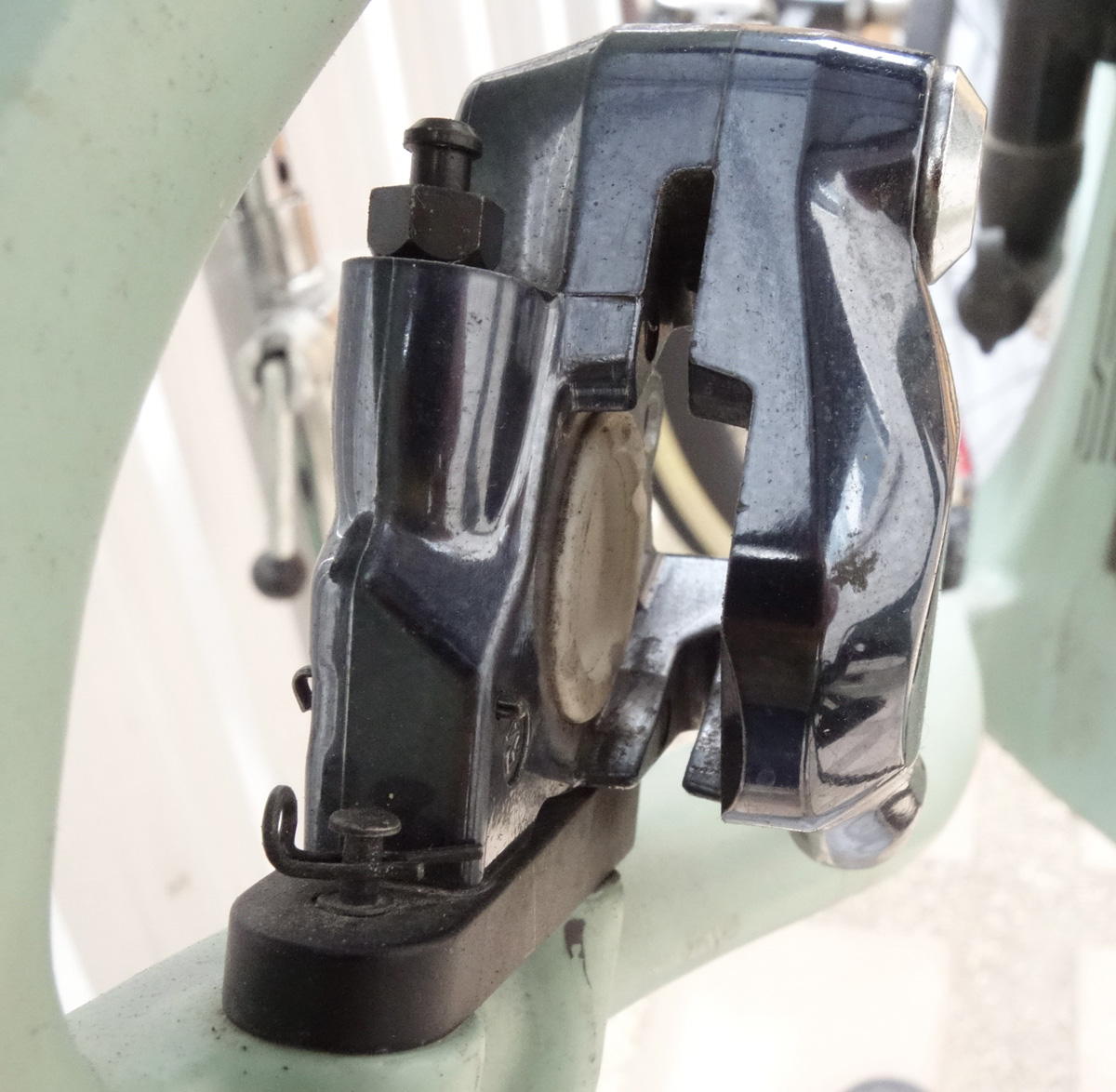
At the end of the line, so to speak, is where the majority of the braking magic happens. The brake caliper is a block of aluminum containing the brake pads, pistons and some flexible seals. To me, these flexible seals are the magic part. As fluid moves into the caliper, the fluid pushes pistons out of their bores, moving the brake pads against the rotor to slow the bike and rider. These seals, which keep brake fluid in the piston bore under pressure, flex outward with the moving piston. When braking is complete and pressure is released from behind the piston, the seal flexes back, pulling the piston and ultimately, the brake pad, back into their resting position. As the brake pads wear, the seals allow the system to self-adjust by allowing the piston to creep out of its bore. The number of pistons in the caliper vary for purpose of the brake. For example, for road and cross-country mountain bikes where light weight is a major factor, the brakes are small with only two pistons per caliper. Heavier duty brakes, such as for downhill will be larger and heavier with four pistons per caliper. Four piston calipers will use larger brake pads, the increased braking surface area greatly contributing to increased braking power. In addition, the heavier caliper body absorbs more heat from the braking friction, allowing the system to work more effectively longer.
Inside view of a lightweight road disc caliper. One of the two pistons exposed without brake pad. The external bleed port protrudes from the top of the caliper. Photo by Tom Jow
The true source of all this heat is the friction of brake pads squeezing a rotor between them. To suit different performance needs, brake pads are available with different materials. For all around performance, organic/resin pads offer good bite, smooth, even modulation and quiet operation. Metallic pads, while louder and rougher feeling, offer better performance under the higher heat stresses of downhill riding. Rotors, with few exceptions, have a steel brake surface compatible with all brake pads.
As a simple, but high-tech component, hydraulic disc brakes have only a few hard rules to follow. The most important rule to follow is using only manufacturer recommended fluids. Using incorrect fluids can lead to equipment damage and a high risk of brake failure. Also, protect the brake pads because the material is very absorbent. Grease and oil can easily contaminate the pads. The two main sources of brake pad contamination are leaky piston seals (rare) and careless application of chain lubricant (common). A lesser-known rule for disc brakes is compatibility of rotors after use. The reason for this is brake pad material, by design, embeds itself into the rotor surface. Therefore, when replacing brake pads only, we must be sure to use the same pad compound or suffer diminished brake performance.
In terms of performance for the least amount of time spent on maintenance, for me, hydraulic disc brakes may be the winner. Sure, they may be complicated on the inside, but in operation they are simple. With no cables to adjust, I just keep them clean, and they perform.
Next time: My brake pads and rotors need to be replaced.
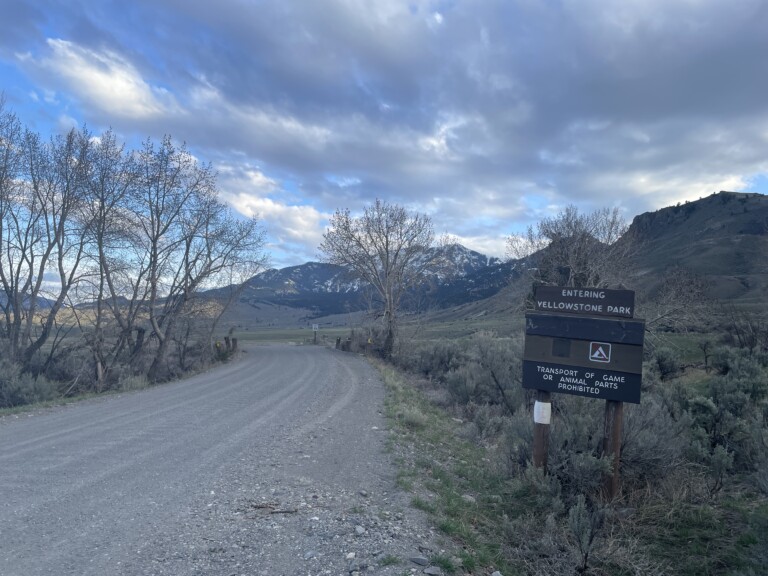
By Charles Pekow — The Old Yellowstone Trail South is getting restored, improved and reopened. The section runs 13.74 miles through Custer-Gallatin National Forest and Yellowstone National Park in Montana along the Yellowstone River south of U.S. Hwy 89. The gravel trail follows the path of the original railroad line into the park and an old wagon route and will be part of the Great American Rail Trail.
Existing Road Conditions at Beattie Gulch Trailhead – Photo courtesy of USDOT
The project includes improving the trail surface and trailheads, adding interpretative signs and installing drainage culverts. The trail suffered significant damage from a flood in 2002. Flooding, erosion and rockfall closed the trail. Another project is addressing these issues.
The plan is to complete the work sometime next year.
By Matthew Haines, University of Huddersfield — The Tour de France is widely regarded as the most strenuous endurance endeavour in sport. Performance levels have become so high that efforts approach the limits of human tolerance and it is clear that optimum nutrition is important to ensure physiological function is not hindered. But unlike the bad reputation carbohydrates get in some ordinary diets and in endurance sport circles, the evidence suggests that this energy source is not a devil in disguise.
In 1903 the winner of the inaugural stage of “Le Tour” was a French chimney sweep called Maurice Garin who obtained food throughout the race in bars and drank from fountains. More than 100 years later competition is between professional cycling teams offering a range of sports science support to the cyclist, who in turn is a very highly-trained professional athlete whose entire lifestyle is dedicated to the event.
Energy demands and the toxic debate
Nutritional support focuses on meeting energy demands, fluid intake but also on carbohydrate availability. Indeed the general consensus is to maximise carbohydrate stores pre-exercise to meet fuel requirements of the race and optimise restoration of muscle glycogen stores between stages, in order to minimise the impairing effects of carbohydrate depletion. However, recently carbohydrate and in particular sugar (a type of carbohydrate) have received much bad press in the media, and to some extent in academia.
This is epitomised by Robert Lustig’s “sugar is toxic” meme leading us to question not only if high intakes of carbohydrate are safe, but if they are optimal for endurance performance after all. Recently, Timothy Noakes, a notable sport and exercise scientist and a prolific marathon runner, has lent his weight to the argument that over-consumption of refined carbohydrates may be toxic for the body. As a consequence there is new interest in high-fat and restricted carbohydrate diets for endurance performance.
However, it is prudent to be cautious of fads and fashions in research, and the “toxic truth about carbohydrate” message is bordering this line. It would certainly be premature to change guidelines based on the limited evidence that we currently have in relation to high-fat, low carbohydrate diets for ultra-endurance events such as the Tour de France.
The link between dietary carbohydrate intake and exercise tolerance was established as early as the 1920s. Furthermore, seminal research on food intake and energy expenditure during the Tour de France was conducted by Saris and colleagues in 1989. They observed a mean energy intake of almost 6,000 kcal and a peak intake of 7,739 kcal (a lot). This matched energy demands (mean value 6,066 kcal) rather well. Of this, 62% of energy intake was from carbohydrate, with just 23% from fat. This is in line with modern recommendations for endurance performance where 65-70% of daily energy intake should be in the form of carbohydrate.
The precedence was set and the conclusion was that strategies to deliver large quantities of carbohydrate were an appropriate solution for the Tour de France.
Carbs important for endurance
Other research reviews support this and there are several physiological mechanisms that make us believe carbohydrate is very important for endurance performance.
First, carbohydrates primarily serve as an energy fuel, and glycogen becomes the most important substrate when exercise intensity is high. This relates to the fact that less oxygen is required to oxidise a unit of carbohydrate when compared to fat.
Second, there are common pathways by which carbohydrate and fat are oxidised and fat metabolism is somewhat dependent on a background level of carbohydrate catabolism. This is often referred to as “fat burns in a carbohydrate flame”.
The brain also relies on blood glucose (carbohydrate) almost exclusively under normal conditions which is important to avoid so-called central fatigue which can include weakness, hunger and dizziness. Presumably the ability to concentrate is very important for Tour de France cyclists – several spectacular and dangerous crashes this year spring to mind.
The human engine
Noakes’ suggestion regarding high-fat diets, and the finding that elite athletes chronically adapted to such a diet are able to more effectively oxidate fat is interesting, but there is little evidence to suggest diets high in fat will enhance performance.
Additionally, the long-term health effects of such diets are not known. Demonising sugar and carbohydrate is not useful or accurate. This relates to both performance and health for the Tour de France cyclist and the general public. We need sugar (carbohydrate) just like we need fat and protein. There is, as one would expect, a level of flexibility in the ratio of how we consume these nutrients – but what Tour de France cyclists demonstrate particularly well is the need for balance. Energy intake must match energy expenditure. Sugar is not toxic, the dose makes the poison.
The extraordinary demands of the Tour de France requires a special internal combustion engine. For homo sapiens this “engine” constitutes a carbon-based fuel chemically reacting with oxygen extracted from air and burning, producing among other things energy. As far as we know, a focus on carbohydrate intake before, during and in between stages is the best way to facilitate this. So as the riders move through the Alps do not expect to see a new nutritional strategy.