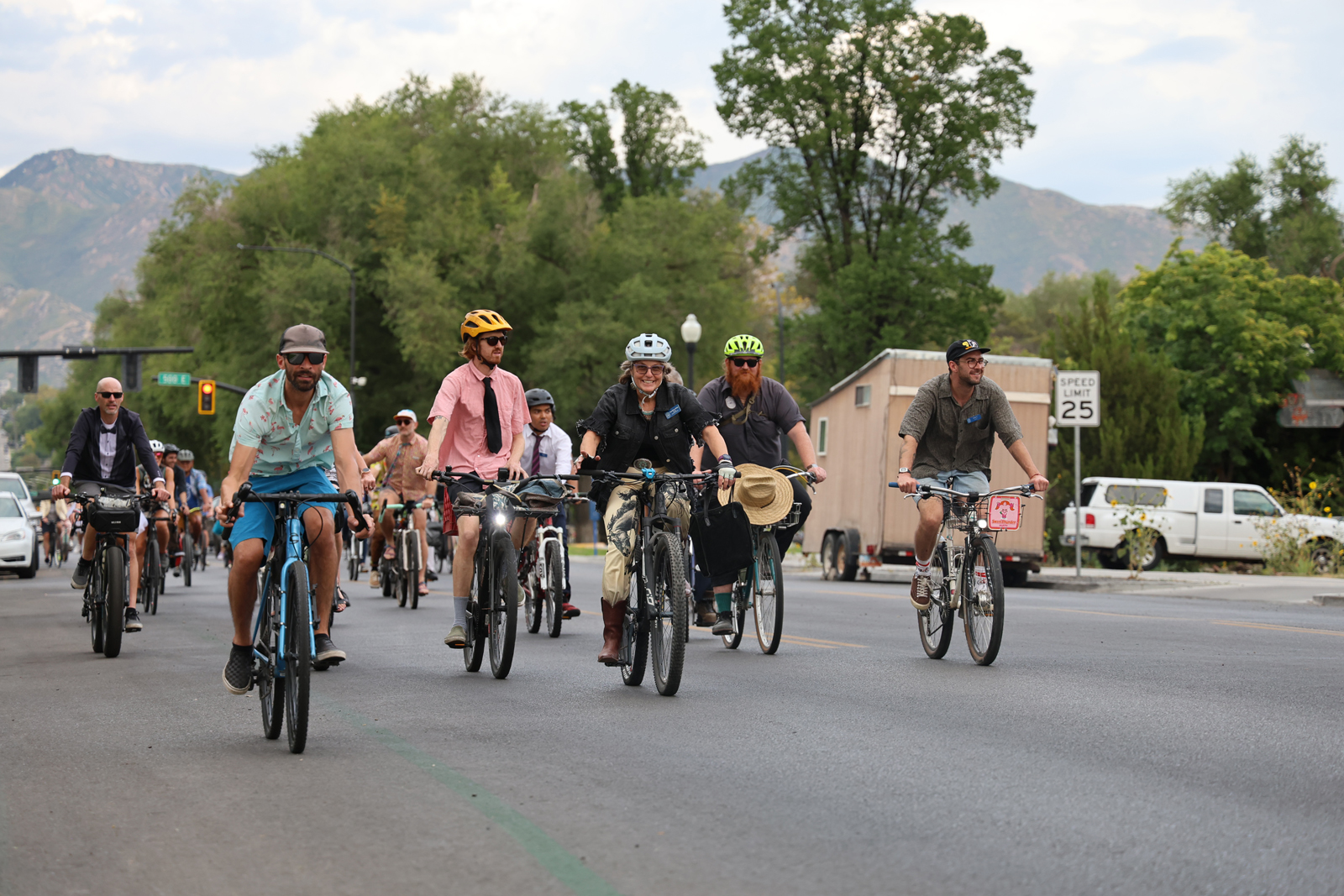
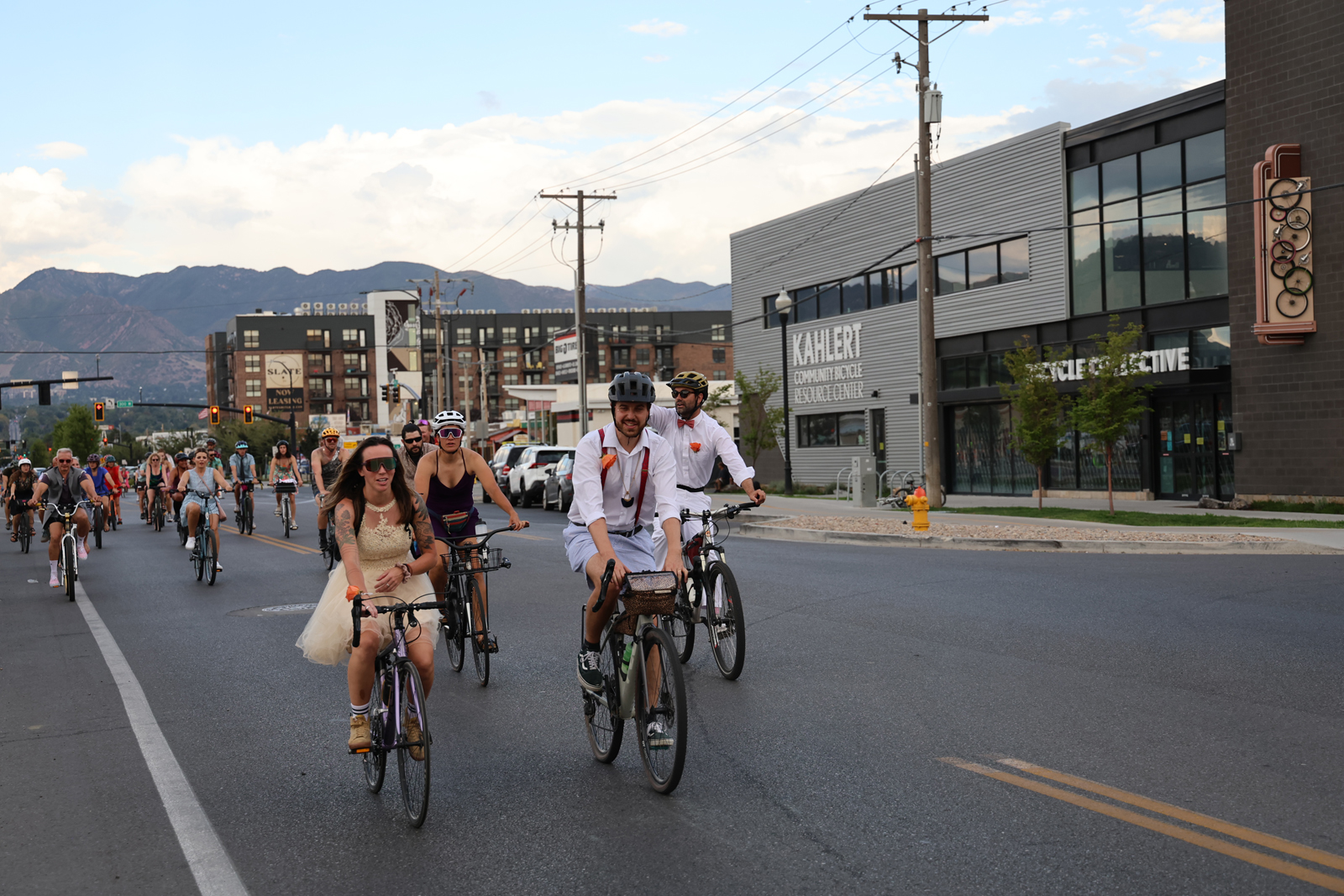
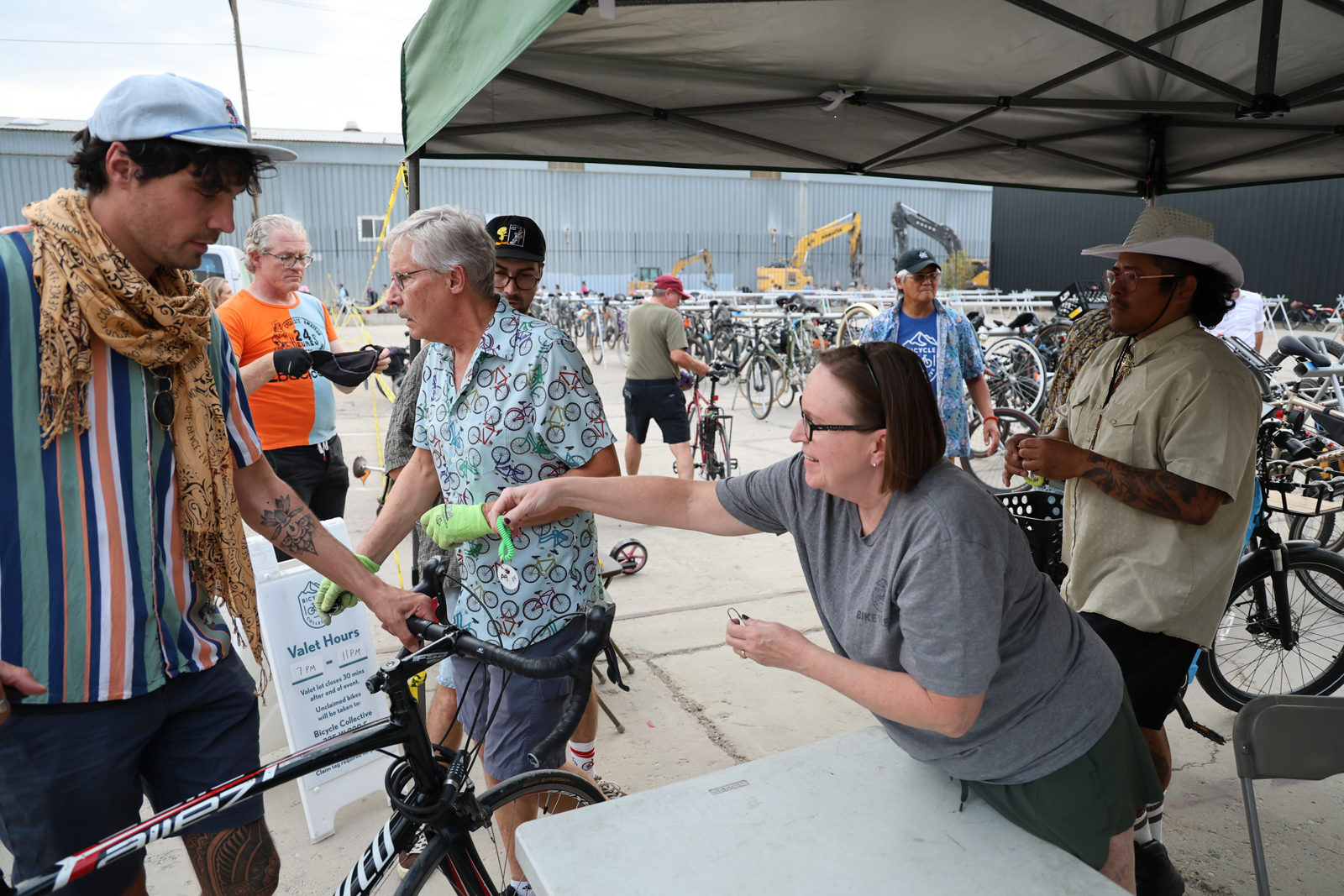
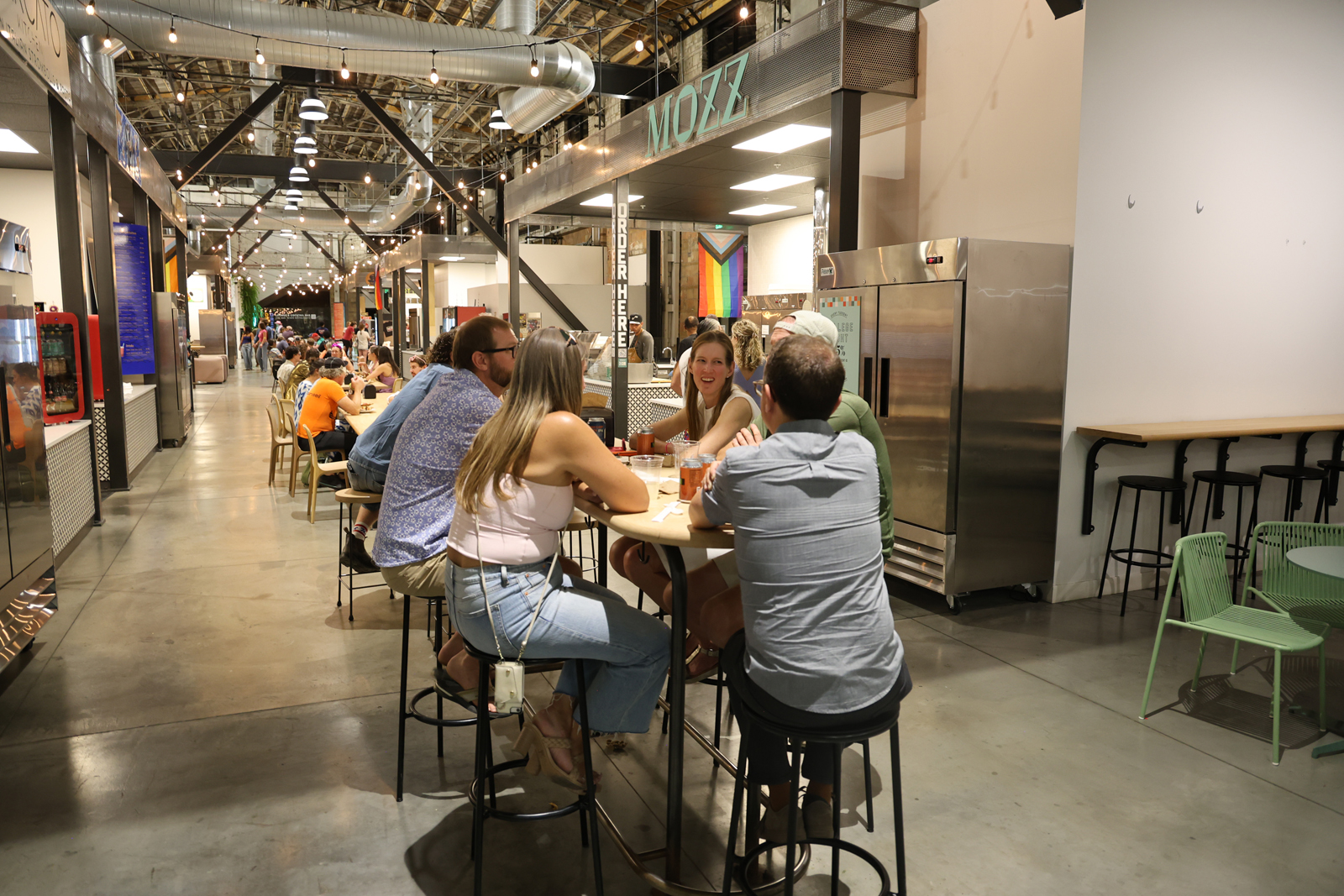
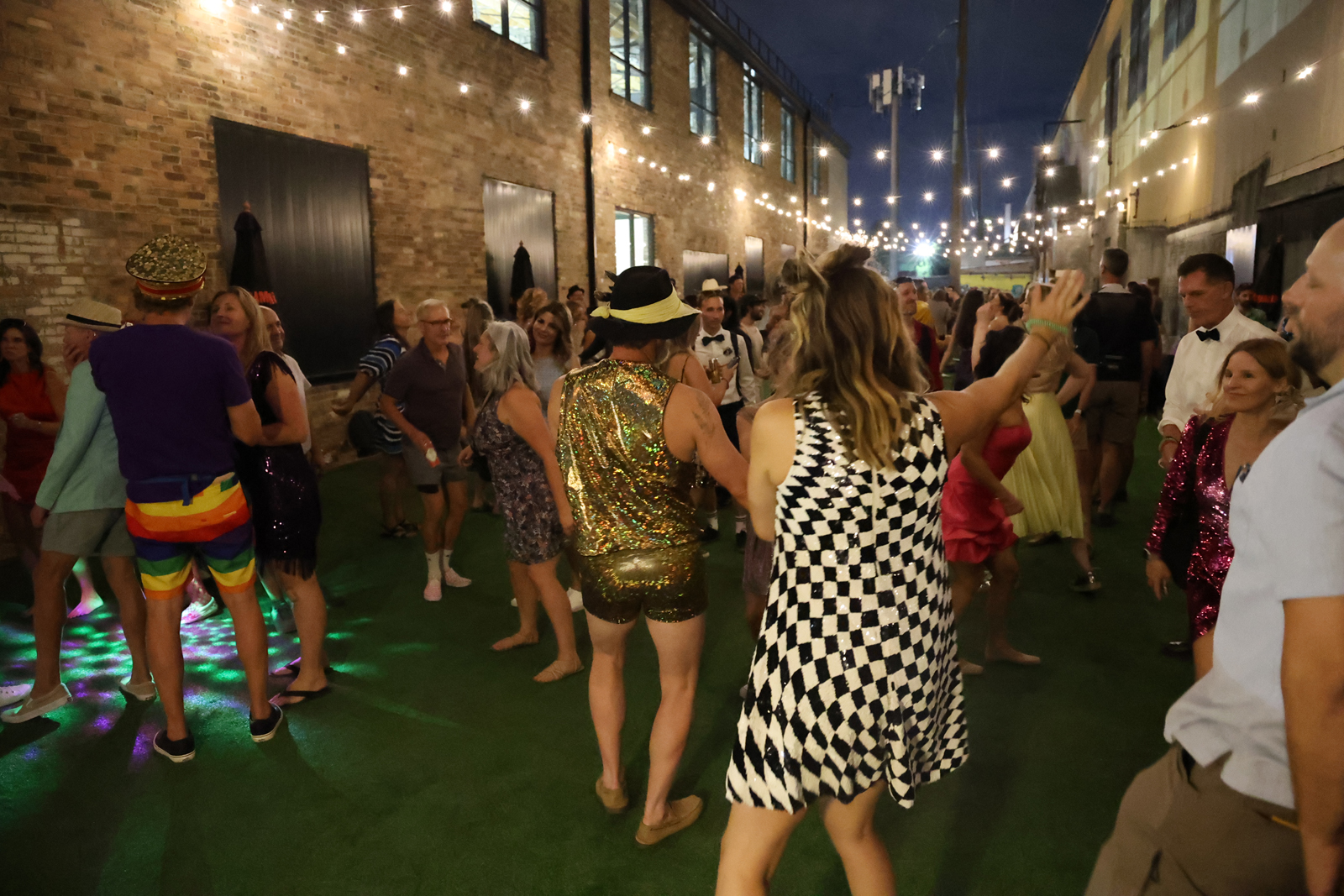
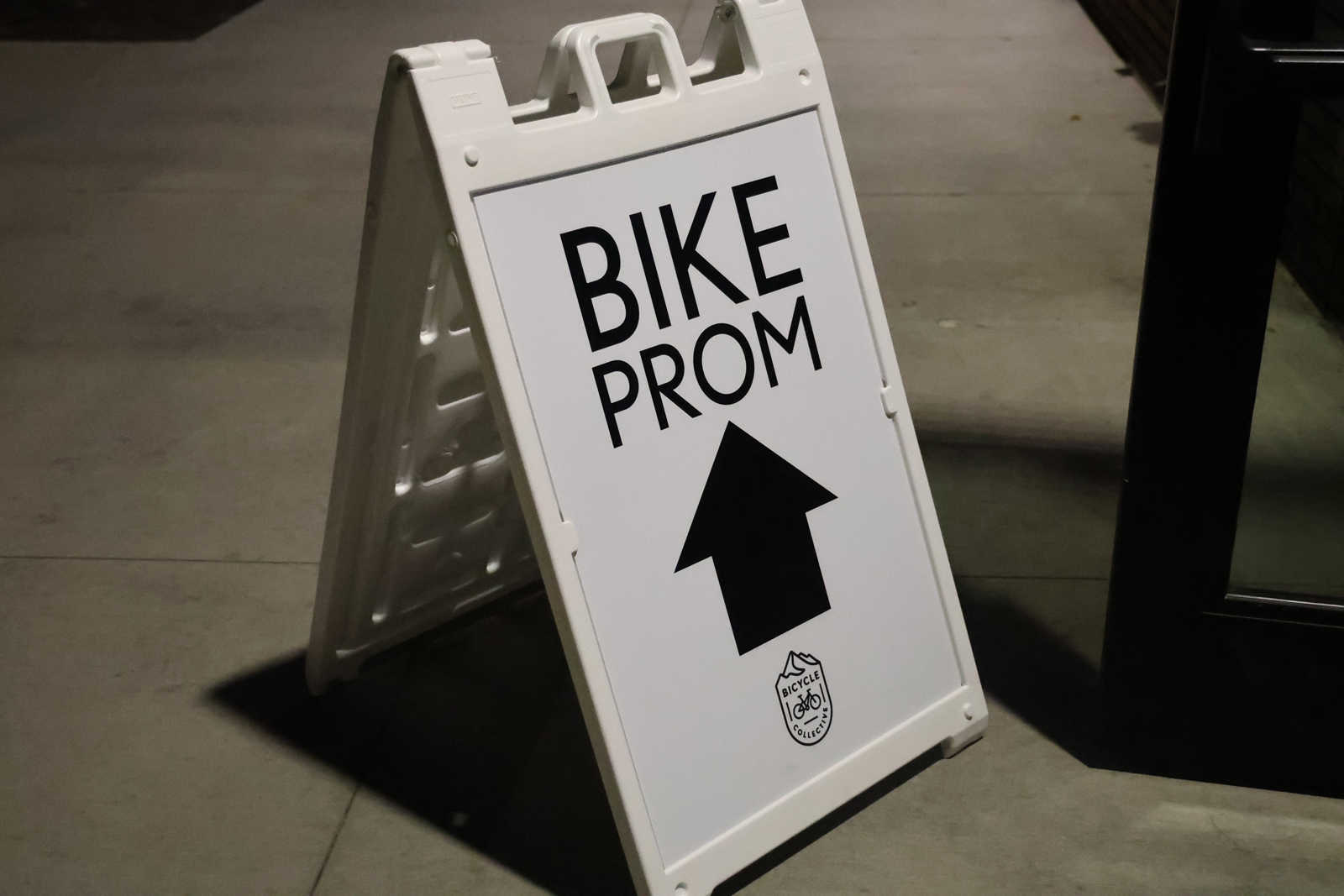
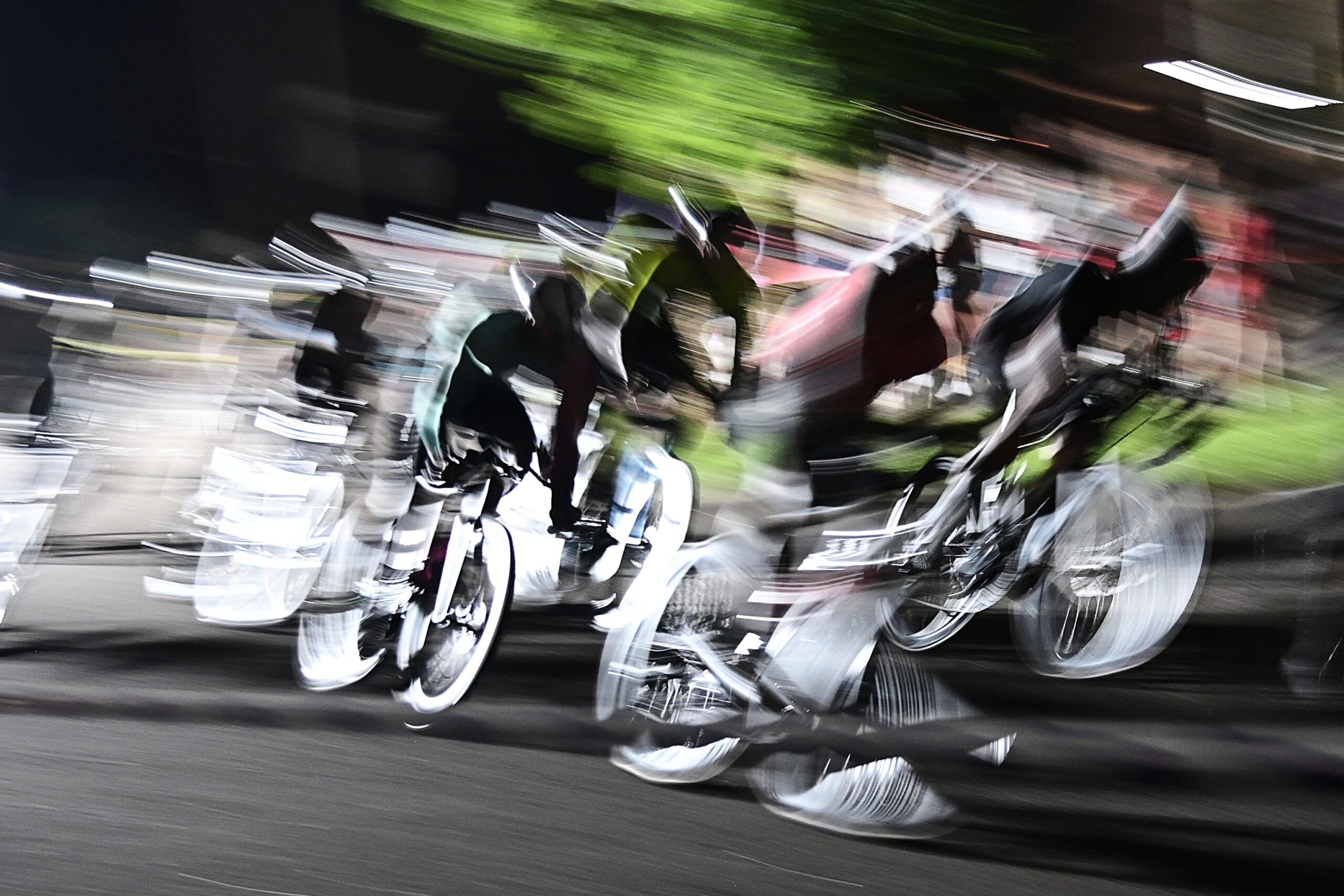
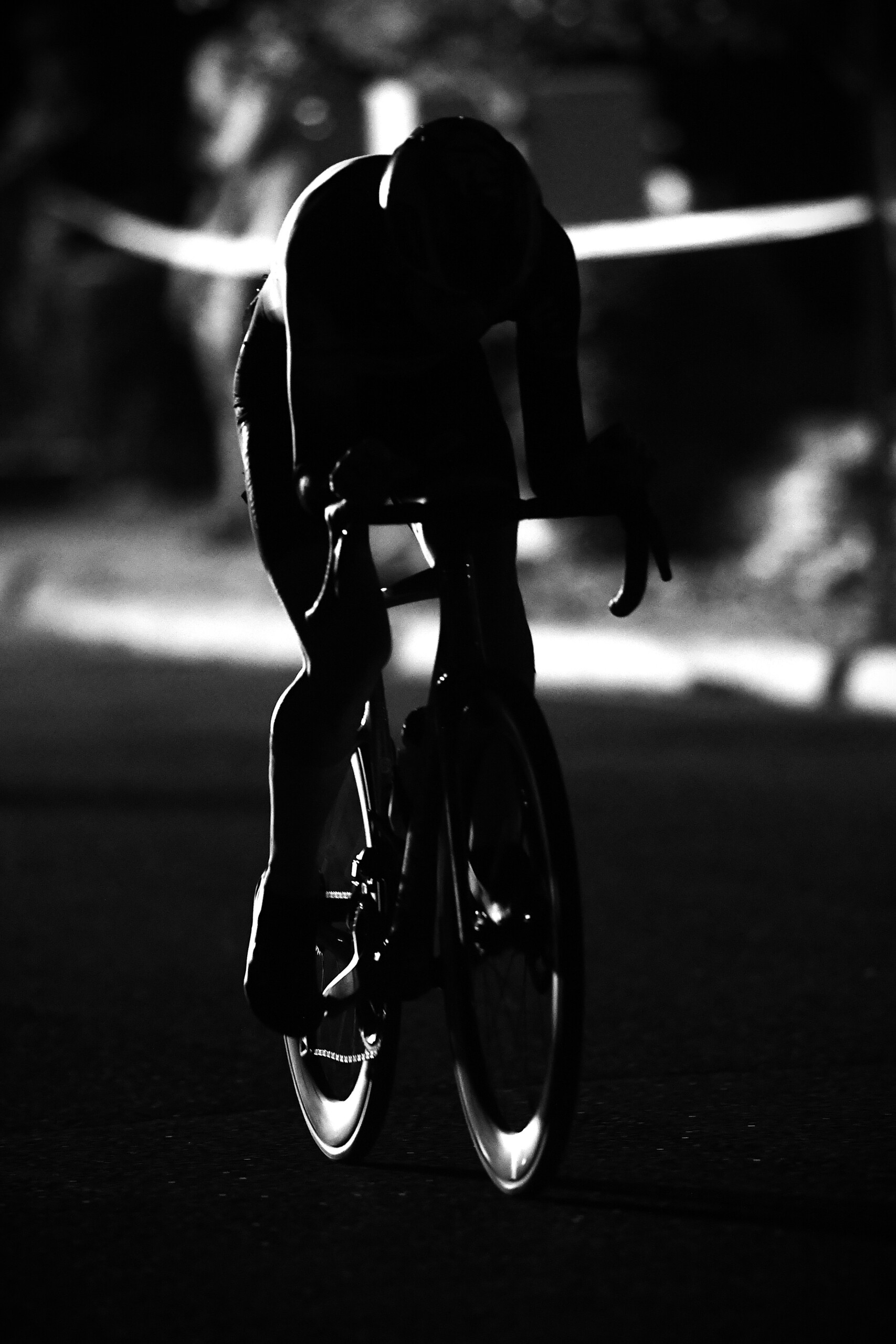
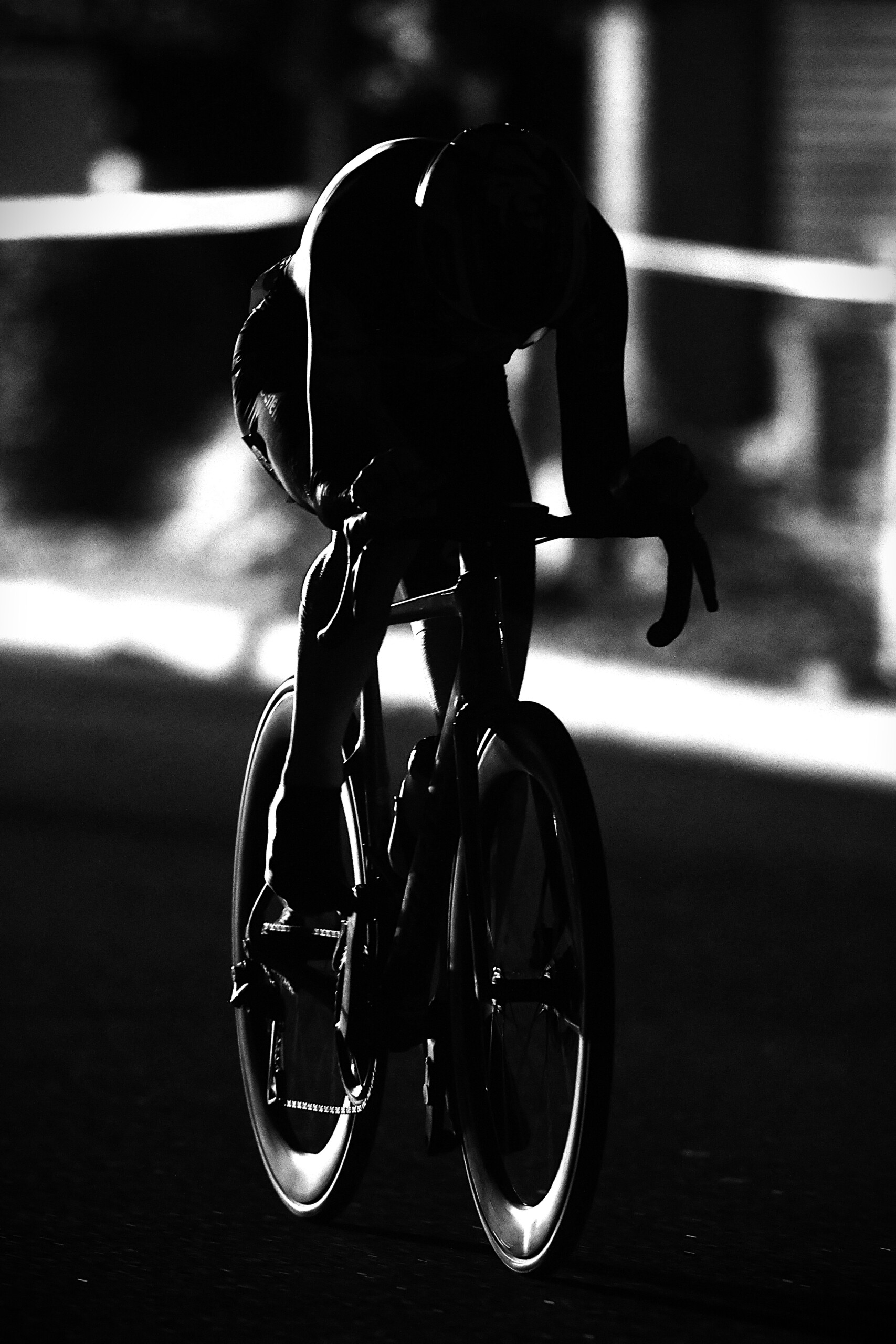
SALT LAKE CITY, Utah — The Bicycle Collective, a non-profit community bike organization, held their annual fundraiser, Bike Prom on August 23, 2025 in Salt Lake City at the Woodbine Foodhall. Cycling West was there taking photos of the festivities.
For the full photo gallery with photos of (almost) everyone, see Bike Prom 2025 Photos.
The fundraiser began with humble origins in 2011, created by Bicycle Collective member Agnes Robl.
Bike Prom inspired the Moab Bike Prom and the Provo Bike Prom, two events that are no longer being held. It is still the main fundraiser for the Bicycle Collective.
Scenes from Bike Prom 2025. Bike Prom is a fundraising event for the Bicycle Collective. Photo by Dave Iltis/CyclingWest.comScenes from Bike Prom 2025. Bike Prom is a fundraising event for the Bicycle Collective. Photo by Dave Iltis/CyclingWest.comScenes from Bike Prom 2025. Bike Prom is a fundraising event for the Bicycle Collective. Photo by Dave Iltis/CyclingWest.comScenes from Bike Prom 2025. Bike Prom is a fundraising event for the Bicycle Collective. Photo by Dave Iltis/CyclingWest.comScenes from Bike Prom 2025. Bike Prom is a fundraising event for the Bicycle Collective. Photo by Dave Iltis/CyclingWest.comScenes from Bike Prom 2025. Bike Prom is a fundraising event for the Bicycle Collective. Photo by Dave Iltis/CyclingWest.com
U.S. and international cyclists to race 200-plus miles from Logan, Utah, to Jackson, Wyoming
LAYTON, UTAH (August 27, 2025) — The Grand Teton will again be a welcome sight for cyclists after they’ve ridden more than 200 miles to Wyoming’s Jackson Hole in the 43rd annual LoToJa Classic.
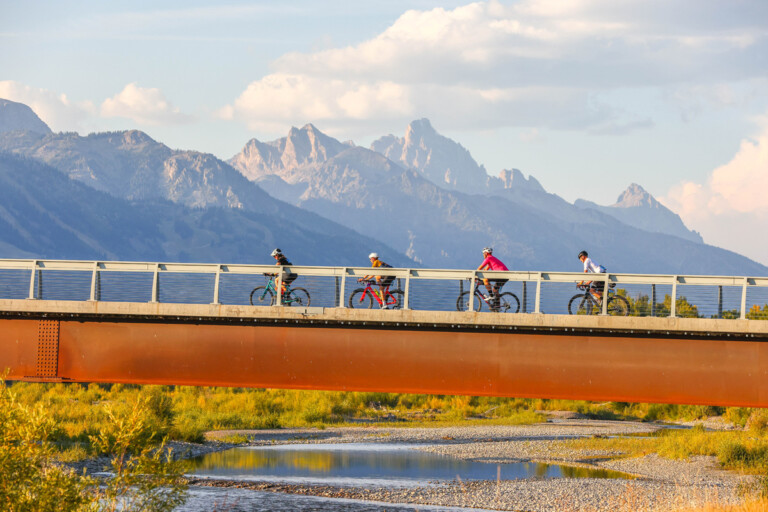
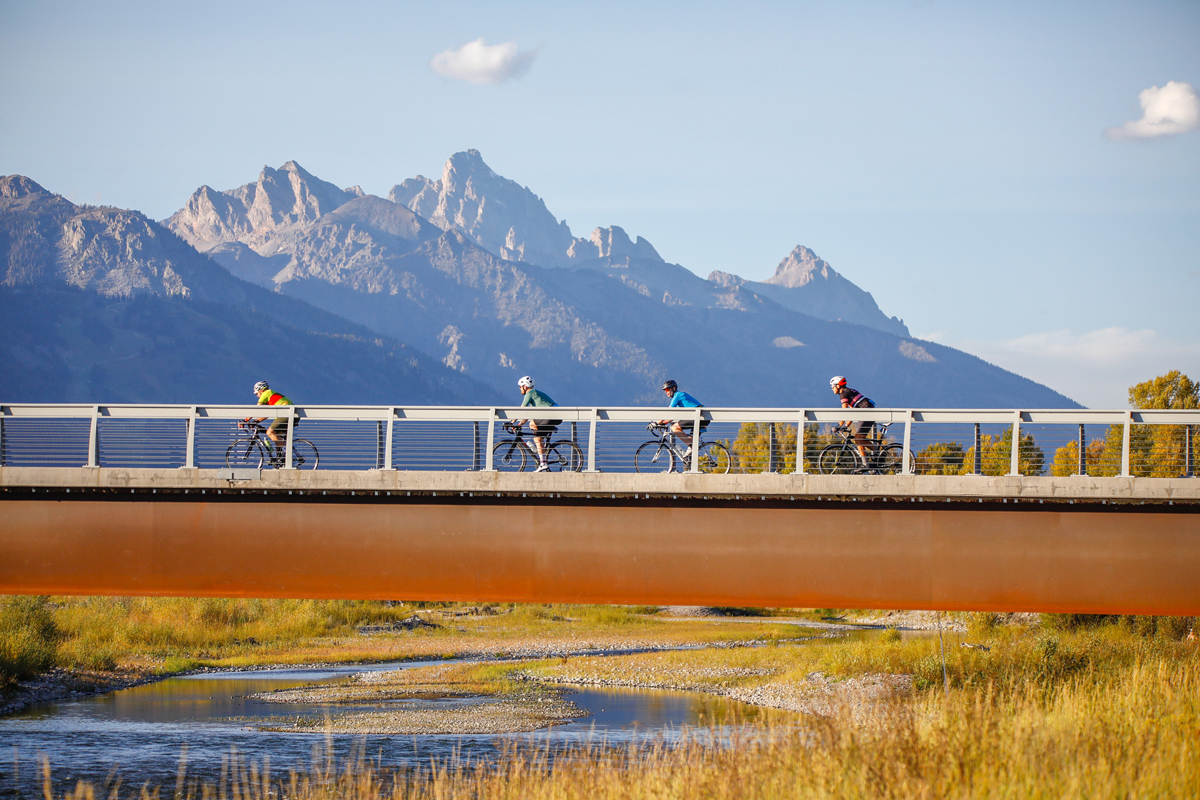
Almost there: With the Grand Teton in view, racers chase across the Wilson Bike Path Bridge in the 41st annual LoToJa Classic on Sept. 9, 2023. After crossing the bridge, cyclists have seven miles to the finish line in the 203-mile road race from Sunrise Cyclery in Logan, Utah, to Jackson Hole Mountain Resort. Photo courtesy of Snake River Photo
On Sept. 6, approximately 1,300 U.S. and international racers and cyclosportive riders will depart Sunrise Cyclery in Logan, Utah, and pedal north for up to 207 miles to the finish line at Jackson Hole Mountain Resort.
LoToJa is one of America’s most popular and enduring bicycle events. Since its start in 1983, more than 22,000cyclists have experienced its demanding flat, hilly and mountainous course.
“LoToJa continues to attract thousands of racers and enthusiasts,” race director Brent Chambers said. “It’s a long, tough day in the saddle, with most cyclists pushed beyond their physical and mental limits. To finish is always an incredible achievement, whether you’re a racer or riding just for fun.”
The fastest racers reach the ski resort by early afternoon. The current men’s record is 8:18:29 and the women’s is 9:35:00. Most cyclists take 10 to 13 hours to complete the course.
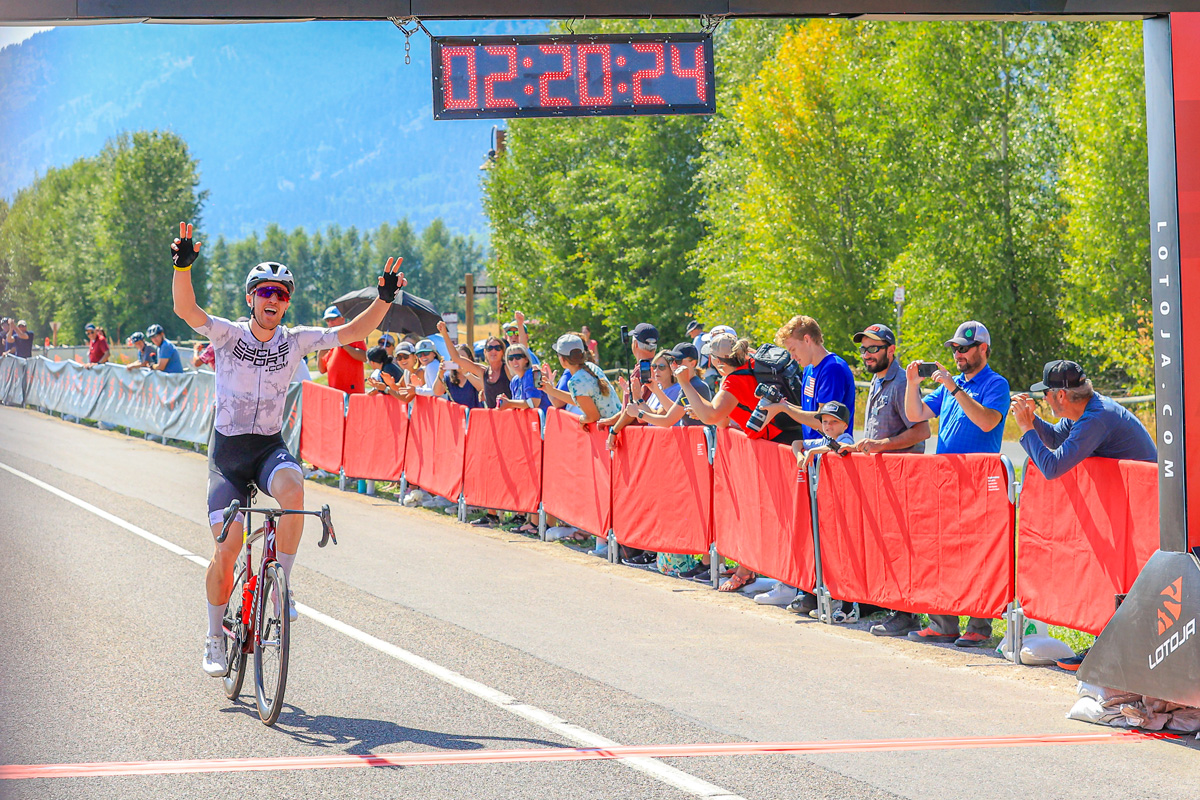
Winner: Danny Van Wagoner (Team CycleSport.com) is jubilant after crossing the finish line alone and winning the Men Pro 123’s in the 42nd annual LoToJa Classic on Sept. 7. He set a time of 8:50:24 in the 203-mile road race from Sunrise Cyclery in Logan, Utah, to Wyoming’s Jackson Hole Mountain Resort. Photo courtesy of Snake River Photo
Winners take home cash and/or merchandise, and commemorative medals go to all who finish. But for many cyclists the day’s biggest reward is crossing the finish line in panoramic Jackson Hole.
Entrants include USA Cycling licensed racers, who compete in specific age and experience categories, and unlicensed cyclists who ride the non-competitive cyclosportive. Racers cover 202.3 miles, cyclosportive riders 207.3 miles, and relay teams 207.9 miles.
In all there are 23 separate categories that will depart from Sunrise Cyclery in four-minute intervals beginning at 5:30 a.m. On average each category will feature 40-50 riders.
The course passes through northeastern Utah’s Logan and Cache Valley, southeastern Idaho’s Preston and Montpelier, and western Wyoming’s Star Valley and Snake River Canyon. Prominent challenges include three mountain passes that total 35 miles and almost 10,000 vertical feet of climbing.
LoToJa is recognized as the longest, one-day USA Cycling sanctioned road race in America. It is also one of the oldest consecutively held in the country.
Prestige and longevity are benefits from LoToJa’s popularity. Several thousand riders register online every April, but less than 2,000 are accepted for on-course safety. This year there are cyclists coming from 39 states, plus Mexico, Canada, Costa Rica and the Czech Republic.
LoToJa’s focus on fundraising is also a force behind its acclaim. The event is a major fundraiser for the Huntsman Cancer Foundation in Salt Lake City and other health-related organizations. Over the years nearly $3 million have been contributed to Huntsman alone by cyclists and sponsors.
LoToJa was founded in 1983 by two Logan cyclists. They wanted to create a tough, one-day road race like European professional cycling’s Paris-Roubaix and Ronde van Vlaanderen. Logan-Jackson was born and given the acronym, LoToJa.
In that first year, seven cyclists competed and crossed the finish line near downtown Jackson. The winner was Bob VanSlyke of Logan who finished the 186-mile course in nine hours. The race’s distance increased to more than 200 miles when the finish line was moved to Jackson Hole Mountain Resort in 1986.
Since then, LoToJa has grown to feature multiple categories for USAC license holders, plus non-licensed cyclosportive cyclists, who are either competing against riders within their age group, or are riding just for fun. There are also multiple categories for tandem riders and relay teams.
Safety for LoToJa’s participants is a priority, Chambers said. On race day the Idaho Transportation Department will restrict eastbound vehicle traffic on state Route 36 north of Preston between Riverdale and Ovid from 6 a.m. to 12 p.m. Eastbound traffic on US-89 between Montpelier and the Wyoming state line will also be restricted from 8 a.m. to 2 p.m.
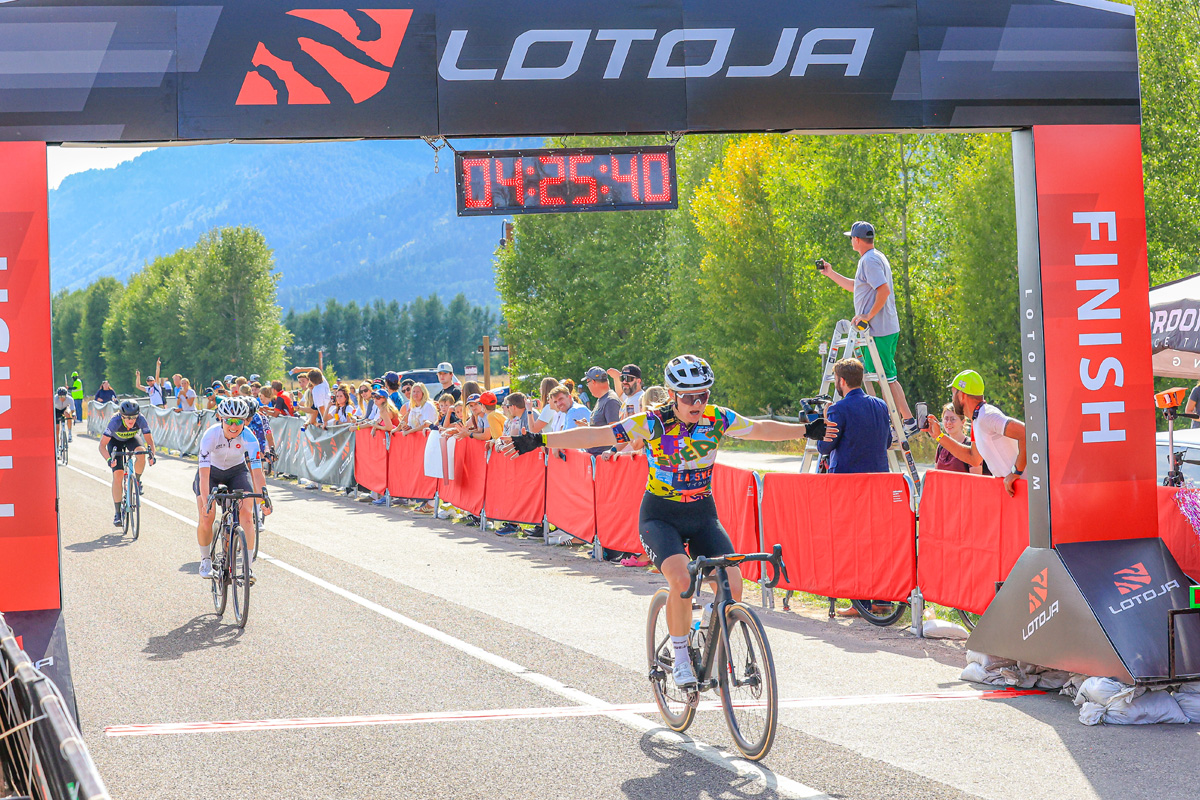
Winner: Aileen Pannecoucke (Team LA Sweat) celebrates after taking the sprint and winning the Women Pro 123’s in the 42nd annual LoToJa Classic on Sept. 7. She set a time of 9:43:26 in the 203-mile road race from Sunrise Cyclery in Logan, Utah, to Wyoming’s Jackson Hole Mountain Resort. It was her third LoToJa victory. Visible and taking second place behind her is Katie Bonebrake (Team Zone 5). Photo courtesy of Snake River Photo
Except for those two travel restrictions, LoToJa is held on an open course with traffic. Motorists who are traveling on race day are asked to approach and pass cyclists cautiously.
Chambers defined cautious passing as “slowing down and giving at least three feet of space between the vehicle and cyclists.” Motorists are also urged “to patiently wait for oncoming vehicle traffic to clear before pulling around a cyclist or group of cyclists.”
LoToJa’s host cities of Logan and Jackson receive an economic boost from cyclists, support crews, event staff, volunteers and well-wishers. The total entourage is an estimated 4,000 people. Hotels and restaurants are the biggest benefactors.
Chambers emphasized that LoToJa is only made possible thanks to its 600-plus volunteers, and help from community businesses, civic leaders and public safety officials. There are also 120 HAM radio volunteers from the Bridgerland Amateur Radio Club. The club provides uninterrupted communication for event staff and cyclist safety from Logan to Jackson.
“This year’s LoToJa is all set and I look forward to seeing riders dig deep to reach the finish,” Chambers said, who has organized the race since 1998. “To watch riders overcome the adversity of 200-plus miles and 10,000 feet of climbing always fills me with awe and admiration.”
LoToJa’s route and additional information about the race are available at lotoja.com.
Event info:
September 6 — LOTOJA Classic Road Race, Utah Triple Crank, Logan, UT, 43rd Annual, 1 day, 3 states, 200-plus mile road race from Logan, UT to Jackson Hole, WY, Brent Chambers, 801-546-0090, [email protected], lotoja.com
The LoToJa Bicycle Classic is a 200-plus mile, one-day amateur bicycle road race from Logan, Utah to Jackson Hole, Wyoming. It is always scheduled in September, the first Saturday after Labor Day, and attracts national and international participants. LoToJa is one of the longest one-day road cycling races in the U.S, and is the longest one-day race sanctioned by USA Cycling, the sport’s governing body based in Colorado Springs, CO. The race began in 1983 and will mark its 43rd edition in 2025.
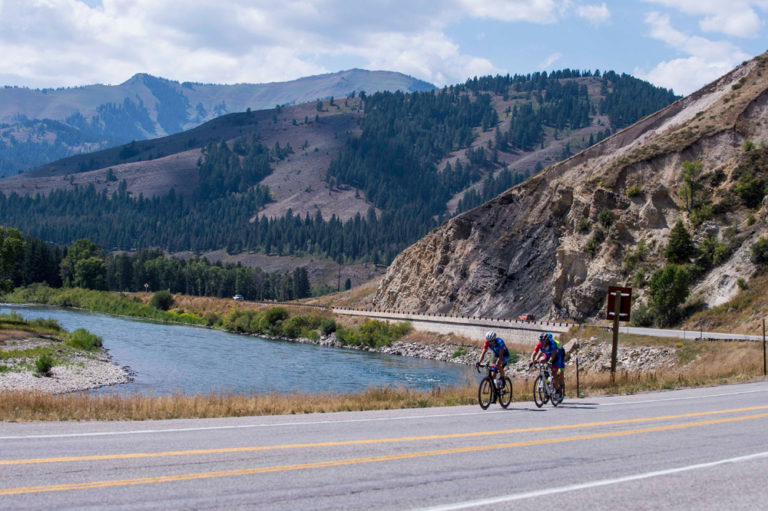
A trio of cyclists ride alongside the Snake River just a few miles south of Hoback Junction. Photo by Lucid Images, find photos at lucidraces.com/2017-lotoja-classic
LoToJa is pronounced “low-to-juh” by some and “la-toe-juh” by others. It starts at the Sunrise Cyclery bike shop in Logan, Utah and heads north into southeastern Idaho and winds north up through western Wyoming. The finish line is near the base of the Grand Teton at Jackson Hole Mountain Resort (Teton Village, WY), one of America’s top ski destinations. Along the incredibly scenic course are three mountain passes, plus hilly to rolling terrain that results in nearly 10,000 feet of vertical climbing.
LoToJa attracts a variety of male and female riders, from top-level amateur racers who are licensed by USA Cycling, to recreational cyclists who just want to cross the finish line and live to tell the tale. LoToJa offers 31 different start groups and includes tandems and relay team categories. All categories and classes leave Logan in timed intervals.
To win or even place in a respective LoToJa category is a prestigious achievement. Some past winners have gone on to professional cycling careers, such as Levi Leipheimer and Marty Jemison. Other big name amateur winners over the years include Scott Moninger and John Frey. In addition to being a bicycle race, LoToJa is a fundraising resource for the Huntsman Cancer Foundation, ALS Foundation, National Ability Center, Utah High School Bicycle League, and Bike Utah. To date, LoToJa has contributed almost $3 million to these LoToJa was created by two avid cyclists, David Bern and Jeff Keller in Logan, Utah who wanted to give Utah racers an idea of what it would be like to compete in a one-day European spring classic like the Tour of Flanders, Paris–Roubaix or Liège–Bastogne–Liège. From 1983 to 1985, LoToJa’s distance was 186 miles and the finish line was in the town of Jackson. In 1986, the distance was expanded to over 200 miles and the finish line was moved to Jackson Hole Mountain Resort.and other great causes.
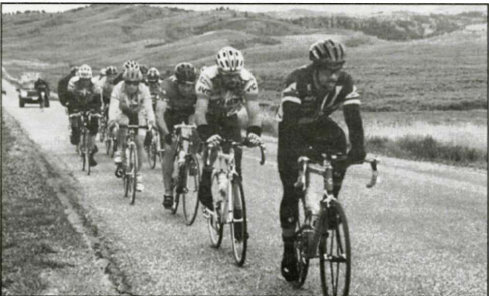
The pack begins a push to catch the solo breakaway of Rob Van Kirk. Dave Wood, second in line eventually bridged to Van Kirk along with Marty Jemison, the eventual winner. Wood finished third behind Van Kirk. Photo by David R. Ward
How It All Started
In 1982, David Bern and Jeff Keller, two avid cyclists from Logan, Utah, created the LoToJa bicycle race. They wanted to give cyclists a racing experience that felt like a European road classic such as the Tour of Flanders, Paris-Roubaix, or or Liège–Bastogne–Liège. The first LoToJa Classic started on an early fall morning in 1983 when seven cyclists took off at dawn and raced 186 miles northward to Jackson. The winning time was just over nine hours by Logan cyclist, Bob VanSlyke. From 1983 to 1985, LoToJa’s distance was 186 miles and the finish line was in the town of Jackson. In 1986, the distance was expanded to over 200 miles and the finish line was moved to Jackson Hole Mountain Resort.
Today, LoToJa includes around 2,000 cyclists and about the same number of support people.
LoToJa Statistics (as of August 2025)
General Race Facts
Longest one-day USAC-sanctioned race in the U.S.
Race Route: 202.3 miles
Ride Route: 207.3 miles
Total Elevation Gain: ~9,800 ft (most in first 110 miles)
Categories Offered: Competitive race and recreational ride divisions
Participants’ Origins: Cyclists from 40 U.S. states and 5 foreign countries
Volunteers: 600+ total, including 150 HAM radio operators for communications and neutral support
Rider Performance
Average Finishing Time: 10–13 hours
Finishing Rate: 80–85%
Fastest Cyclists: Average speed >25 mph
Calories Burned (per racer): ~15,000
Cumulative History (since 1983):
22,000+ cyclists
8 million+ miles ridden
Average Rider Age: 45
Youngest & Oldest Finishers
Youngest Finishers:
Male: 13 (several years)
Female: 13 (2013)
Oldest Finishers:
Male: Larry Peterson, 79 (2023)
Female: Diane Tracy, 67 (2018)
Oldest Category Winners:
Male: Larry Peterson, Centerville, UT — age 79 (2023)
Female: Celeste Liljenquist, Bountiful, UT — age 56 (2016)
Course Records
Individual
Men: Spencer Johnson, Riverton, UT — 8:18:29 (2018)
Women: Melinda MacFarlane, Draper, UT — 9:35:00 (2013)
Tandem: Gary Gardiner & John Lauck, Centerville, UT — 9:05:57 (2014)
2-Person Race Relay
Men: Bryce & Jeffrey Olsen, Ogden, UT — 8:45:01 (2018)
Women: Mary Emerson & Nina Madsen, Millcreek, UT — 9:28:52 (2018)
Mixed: Theron Jeppson & Camille Stringham, River Heights, UT — 9:27:22 (2017)
3–5 Person Race Relay
Men: M. Acostra, J. Crawford, C. Nielsen, T. Olsen, N. Starnes (Ogden, UT) — 8:47:55 (2013)
Women: M. Bennett, P. Bisbing, J. Delp, K. Harlan, L. Nelson (Gilbert, AZ) — 9:47:05 (2021)
Mixed: Steven Burt, Jessica Hansen, Tom R. Kline, Tommy C. Kline (So. Jordan, UT) — 9:20:13 (2018)
Climbing Titles
King of the Mountain: D. Justin Daniels, Cedar City, UT — 12:21.814 (2017)
Queen of the Mountain: Marci Kimball, Salt Lake City, UT — 14:19.37 (2018)
Fundraising Impact
Huntsman Cancer Foundation (HCF): Nearly $3,000,000 raised
Additional Beneficiaries: National Ability Center, ALS Foundation, Utah High School Cycling League, Bike Utah, plus numerous community/youth groups, and other great causes
While the Tour de France captures headlines and the Giro d’Italia enchants with its pageantry, the Vuelta a España remains cycling’s most enigmatic and often brutal Grand Tour—a late-season crucible where careers are made and legends are forged in the fires of Spanish mountains. This race has evolved from humble beginnings into cycling’s dramatic finale, where desperate riders make their final bid for glory against some of Europe’s most punishing terrain. The Vuelta’s unique character—its scorching heat, impossible gradients, and distinctive timing—has created a treasure trove of stories that go far beyond simple stage wins and overall victories.
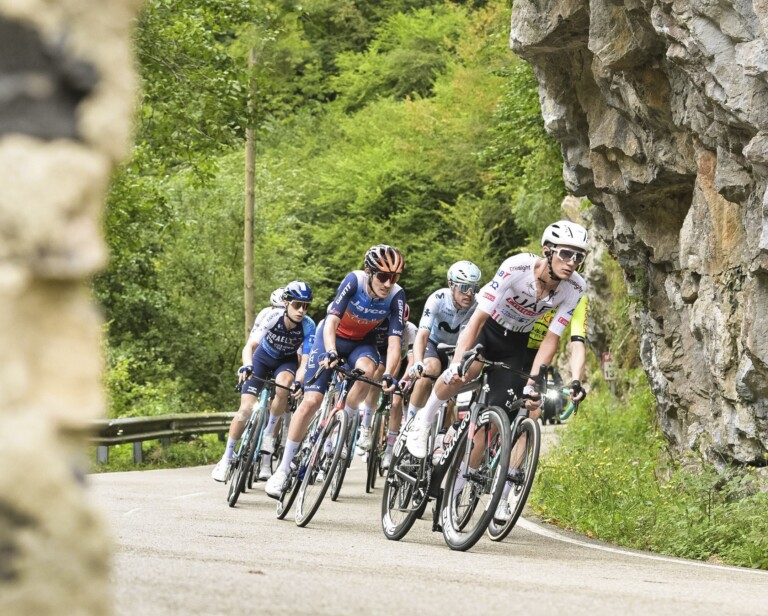
La Vuelta 2024 – 79th Edition – 16th stage – Luanco > Lagos de Covadonga 181,5 km – 03/09/2024 – Photo credit: Unipublic/Cxcling/Naike Ereñozaga
Q1: The Vuelta a España was originally created in 1935 as a direct response to which major business rivalry in Spanish cycling journalism? This competition between two prominent newspapers shaped not only the race’s founding but also influenced its early route selections and coverage, with the rivalry lasting for decades and affecting Spanish cycling culture.
Q2: Which notorious Asturian climb was first introduced to the Vuelta in 1999 and features some of the steepest sustained gradients of any ascent regularly used in professional cycling? This mountain has become legendary for breaking riders both physically and mentally, with sections reaching over 20% gradient and its inclusion often determining the overall winner of the race.
Q3: The 1936 Vuelta was won by Belgian Gustaaf Deloor (who also won the inaugural edition in 1935), but this victory carries special historical significance beyond cycling. What major historical event interrupted Spanish cycling (and the Vuelta itself) less than two months after this race, causing the event to be suspended for three years?
Q4: Roberto Heras’s controversial 2005 victory involved which specific banned substance, and what made this particular doping case unique in Grand Tour history? The case became a landmark in cycling’s anti-doping efforts and highlighted the emerging sophistication of both doping methods and detection techniques.
Q5: Which Spanish cyclist holds the record for most Vuelta a España stage wins, and what made his sprinting style and career trajectory particularly unique in the context of Spanish cycling history? His dominance in bunch sprints helped establish Spain as a legitimate force in professional cycling’s fastest discipline.
Bonus Question: For the first several decades of its existence, the Vuelta a España was held in April, before the Giro d’Italia, as the first Grand Tour of the year. In what year did it permanently move to its current late-season timing, and who claimed victory in that historic first autumn edition?
Three stages, three winners, three different stories in the shadow of the Alps
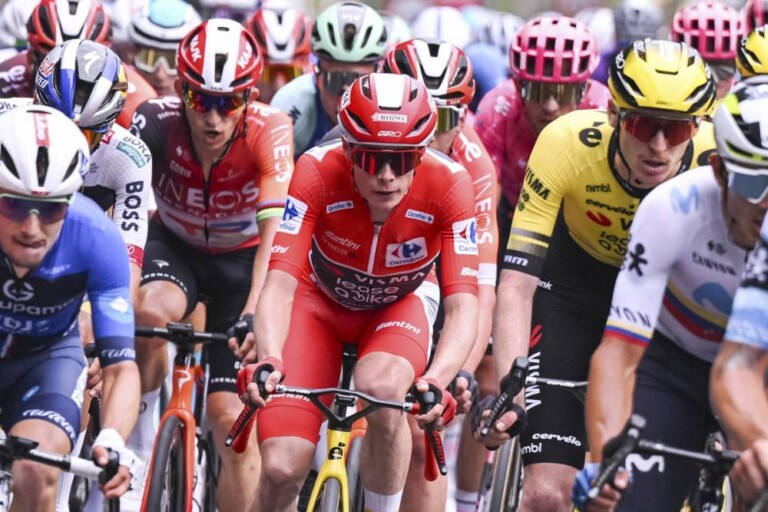
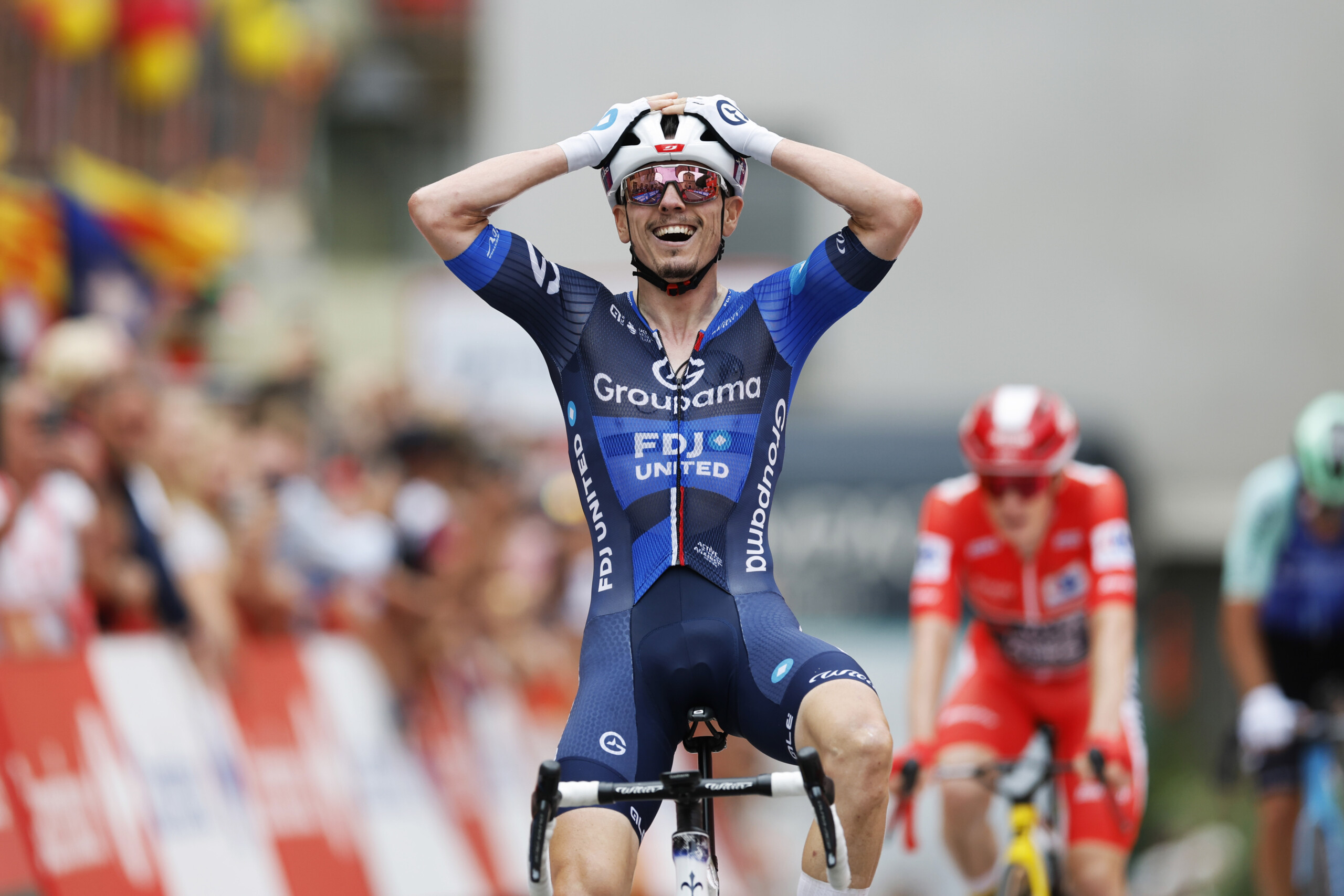
TURIN, Italy (25 August 2025) — The 80th edition of La Vuelta a España began not in the searing heat of Andalusia or on the windswept plains of Castilla y León, but in the cool shadow of the Italian Alps. For three days, the Spanish Grand Tour belonged to Piedmont, its rolling hills and mountain passages providing an unlikely but fitting stage for cycling’s most unpredictable race.
From the moment the peloton rolled out from the baroque splendor of Turin’s Reggia di Venaria, it was clear this would be no ordinary Vuelta opening. Gone were the customary time trials and cautious reconnaissance of form. Instead, racing began in earnest from kilometer zero, delivering three distinct stages of drama that established the early narratives for the three weeks ahead.
Stage 1: The Sprinters’ Rare Moment
Turin – Reggia di Venaria → Novara, 186.7km (23 August 2025)
The Vuelta has always been cycling’s most democratic Grand Tour, where sprinters, climbers, and opportunists alike find their moments of glory. Yet in recent years, the opening stages have become the domain of chronomen and team time trials. Stage one represents a rare gift to the fast men—a chance to claim La Roja through pure speed rather than aerodynamic efficiency.
The route through Piedmont was a love letter to the region’s cycling heritage. Starting from the spectacular Reggia di Venaria, the former royal residence of the Savoy family, the parcours wound through landscapes that had witnessed generations of cycling history. The neutralized section through Turin’s historic center was ceremonial in its grandeur, but once the flag dropped, the gloves came off immediately.
Two men had arrived in Piedmont with clear intentions. Mads Pedersen, the Danish powerhouse fresh from his dominant display at the PostNord Tour of Denmark, had already claimed the opening maglia rosa at the Giro d’Italia earlier in the season. His three stage victories and points classification triumph at the 2022 Vuelta marked him as the man to beat. But standing in his way was Jasper Philipsen, the Belgian bullet who had claimed the opening stage yellow jersey at the Tour de France before his campaign was cruelly ended by a collarbone-breaking crash.
“After my crash in the Tour, I was really disappointed to be out,” Philipsen would later reflect. “We had worked really hard for it, it was a major goal. After a setback, you have to find new goals. This was a nice one and I knew we had one chance.”
The mathematics of La Vuelta are unforgiving to sprinters. Among cycling’s three Grand Tours, it offers the fewest opportunities for the pure speed merchants. Every flat finish becomes precious, every potential bunch sprint a matter of life or death for those whose careers depend on the ability to generate explosive watts in the final 200 meters.
As race technical director Javier García explained, “Starting with a flat stage is unusual for us, but it’s a way of thanking the Piedmont region for its efforts, showing more of the region’s territory and landscapes, and in sporting terms it’s also a way of broadening the range of riders who can take the leader’s jersey.”
The stage unfolded with characteristic Vuelta unpredictability. A six-man breakaway formed early, featuring Pepijn Reinderink (Soudal Quick-Step), Nikita Vinokurov (XDS Astana), Joel Nicolau (Caja Rural-Seguros RGA), Koen Bouwman (Jayco AlUla), Hugo de la Calle (Burgos Burpellet BH), and Alessandro Verre (Arkéa-B&B Hotels). Three were Vuelta debutants, adding to the day’s sense of fresh possibilities.
Behind them, the sprint teams marshaled their forces. Lidl-Trek and Alpecin-Deceuninck took control, their respective leaders knowing that this opportunity might not come again. The categorized climb of La Serra at kilometer 70.5 provided the first real test, with Verre claiming the summit and the initial lead in the King of the Mountains competition.
As the kilometers ticked by, the breakaway’s advantage never exceeded two minutes. The sprint teams were not to be denied their moment. By the time the race reached Novara—birthplace of Giuseppe Saronni and a city that had previously smiled upon Eddy Merckx and Tim Merlier—the stage was set for a pure power contest.
In the final kilometer, Alpecin-Deceuninck executed their lead-out with clinical precision. Jonas Rickaert and Edward Planckaert delivered Philipsen to the crucial final corner with perfect timing. While Pedersen found himself caught behind, Philipsen unleashed his devastating finishing kick.
“The team was very strong with Jonas [Rickaert] and Edward [Planckaert],” Philipsen said afterward. “In the final kilometre, they executed the plan perfectly. I only had to start sprinting with 175 metres and I’m really happy that it works out for us.”
The victory was comprehensive. Great Britain’s Ethan Vernon (Israel Premier Tech) took second, with Venezuela’s Orluis Aular (Movistar) completing the podium. Pedersen, the pre-stage favorite, could manage only 14th.
For Philipsen, it was redemption after the disappointment of July. “This jersey motivated me the last few weeks and it’s always great when you work towards a goal and then when you succeed. It doesn’t always happen. I’m really gonna enjoy the day. It will only be one day, as tomorrow is too hard for me but I will enjoy every moment.”
Stage 1 Results
Place
Rider
Team
Time
1
Jasper Philipsen
Alpecin-Deceuninck
4:09:12
2
Ethan Vernon
Israel Premier Tech
4:09:12
3
Orluis Alberto Aular Sanabria
Movistar Team
4:09:12
4
Elia Viviani
Lotto
4:09:12
5
Iván García Cortina
Movistar Team
4:09:12
6
David González López
Q36.5 Pro Cycling Team
4:09:12
7
Bryan Coquard
Cofidis
4:09:12
8
Gonçalo Silva Cossan
Caja Rural-Seguros RGA
4:09:12
9
Tom Pidcock
Q36.5 Pro Cycling Team
4:09:12
10
Madis Mihkels
EF Education – EasyPost
4:09:12
General Classification after Stage 1
Place
Rider
Team
Time
Time Behind
1
Jasper Philipsen
Alpecin-Deceuninck
4:09:02
–
2
Ethan Vernon
Israel Premier Tech
4:09:06
+0:04
3
Pepijn Reinderink
Soudal Quick-Step
4:09:06
+0:04
4
Orluis Alberto Aular Sanabria
Movistar Team
4:09:08
+0:06
5
Nikita Vinokurov
XDS Astana Team
4:09:08
+0:06
6
Koen Bouwman
Team Jayco AlUla
4:09:10
+0:08
7
Elia Viviani
Lotto
4:09:12
+0:10
8
Iván García Cortina
Movistar Team
4:09:12
+0:10
9
David González López
Q36.5 Pro Cycling Team
4:09:12
+0:10
10
Bryan Coquard
Cofidis
4:09:12
+0:10
Jersey Holders after Stage 1
Red Jersey (La Roja) – Overall Leader: Jasper Philipsen (Alpecin-Deceuninck)
Green Jersey – Points Classification: Jasper Philipsen (Alpecin-Deceuninck)
Blue & White Polka-dot Jersey – King of the Mountains: Alessandro Verre (Arkéa-B&B Hotels)
White Jersey – Best Young Rider: Ethan Vernon (Israel Premier Tech)
Stage 2: The Climber’s Counter-Attack
Alba → Limone Piemonte, 159.5km (24 August 2025)
If stage one belonged to the sprinters, stage two was always destined to crown a different breed of athlete. The 9.8-kilometer climb to Limone Piemonte, averaging 5.1%, represented the first real examination of clim5bing legs in this year’s Vuelta.
The day began with tribute to Iván Meléndez, a junior rider who had tragically passed away on Saturday while competing in the Vuelta Ciclista a la Ribera del Duero. The peloton’s somber mood soon gave way to competitive fire as the stage unfolded against the backdrop of enthusiastic crowds celebrating local hero Matteo Sobrero.
Jonas Vingegaard arrived in Alba carrying the weight of expectation and questions about his form. The two-time Tour de France winner had endured a difficult season, marked by his horrific crash at the Tour de France and subsequent recovery. But if there were any doubts about his condition, they would be emphatically answered on the slopes above Limone Piemonte.
The early breakaway drama featured Gal Glivar (Alpecin-Deceuninck), Jakub Otruba (Caja Rural-Seguros RGA), Liam Slock (Lotto), and eventually Sinhué Fernández (Burgos Burpellet BH), after Nico Denz (Red Bull-Bora-Hansgrohe) had briefly joined before dropping back. The Spanish climber bridged across after a determined chase, creating a four-man group that would animate the middle portion of the stage.
Behind, Q36.5 Pro Cycling Team controlled the gap around two minutes, giving Tom Pidcock’s squad early responsibility for the race tempo. But as the stage progressed and the final climb loomed, it became clear that the real battle would be fought among the general classification contenders.
The wet roads added an element of danger that would prove costly for some. Guillaume Martin-Guyonnet (Groupama-FDJ) became the first abandonment of the race after a crash, while Vingegaard himself hit the deck but remounted quickly, his left elbow bloodied but his determination intact.
“I went down pretty hard but it seems like I didn’t hurt myself too bad,” Vingegaard would later say. “I have a bit of bruises but I think because it was so slippery I was sliding, so I didn’t really get any bad road rash or anything.”
The final climb began with Philipsen immediately distanced, his brief tenure in La Roja coming to its expected end. Visma-Lease a Bike set a relentless pace, with Sepp Kuss providing the crucial support that would become a hallmark of their Vuelta campaign.
In the final kilometer, the script seemed written for others. Marc Soler (UAE Team Emirates-XRG) and Felix Gall (Decathlon AG2R La Mondiale) attempted to upset the apple cart, but Kuss’s vigilant presence shut down their moves. Then came Giulio Ciccone’s acceleration, the Italian launching what appeared to be a race-winning attack.
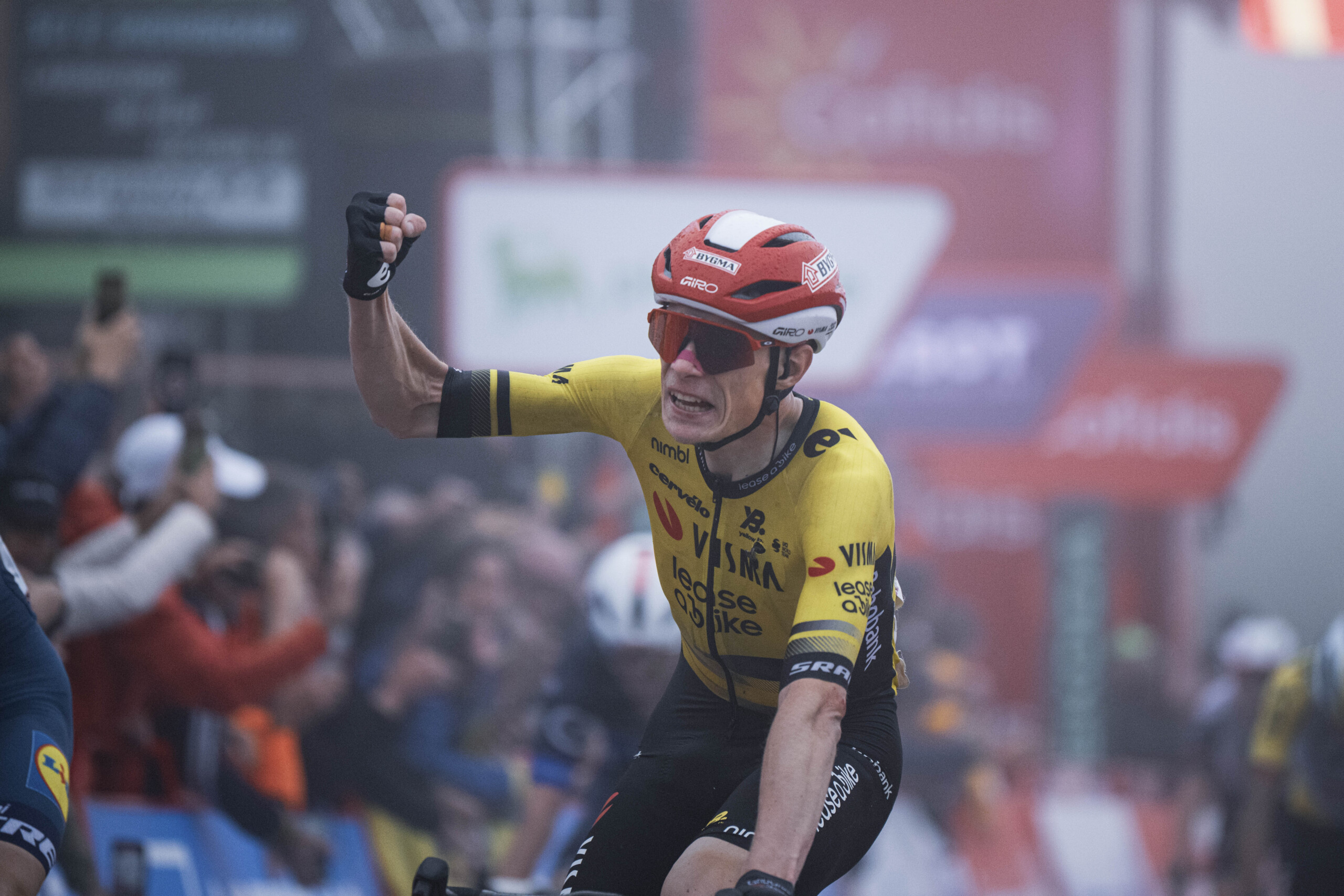
But Vingegaard had other plans. Following Ciccone’s wheel with the patience of a master tactician, the Dane waited until the final corner to make his move. What he hadn’t expected was the extra distance to the line, which provided just enough road to complete his overtaking maneuver.
“To be honest, before the corner, I didn’t think that it would be possible to pass him, but from the corner on it was a bit longer to the finish than I thought so I actually could pass him,” Vingegaard explained.
The victory was Vingegaard’s third stage win at La Vuelta and his first La Roja in a Grand Tour since his Tour de France triumphs. He became only the third Danish rider to lead the Spanish race overall, following Lars Michaelsen (1997) and Jakob Fuglsang (2011).
“It’s been also a few years since I’ve had the leader jersey in a Grand Tour so that is also really nice,” he reflected. “Today, I showed that I am where I want to be. The legs are good, and hopefully I will be good for the upcoming 19 stages.”
The stage also saw Juan Ayuso inherit the white jersey as best young rider. The Spanish climber, winner of the competition in 2023, viewed Vingegaard’s presence in red as potentially beneficial for his UAE Team Emirates squad. “I think it’s even better for our team that [Jonas Vingegaard] has the red jersey,” he noted pragmatically.
Stage 2 Results
Place
Rider
Team
Time
1
Jonas Vingegaard
Team Visma | Lease a Bike
3:47:14
2
Giulio Ciccone
Lidl-Trek
3:47:14
3
David Gaudu
Groupama-FDJ
3:47:14
4
Egan Bernal
INEOS Grenadiers
3:47:14
5
João Almeida
UAE Team Emirates XRG
3:47:16
6
Felix Gall
Decathlon AG2R La Mondiale Team
3:47:16
7
Jai Hindley
Red Bull – BORA – hansgrohe
3:47:16
8
Juan Ayuso
UAE Team Emirates XRG
3:47:16
9
Matteo Jorgenson
Team Visma | Lease a Bike
3:47:16
10
Tom Pidcock
Q36.5 Pro Cycling Team
3:47:16
General Classification after Stage 2
Place
Rider
Team
Time
Time Behind
1
Jonas Vingegaard
Team Visma | Lease a Bike
7:56:16
–
2
Giulio Ciccone
Lidl-Trek
7:56:20
+0:04
3
David Gaudu
Groupama-FDJ
7:56:22
+0:06
4
Egan Bernal
INEOS Grenadiers
7:56:26
+0:10
5
Tom Pidcock
Q36.5 Pro Cycling Team
7:56:28
+0:12
6
Jai Hindley
Red Bull – BORA – hansgrohe
7:56:28
+0:12
7
Santiago Buitrago
Bahrain Victorious
7:56:28
+0:12
8
Matteo Jorgenson
Team Visma | Lease a Bike
7:56:28
+0:12
9
Juan Ayuso
UAE Team Emirates XRG
7:56:28
+0:12
10
Marc Soler
UAE Team Emirates XRG
7:56:28
+0:12
Jersey Holders after Stage 2
Red Jersey (La Roja) – Overall Leader: Jonas Vingegaard (Visma-Lease a Bike)
Green Jersey – Points Classification: Jasper Philipsen (Alpecin-Deceuninck)
Blue & White Polka-dot Jersey – King of the Mountains: Jonas Vingegaard (Visma-Lease a Bike)
White Jersey – Best Young Rider: Juan Ayuso (UAE Team Emirates XRG)
Chapter Three: The Puncher’s Paradise
Stage 3: San Maurizio Canavese → Ceres, 134.6km (25 August 2025)
The final Italian stage promised yet another variation on the theme, with the uphill finish at Ceres providing a category 4 sting in the tail after 134.6 kilometers featuring nearly 2,000 meters of elevation gain. If the race organizers had sought to showcase the complete spectrum of La Vuelta’s challenges within three stages, they had succeeded brilliantly.
Mads Pedersen arrived at the start in San Maurizio Canavese knowing this represented perhaps his best opportunity to claim a stage victory. The 2.6-kilometer ascent to Ceres, averaging 3.6%, was precisely the kind of punchy finish that suited his explosive finishing kick. His Lidl-Trek team had learned from their stage one disappointment and were determined to control the narrative from the opening kilometers.
The early breakaway featured a familiar cast, with Alessandro Verre making his third consecutive appearance in the morning move. Wearing the polka-dot jersey on behalf of overall leader Vingegaard, the Italian joined Sean Quinn (EF Education-EasyPost), Luva Van Boven (Intermarché-Wanty), and Patrick Gamper (Jayco AlUla) in the day’s escape.
Lidl-Trek’s dominance of the pace-making was absolute. Daan Hoole and later Amanuel Ghebreigzabhier took turns at the front, maintaining the breakaway’s advantage at a manageable two and a half minutes. Their plan was clinical: keep the escape within reach while saving Pedersen’s legs for the finale that everyone expected him to win.
The route passed through Cuorgnè, where Egan Bernal holds honorary citizenship—a reminder of the Colombian’s early professional days with Androni Giocattoli when he lived and trained in these valleys. It was a poignant detail that highlighted cycling’s ability to connect riders with the landscapes that shape their careers.
As the race reached its business end, Lidl-Trek’s grip on proceedings seemed unshakeable. The rolling terrain and increasing pace began to fracture the peloton, with Jasper Philipsen among those struggling to maintain contact. The previous day’s stage winner was paying the price for his explosive effort in Novara, his brief reign as race leader now a memory.
Sean Quinn, the former US national champion making his return to the sport’s highest level after a knee injury-plagued season, provided the day’s most compelling subplot. His solo attack with 39 kilometers remaining offered a glimpse of the aggressive racing style that had once made him a feared competitor. He maintained a 55-second advantage for much of the finale before being reeled in with 19 kilometers to go.
The final ascent began with Pedersen perfectly positioned, his teammates having delivered him to the crucial final corner with mathematical precision. Everything appeared to be unfolding according to plan. But David Gaudu had other ideas.
The Frenchman had been building toward this moment throughout a difficult season. His last UCI WorldTour victory had come at the 2022 Critérium du Dauphiné, where he had defeated Wout van Aert in a similar finish. The drought of wins had been frustrating for a rider of his caliber, but on the slopes above Ceres, everything clicked.
“I was thinking this stage was for [Mads] Pedersen but the team told me this morning I have punch and I can win today,” Gaudu revealed. “They did a very very good good job to put me in the first positions all day.”
As Pedersen launched his sprint with 250 meters remaining, it seemed the Danish powerhouse would finally claim his stage. But Gaudu had timed his effort to perfection, surging past the fading Pedersen in the final 50 meters to claim his third La Vuelta stage victory.
“Pedersen launched his sprint with 250 metres to go. I just got back in the last corner, and I pushed with everything I had until the line,” Gaudu described. “It’s been a really tough season. I haven’t won a World Tour race since the Critérium du Dauphiné where I beat Wout van Aert [2022]. Now we can add Mads in a sprint! It’s a bit anecdotical, but there’s a lot of positives to take from it.”
Vingegaard completed the stage podium, his third-place finish and four bonus seconds enough to retain La Roja despite Gaudu drawing level on time. The overall classification would be decided by the addition of stage placings, with Vingegaard’s superior tally (45 to Gaudu’s 53) keeping him in the leader’s jersey.
For Juan Ayuso, watching from the chasing group, the stage represented successful damage limitation. “It was a super hard [finish], super hectic, a mix between a mountain top finish where you have to be in the front, and a sprint finish with all the chaos,” the young Spaniard observed. “But there is no time gap, no crash, so overall it’s a good day.”
Stage 3 Results
Place
Rider
Team
Time
1
David Gaudu
Groupama-FDJ
2:59:24
2
Mads Pedersen
Lidl-Trek
2:59:24
3
Jonas Vingegaard
Team Visma | Lease a Bike
2:59:24
4
Giulio Ciccone
Lidl-Trek
2:59:24
5
Jordan Labrosse
Decathlon AG2R La Mondiale Team
2:59:24
6
Orluis Aular
Movistar Team
2:59:24
7
Santiago Buitrago
Bahrain Victorious
2:59:24
8
Egan Bernal
INEOS Grenadiers
2:59:24
9
Bodi Koerdt
Team Picnic PostNL
2:59:24
10
Jai Hindley
Red Bull – BORA – hansgrohe
2:59:24
General Classification after Stage 3
Place
Rider
Team
Time
Time Behind
1
Jonas Vingegaard
Team Visma | Lease a Bike
10:55:36
–
2
David Gaudu
Groupama-FDJ
10:55:36
+0:00*
3
Giulio Ciccone
Lidl-Trek
10:55:44
+0:08
4
Egan Bernal
INEOS Grenadiers
10:55:50
+0:14
5
Tom Pidcock
Q36.5 Pro Cycling Team
10:55:52
+0:16
6
Jai Hindley
Red Bull – BORA – hansgrohe
10:55:52
+0:16
7
Santiago Buitrago
Bahrain Victorious
10:55:52
+0:16
8
Matteo Jorgenson
Team Visma | Lease a Bike
10:55:52
+0:16
9
Juan Ayuso
UAE Team Emirates XRG
10:55:52
+0:16
10
Valentín Paret-Peintre
Soudal Quick-Step
10:55:52
+0:16
*Vingegaard leads on countback (sum of stage placings: 45 vs 53)
Jersey Holders after Stage 3
Red Jersey (La Roja) – Overall Leader: Jonas Vingegaard (Team Visma | Lease a Bike)
Green Jersey – Points Classification: Jonas Vingegaard (Team Visma | Lease a Bike)
Blue & White Polka-dot Jersey – King of the Mountains: Alessandro Verre (Arkéa-B&B Hotels)
White Jersey – Best Young Rider: Juan Ayuso (UAE Team Emirates XRG)
Looking Ahead: The Battle Lines Drawn
As La Vuelta prepares to leave Italian soil and cross into the Pyrenees, the three opening stages have provided a perfect microcosm of what makes the Spanish Grand Tour unique. Three different types of stage, three different winners, three different tactical battles—all played out against the stunning backdrop of Piedmont’s cycling heritage.
Philipsen’s sprint victory in Novara shows that when opportunities arise for the fast men, they must seize them without hesitation. Vingegaard’s climbing masterclass at Limone Piemonte demonstrates that reports of his decline have been greatly exaggerated. And Gaudu’s punchy triumph in Ceres proves that in cycling, as in life, timing can be everything.
The jersey competitions reflect this early diversity. Vingegaard holds both La Roja and the points classification, his consistent high placing across all three stages rewarding versatility over specialization. Alessandro Verre retains his polka-dot jersey, his early breakaway heroics establishing him as the mountains classification’s first protagonist. Juan Ayuso’s white jersey marks him as the best of the young generation already making their mark on the race.
As the race prepares to enter Spain proper, the Italian prologue has established the key narratives that will define the weeks ahead. The climbing hierarchy is beginning to clarify, with Vingegaard asserting his credentials while riders like Bernal, Ayuso, and Hindley serve notice of their own ambitions.
But perhaps most importantly, these three stages have demonstrated that this will be no processional affair. From Philipsen’s redemptive sprint to Gaudu’s perfectly timed surge, the racing has been aggressive, unpredictable, and utterly compelling. If this is merely the appetizer, the main course promises to be extraordinary.
The road to Madrid stretches ahead, but already the foundations have been laid for what could become one of the most memorable Vueltas in recent memory. In cycling, as Alessandro Verre notes after claiming his first Grand Tour jersey, “It’s only the first stage and we have lots of goals. We have to stay calm and be focused for the next days.”
The next 18 stages will determine whether calm and focus will be enough, or whether La Vuelta’s inherent chaos will once again prove that in this most unpredictable of races, anything remains possible until the final kilometer in Madrid.
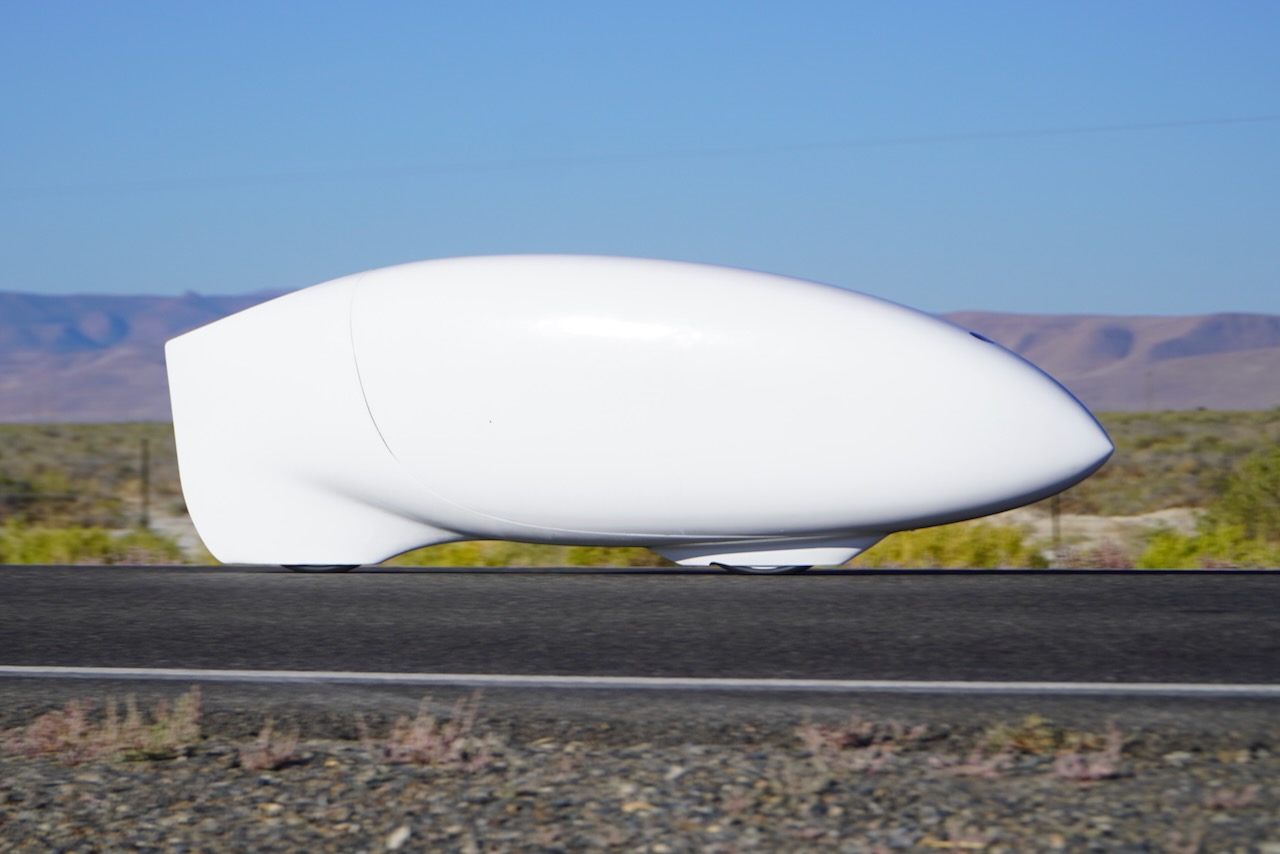
The 24th annual World Human Powered Speed Challenge (WHPSC) will take place September 7–13, 2025, on State Route 305 near Battle Mountain, Nevada.
Macquarie University tricycle passing finish line, 2024 WHPSC. Photo by Jun Nogami.
Athletes from around the globe — including professional riders, collegiate teams, and amateurs — will compete across multiple speed record categories. Among the most anticipated competitors is François Pervis of Team Altair (IUT Annecy, France), the world’s second-fastest human-powered rider with a top speed of 138.22 km/h (86.39 mph). Pervis will once again attempt to break the current land speed record of 144.17 km/h (89.59 mph), set in 2016 by Todd Reichert of Toronto-based Team Aerovelo.
Diego Colombari (ITA) setting arm-powered record in his Cerberus vehicle, 2024 WHPSC. Photo by Jun Nogami.
The Nevada course is uniquely suited for record-breaking runs. At 1,408 meters (4,619 feet) above sea level, it provides an 8 km (5 mile) run-up before riders are timed over a 200-meter stretch. Since its debut in 2000, the WHPSC has attracted top athletes eager to test both their speedbike designs and their physical limits on this one-of-a-kind stretch of road. The unique conditions allow riders in fully enclosed speedbikes to push the limits of both engineering and human performance in pursuit of world records.
Independent racer Adam Hari (AUS) in his Falcon vehicle, 2024 WHPSC. Photo by Jun Nogami.
All performances at the WHPSC are sanctioned by the International Human Powered Vehicle Association (IHPVA).
The longstanding partnership between Lander County Tourism and the IHPVA has motivated both to create a permanent facility in Battle Mountain specially created for human power events, record attempts and other like-minded endeavors. With a suitable plot of land already allocated for the project, the IHPVA and Lander County are currently seeking partnerships to make this dream facility into reality.
Spectators are welcome to this free event each morning from 7:00-10:00 and each evening from 5:30-7:00. Specatators will need to arrive at least 1/2 hour early to not get caught in the road block. Spectator seating is located at the timing trap for maximum speed thrills or, for those curious about the riders and vehicles, they can wait in the “catch” area at the end of the course to see the racers assisted from their fully enclosed speedbikes.
A Show and Shine will be held Tuesday at the Battle Mountain Civic Center,12:00-2:00. Come meet and greet the teams and riders and see the bikes up close.
September 7-13 — World Human Powered Speed Challenge (WHPSC), Battle Mountain, NV, hosted by the IHPVA. Current record is 89.59 mph. Classes: Men’s, Women’s, Juniors in Open, Multi-track, tandem and Arm Power. International cyclists from around the world will gather on SR305, the fastest stretch of road in the world to see who can break the World Record., Paula Tomera, 775-635-1112, [email protected], ihpva.org, whpsc.org
You’re standing at your front door, facing a five kilometre commute to work. But you don’t have your car, and there’s no bus route. You can walk for an hour – or jump on your bicycle and arrive in 15 minutes, barely breaking a sweat. You choose the latter.
Many people would make the same choice. It’s estimated that there are more than a billion bikes in the world. Cycling represents one of the most energy-efficient forms of transport ever invented, allowing humans to travel faster and farther while using less energy than walking or running.
But why exactly does pedalling feel so much easier than pounding the pavement? The answer lies in the elegant biomechanics of how our bodies interact with this two-wheeled machine.
A wonderfully simple machine
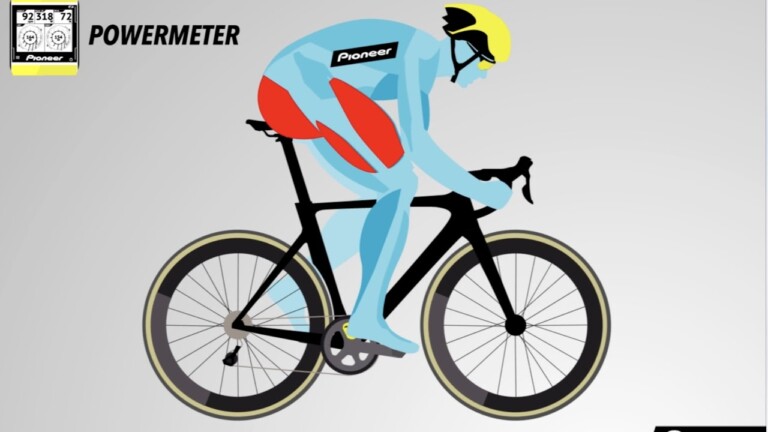
At its heart, a bicycle is wonderfully simple: two wheels (hence “bi-cycle”), pedals that transfer power through a chain to the rear wheel, and gears that let us fine-tune our effort. But this simplicity masks an engineering that perfectly complements human physiology.
When we walk or run, we essentially fall forward in a controlled manner, catching ourselves with each step. Our legs must swing through large arcs, lifting our heavy limbs against gravity with every stride. This swinging motion alone consumes a lot of energy. Imagine: how tiring would it be to even swing your arms continuously for an hour?
On a bicycle, your legs move through a much smaller, circular motion. Instead of swinging your entire leg weight with each step, you’re simply rotating your thighs and calves through a compact pedalling cycle. The energy savings are immediately noticeable.
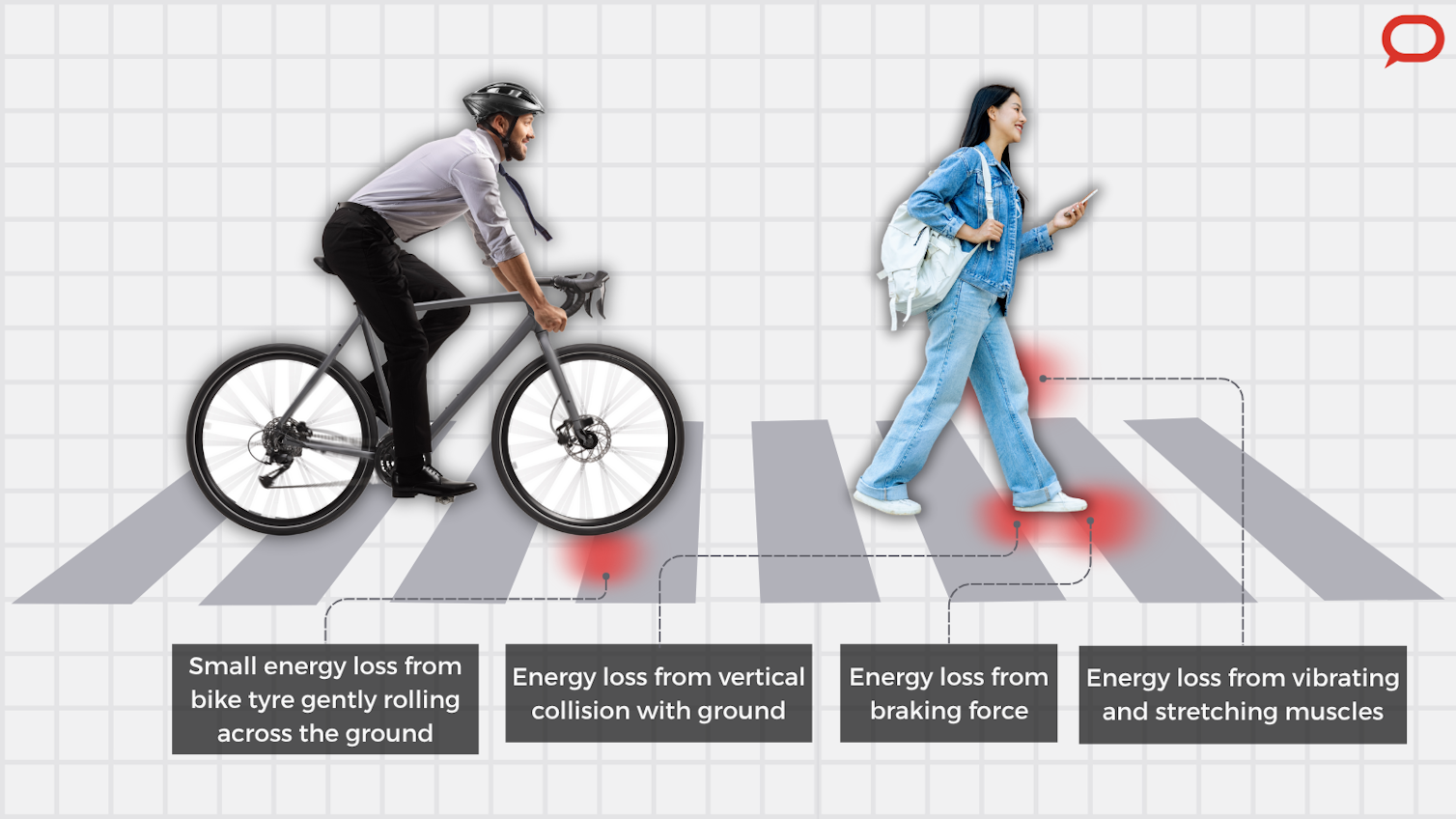
But the real efficiency gains come from how bicycles transfer human power to forward motion. When you walk or run, each footstep involves a mini-collision with the ground. You can hear it as the slap of your shoe against the road, and you can feel it as vibrations running through your body. This is energy being lost, literally dissipated as sound and heat after being sent through your muscles and joints.
Walking and running also involve another source of inefficiency: with each step, you actually brake yourself slightly before propelling forward. As your foot lands ahead of your body, it creates a backwards force that momentarily slows you down. Your muscles then have to work extra hard to overcome this self-imposed braking and accelerate you forward again.
Kissing the road
Bicycles use one of the world’s great inventions to solve these problems – wheels.
Instead of a collision, you get rolling contact – each part of the tyre gently “kisses” the road surface before lifting off. No energy is lost to impact. And because the wheel rotates smoothly so the force acts perfectly vertically on the ground, there’s no stop-start braking action. The force from your pedalling translates directly into forward motion.
But bicycles also help our muscles to work at their best. Human muscles have a fundamental limitation: the faster they contract, the weaker they become and the more energy they consume.
This is the famous force-velocity relationship of muscles. And it’s why sprinting feels so much harder than jogging or walking – your muscles are working near their speed limit, becoming less efficient with every stride.
Bicycle gears solve this problem for us. As you go faster, you can shift to a higher gear so your muscles don’t have to work faster while the bike accelerates. Your muscles can stay in their sweet spot for both force production and energy cost. It’s like having a personal assistant that continuously adjusts your workload to keep you in the peak performance zone.
Cycling can be at least four times more energy-efficient than walking and eight times more efficient than running. The Conversation, CC BY
Walking sometimes wins out
But bicycles aren’t always superior.
On very steep hills of more than about 15% gradient (so you rise 1.5 metres every 10 metres of distance), your legs struggle to generate enough force through the circular pedalling motion to lift you and the bike up the hill. We can produce more force by pushing our legs straight out, so walking (or climbing) becomes more effective.
Even if roads were built, we wouldn’t pedal up Mount Everest.
This isn’t the case for downhills. While cycling downhill becomes progressively easier (eventually requiring no energy at all), walking down steep slopes actually becomes harder.
Once the gradient exceeds about 10% (it drops by one metre for every ten metres of distance), each downhill step creates jarring impacts that waste energy and stress your joints. Walking and running downhill isn’t always as easy as we’d expect.
Not just a transportation device
The numbers speak for themselves. Cycling can be at least four times more energy-efficient than walking and eight times more efficient than running. This efficiency comes from minimising three major energy drains: limb movement, ground impact and muscle speed limitations.
So next time you effortlessly cruise past pedestrians on your morning bike commute, take a moment to appreciate the biomechanical work of art beneath you. Your bicycle isn’t just a transport device, but a perfectly evolved machine that works in partnership with your physiology, turning your raw muscle power into efficient motion.
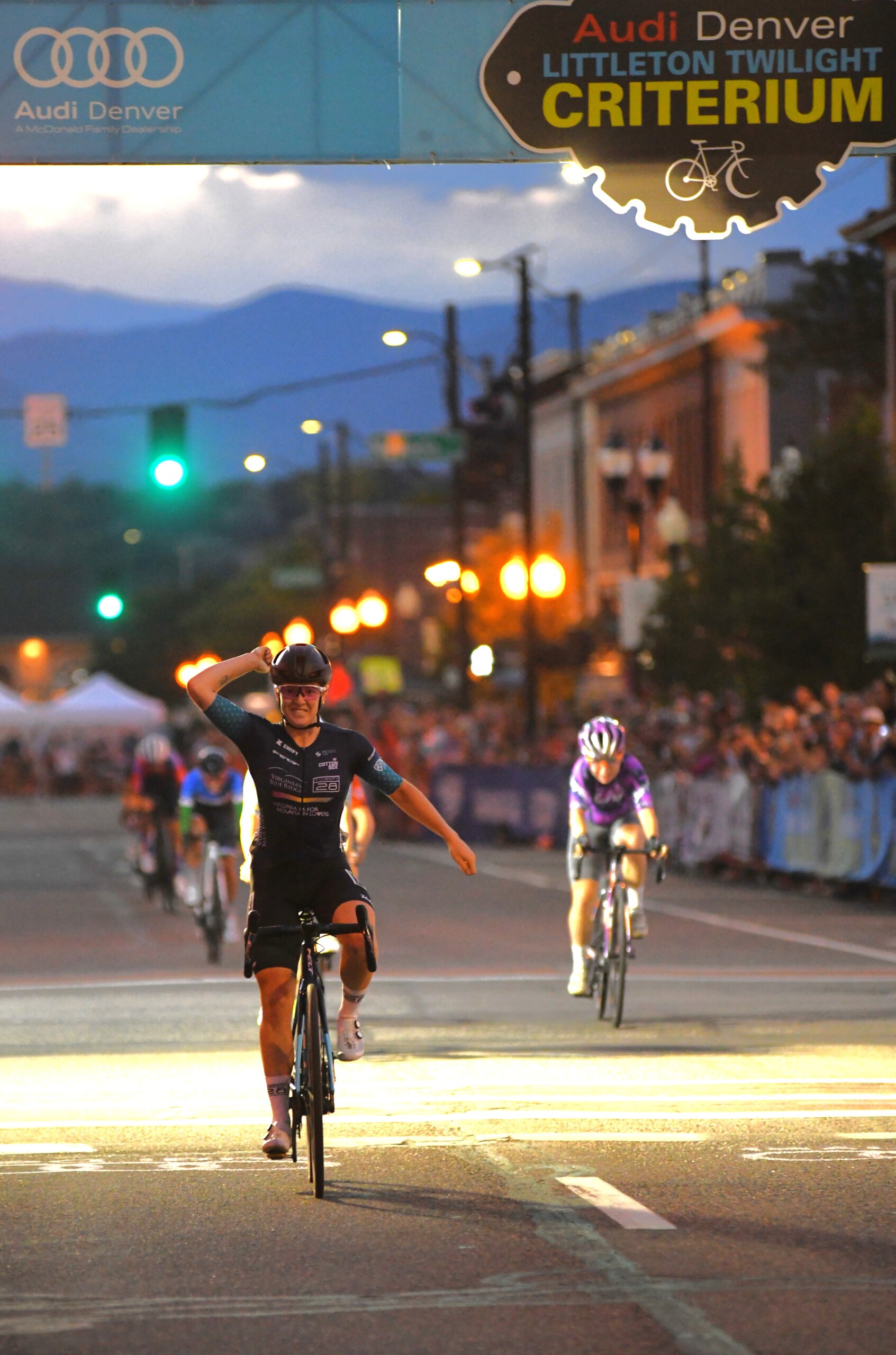
LITTLETON, Colorado (August 2, 2025) — The 2025 Audi Denver Littleton Twilight Criterium once again turned the streets of downtown Littleton into a showcase of speed, tactics, and intensity. Now in its 12th year, the race has grown into one of the most anticipated stops on the Colorado cycling calendar, drawing elite riders and enthusiastic crowds despite the shifting Colorado weather.
The Women’s Pro 1/2/3 race set the tone with a display of calculated aggression. Olivia Cummins seized control in the closing laps, reading the race perfectly before unleashing the kind of finishing kick that left little doubt. Her victory underscored both her tactical sharpness and her sheer power, earning her the spotlight on one of Colorado’s biggest criterium stages.
Olivia Cummins wins the 2025 Littleton Twilight Criterium. Photo by Ryan Muncy
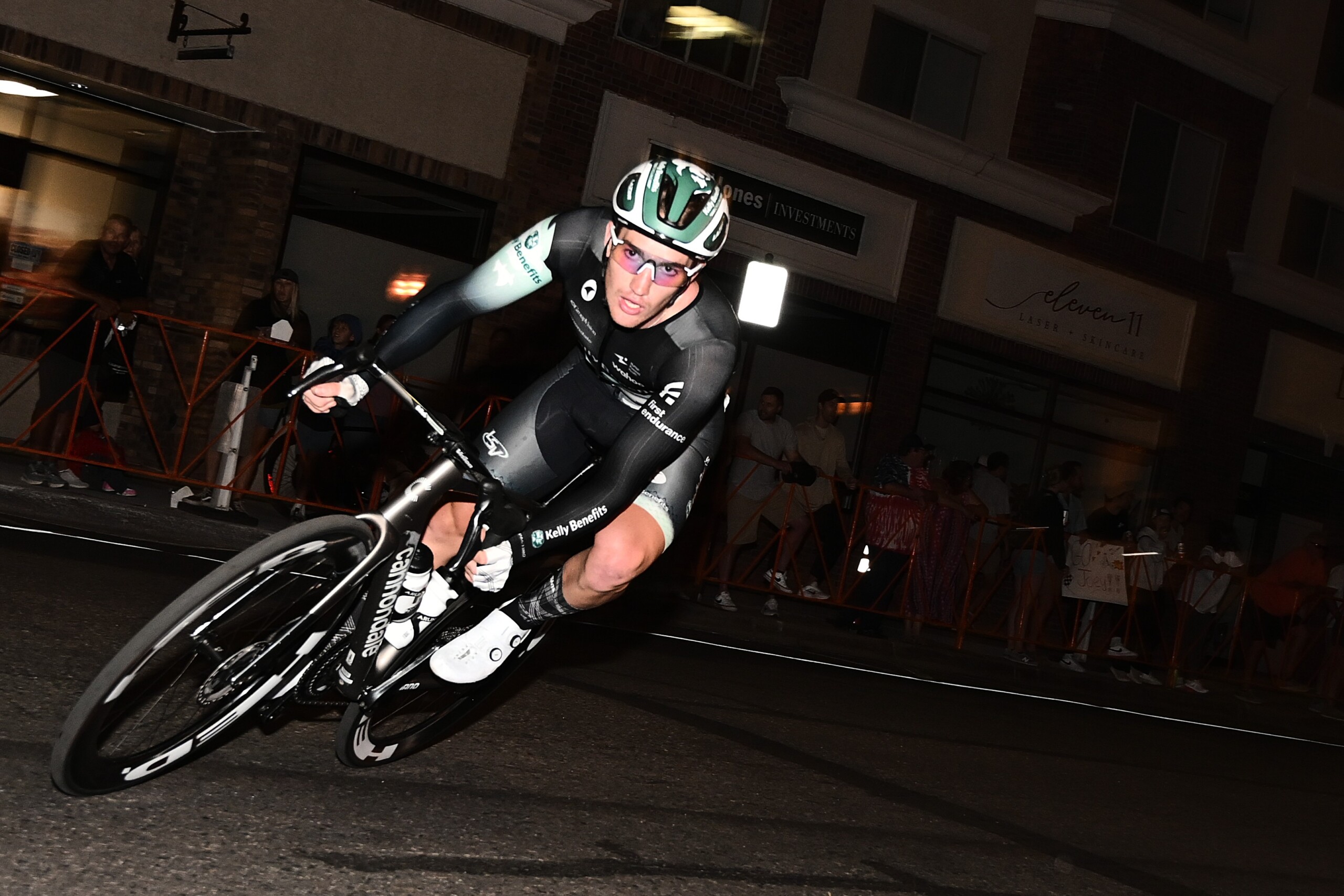
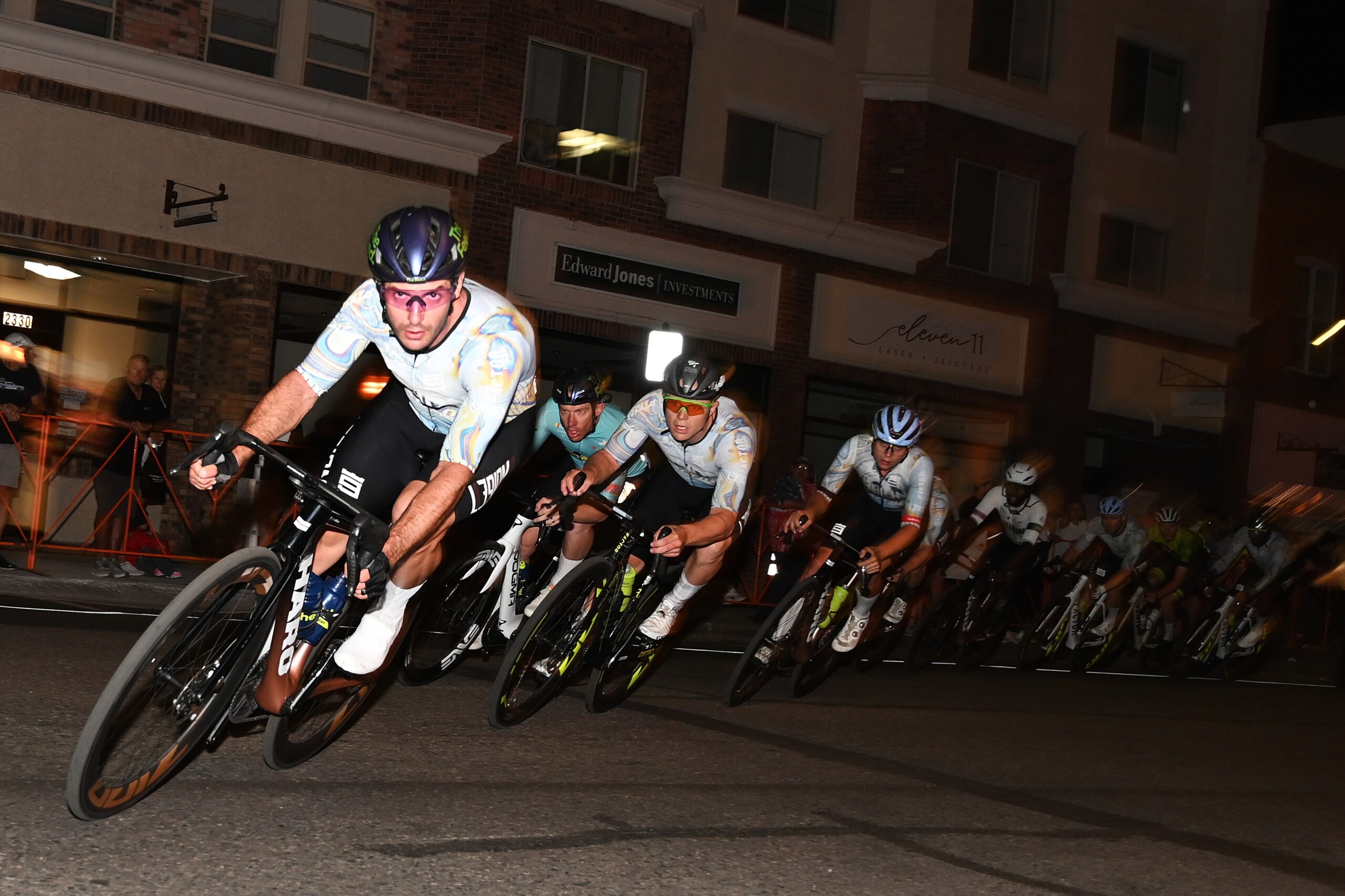
As the sun dipped and the lights came on, the Men’s Pro 1/2 race delivered the night’s most gripping action. A deep, competitive field kept the pace blistering and the outcome uncertain until the final sprint. Lucas Bourgoyne proved the strongest in the decisive moments, surging clear to take a hard-fought win and cement his name among the Twilight’s standout champions.
Photo by Ryan Muncy, courtesy of Littleton Twilight CriteriumPhoto by Ryan Muncy, courtesy of Littleton Twilight CriteriumPhoto by Ryan Muncy, courtesy of Littleton Twilight CriteriumPhoto by Ryan Muncy, courtesy of Littleton Twilight Criterium
The crowd lining downtown Littleton’s course added to the spectacle, packing the barriers and filling the air with cheers as riders dove through corners and hammered down the straights. The noise, the speed, and the pressure of racing under the lights combined to create a charged atmosphere — one that once again confirmed the Twilight Criterium as a marquee event in Colorado cycling.
Photo by Ryan Muncy, courtesy of Littleton TwilightPhoto by Ryan Muncy, courtesy of Littleton TwilightPhoto by Ryan Muncy, courtesy of Littleton TwilightPhoto by Ryan Muncy, courtesy of Littleton TwilightPhoto by Ryan Muncy, courtesy of Littleton Twilight
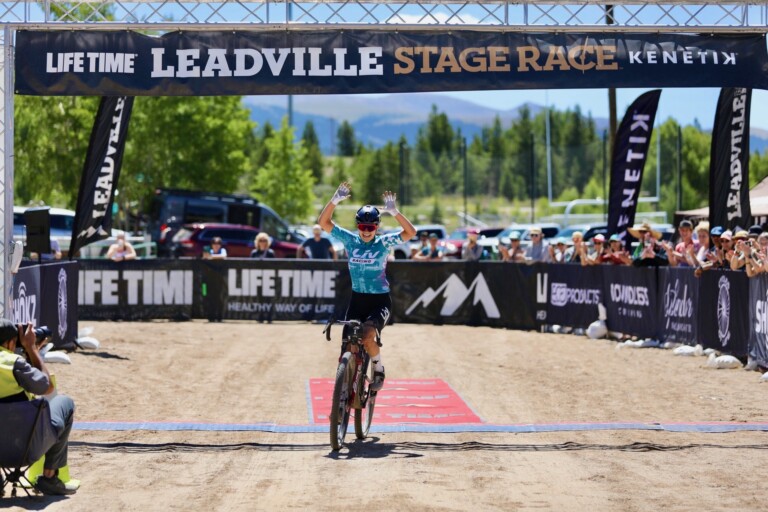
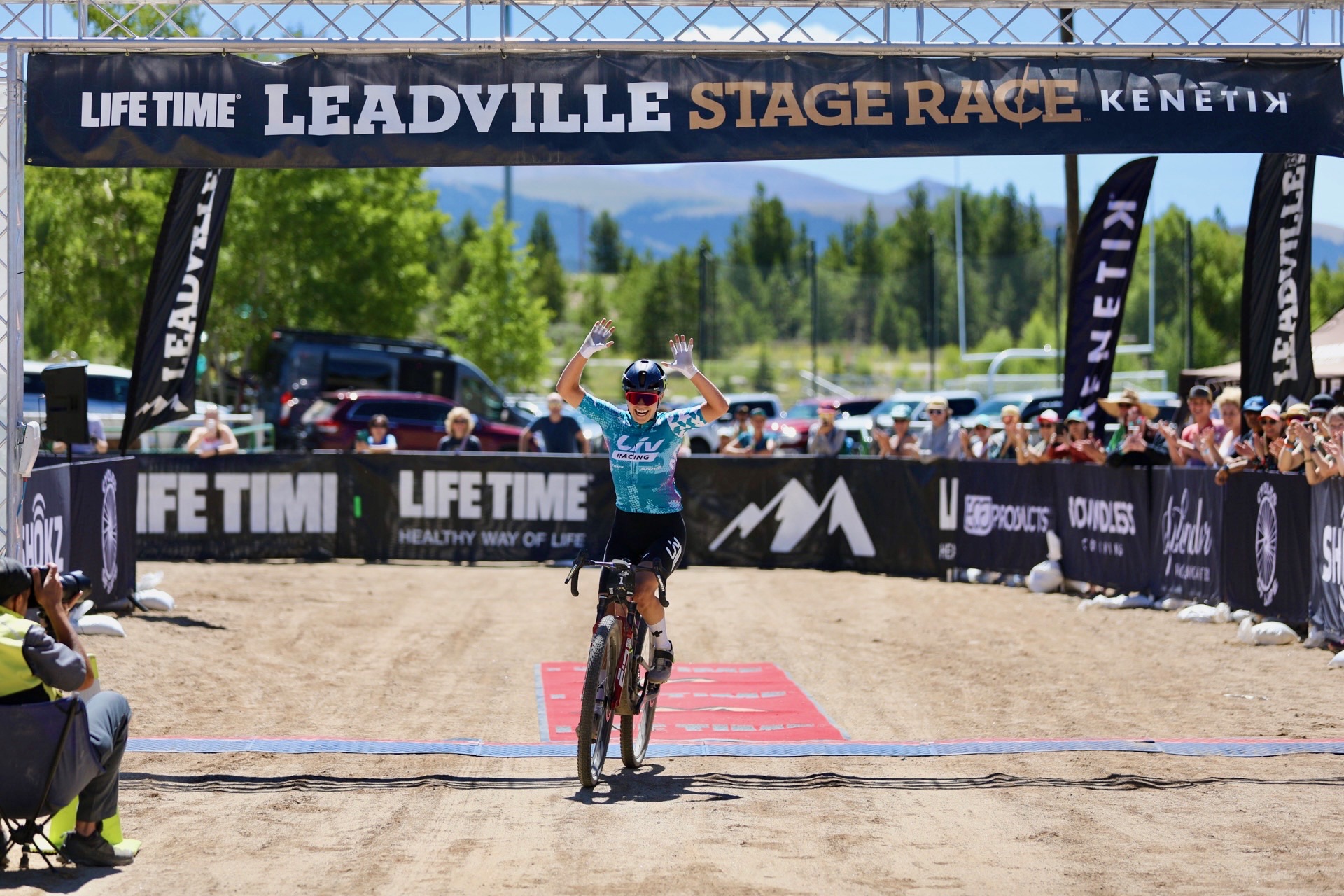
LEADVILLE, Colorado (July 27, 2025) — Top finishers, Melisa Rollins and Payson McElveen, complete the 3-day stage race in 6:28:09 and 5:57:59, respectively.
Melisa Rollins delivered the weekend’s most impressive performance, crushing her own 2024 winning time by over 23 minutes. The reigning 2024 Leadville Trail 100 MTB champion demonstrated her continued dominance at altitude.
Melisa Rollins wins the 2025 Leadville Stage Race, the final qualifier for the following weekend’s Leadville Trail 100 MTB. Photo courtesy Life Time
Payson McElveen, a Life Time Grand Prix competitor who had missed UNBOUND Gravel due to injury, used the race to prove his fitness was back on track.
Payson McElveen wins the 2025 Leadville Stage Race, the final qualifier for the following weekend’s Leadville Trail 100 MTB. Photo courtesy Life Time
Elite cyclists Kate Courtney, Cecily Decker, Sofia Gomez Villafane, Paige Onweller, and Torbjorn Roed participated in the Stage Race, many preparing for the upcoming Leadville Trail 100 MTB.
When the racing concluded, 35 athletes had achieved the sub-11-hour finish time required to earn qualifier coins for the prestigious Leadville Trail 100 MTB.
Results
Women’s Division:
Melisa Rollins (Alpine, UT, age 29) – 6:28:09
Kate Courtney (Portola Valley, CA, age 29) – 6:28:33
Sofia Gomez Villafañe (Midway, UT, age 31) – 6:39:09
Men’s Division:
Payson McElveen (Durango, CO, age 32) – 5:57:59
Torbjorn Roed (Grand Junction, CO, age 28) – 6:00:04
Daniel Van Der Walt (Bellville, South Africa, age 24) – 6:10:29
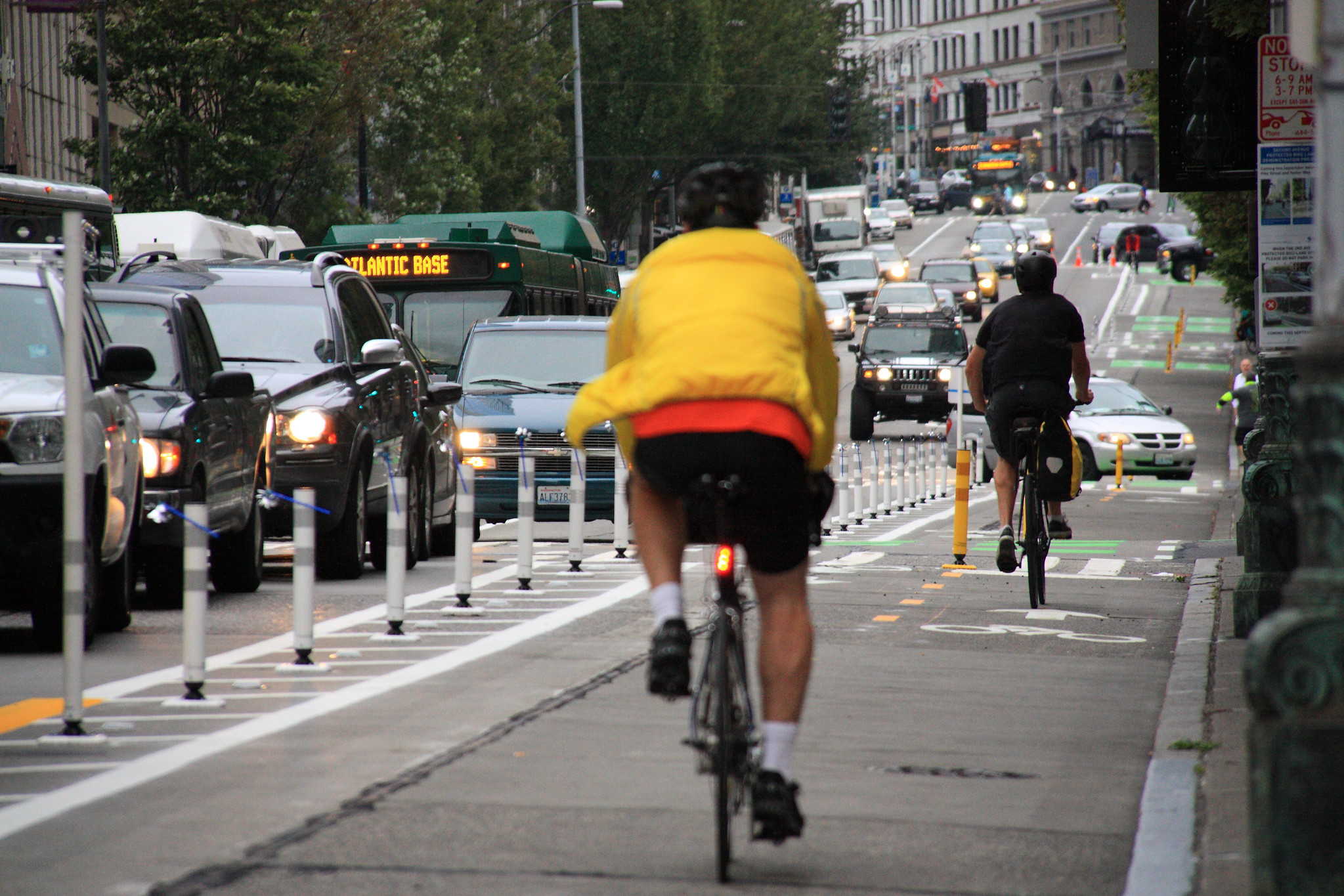
By Charles Pekow – Protected bike lanes will encourage people to ride to work more than any other type of facility. A study examining 28 U.S. cities found that “installed protected bicycle lanes experienced bicycle commuter increases 1.8 times larger than standard bicycle lane block groups, 1.6 times larger than shared-lane marking block groups, and 4.3 times larger than block groups that did not install bicycle facilities.”
Seattle’s first downtown protected bike lane opened 9/8/2014 on Second Avenue between Pike Street and Yesler Way. Photo by SDOT, CC BY-NC 2.0
The study, published in Nature Cities, found that both protected and buffered bike lanes (those separated from traffic by space but not barriers) helped. The study recommends that “cities that seek to boost bicycle commute mode shifts should focus on implementing low-stress bicycle facilities if they want to best facilitate the sizable population of less-confident potential riders.”
The researchers suggest that future studies could examine issues such as the amount of separation, types of barriers, and the impact of isolated versus connected protected lanes.
LEADVILLE, Colorado (August 9, 2025) – The 31st edition of the Life Time Leadville Trail 100 MTB delivered historic performances as Kate Courtney obliterated the women’s course record in her debut while Keegan Swenson extended his dominance with a fifth consecutive victory.
Women’s Race: Record-Breaking Debut
Kate Courtney’s first-time appearance at Leadville became an instant classic as she shattered Annika Langvad’s 10-year-old course record by 10 minutes and 28 seconds, clocking 6:48:55. The performance marked only the third sub-seven-hour time by a woman in race history.
Kate Courtney racing at the 2025 Leadville 100 MTB. Photo by Dan Hughes, courtesy of Life Time Events
The early race saw Courtney form a breakaway with defending champion Melisa Rollins and Lauren Stephens. However, it was on the leg-sapping slopes of Columbine that Courtney made her decisive move, leaving her companions behind and continuing to extend her lead as she powered back into Leadville.
Melisa Rollins racing at the 2025 Leadville 100 MTB. Photo by Dan Hughes, courtesy of Life Time Events
Rollins, despite being distanced by Courtney’s record pace, delivered her own stellar performance. After Courtney went clear, Rollins managed to gap Lauren Stephens on the steep pitch at the bottom of The Boulevard, hitting it hard before settling into an aerodynamic position to pace her effort to the finish. Her time of 6:59:16 made her only the third woman ever to break the seven-hour barrier.
“Once Kate had gone clear, I managed to gap Lauren on the steep pitch at the bottom of The Boulevard. I hit it as hard as I could and then tried to stay as aero as possible and pace my effort to the finish. At Leadville, you have to ride your own race,” Rollins explained.
Lauren Stephens finished the women’s race in third position, but upon an official review, she was disqualified for taking aid outside of a designated crew location. As a result, every rider who initially finished from fourth place onwards has been moved up one place in the final standings.
Cecily Decker rounded out the official podium in 7:09:48, finishing one position ahead of Sofía Gómez Villafañe (7:16:52) in the Life Time Grand Prix standings battle. Sarah Lange completed the top five in 7:17:16.
Men’s Race: Swenson’s Masterclass Continues
The men’s race unfolded as a tactical battle from the start, with Swenson breaking away early alongside John Gaston and Simon Pellaud. The trio worked together up St. Kevin’s before navigating a careful descent off Powerline, maintaining their cooperation on the approach to the iconic Columbine climb.
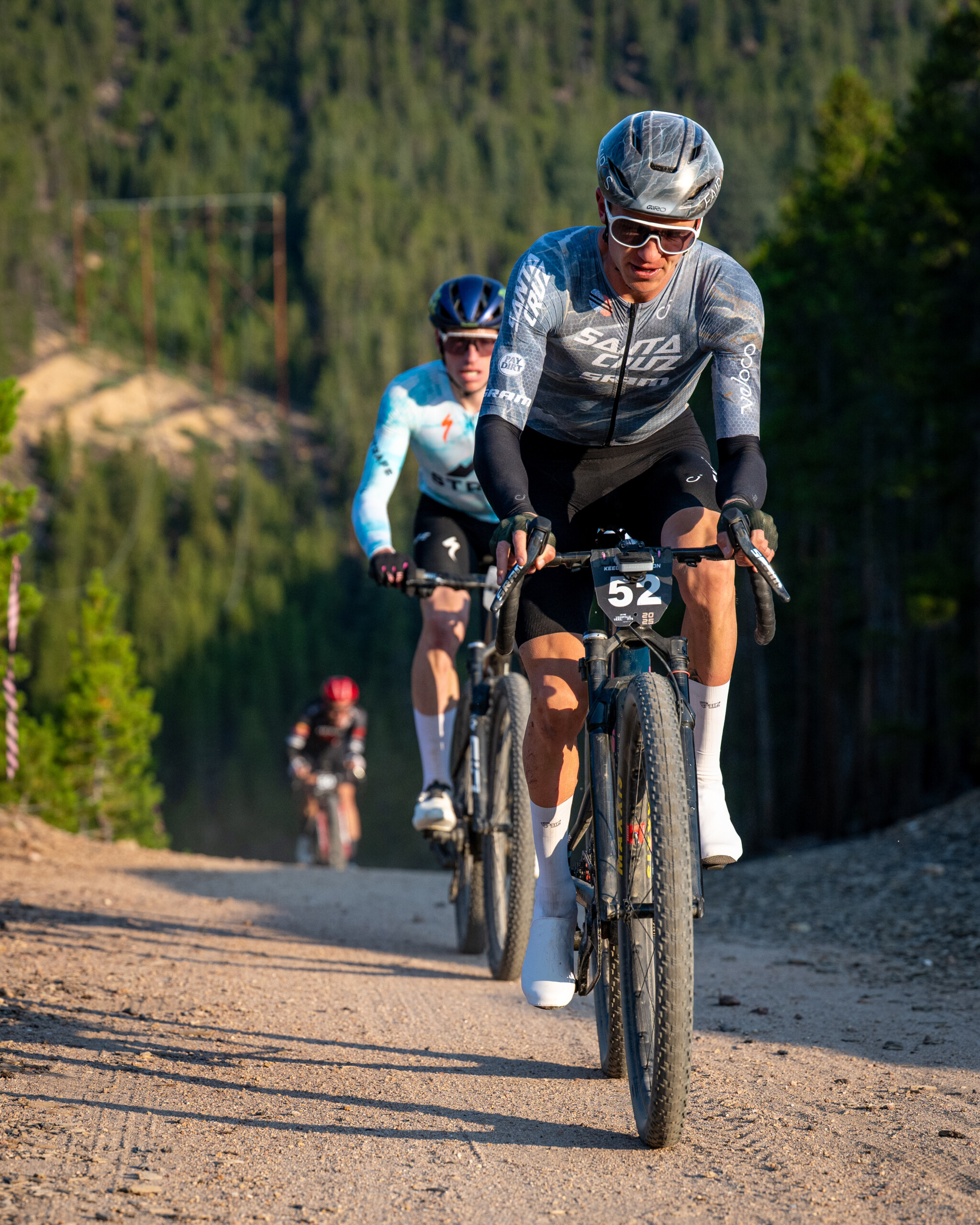
Keegan Swenson racing at the 2025 Leadville 100 MTB. Photo by Dan Hughes, courtesy of Life Time Events
It was on Columbine where Swenson made his winning move, going solo on the ascent and pressing home his advantage over the remaining 50+ miles. Despite the loose terrain challenging his progress, Swenson managed to break clear and delivered everything he had to the finish.
Keegan Swenson racing at the 2025 Leadville 100 MTB. Photo by Dan Hughes, courtesy of Life Time Events
“Simon, John and I slipped away and rode hard up St. Kevin’s and then had a careful descent off Powerline. I tried to keep everyone together and we were on a good pace on the approach to Columbine, and from there on out, everyone was doing their own thing. The terrain was super loose so I just tried to stay upright and I managed to break clear on the way home and give it everything I had,” Swenson said.
His winning time of 5:45:35 fell just short of his own 2023 course record of 5:43:29, but established the second-fastest time in race history. Gaston held on for second place in 6:00:51, while Pellaud claimed the final podium spot in 6:08:21.
The race for fourth provided additional drama as Torbjørn Andre Røed outsprinted Payson McElveen, both finishing in 6:15:03. McElveen’s result marked a stunning return to form after a serious crash at the Sea Otter Classic had forced him to miss UNBOUND Gravel.
Post-Race Reactions
Courtney reflected on her record-breaking performance: “I’ve had a really, really amazing time competing in Leadville. This race, and the stage race, were both amazing events – some of the best racing I’ve ever done in the US – so I’m really grateful and proud to be here. Melisa and I had a great battle in the stage race, and the whole time out there today I was thinking ‘she’s going to catch me’, and that kept me honest. It was only when I got on the pavement near the end of the race that I found out the distance between us was good, so then I started thinking ‘I might be able to get the record’, and I was shocked we were able to go that fast today – I’m really proud.”
Rollins graciously accepted her runner-up finish: “I wanted to win today, but until last year, I’d never thought that would be possible, so I’m just happy to have done as well as I could have. Kate was phenomenal today, so I can’t be upset with second place behind her. I love this race and I want to keep coming back here and keep getting faster.”
Swenson remained focused on his race-by-race approach: “It was great racing with John and Simon, and a proper day of bike racing. I’ll take things race-by-race and try and win every one, that’s why we’re here.”
Life Time Grand Prix Implications
Swenson’s victory extended his lead in the men’s Life Time Grand Prix series to seven points, leading Simon Pellaud 87 points. Røed moved into third place overall courtesy of his fourth-place sprint finish over McElveen.
In the women’s series, Cecily Decker opened up a two-point gap over Sofía Gómez Villafañe at the top, while Rollins moved up to third overall.
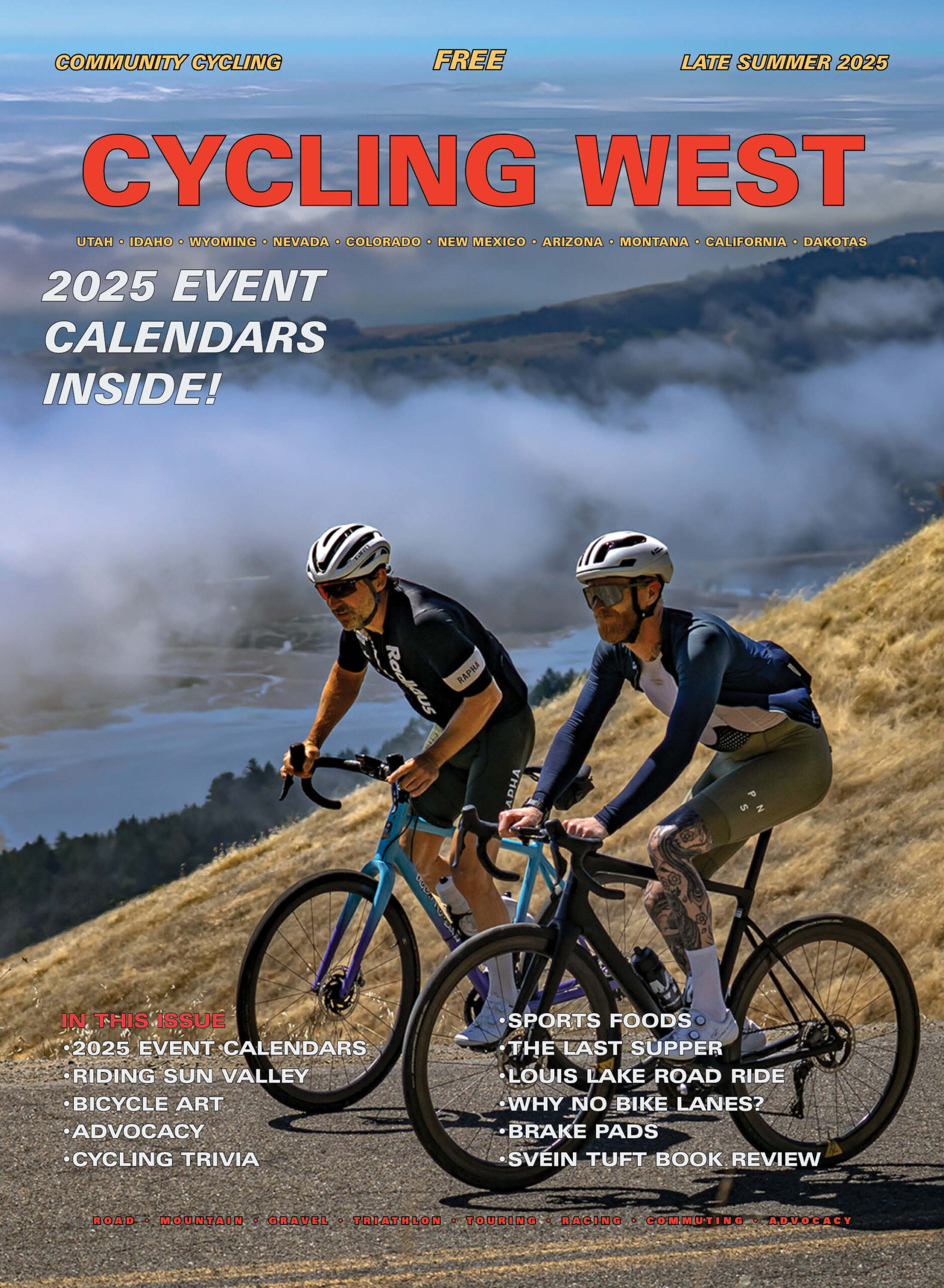
Cycling West and Cycling Utah Magazine’s Late Summer 2025 Issue is now available as a free download (8 MB download). Pick up a copy at your favorite Utah, Idaho, Wyoming, Nevada, Montana, Colorado, Arizona, New Mexico, North Dakota, South Dakota, and Northern California bike shop or other location.
Cycling West Late Summer 2025 Cover Photo: Ryan Rinn (left) and Bryan Markwardt high on Mount Tamalpais on a Tam Tuesday ride. Photo by Chris DeStefano, photographer/cyclist
Contents
The Athlete’s Kitchen: Sports Foods — Questions and Concerns — page 2
Why Can’t We Build Bike Lanes? — page 3
Make America Beautiful Again Commission Aims to Expand Access to Public Lands, Drawing Mixed Reviews — page 5
Tour de France Trivia: Celebrating the Greatest Sporting Spectacle on Earth — page 6
Connector Trail to Improve Grand Teton National Park Access — page 6
Protected Bike Lanes Protect Bike-Share Users — page 6
Brake Pad Inspection is Quick and Easy — page 7
Sun Valley by Bike: No Ego, Just Epic Views — page 8
We Will Never Be Here Again Chronicles Svein Tuft’s Adventures in Cycling — page 9
Riding The Louis Lake Road in Lander, Wyoming — page 10
The Last Supper: How a Farmer’s Son Fed the Cannibal His Final Meal — page 12
Cycling Safely: Avoiding the Left Hook — page 15
Tour de France Trivia Answers (from page 6) — page 22
Cyclists More Likely To Be Killed in Low-Income Neighborhoods — page 22
Despite Trump’s Opposition, BUILD Grants May Still Fund Bike Projects in Idaho and Wyoming — page 22
Bicycle Prices Surge as Trump Tariffs Hit Industry Hard — page 22
From Paris with Love: The Cycling Art of Garth Bayley — page 23
National Ability Center to Host Utah’s Largest Cycling Event for People of All Abilities
PARK CITY, Utah (August 7, 2025) – Northern Utah’s premier inclusive cycling event, the Summit Challenge, will roll out on Saturday, August 23, 2025, bringing together more than 1,000 cyclists for a day of scenic rides, community celebration, and fundraising. This year’s ride will feature a 1980s theme in honor of the event’s host, the National Ability Center’s 40th anniversary.
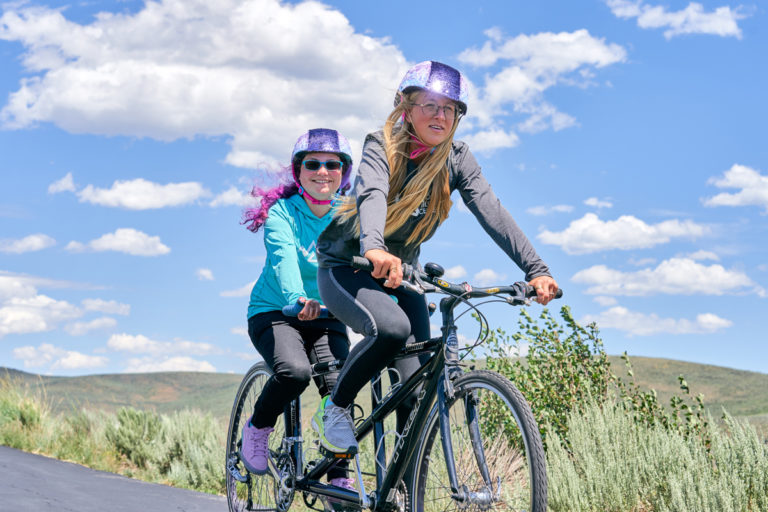
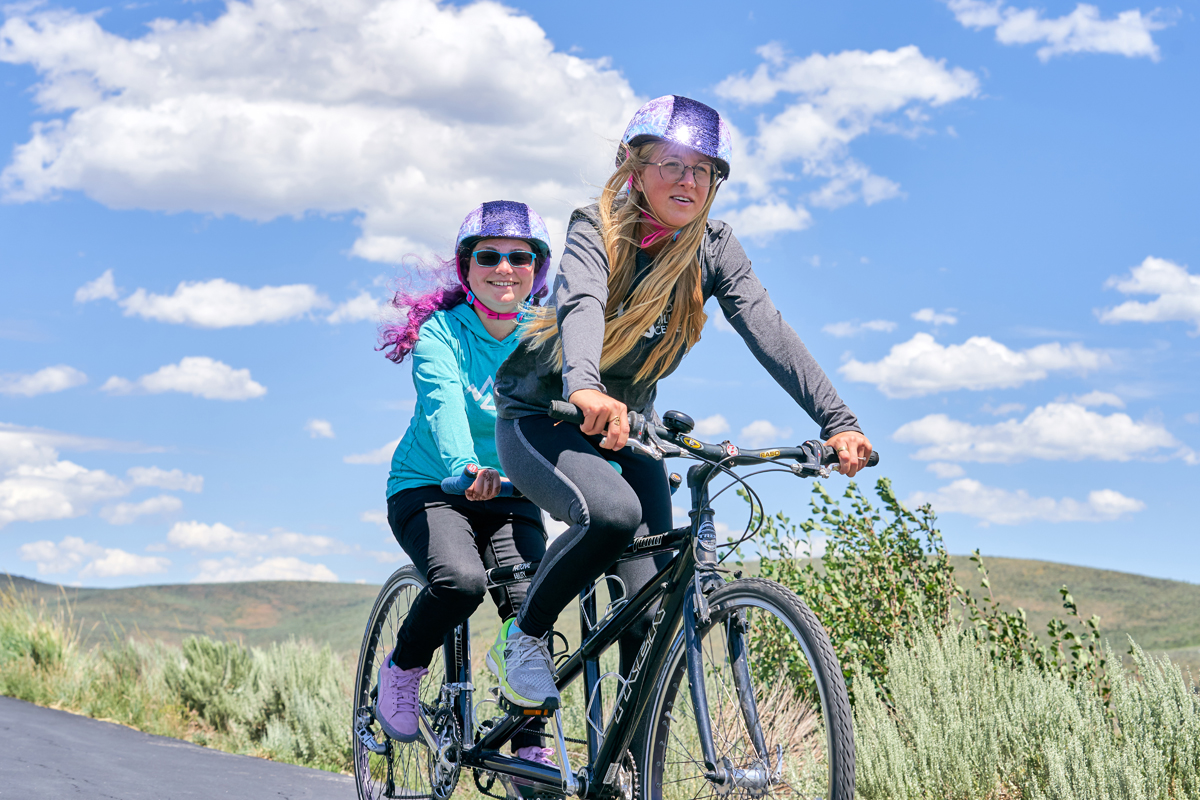
Madison Baumann (left) is riding stoker in the Summit Challenge with Laura Dusold as captain. Madison has a visual impairment and by riding a tandem through the National Ability Center, she will be able to participate in the 50 mile ride. Photo by Berin Klawiter
The Summit Challenge offers routes for every rider—from a 1-mile Discovery Loop to 16, 25, 50, 80, and 100-mile options, as well as adaptive rider-exclusive routes of 4 and 7 miles. All courses are fully supported, allowing cyclists of every ability to enjoy the beauty of Northern Utah’s mountains while helping raise $175,000 to fund adaptive recreation programs.
Beyond the ride, participants and community members can enjoy the Vendor Village, open from 11:00 a.m. to 4:00 p.m., featuring local businesses, food trucks, and family-friendly activities. Admission to the Vendor Village is free, and spectators are encouraged to join the festivities.
“Every mile at the Summit Challenge fuels life-changing opportunities for people with disabilities,” said Willie Ford, CEO of the National Ability Center. “This year, we are celebrating four decades of adventure by riding like it’s 1985—bright colors, big smiles, and a shared goal of expanding access to adaptive cycling. When you join the ride, you’re not just celebrating—you’re making a difference.”
For more information or to register for the 2025 Summit Challenge, please visit summitchallenge100.org
By Lukas Brinkerhoff – I’m out of breath. The slightly thinner air and cooler temps have their effect, but the reality is that I’m chasing Josh Howlin’ Wolfe and when you chase the Wolfe, you will be out of breath. We’ve been weaving our way through the pinyons, junipers, and basalt rocks trying to keep the rubber side down while also keeping it rowdy and fast.
The trail is tight, rocky and we’re climbing. The uphill is one of those where you can tell you are climbing but it doesn’t ever feel like a grind. There’s plenty of swooping turns, grade reversals, and rocky obstacles to keep our minds occupied and our breathing heavy.
But we didn’t come for the climb.
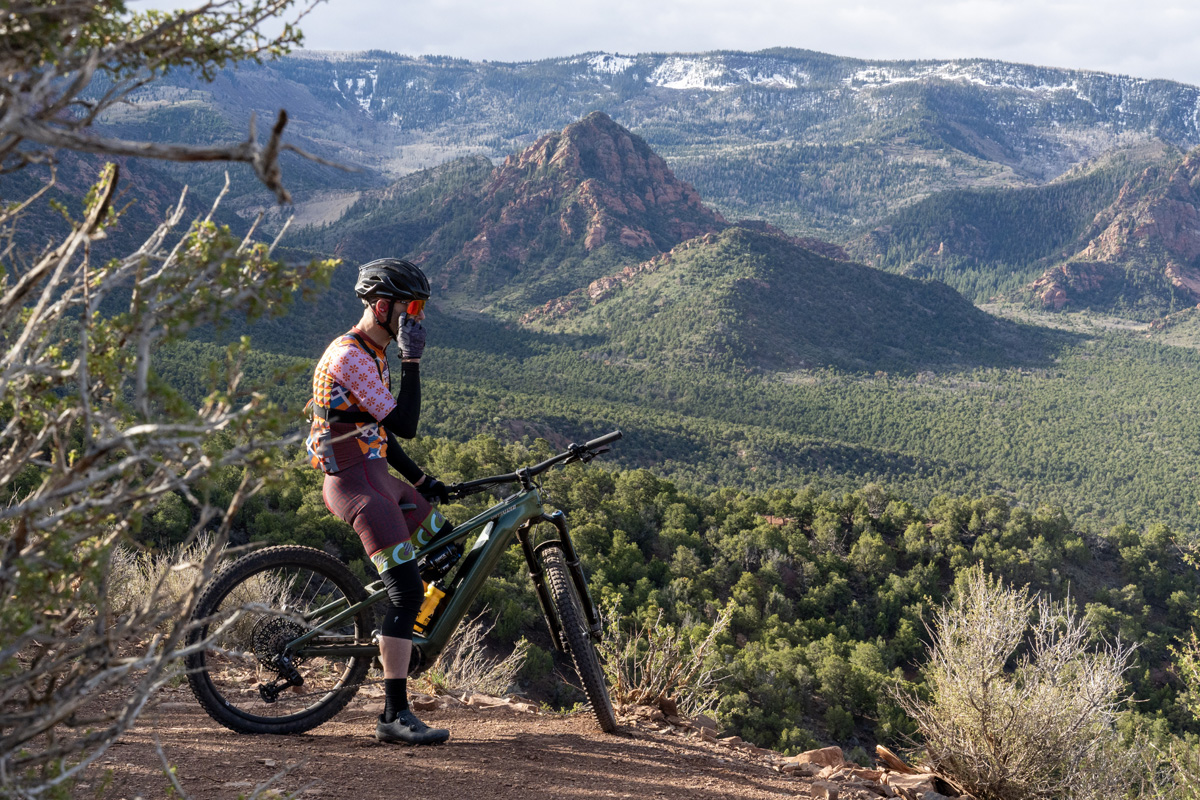
Wolfe taking in the views from the Schurtz Overlook on The Breaks trail. Photo by Lukas Brinkerhoff
We roll up and stop at the Schurtz Canyon Overlook. The pyramid shaped peaks are red in the morning light popping out above the pinyon and juniper trees surrounding their flanks. It feels appropriate to take a few minutes and admire our surroundings. Schurtz Canyon opens up before us to the east and the greater Cedar Valley to the west. As we survey the views, Wolfe points out the reward for our effort, the new Breaks Trail rolls out below us. I can see its flowing singletrack and sweeping berms through the trees.
We’re giddy to get droppin’.
The Breaks Trail was finished last fall but left “unopened” due to the weather and soft tread. It is now open and is a ripping riot of a trail to ride.
Trail construction in Cedar City exploded about a decade ago. The BLM, County and City all came together to plan out a trail system that would incorporate singletrack, bike paths, and trailheads. The first trails Lichen It and Lava Flow were instant hits and remain go-to favorites today. Since then, the BLM and IMBA have been building out the vision of that original plan. The Iron Hills Trail System (aka Southview) now boasts 27 trails ranging from the green and relatively flat Turnpike to the black level Bone Yard.
Located on the Southern end of the trail system, the Breaks gives riders a second option for dropping down from the Schurtz Canyon Overlook. Built a few years ago, Bone Yard was originally the only option and as an Expert Level trail, was not for everyone.
In contrast to Bone Yard, the Breaks Trail is definitely an easier ride. There are no big doubles, not a lot of rock, and the tread is wide from top to bottom. What it does share is the fast, flowy nature of its big brother. The Breaks has huge berms that allow you to carry as much speed as you dare around the corners. The swooping trail has some alternative features to keep you excited. One feature in particular is a set of rollers going into a big bermed turn. With enough speed, those rollers can easily be turned into a double that lands you into the start of the turn where you can whip right out the other side.
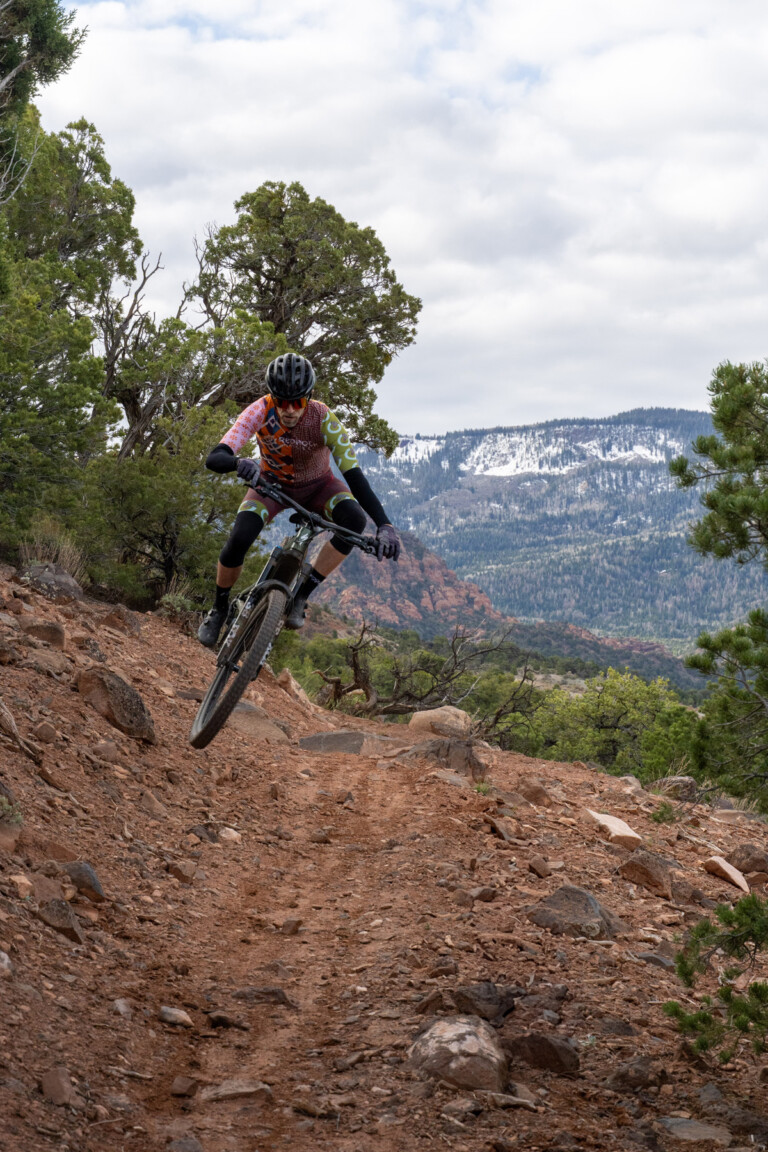
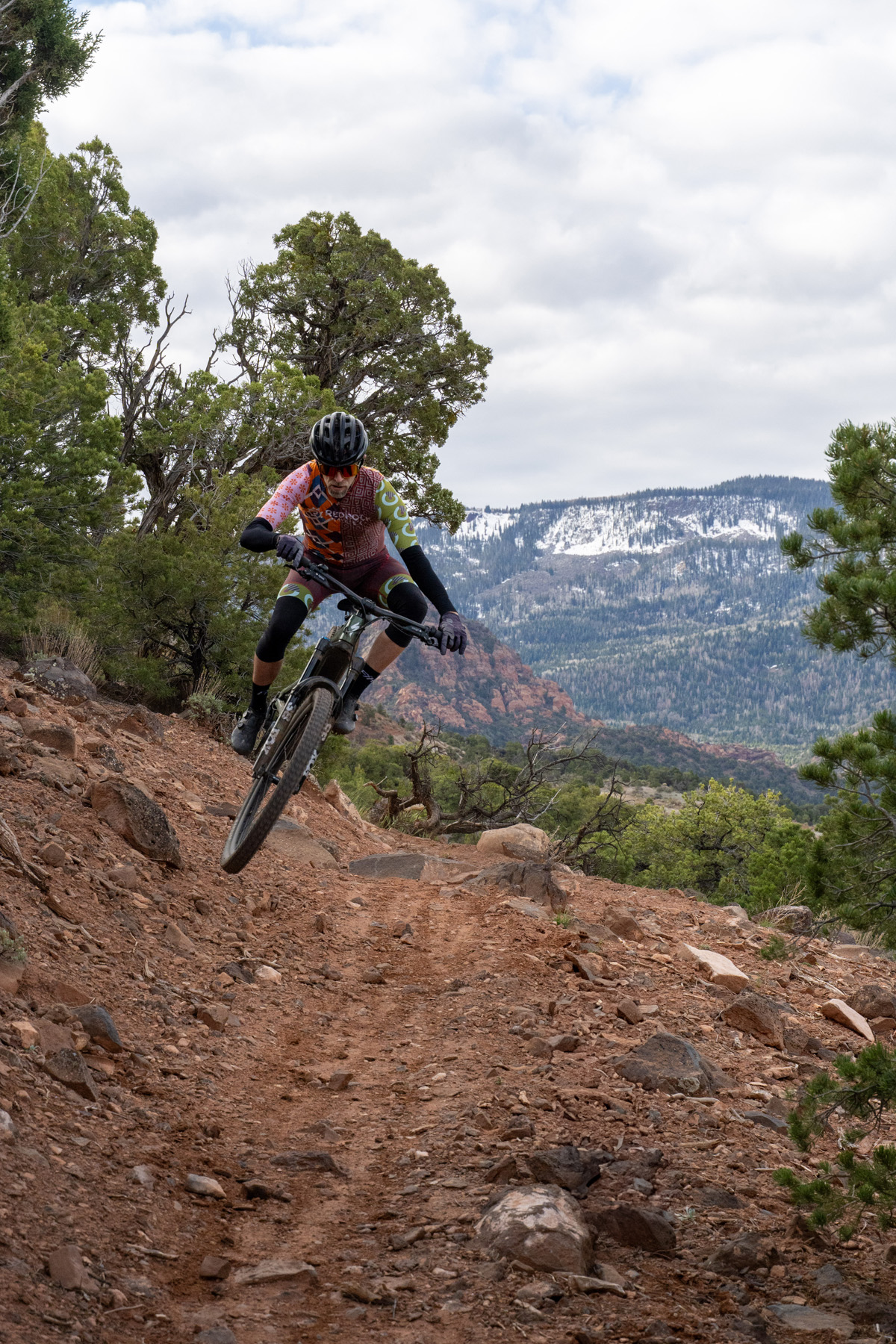
Wolfe getting a little steezy on the way up on The Breaks. Photo by Lukas Brinkerhoff
The Breaks Trail adds a nice downhill that can be used for intermediate riders who want to ramp up their skills and learn the techniques needed to bomb Bone Yard. The berms are similar and there are plenty of “rollers” that can be jumped into nice transitions to show you how to leave the ground safely.
The quickest access to the trail is to start at the Pyramid Canyon Trailhead. Take Turnpike up to Elevate and then use Lava Link to get to Tombstone. Climb Tombstone and you’ll find yourself at the overlook and ready to drop in. The Breaks is not directional. You should be sure to stay in control of your speed and keep an eye out for riders climbing up. Inversely, if you choose to climb this trail, you should do your best to make your presence known.
After a couple of pics at the overlook, we’re ready to drop in. Wolfe lets out one of his signature howls and off we go. I’ve got him to follow, but it’s my first time down the trail and I’m on a loaned bike for reasons we won’t go into. I’m having a riot but also struggling to keep him within eyesight. We whip down the trail giggling as the giant berms flow from one turn to the next in what feels like an endless roller coaster.
The tread is still damp from the rain that came down the night before giving us that dreamt about hero dirt. With berms the size of VW bugs and traction like Velcro, we do our best to hold as much speed through the turns as possible. At times, it feels like we are going to catch the end of our bars on the ground. Howls, giggles, and hootin’ hollers are heard as we rip through the trail.
We stop a few times on the way down for high fives and shared stoke.
I know we have hit the bottom when the character of the trail goes from wide open speed to tight rocks and narrow singletrack. The Breaks is a fun, long descent, but like all downhill trails, it still seems to end a bit early. We roll back to the cars at the trailhead with grins that can only be generated by a rippin’ morning ride.