
March 27, 2017 – Check out this video of local ripper Mitch Ropelato on the streets of Salt Lake City, Utah.
Film by burst-media.com
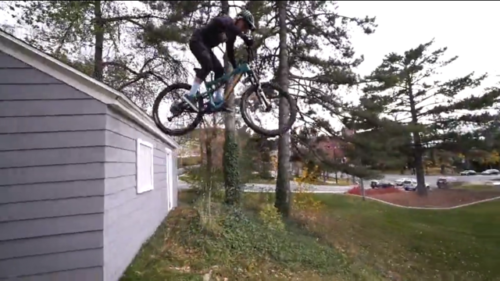
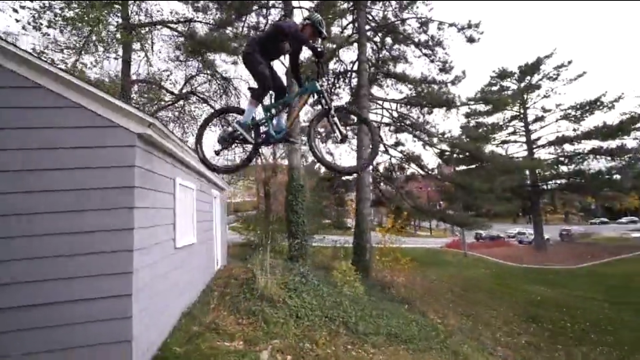
March 27, 2017 – Check out this video of local ripper Mitch Ropelato on the streets of Salt Lake City, Utah.
Film by burst-media.com

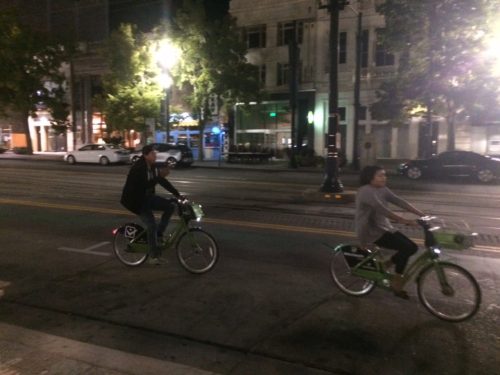
To Combat Inversion, GREENbike Stays Open Year-Round for the First Time;
Non-profit bike share extends season without raising prices
Press Release: SALT LAKE CITY, UT (March 21, 2016) – For the first time in its five-year history, GREENbike, Salt Lake City’s non-profit bike share program, did not close for the winter. Typically, the non-profit’s season runs from April through December. According to GREENbike management, the decision to stay open was to provide more transportation options during the valley’s winter inversion.
“The single largest contributor to our region’s air quality problem is cars. If we’re going to call ourselves a transportation alternative, we should be available to our community all year,” said GREENbike executive director Ben Bolte.
Some annual passholders have already conveyed their gratitude. Kyrene Clarke, GREENbike Member since 2015, “I’m thrilled that the bikes have stayed out and available through the winter. Because of this, I’ve been able to maintain my daily routine and rely on the convenience of GREENbike (rain, shine, or snow) to get me to and from work.”
According to GREENbike, 1,800 people have taken 13,000 rides since December 15th, 2016, the date GREENbike typically closes for the season. 82% of those rides were taken by people who had already purchased annual passes.
Though their season has increased by three months to 365 days a year, GREENbike promises not to increase annual pass prices, which range in cost from $35-$75 per year ($.10-$.20 per day).
“This decision isn’t about making money. It’s about helping clear our air,” said Bolte. “I’m thrilled we’re giving our annual users more days of riding for the same price. Thanks to SelectHealth’s renewed commitment, we can provide this extended service and make a larger positive impact.”
For more information on greenbike, see https://greenbikeslc.org/

 March 23, 2017 – The Tour of Walla Walla Stage Race, a mainstay in the Northwest and Intermountain West road racing calendar for the last 21 years, announced today that the 2017 edition has been cancelled. Race organizers Michael and Kathryn Austin sent out a note to the community explaining their decision:
To all of our dedicated Tour of Walla Walla racers, volunteers, and community members- After many sleepless nights, phone calls and much time spent staring at previous years’ registration information, I have decided to “pull the plug” on the 2017 edition of the Tour of Walla Walla. Several factors have resulted in this decision.
1. Road races throughout the Pacific Northwest are suffering. We all believe the severe winter and lack of spring riding have played into this, as has an interest switch from road racing. Numbers for races all over the west coast are down, and it pains me to include the TofWW in this number.
2. Nationwide riders are waiting later and later before registering for races, this creates a difficult situation for Promoters. With an event like the TofWW – a 3 day event and a very large operating budget, the financial risk is significant and it’s a huge risk not knowing if ‘enough’ riders will preregister before the event. We need about 300 racers to break even. Last year we missed that mark and lost about $6500. Given our current pre-registration numbers (currently we have 40 folks registered 1 month before the event) and projecting registrations we would expect to see in the next month, the event would stand to lose between 6 and 9 thousand dollars. I just can’t ask my family or my business to assume that risk.
Making this decision is not easy and is quite upsetting to Kathryn and I, especially after a long and successful 21-year run of this race, but the reality of this year just can’t be denied at this point, we truly feel that any “hopeful thinking” will only prolong the inevitable and make cancelling that much harder for us and for the riders who have registered. To the folks who have already signed up (or who hold a registration voucher from a previous year), thank you for your registration and commitment, I will be working to facilitate refunds over the next several days. Thank you to all our dedicated racers, volunteers, and community members. It has been our pleasure to provide an elite level of road racing here in Walla Walla for the last 20+ years, and our sincere gratitude goes out to this community and all involved. We look forward to hearing more from our community about what sort of event riders can support in the future, and reevaluating how we can continue to provide an outlet for cycling and racing in our region moving forward.
Thank you all- Michael Austin – Race Coordinator
Kathryn Austin – Assistant Race Coordinator
For more information on the event, see tofww.org

Press release – March 23, 2017 –
Registration for the 46th Iron Horse Bicycle Classic to be held May 27-28, 2017 is open now at ironhorsebicycleclassic.com. Events will include the classic rides to Silverton including the McDonalds Citizens Tour and Durango Coca Cola Road Race. The Quarter Horse to Purgatory, MBS King and Queen of Mountain, Sprite Kids Race, Morehart Murphy Subaru Mountain Bike Race, Durango Cyclery Cruiser Crit, and test gravel ride event make up the full weekend of cycling offerings in Durango. Additionally, the Alpine Bank push bike park and kids village. BMX demo, and downtown activities are on the menu for the weekend.
Plans are also underway to once again offer the Veterans Train to Silverton for Veterans, Gold Star Families, and Blur Star Moms. The 2016 Veterans Train hosted 100 passengers complete with a ceremony in Silverton at Memorial Park. The Veterans Train is the 8am Durango Silverton Narrow Gauge Train that races cyclists on the 50 mile route to Silverton embracing the tradition of bike versus train which is the foundation of the Iron Horse Bicycle Classic.
Durango locals will have the opportunity to register on December 2, 2017 from 11am to 8pm at Mountain Bike Specialists at 949 Main Avenue, Durango. The local registration party will once again mark the start of the 2017 event kickoff complete with food and drink.
The 2016 event played host to riders from 43 states and four countries and was featured on CNN’s FitNation. With 3600 riders for the weekend of events, the Iron Horse Bicycle Classic continues to be a strong kickoff weekend for the summer season in Durango and Southwest Colorado.
A portion of the proceeds from the Iron Horse Bicycle Classic support the Mercy Health Foundation and other community entities.
For more information, visit ironhorsebicycleclassic.com

By Charles Pekow — No more TIGER and Capital Investment Grants? These programs from the U.S. Department of Transportation would be eliminated under the FY 18 federal budget proposed by President Donald Trump. They have been used around the country to finance bicycle projects.
About $500 million a year in Transportation Investment Generating Economic Recovery (TIGER) grants go to communities. Pittsburgh, for instance, is using TIGER money for to build a bikesharing station; and Brownsville, TX is using it to build a 2.4-mile bike/ped causeway.
If Trump’s budget goes though, it would not affect TIGER programs already underway. The Utah Transit Authority’s (UTA) $20 million grant, obtained last year, would not be affected. UTA is using the grant along with matching funds, for a variety of projects to improve access to public transit for bicyclists and pedestrians.
The $2.4 billion Capital Investment program specifically allows bicycle projects.
As of late March, the administration had not released all its budget plans for next year. But the main sources of federal funds for bicycle projects, Transportation Alternatives and the Recreational Trails Program, are probably safe this year because they get dedicated funding from fuel taxes. It’s not clear what will become of the Congestion Mitigation & Air Quality grant program. And Congress will need to approve any cuts. If Congress eliminates any of the programs, existing grantees could complete the ones already underway.
Trump’s budget also proposes to end the $3 billion Community Development Block Grant (CDBG), which has operated since 1974, giving grants to state and local governments to provide economic boosts for blighted areas and low-income people. Some communities have used them to build bicycle paths, despite the fact that in 1985, HUD determined that it “has not recognized bike paths as meeting the criteria (for CDBG use) because communities have not been able to show that they are unable to finance bike paths on their own, as other sources of funds are available for it” (https://files.hudexchange.info/resources/documents/CDBG-Memorandum-Using-CDBG-Funds-to-Create-a-Bike-Path.pdf).
But Portsmouth, VA, for instance, reported it had used CDBG funds to build 6.3 miles of bicycle facilities. The city also reported that it used CDBG money for improvements that help cyclists, such as pedestrian signals and sidewalk curb cuts to comply with the Americans with Disabilities Act (https://www.hrtpo.org/uploads/docs/TTAC11062013/P16-Portsmouth_Bicycle_and_Pedestrian_Plan.pdf).
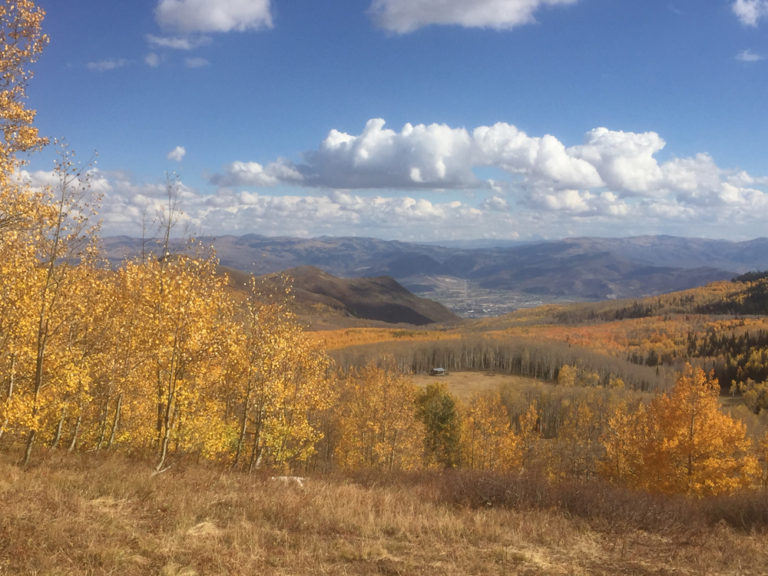
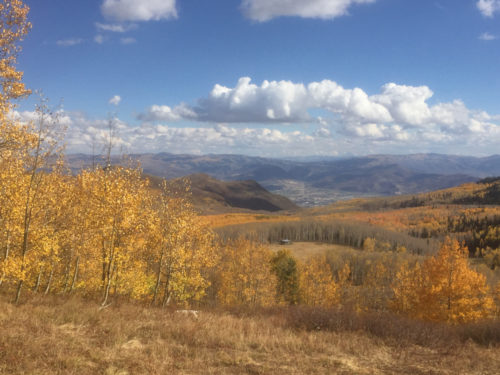
March 21, 2017 – Salt Lake City today announced that they intend to commit $1.5 million to protect Bonanza Flat, an open space area between Salt Lake County’s Big Cottonwood Canyon and Park City, Utah. The funds appear to bring the total raised so far to $34.2 million of $38 million total needed to purchase the land.
Sign the petition to the Salt Lake County Council asking for funding for Bonanza Flat: http://crm.saveourcanyons.org/p/dia/action4/common/public/?action_KEY=20728
Last week, the Salt Lake County Council voted to not commit any funds towards preserving the land in a 5-4 vote on party lines. The Wasatch Backcountry Alliance (WBA), a non-profit group in Salt Lake County, is hoping that some of the county council will change their minds. They sent out a statement today encouraging citizens to contact Salt Lake County council members Max Burdick, Richard Snelgrove, and Michael Jensen.
The area is an invaluable piece of open space that is popular for bikers, hikers, skiers, and other backcountry enthusiasts. Tom Diegel wrote in a recent editorial in Cycling Utah: “According to Mountain Trails Foundations’ trail master Rick Fournier, Bonanza Flat represents a huge opportunity for new trails. Not only is the rolling terrain almost perfect for a mountain bike park, but it has the opportunity to put this park in as a connection from the Crest and Park City’s trails to the WOW trail, for an unprecedented connection from the Wasatch Front to the Back on killer singletrack.”
Additionally, the area includes the trail head for the spectacular Wasatch Crest Trail.
The purchase must be completed by June 15th, 2017. The WBA said in a statement, “We remain optimistic that this is absolutely achievable with continued effort by everyone.”
Salt Lake City’s Press Release is below:
Joint City resolution supports efforts to preserve and protect Wasatch County’s Bonanza Flat as open space
Through its Public Utilities dedicated watershed protection fund, Salt Lake City will contribute $1.5 million toward the purchase and preservation of Bonanza Flat – a 1,350-acre tract of popular recreation space and a critical source of Salt Lake City’s drinking water supply.
The City Council and Mayor Jackie Biskupski have also created a joint resolution in support of the efforts behind the purchase of the Wasatch County property, which would conserve the popular recreation spot and protect it from commercial development. The resolution is expected to be approved and signed by Mayor Biskupski and the City Council during the Formal Council Meeting tonight at 7:00pm.
“This joint resolution and the financial commitment we are making further underscore our City’s dedication to preserving open space and protecting our precious watershed,” Mayor Biskupski said. “Through recreation opportunities and most importantly, clean drinking water, Salt Lake City residents and countless other will benefit from the investment we are making today.”
Timing of the City’s support is of the essence, as a June 15th deadline looms for the property’s purchase.
“Salt Lake City leaders must act when possible to demonstrate our commitment to open space and the land that nurtures us, said Stan Penfold, Council Chair. “Bonanza Flat is an opportunity to preserve ecological systems in close proximity to our City. Its beauty as an open space is a bonus.”
Bonanza Flat lies at the point where Salt Lake, Summit, and Wasatch counties meet near Brighton, at the Wasatch Crest Trail. Public ownership would allow hiking, biking, picnicking, and other recreational activities for perpetuity, while protecting a source of the drinking water Salt Lake City supplies to more than 340,000 residents.
“The land in and around Bonanza Flats is within Salt Lake City’s watershed, a critical source of the water supply for Salt Lake City, and worthy of ongoing stewardship,” said Laura Briefer, Salt Lake City Public Utilities Director. “The strong show of support from Park City, Summit County and the public significantly leverages our funding in permanently protecting this valuable watershed land.”
Park City residents committed $25 million in bonds toward the $38-million purchase and preservation price of Bonanza Flat. Summit County has pledged $5.7 million and non-profit conservation groups have raised $2 million to make up the $13 million shortfall between the bond and purchase price. The land will otherwise likely be developed into a luxury resort.
The Department of Public Utilities dedicated watershed protection fund is essential to the City’s water supply management and protection. The fund was established in 1989, and to date the fund has conserved more than 3,000 acres of land protecting the City’s watershed. The last large land purchase was 160 acres of land on City Creek Ridge, which is within the City Creek Watershed. The relatively undisturbed foothill space includes winter habitat for elk, year-round habit for mule deer, and hosts a wide variety of Utah wildflowers. Since the early 1900’s, the City has acquired more than 30,000 acres of watershed land.
To learn more, or to donate, see: https://www.savebonanzaflats.org/
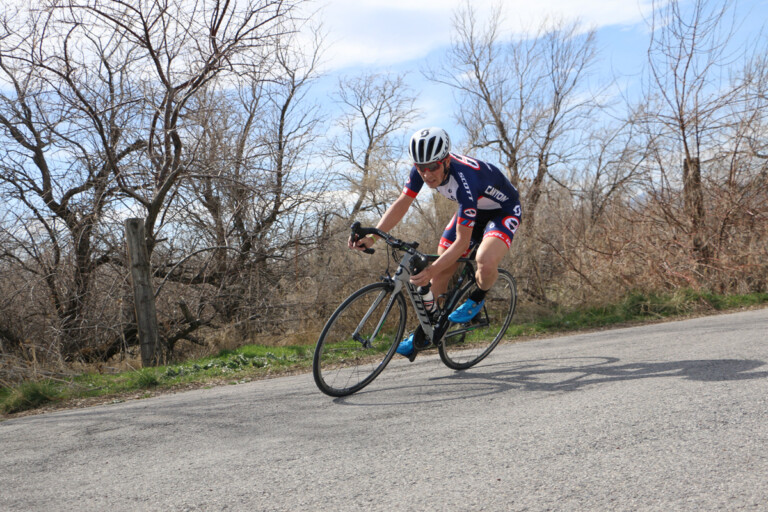
By Dave Iltis — Canyon Bicycles Pro Cycling has made the leap this year to a UCI Continental Pro team for 2017. The squad is Utah’s first UCI pro men’s team. The team’s title sponsor is Utah based bicycle shop chain Canyon Bicycles. Canyon Bicycles has had a long history of racing, with Paco Mancebo previously taking second overall in the Tour of Utah. This year looks to be a year of exciting racing for the team.
The team is planning on racing across the continent with the following races scheduled:
With a roster of seasoned veterans and developing riders, the team expects to be a factor throughout the year. So far this year, Canyon has been a factor in the recent Valley of the Sun with a couple second places. Tour of Gila will be the first official team race.
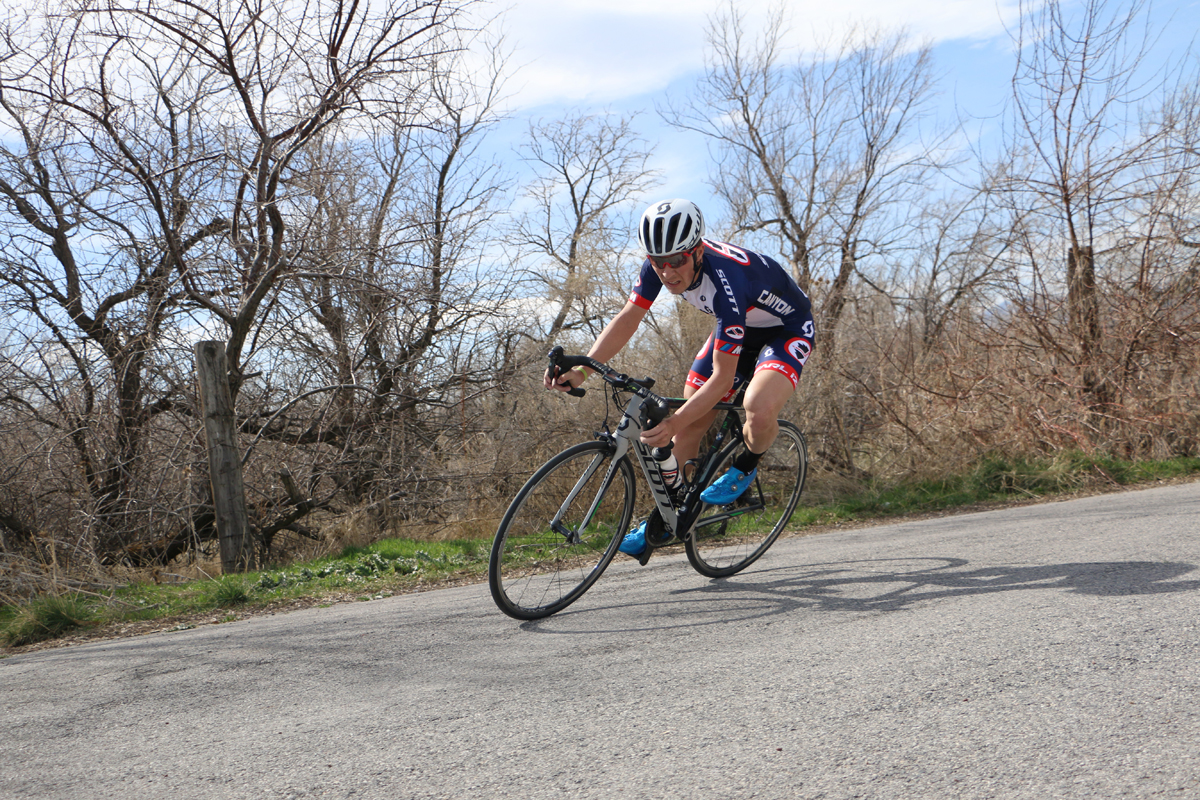
We asked Canyon Bicycles owner and team general manager Mike Pratt to tell us more.
Cycling West: Mike, you have been sponsoring bike racing teams for a long time. Tell us about what inspires you about bike racing and your drive to give back and sponsor a pro team?
Mike Pratt: The team dynamic makes road racing exciting to me. I like that a well-executed plan can trump pure fitness. The riders, the equipment, the show — it all makes it fun.
CW: What are some of the goals for the team for 2017?
MP: A major goal is to get an invite to the Tour of Utah. With a former winner on the team (Paco Mancebo) and the depth of our roster, we will have no problem being competitive. Other goals are to win some stages in other races on our schedule.
CW: The team is up against many other bigger teams. What strategies will Canyon use to be a factor in the races?
MP: It is no secret that riding the break and being active is how a smaller team gets exposure for its sponsors.
Although we are a very small budget team we need to show like we belong. Although this is the first year we have donned a Pro designation, we have been racing a similar pro schedule for 4 years. The other teams know us, so this will be a smooth transition,
CW: Who is the Director Sportif? Tell us about him.
MP: Alan Schmitz has been directing our team for a few seasons. He is a critical part of our operation. He is very connected within the bicycle racing community. Alan takes all the pressure off the riders so they can focus on racing.
CW: The team is hoping for an entry to the Tour of Utah. What are your chances of racing in Utah and in Colorado in August?
MP: We have been sponsoring the event for eight years and we have a strong roster. I would think we are a shoe-in for Utah, but we have not heard anything yet. As for Colorado, if we perform there is a chance we get an invite. Some of the big races want small teams to bring sponsors to the event or just outright pay big money for their invites. We don’t have the money to pay Utah or Colorado and I can’t see myself doing a Gofundme, so we will see.
CW: Is there anything else that you’d like to add?
MP: I am happy that we provide an opportunity for riders to race at the next level, on a first-class team. It is very rewarding to watch riders develop in sour system. We have several great partners that help us pull off this team. Scott Bicycles has come on board for 2017. We are always on the lookout for additional partners. We do a lot with a little. I think we are the best deal in cycling.
For more information on the team, visit canyonprocycling.com
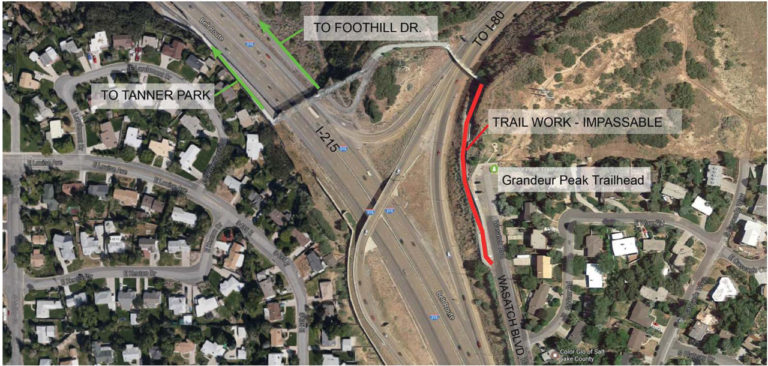
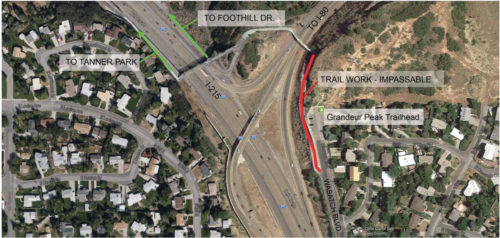
March 17, 2017 – Salt Lake County, Utah – Salt Lake County today sent out a notice that the Parley’s Trail (PRATT) will be closed for repair in the Grandeur Peak Trailhead area from 3-20-2017 to 3-22-2017.
Their notice is below:
TRAIL REPAIR
We understand that the trail closure is an inconvenience, but in order to re‐asphalt a section
of trail and maintain a safe work area, it is necessary to close the trail as shown below. Pick
an alternate route from Mon. 3/20 – Wed. 3/22. For your safety, please do not ride on I‐215.
Thanks for your patience and understanding.
If you have any questions,
contact Dustin Wiberg with SLCO Parks and Recreation @ 385‐468‐1817
For more information on the PRATT Trail, see http://www.parleystrail.org/

Big efforts are already underway in 2017 and we wanted to tell you about some of the campaigns we are pursuing this year. Here are some of our key initiatives:
As you can see, there is no shortage of opportunities to grow all types of bicycling across Utah. There will be numerous opportunities for people to be more involved in these efforts and we will be sure to let you know when we can use support from our members and contacts.
If you aren’t already on our email list, sign up at www.bikeutah.org to stay in the loop.
March 14, 2017 – The Utah Bike Summit is the statewide bicycle conference. The summit brings together everyday riders, bicycle and trail advocates, representatives from Utah’s bicycle industry, planners, engineers, representatives from Utah’s tourism industry and health fields, and local and state government officials in order to make Utah more bicycle friendly. Regardless of your interest in bicycling (transportation, recreation, road, mountain, commuter), the Utah Bike Summit is for you and all are encouraged to attend.
 Utah Bike Summit
March 14, 2017
8:00 a.m. – 3:30 p.m.
Ogden, Utah
Register at BikeUtah.org
Every year we work to bring in great speakers who can help to advance all of the work being done for bicycling in Utah. And this year is no different. Here is a quick overview of some of the great speakers who will be at this year’s summit:
There will also be sessions focused on: using crowd-sourcing to inform active transportation efforts; resources for rural communities to develop active transportation networks; and how to get more mountain bike trails built more quickly.
The Utah Bike Summit is an all-day event and registration includes all sessions, networking opportunities, and catered lunch.
Thank you to this year’s summit sponsors: TravelWise, Salt Lake County Bicycle Advisory Committee, Bonneville Cycling Club, SOAR Communications, UTA, Visit Salt Lake, Mercury Wheels, HDR, REI, Amer Sports, Athletic Event Supply, Staker Parson, Wasatch Front Regional Council, Alta Planning + Design, Fehr & Peers, Get Healthy Utah, Parametrix, the Governor’s Office of Outdoor Recreation, Mountainland Association of Governments, Horrocks Engineers, Landmark Design, Clif Bar, Adventure Utah, Cycling Utah, WSP Parsons Brinckerhoff, Salt Lake City Transportation, and the Ogden Bicycle Collective.
For more information and to register, visit www.bikeutah.org
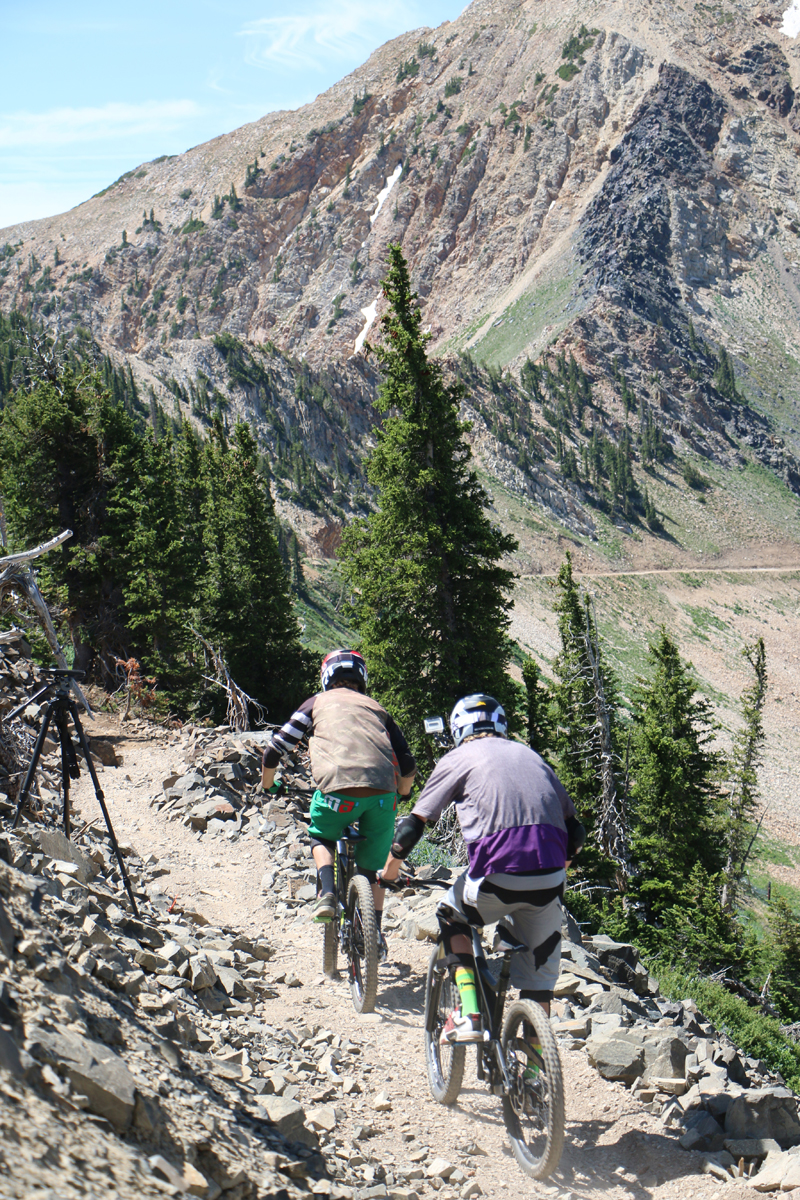
March 10, 2017 – The Salt Lake County Council voted on Tuesday March 7, 2017 to keep mountain bike trails, but eliminate “Mountain Bike Terrain Parks” from potential uses by ski areas in Little and Big Cottonwood Canyon according to a Facebook post by Councilwoman Jenny Wilson.
The Mountain Resort Zone ordinance (MRZ) is being considered by the Council, and according to the agenda, the meeting on March 7, 2017 was to clarify language in the MRZ ordinance. The final vote will be on March 14 to approve the entire ordinance. The MRZ ordinance governs private property at the 4 ski resorts in the Cottonwood Canyons (Alta, Snowbird, Solitude, Brighton). According to Save Our Canyons, “The MRZ is specific to ski resort properties and splits the zoning on those properties between “village” and “recreation” zones with the purpose of ensuring that any additional development occurs only in the appropriate zone.” The MRZ comes on the heels of the Mountain Accord planning process, a several year effort to plan for the future of the Central Wasatch Mountains. The ordinance is not part of the Mountain Accord, but rather an outcome of the Mayor’s Blue Ribbon Committee to revise the Foothills and Canyons Overlay Zone (FCOZ).
On her Facebook page, Wilson stated: “You win some, you lose some. In today’s Council meeting I successfully passed ordinance language eliminating mountain bike terrain parks from our canyons but my attempt to pass a zip line length limit was defeated. Compromise is the cornerstone of any healthy process.”
A terrain park is defined in the US Forest Service Recreation Manual as: “FSM 2300 – RECREATION, WILDERNESS, AND RELATED RESOURCE MANAGEMENT: chapter 2340 Definitions- Terrain Park. An area with artificial features such as jumps, rails, boxes, quarter- and half-pipes, and other obstacles that is used by freestyle skiers and snowboarders in the snow season and by bicycles in non-snow season.” (The definition applies to the Ski Area Recreational Opportunity Enhancement Act (SAROEA) Pub. L. 112-46, 125 Stat. 538)
Currently, of the four ski areas in the Cottonwood Canyons, only Snowbird had been considering a terrain park. This decision will apparently not impact their plans since most of their land is on US Forest Service property, and the MRZ ordinance only applies to private property. Snowbird is looking into the possibility creating a terrain park in Gad Valley as a follow up to the Big Mountain Trail and had hired Gravity Logic, a company that designs “safe, sustainable progressive mountain bike trails for summer resort operations,” to survey the area for possibilities. At this time, they have no concrete plans to actually build the park according to Snowbird’s Brian Brown.
Wilson explained her position on MTB terrain parks, “Regarding my objection: I received hundreds of communications calling for the protection of our “unique and delicate” Wasatch Mountains. Those communications urged me to limit attractions that impact the land and wildlife corridors and generally provide protection. Mountain bike terrain parks take up a large area, provide high impact to the land and are not preservation. Mountain biking trails, although they do impact the land do so without the same amount of impact and density and are, in my opinion a fair compromise.”
At the council meeting, Kevin Dwyer of Salt Lake Valley Trails Society, a local mountain bike advocacy group, spoke out against the language change. He told Cycling West that one of the reasons for keeping the possibility of terrain parks is that usage can be concentrated rather than dispersed, “If people have the opportunity to ride great trails, and have a supportive environment and co-located amenities and their friends, they will be much less likely to disperse to other areas.” Some of the items that need to be considered are sanitation, parking, emergency services, and trail maintenance. If these are concentrated in one area, Dwyer says that this will result in much less impact to the general area of concern.
Solitude does not have plans for a mountain bike terrain park at this time, however spokesperson Sherri Harkin said in an email, “Solitude’s general manager Kim Mayhew, was involved in sharing ideas and providing input to the Salt Lake County Council regarding this ordinance. Solitude currently focuses on mountain bike trails and does not have plans to build a mountain bike terrain park at this time. We do feel it is unfortunate that the Council chose to limit future mountain bike options in the Cottonwood Canyons.”
The Salt Lake County Council vote on the final MRZ ordinance will be on March 14, 2017.
Note: This article has been changed to clarify that the MRZ ordinance was not an outcome of the Mountain Accord Process.
A new 33-mile mountain bike trail will eventually go around Payette Lake just north of McCall, Idaho. The Central Idaho Mountain Bike Association (CIMBA) announced that it has gotten approval to build a mainly natural surface loop around the lake on state land. CIMBA is partnering with Trail Solutions, the trail-building arm of the International Mountain Bicycling Association to construct the project in phases.
The partners have not completely figured out the timetable — but it will take years. CIMBA received all the necessary permits, one major hurdle. But the second perennial one remains: receiving all the necessary cash. “Trail building is expensive and CIMBA is now actively seeking grant money and private donations to fund the construction of this community trail. The timeline for construction is entirely dependent on our ability to mobilize our community and foster partners in completing this trail for the benefit of every mountain biker in McCall and beyond,” the organization said in a press release.
CIMBA does “not have an exact price estimate for the entire trail or an average price per mile at this time. We have an evaluation scheduled with Trail Solutions for this spring when the snow melts, at which time they will analyze the flagged route and provide us with a detailed estimate for Phase One construction costs,” CIMBA public relations official Maxfield Silverson wrote in an email.
CIMBA has applied for various national and local grants. CIMBA “will continue to seek out and pursue any relevant grant funding to complete the trail. In terms of donations we will be launching a Go Fund Me (or similar crowdsourcing platform) campaign and approaching individual benefactors who have expressed interest in funding trail work in the past. We may pursue corporate sponsorships as well as we are not ruling out any source of fundraising that will contribute to the completion of the trail at this point,” Silverson wrote.
But the partners plan to start construction this summer and the trail will open in stages. They first plan to build four or five miles on the southern edge near North Beach, connecting with Payette Rim Trail and the McCall town connector and from there, the singletrack at Ponderosa State Park.
CIMBA says it expects a trail with intermediate trail difficulty.
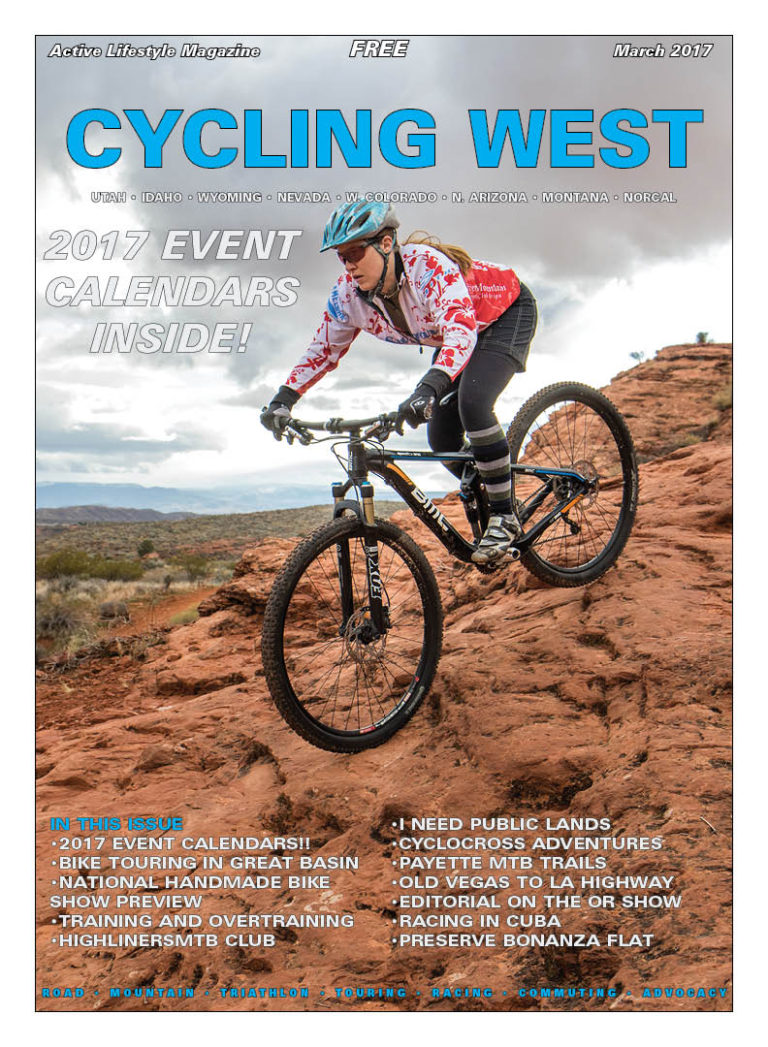
Cycling Utah and Cycling West Magazine’s March 2017 Issue is now available as a free download (9 mb download), Pick up a copy at your favorite Utah, Idaho, Wyoming, Nevada, Montana, W. Colorado, N. Arizona bike shop or other location! 
Contents
Bike Touring to Great Basin National Park – page – 3
Infrastructure Upgrades in Salt Lake County Make Bike Commuting Easier – page – 4
Training, Overtraining, and Stress – Less Can Be More – page – 5
The 2017 Utah Bike Summit: People Powered – page – 6
Bike Utah: Rolling Into 2017 – page – 6
Nothing Beats a New Bike! – page – 7
HIGHLINERSmtb Club Rides With Community in Mind – page – 8
New Mountain Bike Trail Planned Around Payette Lake, Idaho – page – 15
Riding Season is Here! Have you Checked Your Bike? – page – 16
Posture before Power – page – 17
Cuba’s The Titan Tropic – Racing in the Land That Time Forgot – page – 18
Earn your Cyclocross! – The Continued Racing Adventures of a 40-Something Year-Old Mom – page – 20
Preview: The North American Handmade Bicycle Show to be Held in Salt Lake City March 10-12, 2017 – page – 21
I Need Public Lands – page – 30
Park City Working to Preserve Bonanza Flat – Looks to Community to Raise Funds – page – 32
Salt Lake County Bicycle Advisory Committee News for March 2017 page – 32
Old Vegas-to-LA Highway Ride – page – 33
Interbike Removes Salt Lake City as an Option for 2018 in Response to State of Utah’s Public Lands Stance – page – 34
North American Handmade Bicycle Show Removes Utah As Option for Future Shows – page – 34
Editorial: Utah’s Politicians and the Outdoor Industry’s Leaders Need to Resume Negotiations on Public Lands, Outdoor Retailer, and Interbike – page – 35
Silca Reaches Perfection With Wrenches – page – 35
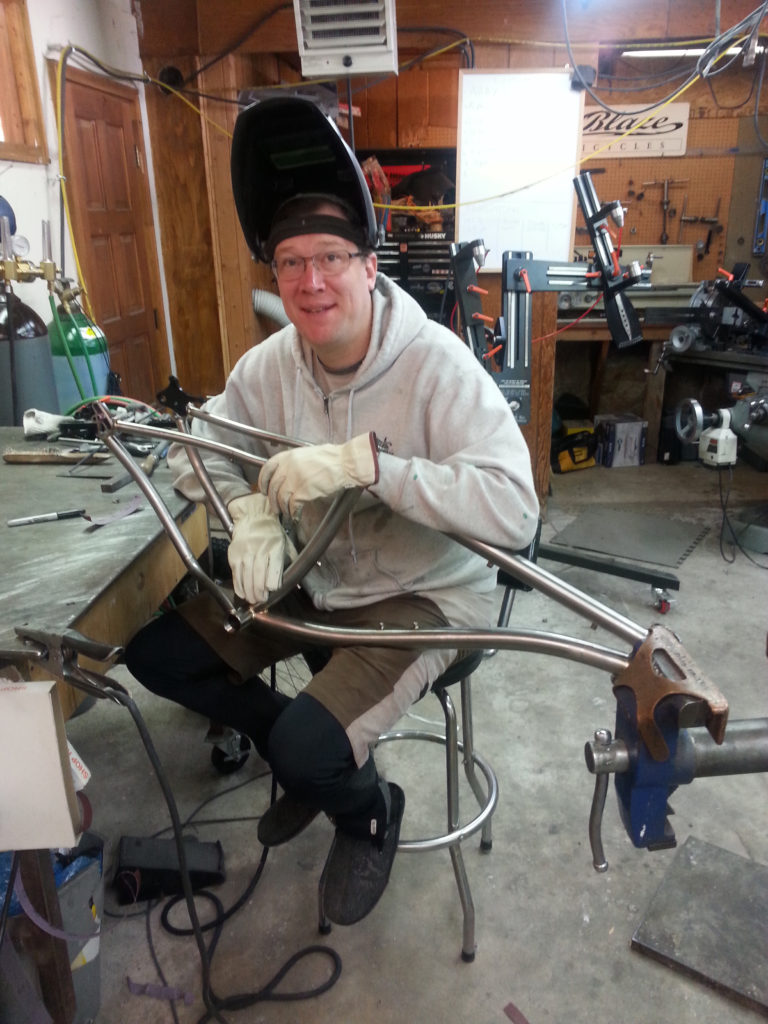
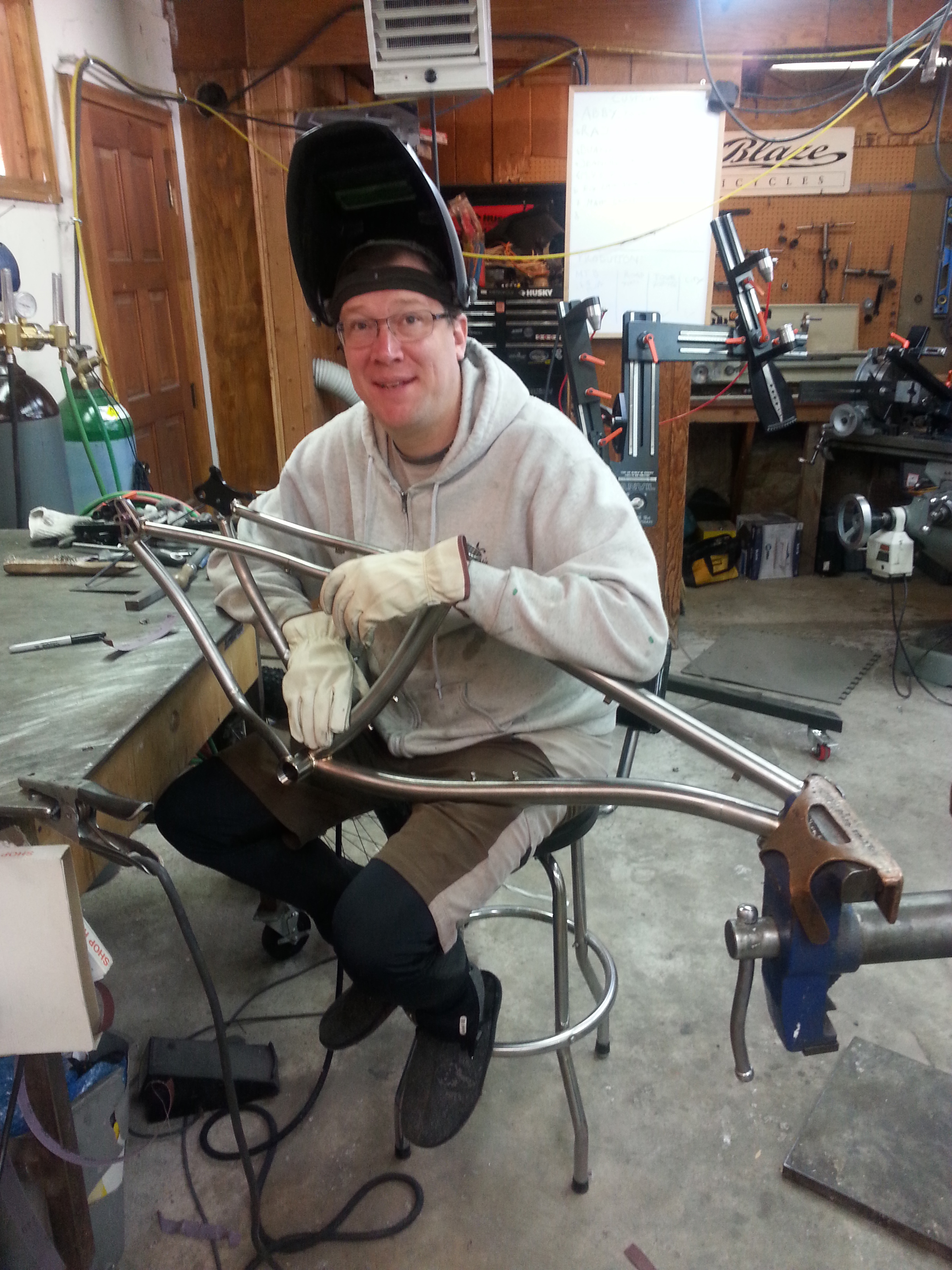
By Dave Iltis February 25, 2017 – The North American Handmade Bicycle Show is coming to Salt Lake City from March 10-12, 2017. The show highlights hand-crafted bicycles, accessory makers, and component suppliers for the artisan bike industry. The 13th Annual show began in 2005 in Houston.
The NAHBS is about the art of the bicycle, “Since 2005, NAHBS has been consistently dedicated to showcasing the talents of individuals around the world whose art form is the bicycle. It continues to aim to be a meeting point-online and in person-for frame builders and cycling enthusiasts, for the sharing of ideas, and the promotion of a special industry with a rich history dating back to 1819,” states the show’s website.
GET TICKETS TO THE NAHBS!
Visit http://www.nahbs.com/purchase-tickets/ for tickets.
Use the code: CYCLINGUTAH for $2 off!Volunteer Opportunities too: http://www.nahbs.com/attendees/volunteer-opportunities/
We asked Pierre Chastain of Blaze Bicycles about his participation in the show, he said, “The chance to get together with this many talented craftspeople is really exciting. To see people that are actually making stuff is really unique.” Some of the builders have been around for 30-40 years producing refined designs noted Chastain, “I like seeing what they are doing, I like hanging out with them, I like challenging myself to produce better work.”
He is building several bikes to get ready for the show, including a fat bike, 29er, 27+, a gravel grinder, and a road bike for people to view. Chastain builds custom tig-welded titanium bikes, and paints or anodizes them himself. His work shop is located in Moab, and he’s also owner of the Bike Fiend, a retail store in Moab. He started building bike frames about 9 years ago. He’s a one man shop, and builds and designs his bikes from the bottom up. Chastain says, “I’m here to provide you guys with bicycles. What makes custom bicycles so damn awesome isn’t the fact that they are bilaminate lugs or this way or that way is that they fit really well. And in my particular case I put focus on having a performance based modern bicycle.” Look for his booth at the show and find out more at blazebicycles.com.
Preview Video:
Over 170 exhibitors will be present, along with national and local bicycling media. Several Utah and Idaho companies will be present including Kelson, Salt Air, Moab’s Blaze Bicycles, EO Gear, Lizard Skins, Rock West Composites, Rotor, Mercury Wheels, Enve, Metier Velo, Reynolds, TRP, and more. Sklar from Montana will be there, as well as Breadwinner Cycles run by former Salt Lake City resident Tony Pereira and Tallerico Cycles run by former Moab resident Johnny Tallerico.
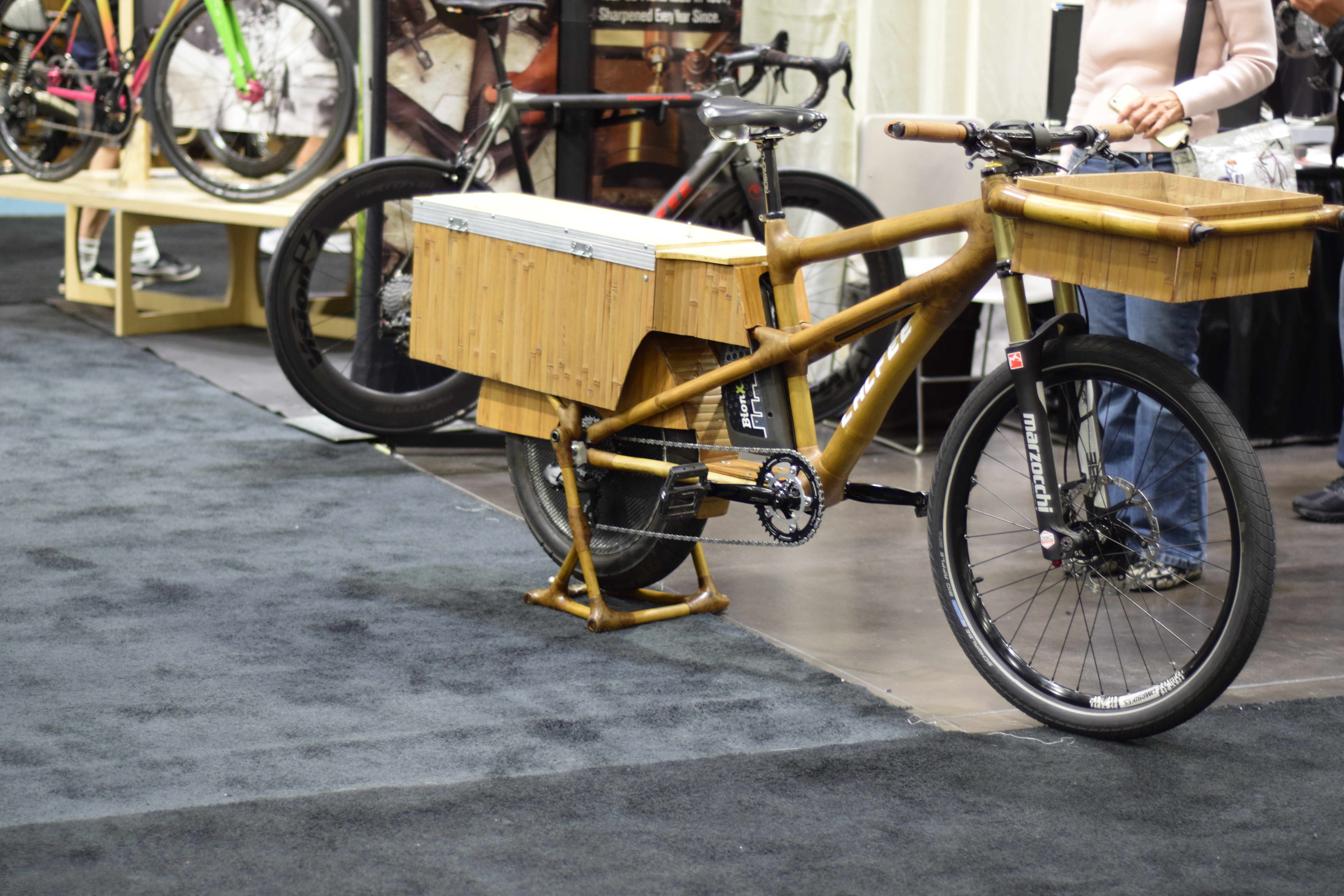
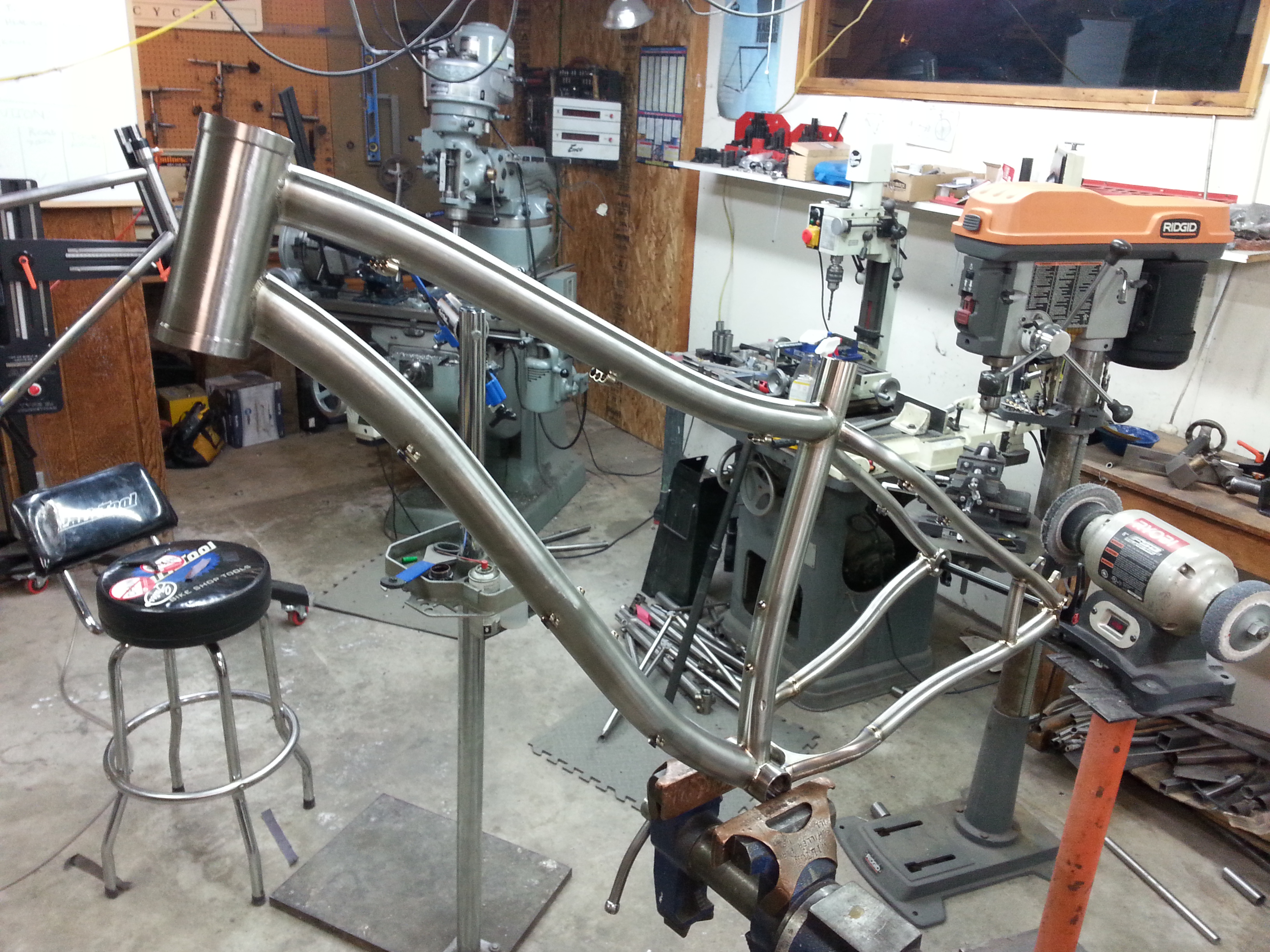
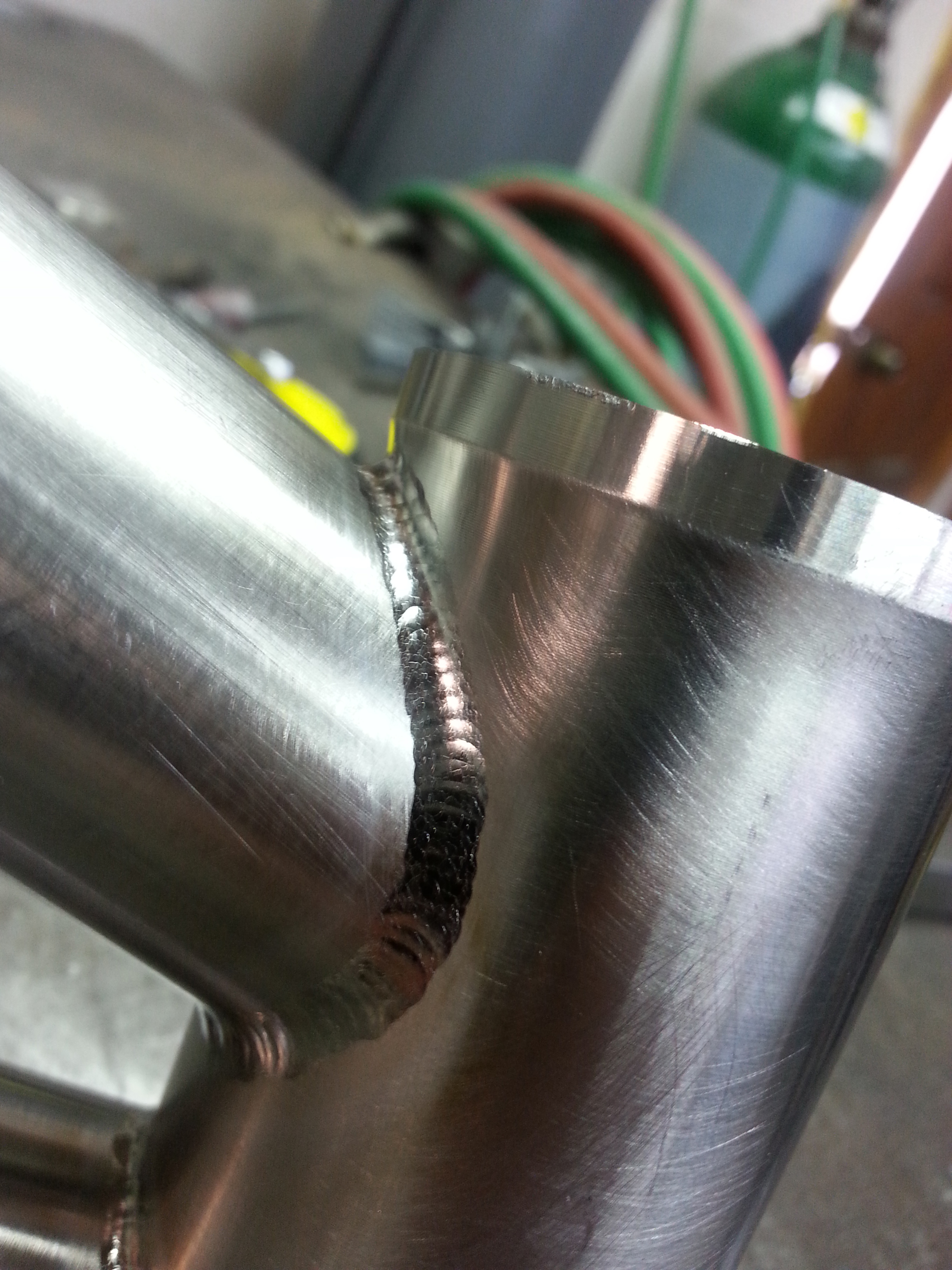
In addition to booths and tables highlighting different custom bike builders, the show will have seminars on professional framebuilding, branding for framebuilders, tubing technology, BikeCad, 3D printing, handbuilt wheels, and showings of the movie “Cheetah, The Nelson Vails Story.”
The show is intended for consumers, bike lovers, the bicycle industry, framebuilders, and anyone that appreciates fine craftsmanship.
The show will be held at the Salt Palace Convention Center, 100 W. Temple, Salt Lake City, UT 84101. Show hours are from 10 am to 6 pm on March 10 and 11th, and from 10 am to 5 pm on March 12. Valet bike parking will be available from the Bicycle Collective.
For more information, and to purchase tickets, visit: http://www.2017.handmadebicycleshow.com/ Tickets will also be available at the venue.
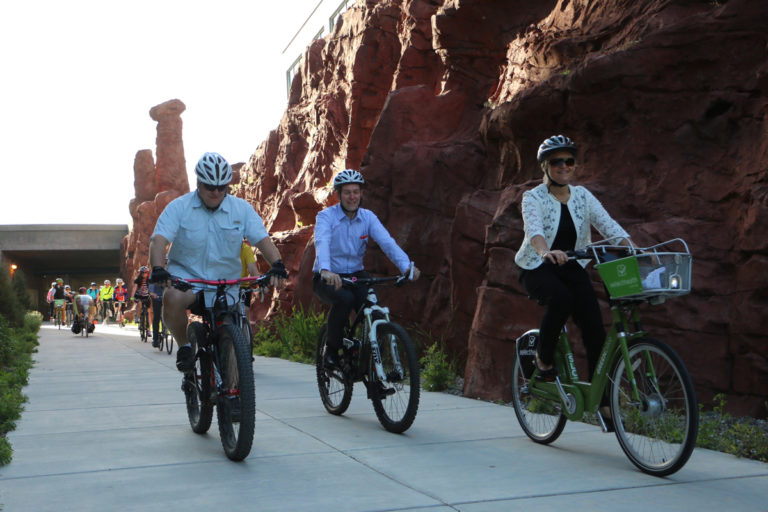
By Lou Melini — There are 2 recent upgrades that have improved bike commuting to and from the east Canyon Rim area of the new city of Millcreek, Utah. In case you are not familiar with Canyon Rim, it might be easier for me to say that I live just north of the 3300 South REI store. The first upgrade, the Sugarhouse “S” line bike trail, has been in existence for a few years. This has been a major change on how I travel to and from Salt Lake City. The second upgrade, the rebuilding of 2300 East south of I-80 that includes a roundabout, was dedicated in November 2016. The roundabout has made crossing 2300 East by bike much easier.
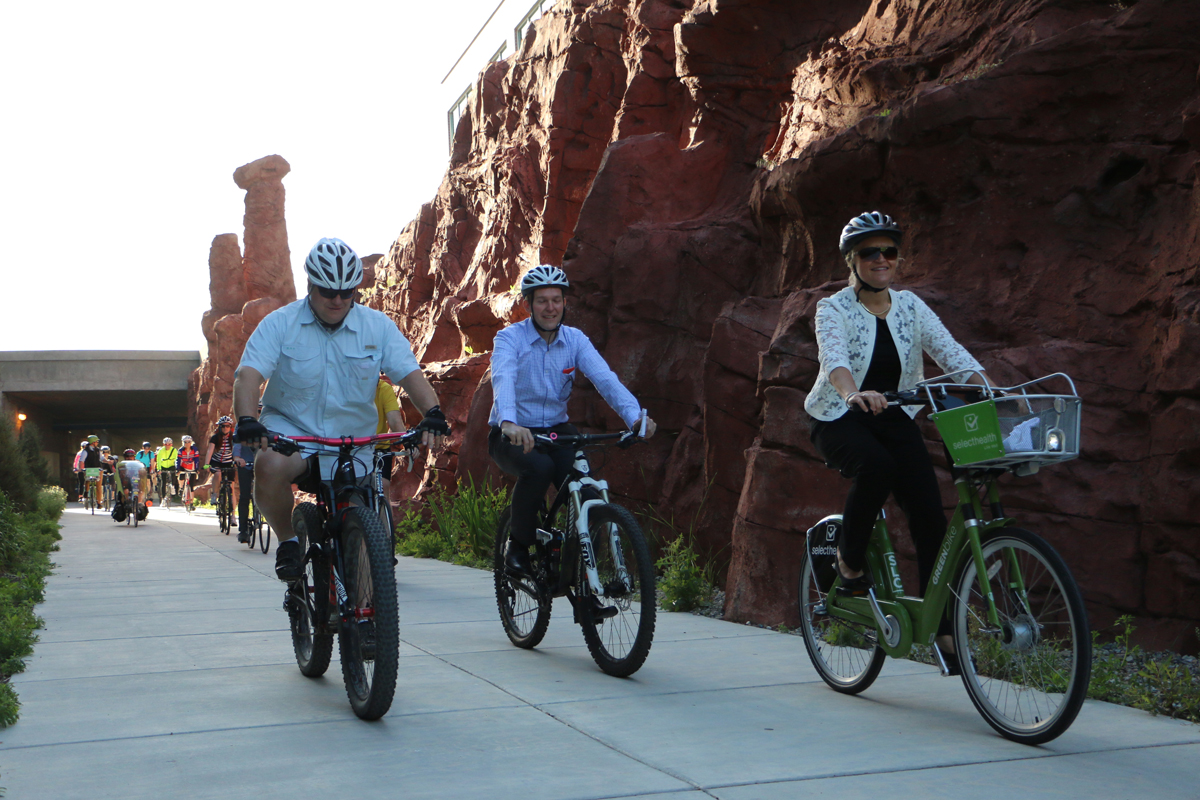
The Sugarhouse “S” Line
Up until the past couple of years, 2700 South was my primary commuting road to visit my grandson who lives just south of the “S” line between 6th and 7th East. With the opening of the “S” line bikeway, the 1300 East tunnel and the pathway through Sugarhouse Park; riding on 2700 South has become a rare event. During winter snowstorms, the changes that I just mentioned have made my commute so nice that I am sure that drivers of automobiles are envious.
The pathway through Sugarhouse Park is relatively flat. Then there is the tunnel under 13th East on the west side of the park allowing a very convenient crossing of 13th East. In the winter of 2016-2017, the Sugarhouse trail was frequently plowed of snow. Under the blanket of snow is ice, but the good news is that when the sun was out, the ice would melt quicker without the blanket of snow. I increased the size of my commuter tires to 2.35 and ran them at 20-25 psi. This allowed me to traverse the ice at near normal commuting speeds. This may not sound very positive, but it beats dodging snow piles in the street, parked cars in the bike lane surrounded by snow, potholes and the occasional impatient driver on 2700 South.
Once past the tunnel the asphalt bikeway becomes a wide concrete sidewalk through Hidden Hollow. This is a short but bucolic ride until you hit the parking lot for Whole Foods. The sidewalk west of the little wooden bridge in Hidden Hollow is usually cleared of snow. The section between the tunnel and east of the little wooden bridge was not maintained until a week after the holiday storms. I had to walk through this section a couple of times, as the snow was difficult to ride through during that time period. Since that time maintenance on this small section has been spotty, especially just west of the tunnel.
Riding through the small section of Whole Foods parking lot and Wilmington Ave. in Sugarhouse, one needs to pay attention to the numerous cars making turns. After crossing 11th East, I cut through the Zion’s Bank parking lot to get on the start of the “S” line bikeway just before McClelland Ave (1050 East). From there I am off to my grandson’s house or to my volunteer position at the Salt Lake Bike Collective with little interaction with traffic. I could go a bit faster if I took 2700 South, but the ambiance of the trail makes up for any gain in speed on the road. The bikeway is narrow where the train stations are located so slowing down at these locations will occur as well as slowing due to the presence of pedestrians. There are also numerous street crossings, most of which have pedestrian buttons and stop lights to stop car traffic. I have found that I only need to push the buttons at 9th and 7th East and at State Street as the lack of traffic negates the need to push the signal button at the other crossings. Another word of caution is the numerous driveways and a few streets with stop or yield signs. On occasion I have seen these signs ignored, so be alert and don’t assume you will be given the right-of-way. The final word of caution is to be conscious of cars making a right-turn-on-red at Sugarmont Ave. onto 9th East.
One of the biggest surprises that I encountered on the bikeway is that it is maintained year-round! Snow is removed and salt is put on areas with ice. On one day after a snowstorm the streets appeared to have not seen a snowplow, but the “S” line was clear save for a few isolated patches of snow. In warmer months, broken glass and other trash are quickly cleared. I can only assume that this care is done for the customers of the Sugarhouse rail line so I am expecting that this level of service will continue.
My only complaint about the “S” line bikeway is that it is too short. From McClelland to State St. it is a gem that is well used by numerous people. Though well used, I do not find it hampering my commute except for the occasional person that has headphones listening to whatever in the middle of the bikeway and unaware of my attempts to get his/her attention.
When first opened, there was a goathead (puncture vine) problem between Main and State Street that spread to 2nd East. I picked up quite a few when pushing my grandson in a stroller. I have not had a thorn in any tire (bike or otherwise) since 2014, perhaps 2013.
In conclusion, if you live, work, or find yourself needing to be in the Sugarhouse area, you should consider using the “S” line bikeway. It will be well worth the slower ride.
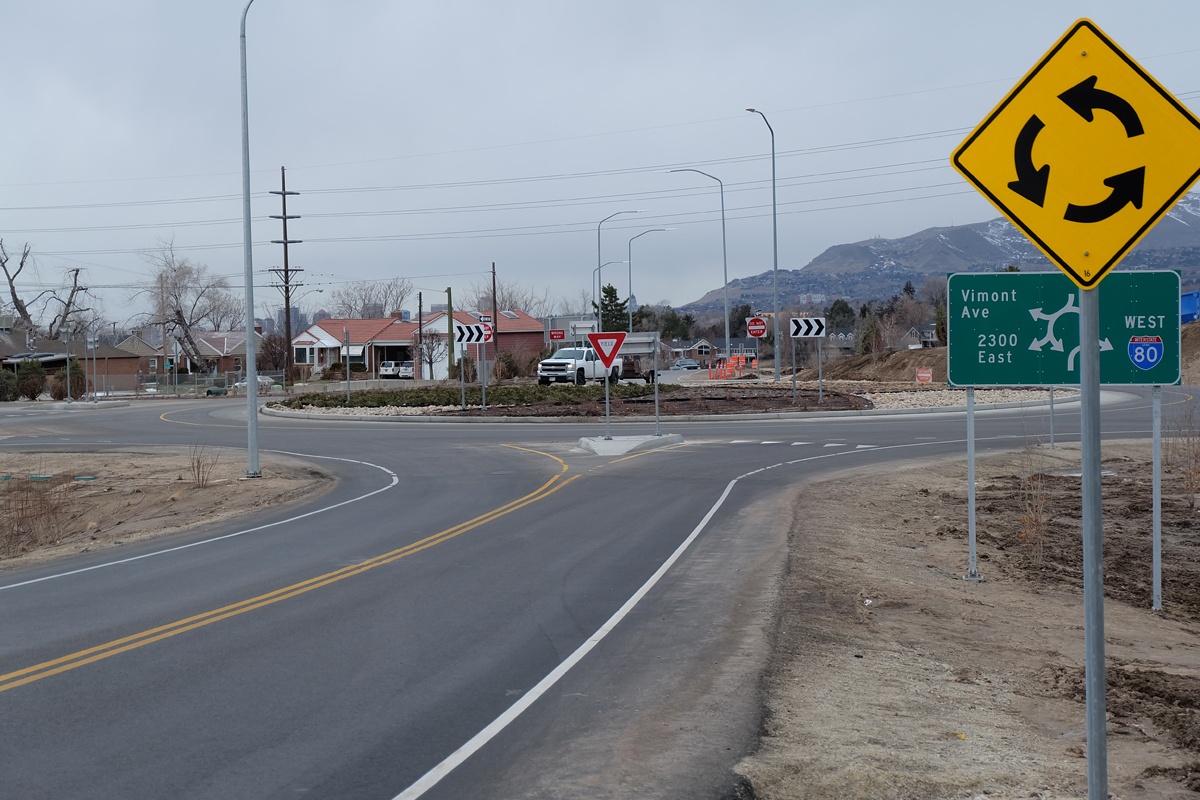
2300 East Upgrades:
Prior to 2016, 2300 was a street that I crossed frequently but did not ride on. I crossed at either Atkin Ave (2800 South) or the next street to the north, Claybourne Ave. Neither was ideal, but it was manageable. In 2016, it was to change.
Julie and I were gone for 6 months hiking the Appalachian Trail, so we were able to miss all of the construction and orange cones on 2300 East from I-80 to 3900 while it was being rebuilt. Shortly after our arrival home, we were able to experience a new street with bike lanes and a roundabout at the north end. I was a bit anxious that the new road was being oversold for its bike and pedestrian friendly upgrades.
Unfortunately crossing at Atkin and Claybourne Avenues have not changed. Neither is any easier to cross than before. The pedestrian light at Claybourne is the same light as before. The roundabout however has been wonderful and easy to maneuver across.
The benefits of the roundabout are three-fold. First I have 2-single lanes to cross vs. the 3 lanes, that includes the left turn lane, at Claybourne. Secondly there are large, prominently placed yield signs have been erected to alert drivers to yield to traffic within the roundabout. I have had 100% of the drivers yield to me when I am in the circle, even drivers coming off of I-80. At Claybourne, I had about an 80-90% rate of cars stopping when I was crossing, even with the pedestrian light flashing. Perhaps it has since been better, but with the roundabout so easy to cross, I haven’t had a desire to cross at Claybourne. And finally the speed of the cars is a very pedestrian 20 MPH within the roundabout. Even my lead-footed wife drives at that speed within the roundabout. At Claybourne, cars are accelerating off of the roundabout from the north and seem to be at the posted speed limit of 35 coming from the south.
There is a fourth benefit to the roundabout in the winter. Neither Claybourne nor Atkin receive a lot of sun and minimal snowplows, so riding those roads can be a bit icy and dicey. The roundabout is in the sun and is kept clean due to snowplows and the number of cars.
I have heard comments that being on a bike in a roundabout is not a comfortable place to be. This may be true of some roundabouts but at the north end of 2300 East is quite pleasant to navigate. I would recommend that you try it as you pass through Canyon Rim.
If you are still not sure about riding in a roundabout there will be a new bike pathway taking you across 2300 East to 1700 East near Sugarhouse park. A bridge will take you over the off-ramp and a tunnel will take you under the on-ramp just north of the new roundabout. Completion is expected in August.
Editor’s Note: The bicycle commuter column since 2004 has featured individuals that bike commute. With this column I hope to expand the commuter column to include other aspects of bike commuting. The column will continue to include individuals with expansion to include bike routes, commuter bikes and other aspects that will make the column educational and entertaining for the utilitarian use of bicycles. Contact Lou Melini at [email protected] if you have an individual or topic for the column.

About Cycling West: Cycling West is a print publication and website that works to grow, connect, and inform the cycling community in Utah, Idaho, Wyoming, Montana, Nevada, N. Arizona, N. California, and Western Colorado. We have a complete calendar of events in the region, and strive to reach cyclists of all types. We distribute approximately 13000-15000 copies each month throughout the region. We also post the issue for digital download. Our mission is to make the world a better place through bicycling. Please join us! Contact us: [email protected]
Contact us: [email protected]
© Newspaper WordPress Theme by TagDiv