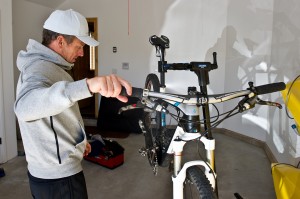
On Saturday, October 8th, Salt Lake County is planning a Share the Road event in Emigration Canyon from 9 am until 12 noon.
–
The safe and peaceful coexistence of multiple forms of transportation depends on predictability. Unlike many city streets, our beautiful canyon riding environments present cyclists and motorists with a more unpredictable and complex experience. Critical decisions must be made on the spot by the individual, depending on a wider array of circumstances. For example, riders will encounter disappearing shoulders, debris falling on the road daily, parked vehicles and pedestrians in shoulder that can’t be predicted. For cyclists especially, places like Emigration Canyon Road can feel like a gauntlet rather than a leisure ride or a steady commute. Emigration Canyon is unlike other Wasatch Front Canyons. It has a relatively large residential population and it connects to a state highway and I-80, resulting in higher daily traffic volume. It’s one of Utah’s most important bicycle routes, connecting Salt Lake City to Summit County and other scenic routes to the East. A heavily used “urban canyon” road, Emigration increasingly sees pedestrians, commuter and recreational cyclists, roller skiers and motorists compete everyday for space on this narrow, winding highway. Conflicts and dangerous incidents between users continue to increase each year; the coexistence of bicycle and automobile can be precarious. Educating all users of Emigration Canyon Road is the first step to making this particular road safer. This Saturday’s “Share the Canyon” event will focus on some of the most serious issues, such as the question of riding single file only and when Utah traffic code allows a cyclist to move to the center of the regular travel lane. We’ll use maps, diagrams and models of the roadway to demonstrate the constantly changing conditions, and help explain which rules apply and where. We’ll also take your comments and input on what can be done to make the road safer in the future.
The event will be held at the Camp Kostopulos parking lot at 4180 E. Emigration Canyon Road from 9:00 to 12:00. It won’t be all hard work though, as Ruth’s Diner will offer a limited menu of coffee or orange juice with takeaway breakfast burrito for some extra energy to help finish your ride. All users of Emigration Canyon Road are encouraged to attend. Contact Colin Smith at 801-468-2500 or email [email protected] for questions.
With cold weather comes warm hearts. Every winter Collective volunteers refurbish and provide hundreds of children’s bicycles to goodwill programs like Sub-for-Santa, Angel Tree, and more to be given as presents during the holiday season. Warm your heart and someone else’s by donating a bike and volunteering your time. There is also the option of becoming a Sponsoring Member of the Bicycle Collective by financially sponsoring bike(s) to be given away in our Bikes for Goodwill Organizations program; children in our Earn-a-Bike program, or rides in our Trips for Kids program. www.slcbikecollective.org/sponsor
The Park Tool School (www.parktool.com/clinics_training) is still taught every Monday starting at 6pm at the Community Bike Shop (2312 S. West Temple). Classes don’t build on each other, so jump in at any time. Participants will learn how to true wheels, adjust derailleurs and brakes, and general skills. See the Collective’s website (www.slcbikecollective.org) or call 801-FAT-BIKE for a schedule.
The mission of the Salt Lake City Bicycle Collective is to promote cycling as an effective and sustainable form of transportation and as a cornerstone of a cleaner, healthier, and safer society. The Bicycle Collective provides refurbished bicycles and educational programs to the community, focusing on children and lower income households.
Featured Trail: “Rusty Shovel: Fall has arrived and the trails are ablaze with color and teaming with wildlife. If you’re looking to do some leaf-peeping and moose-dodging with a great intermediate mid-elevation run, hike or bike, wander up (or down) an old classic- Crescent Mine Grade. “CMG” offers up some of the best views of Old Town and gives you some great loop options by connecting into the Mid Mountain Trail and Thaynes Road higher up. You can access CMG at the base of Park City Mountain Resort by going up the service road or by taking Sweeny’s to Flat Cable and Billy’s Bypass down to the service road. CMG is maintained by Mountain Trails.
Fall weather can be a mixed bag here in the Wasatch. If the upper elevation trails are a bit saturated, go low and check out the newest additions to the Round Valley trail system. Rusty Shovel and Ramble On (the Rambler Connector) add nearly three miles of moderate, flowy, hand-built trail great for trail running, hiking, biking or just walking the dog. Tie these two trails into Rambler or Nowhere Elks for multiple loop options of varying lengths and difficulty. The Round Valley trails are maintained by Mountain Trails Foundation.
Trail Update: The Mountain Trails Foundation Trail Crew has put their tools and shovels away for the season. Many thanks to Rusty, Mike and Stu for a great season and for representing Mountain Trails so well! It’s been great working with you!
Miss Billie’s Trail Closure: Basin Recreation announces the closure of Miss Billie’s Trail beginning Monday, October 3rd for the remainder of the hiking/biking season. Construction of the Matt Knoop Memorial Park is underway with heavy excavation work occurring between Shadow Mountain subdivision, Two Creeks subdivision and Park West Village. Please alter your trail use patterns to avoid the area. For more information, call 435-649-1564.
Thanks to my daughter who works for the Foreign Service, thus working in embassies throughout the world, we have had the opportunity to travel to a few diverse regions of this wonderful planet. First it was Bangladesh, then Austria and now Lebanon. Loving to ride a bike, I look forward to incorporating some cycling into each of these trips.
Thus, I found an Englishman in Dhaka who, along with a UK associate from Zimbabwe, took me on an exciting ride through the environs of Dhaka. While in Dhaka, we flew to Katmandu in Nepal where I experienced a most unique urban mountain bike adventure. On our first trip to Austria, we participated in a bike tour of Vienna. We also flew to Amsterdam where nothing is more ubiquitous than bicycles, and I spent a day on a rented journeyman bike seeing the sites, sans helmet, no less.
On our second trip to Austria, we took a trip through some neighboring countries. In Bled, Slovenia, we rented bikes and rode around one of the most beautiful and scenic lakes I have been blessed to see. I have written accounts of these experiences in the pages of cycling utah.
So this year, when we planned our trip to Lebanon, which was to include a week in Turkey, our editor, David Iltis, asked me to try to do something similar and share my experiences with cycling utah’s readers. Of course, such was my intent anyway.
Before going, I checked on-line for bike rentals and tours, and none were to be found. Upon arriving in Istanbul, I discovered why. During my week in Turkey, I saw three cyclists. In Lebanon, I saw one. He was obviously a dedicated cyclist, on a decent road bike and sporting lycra and a cycling jersey, and was riding on a road on which I would fear death. No shoulder, and a ton of fast traffic.
I was surprised. I would have thought that in these urban areas bicycles would have a prominent place as an efficient and cheap form of transportation. What I found in Turkey is that people mostly walk or take public transportation. We did a lot of walking in Istanbul. In Lebanon, I swear everyone travels in cars, even with all the attendant traffic delays.
I pondered the contrast. Dhaka and Katmandu are in third world countries. Vienna and Amsterdam are in very modern countries, and Bled is in a developing, formerly communist country. Why the difference? Well, I have no idea. Could it be those countries are Muslim? But then Bangladesh is heavily Muslim, while Lebanon really consists of three dominant religions, Christianity, Islam and Marronite. Because they are Arab? Turkey is not really Arab. Middle-eastern? Not certain why that would be a factor. There most likely are explanations, but I just have no clue.
However, it made me thankful for the cycling culture that exists, in varying degrees, in the countries I have visited. It also makes me thankful for the growth and acceptance of cycling where I live. Not that there are not issues and some conflict, but generally life for a cyclist is good in the USA and where I reside in Utah. I watched a video linked on one of the cycling email groups I subscribe to about the culture and governmental support of cycling in the Netherlands. A comment under the video said, in essence, “This exhibits part of the reason I hate the USA.” Really? Here is a person who doesn’t realize how good things are here, and not just as it relates to cycling.
Both Turkey and Lebanon are intriguing countries, guaranteed to interest the curious. Turkey is a peaceful, progressive, secular country where I felt as safe and secure as I would on the streets of Salt Lake. Lebanon is currently peaceful and appears to be prospering somewhat in these peaceful times. But you can feel the apprehension as tensions lie beneath the surface, poised to erupt should the right conditions occur.
But they are both beautiful and exciting countries. A cyclist would enjoy wandering the flat and rolling hills of Turkey. The more sharply rising hills and mountains of Lebanon, and the deep, scenic canyons snaking inland, would challenge and reward the cyclist who loves to climb and descend.
Probably, if a person spent a lengthy amount of time in either Turkey or Lebanon, he would find those opportunities and at least some fellow cyclists. I wish I could have. I would have loved to have had a bike and time to ride.
Each time we suggest it’s time for a test, many of our athletes cringe and suggest postponing it until they feel better or stronger. Others love the challenge and look forward to it. Regardless, if an athlete wants the most out of structured training, especially if working with a qualified coach, we consider it indispensable.
In fact, we – along with many experts – believe that testing is key to improving your performance and should be undertaken 2-5 times per year, depending on how closely you’re tracking progress and fine-tuning your workouts.
As coaches and mentors, we need the results from VO2 max, lactate threshold and other tests for two primary reasons:
1- to establish your own personal benchmarks as well as ideal training parameters
2- to continually assess your progress and then adjust those parameters accordingly
As you’ve heard us explain in previous articles, training workloads provide the human organism with stimuli that effect adaptations in the body. In other words, as you physically cope with the stresses of specific workouts and events such as centuries or races, your body has the ability to adapt – i.e. become fitter and stronger.
The role of a coach is to determine what your body – and psyche – can handle and how hard to push both in order to not only make general fitness and strength gains, but to optimize those gains in the form of measurable improvements in performance.
A coach doesn’t necessarily need to test you in order to set you on a good path, but testing does make the process faster and more precise. Since the value proposition of coaching is to maximize your training time, testing is a potentially crucial component of success.
Benchmarking
We’ve watched other coaches flounder a bit, slow to establish an athlete’s ideal training zones and workload. When we’re asked “Why testing?” and “How often?” our responses are the same: So that a coach can know exactly where you are in order to best take you where you want to go.
By knowing your lactate threshold and VO2 max at the outset, a coach can immediately dial in a training plan suitable to your current level of fitness and based on your fitness or event objectives. Those tests are the quickest and most effective ways to get you off to a good start. But that’s just the start.
Measuring progress
As with anything else, it’s important to continually assess progress; you don’t want to take anything for granted or assume that everything is going as well as could be expected. By testing regularly throughout a progression cycle – such as a competitive or seasonal period – a coach can determine the effectiveness of prescribed workouts relative to the current, and hopefully improving, fitness level of an athlete. It gives coaches the ability to fine-tune training intensity and workload, accordingly.
Why test?
In summary, reasons for testing include:
• Continually establish baselines to ensure that training is optimized and that the athlete is on track.
• Verify scientifically that an athlete is both improving efficiency and increasing power output at the same “physiological cost”. This includes measurable improvement in lactate threshold numbers.
• Identify an athlete’s strengths and weaknesses in order to match them up with expectations and goals.
With cycling clients, we have the ability to develop power and fatigue profiles. Hunter Allen, Andy Coggan and Stephen McGregor have pioneered a variety of analysis protocols to guide coaches and their athletes through the process of determining strengths and weaknesses, as well as how to best address them.
Fatigue profiling is very useful. For example, we can create workouts that task athletes to put out neuromuscular sprint efforts (multiple, all-out sprints each 20 seconds in duration) that we break down into 20-second, 10-second and 5-second segments in order to assess where power output drops off. We assess a rider’s anaerobic profile through efforts of 2 minutes, 1 minute and 30 seconds. For VO2 max profiling we look at 8-minute, 5-minute and 3-minute efforts, and for threshold assessment we use segments of 90 minutes, 60 minutes and 20 minutes.
All such testing protocols help us build a comprehensive picture of a rider’s strengths, including how quickly power or efficiency drops off in specific circumstances so that we can prescribe training that will decrease “degradation” of performance in those situations.
Of course, testing should be done when an athlete has recovered from previous training sessions or events and is well rested. It is best performed with an athlete using her or his own equipment. There are often a variety of ways to conduct them, however subsequent tests should duplicate previous ones as far as procedural and material protocols. For cyclists, using a power meter will make the most of testing since the exact quantity of work can be determined.
Typical tests
• VO2 max: measures the maximum amount of oxygen your body is able to utilize to burn fuel. This is at maximal effort.
• Blood lactate threshold: this type of testing uses a device that measures the amount of lactate – a byproduct of exceeding aerobic ability to supply energy – in your blood. It is typically a submaximal test.
• Field testing – each protocol is up to the coach or athlete and can be performed indoors on exercise equipment or outside on a well suited road or trail. Ideally, you will be able to duplicate conditions from one test to another in order to compare results with a high level of reliability. We prefer to have athletes test indoors. In the case of cyclist clients, we set up their own bike on our CompuTrainer to accurately measure heart rate, power output, pedaling cadence, and left/right leg balance. A short, sustained effort (e.g. 10-mile time trial for cyclists) will provide sufficient data to build effective training zones.
• Training sessions – every workout is a test if you are recording exertion and output data.
Making it happen
Good coaching will help you reach your own personal performance, fitness and body composition goals, with emphasis on the word personal. In order to establish an optimal program for your unique body and state of fitness, however, there is nothing more helpful or accurate than a scientific snapshot of your physiology. It is the ultimate “before”, “during” and “after” imagery in training, and there are several testing facilities in Utah that provide such services.
Dave Harward and Mark Deterline offer over thirty years of combined endurance training and competitive experience. Plan 7 Endurance Coaching provides professional coaching, biomechanics (bike fitting) and testing services for athletes of all levels. Reach Dave and Mark via email [email protected] or call 801-661-7988.
The Huntsman Cancer Institute Hospital in Salt Lake City will open the doors to its new $102 million addition on Oct. 31 and inside is a therapy room for patients that has been named in honor of the LoToJa Classic.
During the race’s awards ceremony in Jackson on Sept. 11, Brooke Hathaway, development manager of events for the Huntsman Cancer Foundation (HCF), accepted a check for $175,000. The check included fund-raising efforts from LoToJa riders, Huntsman Hometown Heroes’ participants, LoToJa sponsor Autoliv, and from the race organization.
While accepting the over-sized check, Hathaway announced that the hospital’s new 156,000 square-foot wing will have a “LoToJa Therapy Services Room.” The room will be filled with stationary bikes and gym equipment for cancer patients’ use.
“It’s a really cool space,” said Hathaway. “…The new wing opened a lot of opportunities for us to thank the many donors who support the Huntsman Cancer Institute.”
She said it was decided to name the therapy room after the LoToJa in thanks for the race’s fund-raising efforts over the years. The LoToJa began a partnership with the institute and the foundation in 2003. Since then over $700,000 has been donated from the race’s sponsors, the Hometown Heroes program, and cyclists.
LoToJa Race Director Brent Chambers says he was humbled and left speechless after learning about the foundation’s decision to name the room after the race.
“On behalf of the entire LoToJa Family, including sponsors and riders, other than a heartfelt ‘thank you,’ what can I truly say that would appropriately acknowledge this generous gift of recognition?” he asked. “For me, may it further inspire us to continue to raise funds for the fight against cancer, and to extend our hearts, hands and prayers to those who are battling this terrible disease.”
Hathaway said the new wing features 50 in-patient rooms, 25 of which are dedicated to the bone marrow transplant unit and the other 25 to an intensive care unit.
“With the addition, the hospital at Huntsman Cancer Institute will now have 100 in-patient rooms,” said Hathaway. “We’re doubling our space for healing and hope.”
There is also an expanded Cancer Learning Center and Wellness and Survivorship Center, a new Breast Health Center, an intra-operative MRI, of which only 20 exist in the world, a new infusion suite and many other services. Hathaway described the infusion suite as a beautiful space with 31 chairs and a spectacular view of Salt Lake Valley.
The Huntsman Cancer Foundation is the institute’s fund-raising arm. Its charge is to raise a third of the institute’s operating budget, which equates to $10 million to $15 million per year for cancer research.
Hathaway noted that the new addition’s projected cost was $110 million. But the building was completed under budget at $102 million.
By Tyler Wren — Leaves changing, back to school, world series, end-of-season break- these are some of the things most people think about when autumn comes around. But not me- even after a long season of traveling and racing my bike on the road, my mind inevitably turns to cyclocross in the fall.
One thng to realize about domestic professional cycling is that hardly any of us, riders and staff alike, are in this endeavor for the money. We are professional athletes, but our salaries correlate more with teachers than NBA or MLB players. In fact, even when we win a race, we retain only a portion of the prize after we split the money with our teammates and staff. For me, what is most valuable is the lifestyle this profession offers me- being fit, being outdoors, seeing the world, camaraderie, and constantly challenging myself. Nowhere is the essence of this true love for the sport of cycling more apparent to me than in the discipline of cyclocross.
The forecast last December in Bend Oregon for the cyclocross national championships was high 40’s and light rain- seemingly a cause for gloom. But the predicted weather that day excited me- it was going to be a great day to be outside racing. I knew that, despite the violent hourlong effort, my whole body would be cold and my hands nearly inoperable by the end of the race, but also that the course would be wet & muddy, and that the fans would not be deterred.
Hundreds of competitors and spectators braved the grim elements that day, all of us getting cold and dirty. There is a shared element of perseverance between us all when the suffering extends beyond the physical exertion to the weather conditions too. All of the (underpaid) top ‘cross racers are approachable, easy-going guys off the bike. Spend a few minutes chatting with any of them and you’ll realize that they are no different than the hundreds of masters and amateur competitors attending the championships who skipped work, left home and spent significant amounts of time and money preparing for this miserably beautiful day in the rain- they just love racing their ‘cross bikes.
I share that tender sentiment- thinking about ‘cross tire selection and pressure, gearing, course conditions, etc. gets me so pumped to be on my bike during the time of the year when otherwise it can be difficult. I hope this journal will convince you to give ‘cross a try if you haven’t already. The Salt Lake area is a fantastic hub for a solid cx race schedule.
Stay fit, be safe, and have fun! Thanks for reading,
I enjoyed Mr Ward’s report on the Ultimate Challenge in the current (September) issue of Cycling Utah, and feel compelled to answer the question posed toward the end. Why aren’t more cyclists doing it?
I gave serious consideration to doing the Ultimate Challenge this year, but there was one main reason that it fell off my calendar, and the same goes for many other cycling events. The early start time.
Simply put, if a cycling event rolls of the start line before 8.00 am, I wont sign up. I’m physiologically and mentally non functional early in the mornings, and I’d be surprised if I’m the only one. Even an 8.00am start requires an early rise to wake up, breakfast, drive to a start, gear up and warmup. 2 hours minimum for something local.
So you wont see me signing up for the Leadville 100, Lotoja, Tour de Park City or the Ultimate Challenge unless there is an option for a civilized “European” start time.
What’s the rush to start early? The day is committed to cycling, so there is no need to be finished by lunch time! Sometimes after a bike event I’m done in and spend the rest of the afternoon with my feet on the couch. Other times I’m hyper energized and can put in hours of hard yard work. Anything I do after an event is a bonus. I don’t need the promoter to decide that I have a dozen other things to do on the same day, so I’d better start early to finish early.
I’m glad Burke Swindlehurst had the Crusher in the Tushar start at 8.00am, and not earlier. I signed up and had a great race. He got my registration fee. Other promoters miss out.
You don’t see pro races rolling out at 6.00 or 7.00 am, so why should the amateurs. We may be slower, but not sluggish. If there are safety concerns about riders completing a course in daylight, then the promoters should use time cut offs. I’m no pro, but I’m a capable cyclist and wouldn’t be entering a challenging event I didn’t think I had a decent chance of finishing in a respectable time, and with a lot of daylight to spare. Anyway, I’d much rather see a sunset than a sunrise.
I did break “my rule” and go in the inaugural Park City Point to Point a few years ago. Never again. I was up at 5.30 am for a 7.00am start, but never actually woke up the entire day, and suffered miserably from lack of sleep and firing off the starting line as the sun came up. My body rebelled big time. I think if I’d started 2 hours later I would have been an hour or two faster!
Today I rode 70 miles on my mountain bike, climbing over 8000 feet. Average speed: 10 mph. Took some stops to recover and take in the scenery along the way. Didn’t start until nearly 10.00 am. Finished with abundant daylight. Had enough energy left when I got home to wash a couple of bikes, put in an hour of creative writing work, poke around in my veggie garden and make dinner. Still firing after 10.00 pm! If I’d done the same ride with a 7.00 am start, I’d be a complete wreck.
Maybe I’m the odd cyclist out who is not an early bird. Maybe this is because I’m from “down under” and have never fully adapted to the time zone change despite living in Utah for over 5 years. Or maybe there are a whole bunch of other cyclists who have taken a personal stand against getting up at 4.00 am on their day off in order to roll of a line at 6.00 or 7.00 am in the name of fun.
I enjoyed your article in Cycling Utah about your Ultimate Challenge ride. My riding buddies and I would love to participate in this event, and have talked about doing it every year as we try to support all the local centuries and group rides, but the one thing that always changes our minds is the exorbitantly high entry fee. For us, $150 for a century ride is way over our family budgets. If this event was more in line with the fees charged at other local organized rides, we would love to participate in it. If the Tour of Utah organizers want more riders to participate in this ride, they need to lower the entry fees to a more reasonable level.
Thanks for putting out such a great magazine in Cycling Utah. I look forward to reading it every month.
Another great season of cycling is winding down in Utah and the Intermountain West, and it’s time again for our year-end awards where we recognize stellar performances in the cycling world.
This year, two cyclists had our attention.
Matt Bradley, who overcame cancer to race again in 2011. Photo by Dave Iltis.
Matt Bradley was diagnosed with a rare form of bone cancer in 2010 and lost his lower leg as a result. That didn’t stop him from riding. He picked up almost where he left off before the diagnosis. He finished 2nd, 3rd, and 4th in the time trial, criterium, and road race at the paracycling national championships. Picked for the national team, he went on to ride the world championships and helped his teammate to finish 4th in the road race. He also raced as a cat 3 in the UCA races and in the Utah Cyclocross Series. In our June 2011 issue, Jared Eborn wrote this about him: There are times, Bradley admits, cancer could get him down. But he won’t let that happen. “Even last place,” he said, “is better than just sitting on the couch and not doing anything.”
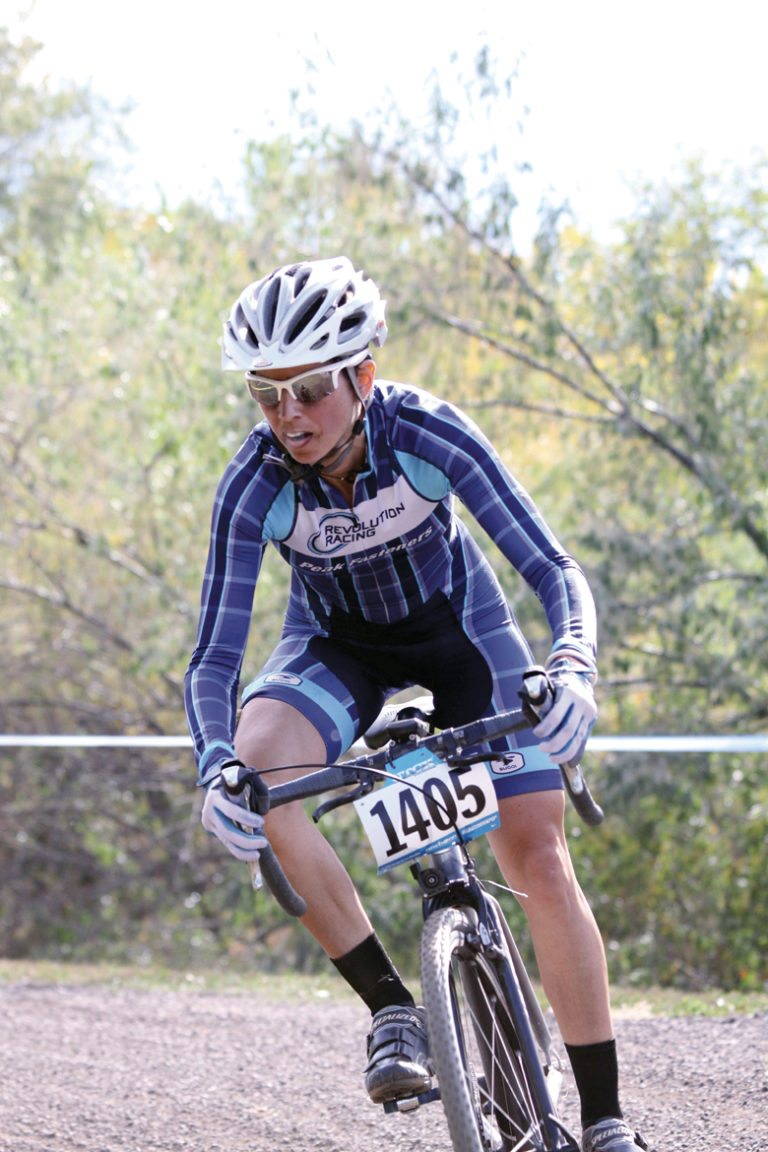
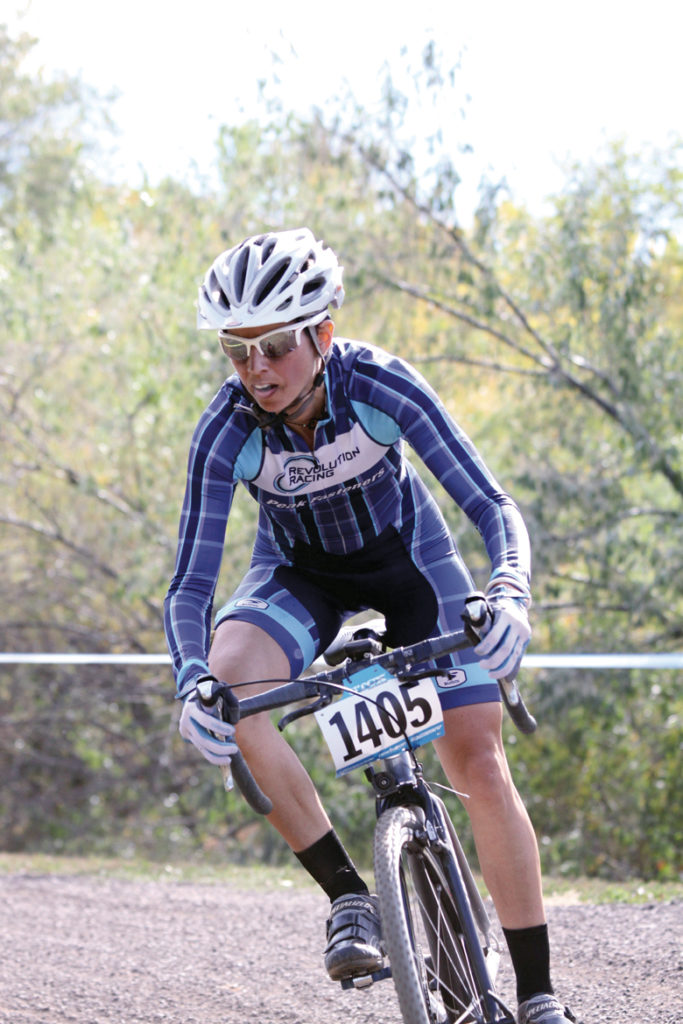
Jen Hanks was diagnosed with breast cancer earlier in the year. One of Utah’s strongest pro women mountain bike riders, she kept on riding through treatment (read her blog at: athletefightscancer.blogspot.com) and after. Jen stayed strong throughout, and was competing again by season’s end, winning the duo category at the 6 Hours of Frog Hollow. Recently she wrote on her blog: “Cancer has changed me. It has taken things away from me. It has not taken away my ability to race my bike!”
Jen Hanks, who overcame breast cancer to race again in 2011. Photo by Dave Iltis.
That resilience of spirit led us to chose Matt Bradley and Jen Hanks as our Riders of the Year.
Nicole Evans won 15 UCA races this season continuing her streak at the top of the UCA leaderboard. She also raced nationally throughout the season and picked up a 10th place overall at the Tour of the Gila and 7th at Valley of the Sun. Nicole is our Female Road Racer of the Year.
Chase Pinkham finished a top the leaderboard in the pro/1/2 category of the UCA Series winning the overall at the High Uintas Classic, the Antelope Island Road Race, and a stage of the Tour of the Depot. He won 14 races in the weekday Utah Crit Series. Chase also raced nationally, taking 10th place in both the US Professional Road Race Championship and the time trial, and finished the Tour of Utah. Chase is our Male Road Racer of the Year.
Keegan Swenson raced on his mountain bike locally, nationally, and internationally, taking 4th overall in the Pro Category of the Intermountain Cup Series, 1st overall in the Utah State Championship Series, and second in the Dealer Camp STXC among a star studded field. He won numerous races across the country in the junior 17-18 category and finished 2nd in both the XC and STXC at the USA Cycling National MTB Championships. He also took second in a major Swiss MTB race. Keegan Swenson is our Male Mountain Bike Racer of the Year.
Erica Tingey topped the bunch in the Intermountain Cup Series, winning 3 races on the way to the overall. She finished 3rd overall in the Utah State Championship Series, and won the Mt. Ogden 50K. Erica is our Female Mountain Bike Racer of the Year.
In 2010, Kris Walker won 4 races in the Utah Cyclocross Series and the overall. She topped this off with a national championship in the 50-54 age group. Kris Walker is our Female Cyclocross Racer of the Year (2010 season).
Bart Gillespie won the overall in the Utah Cyclocross Series again last season. We are not sure how many times he has done this, but it’s been at least 15. He won 7 of 9 races he entered, always in style. Bart is our Male Cyclocross Rider of the Year (2010 season).
Christine Dern won the overall for the Cat 1 women in the Utah Downhill Series and finished second in the PRO GRT downhill. She is our pick for Female Downhiller of the Year.
Logan Bingelli won the USA Cycling Gravity National Mountain Bike Championship in the Pro Men’s Category, finished 4th in the dual slalom, won the PRO GRT race in Truckee, California, and won one race of the Utah Downhill Series. Logan is our Male Downhiller of the Year.
Chad Mullins has worked tirelessly on improving bike conditions in Salt Lake County. As chair of the Salt Lake County Bicycle Advisory Committee, he has convinced Salt Lake County to pass one of the more progressive Complete Streets ordinances in the country. He has written several editorials in the local daily paper (see them also on cylingutah.com). And, under his tenure, Salt Lake County is developing a best practices guide for bike facilities. While Salt Lake County has a long way to go, they would be completely stalled without Chad’s leadership. Chad Mullins is our Bike Advocate of the Year.
Bad Ass Coffee was on a roll this year. Over 170 team riders participated in many events with the goal of fundraising for charity. They were the top team in the MS Bike Tour raising $93,000 and were second in the Tour de Cure with $60,000. They also provided numerous volunteers for both events. Bad Ass Coffee is our Touring Club of the Year.
Canyon Bicycles topped the overall combined points in both the UCA series, and the Utah Crit Series, just beating out FFKR/SBO. They fielded riders across most categories, and were consistent throughout the season. Canyon Bicycles is our Road Racing Team of the Year.
Mad Dog Cycles dethroned perennial champion UtahMountainBiking.com in the Intermountain Cup. They finished 4th overall (and 1st in the 5 man category) in the 24 Hours of Moab, and hold organized trail building days as well as group rides. Mad Dog Cycles is our Mountain Bike Racing Team of the Year.
LOTOJA, the 206 mile race from Logan to Jackson, is tough, well run, and charitable. This year they raised $175000 for the Huntsman Cancer Institute and over the years have raised $700,000. LOTOJA is our Event of the Year.
Honorable Mentions go to:
Laura Howat for taking second in the UCA series and winning the Masters National Criterium Championship.
Stan Swallow for taking second in the Masters National 70-74 Road Race, and two golds, a silver, and the overall at the Huntsman Senior Games. He also runs the successful Utah Velo Club.
Hilary Crowley, for winning the 35-39 National Road Race. Katie Clouse for winning the 10 and under National XC Championship and Jason Sparks for winning the 40-44. Muffy Davis won the silver in handcycling at the World Paracycling Championships.
Rob Squire and Tayler Wiles for winning U-23 National Championships.
Bo Pitkin for racing both singlespeed and 35+A in cyclocross locally, finishing 2nd and 4th in the series, and for racing in the national championships, finishing 11th and 8th.
Nicky Wangsgard for winning the International Cycling Classic (Superweek) overall for the 3rd year in a row.
Jason Tolman for overcoming three surgeries in the last few years to raise funds on several charity rides.
Tyler Wren for winning the Vuelta a Chile, the Crusher in the Tushars, and finishing both the Tour of California and the Tour of Utah.
And last, but not least, we would be remiss if we didn’t also recognize several others that we know about and many that we don’t who have struggled through cancer and kept riding. Cindy Yorgason also fought breast cancer and was on the bike at Cross Out Cancer. Matt, Jen, Cindy, Steve Miller, Nick Ekdahl, Conor O’Leary, Todd Hageman, and many others who we don’t know have kept riding and fighting and lead the rest of us by setting a great example.
We would like to thank our readers and advertisers and the entire Utah and Intermountain cycling community for another incredible year of cycling. Have a great winter riding. We’ll see you in the spring!
The 3rd annual Mt. Ogden 100k was held August 27th. The race has earned a reputation of being one of the most challenging races around featuring loads of single track and a unique asphalt climb to the finish. Racers have taken note and a record 500+ riders took the start for both 50 and 100k distances.
Though well know to Northern Utah riders, Snowbasin resort is a bit of a hidden gem. Linking into the surrounding US Forrest service trails Snowbasin caters to MTB’ers with miles and miles of well groomed trails, including the all new Jardine Peak trail featured in the 100k race. The resort also has bike gondola service to the top of the mountain as well as a full bike shop and rental fleet.
Putting a unique spin on the event, Race Director Steve Andrus offered a free ticket to an outdoor concert featuring homegrown rock band Royal Bliss. Many stuck around or returned later that evening with friends and family. In another distinctive twist all racers received custom Mt.Ogden 100k arm warmers from Epic Cyclewear, in lieu of the standard race t-shirt. A full raft of sponsors supported the event including Rockwell time/Rockwell Relay with their racing semi providing the back drop for the start/finish line and watches to category winners.
100k Pro Men
Race winner Alex Grant (Cannondale Factory Team) has been on a tear in MTB endurance races this summer. In addition to winning the Mt. Ogden race, he placed 3rd at the Leadville 100 two weeks prior and went on to win the Park City Point to Point the following weekend.
This year’s race was a who’s who of top Utah Pro’s. In a Utah first ENVE Composites sponsored athlete Jonathan Page multi time cyclocross national champion and world championship podium getter, took the start in the 100k.
Jason Sager set the early pace out of the gate, marked by Cary Smith, Alex Grant and Nick Fisher. This core group stayed together for much of the first lap. As the riders made the climb along the freshly cut trail to Jardine peak on the second lap, the separations began to occur. Grant pulled away from the others and quickly opened a big gap. Having pre ridden the course and being more familiar with the decent, Nick Fischer nearly latched back on to Grant, but could not quite seal the deal. Fisher was later passed by both Cary Smith and Reed Wycoff.
Grant would go on to finish in 5 hours and 15 minutes, beating second place finisher Cary Smith by over 16 minutes, and third place Reed Wycoff by 21 minutes.
The course provided to be challenging for both man and machine with a number of DNF’s. Early leader Jason Sager succumbed to a mechanical when his fork failed and Jonathan Page’s day also ended early when he triple flatted in the initial single track section.
Alex Grant said “The course was well marked and didn’t disappoint with tons of single track, a real mountain bike course, which is what I like, it can’t be easy. “
100k Pro Women
All groups where started with the sound of a shotgun blast and after a neutral lap of the parking lot, Amanda Cary was on the rivet. She climbed the opening section with many of the pro men and kept the gap for the next 6 hours. 2nd place was harder fought; as Lynda Wallenfells led Kelsy Bingham for part of the first lap, with both riders passing through the start finish at 2:30 back. Then Kelsy opened up enough of a gap that she was not passed by Lynda when she had to stop for several minutes at the top of the climb on the second lap to fix her flat tire.
Amanda Cary went on the win in a time of 6 hours 19 minutes, besting second place Kelsey Bingham by nearly 25 minutes with Lynda Wallenfalls rounding out the podium a further 33 minutes back.
The women were especially appreciative of the fact that the cash purse for Pro men and women was equal. This bodes well for a larger field next year.
9-23-11 – Seven-time Tour de France winner Lance Armstrong will be racing the XTERRA Off-Road Triathlon tomorrow, his first triathlon in 22 years. He talked talked about the race in an interview today.
Think you can win tomorrow’s XTERRA USA Championship?
As much as I would like to think I could win or be a favorite I think it’s irresponsible to think that way. I haven’t done a triathlon in 22 or 23 years, haven’t done a mass start swim like that in just as long. This sport is very different. Just think about starting with hundreds of people in the water, think about the specificity of transitions. My transitions in the last 22 years have been all in the last week playing around in my garage, and I don’t know if that’s good enough. I’ll go out, have fun, push myself as hard as I can, and we’ll see.
There is a lot of buzz out there about you racing, are you excited about your first XTERRA?
I get the sense that people are excited, but nobody is as excited as I am. I sleep like a baby, and I woke up five times last night, so that’s the strongest statement I could make. I don’t ever have a problem sleeping, until last night.
Lance preps his bike for the XTERRA Championships.
Nervous?
Maybe you should ask me that in the morning, but last night I was nervous. I’m nervous for the race, but also because of the complexity of this event. A road race or the Tour de France is obviously difficult and complex but you’re dealing with one discipline, and you have a lot people to help manage those things. Manage the bike, manage the body, manage the food. This I have three different disciplines on my mind, and I’m thinking wait a minute, I’ve got to bring stuff for swimming, and cycling, and running. It’s a little more complicated.
What do you think about Utah?
I think Utah is amazing. You could spend your summers here and your winter’s up on the hill skiing, seems pretty good to me.
About the Livestrong Foundation
We’re an organization that was founded almost 15 years ago in Austin, Texas and are here to serve cancer survivors from all over the world, and not just the survivors but their friends and family by providing services, either direct services or services online. We touch millions of survivors all over the world ever year.
When you think about a race, you think, ‘what do I have to think about for this XTERRA tomorrow’, and most people know those answers. When you’re told you have cancer, whatever type it may be, people are full of questions, their family is full of questions, their friends are full of questions, and they don’t know where to turn. It’s one of the toughest things in this world to navigate. So, why we’ll have our own difficulties navigating this course tomorrow it will never compare to the navigation it takes to get around and get through this thing we know as cancer.
WASHINGTON, D.C. – The U.S. Consumer Product Safety Commission, in cooperation with the firm named below, today announced a voluntary recall of the following consumer product. Consumers should stop using recalled products immediately unless otherwise instructed. It is illegal to resell or attempt to resell a recalled consumer product.
Name of Product: Bicycles with Advanced Group carbon forks
Units: About 14,200
Distributor: Specialized Bicycle Components Inc., of Morgan Hill, Calif.
Manufacturer: Advanced Group, of Taiwan
Hazard: The brake component housed within the bicycle’s carbon fork can disengage from the fork and allow the brake assembly to contact the wheel spokes while rotating, posing a fall hazard.
Incidents/Injuries: The company has received two reports of the brake component disengaging from the carbon fork. No injuries have been reported.
Description: This recall involves the following nine, 2011 model year bicycles with Advanced Group carbon forks: Sirrus Expert, Sirrus Comp, Sirrus Elite, Vita Expert, Vita Comp, Vita Elite, Vita Elite Step Thru, Tricross Sport, Tricross, and Tricross Comp. All bicycles have the brand name “Specialized” on the lower front frame tube. The model name is on the top tube.
Sold at: Authorized Specialized Retailers nationwide from June 2010 through August 2011 for between $700 and $2,000.
Manufactured in: Taiwan
Remedy: Consumers should immediately stop riding these bicycles and return them to an authorized Specialized retailer for a free repair or replacement carbon fork.
Consumer Contact: For additional information, contact Specialized toll-free at (877) 808-8154 from 8:00 a.m. to 5:00 p.m. PT Monday through Friday, or visit the company’s website at www.specialized.com
9-22-11 – WASHINGTON, D.C. – The U.S. Consumer Product Safety Commission, in cooperation with the firm named below, today announced a voluntary recall of the following consumer product. Consumers should stop using recalled products immediately unless otherwise instructed. It is illegal to resell or attempt to resell a recalled consumer product.
Name of Product: Bicycles
Units: About 91,000
Importer: Bridgeway International of Naples, Fla.
Hazard: The bicycle chain can break, causing a rider to lose control and fall.
Incidents/Injuries: The firm is aware of 11 reports of incidents, including nine reports of injuries, including lacerations and contusions.
Description: This recall involves “NEXT”-branded men’s 26-inch hybrid bicycles. The bicycles are red or orange. “Power X” and “Suspension” are printed on the frame. Model numbers LBH2611M and LBH2611M2 are included in this recall. The model number is located on the frame between the pedals.
Sold at: Walmart from February 2011 through July 2011 for about $100.
Manufactured in: China
Remedy: Consumers should immediately stop using the recalled bicycle and contact the company for a free repair.
Consumer Contact: For additional information, contact Bridgeway International at (877) 934-3228 anytime or visit the firm’s website at www.powerxbike.com
On Sat, Oct. 1, Utah based PlanetGear.com will host young riders, ages 6 to 16, for a youth mountain biking event at Trailside Park in Park City. The ride is part of the nationwide celebration Take a Kid Mountain Biking Day, supported by the International Mountain Bicycling Association (IMBA).
Register in advance by emailing [email protected] for additional information, waivers, and volunteer opportunities
Be sure to bring a bike, helmet, sunscreen, and proper riding attire
Meeting place is Trailside Park Pavilion (5715 Trailside Dr. Park City, UT 84098)
Start time is 10:00 am
Parents are welcome to ride too
Waiver form is required and can be filled out day of event
Light refreshments served
Professional mountain bikers will be attending to teach bicycle safety at the start of the event.
IMBA’s International Take a Kid Mountain Biking Day is in support of First Lady Michelle Obama’s Let’s Move initiative. IMBA has pledged to get 30,000 children participating in 300 cycling events on Oct. 1.