Home Blog Page 338

Collegiate Mountain Bike Nationals move to New Mexico’s Angel Fire Resort this fall

Colorado Springs, Colo. (June 3, 2011) – USA Cycling is pleased to announce a two-year agreement with New Mexico’s Angel Fire Resort to host the 2011 and 2012 Collegiate Mountain Bike National Championships.

After unanticipated difficulties forced the original venue to step down as the event’s host this spring, Angel Fire agreed to step in and offer up its world-class bike park for the three days of national championship racing.

Both the 2011 and 2012 events will be held on their originally scheduled weekends of October 28-30, 2011 and October 26-28, 2012.

Nestled in northern New Mexico’s Sangre de Cristo Mountains, just 25 miles from Taos, the Angel Fire Resort is known as a hot spot for mountain biking. The resort’s bike park has played host to the UCI Mountain Bike World Cup in 2005 and the USA Cycling Collegiate Mountain Bike National Championships in 2006. It also annually puts on the popular Chile Challenge Mountain States Cup event.

Now, the venue is fresh off of a major expansion that saw it add 29 miles of new and enhanced trails this spring. It will offer a wide variety of technical terrain for coeds to compete on for national titles in the cross country, short track cross country, downhill, and dual slalom events.

“Angel Fire is the perfect backdrop for the Collegiate Mountain Bike National Championships,” explains Hogan Koesis, director of the mountain bike park at Angel Fire Resort. “Our extensive trail network and rugged terrain will offer the riders the best location and conditions. Bringing this caliber of a race to New Mexico is great for our state and we are thrilled to be working closely again with USA Cycling.”

The Athlete’s Kitchen: Nuts & Athletes: Love ‘em or leave ‘em?

The Athlete’s Kitchen

by Nancy Clark, MS RD CSSD; Copyright: May 2009

Nuts & Athletes: Love ‘em or leave ‘em?

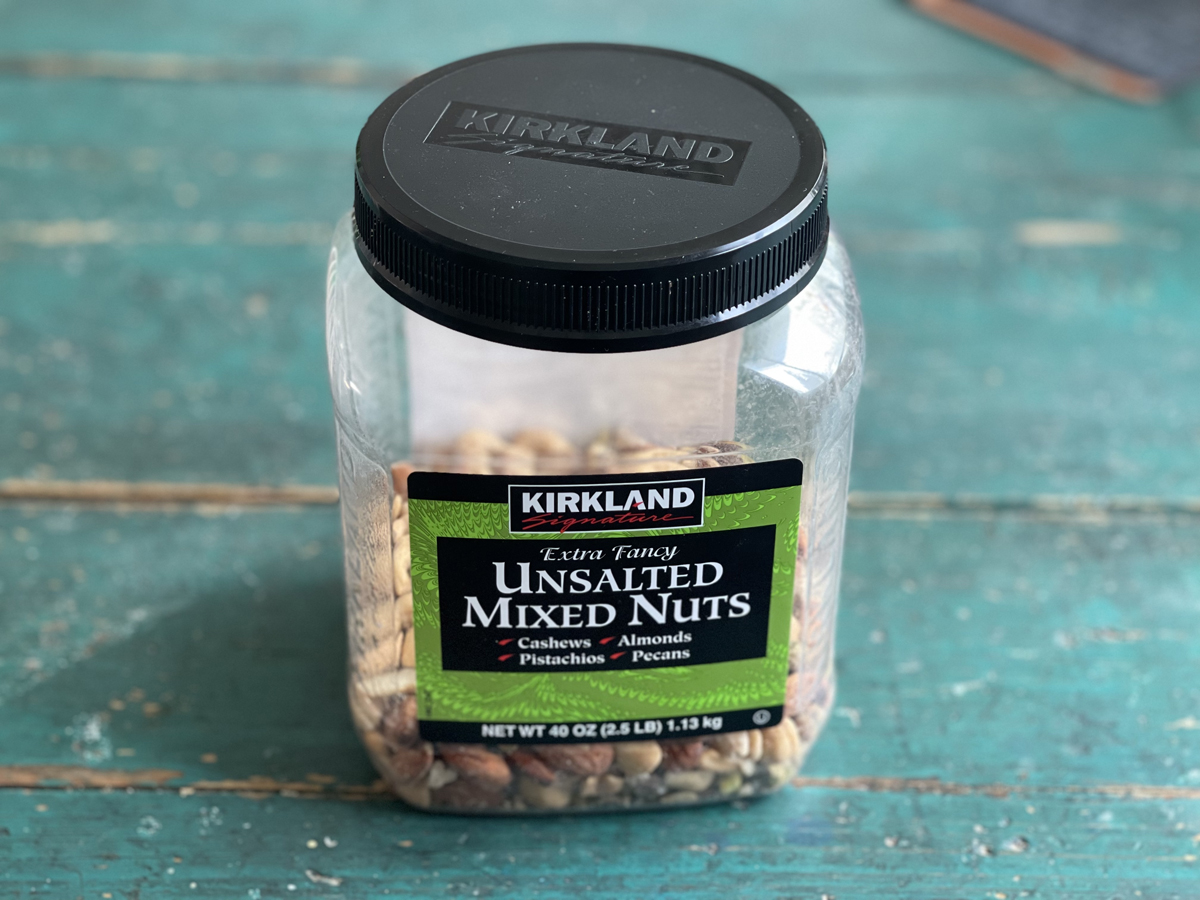
Athletes commonly have a love-hate relationship with nuts. They love them, but try to stay away from them. “I don’t dare keep a jar of cashews in my house. I’d end up eating them all and gaining weight,” complained one rower.  Although she knows nuts are healthful and good for her, the over-ruling perception is nuts are “sooooo fattening.”

Athletes commonly have a love-hate relationship with nuts. Photo by Dave Iltis

While nuts are indeed a calorie-dense food, the good news is nut-eaters are not fatter than people who avoid nuts (1). That’s because nuts are satiating; that is, they stay with you and keep you feeling “fed.” A woman-size handful of nuts (150 to 200 calories) for an afternoon snack often ends up being lower in calories than the 100-calorie pack of crackers that leads to another and yet another 100-calorie pack because you are still hungry. Snacks like crackers, pretzels and rice cakes fail to keep you satiated because they lack fiber, protein, and fat —and that’s what nuts have to offer.

A study with overweight teens highlights this point. The students were part of “The Family Lifestyle and Over-weight Prevention Program” in Houston, TX (2). The teens were given a healthy after school snack to help improve the quality of their diet: nuts and peanut butter along with fruits and vegetables (such as apple slices with peanut butter, baby carrots dipped in peanut butter, trail mix with peanuts and dried fruits). These snacks replaced the former popular choices of chips and snack cakes. The kids lost weight and kept it off—and equally important, they liked the snacks. There’s no denying a plain apple may seem “boring” and unpopular because it is not substantial enough to satisfy afternoon hunger. But add some peanut butter, and that apple becomes a welcomed treat!

When the afternoon munchies strike, I invite you to “go nuts” (in moderation) and observe the benefits of eating a handful of nuts. You may well discover you are less hungry for a longer period of time. While a few rice cakes may fill you for half an hour, a few nuts might last for 2.5 hours (3).

If you are afraid the “handful” will turn into a “jarful”, remember the best way to take the power away from a “trouble food” is to eat it more often. That is, if you end up overeating nuts (or any food, for that matter), you may be thinking “I just blew my diet by eating some almonds, so I might as well eat the whole jar to get rid of them. Then, I can get back on my diet.” Or, if you are at a social event and end up eating too many peanuts, you might be thinking “This is my last chance to eat peanuts before I go back on my diet. I’d better eat them all now because I shouldn’t eat them ever again.”

The solution to over-eating nuts is to change your relationship with them and acknowledge you like nuts: “I enjoy nuts so much, I’m going to eat them more often—at every meal and snack!” That way, you eliminate your fear of being denied of this favorite food. You won’t have to eat the whole jar, because another jar will be waiting in the pantry. While this might sound scary to overeaters, the reality is, after three days of eating nuts at every meal and snack, you likely will be content to cut back to enjoying nuts once or twice a day (or week) and no longer will they have any power over you.

Which nuts are best?

OK, so now that I have convinced you to include nuts in your sports snacks (and meals), you might be wondering “What is the best kind of nut to eat?” That is like asking, “What is the best fruit to choose?” The answer is, each type of nut offers it’s own special health benefits. Almonds have a little more fiber than cashews; walnuts have a little more polyunsaturated fat than hazelnuts; peanuts have a little more vitamin E than walnuts—but no one nut is distinctly superior to another one. So, rather than get caught up in trying to choose the “best” nut, simply buy a variety of nuts for a variety of nutrients, flavors, and health-protective attributes. Enjoy—

• slivered almonds on your morning cereal

• a peanut butter and banana sandwich at lunch

(Now doesn’t that sound more substantial than yet-another turkey sandwich?  Don’t panic about the calories! Rather, notice how peanut butter will keep you feeling fed, so you don’t end up eating abundant calories of sweets later in the afternoon.)

• trail mix with cashews and dried fruit in the afternoon

• walnuts in your dinner salad.

What’s so healthy about nuts for athletes?

Nuts offer far more than just calories. They are filled with hard-to-get nutrients that can easily get processed out of refined foods. By the end of the day, nut eaters tend to have a diet with overall higher nutrient quality (4). Nuts offer magnesium, niacin, vitamin E, copper, and manganese, as well as other phytochemicals that are health protective, like resveratrol (reduces heart disease). All this means, nuts have a powerful impact on your health.

Nuts protect against the diseases of aging. That is, people who eat nuts or peanut butter five or more times a week reduce their risk of heart disease and diabetes by more than 20% (1). That’s impressive! Incorporating some nuts along with your pretzel- or rice cake snack offers both health and weight-management advantages.

If you are enjoying nuts as a recovery food after a hard workout, be sure to eat some carbs along with the nuts. While the protein and (healthful) fat in nuts abates hunger and helps build muscles, only carbs (re)fuel your muscles. Some carb-protein nut combinations include: peanut butter + banana; nuts + dried fruit; almonds + (packet of instant) oatmeal.

Nuts offer only a little protein—for example, about 8 grams in two tablespoons peanut butter (the amount in a typical sandwich). This is not much, considering the protein needs of most active women are 60 to 90 grams, and active men may need 80 to 120 grams. Hence, vegetarian athletes need to really eat a lot of nuts and peanut butter if this is their main source of protein!

Easier yet, boost your protein intake by adding this childhood memory back into your daily sports diet: a glass of milk along with the peanut butter sandwich! In general, enjoy nuts, in moderate portions, as an integral part of your meals and snacks.

Nancy Clark, MS, RD, CSSD (Board Certified Specialist in Sports Dietetics) counsels both casual and competitive athletes in her practice at Healthworks, the premier fitness center in Chestnut Hill MA (617-383-6100). Her Sports Nutrition Guidebook, and food guides for new runners, marathoners and cyclists are available via www.nancyclarkrd.com. See also www.sportsnutritionworkshop.com.

References

1. Sabate J, Ang Y. Nuts and health outcomes: new epidemiological evidence. Am J Clin Nutr 89(5):1643S-1648S. 2009

2. Johnston C, Tyler C, McFarlin B, Poston W, Haddock C, Reeves R, Foreyt J. Weight Loss in Overweight Mexican American Children: A Randomized, Controlled Trial. Pediatrics 120(6)):150-1457, 2007.

3. 1. Kirkmeyer SV, Mattes RD Effects of food attributes on hunger and food intake. Int’l J Obesity 24 (9):1167-75, 2000.

4. Kris-Etherton PM et al. Improved diet quality with peanut consumption. J Amer College Nutr. 23(6):660-668, 2004

Sidebar: Calories in Nuts

An ounce of nuts—a woman-size handful or  ¼ cup— offers about 150 to 200 calories. Here’s how nuts compare:

Nut                 # per ounce (approx)                        Calories/oz     Calories/nut (approx)

Almonds                     28                                170                              6

Cashews                      23                                160                              7

Macademia                  27                                200                              8

Peanuts                        30                                160                              5

Pecans                         15                                200                              13

Walnuts                       14                                185                              13

NancyClarkRD.com

For Athletes with Food Cravings and “Sugar Addictions”

The Athlete’s Kitchen

NancyClarkRD.com

Copyright: Nancy Clark MS RD CSSD May 2011

“If I crave a candy bar, should I eat a candy bar?”

That’s the title of one of my most popular blog posts! Clearly, food cravings and sugar addictions are a source of concern and frustration for many athletes who believe that eating one chocolate bar (or whatever food they crave) will lead to eating ten of them, expand their waistlines, and ruin their health. They avoid chocolate like the plague. Instead, they righteously snack on only “healthy foods” like apples and oranges.

While the natural goodness of fruit is indeed the more nutritious and health-promoting choice, some nice chocolate, enjoyed in response to a hankering, can also fit into your sports diet.  By regularly enjoying chocolates, you can avoid the strong cravings that lead to eating a sickening amount—not because you are “addicted to sugar” but because you are doing “last chance eating” before you go back into your self-defined food jail (1).

Keep in mind, your brain has a memory for the food you crave. If you try to ignore your craving for, let’s say, chocolate, you’ll end up eating it sooner or later. This may happen after you’ve tried to curb your craving with an apple, crackers, pretzels, sugar-free fudgsicle—anything but the chocolate—and then, 500 calories later, you succumb to what you truly wanted. You could have more wisely enjoyed the chocolate in the first place; you would have saved yourself a bunch of calories!

Food cravings are a popular topic not only on my blog but also among LinkedIn’s Intuitive Eating Professionals group. A discussion “If you crave a food, should you eat it?” spurred a lot of responses, with the answer being YES! History says that denial and deprivation of a desired food does not work permanently but rather results in binge eating. After all, if restrictive eating “worked,” then everyone who has ever been on a diet would be thin. The majority of dieters are overweight and obese, suggesting that “dieting fall-out” maybe be contributing to obesity. (2)

To our detriment, we live in a world where enjoying bagels, ice cream, candy, and chips gets “questioned.”  Athletes talk about needing “will power” to curb their intake of the foods they crave. But most of us really want to be able to enjoy these foods. We just want to be able to eat them sanely, not in what feels like an out of control pig-out. We need nutrition skill power (not will power) to learn how to manage today’s food supply. That’s where a sports dietitian can help you control hunger-based binges and find peace with food. (For a referral to a local sports dietitian, see www.SCANdpg.org.)

The question arises: What’s so bad about cravings in the first place? Is there really something wrong with eating what you truly want to eat? Cravings are not addictions. That is, if you crave a bagel because it tastes good, why should you not enjoy the bagel? When you eat a food you crave, your brain experiences a biochemical change that signals happiness. Can eating an appropriate portion (as opposed to overeating “the whole thing”) be a bad thing to do?

The answer commonly depends on if you are eating the food for fuel vs. mindlessly devouring it for its drug-like effect. If you find yourself on the verge of polishing off the whole bag of bagels, stop and ask yourself, “Does my body need this fuel?” If the answer is yes, you need to learn how to prevent the extreme hunger or derprivation that triggered the overeating. If the answer is no, then ask yourself, “What am I doing with my feelings?” Over-eating a craved food can distract you from sadness, smother your emotions, and protect your from feeling alone and lonely. But you are using food for the wrong reason. No amount of bagels, chocolate, or chips will resolve the real problem: you are likely hungry for a hug.

Do certain foods over-excite the pleasure centers in the brain? If so, do those foods become “addictive”? The recent science (3) says there is no such thing as a “sugar (or food) addiction.” Yes, it may have addictive-like qualities, particularly following a restriction/binge pattern of eating (1).  In my practice, most people who binge have an unbalanced relationship with food; it has become too enticing, a primary focus for pleasure. The more they try to stay away from palatable foods, the more they want them.

While there is much we do not know about food and this controversial topic of food addictions, I encourage my clients to first rule-out hunger as the cause for cravings for sugar and carbohydrates. The physiology of hunger explains why we crave sugar; it’s a survival signal for quick energy. When your blood sugar is low, your brain signals an urgent need for sugar. When your muscles are glycogen depleted, you experience a niggling carb cravings until the muscles are adequately replenished.

What can you do to overcome cravings and perceived “addictions”? First and foremost, experiment with eating heftier breakfasts and lunches to abate hunger. (No, you will not “get fat” by eating more during the day. If you listen to your body, you will observe you are less hungry at night and will simply be able to consume fewer calories.) Also try changing your attitude. The mind is very influential. If you believe you are addicted to a food, you will have a hard time convincing yourself otherwise despite research that refutes the concept of food addiction and puts the focus on deprivation as a trigger to (over)eat.

The next time you have a craving for a specific food, relax, enjoy eating it slowly, taste it, savor the flavor, and linger over the treat. Do this several times throughout the week. Learn to enjoy the treat slowly, in moderation, without feeling guilty. Enjoy the foods you crave at every meal. For example, have a few Hershey’s Kisses day after day, at breakfast, lunch, afternoon snack, and dinner.  Eat them so often that you get sick of them. This may sound unhealthy in the short term but a week or two of excess chocolate will not ruin your health (nor your waistline) forever.

By learning your body’s responses to different foods, you can at least become educated: food is not addictive and cravings are not bad. What’s bad is trying to live hungry as well as denied and deprived of foods you enjoy. There is a possibilty you can find peace with food.

Nancy Clark, MS, RD, CSSD (Board Certified Specialist in Sports Dietetics) helps both casual and competitive athletes find peace with food. Her practice is at Healthworks, the premier fitness center in Chestnut Hill MA (617-383-6100). Her Sports Nutrition Guidebook and food guides for new runners, marathoners, and soccer players offer additional information. They are available at www.nancyclarkrd.com. See also www.sportsnutritionworkshop.com.

Reference:

1. Pelchat M. Food addiction in humans. J Nutr. 2009; 139(3)620-622

2. Corwin RL, and P Grigson. Symposium Overview—Food Addiction: fact or fiction? J Nutr. 2009; 139(3):617-619.

3. Benton, D. The plausibility of sugar addiction and its role in obesity and eating disorders. Clinical Nutrition 29(3):288-303, 2010.

Raleigh’s Midsummer Nights Cyclocross Offers Pro Contract

0

Seattle, WA – May 27, 2011  — Raleigh Bicycles and MFG Cyclocross are kicking off the cyclocross season two months earlier than the rest of the country with Raleigh’s Midsummer Nights Cyclocross in conjunction with the Raleigh Retailer Summit at Suncadia Resort in Roslyn, WA on July 21, 2011.

This rare summer cyclocross race starts the cyclocross season early, yet boasts one of the top prize purses for any domestic cross race this year, with a cash and merchandise prize list exceeding $40,000.  For the Elite Men and Women’s races, Raleigh Bicycles will have a “pro contract” on the table for the top finishing rider without an existing contract for the 2011/2012 US UCI Cyclocross Season.

“We are very motivated to expose our retailers from around the country to the fantastic excitement centering around cyclocross at this time in the US. We are excited to get our retailers out riding and racing our 2012 line of cross bikes and then offer them their own race category to close out our three-day retailer summit,” states Brian Fornes, Raleigh Marketing Guy.

Says Fornes, “Plus, the summit will end with one of the largest prize payouts in the country for any cross race as our retailers watch the emerging talent battle for a race contract with Raleigh for the coming season.”

The prize list for the Elite Men and Women’s races will be paid out equally:

Elite Men:              1st Place $1500; 2nd Place $500; 3rd Place $250

Elite Women:        1st Place $1500; 2nd Place $500; 3rd Place $250

Additionally, the top male and female Elite rider without contract are also eligible to win a full Raleigh cyclocross contract including 2 full bikes, a travel allowance, racing kit, as long as they race a prescribed set of races.

“If you are an emerging male or female cyclocross racer, put your road and mountain bike calendar on hold and consider attending this event.  In addition to a full bike, cash, travel, and clothing contract, there is also the chance to win an additional $1,500 check for first place,” notes Terry Buchanan, co-founder of MFG Cyclocross.

In addition to the Elite Men & Women and Raleigh Retailer races, there will be amateur races starting at 2:00 pm  for all ages and abilities including a singlespeed category with the Men and Women both racing for a winner-take-all prize pack including a Raleigh RX Carbon SS frame, $250 cash, and a travel allowance to also race for Raleigh for the coming season.

“Yes, we know July 21st is a Thursday but this is a new national cyclocross holiday; take the day off,” says Zac Daab, co-founder of MFG Cyclocross.

Festivities on this new cyclocross holiday will include a vendor expo, beer garden, food on-site, and course-side hydration by Nuun.  Additionally, discounted lodging will be offered by Suncadia Resort.

A USA Cycling license is not required to race in any category.   However, Elite Men and Women without contract must have USAC Cat 1 or 2 cyclocross license to be eligible for the”Top Elite Rider Without Contract Prize.”

For more information on Raleigh’s Midsummer Nights Cyclocross please visit www.mfgclocross.com.

AASHTO Approves New U.S. Bicycle Routes Across America

The first new official routes in almost 30 years herald growing momentum for U.S. Bicycle Route System

Missoula, Montana — Adventure Cycling Association and the American Association of Highway and Transportation Officials (AASHTO) today announced that AASHTO’s Special Committee on U.S. Route Numbering has approved six new U.S. Bicycle Routes (USBR): USBR 1 in Maine and New Hampshire, USBR 20 in Michigan, and USBR 8, 95, 97, and 87 in Alaska — the first official U.S. Bicycle Routes to be established since 1982.

AASHTO and Adventure Cycling welcomed approval of these new routes as a momentous step toward creating an official U.S. Bicycle Route System (USBRS), which will become the largest official national cycling network on the planet.

“We are pleased that the collaboration with Adventure Cycling has resulted in the approval of these new bicycle routes and we look forward to continuing the implementation of the national corridor plan that was endorsed by AASHTO’s membership in partnership with the bicycling community,” said John Horsley, AASHTO’s Executive Director.

The new routes have been under development since AASHTO’s Board of Directors approved the national corridor plan for the USBRS — a template for planning interstate bicycle routes across the country — in October 2008.

“The day after AASHTO approved the corridor plan, volunteers contacted our office and asked if they could start developing USBR 20 from Marine City to Ludington,” commented Josh DeBruyn, bicycle and pedestrian coordinator for the Michigan Department of Transportation (DOT). “Management supported the idea that this project would be a grassroots effort, and it’s worked out tremendously.”

In coordination with the Michigan DOT, and working as volunteers for Michigan Trails and Greenways Alliance, supporters Scott Anderson and Kerry Irons pioneered Michigan’s grassroots model for implementing U.S. Bike Routes: first by winning buy-in from local communities and transportation agencies, and then securing route number approval from AASHTO, a required step for all U.S. Bike Routes. AASHTO is a nonprofit, nonpartisan association representing highway and transportation departments in all 50 states, the District of Columbia, and Puerto Rico. A powerful voice in the transportation sector, its primary goal is to foster the development of an integrated national transportation system. AASHTO’s support for this project is crucial in earning the support of federal and state agencies, and provides a major boost to bicycling and route development for non-motorized transportation.

“It’s an important achievement,” said Ginny Sullivan, special projects director and USBRS project coordinator at Adventure Cycling Association. “We’ve appreciated Michigan’s very methodical approach over the past two and a half years, providing a model for other states to be successful in their efforts.” Adventure Cycling provides technical assistance to states working on route implementation.

Michigan’s USBR 20 begins and ends with ferry rides: over 40 miles of Lake Michigan open water from Manitowoc, Wisconsin, to the port of Ludington, Michigan, and three-quarters of a mile across the St. Clair River to Ontario, Canada, from Marine City, Michigan. In between are glacial hills and flat prehistoric lake bottoms of central Michigan. USBR 20 mostly follows quiet, rural, country roads and includes over 45 miles of separated pathways, including the 30-mile Pere Marquette Rail-Trail. The western section of the route features the Manistee National and Pere Marquette State Forests, insuring that cyclists will get a strong dose of “pine tree perfume” as they ride. The route is the essence of small-town, rural communities anxious to host traveling cyclists. Plus, riders get to visit Frankenmuth, (“Michigan’s Bavaria”) and ride through its covered bridge.

Similar to Michigan, Maine’s Department of Transportation worked with local cyclists to develop U.S. Bike Route 1 from Calais to Portsmouth. “We looked at many options: Adventure Cycling’s Atlantic Coast Route and the East Coast Greenway. We came up with what we thought would provide the best touring route while making important connections to Maine’s coastal cities and scenic destinations,” says Tony Barrett, a dedicated local cyclist active with the Bicycle Coalition of Maine.

Maine’s USBR 1 begins on an historic bridge just upriver from the Portsmouth Naval Shipyard, a symbol of the state’s rich maritime history. The route follows low-traffic roads connecting many of Maine’s major towns and cities. In Portland, the route follows the Eastern Promontory shore with views of the many islands in Casco Bay. Farther north, USBR 1 follows sections of the state’s three major rivers with historic forts and many mills. In Bangor, Maine’s second largest city, the route passes by the large statue of Paul Bunyan, a testament to the region’s forest products industry along the mighty Penobscot River. (An alternate route, U.S. Bike Route 1A, follows the coast more closely connecting to many harbor towns.) After passing Acadia National Park, USBR 1 continues northeast along the less visited and less-developed “Downeast” coast en-route to the border crossing into New Brunswick. USBR 1 and the coastal alternate are also segments of the East Coast Greenway.

Maine’s DOT conducted a series of public meetings to get consensus from local communities about establishing the new route. “Maine communities recognize the important economic benefits bicycle tourism brings to the state and they welcome travelers, wherever they may hail from,” commented Dan Stewart, bicycle and pedestrian program manager for the DOT.

In all of these states, tourism and economic development revenue were oft-cited goals for communities joining the effort to establish these new routes. For example, as resolutions of support from the communities along USBR 20 arrived at the DOT office in Michigan, the common component was the economic benefits these tourism and transportation corridors will provide to the cities and towns along the route.

Bicycle travel is becoming an increasingly visible part of the adventure travel market, which, according to a recent study issued by the Adventure Travel Trade Association, generates $89 billion annually. In January 2010, researchers at the University of Wisconsin calculated that out-of-state visitors traveling to Wisconsin for great cycling opportunities generated $532 million, or more than half-a-billion dollars, in economic activity. With in-state touring cyclists, the total economic impact is close to $1 billion. Academics and advocates in Minnesota recently issued studies finding a similar $1 billion economic development boost generated by on-road and off-road cycling. The State of Oregon has embarked on a similar study and expects its survey to come out later in 2011.

Maine’s route connects to New Hampshire’s Seacoast region and the New Hampshire Seacoast Greenway. The Greenway has been established in New Hampshire for a number of years and is also used as the East Coast Greenway through New Hampshire. “We discussed the off-state system routes with the local jurisdictions. Their preference was to use the East Coast Greenway route, which the municipalities had already evaluated with the cooperation of the seacoast area cycling community,” said Larry Keniston, intermodal facilities engineer with the New Hampshire DOT.

Several new routes were also approved for Alaska. Starting with the land-based route connecting through Canada, USBR 8 is the Alaskan Highway, which runs from Dawson Creek, British Columbia, via Whitehorse, Yukon, through Delta Junction terminating in Fairbanks. An alternate route from Tok to Anchorage is numbered USBR 108 and the section near Haines is alternate USBR 208. The Alaska Highway is popularly (but unofficially) considered part of the Pan-American Highway, which extends south to Argentina. USBR 95 is the Richardson Highway from Delta Junction to Valdez where the route connects to Washington via the ferry system, also known as the Alaska Marine Highway. A north/south route, USBR 97, runs from Fairbanks through Anchorage to Seward.  The Fairbanks to Anchorage section of the route follows the Parks Highway and crosses the entrance to Denali National Park. Another route near Skagway, the home of theKlondike Gold Rush National Historic Park was approved as USBR 87, which will also connect to Washington via the Alaska Marine Highway. Alaska submitted their original application to AASHTO last fall, however, route numbers for the state had yet to be developed by the Task Force on U.S. Bicycle Routes. In the weeks leading up to the AASHTO spring meeting, the task force worked with the state of Alaska on the numbering system that was accepted and endorsed by the committee.  
 
”We are excited to be able to promote bicycle tourism in the state of Alaska. We have fabulous vistas and low-traffic highways that beg exploration,” says Bob Laurie, transportation planner and bicycle and pedestrian coordinator. “Connecting to Washington State via the ferry system and collaborating with Canada is next on our list.”

The Virginia DOT has been working over the past year to update their U.S. Bicycle Routes, submitting two applications for realignment in the fall of 2010. This spring, they updated sections of USBR 1 and USBR 76, and last week, AASHTO’s Special Committee on U.S. Route Numbering also approved these realignments.

“We are taking advantage of emerging bicycle infrastructure as it becomes available, and making adjustments out of necessity in order to provide safer alternatives,” said Liz McAdory, policy and planning specialist for the DOT. “We are also working with our districts to continue to sign our existing two U.S. Bicycle Routes — 1 and 76. Our department has a long-standing working relationship with bicycle advocates, especially the Virginia Bicycling Federation. Through this partnership, we’ve been able to identify necessary changes and update the routes, and will continue to do so.” USBR 76 is also known as the TransAmerica Trail, the first mapped cross-continental cycling route in the U.S., produced by Adventure Cycling in 1976.

The U.S. Bicycle Route System is a proposed national network of bicycle routes that span multiple states and are of national and regional significance. These routes will serve as visible and well-planned trunk lines for connecting city, regional, and statewide cycling routes, and provide transportation and tourism opportunities across the country.

A highly collaborative effort, the U.S. Bicycle Route System project is spearheaded by AASHTO’s Task Force on U.S. Bicycle Routes and involves officials and staff from state DOTs, the Federal Highway Administration, and nonprofit organizations such as Adventure Cycling, the East Coast Greenway Alliance, and Mississippi River Trail, Inc.

Adventure Cycling has provided dedicated staff support to the U.S. Bicycle Route System project since 2005, including mapping and research support, as well as technical guidance to states implementing routes. Support for Adventure Cycling’s work on the project has come from its members and donors, Bikes Belong, the SRAM Cycling Fund, the Lazar Foundation, New Belgium Brewing, the Surdna Foundation, and AASHTO’s Center for Environmental Excellence.

When complete, the U.S. Bicycle Route System will be the largest official bike route network on the planet, encompassing more than 50,000 miles of routes. Learn more at www.adventurecycling.org/usbrs.

MS Bike Ride Celebrates 25th Anniversary

June 2011 – The 25th Anniversary Bike MS: Harmons Best Dam Bike Ride will take place in Cache Valley the weekend of June 25-26. The annual event benefits the National Multiple Sclerosis Society Utah-Southern Idaho Chapter raising awareness and funds for critical research and local programs and services. Bike MS is the largest two-day organized cycling event in Utah benefiting people with MS in Utah and Southern Idaho.

“Harmons Best Dam Bike Ride is a fun and purposeful weekend,” said Chapter Vice President of Community Development Becky Woolley. “When Bike MS started here 25 years ago we had 100 cyclists and there were no MS specific treatments. Today we have 3,000 riders and seven disease-modifying therapies as well as more potential drugs in the pipeline than at any other time in history. While we still have miles to go until there is a world free of MS, events like this make new treatments possible and one day, a cure.”

The annual ride brings together a mix of cyclists from those seeking a personal challenge to those who enjoy the camaraderie of creating a team or riding with friends to the many touched by multiple sclerosis.

One rider is 80-year-old Frank Roskelley, who has participated every year. Like many, the ride initially appealed to him because of the challenge, but he soon got caught up in the cause. One year while asking for donations, a co-worker told him he would be happy to support his efforts; he had just been diagnosed with MS. “That’s when my motivation for the ride changed to riding for people living with MS,” he said. “As I met more people living with MS, I realized that I could suffer a few days if they can live every day with MS.”

Participants aim to meet a personal fundraising goal (minimum $250) as well as ride 40, 75 or 100-miles with the option of riding up to 175-miles over the course of the two days. The ride is fully supported with rest stops, sag wagons, bike mechanics, and catered meals.

Logan’s Cache Valley Fairgrounds is the start and finish of the routes that wind through the valley including parts of Idaho. The Fairgrounds is the base for all festivities including the Mountain America Team Village that will include bike and safety demos, live music, a dunking booth, kids zone and participant contests.

For more information, see bikemsutah.org or call 800-344-4867, option 2.


Tour of Utah to Air on Fox Sports Network

June 2011 – Organizers of the 2011 Larry H. Miller Tour of Utah announced that the August 9-14 professional bicycle race will receive regional and national broadcast television coverage for all six days of the event. This is the first time in the event’s seven-year history that broadcast television and online programming have been activated for a national and worldwide fan base.

FOX Sports Network (FSN) will be the national broadcast partner. ROOT Sports will broadcast regionally in the Rocky Mountain area. And the local broadcast affiliate will be KJZZ TV for Salt Lake City, Utah. All broadcast partners will air a one-hour recap show of the professional bicycle race each evening August 9-13, and a two-hour feature and highlight show following the final stage on Sunday August 14.

Ride Sun Valley Bike Festival Launched Featuring the 2011-2012 USA Cycling Mountain Bike Cross-Country National Championships

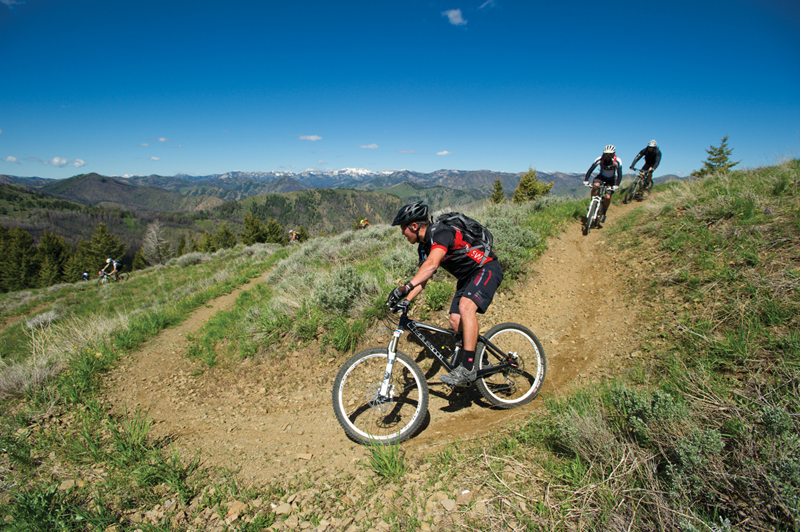
Mountain bike Sun Valley Ketchum
Above: Sun Valley has fantastic trails. Photo: Courtesy SCOTT Sports.

June 2011 – SUN VALLEY, ID –The Ride Sun Valley Bike Festival presented by Scott Sports, featuring the 2011 USA Cycling Mountain Bike Cross-Country National Championships will be held from July 11-17. The week-long event featuring numerous mountain bike activities will include the three race disciplines of Olympic Cross-Country, Short Track Cross Country and Super D events, as well as a two-day All Mountain Festival, a week of epic rides, and festivities.

Zions Bank will sponsor the Olympic Cross-Country event; Burlington Northern Santa Fe Railroad will sponsor the Short Track Cross-Country race and the Super D event sponsored by the Sun Valley Chamber. Other event sponsors include Idaho Tourism, Breakaway Promotions, Sun Valley Events and Metric Marketing Group. Scott is also the Official Bike Sponsor of the USA Cycling Mountain Bike Cross-Country National Championships and the Presenting Sponsor of the Ride Sun Valley Bike Festival.

An all new event being offered is the Sun Valley All Mountain, presented by Scott Sports. The two day race combines the scores of competitors in the XC and the Super-D disciplines.

The Nation Championship races will be held on Bald Mountain from July 14-17, 2011. This dramatic backdrop is the world famous ski area operated by Sun Valley Resort, another race sponsor. The diversity of the terrain and the outstanding facilities for spectators and families makes Sun Valley an ideal location for a national mountain bike competition.

The ability to create a demanding course and manage the logistics was key in the selection of Sun Valley. Over 1,000 racers are expected to participate.

Ride Sun Valley will feature numerous community activities. Each evening the official USA Cycling race award ceremony will be held in Ketchum Town Square and will be sponsored by St. Luke’s Wood River Medical Center and the St. Luke’s Wood River Foundation.

On Thursday evening, July 14, a Fat Tire Criterium for cyclists of all ages and experience levels will be held in downtown Ketchum. Held on a fast, technical course, this race is designed to create inspiring rides and spectator excitement. The “Crit” is sponsored by Sun Valley Brewing and Stanley Thermos. A course map and registration can be viewed at ridesunvalley.com.

The Scott Week of Epic Rides are daily guided and shuttled mountain bike rides that will be held in addition to the aptly named “Ride Sun Valley Local Stoker Rides” that will feature some of Sun Valley’s most epic trails. Cyclists can experience phenomenal backcountry scenery while riding some of the most demanding trails in the Northwest. Interested riders can go to ridesunvalley.com for more information. The Local Stoker rides are hosted by Mountain Rides and the Sun Valley Chamber of Commerce and will be laid out in the Festival map available to participants.

On Saturday, July 16, the Ketchum Bike Parks pump track will host the Second Annual Idaho Pump Track State Championship. Riding on the success of 2010’s event, this year’s competition is prepared to bring the next level of pump track racing to the national stage. This fun, family-oriented event will round out the week’s festival atmosphere.

“Sun Valley has a very strong mountain biking community and we’re very excited to be holding our USA Cycling Cross-Country Mountain Bike National Championships there for the next two years,” said USAC National Events Director, Kelli Lusk.

“We couldn’t be more pleased to be hosting an event of this caliber and starting a tradition of celebrating the amazing mountain biking which we are so stoked to have here. Once people get a taste of our community, trails, and surroundings, the biggest challenge will be leaving,” said Greg Randolph, General Manager of the Sun Valley Chamber of Commerce.

“When we learned that Sun Valley earned the bid for the 2011-12 XC National Championships Scott was immediately interested and involved in the event,” remarked Adrian Montgomery, Marketing/PR Director at Scott Sports. “We want the Ride Sun Valley and the Nationals to be the most successful event possible. Scott has a long-term commitment to the event and to the community we live and work in. We invite the industry and the MTB enthusiasts nationwide to come and partake in what Sun Valley has to offer. It’s a single track fantasy that you must experience.”

For more information on the races including race schedules, courses and a wide range of community events go to www.ridesunvalley.com. For more info on the USA Cycling national championship event, visit https://www.usacycling.org/events/2011/mtbnationals/.

High Uintas Looks at Alternate Course Due to Snow

By Paul Knopf and DuWayne Jacobsen

June 2011 – Race planners for the 23rd annual Cook Sanders Associates, Inc. and The Spence Law Firm High Uintas Classic Stage Race have established the best possible option for the Bald Mountain road race stage should Bald Mountain Pass be closed on Saturday, June 18th because of snow.

The Uinta Mountains have experienced record snowfall during this past winter season. There is a reasonable chance that Bald Mountain Pass, elevation 10,700 feet, might be impassable on June 18th. In the 23 year storied history of the High Uintas Classic, Bald Mountain Pass was impassable only once in 1995.

Should the Pass be closed on June 18th, a new course could await competitors in the first stage of the High Uintas Classic. The road race stage would start in Evanston at the Wyoming State Hospital. The start time would be moved back to 10 a.m. to allow competitors time to travel to Evanston on Saturday morning.

Competitors would race south along the Mirror Lake Scenic Byway to the snow line on the North Slope of the Uinta Mountains. This would be a rare opportunity for racers to climb up what they normally hammer down. After turning around at the snow line, racers would finish at the same locations as in previous years at Christmas Meadows or the Wyoming State Hospital.

For more information about the High Uintas Classic and timely updates about snow conditions, please visit www.evanstoncycling.org.

Booth and Howat Win Bear Lake Classic

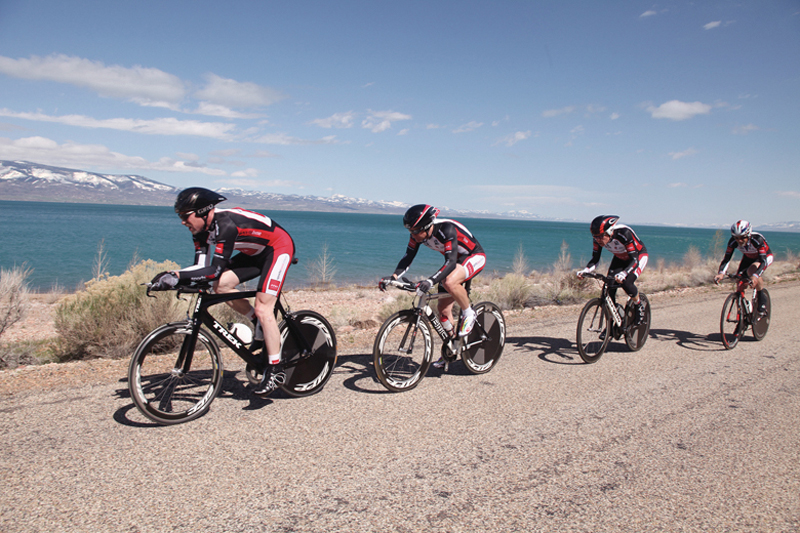
FFKR Time-trial Team
The SportsbaseOnline.com/FFKR Team in Sunday’s Team Time
Trial. Photo: Cotton Sox Photography.

By Ryan Barrett

June 2011 – In a repeat of the previous weeks’ state criterium championships, Michael Booth and Laura Howat (both Ski Utah-MarketStar) won the Bear Lake Classic Road Race. Held on May 14th under warm and sunny skies, the primary difficulty in the event was the wind. The Pro 1-2 men rode two laps around the lake, totaling just over 100 miles. The race was aggressive from the start with the author (Ski Utah-MarketStar) and Darren Goff (Chick-Fil-A/The Bike Shoppe) forming the early breakaway in the first few miles. The gruesome twosome were able to pull out a maximum advantage of less than three minutes; not nearly enough for two riders to stay away given the flat and windy course. And so it was, with about thirty miles to go, they were brought back into the fold.

The field split through the crosswind section at the north end of the course, only to come back together. From this point on, the race was extremely aggressive with attacks going constantly. The final group of six came into the finish, with Booth able to take the sprint in front of Chase Pinkham (Bissell Pro Cycling) and junior TJ Eisenhart (FFKR).

The Pro 1-3 Women completed one lap of the 50-mile course, and also came down to a six-rider break. Howat was able to use her sprint prowess to best Amy Frykman (GAS/Intrisik) and Megan Hill (Porcupine).

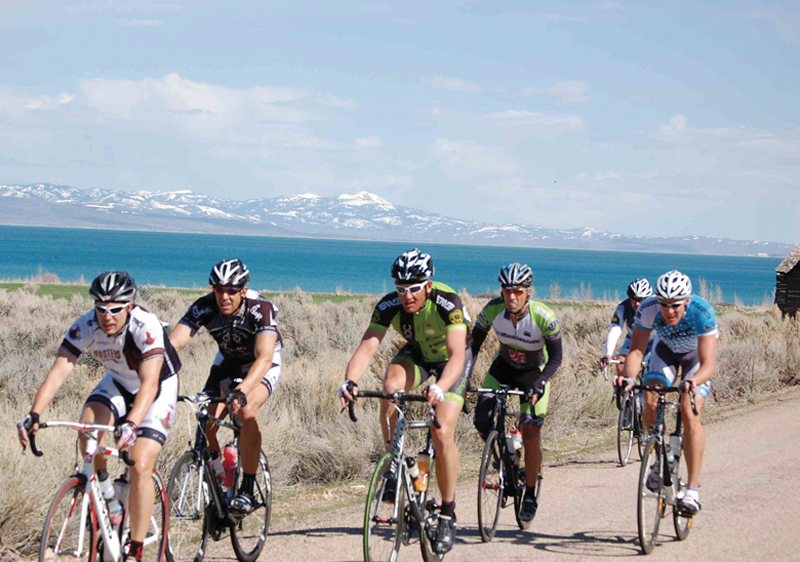
Bear Lake USAC Category 3
The Cat 3 men’s field. Photo: Ben Koefed

The Bear Lake Classic remains a full weekend of racing, with Friday nights’ hillclimb time trial won by Pinkham and Howat, respectively in the men’s and women’s pro events. Sunday featured a 50-mile team time trial won by Ski Utah-MarketStar in the men’s pro event and Revolution Café Rio in the women’s open division.


Evans Tops in Sugarhouse Criterium

Nicole Evans
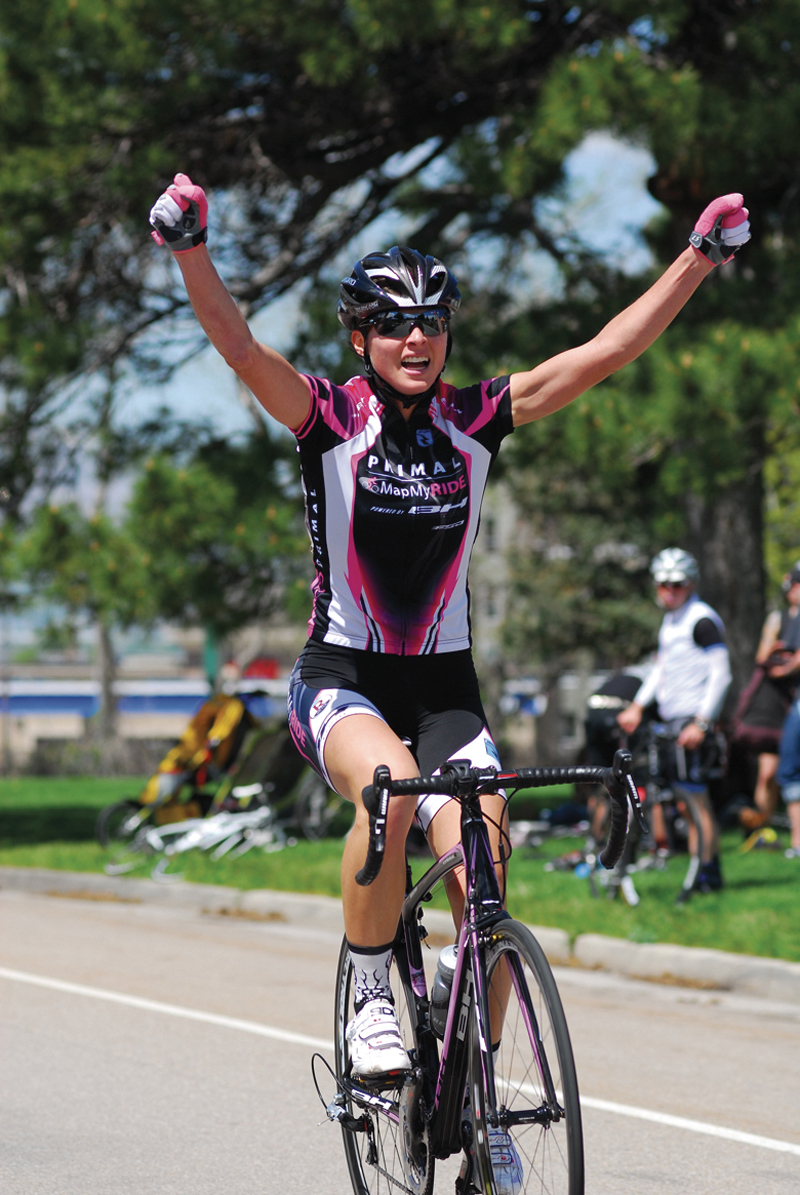
Nicole Evans (Primal/MapMyRide) won the women’s race with a final
lap surge. Photo: Christopher See.

By Christopher See

June 2011 – This year, the Sugarhouse Criterium, held on May 21, offered something new. Organizer Marek Shon of Cyclesmith opted to run the event clockwise around Sugarhouse Park. Clockwise meant the north side of the course along 21st South became a long false flat. The start/finish area was relocated to the northwest end of the course to use the short steep ramp out of the lake drainage to animate the finish. The weather cooperated and the race was run under sunshine and blue skies. A welcome change from the never-ending winter of 2011.

Fourteen women pro/1/2/3 riders lined up for a forty-five minute romp around the park. Two members of the North American pro circuit, Nichole Evans (Primal/Map My Ride) and teammate Nicky Wangsgard took the start with Utah regulars including Chantal Thackeray Olsen (Primal Utah), Laura Howat (Ski Utah/Marketstar).

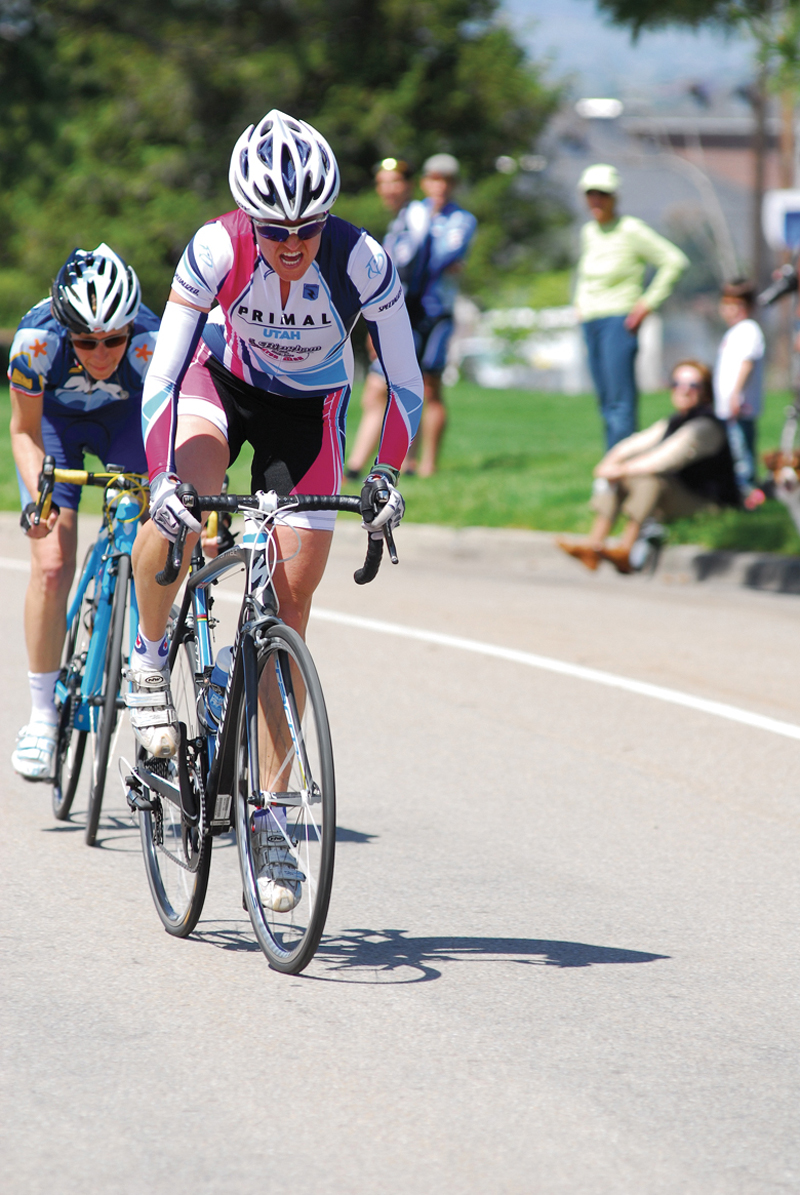
Chantel Thackery Olsen, Laura Howat
Chantel Thackeray Olsen leading Laura Howat. Photo: Christopher See.

Ski Utah set the tone with an early flyer from Alison Frye. She was brought back by a peloton animated by the presence a strong Primal Utah team. Evans went next to take measure of the group. Well known in the local race community as the woman to mark, Evans was joined by Kristen Kotval of Primal Utah. A series of attacks and counters by Wangsgard and a motivated pack negated their bid for freedom. The net result ended up gruppo compatto.

Dulce Altabella Lazzi (Contender) went next. Her move triggered a series of attacks, from which the eventual wining break would form. When the flurry ended Olsen, Howat and a third rider would remain clear. Coming around to the start area, Evans launched at the sharp ramp to the line. She latched onto the three escapees and attacked testing their commitment. Olsen and Howat were able to answer.

With four to go Evans, Olsen and Howat worked to setup the finale. With the three strongest teams represented, the break would succeed. For three laps the trio worked together. On the final lap Evans attacked a final time, and went free to claim a solo win. Thirty seconds back, Olsen and Howat sprinted for second with Howat claiming the placing. A minute and thirty seconds later the field sprint for fourth went to Utah newcomer Kat Carr riding in Vanderkitten livery.

The men’s pro/1/2 race was cancelled due to an unfortunate crash.

Tour of Utah To Show on Fox Sports Network Locally and Nationally

June 2011 – Organizers of the 2011 Larry H. Miller Tour of Utah announced that the August 9-14 professional bicycle race will receive regional and national broadcast television coverage for all six days of the event. This is the first time in the event’s seven-year history that broadcast television and online programming have been activated for a national and worldwide fan base.

FOX Sports Network (FSN) will be the national broadcast partner. ROOT Sports will broadcast regionally in the Rocky Mountain area. And the local broadcast affiliate will be KJZZ TV for Salt Lake City, Utah. All broadcast partners will air a one-hour recap show of the professional bicycle race each evening August 9-13, and a two-hour feature and highlight show following the final stage on Sunday August 14.

Both FOX Sports Network and ROOT Sports plan to air nightly recap shows during race week at 11 p.m. (check local listings to confirm air times). FSN reaches 85+ million homes via its 18 regional sports network affiliates in the U.S., including ROOT Sports. ROOT Sports Rocky Mountain region is based in Denver and is the cable home of the Utah Jazz and Colorado Rockies.

KJZZ TV, an independent broadcast television station based in Salt Lake City, serves households across the entire state of Utah, as well as parts of five other western states. The station has announced it will air the weeknight and Saturday recap show at 9 p.m. mountain time, and the two-hour Sunday show from 9-11 p.m. mountain time.

“Regional and national coverage with ROOT Sports and Fox Sports Network is perfect for the Tour of Utah, which has such a vast fan base across the country already because of the pro teams and top UCI Continental teams competing this August,” stated Steve Miller, president of Utah Cycling Partnership (UCP) which owns the Tour of Utah. ”It’s a pleasure to work with a dedicated media partner in Utah such as KJZZ TV. We plan to incorporate pre-race promotional spots to generate a local buzz for the event.”

Windfall Productions will edit four to five hours of daily video footage for each nightly one to two hour show. Multiple camera operators will utilize creative resources, such as motorcycles, helicopters and roof tops, throughout the week to capture the excitement and competitive tactics of the 120 professional cyclists racing over more than 400 miles of scenic roadways in Utah.

Live web casting will be provided by UCP via the official event web site, www.tourofutah.com. Social media platforms, such as Twitter, Facebook, YouTube and Flickr, will continue to be used to engage cycling fans in advance of the event and during race week.

Howat and Booth Crowned Utah State Criterium Champions

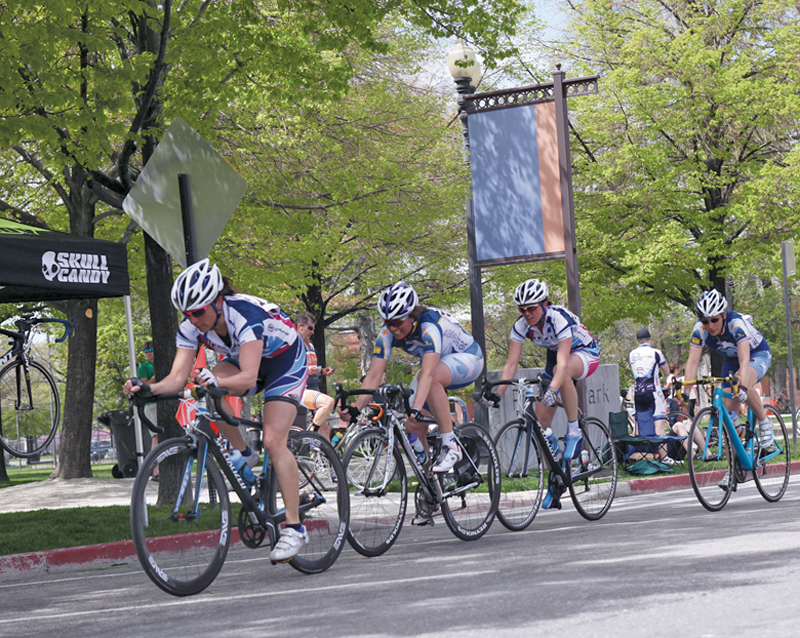
Laura Howat
Laura Howat (4th in line) won the Women’s Cat 1-3 State Crit Championship. Photo: Cotton Sox photography.

By Ryan Barrett

June 2011 – It was a banner day for the host team Ski Utah-MarketStar at the Derek Leyde Memorial Downtown Criterium with team members Michael Booth and Laura Howat winning the Men Pro 1-2 and Women Pro 1-3 events, respectively. The race, which was the Utah State Criterium Championships was held on a beautiful May day and featured four corners around Pioneer Park in downtown Salt Lake City.

The women’s 60 minute event started aggressively. The break of the day came out of a prime sprint with Laura Howat and Laura Patten (both Ski Utah-MarketStar) and Chantel Thackeray-Olsen and Kirsten Kotval (both Primal Utah). These four were kept honest with the field never far behind. On the final lap, it was Patten leading out Howat down the backstretch. Howat was able to take a clean sprint in front of Kotval and Olsen.

The Pro 1-2 men’s event was equally aggressive with all the best local teams and racers ready to fight for the title of state champ. About 1/3 of the way into the 90 minute event, Booth took off solo and was quickly marked by Chase Pinkham (Bissell Pro Cycling). Next to make it across was Mike Wilcox (FFKR) and Eric Pardyjak (Canyon Bicycles). Ryan Littlefield (Contender Bicycles) was the last to make contact and they were off. The field, led primarily by the Revolution Mountain Sports team attempted a chase, but the talent off the front would be hard to catch and the breakaway lapped the field with about 15 minutes remaining. The last few laps became more and more tense and the final lap featured multiple crashes (including the author!). Pinkham led the sprint out of the 3rd turn and Booth turned on the afterburners heading into the final turn to take a comfortable win in front of Pinkham and Wilcox.

Guardian Angels

June 2011 – Guardian angels. That must be it. Jon Smith, promoter of the Cycle Salt Lake Century Ride (CSLC), has to be the most fortunate promoter around. His event has not had bad weather for as long as I can remember. Jon says it has been 15 years, and that each year he sells another small piece of his soul to insure a good day for us riders.

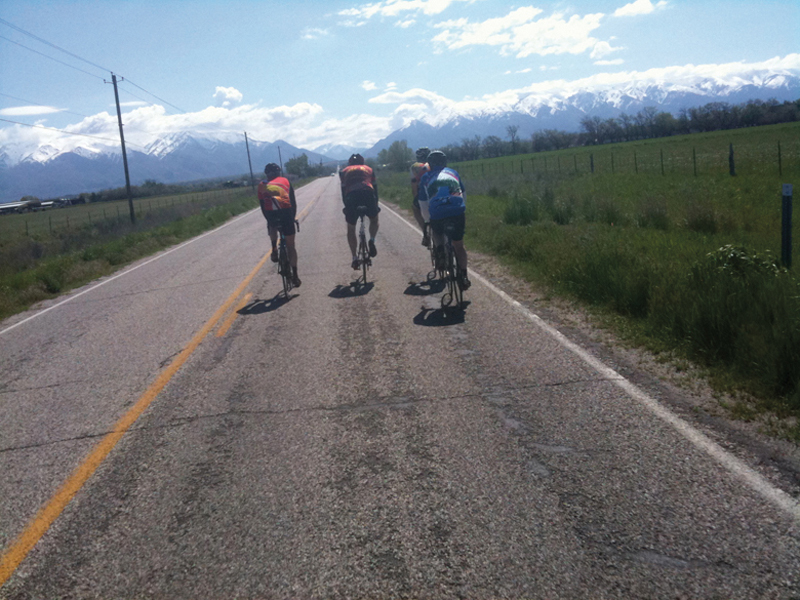
Salt Lake Century Ride
A view from the road at the Cycle Salt Lake Century. Photo: Dave Iltis

So it was that this year, the most beautiful day of this elusive spring, sandwiched between a seemingly endless string of rainy days, also happened to be the day of the CSLC. 0ver 2000 of us showed up, hungry to soak up the sunshine while putting some good miles on our bikes.

For many of us, the CSLC is our first major ride of the year, and the event that motivates us to get going. It is also a time to meet, greet and hook up with old cycling buddies. This was especially true for me this year. In December, my wife and I purchased a new home, or rather an old home in serious need of attention. As our home of 30 years had not yet sold, we were content to stay there while working on our project home.

But by the end of January, the project was demanding more of our time, some of which we had been devoting to our spin class. And then, at the beginning of March, our home went under contract, and we only had a month till we had to move. Our immediate focus, and big push, was to sufficiently finish the basement so we would have a place to which we could move.

So that is how it happened that the last time I rode a bike of any kind for nearly three months was on February 3rd . It was not until the third week of April, when we made a trip to visit two of our children living out of state, that I finally sat my hiney down on a bike. And while it may have disagreed, the rest of me, physically and emotionally, was grateful.

Indeed, this was the first time, since I took up cycling as a regular hobby, that I had missed more than a couple of weeks on a bike, and even that was rare. And as I have finally been getting back in the saddle more regularly, I have realized how important cycling has become to me, not just physically, but mentally and emotionally as well.

So the CSLC was especially welcome this year. Not just to get me going for the cycling season, but to pull me out of a funk I had fallen into after three months of not riding. I began looking for opportunities to ride, squeezing miles in between the onslaught of storms and the accompanying rain and snow, to prepare for the CSLC.

By the time the CSLC was here, I had still not logged enough miles to take on a full century. But I did get in 75 miles, and it felt good. I rode with good friends, and was able to visit with old cycling pals. My mind, body and soul are rejuvenated. And I have the CSLC to thank for getting me back in the groove.

Thanks Jon for a great ride. And thanks to your guardian angels, and the little bit of soul you surrendered, for this year’s rare and wonderful weather.

UDOT and DPS to Sponsor Road Respect Share the Road Campaign

By Tara McKee

June 2011 – Cycling is becoming more popular than ever and the most popular road cycling routes in the state are becoming positively crowded with cyclists. It’s a good news-bad news scenario. It’s awesome that there are so many cyclists out on the road and you can presume that people who ride their bikes on weekends will be more sympathetic to the cyclists they encounter on weekdays when they are driving.

The bad news is that there are likely to be some cyclist/motorist problems. New cyclists are less familiar with the rules of the road and with crowds of cyclists on the roads; the temptation is to ride multiple abreast, instead of single file. Motorists don’t always know the rules either and there are still a few who think that cyclists belong on the sidewalk. Sadly, there is also a tendency for motorists or cyclists to dehumanize the other and on occasion, that can lead to conflict.

It’s time for both cyclists and motorists to learn to peacefully coexist out on Utah’s roads. Mutual respect and learning to follow the rules of the road will go a long way toward making it safer for cyclists to ride the streets. With that goal and message in mind, the Utah Department of Transportation (UDOT), Utah Highway Safety and Zero Fatalities have teamed up to launch a Road Respect Campaign and Tour. The theme will be: Road Respect, Rules to Live By, Cars + Bikes. Launching in June, the program will include outreach and advertising initiatives that will continue through the summer. The main messages include a focus on safety and helping both groups understand and follow the laws, or rules, of the road.

To kick off the program, a group of 25 cyclists from UDOT, DPS, law enforcement, health departments, other state agencies and bicycle advocacy groups will participate in a weeklong bike tour, dubbed the Road Respect Tour, beginning June 13 in Logan concluding in St. George on June 18. As the ride moves south, from town to town, community Road Respect rallies and stops will be hosted, with the goal of increasing respect among motorists and cyclists. The tour will feature ride opportunities which are legs of the Road Respect Tour open to cyclists with road experience. Ride times and places to link up for joining in the ride will be on the Road Respect website. The rallies will often have special events appropriate for the whole family such as bike rodeos, helmet giveaways, family bike rides, food and fun games. Mutual respect between the two modes of transportation will be reinforced in a fun and friendly atmosphere for the whole family.

The first day’s ride begins in Logan and heads through Ogden, then Farmington, finishing in Salt Lake City. On Tuesday, the ride commences in Salt Lake and rides up Emigration Canyon to Park City for a rally at Miner’s Park, before concluding in Provo. Wednesday’s ride will have the core group leaving from Provo and riding into Nephi, and Moroni, before finishing with a special stop in Manti. The following morning the tour will be in Moab for some special Road Respect festivities: a 65-mile ride out to Dead Horse Point and back (open to all), a family bike ride, activities for children, food, fun and special guest speakers. The June 17th ride will leave Torrey, and arrive in Loa for a rally before heading to Panguitch. The tour concludes on Saturday with stops and rallies in Springdale and Hurricane including fun family events, helmet giveaways, a metric century ride, and the ribbon cutting event for the first designated bike route in Washington County.

The public is invited to participate and attend these free events. More details and a list of stops and rallies are found on the program website, RoadRespect.Utah.gov which will be officially launched on May 27th.

Rules of the Road—Tips for Cyclists and Motorists

Tips for cyclists

• When not impeding traffic, ride no more than two abreast. When a car is coming or when you are riding in traffic, ride single file.

• Obey all traffic signs, signals, and lane markings. If you want the respect of motorists, you must show respect for traffic laws.

• Ride predictably.

• Ride with the flow of traffic.

• Ride on the right side of the roadway or bike lane as far to the right side as safely possible.

• It is acceptable to ride in the middle of the lane if you are making a left turn, if there are obstacles impeding the bike lane or if you are moving at the same speed as traffic.

• Don’t weave between parked cars or cars stopped at red lights.

• Wear bright clothing that increases your visibility to motorists.

• When riding at dusk or dark, use reflective clothing and lights.

• Always wear a helmet. Your helmet should sit level on your head and the straps should be snug.

• Make eye contact with motorists when making a turn or changing lanes, so each party is aware of one another.

• When entering or crossing a road from a parking lot, driveway or crosswalk, or when changing lanes or leaving the shoulder, yield to vehicles already on the road.

• Signal when turning.

• Be respectful of other road users. Courtesy is contagious. Always be a bike ambassador on the road!

Tips for motorists

• Give at least three feet of space when passing a bicyclist. If traveling on higher-speed roads, give more space.

• Watch for bicycles in traffic; they are smaller and harder to see.

• Don’t underestimate the speed of a bicyclist. Many bicyclists can easily travel at 25-30 mph.

• Slow down around cyclists.

• When driving near a child on a bike, be prepared for the unexpected.

• When turning left, yield to any vehicle, including a bicycle approaching from the opposite direction.

• When turning right and passing a cyclist, leave plenty of room between cyclists who are also turning right. Do not pass the cyclist and turn in front of them.

• Be patient when driving around cyclists. Roadway conditions may make it necessary for cyclists to ride in the middle of the lane because of potholes, road debris, or a parked vehicle.

• Be aware of your surroundings and don’t drive distracted.

• Be aware of bicyclists entering the roadway from driveways, intersection sidewalks and other streets.

• Avoid honking your horn around cyclists, if possible. Car horns are much louder outside of your vehicle and can startle bicyclists and cause dangerous reactions.

• Be respectful of other road users. Courtesy is contagious.