Home Blog Page 337

2011 High Uintas Classic a Success

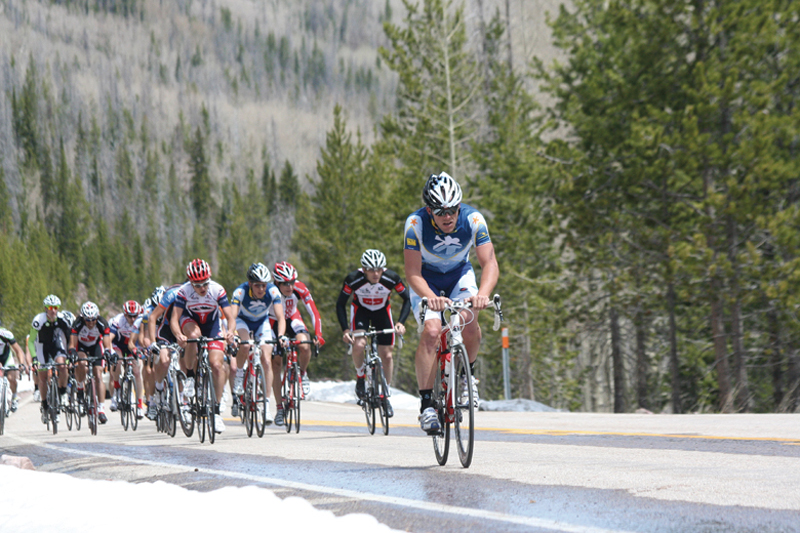
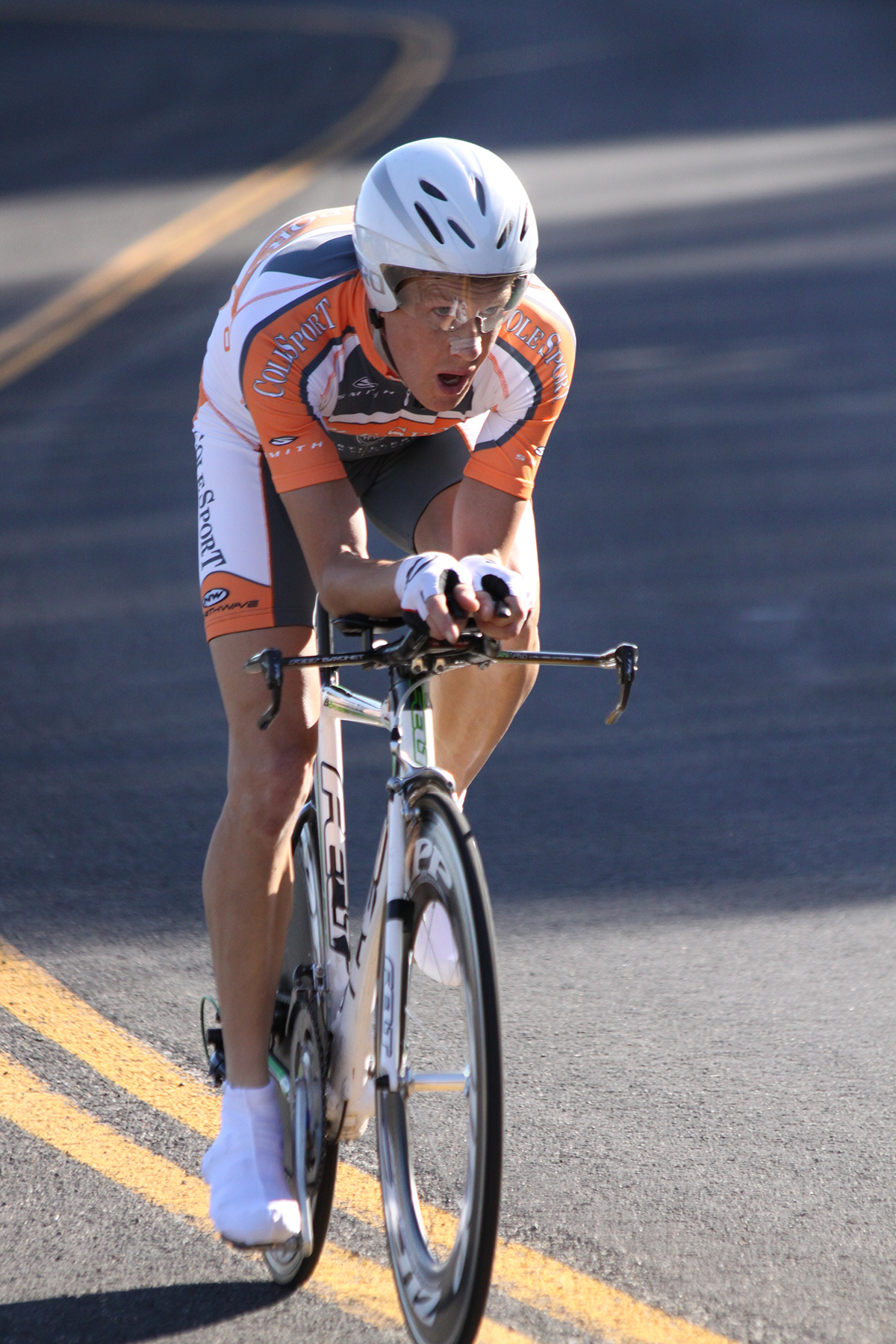
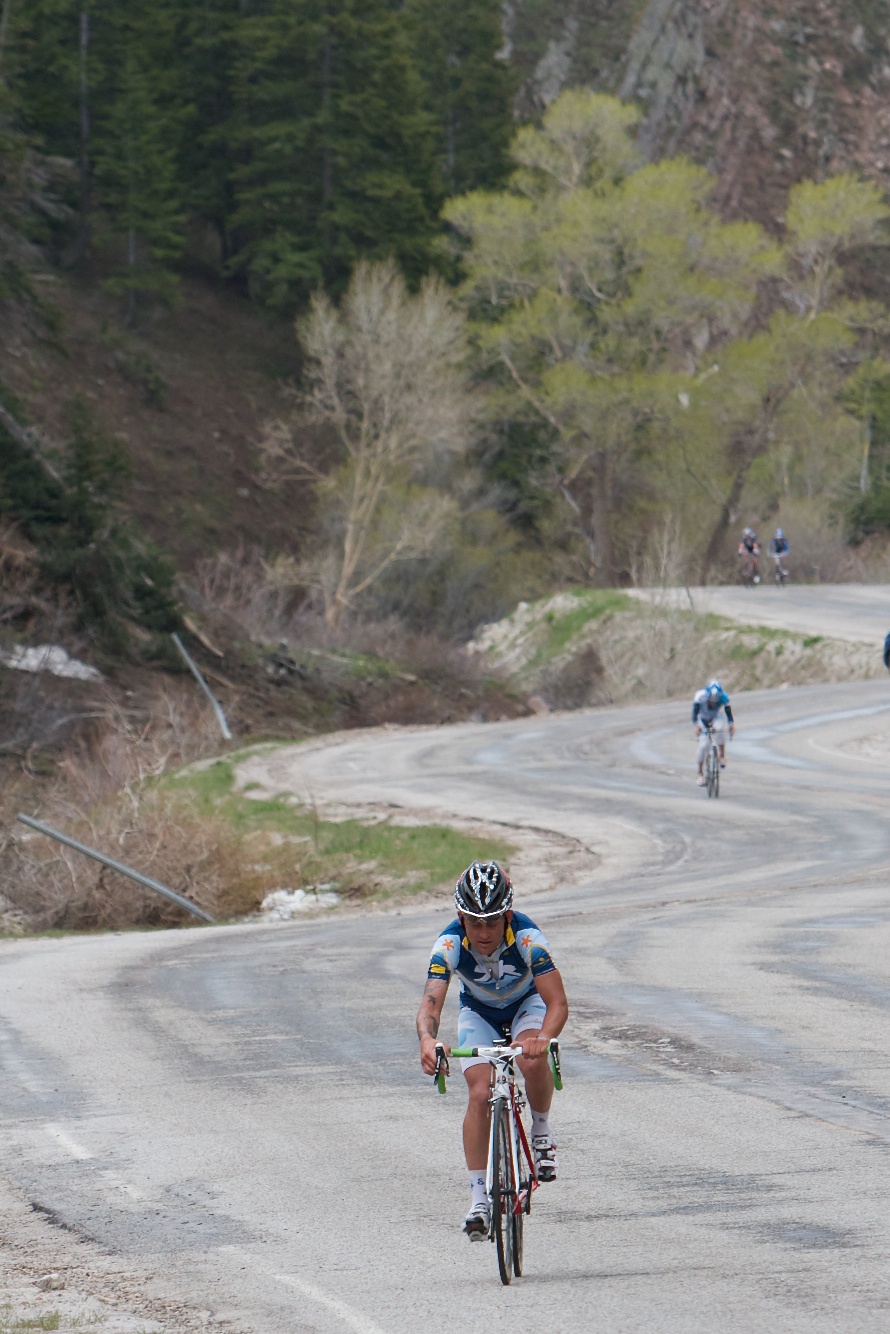
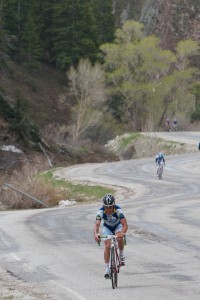
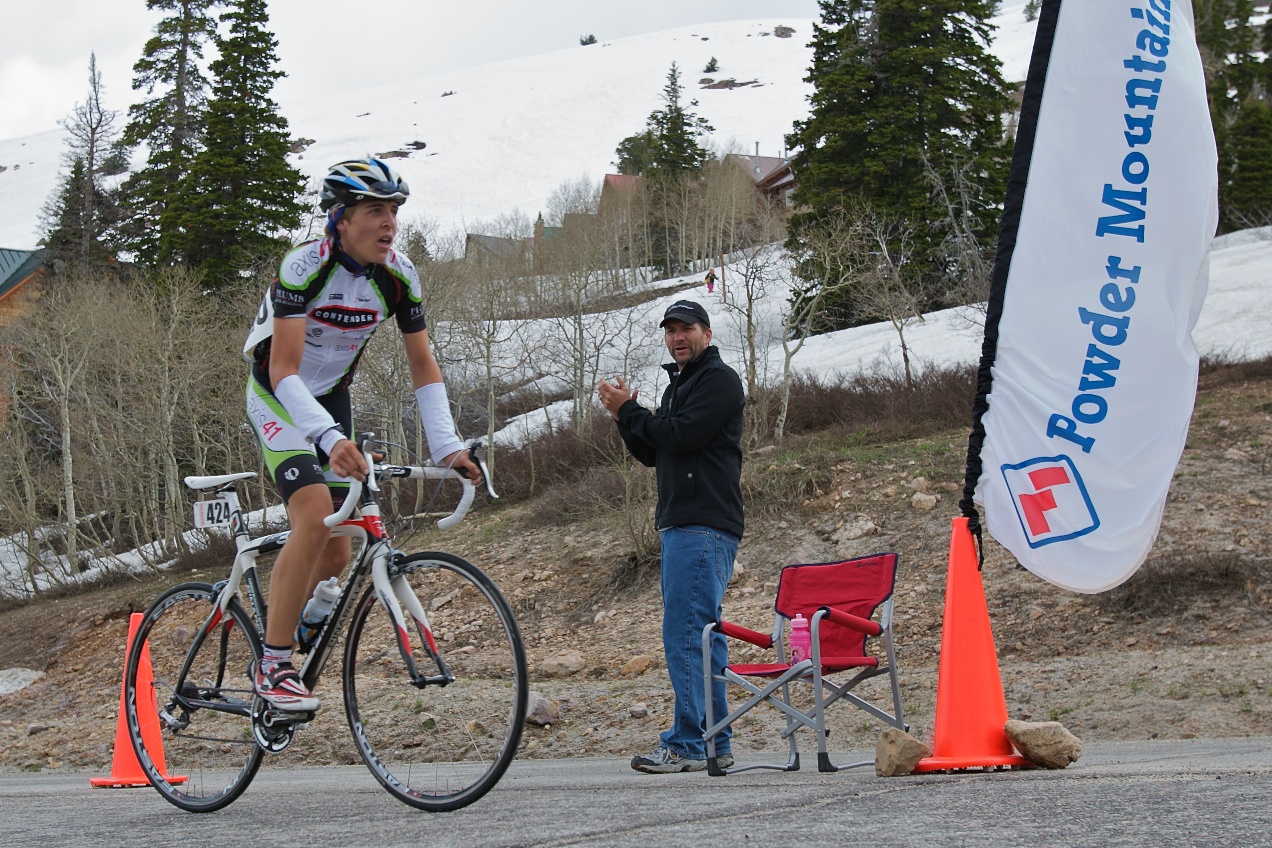
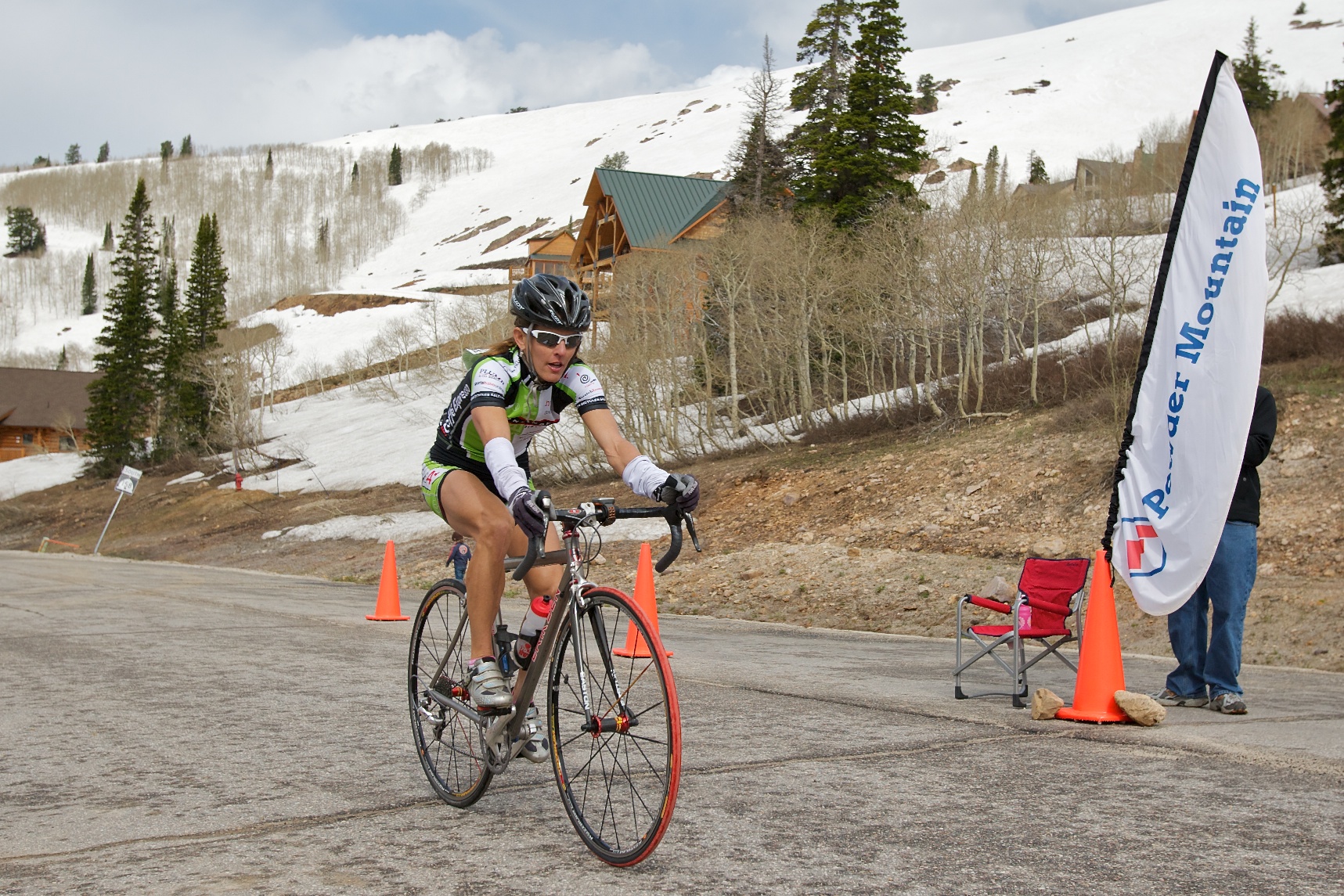
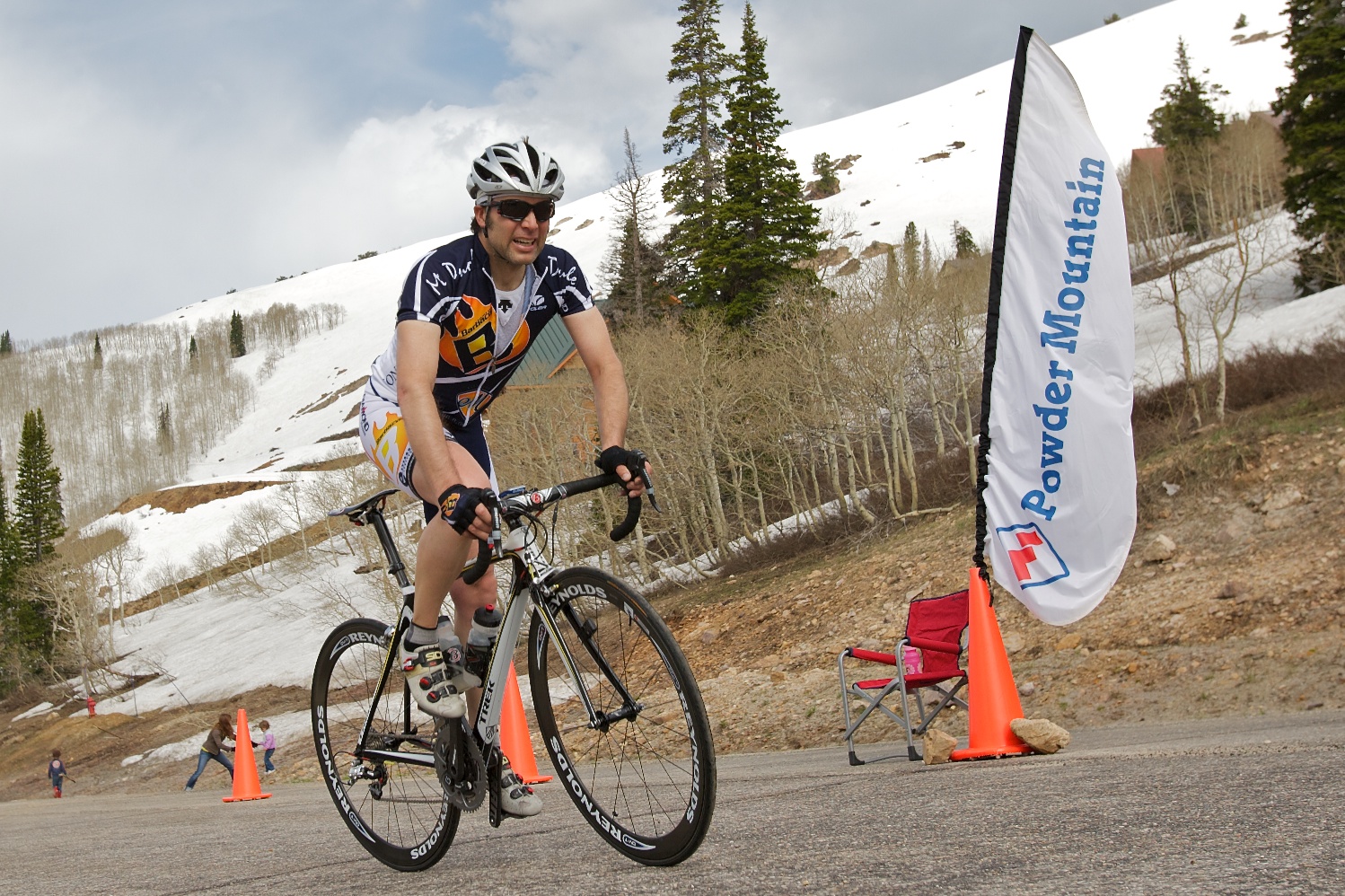
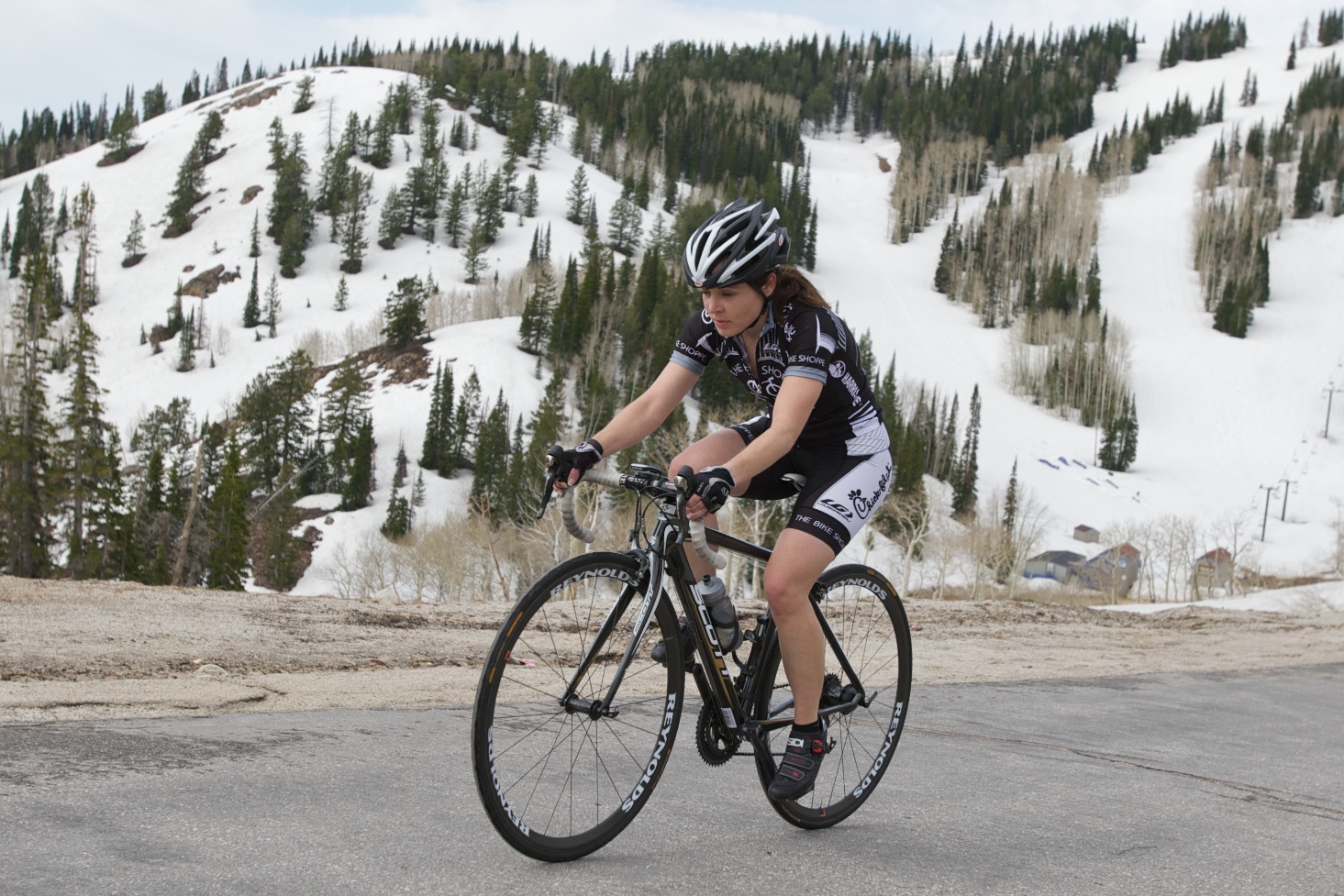
The Men's Pro 1-2 Cyclists approach the Snowline, halfway point of the High Uintas road Race
The Men’s Pro 1-2 Cyclists approach the Snowline, halfway point of the High Uintas road Race. Photos: Randy Garner.

By Randy Garner and Ryan Barrett — The 23rd Annual Cook-Sanders, Associates, and the Spence Law Firm High Uintas Classic Stage Race drew over 200 cyclists to the small town of Evanston in southwest Wyoming over the weekend of June 18-19.

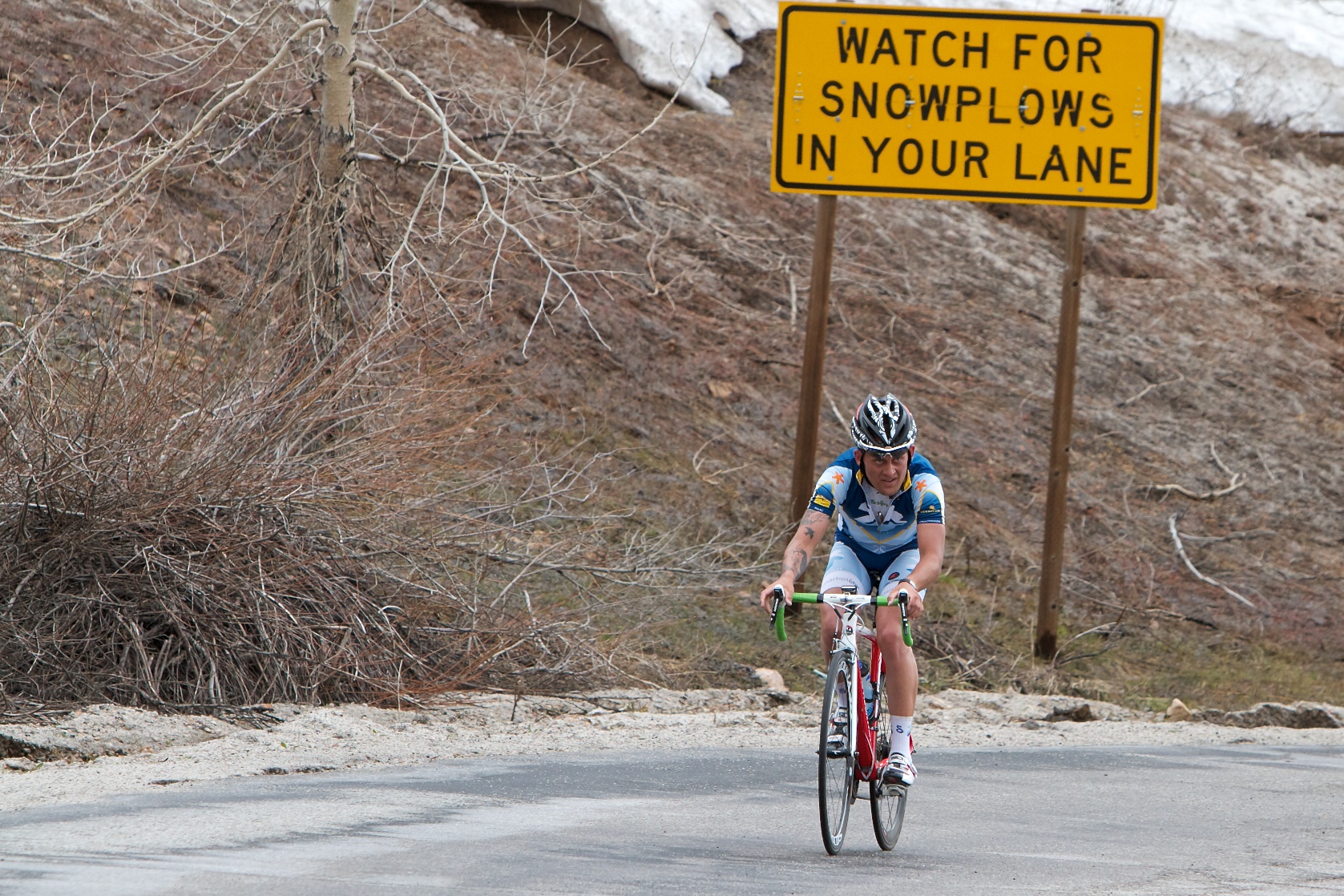
The High Uintas Stage race was a bit different this year, than years past. Due to record snowfall in the recent winter, the race’s usual course through Bald Mountain Pass was still closed when the June 18 road race took place.

Instead of the traditional “Over the Top” route, organizers of the road race opted to hold a “Chain Up, Hammer Down” race that would take competitors south on highway 150, to the snowline, which would serve as a halfway point. Cyclists would then turn around and race back to the starting line for the finish in Evanston.

“The climb from Kamas, to Bald Mountain Pass is 30 miles and 3,300 feet. Evanston to the snowline is 39 miles, and about 2,400 feet is much more difficult than the North Slope,” said organizer, Paul Knopf.

Overall, Knopf said he, and the Evanston Cycling Club considered the race to be a success.

“Despite the fact that we have had an angry Old Man Winter, and angrier Mother Nature, I think it was a good success, and it worked out well for all of us, and our community”.

Organizer Paul Knopf said he is also pleased with the turnout for this year’s race. “Considering this has been the year of the perfect storm — the pass is closed, winter lingers, people haven’t had a chance to train, it’s been cold, rainy, and snowy — I think 226 is reasonable,” Knopf said.

“Two hundred and twenty-six is a good number considering all of the circumstances,” he added.

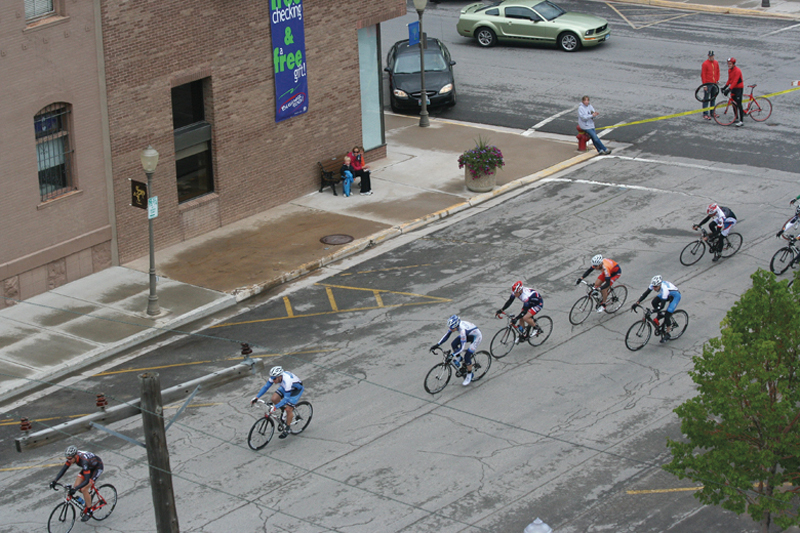
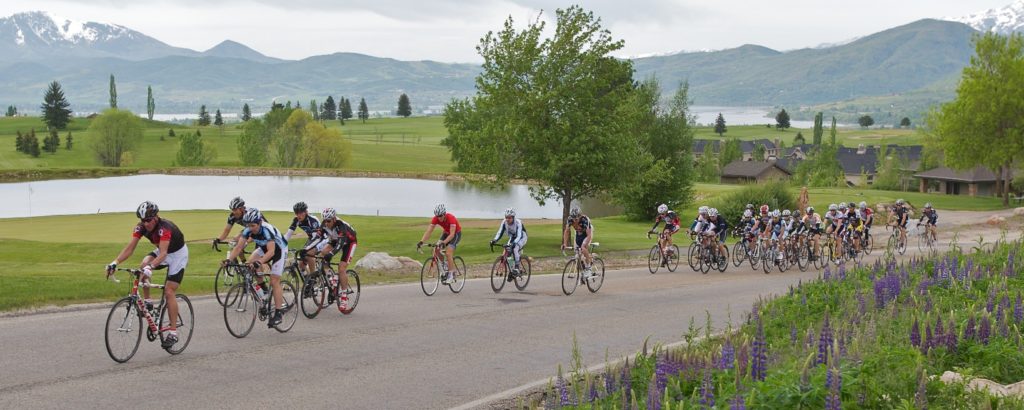
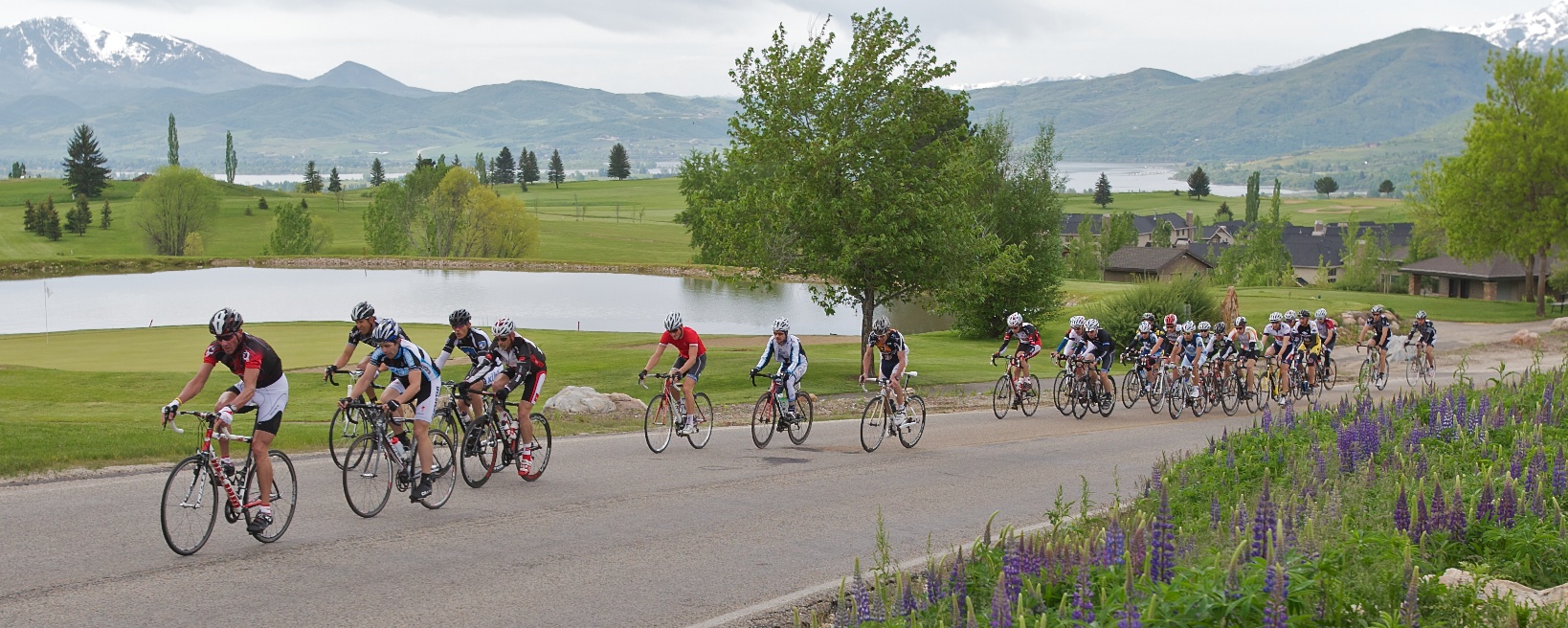
Cyclists charge up the hill in Evanston Wyoming in the criterium
Cyclists charge up the hill in Evanston Wyoming in the criterium. Photos: Randy Garner

Due to the course change, the race was decided primarily in the wind, rather than on the climb. The Men’s Pro 1-2 event came down to an elite group of six. Sam Krieg of Ski Utah-MarketStar lead out the sprint and teammate Michael Booth took a convincing win.

“The last time I did the race was in 2007, when I was first getting into racing,” said Chase Pinkham. Pinkham took second in all three stages of the event, placing first in the Men’s Pro 1&2 General Classification.

“This year, it was a good course. It was still very difficult, but with the headwind on climb on the first stage, it didn’t really break up very much so it was a little bit less difficult than the ‘Over the Top”.

“It was a great race; it was hard, and a little faster than the “Over the Top”. It was a good race overall”.

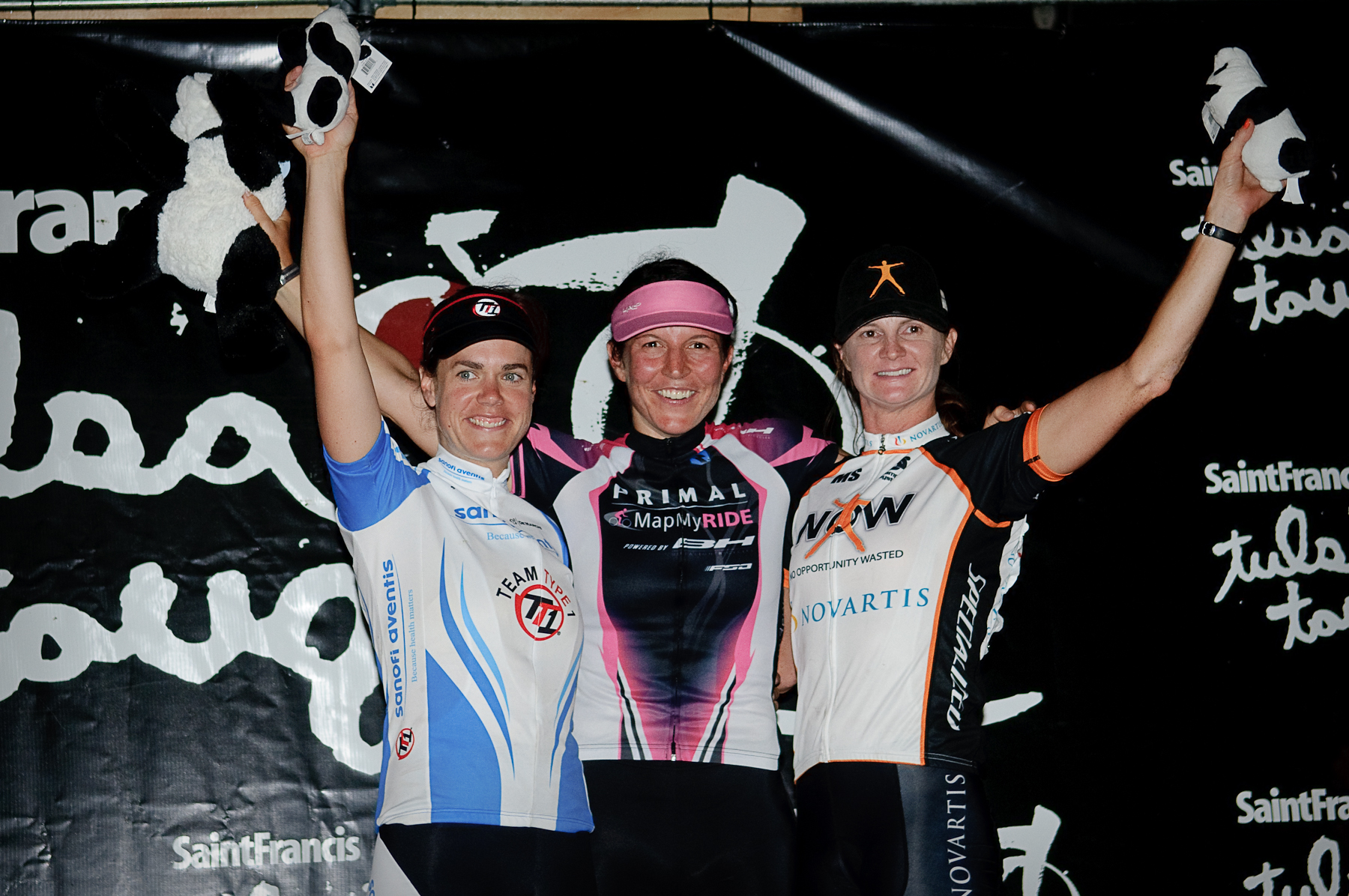
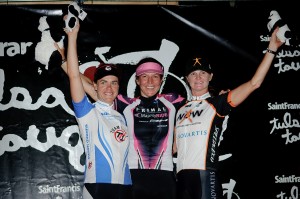
The Women’s Pro 1-3 event unfolded similarly with a group of five coming to the line together. Hillary Crowley (Primal Utah) took the sprint in front of Ski Utah-MarketStar teammates Laura Howat and Alison Frye.

Bryson Perry of Sandy, Utah competed in the High Uintas Stage race as a member of the Life Time Fitness team. Perry took second overall in the Pro Men 1-2 General Classification. Perry won the Stage Two time trial, in front of Chase Pinkham (Bissell Pro Cycling) and Krieg.

“It (the road race)was definitely easier than ‘Over the Top’, and very different. It had some climbing, but it wasn’t hard climbing it was more just gradual climbing. It played out very differently,” Perry said.

Though Perry said the road race was easier, the Sandy cyclist said he couldn’t have placed second were it not for the help of his teammates.

The Women’s Pro 1-3 stage 2 time trial was won by Ski Utah-MarketStar’s Laura Howat, also giving her the G.C. lead.

The Stage 3 men’s Pro 1-2 criterium was held in a deluge. Under heavy rain, the race became one of attrition with riders constantly falling off the back, rather than a traditional breakaway and pack scenario. When the dust settled, it was again Michael Booth proving he was the fastest sprinter. The G.C. remained unchanged, however, with Pinkham taking the win in front of Perry and Krieg.

The women’s Pro 1-3 crit was won by Sinead O’dwyer. The G.C. went to Howat, in front of Chantel Olsen (PCIM) and Crowley.

Inherit the Win

By Tyler Wren — With forty switchbacks of uninterrupted suffering ahead of me and the main peloton five minutes behind, I felt confident in my ability to prevail on the queen stage of the recent Tour of Chile. Concentrating on my rhythm and jeered on by my director from the team car, I struggled and inched my way up the behemoth climb, being careful not to look at the switchbacks above me. The time gap was disappearing just about as quickly as the kilometers-to-go. One minute with three kilometers to go shrunk to ten seconds at the kilometer mark. Marco Arriagada, the race leader and Chilean national hero, passed me in that last kilometer, ending my hail-mary attempt at glory on the day and relegating me to second.

Tyler WrenThey’re a peculiar enterprise these days, cycling podiums. Cheer for the winner with one hand behind your back as you await the results of the drug control. In this case, the winner of that queen


 stage Arriagada (he was also the eventual victor of the race overall) tested positive. We were awaiting the results of his B-sample, but recently the news broke that I inherited that stage win.

My enthusiasm over my first international race victory is thus quite tempered by the way in which it was achieved- by default. Marco, it seems, robbed my of a chance to stand atop the podium that day,the satisfaction of struggling up that climb ahead of the field. What comes to mind is the enormous amount of work and sacrifice this endeavor of professional cycle racing demands. Training through Utah winters; juggling college and training; forgoing desserts and larger salaries afforded by more traditional work; interval training in the rain- these are all part of what Marco stole from me.

My outlook on this darker side of our sport has evolved over the last few years. I’ve progressed from cynicism to acceptance. Further, the slimy headlines no longer bring me despair. In fact, they affect me in just the opposite way- I feel more and more confident and happy in my own decisions to race clean. At the end of the day, there will probably be cheaters in most endeavors that I pursue. For me, my happiness and satisfaction comes from the choices I make, not theirs. I’m content with my cycling career, and will be proud of winning that queen stage of Vuelta Chile as a clean athlete. I continue to be fascinated by the nature of our sport- man overcoming the resistance of nature and the determination of his fellow competitors. Doping would obliterate that interest for me, and my pride. I don’t normally like to champion the decision to be a clean athlete- it feels to me a little like bragging about filing your taxes- but in this circumstance, when the victory was allegedly snatched from under my nose, I feel compelled to declare myself so.

For me, there is no positive test that will destroy my interest in the beautiful sport of cycling. For every doping scandal, I also see the story of the honest, hardworking clean athletes struggling in second place or further anonymity. Longfellow penned my favorite of Princeton Cycling’s mottos- “Know how sublime a thing it is to suffer and be strong.” Of all the things dopers rob, they can never take this from me and will never know its true meaning, for of this they have robbed themselves.

Thanks for reading, and train hard now that the sun’s out again.

-Tyler

Bike Collective News

Utah’s Bike Culture is heating up as the mountains melt and just in time for Trips for Kids too! The Collective has hired Evan Mitchell as their Trips for Kids Director to take different youth and summer school groups into the hills to experience the grandeur and beauty of the Wasatch’s natural surrounds while mountain biking. Interested youth and summer school program representatives can contact Evan directly about scheduling a ride. Anyone who wants to be a mountain biking mentor can also contact Evan.

The Collective still needs a small army of volunteers for Valet Bike Parking at events like the Farmers’ Market and the Twilight Concert series. It doesn’t get much easier than hanging out in the park and listening to great music and people/bike watching.

The Park Tool School (www.parktool.com/clinics_training) is still taught every Monday starting at 6pm at the Community Bike Shop (2312 S. West Temple). Classes don’t build on each other, so jump in at any time. Participants will learn how to true wheels, adjust derailleurs and brakes, and general skills. See the Collective’s website (www.slcbikecollective.org) or call 801-FAT-BIKE for a schedule.

Trailside Park Bike Park Opens in Park City

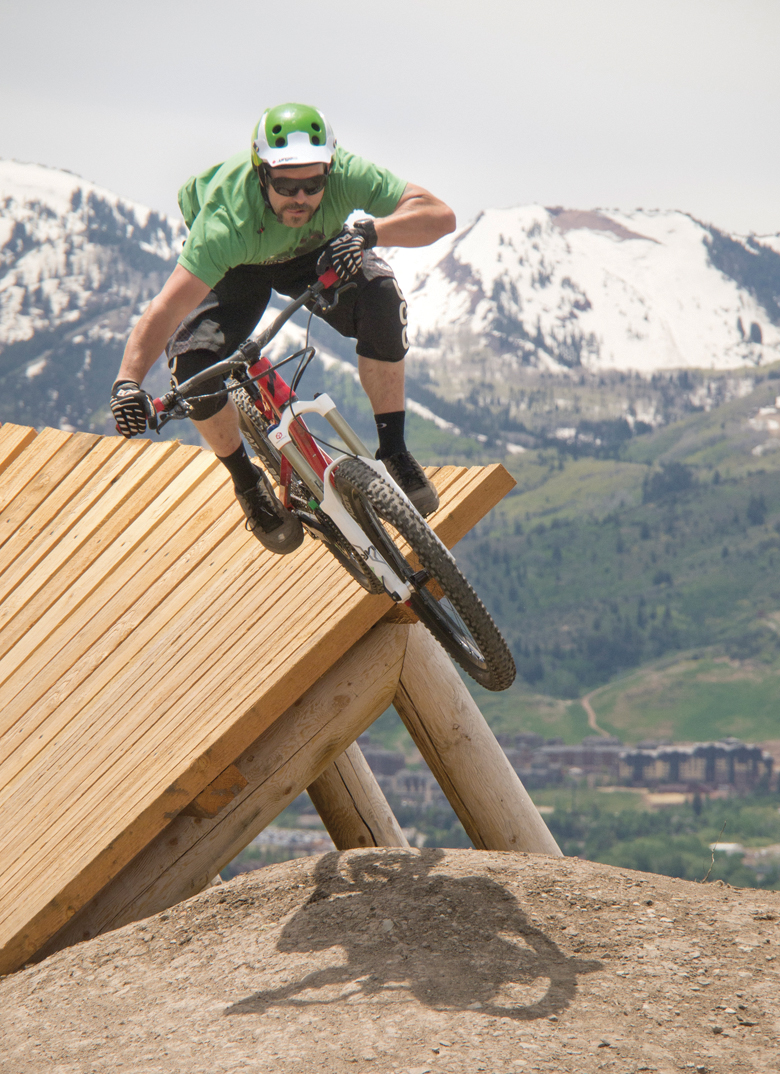
A rider on the banked curve. There are also a number of easier obstacles for riders of all abilities. Photo: Photo John Shafer.

By Scott House

July 1, 2011 – What do you get when you mix the first professionally built bike park in the state of Utah, 500 + people, and some incredible vendors?? The grand opening of the Trailside Park Bike Park in Park City!

The Park

The Trailside Park Bike Park is located in Park City. The park was built by Progressive Trail Design, an Arkansas company that specializes in building bike parks, and will encompass nearly 22 acres when finished. Free and open to the public, the new bike park was partially funded from the Restaurant Arts and Park Tax, with the remainder funded from the Snyderville Basin Recreation District’s Capital Improvements budget.

Phase 1 which officially opened on June 18th features a beginner skills loop, a beginner flow trail, a beginner pump track, an intermediate pump track, and an intermediate slopestyle trail. Future plans for the park include an expert slopestyle line, as well as a 4000 linear foot all mountain loop to be completed in the near future.

The Trailside Park Bike Park is the brainchild of the Snyderville Basin Recreation District, and their trail maintenance supervisor, Bob Radke. The Trailside Bike Park meets a need in the Park City trail system. Allowing riders of all ability levels to build, and hone their skills, the Trailside Bike Park will be an invaluable part of the Park City trail system long into the future. The mix of trails available allows riders to follow a progression at their own pace building skills on their terms, and allowing them to become more accomplished cyclists.

Who Is It For?

The Trailside Park Bike Park is for everyone! Free and open to the public as conditions permit, the park is non-exclusive. No longer do you have to pay to ride a chair lift, or travel out of state to experience a professionally designed, and built bike park!

The park allows riders of all ability levels to follow a progression allowing them to build their skills without having to put themselves in an uncomfortable situation. Things start with the beginner skills area, and beginner pump track. The beginner skills area is loaded with features to help riders learn better balance, body positioning, and line choice. Features include wood bridges positioned low to the ground, teeter-totters, and more.

The beginner pump track is the next step for most riders. A pump track is a closed circuit loop that consists of rollers (mounds of packed dirt), and berms (banked turns). A pump track is designed so the rider should not have to pedal. By “pumping” or pushing the bike down on the backside of the rollers the rider gains speed, and momentum. The berms help the rider keep that speed, and momentum while allowing them to practice their cornering skills in a controlled environment. Riders who master a pump track can go as long as their legs, and lungs allow without taking a single pedal stroke.

For the more advanced rider, or riders looking to move along the progression provided by the park, there is the beginner flow trail and intermediate pump track. A flow trail is usually a downhill only trail that has manmade features to challenge riders, and help them build their skills. A flow trail is designed to allow minimal pedal, or brake input from the rider to ride the trail. The rider just “flows” down the trail like a stream of water would.

The beginner flow trail at the Trailside Bike Park consists of berms, and rollers similar to a pump track, but is gravity fed. The rider starts at the top, and works their way down the trail focusing on body position, and line selection. Because the trail is gravity fed the rider learns how to handle increased speeds, and potentially getting their wheels off the ground. Once riders are comfortable on the beginner flow trail they can move over to the intermediate pump track. The intermediate pump track is similar to the beginner pump track but increases the size of the rollers, and berms to allow for more speed, and the potential to get the bike off the ground.

The piece de resistance at the Trailside Bike Park currently is the intermediate slopestyle trail. A slopestyle trail incorporates jumps, berms, wooden features, and more to challenge and excite the rider. The Trailside Park intermediate slopestyle trail features numerous table top (no gap) jumps, berms, rollers, as well as four large wooden features. These wooden features include a large curved wooden berm (banked turn) at the top of the trail which can be jumped out of, or just rolled through without your tires leaving the ground. In the middle of the trail there is a large wooden ladder bridge that features an up-ramp to a flat top, and a down ramp. Riders can choose to role the entire box with their wheels on the ground/wood, jump on, jump off, or any combination of the afore mentioned. As riders near the bottom of the trail they will encounter two wooden wall rides. A wall ride is a vertical, or near vertical wooden or natural feature that riders use their momentum to ride up on in a turning motion. You can enter and exit by rolling in, and out, or you can jump up on the wall, and off.

Because of how the park was designed, it is an ideal riding location for beginners all the way up to experts. Beginners will find the beginner skills loop and beginner pump track a great way to build confidence and skills. Intermediate and advanced riders will find the intermediate slopestyle line and pump track both fun and challenging. Whether you are seasoned veteran of the MTB world, or just getting your wheels underneath you the Trailside Park Bike Park is a great place to ride, train, and learn.

The Grand Opening

It’s not very often we get to celebrate the opening of a new trail system especially one that is the first of its kind in the state! The grand opening of the Trailside Park Bike Park was a major exception to this rule. The grand opening celebration hosted by White Pine Touring of Park City was held on June 18th 2011, and was a party for the ages.

The day started at 11:00am with an informal Q&A session with Progressive Trail Design and Snyderville Basin Recreation Staff. Once the formalities were out of the way the fun began. DJ Jalal started pumping tunes and the park started to see a steady line of riders waiting for their turn to check out the new lines. Free mountain bike lessons lead by White Pine Touring guides allowed new comers to the sport to get a jump-start on their skills so they could start hitting the park with confidence.

At 1:00pm the park was hopping, and there were nearly 500+ people in attendance. With so many people riding it was time to fuel them up for the afternoon, and sponsors Davanza’s Pizza, and El Chubasco of Park City had everyone covered. Fresh hot pizza, and an epic chip and salsa bar provided the energy people needed to keep shredding. When the Red Bull Wings Team showed up to quench riders thirst things really got going. Caffeinated and fueled there was a line of 50 riders at any given moment waiting for their turn to shred the one of the numerous trails.

A party would not be complete without prize giveaways, and with the help of numerous generous sponsors there was no lack of swag to give away. Great prizes from Contour, Oakley, Fox, and more drew people to the bottom of the park for the first of two chance drawings on the day. Surrounded by 100’s of people event organizer, Scott House, called out ticket numbers and tossed out prizes to the lucky winners.

As the day pressed on attendees were treated to something very special. Local pro mountain bikers Eric Porter, Chris VanDine, Josh Bender, and Ali Goulet had come out for the day, and they were ready to ride! At 2:30 this talented group of riders led a line 50+ people to the top of the intermediate slopestyle line for a chance to share a shred with them. It’s not every day you get to ride with a legend in the mountain bike world, and it’s even rarer when you get the opportunity to ride with four legends on the same trail at the same time. The boys showed the riders the parks true potential, and gave tips and pointers on how to attack the features.

The Trailside Park Bike Park and the grand opening celebration were, and still are a huge success. The overwhelming support for the event, and the park shows how strong the cycling community is in Utah. It shows that if we work together, and support those that maintain and build our trails we can accomplish great things. A big thanks to all those who attended the grand opening celebration, and continue to use the park on a regular basis

The grand opening was supported by the following generous sponsors: Snyderville Basin Recreation District, Progressive Trail Design, White Pine Touring, Jans, Smith, Bolle, Ryders Eyewear, Camebak, Contour, Ellsworth, The North Face, Skullcandy, Trek, SRAM, Red Bull, SockGuy, Davanza’s, Park City Coffee Roasters, Yakima, GoPro, Fox, El Chubasco, Oakley, Giro, Easton, Mtn Ranks, and Park City Television.

If You Go

The Trailside Bike Park is located at 5715 Trailside Drive, Park City, UT 84060. The park is open from sun-up until sundown conditions permitting (do not ride the park when it’s muddy). Thanks to Basin Recreation, and the funding provided to build the park it is 100% free to use! Currently there are no classes or lessons offered by Basin Recreation at the park, but if you are interested in instruction you can contact White Pine Touring at 435-649-8710, and they will be happy to arrange something for you.

Utahns Excel at 2011 USAC National Championships

By Jared Eborn

Wearing the Stars and Stripes that comes with being the national champion is nothing new to guys like Dave Zabriskie (Garmin-Cervélo).

But for Tayler Wiles and Rob Squire, it’s a habit they’d love to get into.

While Zabriskie slipped into the familiar Stars and Stripes as the U.S. time trial champion for the sixth time beating Tom Zirbel by 31 seconds in South Carolina, Wiles and Squire showed the Beehive State is anything but done producing national champions.

Wiles, riding for the Peanut Butter & Co. TWENTY 12 professional team, covered the 30 kilometer course in Augusta, Georgia to win the U23 national championship and earn her first Stars and Stripes jersey.

“This national title means a great deal to me, this time trial has been one of my biggest goals all year and with the incredible support of my team, our sponsors, my family and my coach I was able to make it happen,” Wiles said. “I’m very excited and grateful to all the people who helped me pull on the stars and stripes.”

Wiles’ time of 43 minutes, 6.7 seconds was a whopping 43 seconds faster than that of second-place finisher Jerika Hutchinson from California. Wiles, a 22-year-old Murray High graduate, has made serious strides in recent years and has podium showings in race at the Tour of the Gila and the Mount Hamilton Classic Road Race.

While Wiles’ national championship was her first, Squire has seen the top of the podium before – but as a mountain biker in the junior ranks.

His victory in the U23 road race removed what little doubt anyone had about his successful transition from dirt to pavement. The Sandy product races for Garmin-Cervelo’s Chipotle Development team and is fast becoming one of the best all-around racers on the team’s roster.

After sizing up the field for much of the race in Georgia, Squire and teammate Jacob Rathe attacked and found themselves alone off the front when the rest of the field failed to counter on the final lap. Squire and Rathe crossed the finish line together with Squire taking the victory, almost three minutes ahead of the chasing peloton.

“I usually do pretty well in the heat,” Squire said. “I was hoping for it to be hot. I got the heat so we brought the pace.”

It was a pace the others simply couldn’t match. Utah’s Chase Pinkham (Bissell) finished seventh while Tanner Putt (Team Type 1) finished 15th. Salt Lake’s Connor O’Leary (RaceLab) showed his recovery from cancer is progressing well finished with the main group in 48th place.

Pinkham also finished 11th in the U23 time trial while Squire checked in at 15th.

Those results were good, but Pinkham showed his form was in great shape a few weeks earlier when he competed in the U.S. Pro championships and produced a pair of top 10 finishes. The Salt Lake City native finished ninth in the time trial and 10th in the road race behind most of the biggest names in American professional cycling.

Matt Bradley, less than a year after cancer claimed his lower leg to amputation (see cycling utah’s June 2011 issue for a profile), placed second in the paracycling time trial, third in the criterium and fourth in the road race.

As the Wheel Turns — The US Postal Team Soap Opera Continues

By Greg Overton

The soap opera whose story line swirls around whether Lance Armstrong used performance enhancing drugs during his seven Tour de France winning career has hit the world stage again. This time it’s bigger, with more storylines, a larger cast including friends, teammates, sports federations, governments, shattered careers, lost businesses, stories of intimidation and deceit, and one thing for sure, someone is lying. The question is ‘who?’. Another might be ‘who cares, can’t we move on?’ Apparently the FDA does, in addition to those linked to the saga who have lost careers and businesses. Those being accused of wrong doing want to move forward and those who claim to have been damaged want redemption. Go figure.

In September 2010, it was announced that a Federal investigation was being conducted into the possibility of athlete doping on the United States Postal Service Professional Bicycling Team. The investigation is being conducted by FDA agent Jeff Novitsky in conjunction with a whistleblower suit filed by Floyd Landis on behalf of the US government. The investigation is based on the possibility that payments made to the team by USPS, and arguably public funds, were made under fraudulent conditions. Reportedly the terms of the team’s approximately $40 million dollar sponsorship deal with USPS from the years 1999 to 2004 included agreements related to the team holding to a strict no doping policy: a stipulation reportedly included because of accusations against the sport of cycling and not any particular rider on the team initially. If the team is found guilty of using money from the USPS to obtain performance enhancing drugs (PED’s) the implications might include conspiracy, racketeering, wire fraud, drug trafficking, money laundering and defrauding the US government. Armstrong was the leader and figurehead of the team, its most successful rider and its most public. Since his return to racing in 1998 after overcoming testicular cancer, he was the subject of doping accusations and scrutiny, all the while vehemently maintaining his innocence and his clean record of no positive tests for performance enhancing drugs.

It’s been mostly Armstrong’s word against whoever the accuser of the day may have been. Typically, the accusers were reporters who were leaked, or were under the impression that they had been leaked a scoop of a positive test here or something in the trash there to implicate Armstrong. But there were also accusations from people who were close to the team and its riders. Some were on the team and were instrumental in helping Armstrong build his fantastic Tour career. That list is growing, as the Novitsky investigation hands out Federal Grand Jury subpoenas to now include some of Armstrong’s closest friends and most trusted allies, some being admitted cheats in their own riding careers. While it is the team that is under investigation, it is clearly Armstrong who stands as the central figure and also stands to lose the most. Personally, financially, publicly, commercially and perhaps even in regards to his charitable foundation all aspects of his life risk being affected negatively if this case goes against him and the team. He has built an empire based upon his persona, and that persona must now be defended, but up to this point it was mainly in the court of public opinion. Now it appears that it might need to be defended in a court of law. Novitsky has called several former teammates and others to testify, but has yet to call Armstrong, and it’s unclear whether he will, seemingly he is building the case against the team as a whole and against its star as well. Reportedly those who have testified so far are telling similar stories about life on the team and with its star. And if those reports are true, it does not bode well for either.

Some background on the accusations that have dogged Armstrong throughout his career, and even prior to the USPS sponsorship:
Stephen Swart, Armstrong’s teammate on the Motorola (previous sponsor to USPS) team told Sports Illustrated magazine that Armstrong suggested the riders start taking EPO in order to improve results as early as 1995. “He was the instigator. It was his words that pushed us toward doing it. It was his advice, his discussions.” Swart’s accusations were quoted in two books and one London newspaper, alleging that it was Armstrong who had pushed the team’s riders to dope. Armstrong sued the authors of one of the books, L.A. Confidentiel, in France. He also sued one of the author’s employers, the London Sunday Times. The first suit in France was dismissed, and he dropped the other. The Times settled out of court.

In 1999, while Armstrong was on his way to his first Tour victory and riding for the US Postal team, he was quoted in a race press conference on July 19, a rest day on the Tour, during which he said he never took corticosteroids and that he did not have a prescription for any banned substances. But a French newspaper, operating on a tip that Armstrong had tested positive for a corticosteroid but had no therapeutic use exemption on his medical form, said that the rider had tested positive for banned testosterone. According to Emma O’Reilly, a soigneur who worked with the team and specifically with Armstrong, when the team heard that the newspaper had received the tip, Armstrong and team leaders panicked. She told Sports Illustrated that she was in a team hotel room after the 15th Tour stage when Armstrong and team officials “agreed to backdate a medical prescription, they’d gotten a heads up that the steroid count was high and decided they would actually do a backdated prescription and pretend it was something for saddle sores.”

While those allegations created a whirlwind of speculation at the time, no one else from the US Postal team had betrayed Armstrong or the team. That changed in a 2005 arbitration hearing between Armstrong and SCA Promotions over the payment of a reported $5M bonus he was due for winning the Tour. SCA had refused to pay the bonus based upon the doping allegations against Armstrong, who testified in the arbitration hearings that he had never doped. Former teammate Frankie Andreu and his wife Betsy were called to testify, and according to Betsy in a VeloNation interview, the Andreus testified under oath that they were in a hospital room with Lance in 1996 when he listed for his oncologist the PED’s that he had used in training and racing, that Armstrong admitted to medical staff during the time the Andreus were in the hospital room that he had used EPO, growth hormone, testosterone and other drugs. Armstrong claimed that his former teammate had an axe to grind and was lying in order to damage Armstrong and that the discussion never happened. Andreu had been a rider, teammate and friend of Armstrong’s on the US Postal team and has said that he believes his contract with the team was not renewed when he refused an Armstrong request that he meet with Dr. Michele Ferrari, the Italian physician who reportedly gave the team doping protocols. (Ferrari has been banned from sport by the Italian cycling governing body for doping athletes). According to Andreu in the VeloNation interview, a representative from team sponsor Oakley Eyewear, Stephanie McIlvain was also in the room, and testified under oath that she never heard the admission by Armstrong. Armstrong won the arbitration and received the payment plus an additional $2.5 million in interest and penalties. Again according to Andreu in the VeloNation interview, McIlvain has contradicted her testimony in the arbitration hearing during later conversations and voicemails with Greg LeMond and the Andreus, and that those voicemails and recorded conversations have been supplied to Novitsky’s investigation.

This incident is further muddied by a statement made in the Los Angeles Times by Armstrong’s PR manager Mark Fabiani, “Lance was required to undergo an active steroid and EPO regimen as part of his post-operative treatment, which may give a reasonable explanation for their having been some discussion of EPO or steroids…having nothing to do with any suggestion of use before he was a cancer patient.”

Betsy Andreu questioned this statement, commenting in the VeloNation interview, “I have a few questions regarding this. Fabiani is stating that I misunderstood the doctors and the discussions that took place. In saying discussions did take place, is he then admitting that Lance lied under oath at the SCA case, when Lance said no doctors were ever present, no such discussions ever took place? Because this is a complete and clear contradiction. But what is interesting is that this has now been pulled out of the LA Times’ original article. But it has already been picked up by other publications, so how are they going to squirm out of this one? Is Fabiani admitting that Lance lied under oath when he says that there were discussions? And, if what Fabiani is saying is true, then there should be medical records, right? Well, how come according to everybody, the medical records show that this never happened, when Fabiani is saying ‘basically, it did, he was just misunderstood’?”

Armstrong retired in 2005, after a record breaking seventh Tour de France victory and at the height of his popularity, both with the cycling community and as an inspiration to cancer patients around the world. But the allegations would continue to surface. The French sports publication l’Equipe published a story claiming that anti-doping samples belonging to Armstrong from the ’99 Tour had tested positive for EPO. The UCI contracted Emile Vrijman, an independent investigator who issued an official report exonerating Armstrong because of questionable handling of the urine samples. Reportedly there was no twin A and B sample as mandated under anti-doping regulations. The matter was officially dropped, but the speculation continued.

In 2002, the year Dr. Ferrari was suspended from working with cyclists, writer David Walsh speculated on the relationship between Armstrong and the doctor, that their relationship had begun in the mid nineties and that given Ferrari’s ties to doping, Armstrong was suspect. Armstrong defended the doctor and claimed there was no doping going on. After Ferrari was convicted in Italy of fraud and malpractice in 2004 on charges related to doping, Armstrong said that he had ended their working relationship. But a 60 Minutes feature aired on May 21, 2011, that included former USPS rider Tyler Hamilton and Frankie Andreu states that Armstrong and his representatives were still paying Ferrari as late as 2010. Ferrari was linked to widespread doping in sport, not only cycling, and eventually was banned from working with athletes. The relationship between Armstrong and Ferrari is a major factor in Armstrong’s long running feud with three time Tour winner Greg LeMond. Early in Armstrong’s career, it’s reported that a conversation between the two friends occurred in which LeMond urged Armstrong to distance himself from Ferrari because of the doctor’s links to and reputation for doping athletes. LeMond advised Armstrong that even if there was no doping involved, the association would create problems that Armstrong would regret in regard to his career and reputation. It was the beginning of the end of their friendship and ultimately became a factor in the breakup between LeMond’s bike company and its distributor Trek, which was US Postal’s most visible sponsor. LeMond has remained outspoken against doping in cycling and of his suspicions of Armstrong’s claims of his own cleanliness.

This brings us to the next high profile accuser, and the initiator of the FDA’s suit, Floyd Landis. Landis was a teammate on Armstrong’s USPS teams, and after being hired away to head the Phonak team, won the 2006 Tour de France. But after a positive test for testosterone, Landis was stripped of his Tour title and eventually admitted to using PED’s. Along with his admission came allegations against the team, including Armstrong. Landis told the Wall Street Journal in a July 2010, interview that team director Johan Bruyneel told him that the team sold some sponsor equipment to finance doping. In e-mails from Landis to UCI and the World Anti Doping Agency officials obtained by the Wall Street Journal and other publications, Landis claimed that during the ’04 Tour he transfused blood twice under the supervision of team staff, and that he observed Armstrong taking transfusions as well. He also alleged that Armstrong told him that Bruyneel and Armstrong had traveled to UCI headquarters in Switzerland to make a financial agreement with then UCI president Hein Verbruggen to cover up a positive test result by Armstrong at the Tour of Switzerland in 2001.

And the latest bombshells to befall the team and Armstrong have been the testimonies of George Hincapie and Tyler Hamilton. Hincapie, whom Armstrong has called his ‘best friend’, and who Frankie Andreu had a similar relationship with prior to the Andreus’ testimony in the SCA arbitration, is a well respected member of the sport and has never been involved in controversy up to this point. Hincapie was a member of the Andreus’ wedding party and was a close friend of the two, but according to Betsy Andreu, Hincapie was “forbidden to talk to us after the [SCA] hearing” by Armstrong. Hincapie’s testimony to the Novitsky grand jury has not been made public, but 60 Minutes reported that he admitted that both he and Armstrong used EPO and discussed their use of testosterone injections while teammates on the US Postal team. Hincapie has not denied those reports, only commenting that he had testified before the grand jury, that he had not spoken to 60 Minutes staff and was not aware of where they got the information they were reporting. Since that initial response, Hincapie has refused comment on the matter.

Most damaging to the team and to Armstrong may be the statements made by Tyler Hamilton on the 60 Minutes episode. Hamilton, a former rider for the USPS team, told 60 Minutes reporter Scott Pelley that his testimony before the Novitsky grand jury included accounts of his own PED usage as well as systematic doping by the team and encouragement to do so by team personnel. He also seemed to corroborate the accounts of Landis, the Andreus and soigneur Emma O’Reilly, stating that he had administered himself, alongside Armstrong, with EPO, blood transfusions and testosterone, and that Armstrong had also taken the same drugs. He also stated that he and Armstrong had administered testosterone to each other while on the team. Hamilton also said that team personnel urged he and other top riders to use banned substances. He also supported the Landis claim that Armstrong tested positive at the 2001 Tour of Switzerland, and that a financial arrangement was made between Armstrong, the team and the testing lab in charge of the procedure to “make it go away”. Hamilton, now retired, served two suspensions from professional cycling for testing positive for banned substances. Like Landis, Armstrong and others, Hamilton fought vociferously to defend what he said were false allegations of doping. Unlike Armstrong, both Landis and Hamilton have admitted doping. Armstrong is resolute in his denials.

Hamilton’s 60 Minutes account of his testimony brings forward more widespread allegations than just the team’s doping, but also concerted efforts to cover it up, and collusion with the sport’s governing body to do so in the case of Armstrong. The Landis and Hamilton claims that there was a financial arrangement to cover a positive test by Armstrong in the 2001 Tour of Switzerland adds weight to a claim from 2005 by Sylvia Schenk, then president of the German cycling federation and a member of the UCI. In an interview with German sports television Schenk praised Hein Verbruggen for working to clean up doping in cycling since 1998, but that “everything is suddenly different when it comes to Armstrong…There is obviously a close relationship to Armstrong. For example, the UCI took a lot of money from Armstrong – as far as I know, $500,000. Now of course there is speculation that there are financial relationships to Armstrong as well as to the American market.” Both the UCI and the Armstrong camp admit to two cash financial gifts from Armstrong to the UCI based in Switzerland and or to the testing lab used by the UCI, also based there, totaling $125,000 in 2001 and in 2005, stating that the gifts were for testing research and were private contributions. Verbruggen’s successor, Pat McQuaid is quoted as saying that in hindsight these gifts should not have been accepted and that they would give the appearance of a conflict of interest. McQuaid also maintains that there was no cover up of any positive test by Armstrong. Verbruggen and the UCI have both released statements refuting Hamilton’s claims on 60 Minutes.

Director General of the World Anti Doping Association (WADA), David Howman, commented in the 60 Minutes feature that to his knowledge, Armstrong is the only athlete to ever make a financial gift to the testing lab, and that the situation would be highly irregular and suspect. Howman told 60 Minutes that “You can’t have someone giving money to the very people who hold your fate in their hands, it’s highly inappropriate.” …”you can’t have a situation where you have an athlete having a one on one meeting with the test lab…a situation where an athlete gets preferential treatment or information.” 60 Minutes reported that the director of the lab stated that the meeting was arranged by the UCI and that the discussion was regarding testing procedures, and that the UCI ‘wanted the matter of a suspect test to go away’. When asked if the testing procedure information could be beneficial to someone who is doping and could enable that person to beat the tests, Howman replied, “Yes, I’ve used the example of (Olympic track star) Marion Jones. She ran for many years, won many events, gave more than 160 samples for analysis and never tested positive.” Jones admitted during a criminal investigation that she had indeed taken PED’s during her career and was sentenced to prison for lying to a grand jury.

Jones was a client and trained under the direction of BALCO labs, famous for its involvement in routinely helping athletes to succeed through training and supplement use, but the lab also has been found guilty of doping athletes and helping them to circumvent drug testing in sports. Several track and field athletes and professional baseball players who were linked to BALCO have been found guilty of doping or have admitted in testimony that they had used PED’s even though they had not returned any positive test results. The most notable athlete linked to BALCO has been Barry Bonds, who was recently convicted of obstruction of justice charges for evading an answer when questioned about whether he had injected himself with PED’s. Bonds has at least one recorded positive test for steroids, in a sample that Conte said came from the BALCO lab, but called into question the chain of custody for the sample, a similar question raised in Armstrong’s alleged positive sample from 19999. BALCO’s founder and president, Victor Conte served a four month prison sentence as a result of federal investigations into the lab and its practices. Conte, who is now free and has resumed his business in athletic training, was interviewed by Graham Bensinger in January 2011 on the BALCO case and athlete doping in general. Bensinger asked Conte if Armstrong’s attorneys had contacted BALCO’s defense team. Conte confirmed that the Armstrong team had been in contact with BALCO’s attorneys in San Francisco and New York, “presumably because they expected an eventual indictment to be handed down.” Bensinger asked Conte his opinion on whether Armstrong used PED’s, and while he made it clear that he has no direct knowledge about the matter of Armstrong using PED’s, Conte expressed that based upon his knowledge of the sport and the grueling nature of it, and his knowledge of PED’s and their positive effect on performance, it would be highly suspect for someone who was not using PED’s to be able to compete with others who were using them, it would be nearly impossible to win the Tour, and especially to win it seven times under those circumstances.

Conte’s comments seem to support those expressed by many riders, and in particular comments by Hamilton in the 60 Minutes interview about the culture of the sport of cycling being such that doping was mandatory for any rider who wanted to remain competitive. In a complicated scenario of ‘If you can’t beat them, join them’, top level riders who felt that their competitors were doping and beating them by a small margin, then it would stand to reason that participating in a similar doping program would level the playing field so to speak. In a Route 211 conversation with Eric Heiden in Cycling Utah, September 2007, the former champion speed skater and cyclist who became a team doctor for USA Cycling and Olympic skating programs gave his thoughts on the matter and described the athlete’s mentality and temptation to take PED’s, “Well, I think it’s very unfortunate, the situation we’re in. I think it’s been around for years, for generations in sport. The anti-dopers are trying to do their best to clean it up, but the dopers are always halfwheeling them it seems. Always a little bit ahead. I’m glad that cycling right now is trying to get on top of things. My attitude is changing a little bit. I mean, I’ll tell you right now, I think that doping is cheating and a disservice to the competitors, and I think that anyone who does it, when they leave the sport and have a chance to reflect on it, they will have a hard time feeling satisfied with their results and their participation in the sport…But I think that in the last twenty years or so, when EPO showed up, I think that if you were a professional cyclist or considered yourself to be a potential professional cyclist, and were going to make your living at it, I don’t think that you had really much choice between doping and not doping. I think you had to at least consider stepping over the line in order to compete, to level the playing field. If you put yourself in the shoes of some of these riders and consider the options for them, if you talk with some of the riders from other parts of the world, Eastern Europe for example, the option of becoming a professional cyclist, or facing a lifetime of physical labor or mining or farming, the line can become blurred [whether to dope or not]. It might be an easy choice to make. Maybe you can support your entire family, maybe get your father out of the coal mine. The risk is more justifiable for them.” When asked if he had ever been in that position and forced to make that choice, Heiden replied, “No, not myself. I think because of my background as an athlete, as a speed skater, having had some success; my sense of personal satisfaction and accomplishment was fulfilled. Now, if I had not had that previous accomplishment, if I had just come into cycling and had high aspirations, I kinda wonder what my motivation would have been, if I would have been tempted. I mean, you’d see it going on around, and you’d see guys doping and all of a sudden the speed of races would be going up, so you knew that it worked… So you see the motivational aspect that can blur the line. If [a rider] can do just that little bit better, and not get caught, his whole life becomes so much different, maybe his entire family, and the next generation. You can see where the decision is tough, especially if you believe your competition may be doing it.”

Heiden also discussed with Cycling Utah the temptation to use PED’s that any top rider could be faced with. For instance, a rider who is consistently finishing near the top in major races, but cannot seem to gain that last bit of speed, recovery or fitness to finish ahead of his rivals may be drawn to doping. A rider in this position could be lured by the idea that by doping, he could become victorious if he felt, or was told by a doctor or team personnel that he could level the playing field, beat his competitors and gain all of the fame, fortune, legendary status and other trappings that a great champion enjoys if only he would choose to do what other riders were doing. Giving in to that temptation could be life changing and the difference between a rider becoming a great champion or relatively anonymous. Conversely for riders at the other end of the spectrum, as Heiden pointed out, the domestiques whose employment as a professional cyclist may hinge on a narrow improvement in performance; if taking a PED could get them that improvement and give them a place on the team, the attraction to PED usage would be tremendous. Cycling’s culture of doping was steeped in this mentality, and it’s easy to understand that even as riders were expressing the need to clean up the sport, there were few who were willing to forego their results, or their place on a team and stop taking PED’s as long as they felt, or knew, that their competitors were still doping.

Armstrong was a tremendously talented rider prior to his being diagnosed with cancer and forced to leave the sport to fight for his life. He had been a world class triathlete as a teenager, a World Champion cyclist and had won several grueling one day classics and smaller stage races in his first two years as a professional in the European peloton. He was regarded as a very strong rider with an overwhelming desire to win. In fact, his early coaches have stated that the biggest challenge was harnessing Armstrong’s desire to obliterate the field from the starting gun and then blowing himself up before the finish. Much like Barry Bonds, who was considered a certain Hall of Fame baseball player prior to his alleged doping, Armstrong was considered one of the best riders of his generation and a tremendous up and coming rider prior to cancer. Not only was his recovery from the disease miraculous, but his return to cycling was even more so. That he emerged from his illness with a different, lighter body that could now excel in mountains, and honed his time trial skills, preparation and training to become a consummate stage racer, transforming his style and talent from the burly one day expert to the lithe and efficient stage racer. Should he be found guilty of doping, the question will remain whether he needed to or whether he was naturally gifted, meticulously trained and uniquely driven enough to excel without PEDs.

Looking forward the question must be asked, if Armstrong and his team are found to have been systematically using PED’s, what and who should be punished, and what should that punishment be? If the most notable rider during a doping riddled era of cycling is found to have also doped, what should happen? Should Armstrong and USPS be thoroughly punished as an example to the current generation that even legends will be held accountable? Should the sport gather whatever testing and doping knowledge gained from these investigations and move on, better equipped to police itself in the future? And if Armstrong is found guilty of doping and not punished, should then each rider who was fined, banned or stripped of victories during this era have his or her record cleared and all winnings returned as well? There is no right answer, and surely no easy one.

The FDA investigators have their own parameters insofar as punishment for guilty verdicts are concerned, and perjury laws are pretty clear should there be evidence of that. But looking further into the possibilities of fallout should the team be charged and found guilty of the charges under investigation, and should Armstrong in particular be charged and found guilty of doping and committing perjury, what would result? The US government could theoretically demand up to triple its $40 million in sponsorship payments paid to the team, if it can prove damages resulted by the teams actions. But would past battles also be reopened? Trek dissolved its relationship with Greg LeMond at least in part because it felt LeMond’s public suspicion of Armstrong’s innocence led to products with the LeMond brand being unmarketable. If Lemond’s suspicions should be proven correct, what if any action might occur between he and Trek, Trek and Armstrong, or LeMond and Armstrong? Would SCA demand its bonus payment be returned, and what would Frankie and Betsy Andreu’s reaction be, after publicly expressing loss of employment and reputation based upon their testimony in the SCA arbitration? How would sponsors, past and current react? What would the effect be on Armstrong’s foundation and his influence and fundraising for cancer research? What would be the effect on the sport of cycling, and on the cycling industry? Just as there was a ‘LeMond Effect’ in the 80’s that saw cycling products soar in sales, there was a ‘Lance Effect’ in the past decade that also helped to push terrific growth in cycling and product sales. How far reaching would the bringing down of one of the greatest cyclists and most popular and public riders ever become? Should that even be a consideration in a case such as this?

In a statement released after the 60 Minutes interview with Hamilton, the UCI insists that it has “never altered or hidden the results of a positive test,” and that seven-time Tour de France winner Armstrong “had never been notified of a positive finding.” The UCI and former president Hein Verbruggen, whose 14-year term in office ended in 2005, denied that any meeting took place in 2001 regarding the alleged positive test by Armstrong in the Tour of Switzerland. Verbruggen told The Associated Press that Armstrong’s doping controls had never been hidden, stating “There has never, ever been a cover-up. Not in the Tour de Suisse, not in the Tour de France,” the Dutch official said in a telephone interview. “I don’t know anything about suspicious tests. I was not aware of that.”

Armstrong created a website to refute the claims made by Hamilton and CBS on the 60 Minutes episode. On the site www.facts4lance.com, his spokesman, Mark Fabiani stated, “Throughout this entire process CBS has demonstrated a serious lack of journalistic fairness and has elevated sensationalism over responsibility. CBS chose to rely on dubious sources while completely ignoring Lance’s nearly 500 clean tests and the hundreds of former teammates and competitors who would have spoken about his work ethic and talent.” “Tyler Hamilton is a confessed liar in search of a book deal – and he managed to dupe 60 Minutes, the CBS Evening News, and new anchor Scott Pelley. Most people, though, will see this for exactly what it is: More washed-up cyclists talking trash for cash.”

From the looks of it, this saga will muddy the sport once again, even if the USPS team and Armstrong are not charged or found guilty of any wrongdoing, the admissions and accusations of other riders will draw attention and paint the sport as corrupt and dirty in the public eye, and the only positive result will be that it should end the years of speculation around Armstrong and the team, one way or another finally. And if the leaders of the sport, both on the bike and off it, will truly clean it up, then the next generation will reap the benefits and new champions will emerge to eventually eclipse the doping era. Whether or not one chooses to accept the accusations toward others by admitted cheaters, they must be heard and their accounts heeded as learning opportunities, if only to learn what not to do when faced with the choice.

[Information in this story was compiled from previously published and aired news reports.]

Auto Pilot – One Thousand Intangible Things for Successful Bike Racing

By Peaks Coach Sam Krieg

At our Peaks Coaching power summit last month in Bedford VA, my riding life came full circle. Many years earlier, I visited the same place thinking I knew everything there was to know about training and racing.  It has taken many years and countless experiences to confront my hubris and realize how little I really know. I used to think it was all about wattage but, as I’ve grown in this sport, I’ve slowly digested the fact that, while power is key, it doesn’t guarantee success on race day.  Bike racing is just too dynamic to be dominated only by big watts and a gigantic set of lungs. 

At the coaching summit I remember coach Tim Cusick talking about “the thousand intangible things” that we consciously and unconsciously subscribe to in our coaching and in our lives that make us successful. I remember almost screaming bingo; that’s it! “One thousand Intangible things.”  That was the answer I was looking for to describe success on race day.  The more you race, pay attention, and surround yourself with successful racers, the quicker you can learn these 1000 things.  I often call it “AUTOPILOT.”  It is when you have the skill so mastered that you don’t have to think… you just execute.  It’s like learning how to ride a bike.  It takes 100’s of attempts to keep the bike upright and stable. After a few weeks or months, this task becomes mundane and you begin to push your luck and limits and try to ride with no hands, no feet, and eventually with neither. The once relatively complicated skill of just keeping the bike upright gets mastered and we are able move on and become more proficient at riding a bike. Bike racing is just another extension of our original goal of just learning to ride. Racing is a bit more difficult than just riding with no hands, and winning races takes mastering an infinite number of tiny skills.  It is these small intangible things I learned that started making the biggest difference in my race results.

Sam Krieg in the 2010 Tour of Utah Prologue. Photo by Dave Iltis

The tangibles in our training and racing are the easy ones to wrap our heads around. Training plans and using power effectively for feedback are the backbones and foundation of being a successful bike racer.  I remember Hunter repeating a quote from one of his athletes who said, “If we can’t measure it we can’t improve it.” This is so true. This is why we train and race with a power-meter.   I call these the “tangibles” because we are conscious of them at all time and, in fact, bike racers talk about them all the time. What is your 20-minute power or FTP? What is your watt to kilo? However, using only power as the sole metric of success sometimes leads us to forget about all of the other details involved in being a great bike racer. These other details are the intangibles.  The intangibles are the skills that help us dominate and eventually win bike races.  The intangibles can be learned and mastered, but the only metric we have to define these intangible things are race results and hopefully the 3 steps on the podium.  The racers you see winning regularly have more than just incredible watts to kilo; they have mastered hundreds and possibly thousands of skills, which enable them to cross the finish line in front of you.

These intangibles are a little harder to pinpoint. They are not easy to teach and sometimes very painful to learn.  They come from our experiences like surviving epic races, getting painfully dropped, being off the front, finishing demanding training sessions, surviving hard group rides, going to local time trials, having conversations with your coach–all of these are great opportunities to learn and experience these elusive things.  So pay close attention during every training ride or race; there is always something to being taught you just have to observe and learn it.

Recently, at the 2011 Mount Hood Cycling Classic, these thousand little things became very clear to me.  I was racing some of the stronger Masters in the country and suffering accordingly.  I noticed my brain running at 5000rpms during the race. It was calculating everything. It was keeping me safe, and keeping me aware of everything from the most basic skill of maneuvering my front wheel out of trouble to conducting a cost benefit analysis of the energy I was using so I was only spending my valuable wattage when it was absolutely necessary.  Again, this sounds so simple, but we all know that racing is dynamic and it is almost impossible to do everything perfectly.  I have lost a ton of stage races in dozens of different ways.  My brain was trying to keep me from making those same mistakes, whether basic or complicated, again.  There were constant voices in my head screaming advice. I want to share a few of them that I believe helped me find the podium.

  1. The first one is so simple, but almost impossible to master.

“Be patient, wait until everyone is tired before you attack” (Hunter Allen aka Yoda)

On the first stage, I was antsy. I was ready to show everyone my BIG GUNS (because if you’ve ever seen me in my jersey, you know I have them). We started off…horses out of the gate…ready to rumble. But, something kept running through my head…a voice of reason…saying “Sam, be patient, don’t attack until everyone has load in their legs.” My legs felt stellar…. I was hopped to the limit on espresso and I could hardly contain myself.  I responded to this mysterious voice, “Yoda…how will I know when everyone is tired” Yoda’s response was clear as a bell, “1500 kilo joules minimum… and then you can attack!” And so I was patient…patient…patient…until I felt the momentum shift (at about 1500 kjs) the pace lulled, the impending doom of the climb hovered, I swear I saw a door open and I just stood up and attacked. I had a huge gap before I had even looked back…. I was calm and backed off for 1 minute to make sure they were not motivated to chase…I looked back and noticed they had slowed down again… I grabbed the throttle and pinned it for 30 minutes at threshold…. I was solo for 50 K…I could almost taste the yellow jersey and with only 3K to the finish I was caught.  I didn’t panic; I knew I could stay in and get the same time…perfectly situated for an upcoming jersey with a sunny disposition. While I didn’t win this stage, I used this piece of advice during almost every race.  It isn’t as simple as just being patient and waiting for 1500 Kj’s of work before you attack, but this incredible piece of advice mixed with about 100 other calculations about your competitors, the wind direction, terrain, group dynamics, and a few other variables can be the difference between a successful attack and just wasted energy.

2. “Unroll like a large ROLL of carpet…in a Time Trial”

( I don’t remember the actual source of this information, but I am sure it was a rider with a jersey full of national champion stripes)

It almost seems too obvious to say, “Start easy in a time trial.” But the next time you’re at a TT, go to the start line and count the number of people who EXPLODE off the line only to start puttering within 5 minutes. During the TT at Hood, I witnessed many riders in front of me going off the line as if they were being shot out of a cannon.  I kept thinking to myself  “do they really think they can roll at 500 watts for the next 20+ minutes?”  When it was my turn to roll off the start ramp, I eased into my effort.  I could feel the slight tailwind and, with a very small amount of force, I began my 20 plus minute journey no different from any other successful 20-minute test that I’ve done over the last 10 years…with respect for the effort. Like pouring a glass of fine wine, I uncorked, sniffed, gently swirled, and then, and only then, began to guzzle with fury. After the first few kilometers, time trialing is very simple. You ask yourself “can I go harder?” and, depending on the answer, respond accordingly. You hope the answer is “YES” and often it will be if you haven’t blown yourself up in the first 2k of the race.  If you unroll like a carpet you will build up momentum during the entire time trial and finish on absolute fumes, but you will be flying. Time trialing is an amazingly simple task that requires incredible self-regulation to not mess it up.


3. “First you attack, and then you attack your own fricking attack, and if that doesn‘t work you attack again.”

(Kent Bostick, a man with so many striped jerseys he probably uses them for wallpaper.)

Again, this sounds so easy, but it hurts so much more than you could ever imagine. Attacking your own attack is like eating a Habanero chili instead of a gu in the middle of a race…or hitting your thumb with a hammer on accident and then, immediately, doing it again intentionally. Attacking your own attack is something that is so unpleasant it sounds repulsive (and, actually is repulsive in the moment). It is your ticket to ultimate glory or ultimate failure. It is the only way to honestly force your way off the front of a competent and fit field. So, how did this happen for me? Halfway up the second climb, I was totally on the rivet, and well into the red zone; I was having emotions and thoughts that should not be shared. I felt myself drifting backwards and only a few pedal strokes away from calling it a day. As I was drifting backwards and having these super negative thoughts, a light came on and I remembered this quote from Kent Bostick. I realized that if it was this ugly for me, it was probably this ugly for almost everyone around me; I had nothing to lose. The grade of the road changed to about 10-12%, I felt the momentum shift, I lightly attacked only half conscious of what I was doing, immediately another rider attacked, I jumped on his wheel and, a few hundred meters later I came over the top of him one last time, we only had a 5 second gap but it quickly turned into several minutes.  It was literally the last bullet in my gun and it worked perfectly.

So when one of my athletes asks the question of how I won last weekend at the 2011 Mt. Hood Classic?…..the answer is 1000 intangible things.  Over the last 8 years I have raced my bike hundreds of times and trained for several thousand hours. I have been patient through tons of failure and learned tiny things every time I race or train. All I can recollect for certain is that every experience, good or bad, I have learned literally thousands of intangible things that keep me safe, impact my ability to stay in when I am getting dropped, attack with reasonable precision, pace my time trial appropriately, conserve energy, and exploit my strengths both mentally and physically. I almost race on autopilot.  I don’t think about all of these things consciously; I know many of them instinctually.  Riding a bike is relatively simple, but racing a bike successfully takes years of patience, great pacing, a few hard punches, and at least 1000 other fantastic but intangible things.

“Perhaps the single most important element in mastering the techniques and tactics of racing is experience. But once you have the fundamentals, acquiring the experience is a matter of time”
-Greg LeMond

Sam Krieg is a Road and CX racer in Idaho. He Coaches for Peaks Coaching Group and focuses on training and racing with a power-meter. You can learn more about him here:  http://peakscoachinggroup.com/ASPX/bios/skrieg.aspx

Volunteers Needed for Tour of Utah Professional Cycling Event

1

teamgive Named as Official Volunteer Sponsor

SALT LAKE CITY, UTAH (June 20, 2011) – The professional field of the Tour of Utah is comprised of more than 100 of the world’s best cyclists. But there would be no Tour of Utah without the assistance of over 1,000 staff and volunteers. Local organizing committees and host cities for the Larry H. Miller Tour of Utah are looking to fill these volunteer positions for the August 9-14 professional cycling event. A Utah-based non-profit organization, teamgive, will involve its member athletes and corporate advocates with this effort, as well as provide T-shirts for all individuals who volunteer for events related to the Tour of Utah.

Volunteers take part by lending their expertise and time in a variety of positions along the field of play and behind the scenes. These volunteers make sure that all the twists and turns and climbs are safe for competitors and for spectators. Help is needed for the week-long cycling event, including individual stages, and the one-day Ultimate Challenge, presented by UnitedHealthcare (August 6). Cycling fans have come as far away as Florida and New York to volunteer for the event in past years. For many of these race fans, it is the best way to watch the event, and score an official T-shirt provided by teamgive.

Course Marshals are one of the volunteer positions in high demand. These volunteers are staged at intersections, cross walks and other key locations along each race course used the week of August 9-14. This offers a front-row spot close to the action. Other volunteer opportunities which remain open include Security, Media Operations, Spectator Marketing and positions with the UnitedHealthcare Health & Wellness Expo at each Host Venue.

Applications for all volunteer positions are available online at the official event web site, www.tourofutah.com/volunteer. Applicants must be at least 18 years old, and will require a signature on a waiver form at volunteer check-in prior to each day’s stage. For more information on volunteer opportunities, visit the website or contact Tara McKee at [email protected].

Volunteers are encouraged to register for multiple days and the full week of racing:

Date Host Venue

Tuesday, August 9 Utah Olympic Park, Park City – Prologue

Wednesday, August 10 Ogden – Stage 1, Road Race

Thursday, August 11 Provo – Stage 2, Road Race

Friday, August 12 Miller Motorsports Park – Stage 3, Individual Time Trial

Saturday August 13 Salt Lake City – Stage 4, Circuit Race

Sunday, August 14 Park City to Snowbird Ski and Summer Resort – Stage 5, Road Race

The teamgive organization was founded by friends that believe service should be a priority. The mission of teamgive is to fund the research that will provide cures and treatments for neurological diseases afflicting children. teamgive combines its members’ active lifestyles, professional abilities and backgrounds with a

desire to support research for treatment and cures of rare neurological diseases. They do this through participation, sponsorship, and organization of community and corporate-sponsored charitable athletic events. teamgive encourages its athletes and corporate members to volunteer at three events each year, and the Tour of Utah will now be one of its featured events.

The Larry H. Miller Tour of Utah continues to be free to all spectators, making professional cycling one of the most unique pro sports in the world today. Information about teams, VIP Packages, The Ultimate Challenge and additional event information can be found by visiting www.tourofutah.com, with updates on Facebook, Twitter, and YouTube.

About the Larry H. Miller Tour of Utah Deemed “America’s Toughest Stage Race,” the Larry H. Miller Tour of Utah is a six-day, six-stage, professional bicycle road race along the Rocky Mountain’s Wasatch Range. It traditionally covers more than 400 total miles of racing through some of Utah’s most beautiful and challenging terrain. Now in its seventh year, the 2011 Tour of Utah is scheduled to take place August 9-14 as a UCI 2.1 sanctioned road race for the best pro cyclists in the world. The event is owned and operated by the Utah Cycling Partnership. The 2011 Tour of Utah will be accompanied by a colorful, rolling festival celebration that will take place at each day’s finish line host venue. More information can be found by visiting www.tourofutah.com.


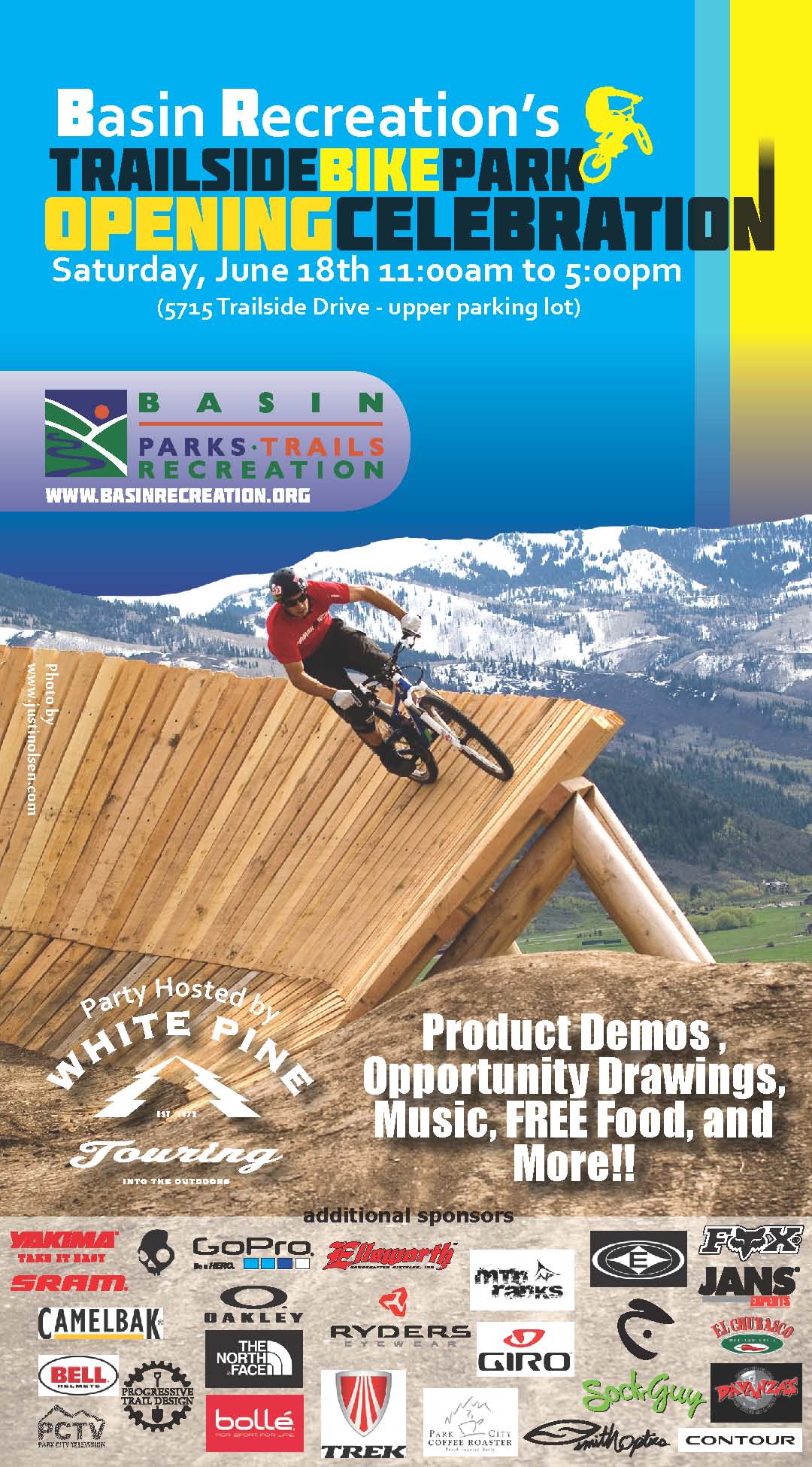
Basin Recreation’s Trailside Bike Park Grand Opening June 18, 2011

First Professionally Built Bike Park in Utah to Open In Park City!!

May 25th, 2011 Park City, UT- The Snyderville Basin Recreation District announces the celebration of its grand opening of the Basin Recreation Trailside Bike Park on June 18th, 2011 from 11:00am-5:00pm.

The Basin Recreation Trailside Park Bike Park (5715 Trailside Drive, Park City, UT) is the first professionally designed, and built bike park in the state of Utah. Free and open to the public, the new Bike Park was partially funded from Restaurant Arts and Parks tax, with the remainder funded from Basin Recreation’s Capital Improvements budget. The Basin Recreation phase one Bike Park was designed and built by Progressive Trail Design; a professional trail/bike park development company. Progressive Trail Design has designed and built 19 other bike parks and trail systems for municipalities, state parks, national forests, residential developers, and private landowners.
With an advanced level of trail design and construction that summer resort operations strive to achieve, the Basin Recreation Trailside Bike Park is truly unique as it will be free to use and open to the public the majority of the year (conditions permitting). Bob Radke, Trail Maintenance Supervisor for Basin Recreation, explained “The new Basin Recreation Trailside Park Bike Park is a huge addition to the trail system in the Park City area. It adds diversity to our trail system and will provide our constituents of all ability levels a place to come and build their skills while riding the first of its kind in the state.”
The grand opening celebration event on June 18th will include free mountain bike lessons from event sponsors, Jans and White Pine Touring. “Jans is excited to see such a progressive, and high quality Bike Park in our hometown,” noted Russ Coburn, president and CEO of Jans. “When given the opportunity to sponsor the grand opening there was no question we wanted to be involved.”
The community is supportive of the Basin Recreation Trailside Bike Park. Free refreshments will be provided by sponsor Davanza’s Pizza of Park City. DJ Danny Boy will be playing tunes throughout the event out of the Skullcandy tent to keep attendees fired-up. Two opportunity drawings will take place during the event with prizes from The North Face, Smith Optics, Skullcandy, bolle, Ryders Eyewear , Camelbak, Contour, Trek, Sock Guy, and more! Smith Optics will be at the Grand Opening event with demo product for people to check out, as well as high-end component manufacturer SRAM, Ellsworth Bikes, Yakima, Go Pro, FOX, and The North Face. Doug Dalton (aka DD, Double D) Technical Ambassador for SRAM added, “SRAM is excited to see this great new, free bike park in the Park City area that is open to all who wish to ride it. We are stoked about the opportunities this will bring to the mountain bike community.”

The Snyderville Basin Special Recreation District is a special District formed by Summit County to plan for, construct and operate recreation facilities and programs in the Snyderville Basin (the un-incorporated area surrounding Park City). Basin Recreation is dedicated to providing quality parks, trails and recreational experiences and opportunities for residents and visitors of the Snyderville Basin.

Body Image and Athletes

The Athlete’s Kitchen

NancyClarkRD.com


Copyright: Nancy Clark MS RD CSSD, January 2009

Question: What are two things dogs and athletes have in common?

Answer: One, both dogs and athletes love to exercise. Two, they both come in different sizes and shapes.

Question: What is one thing dogs and athletes do NOT have in common?

Answer:  Dogs are content with their natural physiques, while too many athletes try very hard to change the way they look. These athletes might be better off being like dogs. That is, does that bulky St. Bernard yearn to look like a lanky Greyhound? Heavens, no! Does the barrel-chested Labrador want to look like a sleek Setter? Doubtful. Each dog is very proud to represent his breed. Wouldn’t life be easier if each active person could be just as proud of his or her “breed”?

As a sports dietitian, I spend too many hours helping my clients find peace with their bodies. Most of these active people take the outside-in approach. They think if they change their body from the outside by losing undesired body fat or by adding some muscular bulk, they will be happier on the inside. Unfortunately, not true!

No weight will ever be good enough to do the enormous job of creating happiness. This story, told to me by a cyclist, proves that point: “I once weighed 124 pounds and was unhappy with that weight.  I started exercising and dieting rigidly. I lost to 99 pounds but I still wasn’t happy. I ended up binge-eating; I gained to 160 pounds, where I was miserable. I sought help from a counselor, stopped eating emotionally, and with time, got my weight back to 124—and I felt happy there! Why couldn’t I have been happy at 124 pounds in the first place? Because happiness has nothing to do with weight…”

Granted, some people do have excess body fat they can appropriately lose to be healthier as a person and lighter as an athlete. They can rightfully feel pleased when they accomplish the goal of attaining an appropriate weight. But other athletes just think they have excess fat to lose; they have distorted body images. A survey of 425 collegiate female athletes reports the women wanted to lose 5 pounds, on average. (1) Another survey of the top women runners in the country found the same results. (2) Even elite athletes wistfully believe they will perform better if they are leaner. Unfortunately, the struggle to attain that “perfect weight” can cost them their health and happiness. Restrictive diets with inadequate protein, iron, zinc, calcium and a myriad of other health-protective nutrients—to say nothing of carbs for fuel—often contribute to injuries and poorer performance.

So what can you do if you are discontent with your body? First of all, you should get your body fat measured to determine if you actually have excess fat to lose. Data can be helpful. (Find a local sports dietitian to measure your body fat via the referral network at SCANdpg.org.)  You may discover you have less body fat than expected!


Feeling fat

It’s easy to understand why so many athletes have distorted body images. When you put on skimpy running shorts that expose your “flabby things”, or a bathing suit that shows every bump and bulge, you can very easily “feel fat.” Sound familiar?

One solution to the “I feel fat syndrome” is to remember “fat” is not a feeling. That is, you don’t feel “blond hair” or “freckled.” You also do not feel “fat.” Yes, you may be feeling uncomfortable with your body. But you are really feeling imperfect, inadequate, insecure, anxious—and any number of other feelings that get described as “feeling fat.”

I encourage your to explore those real feelings, and figure out where you got the message that something is wrong with your body. The media is a good start, but it could also be a parent who lovingly said at a tender age “That outfit looks nice, honey, but if only you’d lose a few pounds…” What you hear is “I’m not good enough” and this can create a downward spiral of self-esteem. Weight issues are rarely about weight. They tend to be about feeling inadequate and imperfect.


What to do

So how can a discontent athlete feel better about his or her body? One tactic is to stop comparing yourself to your peers. To compare is to despair. Rather, pretend you live on an island where your body is “good enough” the way it is. (You are unlikely to ever have a “perfect” body, so the second best option is to enjoy a body that is “good enough.”) If you step off your island and start comparing yourself to your peers, please notice: Do you end up being too fat, too slow, too ugly, too dumb? Do you ever let yourself rise to the top and be better than others? Doubtful. You are better off staying on your island, and calling yourself a Gorgeous Goddess or Handsome Hulk. With time and practice, you can change the way you see yourself and come to believe perhaps you are, indeed, good enough the way you are!

Granted, changing the way you feel about your body is a complex process. The following resources can help you in this journey to find peace with your body:

www.nourishingconnections.com (free e-newsletter)

www.findingbalance.com (has videos about resolving weight issues)

www.adiosBarbie.com (offers resources, and insights into the media)

For a plethora of books, visit the online bookshelf at www.gurze.com. Some of my favorites include The Body Image Workbook and The Don’t Diet, Live-It Workbook.


Life is more enjoyable when you can love your body and appreciate it for all it does and stop hating it for what it is not. When the drive for thinness comes with a high price, that price may not be worth the cost.


Nancy Clark, MS, RD, CSSD (Board Certified Specialist in Sports

Dietetics) counsels both casual and competitive athletes in her practice at Healthworks, the premier fitness center in Chestnut Hill MA (617-383-6100). Her NEW 2008 Sports Nutrition Guidebook, Food Guide for Marathoners, and Cyclist’s Food Guide are available via www.nancyclarkrd.com. See also sportsnutritionworkshop.com.


References:

1. Beals K and M Manore. Disorders of the female athlete triad among collegiate athletes. Int’l J Sport Nutrition and Exercise Metabolism. 2002. 12:281-293


2. Clark N, M Nelson, W Evans. Nutrition educational for elite female runners. Physician and Sports Medicine. 1988. 16:124-135


Salt Lake’s Tiffany Pezzulo Wins Tulsa Tough Opener

Pezzulo also notches podium finish in omnium’s second race


Tiffany Pezzulo (center) won the opening crit at the Tulsa Tough Omnium.

DENVER – June 15, 2011 – Primal/MapMyRIDE Professional Women’s Racing powered by BH Bikes’


Pezzulo also rode for a podium finish in third place in Saturday’s Brady Village Criterium.


“Tiff put together an incredible performance this weekend in tough conditions and in a tough field of riders,” said Primal/MapMyRIDE Team Director Susannah Gordon. “The team rode great and was able to help Tiffany get in a position to be competitive at the end on Friday and Saturday and she finished the job.”

The three-day omnium is the team’s final event prior to the USA Cycling Elite Road Nationals in Augusta, GA later this month.


“The Tulsa Tough is such a fun event and suits my strengths well,” Pezzulo said. “We raced great as a group and are feeling strong and prepared as we head into our first Nationals race as a team.”


Primal/MapMyRIDE member Liza Rachetto also took home a top-10 finish during the three days of racing in Oklahoma.


SLC PD Offer Reward in Fatal Hit and Run Case

0

SALT LAKE CITY— The Salt Lake City Police Department is offering up to a $5,000 reward for information that leads to the arrest and conviction in a fatal hit-and-run case.

At approximately 10:03 p.m. Tuesday, June 7, 2011, Brynn Barton was killed while riding her bicycle at 800 South and 700 East. Police are seeking information on a dark colored 1998-2001 four-door VW Passat sedan that is believed to have been involved in the incident.

The Police Department asks anyone with information about this case to call (801) 799-3000. Callers may remain anonymous.

Reference: Case #11-91175 http://slcpd.com

Bike Parking

0

20110611-025600.jpgThe new bike corral at Squatter’s in SLC is well used.

Corrals can be found at Bruge’s Waffles, the Twilite Lounge, and several other locations.

Bryner and Frye Win 2011 Powder Mountain Hill Climb

0

The third annual Powder Mt hill climb was held on 11 June 2011. Approximately 60 riders took the 6 mile, 3300 foot vertical challenge with the winner completing the race in a bit a little over 41 minutes. Photo: Dennis Montgomery.

6-11-11 – The 3rd Annual Powder Mountain Hillclimb proved once again just how rewarding the steepest climb in Utah can be.  With UCA points, cash and numerous prizes on the line, 76 motivated climbers showed up to challenge the mountain, their rivals and themselves.

The deep snow still lingering up the road would prove to be a dramatic backdrop for this late spring classic and the snow from last year’s event fresh on everyone’s mind, the day started on the cool side with a brief spring shower.  The rain subsided just before the start and the weather ended up being near perfect for such a grueling climb.  The sun managed to show itself just in time for the awards ceremony.

The race to watch was the Men’s Cat 1-2.  Norm Bryner and teammate Sam Kreig came with their game faces on.  Newly upgraded Cat 2 rider and Ogden resident, Darren Goff, was also motivated to prove himself in his own back yard.  The overall fastest time is awarded the Tecia Stout Trophy, a perpetual trophy established in honor of Tecia Stout who succumbed to ovarian cancer a few years ago.  Nate Cisney held the trophy for the past year but a back injury kept him from defending.  Cisney was the fastest rider in the previous two editions of the race.  He set the standard in 2009 at 41 minutes 20 seconds for the 3300 foot, 6 mile climb.

The Powder Mountain Hillclimb doesn’t give anyone much time to warm up.  Its steep from the get go.  There’s a neighborhood to pass through and then the unrelenting climb really starts to take shape.  Its at the road service gate where Bryner made his move.  His attack was followed by Krieg, Goff and Erik Herrington but Bryner’s pace was too much.  Bryner took the checkered flag in a record setting 41 minutes and 9 seconds earing his spot on the hefty Tecia Stout Trophy.  Harrington followed at 42:45 and Sam Kreig took the final podium spot at 43:19.  Darren Goff overcame his cold and took 4th at 43:19.

Norm Bryner won the overall. Photo: Dennis Montgomery.

There were many prizes and trophies up for grabs.  Women’s Cat 4 winner Jessica Arbogast won the beautiful “Fastest Female” trophy with a time of 51:40.  The unique “Clydesdale Trophy”, an actual Clydesdale horseshoe mounted on a plaque went to the fattest, I mean fastest, rider over 180 lbs.  Nate Pack was this year’s Clydesdale winner.  We all know that Nate Pack can climb!

Just finishing this “ridiculous climb”, as Junior National MTB Champ Keegan Swenson once described it, is a feat in itself.  For that a “Lantern Rouge” is also awarded to the last rider up the mountain.  Heather Smith took the prize in an admirable time of 1 hour 5 minutes.  It’s a testament to the underlying theme of never quitting and never giving up.  It embodies why so many of us race our bikes.  Its to challenge and overcome and have a ball in the process.

A special thanks goes out to all who participated in this tough event and to the sponsors who made it happen:  The Bike Shoppe, Peregrine Health, Enve Composites, Blue Iguana, Pro Bar, Roosters, Pearl Izumi Factory Store, Powder Mountain, Wolf Creek Resort, Diamond Peak Mountain Sports and The Bike Shoppe/Chick-fil-a Racing Team.


Powder Mountain Hill Climb Results
June 11,2011 

Place Time Bib Number Last Name First Name Category Cycling Road Team


1 0:44:50 210 BROWN Cortlan Cat 3 M BIKEFIX
2 0:49:53 212 PACK Nate Cat 3 M Team Big Ring / Gym Jones
3 0:47:36 211 LONG Jeremy Cat 3 M Bicycle Center
4 0:48:23 213 PEREIRA Cristiano Cat 3 M Animal Liberation Racing
1 0:51:40 309 ARBOGAST jessica Cat 4 F
2 1:02:06 311 DAHLBERG Danielle Cat 4 F The Bike Shoppe / Chick-Fil-A
3 1:03:16 310 COOKLER sarah Cat 4 F
4 1:05:01 312 SMITH Heather Cat 4 F The Bike Shoppe/Chick-fil-A
1 0:47:48 916 CLIFT David Cat 4 M NA
2 0:48:08 918 GIBBONS Eric Cat 4 M Bikers Edge
3 0:48:35 917 DEARDEN samuel Cat 4 M
4 0:48:41 922 KINGSOLVER Ryan Cat 4 M YEA/ConsultNet
5 0:49:34 929 FESSLER Blake Cat 4 M
6 0:49:34 928 TASELL Michael Cat 4 M Midoule
7 0:49:59 921 HURST gary Cat 4 M Animal Liberation Racing
8 0:50:52 926 KNAPP Jake Cat 4 M
9 0:51:12 925 WILES Travis Cat 4 M KUHL / Bingham Cyclery
10 0:54:23 923 RONNOW Christian Cat 4 M FFKR/SportsBaseOnline
11 0:55:10 927 STACK Scott Cat 4 M Real Cyclist
12 0:55:41 920 GIBSON Justin Cat 4 M The Bike Shoppe / Chick-fil-A
13 0:59:27 919 GIBSON Jaren Cat 4 M The Bike Shoppe/Chick-fil-A
DNS 924 SHELLEY Collin Cat 4 M
1 0:47:14 955 JOHNSON Collin Cat 5 – Citizen M University of Michigan
2 0:47:32 954 JOHNSON Connor Cat 5 – Citizen M
3 0:55:58 958 XAIZ Earl Cat 5 – Citizen M
4 0:57:20 950 BLANGO Matthew Cat 5 – Citizen M Ski Utah Cycling
5 0:58:10 951 FITZSIMMONS Gavin Cat 5 – Citizen M Revolution Cafe Rio
6 0:58:26 959 BEDOYA Daniel Cat 5 – Citizen M
7 0:58:54 957 PETERSON Ronald Cat 5 – Citizen M MiDoule
8 0:59:33 956 WHITE kelly Cat 5 – Citizen M
9 1:03:21 952 HOLMES Breen Cat 5 – Citizen M
10 1:11:10 953 HUNTER James Cat 5 – Citizen M
DNS DNS 780 KENNARD Gianni Jr Boys 13-14 M RMCC/Cyclesmith
DNS DNS 781 SHELLEY Tyler Jr Boys 13-14 M
1 1:01:19 90 HATCH marlene Master 35+ F
1 0:44:26 762 ZIMBELMAN Mark Master 35+ M Giant Cycling World – Skullcandy – Jumex
2 0:49:43 760 KADRMAS Dan Master 35+ M Bountiful Mazda
3 0:56:21 761 OLSEN Trent Master 35+ M TBS/Chick-fil-a Racing
1 0:43:55 439 WILLIAMS Cris Master 45+ M Giant Cycling World – Jumex – Skullcandy
2 0:47:08 435 FLITTON todd Master 45+ M
3 0:47:53 436 FRYE Norman Master 45+ M Ski Utah
4 0:53:05 438 SEABORN rick Master 45+ M
5 0:53:53 442 REESE Spencer Master 45+ M
6 0:57:52 440 WINNER Todd Master 45+ M
7 0:59:06 441 KOSN Scott Master 45+ M Bountiful Mazda
8 1:01:17 437 SCHWAB Bruce Master 45+ M
1 0:48:51 870 COWLEY Dirk Master 55+ M FFKR/SportsBaseOnline.com p/b Tour of Utah
2 0:48:57 871 KILGORE tek Master 55+ M Mi Duole
3 0:53:38 876 HUNSKER Jerald Master 55+ M Bountiful Mazda
4 0:55:23 872 LOUDER Ken Master 55+ M FFKR/Sportsbaseonline p/b Tour of Utah
5 0:56:10 874 STORRUD Shannon Master 55+ M Porcupine Racing
6 0:58:08 873 RONNOW Lorin Master 55+ M FFKR Architects/SportsBaseOnline.com
7 1:02:37 877 McWhorter Bruce Master 55+ M
DNF 875 SIMMONS Gary Master 55+ M Bountiful Mazda
1 0:51:29 128 BAGLEY David Master B 35+ M Max International
2 0:52:21 135 KROMMENHOEK Adam Master B 35+ M
3 0:52:28 134 BLANCO Walter Master B 35+ M Ski Utah
4 0:53:57 130 MURRAY Bill Master B 35+ M Team Big Ring-RealCyclist
5 0:54:07 129 FLICK Jeff Master B 35+ M RMCC/Cyclesmith
6 0:54:11 133 WHITE Jamie Master B 35+ M Barbacoa – Mi Duole
7 0:54:45 131 OLMSTEAD Doug Master B 35+ M The Bike Shoppe/Chick-fil-a
8 0:57:52 132 STEED kevan Master B 35+ M The Bike Shoppe/Chick-Fil-A
1 0:41:09 30 BRYNER Norman Pro Cat 1-2 M Barbacoa-Mi Duole
2 0:42:45 33 HARRINGTON Erik Pro Cat 1-2 M RMCC/Cyclesmith
3 0:43:19 35 KRIEG Sam Pro Cat 1-2 M Ski Utah-MarketStar
4 0:43:40 32 GOFF Darren Pro Cat 1-2 M The Bike Shoppe/Chick Fil A
5 0:43:49 31 ELLIS Eric Pro Cat 1-2 M Ski Utah-MarketStar
6 0:44:22 39 APOSTOL Tyson Pro Cat 1-2 M Euclid
7 0:44:28 36 OLSEN Aaron Pro Cat 1-2 M FFKR/SBO P/B Tour of Utah
8 0:49:50 34 HOWARD Josh Pro Cat 1-2 M Team Bob’s-Bicycles.com
9 0:51:55 38 McConville Robert Pro Cat 1-2 M Chemstar
DNS 37 PINKHAM Chase Pro Cat 1-2 M BISSELL Pro Cycling
1 0:52:37 285 FRYE Alison Pro Cat 1-2-3 F Ski Utah Cycling Team
2 0:53:09 283 ALTABELLA LAZZI Dulce Pro Cat 1-2-3 F The Contender Club
3 0:59:28 284 APPLEBY-KRIEG Karen Pro Cat 1-2-3 F ICE / Idaho Kidney Institute / SE Idaho Gastroenterology
4 0:59:33 286 GIBSON Keri Pro Cat 1-2-3 F The Bike Shoppe / Chick-Fil-A


Store Locator

[simplemap]