By Charles Pekow — Bicycles and their components need not end up in landfills once they are no longer usable. Bikes can instead be constructed using recycled parts, paving the way for a more sustainable industry. This is the core message of a report published by Scientific Press International Limited.
Titled “Aluminum Circular Economy in the Bicycle Industry,” the report highlights that aluminum is an excellent material due to its recyclability, quality retention, and abundant availability from bauxite ore. It is also noted for its efficiency and cost-effectiveness. However, the production of aluminum comes with a significant carbon footprint.
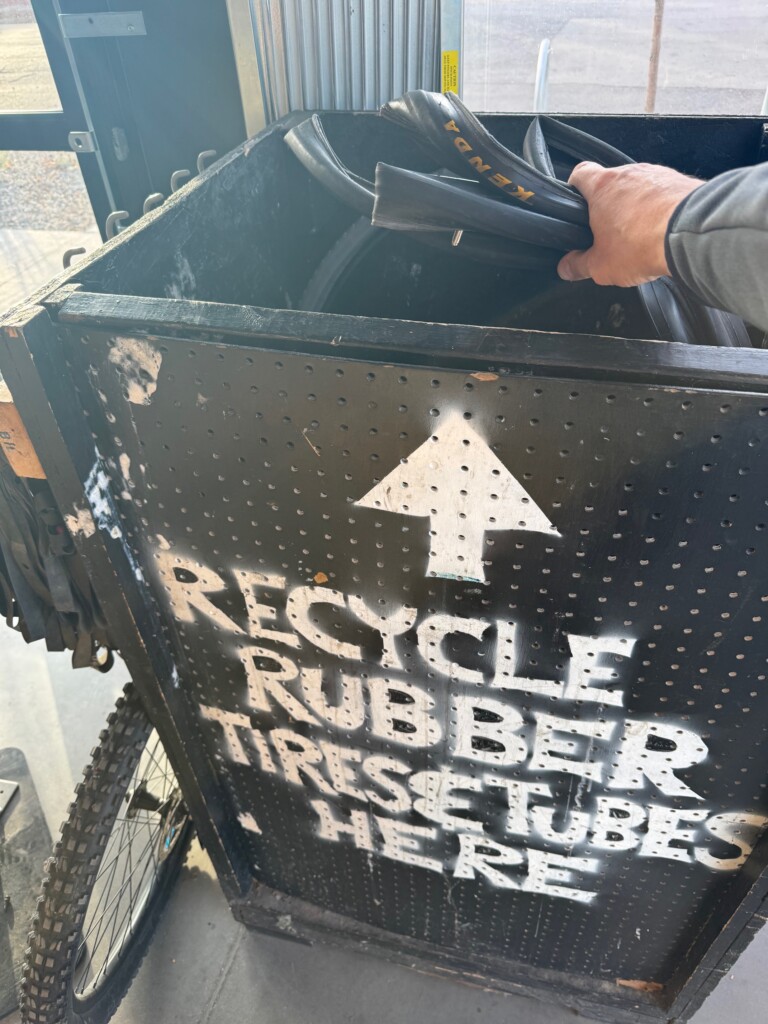
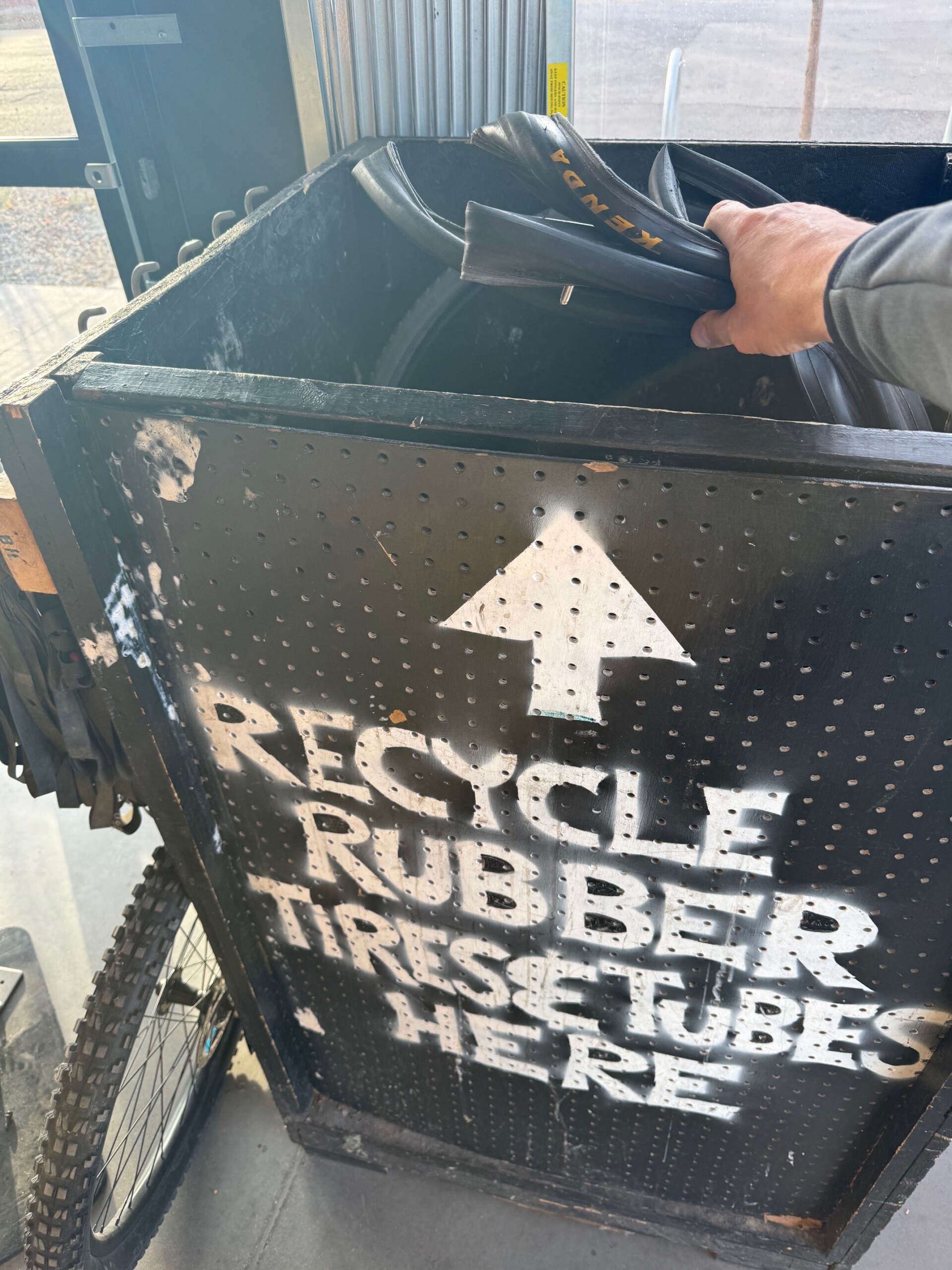
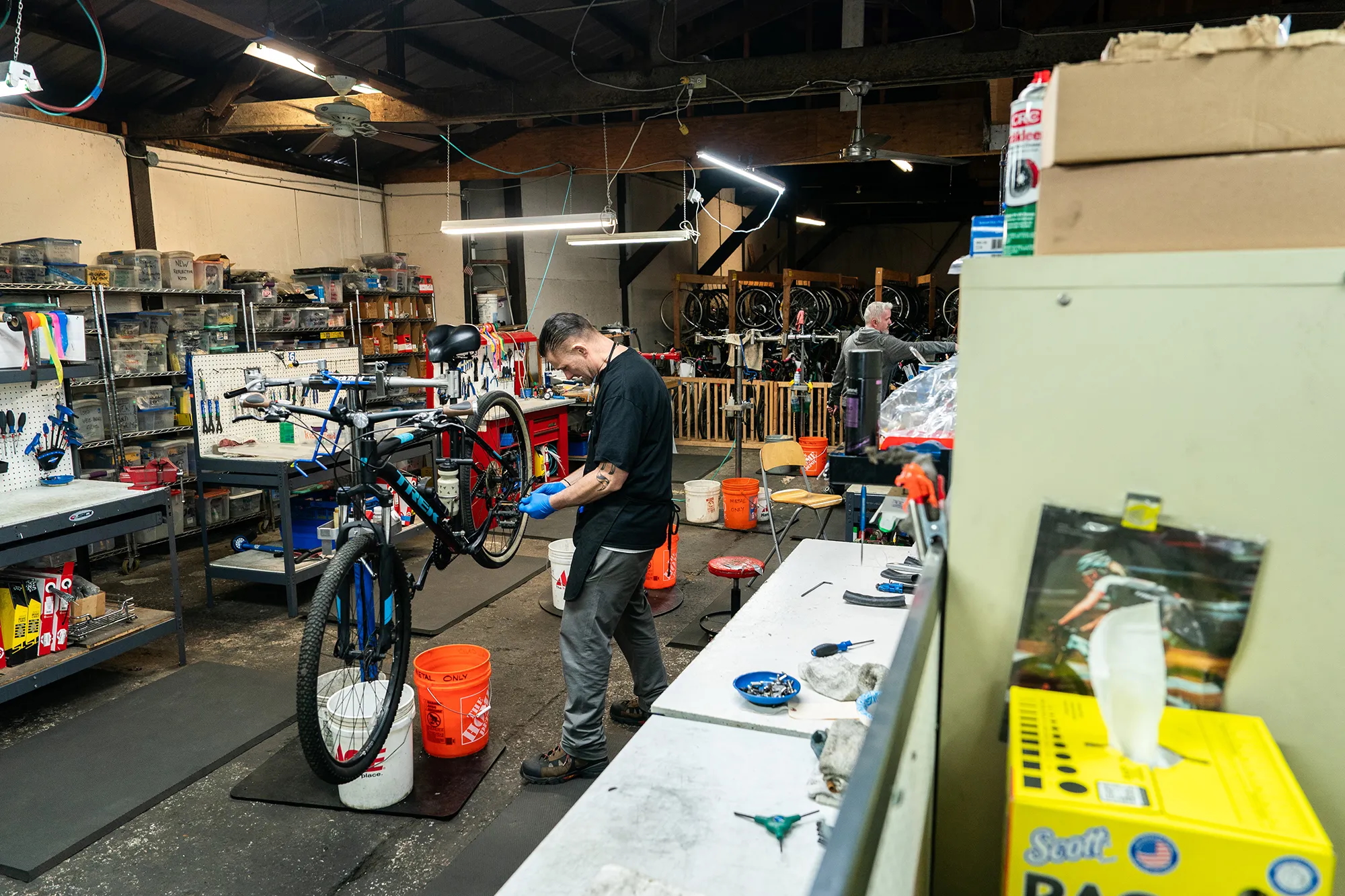
Recycling bins (at your local bike shop helps keep toxic waste out of landfills.
The report suggests that manufacturers could even collect and reuse aluminum scraps during the production process. Although it lacks detailed specifics, it advocates for the establishment of industry standards to promote sustainability.
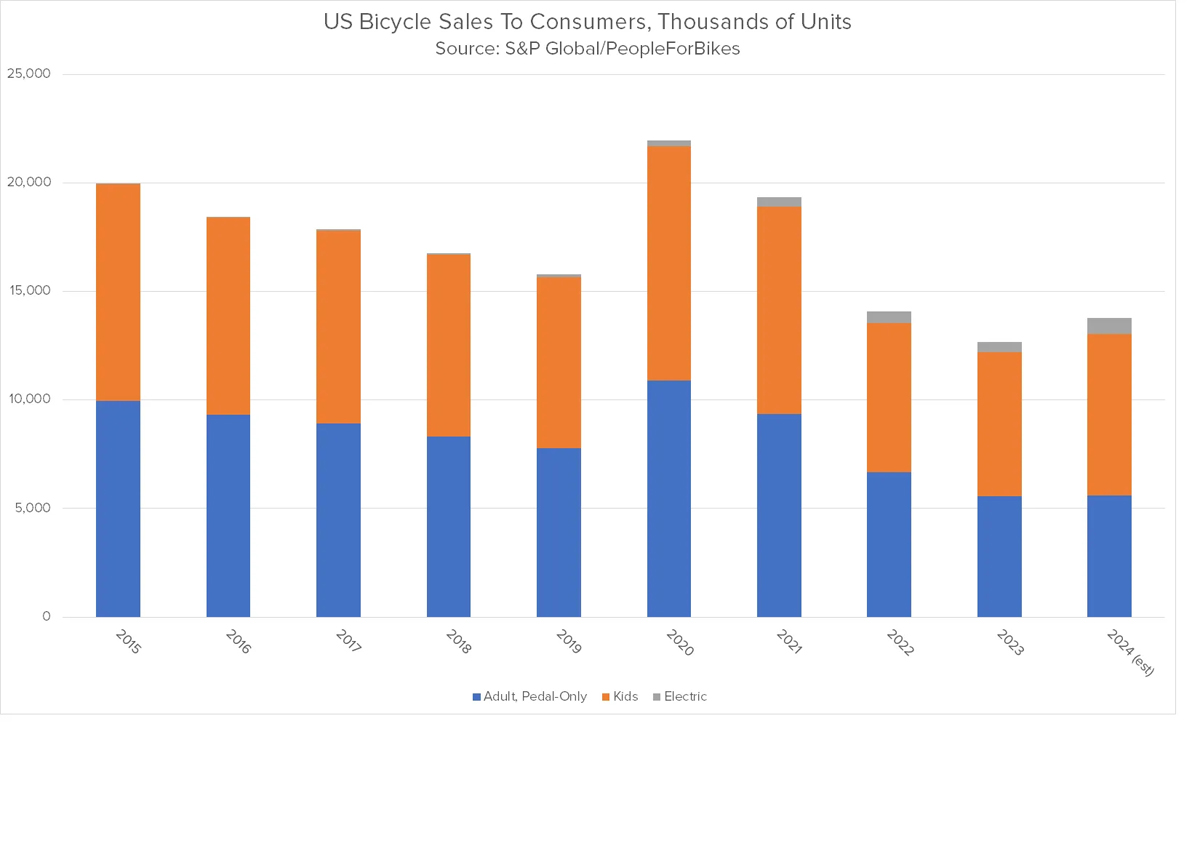
By Peter Abraham — The bike industry is currently in the middle of its worst-ever recession. There was a huge pandemic-induced spike in interest in bikes (along with other outdoor activities) in 2020 and 2021, followed by a massive drop off in demand that many insiders are predicting will last until some time in 2026.
Post-boom sales are down 22% from the 2015–2019 pre-pandemic average (courtesy People for Bikes).
This sales downturn has impacted the entire industry, from bike, component & apparel manufacturers to ecommerce outlets and of course bike shops.
As part of this downturn, two bike shops near me recently closed, with apparently more on the way. Seeing retailers struggle just to keep their doors open got me thinking: What is the bike shop for in 2025? Which problems does it solve for the customer?
Bike shops started opening around the world as bikes grew in popularity in the late 1800s. The number of bike shops operating in the U.S. has risen and fallen since the turn of the century along with the state of the industry. Currently it’s estimated that there are about 7,000 bike retailers in this country. As it has with many businesses, the internet has had a huge effect on bicycle retail. Parts are now often purchased online, and bikes are as well as illustrated by the rise of German direct-to-consumer brand Canyon Bicycles, with revenue approaching $1b annually.
Here are the central functions of a bike shop:
Complete bike sales: This sounds obvious, but with the list of DTC brands growing, you don’t necessarily NEED to go to a bike shop to buy a bike. You could buy a bike at Walmart or REI. You can also buy a used bike off of Facebook Marketplace, The Pro’s Closet (which recently went out of business and was sold and reopened) or any other marketplace. However, at a bike shop you can test ride a bike, you are more likely to get a bike that fits you and there are often a number of different brands and models to choose from. And bike shops are particularly good for lower cost bikes when a customer wants to walk out immediately with a new bicycle.
Service: Bikes now are increasingly complex and mechanically challenging to work on. Now on a single bike you may have hydraulics, electronics that require firmware updates, tricky tubeless tires and carbon fiber parts that require a selection of torque wrenches. The completely mechanical and made from metal bikes that I grew up working on look quaint and antique in comparison today’s high tech versions. As someone who’s owned and worked on bikes since high school, I still take my bike to the shop for service a few times per year. There are alternatives like Velofix mobile repair, where a van comes to your house, but many people love taking their bike to a shop and developing a relationship with the staff.
Parts: Yes, you can buy parts at a bike shop, and I occasionally do because it’s convenient. But the internet has changed this due to the unlimited selection available online. I source lots of things via ecommerce because a single shop could never carry all of the different bike parts that I might buy in a year. For example, if I need to replace my Schwalbe Pro One 32mm tubeless ready road tires, it’s unlikely that I’d be able to find that model and exact size (slightly unusual) in my local shop. So it’s faster and easier and maybe cheaper (I might find them on sale somewhere) to just search online and have them delivered.
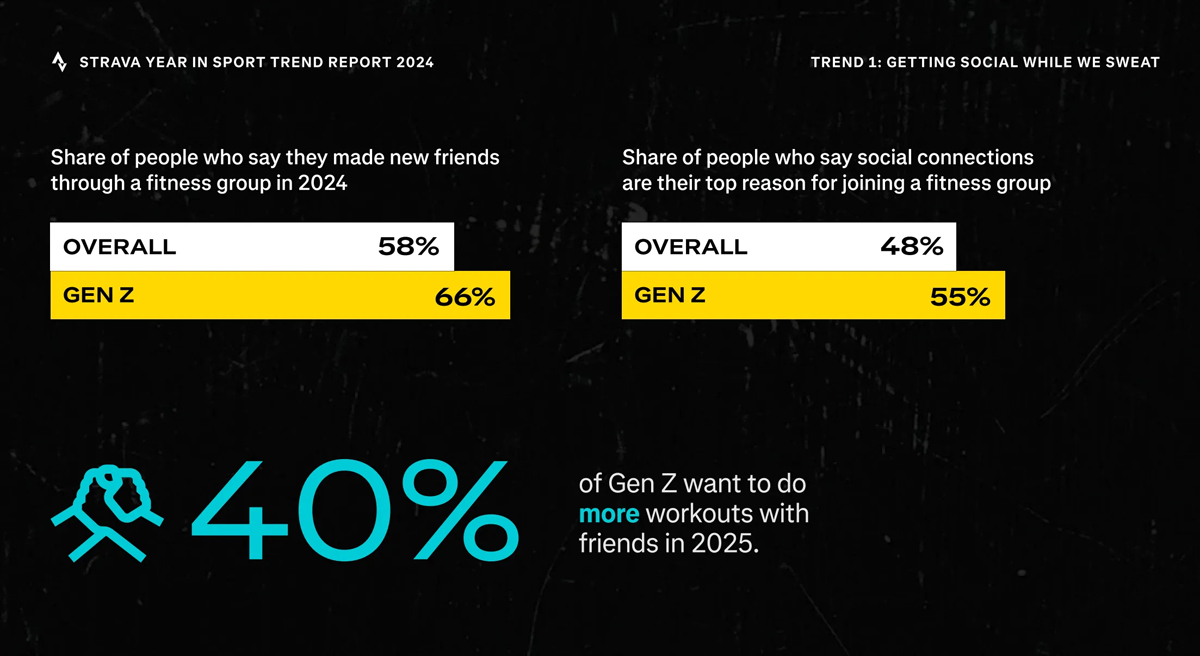
“40% of Gen Z want to do more workouts with friends..” This data from the Strava Year in Sport Trend Report 2024 illustrates a key opportunity for bike shops.
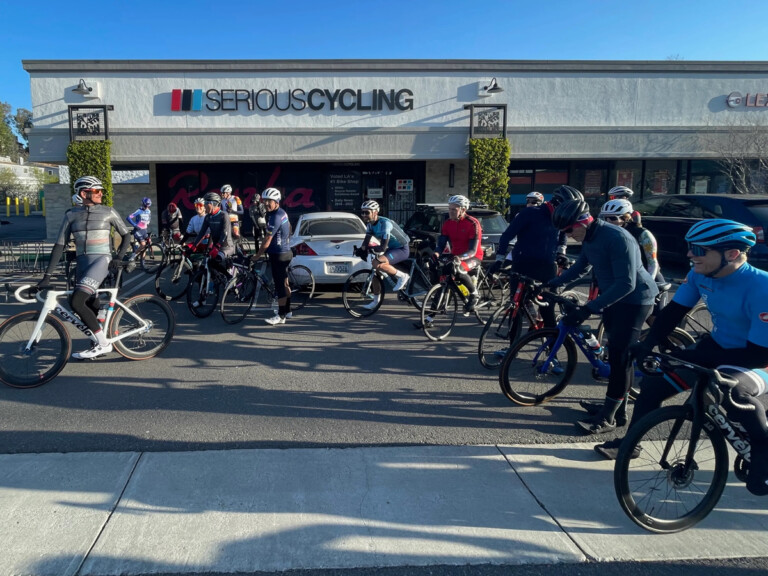
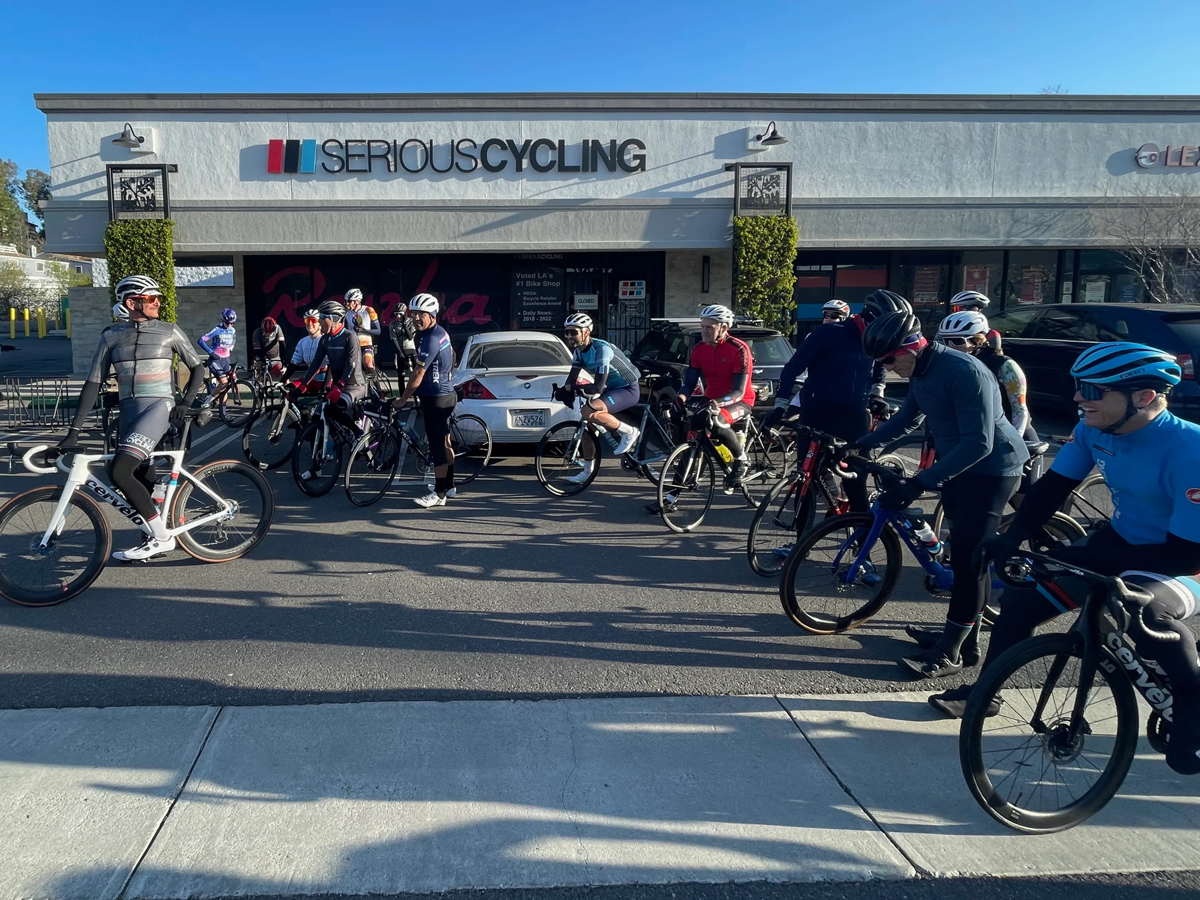
Community hub: Underrated but also important. Retail shops in almost any sport (running, skiing/snowboarding, skating, surfing, climbing all come to mind) become gathering places for those passionate about that activity. Shops invest in this component to varying degrees. My favorite local bike shop, Serious Cycling, has an active bike racing team, a foundation and a vibrant community with different group rides every week. In comparison, the Trek shop near me that just closed had no coffee, no community that I was aware of, not to mention only one brand of bikes (Trek) and accessories (Bontrager) for sale. Also, is the shop supporting local races or NICA mountain bike teams and using events to create relationships? The community component is an important factor (but not the only one) that keeps customers coming back.
Data Gathering: Who spends money at a retail establishment and does the shop use data to glean insights about their customers in order to serve them better? Which neighborhoods do they live in? Where do they ride? What kind of riding do they do? What age are they? What do they think your shop could be doing better? Does the shop have Strava, Instagram & other social media (Facebook, Threads, Blue Sky, there are so many now) accounts in order to serve relevant content to their customers and start conversations?
The weekly Saturday group ride at Serious Cycling in Agoura Hills, CA. Photo by Peter Abraham
What should a bike shop look like in 2025?
I see many bike shops operating as if it’s 1990. Yet, the world has changed so much in the last 25 years due to both technology and generational tastes. In my life as a marketing consultant, I’ve worked with many brands that have retail locations: Nike, Hoka, lululemon and Best Buy among others. Based on learnings from these and many of the bike brands I work with, here are some ways bike retail can be improved:
Buyer’s choice. Customers should have the option to buy a bike from a brand in different ways: From a shop, via DTC or click and collect, where they order the bike online and have it delivered to a nearby shop for assembly. Let’s say a cyclist in Reno, Nevada wants to buy an Allied bike, but the brand does not have a shop in the state of Nevada. That customer should be able to buy a bike directly from Allied, who then ships it directly to the customer. A bike brand should not be limited to potential customers who live within, let’s say, 20 minutes of one of their dealers. In order to limit showrooming (test riding a bike at a shop then going home and ordering it online) brands can give the retailer nearest to the customer a cut from the sale of a bike in that area.
Just-in-time. Shops often have to forecast demand for a bike brand they sell, then place an order (and pay money up front) in specific sizes, models, colors and build levels. There are so many permutations of a bike that a shop might sell: size, model, build quality, color, accessories, tires…when you play this out it gets into the hundreds of options. Hopefully actual demand aligns with their forecast and they can sell all of the bikes. Of course, that’s often not the case. It’s unreasonable to expect a small retail establishment with limited access to sales data to correctly forecast these permutations. It would be great if the bike industry got behind a more just-in-time model: A customer would see a new bike at a shop, which would have a display model and a few demos for test rides. If that customer test rides the demo, likes it and wants to buy one, the shop would then call a regional warehouse (or the national HQ in the case of smaller brands) which has a bunch of RTP (ready to paint) frames standing by. The customer can choose from a number of paint colors, and maybe even build level as well. The bike is painted and put together at the warehouse and shipped directly to the customer or to the shop for assembly. This process may sound simple, but of course lots of things have to be set up in order for it to happen smoothly.
Community. Every bike shop should engage the community at some level. This does not have to be only about supporting bike racers, a traditional bike shop customer category. There can be movie nights, guest speakers, social events, urban focused rides, bike infrastructure advocacy, trailbuilding projects, and so many other things. The point here is that customers (particularly younger ones) want to meet other customers. So retailers should provide that experience. I see many bike shops totally missing this opportunity.
An evening event I attended with Chris Stricklen, Justin Williams, Cory Williams and Rahsaan Bahati (along with Marlon Moncrieffe virtually) at the Rapha shop in Santa Monica. Photo by Peter Abraham
I think we’ll see another difficult year for bike retail in 2025. It would be great if some bike shops used this challenging time to rethink how they serve customers. After all, customers who don’t feel they’re the first priority of bike shops will choose other places to spend money on their bike habit.
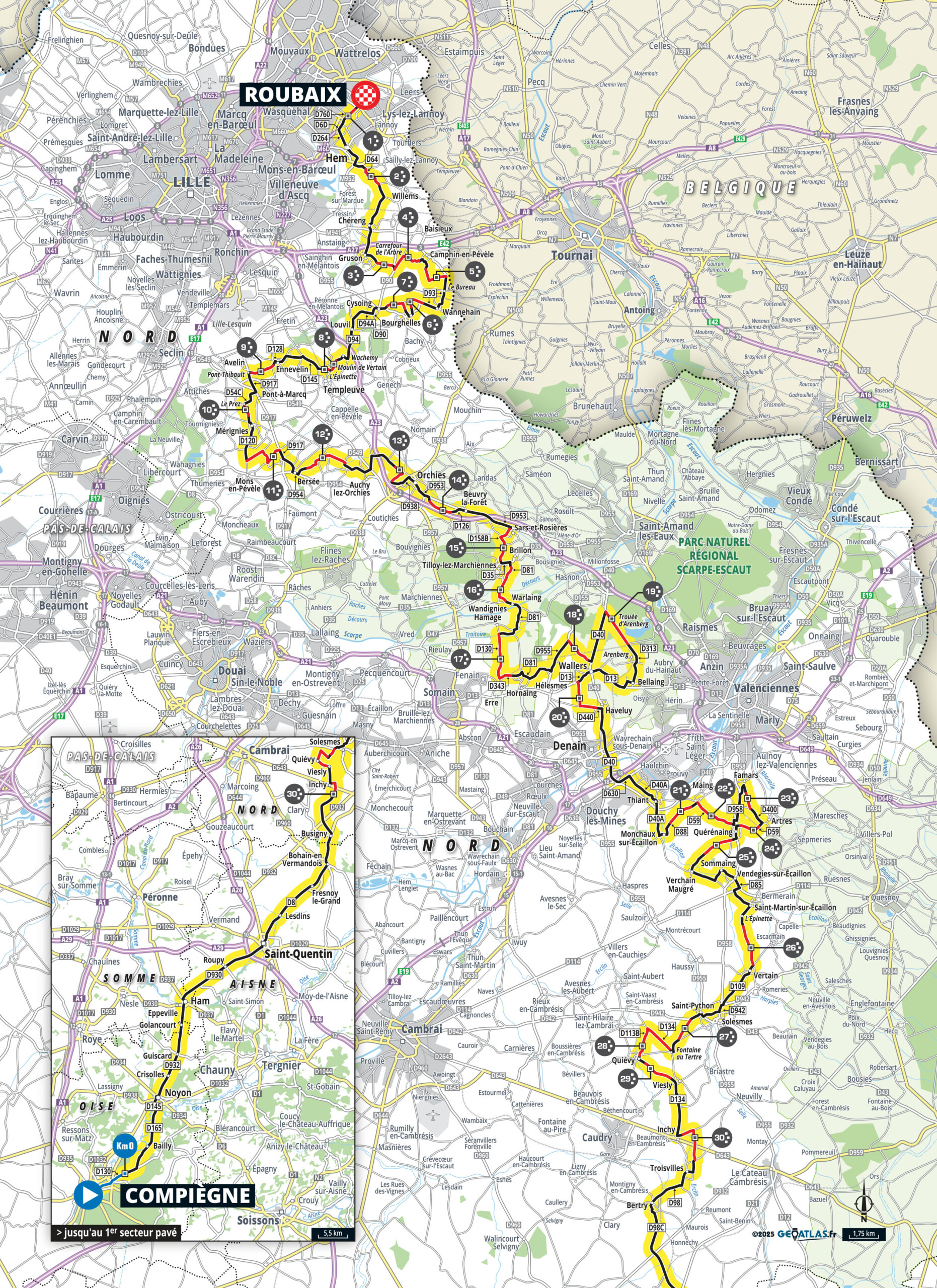
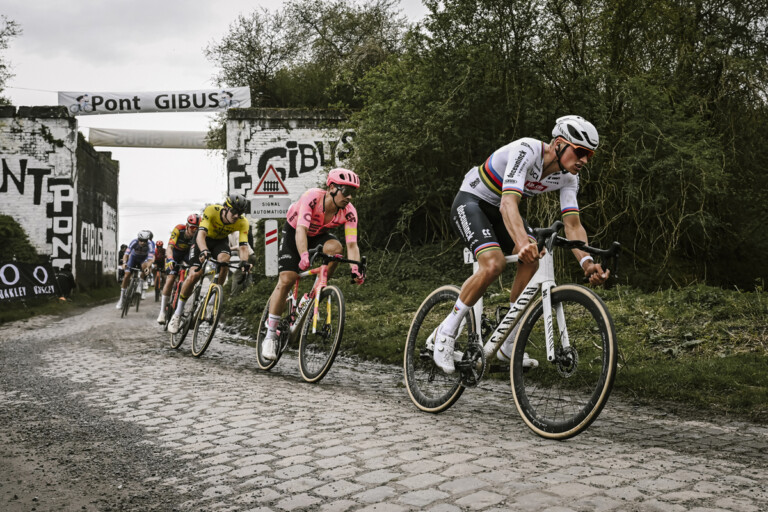
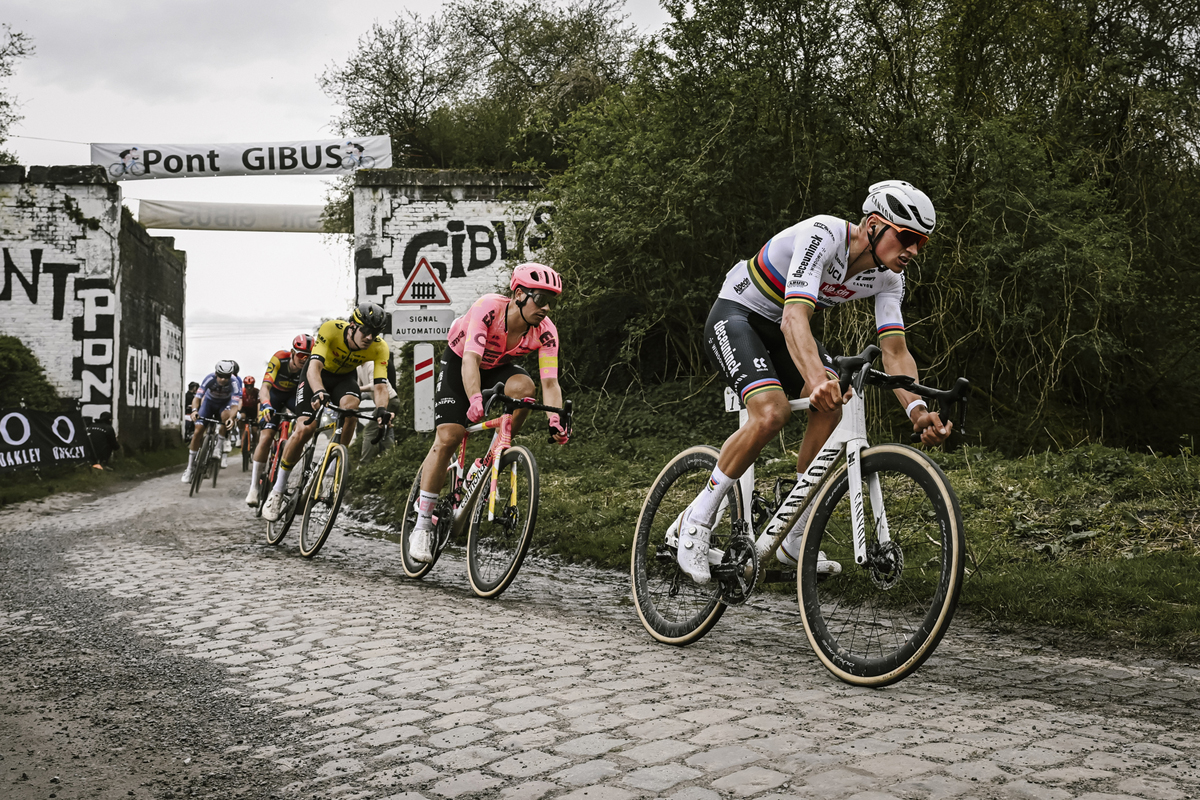
PARIS, France (5 February 2025) — The 122nd edition of Paris-Roubaix is set to unleash its legendary chaos on Sunday, April 13, with riders rolling out from Compiègne to tackle a grueling 259.2 km en route to the iconic Roubaix Velodrome. This year, subtle but significant tweaks to the course will test the peloton’s mettle, particularly in the build-up to the notorious Trouée d’Arenberg. Race director Thierry Gouvenou has spiced things up with a fresh double cobbled sector around Quérénaing: the section at Artres (#24, after 130.9 km, 1,300-m long) and the one at Famars (#23, after 133.8 km, 1,200-m long), which will also be on the route of the Denain Grand Prix and will host a stage finish on the Four Days of Dunkirk this year, intensifying the challenge before the race’s pivotal moments.
“They are not especially difficult portions,” explained Gouvenou, “but by introducing them here, it provides us with a sequence of five sectors without virtually any tarmac.”
The Road to Roubaix: Key Changes and Sectors to Watch
For the men’s race, the 30 cobbled sectors come thick and fast, the first appearing at Troisvilles (km 95.8). As fatigue sets in, positioning and strategy become paramount, especially leading into Arenberg, where a crucial modification aims to temper the peloton’s speed. A newly designed detour now weaves past the Arenberg mining site, introducing four sharp right-hand turns in the final kilometer before the entrance to the Trouée d’Arenberg (km 163.9, 2.3 km long).
“This year, we have found an alternative that allows us to slow down the riders in a more fluid manner, via a small detour that runs alongside the mining site in Arenberg. With this introduction, there will be four right angle corners in the kilometre before the Trouée d’Arenberg,” noted the race director.
Beyond Arenberg, the race of truth begins. The strongest contenders will emerge through Mons-en-Pévèle (km 210.6, 3 km long) and the unforgiving Carrefour de l’Arbre (km 242.1, 2.1 km long), where the final selections will be made.
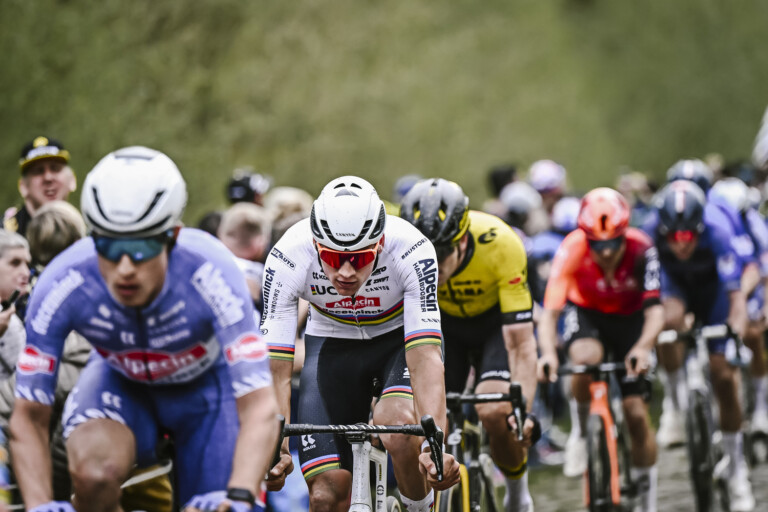
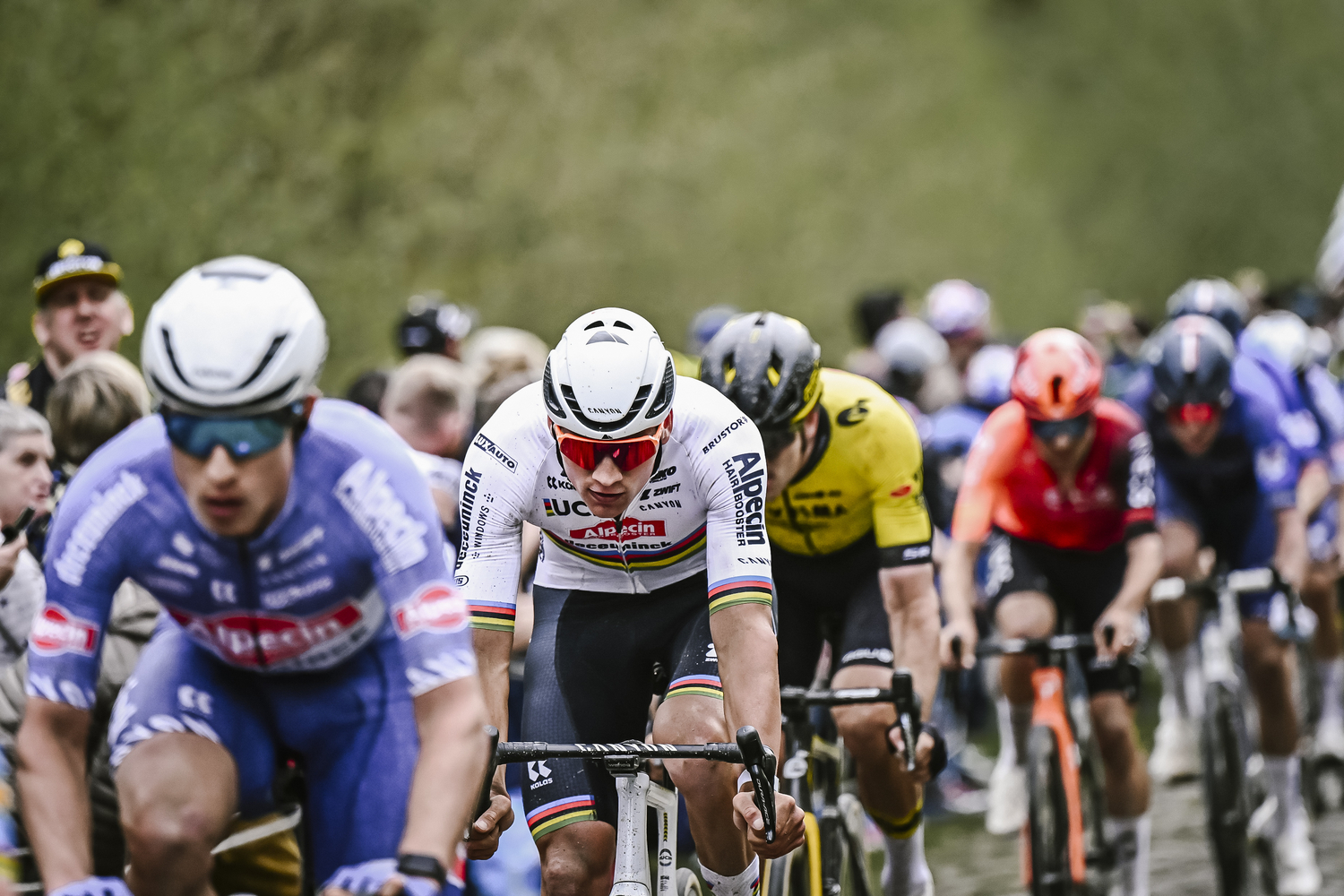
07/04/2024 – Paris-Roubaix – Compiègne / Roubaix (259,7km) – VAN DER POEL Mathieu (ALPECIN-DECEUNINCK) – Remporte l’édition 2024
A Race That Always Delivers
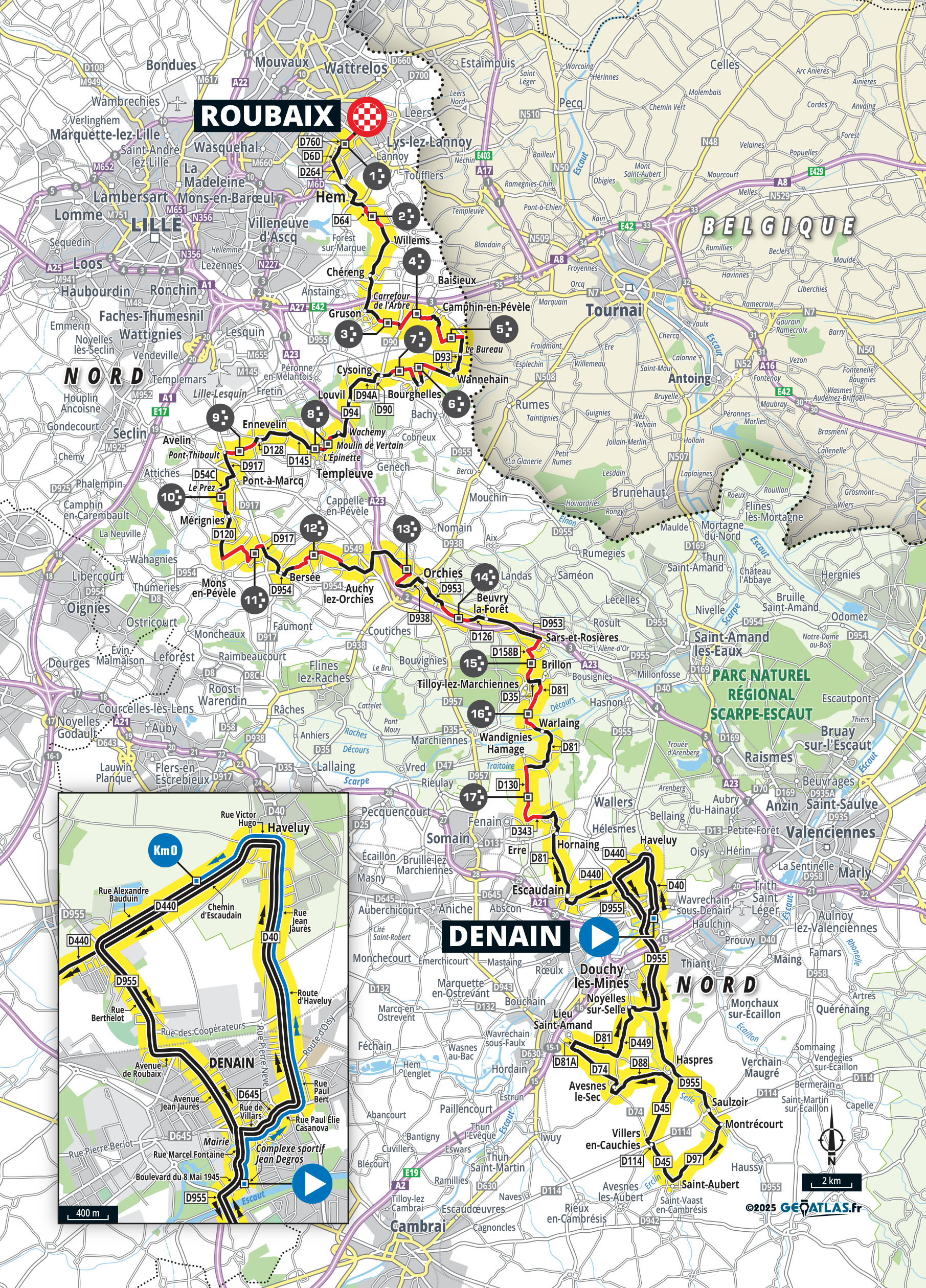
Meanwhile, the women’s peloton will take center stage the day before, on Saturday, April 12, for the 5th edition of Paris-Roubaix Femmes avec Zwift. Their 148.5-km route, starting in Denain, remains unchanged from 2024, but history has shown that no two editions of this race ever unfold the same way. With 29.2 km of cobbles across 17 sectors, including Mons-en-Pévèle and Carrefour de l’Arbre, the battle for supremacy is guaranteed to be fierce.
Whether it’s a solo raid, a tactical masterpiece, or a chaotic sprint, Paris-Roubaix never fails to thrill. From Lizzie Deignan’s audacious solo ride in 2021 to Lotte Kopecky’s perfectly timed sprint in 2024, the women’s race has produced its own share of unforgettable moments. With unpredictable conditions and relentless terrain, one thing is certain—on the road to Roubaix, every cobble holds a story.
For amateur cobble connoisseurs, the weekend offers multiple chances to experience Roubaix’s brutality firsthand. The Paris-Roubaix Challenge on Saturday gives thousands of riders a chance to tackle one of three distances, mimicking the pro race’s treacherous terrain. Sunday morning, the future stars of the sport take their turn, with the U18 race (111 km, 17 sectors) and the U23 showdown (163 km, 26 sectors) setting the stage for the day’s grand spectacle.
In the United States, televised coverage of both the women’s and men’s editions of the race is expected to be carried live on the Peacock/NBC Sports streaming app, while in Canada the race will be carried by FloBikes.
Updated Bill No Longer Poses a Threat to MTB and Gravel Racing but Still Has Issues
UPDATE February 5, 2025 —Sen. Plumb has posted a substitute bill that removes the language regarding speed limits on trails and paths. The subsitute bill, S.B. 212 S1 (to see the substitute bill, look on the right side of the page on desktop) no longer has most of the problematic language of the original and would no longer pose a threat to mountain bike and gravel racing or mountain bike riding. The substitute bill however still defines a motorcycle in a way that could include an electric bicycle and could cause issues for insurance by changing the definition of motorcycles. Additionally, it still adds helmet requirements for e-bike riders under 21 for all types of e-bikes, not just class 3. And, it removes a provision that requires bicyclists to ride reasonably and prudently. It is not clear why this text was removed.
Removed text from current law in SB212S1:
(4)A person operating a bicycle or a vehicle or device propelled by human power on a sidewalk, path, or trail, or across a driveway, or across a roadway on a crosswalk may not operate at a speed greater than is reasonable and prudent under the existing conditions, giving regard to the actual and potential hazards then existing.
Orginal Story:
SB0212 Would Slow Cyclists and Mountain Bikers on Trails and Pathways
SALT LAKE CITY, Utah (February 4, 2025) — A new bill in the Utah State Legislature would slow bicyclists and mountain bikers to 20 mph on all trails and pathways. SB0212, sponsored by Sen. Jen Plumb, aims to modify definitions of electric motorcycles, e-scooters, and mini-motorcycles. Additionally, it would change the standard for all electric bicycles and require helmet use by those under 21. The current law only requires helmet use for class 3 e-bikers under 21.
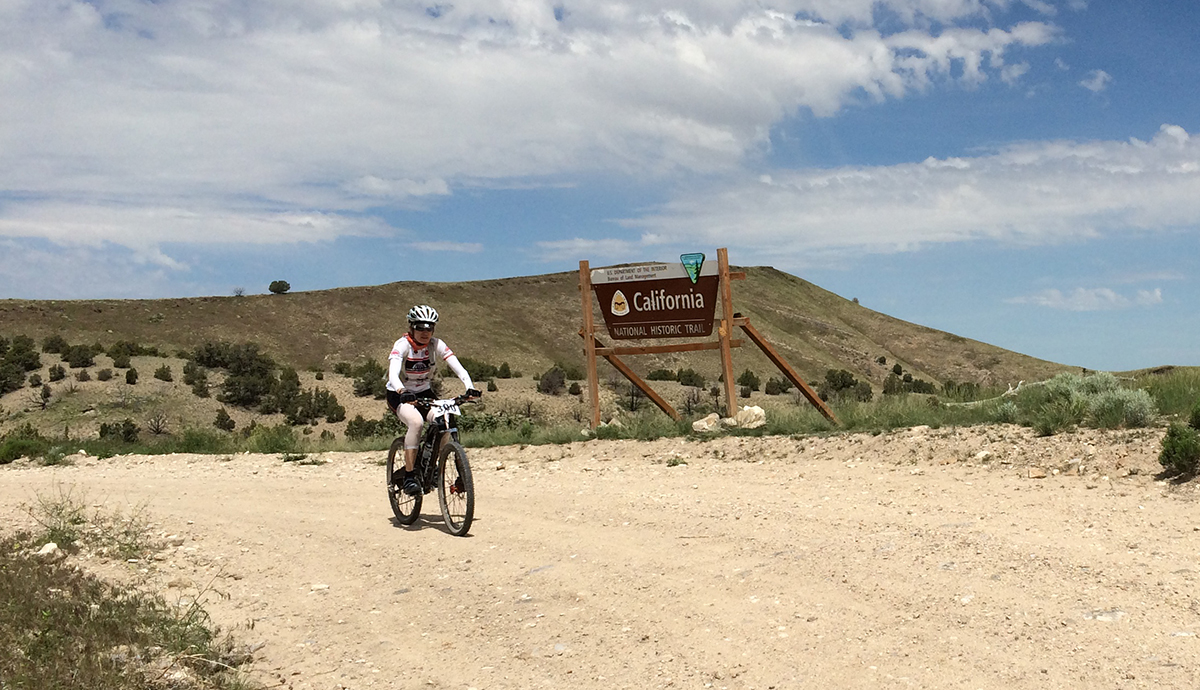
A 2025 Utah bill could eliminate mountain bike and gravel racing by restricting speeds to 20 mph. Here a cyclist rides on the California Trail as part of the 2015 Wild Horse. Photo by Dave Iltis
The new trails speed limit language is as follows:
(5)An individual operating a device described in Subsection (1) on a sidewalk, path, trail, across a driveway, or across a roadway in a crosswalk may not operate at a speed greater than the lesser of: (a)the posted speed limit; or (b)if a speed limit is not posted, 20 miles per hour.
The bill would have the effect of slowing bicyclists and mountain bikers on all trails and many pathways with no speed limits currently and all mountain bike trails. This would have the consequence of eliminating mountain bike racing and gravel racing in Utah since mountain bikers and gravel racers often exceed 20 mph on downhills. It would also create problems for any cyclist on a downhill pathway where speeds of 20 mph are easily reached by coasting casual recreational riders.
The current law reads:
(4)A person operating a bicycle or a vehicle or device propelled by human power on a sidewalk, path, or trail, or across a driveway, or across a roadway on a crosswalk may not operate at a speed greater than is reasonable and prudent under the existing conditions, giving regard to the actual and potential hazards then existing.
The motorcycle definition portion of the bill is needed to clarify Surron and Zero type electric motorcycles and, however the bill language is unclear. The way it is written, electric bicycles could be considered motorcycles.
(46)”Motorcycle” means: (a)a motor vehicle, other than a tractor, having a seat or saddle for the use of the rider and designed to travel with not more than three wheels in contact with the ground, regardless of whether the vehicle is propelled by an electric motor or internal combustion engine; or (b)an autocycle.
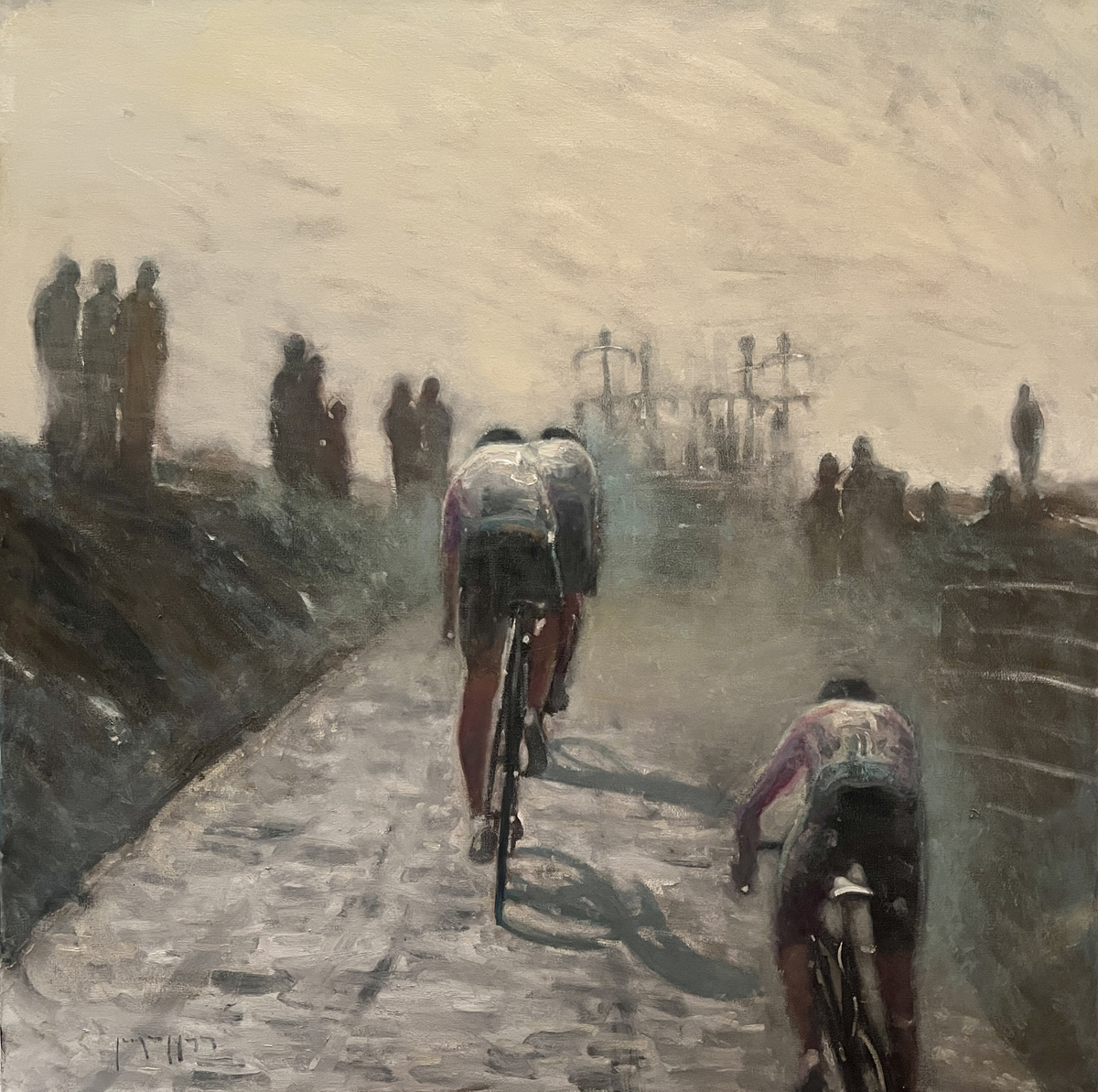
Artist: Trenton Higley Title: Flanders Medium: Oil on canvas Size: 36″ x 36″
Flanders. 36 x 36″ Oil Painting by Trenton Higley
Artist bio: Trenton Edwin Higley (b. 1970) is a American Artist specializing in beautifully handcrafted representational figures, landscapes and narrative works in oil and watercolor.
Often set within and around the Wasatch Mountains near by, his timeless paintings of strong alluring figures placed in intriguing situations or simply posed in a Landscape, strike a pleasing balance between the classical and the contemporary. His paintings are part of his desire to be in the outdoors riding his bicycle or skiing with his family.
Along with solo, joint and group shows in Jackson Hole Wyoming, Park City and Salt Lake City Utah and countless commissions, his artwork has been in many collections including Robert Duvall and Stetson inc.
Upcoming show: Trenton’s work is featured in an exhibition at 15th Street Gallery in Salt Lake City starting January 15, 2025 through March. The gallery is located at 1519 S 1500 E, Salt Lake City, UT 84105; 15thstreetgallery.com
Community Cycles of California brinda capacitación laboral a personas “involucradas en la justicia” a través de una subvención estatal.
Para Zayna Syed (por CalMatters) — Las personas que han pasado tiempo en la cárcel pueden aprender a reparar y vender bicicletas si ingresan a un programa de cohorte de Community Cycles of California, una organización sin fines de lucro con sede en San José que ayuda a las personas que generalmente enfrentan barreras para el empleo a desarrollar habilidades comerciales.
La organización sin fines de lucro ofrece a 10 personas “involucradas con la justicia” la oportunidad de aprender a administrar un negocio. Muchos de los participantes también son veteranos o han estado sin hogar en el pasado, según Colin Bruce, quien cofundó la organización sin fines de lucro con una amiga, Cindy Ahola.
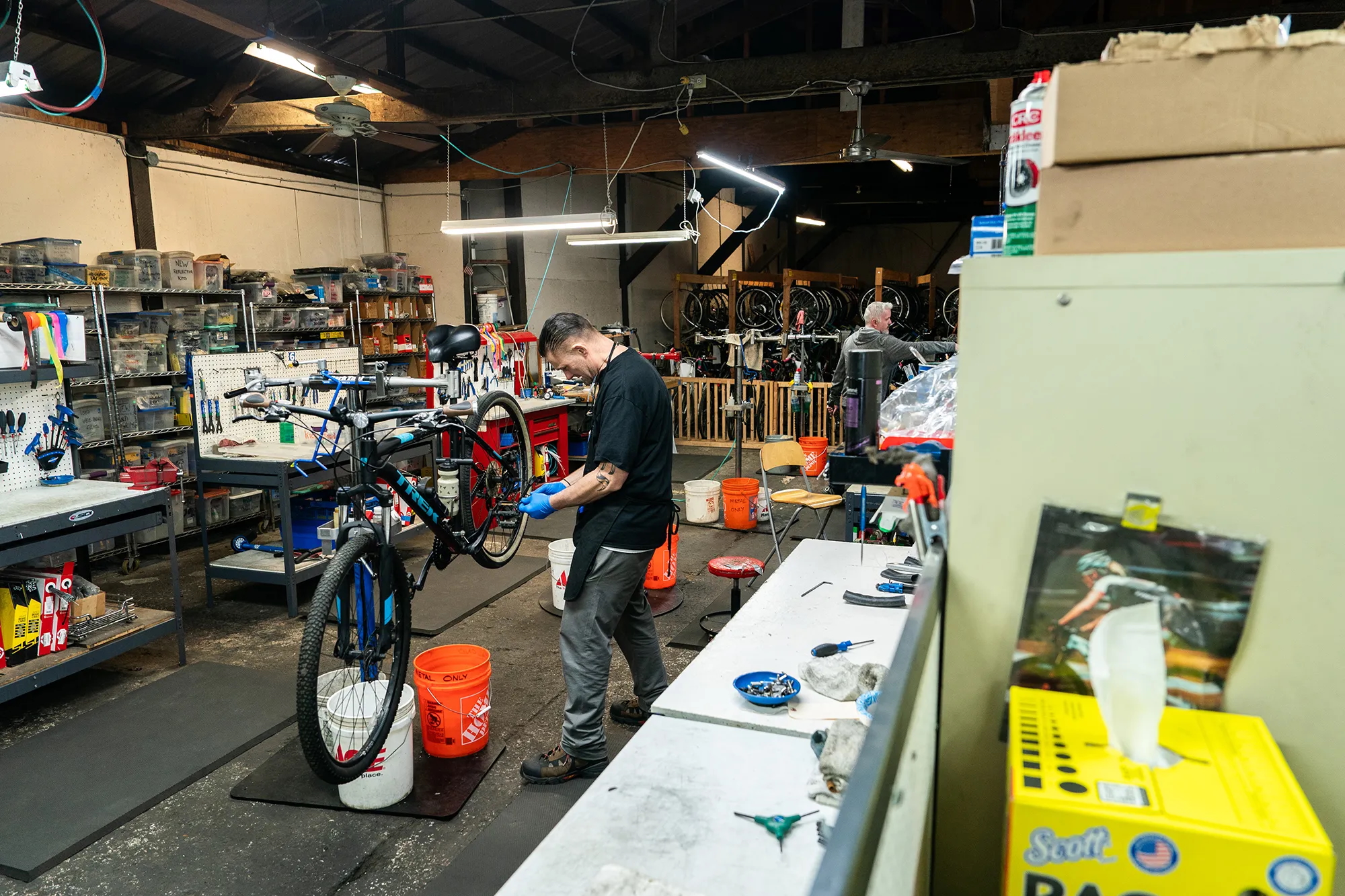
Robert Peters, de 47 años, un participante del programa, repara una bicicleta en Community Cycles of California en San José el 13 de diciembre de 2024. Peters fue derivado a Community Cycle Software California por un director de programa en el Recover Café como parte de los requisitos de sus órdenes judiciales de tratamiento. Foto de Jungho Kim para CalMatters
Los participantes pasan aproximadamente el 40% de su tiempo en el aula completando diversos talleres y capacitaciones y el 60% de su tiempo rotando trabajos dentro de la tienda, como marketing, contabilidad, administración de oficina, venta minorista, reparación de bicicletas y construcción de bicicletas.
Lo novedoso del programa, dice Bruce, es que ofrece una semana laboral de 40 horas durante los seis meses que dura. Esto es diferente de iniciativas similares de desarrollo de la fuerza laboral, que normalmente ofrecen trabajos de 20 horas o más o servicios limitados, como ayuda con los currículums. Cuando Bruce y Ahola iniciaron Community Cycles en 2017, se asociaron con organizaciones externas que tenían un modelo de tiempo parcial similar. Pero alrededor del 80% de los participantes abandonaron el programa para trabajar a tiempo completo.
“Son personas que necesitan cada centavo que puedan conseguir para mantener un techo sobre sus cabezas y pagar la comida”, dijo. “Se fueron para trabajar como cocineros o guardias de seguridad o algo así. Y con razón, porque trabajaban a tiempo parcial en estos programas, y a menudo decían: ‘Oye, no puedo venir mañana, tengo que ir a mi otro trabajo a tiempo parcial’. Necesitaban dos o tres trabajos a tiempo parcial simplemente para sobrevivir”.
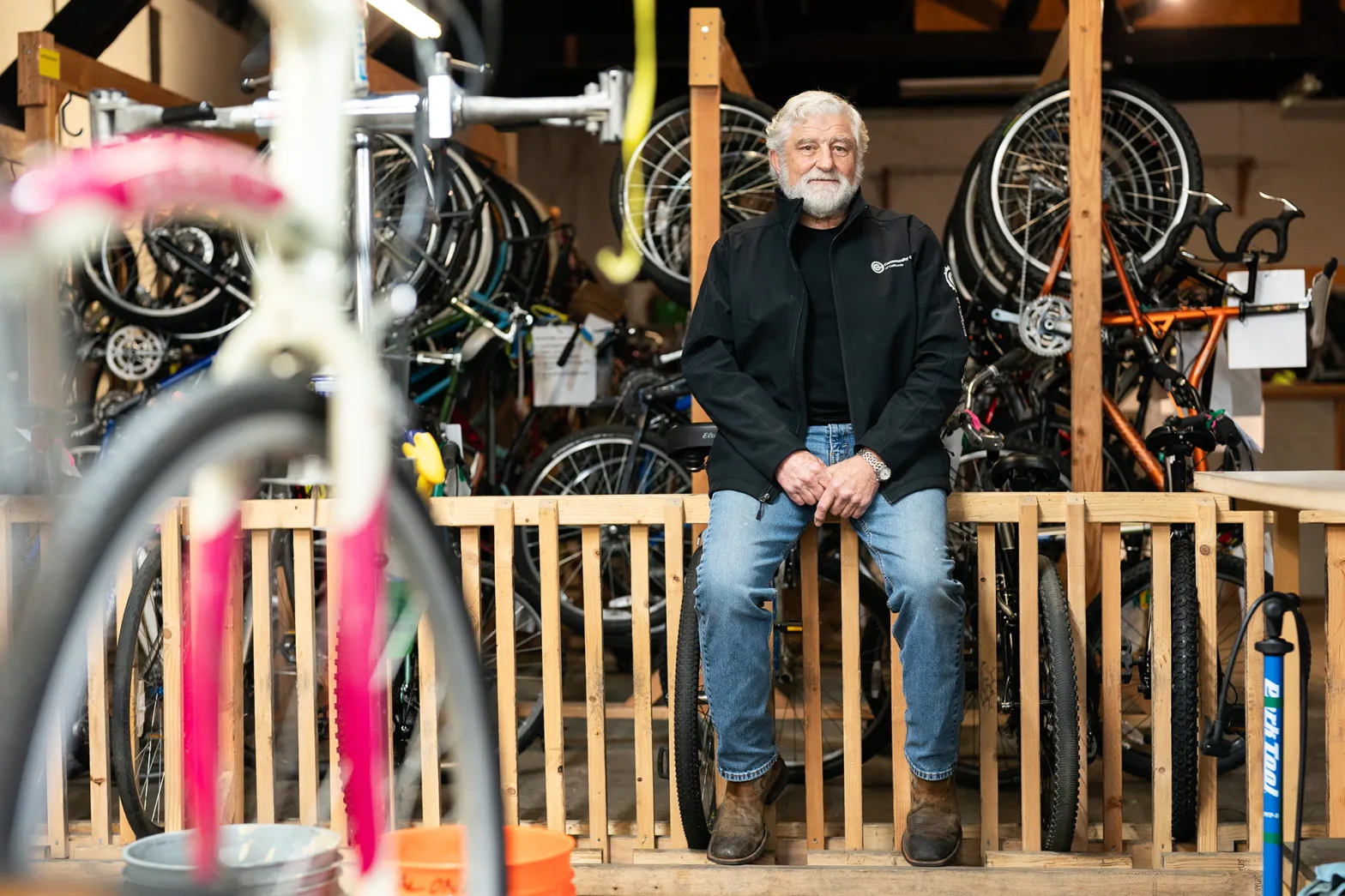
Colin Bruce, fundador de Community Cycles of California, se sienta en un portabicicletas en el taller de la organización en San José el 13 de diciembre de 2024. A los participantes del programa Community Cycles of California se les enseñan habilidades para desenvolverse en la vida y el lugar de trabajo a través del programa Bicycle Mechanic and Retail Training (BMRT). Foto de Jungho Kim para CalMatters
Bruce y Ahola decidieron centrar su organización sin fines de lucro en las bicicletas debido a su pasión personal por ellas. También les da a las personas que no pueden permitirse un automóvil más independencia en cuanto a sus opciones de transporte.
“El primer y el último kilómetro son cruciales”, dijo Bruce. “Para llegar a un autobús, un tren o algo así, las bicicletas son una de las mejores formas de hacerlo. Y viajar menos de ocho kilómetros aproximadamente es bastante común en el área de San José”.
Community Cycles pudo financiar a los miembros de su cohorte con $23 por hora por 40 horas de trabajo en gran parte gracias a una subvención de la Iniciativa para Romper Barreras al Empleo, un programa estatal de California que otorga dinero para ayudar a las personas que enfrentan barreras significativas para el empleo, como aquellos que recientemente salieron de la cárcel, a conseguir trabajo.
Breaking Barriers ha completado hasta ahora sólo una ronda de financiación y se encuentra en la mitad de su segunda ronda. En la primera y la segunda ronda, ha gastado alrededor de 27 millones de dólares en 53 organizaciones, casi todas ellas comunitarias, según Leti Shafer, gerente del departamento de desarrollo de la fuerza laboral de la Fundación para Colegios Comunitarios de California, que administra el programa de subvenciones Breaking Barriers.
Otros ejemplos de beneficiarios son Homeward Bound of Marin y St. John’s for Real Change, que ayudan a personas sin vivienda. Estas organizaciones ofrecen servicios de apoyo a los participantes, como cuidado de niños y preparación laboral. Homeward Bound también ofrece seis meses de empleo en diferentes tipos de negocios, como por ejemplo, cómo fabricar y vender golosinas para perros.
Como todos los programas de subvenciones, Breaking Barriers es “tan estable como el presupuesto”, dijo Joelle Ball, subdirectora de la Junta de Desarrollo de la Fuerza Laboral de California. La iniciativa “apenas consiguió algo” el año pasado, por ejemplo. Ball dijo que el presupuesto opera en un ciclo de 10 años, y en los años en que la Legislatura de California tiene pagos más urgentes, no queda mucho dinero para subvenciones.
“Depende de que la Legislatura incluya esa partida para el programa en el presupuesto”, dijo Ball. “Así es con todos nuestros programas de subvenciones. “No tenemos ningún control sobre eso. No podemos hacer lobby, no podemos pedirle dinero a la Legislatura, no podemos hacer nada de eso. Lo que sí defendemos es que si quieren invertir dinero en programas de fuerza laboral con nosotros, inviertanlo en nuestros programas existentes”.
Este artículo fue publicado originalmente en inglés por CalMatters.
By Zayna Syed (CalMatters) — Community Cycles of California gives “justice involved” individuals employment training through a state grant.
People who have spent time in jail can learn how to repair and sell bikes if they get into a cohort program for Community Cycles of California, a San Jose-based non-profit that helps people who typically face barriers to employment develop business skills.
Robert Peters, 47, a program participant, services a bicycle at Community Cycles of California in San Jose on Dec. 13, 2024. Peters was referred to Community Cycle Software California by a program director at the Recover Café as part of the requirements of his treatment court orders. Photo by Jungho Kim for CalMatters
The non-profit gives 10 people who are “justice-involved” the opportunity to learn how to run a business. Many of the participants are also veterans or have been homeless in their past, according to Colin Bruce, who co-founded the non-profit with a friend, Cindy Ahola.
Participants spend about 40% of their time in the classroom completing various workshops and trainings and 60% of their time rotating jobs within the shop, such as marketing, accounting, office management, retail, bike repairs and building bikes.
What’s new about the program, Bruce says, is it’s able to offer a 40-hour work week for the six months it runs. This is different from similar workforce development efforts, which typically offer 20-hour or so gigs or limited services, such as resume help. When Bruce and Ahola first started Community Cycles in 2017, they partnered with outside organizations who had a similar part-time model. But around 80% of participants left the program for full-time jobs.
“These are people that need every penny they can get to keep the roof over their head and pay for food,” he said. “They left to go be short order cooks or a security guard or something like that. And rightly so, because they were working part-time in these programs, they were often, ‘Hey I can’t come in tomorrow, I’ve got to go to my other part-time job.’ They needed two or three part-time jobs just to survive.”
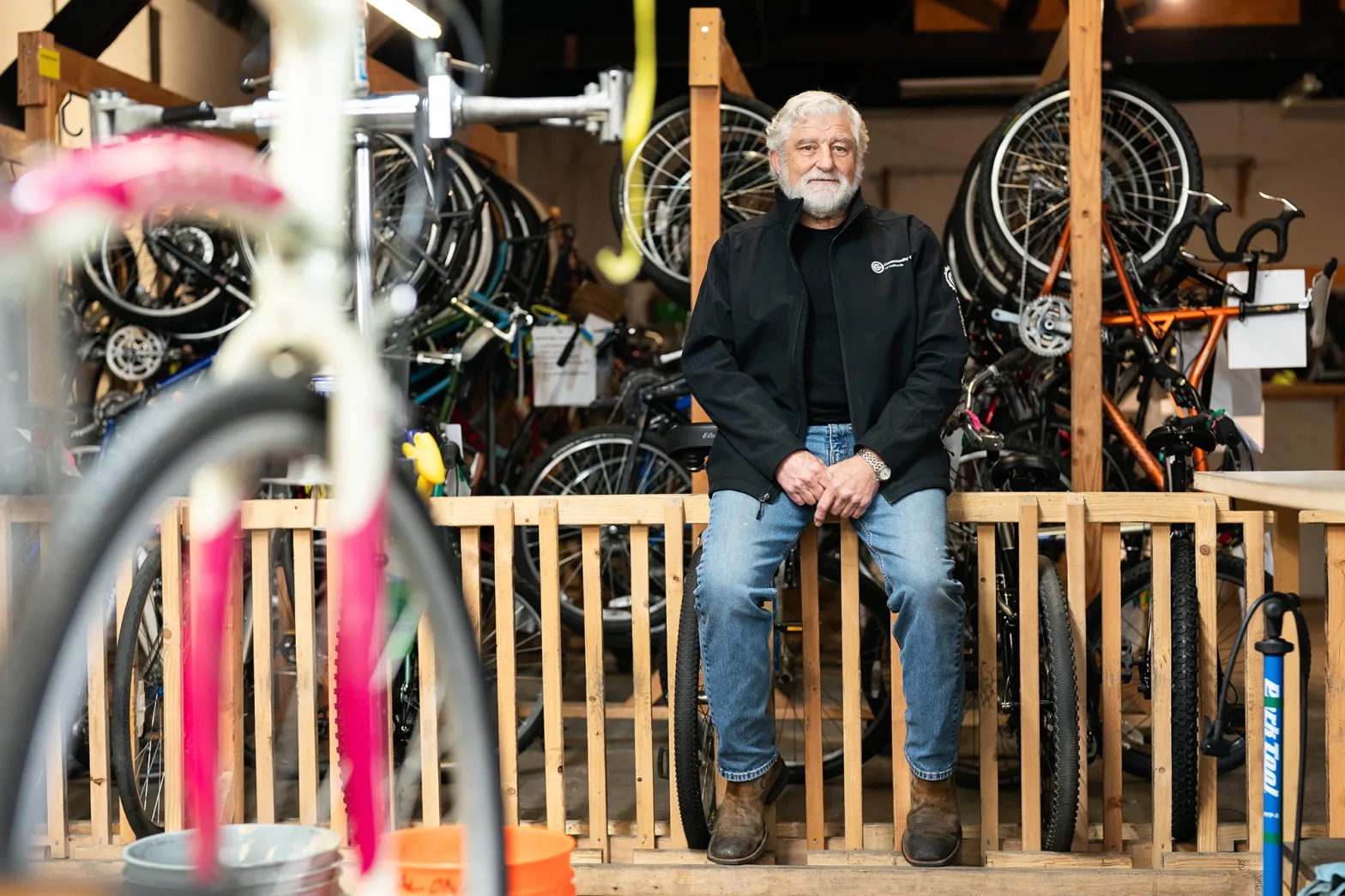
Colin Bruce, founder of Community Cycles of California, sits on a bike rack at the organization’s workshop in San Jose on Dec. 13, 2024. Community Cycles of California program participants are taught skills for navigating life and the workplace through the Bicycle Mechanic and Retail Training (BMRT) program. Photo by Jungho Kim for CalMatters
Bruce and Ahola decided to focus the non-profit on bicycles because of his personal passion for bikes. It also gives people who can’t afford a car more independence over their transportation options.
“The first and last mile are critical,” Bruce said. “Just getting to a bus or train or things like that, bikes are one of the best ways to do it. And commuting less than five miles or so is pretty common around the San Jose area.”
Community Cycles was able to fund its cohort members $23 per hour for 40 hours of work in large part because of a grant from the Breaking Barriers to Employment Initiative, a California state program that awards money to help people who face significant barriers to employment, such as those recently out of jail, get jobs.
Breaking Barriers has completed just one round of funding so far and is in the middle of its second round. In the first and second rounds, it has spent about $27 million on 53 organizations, almost all of them community-based, according to Leti Shafer, a manager in the workforce development department of the Foundation for California Community Colleges, who administers the Breaking Barriers grant program.
Other examples of grantees include Homeward Bound of Marin and St. John’s for Real Change, which assist people without housing. These organizations offer support services for participants, such as childcare and job preparation. Homeward Bound also provides six months of employment in different types of businesses, such as how to make and sell dog treats.
Like all grant programs, Breaking Barriers is “as stable as the budget,” Joelle Ball, deputy director of the California Workforce Development Board, said. The initiative “hardly got anything” this past year, for example. Ball said the budget operates on a 10-year cycle, and in years where the California Legislature has more pressing payments, there’s not much money leftover for grants.
“It’s reliant on the Legislature putting that earmark for the program into the budget,” Ball said. “This is how it is for all of our grant programs. “We don’t have any control over it. We can’t lobby, we can’t ask the Legislature for money, we can’t do any of that. What we do advocate for is if you want to put money into workforce programs with us, put it into our programs that exist.”
This story was originally published by CalMatters (calmatters.org).
From frozen ruts to heavy mud, U.S. riders showcased strong rides with Lopez de San Roman and Funston breaking the top 20 in their respective races.
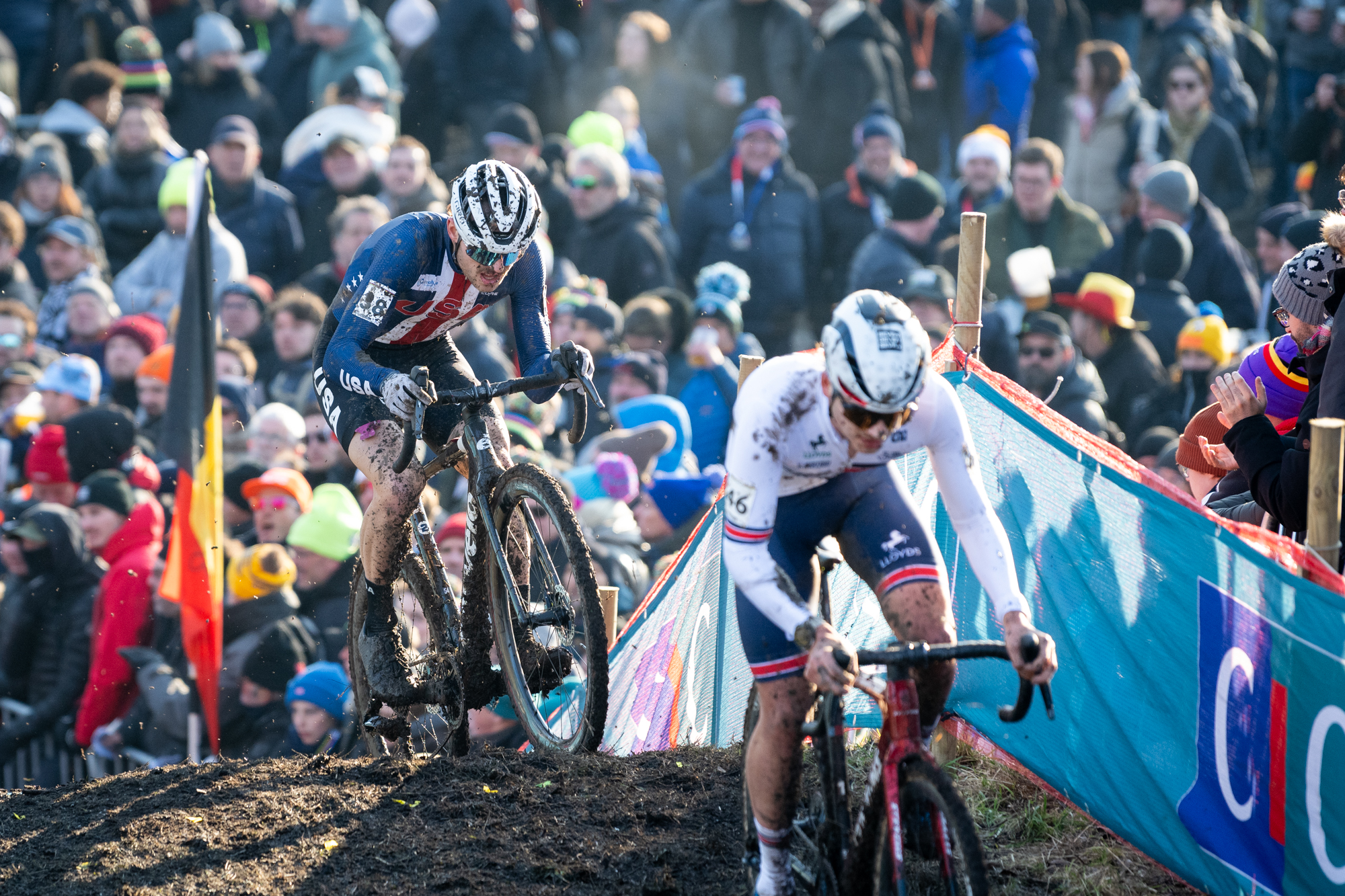
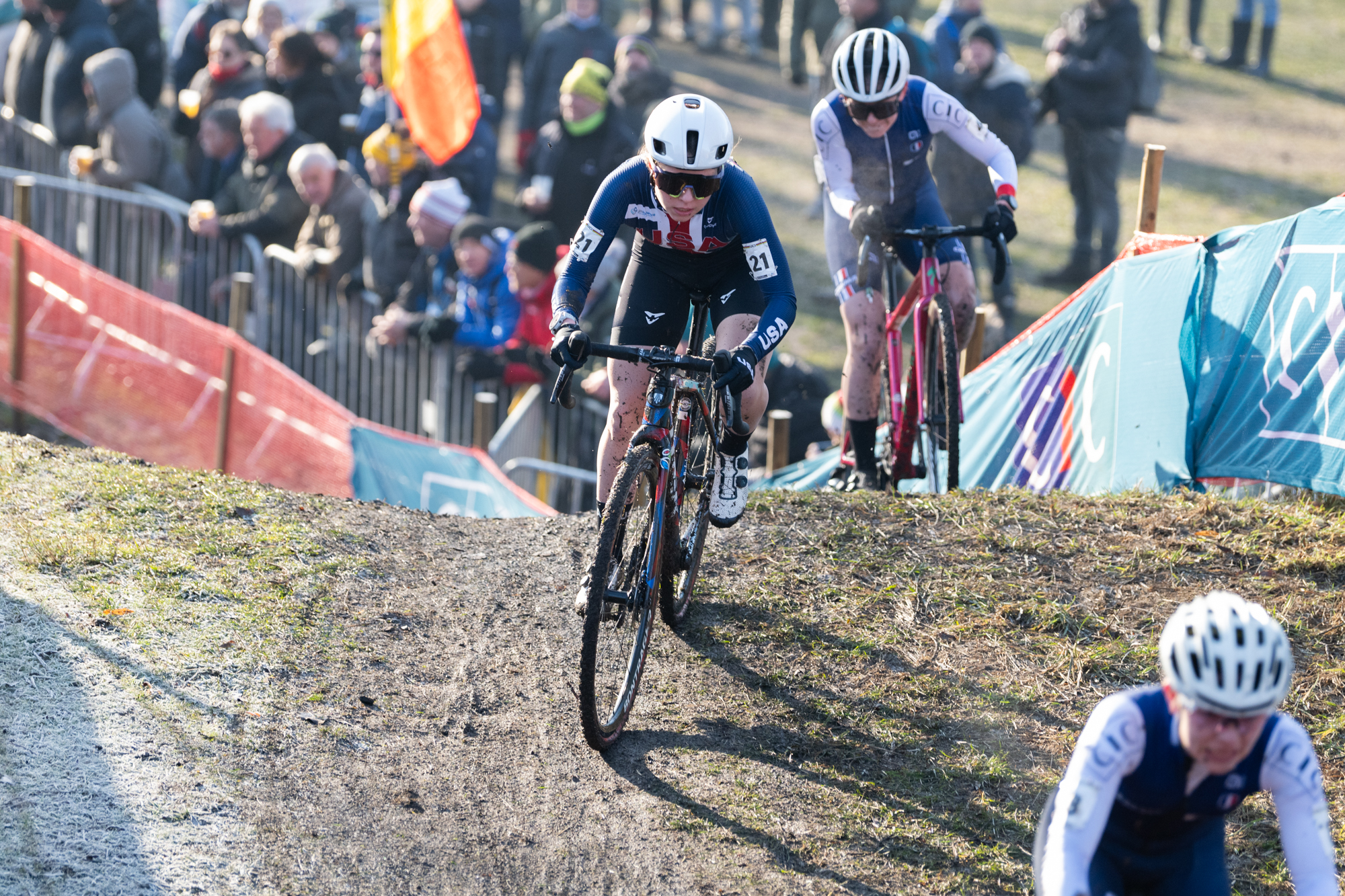
LIEVIN, France (February 2, 2025) – On the third and final day of the 2025 UCI Cyclocross World Championships, the stacked American teams took on Lieven in the Junior Men, U23 Women, and Elite Men’s races.
Junior Men
Similar to yesterday, today’s course began frozen but quickly transformed as the races got underway, forcing riders to adapt. As the track grew heavier, deep ruts sent riders in unpredictable directions, making composure essential. For many junior men, it was a crash-filled battle from start to finish.
Garrett Beshore (Longmont, Colo.; Boulder Junior Cycling) had the best start for the Americans, riding towards the top 10 for the first lap before gradually dropping back. Benjamin Bravman (Golden, Colo.; Bear National Team) and Aidan Vollmuth (Mendham, N.J.; Finkraft Junior Cycling Team) faced setbacks early on, dealing with technical issues and start line crashes. Despite this, they managed to advance through the pack, navigating the balance between pushing hard and minimizing risks to handle the challenging conditions.
Reflecting on his race, Bravman commented, “I felt pretty good but slipped out of both my pedals at the start. I tried to move up when I could, but I couldn’t really ride smooth. It was still a fun day out there. The fans were crazy, the conditions were hard, but it was a cool race. There is no environment where you can replicate how much energy there was out on course today.”
Vollmuth echoed the sentiment about the tough conditions, saying, “The conditions were really risky. It was icy the first couple laps, then it just got wetter and wetter. Some ruts weren’t ridable in the start, then they became rideable, and it just got faster over time. The key to staying in the race was just learning what lines were faster and making sure you were staying on a wheel in the finish straight.”
Dylan Haynes (Boulder, Colo.; Boulder Junior Cycling) and Ethan Brown (Fishers, Ind.; Midwest Devo) also delivered strong performances. Haynes, despite breaking a shifter on the final lap, maintained a competitive pace throughout the race.
The challenging course conditions continued to test the U23 women later in the day. Vida Lopez de San Roman(Sebastopol, Calif.; Bear National Team) had a strong start, riding in the top 10, but multiple crashes on the first lap forced her to take fewer risks for the remainder of the race.
“It was definitely a tough one,” Lopez de San Roman reflected. “I went down a few times on the first lap, which meant I spent the rest of the race chasing and trying to make up a few positions. I played it safer after that since I don’t have much experience riding in frozen ruts. It’s a little disappointing, but overall, it was still a solid effort. I finished just outside the top 10, and I’m pretty happy with that.”
The rest of the American squad – Kaya Musgrave (Littleton, Colo.; Cervelo / OrangeLiving), Katherine Sarkisov (North Potomac, Md.; CXD / Trek Bikes), Cassidy Hickey (Parker, Colo.; CCB Racing), Lauren Zoerner (Highlands Ranch, Colo.; Comp Edge Racing), and Lizzy Gunsalus (Dudley, Mass.; CCB Racing) – rode strong, maintaining their positions and handling the demanding conditions.
Results:
1. Zoe Backstedt (GBR)
2. Marie Schreiber (LUX)
3. Leonie Bentveld (NED)
14. Vida Lopez de San Roman (USA)
25. Kaya Musgrave (USA)
27. Katherine Sarkisov (USA)
29. Cassidy Hickey (USA)
32. Lauren Zoerner (USA)
34. Lizzy Gunsalus (USA)
Elite Men
Scott Funston (Boulder, Colo.; Cervelo / OrangeLiving) delivered a standout performance in the Elite Men’s race, finishing as the top American in the top 20. As the course conditions deteriorated, Funston only got stronger, steadily picking off riders lap by lap.
Scott Funston – UCI Cyclocross World Championships – Liévin – Photo by Ethan Glading, courtesy of USA Cycling
Achieving his goal, Funston reflected on his race. “I’m very happy. That was a goal of mine –honestly, only in the last month did it become one. I had high ambitions during the domestic season but came up short, so to finish in the top 20 here is incredible for me. The race was tough. I was hovering between 18th and 23rd the entire time. At one point, it felt like the top 20 had slipped away, but within a lap, I was back in contention… It was just about patience and a mental game to keep moving forward as much as it was physical.”
Eric Brunner (Boulder, Colo.; Comp Edge Racing) had an unfortunate setback two and a half laps in when his chain dropped and got stuck. He was forced to run nearly a quarter of a lap to reach the pit for a bike change and found himself at the very back of the race. Brunner dug deep and fought his way back up to 42nd place, salvaging a strong finish.
Results:
1. Mathieu Van Der Poel (NED)
2. Wout Van Aert (BEL)
3. Thibau Nys (BEL)
19. Scott Funston (USA)
42. Eric Brunner (USA)
DNS. Andrew Strohmeyer (USA)
Cusack and Sarkisov Claim Fifth and Seventh in Junior Women’s Race
LIEVIN, France (February 1, 2025) – Saturday marked the second day of the 2025 UCI Cyclocross World Championships, where the Junior Women, U23 Men, and Elite Women took on the challenging course in northern France. The day brought both strong results and a bit of bad luck, but overall, Team USA carried the momentum from yesterday’s Team Relay and delivered some great racing in front of the French crowds.
Junior Women
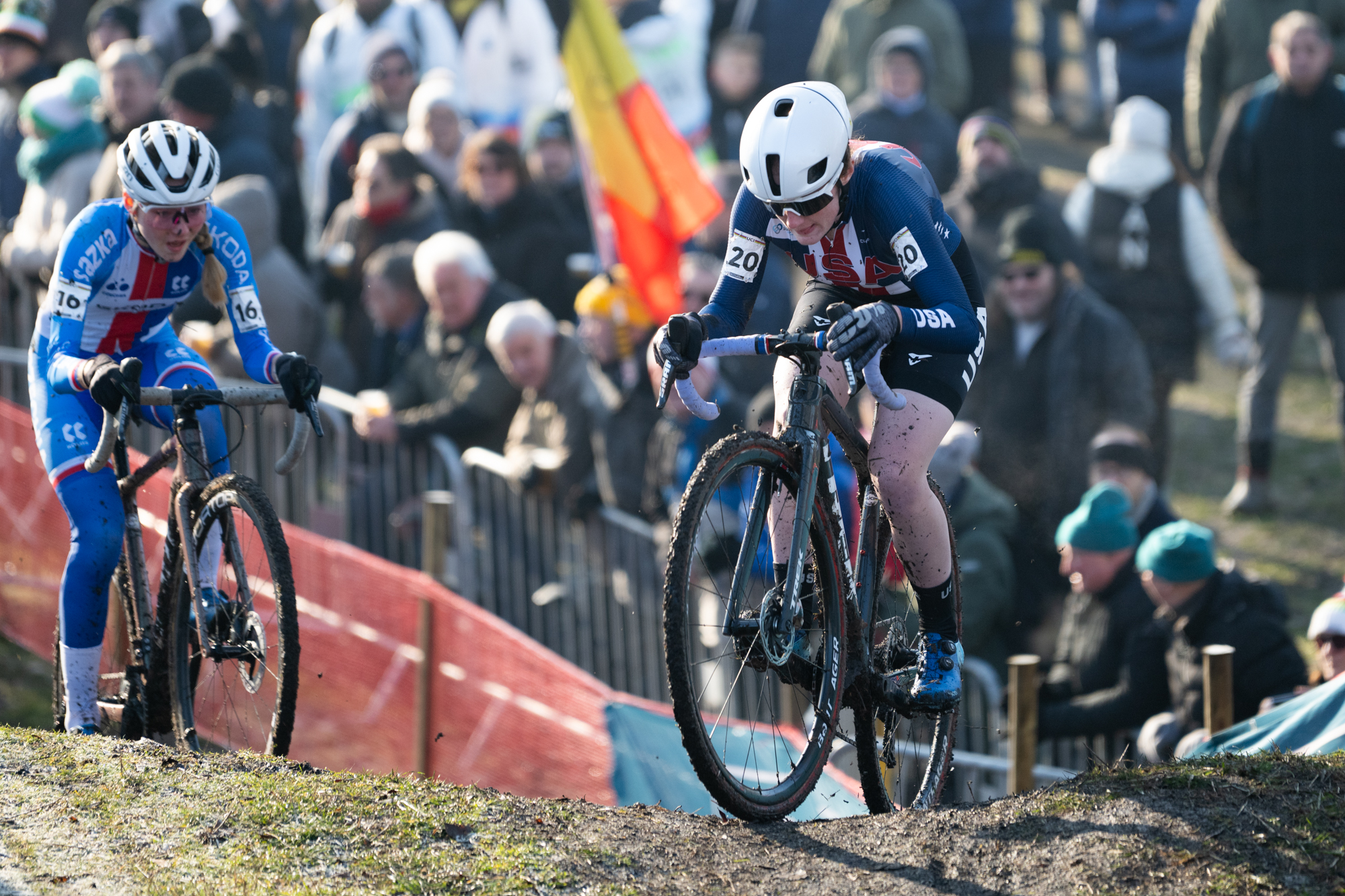
Lidia Cusack (Chevy Chase, Md.; CXD / Trek Bikes) had a solid start and established herself in the top 10, riding around eighth position for the first lap. In the second lap, a group solidified where Cusack found herself fighting for bronze. It was eventually reduced to three riders with Cusack still in the fight and leading the pack. In the second-to-last lap, she had a tire puncture and was ultimately dropped from the group. She fell back to fifth place and made a strong push on the final lap but was unable to regain a medal position.
Lidia Cusack – 2025 UCI Cyclocross World Championships – Liévin – Photo by Ethan Glading, courtesy of USA Cycling
It was a bittersweet day for Cusack. She said, “I think perspective will come, but for right now it stings a little. I flatted with two laps to go, so it took me out of contention for the medal, but I think with time I will be happy with it.”
Alyssa Sarkisov – 2025 UCI Cyclocross World Championships – Liévin – Photo by Ethan Glading, courtesy of USA Cycling
Alyssa Sarkisov (North Potomac, Md.; CXD / Trek Bikes) remained in the top 10 for most of the race, battling her way through the group. Her final two laps were incredibly fast. On the final lap, she powered into the long straightaway, pushing for a sprint finish to claim sixth place. However, a few mistakes cost her the position, and she was unable to overtake the Netherlands’ Mae Cabaca, ultimately crossing the line in seventh.
After the race, Sarkisov said, “The race started off pretty hard, and I wasn’t really feeling it at first. It’s been a bit of a rollercoaster season with three ninth-place finishes, so I really wanted to break that curse. In the last two laps, I really turned up the gas, caught the group of four ahead of me, and made a bunch of passes, which I was really happy about. Overall, it was a great race for me. It stings a little to lose that sprint at the end, especially being so close, but I’m still really happy with my race.”
Lyllie Sonnemann (Madison, Wisc.; CXD / Trek Bikes) stayed mid pack for the majority of the race and rode into 28th place.
The two riders lining up in the U23 men’s race were Henry Coote (Manchester, Mass.; Comp Edge Racing) and Dylan Zakrajsek (Grand Junction, Colo.; Comp Edge Racing). The muddy course froze overnight, but as the sun emerged in the middle of the day, the conditions became even more challenging. The thawing mud thickened, forcing riders to pit at least once per lap for fresh tires and better traction.
Coote started strong on the first lap, but on the big downhill before the second flyover, he hit a bad rut, crashed hard, and ultimately had to withdraw from the race. Zakrajsek was riding around 30th position and was able to make his way up to 24thin the end overtaking two riders in the final lap.
“It was a bit of a tough start for me,” said Zakrajsek. “I got caught in some chaos early on, but I managed to work my way through. Unfortunately, it took me a little while to get my legs going, but once I did, I was able to make up time and make some good passes. The last two laps were definitely a fight to stay in the top 25… It was a race of who had the most grit today.”
Results:
1. Tibor Del Grosso (NED)
2. Kay De Bruyckere (BEL)
3. Jente Michels (BEL)
24. Dylan Zakrajsek (USA)
DNF. Henry Coote (USA)
Elite Women
Katie Clouse (Park City, Utah; Steve Tilford Foundation Racing) delivered one of Team USA’s most exciting performances in the Elite Women’s race. As the day progressed, the course became increasingly challenging. The thickening mud dramatically slowed lap times and made the race even more grueling for the riders.
Clouse surged from a third-row start into the top 10 on the first lap but later slipped back to around 17th position. Battling within a large, competitive group, she fought hard to stay in contention and eventually broke away to chase 11th place. In the end, she held strong against an incredibly tough field, finishing 13th. Her final lap was particularly impressive, ranking as the fifth-fastest among her competitors.
When asked about the key to her performance, Clouse said, “I think it was just about keeping the fight going within our group. We were in a pretty big group battling for the top 10 or 11. Whenever I fell back, I would lose the wheels a little, but staying near the front of that group was key to keeping the momentum. There was one hill in the back that I was able to ride – at least most of the way – and that helped me move up a few spots each lap, which was super key for me.”
Coach Grant Holicky was more than impressed with Clouse’s ride. He said “It was the most fun race to watch. It feels like moving in the right direction in the elite field. You look at the riders she was with, and that’s some high-class company. That’s something we know Katie can do and it’s been really fun to see her kind of get back in the groove in the last few races and have her best one at the World Championships.”
Results:
1. Fem van Empel (NED)
2. Lucinda Brand (NED)
3. Puck Pieterse (NED)
13. Katie Clouse (USA)
By Dave Campbell — Looking back at a Remarkable Year of World Cycling including some significant American performances…
Q1. The last time an American woman won the World Road Cycling Championships was 1980 when Beth Heiden triumphed in Sallanches, France. But our riders have collected many runner-up positions! Chloe Dygert’s Silver medal finish was amazingly the sixth Silver Medal won by American women since Heiden’s triumph. Can you name our other road silver medalists since 1980?
Q2. American Neilson Powless won the 108th edition of the Giro del Piemonte this past fall, the first victory by a Yank in the Italian semi-classic. What was the previous best finish by an American rider in this event?
Q3. Another American first in 2024 was the victory by Matteo Jorgenson of Boise, Idaho in the Belgian spring semi-classic Dwars door Vlaanderen. What was the previous best result by an American?
Q4. Slovenian Tadej Pogačar joined an elite club this past season by winning the “Triple Crown” of the Giro d’Italia, the Tour de France, and the World Road Championship. Only Belgian Eddy Merckx (1974) and Irishman Stephen Roche (1987) had done this previously. Riders of the 1970s and 1980s raced many more days than those of the modern era. But how did the rest of Tadej’s season compare to Roche and Merckx in terms of wins in other major races? Which of the three riders claimed the most wins (excluding criteriums) during their Triple Crown season?
07/04/2024 – Paris-Roubaix – Compiègne / Roubaix (259,7km) – VAN DER POEL Mathieu (ALPECIN-DECEUNINCK) Photo by Pauline Ballet, ASO
Q5. Mathieu Van der Poel became the eleventh rider in history to complete “the cobbled double” of winning the Tour of Flanders and Paris-Roubaix in the same season. These spring classics are two of the five monuments in cycling and occur on consecutive weekends, first in Belgium then in France, and despite the cobbled similarity, the terrain and stones are actually quite different. The first was Henri Suter of Switzerland in 1923. Excepting Van der Poel can you name the other nine? Hint: The great Eddy Merckx never achieved it, and two riders did it twice.
Bonus Question: Van der Poel did the double in the Rainbow Jersey! Did anyone else accomplish that?
Bridger-Teton National Forest officials seek feedback on an environmental assessment that contemplates allowing battery-assisted bikes on roughly 27 miles of trails.
By Katie Klingsporn, Wyofile.com — Electric bikes are growing in popularity as more people find pedal-assisted riding eases work commutes, leisure rides and even mountain bike outings. But with their increased power and appeal to beginner cyclists, should they be allowed alongside hikers, dog walkers and fellow mountain bikers on certain national forest trails?
Under the original project scoping proposal, the agency would open 27.5 miles of national forest trails around the pass to class one electric bikes. That class includes bicycles with a motor that assists riders while pedaling up to 20 miles per hour, but no throttle. Class one generally includes models like mountain bikes, low-end commuters and bikes used around town.
The Forest Service proposal would also expand the season that people can ride e-bikes on trails near Munger Mountain and Horsetail Creek, and it contemplates a permit system that uses stickers sold at bike shops to identify the class of e-bike.
Following a scoping period that gathered comments and included public meetings, the BTNF this month released the draft environmental analysis for the project, “E-bike Use Designation on Select Jackson Area Trails.” That analysis includes two alternatives, or options, along with the original one. One would take no action and the third would focus e-bikes in areas already managed for motorized use and make e-bike-specific improvements to those trails. The third option was developed in response to earlier comments and is meant to address public concern.
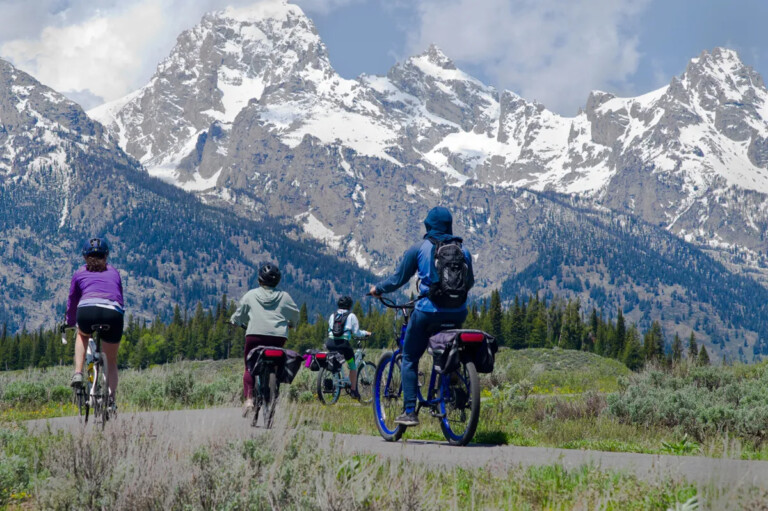
Three e-bikers, right, share a path in Grand Teton National Park with a rider on a conventional bicycle. (Angus M. Thuermer, Jr./WyoFile)
Now, the agency wants to hear from the public on the draft analysis and its alternatives. People can learn more about the project online, or during an open house Thursday in Jackson.
Vroom
Bicycle sales surged during the COVID-19 pandemic, and none more than e-bikes. Sales of e-bikes spiked 145% in 2020 compared to 2019, outpacing sales of all bikes, which were up 65%, according to market research firm NPD Group.
The growing popularity of electric bikes also led to conflicts and management challenges. A sudden influx of more powerful bikes on roads and trails — often piloted by relative newcomers — led to concerns over impacts to wildlife, safety of fellow trail users and trail degradation.
“With a rapid increase in e-bike use in the Jackson area, Bridger-Teton National Forest staff believe now is the time to address this topic,” the draft environmental assessment reads.
Staff initiated the project in the fall of 2023 with what’s known as scoping. After laying out a proposal to allow e-bikes on new trails and expand the seasons in other places, the agency collected hundreds of comments.
Themes that emerged from those comments included worries about safety, trail damage, wildlife impacts, the potential for battery-started fires and a lack of forest service staff to enforce permitting and proper trail use. However, many people also highlighted the benefits of the proposal, which include offering an on-ramp for more people into outdoor recreation, boosting tourism and increasing healthy activities.
This sample of comments illustrates the wide spectrum of sentiments:
“These ‘bicycles’ are dangerous and can go ridiculously fast.”
“These trails are underutilized and can easily handle any increase in user traffic.”
“As an aging mountain biker, Ebikes have allowed me to continue to access our public lands.”
“As it starts to get excepted, (sic) it’ll be all over wilderness. that is my biggest future concern.”
“E bikers tend to be novice riders and are clueless about how their speed is totally in conflict with other users.”
The draft environmental assessment’s first alternative, which was drafted in response to public comment, would focus on existing motorized trail areas, which are already open to all three e-bike classes. Under this alternative, the Forest Service would expand and improve these areas to meet growing e-bike demand.
These areas include Shadow Mountain, Mosquito Creek and Swinging Bridge — all in proximity to Jackson. The work would entail constructing new trails specifically designed for e-bike use; rerouting existing motorized trails to improve rideability and experience for e-biker users; adopting closed roads or non-system trails as Forest Service trails; and relaxing seasonal restrictions to expand the e-bike season in certain areas.
Under that alternative, Teton Pass-area trails and the entire Cache-Game trail system would be managed only for non-motorized uses.
A visitor zooms through Grand Teton National Park on a rental e-bike during a one-day, 50-mile trip. (Angus M. Thuermer, Jr./WyoFile)
Questions, thoughts?
An open house will take place from 5-7 p.m. Thursday, January 30, 2025 at the Jackson Ranger District Office, where staff can answer questions about the proposed action, alternatives and the timeline moving forward.
The public can comment on the draft environmental assessment online using this form, or via written responses delivered to the Jackson Ranger District Office on North Cache Street in Jackson. They will be accepted through Feb. 24.
This round of comments will help inform the final environmental assessment and draft decision, which will be released later this spring, according to the agency.
WyoFile is an independent nonprofit news organization focused on Wyoming people, places and policy.
By Pat Casey — The off-season is an excellent opportunity for cyclists to transform their performance and comfort. Winter provides the perfect setting to step off the pedals and focus on two critical aspects: bike fit and purposeful mobility training. Addressing your own individual movement compensations through strength and mobility training can help lay the groundwork for a more comfortable, injury-free, and performance-driven environment for your body as you train for the season ahead.
The Foundation of Performance: Bike Fitting
A bike fit is the cornerstone of cycling efficiency. Changing your position around your strengths, compensations, and functional limitations can help optimize your riding position for performance and mitigate risk of injury or discomfort on the bike. Yet, a common pitfall is expecting a fit to solve every issue without addressing the rider’s underlying physical conditions. Complacent adaptations formed over years of lifestyle demands, dominant patterns, or previous injuries, and resulting compensations around these adaptations are often what lead to the symptom: pain.
Cycling is a highly repetitive sport, with fairly fixed ranges of movement in forward flexion can lead to muscle imbalances in our “front bodies.” Over time, these imbalances can limit the range of motion in both sides of our bodies, causing discomfort, or even result in injury. While a professional bike fit adjusts your setup to your body, it cannot resolve deep-seeded muscular inhibitions that ultimately lead to a ‘tug of war’ between overactive muscle groups, and weaker, guarded muscles on the opposing sides of the body from our more highly-’trained’ areas. When cycling demands change in the winter, we have a unique opportunity to address the myriads of lifestyle and cycling-driven adaptations we hope to both address. This can also help to encourage muscle activation from newfound ranges of movement when it comes time to hit the throttle again. This is precisely why bike position is only part of the solution.
Small Steps to Big Gains: Building Healthy Habits
Incorporating mobility exercises into your routine can be manageable. Research from the Journal of Sports Medicine suggests short, consistent sessions are more effective than sporadic, intensive ones. Dedicate 10 to 15 minutes daily to mobility work, and you’ll see significant progress.
Make it enjoyable by pairing exercises with everyday activities, such as foam rolling while watching your favorite show. Use habit-tracking tools or apps such as TrainingPeaks or Ladder to stay consistent and set achievable goals, like completing a certain number of weekly sessions or having a daily workout/routine that’s pre-set by a coach. Adding a social aspect—such as joining a class or collaborating with a partner—can make the habit even more sustainable.
Your Winter Program: Strength and Mobility for Cyclists
Here’s a tailored strength and mobility program to help cyclists address flexibility, correct imbalances, and build foundational strength. The exercises can be performed in a gym or at home with minimal equipment.
Warm-Up
Begin each session with dynamic movements to increase blood flow and prepare your body:
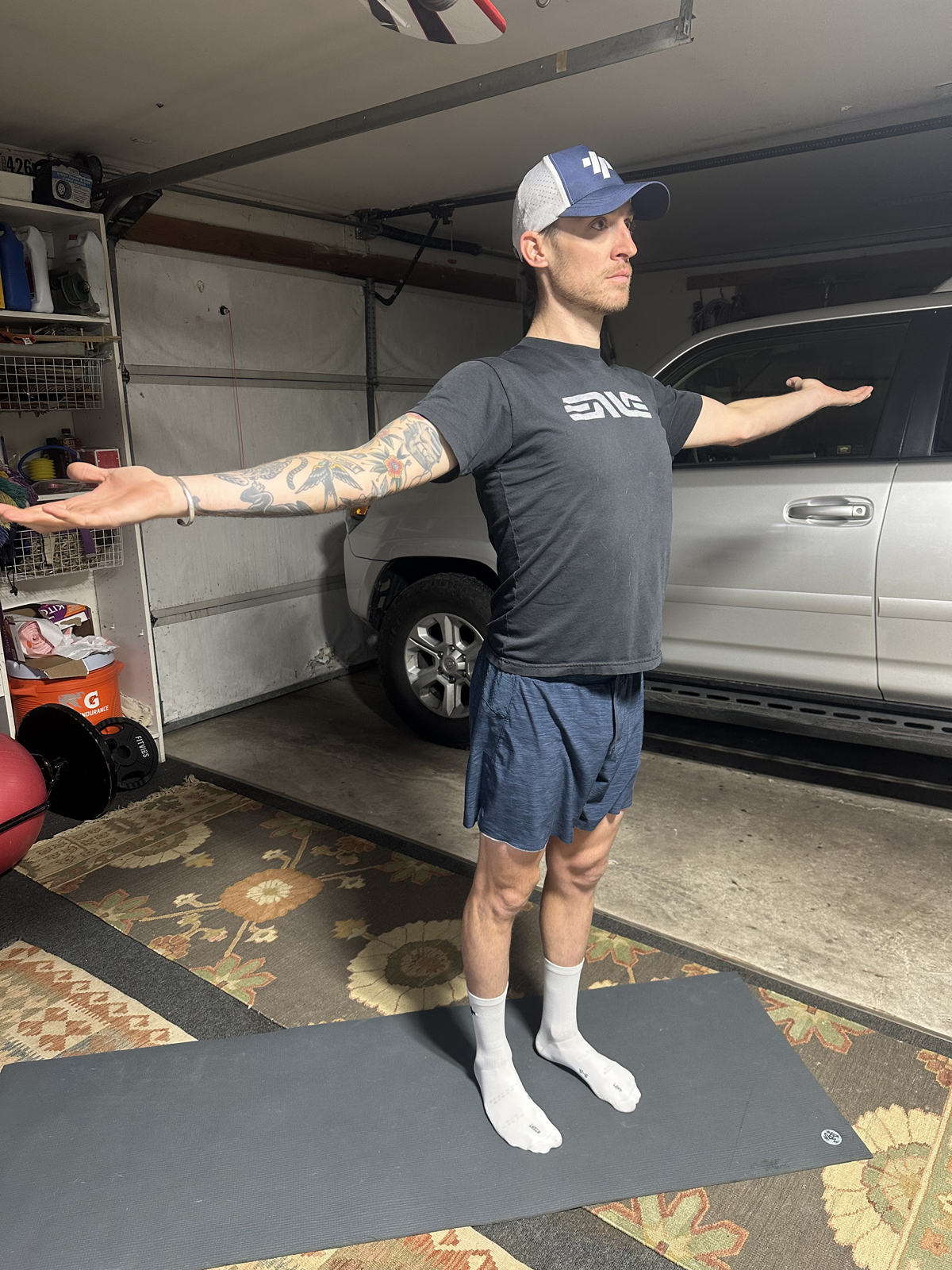
Arm circles. Photo by Heather Casey
Leg Swings (1 minute): Swing each leg front-to-back and side-to-side. It helps to hold onto something and maintain balance through your core.
World’s Greatest Stretch (1 minute): step into a long lunge position. Plant your hand opposite the forward foot down to form a 3-pillar position. Open the opposite arm towards the sky. Rotate down towards the floor and back up. Repeat slowly, breathing to encourage relaxation during the stretch.
Arm Circles (1 minute): With straight arm out to your side, perform tight circles with your fingertips. Perform forward and backward circles to activate and mobilize your shoulders.
Mobility Work
Focus on improving your range of motion with these exercises:
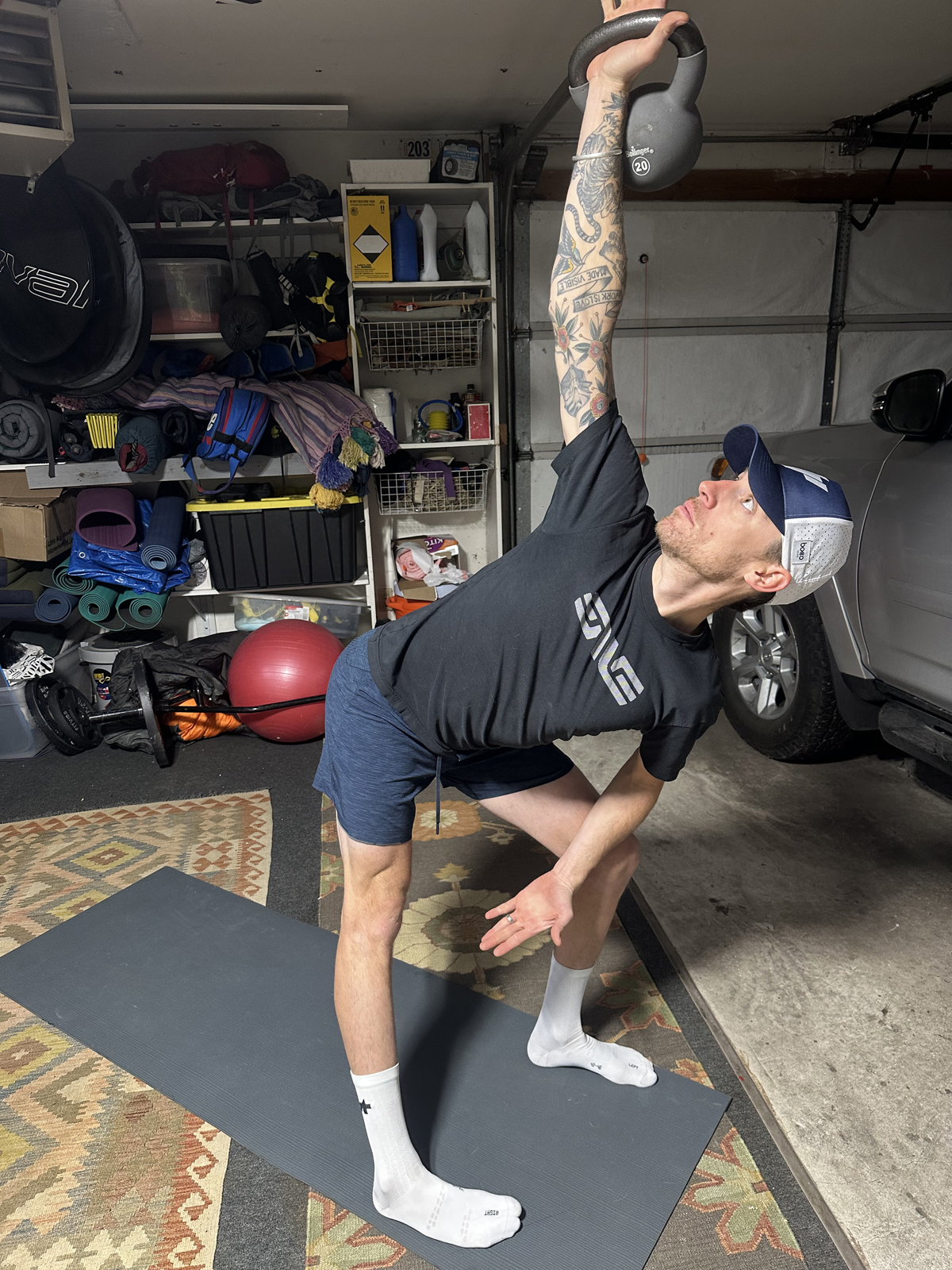
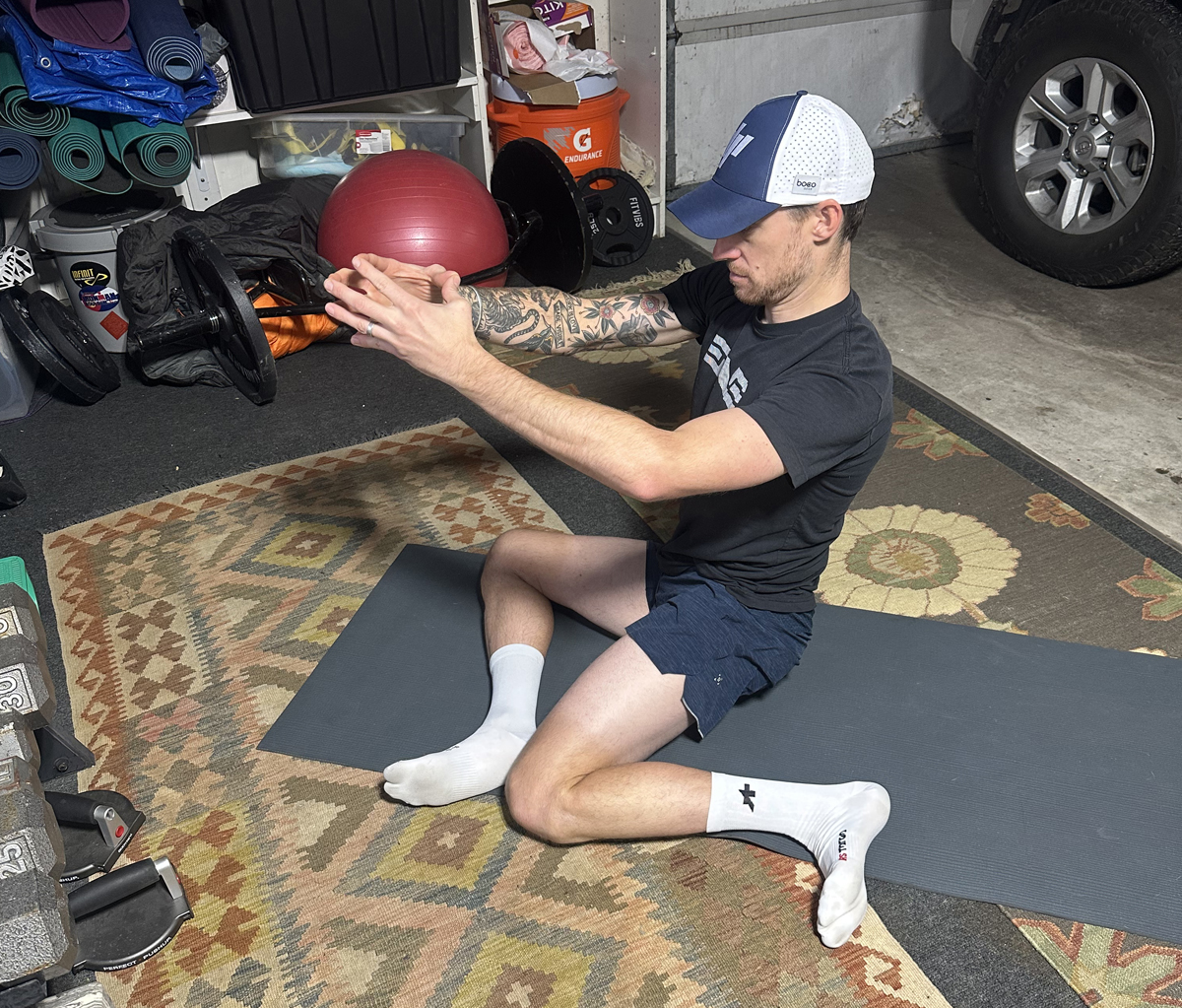
Windmill stretch. Photo by Heather CaseyShin box stretch. Photo by Heather Casey
Windmill Exercise
How to Do It: Stand with feet shoulder-width apart, hold a light kettlebell, or simply use your hand in a fist overhead with a straight arm. Maintain your gaze on the kettlebell or hand, bend the opposite knee as you hinge at the hip on the weighted side, and lengthen through your side body as you feel a stretch. Breathe. Then control the movement as you elevate your chest back to a standing position and repeat.
Target Areas: Shoulders, side-body, hips, and hamstrings.
Reps: 3 sets of 8 per side.
90/90 Shin Box
How to Do It: Sit with both knees bent at 90 degrees, one leg in front and one behind. Rotate gently between the sides.
Target Areas: Hip rotation and flexibility.
Reps: 3 sets of 10 per side.
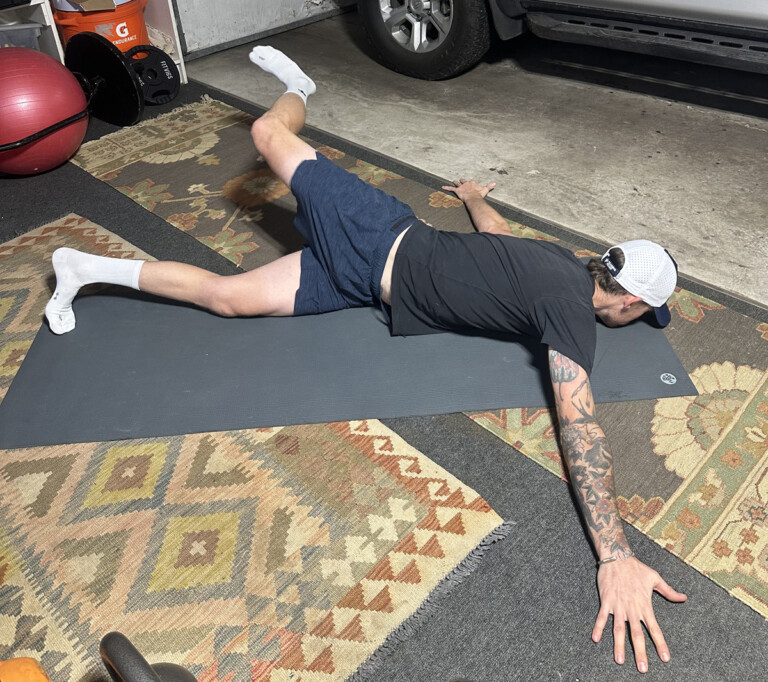
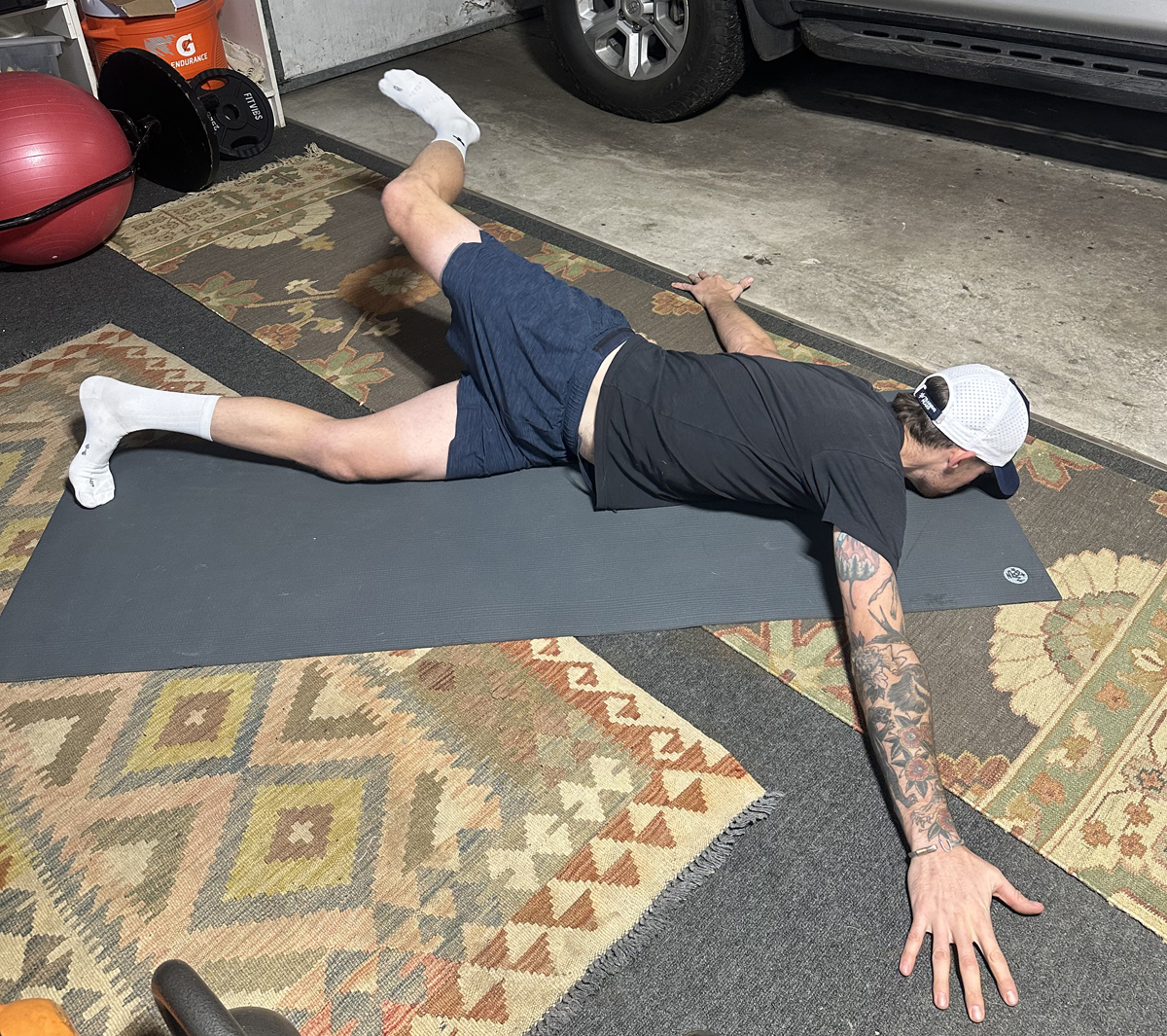
Alternating Floor Scorpions
How to Do It: Lie face down with arms extended. Lift one leg, extending through the back of your hip and rotate the leg across to the opposite side of your body.
Target Areas: Thoracic spine and lower back.
Reps: 2 sets of 12.
Hip Bridges (Progressing to Wheel Position)
How to Do It: Lie on your back with knees bent and feet flat. Push through your heels to lift your hips, engaging your glutes and hamstrings, while extending the front of your hip. For advanced flexibility, progress to a full-wheel pose.
Target Areas: Glutes, hamstrings, and hip flexors.
Reps: 3 sets of 12.
Foundation Training by Dr. Eric Goodman
Explore targeted movements for posture correction, integrated breath work, and to help your body down regulate pain by returning to its anatomically accurate state. These exercises are particularly beneficial for cyclists with rounded shoulders or hunched postures! Visit www.foundationtraining.com to learn more!
Strength Training
Strength training stabilizes joints and prevents injuries, complementing mobility work. Add these exercises to your routine:
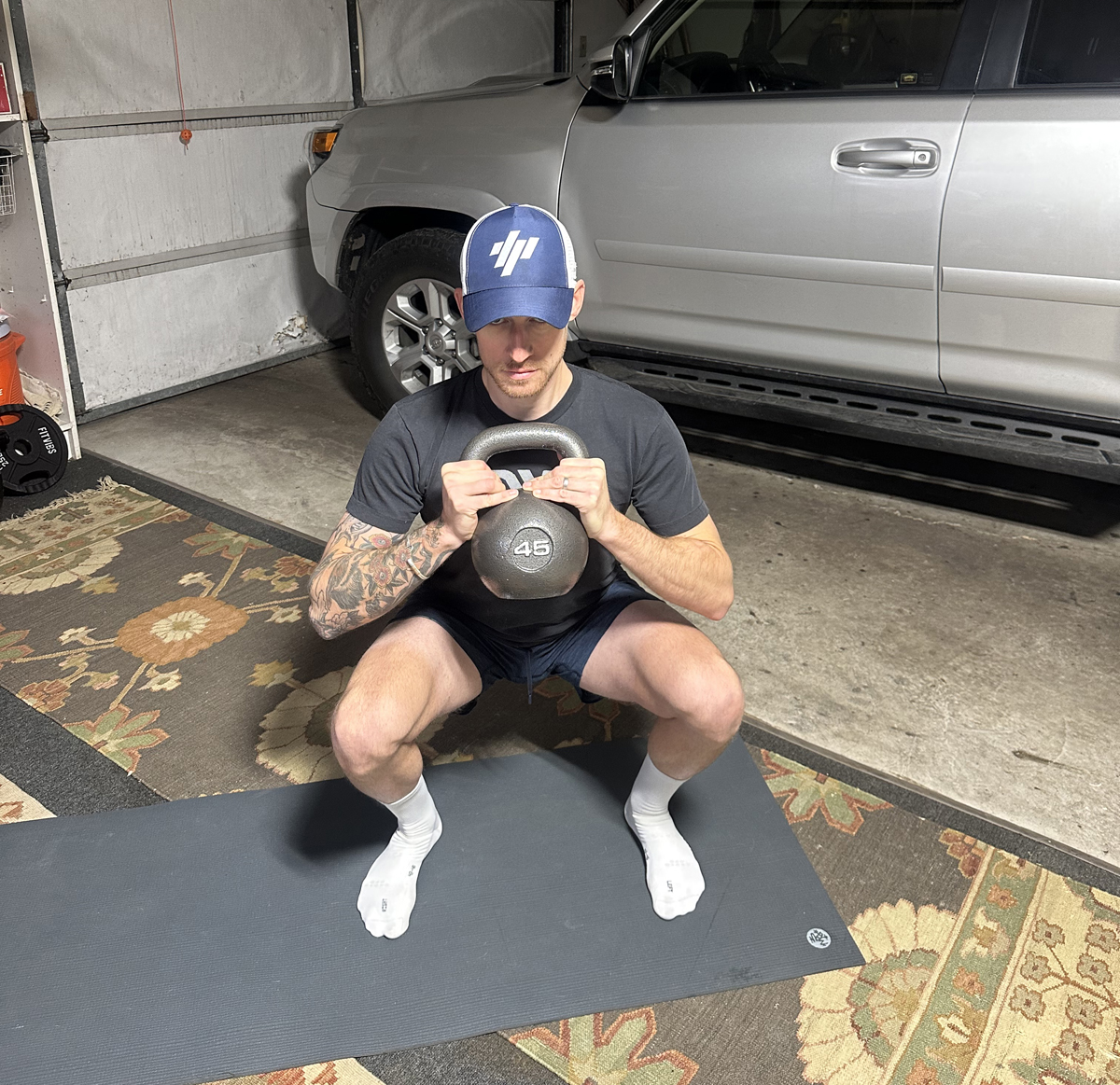
Goblet squat 4. Photo by Heather CaseyScorpion stretch. Photo by Heather Casey
Planks
How to Do It: Maintain a straight line from head to heels, engaging your core.
Reps: Hold for 30-60 seconds, 3 sets.
Goblet Squats
How to Do It: Hold a dumbbell close to your chest and squat down, keeping your chest proud and your core engaged. Inhale on the way ‘down,’ exhale on the way ‘up.’
Target Areas: Quads, glutes, and core.
Reps: 3 sets of 10-12.
Lunges
How to Do It: Step forward into a lunge with your front knee supporting most of your weight at 90*, alternating legs.
Target Areas: Glutes, quads, and hamstrings.
Reps: 3 sets of 8-10 per leg.
Deadbugs
How to Do It: Lie on your back with arms and legs raised. Lower one arm and the opposite leg without touching the floor.
Target Areas: Core and hip flexors.
Reps: 3 sets of 10 per side.
Push-Ups
How to Do It: Perform standard or modified push-ups to build upper body strength.
Reps: 3 sets of 10-15.
Cool-Down
Conclude each session with static stretches to enhance recovery:
Hamstring Stretch: Hold for 30 seconds per leg.
Child’s Pose: Relax in this position for 1-2 minutes.
Pigeon Pose: Hold for 30 seconds per side.
Conclusion
Winter is more than a time to pedal base miles; it’s an opportunity to unlock new areas of your physical potential. A professional bike fit is just the beginning of the process. Dedicating even a small amount of time each day to your mobility and strength training will help produce a more resilient, balanced, and prepared cyclist. The next step is to schedule a bike fit or consult an expert such as a strength coach or physical therapist about building a strength and movement program tailored to your body’s individual needs!
By Sarah Kaufmann — What are the health risks of training in bad air? My agenda with looking into this research is in evaluating the health risks for a well-trained population including myself and my community. Before I get into the details, I need to state a few caveats up front. I’m not a researcher. I’m not a scientist. I’m not a doctor. I’m a cycling coach. I don’t have the academic tools or background to suggest that these paragraphs are anything more than my review of the literature.
All the research on the well-trained (usually runners) has been focused on performance impacts, rather than health. This is valuable information; however, I’m less interested in the performance implications and more interested in the health implications, which I will review here.
Background
I think most people reading this are familiar with our local challenges with air quality here along Utah’s Wasatch Front and throughout the West where we have basins and bad winter air. Due to a combination of industrial activities, vehicle emissions, and geographic factors, pollutants become trapped, especially during winter inversions.
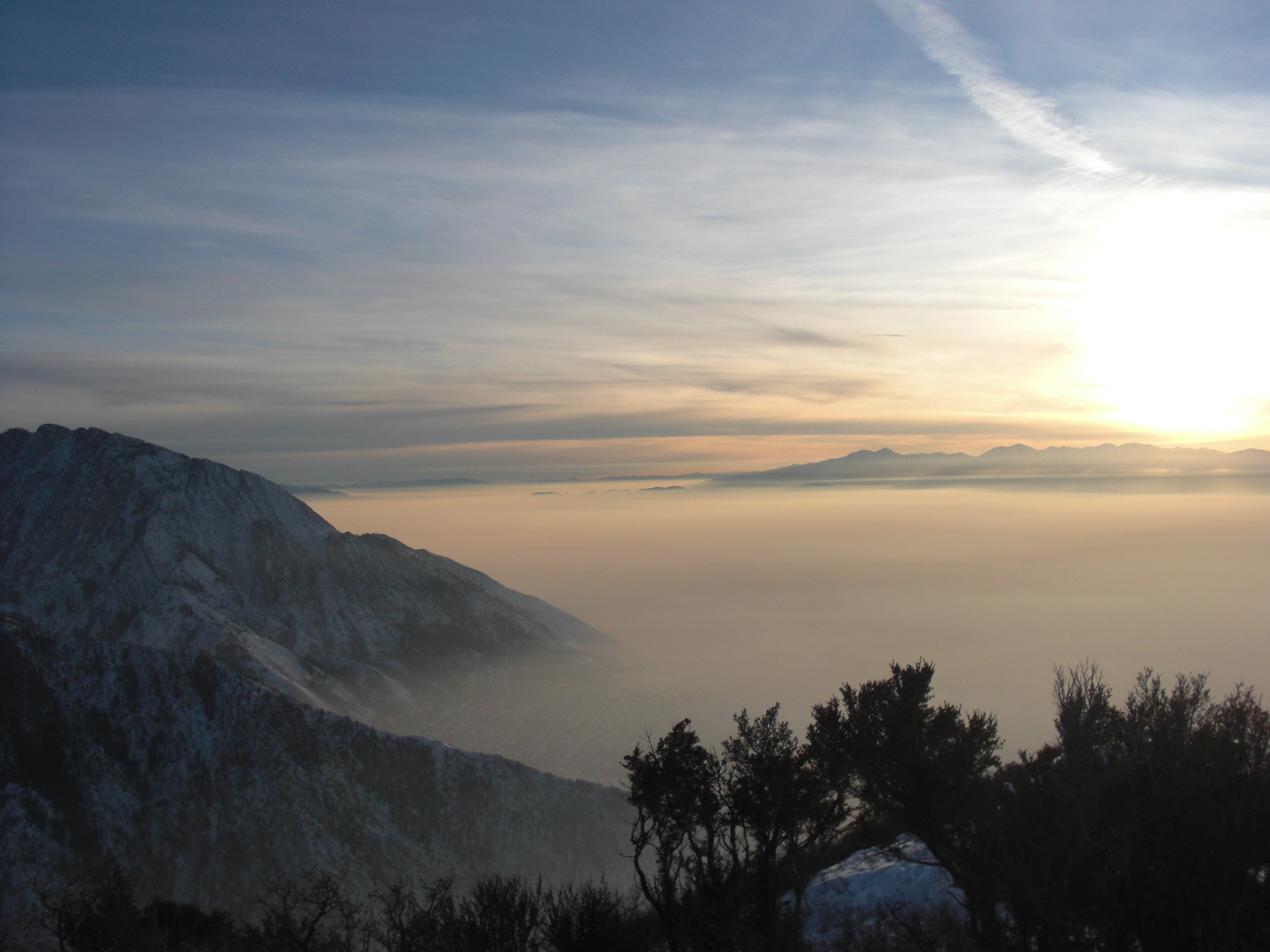
Salt Lake Valley, all filled up with smog and fog – temperature inversion. Grandeur Peak, Millcreek Canyon, Utah; elevation 2528 m. Photo by Andrey Zharkikh, CC BY 2.0 ATTRIBUTION 2.0 GENERIC Deed
Air Quality Index
The Air Quality Index (AQI) is a standardized system used to measure and report air quality (see https://www.airnow.gov/aqi/aqi-basics/). It is measured in micrograms per cubic meter (µg/m3) of various types of pollutants, like particulate matter (PM – PM2.5 and PM10 are the most common), ozone, carbon monoxide, sulfur dioxide, and nitrogen dioxide. It standardizes these pollutants into a single number on a scale from 0 to 500 (See Table from Airnow). One can see local real time visual representations of the AQI on Purple Air, IQ Air, and others.
AirNow.gov AQI Basics for Ozone and Particle Pollution
Daily AQI Color
Levels of Concern
Values of Index
Description of Air Quality
Green
Good
0 to 50
Air quality is satisfactory, and air pollution poses little or no risk.
Yellow
Moderate
51 to 100
Air quality is acceptable. However, there may be a risk for some people, particularly those who are unusually sensitive to air pollution.
Orange
Unhealthy for Sensitive Groups
101 to 150
Members of sensitive groups may experience health effects. The general public is less likely to be affected.
Red
Unhealthy
151 to 200
Some members of the general public may experience health effects; members of sensitive groups may experience more serious health effects.
Purple
Very Unhealthy
201 to 300
Health alert: The risk of health effects is increased for everyone.
Maroon
Hazardous
301 and higher
Health warning of emergency conditions: everyone is more likely to be affected.
The Research
I looked through 22 relevant studies. In this review, I included information from 14 of them (see references below). Of course, it’s hard to control specific numbers or ranges around air quality exposure. ‘Exercise’ means different things in different populations and settings. So, there were some studies that I flagged immediately as the population or methods were questionable or not applicable.
I looked specifically for studies examining exposure to poor air during physical activity. A lot of these studies compared sedentary folks to people who exercised but the amount of exercise was either unclear or it was clearly not applicable for a well-trained population. I did not find any studies examining the health impacts for a well-trained population.
Some studies found that moderate exercise counteracted some of the negative consequences of exposure to pollutants. Many studies simply concluded, more research is needed, or offered vague recommendations along the lines of, ‘reducing pollution will limit health consequences.’
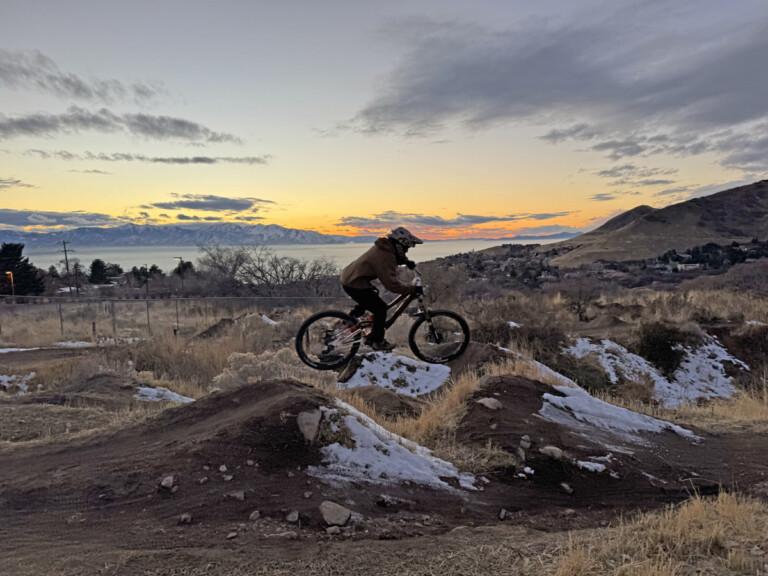
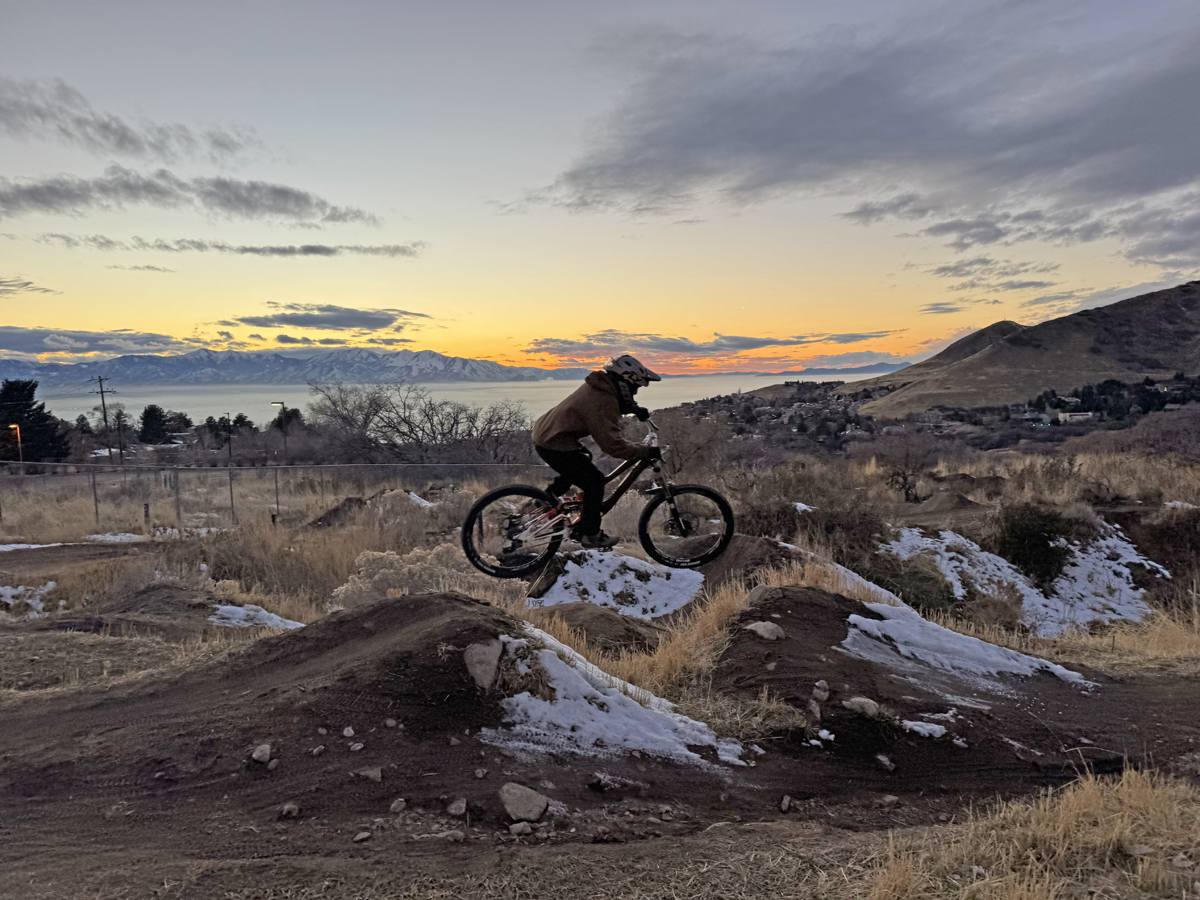
Luis Trinidad gets in a workout at the I-Street Jump Park high above the polluted Salt Lake Valley inversion. Photo by Dave Iltis
There is still much to learn
Many studies and meta-analyses did show that exposure to pollutants resulted in compromised health outcomes. They covered pollutants ranging from ozone, diesel exhaust, traffic-related pollution, and PM. The health consequences associated with these pollutants include an increased risk of airway inflammation, changes in blood pressure, decrements in pulmonary function, artery function, micro-vascular function, cardiopulmonary function, and immune function. Exercise performance was also shown to decline, which could lead to further, related health consequences (1, 6, 8, 12).
However, the nature of these studies and meta-analyses precludes a controlled setting. These are different populations, different levels of activity, and different and varying levels and types of pollutants. There is movement in the area of measuring exposure. For example, one study cited that there may be opportunities in the future to estimate the inspired dose (or the amount of a specific pollutant or mixture of pollutants inhaled over a given time period) which is likely a better measure than area-specific AQI (13).
The question for a general population of primarily sedentary individuals is, is some light level of activity/exercise better for a sedentary person if it comes alongside exposure to pollutants? And some of the research suggests that for that population, exercise in some level of air pollution is better than inactivity (9, 10). However, for a well-trained, very active population, the balance shifts and the exposure to pollution becomes more dramatic (inspired-dose dependent) and the downside of not exercising is less unfavorable (4). That’s the hole in which the well-trained population resides and specific research in this area, as it pertains to health outcomes, was limited.
Longer Term
There was a seemingly endless list of studies and meta-analyses showing the connection between PM2.5 and PM10 and lung cancer. Particulates enter the respiratory system through the airways and accumulate in the lungs (5). Less clear cut, some studies also showed connections between these particulates and brain impairments. Particulates enter through the airways, access the respiratory system, cross the alveolar-capillary barrier into the circulatory system, where they can penetrate the blood-brain barrier. And/or particulates enter through the nasal cavity and access the central nervous system directly through the olfactory nerve pathways. One study showed a specific link between PM2.5 and dementia (14).
Does Masking Help?
I didn’t find anything that specifically examined the effect of masking on limiting inspired dose during exercise. I did find research showing the impact on masking on exercise performance (not related to how masking impacted pollutant exposure) (7, 12). I also found research showing reductions in hospitalizations related to smoke and particulate exposure in a general population (not related to exercise) when masking was employed (7).
Unsurprisingly N95 masks showed the biggest impact in limiting hospitalizations due to smoke, on the order of ~30%, as compared to surgical or synthetic masks, which accounted for ~15% and ~12% decreases respectively. I did not find research that compared the impact of masking on performance with regard to different types of masks. I personally haven’t tried training in an N95, but I can imagine it would come with more challenges than surgical or synthetic masks since it is less porous.
Based on this, it stands to reason that masking during exercise would limit pollutant inspired dose. And based on the research around masking and performance, we accept that there will be an expected compromise on exercise performance, both in physiological and psychological symptoms (like gas exchange, pulmonary function, and subjective discomfort) (2).
It came down to this
Of all the studies I looked through, there was one that got the closest to what I was looking for and didn’t have any obvious issues with methods or parameters (3). This one got the most granular with the info and recommendations and was the most specific to our population, exposure, and uses.
This study was conducted on adults mostly aged 50-70 in China who walked or performed more vigorous physical activity (though they do not define ‘vigorous’). They were looking to find the threshold at which the benefits of exercise were offset by the exposure to PM2.5 (as measured by peak expiratory flow or the max speed at which a person can expel air from their lungs). They concluded that, on average, the detrimental effects of PM2.5 on peak expiratory flow was on the order of >77 for ‘vigorous’ physical activity and >81 for walking. So we have a threshold recommendation for training versus not training (3). Again, it’s unclear how vigorous physical activity is defined in this study. However, it’s safe to assume that when most of us go out to train, it could be considered vigorous.
Now it is a bit of a stretch to let peak expiratory flow be a stand-in for negative health consequences. That is essentially what I am doing here. However, I set out to find a number, a threshold around which to base decisions around outdoor training. And using the observed changes in peak expiratory flow, this is as close as I got to a clearcut recommendation in that area.
What does this all mean in practice?
Over the last handful of years, I have usually used an AQI threshold of 100 (the unhealthy level for sensitive groups) as my personal cutoff for outdoor training. But I didn’t have a reason for that number, it just seemed appropriate – it’s a nice round number and all, and it’s where I start to notice some acute symptoms (like a scratchy throat, watery eyes, and headaches). And that was why I set out to look for an AQI threshold based on research. My search also made it clear that more research is needed on the effects of air pollution on those training outdoors, and in particular the well-trained athlete. With all of this in mind and based on the changes in peak expiratory flow (see above and reference 3), I will likely lower my AQI threshold to 80.
How you approach training outdoors in poor air quality is wholly up to you. But hopefully you now have more information to make an informed choice.
Sources:
Cusick M, Rowland ST, DeFelice N. Impact of air pollution on running performance. Sci Rep. 2023 Feb 1;13(1):1832. doi: 10.1038/s41598-023-28802-x. PMID: 36725956; PMCID: PMC9892497.
Das A, Azarudheen S, Chandrasekaran B, Fernandes S, Davis F. The plausible effects of wearing face masks on sports performance – A scoping review. Sci Sports. 2023 Jun 28. doi: 10.1016/j.scispo.2022.12.006. Epub ahead of print. PMID: 38620146; PMCID: PMC10300654.
Guo Q, Zhao Y, Zhao J, Qian L, Bian M, Xue T, Zhang JJ, Duan X. Identifying the threshold of outdoor PM2.5 reversing the beneficial association between physical activity and lung function: A national longitudinal study in China. Sci Total Environ. 2022 Sep 15;839:156138. doi: 10.1016/j.scitotenv.2022.156138. Epub 2022 May 21. PMID: 35605854.
Hahad O, Kuntic M, Frenis K, Chowdhury S, Lelieveld J, Lieb K, Daiber A, Münzel T. Physical Activity in Polluted Air-Net Benefit or Harm to Cardiovascular Health? A Comprehensive Review. Antioxidants (Basel). 2021 Nov 8;10(11):1787. doi: 10.3390/antiox10111787. PMID: 34829658; PMCID: PMC8614825.
Jin X, Chen Y, Xu B, Tian H. Exercise-Mediated Protection against Air Pollution-Induced Immune Damage: Mechanisms, Challenges, and Future Directions. Biology (Basel). 2024 Apr 8;13(4):247. doi: 10.3390/biology13040247. PMID: 38666859; PMCID: PMC11047937.
Kargarfard M, Poursafa P, Rezanejad S, Mousavinasab F. Effects of exercise in polluted air on the aerobic power, serum lactate level and cell blood count of active individuals. Int J Prev Med. 2011 Jul;2(3):145-50. PMID: 21811656; PMCID: PMC3143527.
Kodros JK, O’Dell K, Samet JM, L’Orange C, Pierce JR, Volckens J. Quantifying the Health Benefits of Face Masks and Respirators to Mitigate Exposure to Severe Air Pollution. Geohealth. 2021 Sep 1;5(9):e2021GH000482. doi: 10.1029/2021GH000482. PMID: 34541439; PMCID: PMC8438762.
Koehle MS. Physiological impacts of atmospheric pollution: Effects of environmental air pollution on exercise. Physiol Rep. 2024 Apr;12(7):e16005. doi: 10.14814/phy2.16005. PMID: 38605426; PMCID: PMC11009369.
Qin F, Yang Y, Wang ST, Dong YN, Xu MX, Wang ZW, Zhao JX. Exercise and air pollutants exposure: A systematic review and meta-analysis. Life Sci. 2019 Feb 1;218:153-164. doi: 10.1016/j.lfs.2018.12.036. Epub 2018 Dec 21. PMID: 30582950.
Santos JMBD, Foster R, Jonckheere AC, Rossi M, Luna Junior LA, Katekaru CM, de Sá MC, Pagani LG, Almeida FM, Amaral JDB, Vieira RP, Bachi ALL, Bullens DMA, Vaisberg M. Outdoor Endurance Training with Air Pollutant Exposure Versus Sedentary Lifestyle: A Comparison of Airway Immune Responses. Int J Environ Res Public Health. 2019 Nov 12;16(22):4418. doi: 10.3390/ijerph16224418. PMID: 31726719; PMCID: PMC6887780.
You Y, Wang D, Liu J, Chen Y, Ma X, Li W. Physical Exercise in the Context of Air Pollution: An Emerging Research Topic. Front Physiol. 2022 Feb 28;13:784705. doi: 10.3389/fphys.2022.784705. PMID: 35295574; PMCID: PMC8918627.
Zheng C, Poon ET, Wan K, Dai Z, Wong SH. Effects of Wearing a Mask During Exercise on Physiological and Psychological Outcomes in Healthy Individuals: A Systematic Review and Meta-Analysis. Sports Med. 2023 Jan;53(1):125-150. doi: 10.1007/s40279-022-01746-4. Epub 2022 Aug 24. PMID: 36001290; PMCID: PMC9400006.
Münzel T, Hahad O, Daiber A. Running in polluted air is a two-edged sword – physical exercise in low air pollution areas is cardioprotective but detrimental for the heart in high air pollution areas. Eur Heart J. 2021 Jul 1;42(25):2498-2500. doi: 10.1093/eurheartj/ehab227. PMID: 33963403; PMCID: PMC8248992.
Peters R, Ee N, Peters J, Booth A, Mudway I, Anstey KJ. Air Pollution and Dementia: A Systematic Review. J Alzheimers Dis. 2019;70(s1):S145-S163. doi: 10.3233/JAD-180631. PMID: 30775976; PMCID: PMC6700631.
EMPORIA, Kansas (January 27, 2025) — Today, the Gravel Cycling Hall of Fame unveils its 2025 inductees. This year’s inductee class includes LeLan Dains, John Hobbs, Ted King, and Amanda Nauman-Sheek.
The 2025 inductees were selected by a group of 60 electors, including past Hall of Fame inductees, GCHOF board members, and independent athletes, promoters, industry professionals, and fans of the sport. Inductees were selected from a long list of nominees, and their selection was based on each person’s exceptional achievements and dedication to gravel cycling.
According to Gravel Cycling Hall of Fame Director, Jason Strohbehn, each inductee embodies the spirit of adventure, resilience, and camaraderie that defines the burgeoning discipline.
“We are thrilled to welcome LeLan, John, Ted and Amanda into the Gravel Cycling Hall of Fame,” Strohbehn said. “Each has made an indelible mark on gravel cycling, inspiring countless riders and embodying the adventurous spirit that defines the sport.
“Their passion, dedication, and achievements serve as a testament to the transformative power of two wheels.”
LeLan Dains
With a gravel resume stretching back to the earliest days of Unbound Gravel’s predecessor, the DK200, LeLan Dains has played a critical leadership role in the sport of gravel cycling. His tireless vision has helped Unbound Gravel grow into the world’s premier gravel event, and his work has been instrumental in putting Kansas gravel on the map as a top travel destination.
LeLan Dains, photo courtesy of Gravel Hall of Fame
Dains also played a leadership role in the creation of the Great Plains Gravel Route, a more than 3,800-mile network of gravel roads and trails that enables cyclists to experience the rugged beauty of the Central Plains states. As a founding member of the Gravel Cycling Hall of Fame, Dains continues to demonstrate his commitment to preserving the rich history and legacy of gravel cycling.
John Hobbs
While the task of deciding exactly when or where the modern gravel era started, it’s clear that John Hobbs was an early visionary in the sport. As far back as the mid-1980s, Hobbs was hosting formal “rough road rides” in the southern Flint Hills of Kansas.
John Hobbs, photo courtesy of Gravel Hall of Fame
Buoyed by the success of the rides, Hobbs began promoting a ride out of Matfield, KS called the Matfield Green 100k. This evolved into the infamous Kansas Death Ride, an event that was known for being rougher than most mountain bike races.
The event’s successful 22-year run, often attracting more than 600 riders, proved that cyclists wanted to explore beyond paved roads, onto roads less traveled. In fact, it was the success of the Kansas Death Ride that inspired a group in Emporia, KS to create the DK200/Unbound Gravel in 2005.
Ted King
Widely credited as the first UCI World Tour road cycling competitor to cross over to the gravel cycling discipline, Ted King raised the bar for the professionalism required to win big gravel events. With palmares that include winning Unbound Gravel twice and victories at SBT Gravel, Grinduro, Rasputitsa, Vermont Overland, and UnPAved, among others, King is well-known as a fierce competitor.
Ted King, photo courtesy of Gravel Hall of Fame
What might be lesser known, but no less significant, is how King has given back to the gravel community. Through his genuine interactions with riders and racers of all abilities, King is a constant source of positivity and encouragement. He freely shares the lessons he’s learned on his YouTube channel and on his podcasts, and his humility, sincerity and professionalism serve as a strong example for aspiring cyclists to emulate.
Amanda Nauman-Sheek
While Amanda Nauman-Sheek may be best known as a professional gravel cyclist,
her work to promote the positive aspects of gravel cycling has had a profound and lasting impact. On the bike, Sheek is a two-time DK200/Unbound Gravel champion, and holds the distinction of winning one of the toughest editions of the event –– the infamous “mud year” in 2015. She’s also won or finished on the podium at countless other events, including Mid-South, Unbound XL and Belgian Waffle Ride California, among others.
Amanda Nauman-Sheek, photo courtesy of Gravel Hall of Fame
Beyond her on-bike achievements, Sheek is a recognized thought leader in gravel cycling. Her long-running podcast, Groadio, provides inspiration for aspiring cyclists, and insight on the sport’s toughest topics. Sheek is also co-founder of Mammoth Tough, a challenging gravel event in Mammoth Lakes, CA. After three years of running the event on their own, Sheek and her partner decided to make the event one of the first US-based UCI Gravel World Series events. The move showcases Sheek’s desire to continually raise the bar and push the sport forward.
The four 2025 inductees will officially be inducted into the Gravel Cycling Hall of Fame during a ceremony to be held May 29, 2025, in Emporia, Kansas. The induction ceremony will coincide with a group ride prior to the ceremony, and an after party following the event. “We look forward to celebrating their remarkable contributions and continuing to honor the rich legacy of gravel cycling,” Strohbehn said.
For more information about the Gravel Cycling Hall of Fame and the 2025 induction ceremony, group ride and after party, visit www.gravelcyclinghof.com.
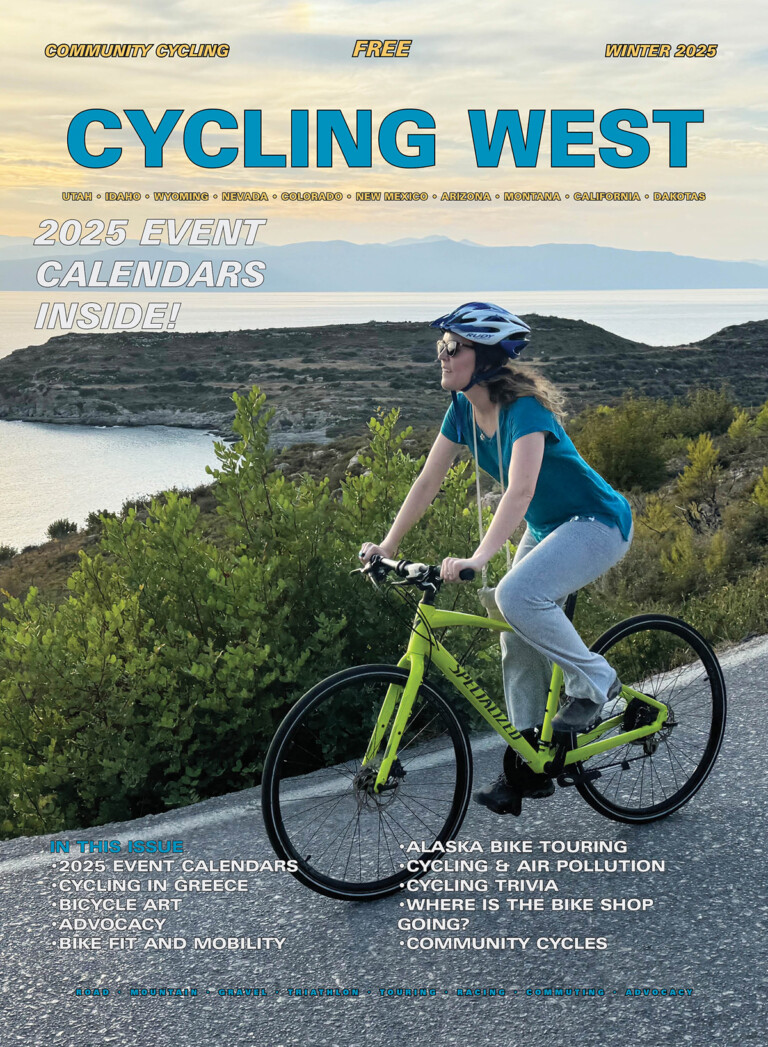
Cycling West and Cycling Utah Magazine’s Winter 2025 Issue is now available as a free download (8 MB download). Pick up a copy at your favorite Utah, Idaho, Wyoming, Nevada, Montana, Colorado, Arizona, New Mexico, North Dakota, South Dakota, and Northern California bike shop or other location.