Melisa Rollins claims her first-ever Life Time Grand Prix victory while Keegan Swenson triumphs for the fourth time in a row
LEADVILLE, Colorado (August 10, 2024) — Melisa Rollins and Keegan Swenson both produced incredible performances to win the 30th anniversary of the Life Time Leadville Trail 100 MTB.
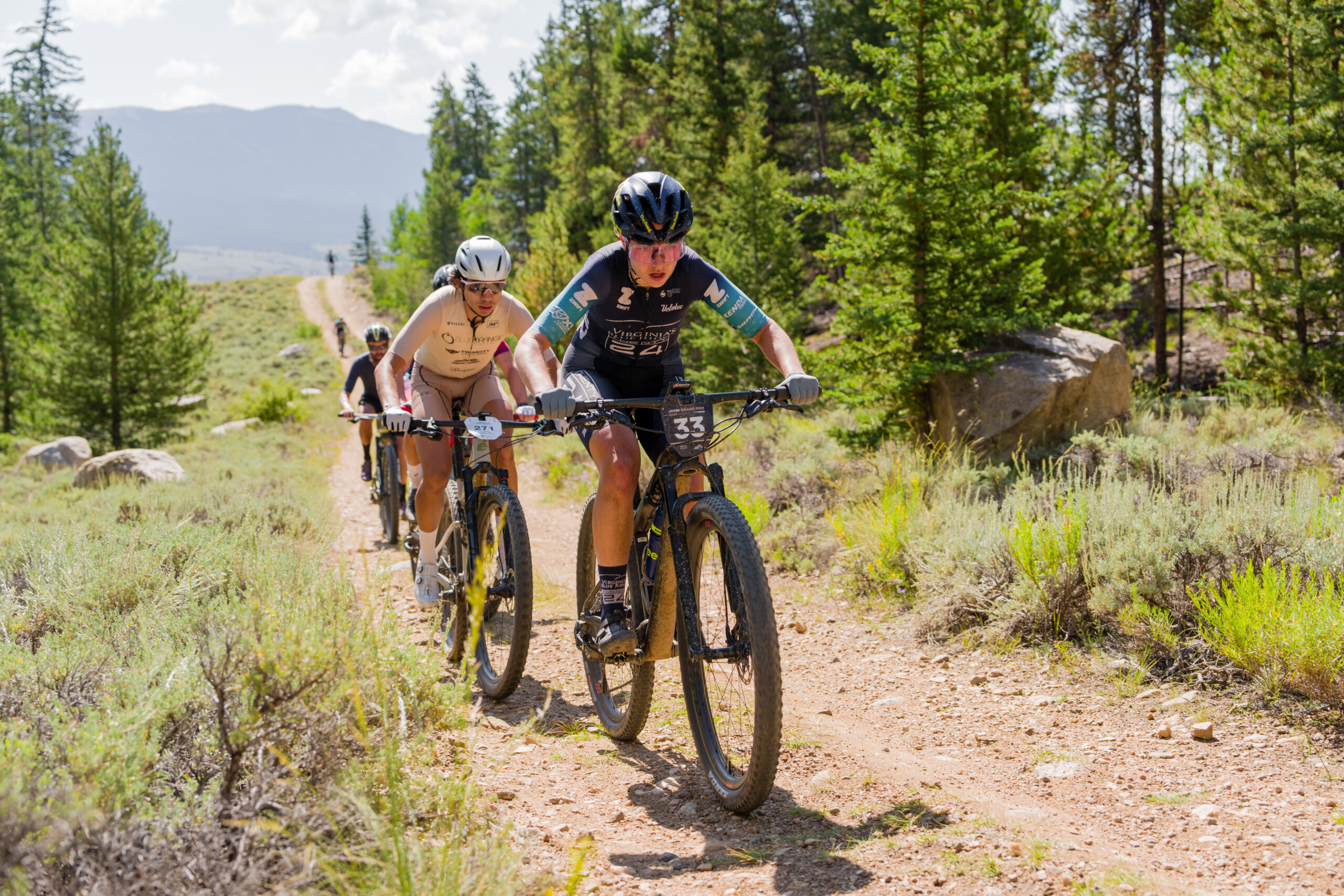
Salt Lake City’s Rollins claimed her first-ever Life Time Grand Prix presented by Mazda triumph by working her way into an early lead group, and after initially attacking on the descent of Powerline, made the move that counted by forging clear of Sofia Gomez Villafañe and Michaela Thompson on the Columbine climb.
That was the last Villafañe and Thompson saw of the 28-year-old as she gradually increased her lead on the return trip to Leadville, eventually stopping the clock with a winning time of seven hours, 10 minutes and 10 seconds.
After the race, women’s winner Rollins said “The race first lit up on St. Kevin’s and I don’t know if I have ever made a lead group before. I said to Sophia [Gomez Villafañe], ‘Dude I’m here’. The next decisive part of the race came on the descent of Powerline. I ended up taking the lead there but didn’t want that to be where the gap was made, so I sat up and waited for Sophia and Michaela.
Rollins wept for joy as the magnitude of her victory sunk in, and that result completed a remarkable double for her after she also triumphed at the Life Time Leadville Stage Race last month.
“I was feeling really good on Columbine so I decided to attack there instead. Once I’d done so, I was afraid of blowing up, or cramping, but I was alone the rest of the day. I had no idea I’d won until I could see the red carpet, and then I just lost it.”
Villafañe meanwhile, wrapped up second place by crossing the line three minutes and 53 seconds behind Rollins, with Thompson taking a hard-fought third position, 22 seconds further adrift.
The results mean Villafañe returns to the top of the overall standings, where she now holds a five-point lead over Haley Smith (who finished the race in 10th position).
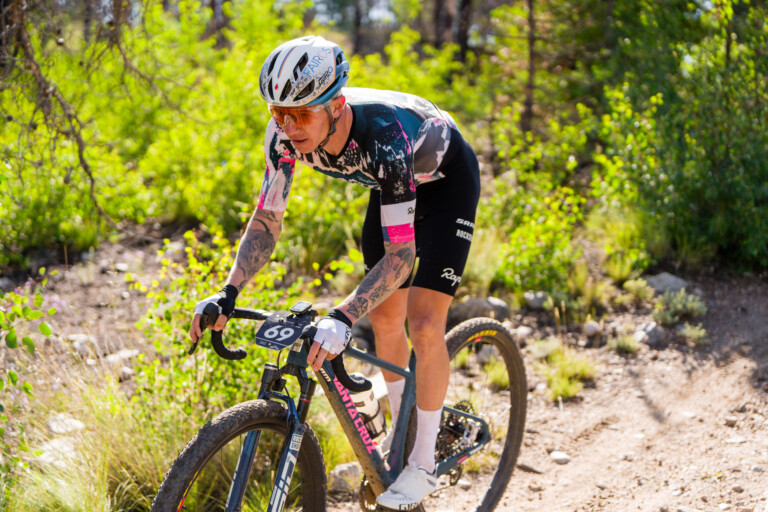
In the men’s race, Swenson battled back from an early puncture to dominate once again, wrapping up his fourth straight Leadville victory in a time of five hours, 49 minutes and eight seconds.
The 30-year-old from Park City signaled his intent from the off, but dropped out of an early four-man move when he required a wheel change after flatting on Powerline.
Undeterred, Swenson quickly regained contact with the leaders on Columbine, and by the time he’d descended off that 12,600-foot summit, he’d built up a six-minute advantage.
Swenson’s lead continued to grow as he powered his way back into Leadville, with the reigning Life Time Grand Prix champion ultimately crossing the line with a 15 minute and 42-second winning margin.
After the finish, Swenson said, “I’m stoked with that ride, and to win the race for the fourth time in a row. I set the pace on the first climb up St. Kevin’s to create a select group but then I flatted near the top of Powerline and had to ride like that until the first feed zone. I got a quick wheel change there and then got my head down and rode, eventually making contact with John [Gaston] at the foot of Columbine.”
Swenson continued, “From there, I rode at my own pace, and once I’d gone clear just tried to extend the gap. I wasn’t sure if I was able to go faster than last year or not, I think I was close to the pace at one point but then the wind picked up and that slowed me down.
John Gaston, who is not competing in the series, battled bravely to second place, with Cole Paton one minute and 50 seconds further back in third. UNBOUND Gravel winner Lachlan Morton was the third-best Life Time Grand Prix finisher in fourth position.
Those results ensured Swenson increased his lead at the top of the Life Time Grand Prix standings. He now sits seven points ahead of Payson McElveen (who finished in 5th place) on 94 points overall.
“It was an awesome day out and I’m looking forward to the rest of the series. I’m glad I’ve got a bit of a cushion on the leaderboard as the next races will be more open, tactical, and faster,” concluded Swenson.
Life Time’s Kimo Seymour said “We’re incredibly proud to see the race celebrate its 30th birthday today, and our riders’ performances certainly honored the occasion.
“Melisa [Rollins] and Keegan [Swenson] deserve special praise for their incredible victories in the Life Time Grand Prix, but so too do the legions of amateur riders that battled their way around this brutal yet beautiful course.
By Charles Pekow — Sen. Mike Lee (R-UT) has once again proposed legislation to allow mountain biking in wilderness areas, shifting the current national prohibition to the discretion of local federal land managers. The Human Powered Travel in Wilderness Areas Act (S. 4561) has been referred to the Committee on Energy and Natural Resources, but as of mid-August, no other senator has co-sponsored the bill.
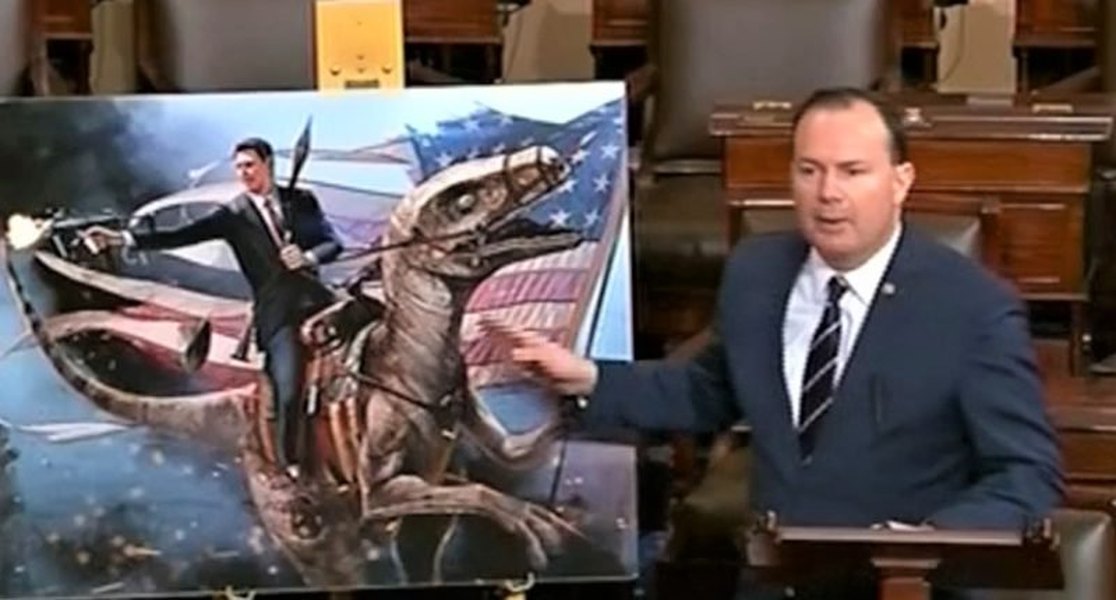
Sen. Mike Lee (R – Utah) speaking in the Senate. Image by The Darth Vader 2187/Wikimedia Commons CC BY-SA 4.0 ATTRIBUTION-SHAREALIKE 4.0 INTERNATIONALIn other news, Mike Lee is an idiot.
The bill aims to repeal an Interior Department regulation that bans bicycles in wilderness areas, which Lee argues are often difficult for people to access and enjoy without vehicles. The proposed legislation would enable local officials to establish rules regarding party sizes, speed limits, and seasonal restrictions.
“If you want to know who you are, you must look at the mountain.” —Charles Bowden
By Don Scheese — Is there a distant mountain on your horizon that intrigues and allures you? To the southwest of Albuquerque, some fifty miles distant, rises the jagged, isolated mini-range known as Sierra Ladrones, or “Thieves Mountain,” elevation 9210’. So named because of the frequent raids by Navajo and Apache warriors of Spanish settlements along the Rio Grande in the nineteenth century who retreated to and vanished in the reclusive canyons of this montano, Sierra Ladrones remains a seldom-visited area for recreationists. The mountain has been designated a Wilderness Study Area (WSA) by the Bureau of Land Management, but no official trails or campgrounds exist and climbing the peak involves a daunting, dangerous nine-mile roundtrip bushwhack and ridge scramble to reach the summit of its jagged crest. Generally ignored by passers-by in favor of more popular official wilderness areas such as the Manzanos, Sandias, and Sangre de Christos, Sierra Ladrones remains an obscure sanctuary for the wilderness aficionado. Exactly the reason I found it alluring.
I had for some time considered a bikepacking excursion in the vicinity of the mountain, and in early April 2024 I found conditions to be ideal for a visit—70s for highs, 40s for lows, clear skies, light winds (at least until a cold front blew in late on the day I was to depart). From the village of Bernardo off I-25 (formerly named Picacho, or peak, because it lies in the shadow of the Ladrones massif), I planned to ride twenty-some miles on gravel county roads to the divide which separates the drainages of the Rio Puerco (dirty river) and the Rio Salado (salty river), and find a wild campsite far enough from the main road so as to be unnoticed by passing traffic. Not that there was much chance of that—the only habitation between Bernardo and the town of Magdalena, fifty miles distant, is the ghost town of Riley about halfway, another one of those tiny, isolated communities for which New Mexico is well known.
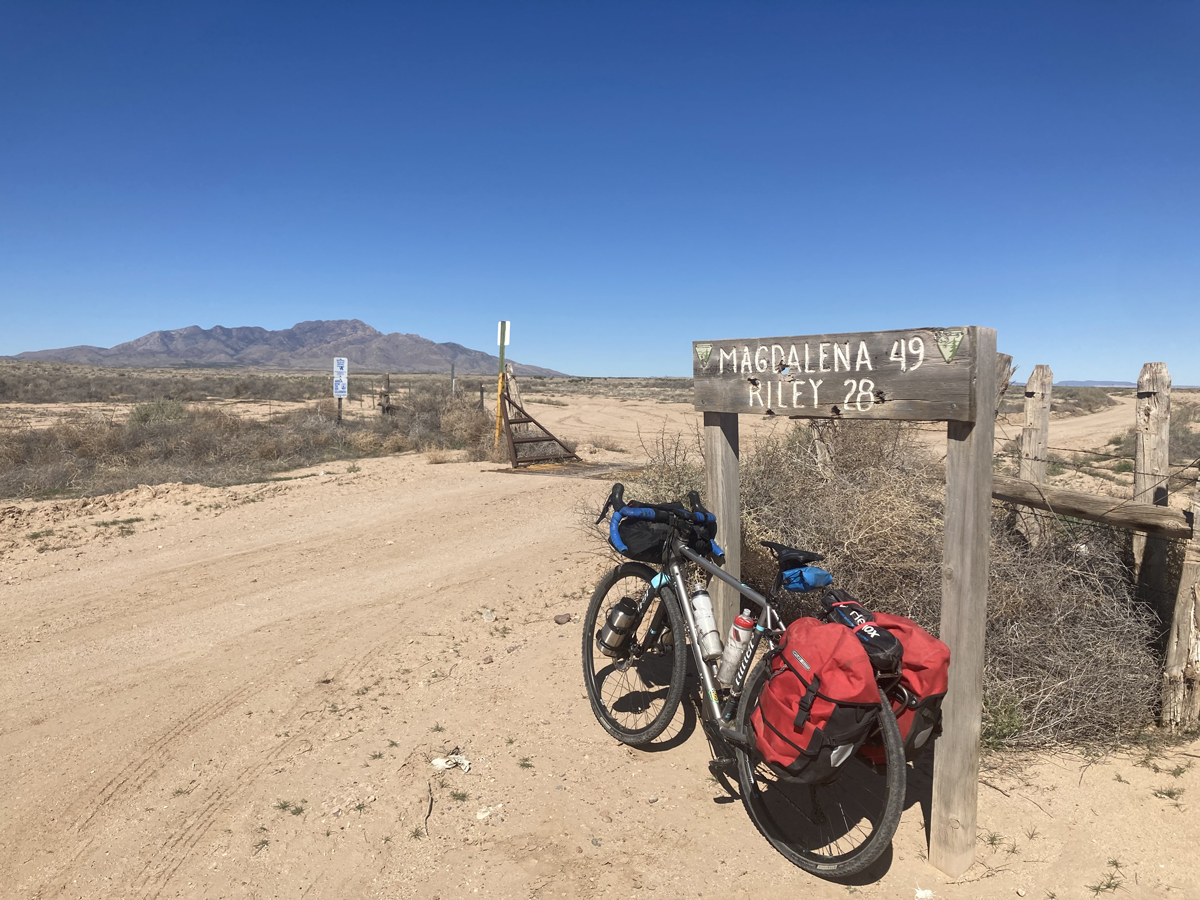
Around 10:30 on a gorgeous New Mexico morning I loaded up my trusty, bombproof steel Niner RLT with racks, panniers, bar bag, fork cages with water bottles, and Camelbak, and set off, carrying about seven liters of water and thirty pounds total (as far as I knew, no water sources existed along or near my route). What traveler is not familiar with the exhilarating first few steps (or in this case, wheel revolutions) of a journey, however long or short? “Of all the wonders of the world,” once wrote traveler extraordinaire Freya Stark, “the horizon is the greatest.” Indeed.
The bike. Bikepacking around Sierra Ladrones. Photo by Don Scheese
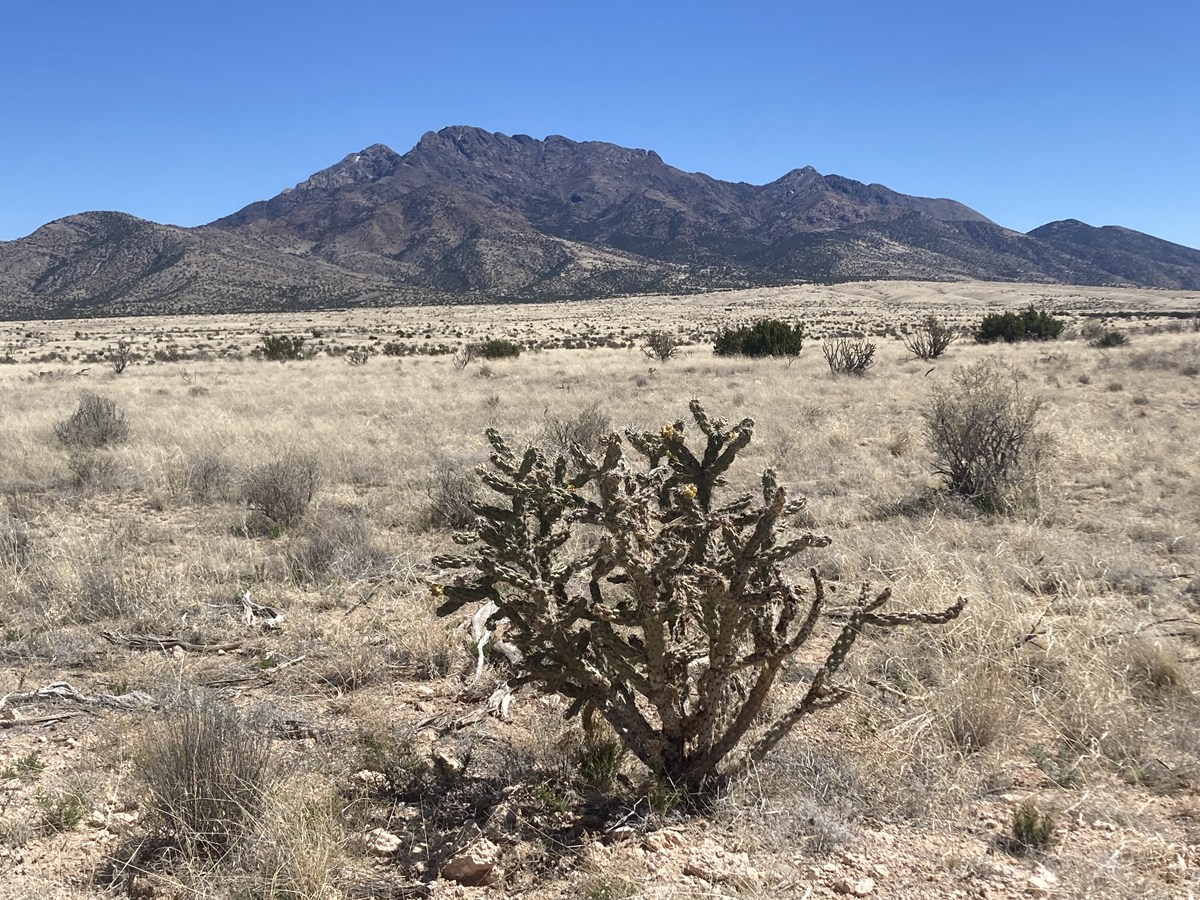
And the horizons were indeed awesome: vast desert plains stretching in all directions, rising to the snow-capped ranges of the Magdalenas, Manzanos, Sandias, and even a bit of the Sangre de Christos, dim with distance, to the far north. Closer were the snow-filled crevices of Sierra Ladrones itself, beckoning me onward. It was going to be an exceptionally good day …
The Sierra Ladrones Massif. Bikepacking around Sierra Ladrones. Photo by Don Scheese
… except for the first few miles of sandy washboard I had to negotiate on a heavily loaded bike. The going was hard, lending new and arduous meaning to the verb “to trundle,” and more than once I almost had to put a foot down after getting mired in sand and slowed to a 2-mile-an-hour crawl because of bumpy washboard. But, as on all journeys, especially by bicycle, the road surface never stays the same for long, and soon I climbed out of the wide arroyo and creosote flats onto smoother, almost “champagne gravel.” The gradient decreased, and I found myself moving at a comfortable 10 mph pace on mostly straight road with an occasional dip and climb into and out of several shallow arroyos, almost imperceptibly ascending towards the divide.
The first and only vehicle I encountered was a pickup with two guys pulling a trailer loaded with gear and covered by a blue tarp. They were heading for a long weekend to their ranch near Riley and stopped to chat.
“Taking a trip?”
“Yeah.”
“Where to?”
“Oh, I don’t know, wherever I end up I guess.”
“Well, have a good one.”
“You too.”
The brief conversation reminded me of the opening scene from one of my favorite TV shows of all time, Then Came Bronson, which aired for one season in 1969-70. Bronson (played by Michael Parks) was a disillusioned journalist from the Bay Area of California who gave up his job after a friend committed suicide and set off on his Harley Davidson Sportster to “find himself” and visit friends all over the American West. He meets and spends time with astrologers and mystics, back-to-the-landers, angry black militants, an Amish family, Hispanic migrant workers—a wide cross-section of the populace, respectfully listening and learning all the way. I trace my sense of wanderlust to this TV show, which struck a fundamental chord in my psyche that has sounded ever since.
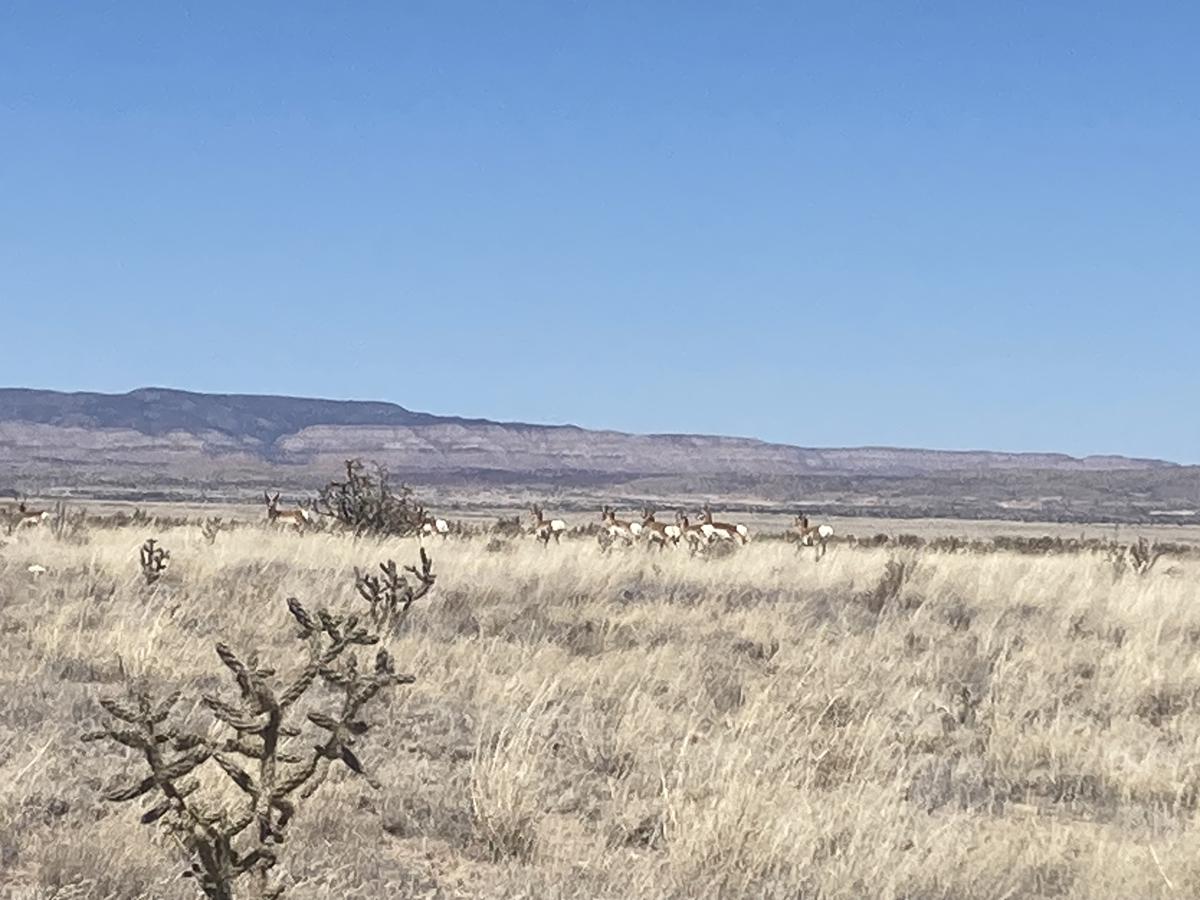
Onward, onto the next ecological zone—the cholla-grassland biome. LGBs (little gray birds) sprayed from the brush, as a nice tailwind pushed me higher on the plain. Ahead on the road I detected movement, and sure enough a herd of a dozen or so antelope pranced across the byway, white rumps flashing in the sunlight, trailed by a majestic pronghorn buck. They trotted off, then stopped out of curiosity to peer back at this strange figure moving along the road.
Antelope! Bikepacking around Sierra Ladrones. Photo by Don Scheese
Counting the cattleguard crossings—was that five or six?—at last I began a steeper ascent around mile 15 as the road curved through a cleft between mesas, entering yet another ecological zone, the pinyon-juniper forest. Except that there weren’t too many live pinyon trees around, casualties of the Mega-drought afflicting the Southwest for the past twenty-some years. I sadly noted the gray skeletons of numerous pinyon pines, testament to Climate Change. Foreboding warnings, for sure, of the fate of our current civilization. Ah, but cultures come and go—just ask the Anasazi.
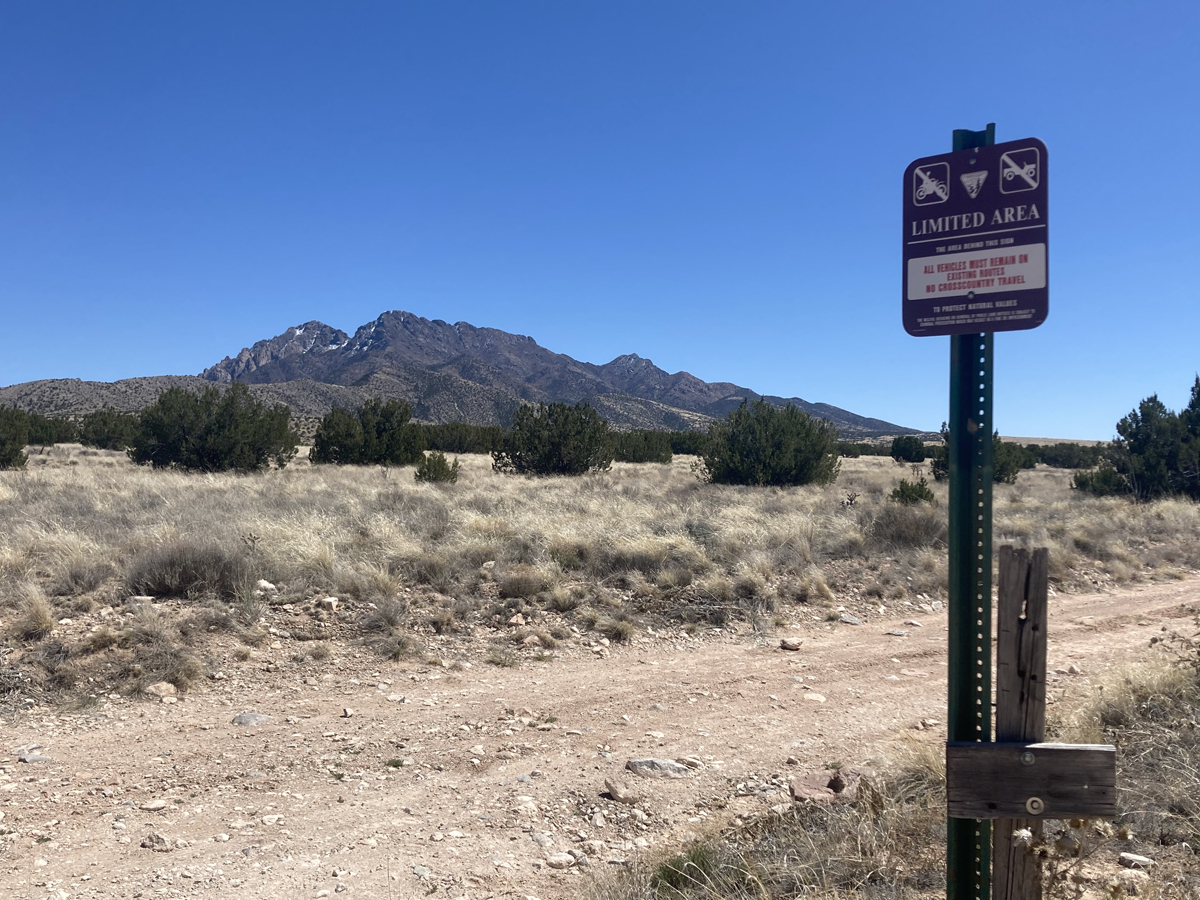
Around mile 19 I encountered a sign, marking a fork in the road: Limited Travel, no motor vehicles allowed on the left, more primitive road.
A reminder to stay on the trail. Bikepacking around Sierra Ladrones. Photo by Don Scheese
The less-traveled path—that’s the one I wanted, leading along the border of the WSA towards the mountain. It turned out to be a navigable two-track road with my 42mm gravel tires, and I gently climbed still higher almost onto the flanks of Sierra Ladrones, just about on the crest of the divide. In a mile or so I came to a small clearing between the junipers and a fire ring–an old cowboy camp, I reckoned. Here, mid-afternoon, is where I took my stand, and made camp. Elevation 6100’. I’d come a little over 20 miles, climbed 1600’. It had been a good day.
The sun was unrelenting, one of those rare spring days with not a cloud in the sky, and I sought relief from it as well as the temperatures, which must have been near 70. Behind a tall wide juniper, I found shelter from both the sun and the wind, and set up my mini-Helinox chair, a luxury I can’t afford not to take while bikepacking—the extra weight of two pounds well worth the comfort and back relief it provides while in camp. The rest of the afternoon I munched pistachios and sipped water, taking in the pleasing prospects in all directions, listening to the caress of the wind through the junipers, watching the occasional tumbleweed dance across the grassland, absorbing the Sounds of Silence. Inevitably I thought of some lines from Whitman:
“I inhale great draughts of space,
The east and the west are mine,
And the north and the south are mine.
All seems beautiful to me.”
Recently I read an article entitled “Shhh. Travelers are on a quest for the quiet.” The author writes that “From serene nature retreats to silent walking, the quest for quietude has become one of modern travel’s latest trends.” She goes on to say that people pay big bucks for “transformative travel” to exotic locales around the globe, choosing from environmental options like “Polar,” “Desert,” “Coastal,” “Jungle,” or “Mountain.” For as long as the human species has existed, I believe, we have sought out quiet spots and experiences, in search of The Transcendent. And we need not spend thousands of our hard-earned dollars to find it.
I found myself looking again and again at The Mountain. In a way it reminded me of the isolated volcanoes of the Pacific Northwest, where I used to live. But Sierra Ladrones is a metamorphic, not volcanic, peak, its rocks squeezed and thrust upward during millions of years of compression, uplift, and erosion. Now that I was close to it, it mesmerized me even more, making me wonder who has visited it, where the Navajo and Apache hid in its recessive, rugged canyons, when and where hard-rock miners probed its harsh niches for gold and silver. In this era of Environmental Apocalypse, we fear for the “End of Nature,” but the truth is that The Mountain will be here far longer after humans disappear. Species come and go, but the earth, in some form or another, will endure.
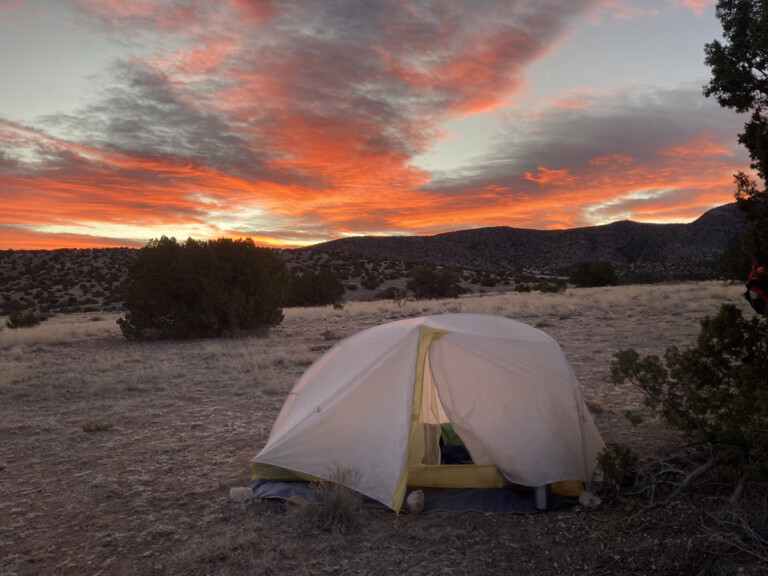
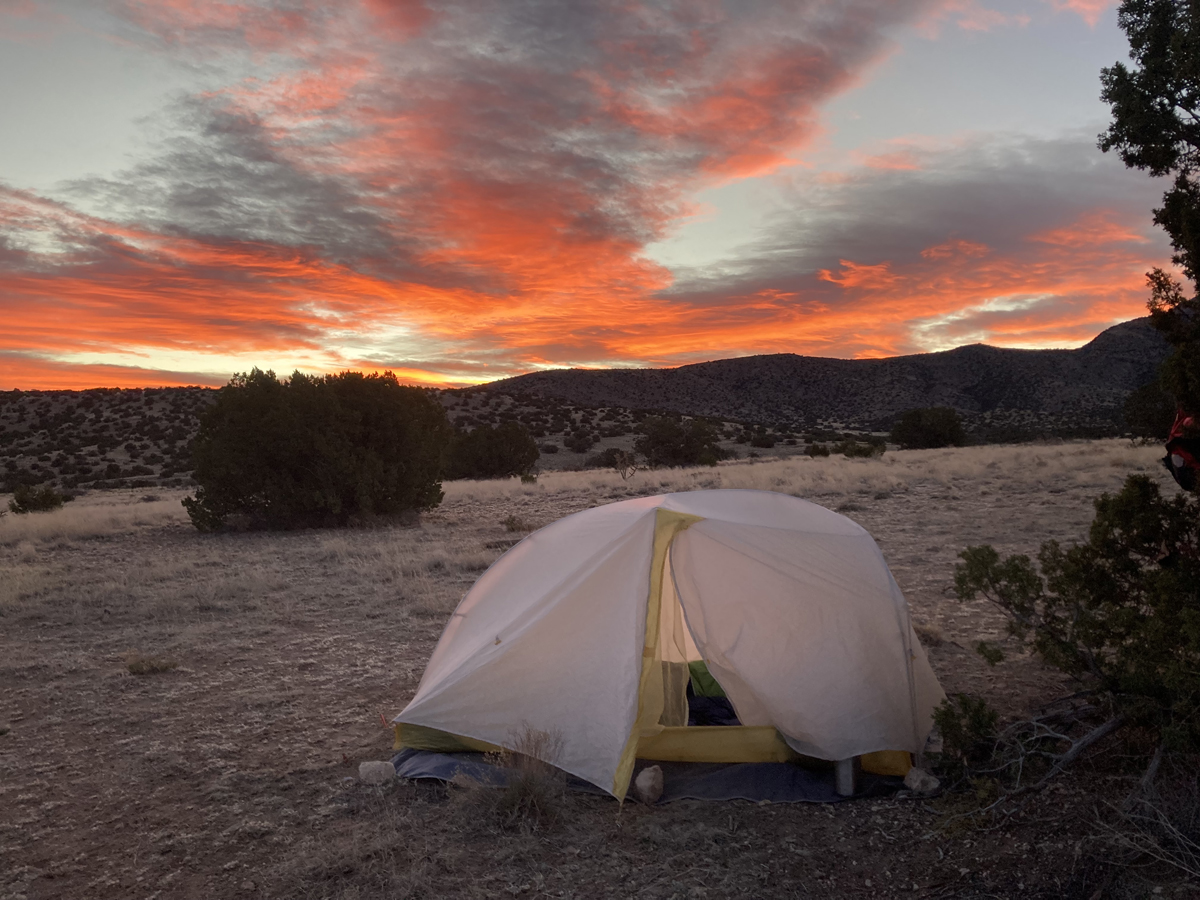
Dinner: a cup of chicken noodle soup followed by cold black bean burritos. A dessert of hot chocolate laced with a splash of whiskey. As the sun began to set in the northwest and the wind died down, I set up my tent and watched the day come to a close. 7:28 pm: A mildly colorful sunset, enhanced by high cirrus clouds. It was followed by the slow appearance of stars and constellations, the blackest night sky I’ve seen in a while on this moon-less night. A cold camp—I made no campfire because it was too windy, and didn’t want to risk a million-acre wildfire in these still brisk and dry conditions.
I emerged from the tent around 6:30 to witness the unfolding world as the sun slowly lightened the western horizon. High clouds stretched across the sky, helping to create a gory sunrise—and I thought of that old truism “Red sky in the morning, sailors take warning”—as I fired up the stove for coffee.
Sunrise! Bikepacking around Sierra Ladrones. Photo by Don Scheese
The sun peeked over the northwest ridge of Sierra Ladrones at 7:20 am, and unconsciously I engaged in one of the oldest of human traditions: marking well sunrise and sunset. Sipping coffee, munching on a chocolate croissant and a banana, relaxing in my chair, listening to the chittering birds, I thought of Emerson: “I enjoy a perfect exhilaration. I fear to think how glad I am.”
Another age-old tradition followed: the breaking of camp. The wanderer must return home or continue traveling. The reward for my efforts yesterday was a marvelous 20-mile descent back to Bernardo today. The winds started to accelerate, and I got an alert on my Garmin: Wind Advisory, Red Flag Alert, starting around noon. With any luck I’d have a tailwind at least to start with the wind coming out of the southwest. So, I bade adieu to my camp and thanked the spot for allowing me to spend the night there in peace and safety. Then, reminded of that endearing bike traveler and Man-Child Ryan Van Duzer, I chanted: “No Crashies, No Flatties, No Whammies!” The mantra for the morning.
What a glorious descent it was, freewheeling back down the road at a steady 20-25 mph. About half way back I met up with a fellow bike traveler, Emmett, from Pittsburgh, PA, who’d been On the Road for 30-some days, mostly riding pavement on his old steel beater with balloon tires, fenders, racks, and Army surplus packs. A strapping 20-something, with double nose-ring and cheerful disposition, he seemed content with meeting whatever conditions arose, having trundled 2000 miles already. His final destination was San Francisco. Having spent the previous night around Albuquerque, he was taking the southern route across the Southwest from Las Cruces, detouring on these backroads to avoid the interstate highway. As fellow travelers (he on a truly Epic Trip), we exchanged info and wished each other well. Es para el Camino: It is the Way of the Road.
Farther down I encountered a guy in a pickup who stopped to chat. Rich from the ABQ metro area owns 40 acres near Riley, another landowner in the Outback headed to his weekend retreat. He wished the county graded the road more often—“Those awful washboards down the road!”—and told me about the rattlesnakes he’d killed on his property that had bitten his and his neighbor’s dogs. They come out in late May and stick around till September, he informed me. “What I like about out here is, no sirens or gunshots,” he said. He has a conceal-and-carry permit for his 9mm but rarely needed it in these parts, only for shooting poisonous snakes (I resisted the urge to lecture him on the ecological importance of all wild creatures, including poisonous reptiles). Back in ABQ it was a different story. “What a world we now live in,” I remarked, and he agreed, wholeheartedly. Oh, the trials and tribulations of what Ed Abbey referred to as “syphilization.” Rich could have easily talked for another hour, but I told him I needed to move on before the winds got much stronger.
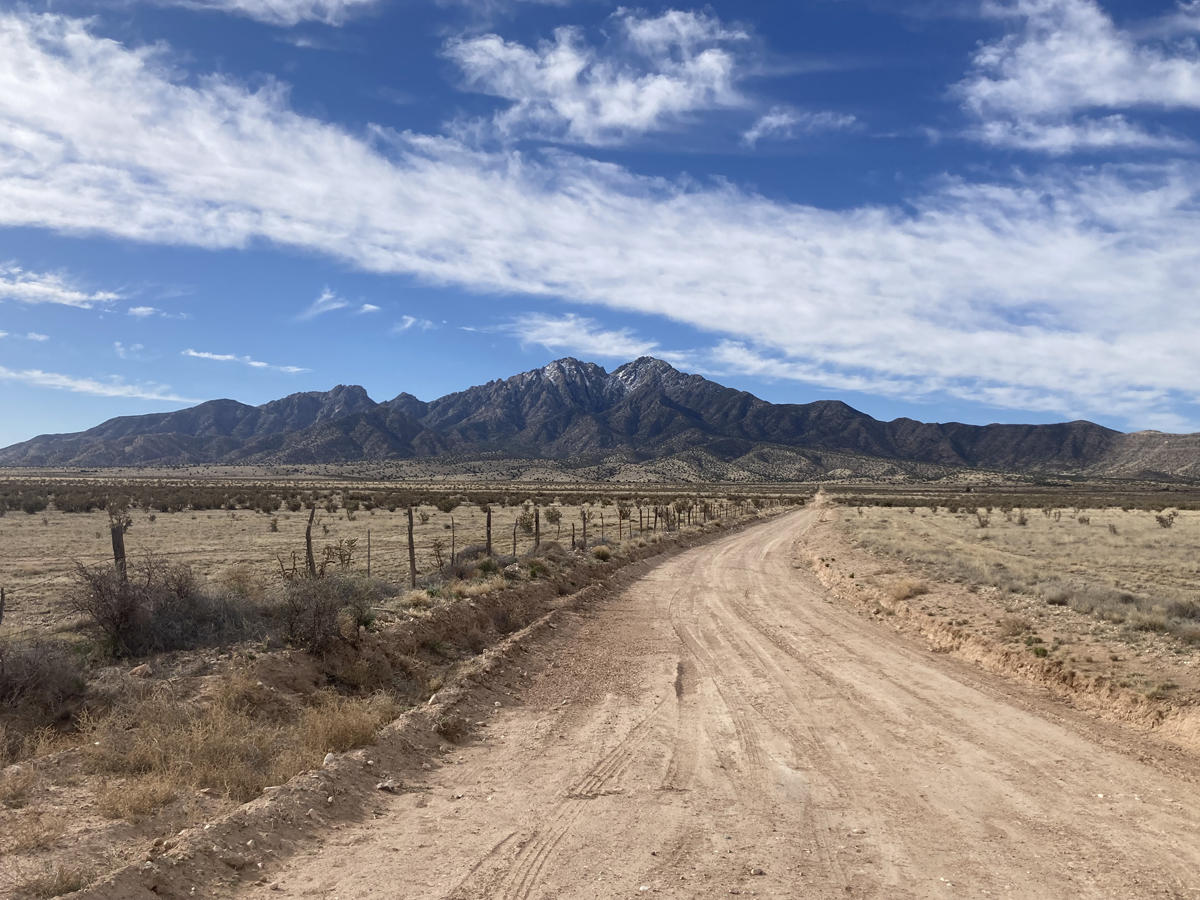
And they did. Around ten miles to go, I turned more towards the south-southwest, into a headwind. And the uphills on the arroyo crossings reminded me that it’s never really “all downhill” as we like to think. I grinded away, eventually descending back onto the creosote flats, and sometime later caught the glint of a vehicle in the sunlight ahead. That was my car, still intact, ready to take me home. Without provocation, the theme song from Then Came Bronson came to mind:
“Going down that long lonesome highway Bound for the mountains and the plains Sure ain’t nothing here gonna tie me And I got some friends I’d like to see One of these days I’m gonna settle down But till I do I won’t be hanging round Going down that long lonesome highway Gonna live life my way”
The long lonesome highway. Bikepacking around Sierra Ladrones. Photo by Don Scheese
Paris hosts the Olympic Games this summer, beginning July 27 and running through August 11. 514 athletes will contest the cycling events, split evenly between male and female competitors for the first time ever. The events have changed significantly over the years and now men and women each contest a time trial and a road race while on the track there are three sprint events and three endurance events for each gender. The sprint events are the Kierin, Match Sprint, and Team Sprint while the endurance events consist of a Madison (a team event), the Omnium (cycling’s version of a decathlon), and Team Pursuit. Additionally, there are cross country mountain bike races and both BMX freestyle and BMX racing events. Let’s test some of your knowledge of Olympic cycling trivia…
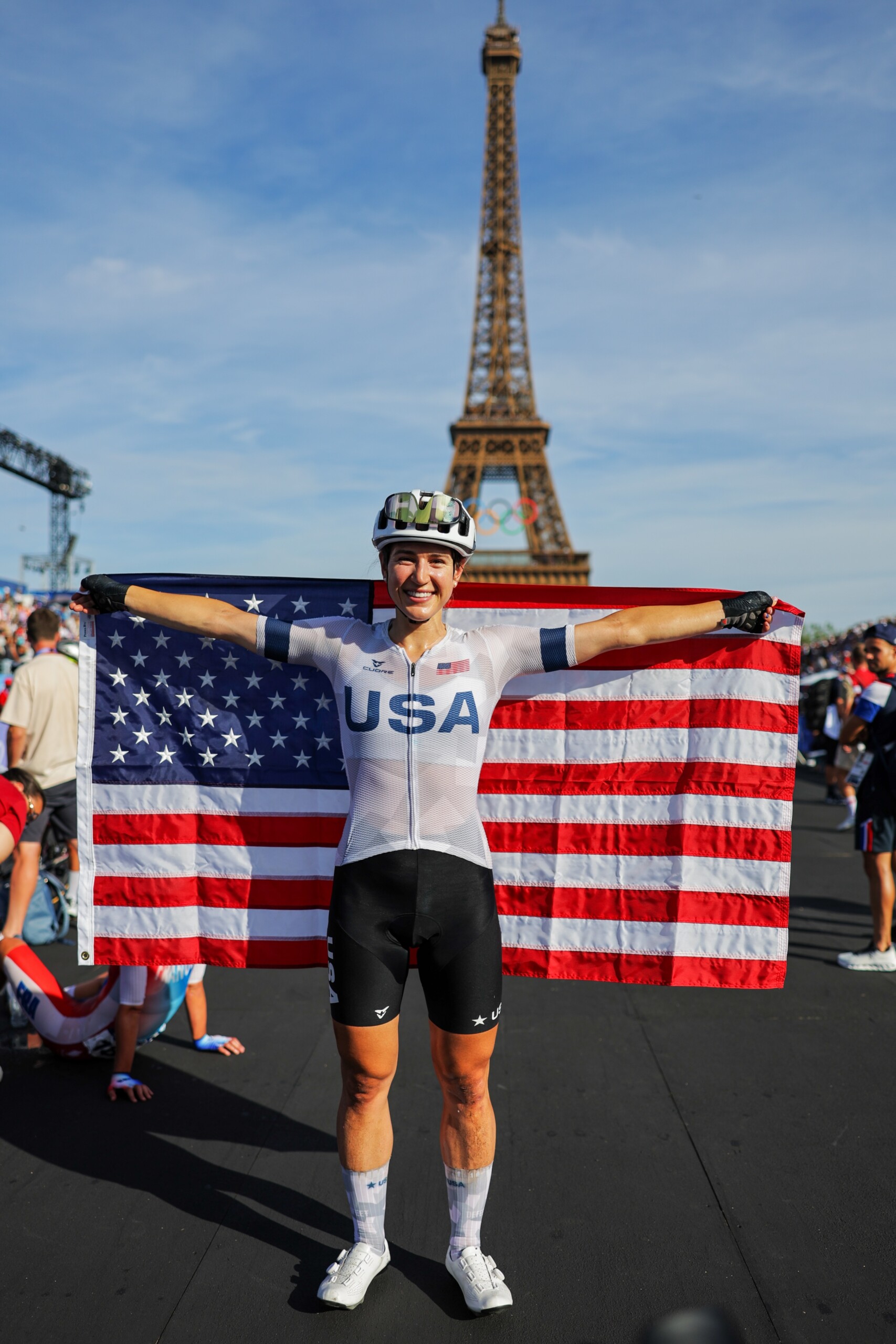
Picture by Alex Whitehead/SWpix.com – 04/08/2024 – Paris 2024 Olympic Games – Cycling Road – Trocadero-Trocadero (158.0km) – Paris, France – Women’s Road Race – Kristen Faulkner (USA) celebrates winning the Women’s Road Race to become Olympic Champion in front of The Eiffel Tower
Q1. When was the last time a man from the United States won an Olympic cycling gold medal?
Q2. From the debut of Women’s cycling competition in the 1984 LA Olympics, American women have won FIVE gold medals. Can you name all of these riders and their events? [Editor’sNote: this does not include medals earned at the 2024 Olympics in Paris]
Q3. Who is the most decorated Olympic cyclist of all time?
Q4. Which nation has topped the cycling medal count frequently in the modern Olympics?
Q5. When is the last time a rider won a medal on the track and on the road in the same Olympic Games? [Editor’sNote: this does not include medals earned at the 2024 Olympics in Paris]
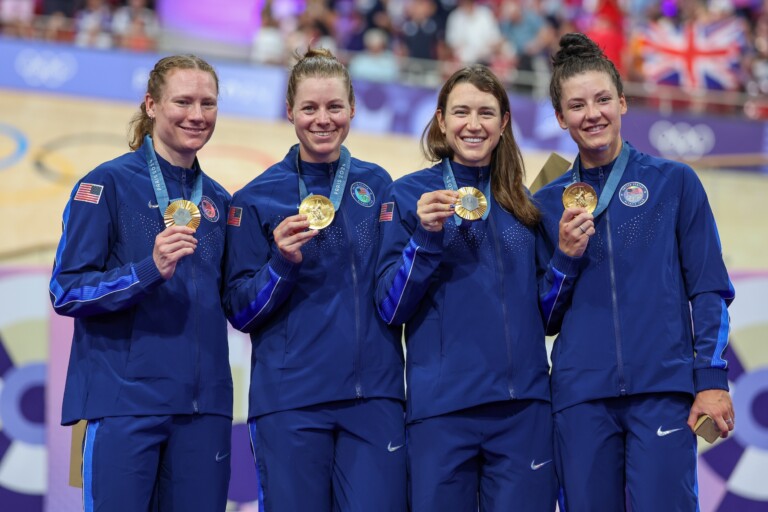
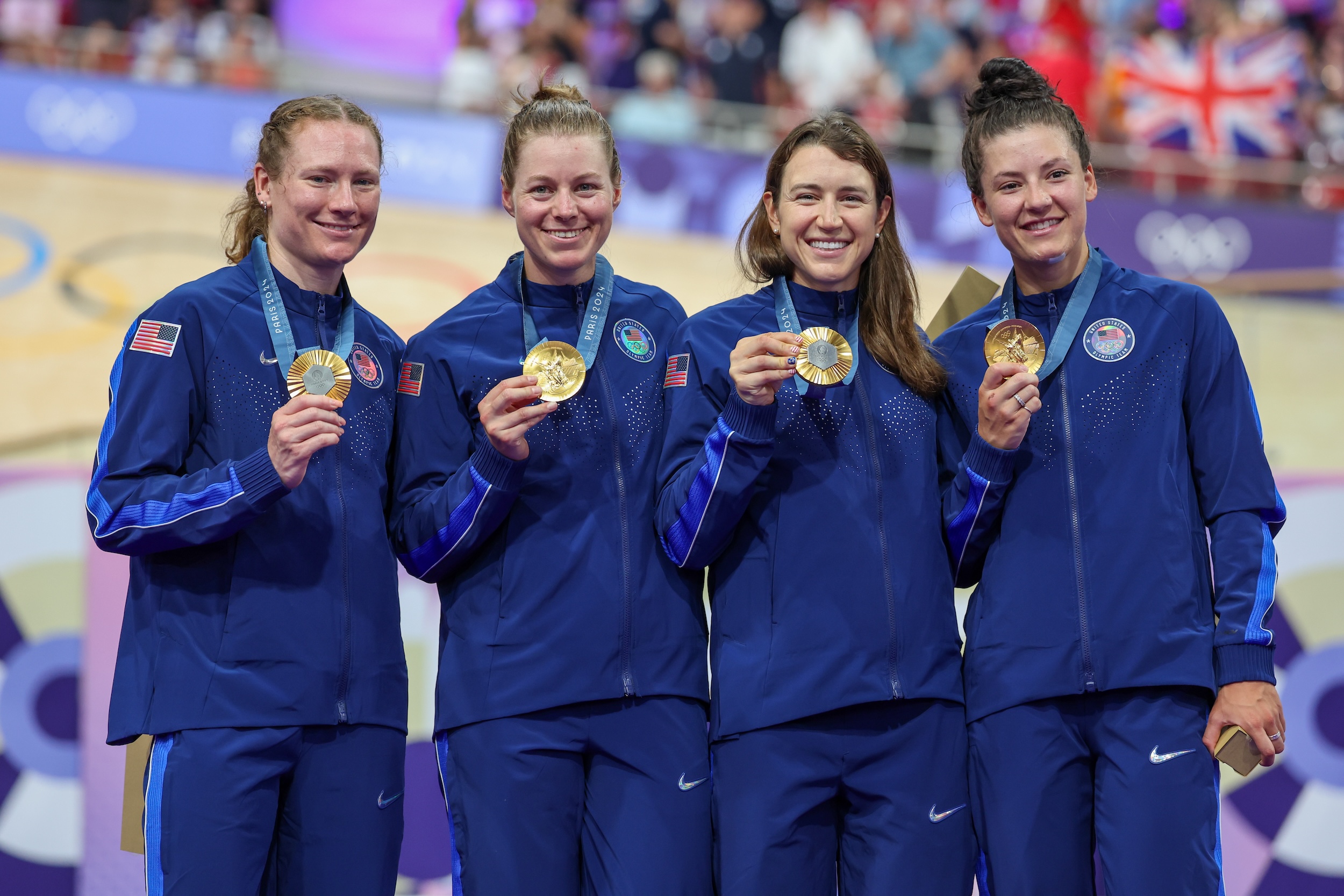
Picture by Alex Whitehead/SWpix.com – 07/08/2024 – Paris 2024 Olympic Games – Track Cycling – National Velodrome, Saint-Quentin-en-Yvelines, France – Women’s Team Pursuit – Jennifer Valente, Lily Williams, Chloe Dygert, Kristen Faulkner (USA) on the podium receiving the Olympic Gold Medal after winning the Women’s Team Pursuit to become Olympic Champions
By Charles Pekow — New mountain biking opportunities will be limited under the finalized plan for the future of the Grand Mesa, Uncompahgre, and Gunnison National Forests in southwestern Colorado. The U.S. Forest Service (USFS) has completed a land management plan and decided against a proposed mountain bike/e-bike trail connecting Crested Butte with Carbondale, citing potential harm to wilderness management. Additionally, the plan may restrict mountain biking in the Lamborn area.
Bikepackers in the Grand Mesa Uncompahgre and Gunnison National Forests. Photo courtesy U.S. Forest Service.
Approximately a quarter of the area, or 823,000 acres, will be designated as wilderness, where biking will be restricted. However, the USFS indicates that existing trails in the area can be improved and possibly expanded. New trails are not planned for this region, but there may be opportunities for trail development in other parts of the forests.
Dygert, Faulkner, Valente, and Williams earn Team USA’s fourth consecutive Olympic Team Pursuit medal.
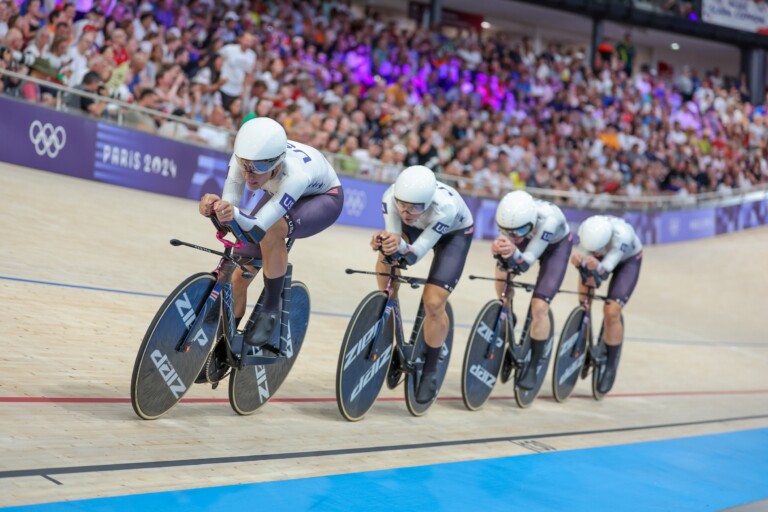
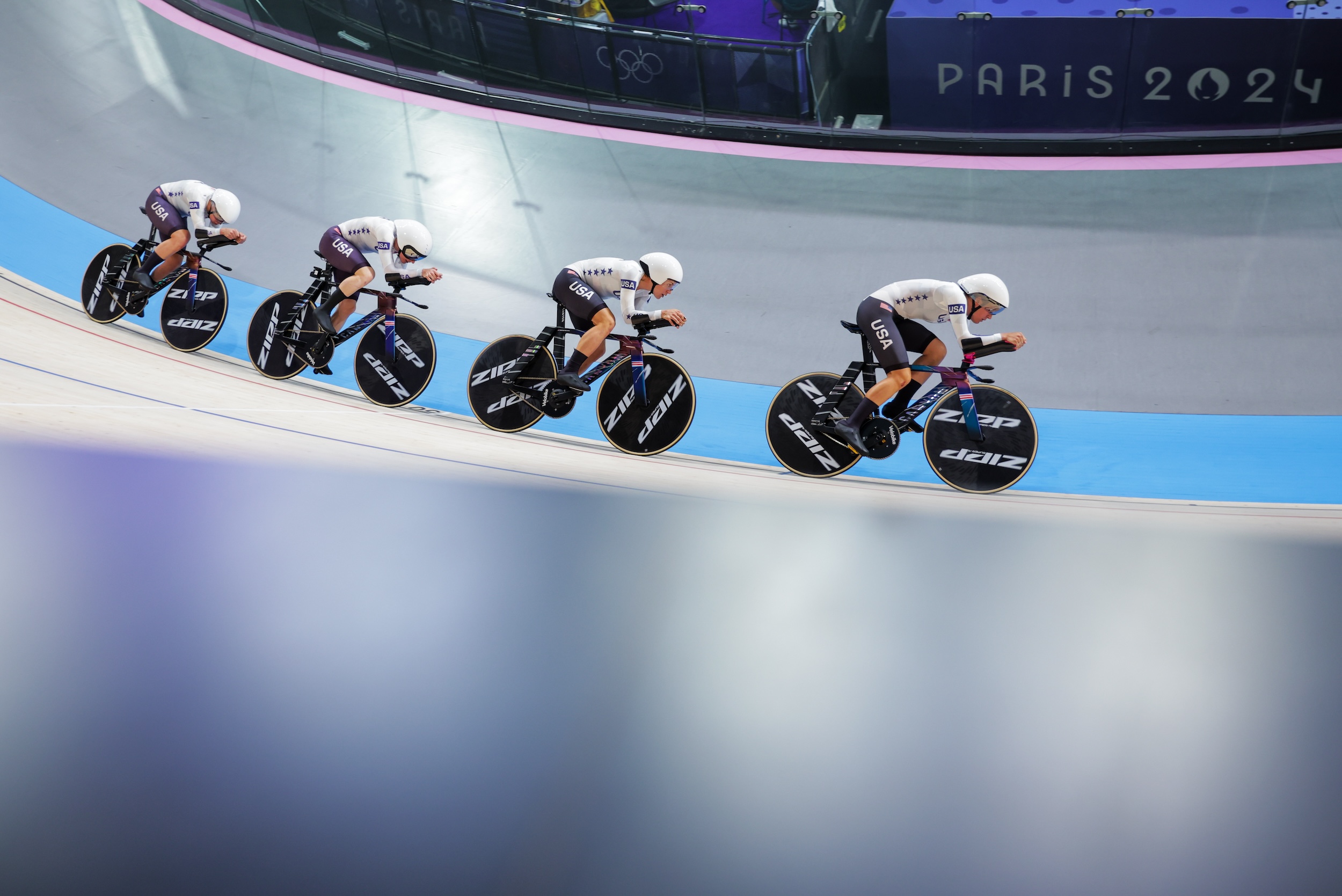
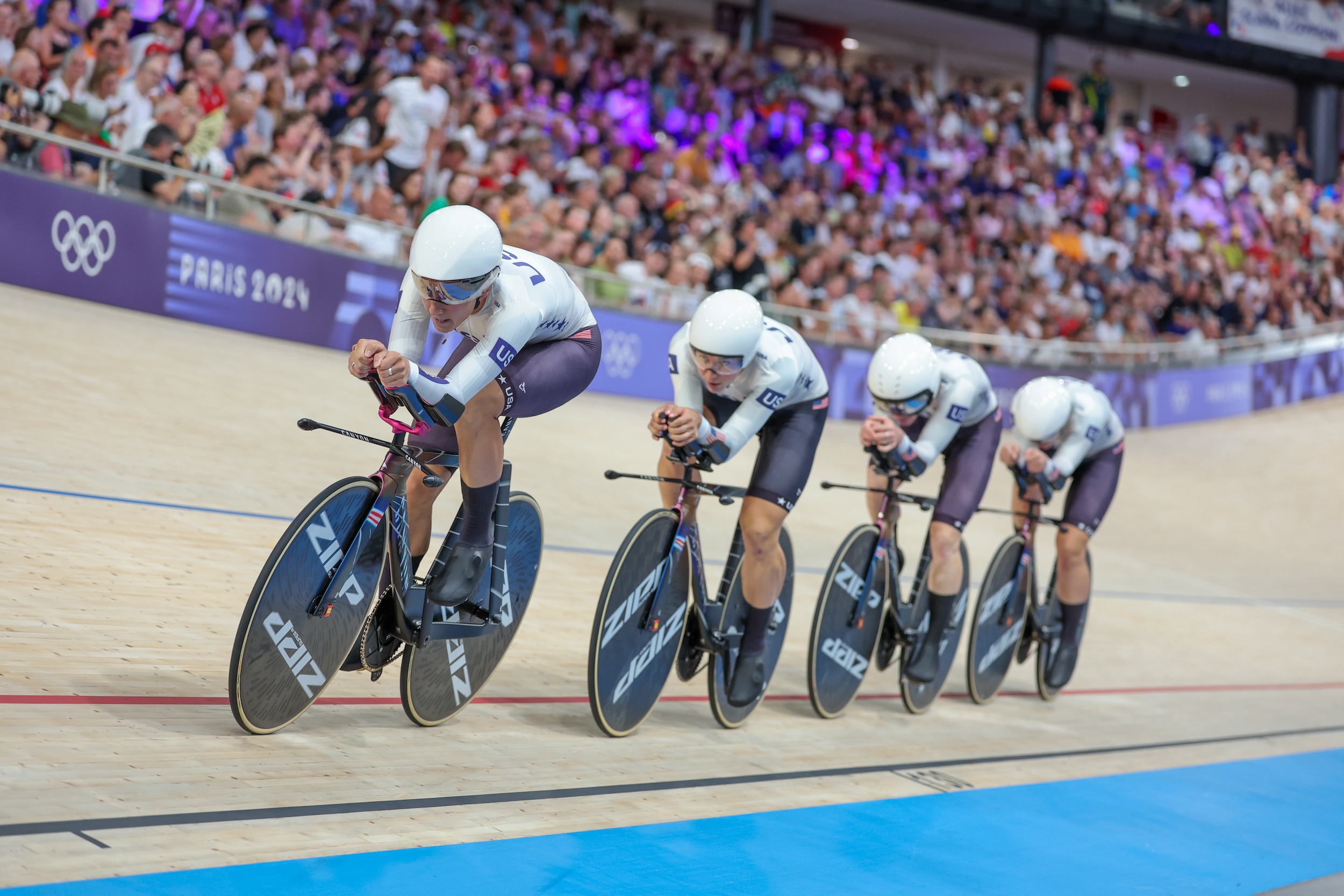
PARIS, France (August 7, 2024) — On day 13 of the Paris 2024 Olympic Games, Team USA kicked off their second day of racing at the Saint-Quentin-en-Yvelines National Velodrome. The team, consisting of Jennifer Valente (San Diego; Virginia’s Blue Ridge TWENTY24), Chloé Dygert (Brownsburg, Ind.; CANYON//SRAM Racing), Lily Williams (Tallahassee, Fla.; Human Powered Health), and Kristen Faulkner (Homer, Alaska; EF Education-Cannondale), lined up for the four-kilometer pursuit in the first round against Great Britain. The United States clocked in at 4:04.629, narrowly edging out Team GB by just 0.29 seconds. Advancing to the gold medal round, Team USA faced New Zealand. With an impressive qualifying time under their belts, Coach Gary Sutton encouraged the team to “believe in themselves.”
Picture by Ed Sykes/SWpix.com – 06/08/2024 – Paris 2024 Olympic Games – Track Cycling – National Velodrome, Saint-Quentin-en-Yvelines, France – Women’s Team Pursuit Qualifying – Jennifer Valente, Lily Williams, Chloe Dygert, Kristen Faulkner (USA)
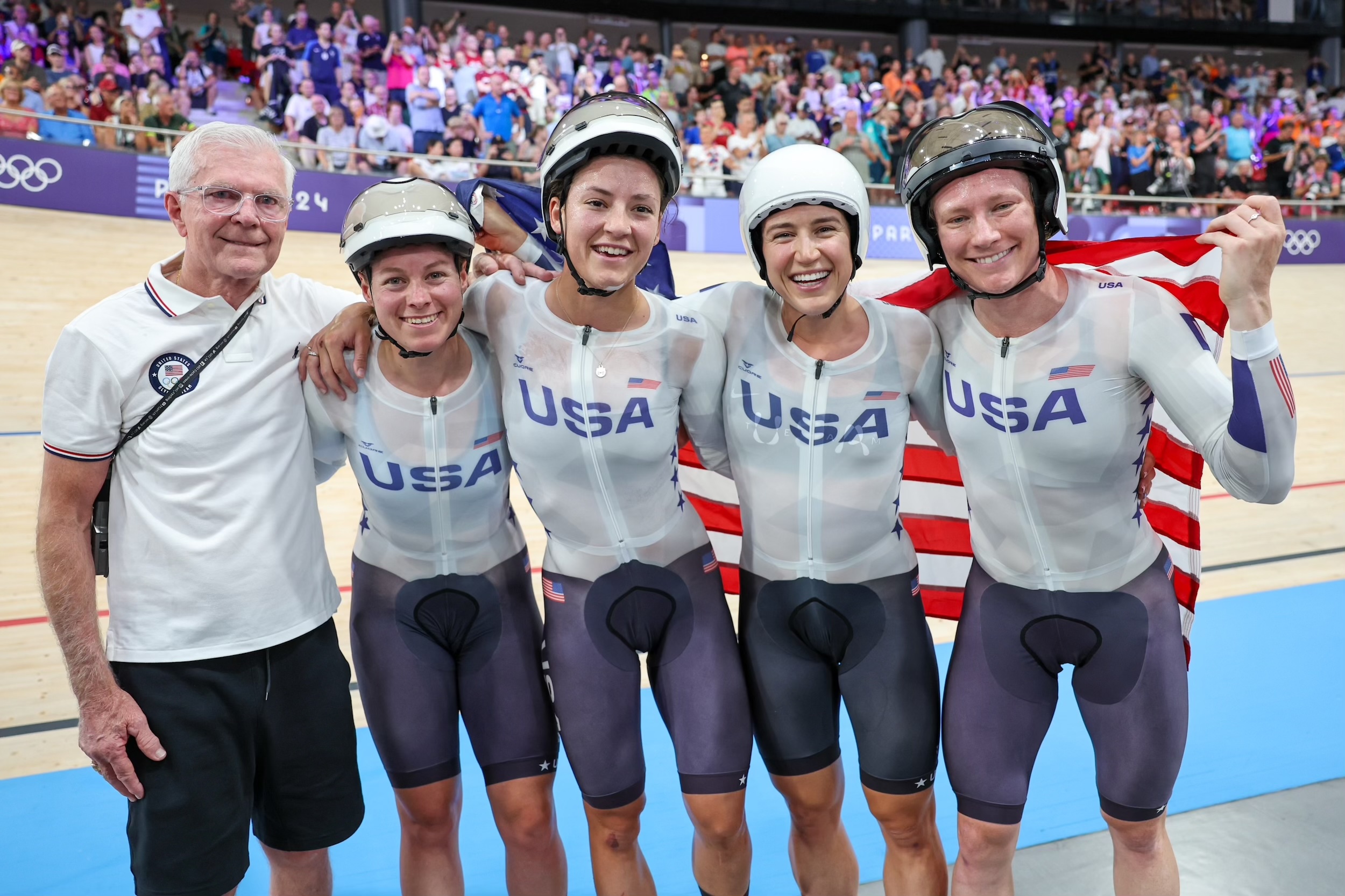
In an exciting gold medal round, Team USA dominated from the start of the race securing the gold medal. They clocked a time of 4:04.306, finishing just a fraction of a second off the World Record time.
Picture by Alex Whitehead/SWpix.com – 07/08/2024 – Paris 2024 Olympic Games – Track Cycling – National Velodrome, Saint-Quentin-en-Yvelines, France – Women’s Team Pursuit Final For Gold – Jennifer Valente, Lily Williams, Chloe Dygert, Kristen Faulkner (USA)
This victory marked Faulkner’s second gold of the week. Reflecting on her rapid progress in track cycling, Faulkner credited her success to the exceptional coaching and support from her teammates, stating, “I think it says a lot about the coaches we have and the team we have around us. I have learned a lot in the past year from my teammates. I don’t think my improvement came from me; it came from the people around me. I hope there’s more to come from this team as well.”
Picture by Alex Whitehead/SWpix.com – 07/08/2024 – Paris 2024 Olympic Games – Track Cycling – National Velodrome, Saint-Quentin-en-Yvelines, France – Women’s Team Pursuit Final For Gold – Jennifer Valente, Lily Williams, Chloe Dygert, Kristen Faulkner (USA) celebrates winning the Women’s Team Pursuit Final to become Olympic Champion
Coach Sutton expressed his pride, saying, “I was confident coming in here tonight, especially after qualifying. They all played their role. I’ve been around long enough to know that you’re only as good as your athletes. I’m very proud of each one of them.”
The Women’s Team Pursuit squad has had a storied history of dominance over the past decade. This marks their fourth consecutive Olympic Team Pursuit medal, having medaled in every Women’s Team Pursuit event since the event’s debut in 2012.
Picture by Alex Whitehead/SWpix.com – 07/08/2024 – Paris 2024 Olympic Games – Track Cycling – National Velodrome, Saint-Quentin-en-Yvelines, France – Women’s Team Pursuit – Jennifer Valente, Lily Williams, Chloe Dygert, Kristen Faulkner (USA) on the podium receiving the Olympic Gold Medal after winning the Women’s Team Pursuit to become Olympic Champions
When asked about the program’s success, Dygert acknowledged the significant efforts of USA Cycling, noting, “I think USA Cycling has put a lot of work and time into this event specifically. When I came into the program in 2016, this was the medal that USA Cycling had wanted more than any other. This has been the focus from the beginning of my career.” This is the second medal Dygert has earned during the Games, after earning bronze in the Women’s Time Trial.
Results:
1. United States of America – 4:04.306
2. New Zealand – 4:04.927
3. Great Britain – 4:06.382
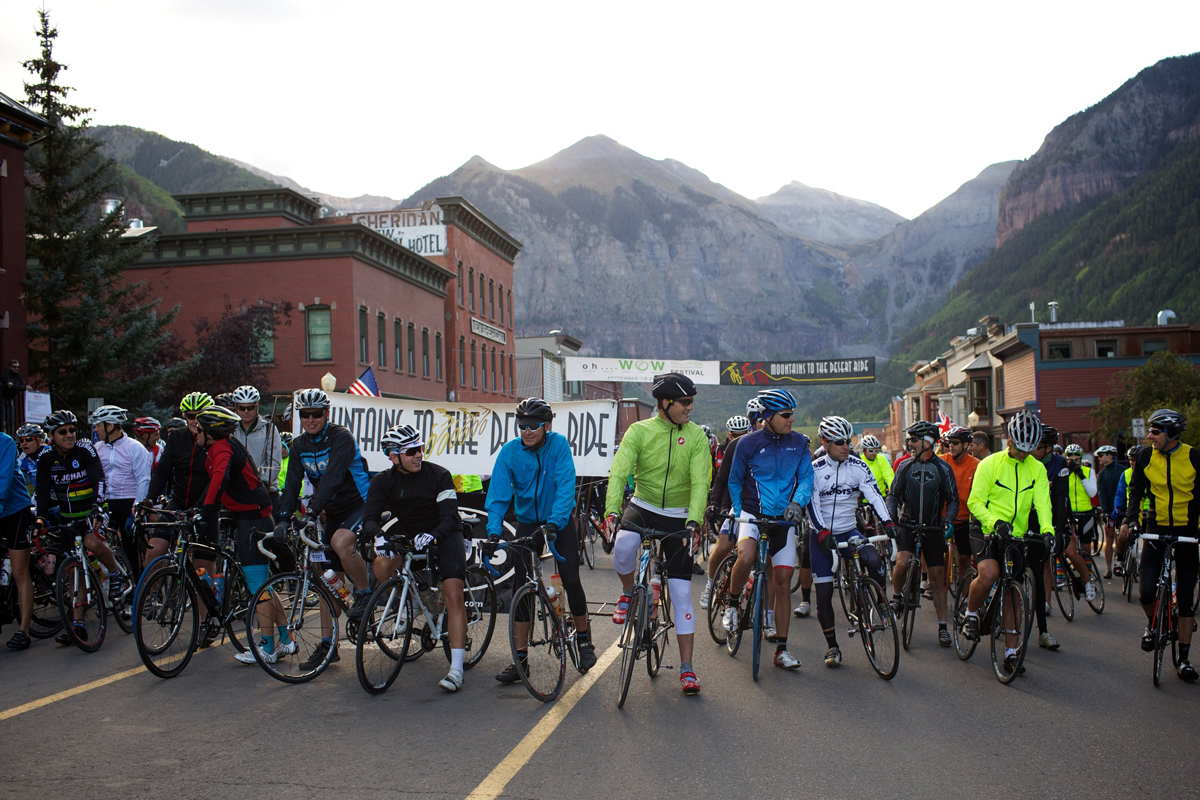
By Elizabeth Edwards — On Saturday, September 21, 2024, the 21st Annual Mountains to the Desert Classic Bike Ride (M2D) will occur in San Miguel County, Colorado to benefit the Just for Kids Foundation (JFK).
It will start in the mesa community of Norwood (at 8:30 a.m.), the ski town of Telluride (at 8:00 a.m.), and the river settlement of Ridgway (at 8:30 a.m.). Racers can choose their ride distance (73 or 103 or 110 miles). JFK aspires to attract a minimum of 110 cyclists for the new Ridgway course option during the 2024 M2D event.
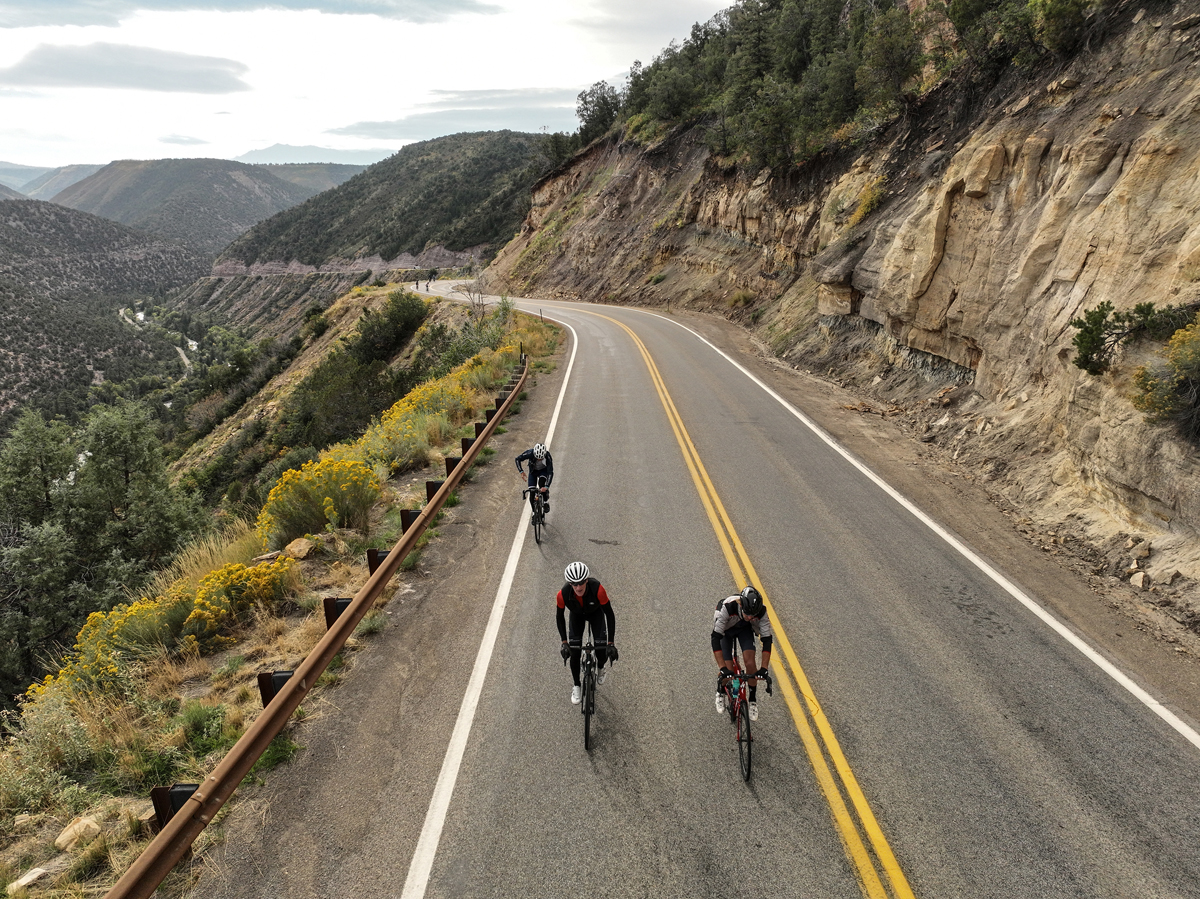
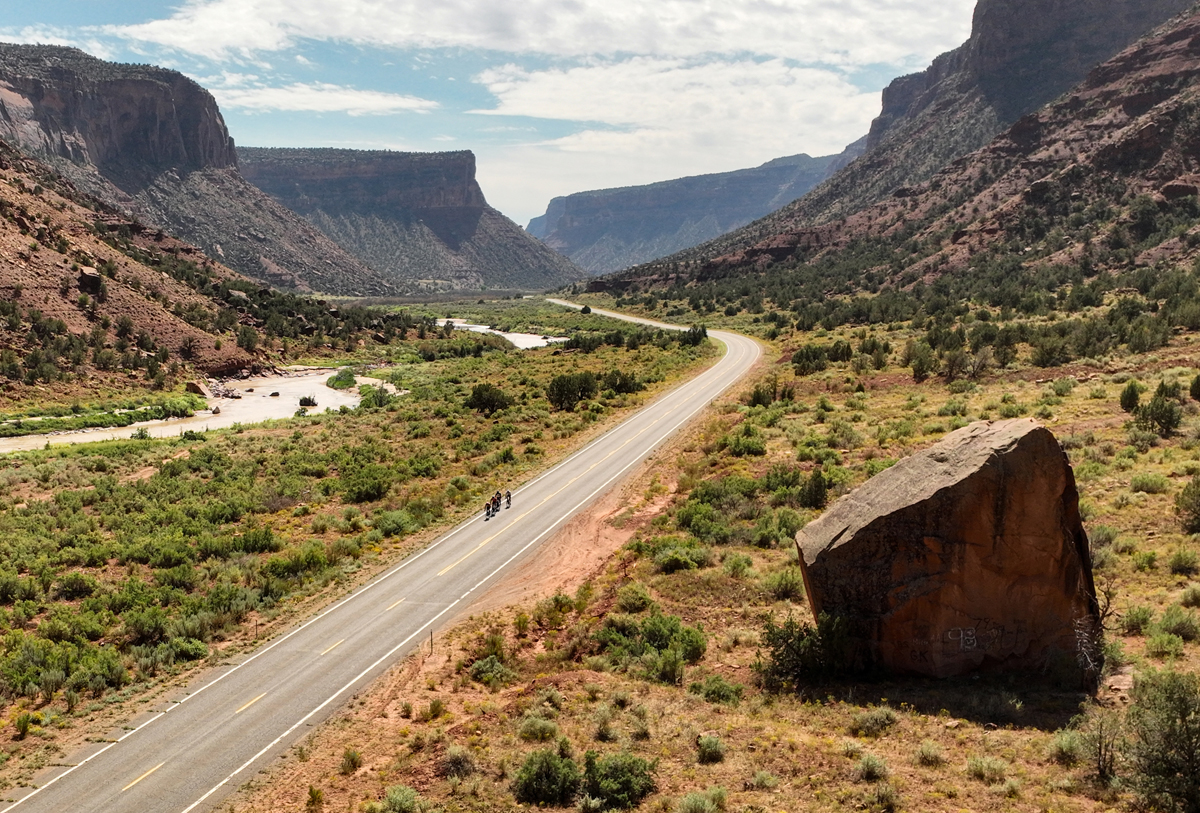
All three course options will pass through golden aspens and brilliant red canyon walls en route to their destination at the beguiling desert landscape of Gateway Canyons Resort.
Long-time M2D Cyclist and JFK Board Member, Scott Benge shares that his favorite part of the courses is “from Uravan to Gateway along the Dolores River!” He reflects that “it is one of the most scenic and ripping fast century rides you can possibly do!”
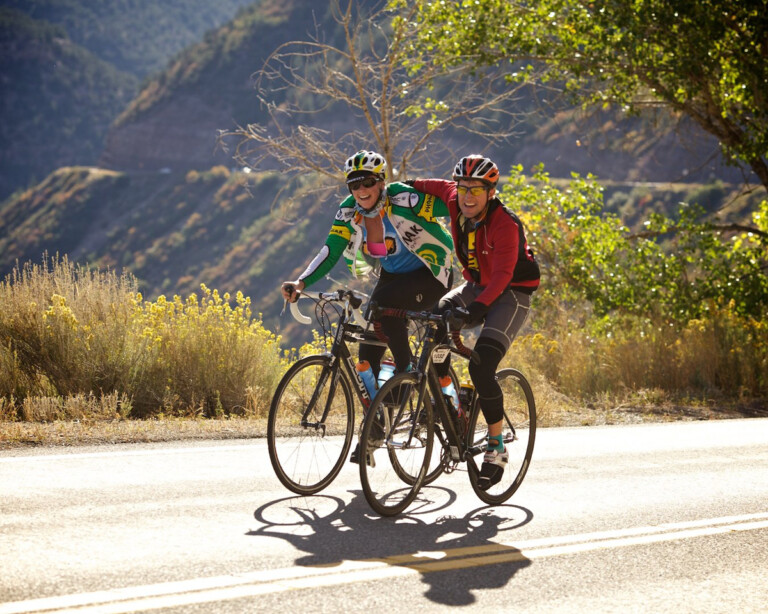
Riders during the 2023 Mountains to the Desert Classic. Photo by Alex Ferrari, courtesy M2D
There will be a party for all bikers in Gateway- with awards, food, beverages, music, a prize drawing, and an optional shuttle back to the starting points of the race. The pricing of the race is dependent on age and time of enrollment; one can register at the website linked below.
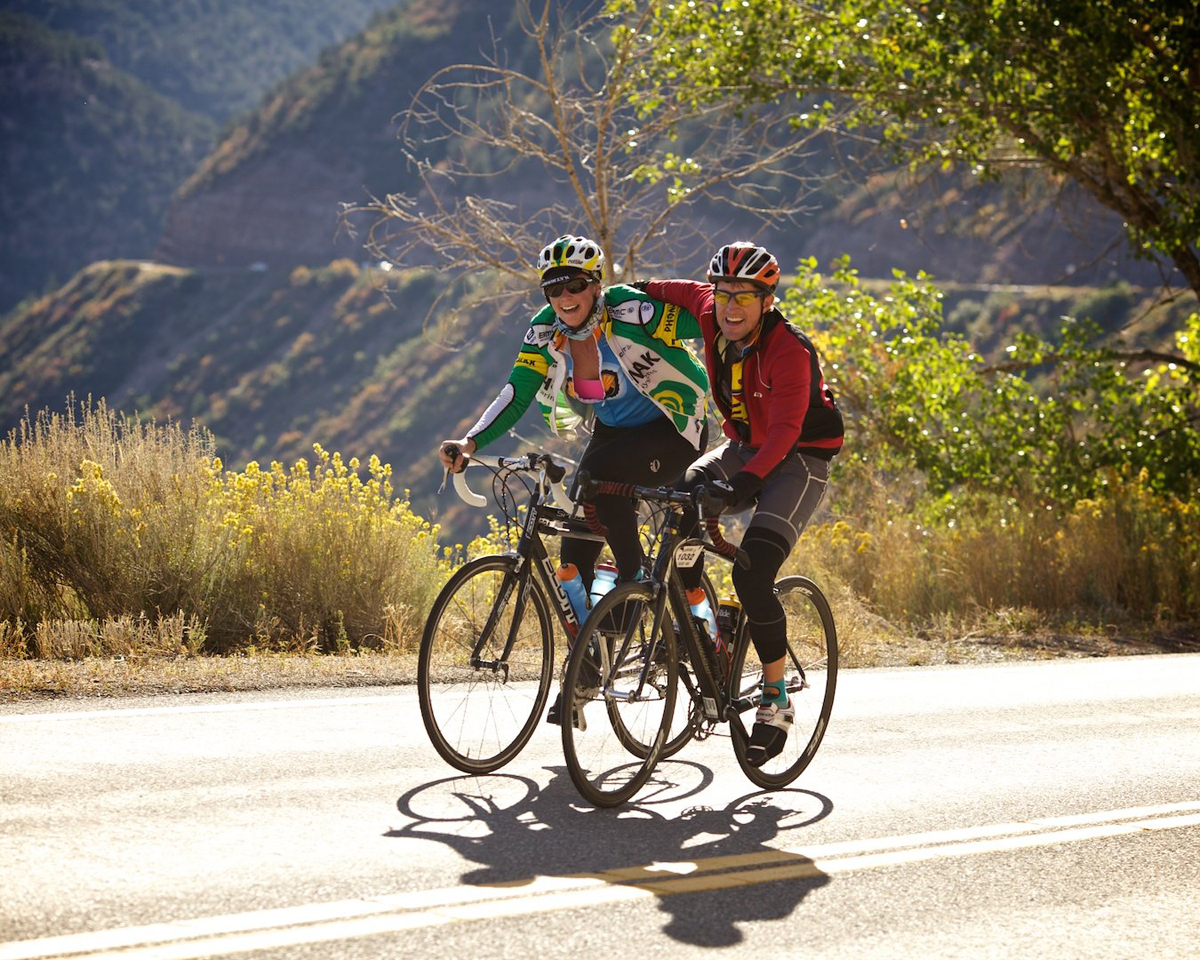
Riders during the 2023 Mountains to the Desert Classic. Photo by Alex Ferrari, courtesy M2D
The JFK is a 501(c)3 non-profit organization, which financially aids San Miguel County youth agencies. It was founded by Telluride benefactor, Bill Carstens, in 2000. It is currently sustained by his daughter, Cheryl Carstens Miller and his endowment, the Carstens Family Fund at the Denver Foundation. In 2023, 42 distinct organizations were JFK grant recipients.
Riders during the 2023 Mountains to the Desert Classic. Photo by Alex Ferrari, courtesy M2D
Erin Ries, Executive Director and Co-Founder of Rocky Mountain Arts used 2023 JFK funds to create sculpture building experiences for local children in concert with their guardians.
Nathan Schroepfer, a leading instructor for The TelluRiders Mountain Bike School, initially became involved with the M2D fundraiser through his role as a point person for the race’s shuttle service, but recently received a grant from JFK, which he aspires to use for scholarships for children’s bicycle programming. He shares, “ I feel as a mountain bike based company it make[s] our association with JFK that much more important to us, knowing we share a passion for cycling and the mental, emotional and physical benefits that come with this great lifelong sport. We hope to be great stewards of the foundation and the sport of mountain biking all while honoring this special place we get to call home.”
Riders during the 2023 Mountains to the Desert Classic. Photo by Alex Ferrari, courtesy M2D
JFK’s positive effect on San Miguel County, in its 24-year tenure, has already been far-reaching. Hopefully, this year’s ride will further stoke the community’s enthusiasm for JFK. If you are not an avid road biker, then there are many other ways that you can support JFK- through sponsoring riders, volunteering for M2D, and donating money to the organization.
Donate here for the college fund and donate here for supporting grants for local organizations. Become a sponsor here.
Event info:
September 21 — Mountains to the Desert Classic|, Telluride, CO, Benefits Just For Kids Foundation. 3 routes and starting points to choose from: Telluride to Gateway: 103 Miles; Norwood to Gateway: 73 Miles; Ridgway to Gateway: 110 Miles (new for 2024!), BBQ party too. Finishes at Gateway Canyon Resort, Evan Tueller, 949-412-4068, [email protected], http://m2dclassic.com, http://justforkidsfoundation.org
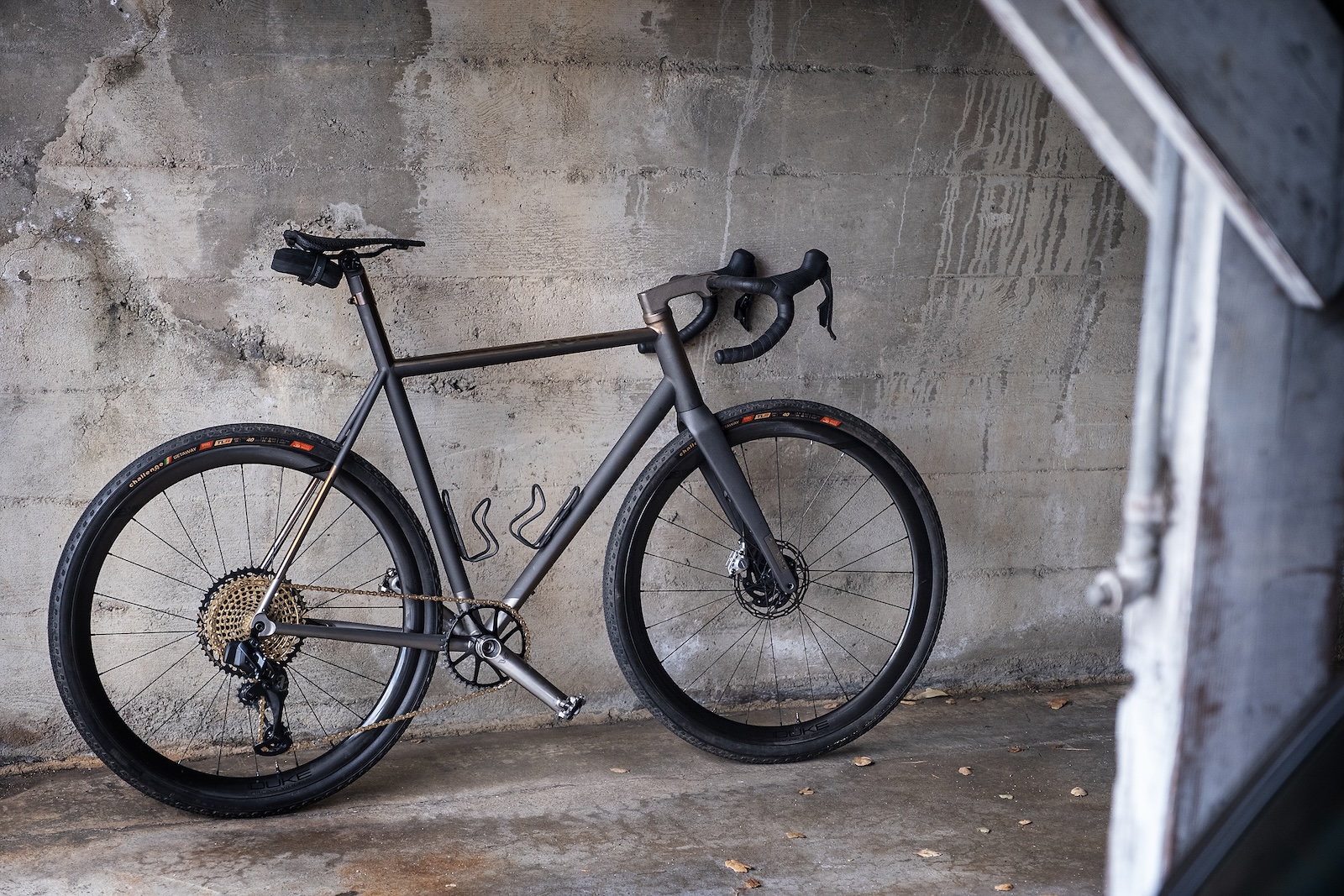
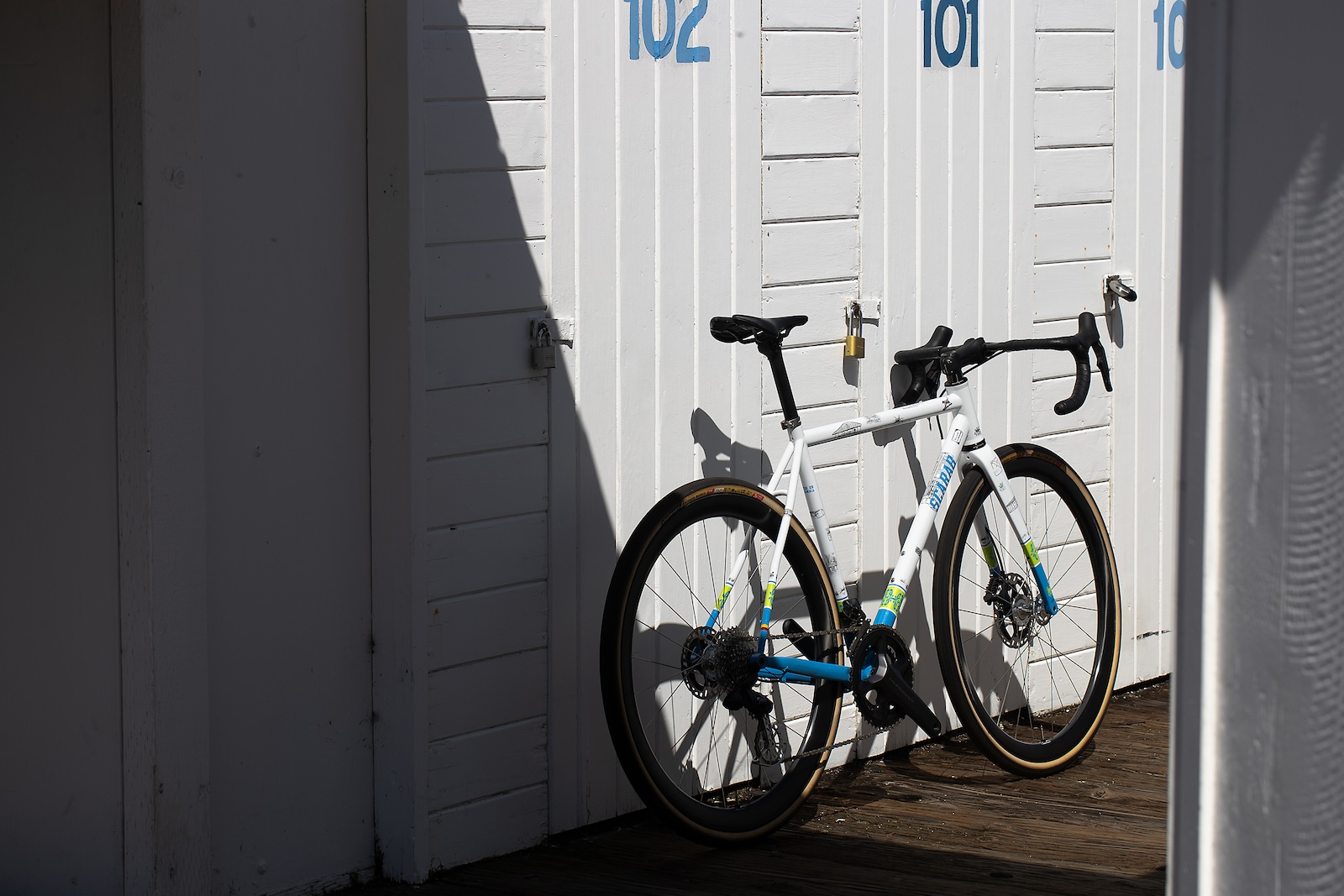
A celebration of cycling’s best builders and makers from four continents.
SAUSALITO, California (August 3, 2024) — Above Category, the renowned custom bike shop located in the cycling Mecca of Marin County, announced the ‘AC Invitational’, a street-fair-meets-MOMA celebration of cycling’s best builders and makers from four continents, taking place on August 31st from 11 a.m. to 5 p.m.
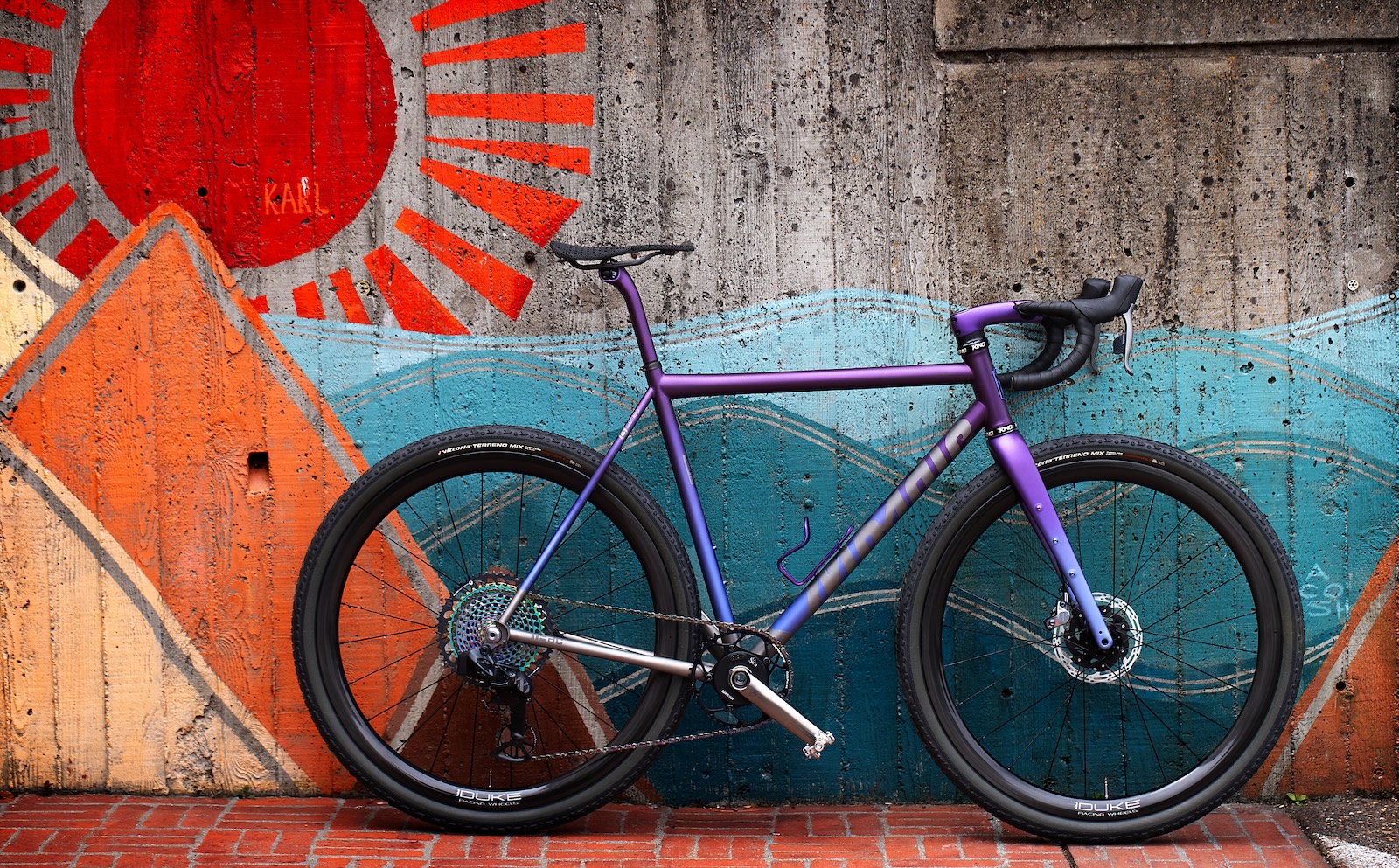
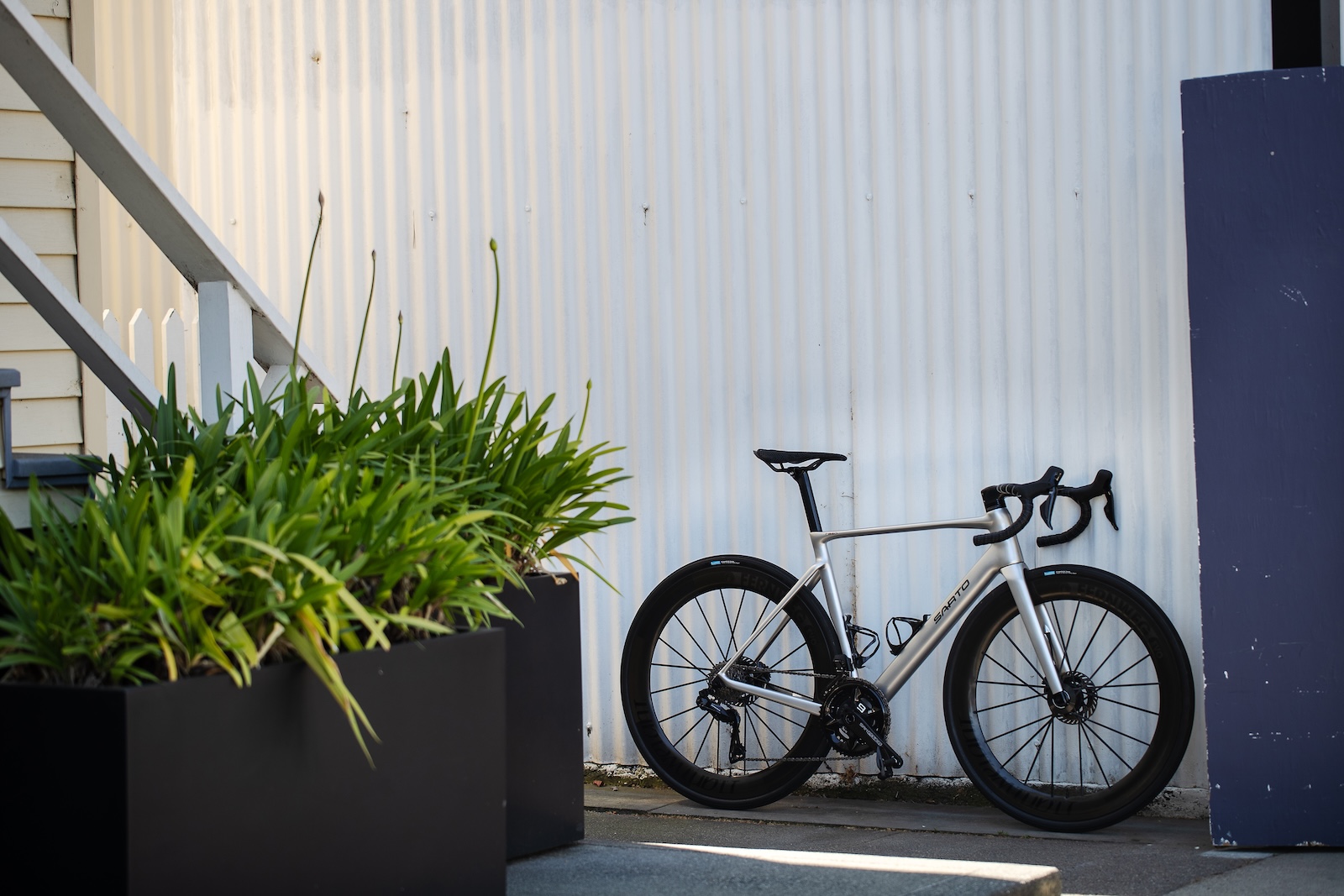
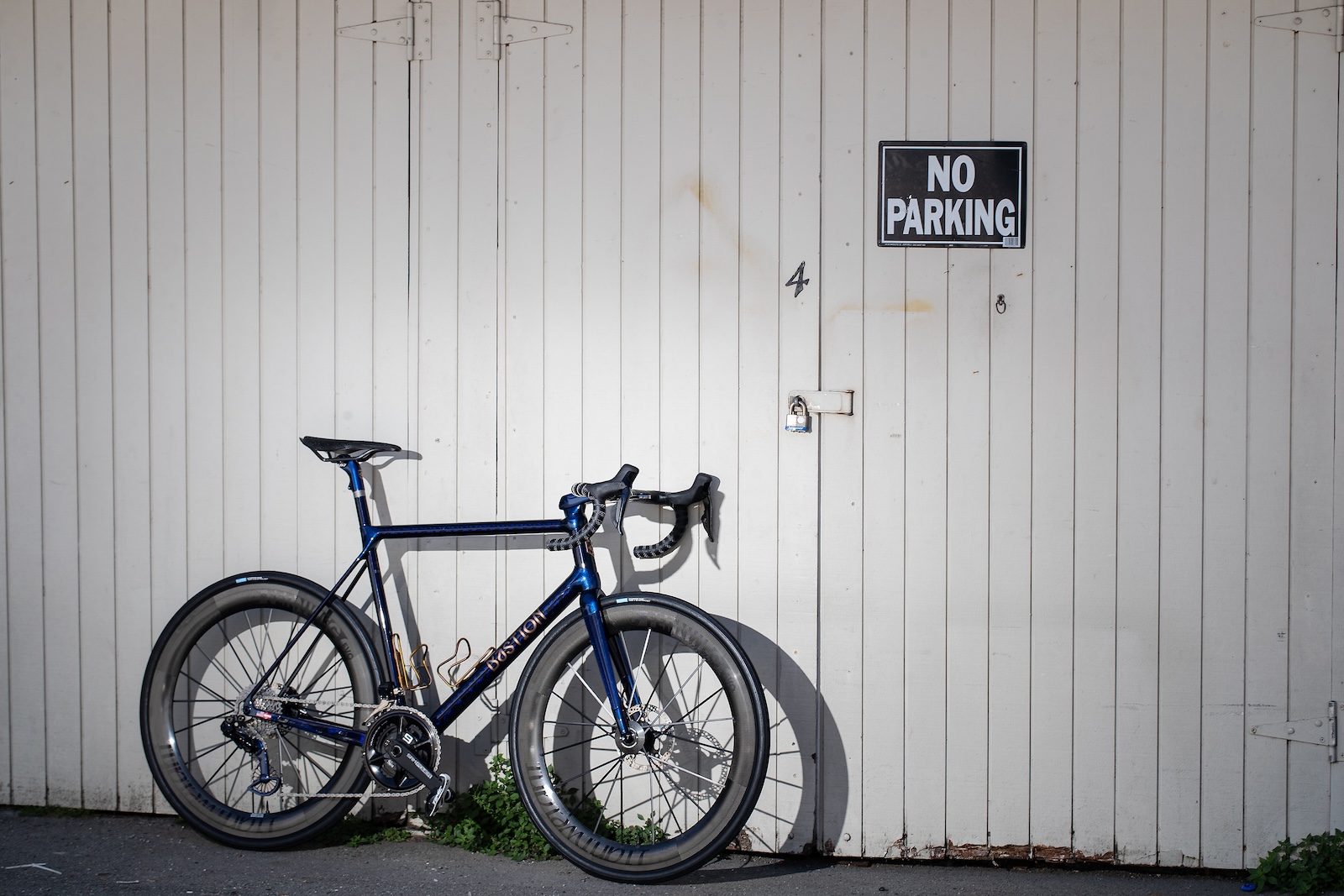
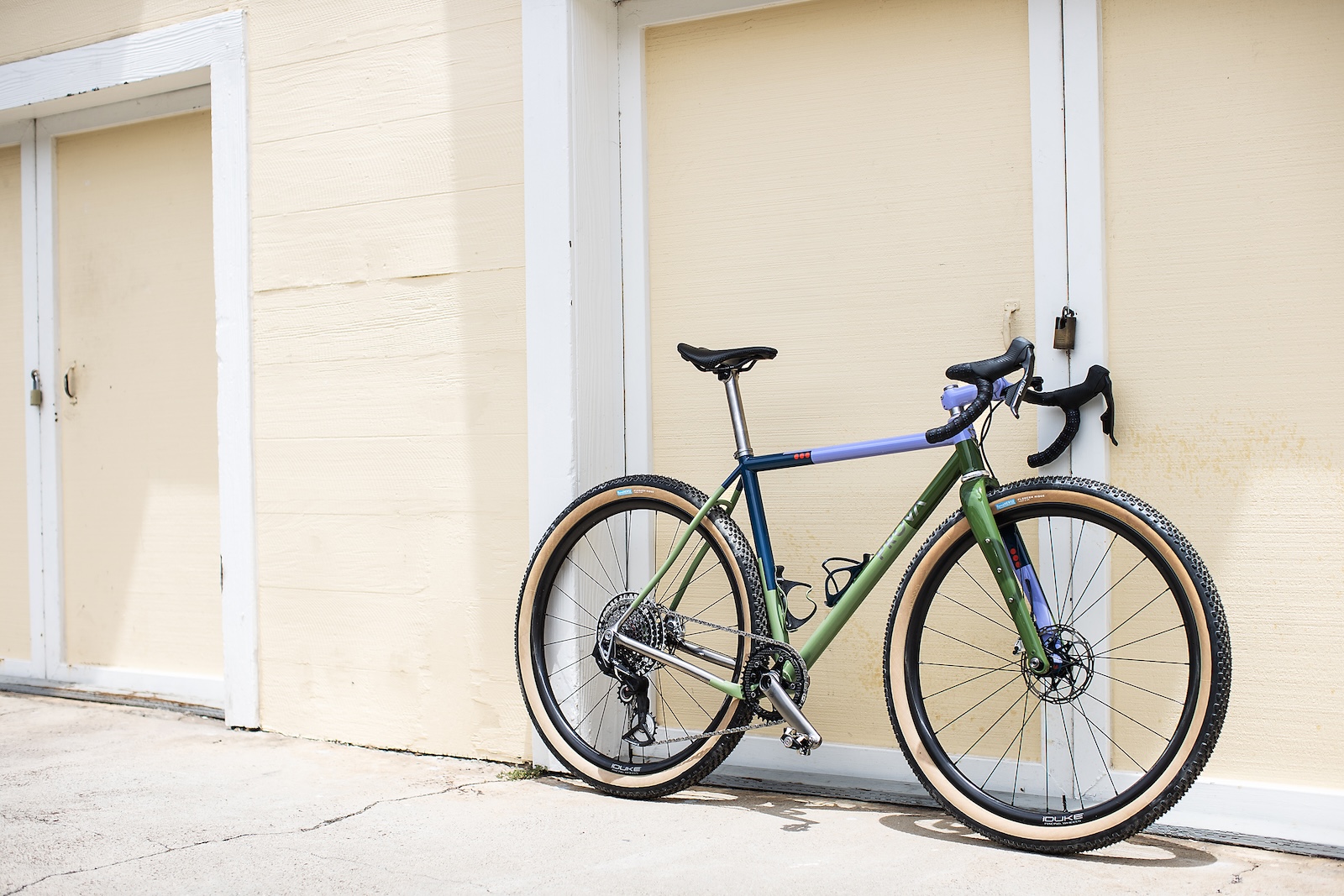
Set amidst the seaside splendor of Sausalito, a stone’s throw from the Golden Gate Bridge in a closed-road setting in and around the AC studio, the AC Invitational is a once-in-a-lifetime opportunity to meet and chat with the artisan-engineers behind brands such as Sarto, Baum, Prova, Bastion, Pinarello, Mosaic, Scarab, English Cycles, No.22, Partington, Lightweight, Enve, Open and more.
Speaking about the event, AC’s co-founder Chad Nordwall said: “The AC Invitational has been a dream of ours for some time. We have some of the world’s finest riding on our doorstep and a unique, global collection of friends who build some of the most beautiful bikes in the world. How does it get any better than bringing the two together? If you love handmade bikes and the ethos and people behind them, then the AC Invitational is your chance to chat with the makers themselves and admire their newest and best creations in a welcoming, closed-road setting. And it’s even free to attend.”
During the show, visitors can take advantage of special event-only offers and a raffle with the chance to win a custom-painted Open.
To many people around the world bicycles are a crucial means of transport, especially for carrying loads in rural areas. While their benefits are huge and many organisations are working on making access to bicycles a reality, a range of barriers still prevent them from being more widely available in low-income communities – not least of these being their cost. A team of researchers has produced a new report called Access to Affordable Bicycles in Africa. We asked team leader Daniel Frey about their study and its findings.
What did you set out to study?
Low-income households in low-income countries face transportation service gaps, especially in rural areas. Public transport does not always exist and motorised transport is often unaffordable, forcing people to walk long distances to reach schools, markets, healthcare and other basic services. Bicycles have the potential to fill that gap as a more affordable means of transport.
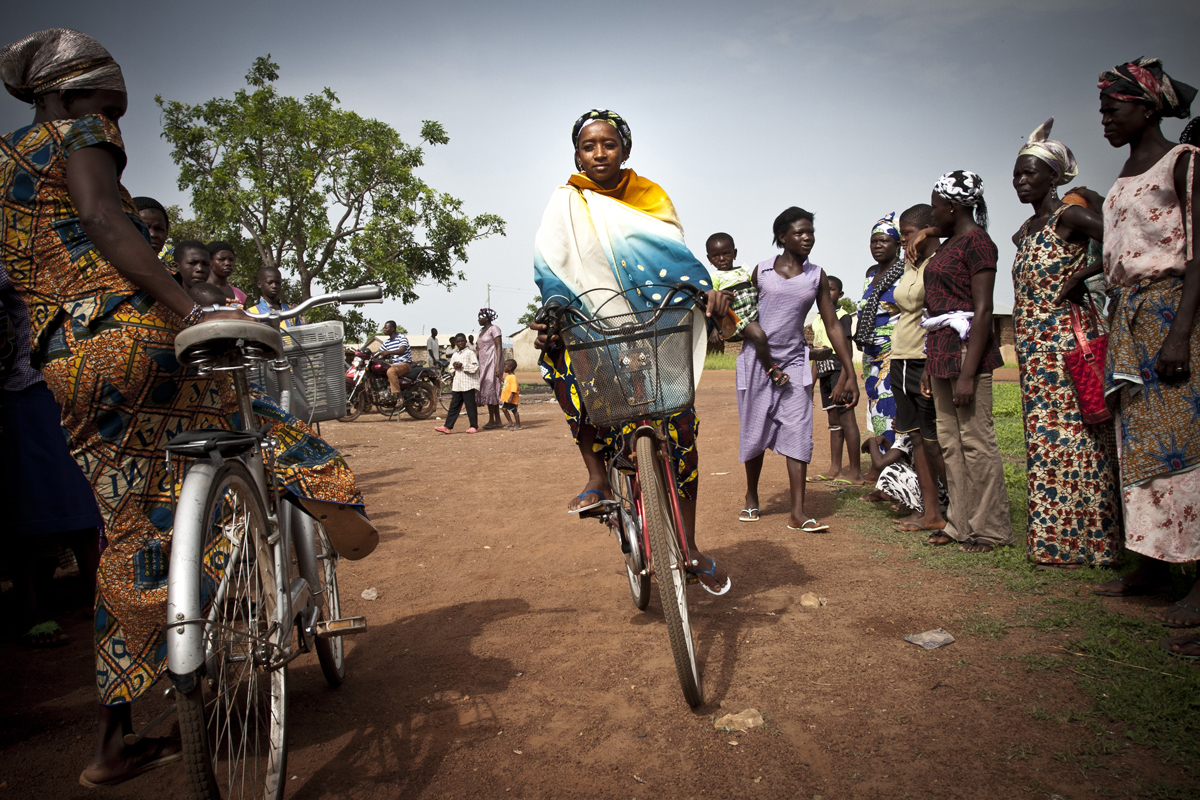
Recipients of bicycles in Ghana from the Village Bicycle Project. Photo Jason Finch, Village Bicycle Project
Studies have shown that bicycle use can result in health, economic and social benefits such as improved gender dynamics. For example, women in a household can be more independent if they can afford their own conveyance, so the low cost of bike ownership can be critical to women’s education and employment. But challenges related to bicycle access and adoption persist, calling for continued research and development.
Our study, funded by USAID, sought to understand the background, current state and opportunities for bicycles to benefit underserved communities in sub-Saharan Africa.
How did you go about the research?
The choice of Ghana and Malawi for our study was based on a set of criteria including, but not limited to, bicycle ownership rates, geography, and capacity of local research partners. It is fair to say that the decision was at least partly determined by the fact that the Village Bicycle Project was already active in Ghana. We relied strongly on the efforts of partners at the University of Malawi and the University of Cape Coast in Ghana. Ghana and Malawi provide some insight into differences in a number of dimensions – between west and east Africa, between nations with a coastline and landlocked nations, between relatively flat terrain and hilly areas.
Two overarching research questions guided the study:
What factors enable or inhibit adoption of bicycles among low-income and other disadvantaged or underserved populations?
To what extent do existing bicycle solutions perform as expected and meet users’ needs?
The study consisted of three phases over a two-year period from 2020 to 2022. An initial scoping phase included a literature review and key informant interviews. Phase one consisted of 182 interviews with bicycle users, non-users and other stakeholders – 95 in Ghana and 87 in Malawi.
Phase two included data collection through surveys, observation and in-depth interviews with bicycle-owning households. Data were also collected through sensors attached to bicycles. A sensor set and data loggers were developed by an MIT team. As described in his PhD thesis, MIT scholar Amit Gandhi helped to develop a compact, battery-powered suite of sensors that electronically measured distance and time travelled. Wheel rotations and trip durations were measured with a precision real-time clock.
What did you find?
These are the key findings:
Household dynamics, especially gender dynamics, influence who gets to own and use the bicycle – which is, in most cases, male heads of households.
Over the course of a day, a single bicycle is often used by different members of the family for different purposes.
Sensor data revealed that frequency, duration and distance of bicycle trips varied widely across the sample groups. Longer and more frequent trips were taken by rural and older riders with load-carrying bicycles.
The transport needs of a household can’t always be met by one bicycle. This leaves other members of the family, especially women, with no option but to walk long distances.
Prohibitive cost, frequent parts failure, and a desire to own a motorised vehicle were often cited as the top barriers to bicycle use. The aspiration to own a motorcycle was an unexpected challenge. It was surprising to us how often a hope for something more expensive could inhibit a person from investing in a more practical, affordable solution.
Load carrying was reported to be the most desired bicycle feature. For example, many workers need to bring their own tools to work sites.
A majority of non-users were women who did not know how to ride a bicycle.
The study did not reveal gender-specific bicycle design preferences. This trend might not persist when a community becomes more familiar with bicycle design options. In locations where bicycle use is common, manufacturers often find that configurations that better accommodate skirts are preferred by female bicycle customers with an intent to commute to work or school.
Why does this study matter?
I see this research as a first step in a longer-term effort to improve mobility and equity. Bicycles have, for over a century, provided remarkable advantages over walking – increasing the range and efficiency of travel.
But there is an extremely wide range in level of bicycle adoption by different countries. There must be some barriers particular to specific regions and/or cultures that at least partly account for observed differences.
This study adds to our emerging understanding of the ways that appropriate technologies are developed and adopted, or else how they may fail to be widely used.
If we discover that some places have terrain that causes certain mechanical failures, we can re-design bicycle components to be more resilient. If learning to ride is a barrier, then training programmes may help.
This study revealed that a desire to own a motorised vehicle is a barrier to wider use of bicycles. That might deserve some focused attention. Electric power assisted conveyances (such as e-bikes and scooters) have improved a great deal recently. Nevertheless, electric bikes are currently much more expensive than traditional, human-powered bikes, so this continues to present a challenge.
This study has provided several avenues that appear to me as highly promising for work on engineering paired with social science in the interest of environmentally responsible economic development.
The full team of researchers who produced the report is Dan Frey, Megha Hegde, Maggie Hsu, Gwyn Jones, Kendra Leith, Robyn Richmond, Jonars Spielberg and Dan Sweeney.
Daniel Frey, Professor of Mechanical Engineering, Massachusetts Institute of Technology (MIT)
Disclosure statement
Daniel Frey receives funding from USAID under a collaborative agreement entitled “Strengthening Development Research and Inclusive Innovation in Latin America through the Center for Innovation and Technology Network” agreement number 7200AA21CA00009.
Chloé Dygert battles back from a crash late in the race to earn 15th.
PARIS, France (August 4, 2024) — On day ten of the Paris 2024 Olympic Games, 92 athletes from around the world competed in the 158-kilometer women’s road race. The dynamic duo of Chloé Dygert (Brownsburg, Ind.; CANYON//SRAM Racing) and Kristen Faulkner (Homer, Alaska; EF-Oatly-Cannondale) represented the United States on today’s global stage.
Starting at the Trocadéro, the women’s road race had a total of 1,700 meters of ascent with nine notable climbs. The race was a loop that finished back in Trocadéro after racers completed three additional circuit loops inside Paris. Saturday’s time trial bronze medalist, Dygert, lined up today determined to earn a medal. Her teammate, Faulkner, was also ready to leave it all on the course.
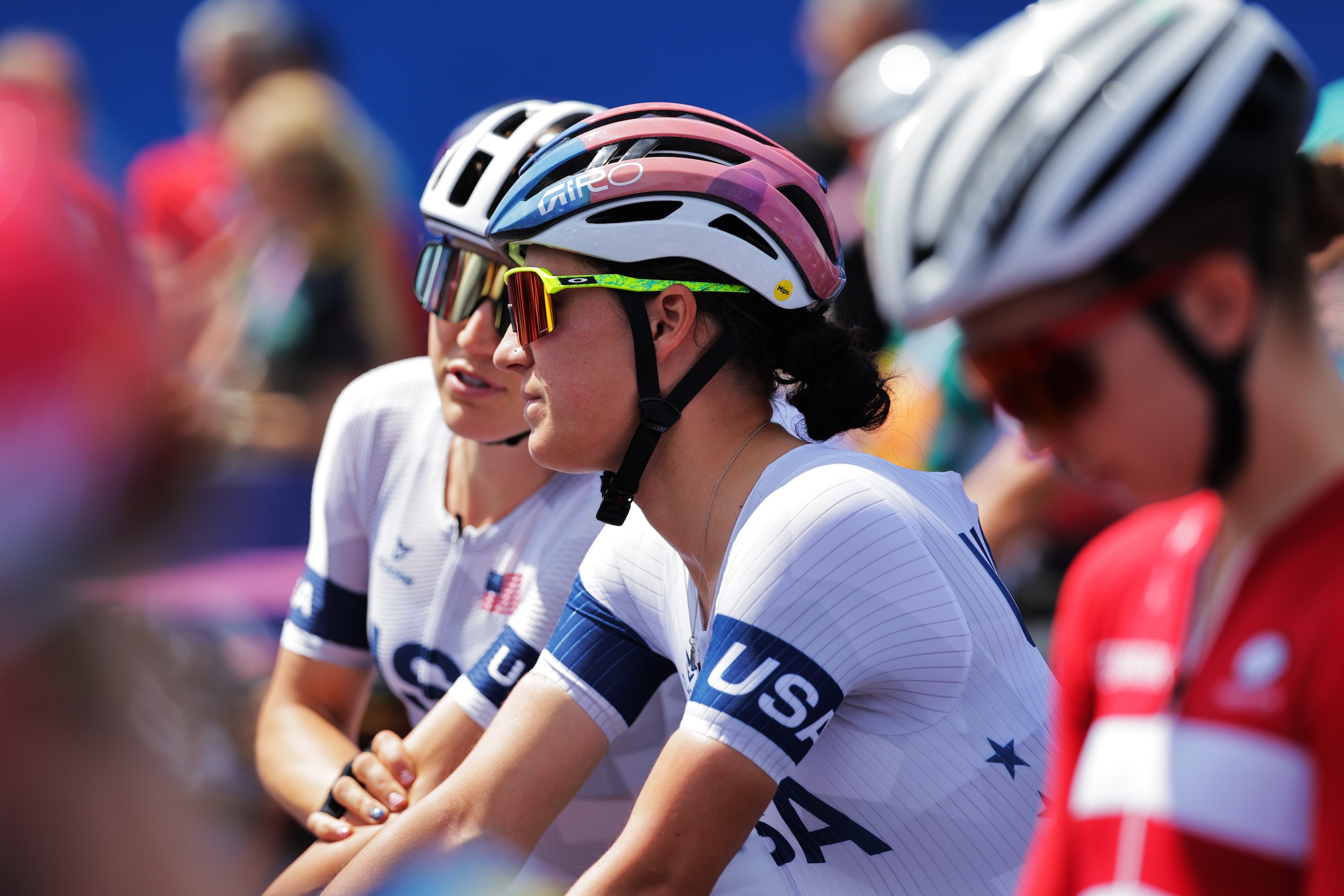
Picture by Alex Whitehead/SWpix.com – 04/08/2024 – Paris 2024 Olympic Games – Cycling Road – Trocadero-Trocadero (158.0km) – Paris, France – Women’s Road Race – Chloe Dygert (USA) before the start
The first break of the day was launched by Slovakia’s rider, Nora Jencusova. Eventually, several riders joined her up the road. At 94 kilometers to go, a group of six were over five minutes ahead of the peloton. The Dutch, Great Britian, and Canada kept exchanging attacks in the peloton; these surges ate away at the break’s time gap.
Dygert crashed with around 45 kilometers to go. This crash was significant, breaking up the entire peloton into two. A hard crash for Dygert would not keep her down, but she had a lot of ground to make up with not much time left in the race.
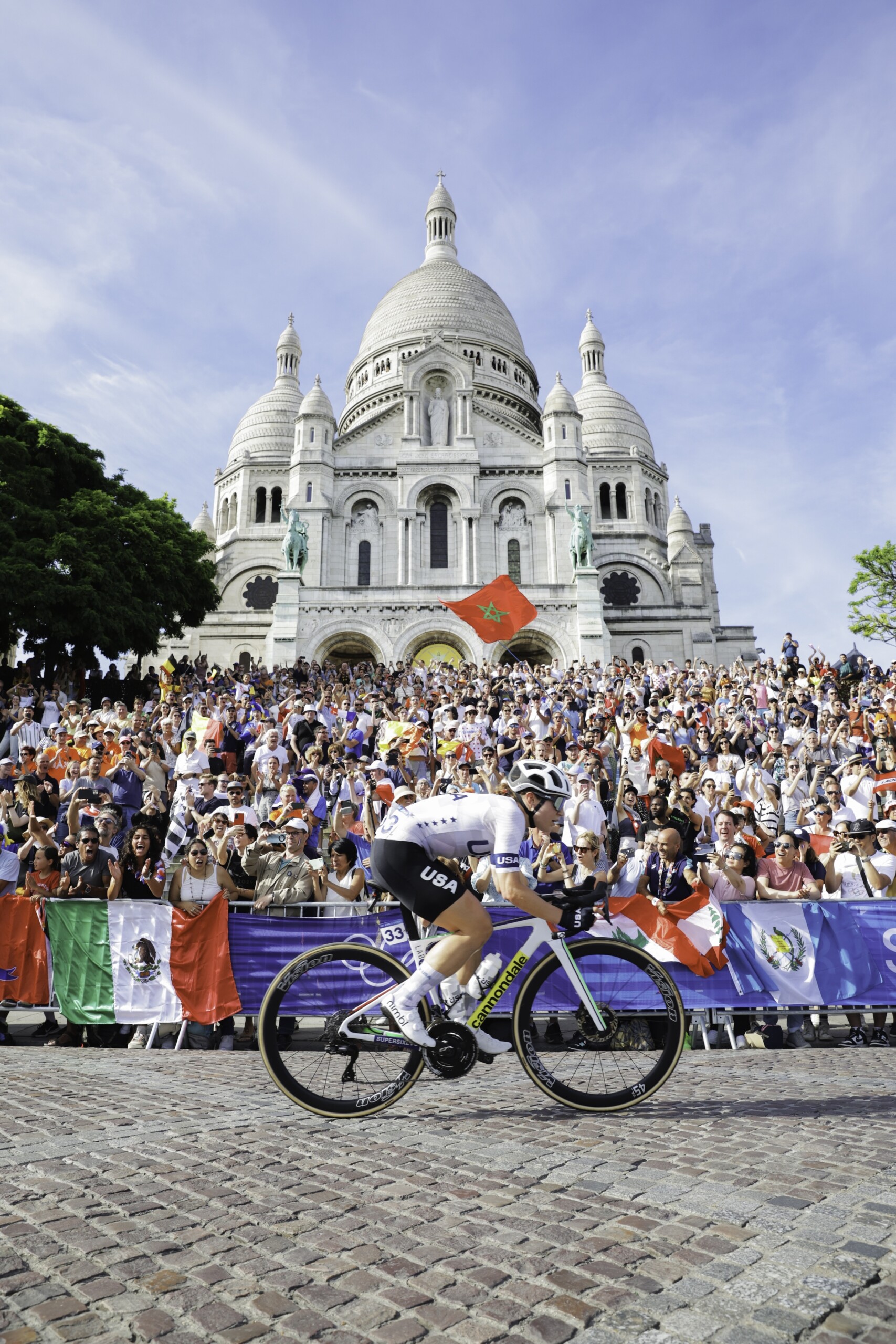
Faulkner attacked with 40 kilometers to go on the first time up the Cote de la Butte Montmartre climb to catch the two leaders and bring the race back together. This was the break that stuck. Nine riders were in the lead group, growing their lead on the city circuit after the crash. Lotte Kopecky (BEL) finally made the connection, along with two other riders who were from Great Britian.
It was attack after attack from the break, but nothing stuck. The climb on the city circuit is where most of the big moves took place. Margarita Victoria Garcia (ESP) attacked up the climb, but Faulkner pulled it back together. That’s when Marianne Vos (NED) and Blanka Vas (HUN) made a big move and escaped. This move influenced the rest of the race.
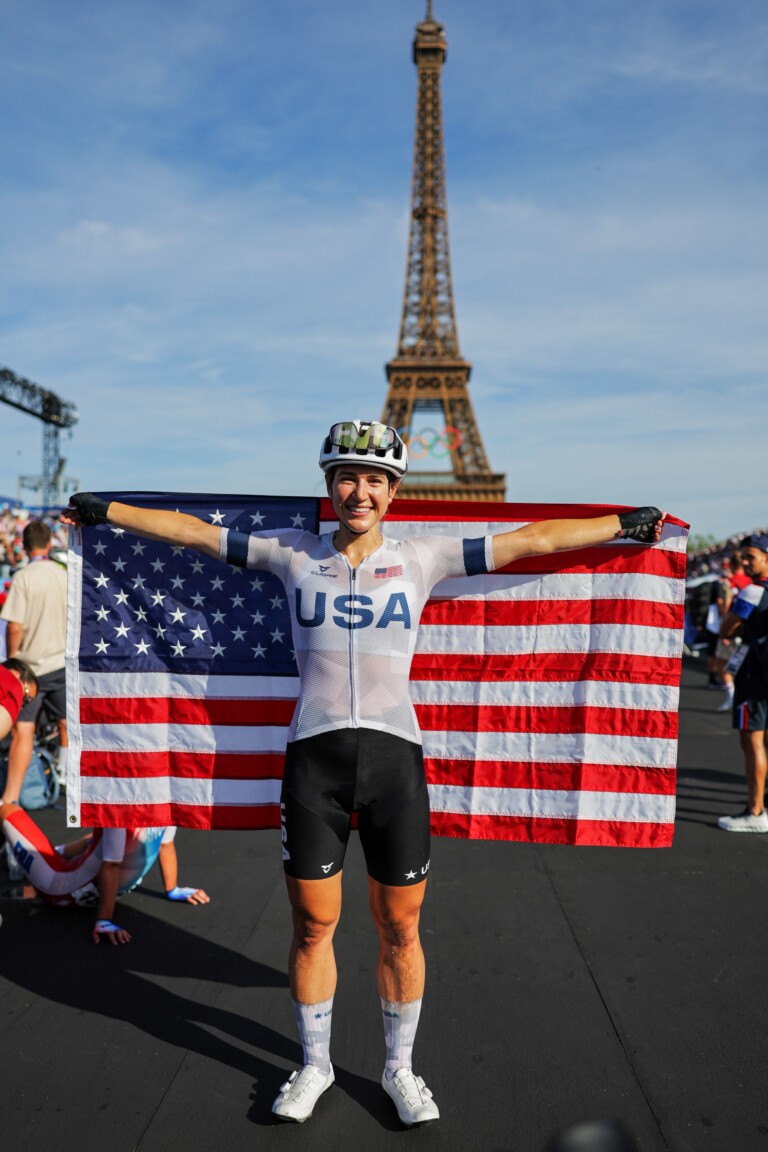
Faulkner and Kopecky knew that both riders were about to get away for good, so they went together with a plan to reel them back in. At 10 kilometers to go, the pair were only 14 seconds behind Vos and Vas. Faulkner kept them in sight until she made the connection with five kilometers to go. She then launched a counterattack and rode away from the three riders. Vos, Vas, and Kopecky all looked at each other, confused as to why nobody was going with Faulkner. With the time adding up, Faulkner soloed to the finish, gaining 58 seconds on her competitors when she crossed the line. This marked Team USA’s first road Olympic gold medal in almost 40 years. The first women’s road race was in 1984, where the Americans won gold and silver with Connie Carpenter-Phinney and Rebecca Twigg.
Picture by Ed Sykes/SWpix.com – 04/08/2024 – Paris 2024 Olympic Games – Cycling Road – Trocadero-Trocadero (158.0km) – Paris, France – Women’s Road Race – Kristen Faulkner (USA) climbs the Côte De La Butte Montmartre passing crowds outside Basilique du Sacré-Cœur de Montmartre.
When describing her pathway to this point, she said “This has been a whirlwind and has happened quite quickly. I think it’s even been the same for my parents watching me on this journey. First, I left my job, and then I moved to Europe and am doing this full time. Even for the people closest to me it’s been a whirlwind. For me I love learning, and I love new challenges and I feel like cycling over the past several years has always been a constant, I’m always learning.”
She knew in the middle of the race that she was feeling good enough to go for gold, saying, “After the first time up the cobble climb, I said to myself, I’m feeling the best I’ve felt in a really long time, so I’m going to go for it.”
Picture by Alex Whitehead/SWpix.com – 04/08/2024 – Paris 2024 Olympic Games – Cycling Road – Trocadero-Trocadero (158.0km) – Paris, France – Women’s Road Race – Kristen Faulkner (USA) celebrates winning the Women’s Road Race to become Olympic Champion in front of The Eiffel Tower
Dygert was able to make her way back into the peloton. She stayed in the race to chase back what was left of the group. She battled back from her crash to break away and take 15th, an incredible result after a hard fall. After looking up at the video board at the finish and realizing her teammate had won, she said, “Faulkner had an amazing ride, she’s been riding great this year. This is so impressive. She has shown repeatedly that she has that power for those final moments. She’s put a lot of work in, she’s been doing a lot on the track, so that’s helped her. I am super happy for her, this is huge. Her first Olympics… what a way to leave it with a gold medal.”
Results:
1. Kristen Faulkner (USA)
2. Marianne Vos (NED)
3. Lotte Kopecky (BEL)
15. Chloé Dygert (USA)
By Lukas Brinkerhoff — Mauricio is perched on the round white table in front of us. He’s a concave chested man in his early 20s. Fair skinned, thin and with hair that appears to be salt and peppered but not due to age. He is the grandson of Antonio Nunez, 4th discoverer of Cuba, and has just spent the past hour giving us a private tour of the museum that is attached to the back of his house.
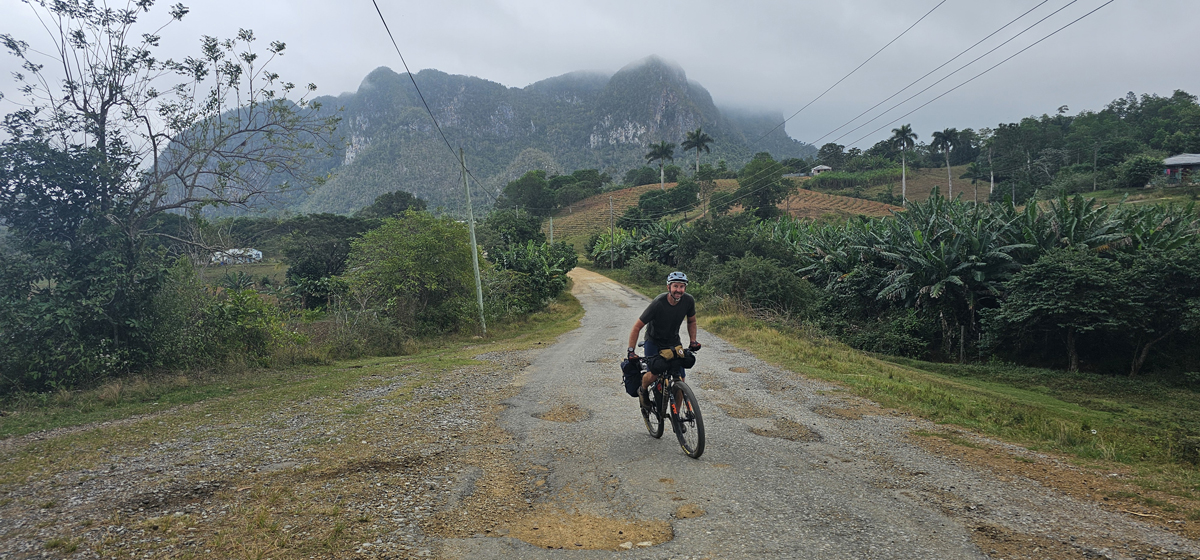
Toward the top of the pavement on our way into Vinales. Bikepacking Cuba. Photo by Lukas Brinkerhoff
The conversation has ranged widely but mostly around family and politics. Mauricio lived 2 years in the United States, spent several months traveling the country with his dad as a long-haul trucker and then chose to return to Cuba. He stated plenty of reasons, the foremost of which was safety. He just never felt safe in the US. As he put it, “You never know what someone is going to do. If you have a small argument, they might pull out a gun. Here, we just yell at each other and get over it.”
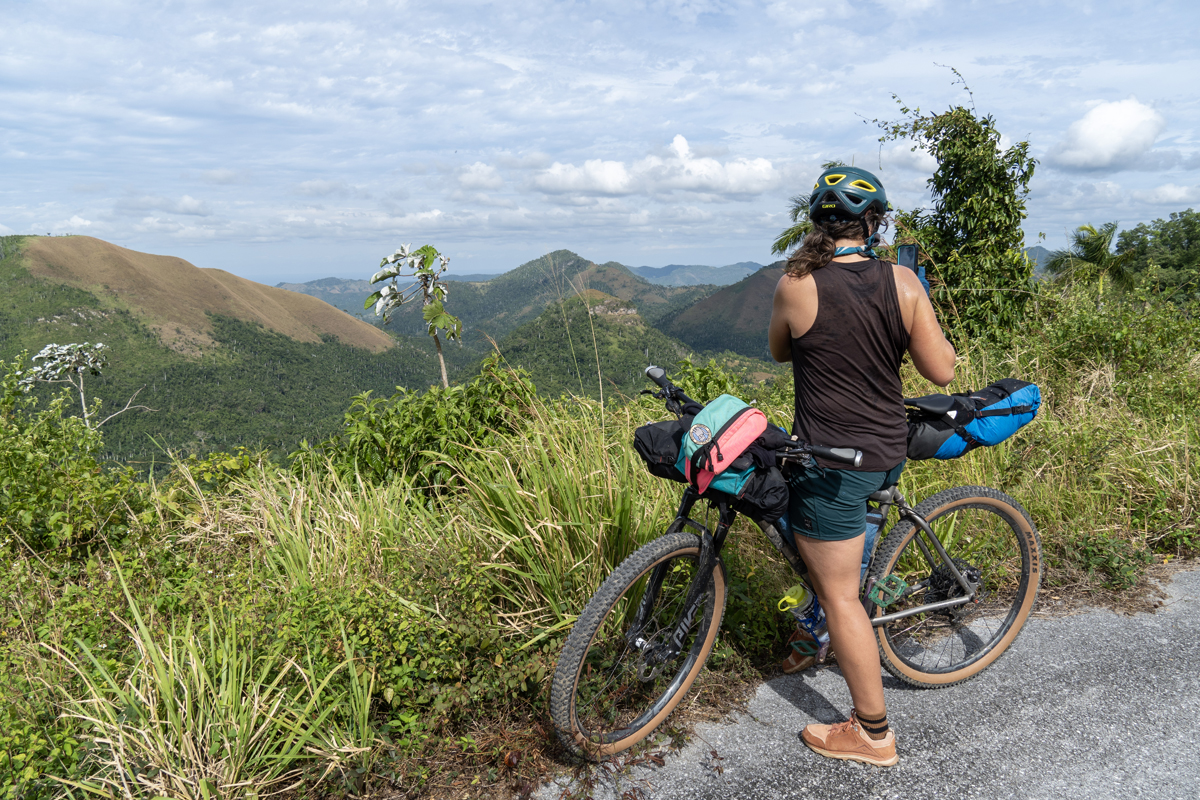
Shalena Taylor assesses the landscape and the climb we just came up. Bikepacking Cuba. Photo by Lukas Brinkerhoff
Up to this point, our conversations with Cubans have been at best superficial and at worst, guarded. They tend to be conservative in their approach to foreigners, more likely to wave from a distance than to respond to a greeting. Few have openly demonstrated any version of curiosity for the four gringos bicycling through their country.
Even Mauricio has kept his distance. As our host, he made contact, ensured that we had the basic needs of our accommodations and attempted to help us procure things we needed, but our conversations were nothing more than that.
Until now.
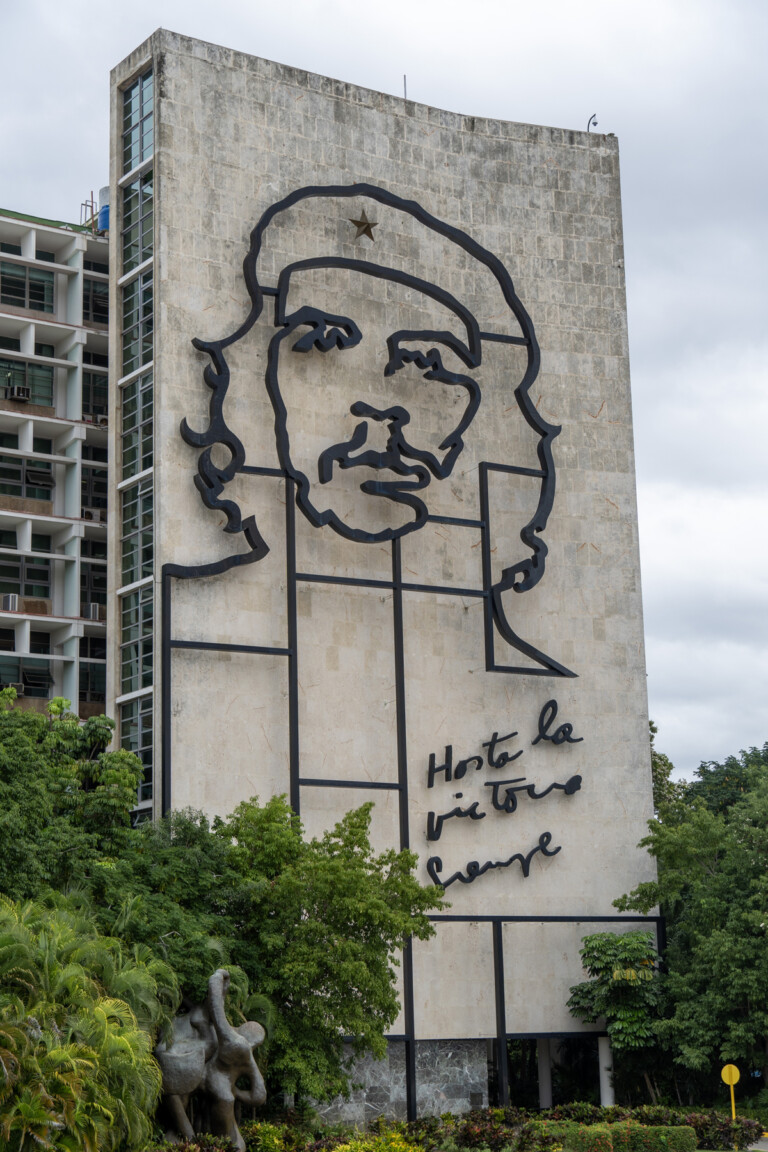
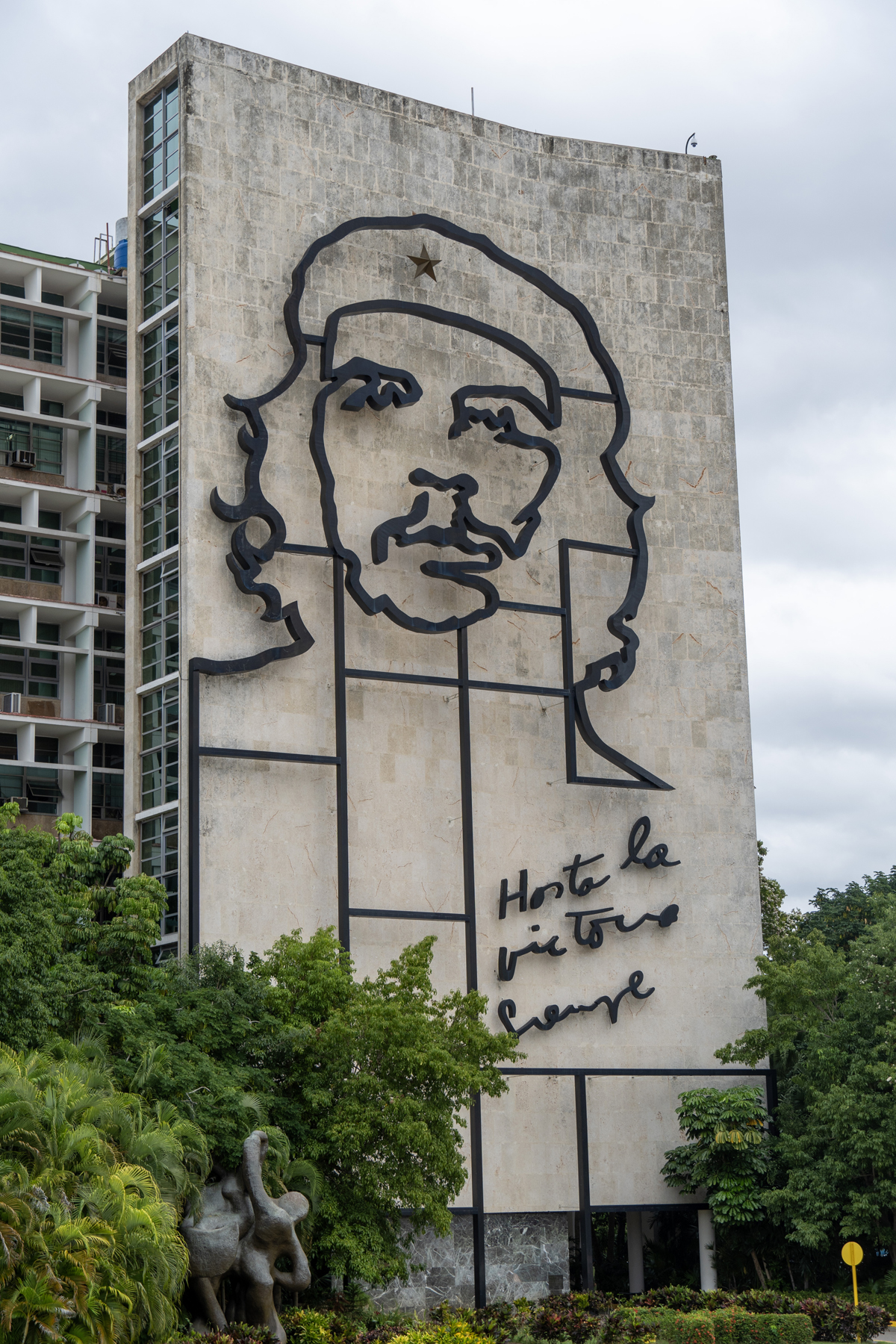
Che is everywhere immortalized here in the main plaza in Havana. Bikepacking Cuba. Photo by Lukas Brinkerhoff
He leans in a little bit, maybe out of preoccupation, more likely out of genuine curiosity and simply asks, “So what do you think of Cuba?”
It’s a question that has been occupying my mental powers since the 2nd day we were here and yet I still feel unprepared to answer.
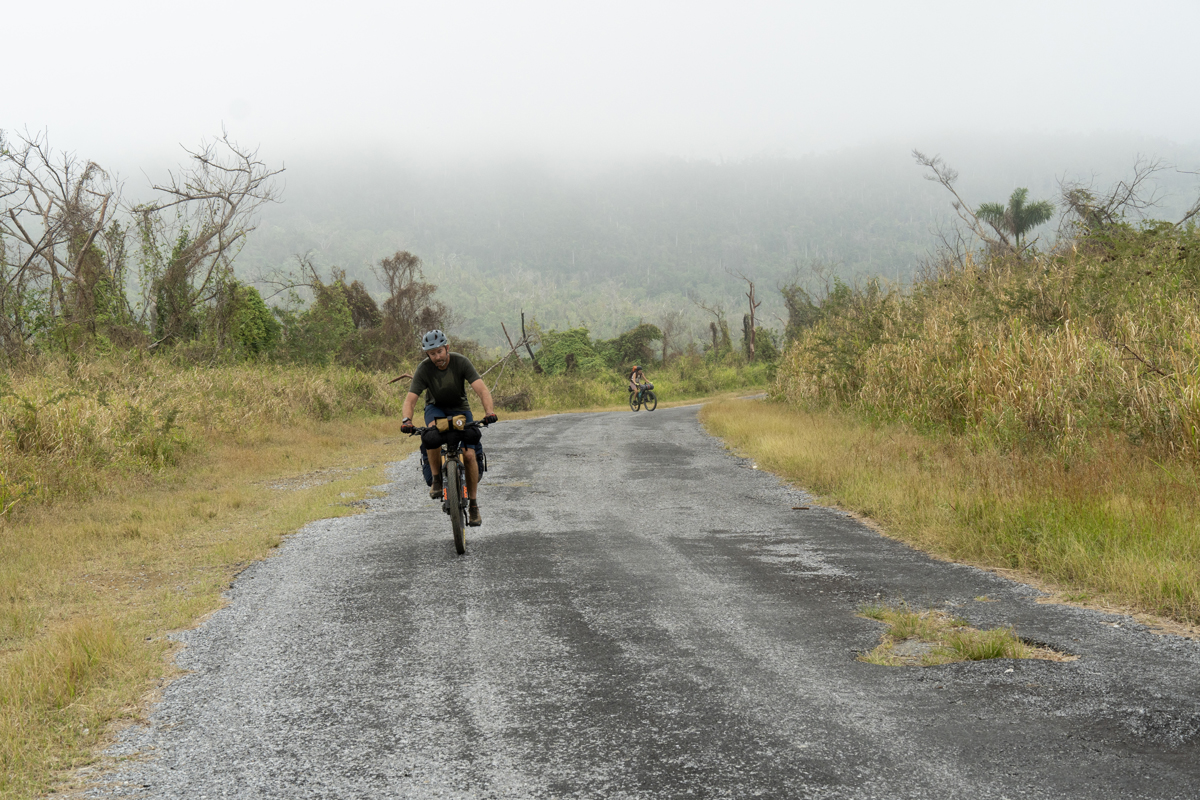
I am soaking wet, kind of the default setting for this island. Today, it’s not due to rain. It’s the humidity, heat and exertion. Our route headed up a couple of hours earlier taking us from the South Coast inland through the mountains. Up to this point, it has been crazy steep, but paved making it rideable. As we take a hard left and head up a steep, rocky, dirt road, that all changes quickly.
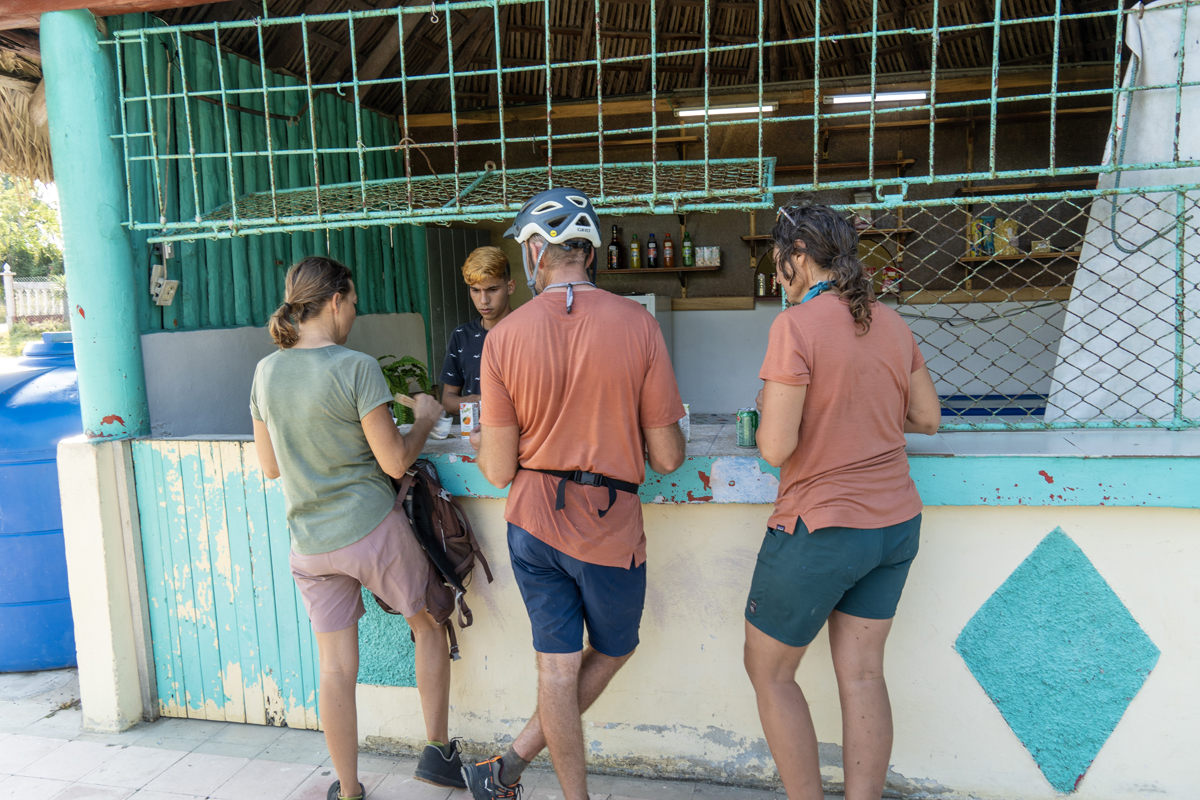
John, Shalena and Kathleen purchase supplies as we wait hoping the owner of a Casa Particular shows up to rent us a room. Bikepacking Cuba. Photo by Lukas Brinkerhoff
We are about 1/3 the way up the first hike-a-bike when a man walks out from his house. He slows, taking a few moments to assess what he is seeing and then starts walking alongside us. He asks if we are headed to El Toro. We are. After informing us of the terrain ahead, he asks where we are going from there. We answer Entronque Los Palacios. His face turns incredulous, and he responds with words oft used to describe this route, Ruta Mala.
After finishing up the first push, we thank him for the beta and leave him as we are able to start pedaling. His words add some uncertainty to what we are about to attempt, but we chose to come here and are plenty familiar with hard things. After all, it’s hard things that make life worth living.
John Taylor climbing through the fog. Bikepacking Cuba. Photo by Lukas Brinkerhoff
The road continues as he had described. We have a few more hike-a-bikes, but the majority of it is rough but rideable. That is until we hit El Toro.
El Toro probably shouldn’t be described as a town. It’s a dot on a map in the mountains. There are about seven houses clumped together in a little recess in the jungle. It is accessible in two ways. The most common, the way we just came, is a dirt road that is steep, rocky, loose, muddy, but navigable with four-wheel drive. The other, that from what we can tell is only used by horses and maybe the occasional foot traffic, is barely even a trail. In several places, it fades leaving faint options to push through the sharp, stabby plants.
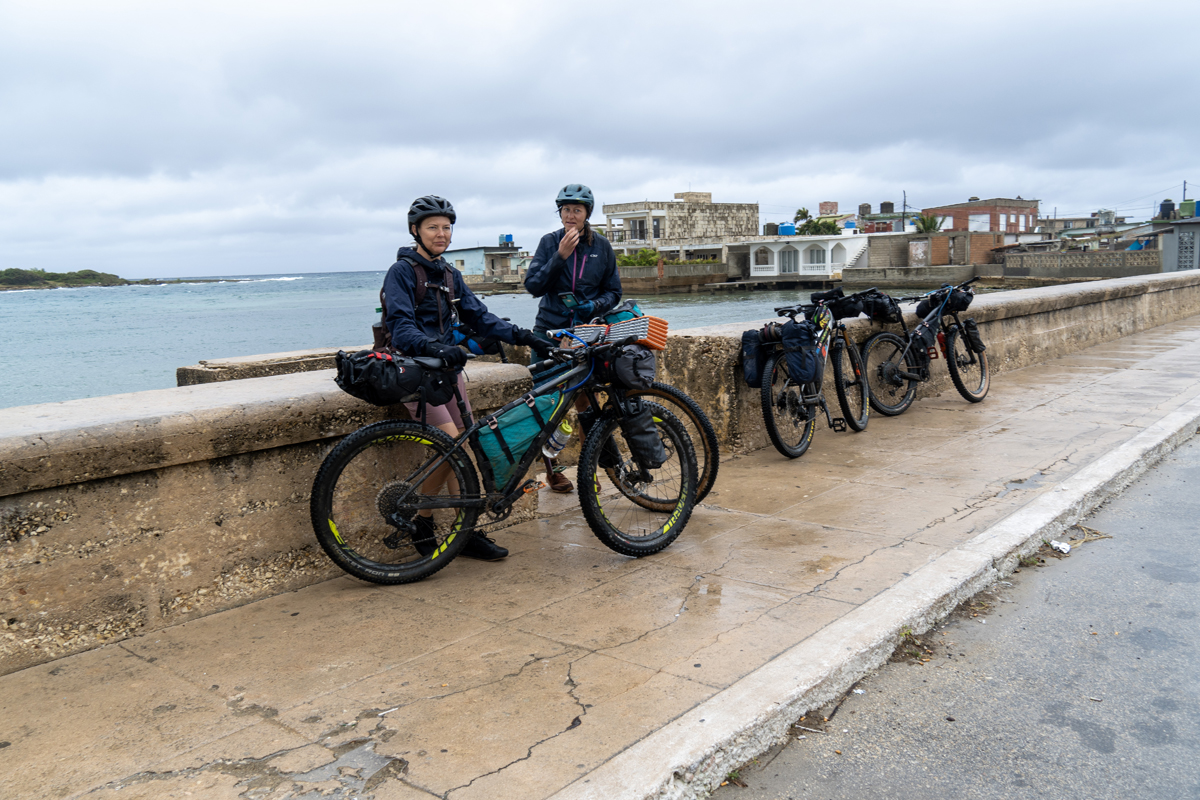
One of our last stops on our way back to Havana, Playa Baracoa. Bikepacking Cuba. Photo by Lukas Brinkerhoff
The trail disappears almost immediately. John and I push forward, dragging our bikes through vines, over logs and around razor plants. Soon the sweat that has poured out of us for hours is mixed with blood and mud. The route options seem to all go somewhat in the same direction. We can hear each other, but visually we might as well be miles apart. There’s a lot of vacillation. Which route? Does this even go? Push, pull, back track. The two trails we are simultaneously pursuing eventually converge and we push through to the top. We’ve progressed ¾ of a mile in an hour. Being at the top feels like things are about to improve, but like most things, good and bad are mere opposing faces of the same coin.
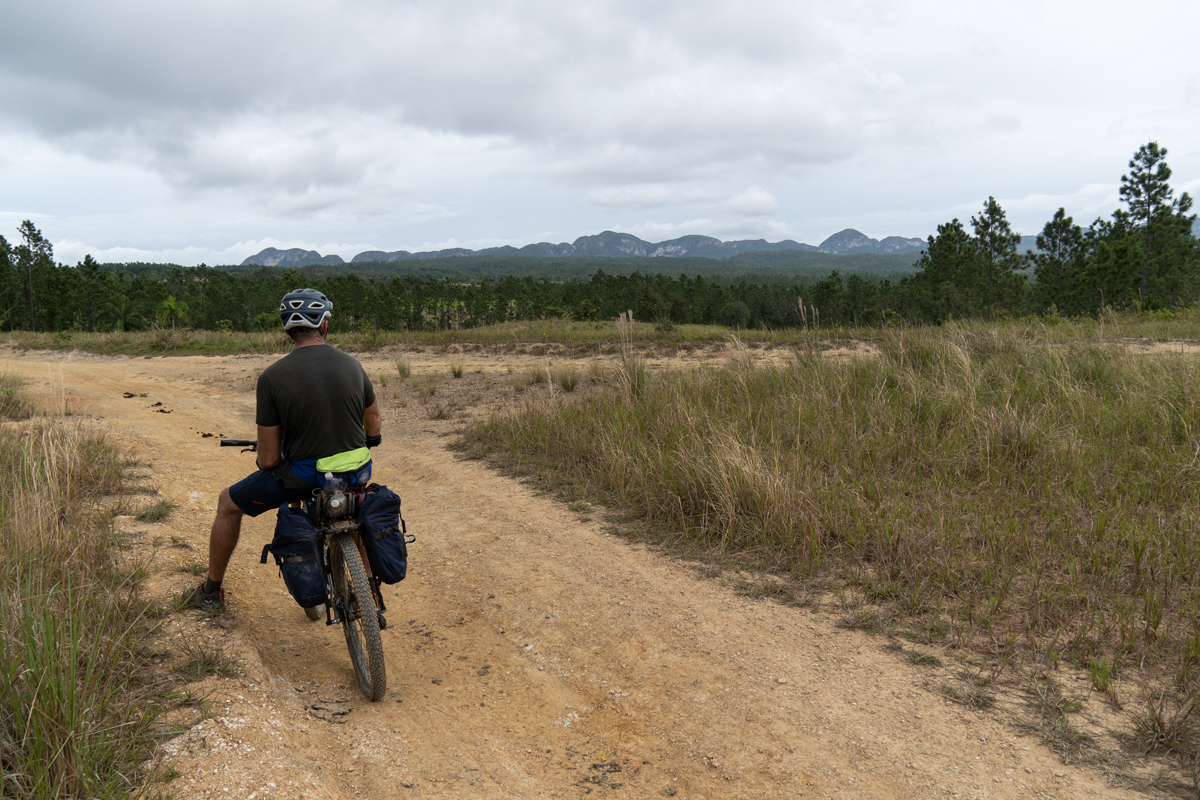
John Taylor stoked that this intersection is leading to a much nicer road. Bikepacking Cuba. Photo by Lukas Brinkerhoff
On the flipside of this coin, the vegetation is less dense. There is less moisture and there is mostly a trail. Although that trail is often a two-foot rut filled with loose rocks dropping precipitously down the side of the hill making it unrideable.
Now our bikes are dragging us down the mountain.
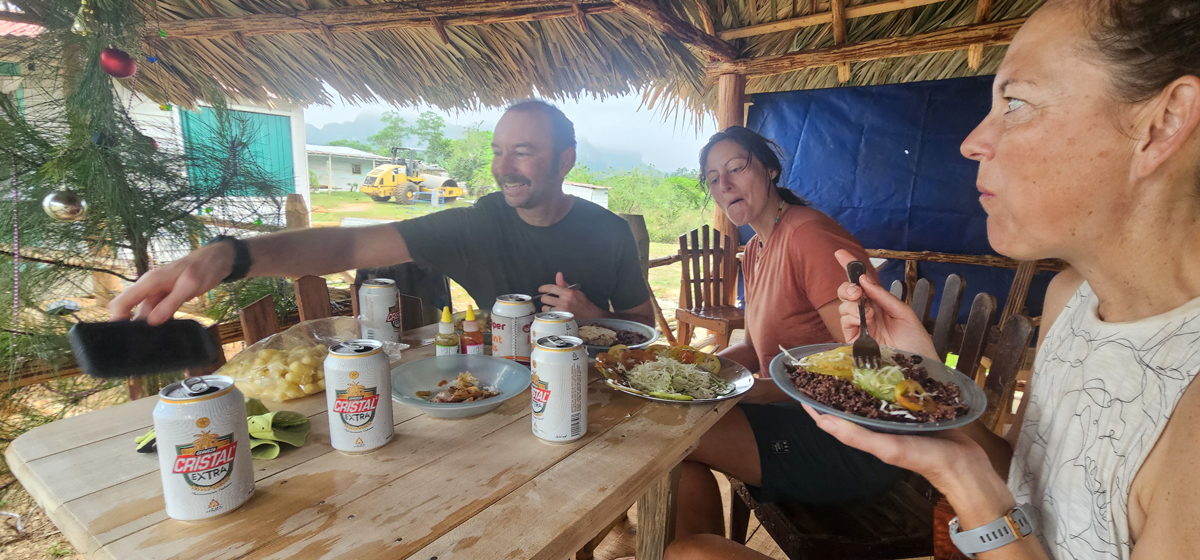
Unbeknownst to us, this meal was going to be crucial to getting through La Ruta Mala. Bikepacking Cuba. Photo by Lukas Brinkerhoff
After two hours, more curse words than we can remember, maybe some tears, lots of sweat and blood, we finish up the 3 miles from El Toro and pop out on a small dirt road to the confused looks of the locals.
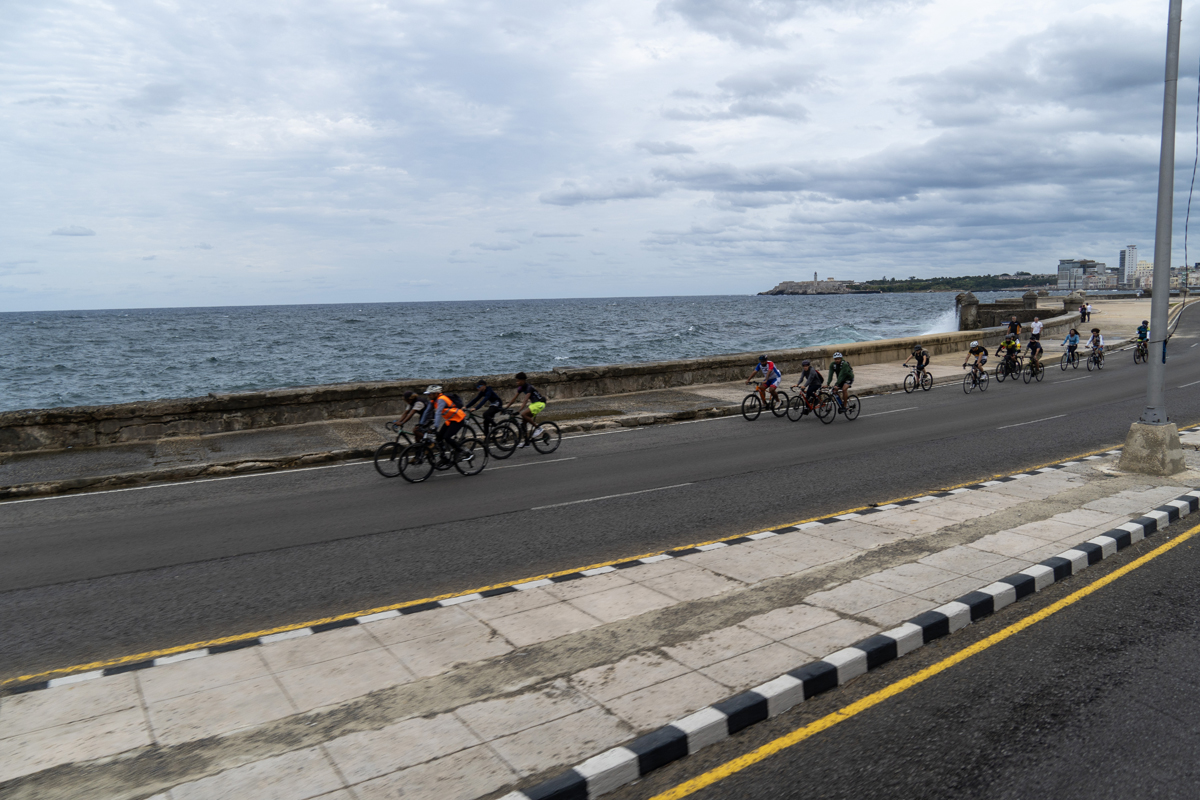
A group of cyclists in Havana. These were the only recreational riders we saw during our trip. Bikepacking Cuba. Photo by Lukas Brinkerhoff
Our elation to having pushed through the nonsense is short lived. Upon hitting the junction, we find a small cafeteria. It is open, but unfortunately for us, the attendant has nothing to sell. She gives us some vague directions to a house that might rent rooms. We hop across the street and grab some beers and head toward what we are hoping is a place to stay. After passing a house that kind of fit the description but was on the wrong side of the road, we stop to ask again. A young man indicates that, yes, that was the house, but he also says that there is one more coming up that rents rooms as well. We push on only to find that house is a raucous party of toddlers and merrymakers.
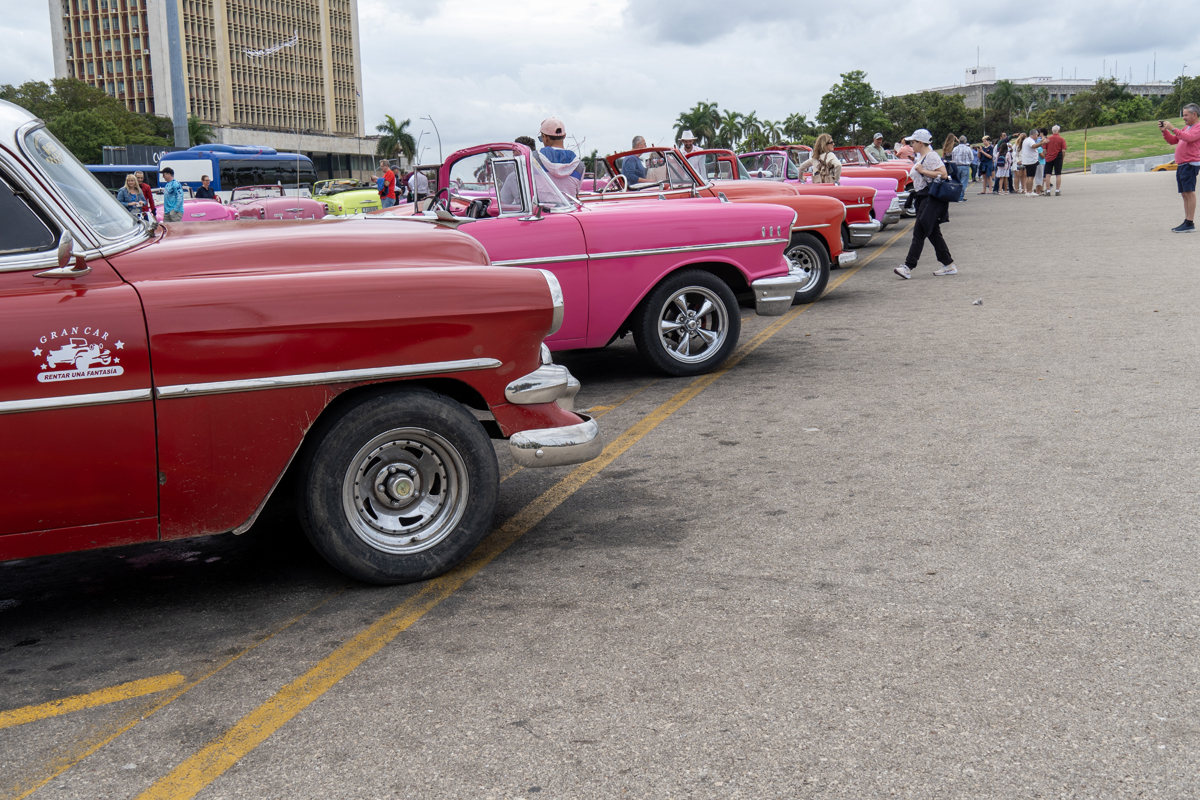
Old cars cause new ones aren’t available. These are almost all converted to diesel engines. Bikepacking Cuba. Photo by Lukas Brinkerhoff
Instead of a warm shower, we find ourselves rogue camping in a field getting swarmed by mosquitoes. We planned to build a small fire to cook the little bit of food we had brought with us. After getting a nice fire pit and perch for the pot built and wood gathered, we discover that the one lighter among us has gone missing.
Our patio in Bahia Onda where John and Shalena are enjoying some ice cold beer. Bikepacking Cuba. Photo by Lukas Brinkerhoff
Half of a beer plus a swig of rum each will have to suffice. Merry Christmas to us.
As humans, we understand that an objective reality exists. There is a Truth. We just don’t have access to it. Our reality is our perception of that Truth filtered through our experiences, contexts, prejudices, desires and senses. It feels like the Truth, but it is merely our truth. As much as we wish that our truth was the Truth, it’s impossible for us to know if it is.
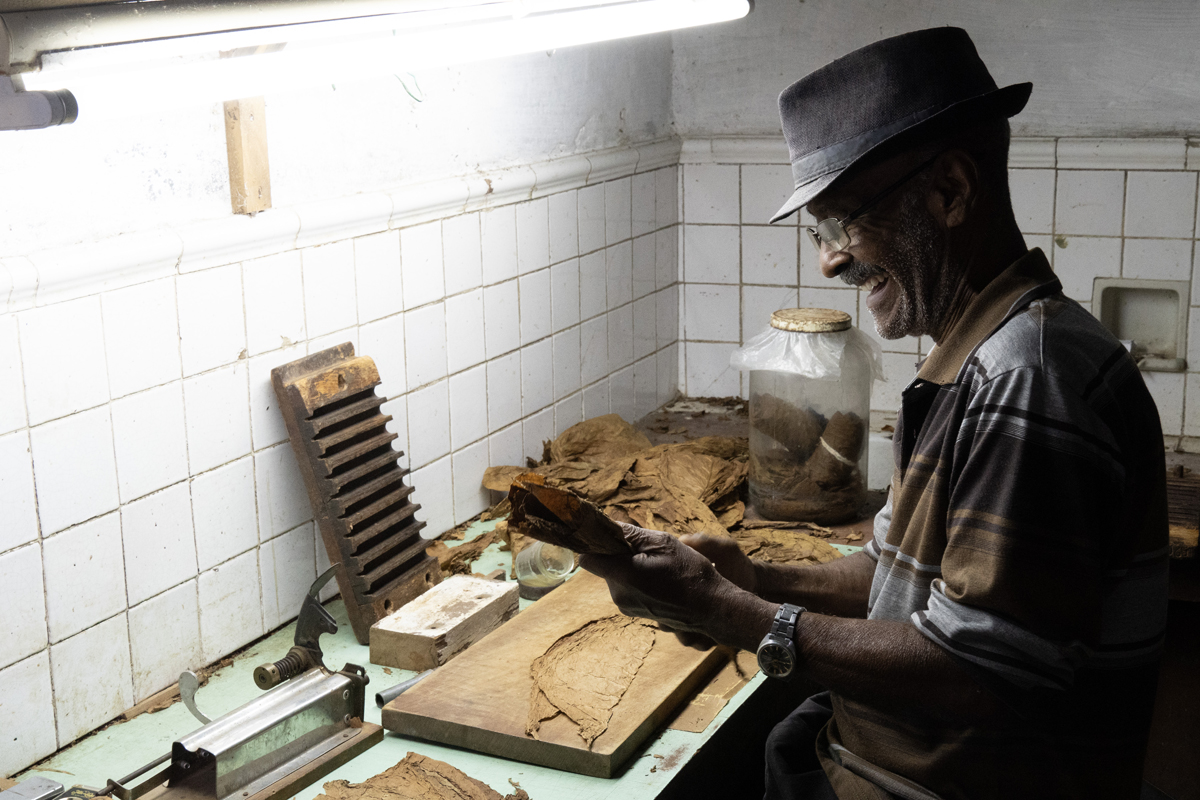
This old man (80+) showed us the traditional way of making a Cuban cigar. Bikepacking Cuba. Photo by Lukas Brinkerhoff
The Stoics took this a step further and taught that we should reserve judgement. By first accepting what is without assigning good or evil to it, we have the chance to work through it and see where it goes. Often the most trying situations are looked back upon as building blocks for something better. We might not see it in the moment, but when we see the result, we understand.
To assign good or evil to any situation is to believe that you have access either to the Truth or that you fully understand the end result. Both are shaky ground for humans.
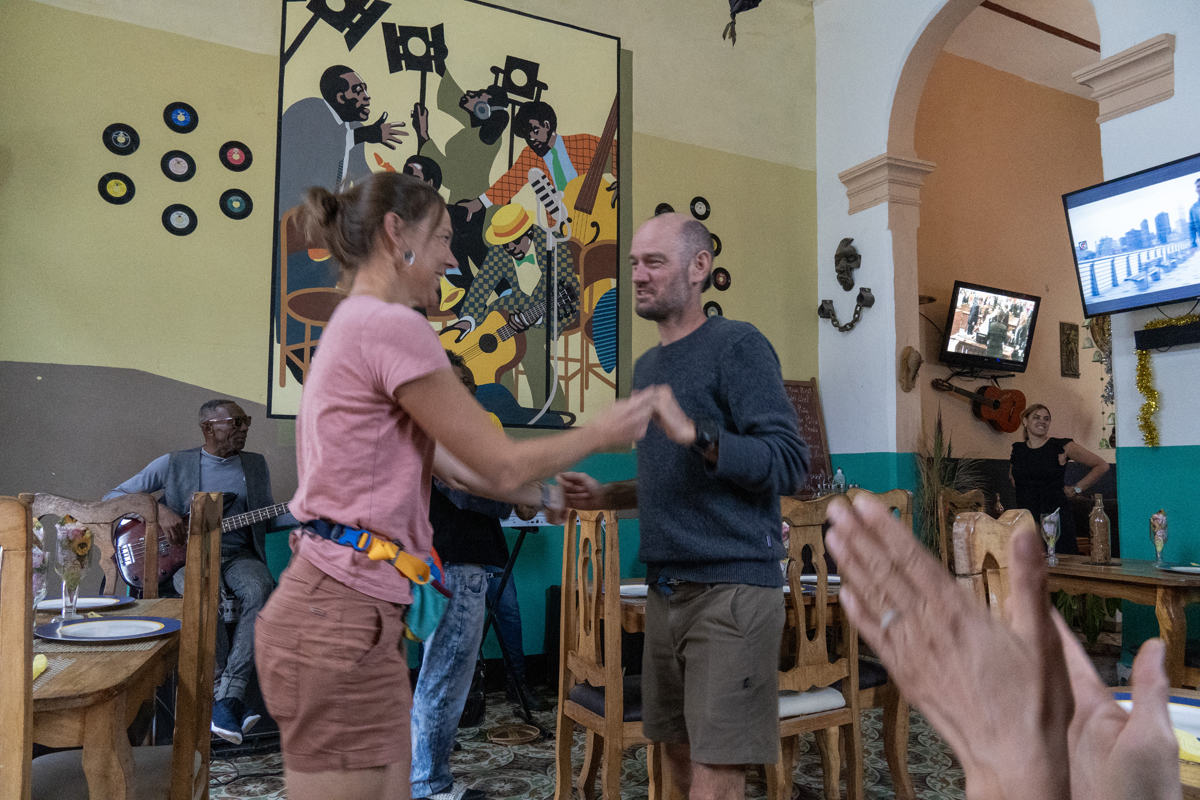
Kathleen and I dancing to some Cuban jazz in old town Havana. Bikepacking Cuba. Photo by John Taylor
We awake in a 2nd story apartment that I describe simply as “shit hole” in my journal.
Arriving in Bahia Onda the afternoon prior, we had set out like most other days looking for a place to rent. This turned into a goose chase with several plot twists that ended with us stoked to have anywhere to sleep even if it meant dragging loaded bikes up a flight of stairs that could have passed as a ladder to sleep on a mattress shaped like a hammock. At least the shower attempted to pretend to be warm.
This small industrial town isn’t done with us yet. The power gets shut off just as we are looking for breakfast. We find a couple of cafecitos and some croquetas before realizing we just need to get the fuck out of this town.
We pedal out with hopes that we can find something to eat along our route.
About 10 miles later, we find just that. A restaurant that is open, has cold beer and food. It is still pretty early but we need something to eat, so we stop. It takes long enough to get the food that it turns into lunch, but we are stoked to have happened upon it and that they are willing to accommodate us.
Back on the road, we’re headed for another industrial town, Mariel. Gaia shows a few Casas Particulares and we hope we can find something. We arrive early and immediately set out to see what there is. The first spot only has room for two of us. The next spot isn’t open and we can hear the screams of pigs being slaughtered across the street. This town has a similar feel to the one we left in haste this morning.
Mariel is a hard no.
Then, a few miles farther down the road, Nuevo Mariel is also a no.
Then Menalao Mora is a no.
At this point, we’ve been wandering around looking for a room to rent for close to two hours. At every no, we get new beta and push on with hopes that something will be there. Our last bet is placed on Playa Banes, a small road at the end of town that heads to the beach. Gaia shows nothing, but a man in Nuevo Mariel told us there are lots of places for rent on this road. We give it a shot.
There are no signs to suggest there are any Casas Particulares on this road. There is a lady painting her gate and I stop to ask. She says that there is a green house on the right side of the road that rents rooms. We need to ask for Juan Carlos and tell him that Mora sent us.
We feel elated, until there is no green house on the right side.
Stopping again, I ask a lady hanging her laundry. She says yes, two doors down on the left side of the street at a blue house is where we will find it. We ignore the color as the house is certainly not blue, but call anyway. Juan Carlos appears next door asking what we need. I tell him that we are looking for a spot and in incredibly fast Cuban Spanish he says that he might have something. He disappears only to pop out at the gate where we are standing.
He beckons us in and says the house is typically for rent but it might not be, but he might be able to do something. Normally, it’s 6-8,000 pesos for 24 hours, but he has to talk to the owners. It’s a lot of vacillation. I’m confused when he shows us the house. It’s big, three rooms with a nice kitchen, individual bathrooms and plenty of space. I tell him we will take it if he can rent it to us. He leaves to call the owners.
We see him on the roof of the house next door trying to get cell service.
He comes back to us, says he can’t get a hold of the owner, but for 10,000 ($40ish USD) pesos it’s ours for the night. He is acting like he has just asked for a fortune so I ask if that’s per person or per room. He responds that it is for the whole house. Done deal!
He gives us the keys and disappears. We are then treated to the absolute master of Cuban showers, full pressure and incredibly hot water.
For every 3-5 Cuban no’s, there seems to always be a yes that blows us away.
Humans have spent millions of years fighting back nature. We have been successful in this fight. We now enjoy motorized travel over smooth roads, refrigeration and air conditioning, overabundance of calories and a level of comfort never known. The downside to our success is that because we evolved to live in a world of scarcity, our brains are not capable of controlling our consumption in an environment of excess. This leads us to be almost completely immobile, to consuming more calories than we need and an obsession with just the right temperature. Our success is slowly killing us.
Cubans do not enjoy smooth roads. Most of the Carretera Nacional, or National Highway, is a two lane, pot-holed road that sees little traffic. It is slowly becoming unpaved. This slows down traffic. It was not uncommon for us to keep pace with a car that had just passed us as they were forced to slow down and maneuver around all the holes. The roads felt like they were built for cars but have been taken back by the Cuban people or nature or both. This included drying rice on the roads. Yes, you read that right. One lane, cleaned and then covered in rice and left to dry.
Refrigeration and air conditioning are surprisingly abundant on the island. Every Casa Particular in which we stayed had an AC and a refrigerator, the latter stocked with beer. The biggest difference in Cuba is that they can’t leave their house via a temperature-controlled garage and then use an automobile to get to the next spot. Nope, they have to walk outside, wait for the bus in the rain, find a ride, jump on their bike. Cuban streets are not orderly affairs with cars whipping through the lanes, they are more of a street fair that allows vehicles to pass when they show up. Cuba is a place you are forced to be uncomfortable.
Junk food is not readily available in Cuba. Heavily, or super processed foods, are almost non-existent. We did see packs of cookies and the occasional bottle of soda, but these were usually expensive and based on what we saw, rare. Instead of packing our bags full of chips, cookies and soda, we ate whatever food we could find in the towns that we passed. This was whole food processed locally. We often went without our morning coffee and ate breakfast when things actually opened. The idea of a schedule is a loose thing in Cuba. Even with this lack of food, I never felt hungry. It seemed that the island always provided just enough food when we needed it.
Cubans are still fighting against nature. Due to this, there are two things that we have come to expect in modern society but are in short supply, obese people and beggars. While there isn’t an abundance of calories, it appears Cubans have enough to eat. And on the flipside, they don’t have too much to eat and their system keeps them moving constantly throughout the day.
One thing that Cuba does lack is excess.
My eyes flit open. It’s a little after 6 am and I think I can hear rain.
I get up, open the slats that pass as windows and flip off the AC. Yup, it’s raining. I grab my phone and climb back into bed but stay seated. There is something romantic about sitting in a small house, listening to the rain and journaling in Cuba. Unfortunately, that’s where the romance ends.
The four of us slowly emerge. We have high hopes for hot coffee. There is a range, a pot and spigot. We had all brought packets of micro ground coffee for these moments, we just need hot water. John grabs a pot and before he can even put water in it, we remember we don’t have a lighter. A search of the kitchen shows that we have no way of lighting the stove. We then look closer to realize the gas range also has no gas.
Foiled. There is a moment of visible disappointment that is followed by a little ingenuity. The oven has electricity to it, maybe it’s electric. It is. We fill up a couple pots of water and place them in the oven at 400 degrees and wait. It takes 30ish minutes but once we start getting small bubbles we call it good and the water is divided up amongst the four of us.
The rain is still drizzling down as we sit on the back porch and begin enjoying our somewhat hot cup of joe. There is something just off and we soon realize that the water is salty. About halfway through his cup, John stands up and throws what is left into the garden in disgust. The rest of us follow suit and feeling a bit dejected begin to ready our gear for the final push back to Havana.
The rain stops just as we are ready to go. We lock up the house leaving the keys in the door and head out across the yard. Three steps in and the wind kicks up accompanied by rain dumping sheets that quickly cover the lawn in a couple of inches of water. We retreat to the porch. A quick wardrobe change is in order as the wind has changed the temperature equation drastically.
And then we wait.
Another 15-20 minutes and the rain stops. The wind is still ripping but we only have 20ish miles to go to return to Havana. With our rain jackets in place, we head out again. Juan Carlos sees us leaving and stops us at the gate. We thank him for the place to stay and inform him the keys are in the door. He thanks us and disappears. We push our bikes out into the dirt road and begin to pedal.
The storm holds back for a bit, but soon we are pedaling into near horizontal rain. With our heads tucked down, we pedal the empty highway as it fills with water. The only vehicles to pass are a couple of large farm trucks used as busses. The Cubans in the back are exposed to the rain and the wind just like us. I’m not sure who is in better shape.
John pulls over at a bus stop that provides a semblance of protection from the elements. We have no water, our breakfast was a ProBar and a few left over snacks and we are now on the side of the highway waiting out another squall.
As the rain tapers, a couple of guys pop out of the bus stop as it doubles as a cafeteria. They seem confused at our presence but have some bottled water and juices that we promptly buy and consume. As we are sitting there rehydrating, a lady walks up. She is wearing a big black parka, black jeans and the cutest little shoes that leave the top of her feet exposed. She’s visibly cold. I can tell that she walked into the rain as the front of her pants are soaked leaving them a dark black while the back is dry.
We thank the attendant and push back onto the highway. The rain has stopped but the pavement is still covered in water. The wind has slacked and we are able to make decent time. Playa Baraquoa, the first harbor of Cuba, is our next stop. We follow a small road down to the coast. The surf is pounding driven by the storm. There we rest and get some photos. There are a bunch of restaurants, but they are currently getting ready to open. We trudge on.
La Havana was within striking distance when we started and soon we are traversing through the city. With our heads down, we push through and end up in Miramar where Mauricio’s house is well before noon. We drop down to the beach, find a restaurant that is open and plop ourselves down for a celebratory meal upon completion of our journey. We start with breakfast, move onto brunch beers and end with lunch. The whole time, the wind is driving the ocean, and we can hear and feel the weather as the seating is open air. Once we are all feeling fat and happy, we load up and head to the house.
“Cuba is Cuba,” I respond to Mauricio’s query in Spanish.
I came to Cuba because I knew that the Truth was twisted and I needed to see it for myself. I know my perceptions so it is easier to turn off those filters or at least recognize that they exist.
My perception is shaped by my connection to the natural world and it is my belief that most of the issues we experience in modern society are due to our disconnect from it. The Cuban people are in the thick of it. They are still pushing back against that natural world. Their daily efforts still revolve around food, transportation and community. From the outside looking in, it’s easy for me to view their scarcity as a resource, as a way to keep a population healthy and engaged, to keep them more connected to the natural world.
I landed in Havana with the expectation of seeing something special and I did. We wandered around the Cuban country, interacted with the people in unfiltered exchanges and felt the island’s warmth and humidity. What I didn’t expect was the way their society’s structure had given them many of the things I feel we need in the United States, unpaved roads, less access to food, the necessity to move under one’s own power creating a connection to both community and nature. One could look at these things as a failure of the Socialist Revolution, and one could be right. I struggle to look at them and not see a system set up to question what can be and the answer is a completely different operating system.
It’s like opening your laptop to find that you must now do everything in MS-DOS.
By Charles Pekow — A bend in a narrow two-lane road with limited visibility creates a unique safety hazard for cyclists. But a solution may be found: an auxiliary bike lane or “turnout” around the bend according to Safety and User Perceptions of Auxiliary Bike Lanes, a study done at the University of Oregon (https://www.oregon.gov/odot/Programs/ResearchDocuments/SPR869_AuxiliaryBikeLanes.pdf).
Researchers surveyed 612 Oregon cyclists and motorists and almost all members of both groups liked the idea.
In such situations, traffic can back up if drivers slow down to accommodate a cyclist. Or they can try to pass the bike with insufficient space and-or visibility. Some roads even lack a shoulder.
After being shown a video, both cyclists and motorists said they felt better if such a lane would exist for cyclists. Findings also indicated that it would help to alert motorists via signs that such a lane was coming so they wouldn’t feel the need to quickly overtake a cyclist.
Study: Protected Bike Lanes Preferred
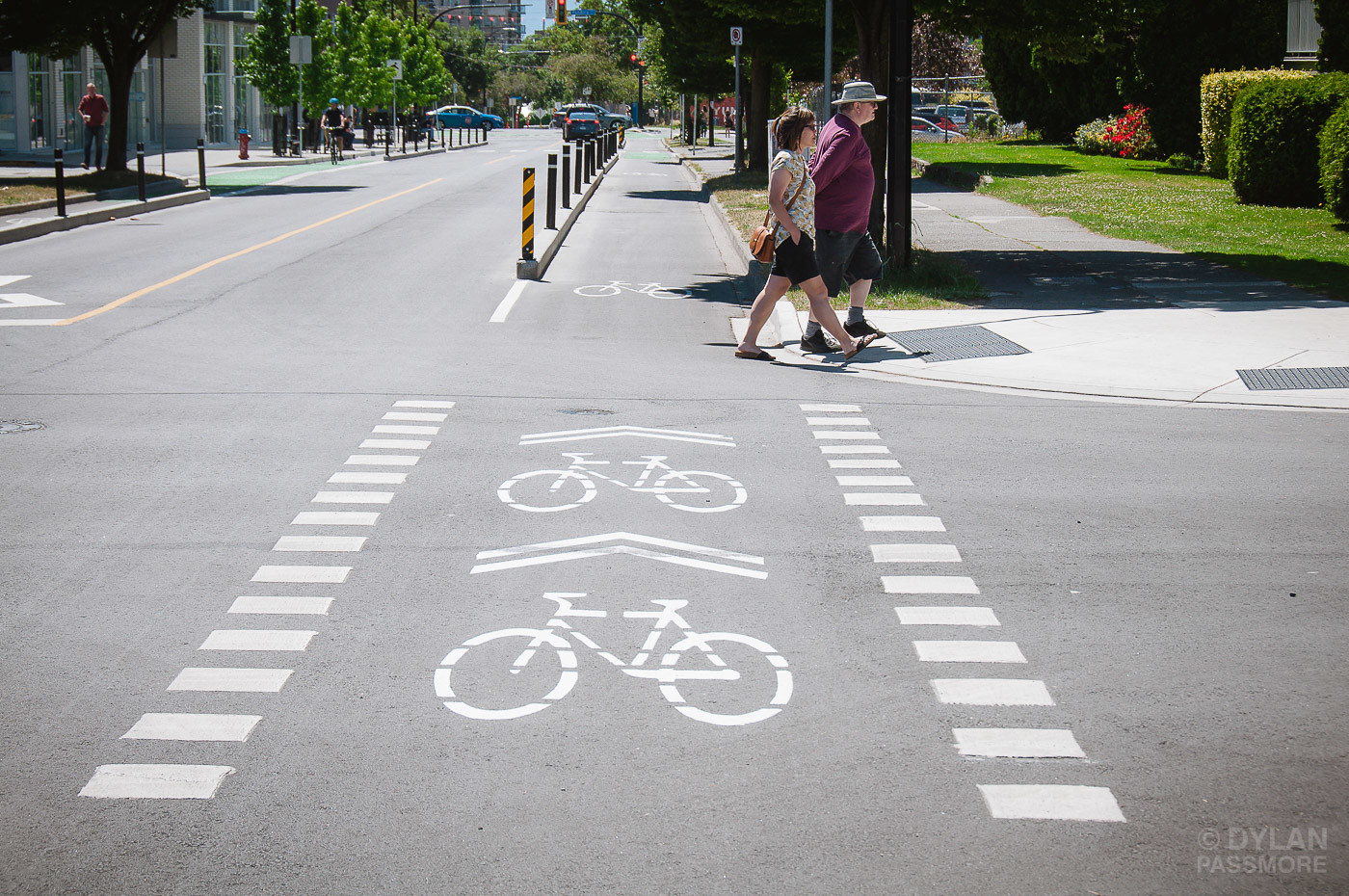
As you might expect, one reason some people don’t bicycle is that their local infrastructure isn’t built for bicycles. In other words, infrastructure, ranging from bike lanes to parking, needs to not only be built but to be designed to consider the needs of differing types of cyclists, reports a study in the Journal of Transport & Health that used a rather small sample – a survey of 40 people in the Melbourne region of Australia. Participants said they’d feel better with separated bike lanes, but that unprotected and painted lanes and symbols on the road wouldn’t have much impact on them.
A protected bike lane in Victoria, British Columbia. Victoria ranks as the most bicycle-friendly city in Canada, but similar infrastructure is needed in other cities, especially Toronto and environs. Photo by Dylan Passmore. CC BY-NC 2.0 DEED Attribution-NonCommercial 2.0 Generic
They also wanted safe bike parking, such as in high-traffic areas or secure ones if out of the way. And if parking is placed in shopping centers, it should be near the entrance.
The surveyed included an equal number of men and women but most were between 54 and 74 years old.
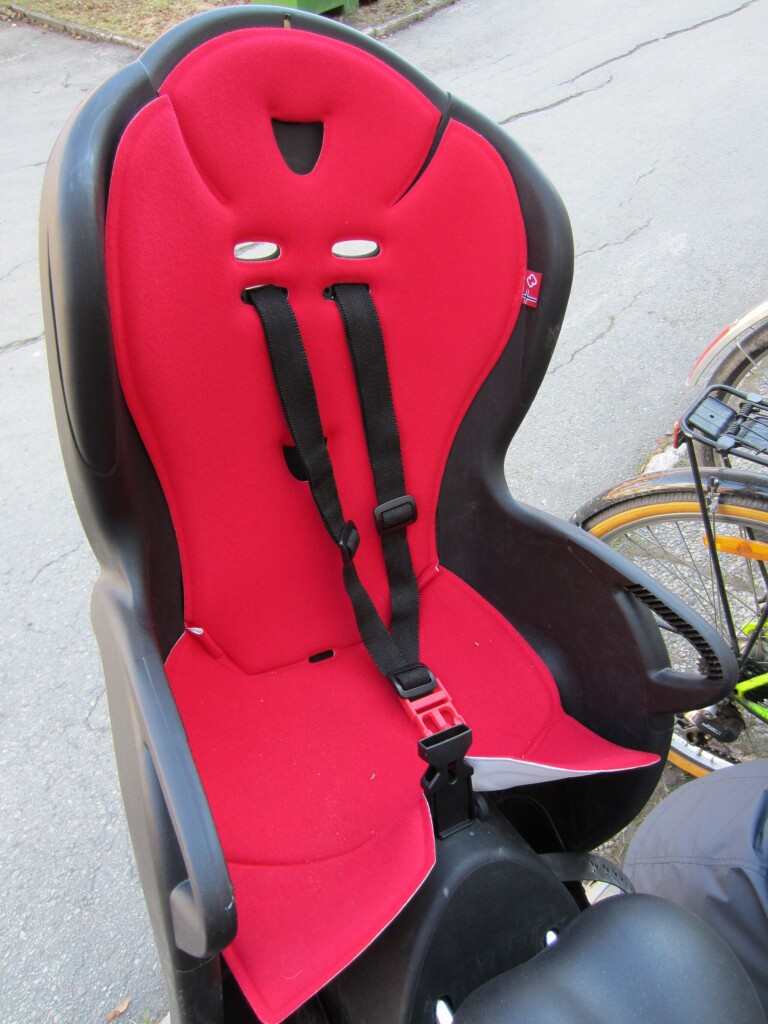
By Charles Pekow — Cargo bikes, trailers, and child seats can all help transport children by bicycle instead of using a car. However, their safety hasn’t been adequately studied. To address this, the Journal of Pediatric Health Care published a study titled “Child Safety on Bicycle Seats A Study Evaluating the Need for Additional Markers to Increase the Visibility of Children When Transported by Bicycle.”
“There is a gap in the literature of studies looking at child visibility and safety when transported by bicycle, especially in cities where cycling is starting to grow,” the report warns. The research took place in Lisbon, the Portuguese capital, which suffers from “poor cycling infrastructure and low cycling modal share, and cyclists find it difficult to ride safely due to the lack of dedicated infrastructure and the constant sharing of the road with reckless drivers.”
Still, the study found parents didn’t see transporting children as much of a safety issue, but it does indicate that more safety features, such as increasing visibility of children, are needed.
Hundreds To Gather in Park City for Utah’s Largest Cycling Event for People of All Abilities
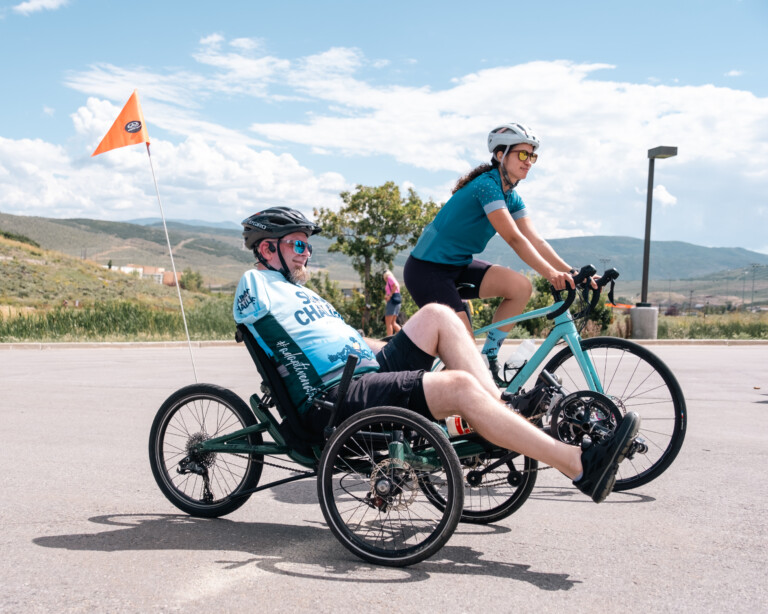
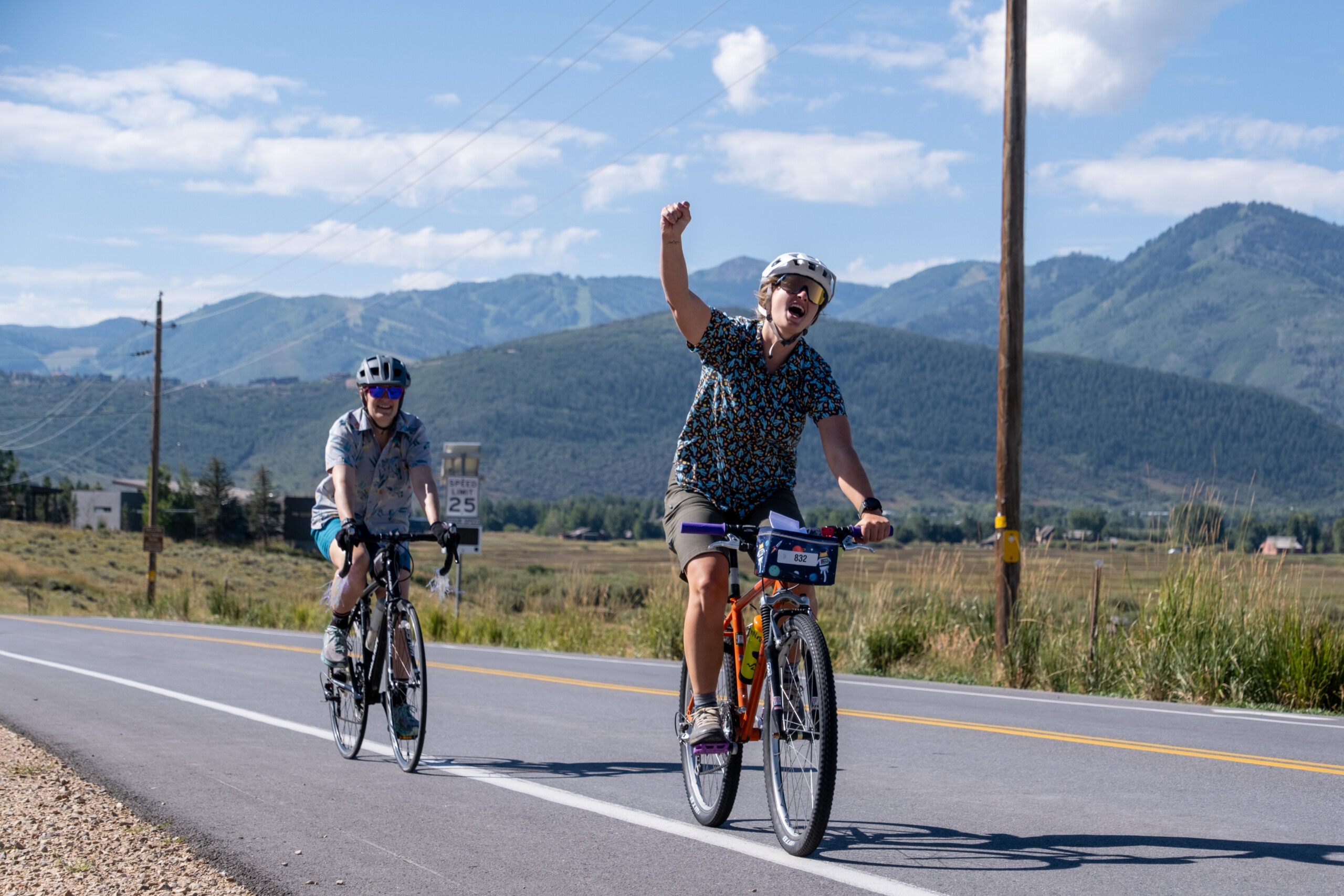
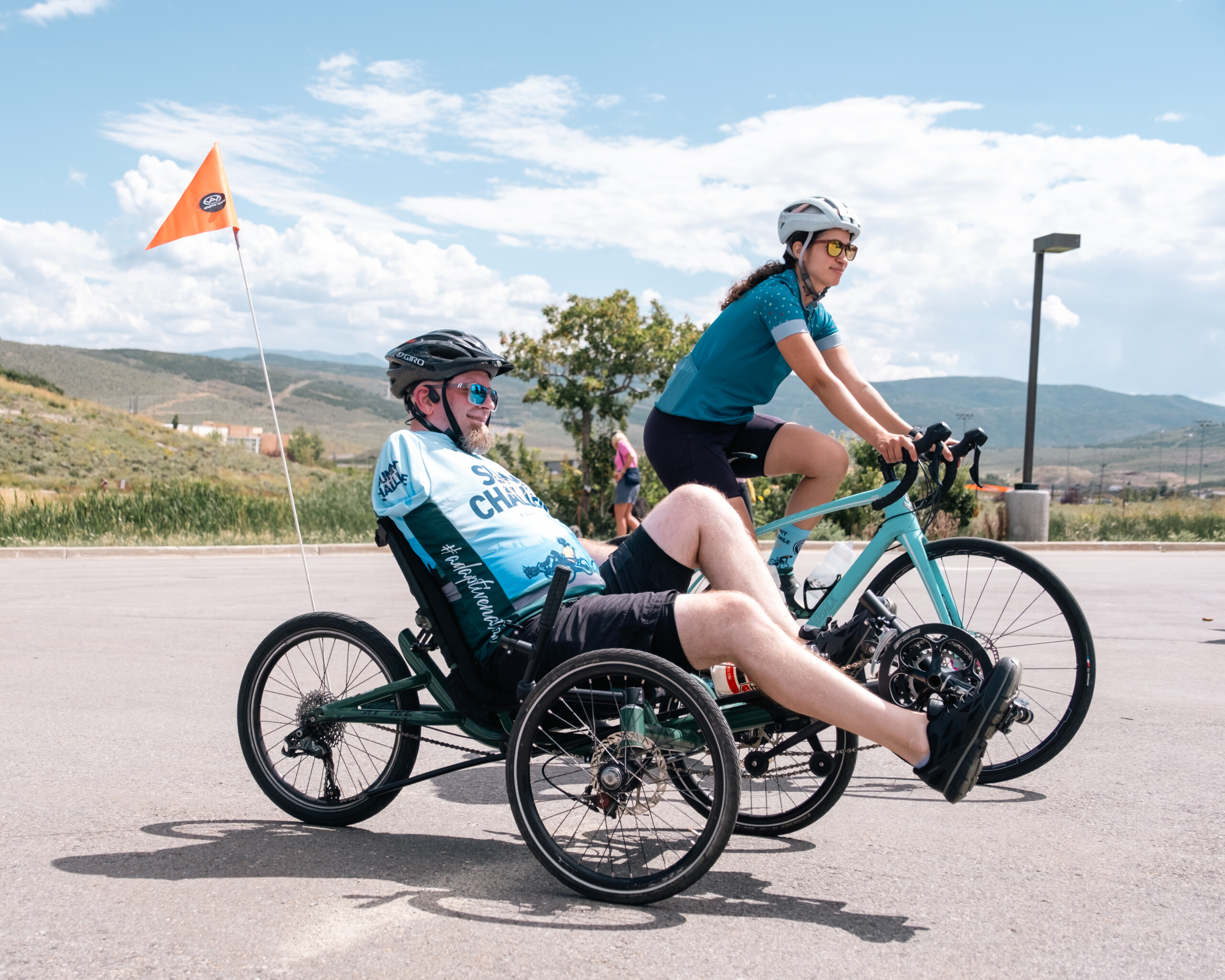
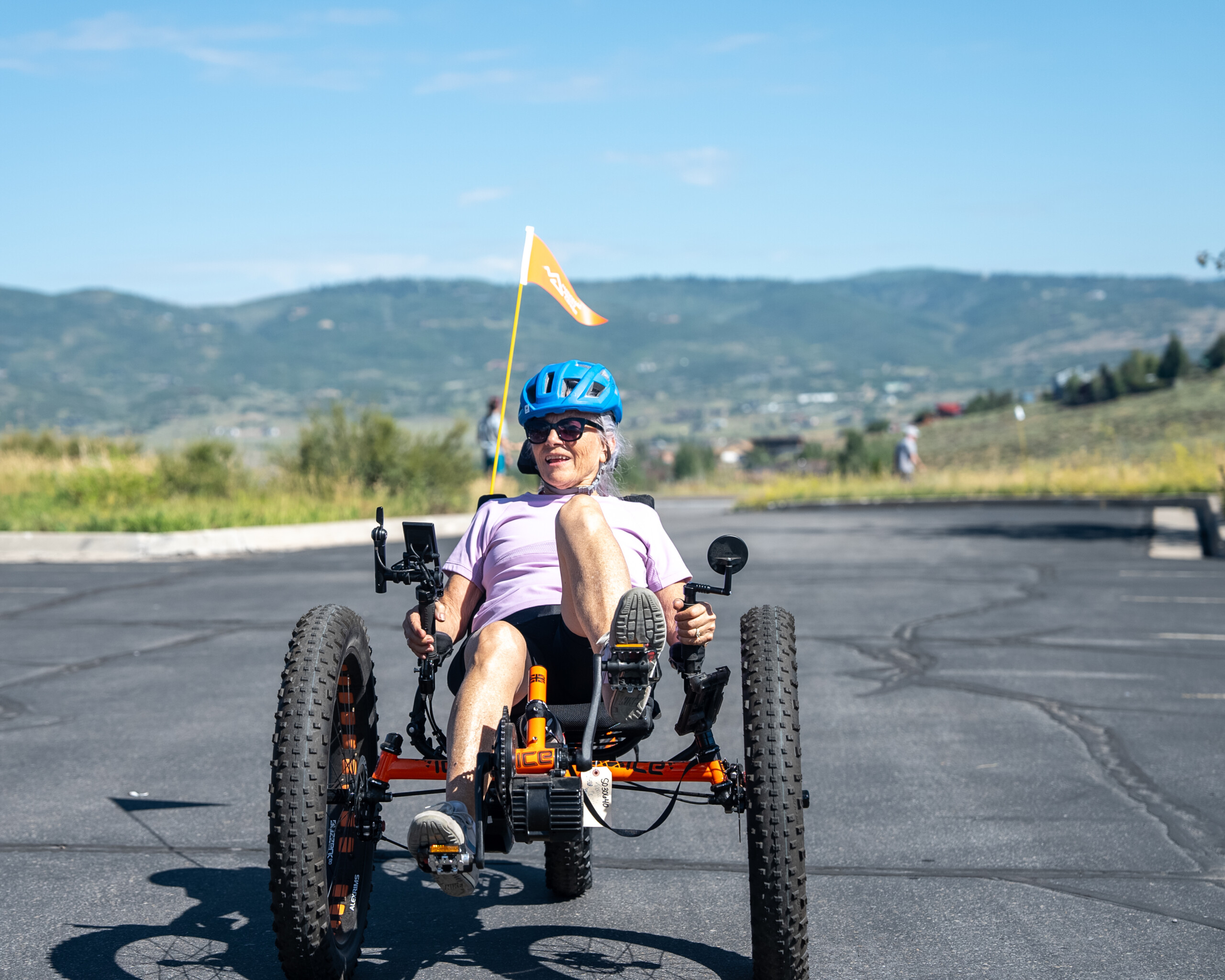
PARK CITY, Utah (July 10, 2024) – The Summit Challenge will return to the National Ability Center (NAC) on Saturday, August 24, 2024 with the goal of raising $150,000 for adaptive recreation programs. Rides begin between 7:00 a.m. and 9:30 a.m. MT, depending on distance, and run through the scenic mountains and valleys of Summit and Wasatch counties. With multiple distance courses available for riders to participate in, ranging from 16 to 100 miles, cyclists of all abilities will help raise funds for the National Ability Center’s multitude of programs and activities. The event village will open at 11:00 a.m. MT with lunch, refreshments and entertainment. An awards presentation will take place on the main stage at 2:30 p.m. MT and the village will wrap up at 4:00 p.m. MT.
Photo courtesy National Ability Center.
“Each year, the Summit Challenge unites Utah’s vibrant cycling community to raise funds for adaptive recreation. Whether you’re a seasoned rider or a newcomer, this is an excellent opportunity to join fellow cyclists on the road,” said Tracy Meier, chief program and education officer at the National Ability Center. “The day doesn’t end on the route; both cyclists and spectators are invited to our event village for lunch, drinks, live music, and fun! Come out, embrace the adventure, and seek your summit!”
Photo courtesy National Ability Center.
Over the last 17 years, the Summit Challenge has come to be known as Utah’s largest ride for cyclists of all abilities and continues to provide people of all ages and skill levels the opportunity to experience the thrill and beauty of the Utah mountains. The annual challenge raises money to support over 30,000 experiences that the National Ability Center offers to people of all abilities annually. The fully-supported road ride offers participants a choice of a 1-, 4 & 7 (adaptive riders only), 16-, 25-, 50-, 80- or 100-mile routes to fit all experience levels. Riders of the 100-mile course have the opportunity to complete the two-mile climb up Wolf Creek Ranch, a trail that is typically only open to non-residents during the Summit Challenge. Additionally, a 1-mile Discovery Loop offers families a fun-filled way to get involved with the Summit Challenge at no cost.
Photo courtesy National Ability Center.
Registration closes on Aug. 22 at 7:00 p.m. MT, and prices start at $60 with all adaptive athletes riding for free. Event sponsors include Kodiak Cakes, KT Tape, Hearth & Hill and Park City Brewing. The National Ability Center encourages riders to fundraise as an individual, or create a team, to benefit the leading, adaptive nonprofit.
For more information about the National Ability Center’s Summit Challenge, visit summitchallenge100.org.