OGDEN, Utah — Ogden-based ENVE Composites has signed on as a primary sponsor of Mick Schumacher’s No. 47 entry with Rahal Letterman Lanigan Racing for the 2026 NTT IndyCar Series season, the company announced last month.
The partnership, revealed February 27, also designates ENVE as a full-season major associate sponsor for the campaign. Schumacher made his IndyCar debut at the Firestone Grand Prix of St. Petersburg on March 1, though he did not finish the race after crashing out before completing the first lap.
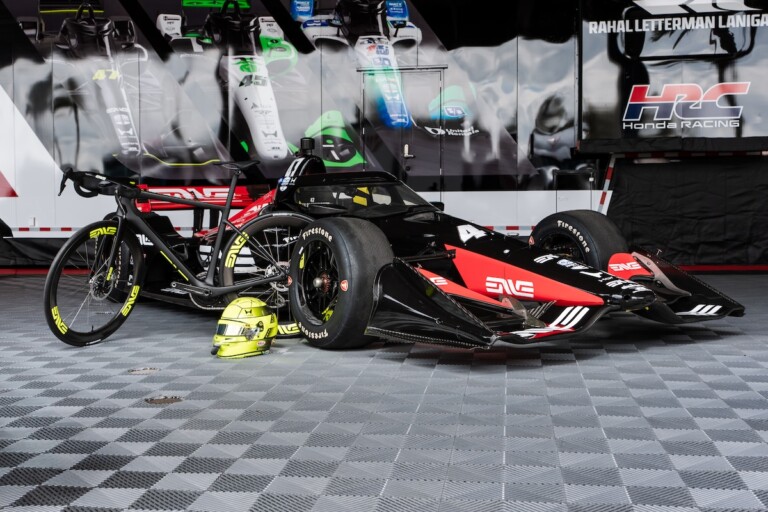
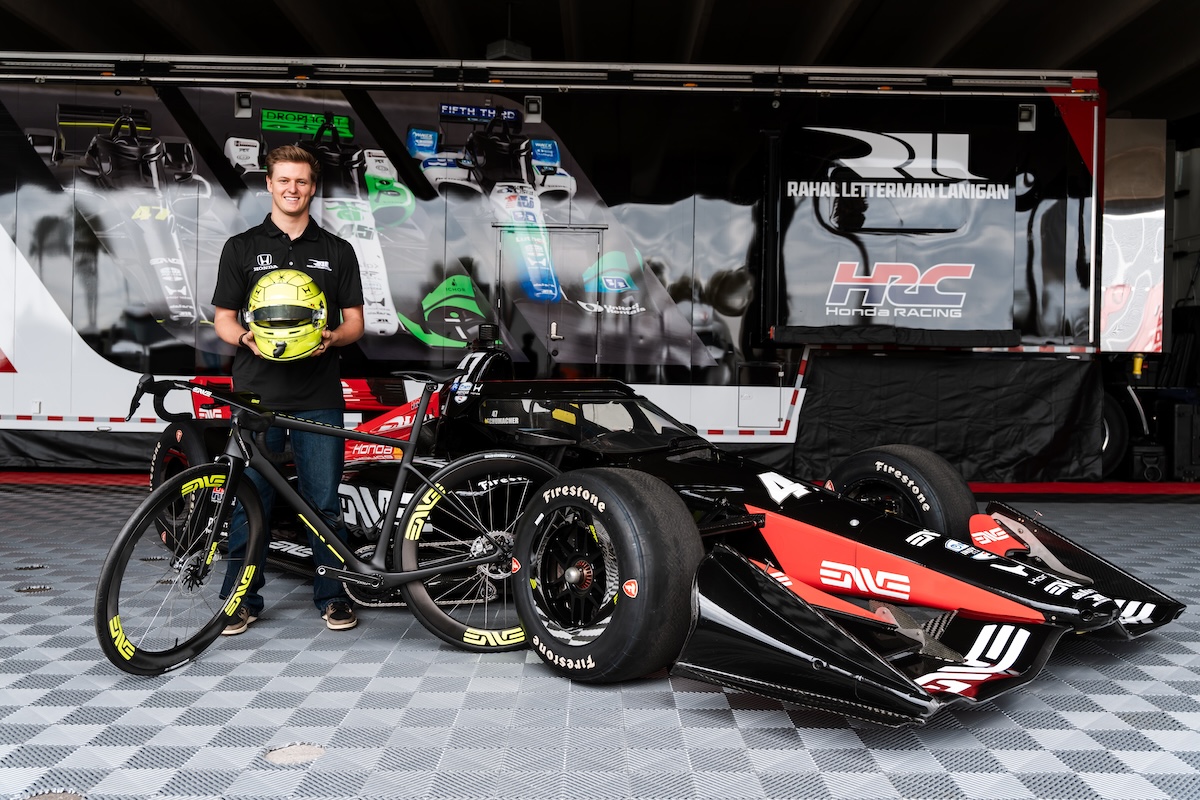
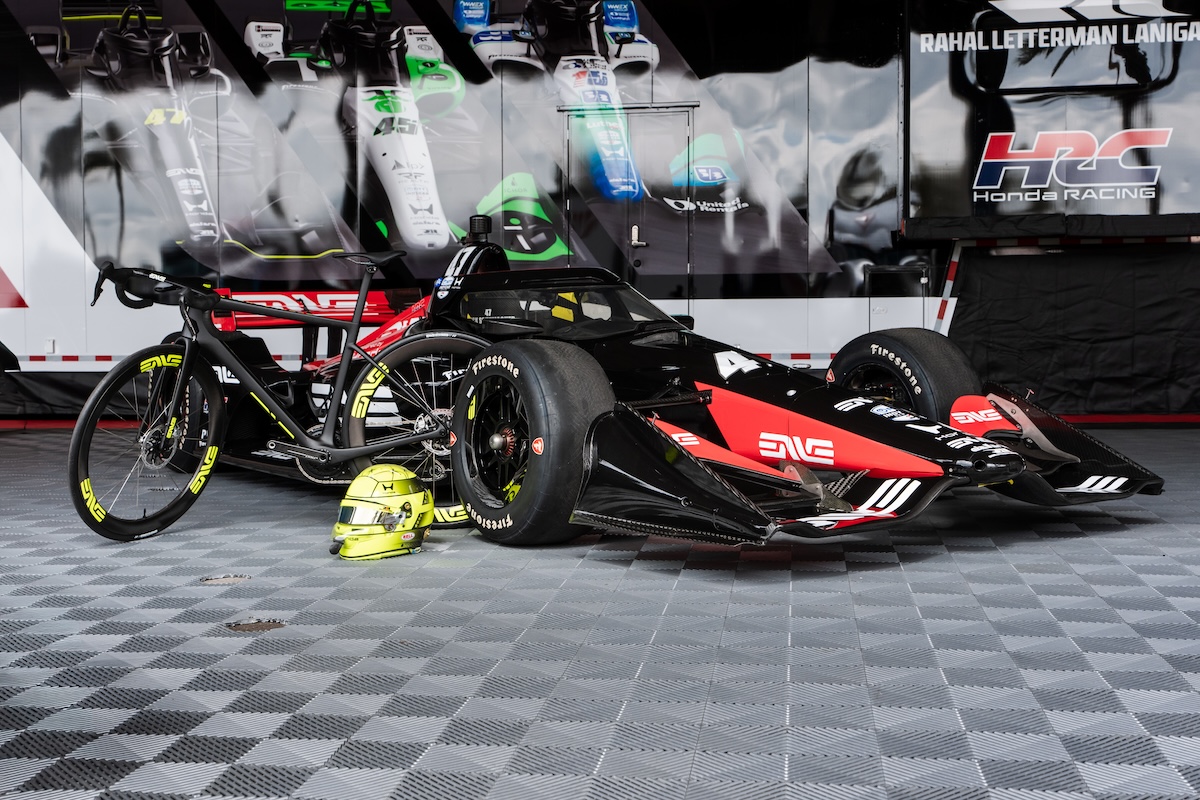
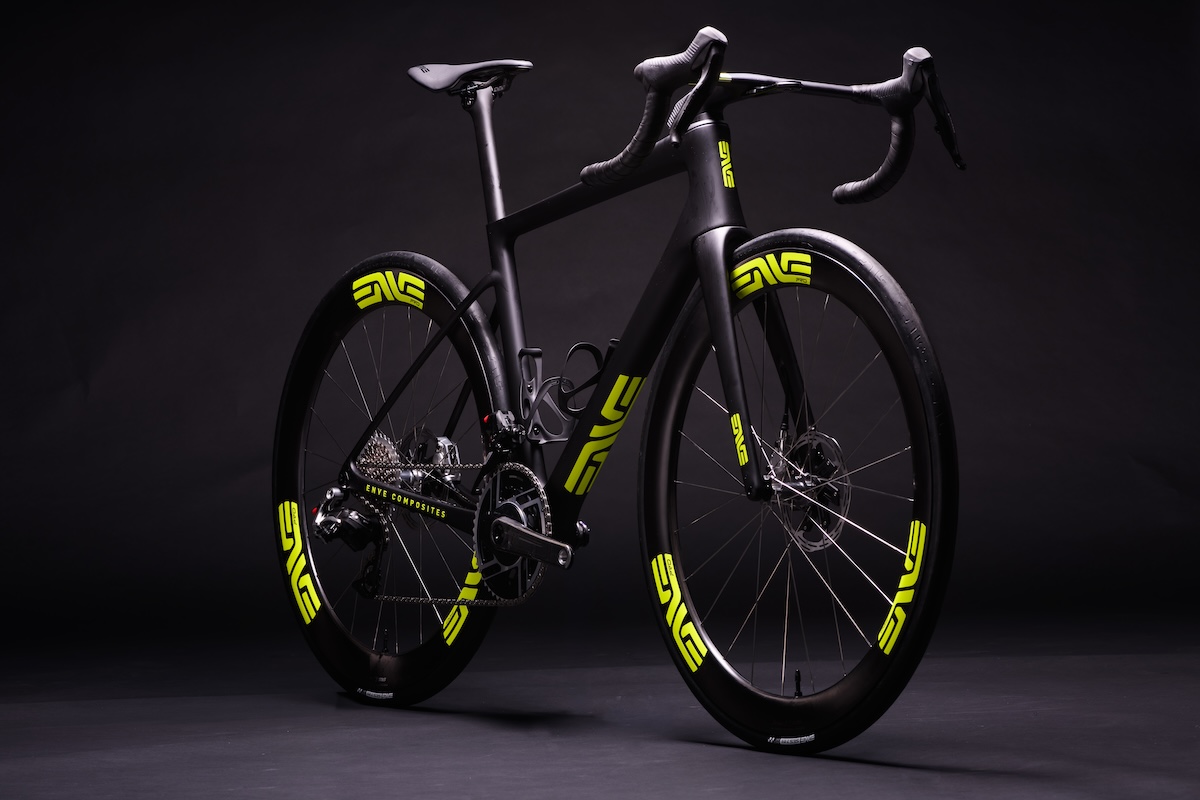
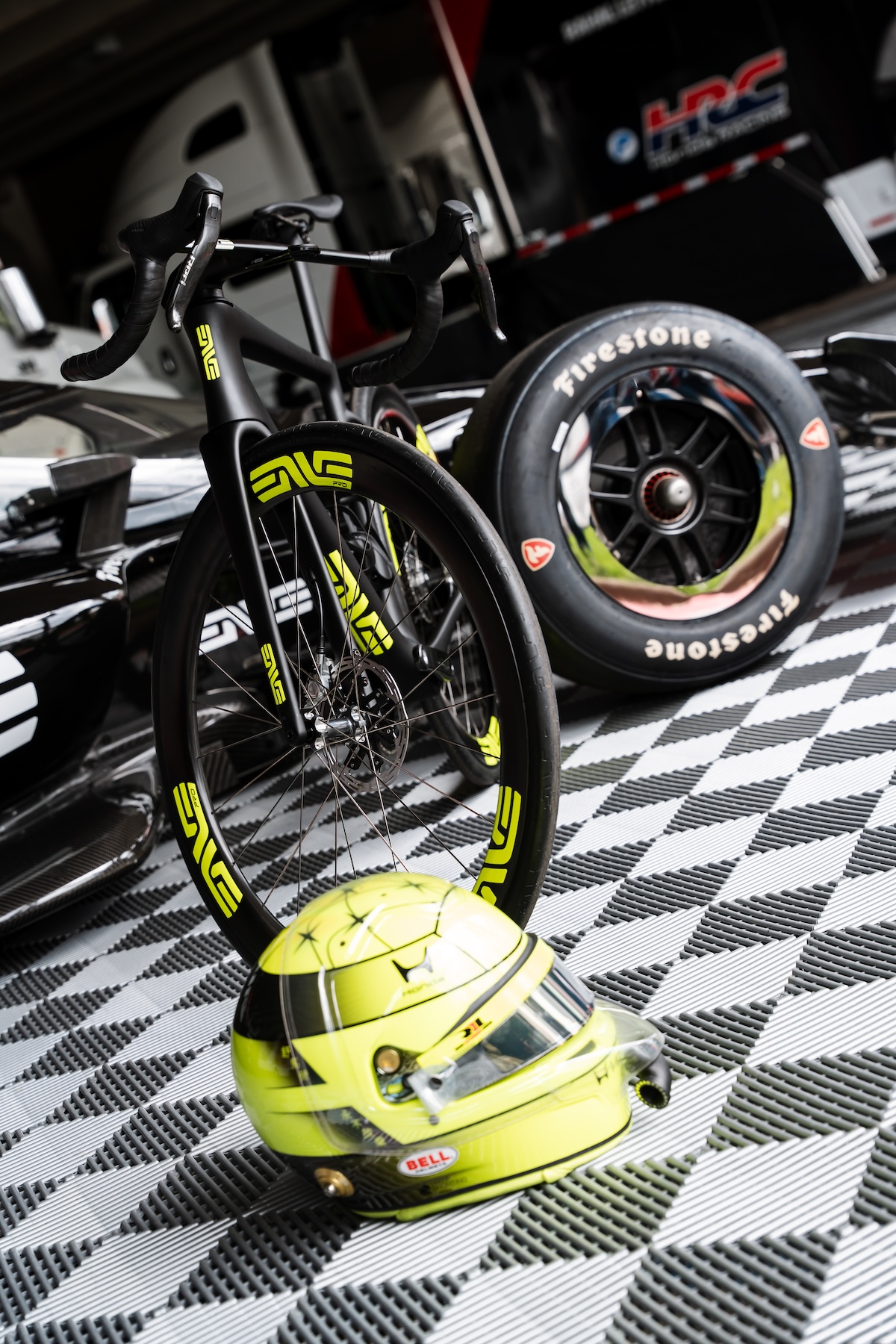
Mick Schumacher with his #47 Dallara Honda and his ENVE Melee. Photo courtesy ENVE Composites
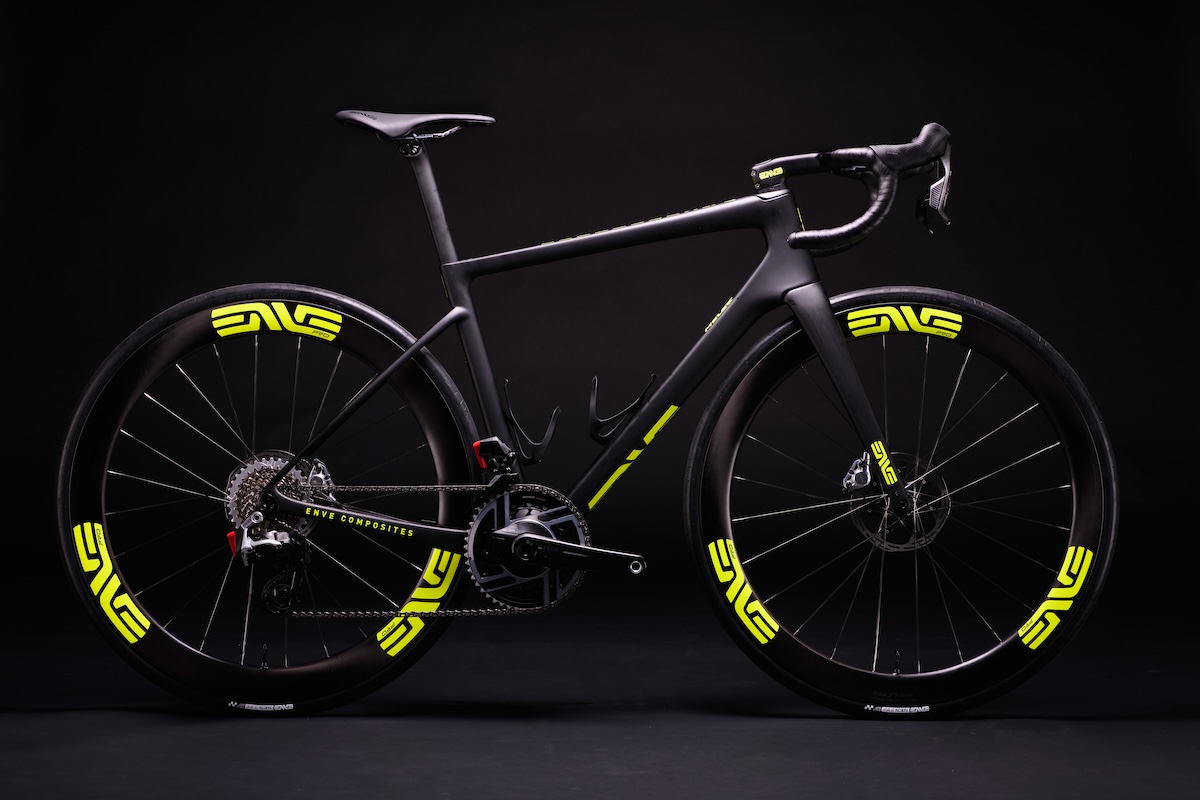
The partnership unites two organizations driven by a shared commitment to pushing the limits of materials science, aerodynamics, and speed. The collaboration will also see Schumacher, an avid cyclist, riding ENVE bikes, including a custom‑painted Melee inspired by the driver’s signature helmet design.
“At this level of racing, the smallest details make the biggest difference. ENVE’s reputation for innovation and performance makes them a natural fit for our INDYCAR program. It’s exciting to have them onboard as the primary sponsor for our debut,” said Mick Schumacher, driver of the No. 47 Honda/Dallara/Firestone entry.
Schumacher, the son of legendary seven‑time Formula One World Champion Michael Schumacher, brings an impressive résumé that includes 43 Formula One starts with a best finish of sixth, as well as three podiums in World Endurance Championship (WEC) competition.
Michael Stimola, CEO of ENVE Composites said, “Both ENVE and Rahal Letterman Lanigan Racing are built on a legacy of performance earned through discipline, innovation and relentless refinement. Mick Schumacher represents the next generation of that pursuit. This partnership connects our engineering philosophy with one of motorsport’s most competitive platforms.”
SALT LAKE CITY, Utah (March 24, 2026) — “Racing isn’t everything.” Coming from Olympian and six-time U.S. Elite National Champion Erin Huck, that statement carries weight. Huck has spent much of her life chasing results at the highest level of the sport—lining up at World Cups, World Championships, and the Lifetime Grand Prix—while simultaneously building a career as an engineer. For years, her world revolved around start lines, podiums, and performance.
But recently, her perspective has shifted.
Cycling has always been woven into Huck’s family life. Today, she and her husband Andrew are passing that love of bikes on to their young son, Brennan—just as Huck’s parents, Terrie and Al, once did for her. Yet it took a quiet moment at a local race in Boulder to spark a deeper realization.
The scene was familiar: Huck standing on the podium while Andrew helped Brennan prepare for his Strider race. It was the rhythm of their lives—bikes equaled racing. But in that moment, Huck began to question what cycling really looked like through her son’s eyes.
“That moment made me realize that bikes, to Brennan, had been all about racing,” Huck says. “It sounds silly, but it was kind of an aha moment—almost a life-changing realization. We suddenly saw that bikes are about so much more than racing.”
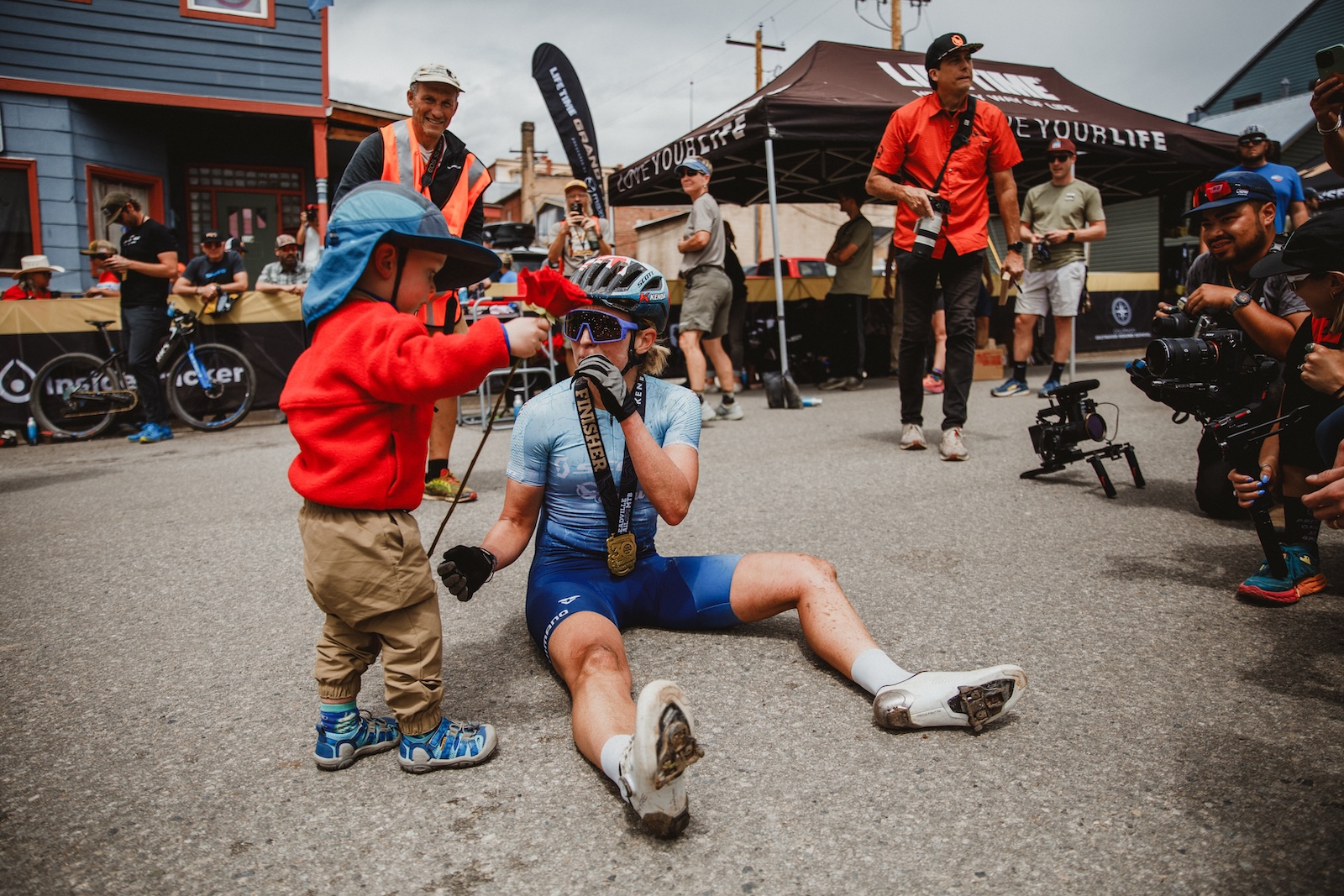
Erin Huck, with son Brennan, at 2024 Leadville 100. Photo by Kyle Thornhill, courtesy of SCOTT Bikes
That realization sent Huck back to her own childhood. Long before elite competition, cycling meant something simpler: family trips, days spent exploring the mountains, and the freedom of moving through the world on two wheels.
“We had a little pop-up camper with a rack on top of the car,” recalls her mother, Terrie Huck. “Most of our vacations were planned around riding bikes, traveling to different places, and exploring.”
Those early experiences—unstructured, adventurous, and shared—formed the foundation of Huck’s lifelong connection to the sport. Racing came later. The love of riding came first.
The Huck Family (and Erin’s husband Andrew Clemence) prepare for their bikepacking trip. Photo courtesy of SCOTT Bikes
Now, Huck wants to recreate that same foundation for Brennan.
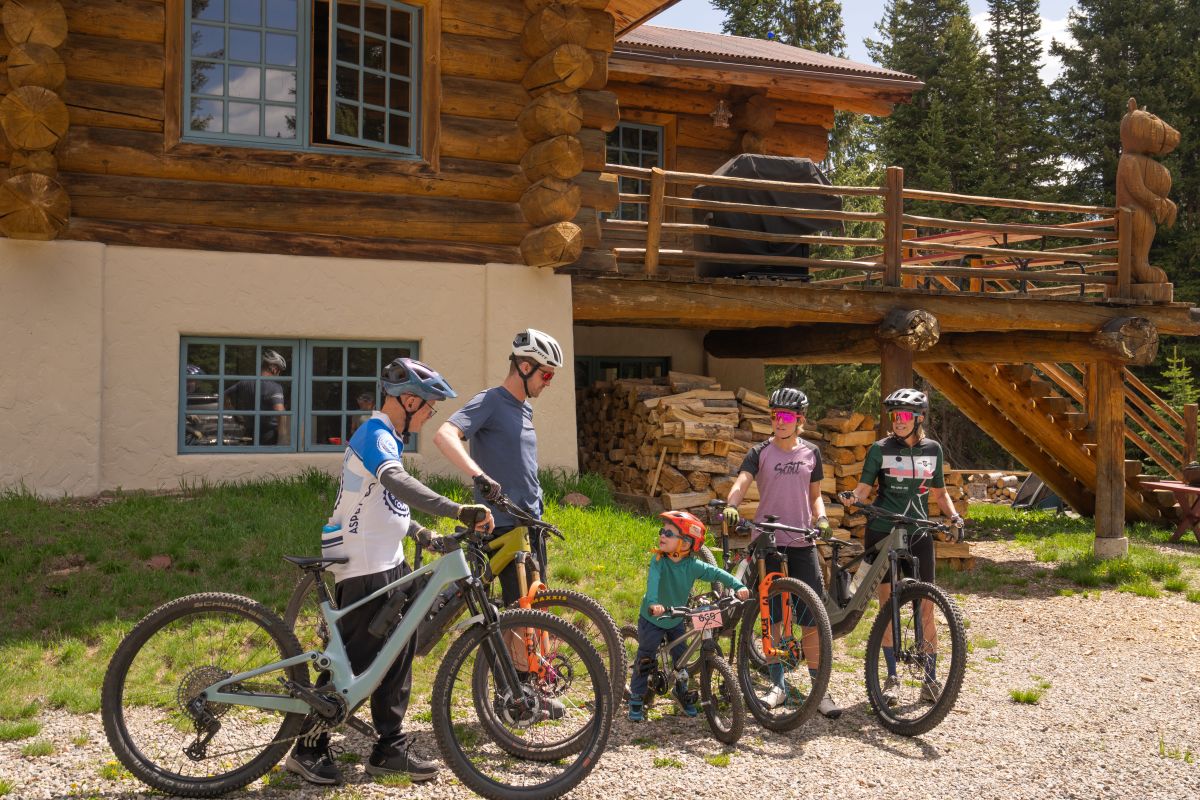
The result is Cycles of Life, a new film project that follows the Huck family on a bikepacking journey through the Colorado mountains. Spanning three generations, the trip steps away from competition entirely. There are no race numbers, no finish lines—just miles of trail, time together, and the simple act of riding.
It’s a return to what bikes can be at their core: a vehicle for connection, exploration, and joy.
For Huck, the project is both personal and universal—a reminder that while racing can define a career, it doesn’t have to define a life on two wheels.
“Those moments weren’t about podiums or placings,” she reflects. “They were about family. About freedom. About joy.”
Cycles of Life invites viewers to look beyond the finish line—and to remember why they started riding in the first place.
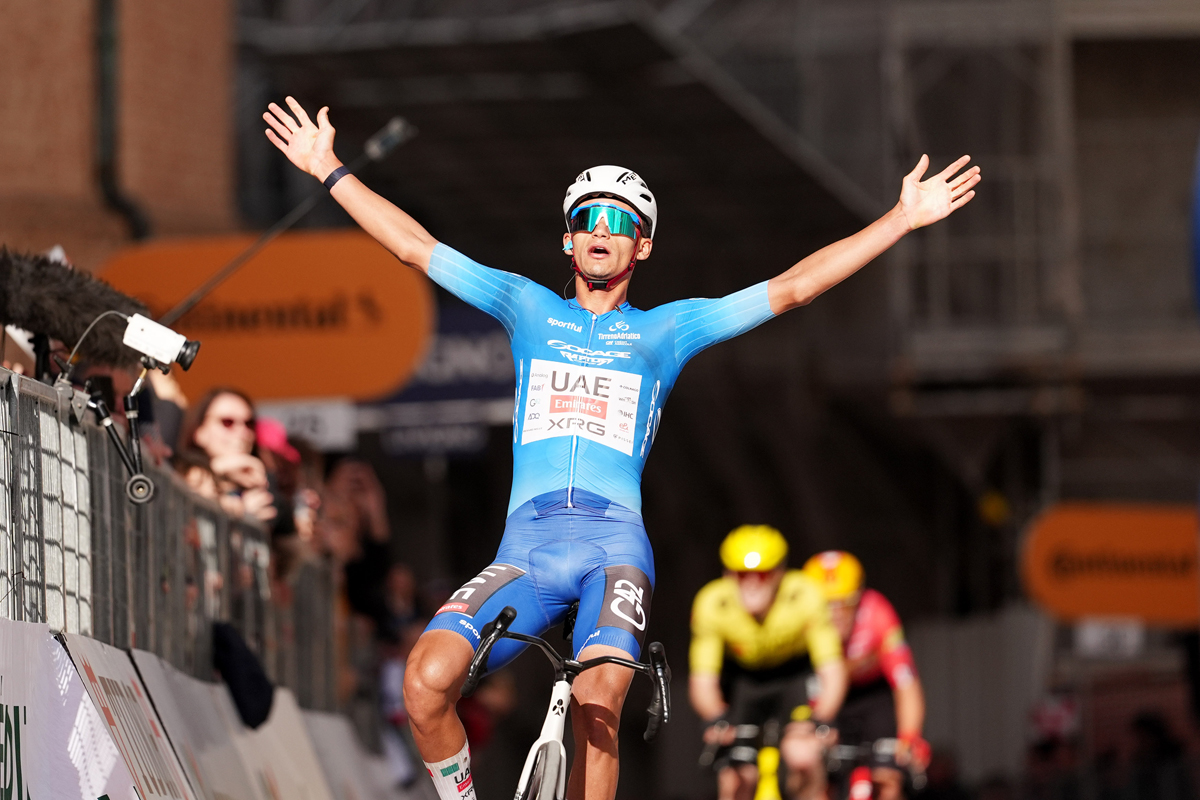
He crashed in Imperia, lost his team, and arrived in Sanremo having done the impossible anyway. Tadej Pogačar’s victory in the 117th Milano–Sanremo was not the one anyone had written for him. It was something considerably more than that.
They had been talking about it since the autumn. Not about whether Pogačar would win Milano–Sanremo—the world champion had already admitted that himself, with characteristic directness—but about when. “A win would mean more to me than a record six Tour de France,” he had said before the start in Pavia, standing in the pale Lombard morning with the Certosa di Pavia as a backdrop. “Because in my eyes, the gap between zero and one is bigger than the difference between four and five.” He had finished third in the two previous editions. The curse of the rainbow jersey—no world champion had won here since Giuseppe Saronni in 1983—did not apparently trouble him. What happened in the middle of the afternoon on the road to Imperia would have troubled almost everyone else.
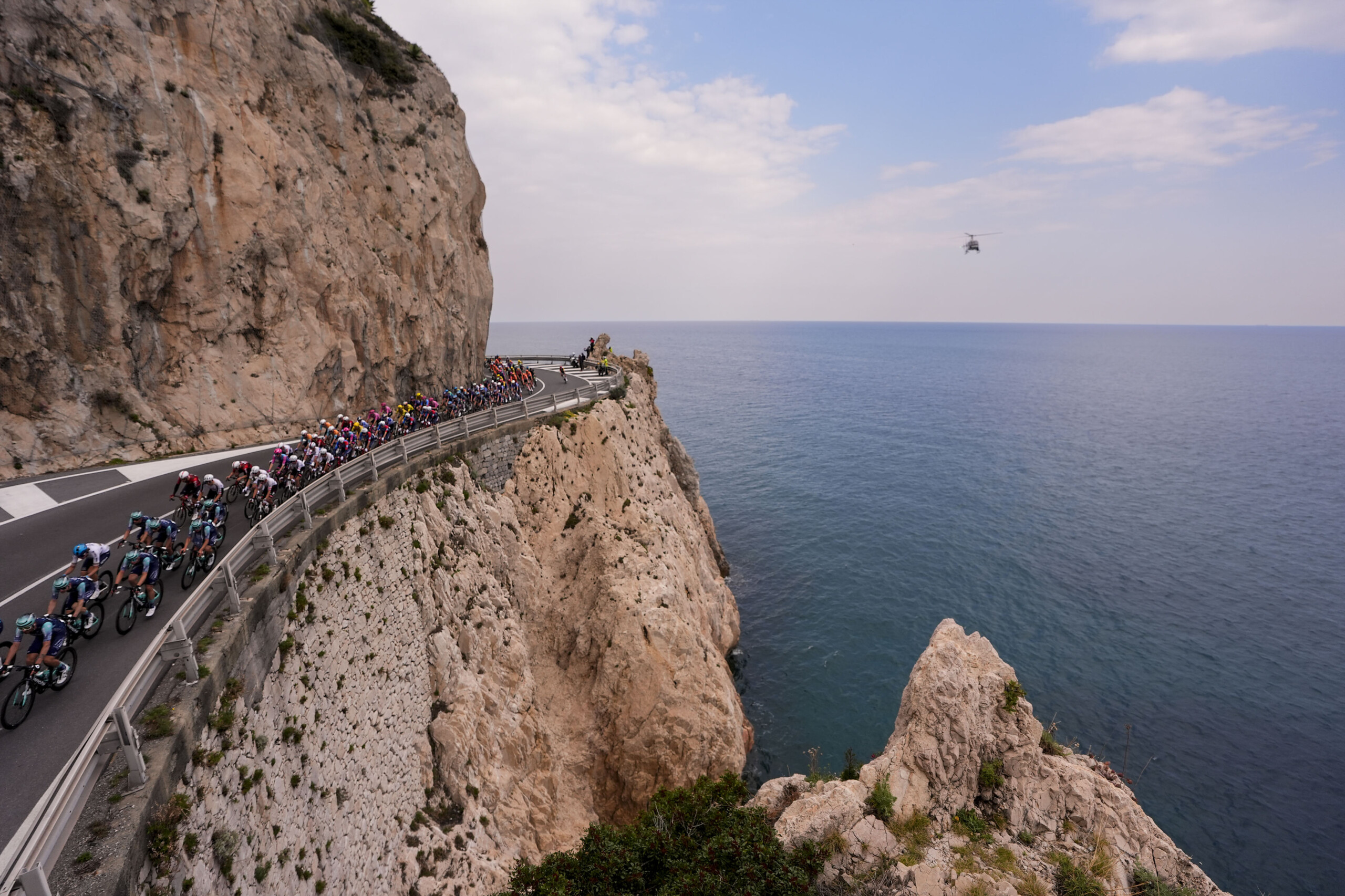
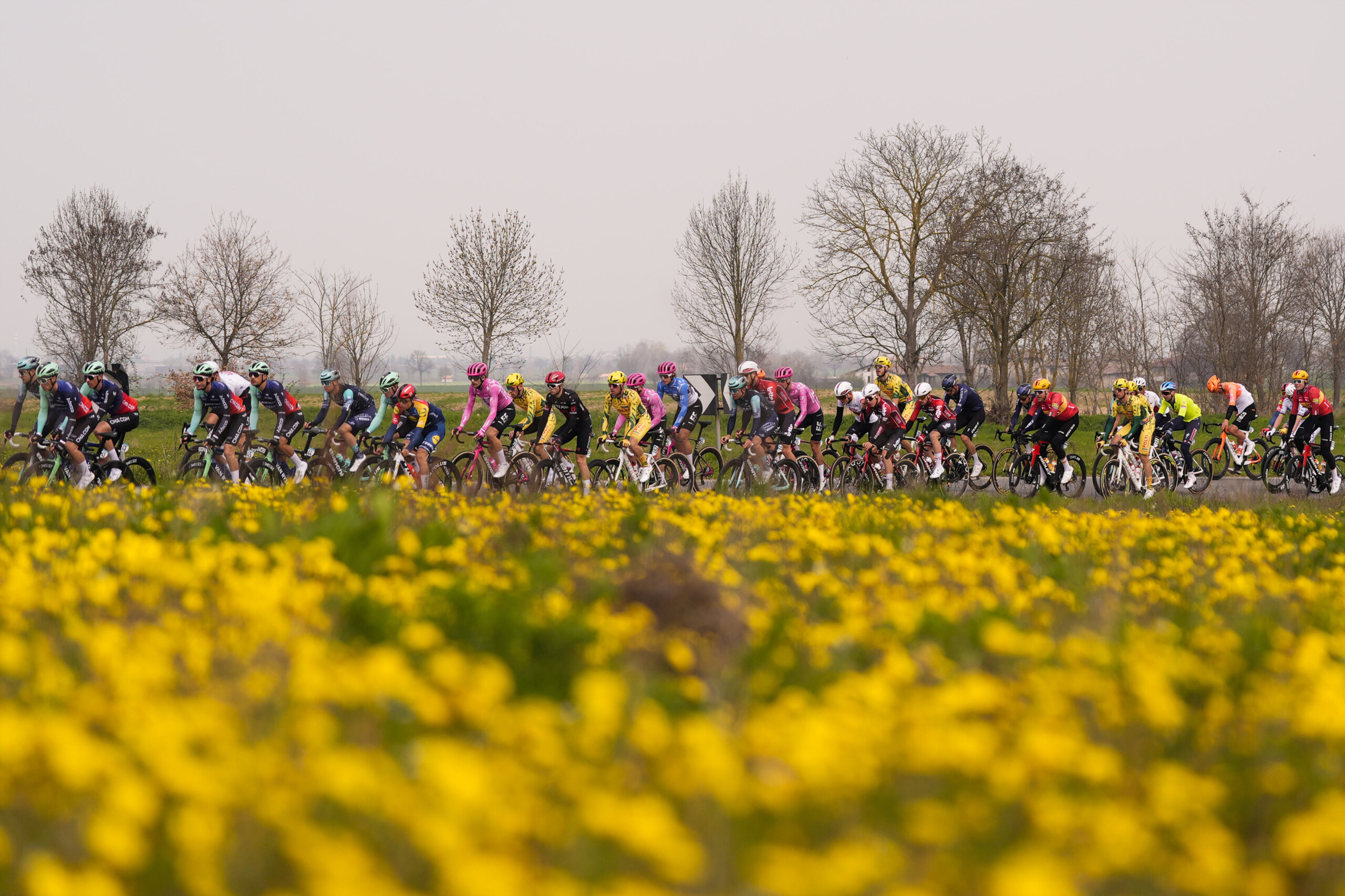
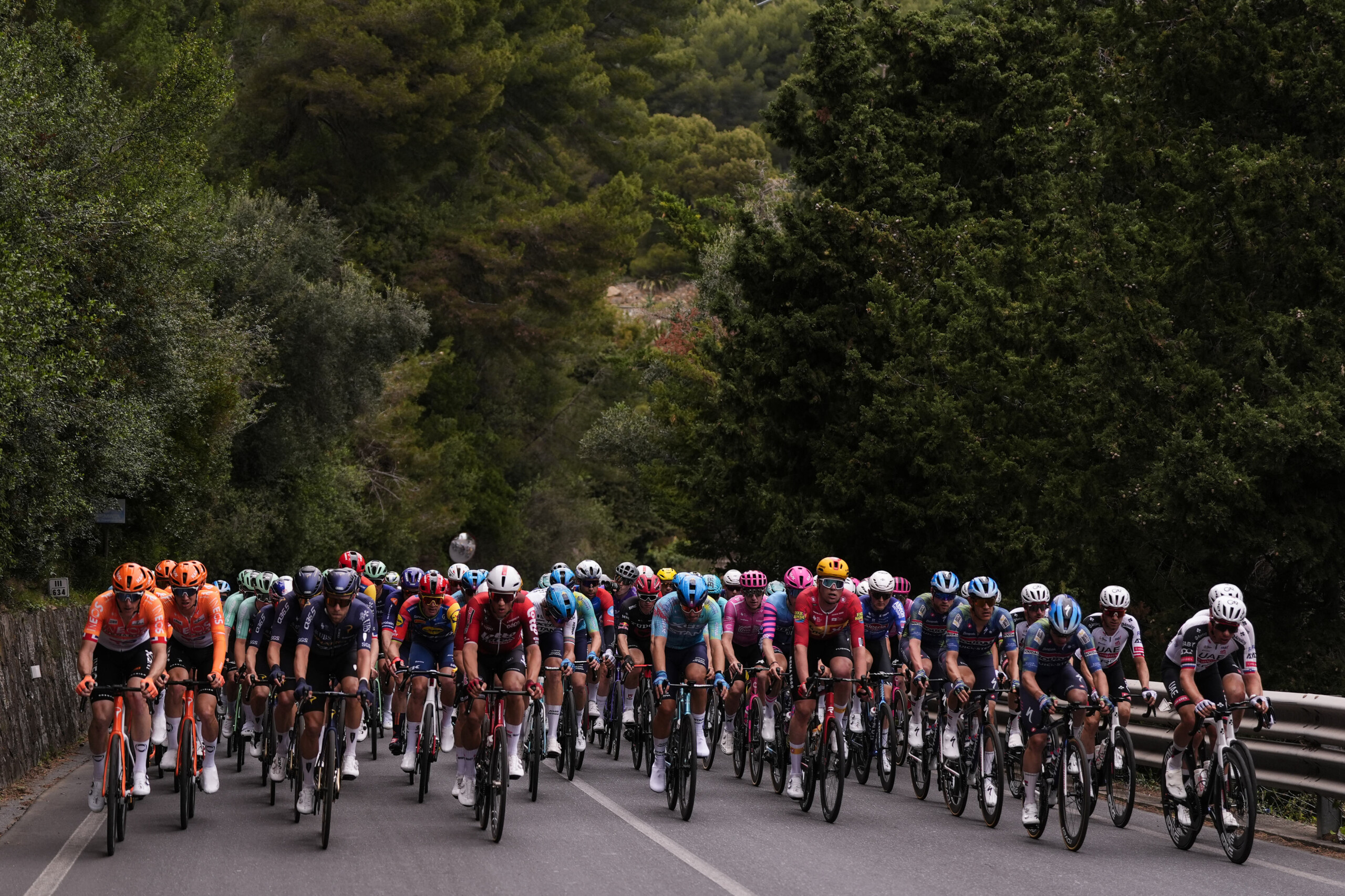
The 175-rider peloton had rolled out of Pavia at 10.12, crossing the official KM0 into the 117th edition of the Classicissima. Two hundred and ninety-eight kilometres to Via Roma. Past the Certosa, north toward Milan and back, through the Oltrepo Pavese plains and the Lomellina rice fields—flooded and mirror-still in March, reflecting a sky already beginning to suggest what kind of day it would become—south toward Tortona and the Passo del Turchino, and then west along the Ligurian coast to the finish. The longest Monument. The most unpredictable. The one that, as Pogačar said, “can be lost at every metre.” It nearly was.
Riders during the men’s elite race of the Milano-Sanremo one day cycling race (298 km) from Pavia and to Sanremo – North West Italy – March 21, 2026. Sport – cycling . (Photo by Fabio Ferrari/LaPresse)
Pavia To The Turchino: The Breakaway Game
A nine-man escape cleared the peloton within the opening forty kilometres: Martin Marcellusi and Manuele Tarozzi of Bardiani CSF 7 Saber, Lorenzo Milesi and Manlio Moro of Movistar, Andrea Peron and David Lozano of Novo Nordisk—the all-diabetes squad making their presence felt at the sport’s oldest spring monument—Alexy Faure Prost of Picnic PostNL, and Dario Igor Belletta and Mirco Maestri of Polti VisitMalta, who were racing in their Maglia Iconica, a tribute to the squad’s 1990s colour scheme that gave the early kilometres a pleasantly nostalgic quality.
Riders during the men’s elite race of the Milano-Sanremo one day cycling race (298 km) from Pavia and to Sanremo – North West Italy – March 21, 2026. Sport – cycling . (Photo by Fabio Ferrari/LaPresse)
Three riders had inadvertently slipped off the front before the break was established—Silvan Dillier, Johan Jacobs, and Axel Laurance finding themselves with a small gap while the peloton was still organising itself, exchanging glances and sitting up until the bunch closed. Dillier stayed at the front regardless, grinding away on behalf of Alpecin–Premier Tech with the kind of unglamorous consistency that keeps races honest. After two hours of racing the average speed stood at 45.2 km/h; after the first hour it had been 46.5. The break held around four to six minutes through the long Lombard plains.
Riders during the men’s elite race of the Milano-Sanremo one day cycling race (298 km) from Pavia and to Sanremo – North West Italy – March 21, 2026. Sport – cycling . (Photo by Fabio Ferrari/LaPresse)
At Ineos Grenadiers, Filippo Ganna had been speaking before the start with the focused candour of a man who had twice come close without converting. “Winning a Monument means making history. That’s my inspiration.” He had been explicit about the tactical problem: if Pogačar attacked on the Cipressa, and if Mathieu van der Poel was not there to chase, then Ganna’s day would likely end before the Poggio. “I hope Pogačar doesn’t drop Van der Poel—that wouldn’t be good news for me.” A crash on a descent took the problem out of his hands before it arose. Michal Kwiatkowski hit the deck, collecting teammates Ben Turner and Connor Swift. Marcel Camprubí of Pinarello Q36.5 also went down. Turner and Swift eventually regained the bunch, sore but mobile. Jan Christen of UAE Team Emirates–XRG, one of Pogačar’s key lieutenants earmarked for Cipressa pace-setting duties, did not—a first significant blow to the defending team’s resources.
The breakaway’s advantage stood at two minutes ten with 42 kilometres remaining as the peloton swept through the Capi sequence—Capo Mele, then Capo Cervo, then the stiffest of the three headlands, Capo Berta. UAE Team Emirates–XRG and Pinarello Q36.5 shared the pacing duties at the front. In front of them, the break was disintegrating. Peron and Lozano of Novo Nordisk lost contact first. Then Faure Prost. Four riders remained: Belletta and Maestri of Polti, and Milesi, and Moro. The gap fell below a minute. The race was about to turn violent, and then the road turned cruel instead.
Imperia: Catastrophe At The Worst Moment
It happened on the approach to Imperia, just kilometres from the Cipressa—the exact worst place and worst moment for a crash of any consequence. The peloton hit a corner and the front disintegrated in an instant. Pogačar went down first. Then Mathieu van der Poel, then Wout van Aert, then Biniam Girmay. Almost every name that mattered on the start sheet found itself on the tarmac or swerving around those who were.
In the pandemonium that followed, it was not yet clear how badly anyone was hurt or how far back the field had splintered. What was clear was that Pogačar, the world champion, was chasing—and that with Christen already out of the race, he now had only Brandon McNulty and Isaac del Toro alongside him. Three riders from the most powerful team in the peloton, the gap to the front still not fully established, the Cipressa beginning in minutes. Van der Poel was also chasing, paced back by Jasper Philipsen. Van Aert was further back still, at a full minute.
“My teammates Florian and Felix gave everything to bring me back to the front. They gave me hope. Without the team, I would have gone straight to Sanremo just to watch the finish.” — Tadej Pogačar
What Pogačar said afterwards was unambiguous about what the crash had meant in the moment. “For a second, I thought it was all over. It happened just before the most important part of the race. Luckily I got back on the bike straight away.” He was generous, immediately and at length, about the two teammates who dragged him back: Florian Vermeersch and Felix Grossschartner. “They gave me hope. Without the team, I would have gone straight to Sanremo just to watch the finish.” By the time the peloton reached the base of the Cipressa, both Pogačar and Van der Poel had made it back. The race was still intact. Just.
The Cipressa: Three Go Clear
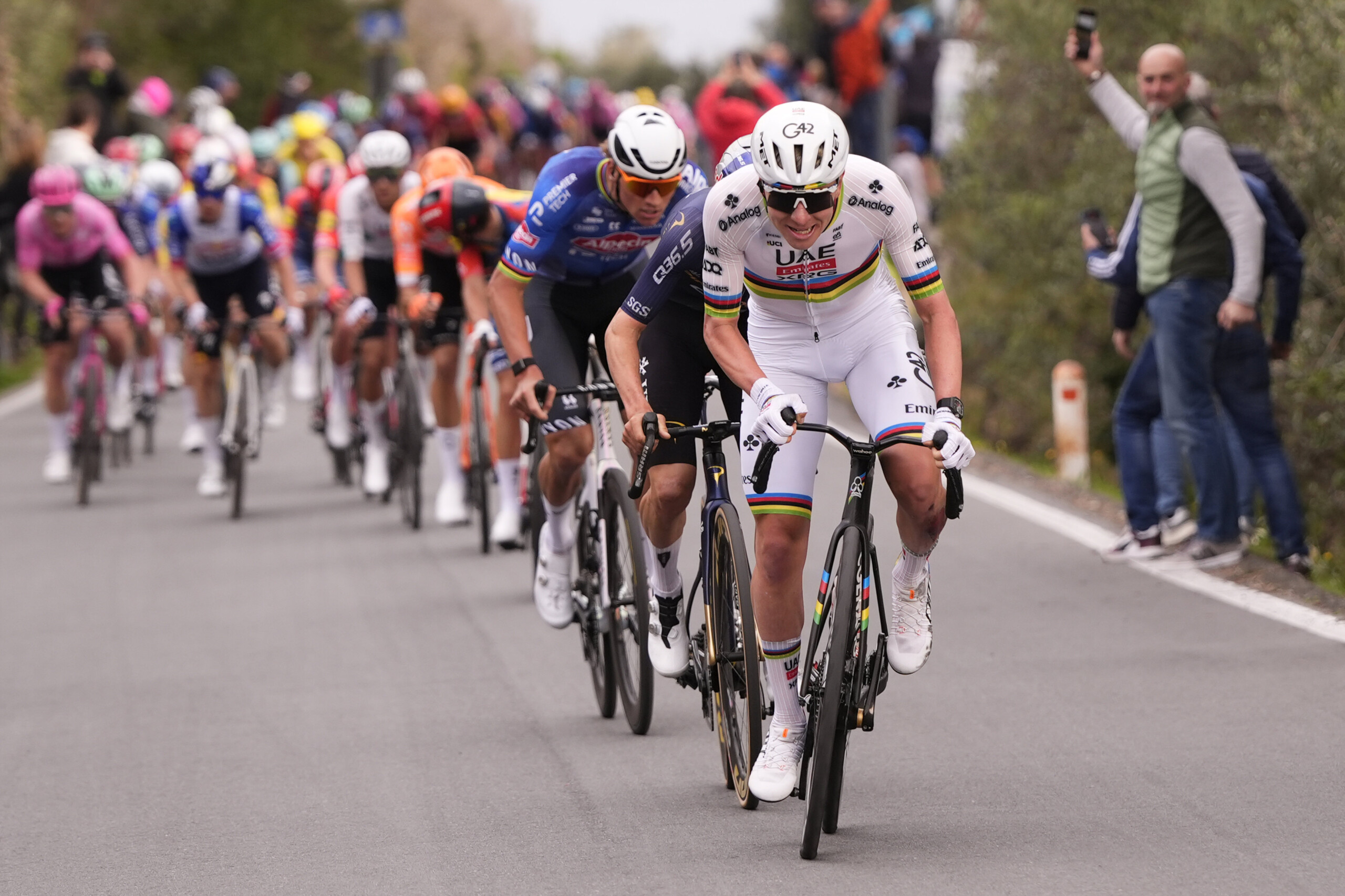
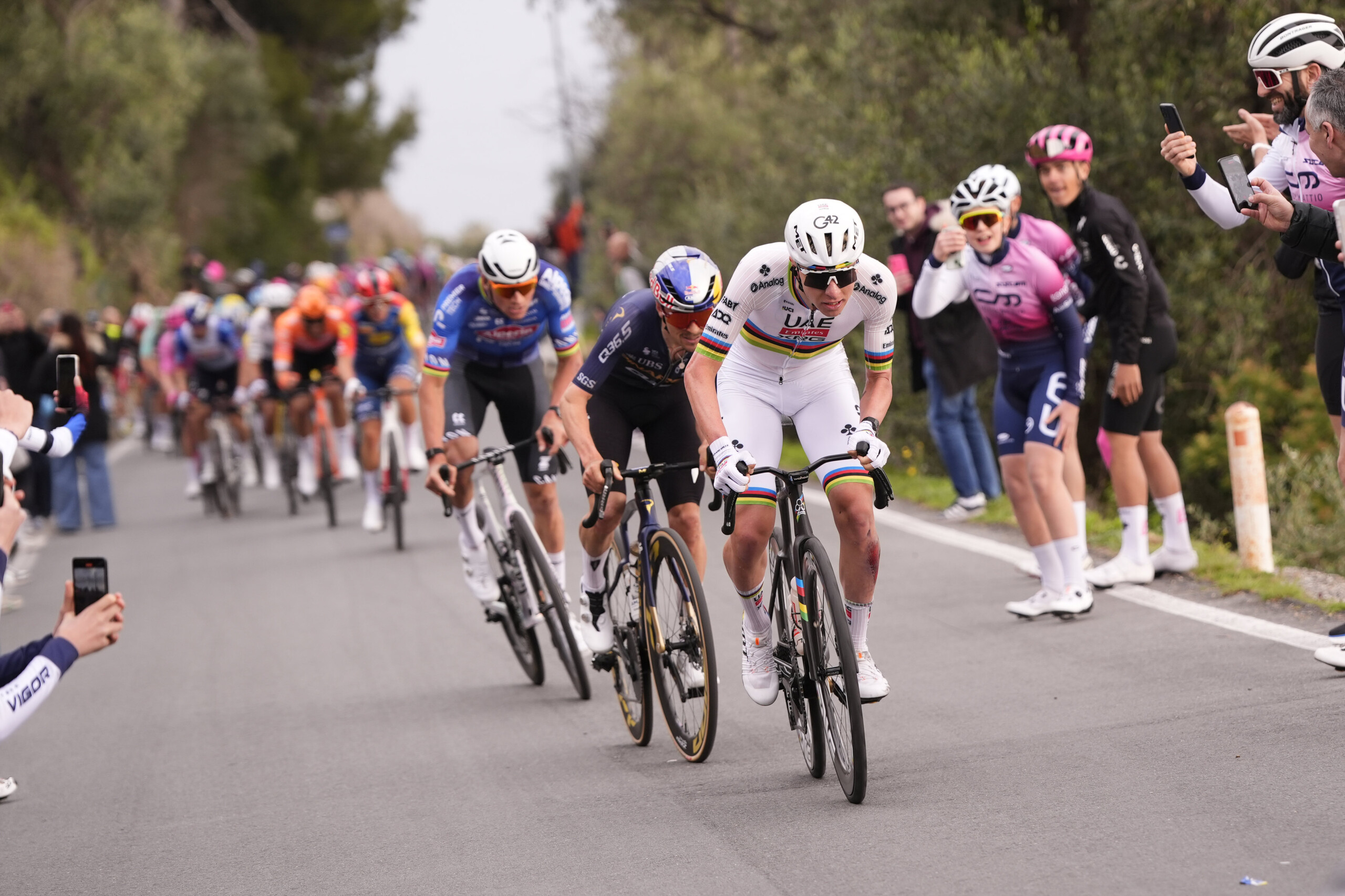
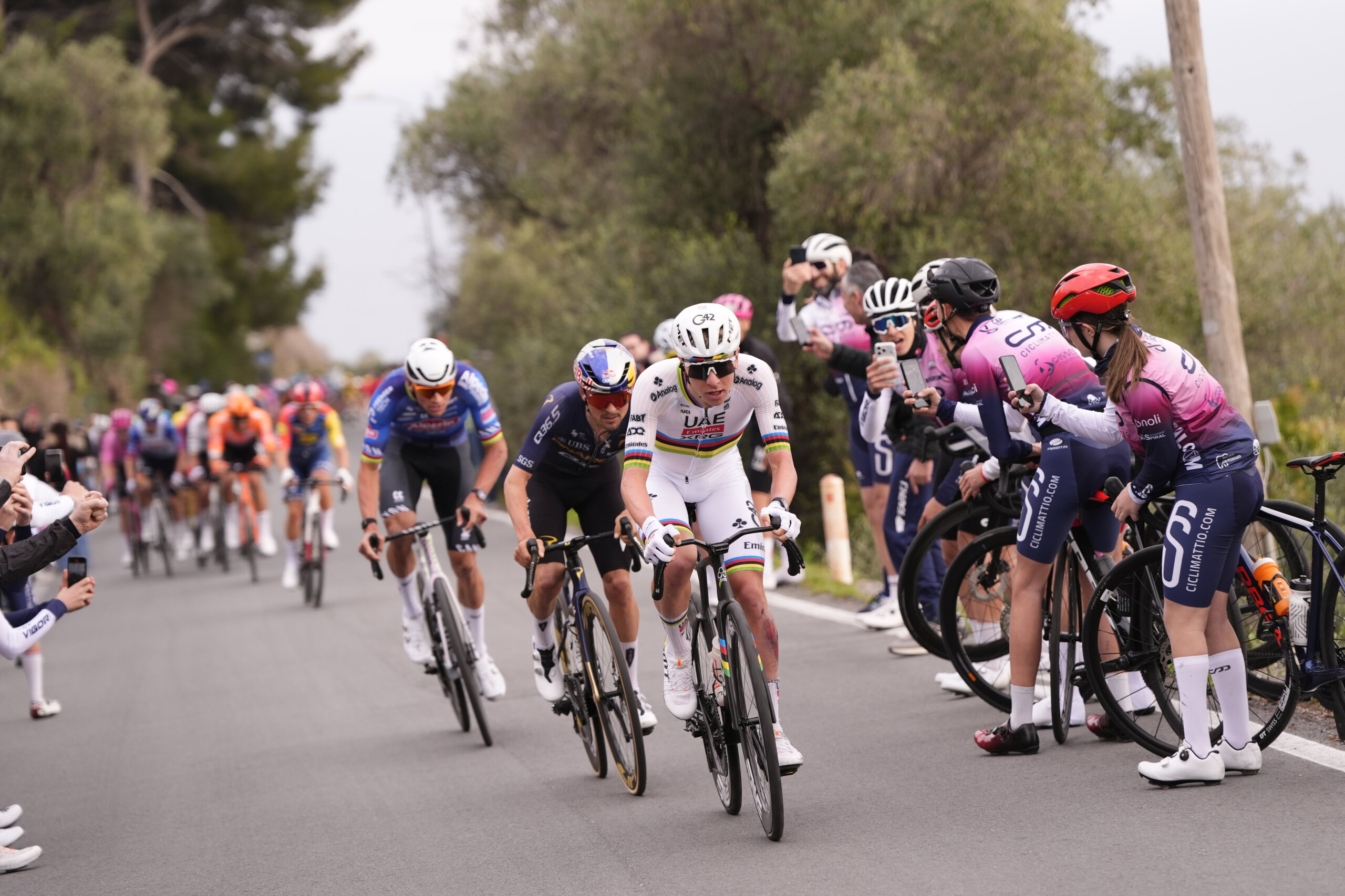
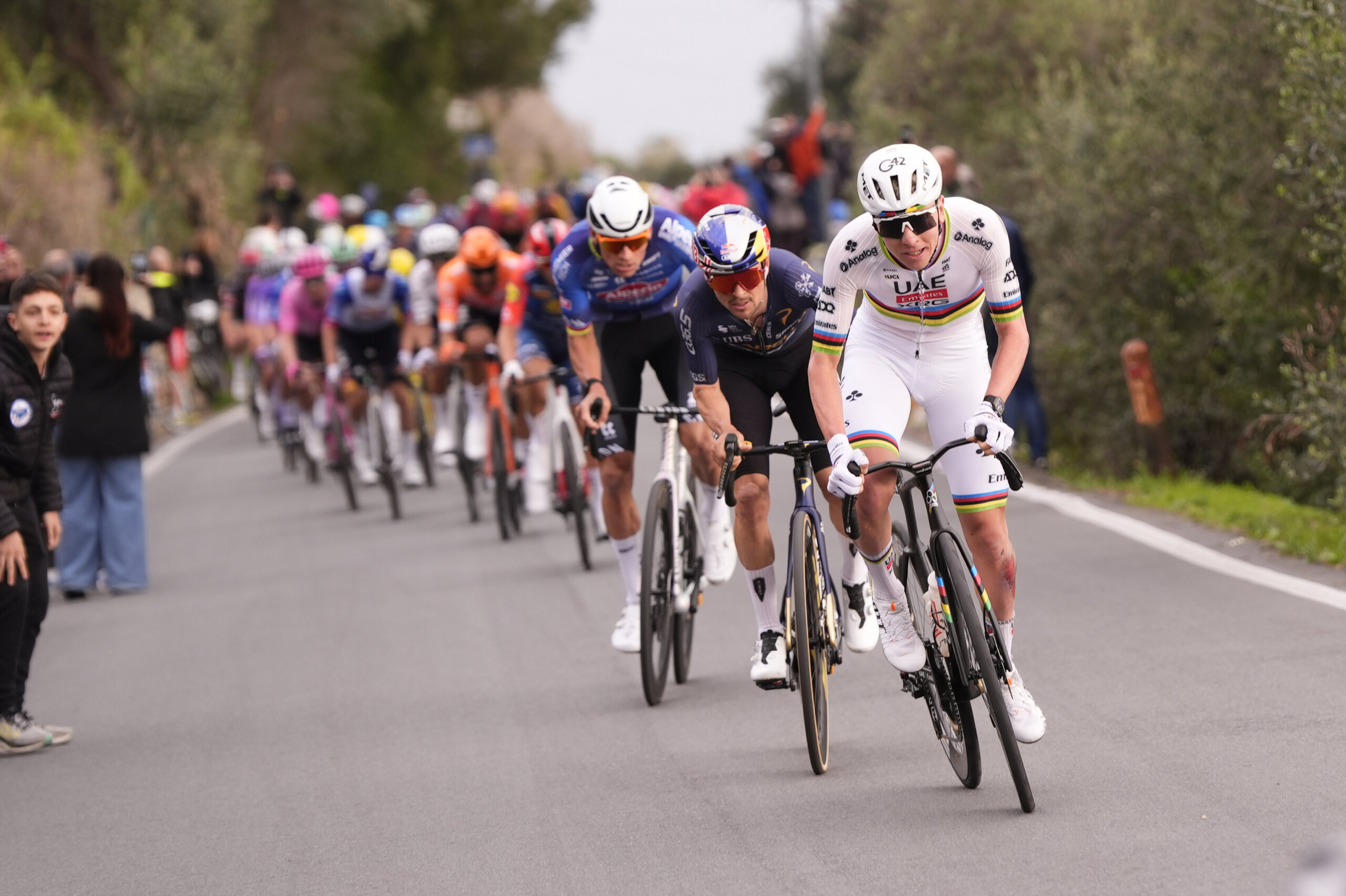
Five-point-six kilometres at 4.1 percent. Del Toro hit the front for UAE the moment the road tilted upward and launched Pogačar with the full force of whatever he had left. It was a move constructed for one purpose: to put the world champion at the sharp end before anyone could react. Van der Poel responded. Tom Pidcock of Pinarello Q36.5 latched on immediately—the Briton had spoken before the race with contained confidence about staying “relaxed” through the long approach and trusting that an opportunity would open, and here it was.
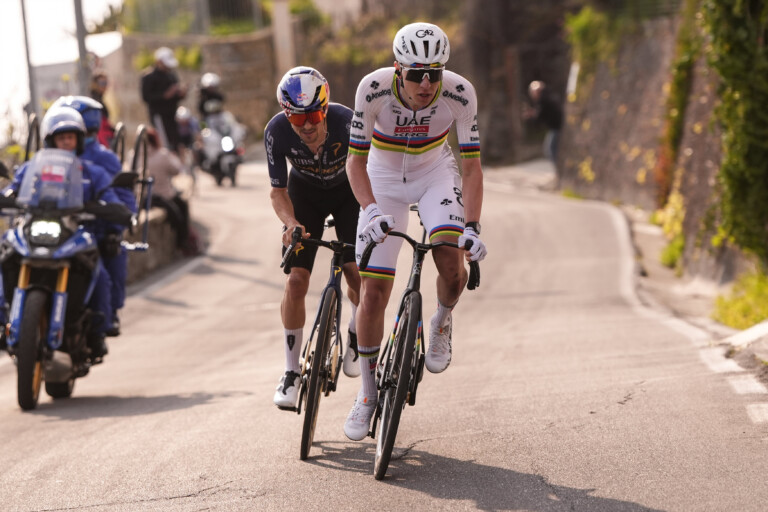
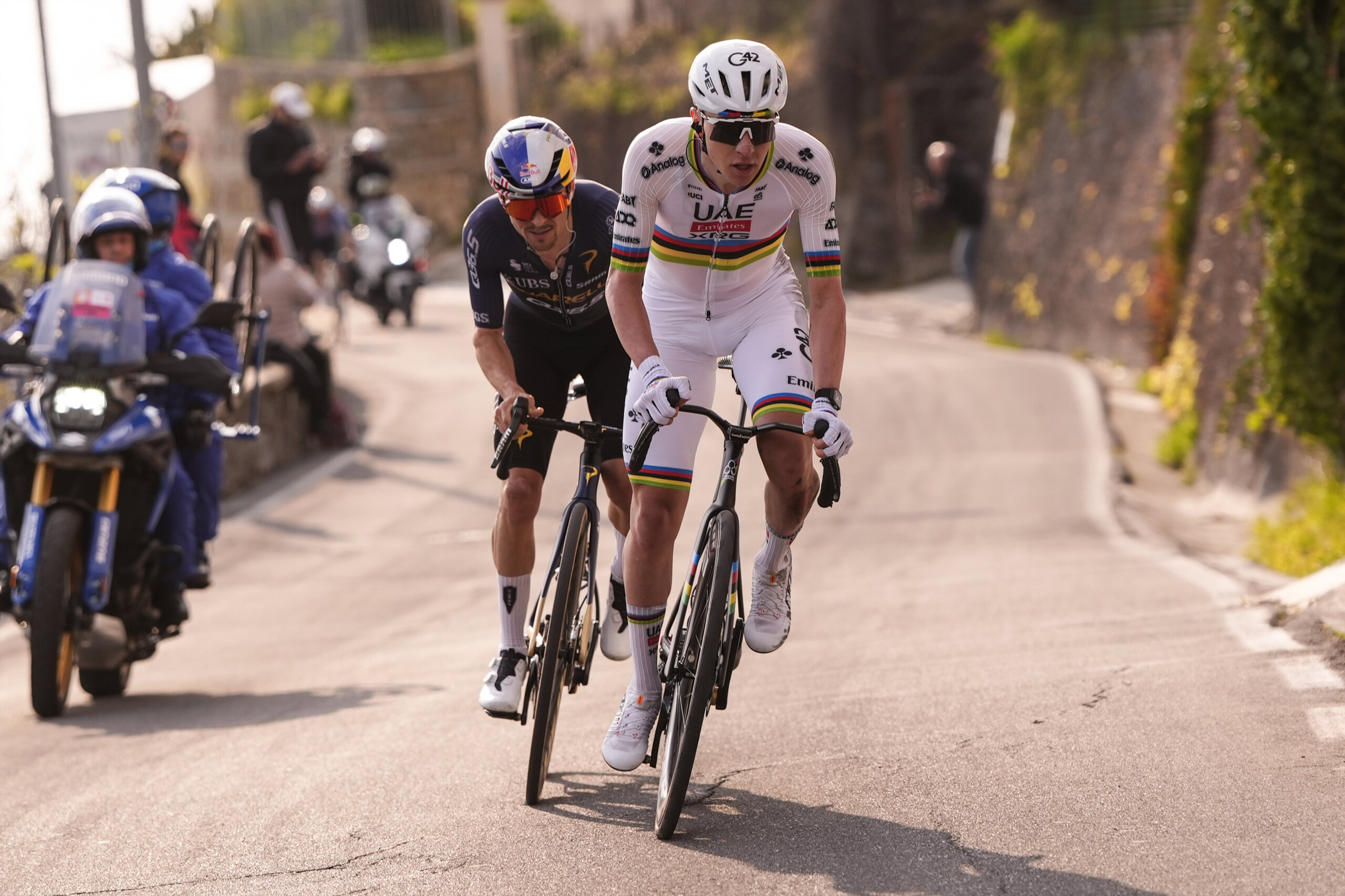
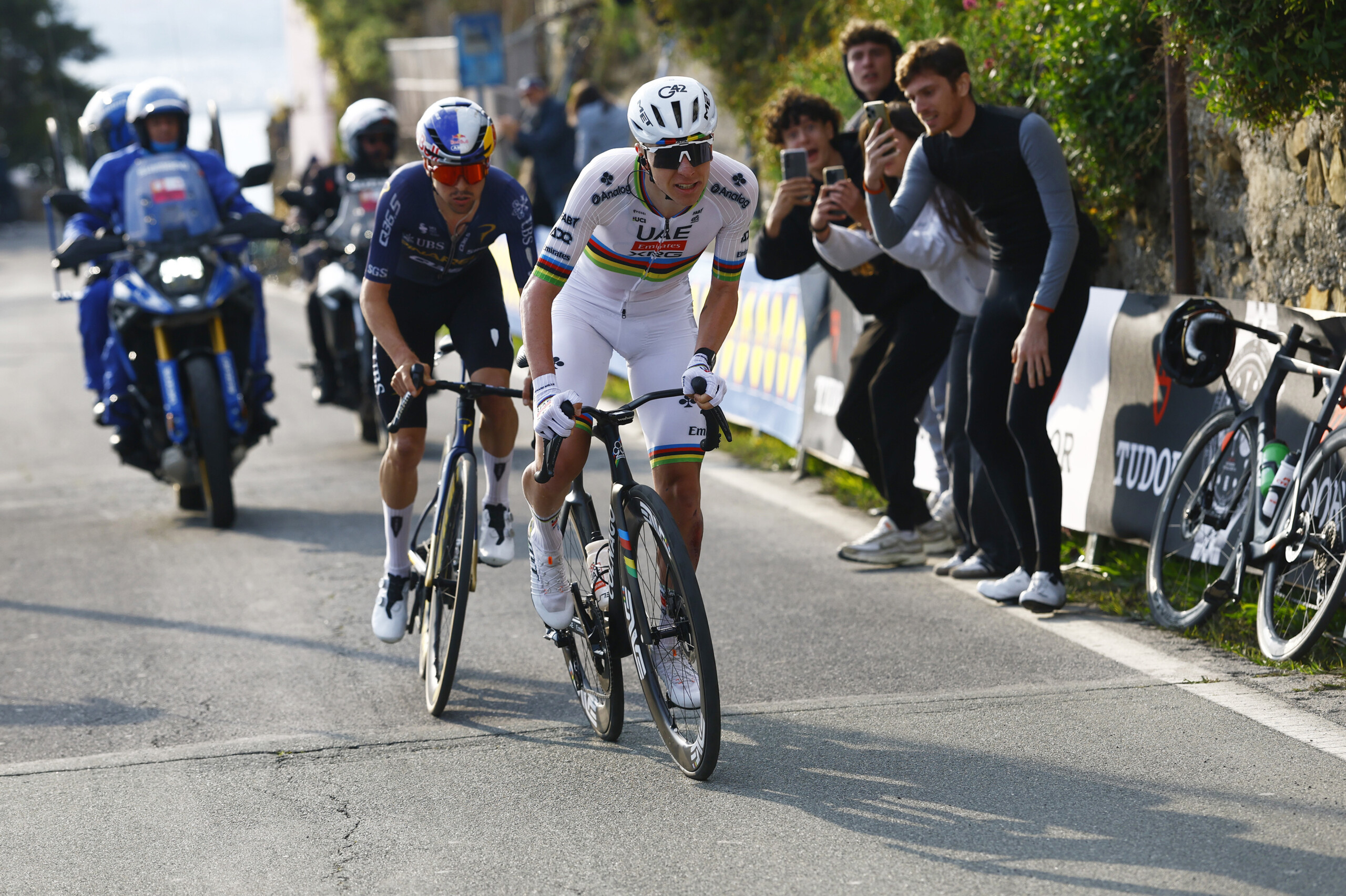
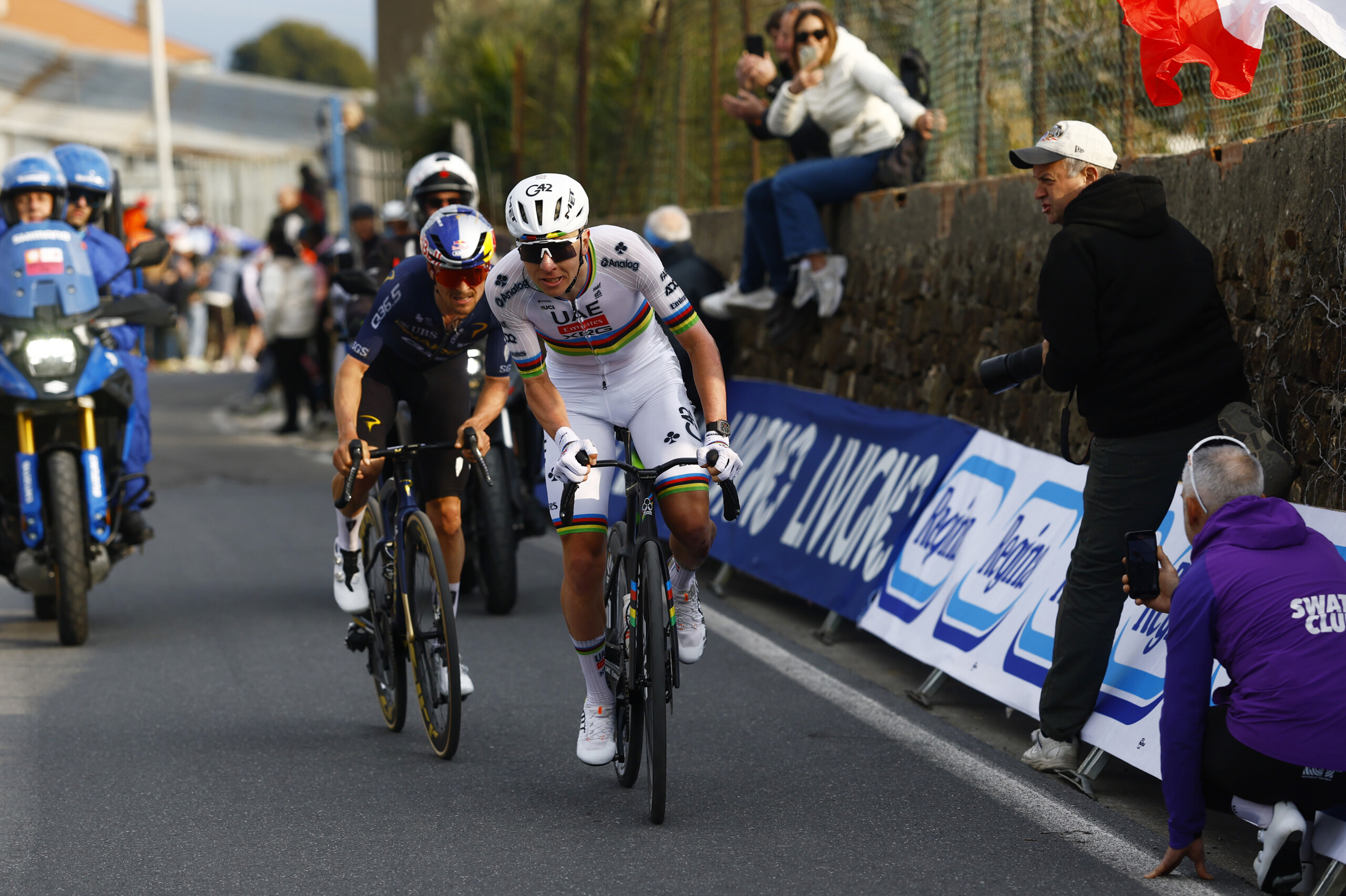
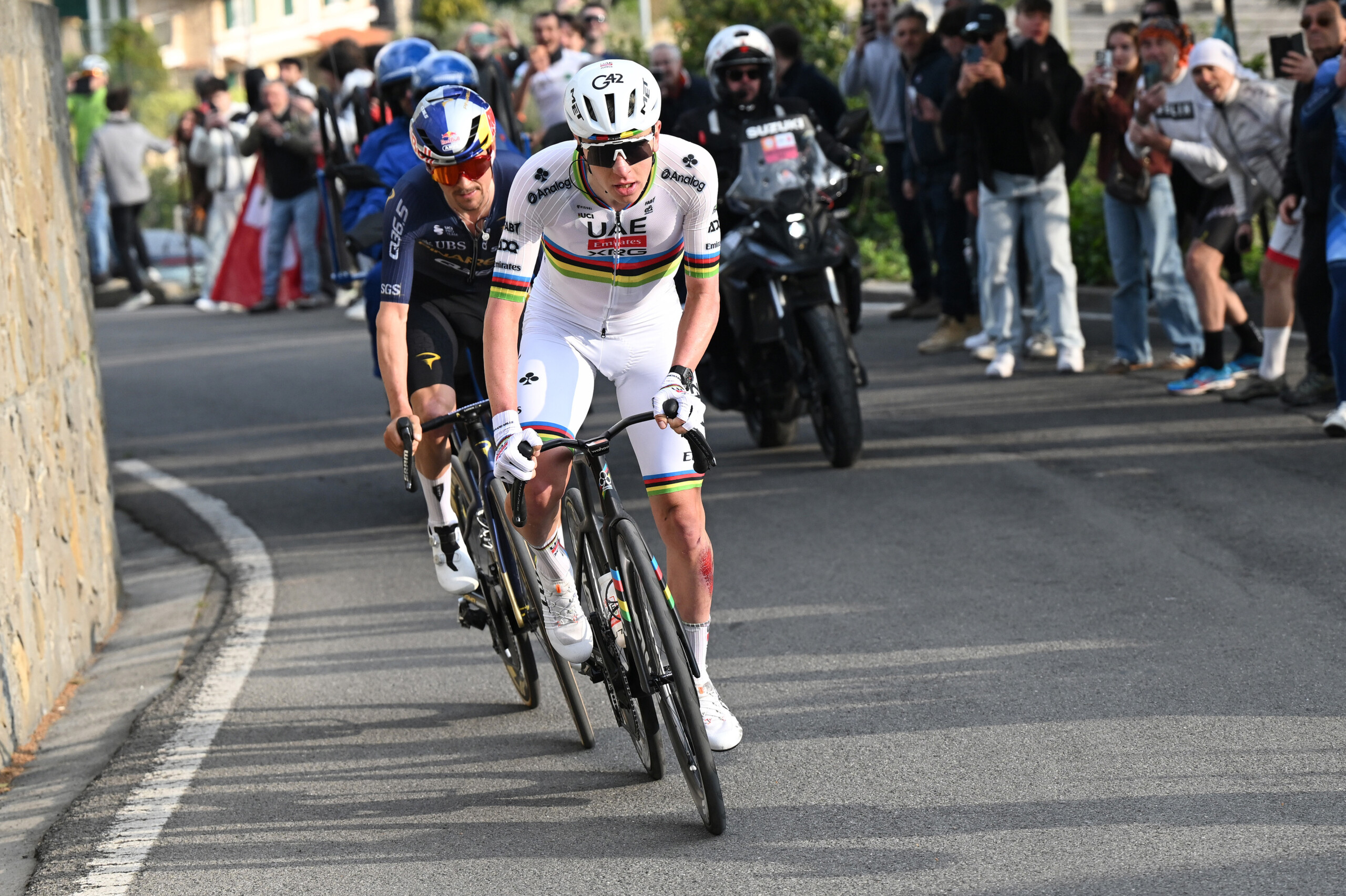
Tadej Pogačar of UAE Team Emirates XRG, Thomas Pidcock of Pinarello-Q36.5 Pro Cycling Team, Mathieu Van Der Poel of Alpecin-Premier Tech during the men’s elite race of the Milano-Sanremo one day cycling race (298 km) from Pavia and to Sanremo – North West Italy – March 21, 2026. Sport – cycling . (Photo by Fabio Ferrari/LaPresse)Tadej Pogačar of UAE Team Emirates XRG, Thomas Pidcock of Pinarello-Q36.5 Pro Cycling Team, Mathieu Van Der Poel of Alpecin-Premier Tech during the men’s elite race of the Milano-Sanremo one day cycling race (298 km) from Pavia and to Sanremo – North West Italy – March 21, 2026. Sport – cycling . (Photo by Fabio Ferrari/LaPresse)Tadej Pogačar of UAE Team Emirates XRG, Thomas Pidcock of Pinarello-Q36.5 Pro Cycling Team, Mathieu Van Der Poel of Alpecin-Premier Tech during the men’s elite race of the Milano-Sanremo one day cycling race (298 km) from Pavia and to Sanremo – North West Italy – March 21, 2026. Sport – cycling . (Photo by Fabio Ferrari/LaPresse)Tadej Pogačar of UAE Team Emirates XRG, Thomas Pidcock of Pinarello-Q36.5 Pro Cycling Team, Mathieu Van Der Poel of Alpecin-Premier Tech during the men’s elite race of the Milano-Sanremo one day cycling race (298 km) from Pavia and to Sanremo – North West Italy – March 21, 2026. Sport – cycling . (Photo by Fabio Ferrari/LaPresse)Tadej Pogačar of UAE Team Emirates XRG, Thomas Pidcock of Pinarello-Q36.5 Pro Cycling Team during the men’s elite race of the Milano-Sanremo one day cycling race (298 km) from Pavia and to Sanremo – North West Italy – March 21, 2026. Sport – cycling . (Photo by Fabio Ferrari/LaPresse)
By the top of the Cipressa, three riders had more than thirty seconds on a chasing group led by Lidl–Trek: Pogačar, Van der Poel, and Pidcock, descending together toward the Aurelia with the race in their hands. Van Aert, who had been a full minute down after the crash, performed a finisseur’s resurrection on the descent, eventually finishing in the group that would contest the minor places. For now, though, the race had reduced itself to the only question that mattered.
Tadej Pogačar of UAE Team Emirates XRG, Thomas Pidcock of Pinarello-Q36.5 Pro Cycling Team during the men’s elite race of the Milano-Sanremo one day cycling race (298 km) from Pavia and to Sanremo – North West Italy – March 21, 2026. Sport – cycling . (Photo by Fabio Ferrari/LaPresse)
Mads Pedersen, who had been frank before the start about having returned from injury earlier than planned—“We know the numbers are good, but training isn’t the same as racing”—tried to pull the chase back with Lidl–Trek. Visma also contributed. The gap held at around thirty seconds as the Poggio appeared at nine kilometres from the line.
The Poggio: Pidcock Refuses To Be Dropped
The Poggio di Sanremo: 3.7 kilometres, an average of just under four percent, ramps touching eight on the steepest sections, four hairpin bends in the first two kilometres, and a carriageway that narrows just as the effort is at its worst. Pogačar had noted beforehand that a slight headwind in the finale was a concern—“It wasn’t ideal, not like last year.” In 2025, Van der Poel had gone over the Cipressa in the perfect conditions and taken the race apart. This year the wind had taken some of the aggression out of the tactics. What remained was the climb itself, and two of the three leaders who had crested the Cipressa together.
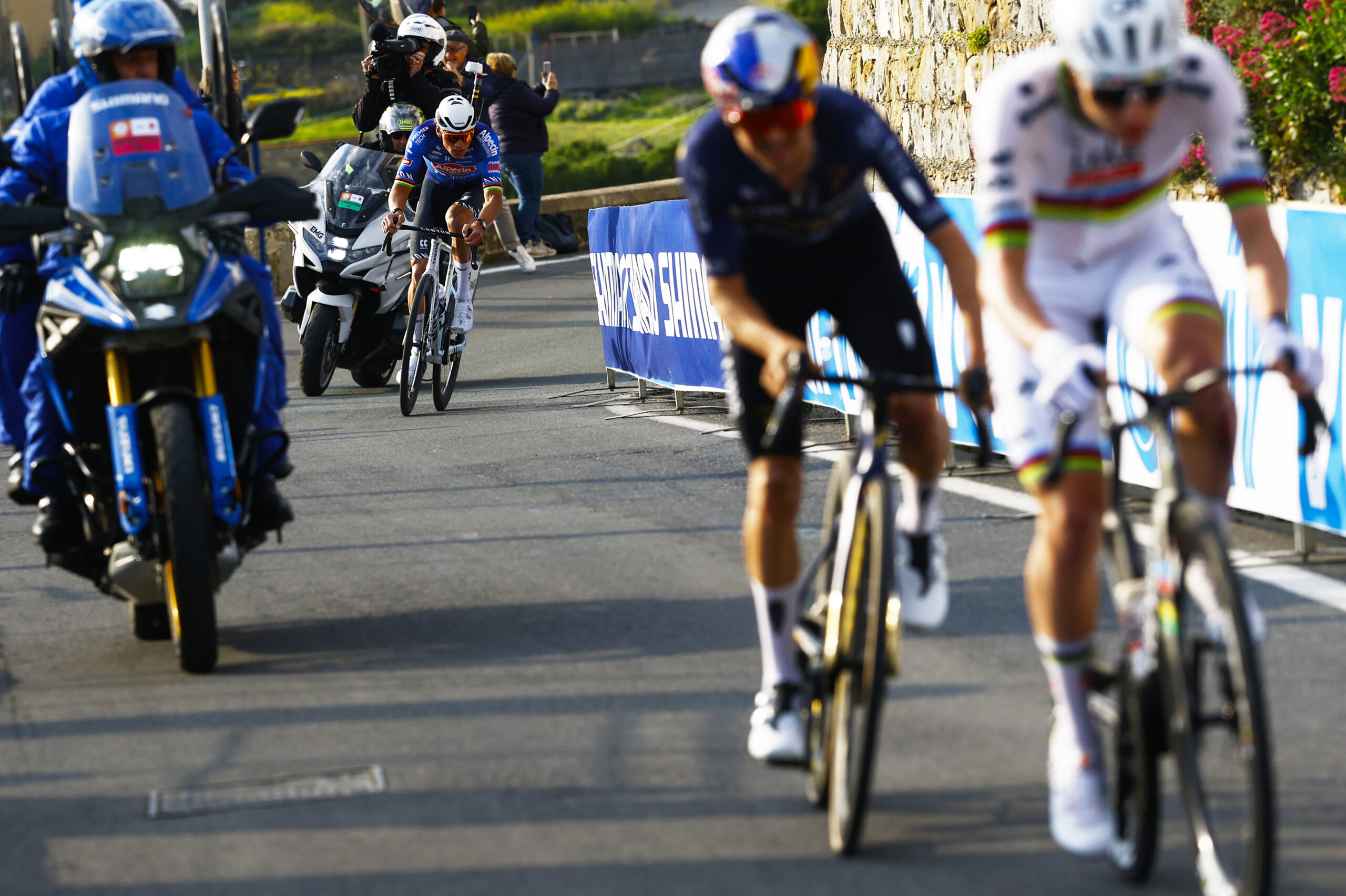
Mathieu Van Der Poel of Alpecin-Premier Techduring the men’s elite race of the Milano-Sanremo one day cycling race (298 km) from Pavia and to Sanremo – North West Italy – March 21, 2026. Sport – cycling . (Photo by POOL Bettini/Sprintcycling/LaPresse)Tadej Poga?ar of UAE Team Emirates XRG, Thomas Pidcock of Pinarello-Q36.5 Pro Cycling Team during the men’s elite race of the Milano-Sanremo one day cycling race (298 km) from Pavia and to Sanremo – North West Italy – March 21, 2026. Sport – cycling . (Photo by POOL Bettini/Sprintcycling/LaPresse)Tadej Poga?ar of UAE Team Emirates XRG, Thomas Pidcock of Pinarello-Q36.5 Pro Cycling Team during the men’s elite race of the Milano-Sanremo one day cycling race (298 km) from Pavia and to Sanremo – North West Italy – March 21, 2026. Sport – cycling . (Photo by POOL Bettini/Sprintcycling/LaPresse)
Pogačar attacked. It was the moment the entire day had been building toward, the violence that a race like this demands from whoever wants it most. Van der Poel, twice a winner here and by his own pre-race admission aware that he needed everything at his absolute peak to live with the world champion, found the gap opening. He lost the wheel. It was Pidcock who stayed—Pidcock who, at 500 metres from the summit, was still glued to the rear wheel of the best rider in the world, answering every acceleration with the clenched, furious economy of a rider who had been planning this moment all spring. Pogačar, gaining again and again on Van der Poel, could not shake the Briton. They crested together.
Behind, the peloton had pulled back a handful of seconds but not enough. Van der Poel was at sixteen seconds. The race was down to two.
The Descent And The Sprint: Centimetres Of History
They descended the Poggio together, the two of them working through the sequence of hairpins and counter-bends that make this descent a race within a race. No surprises. At two kilometres from the finish they were still side by side, eighteen seconds clear of Van der Poel, the rest of the peloton strung out behind. The sprint was inevitable, and Pogačar knew it—knew that Pidcock, explosive and fast, could not simply be waited out.
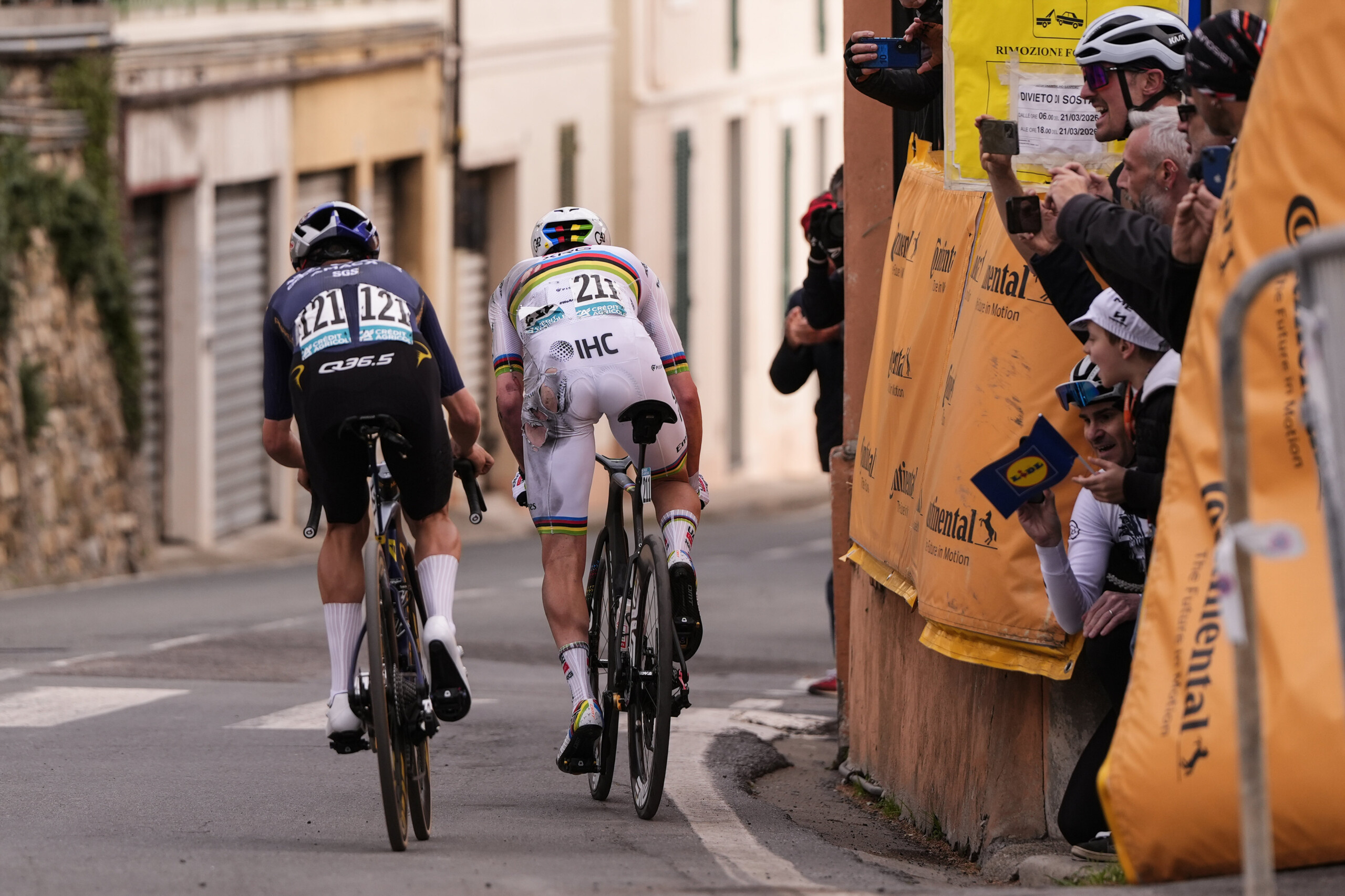
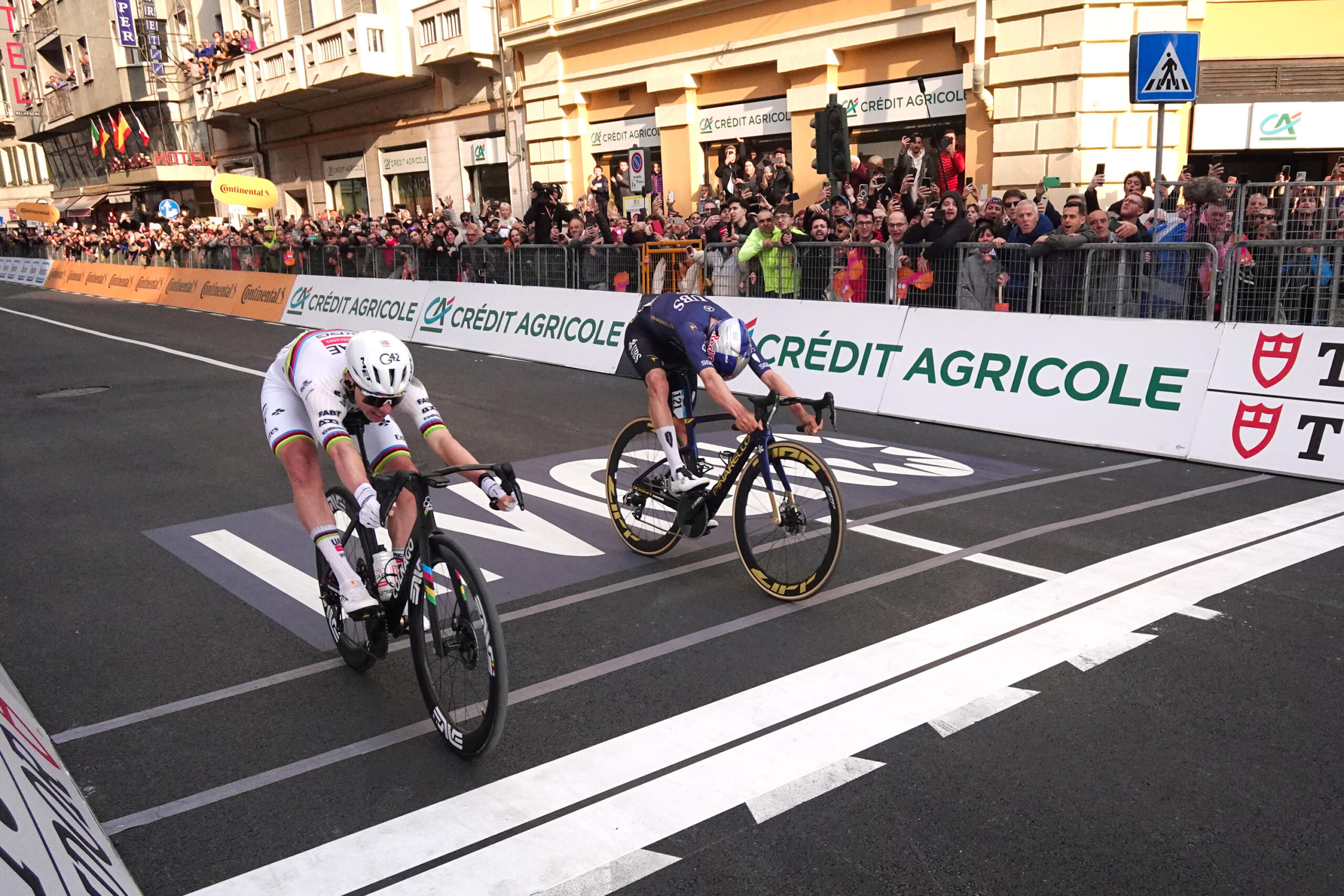
Tadej Poga?ar of UAE Team Emirates XRG, Thomas Pidcock of Pinarello-Q36.5 Pro Cycling Team during the men’s elite race of the Milano-Sanremo one day cycling race (298 km) from Pavia and to Sanremo – North West Italy – March 21, 2026. Sport – cycling . (Photo by POOL Bettini/Sprintcycling/LaPresse)Tadej Pogačar of UAE Team Emirates XRG winner and Thomas Pidcock of Pinarello-Q36.5 Pro Cycling Teamduring the men’s elite race of the Milano-Sanremo one day cycling race (298 km) from Pavia to Sanremo – North West Italy – March 20, 2026. Sport – cycling . (Photo by Massimo Paolone/LaPresse)Tadej Pogačar of UAE Team Emirates XRG winner and Thomas Pidcock of Pinarello-Q36.5 Pro Cycling Teamduring the men’s elite race of the Milano-Sanremo one day cycling race (298 km) from Pavia to Sanremo – North West Italy – March 20, 2026. Sport – cycling . (Photo by Massimo Paolone/LaPresse)Tadej Pogačar of UAE Team Emirates XRG winner during the men’s elite race of the Milano-Sanremo one day cycling race (298 km) from Pavia to Sanremo – North West Italy – March 20, 2026. Sport – cycling . (Photo by Massimi Paolone/LaPresse)
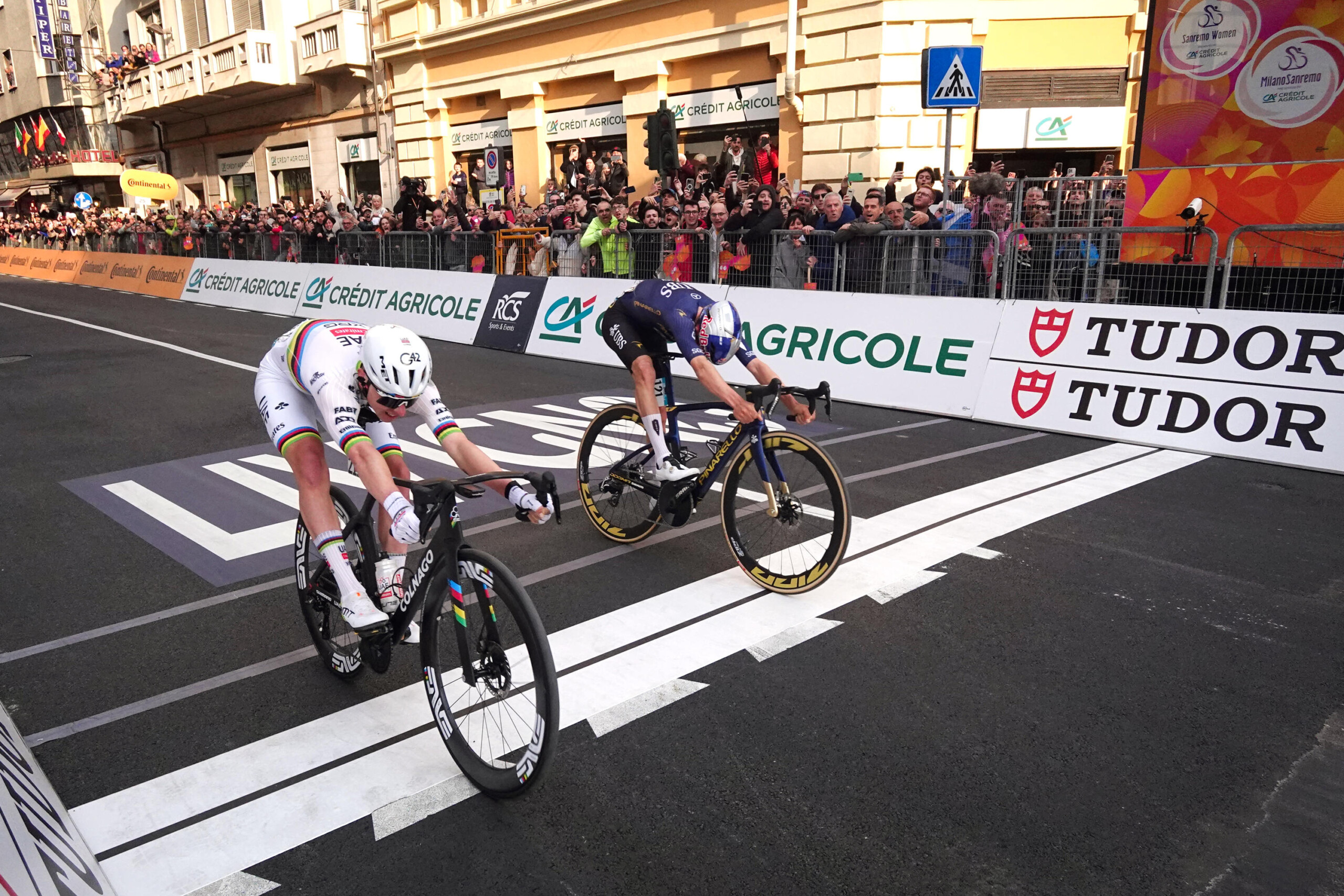
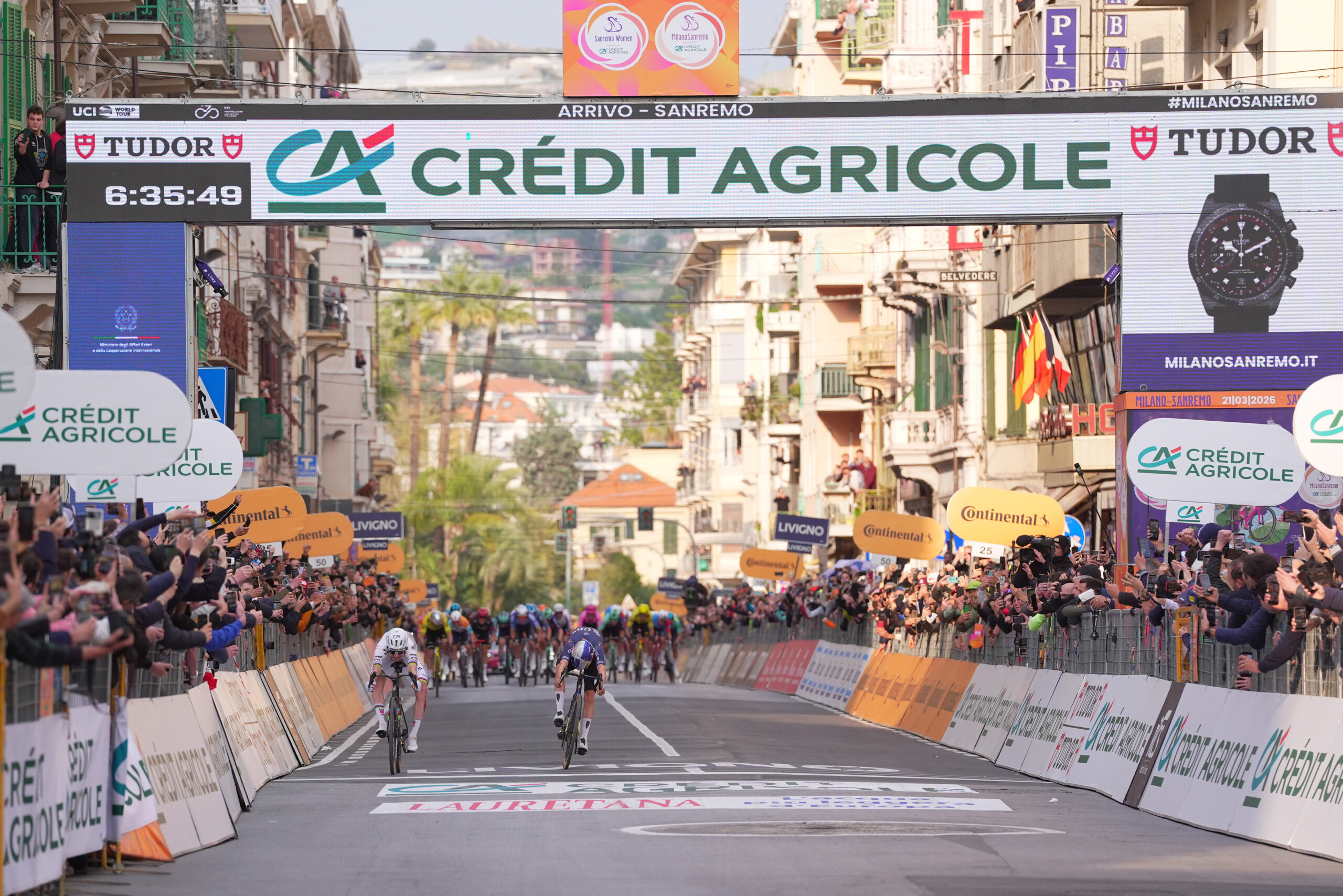
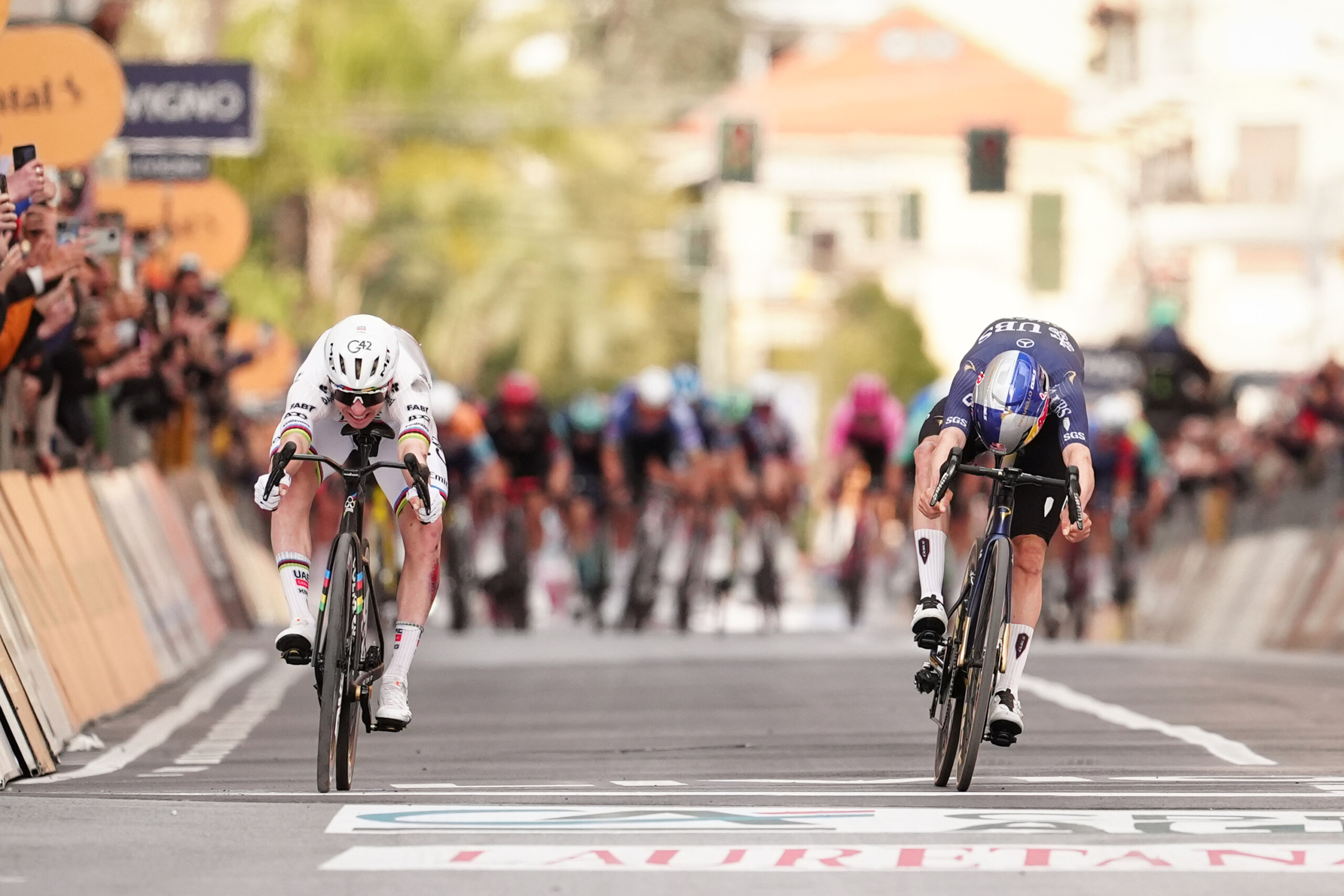
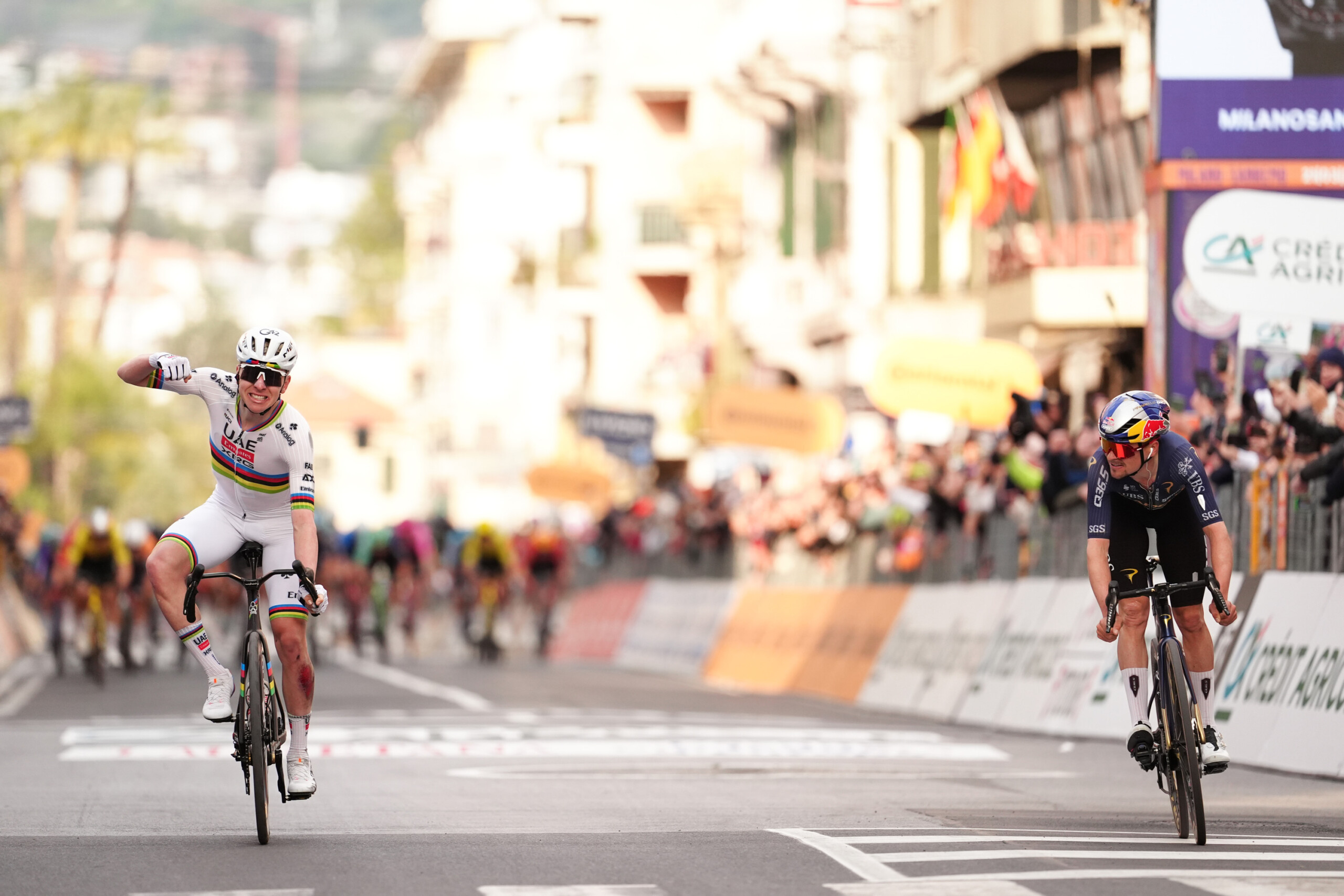
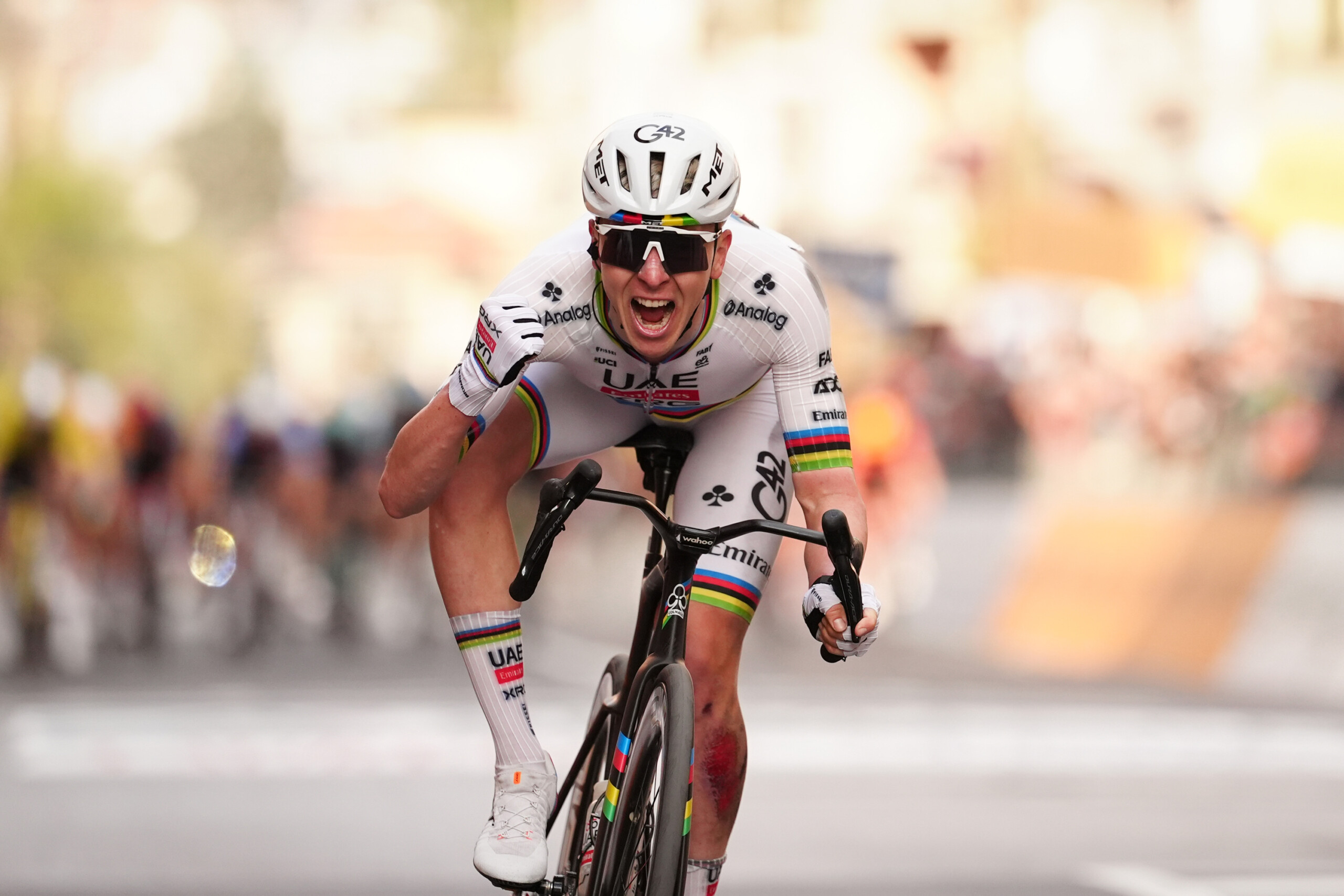
“I was a bit afraid of Tom Pidcock,” he said afterwards. “We all know how explosive and fast he is. I couldn’t wait too long, so I launched my sprint early.” He launched it at the roundabout, 850 metres from the line. Pidcock came back at him, hard and direct, the kind of answer that comes from months of preparation finding its moment. At the line it was centimetres. Pogačar, by a margin that the photographers would spend the next hours measuring. Pidcock second, the race of his career reduced to a handful of centimetres on Via Roma.
Tadej Pogačar of UAE Team Emirates XRG winner and Thomas Pidcock of Pinarello-Q36.5 Pro Cycling Teamduring the men’s elite race of the Milano-Sanremo one day cycling race (298 km) from Pavia to Sanremo – North West Italy – March 20, 2026. Sport – cycling . (Photo by Massimo Paolone/LaPresse)Tadej Pogačar of UAE Team Emirates XRG winner and Thomas Pidcock of Pinarello-Q36.5 Pro Cycling Teamduring the men’s elite race of the Milano-Sanremo one day cycling race (298 km) from Pavia to Sanremo – North West Italy – March 20, 2026. Sport – cycling . (Photo by Massimo Paolone/LaPresse)Tadej Pogačar of UAE Team Emirates XRG winner during the men’s elite race of the Milano-Sanremo one day cycling race (298 km) from Pavia to Sanremo – North West Italy – March 20, 2026. Sport – cycling . (Photo by Massimi Paolone/LaPresse)
Behind them, Van Aert read the sprint with a finisseur’s intelligence—launching early enough to claim third place ahead of a peloton group that contained Pedersen, Corbin Strong, Andrea Vendrame, Jasper Stuyven, Van der Poel, Matteo Trentin, and Edoardo Zambanini. Van Aert himself, down a minute after the Imperia crash and seemingly out of the race twenty kilometres earlier, made the podium. It was that kind of afternoon.
The Record Books Rewrite Themselves
The numbers assembled themselves in the minutes after the finish with the clean click of things falling into place. Pogačar’s 110th professional victory. His eleventh Monument win—only Eddy Merckx, with nineteen, has more. His sixth consecutive race win, following the World Championships, the European Championships, Tre Valli Varesine, Il Lombardia, and Strade Bianche. And the end of a 43-year drought: the first world champion to win Milano–Sanremo since Saronni in 1983. The only Monument still missing from his collection is Paris–Roubaix. The velodrome in Roubaix will hear about this afternoon for the next several weeks.
In the press conference, Pogačar was composed and generous and precise. He gave Vermeersch and Grossschartner the credit that was plainly theirs—“They gave me hope”—and acknowledged the problem that Pidcock had posed. “Ce race isn’t ideal for my characteristics,” he had said before the start. That morning’s assessment looks considerably different now.
Pidcock accepted his defeat with the gracious directness of a rider who had done everything right and encountered someone who somehow did more. “It would be incredible to win in Sanremo,” he had said before the start. He came closer than almost anyone had expected, at a race and on a day when Pogačar had crashed, lost most of his team, and won anyway. “Chapeau to him as well,” said the winner, and it was well-meant on both sides of the finish line.
Van Aert, who had characterised himself before the race as an “outsider” and said that being one could offer certain advantages, was proved correct in the most sideways way possible. A podium finish on a day when he had been on the ground in Imperia required everything the Belgian had. “There should be a bit of a headwind in the finale,” he had said at the start. “The key thing is that it doesn’t rain.” It didn’t rain. It just got harder than anyone expected.
One hundred and seventeen editions. Since 1907, with gaps only for the wars. The race that, as the old line goes, can be won by anyone on the right day but rarely is—and when it is, by someone who has earned it in a way that goes beyond talent alone. Pogačar had come to Sanremo having won his last six races. He left having won the only one that had eluded him. What he said in Pavia that morning—about the gap between zero and one being the only gap that mattered—was now simply history.
The Classicissima had given him what he wanted. It just made him work for it in a way no one had written in the script.
POS
RIDER
TEAM
TIME
1
Tadej Pogačar
UAE Team Emirates–XRG
6h35’49″
2
Tom Pidcock
Pinarello Q36.5 Pro Cycling Team
s.t.
3
Wout Van Aert
Visma | Lease a Bike
+0:04
4
Mads Pedersen
Lidl–Trek
s.t.
5
Corbin Strong
NSN Cycling Team
s.t.
6
Andrea Vendrame
Jayco AlUla
s.t.
7
Jasper Stuyven
Soudal–QuickStep
s.t.
8
Mathieu Van der Poel
Alpecin–Premier Tech
s.t.
9
Matteo Trentin
Tudor Pro Cycling
s.t.
10
Edoardo Zambanini
Bahrain Victorious
s.t.
NOTES
— Pogačar’s 110th professional victory and sixth consecutive race win (Worlds, Europeans, Tre Valli Varesine, Il Lombardia, Strade Bianche, Milano–Sanremo).
— His 11th Monument victory. Only Eddy Merckx has more, with 19. Paris–Roubaix is now the only Monument missing from his palmares.
— First world champion to win Milano–Sanremo since Giuseppe Saronni in 1983 — a 43-year wait.
— Won despite crashing in Imperia, losing most of his team, and chasing back to the front with only McNulty and Del Toro.
— Pidcock’s result (2nd) is the best by a British rider in the Classicissima’s modern era.
— Average speed: 45.173 km/h over 298 km from Pavia to Sanremo.
— Van Aert took third after being stranded a full minute behind the leaders following the Imperia crash.
SANREMO, Italy (21 March 2026) — In only its second year, the Sanremo Women presented by Crédit Agricole already carried the weight of a race that knows what it wants to be. On a bright Ligurian morning, Lotte Kopecky made sure it also had the right winner.
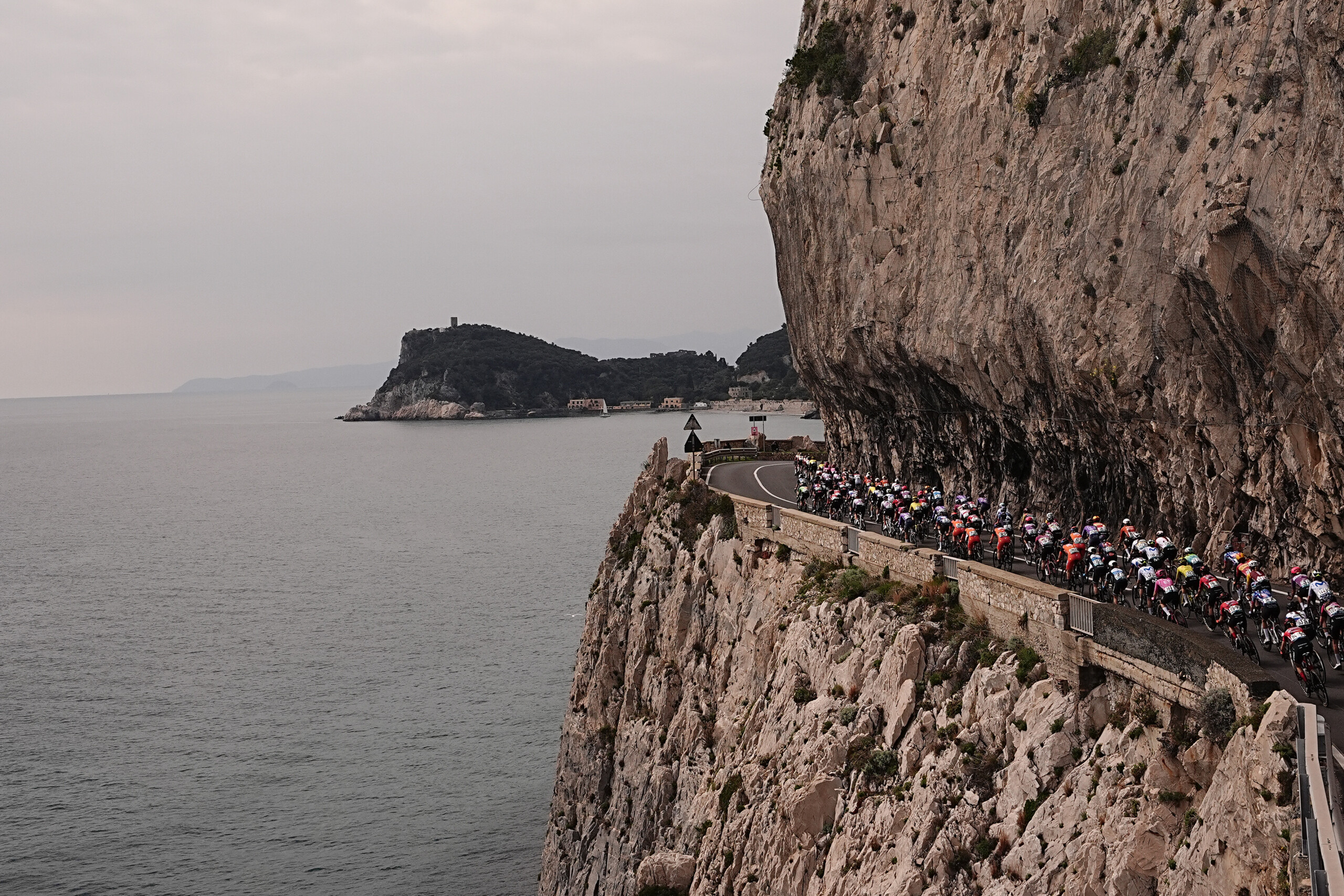
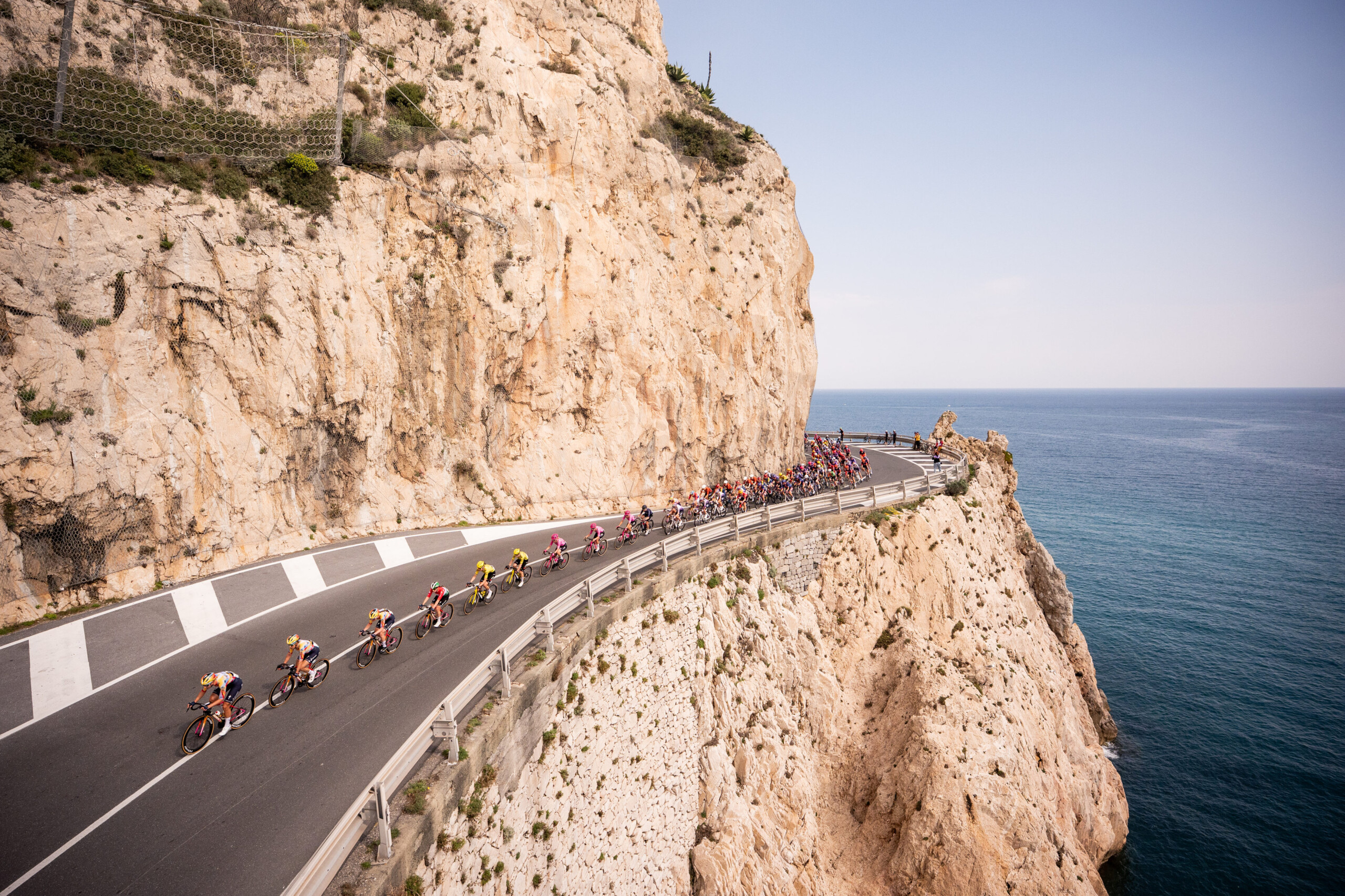
The morning light over the Ligurian coast had turned the sea the colour of hammered pewter by the time 144 riders rolled out from Genova just after half past ten. Sunny at the start—sixteen degrees, a light southerly breeze off the water—but clouding over by the finish in Sanremo, as if the weather itself understood that what was about to unfold required a certain gravity. The 2nd edition of the Sanremo Women presented by Crédit Agricole was underway, and for the next three hours and forty-seven minutes the most beautiful road in cycling would belong to the women who dared to contest it.
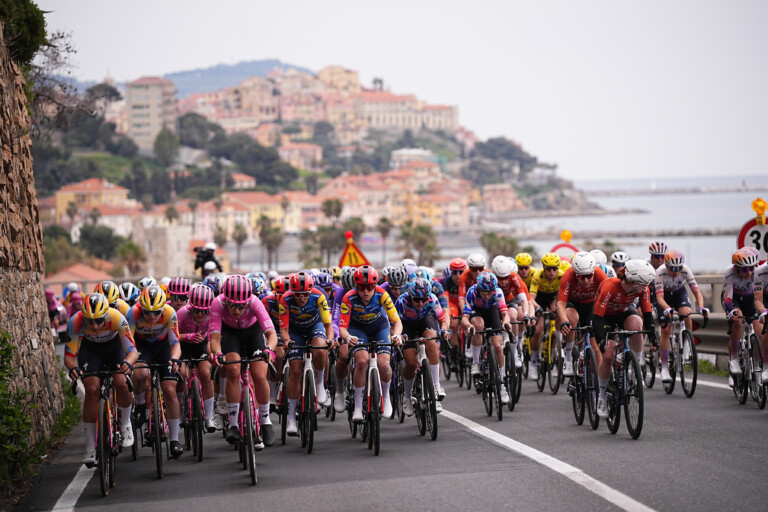
The race during the 156-kilometer women’s elite one-day Sanremo Women cycling race from Genoa to Sanremo, Italy, Saturday, March 21, 2026. Sport – Cycling (Photo by Marco Alpozzi/LaPresse)
Genova watched them go—one of the great maritime republics of the medieval Mediterranean, its historic centre a maze of narrow caruggi and grand palaces squeezed between the sea and the Apennine hills. Out through the elevated road past the Porto Antico, down to Sestri Ponente, and west onto the Aurelia, that ancient coastal artery that has linked Milan and Sanremo for more than a century of racing. In the start village, the question on every tongue was the same: could Lorena Wiebes, the Dutch champion who had claimed the inaugural edition in 2025, defend her title against a field of extraordinary depth? Or would the climbs finally do their work?
The field that took the start reflected women’s cycling at its most competitive. Thirty countries, 144 riders. Italy led with 46, the Netherlands with 24, France with 14. At one extreme, Eleonora Deotto of Mendelspeck E-Work—the youngest entrant at eighteen years and 227 days. At the other, Mavi García of Liv AlUla Jayco, who had passed her 42nd birthday 78 days earlier, and who would play a brief but telling role in the afternoon’s drama. One entry in the race statistics carried its own quiet irony: the reigning world champion has never won this race. The bookmakers had their opinions. The road, as always, would have the final word.
The Early Roads: The Breakaway Game
For the first thirty kilometres the peloton refused to concede anything. Attacks fired off the front in waves—team after team trying to establish a presence in the break—but each effort was absorbed before it could breathe. The bunch moved with the collective alertness of a body that knew the real race was still hours away, and for a while it seemed as though the opening act might never end. Past the thirty-kilometre mark, something finally gave.
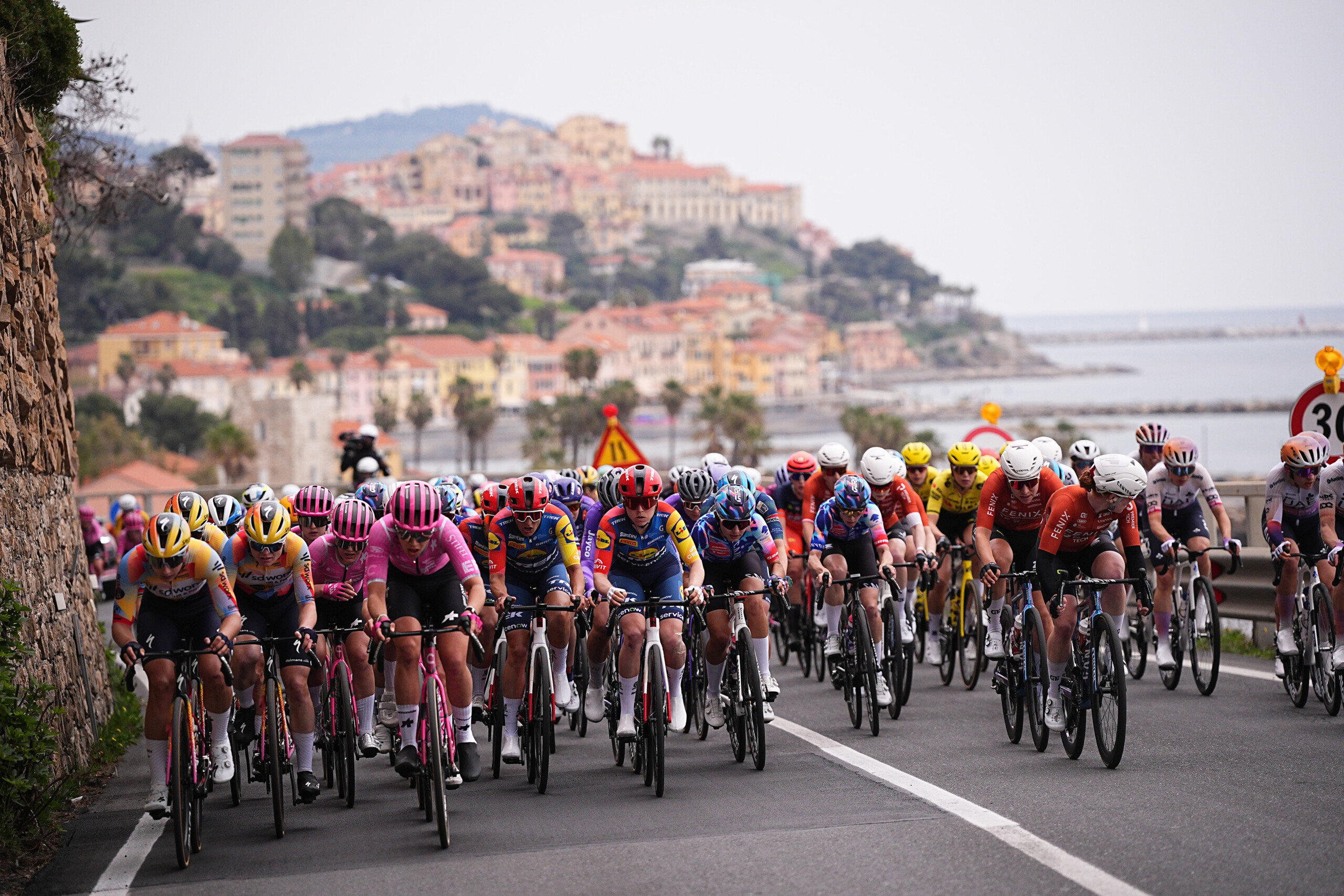
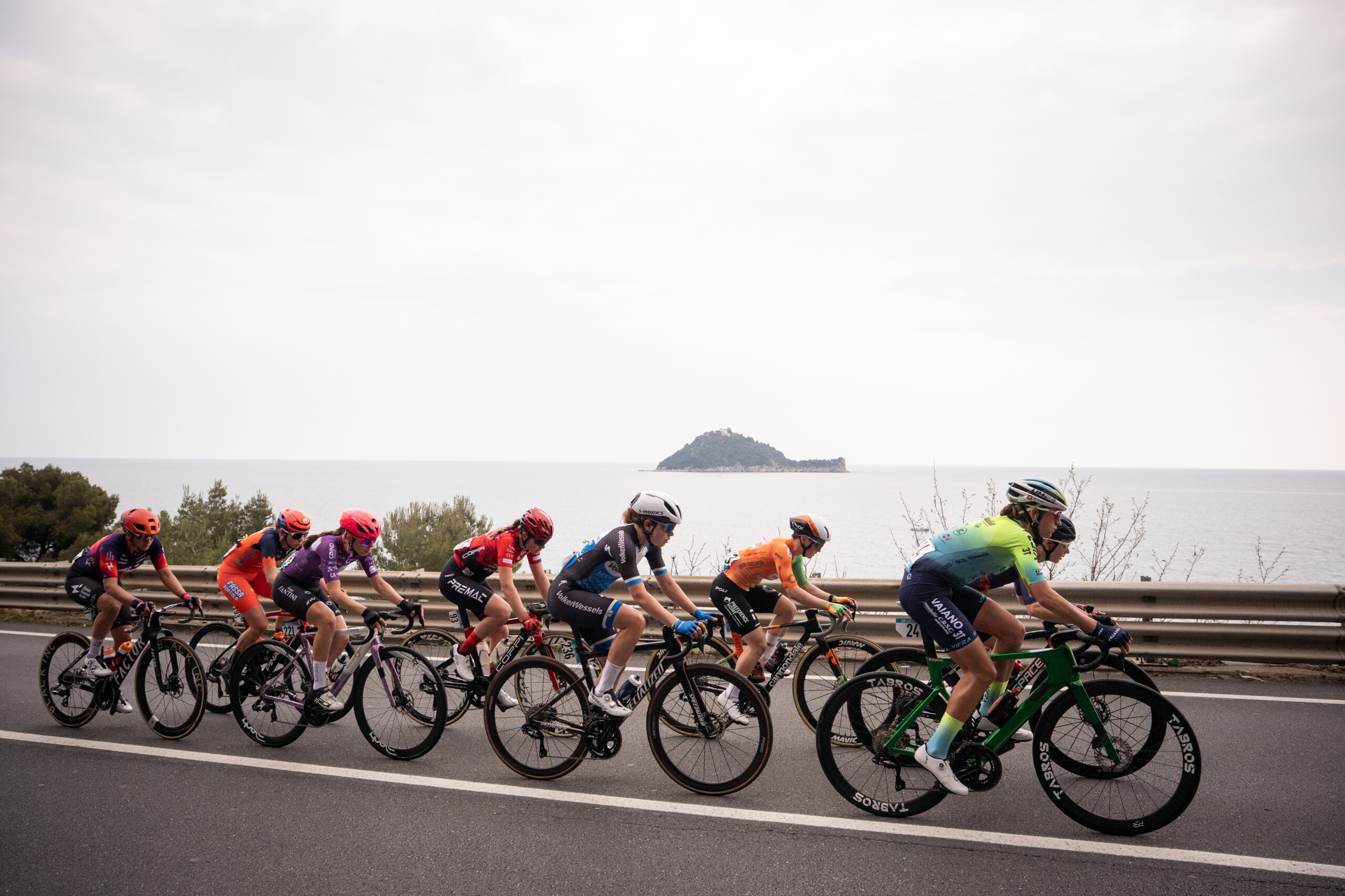
The peloton rides during the 156-kilometer women’s elite one-day Sanremo Women cycling race from Genoa to Sanremo, Italy, Saturday, March 21, 2026. Sport – Cycling (Photo by Marco Alpozzi/Lapresse)
Eleonora La Bella of Aromitalia Vaiano, Constance Valentin of Mayenne Monbana My Pie, and Sofia Arici of Vini Fantini–BePink threaded the needle and opened a gap that the peloton, for the first time, chose to respect. The trio held, and over the next hour six more riders bridged across: Katia Ragusa (Human Powered Health), Lara Crestanello (Isolmant–Premac–Vittoria), Heidi Franz (St Michel–Preference Home–Auber93), Eleonora Deotto—the youngest starter in the race, already making her Sanremo debut at eighteen—Sara Lucconi (Top Girls Fassa Bortolo), and Bodine Vollering of VolkerWessels, the younger sister of Demi, here carving her own path.
Behind the nine, Victoire Berteau (Cofidis) and Fariba Hashimi (Vini Fantini–BePink) attempted to bridge the gap independently, but the peloton eventually reeled them back into the fold. With just under 100 kilometres remaining, the leaders held a maximum advantage of three minutes and forty seconds. The real work was still ahead. A small crash briefly disturbed the Cofidis train in the bunch—several riders went down before remounting quickly. The French team were riding in support of former world champion Amalie Dideriksen, one of the names quietly circulating as an alternative path to the finish should the race come apart in the right way.
The peloton rides during the 156-kilometer women’s elite one-day Sanremo Women cycling race from Genoa to Sanremo, Italy, Saturday, March 21, 2026. Sport – Cycling (Photo by Marco Alpozzi/Lapresse)
The Capi: The Landscape Changes
At fifty kilometres to go, with the gap standing at one minute thirty, the Capi appeared on the horizon. This is the sequence that makes the Ligurian finale unique and unrepeatable: three headlands jutting into the Mediterranean—Capo Mele, Capo Cervo, and Capo Berta, the most demanding of the three—each one a short ramp, a descent, and a reminder that this race rewards considerably more than pure speed. Over Capo Mele, the nine leaders still held a minute and twenty-five seconds. By the time the race swung past Capo Berta and descended toward Imperia, the gap had collapsed to around thirty seconds. Only three riders remained at the front: Franz, Arici, and Bodine Vollering, clinging to seconds, not minutes. The peloton had made its decision.
The Cipressa—five-point-six kilometres at 4.1 percent, added to the route in 1982—awaited.
The Cipressa: The Race Lights Up
Lidl–Trek led the charge onto the Cipressa, committed to the twin options of Elisa Balsamo—Italy’s former world champion, racing in front of her home crowd—and the formidably talented Niamh Fisher-Black. Visma | Lease a Bike sat behind as a kind of hedge, their ambitions not yet fully declared. Uno-X Mobility positioned themselves well in the nervous concertina behind.
The peloton rides during the 156-kilometer women’s elite one-day Sanremo Women cycling race from Genoa to Sanremo, Italy, Saturday, March 21, 2026. Sport – Cycling (Photo by Marco Alpozzi/Lapresse)
Those still in the group at the foot of the climb were already climbing at over thirty kilometres per hour. Riders began losing contact immediately. Then Femke de Vries (Visma | Lease a Bike) launched the first real move. Katarzyna Niewiadoma and Fisher-Black went straight after her, the kind of instant reflex that defines the truly prepared rider. The bunch split and re-split. Wiebes, marked and watched and protected throughout the day, absorbed the accelerations near the front while managing her effort carefully—visibly on the limit but, for now, still there.
Then Niewiadoma went again, harder, with the full weight of her climber’s ambition behind it. Wiebes lost positions. At the KOM it was Lieke Nooijen of Visma | Lease a Bike who crested first, alone, with roughly ten seconds on a dwindling chase of around 25 riders. Behind Nooijen, EF Education–Oatly were making their presence felt: Noemi Rügg and Cédrine Kerbaol moving purposefully through the group, the Swiss climber with unfinished business from a third place the year before.
Catastrophe on the Descent
What happened next on the Cipressa descent changed the race irrevocably. A crash, sudden and severe, swept through the group on a blind corner. Niewiadoma—who had been leading the group on the descent when she fell first—went down hard. Kim Le Court Pienaar of AG Insurance–Soudal also hit the tarmac. Riders behind had no time to react. Niewiadoma was visibly shaken and in pain. The race moved on without her, as it must.
With twenty kilometres remaining, Nooijen led onto the Aurelia, but solo efforts against a strengthened and motivated chase rarely survive the flat coastal run to the foot of the Poggio. At thirteen kilometres to go, she still held twenty-two seconds over a group of some forty riders. It was, in the language of the sport, probably not enough. But she kept pushing, the Dutch tenacity demanding that every possible second be extracted before the inevitable concession.
The Poggio: Five Go Clear
At nine kilometres from Sanremo, the Poggio di Sanremo begins. Three-point-seven kilometres, an average gradient of just under four percent, with ramps touching eight on the upper slopes. Four hairpin bends in the first two kilometres. The road narrows, the carriageway tightens, and the field—now down to forty or so—compresses before it shatters.
Lidl–Trek controlled the tempo as Nooijen was finally absorbed. Nikola Noskóvá of Cofidis attacked. The question was not whether someone would go on the hardest ramps, but who and when.
Puck Pieterse answered. The Fenix–Premier Tech climber hit the steepest section with the kind of sudden violence that demands an immediate response or allows a gap. Rügg and Kopecky both reacted. Then came Silvia Persico, and García herself—still here, at 42, on the decisive climb of the afternoon. The race was fracturing. Near the summit, five riders went clear together: Kopecky, Rügg, Pieterse, Eleonora Gasparrini of UAE Team ADQ, and Gasparrini’s teammate Dominika Włodarczyk. Behind them, the group containing Wiebes was six or seven seconds adrift. In those seconds, the entire calculus of the race changed.
After the race, Lotte Kopecky said, “On the Poggio I was waiting for someone to go—I did not intend to attack myself. In our team we have strong riders and Lorena, who is fast. I’m fast as well, but not as fast as she is. In a smaller group like today, I can sprint too.”
The Descent and the Sprint
On the technical, fully paved descent off the Poggio—narrow in places, a continuous series of hairpins and counter-bends through the urban outskirts of Sanremo—Włodarczyk took up the work for Gasparrini while Kopecky rode deliberately passive, watching everything with the patience of a rider who has already decided that the sprint, when it comes, is hers. The gap to Wiebes held at around ten seconds as the five hit the Aurelia for the last time.
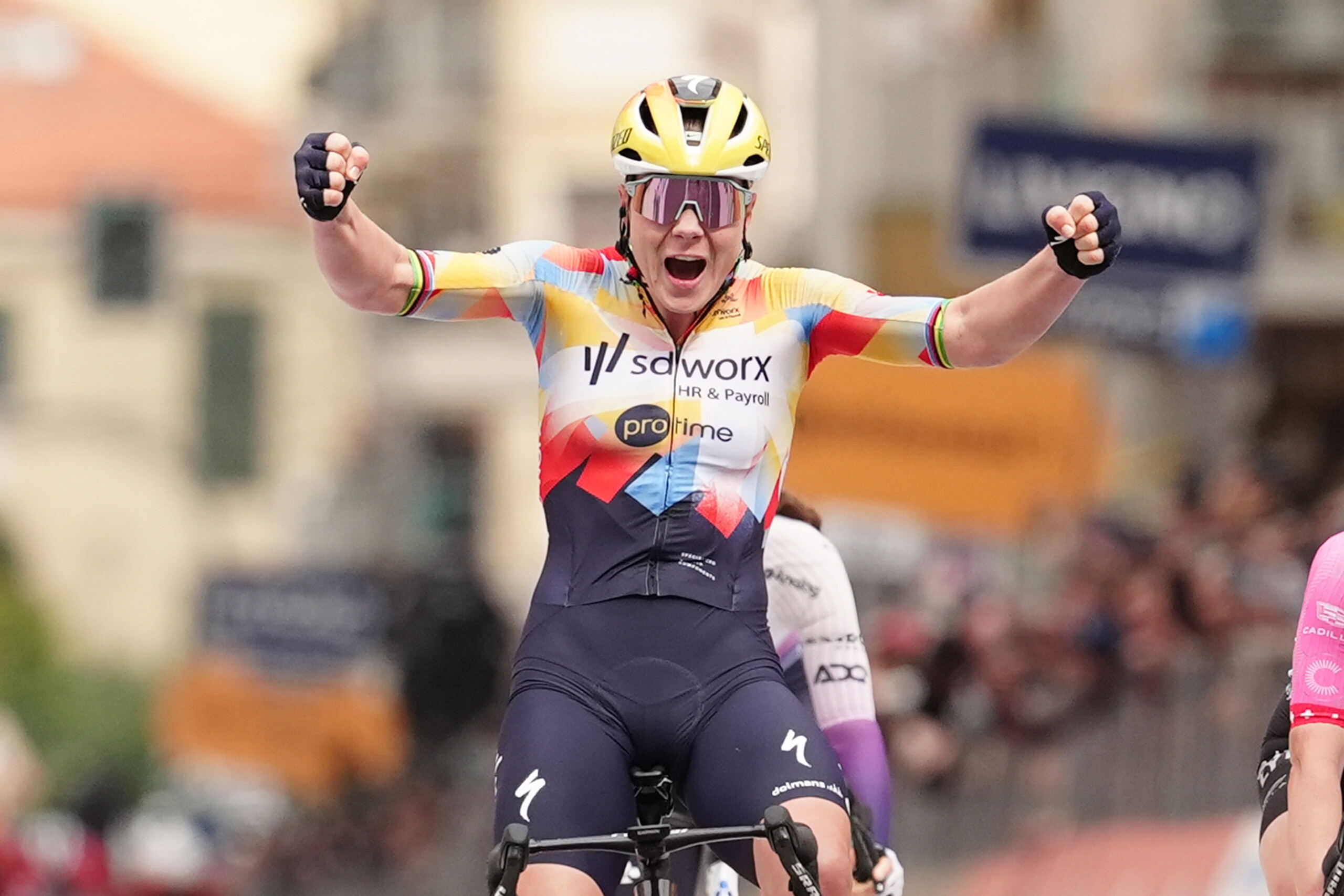
Lotte Kopecky of Team SD Worx – Protime winner during the 156-kilometer women’s elite one-day Sanremo Women cycling race from Genoa to Sanremo, Italy, Saturday, March 21, 2026. Sport – Cycling (Photo by Marco Alpozzi/LaPresse)
With one kilometre remaining, they were safe. The sprint was inevitable.
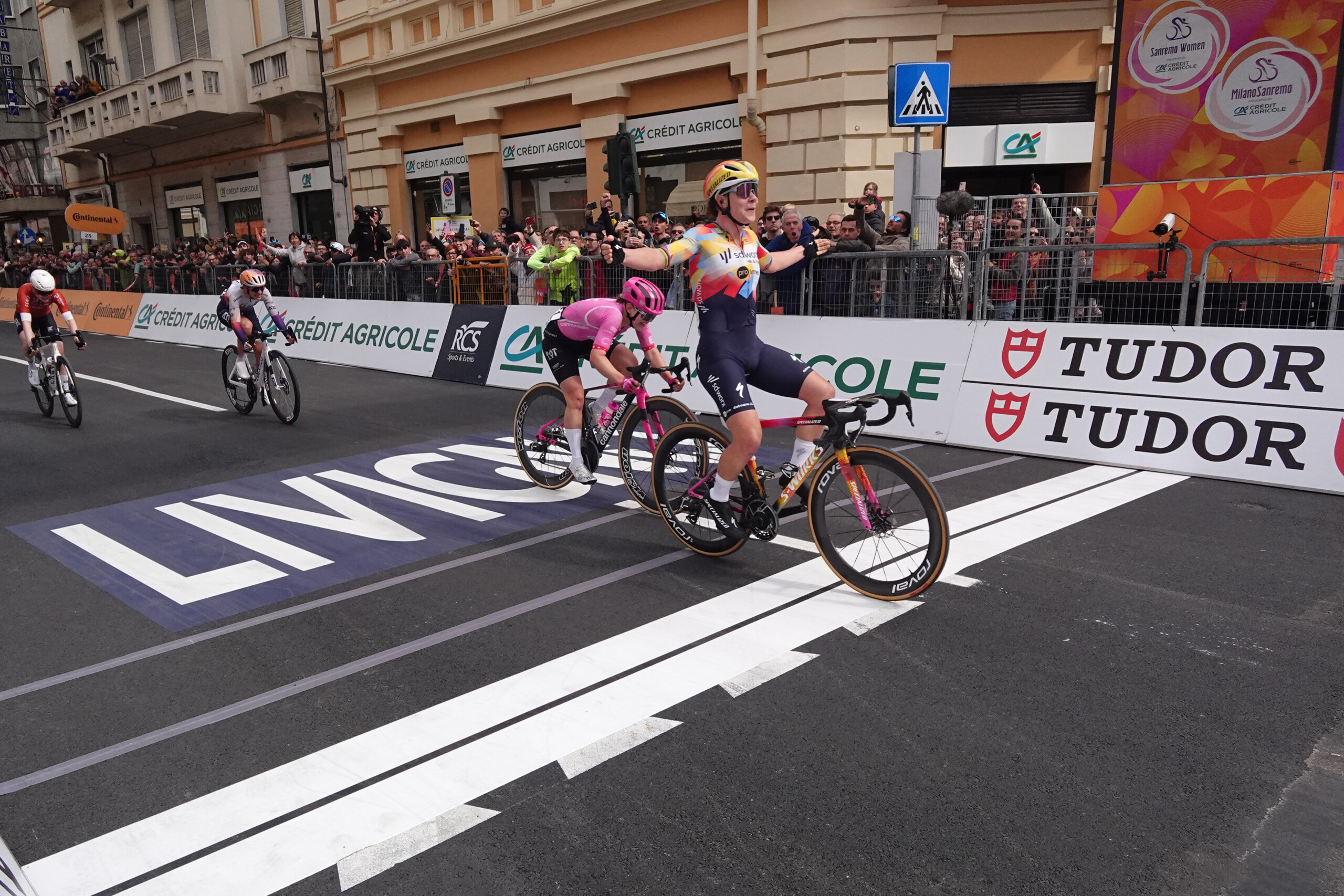
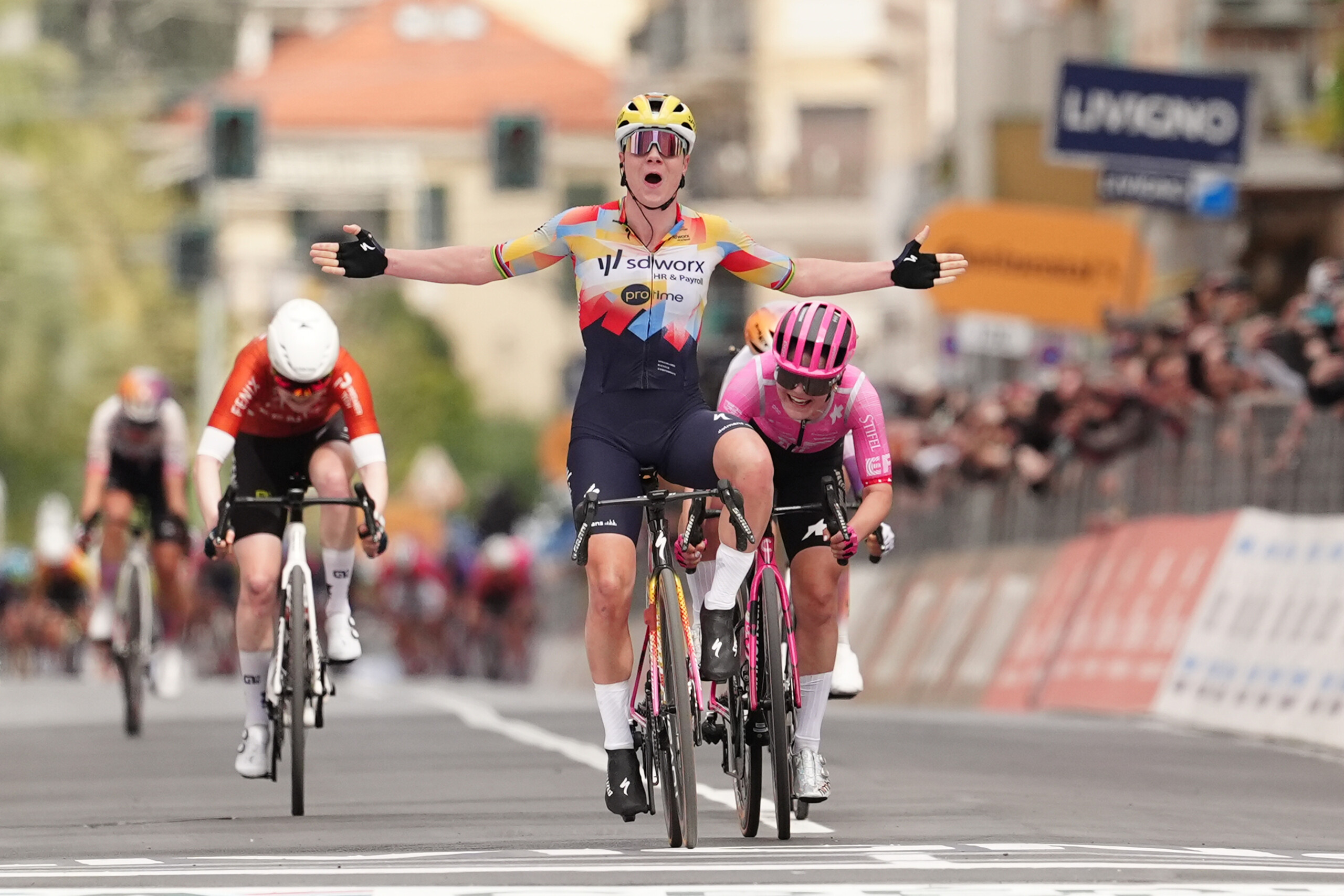
Włodarczyk launched Gasparrini early off a roundabout at 850 metres, a bold leadout from the UAE Team ADQ engine—a statement that they would not simply cede the positioning battle. Rügg found her wheel. Kopecky, who had monitored every move since the Poggio summit, timed her effort with the clinical precision of a rider who has done this before. She won with authority on the Via Roma. Rügg crossed second, Gasparrini third, Pieterse fourth. Behind, Włodarczyk took fifth, four seconds ahead of the Wiebes group. The defending champion finished sixth—her bid to become the first two-time winner of this young race having ended on a Ligurian hillside.
Lotte Kopecky of Team SD Worx – Protime winner during the 156-kilometer women’s elite one-day Sanremo Women cycling race from Genoa to Sanremo, Italy, Saturday, March 21, 2026. Sport – Cycling (Photo by Marco Massimo Paolone/LaPresse)Lotte Kopecky of Team SD Worx – Protime winner during the 156-kilometer women’s elite one-day Sanremo Women cycling race from Genoa to Sanremo, Italy, Saturday, March 21, 2026. Sport – Cycling (Photo by Marco Massimo Paolone/LaPresse)
The Aftermath: Records Fall on Via Roma
The statistics assembled themselves in the minutes after the finish with the satisfying click of well-fitted things. At 55 professional wins, Kopecky became the first Belgian ever to win Milano-Sanremo Women—in either its current incarnation or the earlier Primavera Rosa era—and the first Belgian to stand on its podium. Her pedigree, already stacked with two world titles, three Tour of Flanders victories, two Strade Bianche, a Paris–Roubaix, and more, had acquired another monument. Three days earlier, she had won Nokere Koerse.
In the press conference, she allowed herself a moment of perspective. “It means a lot to win Sanremo Women,” she said, “especially after last year when not everything went as I wanted. Milano-Sanremo is a big thing. The event carries a lot of history—it’s a very big victory.” She was characteristically precise about what had and had not worked. “On the Cipressa, I was a bit too far behind—I had to fight in the group. On the Poggio I was waiting for someone to go. I did not intend to attack myself. If the group going for the win was big, it would have been for Lorena. But in a smaller group like today, I can sprint too, and I’m glad it went all good.”
Noemi Rügg, whose relationship with this race appears to deepen each year, had finished third in 2025 and now stood on the second step, the only Swiss rider ever to have a podium finish here. “I really love this race,” she said. “The parcours is tailor-made for me. It’s perfect.” She described the tactical texture of the afternoon with the candour of a rider who had processed what had happened even before stepping off the bike. “I knew there would be an attack on top of the Poggio to try and get rid of the sprinters. I was actually surprised it wasn’t harder earlier on. These one or two-minute efforts suited me very well. I went with the flow and followed my instinct.” Getting so close hurts a little, she admitted, “but I have to be very happy with this second place.”
At 23, Eleonora Gasparrini became the youngest Italian on any Sanremo podium in either incarnation of the race, beating Sara Felloni’s record from 1999, and the first Italian to stand on the Sanremo Women podium specifically. She was generous with credit. “This is my first time and I have to thank my team-mates. They’ve really done an amazing job today. We raced as the best team.” She traced the tactical arc of her own day: conserving on the Cipressa, responding on the Poggio, trusting her teammates on the descent. “I went all in for the sprint.” Then she offered a thought that felt true about this race and its possibilities. “It’s only the second year for the Sanremo Women. It’s a really open race—for sprinters, but the climbs are selective. It makes it a really interesting race. Probably not every year it will finish the same way.”
Only two editions old, Via Roma’s women’s race already holds its share of stories. Kopecky’s victory—controlled, intelligent, executed by a team that ran this race from the neutralised zone to the finishing straight—had the quality of something inevitable only in retrospect. On a day when Niewiadoma lay on a Ligurian hillside, when Nooijen rode into the wind alone for twenty kilometres, when a 42-year-old García reached the Poggio summit in the leading group, the most classical version of the story prevailed: the best team, with two outstanding cards, played the right one at the right moment.
The Classicissima, in its second spring, is beginning to understand itself.
RESULTS
POS
RIDER
TEAM
TIME
1
Lotte Kopecky
Team SD Worx – Protime
3h47’17″
2
Noemi Rügg
EF Education–Oatly
s.t.
3
Eleonora Gasparrini
UAE Team ADQ
s.t.
4
Puck Pieterse
Fenix–Premier Tech
s.t.
5
Dominika Włodarczyk
UAE Team ADQ
+0:04
6
Lorena Wiebes
Team SD Worx – Protime
+0:09
7
Ally Wollaston
FDJ United–SUEZ
s.t.
8
Elisa Balsamo
Lidl–Trek
s.t.
9
Charlotte Kool
Fenix–Premier Tech
s.t.
10
Chiara Consonni
CANYON//SRAM zondacrypto
s.t.
NOTES
— Kopecky’s 55th professional victory and second of the 2026 season, following Nokere Koerse three days prior.
— First Belgian winner of Milano-Sanremo Women, and the first Belgian podium finish in either the current race or the earlier Primavera Rosa.
— Noemi Rügg: the only Swiss rider to podium at Sanremo Women, finishing 3rd in 2025 and 2nd in 2026.
— Eleonora Gasparrini: first Italian podium finisher in Sanremo Women, and at 23 the youngest Italian on any Sanremo podium, eclipsing Sara Felloni’s record set in 1999.
— Average speed: 41.182 km/h over 156 km from Genova to Sanremo.
— 76 riders contested their first Sanremo Women in this edition.
By Charles Pekow — The off-again, on-again tariffs are off for another year—at least for certain bike products imported from China. The Office of the United States Trade Representative announced on December 1 that it is extending tariff exemptions for aluminum-frame bike trailers and helmets through November 29, 2026.
Chinese-made helmets, like this one available from AliExpress, are exempt from U.S. tariffs until at least November 29, 2026.
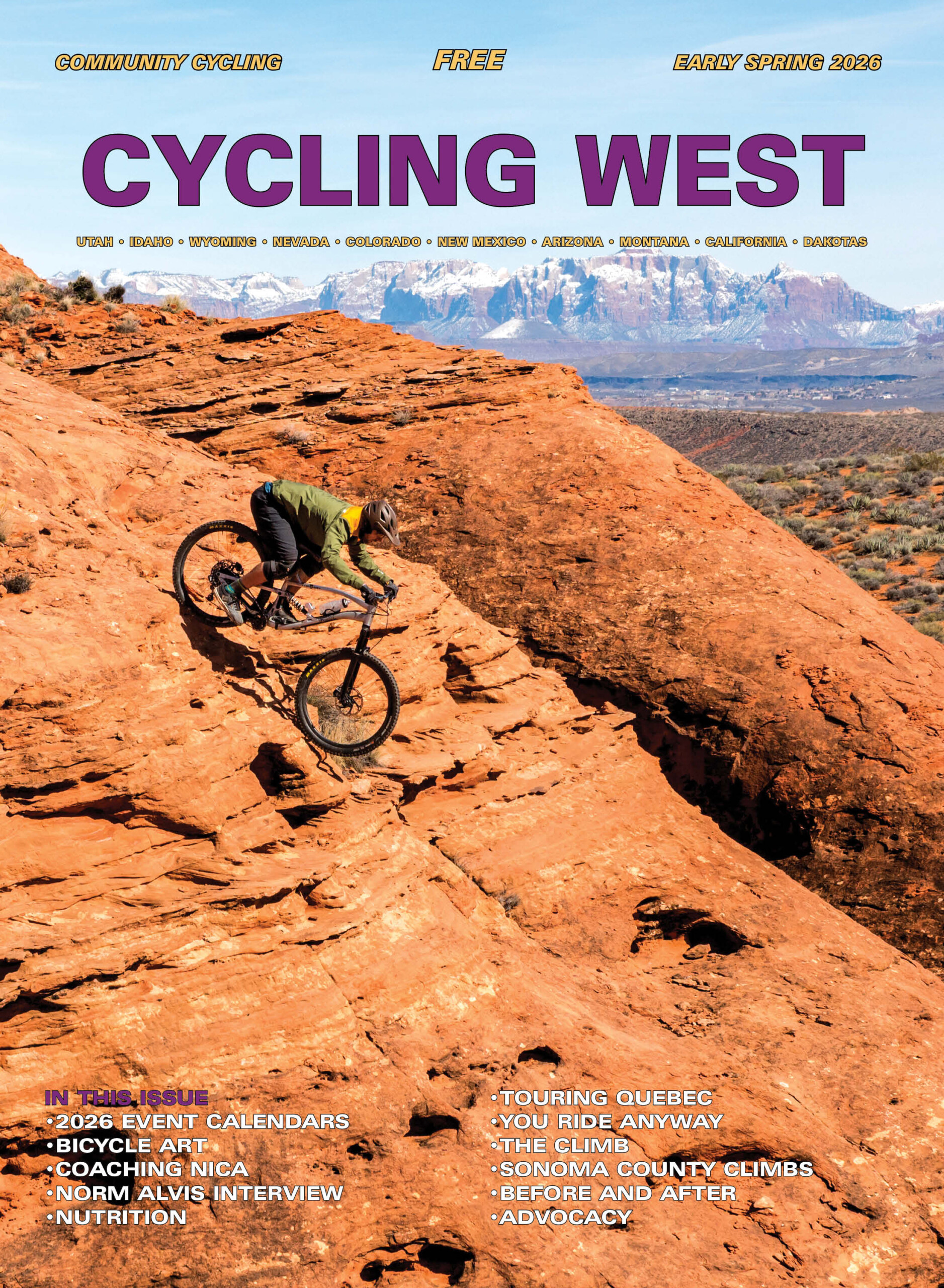
Cycling West and Cycling Utah Magazine’s Early Spring 2026 Issue is now available as a free download (10 MB download). Pick up a copy at your favorite Utah, Idaho, Wyoming, Nevada, Montana, Colorado, Arizona, New Mexico, North Dakota, South Dakota, and Northern California bike shop or other location. Or join to get a copy of our next issue delivered to your actual mailbox!
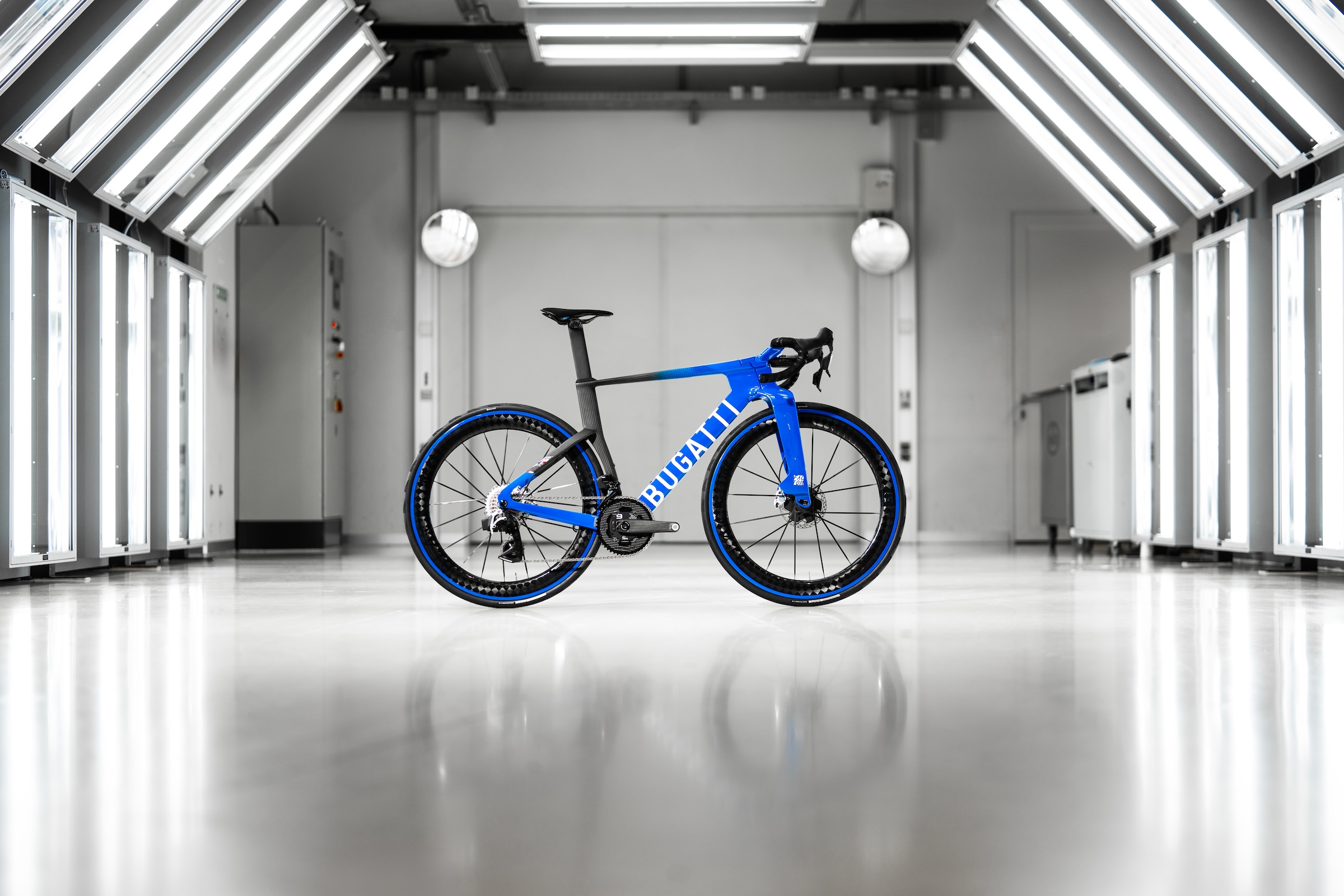
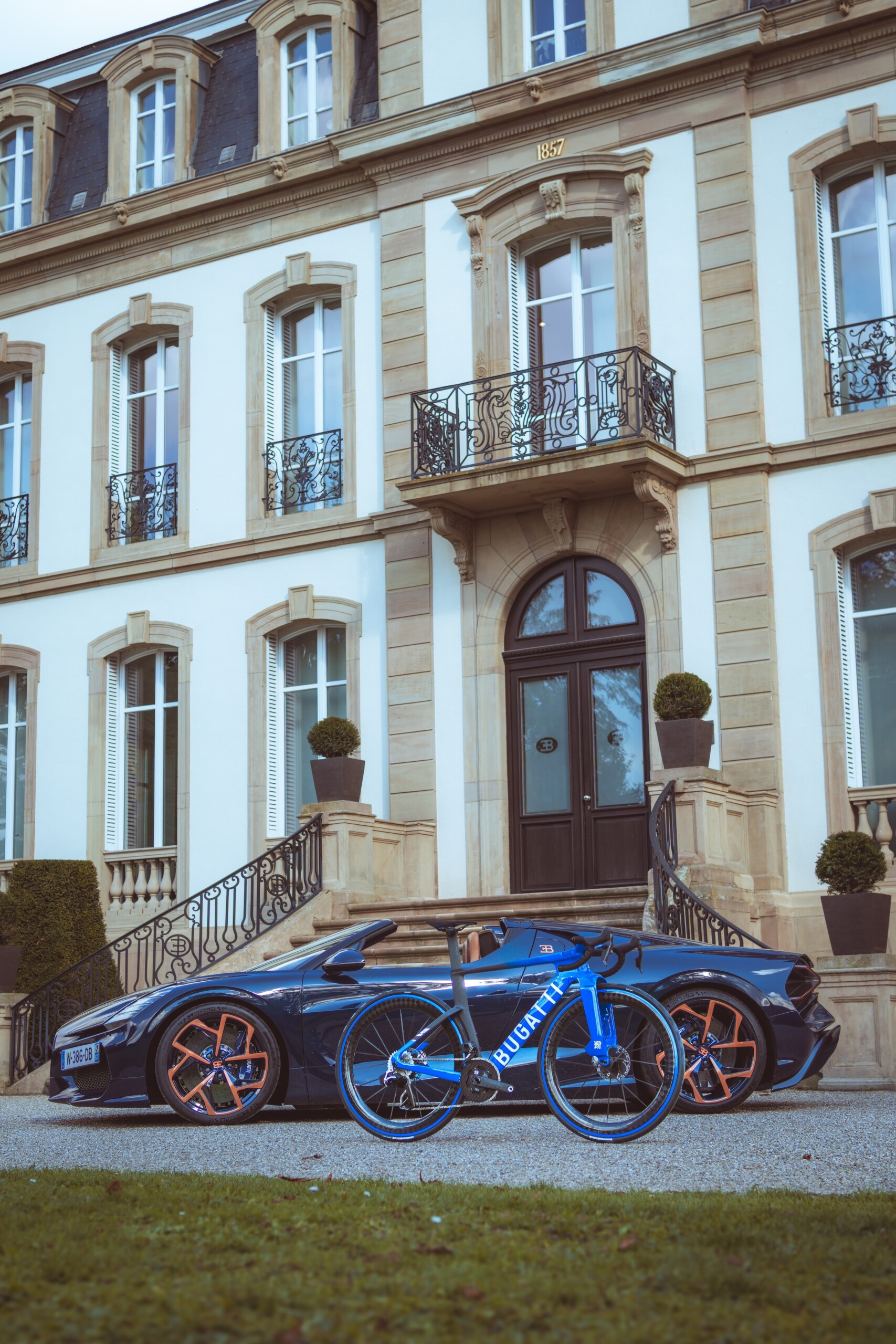
GIRONA, Spain, and MOLSHEIM, France (March 18, 2026) — In the rarefied territory where engineering becomes obsession, speed is rarely the result of a single breakthrough. It emerges instead from hundreds of small decisions—every surface refined, every detail considered, every assumption challenged.
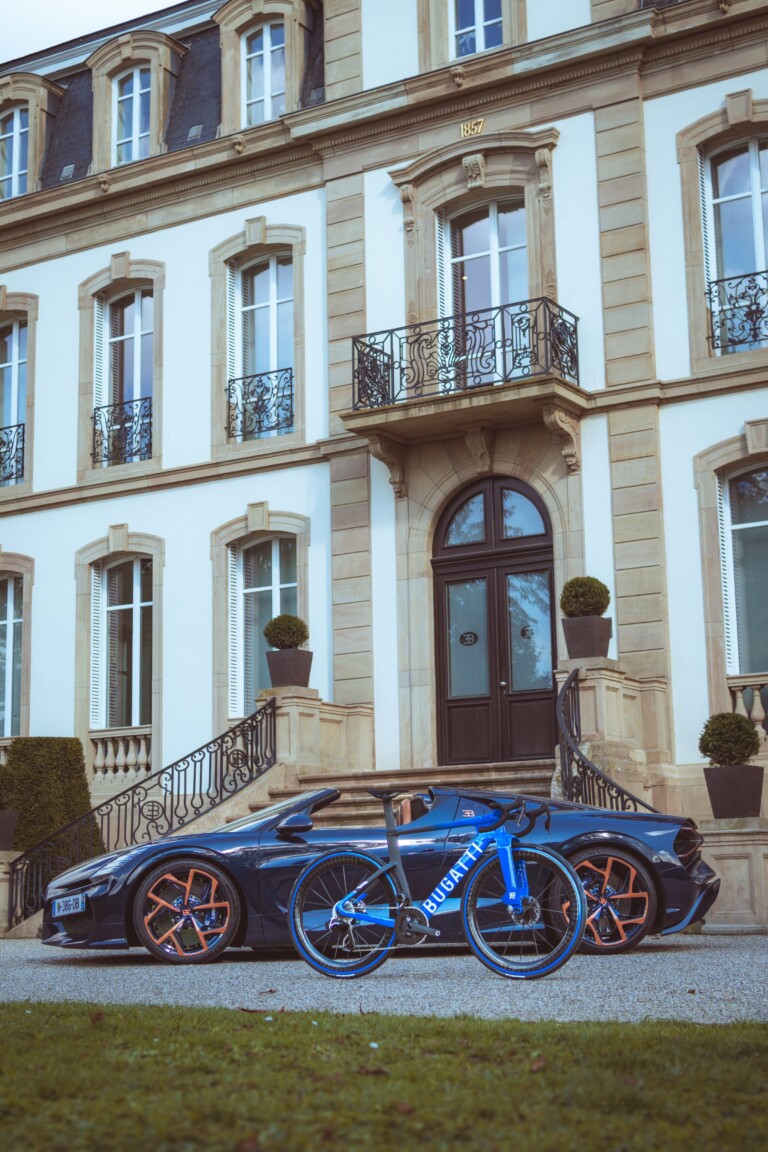
That philosophy sits at the center of the Bugatti Factor ONE, a new collaboration between Factor Bikes and Bugatti that brings hypercar engineering into the world of high-performance cycling.
The Bugatti Factor ONE. Photo courtesy of Factor Bikes.
Designed without compromise, the Bugatti Factor ONE merges the DNA of one of the most celebrated hyper sports car manufacturers in history with Factor’s expertise in elite bicycle design. The result is a machine intended to represent absolute speed, precision, and exclusivity on two wheels.
Both brands approached the project from a shared mindset: obsessive attention to detail and a relentless pursuit of performance without limits. Every element of the Bugatti Factor ONE reflects that approach, from its advanced carbon construction to the sharp aerodynamic shaping that defines its silhouette.
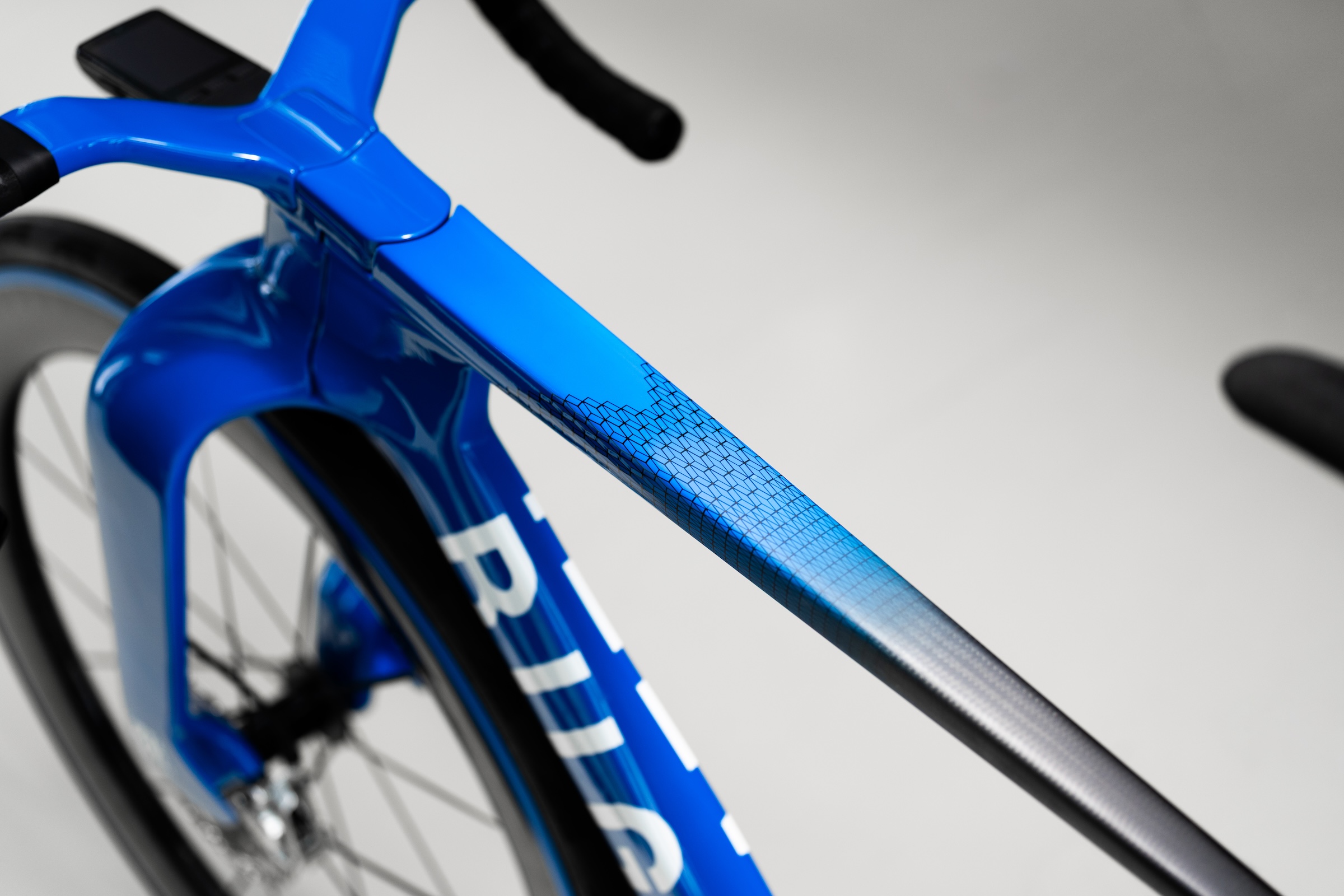
A two-tone Bugatti blue-to-carbon finish highlights the sculpted aerodynamic top tube. Photo courtesy of Factor Bikes.
The bike’s sculpted surfaces are accentuated by a distinctive two-tone split graphic—a design signature long associated with Bugatti automobiles. The bold visual division traces the lines of the frame, emphasizing its aerodynamic forms while creating a dynamic play of light and shadow reminiscent of the company’s hyper sports cars.
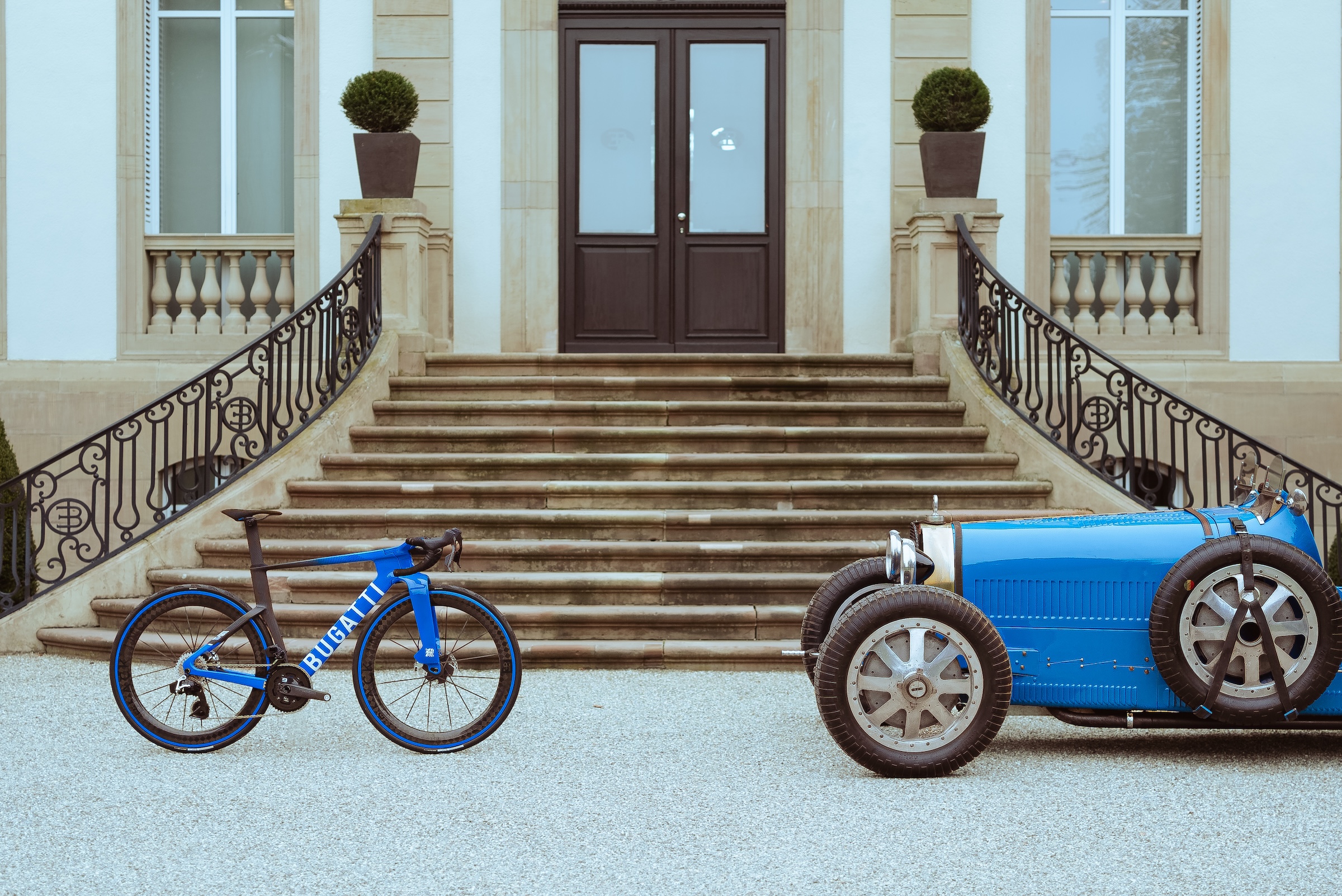
The Bugatti Factor ONE alongside a Bugatti Type 35 at the brand’s historic Molsheim estate — a century of racing heritage, two wheels and four. Photo courtesy of Factor Bikes.
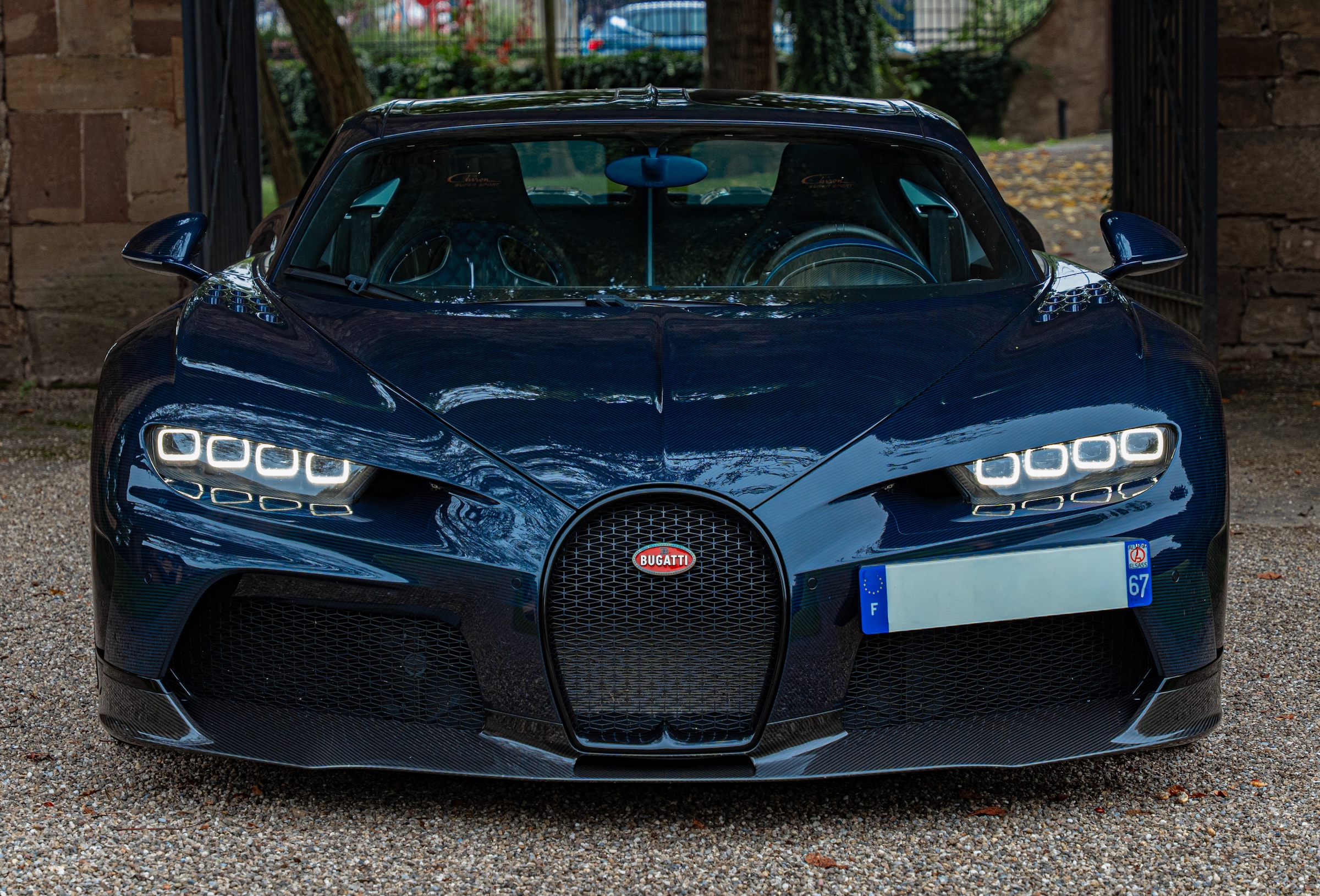
For more than a century, Bugatti has pushed engineering boundaries in the automotive world. The dominance of the Bugatti Type 35 in 1920s Grand Prix racing established the brand as a symbol of technical brilliance. Modern icons such as the Bugatti Veyron and Bugatti Chiron have continued that tradition, redefining what a road car can achieve.
The Bugatti Chiron at Molsheim — the modern icon whose engineering philosophy shaped the Bugatti Factor ONE’s pursuit of performance without compromise. Photo courtesy of Factor Bikes.
Factor has pursued a similar ambition within cycling. Its bikes have consistently aimed to be among the fastest machines in the sport, culminating in the release of the Factor ONE—the fastest UCI-legal road bike the company had produced.
The Bugatti Factor ONE pushes even further.
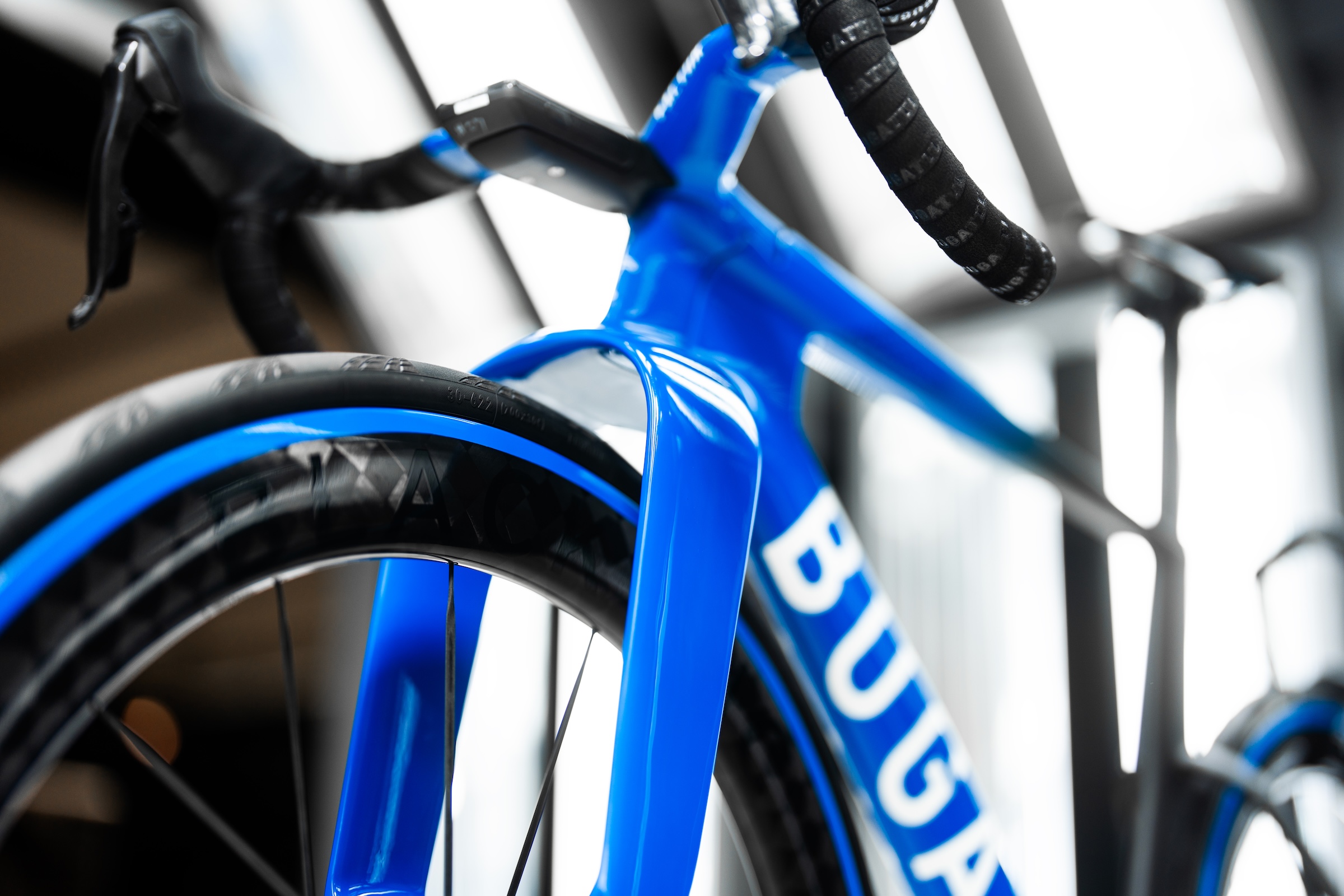
The Bugatti Factor ONE features a non-UCI-legal aero frame with a widened fork stance designed to both reduce drag and improve front-end stability. Photo courtesy of Factor Bikes.
Freed from the constraints of the rulebook, the project allowed designers to prioritize aerodynamic performance above all else. The frame features a wider fork stance and lower drag numbers, an approach made possible by Bugatti’s directive to pursue the most aerodynamic design without compromise.
The Factor-branded fork dropout of the Bugatti Factor ONE, where a wider stance delivers measurable aerodynamic gains. Photo courtesy of Factor Bikes.
At the front of the bike sits a small but meaningful detail: the “Dancing Elephant,” one of Bugatti’s most recognizable historical symbols. Created by artist Rembrandt Bugatti, brother of company founder Ettore Bugatti, the sculpture once adorned the marque’s legendary automobiles. Reinterpreted here, the emblem quietly links the brand’s artistic heritage with the precision engineering of the present.
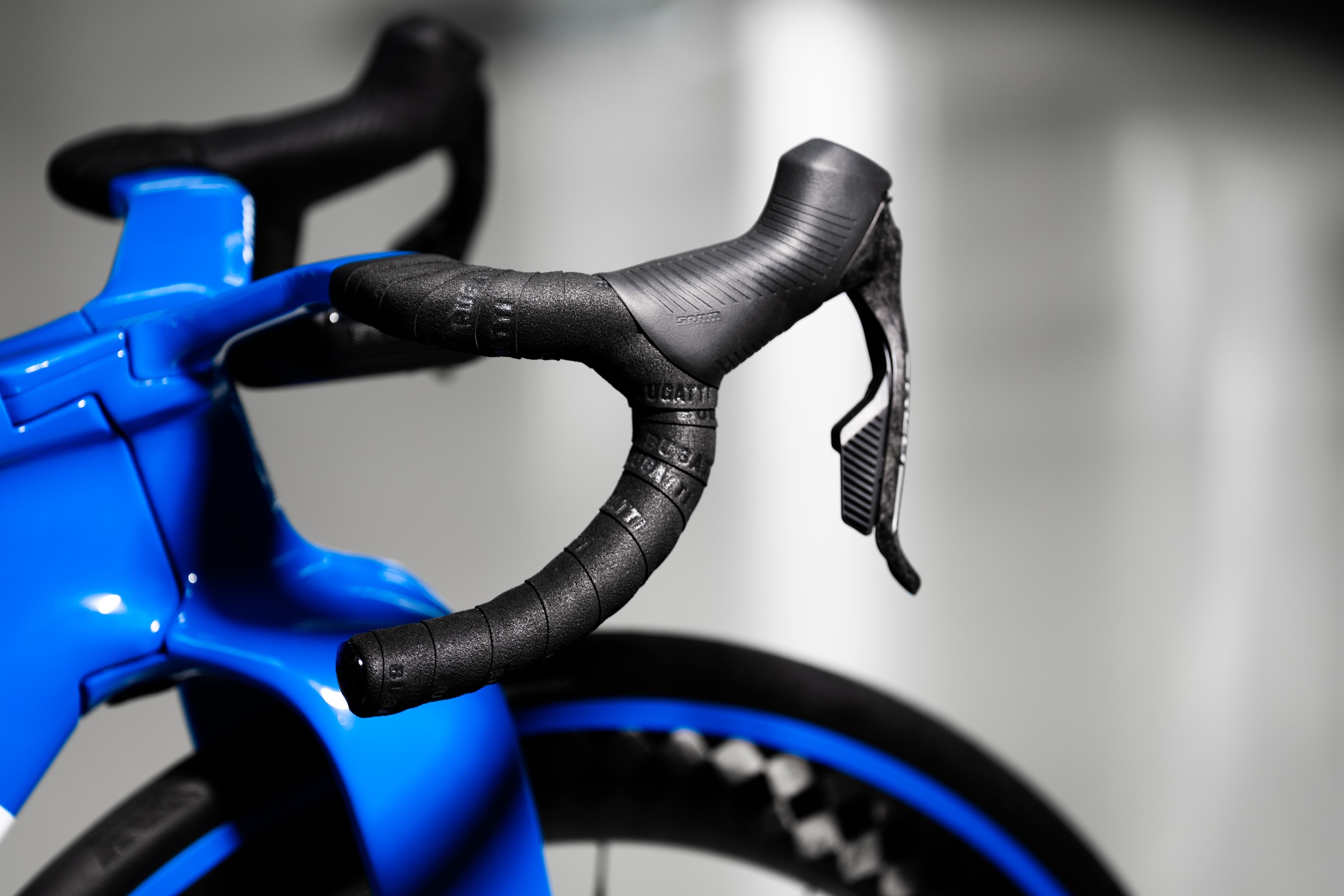
The Black Inc. integrated cockpit emphasizes aerodynamic efficiency and a clean front-end profile. Photo courtesy of Factor Bikes.
Performance innovation extends well beyond the visual language. Engineers developed the fork specifically to deliver measurable aerodynamic gains, refining its shaping and airflow management around the leading edge of the bike. The design reduces drag while improving front-end stability, enhancing efficiency at speed and ensuring precise handling under race conditions.
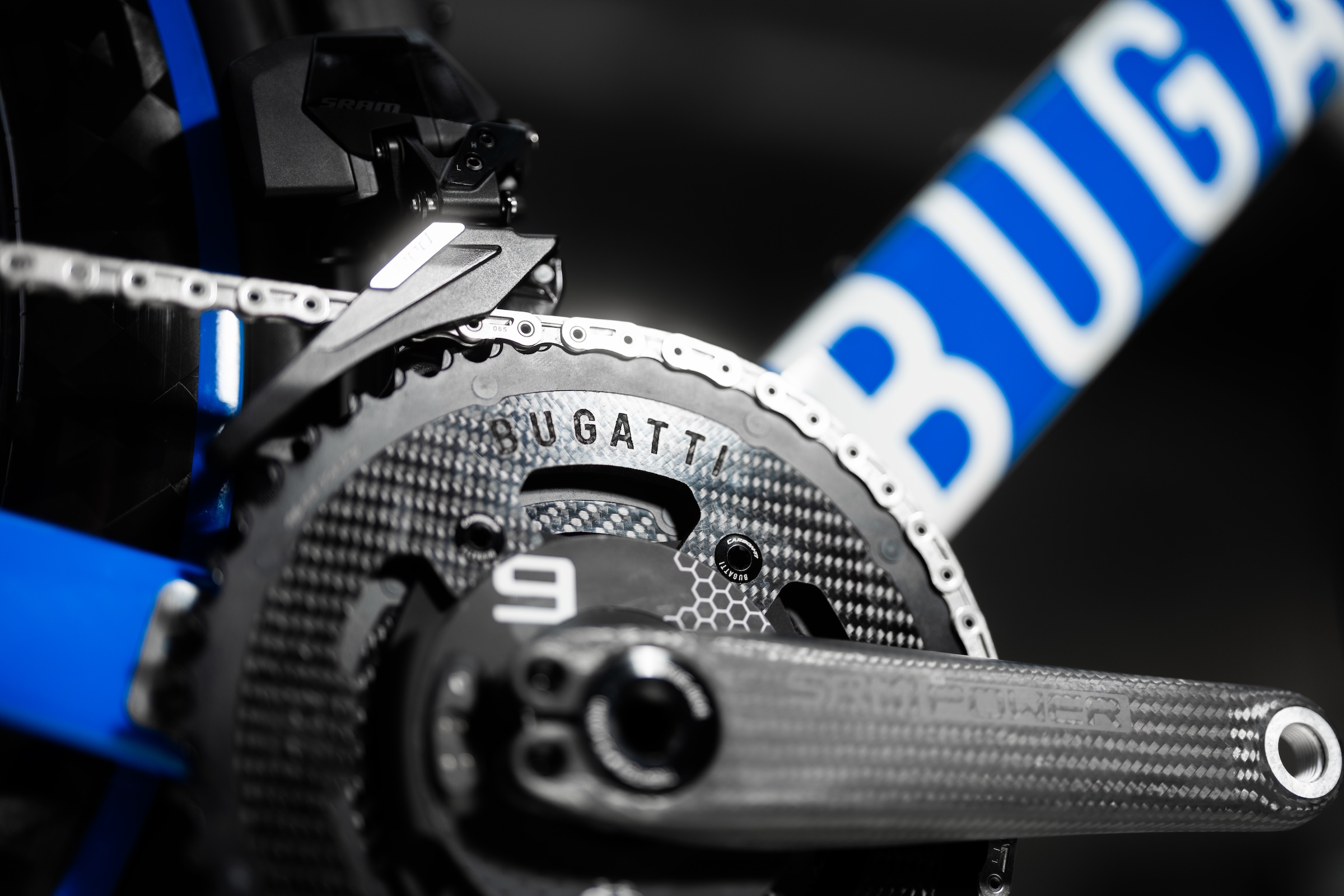
A bespoke Carbon-Ti crankset & chainrings, developed exclusively for the Bugatti Factor ONE collaboration. Photo courtesy of Factor Bikes.
The collaboration also reaches deep into the bike’s component development. Several elements have been customized exclusively for the Bugatti Factor ONE, including a bespoke saddle from Selle Italia, rotors and chainrings from Carbon-Ti, and specialized tires from Continental. Each piece complements the bike’s uncompromising performance philosophy.
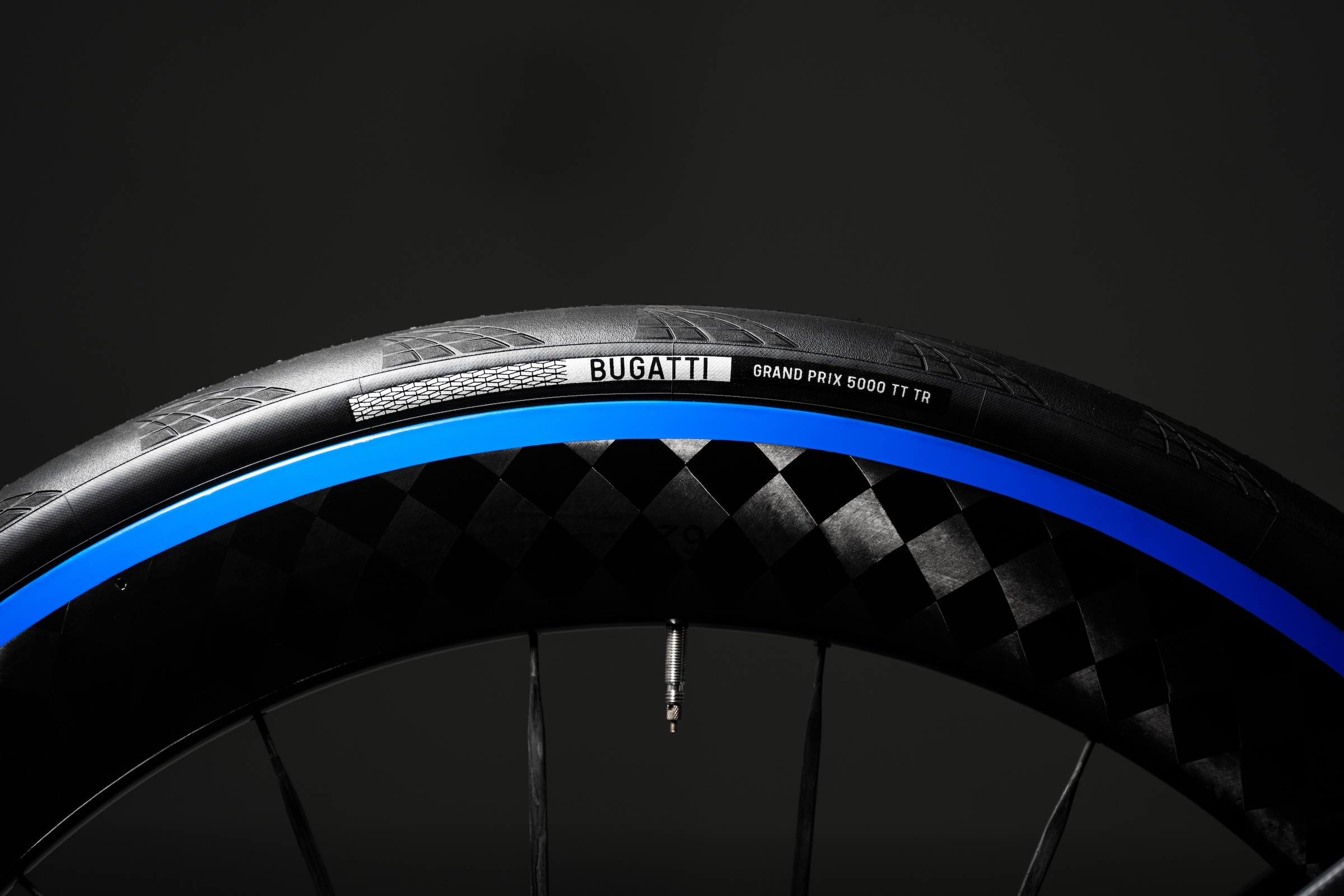
Continental’s Grand Prix 5000 TT TR tire, co-branded for the project, wraps a Black Inc Bugatti Hyper 62 wheel. Photo courtesy of Factor Bikes.
At the center of the build are the Black Inc Bugatti Hyper 62 wheels, designed as the cycling equivalent of a hypercar wheelset. The 62-millimeter rims balance aerodynamic efficiency with crosswind stability while weighing just 1,298 grams for the pair. Their advanced carbon layup maximizes torsional stiffness and power transfer while maintaining controlled compliance for refined ride quality.
The Black Inc Bugatti Hyper 62 wheelset — 62mm carbon rims weighing just 1,298 grams for the pair, balancing aerodynamic efficiency with crosswind stability. Photo courtesy of Factor Bikes.
Co-moulded rim-to-rim carbon spokes, precision-engineered hub internals, and enhanced hub-flange bonding contribute to what designers describe as a bright, lively ride feel with exceptional efficiency under load.
For Factor founder Rob Gitelis, the project became an opportunity to rethink what a high-performance bicycle could be.
“The Bugatti Factor ONE is not simply a bicycle. It is a statement,” Gitelis said. “This project challenged us to rethink every assumption and push engineering boundaries in the same way Bugatti has done in the automotive world for over a century.”
He added that the collaboration reflects the shared ethos of both brands. “Reflecting our shared values of innovation, precision, and performance at the highest level, the Bugatti Factor ONE is designed for cyclists who demand the extraordinary, both from themselves and their equipment.”
For Wiebke Ståhl, managing director of brand and licensing at Bugatti International, the project demonstrates how Bugatti’s engineering philosophy can extend beyond automobiles.
“The Bugatti Factor ONE is the result of a shared vision between two brands devoted to mastery and ambition,” Ståhl said. “Every element of this bicycle, like the wide fork, for example, has been meticulously engineered to deliver measurable aerodynamic gains, reducing drag through refined shaping and optimised airflow management around the leading edge of the bike.”
The Bugatti Factor ONE at Molsheim, where hypercar engineering principles informed every decision in the bike’s design. Photo courtesy of Factor Bikes.
She added that the project translates Bugatti’s hypercar engineering into a new form. “It translates the meticulous engineering and attention to detail of Bugatti hypercars into a completely new category. It demonstrates that our pursuit of excellence and craftsmanship extends beyond hypercars, creating a machine that pushes the boundaries of what is possible in high-performance cycling.”
Production will remain deliberately limited. Only 250 individually numbered Bugatti Factor ONE bicycles will be produced worldwide, each built in tightly controlled quantities and intended for collectors, enthusiasts, and athletes seeking a rare expression of performance engineering.
Each bike represents a fusion of two worlds—hypercar engineering and innovative cycling technology—brought together through a shared pursuit of speed.
The Bugatti Factor ONE will be unveiled publicly during an event in Shanghai on March 18, 2026.
IRVINE, California (March 18, 2026) — Shimano has released a new short film celebrating one of cycling’s most visible grassroots movements. We Are Cyclists continues the story of All Bodies on Bikes, a community-driven effort focused on making cycling more inclusive and welcoming for riders of all sizes.
The 10-minute film arrives five years after the original All Bodies on Bikes documentary helped launch the movement into the national spotlight. What began as a declaration that people of all sizes deserve joy, visibility, and space in cycling has since grown into a nonprofit organization with 14 chapters across the United States and an expanding global community.
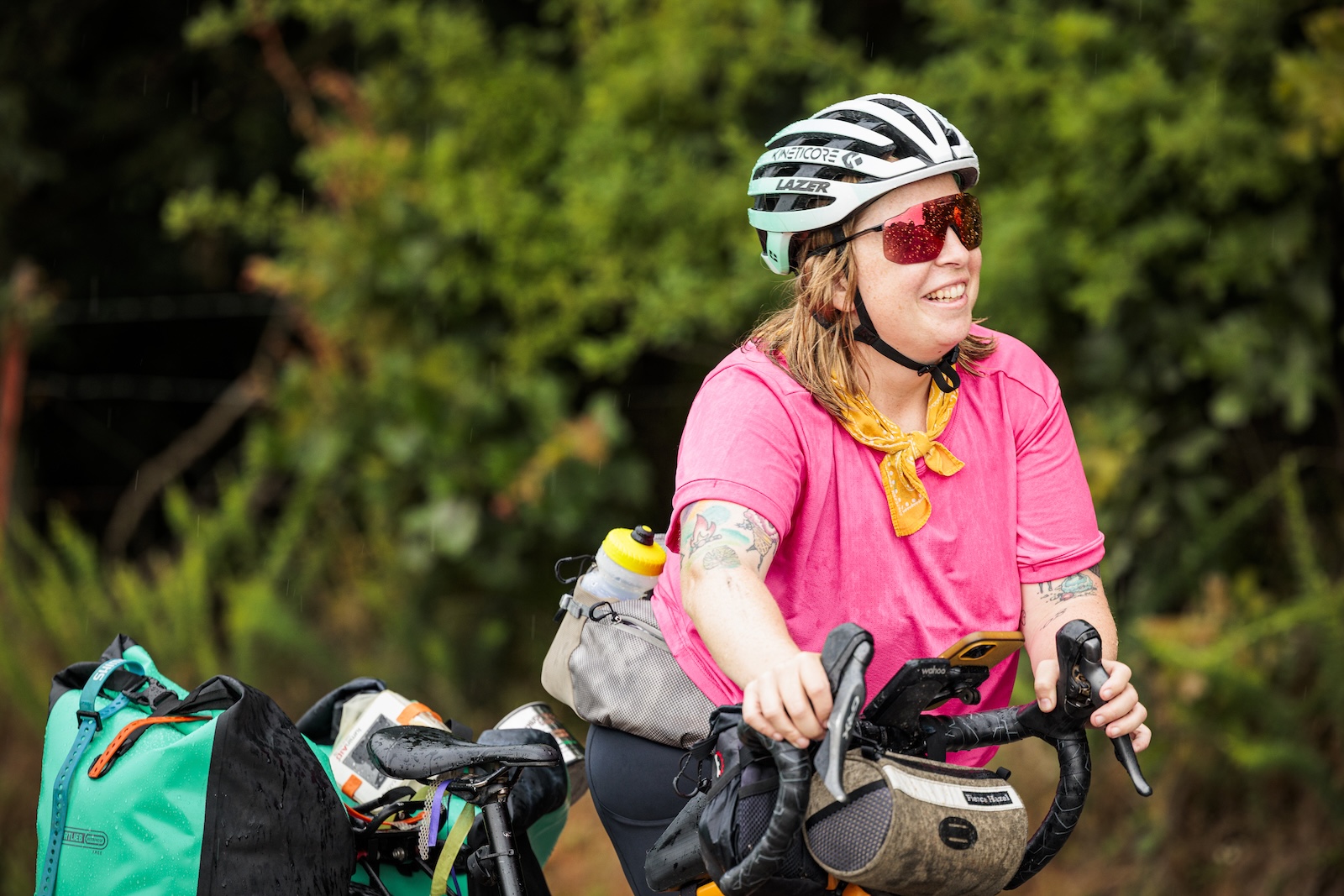
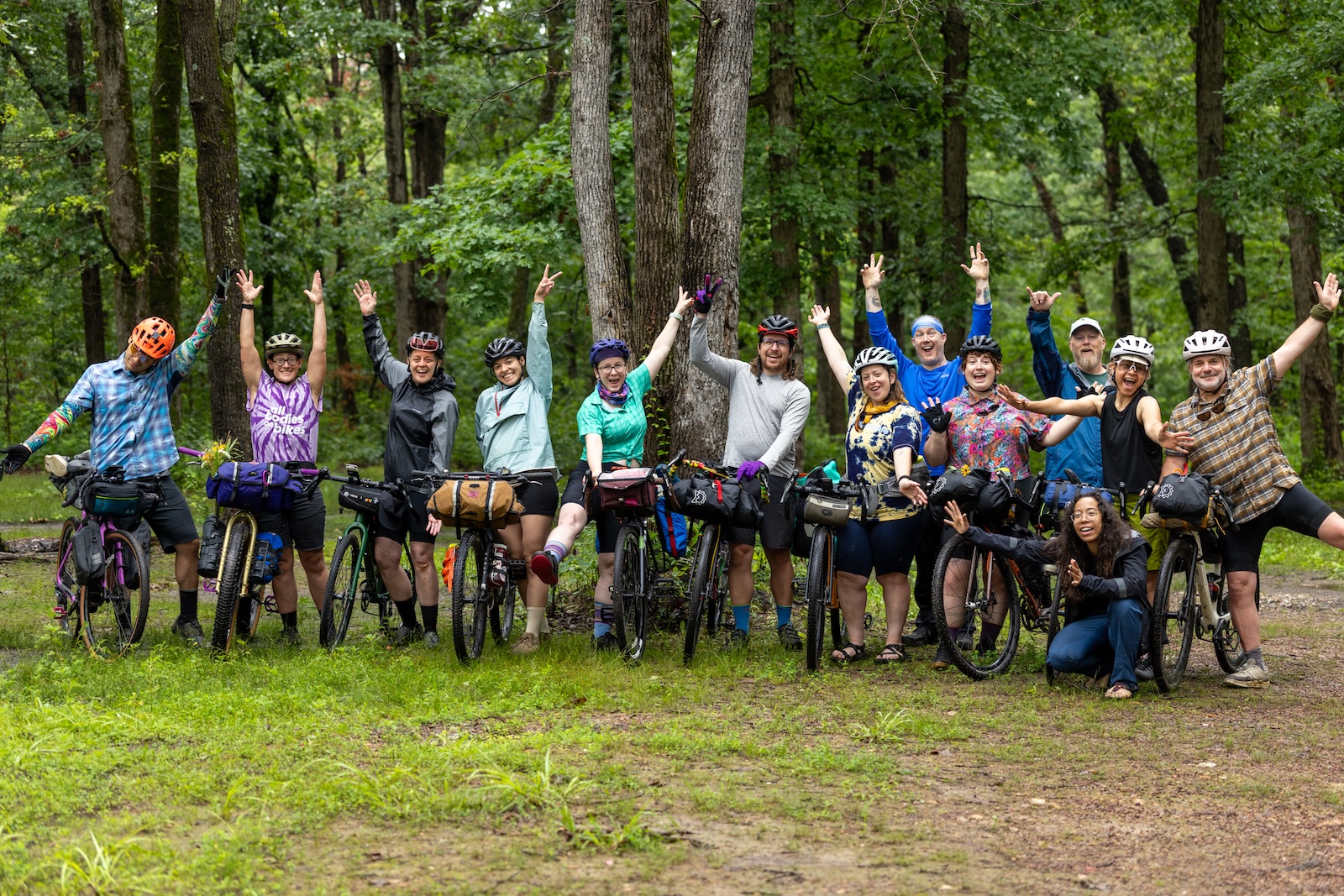
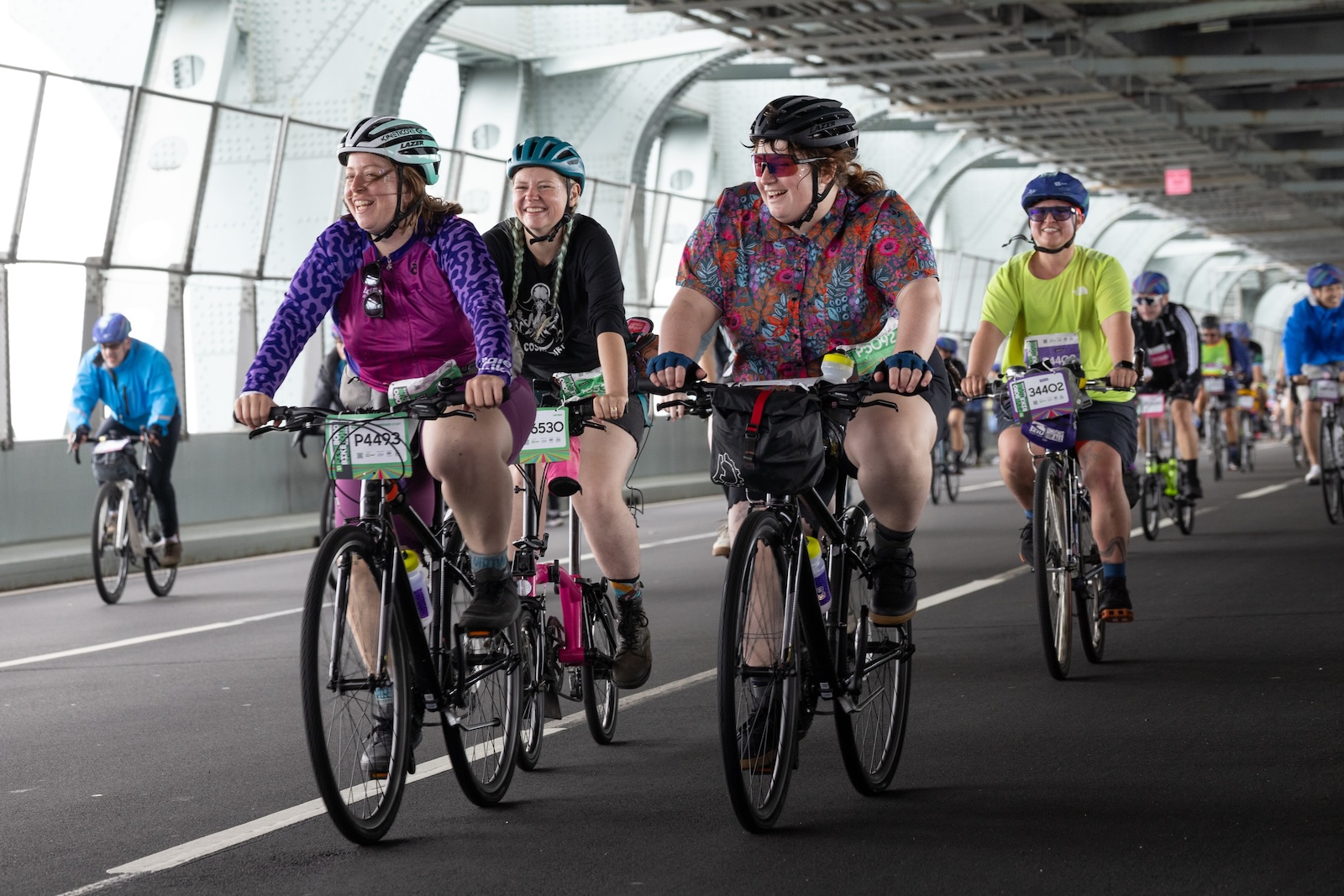
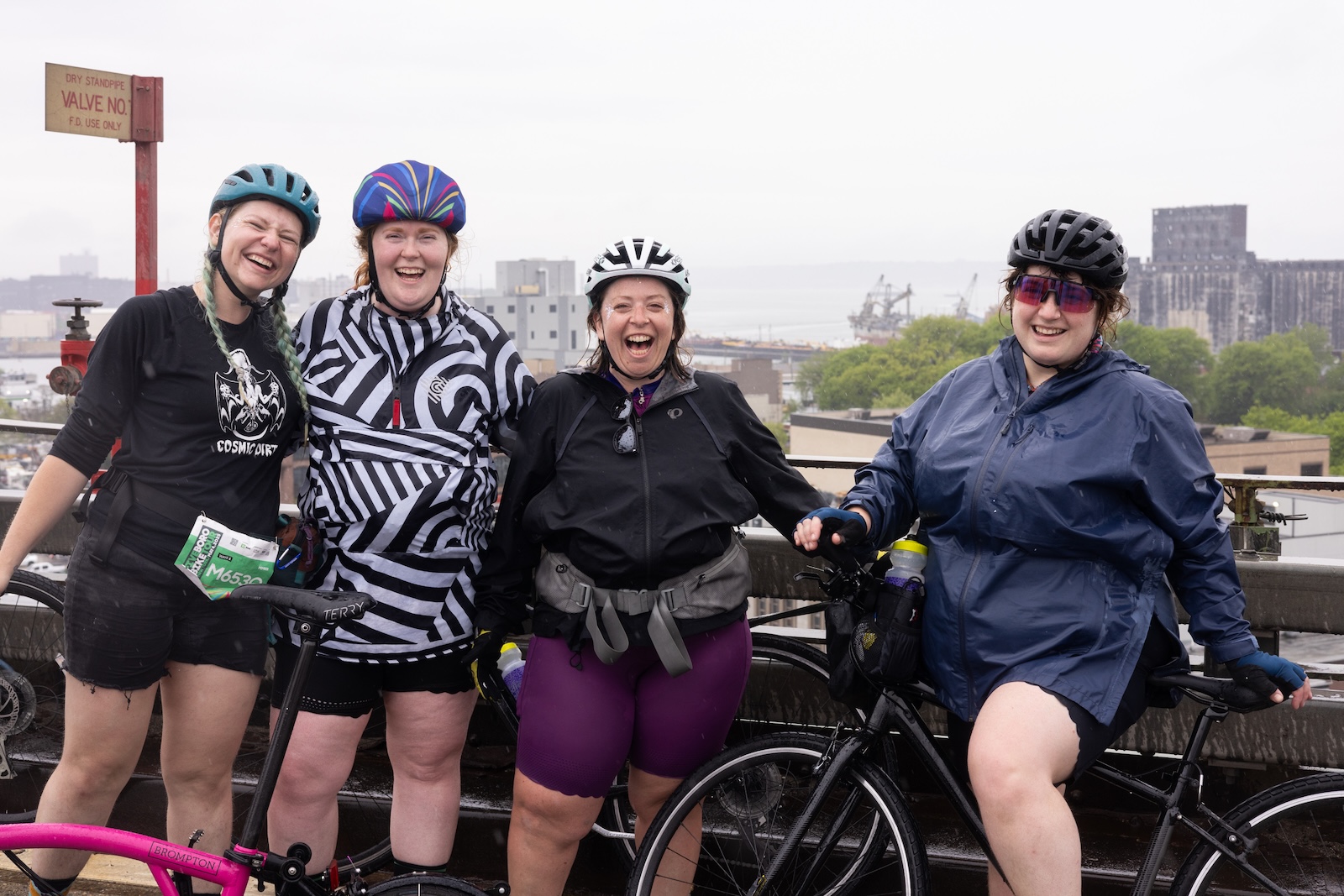
The film features All Bodies on Bikes co-founders Marley Blonsky and Kailey Kornhauser and captures the energy of the community through rides, gatherings, and shared experiences across the country. Filmmakers followed the group through a variety of events and landscapes, from a rainy bikepacking trip in Northwest Arkansas to group rides during The MADE Show in Portland, and the massive TD Five Boro Bike Tour in New York City.
Marley Blonsky, co-founder of All Bodies On Bikes. Photo courtesy of Shimano.
The production also highlights the diversity of the organization’s leadership and membership. Crews filmed across three separate trips nationwide, allowing time for the spontaneous moments and connections that define the All Bodies on Bikes community.
An All Bodies on Bikes group celebrates mid-ride in the woods, bikes loaded and spirits high. Photo courtesy Shimano.
“While the film itself is only 10 minutes long, it actually took three different filming sessions spread across the country,” Blonsky said. “Giving lots of opportunities for silly shenanigans, bloopers, and ridiculousness.”
All Bodies on Bikes riders roll through a bridge crossing during the TD 5 Boro Bike Tour, all smiles. Photo courtesy Shimano.
For Shimano, the film reflects the company’s broader commitment to supporting riders from a wide range of backgrounds and experiences. By amplifying stories like All Bodies on Bikes, the brand aims to support efforts that expand access to cycling and strengthen the sense of belonging within the sport.
Rain can’t dampen the mood — riders share a laugh during an All Bodies on Bikes event. Photo courtesy Shimano.
At its core, We Are Cyclists emphasizes a simple message: cycling is not defined by speed, distance, or appearance, but by the shared experience of movement and community.
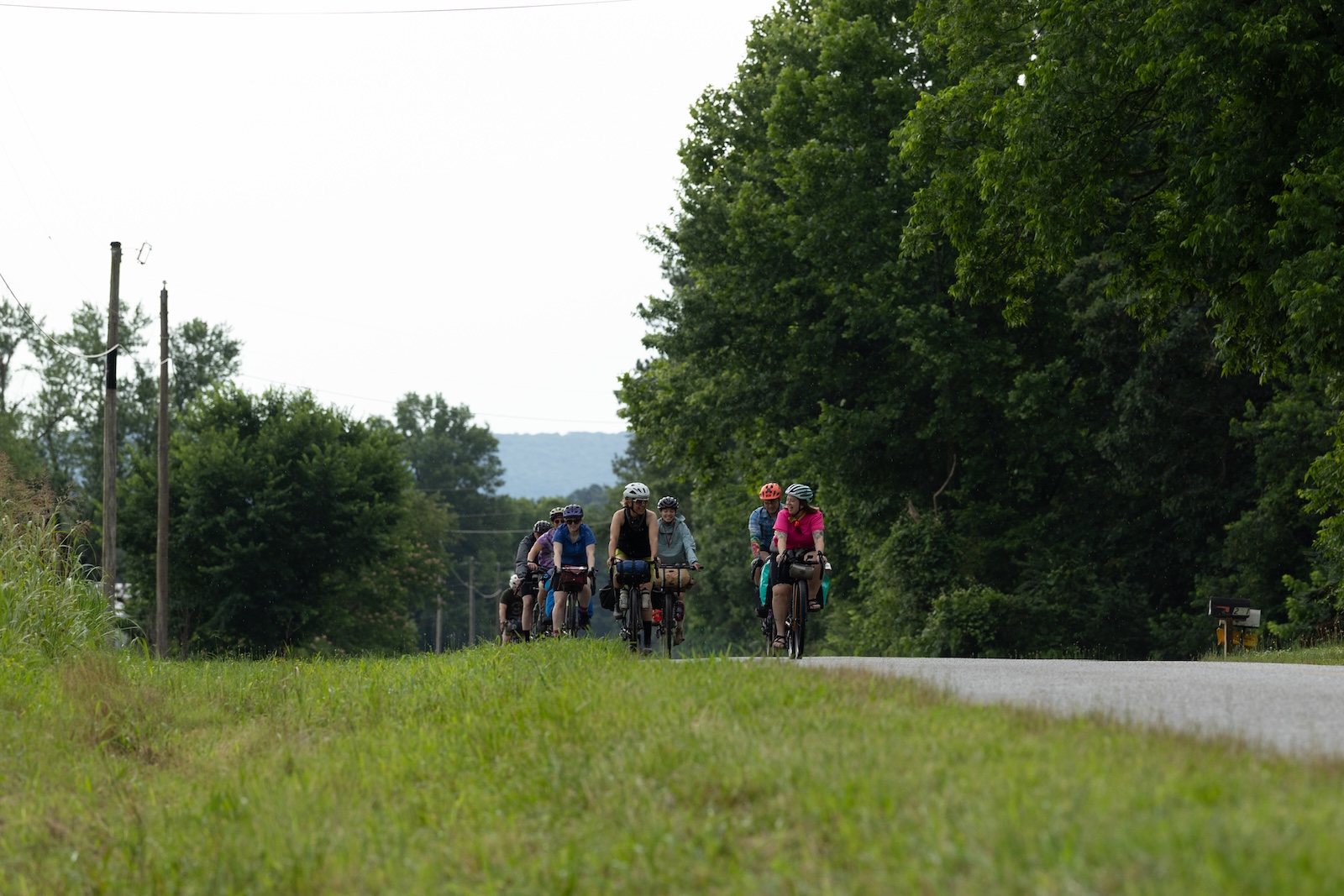
An All Bodies on Bikes group crests a gentle rise on a quiet country road. Photo courtesy Shimano.
“No matter the distance or your speed, we’re here to celebrate all riders, all bikes, and all rides,” Blonsky said. “I hope this film brings a smile to your face and inspires you to get out for a ride.”
To learn more about All Bodies on Bikes or find a local chapter, visit allbodiesonbikes.com.
By Koby Brown — Most of us would balk at the idea of riding a bicycle across a state—even if the state were little old Rhode Island. Tell your friends you plan to do it and they’ll probably call you crazy. Some might even say you can’t do it or that you’re not strong enough.
None of that stops Rob Warner. And Rob faces a challenge most of us never will.
Doctors diagnosed Rob with early-onset Parkinson’s disease when he was 33, just three months after his youngest child was born. Parkinson’s—the world’s fastest-growing neurodegenerative disorder—primarily affects a patient’s ability to control movement. Millions of people live with Parkinson’s, and tens of thousands receive the diagnosis every year. Its hallmark symptoms include tremors, stiffness, and slowed movement, along with a host of other difficult complications. Researchers continue searching for a cure and for ways to ease patients’ symptoms.
As the disease has progressed, Rob’s life has become more complicated. Tasks that once felt routine now require greater effort as Parkinson’s affects his motor skills.
But Rob keeps moving.
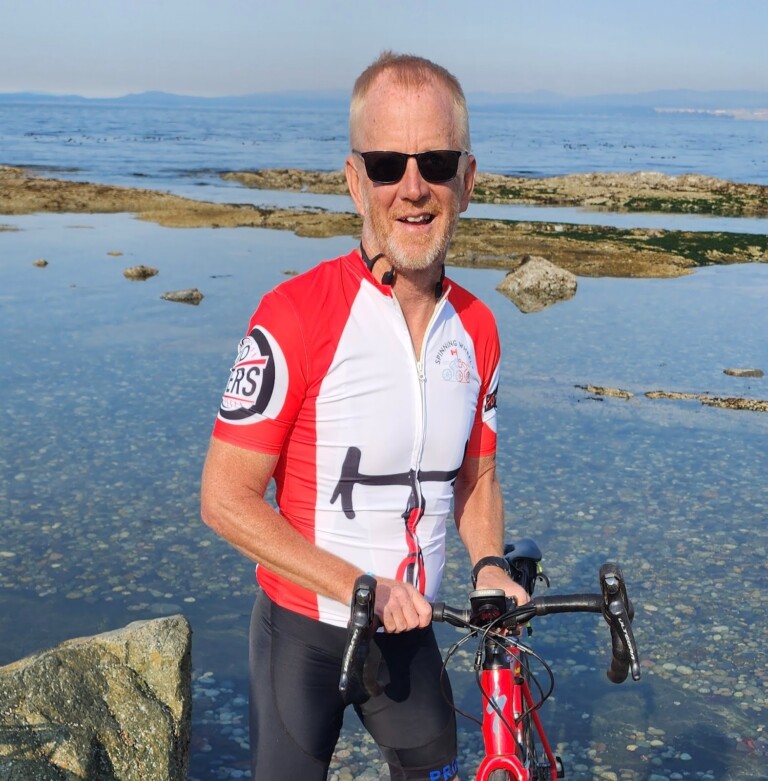
Rob Warner. Photo courtesy of Koby Brown.
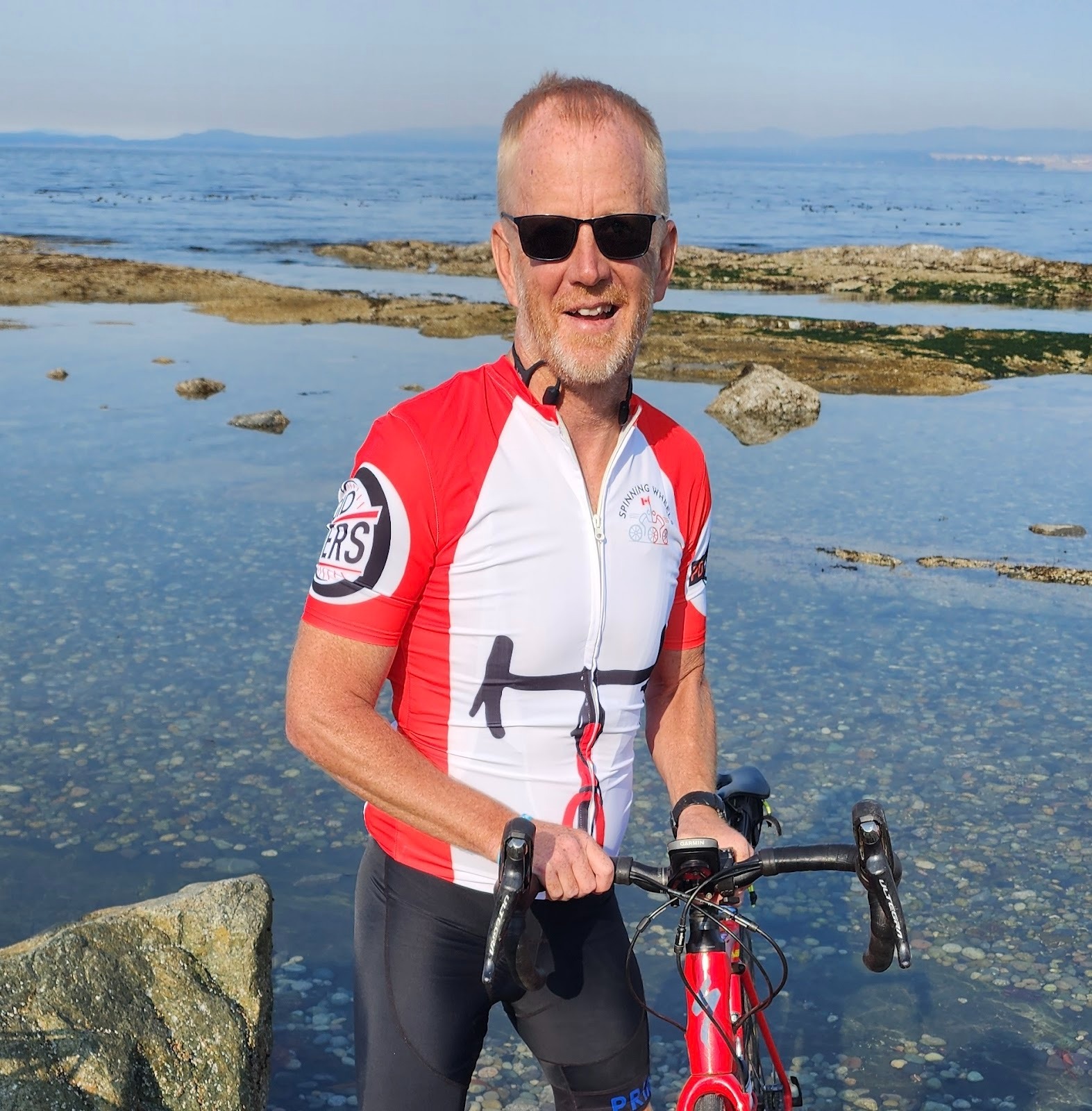
Two summers ago, he joined the Spinning Wheels Tour, a group of Parkinson’s patients and supporters who crossed Canada by bicycle to raise awareness. Riders of all kinds took part—young and old, fit and out of shape, healthy and ill, Parkinson’s patients and non-patients alike.
Rob rode the British Columbia leg, a weeklong effort that demanded grit, sweat, and determination—and more than 300 miles of pedaling. Together, the group covered more than 5,000 miles. Their goal: raise awareness, fight stigma, build a support community, and beat the odds.
Rob Warner. Photo courtesy of Koby Brown.
There’s another reason, too. Intense exercise ranks among the best therapies for managing Parkinson’s disease.
Research shows that vigorous exercise—especially cycling—can slow the disease’s progression and provide meaningful relief from symptoms. Hard exercise improves both gross and fine motor function, enhances balance, and stimulates brain mechanisms that preserve dopamine. As patients exercise, the brain repairs neural connections and protects dopamine-producing neurons.
Cycling offers particular benefits. The rapid, repetitive motion of pedaling forces the brain to adapt, improving motor control. The smooth, continuous movement also reduces freezing of gait while delivering a strong cardiovascular workout without the joint stress common in other forms of exercise. Cardio training further helps Parkinson’s patients by reducing stiffness, a symptom that strongly affects quality of life.
Unfortunately, many patients feel powerless to improve their situation.
That’s exactly why Rob and his teammates are preparing an even more ambitious ride this spring.
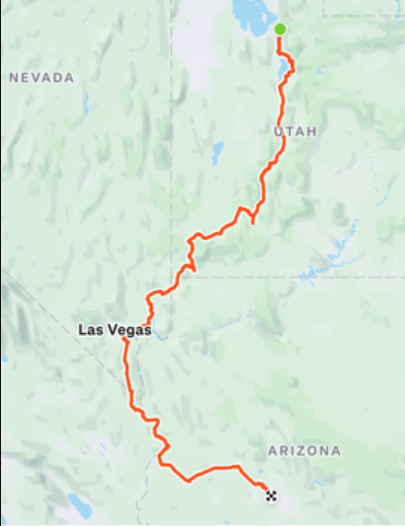
Course map.
From May 2 to May 22, 2026, Rob—serving as captain of Team Utah—will climb back into the saddle. He will lead a group of supporters on a 20-day journey from Salt Lake City, Utah, to Phoenix, Arizona, where the 7th World Parkinson Congress will take place from May 24–27.
Their route will cross Utah, Nevada, California, and Arizona, including stretches along the Wasatch Front and through Cedar Breaks, Snow Canyon, Valley of Fire, and Lake Havasu. Two other teams—Team Route 66 and Team West Coast—will also ride to Phoenix in support of the World Parkinson Congress.
Rob and Team Utah invite anyone to join the journey. Ride a mile or ride all 900. Show up on an old Walmart Huffy BMX or a ten-thousand-dollar Bianchi. However you ride, you’ll find a section of road where you can join in, get some exercise, make friends, and support an important cause.
We hope you’ll find a way to support this effort, stand with millions of people living with Parkinson’s, and connect with the PD community.
To learn more—or to find other ways to support Team Utah and the broader Parkinson’s community—find them on Facebook at Team Utah – Pedal for Parkinson’s.
Tirreno–Adriatico 2026 | Full Stage-by-Stage Report
Isaac Del Toro wins stage 6 on his way to winning the overall of the 2026 Tirreno-Adriatico stage race. (Photo by Massimo Paolone/LaPresse)
Ganna’s Law, Unbroken
March 9, 2026 · Stage 1 · Lido di Camaiore Individual Time Trial · 11.5 km
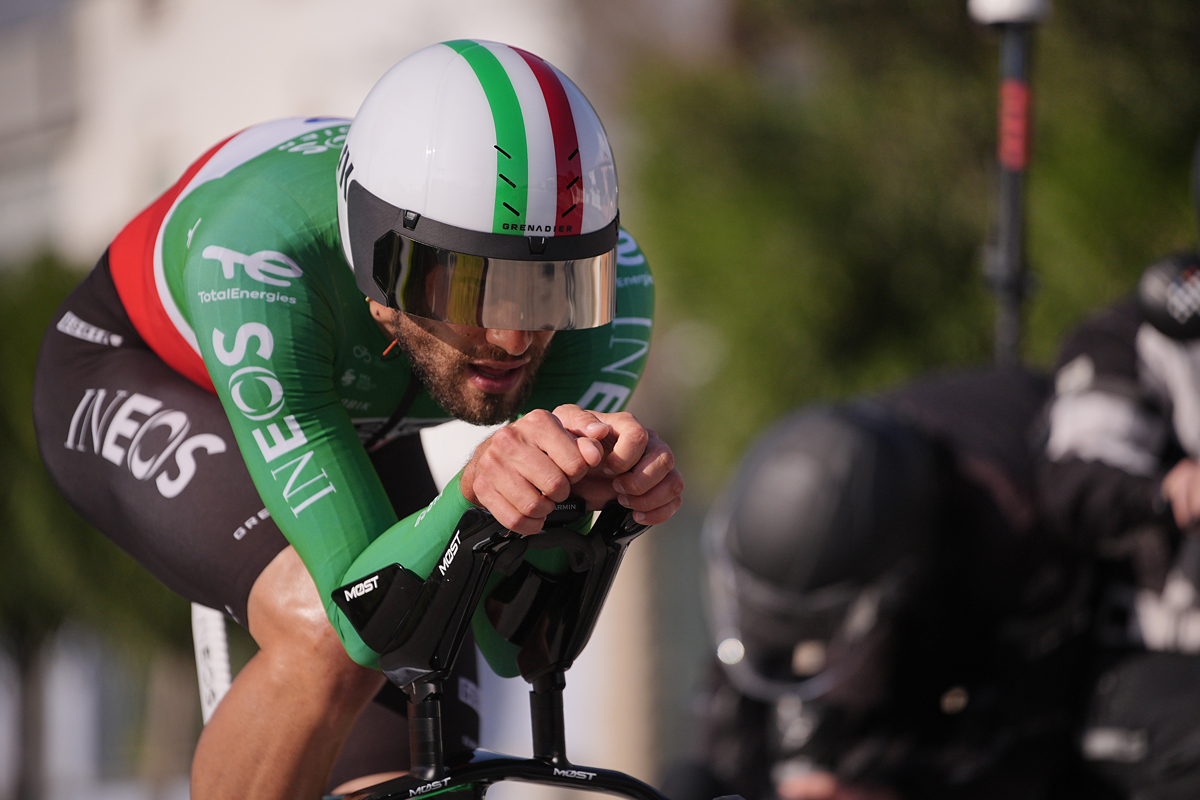
There is a particular kind of pleasure that a rider takes in a course he owns, and Filippo Ganna owns the seafront time trial at Lido di Camaiore in the way a sculptor owns a particular block of marble — with intimate knowledge of its grain, its resistance, its possibilities. He had won here in 2022, 2023, and 2024. He arrived at the 61st edition of the Race of Two Seas as a four-time world champion in the discipline, an Ineos Grenadiers team leader, and the kind of presence at a start ramp that turns competitors into spectators before a pedal has turned. He did not disappoint. He rarely does.
Ganna Filippo Of Ineos Grenadiersduring Stage 1, an individual time trial, of the Tirreno-Adriatico cycling race in Lido di Camaiore. The 11.5-kilometer stage starts and finishes in Lido di Camaiore- Italy – Monday, March 9, 2026. Sport – cycling . (Photo by Martco Alpozzi/LaPresse)
The course is unchanged from the formula established in 2022: 11.5 kilometres from the start in Lido di Camaiore, flat throughout, a single turn at Fumetto after five kilometres where the intermediate time check sits, and then the return leg into whatever the Tyrrhenian headwind chooses to offer. No technical surprises. No gradient to absorb the strongest men. Pure watts, applied by the purest time triallist in contemporary cycling.
Ganna’s average speed of 56.8 km/h didn’t just win the stage — it set a new all-time record for a Tirreno-Adriatico time trial, breaking the mark of 56.6 km/h he had established himself in San Benedetto del Tronto back in 2020. The record, like the victory, was his own to supersede. He crossed the line 22 seconds clear of Thymen Arensman, his Ineos teammate, who had evidently been briefed on exactly how far his leader was prepared to be pushed. Max Walscheid of Lidl-Trek took third by a margin measurable in thousandths of a second over Magnus Sheffield, who completed an afternoon of extraordinary Ineos dominance by finishing fourth.
The race’s maglia azzurra changed shoulders with a certain inevitability. It was the twelfth time in his career that Ganna had worn the blue jersey of the overall leader at Tirreno-Adriatico, leaving him within three of Roger De Vlaeminck’s record of fifteen. Whether the Piedmontese rider would extend his lead before the race reached San Benedetto del Tronto was a question he addressed with characteristic directness in the finish area. “It’s true that I want to arrive at Milano-Sanremo ready and fresh,” he said, “but that doesn’t mean I’ll give up the Maglia Azzurra. On the contrary, I’ll try to keep it for as long as possible.”
The general classification picture was already taking shape. Primož Roglič of Red Bull-Bora-Hansgrohe lost 31 seconds, Antonio Tiberi of Bahrain Victorious 33. Isaac Del Toro, the young Mexican riding for UAE Team Emirates-XRG and widely regarded as one of the most dangerous climbers in the current peloton, conceded 36 seconds. Giulio Pellizzari, Del Toro’s Red Bull-Bora teammate, gave 37. Matteo Jorgenson of Visma-Lease a Bike was 44 seconds down; Jai Hindley and Ben Healy both lost 49. Deeper in the field, Richard Carapaz trailed by 1’16”, and Lennert Van Eetvelt by 1’39”. The time trial had done what time trials do: arranged the field in a hierarchy that the coming days would interrogate, revise, and eventually overturn.
Van der Poel in the Dust
March 10, 2026 · Stage 2 · Camaiore → San Gimignano · 206 km
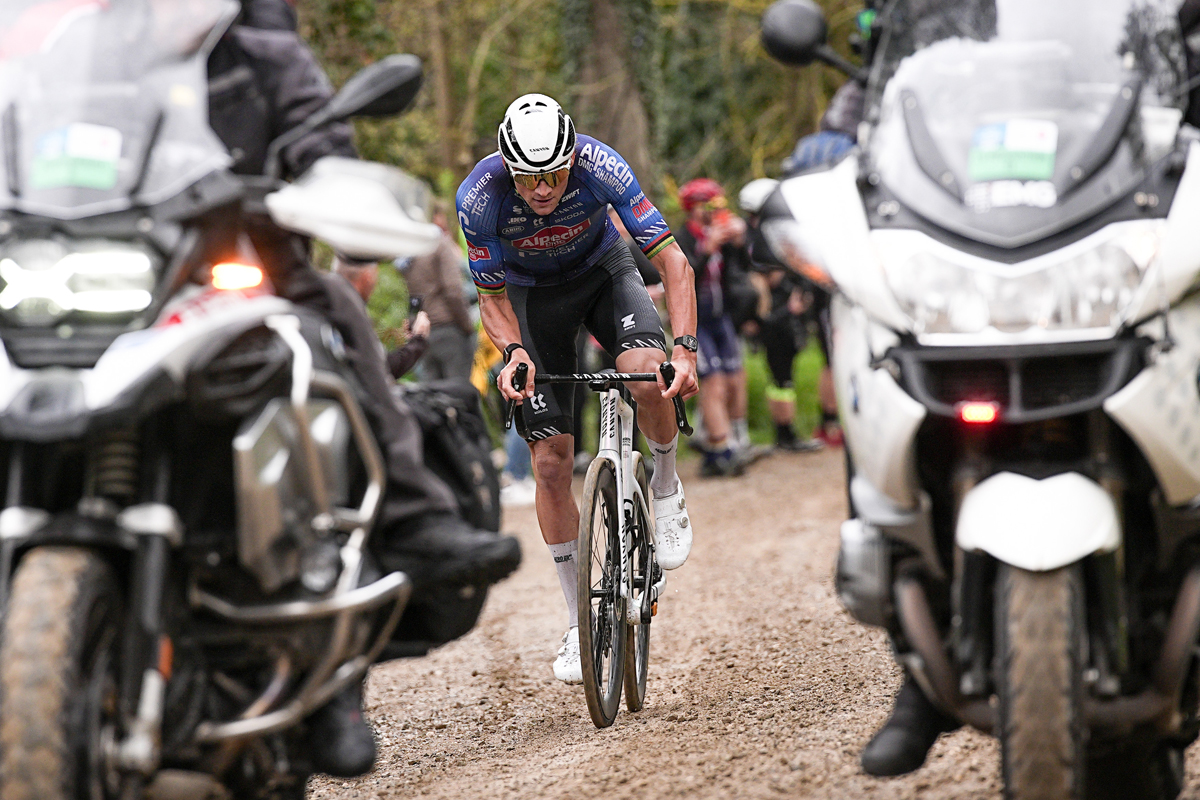
The white roads of Tuscany had barely recovered from Strade Bianche when Tirreno-Adriatico arrived at San Gimignano and asked for more. Stage two of the 61st edition was not Strade Bianche — nothing is, or could be — but its single 5.3-kilometre gravel sector, placed with surgical precision inside the final kilometres and featuring double-digit gradients, produced the race that the morning had promised and the weather had complicated. By the time the dust rose — wet and darkened by the rain that had begun falling as the peloton approached the white roads — the general classification had been remade entirely.
Van Der Poel Mathieu Of Alpecin-Premier Tech during the 206-kilometer Stage 2 of the Tirreno-Adriatico cycling race from Camaiore to San Gimignano – Italy,- Tuesday, March 10, 2026. Sport – cycling . (Photo by Marco Alpozzi/Lapresse)
The day’s opening geometry was familiar: four riders from the lower orders of the classification got away early, Diego Pablo Sevilla of Polti VisitMalta taking the KOM at Castelnuovo Val di Cecina before the race moved on toward the finale. The peloton controlled everything with the unhurried competence of a group that knows its moment is coming. It came with 25 kilometres to go.
The rain had been building through the afternoon, turning the already technical gravel sector into something considerably more demanding. As the white roads appeared, Julian Alaphilippe of Tudor attacked — the former world champion still capable of the instinctive aggression that once made him uncatchable on days like this. But it was Mathieu van der Poel who broke the race open. The Alpecin-Premier Tech rider, who had won his last cyclocross world championship on ground not unlike this, raised the pace and the field fractured.
Glued to his wheel: Isaac Del Toro, Giulio Pellizzari, and Matteo Jorgenson of Visma-Lease a Bike. Then Jorgenson slipped on the damp surface and crashed, the American’s hopes of bridging the gap evaporating in the moment of impact. Del Toro and Pellizzari chased back across to Van der Poel. Behind them, Filippo Ganna was dropped. Thymen Arensman — who had ridden so strongly to second place on stage one — went down in a separate crash and would finish 1’38” back. The maglia azzurra, which had seemed so secure that morning, was suddenly vulnerable.
Three riders emerged from the gravel: Van der Poel, Pellizzari, and Del Toro. The Mexican, already calculating the general classification implications with the cool precision that defines his racing, refused to take turns on the final uphill drag into San Gimignano’s medieval centre. He pulled for the last two kilometres, stacking the sprint in Van der Poel’s favour and his own, ensuring that whatever happened on the finish line, the time gap to the Ganna-led field behind would be as large as possible. On the cobbled run-in, Pellizzari attempted to jump early. Van der Poel wasn’t caught. He threw his wheel across the line, Del Toro inches behind, Pellizzari third.
The entire field of GC contenders finished 17 seconds back. Arensman, who had been second overall, lost 1’38”. Del Toro — with the bonus seconds from the stage result applied — was the new maglia azzurra. Pellizzari sat three seconds behind him. Magnus Sheffield, unscathed, moved to third.
Van der Poel spoke with the measured satisfaction of a man who understood precisely where he was in his preparation. “It was very difficult to beat these young guys,” he said. “The level was very high, especially in the long climb, especially with the rain in the last half hour. It was quite tricky but the team did a really good job.” He traced the tactical logic of his winning move: “Julian Alaphilippe attacked first, then I went because I knew there were some technical corners. I just tried to make the race as hard as possible.” He placed the victory in the context of where he needed to be for the spring classics. “I came to Tirreno-Adriatico to prepare for Milano-Sanremo and the other classic races but also to try and win a stage. Last year I was close a few times. I’m happy to take a stage win again here five years after my last one.”
Andresen Announces Himself
March 11, 2026 · Stage 3 · Cortona → Magliano de’ Marsi · 221 km
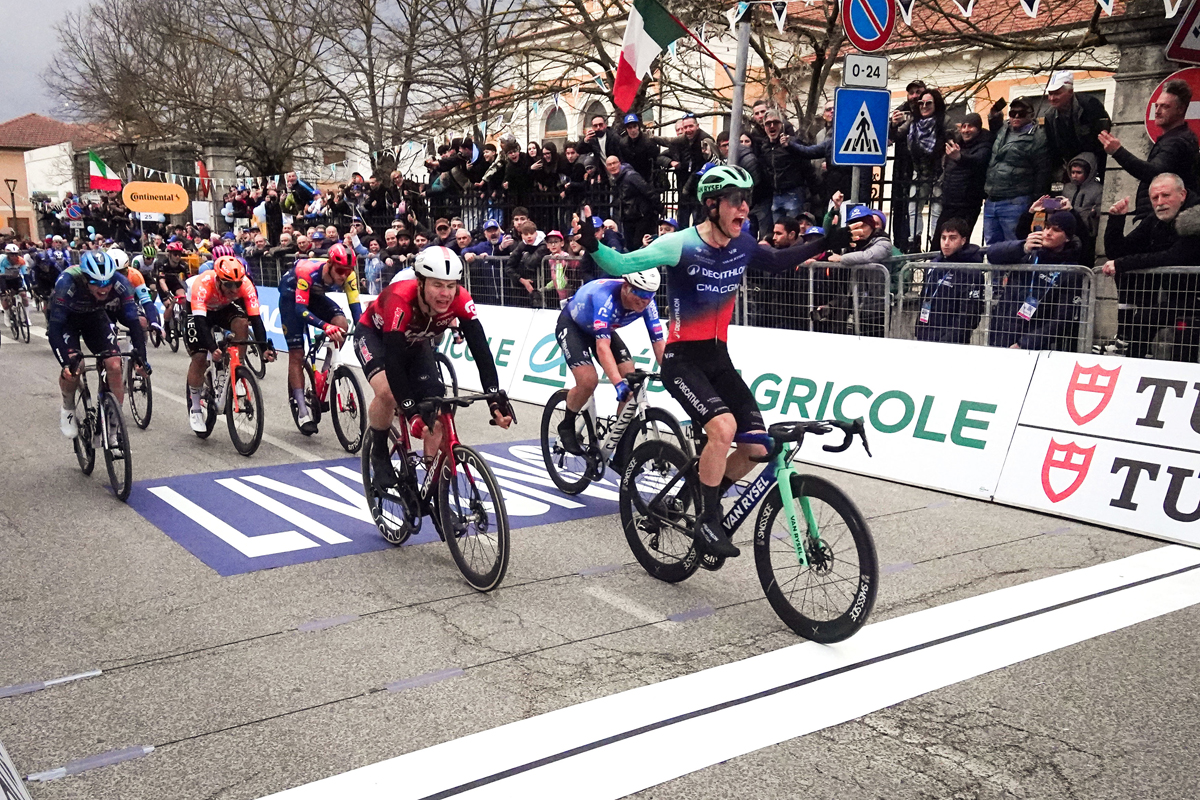
The longest stage of the 2026 edition asked 221 kilometres of the riders on a day of persistent rain, rolling Umbrian roads, and the particular weariness that comes from having already crossed gravel and climbed walls in the preceding 48 hours. The sprinters had been waiting. Jonathan Milan, the Lidl-Trek fastman who enters every race as a favourite, had been waiting. The day belonged instead to Tobias Lund Andresen, whose name sat somewhere in the conversation about emerging sprinters without yet commanding its head.
By the time the race reached the finishing straight in Magliano de’ Marsi — gradually uphill for the final 15 kilometres, a ramp of two to three percent in the last hundred metres — Andresen had answered every question about where he stood. He was the fastest. He was also the most composed.
Andresen Tobias Lund Of Decathlon Cma Cgm Team winner on the finish line during the 221-kilometer Stage 3 of the Tirreno-Adriatico cycling race from Cortona to Magliano de’ Marsi – Italy – Wednesday, March 11, 2026. Sport – cycling . (Photo by Massimo Paolone/LaPresse)
The stage had offered little in the way of genuine racing until the final 25 kilometres. Diego Pablo Sevilla took the solo break, collected the KOM points in Todi, and sat up with 130 kilometres still to race — the green jersey his aim, the stage never really the point. Jonas Abrahamsen, Ethan Hayter, and Liam Slock tested the wire inside the final 25 kilometres before being reeled in at the twenty-kilometre mark. Then Decathlon AG2R La Mondiale took control of the mechanics of the sprint, and their work was precise.
Jonathan Milan read the finale wrong. He launched from too far out, the Lidl-Trek team either mistiming their positioning or miscalculating the distance, and the effort that should have carried him to the line in command instead left him exposed to be caught. Andresen came through him, then Arnaud De Lie of Lotto Intermarché, then Jasper Philipsen of Alpecin-Premier Tech. Milan was seventh. The margins were clear.
For Andresen — ten professional victories, the third of the current season after wins at the Tour Down Under and the Cadel Evans Great Ocean Road Race — this was a different scale of result. “Everyone had cold legs, so I wanted to be first to launch the sprint,” he said. “It’s also because of Jonathan Milan that we went full speed so early.” He framed the victory in terms that suggested a man who had revised his own ambitions upward during the winter. “Tirreno-Adriatico is one of the biggest races of the year so to take a win here means a lot to me. My season has been unbelievable so far, winning in Australia and making two top-10 in Belgium — I wouldn’t have thought I could take such a big step this year but it’s due to this so amazing team.” Del Toro picked up a bonus second at the intermediate sprint and retained the maglia azzurra without drama. The race was shaping around him.
Van der Poel, Confirmed
March 12, 2026 · Stage 4 · Tagliacozzo → Martinsicuro · 213 km
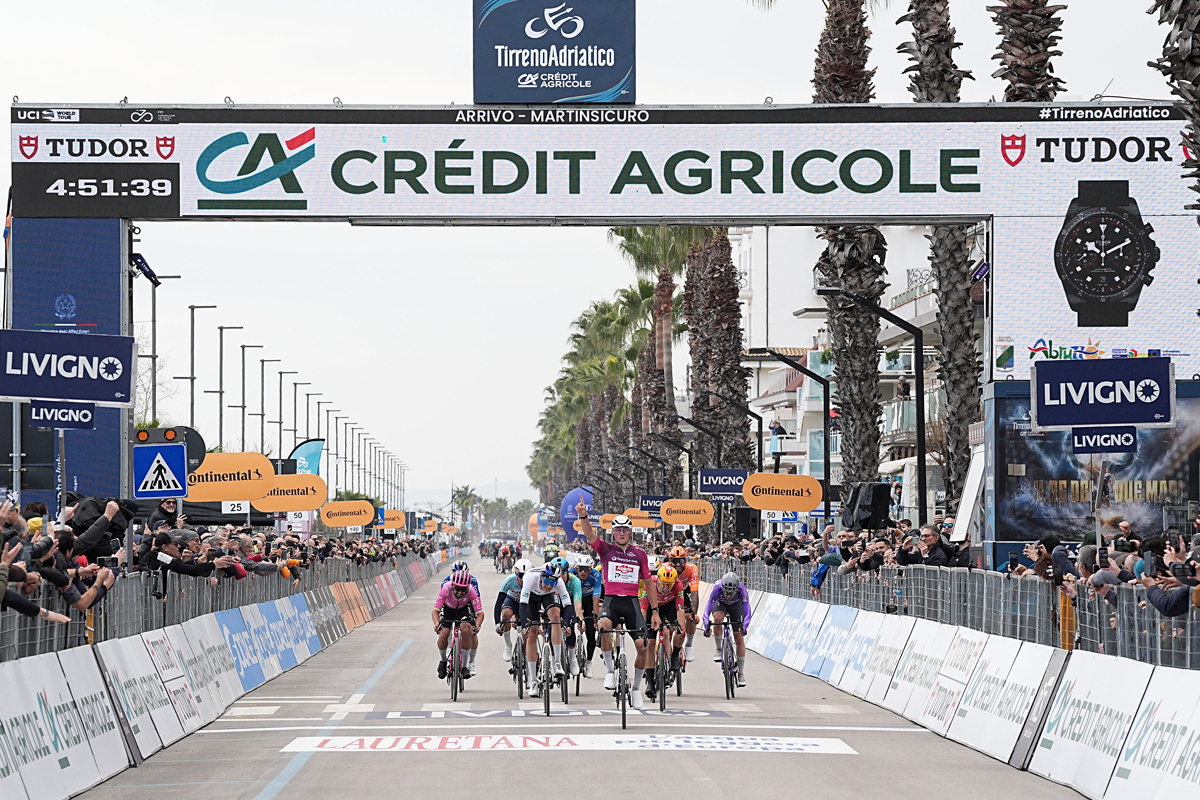
If stage two in San Gimignano suggested that Mathieu van der Poel was in good form, stage four from Tagliacozzo to Martinsicuro provided something closer to confirmation. Two victories from two attempts in the same race week, the second taken in a headwind sprint from a reduced group of fourteen that had survived the wall of Tortoreto via Badetta — 1.6 kilometres at 8.4%, with ramps to twenty percent — with twelve kilometres remaining. The Dutch rider sat on wheels, read the sprint, and was simply the fastest man on the road to the Adriatic.
Van Der Poel Mathieu Of Alpecin-Premier Tech winner on the finish line during the 213-kilometer Stage 4 of the Tirreno-Adriatico cycling race from Tagliacozzo to Martinsicuro – Italy,- Thursday, March 12, 2026. Sport – cycling . (Photo by Marco Alpozzi/Lapresse)
The day had opened with ambition from every direction. The profile — two major climbs in Ovindoli and the HC Valico delle Capannelle, followed by a series of punchy Abruzzese kickers, culminating in the Tortoreto ramp — was the kind of stage that invites long-range attacks and tends to reward them. Twelve riders made it into the break: a distinguished group that included Diego Pablo Sevilla, Rémy Rochas, Liam Slock, and Jonas Abrahamsen alongside nine others. Sevilla swept the KOM points on both major climbs. Jakub Otruba was the most aggressive through the middle hours, going solo before the intermediate sprint in Mosciano Sant’Angelo.
UAE Team Emirates-XRG controlled the race throughout with the methodical efficiency that defines the best teams in the peloton. They brought the break back at the foot of Tortoreto, and then Visma-Lease a Bike took command on the climb itself, Matteo Jorgenson forcing the pace in a way that shattered the peloton and left fourteen riders at the front: Van der Poel, Ben Healy, Filippo Ganna, Giulio Ciccone, Alessandro Pinarello, Primož Roglič, Giulio Pellizzari, Andrea Vendrame, Wout Van Aert, Jorgenson, Del Toro, Jan Christen, Tobias Halland Johannessen, and Clément Champoussin. Fourteen riders, eight kilometres of flat seafront, a headwind, and a sprint.
They watched each other. Short accelerations, probing moves, none decisive. Jan Christen tried to anticipate; Van Aert closed it. Ganna launched; Vendrame closed it. And then Van der Poel went. The headwind that had been neutralising attacks proved, in the end, to suit him better than anyone else in the group — the raw power required to drive through still air favours the largest engines, and his is among the largest. He came to the line first, with Giulio Pellizzari — who had sheltered with intelligence and emerged late — claiming second. Tobias Halland Johannessen of Uno-X Mobility was third.
The bonus seconds changed the race. Pellizzari, taking six seconds for second place, moved ahead of Del Toro in the general classification and into the maglia azzurra. The Italian was 23 years old, born in the Marche, and the next two stages would finish in his home territory. The circumstances were theatrical, and the stage was set.
Van der Poel assessed his week with the bluntness of a man who doesn’t complicate his own narrative. “It was quite a hard day with a strong breakaway. The pace was really high all day. In the end, Visma did a really good job. I could gamble a bit because I already won my stage.” He was precise about the tactical execution: “I was expecting a late attack from Filippo Ganna. I also knew Visma was going to take a sprint with Wout. I just tried to react immediately on everything.” He acknowledged the risk in his timing: “I launched my sprint a bit too early maybe. With the headwind it was quite far away from the finish line. Luckily I managed to get it to the line.” The declaration of form was unambiguous: “I’m in a good shape.”
Valgren’s Long Road Back
March 13, 2026 · Stage 5 · Marotta-Mondolfo → Mombaroccio · 184 km
Cycling has a talent for producing the kind of day that contains two completely separate stories, each compelling in its own register, running parallel through 184 kilometres before converging at a finish line on a hill above the Adriatic. On stage five of Tirreno-Adriatico, one story belonged to Michael Valgren — 34 years old, 1,639 days without a professional victory, a father of one month — and the other to Isaac Del Toro, twenty-three years old, reclaiming the maglia azzurra with the forceful authority of a rider who understands that the race is his to lose.
Valgren Michael Of Ef Education – Easypostduring the 184-kilometer Stage 5 of the Tirreno-Adriatico cycling race from Marotta-Mondolfo to Mombaroccio – Italy,- Friday, March 13, 2026. Sport – cycling . (Photo by Marco Alpozzi/Lapresse)
The stage from Marotta-Mondolfo to Mombaroccio offered no flat roads and no mercy: 3,900 metres of elevation gain distributed across a relentless sequence of short climbs and sharp Marche ramps, culminating in a 21.6-kilometre circuit to be covered twice, with the Santuario del Beato Sante — 4.2 kilometres averaging 6.2%, the final 1,200 metres at nine percent — crested for the second time with 1.5 kilometres to the line. The course was the kind that reduces pelotons to their essential components.
After 35 kilometres a breakaway formed with the kind of roster that suggested the day’s stage win would come from within it: Edward Planckaert and Emiel Verstrynge of Alpecin, Joan Bou, Jack Haig of Ineos, Georg Zimmermann, Michael Valgren of EF Education-EasyPost, Sjoerd Bax, and Julian Alaphilippe of Tudor. The Frenchman, starting the stage 1’20” behind Pellizzari, held the virtual maglia azzurra for long stretches as the race developed, which gave the move a particular theatrical texture.
UAE Team Emirates-XRG held the peloton’s tempo at around thirty riders through the winding circuit. Antonio Tiberi and Wout Van Aert lost contact. On the penultimate lap, the break came apart: Valgren and Alaphilippe made the split, and then on the final ascent of the Santuario, Valgren found a gear that the former world champion couldn’t match. He dropped Alaphilippe and flew to the summit alone.
Behind him, the peloton was fracturing around its most important rivalry. Del Toro attacked, once, twice, three times on the final climb, and on the third acceleration Jorgenson followed. The pair extended a gap of nineteen seconds over Pellizzari, who had Roglič alongside him trying to limit the damage. Valgren crossed the line in Mombaroccio with his arms in the air, the gap behind him growing as Del Toro and Jorgenson arrived eleven seconds later, eleven seconds ahead of the field.
In the finish area, Valgren was still finding the words for what had happened. “It’s unbelievable to be a winner again after so long,” he said. “We all work so hard for this. I had a really good winter with my family. They supported me. We had a baby one month ago. This win is for him and for the team.” He recalled the day’s demands without self-pity: “It was a hard race at the start with lots of attacks but I had good legs all day. I attacked and Julian came with me. In the end, it was such a hard day. I was pushing all day. I had amazing legs.” A former winner of both the Amstel Gold Race and Omloop Het Nieuwsblad, Valgren had arrived at Tirreno-Adriatico as a rider rebuilding, and left stage five as a winner again. The general classification now read Del Toro, Pellizzari at 23 seconds, Jorgenson at 34. One stage remained before the sprint finale.
Del Toro in Pellizzari’s Backyard
March 14, 2026 · Stage 6 · San Severino Marche → Camerino · 188 km
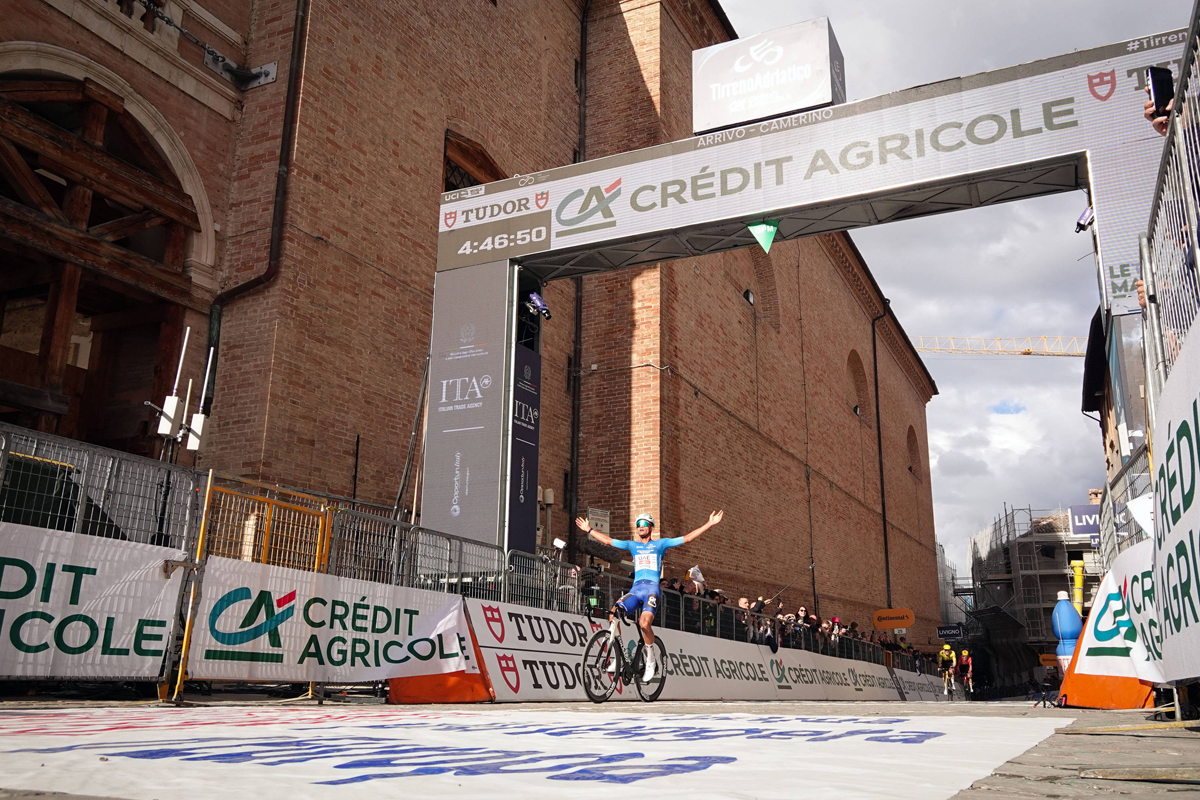
Giulio Pellizzari was born in San Severino Marche. He grew up in Camerino. Stage six of Tirreno-Adriatico 2026 started in the first of those places and finished in the second, on the Muro della Madonna delle Carceri — three kilometres at 8.8%, ramps to eighteen percent — in front of a crowd that had come for a particular outcome. Professional cycling is rarely that accommodating. But the crowd got a race worthy of the occasion, and their rider gave everything he had, and in the end Isaac Del Toro was simply better on the day that mattered most.
during the 188 kilometer Stage 6 of the Tirreno Adriatico cycling race from San Severino Marche to Camerino – Italy – Saturday, March 14, 2026. Sport – cycling (Photo by Massimo Paolone/Lapresse)
The course offered nowhere to hide: another 3,900 metres of elevation, the Valico di Santa Maria Maddalena after fifty kilometres, then the entry to Camerino and its eastern ascent at nearly eleven percent, before the final circuit of 28.6 kilometres, covered twice, with the decisive wall crested three times in total. Anyone who wanted the Trident trophy would have to produce it here.
A seven-rider break went clear at the foot of the Sassotetto climb: Gregor Mühlberger, Vincenzo Albanese, Clément Braz Afonso, Filippo Ganna — now free of GC obligations and clearly relishing the freedom — Walter Calzoni, Timo Kielich, and Guillermo Thomas Silva. Kielich crossed first at Sassotetto. Mühlberger and Braz Afonso then dropped the rest on the first ascent of the Muro della Madonna delle Carceri with sixty kilometres remaining and stayed clear until seven kilometres from the finish. Behind them, Richard Carapaz attempted something ambitious, opening a gap of 1’20” before the flattest connecting sections between the climbs exposed the limits of his diesel engine on this type of finish.
The peloton’s final circuit began with Alaphilippe making the first selection, thinning the field toward its essential core. The contenders waited, measuring, each hesitant to be the one who drove the others to the finish. Wout Van Aert attacked. Ben Healy responded. Then Pellizzari, with the crowd at maximum volume around him, went all-in — caught and dropped Healy, flew past him, and for a few seconds the Camerino hillside believed. Del Toro played a different game. He let Pellizzari go, watched the gap reach something manageable, and launched near the final kilometre with the decisive acceleration of a rider who had been saving his best move.
He closed it within pedal strokes. Jorgenson tried one last surge; Pellizzari cracked under the combined pressure; Del Toro surged past near the line. Tobias Halland Johannessen of Uno-X Mobility took second, three seconds back. Jorgenson arrived alongside him. Pellizzari, who had ridden the stage of his life in front of his people, held second overall from Jorgenson by a single second.
It was the first victory by a Mexican rider in the history of Tirreno-Adriatico. It was the twenty-fifth professional win for Del Toro in two and a half years of racing — a pace of accumulation that invited comparisons with Tadej Pogačar at the same age, who had managed seventeen. Del Toro addressed the win and the day’s peculiar emotional complexity together. “It’s quite close today but I’m super happy to win this stage,” he said. “I said yesterday that I wanted that.” He acknowledged the specific difficulty of the decisive moment: “When Giulio Pellizzari attacked, I wasn’t sure to bring him back because it was a very hard climb and he’s super strong. We couldn’t give him too much space.” And he named the strangeness of winning where his rival is at home: “It gives me mixed feelings to win in his hometown. Now one stage to go — let’s hope for the best outcome tomorrow.”
The sprint finale into San Benedetto del Tronto remained, but the Trident trophy was already decided in everything but formal ceremony. Del Toro had won the Race of Two Seas at twenty-three, on roads that belong to someone else, by the margin of something that couldn’t be stopped.
Milan’s House, Milan’s Rules
March 15, 2026 · Stage 7 · Civitanova Marche → San Benedetto del Tronto · 142 km
Jonathan Milan has won this stage before. He won it in 2024, and again in 2025. He arrived at the start of the final stage of the 61st edition of Tirreno-Adriatico having described the week as one of suffering — too many mountain stages for a sprinter of his architecture, too few opportunities to do what he does best. He had finished seventh at Magliano de’ Marsi when he should have won. He had watched the race’s GC story unfold through stages designed to exclude him. Now the Adriatic seafront was in front of him, the road was flat, and San Benedetto del Tronto was waiting. He won again. Third consecutive year, fifth career stage victory on this race. The sprint as homecoming.
Jonathan Milan Of Lidl-Trek stage winner during the 142-kilometer Stage 7 of the Tirreno-Adriatico cycling race from Civitanova Marche to San Benedetto del Tronto – Italy – Sunday, March 15, 2026. Sport – cycling. (Photo by Massimo Paolone/LaPresse)
Before it came to that, Mathieu van der Poel had one more thing to say. The Alpecin-Premier Tech rider — already holding two stage wins, already confirmed in the form he required for the spring classics, already making his preparation for Milano-Sanremo look dangerously complete — attacked with a hundred kilometres still to race. He made the stage hard in the way that only he can make things hard: not with the accumulated pressure of a peloton-sized tempo, but with the sudden, violent disruption of one man deciding to go now. It wasn’t enough to stay away on 142 flat kilometres to the Adriatic, and the peloton eventually reassembled, but it cost effort from every sprint team that had been conserving their lead-out men.
The finale tightened around a crash inside the final 2.5 kilometres — the week’s last moment of chaos, Paul Magnier of Soudal-Quick Step going down and forcing his teammate Laurenz Rex, who had been slated for a domestique role, into a sprint he hadn’t expected to be riding. Milan, watching from his wheel of Edward Theuns, found the Belgian in the sprint and drove past him with the authority of a man who has done this exact thing on this exact road before. Sam Welsford of Ineos Grenadiers took second, Rex third — his first stage podium at the race. Milan crossed the line with the weight of a hard week leaving his body all at once.
“I feel pain and happiness at the same time,” he said. “It’s been a tough week and a tough stage again today. My teammates supported me all the way. I had very little to do after them today. They gave me a perfect lead-out.” He looked ahead to the bigger objective with clear-eyed focus. “I want to enjoy this victory and take a rest ahead of Milano-Sanremo where we have two big names, Mathieu and Tadej. I still have one week to be ready to fight with them.” Later, at the press conference, he elaborated on what the week had taught him. “It’s been a Tirreno-Adriatico in which I’ve suffered a lot. Looking at the route, I understood there would be very few stages suiting me for winning but it was a great opportunity to train for further goals.” He placed the stage win in the context of collective obligation: “My teammates supported me so much in the past few stages that I wanted to repay them by winning today.” On the sprint’s decisive moment: “The only moment I’ve feared something was when the crash happened. Luckily, we remained in one lane. It’s been difficult to find the wheel of Edward Theuns but it came down to the sprint I wanted for winning for the third straight time.”
Isaac Del Toro had other business to conclude. At the intermediate sprint in the stage’s middle section, he attacked and collected a bonus second — enough to push Matteo Jorgenson below Giulio Pellizzari in the battle for the final podium’s second step. It was a small, deliberate act of racing on a day that had otherwise released him from obligation. He arrived in San Benedetto del Tronto as the owner of the maglia azzurra, the maglia ciclamino, and the maglia bianca — three jerseys on one rider, twenty-three years old, in his first Tirreno-Adriatico victory.
“I’m super happy to get this victory with the team,” he said. “I’ve been coming here for the last three years and I’m very proud of the achievements with the team. It’s the way I want to race more as a leader.” He placed the week in the specific context of what comes next. “I’ve been in Mathieu van der Poel’s wheel more than often this week, maybe that will help in Milano-Sanremo.” He was immediate about his role there: “I’ll be racing it for Tadej and not looking for a result for myself. There won’t be Jhonathan Narvaez or Tim Wellens due to injuries, so I want to do a great job as a teammate. I enjoy to be this kind of guy who can switch roles and I want to learn as fast as I can.” He allowed himself a moment of national pride: “It’s super nice to be the first Mexican winner of Tirreno Adriatico. People back home support me like crazy — they start to understand the sport.”
Matteo Jorgenson had made a mistake on stage two when he crashed on the gravel, surrendering the time that might have put the race within reach. He had clawed back what he could through the Marche walls, and on the final day he’d found the bonus second that lifted him above Pellizzari in the standings. “To win this intermediate sprint that makes me second instead of third is a nice way to finish this week after the mistakes I’ve made,” he said. He weighed the result with the honesty it deserved: “To finish second of Tirreno Adriatico is a good result although I came for winning. I would have liked to win but Isaac was a little stronger than me at every turning point of the race, congrats to him.”
Giulio Pellizzari had been carrying a secret. Two days of pain behind one knee, bad enough that abandonment had crossed his mind, bad enough that the crowd scenes in Camerino the previous afternoon had been conducted partly in a fog of discomfort. “I don’t know what happened but I’ve had two days with a pain behind a knee. It has made my racing really difficult. I’ve thought of pulling out but I’ve preferred to fight until my home stage, which was yesterday.” He framed the podium in terms that suggested a rider who understood he had spent everything the week had to offer. “This was my first time racing Tirreno Adriatico so I can be proud with my first podium in a WorldTour stage race, thanks to my team and champions like Primož and Jai who supported me.” He set his target for the future with the directness of a twenty-two-year-old who has just established a baseline: “Tirreno Adriatico is the race I want to win in the future.”
Diego Pablo Sevilla of Polti VisitMalta collected the maglia verde and reflected on what it meant for a team that has chased classification jerseys without claiming one under its previous identity. “Six days ago when I started breaking away, for sure I didn’t imagine myself being the King of the Mountains at the end of the race,” he said. “My team, even when it was previously called Eolo, always took distinctive jerseys during the race but never won any. I’m really happy to do it. Maybe not everybody fought for this jersey but for us it’s very important.” Red Bull-Bora-Hansgrohe took the teams classification. Del Toro received the Trofeo Mealli as the race’s most combative rider. The Trident was his.
FINAL GENERAL CLASSIFICATION — TIRRENO–ADRIATICO 2026
61st Edition · March 8–15, 2026 · Overall winner: Isaac Del Toro (UAE Team Emirates–XRG)
#
Rider
Team
Time / Gap
1
Isaac Del Toro
UAE Team Emirates–XRG
28:02:14
2
Matteo Jorgenson
Visma–Lease a Bike
+ 0:40
3
Giulio Pellizzari
Red Bull–Bora–Hansgrohe
+ 0:42
4
Tobias Halland Johannessen
Uno-X Mobility
+ 1:14
5
Primož Roglič
Red Bull–Bora–Hansgrohe
+ 1:21
6
Giulio Ciccone
Lidl–Trek
+ 1:26
7
Santiago Buitrago
Bahrain Victorious
+ 1:49
8
Ben Healy
EF Education–EasyPost
+ 1:55
9
Magnus Sheffield
Ineos Grenadiers
+ 2:02
10
Alessandro Pinarello
NSN Cycling Team
+ 2:06
Stage Wins: Ganna (Stage 1 ITT), Van der Poel (Stages 2 & 4), Andresen (Stage 3), Valgren (Stage 5), Del Toro (Stage 6), Milan (Stage 7) · Points & Young Rider: Del Toro · Mountains: Sevilla · Teams: Red Bull–Bora–Hansgrohe
A race of attrition on the shores of Lake Maggiore delivers a first WorldTour victory for the Dutch powerhouse as her team controls every kilometre of a tactical, demanding classic
TROFEO ALFREDO BINDA — COMUNE DI CITTIGLIO Luino to Cittiglio, Italy — 152.7 km — March 15, 2026
There are days in professional cycling when a team is so thoroughly in command that the only question remaining is which of their riders will take the prize. Sunday’s 27th Trofeo Alfredo Binda — Comune di Cittiglio was one of those days, and UAE Team ADQ the team doing the commanding. In the end it was Karlijn Swinkels, a rider not even pencilled in as the plan A, who crossed the finish line first in Cittiglio to claim her debut WorldTour victory in a race that has graced the Women’s WorldTour calendar since its inception in 2016.
The 152.7-kilometer race between Luino and Cittiglio — already shortened by nearly ten kilometres after overnight snow made the first classified climb at Masciago Primo impassable — played out as a slow-building demolition derby across five punishing finishing circuits on the hills above Lake Maggiore. By the time the dust settled on the final ascent of Orino, Swinkels had outsprinted Anna van der Breggen and a gutted Mie Bjørndal Ottestad in a charged three-woman finish, while the chasing group arrived 47 seconds in arrears, having never found the legs to close what had looked, at various points, like a bridgeable gap.
A MODIFIED COURSE, AN UNMODIFIED AMBITION
Race morning brought cold air and wet roads to the north Italian lakeside. Organisers confirmed the route change early: the Masciago Primo climb, which would have come after 29 kilometres, was cut from the parcours following snow accumulation overnight. The peloton would still face more than 2,300 metres of vertical gain across the five closing circuits, each 17.6 kilometres long and containing two climbs — the short, sharp ramp at Casale and the 4-kilometre ascent to Orino at 433 metres, featuring ramps of 10 percent and tight hairpin bends. Anyone expecting an easier day because of the shortened route was quickly disabused of that notion.
The field rolled out of Luino at 1:00 p.m. local time, 137 women signed on for what would prove to be one of the oldest races on the Women’s WorldTour calendar. The Trofeo Binda, first held in 1974, holds a particular distinction: it is the longest-running race in women’s top-tier cycling, having joined the World Cup in 2008 and the Women’s WorldTour at its founding in 2016. To win here is to add your name to a list that includes Marianne Vos, Kasia Niewiadoma, Elisa Longo Borghini, and the recently retired Lizzie Deignan. Today, one more name would be added.
THE BREAK, THE BUILD, THE BLOWUP
For the first hundred kilometres, the race followed a familiar script. Early attempts at establishing a breakaway came to nothing on the nervous roads, the peloton unwilling to cede control. It was Hannah Ludwig of Cofidis who eventually succeeded, slipping clear with around 106 kilometres remaining and building a lead of just under two minutes as the peloton settled into a rhythm behind her. The German rider, a strong climber and a versatile racer, made herself at home out front as UAE Team ADQ sat on the front of the bunch, content to manage the gap rather than chase in earnest.
Ludwig’s advantage remained relatively stable — around one minute 30 to one minute 45 — as the race ticked through its early closing circuits. The pace, though, was already high, the average sitting north of 41 kilometres per hour despite the damp conditions. By the time the race entered its final two laps, the bunch had been reduced to a compact, nervous group of fewer than 20 riders, and Ludwig’s adventure was nearing its end.
With 35 kilometres remaining, the mood shifted. UAE were now setting a punishing tempo, Mavi García putting her head down and her legs to work at the front of a reduced peloton. Riejanne Markus of Lidl-Trek lit the touch paper, and suddenly it was attack after attack. Elisa Longo Borghini — a two-time winner of this race, a local in every meaningful sense, and the team’s headline act — went on the offensive, drawing Kasia Niewiadoma, Noemi Rüegg of EF Education-Oatly, and Puck Pieterse of Fenix-Premier Tech with her. The move nearly stuck but the group came back together over the top.
SD Worx-Protime, Visma-Lease a Bike, Human Powered Health, and Picnic-PostNL all tried their luck in the frantic kilometres that followed. World champion Magdaleine Vallieres of EF Education-Oatly took her turn on the descent. Nothing stuck. The race was coiling itself tighter and tighter.
UAE SPRING THE TRAP
With 22 kilometres remaining, Eleonora Gasparrini made her move. The UAE rider accelerated clear on the approach to the Casale climb, drawing six riders with her: teammates Karlijn Swinkels and Silvia Persico, Anna van der Breggen of SD Worx-Protime, Pfeiffer Georgi of Picnic-PostNL — who had won the junior race on this course earlier in her career — and Norway’s Mie Bjørndal Ottestad of UNO-X Mobility. The gap opened to 17 seconds at 15 kilometres to go.
It was, on the face of it, a problematic situation for UAE. They had three cards to play, there was little incentive to do the bidding of their rivals. Van der Breggen, meanwhile, was doing exactly what Anna van der Breggen does: working hard, keeping the pace high, serving her team’s interests — in this case, protecting Lotte Kopecky and Blanka Vas behind.
What followed on the penultimate ascent of Casale was a swift and brutal reorganisation. Persico and Gasparrini, despite being the architects of the move, were shed from the group. Georgi, too, began to struggle. By the time the road tilted toward Orino for the final ascent, the lead group had been whittled to four: Swinkels, Van der Breggen, Georgi, and Ottestad. With 11 kilometres remaining, Swinkels had gone to sit in, either marking Van der Breggen or protecting Longo Borghini’s interests behind. The tactical chess match was reaching its most complex phase.
THE CLIMB THAT DECIDED EVERYTHING
Georgi was dropped from the front group as the road bit in earnest on Orino. Three riders remained: Swinkels, Van der Breggen, and Ottestad, with a gap of around 35 seconds over the Kopecky-Vas group behind. Van der Breggen, a rider of unmatched tactical intelligence and race-reading ability, was unrelenting on the climb. She attacked one kilometre from the summit. Ottestad began to crack. Swinkels, hanging on, was forced to the front by Van der Breggen as the gradient eased — a move that forced the Dutch rider to do exactly the work she preferred not to do.
Over the top with 7.5 kilometres remaining, Van der Breggen went deep into her poker face. The gap was 48 seconds. The logic of the situation dictated cooperation — sprint from three and let the fastest legs decide. Van der Breggen, however, showed no interest in expediting that outcome, refusing to come through as Swinkels sat up. It was a mind game as much as a road race.
Behind, on the descent, Marianne Vos attacked the chase group but was covered by Longo Borghini. Ottestad, showing extraordinary courage for a rider who had already emptied herself on the climb, attacked the leading trio at four kilometres to go — a defiant, gutsy lurch for glory that briefly reshuffled the cards. It was never going to be enough.
THE SPRINT, THE VICTORY, THE REWARD
Van der Breggen never came through. Swinkels wound it up, and when the sprint opened, the UAE rider had too much. Ottestad, who had given everything and then some, had nothing left for the finish and crossed third. The chasing group arrived 47 seconds later, Blanka Vas leading them home, Lotte Kopecky rolling in seventh.
For Swinkels, it was an emotional and significant arrival. This was her first WorldTour victory — a result that validated not just her own considerable abilities but the depth of an UAE Team ADQ squad that is quietly becoming one of the most formidable in the women’s peloton. It was also her second win of a young 2026 season, having already taken victory at the Trofeo Binissalem-Andratx in Mallorca.
“I was supposed to be waiting for the final sprint. But then we had this occasion where we attack with the three of us — with Silvia and Gaspa — and they kept pulling for me. I felt quite confident on the climb but then I got a bit nervous because in the final, Anna didn’t pull. In the sprint I felt quite confident but also a little nervous because I really wanted to finish the good teamwork off, because the girls worked really hard for me and believed in me today.” Karlijn Swinkels, race winner
UAE’S STATEMENT PERFORMANCE
If the win was Swinkels’, the performance belonged to UAE Team ADQ as a whole. They placed three riders in the penultimate selection, four of their six in the top 20, and controlled the race from start to finish. Eleonora Gasparrini and Silvia Persico celebrated with their teammate at the finish line — women who had driven themselves into the ground in service of a victory they handed to a teammate with grace and confidence.
The transformation of UAE Team ADQ in recent seasons has been one of the stories of the women’s peloton. Since Elisa Longo Borghini joined the squad, the team has gained both a marquee name and, it appears, a culture of depth and tactical sophistication. The Italian veteran, a double winner of this very race in 2013 and 2021, did not take the prize today — but she was central to making it possible.
For SD Worx-Protime, it was another race that slipped through their fingers. Van der Breggen rode brilliantly and intelligently, but the tactical read that the race would come down to a sprint from the break — and that she might not be the fastest wheel to back — proved costly. Kopecky, finishing seventh, and Vas, leading the chasers home, underlined the team’s firepower. It is a squad built to win in multiple ways. Today was not their day.
Mie Bjørndal Ottestad deserves special mention. The Norwegian, riding for UNO-X Mobility, exemplified her team’s growing confidence and aggression with a performance of rare courage. She drove the move, stayed in the front group longer than anyone had a right to expect, attacked four kilometres from the line when the move made little sense by the numbers, and crossed the line third having ridden herself almost to a standstill. It was the kind of performance that announces a rider to a wider audience.
HISTORY AND HERITAGE IN CITTIGLIO
Trofeo Alfredo Binda, named after the Cittiglio-born champion who won the Giro d’Italia five times between 1925 and 1933 — a record he shares with Fausto Coppi and Eddy Merckx — has earned its place as the most historic race on the Women’s WorldTour calendar. First held in 1974, it staged its 53rd edition today, the only gap in the record coming in 2020 during the pandemic.
Previous winners in the field today included Shirin van Anrooij, who won the 2023 edition, Marianne Vos — who holds four victories here alongside Maria Canins — Kasia Niewiadoma, and Longo Borghini. None of them added to their tallies. Instead, a new name joins the honour roll: Karlijn Swinkels, winner of the 2026 Trofeo Alfredo Binda, and a rider who may well be back for more.
RESULTS — 2026 TROFEO ALFREDO BINDA — COMUNE DI CITTIGLIO
MARCH 8, 2026 · STAGE 1 · ACHÈRES → CARRIÈRES-SOUS-POISSY · 170.9 KM
America has made the opening act of Paris–Nice its own. In 2025 it was Matteo Jorgenson and Magnus Sheffield who ruled the Promenade des Anglais. In 2026, barely a week into March and a long way yet from the sea, Luke Lamperti announced his country’s continued dominion over the Race to the Sun with a forceful, impeccably timed sprint in Carrières-sous-Poissy. The EF Education-EasyPost rider, twenty-two years old and still building a palmares to match his ambition, crossed the line first in a finale so laden with climbs and crossroads that the pure sprinters were stranded somewhere behind him. This was not a gift. He had to earn it.
The 84th edition convened under a grey ceiling in Achères — 154 riders, one early abandonment. Kelland O’Brien of Jayco AlUla didn’t even reach the neutral zone before calling it a day, the cruel arithmetic of professional cycling reducing a week of preparation to a morning of nothing. The clouds broke with surprising speed, and by the time the peloton had shed its neutral veil, the sun was out — provisional, March-thin, but present — as if the race itself had willed the weather into something approximating its own name.
The initial aggression was considerable. Teams jabbed and probed through the opening kilometres, none willing to let a move go unchecked, all acutely aware of the four categorized ascents embedded in the final circuit. At kilometre seven, the racing settled into its early geometry: six riders off the front — Casper Pedersen of Soudal-Quick Step, Luke Durbridge and Patrick Gamper from Jayco AlUla, Max Walker of EF Education-EasyPost, Mathis Le Berre of TotalEnergies, and Sébastien Grignard of Lotto Intermarché. A functional, experienced group, not one given to extravagance.
Biniam Girmay’s NSN Cycling Team and Casper van Uden’s Picnic PostNL governed the tempo behind them, keeping the gap within the gravitational range of sprint ambitions. The break’s maximum advantage never crested 1’45” at the halfway mark, and then the peloton turned up the flame. The finale — a 16.6-kilometre circuit to be completed twice, punctuated by the Côte de Chanteloup-les-Vignes, a 1.1-kilometre wall averaging 8.3%, the old battleground of the Polymultipliée — required the kind of collective vigilance that turns team directors pale.
On the first passage of the circuit, Casper Pedersen made the mountains his private territory. He crested the Côte de Gargenville first, then reeled in Le Berre’s surge over the Côte de Vaux-sur-Seine to collect more KOM points. He was not merely accumulating points; he was constructing a case for the polka-dot jersey. At the top of Chanteloup-les-Vignes, he went first again. The jersey was effectively his.
Into the final lap, the gap stood at 1’15”. It was Bruno Armirail of Visma-Lease a Bike who drove the chase with the kind of relentless, metronomic power that makes other riders’ lungs ache in sympathy. The gap fell through 45 seconds at the base of the final ascent, and Le Berre threw one more card across the summit — an acceleration that put him ahead of the bunch by 30 seconds. Not enough. Not today.
With five kilometres remaining, the lead shrank to ten seconds. Inside two kilometres, the break was absorbed, swallowed whole by a peloton that had been hunting it all afternoon. EF Education-EasyPost moved to the front with the precision of a team that knows exactly which rider it’s delivering. In the final kilometre, Marijn van den Berg laid down a lead-out of complete conviction, and Lamperti came off his wheel and drove through the line — ahead of Vito Braet of Lotto Intermarché and Orluis Aular of Movistar, with Girmay fifth and a yellow-and-white jersey changing shoulders for the first time in this edition.
Lamperti was still catching his breath when the words started coming. “It means a lot to me,” he said. “It’s a super special win, for sure the biggest in my career so far. It’s hard to describe how nice it is to be here, on the podium, wearing that jersey.” He reached back for context. “It’s my first Paris-Nice. Matteo has won the last few years and Sheffield has won a stage, so maybe it’s good luck for the Americans here.” He was careful about his self-assessment — not a pure sprinter, he insisted, more of a Classics rider — but he understood precisely what had happened. “The climbs today before the finish made it super hard and there were less sprinters. It was a bit hectic before the final corner and we had to go really long. Marijn was great. It was an incredible lead-out. We are quite similar. To have his belief and full commitment was super nice. It takes a lot of things to win in cycling, everything has to go right, and I think it was the case today.”
Casper Pedersen sat in the polka-dot jersey and found philosophy where others might have found frustration. “We had the ambition to go for the stage as well,” he said, “but it’s very hard and in the end I think we did the best we could. We had a plan. We wanted to accelerate in the last 50 kilometres to try and challenge the bunch as much as possible. We had a really good collaboration in the breakaway. It was a strong group. In the end we get caught with 2 kilometres to go — we took a really good shot but it’s really hard to finish it off in a race like Paris-Nice.” He set his sights clearly on the days ahead: the jersey would be worth defending at least through the time trial. Beyond that, the climbs would be the judge.
Mathis Le Berre hadn’t even been scheduled to start. He’d been called in at the last minute to replace Emilien Jeannière, and arrived at the line with something to prove and nothing to lose. “It’s my very first day in this race and I’m delighted that the team has placed its trust in me right away,” he said. “I wanted to break away and my ambition was to take the polka dot jersey, but I found myself with Casper Pedersen, who was stronger than me on the climbs. I sensed he was struggling a bit on the last one, so I attacked and got ahead of him, but it wasn’t enough. However, I haven’t had my final say yet — I’m going to keep fighting.” He would be true to his word.
Kanter’s Finest Hour
MARCH 9, 2026 · STAGE 2 · ÉPÔNE → MONTARGIS · 187 KM
Montargis has a reputation for separating ambition from capacity. The town has hosted Paris–Nice sprint finales before and it tends to produce them with a kind of theatrical generosity — a long, relatively uncomplicated run-in that seems to invite the fast men, and then a finale chaotic enough to deny half of them. Max Kanter arrived there on March 9th as a man who, by his own admission, had barely felt capable of turning pedals in recent days. He left it as a winner of one of the most prestigious bike races in the world.
The stage from Épône ran 187 kilometres south into the Loire valley, carrying 1,270 metres of elevation over three categorized climbs before the flat finale. Crosswinds had been forecast as mild, perhaps ten kilometres per hour, and the weather held. The sprint teams were present and calculating. So was Casper Pedersen, who woke up in polka dots and had every intention of wearing them into Tuesday.
The breakaway took shape through the familiar grammar of early racing: Jasha Sütterlin of Jayco AlUla attacked from the gun, and after seven kilometres of hard selection, he was joined by Pedersen, Le Berre, and Matteo Vercher of TotalEnergies. Sütterlin lasted twelve kilometres before the road had its verdict and he drifted back. Three remained. Pedersen and Le Berre, their KOM rivalry already established on stage one, resumed hostilities at the Côte des Mesnuls at kilometre 30.3 — Pedersen over first, three points, Le Berre second, two, Vercher third and gone.
EF Education-EasyPost and NSN held the peloton in check throughout the morning. The duo’s advantage peaked at 2’25” near kilometre 45, and then the road began doing the work the teams required. Through the valley they rode, the two principals of this minor competition within a competition, and at the Côte de Villeconin and again at the Côte du Pressoir, Pedersen’s climbing superiority told. “On the kind of climbs we had yesterday and today, I knew I was more explosive and had an advantage,” he would say later, with the careful honesty of a man who understood the limits of that advantage. “I don’t know if that would be the case on longer climbs — it might have been different.” By the final ascent his KOM tally stood at eighteen, Le Berre’s at fourteen.
The mathematics of the afternoon took a new shape at the intermediate sprint in Fromont, with 46.1 kilometres remaining. Lotto Intermarché had driven Pedersen and Le Berre back to the bunch in the final kilometres of their escape, and now Vito Braet turned the field at the sprint line and collected six bonus seconds — enough to draw level with Luke Lamperti in the overall classification. Behind them, Juan Ayuso of Lidl-Trek took four seconds and eight seconds back in time. The winner of the stage would take ten more bonus seconds. The afternoon’s personal stakes, already high, had just climbed.
Then came the crash, with 34 kilometres to go, and the race’s arithmetic was temporarily replaced by its physics. Phil Bauhaus, Cees Bol, and Sandy Dujardin all went down on the approach roads, and while all three regained contact with the bunch, the damage to Bol’s readiness for the sprint was already done. Daan Hoole, his lead-out man from Decathlon CMA CGM, surveyed the situation with cool pragmatism. “Normally we would have sprinted with Cees Bol,” he said afterward, “but he crashed. He was suffering a bit, so the team said he was not gonna sprint and he would recover for tomorrow. They asked me what I wanted to do.” The answer he gave was direct: he went.
With 21 kilometres remaining, Hoole launched himself out of the peloton and opened a gap of thirty seconds within minutes. Movistar reacted, then Tudor, then Red Bull-Bora-Hansgrohe and EF Education-EasyPost joined the chase. The gap came down as the kilometres fell away, and inside the final kilometre, Hoole — brave, committed, ultimately alone against the combined horsepower of teams protecting their sprinters — was finally caught. “In a race like this, you need a bigger gap,” he said. “But it was nice to give it a go.”
Mike Teunissen of XDS Astana had found position, and in the closing metres he delivered Max Kanter to the line with the economy of a man who had done this many times and intended to keep doing it. Kanter came off his wheel, opened his sprint, and the day was done: Kanter first, Laurence Pithie of Red Bull-Bora-Hansgrohe second — Pithie had finished second at Montargis two years earlier and managed to do it again with what seemed like ironic precision — Jasper Stuyven of Soudal Quick-Step third.
Kanter’s reaction in the finish area had the texture of genuine disbelief. “It’s a dream to win in a race with such a high prestige,” he said. “Paris-Nice is one of the biggest races in the world. I’ve been fighting for this for a long time. It’s my first World Tour victory, it’s kind of unbelievable.” He had boarded the team bus that morning uncertain whether he could finish. “The last couple of weeks haven’t been the best. I didn’t have the biggest confidence. But I gave it all in the last 200 metres.” He gave full credit to Teunissen. “With 2 kilometres to go, we were not in the best position but he did an unbelievable pull towards the last roundabout and then he did an incredible lead-out. He gives me a lot of confidence.”
Lamperti finished fifth and kept the jersey by the narrowest of margins — Braet level on time, the outcome to be determined Wednesday on the short drag of the team time trial. He had enjoyed the day in yellow more than he let on. “Today was super special. I enjoyed it from kilometre zero. It’s not often you get to wear a jersey like this. For me, it’s the first time.” On the tactical situation with Braet: “I knew that before the finale, but we also just wanted to ride for the stage. I told the guys: ‘We just ride normal, we don’t ride to try to beat him, we see what we can do.'” Both sprint finales had been chaotic, he noted, and today he’d been boxed. “We wanted a bit more from the sprint, but it’s also nice to keep the jersey for tomorrow.” His team would ride last in the TTT, an advantage he intended to use.
Ayuso Claims Yellow, Ineos Take the Stage
MARCH 10, 2026 · STAGE 3 · COSNE-COURS-SUR-LOIRE → POUILLY-SUR-LOIRE (TTT) · 23.5 KM
The team time trial has become one of Paris–Nice’s most reliable generators of drama, and the 23.5-kilometre test between Cosne-Cours-sur-Loire and Pouilly-sur-Loire delivered it in full. By the end of the afternoon, Ineos Grenadiers had taken the stage, Juan Ayuso had taken the yellow-and-white jersey, and the general classification had its first proper shape.
The format was the same one that had been used on this race before, and would later serve as a template for the Tour de France opener in Barcelona: stage time set by each team’s fastest rider, with GC time credited to any rider who finishes alongside their team leader, and individual times thereafter. The incentive was clear — put your man at the line as fast as possible, and make sure as many others as possible are with him when he crosses.
Picnic PostNL and Jayco AlUla went early and set reference points before Groupama-FDJ United came through at 51.5 km/h to erase them. Brandon McNulty and Marc Soler finished as a pair four seconds ahead of the French team — a fine time for UAE Team Emirates XRG, but not the race-winning performance that had handed McNulty the leader’s jersey two years before in Auxerre.
Visma-Lease a Bike came through strongly, Jonas Vingegaard pacing Armirail, Davide Piganzoli, and Victor Campenaerts over the line together, 21 seconds ahead of UAE. Then Decathlon CMA CGM moved to the front — they led at the intermediate checkpoint but seemed to falter in the final stretch, until Daan Hoole, still apparently full of sprint and stubbornness from his Montargis adventure the previous afternoon, rode the last five kilometres alone and arrived four seconds ahead of Visma. One day after being caught inside the final kilometre of a stage, Hoole had somehow improved.
Lidl-Trek erased those marks. Mathias Vacek, Soren Kragh Andersen, and Jakob Söderqvist propelled Ayuso to the line in 26’42” — nine seconds ahead of Decathlon. It was a formidable collective performance, built through shared training and meticulous pacing. Ayuso had four bonus seconds banked from his intermediate sprint victory the previous day. The stage win, however, would depend on Ineos Grenadiers.
The British squad were thirteen seconds faster than Lidl-Trek at the halfway point. The gap diminished through the second sector as Ineos’s protective layers were progressively spent, until Kevin Vauquelin crossed the line in 26’40” with Oscar Onley a wheel-length behind. Two seconds over Lidl-Trek’s time. Two seconds, and four bonus seconds, and the yellow jersey went to Ayuso rather than Vauquelin.
“We were really motivated this morning,” Ayuso said, working through the logic of a day that had delivered something both gratifying and slightly wrong-shaped. “Me and the team really thought it was possible to win, and to lose for just 2 seconds, it hurts. The guys deserved the win.” He found a way to hold both feelings at once: “I wouldn’t say there’s disappointment, but a bit of sadness. I would have preferred not to have the jersey but to win the stage.” He was realistic about the road ahead. “In Paris-Nice, things can change very quickly. Tomorrow will be bad weather and a really hard stage.”
Vauquelin absorbed the two-second sting with the discipline it required. “I was really looking forward to testing myself with Ineos Grenadiers,” he said. “I knew it could work to our advantage. And I’m really happy to show off our work.” On the jersey: “I would have liked to take the Maillot Jaune. There was the bonus yesterday… You can find those two seconds anywhere on a course like this. But we can be happy and there’s still a very tough second part of the race ahead with the weather and the course. I like difficult conditions, so we’ll see what happens tomorrow.”
Wind, Rain, and the Road to Uchon
MARCH 11, 2026 · STAGE 4 · BOURGES → UCHON · 195 KM
Stage four of Paris–Nice began as a race and became a survival exercise almost immediately. Before the peloton had crossed the Cher and found its southward rhythm, the weather had intervened with the decisive authority of a commissaire tearing up a rulebook. Crosswinds from the south, gusting to 45 kilometres per hour, tore the field to pieces before the first categorized climb appeared on the horizon. By the time the riders reached Uchon and its savage final kilometre — gradients to sixteen percent, wet roads, the cold that had been building since morning — Jonas Vingegaard was alone at the front of it, and Juan Ayuso was somewhere far behind, injured and out of the race.
The riders were warming up before the start with an intensity that had little to do with April muscles and everything to do with anxiety. Twenty to thirty kilometres per hour from the south, sustained crosswinds on open Burgundian roads — the mathematics of echelons was visible to everyone before a pedal had been turned in anger. Sure enough, within five kilometres the road split. Ayuso was in the right place, alongside Vingegaard, Oscar Onley, Brandon McNulty, and a Red Bull-Bora-Hansgrohe train four riders deep built around Dani Martinez. Kevin Vauquelin, second overall at the start of the day, was caught in a third group that scrambled back to the second before the damage became permanent.
Red Bull-Bora-Hansgrohe drove the front, the pace oscillating but never merciful, the gap to the chasers swelling between 55 seconds and 1’40” as the race threaded through the Morvan. Lenny Martinez of Bahrain Victorious and Vauquelin drove the chase on the Côte de la Croix des Cerisiers at kilometre 127, bringing the gap to 45 seconds. Then the lead group accelerated on wet roads, and Ayuso hit the ground on the descent.
He tried to continue. The injuries made that impossible. Brandon McNulty was also caught in the incident, and the front group — already reduced — exploded. Five riders remained at the front: Martinez with teammates Nico Denz and the Van Dijke brothers, Mick and Tim, and Vingegaard. They pressed the Côte de la Croix de la Libération with the collective energy of men who understood the opportunity in front of them. Behind, Joshua Tarling paced Onley — who had already changed bikes on an earlier crash descent — but the gap only widened.
Vauquelin and Lenny Martinez eventually bridged to the chasers sixteen kilometres from the finish, trailing the lead group by 2’40”. Mick van Dijke cracked with 6.5 kilometres to go. Tim set tempo all the way to the flamme rouge. And then, as the road kicked into its final, brutal kilometre, Vingegaard released everything.
The gap to Dani Martinez at the line was 41 seconds. The gap in the general classification — Vingegaard wearing yellow-and-white for the first time in this race — was 52 seconds over Martinez. Georg Steinhauser of EF Education-EasyPost, who hadn’t originally been on the Paris–Nice roster, was third overall, 3’20” back, followed by Vauquelin at 3’39”.
Vingegaard stood in the finish area and worked through the day’s arithmetic with a kind of grateful incredulity. “I wouldn’t say we expected such a crazy day — we expected it to be crazy, but definitely not like it ended up,” he said. He noted the previous year’s abandonment — the crash on this same race, the weeks lost. “Last year, I had to abandon the race. Then, I had the leaders jersey and I crashed. Coming back and winning a stage, my first in Paris-Nice outside of the TTTs, it’s really nice to start the season this way.” On the conditions: “First of all, it was crosswinds straight from the gun. Already there, a few guys were caught behind. And later on, a lot of guys were freezing today. I didn’t, because lot of clothes on, which is also the reason I couldn’t take them off.” He looked ahead with characteristic directness. “Now our goal will be to try to take the yellow jersey to Nice. I can defend — but if I feel good, it’s always nice to win more stages.”
Georg Steinhauser was still processing what the week had become. Two weeks earlier, he hadn’t expected to be at Paris–Nice. Now he was on the podium of one of the most prestigious stage races in the world. “Days like this are not easy. Crashes, crosswinds — it had everything. I managed to survive all of this and I still had the legs for a good effort.” The white jersey felt significant. “Last year was not my best year. So to be back and to wear a leader’s jersey in a World Tour race like Paris-Nice is special.”
Revenge on Familiar Roads
MARCH 12, 2026 · STAGE 5 · CORMORANCHE-SUR-SAÔNE → COLOMBIER-LE-VIEUX · 206.3 KM
Twelve months earlier, Jonas Vingegaard had been lying somewhere on the Côte de Trèves, the yellow jersey no longer relevant, the season’s ambitions revised in the seconds it takes a bicycle to stop being a bicycle. On stage five of Paris–Nice 2026 he rode back over that same climb with the quiet authority of a man who has settled a debt with a particular piece of road, and then continued up the Côte de Saint-Jean-de-Muzols to take his second consecutive stage victory by more than two minutes. The margins were growing. The message was unambiguous.
The stage from Cormoranche-sur-Saône to Colombier-le-Vieux was the longest of the race at 206.3 kilometres, and the most demanding in terms of raw elevation — 2,950 metres, with gradients reaching sixteen percent in the finale. Teams stripped of general classification ambitions threw their most durable climbers into the early attacks, the first 63 kilometres producing skirmishes without resolution before Aleksandr Vlasov of Red Bull-Bora-Hansgrohe made his move on the Côte de Lentilly. He was first over the summit, pressed on, and at kilometre 70 collected four companions: Joshua Tarling of Ineos Grenadiers, Rémi Cavagna of Groupama-FDJ United, Jefferson Cepeda of Movistar, and Nicolas Prodhomme of Decathlon CMA CGM. A qualified group.
Visma-Lease a Bike kept the gap at approximately 1’40” without obvious strain. David Gaudu of Groupama-FDJ had been fifth overall at the day’s start; by the time the Côte de Trèves appeared on the horizon at kilometre 106.7, he was gone, the parcours having made its judgment. Ivan Romeo and Lorenzo Milesi of Movistar counter-attacked toward the second group of five, Victor Campenaerts of Visma joining them. The eight combined with 90 kilometres remaining, and the gap never exceeded 2’05” thereafter. Visma held the tempo with the patience of a team whose leader had not yet needed to show his hand.
On the Côte de Sécheras, the first of three sharp kickers in the finale, the break splintered. Cepeda went alone; Vlasov and Prodhomme gave chase while the rest were absorbed by a rapidly accelerating peloton. Tarling and Campenaerts were back with their respective teams as Cepeda pushed over the crest of the Côte de Saint-Jean-de-Muzols — 2.2 kilometres averaging eleven percent, sixteen percent at its worst — with the combined weight of Ineos Grenadiers and Visma-Lease a Bike close behind.
With a kilometre remaining on the climb, Vingegaard attacked. Seven riders scrambled after him — Martinez, Steinhauser, Vauquelin, Lenny Martinez, Mathys Rondel of Tudor, Harold Tejada of XDS Astana, Valentin Paret-Peintre of Soudal Quick-Step — and not one of them could hold his wheel. He crossed the summit alone and descended toward Colombier-le-Vieux at his own pace, the race behind him a different race entirely.
Paret-Peintre attacked over the final climb, the Côte de Saint-Barthélémy-le-Plain, and reached the finish line 2’02” behind Vingegaard. Tejada took third at 2’20”. Dani Martinez’s deficit in the general classification was now 3’22”. Steinhauser sat at third, 5’50” down. Vauquelin, who had been second only days before, was 6’09” adrift.
Vingegaard allowed himself the pleasure of naming the road. “I realised at one moment: ‘This looks like the road where I crashed last year,'” he said. “I didn’t know we were coming back but it’s nice to take revenge on such a beautiful day.” He acknowledged what his teammates had contributed. “They did an amazing job, making sure it was a good group in the front and keeping the gap tight. Everyone sacrificed themselves for me and I’m happy I could repay their efforts. My teammates deserve champagne tonight.” On the tactical evolution: “We had to adapt the plan a few times. Victor did an amazing lead-out and I already had a gap without needing to go all out. Then you can stay within your limits.”
Georg Steinhauser was quietly startled by his own resilience. “I had good legs. I was a bit afraid when I looked at the profile yesterday but I’m super happy with how I could defend the third place in GC today. I have to say I’m surprising myself a bit. Two weeks ago, I wasn’t even supposed to do Paris-Nice.” He set a modest, competitive tone for the days ahead. “It’s still three days to go. It’s not gonna be easy but I’m in a good situation. Today, the tactic was to do my own pace in the climbs. To be honest, I didn’t think I would be able to keep up with a rider like Vauquelin. This gives me confidence.”
Tejada Flies in Provence
MARCH 13, 2026 · STAGE 6 · BARBENTANE → APT · 179.3 KM
Harold Tejada had been having a complicated week. He’d lost time in the crosswinds on stage four, a result that reframed his ambitions even as it left him free to race aggressively. He’d finished third at Colombier-le-Vieux on stage five, which was the kind of performance that reminded a rider — and a team — of what was possible. In Apt on Saturday, the roads winding through the Luberon toward the Côte de Saignon’s punchy finale, he put the week in context with a counter-attack so well-timed and so committed that the peloton — exhausted, shattered by Victor Campenaerts’s tempo at the front — couldn’t respond.
The stage from Barbentane ran 179.3 kilometres through Provence, 2,100 metres of climbing, four categorized ascents, and a cat-2 finale over the Côte de Saignon — 4.5 kilometres to go. Of the 129 riders who had started the race on Sunday in Achères, only 125 signed on. Oscar Onley had withdrawn overnight, joined by Ivan Romeo, Julien Bernard, and Rick Pluimers.
The battle for the breakaway consumed forty-two kilometres and a considerable quantity of goodwill. When it finally resolved, Joshua Tarling of Ineos Grenadiers, Igor Arrieta of UAE Team Emirates XRG, Staff Cras of Soudal Quick-Step, and Arthur Kluckers of Tudor were clear. Counter-attackers tested the wire; NSN and Cofidis closed the gap. Benjamin Thomas of Cofidis drove tempo in the bunch, and the pace was high enough to keep the break’s advantage below 2’10” for most of the afternoon.
The race’s real mechanics became apparent on the Col de l’Aire Deï Masco with 33 kilometres remaining. Soren Kragh Andersen of Lidl-Trek had gone solo in pursuit at kilometre 37, and at the summit he trailed by 30 seconds with the bunch a further 20 behind him. Arrieta accelerated on the descent; Cras was dropped and swept up by Kragh Andersen. The two chasers couldn’t close the gap and sat up. The race approached Saignon with Tarling and Arrieta out front, the bunch behind them measuring its resources.
Lidl-Trek began driving hard through the valley — Kragh Andersen, Söderqvist, Lennard Kämna taking turns — and the gap fell to 25 seconds at the base of the Côte de Saignon. Arrieta and Tarling pushed again: 35 seconds. Then Campenaerts took the front of the bunch and turned the dial, and the break evaporated. Lenny Martinez attacked immediately below the summit, and Tejada watched.
Martinez’s move was nullified — caught, absorbed, the peloton condensed in the closing kilometers of the ascent. And there was Tejada’s moment. He went over the top with ten seconds and everything he had, descending toward Apt with the focused velocity of a man who has rehearsed this scenario many times. The peloton reacted, but not quickly enough. He took the line six seconds ahead of Dorian Godon of Ineos Grenadiers — the French national champion, fastest from the reduced bunch — and Lewis Askey of NSN. Vingegaard, protected and composed throughout, retained his jersey with enough margin to contemplate the final weekend without alarm.
“It’s a very emotional moment for me, my first World Tour win with the team,” Tejada said, the words coming quickly. “It’s huge for me to win in Paris-Nice, a race of high calibre with riders such as Jonas, Dani… I’m delighted to raise my arms.” He noted the afternoon’s complications — a mechanical on the penultimate climb, a bike change — with a shrug. “My teammates did an amazing job and I was at the front for the final climb. I knew it was up and down all the way to the line so I gave it everything I had when I made my move.” On the week’s balance sheet: “We were aiming for the podium but I lost a lot of time on the crosswind day. That’s cycling. And on the other hand, we have two stages under our belt, with Max’s and mine. Champagne!”
Vingegaard gave a measured account of a day that had required more management than the previous two. “Today ended up being not an easy day, quite hard all day, but we made it to the finish.” He named Axel Zingle as part of the tactical calculus. “We wanted to catch the breakaway but we were on thin line, because we wanted Axel to be up there.” He was clear about where his form sat in the broader season. “I think my shape is pretty good. It’s not my best yet, but hopefully I can get there for the Giro and the Tour.”
Steinhauser spoke in the careful language of a man who has learned to protect what he has rather than claim what he hasn’t. “I’m happy with how today went. I’m happy with my legs. The last climbs were a bit steeper and nastier than I expected. When I saw Victor Campenaerts pull, I knew what would happen, but I’m happy I managed to keep up.” He acknowledged the difficulty honestly: “I’m a realistic guy and I know it’s gonna be really hard for me to stay on the podium, but I’m not gonna give up without giving it a big fight.”
Lamperti, holding his yellow jersey with diminishing certainty as the climbs accumulated, was direct about his situation. “I’m a bit at Vingegaard’s mercy with this jersey. But Georg is in the white, and we also heard on the radio Michael Valgren won in Tirreno Adriatico, so for the team it’s a super nice week. We’ll race full gas, we have nothing to lose.” Josh Tarling, having spent the day in the break only to be caught with five kilometres to go, was honest about the frustration. “For sure I’m a bit disappointed. We knew they were coming, but I didn’t know they were that fast.” He redirected quickly: “Now we just go all in for Kevin. He’s in a good place, he feels super good, so whatever he needs we do.”
Godon’s Gift, Vingegaard’s Crown
MARCH 14, 2026 · STAGE 7 · LE BROC → ISOLA-VILLAGE · 47 KM (MODIFIED ROUTE)
The final mountain stage of Paris–Nice 2026 had been planned as a summit finish at the Auron ski resort, 1,614 metres above sea level. The weather had other intentions. Over the preceding days the forecasts had darkened, and on the evening of March 13th the organisers confirmed what most had suspected: the rain-snow line at approximately 1,100 metres made the ascent to Auron inadvisable, and the stage finish would be moved to Isola-Village. By the following morning the situation had deteriorated further. Rain in the valley, ice on the roads in the upper sections, made even the original start location in Carros unsafe. The riders were loaded onto team buses and transported to Le Broc, to a new start on the Louis Nucéra bridge, 73 kilometres into the original route. What remained was 47 kilometres.
It was still Paris–Nice. It was still racing. One hundred and ten riders signed on during the team presentation on the Promenade des Anglais and filed onto buses with the philosophical acceptance that racing in the mountains in March sometimes requires. Visma-Lease a Bike took control from the moment the flag dropped — Campenaerts, Armirail, Affini, and Kelderman rotating at the front while Axel Zingle stayed on Vingegaard’s wheel with the focused attention of a man guarding something genuinely valuable.
The attacks arrived with the arithmetic of a shortened stage: less time, greater urgency, the same ambition. After a dozen kilometres, Tim Marsman of Alpecin-Premier Tech slipped away on his own. The tall Dutchman was in his first World Tour race, riding on adrenaline and something harder to name, and he pushed his advantage to fifteen seconds at the halfway point before the peloton, orderly and purposeful, began reducing him. Inside the final ten kilometres, Marsman was caught. Nicolás Vinokurov of XDS Astana counter-attacked with seven kilometres remaining — he was closed down within moments. The sprint was coming.
There were crashes. There are always crashes. The Ineos Grenadiers train absorbed the disruption and kept its formation, and in the final straight, with Carlos Rodríguez having driven forty kilometres of the stage and the rest of the team having contributed everything they had, Dorian Godon launched inside the final two hundred metres. The French national champion — unable, in the rain, to show the tricolor jersey that the title entitles him to wear — drove through the line ahead of Biniam Girmay of NSN and Cees Bol of Decathlon CMA CGM. His first victory with Ineos Grenadiers. His first win in Paris–Nice.
“I never thought I’d win a mountain stage on Paris-Nice,” Godon said, allowing himself the irony. “More seriously, I’ve been close all week long. We were really motivated today, with full focus, and it made the difference.” He described the collective performance with precise gratitude: “Carlos pulled for 40 kilometres, everyone led me out in crazy fashion. I was sitting on the sofa, and I just had to sprint for 30 seconds in the end. It was an amazing job from the guys.” He looked ahead to the final stage. “Tomorrow, I’ll give myself at 300% to help Kevin get on the podium.”
Marsman, standing on the podium of his first World Tour race after 35 kilometres alone against the collective patience of a peloton, found the register that the moment called for. “It’s my first World Tour race, so to be on the podium, with the names that are here — it’s really special. It’s a childhood dream.” He was clear about the arithmetic of his solo effort: “Just me against the peloton, it was really hard on these roads. But it was fun.”
Vingegaard had backed off at the right moment when the crashes came, and arrived at the finish unscathed and unmoved from the summit of the general classification. He kept his statement brief. “I think it’s very important to race. This is one of the biggest races in the world, but it was quite slippery in the end. I backed off at the right moment and made sure I wasn’t caught in a crash.” He permitted himself one forward-looking sentence: “I just hope that I can keep the jersey all the way to the end.”
Steinhauser, nineteen seconds clear of Vauquelin in the fight for the final podium, faced one more day. “Today was another special Paris-Nice day,” he said. “Tomorrow is gonna be super hard. I know it’s only 19 seconds to Vauquelin. My goal is to keep this advantage. Let’s see how it goes.”
Somewhere below them, in the Alpes-Maritimes valley, the rain was still falling. The Promenade des Anglais waited. Paris–Nice was heading home.
Sun King
MARCH 15, 2026 · STAGE 8 · ALLIANZ RIVIERA → ALLIANZ RIVIERA (NICE) · 129.2 KM
There is a particular cruelty in arriving at the finish of a great stage race as the rider who was almost good enough. Kévin Vauquelin had been chasing Georg Steinhauser’s nineteen seconds for a week, through the mountains of Burgundy, through Provence, through the shortened Alpine stage where the weather had rearranged everything. On the final day of the 84th edition of the Race to the Sun — a 129.2-kilometre loop from the Allianz Riviera stadium packed with 2,300 metres of climbing and three cat-1 ascents — Visma-Lease a Bike and Ineos Grenadiers rode the last stage of Paris-Nice 2026 as though it owed them both something. In the end, only Vingegaard collected.
The course was not designed for conservation. Three categorized climbs, the last of them the unprecedented Côte du Linguador — 3.3 kilometres at 8.8%, gradients to fourteen percent — placed inside the final twenty kilometres, with a further descent and drag to the line. The peloton, reduced by a week of attrition to its most resilient constituency, attacked from the opening kilometres. Fabio Van den Bossche, Benjamin Thomas, Matteo Trentin, Alexandre Delettre, and the increasingly irrepressible Tim Marsman got clear at kilometre nine. The peloton gave chase with intention: the gap never reached 1’15” at kilometre 21, and as the road tilted toward the Col de la Porte — the first cat-1 summit, at kilometre 50.7 — both the break and the peloton began to fracture under the pressure.
From the wreckage of the col, Valentin Paret-Peintre of Soudal Quick-Step emerged as the day’s most enterprising actor. Having bridged to the early attackers, he went again six kilometres from the summit and crested it 25 seconds ahead of Marc Soler, with the reduced peloton 45 seconds behind. He pressed on down the descent and into the valley, where Soler was caught by the bunch, and began the Côte de Châteauneuf-Villevieille — the second climb — with his advantage intact at 45 seconds. There are riders who exist to make races harder, and Paret-Peintre, who had already reached the finish at Colombier-le-Vieux in second place on stage five, was deploying that talent fully.
Ineos Grenadiers had their own agenda. With Vauquelin sitting nineteen seconds behind Steinhauser in the white jersey fight, they pushed the pace on the second ascent with the focused urgency of a team that has run the numbers and understands that the opportunity is narrowing. And then, on that same climb, the race’s cruelest moment arrived: Dani Martinez, second overall and riding with the controlled energy of a man who has kept his deficit to four minutes over seven stages, was taken down by a teammate. His crash wasn’t his fault. His injuries were real. He climbed back on his bike and began chasing 1’30” behind the men he needed to beat.
The peloton did not wait. Ineos drove through, and then Visma-Lease a Bike took over with 21 kilometres to go, Victor Campenaerts setting the brutal tempo that has been his contribution to Vingegaard’s victories all week, winding up the elastic until only one man could follow it to its natural conclusion. On the Côte du Linguador’s slopes, Campenaerts put everything into the lead-out and Vingegaard came off his wheel. One rider went with him: Lenny Martinez of Bahrain Victorious, the twenty-two-year-old Frenchman whose season had been building toward exactly this kind of moment.
The two of them — the Dane who owns the Tour de France, the young Frenchman who may one day challenge for it — descended together and rode the final kilometres in the pragmatic alliance of men who each want second place to stay where it is. Into the final kilometre, neither moved. It was Martinez who blinked first, launching the sprint that Vingegaard answered but could not quite match. The Frenchman took the stage — the first French winner of a Paris-Nice final stage since Arthur Vichot in 2014. Behind them, Paret-Peintre had long since been caught, and the peloton was sorting its own hierarchy.
Steinhauser survived. The white jersey stayed on his shoulders. Vauquelin, who had felt superb through the first two climbs and then hit a wall on the Linguador’s steepest ramps, finished seventeen seconds adrift of the young German in the final standings, the gap between them widening to 17 seconds by Nice’s finish line. His Ineos Grenadiers team had won the TTT stage, had won stage seven through Godon, and had propelled Vauquelin to fourth overall — an excellent week by any measure that didn’t account for how close he’d been.
Vingegaard stood on the podium in Nice wearing three jerseys: yellow-and-white for the overall classification, green for the points standing, and polka-dot for the mountains classification. The margin over Dani Martinez — 4’23” — was the largest recorded between winner and runner-up at Paris-Nice since 1939, the fourth biggest gap in the race’s entire history. It was also his first Paris-Nice title, a race that had repeatedly refused to cooperate. Last year the crash. Previous editions, a stage win in a TTT but never the overall. “Actually, to win Paris-Nice means a lot to me,” he said, and the simplicity of it was striking from a rider who has two Tour de France victories to his name. “It was the one that I just couldn’t get right. Finally, I get it right. I’m extremely happy.”
He had spent the week in something close to a different register from the men around him. “It’s my first race of the year and I’m really happy with how we’ve raced all week. I’m definitely in a very very good shape. I still think I can improve for the upcoming races. Hopefully I can do that, especially for the Tour.” This was Paris-Nice as accelerant, not destination. The season’s real chapters were still to be written.
Lenny Martinez arrived at the interview area still processing what the week had been and what the final stage had meant. “I’ve been chasing a win since the start of the season,” he said. “Beating Jonas makes it even sweeter. My family are here too; I saw them on the screen. I couldn’t be happier.” He reconstructed the sprint’s interior drama with the vividness of recent experience. “When Jonas didn’t want to go ahead in the final kilometre, I thought to myself that it was a pity, but that’s the way it goes. I was a bit worried. When I saw the line, I thought: I’ve got to go for it, then I thought it was a bit far away… I saw a shadow closing in, I was really scared, but I didn’t give up and I’m very happy.” He found the week’s significance: “It’s different from last year; I’m much more consistent. And winning a stage at the end shows that I’m improving as the week goes on.”
Dani Martinez, who had finished on the podium of Paris-Nice despite abandoning his bike in pain somewhere on the penultimate climb’s slopes, found a particular kind of grace in the assessment. “This is cycling. Nothing is for sure until you cross the finish line. I had really good legs and everything was under control until the penultimate climb. My teammates were doing a spectacular job. I made a mistake, I went down, and it was quite a hard crash. But I got back up and kept pushing. The team did a fantastic job. They’ve been amazing all week long, including today, and this is a podium we achieved together.”
Steinhauser, who two weeks ago hadn’t been on the Paris-Nice roster and now stood on its final podium, allowed himself something approaching calm. “It’s an amazing feeling. To be honest, I always had on the back of my mind that Vauquelin was gonna overtake me. He’s super strong, but I grew confidence over the days.” He traced the final day’s tension: “I was still nervous ahead of today’s stage, with a gap of just 19 seconds. I just gave it my all, I had a good day, and I made it.” On the Linguador’s crucial passage: “I suffered, but I saw Vauquelin was struggling a little bit too. It was a relief for me.”
Vauquelin, fourth overall, found the balance between honest assessment and forward-looking resolve. “I felt great right up to the final climb, and I don’t know why, but when I really had to push myself to the limit, I hit a wall,” he said. “My body needs to accept that I’m not yet at 100% after spending so much time off the bike due to my injury this winter. I need to keep going down this path.” He counted what the team had achieved through the week — the TTT stage victory, Godon’s win in Isola, the consistent support of a squad that had dealt with Onley’s withdrawal and Rodríguez’s crash and kept racing: “We can be pleased with our week.” He looked ahead with the steady ambition of a rider who has understood something important about himself. “I really enjoy this leadership role; I like competing for the general classification and I feel I’m improving. I need to stay on this path and one day it will pay off.”
FINAL GENERAL CLASSIFICATION — PARIS–NICE 2026
84th Edition · March 8–15, 2026 · Overall winner: Jonas Vingegaard (Visma–Lease a Bike)
#
Rider
Team
Time / Gap
1
Jonas Vingegaard
Visma–Lease a Bike
25:25:11
2
Dani Martínez
Red Bull–Bora–Hansgrohe
+ 4:23
3
Georg Steinhauser
EF Education–EasyPost
+ 6:07
4
Kévin Vauquelin
Ineos Grenadiers
+ 6:24
5
Lenny Martinez
Bahrain Victorious
+ 7:31
6
Marc Soler
UAE Team Emirates–XRG
+ 9:09
7
Ion Izagirre
Cofidis
+ 9:19
8
Mathys Rondel
Tudor Pro Cycling Team
+ 10:23
9
Alex Baudin
EF Education–EasyPost
+ 10:33
10
Harold Tejada
XDS Astana Team
+ 11:40
Stage Wins: Lamperti (Stage 1), Kanter (Stage 2), Vauquelin/Ineos TTT (Stage 3), Vingegaard (Stages 4 & 5), Tejada (Stage 6), Godon (Stage 7), L. Martinez (Stage 8) · KOM & Points: Vingegaard · Best Young Rider: Steinhauser
By Shalina Chatlani — Cities and states are filing lawsuits and scrambling for alternative sources of money as the Trump administration seeks to shut off the federal funding spigot for biking and walking trails.
Atlanta Beltline’s Southwest Trail runs under MARTA heavy rail tracks. The Atlanta Regional Commission is continuing to work with local governments and other community partners to plan and develop the Flint River Gateway Trails network. Plans call for the Beltline to connect to the Flint River Gateway Trails. (Photo courtesy of Atlanta Regional Commission)
Since the early 1990s, there has been fairly consistent — and largely bipartisan — federal support for bicycle and pedestrian projects. Federal funding for such projects reached new heights during the Biden administration, as major spending measures in 2021 and 2022 included billions in new money for them.
But in his efforts to eliminate what he perceives as diversity, equity and inclusion initiatives — and to roll back anything associated with his predecessor — President Donald Trump has targeted hundreds of millions in federal grants for biking and pedestrian projects. And further cuts could be coming.
The broad tax and spending measure Trump signed last summer rescinded $2.4 billion from the Biden administration’s Neighborhood Access and Equity Program, money included in the 2022 Inflation Reduction Act to address long-standing safety issues stemming from past infrastructure projects, including interstate highways that split minority communities.
Of that total, at least $750 million was specifically earmarked for trails, walking paths and bike lane projects, according to data on grant recipients collected by Rails to Trails Conservancy, a nonprofit that advocates for trails and the construction of multiuse paths in abandoned railroad corridors.
Mark Treskon, a principal research associate at the nonprofit Urban Institute, said the administration seems to view bike and pedestrian trails as “a policy thing that people on the left like,” and is cutting funding as a “knee-jerk reaction” to former President Joe Biden’s policy priorities.
But Nate Sizemore, a spokesperson for the U.S. Department of Transportation, said the Trump administration is simply “getting back to basics” by “building the essential infrastructure needed to safely move people and commerce.”
“As grant programs become available for applicants, we will ensure that every taxpayer dollar is reinvested into rebuilding the roads and bridges our economy demands. … This decision reflects a significant shift away from the previous administration’s costly social and climate initiatives that deprioritized the needs of American drivers and increased congestion risks,” Sizemore wrote in an email.
Already reeling from the $750 million in cuts included in Trump’s One Big Beautiful Bill Act, cities and states that are counting on federal money for biking and pedestrian projects are worried about further cuts when Congress reauthorizes a broad transportation funding law that expires on Sept. 30. Biden’s 2021 infrastructure measure boosted the amount of money available for bike and pedestrian projects under that law.
“Everything is on the table, and there’s lots of risks to not only some of these grants that have been given under the last transportation bill … but it also implicates programs that are like the bread and butter of building trails, walking and biking infrastructure that have been around for many decades,” said Kevin Mills, vice president of policy at Rails to Trails Conservancy.
“We’ve heard warning signs from the administration, from leaders in Congress and from the heads of state transportation departments that they are looking to focus more on cars and less on active transportation, and sometimes less on transit as well.”
Seeking alternatives
In the aftermath of last year’s cuts and uncertainty over the future of federal funding, some states and cities have seen their projects completely stall, while others have found ways to move forward while decreasing their reliance on federal support.
In Connecticut, Rick Dunne, the executive director of the Naugatuck Valley Council of Governments, the federal metropolitan planning organization in that area of Connecticut, said the Trump administration pulled $5.7 million in funding to build around 9 miles on a 42-mile trail project known as the Naugatuck River Greenway Trail last September.
“It would have leveraged a whole bunch of state money and local dollars to build these sections,” Dunne said, noting that the council was hoping to use the federal funds to get matching dollars locally. “It would have advanced all of the activities on the trail and built major sections using other state, federal and local funding for construction.”
Dunne said Connecticut is limited in how it raises transportation funds because it doesn’t have counties.
“It’s either paid for by those small local towns, 10,000 to 20,000 people, or it’s paid for by the state,” Dunne said. “But once we lose the federal funding, then we start losing some of the state funding and local funding that would have matched it.”
Dunne said the council has not received any further communication from the U.S. Department of Transportation.
In Albuquerque, New Mexico, Terry Brunner, director of the city’s Metropolitan Redevelopment Agency, said the Trump administration last September pulled an $11.5 million grant to build part of a 7.5-mile pedestrian and bike lane around the city’s downtown.
The city decided to sue the administration in November to get those funds back, and the case is still wrapped up in court.
“We’re hoping we get a positive outcome on the lawsuit,” Brunner said. “We’ve also got a backup plan to ask for another federal funding source, or try to get funding from the state of New Mexico to the city of Albuquerque to complete the section, because we were about 90% done with the design of this trail.”
Brunner said Albuquerque has one of the highest pedestrian and cyclist death rates in the country, so getting people off the streets onto a safe trail is a priority for the city.
“I don’t think they’re going to stop us, but they’ll delay us,” he said, noting that the city is lucky because the state is offering funding and that the city budget may have some flexibility.
“Historically, we’ve always had a good partnership in Albuquerque with the federal government, and this is taking away a little bit of that shine and making us feel as if the federal government just really doesn’t care about Albuquerque.”
Projects in Republican-led states
The Trump administration also rescinded a $147 million grant for Jacksonville, Florida, to complete the 30-mile urban Emerald Trail.
Kay Ehas, CEO of Groundwork Jacksonville, the city’s nonprofit partner in building the Emerald Trail and restoring Hogans and McCoys creeks, says the group is continuing to work with the city “to identify funding to replace the federal grant that was rescinded last year.”
“We are enlisting the support of corporate and private donors to fund design, which keeps the project moving while we seek government dollars for construction,” Ehas told Stateline.
Meanwhile, in Georgia, the Atlanta Regional Commission is continuing to plan and develop Flint River Gateway Trails, said Josh Phillipson, principal program specialist at ARC. The 31-mile network of bike and pedestrian paths would connect communities along the Flint River in the southern portion of the metro Atlanta area. The commission tapped into the area’s annual allocation of federal transportation funding to cover the cost of the $1.5 million master planning effort, which includes a 20% local match from ARC, despite losing a $65 million federal grant.
“We are not doing anything on the construction because we don’t have those dollars at this point,” Phillipson said. “We’re stepping back a little bit more into our traditional role of doing the long-range planning, but we’re going to be sticking with this project, committed for the next few years.”
Mills, of Rails to Trails Conservancy, lamented the loss of the Neighborhood Access and Equity grants, which would have helped areas “where historic transportation investments had split communities in two,” cutting off residents from economic opportunities and their neighbors.
In Atlanta, for example, Phillipson said the trails project was meant to “bridge over core infrastructure decisions of the last century that were overwhelmingly impacting more diverse communities,” making it “difficult now to walk or ride a bike between two adjacent communities.”
Treskon, of the Urban Institute, said cities and states will be hard-pressed to replace all the federal money they lost.
“It’s a pretty big hit across the board for the places that had built that into their financial plans,” he said.
Stateline reporter Shalina Chatlani can be reached at [email protected].
Editor’s note: This article has been updated to correct the amount the Atlanta Regional Commission needed for its master planning effort and the source of the funding.
This story was originally produced by Stateline, which is part of States Newsroom, a nonprofit news network which includes Idaho Capital Sun, and is supported by grants and a coalition of donors as a 501c(3) public charity.
BAKER CITY, Oregon (March 14, 2026) — The Baker City Cycling Classic returns to eastern Oregon June 26–28, 2026, bringing three days and four stages of road racing back to one of the Pacific Northwest’s most scenic—and demanding—stage race venues.
The race combines two challenging road races, an individual time trial, and a fast downtown criterium in Baker City, creating a balanced test of endurance, strategy, and speed.
Baker City Cycling Classic 2025. Photo by Sean Benesh
Race director Brian Cimmiyotti says the event has built its reputation by keeping the focus squarely on the racing.
“For teams looking to build real stage race depth, Baker City offers something different,” Cimmiyotti said. “We don’t rely on spectacle. We rely on stages that expose weaknesses and reward durability. Over three days, the strongest riders rise.”
Baker City Cycling Classic 2025. Photo by Sean Benesh
A proving ground for developing talent
Over the years, the Baker City Cycling Classic has served as a developmental stepping stone for elite riders. Past overall winners include Sepp Kuss, Tayler Wiles, Brianna Walle, and Cameron Jones.
Unlike one-day races, stage racing requires riders to manage effort across multiple disciplines while navigating team tactics, recovery, and varied terrain.
“Our simple formula has always been the same,” Cimmiyotti said. “Three days. Four stages. No soft stages. The courses speak for themselves.”
Baker City Cycling Classic 2025. Photo by Sean Benesh
The 2026 stages
The 2026 edition will maintain its established format:
Stage 1 & Stage 4 — Road Races Two challenging road stages featuring sections of the Elkhorn Drive Scenic Byway and the Grand Tour Route, with big views and serious climbing.
Stage 2 — Individual Time Trial A flat, power-focused test where aerodynamics and pacing often begin shaping the general classification.
Stage 3 — Downtown Criterium A fast, technical circuit through historic downtown Baker City that brings spectators close to the action.
Together, the stages create a well-rounded general classification contest while giving domestic teams a true stage-race experience without the travel demands of larger national series events.
A race rooted in the community
The event has long been woven into the fabric of Baker City, drawing riders and spectators to the historic downtown and providing a boost for local businesses and hospitality.
“This race belongs to the town,” Cimmiyotti said. “Baker City shows up for it. That partnership is part of what makes the event sustainable year after year.”
Event details
Baker City Cycling Classic June 26–28, 2026 Baker City, Oregon
Three days and four stages of racing in eastern Oregon featuring more than 8,000 feet of climbing across the weekend. Professional and amateur riders compete on the same courses, and men’s and women’s prize purses are matched by sponsor BELLA Main St. Market.
HUNTINGTON, Utah (March 13, 2026) — The 40th Annual MECCA Mountain Bike Festival will take place May 1–3, 2026, in Huntington, Utah, bringing riders together for a weekend of mountain biking, community, and outdoor adventure in the scenic San Rafael Swell. The event is organized by the MECCA Mountain Bike Club.
Scenes from the Bike the Swell Mountain Bike Festival. Photo courtesy MECCA Bike Club
Hosted annually by the club, the festival is designed to welcome riders of all experience levels—from beginners and recreational cyclists to seasoned mountain bikers. Participants will explore a variety of routes across the Swell, including the new single-track course near Joe’s Valley Reservoir and the recently developed Swell Retreat Loop. Each ride highlights the dramatic desert landscapes and unique geology that make the region a premier destination for outdoor recreation.
According to the club’s website, the festival has long been built around inclusivity and camaraderie, offering guided rides that range from novice-friendly outings to challenging advanced routes. Volunteers and club members guide participants through unfamiliar terrain, while support vehicles and on-site mechanical assistance help ensure a safe and enjoyable riding experience.
Scenes from the Bike the Swell Mountain Bike Festival. Photo courtesy MECCA Bike Club
This year’s festival headquarters and camping will be located at the Buckhorn RV Park and Resort, where riders will gather after each day on the trails for food, entertainment, and social activities.
Festival registration includes:
A commemorative long-sleeve event T-shirt
A swag-filled backpack
Catered meals throughout the weekend
Entertainment and evening activities
Entry into the grand prize drawings
Prizes for the 2026 festival include two brand-new adult mountain bikes donated by Altitude Cycle, a premium hydration pack, and a variety of other gear and outdoor prizes.
Evening festivities will feature catered dinners, a cornhole tournament, bingo, line dancing, and live music, creating opportunities for participants to connect with fellow riders from across Utah, Colorado, California, and beyond.
The MECCA Mountain Bike Festival has become a signature event for the region, bringing together outdoor enthusiasts who share a passion for mountain biking and the remarkable landscapes of Castle Country. The MECCA Mountain Bike Club is a nonprofit organization dedicated to promoting bicycling—particularly mountain biking—and fostering a welcoming community for riders of all ages and abilities.
Early registration for the 2026 festival ends April 18, 2026. Riders are encouraged to register early to secure their spot for this landmark anniversary celebration.
For more information about the festival, registration details, or the MECCA Mountain Bike Club, visit: biketheswell.org