
2026 Paris–Roubaix Femmes Hauts-de-France • Denain to Roubaix • 143.1 km • 20 cobbled sectors
April 12, 2026 — There is a pattern to Paris–Roubaix Femmes that has refused to bend to any force applied to it since the race’s first edition in 2021. Six editions have been held. Six different riders have won them. Six different nationalities have stood on the top step of the podium at the Vélodrome André Pétrieux — British, Italian, Canadian, Belgian, French, and now, with Franziska Koch’s dramatic wheel-margin victory over Marianne Vos on Sunday evening, German. The race has never produced a repeat winner. Entering this edition, three riders had the opportunity to change that: Pauline Ferrand-Prévot, Lotte Kopecky, and Alison Jackson had each won it once. None of them would be the one to win it twice.
Koch, 25 years old, riding for FDJ United–SUEZ, got the inside line in the velodrome sprint and held it against Vos’s challenge, winning by a margin that required confirmation before anyone was certain. Vos, 38 years and 334 days old on the morning of the start and the oldest rider in the race, crossed the line second. Ferrand-Prévot, the defending champion who was not scheduled to ride this race at all and who entered it specifically to support her Visma–Lease a Bike teammate, finished third at six seconds, having left everything she had on the cobblestones in service of a result that went to someone else.
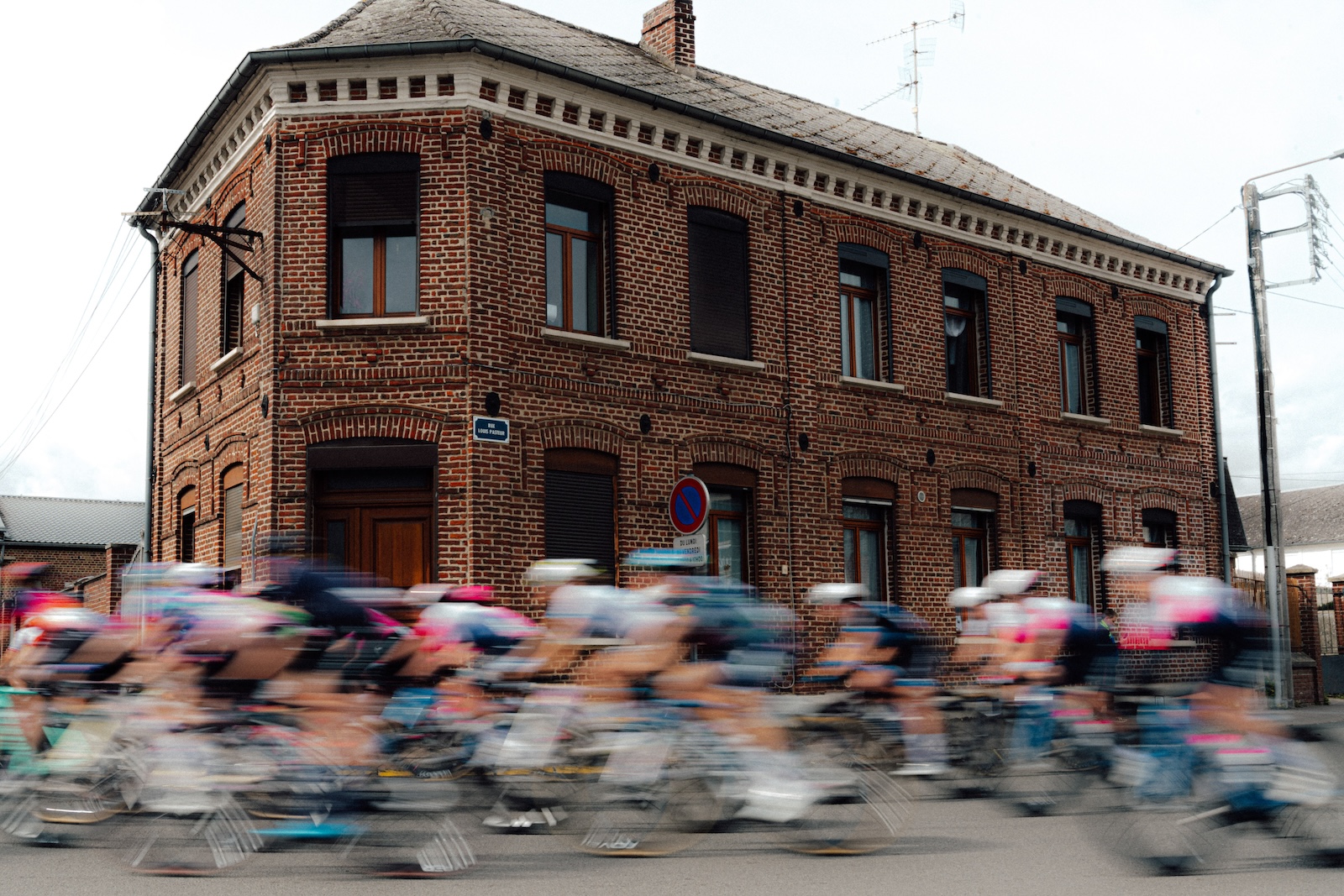
It was the first edition of Paris–Roubaix Femmes held on the same day as the men’s race. Earlier in the afternoon, Wout van Aert had won the men’s edition at the same velodrome, outsprinting Tadej Pogačar after eight years of trying. The evening belonged to Koch.
A Harder Hell
The 2026 edition arrived with a substantially revised and more demanding parcours. Race director Franck Perque had overhauled the course, extending the cobbled content to 20 sectors totalling 33.7 kilometres — up from the identical 2024 and 2025 routes, which featured 17 sectors over 29.2 kilometres. More significantly, the timing of the first cobbled encounter changed entirely. Where riders in previous editions had reached the first sector at kilometre 66, today’s field hit the pavé at kilometre 29.3, at Solesmes to Haussy. The cobbles arrived earlier, lasted longer, and the new four-star Haveluy to Wallers sector — 2.5 kilometres at kilometre 52.4 — added difficulty that the previous course had not required.
Perque explained the thinking: “We used to do circuit laps around Denain. This year, we head south to increase the distance on cobbles, which now appear earlier in the race. Among the new additions is the Haveluy sector, which will be a very important moment. Riders will need to be extremely alert, with perfect positioning, before continuing into Hornaing and Sars-et-Rosières. By the time they reach Beuvry-la-Forêt at kilometre 75, a lot will already have happened.” He was right on every count.
The field numbered 122 riders representing 21 teams, with three of the race’s five previous champions — Ferrand-Prévot, Kopecky and Jackson — all present. The 2021 winner, Elizabeth Deignan, had retired. The 2022 winner, Elisa Longo Borghini (UAE Team ADQ), was absent through illness, having already missed Milano-Sanremo Women and competed at Tour of Flanders in acknowledged less-than-full health. Marlen Reusser (Movistar) was also absent after a crash the previous weekend at Flanders.
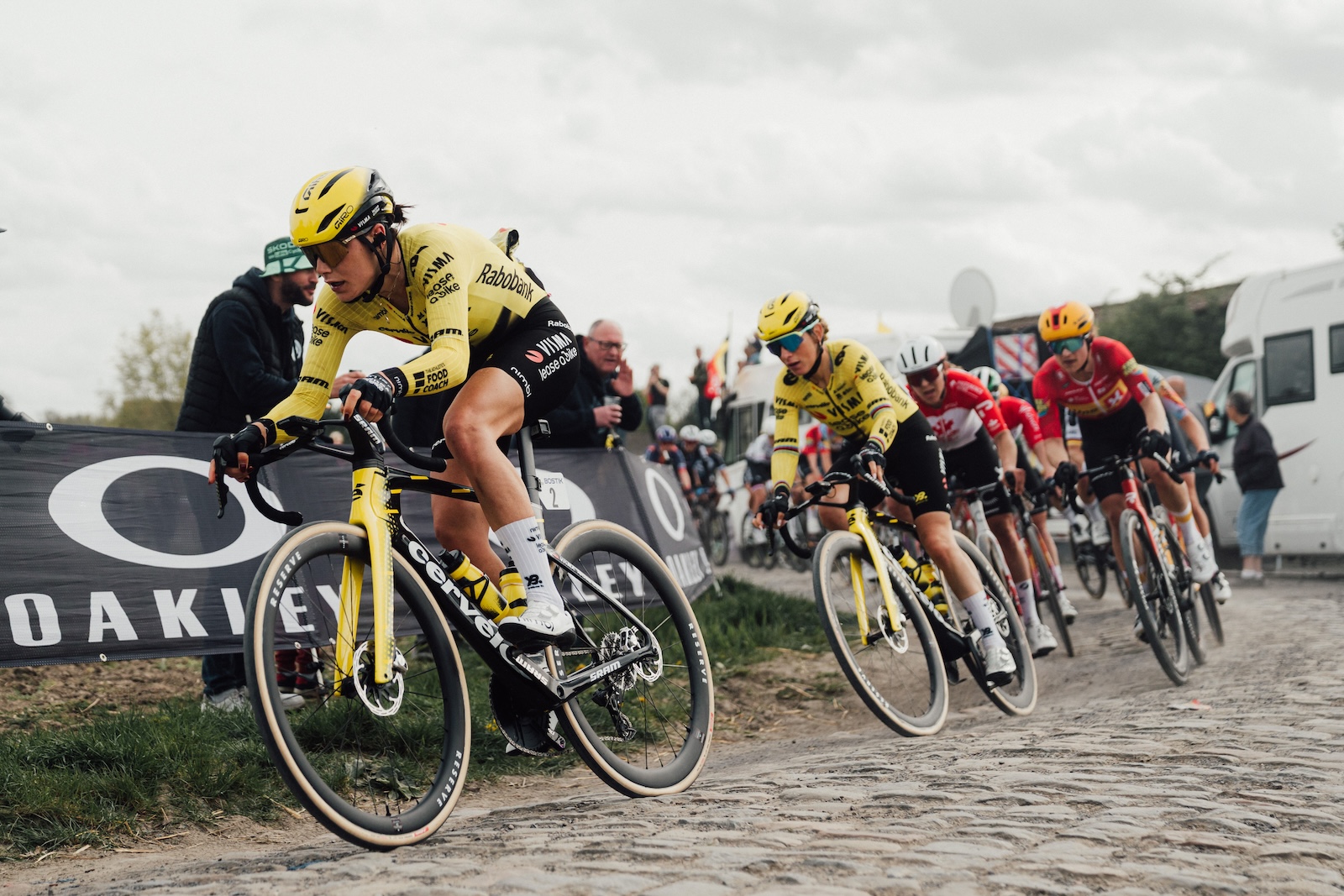
Ferrand-Prévot’s presence required explanation. The defending champion had not originally planned to ride. She changed her mind when she learned that Vos’s father had died in the days before the race. “I wasn’t scheduled to ride this race,” she said afterwards. “But when I learned that her father had passed away, I asked the team to participate to help her. I spent quite a bit of time with the Vos family, so it was also a way of saying goodbye to her dad, and of helping Marianne try to win Paris–Roubaix.” Pre-race, she said simply: “I want her to win.”
Vos’s sports director Jan Boven described the context around her return. “It was a hard time, especially mentally. To say goodbye to your dad, who was supporting you for a long, long time, and I think at every race also there, he was a part of the cycling family. She’s also happy to race again and I saw a bit of happiness when we did the recon on Tuesday.” The tactics, Boven said, were “a bit the same plan as last year, but maybe swap the leader and the winner” — Ferrand-Prévot having won in 2025 while Vos had been active in setting it up. “That would be nice for Marianne, but it’s not in our hands only.”
Kloser Goes Early, Lasts Long
The racing started fast. Rosa Maria Kloser of Canyon//SRAM zondacrypto attacked at kilometre nine and built a lead of over a minute before the first cobbled sector. Her team had a strong support cast in the peloton — Chloé Dygert, Zoë Bäckstedt, and Chiara Consonni all present — but Kloser’s early solo effort was an individual rather than a tactical move: she simply went and built a lead and held it for over half an hour of racing. The peloton, led variously by EF Education-Oatly, Liv-AlUl-Jayco, Uno-X Mobility and Lidl-Trek, allowed her gap to fluctuate between one minute and 40 seconds through the early cobbled sectors but never made a serious collective effort to close it.
Jackson was at the front of the peloton as it entered the first cobbled sector at Solesmes to Haussy, 50 seconds behind Kloser. Jackson then suffered a puncture but rejoined the bunch quickly. The new Haveluy to Wallers sector at kilometre 52.4 tightened the vice on Kloser’s lead, and by the time the field approached sector 17, Hornaing to Wandignies, she led by only 15 seconds. The bunch, with Jackson among those at the front, reached her just before sector 16 at Warlaing to Brillon, kilometre 68.1. Kloser had spent 58 kilometres at the front on her own. She rejoined a peloton still numbering around 50 riders with 55 kilometres to go.
Mechanicals Take Their Toll
The cobbles extracted their customary mechanical toll across the early and middle parts of the race. Jackson suffered a puncture in the first sector and rejoined. Elisa Balsamo (Lidl-Trek) punctured and was brought back to the bunch by her teammate Hanson. Elise Chabbey (FDJ United-SUEZ) had a mechanical problem with around 55 kilometres to go and lost contact with the peloton, before her teammates Gery and Kraak dropped back and successfully paced her back to the bunch. Jackson and Balsamo both suffered further mechanical issues later. Wiktoria Pikulik (Human Powered Health) crashed and abandoned. Borghesi, who had finished second in the previous edition, had a mechanical problem and lost contact.
SD Worx-Protime set the pace at the front of the reduced peloton as it entered sector 11, Mons-en-Pévèle — three kilometres rated five stars, the hardest sector of the day alongside the Carrefour de l’Arbre — with Ferrand-Prévot positioned directly on the team’s wheel. Alison Jackson, reflecting before the start on what the race demands, had identified the essential quality required: “To perform here, you have to embrace the chaos. There is a lot that can break apart a race that is out of your control.” The chaos had done its work. The race that emerged from the chaos was about to be decided by something more deliberate.
The Race Ignites at Mons-en-Pévèle
Franziska Koch accelerated hard at the exit of Mons-en-Pévèle. Blanka Vas (SD Worx-Protime), Marianne Vos and Pauline Ferrand-Prévot all responded. Four riders went clear, and within a kilometre of the sector’s exit they had 20 seconds on the chasers. The quartet was immediately compelling: Koch, the strongest sprinter in the group; Vas, the SD Worx protected rider; Vos, the most experienced rider in the race by a considerable margin; and Ferrand-Prévot, the defending champion who had already stated publicly that her objective was second place, not first.
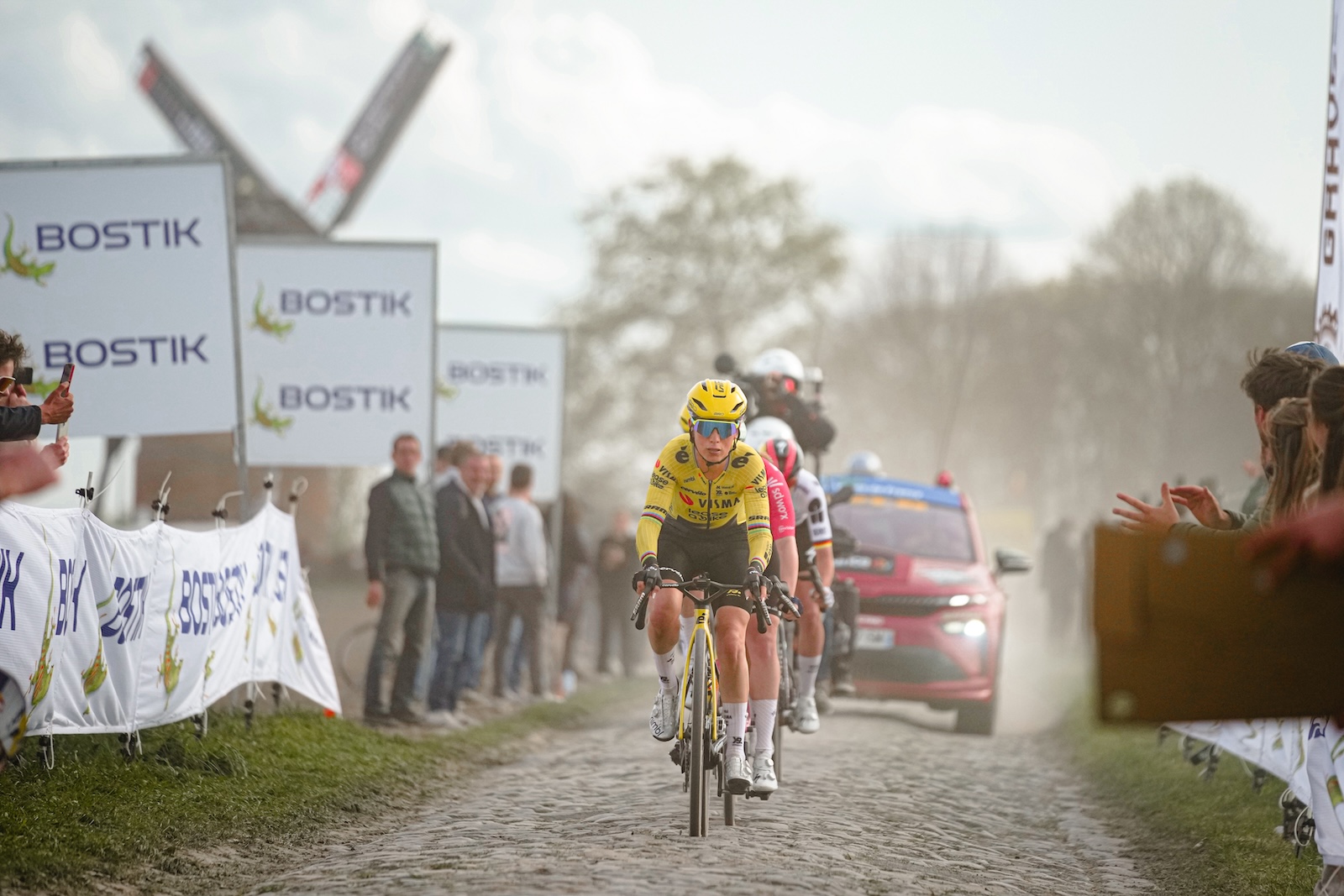
Ferrand-Prévot attacked again 43 kilometres from the finish and briefly gapped her three companions before Koch, Vas and Vos closed her down. From that point, Ferrand-Prévot began doing the majority of the work at the front — not racing for herself, but driving the pace to build the lead over the chasers and to create conditions that would favour Vos in the finish. It was an unusual role for a defending champion: riding hard, attacking when necessary, but always with her teammate’s victory as the measure of success. “She was always dedicated, she’s always ready,” Vos said of her afterwards. “Especially the way she raced today just shows how big of a champion she is.”
The lead over the chase group grew steadily. By the time the quartet had covered the Templeuve sectors at kilometre 109, the chasers were 45 seconds back. With seven cobbled sectors remaining and 32 kilometres to go, the gap exceeded a minute. Femke Markus (SD Worx-Protime) led the pursuit group of 19 riders, with Kopecky present, but the effort produced no meaningful reduction. The four leaders were going to contest the finish among themselves.
Koch Attacks, Ferrand-Prévot Fights Back
The decisive fracture in the quartet came between sectors seven and six, on the cobblestones from Cysoing to Bourghelles and Bourghelles to Wannehain, 24 kilometres from the finish. Koch accelerated, Vos went with her, and Ferrand-Prévot and Vas were dropped. Vas fell back to the chase group and was absorbed. Ferrand-Prévot was five seconds behind the leading duo, not finished yet.
Koch attacked again at the start of Camphin-en-Pévèle, the four-star sector at kilometre 123.2 with 20 kilometres remaining. Ferrand-Prévot lost a few bike lengths but refused to concede. She chased back, and with 22 kilometres to go the trio of Koch, Vos and Ferrand-Prévot was together again on the Camphin-en-Pévèle cobbles. The defending champion had answered every acceleration.
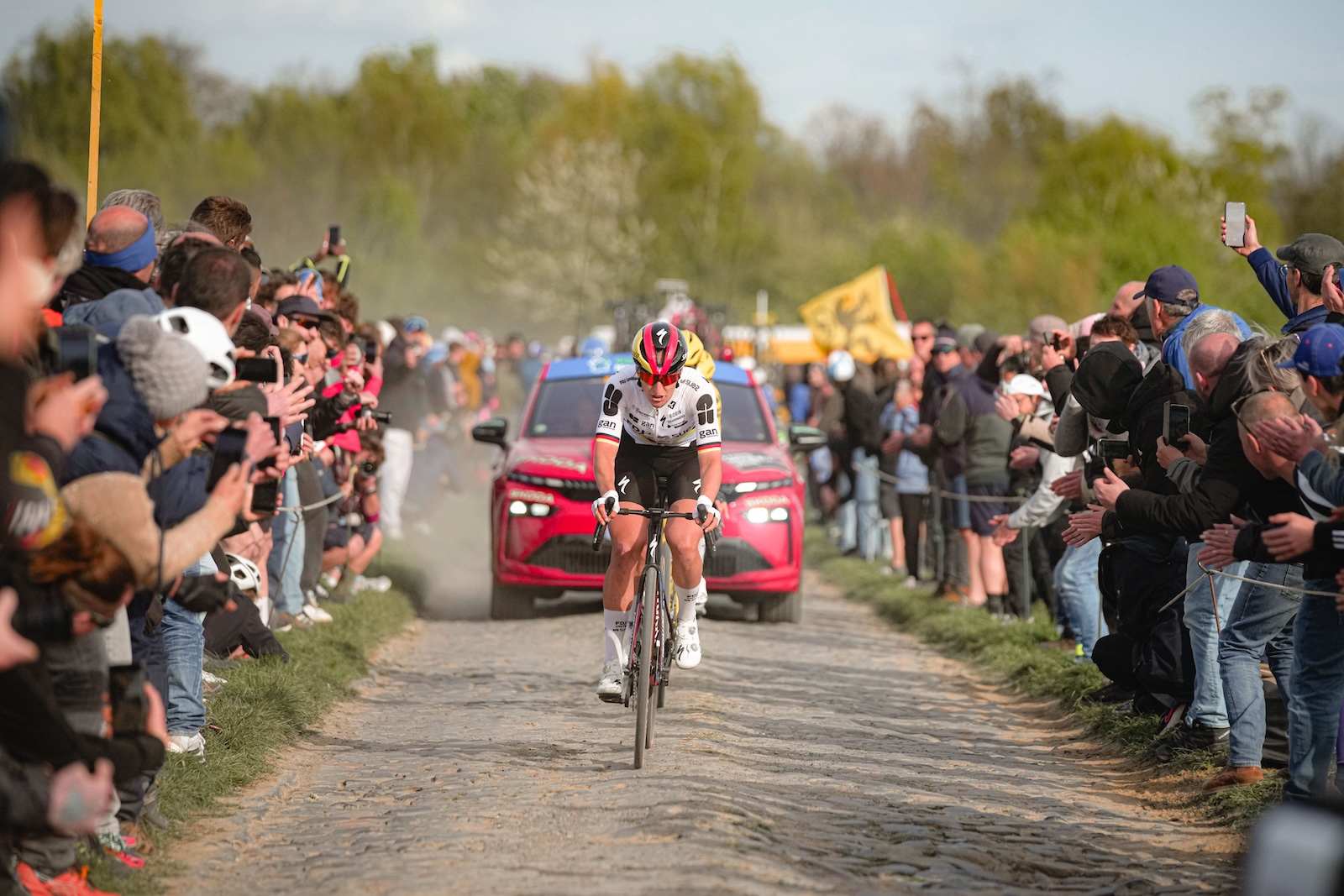
Into the Carrefour de l’Arbre, the final five-star sector at kilometre 126. Koch attacked again in the hardest stretch of cobbles. Vos followed. Ferrand-Prévot held on. Vas, caught now by the chase group led by Kopecky, was definitively out of contention. Vos made a brief acceleration of her own 16 kilometres from the finish and immediately eased when she saw Koch following. With ten kilometres to go the trio still led by more than a minute. The outcome would be settled among the three of them.
“I Had to Gamble on the Sprint”
Ferrand-Prévot was dropped with 4.5 kilometres remaining. Koch and Vos went clear again, and this time the defending champion had nothing left to answer with — she had given it in earlier accelerations, in kilometres of work at the front, in the pursuit of an outcome for someone else. She rejoined the pair in the final approach to the velodrome, the trio entering the track together, and in the final sprint Koch and Vos pulled away once more.
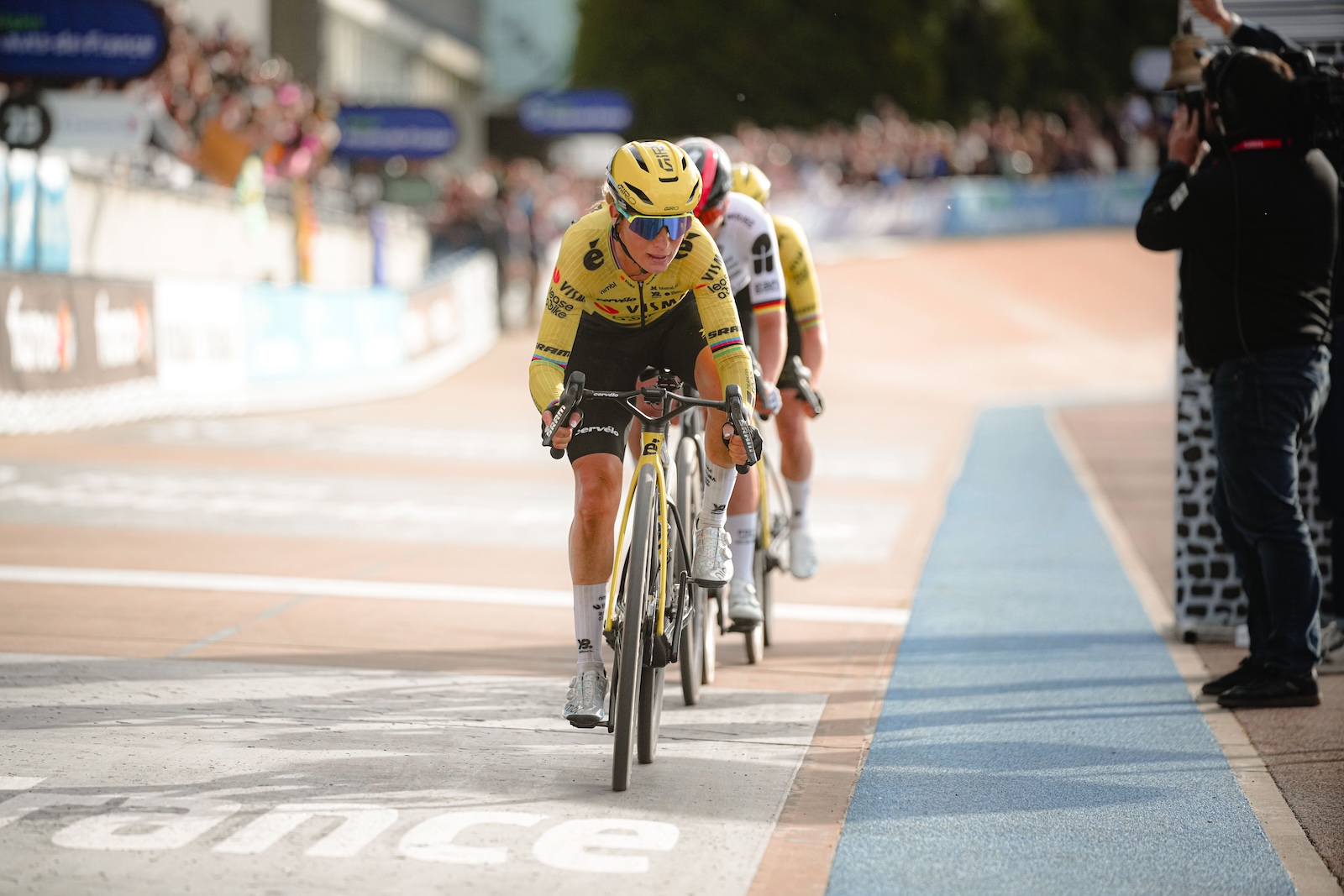
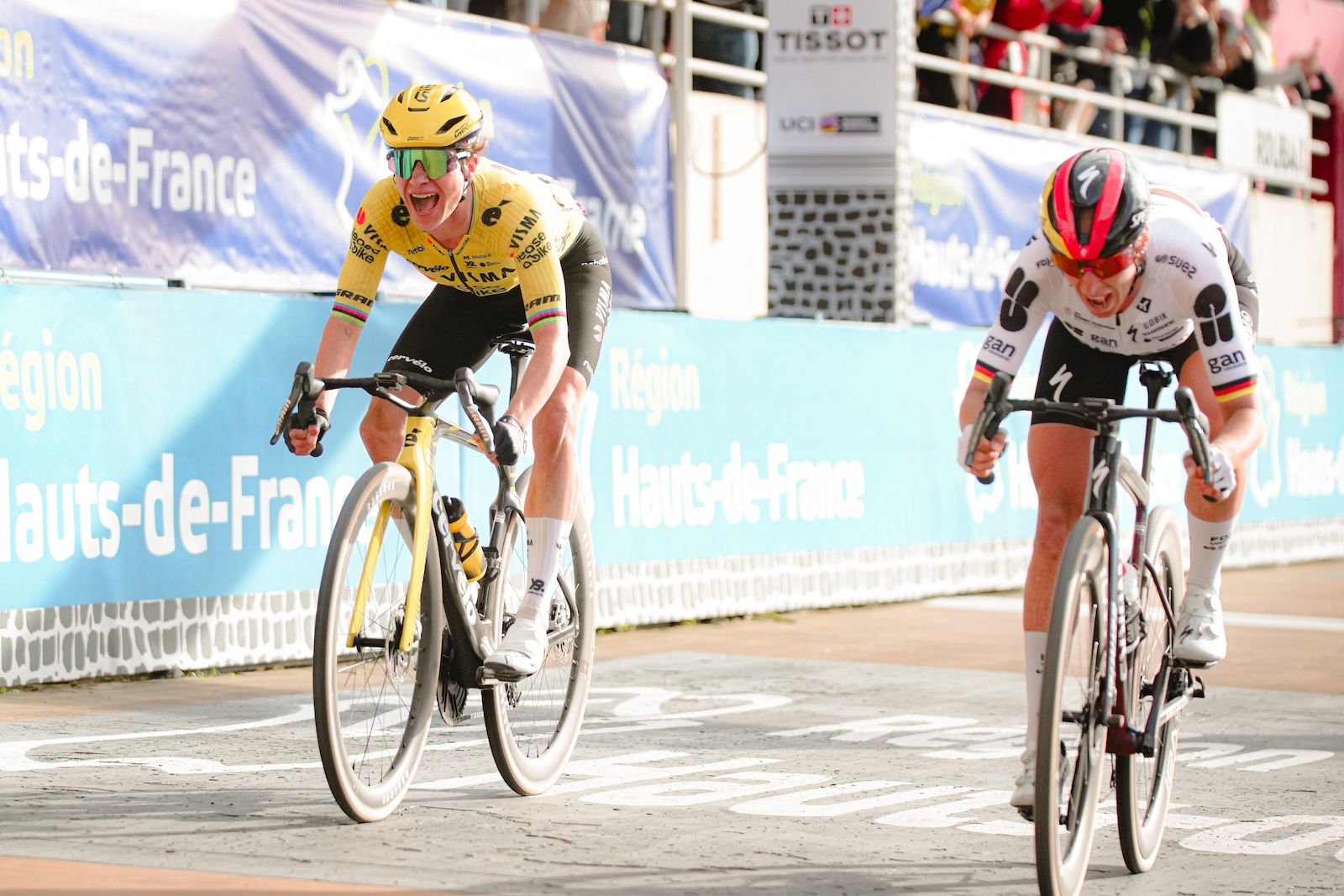
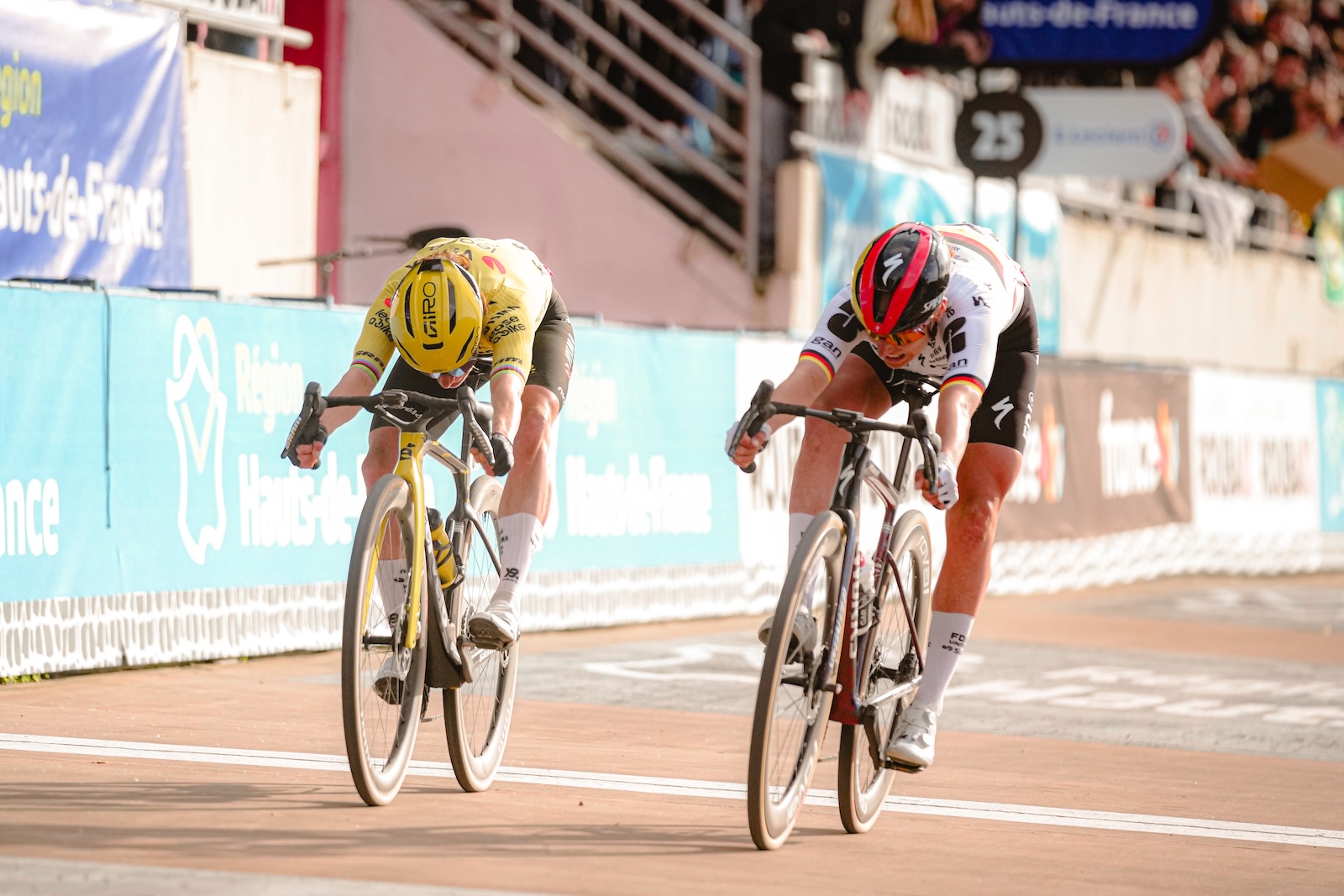
Inside the velodrome, Koch took the inside line and held it. She could feel Vos coming on the corner — she said so afterwards — and she did not move. The margin at the line was less than a wheel. “I tried to get rid of them but I couldn’t,” Koch said of the final kilometres alongside two riders from the same team, “so I had to gamble on the sprint.” The gamble paid off. Six editions, six nations, six winners. Germany added to the list.
“It’s Like a Dream”
Franziska Koch’s best previous result at Paris–Roubaix Femmes was seventh, in the race’s inaugural edition in 2021. She had identified from that first experience that this was a race that suited her, a race she wanted one day to win. The day came five years later. “It’s kind of hard to believe,” she said at the finish. “I’ve been dreaming about it, I’ve been hoping that it would work out, but Roubaix is a race where everything can happen. In the end it worked out. It’s like a dream.”
She credited her team’s positioning through the chaotic early sectors as the foundation of the victory. “The positioning was really key in the beginning — it’s like a war going into the cobbled sectors. We were fully committed and I managed to stay out of trouble. We wanted to make the race hard after Mons-en-Pévèle and I ended up in the perfect move.” On the specific challenge of facing two riders from the same team: “Facing two riders of the same team is a challenge on one hand and a benefit on the other because it’s not on you to work. I tried to get rid of them but I couldn’t, so I had to gamble on the sprint.”
“I could feel her coming in the corner and I was wary she could benefit from the angle of the track, but I just thought: I have to win. The first edition, I got seventh, so I knew from then on this is a race I like, a race that one day I wanted to win. This day is today.”
“I Would Have Preferred to Win”
Marianne Vos had not prepared for this race in ideal circumstances. Her father’s death in the days before the start had defined the week preceding it. She raced anyway — cycling, she said, had always been a big part of her life, and this was one of the most beautiful races there is — and she finished second by a margin that measured in centimetres rather than seconds. “Of course it’s nice to be second and third,” she said, “but I’m also honest, I would have preferred to win.”
She described attempting to hold her focus on the race itself through everything surrounding it. “I tried to focus as much as possible on the race itself and of course with the team doing such an amazing job and then with Pauline doing such an amazing job, I tried to focus on the task I needed to do.” On Koch: “She did some good attacks, so I knew I had to follow and try to be in the best position as possible for the sprint finish. I wasn’t surprised by Franziska — she is just really, really strong. I think maybe she even surprised herself.”
In hindsight, she said, she might have done things differently, though she acknowledged that Koch had been the stronger rider on the day. “I’m very thankful for Pauline, all the efforts she did to create a gap, make it bigger and keep pushing. I would have wanted to finish it off, but it is what it is.” She spoke about the preparation in the context of family loss with the brevity of someone still processing it. “Together with my partner we still tried to manage and do what we could in preparation. Sometimes you don’t have everything in your hands and you have to deal with circumstances. The team has always been supportive. You just try to do what you can do and work as hard as you can and get ready for the races.”
“We Can’t Be Disappointed”
Pauline Ferrand-Prévot finished third in a race she chose to ride for someone else. She was the defending champion who sacrificed the possibility of a second consecutive title — and with it the chance to become the race’s first double-winner — in pursuit of a result for Vos that ultimately went to Koch. The sacrifice was real and visible: she drove the pace through the final kilometres when she might have conserved for her own sprint, and she was dropped because of it.
“We can’t be disappointed after the last few weeks Marianne has been through,” she said. “We fought to the very end, we gave it our all. She would have loved to win today, we would have loved to win with her, but it’s still a very good second place after what she’s been through these past few weeks. Hats off to her.” On why she entered a race she had not planned to ride: “When I learned that her father had passed away, I asked the team to participate to help her. I spent quite a bit of time with the Vos family, so it was also a way of saying goodbye to her dad, and of helping Marianne try to win Paris–Roubaix.”
Pre-race, Ferrand-Prévot had said of herself and Vos: “I want her to win.” She got the outcome she wanted by half a metre on the wrong side of Koch. Six editions still have six winners. The first double-winner remains to be found.
Results
| Pos | Rider | Team | Time |
| 1 | Franziska Koch | FDJ United–SUEZ | 3h 30’ 16” |
| 2 | Marianne Vos | Team Visma – Lease a Bike | s.t. |
| 3 | Pauline Ferrand-Prévot | Team Visma – Lease a Bike | @ 0’ 06” |
| 4 | Lotte Kopecky | SD Worx–Protime | @ 1’ 30” |
| 5 | Megan Jastrab | UAE Team ADQ | s.t. |
| 6 | Lorena Wiebes | SD Worx–Protime | @ 2’ 20” |
| 7 | Charlotte Kool | Fenix–Premier Tech | s.t. |
| 8 | Lara Gillespie | UAE Team ADQ | s.t. |
| 9 | Arlenis Sierra Canadilla | Movistar Team | s.t. |
| 10 | Lucinda Brand | Lidl–Trek | s.t. |