BENTONVILLE, Arkansas, (Saturday, October 22, 2022) – Life Time Big Sugar Gravel presented by Mazda took place on the hinterland roads of Northwest Arkansas and Southern Missouri today, with a field of more than 1,500 riders ranging in age from 14 to 78, representing 44 states and eight countries. The event offers two signature distances: the marquee Big Sugar, a 104-mile course of challenging roads through the Ozarks with approximately 7,000 feet of elevation gain and 52-mile Lil Sugar, which serves up a similarly challenging and equally picturesque ride through remote highs and hollows.
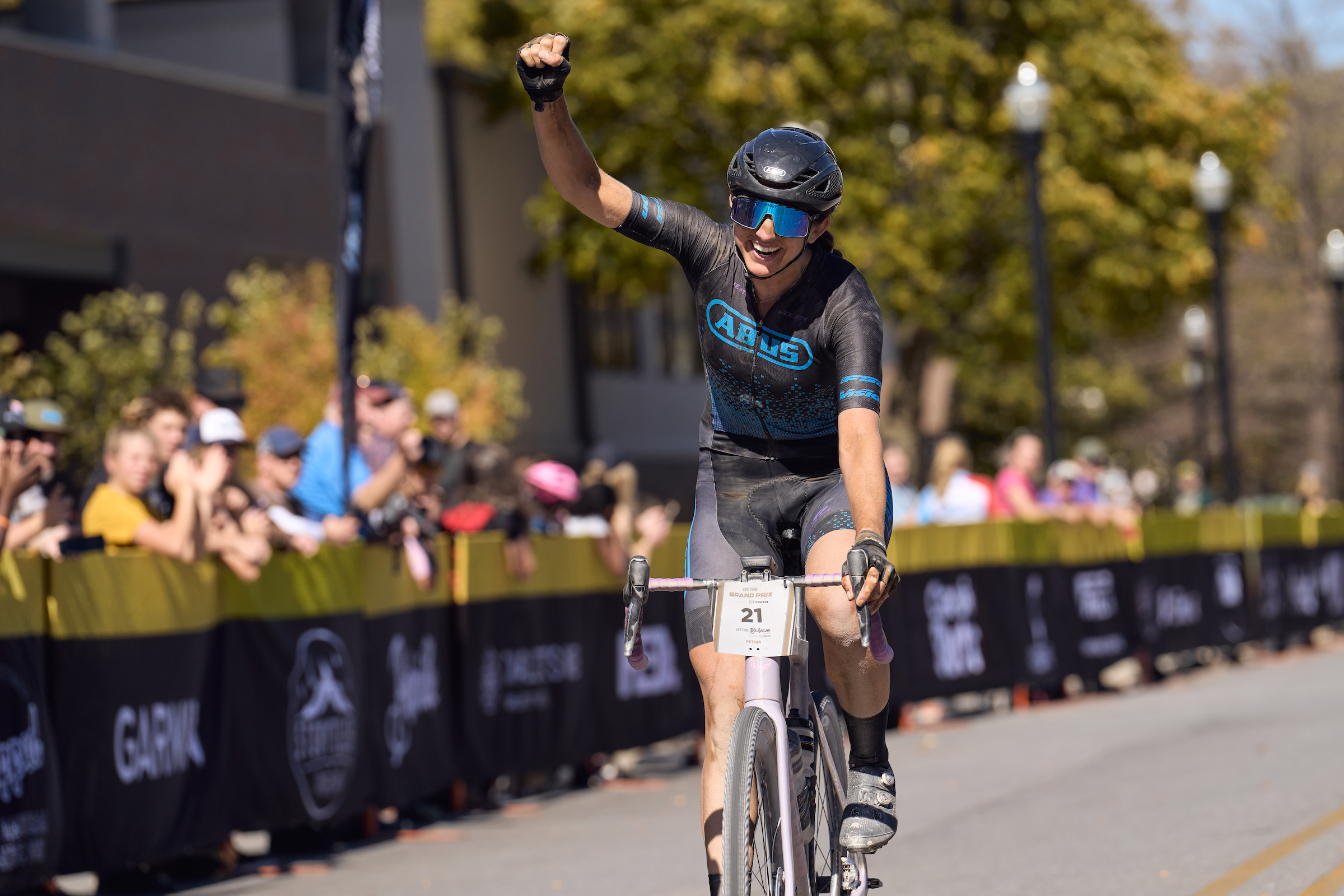
Paige Onweller takes the win at 2022 Big Sugar Gravel. Photo courtesy Life Time
Big Sugar was the final event in the six-race Life Time Grand Prix presented by Mazda. Haley Smith and Keegan Swenson won the overall series in its inaugural year, each taking home $25,000, with the other top nine men and women finishers awarded portions of the $250,000 prize purse from Life Time.
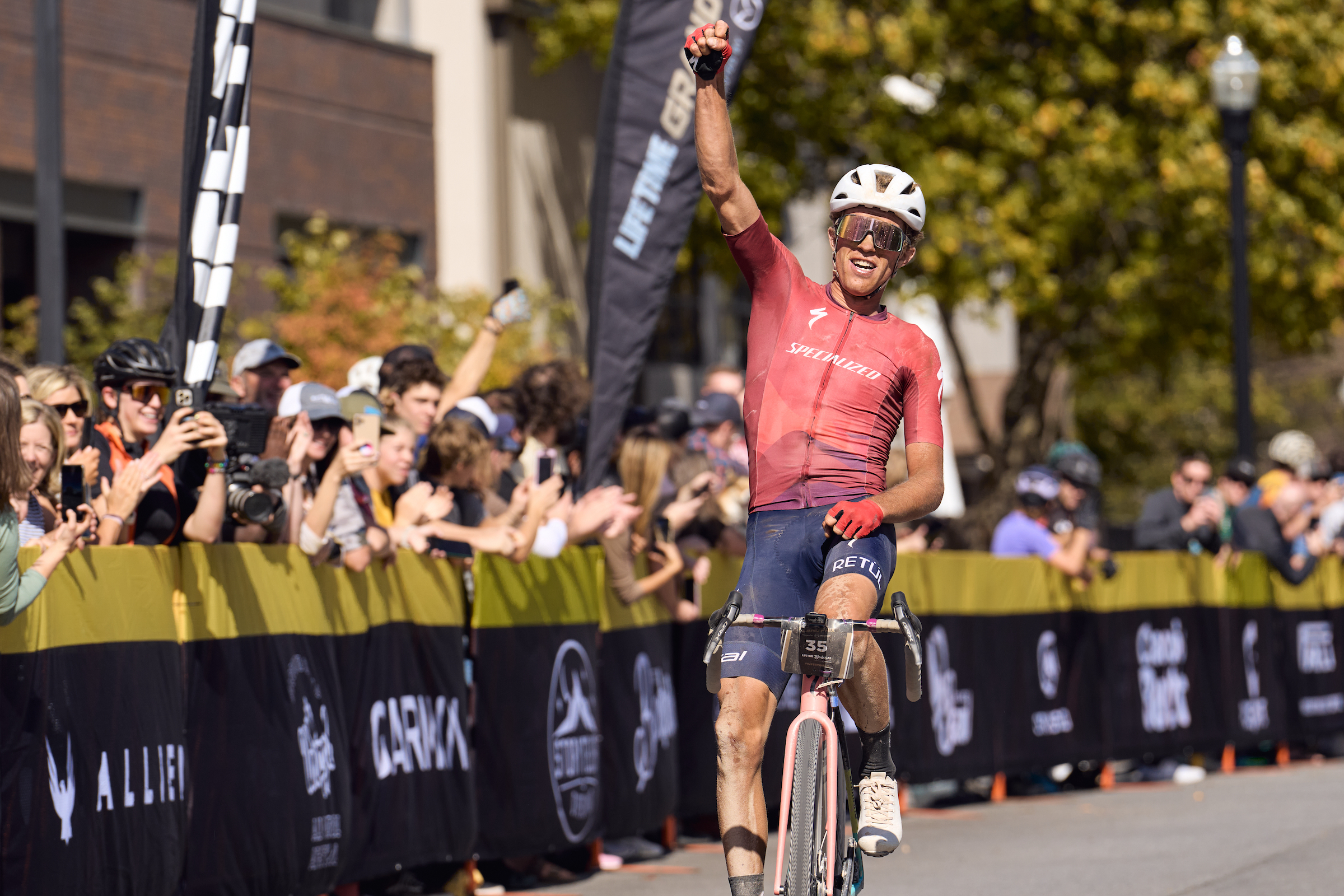
Russell Finsterwald winning Big Sugar Gravel. Photo courtesy Life Time
“We are thrilled by the success of this weekend’s events, which were the culmination of a huge undertaking by our team, brand partners, athletes and the city of Bentonville,” said Kimo Seymour, President of Events and Media at Life Time. “Big Sugar Gravel was the perfect end cap to a successful season and finale of the inaugural Life Time Grand Prix.”
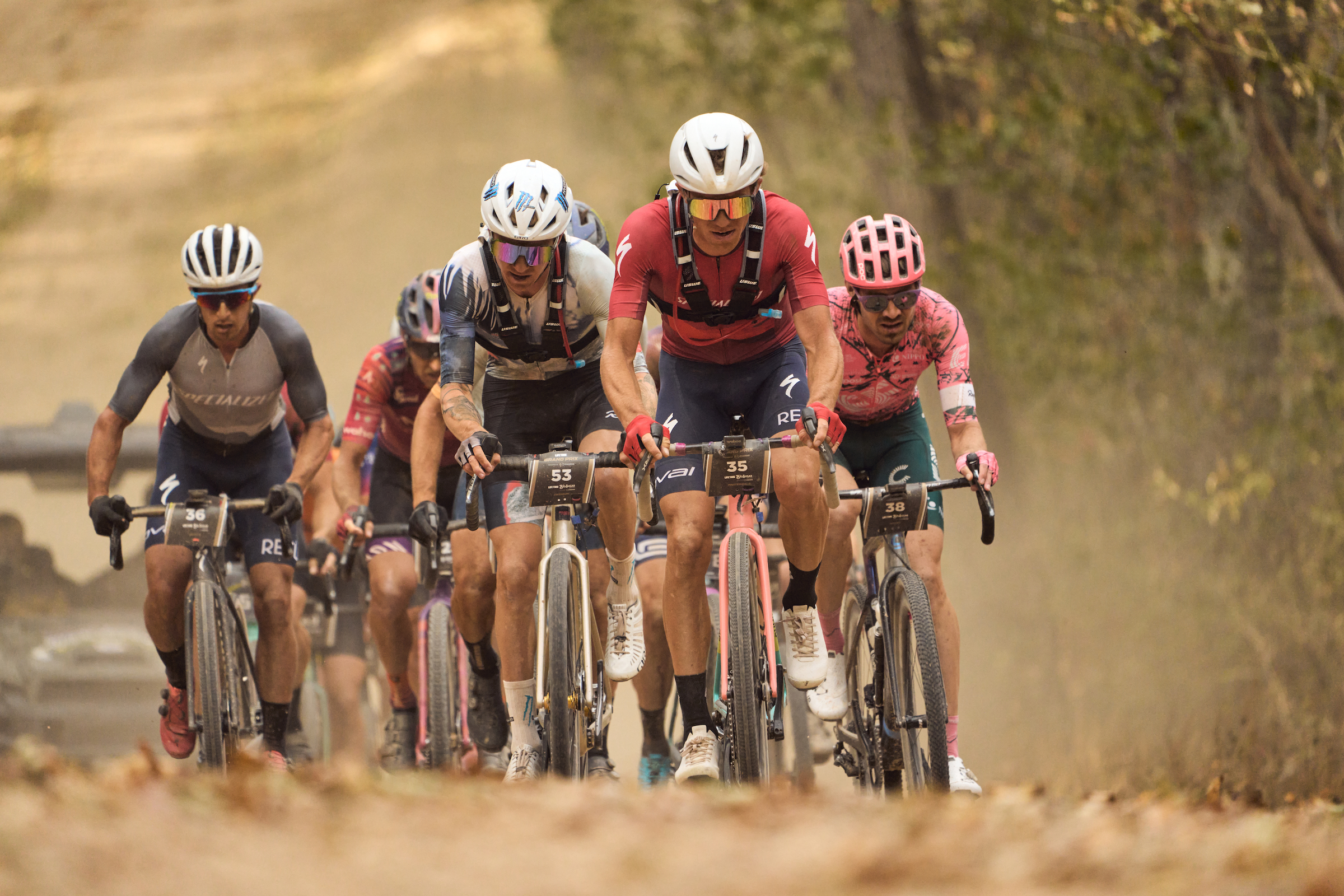
Russell Finsterwald leading a group of riders during the 2022 Big Sugar Gravel. Photo courtesy Life Time
Women’s Big Sugar Results
Paige Onweller, 33, of Grand Rapids, Mich. with a time of 5:33:05
Emily Newsom, 39, of Fort Worth, Texas with a time of 5:39:44
Alexis Skarda, 33, of Grand Junction, Colo. with a time of 5:45:43
Men’s Big Sugar Results
Russell Finsterwald, 31, of Colorado Springs, Colo. with a time of 4:57:59
Keegan Swenson, 28, of Heber City, Utah with a time of 4:58:24
Adam Roberge, 25, of Prevost, CAN with a time of 4:58:30
Non-Binary Big Sugar Results
Bonnie Branson, 46, of Edmond, OK with a time of 7:46:49
Lily Friend, 35, of Austin, Texas with a time of 7:59:09
Kat Steele, 52, of Austin, Texas with a time of 8:57:23
2022 Life Time Grand Prix Final Results
In the women’s field, the late Moriah Wilson kicked off the season with a win at Sea Otter. Heading into Unbound Gravel, Sofia Gomez Villafane inherited the lead, but Haley Smith pulled ahead in the rankings after Leadville Trail 100 MTB while Sarah Sturm stayed consistent throughout the season. With the top three separated by just a few points, the overall was set to be decided at Big Sugar. With the best of five races being scored for the overall, Haley Smith secured the overall victory with a 13th place finish at Big Sugar.
“It’s always cool to win when it’s the first time,” Smith said. “It’s been a while since I won anything. I just raced my bike as hard as I could and I enjoyed it; it’s sweet when it works out to yield a result.”
She continued: “You can’t think about the leaderboard or where you’re standing, you just have to think, ‘what can I do right now, what can my legs do, what can my brain do’. Every mile that you continue to perform on that, that you continue to deliver what you’re capable of, you build confidence. It’s kind of like an ongoing process.”
Keegan Swenson becomes the first overall winner of the Life Time Grand Prix. Photo courtesy Life Time
In the men’s field, nobody was as dominant as overall victor Keegan Swenson, who won Sea Otter, Crusher in the Tushar, and Leadville Trail MTB. He mathematically secured his victory at Chequamegon, using Big Sugar as a victory lap. At Big Sugar, Finsterwald crossed the line solo, 25-seconds ahead of his friend and training partner Swenson.
“It was an awesome time this year,” Swenson said. “I was stoked to do something different and it was cool to have the best racers in North America all together at these six rounds for a good mix of mountain biking, gravel, and just different terrain. Cool to wrap it up here in Arkansas with Big Sugar.”
Women’s Top 10 Finishers
Haley Smith, 29, of Uxbridge, Ontario with 138 points
Sofia Gomez Villafane, 28, of Heber City, Utah with 134 points
Sarah Sturm, 33, of Durango, Colo. with 134 points
Rose Grant, 40, of Columbia Falls, Mont. with 131 points
Emily Newsom, 39, of Fort Worth, Texas with 122 points
Alexis Skarda, 33, of Grand Junction, Colo. with 122 points
Hannah Otto, 27, of Salt Lake City, Utah with 120 points
Evelyn Dong, 37, of Park City, Utah with 112 points
Paige Onweller, 33, of Grand Rapids, Mich. with 108 points
Melisa Rollins, 27, of Salt Lake City, Utah with 107 points
Men’s Top 10 Finishers
Keegan Swenson, 28, of Heber City, Utah with 149 points
Alexey Vermeulen, 28, of Boulder, Colo. with 136 points
Russell Finsterwald, 31, of Colorado Springs, Colo. with 131 points
Cole Paton, 25, of Cashmere, Wash. with 129 points
Peter Stetina, 35, of Santa Rosa, Calif. with 128 points
Andrew L’Esperance, 31, of Halifax, N.S with 111 points
Rob Britton, 38, of Victoria, British Columbia with 109 points
Adam Roberge, 25, of Prevost, Quebec with 109 points
Alex Howes, 34, of Nederland, Colo. with 108 points
Lance Haidet, 25, of San Luis Obispo, Calif. with 103 points
Throughout the race series, athletes competed a total of over 575 miles and more than 47,000 feet of elevation gain, traversing dynamic and cross-discipline courses at the 2022 Sea Otter Classic Fuego XC, Garmin UNBOUND Gravel, Crusher in the Tushar, Leadville Trail 100 MTB, Chequamegon MTB Festival and Big Sugar Gravel.
The final event on Life Time’s 2022 off-road calendar is the Austin Rattler MTB, a Leadville Trail 100 MTB qualifier, on Nov. 5.
VIRGIN, Utah (October 21, 2022) — This year marked the 16th edition of Red Bull Rampage, the legendary big-mountain freeride event, and once again it did not disappoint. Sixteen of the world’s best riders brought their A-game to the Southwest Utah desert, and in the end, it was Canada’s Brett Rheeder that came out on top with one of the biggest and baddest lines of the day. The event replay is available on-demand on both ESPN+ and Red Bull TV. Then on October 30th, viewers can also tune-in to a condensed 2.5-hour replay beginning at 5pm PT/8pm ET that will air on ESPN.
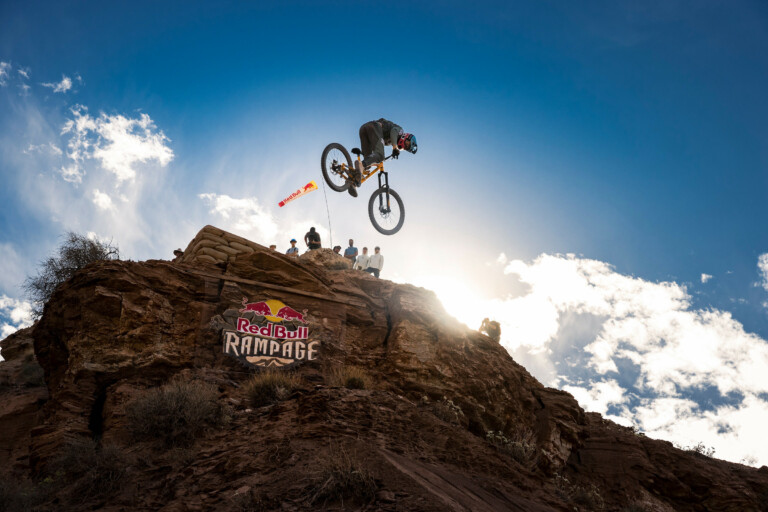
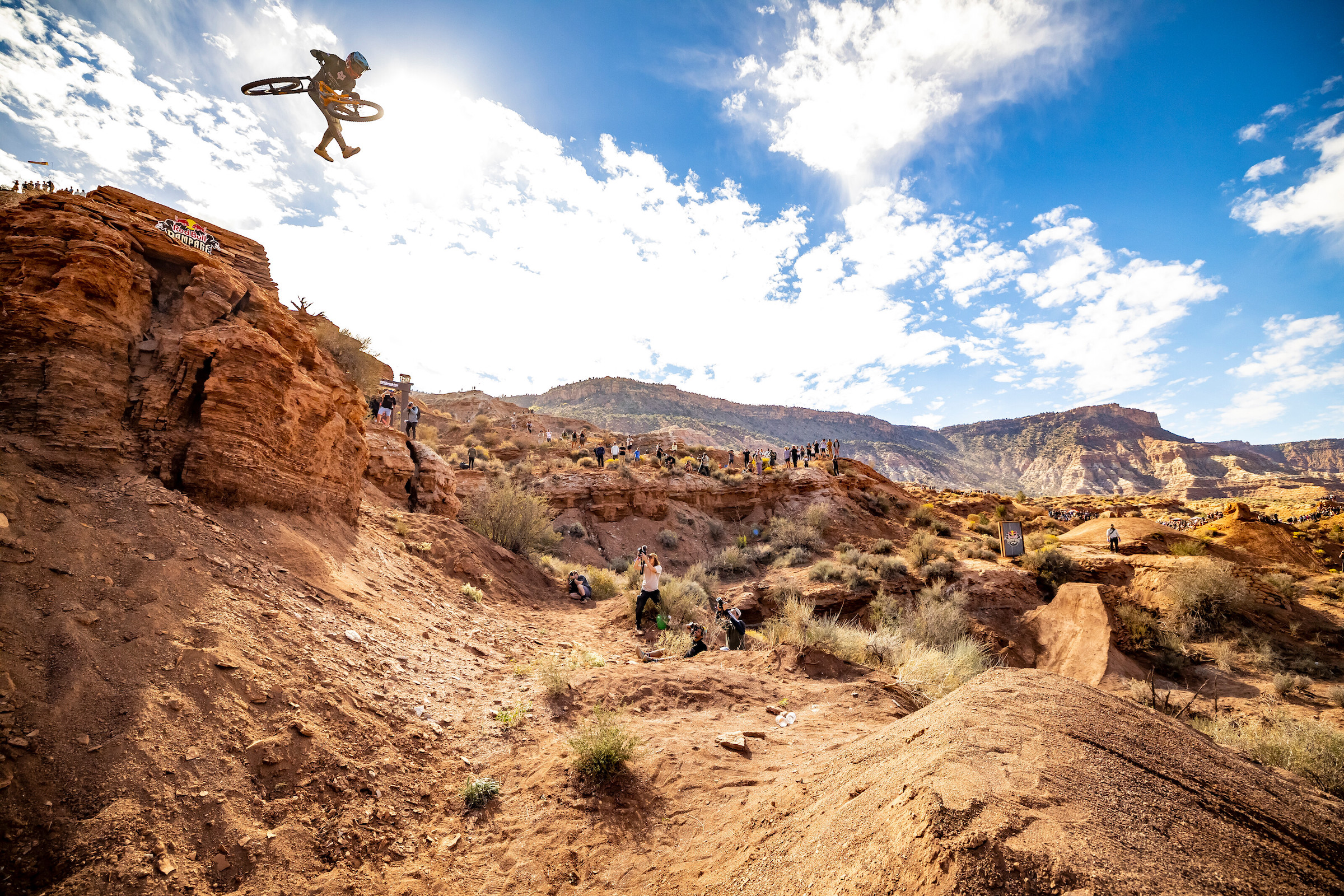
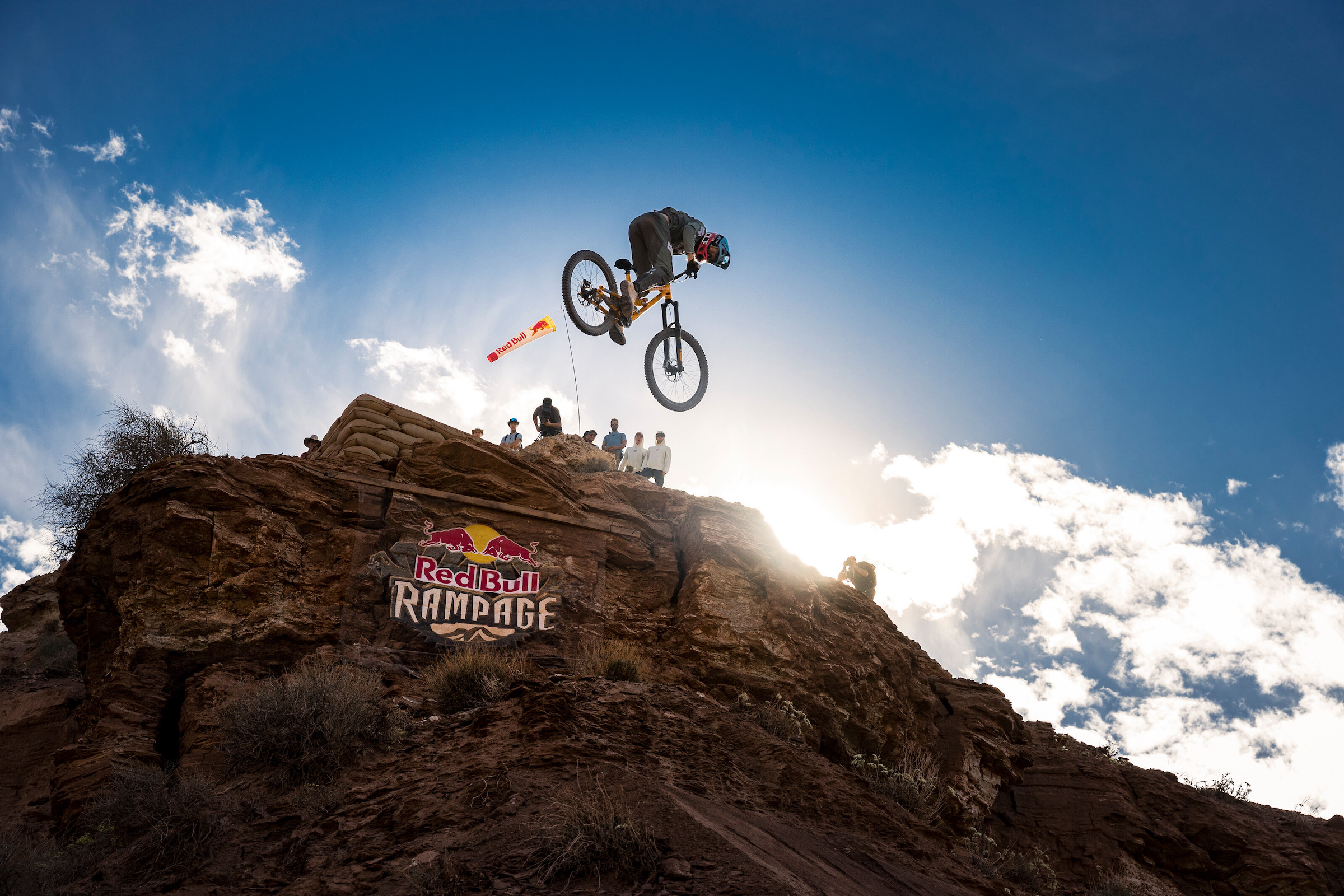
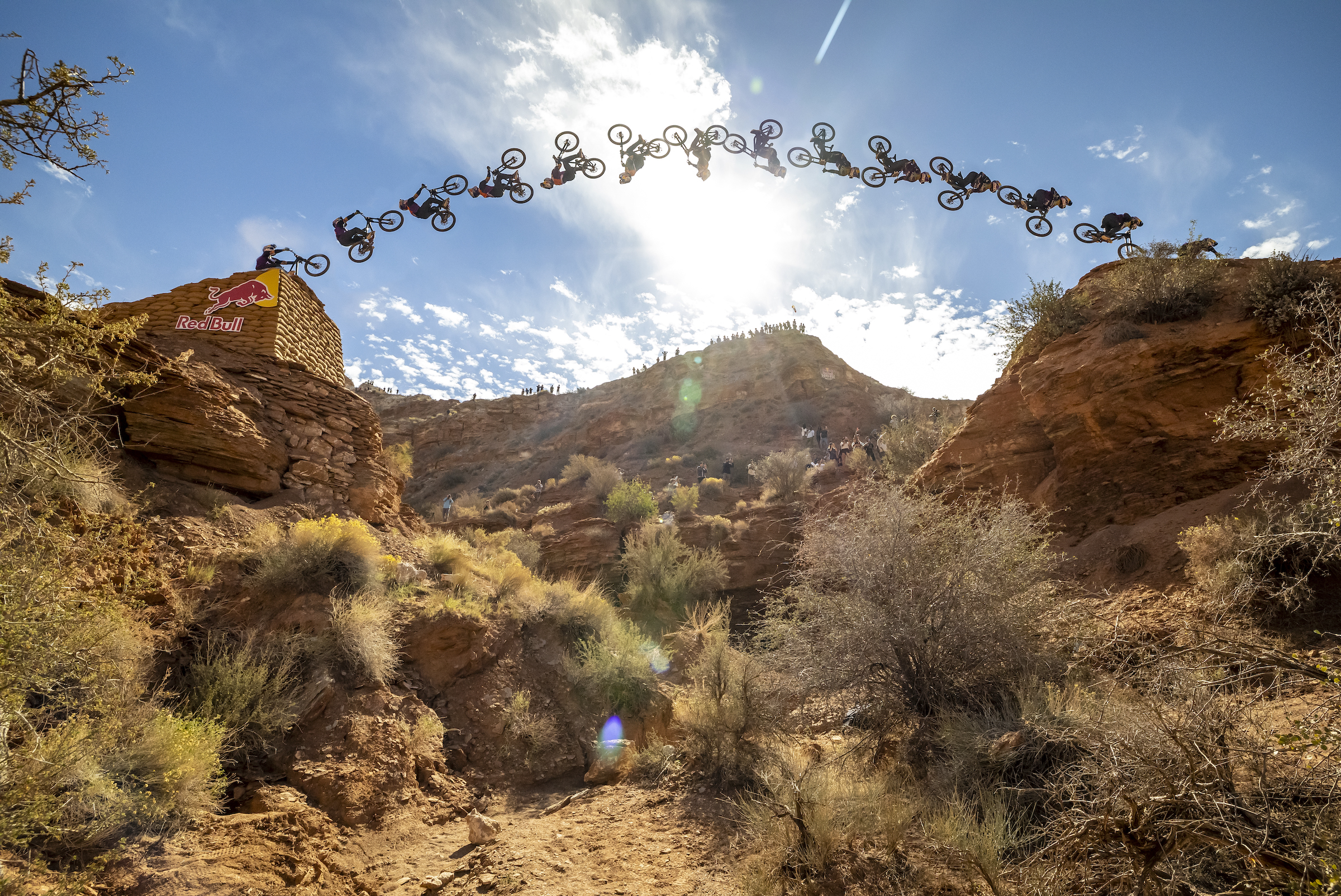
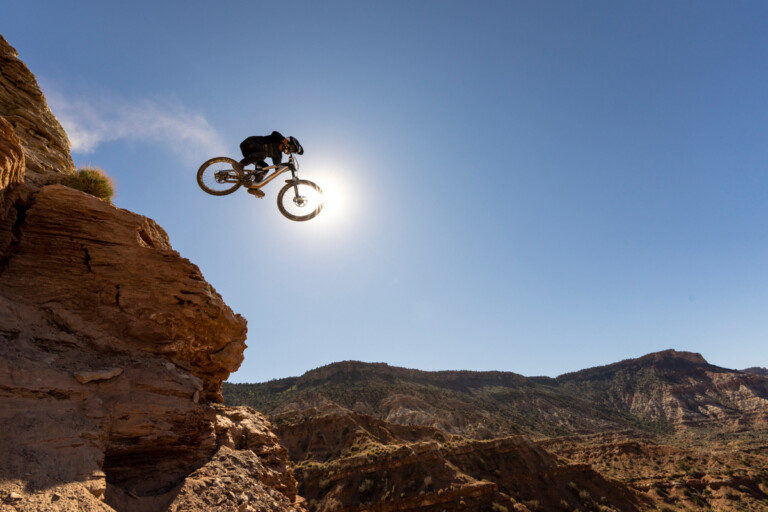
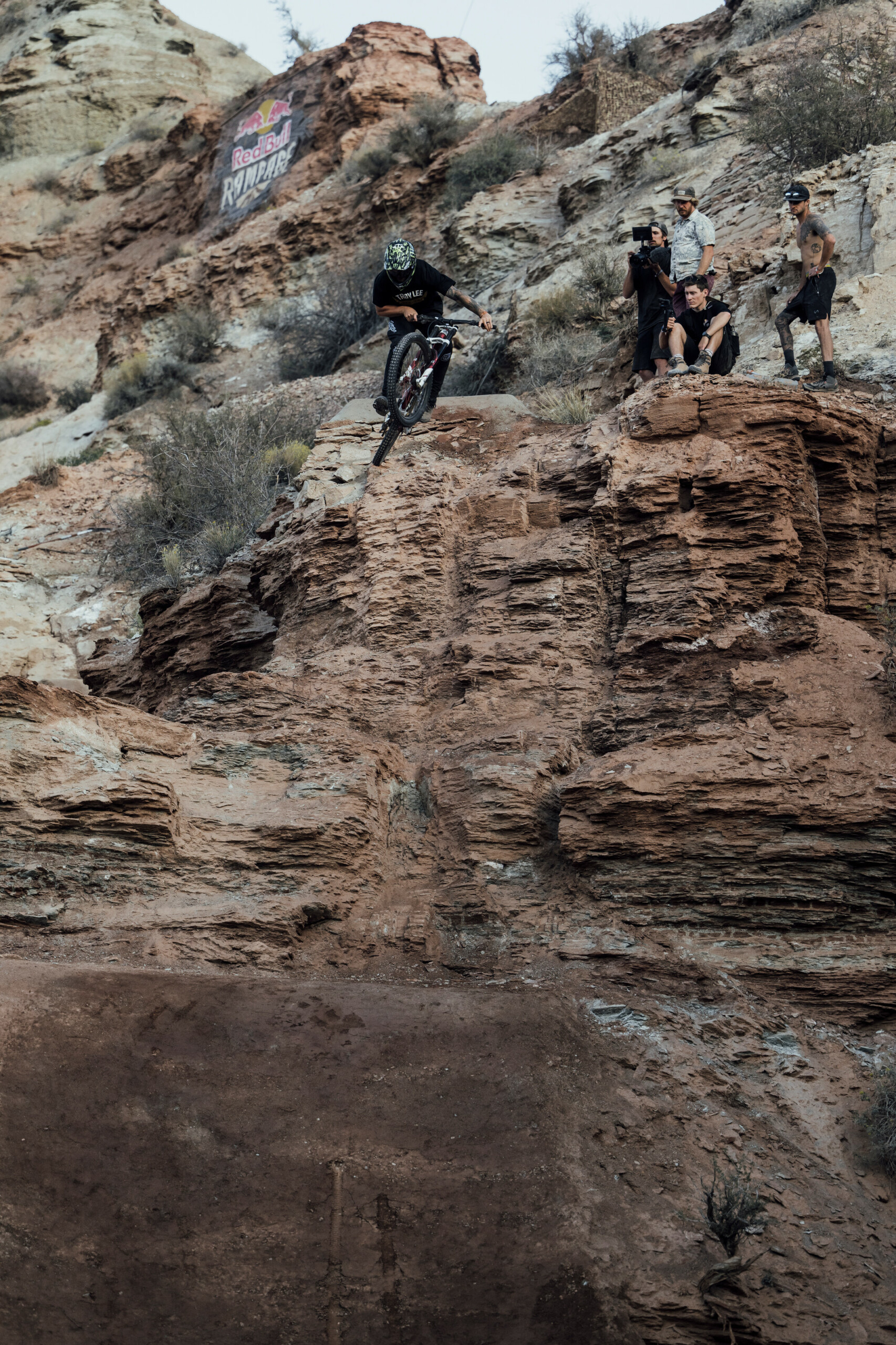
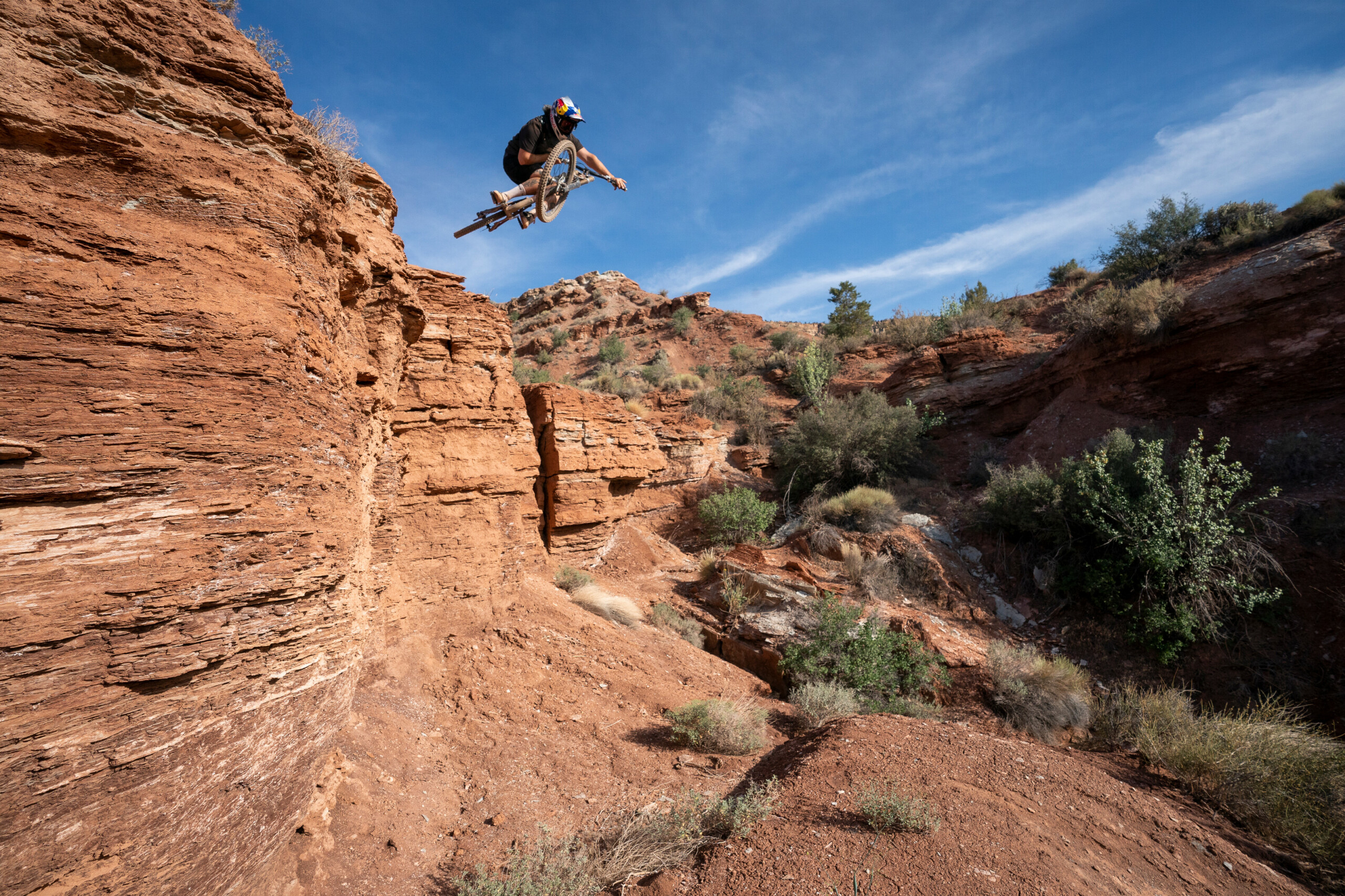
Brett Rheeder rides his bike at Red Bull Rampage in Virgin, Utah, USA on 21 October, 2022. // Garth Milan / Red Bull Content Pool // SI202210220306 // Usage for editorial use only //
Having won the event in 2018 and finished as runner-up in 2019, Rheeder was determined to return to the top of the podium and delivered a remarkable run.
Brett Rheeder rides at Red Bull Rampage in Virgin, Utah, USA on 21 October, 2022. // Robin O’Neill / Red Bull Content Pool // SI202210220343 // Usage for editorial use only //
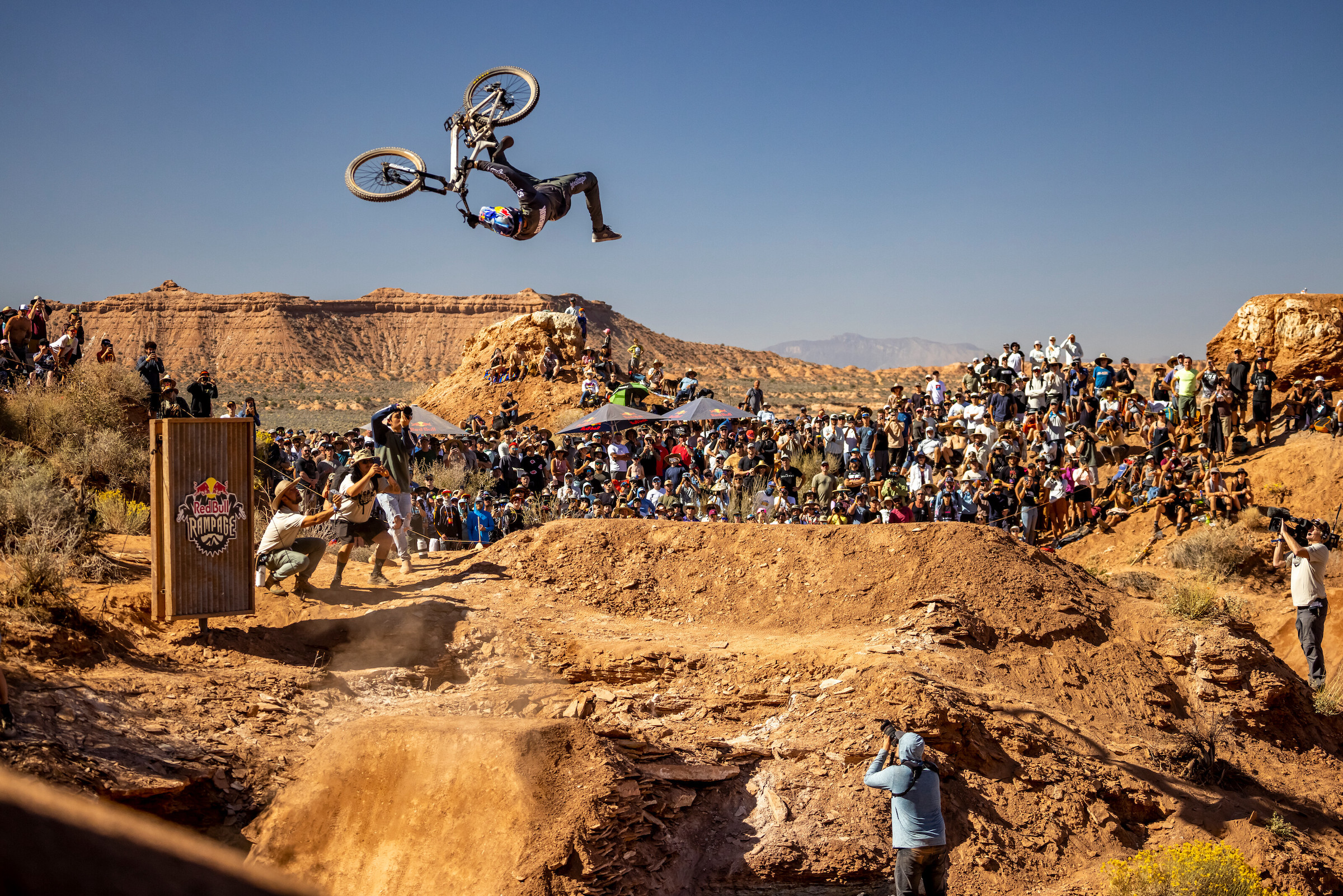
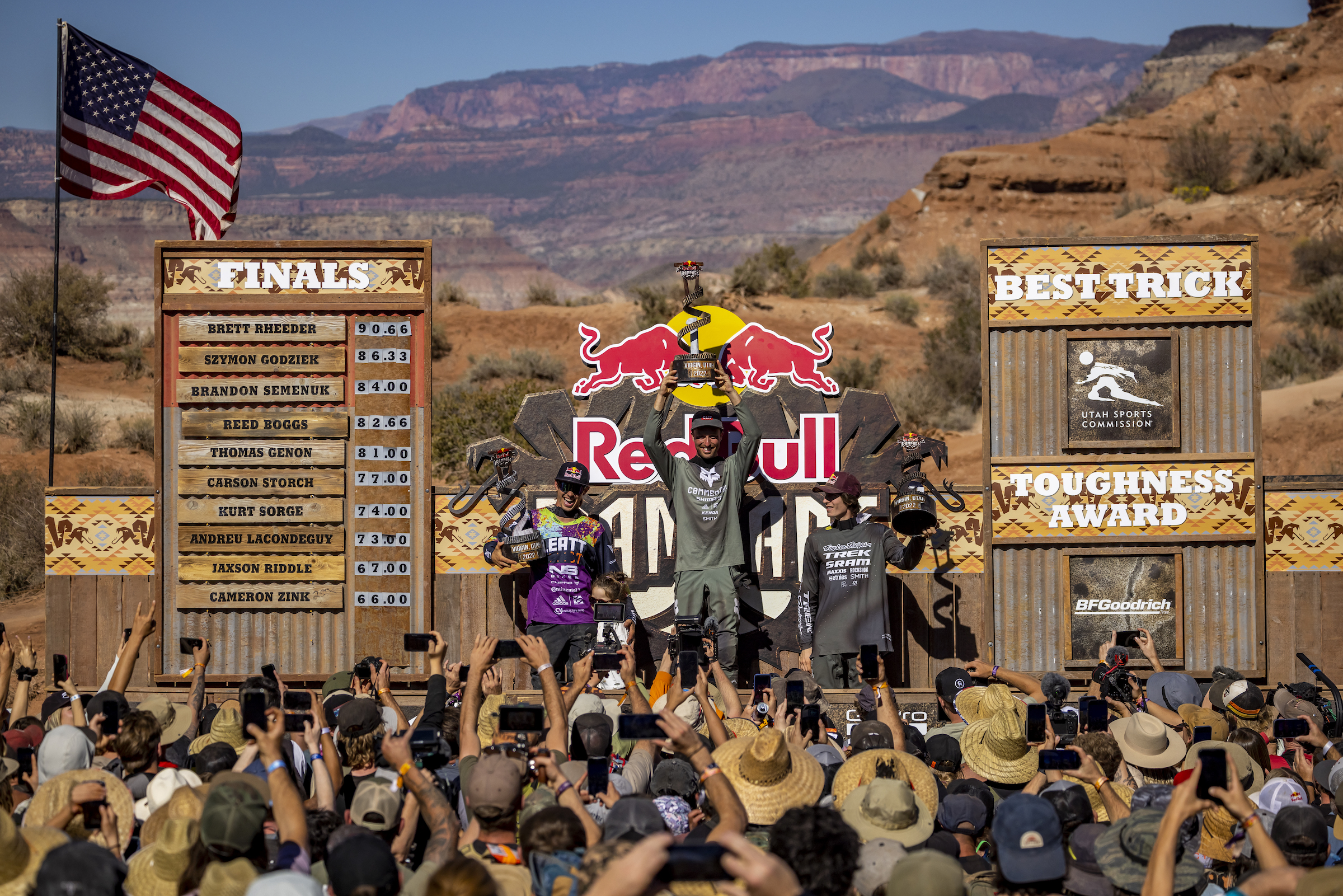
After nailing his massive entry drop, Rheeder aced a flip can on his burly 48-foot drop to tail whip his step up only seconds later. The two-time Rampage champion kept the tricks coming, spun in both directions, and linked together combinations like he was in a video game. His run was the perfect recipe of complex tricks and steep technical riding, rightfully earning him a 90.66 score to secure his second win.
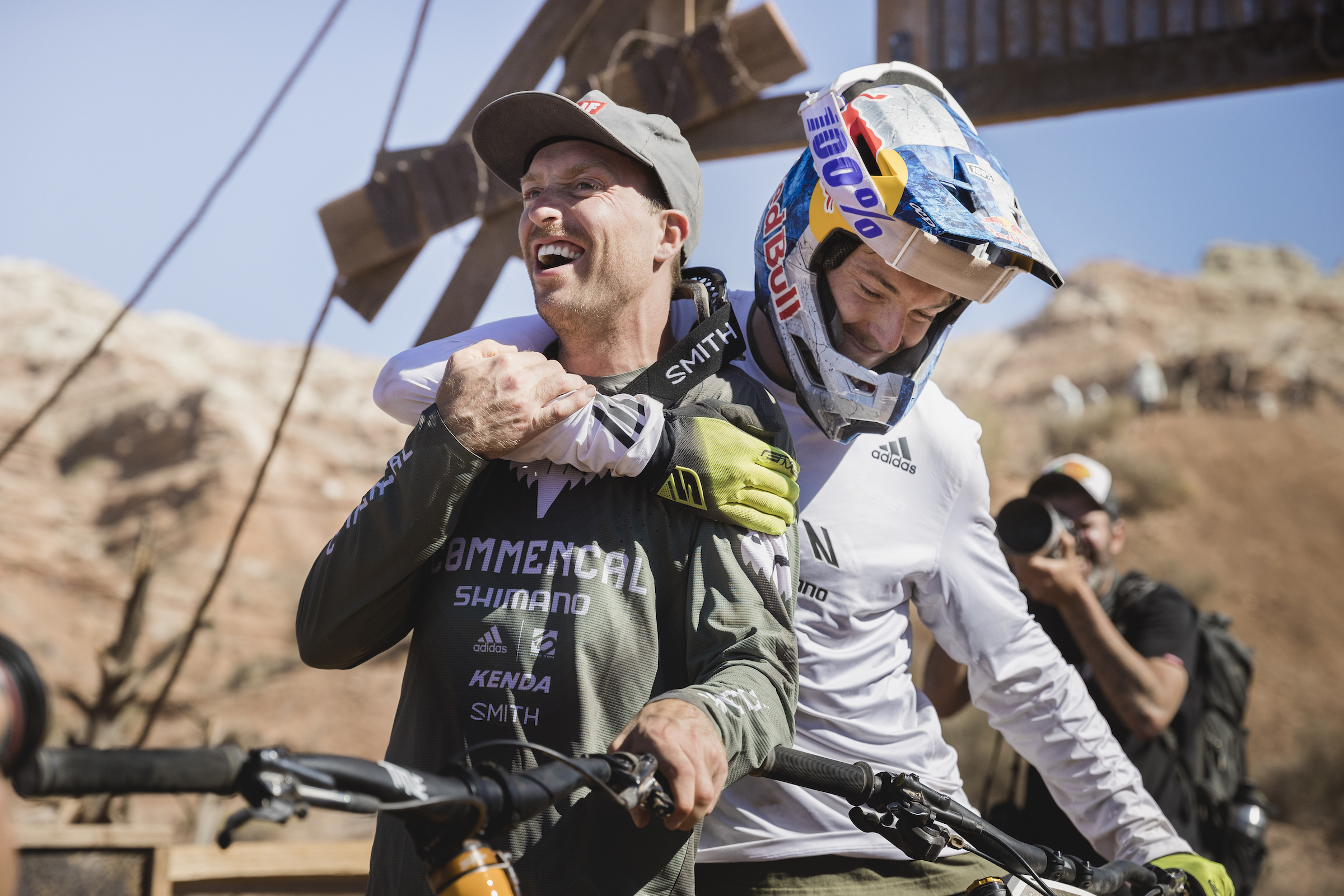
Brett Rheeder and Thomas Genon celebrate at Red Bull Rampage in Virgin, Utah, USA on 21 October, 2022. // Robin O’Neill / Red Bull Content Pool // SI202210220344 // Usage for editorial use only //
“I was pretty unsure what was going to happen this year. I had a lot of changes I went through as a person, and I didn’t know if I’d ever get back to this level of riding. So, I didn’t come out to win, to be honest. I just want to make sure whatever I do is for me. Only for me. Not for any sponsors, not for my competitors, not for any ego. I want to make sure it’s for guiding the sport in the right direction and having a good time while doing it,” Rheeder explains in disbelief, still soaking in the achievement. “It’s the most positive I’ve seen [freeride].”
Brett Rheeder opened the door for other complex runs, with Szymon Godziek trailing closely behind him. Godziek took 2nd place, one of the few riders opting to ride Kelly McGarry’s infamous canyon gap. The Polish freerider indeed made the late McGarry proud by linking together a daring run with no shortage of awe-inspiring moves.
Szymon Godziek rides his bike at Red Bull Rampage in Virgin, Utah, USA on 21 October, 2022. // Paris Gore / Red Bull Content Pool // SI202210220326 // Usage for editorial use only //
Godziek set the tone by flying down his knife-edge ridgeline, throwing in several manuals. Once he got in the air, the tricks flowed. He threw a tuck no-hander, backflip, flat drop 360 before lining up for his double drop—the last feature before the canyon gap. The canyon requires full commitment—you won’t know if you don’t have enough speed until you’re halfway over the chasm. Godziek only heightened the stakes by throwing a 360 off his double drop. He stomped the rotation, and before he could soak it in, the rider was backflipping over the 75-foot gap. To close things off, he did a backflip suicide no hander on his lower trick jump. An elated Godziek pumped his fist in the air in celebration, knowing that he had achieved something remarkable. The judges felt similarly and awarded him the score of 86.33, landing him on his first-ever Rampage podium.
Szymon Godziek celebrates his second place finish at Red Bull Rampage in Virgin, Utah, USA on 21 October, 2022. // Samantha Saskia Dugon / Red Bull Content Pool // SI202210220348 // Usage for editorial use only //
“I wasn’t sure if I should do the 360 in the first run or the second run. It was a last-call decision, and it was super scary. It was by far the scariest thing of my life. It worked out but it was super heavy. However, the backflip on the canyon gap was always the plan from the very first day. Once I landed the 360, I remember thinking, “this flip is going to be easy,” laughs Godziek.
Brandon Semenuk rides his bike at Red Bull Rampage in Virgin, Utah, USA on 21 October, 2022. // Garth Milan / Red Bull Content Pool // SI202210220112 // Usage for editorial use only //
Brandon Semenuk’s was the easiest to spot out of everyone’s lines. Even from the finish corral, you could see his near-vertical run out plunging straight down from the start gate. Two other riders thought about the line, ultimately deciding against it. However, Semenuk always finds diamonds in the rough, deciding that the line was ridable and that he could start the run with a caveman air.
Brandon Semenuk prepares to ride at Red Bull Rampage in Virgin, Utah, USA on 21 October, 2022. // Samantha Saskia Dugon / Red Bull Content Pool // SI202210220354 // Usage for editorial use only //
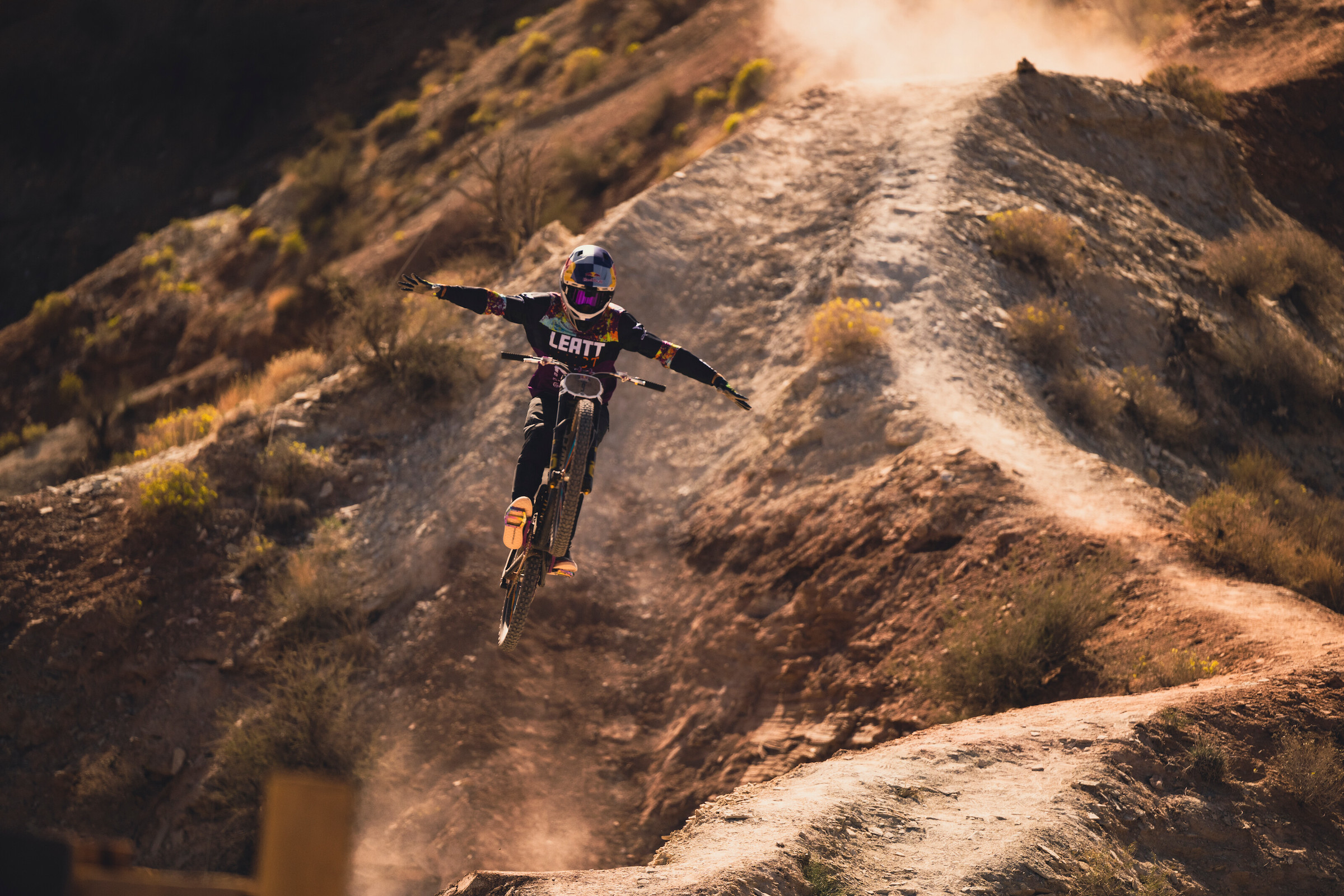
The four-time champion leaped from the start gate with his bike in hand, finding his pedals quickly in the 15-foot drop. He flew down his start chute, kicking dirt behind him like a jet stream. He followed things with a bar spin into his canyon gap. He aired his signature tail whip on the flat drop, a move he introduced to Rampage only last year. Next, on the dirt-to-dirt trick jump, he aired a back flip, then a one-footed table. He finished his run with a 360 flat spin knack. His final score was an 84, and on top of taking third, Semenuk walked away with the Best Trick. Talk of that caveman air is sure to continue for a long time.
Szymon Godziek rides his bike at Red Bull Rampage in Virgin, Utah, USA on 21 October, 2022. // Garth Milan / Red Bull Content Pool // SI202210220308 // Usage for editorial use only //
“The line shouted out at me. I wasn’t the only athlete who looked at it, but I decided to keep going because I thought it could work. It was such a cool feature and hard to pass up on because it was a unique opportunity with how they built the start platform, and you might not have that opportunity again. So despite being gnarly, it was worth the risk in my mind,” Semenuk explained after winning the Best Trick award.
Semenuk was among the many riders who wanted to drop in for a second run, eager to improve his score. The wind had other plans, though. No longer idle, it whipped up along the ridgelines, sending the windsocks into a constant frenzy. Agonizingly, the riders sat through a wind hold, hoping for another window to ride. There was no relief however, cementing the podium spots.
Winners, Szymon Godziek, Brett Rheeder, Brandon Semenuk pose for a portrait at Red Bull Rampage in Virgin, Utah, USA on 21 October, 2022. // Garth Milan / Red Bull Content Pool // SI202210220312 // Usage for editorial use only //
Beyond the top three riders, plenty of moments wowed the crowd. Jaxson Riddle once again claimed the Michelin Style Award for his run chock full of moto-inspired tricks. Freeride legend Cam Zink also reclaimed the BFGoodrich Toughness Award for his perseverance and grit. For the McGazza Spirit Award, Tom Van Steenbergen earned the honor for his incredible return to Red Bull Rampage after a life-changing crash, and Brandon Semenuk brought home the trophy for the Utah Commission Best Trick Award with his caveman out of the start gate. Lastly, the Kia Digger Award was presented to Brett Rheeder’s team of Phil McLean and Austin Davignon. With their hard work, Rheeder’s run couldn’t have been possible, and they made magic happen on their line.
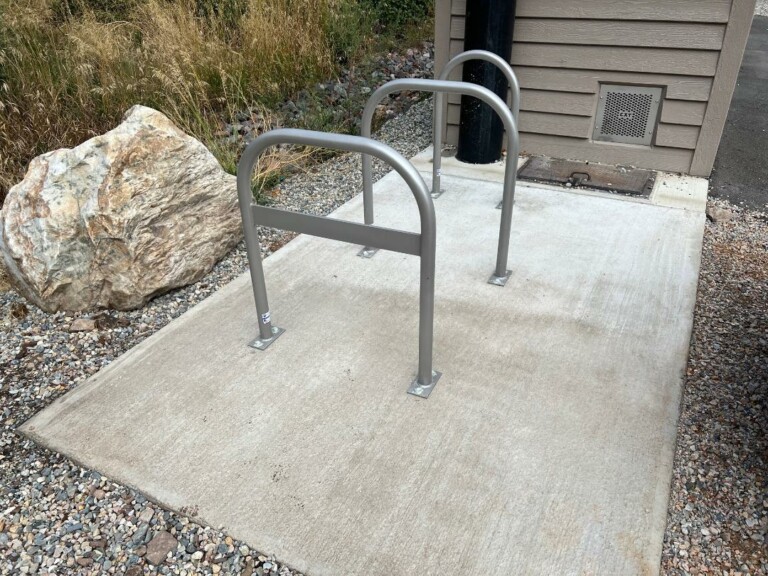
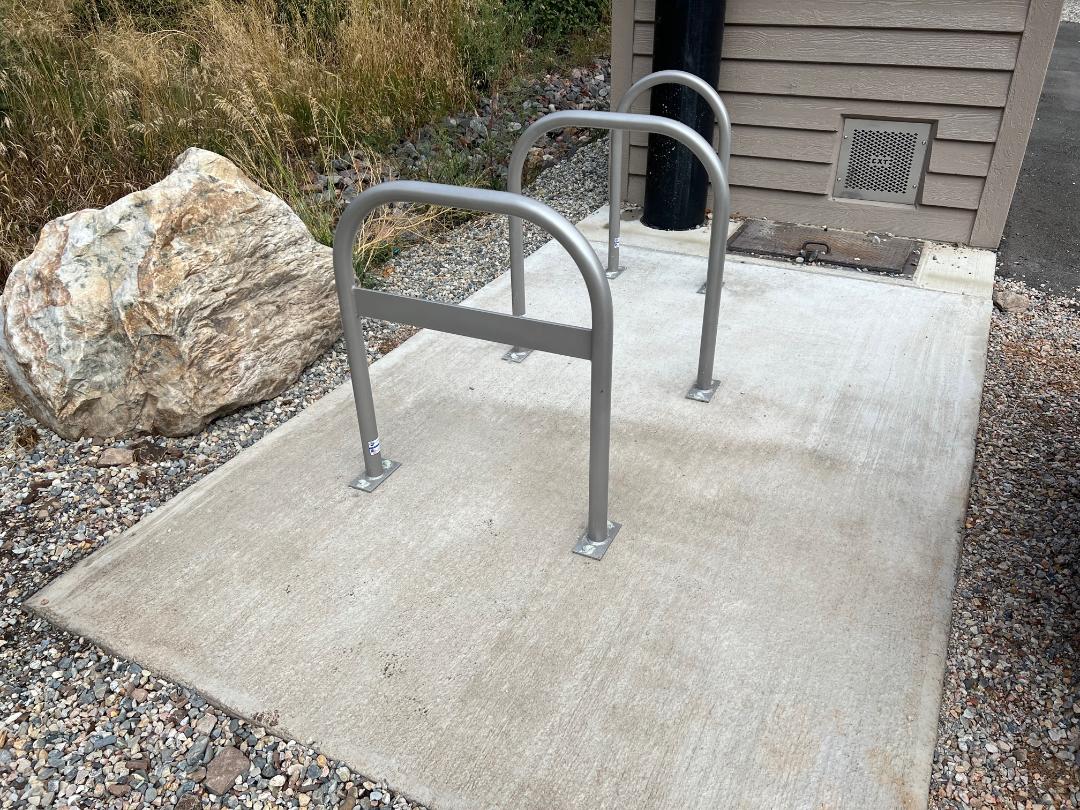
Leveraging grant funds and community input, the United States Forest Service has installed bike racks at the recently refurbished Rattlesnake Gulch Trailhead in Millcreek Canyon. Three bike racks have been placed there.The project was made possible by a 2022 short-term projects grant from the Central Wasatch Commission. Keith Alleman, an area resident, submitted the project idea and got CWC’s approval. “I am a trail runner and frequently bike to a trailhead and lock up to run. I’d always made do with locking to a street sign or post when running in Millcreek Canyon, but felt the absence of actual dedicated bike racks,” he said.
Bike racks installed in Utah’s Millcreek Canyon. Photo by Keith Alleman
The USFS Project Manager said that they intend to observe how heavily the racks are used, in order to help them prioritize placement of bicycle parking or other amenities at other canyon trailheads, particularly as trailheads undergo any substantial maintenance or upgrades. Alleman noted that he envisioned people using buses to reach the 3900S park and ride, biking from there to Rattlesnake, and then commencing their hike or run from there, leaving the car at home. And he added, “even if the racks don’t get heavy use, I think they are an important visual reminder of the values we should be, well, valuing as canyon users, such as active transportation and getting away from individual auto commutes. They serve as a psychological nudge.”
The CWC’s grants are competitive grants issued annually to further CWC’s goals via “projects that implement transportation and transit solutions, protect the ecosystems that originate in the Central Wasatch, steward recreational access, and sustain the economic viability of the Cottonwood Canyons.” For more information see https://cwc.utah.gov/projects.
Alleman said that for next year he’s eyeing a bike rack for West Grandeur Trailhead, “for people that want a warmup before the torture of a Fun Run.”
By Charles Pekow — Overlay a city street map and a cycling infrastructure map and you’ve got a tool to determine the need for more bike lanes. Researchers tried it in Paris and say the method can be used in other cities. “The proposed method can be applied with commonly available data, has clear outcomes, is reproducible, and can be applied to different case study areas,” concludes Where to Improve Cycling Infrastructure? Assessing Bicycle Suitability and Bikeability with Open Data in the City of Paris done by the University of Zurich (https://www.sciencedirect.com/science/article/pii/S2590198222001099).
The study considered factors such as speed limits to determine suitability for cyclists. The study alsos acknowledged that it didn’t give adequate consideration to other factors such as intersections. They also note that politics, laws, and physical constraints get in the way of developing cycling infrastructure. The authors plan future research, such as how bikeshare is affecting use of existing infrastructure.
Defending IRONMAN 70.3 World Champions Gustav Iden (NOR) and Lucy Charles-Barclay (GBR) headline the pro start list just weeks after IRONMAN World Championship title and second-place finish, respectively.
Challengers include Taylor Knibb (USA) and Sam Long (USA), 2021 IRONMAN World Champion Kristian Blummenfelt (NOR) and 2020 Olympic Gold Medalist Flora Duffy (BER)
Intermountain Healthcare IRONMAN 70.3 World Championship presented by Utah Sports Commission set to take place in St. George, Utah on Oct. 28 and 29, 2022
SAINT GEORGE, Utah / TAMPA, Florida (October 20, 2022) – A strong field of professional triathletes from around the globe will converge in St. George, Utah for the late season Intermountain Healthcare IRONMAN 70.3 World Championship presented by Utah Sports Commission with women’s professional race on Friday, Oct. 28 and men’s professional race on Saturday, Oct. 29, 2022. The professional triathletes that will be starting the event will be vying for a share of the $350,000 USD prize purse and the title of IRONMAN 70.3 World Champion. In addition to the professional field, over 6,000 age-group athletes are registered to compete in the Land of Endurance as they look to be crowned world champion in their respective age-group divisions. Live coverage of both race days of the IRONMAN 70.3 World Championship will air on Outside TV.
“With the caliber of athletes slated to race and the technical nature of the course, this will be a world championship title that is truly anyone’s for the taking,” said Andrew Messick, President & Chief Executive Officer for The IRONMAN Group. “We look forward to experiencing the action twice, first through the women’s race on Friday and then with the men’s race on Saturday, both of which will feature the stunning backdrop that is Southwest Utah.”
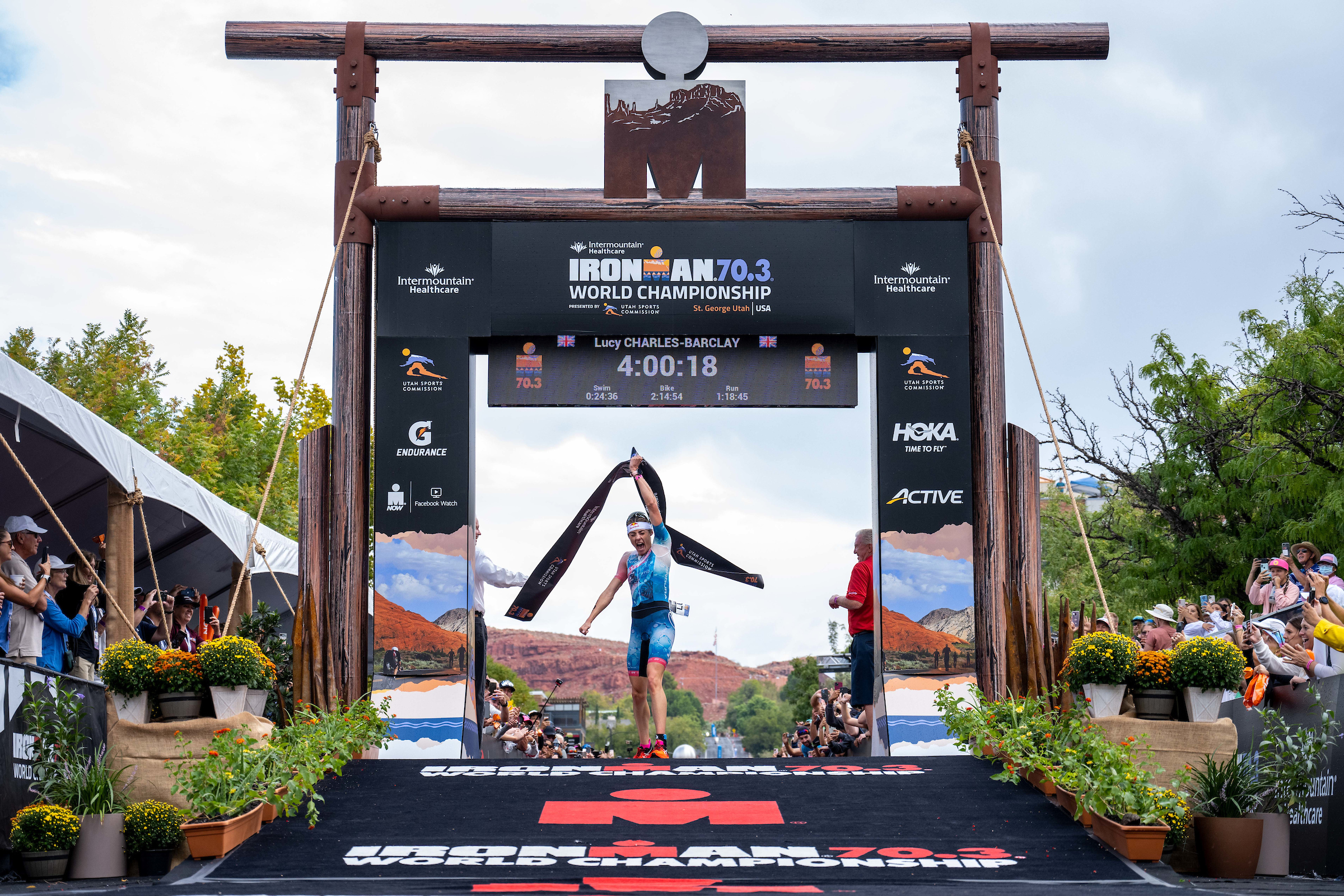
ST. GEORGE, UTAH – 18 SEPTEMBER: Lucy Charles-Barclay crossing the finish line during the IRONMAN 70.3 World Championships on September 18, 2021 in St. George, Utah. (Photo by Donald Miralle for IRONMAN)
Professional Women’s Field
The Women’s field will take center stage on Friday, Oct. 28, in St. George, Utah, Washington County, and the surrounding areas as they look to close out the world championship racing in the month of October on a high note. Current IRONMAN 70.3 World Champion Lucy Charles-Barclay (GBR) looks to defend her crown following an impressive second-place performance at the 2022 VinFast IRONMAN World Championship just a couple weeks ago. Top American and Olympian Taylor Knibb will be one to watch as she burst onto the half-distance triathlon scene at the 2021 IRONMAN 70.3 World Championship triathlon with an impressive third-place finish. 2020 Summer Olympics Gold Medalist Flora Duffy from Bermuda will join a strong group of women as she looks to leave her mark on the IRONMAN 70.3 space after significant success in short course racing. A large contingent of strong contenders will be coming from Great Britain and includes 2016 IRONMAN 70.3 World Champion and 2019 IRONMAN 70.3 Word Championship runner up Holly Lawrence, 2017 IRONMAN 70.3 World Championship runner up Emma Pallant-Browne (GBR), 2021 IRONMAN World Championship fifth place finisher Ruth Astle (GBR), as well as Nikki Bartlett (GBR). Paula Findlay (CAN), Jackie Hering (USA), and many more will all join in the battle for a spot atop the podium.
A full list of professional women’s field listed below:
BIB
LAST
FIRST
COUNTRY REP
1
Charles-Barclay
Lucy
GBR
2
Knibb
Taylor
USA
4
Pallant-Browne
Emma
GBR
6
Hering
Jackie
USA
7
Lawrence
Holly
GBR
8
Bartlett
Nikki
GBR
9
Reischmann
Anne
DEU
10
Duffy
Flora
BMU
14
Findlay
Paula
CAN
16
Astle
Ruth
GBR
17
Jewett
Tamara
CAN
19
Salthouse
Ellie
AUS
21
Dant
Lydia
GBR
22
Simmonds
Imogen
CHE
23
Lewis
Danielle
USA
24
Wilms
Lotte
NLD
25
Riveros
Barbara
CHL
26
Genet
Manon
FRA
27
Lee
India
GBR
28
Pierre
Marjolaine
FRA
29
Thek
Grace
AUS
30
Smith
Lesley
USA
31
Jedrzejewska
Aleksandra
POL
33
Fillnow
Kelly
USA
34
Bailly
Alexia
FRA
35
Clavel
Charlene
FRA
36
Van Heerden
Natia
ZAF
37
Duke
Dimity-Lee
AUS
38
Guerard
Justine
FRA
39
Cymerman
Amy
USA
40
Catano
Sonja
USA
42
Brauer
Ali
USA
43
Priarone
Giorgia
ITA
44
Diederiks
Diede
NLD
45
Alexander
Grace
USA
46
Kleiser
Daniela
DEU
48
Krüger
Katharina
DEU
49
Bishop
Sarah
USA
50
Palacio
Romina
ARG
52
Iemmolo
Julie
FRA
53
Mitchell
Olivia
GBR
54
Sawyer
Mariella
ZAF
55
Du Luarte
Eloise
FRA
56
Bachelder St Pierre
Pamela-Ann
CAN
57
Demestichas
Stephanie
AUS
58
Kotfica
Paulina
POL
59
Alvarez
Palmira
USA
61
Lucas
Lottie
ARE
63
Olson
Rachel
USA
64
Pohjalainen
Tiina
FIN
65
Sanjana
Frankie
GBR
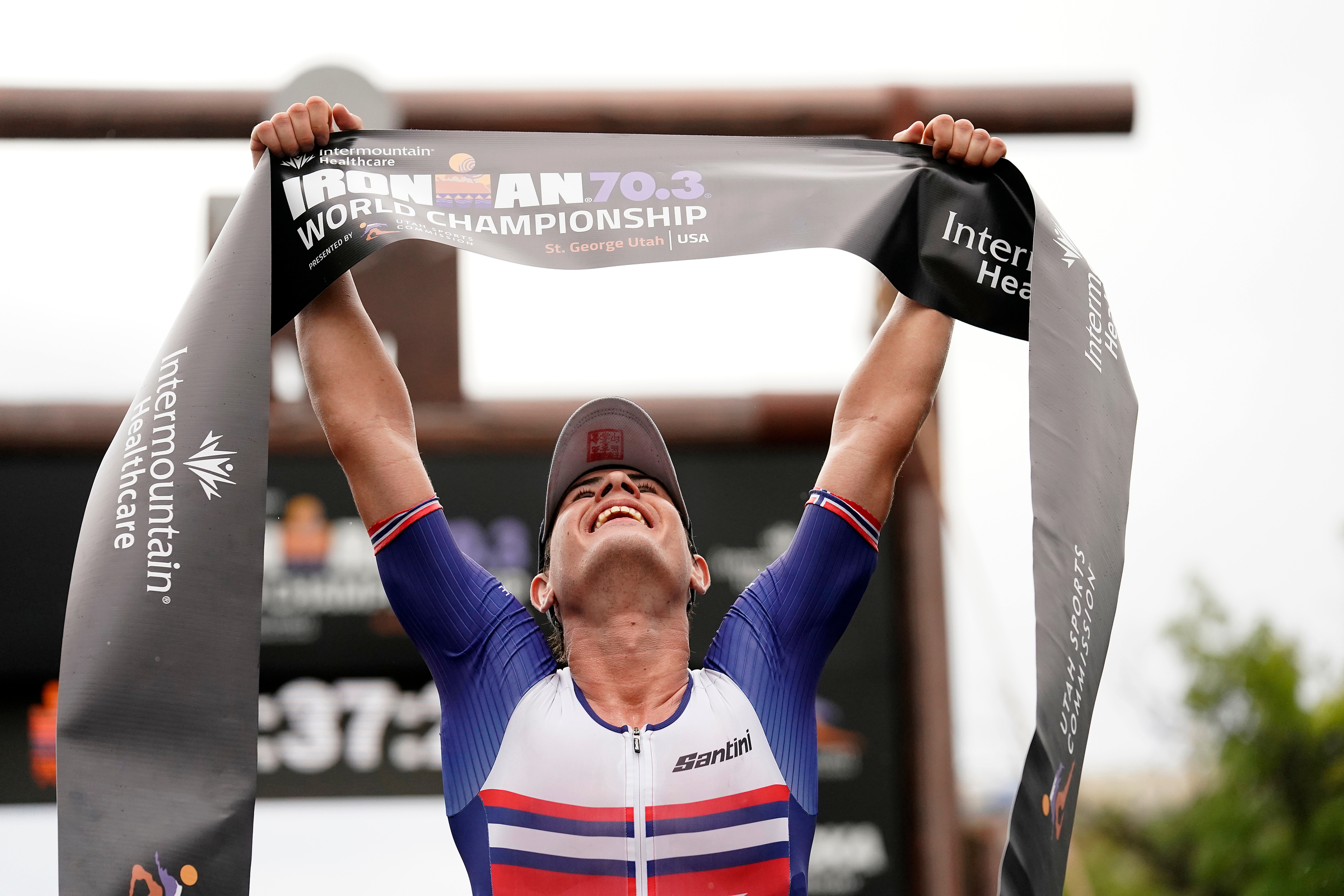
ST GEORGE, UTAH – SEPTEMBER 18: Gustav Iden of Norway finishes first in the Men’s Pro portion during the IRONMAN 70.3 World Championship on September 18, 2021 in St George, Utah. (Photo by Patrick McDermott/Getty Images for IRONMAN)
Professional Men’s Field
The professional men will take on the 2022 IRONMAN 70.3 World Championship on Saturday, Oct. 29. The field is led by Norway’s Gustav Iden and Kristian Blummenfelt as the heavy favorites. Iden heads to St. George after being crowned the 2022 VinFast IRONMAN World Champion in Kailua-Kona, Hawai`i just weeks earlier and the defending IRONMAN 70.3 World Champion. Blummenfelt returns to St. George after earning the 2021 IRONMAN World Champion title this past May. American’s Sam Long and Ben Kanute will look to put together a strong race and capture their first world championship crown. Denmark’s Miki Taagholt and Magnus Ditlev will be a duo of athletes that could be in serious consideration for the title. Additional global contenders will come from Jackson Laundry (CAN) and Eric Lagerstrom (USA), who enters as a dark horse coming in riding some momentum after an impressive win at IRONMAN 70.3 Santa Cruz, along with many more talented professional male triathletes hitting their stride.
A full list of professional men’s field listed below:
BIB
LAST
FIRST
COUNTRY REP
1
Iden
Gustav
NOR
2
Long
Sam
USA
4
Taagholt
Miki
DNK
5
Laundry
Jackson
CAN
6
Kanute
Ben
USA
7
Lagerstrom
Eric
USA
8
Ditlev
Magnus
DNK
10
Azevedo
Filipe
PRT
11
Blummenfelt
Kristian
NOR
15
Von Berg
Rudy
USA
16
Hanson
Matthew
USA
18
Chevrot
Denis
FRA
19
Funk
Frederic
DEU
21
West
Jason
USA
23
Smith
Kyle
NZL
24
Mignon
Clement
FRA
28
Royle
Aaron
AUS
29
Bendix Madsen
Thor
DNK
31
Noodt
Mika
DEU
33
Keulen
Youri
NLD
34
Petersen
Mathias
DNK
35
Stratmann
Jan
DEU
36
Foley
Trevor
USA
37
Mann
Nicolas
DEU
38
Magnien
Dylan
FRA
39
Zepuntke
Ruben
DEU
40
Costes
Antony
FRA
41
McMahon
Brent
CAN
42
Ceccarelli
Mattia
ITA
43
Toldi
Fernando
BRA
44
Viain
Simon
FRA
45
Free
Nicholas
AUS
46
Stojanović
Ognjen
SRB
47
Montraveta Moya
Jordi
ESP
48
Ulloa
Martin
CHL
49
Teagle
James
GBR
51
Chase
Nicholas
USA
52
Jarrige
Yvan
FRA
53
Baelde
Sybren
BEL
54
Steenberg
Scott
DNK
55
Horseau
Arthur
FRA
56
Reuter
Fabian
DEU
57
Dubrick
Marc
USA
58
Rodriguez Hernandez
Tomas Andres
MEX
59
Sosinski
Jack
AUS
60
Trewhela
Vicente
CHL
61
Saez
Nicolas
CHL
63
Stornes
Casper
NOR
64
de Keyser
Christophe
BEL
The 2022 IRONMAN 70.3 World Championship will kick off with a 1.2-mile (1.9km) ROKA Swim Course, which takes place in Sand Hollow Reservoir located in Sand Hollow State Park in Hurricane, Utah. A challenging 56-mile (91.3km) FULGAZ Bike Course follows and will lead athletes through stunning desert landscapes with 3,201 feet (1003 meters) of elevation gain and an unforgettable climb into Snow Canyon State Park and surrounding Washington County. The 13.1-mile (21.2km) HOKA Run Course will take athletes on two loops through the stunning Red Hills Parkway and wind through historic downtown St. George where the finish line is located.
The striking Southwestern community of St. George has been a host venue for IRONMAN races since 2010 and will celebrate a large contingent of athletes in hosting their third world championship triathlon in the last 13 months. St. George’s breathtaking scenery and views of the surrounding red rock canyons have made the community an ideal destination for athletes for years. The city’s walkable downtown area features great local fare and boutique shopping while providing an unmistakable backdrop. With breathtaking Southwest America scenery, downtown St. George also delivers athlete support and a finish line like few others are able.
By Joe Kurmaskie (Excerpt from A Guide To Falling Down In Public) —
“Somewhere in Africa the elephants have a secret grave where they go to lie down, unburden their wrinkled gray bodies, and soar away, light spirits at the end.” —Robert McCammon, Boy’s Life
The elephants seemed more bemused than riled up by our presence on their trails. the giraffes simply turned their necks in slow motion to take a second look. the warthogs, though, they scared like quail flushed from hiding, and every time three or four darted among the bikes in our pack, the guide reminded us that if one rider went down, the rest of us had to push on—bush rules.
Logical. Maybe necessary. But still a little more harsh than one might have reasonably expected of a charity ride.
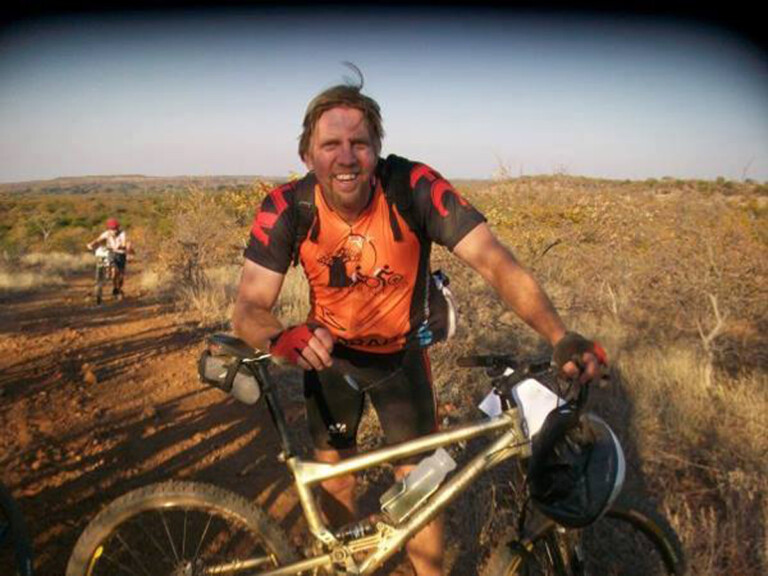
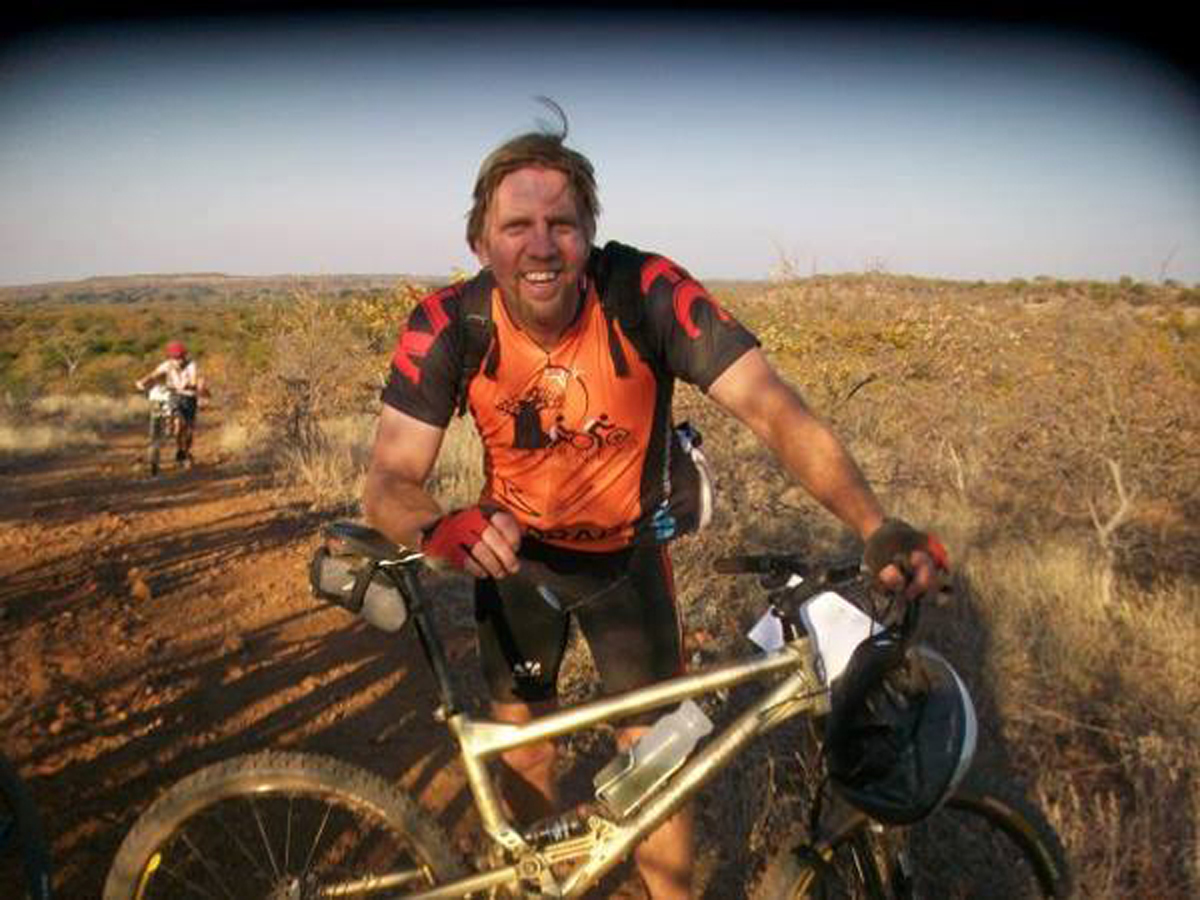
Joe Kurmaskie riding in Africa. Photo by Dave Welch
It was a little past first light on the first day of the Tour de Tuli Mapungubwe route, a weeklong affair through South Africa, Botswana, and Zimbabwe that raises money to send the region’s children to environmental education programs.
For 12,900 rand (about $1,840), riders get a private tent, all meals plus morning and afternoon snacks (during breaks that, hewing to the remnant traditions of British colonization, were called “tea”), logistical and mechanical support, and expert—if sometimes Darwinian—guides.
More than three hundred of us were there in 2009, split into groups of twenty or so. the most aggressive packs, like mine, had to cover up to 120 kilometers of trail a day on everything from singletrack to long stretches of deep sand to somewhat dry riverbeds. More casual riders could take slightly “easier,” shorter routes (about eighty kilometers on average).
The night before, as part of our send-off, Botswana’s minister of tourism had told us all a fable involving a rat, a snake, a cow, and an old farming couple. the story was an allegory meant to remind us of the connectedness of everything—cyclists, wild game, even Robert Mugabe, the erratic Zimbabwean dictator whose country our trip would enter and exit several times.
Officially, we had permission to cross the border. In reality, official decrees don’t carry much weight here—and the worst that might happen was beyond anyone’s guess.
Bush rules.
Anyway, I was just hoping for enough connectivity to keep me attached to my group. the crew of stiff-lipped hammerheads I’d been assigned to was led by a man captaining a full-suspension tandem mountain bike in a way that let you know he was muscling over the sand not despite his stoker wife but because with her on the back he could enjoy some extra burden.
His fixed gaze was a blink or two shy of madness, and he drove us onward until we overtook all but the pack made of retired racers from Europe and South Africa’s national cricket champion, who smiled easy but rode harder than anything else moving through the thick sand.
We managed to lose sight of him and the pros on a descent. we accomplished this by keeping our heads down and our cranks blurring all the way past the course marker—a pile of weathered rocks with a faint chalk arrow drawn below it.
“Take a few ticks off the clock, then we’re back at it,” our leader said by way of announcing a break once we were back on course. It was not yet 8 a.m. I’d choked down half a biscuit and just successfully pleaded with my heart to drop to a rate of 120 beats per minute when the others started saddling up.
“This stretch,” barked our leader, “let’s really give it a go, lads.”
And with that, I drifted off the back until I found myself amid the cyclists who had dubbed themselves the Game viewing group. I wasn’t sure what I’d come on this trip for—from the moment I’d heard about the tour, it had become one of those irresistible but ultimately inexplicable impulses cyclists are prone to—but I did know that I had not traveled eight time zones, to the cradle of civilization, to the very heart of the world, to ride time trials in sand, endure verbal abuse, and engage in a concentrated study of the rear wheel of a bicycle.
The Game viewers absorbed me into their herd like I was a lost family member.
“We asked that everyone start leisurely, then peter out from there,” explained my new guides, Sarah and Casper. this was a bit of hyperbole—given the demands of the mileage and terrain, there were no hapless cyclists on our trip—but the tone was spot-on.
The married couple (on separate bikes) had spent their whole lives in this territory. they cracked jokes and gave us nicknames as they pointed out hidden petroglyphs, ant mounds the size of Buicks, the ten-degree-cooler shade of shepherd trees, and the yellow, powdery bark of fever trees, to which the Dutch mistakenly attributed malaria.
In photos I’d seen of previous tours, bandanna-masked guides, wearing carbines slung across their shoulders like messenger bags, emerged Mad Max–style through the kicked-up dust of the elephant trails.
I asked Sarah where her guns were.
“I think a guide shot himself in the foot a few years ago,” she said. “So now we use elephant bangers, a can that sounds like gunshot when you pop it. Besides, the animals have thousands of miles of open country to get away. Guns are false security.”
She thought a little more, then added, “And they would only piss off Mugabe.”
Later in the ride I would witness signs of Mugabe’s irrationality that justified Sarah’s caution. As we rode through the most remote stretches of the bush—“the back of beyond,” it’s called—we repeatedly came upon skin-and-bone soldiers propped against shepherd trees.
The dictator had peppered our route with a military presence that could barely stay upright. the soldiers offered tentative waves, and we would stop. Out of empathy or pity, not threat, we gave them food. they had us hold their rusty weapons so they could balance plates on their pointy knees while we coached them not to eat too fast. tears ran down one man’s face as he swallowed.
I had to look away.
One day we spotted a clean-running watering hole, and without cajoling, taking a vote, or fielding objections, our entire group stripped down and plunged into the cool water. As we lounged, peloton after peloton rocketed by. Some riders shook their heads at our antics.
Others were going too fast to notice us at all.
Bobbing around in the deep pool, washing off layer upon layer of dust—the standard-issue bandannas did little more than keep the grit out of our mouths—we resembled a load of Burning Man refugees dropped in the middle of the bushveld.
Dave Bristow, a travel writer from South Africa, floated near me and said, “we’re still ahead of about a hundred riders.”
His math seemed suspect. Based on the number of groups that had gone by, I was fairly sure we were dead last. I ran the groups again in my head. I swore they’d all rolled through.
“How you figure, Dave?” I asked.
He pointed at a cairn one of our bikes had partially covered up and said, “Because the last four groups went the wrong way.”
Something about his shit-eating grin brought the same kind of clarity to this trip that I’d seen in the pool’s water before we jumped in. I leaned back, relaxed, and took in an approaching herd of zebra—a herd of zebra for crying out loud! I realized that I’d come on this ride to find a way to own some of my life’s moments again.
As a husband, parent, and working stiff, I haven’t fully possessed one of my days, let alone a week, since the end of the 1990s. Some part of it all had always belonged to someone else. this trip had called to me because it would allow me to stay out on trails from first light until the shine of a fat moon guided me, dirty, spent, overwhelmed, and blissful, into camp.
It also took place in a daunting, remarkable landscape that was
burning itself into my see-it-all brain. I was going to ride head-up when I wanted and flat-out if I had that urge. I was going to get on my bike the way I used to, with abandon, and, once on it, I was going to find and hold on to whatever passes as joy in a grown man.
But first I had to put my shorts back on and help clear the kudu antelope away from our bicycles.
the stop at Sentinel ranch was the first time I’d touched pristine, locked-in-place dino bones. Pure childhood heartbreak had arrived the long-ago day I’d learned that the two-story skeletons in museums—the beasts I grew up fearing and fantasizing into Land of the Lost scenarios—were actually plaster of paris.
We’d ridden long and hard to get here, pedaling out of lush riparian woodlands on the north bank of the Limpopo river, through blistering scrub savanna, up the water-carved creases of sandstone hills. Standing over this actual, fully intact dinosaur skeleton was like having a piece of my childhood returned to me on that windswept, red-rock vista. I found myself breathless in a way that would have been embarrassing had I not been able to blame it on the climb.
“My mother found this dinosaur,” Sarah told us. Her family had owned this land, formerly the family ranch, before Mugabe redrew all property and boundary lines. “It means a lot to us that we can show you guys these fossils.”
Some of it surely was exhaustion, but our group was subdued near to reverence. I posed for a photo I later titled “Bikes and Bones.” In it, I’m filthy and wired and despite showing the first signs of bone-deep fatigue around the edges, I’m shockingly alive. No one had seen that guy in years, including me.
By the time we passed the big herd of sixty to seventy elephants, they had put up with hundreds of cyclists pedaling by their feeding grounds—enough apparently, to turn their customary bemusement into annoyance. Suddenly, the warthogs weren’t the most dangerous beasts on the trail. As our group rolled by, a twelve-thousand-pounder began waving its ears repeatedly and throwing sand in all directions. I was one of the final riders trying to slip past.
It charged.
Elephants can go from zero to twenty-five miles an hour in short order. A documentary team filming our ride caught the elephant’s shocking first burst of speed on video, and its deafening roar, and its pause as it seemed to sink down on itself, stockpiling kinetic dynamite for what I felt certain would be a closing stomp of death.
(Bicyclist versus elephant video link: www.youtube.com/watch?v=jnUwSSe69YI)
What the video fails to capture is my high pitched schoolgirl screams of terror.
the oft-cited phenomenon of everything slowing down during a life-threatening situation didn’t play out for me. I was a blur of thoughtless primal fear until I was well beyond the herd. then I was conscious only that I was breathing, though in ragged gasps.
Later, the locals would tell me the elephant’s behavior was a mock charge, that if the animal had really meant business it would have tucked in its trunk, so as not to damage the vital equipment, and would have led with its tusks. with not a little amusement, they reminded me that the hyenas that had trapped me inside a port-a-potty at camp the previous evening were actually a more formidable threat.
Driven to intestinal dementia that fateful evening by an adverse reaction to malaria tablets, I’d mistaken the hyena’s laughter for cruel-minded cyclists around camp making fun of my plight.
When I’d finally come out of the box for a breather, a circle of a dozen eyes glowing in the darkness sent me back into the stench, where I’d managed a fitful, seated sleep against the port-a-potty wall, a little scared but with my faith restored in my fellow man.
The charge might have been mock. My shrill scream was real. So was my joy at being alive.
Following the trails along the Limpopo river and its tributaries, we weaved repeatedly between Botswana and Zimbabwe, sometimes a couple of times a day. One stands out in my mind—one unlike any I’d experienced in all my years of bike travel on five continents. A card table had been jammed into loose sand on the bank of the river.
A matronly woman sat at the table, which held an ink pad and a basket of pomegranates. I approached, and she stamped my pass- port. I looked around. the trail ended here, then picked up on the other side of the Limpopo. the woman offered me neither a pomegranate nor any information or advice on the logistics of crossing the border. I shrugged, rolled my bike over to what I hoped would be a shallow section of the river, stuck my shoulder through the frame, and waded across.
Later, with the sun hanging just above high sandstone cliffs, we gathered around what Sarah described as one of the largest baobab trees in Zimbabwe.
She told us that while baobabs may look tough, they’re papery throughout—a weakness, but one that expands the tree’s place in the ecosystem, as its soft innards are easily carved out to provide homes for wildlife during and after its life cycle. I started to feel philosophical, but opted instead, as I often do, for the physical. I peeled a bit of paper off the tree, smelled the exposed wood, studied the patterns made from jutting branches that resembled Popeye’s bulging biceps and forearms.
At the guides’ suggestion, we all gathered, clasped hands, and formed a circle around the tree to gauge its circumference. there was a moment of silence.
Then Dave, the other travel writer, said what everyone was thinking. “If anyone breaks into a verse of ‘the Lion Sleeps tonight,’ we will be forced to lash you to the tree and leave you for the jackals.”
I didn’t know which thrilled me more—the good company and easy camaraderie of these cyclists, or the idea that there are still places in this world where being eaten by jackals is a going concern.
We were less than fifteen kilometers from the day’s host village, a collection of shanties along a dry riverbed where our food and tents awaited. Most of that distance was a short series of rollers backlit by the sunset playing off red rocks.
We raced one another to the river, in light that made deciding what was shadow and what was boulder a fast-moving art form, little acts of faith and bits of skill woven together, the threads that form the tapestry of every good bike ride.
Somehow we made it down in one piece. Pushing our bikes across wet sand in the half-light of dusk, we had just enough in our legs to limp into camp. that was when we heard voices. Distant at first, then gathering and growing louder—joined in song. then we saw them. The entire village had gathered along the parade route for the finishers, and had remained to cheer us, the last riders, in.
The villagers crowded the dusty path, children waving sticks, women in full dress chanting and singing and fanning themselves, men sporting old Izod shirts and nodding and humming soothing bass lines for each song. Chickens darted by, chased by toddlers. Clusters of teenage boys packed on donkey carts stared at each bike and each rider.
Our group pulled over to hand out hard candy, coins, and water bottles. Brown-bag luminarias had been lit and placed along the path to guide us the final yards. the words of the lyrical Zimbabwe dialect formed a kind of music I’d never heard before. It swelled and surrounded us. It cradled the broken parts of me.
They were singing, singing, and we were listening.
Joe Kurmaskie is a journalist, syndicated columnist, and contributor to numerous magazines including Outside, Bicycling Magazine, Men’s Journal and Parenting. He’s a bike advocate, activist, found of Cadence Press, and a Random House author of seven books including Metal Cowboy, Mud, Sweat and Gears and A Guide To Falling Down In Public.
By Erica Tingey — Mountain biking can take us to some of the most beautiful places on the planet, including alpine lakes, lush forests, and scenic deserts. While mountain biking is an inherently risky sport (especially if you venture into the backcountry), there are many ways to significantly lower your chances of serious injuries, including knowing wilderness first-aid. The best tools you can bring when you hit the dirt are education and preparation. I recommend carrying a few items to help treat minor scrape-ups, decrease pain, and/or stabilize more serious injuries until you can get to a hospital or help arrives.
Mountain Bike First-aid Kit Components
The contents of your first-aid kit will depend on the duration and technical difficulty of your ride. If you plan to be in remote backcountry areas for an extended period, you’ll likely want to bring more than you would for a quick, heavily trafficked trail. The following are items to consider:
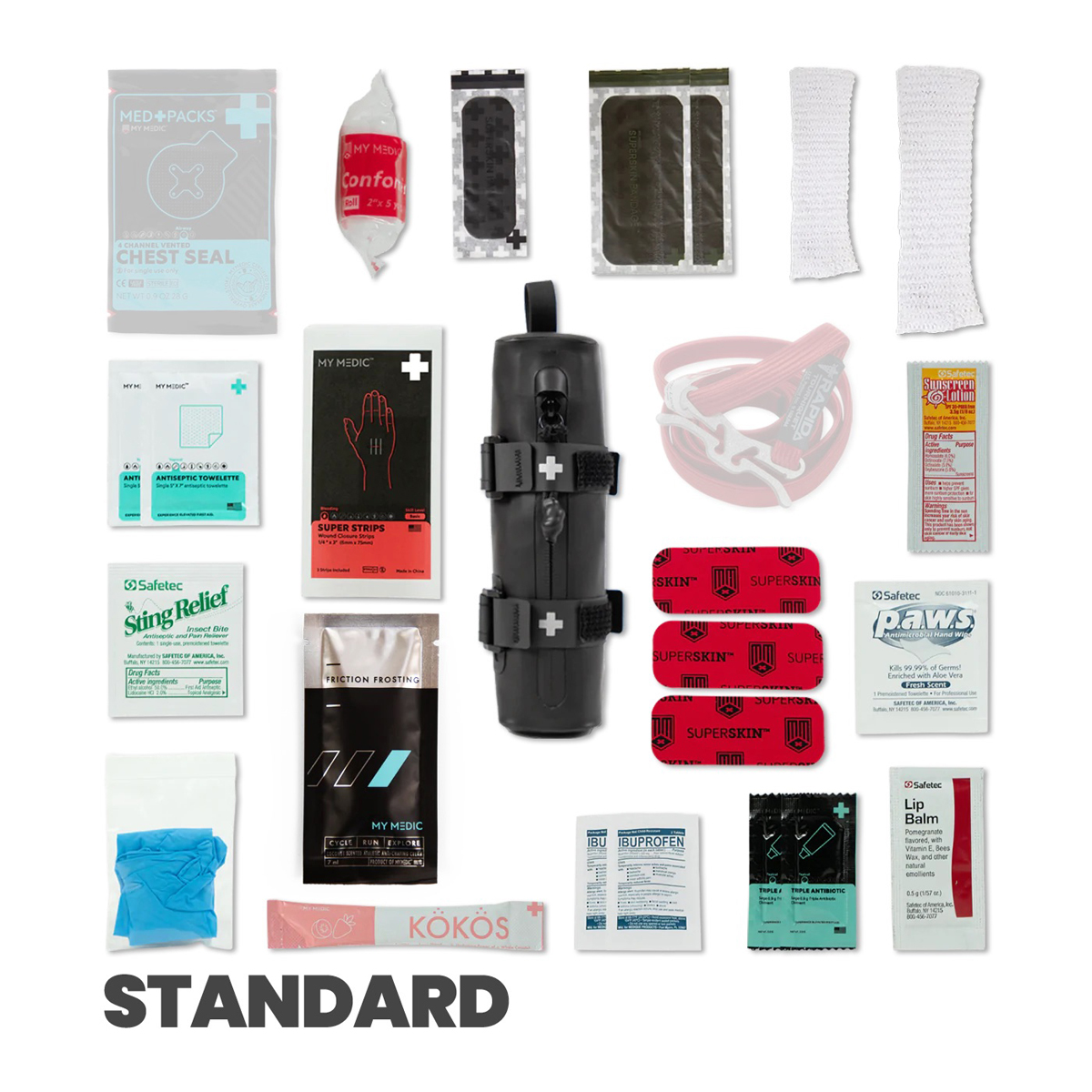
Wound-care items such as bandages of varying sizes (including a few larger sizes), non-stick gauze, alcohol prep pads, and antibacterial ointment. Cleaning and covering wounds promptly can help prevent infections and wound exacerbation.
Topical and oral allergy treatments such as Benadryl
SAM splint (make sure to learn how to use one!) This is a compact, lightweight, highly versatile device designed for immobilizing bone and soft tissue injuries in emergency settings. It consists of strips of soft aluminum, with a polyethylene closed-cell foam coating.
Triangle bandages can be used to help with bleeding, as a sling, as a tourniquet, or to stabilize splints.
Elastic wraps can secure wound dressings or splints, as well as provide compression for sprains and strains.
Safety pins can help secure bandages or a torn backpack
Painkillers such as ibuprofen or acetaminophen can help manage sprains and lacerations
Medications such as insulin, inhalers, and EpiPens can be critical
Athletic tape or duct tape can help secure dressings, provide compression for strains, or cover blisters
Zip ties or gear straps can help secure splints or dressings, damaged gear, or assemble an emergency shelter
Scissors
Israeli bandages can help control heavy bleeding
Tourniquets (or Billy Bands) can help control arterial bleeding, but you must have proper training before using these.
A My Medic first aid kit for cycling. Photo courtesy MyMedic.com
There are many pre-assembled first-aid kits available; however, be familiar with their contents and tailor them to fit your needs.
Communication Devices
Some injuries will prevent you or a partner from finishing the ride. One of the most helpful items you can carry is a way to call for help. If you’re traveling to remote areas where you won’t have cell phone service, consider bringing a satellite communicator so that you can contact family or emergency services.
Take a course
First-aid kits are only as useful as their users. Anybody who spends time in the wilderness will benefit from a wilderness first aid course, better yet, get certified as a Wilderness First Responder. Taking these courses will help prepare you to deal with things like injuries, hypothermia, dehydration, altitude sickness, allergic reactions, sprains, and heatstroke until you or your partner can get medical help.
Prevention is the best medicine.
Before every ride, check your bike for safety issues. Make sure you bring adequate fuel and hydration, stretch, and warm-up. Gradually increase the mileage and technical difficulty of your rides. In-person coaching will help you master body stance, visualization techniques, and weight-shift timing that will best help mitigate risks when cornering, jumping, dropping, or tackling gnarly rock gardens. Remember to check weather reports and bring appropriate layers. Always wear a modern, mountain bike specific, well-fitting helmet!
From its inception in 2001, Red Bull Rampage has always been about pushing the boundaries of what is possible on two wheels. Over two decades on in 2022, that premise has not changed, with this year’s annual mountain bike spectacular set for Friday, October 21 in Virgin, Utah. Here is all you need to know:
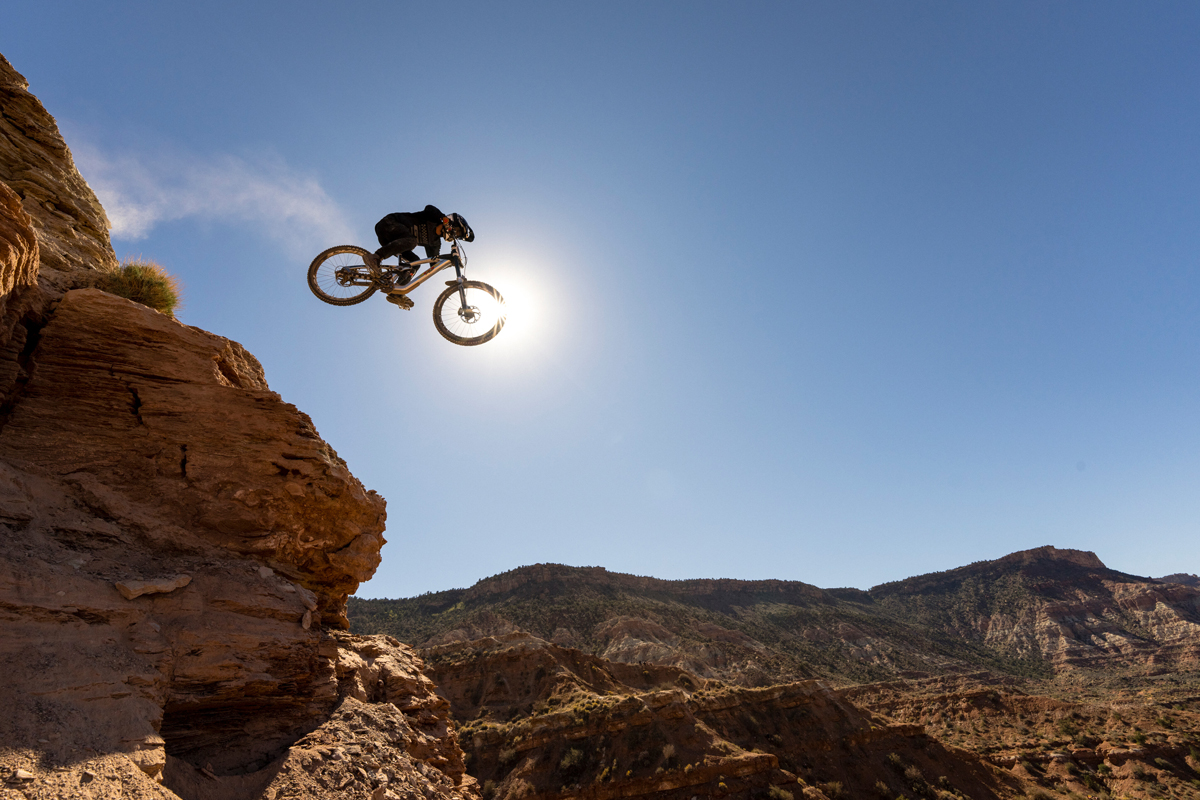
Tom Van Steenbergen rides his bike at Red Bull Rampage in Virgin, Utah, USA on 17 October, 2022. // Bartek Wolinski / Red Bull Content Pool // SI202210180128 // Usage for editorial use only //
This year’s event is open to just 18 riders from all around the world, all of whom have to be invited to qualify or take part in the competition. Each rider gets two runs each using whatever tricks they see fit and they are judged by a panel of their peers with the highest score winning.
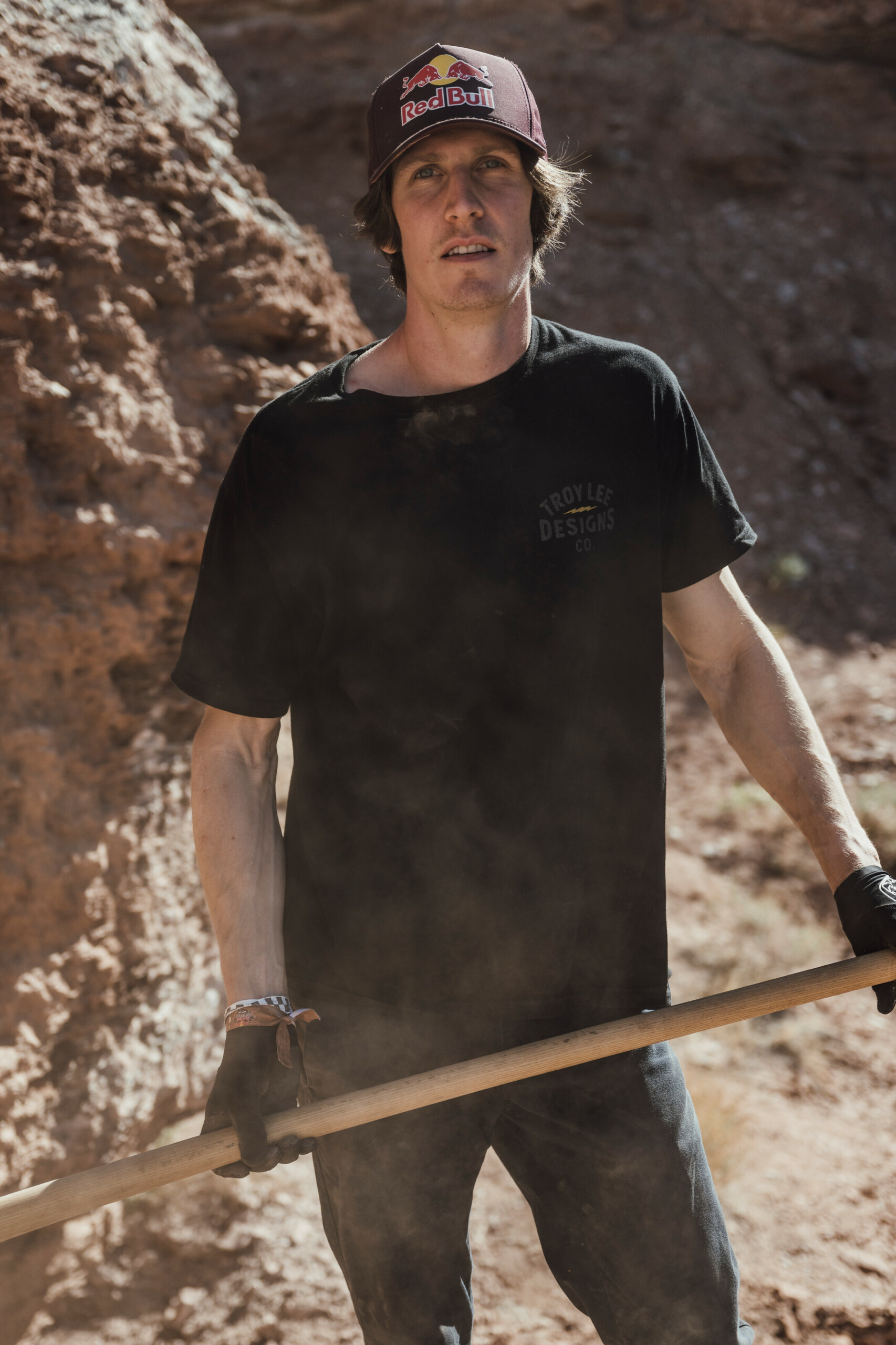
Brandon Semenuk poses for a portrait at Red Bull Rampage in Virgin, Utah, USA on 17 October, 2022. // Bartek Wolinski / Red Bull Content Pool // SI202210180127 // Usage for editorial use only //
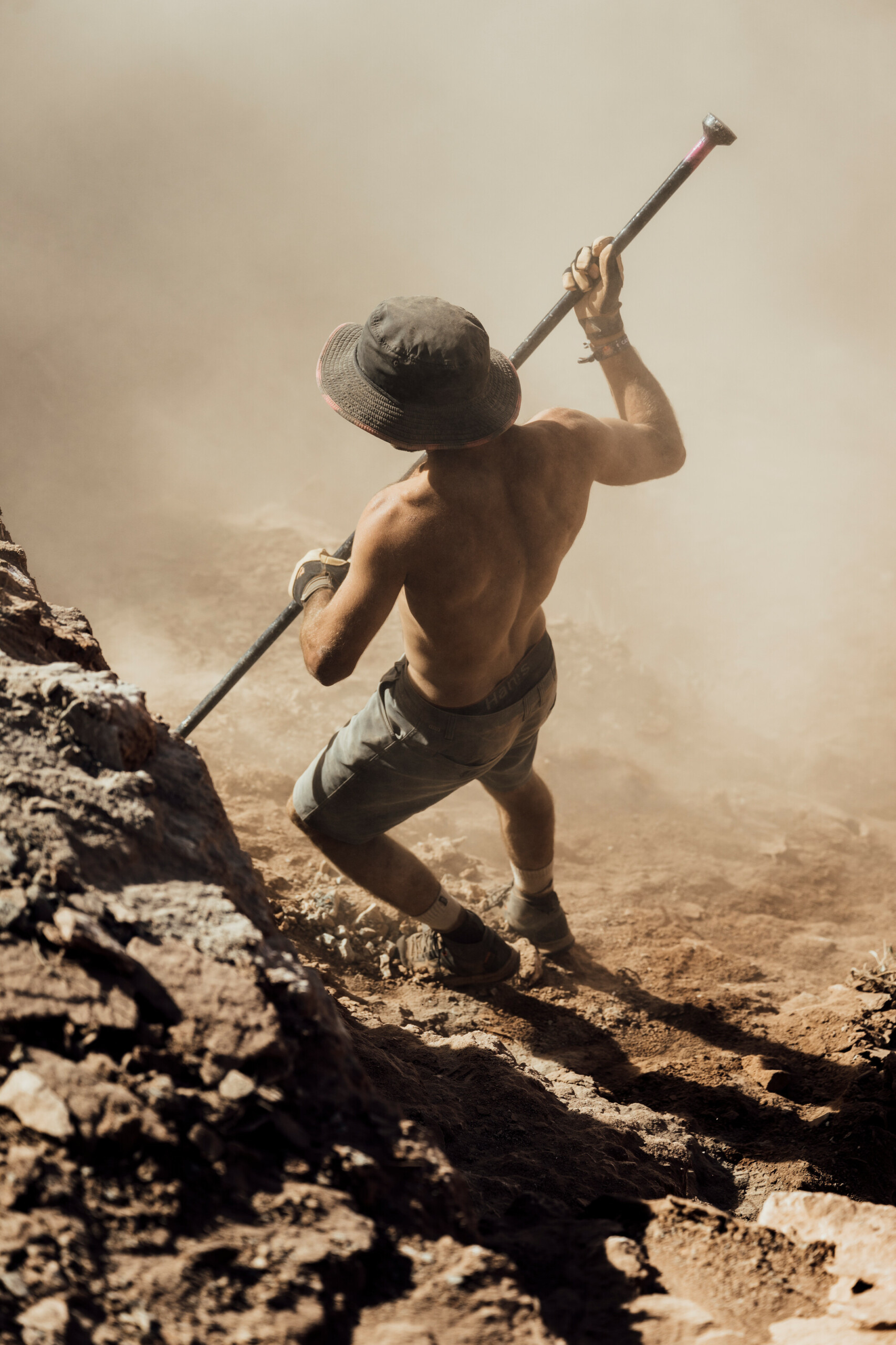
The course is effectively made by the riders. A designated start and finish line is marked out by organisers, and the competitors have four days and the use of two shovel-wielders each – but no power tools – to create a stunning and challenging course in between the two points.
The 2022 venue is located just outside of Virgin at the site of the 2008-2013 competition zone, which last saw riders on course nearly a decade ago. Four events were held at that location – 2008, 2010, 2012, and 2013 – and some of Rampage’s most iconic moments have gone down there.
Digger at Red Bull Rampage in Hurricane, Utah, USA on 12 October, 2022 // Bartek Wolinski / Red Bull Content Pool // SI202210150162 // Usage for editorial use only //
Last year saw Canadian Brandon Semenuk carve out a piece of Rampage history when he became the first four-time champion and he returns for a tilt at title number five up against three-time winner Kurt Sorge, double American champion Kyle Strait and big slopestyle rival Brett Rheeder.
The first event back in 2001 – set up off the back of the rise in freeriding – was won by another Canadian and freeride pioneer in Wade Simmons.
Strait still holds the record as the youngest ever winner, all the way back in 2004 as a 17-year-old. He even competed in the inaugural event in 2001 and became Rampage’s first multiple winner in 2013 with 2022 riders Spaniard Andreu Lacondeguy and American Cam Zink also previous winners.
Athletes who finished in the top 10 of the previous year’s event are pre-qualified and get automatic invites while the rest of the roster are wildcards, who are chosen by a committee of former Rampage competitors, pro athletes, judges, and industry experts.
The full 2022 line-up is Brett Rheeder (CAN), Ethan Nell (USA), Cam Zink (USA), Tom van Steenburgen (CAN), Szymon Godziek (POL), Dylan Stark (USA), William Robert (FRA), Reed Boggs (USA), Jaxson Riddle (USA), Thomas Genon (BEL), DJ Brandt (USA), Kurt Sorge (CAN), Kyle Strait (USA), Alex Volokhov (CAN), Brandon Semenuk (CAN), Andreu Lacondeguy (SPA, Carson Storch (USA) and Tyler McCaul (USA).
By John Summerson — Simply put, some places just contain more hills than others as California has some of the most advantageous terrain on earth for riding uphill on a bike. A long coastline is met by mountains along much of its length. The state also contains an elongated central valley which lies at a very low elevation and is surrounded on many fronts by steep ranges. A large population ensured that multiple roadways were built to access significant portions of its elevated topography. The result is that California contains the greatest concentration of difficult road bike climbs in the United States and by a large margin. In fact, there are nearly 150 category 1 or higher rated ascents within its border, more than quadruple any other state.
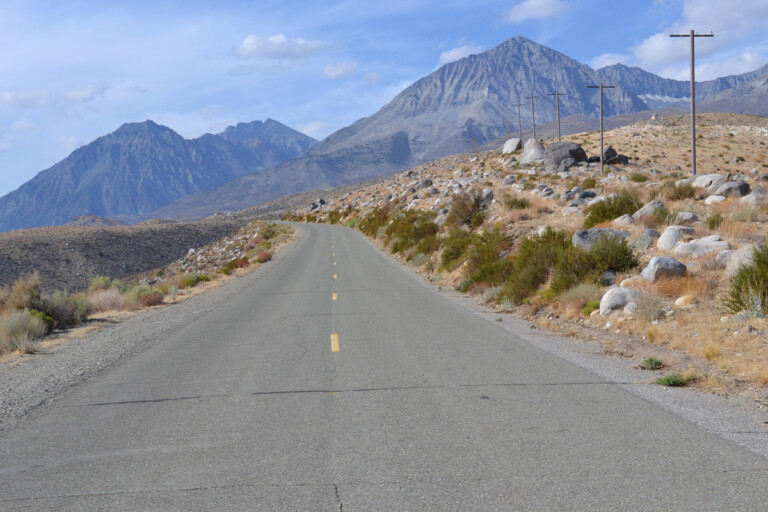
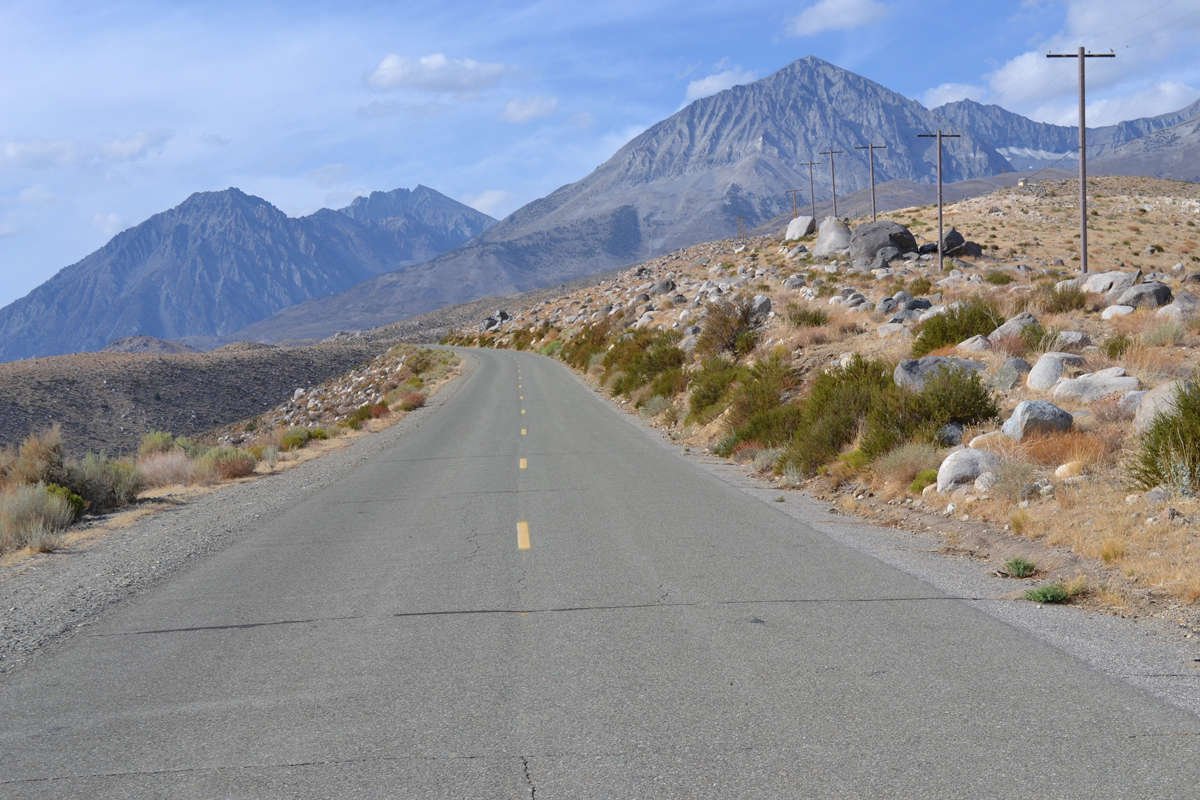
The climb of Glacier Lodge. Photo by John Summerson
For those looking for a particular challenge, most of the really big climbs in the Golden State are located on the eastern side of the Sierras. The region is home to some of the most difficult paved ascents in the U.S. One of these is Glacier Lodge Road situated in massive Owens Valley near the Nevada border. While not the most difficult in the area, at 9.8 miles in length and with an average grade of 7.2%, it is still a beyond category rated hill. To get to its start, at the junction of Route 395 and Crocker Street in the small town of Big Pine, head west on Crocker for 0.6 miles to begin by continuing west on what is now Glacier Lodge Road.
You initially head southwest, easy at first with views of big mountains in the distance. The road is narrow all the way up but there is usually little traffic on the route. The grade slowly gets a bit steeper but there are no surprises over the first several miles as you ride through fields of boulders and scrub brush. Use the mostly easy slope over this section to get warmed up. Soon you find yourself riding along a drainage. There are a few large pines in the creek bed which begin to give the climb an alpine feel.
Just before you reach the three-mile mark, the road swings to the right as it crosses Big Pine Creek. The turn is the beginning of a big S bend and steeper pedaling. Quickly you are riding over the most challenging segment on the hill. This has the effect of popping you up onto a somewhat bare ridgeline with some views back towards climb start. As you complete a left-hand switchback, the grade tics up a bit more and the mountains come back into view. You then ride on or near the top of the ridgeline for a while. Soon you are carving along, some distance above the creek below, the pedaling having eased but not by much. The next few miles continue as challenging climbing, steady but stout grade.
The pitch slowly eases the further you go, now headed due west. Just beyond mile 7, you reach the bottom of the drainage again and ride among pine trees, a bit of shade here or there if needed as you pass the boundary of the national forest. There are a few campgrounds along this section of the road so there is a bit more activity at times. Sharp peaks are really close now and the upper section of the ascent is one of the most spectacular in the U.S. Soon the grade eases further and the climb eventually dead ends at a small parking area for hikers at just under 8,000 feet of elevation. Although there are some cabins at the top, keep in mind the lodge is no longer there. It burned down some years ago although reportedly there are plans to rebuild. Now it is time to enjoy the descent but keep in mind the middle portion is one of the quickest around so watch your speed as needed.
By Charles Pekow — The way transportation planners judge bike safety may be using the wrong criteria. A data analytics firm suggests counting the number of bike miles ridden, instead of crashes per capita, which the National Highway Traffic Safety Administration (NHTSA) uses to rank states for bike safety.
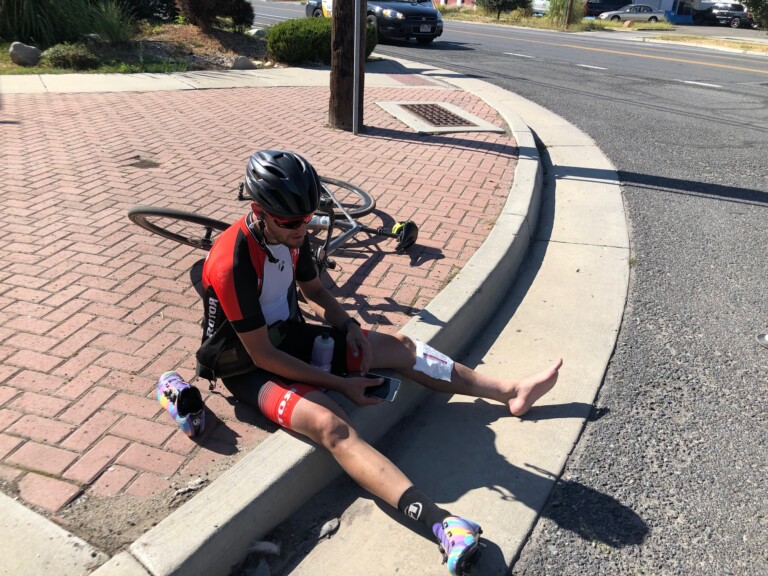
A cyclist just after being hit by a car driver. Photo by Dave Iltis
Streetlight Data’s new Special Report: Bike Safety Shift (https://learn.streetlightdata.com/bike-safety-shift-special-report) says that using this new criteria makes some states look safer by comparison than the federal calculations would indicate. (Note: Streetlight Data notes that comparisons may not be meaningful in the smallest states with the fewest crashes that didn’t include enough data to make valid comparisons.)
That said, Wyoming, the least populated state, came out best because no cyclist was killed in a car/bike collision during 2018 and 2109, the years studied. Under the new criteria, Utah comes out as the 5th safest state to ride. It finished 8th by NHTSA’s method. Under the old criteria, Colorado came out as the 8th riskiest state to bike. New Mexico came out as the 5th riskiest state under both systems.
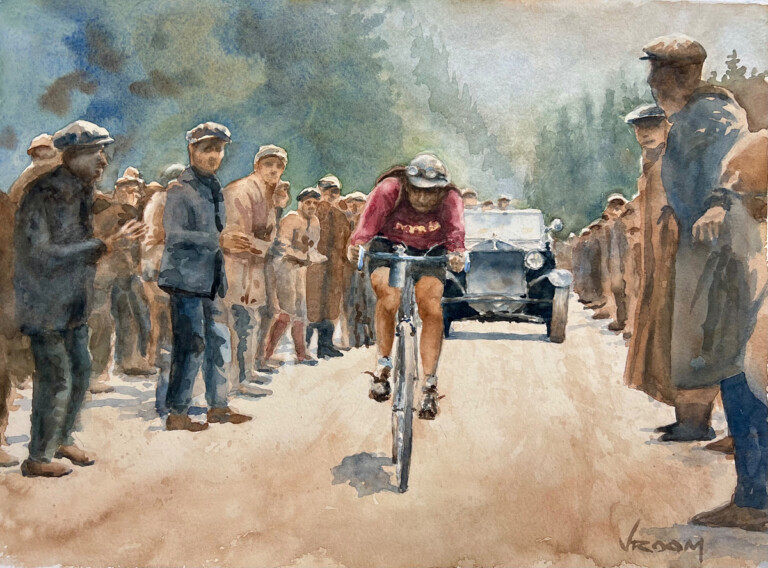
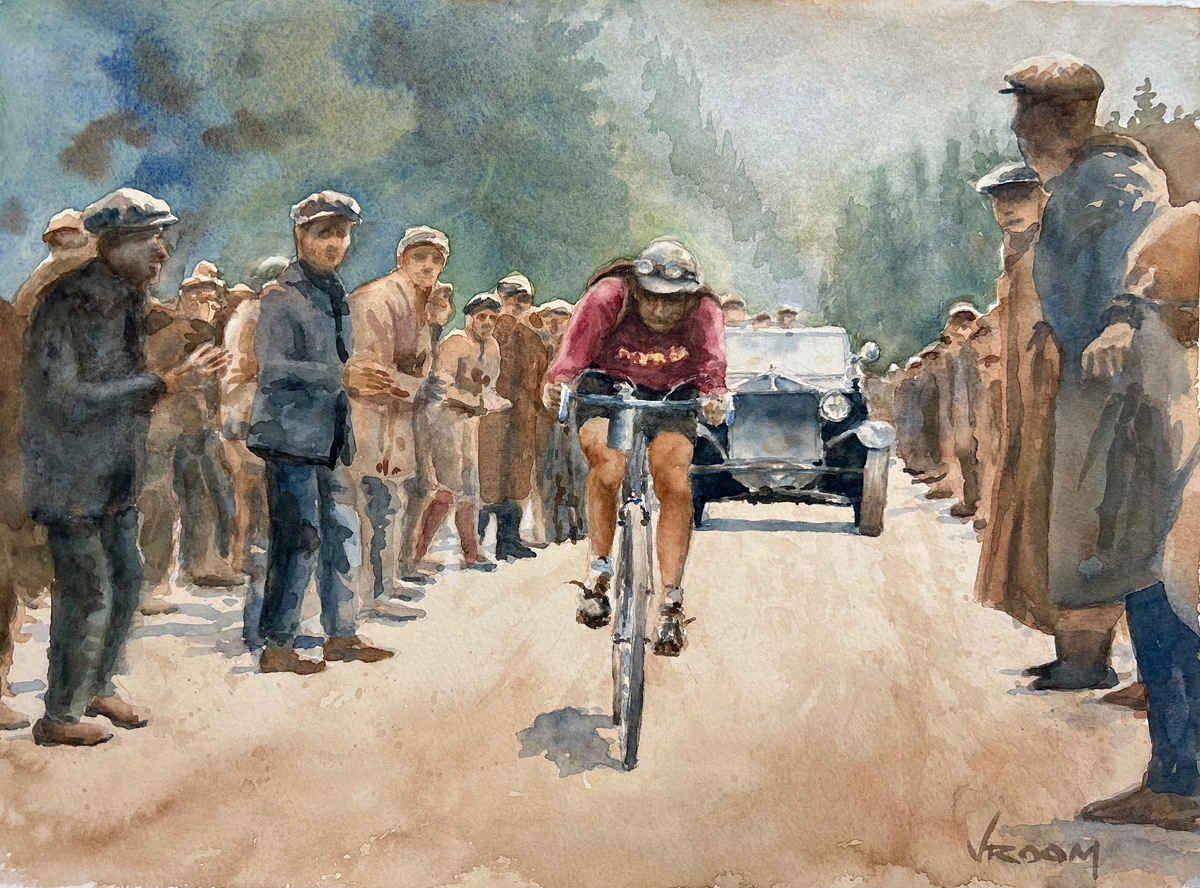
By Rich Vroom — Italy’s Ottavio Bottecchia is depicted here in the 1925 Tour de France. Bottechia won that year for his second consecutive triumph.
Title: Ottavio Bottecchia – 1925 Tour de France. Medium: Watercolor on paper.
Title: Ottavio Bottecchia – 1925 Tour de France. Medium: Watercolor on paper. Italy’s Ottavio Bottecchia is depicted here in the 1925 Tour de France. Bottechia won that year for his second consecutive triumph.
Anthony Nocella: Could you tell me how you got into cycling and if any women supported you in the beginning?
Lindsey Stevenson: I grew up mountain biking, but my focus in high school was on running cross-country and track. I started getting overuse injuries when I was 16, and my Mom bought me my first road bike from one of her friends. It was an old-school Bianchi, and with some encouragement to ride from both of my parents, I quickly fell in love with the bike.
Lindsey Stevenson. Photo by Jordan Diamond/Ventum Racing
AN: Tell me a bit about your racing history, such as your podiums and other accomplishments, including the teams you have ridden and raced for.
LS: I dabbled in a few races as part of the Aggies Club team at Utah State. I had no idea what I was doing, and I got dropped in just about every race I entered. I made some good friends, picked up a few tips and tricks along the way, and kept coming back for more. For a couple years I entered some of the well-known bike events like Leadville 100, Crusher in the Tushar, and LOTOJA, but I was never really racing. It was only after I had been part of the winning team in the co-ed division at Rockwell Relay (now Kokopelli Relay) that I was approached by a fellow rider and asked why I didn’t race, because the women’s field was desperate for more participants.
I joined the local team Endurance 360, and raced as much as I could in 2017 and 2018. I won a handful of local races, upgraded to a Cat 3, then started making my way into bigger races as part of the Zone Five Racing Team. I have won LOTOJA in the Women’s P/1/2 field 3 times, my age group division twice at Crusher and the overall GC at Baker City Cycling Classic in 2018, along with most of the local races in Utah that year.
I took a year off of racing in 2019 to have a baby, and have since returned to racing with a focus on gravel as part of the ABUS Pro Gravel Team. This year I finished Unbound Gravel, though I hope to go back and get a better result next year. I took 4th in the Pro field at Crusher, and finished 3rd at Gravel Worlds.
AN: As a competitive cyclist can you tell me how your personal life or family life is shaped to support your racing and training?
LS: It is certainly a balancing act to make sure that I’m not neglecting my family because of cycling. I have a two-year-old son who I spend most of my days with, and I work as a massage therapist a few nights each week. My training happens in the early hours of the mornings or during his nap in the afternoons. My husband and I trade off hanging out with our little one on the weekends so we can both get our longer rides in. With so many of the bigger races being out of town I get a lot of help from my parents and my in-laws. They have been really great about watching my son so I can make it to all of the races.
AN: When training and racing with other women what are some key differences that you see as the best part of the women’s cycling culture?
LS: The number of women on bikes versus the number of men on bikes is significantly smaller, but we’re growing and I love it. I love the encouragement and the hype that I feel from riding and racing with other women. It is incredible to see it all come together for women who are new to the sport, and it is beautiful and humbling to race in such strong fields of women in the gravel races.
AN: In your opinion, how can the industry, race promoters, and bicycle shops be more inclusive to women and girls, besides hiring them as is much needed?
LS: There has been a big push for equity in women’s cycling in the past couple of years, and there are so many incredible women in the industry now to keep it moving in the right direction. I have found that women who are new to the sport are often intimidated to race, and don’t see the point in it if the race registration is extremely high. Discounts on race registration for women and chances to win a free entry to a big event can certainly serve as incentives to get more women racing!
AN: How can the general community support upcoming girls who want to be elite racing cyclists like you, and what do you have to say to young girls?
LS: Getting girls on bikes and helping them fall in love with the sport is where it starts. They need coaches, and some type of club or clinic to get them out riding and learning to race. Whether they are coached individually or as part of a team, having someone to ride with is so helpful when they’re first starting out. Cycling comes with highs and lows, but keep riding, keep training, and remember to keep it fun. Get it girls!
Anthony J. Nocella II, Ph.D. is a full-time professor at Salt Lake Community College, author of numerous books, trail runner, triathlete, competitive cyclist, and in his free time works at Hangar 15 Bicycles Millcreek.
Special Screening of New Snowboard Film “Fleeting TIME” Night Before the Competition
VIRGIN, Utah (October 7, 2022) – There’s just two weeks to go until viewers and spectators get to watch the first rider drop in at the 2022 Red Bull Rampage on Friday, October 21st. Celebrating the 16th edition of the premier big-mountain freeride competition, 18 of the best freeride athletes will travel from across the globe to Virgin, UT to take on some of the biggest and baddest tricks, lines, and drops the sport has ever seen.
Remy Morton riding at the Red Bull Rampage site in Utah, USA on June 09, 2022 // Justin Olsen / Red Bull Content Pool // SI202207290019 // Usage for editorial use only //
The 2022 venue is located just outside of Virgin, Utah at the site of the 2008-2013 competition zone, which last saw riders on course nearly a decade ago. Four events were held at that location including in 2008 when the event returned after a 4-year hiatus, 2010, 2012, and 2013. Some of Red Bull Rampage’s most iconic moments have gone down at this location. From Gee Atherton’s eye-popping quarter pipe transfer in 2010, to Cam Zink’s huge 360 off the Oakley Icon Sender in 2010 and gigantic stepdown backflip in 2013, to Kelly McGarry’s legendary backflip over the 72-foot road gap in 2013. And returning in 2022 will be the infamous canyon gap that McGarry flipped, but this time built out of dirt and with a more modern radius that will allow run-in before athletes take off over the 40-foot-deep canyon below. This year’s event is shaping up to add a list of entirely new moments to the Red Bull Rampage highlight reel.
In addition to all the on-hill action, a special screening of the brand new snowboard film two years in the making, Fleeting Time, will take place the night before the main event. Fleeting Time marks the directorial debut of professional snowboarder Ben Ferguson as he brings together an elite crew of the world’s best riders to chase storms and transitions. Ferguson brought together a crew of riders who collectively exemplify the best of snowboarding right now. Icons, innovators, and style masters like Mark McMorris, Travis Rice, Gabe Ferguson, Danny Davis, Red Gerard, Hailey Langland, Zoi Sadowski-Synnott, Mikkel Bang, Brock Crouch and many, many more. The screening will take place at 9pm MT at the O.C. Tanner Amphitheater in Springdale, Utah with names like Ferguson, Gerard, Langland, Crouch, etc. expected to attend in-person.
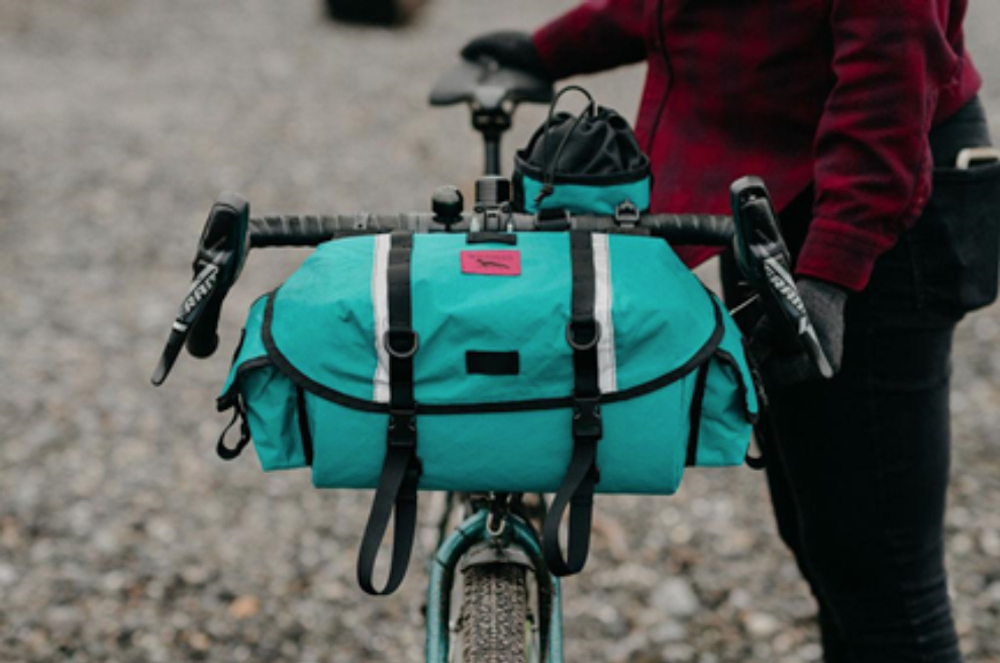
Hazard: The rubber straps that fasten the bicycle bag to the bicycle can break causing the bag to come loose and fall, posing crash hazard and injury hazards to the rider.
Remedy: Replace
Recall Date: October 06, 2022
Units: About 1,800
Consumer Contact
Swift Industries collect at 206-397-8638 from 8:30 a.m. to 4:30 p.m. PT Monday through Friday, email [email protected] or online at https://builtbyswift.com/voluntary-recall or go to www.builtbyswift.com and scroll down to the bottom of the page, under “Support” select “Voluntary Recall” for more information.
Recall Details
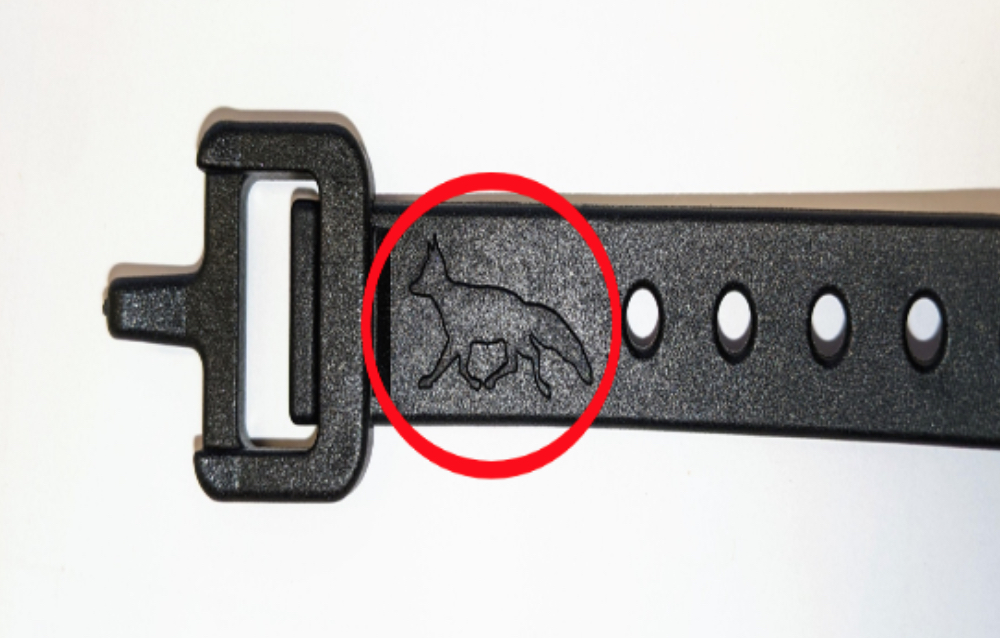
Description: This recall involves 9” black rubber Swift Straps sold with the Swift Zeitgeist Pack, Catalyst Pack, the Kestrel Handlebar Bag, the Bandito Bicycle Bag, and the Handlebar Foam Spacer Kits. The straps were also individually sold or supplied with the bags. The strap has a fox graphic stamped near the buckle.
Remedy: Consumers should immediately stop using the recalled Swift straps attached to bicycle bags, discard them and contact Swift Industries for a free replacement strap. Swift is contacting all known purchasers.
Incidents/Injuries: The firm has received 129 reports of the straps breaking. No injuries have been reported.
Sold At: Recreation Equipment Coop (REI) and EVO sporting goods stores, various bicycle shops and other stores nationwide and online at https://builtbyswift.com, www.rei.com, www.huckberry.com and www.evo.com from March 2022 through July 2022 for between $5 and $10 when sold individually, or between $100 and $200 when sold as part of a Swift bicycle bag.
Importer(s): Swift Industries Designs LLC, of Seattle, Washington
By Charles Pekow — Are American campaigns for better bicycling considering the needs of all potential riders? It looks like they’re not. A recent survey of state and local bicycle advocacy groups suggests that advocacy groups dominated by commuter, recreational, and even professional cyclists may not be considering the needs of large groups of people who can and would ride if given the right circumstances.
Academics from Pennsylvania State University published results of a survey in the June issue of the Journal of Transport & Health. In “Bicycle Advocacy Organizations and Coalitions’ Capacity for Equitable Programming: Findings from a National Survey,” authors fault bicycle advocates for not considering the needs of non-mainstream people of all sorts, or people who don’t look like or share the capabilities of the lobbyists themselves (https://www.sciencedirect.com/science/article/abs/pii/S2214140522000391#!)
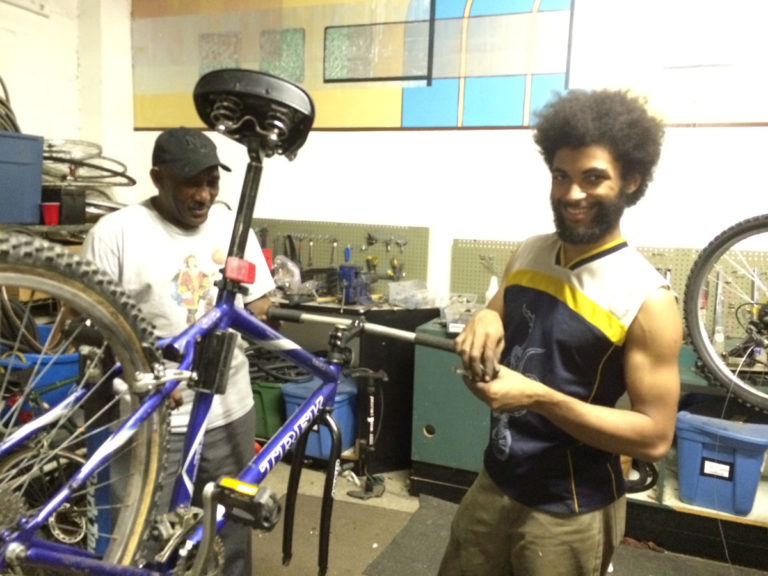
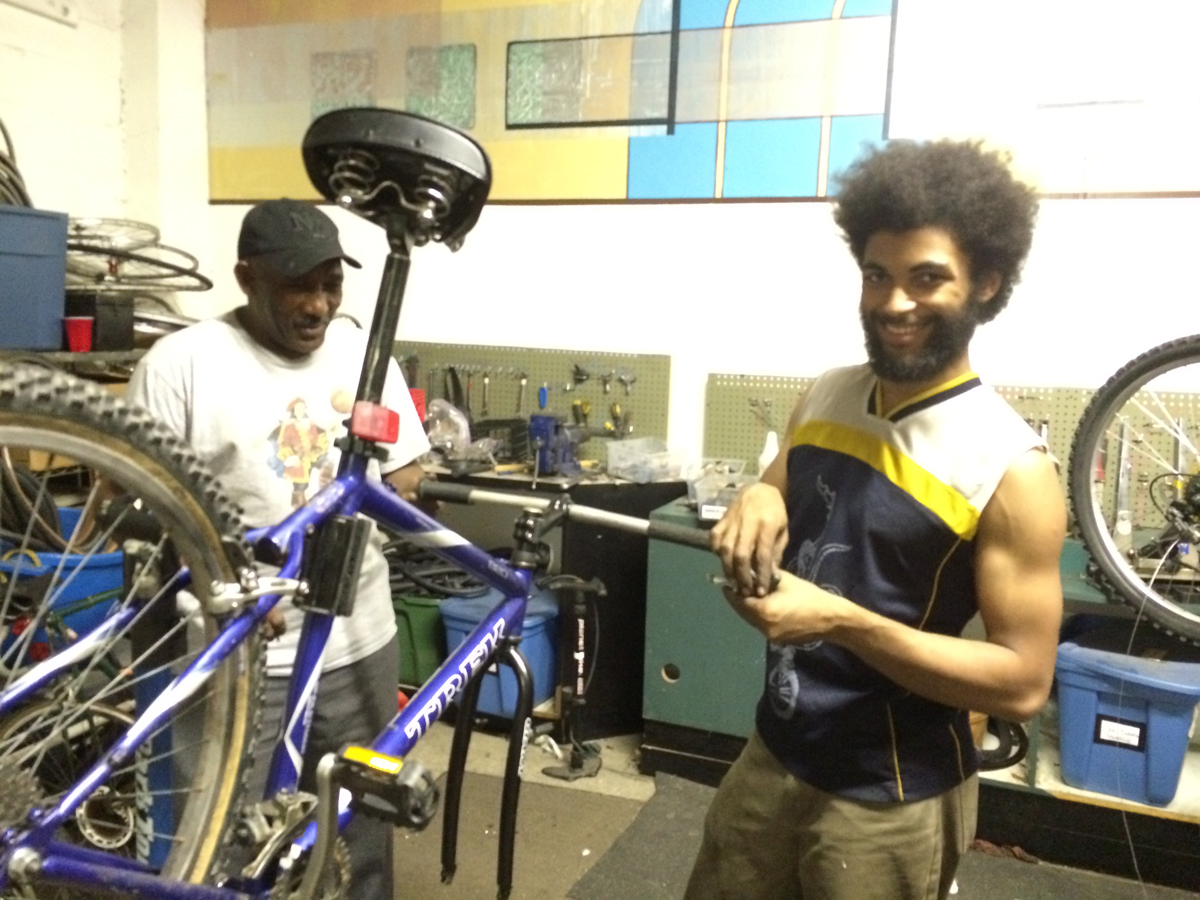
“African Americans were more than twice as likely as whites (38% vs 14%) to agree that their perception of bicyclists would improve if people on bikes represented a “broader cross section of Americans, such as women, youth and people of color” in their community.” (from the League of American Bicyclists The New Majority, Pedaling Towards Equity Report). Here, two bicycle mechanics work at the Freewheel Community Bike Shop in Madison, Wisconsin. Photo by Dave Iltis
The researchers surveyed state and local bicycle affiliate groups of the League of American Bicyclists (LAB). It got 71 usable responses in 35 states about how they try to work with or help out different racial/ethnic minorities, women, low-income communities, youth, LGBTQ+ people, etc.
“On average, participants stated a lack of programming in underserved populations compared to the general population, and also stated many barriers/desired tools for reaching underserved populations. On average, coalitions also ranked the importance of equity low, and ranked ‘providing equitable opportunities’ as a low priority,” the researchers found, suggesting “bicycle coalitions should attempt to implement strategies to provide equitable programming.’
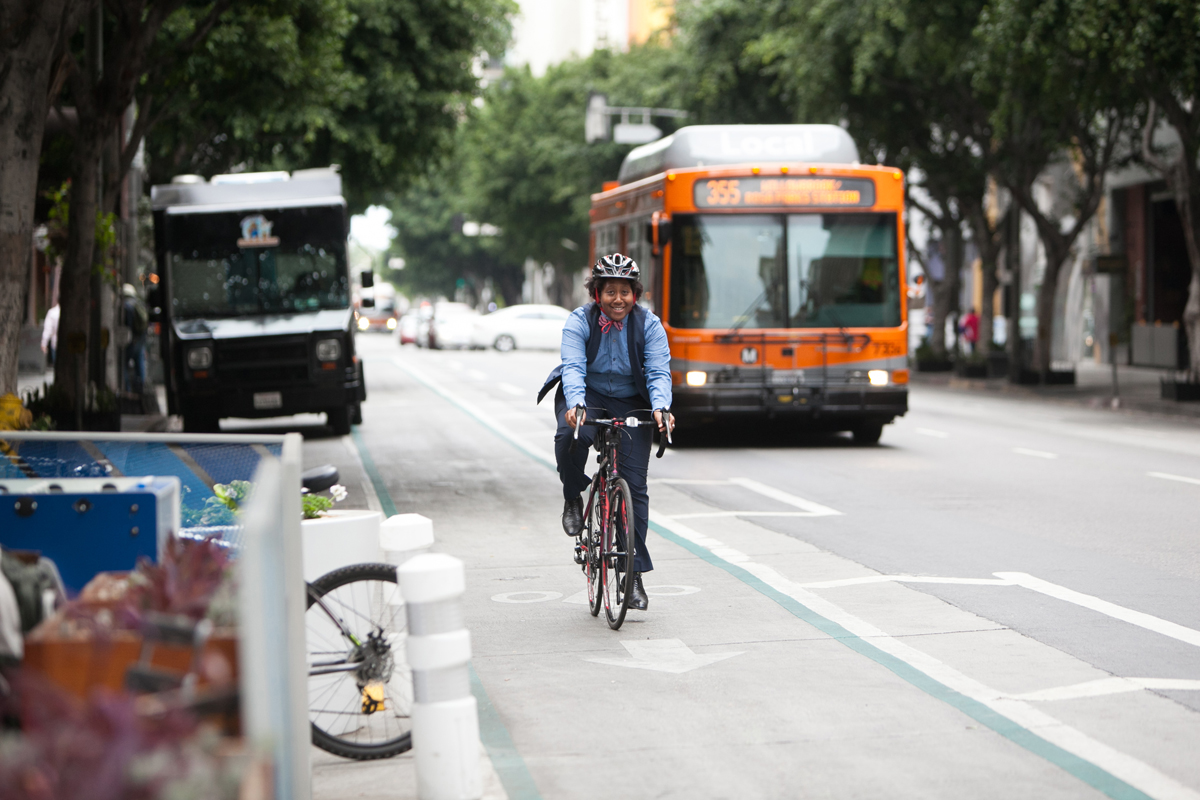
Tamika Butler in downtown Los Angeles outside of the Los Angeles County Bicycle Coalition offices. Photo by Serena Grace
Big barriers include seeing cycling as male-driven, along with a lack of access to facilities in low-income areas. One can only speculate as to whether the self-selective groups who completed the survey are more concerned than the ones who didn’t respond. Respondents also self-reported with no checks in place to ensure accuracy.
The report continues “coalitions ranked bicycle safety/education as their top priority, followed by encouragement for biking. Addressing concerns for underserved populations, and socially connecting bikers were the last priorities … [advocates] indicated that the biggest barrier to reaching underserved populations was a lack of financial resources, followed by a lack of personnel.”
The study suggests a need to focus on equity as a goal in itself, rather than simply incorporating it into other priorities. Its ideas ranged from classes in other languages, staffing diversity, and bike maintenance programs for LGBTQ+.
The study’s authors note that the small sample size did not consider the demographics of the advocates, which may not be representative of the USA as a whole. They also note that they didn’t consider the needs of people with physical challenges who may lack adequate equipment or support to ride.
One statewide group that has been pedaling far ahead on the trail of these issues, however, is Bicycle Colorado, which started a RIDE (short for Respect, Inclusion, Diversity and Equity) initiative in 2018 (https://www.bicyclecolorado.org/ride-building-equity-in-bicycling/)
Its website says, “members of our RIDE Advisory Board have gathered bimonthly with Bicycle Colorado to share their experience, expertise and ideas – as well as perspectives we don’t currently have on our staff.” Advisory Board members have also alerted Bicycle Colorado to issues such as discriminatory enforcement of laws, explains Aishwarya Krishnamoorthy, director of marketing and communications. The death of George Floyd in May 2020 “was a real catalyst in terms of our work,” Krishnamoorthy says. “We did a ride for racial justice.”
Bicycle Colorado also provides info on adaptive equipment such as three- and four-wheelers, recumbents, electric bikes, etc. (http://bicyclecolorado.org/adaptive/) “It’s hard to keep up with people riding regular bikes (but) having group activities dedicated for people who use adaptive equipment or older adults” can work, Krishnamoorthy adds.
“We used to have a full-time teammate who spoke Spanish” and Bicycle Colorado shows up at Cinco de Mayo festivals, she notes.
Sometimes the minority party just needs to reach out. “The Wind River Indian Reservation asked us to help write and put together an active transportation plan for communities on their reservation both for transportation and recreation. We’re well on our way to helping with that plan,” says Michael Kusiek, executive director of Wyoming Pathways, that state’s bicycle advocacy organization. Shoshone and Northern Arapaho lands encompass more than 2.2 million acres in the center of the state.
The Rail-to-Trail Conservancy’s (RTC) current major project, the Great American Rail Trail cross-continent bike route, “will go through quite a bit of Native American territory. We are trying to figure out the most sensitive and thoughtful process to deal with those communities. The Wind River Indian Reservation has the highest pedestrian fatality rate of any place in the country. One of the most amazing things we ever could do would be to design this trail to help be a solution to that problem,” says Kevin Mills, RTC vice president for policy. “You need to keep learning and you need to approach (inclusion and equity) with humility,” Mills continues.
RTC (of which I am a member) started out with the goal of turning abandoned railroad lines into multi-use trails. Then it learned “it wasn’t enough just meeting demand. We had to make sure the trails served everybody.”
Mills also blamed grant competitions and some transportation officials for not considering the needs of low-income communities when they structure grant applications and seek public input. Even the poorest communities will have to find a non-federal match for grants under the Infrastructure Investment and Jobs Act, for instance. RTC failed to convince Congress to allow waivers.
The Adventure Cycling Association also realizes it is coming late to the game. “We acknowledge that systemic racism and sexism impact the ability of BIPOC and LGBTQ+ people to travel by bicycle safely,” it says on its website (https://www.adventurecycling.org/about/diversity-and-justice/). “As an organization, we have a lot of work to do to support, empower, and create safe spaces for underrepresented communities.”
As such, the non-profit bike-travel promoter started some programs trying to meet the needs of various gender groups. It reached out to cycling groups that serve their needs, Project Manager Carmen Aiken relates. “We have worked with some (local chapters) to fund beginners’ adventures (short trips). We offer scholarships and stipends to help with marginalized communities to go on trips, she says. “What we think of as accessible or inclusive often is not … It is still a work in progress.”
Local bike groups can reach out to “groups in your area doing the work of trying to make the cycling communities more inclusive” and collaborate with them on rides and other events, suggests Molly Sugar, a founder of Radical Adventure Riders, a five-year-old organization with chapters around the country devoted to “gender inclusivity and racial equity in cycling and the outdoors” (http://radicaladventureriders.com). “Just having the conversation to meet the needs of specific groups is important. There’s no one-size-fits-all solution.” It could mean offering pre-registration or discounts if you want to meet a certain quota, she suggests. “You can ask the people you are trying to reach to lead the rides.”
She also suggests including pictures of members of different demographic groups and using different languages on your website.
Bike Utah started a Level Pedals program this year to try to diversify the biking community. It first had to examine what was – and wasn’t – out there.
“On the west side of Salt Lake City, there aren’t many bicycle shops,” notes Program Director Vince Lok. Lok arranged a community bicycle repair day with mechanics volunteering to fix bikes. He also found a lack of bicycle safety education amongst members of disadvantaged communities. “How do we teach folks? Is it a convenient time, the right language? Just because we build a bike lane doesn’t mean people are going to ride on it.”
Giving bikes to people won’t help much if they lack access to repairs or know how to care for the vehicles. “A lot of the time, we get folks who received bikes, but they didn’t come with helmets, locks or lights.”
Lok said he also had to learn about the cultures of different communities. The Utah Governor’s Office of Economic Opportunity gave Bike Utah $75,000 to conduct a needs assessment, so Lok spends time talking and riding with people, including those associated with two organizations that support refugees and their families, as well as from Wasatch Adaptive Sports, a non-profit organizing and supporting recreational activities, including mountain biking events, for those with adaptive needs.
It’s not just in America that the cycling community realizes it has to reach out to others. Riders in Great Britain recently saw the need and founded Diversity in Cycling, describing itself as “a collaborative grass roots project” that asked one question: “Why, even in a multiracial and cosmopolitan city such as London, are the cycling clubs and broader cycling community so white?” The answer: many Black and Asian people were riding but weren’t targeted in marketing efforts. Diversity in Cycling put out a report with recommendations for bike groups, which include scheduling different types of events than usual, and promoting diversity and inclusivity in membership through photos. (https://www.diversityincycling.com/wp-content/uploads/2020/12/Diversity-In-Cycling.pdf)
A few other recent studies shed light on actions needed to further inclusion:
The National Association of City Transportation Officials released a paper saying that many bicycle safety laws do little to advance safety, while disproportionately penalizing Black, Latino, poor and homeless people. “Breaking the Cycle: Reevaluating the Laws that Prevent Safe and Inclusive Biking” argues that rules such as banning sidewalk biking “are too often enforced unevenly.” People typically ride on sidewalks because of a lack of safe cycling infrastructure, and a lack of knowledge of safe cycling best practices. The paper indicates the “overabundance of unsafe infrastructure in disinvested communities has resulted in Black and Indigenous pedestrians and bicyclists constituting a disproportionate number of fatalities each year …” (https://nacto.org/wp-content/uploads/2022/08/Bikeway-Design-Enforcement-Paper.pdf)
A study at the University of Oregon and Greenlining Institute called on bike share operators to increase their efforts to make bikes available in underserved areas, to people with physical challenges, and to those with limited incomes. Most bikeshare programs are making some efforts, such as “reduced fares, multilingual services, cash payment compatibility, non-smartphone access, adaptive vehicles for users with disabilities, mandated geographic service areas, and targeted marketing and outreach.” However, by and large programs don’t know how well their efforts are working, or in some cases even how to establish goals. (https://pdxscholar.library.pdx.edu/cgi/viewcontent.cgi?article=1242&context=trec_reports)
Note: We wanted to discuss the issue with LAB and how it is trying to diversify the bicycling community. We left repeated messages for multiple staff members, but no one acknowledged our emails or phone queries made over several months.