SALT LAKE CITY, February 17, 2021 –Extra Mile Racing LLC, owner and promoter of many endurance sports events over the past decade, announces the transfer of ownership of several of those events to Skol Sporting Management.
Events including, but not limited to, Gran Fondo Salt Lake, the Jordan River Marathon and Half Marathon will become the property of Skol Sporting Management effective immediately. Participants currently registered for the events will have their registrations honored.
Event Details:
August 28 — Gran Fondo Salt Lake, Tooele, UT, Start and finish at the iconic Utah Motor Sports Campus west of Tooele, Utah. Kick off your ride with a shotgun start and mega balloon send-off at the UMC Campus. Choose from 105 miles, the metric century (62 miles), or 30 miles., Dan Aamodt, [email protected], GranFondoSaltLake.com
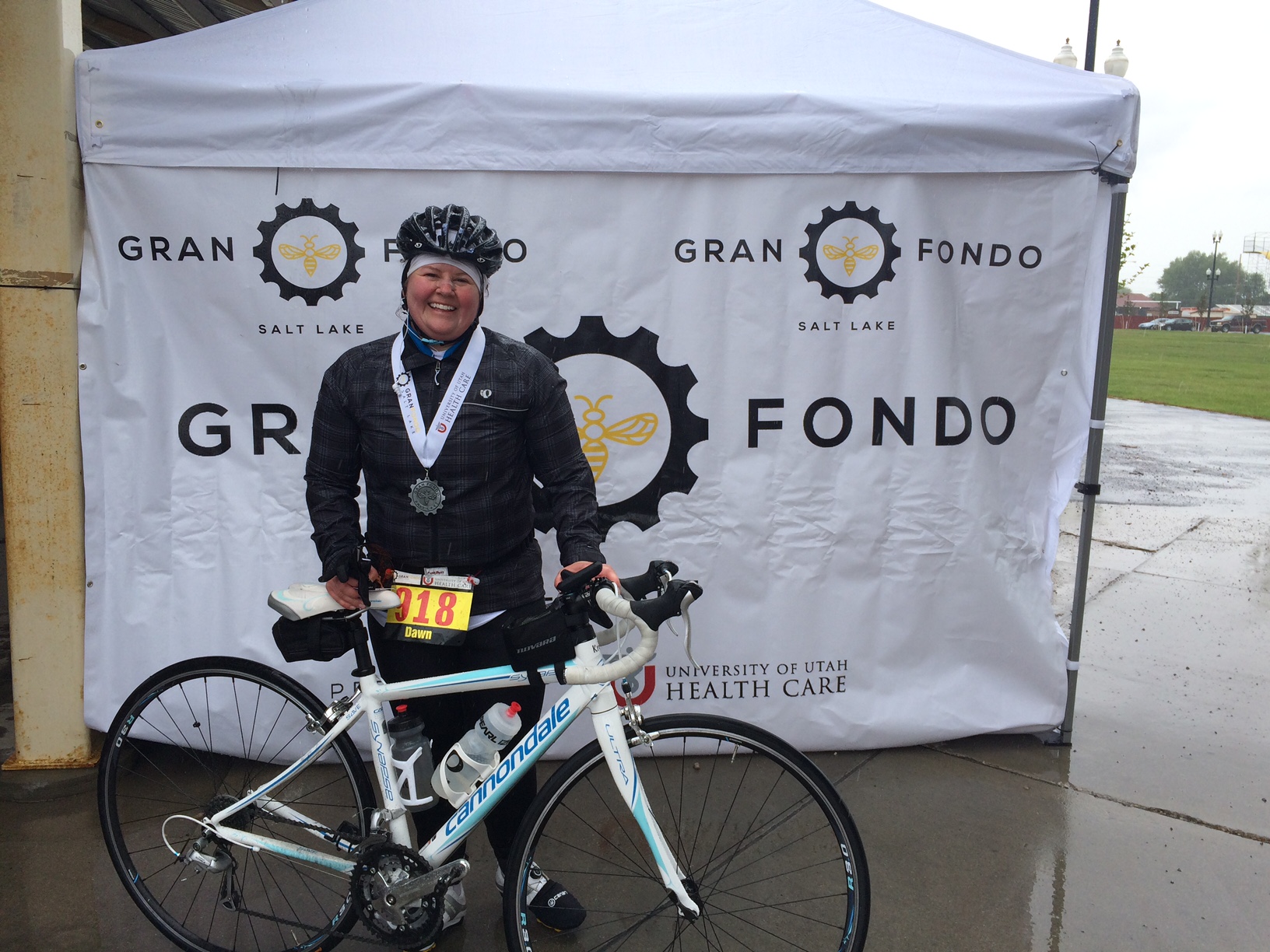
A rider at the finish of the Gran Fondo Salt Lake. Photo by Dave Iltis
Skol, owner by former TriUtah owner Dan Aamodt, has more than 15 years of experience organizing sporting events small and large in the region. Ranging from large triathlons to small 5K races, Skol is an expert in providing top-notch event support and experience.
“Our team is excited for the opportunity to continue the tradition of Gran Fondo Salt Lake and other events in the community, and look forward to serving the amazing endurance community in Utah,” Aamodt said. “I cannot think of a better way to spend Saturdays in Utah,”
Aamodt said there will be communication between Skol and Gran Fondo Salt Lake registrants – past and current – the coming days with more details about the 2021 edition of Gran Fondo Salt Lake. Questions can be sent to [email protected].
Registration for Gran Fondo Salt Lake is now open under the new management and Skol is offering a 20% discount through February 26 using the code “GFSL20” at checkout.
The move means Extra Mile Racing LLC and race director Jared Eborn will take a step back from event promotion. Extra Mile Racing LLC retains ownership of the Bear Lake Classic Road Race, Sugar House Criterium and other USA Cycling sanctioned events.
“The past year or two, especially 2020 with Covid-19 wiping out events worldwide, caused me to take a deeper look at what I wanted to do going forward,” Eborn said. “In addition to Covid, there have been some personal circumstances and developments that have caused me to re-evaluate various elements of my life and I feel it’s time to redirect some of my energy and focus. 2020 was weird and really hard on a lot of people. It’s time to take a breather.”
Additionally, Extra Mile Racing LLC is announcing it will change its name in the near future as the organization changes direction.
“I can’t imagine totally getting out of organizing events, but I have taken on a new job which I enjoy and will be doing some additional professional training and education in the near future,” Eborn said. “I’m looking forward to seeing my friends and fellow bike racers at Bear Lake and Sugar House, but I feel like it’s time for a change. In addition to working full time in the bicycle industry, I’m excited for my new thing. It’s going to be fun, but definitely less stressful in many ways.”
Information on the 2021 Bear Lake Classic Road Race, scheduled for May 22, and 2021 Sugar House Criterium, May 29, will be announced soon.
Sports nutrition was a hot topic at 2019’s annual Food & Nutrition Conference & Exposition (FNCE), hosted by the Academy of Nutrition and Dietetics, the nation’s largest group of nutrition professionals. Here are a few highlights, to keep you up to date with current sports nutrition recommendations.
Eat in colors! The more colors you have in your food, the better your chances of getting all the vital nutrients. Photo by Breanne Nalder
Performance enhancers
Sport supplements that promise improved performance are always tantalizing. If they make as little as 0.5 to 1% improvement, the supplement is deemed to “work.” While scientists want well-controlled research studies to prove effectiveness, athletes respond very quickly to anecdotes—and often spend lots of money on what might be just a glimmer of hope. (In the four months leading up to the Olympics in 2000, one athlete spent $3,480 on supplements!)
The Australian Institute of Sport is creating a website for grouping supplements according to effectiveness: Group A (proven to enhance performance), Group B (deserves more research), Group C (little proof of meaningful benefits) and Group D (Banned). Check it out at www.ais.gov.au/nutrition/supplements. The helpful information can help guide your supplement choices.
Vitamin Zzz, aka sleep. is one of the best performance enhancers. Lack of sleep has detrimental effects on performance. Athletes with good sleep quality are able to train harder, recover faster, and perform better. And take note: if you think you can drink coffee at night and still sleep fine, think again. Brain wave studies suggest otherwise.
How much sleep is enough? More than 6 hours a night. Very few athletes can perform well with less than that. Top athletes commonly strive to get 8 to 10 hours of sleep each day, including a nap between 1:00 and 4:00 pm. (A later nap results in poorer sleep that night). Teens should target 8 to 10 hours and adults 7 to 9 hours. Lack of sleep can significantly impact your diet. After two nights with only 4 to 5 hours of sleep, the appetite increases about 20%. You’ll likely find yourself snacking more than usual (on fatty foods), eating fewer fruits and veggies, and consuming ~385 additional calories. Yikes!
For good sleep information, visit centreforsleep.com and take the Athletes’ Sleep Screening Questionnaire. Athletes who understand the benefits of sleep tend to sleep about 20 minutes more. I hope this holds true for you!
Muscle building tactics
When it comes to building muscle, you want to surround your workout with food, so you can get the most benefits from your efforts. Intermittent Fasters, take note: if you lift weights in a fasted state (without having eaten any pre-exercise fuel), the muscle-building effect of exercise is not enough to out-weigh the muscle breakdown that happens in a fasted state. Eat before you train!
Many athletes assume if they fail to eat within 45 minutes of lifting weights, the anabolic (muscle-building) window slams shut. Wrong. Refueling either 1 or 3 hours post-exercise generates a similar gain in muscle protein synthesis. For the average exerciser, the effect of post-exercise protein timing on muscle growth is relatively small. For competitive body builders, the gain is also small but perhaps meaningful, so most prefer to err on the side of caution.
Consuming post-exercise protein stimulates insulin secretion, as does carbohydrate. (Did you know that whey protein stimulates more insulin than white bread?) Insulin reduces muscle breakdown and enhances glycogen replacement. Refueling with a combination of protein + carb is best for athletes who do two-a-day workouts, to optimize glycogen replacement. Athletes who do only one workout and refuel with a sports diet based on grains, starchy vegetables and fruits can replenish depleted glycogen stores over the course of 24 hours.
Does eating extra protein build bigger muscles? The body incorporates only a limited amount of protein into new muscle tissue. Spacing out protein intake by consuming 20 grams of protein every 3 hours (four times a day) is preferable to eating 80 grams in one dose. More specifically, athletes want to target 0.2-0.25 g pro/lb. body weight (0.4 to 0.55 g/kg) four times a day. This target varies from person to person. Vegans, for example, will want to consume a higher amount to get adequate leucine, an amino acid that triggers muscle growth.
Eating disorders in male athletes
Eating disorders (EDs) are not just a female problem. About 9% of male athletes—as compared to about 21% of female athletes—struggle with food issues and restrict their food intake to lose undesired body fat. The lack of fuel available to support normal bodily functions impacts bone health and reproductive function in men, just as it does in women. In men, low energy availability can lead to low testosterone, poor semen quality, reduced sperm count, and slower sperm motility. In women, it shows up as loss of regular menses (amenorrhea), hence infertility.
Compared to female athletes, male athletes can withstand more of a severe deficit before the appearance of symptoms such as low testosterone, bone stress injuries, and reduced bone density/poor bone health (osteoporosis). To reverse the energy deficit, athletes need to boost their energy intake, which can be easier said than done for those struggling with eating issues and fears of “getting fat.” One way to consume the recommended 350 additional calories per day is to break two energy bars into small bites, and nibble on them over the course of several hours. Men seem to be able to reverse the hormonal imbalance within days, while women can take months. Reversibility of bone density is not guaranteed.
Keto diet
A ketogenic sports diet (moderate protein, very low carb, very high fat) appeals to some athletes. Yet, we need more research to understand the fine details of adaptation to the keto diet and the role of keto supplements. (Supplement sales vastly exceed the science!) Stay tuned; perhaps we’ll have more answers from next year’s FNCE!
By Sarah Kaufmann — If you have big spring and summer bike goals, winter is an important time to focus on training volume. This isn’t optimal when it’s cold, dark, and snowy. But if you are flexible with other sports, you can use non-bike activities that are more enjoyable in the winter to fill that volume. Without immediate racing to come, the specificity of pedal strokes becomes less important. The goal is more general aerobic conditioning and you do not need to pedal for that. Running, snowshoeing, ski touring, and swimming are just a few options that are fun in the cold and snow or, in the case of swimming, are done indoors. This helps stave off burnout – it is refreshing to mix in some new activities after months of riding. Riding the indoor trainer or bundling up and riding outside are options but they both take more mental energy than a comfortable ride outside in shorts and short sleeves in the summer.
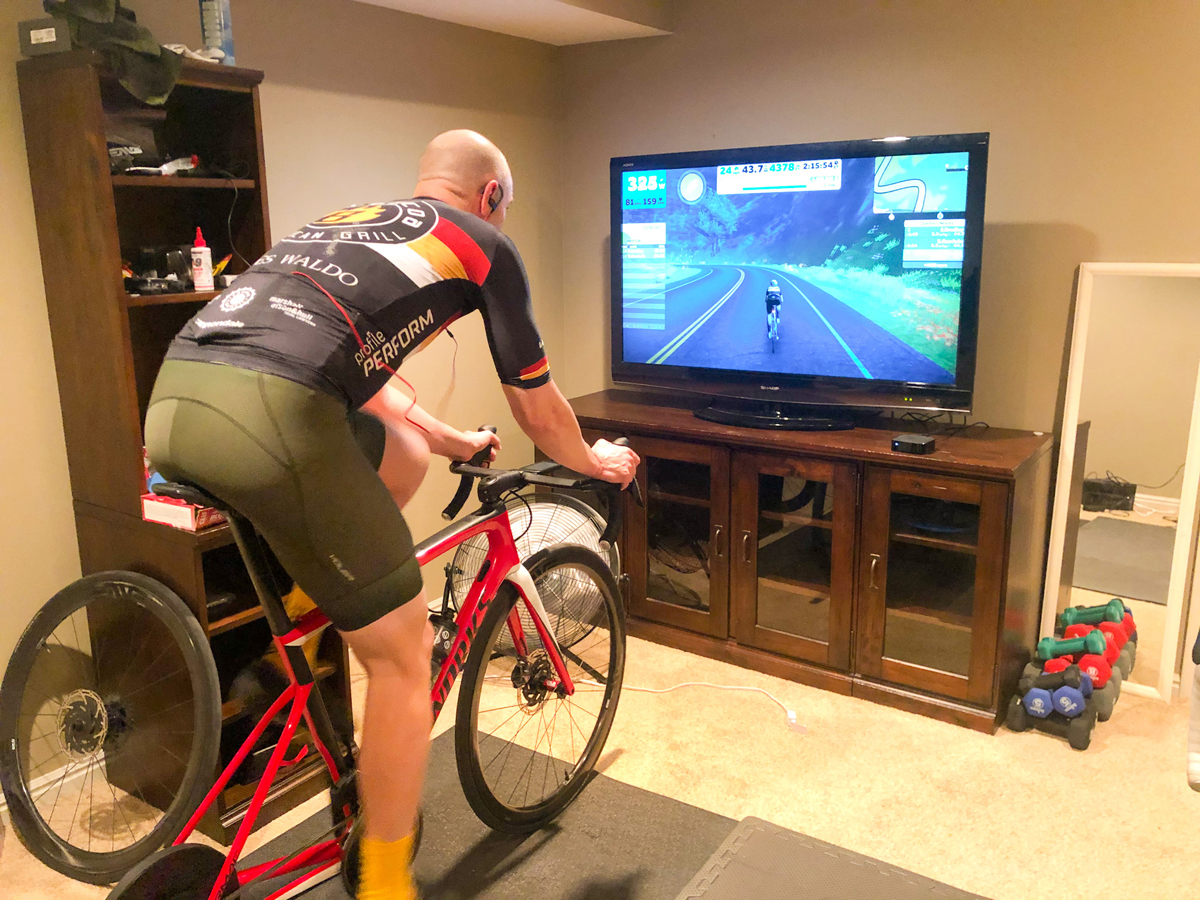
Doug Brower riding indoors. If some of your winter training becomes less specific, make your bike training more specific. Photo by Sarah Kaufmann
That said, with big goals for the cycling race season, you will need to do some work on the trainer or be able to do some high-quality intervals during the winter. But you can use other sports for the longer, lower intensity training, and more general conditioning training. For example, if you decide to mix in some running, focus on increasing your run duration. (Be careful! Running is hard on your body. You will be sore, and you will be susceptible to injury so increase your mileage slowly). Keep the focus off your run pace, we are not after speed. Shoot to increase your running duration to about one third to half of the duration of a typical long ride.
During the summer months, most of us can find a clear, extended climb or flat section to perform high quality intervals. During the winter, this is tougher. Road shoulders have snow, ice, salt, and dirt and the shoulders are narrower, so your margin of error is smaller with vehicles. Light is lower and the daylight hours are shorter. Add to that, if your extended climbing is up a canyon (like it usually is here in Salt Lake), it gets cold quickly. Furthermore, if you are being less specific with your volume, you will want to be VERY specific with your on-the-bike training. With road quality compromised, your best bet for high quality intervals will be on the indoor trainer. Riding on the trainer is very condensed riding. You never coast, you never descend, you never run into intersections or anything to slow you down, you pedal constantly. You can shorten your recovery intervals and you can do a lot of work in a little time. Do your high-quality interval sessions on the trainer.
Do some longer outside rides where you can stick to a flat to rolling route and avoid big temperature changes and dangerous road conditions. Use other sports strategically to develop your aerobic engine. And get on the trainer for your most specific work.
Sarah Kaufmann is the owner of K Cycling Coaching. She is an elite level XC and CX racer for the DNA Pro Cycling Team. She is based in Salt Lake City, UT and can be reached at [email protected] or 413.522.3180.
By Charles Pekow — Bike well enough and be a good enough citizen and ye may win a gold medal – and not necessarily the Olympic type. Congress approved legislation awarding two-time Road Race World Champion Greg LeMond a Congressional Gold Medal “in recognition of his contributions to the nation as an athlete, activist, role model, and community leader.”
H.R.3589 , the Greg LeMond Congressional Gold Medal Act, notes that not only is he the only American to win the Tour de France (not counting Lance Armstrong who lost the title after he was caught illegally doping), he did it three times and won two world championships. He did this in spite of suffering repeated injuries.
LeMond commented on his facebook page, “I am honored for this recognition, and thank Rep. Thompson and Sen. Cortez Masto for their efforts on my behalf. It’s great to receive this recognition from Congress as I’m working with LeMon Composites and LeMond bikes to create forward-looking manufacturing jobs for America and the world. I will continue to push myself and my companies to live up to this honor as we move forward.”
Bronze copies of the gold medal may be awarded for sale under the legislation.
The legislation also notes that “Greg and his wife, Kathy, are active in numerous nonprofit causes, including healthy sport, assisting victims of sexual abuse and various childhood illnesses” and that “cycling offers young people a healthy, active, outdoor hobby.”
By Kylee Spjut — COVID-19 has caused a lot of regular routines to be altered this year. People have traded long morning commutes for home offices and dispersed their errand-running throughout the day. Not only does this mean there are fewer cars on the road, but new modes of transportation are being discovered and utilized. People who haven’t previously found interest in active transportation are participating in trail runs, nature walks and biking trips.
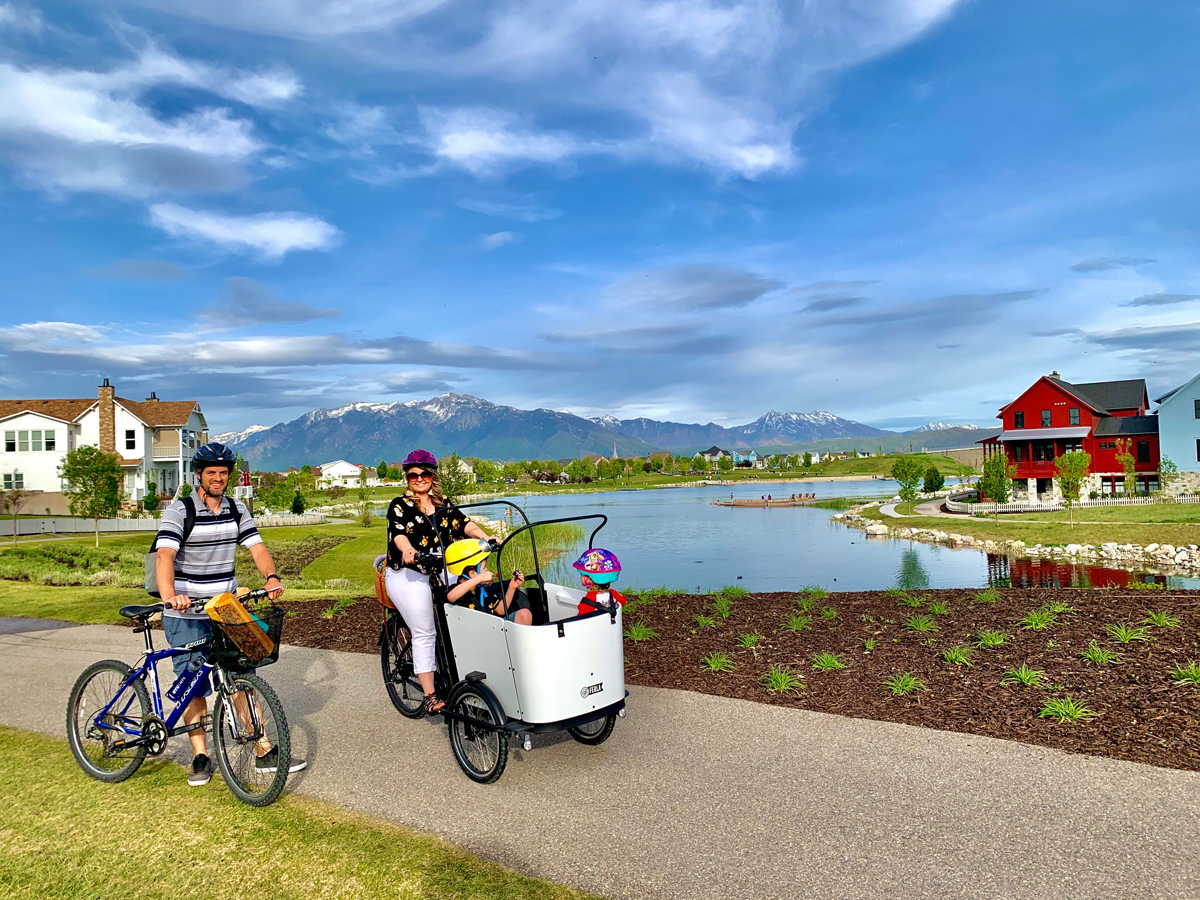
Mike and Tristin West have become a cargo bike family. Photo courtesy the West Family.
The West family is just one example of the significant increase in cycling since the pandemic hit. Mike and Tristin wouldn’t have called themselves avid cyclists pre-pandemic, but they now ride their bikes for most local errands.
“We live for the summer since we are careful through flu season every year to limit exposure to our son who has a rare genetic syndrome that includes many medical conditions. We had to think of what we could do to make the summer special for our two kids and still make some memories. We finally had an “ah ha” moment and realized that a family cargo bike may be the way we were going to have some fun in the summer and make new memories.”
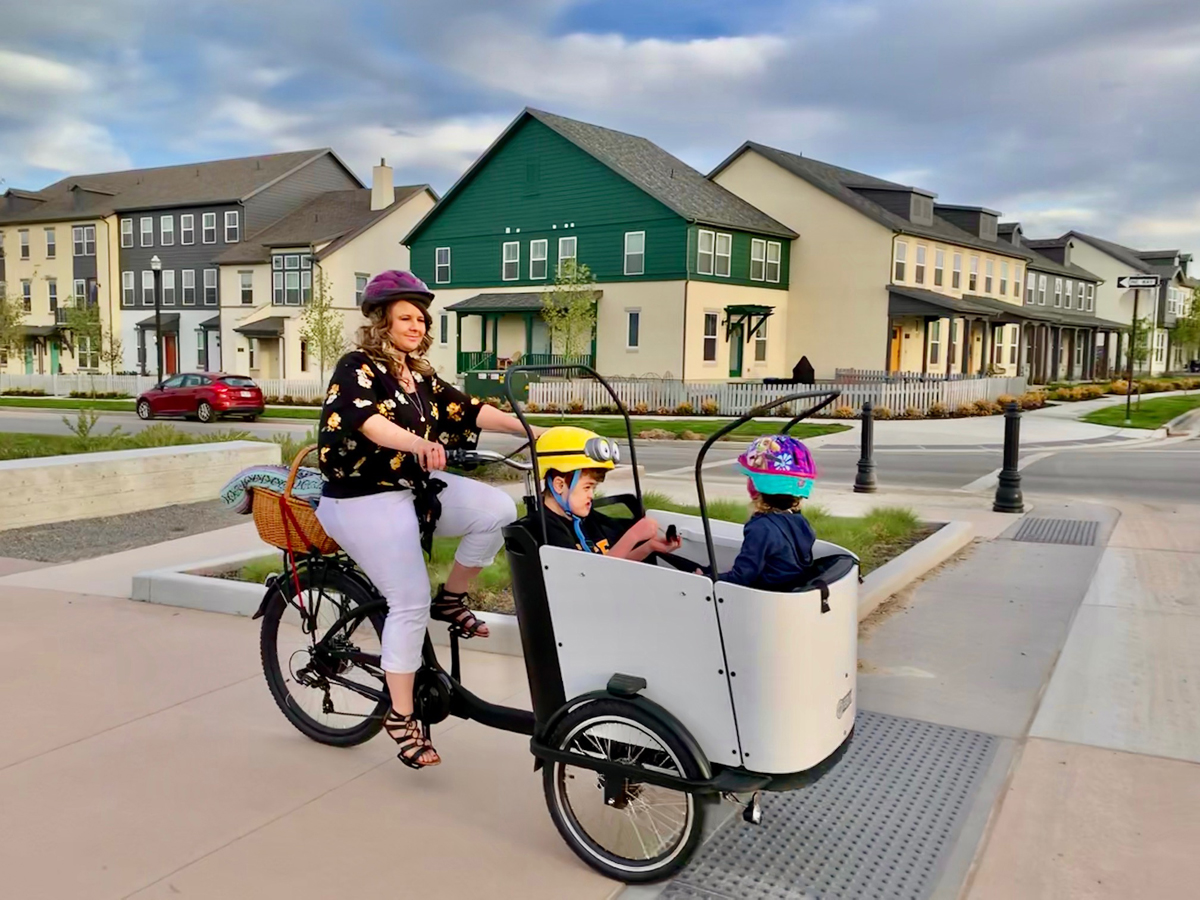
Tristin West rides through Daybreak with her kids in the cargo bike. Photo courtesy the West Family.
After a friend and cargo bike advocate agreed to let the West family borrow his tricycle cargo bike to see how the kids would like it, the Wests were absolutely convinced that they were to become a cargo bike family. “Our kids absolutely loved it! My son is non-verbal, but it is easy for us as his parents to know when he loves something since he was all smiles and shrieking for joy as he could feel the wind in his hair!”
To this day, riding in the cargo bike is their son’s happy place. He is found smiling and belting out his shrieks of joy as they ride throughout the community!
The Wests say that embracing the cycling culture won’t be a temporary change for them, even with winter coming. Mike says, “I am finding that biking in inclement or cold weather is all about being prepared. I have heard many say that biking doesn’t work in the winter in Utah because it is too cold. This winter is going to be different for our family. We will be going out on our bikes together even in the cold.”
The Wests still own two cars, but don’t use them nearly as much as they used to. “Cycling is our way to do our part to reduce air pollution, reduce traffic congestion, and strive for a safer and healthier system of transportation.”
Recent data confirms that the Wests aren’t the only ones getting outside more and driving less amid the pandemic. With a 314 percent increase in just one of several Utah trails, it’s apparent that Utahn’s are more active than ever before. Strava data shows a significant increase in participation as well.
By driving less, individuals, businesses and communities can ultimately help optimize mobility, improve health and conserve energy in Utah. As people return to their regular routines, Utahns can still rethink their trip and promote active and alternate modes of transportation.
BERKELEY, Calif. – The National Interscholastic Cycling Association (NICA) is pleased to announce a new scholarship created by professional cyclist and NICA NorCal Alumna Kate Courtney. The Sparkle On Scholarship presented by Kate Courtney in partnership with Scott, Syncros, SRAM, and RockShox will recognize student-athletes who have demonstrated academic and athletic excellence during their time with NICA and plan to attend college and continue mountain bike racing.
NICA NorCal Alumna Kate Courtney. Photo: Paris Gore/Red Bull Content Pool
“I know from experience that the transition to college as a student-athlete is often difficult and wanted to create this scholarship as a way to help with the challenges of balancing college studies and racing,” shares Kate Courtney. Recipients of this award will receive both financial support and mentorship to aid in their continued pursuit of academic and athletic excellence beyond NICA. “To me,” Kate continues, “excellence is not defined by race results or GPA, but in the attitude and effort with which individuals pursue greatness. I am excited to help support the next generation of NICA student-athletes as they continue to work hard and believe in their dreams.”
The Sparkle On Scholarship will be awarded to four seniors from NICA leagues and consist of a monetary award of $10,000 each and mentorship in the form of quarterly calls with Kate during their first year of college and career mentoring through SRAM. Those recipients without a bike sponsor and committing to race on Scott for the year will also receive a Scott mountain bike.
The Sparkle On Scholarship presented by Kate Courtney in partnership with Scott, Syncros, SRAM, and RockShox is open to NICA student-athletes graduating high school who will attend college for the 2021-22 academic year and who are seeking to balance mountain bike racing with college studies.
Salt Lake City, UT (Feb. 9, 2021) – The DNA Pro Cycling team is thrilled to announce the signing of New Zealand’s Sharlotte Lucas, filling the final spot on the UCI roster for the 2021 racing season. The 29-year-old is making her move after two years with TIBCO-SVB. The two-time winner of the Oceania Cycling Championships Road Race (2018 and 2019) is expected to be a strong asset in road races and criteriums for DNA Pro Cycling. She will join her compatriot, Nicole Shields, as the second Kiwi on DNA Pro Cycling.
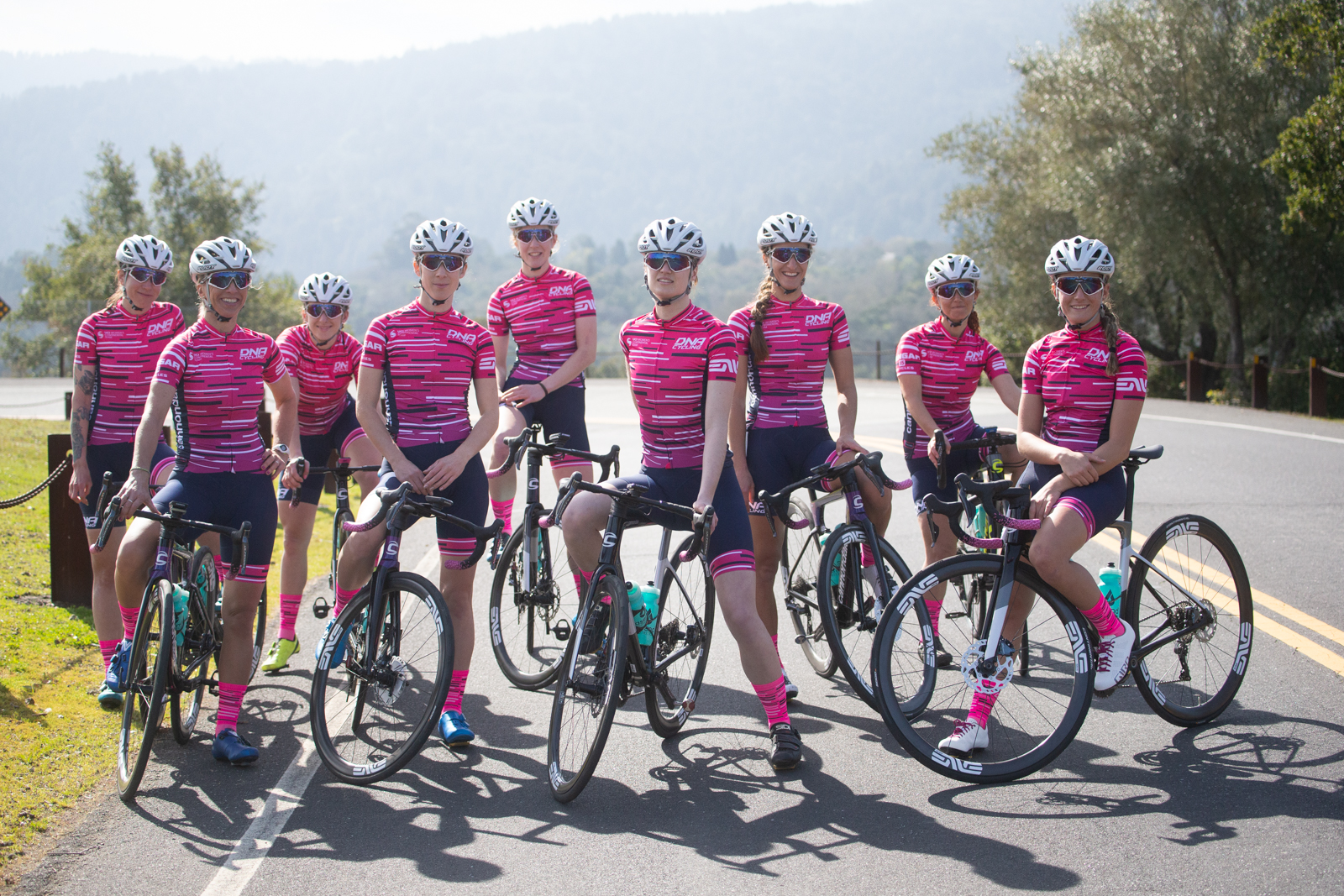
The 2021 DNA Pro Cycling Team (L-R): Kimberly Lucie, Liza Rachetto, Maggie Coles-Lyster, Heather Fischer, Brenna Wrye-Simpson, Margot Clyne, Hanna Muegge, Sarah Kaufmann, and Katie Clouse. Not pictured: Mia Kilburge, Erica Clevenger, Nicole Shields, Sharlotte Lucas. Photo by Catherine Fegan-Kim
Lucas had strong seasons in 2018 and 2019 with a silver in the highly competitive New Zealand national road championships (2018) and bronze in the criterium nationals (2019). She played a key supporting role in her team’s international and domestic UCI successes, as well as getting podiums herself at a number of US races, including finishing 2nd at Tulsa’s Tough’s River Parks Crit (Cry Baby Hill) while supporting a teammate to the win along with a 2nd overall in the Tour of the America’s Dairylands.
“We’re very excited to add Sharlotte to our 2021 roster,” said Catherine Fegan-Kim, the team’s Sports Director. “Her talent and skills complete our squad, not only due to her strengths leading out sprinters and supporting GC leaders, but also through her own ability to win races.”
2020 was a challenge for Lucas, like so many riders around the world she completed only a handful of races in Australia and New Zealand due to COVID restrictions.
DNA Pro Cycling expect to begin the road racing season in June at the Grand Prix Cycliste de Gatineau in Canada. Subject to potential restrictions due to the global pandemic, the team’s season is expected to include a mix of North American UCI road events, the USA CRITS Series and the national PRT racing calendar, with a short racing block in Europe in the early fall.
SAN DIEGO (Feb. 1, 2021) – Monuments of Cycling, a premier cycling events producer, announced the expansion of its Belgian Waffle Ride (BWR) series and the relaunch of the Tripel Crown of Gravel Series with a new edition to the BWR locations in 2021. The first stop is the 10th Annual Edition in San Diego, on July 18. The second is in Asheville, NC, on August 21. The third is in Cedar City, UT on September 25, which is the final event (and the opportunity for a Quadruple) is the brand new BWR in Lawrence, KS, scheduled for Halloween, October 31, 2021.
The BWR is known as the most unique cycling event in the United States, with each location offering its own special features, topography and atmosphere. Online registration for all events opens February 1, 2021, at 9 a.m. (PT) at BelgianWaffleRide.Bike. For those thousands of riders who have already signed up for the 2020 BWR events, their entries have been deferred to 2021.
For the first time, Monuments of Cycling brings its iconic BWR to Kansas, where a vibrant cycling culture anxiously awaits this new spectacle, The Hell of the Mi-West, which will take place on Halloween. The BWR, which celebrates 10 years in 2021, will provide professional and amateur cyclists the opportunity to ride the most coveted roads and off-road sectors throughout the northeast region of Kansas over a 111- mile route punctuated by dozens of dirt, rock and gravel sections that give the event its unique complexion.
BWR returns to Cedar City for the second year. Photo by LiFTcs
Hosted by Sunflower Outdoor & Bike Shop at a spectacular Lawrence location, this fall BWR’s start, finish and expo will take place along a scenic riverfront park. The route features rolling passes, rough and rocky outcroppings, lake and river views, forests and rivers and water crossings. Riders will get a bit of everything thrown at them: hard-packed, flat, loose, rocky, uphill and downhill gravel over a 111-mile route punctuated by off-road sector and single-track sectors and 8,000 feet of climbing, all of which give the event its challenging complexion.
To lead off 2021, the Canyon BWR in San Diego, on July 18, will feature three new aspects: 1) a newly augmented 135-mile route with fresh new off-road features, 2) a spectacular new venue large enough to accommodate thousands of competitors, 70 vendors, and mile-long finishing circuit within its perimeter, 3) the three-day party will feature new events, including a Friday night Road-Cross Criterium, live music and a massive beer garden.
BWR returns to Cedar City for the second year. Photo by LiFTcs
The second BWR for 2021, presented by Sierra Nevada and Sufferfest Beer Co. will take place on August 21 in Asheville, NC at the Ride Kanuga location, an incredible destination nestled on 1,400 stunning acres in the Blue Ridge Mountains. Its historic setting features a beautiful 30-acre lake, 20-miles of trails, and full-service meeting and lodging facilities for up to 440 guests. The race will be the longest of the series at roughly 144-miles and 12,000 feet of climbing.
The third and final event of the Tripel Crown of Gravel Series is the 2021 BWR Cedar City, on September 25, the only one at elevation in the scenic and rugged West Desert of Southern Utah. At nearly 80% off-road, this is a true gravel edition of the BWR, graced with the most coveted decomposed granite roads and tricky off-road sectors throughout the region. The event is again being hosted by the town of Cedar City and will feature a 128-mile route that wends through the famous Red Hills, the Parowan Gap along Little Salt Lake, Coal and Whitney Canyons, and Granite Mountain.
BWR returns to Cedar City for the second year. Photo by LiFTcs
Created as an extremely challenging race in the spirit of the great European one-day Spring Classics, the BWR is an unusually difficult race. There will be three distances at each location: the long Waffle route and a half-distance Wafer option for those looking to get a taste of the fun without the life-changing commitment of the Waffle. Plus, we’ve added the Wanna ride, which is roughly half the Wafer. Each venue will have a local bike-minded charity. BWR planners will raise funds and awareness for community causes in each location, much as it does the San Diego Mountain Biking Association (SDMBA) in San Diego.
Each Waffle will offer a prize purse to top-five finishers, female and male. The Tripel Crown of Gravel Series has a separate prize purse to the top three men and women overall across the SD, NC and UT events, based on cumulative times. An age group competition will award top riders in each age bracket with Tripel Crown of Gravel honors. All riders who register and complete all four 2021 BWRs will receive special awards for their Quadruple heroics.
By Lukas Brinkerhoff — Some people call it February. Around these parts, we call it Goose season.
When I was a kid, it had a lot do with a round ball with black and white pentagons sewn together that we chased around on a big, deep green, grass field. And when we were done with that, we would strip off our jerseys and lay down on the grass that we knew was recently cut because you could smell it. We knew it was going to make us itch and turn our skin red, but we didn’t care. The cool feeling of the evening approaching after a long day of playing soccer defined this time of year for me all the way through my teens. The smell of a recently cut field brings me crashing back to that time, shirtless, blown and enjoying the cool grass as I cooled down.
Kathleen Berglund found the spot. Photo by Lukas Brinkerhoff
I haven’t kicked a soccer ball in way too long.
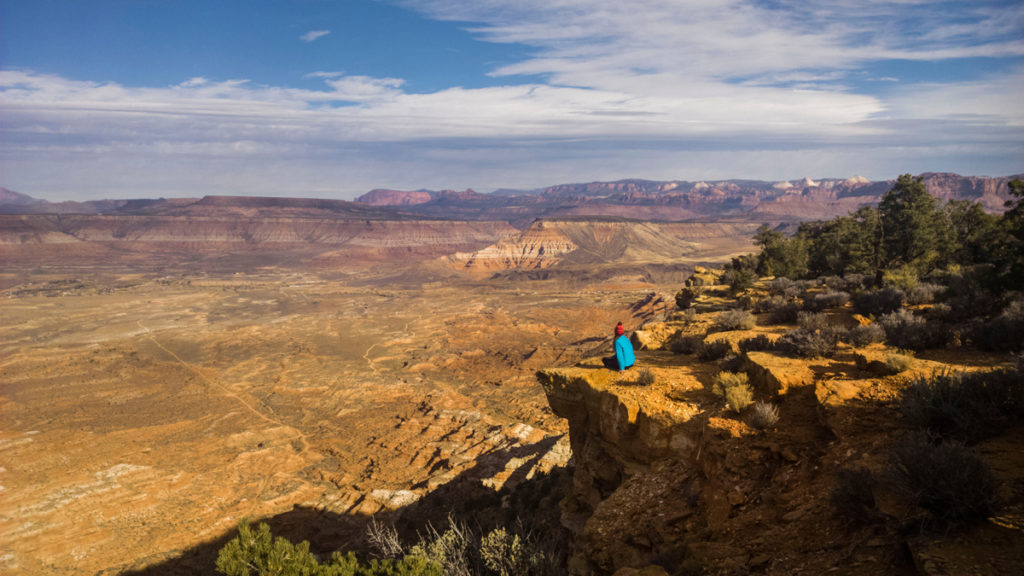
Now it’s more about finding that one perfect spot on the North Rim of Gooseberry Mesa where I can sit and watch the sun set over Zion National Park. It’s a spot that just happens to be right next to the Gooseberry Yurts. It juts out past the rim putting you right over the hundred or so foot drop that borders the mesa. It’s perfect, perfect in the sense that it feels like you have snuck on to god’s front porch and are stealing a view from a place too awesome to be real.
It is possible to drive to that place, but you won’t find it in all of its perfection, unless you get there the long way.
The long way starts at the Windmill Trailhead around 11. Well, everyone says they will be there at 11, but by the time everyone stops to get gas, food, drinks and actually gets to the trailhead, it’s more like 11ish closing in on noon. That’s ok because there is nothing that says that if you are punctual you can’t have a pre-ride beer while you wait for the others to get ready. While you drink said beer, the temperature will be hovering just below 60. Cool enough that the warm sun feels really good on your back.
By the time you finish your morning beer, everyone is ready and the slow moving mass that is a group on a group ride will begin to roll out on the singletrack. The most obvious place for the first regroup is just past Mount Everest. No, I’m not suggesting you ride to the other side of the world, although that’s not the worst idea, there is a rollover, a cattle guard that is about fifty times higher than it needs to be. We call it Mount Everest because it’s tall and just past it there is a great little rock outcropping where you can take your first regroup and watch as those who don’t want to ride the rollover attempt to walk it. Trust me, it’s easier to ride.
This is also a great spot to talk about playing soccer as a teenager.
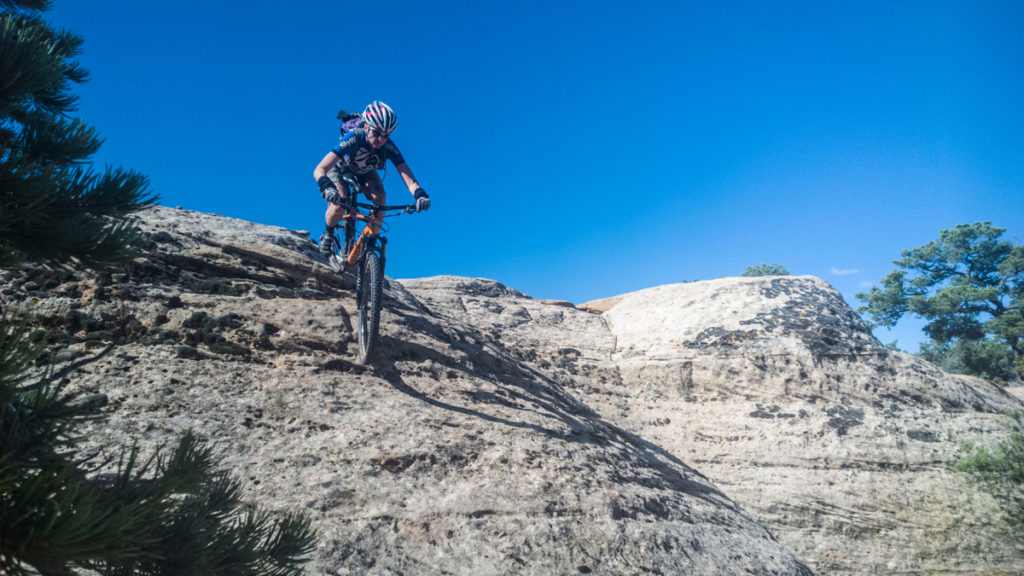
Heather Gilbert droppin in on the Gravity Cavity. Photo by Lukas Brinkerhoff
Once everyone is over the tallest rollover in the world, you can continue up the North Rim. It would seem that the next spot for a rest is where Bowls and Ledges and the North Rim come together. However, if you go just past that spot and you know where it is, you can experience the Gravity Cavity. This is a steep roller followed by a descent G-out and steep uphill. It really is a cavity. If you play the brakes just right, you can smooth over the bottom and actually air out the other side. It’s also fun when done in trains. You’ll want to stop because the whole group will look at, contemplate and eventually ride the Gravity Cavity.
Continuing up the North Rim you will be headed toward the Point, which could be confusing because it’s not the spot we will be terminating at, not the one that this journey is all about, but rather the point of the mesa and a great place for lunch.
After lunch, you turn east and head down the South Rim. With the warmth of the sun at your back and a slight breeze hitting your face, you get to roll down the hardest moves on the mesa. Which is a good thing as your legs are starting to feel a bit burnt. You’ll pick off Rattlesnake, the Wall of Considerable Consequences and the infamous Wall of Death. From the latter, with a smile on your face and the feeling that the Goose has been ridden, proper like, you’ll make your way back to the Windmill Trailhead.
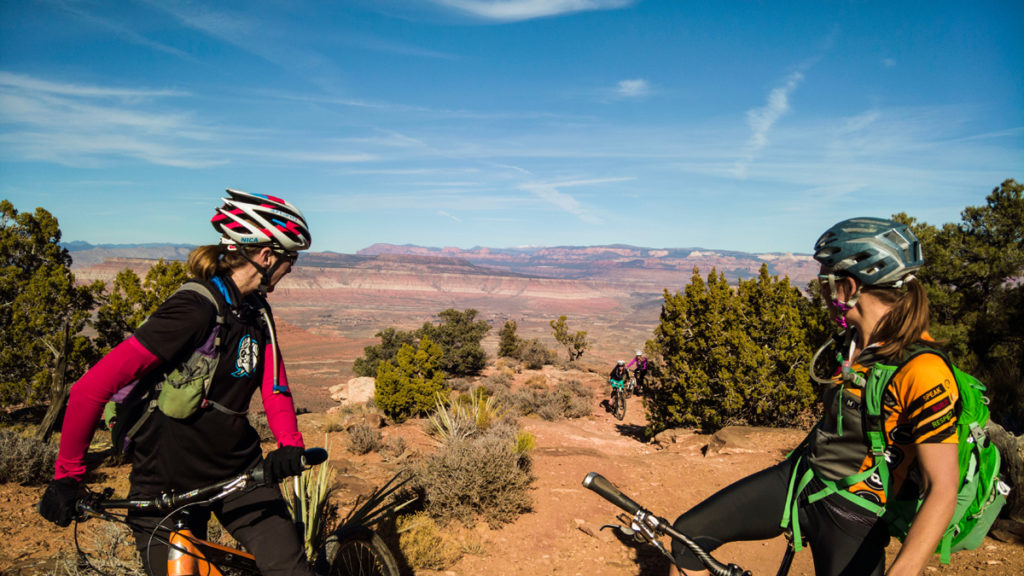
Heather and Kathleen watch as the move is sessioned. Photo by Lukas Brinkerhoff
As the feeling of sweet success surges through the group, there will always be one person coming in hot who after skidding through the parking lot will let the bike go rolling through riderless to crash down to the ground. This person usually immediately demands their adult recovery drink which is waiting ready in the ice chests. The Doritos (which have been scientifically proven to be the best recovery food) are pulled out along with some olives and usually crackers and cheese. This isn’t the first time this rodeo has happened and it sure won’t be the last.
And soon the group feels like a bunch of teenagers who just finished a soccer game. Their faces are glowing from the desert’s sun that has been roasting them all day long and despite the fact that everyone is an adult with real life problems, real life work and worries, the world seems right. At this spot, this point in time, there is nothing any of us would have rather done.
Yup, it may be February with inverted air and days without sun in some places, but in St. George, it’s Goose season.
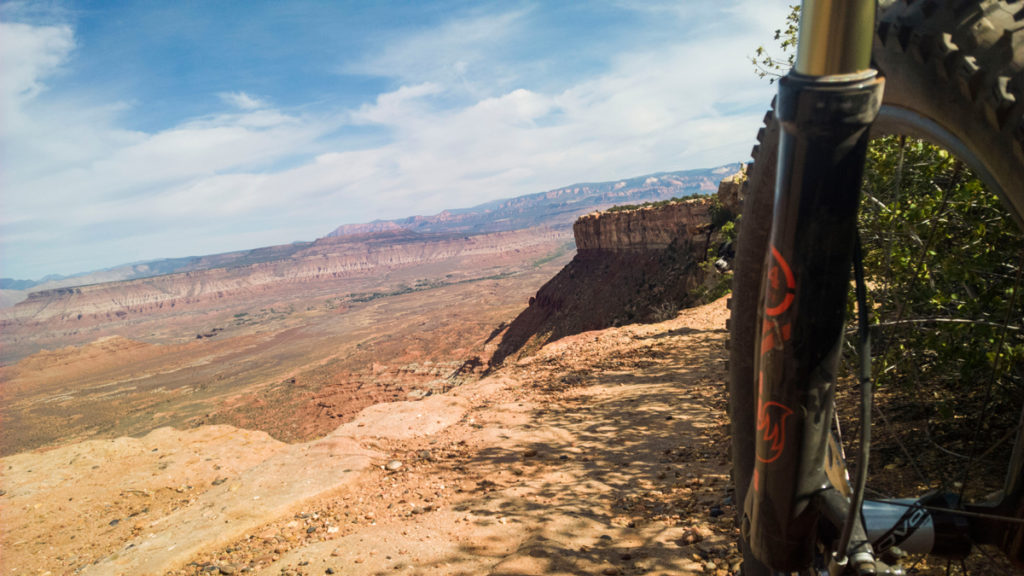
Heading back toward the yurts on the North Rim. Photo by Lukas Brinkerhoff
If you go:
Gooseberry Mesa
Regardless of how many times I ride this trail I always find something new. It has endless possibilities and views of Zion National Park that are just the cherry on top.
Southern Utah, about an hour from downtown St. George.
Camping on the mesa is allowed in any previously disturbed location or you can reserve some higher class accommodations with Gooseberry Yurts at www.gooseberryyurts.com.
The Goose isn’t long but also isn’t a quick jaunt. Plan on spending between 3-5 hours to ride the whole mesa or better yet stay for a few days and really take it all in.
BOULDER, COLO (Jan. 29, 2021) — PeopleForBikes is proud to announce a partnership with Outride, a non-profit organization dedicated to improving the lives of youth and cultivating inclusive communities through bicycling. Outride is a leader in youth cycling education, community grant giving and research investigating the influence of bicycling on the brain.
“Exercise is one of the best ways to support physical, cognitive and mental well-being — the need has never been greater,” said Outride Executive Director Skye DeLano. “Our partnership with PeopleForBikes creates an incredible opportunity for Outride to further strengthen our youth bicycling programs and deepen partnerships within communities and across the cycling industry. Together, we can advance youth and community well-being by expanding youth bicycle access and supporting health, equity and diversity in the bicycling space.”
Through the new partnership, PeopleForBikes will provide resources, expertise and bicycle industry support to Outride’s Riding for Focus program and the Outride Fund. The Riding for Focus program is a middle school-based bicycle education program that helps students improve their cognitive, physical and socio-emotional well-being. Currently in 200 schools across the United States and Canada, Riding for Focus provides bicycle access and education to approximately 50,000 students every year.
“We know that youth are the future of bicycling. Outride’s work over the past seven years distinguishes them as national leaders in youth cycling education, increasing youth bicycle access, building community partnerships and conducting research that demonstrates the social, emotional and physical health benefits of bicycling,” said PeopleForBikes President and CEO Jenn Dice. “What they have been able to accomplish so far is very impressive, and we’re motivated by the possibilities of what we can achieve together.”
The Outride Fund is a community grant initiative that awards matching grants of up to $15,000 to support a wide range of projects related to youth bicycling around the United States. Last year, Outride awarded more than $500,000 in matching grants to more than 75 organizations across 30 states. Both Riding for Focus and the Outride Fund are accepting applications for Outride’s winter application cycle until March 11, 2021.
The partnership will build upon each organization’s commitment to foster and support the next generation of community leaders, create safe, accessible opportunities for youth bicycling and create a more diverse future for the bicycle industry.
PeopleForBikes is proud to announce a partnership with Outride, a non-profit organization dedicated to improving the lives of youth and cultivating inclusive communities through bicycling. Outride is a leader in youth cycling education, community grant giving and research investigating the influence of bicycling on the brain.
“Exercise is one of the best ways to support physical, cognitive and mental well-being — the need has never been greater,” said Outride Executive Director Skye DeLano. “Our partnership with PeopleForBikes creates an incredible opportunity for Outride to further strengthen our youth bicycling programs and deepen partnerships within communities and across the cycling industry. Together, we can advance youth and community well-being by expanding youth bicycle access and supporting health, equity and diversity in the bicycling space.”
Through the new partnership, PeopleForBikes will provide resources, expertise and bicycle industry support to Outride’s Riding for Focus program and the Outride Fund. The Riding for Focus program is a middle school-based bicycle education program that helps students improve their cognitive, physical and socio-emotional well-being. Currently in 200 schools across the United States and Canada, Riding for Focus provides bicycle access and education to approximately 50,000 students every year.
“We know that youth are the future of bicycling. Outride’s work over the past seven years distinguishes them as national leaders in youth cycling education, increasing youth bicycle access, building community partnerships and conducting research that demonstrates the social, emotional and physical health benefits of bicycling,” said PeopleForBikes President and CEO Jenn Dice. “What they have been able to accomplish so far is very impressive, and we’re motivated by the possibilities of what we can achieve together.”
The Outride Fund is a community grant initiative that awards matching grants of up to $15,000 to support a wide range of projects related to youth bicycling around the United States. Last year, Outride awarded more than $500,000 in matching grants to more than 75 organizations across 30 states. Both Riding for Focus and the Outride Fund are accepting applications for Outride’s winter application cycle until March 11, 2021.
The partnership will build upon each organization’s commitment to foster and support the next generation of community leaders, create safe, accessible opportunities for youth bicycling and create a more diverse future for the bicycle industry.
October FayetteCross Leads to 2022 World Championships
FAYETTEVILLE, Ark. (February 4, 2021) – The Union Cycliste Internationale (UCI) Management Committee announced today in Aigle, Switzerland, that Fayetteville will host a cyclocross World Cup as part of the 2021-2022 cyclocross World Cup schedule.
The third annual FayetteCross, and first time World Cup event, is scheduled for Wednesday, Oct. 13. It will be held at the 228-acre Centennial Park, home of the 2022 UCI Cyclocross World Championships.
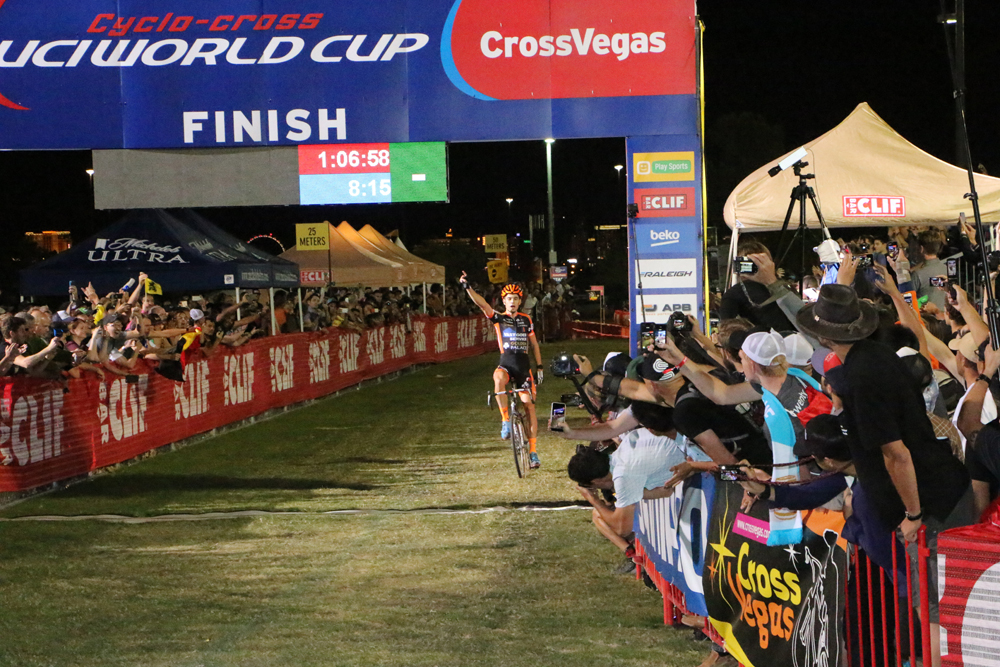
Race winner Wout Van Aert finishes in front of 12000 fans in the 2015 CrossVegas World Cup. Photo by Dave Iltis
As a World Cup, FayetteCross 2021 will offer a preview of the championship course and an opportunity for spectators to see the world’s best racers compete before the 2022 UCI World Championships set for Jan. 29-30, 2022. The event, which will feature athletes from more than 25 countries, is being held in partnership with Experience Fayetteville, the city’s convention and visitors bureau.
“I can confidently say there is no other cyclocross course like this in the United States, perhaps anywhere,” said Brook Watts, FayetteCross race director. “We have been building this course for the past 16 months, with each meter of the course dedicated to bringing the best out of this beautiful Fayetteville mountainside.”
“It has daredevil chutes, a lung-busting climb challenging off-camber sections plus a 38 step climb that will test the racers. And, to the delight of spectators, most of the course is accessible with ease, even the wooded sections.”
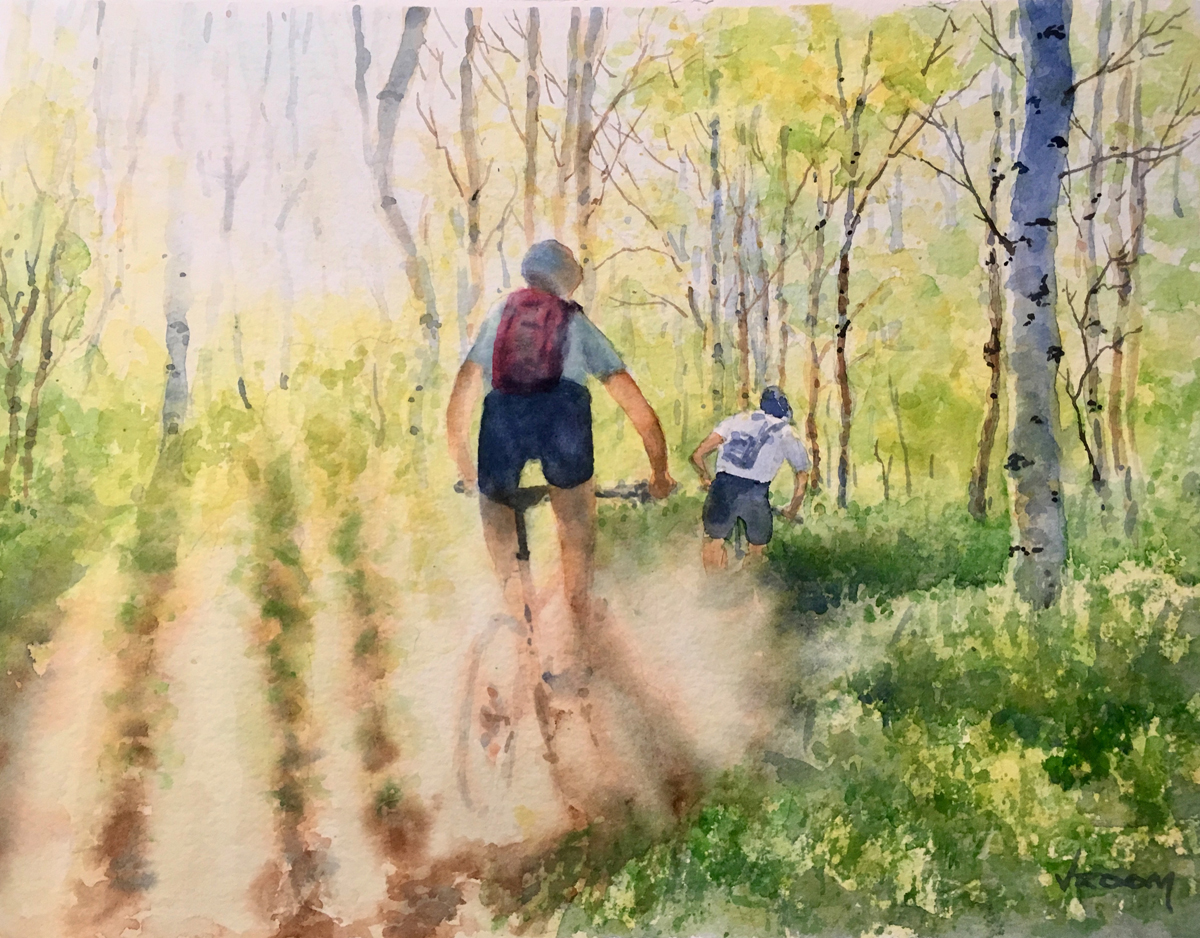
Rich Vroom is a watercolor artist based in Salt Lake City, Utah. His studio is in Sugarhouse where he teaches classes, paints, and bike races. He also teaches at the University of Utah. Prints are available for purchase from Richard. Contact him at [email protected]
Follow Rich on Instagram: @richvroom or on Facebook: Rich Vroom Watercolors
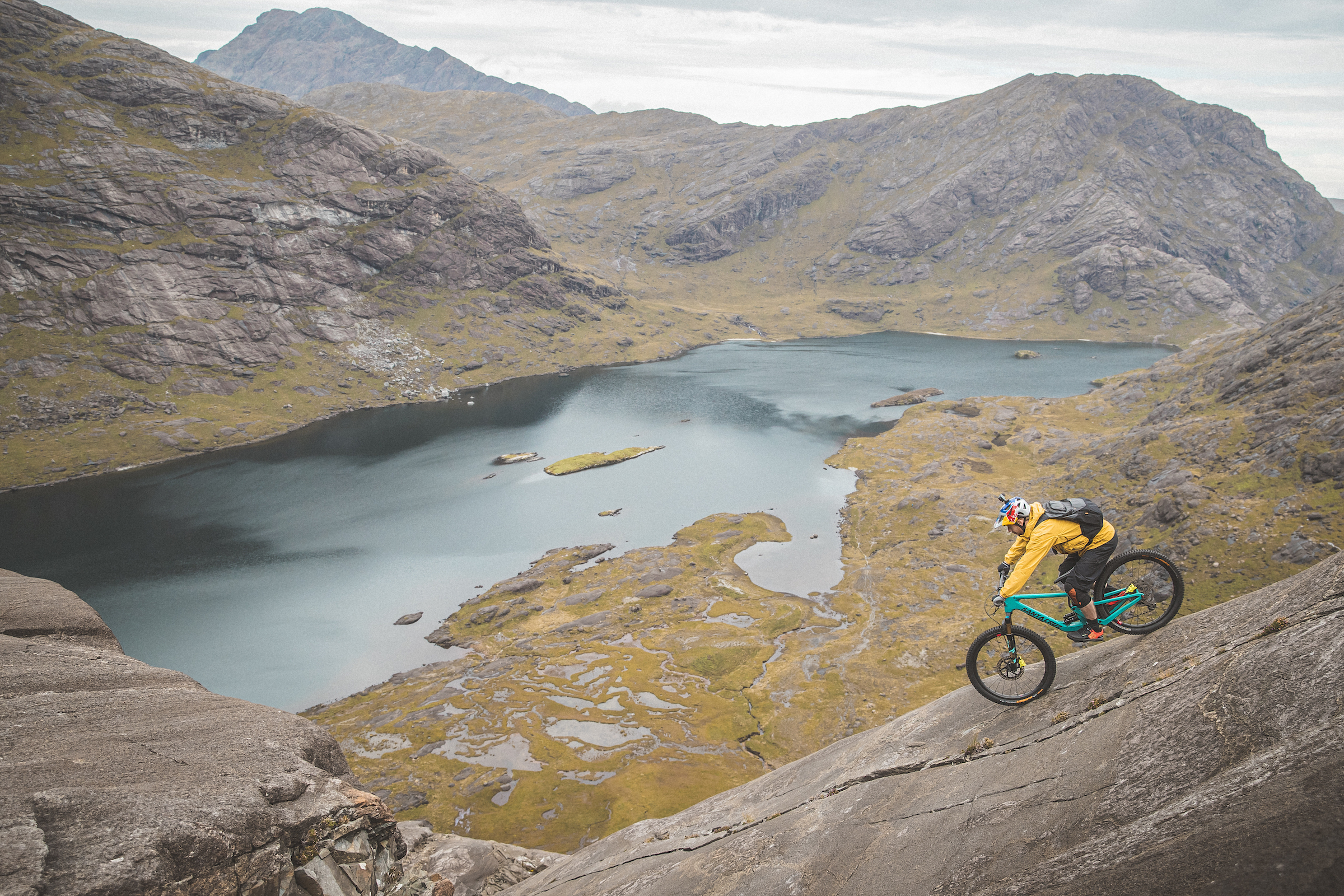
Danny’s latest video, a We are Peny Media production directed by both Robbie Meade and Danny, shows Danny scrambling to just below the summit of Sgurr Dubh Beag / Little Black Peak (733m / 2,432ft.), one of the most technical sections of the Dubh Ridge, unroped with his bike on his back. From here the real challenge begins. Set against the magnificent backdrop of unrivalled mountain wilderness views, Danny navigates his way down an extremely technical one kilometre route over a very steep ledge system of black ‘boiler-plated’ Gabbro slabs, exposed steps and drop offs, buttresses and grassy clefts, to the shores of Loch Coruisk at sea level.
“It really felt so natural to be up on these faces on the edge of cliffs cycling down completely in control and fully trusting my brakes, my tires and the rest of my bike – and of course myself. It’s all about believing in your own skills and it was a cool experience out there and I really loved the feeling of it.”
—
Learn more about Danny’s inspiration, his approach to the slabs, his bike setup and more in the following interview:
Hi Danny, hope you are doing fine. Last year you went to the gym, now you are tackling a rock slab in a freeride mountaineering manner. Where did the inspiration for this project come from?
Danny: One of the sports that has really captured my imagination over the last few years is climbing and the dedication that these climbers put into certain routes. It’s amazing watching guys like Adam Ondra, Alex Honnold, Julia Chanourdie, Margo Hayes and particularly Tommy Caldwell. I am really inspired by watching these climbers setting new routes and new grades in their sport. These girls and guys are dedicating years of their life to these routes.
Danny MacAskill descending the Dubh Slabs on the Isle of Skye. Photo by Dave Mackison
How did you transfer this inspiration to the bike and how did you get this project started?
Danny: I thought it would be pretty cool to find some big slab of rock that obviously can’t be vertical, well at least not vertical for very long. The idea is basically climbing the rock and descending these big slabs. I’ve had some other projects on the line further afield in other countries that were based on the idea of tackling some rock faces but unfortunately because of Covid the plans changed and I had to start looking at home. I did a bit of a research and found the big Dubh Slabs right in the heart of the Cuillins where I filmed The Ridge back in 2014. This is a 500 metre slab of continuous rock. It’s a very remote part of Skye which is already quite a remote place. We managed to get hold of a local fisherman that would take us across by boat to the loch at the foot of the slabs. From there we had to walk a couple of miles inland and then there is this amazing face.
So how did you prepare and approach the face?
Danny: The Dubh Slabs are known as one the UK’s best scrambles/moderate climbs were you not necessarily have to use ropes, but you still feel quite exposed. It’s very stable and grippy rock but quite intimidating to walk up. I of course scouted the route previously. I actually rode to the area by e-bike, climbed up on foot and called out what I wanted to try when actually being on the rock with my bike. I had a rough idea of a route from top to bottom on the slabs.
Some parts look insanely steep. Can you describe how steep it really is?
Danny: There is one part in particular, the last 100m of vertical which on the first day was just not possible to ride. One big, long face of rock with no features to really work with. And if the bike would just be running or the tires losing it, it would end up really bad. I would say this last slab is maybe over 60 degrees, continuous with no real places to brake. It’s hard to describe, but it’s a funny feeling when you are on the rock. You literally feel gravity just pulling you down the rock and when the only thing is stopping you is your brakes you really feel how steep it is. My brakes and tires were right on the limit especially at this last slab, where I had to slightly traverse the face. Towards the end if you look closely, I have got two fingers on the brakes to try to keep myself under control.
Do you feel any fear at all when navigating down these rocks?
Danny: I felt a lot less fear doing this project than doing smaller tricks like going upside down with the trailer on the back in Danny Daycare or doing the front flip in Cascadia. I thought it felt really relaxed and comfortable. Feeling out the rock, feeling out my tires and brakes, what was possible and then just kind of letting it flow. Just trying to stay in control. It’s not like climbing with ropes. I am basically learning how to do this stuff but there is no safety involved – no rope. You make calculations as to what could happen if things go wrong, but it’s best maybe not to think about it too much, rather to think about the positives. There are some kind of slabs in there that have no runout at the bottom, once you go into them there is no way of stopping so you are fully trusting your brakes and tires.
Speaking of brakes and tires. What was your setup for this project – any special modifications?
Danny: I was riding my Santa Cruz 5010, which is normally their 130mm travel. I did toy with the idea of running a bigger suspension bike, but I am really comfortable on the 5010 and didn’t really feel that suspension travel was important. The only modifications I did do to the 5010 was to put on a 160mm travel fork on the front where you would normally run a 140mm travel.
In terms of brakes I was running the Magura MT7 with a Magura MDR-P rotor in 220mm on the front and 200mm on the back which on that small bike made the brakes super powerful. Furthermore, I had Magura performance pads on the front and used some prototype HC3 levers made for my trials bike which were slightly longer to get me even more power. I set these levers on the most powerful configuration – so all in all the most powerful brake setup that you can have on a bike. It made me feel so comfortable while riding down there. If anything would really stand out it was between the brakes and the tires.
So which tires did you go for?
Danny: On the first day we were there I was running kind of normal Continental Enduro tires which are already very grippy on the rock, but some of the places I was planning to ride were very extreme in terms of what’s possible to ride your bike down and staying in control. Some of the lines I had in mind I wasn’t able to ride into because I would have probably been dead if I tried. After the first day we were really happy with the footage but the project wasn’t quite how I wanted it because I really wanted to ride the entire line. For the second day I managed to get some Continental Downhill tires which have a softer compound on them. We went back to the slabs and this time I managed to ride the parts I was too scared to before, especially the part on the pretty exposed cliffs where you really have to stay in control of your speed because it’s not possible to come to a stop.
Your original discipline is street trials, but we see you more and more on the mountain bike and e-bike. Which skills helped you most?
Danny: You’ve got to be a well-rounded rider and there’s a probably only a few folks that would look at riding this kind of stuff. I’ve been riding loads of mountain bike and I’ve done over 8,000km on my e-bike in 2020. I guess it is a combination of all the different kind of riding I have done over the years.
So we talked about the bike setup, what was your plan regarding filming and gear setup?
Danny: I wanted the riding down the slabs to be as visual as possible and have a lot of on-board perspectives for people to feel like they are there with me. That’s why I wanted to film this on my GoPro. I had a GoPro Hero 9 on my head and also a GoPro Hero Max on my chest and we had one GoPro Hero 9 on the racing drone. We also had a Hero 9 on a pole we used for some shots.
You’ve been using GoPro cameras since 2012. How has the tech developed and advanced?
Danny: The Hero 4 we used for Cascadia was doing an amazing job back then. But the quality difference today, the stabilization and all other features allow us to do so much more. The Hero 9 that just got released captures exactly what you are seeing. It’s an amazing tool to work with.
Music plays an important role to you. How do you choose the right track?
Danny: Music for my films is always so important to me. I would say it makes at least 50 percent of the viewing experience. I am really passionate about music and I must have looked through at least 10,000 tracks for this project. You want the music to fit the riding and emotions and ideally fit it into different sections.
Who was part of your crew?
Danny: I had an awesome crew who I worked with many times before.
Robbie Meade (We are Peny) and me as directors, Andrew Lawrence (FPV drone),
Duncan Shaw (Producer), Rory Semple (BTS filming), Dave Mackison (photography)
Last question: What’s so appealing about rock?
Danny: The cool thing about rock compared with dirt is that it doesn’t change, nobody built it, it’s sort of raw. For me personally it was a cool challenge and it’s something I would like to do more often.
2nd annual event challenges cyclists to ride 3,700-mile route across America
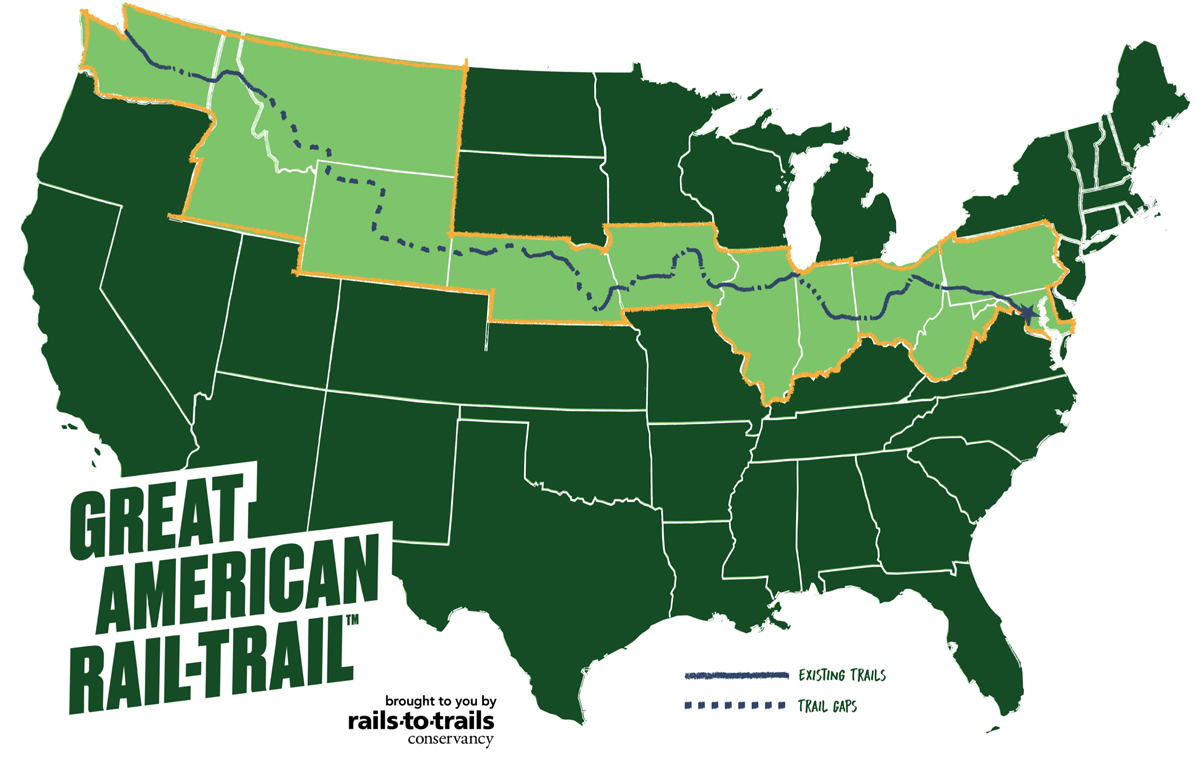
Richmond, VA – In the second edition of the ‘Great American Ride’ hosted by Sports Backers in partnership with Rails-to-Trails Conservancy, participants in teams of four, eight, or 12 will attempt a virtual ride across America. The virtual route tracks along the developing 3,700-mile Great American Rail-Trail™, a signature project of Rails-to-Trails Conservancy, the nation’s largest trails advocacy organization. The Great American Rail-Trail™ is over 53% complete and connects more than 145 trails between Washington, D.C., and Washington State.
The ride kicks off on March 20, and teams will have two months to complete the east-to-west course. Registration is now open at www.GreatAmericanRide.org.
During the event, teams will ride and track their mileage each day and report how far they have gone. An online map will track each group’s virtual progress across the course and a live leaderboard will display the standings in real time, with groups in male, female, and co-ed categories. Teams will depart from Washington, D.C., on March 20, and the first group to virtually ‘reach’ the section of trail in La Push, Washington, on the Pacific coast of Washington State, will be declared the winner. All participants will receive a pair of exclusive cycling socks, unique finisher medal, pre-mapped route across the country, virtual finisher’s badge, and virtual travel experience with destination highlights featured along the route.
The Great American Rail Trail would provide car free cycling across the United States, running 3700 miles from Washington DC to Washington State. Graphic courtesy Rails to Trails Conservancy
“The Great American Ride helps make the dream of riding across the country a little more real for participants, while combining the camaraderie of team cycling with the fun of a long-distance solo ride,” said Molly Johnson, Event Director of the Great American Ride. “At Sports Backers, we are always looking for ways to inspire active living and encourage people to be active on a daily basis and the Great American Ride is a unique way to accomplish those goals.”
Rails-to-Trails Conservancy, the official charity partner for the Great American Ride, has long championed the vision of the Great American Rail-Trail™.
The Great American Rail-Trail™ aims to become an iconic piece of American infrastructure by connecting the country by trail over 3,700-plus miles in 12 states between Washington, D.C., and Washington State. In 2020, the trail crossed the 2,000-mile mark, achieving an important milestone on its way to completion. Participants can support Rails-to-Trails Conservancy’s vision for the Great American Rail-Trail™ by donating during event registration or fundraising during their ride.
“We are thrilled to join forces with Sports Backers again for the Great American Ride. As people continue to seek ways—and the motivation—to be active outdoors, the Great American Ride offers the inspiration and the encouragement many of us need to get outside and create bicycling adventures close to home,” said Brandi Horton, vice president of communications for Rails-to-Trails Conservancy. “This is a great opportunity for people all over the world to be active and get to know America’s first cross-country trail, which will make it possible to bike from coast to coast completely separated from vehicle traffic.”
“After my experiences as a participant in 2020, I know there’s nothing like the Great American Ride, and I can’t wait to put in the miles across the U.S. again with my teammates,” said Gordon Wadsworth, a professional cyclist who took part in the first year of the event and is planning to ride again this year. “It was great to share in such a big effort with my team and all the other riders and I’m really looking forward to the challenge again in 2021.”
In addition to sharing the ride experience with teammates, Great American Ride participants can also take advantage of the referral rewards program to recruit others to join. Participants who refer five other riders will receive an exclusive Great American Ride Specialized water bottle, and participants who refer 10 other riders will receive the water bottle and a pair of Goodr Sunglasses. To refer others, a rider can share their unique referral link (found in the registration confirmation email) through email, social media, or text message.
BERKELEY, Calif. – The National Interscholastic Cycling Association (NICA) and USA Cycling (USAC) are excited to announce a formal sponsorship to increase accessibility to cycling in America.
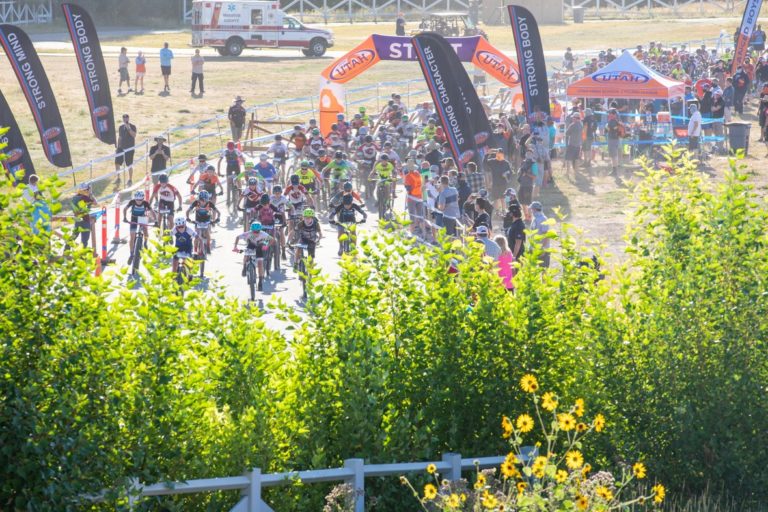
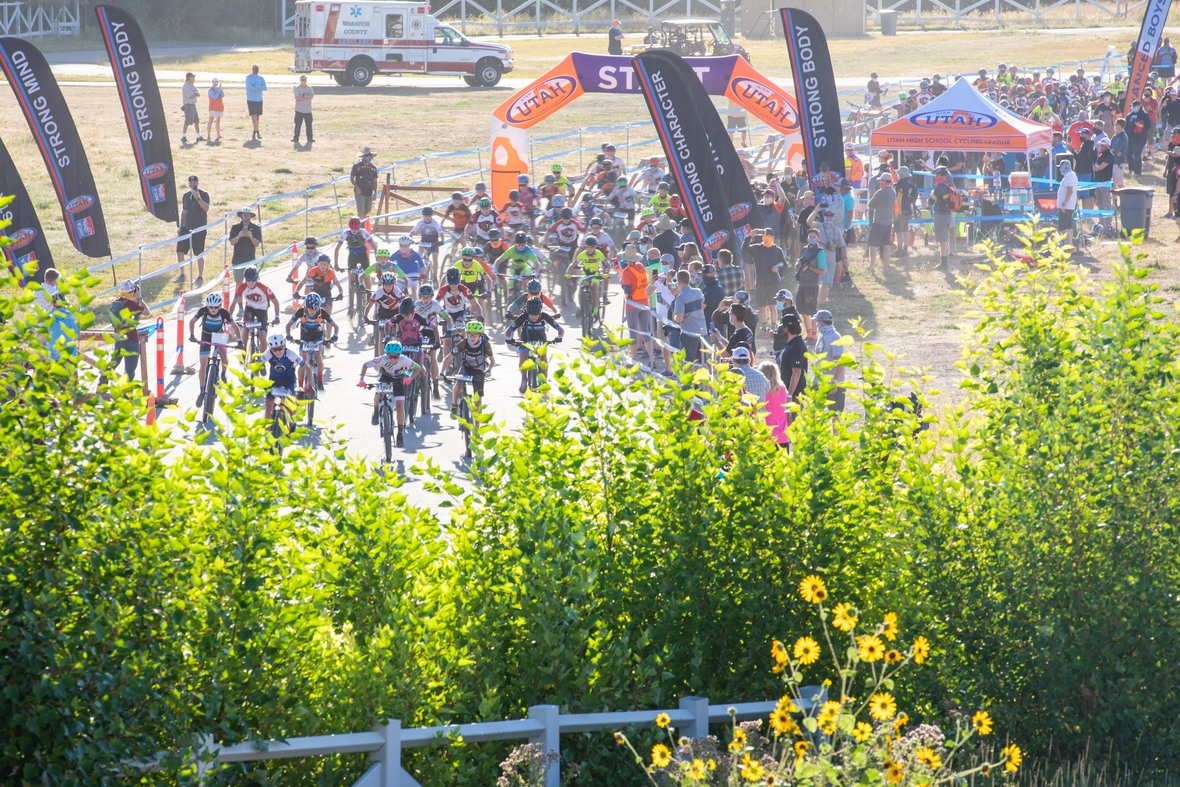
Utah League Student-Athletes racing at Soldier Hollow. Photo: Selective Vision
With a mutual commitment to getting more kids on bikes, together NICA and USA Cycling will promote youth riding, advance cycling opportunities at the interscholastic level, and build stronger and more passionate communities through cycling.
“We are pleased to welcome USA Cycling as a sponsor and look forward to the opportunities this creates for our student-athletes through our shared passion for youth cycling and character development,” said NICA President Steve Matous.
The benefits of this commitment will be realized with:
Collaboration on connecting maturing riders with their next cycling experience.
An ongoing commitment to providing free USA Cycling Junior memberships, and discounted Family memberships, for league student-athletes to reduce barriers and encourage participation at more local events.
Recognition of NICA league event results in the USAC ranking system. This will facilitate Regional and National Championship call-ups and optimize the opportunity for riders to compete in a variety of events.
A financial sponsorship that creates support across the NICA organization.
“It’s vital that USA Cycling and NICA work together, to champion a more inclusive and accessible path into cycling – especially for youth,” said Rob DeMartini, CEO of USA Cycling. “Together we can champion youth riding and racing and the next generation of cyclists. The work has just begun and we are excited to be working alongside the leaders of Interscholastic cycling in America to get more kids on bikes.”