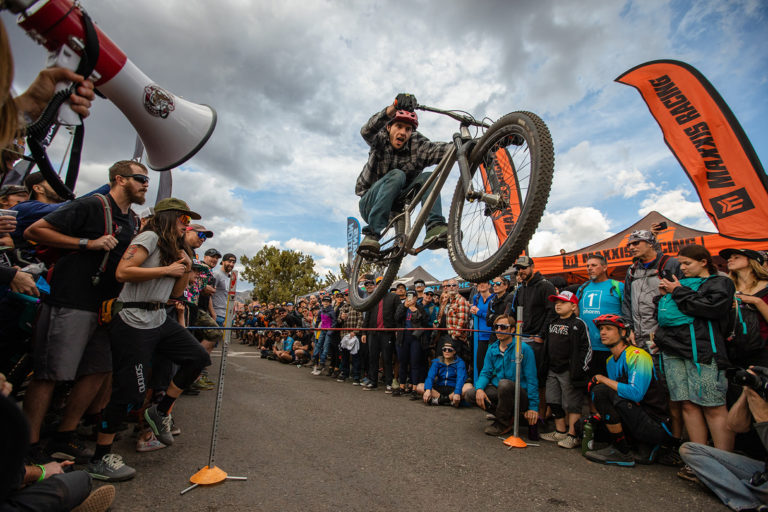
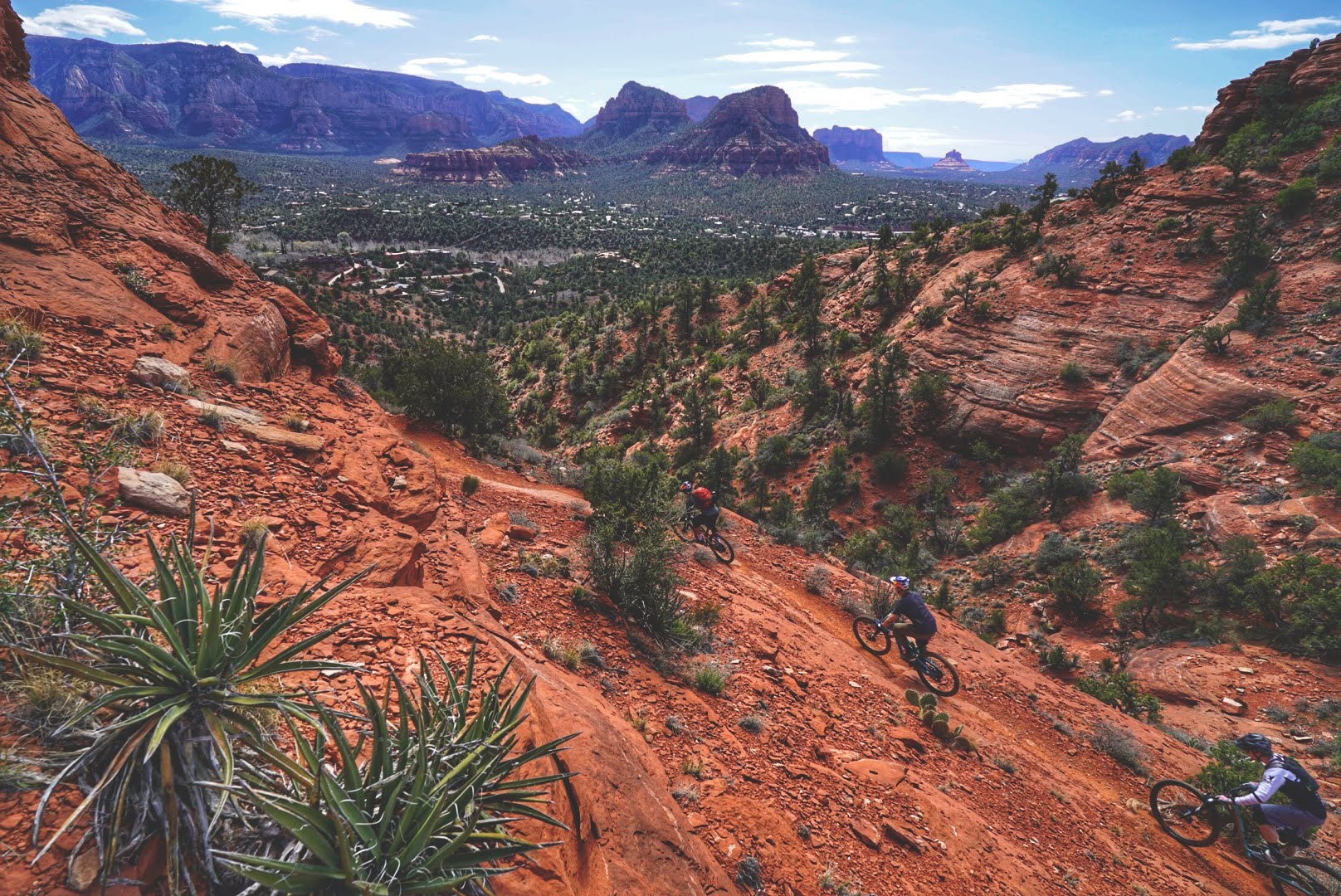
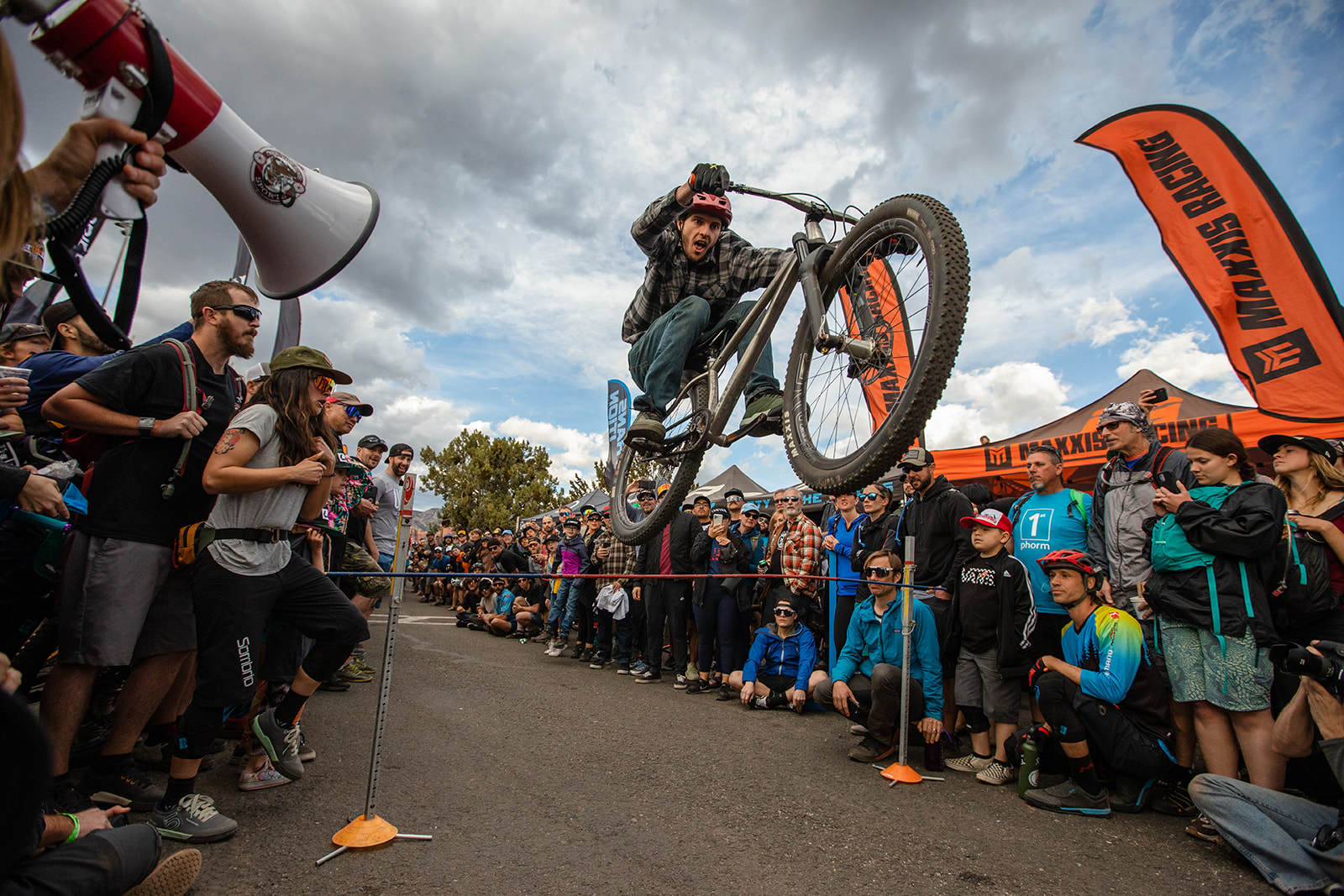
Due to COVID-19, the Sedona Mountain Bike festival will not hold a spring event, which was scheduled for March 5 – March 7, 2020, and is working to reschedule the event for Nov. 12 – Nov. 14, 2021. This will allow for COVID-19 infection and hospitalization rates to drop, and vaccines to arrive for the general public.
Photo courtesy Sedona Mountain Bike Festival
“It likely comes as no surprise that with everything going on right now it is next to impossible to hold a Sedona Mountain Bike Festival in March of 2021. We had hoped with all of our might that things would be to a better point by now and it would look like we could provide that same great experience that you have come to expect from the Festival but it can’t be done this spring,” said Sedona Mountain Bike Festival Director Mike Raney.
Photo courtesy Sedona Mountain Bike Festival
This is why the Festival team is scheduling a one-year-only fall Festival for Nov. 12 – 14, 2021. If things look better in the summer, tickets will be offered for sale for a fall Festival, before getting back to normal with the typical March event in 2022.
Save the Dates:
One-time only fall festival: Nov. 12 – 14, 2021
Back to normal spring festival: March 4 – 6, 2022
“It has become so clear how much we miss all of the great events that happen every year and help shape not only the industry but the whole mountain bike experience. Please do all that you can to support other events you value whether it is music, theater, mountain biking or anything else you’re into. The people that dedicate their lives to these experiences need you, and we need them. See you hopefully in the fall,” said Raney.
The Utah Yield (Idaho Stop) bill has been reintroduced this year by Rep. Carol Spackman Moss. The proposed law (House Bill 142) would allow cyclists to treat stop signs as yield signs, which legitimizes a behavior that most cyclists do anyway. The bill is up for consideration for the fifth time in the last 11 years. It has failed by razor thin margins in years past. The bill passed the Utah House Transportation Committee on January 27 by an 8-3 vote. The next stop is the full House, and then if it passes, it will be considered in the Utah Senate.
Update 2-24-21 – HB142 will be heard in the Senate Transportation Committee. Public comment options are available. Please email the committee as soon as possible in support.
Update 2-4-2021: HB 142 has passed the House, and is off to the Senate, most likely to the Senate Transportation Committee. Your calls and emails are needed. See below for details.
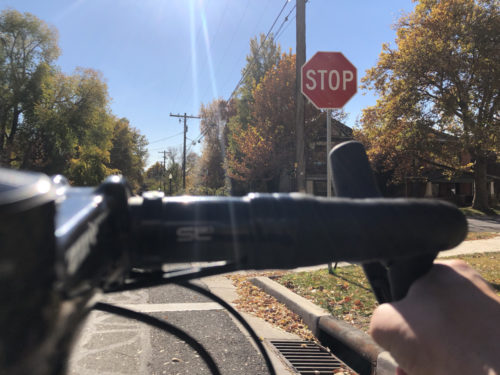
Will the Idaho Stop Bill finally pass in Utah in 2021? The bill would allow cyclists to treat stop signs as yield signs, and certain red lights as stop signs. Photo by Dave Iltis
This year’s version of the proposed law is different in that it is not considering stop lights. Previous versions of the bill would have allowed cyclists to treat stop lights as stop signs, proceeding when safe to do so. The red light provision faced steep opposition in the Senate Transportation Committee in 2019, but senators indicated that they would likely support it if the stop light portion was removed. Utah already has a law that allows cyclists and motorcyclists to proceed through a red light if the light hasn’t triggered after 90 seconds.
Cycling Utah worked with Rep. Moss by asking her to reintroduce the bill this year without the red light provision since we felt that this had a greater likelihood of passing.
The relevant portion of HB 142 is below:
(5) (a) As used in this Subsection (5), “immediate hazard” means a vehicle approaching
91 an intersection at a proximity and rate of speed sufficient to indicate to a reasonable person that
92 there is a danger of collision or accident.
93 (b) Except as provided in Subsection (6), an individual operating a bicycle approaching
94 a stop sign may proceed through the intersection without stopping at the stop sign if:
95 (i) the individual slows to a reasonable speed; and
96 (ii) yields the right-of-way to:
97 (A) any pedestrian within the intersection or an adjacent crosswalk;
98 (B) other traffic within the intersection; and
99 (C) oncoming traffic that poses an immediate hazard during the time the individual is
100 traveling through the intersection.
101 (6) Subsection (5)(b) does not apply to an intersection with an active railroad grade
102 crossing as defined in Section 41-6a-1005.
Commentary and Call to Action:
Cycling Utah supports this bill for multiple reasons. In Idaho, crashes dropped after the 1982 law went into effect. The bill legitimizes typical cyclist behavior at stop signs and many stop lights. Additionally, at stop lights, for the most part, the bill moves code governing cyclists from one section of the code to another. The bill does not allow cyclists to blow through stop signs or stop lights. The Idaho Stop makes cycling easier for cyclists in that they do not have to stop and go completely at each intersection. By keeping momentum, navigating traffic can often be easier. Cyclists do have to yield to oncoming traffic and pedestrians.
A recent study on Policies for Pedaling from the Chaddick Institute for Metropolitan Development of DePaul University suggests that Chicago should adopt the Idaho Stop:
“I. Considering permitting “Idaho Stops” at four-way stop intersections, which would enable cyclists to determine whether to stop or yield based on traffic conditions in order to maintain their momentum. The study shows that only about one cyclist in 25 presently complies with the law to come to a complete stop. A pilot program to allow Idaho Stops at certain traffic signal intersections when traffic volumes are relatively low may also be considered.”
By Jamie Morningstar — Most years I don’t worry too much about winter footwear for my road bike. My winter rides are usually limited to commuting to and from work, so I generally make do with platform pedals and some nice-looking waterproof boots that I wear all day at work. Or, occasionally, I’ll wear heavier boots to work and then change after arriving.
But, as we all know, 2020 was anything but ordinary. Like many folks, I’m still working from home. I miss the structure of my daily year-round cycle commute, but also enjoy the freedom of riding different bikes at different times of the day.
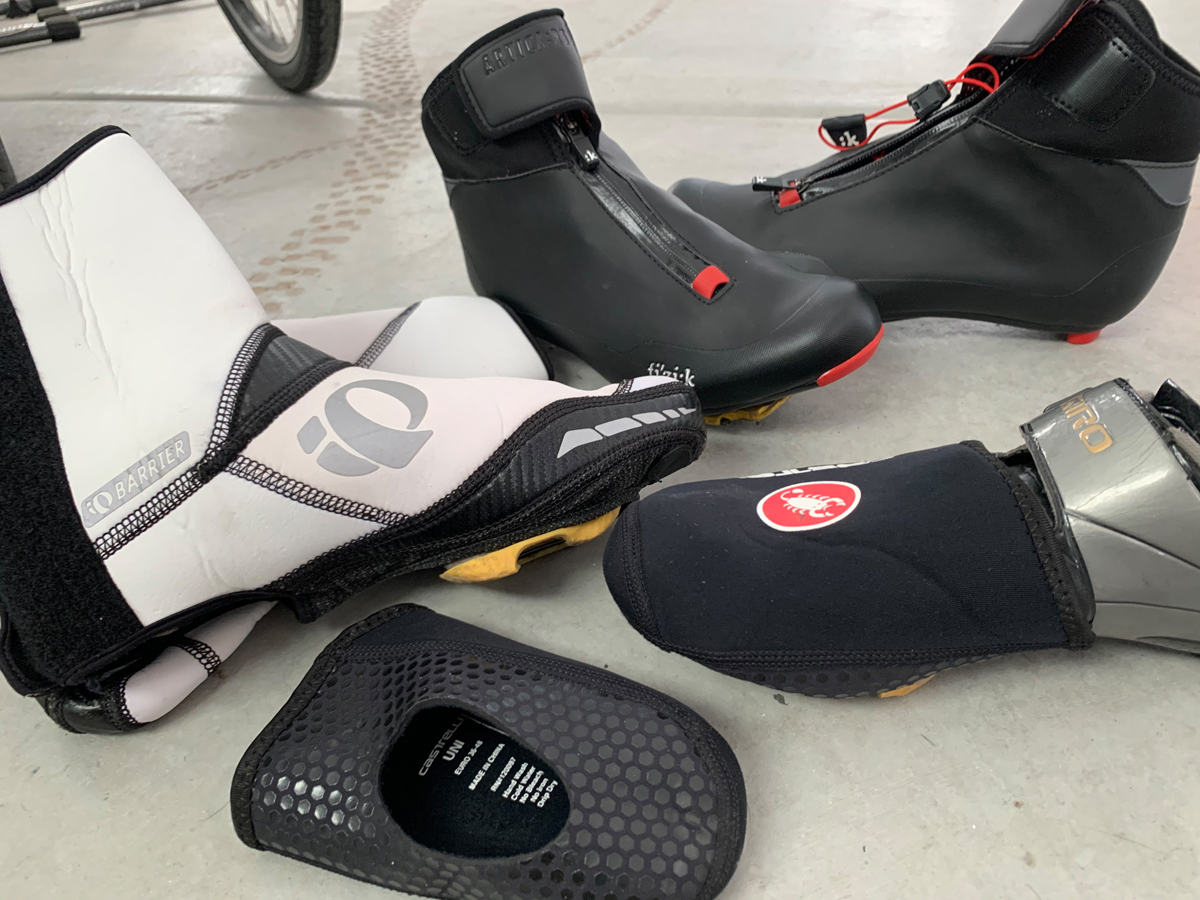
Cycling shoe cover options for warm winter cycling. Photo by Jamie Morningstar
I’ve been riding my road bike a lot more this year, and as temperatures dip I’ve needed to break into my treasure trove (duffel bag) of warm cycling-specific clothing more liberally. Good thing I’m a total gear hound and am prepared for basically any cycle-wear need.
Road Bike Footwear Options
Once the temperatures dip below about 60, I find that my well-vented (well-used) road bike clipless shoes aren’t enough to keep my feet comfortable on rides. That’s when I put on the toe covers.
Basically, toe covers are three-inch neoprene sleeves that slide over the top half of your shoes. They are big enough to cover the vents in the front of your shoes and do a great job at keeping those tootsies toasty in cool temperatures. They have holes in the bottom to fit your cleat through.
Toe covers are great for so many reasons. They’re cheap. You don’t have to take them off to take your shoes on and off because they don’t cover the laces or straps on your shoes. They’re small, so you can easily slip them in a pocket if your toes start to overheat (this is not a thing my toes ever do).
Toe covers are just enough to take the edge off on cool mornings. But when the temperatures start to really descend, it’s time to kick it up a notch with full shoe covers.
Full shoe covers are neoprene booties with Velcro in the back to hold to secure the cover around your shoe and ankle. They encase your entire road shoe, with a hole in the bottom for your road cleat.
Up until this year, shoe covers have been all I’ve really needed for cold weather road bike footwear. They are super warm, the cuffs extend high enough to cover any sock-to-tight gaps that could open up and let cold air in, and they are reasonably priced.
The big downside with shoe covers is that they’re a bit of a pain to put on. Because they cover your entire road bike shoe, including all of the vents and buckles (pro), they are super warm, but you have to put your shoes on and then the covers on every time you want to wear them. Normally for the handful of times I use them during the year, this isn’t enough of a downside to warrant paying more for more convenient alternatives. But this year isn’t normal.
So, this year I sprung for some sweet winter road biking shoes! These shoes have all of the pros of the shoe covers (super warm, waterproof, no exposed vents or laces) without the inconvenience of putting covers on top of my shoes. There are very few winter road shoes out there for women (I found exactly zero) so I ended up buying men’s shoes in my size.
If you’re a Nordic skier, these shoes will feel uncannily familiar to you – they’re basically like skate ski boots but without the ankle support and with carbon soles. The shoes extend high up the ankle to eliminate gaps and close with an internal lace. Then there’s an outer covering that secures over the laces so that there are no spaces for wind to blow in. The shoes are warm and waterproof.
Other Options
To be honest, the most practical thing would have been for me to just buy a winter SPD shoe and swap my road bike pedals over to a cheap SPD pedal for the winter. Our friends in the mountain and fat bike communities have a ton of great winter riding SPD footwear options out there that are cheaper than the handful of winter road biking shoes available.
For me, my own internal laziness (I hate swapping pedals) and the fact that I had an extra pair of Speedplay cleats lying around pushed me over the edge to purchasing winter road shoes that work with my road pedals.
Also, I should mention that the photos in this article aren’t necessarily advocating the brand of shoes and covers I own. Most of the brands and styles I own correspond to whatever was on sale in my size at the time I happened to buy them. I like what I have, but I’m sure there are plenty of equally great options out there for you. My recommendation is to buy whatever is on sale in your size at the time you happen to buy them.
The moral of my story is that there are myriad options and tools out there to help you keep riding no matter the weather. Many of my friends choose to bring their bikes indoors and train inside in the winter months. Many commuters strap on the studded tires or swap to a fat bike and just keep riding outdoors. There’s no bad option here – just keep pedaling.
After the March 2020 Tucson Bicycle Classic was cancelled in late 2019 due to what was initially referred to as a “lack of commitment from the local cycling community,” a new race committee was assembled in the hopes of resurrecting the event for the 2021 season.
Photo by Damion Alexander courtesy Tucson Bicycle Classic
Unfortunately, the ongoing COVID-19 pandemic, which shut down virtually all racing in the United States in 2020, has claimed another casualty, scuttling the 2021 event as well.
An unsigned note from the organizers dated January 19, 2021 went over the reasons for the cancellation:
In September 2020, the new TBC Race Committee felt that resuming the event in March 2021 might be feasible despite COVID. An event date was secured from ABRA (Arizona Bicycle Racing Association), and contact was made with the various municipalities that hosted the most recent 2019 event.
In October 2020, Arizona Governor Doug Ducey announced that a special event permit would be required from the County Health Department before any other local permits could be issued. This new permit required that a detailed COVID Mitigation Plan be submitted and a COVID Safety Official assigned in order to secure the special event permit. This required modifications to the race format, and a number of other significant changes. After an encouraging survey of previous TBC riders, the race committee pushed forward with their plans for 2021.
In mid-November, the Pima County Board cancelled all events in the county for the remainder of the year, and the Pima County Health Department requested that the race committee put the permit application on pause until at least mid-December.
In addition, planned road construction in 2021 would mean that parts of the traditional courses would not be available for use in March 2021.
On December 15, ABRA forwarded guidance from USA Cycling recommending that all events in the first quarter of 2021 be postponed or cancelled due to ongoing pandemic concerns. At this point, the race committee made the difficult decision to pull the plug for 2021, and to try again for 2022.
The committee closed out their announcement with the following statement:
“We tried hard to bring the TBC back in 2021 but it wasn’t in the cards. The challenges we faced were similar to those faced by race promoters across the country. We are hopeful that as the vaccines become widely administered, road racing events will resume by this summer and that by March 2022, things may even seem “normal”. The new TBC race committee is committed to continue supporting El Grupo Youth Cycling (https://www.elgrupocycling.org/) as our primary charitable partner. See you in ’22!”
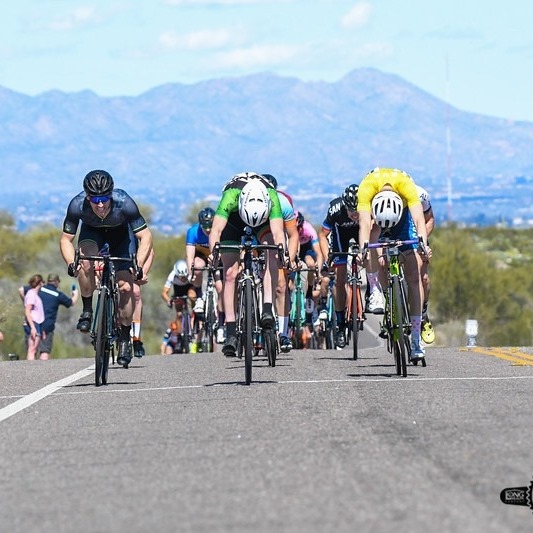
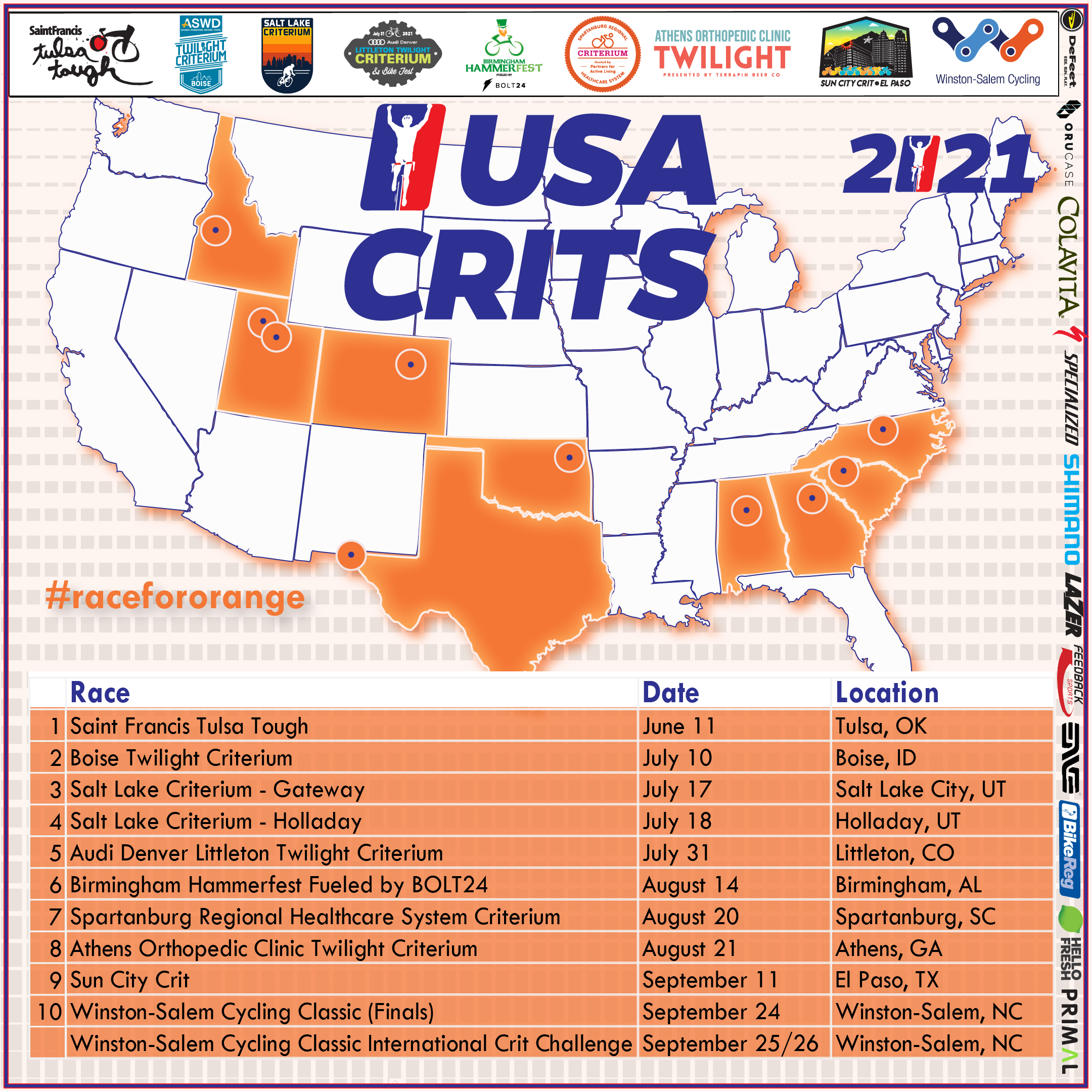
ATHENS, Georgia (January 25th, 2021) – 14 men’s teams and 10 women’s teams will race across the 10 USA CRITS national calendar events as D1 Teams. Returning for 2021, to defend their team championship, will be both 2019 team champions, Colavita HelloFresh Pro Women’s Cycling (women) and ButcherBox Cycling (men).
On the line in 2021 for the D1 Teams will be the three leader’s jerseys and the HelloFresh Team Championship. Over $150,000 in purses will be at stake as well as another $80,000 on the expanded non-points calendar to be released in February. The season will culminate for D1 teams as Winston-Salem hosts the 2021 USA CRITS Finals along with the new International Crit Challenge, bringing international teams to race against American D1 programs in the days following the September USA CRITS Finals.
All 2021 USA CRITS races will be streamed live for free on USACRITS.tv. In total, 20 days of live racing are scheduled to be streamed on the USA CRITS and expanded race calendars.
2021 D1 Women
Amino Factory Racing/ExtraSweet
Miami, FL
ATX Wolfpack p/b Jakroo
Austin, TX
Automatic Racing
Athens, GA
ButcherBox Cycling
Boston, MA
Colavita HelloFresh Pro Women’s Cycling
Edison, NJ
DNA Pro Cycling Team
Salt Lake City, UT
L39ion of Los Angeles
Los Angeles, CA
Levine Law Group Elite Women’s Cycling
Mooresville NC
Team Robson Forensic P/B Milligan Cycling
Hilton Head, SC
United Cycling
Dallas, TX
2021 D1 Men
Aminorip Factory Racing
Miami, FL
Automatic Racing
Athens, GA
BSCG/ Support Clean Sport / Guttenplan Coaching
Palm Harbor, FL
ButcherBox Cycling
Boston, MA
CS Velo Racing p/b Cannondale
Philadelphia, PA
Good Guys Racing NYC P/B HighWaterWomen.org
New York, NY
L39ion of Los Angeles
Los Angeles, CA
Miami Blazrs
Miami, FL
Nashville Local Cycling
Nashville, TN
Primal-Audi Denver
Denver, CO
Team Robson Forensic P/B Milligan Cycling
Hilton Head, SC
Strike Cycling U23 Development Team
Houston, TX
Team CLIF Bar Cycling
Emeryville, CA
Voler Factory Team p/b OVCB
San Rafael, CA
Continued emphasis on expanding the professional team aspect of criterium racing will be made as several events move toward a team-only invitation format and others have fields that will be D1-only team races. Birmingham Hammerfest Fueled By BOLT24 and the Finals race at the Winston-Salem Cycling Classic will host D1-only races. All events will continue to offer races across license categories.
Criterium racing now makes up over half of all American road cycling races.
“Despite the challenges of 2020, it is exciting to be able to see continued growth in our D1 program as well as expansion at the event level,” said Scott Morris, USA CRITS Managing Director.
Women’s programs continue to be a focus of USA CRITS. “We are placing priority on sponsors and programs that are investing back into women’s cycling. Women currently make up a smaller percentage of racers leading to challenges in them finding, forming, and funding teams. One solution put into place was our database of interested riders allowing teams to connect with female athletes looking to be part of a D1 program,” said Morris.
“Seeing new D1 teams develop with the primary purpose of racing USA CRITS and existing teams growing professionally are positive signs. The creation of season long team and rider storylines is what the sport needs. Continued increases in the quality and value of our local events also play a key role. We are making progress toward our goals,” continued Morris.
Spartanburg Regional Healthcare System Criterium has selected to use their alternate date and will be moved to August 20th. The event will be the day before Athens Orthopedic Clinic Twilight Criterium and will make Spartanburg the seventh Series points race and first date of Speed Week in a soon to be released expanded calendar.
By Breanne Nalder, MS, RDN — Pardon the lame joke, but in college we try to avoid gaining the “freshman 15” right? Let’s not have staying at home lead to a fluctuation of 19. You’re likely tired of hearing ideas on how to get through this pandemic. Well, I want to acknowledge that it has affected each of you in unique ways. Whether it’s the amount you are riding your bike and/or your overall health, the time has added up and it seems that we have a while to go … my hope here is to offer some guidance on navigating your food choices while you work, ride, home school etc., from home.
Making your own meals
Whether you are actively grocery shopping or having your food delivered, the choices you put into your cart are crucial. Keep in mind a few strategies:
Pick your produce first. The fresh fruits and veggies must be eaten before they over ripen so you’re more likely to eat those colorful, nutrient dense foods first.
Frozen is better than canned. You can stock up on frozen fruits and vegetables because they retain their nutrition, whereas canned goods lose their vitamin and mineral content to the water they are in. And hopefully you’d never choose the ones that are preserved in sugar/syrups! Exception: beans and legumes are absolutely fine and lose no nutritional value in the can, so keep using them for protein and fiber sources.
Avoid purchasing the guilty treats altogether. Simply put, if there aren’t cookies in the jar you won’t eat them!
Measure out your portions. If you do have treats or chips or even trail mix, make sure to put the appropriate amount in a separate bowl so you don’t mindlessly pack in 1000 calories of nuts because they are in the Costco sized bag next to your computer while you work.
Get creative! Look at what’s fresh now and build meals around that. For example, a butternut squash risotto and kale “chips” with the winter harvest veggies (see attached recipes!).
Ordering takeout
It’s not expected that you be a gourmet chef or cook every single meal on your own. And there are so many options for food delivery, you can take advantage of the convenience while still making healthy choices. A few simple tips:
Get sauces and dressings on the side so you can be in charge of the saturation.
Opt for steamed veggies or side salad over the side of fries. Enough said.
Even if it’s not the healthiest delivery, have 1 portion and save/freeze the rest for another night. For example, pizza: load it with veggies, ask for light cheese, and have one slice with a side salad and save the rest. You’ll have multiple meals that way and not overindulge!
This is a cycling-oriented magazine, so let’s talk about nutrition for your rides on the trainer (or outdoors if you brave the cold temps!). We still need to fuel as we would during the summer months, and likely be more focused on nutrition in these conditions.
When riding stationary, we sweat incredible amounts, right? All the more reason to hydrate properly. Shoot for 2 bottles per hour, at least one of those having electrolyte mix. If you’re on the trainer more than an hour, aim to consume 30-60g of carbohydrate per hour (based on intensity of workout and body size). And finally, be sure to recover, especially if you ride most days. You have a 30-minute window to replenish the carbs and hydration you lost during the ride as well as get some protein in to start rebuilding the muscles you tore down in the effort. This reminds me of my favorite line: work hard, revive harder!” You’ll find that you can train consistently when you fuel and rest with as much integrity as you exercise.
Kale Chips recipe, courtesy Breanne Nalder-Harward
This all applies for outside riding in the winter, but for the opposite reason. Instead of excessive sweating, you may not be triggered to drink in the cold, and it may be too much of a bother to try and take in food with all the layers and think gloves, etc. but your body is working hard to ride AND to stay warm. You’re losing hydration and burning kJs as much or more in adaptation to the cold, so that fuel is crucial. Using a mix in all your bottles can help you stay on top of the hydration, electrolytes, and calories.
The takeaway message here is that you want to fuel your body year-round and base the specific choices on the intensity and duration of the ride. You will perform better with the proper gas in the tank!
Breanne Nalder, MS, RDN has a Master’s degree in Nutrition with an emphasis in Sports Dietetics at the University of Utah. She is a Registered Dietitian, the nutrition coach at PLAN7 Endurance Coaching, and races on the road and gravel at the professional level. For personal nutrition coaching, you can reach Breanne at 801-550-0434 or [email protected].
By Charles Pekow — You can now ride an e-bike on some federal recreational trails. Federal agencies issued directives allowing the vehicles off-road as long as they’re not exclusively powered by motors. The rules apply to lands operated by the Bureau of Reclamation, Bureau of Land Management, National Wildlife Refuge System and the National Park Service.
Some areas will still be off-limits, so check signs or with officials. But by and large, e-bikes are now considered the same as mechanical bikes. Bikes may not exceed 750 watts (one horsepower) and fall into a class one, two or three category. Local officials are also free to exclude them from specific areas if they determine they can do environmental damage.
The US Forest Service allows e-bikes on some roads and trails and is still considering a proposal to expand their use, similar to the other agencies.
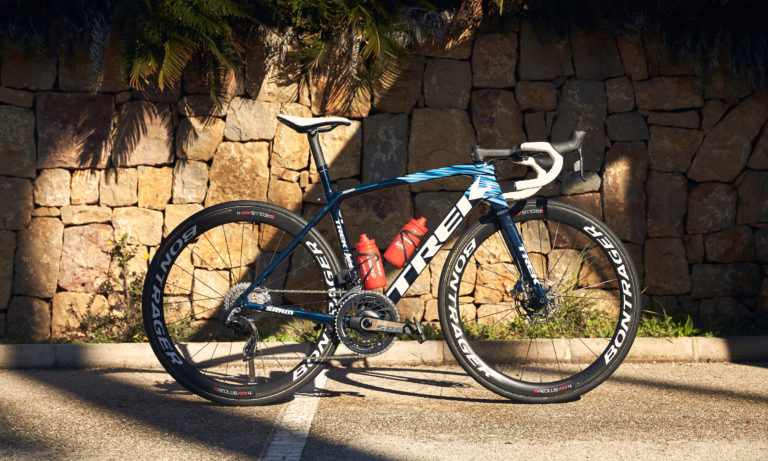
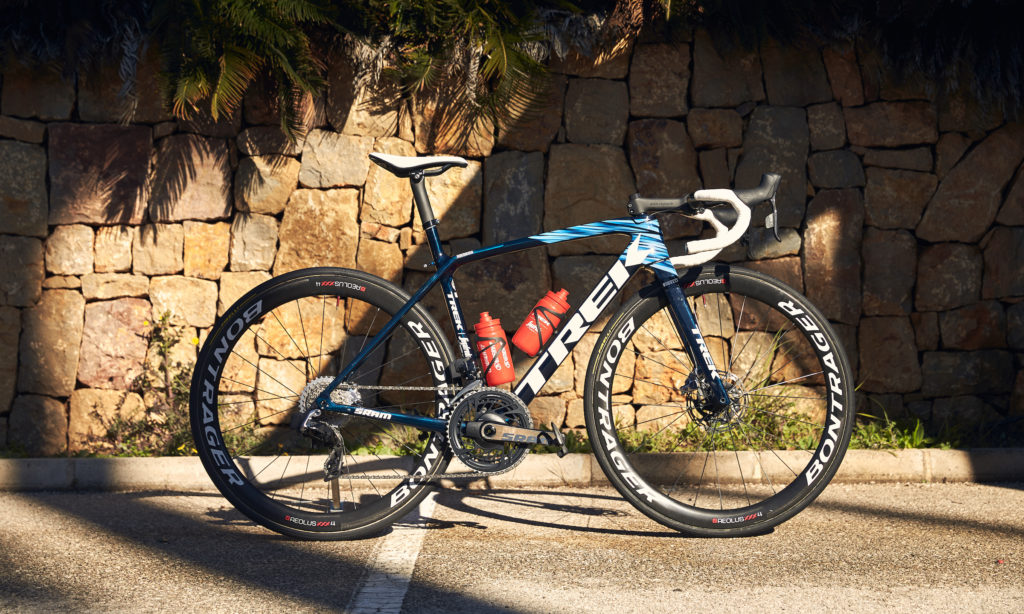
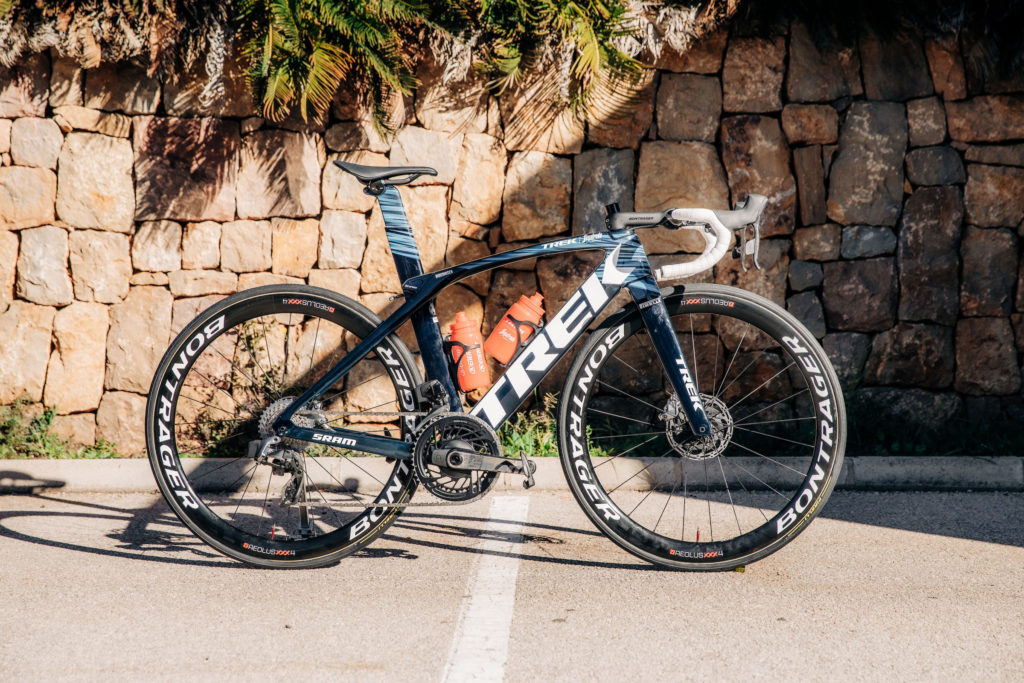
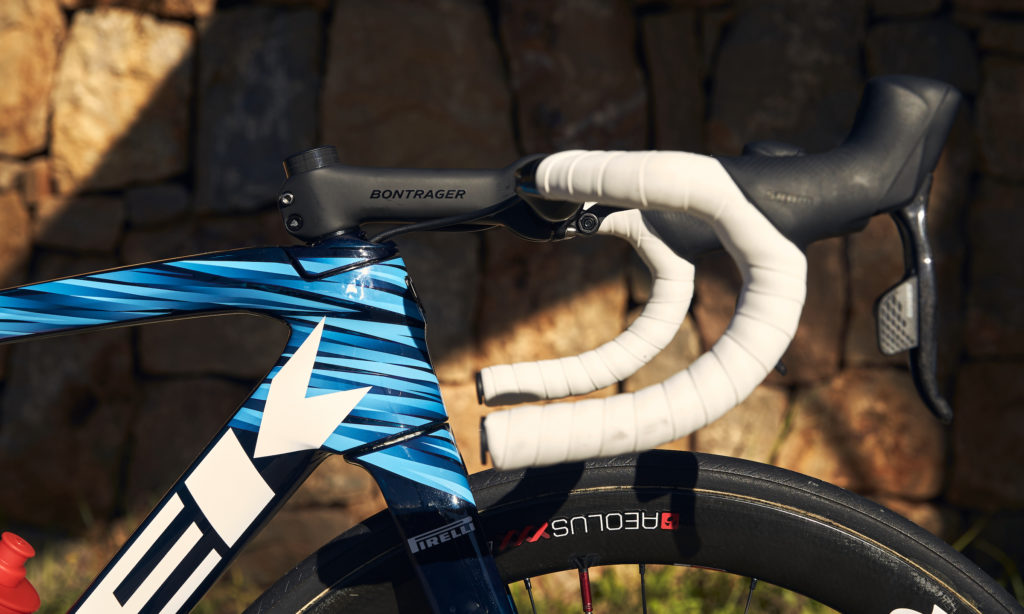
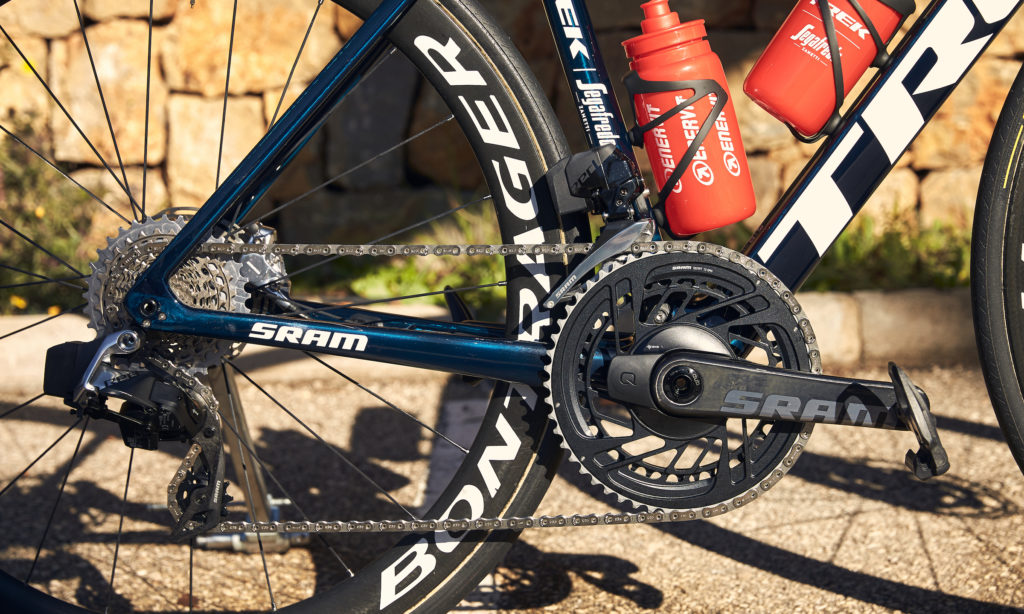
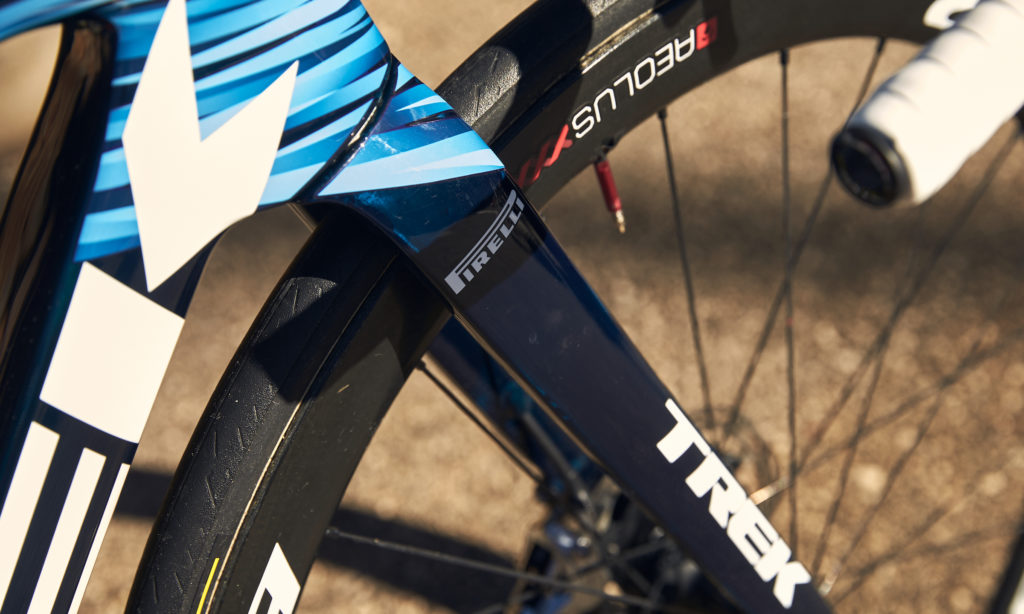
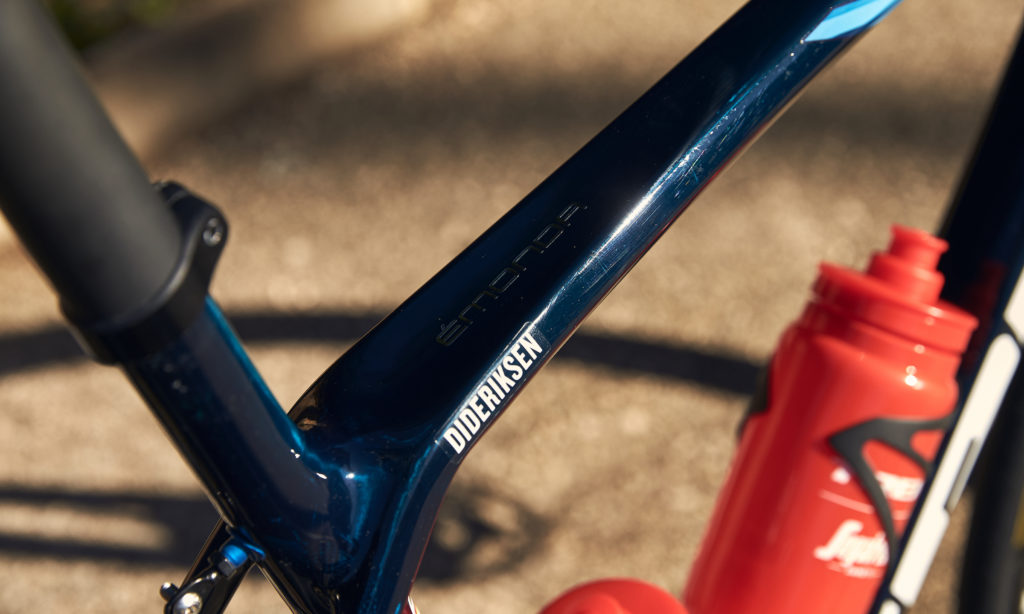
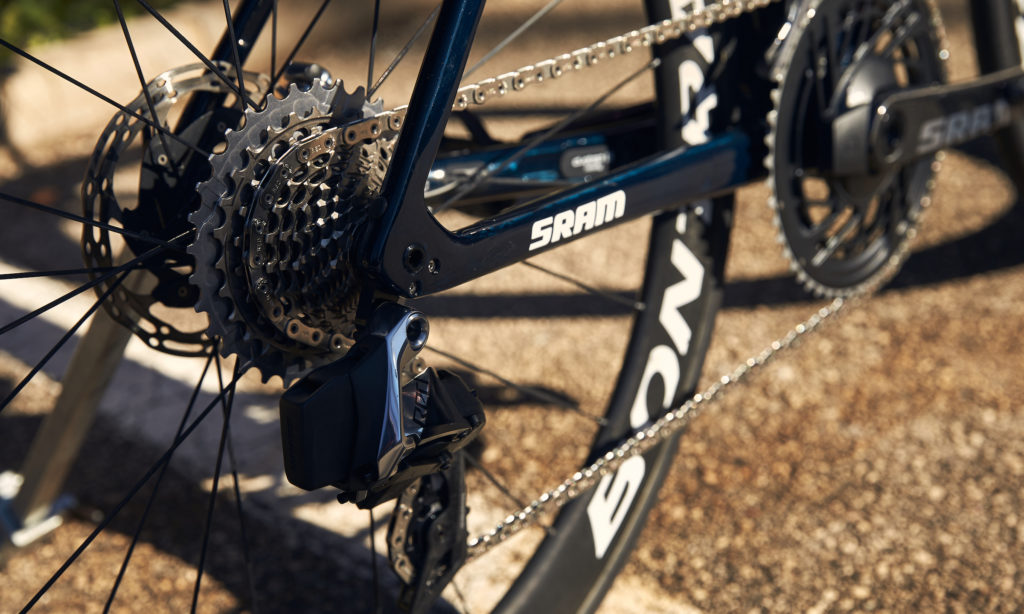
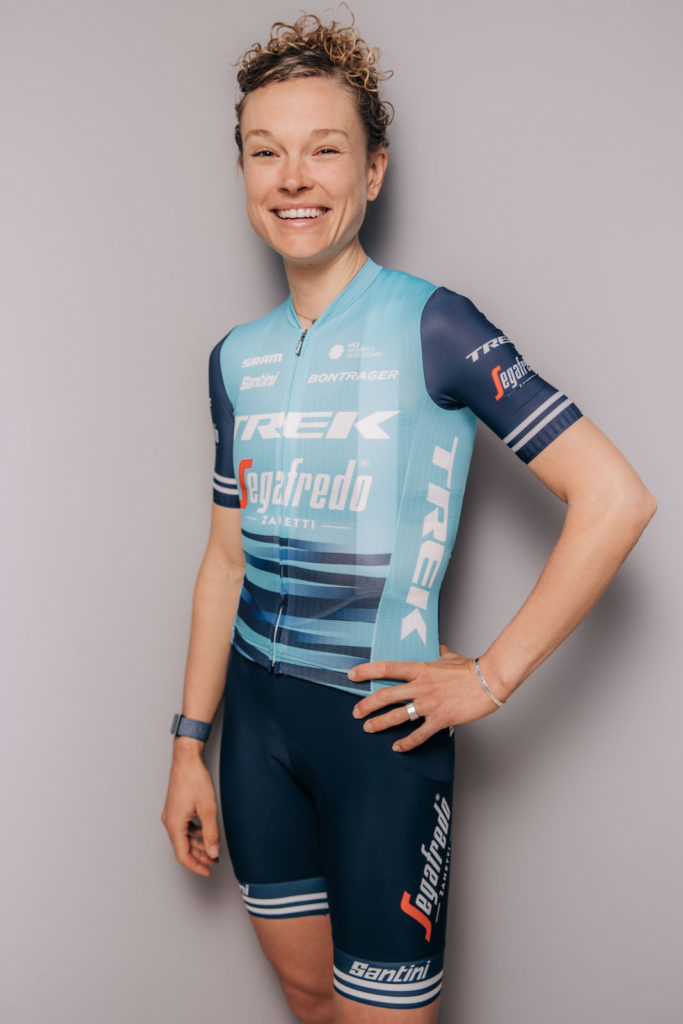
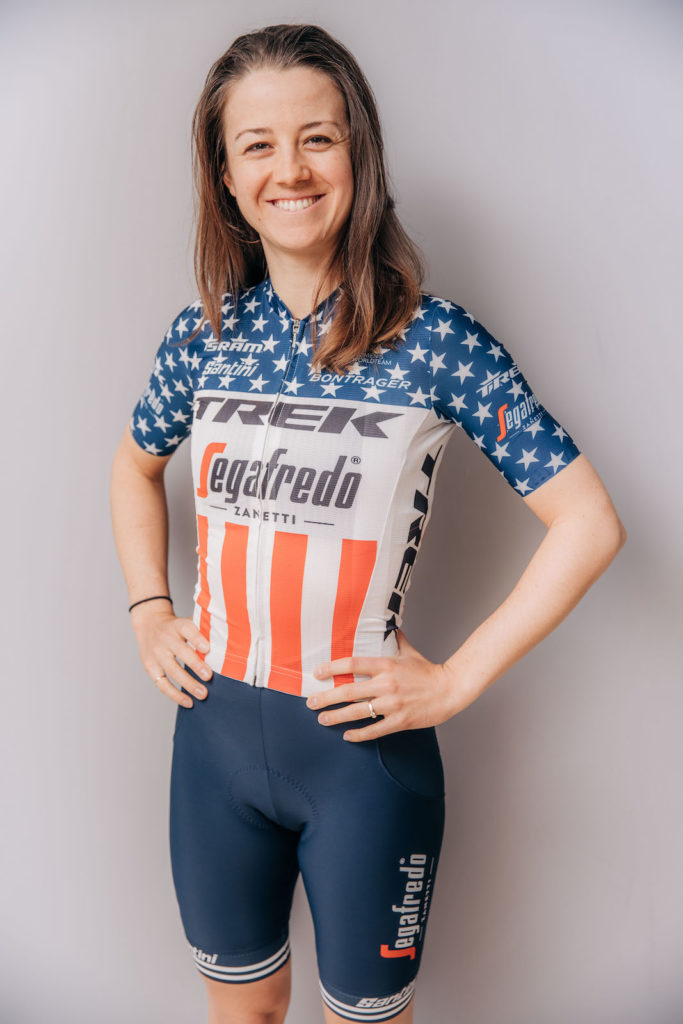
Check out the 2021 Trek Women’s Émonda and Madone bicycles, as ridden by Tayler Wiles (USA) and National Champion Ruth Winder (USA) of the Trek-Segafredo Women’s Pro Cycling Team.
Trek Women’s Émonda. Photo courtesy Trek Segafredo Women’s Pro Cycling TeamTrek Women’s Madone. Photo courtesy Trek Segafredo Women’s Pro Cycling Team
The team’s race bikes are spec’ed as follows:
Bike manufacturer: Trek
Bike models: OCLV 800 Series Émonda – Madone – Domane – SpeedConcept (TT)
Wheelset: Bontrager RSL 37, XXX 4.0, XXX 6.0
Thru Axle: Bontrager DT Swiss , Bontrager Switch Thru Axle and Lever
Tires: Pirelli PZero Tubular and PZero TLR
Brakes: SRAM RED Hydraulic Disc
Shifters: SRAM RED eTap AXS 12 Speed
Crankset: SRAM RED
Chainrings: SRAM Red AXS 50/37, 52/39, 54/43
Powermeter: SRAM Red AXS Power Meter
Chain: SRAM Red AXS Flat Top
Cassette: SRAM XG-1290 10-28
Rear derailleur: SRAM RED eTap AXS
Front derailleur: SRAM RED eTap AXS
Handlebar: Bontrager
Stem: Bontrager XXX
Seatpost: Bontrager
Saddle: Bontrager
Bottle cages: Bontrager XXX Carbon
Photo courtesy Trek Segafredo Women’s Pro Cycling TeamPhoto courtesy Trek Segafredo Women’s Pro Cycling TeamPhoto courtesy Trek Segafredo Women’s Pro Cycling TeamPhoto courtesy Trek Segafredo Women’s Pro Cycling TeamPhoto courtesy Trek Segafredo Women’s Pro Cycling TeamTayler Wiles. Photo courtesy Trek Segafredo Women’s Pro Cycling TeamRuth Winder. Photo courtesy Trek Segafredo Women’s Pro Cycling Team
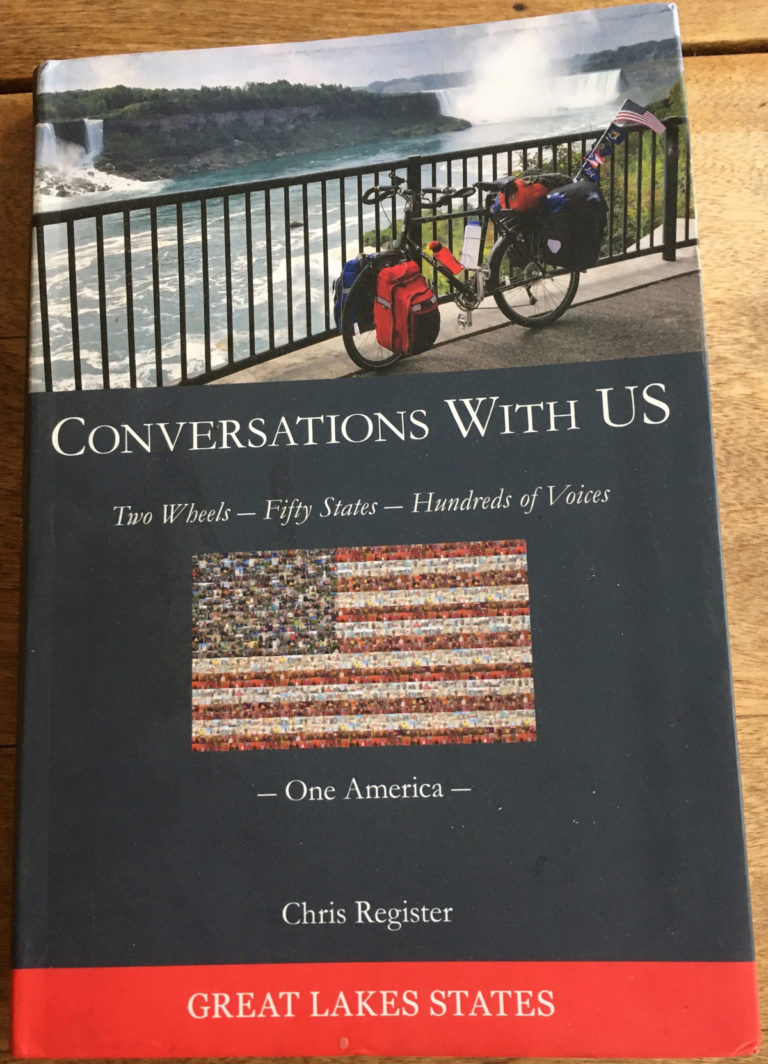
By Lou Melini — I was introduced to Conversations with US in an issue of Adventure Cyclist magazine. Adventure Cyclist doesn’t write book reviews but the brief description of the book was enough to arouse my curiosity. I was a bit hesitant to purchase the book as I have bought a few over the past couple of years that didn’t hold my interest. Thankfully, I was not disappointed with my decision.
Mr. Register wrote this book after completing a bike tour from Duluth, Minnesota to Rochester, New York. The title, Conversations with US, refers to interviews of people that Mr. Register met along the way. I think the capitalized “US” refers to the United States though a few Canadians said their piece as well. The interviews in the book focused on a few topics, primarily about the lives of the subjects. I found this aspect of the book similar to the writing of Studs Terkel, whose writing I enjoyed immensely.
Over the past several decades I’ve read many cycle touring books, many of which I have reviewed in Cycling Utah. Conversations with US is one of a kind. I enjoyed the book, perhaps because I make some attempt to engage people in conversation while on tour, more so when I travel alone as Mr. Register did. I’ve never formally interviewed people, but I could relate to interviews from some of the conversations I had on my tours.
Bike touring is a small segment of bicycling culture so a niche book like this definitely won’t make the New York Times bestseller list, but I think it would be a good read to many in the general cycling community and even to some non-cyclists.
Though he traveled through what would be considered a politically conservative area of the country, Mr. Register presented a great amount of diversity of viewpoints in the interviews. The subjects were varied and interesting in a manner that kept me engaged in the book. Ernie Broadnax (I didn’t know blacks were not allowed to own a patent until the 1900’s), Union man Rudy Nelson, state park worker Gail Horein and 1963 Miss America, Jackie Mayer (she had a stroke at age 28) were some of the people that Mr. Register had conversations with. Amish storekeepers, farmers, factory workers as well as a few Canadians commenting on America were part of the conversation as well.
The touring portion of the book was presented well. I often found myself reading more in a sitting than I planned. There were many pleasant days, and a few that Mr. Resister wished to be different. His first day on the tour was on a “borrowed girl’s mountain bike that was 3 sizes too small and purple”, as his touring bike was somewhere in the FedEx system of delivery south of Duluth. He rode around town before returning to his host for the night and the arrival of his bike. On the last day of his tour his tent blew away into the Erie Canal. Fortunately the rest of his tour went well. Many of his interviews led to meals, lodging, and general assistance for his travels.
If you are looking for a cycling book to read, take a chance on this book as I did. It is easy to read, well written (Mr. Register is trained as a lawyer), and interesting though perhaps not a page-turner as a John Grisham legal thriller. I think you will come away pleased with the book.
Conversations with US; Great Lakes States, is the first of 9 books Mr. Register hopes to write. Chris Register has cycled toured for 16,000 miles in 9 different regions of the United States. Conversations with US; American Southwest is his second book published this year (2020). I may be curious enough to read that as well.
Conversations with US: Great Lake States, by Chris Register (2019). Published by Spoke and Word Books, Charlottesville, Virginia, spokewordbooks.com
Lou Melini is a lifelong bicycle commuter, and the former Commuter Column editor for Cycling West.
By Eric Ramirez — As my 4.8” wide fat bike tire crested the edge of a combo moose-horse-hoof-post-hole (made worse by a hiker) in the groomed track near Dutch Hollow, I knew I was in for a rough tumble. I envisioned the hole swallowing my wheel and catapulting my head into the next hole. Managing to lift the front end just a little, the wheel slammed into the opposite edge of the gargantuan hole. Ugh, that was rough. But I wasn’t done managing the onslaught of a trail gauntlet. Somehow, I hung on.
The Rigid Norm
During several stints in my fat-bike-riding career, I have said and been told, “One does not need suspension on a fat-bike; those big tires absorb everything.” These days, after going back and forth with suspension and rigid forks, I don’t feel like that’s entirely true. The tires absorb much of trail chatter and can track well over uneven surfaces. That’s about it.
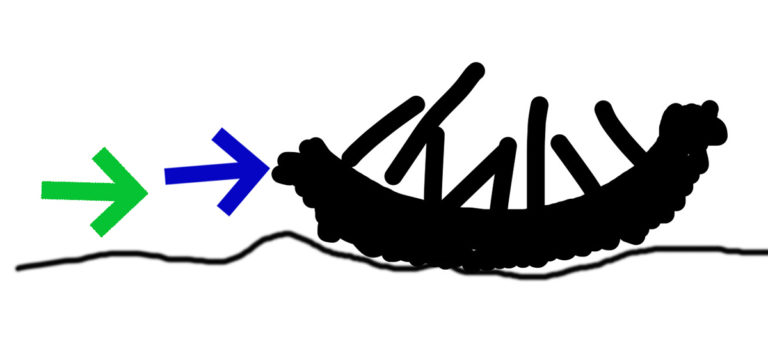
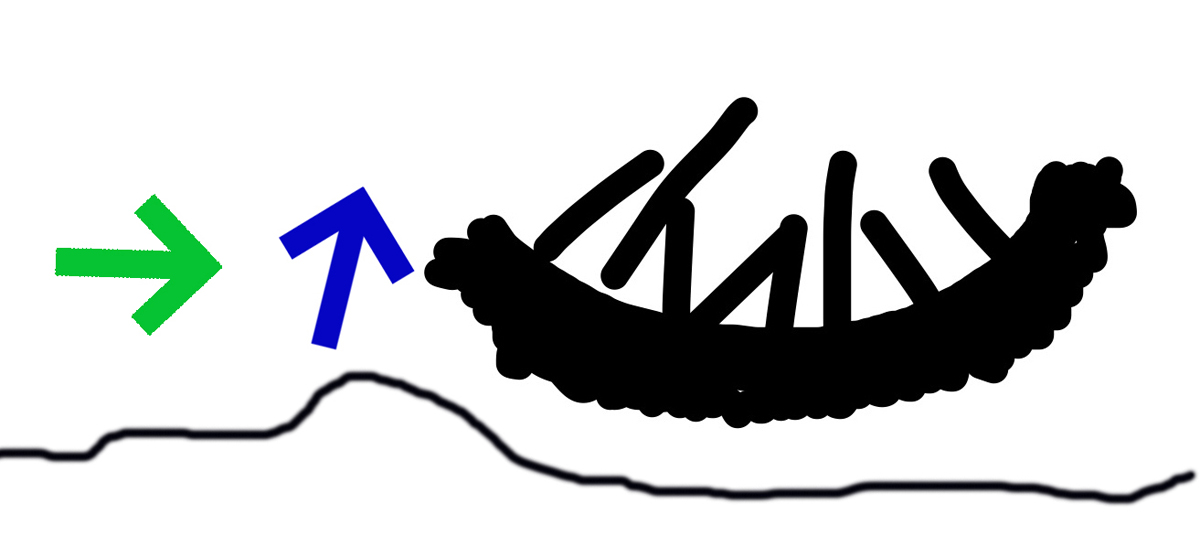
Figure 1 – rigid fork trail response: most forward energy from a large bump travels upwards carrying the wheel (as well as the rest of the bike and rider) off the ground with it (green arrow = forward motion; blue arrow = upward motion). This can be measured by loss of speed.
With the proliferation of groomed single-track, riding a bike without suspension seems like a no-brainer. Sharing the trail with only other fat bikers, we could generally get away with this. But we don’t. Often, we share the trail with other types of trail users. Obviously, animals like them too. If you find yourself exploring new trails stomped in by snowshoers and other hikers, it likely won’t be that smooth. In the above story, which was by far my worst experience, my rigid fork held up, but it hurt.
Despite the comfort – or discomfort – on the trail, we’re bound to become more confident and better riders on snow. We’ll get used to the grip; used to the snow. As a result, we’ll go faster. That’s when surprises happen even quicker. A bump in a snowy berm or corner can cause a rigid fork to come down harsh, hopefully not blowing you off the trail.
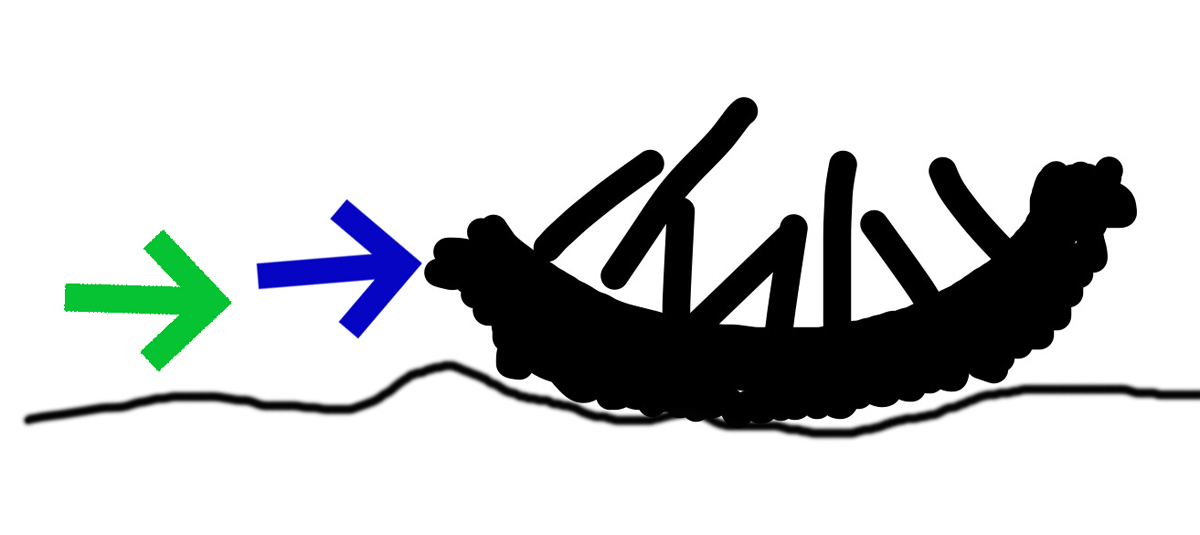
When a wheel is bouncing off the ground, with rider and bike as well, the amount of control you have is limited. This is the trouble with having no suspension. Not only is there no steering nor braking when wheels fly, there’s also a loss of momentum in the form of upward movement. I’ve made a couple high quality sketches to show what I mean here (figures 1 and 2).
Suspension – Comfort & Control
One of the chief benefits of using any form of suspension is comfort through bump absorption. Other benefits: maintained speed, positive steering on rough trails, and stable braking over bumpy terrain. As you might imagine, if you enter a bumpy corner, adding suspension to the equation can help the front wheel track better. Of course, there will be the random, deep post-hole where suspension gives you a margin of error. All these benefits are general to suspension.
Figure 2 – with a suspension fork, most of the upward energy is absorbed and channels the bulk of upward motion (blue arrow) into continued forward motion, meaning bike and rider continue without severe disruption to comfort or control, nor loss of speed.
Should a winter trail rider add these characteristics to a fat bike? I believe it makes sense to do so. I also believe that a suspension fork adds a degree of playfulness to an already fun-to-ride bike.
However, even with so many upsides there’s still an argument for maintaining a rigid fork. Most rigid fat bike forks are very, very lightweight. Replacing one with a suspension fork will absolutely add a few pounds to your rig and it will set you back several hundred bucks. Then add the inconvenience of annual suspension maintenance. From purists to novices, some feel like the rigid fork fulfills the task and so the cost does not outweigh the benefits.
For me, even the most marginal gain from adding suspension seems worth the cost. However, I have found the gains are not marginal. I’ve gone back and forth and settled on having a suspension fork on my fat bike. You might have been waiting for an article like this to tip the scale in favor of something you have been thinking about for a few winters.
Many cyclists and industry folk said the fat bike wouldn’t catch on. Yet here we are with winter trail riding popping up all over. It’s a progressive idea. Adding the advantages of suspension to a bike just makes sense, even if that bike has 5-inch-wide tires where the accepted norm has been “rigid.”
Eric has about 20 years experience working on bikes, starting in Park City. Today he’s a head technician at a shop.
SALT LAKE CITY, Utah (January 14, 2021) — Bike Utah, the state non-profit bicycling advocacy, infrastructure, and education organization was established as the Utah Bicycle Coalition in 2005. In pursuit of the mission to “Make Utah a Better Place to Ride,” the organization implements programs such as the Governor’s 1000 Miles Campaign, Youth Bicycle Education and Safety Training (BEST) Program, the Mid-Week MTB Series, and more.
Development Director Keili Bell. Photo courtesy Bike Utah
Crys Lee, Bike Utah’s Executive Director says, “The addition of the Development Director position will not only help Bike Utah increase our efforts in fundraising, but also increase our capacity to better connect with more Utah residents and communities, as well as foster more strategic partnerships. We are excited to be able to expand our work to improve bicycling safety and accessibility for all Utahns.”
Keili Bell comes to Bike Utah via Bozeman, Montana , where she most recently served as the Development Manager for the Southwest Montana Mountain Bike Association. No stranger to Utah,Keili received her Non-Profit Academy for Excellence Certificate from the University of Utah.
She also completed a Fundraising and Development Professional Certificate Program through the University of California Davis.
Says Keili, “Utah plays a special role in my life. My first job out of university was working with the Utah State University Center for Civic Engagement and Service Learning and the Utah Conservation Corps. I am excited to be back in this beautiful state, where I’ve had the opportunity to work on initiatives including river cleanups, natural resource remediation, food access, housing assistance, job placement for young adults with disabilities, and now, making Utah a better place to ride!”
Utah outdoor industry professionals may recognize Keili from her work as manager of the Winter Wildlands Alliance Backcountry Film Festival national tour. She is also co-founder of the Outdoor Retailer “Night of Stoke” in partnership with the Colorado Outdoor Recreation Industry Office. She says, “I greatly enjoy bringing together people and companies to create thoughtful impact in our communities.”
As for actually riding bikes, Keili is an avid mountain biker and adventure rider. She has spent many volunteer hours maintaining trails like the Continental Divide Trail, pedaling far into the backcountry to clear fallen trees. She’s excited to experience Utah’s many bicycling resources.
Keili started her Development Director role on Monday, January 11, 2021. She can be reached for partnership discussions, sponsorship inquiries, and individual giving requests at [email protected].
Denver, Colo. (January 14, 2021) — The Colorado Classic presented by VF Corporation, America’s premier women’s only racing event, today announced its plans to return to racing in 2022 and not hold an event in 2021.
Following an overwhelming success in its debut as a women’s standalone event in 2019, racing worldwide came to a halt at the onset of the COVID-19 pandemic. Despite their fierce commitment to creating an innovative and safe live racing model, organizers behind the event had to cancel the 2020 edition due to ongoing health concerns.
Now, with the 2021 race season looming, the pandemic situation remains uncertain at best. As such, organizers decided to not push forward with a 2021 event.
“In 2020, we spent months working tirelessly in conjunction with State, County and City organizations, health authorities, and the sports governing bodies to come up with a COVID mitigation plan that would ensure the health and safety for everyone. In the end, the most prudent decision was still to cancel the event. With the current situation being just as uncertain as it was last year, we don’t think it makes sense — financial or otherwise — to organize a 2021 event and risk another cancellation,” said Ken Gart, Chairman of RPM Events Group, the organizers of the Colorado Classic.
“This is not an easy decision to make. We know that this race holds an important place on both the domestic and international race calendars, and we remain committed to our goal of being the best women’s race in the world. But we hope that by delaying the event to 2022, the pandemic will have stabilized and we’ll be able to secure the necessary financial partners to do our event justice and host another game-changing, world-class event as we did in 2019.”
RPM Events Group shook the cycling world in 2019 when they announced that the Colorado Classic® presented by VF Corporation cycling race would continue as a women’s-only event — foregoing a men’s race in favor of raising the bar for women’s cycling with unprecedented financial support, an innovative live streaming and international exposure package, and longer, more challenging routes.
In doing so, the Colorado Classic® presented by VF Corporation became the only standalone UCI women’s stage race in North America with the coveted 2.1 UCI category designation, and garnered interest from some of the biggest professional cycling teams in the world.
The 2019 debut as a women’s only race was an overwhelming success with world-class competition, incredible fan turnout and worldwide recognition.
When the COVID pandemic brought competition to a halt in 2020, the organizers didn’t let the momentum from the previous year go flat. From athlete webinars to an inspirational speaker series and a fundraising ride on Zwift, the Colorado Classic presented creative ways to keep the cycling world engaged during this unusual and trying year; while furthering their mission be more than a race, and act as a movement to change the world through the power of women’s sport.
“Let me assure you that our commitment to women’s cycling is as strong as ever. We continue to believe that the Colorado Classic can evolve into one of the most powerful platforms in women’s sport and we will work on achieving that goal as we set our sights on 2022,” said Gart.
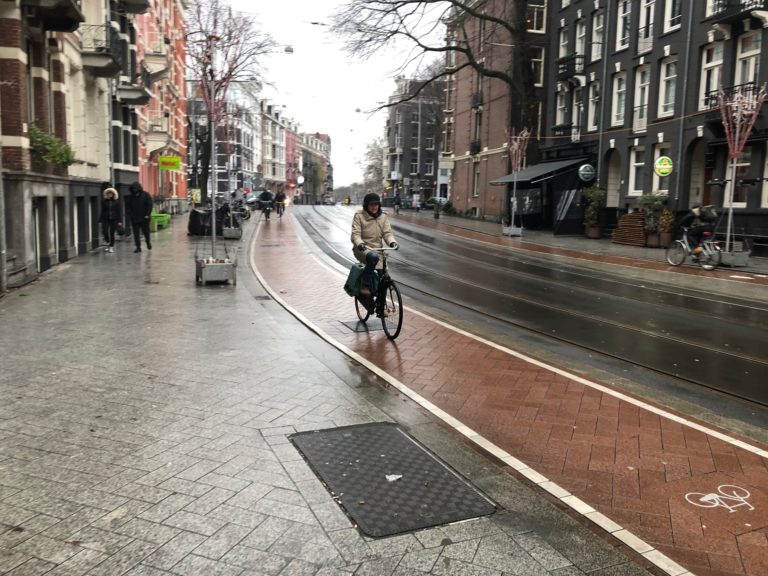
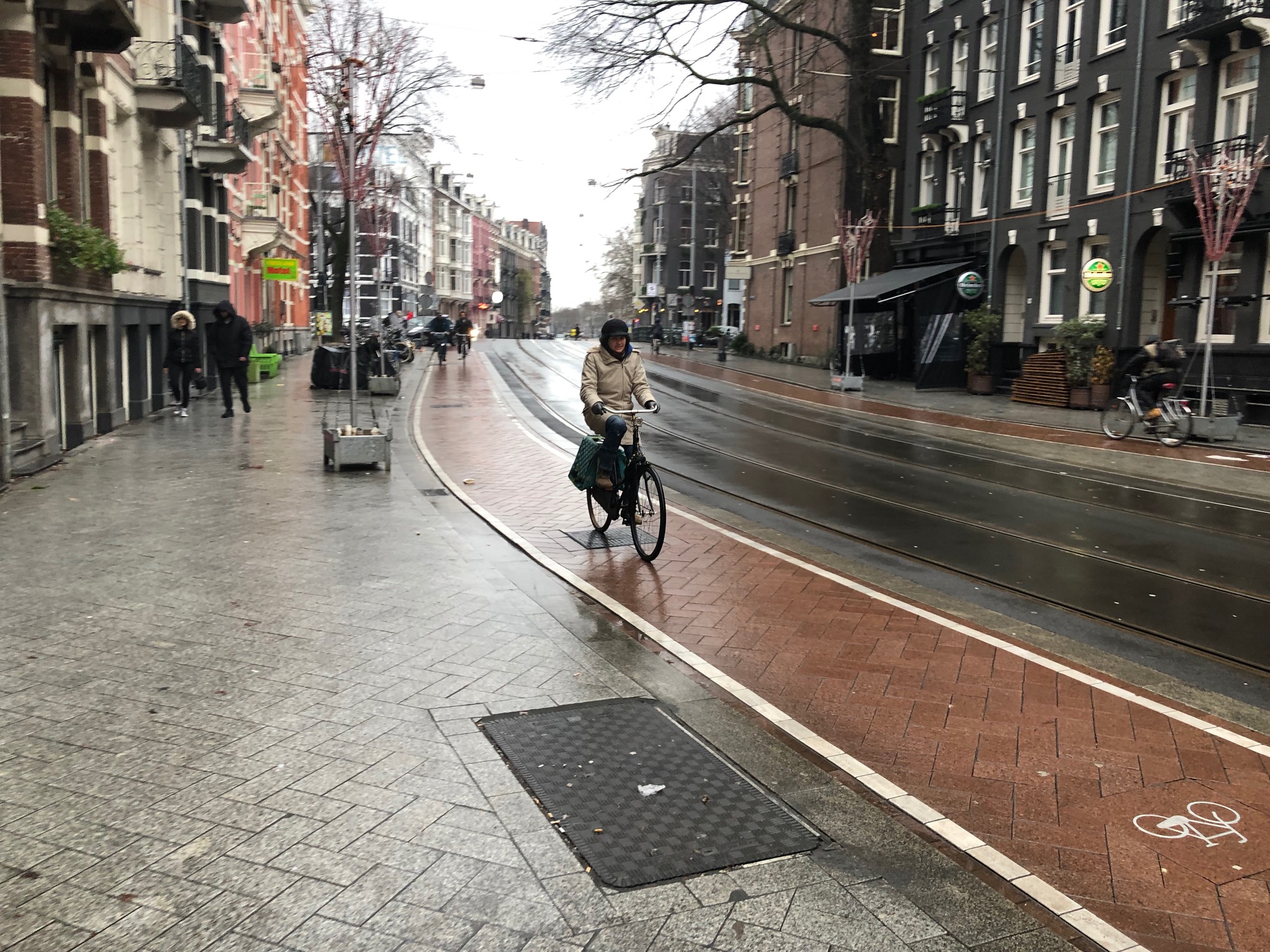
A major urban policy response during the pandemic has been the rapid implementation of new bike lanes. Paris, Milan and Bogotá were among the first cities to develop dozens, or even hundreds, of kilometres of new cycling routes.
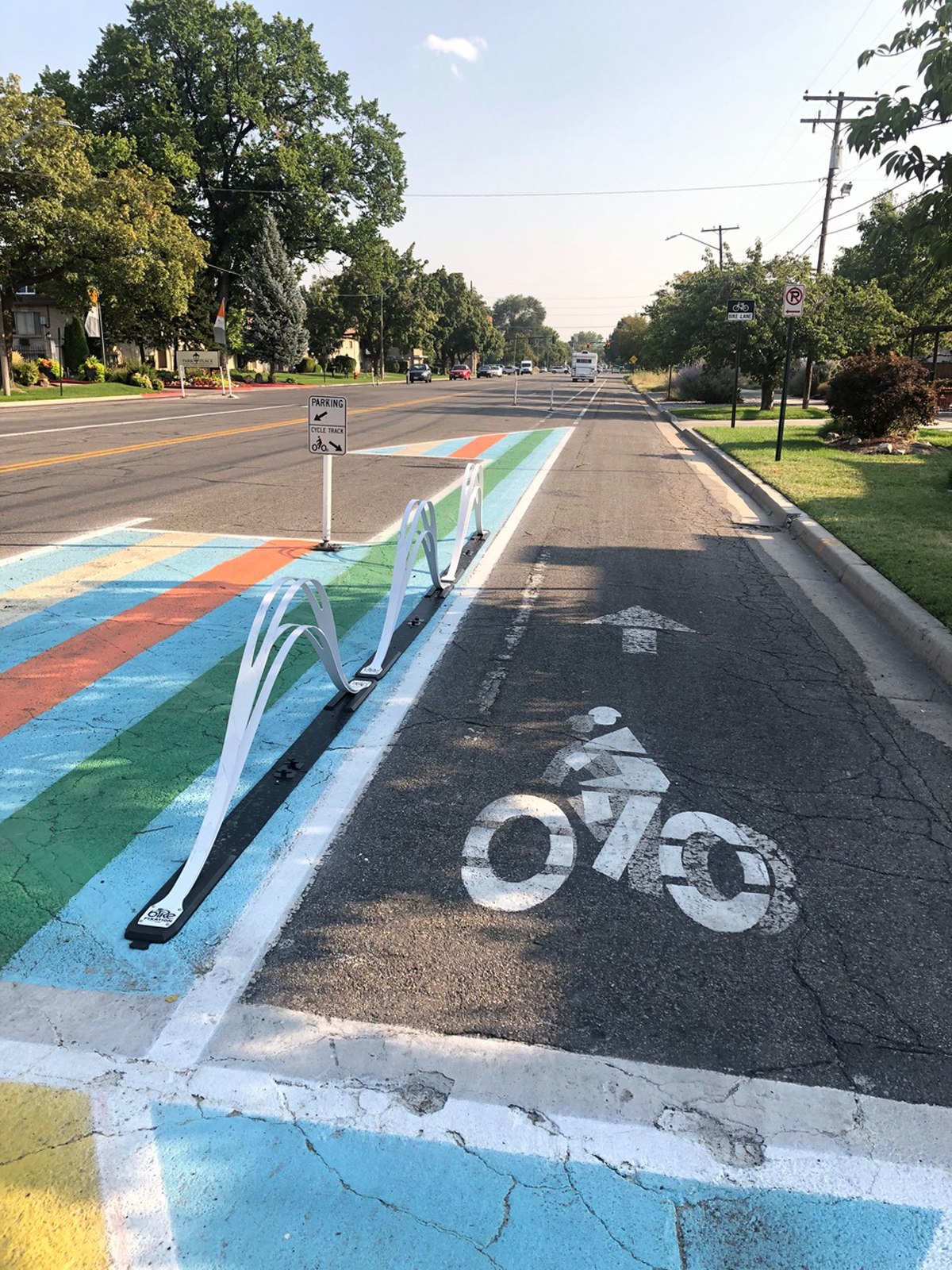
Wave delineated bike lanes at the intersection of 700 South and 300 East in Salt Lake City. Photo by Turner Bitton
Bike lanes are about more than bikes. They can be part of building a more equitable city. To achieve this potential, traditionally siloed discussions about transportation, housing, urban design, race and inequality need to be part of the same conversation. Building a better cycling city for all requires more than bicycle infrastructure.
This is because our experiences of the city, including by bicycle, are dependent on gender identity, gender, race, class, ability and sexual orientation, all of which can amplify experiences of marginalization. Therefore, an intersectional approach is necessary in order to fully understand different experiences and meanings of cycling.
As urban scholars and cycling advocates researching the production of inequality and how people experience urban space, we welcome new initiatives to enhance cycling. However, a critical analysis remains necessary in order to ensure that new bike lanes do not reinforce the already existing social, spatial and racial fault lines within cities.
To achieve cycling’s potential to enhance the safety, enjoyment, health, mobility and opportunities for everyone, three interrelated issues need to be addressed.
Even before the pandemic, cities were becoming increasingly divided between affluent cores and peripheries that were home to growing concentrations of poverty, marginalization and visible minorities.
The pandemic has accelerated these disparities. In June, the City of Toronto approved 40 kilometres of new bike lanes: the largest one-year increase in the city’s history. Of the eight projects, five were in the gentrified urban core (including two directly above a subway line). None can be found in neighbourhoods with the highest rates of COVID-19 infections.
Many of the most vocal cycling advocates live in gentrified urban cores. Measurable rates of cycling — such as journey-to-work — are far higher in these areas. However, there are many hidden aspects of cycling — such as the experiences of low-income and racialized residents — that neither show up in official statistics nor are central to mainstream urban debates.
This uneven geography is accelerating because of the pandemic: new bike lanes mean that those living in gentrified urban cores enjoy enhanced mobility choices. At the same time, residents in marginalized or peripheral communities continue to rely on overcrowded transit or are dependent on their automobiles.
To address these imbalances, the goal should be to develop a comprehensive network cycling infrastructure across the city. Bike lanes should be a ubiquitous piece of infrastructure found downtown and in the suburbs, in rich neighbourhoods and poor ones. This is common in Dutch cities, where some of the best infrastructure can be found at the edges of cities.
Intersectionality and the experiences of urban space
However, even if this geographic uniformity were achieved, it would still not make cycling safe and enjoyable for all. As the recent Black Lives Matter and anti-police brutality protests have shown, how urban spaces are experienced varies tremendously depending on who you are. Cycling is not exempt from this.
Traditional planning metrics to measure the experiences of cycling focus on traffic-related stress, such as sharing busy a road with trucks. Cycling advocates call for measures to reduce this stress, such protected bike lanes . However, it is important to consider how other forms of stress, like racism and police surveillance, intersect with traffic-related stress and influence the experiences of cyclists marginalized by race, gender, age, class or sexual orientation.
There is nothing inherently exclusionary about the bicycle. Because of its ease of use, affordability and flexibility, cycling can be one of the most egalitarian forms of transport. To achieve this, however, advocacy, planning and policy needs to shift beyond infrastructure to an intersectional analysis that examines the different lived experiences of urban space. That means connecting cycling to wider conversations about social and racial justice, defunding the police, the right to the city and the anti-eviction movement. This approach is necessary to plan and build a more equitable city.
Two States – North Dakota and New York – Join U.S. Bicycle Route System as it Expands to 14,841 Miles in 31 States, D.C.
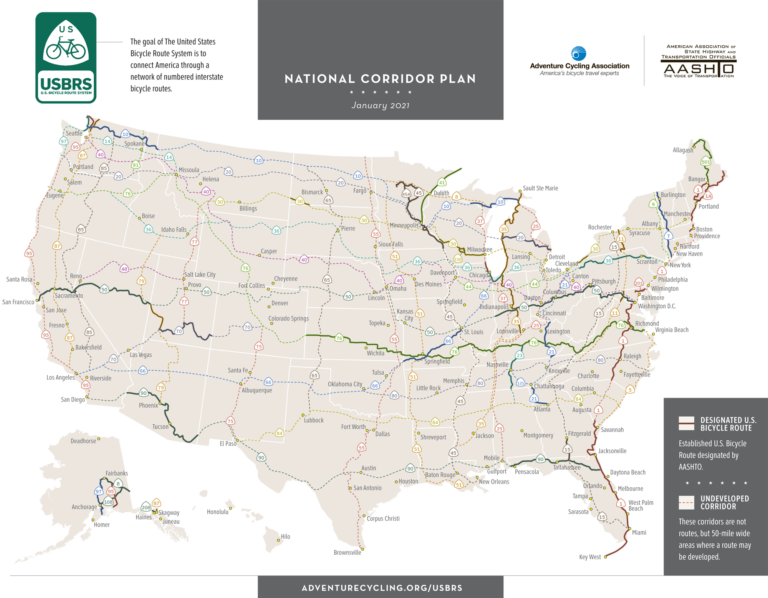
MISSOULA, MONT. – Adventure Cycling Association is proud to announce the designations of five new U.S. Bicycle Routes in four states – Maryland, New York, North Dakota and West Virginia – plus Washington, D.C., adding 290 miles to the U.S. Bicycle Route System (USBRS).
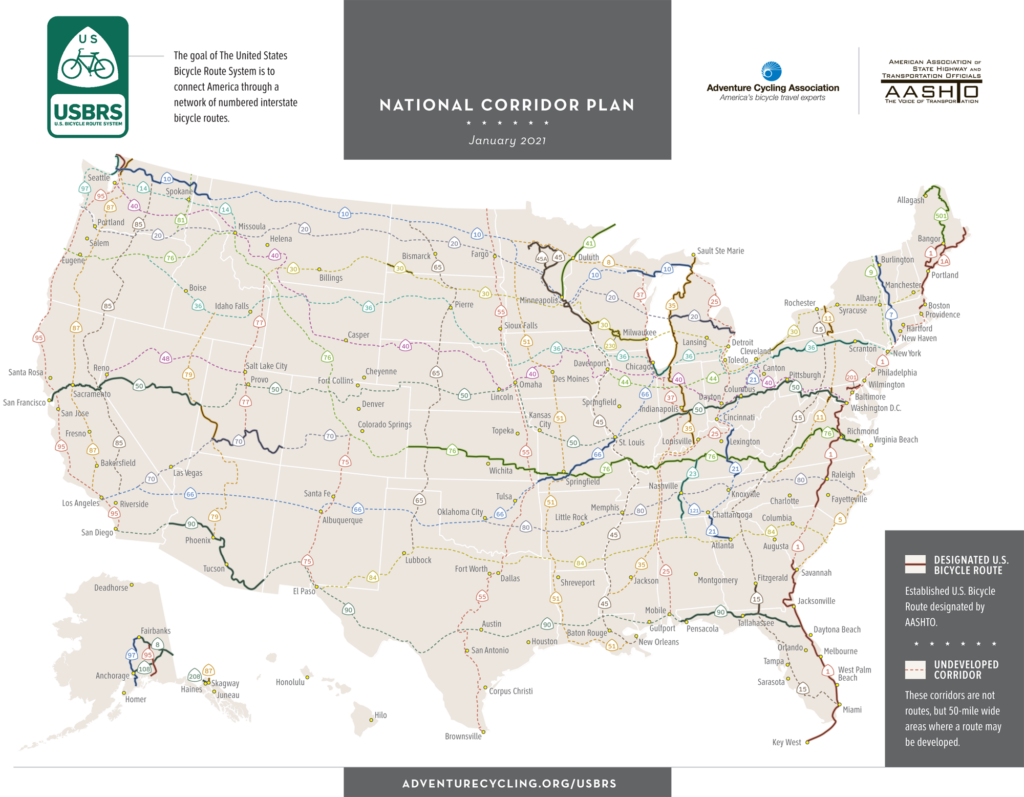
US Bike Route System Map as of January 2021.
In Maryland, USBR 201 shares on-road routing with the East Coast Greenway. In New York, the north-south USBR 11 travels from the shore of Lake Ontario, crosses the Erie Canalway in Lyons, then ends at the border with Pennsylvania. In North Dakota, USBR 30 takes riders across country where wildlife outnumbers people on U.S. Highway 12. In Washington, D.C., USBR 1 follows the Capital Crescent and Rock Creek Trails along the Potomac River. And in West Virginia, USBR 11 captures Appalachian farm country and history while connecting to existing USBRs in Maryland.
“Interest in bicycling has grown in recent years, and especially in recent months as the coronavirus pandemic has prompted many people to turn to bicycling for daily commuting, recreation and tourism,” said Jim Tymon, American Association of State Highway and Transportation Officials (AASHTO) Executive Director. “The expanding USBRS network is an important contribution to the nation’s transportation system.”
The USBRS is a developing national network of officially recognized, numbered and signed bicycle routes. All U.S. Bicycle Routes are designated by AASHTO. With the new designations, the USBRS now boasts 14,841 miles of routes in 31 states and Washington, D.C. Nearly 40 states have or are currently developing U.S. Bicycle Routes.
Digital maps for all designated U.S. Bicycle Routes are available to the public for free, thanks to a partnership with Ride with GPS, from the Adventure Cycling website.
Adventure Cycling Association, a nonprofit organization that provides national coordination for the U.S. Bicycle Route System, partners with AASHTO to ensure states have the resources and expertise needed for successful route designation.
Maryland
The Mason-Dixon line, which most people think of as the dividing line between Maryland and Pennsylvania, also takes a 90 degree turn to divide Maryland from Delaware. This is where the 62.5-mile USBR 201 begins. The route showcases the historic centers of several northeast Maryland towns.
USBR 201 uses the current on-road route along rural and suburban roads of the East Coast Greenway, parallel to the Greenway’s planned off-road route. The USBR 201 and East Coast Greenway promote bicycling tourism in Maryland while offering the community connections to shopping, dining, and parks.
“Designation of USBR 201 will promote bicycle tourism in Cecil County, inviting travelers to explore the County’s historic towns, unique shops and restaurants, and scenic views. Through our planning in Cecil County, including the Cecil County Bicycle Plan, Wilmington Area Planning Council (WILMAPCO) has also documented a local demand for bicycle routes that provide transportation and recreational benefits such as this route,” said Heather Dunigan, Principal Planner with WILMAPCO.
The first town encountered is Elkton, which was once dubbed “the elopement capital of the East Coast.” Even celebrities such as Debbie Reynolds and Willie Mays flocked there to get married. When traveling through Perryville, be sure to stop in at Rogers Tavern, where George Washington visited a number of times in his travels up and down the East Coast.
Crossing the Susquehanna River from Perryville to Havre de Grace, the route parallels the path of the Philadelphia, Wilmington and Baltimore Railroad Company (PW&B), which is no longer running. Frederick Douglass traveled the PW&B to escape slavery in Baltimore and reach freedom in Philadelphia. The piers of the railroad bridge are still in the river, but will be removed when Amtrak remodels its cross-river bridge. The historic town of Havre de Grace was one tie-breaking vote short from becoming our nation’s capital instead of Washington, D.C.
At Bel Air, the route passes near the Liriodendron Mansion, which was the summer home of one of the four founding physicians of the Johns Hopkins Medical College, Dr. Howard Kelly. At Monkton, the western terminus of USBR 201, the route is close to the NCRR (The Torrey C. Brown Trail), which was the railroad line that brought President Lincoln to Gettysburg for his famous Civil War address.
New York
In total, USBR 11 is a long-distance bicycle touring route from western North Carolina at the Blue Ridge Parkway through Virginia, West Virginia, Maryland, and Pennsylvania to New York at Lake Ontario. The New York section of USBR 11, co-designated with New York Bicycle Route 14 (NYBR 14), is 118.8 miles.
From Lake Ontario to the farmland and forests of the New York-Pennsylvania border, USBR 11 uses well-maintained New York State Highway (NY 14) with its five- to 10-foot paved shoulder along its entire length.
Bicyclists can access USBR 11 at its northern end by traveling to Rochester, New York, via Amtrak or intercity bus. All Amtrak trains stopping at Rochester have bicycle racks in either the passenger coaches or in a baggage car. No need to box or bag a bicycle. From Rochester’s Amtrak station, it’s a 40-mile bike ride along the Lake Ontario shore to Sodus Point.
For the first 16 miles traveling south on USBR 11/NYBR 14, cyclists are surrounded by fruit orchards and farms before reaching the Erie Canal and Erie Canalway/Empire State Trail at Lyons. Like most villages along USBR 11, it has many 19th-century buildings and churches with unique architecture as well as a grocery store and a restored movie theater showing films or live performances.
After traversing low rolling hills (drumlins), cyclists enter Geneva at the northern end of Seneca Lake, one of the state’s 11 Finger Lakes. Geneva has vibrant culinary, music and nightlife scenes befitting a city with a respected liberal arts college and a State Agricultural Research facility. Eleven miles east of Geneva is the Women’s Rights National Park in Seneca Falls.
Along USBR 11’s 35-mile route overlooking Seneca Lake, cyclists will pass more than 35 wineries and many lodging options. Finding a spot to jump into the lake to cool off or throw a fishing line into the water is not hard. At Seneca Lake’s southern end is the magnificent Watkins Glen State Park and International Gran Prix automobile racing track. As befits a village with such attractions, there are many lodging options and restaurants in Watkins Glen.
At mile 90 in Elmira is author Mark Twain’s study on the Elmira College campus. Elmira’s Arnot Art Museum specializes in American art. USBR 11 detaches from NYBR 14 in Elmira and routes through Corning with its noted Corning Museum of Glass, Rockwell Museum (American and Native American art) and Gaffer District with restaurants and stores.
Once again USBR 11 turns toward the Pennsylvania border outside of Corning using State Highway 417 and Steuben County Road 115 to go through Lindley, New York, and on to Lawrenceville, Pennsylvania, where it begins to use Pennsylvania Bike Route G.
“USBR 11/NYBR 14 will be a significant on-road bicycle route (with a wide paved shoulder) for bicycle tourists from the mid-Atlantic and southern states to connect with the Erie Canalway Trail, an east-west off-road trail, and the on-road routes along Lake Ontario’s shore. Bicycling along USBR 11/NYBR 14 will put on view New York State’s agricultural and rural character; Finger Lakes wine region; and vast Great Lakes shore,” said Harvey Botzman, author and Director Emeritus of New York Bicycling Coalition.
Traveling USBR 11 is a wonderful 118.8-mile ride in an area of the U.S. rarely traveled by long-distance bicycle tourists. This is just an inkling of what cyclists can expect along this bicycle-friendly, scenic, historic and attractive route.
North Dakota
The North Dakota Department of Transportation submitted its first of five proposed bike routes for the USBRS. These routes were identified in the ND Moves Active and Public Transportation Plan and will enhance the state’s transportation system.
USBR 30 follows U.S. Highway 12 through the southwest portion of North Dakota, which consists of prairie grasses and fields of corn, wheat and sunflower. This route was known as the Yellowstone Trail when it was the first transcontinental automobile highway in the U.S. through the northern tier of states from Massachusetts to Washington. The Dakota Buttes Museum in Hettinger contains interesting Yellowstone Trail artifacts and exhibits. Hettinger, along with Scranton and Bowman, are three of the small towns along this route that offer various local attractions, eateries and hotel accommodations for travelers.
Although the route is only 87.5 miles, it travels through three North Dakota counties where prairie dogs, elk, antelope, deer, eagles and falcons outnumber the almost 6,000 people – the three counties USBR 30 travels through average 1.9 people per square mile. The route has limited shoulders, but when coupled with the very low daily traffic, it is truly a road less traveled.
The route enters North Dakota on U.S. 12 from South Dakota at an elevation of 2,480 feet, and the terrain slowly climbs to a maximum elevation of approximately 3,225 feet by Rhame, about 40 miles from White Butte, the highest point of North Dakota at 3,506 feet.
Washington, D.C.
The Washington, D.C., portion of USBR 1 traverses seven miles of scenic Potomac riverfront along the Capital Crescent and Rock Creek Trails. Perched above the parallel C&O Canal, the Capital Crescent Trail portion begins in Maryland and ends in Georgetown. This rail trail was built upon the former railbed of the Georgetown Branch of the B&O Railroad and was developed as a component of the C&O National Historical Park.
In Georgetown, the route continues in separated bike lanes along Georgetown Waterfront Park before linking to the Rock Creek Trail. Here riders are treated to spectacular views of Theodore Roosevelt Island and the Kennedy Center for Performing Arts. After going under the Theodore Roosevelt Bridge, the route circles the Lincoln Memorial before crossing the Potomac River on the Arlington Memorial Bridge into Virginia. Before heading south along the Mount Vernon Trail, riders are treated to a view of the grand entrance to Arlington National Cemetery.
“The designation of USBR 1 in Washington, D.C., creates a critical link in the long-distance cycling route between Florida and Maine. The D.C. section connects to two of the city’s most popular trails, the Capital Crescent and Rock Creek trails, which allow cyclists to access the C&O Canal, Georgetown, the National Mall and monuments, or venture farther out to the many fine restaurants and neighborhoods in our nation’s capital city,” said Jeff Marootian, Director of the District Department of Transportation (DDOT).
West Virginia
Riders will experience the pastoral beauty of northern Appalachian farm country along its southern portions of USBR 11, where gentle rolling terrain provides a good workout while allowing for an enjoyable experience for riders of differing abilities.
“We’re so excited to have USBR11 designated in West Virginia. The input we received from the local riding community and the public helped ensure designating the best route to show long-distance riders the beauty of Jefferson County,“ said Matt Mullenax, Executive Director of the Hagerstown/Eastern Panhandle Metropolitan Planning Organization.
Cyclists will begin the 17.7-mile USBR 11 by walking their bicycle across the Goodloe Byron Memorial Bridge from Maryland’s USBR 50 into historic Harpers Ferry. Cyclists will strike out westward following the Potomac River on the Armory Canal Trail and Potomac St. While the Armory Canal Trail is currently unimproved with a rough gravel surface, it is accessible by bicycle with short sections of walking required and is under design for an improvement project anticipated to be completed in the early 2020s.
From Harpers Ferry, the route leaves the riverfront for a ride past the Schoolhouse Ridge Park before rejoining a water feature, this time the Shenandoah River, taking in gorgeous views of the valley and providing connectivity to parks and river access points along the way. At Mechanicstown, a short detour to the northwest offers cyclists the historic charm and business districts of Charles Town and Ranson. Here riders can try their luck at the local casino and horse track before returning to USBR 11 for the final 10.3 miles to Virginia.
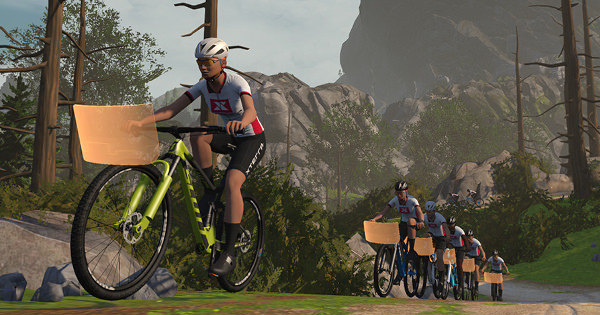
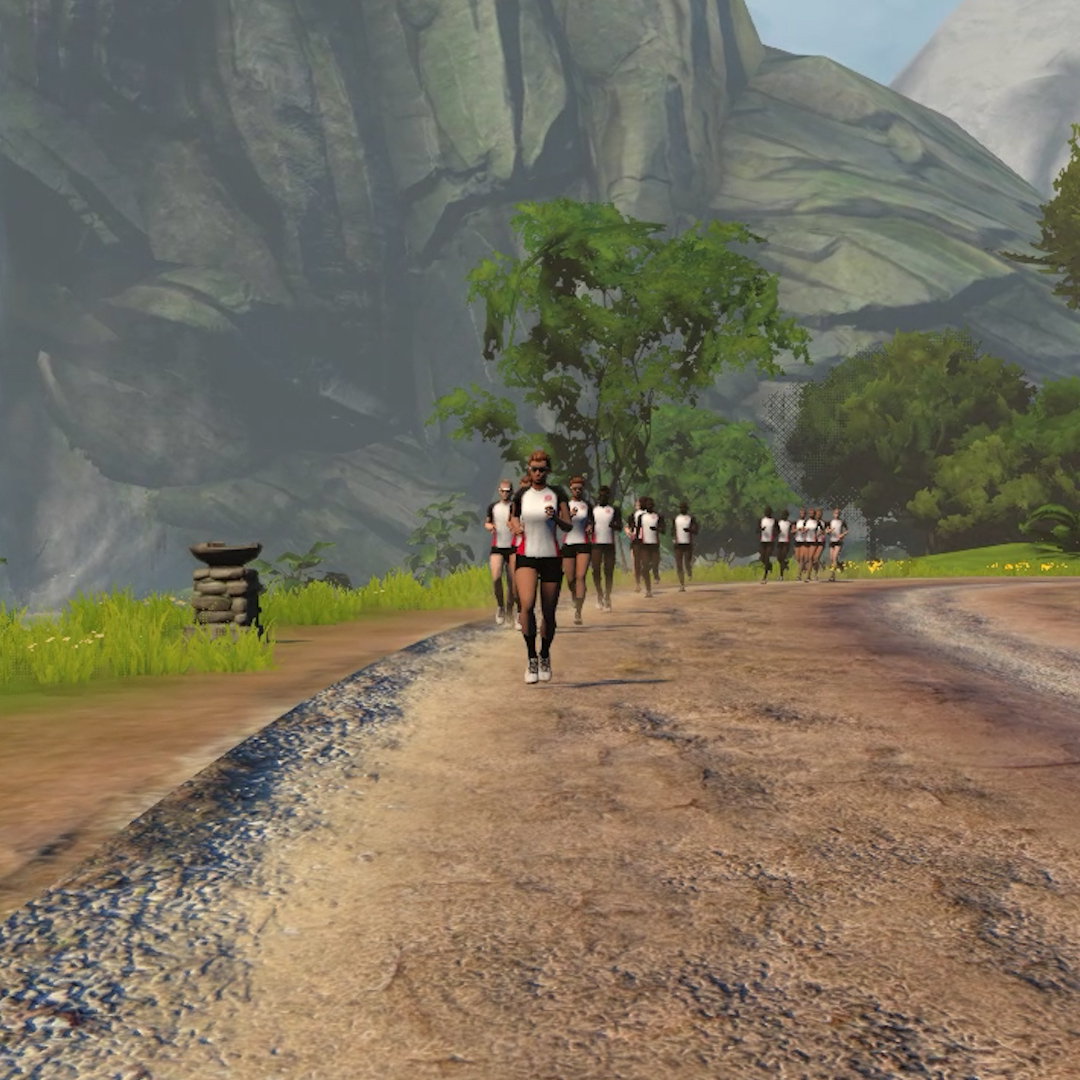
MINNEAPOLIS, Minnesota (January 8, 2021) – The XTERRA community has joined forces with Zwift, the fitness company born from gaming, to take the fun and challenge of its action-packed racing series online with the XTERRA x Zwift Off-Road Series starting January 11 that builds into a full week of racing from February 22-28.
The seven-week collaboration features interactive workouts with XTERRA’s biggest stars, including reigning World Champions Bradley Weiss of South Africa and Flora Duffy from Bermuda.
Designed by 14-time XTERRA U.S. Champion Josiah Middaugh, the XTERRA x Zwift Off-Road Series provides the endurance world with a chance to tackle XTERRA themed challenges ranging from a 35-minute run that simulates mountain climbing in the Colorado Rockies to a grueling 70-minute VO2 Max bike ride inspired by XTERRA’s World Championship course in Maui.
Image courtesy XTERRA/Zwift
“Who better to design an XTERRA training plan than Josiah Middaugh?” Says Eric Min, Zwift CEO and Co-Founder. “We’re proud to have such a great community of triathletes on the Zwift platform and it’s absolutely fantastic to be able to deliver this partnership for the off-road triathlon community.”
The workouts will be hosted each Monday, Thursday, and Sunday starting January 11, and in addition to Weiss, Duffy, and Middaugh, Zwift users can engage, learn, and sweat with a dynamic set of XTERRA Zwift workout leaders including the “Scottish Rocket” Lesley Paterson and Mauricio Mendez of Mexico (both former XTERRA World Champs), Pan Am Tour Champs Sam Osborne and Samantha Kingsford from New Zealand, European Champ Arthur Serrieres from France, former Olympian Fabiola Corona of Mexico, Canada’s own Karsten Madsen, reigning XTERRA Trail Running World Champ, Grayson Murphy, and a host of XTERRA certified coaches from around the world.
“It’s the most fun indoor XTERRA training experience imaginable,” said Middaugh, the 2015 XTERRA World Champ who has a masters degree in kinesiology and has been a certified personal trainer at Middaugh Coaching for 20 years. “I took XTERRA’s greatest courses and tailored workouts specifically for the Zwift platform to mimic the experience, so now anyone can envision themselves on the bike and run courses at XTERRA Beaver Creek, France, China, Tahiti, Canada, and of course, Maui.”
Image courtesy XTERRA/Zwift
The six-week training block leads into a full week of racing from February 22-28. XTERRA branding will be featured on the course and participants who complete any bike race can unlock an XTERRA cycling kit and any run race for the run kit.
“We are so grateful to Josiah for his efforts in building the program, to our fabulous elite athletes and coaches for leading the workouts, and to the team at Zwift for coming together to create a really fun way for us to connect with our community and engage with the Zwift audience,” said XTERRA World Tour president, Janet Clark.
Visit xterraplanet.com/zwift from January 8-15 and February 15-22 and enter to win a host of prizes including a Wahoo KICKR, Zwift RunPods, Zwift Runn sensors, and $100 XTERRA gift certificates. Plus, all XTERRA Zwift race week participants from February 22-28 will be automatically entered to win an entry to the 2021 XTERRA World Championship along with XTERRA gift cards and other great prizes.