Home Blog Page 157

Advocacy Alert: Help Save Red Cliffs Desert Reserve Trails for Mountain Biking

Hey Utah Mountain Bikers —

Hi, it’s Uncle Knux. Come on in, there’s beer in the cooler and we’ll have some refreshments when this is all over, but first we need to chat.

[Editor’s Note: For more information, see https://savepioneerpark.org]

You see, as a mountain biker, you need open space to enjoy your sport, to get your shred on, to pedal till your lungs scream, whatever your chosen cycling poison is, you need space, wide open space. In Utah, that means you need public lands. Currently, we have lots of open space, lots of public lands. Unfortunately, many of our elected officials are hell bent on following California’s lead and doing everything they can to encourage suburban sprawl. You know, the stuff of endless road construction, houses instead of space and malls. You all know we need our malls.
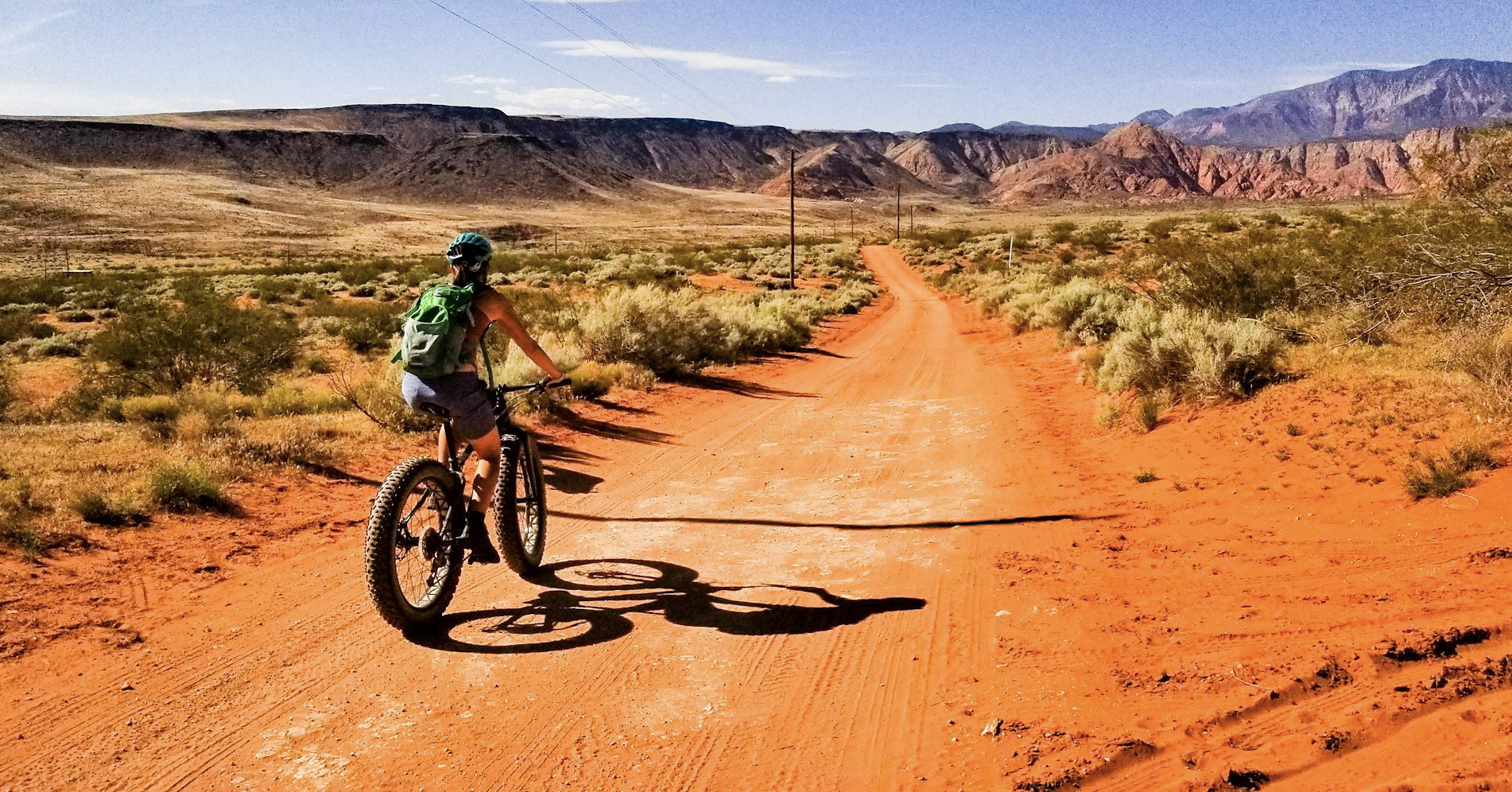
Photo courtesy Lukas Brinkerhoff

I know all of you riders in Northern Utah love coming down south. And why wouldn’t you? We have killer trails and we have lots of open space. A good chunk of those trails are protected and made possible because they fall within reserves. All the trails in Santa Clara? Those are located in the Santa Clara River Reserve. Care to shred the Claw? Yup, the Bear Claw Poppy trail and all of its off shoots exists because it sits in the protected Bear Claw Poppy Reserve. What about all those trails through the iconic red rocks of St. George and Washington? Again, that space has only been preserved because it is a National Conservation Area, the Red Cliffs Desert Reserve.
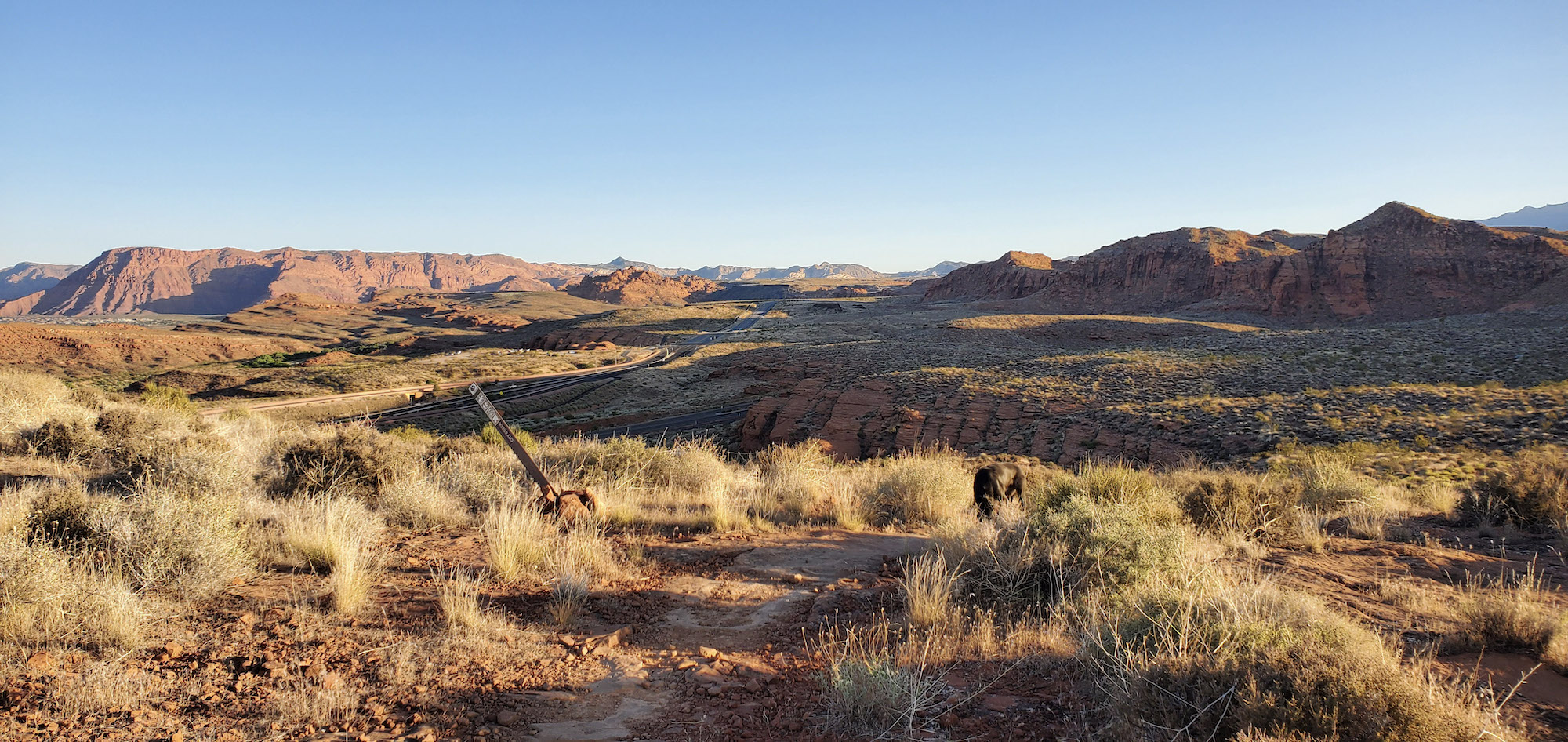
Photo courtesy Lukas Brinkerhoff

The Red Cliffs Desert Reserve (RCDR) has a lot of trails in it. Those most loved by mountain bikers are Prospector, Church Rocks, Paradise, City Creek, Broken Mesa and Icehouse. One of the best parts of the RCDR is its continuous nature. One can jump on Prospector and heading Southwest ride only dirt through Grapevine, Powerline, T-Bone, Pioneer Hills, City Creek and in Paradise. It’s actually our favorite way to end the popular Turkey Farm Loop.
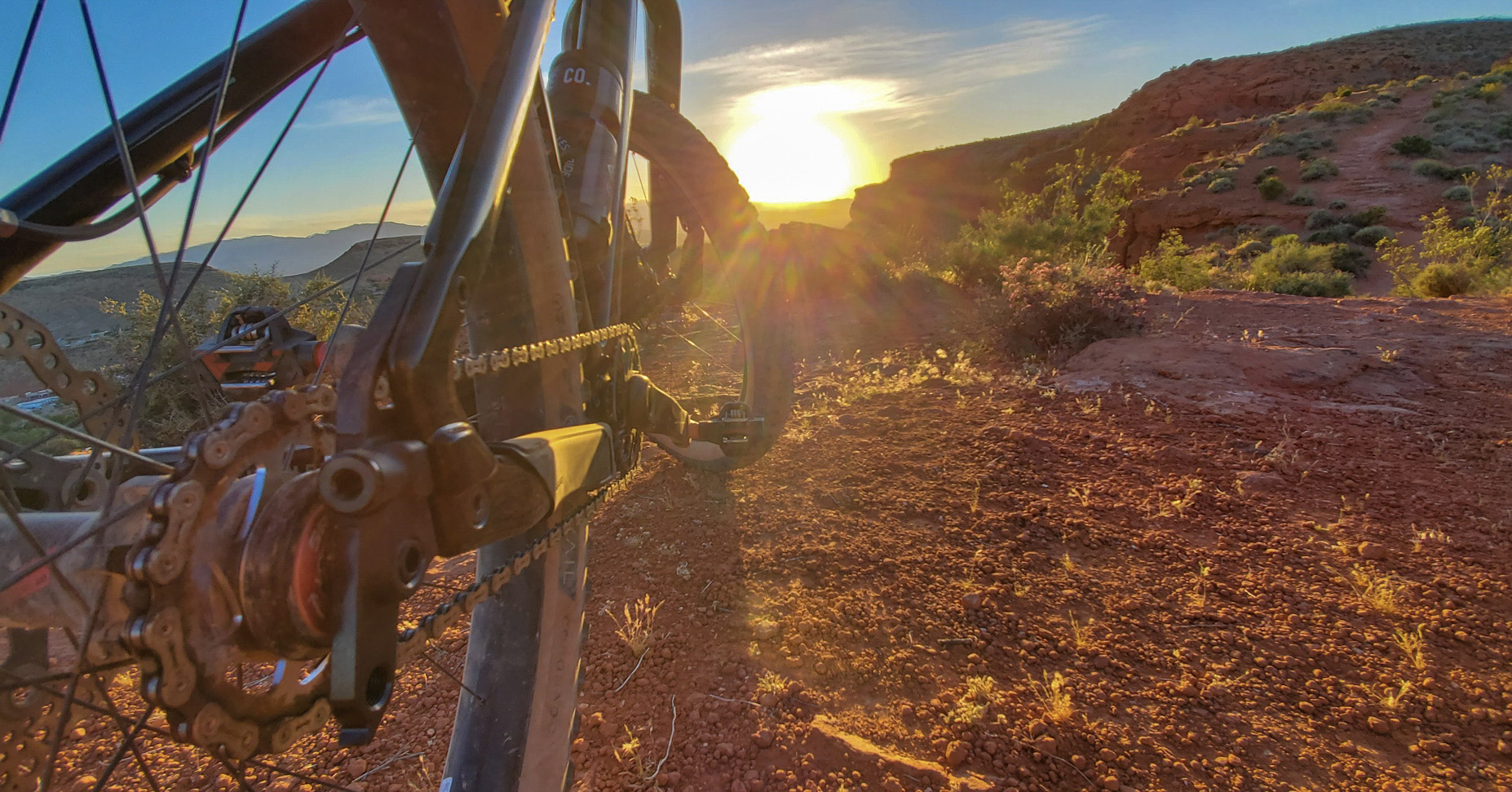
Photo courtesy Lukas Brinkerhoff

The Reserve has been under attack pretty much from its inception. The desire to develop everything (see above about endless sprawl) is strong in Washington County. Our elected officials are giddy about turning this place into the next Salt Lake Valley or even worse, Los Angeles (they are pretty much following the LA County play book to a tee, see Lake Powell Pipeline). And I get it, there’s money to be made. Can you imagine what a view lot on Church Rocks would sell for? I think you get it.

Unfortunately, all that money that could be made is really just trading our biggest asset, our open space and iconic red desert, for McMansions and pavement.

Erik Peterson sang in Mischief Brew’s Love and Rage, “And the greatest of all historical shams is believing you cannot do something you can.”
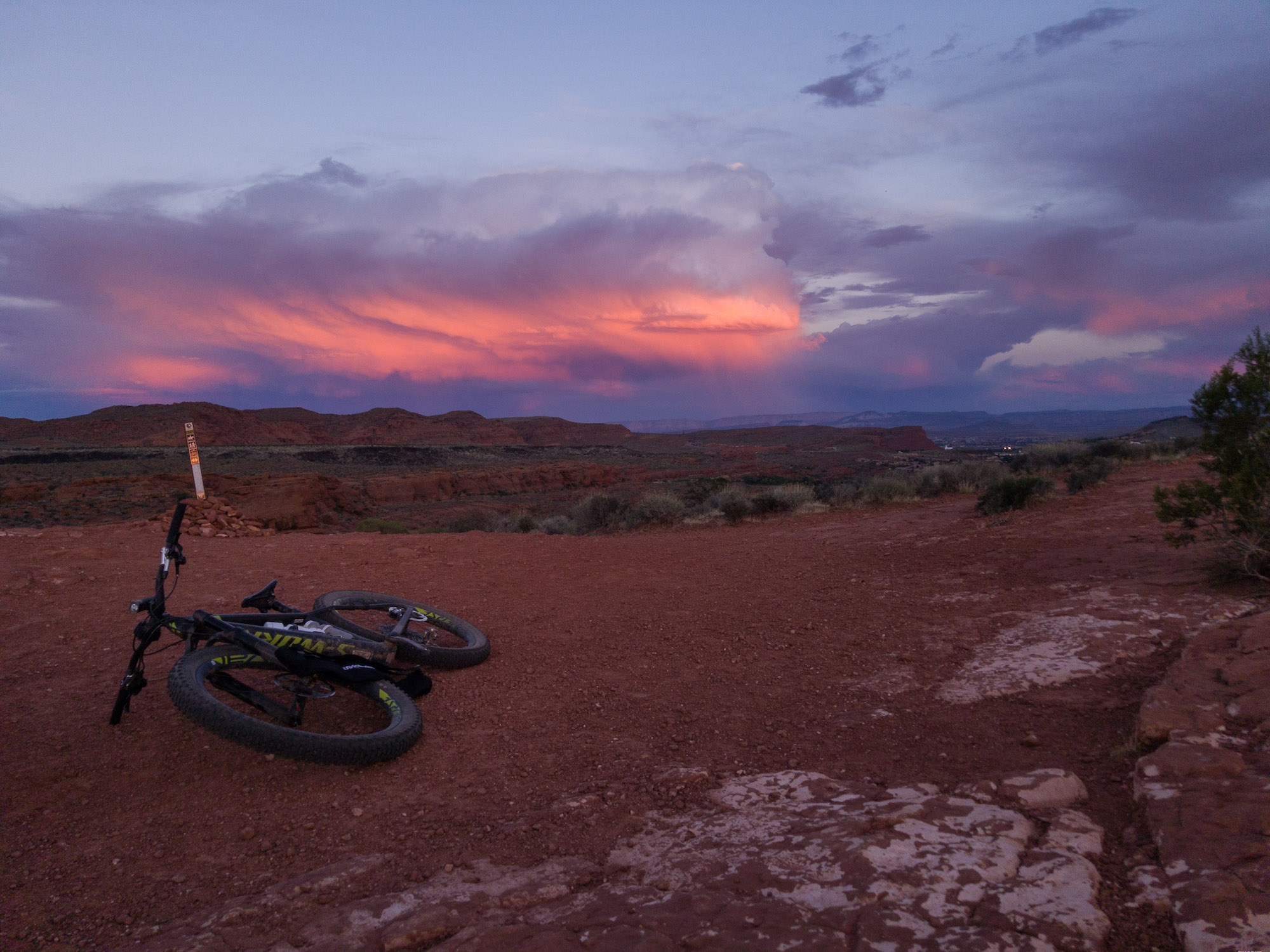
Photo courtesy Lukas Brinkerhoff

We are currently amid a fight to save the Red Cliffs Desert Reserve. County Officials, UDOT and our Congressman are hell bent on pushing a road through the Reserve. This road, known as the Northern Corridor, would start at the top of Washington Parkway and push right into our trails. It would become the bottom of Broken Mesa/Icehouse, eliminate Powerline and T-bone and end back at Red Cliffs Parkway just above Pioneer Park by Pioneer Hills Trailhead.

[Editor’s Note: For more information, see https://savepioneerpark.org]

It’s easy to look at these instances and feel like it’s impossible to win. Not only do those we oppose seem to have all the power, but there’s that ever present bureaucratic inertia (if UDOT doesn’t build roads, it doesn’t have a reason to exist) we have to contend with, but history is on our side.

You see, this isn’t the first time the Northern Corridor has been pushed. No, this fight has been going on for almost 20 years. And every single time, the people have spoken, and the road has been kept out of the Reserve.

You know you are winning when those you oppose begin trying to circumvent the public process. Congressman Stewart has introduced a bill that would do just that. Instead of allowing the road to go through a NEPA process including public comments and protests, it would be pushed through as a legislative move.

Now, mountain bikers, this is where you come in. You might be thinking that this doesn’t affect you, but this is your land. The Northern Corridor isn’t dissecting land owned by the county or a city or even private individuals (while there are private inholdings that could benefit from this road), it’s your land. You have a right to speak up and be part of the process that will ultimately determine if this road happens or not. You are a public landowner and it’s time to stand up for that land and oppose those who would give it away far too cheaply.

So, what can you do? It’s actually a pretty easy process. It’s simply commenting to the BLM, signing some petitions and putting numbers behind the message that we do not want a road through our desert. Fire up the internet box and go to savepioneerpark.org. The front page includes a link to a To Do List. Go there and follow the steps. Easy peasy.

[Editor’s Note: For more information, see https://savepioneerpark.org]

This fight won’t be over when we stop this road once again. Attacks on our open space, our public lands are going to continue. We have to make sure that we stay vigilant and active to ensure our voices are heard when it comes to our state. If we don’t, there’s a chance we will lose all these amazing places. Access to our land stops when it becomes privately held.

Alright, I see you’re getting antsy. The cooler is right over there, grab a beer and a cookie, just don’t forget to act.

Thanks, Uncle Knux.
Grow Cycling Foundation Promotes Diversity and Inclusion in Cycling

0

LOS ANGELES, California (August 13, 2020) — The brainchild of Eliot Jackson and Katie Holden, Grow Cycling Foundation serves to promote education, access and opportunities that advance diversity and inclusion in cycling.

Grow Cycling Foundation was created in light of the 2020 George Floyd protests and the resurgence of the Black Lives Matter movement. In recognition that the cycling world is not immune to a culture of exclusivity and racism, the founders felt a need to help focus the call to action within their own community.

Grow Cycling Foundation was established to create new avenues for inclusive community building and career development in the cycling industry as well as to empower existing programs working to tear down the barriers to entry in cycling for marginalized communities. With ears on the ground in these communities, Grow Cycling Foundation serves to provide the education, access, and opportunities that directly address the barriers they face. To sustainably and inclusively grow the industry, authentic foundations of diversity must be built from within.

Investing in areas that create sustainable paths for cycling as a lifelong passion, Grow Cycling Foundation leverages four overlapping pillars: Education, Opportunity, Community & Access, to create solutions that provide entry points at various steps of a cyclist’s journey.

With a dynamic, five-year plan in place, the first initiative of Grow Cycling Foundation is to build a pumptrack in Los Angeles, CA. Grow aims to inspire career paths and involve the local community by using this space for world-class events, community building and programs that teach various cycling industry skills.

For more information, visit https://growcyclingfoundation.org or follow @growcyclingfoundation on Facebook and Instagram.

“Stay Safe, Stay Active” Street Closures Provide a Possible Vision of the Future of Roads

On April 23, 2020 Salt Lake City Mayor Erin Mendenhall announced the first of several “Stay Safe, Stay Active street closures with the announcement of the closure of 500 North between Redwood Road and 800 West. With the announcement, Salt Lake City joined a growing number of cities throughout the country that have begun reimagining their relationship with streets.

Across the country cities of all sizes have closed streets to vehicle traffic and opened safe access to pedestrians and cyclists. The simple act of putting up signs and barricades can provide significant recreation space for families on bicycles, joggers looking for extra space, and people who have mobility issues – whose needs are all too often forgotten.

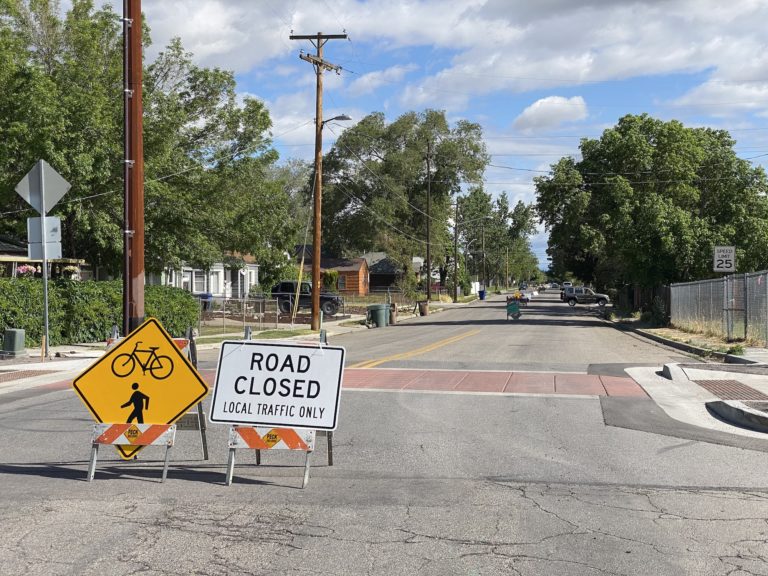
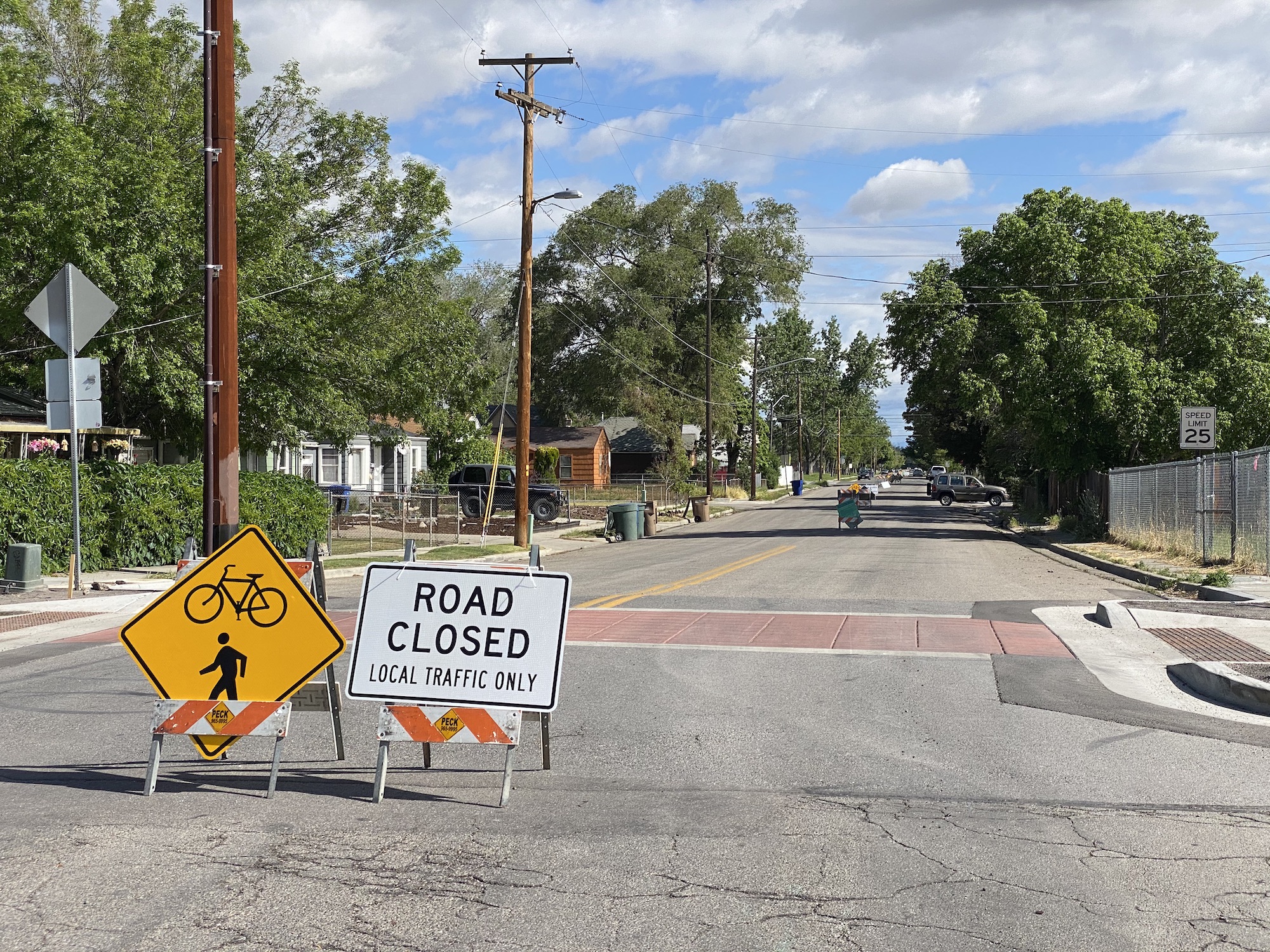
Signs closing streets except to local traffic as part of SLC Mayor Erin Mendenhall's "Stay Safe, Stay Active" plan during the Covid-19 pandemic. Photo by Turner Bitton
Signs closing streets except to local traffic as part of SLC Mayor Erin Mendenhall’s “Stay Safe, Stay Active” plan during the Covid-19 pandemic. Photo by Turner Bitton

With up to 80% of habitable land in a city paved over for streets, every inch of recreation space become crucial at a time when physical distancing is so important. To promote the public health, cities have reimagined the community’s relationship with its streets. Residents, it seems, are all too happy to take advantage of the safe, pedestrian-centered changes by utilizing the open spaces.

With bicycle sales experiencing a significant boom since the onset of COVID-19, streets are becoming a new adventure for cyclists without a history on city streets. The urgency of reclaiming streets has grown as maintaining physical distancing during the COVID-19 crisis has proven difficult to some residents. This is especially true in dense areas where playgrounds and other public gathering places have closed due to health precautions. As summer approached, and trails, bike paths, and sidewalks grew busier, Salt Lake City took action to provide additional outdoor spaces for residents to get out onto the street and enjoy physical activity.

To determine the least disruptive and community-friendly closures, Salt Lake City conducted a weeklong survey. During the week that the survey was active, over 6,200 people completed the survey weighing in on the proposed closures.

In addition to survey data, the city used geographic equity, connections to parks and trails, hospital/emergency routes, transit routes, and traffic patterns in determining the best routes for closure.

At the time of the street closure announcement, Salt Lake City Transportation Director Jon Larsen released a statement explaining the care that the city was taking in opening streets, “These are challenging times and we are aware of the strain that the current situation is placing on people’s physical and mental health. Opening up more space to walk and bike is one way we are trying to help people stay healthy and safe… Similar initiatives to this have been successfully implemented in cities throughout the world, and we’re excited to make this happen in Salt Lake City.”

Since the initial closure in April, Salt Lake City announced several other neighorhood street closures, which altogether, represented roughly 8 miles of closures within city limits. However, as of June 30th, Salt Lake City began reopening some of the streets that were closed previously and normal operation has resumed.

As with all changes, the closure of streets hasn’t been without controversy and some residents have expressed frustration that vehicles are unnecessarily restricted by the closures. Still, many residents have expressed optimism about the future of initiatives like “Stay Safe, Stay Active.”

Taylor Anderson from the newly launched Sweet Streets Initiative, a new Salt Lake City transportation advocacy group, shares that optimism. “I think particularly during this pandemic we’ve seen just how inadequate our sidewalks — and even some trails — are in just about every neighborhood. The Stay Safe, Stay Active streets showed what can be accomplished when we view streets as public spaces for everyone and not just people traveling by car. About 80% of the public space in our city consists of roads, so it’s time for Salt Lake City to join others in permanently reallocating street space for all people.”

The lessons learned, he argues, will provide a pathway forward for doing just that. “We saw that we can make changes to our streets and the sky won’t fall. There won’t be paralyzing gridlock. When given the space, people will get into the streets we all pay for and use it. I hope and expect that the city collected valuable data during this unprecedented time to see how these streets were used when they were temporarily altered to help make changes moving forward.”

Others see significant opportunity to use street closures as a mechanism for stimulating an awakening economy. As states and cities begin to reopen, many restaurants and businesses see closed streets as an opportunity to better utilize urban space to thread the needle of public health and economics.

On June 13th, Salt Lake City Mayor Erin Mendenhall signed an executive order allowing restaurants and businesses to apply for special permitting to reopen in outdoor spaces so long as they provide a 6-foot pathway for pedestrians and foot traffic.

It remains to be seen what kind of cultural change will occur when whatever form of normalcy returns post-COVID. However, one thing seems to be apparent – residents will have dramatically reimagined their relationship with the streets in cities across the country.

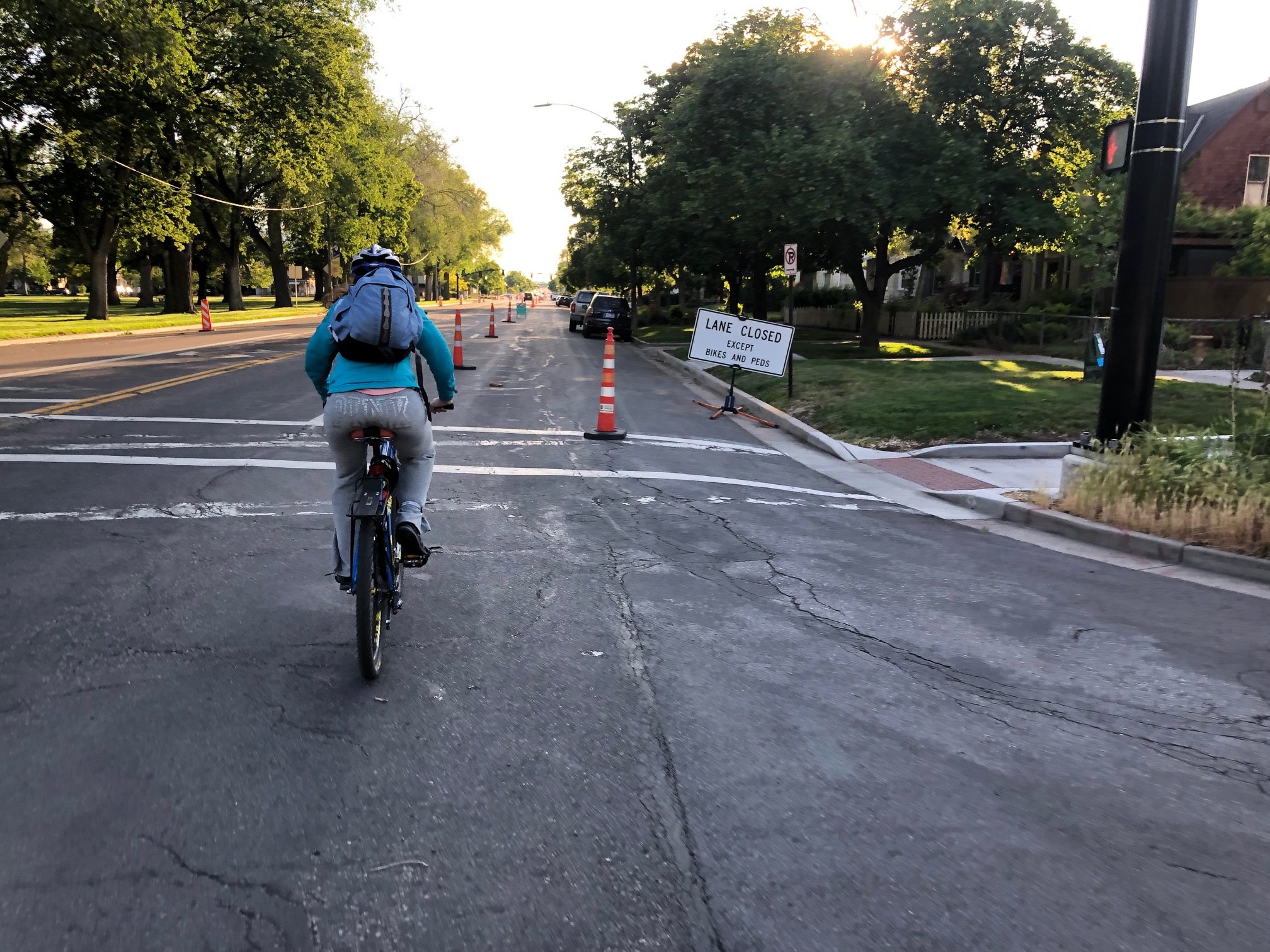
A cyclist on the now dismantled 900 S Safe Street closure. Photo by Dave Iltis

[Editor’s Note: the following streets were closed in Salt Lake City as part of this program, although a number have since reopened: 900 South between 300 East and 700 East, 600 East between South Temple and 900 South, Wasatch Drive between Crestview Drive and 1300 South, Stratford Avenue between 1300 East and 2000 East, 4th Avenue between A Street and N Street, 200 West between 600 North and North Temple, Emery Street between 300 South and Hayes Avenue, 800 East between 700 South and 1700 South, Kensington Avenue between 700 East and 1400 East, and between 1500 East and 1600 East.]


2020 IRONMAN 70.3 North American Championship in St. George Cancelled

0

In a news release dated August 10, 2020, the organizers of the 2020 IRONMAN 70.3 North American Championship in St. George announced that the event was being cancelled due to the ongoing COVID-19 pandemic.

The text of the release is as follows:

When we postponed the IRONMAN North American Championship St. George triathlon from its original date of May 2, 2020 to September 19, 2020, we felt confident we would still be able to deliver an exceptional event at the later date.

Unfortunately, based on further conversations with and direction from local authorities, including medical, health and safety leaders in relation to the COVID-19 pandemic, and in the best interest of our IRONMAN community and the local communities, the IRONMAN North American Championship St. George cannot take place in 2020. In what has been a continually evolving and challenging time globally, we recognize that this may come as a disappointment, but assure you that our commitment to our athletes and the success of our sport is stronger than ever. Our partnership with St. George remains strong and we are scheduled to hold six races from 2021-2025. These races will include the IRONMAN 70.3 World Championship in 2021, two IRONMAN North American Championships and three IRONMAN 70.3 North American Championships. All registered athletes of the 2020 IRONMAN North American Championship St. George triathlon will be receiving an email with further information.

We thank our athletes for their commitment and look forward to providing them with an exceptional race experience in the future.

Park City Point 2 Point Releases a Virtual Ride for 2020

PARK CITY, Utah (August 10, 2020) —  The Park City Point 2 Point released a virtual challenge.  The primary event, originally scheduled for Sept. 3rd, was cancelled due to the unknown potential restrictions  the ongoing pandemic. Race organizer, Jay Burke, “we released this activity as an outlet for some late summer fun on your bike – it isn’t being pushed out as a race, just something to encourage P2P fans to get out and ride – stay healthy.”  Ride it when you can, by yourself, or with a small group. When you do ride, have fun!

Evelyn Dong topped the women’s field at the 2019 Park City Point-2-Point.. Photo by Chris See.

Two options for Participation.Option one, ride the entire course in one outing.Option two split the ride into 3 parts. Option one will need to be ridden any time by Sept. 5th. Option two also needs to be ridden by September 5th, however, you only have 8 days after you ride the first leg to complete the other 2 segments (which should give you 4 weekend days to complete the ride). 

There is also also achallenge for out-of-state riders, or those of you not able/willing to travel to Park City. Find a course in your area that is 75 miles (or more), climbs over 10,000′, and is over 50% dirt (preferably singletrack). It can be a contiguous course, or it can be a loop you ride multiple times (life is too short for riding in circles – so try to find an enjoyable long route).

Everyone completing gets a commemorative sticker mailed to them, and you’ll be eligible for the Point 2 Point opportunity drawing.  There are additional ways to gain extra drawing tickets too!  All the details can be found on the webpage: https://thepcpp.com/2020-p2p-virtual-challenge

Cycling West and Cycling Utah’s Summer 2020 Issue is Now Available!

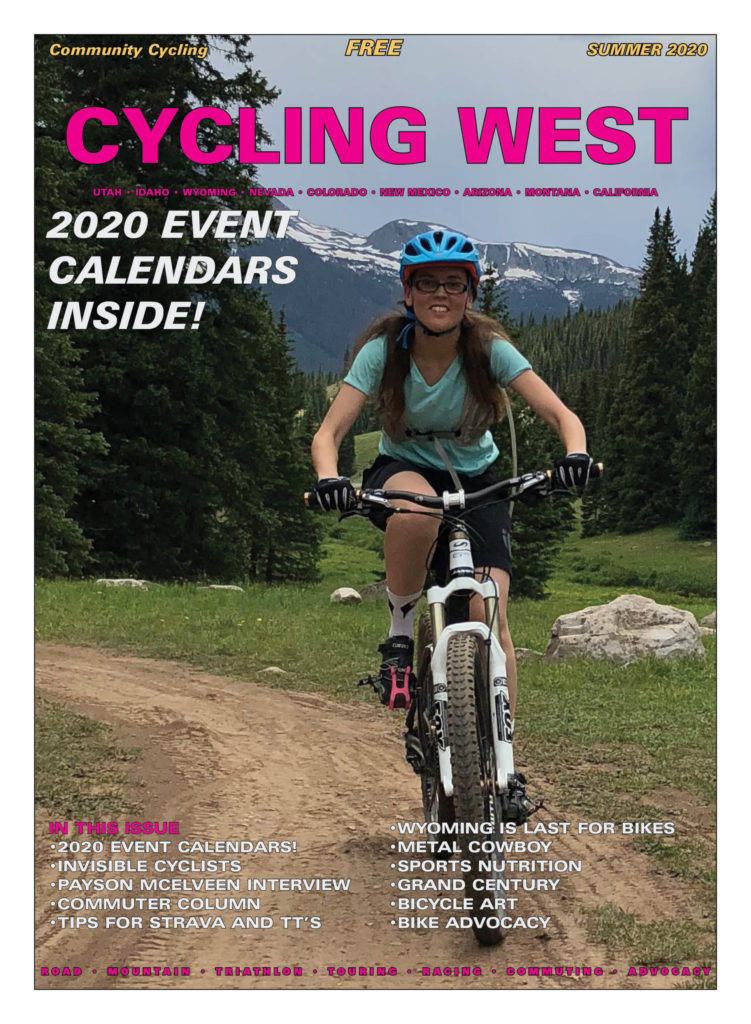
Cycling West and Cycling Utah Magazine’s Summer 2020 Issue is now available as a free download (12 MB download). Pick up a copy at your favorite Utah, Idaho, Wyoming, Nevada, Montana, Colorado, Arizona, New Mexico and Northern California bike shop or other location.

Download the Magazine Now!

Cycling West Summer 2020 Cover Photo: Lisa Hazel mountain biking the trails on Molas Pass near Silverton, Colorado. Photo by Dave Iltis

Contents

  • Poor and Black ‘Invisible Cyclists’ Need to be Part of Post-Pandemic Transport Planning Too — page 3
  • INVEST in America Act Could Help Bicycle Infrastructure — page 4
  • Report: Wyoming Dead Last for Bicycle, Pedestrian Safety — page 5
  • Tips for Time Trialing and Conquering STRAVA — page 6
  • Switchblade Poetry — page 7
  • The Athlete’s Kitchen: Food, Anxiety and Athletes: A Troublesome Trio — page 8
  • Interview with Professional Mountain Biker Payson McElveen — page 9
  • Interview with Professional BMX Rider Hayden Raymond  — page 10
  • Custer Gallatin National Forest May Limit Mountain Bike Trail Access — page 10
  • Survey Indicates Women Cycle Less Than Men — page 10
  • GreenBike Memberships for Essential Workers — page 10
  • Erik Lopez Offers Tips for Commuter Cyclists  — page 11
  • Riding Through the Staircase – The Grand Century — page 12
  • How to Ride a Bike (as told from the notes on my phone) — page 13
  • Calendar Notes for Summer 2020 — page 16
  • Hydraulic Brakes Require Preventative Maintenance — page 22
  • Coastal Cruz – The Bicycle Art of Mindy Larson — page 23

Utah High School Cycling League To Race 2020 Season as Scheduled

In an email sent to students, parents, and other members of the NICA community in Utah, the Board of Director’s of the Utah High School Cycling League announced that the 2020 season would proceed as scheduled.

The text of the email is as follows:

Dear Utah High School Cycling League Community,

With much thought and consideration, the Board of Directors and league staff decided to continue the 2020 Race Season as scheduled. The decision to begin racing was not taken lightly. We will conduct our races with strict adherence to the restrictions and guidelines published by the Utah Department of Health and under the requirements and permission of county health departments.

An important part of the decision to have a race season is based on strengthening the physical and emotional health of our student-athletes. Our races provide a positive environment that encourages and challenges each of our riders. The benefits of being outside, doing physical activity, learning to be a team member, and competing, even against oneself, is important to youth development.

This will not be a normal race season. We understand the risks involved by racing during the current pandemic. We are all in this together, but it is up to each individual to follow the COVID-19 precautions as specified by the league. Masks must be worn, and all other stated precautions must be complied with at our events. We will not hesitate to sanction anyone who chooses to do otherwise at our permitted venues. Head coaches will also have the latitude to sanction team members if the coach feels their behavior jeopardizes the team and the ability to hold practices and attend races. We will continually monitor the critical coronavirus metrics across the state and the communities where we race. We reserve the right to cancel the race season at any time if we believe we cannot conduct races safely.

The Utah League is proud to be the largest NICA league and as such we are a leader in the national mountain biking community. We need to set the example. It is going to take extra work and vigilance by our whole community this year to provide a meaningful race season for our wonderful student athletes.

Sincerely,

Jim Wedge
President, Board of Directors

Dallen Atack
League Director

The league also posted policies for how they plan to mitigate the continued spread of COVID-19.

GREENbike Announces $5 Annual Memberships for Low-Income Residents

SALT LAKE CITY, Utah (Aug. 6, 2020) — GREENbike, Salt Lake City’s non-profit bike-share system, is excited to announce the launch of its Go Pass, an annual pass discounted to $5 from the typical $75 annual membership price.

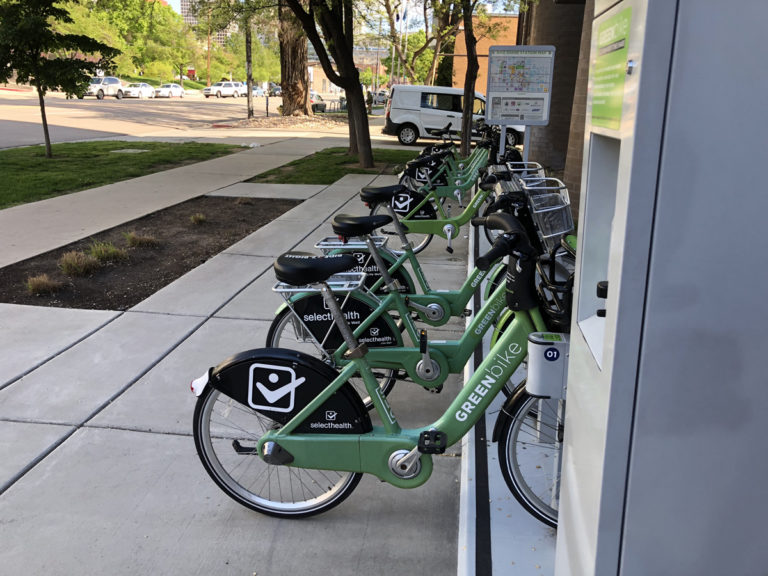
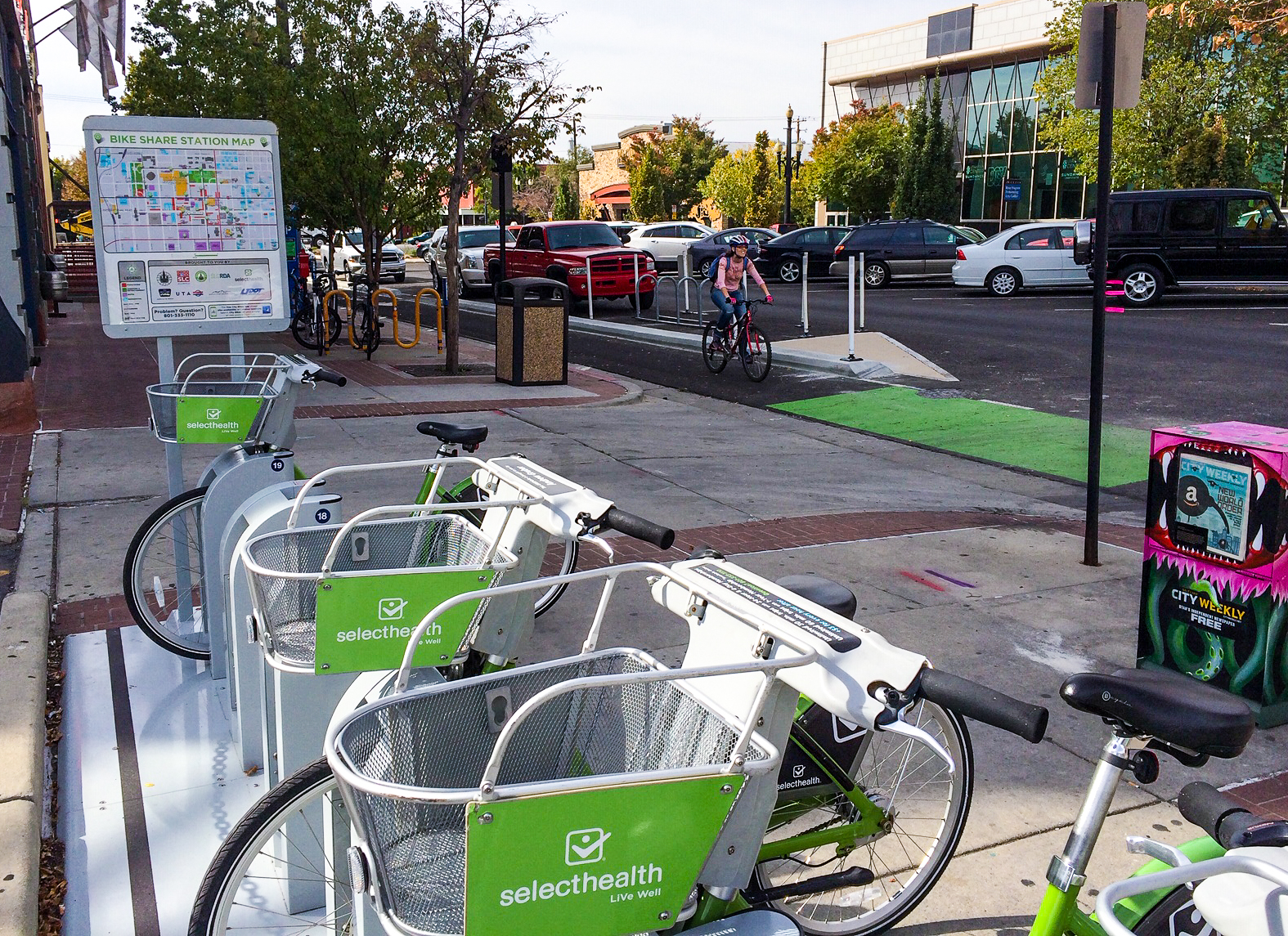
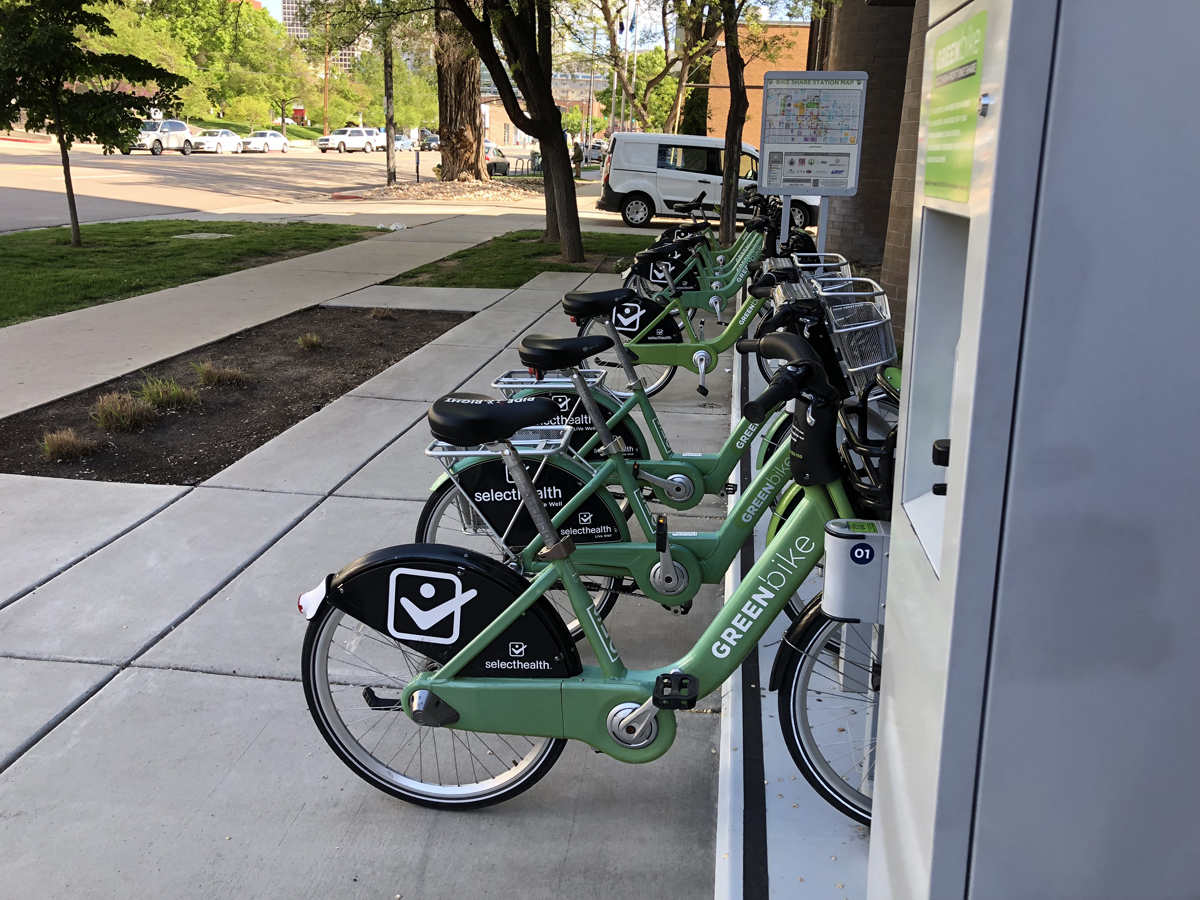
One of several GREENbike stations in downtown Salt Lake City. Photo by Dave Iltis.

GREENbike’s Go Pass is available to all Utah residents with a household income at or below 200 percent of the federal poverty guidelines, those who receive food assistance, such as the Supplemental Nutrition Assistance Program (SNAP), or anyone who is a client of a Go Pass partner organization.

“According to Envision Utah, the average Utah family spends 29% of their household budget on transportation. But low-income families are spending 36%. It’s their single largest expense behind housing,” said Ben Bolte, Founder and Executive Director of GREENbike. “As a local non-profit, I feel we have a responsibility to make it easier for all community members to have access to affordable, clean, green transportation.”

Thanks to the support of GREENbike’s title sponsor SelectHealth, the nonprofit was able to create the Go Pass.

GREENbike Bike Share has changed downtown Salt Lake City! Photo by Dave Iltis

“SelectHealth has been a title sponsor of GREENbike since the program started in 2012. We are thrilled to be able to expand our support to include South Salt Lake and several new stations on the West side of Salt Lake City,” said Patricia Richards, President & CEO of SelectHealth. “We are especially proud of supporting the ‘Go Pass’ that will make GREENbike even more affordable for people who are facing financial challenges at this time.”

Those interested can sign up online at http://greenbikeslc.org/gopass. For $5 a year, Go Pass holders receive a member card and have unlimited 60-minute bike rides for 365 days. Payment can be made with a credit card, debit card, most prepaid cards, or cash.

If paying with a card, Go Pass holders can sign up online or in-person. Cash payments must be made in person at the GREENbike office on Tuesdays or Thursdays between 12 p.m. and 4 p.m. or by appointment. To schedule an appointment to pay by cash, contact GREENbike’s Marketing & Engagement Manager Katie Mykleseth at [email protected] or (801) 613-7245. The GREENbike office is located at 150 S. State St. Suite 100 Salt Lake City, UT 84111.

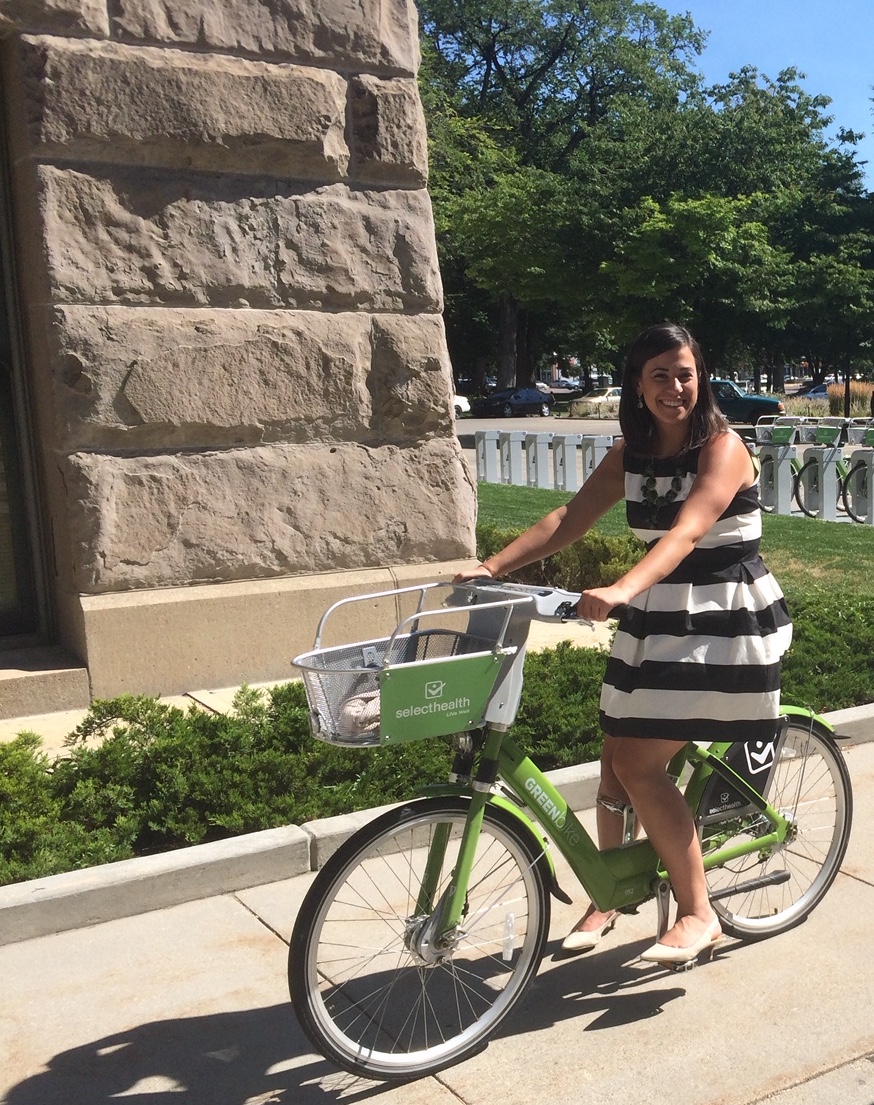
A commuter taking advantage of GREENbike’s ready availability to get around downtown Salt Lake City. Photo by Dave Iltis.

GREENbike had already begun partnering with local organizations to connect their clients to information about the Go Pass. Initial partners have included Volunteers of America, Utah; Circles Salt Lake County; Utah Community Action; United Way of Salt Lake 2-1-1, and the Crossroads Urban Center. GREENbike is looking for additional partners to help spread the word about the Go Pass. GREENbike requests that all agencies and organizations interested in partnering contact GREENbike’s Marketing & Engagement Manager.

GREENbike follows in the footsteps of equity programs within bike-share systems nationally, such as the Red Bike Go program in Cincinnati.

More information about the Go Pass is available at greenbikeslc.org/gopass.

Memorial Fund Launched in Honor of SBT GRVL’s Mark Satkiewicz

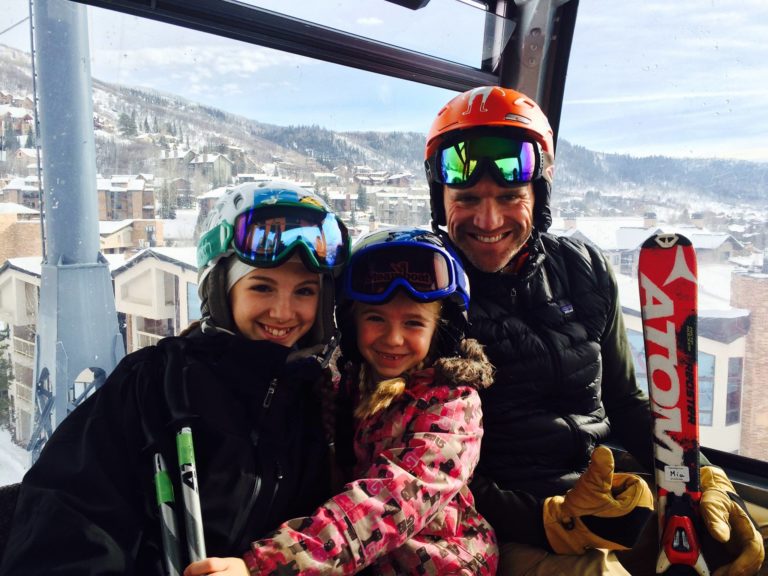
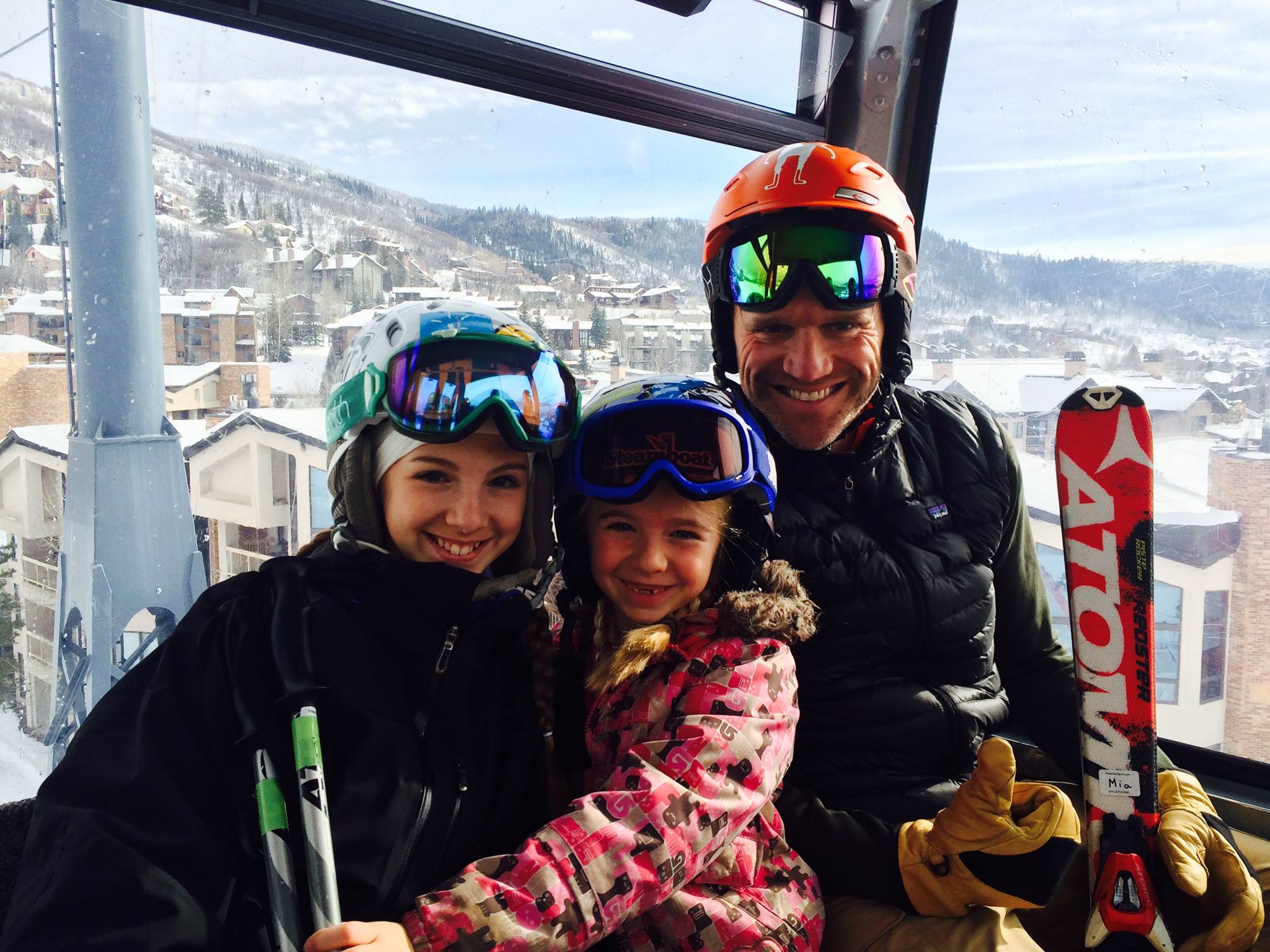
Satkiewicz Family, in Partnership with the Steamboat Springs Winter Sports Club, Launch Fund to Remove Barriers and Invite More Kids to Develop a Lifelong Love for Exploring the Outdoors

STEAMBOAT SPRINGS, Colo. (Aug. 7, 2020) — The Satkiewicz family and close friends, in partnership with the Steamboat Springs Winter Sports Club, today announce the launch of the Mark Satkiewicz Memorial Fund.

Mark Satkiewicz and family. Photo courtesy SSWSC

The fund was created to honor the legacy of Mark Satkiewicz, who passed away unexpectedly on Saturday August 1, 2020 from a cardiac incident while riding his bike with friends near his home in Steamboat, Colo. Mark was a dedicated husband and father, and an incredible friend to many. He was the visionary and co-founder of the world-class gravel event, SBT GRVL, and also served as President of Smartwool, GM of Tom’s Shoes and was a long-time Nike executive.

The mission of the Mark Satkiewicz Memorial Fund is to provide gear and resources to Steamboat Springs youth who may not have access to these in order to pursue outdoor activities such as biking, snowboarding, and skiing. The fund will be a key way to continue with Mark’s quest for inclusivity in the activities for which he held the most passion.

Mark knew the power of community as a vehicle for positive change. This was evidenced by his dedication to his hometown of Steamboat, the many successful teams he led throughout his executive career, and most recently, the global-reaching community that grew up around the super successful launch of SBT GRVL, a gravel cycling event that debuted in 2019.

“Every community Mark was a part of benefited greatly from his vision and strong commitment to equity and inclusion – from business to cycling,” said Mark’s close friend Ken Benesh, who founded SBT GRVL, with Mark and Amy Charity. “Through this Fund, we can now further Mark’s passion for enabling more kids to develop a lifelong love for outdoor sports and take on new challenges in doing so.”

He was an active mentor to so many in business, sport and life, and he saw to it that men and women were given equal opportunity no matter where he was focusing his energy. There’s no doubt that this steady commitment to parity stemmed from his absolute dedication to his wife, Amy, and his beautiful daughters, Olivia and Mia.

Learn more about the fund or to make a donation here.

New Mexico’s 14th Annual Day of the Tread Scheduled for October 25

0

August 5, 2020 – Registration is now open for the 14th Annual Day of the Tread presented by True Health New Mexico and benefitting various non-profit organizations that serve New Mexico’s children. The event is scheduled for October 25, 2020, pending any COVID-19 restrictions. In conjunction, there will be a virtual event, should the live event be canceled or if people are more comfortable riding alone. The virtual event will take place via the Active Experience App and runs October 24 – November 1, 2020.

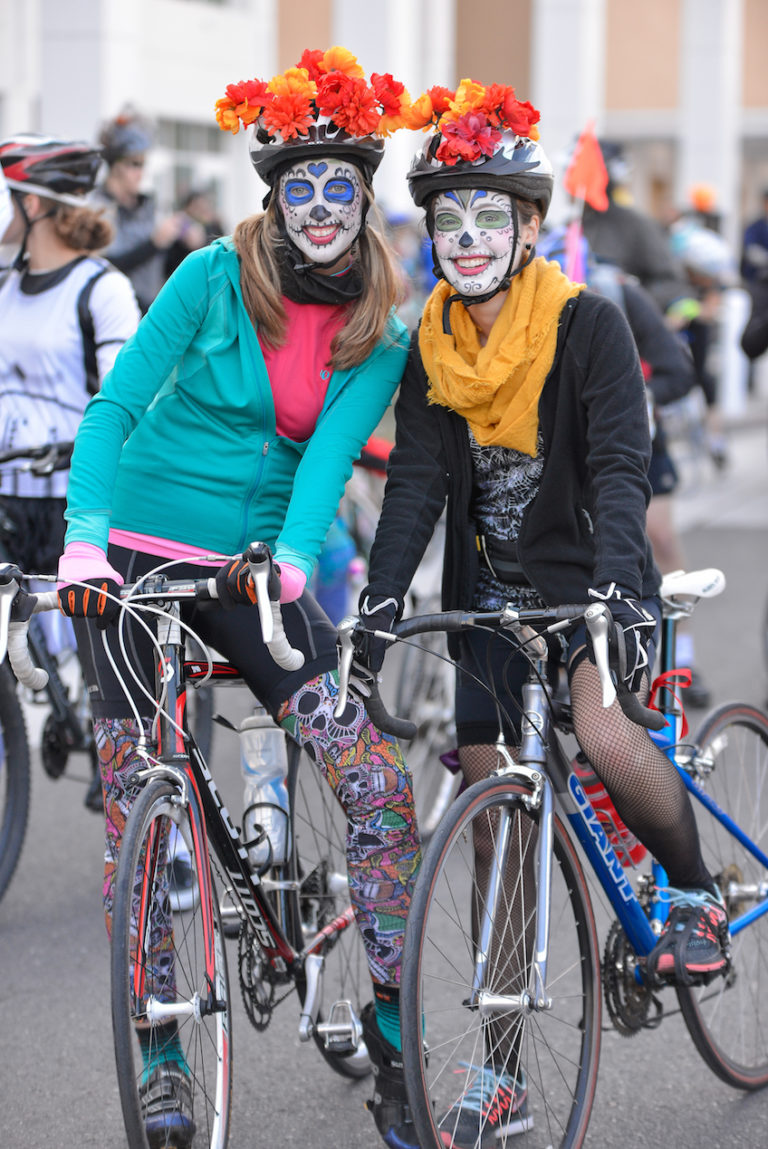
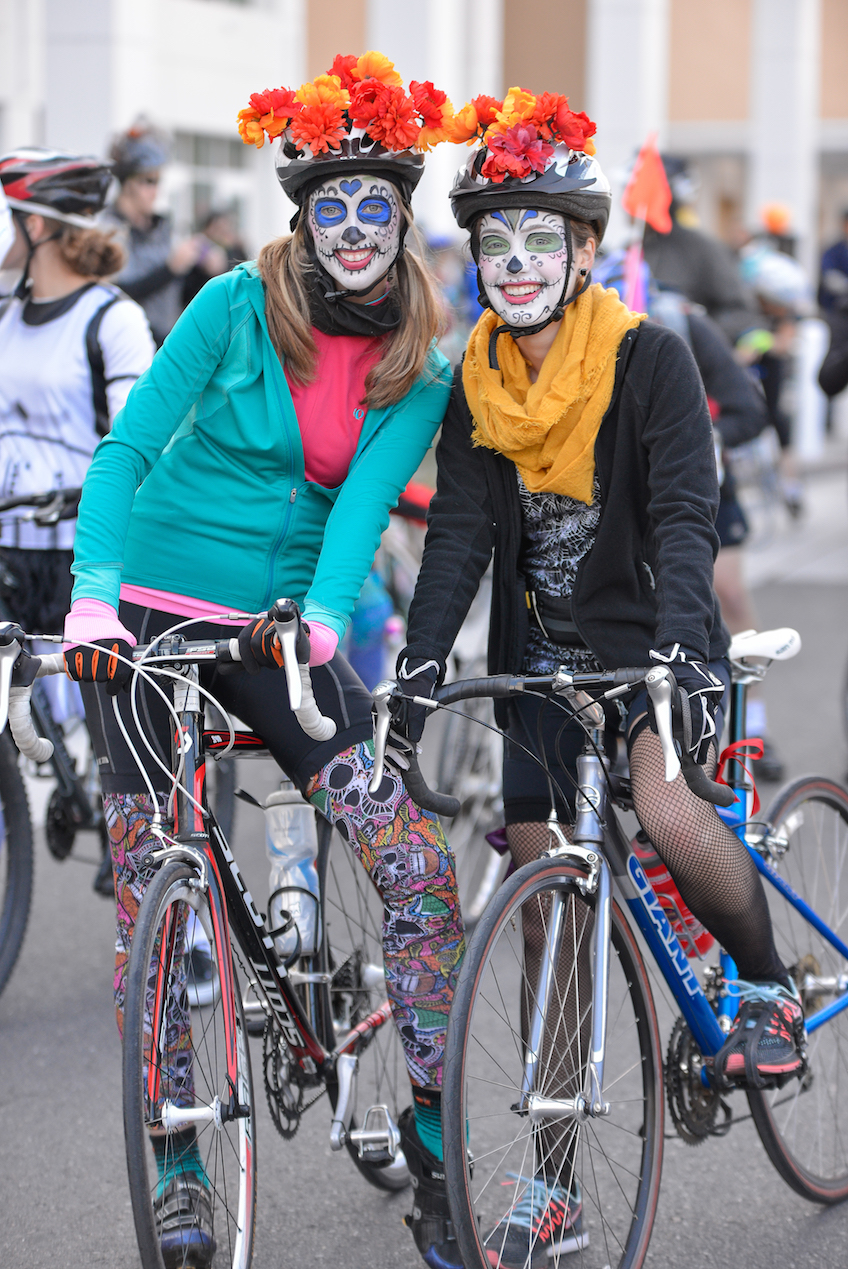
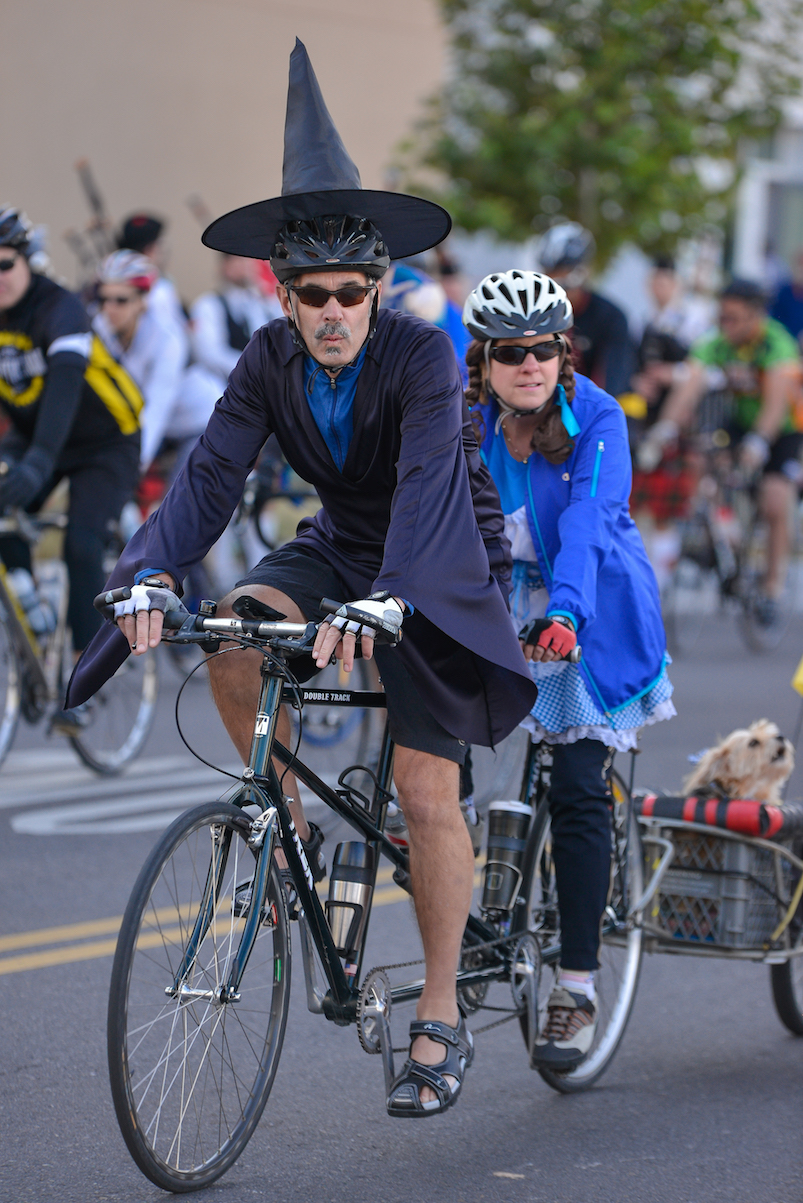
Riders celebrating Albuquerque's annual Day of the Tread. Photo courtesy Day of the Tread
Riders celebrating Albuquerque’s annual Day of the Tread. Photo courtesy Day of the Tread

In the last 13 years, more than 20,000 cyclists have participated in the annual fundraising event. Day of the Tread is known for its fun Day of the Dead inspired costumes that are seen on the roads surrounding Albuquerque one day every year. This year’s event brings back the favorites and some new twists, including:

  • New start and finish area in the Sawmill District of Albuquerque, anchored by the Sawmill Market Artisanal Food & Beverage Hall. Various routes are available, including 7-mile, 18-mile, 25-mile, 47-mile, 60-mile and 100-rile routes.
  • The Rail Runner 9-mile Family Ride, a 12-mile ride that includes a ride on the Rail Runner, 26-, 50-, 64-, and 100-mile routes. Tandem categories are available for the 25-, 47-, 60- and 100-mile routes.

One of the highlights and favorite recharge zones is the famous El Pinto, located in Albuquerque’s scenic north Valley. El Pinto has supported the event every year since its inception.

Last year, people from 26 states participated in the event. A video link that shows the event can be seen at dayofthetread.com. Additionally, a store has been established on the website that sells Day of the Tread, Day of the Dead-inspired items.

Riders celebrating Albuquerque's annual Day of the Tread. Photo courtesy Day of the Tread
Riders celebrating Albuquerque’s annual Day of the Tread. Photo courtesy Day of the Tread

The presenting sponsor, True Health New Mexico, is a New Mexico-based health insurance company that provides coverage for individuals and employer groups. “We delight in our partnership with Day of the Tread,” says Dr. Mark Epstein, CEO. “This a joyful, healthy event for our community, and we look forward to it every year.”

All proceeds benefit Pegasus Legal Services for Children and Zia Freewheelers Adaptive Cycling, among others. To register or for more information, go to dayofthetread.com.

Advocacy Alert: BLM Seeks Comments on Improvements to Montana’s Scratchgravel Hills Trails

As discussed in an earlier article (BLM Proposes New 40 Mile MTB Trail System for Montana’s Scratchgravel Hills) on this site, the Bureau of Land Management has come up with a proposed Recreation Area Management Plan (RAMP) for the Scratchgravel Hills. Now, they are seeking public comment. Comments must be received by August 22, 2020.

Relevant documents on the proposed RAMP can be found on the BLM’s website at the following link:  BLM Scratchgravel Hills Proposed RAMP & Preliminary EA (6-24-20).pdf 

From the letter sent to interested parties, and posted on the BLM National NEPA Register

The Scratchgravel Hills RAMP proposes to improve and enhance recreational opportunities and experiences in the region by: 

      • Formally developing a purpose-built 40-mile trail system, open to a variety of uses, including mountain biking (including E-Bikes), hiking, equestrians, and disc golfers;
      • Expanding existing trailheads to accommodate additional parking;
      • Improving signage and visitor information; and,
      • Designating allowed uses on existing trails.

If you would like to provide comments or suggestions regarding the proposed trail system, resource issues, or infrastructure development, please make your comments as specific as possible and send them to:

BLM – Butte Field Office
Attention: Scratchgravel Hills RAMP
106 N. Parkmont
Butte, MT 59701

You can also email your comments to Brad Colin, Outdoor Recreation Planner, at [email protected].

Comments must be submitted by August 22, 2020. To be considered, all comments must contain the name and address of the submitter. Before including your address, phone number, e-mail address, or other personal identifying information in your comment, you should be aware that your entire comment – including your personal identifying information – may be made publicly available at any time.  While you can ask us in your comment to withhold your personal identifying information from public review, we cannot guarantee that we will be able to do so.

La Joya de la Corona of Staycations

By Roger Crandall — A Bicycle Tour Around the Oquirrh Mountains

Have you spent enough time staying home away from the coronavirus? Do you want to branch off on your bike because you have gone everywhere you can go; both north, south, east, and west in Salt Lake County? Do you want that out-of-town experience? It’s time to take the “Crown Jewel of Staycations” and make some memories on your bike expanding your horizons!

When my Cinco de Mayo was a no show bust, I took off on el seis de mayo for “El Gran Vuelta de las Montañas Oquirrh from right here in beautiful downtown Valle del Oeste, Utah. (Yes, old Spanish teachers never die, they just keep playing with words!)

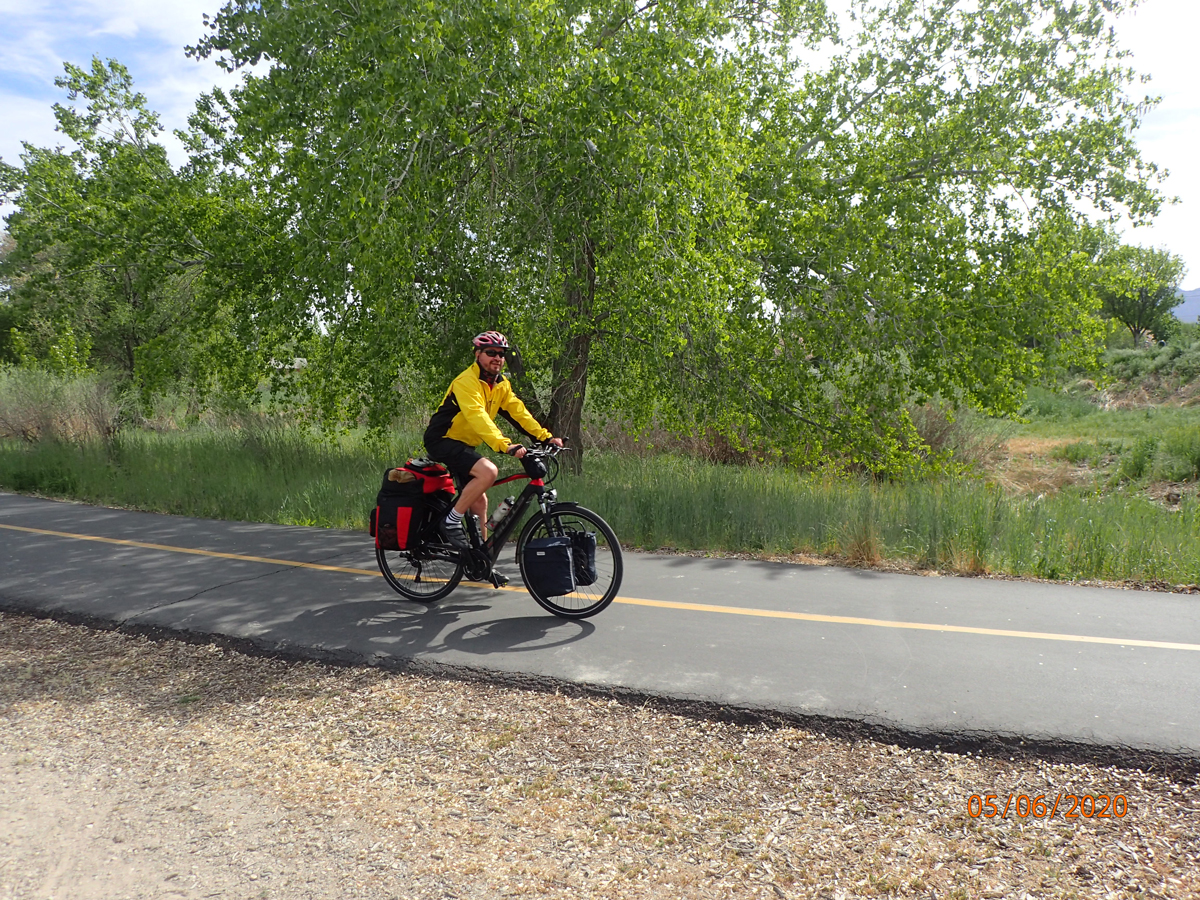
Roger Crandall on the Jordan River Parkway at the start of the Oquirrh loop tour. Photo by Tom Jackson

I’d be getting a crown over my root canal job the next week, but before that, I wanted to do some bike touring around the Oquirrh Mountains which I had been planning for years. As I told my dentista, I told my Costa Rican wife, “yo quiero la corona, menos el virus.”

If you only have one day to “live”, just hop on the Frontrunner train and ride down to Thanksgiving Point. Then head east going up to the Murdock Trail passing over Orem, with views of the whole valley. Ride into exotic Provo for a good dinner, then you can catch the train for the ride back to Salt Lake City. At least you got out of town!

If you really want a trip and a half, or at least half of a trip, take the 3-night, 4-day loop trip around the Oquirrh Mountain chain and have a real bike touring experience that includes a little bit of everything!

On Wednesday, May 6th, I left my home in West Valley to ride the Jordan River Trail to Lehi, just 33 miles to the Willow Park campground, which the bike trail goes right through, so you can’t miss it. Though there was space for 12 thousand cyclists, I was the only one camping. It’s $20 per campsite for one cyclist or for a small group staying in the same site. There are no showers in the bathrooms but at least they were warm. If you don’t do your own cooking, you can get to the fast food joints just west a mile or two around Redwood Road.

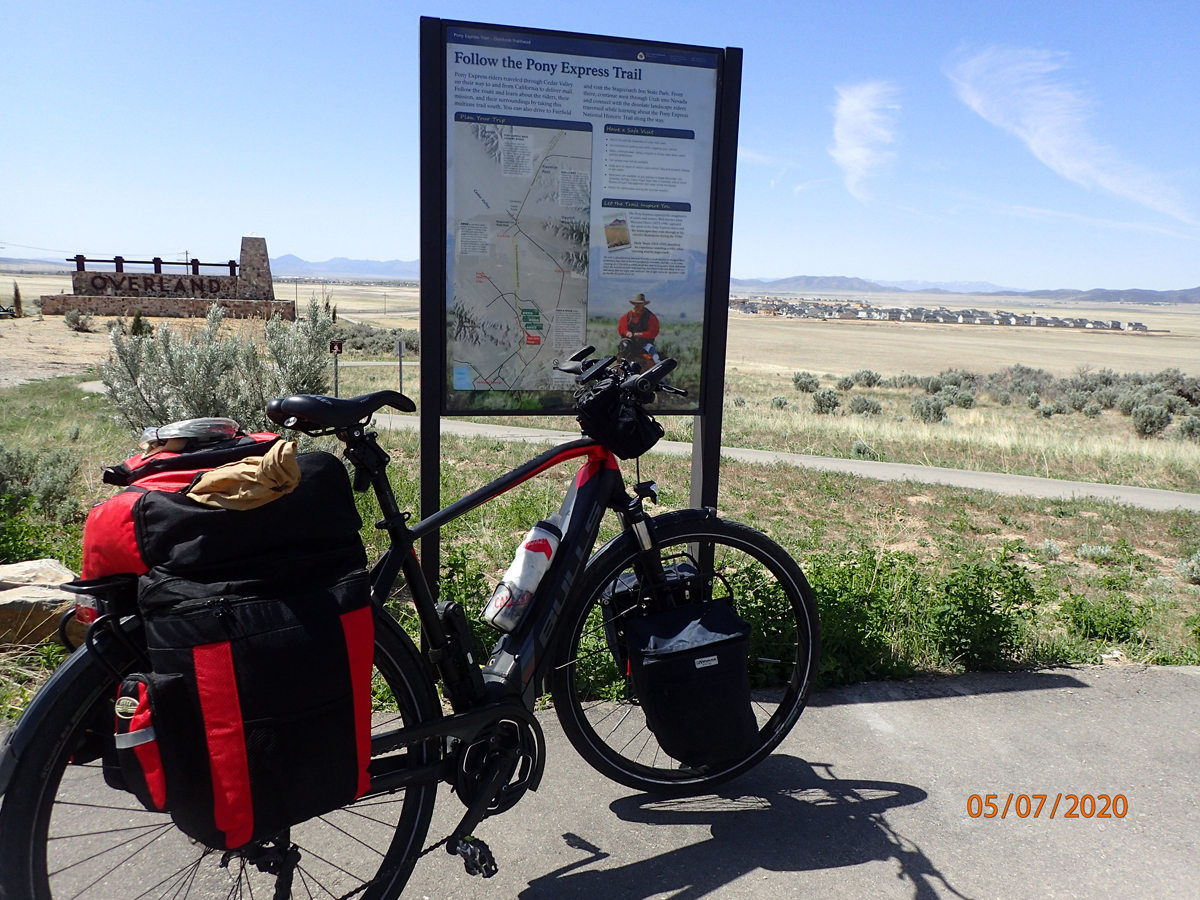
The Eagle Mountain area has great signage for the Pony Express Trail. Photo by Roger Crandall

Day two, I headed west toward Fairfield and Camp Floyd State Park. It was only 16 miles from Redwood Road, so I wanted to extend my trip by checking out Eagle Mountain and get on the old Pony Express Trail. There is a part just for hikers and bikers. The historical markers overlooking the valley to the west are first rate and a must-see stop that explains that period of our history. As a Spanish/History teacher I was déjà vu-ing big time. I mounted my trusty steed named “La Negra”, which is my Bulls Lacuba EVO E-bike, and rode like the wind to the next way station for another close encounter with history.

At old Camp Floyd in Fairfield, the Union Army built the largest encampment in the U.S. and it became the third largest city in Utah at the time. They were here to put down the Mormon Rebellion that never really happened, but the South’s sympathizing Generals were able to divert troops away from any skirmishes that would involve them in the coming Civil War.

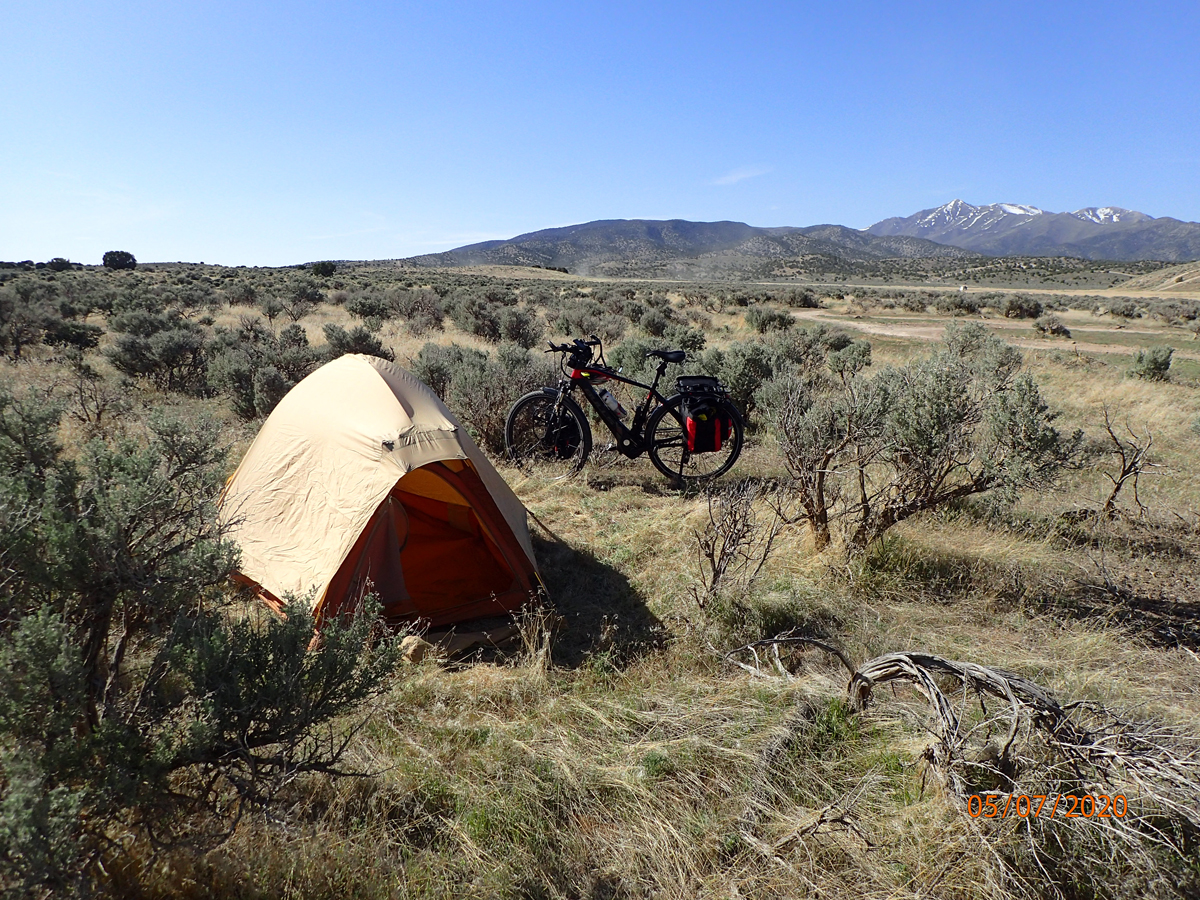
A typical bike touring campsite at 5 Mile Pass with the Oquirrh Mountains in the background. Photo by Roger Crandall

The museum with its introductory video is a must see and the price of entrance includes a visit to the splendid Stagecoach Inn. Unfortunately, there is no camping for cyclists in the town of Fairfield, so I was told to head on up the road for 5 miles to Five Mile Pass Recreation Area where you have miles of wilderness stealth camping in the sagebrush. There is no water but there are toilets in various places. You must contend with the noise from the ATV crowd till at least sundown, but the camping was free, and peace reigned through the night.

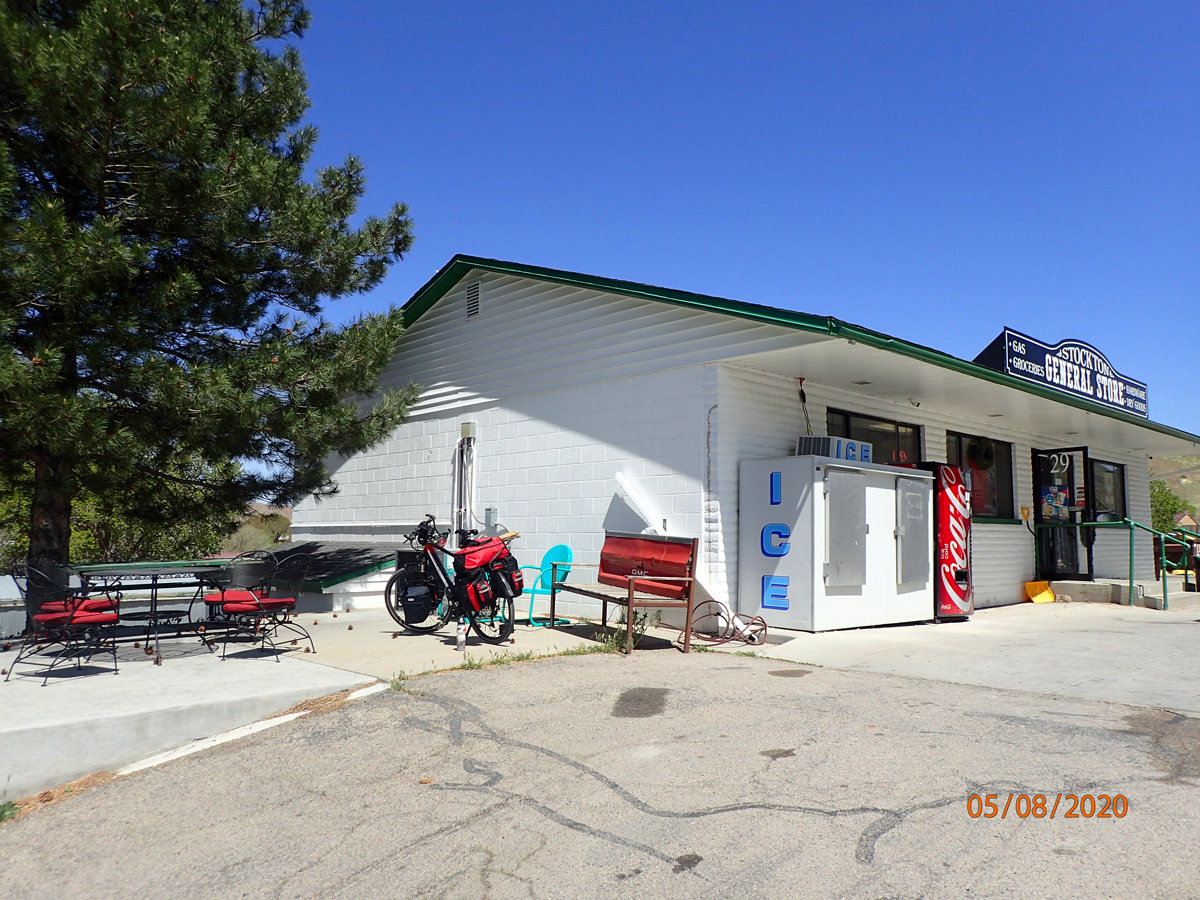
The Stockton General Store is a good place to get refreshments and supplies. Photo by Roger Crandall

Day three, I carried on from Hwy. 73 west, then north on Hwy 36. If you want some more fun, go east into the Oquirrh Mts. to visit the semi ghost towns of Mercur and Ophir. I just pressed on to Stockton, minus Karl Malone, and had lunch at their General Store where I spent my little “dollaritos” to help the local economy. The highways out there don’t get much traffic, and everyone was courteous and moved over when there wasn’t much in the way of a bike lane. The rumble strips were generally out of the way and I could ride around them fairly easily. A few climbs and some downhills and I arrived in Tooele “sin problemas”.

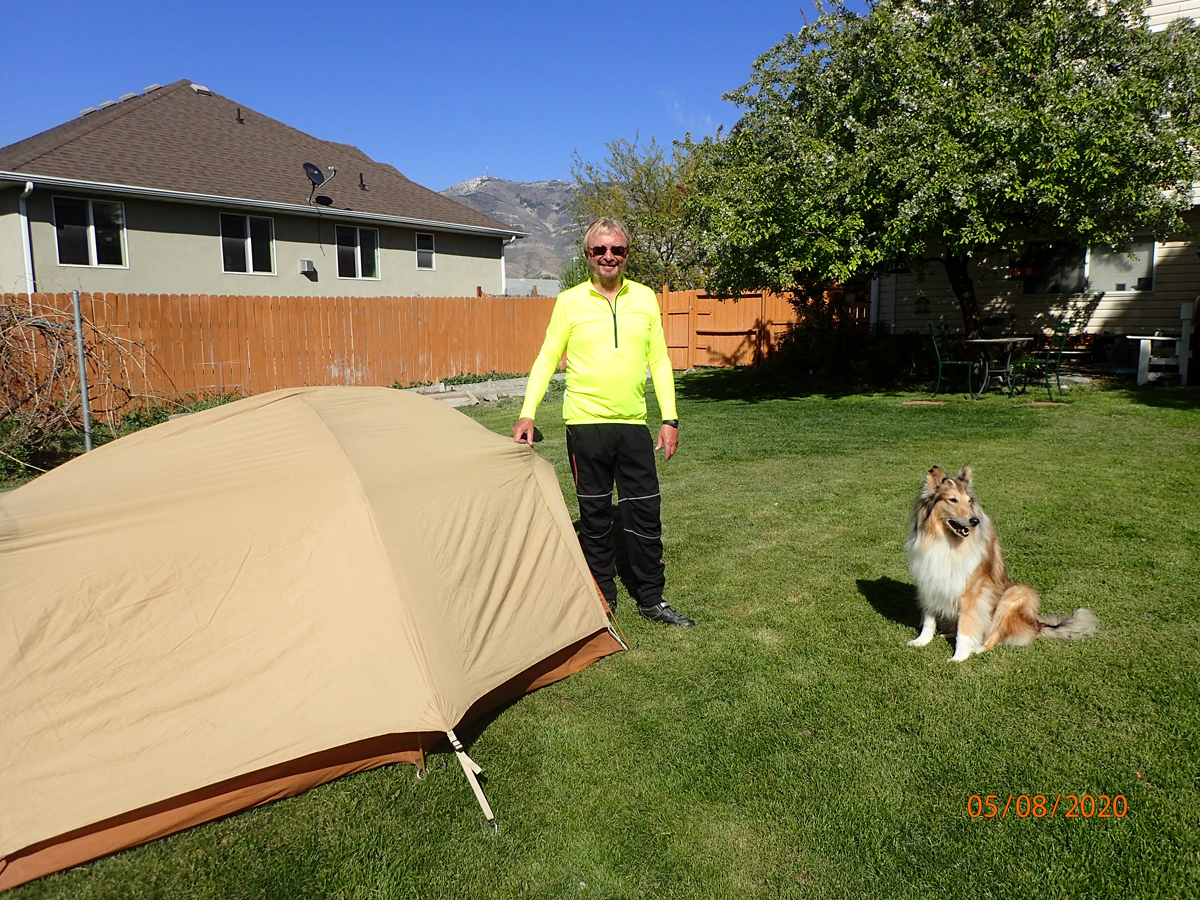
Roger Crandall at his campsite in Paul McClatchy’s backyard, with Paul’s dog Scout. Photo by Paul McClatchy

From there, it was all downhill toward Stansbury Park where my good friend, Paul McClatchy was giving me the first class WarmShowers treatment of a delicious dinner, breakfast, and the best camping ever in his backyard. After three days on the road, the warm shower was most welcomed and needed so that my hosts could stand me at their dinner table.

On day four, I sped around the Oquirrhs on I- 80, (yes, it is legal on that stretch of freeway) until I encountered the turn off to Hwy 201. The noise on the highway sucks, and you have to watch out for the rumble strips, but it all goes by in just 10 or 15 minutes so you can handle it. Take the first turn off Hwy 201 into Magna and then stop for a beer or sandwich and contribute something to help keep the economy of Magna alive; they can use it!

So, if the coronavirus has got you down, “toma la joya de la corona” and try this staycation as your highway to adventure and enjoy the ride of your life, or at least get some life back into your ride.

Side Notes:

Two interesting side lines to my trip that I encountered and will pursue later was a visit to Electrify Bike Co. just west of Gardner Village. They can turn just about any bicycle into an E-bike; so that is something in the future for my tandem to help my wife and I get up the mountains. If you want to “cheat” your way into the future, check out www.electrifybike.com, 801-997-0550.

Secondly, for tired cyclists, I came across a most interesting Crystal Water Spa in downtown Tooele where you can soothe away your aches and pains floating in a “dreampod” and a whole host of exotic therapies. Crystal Water Spa, 40 West Vine Street, Tooele. 435-882-1339.


Colorado’s Buffalo Bicycle Classic Moves to a DIY Format Due to COVID-19

0

BOULDER, Colo. (August 4, 2020) — The Buffalo Bicycle Classic (BBC) has always been more than just a bike ride; it is the largest scholarship fundraising ride in the state of Colorado. Due to the many constraints posed by COVID-19, the BBC will move to a do-it-yourself virtual ride this year.

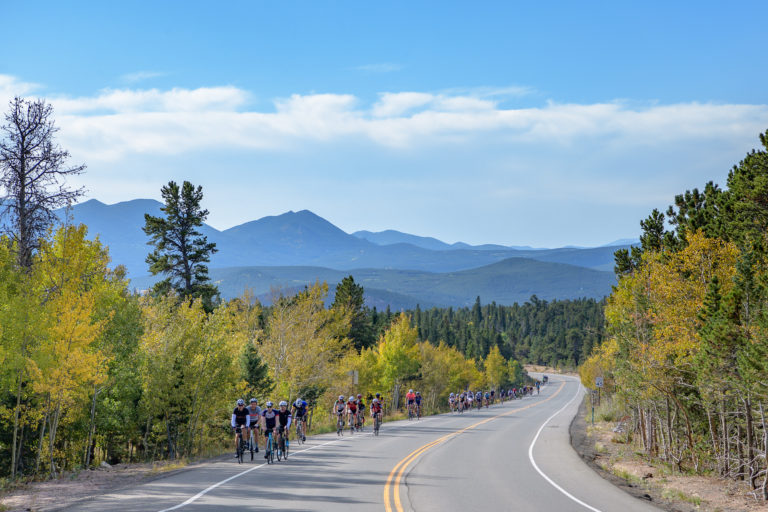
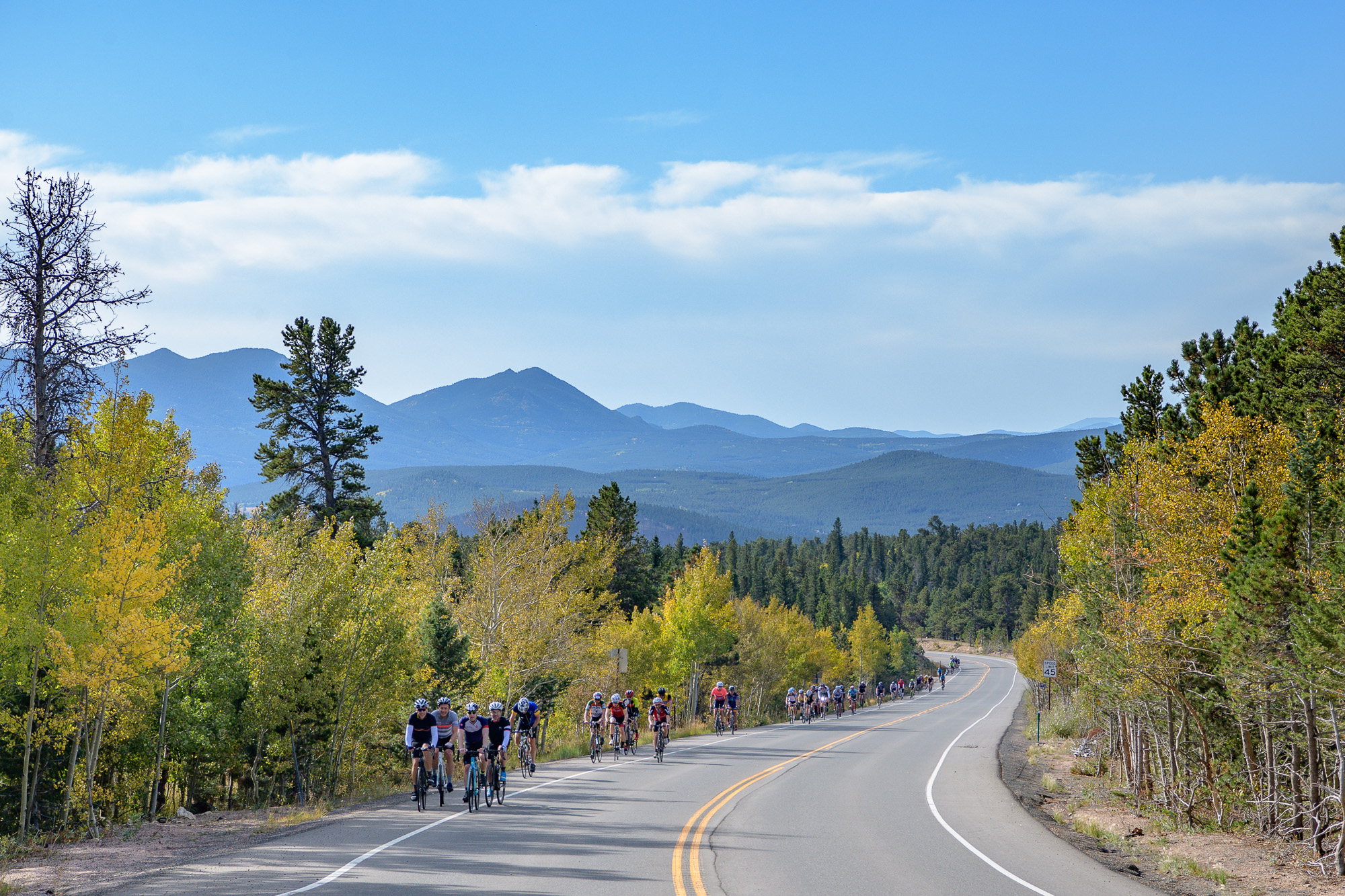
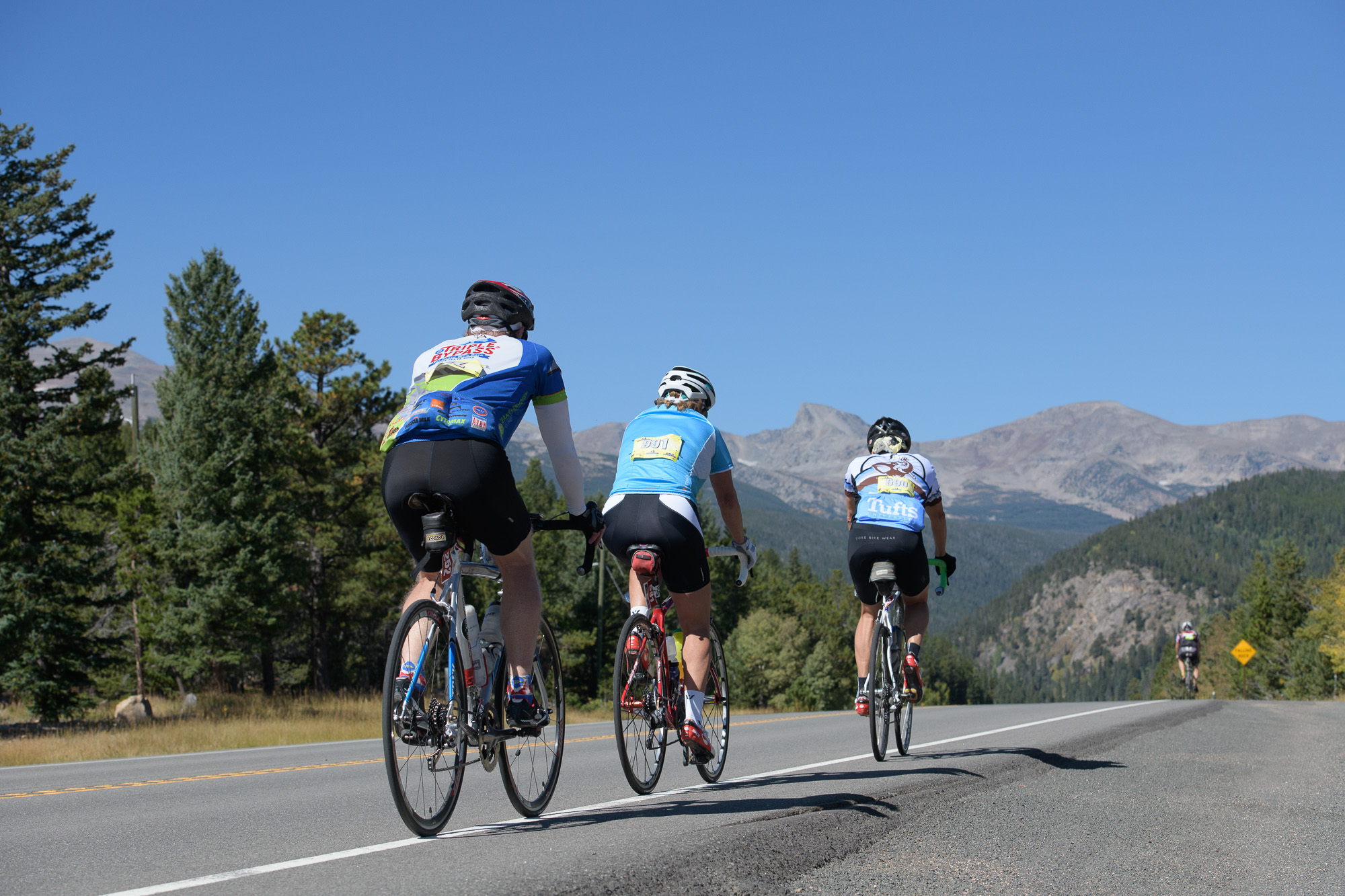
Photo courtesy Buffalo Bicycle Classic

Originally scheduled for Sunday, September 13 in Boulder, Colorado, BBC riders are invited to explore the event’s modified routes. The planning committee is encouraging small groups of 10 or fewer to ride with their Buffalo Bicycle Classic merchandise or bib during the period September 6 – 20. Riders will benefit from partnerships with stores, coffee shops, and restaurants along the routes.

“As the threat posed by COVID-19 has evolved, it became clear to us that it would be very difficult to host a large in-person ride that would be safe for our riders, volunteers, and the community, so we made the difficult decision to move to a do-it-yourself format this year,” says Jenny Anderson, Buffalo Bicycle Classic Ride Manager. “Without our signature event this year, we face an unprecedented challenge in fundraising to support our scholars.”

Photo courtesy Buffalo Bicycle Classic

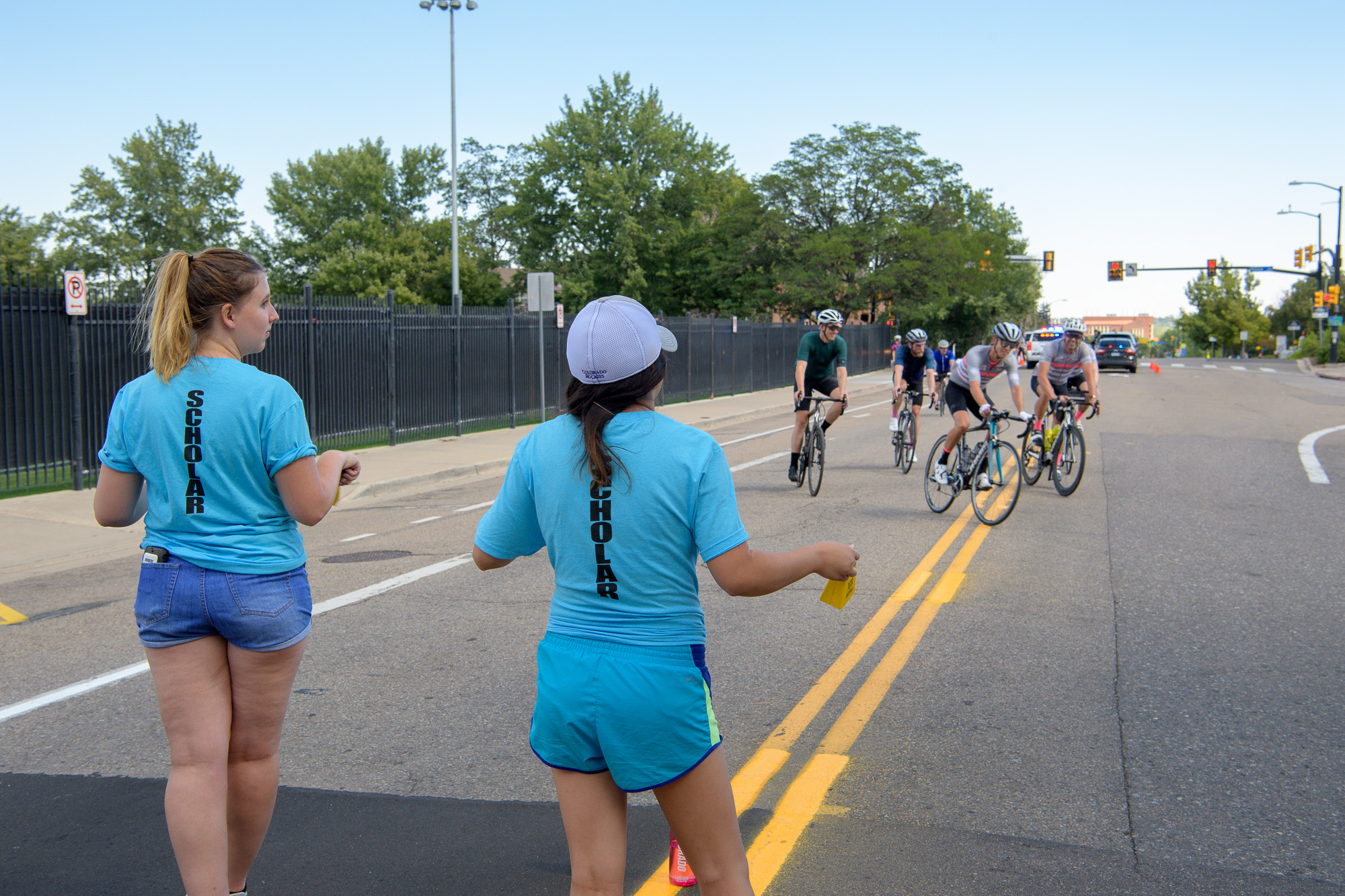
The BBC was created in 2003 to raise scholarship funds for Colorado high school graduates to attend the University of Colorado at Boulder. BBC Scholars are some of Colorado’s brightest, with each graduating with a 4.0+ high school GPA. These students have also demonstrated strong financial need in order to attend college. Over the last 18 years, the BBC has raised over $3.3 million in direct support of student scholarships at CU Boulder and over 375 recipients have graduated from CU, including 17 this past spring semester.

“At this point, we are shifting focus towards our fundraising efforts for our scholars. Our scholars are among CU’s best, and have an incredible graduation rate of 95%. This year, more than ever, our scholars and their families need our support,” said Paul Beale, Faculty Director of the Buffalo Bicycle Classic.

Photo courtesy Buffalo Bicycle Classic

Through a new partnership between CU-Boulder and the Colorado Department of Higher Education, donations and registration fees will be matched 1:1 by the Colorado Opportunity Scholarship Initiative doubling the impact of registration fees and additional donations.

Jasmine Tran, Buffalo Bicycle Classic scholar and first-generation college student, graduated from CU-Boulder this spring with degrees in Integrated Physiology and Sociology. “Because of the scholarship, I was able to utilize my time differently since I didn’t have that financial burden. I got to do a lot of community service work like tutor students throughout the Boulder community, attending and working at different hospitals, too. I was able to find my passion,” said Tran.

Ride Bikes. Change Lives. Your registration or donation to the scholarship fund will help our scholars pursue their dreams: https://www.buffalobicycleclassic.com

Bike Event COVID-19 Mitigation Plan Published by Colorado Classic

0

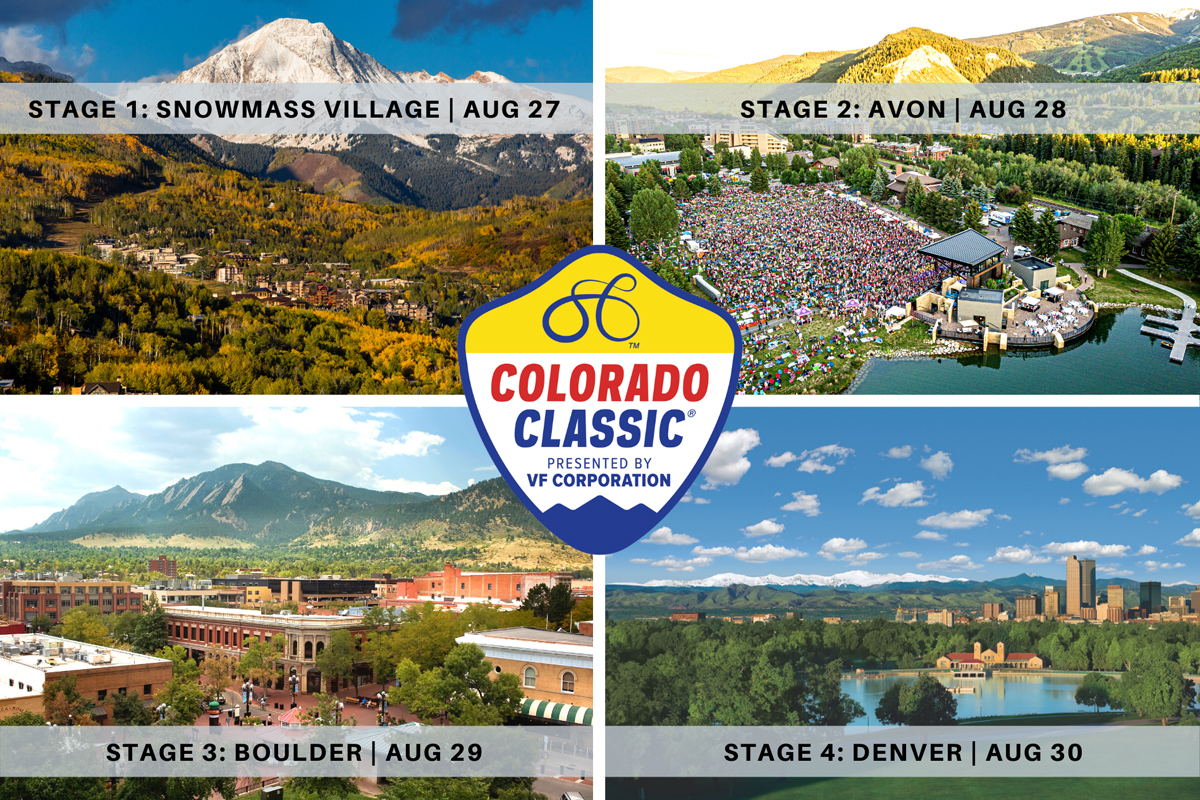
DENVER, CO (August 3, 2020) — Despite cancelling its own event due to increased concerns around a spike in new COVID-19 cases nationwide, the Colorado Classic today published its COVID Mitigation Plan in the hope it will offer assistance to other event organizers, teams and riders as the sport continues to grapple with the pandemic.

“We spent months recognizing and researching the key elements for a successful COVID mitigation plan applicable to a professional cycling event. It was a very collaborative process that included medical professionals, bio labs, state, county and city health officials and cycling industry professionals; we studied the protocols that were being put into place in our surrounding communities and what was being proposed in other professional sports. We compiled all of this knowledge and through a cycling lens we created our COVID mitigation document,” said Lucy Diaz, CEO of RPM Events Group LLC.

The resulting COVID-19 Mitigation Plan was developed in concert with current Colorado Department of Public Health & Environment (CDPHE) guidelines and integrates policy and protocol as established by the cycling governing bodies of the Union Cycliste Internationale (UCI) and USA Cycling.

Read Colorado Classic COVID-19 Mitigation Plan

The plan takes into account the Colorado Classic’s first and crucial step toward a safe racing environment, which was the creation of a “Made for TV Streaming” model. This format eliminated crowd gathering opportunities and amplified their innovative live streaming model instead.

With that in place, the plan addresses the operation and logistics of running a professional cycling event during the ongoing COVID-19 pandemic. And even goes beyond previously published guidelines in encompassing rider and event staff safety protocols including medical testing and virus contact tracing as well as fan engagement, broadcasting, media and press management and more.

For example, the race organizers were planning to implement an innovative saliva-based testing method in partnership with Summit Biolabs. Summit Biolabs, which allows for a 24-hour turn around for results with a higher level of accuracy. The participating athletes would have been required to report into a race sponsored facility four days prior to the start of the race to be tested; all negative test results would result in a clearance to race. A second test was to be issued after the second day of competition to monitor levels of potential contraction during the competition.

In accordance with the UCI’s protocols, pre and post-event screenings were also a key element to the mitigation plan with dedicated resources for contact tracing and continued post-event communication with teams, riders and staff for 14 days.

“The COVID-19 pandemic has created an entirely new perspective for producers of major sporting events. With safety being paramount, we are all working to navigate through the new logistical challenges. While we felt very confident in our plan, we were also realistic that we didn’t have all the solutions. One of the main concerns of the pro cyclists is the close contact within the peloton. We were creatively working on guidelines that maintained appropriate social distance measures from start to finish, but short of hosting individual time trials for each stage you can’t avoid the peloton formation. Our team will continue to explore solutions and alternate event models as we look towards the 2021 event,” said Diaz

“We thought our race would be the first US professional cycling event to return post-COVID outbreak. That is no longer the case, but there will be a “first” pro race; whether that’s this autumn or next year, we want to share our work to help keep the cycling community as safe as possible.”

Focused on their continued mission to drive awareness around women’s cycling, the Colorado Classic team remains engaged with their stakeholders and community. Some recent highlights include:

  • #WeRide for Women virtual Zwift ride on July 29 raising almost $40,000 so far for the #WeRide Development fund going to the teams that would have raced in the 2020 event
  • Breakaway Dialogue Series a collection of curated conversation co-hosted by corporate partners such as VF Corporation, Gates Corporation and FirstBank, bringing together business leaders and athletes who have created their own paths for change in both sports and business.

Event organizers are currently working on plans for 2021 and will have an update in mid to late September on what to expect for next year’s event.

Read Colorado Classic COVID-19 Mitigation Plan

San Francisco Bay Bridge to Treasure Island Ride

By Wayne Cottrell — This 24.0-mile road bike ride returns us to the San Francisco Bay Area! The route plan includes a lollipop (7.9 miles), followed by an out-and-back (16.1 miles). The Bay Area bike scene is by no means stagnant, as new bike facilities continue to be opened on a steady basis. One of the newer facilities is the Alex Zuckermann Path, which was completed in October 2016 in conjunction with the reconstruction of the eastern half of the San Francisco-Oakland Bay Bridge.

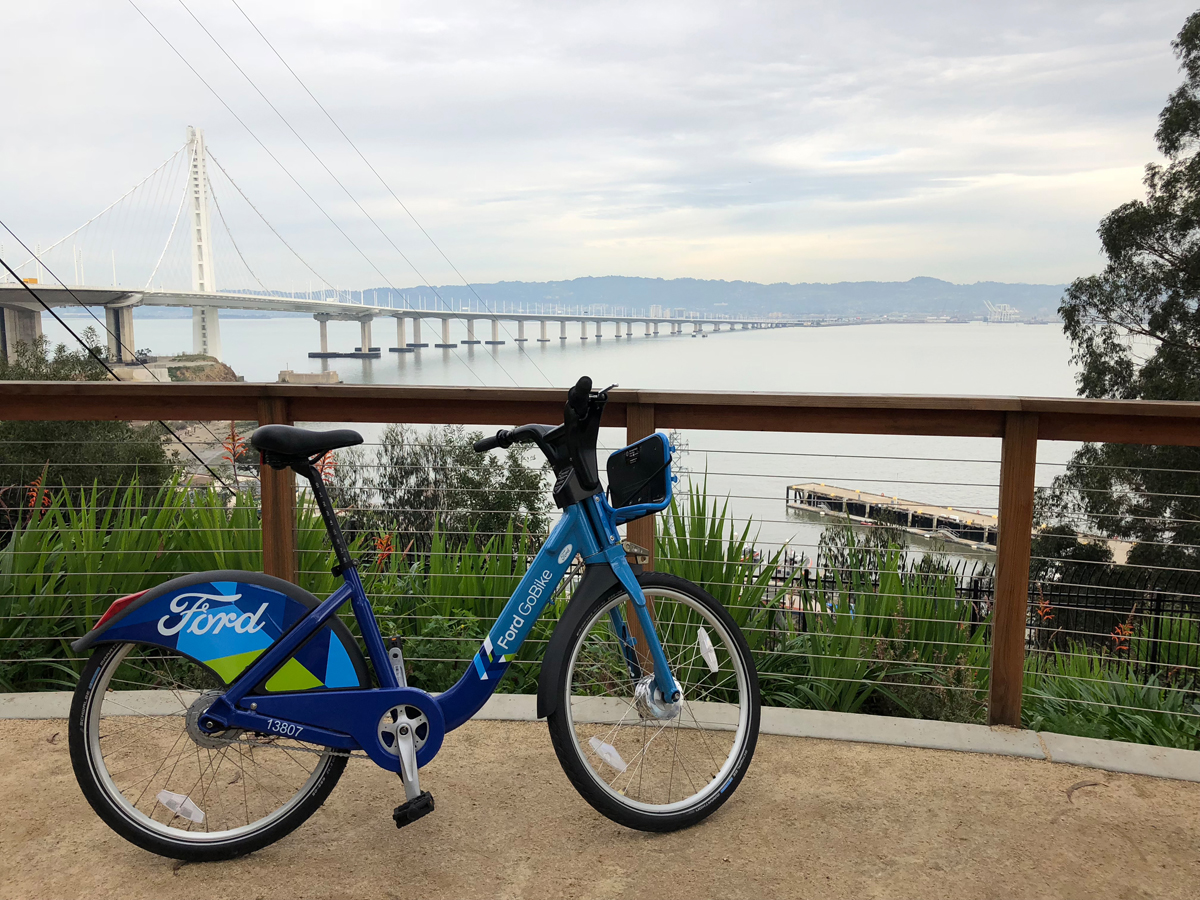
The view from Yerba Buena Island looking back on the San Francisco Bay Bridge and Oakland. Photo by Dave Iltis

The new, separated bike path makes it possible to ride from the East Bay, across the Bay Bridge to Yerba Buena and Treasure Islands, and back. Sorry — it is not yet possible to ride across the entire Bay Bridge, to San Francisco. I describe a version of this ride in my forthcoming book Best Easy Bike Rides San Francisco. The route described in this article is a slightly longer alternative. The ride should be on your bucket list, as crossing the Bay Bridge on a bicycle is a not-to-be-missed experience. The path is open from 6 am to 9 pm daily (nighttime riding is prohibited).

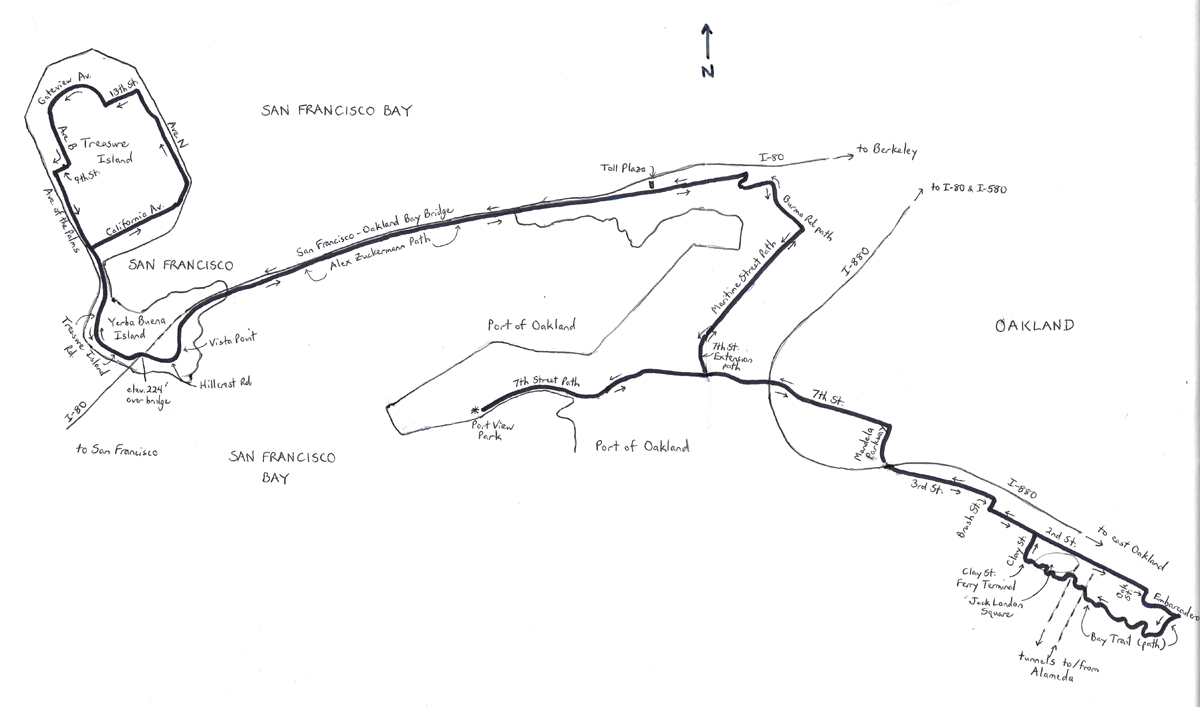
A map of the 24 mile San Francisco Bay Bridge ride from Oakland to Treasure Island. Image by Wayne Cottrell

Start the ride at Port View Park in far western Oakland, within that city’s port environment. The Oakland portion of the route uses bike paths, lanes and roads having at-grade crossings. Regarding that, the Port of Oakland teems with trucks and freight trains. It is imperative to be cautious at all road and driveway crossings. There are a few railroad crossings, too. From the park, head away from the waterfront on the 7th Street bike path. Stay on the path as it zigs and then zags, and then crosses a port entry point (watch for trucks), and a couple of railroad crossings. The Bay Area Rapid Transit (BART) Transbay Tube portal is on the right at mile 1.0. This is where BART trains emerge from and initiate their underwater crossings of the Bay.

Keep straight at the traffic signal at 7th Street Extension. The path runs parallel to 7th Street for the next half-mile, crossing more railroad tracks, and passing under the I-880 freeway. The path ends; continue on 7th Street — a bike lane begins after 0.3 miles, after crossing Peralta Street. Turn right on Mandela Parkway; the road passes under I-880, curving left to become 3rd Street, to head east. At Brush Street, turn right (break in the bike lane); the bike lane resumes after you turn left onto 2nd Street.

At about the 3.5-mile mark of the ride, 2nd Street enters Oakland’s Jack London Square district. The Square is not quite as hip as San Francisco’s Fisherman’s Wharf, but there are restaurants, shops, lodging, and the waterfront. Continue heading east on 2nd Street. Turn right on Oak Street — follow the road as It curves left, becoming Embarcadero West. There may be some construction along here. Just prior to crossing Lake Merritt Channel — Oakland Estuary Is to the right — bear right and leave the road (mile 4.35), turning onto the San Francisco Bay Trail (path).

Slow your roll along this next stretch, which uses the Bay Trail, adjacent the waterfront. The ambition of the Bay Trail is to encircle the San Francisco Bay — about 500 miles(!) in length. The Trail was about 70% complete as of this writing. Estuary Park is on the right, as you cruise next to the waterfront. There should be some great views of the Bay and San Francisco.

The path makes a few turns as it hugs the bayfront. Pass over the Posey and Webster Street Tubes (tunnels to Alameda) starting at mile 5.0. Stay adjacent the waterfront as the Bay Trail heads through the Jack London Square district; watch for pedestrians. Leave the waterfront at the Clay Street Ferry Terminal (ferries to San Francisco), now at mile 5.45. Head inland on Clay Street. Turn left on 2nd Street (mile 5.6).

From here, follow the reverse of the outbound route to Maritime Street. Turn right onto the path at Maritime Street to begin the Bay Bridge portion of the ride (mile 7.9) — watch for trucks at entry points, as you are back in the port area At Burma Road, turn left to continue on the path — now parallel to Burma (mile 8.8). At mile 9.05, the path veers away from Burma, crossing a series of railroad tracks, and making a few curves under elevated structures. Turn left onto the Alex Zuckermann Path at mile 9.2.

Zuckermann was the founder of the East Bay Bicycle Coalition. He passed away in 2007 at age 86, five years after crashing while doing an official reconnaissance ride on the bridge, suffering a severe head injury.

The Bay Bridge Toll Plaza is on the right at mile 9.65 — there is no toll for bicyclists. The path is fully on the bridge at mile 10.45, with both beginning to elevate from here. The next 2.2 miles are over water. By the time the bridge reaches Yerba Buena Island, you are 183 feet above the water.

There are plenty of superlatives regarding what you are riding. The bridge is the widest in the world along this stretch; the Yerba Buena Tunnel, through which the I-80 freeway passes, is also the widest in the world. At the end of the path on Yerba Buena Island is Vista Point. This is a favorite gathering and picture spot. From here, shuttles transport cyclists to Treasure Island. It is a convenient, free service for those who are not up to conquering the 5% gradient uphill and downhill on Hillcrest and Treasure Island Roads. Although these roads are narrow and curvy, they are designated as shared facilities, meaning that they can be ridden.

The shuttle bus runs every half hour on weekends and holidays, from 7 am to 6:30 pm. Note that Yerba Buena Island is natural, rugged and steep, while Treasure Island is man-made and pancake flat. The islands adjoin, and are within the city of San Francisco. Treasure Island was built for the 1939 Golden Gate International Exposition, and was then converted into a naval air station.

The segment between Vista Point and Treasure Island, using Hillcrest and Treasure Island Roads, passes the highest elevation of the ride: 224 feet, directly over I-80. This portion of the ride is, perhaps, not for the squeamish, as the roar of the traffic, and the curves and steepness of the road can give the sensation of plunging into the Bay, or maybe even onto the bridge.

Once on Treasure Island (mile 13.7), the route makes a 2.75-mile counterclockwise loop that is easy-breezy. The Treasure Island Museum at right greets you at the start of the loop. It is not possible to ride along the edge of the island, so the ride uses the following sequence of roads: California Street (4th Avenue), Avenue D, Avenue N, 13th Street, Avenue M, Gateway Avenue, Avenue B, and 9th Street to Avenue of the Palms, returning to California (4th). The latter portion of the loop passes through a residential area. There are plans to house 19,000 people(!) on the island; although, in less than one square mile, one wonders where they all will fit.

After completing the loop, be prepared for the 5%-gradient climb up and over I-80, as you return to Yerba Buena Island. The shuttle is an option. The ride continues via the reverse of the outbound route, returning to Port View Park in Oakland.

For more rides in the Bay Area, see Best Bike Rides San Francisco (Falcon Guides), written by avid cyclist Wayne Cottrell. Best Bike Rides San Francisco features descriptions of 40 road and off-road rides in the Bay Area. The ride lengths range from 4 to 60 miles, with rides in San Francisco, the East Bay, and Marin County. Each ride description features information about the suggested start-finish location, length, mileposts, terrain, traffic conditions and, most importantly, sights. The text is rich in detail about each route, including history, folklore, flora, fauna and, of course, scenery. For additional rides in California, all written by Wayne Cottrell, please also see the Best Bike Rides books on Los Angeles and Orange County, as well as the forthcoming Best Easy Bike Rides books on Los Angeles, Orange County, and San Francisco. Wayne Cottrell is a former Bay Area and Utah resident, and current southern California resident, who continues to conduct extensive research in these places, and elsewhere, to develop the content for bike books.