[Editor’s note: We are publishing this story since it may relate to mountain biking access in the west.]
Four Missouri hunters win a landmark case ensuring public access to millions of acres of public land in the checkerboard landscape of Wyoming and five other states.
by Angus M. Thuermer Jr., Wyofile.com (October 20, 2025) — Four Missouri hunters win a landmark case ensuring public access to millions of acres of public land in the checkerboard landscape of Wyoming and five other states.
The U.S. Supreme Court today declined to hear Carbon County ranch owner Fred Eshelman’s appeal of a lower-court ruling that corner crossing to reach public land is legal. The decision affects access to 2.44 million acres of public land in Wyoming and more in five other states.
After five years of legal wrangling, the U.S. Supreme Court backed a lower court ruling allowing public access to public land in the checkerboard landscape of Wyoming and five other states. (Photo Illustration/Tennessee Watson/WyoFile)
The Supreme Court put Eshelman’s failed lawsuit, “Iron Bar Holdings, LLC v. Cape, Bradly H., Et al.,” on its list of rejected appeals, which the court published Monday morning. The order ends a five-year fight that pitted the public’s right to access public land against private property rights.
Bradly Cape and three hunting friends corner crossed — stepping from one piece of public land to another where the two intersected with two pieces of Eshelman’s private ranch — momentarily passing through the airspace above Eshelman’s property. Even though the Missouri men never set foot on his land, Eshelman sued them for trespassing.
The hunter’s attorney, Ryan Semerad, said the Supreme Court affirmed centuries-old tradition and laws that public land is held in trust by the government for all Americans. The ruling applies to 2.44 million acres in Wyoming alone.
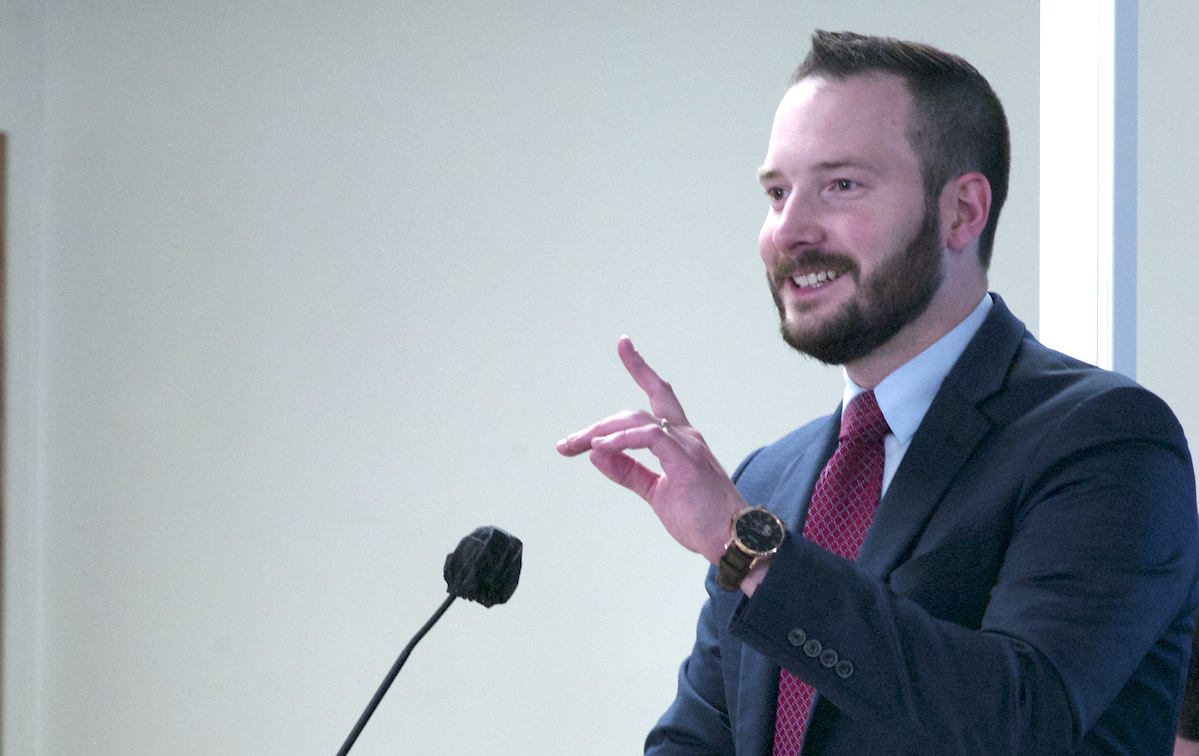
Corner-crossing hunters’ attorney Ryan Semerad addresses the jury in the hunters’ criminal trial in Rawlins in 2022. (Angus M. Thuermer, Jr./WyoFile)
“That means something,” he said of the trust principle. “That’s real, it’s sturdy. We’re just thrilled.”
“WHERE YOU HAVE CHECKERBOARDED LAND AND THERE ARE PUBLIC PARCELS THAT ARE ONLY ACCESSIBLE BY CORNER CROSSING [AND] THE ONLY WAY TO GET TO IT IS AT ITS SECTION CORNERS, THE PRIVATE LANDOWNERS CAN’T STOP YOU.” —RYAN SEMERAD
“Awesome,” was Cape’s reaction. “We never thought one time that we were doing something wrong.”
Chief U.S. District Judge Scott Skavdahl had sided with the hunters in the first ruling on the federal civil suit. The 10th Circuit Court of Appeals backed Skavdahland Eshelman appealed that decision to the Supreme Court. A Carbon County jury had previously found the hunters not guilty of criminal trespass in Carbon County Circuit Court.
The case grew out of southern Wyoming, where land ownership resembles a checkerboard of alternating square-mile sections of public and private property.
“Where you have checkerboarded land and there are public parcels that are only accessible by corner crossing [and] the only way to get to it is at its section corners, the private landowners can’t stop you,” Semerad said. “They can’t call the sheriff. They can’t sue you for trespass as long as you don’t touch or damage their property.”
1885 law
Eshelman’s lead attorney, R. Reeves Anderson, said he was not authorized to comment following the Supreme Court’s decision not to take up the case. Eshelman, a North Carolina resident, couldn’t be immediately reached.
The hunters’ legal arguments relied on the 1885 Unlawful Inclosures Act, which prohibits blocking public access to public land, including by fencing and using threats and intimidation. Some landowners, law officers, agencies and agriculture groups have interpreted various corner-crossing cases to insist that corner crossing is trespassing.
In a criminal case separate from Eshelman’s civil suit, the Carbon County attorney, at Eshelman’s insistence, in 2021 charged Cape, Philip Yoemans, Zach Smith and John Slowensky with misdemeanor criminal trespass.
Three of the hunters corner crossed to reach public land surrounded by Eshelman’s 20,000-acre-plus Elk Mountain Ranch in 2020. All four corner crossed to hunt on wildlife-rich Elk Mountain in 2021.
A six-person Carbon County jury found them not guilty in 2022, returning a verdict in less time than it took a hungry reporter to order and consume a quickly made taco salad from Rose’s Lariat café in Rawlins.
The Supreme Court decision today was almost as swift and certain. It filed the order without comment or dissent.
“It’s just an immediate sign they have reviewed the matter in as short a window as possible,” Semerad said of the Supreme Court. “They looked at it and said, ‘We don’t need to do anything here,’ at least that’s my interpretation.”
The order spans the 10th Circuit’s jurisdiction across Wyoming, Colorado, Utah, New Mexico, Kansas and Oklahoma. Had the Supreme Court heard the case, whatever decision it reached would have applied across all 50 states.
Mixed feelings
Cape said he was torn over whether it would have been better for the Supreme Court to take the case and expand the 10th Circuit decision across the country — an uncertain proposition — or settle for what he, his companions and the rest of the country won in the 10th Circuit. Semerad, too, said he had mixed feelings.
“There’s just this little nugget in me that’s like, I wanted to go do the fight,” he said of the now-disappeared prospect of arguing the case in front of nine justices. “But that is totally personal. I just wanted to throw some more punches.”
“But for now, this is where the book closes.”
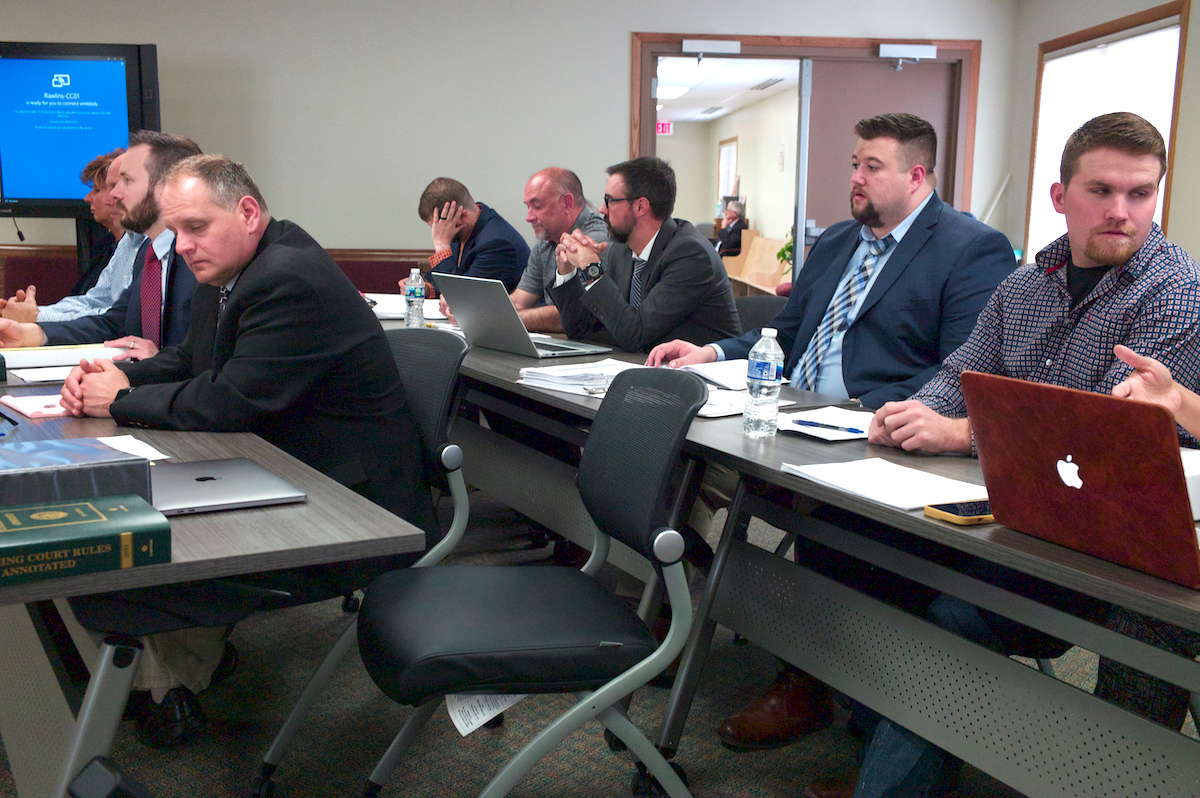
Corner-crossing defendants wait for their trial to begin in Rawlins on April 27, 2022. They are Phillip Yeomans, second from left and partly obscured; John Slowensky, foreground in the front row; Bradly Cape, second from left in back row and Zach Smith, right. (Angus M. Thuermer, Jr./WyoFile)
Cape and friends had been hunting in Wyoming the year before they first corner crossed. They stumbled across Elk Mountain and talking to nearby ranchers they learned it was thick with elk to the point neighbors had to protect their haystacks from the herd.
Eshelman, they were told, didn’t allow the general public to hunt on his ranch or to corner cross to reach public land enmeshed in his holdings. By blocking corner crossing, Eshelman reaped for himself the bounty of property belonging to all Americans, the hunters contended.
Cape did some research and found a real estate agent’s listing for the ranch around the time Eshelman bought it in 2005. That listing described the ranch as consisting of both private and public property, amounting to 50 square miles or about 32,000 acres.
The ranch on the 11,156-foot-high Elk Mountain was listed for $19.9 million at the time. Court rulings, the listing stated, give the ranch owner exclusive access to the enmeshed public land.
“Reading that is first what got me to looking into such a thing,” Cape said of corner crossing. “It just didn’t make sense to me,” he said of the notion that corner crossing was illegal.
The legal case Cape found, a 1970s saga known as Leo Sheep, dealt with the construction of a road, also in Carbon County, across a common checkerboard corner. The Supreme Court said the government did not have the right to build a road that invaded private property.
Fence builder
Cape owns the All-Type Fence company in Cuba, Missouri and knows something about property lines, he said.
“All I wanted to do was walk and hike and hunt and cross the corners,” he said. “So that [Leo Sheep] case didn’t have any relevance [to] me. I kind of realized what was going on, that it [the real estate listing and similar claims] was just propaganda trying to keep people out.”
He briefed his hunting buddies — a high school music teacher, a mechanic and an employee at his company.
“Once I found this [Leo Sheep case] and figured this out kind of on my own and then relayed that information to them, they never doubted me,” he said. “They were good to go.”
Cape credited Semerad and fellow attorney Lee Mickus, the Wyoming chapter of Backcountry Hunters and Anglers and others. Backcountry Hunters raised funds to wrangle the case through the courts for five years, ensuring the men had the funding necessary to stand and fight in court.
Eshelman is a wealthy pharmaceutical magnate, a significant political donor to conservative causes and a philanthropist who’s given millions to his alma mater, the University of North Carolina. He’s also a hunter and conservationist who placed significant development restrictions on thousands of acres of private ranch land that he bought and sold around Elk Mountain.
Backcountry Hunters’ fundraising got a boost when Steven Rinella, an author, hunter, conservationist and television personality who founded The Meateater, featured the corner crossing saga in his broadcasts.
“Our money, like doubled overnight,” Cape said. “So it was pretty easy to see early on that the support that we had was incredible.”
Also incredible, Cape said, is what he learned.
“It’s just one of those life journeys that you don’t suspect,” he said. “You learn all kinds of stuff about the legal system.
“I didn’t realize … there was that much propaganda built up, selfishness.” Cape said. Landowners “just kind of made that stuff up as they went along,” he said, something that was “kind of shocking to me.”
Semerad looked ahead. “It’s a solid foundation upon which to think about how to orient your life,” he said. “There’s going to be bad actors who have their own intentions, who want to treat these public resources — like our public lands — as a private kingdom.
“But every time they do that, they are cutting against American tradition and history, and they’re going to lose and there’s going to be a way to beat them.”
WyoFile is an independent nonprofit news organization focused on Wyoming people, places and policy.
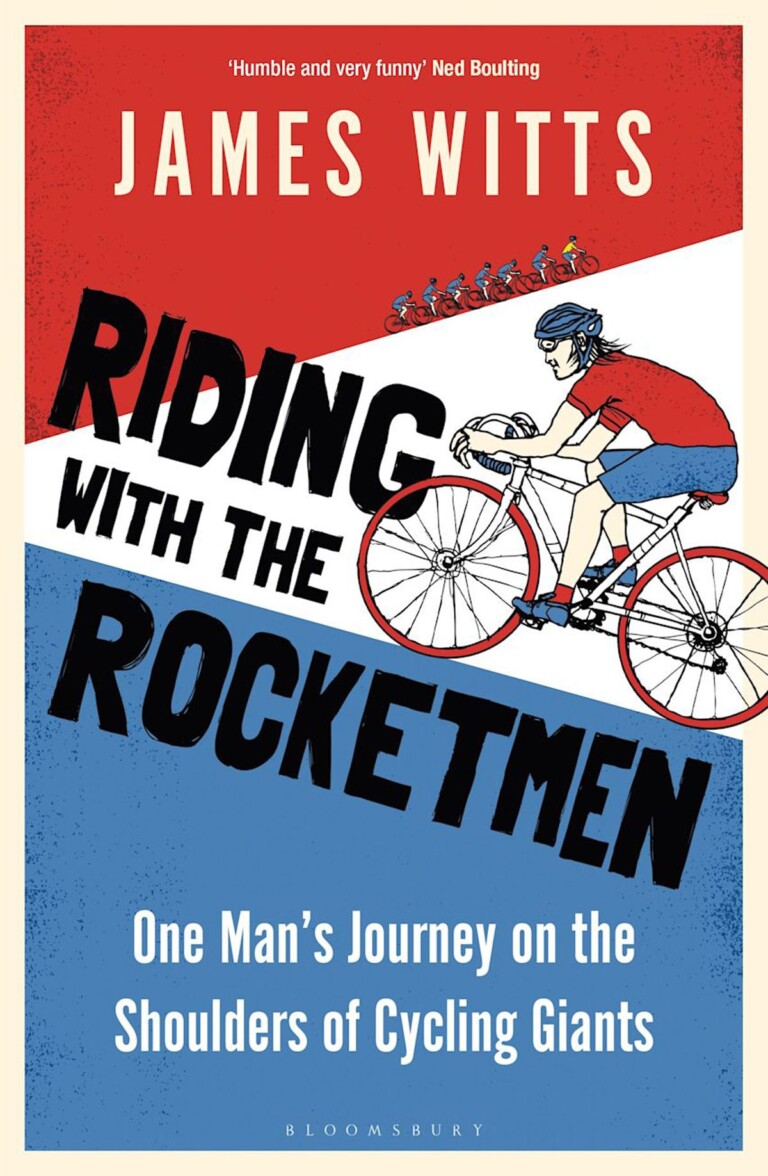
By David Ward — In the prologue to his book, Riding with the Rocketmen: One Man’s Journey on the Shoulders of Cycling Giants, the author states: “My name is James Witts. I’m 45 years old and I write about cycling … I follow the professionals, many of whom are 25 years my junior. That makes me feel old … At the end of 2021, I realized I needed a challenge. ‘What about completing a stage of the Tour de France?’ no one said to me … ‘You’re on,’ I said to myself.”
So began Witts’ journey, as chronicled in his book, to prepare for and ride the 2022 L’Étape du Tour de France. The Étape usually follows the same route as the Tour’s “Queen Stage” for that year, always a humongous climbing stage. L’Étape 2022 would tackle, in order, the Col du Galibier, the Croix de Fer, and finish atop L’Alpe d’Huez. These are among the hardest climbs that the Tour de France offers up. This would be no easy task for Witts.
Witts self-designates as a “sports hack”, a sports journalist who writes about cycling. He explains that, as such, he has access to some of the world’s top cyclists and, more importantly, top cycling coaches and training experts. And as this book follows his preparation for the Étape, therein lies its greatest interest.
The author interviews former and current top cyclists, coaches, physiologists, nutritionists, equipment specialists and others. His goal is to learn what makes the pro peloton roll at the highest level, and then apply those lessons, as much as practicable, to his preparation for the Étape. In each chapter, he first shares his interactions with those at the pro level and then tells how he applied that to his Étape preparation.
Witts has a very entertaining writing style. A good sample of this is in the first chapter, where he details his intent to attend the UAE January training camp: “It’s [the training camp] all in the name of marrying nature with nurture, of ensuring a happy and long-lasting unity before the season passage of time depletes power output, lung capacity and endurance. And what better place to lay the foundations for any marriage than that bastion of monogamy, Benidorm. It’s an incongruous backdrop to the world’s most monastic sports stars, but within its hedonistic shadows nestles Dénia, where UAE Team Emirates and their talisman Tadej Pogăcar are hosting their January training camp.” Such writing charisma, replete throughout the book, renders it a delight to read.
As Witts progresses through the book, he tackles bike-fitting, sports psychology, cyclocross as training, metabolic blood profiling and doping, riding cobbles, aerodynamics, recovery, nutrition, altitude training and course profiling. Arguably, all of this is essential to professional road racing success, and certainly most is. He explores these topics with the professionals, and it was very illuminating for me. Some of it I was aware of, though not in great detail, but of much of it I didn’t even have a clue.
But while all of this may be critical to professional racing, it is questionable what and how much of this is relevant to us recreational competitors and riders. That’s where I really liked how Witts took each aspect he examined and then applied it to himself as a casual commuter and recreational rider preparing to tackle a very challenging event. For example, in a chapter on nutrition, Witts spent time with Owen Blandy, team chef at EF Education-Easy Post discussing nutrition in detail for the team generally and for specific riders. Of course, these riders have everything done for them. Witts then discusses in the latter part of that chapter how he takes that and other information and applies it to his training for the Étape. As I read these chapters, I found ideas that I felt I could apply to myself, with my only desire being to ride as reasonably strong and recover as reasonably well as I can.
Witts prepared as well, likely better, than most riding this event, and certainly with much more professional advice. So it was ironic how it nearly all came apart the day before the event, also related with amusing humor as well as self-deprecating irony. I’ll not give much of that away, but there was the incident of removing his front wheel from his bike when loading it into his car, only later to realize he had failed to also load the front wheel. (I’ve also stupidly done that.) That was only one part of a day of misfortune, much of it brought upon himself. The one big lesson he learned from that day was that he should have signed up for a race package with an experienced company. Going it alone cost him about the same as a three-day race package.
Finally, race day arrives, and despite the previous day’s woes, Witts is at the start and ready to go. He describes his day’s journey such that I could almost feel what he must have been feeling as the day progressed: Elation and satisfaction in the early hours of the ride to pain and suffering as he struggled up, riding and walking, the final climb to L’Alpe d’Huez.
I was excited to read and review this book as I rode L’Étape du Tour de France in 2009. When I rode it, we climbed, in order the Côte de Citelle, Col d’Ey, Col de Fontaube, Col de Notre-Dame des Abeilles, and finished on the top of Mont Ventoux. More climbs, but only Mont Ventoux was as daunting as Alpe d’Huez, the Croix de Fer and the Galibier. Still, it was a major undertaking at my age of 58 years, and to take on Mont Ventoux at the end of a 100-mile ride was cause for concern. It would have been nice to have had the same access as Witts to these experts. I’m sure I could have done better than I did. As it was, my preparation mostly consisted of long rides with a lot of climbing. Still, I did reasonably well, and unlike Witts, I never had to stop and walk my bike uphill. And I was 13 years older than him when I rode the Étape.
Probably one of the aspects I enjoyed most about this book were the many stories, stories about professional cyclists, past and present, such as Andy Hampsten talking about the experts and coaches who mostly work behind the scenes to help the riders and teams perform at their best, and the author’s personal stories relating to not only his preparation and riding of the Étape, but also, being a person with a full-time job and family, his on-going life and personal dramas during that preparation. Following his life story during these seven months leading up to the Étape was something that I, or anyone who has a life outside of cycling, can easily identify with.
Witts is a good storyteller. Nothing can kill an otherwise potentially good book like mediocre or worse, bad writing. Witts’ writing is anything but that. He writes seriously yet with a great deal of humor. Rather than getting fatigued as you read, you really don’t want to put the book down. It is interesting, informative, entertaining and fun.
Riding With The Rocketmen: One Man’s Journey on the Shoulders of Cycling Giants James Witts (Author)
Bloomsbury, 2023
288 pages, paperback
ISBN: 9781399403504
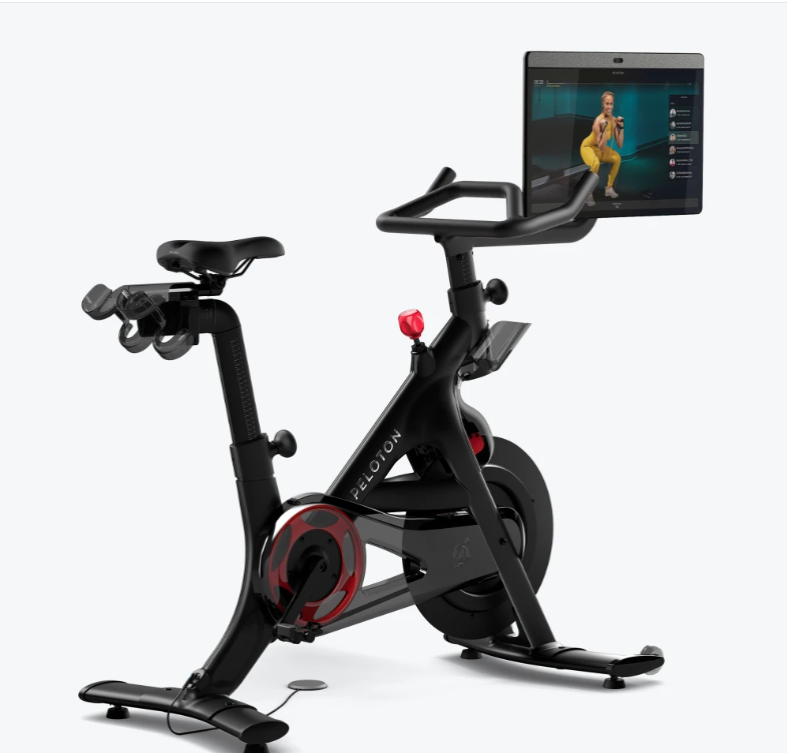
Description: This recall involves Peloton Original Series Bike+ units, with model number PL02 and serial numbers beginning with the letter “T”. The bike measures 4 ft. long by 2 ft. wide and has an adjustable seat and handlebar. The bike’s serial number is located inside the front fork, behind the front fork, or behind the flywheel. Additional information to help locate your Bike+ serial number is available here.
Recalled Peloton Original Series Bike+ Model PL02
Remedy: Consumers should immediately stop using the recalled exercise bikes and contact Peloton for a free repair. Peloton is offering consumers a free seat post that can be self-installed.
Incidents/Injuries: Peloton has received three reports of the seat post breaking and detaching from the bike during use, including two reports of injuries due to a fall.
Sold At: Peloton and Dick’s Sporting Goods stores nationwide and online at onepeloton.com, ebay.com, Amazon.com, and Dickssportinggoods.com from January 2020 through April 2025 for about $2,495.
Importer(s): Peloton Interactive Inc., of New York
Moab, Utah — Outerbike’s October demo event in Moab began with a community-focused bike build, partnering with national nonprofit Can’d Aid to assemble and donate 60 bikes to children in the area.
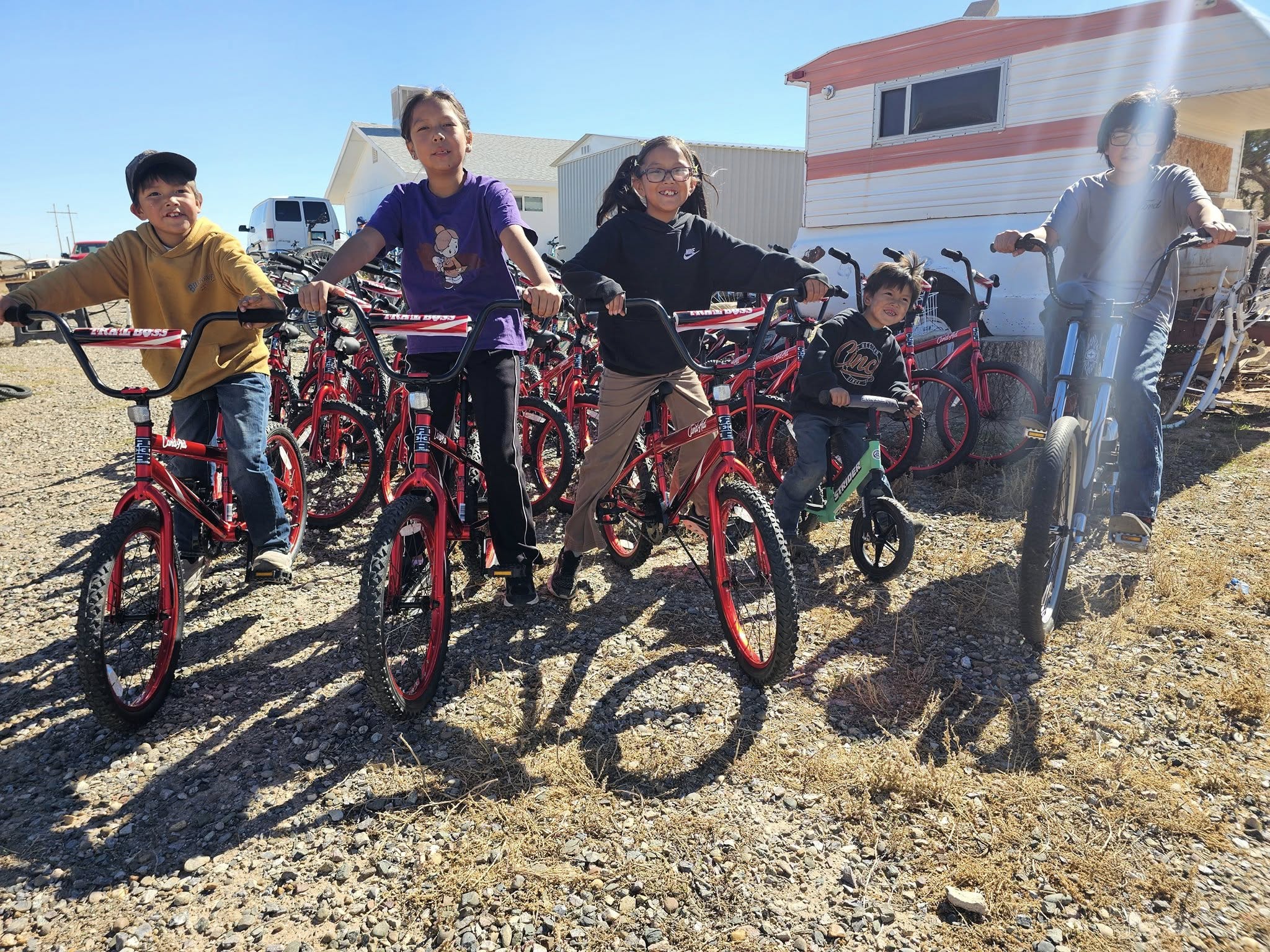
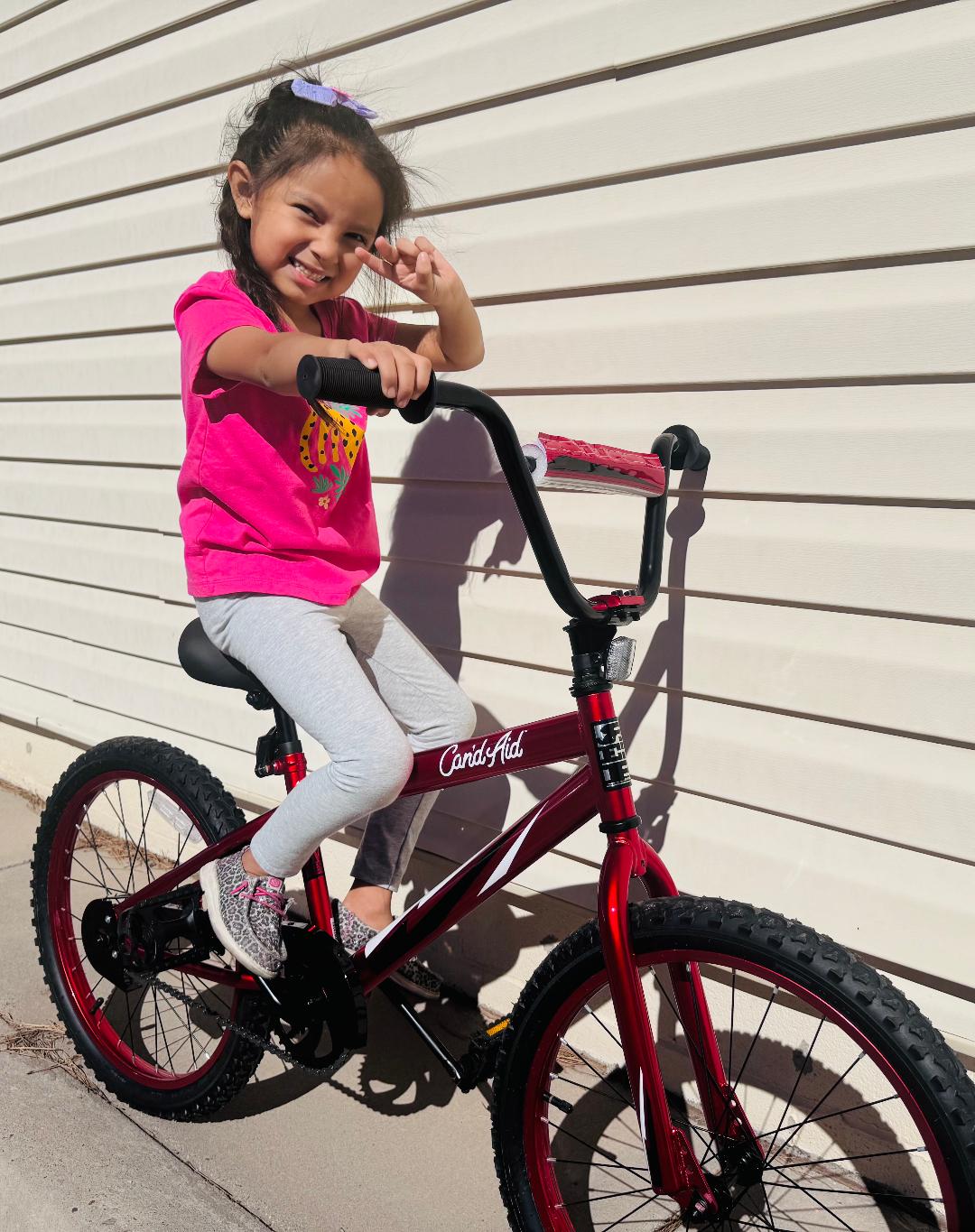
Volunteers from the biking community came together to build Can’d Aid’s signature cherry red, kid-sized bikes during the hands-on event. Ten bikes were donated to a local community center, while 50 went to youth in the Navajo Nation through the Diné Bike Project.
Photo courtesy of Can’d Aid
“The biking community is incredibly warm, involved and generous, and working with Can’d Aid in Moab was a great way to bring people together and give back,” said Brendon Cameron, General Manager at Western Spirit Cycling Adventures. “It was the perfect, meaningful way to kick off our event.”
Photo courtesy of Can’d Aid
Can’d Aid, which focuses on getting kids outdoors and active, has facilitated the building and donation of over 21,730 skateboards and bikes nationwide. The nonprofit has partnered with Outerbike for three consecutive years.
In addition to the bike build, Outerbike hosted a bike repair workshop for community members during the multi-day demo event, where mountain biking enthusiasts test ride bikes on Moab’s renowned trails.
For more information about Can’d Aid and partnership opportunities, visit candaid.org.
By Molly Marcello — I was high up on a cliff above Moab, Utah, as night was falling, and I couldn’t find my way back down. I became painfully aware that I didn’t have a headlamp, an extra layer as it got colder, and no cell service to call for help.
Hours earlier, I scrambled up to this cliff to watch the sunset. A lot of people take in the play of light over the red rocks every evening. But the route up a boulder wall that seemed so clear in the daylight was no longer obvious in the twilight. I was stuck.
Count me as one of the many hikers who’ve found themselves in a pickle. I was lucky, though, and finally found my own way down to the trailhead below.
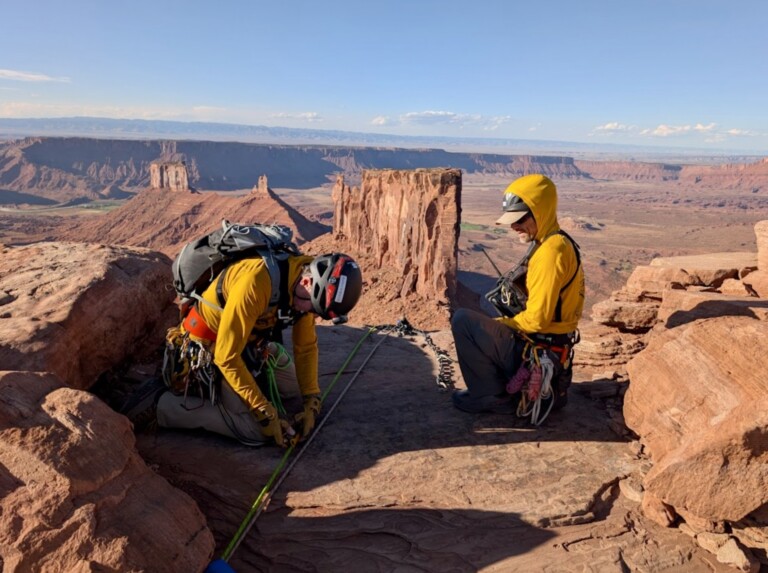
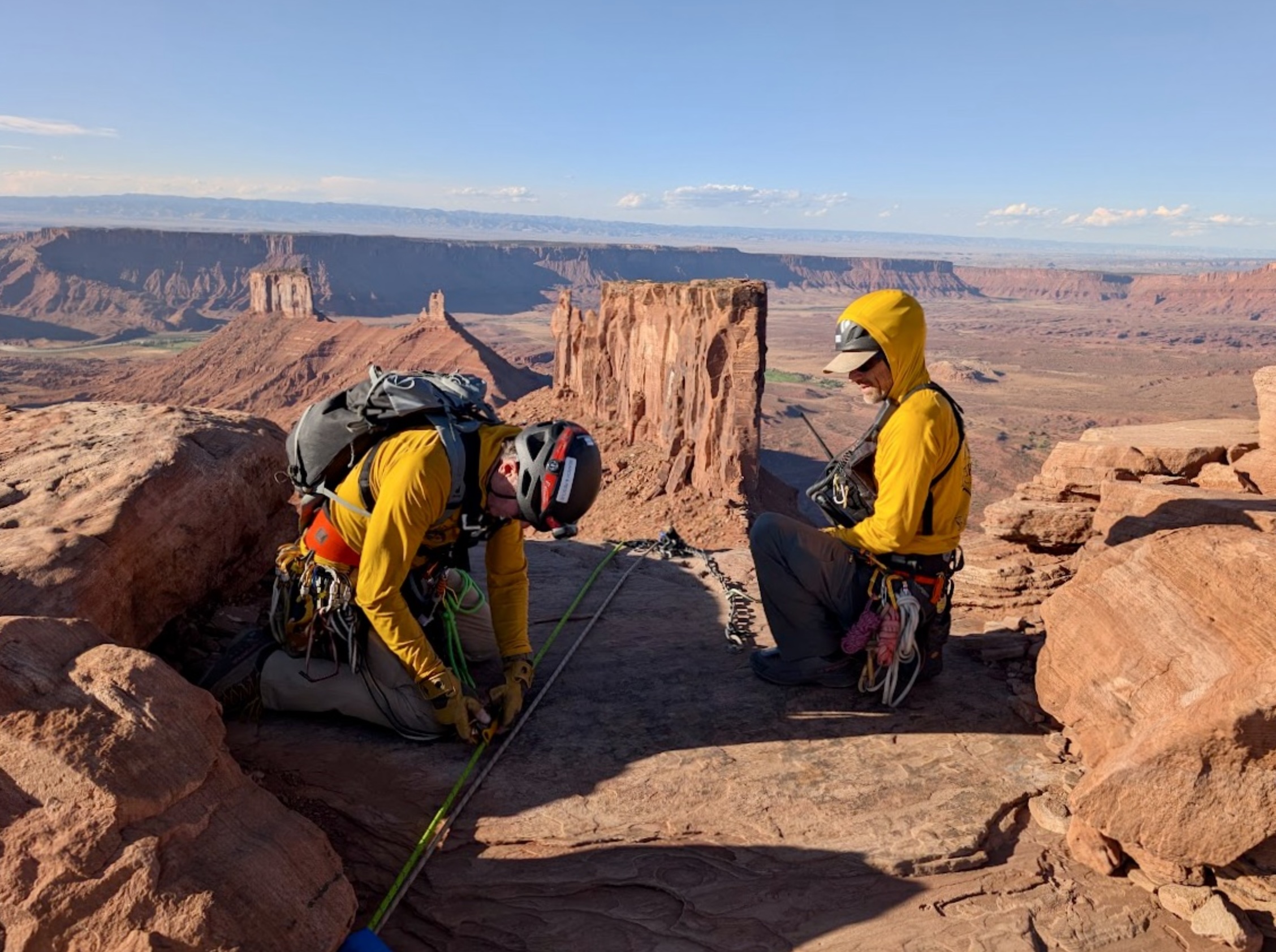
Grand County Search and Rescue members rigging a technical rope rescue on the top of Castleton Tower near Moab. Photo courtesy: Grand County Search and Rescue.
These days, I’ve been researching how the busiest search and rescue team in Utah, based in Moab, responds to an average of 130 calls per year from people who are not so lucky. This team has to be ready for urgent calls from climbers, mountain bikers, off-roaders, backcountry skiers, hikers, BASE jumpers and river rafters. The team handles it all.
“A lot of emergency situations are like improv because you don’t get to say no,” said Grand County Search and Rescue member Jordan Lister. “It’s just ‘Yes, and…we will get through this together.’”
Lister is one of the dozens of first responders who share their personal stories in a new podcast series that I’m producing, called Back From Beyond. The 60- to 90-minute episodes are a collaboration between the search and rescue team, Grand County tourism and trails staff, and Moab-based KZMU community radio.
In the episode “Hiking Behind the Rocks,” hiker Jason Goldsmith talked about how he got turned around in the maze-like terrain above Moab’s rim. With a fast-moving winter storm approaching, he said he had no choice but to find shelter.
“It was a huge emotional roller coaster,” he recalled, “and I don’t recommend it to anybody.”
Like most people who call Moab’s search and rescue for help, he didn’t get in trouble by pushing a sport to the limit. Instead, something unexpected happened and the person is unprepared. Perhaps a route takes longer than anticipated, they twist an ankle a few miles in, get turned around and lost, their climbing rope gets stuck or they didn’t pack enough water.
“When I was younger,” said Grand County Search and Rescue member Michelle Leber, “I would hear about accidents and think, ‘Oh, that would never happen to me.’ But small decisions can add up to a miserable day outdoors. I mean, how many things have we all gotten away with and we didn’t even know it?”
The podcast has covered climbers stuck on Castleton Tower, one of the most challenging desert monoliths in the world; a backcountry skier tells of coping with an injury in the remote La Sal Mountains; and an off-roader recounts what happened after flipping their vehicle off a 150-foot cliff. All the stories in this first season of Back From Beyond serve to remind people how quickly things can go south, and how much we depend on somebody helping when they do.
“Outdoor recreation is a community,” said Rachelle Brinkman, recounting her mountain biking accident in the episode, “The Whole Enchilada.” Brinkman suffered injuries after crashing her bike in technical, rocky terrain around Moab. A lot of people came to her aid that day, she said, and she now makes sure to check on any rider who might need a hand.
“We look out for each other,” she said, “and we help each other, whether you’re in search and rescue or not.”
By now I’ve talked to many people about their trips in the backcountry, and it still amazes me how many times they recall saying to themselves before setting out: “Better grab an extra layer, this battery charger, a headlamp, and also tell someone where I’m going.” They realize that one small, smart decision before heading outdoors can save the day.
If you’re exploring the rugged outback of Moab someday and need to make an emergency call for help, you’re in luck. A team of seasoned professionals with Grand County Search and Rescue will work hard to get you home safe.
Annual bicycle scavenger hunt combines Thanksgiving spirit with charitable giving to help Treasure Valley families in need
As Thanksgiving approaches, cyclists across Boise are preparing for something a little different than the traditional turkey trot. On Saturday, November 22, 2025, Cranksgiving Boise will celebrate its tenth anniversary of bringing together community members for a unique charitable event that blends cycling, costume creativity, and compassion.
Organized by the Lost River Cycling Club and sponsored by Ketlinski Law, Cranksgiving Boise transforms the typical Thanksgiving food drive into an engaging bicycle scavenger hunt. Teams of costumed cyclists navigate the city streets with a mission: collect every item needed to fill complete Thanksgiving food boxes for families experiencing hardship in the Treasure Valley.
How It Works
The concept is straightforward but spirited. Each team receives a manifest detailing the food items they need to gather, along with a list of entertaining tasks to accomplish during their journey. The collected goods are then donated to St. Vincent de Paul, which distributes the Thanksgiving boxes to local families who might otherwise go without a holiday meal.
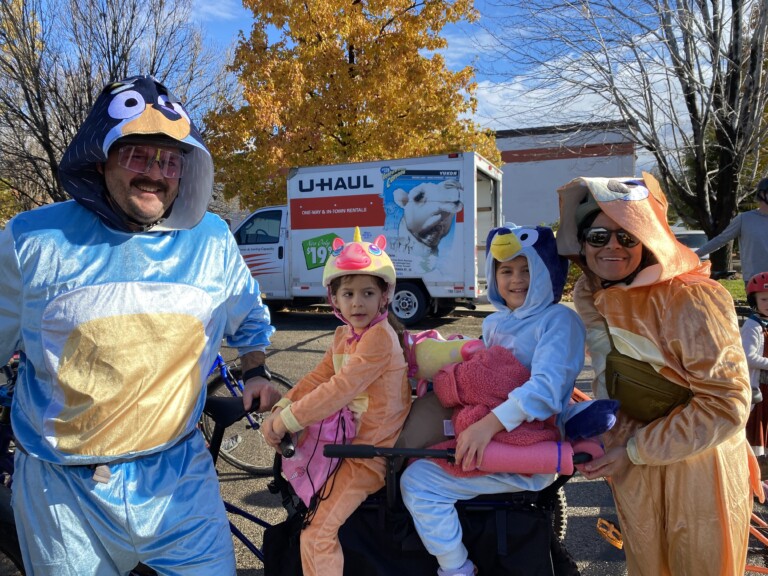
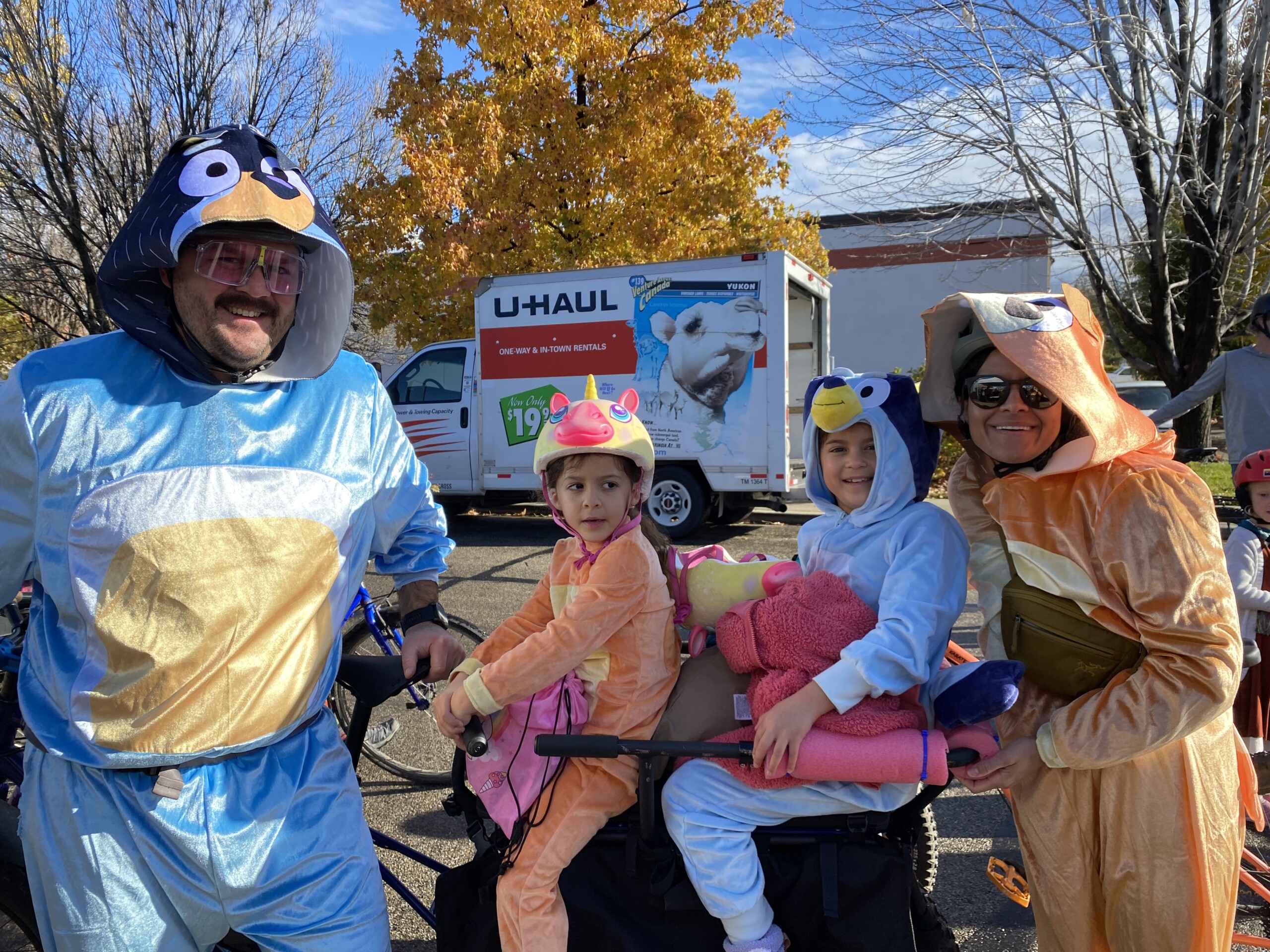
Photo courtesy of Cranksgiving Boise
Competition adds an extra layer of excitement to the charitable endeavor. Awards will be presented to the fastest teams, those who manage to procure the biggest turkeys, and groups sporting the most creative costumes—encouraging participants to embrace both the competitive and festive aspects of the event.
Event Details
Cranksgiving Boise will kick off at Clairvoyant Brewing, located at 2800 W Idaho Street in Boise. Participants can pick up their packets beginning at 10:00 a.m., with teams hitting the streets promptly at 11:00 a.m.
Once teams complete their manifests and return to the brewery, the celebration continues with an after-party featuring food trucks, live entertainment, and craft beer—a well-deserved reward for participants’ efforts.
Team registration costs $10, which helps offset event expenses. Those interested can sign up at bikereg.com/cranksaving-boise-2025. To commemorate the milestone tenth anniversary, special edition t-shirts are available for purchase through the registration website for $20.
Getting Involved
There are multiple ways to support Cranksaving Boise beyond participating as a cyclist. The event relies on volunteers to ensure everything runs smoothly, and those interested in helping can register at https://tinyurl.com/Cranksgiving2025.
For community members who want to contribute but aren’t able to participate in the scavenger hunt itself, direct donations to St. Vincent de Paul are welcomed at https://svdpid.org/thanksgiving/.
Over the past ten years, Cranksgiving Boise has established itself as a beloved community tradition that proves giving back doesn’t have to be solemn—it can be fun, active, and bring people together. As the event enters its second decade, it continues to demonstrate how creative approaches to charity can engage broader audiences and make a meaningful difference in the lives of neighbors in need.
Whether you’re an avid cyclist, someone who enjoys dressing up, or simply a community member looking for a memorable way to give back this Thanksgiving season, Cranksgiving Boise offers an opportunity to participate in something greater than yourself—all while having a great time doing it.
Draft bill would raise funds for trail-building and infrastructure projects as outdoor recreation grows in popularity.
by Katie Klingsporn (More and more, the crowds visiting Wyoming state parks like Curt Gowdy, Glendo or Sinks Canyon do so with mountain bikes in tow.
A mountain biker at Curt Gowdy State Park. Wyoming’s state parks have seen increased visitation as outdoor recreation grows. (Wyoming State Parks)
Lawmakers and agency officials are looking to capitalize on the bicycle boom with a user fee. A draft proposal would authorize Wyoming’s Division of State Parks to charge bikers for a sticker or permit — with the money going toward projects to build or improve non-motorized trails.
These permits aren’t envisioned to break the bank: $10 seasonal permits for Wyoming adults; $20 for non-resident adults or $5 for a daily fee. The revenue, however, could help address a desperate need, advocates say.
“We’ve got some real challenges with outdoor recreation, statewide,” said Wyoming State Parks and Cultural Resources Deputy Director Chris Floyd. “I think funding for non-motorized [trails] is at the top of our list.”
The Legislature’s Travel, Recreation, Wildlife & Cultural Resources committee has begun drafting legislation that would create the program. The committee started discussing general user fees earlier this summer as a way to generate revenue to feed a growing appetite for trails.
The bill would empower the state parks agency to designate state trails that would require a trail permit for cyclists. Rider permits could be checked or sold at entrance gates, with the funds funneled into a new account earmarked for non-motorized trail costs — including construction, signage and parking lots.
The draft bill’s proposed fees target mountain bikers — both traditional and electric — because they present the largest demand, Floyd told WyoFile.
“We receive more requests for bike trails than any other recreational infrastructure,” he wrote in an email. “The demand is high and growing, which cannot be said for many other types of recreation.”
A consequence of inadequate bike trail inventory, he continued, is the building of rogue trails, which can degrade the landscape. And, he noted, “bikers have expressed a willingness to pay a small fee, IF the funding goes to trails, which it would under this bill. We have not heard the same support from hikers and equestrians yet.”
Jerimiah Rieman, an avid mountain biker and author of the guidebook “Wyoming Singletrack,” has that willingness.
“I’m favorable to paying a fee if I understand that those fees are going back to mountain bike or trail-specific needs, whether that be construction, maintenance and other features that come with those trails,” Rieman said. If he had any feedback for the proposal, he said, it would be to expand the fee system to a larger network of registered trails outside state park lands.
Red Hills Road through Glendo State Park is seen beneath a summer sunset. (Tony Webster/FlickrCC)
Mounting demand
Outdoor recreation has been growing in popularity in Wyoming for decades, with the COVID-19 pandemic accelerating that trend as it spurred more Americans to spend time outdoors.
That uptick brought record visitation to national and state parks in Wyoming and generated significant trickle-down revenue to shops, restaurants and hotels in the state.
Wyoming in 2023 created a trust fund specifically to pay for outdoor recreation infrastructure. However, the trust fund will take some time to mature, Floyd said.
That’s where a user fee could come in. Wyoming has a robust motorized trails system designated for snowmobiles, side-by-sides and other vehicles with motors. Motorized users pay a fuel tax that helps fund projects, while snowmobilers and OHVs pay a permit fee for a decal, which helps pay for the establishment, maintenance and grooming of trails. Federal funds also support those projects.
State Parks wants to essentially adapt that model for non-motorized recreation, with a focus on bikes. The bill enables the agency to determine which park trails to charge fees for. It won’t make sense for all parks, Floyd said.
But two of the state’s most popular are also mountain biking destinations. Curt Gowdy located between Laramie and Cheyenne, which is home to 35 miles of trails, tallied roughly 560,000 total visitations in 2023. Glendo State Park, east of Casper and home to more than 45 trail miles, hosted 483,000 that year.
If Wyoming enrolled its top three parks for bicycles right now, Floyd said, “we would see about $110,000 a year” in fee revenue. The state could expand the program in the future if it sees fit, he said.
The bill also enables the agency to fund projects in the parks as well as within five miles of their boundaries. That allows it to potentially partner with land managers or other entities on projects, Floyd said.
Wyoming Pathways Executive Director Michael Kusiek stands at the base of Roundtop Mountain near Hot Springs State Park in April 2022. Crews were building a new trail on the well-known Thermopolis promontory. (Katie Klingsporn/WyoFile)
Michael Kusiek, executive director of Wyoming Pathways, supports the proposal. He called the demand for trails in Wyoming “tremendous” and noted that when outdoor recreation infrastructure grants were opened in 2022, more than $70 million in requests came in for $14 million in federal American Rescue Plan Act dollars. Most of those requests were for trails.
“So it’s by far and away the number one amenity folks are looking for,” Kusiek said.
More outdoor rec dollars?
When it comes to the growth of outdoor recreation across Wyoming, Floyd said, his agency continually asks itself: “Where are we going to put all these people, without harming Wyoming’s resources, and how are we going to pay for it?”
This bill, he said, provides one answer.
Legislators on the travel committee are considering another mechanism to fund outdoor recreation. During an August meeting, the panel advanced a bill that would funnel some of the proceeds from online gaming into Wyoming’s outdoor recreation trust fund.
CHANHASSEN, Minnesota (October 23, 2025) — The 2026 Life Time Grand Prix off-road cycling series will award a record $590,000 in total prize money—a 55% increase from 2025—organizers announced Wednesday, as the premier mixed-discipline series enters its fifth season.
The overall series prize purse grows to $350,000, paying out $175,000 to both the women’s and men’s fields. UNBOUND Gravel 200 and the Leadville Trail 100 MTB will each offer $60,000 in prize money, ranking them among the most lucrative off-road races in North America.
Melisa Rollins racing at the 2025 Leadville 100 MTB. Photo by Dan Hughes, courtesy of Life Time Events
“With the expanded prize purse, a more structured and performance-based selection process, and our investment in athlete development through the U23 program, we’ve created an unparalleled platform that both acknowledges and rewards the most dedicated and accomplished riders in the sport,” said Kimo Seymour, series president.
Event Schedule and Live Coverage
The 2026 season includes six events, with each athlete’s best five finishes counting toward overall standings:
Thursday, April 16: Sea Otter Classic Gravel
Saturday, May 30: UNBOUND Gravel 200 presented by Shimano
Saturday, August 15: Leadville Trail 100 MTB presented by Kenetik
Saturday, September 19: Chequamegon Mountain Bike Festival
Sunday, October 11: Little Sugar MTB
Saturday, October 17: Big Sugar Gravel presented by Kenetik
Organizers will broadcast four events live: Sea Otter Classic Gravel, UNBOUND Gravel 200, Leadville Trail 100 MTB, and Big Sugar Gravel.
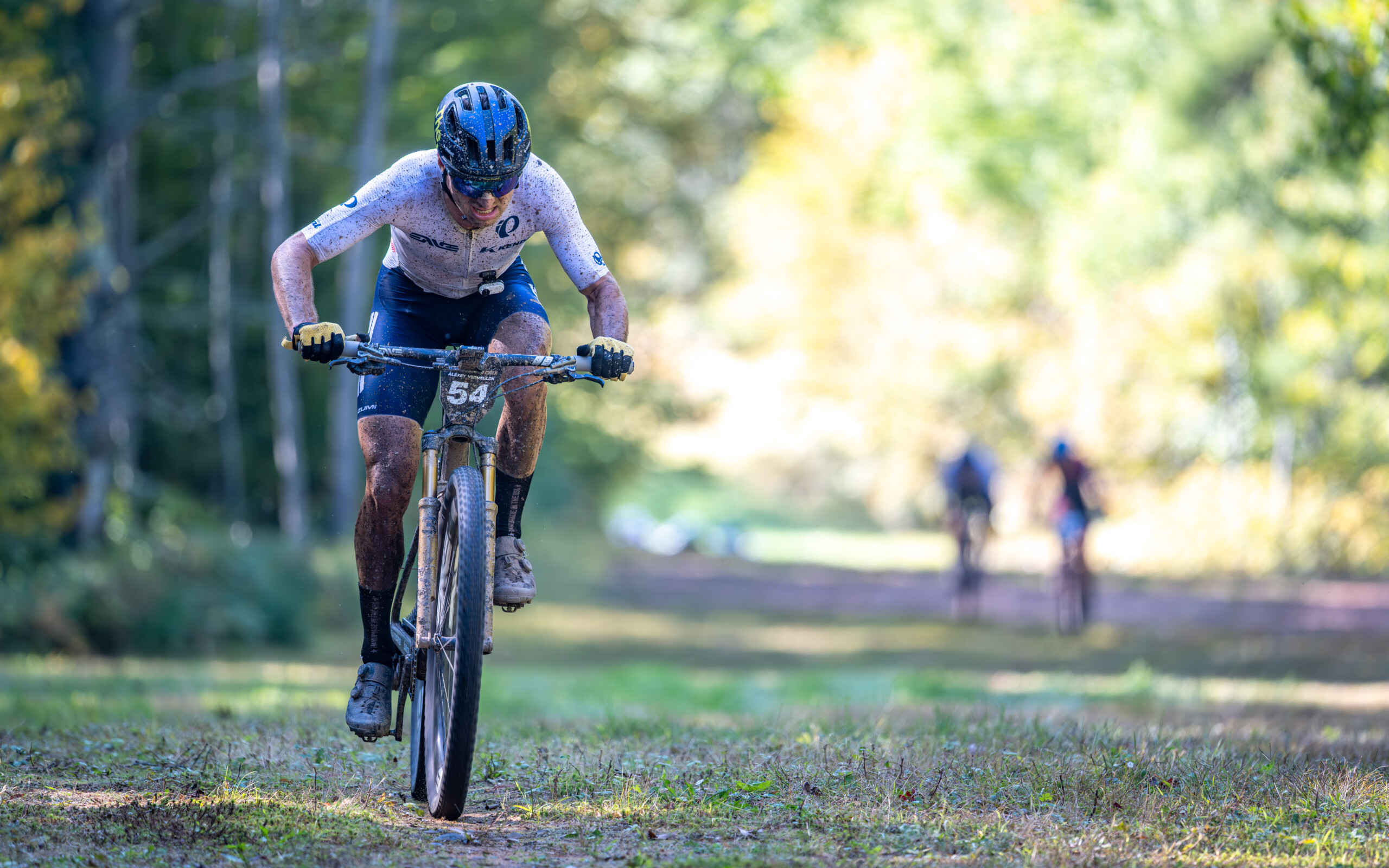
Alexey Vermeulen racing at the 2025 Chequamegon MTB Festival. Photo by Dan Hughes, courtesy of Life Time
Selection Process
Each men’s and women’s field will feature 25 athletes selected through a performance-based process. The 2026 rosters will include:
The top five overall finishers from the 2025 Grand Prix
The top overall U23 athlete from the 2025 series
A minimum of 16 selected athletes
Three Wild Card athletes chosen following UNBOUND Gravel 200
A selection committee will evaluate applications based on performances over the past 12 months at series events and select national and international off-road races, including Cape Epic, BC Bike Race, and the UCI Gravel World Championships.
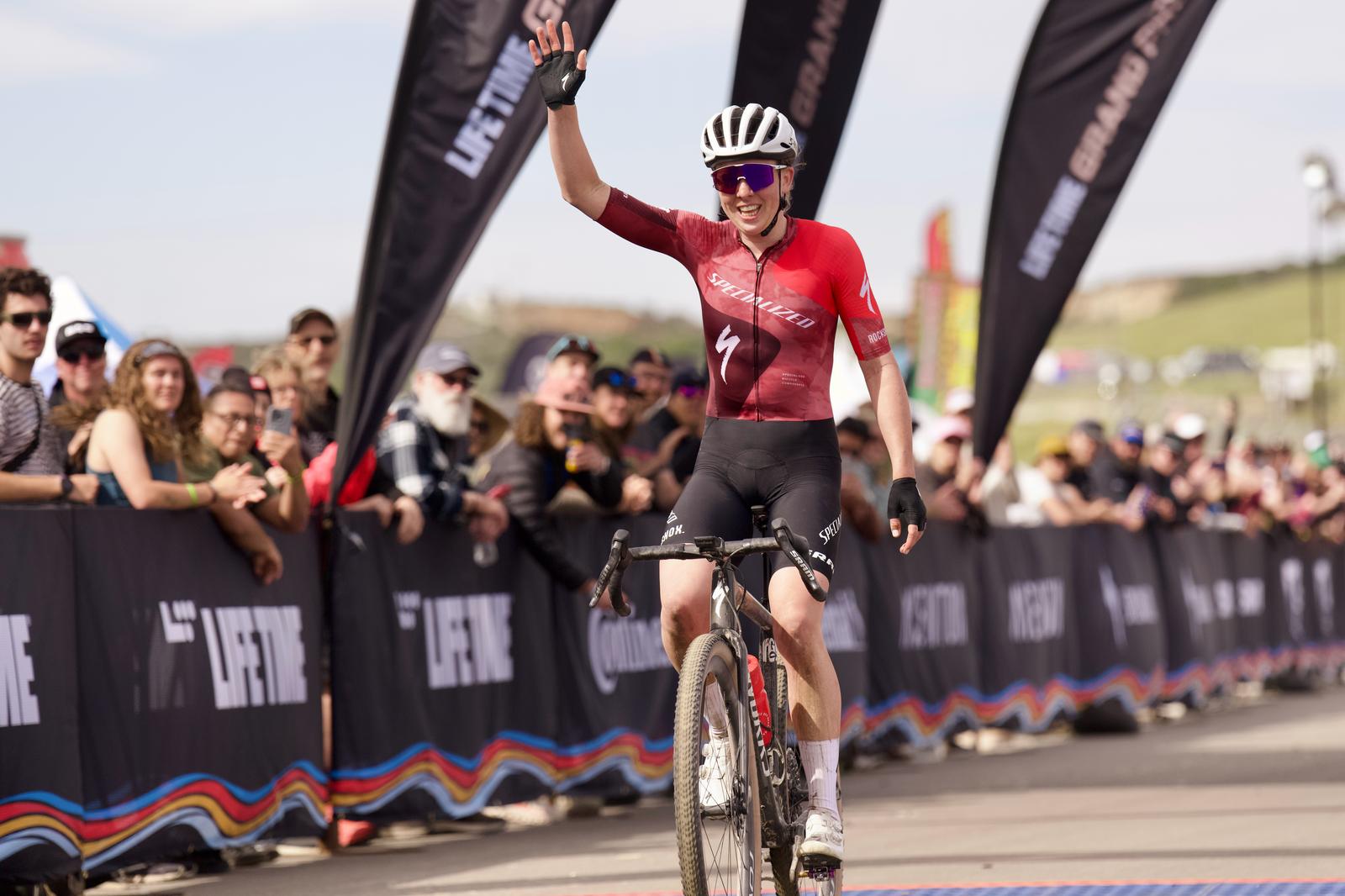
Haley Batten wins the Sea Otter Classic Gravel. Photo courtesy of Life Time
Athletes can apply between October 27 and November 5. Organizers will announce the final roster on November 11. Riders must be 18 years or older as of December 31, 2025.
Enhanced Prize Structure and Athlete Support
The overall Grand Prix prize purse extends through 10th place. Winners receive $50,000, second place earns $33,000, and third place takes $21,000. New for 2026, athletes finishing 11th and beyond in the overall standings with at least three event finishes will receive $2,500 in professional finisher compensation.
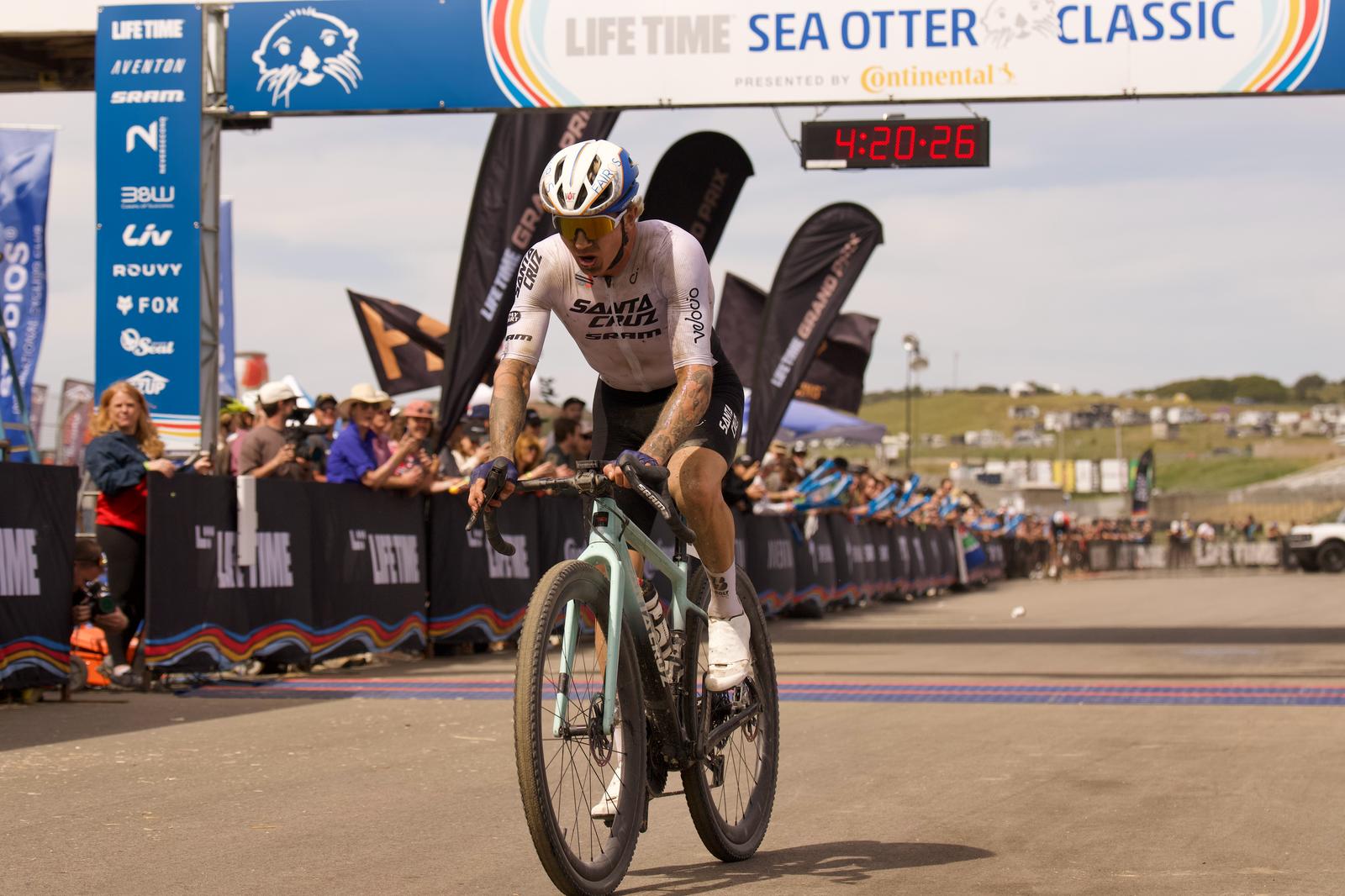
Keegan Swenson wins the Sea Otter Classic Gravel, race #1 of the 2025 Life Time Grand Prix. Photo courtesy of Life Time
Selected athletes receive complimentary entry to series events nationwide, professional media exposure through broadcast and digital channels, and access to more than 185 athletic country club locations across North America for training and recovery. The series covers all Grand Prix athlete entries, expanding in 2026 to include all U23 athletes selected following UNBOUND Gravel.
By Charles Pekow — Line the bike trail with trees! Doing so not only protects cyclists’ health but also improves the environment and enhances urban life. A study from Uzbekistan found that tree-lined trails shield riders from air pollution and heat while boosting biodiversity.
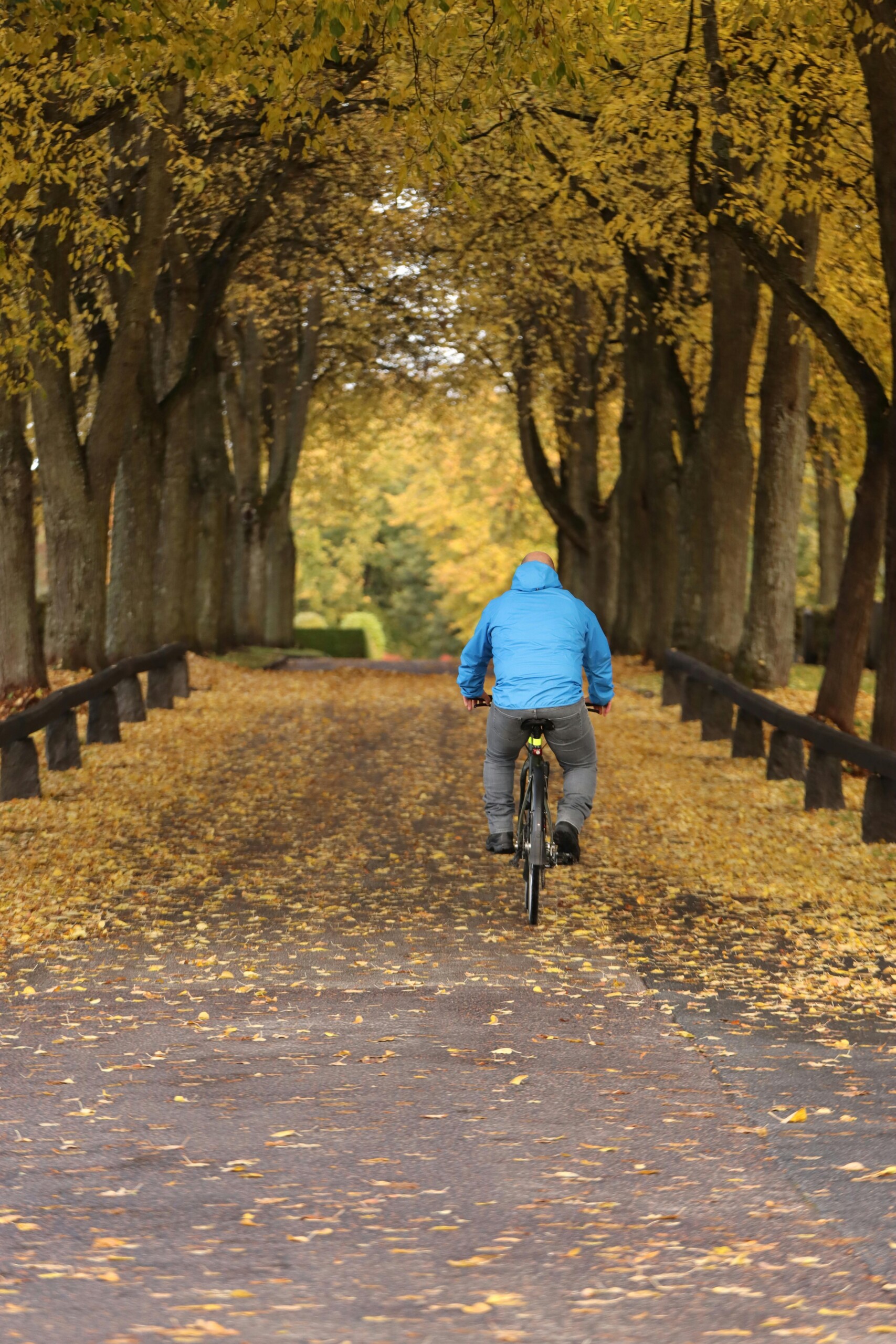
Cyclist in Vibrant Autumn Alleyway, Jönköping, Sweden. Photo by Efrem Efre, public domain.
Trees also improve scenery, provide a buffer from motor traffic, encourage more people to cycle, and even raise nearby property values.
According to the study, cities that green their bike corridors “experience reduced traffic congestion, lower noise pollution, and decreased greenhouse gas emissions.”
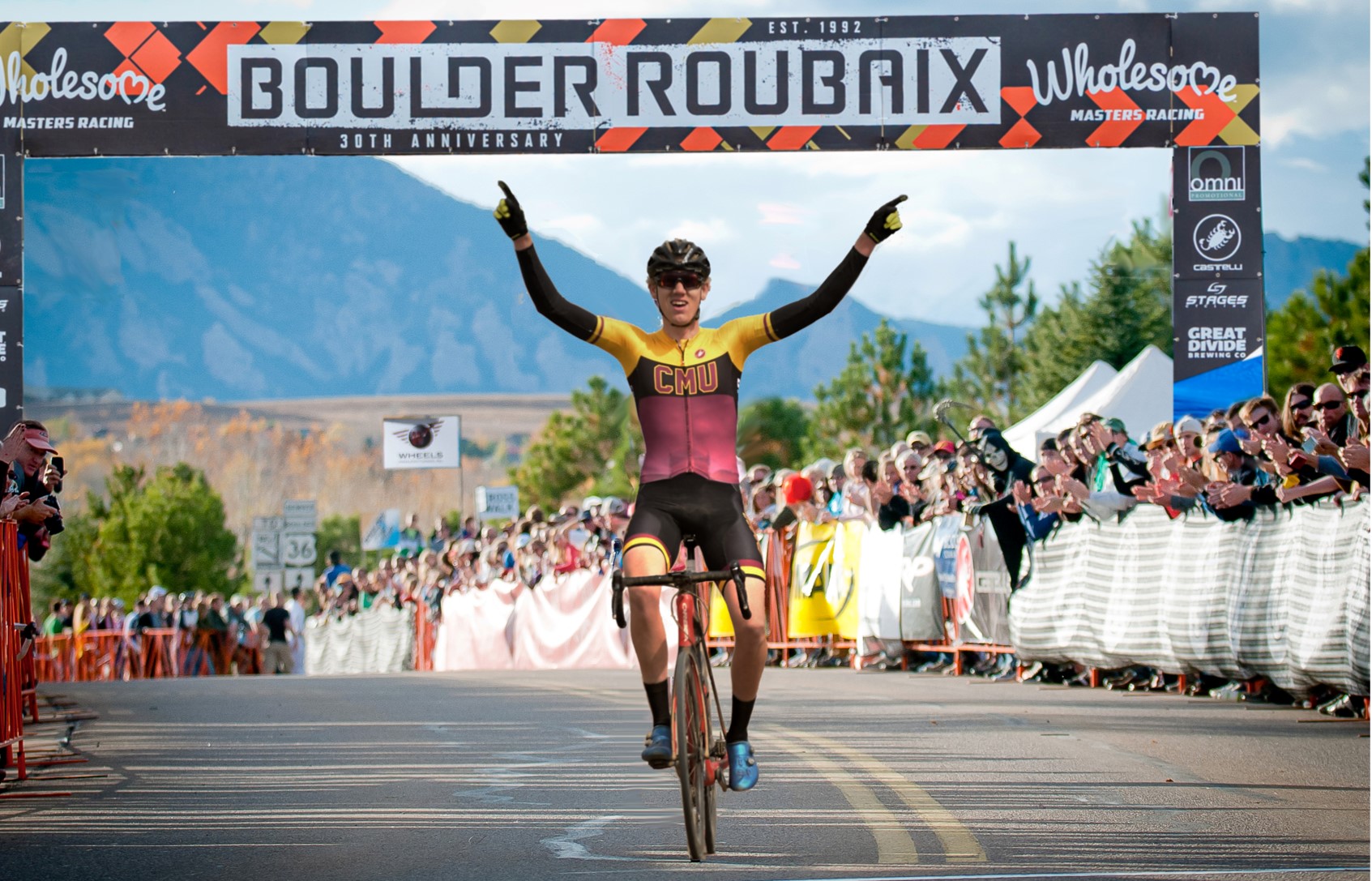
The Boulder Roubaix Road Race has announced significant changes for its 2026 edition, including a new course layout and relocated start/finish area. The event, scheduled for Sunday, April 26, 2026, will move its start/finish line to the Boulder Reservoir, providing expanded parking and a larger expo and food area for the expected field of over one thousand athletes from 15 states and multiple nations.
Photo courtesy of Boulder Roubaix
“We looked for ways to enhance the experience for racers and fans and The Boulder Reservoir does that,” said race founder and director Chris Grealish. “We’ll have a longer course, a larger parking area and even a bigger expo and food area.”
The redesigned 30-mile circuit maintains the race’s signature mixed-surface format—approximately 60% dirt roads and 40% pavement—while incorporating new sections, including a paved segment and a technical gravel section over the reservoir dams leading to the finish. Pro men will complete three laps for nearly 90 miles, while pro women will race two laps covering about 60 miles.
First held in 1992, the Boulder Roubaix has become one of the most well-attended amateur road races in the United States. The Gran Fondo Guide recently recognized it as one of the “All Time Best Spring Classic Races in North America.” Held biennially on a circuit north of Boulder, the race has featured challenging gravel sections long before gravel racing became a mainstream trend in American cycling.
“Veteran pros and amateurs alike love Boulder Roubaix,” Grealish said. “Up-and-coming racers know that a victory here can get them noticed by pro teams. And with the crazy interest in gravel racing in the USA I’m hearing from many top-level gravel pros who plan to use Boulder Roubaix as a tune-up for their season.”
The race offers categories ranging from 9 and 10-year-old juniors to Pro and Elite level competitors, with races beginning at 8:00 a.m. Registration opens January 2, 2026.
The Boulder Reservoir is located off The Diagonal Highway in Boulder, Colorado. Complete race information is available at boulderroubaix.com.
By Pat Casey with Skye Moench — As a bike fitter and student of biomechanics and physiology, I’m fascinated by the human body’s ability to adapt, evolve, and overcome physical and physiological challenges of all kinds. The act of childbirth is one of the most awe-inspiring events that the human body is equipped to perform. I’m fortunate to have several cycling friends who are now having children, which brings me to writing this piece, which is both educational for myself and hopefully for others, as I discuss my dear friend Skye Moench’s recent experience with childbirth and her return to sport. Skye is an esteemed professional triathlete and a rockstar new mom, navigating her return to training after giving birth to her daughter, Lois, in November 2024. We performed a ‘postpartum’ bike fit just 3 months after Lois made her arrival to the world, and we put our heads together to provide some insight into some of the common, and lesser known postpartum symptoms affecting cyclists and triathletes returning to riding after pregnancy.
Section 1: The Unseen Recovery
The demands new moms face are far-reaching, exhausting, and frankly overwhelming. The impacts on activity can vary greatly, especially if the athlete faced complications during delivery. However, there are many elements mentioned by Skye, as well as other female cyclists I interviewed, who reported experiencing similar symptoms once they were 6-8 weeks postpartum, which coincided with their first attempts to return to riding. These include but are not limited to:
Pelvic Floor Instability: The residual effects of pregnancy can alter how pressure is managed in the saddle. Considerations for saddle width, shape, and pelvic support are key. This may also lead to changes that reduce reach, allowing the rider to depend less on core muscles that are still being rehabilitated and strengthened.
Postural Shifts & Shoulder Internal Rotation: From nursing and carrying, there’s often a tendency for protracted shoulders and upper trap dominance. How this affects reach, bar drop, and handling tension could be explored to manage discomfort and even improve handling and confidence as a new starting point early in the return-to-riding process.
“Mom Thumb” (De Quervain’s Tenosynovitis): Common due to repetitive lifting/carrying of the baby. This lesser discussed ailment can affect grip, wrist extension, and comfort on the hoods or aero bars. Riders might explore making adjustments to their cockpit setup, handlebar width, and padding options like a more forgiving bar tape, or even a slightly higher bar stack to alleviate pressure on the wrists.
Pat performs a movement screen with Skye to assess range of motion, hip flexion, and hip rotation. Photo by Heather Casey, Peak State Fit
Section 2: Rebuilding the Breath & Core
Thoracic Spine Mobility: Pregnancy can restrict this area, and postpartum breathing may feel shallow. Reintegrating full diaphragm expansion not only helps with general wellbeing but restores power and posture on the bike.
Flared Ribs/Core Reconnection: This affects stability in the saddle and out-of-the-saddle efforts. Skye described how, despite her focused training in the gym during her pregnancy, she has maintained a focus on core and pelvic floor rehabilitation. Each rider will have a different level of involvement with core strength, depending on how much abdominal separation occurred during pregnancy, which will largely determine how these changes might affect the road forward. However, from a cycling perspective, encouraging core and pelvic stability should be paramount.
“A lot of the postpartum “things” like core, pelvic floor, ribs, etc. take a lot longer than the coined “6 week window” that doctors give the green light to get back to exercise or normal activity, so there is no shame in taking months to feel like things are strong and back to normal. And even this version of your new body should be considered a “new normal”. Not to mention, taking care of a baby doesn’t go away. Encouraging postural improvements in your shoulders, hip stability and mobility, all of it.. mom thumb (especially) is still a consideration for a long time. At least until you’re done picking your kid up all the time!”
Section 3: The Changing Footprint
Foot Size & Shoe Fit: A topic not often discussed. Foot elongation or arch collapse during pregnancy can lead to the need for new cycling shoes or insoles. This change also affects cleat positioning, foot/arch stability, and subsequently, knee tracking. If you’ve noticed a change in how your shoes fit, there might be a need for new shoes. Alternatively, if your first rides are not particularly challenging or climbing-oriented, switching to platform pedals and comfortable running or mountain bike shoes could be a safe alternative to achieve both safety and allow the foot to return to its pre-pregnancy shape/size, possibly. If this does not change after 3 months, new shoes may be in order.
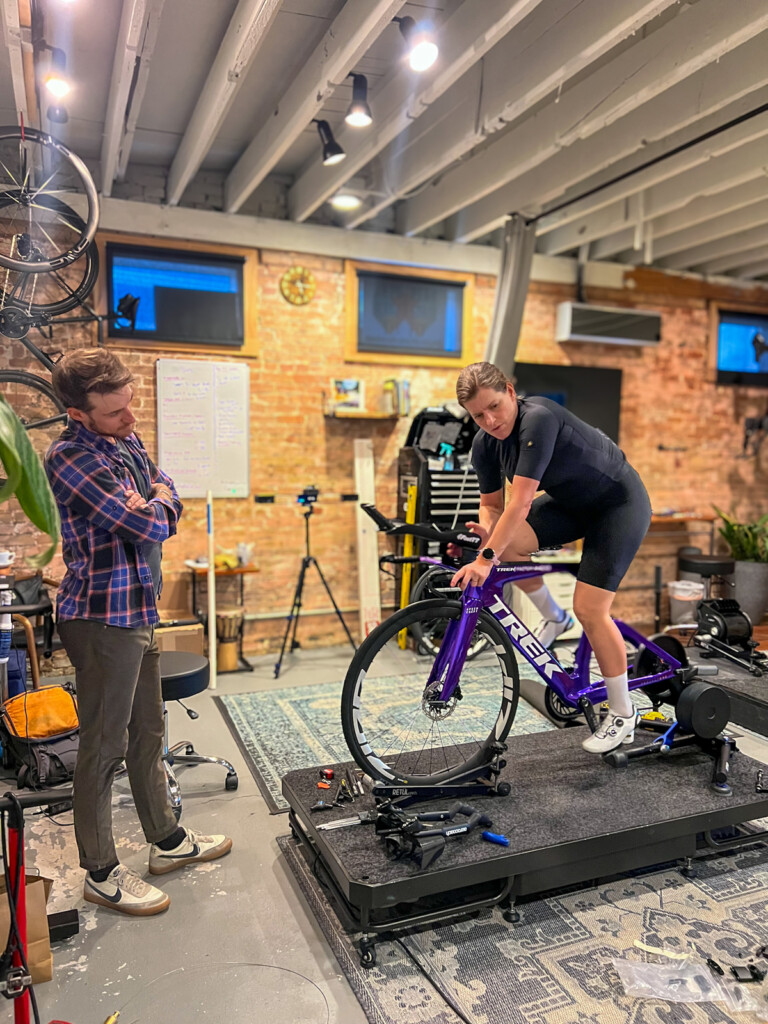
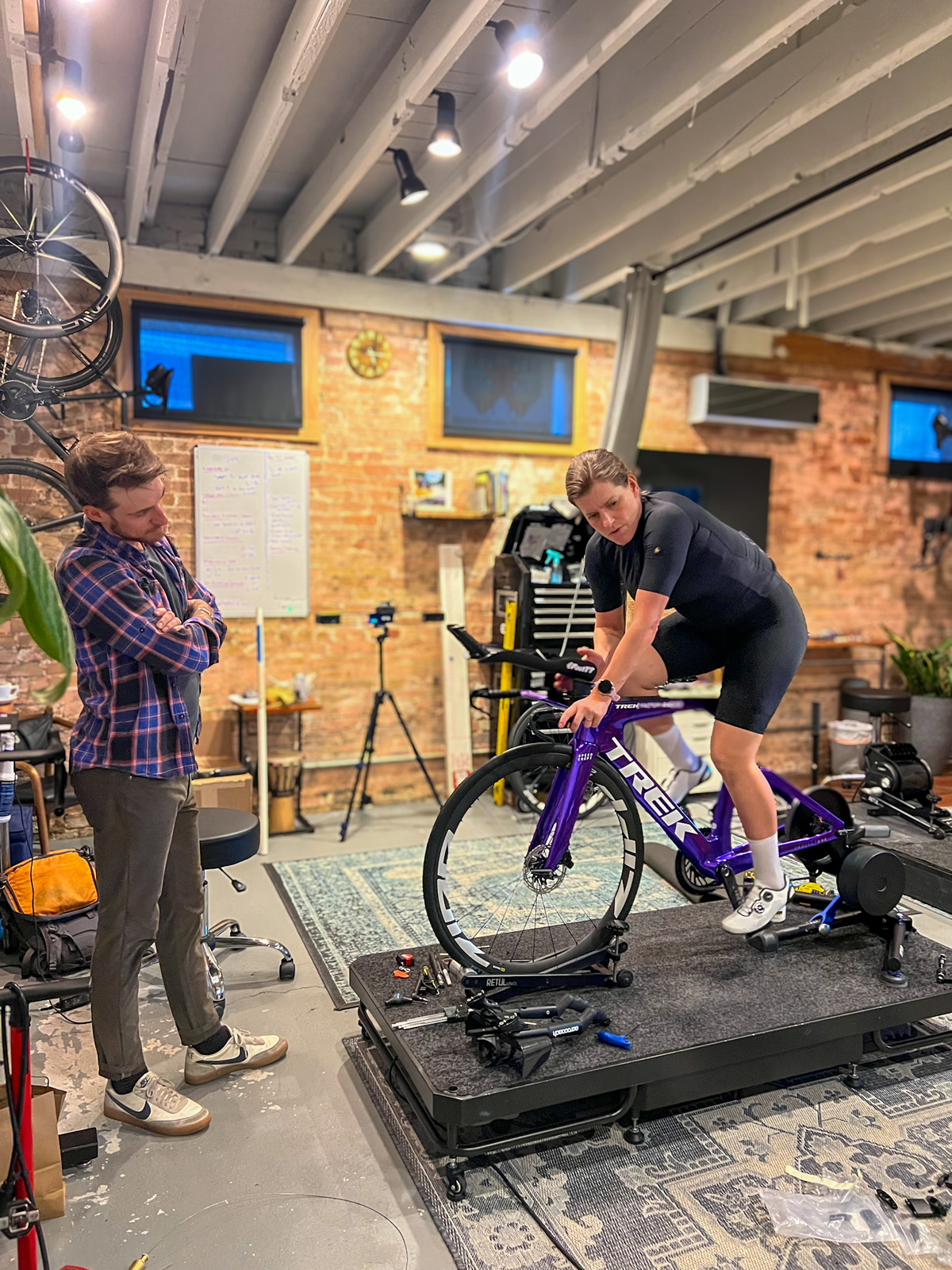
Pat Casey and Skye Moench discuss adjustments and what she is experiencing while she rides in the TT position postpartum. Photo by Heather Casey, Peak State Fit
Section 4: The Mental Rebuild
Skye and I spoke a bit on the psychological piece of postpartum return to cycling and training. For an elite athlete, balancing expectations, fatigue, identity, and anticipation to get back to a World-class “pre-baby Skye” is stressful on its own. “This mindset has definitely evolved as the months have gone on for me. In the beginning, I didn’t feel too much stress about getting back to “old Skye” because I felt like I had so much time to get fit, and that my baby would sleep through the night soon. I’d get a nanny, and everything would go great.
I’ve learned as the months have gone on that I won’t be “old Skye” ever again, but that’s not a bad thing. This is a totally new phase of life for me. My body has changed, my priorities have changed, my sleep has changed, almost everything (except my love for purple bikes) has changed. I’ve accepted that I am now on a new journey to find the “new Skye”, and while there are parts of my old life and the way I used to do things that help me try to be the best athlete I can be now, I also understand that I have to be more flexible with my daily schedule, my capacity to train, and with my overall timeline to “getting back” to where I was.
So, I guess the advice would be – I think having goals is good, especially on days where it’s really hard and it doesn’t feel like it’s worth trying, because the goals help you stay disciplined the best you can. Keep the goal, but let go of expectations of how you will get there, or even how quickly you will get there. I have learned that I can’t force things. I can’t just muscle through sleep deprivation, I can’t force my baby to sleep, I can’t force my body to immediately train the way it used to. But I can just do the best I can every single day, and as I do that, I am slowly seeing progress. I started training at the beginning of April under my coach’s guidance, and it has only been in the last few weeks where I am starting to feel like I might be getting somewhere.” ― Skye remarks on the shift in mindset postpartum and her acceptance of her new normal.
She continues, “I have also had to let go of any expectations that I may perceive others have of me. Like thinking sponsors want me back racing at my peak already, or even feeling bad if I have to bail on a morning training session with friends cause my baby didn’t sleep. The most important people I don’t want to let down right now are myself and my baby (Matt, too, but we’re talking babies haha), and that helps me not stress about the rest. I can live with myself if sponsors drop me, but I would regret not being the mother I want to be to Lois during this time.”
Section 5: Bike Fit Considerations for Postpartum Athletes
Every postpartum athlete’s experience will be unique to the rider, their body, and the various needs of the new life they have just brought into the world; sometimes, some challenges are more complex than others. And the solutions can be multifactorial. The key piece of advice is to listen to the signals your body is sending you, seek guidance from your physical therapist and/or doctor, and keep notes about what you’re experiencing so that you and your bike fitter can make informed decisions about these changes with purpose and direction. Adjustments to bike position can change over time, and they should change as your body and brain adapt to the many new and exciting elements in your life.
Any new bike fit will take range of motion, pelvic mobility, spinal alignment, and core stability into account. Your postpartum body is unlike the one you may have had at the beginning of your pregnancy. Addressing these changes through an updated movement screen is an honest and objective way to assess where you might want to focus your conditioning outside of the specific rehab you are performing with your physical therapist or coach.
The changes in body composition and abdominal shape could also be an area to accommodate, as the hip angle may feel more closed off. Adjusting reach and/or stack by raising the handlebars may be a worthwhile, and even temporary, change that can improve comfort and confidence as you return to riding, either indoors or outside.
Re-assessing sit bone width, pelvic stability, and spinal alignment might also warrant a change in saddle width, shape, or position, especially if the position gets less ‘aggressive’ with a shorter, taller front end. Consider these options on an “as needed” basis, particularly if you are not feeling the same kind of sit bone engagement as you did before delivery.
Closing:
Skye’s story is relatable and universal to women everywhere who love to ride but might be unsure about how to approach the changes to their bodies, especially as they pertain to riding position. Some riders may not feel entirely at home in their bodies postpartum and may lose some desire to get out on the bike. Returning to riding or training postpartum isn’t just about bouncing back—it’s about building forward with awareness, patience, and support.
Skye adds, “I’ve had days where I feel like I don’t belong as an elite athlete because I don’t feel like I look like it. I’ve lost weight since I’ve seen you for this fit, but I’m still up 10-12 lbs from where I would normally be (also still breastfeeding!). But even there, the focus is on the process and what’s important to me right now.. which is feeding Lois and doing the best I can.”
Whether you seek the help of an experienced bike fitter or want to make changes on your own, adjusting your bike position can be a positive and pivotal way to regain the familiar feeling of riding and exploring your local roads or trails with comfort and confidence.
Do you have any stories you’d like to share about your own experience with returning to riding postpartum, or any particular adjustments you made to your fit that helped? I’d love to learn more about this topic, so please feel free to email [email protected] with any anecdotes or stories that might help us improve our job. Thanks for reading!
By Peter Abraham — There are approximately 4.5 million podcasts out there in the world. Clearly, nobody needs more of those. And yet, what if we had a unique voice that we wanted to share? Well, that’s what Mark Riedy had in mind when he called me a few months ago to propose starting a podcast together. There are very few people I would consider doing this with, and Mark is one of them. So I was open to the idea.
With Mark in France this summer at the Tour de France Femmes avec Zwift. Photo courtesy Peter Abraham/Mark Riedy
Stepping back, what is the idea we’re trying to communicate through our unique voices? Talking through the concept, we both were excited about the objective to get more people on bikes. And, are there voices in the world who are doing great work that we could highlight on the pod? People who were making a difference and growing the number of people on bikes? This is something that has driven both of us personally and professionally for many years. Mark, through his agency In Good Taste, is one of the busiest communications professionals in the bike industry. He’s also deeply passionate about riding bikes, and we run into each other at races and rides around the world. And if you read my blog, or know my work at Abraham Studio, you know how excited I get about increasing the number of people who ride bikes.
This topic feels not only organic and authentic to both of us, but actually fun. And it aligns with so many relationships we have among friends and within the bike industry. Our world is better off when there are more people on bikes: access to the outdoors, mental health, fitness, fun, community, business opportunity, inspiration. The list goes on. Creating more bike riders also has so many angles: tech, women, people of color, bike racing, infrastructure, young people, eBikes, etc. We might never run out of potential podcast guests.
So let’s get into it: what are the first few episodes like? We’ve opted at the beginning to have each podcast focus on one topic, with three interviews supporting that theme. We felt like the one episode/one interview format was sort of the podcast default setting. Is there another way to get our ideas across? Maybe. With three guests per episode, it is for sure more work and more editing for us. But then we get three crisp interviews providing different points of view on each topic. That felt like it could be interesting, and move more quickly than one long episode. But of course, we’re just getting into this. Our plan might not work! So we reserve the right to be wrong. Let’s see how it goes. We’re on all of the main podcast platforms, and YouTube as well. Feel free to send us constructive feedback.
Moore takes silver in points race, Johnson and Dygert earn bronze medals in pursuit events as Team USA delivers best worlds performance in decades
SANTIAGO, Chile (October 22-26, 2025) — Team USA closed out the 2025 UCI Track World Championships with three medals and multiple historic performances, highlighted by Peter Moore’s silver in the men’s points race and bronze medal rides from Anders Johnson and Chloe Dygert in their respective individual pursuit events.
Day One: Women’s Team Sprint Makes History
The trio of Kayla Hankins (Scottsdale, Ariz.), Emily Hayes (York, S.C.), and Hayley Yoslov (Corte Madera, Calif.) delivered a dominant performance in the morning’s qualifying round. With a time of 47.631, Team USA not only advanced to the first round for the first time ever at the world championships, but qualified fourth making history.
In the first round, Team USA went head-to-head with Poland, who qualified fifth with a 47.664. From the gun, it was a fierce battle. Team USA launched out to a strong start, matching their earlier performance with another 47.631. In the end, Poland edged ahead with a 47.430, taking the win by just 0.201 seconds.
While Team USA did not advance to the medal rounds, their seventh-place finish marks the best-ever result for the program at a world championships.
Results:
Netherlands – 45.743
Great Britain – 46.003
Australia – 46.773
United States – 47.430
Men’s Team Pursuit Advances to Bronze Medal Final
Ashlin Barry (Toronto, Ont.; JEGG – SKIL – DJR), Graeme Frislie (Paradise, Au.; CCACHE x Bodywrap), Anders Johnson (Huntsville, Utah), and Grant Koontz (Nederland, Colo.; Star Track Cycling) came together for a strong showing in the team pursuit, riding consistent splits and stopping the clock at 3:50.346. Their performance secured a spot in the first round later that evening.
In the evening session, Team USA faced off against eighth-place qualifier Switzerland, who posted a 3:52.048 in the morning round. The Americans started steady, matching Switzerland through the opening splits. Then, in the closing laps, Team USA powered through to take the win by 1.61 seconds at the line, finishing with a time of 3:48.460. The performance secured their spot in the bronze medal final.
Ingram Takes Ninth in Women’s Scratch Race
Bethany Ingram (Warrington, Pa.; TWENTY28 Pro Cycling) kicked off her weekend in the 40-lap scratch race. The pace was high from the start, though riders hesitated to take the lead until the closing laps. A late attack splintered the field, setting up a fast and tactical finish. Ingram held her position and powered through the final sprint to secure a top-10 result.
Results:
Lorena Wiebes (NED)
Amalie Dideriksen (DEN)
Prudence Fowler (NZL)
Bethany Ingram (USA)
Day Two: Team Pursuit Narrowly Misses Podium
The team pursuit squad delivered an outstanding performance, earning their place in the bronze medal final against New Zealand.
Barry, Frislie, Johnson and Koontz were ready to line up once more for the final showdown. The team rode with precision and power, executing smooth exchanges and holding New Zealand within reach throughout the race. With a kilometer to go, Team USA launched their final push but came up just short, crossing the line 1.03 seconds back to finish fourth overall.
While the team narrowly missed the podium, they left everything on the track. Their result marks Team USA’s best finish in the event since 1995, when the program last earned a world championships medal.
Results:
Denmark – 3:43.915
Australia – 3:47.258
New Zealand – 3:48.77
United States – 3:49.799
Koontz Places Seventh in Men’s Scratch
Grant Koontz was back on the track shortly after the team pursuit finals, lining up for the 10k scratch race.
The group was all together until 18 laps to go. Then it started to split in half with Koontz in the lead group. It came down to eight riders driving the tempo at the front. With three laps to go, Koontz was still leading, pushing the pace as others hesitated to take a turn on the front. The group eventually lapped the field, setting up a fast and chaotic finish. In the final lap sprint, the pace exploded, and Koontz crossed the line in seventh place after a hard-fought effort.
Results:
Moritz Augenstein (GER)
Yanne Dorenbos (NED)
Iuri Leito (POR)
Grant Koontz (USA)
Jastrab Takes 10th in Women’s Elimination
Tokyo 2020 Olympian Megan Jastrab (Apple Valley, Calif.; Team Picnic PostNL) made her return to the track this week, taking on the endurance events. The elimination race is all about strategy and positioning, and Jastrab showcased both throughout the event. The race was neutralized twice due to crashes, but once underway, she maintained a strong presence near the front, staying out of trouble and in contention. As the field thinned and the eliminations grew tighter, many were decided by photo finishes. With ten riders remaining, Jastrab found herself boxed in with nowhere to go. In the final sprint for position, she crossed the line just inches short, ending her run.
Results:
Lara Gillespie (IRE)
Katie Archibald (GBR)
Helene Hesters (BER)
Megan Jastrab (USA)
Hayes and Hankins Fall in Sprint 1/16 Finals
Emily Hayes (York, S.C.) and Kayla Hankins took on the women’s sprint tournament. They started the morning off with their flying 200m qualifying effort. Hayes clocked a 10.852 and Hankins riding to a 10.812, moving both of them onto the next round.
In the 1/16th final, Hayes raced against Germany’s Pauline Grabosch. Hayes started out strong turning over the pedals and getting into the sprinters lane first. Grabosch was able to come around on the final turn to edge out Hayes and get the advantage. Hankins raced against Great Britain’s Lauren Bell in a similar scenario. Hankins launched the attack first, but Bell proved to be faster, winning the heat and moving onto the round of eight.
Day Three: Moore Makes History in Points Race
After finishing fourth in last year’s edition, Moore entered the points race with high hopes. The 40-kilometer event covered 160 laps, with 16 sprints offering points (5 for first, 3 for second, 2 for third, 1 for fourth), and riders could also earn 20 points by lapping the field.
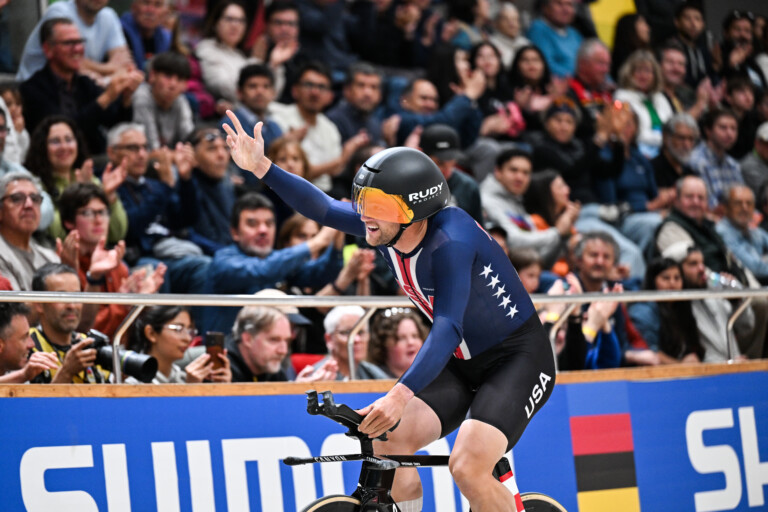
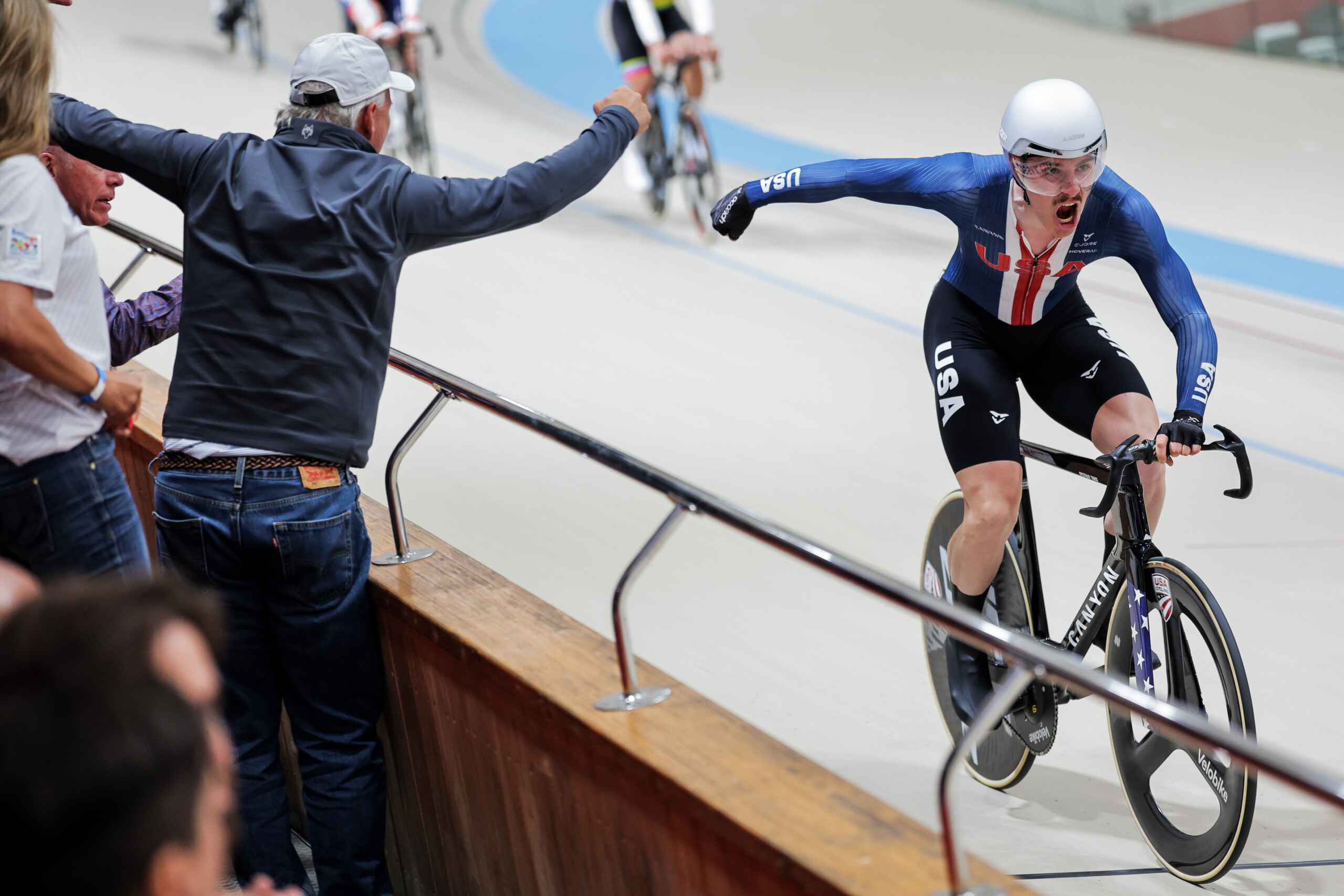
Picture by Alex Whitehead/SWpix.com – 24/10/2025 – Cycling – 2025 Tissot UCI Track World Championships – Velódromo Peñalolén, Santiago, Chile – Men’s Points Race – Peter Moore (USA) Celebrates winning the Silver Medal
The Saint Paul, Minnesota native looked strong early, finishing second in both the fifth and sixth sprints. He then joined a lead group of four, including riders from France, the Netherlands, and Mexico, and the group successfully lapped the field. That move put Moore into medal contention with 98 laps remaining.
He continued to attack, joining riders from Germany and Australia to gain another lap on the field. It was a massive effort, but once the group made contact, Moore added another 20 points to his tally, moving into the race lead.
From there, it was all about defense. Great Britain’s Joshua Tarling had gained an early lap and continued to collect sprint points in 10 of the 16 sprints, slowly closing the gap and gaining points on Moore. Moore fought hard to hold position, ultimately securing silver—his first Elite World Championship medal and the first men’s points race medal for the United States.
“I’ve been thinking about this race since I finished fourth last year, and I just executed perfectly today,” said Moore. “I took two laps, exactly when I needed to. I knew who to follow, played my cards right. I just had no question the whole day. I’m really proud of myself and the preparation that went into this.”
Results:
Joshua Tarling (GBR) – 56 pts
Peter Moore (USA) – 48 pts
Clement Petit (FRA) – 41 pts
Johnson Claims Bronze in Individual Pursuit
Anders Johnson raced the four-kilometer individual pursuit looking to better his performance from last year, when he finished eighth with a time of 4:08.623.
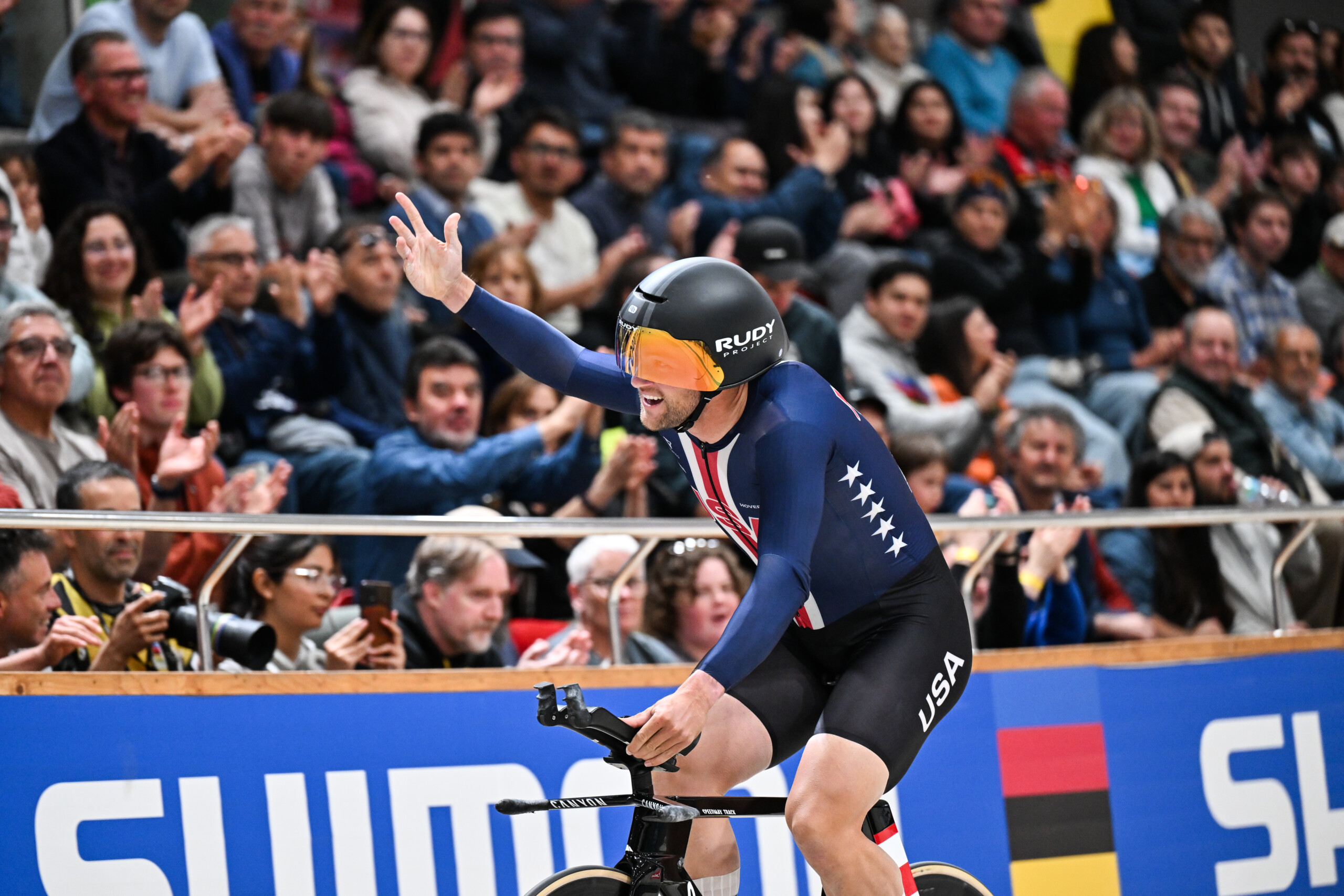
Picture by Simon Wilkinson/SWpix.com – 24/10/2025 – Cycling – 2025 Tissot UCI Track World Championships – Velódromo Peñalolén, Santiago, Chile – Men’s Individual Pursuit – Final for Bronze – Anders Johnson (USA) Celebrates winning Bronze
In qualifying, he raced against Portugal, where Johnson overtook the rider and continued racing to one of his fastest times. The Huntsville, Utah native clocked a 4:06.793 that was good enough to finish fourth and qualify him for the bronze medal round.
Johnson went up against James Moriarty (AUS), who rode a 4:05.944 in qualifying. It was going to be a battle for Johnson, but he was ready to take on his first individual pursuit final. He started out strong and the splits were looking promising. Johnson was up by almost two seconds, with Moriarty trying to reel it back in, but it was all Johnson who would cross the line 2.4 seconds ahead, winning the round and the bronze medal.
“I’ve been wanting to just go better year after year. And have been taking some steps up over the past few years,” Johnson said. “My goal was to qualify for a medal round. I didn’t know if a medal was in the cards this year. I thought that would be a next year thing, stepping up year over year. It was a really good quality ride, then came into finals, felt a lot of opportunity and didn’t really feel pressure because I had done what I came here for. Then I just went out there and dug as deep as I could. I’m really really thankful for this one.”
Results:
Josh Carlton (GBR) – 4:04.122
Rasmus Pedersen (DEN) – 4:07.496
Anders Johnson (USA) – 4:08.699
Jastrab Finishes 15th in Omnium
Megan Jastrab (Apple Valley, Calif.; Team Picnic PostNL) represented Team USA in the omnium, a four-race event held throughout the day.
The first event, the 10km scratch race, began with steady pacing as riders traded turns at the front. The pace ramped up in the final laps, and Jastrab sprinted from the bunch to finish 11th.
Two hours later came the 10km tempo race, where Jastrab won the third sprint to earn her first point. A breakaway then formed and lapped the field, where they gained 20 points and put Jastrab on the back foot. She finished the event with -19 points, heading into the elimination race.
Jastrab battled in the elimination race to finish 15th, going into the final points race sitting with 40 points. She rode consistently in the final to finish the day 15th overall.
Results:
Lorena Wiebes (NED) – 136 pts
Marion Borras (FRA) – 127 pts
Amalie Dideriksen (DEN) – 120 pts
Megan Jastrub – 40 pts
Domonoske Places 24th in Men’s Kilo
Team pursuit member David Domonoske (Palo Alto, Calif.) took on the 1-kilometer time trial earlier in the day. He stopped the clock at 1:01.846, placing 24th in the sprint event. Riders needed to break the one-minute barrier to advance into the top eight and move on to the final.
Results:
Harrie Lavreysen (NED)
Jeffrey Hoogland (NED)
Joseph Truman (GBR)
David Domonoske (USA) – 1:01.846
Day Four: Dygert Catches Opponent for Bronze
On the fourth day of racing, Chloe Dygert (Brownsburg, Ind.; CANYON//SRAM Racing) took the bronze medal in the women’s individual pursuit, while the rest of Team USA took on the men’s omnium, women’s madison, and women’s kilometer time trial.
Dygert delivered a powerful ride in the morning’s 4k individual pursuit qualifying round, stopping the clock at 4:26.127, which initially placed her second. With two riders still to race, including reigning world champion Anna Morris (GBR), the standings shifted as Morris posted a 4:24.194 to advance to the gold medal final alongside teammate Josie Knight (GBR). Dygert was moved down to third overall, putting her in the bronze medal final against Federica Venturelli (ITA).
In the final, Dygert went all in against Venturelli, posting impressive splits and ultimately catching her opponent to end the race early and secure the bronze medal.
Results:
Anna Morris (GBR)
Josie Knight (GBR)
Chloe Dygert (USA)
Barry Finishes 16th in Men’s Omnium
Ashlin Barry (Toronto, Ont.; JEGG – SKIL – DJR) was ready to give it his all in the omnium. First up was the scratch, followed by the tempo in the morning session, then onto the elimination and points.
In the scratch race he rode really well managing his efforts and perfectly timing his position and sprint for the last lap, to come over the top and end up in the final effort to take fifth. Setting him up in a good spot.
Next was the tempo where every lap counts, with 1 point given for every lap leader, and 20 points for anyone who gains a lap. When racing started, Barry went off the front to clock some early points, he stayed in the lead group for a few laps managing his efforts and scoring 3 points in total. Once he finished his effort, he went back into the group, but missing the surge from the leaders where they strung out the field. Unfortunately, from there, his group was caught, putting him down 20 points. He ended the race with -17 points in 17th position.
Next up was the elimination for Barry. He held strong in the group but was slowly getting pushed out the back lap after lap. He was one of the seventh riders eliminated from the race, putting him in 18th.
What began as a strong ride for Barry ultimately took a turn, but he closed out the event with the points race giving the best effort he could. He stayed controlled in the bunch and finished the race with 46 points scoring 16th place.
Results:
Albert Barcelo Torres (ESP)
Kazushige Kuboki (JAP)
Lindsay de Vylder (GER)
Ashlin Barry (USA)
Crash Mars Women’s Madison
The madison was 120 laps of pure chaos. Unfortunately, the U.S. duo of Bethany Ingram (Warrington, Pa.; TWENTY24 Pro Cycling) and Megan Jastrab were caught up in one of several crashes during the race. The pair had been riding smoothly within the group until a rider attempted to squeeze through during their exchange, taking both Americans down. Fortunately, both riders escaped without serious injury.
Results:
Great Britain
France
Italy
United States
Yoslov Finishes 14th in Women’s Kilo
Hayley Yoslov (Corte Madera, Calif.) returned to the track after her team sprint ride to take on the 1-kilometer time trial. Having only been on the track for two years, Yoslov was eager to test herself in an individual sprint event at her first world championships. Her splits showed strong potential, and she carried that momentum through to the finish, stopping the clock at 1:07.639 just 1.5 seconds shy of the qualifying time.
Results:
Hetty van de Wouw (NED) – 1:03.121
Iana Burklakova (AIN) – 1:04.797
Ellesse Andrews (AUS) – 1:04.909
Hayley Yoslov (USA) – 1:07.639
Final Day: Moore and Frislie Finish Ninth in Madison
On the final day of the championships in Santiago, Team USA competed in the men’s madison, men’s elimination, women’s points race, and women’s keirin.
In the final event of the championship, Graeme Frislie (Paradise, Au.; CCACHE x Bodywrap) and Peter Moore teamed up for the grueling 199-lap men’s madison. Early in the race, Team USA rode consistently within the main group as several teams went on the attack to gain early laps. Staying composed, Frislie and Moore paced their efforts strategically, upping the tempo around the midway point to successfully take a lap with 77 to go, earning a crucial +20 points and moving onto the scoreboard. In the closing laps, they continued to collect points in the final sprints (18, 19, and 20), securing a top-10 finish and capping off the championships with a performance to be proud of.
Results:
Belgium – 81 pts
Great Britian – 73 pts
Denmark – 71 pts
United States – 29 pts
Koontz Places 16th in Elimination
In his final event of the week, Grant Koontz (Nederland, Colo.; Star Track Cycling) lined up for the elimination race, facing a stacked field of 24 riders. From the gun, he took control, spending several laps at the front and skillfully managing his position within the group. Midway through the race, the pace surged, and Koontz found himself in a tough spot as riders fanned out over the top heading into the sprint. In a photo finish, he was narrowly edged out at the line and eliminated, finishing 16th.
Results:
Elia Viviani (ITA)
Campbell Stewart (NZL)
Yoeri Havik (NED)
Grant Koontz (USA)
Ingram Rebounds to Finish 16th in Points Race
After taking a hard crash in the previous day’s madison, Bethany Ingram (Warrington, Pa.; TWENTY28 Pro Cycling) was back on the track for the points race. She fought early, picking up a point on the third sprint. The race quickly turned tactical, with riders beginning to lap the field early on. Ingram stayed composed and held her position in the main group through to the finish, placing 16th.
Results:
Yareli Acevedo Mendoza (MEX)
Anna Morris (GBR)
Bryony Botha (NZL)
Bethany Ingram (USA)
Hankins and McKee Fall Short in Keirin
Kayla Hankins (Scottsdale, Ariz.) and McKenna McKee (Vancouver, Wash.) lined up for the keirin. Once the derny pulled off and the pace picked up, it was an all-out sprint among seven riders, with the top two advancing directly to the quarterfinals and the rest moving to the repechage for another shot at qualification.
Hankins stayed composed in the group and launched her sprint, taking third in her opening round. In the repechage, she started from the back and made a strong move over the top in the closing laps but couldn’t quite close the gap, finishing sixth and missing advancement.
McKee also placed third in her first round after a tight battle to the line. In her repechage, she rode strategically and delivered a powerful sprint. It came down to a three-way photo finish, with McKee narrowly missing a qualifying spot by just inches.





 Consumer Contact