As a personal trainer and yoga instructor, I meet a lot of athletes and workout fanatics who tell me that they just don’t have time to add “stretching and breathing” to their already intense training schedule. They do not realize that yoga is so much more than just stretching and breathing.
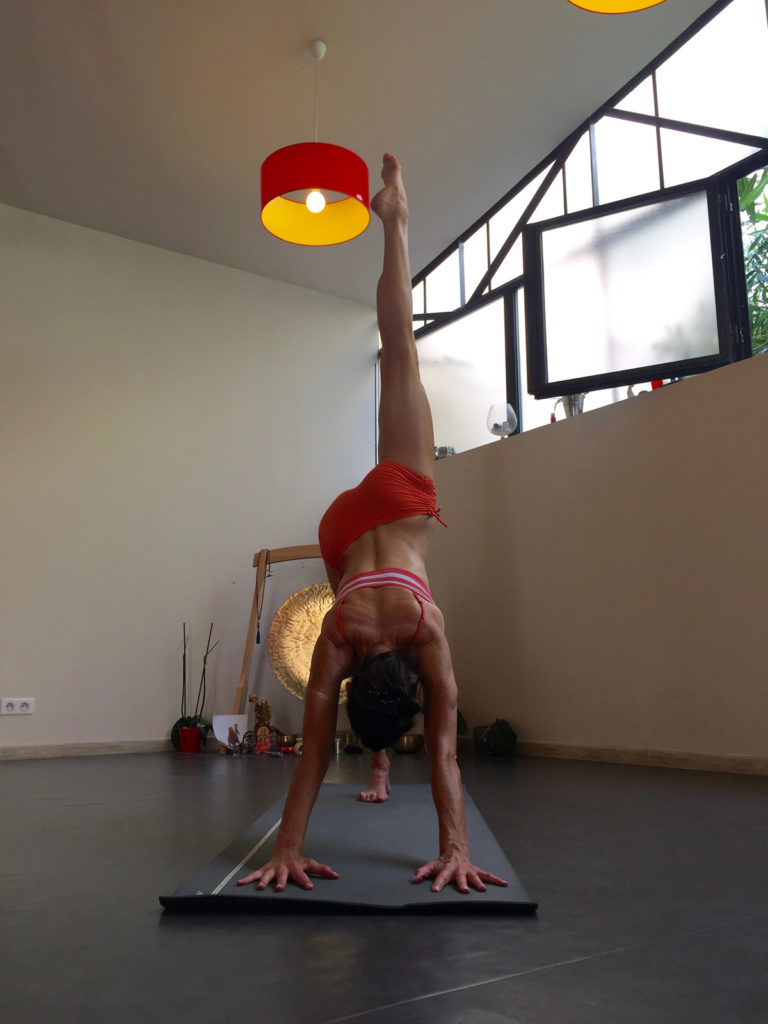
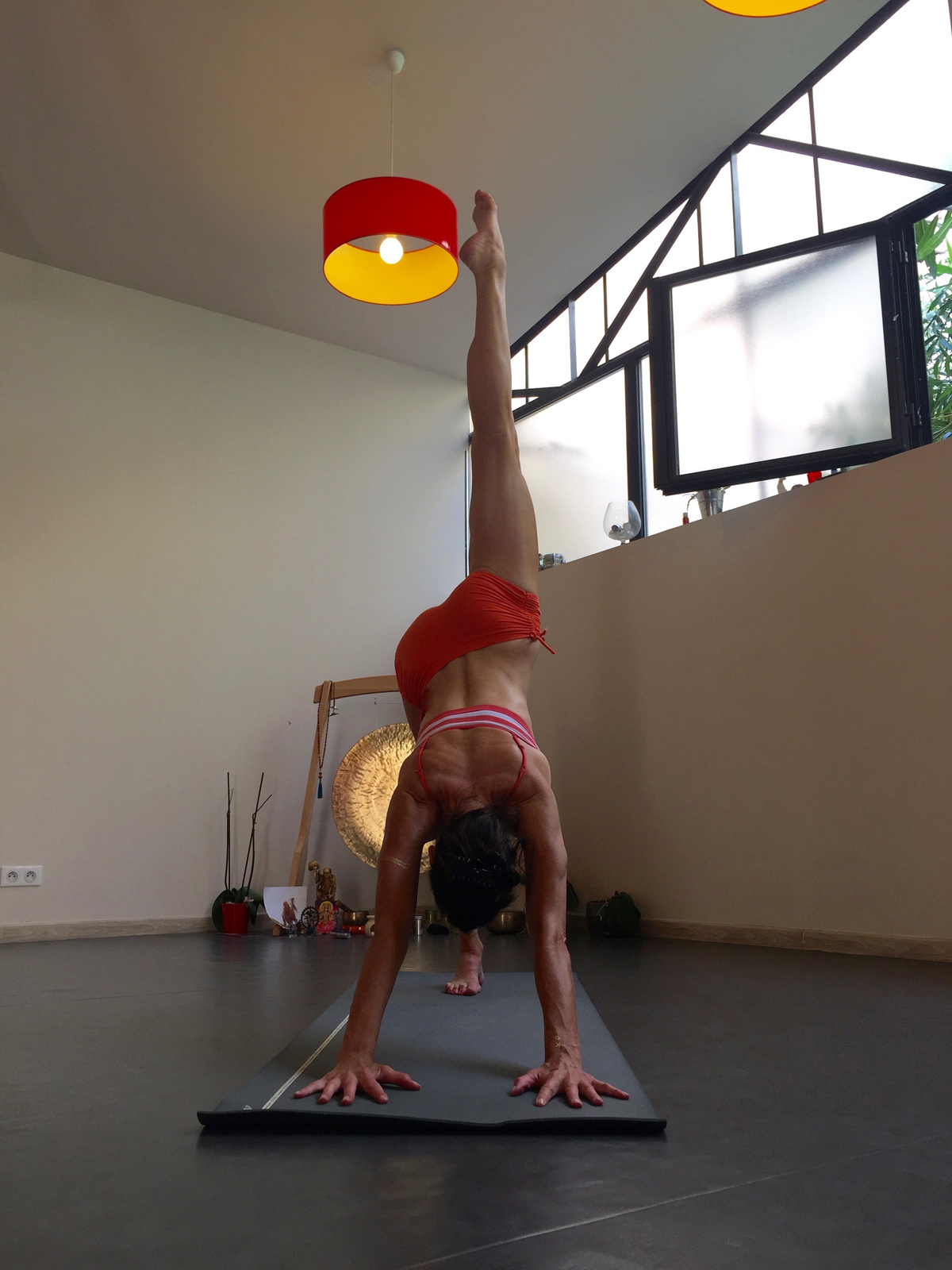
Melissa Snow practices yoga to stay fit. Photo courtesy Melissa Snow
Yoga includes dynamic flexibility training, core and spinal stabilization exercises, strength and balance work with focus on joint stability while increasing range of motion.
I have not met one athlete who, after starting and staying with a consistent yoga practice, has not seen multiple benefits – fewer injuries, quicker recovery time, better endurance, increased performance, help with sports specific muscular imbalances, a stronger core and less lower back issues. Yoga goes beyond simple stretching by working the muscles and joints through different planes of movement and by activating the little-used muscles that support the larger primary muscle groups.
Here are my top 6 reasons for everyone to do yoga:
Core strength. Stretching and strengthening of the abdominal, paraspinal and pelvic muscles, commonly referred to as “core” are extremely important to maintaining a healthy spine. When these muscle groups are strong, they take pressure off the spine and help prevent injury. Core strengthening is one of the cornerstones of yoga.
Injury Prevention. Athletes put stress on their bodies during both training and racing. Repetitive overuse of certain muscle groups causes imbalances in both strength and flexibility. When muscles are tight, they pull on the ligaments and joints. Muscle tightness puts athletes at greater risk for muscle strains and tears because of the muscles’ resistance to movement. More pliability and flexibility in the muscles can help prevent injuries. In yoga, we work the muscles around the joints for stability and full mobility in the joints, making an athlete’s movements more fluid.
Body Awareness. Our sixth sense is often referred to as proprioception. This is the ability to perceive our body from the inside, with our “mind’s eye”. We can perceive our body’s position in space, the direction and speed of our movement, where and how we initiate our movement and what muscle groups we are using to move. We are continually practicing this throughout yoga class, by “going inside” our bodies. We gain a deeper understanding of how our body moves in various ways in relation to the spine. We develop a deeper sense of awareness and mindfulness when we move. This helps not only with our reaction times but with our efficiency of movement.
Stress reduction. Yoga teaches us how to calm the nervous system and the mind when faced with physical challenge and stress. It teaches us how to breathe through this. Competition and training can increase stress both in the mind and the body. It’s important to be able to relax under pressure and achieve mental focus, clarity and calmness. This in turn, allows for optimal performance. Yoga is often called a moving meditation because we practice the ability of being completely in our bodies, in the present moment, with our breath.
Balance. Yoga teaches us alignment with our spine, our joints and our muscles. There is something called the “law of compensation,” which states that our bodies will always take the path of least resistance when unconscious in our activity. Generally, this this represents the weakest areas of the body. When we practice yoga, we see where we have been compensating and begin to create balance in the body by working on symmetry. We begin to discover and realign our weaknesses and our strengths.
Mental focus and awareness of breath. Yoga is an opportunity to learn how to be present and to focus our minds. We learn to be an observer of our thoughts and to notice patterns which might be holding us back is we weren’t conscious of them. We learn to let go of what no longer serves us. Yoga also teaches us to become aware of the quality and the length of our breath. We learn to manage our own nervous systems, our “fight or flight” reactions and bring them back into balance in any situation. Through breath work, we also strengthen the diaphragm and expand our lung capacity. This means increasing the amount of oxygen coming into the body, the muscles and the cells and increasing our endurance.
Note: This article originally appeared in the Winter 2016-2017 issue of Cycling Utah and Cycling West Magazine. Melissa Snow was a former professional dancer, having performed several years in France. She was also a sometimes bike racer for the Canyon Bicycles cycling club and a certified yoga instructor. Ms. Snow passed away in October 2017, on her 50th birthday. After a lengthy illness, Mark Deterline passed away in July 2019.
COLORADO SPRINGS, Colo. – USA Cycling recently announced a 5-year partnership with Gran Fondo National Series (GFNS) to bring the existing GFNS Gran Fondo National Series and the one-day Gran Fondo National Championship into the portfolio of official USA Cycling National Championship events. This partnership provides gran fondo riders the opportunity to compete for a coveted USA Cycling stars-and stripes jersey, and provides all USA Cycling members with value-added benefits at select series events nationwide.
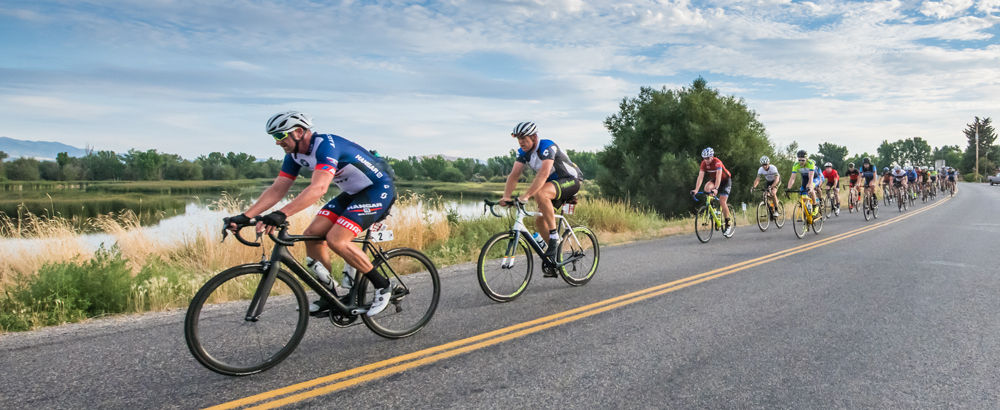
Riders in the Cache Gran Fondo, 2018. Photo by Gary Bird, courtesy Cache Gran Fondo
A Focus on Growing Cycling in the United States
Both USA Cycling and GFNS believe the future of cycling in the US must prioritize inclusivity, to bring the varied disciplines of competitive and participatory cycling together. Reuben Kline, Event Director for GFNS, founded the series in 2012 to offer cyclists a social and competitive experience outside of traditional road racing. As USA Cycling looks forward to the 2020 Olympics in Tokyo, the organization is embarking on a new strategic initiative to strengthen its support of all cyclists, including non-racers and enthusiasts.
“USA Cycling is excited to partner with the Gran Fondo National Series to further our commitment to make good rides great and great riders champions, said Rob DeMartini, CEO of USA Cycling. “Adding the Gran Fondo National Championship to our calendar is an important step forward in USA Cycling’s new vision of supporting different entry points and opportunities for people to participate in the cycling lifestyle.”
Gran Fondo National Series
The Gran Fondo National Series is a season-long competition based on overall, age group, and team results at participating gran fondos. Originally limited to 9 GFNS events, with the support of USA Cycling the series will expand so riders can earn points at designated gran fondos throughout the United States. To elevate the gran fondo experience, participating events will create benefit packages for USA Cycling members, which could include early access to registration, entry incentives, priority check in, preferred start corral position, and more.
Gran Fondo National Championship
Results and rankings in the Gran Fondo National Series will be used to qualify riders to enter the annual USA Cycling Gran Fondo National Championship event, which in 2020 will be held on July 19 at Gran Fondo Asheville in Asheville, North Carolina. Qualification criteria and event dates are being finalized and will be released in January.
“I’ve produced the Gran Fondo National Championship Series and Gran Fondo National Championship since 2012,” said Kline. “I strive to improve and elevate events every year, and have been working on a qualifier system for the Gran Fondo National Championship for some time.”
The need to qualify only applies to the Gran (longest) Route which will count as the one-day National Championship event, using the timed-segment competition format GFNS made popular in the US. As in the past, the shorter Medio and Piccolo Routes will be open to all riders and do not require qualification. Cyclists will not need a USA Cycling membership to participate in GFNS events or to qualify for the 2020 Gran Fondo National Championship; however, a USA Cycling membership will be required to participate in the Gran Fondo National Championship. Official USA Cycling stars-and-stripes National Champion jerseys will be awarded to winners in each age group.
Reuben Kline commented, “I’m eager to work with USA Cycling and other event directors to expand the series, grow participation in events nationwide, and give athletes the opportunity to win an official USA Cycling Gran Fondo National Championship. Having the support of USA Cycling is personally refreshing, too. This project is not only meaningful for GFNS but demonstrates key changes at USA Cycling and their move to support and work with the greater cycling community outside of traditional racing. I’m not just excited for what I’ve built, but for the prospective this has for cycling in America.”
Visit USACycling.org for more information on athletes, events and membership programs. Follow @USACycling across all channels for the latest on Team USA.
With all the fad diets and trends out there, it is hard to know how to sort through whether we should be high carb, high fat, low carb, high protein, or any combination of those, right?! Believe me I know the struggle is real! Well, as we’ve discussed in many of my previous articles, everyBODY is different, so the answer depends on your body size/type, your goals to lose weight/gain muscle, and how much you exercise. Navigating all of this takes a lot of time and expertise — that’s where I come in.
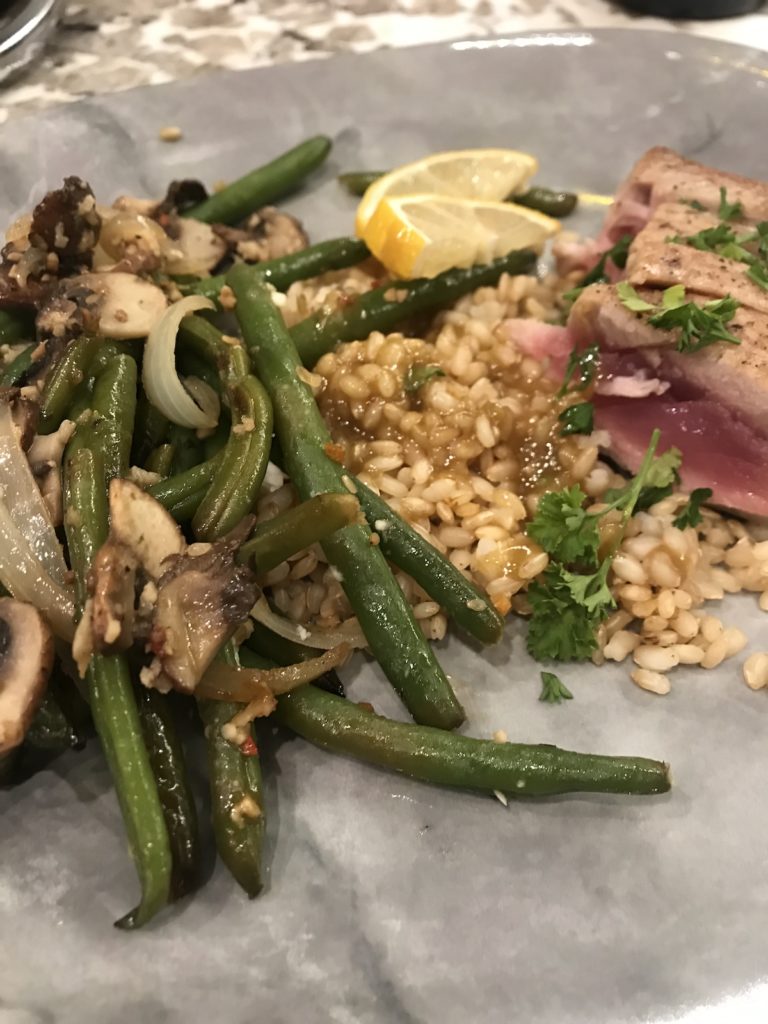
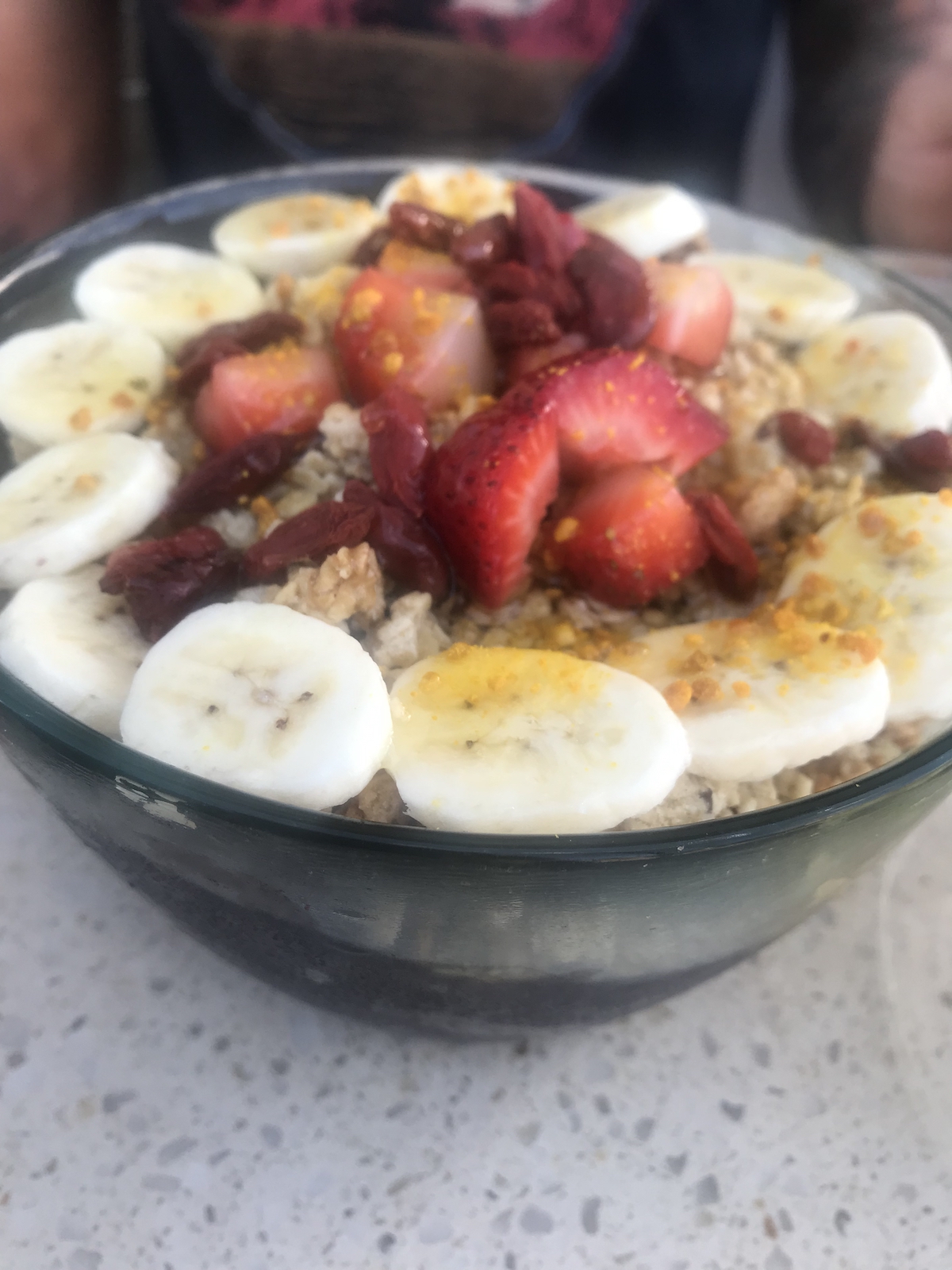
A healthy breakfast to fuel your day will have items from each macronutrient category. Photo by Breanne Nalder
The purpose of this article is to give you some guidance on managing your overall caloric intake by distributing it into macro percentages. These tips can help you put yourself on track to accomplish your health and fitness goals throughout the winter and roll into the spring and summer seasons ready to crush your rides, races, and events.
So, what are macros exactly? The answer is quite simple: macronutrients (macros) are the three categories of food that differ in how the body uses them for energy. We break our total calorie needs for the day into carbohydrates, fats, and proteins. Knowing the proper ratios of macronutrients for your diet is crucial to a successful healthy meal plan.
The main thing to remember as endurance athletes and cyclists is that our number one source of energy for brain and muscle is carbohydrates, while sustained energy comes from fats, and proteins are used to repair tissues post-workout. Here are some ways to keep your macros in check!
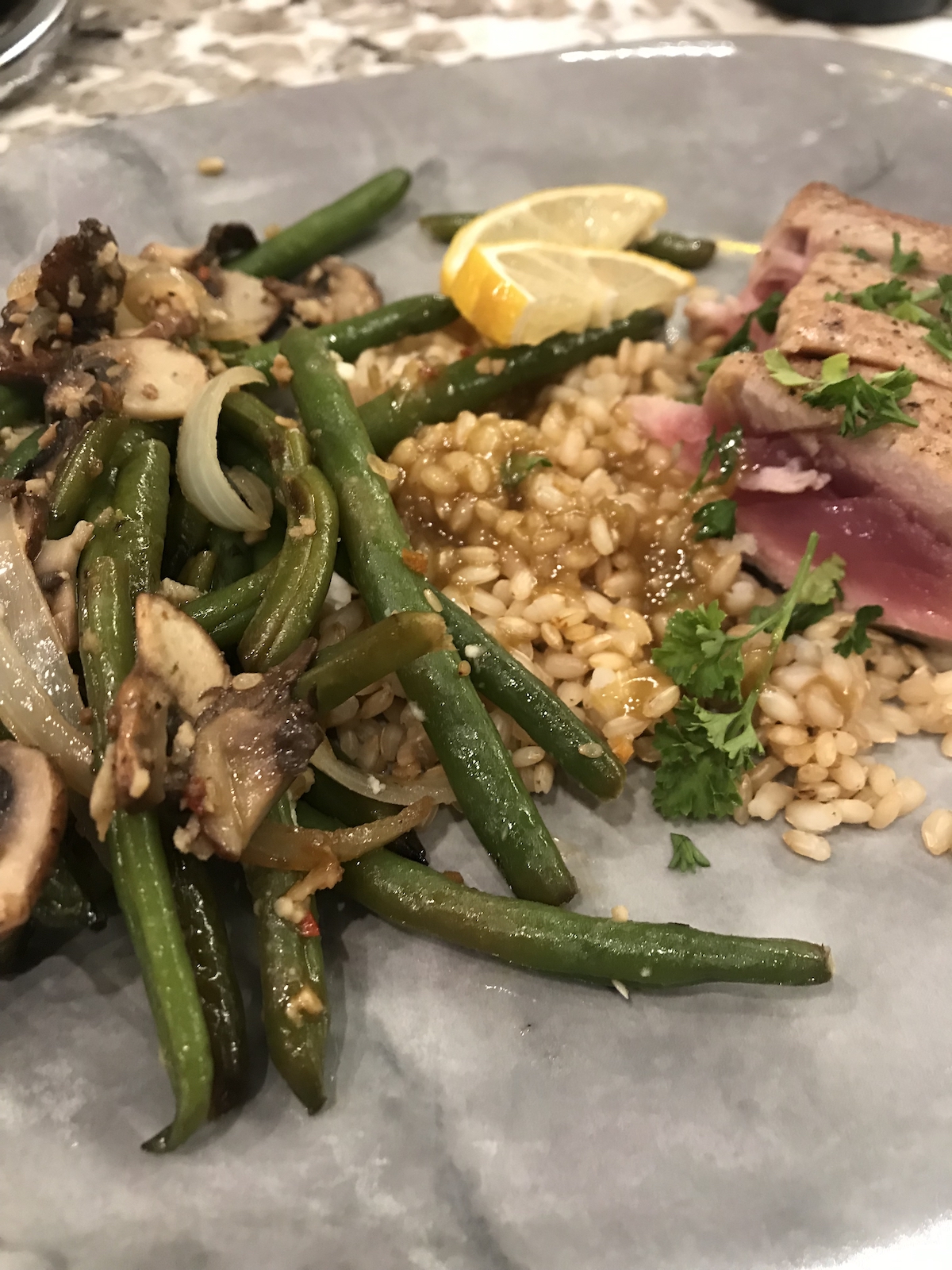
Eat in colors! The more colors you have in your food, the better your chances of getting all the vital nutrients. Photo by Breanne Nalder
Know your Numbers
How do you calculate your personal macronutrient ratios? An average percentage for good health is 40% carbohydrates, 30% fat, 30% protein. Endurance athletes need more carbs for energy, so the percentage ranges 50-65% carbohydrate, 20-30% fat, and 15-25% protein. To best determine your individual macro needs, it is recommended that you consult a registered dietitian nutritionist (RDN). My contact info is below.
Each macronutrient counts as a specific number of calories per gram:
Carbohydrates: 4 calories/gram
Protein: 4 calories/gram
Fat: 9 calories/gram.
Knowing your total daily calories and the percentage of total calories recommended for each macronutrient will help you determine how many grams of each macronutrient to consume on a given day.
For example, let’s say you need to consume about 2,500 calories on a 3-hour ride day, of which 55% need to come from carbs. 2,500 calories x 55% = 1375 calories / 4 calories per gram = 344 grams of carbs per day. You would do similar calculations for your 25% fat and 20% protein needs.
Note that the ratios change based on intensity and duration of your workout. Also the timing of when to have each macro is very important. Again, contact me for specific detail on YOUR needs.
Get Wise with Portion Size
An easy way to count your macros when you do not have access to measuring cups or spoons is to use your own two hands. Using your hands is a convenient alternative for measuring macros on-the-go to help you better estimate what you’re eating. You should never feel guilty for not knowing the precise breakdown, and this method works well in a pinch, taking the pressure off from having to be so exact. Let your hand guide you:
Thumb: approximately 1 TBSP of fat such as peanut butter or cream cheese.
Thumbnail: approximately 1 tsp of fat such as butter (4 grams) or olive oil (4.5 grams)
Pointer finger: equivalent to 1.5 oz of string cheese or 1 serving of dairy.
Palm: 3 oz or 1 serving of protein. 3 oz of fish is ~22 grams of protein, 3 oz of chicken is ~26 grams, and 3 oz of beef is 20-26 grams of protein.
Your full flat hand: 1 slice of bread or 15 grams of carbohydrates.
Cupped hand: ½ cup of beans or legumes (20 grams of carbohydrates).
Fist: approximately 1 serving of fruit or a medium apple (15 grams of carbohydrates) and 1 serving of vegetables or 1 cup of cooked broccoli or carrots (24 grams of carbohydrates).
Track it
Skip the pen and paper route. Download apps on your smartphone like MyFitnessPal, MyMacros+, or MyPlate to make logging your food convenient no matter where you go. MyFitnessPal even has a cool barcode scanner that does the work for you by automatically inputting scanned nutrition information from food items into your log.
Familiarize Yourself with your Foods
Get to know the foods you eat on a daily basis and what macronutrients they contain. Make a chart and put your favorite foods into categories. Break these down and figure out which macronutrient the majority of the calories stem from in each food item. This can help you initially visualize and streamline the process of counting macros. Understanding the composition of your food will enable you to think about it less in the long run. Nutrition should be simple, so use this method to keep it that way. Here are a few examples to get you started:
Protein dense foods: poultry, fish, eggs, legumes, soy and dairy products.
Fat dense foods: avocados, olive oil, coconut oil, peanut butter, processed foods heavy in saturated or trans fats, creams, desserts.
Value Variety
Don’t get stuck in a rut. It is easy to revert back to the same meals when you have those macros down pat. However, this can lead to burn out and staying on track with macro-counting. It also keeps you from getting a variety of vitamins and minerals in your diet.
Mix up your meals, get creative in the kitchen, and include a buddy along your journey to help make it more sustainable and hold yourself accountable. Eventually it will become routine.
Eat in color! When you incorporate more colors into your meals you’re likely to be eating a balanced variety of macronutrients.
Let the numbers guide you initially, but the ultimate goal is to listen to your body and figure out how to make the foods that sound good fit into your diet by practicing moderation.
Stay tuned for my next article, in which we will discuss the specific foods to use to achieve the appropriate macros. I will specifically focus on the hottest topic in sport nutrition right now, plant-based eating for athletes. In the meantime check out my websites and contact me if you want to dig into your custom needs on nutrition for optional performance!
Breanne Nalder Harward, MS, RDN, earned a BS in Biology and Sociology from Westminster College and received a Master of Science degree in Nutrition and Sports Dietetics from the University of Utah. She is licensed as a Registered Dietitian Nutritionist (RDN) and is the nutrition coach at PLAN7 Endurance Coaching and Utah Sports and Wellness. You can find more info on her at plan7coaching.com and utahsportsandwellness.com or follow her on social media @breezysaycheezy.
The event will include the inaugural Junior Women’s World Championship race with American National and Continental Champion, Madigan Munro as a favorite.
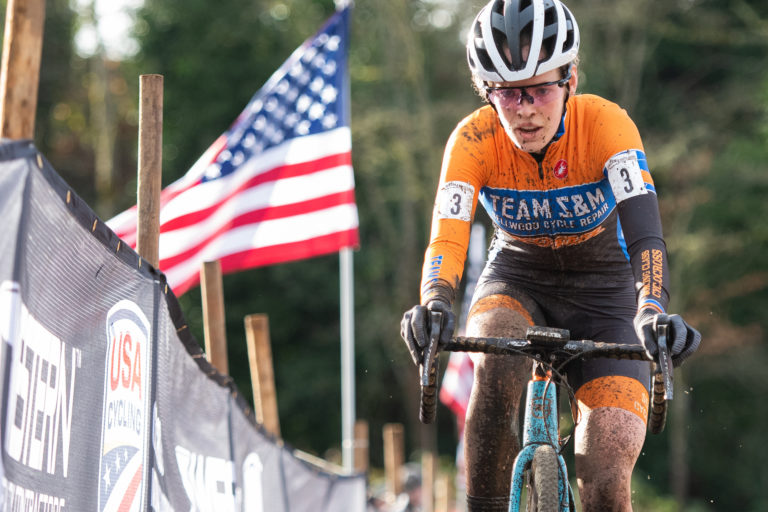
COLORADO SPRINGS, Colo. (January 10, 2020) — USA Cycling announced today the 25 athletes that will represent the United States at the 2020 UCI Cyclocross World Championships taking place in Dübendorf, Switzerland February 1-2, 2020. Among the competitors are current National Champions, Clara Honsinger (Portland, Ore. Team S&M), Katie Clouse (Park City, Utah; Cannondale-Cyclocrossworld), Gage Hecht (Parker, Colo.; Aevolo-Donnelly), Eric Brunner (Boulder, Colo.; Blue Stages Cycling), Andrew Strohmeyer (Mount Airy, Md.; CXHairs Devo) and Madigan Munro (Boulder, Colo.; Boulder Junior Cycling).
Quote from USA Cycling Cyclocross Manager, Jesse Anthony:
“We are very excited about all of the athletes selected to compete in the 2020 UCI Cyclocross World Championships. We are lucky to have a large group of dedicated, skilled and capable athletes who will compete and after the successful performances we saw during the USA Cycling Development Program’s most recent racing block over the holidays, I am optimistic about our potential for success at this year’s World Championships.
The primary purpose of USA Cycling fielding a team at the Cyclocross World Championships is to win medals and stand on the podium. We have a secondary purpose of providing a developmental opportunity for athletes who show the potential to stand on the podium in the future.
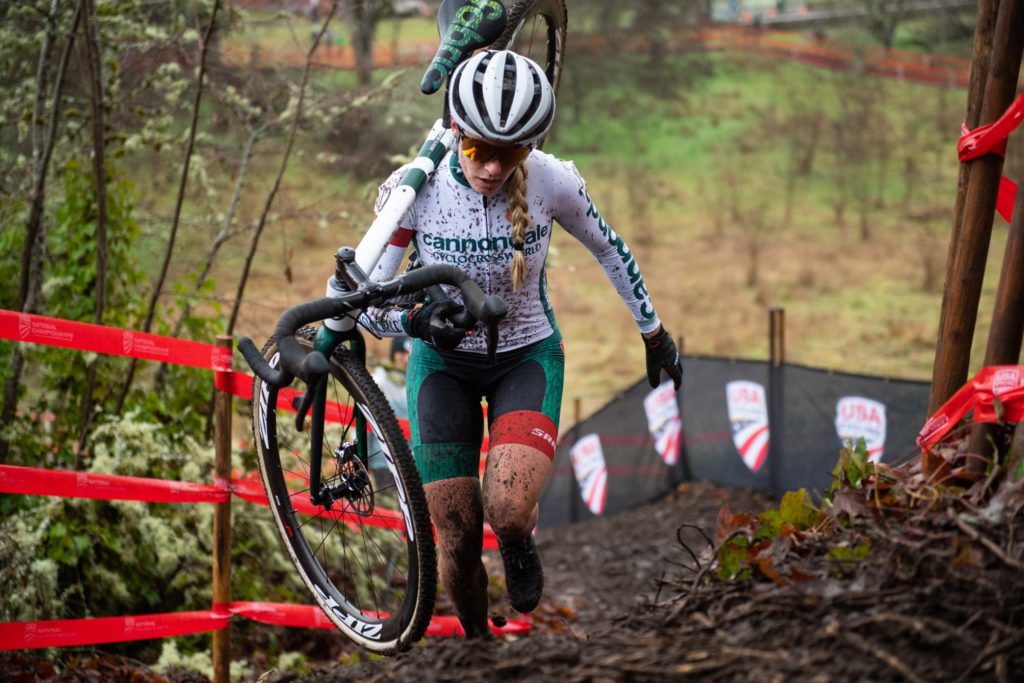
Katie Clouse (Cannondale-Cyclocrossworld.com) tackles one of the run-ups on her way to winning the U23 National Championship. Photo courtesy USA Cycling/Dejan Smaic
With these purposes in mind and a renewed direction of our cyclocross program, we are increasing our support to the US athletes who will race the World Championships. This year, we will fully fund more athletes than ever before, and have been able to also lower the fees for athletes who did not qualify for full funding. We are only able to do this with the support of the MudFund. We are excited to see what this group of talented athletes can do on the international stage in Dübendorf, and continue to look towards fielding more talented teams in the future as we grow cyclocross in the U.S.”
The Team USA roster is as follows:
Junior Men:
Magnus Sheffield (Pittford, N.Y.; Cannondale-Cyclocrossworld)
Andrew Strohmeyer (Mount Airy, Md.; CXHairs Devo)
Nick Carter (Minneapolis, Minn.; KCCX)
Jared Scott (Boulder, Colo.; Boulder Junior Cycling)
*Note: Kaitie Keough and Lauren Zoerner also qualified to compete but declined their spots.
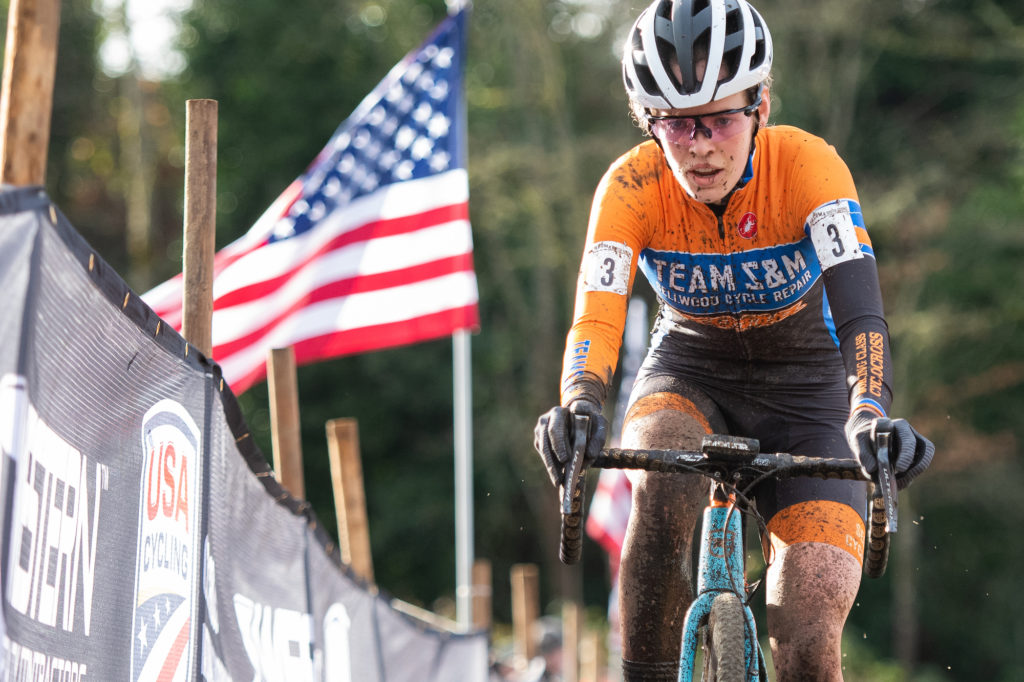
Clara Honsinger (Team S&M CX-Sellwood Cycle Repair) ended Compton’s 15-year streak, taking the Women’s National Championship in her first season racing as an Elite. Photo courtesy USA Cycling/Dejan Smaic
The 2020 UCI Cyclocross World Championships marks the first time there will be a Junior Women’s race at the event. Among the favorites is Pan-American and National Champion, Madigan Munro as well as Lizzy Gunsalus, who recently picked up her first European win at the Helen100 Trophy Junior Women’s race at the 2019 Azencross in Loenhout while racing with USA Cycling’s MudFund. Munro also won the Helen100 Trophy Junior Women’s race at GP Sven Nys a week later on the same trip.
To cheer for Team USA at the 2020 World Championships, please follow @UCI_Cycling and @USACyclingLIVE on Twitter. For more about the 2020 UCI Cyclocross World Championships, please visit the event website at: https://dubendorf2020.ch/en/
The additional support for the 2020 UCI Cyclocross World Championships team was made possible by the generous donations of our community to the MudFund. To donate, please click here: www.usacycling.org/foundation/mudfund
Legislation working its way through Congress would permanently reauthorize the Land and Water Conservation Fund. Committees in both chambers have favorably reported and sent to their respective floors very similar versions of the Land and Water Conservation Fund Permanent Funding Act (S. 1081 and H.R. 3195). The act would restart the expired program, starting in 2020.
The fund is great for recreation because it doesn’t come out of general tax revenue – but mostly from a fee oil and gas companies pay for drilling on federal land. The bill would guarantee $900 billion a year to states for recreational purposes, such as bike trails. In previous years, states didn’t get to use all the money. So if it passes, we may see a mini-windfall for outdoor recreation.
Only UCI ProSeries Stage Race in North America Features Overall Start at Herriman City on Aug. 3 and Overall Finish at Park City on Aug. 9
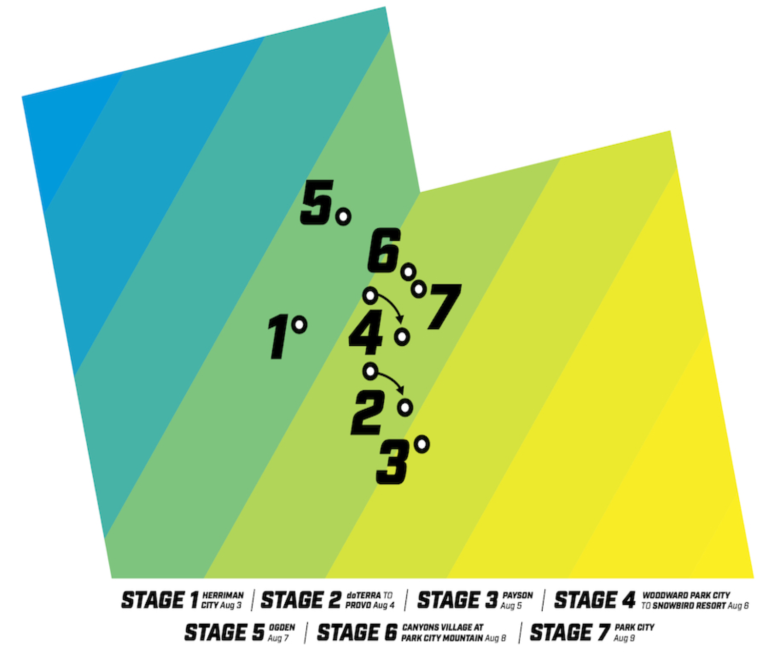
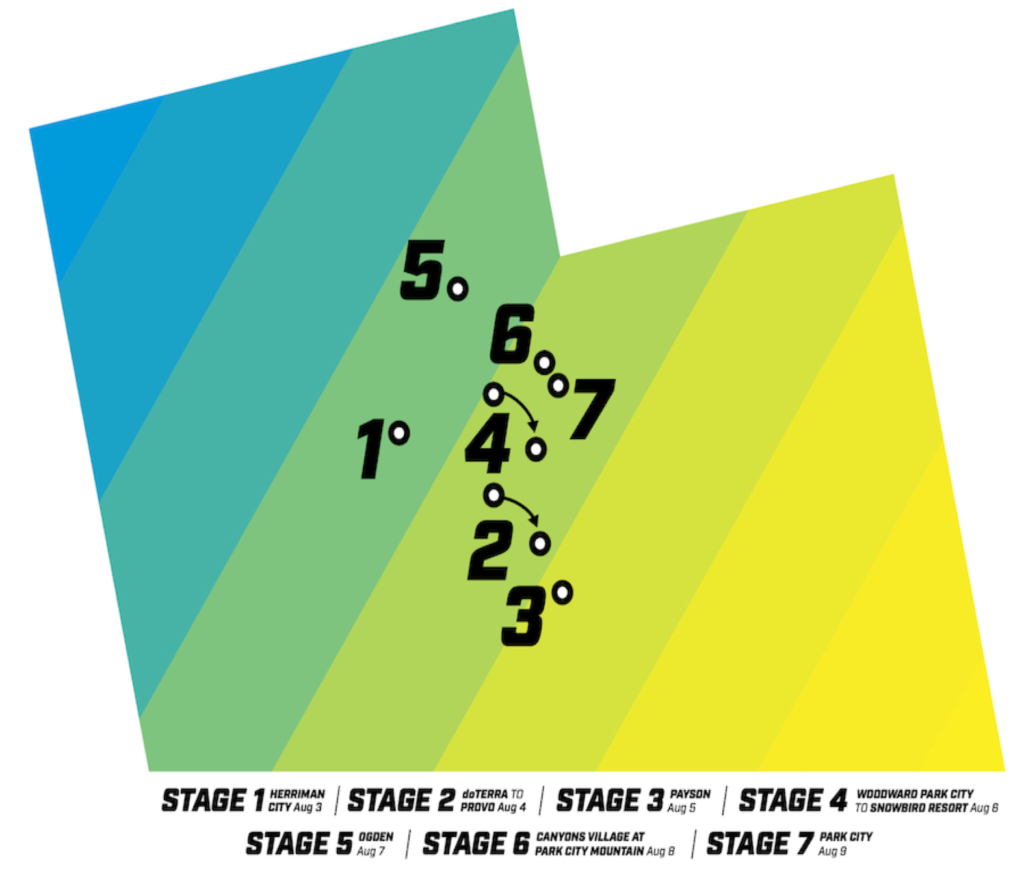
SALT LAKE CITY (January 10, 2020) – Nine venues and communities will host the Larry H. Miller Tour of Utah men’s professional cycling stage race on Aug. 3-9. The seven days of competition will start in Herriman City at the Zions Bank Real Academy and finish on historic Main Street in Park City.
The Tour of Utah stage race will visit communities along the Wasatch Front from Ogden to Payson, tackle the mountain elevations around Snowbird Resort, Canyons Village at Park City Mountain, and Woodward Park City, and ride a stage from dōTERRA headquarters in Pleasant Grove to Provo.
Now recognized as the only multi-day race in North America on the UCI ProSeries, the Tour of Utah strengthens this exclusive division of international racing by ensuring an optimal fit with the UCI WorldTour schedule. The Tour of Utah has been designated among the best HC (hors category) and Class 1 road races around the globe.
“Our designation as a UCI ProSeries race by the international cycling federation is new, but the Larry H. Miller Tour of Utah remains a crowd favorite and one of the most successful races in North America,” said John Kimball, managing director of the Tour of Utah. “We are fortunate to have welcoming host venues that roll out the red carpet, picturesque courses that show beauty and brawn, and a very supportive cycling community that enjoys watching great athletes. We look forward to bringing the Tour of Utah to the state and the world in August.”
Here is the lineup of Tour of Utah host venues for the seven race stages:
2020 Larry H. Miller Tour of Utah
Stage
Date
Host City/Venue
1
Monday, 08/03/2020
Herriman City
2
Tuesday, 08/04/2020
dōTERRA to Provo
3
Wednesday, 08/05/2020
Payson
4
Thursday, 08/06/2020
Woodward Park City to Snowbird Resort
5
Friday, 08/07/2020
Ogden
6
Saturday, 08/08/2020
Canyons Village at Park City Mountain
7
Sunday, 08/09/2020
Park City
The 2020 Tour of Utah host venue video and additional information on the race is available at www.tourofutah.com. Details regarding each stage route, such as race mileage, courses, elevation gain, and start/finish times as well as KUTV2 Lifestyle Expo and local spectator festivities, will be announced in the late spring.
The Tour of Utah changes its geographical configuration each year to introduce the sport of cycling to new communities across the state, as well as present diverse courses for the professional athletes.
For the first time, Herriman City in southwest Salt Lake County will be a Tour of Utah host for the Team Presentation on Saturday, Aug. 1, as well as the overall start for the weeklong competition. Stage 1 presented by Zions Bank will begin on Monday, Aug. 3 at the Zions Bank Real Academy, the home training facility of Major League Soccer’s Real Salt Lake and United Soccer League Championship title holder Real Monarchs.
The Tour makes its inaugural appearance at the corporate headquarters of dōTERRA for the start of Stage 2 presented by dōTERRA on Tuesday, Aug. 4. The finish line will be in Provo, which previously hosted a Tour stage in 2011.
Stage 3 presented by Monster Hydro takes place with the start/finish in Payson on Wednesday, Aug. 5 and imposing Mount Nebo, the highest mountain in the Wasatch Range, as a backdrop.
The mountains will be featured in Stage 4 on Thursday, Aug. 6 between two ski resorts, both owned by adventure lifestyle company POWDR. First-time host Woodward Park City, a new action sports and ski resort with indoor and outdoor facilities, will serve as the start. Snowbird Resort, which has hosted more times than any other place at 13, will mark the finish line after a grueling six-mile climb in Little Cottonwood Canyon.
A circuit race will be held for the first time in downtown Ogden for Stage 5 presented by America First Credit Union on Friday, Aug. 7. This is the eighth time Ogden has been designated as an official host city, previously serving as a stage finish in 2015.
Racing will conclude with two days in Park City. Canyons Village at Park City Mountain, a four-season resort, returns for the start and finish of Stage 6 presented by University of Utah Health on Saturday, Aug. 8. The start/finish for the grand finale returns to Park City on Sunday, Aug. 9 with Stage 7 presented by the Utah Sports Commission. It is the 11th year Park City has served as a host city, and the eighth time it has hosted the overall finish of the Tour of Utah.
Now in its 16th year, the week-long Tour of Utah has earned the reputation as “America’s Toughest Stage Race.” The 2019 event crowned Belgian Ben Hermans of the Israel Cycling Academy as its champion, and EF Education First captured the team title after covering 477 miles of racing and 37,882 feet of elevation gain.
The Tour of Utah has begun extending invitations to UCI WorldTeams, UCI Pro Continental and UCI Continental squads and will announce a field of 16 men’s teams in early spring. Past General Classification champions have included Sepp Kuss (2018), Rob Britton (2017), Lachlan Morton (2016) and Joe Dombrowski (2015) along with stage winners such as Tejay van Garderen, Cadel Evans, Chris Horner, Travis McCabe, Brent Bookwalter, Marco Canola, Giulio Ciccone, Rob Carpenter and Levi Leipheimer through the years.
The Larry H. Miller Tour of Utah is free to all spectators, making professional cycling one of the most unique professional sports in the world today. In 2019, the race attracted 400,000 spectators during race week, featured 21 hours of national television coverage and reached more than 400 million homes via broadcast around the world.
COLORADO SPRINGS, Colo. (January 9, 2020) – Cedar City, Utah, a multi-time host for the Larry H. Miller Tour of Utah and known for its world-class festivals, from the Tony Award winning Utah Shakespeare Festival to cars and films, has been awarded the 2020 and 2021 USA Cycling Masters Road National Championships. Some 800 athletes and their family and friends will descend on the picturesque southwestern Utah town, which serves as a gateway to Utah’s National Parks for the USA Cycling Masters Road National Championships, July 30 – August 2, 2020.
USA Cycling’s Masters National Road Championships return to Utah in 2020-2021 for the first time since the 2015 event in Ogden. Photo courtesy USA Cycling
The Cedar City Corporation will partner with USA Cycling to this National Championships in 2020 and 2021. “Cedar City is delighted to team up with USA Cycling to stage this elite event that enhances Cedar City’s commitment to playing host to world-class festivals and events,” said Todd Hageman, Event Director of Cedar City.
The Road Race will take place in Iron County, starting with the Time Trial in the quaint town of Parowan and will race through the Parowan Gap, home to ancient native American petroglyphs dating back over 1,000 years. The Criterium will be in Cedar City around the tree-lined Southern Utah University Campus. Specific course details to be released shortly. “We are honored to showcase Iron County, the Parowan Gap and the Southern Utah University campus to the USA Cycling athletes and local residents for this event of national prominence.” said Hageman.
All competitors will be over 35 years old with some will be competing in their late eighties, according to USA Cycling’s National Events Manager Shawn Brett.
“We’re excited to work with Cedar City to host our Masters Road Nationals. This year’s event will, test participants among the breathtaking scenery of Southern Utah,” said Chuck Hodge, USA Cycling’s Chief of Racing and Events.
Visit USACycling.org for more information on the athletes, events and membership programs, and follow @USACycling across all channels for the latest on Team USA. For more information, please contact Bouker Pool at [email protected].
Cyclists’ training has always included riding their bikes often and a lot. In the 1990s cyclists started using performance supplements as basic as Power Bars to electrolytes. Today every bicycle shop has an array of nutrition supplements including electrolyte tablets, carbohydrate gels, gummy-type drops or chews, energy and protein bars, oxygen enhancers, vitamins, carbohydrate mixes for use during exercise, and protein mixes for recovery, all of which are designed to enhance performance. While their effectiveness is well-known, many athletes prefer more natural nutrition.
No sports have seen as drastic an increase in the number of vegan athletes as trail running and cycling. Photo by Dave Iltis
Many supplements, especially carbohydrates used for energy while exercising, have long been plant-based. Protein supplements, on the other hand, have been more often made from animal-based proteins such as whey or eggs. For years, vegetarian or vegan athletes were considered to be at a disadvantage, because it was felt they could not get the protein they needed to build strength and recover from strenuous efforts from purely plant-based sources.
In recent years, more plant-based protein supplements have been developed and stocked at vitamin and grocery stores. This, along with the rise of veganism stemming from the environmental and animal advocacy movement, has led to an increase in in the number vegan athletes not only in endurance sports, but traditional “strength” sports, such as professional football, weightlifting, and MMA. No sports have seen as drastic an increase in the number of vegan athletes as trail running and cycling, both road and mountain biking. I am assuming, but do not have any concrete data to back it up, is that these athletes are generally more concerned with the environment than those who practice their sports in indoor or urban settings.
At the end of September 2019, a ground-breaking documentary came out on this topic. The Game Changers has since become the most purchased documentary in iTunes history, and has prompted many professional athletes to change their diet.
I interviewed many vegan cyclists, asking them what they like to eat and their most common response was “Everything.” What is everything? Greek food, Ethiopian food, Indian food, Thai food, Vietnamese food, Mexican food, American food, Italian food, and even raw food. Salt Lake City, Utah, where I live, is a vegan haven with over fifteen fully-vegan restaurants, such as Veggie House, Vegan Bowl, Seasons, Zest, Monkeywrench, Bolt Cutters, Buds, Mark of the Beastro, and Vertical Diner to name a few. We even have a vegan donut shop, Big-O Donuts.
Ryan Borrowman, is a seasoned nationally competitive sponsored triathlete, who says that after he finishes a race in the Salt Lake area, he loves eating pancakes at Vertical Diner.
I asked Cristiano Pereira, the owner of Cranky’s Bike Shop who is vegan, what his favorite vegan nutrient is and he told me, “I have really liked a lot of the Hammer nutrition products.” I also asked Cristiano what his favorite food was and he said,“real food,” such as fruits vegetables, grains, and nuts rather than processed food.
I went on to ask Cristiano what the benefits of being vegan are for a cyclist. He responded, “Being vegan helps as the diet is less acidic, and that helps my body recover faster and in turn lets me stack hard work outs closer to each other. Also, a vegan diet is cleaner and by having cleaner fuel, I burn cleaner and longer.”
Eric Deardorff, a competitive national-level cyclist, mentioned that he “takes B-12 three-times a week, but nothing else.” He added that if he was racing professionally again, he would use Hammer Nutrition.
Ryan “Turbo” Barrett, a NCCA All-American road cyclist and a very popular road cyclist in the Salt Lake area, said, “Going vegan helped me manage my weight. I’m pretty lean by nature, but after going vegan, I dropped five to ten pounds off my weight that I’d added in my forties, I’m back close to the weight I raced at in my twenties.”
Ryan also explained that, “I recover much faster. I am usually less sore and more recovered than what my coach expects given her experience with non-vegan athletes.”Stephanie Shew, another long-time nationally-competitive cyclist and triathlete based in Salt Lake City, explained that being plant-based allowed her to, “recover more quickly, and I don’t have to worry about stomach issues nearly as much compared to when I wasn’t plant-based.”
Plant-based vegan protein powders, such as Vega, Orgain, Garden of Life, Plant Protein, and Sunwarrior, are now readily available at big-box stores like Costco to national chain stores like GNC. Many of these supplements are non-GMO and organic. Sunwarrior and Vega only produce only vegan products. Garden of Life Sport is a plant-based pre-workout and recovery supplement with 30 grams of protein, the most of any vegan protein powders.
When asked what supplements she uses while riding, Shew replied, “I usually use Tailwind, Skratch, Picky Bars, Probars, and UCAN. I also use rice a lot as a way to have ‘real’ food during a ride.”
Barrett indicated that his supplements are, “Vega, Gnarly and FNX protein powders. During his rides, he uses, UCAN, TailWind, Skratch Labs, Picky Bars and ProBar.”
Global Cycling Network (GCN), a popular media outlet that provides the cycling world with education, news, and expertise, is now promoting vegan cycling on their website, YouTube, Instagram, and Facebook channels. In November 2019, GCN also released their book, The Plant-Based Cyclist, by acclaimed WorldTour nutritionist Nigel Mitch, which is described as, “your accessible, complete and practical 244-page guide to plant-powered cycling – complete with 23 great tasting and easy to make recipes for on and off the bike.” This book may be the first on the topic, but will definitely not be the last.
I definitely recommend watching The Game Changers and trying a plant-based diet. Stephanie Shew leaves us with this advice: “Like I’m sure you have heard before, everyone is different, so what works for me may not work for you. Test all your nutrition out before you race.”
In conclusion, Barrett states, “If you want to be at the top of your game you have to think about your nutrition regardless of dietary choices, but a clean and natural plant-based diet simply makes the most sense. The only thing I have ever had to worry about is getting enough calories. Eat, eat, and eat some more.”
LOS ALAMOS, New Mexico (January 8, 2020) — High altitude and a wide array of outdoor recreation and sporting facilities make Los Alamos, New Mexico the ideal location to train like an Olympian as you kick off a new decade. With recreation facilities from 5,000 to 10,000 feet elevation, as well as affordable lodging and activity amenities, Los Alamos provides serious athletes with options to build their endurance and add new levels of challenges to their training—while sticking to a budget.
High altitude makes Los Alamos, NM the perfect place to train. Photo courtesy Visit Los Alamos/Vint Miller
“For many, the beginning of the year is a time to re-focus and either get in better shape or make advances on their athletic goals,” said Kelly Stewart, Marketing Manager for Los Alamos County. “For dedicated athletes looking to make 2020 the year they attain personal bests, train for endurance events, and make strides in their performance, a visit to Los Alamos is a great addition to their training. They’ll be among some of the greats who have flocked from around the globe to Los Alamos for our high altitude, as well as our varied offerings, allowing athletes to diversify their training regimen.”
From the shores of the Rio Grande to the summit of Pajarito Mountain, Los Alamos County’s trails network offers over 5,000 vertical feet and more than 150 miles of developed trails that weave through and around neighborhoods, businesses and open space, and traverse mesas, canyons and mountains, with varying terrain for hiking, running, biking and every snow sport, depending on the weather. In fact, each season, some locals regularly split the day between running, biking or golfing in the morning (Los Alamos Golf Course is one of the highest and most challenging courses in the state) and skiing or boarding at Pajarito Mountain in the afternoon.
Los Alamos is also home to North America’s highest-altitude indoor Olympic-size swimming pool—Larry R. Walkup Aquatic Center—where national teams from around the world return each winter to prepare for the next Olympic Games. Additionally, serving as a gateway to nearby National Parks, Los Alamos makes a perfect basecamp for those looking to train by hiking trails in Bandelier National Monument or cross-country skiing in Valles Caldera National Preserve.
Varied terrain means that there’s something for everyone training in Los Alamos, NM. Photo courtesy Visit Los Alamos/Vint Miller
Throughout the year, Los Alamos is host to several competitive sporting events, including Tour de Los Alamos bike race, the Atomic Man Duathlon, the Los Alamos Triathlon, and the internationally renowned Jemez Mountain Trail Runs, most of which include a family and friends celebration element with craft beer and bands.
“With varied terrain and difficulty level, our trails and outdoor recreation opportunities allow for all athletes to improve their performance while visiting,” added Stewart. “Whether you’re a professional upping your competitive edge, a senior athlete prepping for the Senior Games, or a young, up and coming athlete, we welcome you to Los Alamos, where you can take your training to new heights—literally and figuratively!”
Partners in Routt County and Routt County Riders join forces to take ownership of the popular trail race beginning summer 2020
STEAMBOAT SPRINGS, Colo. (Jan. 6, 2020) — Entering its 10th anniversary year, the ‘Steamboat Stinger’ race is set to change hands. Partners in Routt County and Routt County Riders, two local nonprofit agencies, will assume joint management of the longstanding mountain bike and trail running race – which will also take on a new name – for 2020 and beyond. Both organizations have strong ties within the cycling and trail use communities, as well as demonstrated backgrounds in large-scale outdoor event planning and execution.
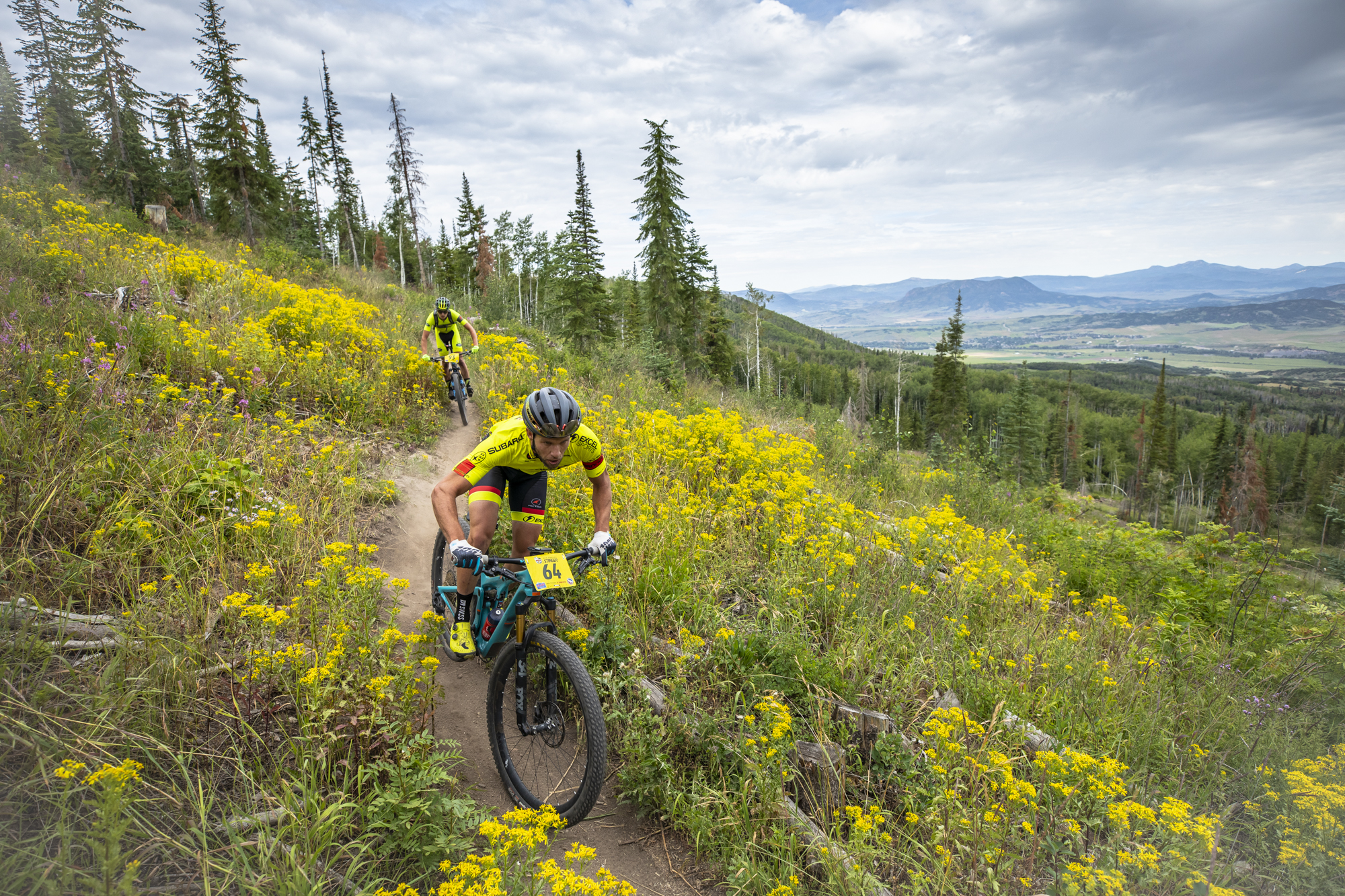
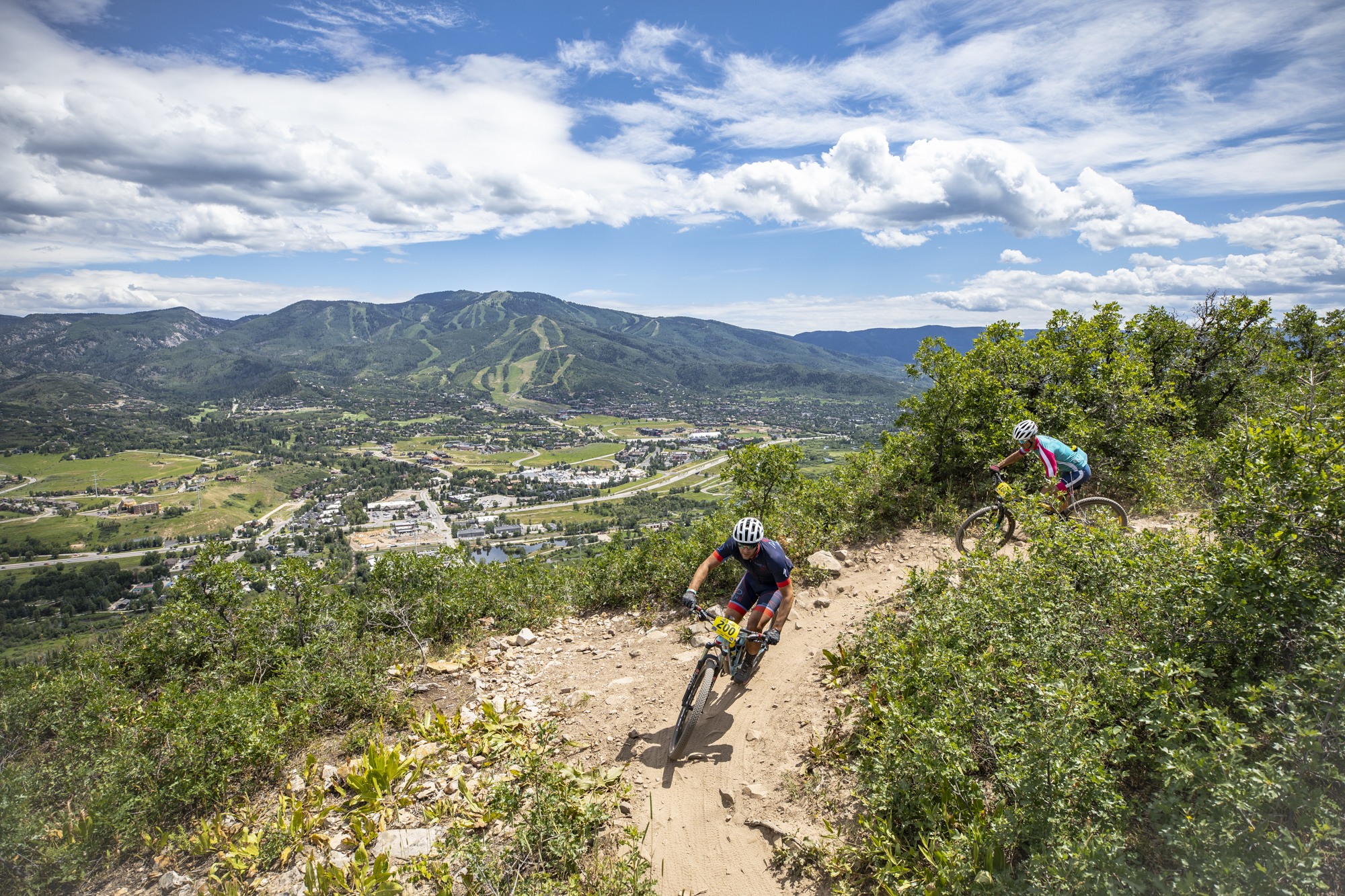
Riders competing in the 2019 Steamboat Stinger. Photo courtesy Steamboat Stinger/Noah Wetzel
Previously, the race has been owned and operated by Stinger Race Inc., which founded the event in 2011. Under its former ownership, the race was fully managed and produced by staff and volunteers from Honey Stinger, the Steamboat-based sports nutrition brand featuring honey, along with sister company Big Agnes. Each year, employees from both companies contributed hundreds of hours of volunteer time to help facilitate the race. Additionally, the event has provided an opportunity for Honey Stinger to give cash donations each year to several local organizations. Both Partners in Routt County and Routt County Riders have previously been among the beneficiaries.
Going forward, Honey Stinger will stay involved in the event through a peripheral sponsorship role, but will have no ownership or oversight of the race.
Riders competing in the 2019 Steamboat Stinger. Photo courtesy Steamboat Stinger/Noah Wetzel
“Producing the Steamboat Stinger has been a huge passion for the Stinger Race Inc. team, as well as the broader team of staff and volunteers who’ve dedicated tremendous time, energy and enthusiasm to make it happen year after year,” said Len Zanni, co-founder of the Steamboat Stinger. “We’re so proud of the work we’ve put into this race, and what it has become. But as we seek for the event to continue to grow and thrive here in our community, after nine great years the time has come for a new team to lead the race into its next era. We are very pleased to see Partners in Routt County and Routt County Riders join together to move this beloved event forward, and we can’t wait to see where they take it.”
The Steamboat Stinger has become an annual staple on the race calendar for mountain bikers and trail runners alike, in Colorado and well beyond. Last year’s race drew a record number of registrants across sold-out fields, with nearly 1,000 competitors representing 33 states, as well as the United Kingdom and Canada.
“We are so excited about the possibilities for this race for 2020 and beyond, and we look forward to providing an amazing experience for riders and runners that not only meets their expectations from the perspective of event management, but also enables even greater financial contrubutions to the local community,” said Laraine Martin, executive director of Routt County Riders. “There will certainly be some changes in how the event is run this year compared to its previous editions, but with this transition we see great potential for the race to continue to grow well into the future.”
The summer 2020 event is slated for Saturday and Sunday, Aug. 8 and 9. The race will take place under a new name, which has not yet been finalized. Partners in Routt County and Routt County Riders are currently accepting suggestions from the public, with the opportunity to win a free race entry if your idea is selected. Submissions should be entered at this link by Jan. 21 to be considered.
Additional event details, including registration information and sponsorship opportunities, will be released soon.
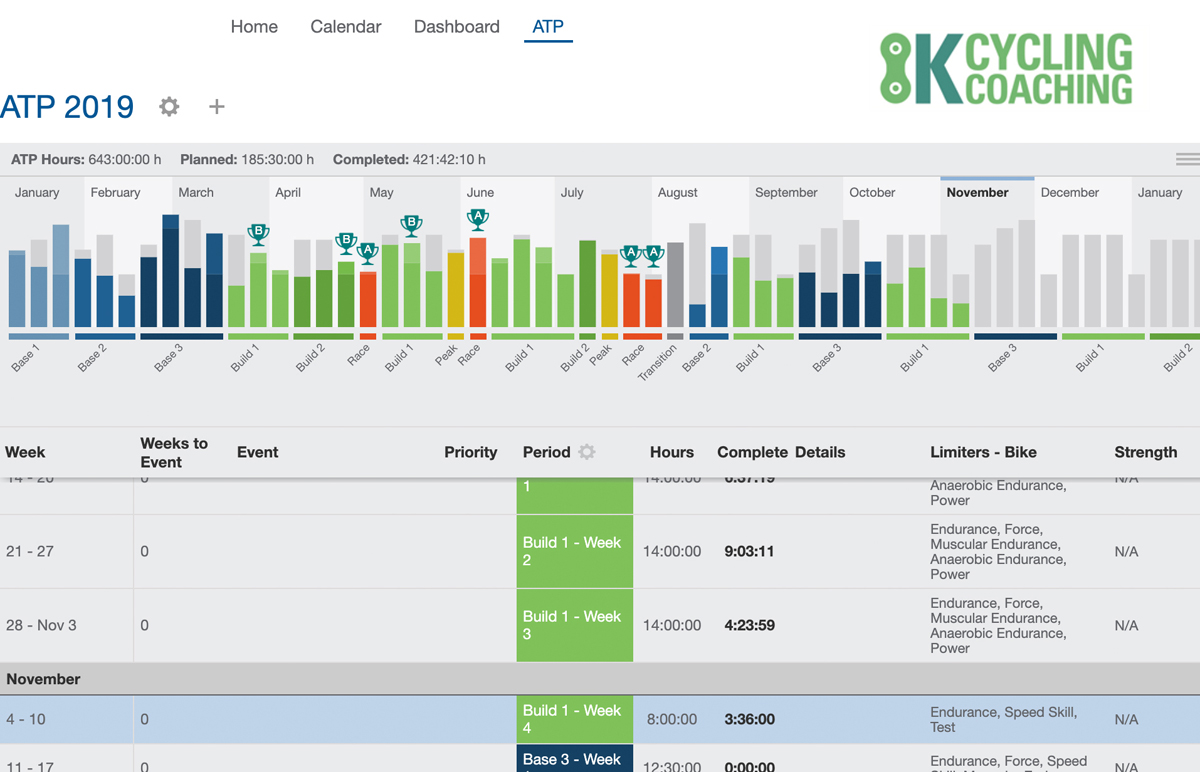
Winter is here and many riders are hanging up their bikes. As your riding time comes down, it is a great time to start outlining and planning your next year of riding, training, and racing. What are the goal events or races you would like to target with your best fitness for next year? How can you map out a training plan to peak your fitness for these events?
An example annual training program. Image by Sarah Kaufmann
You can start this process by picking one to three goal or ‘A’ priority events where you want to have your best fitness. I know, we all want to have our best fitness for every event. I wish we could. Of those one to three events, make one of those the A+, super priority. These may be races, charity rides, destination vacations, or anything else. Whatever specific times during the season you want your best cycling fitness. From those A events, you will work backwards to time your best fitness to line up with your highest priority goals. Ideally, you will have about 24-28 weeks to develop your fitness. More time can be better but 24-28 weeks is great.
As you work backwards from your event, plan about 12 weeks for base building, or general aerobic conditioning. Try to plan 16-20 weeks if you are new to endurance sports or a new rider. After a base building period, plan 12-16 weeks of more specific training to your event. This will generally include some higher intensity work and training that will more closely mimic the demands of your particular event. Even if your goal event is a longer endurance ride or race where you will maintain a more moderate pace, you still need the high intensity. There are always surges, climbs, pitches, etc. that will require you to lift your pace and have the ability to recover. You develop the endurance first as you hold on to that fitness longer. With that solid aerobic fitness, you can begin to sprinkle the event specific fitness on top.
If you have other events you would like to target, prioritize them as ‘B’ or ‘C’. These are events that will serve as training tools and tune-ups. You will not carry your best fitness into them and your training will not be targeted to their specific demands. But, for example, you may do a short taper before those events so you can get the highest quality training out of them. It will take some time to learn what amount of taper allows you to get a solid training effect without detraining (losing fitness) and how that relates to A, B, and C priority events. But in general you will reserve your highest quality tapers for A priority events where shedding fatigue becomes the highest priority, even if that leaves you a little detrained after the event.
Working backwards from your priority event, you can start your 12-20 weeks of base building with pretty unspecific training. Maybe that includes some endurance training off your bike – hiking, running, swimming, nordic skiing, etc. Especially in a winter climate, this is a great time to give your body and brain a break from cycling. Move in different planes, use different muscles and tendons, and put your body in different shapes. As you move through this base building period, your specificity will increase and you will spend more time on your bike. Expect to do a lot of tempo or sweet spot training during this phase (this is about a 6 or 7 out of 10 in your perceived effort or about 80-95% of your threshold power), as well as neuromuscular work, developing the connection between your brain and your muscles. As you approach the end of this base building period, start to include some training at threshold and some higher intensity efforts around your VO2 max (about a 9 out of 10 PE or 110-120% of threshold power).
The next phase of training will include more intensity and, the closer you get to your goal event, the more your efforts in training should mimic those in your goal event(s). For example, a hilly century ride will include a lot of climbing intervals at tempo and some surges from tempo to prepare you to hold and chase wheels. Cyclocross training, by comparison, will have little overall volume of training but many repeated sprints with limited recovery.
As you get very close to your event, you will do a taper period to help you really sharpen for your goal. The duration and type of taper you do will depend on your specific event, what your training has looked like, what your fatigue levels are, and what you know about yourself with respect to event preparation. In general a taper looks like a reduction in volume of training with a maintenance in intensity of training. It usually lasts a few days to a couple of weeks. The goal is to shed fatigue while staying sharp, allowing you to hit your event with your best fitness, least fatigue, and overall highest achievable performance.
Sarah Kaufmann is the owner of K Cycling Coaching. She is an elite level XC and CX racer for the DNA Pro Cycling Team. She is based in Salt Lake City, UT and can be reached at [email protected] or 413.522.3180.
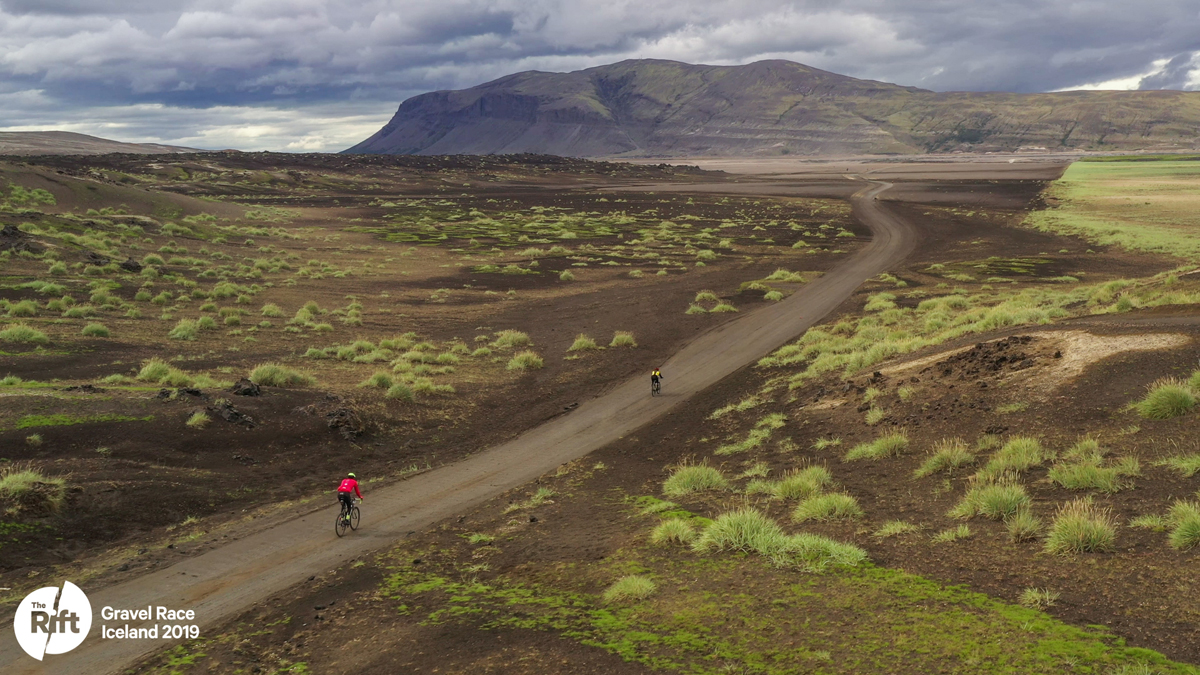
By Cimarron Chacon — The inaugural Rift Gravel race held on July 27, 2019 in Iceland was unworldly. Presented by Lauf Cycling and managed by Utah’s GRO Races, the event takes place on a remote 200 K gravel route. The course circles the active Volcano Hekla in the southern region of Iceland and incorporated 5 major river crossings.
The first year saw 265 registered participants, and 32 pros. The field was a mix of riders from the US, Europe and Iceland. This meant that many of the top athletes were racing unknown competition. The Pro men’s races was incredibility exciting to watch as the day played out. The field started out with nine riders, then soon became just four: Ted King (Cannondale), Colin Strickland (Meteor, Giodana), Christian Meyer, and Ingvar Omarsson (Novator). However about halfway in Christian got a flat, and the others pulled away. The all turned up the heat knowing they all had the podium to battle for that top stop. Colin Strickland proved to have the power stores that day and eventually pulled ahead for the win. He beat second place Ted King by just over 1 minute.
Beautiful scenery during The Rift gravel race in Iceland. Photo by Kordian Skwarczeyk
The Women’s pro race was dominated by Alison Tetrick. Ali took the lead early, pacing herself with the 10 ten mens racers. She finished a full 20 minutes ahead of second place Maria Ogn, Gudmunsdottir. Both the men’s and women’s race saw a local Icelandic racer on the podium.
The Rift also has a second award, the Viking King and Queen. To be crowned you also must participate in a series of Viking games on Friday before the event. The combination of your score in the race and the games determines the king and queen. They are awarded the coveted Yellow Wool Jersey, hand knitted by Icelandic Grandmas. This year the Matt Acker was crowned King and Alison Tetrick queen.
By Lou Melini — During the 1970s, rollers were standard equipment for cyclists during the winter. We used them for pre-race warm-ups, to “time trial” without the interference of traffic, or to simply try to improve balance and bike handling. I used rollers in my parents’ basement and away from home while attending school. I moved to Utah in 1979 and continued to use rollers until mountain bikes became part of my quiver. With the wider MTB tires, I could navigate snow and ice, ending my riding on rollers era. These days, I generally use a spin-style bike for those occasional days I do ride indoors, as well as to do the intensity work that I can’t seem to duplicate on the road.
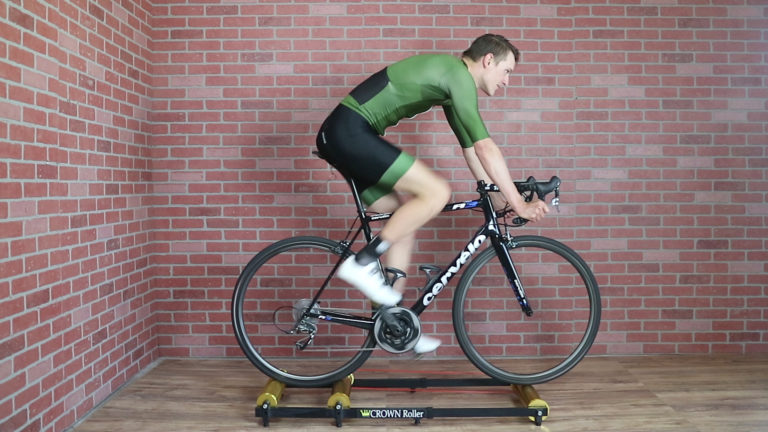
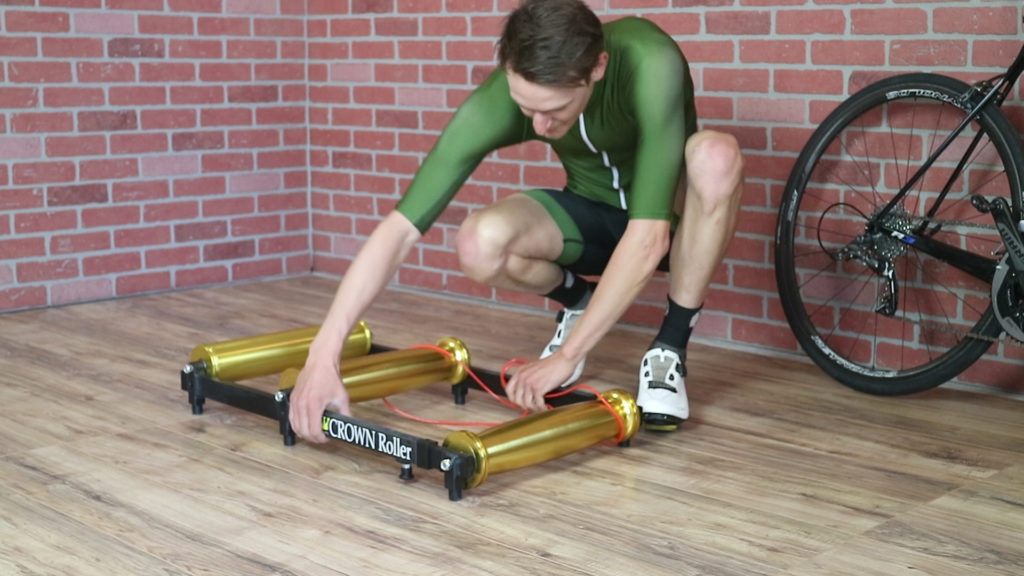
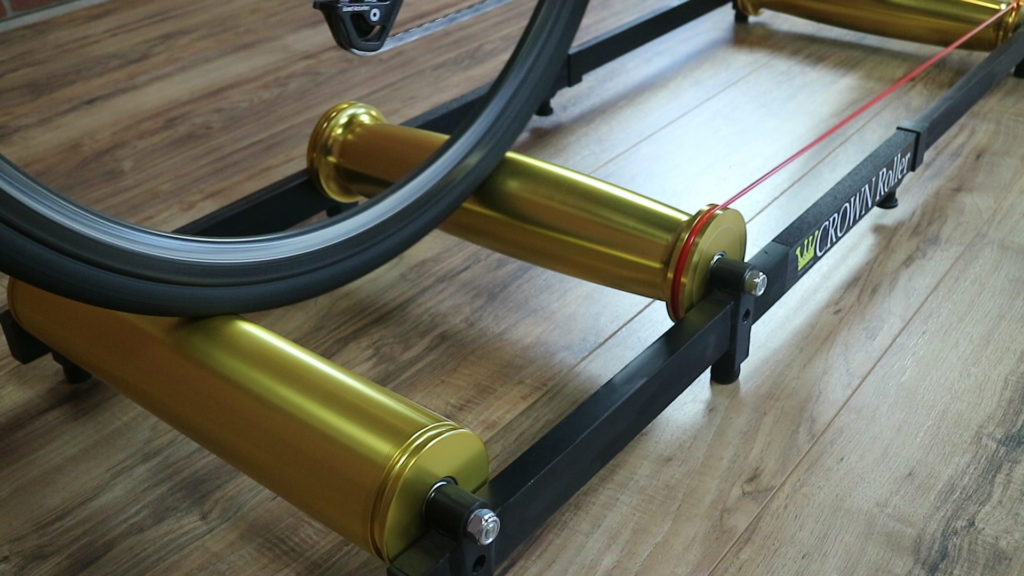
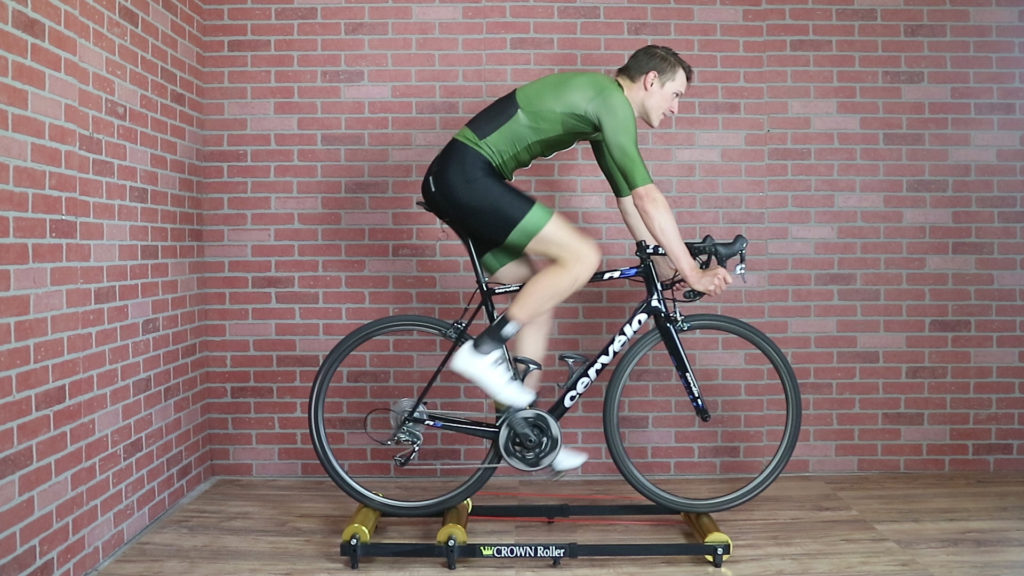
For those not familiar with rollers, they consist of 3 cylinders in a metal frame — two cylinders in the rear to cradle the rear tire and one in the front on which you set your front tire. A band connects the front cylinder and the forward rear cylinder. To start your ride, you set your bike on the rollers, carefully mount the bike, and start pedaling. Soon you will feel like you are riding down the road, though I wish it were really that simple and easy.
When Jason Bynum called to ask me if I wanted to demo a set of rollers from his new company, I jumped at the chance to return to an earlier time in my life. I have known Jason for several years, starting when he worked with my son Ben at Millcreek Bicycles (now Hangar 15). Jason’s integrity is impeccable, one reason to test a product he is involved with.
Photo courtesy Crown Rollers
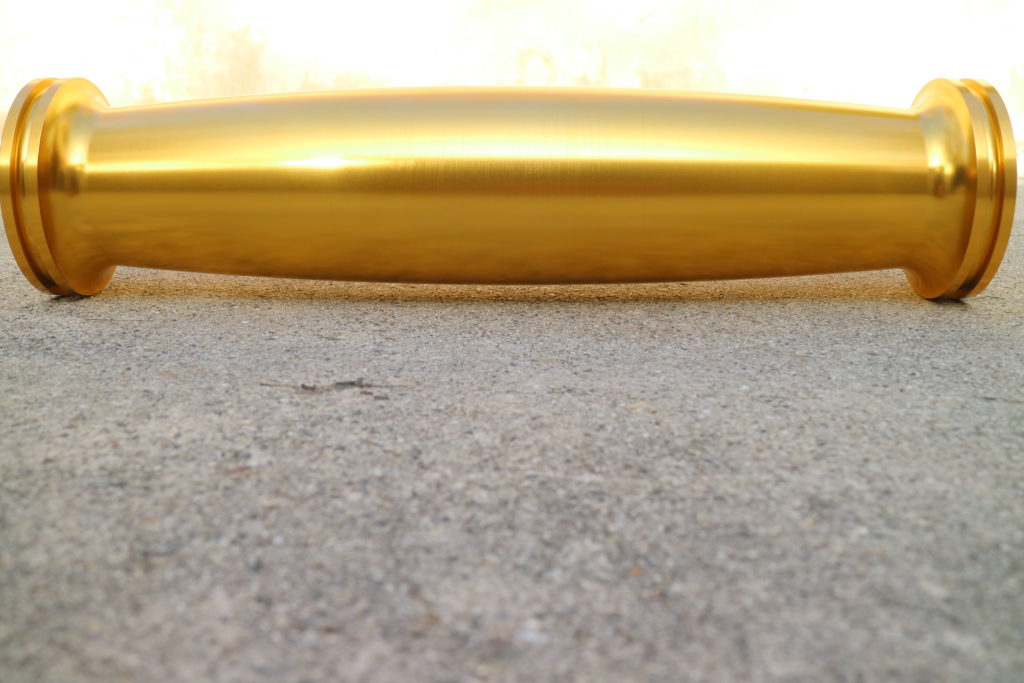
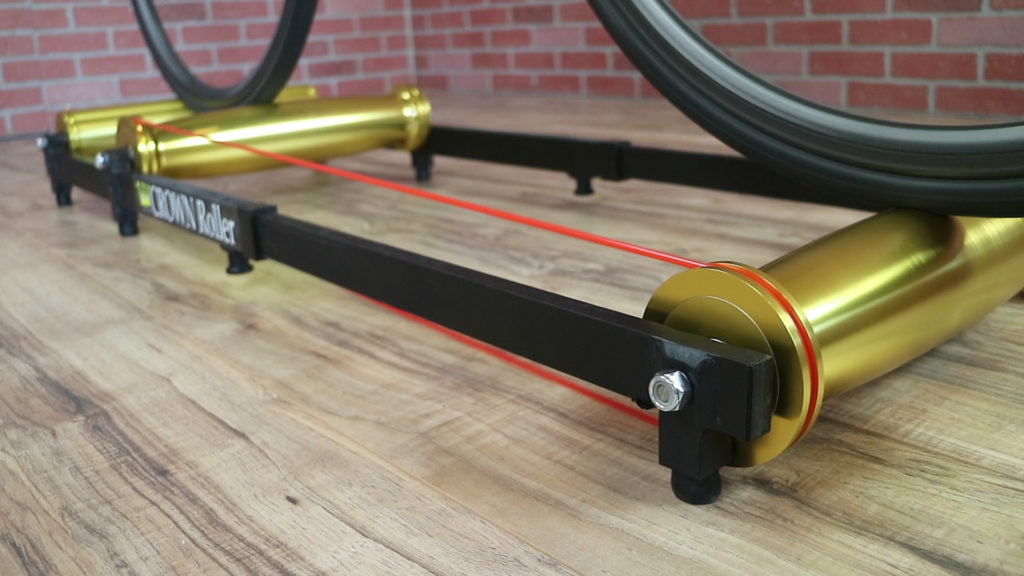
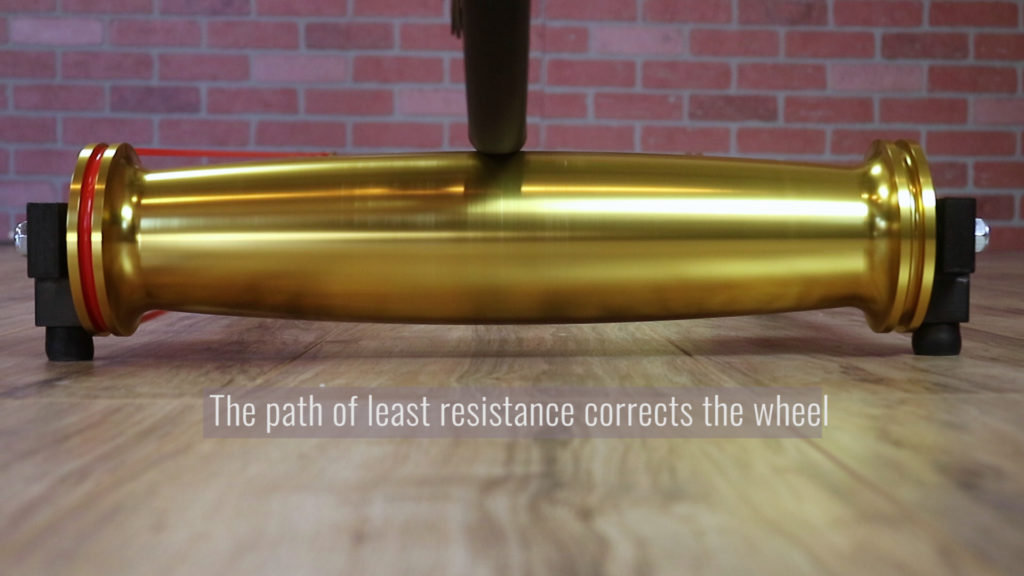
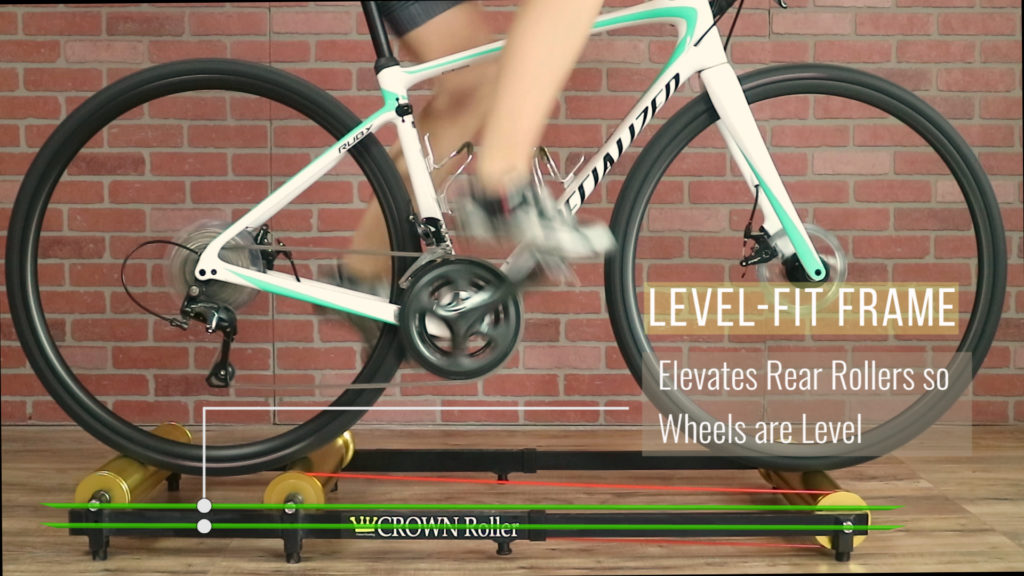
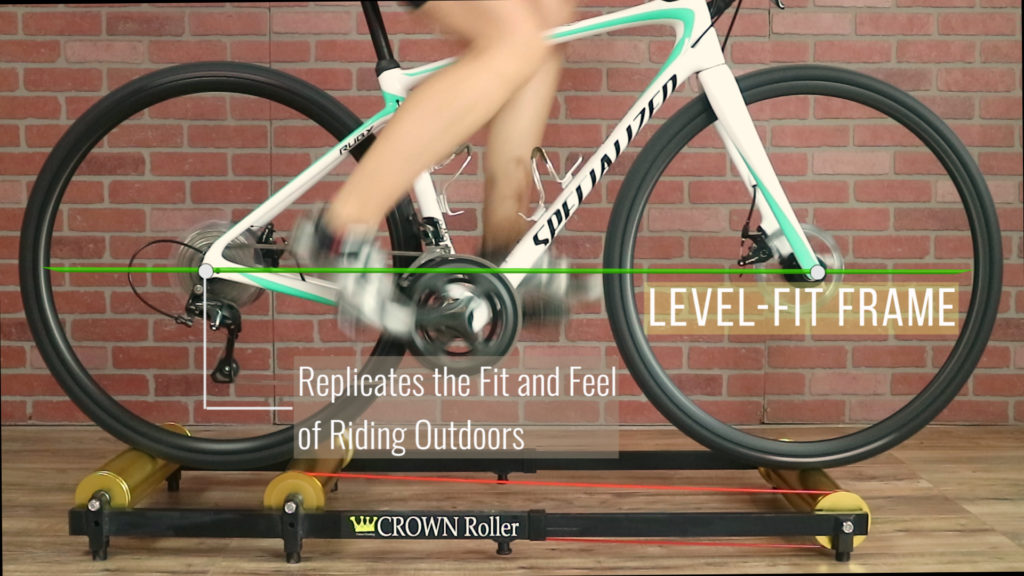
Rollers are a niche product in the cycling marketplace, and Crown Rollers are unique in that niche space. The central part of the cylinders are raised or “crowned”, thus the name. The two rear cylinders are also slightly elevated to create a level axle-to-axle plane. According to the company website, this produces a more accurate feel like you’re riding on the road.
Immediately after acquiring the rollers from Jason to start my review, I realized that nostalgically starting where I left off 35 years ago was not going to happen. Rollers can be tricky to ride and there is a learning curve, a statement that is replicated on the website.
There are a couple of steps one needs to do before the first ride. The first step is measuring the wheelbase of your bike and then adjusting the frame to properly position the front cyclinder for your bike’s wheelbase. The rollers come with a fit chart making this step easy for the initial set-up.
Photo courtesy Crown Rollers
The next step is to place your rollers next to a stable object, such as a bare wall, the back of a couch, or some other piece of large furniture that isn’t going to easily move. In my case, I used a pool table on one side of the rollers and an old school desk on the other. I was now ready to begin my test, which consisted of four 5-minute rides followed by three 45-minute rides.
My initial goal was to ride the rollers and simulate various maneuvers that I do when I ride my spin bike such as sprinting, standing, grabbing a damp cloth to wipe my sweaty forehead, and riding with one hand or no hands on the handlebars. With the rollers, I also had the additional task of shifting to change resistance vs. turning a knob on the spin bike.
Photo courtesy Crown Rollers
I took my road bike from the garage and set it on the rollers to begin the test, and quickly realized that even though the tires seemed to be inflated, I needed to pump them up to 100psi to make riding easier, a recommendation stated on the website. I also followed the website’s suggestion to use running shoes instead of cycling shoes and clipping in to my pedals during my initial 5-minute tests.
I used the 5-minute rides to try to meet my simulation goals. Sprinting, spinning with a high cadence, and shifting were easy tasks. Riding with one hand or no hands, reaching for a sweat rag, and standing were less so. I found it easier to reach for a sweat rag, when it was sitting on a platform set at roughly hip height next to the rollers. With focused repeated tries, I could briefly ride out of the saddle, or with one hand or no hands on the bars.
Photo courtesy Crown Rollers
The three 45-minute rides on the rollers matched the typical duration of my spin bike sessions. For these, I used my usual cleated shoes. I tested with two different bikes—my road bike mounted with 700Cx23mm tires and a 38.5-inch wheelbase, and my touring bike with 700Cx32mm tires and a 41.3-inch wheelbase.
Changing the length of the rollers was a bit finicky when swapping bikes with different wheelbases. I used the road bike for sessions 1 and 3.
The initial first minute of each ride was clumsy but I soon was spinning smoothly, although I found myself at times drifting perhaps 6 inches or so on either side of midline, a bit more than I would normally want.
Photo courtesy Crown Rollers
During these sessions, I purposely watched La Course en Tête: the Eddy Merckx story, as I knew there was a scene in the film where Merckx was shown training on his rollers. He also moved side-to-side from centerline, although somewhat less than I did. The way I figure it, if Eddy moved, then I am also allowed to move. By imagining being on the road and avoiding a few imperfections or obstacles, the movement on the roller felt normal. A few times, I did move to the edge of the rollers, bumping the pool table with my thigh.
Crown Rollers have an elevated ridge on each end of the cylinders, so I never really felt that I would come off the edge. I did feel more stable on the rollers with my touring bike, perhaps due to its wider tires or the longer wheelbase.
The touring bike has a high gear of 42×11 so I was able to easily shift into that gear and spin at 90 RPM or more. With the road bike’s higher gearing, I was able to obtain more resistance and rode shorter sprints in the 50×11. With either bike, I was able to obtain a good workout comparable to a ride on the spin bike. At 127 pounds and 68 years of age, this was plenty. A younger or stronger rider may need a 53-tooth chain ring to generate more resistance.
The advantage of a spin bike or a resistance trainer that locks your rear wheel is obvious; there is more stability. After making adjustments for seat height and handlebar reach one can just get on the bike and ride. As the Crown Roller website states, “if you want a training session that is simple and foolproof, a rear wheel trainer or spin bike may be more suited for your needs”.
On rollers, however, the inherent learning curve and occasional sense of instability better simulates a ride on the road, and helps you gain balance and bike handling skills. If you ride indoors frequently during the winter months, there can be much gained by adding the use of rollers to your training regimen. I do suggest that you read the “Intro to Riding Rollers” and the “FAQ” on the Crown Roller’s website (www.crownroller.com) for more detailed information.
For more insight to rollers and about Crown Rollers in particular, I asked company co-founders Jason Bynum and Charles McNall a few questions.
Cycling Utah: Jason, great to catch up with you. Glad to hear that the family is doing well, including the little Bynum. How did you become involved with Crown Rollers?
Jason Bynum: I became involved with Crown Roller by being introduced to Charles McNall, Founder, President, Engineer, and overall genius of Crown Roller.
A friend knew that I was looking for way to leverage my 20ish years in the cycling/outdoor industries, while still focusing on being a stay-at-home dad for our daughter, who was 6 months old or so at the time. This friend showed me a video that Charles had made with a prototype set of rollers. As soon as I saw the shape of the roller, I knew it was a brilliant idea and that I wanted to be involved.
I was associated with Mike Hanseen at Millcreek Bicycles (now Hangar 15) in Salt Lake City, who is considered a master bike fitter. My experience working with Mike made the rollers click as a great idea. Our friend put us in touch with Charles, and off we went!
It’s a small business, so Charles and I both have numerous roles. In short, I am a co-founder with Charles, and I am Director of Operations and Director of Business Development. Fun titles, but Charles and I are both just doing everything that needs to be done to run a business!
Charles McNall: Crown Rollers came about as I, like many people, experienced their first frustrating roller session. As I focused on not flying off my rollers, I thought I can fix this, there has to be a better roller shape. I 3D-printed some large, deep-trough concave rollers and found them impossible to ride. If I wasn’t dead-centered then I shot off the side quickly. In a last ditch effort, I tried the opposite shape and found that to my amazement, it pulled me right to the center. It took about 20 versions to finally end up with a profile that was aggressive enough for beginners but not too aggressive for a veteran.
CW: What are the unique features of Crown Rollers and how do those features affect how one rides rollers? How do the features of Crown rollers differ from other rollers on the market?
JB: What makes Crown Roller unique is the shape of our front and middle rollers. Traditional rollers have been around for more than 100 years, and have 3 uniform cylinders. A set of rollers may come in different sizes such as 3-inch or 4.5-inch diameters, which determines the inherent rolling resistance (more on that in a moment).
Some modern roller manufacturers have attempted to add stability by creating a concave-parabolic shape, like a very gentle hourglass. This seems logical, but as we found, physics dictates the exact opposite. A convex or ‘crowned’ shape adds stability.
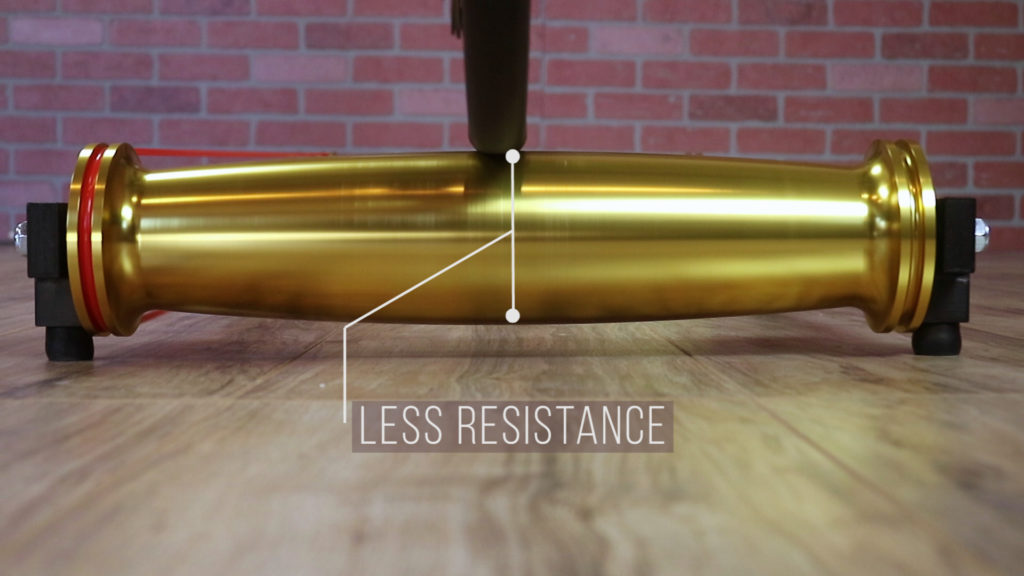
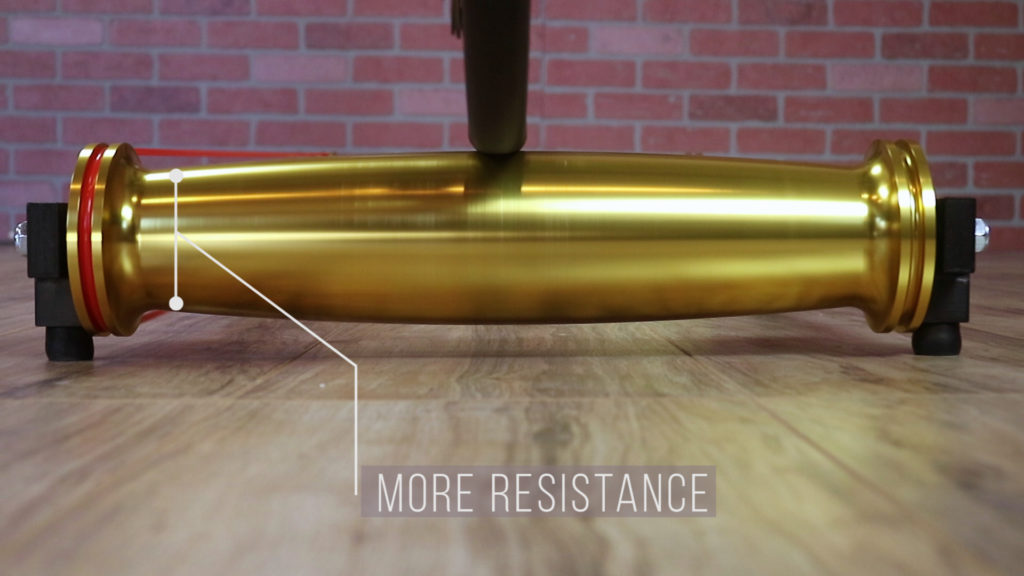
Here is why: a larger diameter roller has LESS rolling resistance, which is easier. A smaller diameter roller has MORE rolling resistance, which is more difficult. Since our rollers have a larger diameter in the middle, and smaller diameter as you move away from the middle, the path of least resistance is at the center of the roller.
Additionally, as you move away from the center of the roller cylinder, the uphill side of your tire (toward the middle of the roller) is making contact with the roller, while the downhill side of you tire (toward the outside/frame) is not. This means the uphill side has traction and wants to climb back to the top of the crown. This may be a bit tricky to understand, but it’s no different than rubbing your tire along a curb or rut and your tire wanting to jump up the side of the curb or rut.
The correcting effect of our rollers is rather gentle, and that is by design. We experimented with about 20 iterations of the roller shape to land on a profile that encourages you toward the center, but does not aggressively move you toward the center.
Lou, you noted in one of our emails that you deviated from center a bit more than you thought normal. Since our profile is a continuous curve, there is no flat spot at the apex of the roller. This means that you will largely be in a side-to-side dance over the top of the roller. To me, it’s not much different than holding your wheel on the yellow line while riding on the road. With concentration, I keep my wheel on the line pretty well, but if I’m relaxing and just letting my bike move, I deviate to either side a bit.
Another feature of our rollers is our ‘Level Fit Frame.’ Since your front wheel rests on top of the front roller, and the rear wheel rests between the middle/rear rollers, on most rollers, the front of your bike sits higher than the back by about 3cm. We corrected for this by elevating the middle and rear rollers 3cm relative to the front roller. This provides a level axle-to-axle plane, so your position on the bike, is the same on or off the rollers.
CW: How does where the wheels sit (either too far forward or aft of the front roller) affect the performance of the rollers?
JB: Our frame is a pretty key piece of our rollers as well. Since we elevate the middle and rear rollers, we are able to make a telescoping frame that compresses to a remarkably small size for travel/storage.
Our frame also has numerous adjustment positions to accommodate a wide range of wheel bases from a small road bike with 650c wheels to a long 29” wheel XC mountain bike, a range of about 36-46 inches measured axle-to-axle.
Due to the shape of our rollers, setting the frame to the correct length for your wheelbase is very important and easy to do. Each set of rollers comes with a Fit Chart to help you determine which adjustment position is best for your bike.
To adjust, we use a spring-loaded pin on the bottom side of each frame. These pins lock open when turned, then release when turned again. Locking the pins open makes it much easier to adjust the frame from its fully collapsed position. As you noted, the pins can be a bit finicky. A future round of production will likely see these become a bit more user-friendly.
If the front roller is adjusted too far forward or back, riding simply won’t feel as fluid. I think there is some wiggle room for each rider vs. the Fit Chart. For each wheelbase measurement, a rider should feel free to explore plus-or-minus one hole to see what feels best for them. As long as the front axle of the bike sits approximately 1cm behind the axle of the roller, the ride should feel right.
CW: What is the procedure for purchasing your rollers.
JB: Customers can purchase our rollers from our site at www.crownroller.com. People in the Salt Lake area can select the free Local Pickup option, and Charles or I will meet you with your new rollers!
CW: Is there anything else you’d like to tell us?
CM: We set out to solve the age-old problem of people being too scared to try rollers. It’s a problem that has been holding people back from the best possible indoor riding experience. While it has been an uphill education battle to make rollers cool again, the overwhelming positive customer feedback continues to push us to bring Crown Roller to the cycling community. We are proud to have a product that works well, is built solid and customers love.
So who is fighting for better policy and conditions for bicyclists on a national level? A variety of groups; some with a broad focus, some with a narrow one. And they sometimes work together to advance bicycling interests, with an emphasis more on legislation than implementation. But such cooperation and coordination could be improved. While the groups seldom disagree on goals or strategies, they tend to have different focuses. The various groups represent the bicycle industry, railroad to trail conversions, mountain bikers, schools, etc. Some relatively well-capitalized groups maintain sizable offices or representatives in Washington, DC. Other see advocacy as only part of their mission and are headquartered elsewhere or staff work remotely. And some national bike groups have disappeared.
Bike advocacy results in more protected bike lanes and ride to work days across the country, among other things. Photo by Dave Iltis
National policy for funding connections, recreational riding and safety will be up for debate in 2020 in Congress as it tackles reauthorization of surface transportation law and perhaps a tax bill. Federal agencies from the U.S. Department of Transportation to the National Park Service to the U.S. Forest Service will have to interpret and enforce laws. Here, we describe the organizations that will be leading the charge. Other groups without a bikecentric focus are helping out – everyone from AARP to the American Society of Landscape Architects to the American Hiking Society and other safety, health and outdoor recreation groups with similar interests are fighting some of the same battles.
Rails to Trails Conservancy
The Washington, DC-based Rails-to-Trails Conservancy (RTC) was founded in 1986 with the intention of converting miles of abandoned railroad lines into trails for bikers, hikers, etc. It now defines its mission thus: “a nonprofit organization dedicated to creating a nationwide network of trails from former rail lines and connecting corridors to build healthier places for healthier people.” Or as Kevin Mills, vice president of policy, put it “connecting people from where they are to where they want to go. Connections can be within communities, between communities or even between states.” (Disclosure: When RTC was founded, I became a charter member and retain my membership.) In addition to fighting for trails in Washington, it sponsors state and regional projects and is currently working on the Great American Rail-Trail to cross the continent (https://www.cyclingwest.com/advocacy/road-advocacy/great-american-rail-trail-planned-for-cross-country-cycling/).
“I think we need federal policy to focus on connections and creating functional networks in real time. Transportation Alternatives (TA) has been our lifeblood for decades. The problem with it lies in that it isn’t really designed to focus on places where you need to make a lot of connections at once. That’s our number one focus on this reauthorization,” Mills says. RTC also wants to remove a provision added in the last reuathorization that allowed states to transfer money out of TA to other transportation programs. It also wants to pass legislation that would ensure that all the gas tax money that’s supposed to be dedicated to the Recreational Trails Program (RTP) actually gets there.
And while it’s easy to get caught up in the issues of the day, RTC wants to see an overall culture shift in the long run. “I think there’s a need for taking things to the next level,” Mills says. “making it a mainstream culture shift where it is seen as normal and desirable for communities and cities to cultivate more bicyclists….In some other countries, there’s an attitude toward providing bicycle facilities everywhere.”
The People for Bikes Coalition (PFB), based in Boulder, CO advocates heavily for an improved nation for bicycling. PFB, originally called the Bikes Belong Coalition, perhaps could more accurately be described as Industry for Bikes as it is basically a trade association for the bicycle industry. But its work pushes improved conditions for cycling nationwide. It maintains one federal affairs manager in Washington, DC. PFB technically comprises two organizations: the People for Bikes Coalition to promote the industry; and the People for Bikes Foundation, a 501(c)(3) that provides grants for bicycle projects. The coalition board consists only of industry leaders and as a trade association is free to lobby to its heart’s content, whereas foundations are limited in advocacy. Funding comes primarily from the bicycle industry, including suppliers, distributors, manufacturers, dealers and bicycling-related publications.
PFB merged with the Bicycle Product Suppliers Association (BPSA) in July. BPSA leaders explained “Now that we are one, we can use our time-tested voice at all levels of government to sell more bikes and increase participation faster. Our individual companies stand to benefit as our influence grows.” The two groups had been working together five years. “PBSA has expertise; PFB has staff,” explains PFB Chief Operating Officer Jenn Dice, a former lobbyist for the International Mountain Bicycling Association (IMBA).
PFB is currently lobbying hard against tariffs imposed by the Trump Administration on Chinese imports, since many bicycles, parts and accessories are imported from China. And the tariffs drive up the costs of bicycles. Since the effect is less direct and harder to see if you are satisfied with your bike and the issue doesn’t directly involve trails or safety, PFB is taking the lead among bike groups for this.
But the issue — while necessary — has taken up plenty of PFB’s time and energy that ideally it could spend elsewhere. ‘”In the last year, we have gotten more into (the tariff issue). Prior to that, we did very little work in that area,” Dice says.
“We’re not in the tariff battle. It’s a really big priority for (PFB) as it represents the industry and we’re glad they’re working on that,” Mills of Rails-to-Trails says. “But it’s a little far afield to our constituency.”
PFB sponsors annual “executive fly-ins” to Washington in October, since it’s too far to travel by bike for most industry executives. They speak with legislators and staff on Capitol Hill about tariffs and increasing federal funding for bike programs.
“We have over a million grassroots supporters on our email list. We send alerts asking members to reach out” to their legislators (and to encourage the legislators to ride bikes), Federal Affairs Manager Noa Banayan says.
The foundation, meanwhile, has gotten grants from REI, the Summit Foundation, the Mayor’s Fund for Philadelphia, Walton Family Foundation, Craigslist Charitable Fund, New Belgium Foundation, and other family foundations and individual donors.
The coalition, however, has had to make do with less. Income rose steadily from $1,335,887 in 2006 peaking in 2016 at $4.3 million (according to its annual reports in non-inflation-adjusted dollars). But recent years have seen a decline in income:
Year
Income
2016
$4,299,890.00
2017
$3,684,086.00
2018
$3,523,334.00
“This year, the combined budget of our two branches (coalition and foundation) will exceed $10 million – the highest budget ever,” PFB President Tim Blumenthal wrote in an email. Blumenthal explained that “the drop in coalition income can primarily be attributed to the decline of the Interbike Show and a year-over-year decline in their financial support…Emerald Expositions – Interbike’s parent company – was for many years the largest contributor of unrestricted funds to back our work. As their show shrunk, their generous contributions fell, too. In 2019 – without Interbike – they won’t contribute anything.”
PFB is trying to make up for the loss by finding new members, adding the resources of BPSA, and seeking other support. “We’ve also cut where we can: we just moved to a new office on the edge of town, where we will save close to $500,000 in rent and related expenses during the next five years,” Blumenthal explains. PFB is also seeking revenue through its Ride Spot app that helps cyclists find and navigate rides. Riders can sign up free; but businesses, bike groups and local governments can subscribe to provide info for users (ridespot.org).
The League of American Bicyclists (LAB) is probably the most well-known bike lobby that tries to cater to as many interests as possible. (The organization is still technically incorporated by its original name when founded in 1880, the League of American Wheelmen, which it stopped using in public because it sounded sexist.) LAB describes its mission to the IRS as “To lead the movement to create a Bicycle Friendly America for Everyone.” In addition to lobbying, it operates the Bicycle Friendly America awards program and certifies cycling instructors.
But the league’s finances have been gradually slipping. Its income reported on its tax returns for recent years:
Year
Income
2014
$ 2,374,334.00
2015
$ 2,310,638.00
2016
$ 1,837,299.00
2017
$ 1,616,075.00
Despite the loss in revenue, last year, LAB reported spending $759,091 on staff compensation in 2018, an increase of $62,752 from 2017. Executive Director Bill Nesper received about $133,742 in salary and benefits, a raise of $20,634 from 2017. LAB reports spending about $230,000 a year on lobbying.
Charity Navigator, a non-profit that evaluates charities, gives lab a rating of 81.45 out of 100 and three of four stars overall. It rated LAB a 97 for accountability and transparency (four stars), but only 73.94, or two stars for financial. (Charity Navigator based its ratings on 2017 data).
LAB is focusing now on pending legislation to improve TA, getting more federal effort dedicated to bicycle safety and reinstalling and possibly expanding the commuter tax credit for bicycling that Congress took away last year. The latter will require a tax bill as opposed to a transportation bill. LAB sent a solicitation to potential members saying “2019 HAS BEEN A BIG YEAR FOR US” pushing all these items. But so far, Congress hasn’t moved them, leaving the battle for 2020.
LAB declined to cooperate for this report, which is uncharacteristic, since I’ve been covering them steadily for more than a decade.
The Missoula, MT-based Adventure Cycling Association (ACA) promotes bicycle travel and offers tours. It focuses on getting people to ride outside their communities and routines. Part of its mission involves advocating for policies and conditions that improve travel cycling. “We don’t employ lobbyists” but work with LAB, RTC and PFB when their interests converge, such as policies allowing ebikes on federal land and Safe Streets legislation, explains Ginny Sullivan, director of travel initiatives. “Specific areas we focus on are rural and suburban conditions,” she says. “We’re trying to help state (transportation) departments get better rumble strip policies” and improve shoulders. ACA also enthusiastically supports the Great American Rail-Trail. “We’re supporting that in any way that is helpful to” RTC.
“We’re not doing a whole lot of coordination with IMBA but we want to work with them on bicycle tourism. We see a real collaborative opportunity on that, especially in rural and mid-sized communities. People might bring their bike to do mountain biking or two-day tours,” Sullivan says.
ACA also works with federal and state agencies to try to improve campground conditions for cyclists. It would likes policies that set aside some campground slots for people who arrive without motorized vehicles: camp areas that include bike racks and fix-it stands, Sullivan says.
When the need arises, “we can call on our 52,000 members to weigh in on the federal level. We’re getting better at that. We haven’t done that as much in the past as we plan to do in the near future. We’re going to launch an advocacy platform at the beginning of (2020) where people can instantly take action,” such as contacting their legislators, Sullivan says.
PFB doesn’t monopolize the market for representing the bicycle industry. The National Bicycle Dealers Association (NBDA), based in Irvine, CA represents the community bicycle stores that are now suffering from the rise of on-line bike sales. High on NBDA’s agenda: making sure everyone pays taxes on bikes and equipment. “In order to create a fairer retail environment, NBDA supports measures that would require Internet and mail order purchases to be subjected to the same sales tax requirements that are currently imposed on local brick and mortar retailers,” the association says on its website.
Rather than lobby a lot in Washington, though, NBDA, which like PFB worries about tariffs, sends a letter template to its members encouraging them to get the message out to their senators and representatives. President Brandee Lepack and some board members go to Washington to do some lobbying sometimes, says Administrative Coordinator Rachelle Schouten.
With the rise of bikeshare systems around the country (and world), the operators needed as association to promote and represent them. The North American Bikeshare Association (NABSA) formed in 2014 and is headquartered in Portland, ME. Legislatively, it is very interested in the Bikeshare Transit Act of 2019 (H.R. 4001) pending in the House. The bill would clarify that communities can use federal transit money for bikeshare programs. Current law doesn’t exclude them but since Congress wrote the law before bikeshare became common, it’s not clear. NABSA wants to make sure that provision is included in the next surface transportation reauthorization.
Congress eliminated the Bicycle Commuter Tax Benefit last year. NABSA wants Congress to reinstate it and clarify that it could be used for bikeshare (pending in the Bicycle Commuter Act of 2019 (H.R. 1507). If employers offered it, bike commuters could deduct the cost of commuting, such as parking, repairs, and, of course, using bikeshare.
NABSA is also working with other bike groups and helping push Congress to increase support for bicycle infrastructure in the next surface transportation bill, says President Sam Herr. “I’d say mostly we work with PFB but we are aware of and coordinate with the other organizations that closely align with our goals,” she says.
NABSA doesn’t use a centralized office or maintain a Washington presence; staff work from home and conduct an annual conference. It includes members in Canada and Mexico (next year’s conference takes place in Guadalajara.)
The Safe Routes Partnership promotes Safe Routes to School (SRS) programs helping pupils bike and walk safety to school across the country. An offspring of PFB, the partnership still gets much of its funding from its parent, which created it in 2005 and set it free as an independent non-profit in 2014. It maintains no central office, with staff located across the country from California to Oregon to Philadelphia. Deputy Director Margo Pedroso lives in Fort Washington, MD outside the nation’s capital and spends much of her time advocating for federal support in Congress, working closely with LAB. “We are working together on issues we have in common. This year, it’s basically TA (Transportation Alternatives),” Pedroso says.
Though SRS lost its federal earmark in a previous reauthorization, it remains an eligible TA activity. “We feel pretty good about where we are,” Pedroso says. “It has gotten pretty well incorporated in how states do their programs.”
So the partnership isn’t fighting to reestablish the earmark. “We feel at this point that putting it into a special program again would slow down the funding. Whenever you change something, it takes time to incorporate it. It would result in the loss of funding for a few years till they got it up and running again,” Pedroso explains.
“I do a monthly blog on federal policy we send out to subscribers, safe routes folks around the country. We encourage them to contact their members of Congress and ask them to visit and see SRS in action.”
International Mountain Bicycling Association (IMBA)
And we can’t forget mountain biking. IMBA concerns itself strictly with access to public lands, says Advocacy Manager Aaron Clark. Like PFB, IMBA is headquartered in Boulder, CO. While it generally supports allowing ebikes on public lands, it wants local land managers to be able to exercise some discretion. Allowing “the full spectrum of all classes of ebike on all trails would be a one-size-fits-all approach. We want managers to have flexibility to have site-specific designations,” Clark says. Some of the more powerful ebikes could endanger public health and safety on some trails, or spook hikers and horses, he acknowledges.
And IMBA’s favorite federal funding, naturally, comes from RTP, as opposed to TA.
“There’s always room for improvement” in coordination among the groups,” Clark says. “There are different agenda,” as some groups like PFB represent the industry, and other membership organizations like IMBA serve a rider member base. Clark says IMBA coordinates and communicates regularly with PFB. But he says RTC has been less enthusiastic. “I was on a panel with RTC in Little Rock this summer before the Outdoor Writers Association of America. I’ve reached out to them numerous times. I haven’t had a response from them, though.”
He also said that “LAB is probably the last group I communicate with. I don’t even know a single person there I’d reach out to.”
“LAB defers to us regarding some mountain biking issues. We’d probably defer to them and don’t do a lot on road biking,” Clark says. IMBA is strongly supporting the Recreation Not Red Tape Act (legislation in Congress that would make it easier for bike tour operators to get permits to operate in federal lands and encourage outdoor recreation in other ways). “IMBA has been the driver on that issue. PFB has played a supporting role knowing that it is important to us. We scratch each other’s back when we can,” Clark says.
It’s a truism that legislators listen not just to constituents and those who knock, call or email with a point of view or interest – but mainly to those who contribute to campaigns. So is the bike industry contributing to help get the ear (or palm) of legislators – and to support ones who will promote bicycling?
PFB maintains a small political action committee (PAC) known as BIKESPAC that has traditionally donated to sponsors of bike legislation. For next year’s congressional races, it reported donating as of the end of June (the latest information available) $7,350. But it retained more to award as the election draw closer: the books showed $70,367 cash on hand. The only beneficiaries of largess so far this cycle are the co-chairs of the Congressional Bike Caucus: Reps. Earl Blumenauer (D-OR) and Vernon Buchanan (R-FL), getting $6,000 and $5,000 respectively last year for the upcoming campaign. During the 2018 cycle, these two received the biggest contributions: $7,500 each.
Both parties received contributions. The only one from a Mountain West state, however, was Sen. Cory Gardner (R-CO), getting $5,000. Evidently, legislators from this region aren’t seen as big bike advocates. Among those now running for president, only Sen. Amy Klobuchar got any: $2,500.
Banayan says “We’re working on a strategy. Right before the presidential election we want to be sure we focus the PAC where it matters.”
Schouten says NBDA isn’t developing a PAC.
The only bicycle company with an active PAC is TREK Bicycle, which reported only $7,066 in contributions during the 2018 congressional campaign from individual donors. For the 2020 elections, it reported donating $489. Only Democrats received donations, if you include the $32 given to Sen. Bernie Sanders.
(The above figures come from the Center for Responsive Politics’ Open Secrets website.)
Defunct Associations
What was once the Thunderhead Alliance and became the Alliance for Biking and Walking, which described itself as “the North American coalition of grassroots bicycle and pedestrian advocacy organizations, designed to help advocates around the country.” Former director Sue Knaup published a memoir describing abuse she took on the job from board members out to sabotage her work (https://www.onestreet.org/bicycle-programs/one-street-press). Eventually, its main funder pulled out.
One of its major projects, the biennial national Benchmarking Report on bicycling and walking in the Untied States, was taken over by LAB. The alliance’s last IRS filing listed Dorian Grilley, executive director of the Bicycle Alliance of Minnesota, as its chief officer and said it’s main office is located in St. Paul, MN.
“It went from an organization of five or six people to an organization of one or less than one. It just didn’t work. LAB was happy to accept some of the responsibility,” Grilley explains. The alliance’s 2017 tax report disclosed that revenue dropped from $125,360 in 2016 to only $27,941 in 2017 and it reported only $8,474 in assets.
Meanwhile, the similarly titled National Center for Bicycling and Walking had set up a People Powered Movement office in Washington, DC that it said was dedicated “to provide the most accurate information regarding advocacy to increase bicycling and walking throughout the U.S. The office is closed, though the website remains up but not updated (https://www.peoplepoweredmovement.org/). It’s last Twitter feed and Facebook posts were dated Sept. 4, 2018, save for one Facebook link in May. When the office closed, Senior Associate/Program Director Mark Plotz moved in with the Washington Area Bicyclist Association but moved out at the end of February. The center continues to put out an online newsletter (http://www.bikewalk.org/newsletter.php).
Abandoned Collaborative Efforts
While the organizations work together informally, a formal effort died. The America Bikes Coalition last met in 2014. It included, according to LAB, the Adventure Cycling Association, the Alliance for Biking & Walking, the Association of Pedestrian and Bicycle Professionals, Bikes Belong, IMBA, LAB and the National Center for Bicycling and Walking, and it worked with America Walks, the National Complete Streets Coalition, the Safe Routes Partnership, Transportation for America and other groups interested in growing the role of bicycling and walking through federal transportation policy, according to a 2012 posting by LAB when it’s then campaign director Caron Whitaker moved to a job with LAB.
By Lou Melini — Commuting to work from early November to late February has unique challenges. Shortened daylight hours, cold temperatures, precipitation in the form of snow along with packed snow or ice on the roads are the primary reasons that most bicycle commuters find alternative transportation during this time period. As I discussed in a commuter column a couple of years ago, having the proper attitude will help make winter commutes successful. Every destination of a commute by bike has unique circumstances so that each of us may have to be creative and individualize how we get through the winter. Tires, clothing for warmth and lights are the 3 main changes one will make to transition from summer commuting.
Lou ready for his winter bike commute. Note the Power Straps and flat pedals. Lou rides with a nice North Face waterproof, windproof jacket. Photo courtesy Lou Melini
Tires: I use the same bike for my year-round commuting. It has fenders, lights, and a mirror as standard accessories. What I do different to the bike is change to larger width tires. I move from summer to spring/fall tires and then starting with the first snowfall I put on my winter tires, the widest that will fit my frame. The tires that I have used for the past 2 seasons are 2.35 inches wide and I plan to squeeze in 2.4-inch tires soon. The tires have sidewalls that are stiff so that I can ride at 20 psi without pinch flatting. There is considerable tread for biting into snow, a frequent need for the trail I ride to my volunteer job.
Before I retired, the tires I used were 2.1 inches and the need for deep treads was less unless a snowstorm hit prior to leaving my house. I had a “fat-tire” Surly Pugsley for a couple of seasons that would take me to work and home in any wintry road condition. including patches of ice. The tire pressure was 9-10 psi on that bike.
I am habituated to what I have been using for winter riding. There are other options for tires that I have not used aside from the wide tires with tubes. Commuters that use studded tires have expressed satisfaction with them. If I had snow packed roads to navigate on a daily basis I would probably switch to them. Another option that I also have not used is large volume tubeless tires for commuting. One can have low pressure for better traction and less worry about a pinch flat.
Accessories: Fenders, lights and mirrors are standard equipment for me. Due to my age and age related stiffness, I consider having a mirror a necessity. I still need to turn to look behind but the mirror helps give me an idea of traffic. During a snowstorm I am really focused on the road in front of me to pick the best line, with occasional glances in the mirror to see what is coming up behind me. Having a “Plan B” for those days may be a smarter choice but I have managed without incident.
Fenders are great when the temperature is “warm” enough for the snow to be slush. Cold, muddy slush is miserable even with a waterproof rain jacket and pants. If you do not have fenders, you will find out if your rain gear needs replacing or you wished you went with the better quality gear.
Clothing: After I retired, I replaced my Speedplay Frog pedals, cleated mountain bike shoes and over-booties for hiking shoes and flat pedals with Power-Grips brand straps. The change was more practical for my current situation. When the weather is very cold and/or wet I use a waterproof sock over a liner sock. I have a short gaiter that I put on my low-top hiking shoe. I carry a backup pair of socks and plastic bags in my panniers as “emergency” supplies. This combination works well in all sorts of weather.
There is a saying that “As one gets old, you will be cold”. I find that I am wearing an extra layer for my commutes compared to 8 years ago when I turned 60. I wear a wind or rain jacket nearly everyday when the temperature drops below 40. Rain pants for the downhill portion of my commute is standard clothing, especially in the mornings and of course in slushy or snowy conditions. The number of layers that I wear is sometimes laughable. I only purchase jackets with hoods as the hood provides extra warmth. I have a “one-size-fits-all” helmet so I can fit a warm hat and the hood under the helmet and sometime a “Buff” brand neck-gaiter. Pit zips and bright colors are features that I look for in a rain jacket that vary in cost. At best, you will have 5 years of solid performance from a jacket before you experience some leakage due to the water proof coating breaking down with longer use from a pricier jacket with multi-layers with Gore-Tex. I have used Marmot PreCip (non-cycling specific) jackets that worked well for several years acquiring one for as little as $50.
I rarely have cold feet during my commutes but I have had a terrible time with my hands staying warm. My warmest combination (good to 5 below zero) has been a pair of Giro lobster-mitt style gloves rated to 15 degrees and Bar Mitts on my handlebars. The Giro gloves have been surprisingly true to the temperature rating for their slim profile. The Bar Mitts have been great to extend my commute by 20 degrees, though they are snug and hinder the operation of my shifting a bit on my flat bars. I have shoeboxes with gloves. Each box is marked for different temperature ratings. Gloves move from one box to another as the gloves become less warm with use and time. I have also found that due to wind, humidity, location, riding up or downhill and perhaps other factors, one 20 degree day is colder than another 20 degree day For example, when I commuted to my job before retiring, I had to select gloves for Big Cottonwood Park (13th East and 45th South) as the temperature through and near this park was 10 or more degrees colder than my home (3300 East and 2900 South).
Good lights are a must for winter commuting. Photo by Lou Melini
Lights: It has been 6 years since I last wrote about lights so without a lot of redundancy I will summarize what I said then which is still relevant today. Lights on a bike are like lights on a car, why go without them! Lights have come down in price over the years. One cannot have too many lights! I still have my 400-lumen Tri-Newt that I purchased 15 years ago if I remember correctly. I’ve sent it back to NiteRider once for a damaged cable. I also have a 120-lumen Light and Motion light on my helmet that I keep in the flashing mode.
On the rear of my bike I have a Planet Bike Superflash light attached to my seatpost, a non-flashing Busch and Müller light attached to my rack and a flashing light on the back of my helmet that is part of the Light and Motion Vis-360 system. In total I paid about $600 for all of these lights many years ago. Today I could get a similar output of lumens for less than $250; and the newer model Planet Bike Superflash is charged through a USB port vs. batteries. (Note that part of the reason for 3 lights is that when I go shopping and overbuy, I have a grocery bag strapped to my rack obscuring the seat post light and occasionally the rack light.)
Panniers, rear lights, and fenders are helpful commuting accessories. Photo by Lou Melini
I put a Bontrager Flare RT light ($60) on the back Julie’s bike during our ride across the U.S. in 2018. This light is super bright. I could see this light for 0.5 miles during the pre-dawn start our day across the Kansas.
Currently from Planet Bike, a Blaze 800 and a Superflash costs $100. Light and Motion has a front (900 lumens) and rear combo listed at $100 as well. NiteRider also has jumped into the $100 light package with a 1000 lumen front light. Price should not be a reason for not having a light!
I have grown to like my helmet light, not only as a back up for my handlebar mounted light, but also for the flash mode that allows me to turn my head and direct a light at a car coming from the left or right. I do not have experience with hub-generated lights such as the Schmidt hub dynamo (SON hub) but those that have them have been happy.
Safety: The short answer to the question of safety is that winter riding is safe with reasonable care. If the potential of riding on snow or ice is of concern go to an empty parking lot after a snowstorm. Ride in a straight line, figure 8’s, speed up and quickly slow down, and don’t forget to practice braking. Know your commute route well. Ice may be present on the north facing side of a street where there is a tree and shadows slowing the melting of ice. Riding on untracked snow will avoid slippery conditions. On the other hand, sometimes riding on the road is necessary, as cars may have cleared a path down to the road surface to ride on. Bus routes and roads near schools will be plowed first however these routes will have much more traffic. There is no shame in a plan B be it a car, bus or Trax, or a taxi.
Riding in cold and/or wet conditions can change the characteristics of your bike. I have read that cold temperatures will reduce tire traction. Also that latex found in most tubeless sealants doesn’t cure as well even in temperatures in the low 40’s though I haven’t noticed this to be significant in my commuting and cyclocross racing. Sharp objects that could cause a puncture stay attached to tires longer when the tire surface is wet thus increasing your chance of a puncture. Anything that is not asphalt such as road paint, metal manhole covers, railroad tracks, etc. are much more slippery when wet so avoid leaning into them. And finally a light rain will create a slippery surface as it mixes with debris on the road surface (oil, dust, and such). A heavy rain usually washes this stuff away.
Remember, your commute time will be a bit longer, as will the time it takes to get dressed at home and undressed at work. The more you ride in winter, the more skilled and comfortable you will be but don’t get overconfident. I will admit, there have been a few days over the past several decades when I’ve asked myself, “what the hell am I doing out here”. I have not had a serious incident but I have fallen on ice twice. Have a happy commute!