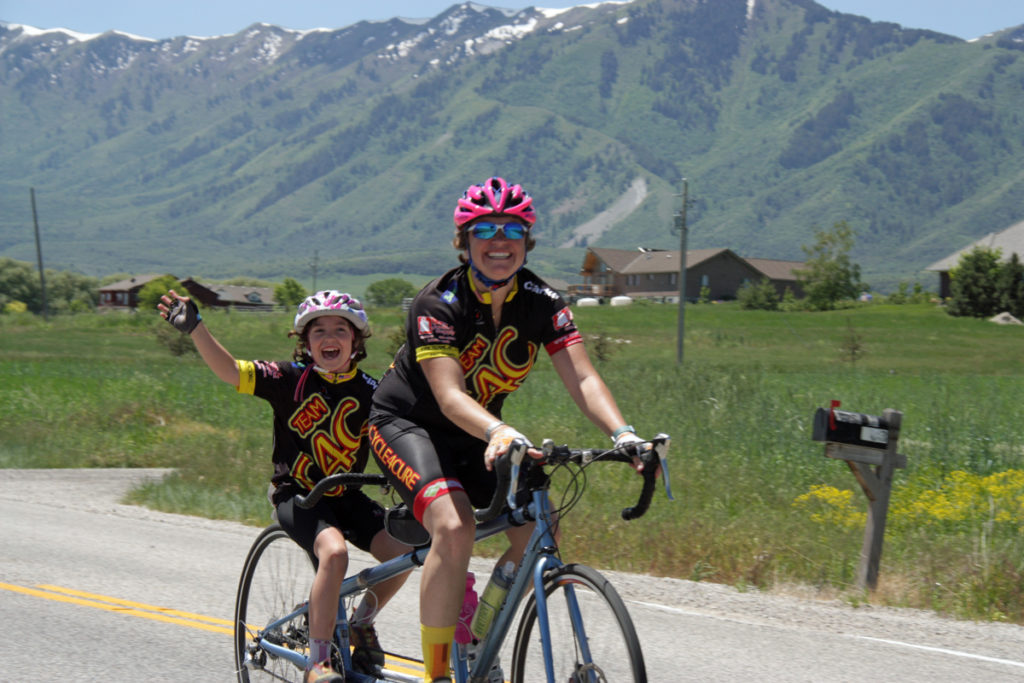
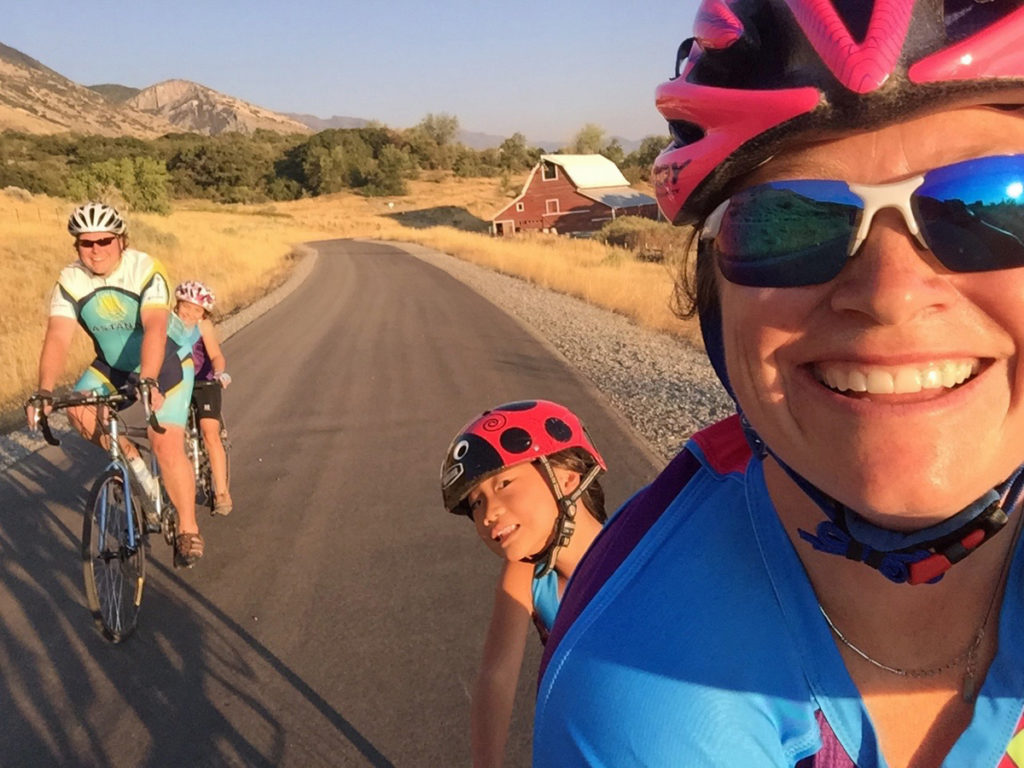
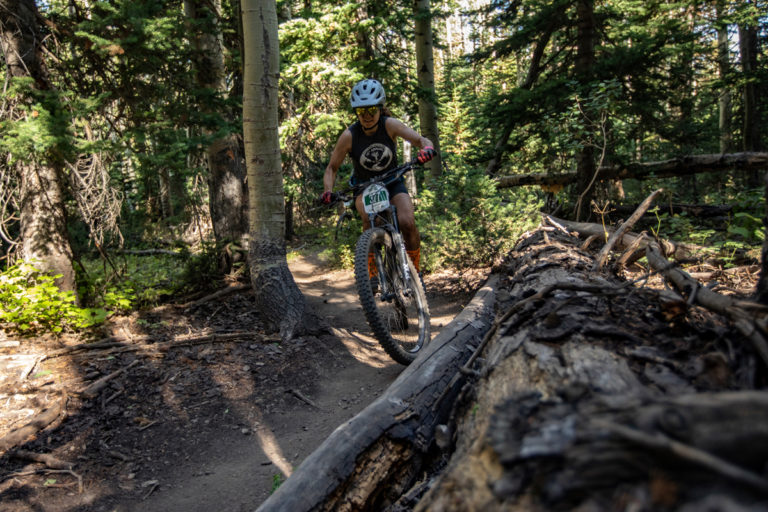
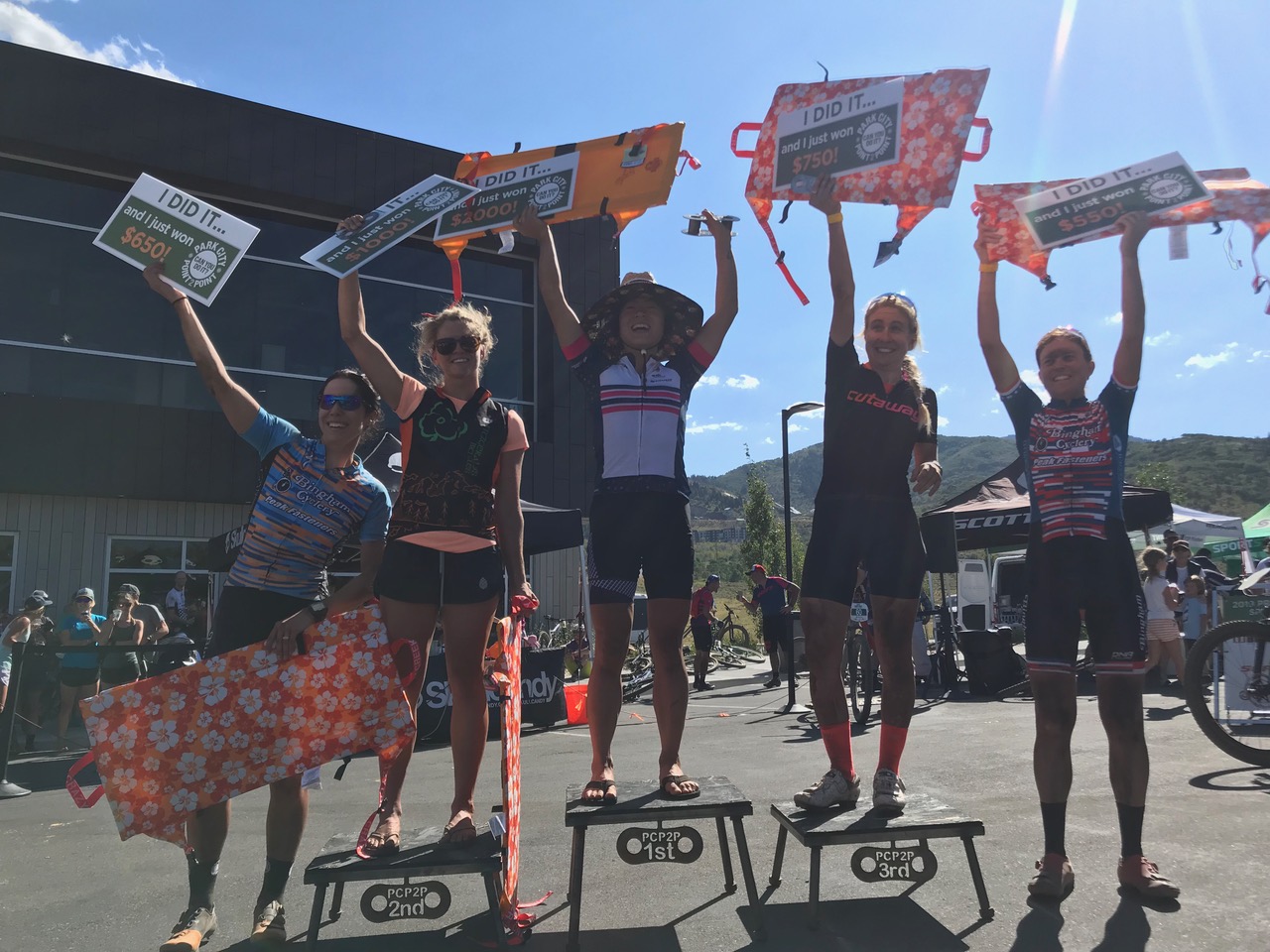
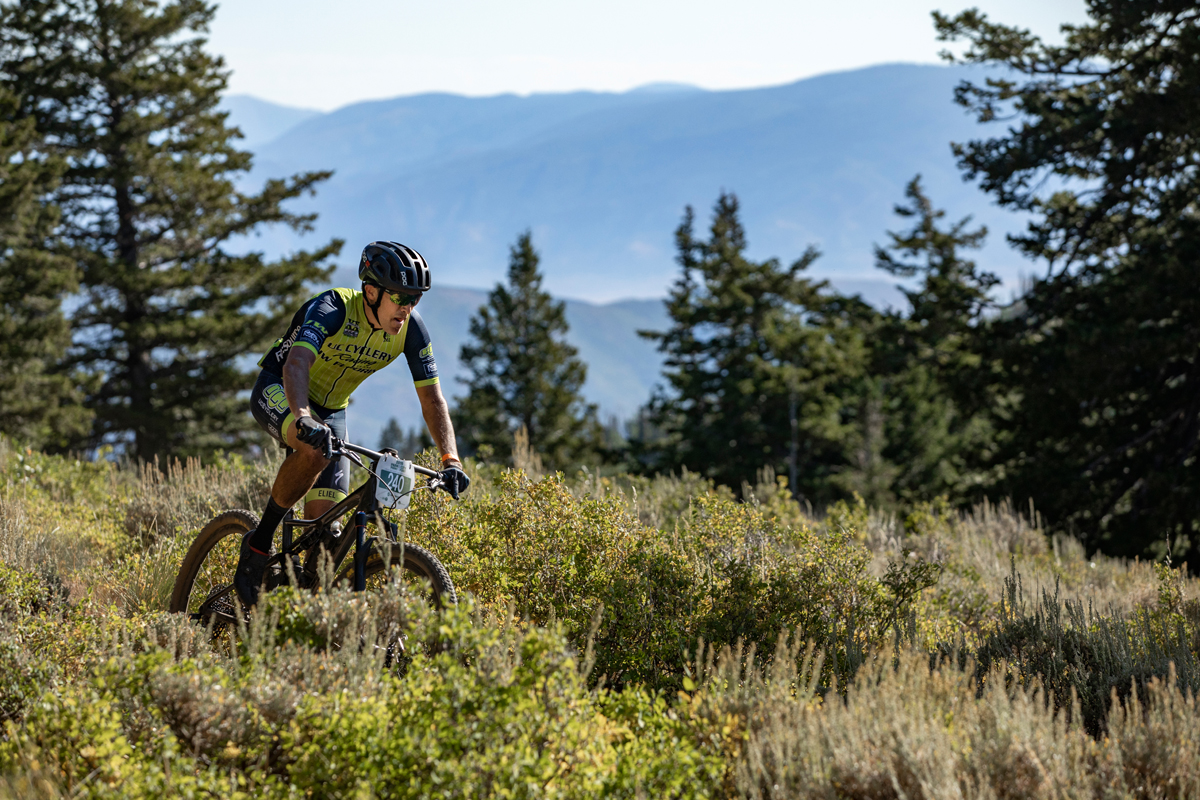
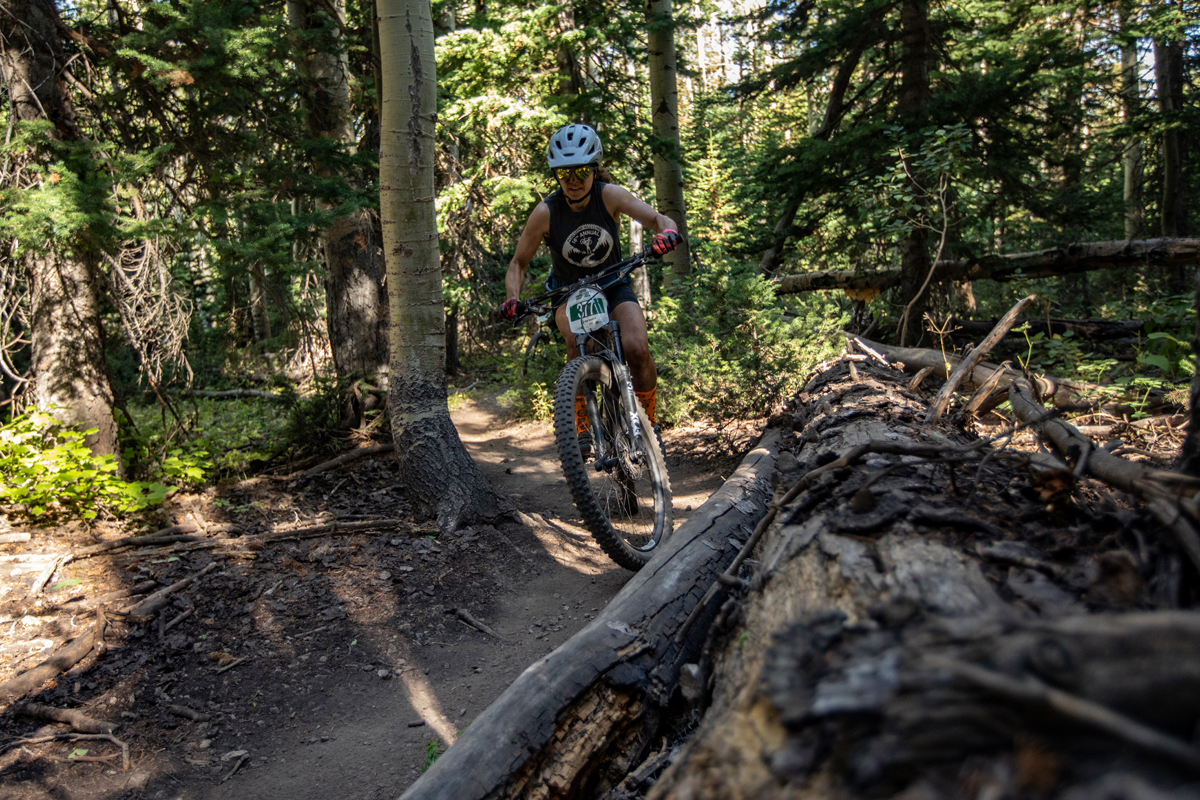
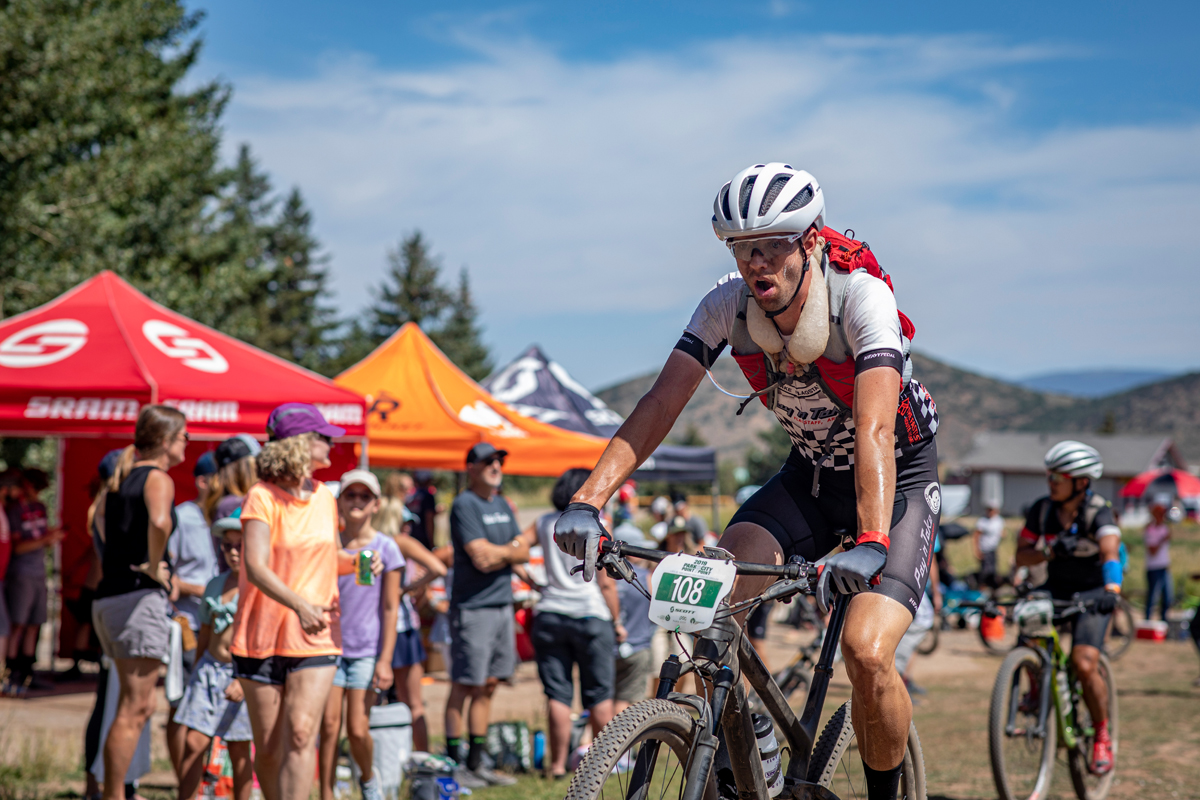
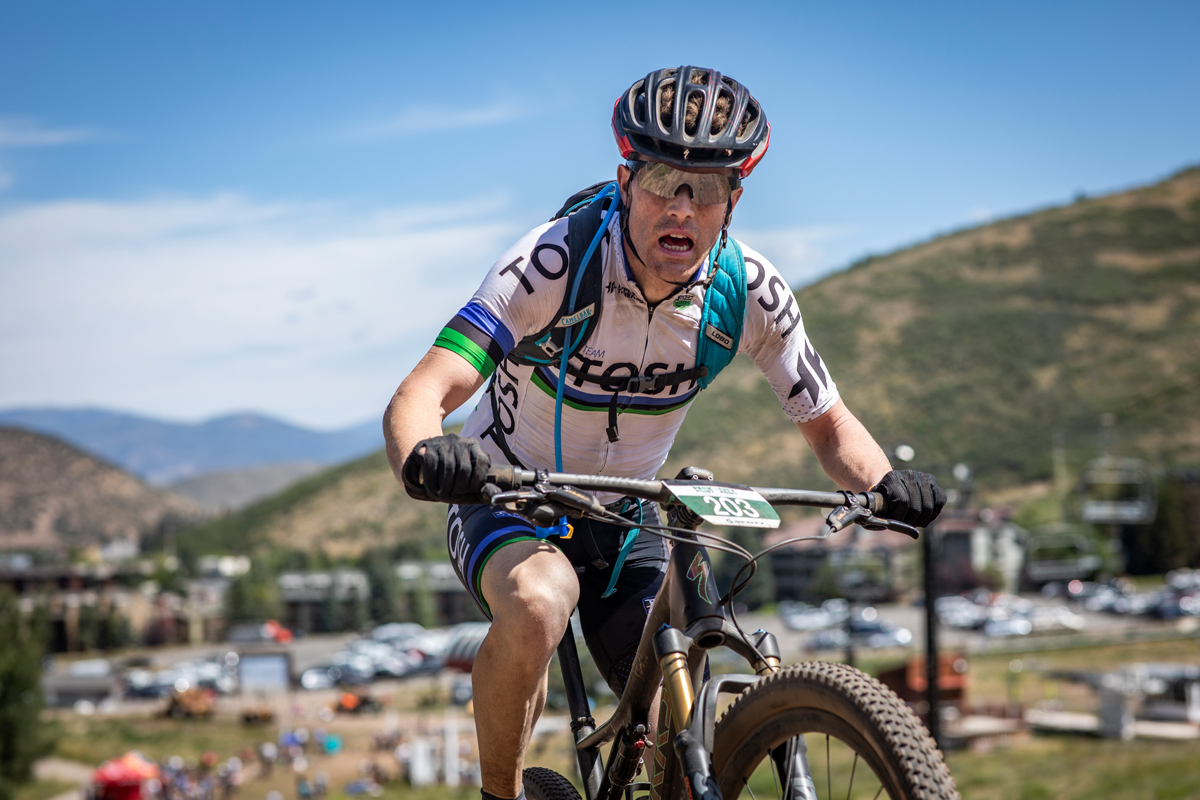
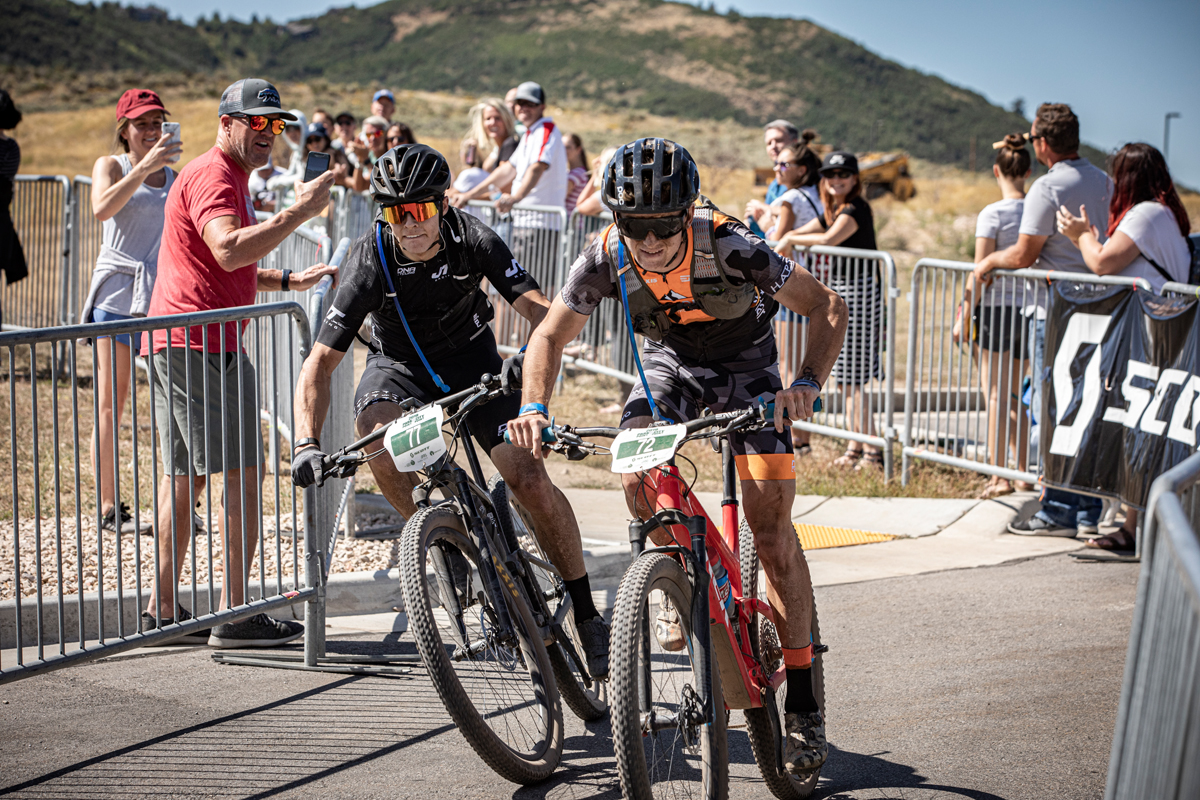
HEBER CITY, Utah (October 10, 2019) – The 2nd Annual Outlaw Bike Team Fundraiser will be held this Saturday, October 12 from 4:00-7:00 pm at the Wasatch County Skate Park located at Southfield Park, 758 West Midway Lane (100 South) in Heber City, UT. This year’s event will be a fun night out for the entire family. Guests can enjoy a catered dinner from Guru’s Cafe, hot dog stands, nachos, homemade popcorn, art contests, games, prizes, an Outlaw shirt Tie-Dye station, bunny hop contest, and more! Please visit www.smsef.org for tickets and information.
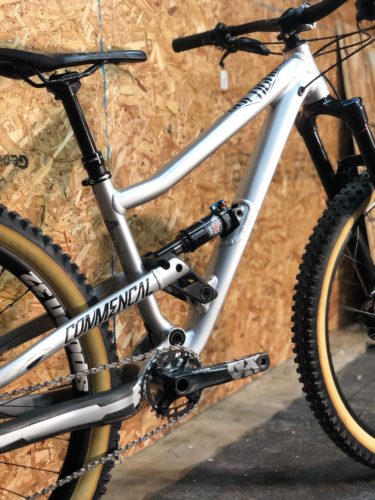
Enter to win this Commencal Jr. Supreme downhill bike. Photo courtesy Outlaw Bike Team/Sundance Mountain Sports Education Foundation
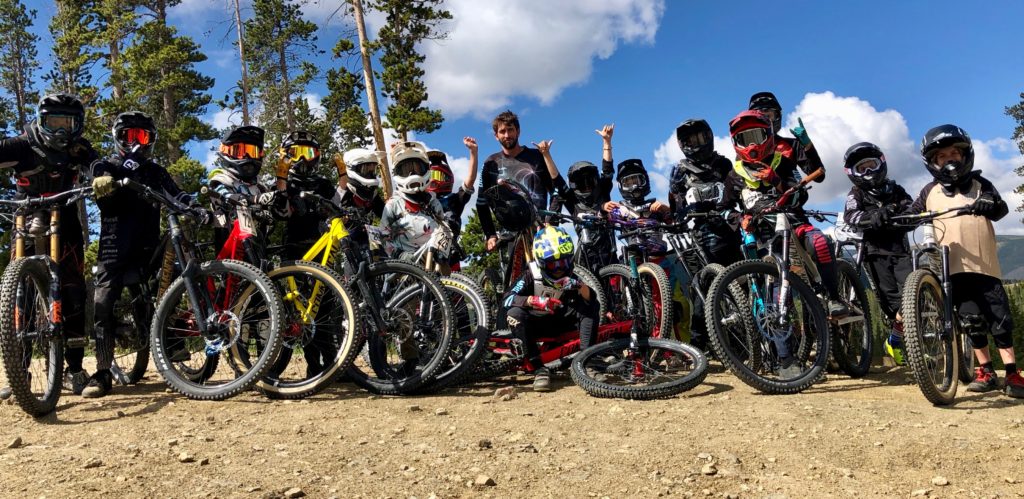
“The Outlaw Bike Team provides a unique experience for junior mountain bike athletes of all levels. This sport is growing so fast, and there are no other teams like Outlaw. We focus on developing the whole athlete into what we call Higher Level Humans. Our members strive for excellence on and off the bike, but most importantly they learn how to be happy, confident and caring individuals,” says Tyson Henrie, Founder and Program Director.
Hundreds of items have been donated for a giveaway opportunity drawing as well as a silent auction. The headline item is a Commencal Jr. Supreme downhill bike. Supporters can purchase entries to be included in the drawings for various items and the bike. You do not have to be present to win! Not a biker? There are plenty of items for everyone, including a $4000 skin treatment from Sonobello and more!
Enjoy a fun night out in beautiful Heber Valley with family and friends, support the future of the sport, and these hard working, talented athletes.
The entrance fee to the fundraiser is $20.00, which includes dinner and a 10-punch card to various events. Entrance for a family of 5 is $50.00.
Entry tickets for the giveaway drawings are available for $5.00 each or $20.00 for 5 tickets. Entry tickets for the the Commencal Bike giveaway are $25.00.
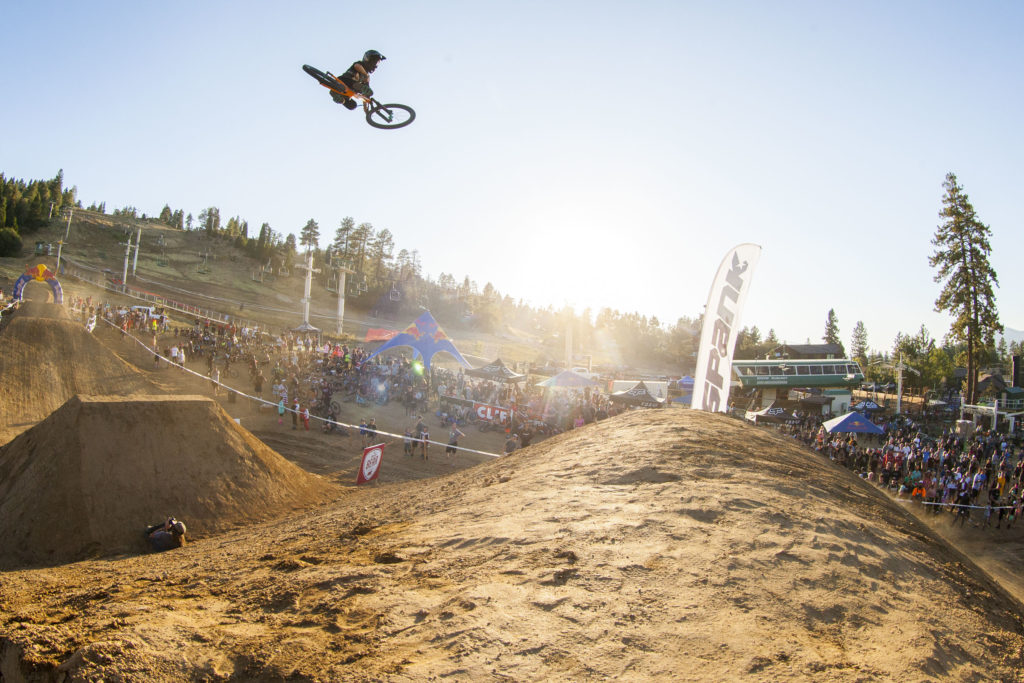
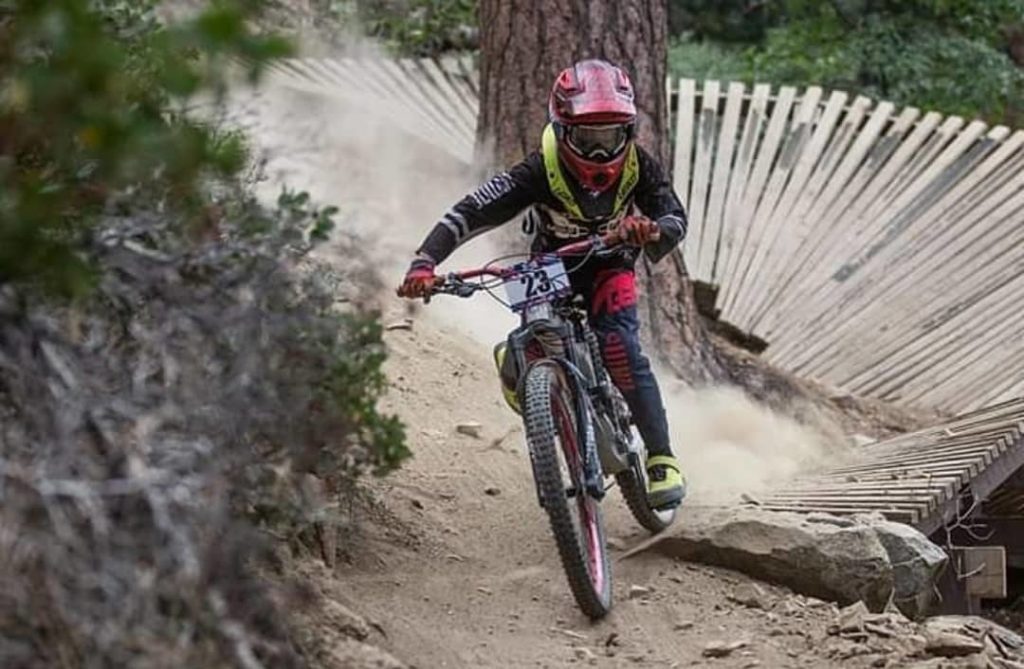
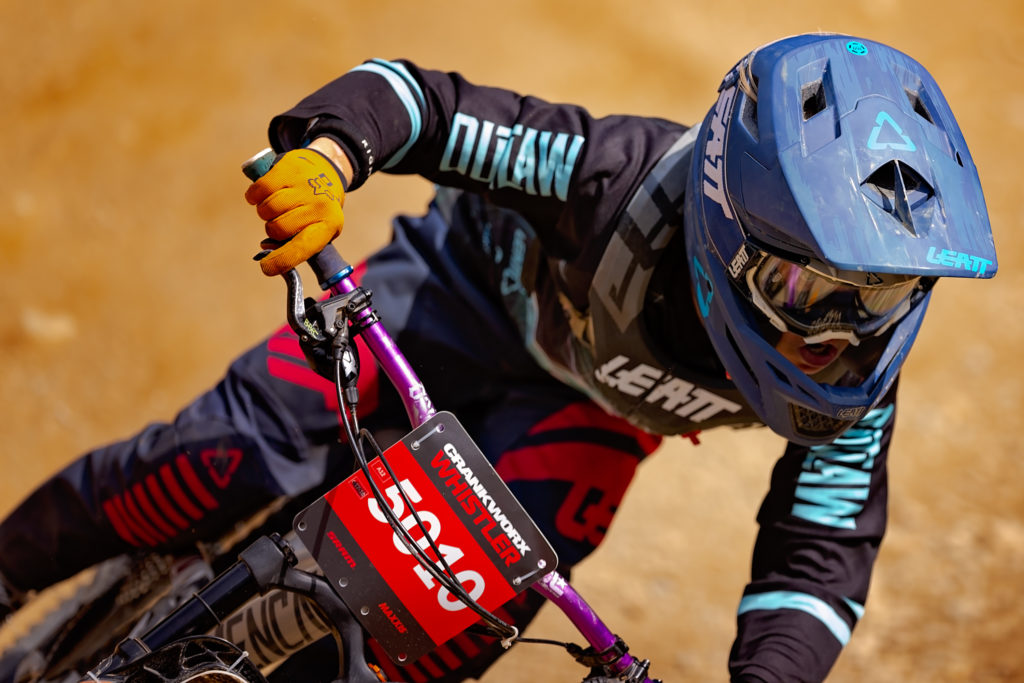
Photo courtesy Outlaw Bike Team/Sundance Mountain Sports Education Foundation12 year old Finley Kirschenmann in the Fox US Open/Red Bull Whipoff. Photo by Chris Wellhausen / FOX US Open MTB11 year old Luke Mallen in the Fox US Open Next Gen Downhill. Photo by Chris Wellhausen / Fox US Open MTB12 year old Fred LaRiviere in the Crankworx Air DH Invitational, Photo by Crankworx Whistler Photographers.
By Howard Shafer – “Howard, I can’t stop!” Jacquette had screamed, careening past me, her bicycle plunging down the mountain road and then disappearing around a curve. We had already pedaled 77 miles and climbed over 9200 feet. With the climbing behind us, we were supposed to be on the easy part, coasting down the far side of Kaiser Pass and looking forward to long, soothing soaks in Mono Hot Springs.
Jacquette Ward starting down the far side of Kaiser Pass before the accident. Photo by Howard Shafer
I tried to catch up to her. My bicycle pounded over the rough pavement. My heart hammered.
“Use your brakes!” I yelled at the empty road, knowing even then how stupid I sounded. A cyclist as experienced as my wife needed to be told about braking?
I tore after her, but I could not catch her until I flew around one last curve and found a hulking, black SUV blocking my path. Beyond it, she lay motionless, her bicycle crumpled, her panniers scattered. Let her be alive, I prayed, leaping from my bike and dropping to my knees beside her.
Her right leg bulged where there should be no bulge. One foot dangled at an ugly angle. Rivulets ran from beneath her deathly still body across the black asphalt and pooled at the edge of the road.
My brain could not wrap itself around what my eyes were seeing. Had I lost forever the woman who had become the heart and center of my life?
That was Saturday, July 20, 2002.
Long ago, doctors had straightened and then fused most of her vertebrae together. In 1960, that’s how they treated the unnatural spinal curvature called scoliosis. When they wrapped her torso in that claustrophobic cast, she had been a twelve-year-old girl. When they finally removed it almost a year later, she discovered, like a beautiful butterfly emerging from its chrysalis, that she had become a woman. Because of her rigid, newly-fused spine, she was never allowed to participate in sports, and until she discovered bicycling, she had just assumed she never could.
A Backroads sponsored bicycle tour through California wine country changed everything. She’d signed up because she wanted to meet new friends after she made the long move from West Virginia to California. Wouldn’t a SAG always be available if the bicycling proved too hard? But already on the very first day, she discovered how much she loved this new sensation of physical exertion as well as the exhilaration she experienced with the bike beneath her and the miles disappearing behind her. She never used the SAG. When she returned home, she began bicycling the twenty miles round trip to work.
The first time we met, we were standing in the food line at a bicycle club Christmas potluck party. She smiled up at me and said I had to try the Chinese salad she’d brought, but when we reached the banquet table, others had already tried every bit of it, and there was none left for us. She claimed this meant she had to make more just for me. Our honeymoon was a 500-mile bike ride in the Canadian Rockies. Soon we were taking all our vacations on bicycles. “I have to bicycle,” she told me. “How would I survive if I gave it up?”
In the hospital, my wife lay tangled in the sheets, her right arm trussed in a blue sling and her right leg hidden by a bulging brown cast. Spiked lines glided across a flickering screen on the blue box behind her bed. Her eyelids fluttered, and she managed a weak smile. I could no longer control the tears clouding my vision. That’s when the doctor, frowning at the image of her fused spine on the x-ray before him muttered, “She should never have been on a bike in the first place.”
I could not stop the anguish in my heart. Had I not tried to surprise her on our seventh wedding anniversary with this foolish trip over the 9176-foot high Kaiser Pass with its narrow and steep roads, she would not now be lying so helplessly in that hospital bed.
Over and over, I relived the nightmare.
Yesterday we had been following delightful, undulating country roads that rolled uphill out of Fresno, first through cool orchards and then through hills warmed by summer. Our bicycles were loaded down with sleeping bags, clothes, stove, pots and pans, tent, and food, but our spirits soared.
Then everything changed. In the distance ahead, shimmering in the heat, we could see a long gash slicing upward across the mountain: the steep 8.5 mile long CA168 grade to Pine Ridge. We got ready for the climb but were unprepared for the road construction that forced us to share the shoulder of the highway with big SUVs driven by tired and sullen vacationers. Monstrous dump trucks roared past. Giant paving machines spewed hot asphalt. Acrid fumes rose around us. Construction noise reverberated through our brains. The temperature climbed toward one hundred degrees.
Then a truck stopped, and the driver offered us a lift. We accepted gratefully and collapsed, exhausted among a load of plastic cones. He dropped us off at the Buckeye Heliport at the top of the construction zone, where we had a spectacular view of the city of Fresno far below us. We congratulated ourselves that the nightmare was now behind us. We did not know how prophetic his choice of drop-off site would be.
Later, when we watched the shimmering gold and orange sunset from our tent on Shaver Lake, everything seemed worth it. We had bicycled fifty miles and climbed 5000 feet.
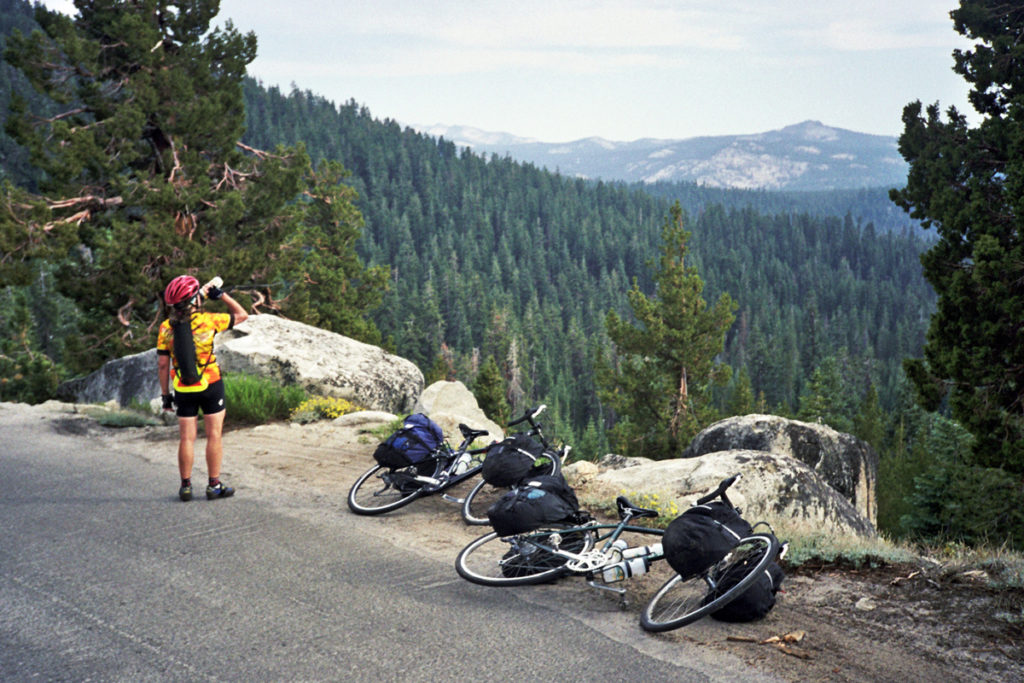
Jacquette Ward resting at the Kaiser Pass Summit. Photo by Howard Shafer
By mid-afternoon the next day, the temperature had passed one hundred degrees again. Pickup trucks pulling speedboats crowded us on the narrow highway. We reached Kaiser Pass about six in the evening on a steep, one lane road, exhausted again, but elated. We marveled at the view: to the west the rich Central Valley smoky with haze, to the east jagged peaks, below us a quiet lake in a lush meadow.
We took photographs and began the descent. After pausing near the lake, breathing in its stillness and marveling at the beauty of this perfect bit of nature, we started down again. I was a little ahead.
Then it happened. She came streaking past me out of control. She might have reached fifty miles per hour before meeting the SUV and failing to pass between it and the roadside boulders. Later she insisted her brakes had failed, but the bike was new.
When I reached her, the world seemed to move in slow motion, somebody else’s world, not mine. This was only a dream. Or a nightmare. I unbuckled Jacquette’s shattered helmet with shaking hands. Her eyes flickered, and she moaned.
Vehicles began to stack up along the road. Spectators collected. Someone phoned for help. She needed a helicopter, but no helicopter came. As the sun set over the mountains, Jacquette began to shiver, but the sleeping bag a good Samaritan donated helped a little. After endless waiting, an ambulance arrived and brought bad news. No helicopter was available that could land at 9000 feet.
So the ambulance carried us forty miles back over Kaiser Pass and down the other side of the mountain to the Buckeye Heliport. Twilight faded. Blackness leaned toward us from all sides. Loaded pickup trucks with blinding headlights whined toward us on the narrow road. We edged around them, teetering on the black edge of nothing.
At the heliport, a helicopter waited, its big rotors whooshing, its fuselage illuminated by the glow of Fresno city lights below us. The EMTs rushed Jacquette into the helicopter, and with a loud thumping sound, it rose into the blackness and then slid downward toward Fresno.
Jacquette had broken the tibia and fibula above her right ankle and fractured her right elbow. She had broken ribs and wrenched her back with its fused vertebrae. But she was alive, and I was grateful. The many directions of the abrasions on her helmet told me she had flipped and bounced more than once, but her head and neck were not injured, and the rivulets running down the road were only water from her Camelbak. The doctors pinned her leg together with a rod and screws and secured her elbow with a plate. Because her right side could not bear weight, she had to learn to maneuver a wheelchair using only her left hand and left foot. Unfortunately, little could be done for her wrenched back, and even today, when it does not receive attention, it begins to spasm. Sometimes she cannot stand up straight.
I don’t know what I would do, if I experienced such a horrific accident, but now I know what Jacquette would do. I also know what she would not do. She would not give up bicycling.
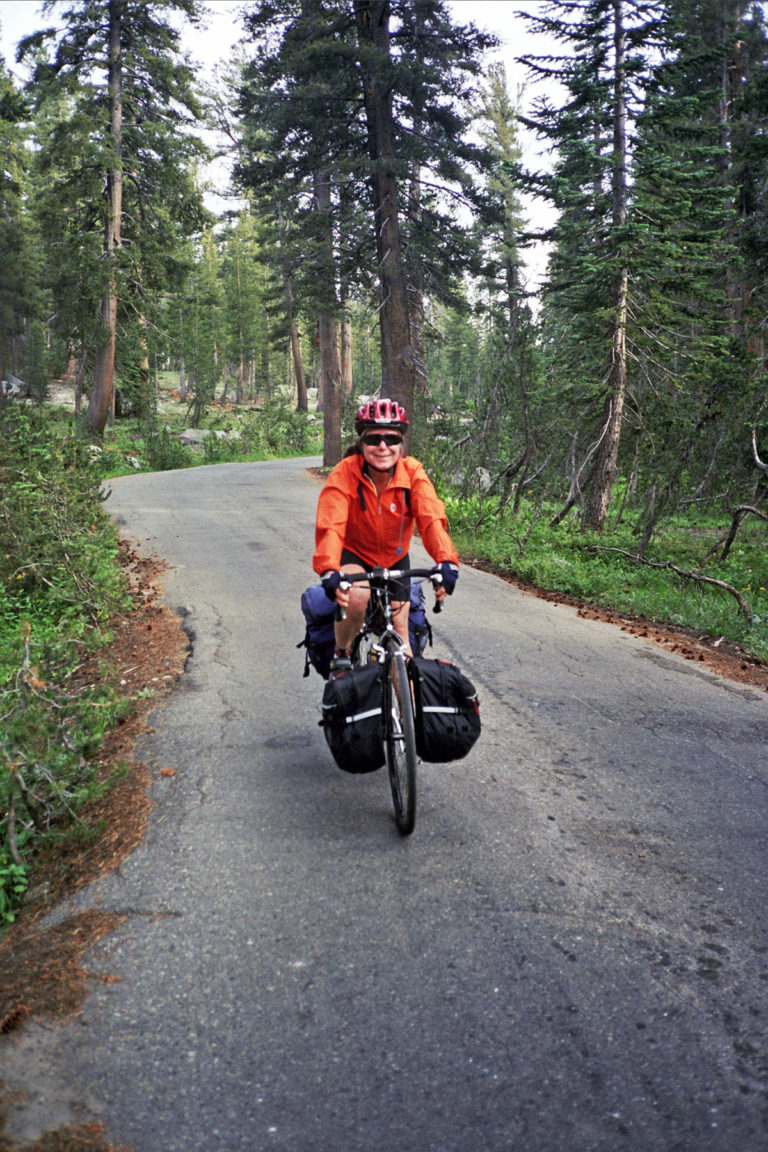
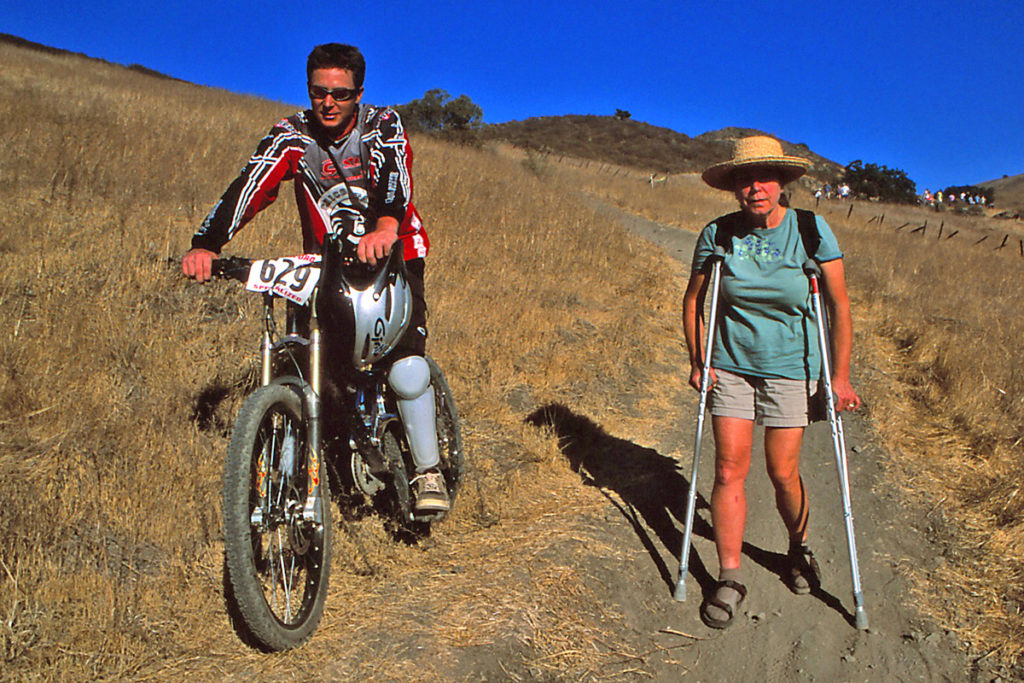
Jacquette Ward returning from her son’s mountain bike race with her son, Corey Ward, beside her. Photo by Howard Shafer
Ten weeks after her accident, she got out of her wheelchair and began riding a stationary bicycle. The next week she hobbled up a trail on crutches to watch her son compete in a mountain bike race. Fifteen weeks to the day after her accident she demanded I accompany her on a twelve-mile bike ride. Soon she was bicycling to work again, a round trip that had grown to thirty miles. The next spring she rode the six-day, 480 mile Go Greenbelt! bicycle tour around San Francisco Bay. She rode it again two years later. In 2008 she persuaded me to bicycle 520 miles down the California coast from Los Gatos to San Clemente to visit her dad. In 2012 we bicycled for a week through the North Cascades on a trip sponsored by Adventure Cycling. Our July wedding anniversary almost always includes a multi-day cycling trip to somewhere. Now, in 2016, she is still looking for new bike riding challenges.
We never learned why she couldn’t stop. A few hours before the accident, she had begun creeping numbly even on the downhills at not much more than five miles per hour. We realized she was exhausted, and we finally stopped for a nap at the side of the road. I’m sure the nap was not enough, and it’s possible exhaustion clouded her thinking. She thought she was braking, but she wasn’t. She refuses to accept this theory, but no one has a better one.
Perhaps the doctor was right. She should never have been on a bicycle in the first place, but she was, and to this day, she still is.
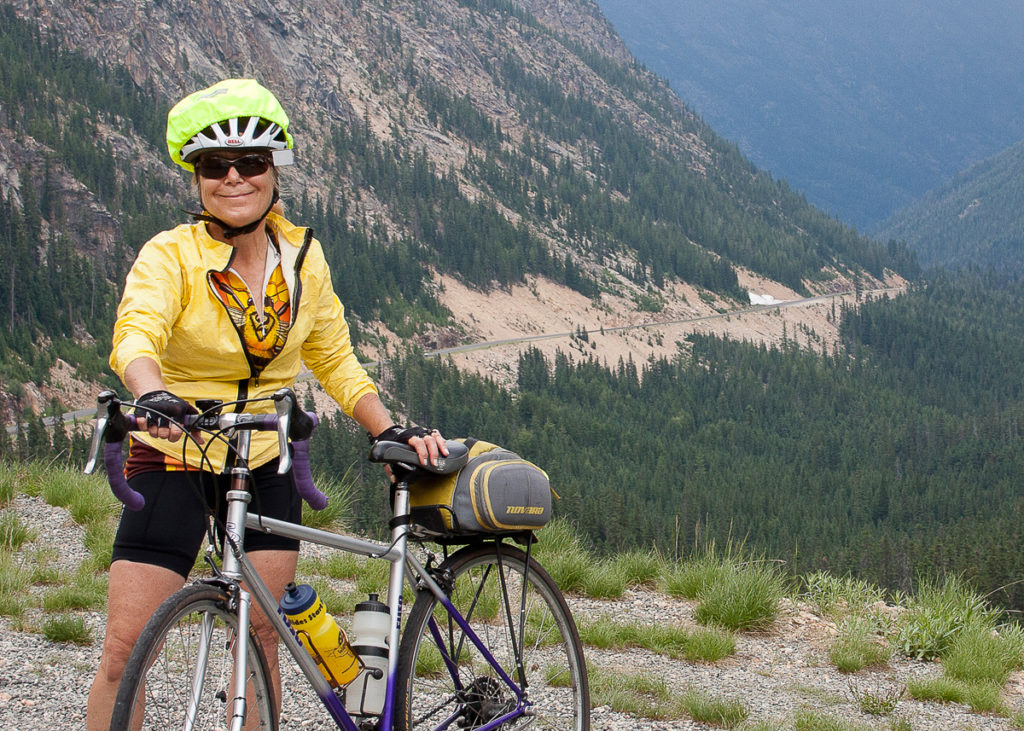
Jacquette Ward fully recovered, with Adventure Cycling at the top of Washington Pass (WA20 in North Cascades) in 2012. Photo by Howard Shafer
By Jamie Morningstar – Last year my husband Steve and I embarked on a new adventure in cycling – riding in tandem. When somebody finds out that we ride a tandem bike, I inevitably get one of two reactions:
(from people who have never ridden tandem) Oh! I’ve always wanted to try riding a tandem with my spouse/kid/significant other!
(from people who have ridden tandem or are close to those who have) Oh! A divorce machine!
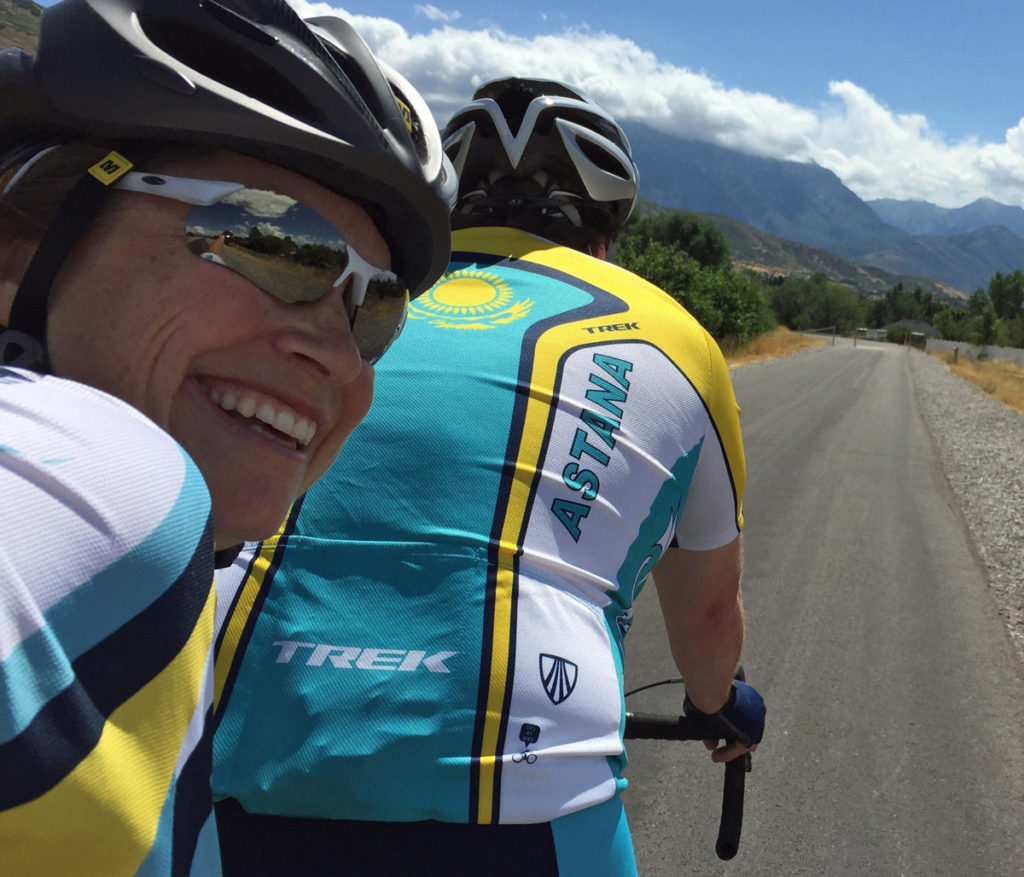
Jamie and Stephen Morningstar on the Murdock Canal Trail in August 2015. Photo by Jamie Morningstar
In our experience, riding a tandem bike requires a ton of communication and a lot of trust. It also makes for some quotable conversations. Here are a few favorite snippets from our first few weeks of tandem riding:
Steve: What the heck are you doing?
Jamie: Oh, yeah, I forgot that if I stop pedaling, you do, too.
(repeat this conversation about 300 times with both of us forgetting repeatedly that our feet move together)
Steve: Wait. If I have to spit, is it going to go on you?
Jamie: Dunno. Only one way to find out! (never fear, it didn’t)
Steve: Coasting. Stopping.
Jamie: Trusting.
Jamie: You know I say that so you don’t forget that if you don’t balance us I’m going to die.
Steve: Yeah, I got it. Jamie: Don’t forget, I’m the one the cars are going to hit first!
Steve: With you on here, it’s like I have a tailwind all the time!
Steve: If you’re not nice to me, I’m going to fart.
The Benefits
The benefits of persevering through those first few tough rides have been huge. Riding together, not just side-by-side, is a whole new way to experience the outdoors as a couple.
I think we’re a darn good tandem pair and are learning to communicate better and better on the bike. We don’t panic unnecessarily and are always ready to laugh at ourselves, both of which seem to be necessary attributes of a tandem pair. Steve is letting the whole “Captain” title go to his head a bit, but since he gets hit with bugs in front and I don’t as stoker (the backseat rider), I’m calling it an even trade.
And as an added benefit, after getting the hang of our tandem bike I started taking our two daughters (ages 7 and 9) out for rides. I was surprised by how deeply I enjoyed sharing my love for cycling with my girls and how quickly they reciprocated that interest. Thanks to tandem cycling, for the first time in a long time I was able to get a good workout in and spend quality one-on-one time time with my kids.
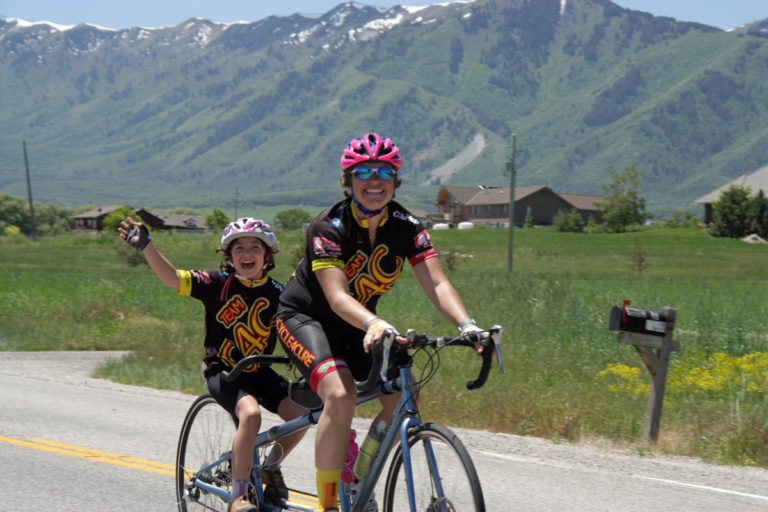
Jamie and Sasha Morningstar at Little Red Riding Hood in June 2016. They completed the 70-mile course. Photo by Stephen Morningstar
My girls and I enjoyed riding together so much that that my older daughter, Sasha, and I started training fairly seriously and completed a full century together on the tandem this fall. We were proud finishers of Goldilocks Provo 2016, persevering through wind, rain, and seven-and-a-half hours in the saddle. Lugging 70 pounds of kid, 40 pounds of bike, and myself over 103 miles was one of the hardest things I’ve ever done, but the joy of finishing together and the pride in our joint accomplishment was well worth all the effort.
Jamie, WanYing, Stephen, and Sasha Morningstar on the Murdock Canal Trail in August 2015. Photo by Jamie Morningstar
Finding a Bike
For my family, tandem cycling started as an experiment. We know several couples who purchased a tandem bike, rode it once, and immediately sold it – it just wasn’t a good fit for their personalities. So, not knowing whether or not we wanted to commit to tandem cycling for the long term, we decided to purchase a high quality used tandem bike in good shape. We figured that if we bought a used bike and ended up not liking or not using it we could probably sell it again for close to what we bought it for, so it was a pretty low-risk experiment. To lower your risk even more you could rent a tandem, but we found that all of the tandem rentals around us were beach cruiser-style models and we knew that when we took the plunge we wanted a road bike.
Bike sizing made our purchase decision more complicated. We wanted a tandem that either my husband (5’ 10”) or I (5’ 5”) could captain and one that I could ride stoker on but would also get small enough for our kids. Clearly this meant that we would be compromising on bike fit, but since this was an experimental purchase we decided that flexibility was key.
We ended up purchasing a Co-Motion Periscope Torpedo, a high-quality tandem that was a little too big for me and a little too small for my husband, but doable for both of us. We ended up really loving our tandem and purchased another used Co-Motion a few months ago, fitting one to my husband and one to me.
Getting Started
Once you have a bike, strap on your sense of humor and hop in the saddle! Even if you’ve been cycling for years, you’ll probably find that riding a tandem bike has its own learning curve. As with every aspect of cycling, I’m sure there are various perspectives on tandem technique. The tips below are what has worked for us and what seems to be internet best-practice. If you have a different approach that works for you, by all means do it!
Mounting the bike
First the captain gets on, straddles the top tube with both feet on the front, and puts his or her hands on the handlebars to stabilize the bike. Next the stoker gets on and puts his or her feet on the pedals, sitting on the saddle. This provides a much easier start than both riders keeping one or more feet on the ground, but can feel scary for the stoker. Captain, keep in mind that anything you do to wobble the bike will be very disconcerting to the stoker, so keep the bike as stable as possible.
Starting to ride
The benefit of the stoker keeping both feet on the pedals is that they can provide good forward momentum while the captain’s feet find the pedals. And we all know that staying balanced is much easier when you’re moving forward.
The stoker then backpedals to the point where the knee of the captain’s leading foot (whichever foot they like to start the stroke with) is a little above parallel to the ground, ready to stomp that pedal into motion. Captain, take a wide stance with your feet – failure to do so inevitably results in a pedal to the shin when the stoker backpedals.
Captain, now you put your leading foot on the pedal and keep your butt off of the saddle until you’re pedaling safely. Yes, this means that both of you are now propped up on the captain’s non-dominant foot. Did I mention this is an exercise in trust?
When we start, one of us gives a 3-2-1-going command and we both start pedaling strongly (pro tip: if you have a kid stoker, they’ll love being in charge of the countdown). Note that it’s important that you both pedal – the captain cannot start alone! Pedal smoothly and after 2 or 3 rotations you’ll start to feel balanced and in control. Commit to the start – a timid start makes it much harder to balance.
Stopping
The stoker has no control over steering, shifting, braking, and they can’t really see what’s in front of them. So, Captain, that means it’s your job to communicate clearly when you’re approaching a stop. We’ll usually call out a “downshift” and then a “coast” to tell what the stoker to expect.
Captain, remember that you’ll be starting a 35-40 pound bike with a stoker sitting on the saddle – you want to aggressively downshift before stops or it will be a very challenging start.
Also, Captain, you want to clearly call out the “coast” or else your stoker won’t know to let off on the pedals and will keep happily pedaling forward, pushing you forward when you wanted to slow. Clear communication from the captain is key to happy tandem riding.
Stoker, you keep your feet on the pedals. There’s no reason to put your feet down. Captain, you keep everybody stable. Now you can prep to start again as described above.
Turning
In general, as long as the stoker doesn’t fight the turns there’s not much to think about with turning. Captain, you’ll corner as if you’re riding your normal bike, except that your bike is twice as heavy and twice as long. Stoker, try to stay neutral.
More commands
Verbal communication on a tandem bike is the key to feeling confident and staying safe. Here are some other helpful commands to use:
“Bump” – Captain, your stoker can’t see what’s coming, and that means that when there’s a butt-crunching bump it will catch them completely and painfully by surprise unless you tell them it’s coming. Call out the bumps, Captains, or prepare to endure Stoker wrath.
“Shifting” – just like you don’t want to shift your road bike under load, you want to ease off of the pedals a little when shifting your tandem, especially when you’re preparing to climb. Calling out “shift” will tell your stoker to ease up on the pedals for the shift to complete.
“Off” or “Coast” – when you don’t want your stoker to give 100%, tell them so by giving them an “off” or “coast” command. If you don’t, they’ll unwittingly be fighting against your coast.
Pick a familiar, flat route and give it a whirl. Captain, know that in the beginning you need to verbally communicate every change to your stoker. Stoker, if the captain needs additional “reminders” to communicate, you have the ability to drive the pedal into his or her shin at the next stop. Stokers may not be able to see what’s in front of them, but they still have plenty of power.
Parting Advice
If you’re considering going tandem, go for it. Find a used bike in decent condition so you can re-sell it again if things don’t work out. Keep your sense of humor at the ready. And, trust me (this is the voice of experience talking): try to suppress the screams of terror bubbling up within you the first time you ride stoker. The shrieking only distracts the captain.
By Shannon Boffeli – Warm temperatures and a usually dry climate led up to this year’s Park City Point 2 Point.
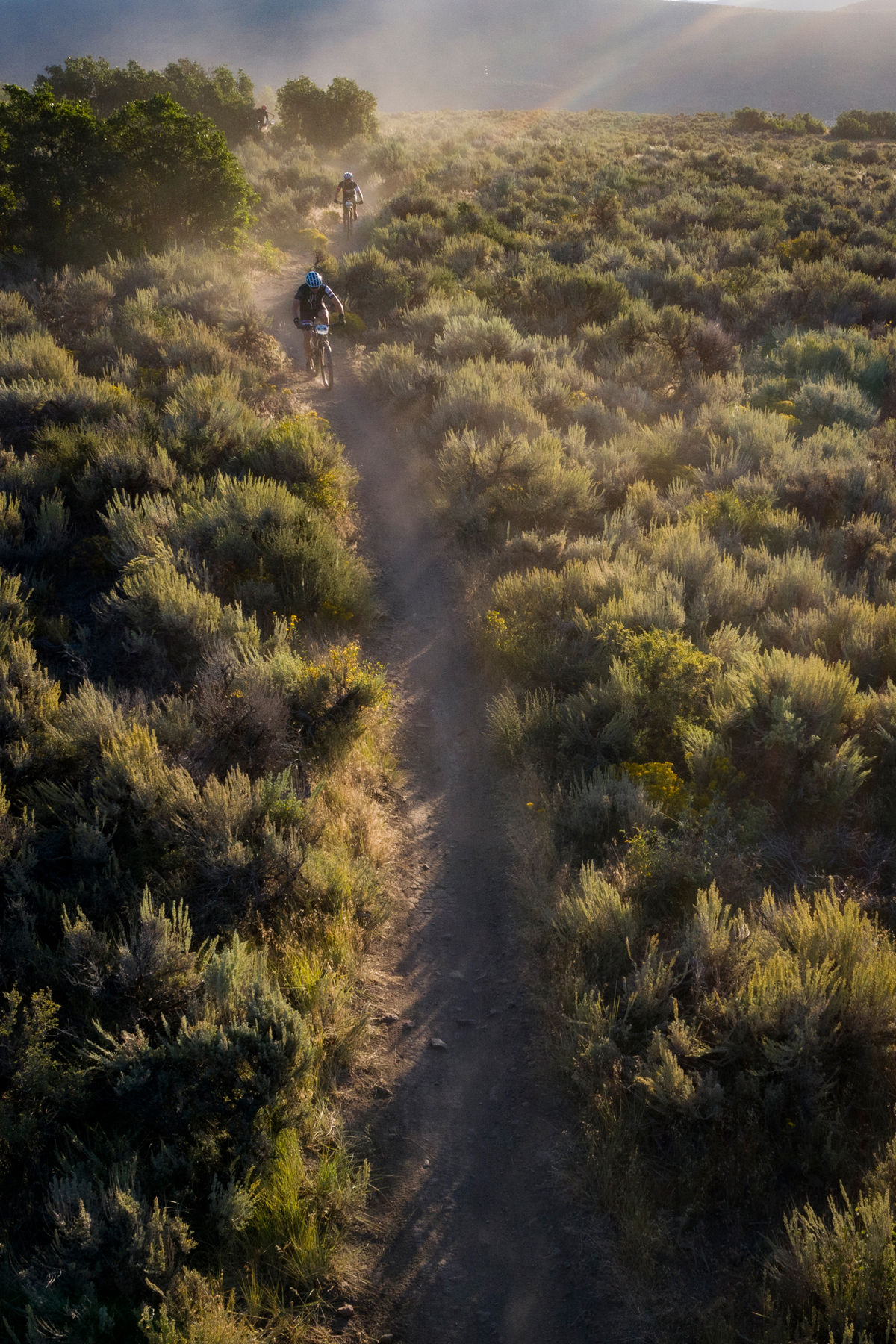
It was clear that year eleven of northern Utah’s premier mountain bike event was going to be a challenge, not just because of the 75-miles of singletrack and nearly 12,000 feet of climbing, but the added challenges of staying hydrated in almost 90-degree temperatures.
Race director, Jay Burke, spent the days leading up to the race driving home the importance of drinking throughout the grueling event. It’s often said the Point 2 Point is tougher than even the Leadville 100 and summer heat can make it seem impossible.
Burke’s coaching paid off as 289 of the 344 starters completed the harrowing event, a testament to the toughness of every rider in the Park City event.
The toughest rider of all was red lantern winner, Greg Paul, who dug deep to come in as the final finisher with a total time of 12 hours 41 minutes and 51 seconds. Paul proved even bilateral knee replacements couldn’t keep the 50+ competitor from conquering one of the toughest challenges in the sport of mountain biking.
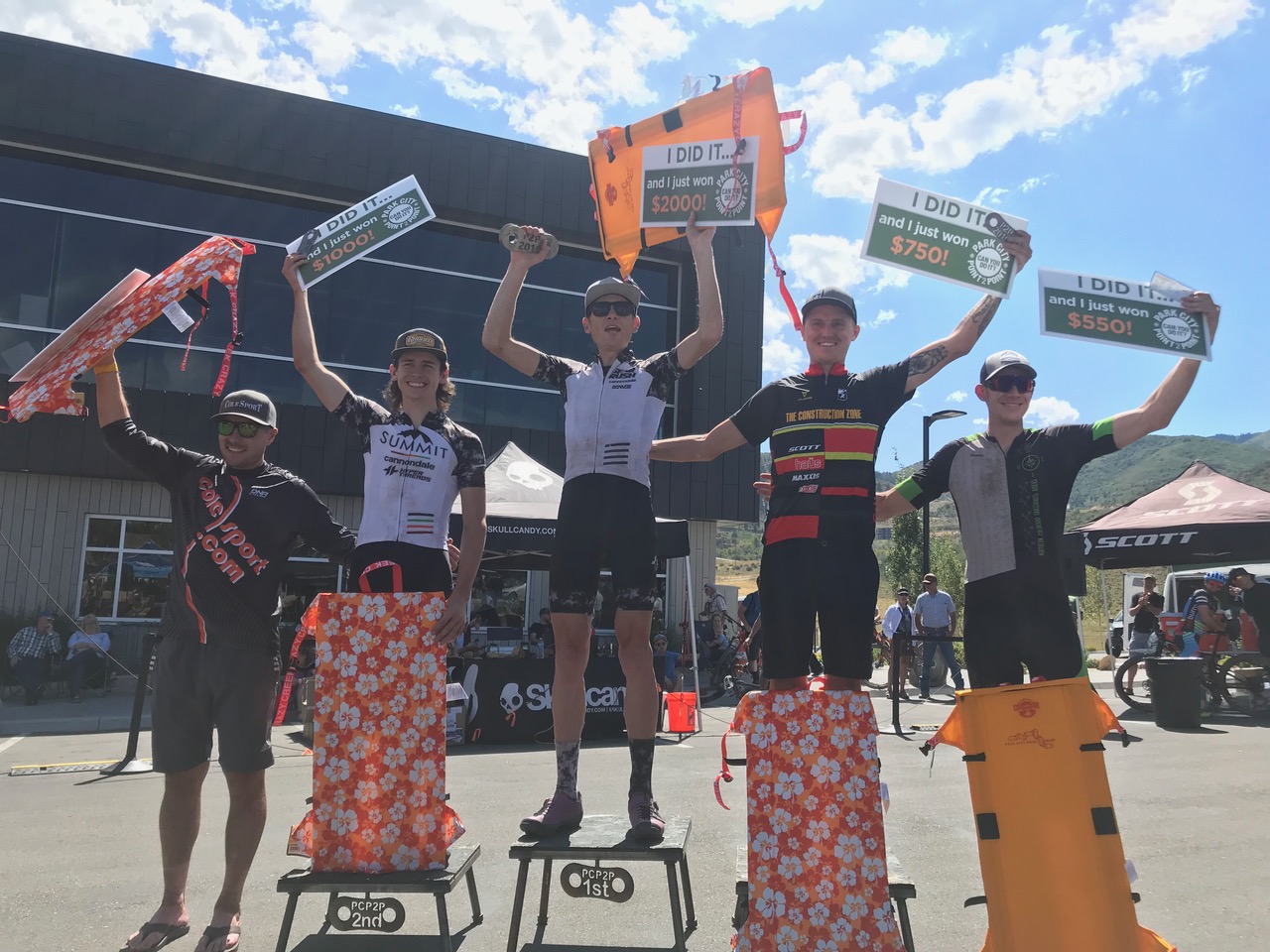
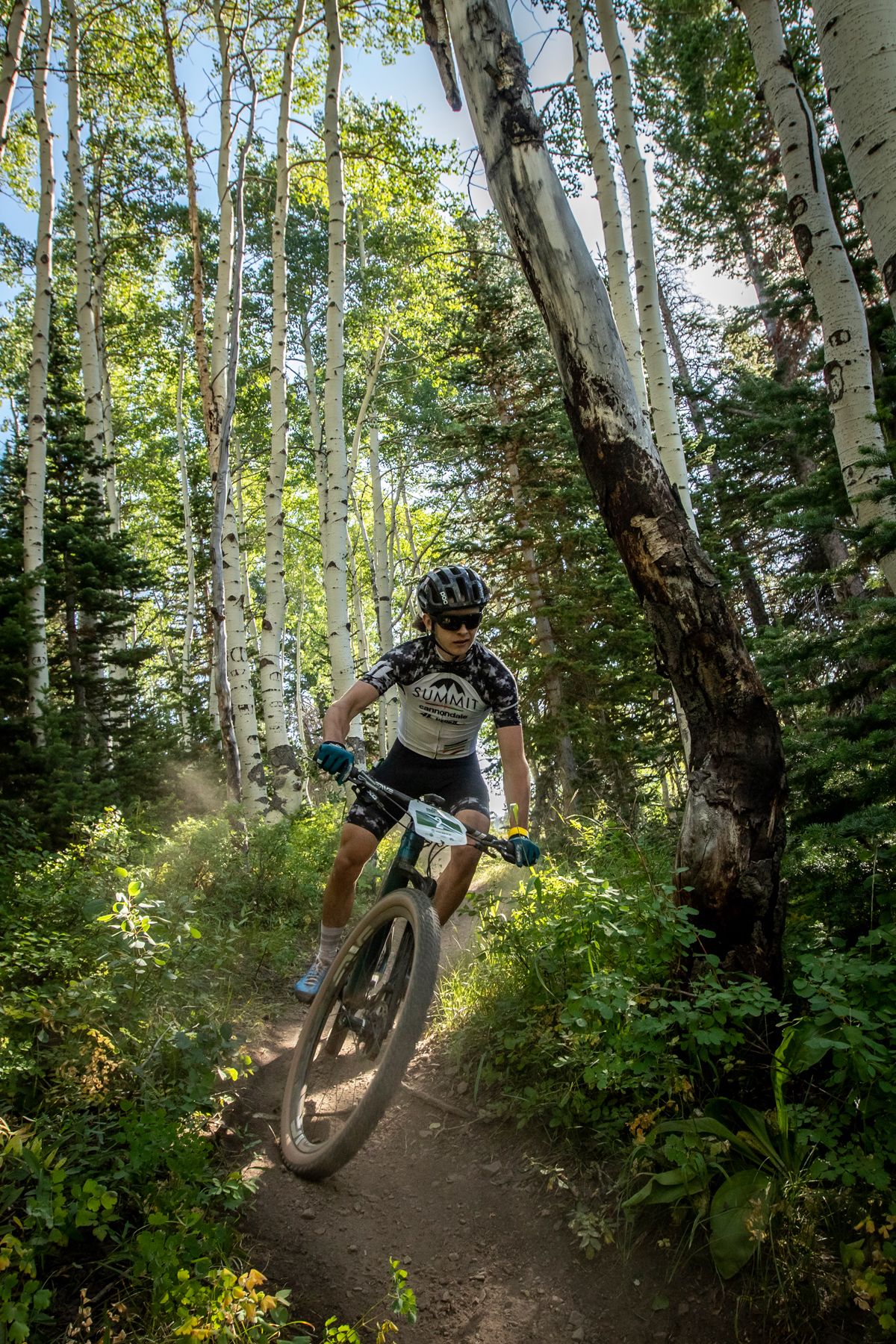
The fastest time of the day went to northern Utah local and 8-time Point 2 Point winner Alex Grant (Gear Rush/Cannondale). Grant fought hard to recover from a crash on the tortuous John’s trail then used his now-patented move of dropping the hammer on the Armstrong climb to open roughly a minute gap on Zach Calton (Hyperthreads/Summit).
Calton stayed as close to Grant as anyone ever has at the P2P but couldn’t claw back the minute he needed to reach the lone leader.
Grant finished with a time of 6:06:11. Calton crossed the line in second just over a minute back.
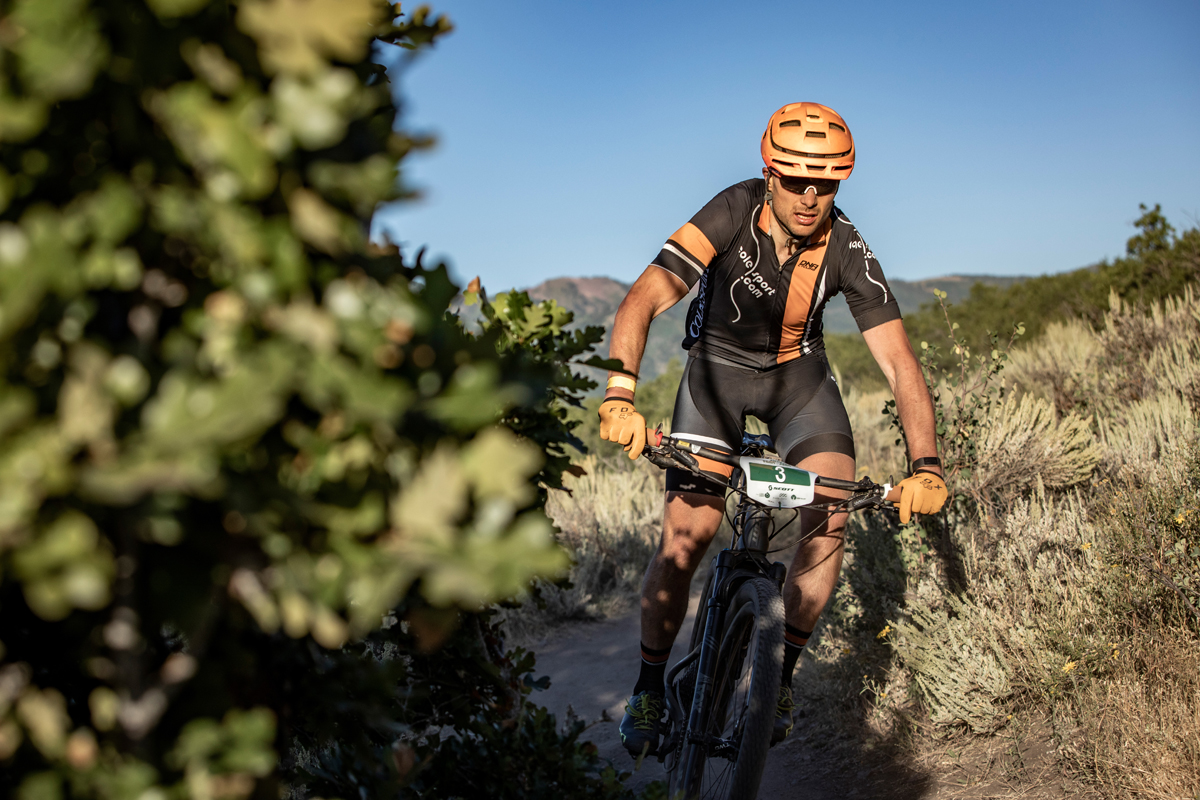
Kyle Trudeau (CZ Racing) rode strong throughout the day to finish third. Followed by early race leader Sam Sweetser (Cole Sport) in fourth. Sweetser is one of a very select group of riders who have completed all eleven editions of the Park City Point 2 Point.
The final podium spot came down to a sprint with Ben Parman just squeezing in front of Justin Lindine and Brian Scarbrough.
The women’s race was a tight battle most of the day between previous P2P winner Evelyn Dong (Pivot/NoTubes) and Caedran Harvey (Fitzgerald’s). Dong led most of the day but after the feed zone at mile 50 just a minute separated the two.
“I felt like I had the greatest race going up to that point,” Harvey shared after the finish. “I saw Evelyn at the feed and I really felt like I might catch her but as soon as I left the feed my legs just stopped.”
Evelyn continued pushing over the last 25 miles not knowing her challenger was struggling and by the finish she had a 13-minute gap in hand.
Harvey persevered and rolled in second.
Third place went to road racing professional and course record holder for the Shenandoah 100 Andrea Dvorak (Cutaway Racing).
Meghan Sheridan (Bingham Cyclery/Peak Fasteners) put in a strong performance throughout the day to take fourth followed by her teammate and current 45-49 women’s marathon national champion Anne Perry (Bingham Cyclery/Peak Fasteners).
After the event, riders relaxed in the expo area enjoying the onsite food and sharing their stories of triumph over one of the toughest single-day mountain bike courses in the United States.
Shannon Boffeli is the managing editor for mtbracenews.com and part of the @pearlizumi_pivotmtb_team
Cycling West and Cycling Utah Magazine’s Fall – September 2019 Issue is now available as a free download (20 mb download), Pick up a copy at your favorite Utah, Idaho, Wyoming, Nevada, Montana, W. Colorado, N. Arizona, and N. California bike shop or other location!
Cycling West and Cycling Utah Fall 2019 Issue Cover Photo: The peloton rides past Rockport Reservoir during Stage 5 of the 2019 Tour of Utah. Photo by Jason Porter
Contents
Ben Hermans Wins 2019 Larry H. Miller Tour of Utah –page – 3
Seth Parsons – Tips For Year-Round Riding on a Bike Friday –page – 4
A Winter Cycling Camp Helps Cyclist’s Mental Health –page – 6
Riding Blind Part II: The Summit Challenge – In Tandem –page – 7
Book Review: The Adventures of a Girl Called Bicycle –page – 8
Interior Department: Ebikes to be Allowed in National Parks and Most BLM Land –page – 9
Free Bikes 4 Kidz Seeks Bike Donations –page – 10
Off Season Nutrition: What Does Eating Clean Mean to You? –page – 10
The Relationship Between Cyclists and Police Officers –page – 11
Study: Safety of Different Types of Protected Bike Lanes –page – 11
Training Specificity Throughout the Year –page – 12
5 Tips to Make Drivers Notice You This Fall –page – 12
Bike Collective Wins Planet Bike Super Commuter Award –page – 13
Tour of Utah Photo Gallery – A Few of Our Favorite Shots! –page – 20
Park City Point 2 Poin: Evelyn Dong and Alex Grant Conquer the Singletrack –page – 30
Tour of Utah Photo Gallery – A Few of Our Favorite Shots! –page – 32
Report: City Bike Stress Rankings page – 34
Bike Path Planned for US 50 in Lake Tahoe page – 34
Entry to Driggs, Idaho’s Horseshoe Trail System to Improve page – 34
Comments Needed on Mountain Biking Idaho’s Nez Perce-Clearwater National Forest page – 34
The Bicycle Art of Mindy Larson –page – 35
Why Ride a Recumbent Bicycle? –page – 36
Book Review: Magic Spanner by Carlton Kirby, A Look Behind the Scenes of Cycle Racing –page – 37
By Roger Crandall – The Bitterroot 300K is a must do cycle tour for your bucket list.
Trail of the Coeur D’Alene
I’ve heard the rumors that there were fantastic bicycle trails in Idaho and that they were around the Coeur D’Alene area; but where exactly and what they were like no one could tell me from first-hand experience. My wife Jael, the hero of this story, said we should go up there during the UEA weekend in October and check them out. We went on a Wednesday and returned on a Sunday. We managed three days of riding up and back on the “like butter” smooth Trail of the Coeur D’Alene. Two of our days were rainy and cold but still enjoyable since the scenery was jaw dropping beautiful and the bike trail looked like the yellow brick road with it covered in golden leaves. Many of the small towns had closed for the fall and winter. The worst part was we were also missing the high point, the “Crown Jewel of the rails-to-trail system” in our country, and one of the top 3 trails in the world. What we were missing was the world famous Hiawatha Trail, only open from May 28-September 25. We were left to day dream about a return all winter and spring waiting for the balmy days of summer.
Views from one trestle to another we had already crossed. Photo courtesy Roger Crandall
Planning for the Big Trip
Since my wife had a summer job with only 2 weeks off at the end of July 2017, I tried to recruit any and all of my cycling friends or anyone who had ever rode a bike! Finally my two best friends decided to go but we had to put off the trip to the end of May, then early June, then late June, then early July, but finally we were ready to go in mid-July. But wait, hold the presses, they both cancelled on me the day before we were to leave. In fact, one guy was in Chicago already and the other had band practices to do. Madder than hell and ten minutes later, I joined up with a Wasatch Mountain Club river trip on the Salmon and Snake Rivers for 10 days and I left 12 hours later. A whirlpool undertow on the Salmon flipped me out of my kayak and almost killed me but that’s another story!
By satellite phone I texted my wife, “Sigo vivo”, I’m still alive. And though she couldn’t sleep and was fighting a horrendous tooth infection while having to be in charge of her school Esperanza Elementary, her vacation finally came and she rose to the occasion like the heroin she is and said, “Honey, if your buddies are letting you down, then I’ll go with you”. An aside: (Men, if you think your wives can’t do what you are doing, think again!) It was time to change from my trusty old steed and touring bike that took me from Chicago to Mexico, Central and South America for two and a half years and get out our old Santana Cilantro tandem and make this a first time tour for my courageous wife from Costa Rica. You must know, this is the woman who I taught to cycle at 35 years old, and who suffered a broken tailbone in a bike crash in Snow Canyon some years ago. She doesn’t even cycle to work two miles away because there are cars on our West Valley City side streets! She ended up tough enough to put in two of the hardest days of riding I’ve ever done! Harder than crossing the Andes from Chile to Argentina and she did it on her first ride, and that’s heroic!
The Bitterroot 300 Trail
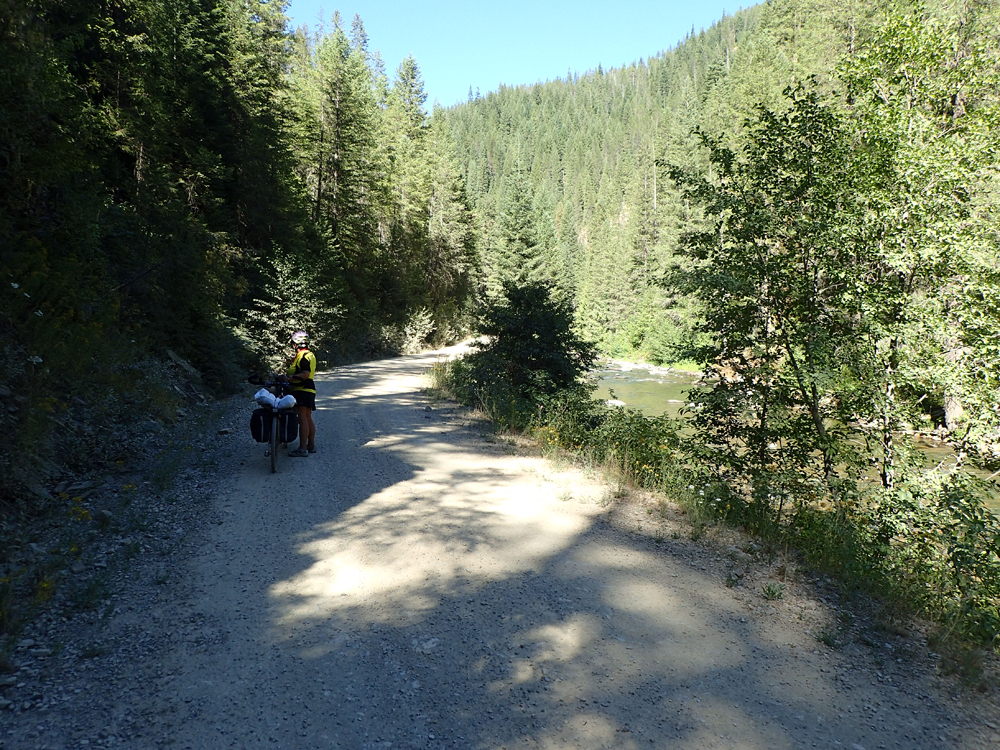
So what is this Grand Tour that every cyclist in the mountain west must do? The Bitterroot 300K really can be 3 tours in one. This tour can include bike packing, normal bicycle touring and camping, and European style touring including hotels in small towns. You can do this via a touring bike or road bike for the paved 72 miles of butter smooth bike trails and 48 to 61 miles of country roads. To complete this circle on the Northern Pacific Multi-use trail, the Route of the Hiawatha, and the Old Milwaukee Scenic Alternate Trail, I’d recommend a mountain bike or good gravel bike. Because we used our tandem with panniers in front and back with things piled on top of those front and rear racks we were going to really suffer on the gravel. We couldn’t have done it because the bike lacked great climbing gears except for the fact that this was all done on railroad grade trail at 2 and 3 percent grade.
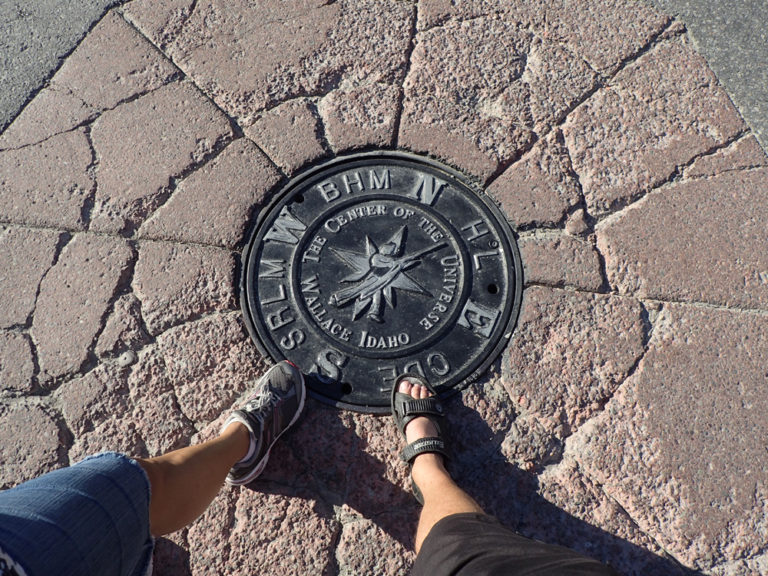
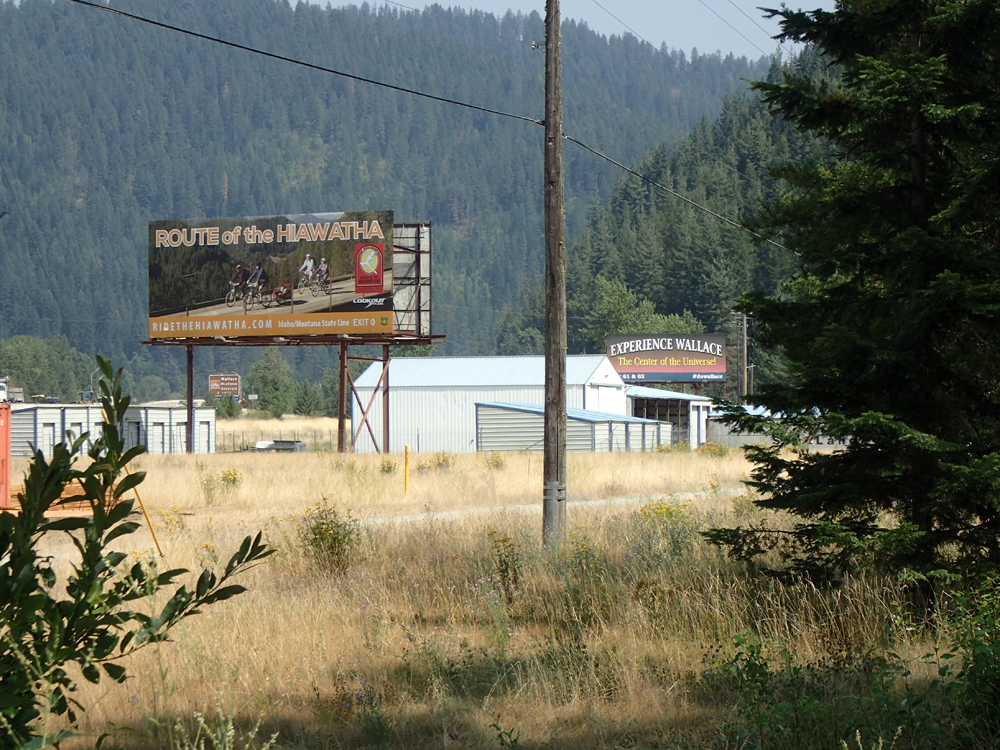
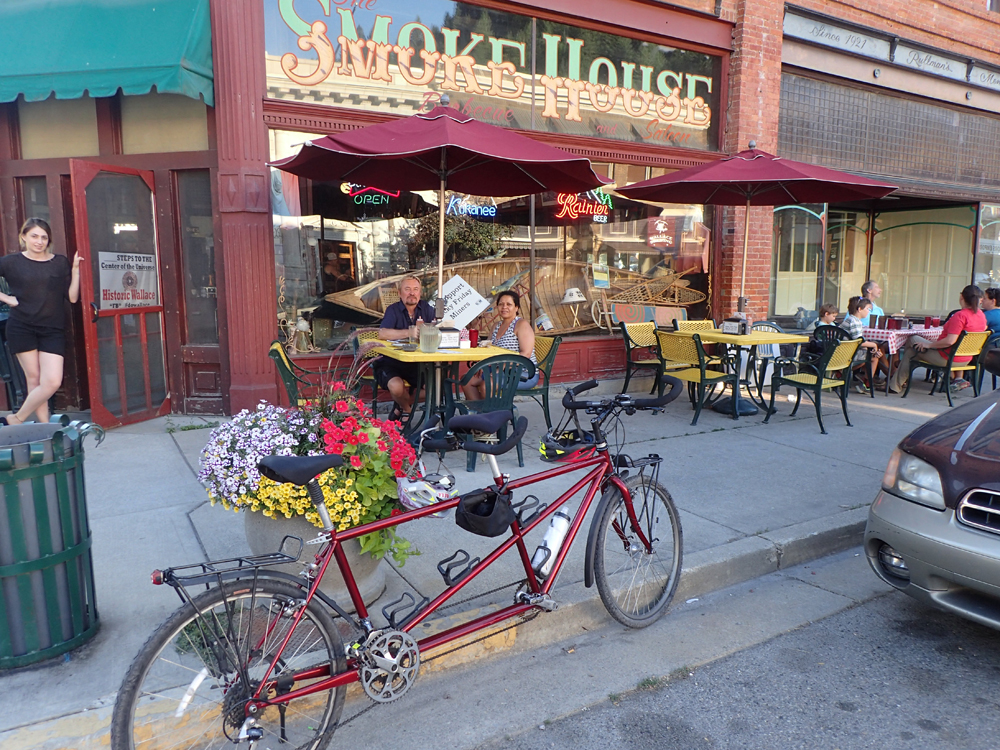
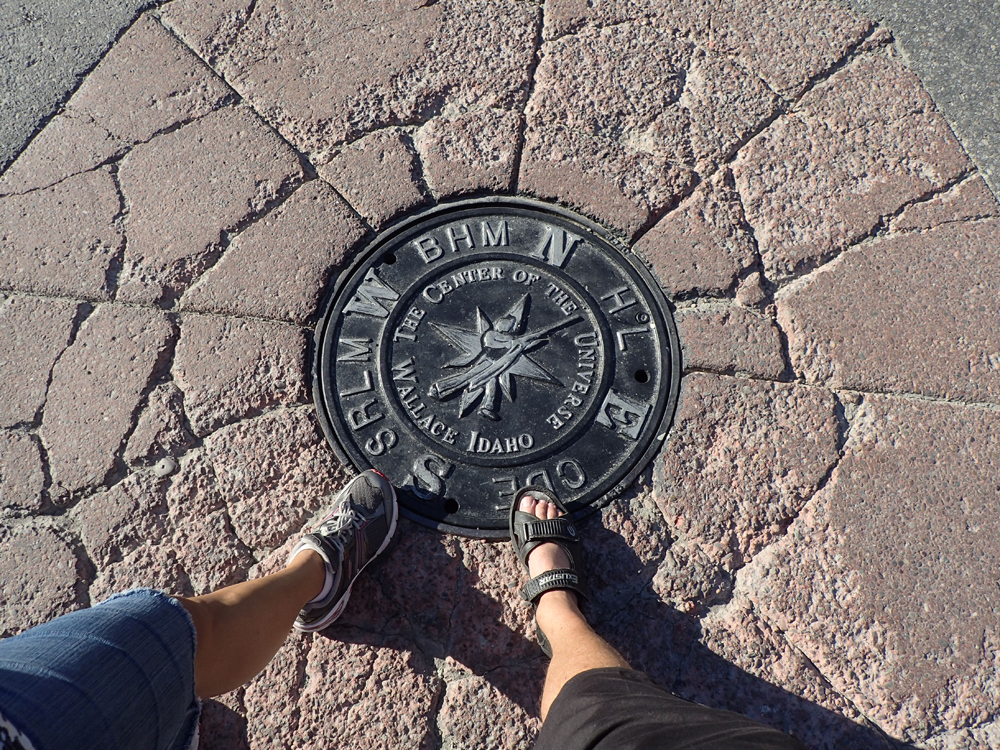
Here is how we did it: but you could do this many different ways, both easier or harder to fit your style. We started in Wallace, ID on (or should I say, under) Interstate 90. From Salt Lake City all you have to do is go north on I-15 and make one left turn on I-90 up around Helena and you are there some 9 hours and 650 miles later. Wallace is a “mine owners” town with great architecture and terrific restaurants. It’s more authentic than Park City and the residents truly know how to fight for their rights to survive. In 1976 the Interstate Hwy. commission wanted to bulldoze half the town to put the highway through on level. Because they never did an environmental study the towns people took it to the Supreme Court and won so the highway had to do a “fly-over” to go around and above the city. But with all the great signs up on top telling you there is something special down below, only the fast driving idiots heading to Portland or Seattle wiz by and say, “oh look, cute town” and never stop. You can stand in the middle of the street in the center of town and photo bomb your feet by the man hole cover that proclaims you are at the ‘Center of the Universe” and no one will bother you or hurry you on your way.
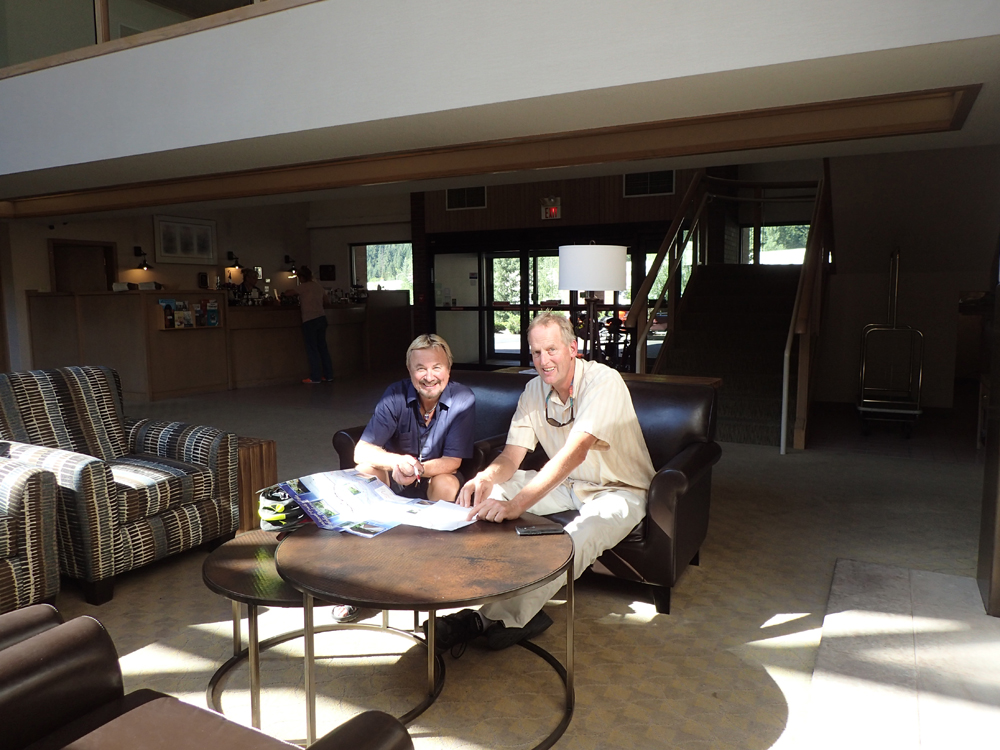
The place to stay without a doubt is the Wallace Inn; bike friendly, best pool, sauna, Finnish bath, hot tub and is where the “Prime Minister” of the bike trails works. The Man, The Myth, The Legend, and The Prime Minister is Rick Shaffer your super contact person on all things pertaining to biking up there. ([email protected] 1-800-643-2386 or cell: 208-691-9169) He will answer all your questions give you hand written maps detailing every step of the way, and he knows every foot of this Bitterroot 300 Kilometers Trail, the entire 185 mile loop. Almost everyone up there knows him or has heard of him so you will be in good hands with Rick.
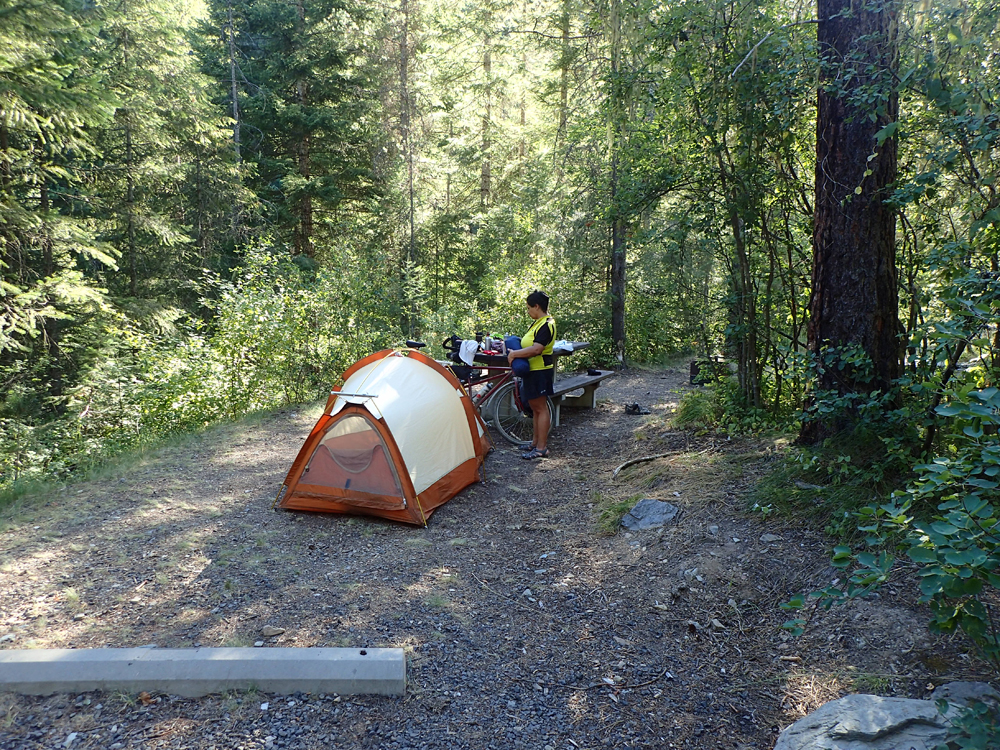
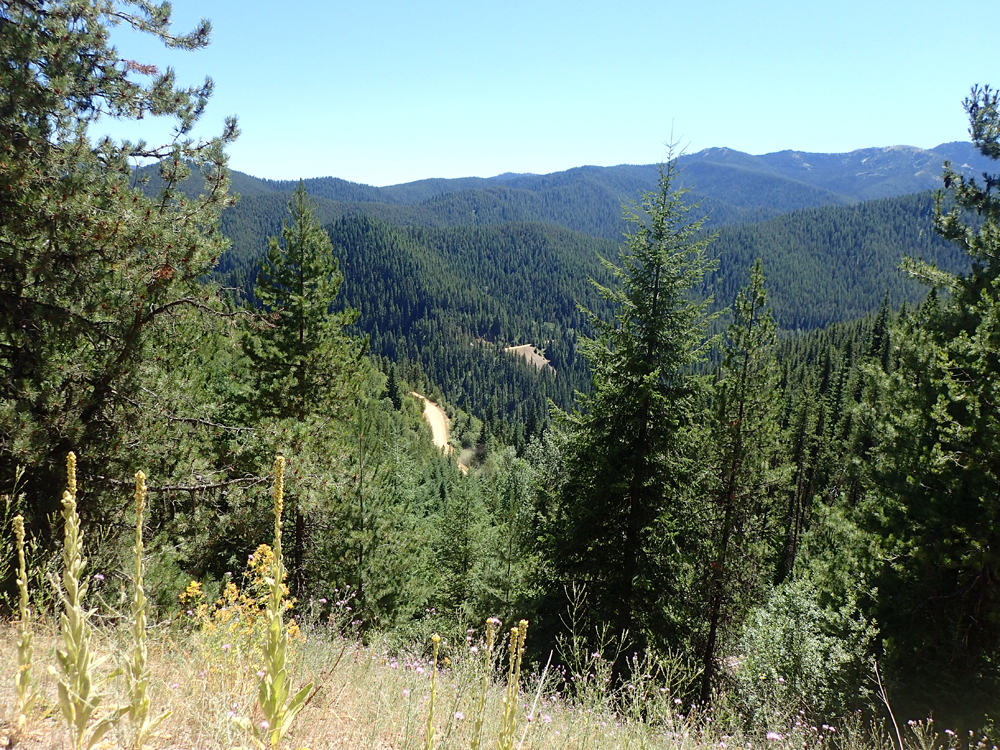
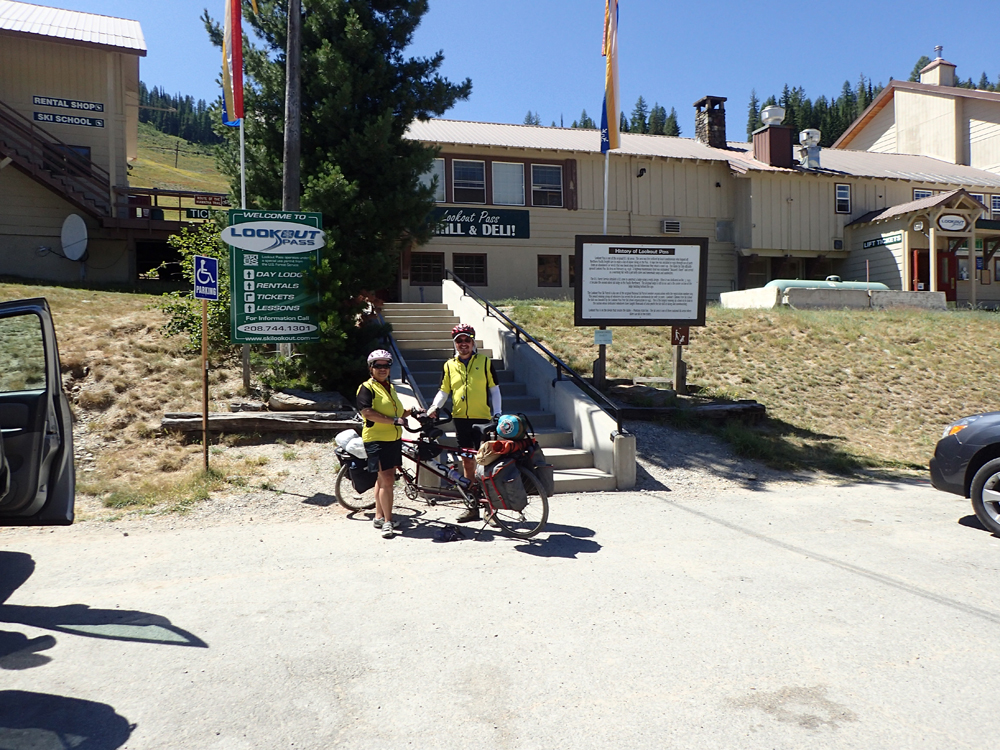
We left Wallace on day one headed east to Mullan but after just those 7 miles the paved trails ends and the gravel begins. We peddled into the wilderness all day and finally arrived at the Lookout Pass Ski Area where you can rent bikes and get a shuttle to the East Portal of the Hiawatha or you can skip this entire ordeal and get a shuttle from Rick in Wallace. We had to press on for more hours of struggling to get to a wilderness campground that had only two features to recommend itself: a small stream for water and bathing and lots of huckleberries.
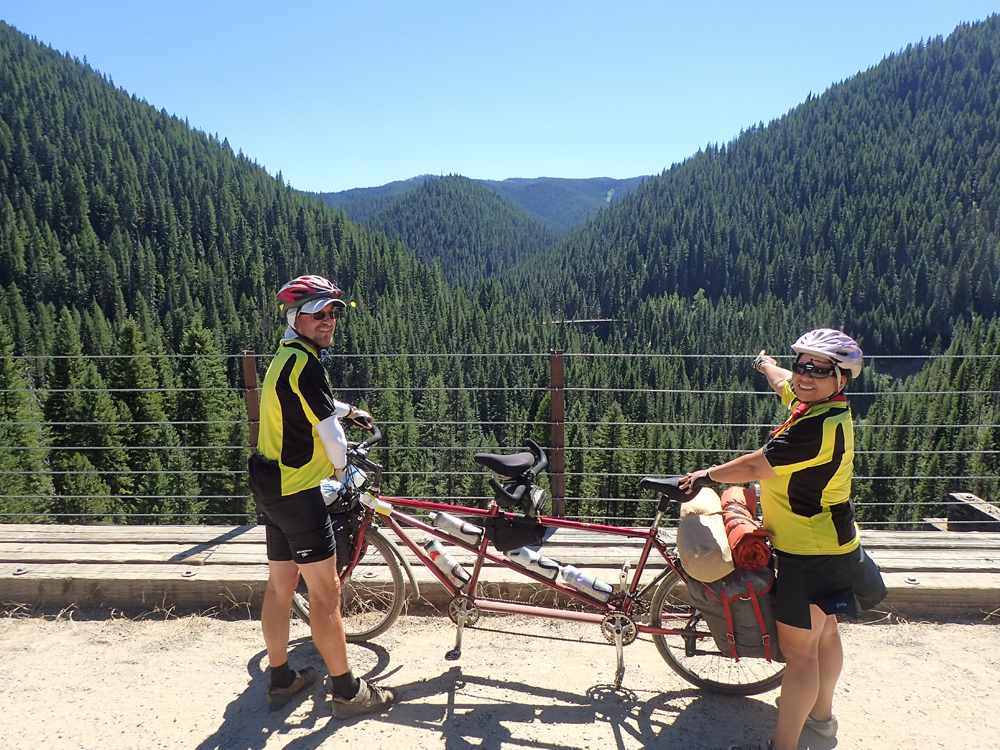
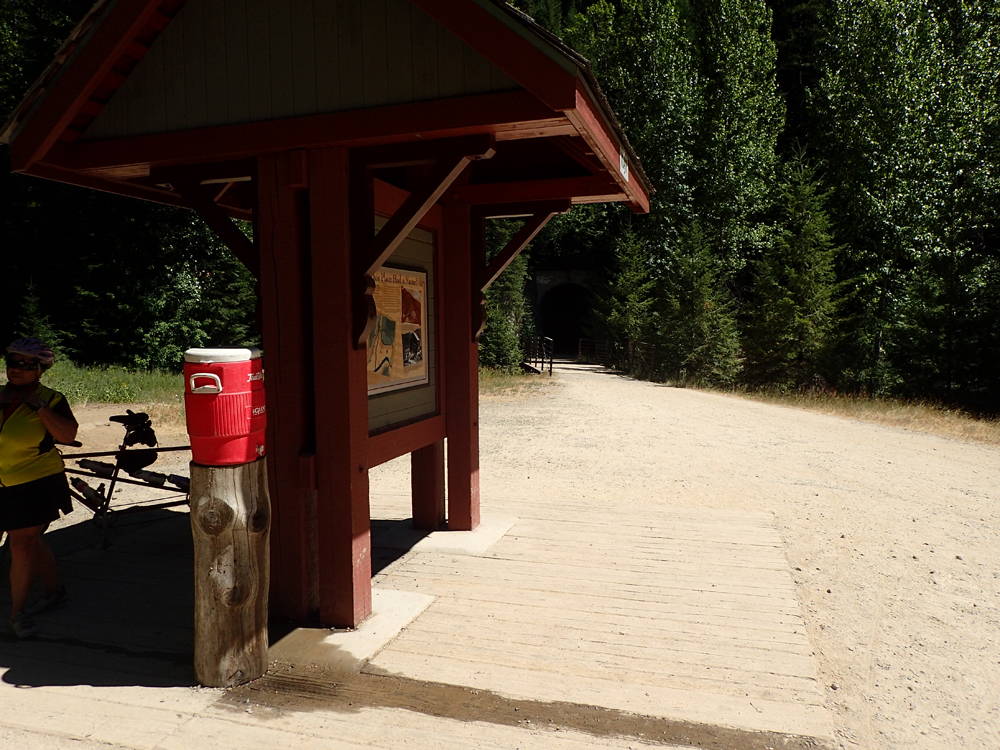
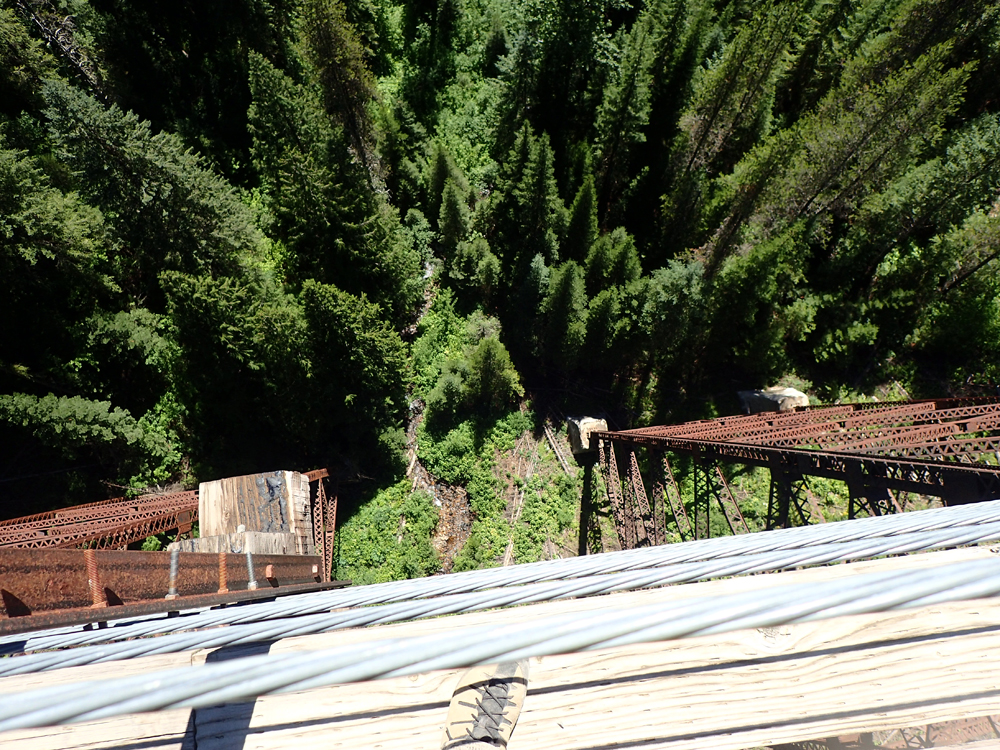
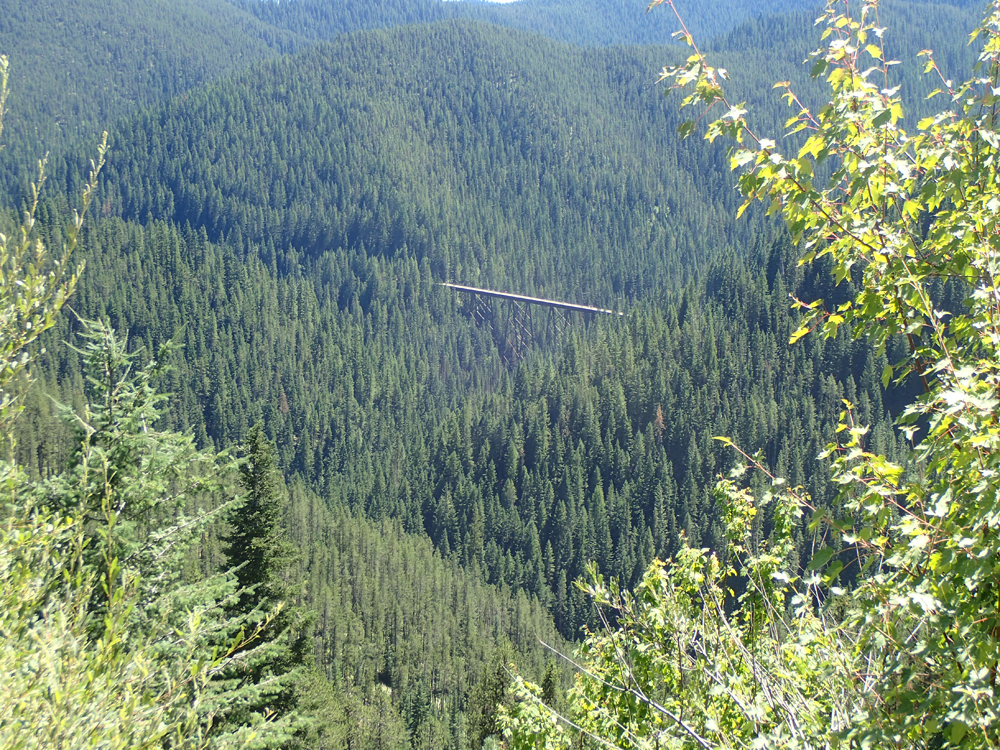
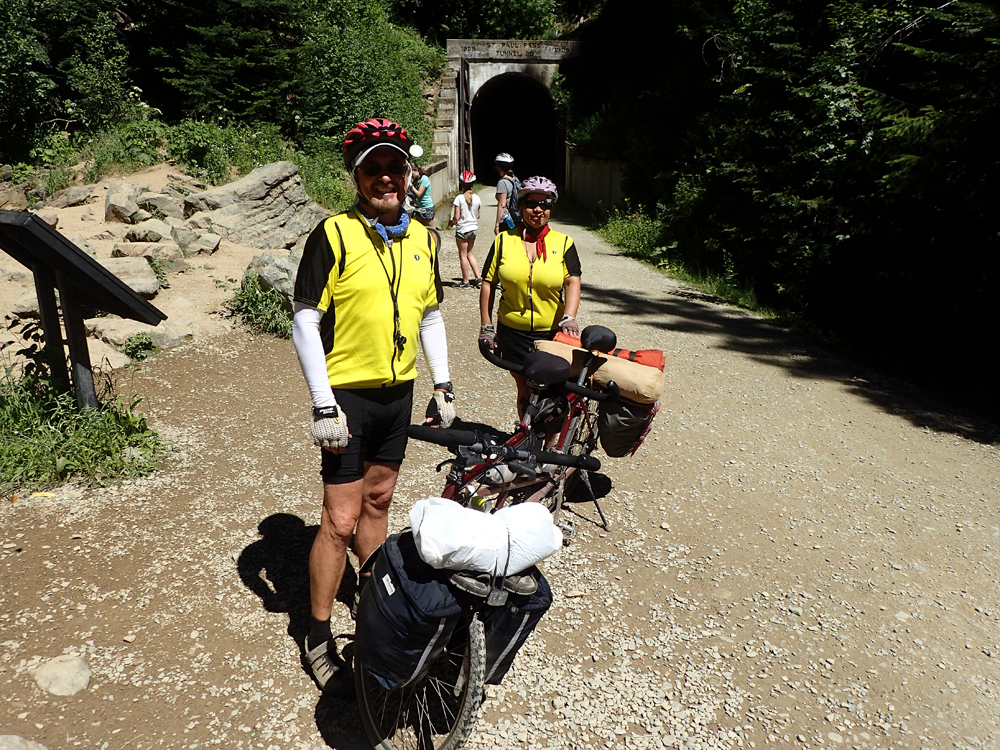
Day two we headed out struggling with the uphill gravel trail heading so far east into Montana I thought we were going to end up in Missoula but we did find our way to the trail head of the famous Hiawatha at 1:00 PM and we were beat. After a day and a half of seeing zero cyclists now they are packing the trail. You pay $10 for the privilege to ride your bike on the trail but there are water stops, bathrooms, and tech helpers along the way. The trail is only 15 miles but because either we were so tired or it is just so full of the AMAZING that it felt like 30 miles when we were done. You start off in the first of 10 tunnels and this one is a mile and a half long and pitch black. If your lights are weak you’ll be walking and you don’t want that because it is so cold in there you can’t wait till you can get out. The tunnel is so long it’s actually “Interstate”, so you go from Montana back into Idaho. There are so many tunnels you start to take them for granted except when you see deer in them! But just when you think you can handle anything, you see trestle bridges shooting off into spaces filling between one mountain and another. One trestle is 760 ft. long and 220 ft. high! My wife said, “I’m not going over that, or at least not riding it, and for sure I’m not looking down”, but she did it!
After we left the Hiawatha and the tourists that included old people, kids as little as 4 years old, and every kind of bike imaginable, we were alone again so we kept heading south and down toward the village of Avery, population 18. We camped again in a US Forest Service campground by the North Fork of the St. Joe River. That whole road going down was gorgeous and still very few campers along the way.
Day three we made it to Avery after 5 miles of more gravel and then finally sweet smooth highway and no traffic! A second breakfast in the general store which is the only thing going in Avery is a must if not for the many posters of beautiful women that the owner says, “They work for me!” We cycled along the St. Joe River and a big country two lane highway that had basically no traffic for a city guy like me, but for locals they said to watch out for the logging trucks of which there were a couple. The truckers were courteous and gave us lots of room plus they call ahead and tell the others that there are cyclists on the road. After 24 more miles we were hammered and now a blowout. Though we were cycling in “happy valley” with no smoke and clear skies, there was smoke all over that part of the country, but we were in a sort of “heat dome” and today it was hotter than snot! We reached Calder population: at least 2. Nothing open but the post office and the lady Ronda, who worked there, called her friend Tony who came in one minute and took us in his pickup truck to St. Maries. When you are in the fairly large town of St Maries, you’ll want to stay at The Pines Motel because they offer free bike shuttles to Plummer or Heyburn State Park. That will get you back on the Coeur D’Alene Trail without suffering through curvy and hilly roads with lots of traffic and no shoulder for bikes.
Day four included a great breakfast at Heidi’s next door to the motel and open at 4:00 AM for the loggers. They have great food and big portions, plus it gives a real touch of Germany, so don’t miss that. After our shuttle ride to Plummer we were ready for the silky smooth bike trail and the 7 mile downhill. All was perfect and I was crossing my fingers that my patch, a $1 bill boot, on the tire was going to hold after a blow out on that ruined tire. I guess it never pays to be too cheap because even though I folded the bill over to make it twice as strong it ended blowing a hole through George Washington’s forehead and his neck. Luckily we were back to “civilization for cyclists” and two tandem teams came by and patched it up with 3 dollars this time. With just 2 miles back to Plummer we elected for safety sake to return rather than chance another blowout and have to walk our way back 15 miles to civilization. In Plumber we sought out assistance at the Benewah Wellness Center and came across super cyclist Kjell Schioberg who was going back to Germany to race in 3 days as if it were just down the road a piece. He hooked us up with co-worker Frank Bybee the “Worley Warrior” who took me up to Coeur D’Alene to buy a special tire for our tandem at Cyclemetrix. It’s a great racing bike shop, and Jim Kozak the owner and his daughter who’s the chef mechanic were much better equipped than the Ace Hardware stores that we had been dealing with. On the way up Frank told me his life story then gave me his book to fill in the rest of the story. We even made a two hour stop over to attend one of his AA meetings so I could get the life story on 27 other people! For a kid from the Southside of Chicago, I was starting to feel like a local up here in the North Woods of Idaho. Day four was now shot and the sun was going down so we bagged it for the one and only motel in Plummer. Thank god it wasn’t the Bates Motel from Psycho so we took what they had even though it looked a little bit sketchy.
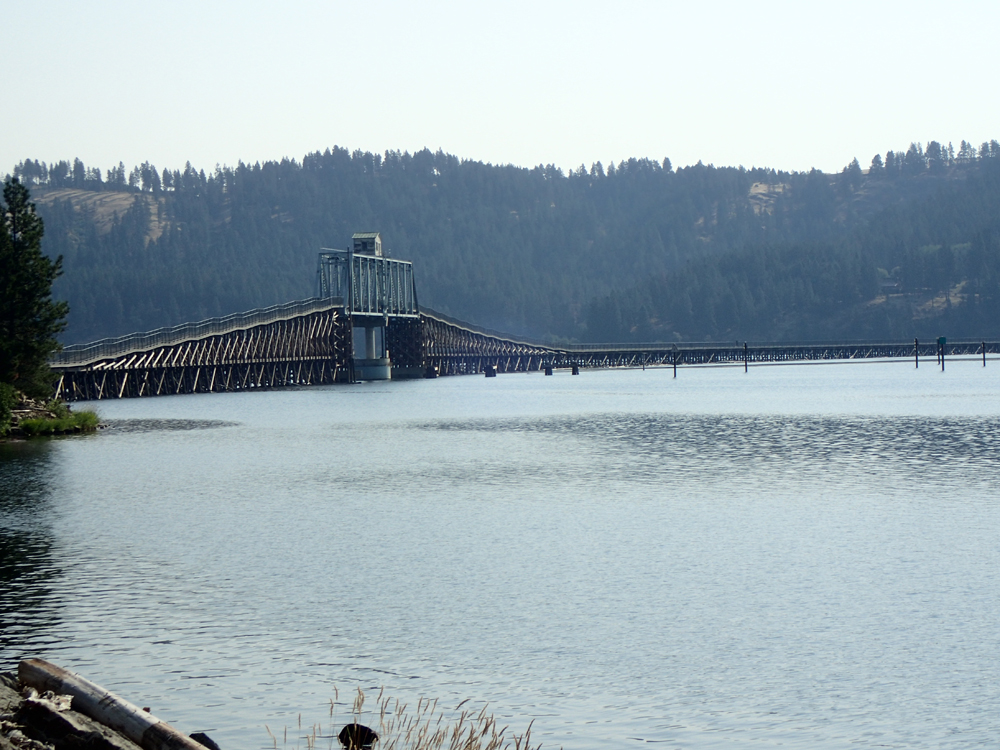
Day five we were good to go so we sailed down the 7 miles of downhill, crossed the 2 and a half mile bridge and sailed in to Harrison to chat with the owners of the Bike Haus and Coffee shop, Jerri and Arron. They were willing to help us and were wondering if we were going to make it. Lunch was a delicious quiche at a corner coffee shop, and then we were on our way to make some make-up miles heading north along scenic lakes and riverside bike trails. Once again we could have been classified as “Los Locos” since only “mad dogs and Englishmen go out in the noon day sun”. We took lots of rest and water breaks to beat the heat and kept chugging along. When we got to Enaville we came across Idaho’s oldest restaurant from 1880, The Snake Pit. Very rustic and historic but no longer are there “ladies” offering their “special services”. Missing out on that treat, we treated ourselves to salad, pie, and beer as our pre-supper. It wasn’t too much further to reach Pinehurst and our camp at the By The Way campground. Though it was mostly for RV’s, Dave the camp host, made us feel at home with fresh coffee in the morning making up for the extra light and noise from the highway close by.
Day six was harder than it looked on paper. Of course the heat still was cooking us and now we had some uphill to contend with too. Our tandem was starting to unscrew itself. Before all fell apart, we came across a great bike shop alongside of the trail in Kellogg, Excelsior Cycle and Sport, with Mike the owner doing a fabulous job of getting us back on the trail. Lunch was at another train depot turned into a restaurant and their fabulous smoked meat tacos were the best I have ever eaten. Finally at 3:00 PM we limped into Wallace and it was a most welcomed sight to see our RV waiting for us; and as Elmer Fudd use to say,” Wrest and wewaxsation at wast”. We took our relaxation in the pool at the Wallace Inn and celebrated with a glass of wine thanks to the Prime Minister Rick Shaffer.
Last but not least, every cyclist must make a pilgrimage to the Mecca of bike tourism in the Americas and one of the top centers for cycle-touring in the world: Missoula’s own Adventure Cycling Association at 150 East Pine Street. This office/store gets you your cycling maps for trips all over the US, your magazines full of stories about great cycling adventures, and they have an array of cycling gadgets and equipment that will make you salivate. But for me, it is the “history tour” of the store turned museum that excites me; and after taking my fourth tour I was more thrilled than ever. There is no better way than this to end a cycle tour and I can’t wait to come back and do it again! Let the quitters quit. Thanks to my valiant wife who rose to the occasion when I needed her most, we did it! So, put this on your bucket list and just do it!!
Nuts and Bolts:
Day One: Wallace to Mullan, Idaho – 7mi. Then to Lookout Pass – l2 mi. Then to primitive campground-3 mi. Total: 22 mi. but think “40 miles” on a fully loaded touring bike. Best to take a mountain bike or gravel bike set for bikepacking.
Day Two: Primitive camp to , Idaho and Montana – 9 mi. all gravel and uphill, think “18 miles”. Hiawatha Trail – 15 miles all downhill and smooth (take your time and enjoy). Open May 28-Sept. 25th. Cost: $10. Pearson trailhead to North Fork St. Joe USFS campground – 7 miles.
Day Three: Campground to Avery, Idaho – 2 miles. Avery to St. Maries – 48 mi. Smooth low traffic highway FS 50.
Day Four: Shuttle from The Pines Motel (free)( [email protected] (208) 245-2545) to Plummer, Idaho -13 miles avoids hilly, lots of traffic, no shoulder road. We then spent the day getting a new tire and doing repairs. We stayed in the one and only motel in Plummer. I would recommend rolling on downhill to Harrison-16 miles to end your day camp or stay in a hotel.
Day Five: We coasted 7 miles downhill on super-smooth bike trail, then crossed a 2.5 mile bike bridge and then on along the coast of Lake Coeur D’ Alene, Idaho to Harrison for lunch. We then covered Harrison to Pine Creek (Pinehurst)-34 miles and camped at By The Way campground.
Day Six: Pine Crest to Wallace, Idaho – 15 miles.
Stay at the Wallace Inn Bike Trail Headquarters and meet the Prime Minister Rick Shaffer 1-800-643-2386, thewallaceinn.com. Have Rick send you the map of all the trails. · If you want to arrange bike shuttles: Ask Rick or visit www.captain-lou.com, 208-818-2254
Supplies and Services:
Water: No hay problema, you are always close to a river, lake, or stream but bring a purifier. People are friendly and will gladly fill you up.
Food and grocery availability: Great restaurants in Wallace, St. Maries, and Harrison. Not much in Avery and the one bar/restaurant in Calder is closed a couple of days a week. As you get close to I-90 you pick up some great places like the Snake Pit in Enaville, Hill Street Depot in Kellogg and many others. Get your groceries in Wallace, St. Maries, Plummer, Harrison. You can get small things in Mullan and Avery and all the little stops along the I-90 corridor.
Bike Shops: The Cycle Haus in Harrison, 208-689-3436, plus espresso, craft beer and more! In Kellogg right on the trail go to Excelsior Cycle, 208-786-3751, both rent bikes. For the Hiawatha you can rent every kind of bike and trailer at the Lookout Pass Ski Area at I-90 Exit 0 or call 208-744-1234 ext. 16.
For more information on the trails, see: ridethehiawatha.com and friendsofcdatrails.org/route/bitterroot-300k-loop/
Roger and Rick Shaffer the “Prime Minister” going over the details on our maps at the Wallace Inn. Photo courtesy Roger CrandallComing into Wallace from the bike route or the highway you can see the advertisements for the “Route of the Hiawatha” and “Experience Wallace the Center of the Universe.” Photo by Roger CrandallCrossing Lake Coeur D’ Alene by a bike only 2.5 mile bridge. Photo by Roger CrandallPrimitive camping along the way as we head toward Avery on the “Old Milwaukee Trail”. Photo by Roger Crandall“Wild section” of the “Nor-Pac Trail.” Photo by Roger CrandallTypical informative rest stop with water and bathroom. Photo by Roger CrandallViews from one trestle to another we had already crossed. Photo courtesy Roger CrandallLooking down from atop one of the 7 trestles we would cross. Photo by Roger CrandallSteel trestles that are for bikes only. Photo by Roger CrandallViews of the descending trail on the Hiawatha still only 1.2-2.0% grade going down. Photo by Roger CrandallWarming up after coming out of the 1.6 mile Taft Tunnel on the Trail of the Hiawatha and there are 10 in total. Photo courtesy Roger CrandallRoger and Jael at Lookout Pass Ski Resort where you can rent bikes and get passes for the Hiawatha. Photo courtesy Roger CrandallThe Smoke House Restaurant in Wallace, best barbecue ever! Photo by Roger CrandallThe manhole in the middle of town that marks Wallace as the Center of the Universe. Photo by Roger Crandall
If you want to mountain bike in Nez Perce-Clearwater National Forests, you’ve got a brief window to advocate for it. The forests in Idaho have reopened a public comment period on a proposed environmental impact statement, a necessary procedure in creating a Land Management Plan.
The Forest Service originally took public comments five years ago. Last year, it issued an analysis of what it learned and came up with four alternatives, labeled W, X, Y and Z, plus a mandatory “no action” option. Only alternative Z would allow mountain biking in some proposed wilderness areas.
But the service learned through the public input process that “mountain bikes are a much more prevalent use on the national forest than previously thought,” according to a draft statement issued last year (https://www.fs.usda.gov/Internet/FSE_DOCUMENTS/fseprd589005.pdf ). The draft indicated that officials want to connect the various tracks, such as “North Fork to the Lochsa River south to the Selway River (outside the Selway-Bitterroot Wilderness boundary.” The draft also mentioned the need to mitigate occasional conflicts between bikers and other trail users.
The draft also says that no matter what alternative the forests take, “there will be a desired condition to see an increase in the number of loop opportunities of various lengths in all recreational settings.”
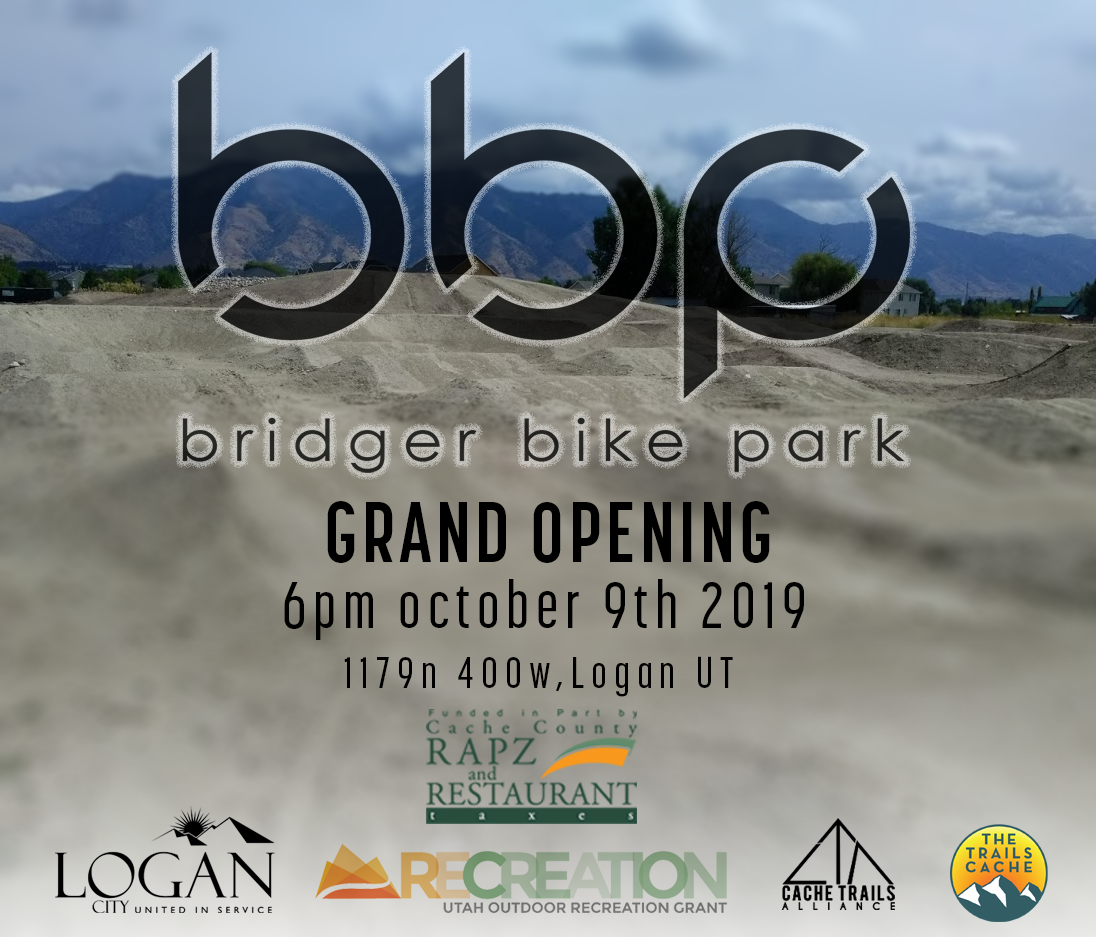
UPDATE: 10/7/2019 – Due to early season valley snow in Cache County, the opening of the Bridger Bike Park is being rescheduled for October 16, 2019.
The Cache Metropolitan Planning Organization’s (CMPO) Bicycle Planning Advisory Committee (BPAC) is excited to announce that on October 9th, 2019, at 6pm, the City of Logan, Utah will unveil the brand new Bridger Bike Park. The Committee invites all residents of the area to come out to explore the park and meet the community that has worked so hard over the last 3 years to make this happen.
Designed with many challenging features, cyclists of all skill levels should be able to find enjoyment at the park, but users should be aware that not all features are suitable for all riders. Children must be supervised, and helmets will be required at all times.
Located at 1179 North 400 West, just west of Bridger Elementary, the facility is being built through collaborations between Logan City funding, community fundraising, the Cache County RAPZ tax and Utah Outdoor Recreation Grant.
Please note that the park is closed until the Grand Opening due to ongoing construction. The Committee requests that the public refrain from accessing or using the park beforehand for the safety of residents and construction workers alike.
By Charles Pekow & Steven Sheffield – How much does outdoor recreation contribute to the national economy? In 2016, Congress approved legislation calling on the Bureau of Economic Analysis at the U.S. Commerce Department to find out. The Bureau would work with the Departments of Agriculture and Interior and other federal agencies.
The study would attempt to determine how outdoor recreation contributes to sales, employment, tourism, etc. The bureau would also have to contact businesses, including small business. It could become a bigger deal than it appears, as in this day and age, if we want to advocate for bicycling, we have to show how it brings in sales, jobs and tax revenue. Politicians, government officials and business want to hear about that, not just the recreational and health benefits of bicycling, or the reduction in smog and traffic congestion.
The Outdoor Recreation Jobs & Economic Impact Act of 2016 (H.R. 4665) called for a report to Congress within two years.
On September 20, 2019, The Bureau of Economic Analysis released a report indicating that the U.S. outdoor recreation economy accounted for 2.2 percent ($427.2 billion) of current-dollar gross domestic product (GDP) in 2017. The Outdoor Recreation Satellite Account (ORSA) also shows that inflation-adjusted (real) GDP for the outdoor recreation economy grew by 3.9 percent in 2017, faster than the 2.4 percent growth of the overall U.S. economy.
Other value added by industry highlights include the following:
Retail trade had the second largest sector contribution to outdoor recreation nationally, accounting for $95.7 billion of current-dollar value added. Retail trade was the largest contributor to outdoor recreation value added in 17 states, including Texas ($8.5 billion), Washington ($2.8 billion), and Ohio ($2.7 billion).
Manufacturing contributed $51.7 billion nationally to the outdoor recreation economy in 2017 and was the third largest outdoor recreation sector. At the state level, manufacturing was the largest sector for outdoor recreation value added in Indiana ($4.7 billion), Wisconsin ($2.0 billion), Louisiana ($1.6 billion), and Kansas ($684.2 million).
The public is invited to submit comments on the prototype state statistics by emailing [email protected] before March 31, 2020. Feedback received will be used to help finalize data sources and methodology for official state outdoor recreation statistics, which are scheduled for release in the fall of 2020.
By David Ward – I learned of the hit cyclist on the MBAC (Mayor’s Bicycle Advisory Committee) email list. A man posted a link to a Fox 13 news story on the incident. Included was a video of the accident which showed an SUV hitting the cyclist from behind. Occurring on 4800 South at approximately 900 West in Taylorsville, Utah, it is clear the driver of the SUV did not see the cyclist. Remarkably, the cyclist, who first rolled up onto the hood and then fell back onto the road ahead, walked away from the accident with only minor injuries.
[Editor’s Note: this article originally appeared in the Winter 2016/2017 issue of Cycling Utah. References to time should bear that in mind. While incidents like the one mentioned happen everyday somewhere in the country, this particular incident is not a recent one.]
As it turns out, the driver was a 16 year old girl who had been distracted while driving. The story does not say what caused the distraction. Also as it turns out, the cyclist did not want charges to be pressed against the girl, and so, while given a stern warning, she was not cited.
The accident was disconcerting as it so vividly portrayed what can happen to a cyclist if a driver is inattentive and/or distracted. Such an accident would normally result in serious injury, and potentially death, for the cyclist. A person’s instinctive reaction in watching the video is that the driver needs to be punished, especially where she is so clearly at fault.
But what was also disconcerting to me was the stream of emails on the MBAC list reacting to the fact the girl was not cited. Almost without exception, they were incensed at this. I was, frankly, dismayed by the anger and sense of vengeance expressed toward this girl.
It brought to mind a piece I heard on NPR’s “This American Life” several years ago entitled, “Life After Death”. It was actually a collection of three stories, but the one that has stayed with me was about a high school senior, Darin Strauss, who, while driving, was coming up on a pair of girls cycling in the same direction he was headed. One of them suddenly swerved in front of him. Unable to react in time, he hit her and she was killed.
The focus of the story is on Darin, the driver of the car and the impact this accident had on him. He was not at fault, and could have done nothing to prevent the accident. Yet the pain and trauma he suffered, and the myriad personal issues he had to deal with, are sad and compelling. I have remembered how, when dating later, he always had this question nagging him, “When do I tell her what I did?” And he talked of how, had their roles been reversed, he would like this girl to be spared the feeling of “traveling with a ghost’ which he had done in the two decades since he had hit and killed her.
So when there are accidents involving cyclists being hit by cars, and I hear or read the outrage of my fellow cyclists, I think of this piece from “This American Life”. With this particular accident last month, I can’t help but think of the emotional trauma that 16 year old girl is likely suffering. Unlike Darin, she has the good fortune that the cyclist was not seriously injured.
And interestingly, she may be spared much emotional trauma by virtue of the fact that she was clearly at fault. At the end of this NPR piece, there is a note about a “a psychologist named Ed Hickling, who wrote a book about overcoming the trauma of a car accident. And he says that drivers who have done nothing wrong in an accident are actually at greater risk of developing post-traumatic stress disorder about the accident than people who were really at fault for an accident. Quote, ‘someone who falls asleep at the wheel knows what they can do to prevent future accidents. Innocent drivers,’ Hickling says, ‘realize they’re at the mercy of the universe.’”
So, by being at fault, this girl can actually reduce the trauma she might experience by recognizing that she needs to be alert and undistracted while driving, and, gratifyingly to me, to watch closely for cyclists. And after all, isn’t that what we want? Do we want her punished for the sake of vengeance, or is it that we want her to learn an important lesson, one that will increase the safety of herself and others when she is driving?
I recognize there are other issues relating to the failure to cite drivers hitting cyclists. Is there a bias on the part of police against cyclists? Is there a perception that it is the cyclist who must somehow have been at fault? Do people need to be cited to help increase the awareness of cyclists on the part of drivers? These and other issues are legitimate and fair issues to be addressed.
But I don’t like sensing that many cyclists, when such incidents come to light, want punishment for the sake of punishment. I don’t think that is right. How many of us have done things, either accidently or intentionally, that we wish we could go back and undo? And for which that emotional trauma has been sufficient punishment to learn an important lesson?
In this particular incident, in watching the video, it is clear the girl was traumatized by what happened.. She immediately jumped out of her vehicle and ran to the cyclist. Based on the circumstances, and the desire of the cyclist, she was not cited. Hopefully, that is because the officer recognized the girl’s trauma was punishment enough, and that an important lesson was learned, thankfully without serious injury.
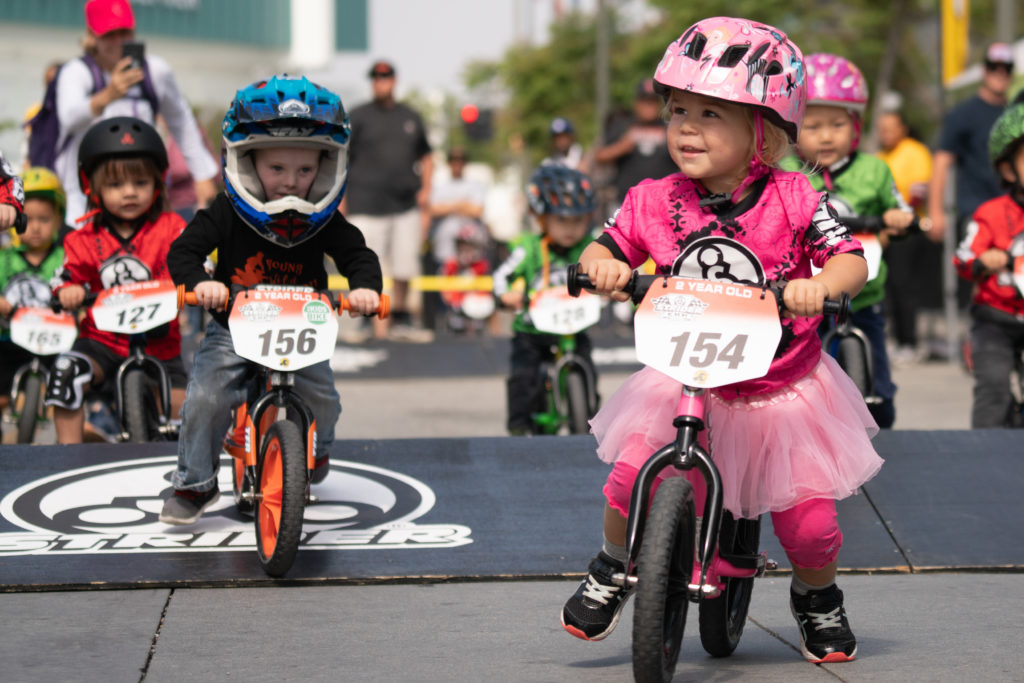
Charlotte, NC, Oct. 02, 2019 (GLOBE NEWSWIRE) — Racers as young as 2-years-old will be sprinting and gliding their way to balance bike glory at the Strider Cup World Championship in Charlotte, NC. The October 4th – 5th competition is the culmination of the 2019 Strider Bike racing season; which has included Strider Cup races in the USA, Russia, China, Chile, Japan, Canada, United Kingdom, Philippines, and other nations.
Toddlers competing in the Strider Cup. Photo courtesy Strider Sports International.
In total, children from 12 countries and 29 states have registered to take part in this year’s World Championship. Japan, a nation that often dominates Strider Cup races, will host the 2020 Strider Cup World Championship ahead of the Tokyo Olympics.
The Strider Cup World Championship is a chance for children to meet and compete with peers who may not speak the same language, and may not be potty trained, but share a love of riding Strider Bikes. The global aspect of the World Championship is a highlight for Strider Bikes CEO, Ryan McFarland, “The amazing part is that there are different languages being spoken; yet the kids seem to be communicating just fine and are having a great time.”
Strider Cup races were created to give 2- to 6-year-olds the chance to test their newfound balance bike skills on the racetrack. Children of all skill levels are welcome to participate. Racing tactics typically vary, with some children sprinting out of the start gate, while other toddlers take their time curiously wandering the track. Highlights from the 2018 Strider Cup World Championship can be found at Strider Bikes’ YouTube page.
For more information about Strider Bikes and a schedule of events, visit StriderBikes.com.
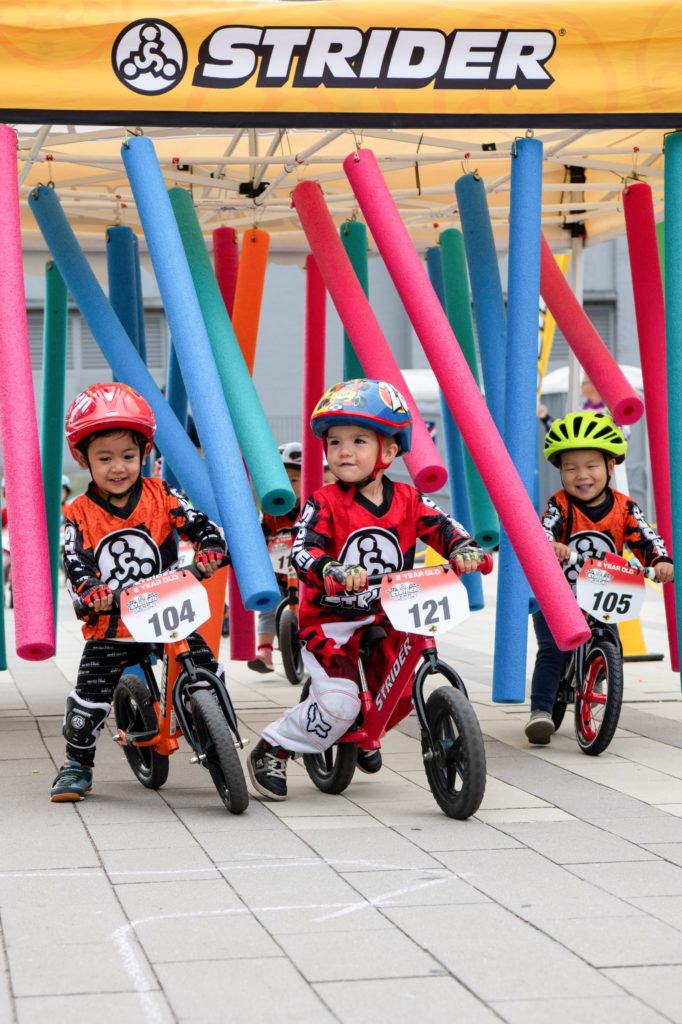
Toddlers tackling the Noodle Monster during a Strider Cup race. Photo courtesy Strider Sports International.
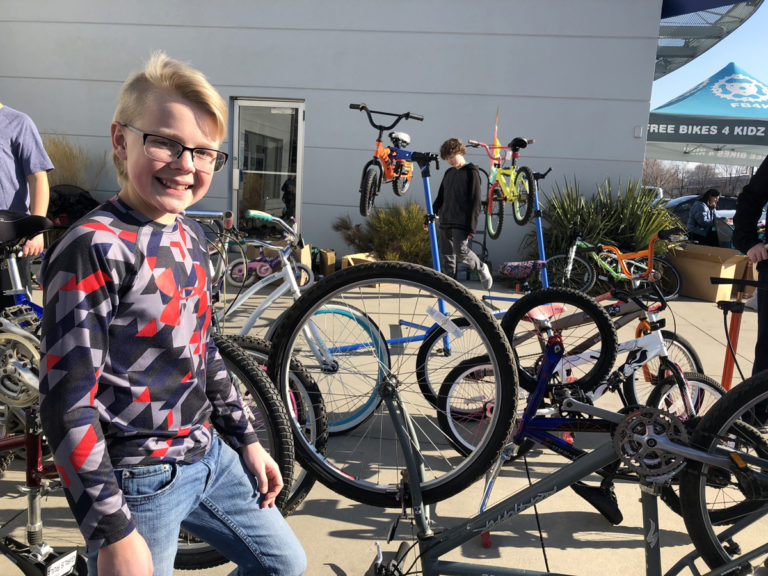
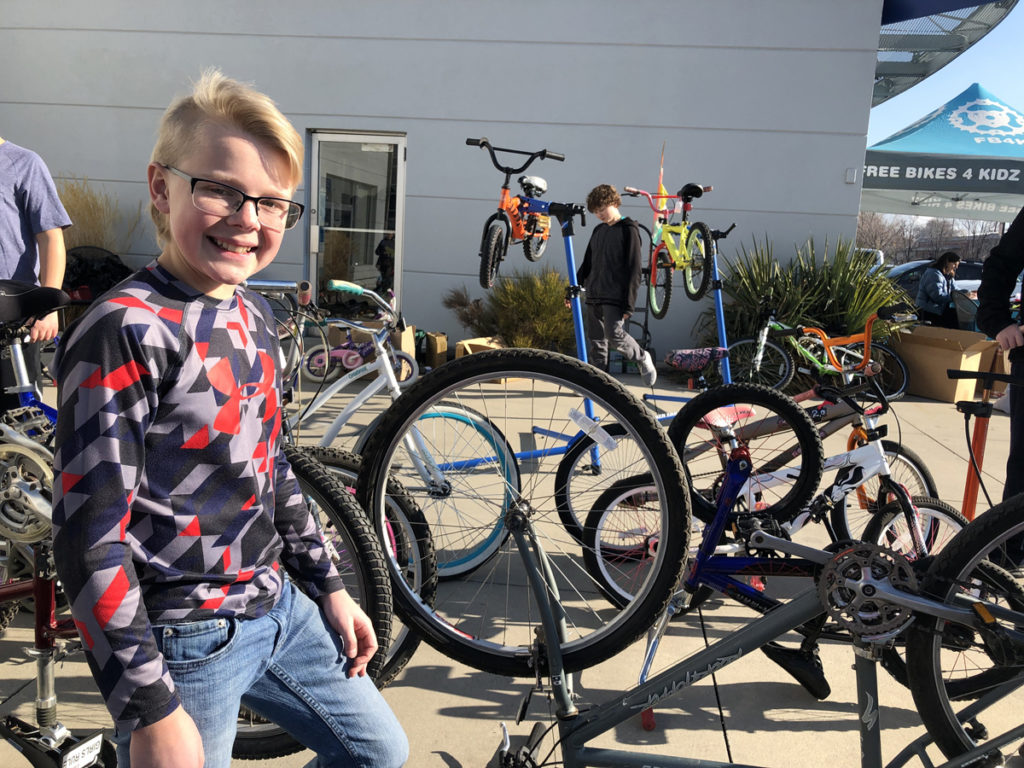
FREE BIKES 4 KIDZ Utah is a non-profit organization geared toward helping all kids ride into a happier, healthier childhood by providing bikes to kids who would not otherwise have the means to afford them. FB4K was founded by a group of community-minded cyclists in Minneapolis in 2008 and gave away 300 bikes the first year. Since then, FB4K has expanded to eight states (and counting) and has given away over 60,000 kids’ bikes to low-income families.
Ashton Lindley collected 125 bikes for his Eagle Scout project for Free Bikes 4 Kidz in 2018. Free Bikes 4 Kidz provides bikes to goodwill organizations who then give them to kids in need. Photo by Dave Iltis
It’s a no-brainer. Every year 25 million bikes are sold in the U.S. and one-third of those are kids’ bikes (20” wheels or smaller). Since kids grow like weeds, millions of bikes are outgrown each year. Many of those bikes just end up in garages gathering dust for years until they find their way to a landfill. Why not funnel this endless supply of bikes to kids who will use them?
FB4K’s model is simple. Stage One is to collect as many bikes as possible on a single day in early October. The bikes are taken to a warehouse – generously donated by a local real estate company – where they are inventoried and organized by size. In Stage Two, volunteers work throughout October and November to clean, repair, and refurbish the bikes. Meanwhile, FB4K works with community organizations to identify qualified recipients and pre-register them for a bike. Stage Three takes place in mid-December when the kids come to the FB4K warehouse to pick out their “new” bike along with a helmet.
This year’s Bike Collection Events will be held Saturday, October 5th from 9am-4pm at Nate Wade Subaru (1207 South Main Street, SLC) and from 1pm-4pm at Craftoberfest in South Salt Lake’s Creative Industries Zone (2511 South West Temple). Guthrie Bicycle also accepts bike donations daily at both Sugarhouse and Bountiful locations. This year’s goal is 1,000 bikes.
Volunteers of all mechanical skill levels – including zero – are welcome and can sign up for available shifts through the FB4KUtah.org website. Volunteers are assigned one of three positions based on their ability:Cleaners get the bikes looking good, then Preppers fix flats and take care of minor issues, and finally Mechanics fix major issues and perform a thorough safety check.
FB4K does not distribute bikes to individual families directly, but instead works with local non-profits and community organizations that provide outreach and services to those in need. For information on how your organization can apply for bikes, please contact FB4K Utah through their website.
Pretty cool program, huh? If you’re fresh out of spare kids’ bikes and don’t have time to volunteer, financial donations are always greatly appreciated to help buy helmets, tools, spare parts, shop supplies, and cover operating costs.
For more information, to donate, or to volunteer, visit FB4KUtah.org
Missoula, MT (October 3, 2019) — Following an extensive national search, Adventure Cycling Association has named Scott Pankratz as its new Executive Director. Pankratz takes the reins of the country’s largest cycling membership organization from Jim Sayer, who served as Executive Director since 2005.
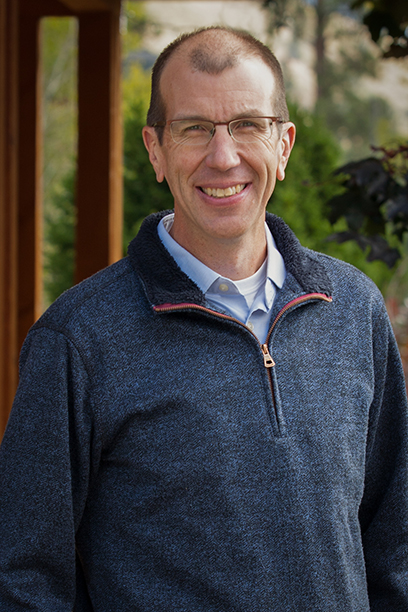
Scott Pankratz, Executive Director of Adventure Cycling. Photo courtesy Adventure Cycling
“My passion and enthusiasm as the incoming Executive Director at Adventure Cycling come directly from transformative moments in the saddle from Alaska to Mexico,” Pankratz said. “I look forward to expanding our community to give everyone with a bike the confidence, community, and gratitude that is at the heart of the Adventure Cycling experience.”
Pankratz comes to Adventure Cycling from Ecology Project International (EPI), a nonprofit ecology education organization he founded with his wife, Julie Osborn, in 2001. EPI is also based in Missoula with more than 100 staff across five countries, a $5M annual budget, and unique partnerships such as being the only nonprofit partner with Galapagos National Park Service in Ecuador.
“Scott is the right person to lead Adventure Cycling because he brings a solid history of founding and growing a nonprofit combined with a long-term passion for bike travel,” said Adventure Cycling Board President Joyce Casey. “The Board is excited to work with Scott to continue to grow and connect the bicycle travel community.”
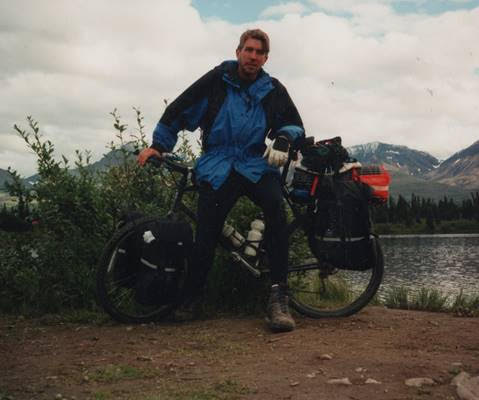
Pankratz’s association with Adventure Cycling goes back to when the organization was still called Bikecentennial. In 1991, he stepped off a plane in San Francisco with a bike and a Bikecentennial map to lead him down the Pacific Coast. He’s also embarked on bike trips through Mexico and from Alaska to Montana.
Scott Pankratz on tour from Alaska to Montana, 1994. Photo courtesy Adventure Cycling.
In addition to EPI, Pankratz has served as a nonprofit leader in Western Montana, a guest lecturer at the University of Montana, and a leader in the preservation of the historic Swift building that houses EPI along the Clark Fork River.
“With this change in leadership, the Board wants to acknowledge the strong work by outgoing Executive Director Jim Sayer,” Casey said. “Jim has left us in solid shape so our new leader has a strong base to build on.”
Pankratz will join the Adventure Cycling staff full time on January 6, 2020.
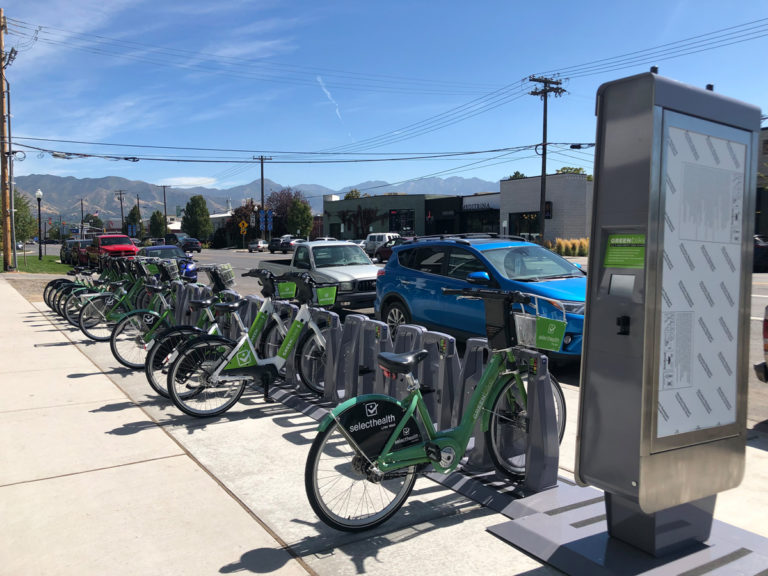
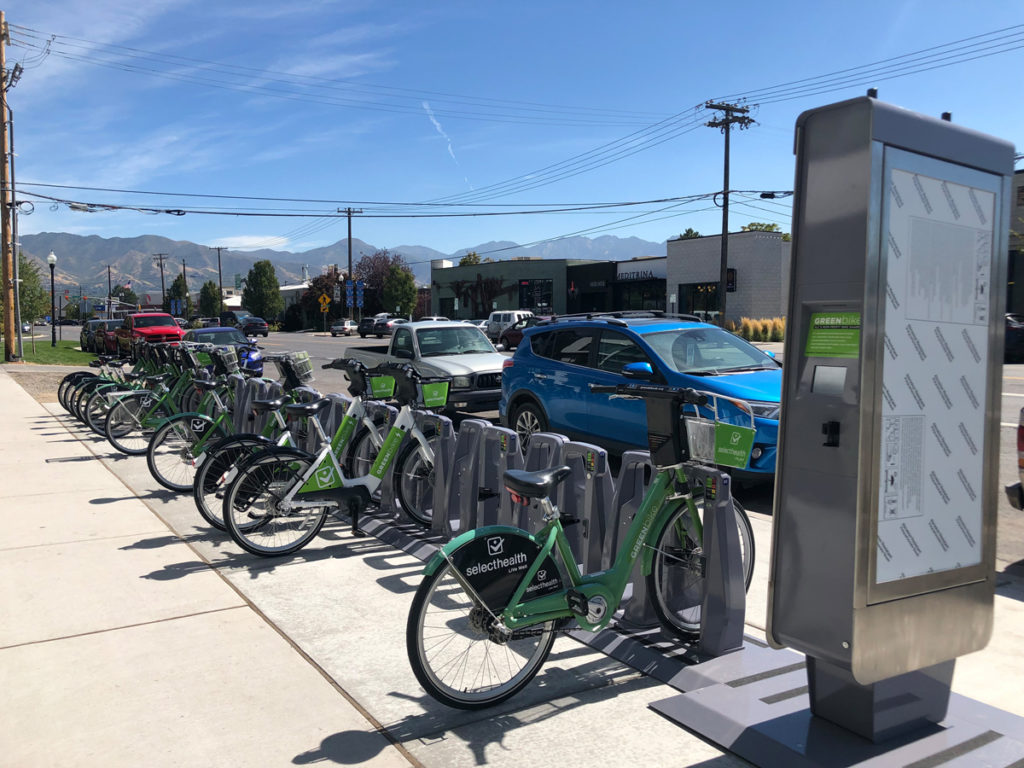
SALT LAKE CITY, UT (October 3, 2019) — As of today, GREENbike, SLC’s non-profit bikeshare, has expanded its service area from 2.1 square miles to 8.0 square miles, an increase of 281%. After today’s addition of seven new locations, GREENbike’s 42 stations and more than 400 hundred bikes can now be found from 2100 South to North Temple and from 700 West to 900 East.
Greenbike, Salt Lake City’s bike share, expanded 300% recently including this new station in the Central 9th area. Photo by Dave Iltis
GREENbike’s new stations are located at an affordable housing development (Artspace Commons: 800 South 400 West), multiple TRAX stops (900 South 200 West & 2100 South 225 West), an economic center (900 South 900 East), office space (Salt Lake County Building: 2001 South 150 East), a restaurant/brewery (Proper Burger Company: 865 South Main Street) and market rate housing developments (multiple apartments/condos: 50 South 500 West)
“As a local non-profit, our goal is to provide the community with an affordable, reliable and active transportation option.” Said GREENbike executive director, Ben Bolte. “These new locations will give more people access to GREENbike and our low cost annual pass. With our annual pass, riders can take as many rides as they want for a year for as little as $.20 per day.”
Over the past six years, the GREENbike program has prevented more than 4.7 million pounds of CO2 from entering our air, avoided more than 5.2 million vehicle miles from impacting local roads, while burning more than 71 million calories in the process (which is 250,000 slices of pizza).
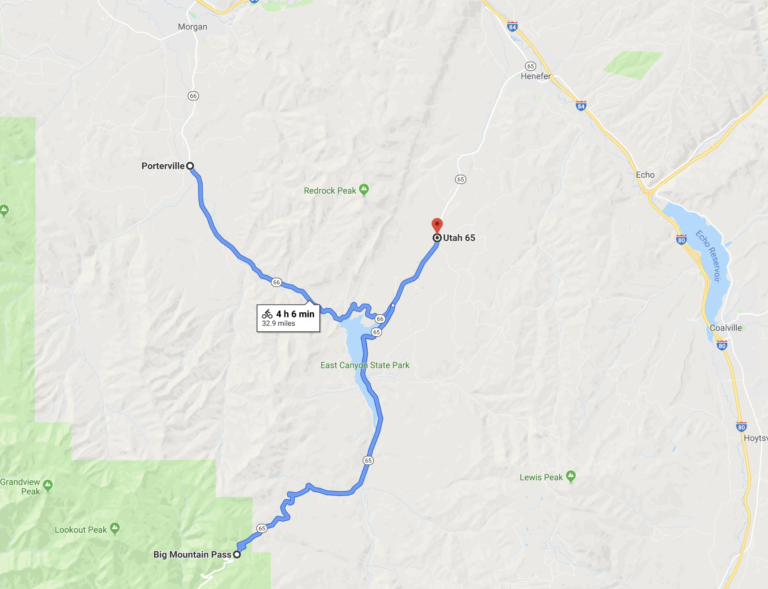
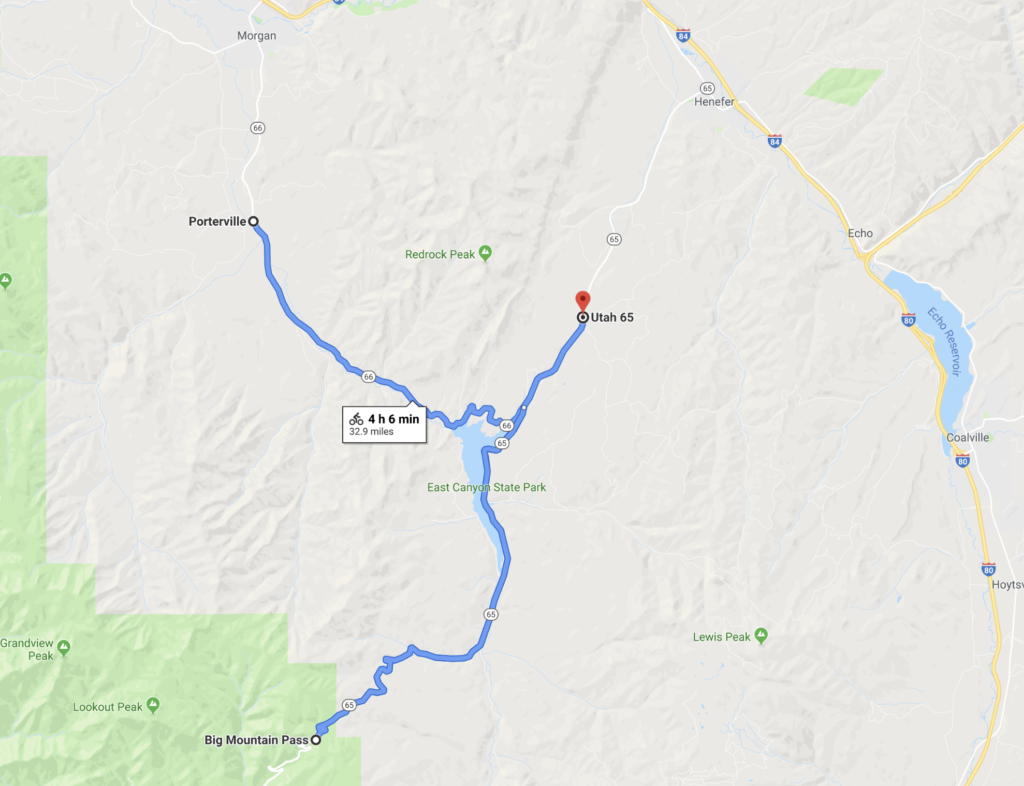
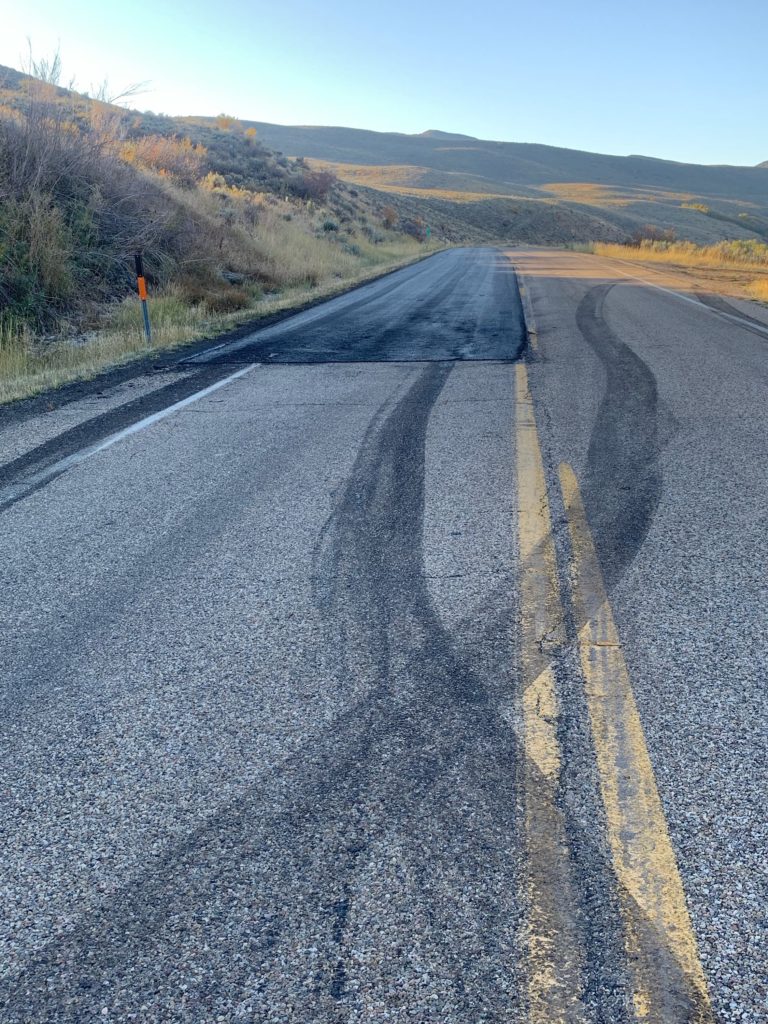
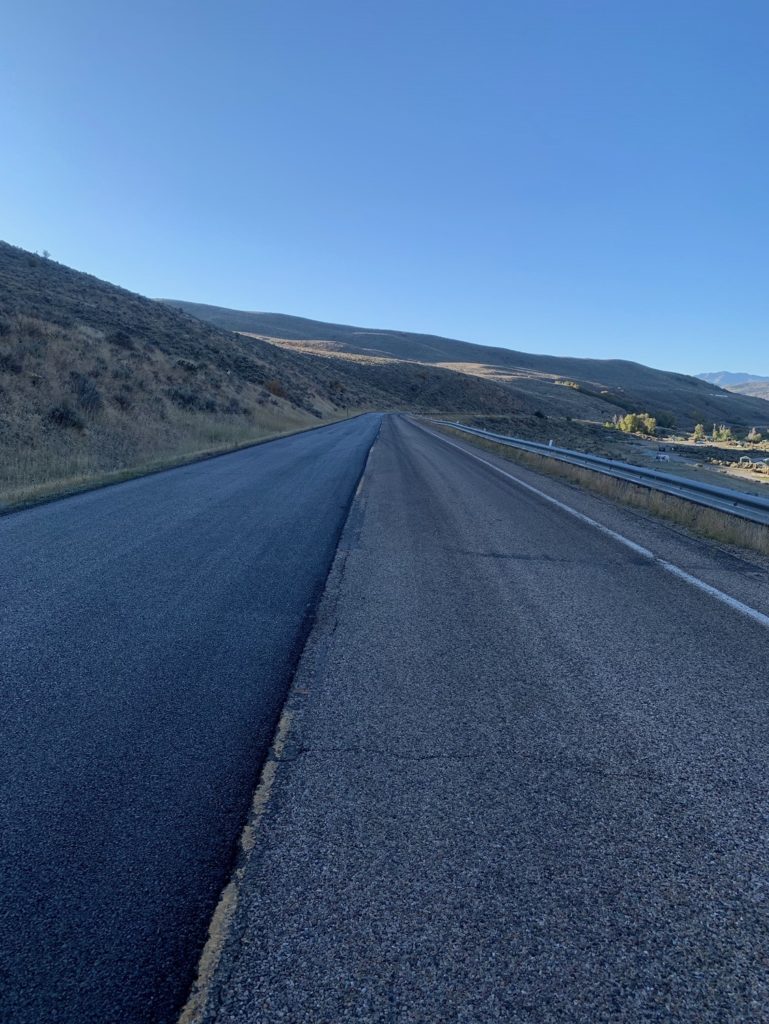
The Utah Department of Transportation (UDOT) advises cyclists of a pavement rehabilitation project in progress on state routes in Morgan County in the East Canyon area. The top layer of asphalt is being removed and replaced with a new layer on SR-66 from milepost 0-9 (Porterville to East Canyon Reservoir) and on SR-65 from milepost 8-22 (Big Mountain Pass summit to the Summit County line).
Cyclists are advised to avoid these work zones as much as possible during construction as asphalt removal will result in rougher riding conditions. When this is not possible, cyclists should ride with traffic and not attempt to pass other vehicles. Cyclists are advised to be cautious around corners and watch for construction equipment and workers in the roadway.
Paving operations are expected to continue through fall 2019 as weather conditions permit. For more information, please contact the public involvement team at 385-515-0441 or visit the UDOT project website
Photo courtesy Utah Dept. of Transportation.Photo courtesy Utah Dept. of Transportation.