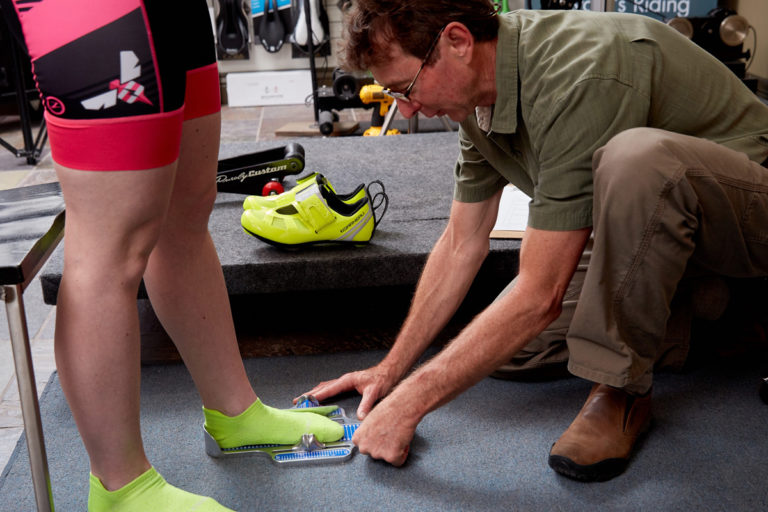
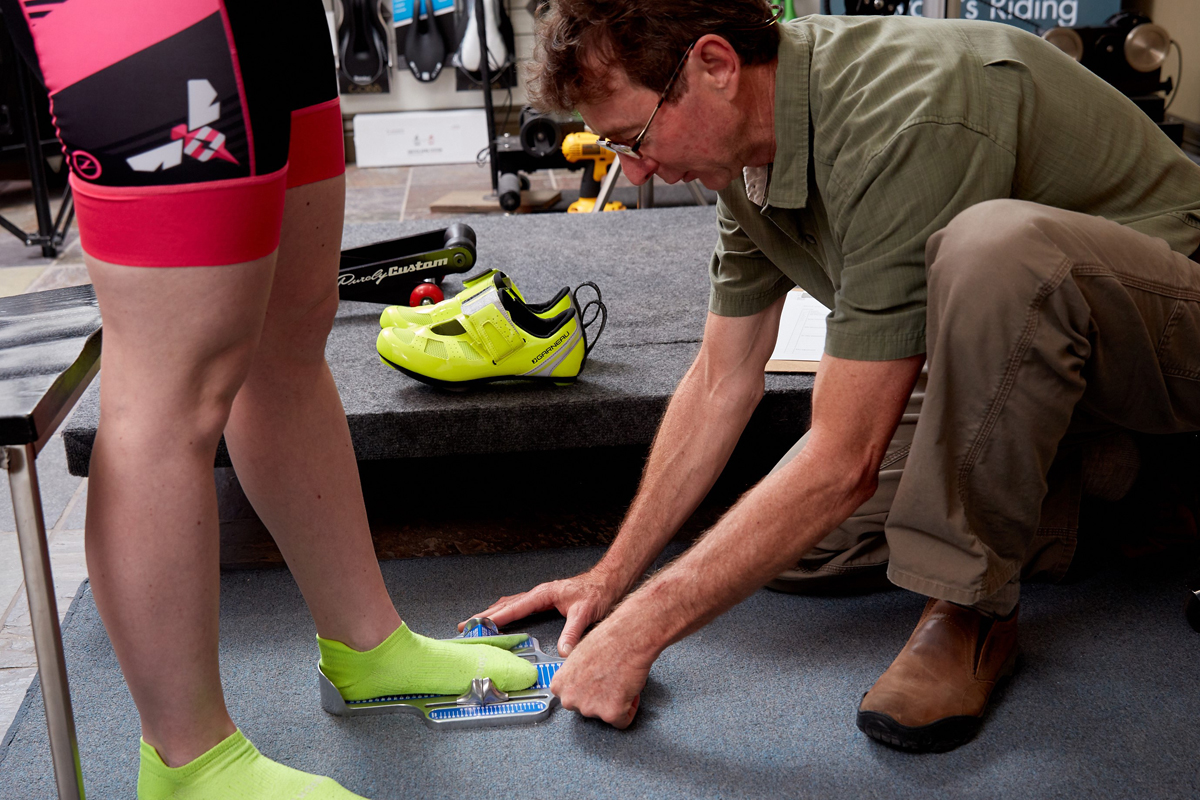
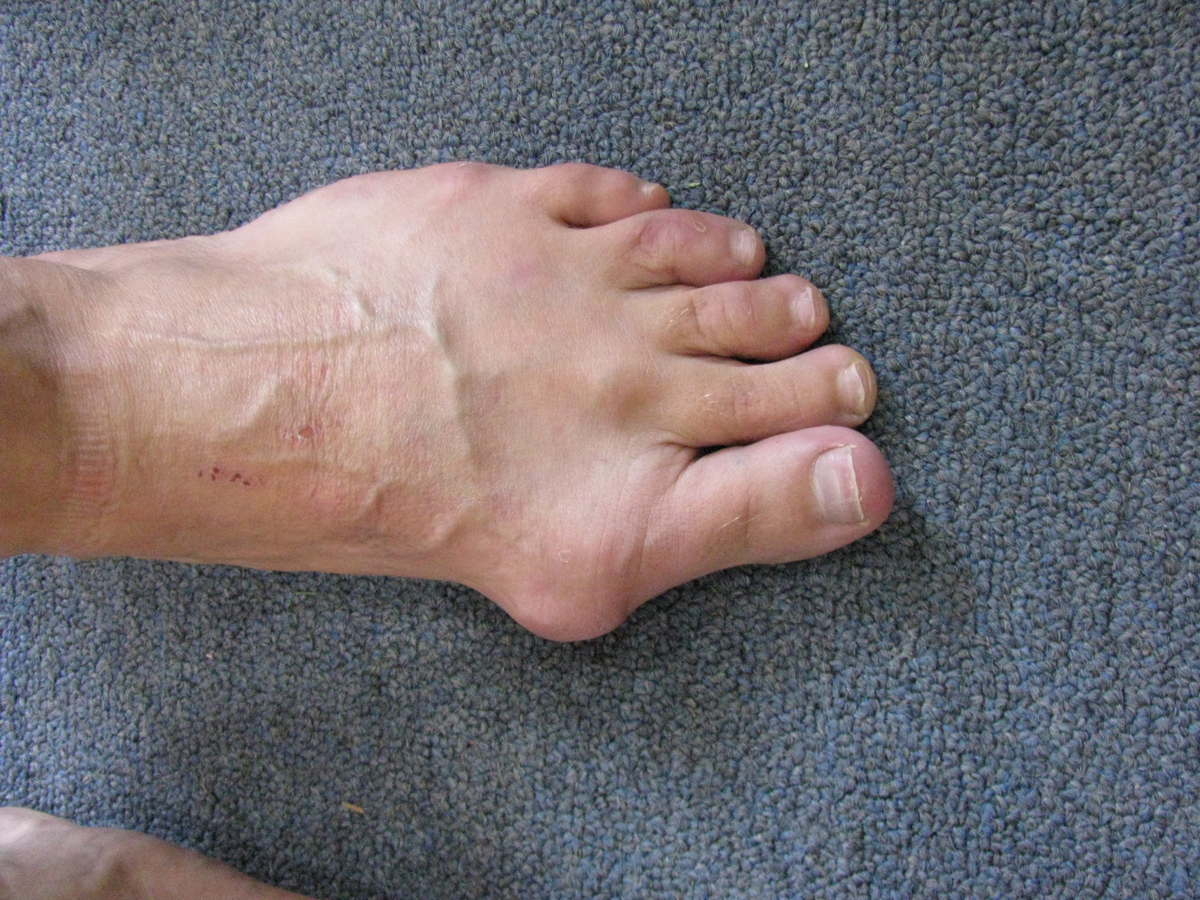
By Lou Melini – Alex Strickland is editor-in-chief of Adventure Cyclist, published by the Adventure Cycling Association (ACA). Adventure Cyclist is the best bicycle travel magazine that is published in a print edition in my humble opinion. ACA, based in Missoula, Montana, the leading bicycle travel organization in the U.S., began by starting the Bikecentennial cross country tour (the organization also had the same name then) in 1976 and by creating maps and tours.
Alex Strickland on his winter Missoula, Montana commuter bike. Photo by Dan Meyer
Cycling West: Alex, it was great to meet you in person last summer after years of exchanging emails. Tell my readers a little about you.
Alex Strickland: I grew up in Memphis, Tennessee — not exactly a cycling hotbed (well, not in the nineties, anyway) — and when I was in middle school a friend’s neighbor was a sponsored mountain bike racer for KHS and this just seemed … amazing. A few of us bought hand-me-downs from him and started riding and racing a little. There was a great local race called the Tour de Wolf and Gary Fisher and Tinker Juarez would always compete and sign autographs and all. It was just the perfect time to bridge being a kid who rode bikes around town to being a “cyclist.” That played a role in moving west to Missoula, Montana for college with its solid journalism school and abundant singletrack. Eventually, after working for competing newspapers in Montana, my wife got into grad school in Salt Lake and we made the move to Utah where I worked for a small PR agency (SOAR Communications) that represented the Sea Otter Classic and Interbike, among other cycling industry clients. It was amazing to land in the cycling industry and combine recreation with occupation. We helped out with the launch of NICA in Utah and it was amazing to think of how different those kids’ experience was vs. the dumb luck that pointed me toward mountain biking. Like the T-shirts say, “I wish they’d had this when I was a kid.” Though we loved Utah, an opportunity came up with Adventure Cycling Association in Missoula to work on their member magazine Adventure Cyclist, which pulled us back to Montana.
CW: Can you review a little about your position with Adventure Cycling Association? The ACA is about bike travel but what can someone riding to work learn from your magazine and the ACA?
A.S.: I’m the editor-in-chief of Adventure Cycling’s member magazine, Adventure Cyclist. We publish nine times per year for our 52,000 members, which makes us one of the largest cycling mags in the country. We’re definitely focused on bike travel, whether that’s an overnight in Connecticut or a months-long epic in Kazakhstan. Of course, not everyone can take months off (including magazine editors…), and we know that other types of riding like commuting are a natural gateway to bike travel. Plus, the venn diagram of what makes a good touring bike and a good commuting bike is nearly a circle. Rack mounts, bigger tires, fenders, comfortable riding position, an eye toward safety? These are all features that appeal to everyone from half-mile commuters to million-mile travelers.
CW: Tell me a little about why you commute?
A.S.: Full disclosure: when people are impressed by the fact that I commute year-round in Western Montana, I have to admit that I live less than a mile from the office. So while -10° is cold, it’s not cold for long! Plus, I can ride home for lunch. Just having an excuse to be outside a few times a day regardless of weather is a pretty great mood-booster, and since we’re often reviewing bikes for Adventure Cyclist, it’s a chance to spend a little extra seat time on different rigs and a reason to take a circuitous route to the office.
CW: I know you mostly worked from home during your time in Salt Lake City, but you did get a chance to ride to various establishments to shop, eat, etc. How does riding in Missoula compare to Salt Lake City?
A.S.: Downtown Salt Lake is way better. No offense to Missoula, but we’ve got a mash-up of crumbling infrastructure and retrofits that aren’t quite right. Missoula has an amazing (and growing!) riverfront trail system that now links us to Hamilton, Montana, 50 miles to the south. That’s an incredible asset, but chances are your commute in Missoula relies on some surface streets, which aren’t great. Salt Lake has such an benefit in the super-wide streets that allow for things like the separated lanes on 300 South or just a little more elbow room in the lanes on streets like 800 S (I was lucky to live near Liberty Park).
CW: Would you say that in general Missoula is a bike crazy town, thus explaining the large number of bike commuters in town?
A.S.: There were some great T-shirts printed by the long-gone (but justly famous) Braxton Bike Shop that said, “Missoula, Montana: The Bicycle Town,” and that’s about right. There’s a real culture of cycling and bike commuting here, even if the infrastructure hasn’t quite kept up. No one bats an eye at people with ski goggles, puffy coats, and studded tires leaning into the wind during a January blizzard on the way to work.
CW: I used to have one of those t-shirts. I purchased it from (sadly gone) Sam Braxton. He was tremendously helpful during my first cross-country ride in 1975. Missoula has a decent climate, but on average it is colder than Salt Lake City. What are some of your cold weather gear that you recommend? Are the roads fairly well maintained for commuting? Do you have winter specific and summer specific tires?
A.S.: I finally broke down and bought studded tires this winter, but I was a little more skittish than usual coming off a broken collarbone last fall. You can usually slip and slide on regular rubber, but I can’t deny that the studs are nice. I swear by Bar Mitts for warm hands (and the ability to wear thin gloves for better feel at the controls) and a merino Buff for a little face protection when the windchill really plummets. Missoula is not known for its incredible road maintenance, so having good lights and riding with some authority is helpful when you’re forced farther into the travel lanes than you might prefer.
CW: I have read all of your bike reviews in Adventure Cyclist magazine. What is your current commuting bike? What would you like to have as your current commuting bike?
A.S.: My do-it-all bike is a Soma Wolverine, which I’ve had for a few years. I did some commuting this winter on a Salsa Mukluk fat bike too, which is not fast, but was pretty fun. I really like the Wolverine for commuting and general “all-road” riding, plus a bit of touring. I run 40-47mm tires depending on the season and leave fenders on most of the year. It’s set up as a 1×10, though I keep a double crankset and front derailleur in the parts bin for steeper touring trips. The de-icer in Missoula absolutely eats drivetrain components, so the most important piece of winter commuting gear I have is probably one of those little pump garden sprayers that I fill with hot water and rinse the bike once or twice a week to prolong the inevitable.
Of course, one way to solve that is with a belt drive. I did spend a little time this winter on a belt-driven, Pinion gearbox bike from Priority Cycles. My wife’s commuter has a belt and an 8-speed Shimano Alfine hub. I’ve long seen the advantages of a more sealed system for commuting (or more). The Alfine line is pretty affordable and great for commuting, but not up to loaded touring. A Rohloff hub has more range and is incredibly robust, but costs more than many bikes. The Pinion has some advantages, such as moving the weight of an internally geared system to the bottom bracket area instead of the rear axle, but because of its shape can’t be retrofitted on an existing bike. Still, that Priority left an impression and could easily pull double duty as a commuter and touring bike. As gearboxes become more common, it’s an intriguing option for a lot of different riding styles.
CW: I am always amazed by the number of commuter bikes I have seen during the several visits to the ACA headquarters. What amenities does the ACA provide for employees?
A.S.: There is some peer pressure to commute by bike! I would say in spring, summer, and fall, it’s 85 or 90 percent and in winter it drops down to 25 percent or so. Though many people just swap their bikes for snow boots and walk. We’ve got a great secure courtyard here at the office for bike parking and enough covered spots for most people to get under a roof in the rain. We’ve got work stands and tools for quick fixes and showers for those who are working harder or getting in bigger rides on the way in or during lunch.
CW: The Adventure Cycling Association has a number of mapped routes that run through Missoula or are close to Missoula. (TransAmerica, Great Divide, Northern Tier, Great Parks North) Is there a fairly active touring group in Missoula that goes out on overnighters or short tours?
A.S.: Weeknight overnights are definitely an occupational hazard. There’s a great local group called Pedal Missoula that gets out a lot, as well as a less formal group led by our magazine staff writer that practices “burritopacking,” which is exactly what you think it is! Plus, we see about 1,200 cyclists at Adventure Cycling headquarters every summer who stop in during their ride on one of our routes.
CW: Alex, I wish to thank you for taking time off from your May issue to do the commuter column. I think the readers of Cycling West learned quite a bit from the column. If you are in Salt Lake City, I would be happy to go for a ride on our bike friendly streets that you seem to miss, though you have the bike trail to Hamilton that is awesome to ride.
If you have a suggestion for a commuter profile, especially from Idaho, Montana, Nevada, Wyoming, Western Colorado, or Northern Arizona, have a commuter question, or other comments, please send it to [email protected]
Alex Strickland and his wife on tour in Spain. Photo by Alex Strickland Alex Strickland’s Soma Wolverine commuter bike. Photo by Alex Strickland
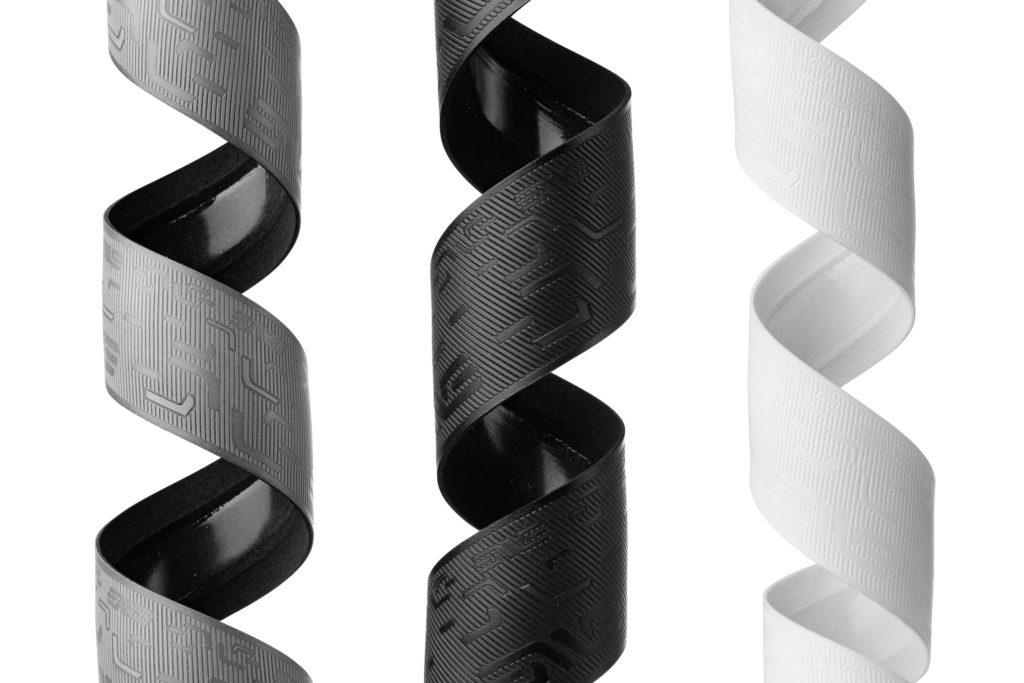
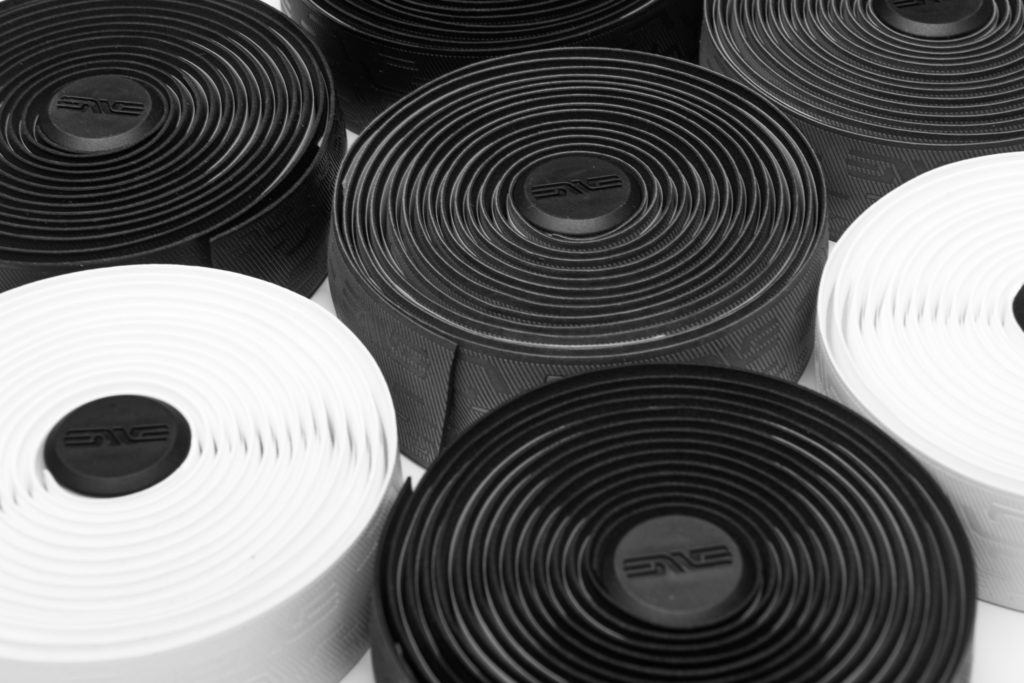
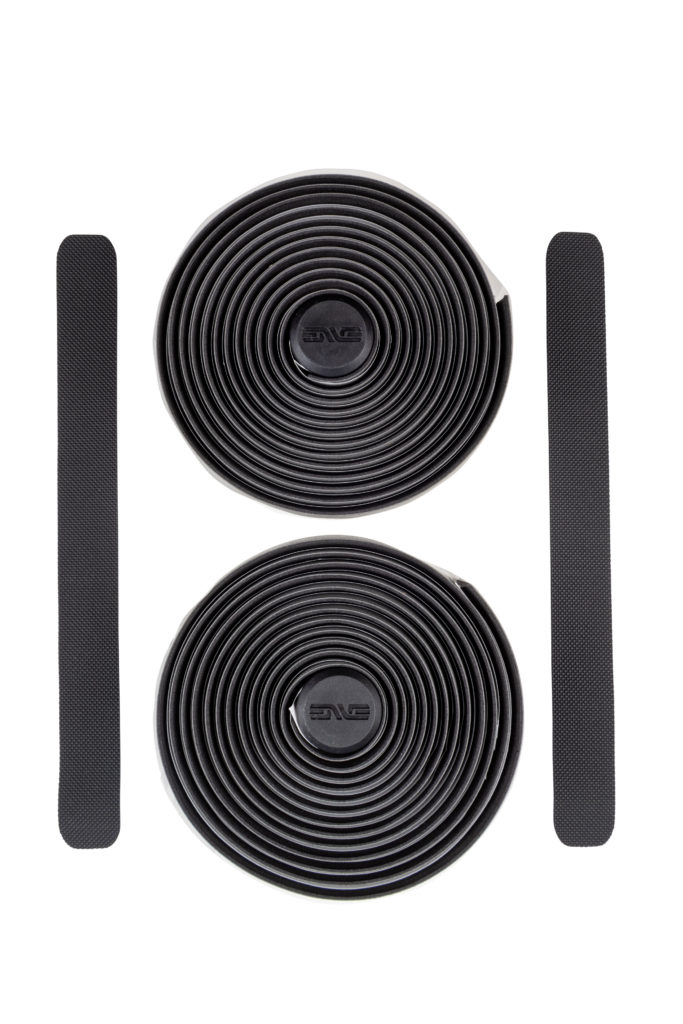
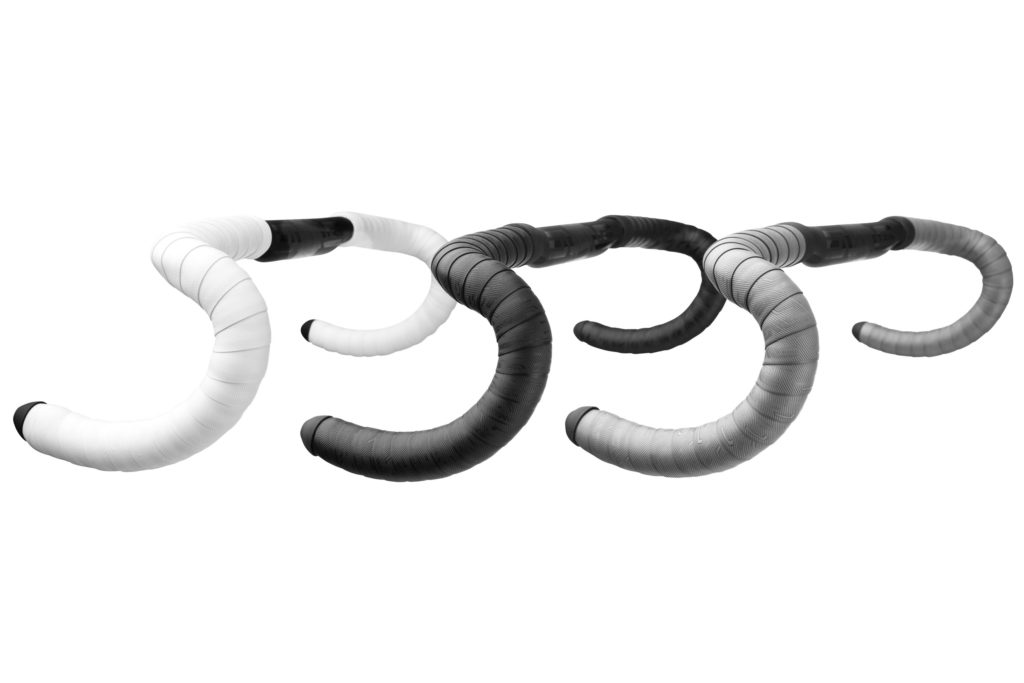
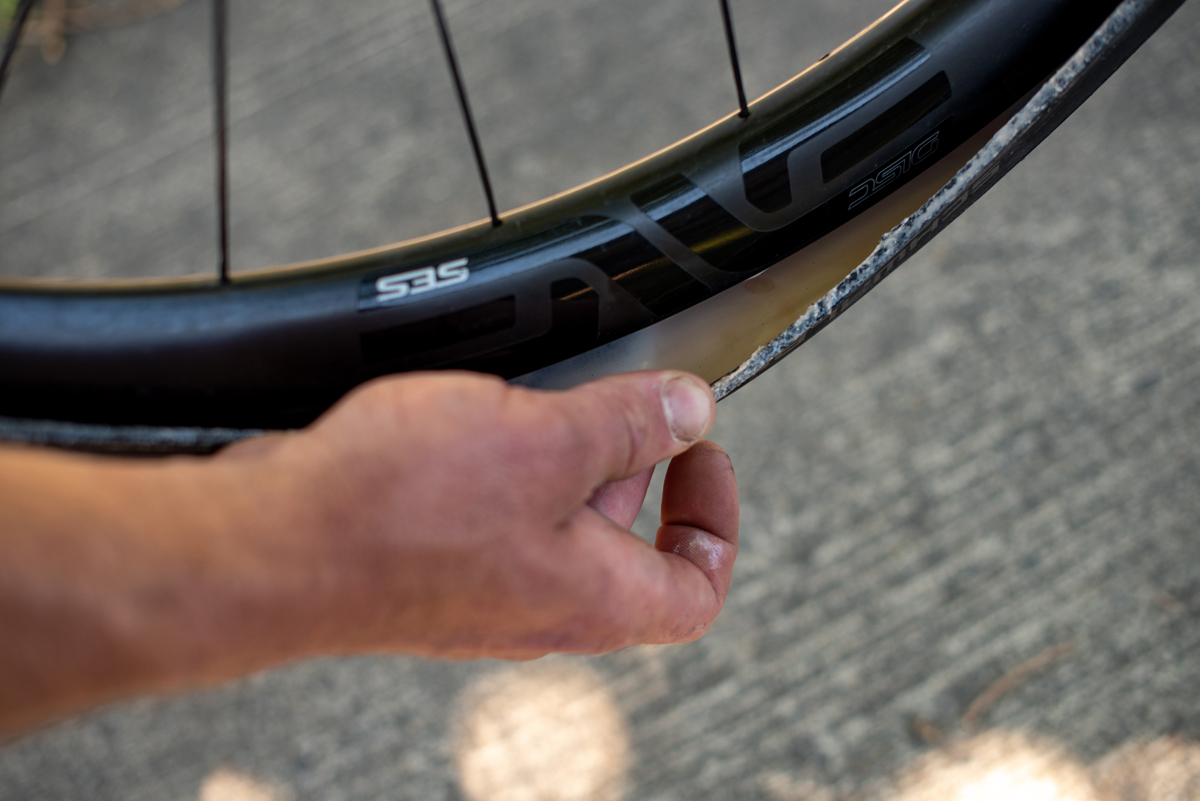
OGDEN, Utah (August 9, 2019) – Handlebar tape is more than a fashion accessory or an afterthought, as a direct touchpoint with the bike it’s a key component that sets the tone for your ride. Bar tape that becomes slippery when wet, and causes discomfort diminishes confidence and the ride experience. As such, ENVE’s new Handlebar Tape is designed with a grip compound that ensures bare handed traction in all conditions. To maximize ride feel without compromising comfort, ENVE Handlebar Tape is 3 millimeters thick with a vibration damping silicon backer strip that ensures comfort for long miles over rough roads.
By Utah Department of Public Safety – Utah is a wonderful place to enjoy the outdoors, especially on a bike. Now that summer is in full swing plenty of cyclists are out regularly enjoying all the beauty Utah has to offer. One of the greatest challenges faced by cyclists is being seen and recognized by drivers. So here are a few tips and tricks to get drivers to notice you and share the road.
Tip 1: At Dawn, dusk, and dark, Use reflective gear – especially below the waist
If you want drivers to see you wear reflective gear. And make sure you wear enough reflective gear. The small reflective piping found on most athletic garments is not enough to make a difference. The more reflective you can become the better.
If you want drivers to recognize you as a cyclist, wear reflective gear on your shoes, around your ankles or wear full reflective leg coverings. By incorporating reflective gear below the knee you highlight the movement of cycling or the up-down motion of cycling. This motion is much more likely to grab the attention of the driver, alerting that driver to your presence. The road is full of lights: street lights, reflective signs, other cars, motorcycles. Too often drivers see a light in the distance but can’t recognize what that light means until the object is quite close. By utilizing both light and motion you actually communicate, “cyclist here, please share the road.”
Tip 2: Wear fluorescents in the daytime
Research has shown that drivers consistently recognize fluorescent colors faster, more consistently and from farther away than standard colors. So when picking cycling gear go for fluorescents. There isn’t any research pointing to which fluorescent color is best, so you’re on your own there. However, fluorescent orange is always a good pick because drivers already associate that color with caution.
Tip 3: Use lights always
Utah law states that any cyclist riding during dawn, dusk or dark is required to have a white headlight, red tail light or reflector, and side reflectors (41-6a-1114). But remember these are the minimum requirements. You can use lights both day and night. You can also get creative with lights. For example, putting small lights on the back or front of your shoe will, like the reflective gear, highlight the motion of cycling.
Tip 4: Use bike boxes when available
The concept of Bike Boxes is being used nationally as well as right here in Utah. Bike Boxes can be found in downtown Salt Lake City and this summer UDOT has adapted them to improve safety in Utah County. Bike Boxes provide a safe and visible way for cyclists to stay ahead of queuing traffic at a red light. The newest Bike Boxes in the state are located in Utah County on Redwood Road at the Pioneer Crossing and 2100 North intersections. To learn how they work visit udot.utah.gov/go/bikebox.
Tip 5: Educate others
A large percentage of crashes can be avoided if motorists and cyclists look out for each other. When riding in groups or with friends encourage others to ride safely. Also teach other riders how to make themselves more visible to drivers. If you see unsafe behavior among fellow cyclists make sure to address it and educate friends and family, especially those who may not ride, on how to share the road with cyclists.
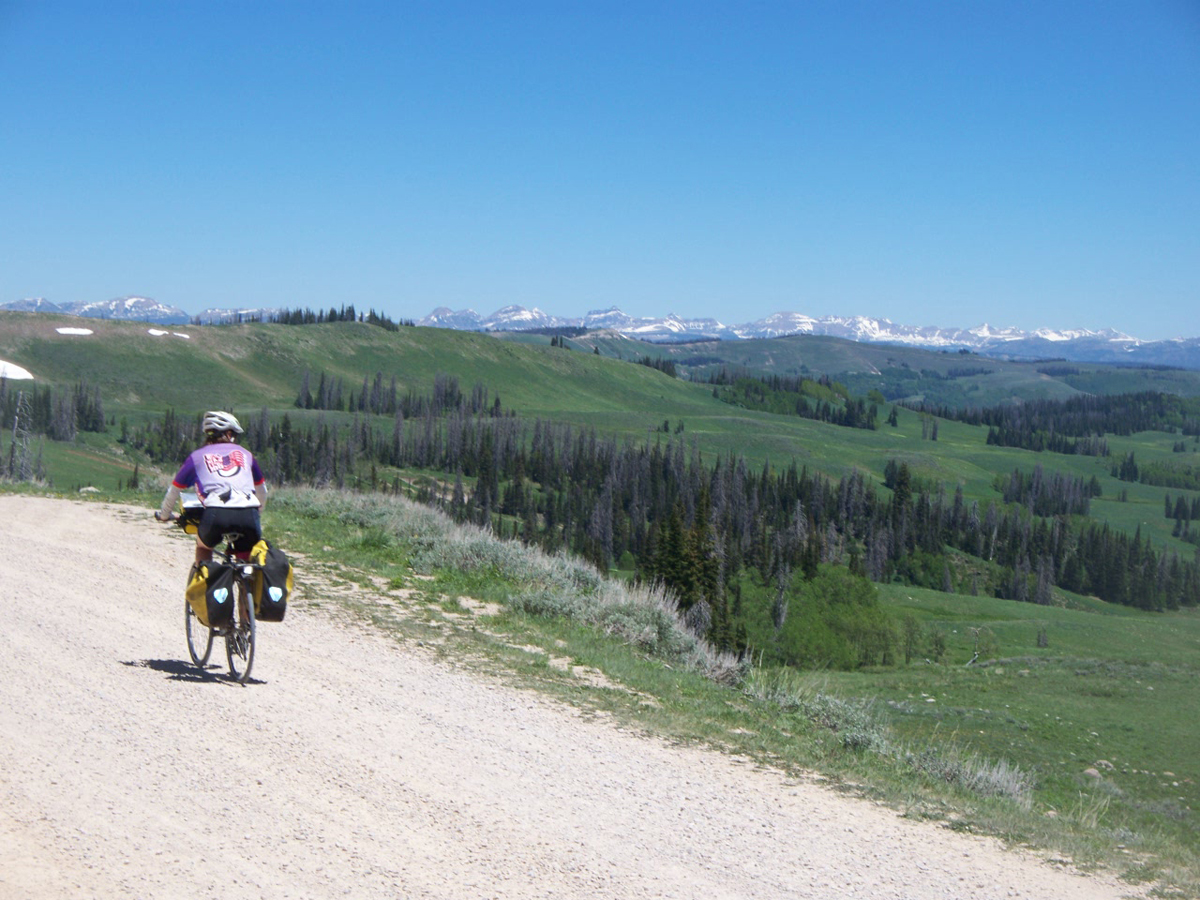
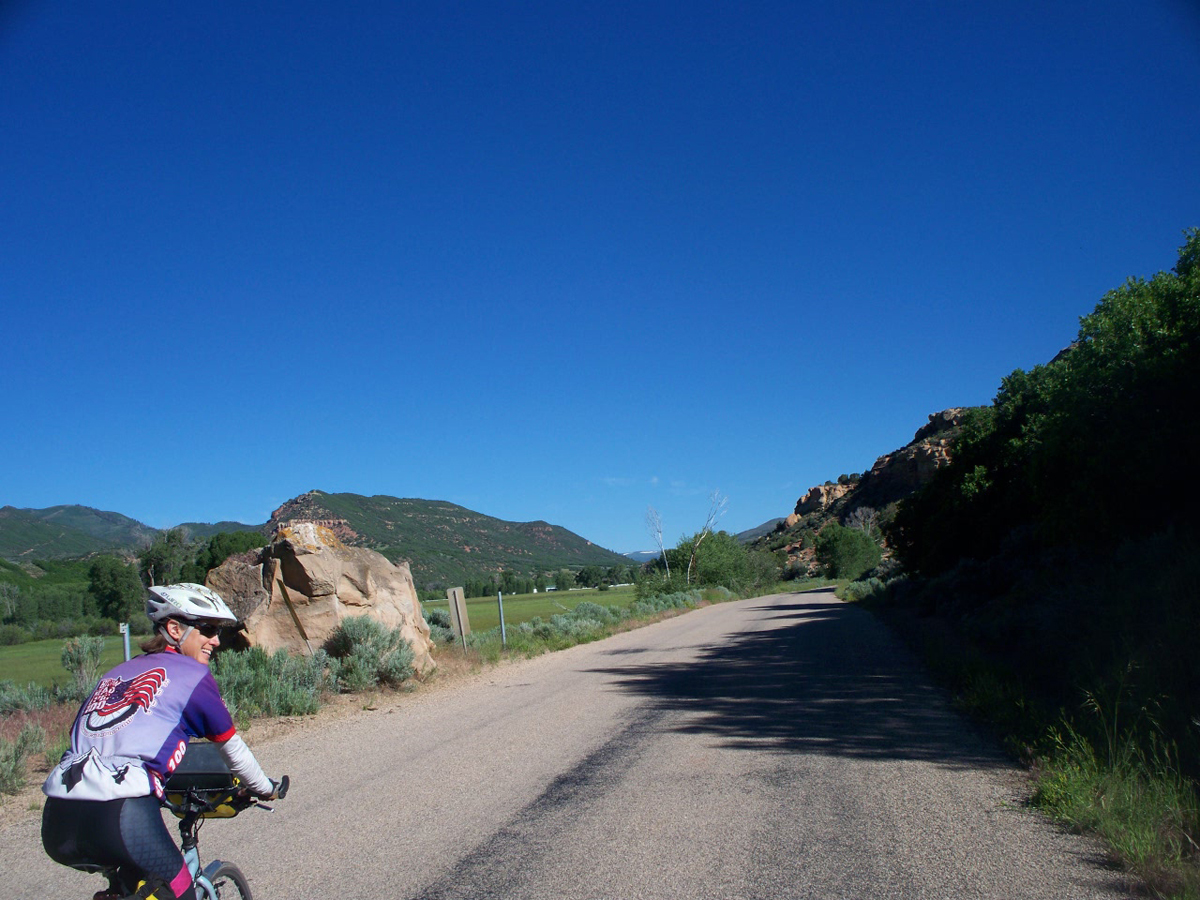
By Tom Diegel – While it’s easy to think about far-flung places like Europe for bike tours or time-intensive big trips like the Great Divide for bikepacking adventures, it’s good to keep in mind that there are fantastic paved and dirt road combos near Salt Lake City, Utah that offer up fantastic tours for quick weekends or three-day outings. From the West Desert in the spring and the fall to the higher altitude (and therefore cooler) Wasatch Plateau and the Uintas there are lots of options. And thus it was in the heat of the summer that we cooked up a super-scenic yet simply-local tour through the Western Uintas last year that’s perfect for the new generation of gravel bikes.
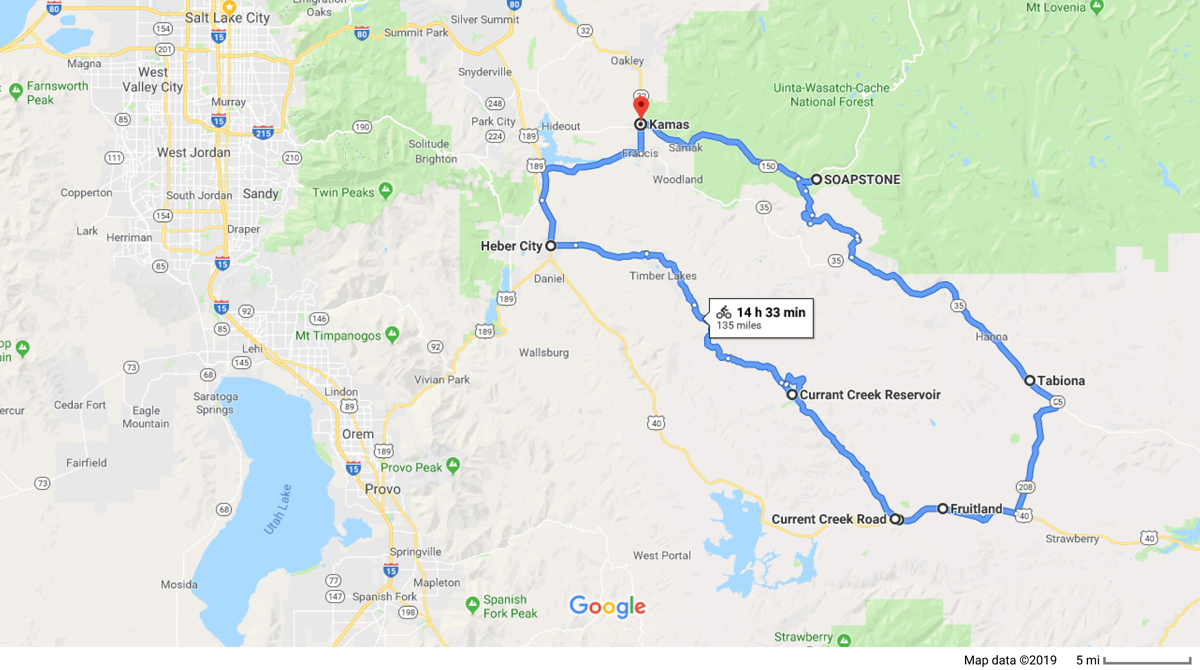
A map of Tom and Ashley’s 135 mile bike tour in the Uinta Mountains, Utah. Map by Google Maps
Mirror Lake Highway and Wolf Creek pass are both well know to local cyclists as fantastic road climbs, but what’s lesser known is that they can be easily connected by a well-maintained gravel road “through” Soapstone Basin (I’ll get to that later) and once over Wolf Creek, the adventures can just keep going.
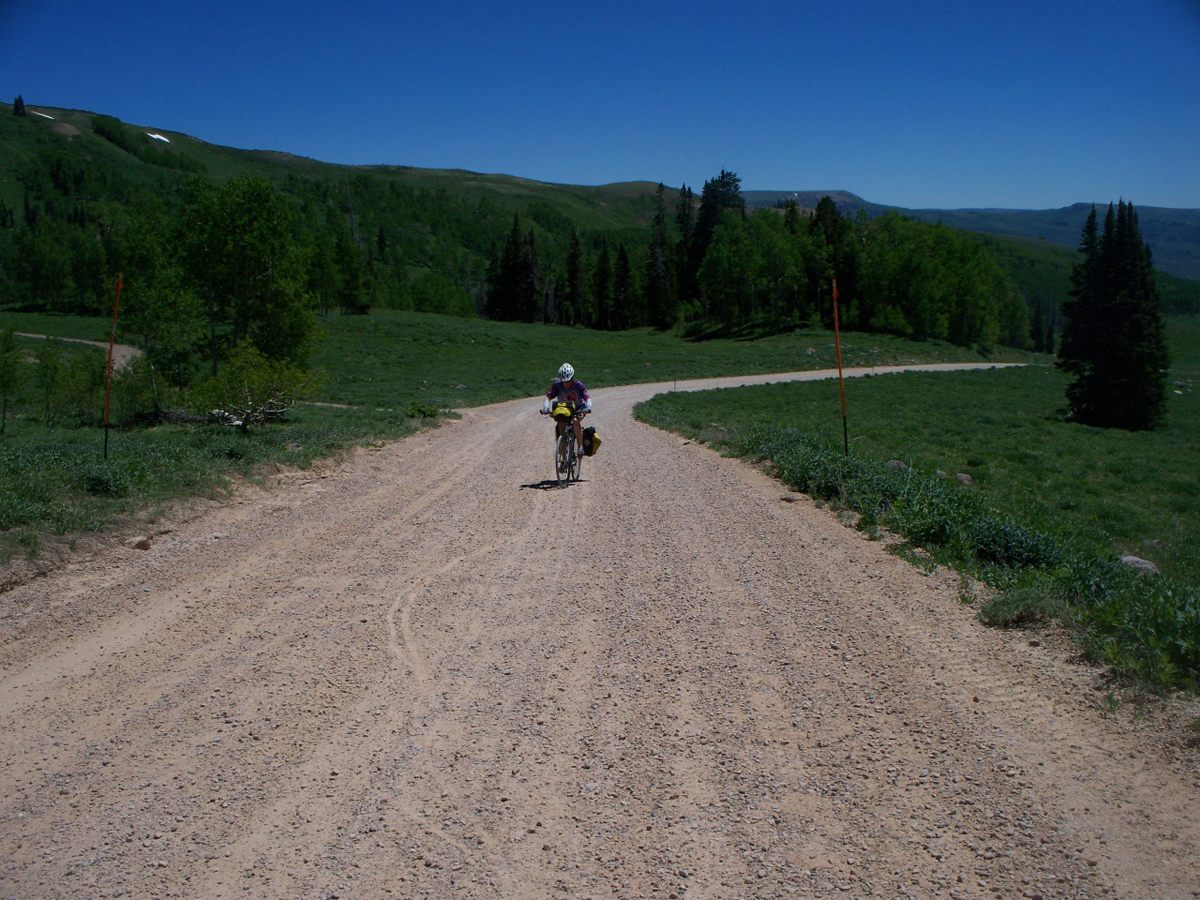
Our weekend tour started in Kamas and had the familiar spin up the first few miles of the Mirror Lake Highway. However, about where the winter gate is and the pavement starts to pitch upward, we took the right onto the Soapstone Basin road. I had sorta thought that a road going through a thing called a “basin” would be fairly flat, but it turns out that Soapstone is a pretty healthy climb up and out of the Provo river canyon to a pass between it and the South Fork Provo, where the Wolf Creek highway is. The gravel road climb and descent was the first good test of our tire choice: doing a paved/dirt road combo is always a little tricky to plan for in terms of tires in that there’s going to be a compromise. Either you are humming along somewhat annoyingly for many miles on pavement with the knobbies that you brought to march through the gravel, or you’re spinning out, sinking in, or flatting with too-skinny or too-slick tires on the gravel but blissfully zipping along on the roads. With the new generation of “gravel bikes” this is less of an issue, but still, as Burke Swindlehurst points out in his description of his epic Crusher in the Tushar, at some point your tire/bike choice will feel wrong, and you just gotta be okay with that.
In this case we anticipated that we’d be on gravel for about 25-30 miles and on pavement for 85-100 miles, so we opted for pretty road-friendly tires.
A ways up the Soapstone Basin climb suddenly we saw a couple of cyclists coming at us, which was pretty surprising: we weren’t on the roads, and we weren’t on singletrack, and those are the two venues that Utah riders ride! But again, Gravel Bikes are changing that, and these two were a couple of 60ish guys on Gravelers doing a smaller, but similarly-proportioned day ride (Kamas-Wolf Creek-Soapstone-Mirror Lake-Kamas) and they were so stoked; “We have always been roadies but we realized how many gravel roads are in Utah and these things open up a whole new world!” Until, that is, they saw us with our light overnight gear, and realized that the ability to do weekends or more on both surfaces opened up an even-bigger world of covering that many more wild miles. It’s not often that a coupla roadies on expensive carbon bikes are obviously envious of a couple of old steel bikes, but these guys were, and as we parted ways we realized that those guys would be buying the gear to take their bikes on overnights by the end of the summer.
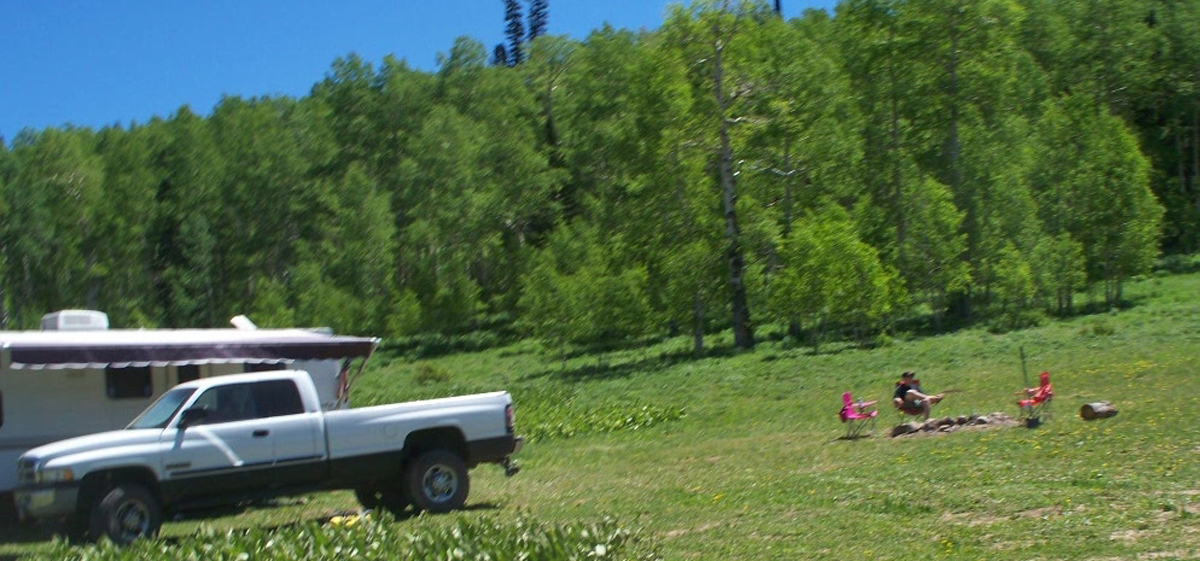
The riding over the Soapstone pass was great; the Uintas seem to be characterized by a wide band of aspens and pines that goes up to about 8500 feet, and then it transitions to nice open meadows. If you head for the cooler hills over the weekends and are on gravel roads, you’ll undoubtedly see a fair number of internal combustion-propelled Utahns camping, and for our tour over a hot weekend, a lot of folks had escaped to the Uintas for a weekend of “camping”. As an example, we passed one guy who was just sitting out in front of his RV in a lawn chair in the full midday sun by himself, in front of a fire-less fire, listening to classic rock turned up loud enough to drown out the generator that was cranking out the power to turn up his stereo, and staring at us as we chugged by him up the hill. There’s no doubt the both he and I had exactly the same thought as we looked at each other: “I could never, ever do that!”
After cresting the “basin” (pass) we did a bit of a descent down to the highway, where we turned left and climbed the last couple of familiar road miles to Wolf Creek Pass. Many folks from Salt Lake and Park City get to the 10,000 foot pass and turn about, since the ride from PC, Kamas, or Francis to the pass is a healthy ride round trip itself. But on a weekend adventure we were able to carry on, and the 10 mile descent down the backside is equally great and took us into the agricultural community of Tabiona and the Duschene river valley. Though it’s close to our home, this area was new territory to us, and we realized that the terrain out there was more akin to southern Utah than the more-lush west side of the Uintas. That desert-type scenery is great, but it also meant that we needed to go another 30 miles to get to decent camping. But the day’s moderate distance meant that was fine at that point, as it was swift and nice pedaling.
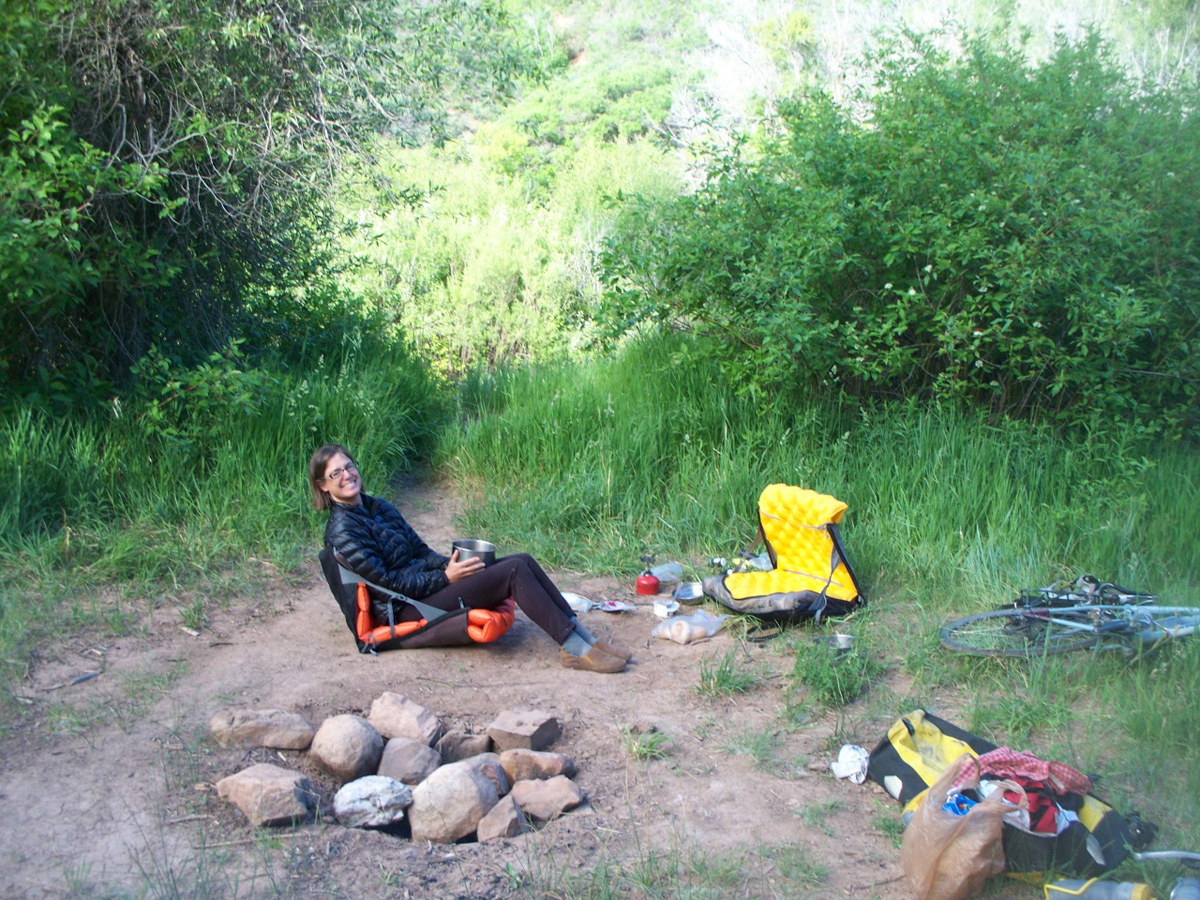
The only mild annoyance of this loop was a few miles on Highway 40. This major conduit from Summit County to points east is a bit busy, but it has a pretty wide shoulder and the buzz of traffic only lasts for a few miles before the quiet conduit of the Currant Creek valley turns off to the north, complete with a “watch for bicycles” sign right at the start. Currant Creek is headed by a dam, so there’s almost always water in it, and after traversing the arid desert we found ourselves a great, dispersed, creekside campsite shaded by willows and cottonwoods. The soak in the cool creek was a welcome relief from the 70-odd mile day.
On Sunday morning we had a nice spin up the paved Currant Creek road, which was traffic-free aside from the occasional campers heading back out to get to church. Soon enough – as we anticipated – the road turned to gravel and we started a long grind up to another 10,000 foot pass that had some steep sections, but of course that resulted in more great views of the high Uintas in the distance.
We anticipated more gravel for the 5000 foot plunge down to Heber City, but were surprised to find – just a mile or so below the pass – the surface of Forest Road 083 turned to butter-smooth pavement than snaked its way down a sublime descent through the aspens, now with the views encompassing the Wasatch Back and the Timpanogos massif. We rolled into Heber City with well-warmed brakes and turned right on highway 40, where we realized that the highway had a huge traffic jam due to a constriction to one lane. Doing a not-very-good-job of keeping the smug look off our faces, we spun past hundreds of virtually-parked cars to our turn onto Highway 32 that goes up and over the small pass above Jordanelle reservoir and back to the familiar roads between Francis and Kamas, for another manageable 65 mile day.
Getting out of town on an impromptu weekend adventure? Check. Great, new riding terrain? Check. Riding our bikes all day for 2 days? Check. Nice riverside camping? Check. Starting only an hour from the Salt Lake Valley? check. Another awesome bike tour! Check!
This would be a lonnggg day ride for the strong, but a much more approachable one day gravel-pavement combo is the Kamas/Soapstone/Wolf Creek/Francis loop at 44 miles. Another longer day ride would be go to south/west from Wolf Creek pass on the gravel FR 054 to that great FR 083 paved descent.
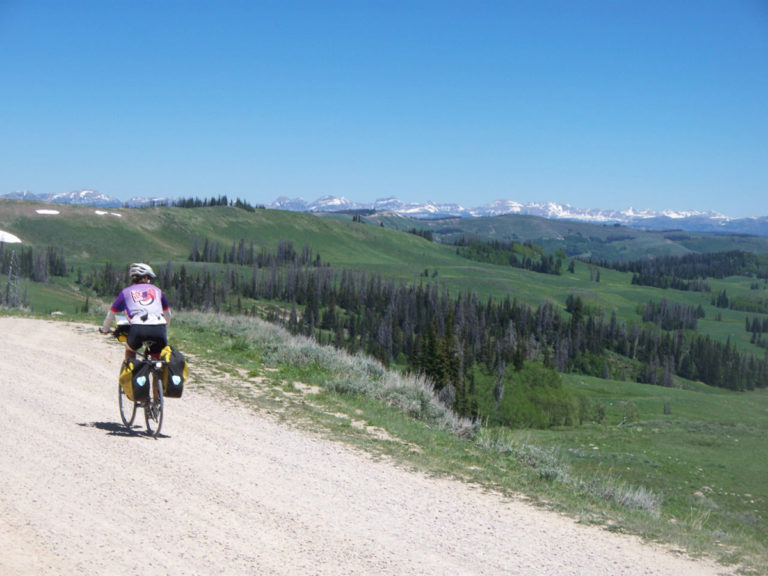
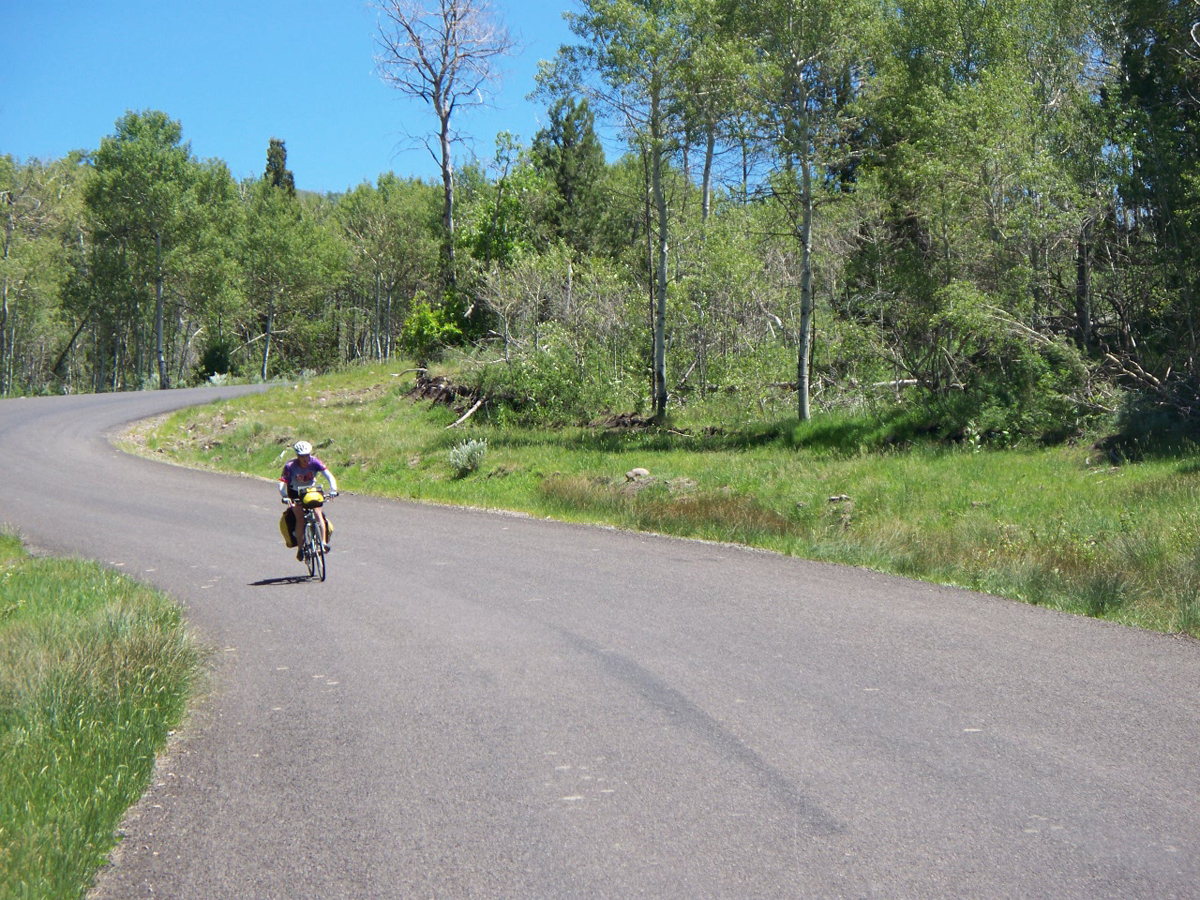
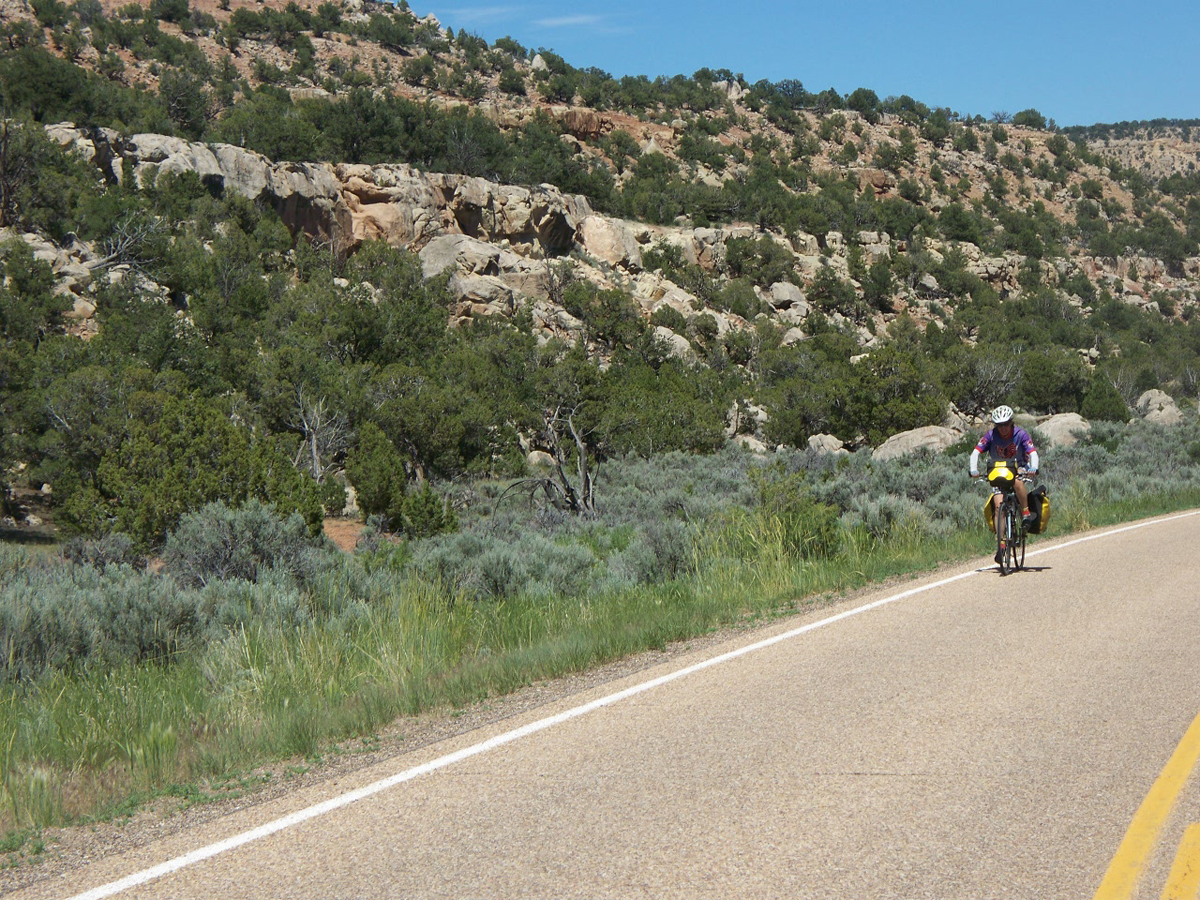
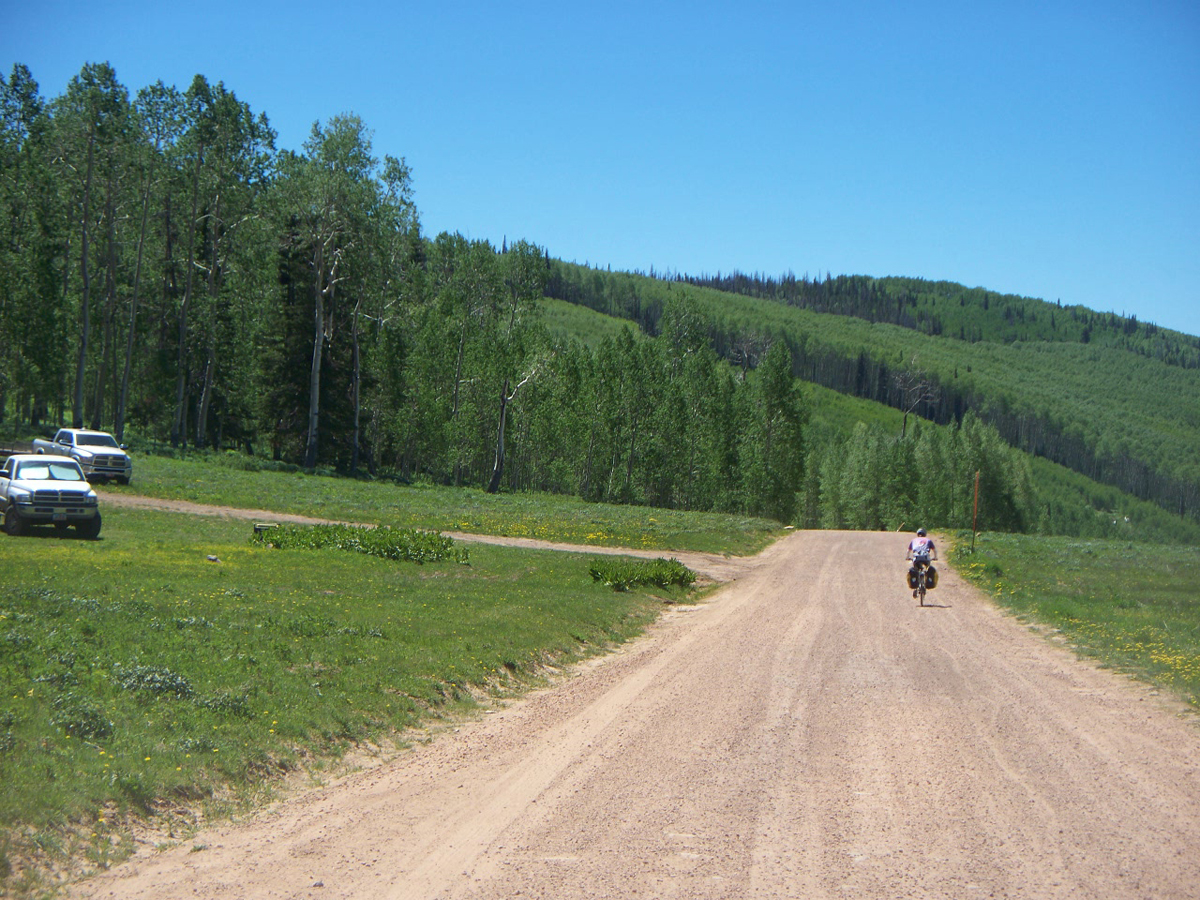
This descent in to the Heber Valley would make for an incredible road bike climb as well; 5000 feet, almost no cars… Photo by Tom DiegelAn hour east of Park City, or down in the mesas of southern Utah? Nice to have both on a weekend Uintas tour. Photo by Tom DiegelAs I chugged past on my bike, I’m sure that we both had the exact same thought: “I could never, ever do that!” Photo by Tom DiegelOn the backroads of the Uintas. Note the diesel white F750’s; the official vehicle of the Utah “camper.” Photo by Tom DiegelSome great views of the highest Uintas in the distance on the Currant Creek road. Photo by Tom DiegelHard to convey in a pic looking back, but this is pretty steep…and the gravel was a little soft for our tires. On the Currant Creek road. Photo by Tom DiegelIn the morning we had a nice spin up the paved Currant Creek road. Photo by Tom DiegelWe found ourselves in a great, dispersed, creekside campsite shaded by willows and cottonwoods by Currant Creek. Photo by Tom DiegelGreat views west to the backside of the Wasatch on this descent into the Heber Valley. Photo by Tom Diegel
PRESS RELEASE – COLORADO SPRINGS, Colorado (August 8, 2019) – For the first time, the USA Cycling Masters Road National Championships will take place in the hometown of USA Cycling, Colorado Springs, Colo. The event is made up of the time trial, road race, and criterium races that will take place over four days at three different venues across Olympic City USA. With almost 800 athletes in attendance from 46 states, spectators and athletes alike will be in for some remarkable racing.
Racing will begin Thursday August 8, in Hanover, Colo., 30-minutes south of downtown Colorado Springs with the race against the clock, the time trial. Athletes will be contesting either a 20- or 40-kilometer course, depending on age and gender. The course is an out-and-back style, and the distances have been certified, making this event eligible for national records.
On Friday and Saturday, we’ll switch venues to the U.S. Air Force Academy for the road race. Riders will compete on an 18.3 km loop, which is similar to the course used at the 1986 UCI Road World Championships held at the venue. Starting and finishing at Falcon Stadium, spectators can come and cheer just like they were at a football game. The road races will also serve as a qualifying event for the 2019 UCI Gran Fondo World Championships in Poland.
The event will conclude on Sunday with the criterium, held at the new Banning Lewis Ranch park on the east side of Colorado Springs. The day will include a neighborhood festival, live concert as a part of the Banning Lewis Ranch Summer Concert Series, food vendors and more. “We are honored to showcase our Banning Lewis Ranch neighborhood to the USA Cycling athletes and local residents for this event of national prominence.” said Thomas Garmong, Banning Lewis Ranch Executive Vice President.
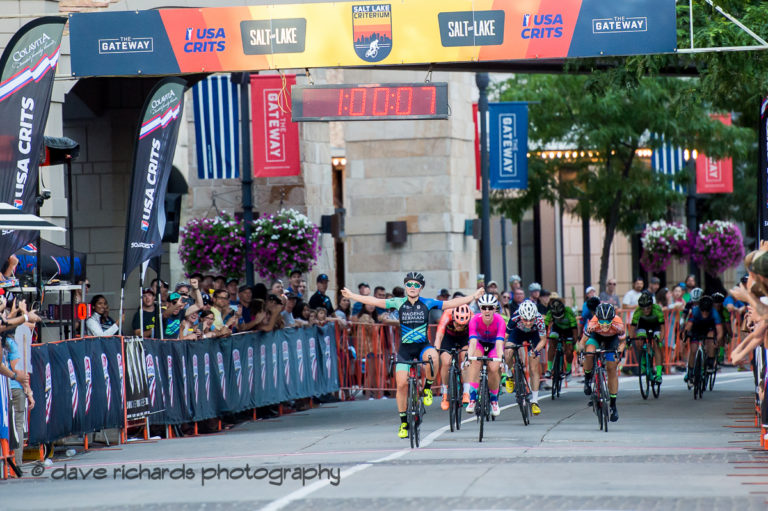
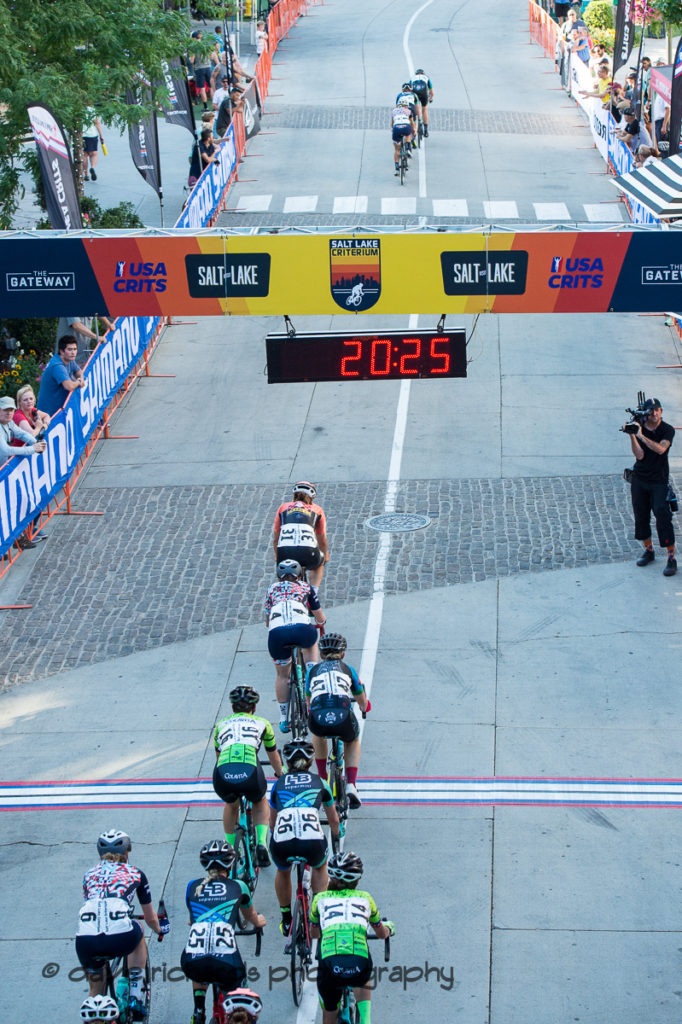
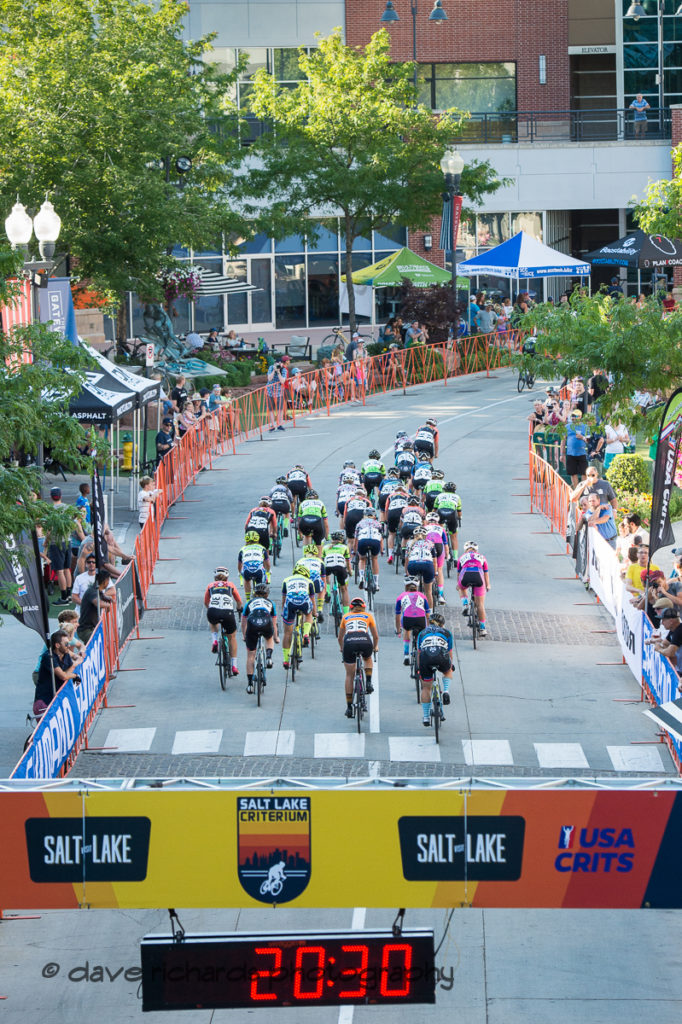
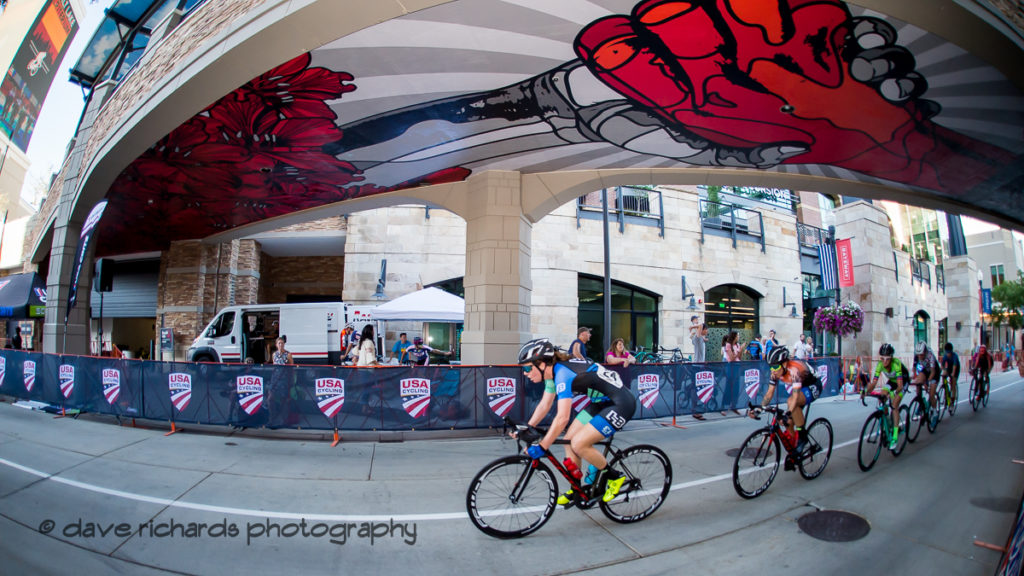
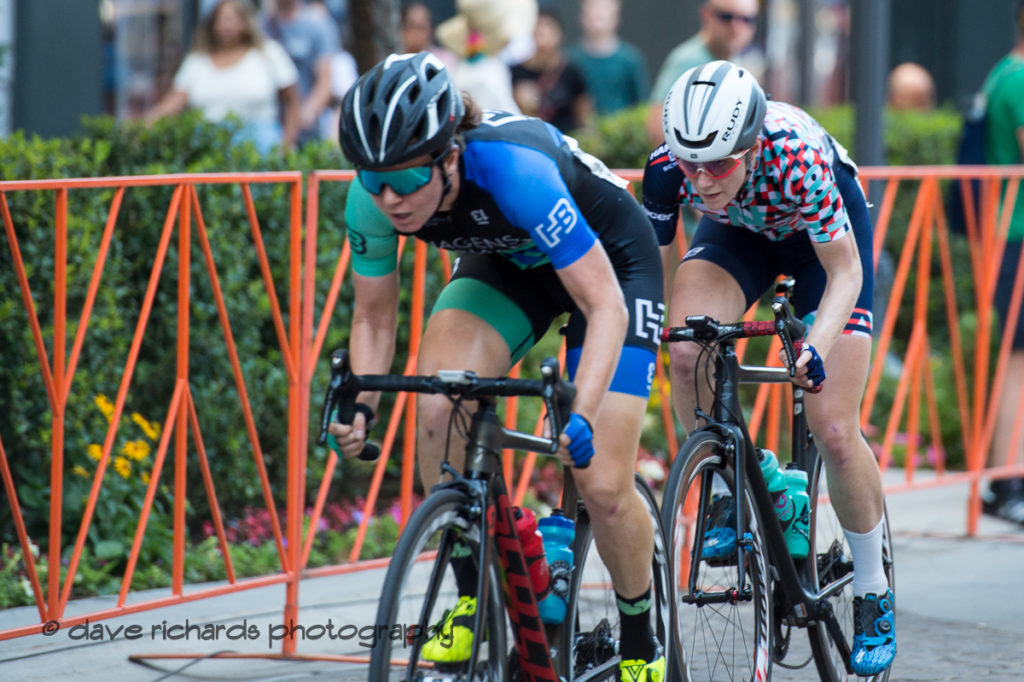
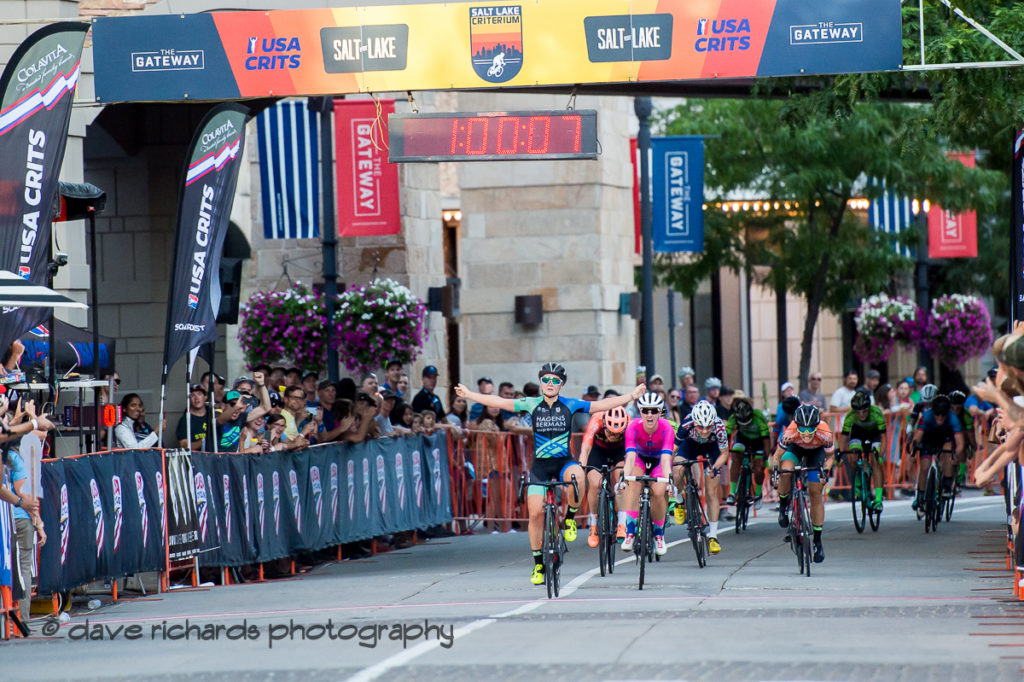
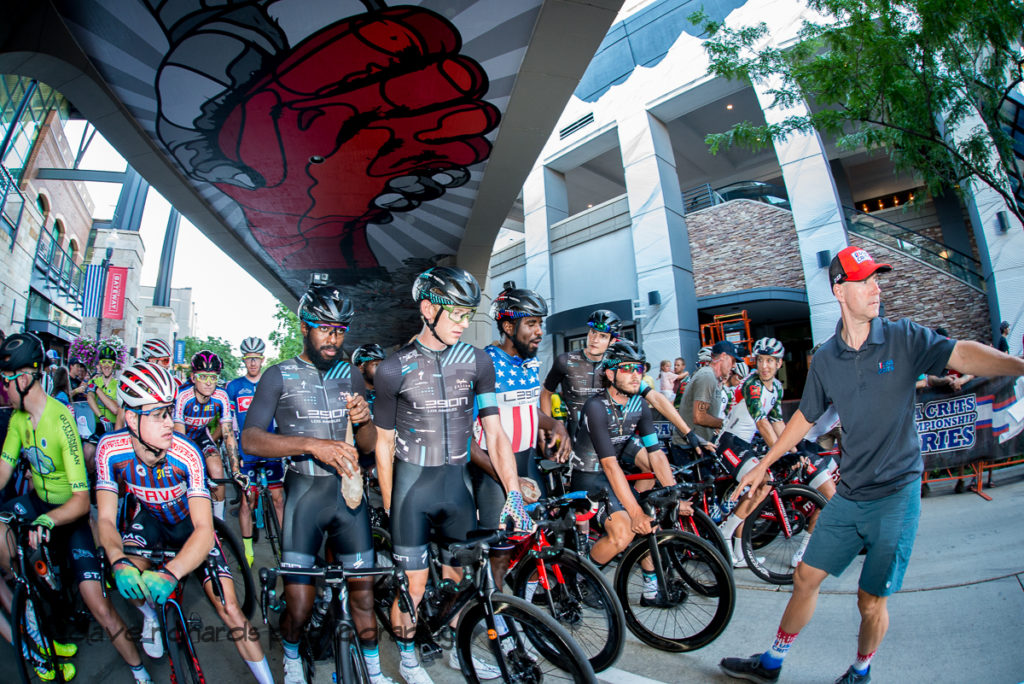
The first edition of the Salt Lake Criterium was held on July 20, 2019 in downtown Salt Lake City. The race was a stop on the professional USA Crits series tour, an eleven event national series featuring the country’s top criterium racers. The race was a 1.1 mile circuit passing through the Gateway Mall.
In the women’s race, Harriet Owen (Hagens Berman/Supermint) won the field sprint to take the win, with Emma Bast (Levine Law Group p/b Huseby.com) in second and Starla Teddergren (Hagens Berman/Supermint) in third.
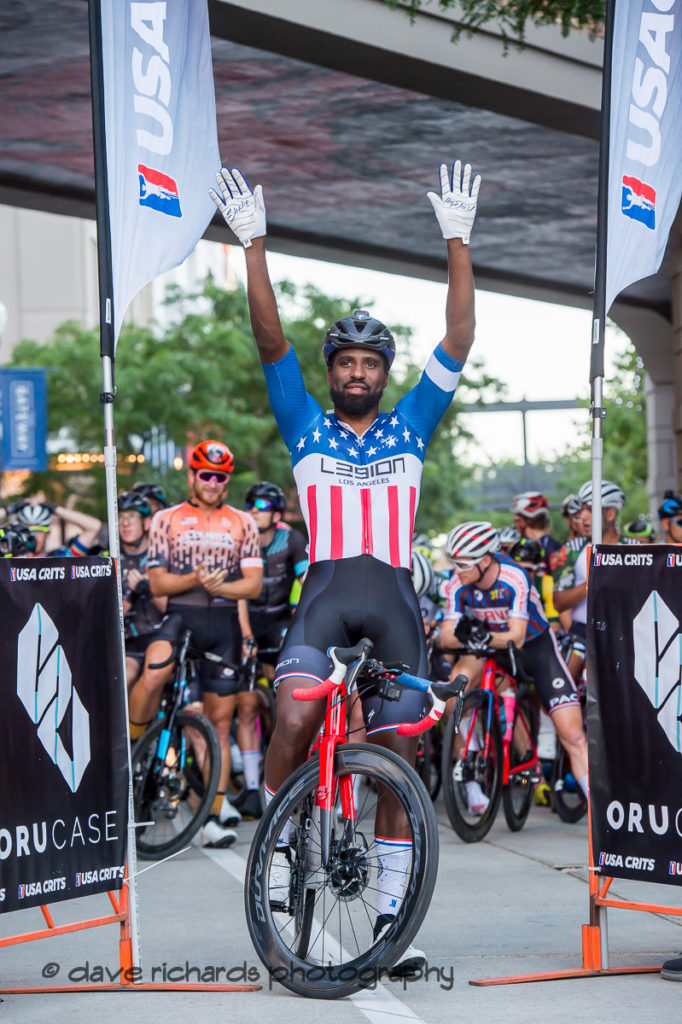
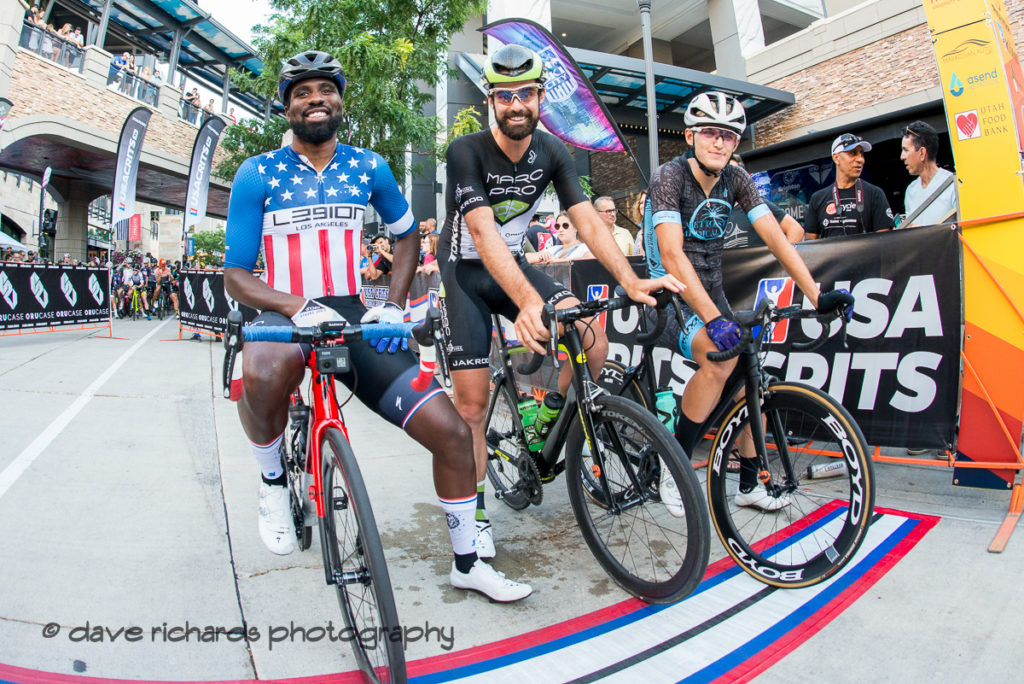
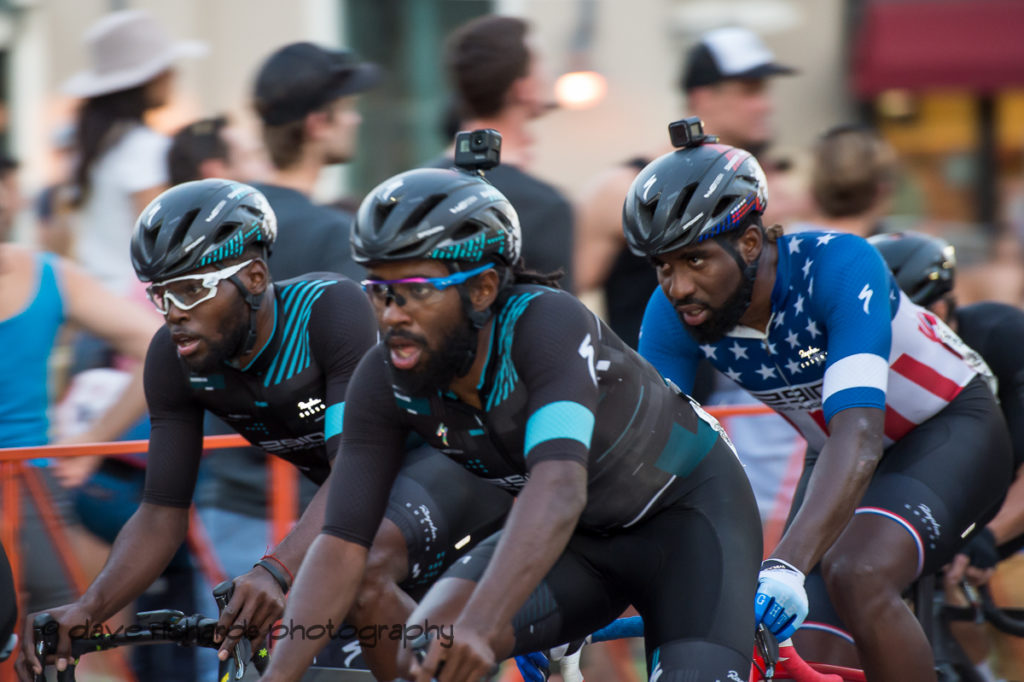
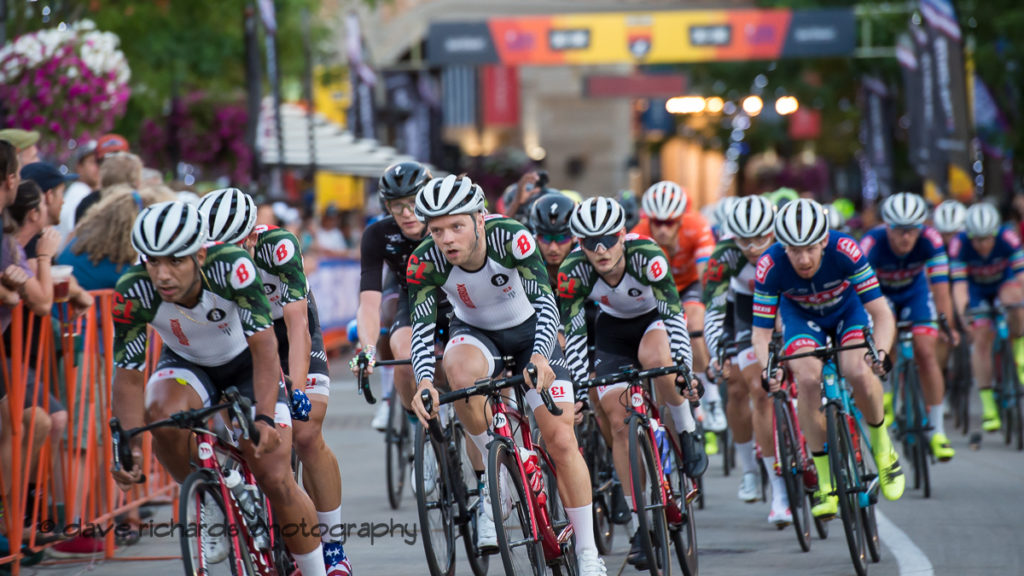
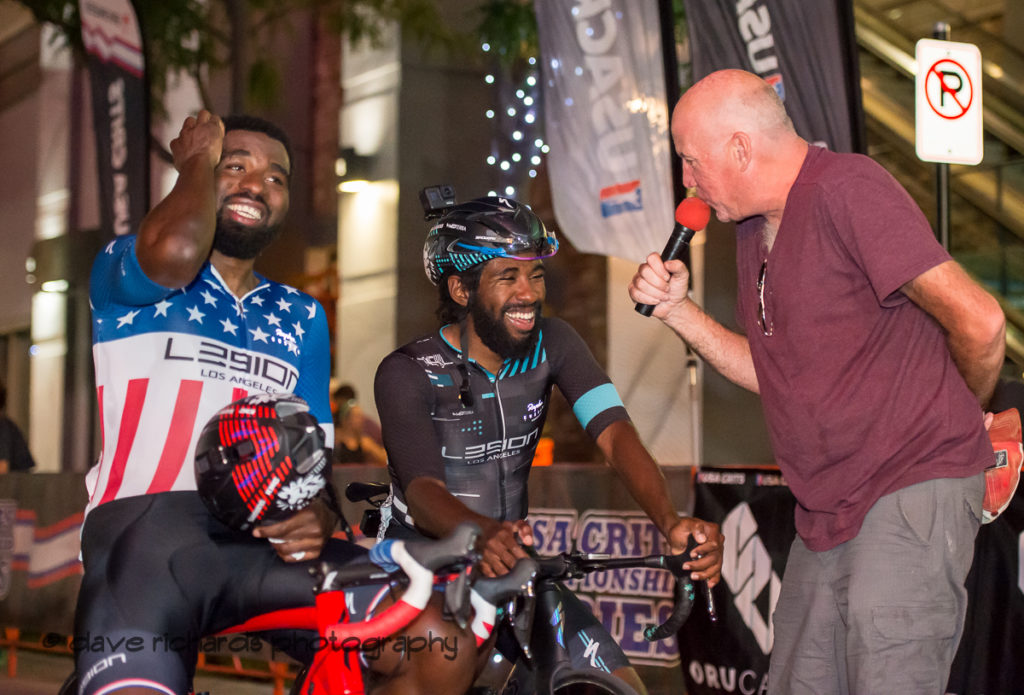
In the men’s race, Legion of Los Angeles took over at the front to set up their team leader. The strategy here worked perfectly as it has at many other criteriums this year. National criterium champion Justin Williams of the Legion of Los Angeles beat Tyler Magner (Rally UHC Cycling) to the line, followed by his brother Cory Williams, also of Legion of Los Angeles in third.
Full results are below.
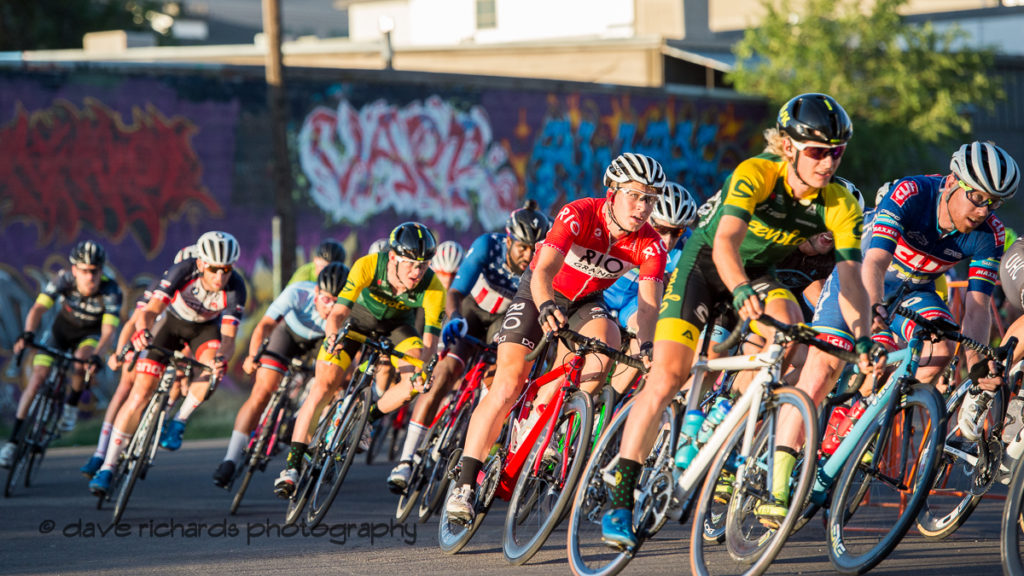
The women’s D1/Pro peloton chases an early break during the Salt Lake Criterium, USA CRITS series held at the Gateway Mall (Photo by Dave Richards, daverphoto.com)The women’s D1/Pro peloton passes under the finish line banner during the Salt Lake Criterium, USA CRITS series held at the Gateway Mall (Photo by Dave Richards, daverphoto.com)Bold graphics overlook the women as they pass under at the Salt Lake Criterium, USA CRITS series held at the Gateway Mall (Photo by Dave Richards, daverphoto.com)Two rider break during the Women’s D1/Pro race at the Salt Lake Criterium, USA CRITS series held at the Gateway Mall (Photo by Dave Richards, daverphoto.com)Harriet Owen (Hagens Berman/Supermint) wins the D1/Pro division of the Salt Lake Criterium, USA CRITS series held at the Gateway Mall (Photo by Dave Richards, daverphoto.com)Men’s D1/Pro riders line up at the start of the Salt Lake Criterium, USA CRITS series held at the Gateway Mall (Photo by Dave Richards, daverphoto.com)Justin Williams (Legion of Los Angeles) current USA National Criterium Champion. Salt Lake Criterium, USA CRITS series held at the Gateway Mall (Photo by Dave Richards, daverphoto.com)Justin Williams (Legion of Los Angeles), Blake Anton (Marc Pro Cycling) & Sam Lear (Palmetto State Medical) called up at the start of the Men’s D1/Pro Salt Lake Criterium, USA CRITS series held at the Gateway Mall (Photo by Dave Richards, daverphoto.com)Fading evening sunlight reflects off the Men’s D1/Pro peloton during the Salt Lake Criterium, USA CRITS series held at the Gateway Mall (Photo by Dave Richards, daverphoto.com)Legion of Los Angeles tearm riders in tight formation setting up the win for Justin Williams. Salt Lake Criterium, USA CRITS series held at the Gateway Mall (Photo by Dave Richards, daverphoto.com)ButcherBox Cycling riders lead the pack past the fans during the Salt Lake Criterium, USA CRITS series held at the Gateway Mall (Photo by Dave Richards, daverphoto.com)Veteran announcer Dave Towle has a quick word with Cory Williams and brother Justin (Legion of Los Angeles) after taking 3rd & 1st respectively at the Salt Lake Criterium, USA CRITS series held at the Gateway Mall (Photo by Dave Richards, daverphoto.com)
Results
Pro/1 Men
First Name
Last Name
Bib #
Team
Time
Place
Justin
WILLIAMS
1
Legion of Los Angeles
1:13:45
1
Tyler
MAGNER
48
Rally UHC Cycling
1:13:45
2
Cory
WILLIAMS
2
Legion of Los Angeles
1:13:45
3
Scott
MCGILL
16
Aevolo Cycling
1:13:45
4
Thomas
GIBBONS
17
Automatic Racing
1:13:46
5
Cade
BICKMORE
11
Aevolo Cycling
1:13:47
6
Cooper
ROMBOLD
68
Este Racing
1:13:47
7
Huntley
NASH
70
1:13:47
8
John
BORSTELMANN
44
Marc Pro Cycling
1:13:48
9
Andrew
DEWAR
29
FAVE
1:13:48
10
Zack
ALLISON
57
Team CLIF Bar
1:13:49
11
Conor
MULLERVY
73
TEAM CLIF BAR Cycling
1:13:51
12
David
GUTTENPLAN
52
Support Clean Sport / BSCG / Guttenplan Coaching
1:13:52
13
Grant
SIMONDS
25
DEAN Factory Racing
1:13:52
14
Kaler
MARSHALL
31
Hangar 15 Bicycles
1:13:52
15
Simon
JONES
65
UCI CT Interpro Cycling Academy
1:13:53
16
Allan
SCHROEDER
56
Team Bobs-Bicycles.com
1:13:53
17
Sam
ROSENHOLTZ
23
ButcherBox Cycling
1:13:53
18
Owen
GILLOTT
10
Team CLIF Bar
1:13:53
19
Blake
ANTON
42
Marc Pro Cycling
1:13:55
20
Nicholas
LUTHER
54
Support Clean Sport / BSCG / Guttenplan Coaching
1:13:56
21
John
HARRIS
22
ButcherBox Cycling
1:13:56
22
Kevin
MULLERVY
60
Team CLIF Bar
1:13:57
23
Hartner
Paul
26
FAVE
1:13:57
24
Matthew
KOTARBINSKI
27
FAVE
1:14:00
25
Andrew
VOLLMER
12
Aevolo Cycling
1:14:01
26
Conor
SCHUNCK
13
Aevolo Cycling
1:14:01
27
Kyle
PENNY
55
Support Clean Sport / BSCG / Guttenplan Coaching
1:14:14
28
Lance
HAIDET
14
Aevolo Cycling
1:14:26
29
Maxl
FREEMAN
51
Rio Grande Elite Cycling Team
1:14:45
30
Bryce
OLSEN
41
LiVeWell p/b Harristone
1:14:51
31
Griffin
PARK
32
Hangar 15 Bicycles
1:15:05
32
Cory
LOCKWOOD
6
Legion of Los Angels
1:15:08
33
Spencer
MOAVENZADEH
24
ButcherBox Cycling
1:15:10
34
Wyatt
GAULKE
49
Reynolds Roofing
1:15:17
35
Kyle
TIESLER
8
Palmetto State Medical
1:16:01
36
Tyler
LOCKE
53
Support Clean Sport / BSCG / Guttenplan Coaching
1:25:00
37
Willie
MYERS
43
Marc Pro Cycling
1:25:00
38
Chaz
HOGENAUER
9
Rio Grande Elite Cycling Team
1:25:00
39
Tanner
SOELBERG
47
PLAN7 DS Cycling Team
1:30:50
40
Peter
BEHM
66
Zubaz Racing
1:30:50
41
Kobi
GYETVAN
7
1:30:50
42
AJ
TURNER
59
Team CLIF Bar
1:30:50
43
Ceasar
GALLEGO
19
Butcherbox Cycling
1:30:50
44
Heriberto eddy
FRUTOS
64
Team UpCycle p/b St. Alphonsus Medical Center
1:30:50
45
Eric
BRUNNER
15
Aevolo Cycling
1:30:50
46
Hunter
GROVE
4
Legion of Los Angeles
1:30:50
47
Connor
SALLEE
21
ButcherBox Cycling
1:30:50
48
Adam
SCHEPPS
20
ButcherBox Cycling
1:30:50
49
Sam
LEAR
46
Palmetto State Medical
1:30:50
50
Clinton
MORTLEY
40
LiVeWell p/b Harristone
1:30:50
51
Joseph
LEWIS
58
Team CLIF Bar
1:30:50
52
Rob
SMALLMAN
33
Hangar 15 Bicycles
1:30:50
53
Timmy
BAUER
71
1:30:50
54
Alex
OCHOWICZ
67
1:30:50
55
Tyrel
FUCHS
50
Rio Grande Elite Cycling Team
1:30:50
56
Justin
MORGAN
63
Team Roaring Mouse
1:30:50
57
Dante
YOUNG
5
Legion of Los Angeles
1:30:50
58
David
CHRISTENSON
45
Marc Pro Cycling
1:30:50
59
Kevin
TURCHIN
69
1:30:50
60
Michael
FERRELL
62
Team Feral Catz
1:30:50
61
Eduardo
Davis
72
1:30:50
62
Lauren
DODGE
18
Automatic Racing
1:30:50
63
Diego
BINATENA
3
Legion of Los Angeles
13:25:00
64
Pro Women
Harriet
OWEN
25
Hagens Berman|Supermint
1:00:15
1
Emma
BAST
34
Levine Law Group p/b Huseby.com
1:00:16
2
Starla
TEDDERGREEN
27
Hagens Berman|Supermint
1:00:16
3
Sarah
CONEY
28
LA Sweat
1:00:16
4
Heather
FISCHER
3
DNA Pro Cycling Team
1:00:16
5
Tina
PIC
11
Colavita/Bialetti Pro Cycling
1:00:16
6
Abigail
YOUNGWERTH
44
Specialized Wolfpack p/b Jakroo
1:00:17
7
Jolene
HOLLAND-NEVE
16
Colavita/Bialetti Pro Cycling
1:00:17
8
Yussely
SOTO
15
Colavita/Bialetti Pro Cycling
1:00:17
9
Jennifer
WAGNER
43
Specialized Wolfpack p/b Jakroo
1:00:18
10
CHRISTINA
GOKEY SMITH
14
Colavita/Bialetti Pro Cycling
1:00:18
11
Kimberly
LUCIE
4
DNA Pro Cycling Team
1:00:18
12
Dani
MORSHEAD
31
LA Sweat
1:00:19
13
Pip
SUTTON
46
Specialized Wolfpack p/b Jakroo
1:00:19
14
Michelle
HENRY
38
Point S Auto p/b Nokian Tyres
1:00:19
15
Natalia
FRANCO VILLEGAS
12
Colavita/Bialetti Pro Cycling
1:00:20
16
Emily
FLYNN
29
LA Sweat
1:00:20
17
Laurel
RATHBUN
13
Colavita/Bialetti Pro Cycling
1:00:22
18
Jessica
MUNDY
47
Specialized Wolfpack p/b Jakroo
1:00:22
19
Brenna
WRYE-SIMPSON
6
DNA Pro Cycling Team
1:00:23
20
Caroline
MANI
8
Point S Auto p/b Nokian Tyres
1:00:23
21
Whitney
ALLISON
24
Hagens Berman|Supermint
1:00:24
22
Sophia
ANDREWS
9
Point S Auto p/b Nokian Tyres
1:00:24
23
Lisa
CORDOVA
36
Levine Law Group p/b Huseby.com
1:00:24
24
Melanie
BEALE
2
DNA Pro Cycling Team
1:00:25
25
Lauren
DODGE
10
Automatic Racing
1:00:32
26
Liza
RACHETTO
26
Hagens Berman|Supermint
1:00:41
27
Hannah
SHELL
5
DNA Pro Cycling Team
1:03:31
28
Dakota
TOPP
37
Levine Law Group p/b Huseby.com
1:12:24
29
Jennifer
QUIJADA
17
Dean Factory Racing
1:15:10
30
Sophie
RUSSENBERGER
7
Point S Auto p/b Nokian Tyres
1:16:15
31
Erin
HARRIS
48
Team Upcycle Boise p/b St. Alphonsus Medical Center
By Nancy Clark MS, RD, CSSD – Keeping up with the latest science-based sports nutrition recommendations is a challenge. We are constantly bombarded with media messages touting the next miracle sports food or supplement that will enhance athletic performance, promote fat loss, build muscle, and help you be a super-athlete. At this year’s Annual Meeting of the American College of Sports Medicine (www.acsm.org), a sports nutrition myth-busters session sponsored by the global network of Professionals In Nutrition for Exercise and Sport (www.PINESNutrition.org) featured experts who resolved confusion with science-based research.
Myth: Protein supplements build bigger muscles.
Protein needs for a 150-pound (68 kg) athlete average about 110 to 150 grams of protein per day. (More precisely, 0.7 to 1.0 g pro/lb. body weight/day; 1.6 to 2.2 g pro/kg./day) Hungry athletes can easily consume this amount from standard meals. Yet, many athletes believe they need extra protein. They consume protein shakes and bars in addition to protein-laden meals. They are unlikely to see any additional benefits from this higher-than-needed protein intake. Resistance exercise is a far more potent way to increase muscle size and strength than any protein supplement.
Myth: Eating just before bedtime makes an athlete fat.
While it is true the body responds differently to the same meal eaten at 9:00 a.m., 5:00 pm, or 1:00 a.m., an athlete will not “get fat” by eating at night. The main problem with nighttime eating relates to the ease of over-eating while lounging around and watching TV. When your brain is tired from having made endless decisions all day, you can easily decide to eat more food than required.
That said, bedtime carbohydrates to refuel depleted muscles and bedtime protein to build and repair muscles can optimize recovery after a day of hard training or competing. For body builders and others who want to optimize muscle growth, eating about 40 grams of protein before bed provides an extended flow of amino acids needed to build muscle. (This bedtime snack has not been linked with fat gain). Cottage cheese, anyone?
Myth: A gluten-free diet cures athletes’ gut problems.
If you have celiac disease (as verified by blood tests), your gut will indeed feel better if you avoid wheat and other gluten-containing foods. However, very few gut issues for non-celiac athletes are related to gluten. FODMAPs (Fermentable Oligo-, Di-, Mono-saccharides and Polyols) are often the culprit. These are types of hard-for-some-people-to-digest carbohydrates found in commonly eaten foods such as wheat, apples, onion, garlic, and milk. For example, the di-saccharide lactose (a kind of sugar found in milk) creates gut turmoil in people who are lactose intolerant. The poorly digested and absorbed lactose creates gas, bloat and diarrhea.
For certain athletes, a low FODMAP diet two or three days before a competition or long training session can help curb intestinal distress. If you live in fear of undesired pit stops, a consultation with your sports dietitian to learn more about a short-term FODMAP reduction diet is worth considering.
Myth: Athletes should avoid caffeine because of its diuretic effect
With caffeinated beverages, the diuretic effect might be 1.2 ml. excess fluid lost per mg. of caffeine. That means, if you were to drink a small mug (7 oz./200 ml.) of coffee that contains 125 milligrams of caffeine, you might lose about 150 ml. water through excess urine loss. But you’d still have 50 ml. fluid to hydrate your body—and likely more if you drink coffee regularly. Athletes who regularly consume caffeine habituate and experience less of a diuretic effect. In general, most caffeinated beverages contribute to a positive fluid balance; avoiding them on the basis of their caffeine content is not justified.
Myth: Athletes should be wary of creatine because it is bad for kidneys.
Creatine is sometimes used by athletes who want to bulk up. It allows muscles to recover faster from, let’s say, lifting weights, so the athlete can do more reps and gain strength. A review of 21 studies that assessed kidney function with creatine doses ranging from 2 to 30 grams a day for up to five and a half years indicates creatine is safe for young healthy athletes as well as for elderly people. Even the most recent studies using sophisticated methods to assess renal function support creatine supplements as being well tolerated and not related to kidney dysfunction.
Myth: The vegan diet fails to support optimal performance in athletes.
Without a doubt, vegan athletes can—and do—excel in sport. Just Google vegan athletes; you’ll find an impressive list that includes Olympians and professional athletes from many sports (including football, basketball, tennis, rowing, snow boarding, running, soccer, plus more.)
The key to consuming an effective vegan sports diet is to include adequate leucine, the essential amino acid that triggers muscles to grow. The richest sources of leucine are found in animal foods, such as eggs, dairy, fish, and meats. If you swap animal proteins for plant proteins, you reduce your leucine intake by about 50%. For athletes, consuming 2.5 grams of leucine every 3 to 4 hours during the day optimizes muscular development. This means vegan athletes need to eat adequate nuts, soy foods, lentils, beans and other plant proteins regularly at every meal and snack.
Most athletes can consume adequate leucine, but some don’t because they skip meals and fail to plan a balanced vegan menu. Vegan athletes who are restricting food intake to lose undesired body fat need to be particularly vigilant to consume an effective sports diet. Plan ahead!
Nancy Clark, MS, RD counsels both casual and competitive athletes at her office in Newton, MA (617-795-1875). The newest 6th edition of her best selling Sports Nutrition Guidebook is being released in July 2019. For information about readymade handouts and PowerPoint presentations, visit www.NancyClarkRD.com. For her popular online workshop, see www.NutritionSportsExerciseCEUs.com.
If you ride consistently, chances are, eventually you will suffer some kind of setback. Maybe an injury forces you off the bike for an extended period, maybe outside life/family/work stress gets out of control and riding takes a backseat for a time. Whatever it is, you are forced off the bike, fitness has dwindled and now the thought of starting over is overwhelming. You worked so hard to build fitness previously and it feels insurmountable to get back there. How do you find the motivation to start where you are and get back to where you were – and beyond?
How do recapture motivation? RIder: Ben Hess Photo by Matt McKinney
First and foremost, let go of previous measurements of success. Be where you are now. The goal is to get stronger and faster and to do that you need to be honest with yourself about where you are right now. Instead of stressing about where you were or where you want to get back to, focus your energy on how make progress.
Once you are being honest about your current fitness and have a desire to build on that, start with consistent training. I have a friend who would say, ‘just put on the chammy.’ That’s the main thing, put the chammy on and get out the door. Worry about the rest after that.
Just put on the chammy.
If you have not been riding at all or only sporadically, start with two to three days per week. Try to work up to four days of riding per week. That might be all your schedule allows. That’s fine, four days is enough to build fitness. If you have been riding a little more than sporadically, increase to five or six days of regular riding.
The main tenet here is to ramp slowly and not increase your days, volume, or intensity too quickly. Ramping up too quickly will lead to burnout or injury. If you are not sure how to approach that, a coach can help. If you are short on training time, a coach will also help you make the most efficient use of that time. (See my article on the efficacy of interval training on page 16 in the May issue of Cycling West and here too: https://www.cyclingwest.com/fitness/coaching/six-tips-to-get-started-with-intervals/ ).
If you are training with a power meter, this means no training with a vanity FTP (functional threshold power) or using a previous FTP for your training zones. Do a power test and be honest with the results. If you find accountability difficult in testing yourself, find a coach who can administer a test.
As you start to get back into regular training, remember to celebrate the victories as they come. Maybe you take your second power test and the number has gone up. Celebrate! Maybe the number still isn’t where you want it to be or where it was previously. You put in work and saw improvement, enjoy the moment! Maybe you were only riding once every week or two but you strung a few weeks together with four days of riding. Again, celebrate! Don’t dwell on the disappoints. Cycling training is hard work! So enjoy the successes.
Celebrating the victories along the way will help you shift your focus from the outcome to the process. Try to see the goal not just as an end to reach but the whole journey as part of the goal. We hear it so much it is a cliche, but ‘be present.’ Be in the moment and enjoy the work you put in toward the goal. Let go of the anxiety around where you currently are or are not. View your goals with excitement so you can soak in and enjoy the process of getting there. If you put in smart, consistent work, and make the process effective, the goals will come.
Sarah Kaufmann is the owner of K Cycling Coaching. She is an elite level XC and CX racer based in Salt Lake City, Utah. She can be reached at [email protected] or 413.522.3180.
PRESS RELEASE – LEADVILLE, Colo., Aug. 1, 2019 — Set to take place on Saturday, Aug. 10, the 26th annual Leadville Trail 100 Mountain Bike Race, owned and produced by Life Time, is expected to host more than 1,500 hardcore mountain bike racers with an assortment of notable names in the registration mix for America’s highest 100-miler. The Leadville Trail 100 MTB is an extreme test of grit, guts and determination with the ultimate goal of completing the “Race Across The Sky” and earning the coveted silver and gold race buckle.
[Photo Gallery Below]
Alex Grant (Gear Rush), who recently won the Crusher in the Tushar, is expected to be one of the top contenders in Leadville. Photo: Steven L. Sheffield.
The 2019 Leadville Trail 100 MTB athlete participant list includes more than 20 professional and distinguished riders, including top female talent Rose Grant, Nina Laughlin and Sarah Sturm, along with road bikers venturing off the pavement and onto the Colorado Rockies for the very first time. Noteworthy participants in the 2019 Leadville Trail 100 MTB include:
Todd Wells — Races for SRAM/TLD Factory Racing; 2001, 2005 & 2010 USA Cyclocross National champion, and 3x Leadville Trail 100 MTB Champ
Howard Grotts — Member of Team USA for cross country cycling in 2016 Summer Olympics, reigning and 2x champ of Leadville Trail 100 MTB
Payson McElveen — 2x top-3 finish at Leadville Trail 100 MTB, 2x Leadville Marathon National Champion 2017, 2018
Alex Howes — Rides for UCI WorldTeam EF Education First; current US Pro Road National Champion
Taylor Phinney — Rides for UCI WorldTeam EF Education First
Lachlan Morton — Rides for UCI WorldTeam EF Education First
Ted King — Former UCI ProTeam Cannondale—Garmin, 2x Dirty Kanza winner
Jake Wells — U.S. cyclocross national championship titles in Masters 40-45 & Singlespeed amateur
Jacob Rathe — Rides for Wildlife Generation Pro Cycling p/b Maxxis
Jeremiah Bishop — Rides for Topeak-Ergon Racing Team; has won all major U.S. mountain bike stage races
Alex Grant — Rides for Cannondale Factory Racing; recently won the 2019 Crusher in the Tushar
Peter Stetina — Rides for UCI WorldTeam Trek—Segafredo
Todd Murray — Participant of every Leadville Trail 100 MTB over 26 years
John Callahan — Participant of every Leadville Trail 100 MTB over 26 years
Current Leadville Trail 100 MTB record holders:
Male: Alban Lakata: 5:58:35, set in 2015
Female: Annika Langvad: 6:59:24, set in 2015
Life Time Founder and CEO Bahram Akradi, who is participating in the race for his 10thyear, has pledged to donate $1,000 for every minute he completes the race under a twelve-hour benchmark to the Life Time Foundation, which aims to provide healthy school lunches to children across the nation by removing The Harmful 7via its partnerships with school districts across the nation. Akradi has raised more than $1 Million for the Life Time Foundation over the past three years with his Every Minute Counts campaign.
Both the Life Time Foundation and Leadville Trail 100 Legacy Foundation, which provides a $1,000 scholarship to each graduate of Leadville High School that chooses to pursue any form of higher education, will be present at the race expo which is free and open to the public throughout the weekend. The expo includes more than 70 booths and will host a women’s panel as part of the Women Ride The World campaign, which focuses on breaking down the barrier of entry for women in cycling. This year’s participant mix includes more than 270 female racers.
Created for the most determined athletes, participants of the Stages Cycling Leadville Trail 100 MTB compete in an ascending 100 miles of extreme terrain beginning at an altitude of 10,152 feet and climbing to 12,424 feet. The event is part of the Leadville Race Series, which takes place over three months each year, drawing thousands.
The Leadville Race Series is owned and produced by Life Time, the premier healthy lifestyle brand. It is among more than 30 premier athletic events owned by the company, including the New York City Triathlon, the Chicago Triathlon, the Miami Marathon, and the Dirty Kanza.
Action from the 2018 Leadville 100. Photo by Glen DelmanAction from the 2018 Leadville 100. Photo by Glen DelmanAction from the 2018 Leadville 100. Photo by Glen DelmanAction from the 2018 Leadville 100. Photo by Jeremy PapassoAction from the 2018 Leadville 100. Photo by Glen Delman
By Jackie Tyson – 2019 marks the 15th year for “America’s Toughest Stage Race,” seven days of heart-pounding racing in northern Utah from Aug. 12 to 18. This year, 17 men’s professional teams will log 477 miles in the UCI 2.HC cycling stage race, and cover 37,822 feet of elevation gain. It is the sixth year for the Tour to be sanctioned as a 2.HC-rated (Hors Categorie) stage race by the Union Cycliste Internationale (UCI), making it one of the premier events for professional cycling teams in North America.
All seven days will be covered nationally by FOX Sports (FS2) as well as international programming including Eurosport in Europe, Supersport in South Africa, Fubo in Canada, and ESPN in South America. It continues as the only UCI stage race in the North America that offers a free, live webcast from start to finish for the entire week, thanks to Tour Tracker powered by Adobe. All the national cycling media provide coverage each day as well.
The break rides through the Park City country roads. Stage 5 of the 2018 Tour of Utah, August 10, 2018. Photo by Cathy Fegan-Kim.
Whether it is the Tour de France or the Tour of Utah, cycling is one of the most unique professional sports on the globe as access to the field of play is free for spectators. The best way to see the suffering on climbs, to feel the whirl of speed at finish lines, and to experience the kaleidoscope of activities in each host community is to attend the race in person.
Listed below are all the family-friendly, free activities associated with the Tour of Utah, from the Team Presentation held before race week to some of the favorite spots along all the courses to watch the pros.
Note: all times are MT and subject to change.
PRE-RACE FESTIVITIES
Tour of Utah Team Presentation Saturday, Aug. 10, teams introduced at 4:30-6 p.m. Activities begin 12 p.m.; live music 6:30-8:30 p.m. Snowbird Resort, 9385 S Snowbird Center Trail, Snowbird 84092
Stage next to Aerial Tram and The Forklift
The annual Team Presentation will be held on Saturday, Aug. 10 at Snowbird Center, on the Plaza Deck between the Aerial Tram and The Forklift restaurant. The first of 17 teams will be introduced at 4:30 p.m. The event is free to the general public. Limited hospitality tickets will be available for $125 per person, which include reserved seating, food/beverage service and VIP access to athletes. The top riders from each team will be interviewed by one of the race announcers. Spectators are encouraged to bring a camera to capture photos of favorite athletes. Stay for live music following the program.
A full assortment of activities and local vendors will be part of the festivities at Snowbird Center on Saturday. Some lucky fans will go home with a prize from several Tour of Utah giveaways, including bicycles, overnight stays at Snowbird Resort, and other items. VIPs can enjoy a hospitality area at Fork Lift with plenty of amenities. Stay after the formal introduction of teams and riders for Snowbird’s Cool Air Concert Series. The Low Down Brass Band is the headliner, playing from 7-8:30 p.m. Dan Weldon is the opener playing from 6-6:45 p.m.
EVERY DAY DURING RACE WEEK
What’s New?
Ford Fan Zone– A reserved space will be available at finish lines on a first-come, first-serve basis for 200 spectators for all seven days of racing. Fans will receive complimentary merchandise from Ford and the Tour of Utah. It is fun and it is free. Sponsored by Ford.
Ford Fan Parade– Official Ford Tour vehicles will drive along the course at designated finish line areas to give away complimentary merchandise to spectators each day. Check the web site for details.
BISH RV’s Ride with a Team– Ever want to see and hear what goes on inside an official team vehicle before a day of racing? Join one of the Tour of Utah teams in their RV and ride from the start to the finish of Stage 3. Winners not only get to watch the race from the team RV, they’ll also get VIP Hospitality passes for both the start and the finish lines as well.The contest launched mid-July. One lucky winner will receive this exclusive access, along with VIP passes to the stage.
Ford Eco-Sport Lease Contest– Race fans can enter a Ford contest at all Tour of Utah Street Team events, and at the KUTV 2 Lifestyle Expo during the first five days of racing (Prologue and Stages 1 to 4). On Friday, Aug. 16, 10 lucky winners will be selected to attend Stage 6 in Park City. On Monday, Aug. 19, one overall winner will receivea two-year lease on a Ford Eco-Sport, along with Yakima bike racks and two bicycles.
Ford Caravan Vehicle Sale– Don’t miss your exclusive chance to purchase one of the Tour of Utah official Ford vehicles. Ten of the official Ford Eco-Sport vehicles will be available for purchase post race, complete with bike rakes and a bicycle. Visit tourofutah.comfor more details and sale location.
Returning Favorites
Rider Sign-In and Wildlife Generation Autograph Alley – Spectators will be allowed to interact with the professional athletes as they walk along Autograph Alley to the Sign-In stage. Race announcers will interview athletes from the stage, providing insights before the high-speed action commences. All photos and signatures are free for spe There is no Rider Sign-In on Aug. 12 for the Prologue, but grab a spot near the Start House to see each individual in the race against the clock. Sponsored by Wildlife Generation.
KUTV 2 Healthy Living Expo –Plan to arrive early to any of the seven finish line host venues and spend some time at the KUTV 2 Healthy Living Expo. This free, interactive festival area and sponsor showcase serves as a gateway to the finish line every day. It provides an array of interactive exhibits, official Tour merchandise and live entertainment, including jumbo television screens to watch the race unfold as it heads to the finish.
Hours and Locations for the KUTV 2 Healthy Living Expo:
Monday, Aug. 12 — Snowbird Resort – 12 p.m. to 4 p.m
100 Little Cottonwood Canyon (Iron Blosam parking area)
Tuesday, Aug. 13 — North Logan City – 11 a.m. to 4:30 p.m.
2799 N. 300 E.(next to George S. Eccles Ice Center)
Wednesday, Aug. 14 — Powder Mountain Resort – 12 p.m. to 4:30 p.m.
6965 E Powder MountainRd, Eden (next to Sky Lodge/Hidden Lake Lodge)
Thursday, Aug. 15 — North Salt Lake – 12 p.m. to 4:30 p.m.
1110 E Eaglewood Dr (Eaglewood Golf Club)
Friday, Aug. 16 — Salt Lake City -4:30 p.m. to 8:30 p.m.
315 E Capitol Blvd. (southeast lawn area of Capitol)
Saturday, Aug. 17 — Canyons Village at Park City Mountain – 1 p.m. to 8 p.m.
4000 Canyons Resort Dr., Park City (public area at top of Cabriolet Lift).
Free Summer Concert Series with The Honey Hounds begins 6 p.m.
Sunday, Aug. 18 — Park City – 11 a.m. to 4 p.m.
250 Main Street
America First Credit Union Fan Favorite– Each day during the race fans can cast votes online for their favorite athletes in various categories, such as best climber or most promising rookie. The athlete who receives the most votes each day will be recognized as the America First Credit Union Fan Favorite and receives a special award jersey. One fan will be chosen in a random drawing from ballots cast to receive a Tour of Utah gift bag and $100 Visa gift card, courtesy of America First Credit Union. It’s a win-win contest.
Podium Award T-shirt Giveaway– At the conclusion of each day’s race, top athletes will be recognized in an awards ceremony with special jerseys, such as the Larry H. Miller Dealerships Leader jersey and Utah Sports Commission Sprint jersey. These winners will autograph limited-edition, replica T-shirts for each award jersey and toss them into the crowd. Fans are encouraged to catch one-of-a-kind Tour of Utah SWAG (stuff we all get).
Sprint to the Finish Kids’ Bike Races presented by University of Utah Health – Children ages five to 12 have the opportunity to race their bicycles near the finish line used by the pros at six race locations. Two great reasons to participate – it’s free and it’s fun! To participate, a parent or guardian must sign a waiver at the University of Utah Health exhibit in the KUTV 2 Healthy Living Expo. Make sure each child brings his or her helmet, closed-toe shoes and a bicycle! Registration ends 15 minutes prior to each race (times listed are start times):
Sprint to the Finish Locations:
Tuesday, Aug. 13 — North Logan City (1:30 p.m.)
Wednesday, Aug. 14 — Brigham City (1 p.m.)
Thursday, Aug. 15 — North Salt Lake (1:30 p.m.)
Friday, Aug. 16 — Salt Lake City (6 p.m.)
Saturday, Aug. 17 — Canyons Village at Park City Mountain (3 p.m.)
Sunday, Aug. 18 — Park City (1 p.m.)
RACE WEEK
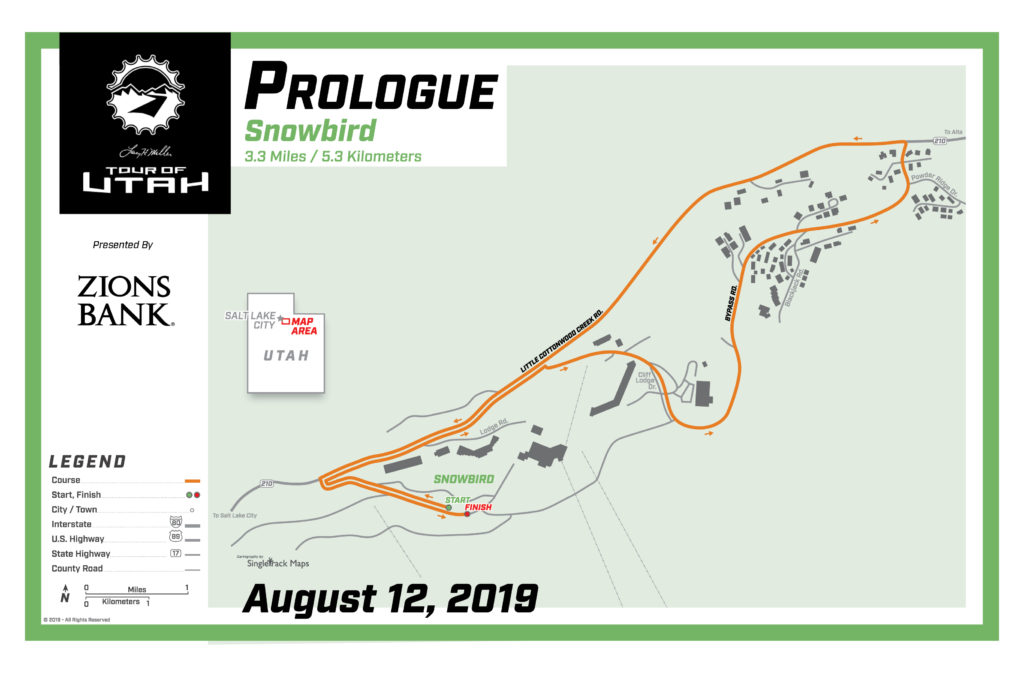
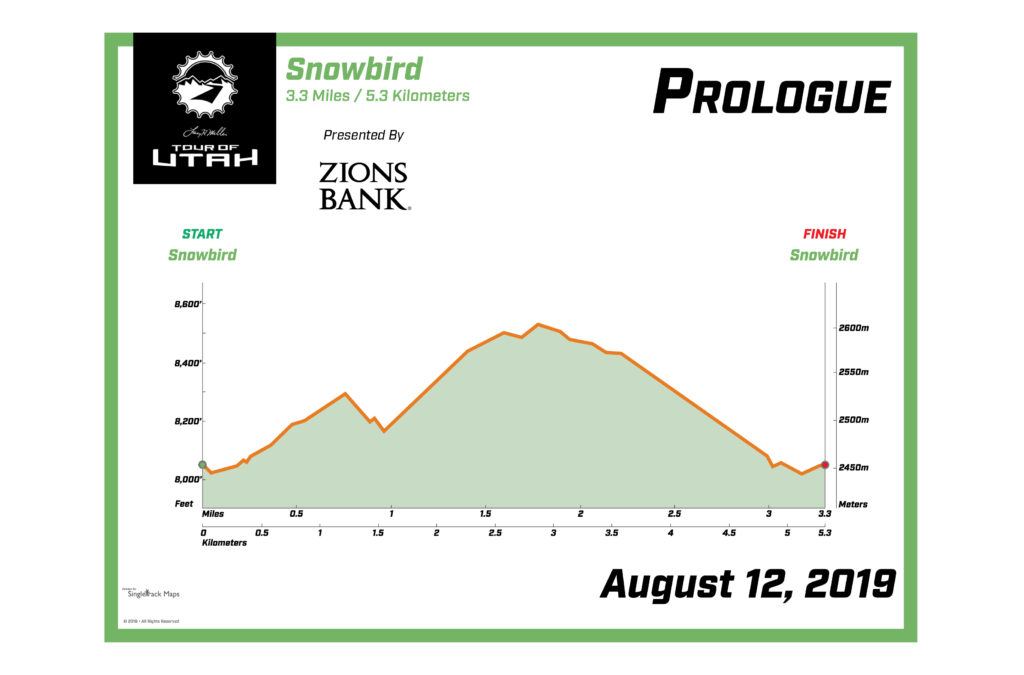
Monday, Aug. 12 — Prologue presented by Zions Bank Snowbird Resort — 3.3 miles (5.3 km) – 656 feet of climbing Start Time 12:30 p.m., Finish Time 3 p.m.
Start/Finish Location — 100 Little Cottonwood Canyon, Snowbird, UT 84092
It is only the fifth time since the Tour began in 2004 that a Prologue, a short individual time trial, will be held on the opening day of competition. Snowbird Resort will see the return of the Tour for a 12th time, this year hosting the overall start for the first time. The time gaps may be small, but it will set the stage for a great week of racing. Last year’s Prologue was held in St. George.
This 3.3-mile (5.3 km) race against the clock will go vertical in Little Cottonwood Canyon for the first half of the course, using Entry 2 to travel north on Little Cottonwood Canyon Road (S.R. 210) and then snaking around The Cliff Lodge on Bypass Road. Once back on Little Cottonwood Creek Road, each cyclist will put on the afterburners for the 1.5-mile descent to the finish line, located at Entry 2 behind The Lodge at Snowbird Resort. Spectators will have excellent viewing opportunities along Entry 2 to see the riders pass in both directions. The Start House and the Finish Line for the Prologue will be positioned along The Strip of Entry 2 outside Snowbird Center. Team Parking and hospitality will also be located in this area.
Tips:
Entry 2 will close to resort traffic beginning at 5 a.m. Monday to allow for race setup.
Little Cottonwood Canyon Road (S.R. 210) will remain open to all traffic until 11:30 a.m.
There will be a full closure of S.R. 210 between Snowbird Entry 2 and the northernmost intersection at Alta Bypass Road between 11:30 a.m. and 3 p.m. NO traffic will be allowed to pass north of Entry 1, south of Collins Road, or along Alta Bypass Road during this time.
For any spectators arriving after 11:30 a.m. in the northbound direction along S.R. 210, vehicles will be directed to Snowbird Entry 1 for parking.
The KUTV 2 Healthy Living Expo will be located in the Pond Lot, behind Iron Blosam Lodge (9121 E Snowbird Center Dr.).
In addition to the Expo (open 12 – 4 p.m.), all activities at Snowbird Resort are available (admission fees apply) for the Mountain Coaster, Alpine Slide, Mountain Flyer, Vertical Drop, Bungee Trampoline, Climbing Wall, Kid’s Inflatables and more.
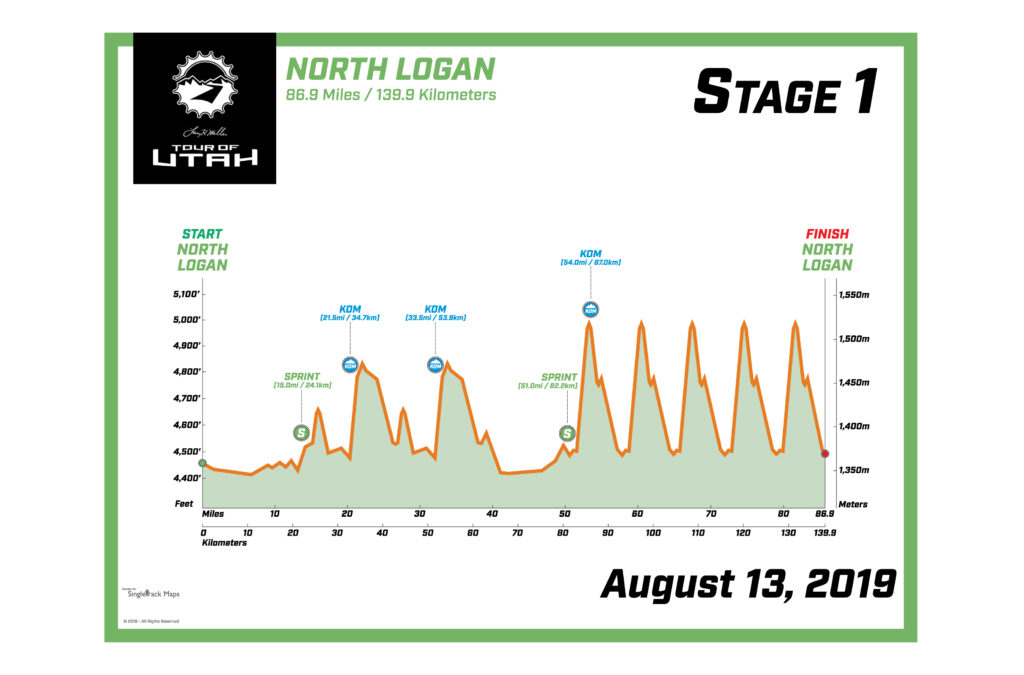
Tuesday, Aug. 13 — Stage 1 North Logan City — 86.9 miles (139.9 km) – 4,310 feet of climbing Start Time 12:30 p.m., Finish Time 3:45-4 p.m.
Start/Finish Location — 2800 North at 300 East, next to Meadow View Park
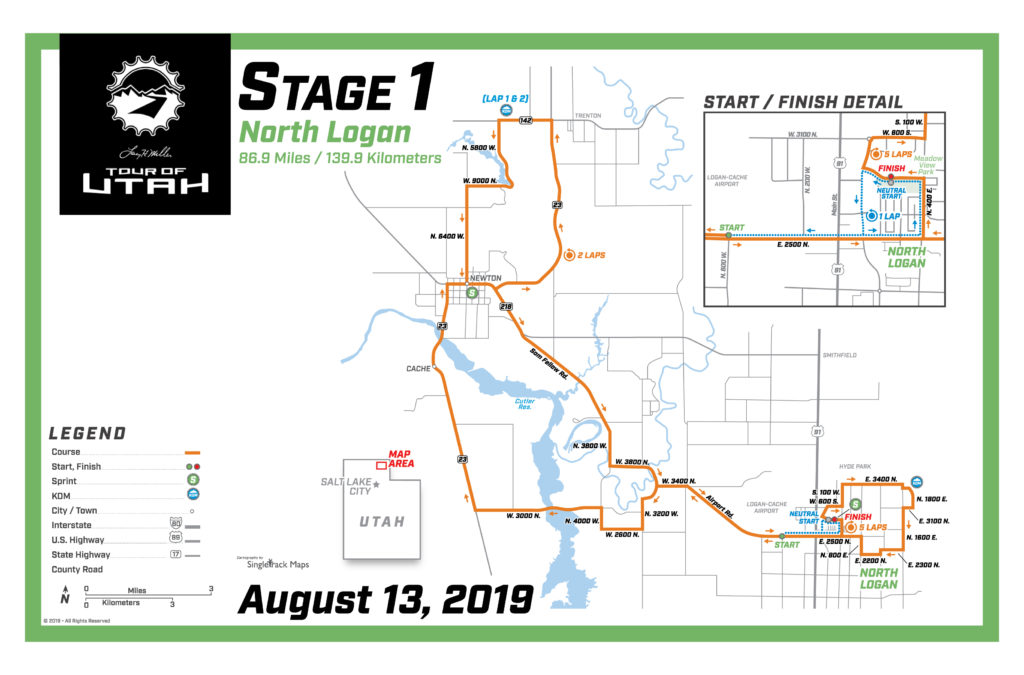
While the Cache Valley in northern Utah will host the Tour for a third time, it is a new territory for Stage 1 for the inaugural start and finish in North Logan City. The 86.9-mile (139.9-km) course traverses the western slopes of the Bear River Mountains for 4,310 feet of elevation gain. The route will pass less than 10 miles south of the Idaho State line, with two Utah Office of Tourism King of the Mountain (KOM) contests outside Trenton. Spectators in downtown Newtown will see the race pass through three times, the first pass being a Utah Sports Commission Sprint line, then two more circuits around Little Mountain.
After the final pass through Newton, the race will follow Sam Fellow Road to Airport Road and re-enter North Logan City for five fast and furious finishing laps. Rolling in a clockwise direction, the cyclists will pass the finish line area at Meadow View Park on each lap, which is 7.2 miles (11.6 km) in length. Notable on this first of five laps will be the final Sprint and KOM points of the stage. Each swoop around the circuit should take 15-18 minutes to complete, providing spectators with a full hour of action in downtown North Logan City.
Tips:
The start/finish line is located next to Meadow View Park on E 2850 N, near Green Canyon High School parking/ball fields and the Real Salt Lake Training Center.
On northern end of route, the peloton will pass through Newton three times. The first pass will be between 1-1:30 p.m. The next two passes will complete 11.8-mile circuits through northern Cache County.
Back in North Logan City, the final hour of racing will feature five circuits of 7.2 miles each. Each lap should take 15-18 minutes to complete traveling in a clockwise direction: 2800 North, Wolfpack Way, W. 600 South, S. 100 West, E. 200 South/E. 3400 North, N. 1600 East, 3500 North/N. 1800 East, E. 3100 North, N. 1600 East, E. 2300 North, E. 2200 North, 800 East, E. 2500 North, N. 400 East and back along 2800 North. (see map for specific course).
At the start of the first lap of the finishing circuit, a Utah Sports Commission Sprint will be contested next to Meadow View Park on 2800 North at race mile 51.1. The race is expected to pass between 2:25 to 3:10 p.m. On that same lap at 3500 North on Mahogany Ridge, a Utah Office of Tourism KOM will be contested at race mile 53.8. The race expected to pass between 2:30 to 3:15 p.m.
The KUTV Tour of Utah Lifestyle Expo will be located next to the George S. Eccles Ice Center. The Lifestyle Expo will be open from 11:30 a.m. to 4 p.m. on Tuesday and will provide food and beverage for purchase, VIP Hospitality area, live race coverage on a jumbo television screen and interactive displays.
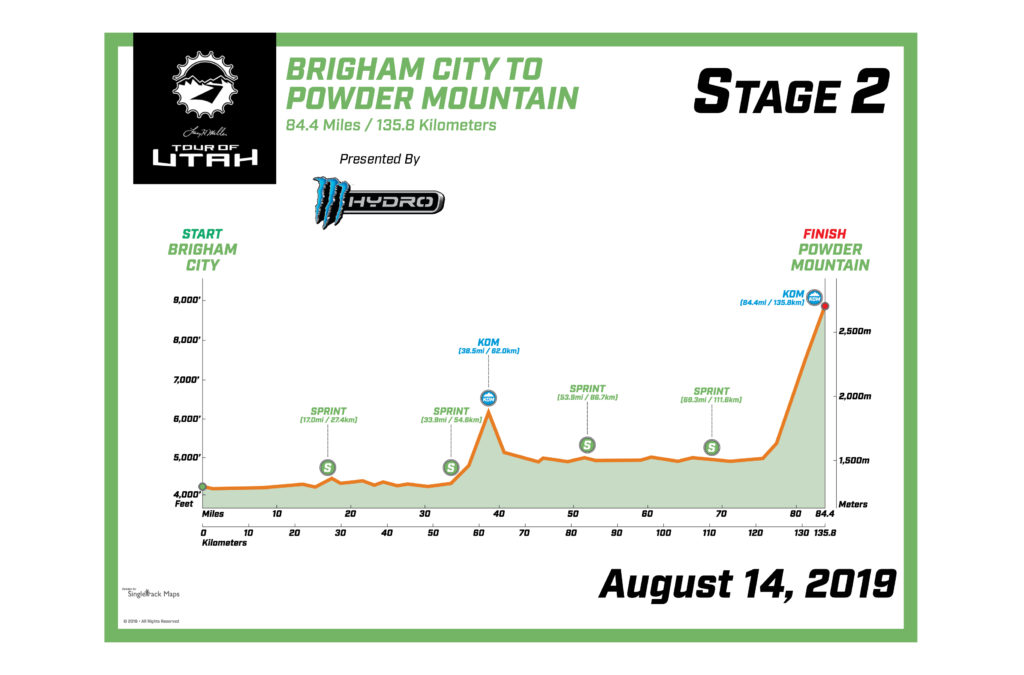
Wednesday, Aug. 14 — Stage 2 presented by Monster Hydro Brigham City to Powder Mountain Resort — 84.4 miles (135.8 km) — 7,316 feet of climbing Start Time 12:20 p.m., Finish Time 3:45-4 p.m.
Start Location — 1 South Main St, Brigham City, UT 84302 Finish Location — 6965 N Powder Mountain Rd, Eden 84310 (in front of Hidden Lake Lodge)
Look out for a wild west showdown for the finish on the 8,900-foot summit of Powder Mountain. What used to be called the Queen Stage of the Tour is now the Monster Hydro stage. It has been five years since the Tour introduced the massive ascent on one of the steepest roads in Utah. State Route 158 connects the town of Eden to Powder Mountain Resort, featuring gradients rising to 16 percent and a new paved section to Hidden Lake Lodge at the summit. The 8.6-mile scale will pack a punch to the legs and lungs of the best climbers in the world for the Stage 2 finish.
Stage 2 presented by Monster Hydro begins for a second time in Brigham City, with festivities in front of the stately Box Elder County Courthouse. The race will make a 34-mile loop through the northern section of the county, and approximately 45 minutes later will pass through Brigham City again, moving southbound on Main Street. A Utah Sports Commission Sprint line will be contested at the West Forest Street intersection.
South of Brigham City, the race will charge over the North Ogden Divide for a Category 2 Utah Office of Tourism KOM and circle the Pineview Reservoir twice, rolling in a counter-clockwise direction. Sprint points will be awarded on both laps through Huntsville, using State Route 39. From there it is the final push to the summit of Powder Mountain.
Tips:
The night before Stage 2 p/b Monster Hydro, Brigham City will have a downtown event with bar-b-que, games for children, face painting, photo booth and a live concert by Code Blue Revival. Festities begin at 5:30 p.m., concert begins at 7 p.m.
Brigham City offers two chances to watch the Tour on race day – the start and a Utah Sprint Commission Sprint line.
A Utah Sports Commission Sprint line will be contested in North Ogden in front of the North Branch of the Weber County Library located at E. 2600 North and 500 East at race mile 34. The race is expected to pass this area between 1:33 to 2:05 p.m.
The race will use 1050 East to travel east on E 3100 North and North Ogden Canyon Road.
A Utah Office of Tourism King of the Mountain (KOM) climb will be contested across from the trailhead parking lot at the top of North Ogden Canyon Road at race mile 38.7. The race is expected to pass this area between 1:45 to 2:20 p.m.
R. 158 to Powder Mountain Resort will open to all vehicles from 10:30 a.m. until 2 p.m., or until the public parking lots are filled. Once parking is full at the resort, the road will be closed to ALL public traffic. The road will reopen after 4:30 p.m.
Parking is NOT permitted along S.R. 158; towing will be enforced.
There is no public parking at Hidden Lake Lodge. Three Shuttles will be making loops from the parking area at Timberline Lodge to the finish line area at Hidden Lake Lodge until 2:45 p.m. Expect 10-15 minutes between shuttles.
The KUTV Tour of Utah Lifestyle Expo will be located in front of the Hidden Lake Lodge at Powder Mountain Resort. The KUTV 2 Lifestyle Expo will be open from Noon to 4 p.m. on Wednesday and will provide live race coverage on a jumbo television screen and interactive displays.
Local vendors will be part of the KUTV 2 Lifestyle Expo, as well as face painting and live music. Food and beverage will be available at Hidden Lake Lodge.
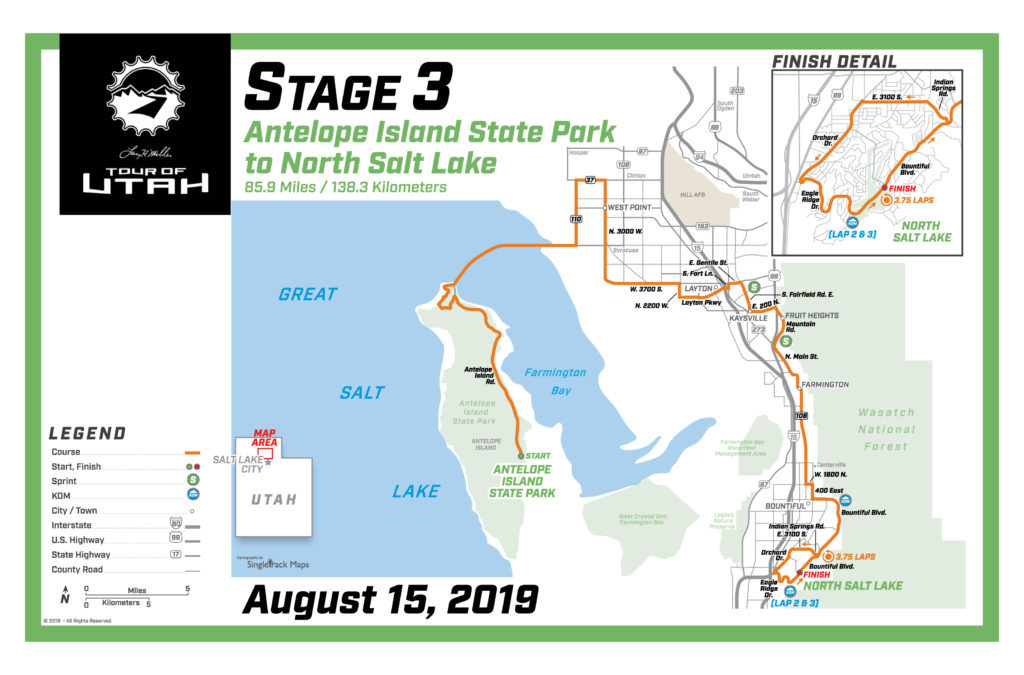
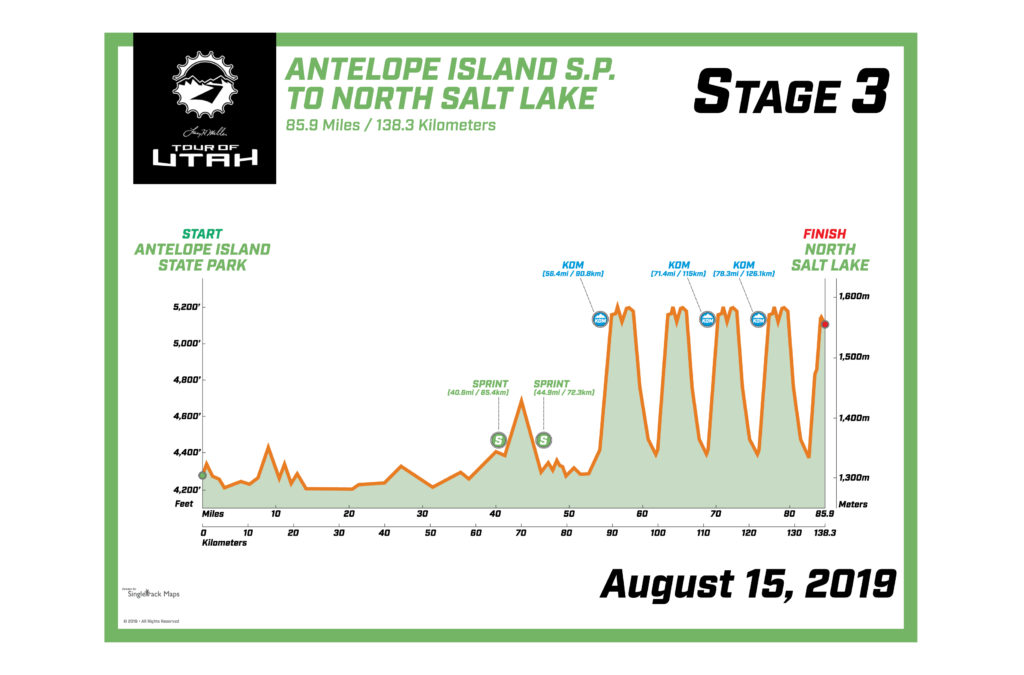
Thursday, Aug. 15 — Stage 3 presented by BYUtv Antelope Island State Park to North Salt Lake — 85.9 miles (138.8 km) – 5,895 feet of climbing Start Time 12:20 p.m., Finish Time 3:45-4 p.m.
Start Location — Fielding Garr Ranch, Antelope Island Rd., Antelope Island State Park Finish Location — Eaglewood Golf Course, 1110 E Eaglewood Dr at Eagle Way, North Salt Lake 84054
The Tour begins for a fourth time at Antelope Island State Park. From the drop of the flag at Fielding Garr Ranch, the race is on! There are no neutral miles on Antelope Island this year. Departing northbound on Fielding Garr Ranch Road, there will be 13.6 race miles on the island. The race is expected to cross the 7-mile causeway and reach the mainland between 1-1:20 p.m. It will then wind through the communities of West Point, Layton, Kaysville, Fruit Heights and Farmington.
Riders will vie for two Utah Sports Commission Sprint lines in northern Davis County in Layton and Fruit Heights. The first Sprint will be contested on Fairfield Road at the intersection of E. Maple Way at race mile 40.1. The race is expected to pass between 1:45 to 2:10 p.m. Continuing southbound through Fruit Heights, the second Sprint line will be on Mountain Road at the intersection of Hilda Drive at race mile 44.4. The race is expected to pass between 1:55 to 2:20 p.m.
There are three Category 3 climbs in the final 29 miles. The first is a punchy KOM up the Bountiful Bench, contested on Bountiful Blvd. just past the intersection of Moss Hill Drive at race mile 55.9. The race expected to pass between 2:15 to 2:55 p.m. The route follows a new southbound stretch of Bountiful Boulevard for finishing circuits in North Salt Lake for the first time. A right turn on Indian Springs Road will take the peloton on 3.75 laps of a 6-mile circuit in North Salt Lake. Laps 2 and 3 of the full circuit will feature KOM contests at the intersection of Eagle Ridge Drive and Eaglepointe Drive/Mont Clair Drive. Before a fourth full lap is completed, the stage winner will be decided in front of Eaglewood Golf Course.
Tips:
Antelope Island State Park opens at 6 a.m. and the $10 admission fee will be waived for Tour of Utah fans. Parking is available for spectators at Fielding Garr Ranch in the Equestrian Parking lot.
Access to visitor parking will close at 11:15 a.m. After that time, visitors will be allowed to park in the pullout area along the east side road or park along the Davis County Causeway, or use parking areas along the north loop.
Access to the island will close at 12 p.m. The causeway will remain open until 12:45 p.m.
Free T-shirts will part of the festivities at Antelope Island State Park (while supplies last).
The finishing circuits in North Salt Lake will follow a counter-clockwise direction: From Indian Springs Rd. the finishing circuit will include E. 3100 South, Orchard Drive, Eagle Ridge Drive and Bonneville Shoreline Trail/Bountiful Blvd.
The KUTV Tour of Utah Lifestyle Expo will be located in the main parking lot of the Eaglewood Golf Course. The Lifestyle Expo will be open from Noon to 4 p.m. on Thursday.
The Expo will provide VIP Hospitality area, food and beverage vendors, and live race coverage on a jumbo television screen. Interactive activities include a long drive contest, a slip ’n slide for children, and live music.
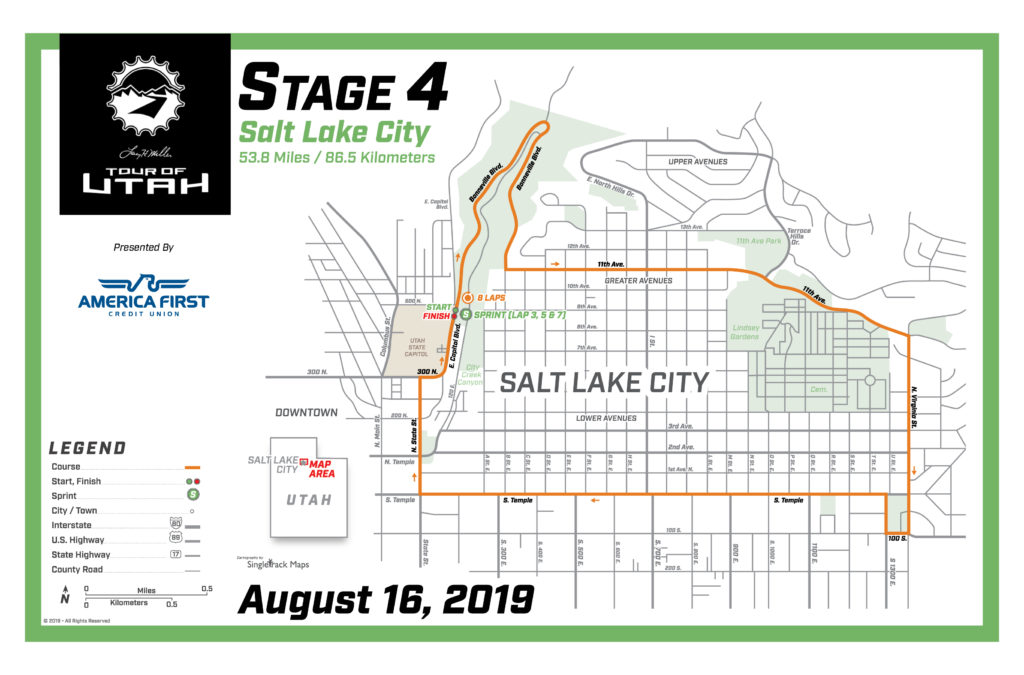
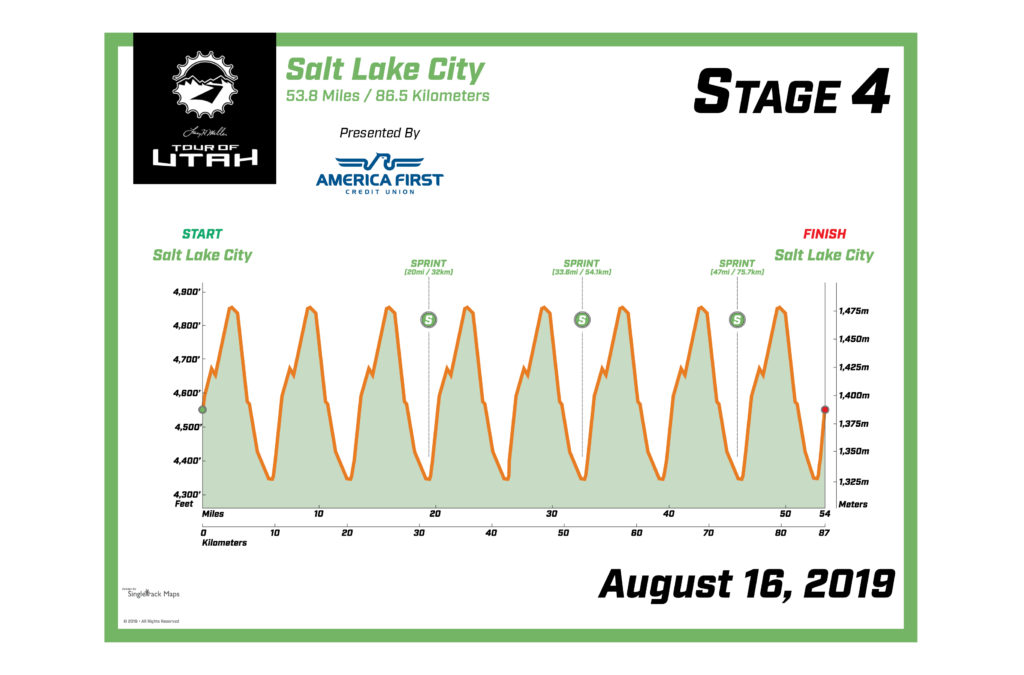
Friday, Aug. 16 — Stage 4 presented by America First Credit Union Salt Lake City — 53.8 miles (86.5 km) — 4,460 feet of climbing Start Time 5:55 p.m., Finish Time 7:45-8 p.m.
Start/Finish Location — 315 E Capitol Blvd, Salt Lake City, UT 84103
Salt Lake City hosts the Tour for a 12th time this August. The traditional circuit course is back for a third time, the same course that was first introduced in 2013 and used again in 2017. This 6.7-mile (10.8-km) circuit moves in a clockwise directon around The Avenues and Capitol Hill neighborhoods for eight laps. The route passes through City Creek Canyon, offers the high-speed descent of N. Virginia Avenue to go around Reservoir Park, and hits the severe incline on N. State Street. The State Street climb, between North Temple and 300 North, is a great place to see the pro cyclists tackle the steepest section of the course. The start/finish line is on East Capitol Boulevard next to the Utah State Capitol campus. Intermediate sprints at the start/finish will provide bonus points on laps 3, 5 and 7. It is a tough, punch course with 4,460 feet of elevation gain, and no rest for the legs with two days left in the mountains.
Tips:
Visit team parking and Wildlife Generation Autography Alley to get photos and signatures from athletes prior to the race start. This will be available from 5-6 p.m. near the start/finish line on East Capitol Blvd.
There are eight laps of the circuit and each lap is expected to take 20 minutes to complete.
Like past years, the race will pass Reservoir Park on three sides on each circuit, allowing for multiple opportunities to see the pros up close and at high speed.
Pedestrians are welcome to walk the course. However, we request that you stay on the sidewalks, and do not impede the movement of local residents, police and course marshals who will be using the respites between circuits to move people in and out of the neighborhoods.
The KUTV2 Healthy Living Expo will be located on the lawn next to East Capitol Blvd., with free admission from 4:30 to 8:30 p.m.
Use a GREENbiketo reach the course. Check the website for bike stations near the course – https://greenbikeslc.org/station-map.
Use Utah Transit Authority’s TRAXBlue Line or Green Line for easy access to course from the City Center stop (100 S. Main Street).
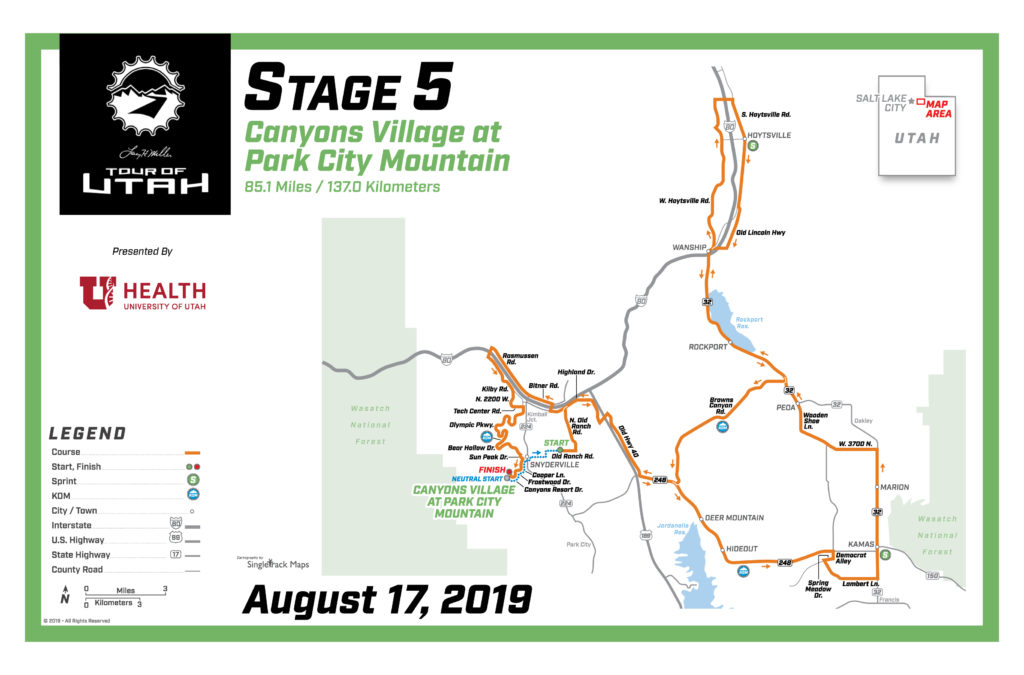
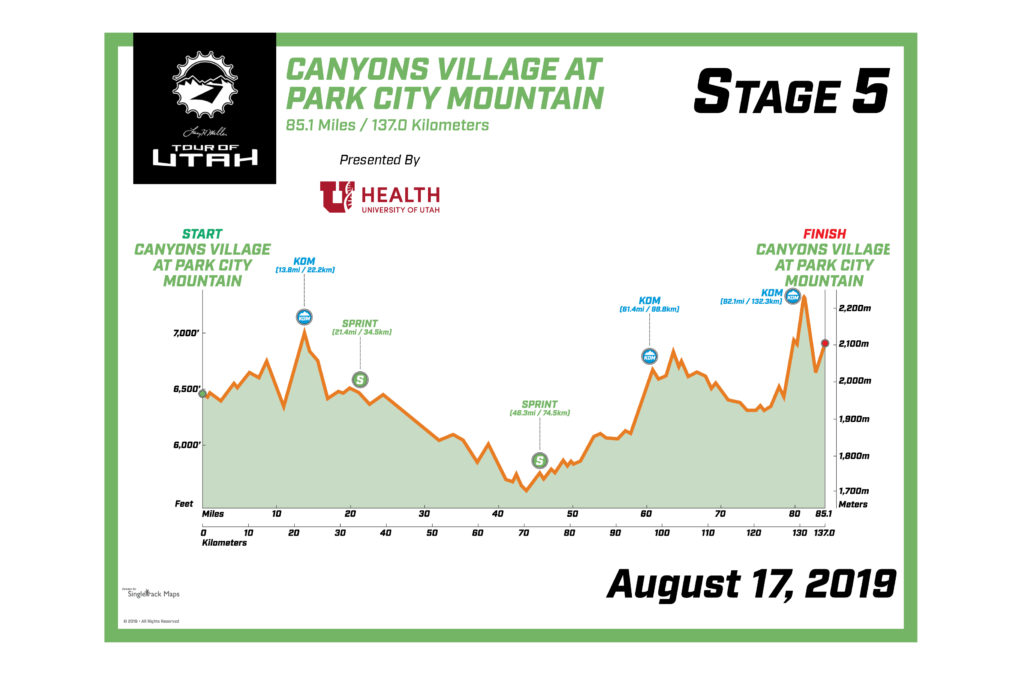
Saturday, Aug. 17 — Stage 5 presented by University of Utah Health Canyons Village at Park City Mountain — 85.1 miles (137 km) — 5,236 feet of climbing Start Time 2:30 p.m., Finish Time 5:45-6 p.m.
Start/Finish Location — 4000 Canyons Resort Dr, Park City, UT 84098
For the first time in race history, Canyons Village at Park City Mountain will host both a stage start and finish. Stage 5 presented by University of Utah Health will begin by rolling along Old Ranch Road to familiar territory in Summit and Wasatch counties in the shadows of the Uinta Mountains. Sprint lines in Kamas and Hoytsville are bookended with KOM lines near the Jordanelle Reservoir and up the often-traversed Browns Canyon. The race will pass Rockport Reservoir two times on Saturday using S.R. 32, and will also pass through Wanship two times.
Moving in the eastbound direction on S.R. 248, the first Utah Office of Tourism KOM will be contested at the Summit County line at race mile 13.8, passing between 3 to 3:15 p.m.
A Utah Sports Commission Sprint will be contested in Kamas, at E. 100 South at race mile 21.4. The race is expected to pass between 3:15 to 3:35 p.m.
After the first pass through Wanship, the race will make a 13-mile loop in a clockwise direction, following W. Hoytsville Road to Hobson Lane to S. Hoytsville Road. A Utah Sports Commission Sprint will be contested in Hoytsville, at Creamery Lane at race mile 46.3. The race is expected to pass between 4:10 to 4:45 p.m.
A Utah Office of Tourism KOM line will be contested along Browns Canyon Rd. at race mile 61.4, passing between 4:40 to 5:15 p.m.
Look for a possible General Classification shakeup in the final six miles. The race will travel the full length of Olympic Parkway on a twisting climb that passes the nordic jumps and bobsled track at Utah Olympic Park. Riders will cross the top of Utah Olympic Park for the first time and face a blazing downhill on Bear Hollow Drive. A Utah Office of Tourism KOM line will be contested at Utah Olympic Park at race mile 76.6, passing between 5 to 6 p.m. The final push is vertical along Canyons Resort Drive and High Mountain Road to the finish line in the heart of Canyons Village at Park City Mountain. Following the award ceremonies, the after-party for Stage 5 will include a free concert featuring Honey Hounds as part of the annual Summer Concert Series.
The amateur ride for the Tour of Utah, The Ultimate Challenge presented by University of Utah Health, will also take place on Saturday. The start and finish for two ride options will also be hosted by Canyons Village at Park City Mountain, with the 94-mile route beginning at 10:30 a.m. and the 44-mile route beginning at 12:30 p.m. Riders in The Ultimate Challenge will tackle public and private roads in Summit and Wasatch counties that will be used by the professionals for Stage 6. For more about The Ultimate Challenge, visit www.rideultimatechallenge.com.
Tips:
The start for the Tour of Utah race will begin at 2:30 p.m. from the heart of Canyons Village at Park City Mountain. The route will follow Canyons Resort Dr., Frostwood Dr., Cooper Lane, and Sun Peak Dr. to cross Highway 224 and continue on Old Ranch Rd.
To reach Olympic Parkway for the final climb at Utah Olympic Park, the race will use Highland Drive and Newpark Blvd. to cross S.R. 224 at Kimball Junction and turn left on Olympic Parkway. Expect the race to pass the Newpark area from 5 to 5:45 p.m.
Free parking is available at the Cabriolet parking lot. The Cabriolet lift will take guests into Canyons Village at Park City Mountain for the start, finish and event activities.
Additional offsite parking with free public transportation access is available at the Ecker Hill Park & Ride transit stop (via the Jeremy Ranch exit off I-80).
Public transportation and use of the Park City and Summit County Bike Share Program is recommended.
Limited parking is permitted along Olympic Parkway between the Quinney Welcome Center at Utah Olympic Park and the gatehouse at the top of the climb.
No parking is permitted along Bear Hollow Road.
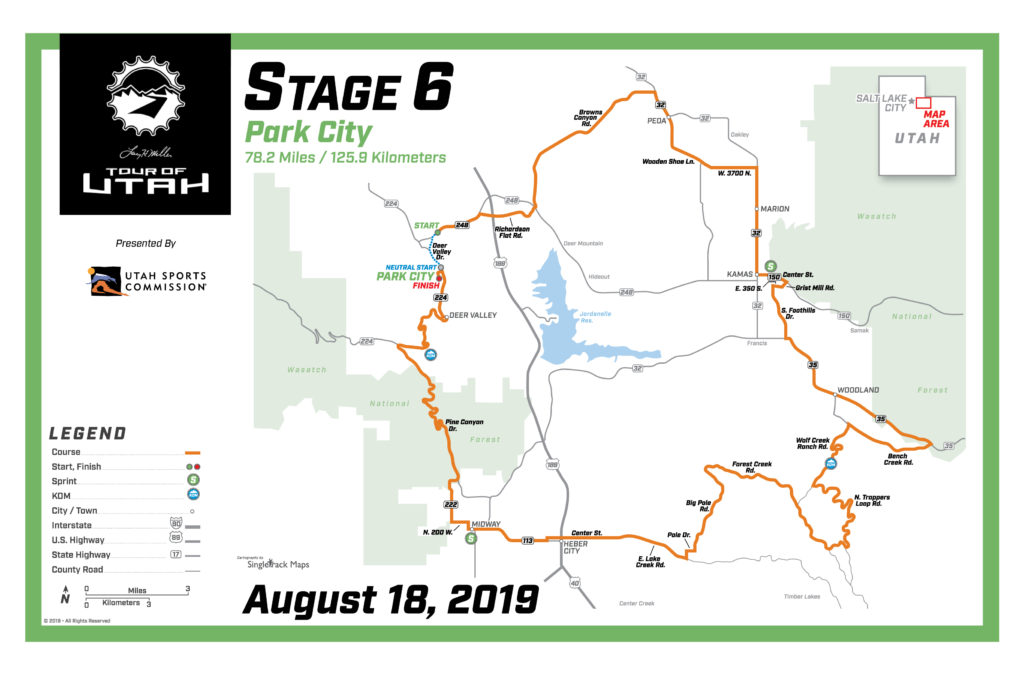
Sunday, Aug. 18 — Stage 6 presented by Utah Sports Commission Park City — 78.2 miles (125.94 km) — 10,009 feet of climbing Start Time 12:30 p.m., Finish Time 3:45-4 p.m.
Start/Finish Location — 250 Main St, Park City, UT 84060
The overall finish for the Tour of Utah returns to Park City for a seventh time. It is the 10th year Park City has served as a host city. This proven course was first introduced in 2012 with the epic climb of Empire Pass, and the make-or-break descent on Marsac Avenue to the finish line on Upper Main Street. The route may only be 78.2 miles (125.9 km) in distance, but it is the 10,000 feet of climbing and the final downhill section that will determine a champion.
On Sunday, the route will reverse direction in Browns Canyon, which will lead to a Sprint line in Kamas. The Sprint line will be contested at the intersection of E. Center Street and 300 East at race mile 20.5, with the race expected to pass this area between 1:15 to 1:30 p.m. Then an aspen tree-lined, 2.1-mile KOM follows in the private community of Wolf Creek Ranch,a Category 2 climb that reaches a maximum pitch of 22 percent. A technical descent into Wasatch County will allow the riders to regroup through Heber City before the final Sprint line in Midway. This Sprint will be contested at W Main Street and N 100 West at race mile 61.9. The race is expected to pass this area between 2:25 to 3 p.m.
Expect an all-out assault for the climbers will take place on the seven-mile climb along Pine Canyon Road, with pitches from 10-20 percent gradient. The Hors Category summit of Empire Pass is the final KOM, and the highest point of the race for the week at 9,700 feet above sea level. The Empire Pass KOM will be contested at race mile 72.7, expected to pass between 3:05 to 3:50 p.m. Ablistering descent down Mine Road to Marsac Avenue leads to the finish in front of historically massive crowds along Upper Main Street in Park City.
Tips:
The KUTV 2 Healthy Living Expo will be located along Main Street.
Community Chalk Art will take place on Main Street beginning at 1:30 p.m.
Spectators are encouraged to arrive early and get a viewing spot on Main Street in Park City for the start and finish.
Free spectator parking will be available at Park City High School, Treasure Mountain Junior High, Park City Mountain Base Area, and Cabriolet parking lots. Free Park City Transit buses will be available at bus stops near each of these parking lots for a free ride to Main Street.
Additional offsite parking with free public transportation access is available at the Ecker Hill Park & Ride transit stop (via the Jeremy Ranch exit off I-80).
Limited paid public parking ($20/vehicle) will be available in the China Bridge parking structure. Access to China Bridge parking structure will be from Marsac Avenue only. Because China Bridge exits onto the race course, no vehicle parked in China Bridge will be allowed to exit between 3-5 p.m.
Spectators are encourage to carpool, walk, or bike to the event. A free bike valet will be available on Swede Alley across from the Old Town Transit Cener.
Public Transit within Park City will be supplemented to provide buses at a higher frequency between satellite parking areas and the Old Town Transit Center.
PRESS RELEASE – SALT LAKE CITY (Aug. 6, 2019) – FOX Sports Networks, which includes FS2 and FSN regional channels, will provide a total of 21 hours of programming across the United States as the broadcast partner for the 2019 Larry H. Miller Tour of Utah on Aug. 12-18. Live start-to-finish webcast coverage will be provided free of charge with Tour Tracker® powered by Adobe®, available from the Tour of Utah website. All coverage on FS2, FSN and Tour Tracker will be available in high definition.
[Editor’s Note: All times listed are MDT, and subject to change.]
Photo courtesy Tour of Utah
International broadcast coverage will be provided on networks and fee-based services across five continents, including Eurosport in Europe, L’Équipe in France, and ESPN in select countries in South America. The Tour of Utah will reach more than 400 million homes around the world.
The national FS2 broadcast schedule will feature live race coverage from 6-8 p.m. MT for the Salt Lake City circuit on Friday, Aug. 16, which is Stage Four presented by America First Credit Union. The other six days of racing will be shown via tape-delayed programming in the 5-7 p.m. MT time slot. The broadcast team will feature Tour of Utah veterans Steve Brown, Todd Gogulski, Chad Andrews and Kristen Kenney.
KJZZ-TV, which serves households across Utah and parts of five other states, will broadcast a 30-minute Preview Show on Aug. 11 at 8 p.m. MT. A nightly one-hour recap show will air race week on KJZZ-TV in Utah and regionally on FSN/AT&T SportsNet (check local listings).
The Zone Sports Network will provide hourly updates on the Tour of Utah during race weekdays on Aug. 12-16. Tony Parks will anchor the radio coverage heard on The Zone (1280 AM, 97.5 FM).
Tour Tracker® powered by Adobe® returns for a ninth year for live coverage for all seven days of racing. This award-winning global web and mobile platform provides enhanced coverage with GPS race tracking and analysis for every stage. The apps are free to download for iPhone, iPad and Android mobile devices. The Tour of Utah Tour Tracker® announcers will be Frankie Andreu, former professional cyclist and Tour de France veteran, and Brad Sohner, professional sports announcer. Links to the web and mobile apps are available at www.tourofutah.com/race/tourtracker.
The Larry H. Miller Tour of Utah is free to all spectators, making professional cycling one of the most unique sports in the world today. The Tour of Utah is a 2.HC-rated stage race on the UCI America Tour and one of the prominent road cycling events that is part of USA Cycling’s Pro Road Tour. More information about the Tour of Utah can be found by visiting www.tourofutah.com
Artist: Bernadette Regnier Title: Open Road Medium: Linocut
“Open Road” by Bernadette Regnier
Artist Bio:
Bernadette Regnier’s first language is ART. She grew up on a farm along the front range of the Rocky Mountains near Longmont, Colorado.
Expressing herself through art started at an early age and continued as she pursued her degree in agriculture at the University of Northern Colorado where she studied watercolor, acrylic and oil painting and continued while completing a degree in agronomy at Colorado State University studying fiber arts, printmaking and figure drawing.
Regnier’s art reflects the land she has lived and traveled in. As an agronomist she traveled throughout the United States, Canada, Chile, Australia and Mexico. As a student of art she visited Great Britain, France and China. After working in Colorado, Montana and Idaho as a full-time agronomist and part-time artist, she now enjoys being a full-time artist and part-time agronomist with a printmaking studio at the Willard Arts Center in Idaho Falls. Regnier’s passion is expressing her love of the earth and all its beings through art.
By Chris Magerl – More comfort, fewer flats, better speed. Road tubeless comes down to that. It is truly a superior ride. Adoption of this technology has been slow, but there are some recent changes that might help riders get up to speed.
The tubeless compatible ENVE SES 3.4 Disc wheel. The setup looks just like any other road wheel and tire setup from the outside but they ride smoother and get fewer flats. Photo by Ian Matteson – ENVE Composites
In the old days, you could spot the serious racer out training by seeing the spare sew-up, or tubular, tire strapped to the saddle rails with a leather toe strap. In the early ’80s, the ride quality of even cheap training sew-ups was so far superior to any clincher. But there were catches. If you flatted, you had to rip the glued-on tire/tube/casing combo off your rim, put on the new tire, and then gently work your way back home. Corners were questionable as you waited to roll that unglued spare off your rim. More than one flat and you were hitchhiking home, as there was no quick way to patch the flat in the field. If you did choose to patch at home, you had to peel the rim strip, cut the stitching that held the tire together, pull out a portion of the inner tube, patch, re-sew and re-glue. Yeah, I did this in college when I couldn’t afford a new sew-up, not even the cheap Cyrillic-stamped sew-ups Steve Tilford would sell us after his race trips to Eastern Europe.
I could buy 20 tubes for the cost of one of those mystery Tilford tubulars, and Steve’s were the lowest cost you could find. Eventually the convenience of clinchers won out, and sew-ups were relegated to race-day-only.
Fast-forward three decades, filled with continual riding and thousands of road miles. The first time I pedaled road tubeless, I was instantly drawn back to those hours on farm roads in Kansas in the early ’80s. Road tubeless was the best clincher ride I had ever experienced, no matter the tire, tube or wheel configuration. It was like training on sew-ups again.
Road buzz was reduced dramatically. I had to worry far less about flats, either from debris or pinch flats.
We are 20 years into commercially available tubeless road tires. Choices abound from a variety of manufacturers, including the biggest names in road cycling tires, many offering multiple widths. Wheel makers are designing in ways to make the most of these tires, including offering much wider rims and internal grooves that make all the difference in mounting tubeless tires.
A lot of hard-learned lessons have come in those 20 years. With help from Jake Pantone, Vice President of Product and Consumer Experience at Enve Composites of Ogden, Utah, we will help you get up to speed. Enve is an industry leader in the world of carbon bicycle components.
Should you make the switch?
“The technology is real and riders are going faster and in more comfort/confidence with this new technology,” according to Pantone. “The ride experience overall is too good to pass up.”
You can join the limitless online debate about whether tubeless is faster. There are so many elements that run counter to traditional bicycling thought about what is fast. Wider tires. Wider rims. Lower pressures. Can these really add up to a faster bike? But there is a real difference between testing on a drum in lab and riding on real roads with constant irregularities. Hit a pebble and your tire will either deflect (usually up and back, not the direction we want to go) or deform. Deforming keeps you moving forward. When you are on a chip-sealed road, you are hitting pebbles non-stop.
The pressure you run in a tube is not the right pressure for a tubeless tire. Many tire and wheel manufacturers have online charts that factor in rim internal width, tire width and rider weight, and then suggest the correct pounds per square inch, or psi. For longtime road riders, these are hard to believe.
“Our tire pressure chart is based off an algorithm and comparisons with real world feedback from riders of every size and ability,” says Pantone. “I’m all about 28mm tires and on a wide rim like the 3.4 AR, I generally run between 50-60 psi depending on the tire.”
“I ride with a lot of different people of every ability and size. I don’t know a single person running a tire smaller than 25mm and I don’t know anyone running above 90 psi and that includes several guys well north of 200 pounds,” says Pantone. “Tire pressure can really affect the overall ride experience so it’s important to get it right.”
These pressures are based on new, wider internal rim widths. The Enve 3.4AR wheels Pantone mentioned have an internal width of 25mm. Compare that with something like the old Mavic Open Pro, the standard of great alloy wheels for a generation, which has an internal width of 14.5mm. A 700 x 25 tubeless will have differing width and height dimensions and road characteristics on each of those rims.
With lower pressure, you will get less road buzz, less stiffness in your neck, fewer jolts to your wrists and elbows and shoulders, a much kinder saddle experience, and less soreness and vibration in your feet. Yup, it is that nice, assuming you don’t air up the tires like you always have.
We associate vibration with the sensation of speed, so it might take a bit to get over the feeling that you must be going slower. Resist the temptation to pump up to 95 psi. Trust your cycling computer to show you that you are covering the same terrain at quicker times. You won’t need the computer to tell you that you are doing so with more comfort.
Want to get in on this on the cheap? Your existing wheels are probably up to it. According to Stan’s NoTubes, most road wheels can be converted using their road tubeless bundle. There are loads of online tubeless tutorials. Remember that NoTubes has been doing this longer and better than anyone. Go to their site, take no shortcuts, and life will be peachy.
And your existing tires? Don’t even try! You can make almost any wheel and tire combo tubeless in the mountain bike world if you know a handful of tricks. In the road world, using anything other than a real tubeless tire is asking for a trip to the ER. Or worse.
Road tubeless tires need sealant, but are easy to take on and off. Photo by Ian Matteson – ENVE Composites
Tubeless tires have very exacting specifications on tire bead diameter. Non-tubeless might set up, and might ride for a while. But you are going to end in catastrophic failure. Please, do not try this with non-tubeless road tires!
If you do try with your existing rim and real tubeless road tires, know that there will be trade-offs. A commonly heard refrain is that tubeless tires are almost impossible to put on or take off. That is true. And false.
Pantone explains how easy it can be on a modern rim designed for tubeless.
“A tubeless rim has a deep center channel and two shoulders. The shoulders are the surface on which the tire and rim create the air-tight seal. The center channel reduces the rim’s diameter, effectively allowing the tire to be installed. It is absolutely imperative that every single millimeter of tire bead be in that center drop channel when installing a tubeless tire. If not, you’ll fight it till your fingers are raw.”
Most wheel manufacturers offer some variation of this now. Watch the GCN guy mount Mavic tubeless tires on Mavic tubeless wheels with virtually no effort in his video “Have Mavic Nailed Tubeless for Road?” (This video is also fun to watch as he intentionally rides over increasingly large tacks to see what it takes to get the tire to fail.) I have mounted Hutchinson Fusion tubeless tires on NoTubes Alpha rims with no tire lever. Not because I had to, because it was easy to do.
But that very same Hutchinson Fusion tubeless tire on my favorite set of 12-year-old DT Swiss rims? Can be done, but it is a fight to the finish, even with a very strong lever. No center groove, which makes for a tough fit. But the ride is still sublime once the tire is mounted.
Remember, it is all about the ride quality. But you might also save weight. The new Continental Grand Prix 5000 TL, a highly anticipated tubeless update from the king of German tire makers, weighs 300 grams at 700 x 25. The standard version weighs 220 grams at 700 x 25. Add a high-end Continental tube (143 grams for the Race, 78 grams for the Race Light) and you are not paying a weight penalty for tubeless.
But wait, what about sealant? Sealant adds weight, and it is rotational weight a long way from the hub. Yup. BicycleRollingResistance.com tests have shown that 30 ml of sealant requires an additional 1 watt at 23 mph on a 700 x 25. You’ll get that watt back in reduced buzz and fatigue.
One other factor that needs to be mentioned is that rims, wheels, tires and frames have all been evolving quickly in reaction to disc brakes. Don’t buy a new frame for the disc brakes. Buy a new frame for the benefits that come with disc brakes.
“Disc brakes aren’t cool because of the stopping power they provide,” says Pantone. “They are cool because of what it allows us as a wheel manufacturer to create. The SES AR Series of wheels would have never been imagined in a rim brake world. There just wasn’t clearance available in a rim brake constrained frame. The amazing thing is that with this new wheel technology we get the best of everything: world-class aerodynamics, cross wind stability, lower rolling resistance, better cornering traction, all while riding in more comfort and confidence. Road riding has never been this fun.”
By Lukas Brinkerhoff – I’ve just finished the hardest 50 miles of my life. I’m sitting under a big red tent proudly sporting my Red Rock kit and feeling completely blown. It’s been a while since I’ve felt this way. My right thigh has been threatening to cramp since mile 30. I see some pickles. I pop one in my mouth trying to use the least effort possible.
Joey Dye and Bobasaurus (at least that’s what he told us his name was) cruising up the “easy” climb. Photo by Lukas Brinkerhoff
As per Mooseknuckler Cycling Alliance Standard Operating Procedures, there is a beer waiting for me. I know it’s ice cold and only about 10 feet away. I don’t want it. Instead, I keep sipping down water trying to move past this feeling of being done.
What I’ve just completed was pitched to me as being easy. By the metrics, it was probably one of the easier 50-mile rides I’ve done. It was all on pavement. My bike was not loaded down with anything but water and some snacks. There was some climbing, but it was minimal and mellow. The scenery was fantastic, we went at a fairly slow pace, and yet, I was blown.
I guess with the proper preparation it’s possible to make any ride difficult.
Joey Dye rocking the bike path on the return trip down the bike path in Red Canyon. Photo by Lukas Brinkerhoff
Step 1: Don’t ride your bike.
For all intents and purposes, I stopped riding my bike about three months prior. This wasn’t a conscience decision, it just kind of happened that way. And before you start burning this article, when I say I stopped riding my bike I mean for any real distance. Almost all the riding I did in the last three months was in three block increments, three blocks to work and then three blocks home. Occasionally, the need for food arose, and I would ride the two blocks to the grocery store. So, to say that I didn’t ride at all isn’t accurate, but at the same time, it kind of is.
I also may be glossing over one or two rides in between there, but 20 miles once doesn’t exactly maintain a level of fitness. And that’s the key, don’t do anything that would actually keep you in cycling shape.
Step 2: Beer is your friend.
And by friend, I mean your BFF. That one person you would spend all your time with if you possibly could and you still wouldn’t get sick of them. Some may say this is a problem. I say it’s ok to be passionate about things. This happens to be my thing. It also happens to be a big bonus in the “making things difficult” department. While I’ve read that beer is a great recovery drink, it apparently is not a great drink for maintaining endurance whilst not actually doing anything else to maintain that endurance. Unless, of course, you are trying to see how much beer you can drink.
Step 3: Forget everything you may have once known about nutrition
Keeping your body fueled during a ride can often make or break a ride. In this case, there is no reason to try and do it right, so go ahead and through everything you know or think you know about nutrition right out the window.
For breakfast, eat exactly half of what you think you should. Give the other half to your friend who is also riding and make sure they don’t eat it either. Then drink a bunch of coffee.
Typically, you would drink water at regular intervals. Stop doing that. Instead, drink a little bit here and then forget that you have water altogether and just ride. Any fuel that you may have forgotten about and then remembered 45 seconds before the ride began, should remain nicely stored. Only when you are pretty much bonking and trying to stay ahead of the group of ladies in fake Red Rock Bicycle kits because that would be too much to be passed by them, can you finally eat. And yes, you should then eat all of it at once as fast as you can.
Step 4: Suffer through it
At this point, it is important to point out that riding bicycles is often more about knowing how to suffer than it is about being good at riding bicycles. A smarter person would recognize their own failings and throw in the towel with a vow to learn from their mistakes, but that would be too easy. Depending on who you ask and what day of the week it is, I’m not very good at bikes, but I’ve learned to suffer with the best. I may not cross the line first, or second, or third, but I will cross that line and finish.
And finish I did.
As aforementioned, by the metrics the Desperado Duel is an easy 50-mile ride. There isn’t a ton of climbing and none of it is overly steep. The scenery is fantastic as the route takes you through Red Canyon which is Bryce Canyon’s little brother and shares the same fantastical hoodoos and red coloring of the iconic park. A good chunk of the ride is also on a separate bike path letting you pedal without having to worry about traffic and the parts that are on the highway have little traffic.
And the weather. For those of you not from the fiery pits of Southern Utah, July is a time when you do anything you can to escape the oppressive heat of the summer. Panguitch in July is a perfect way to do just that. The mornings are crisp and the evenings cool off nicely. It’s about the best riding weather you can find.
All that is fine and dandy, but isn’t riding all about the challenge? The Desperado Duel 50 certainly isn’t the hardest course you will encounter, but with the proper preparation you can turn it into a truly hard day that ends with you sitting under a tent, completely blown, eating pickles and wondering why it hurt so bad.
And that is what it’s all about.
Lukas Brinkerhoff blogs about mountain biking and life at mooseknuckleralliance.org.
Your cycling shoes are a major player in 2 out of the 5 direct contact points you have to your bicycle, and therefore merit careful consideration in their selection to suit both your feet (pun intended) and the style of cycling you do.
John Higgins measuring feet for cycling shoes. Photo by Derek Israelsen
The purpose of cycling shoes is to efficiently transfer force to the pedals while at the same time supporting your feet appropriately and distributing (rather than concentrating) the pressure your feet experience, as well as being practical for the totality of your cycling experience. Other than cycling, this may entail walking your bike, negotiating stairways, or frequent stops. In next month’s article I’ll explore pedal systems, as the selection of a pedal system has direct influence on cycling shoe selection and vice versa.
Numb feet, hot feet, pressure points, blisters and other discomforts could be symptoms that your shoe choice needs re-evaluating, but the total interface of foot, sock, insole, shoe and cleat choice and position, and well as saddle height (too high can cause feet issues) should be considered as well.
In this article I’ll take a brief look at: the types of cycling shoes; what they are used for; a few things about your feet that may influence your choice; salient features, and how to buy them.
Type of Shoes
Cycling shoes fall into 3 broad categories based on intended use and pedal system:
Flat: for use on “flat” pedals which relies on direct foot pressure and sole friction. No “cleat” is attached to the sole of the shoe. The shoes will be somewhat stiffer than regular running / gym/training shoes, but do not have a fully rigid sole and will exhibit good toe flex for normal walking.
Mountain: for use in situations when off bike walking is expected, so the outsole features lugs for traction, and the cleat that attaches to the pedal is recessed flush with the lugs. As well as mountain bikers this style of shoe is also a popular choice for commuters and tourers who are on and off the bike regularly. Shoe stiffness will vary from semi flexible for more casual use to race-stiff where the emphasis is on light, strong, and stiff for competition with little off-bike functionality.
Road: these shoes have a rigid sole with minimal traction and the elevated cleat under the forefoot makes walking awkward in a reversed stiletto kind of way. Intended for riding only, not perambulating. Triathlon shoes are modified road shoes with fewer straps and increased ventilation designed for ease of on bike entry when pre-attached to the pedals, to save seconds in the transition zone.
Functional Considerations
Efficient power transfer: in general you want as much of your energy expenditure as possible to provide productive forward motion, and not have it lost in the transition from body to bike via a floppy, flexible shoe. This is why most cycling shoes have a rigid sole. You don’t require the flex needed for walking or running because cycling is not a natural foot activity but relies on the conversion of biomechanical energy into mechanical energy.
Pedal Cleat attachment options: there are 3 main types and some variations, the choice of which will dictate your pedal options.
Flat (no cleat)
2 hole side by side (common for mountain bike, commuter bike and spin bike pedals)
3 hole triangular pattern (common for road bike pedal systems)
4 hole rectangular pattern (specific to the Speedplay brand of road pedal systems)
2 hole / 3 hole combination (have it both ways – your choice)
Off bike practicality: a dedicated and devoted road cyclist will minimize the amount of off bike walking they need to do in their cycling shoes, because its awkward to walk in road shoes and accelerates wear on the cleats. But if you need or want the versatility to do a bit of walking around in your cycling shoes because you are commuting, gravel, or mountain biking and may have “hike-a-bike” sections to contend with, a lugged outsole will be desirable. Commuters with frequent stop signs or traffic signals requiring frequent cleat disengagement and foot down time or stairs and elevators to negotiate need to think about ease of pedal engagement when getting going again, as well as traction when walking.
Fit: There is tradition and there is reality. Tradition says your cycling shoes should be narrow and tight. Reality says your shoes should be comfortable and functional. Let’s go with reality. Comfortable doesn’t mean big and sloppy. Cycling shoes should be snug (not tight), both around the heel and side to side at the wideset points of your forefoot, without creating unnecessary pinching and side compression. They should offer ease of adjustment to tighten or loosen the shoes depending on your insoles and sock thickness, and to accommodate any foot swelling in hot weather. The shape of the shoe should accommodate your foot shape, rather than the other way around, and you should have a little bit of toe clearance at the front, but not as much as is needed in walking or running shoes. In summary, they should feel like a nice fitting glove on your feet: not too tight, not to big. Just right. But maybe you have hard-to-fit-feet, which leads to…
A classic bunion. Photo by John Higgins
Feet Considerations
Most cycling shoes will fit most people, but if you are reading this it could be because you are an exception, and there are a lot of exceptions which may be due to:
Width: If you have narrow (A, B) or wide (E+) feet, particularly 2E or above then finding well fitting cycling shoes can be a challenge, but let me assure you they do exist. Shoes that are too narrow or mismatched in shape to your feet can be a contributor to foot numbness.
Volume: This is how much 3D space your feet take up. Low volume feet are often narrow and flat, and high volume feet are high, wide, and bulky, at least for cramming in cycling shoes. Some brands and models do a much better job than others of scaling up or down to suit your feet.
Bunions: If you have them you’ll know it – the first metatarsal head is displaced outwards which presents as a big bulge on the side of the big toe ball of the foot. Bunions can also occur on the little toe side. Bunions make otherwise normal width feet present as wide, and need accommodating for either in the width of the shoe or in stretching the shoe to create some extra space.
Feet length discrepancy: A half size difference between left and right is normal; a full size difference is common. More than that and you may be a candidate for a different shoe size for each foot unless an appropriate insole keeps the length discrepancy in check.
Shoe Features
Let’s take a brief tour through some of the key features and materials of a cycling shoe.
Outsole: i.e the bottom. Usually nylon on lower priced shoes and composite (carbon fiber and resin) on higher price models. Stiffer is better will be the marketing tag line but this depends on the application. There can be issues with shoes that are too stiff for your feet. Flat shoes will have a grippy rubber outsole, and mountain bike shoes will have nylon or rubber lugs and possibly toe spikes, all for traction when walking or running off the bike.
Cleat bolt pattern: As previously discussed, there are 2, 3 ,4 or combo holes for different type of pedal systems.
Uppers:Genuine leather (yes, still an option), synthetic leather (most common) or one of the above plus mesh. Genuine leather is long lasting with care, will mold more to your feet, and can be stretched to accommodate bunions. Synthetic leather is cheaper but not as malleable. Mesh is more breathable, and can be integrated with stretch panels to accommodate bunions or wide feet, but may lack durability.
Closures: How you do them up. Lace is back in vogue. Velcro straps are common. Boa closures (ratcheting lace system) have largely replaced ratcheting strap systems. Many shoes will feature some combination of closures. Personal preference and ease of adjusting tension over the top of your feet are what you want to think about, and whether you can do that on the move. Yes with boa closures, no with normal laceup. In between with Velcro.
Last and Width: The shape and width of the shoe where your foot contacts it. Feet are different shapes. Some are widest in the forefoot, some are widest at the mid-foot. Some are narrow. Having a shoe that conforms to your feet instead of expecting your feet to conform to the shoes will result in a happier cyclist.
Other Features:
Color options
Heat moldable forefoot to suit different widths
Heat moldable heel counter to snug the heel
Buying Cycling Shoes
The most common buying mistakes I see are cyclist’s settling for shoes that are too narrow, or addressing that by upsizing to get more width. The latter is the obvious workaround when you can’t seem to find what you really need, but has downstroke consequences as this often makes it harder to position the cleats in a suitable position relative to your foot structure. Another common error is expecting them to feel like running shoes. They wont. Don’t test them by walking around, as your heel is going to be leveraged out of the shoe due to the rigid sole. To choose a shoe consider these factors.
Function: for the intended cycling use and purpose
Fit: for your feet
Features:materials, closure system, color
Price: that you are willing to pay to achieve the above 3.
Note that choosing a brand first, or what the pro’s are wearing, or what the gear magazines are reviewing (on behalf of paying advertisers) do not feature in the selection criteria! The best cycling shoes for you could be ones you haven’t heard of yet.
Try them on if possible. Feel for snugness, not tightness. Check for toe clearance. Test out the closure system. Use the sort of sock that you would use for riding. Do you have custom insoles that need to go in the shoes? Remove the stock insoles and try yours out in the shoes. I recently solved a “shoes too tight” issue by discovering and removing a second set of insoles that were in the shoes!
Where to buy
Bike shops:If you have average, easy to fit feet with no special needs, your local bike or outdoor equipment store will likely have a range of brands, models and price points with something to check all your boxes. You will rarely encounter wide models on offer in a bike shop, just the most heavily marketed brands like Shimano, Pearl Izumi, Fizik and Garneau, along with bike house brands like Bontrager (Trek), Scott and Specialized.
Online: if you already have shoes that work, and you just need to replace them, and you are shopping for the best deal, you will usually (but not always) find what you need online.
Specialty suppliers: If you are a skier with hard to fit feet you wouldn’t go anywhere other than a well regarded ski boot fitter to get your ski boots. Fitting cycling shoes doesn’t require the same experience and art but some bike fitters like myself see a lot of cyclist’s feet, hear about a wide range of feet issues, and work hard to resolve these. As well as setting or adjusting cleat position this may involve recommending a different cycling shoe and often times an insole as well. Recently someone who found their way to me after doing the rounds of bike shops and podiatrists said ”I should have come here first!”
If you have struggled to find well fitting and suitable cycling shoes, know that there are options available that should work for you, and that sometimes it is not just the shoe but other elements of the foot-pedal interface that may be causing problems.
In full disclosure I am a dealer for Lake Cycling Shoes, Rocket7 custom shoes and G8 Performance insoles, and I have selected these brands because they give me the ability to help solve foot related cycling issues. Other bike fitters may use and recommend other brands that they have found work well.
John Higgins is a professional bike fitter and purveyor of unique and boutique bicycles and fit-related components and accessories in Salt Lake City. More info on bikefitr.co


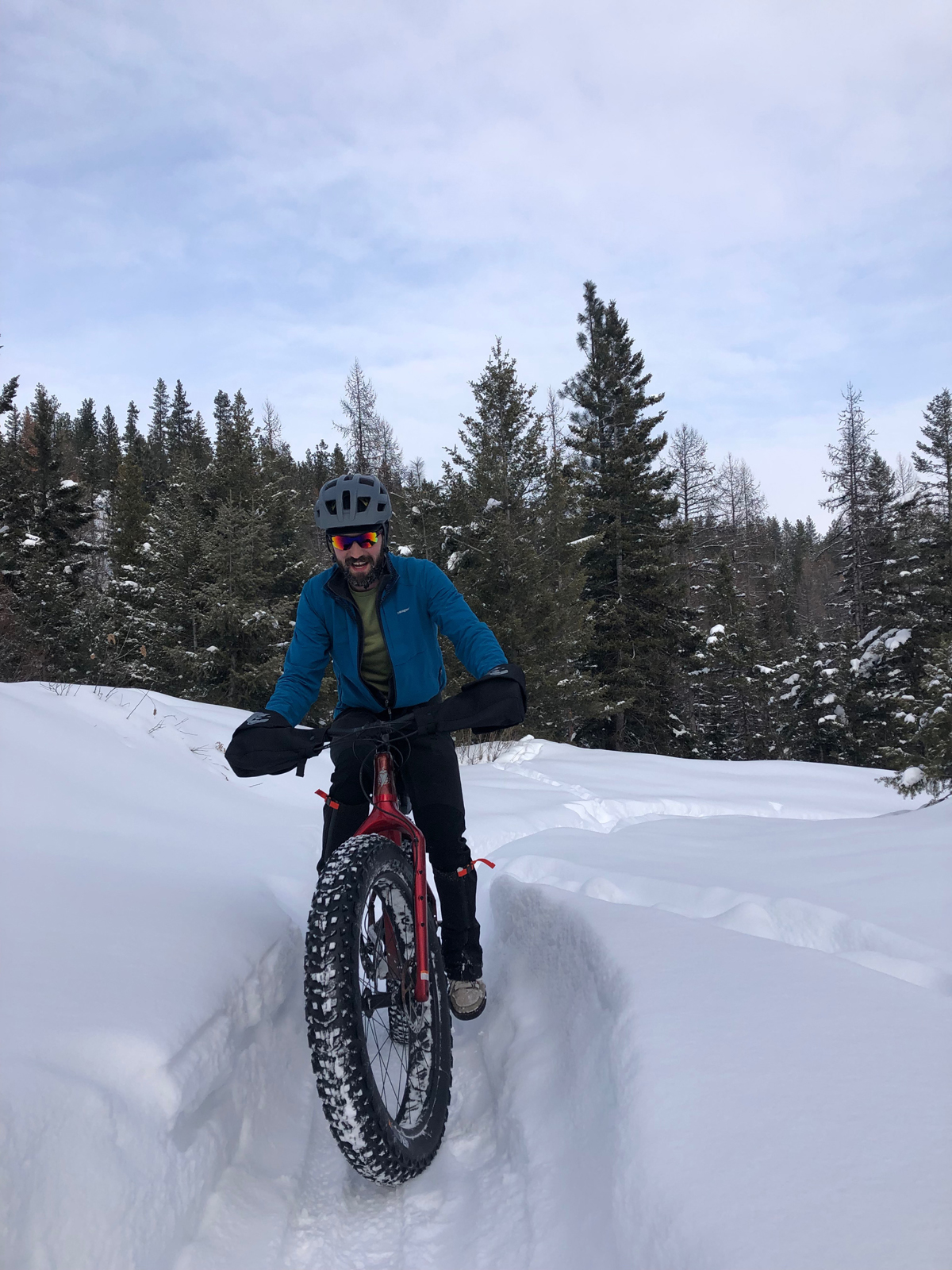 Alex Strickland on his winter Missoula, Montana commuter bike. Photo by Dan Meyer
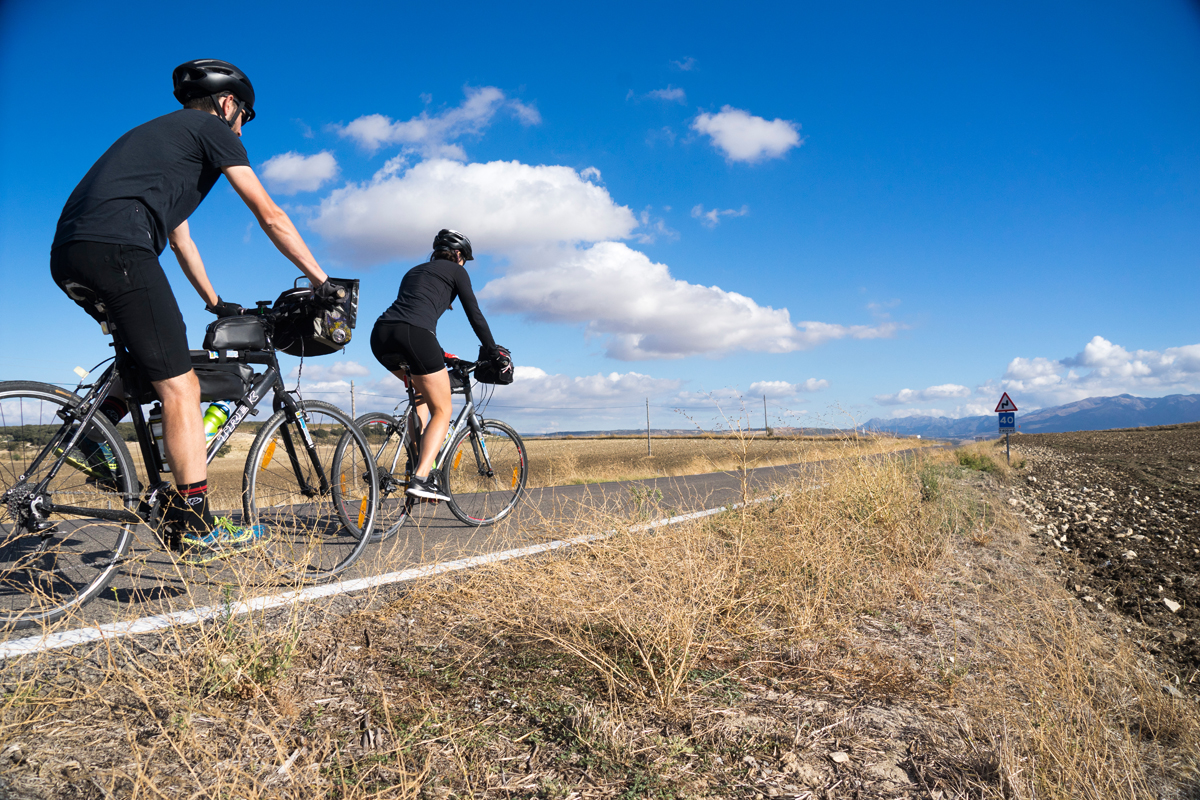 Alex Strickland and his wife on tour in Spain. Photo by Alex Strickland
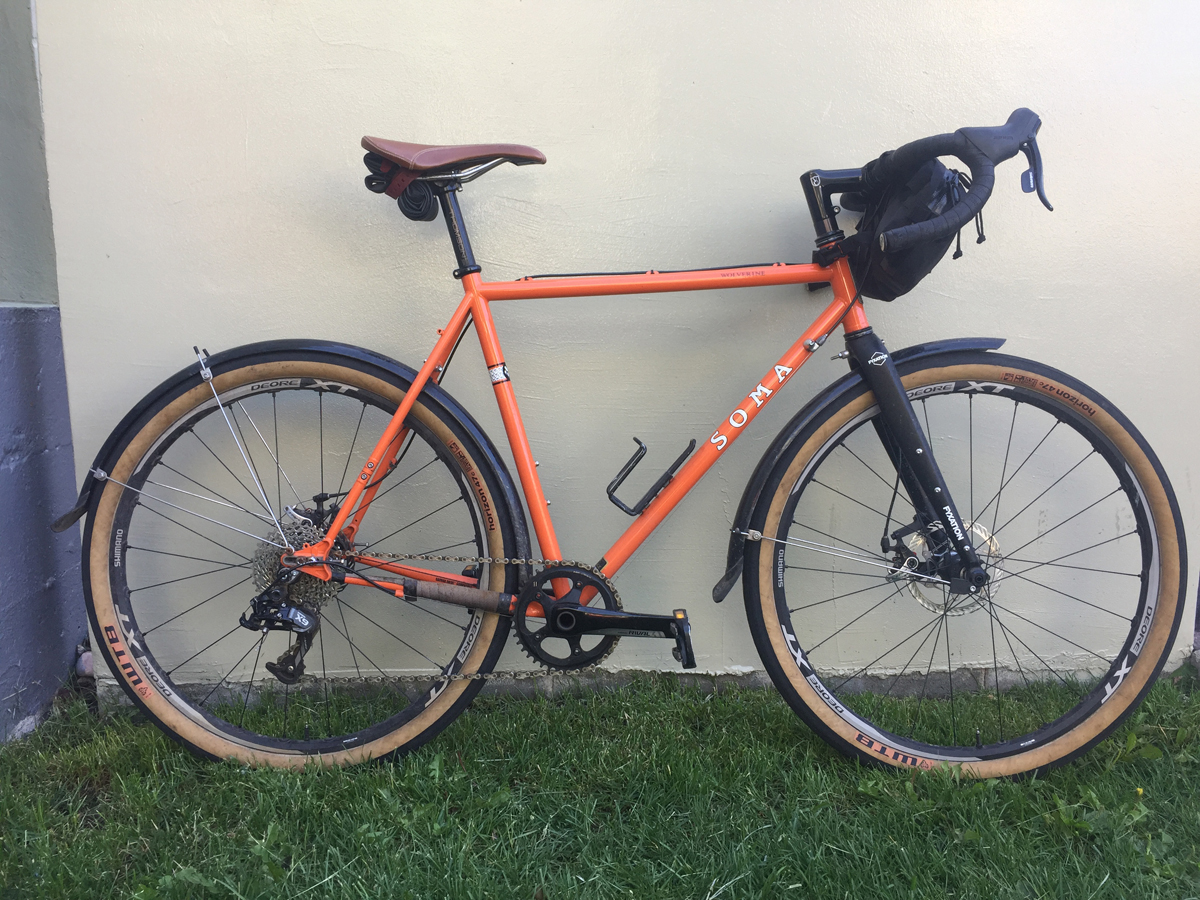 Alex Strickland’s Soma Wolverine commuter bike. Photo by Alex Strickland