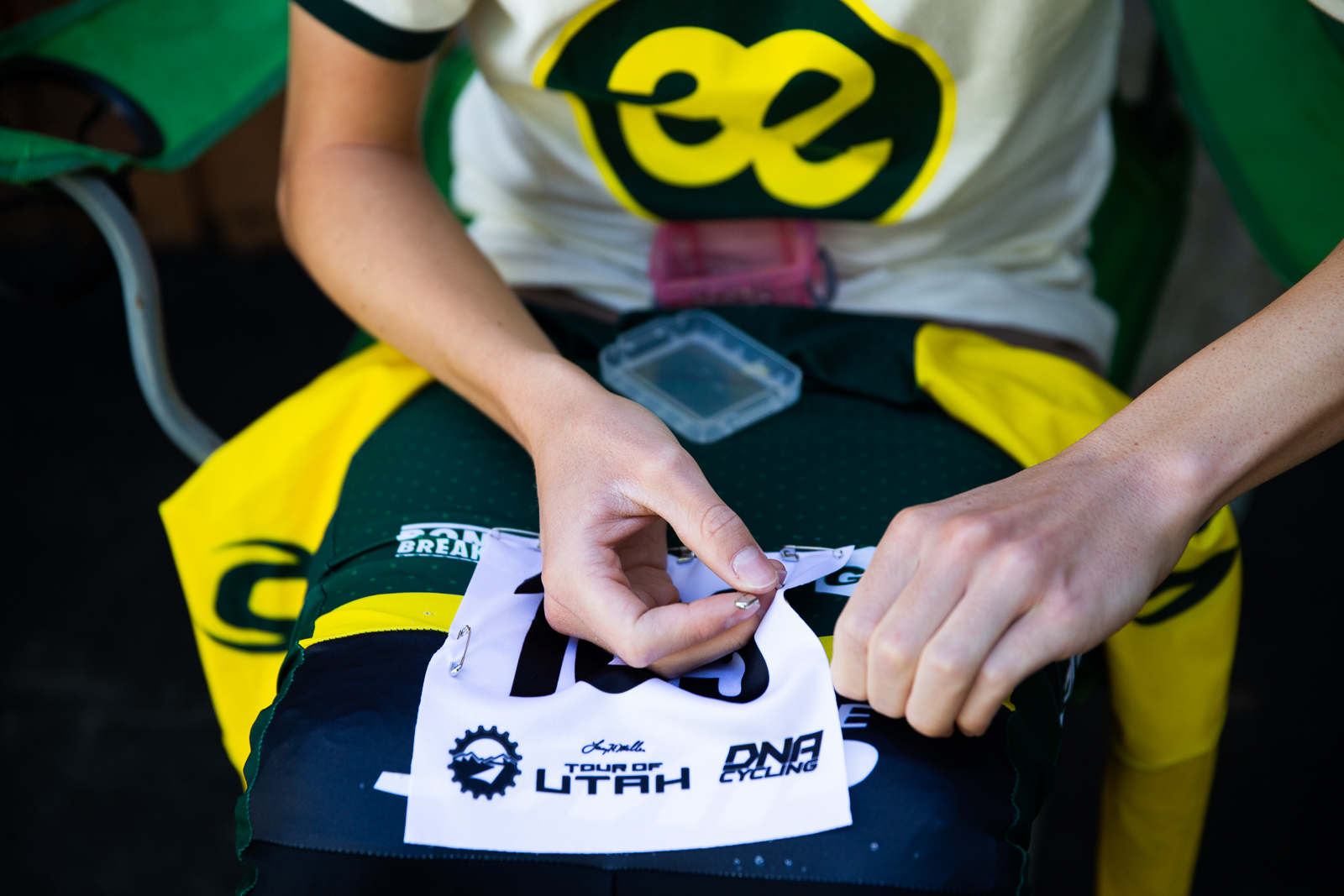
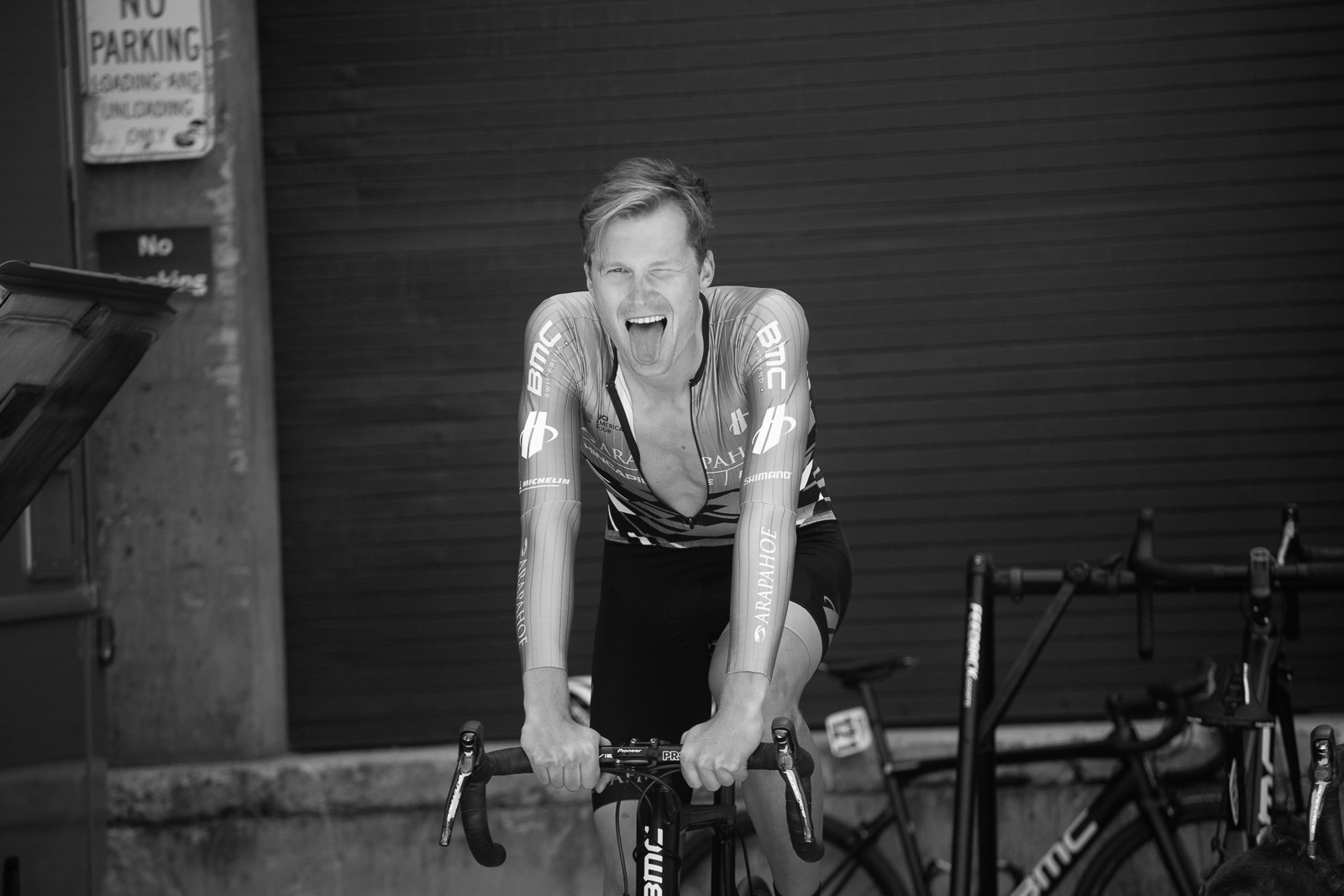
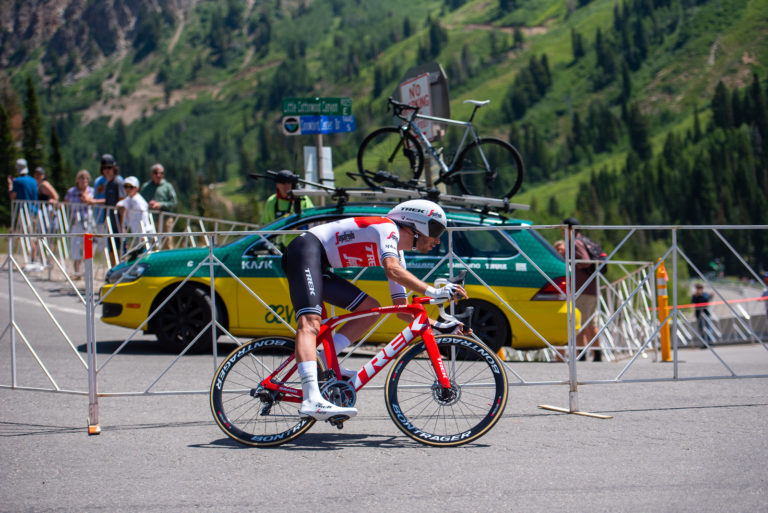
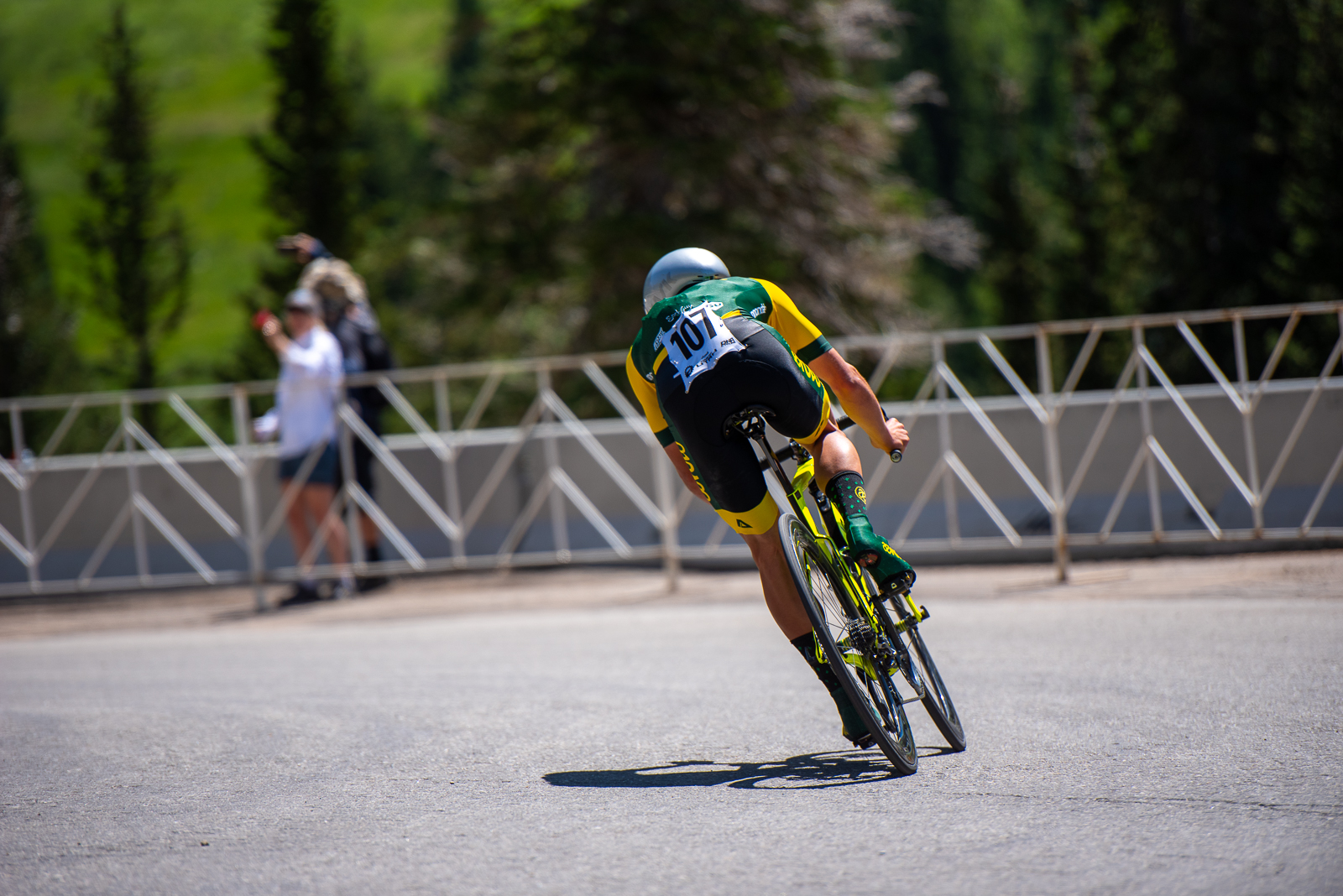
PRESS RELEASE – LEADVILLE, Colo., Aug. 10, 2019 – Earlier today, 1,643 cyclists ranging in age from 18 to 73 and representing 50 states and 23 countries endured the extreme test of endurance and grit, also known as the Leadville Trail 100 MTB race, owned and produced by Life Time.During the iconic event, now in its 26thyear, bikers raced at elevations beginning at 10,152 feet and climbing to 12,424 feet.
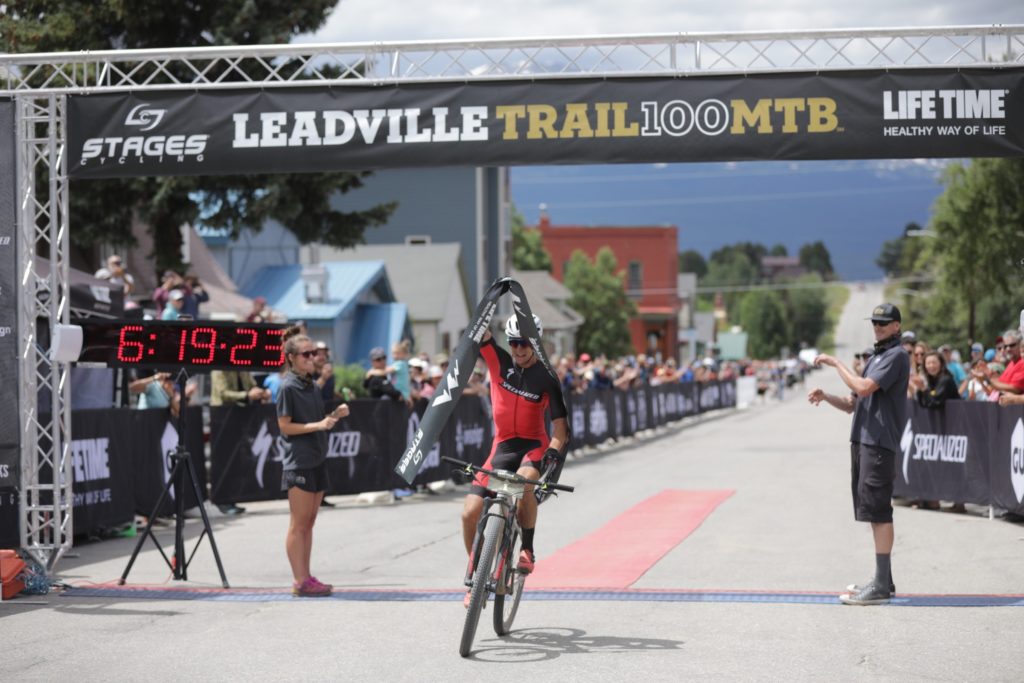
Howard Grotts, 26, of Durango, Colo. secured his place as reigning champion of the event, placing first for the third year in a row with a finish time of 6:19:18. Quinn Simmons, 18, also of Durango, Colo. secured second place with a finish time of 6:22:24. Lachlan Morton, 27, notable road cyclist hailing from Louisville, Colo. followed Morton, placing third in the division with a completion time of 6:22:42.
Howard Grotts wins his third consecutive Leadville 100. Photo courtesy Life Time/Leadville 100
Grotts, immediately after successfully battling 100 miles of rugged Rocky Mountain terrain and crossing the finish line, was able to carry on a conversation with spectators and media with ease, saying, “I rode a pretty steady pace … there is really good space out there, and I was on a great bike.” Morton, competing in his first mountain bike event, added, “My favorite part of the day was pretending to be a mountain biker, coming down Power Line with Alex, and hanging in there – the last time I went down it, I definitely felt like a road racer.”
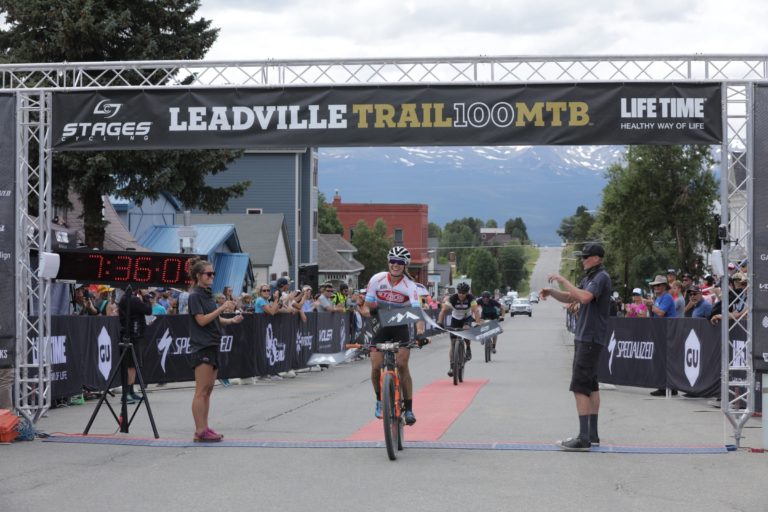
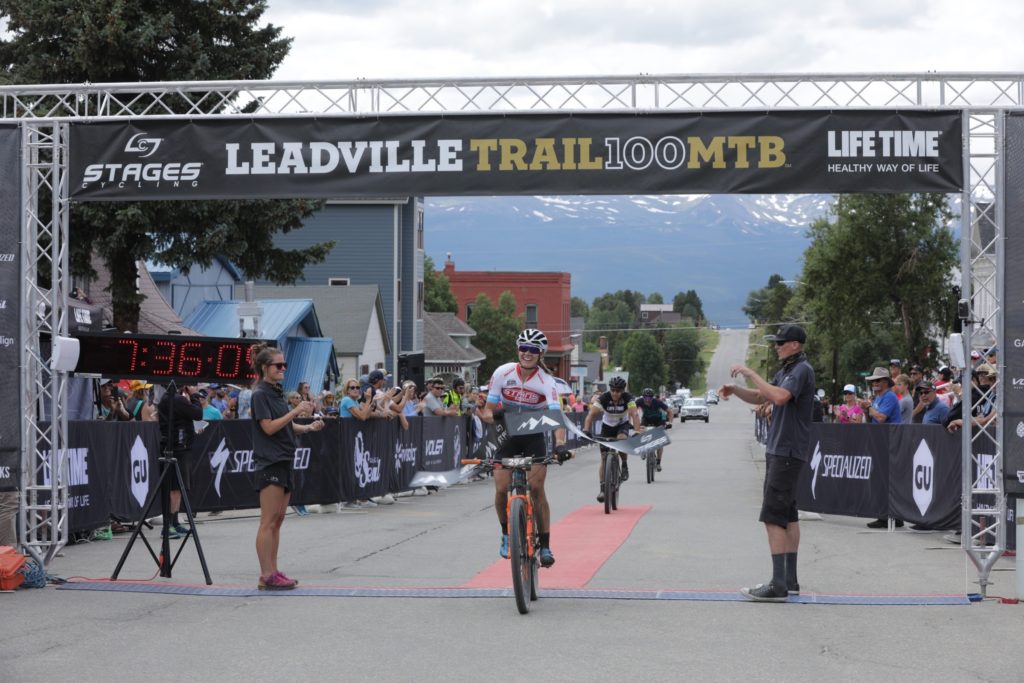
In the women’s division, Rose Grant, 36, of Columbia Falls, Mont. earned first place with a time of 7:36:07. This was Grant’s first year participating in the event. Sarah Sturm, 29, of Durango, Colo. earned second place in the division with a completion time of 7:54:23. Angela Parra, 37, of Santa Ana, Costa Rica placed third, crossing the finish structure with a clocked time of 7:55:56.
Rose Grant wins the Leadville 100 on her first attempt. Photo courtesy Life Time/Leadville 100
Grant pushed hard and knew her needs, “I think a race like this is really so individual and knowing how to pace yourself and stay on top of nutrition,” the 36-year-old said. “I was able to pass Sarah on Columbine climb, and just kept my head down, kept eating and drinking, and it worked out.”
While not all were successful on America’s highest 100-mile MTB course, 1,332 of the 1,643 riders that started the race crossed the finish line within the twelve hour time limit. This year’s youngest finisher was 18 years old and the oldest was 73 years old. The median age was 44. 1209 men completed the race while 123 women did. Overall women’s participation increased by 39 percent year-over-year. In addition, 647 riders this year were first time Leadville Trail 100 MTB competitors.
Adding to the hype of the day, impactful fundraising took place for two key Leadville Trail 100 foundations. “Back of the Pack” rider Ty Hall, a Leadville, Colo. native, passed 1,474 bikers, raising money for the Leadville Trail 100 Legacy Foundation, which provides grants to Lake County High School graduating seniors pursuing higher education. Life Time Founder and CEO Bahram Akradi, along with a team of riders supporting the Life Time Foundation, raised money to support schools in removing the Harmful 7 highly processed and artificial ingredients from their menus.
All finishers receive a belt buckle based on their finish time. Finishers with sub-9 hour times receive a large buckle, while finishers with 9-12 hour finish times receive a smaller buckle. Finishers also receive a finisher’s medal and a custom jacket.
The Leadville Trail 10K is set to take place Sunday, Aug. 11. The Leadville Race Series’ 2019 season concludes next weekend with the Leadville Trail 100 Run presented by La Sportiva on Aug. 17. Athletes who have successfully completed the Leadville Trail Marathon, Silver Rush 50 MTB or Run, Stages Cycling Leadville Trail 100 MTB, Leadville Trail 10K Run and Leadville Trail 100 Run within the allotted cut-off times will earn the coveted title of “Leadman” and “Leadwoman”.
The Leadville Race Series is owned and produced by Life Time, the premier healthy lifestyle brand. It is among more than 30 premier athletic events owned by the company, including the New York City Triathlon, the Chicago Triathlon, the Miami Marathon and the Dirty Kanza.
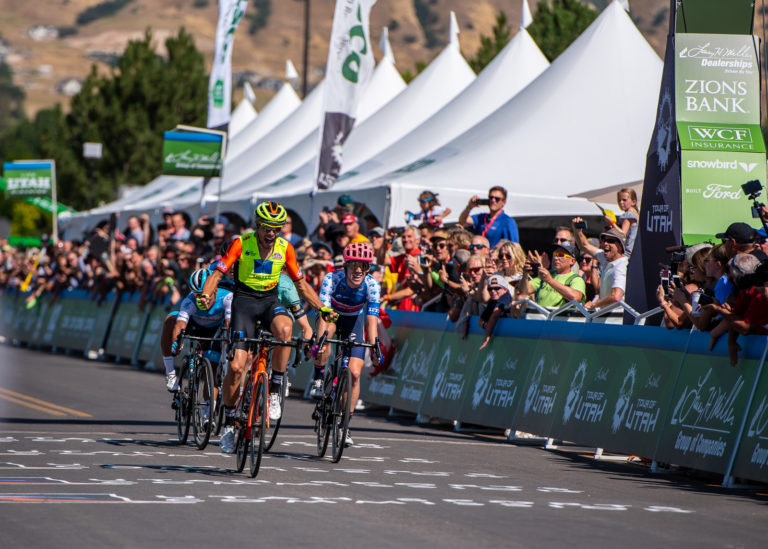
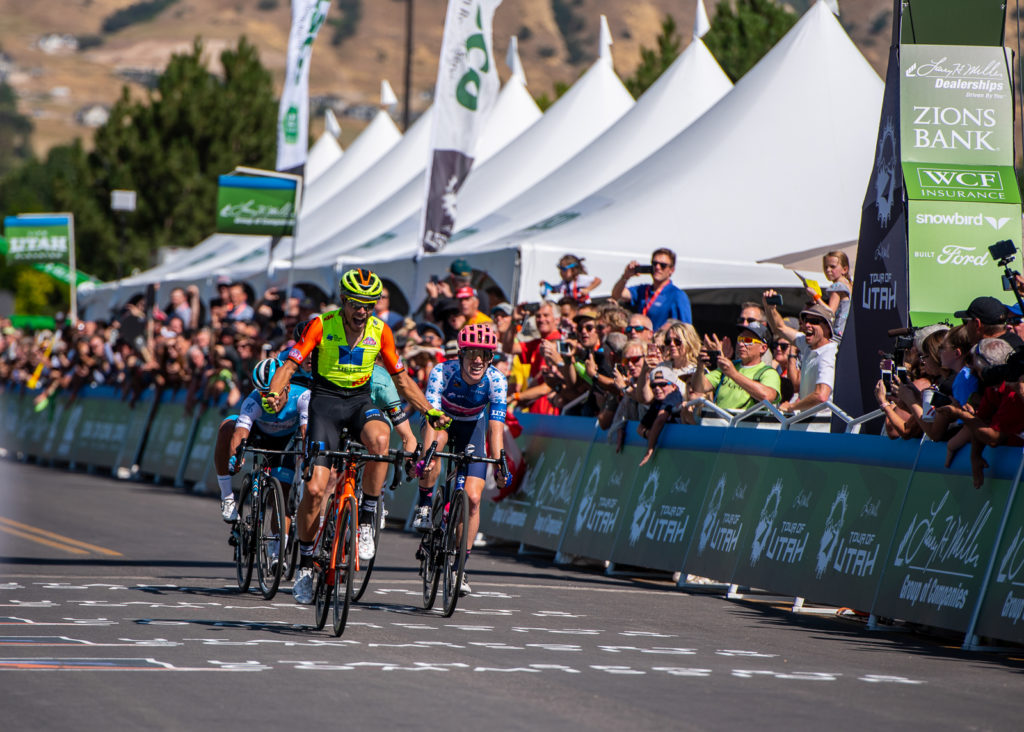
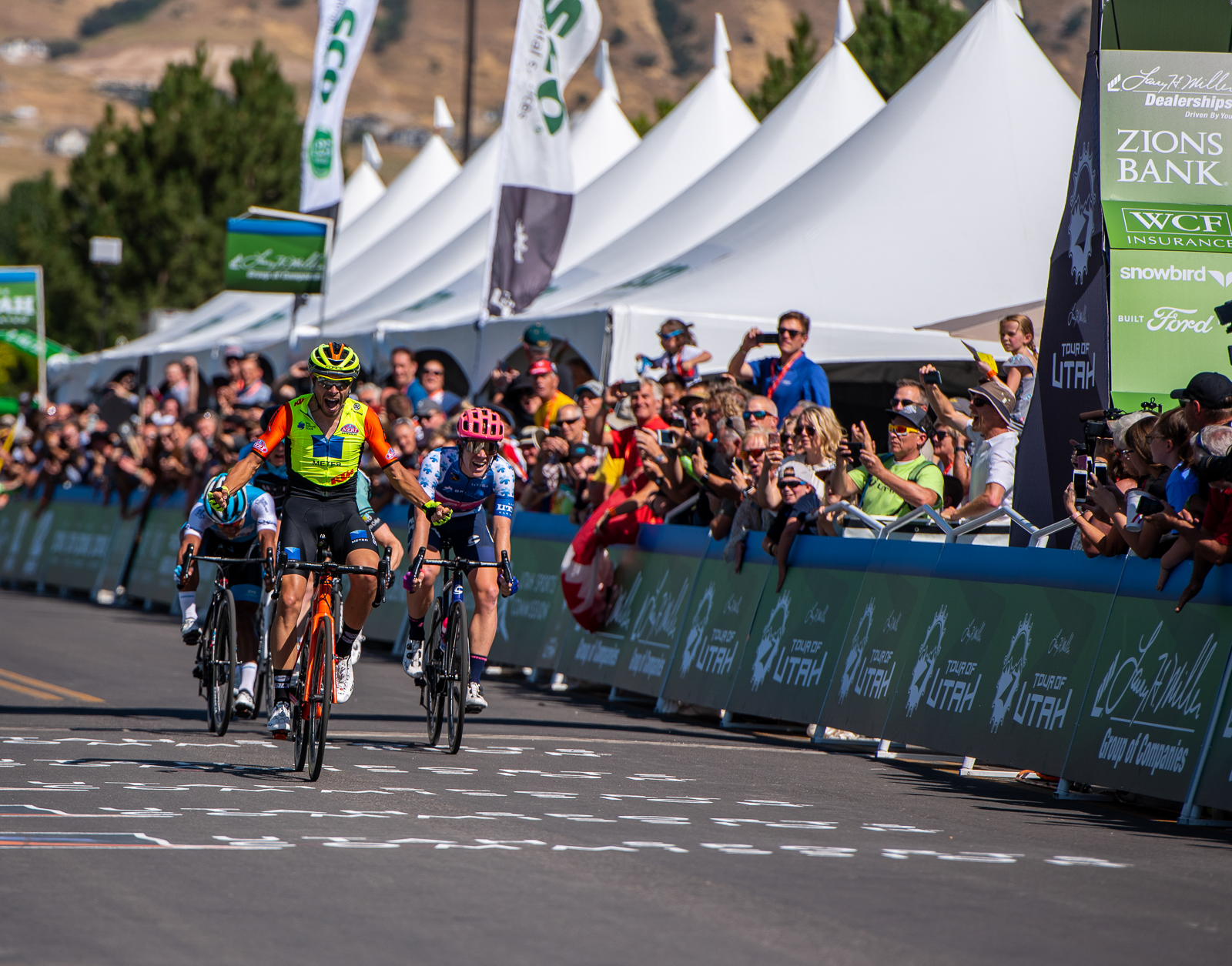
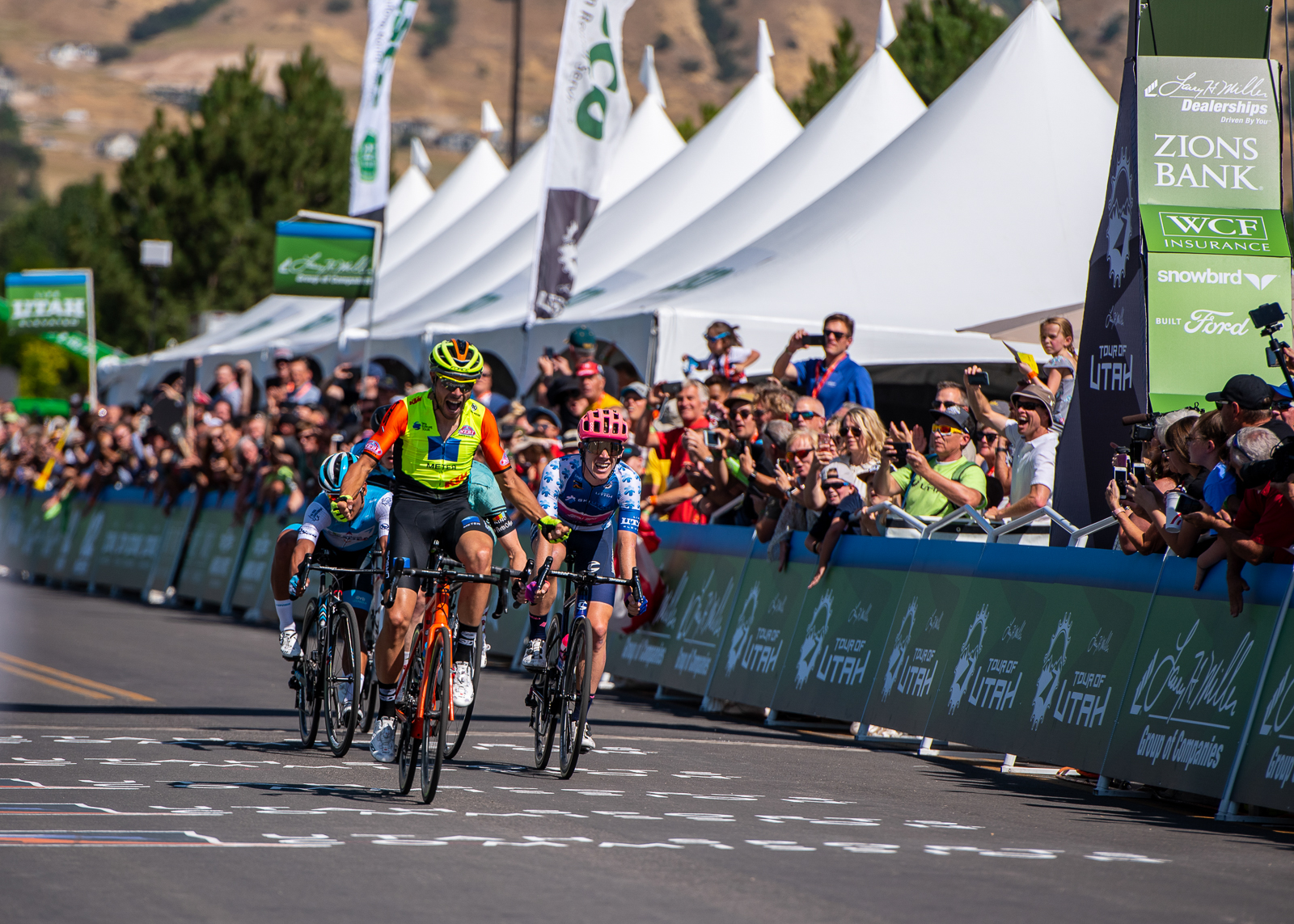
By Lyne Lamoureux – NORTH LOGAN CITY, Utah (August 13, 2019) – Italian Umberto Marengo of Neri Sottoli-Selle Italia-KTM accelerated away from a six-rider group in a surprise attack to win Stage 1 presented by Larry H. Miller Group of Companies at the Larry H. Miller Tour of Utah. Marengo covered the 87-mile (139.9-kilometer) course in 3 hours and 23 minutes.
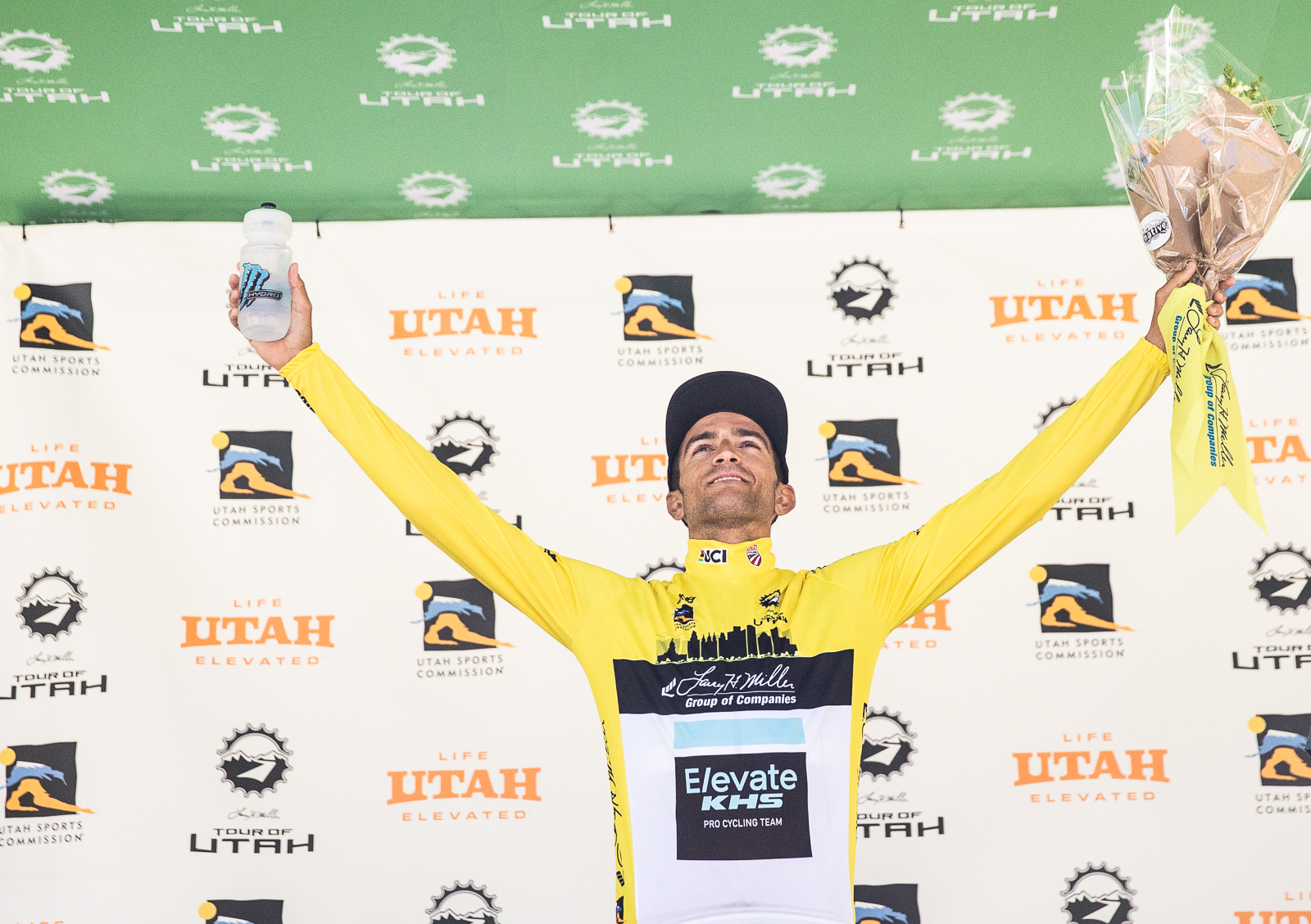
Lawson Craddock (EF Education First) finished second, with the same time as Marengo. With a time bonus, this vaulted the American into the Larry H. Miller Group of Companies Overall Leader’s yellow jersey. Edwin Avila (Israel Cycling Academy) finished third close behind Craddock’s wheel.
“The team worked perfectly. We had Manuel Bongiorno in the breakaway so no one had to work until the final laps. When Bongiorno had a flat tire, the team moved forwards,” Marengo commented via a team translator. “On the last lap, I and [Sebastian] Schönberger decided to attack. Schönberger was not as fast as me so Schönberger worked for me, and started to anticipate with three K (kilometers) to go. At the end, this was the perfect move because I could launch my sprint and win.”
Umberto Marengo (Neri Sottoli-Selle Italia-KTM) takes Stage 1 in a 5 man sprint, followed closely by Lawson Craddock (EF Education First), who moves into the yellow jersey of GC leader. 2019 Tour of Utah. Photo by Steven L. Sheffield
Fans were treated to a thrilling finish in North Logan City for five finishing circuits of action-packed racing. Canadian James Piccoli (Elevate-KHS Pro Cycling), who won the Prologue presented by Zions Bank on Monday’s first day of racing, suffered a flat tire on the penultimate lap forcing him to chase back onto the surging peloton. Taking full advantage of the chaos, Craddock initiated a counter-attack just as Piccoli had rejoined the peloton.
“I attacked with about four kilometers to go. We went over to the top of the climb, Trek Segafredo made it really hard. Before that Alex Howes made it really hard. Trek Segafredo continued over the top, everyone was on the limit. Alex made a really good call, he noticed that there was a small raiser with three and a half, four k[ilometers] to go in the middle of the descent that would be a good place to launch an attack. I kind of went from there. I was able to get some speed, get a gap and from there, there was five or six of us and the race played out from there,” Craddock said of his attack on the final circuit in North Logan City.
In the General Classification (G.C.), Craddock has a six-second lead over João Almeida (Hagens Berman Axeon), who was fourth on the stage. Remaining in third place on the G.C. is Serghei Tvetcov (Worthy Pro Cycling), 12 seconds down. Moving into sixth place is Joe Dombrowski (EF Education First), the overall winner of the 2015 Tour of Utah, who is 21 seconds back. Piccoli is now 26 seconds back and sits in 13th position.
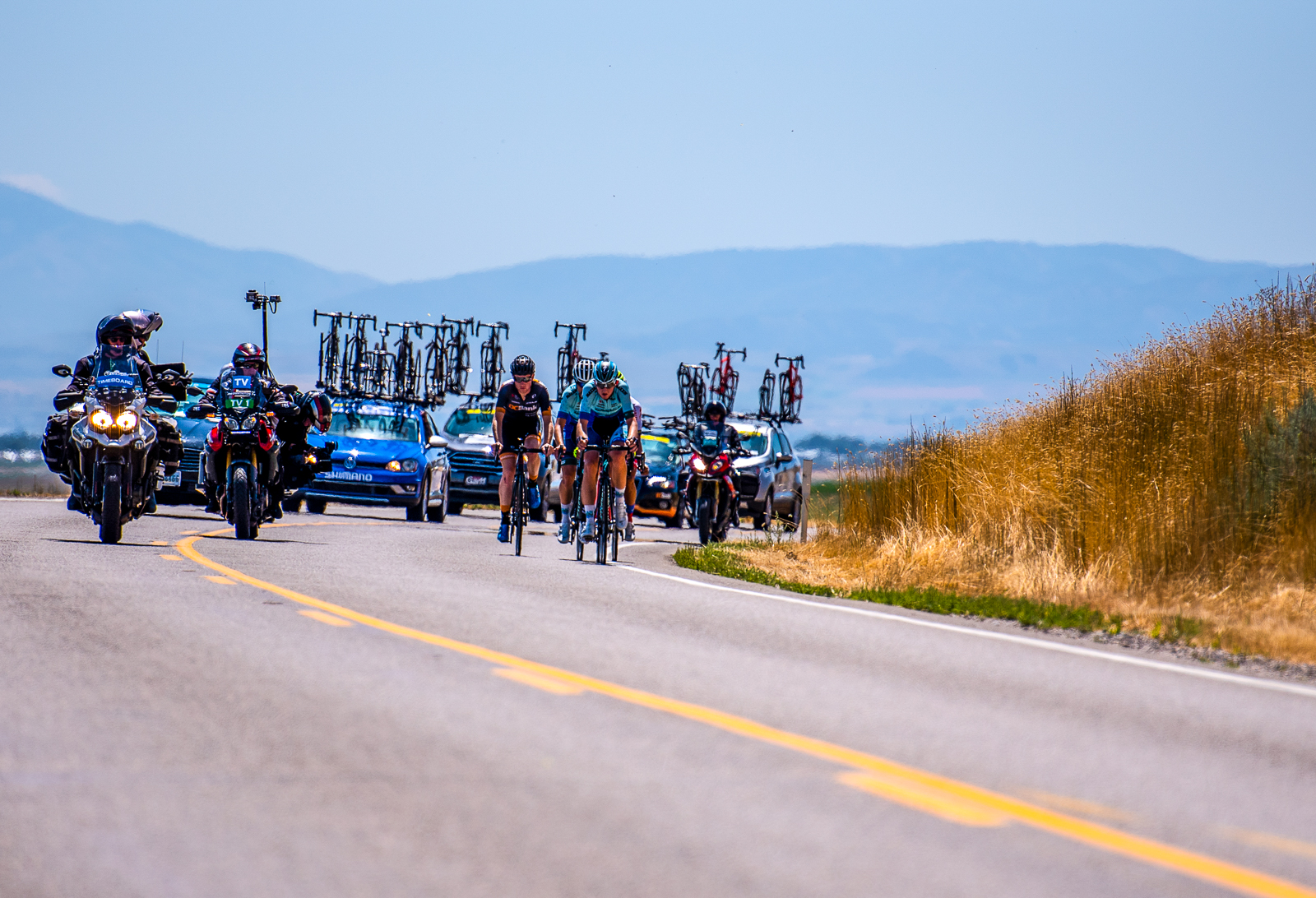
Under sunny skies, the early breakaway of five riders escaped the 113-man field only five miles into the Stage 1 presented by Larry H. Miller Group of Companies. The break included Travis Samuel (DC Bank Pro Cycling Team), Ignacio Prado (Canel’s-Specialized) and Wildlife Generation Pro Cycling team mates Sam Boardman and Camden Vodicka. Elevate-KHS kept the escapees on a short leash, allowing only a maximum of a two and a half minute lead on the hot day.
The riders in the break worked well together, except for the battle for both sprint and King of the Mountain points. Prado crossed the line first in both intermediate sprint points. In the mix once again, Prado and Boardman battled it out for the King of the Mountain points. After being out kicked by Prado in the first KOM, Boardman planned his sprint better to take first in the next KOM.
The break still held a gap of two minutes as they started the first of five finishing laps. Boardman once again was able to cross the line first in the third and final KOM before sitting up to rejoin the peloton, mission accomplished, leaving four off the front.
Bongiorno was the next rider to fall out of the break when he had to stop for a long wheel change with four laps to go. Soon after, Prado and then Vodicka also faded leaving Samuel to continue solo off the front. After being out front for 75 miles, the final remaining rider of the early breakaway, Samuel was reeled in, giving way to an exciting finale. Samuel was awarded the Larry H. Miller Dealerships Most Aggressive Rider jersey.
Attacks followed as teams battle to control the front of the field for the expected bunch sprint. But then bad luck for Piccoli who had to stop to get a bike change due to a mechanical. Team mates Eric Young and Jordan Cheyne dropped back to try and pace him back through the cars.
Piccoli, now being paced by Castillo, connected with the back of the field at the start of the final lap. His mission was to try and make it to the front of the field in full flight. With five miles to go, Alex Howes (EF Education First) made a little dig, testing the legs and the other riders. Soon after, an isolated Piccoli was at the front of the field when Craddock made his move. Joining Craddock in the late attack were Marengo and his team mate Sebastian Schönberger, Almeida, Avila and Griffin Easter (303 Project).
The EF Education First team director let Craddock know that Piccolo was chasing back after a mechanical. Craddock added, “Honestly I was kind of in the box and so it’s harder to pinpoint the point but he did mention Piccoli was chasing back on. It’s really unfortunate, maybe something like that will play a factor into the race but when you’re racing with seven or eight k[ilometers] to go, you have to race your bike. While it is very unfortunate for him, obviously he showed yesterday that he had the best six, seven minutes of the entire peloton, he could have animated for sure. Disappointing, but we’ve all be on the receiving end of that kind of mishap.”
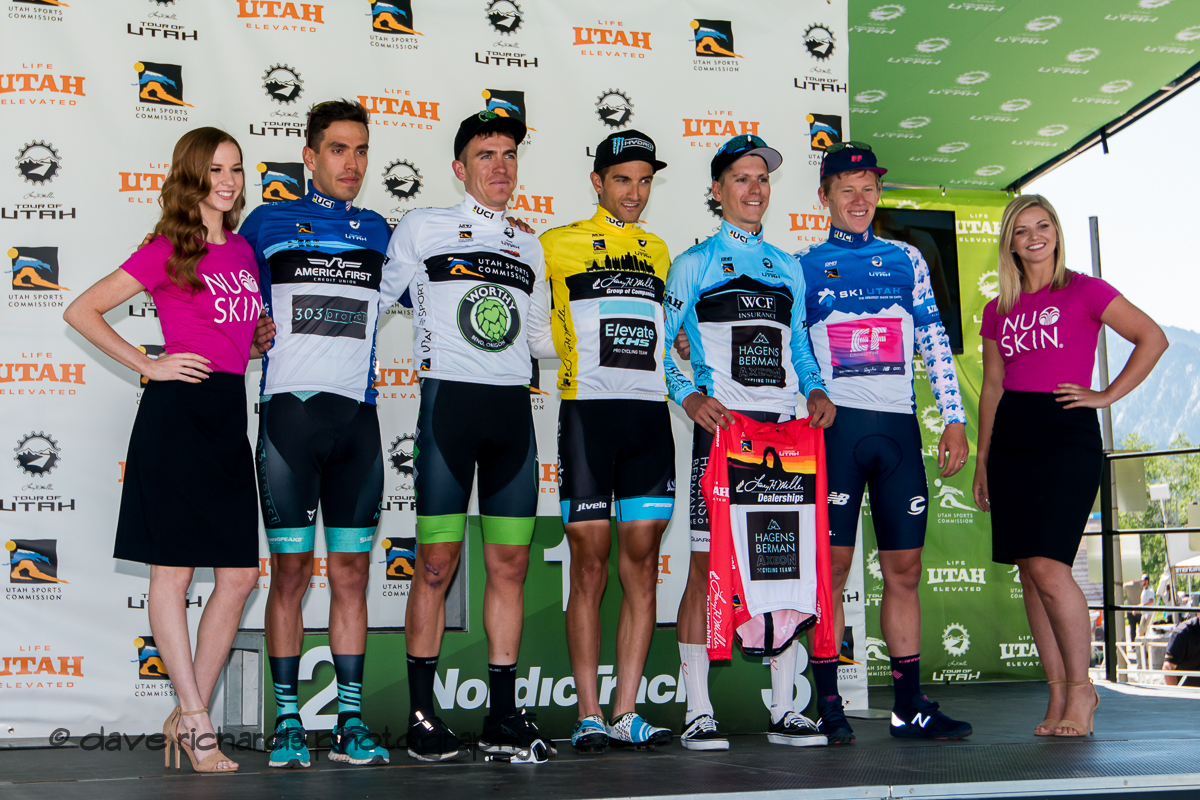
In addition to the stage win, Marengo also claimed the Utah Sports Commission Sprint jersey. Almeida retained the Subaru Best Young Rider jersey. Samuel Boardman (USA) of Wildlife Generation Pro Cycling presented by Maxxis will wear the Utah Office of Tourism King of the Mountain jersey. The America First Credit Union Fan Favorite jersey was awarded to Maxx Chance (USA) of Wildlife Generation Pro Cycling, winning in the Best Ambassador category.
All eyes now turn to the Queen Stage on Wednesday where a big shake up in the G.C. is expected.
“I’d love to keep it for sure,” Craddock said of the Larry H. Miller Group of Companies Overall Leader’s yellow jersey. “Tomorrow is an extremely hard climb. Powder Mountain is probably one of the hardest climb you can find in this area and possibly even in the States.I think it could maybe be a bit too difficult but at the end of the day we came here with Lachlan Morton and Joe Dombrowski as our leaders. Me being in the [leader’s] jersey today doesn’t change that for tomorrow. We’re going tomorrow with a plan and hopefully execute that and keep the jersey in the team.”
Stage 2 presented by Monster Hydro brings a wild west showdown to the 8,900-foot summit of Powder Mountain on Wednesday, Aug. 14. The massive ascent from the town of Eden to Hidden Lake Lodge at Powder Mountain Resort is one of the steepest roads in Utah, with gradients rising to 16 percent. The 8.6-mile scale will pack a punch to the legs and lungs of the best climbers in the world.
RESULTS AND STANDINGS
Stage 1 p/b Larry H. Miller Group of Companies – Top 10
MARENGO Umberto (ITA) NERI SOTTOLI SELLE ITALIA KTM 3:23:32
CRADDOCK Lawson (USA) EF EDUCATION FIRST 3:23:32 +0:00:00
AVILA VANEGAS Edwin Alcibiades (COL) ISRAEL CYCLING ACADEMY 3:23:32 +0:00:00
EASTER Griffin (USA) 303 PROJECT 3:23:32 +0:00:00
ALMEIDA João (POR) HAGENS BERMAN AXEON 3:23:32 +0:00:00
SCHÖNBERGER Sebastian (AUT) NERI SOTTOLI SELLE ITALIA KTM 3:23:32 +0:00:00
MCCABE Travis (USA) WORTHY PRO CYCLING 3:23:38 +0:00:06
RICE Michael (AUS) HAGENS BERMAN AXEON 3:23:38 +0:00:06
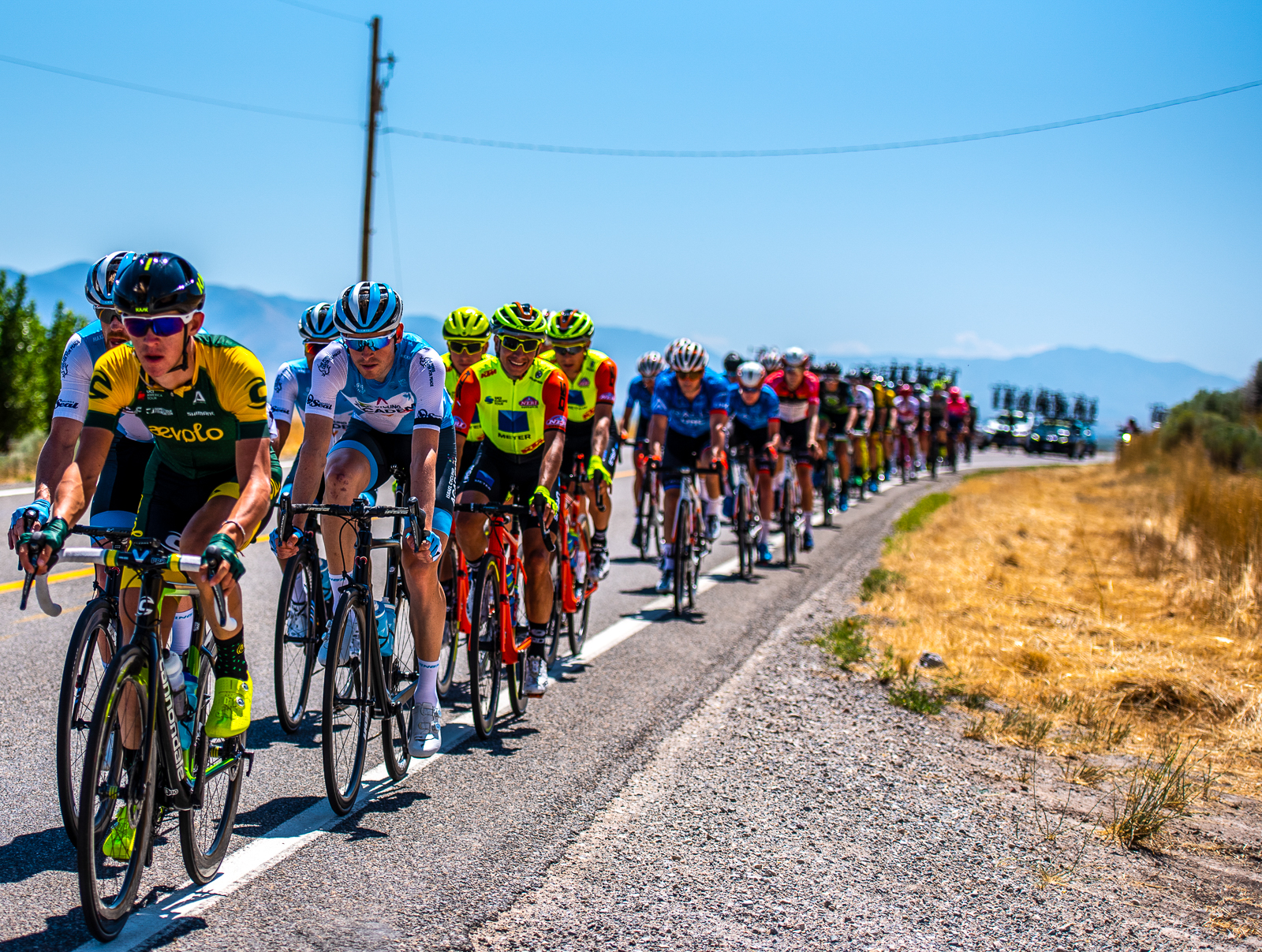
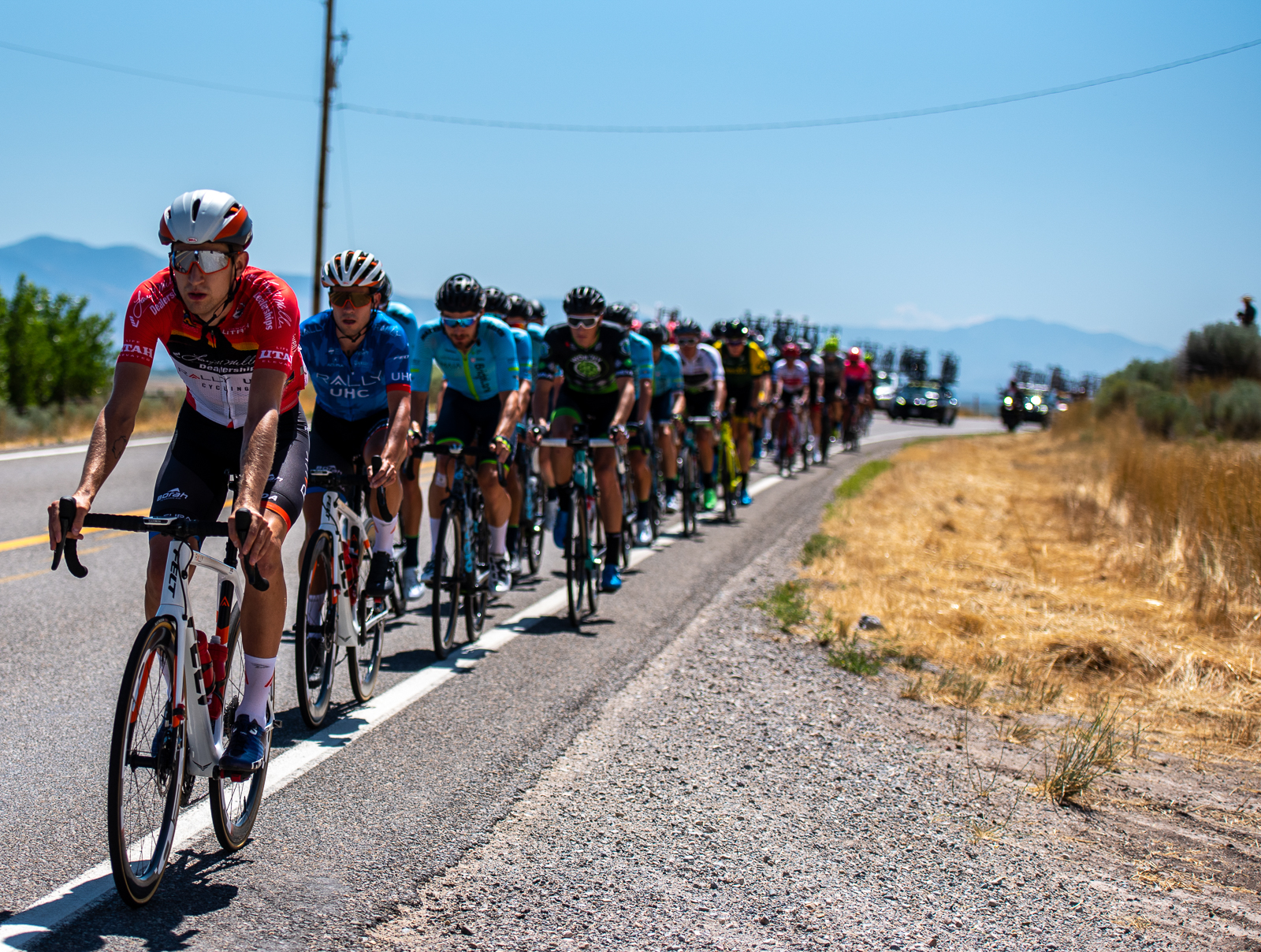
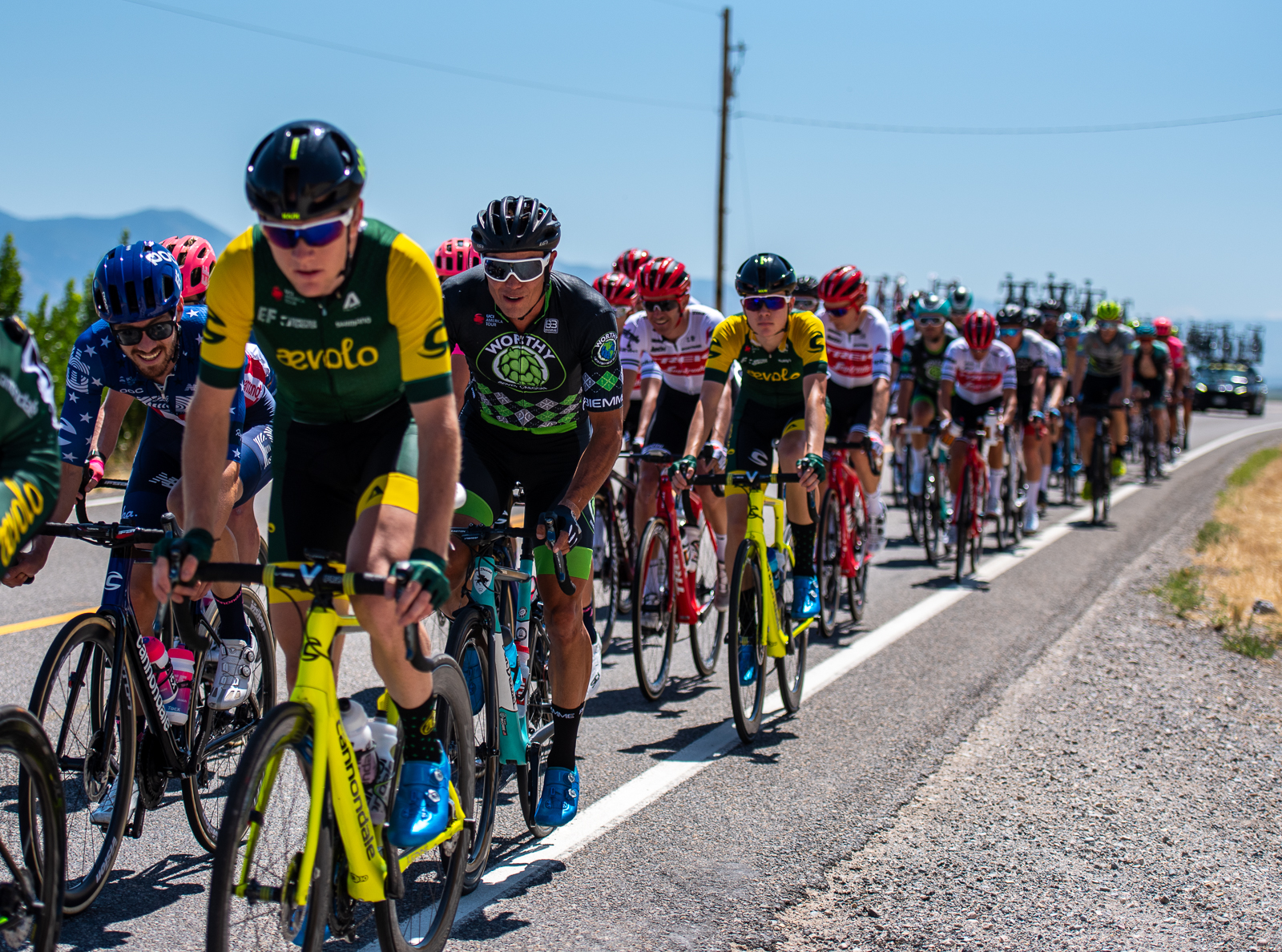
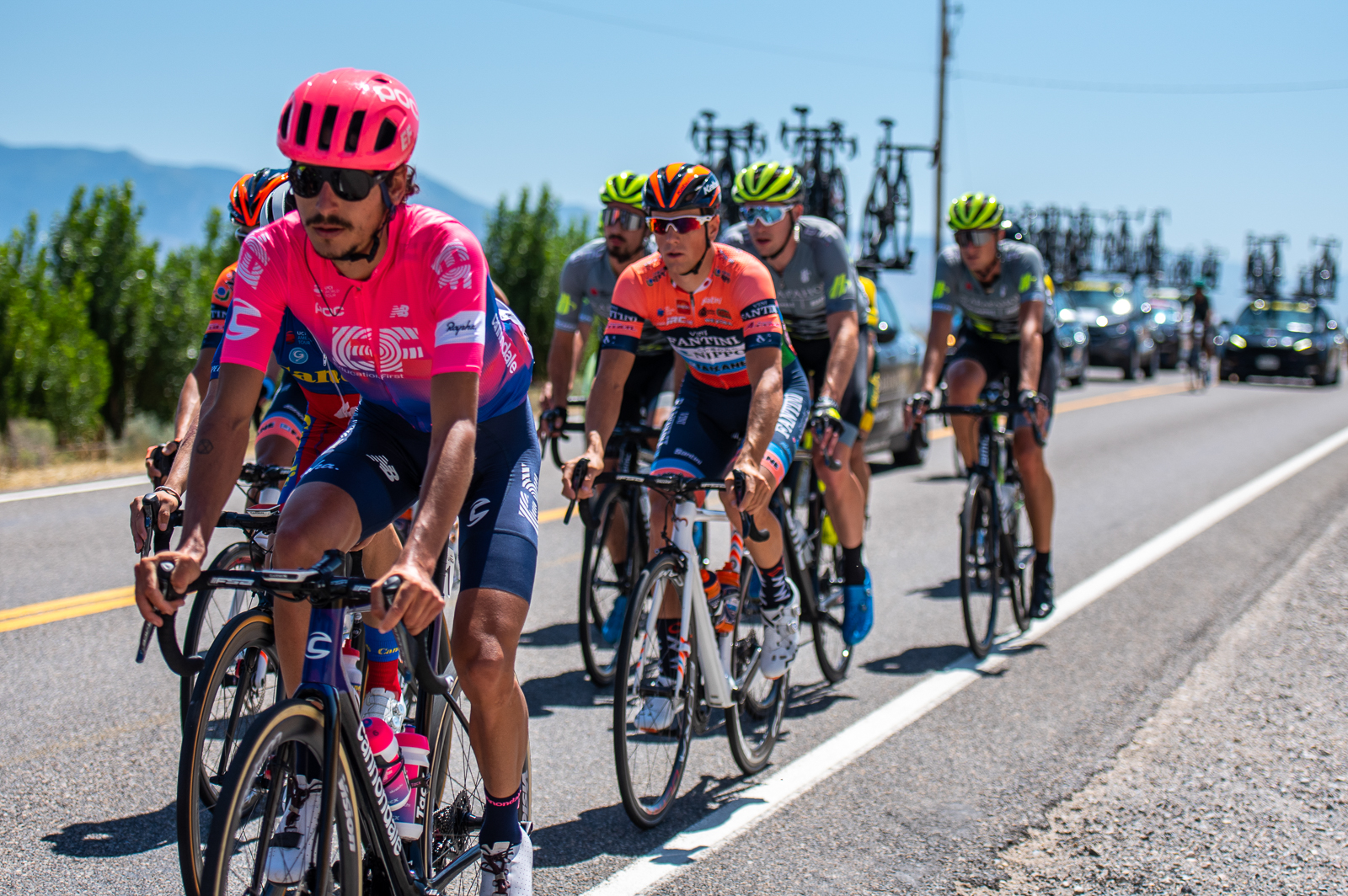
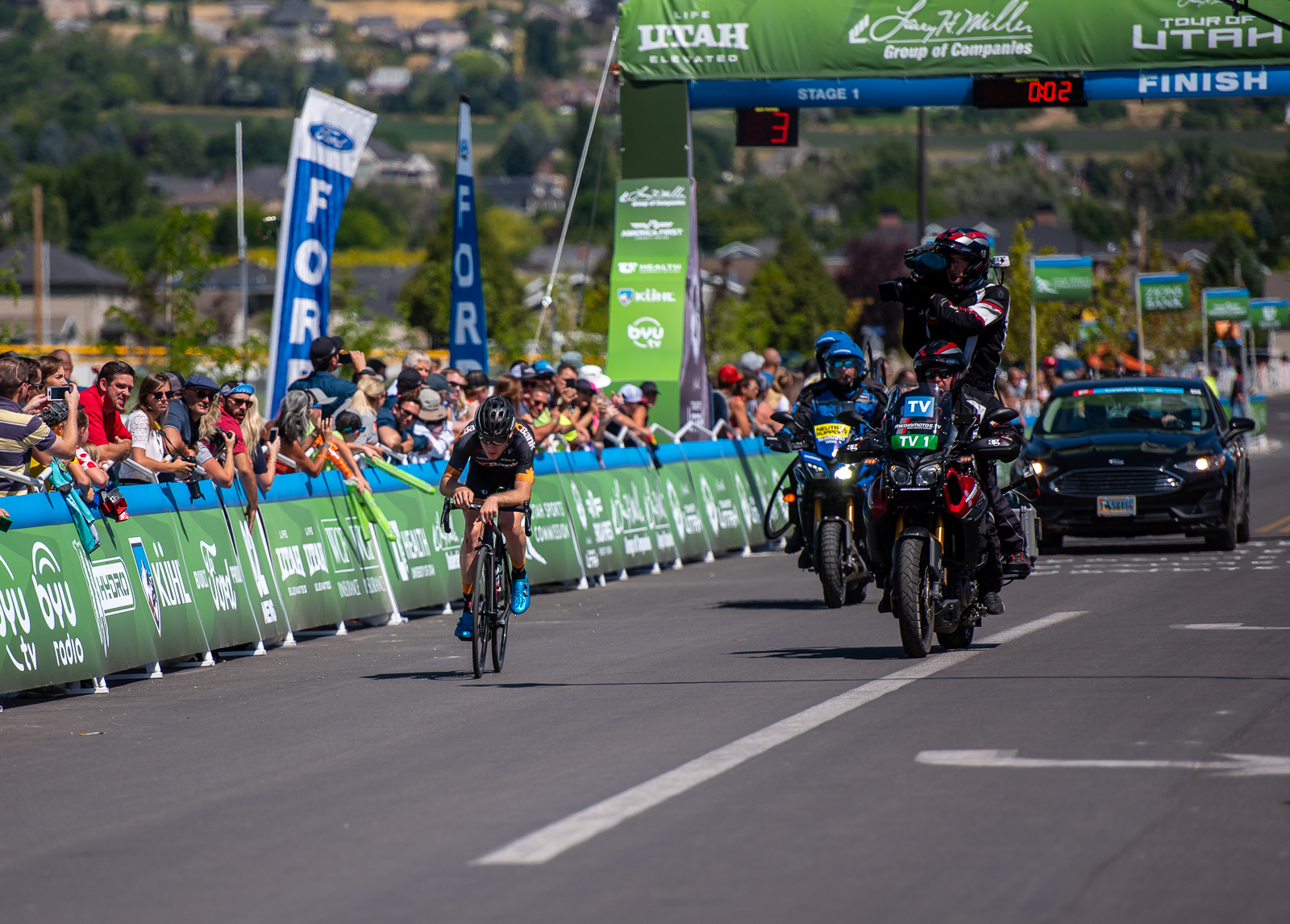
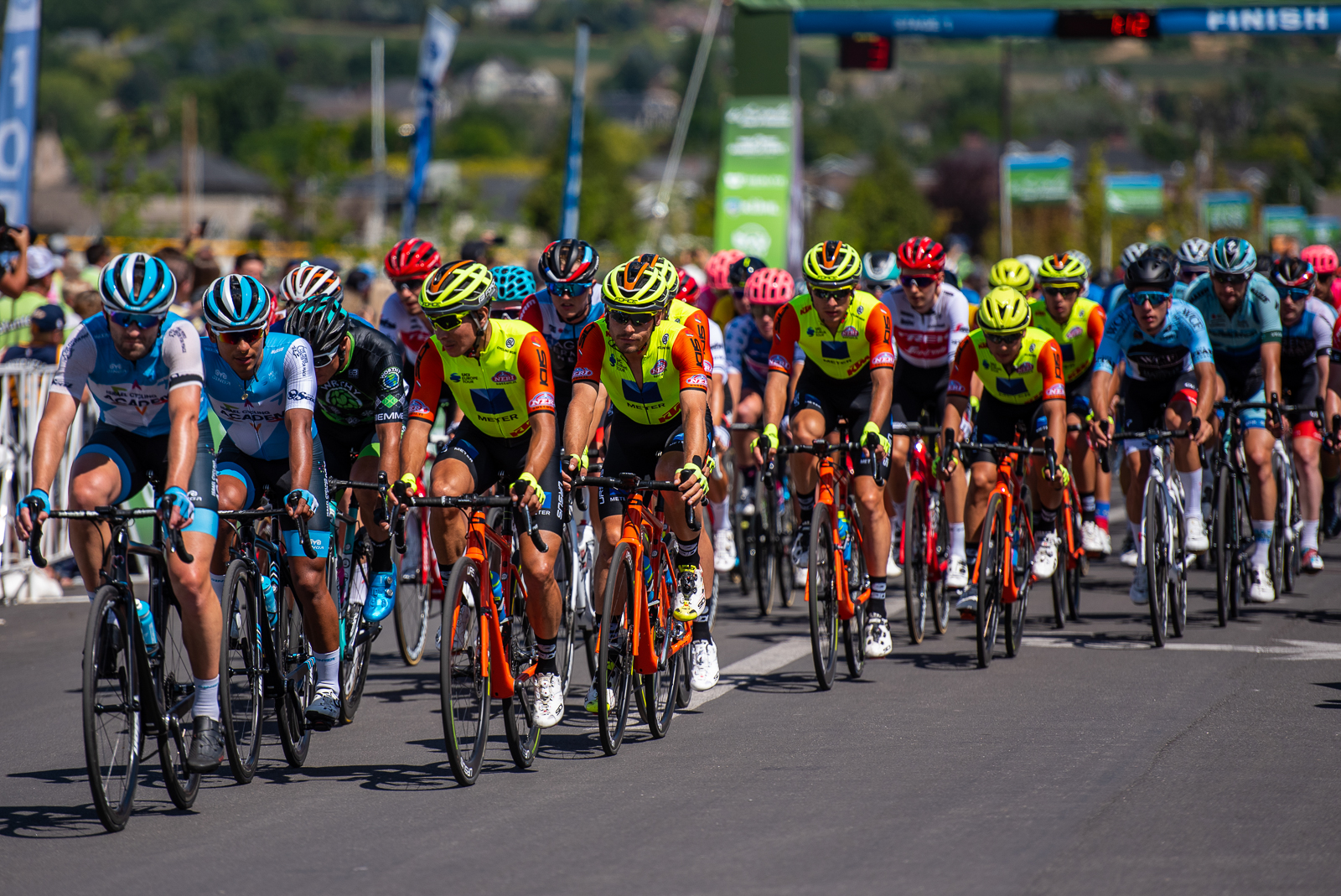
Our first photos from Stage 1 of the 2019 Tour of Utah have come in. Today’s stage started in North Logan City and meandering through the Cache Valley in Northern Utah hitting its northernmost point, just 10 miles from the Idaho border. Check out the gallery below by Steven L. Sheffield.
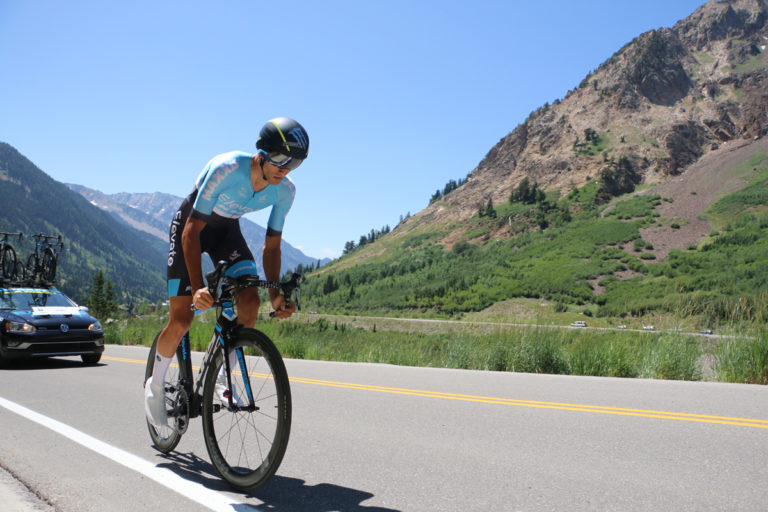
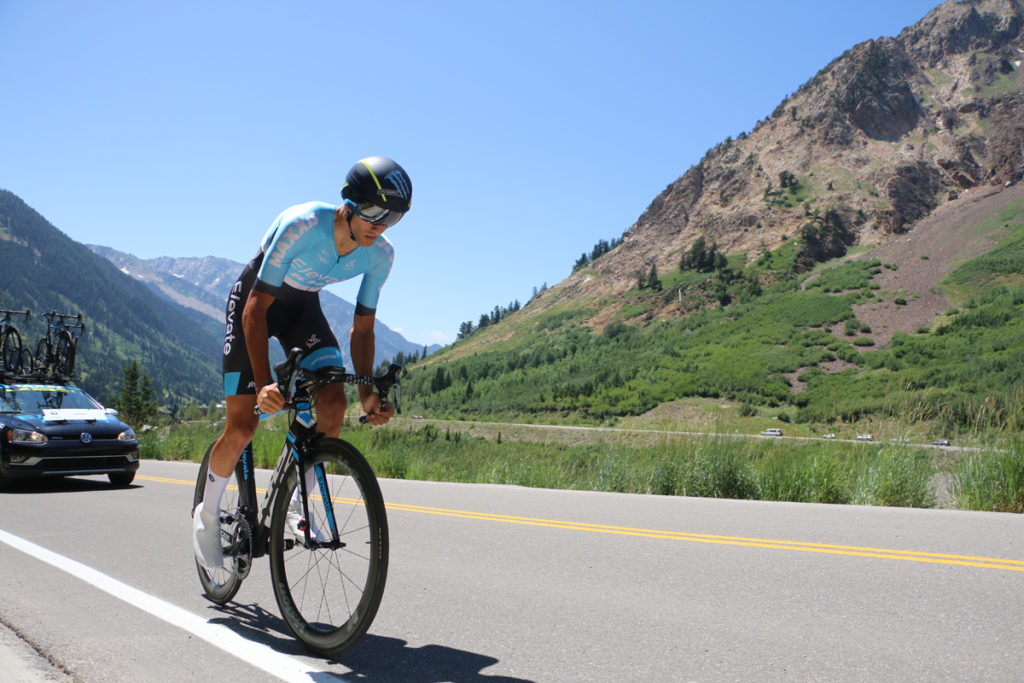
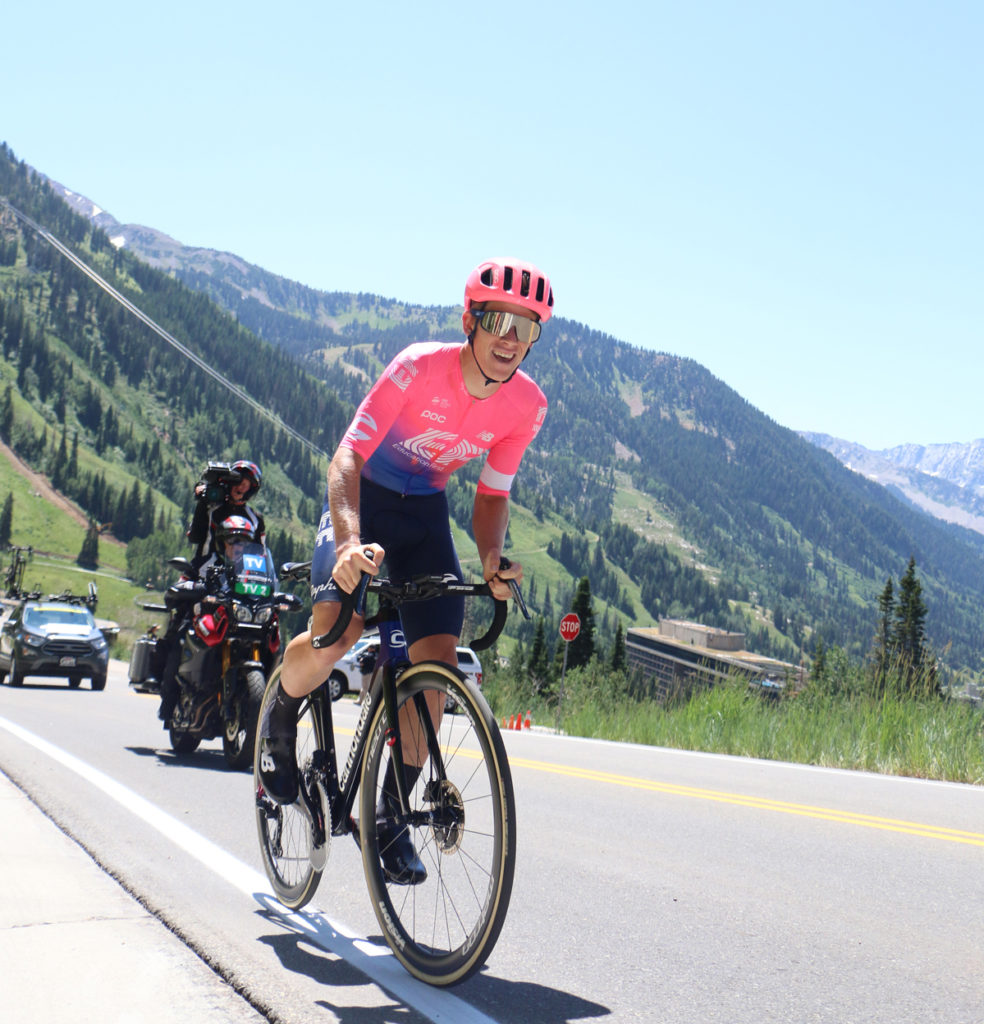
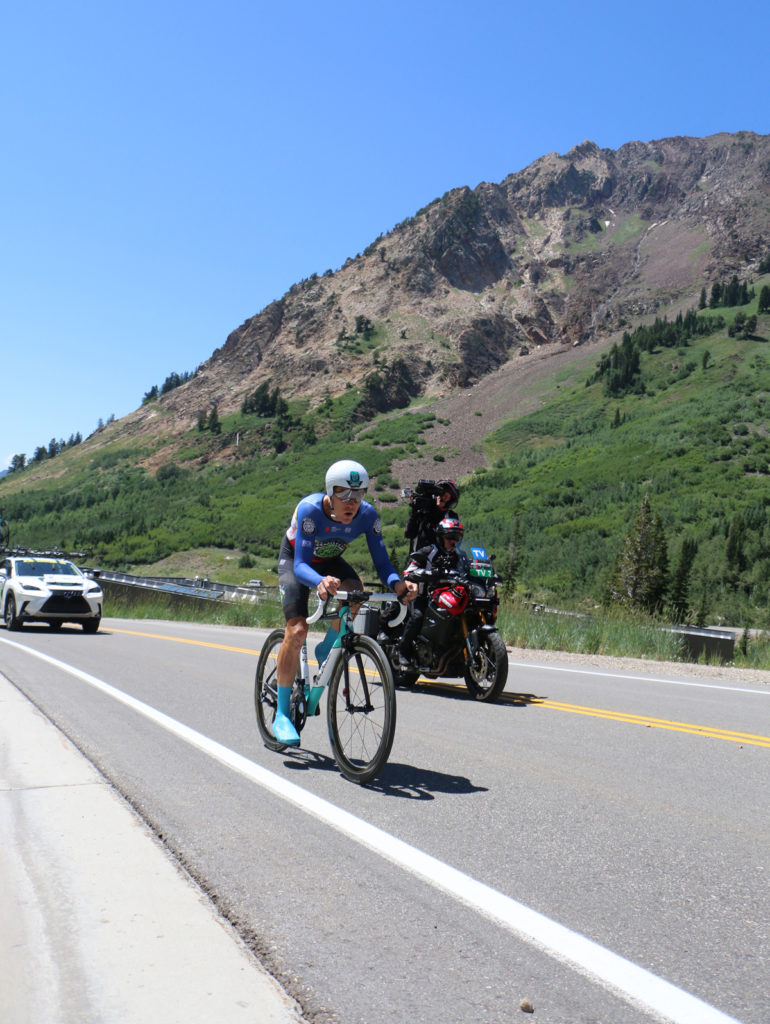
The 2019 Larry H. Miller Tour of Utah is underway. Cathy Fegan-Kim (http://www.cottonsoxphotography.com) brings us her view of the Prologue time trial at the Snowbird Ski & Summer Resort in Little Cottonwood Canyon on Monday, August 12, 2019.
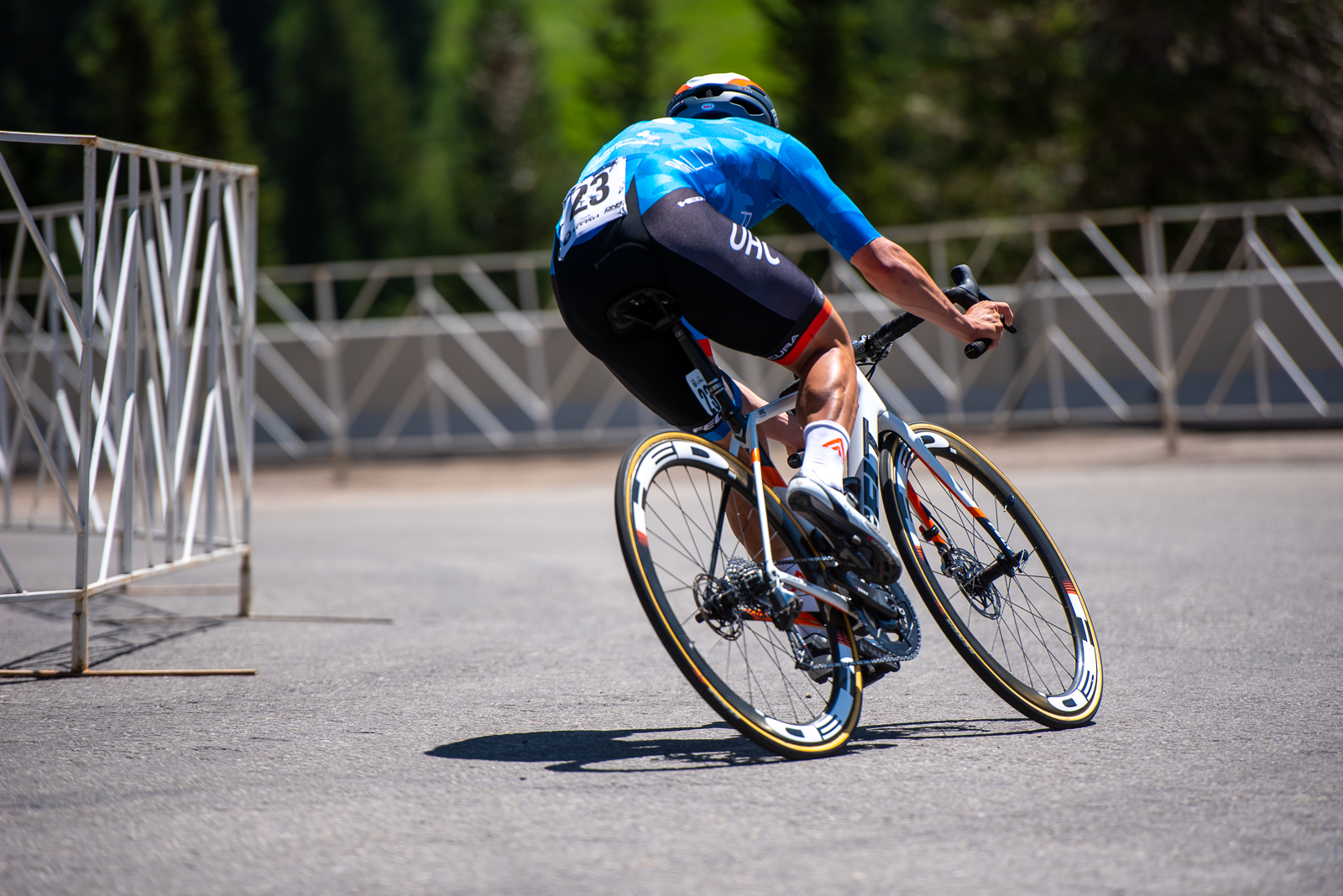
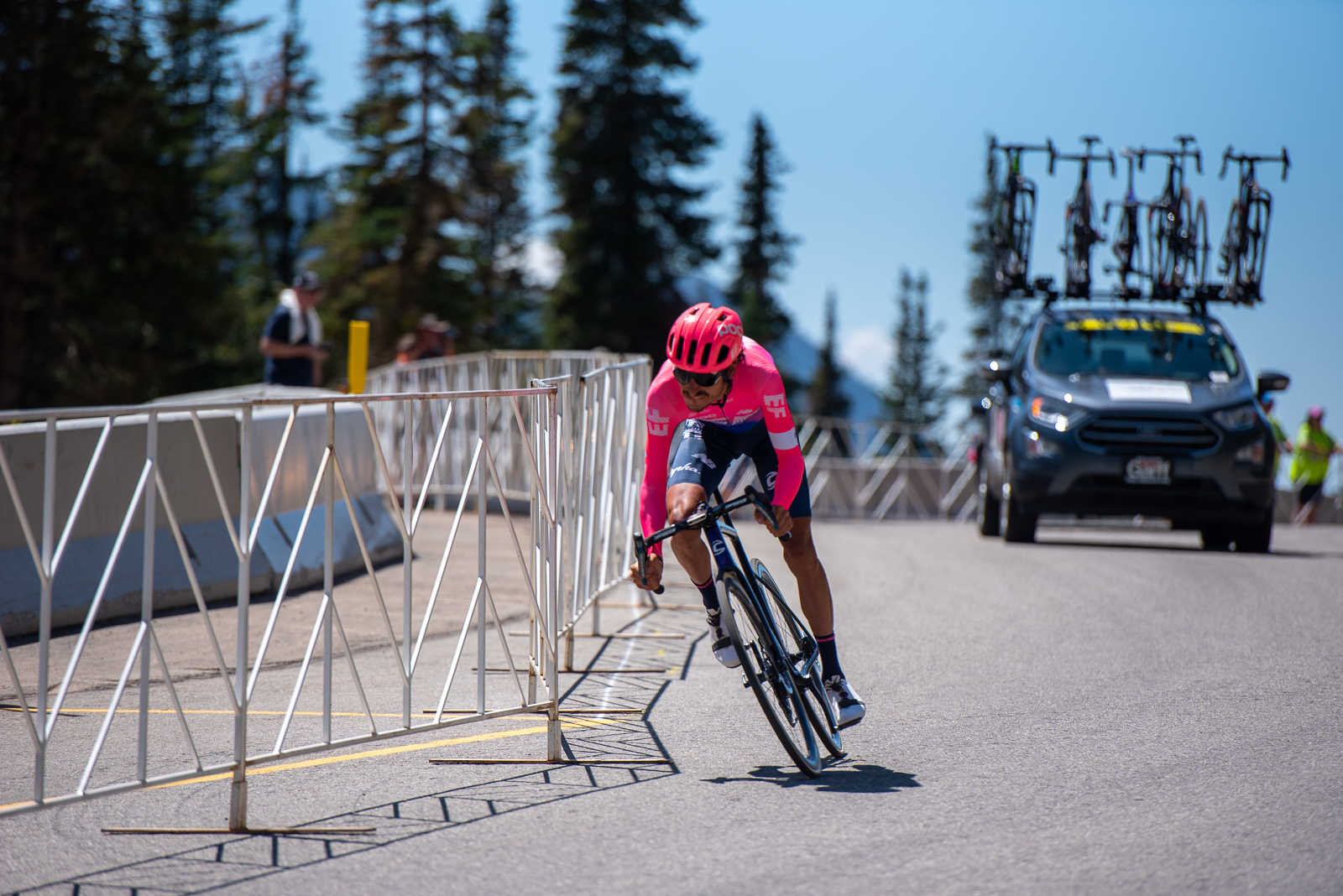
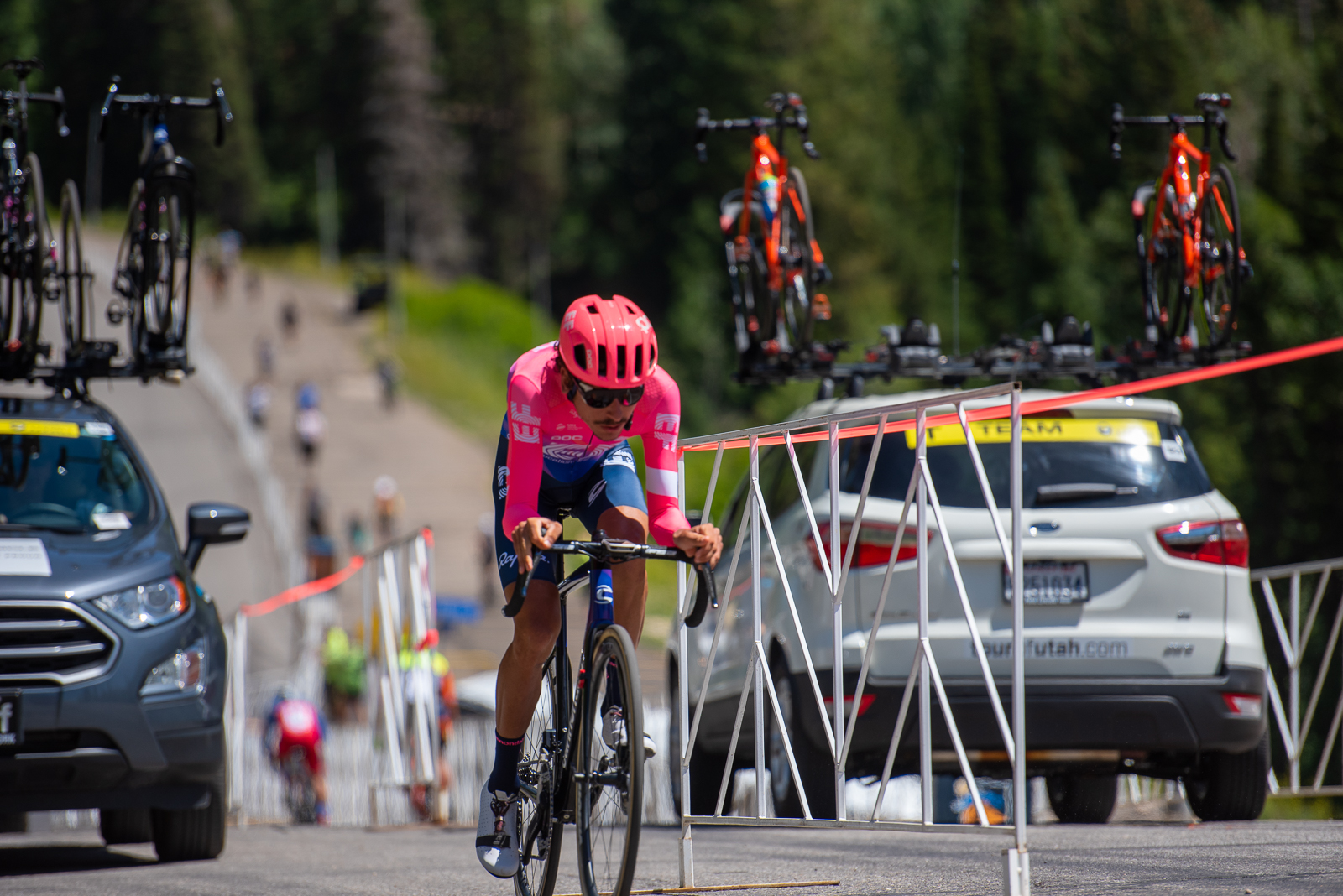
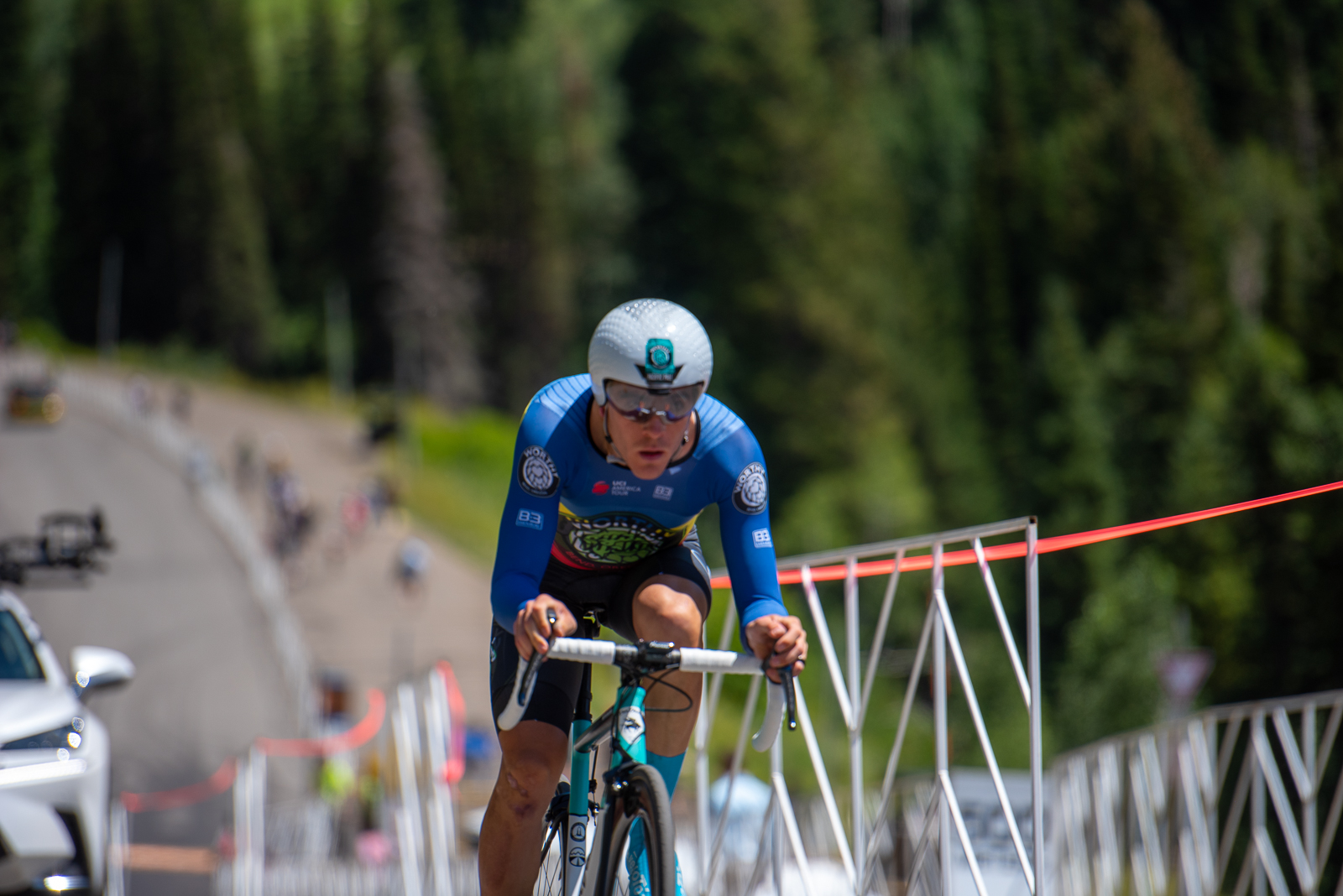
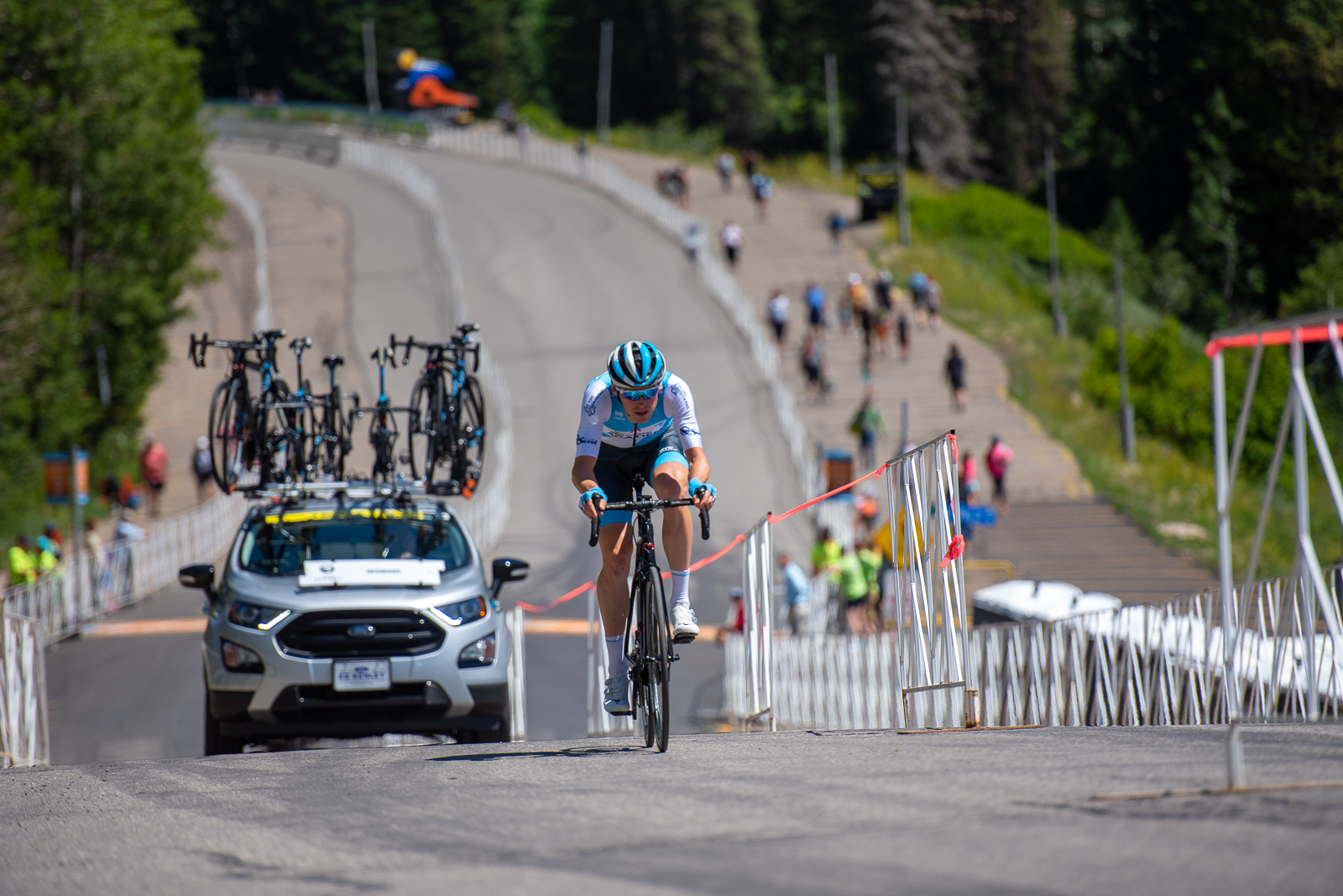
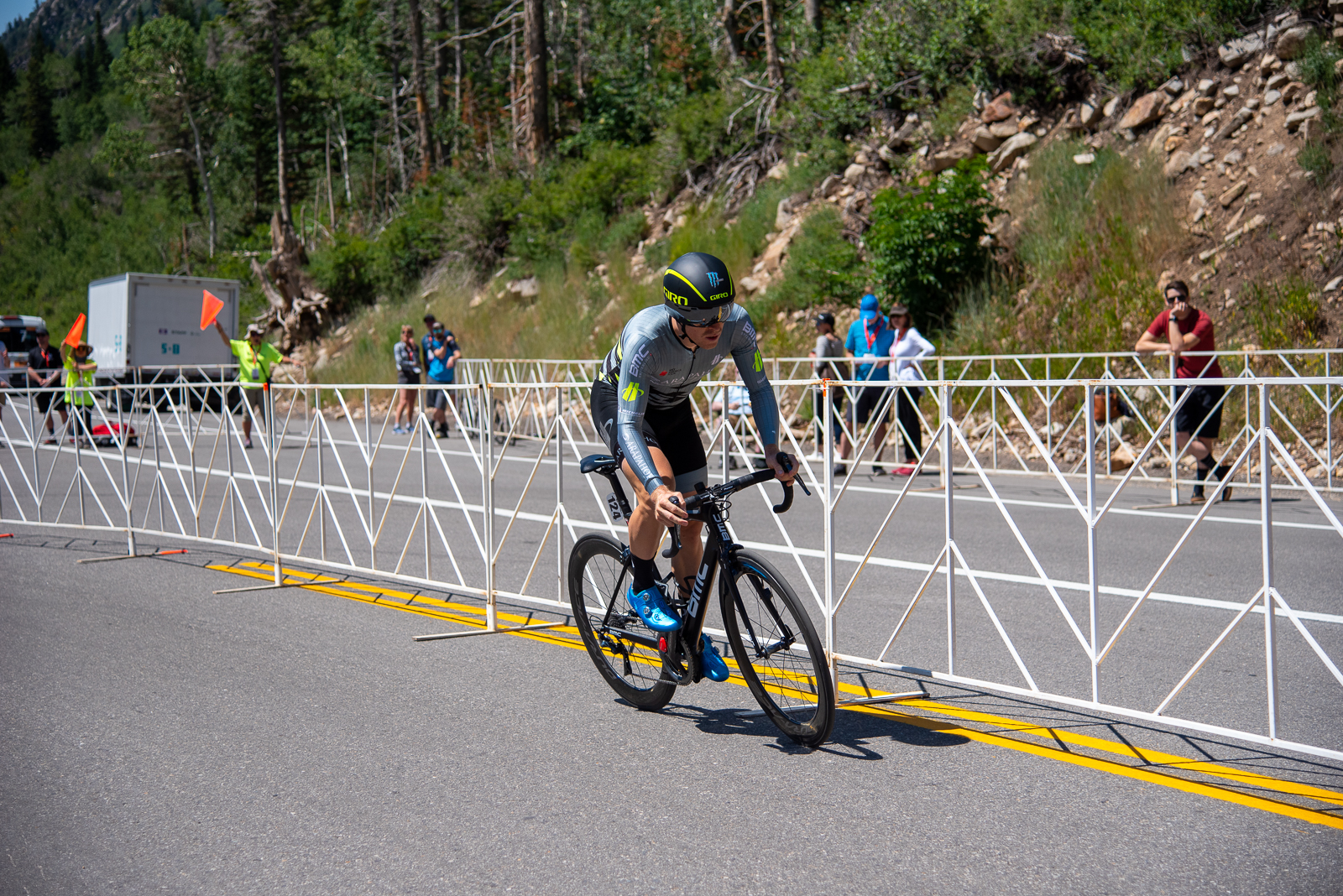
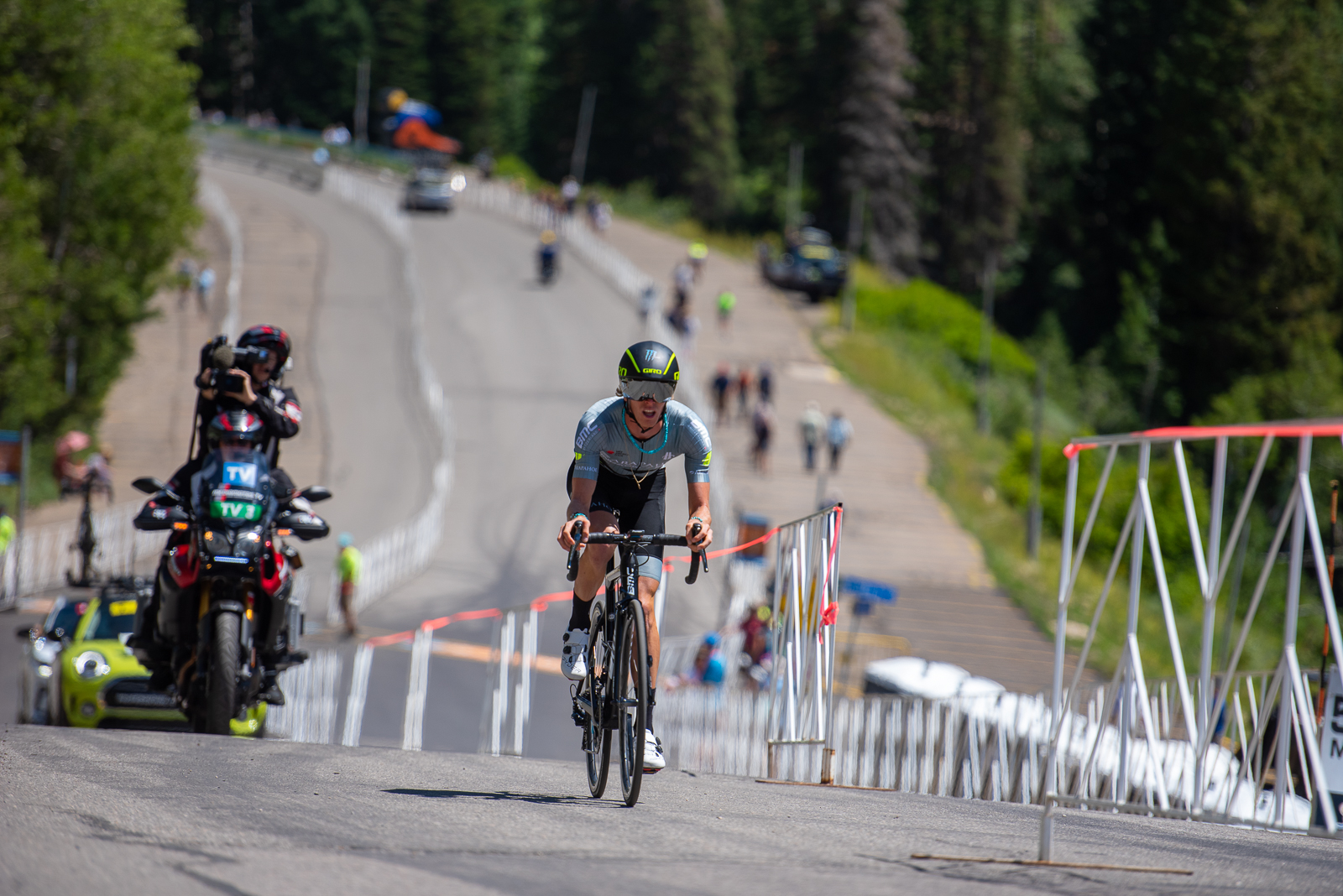
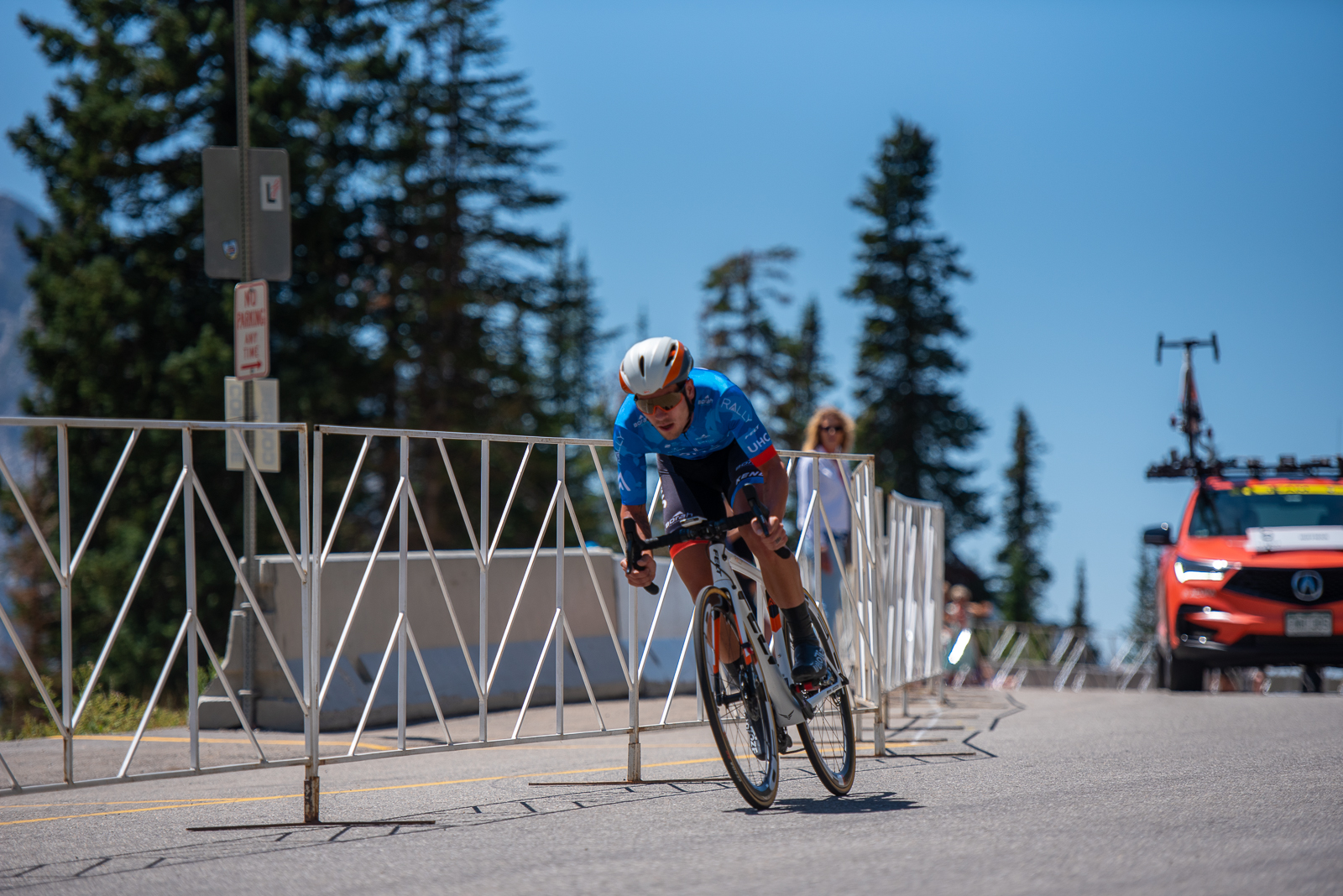
The 2019 Larry H. Miller Tour of Utah is underway. Steven L. Sheffield brings us his view of the Prologue time trial at the Snowbird Ski & Summer Resort in Little Cottonwood Canyon on Monday, August 12, 2019.
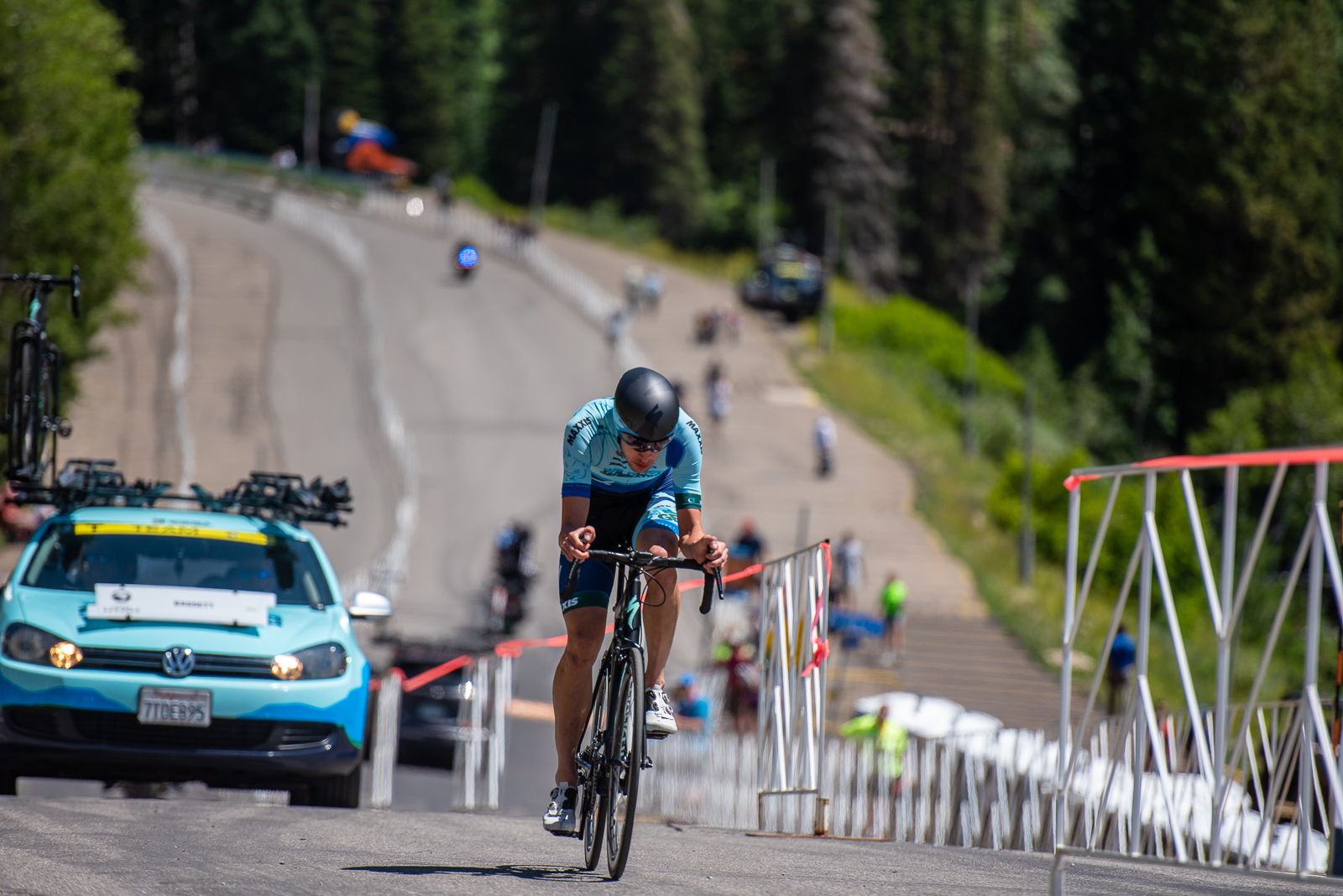
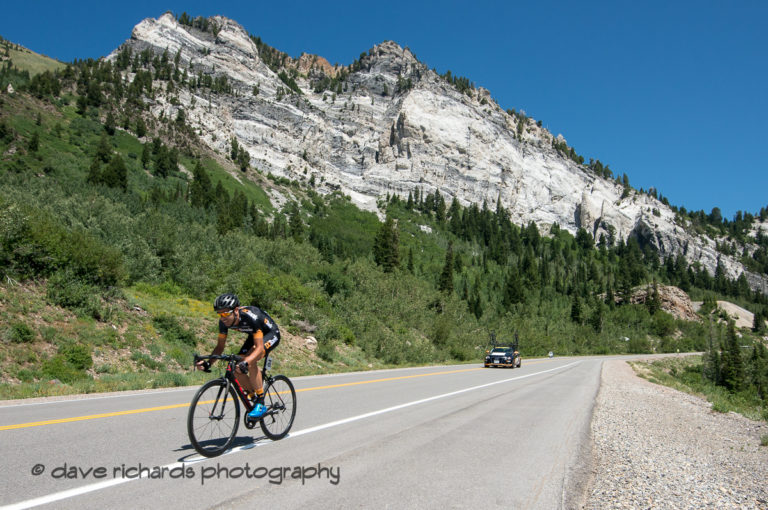
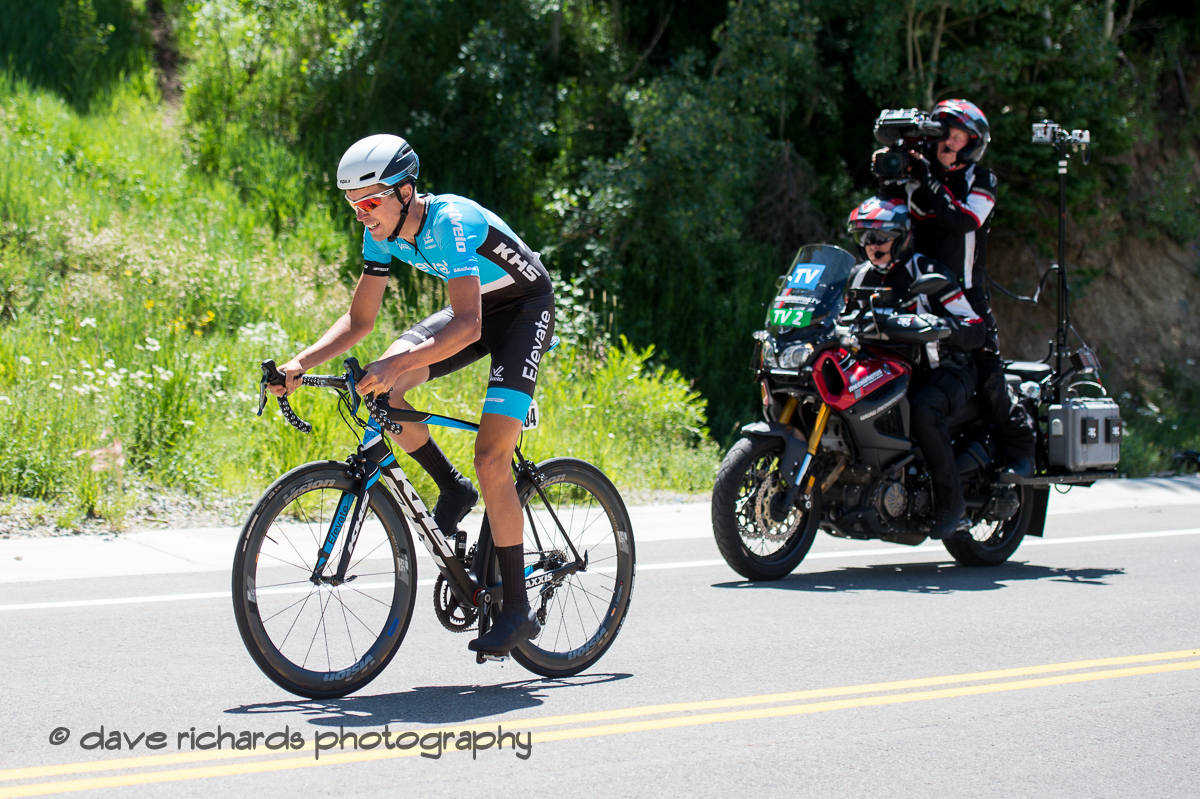
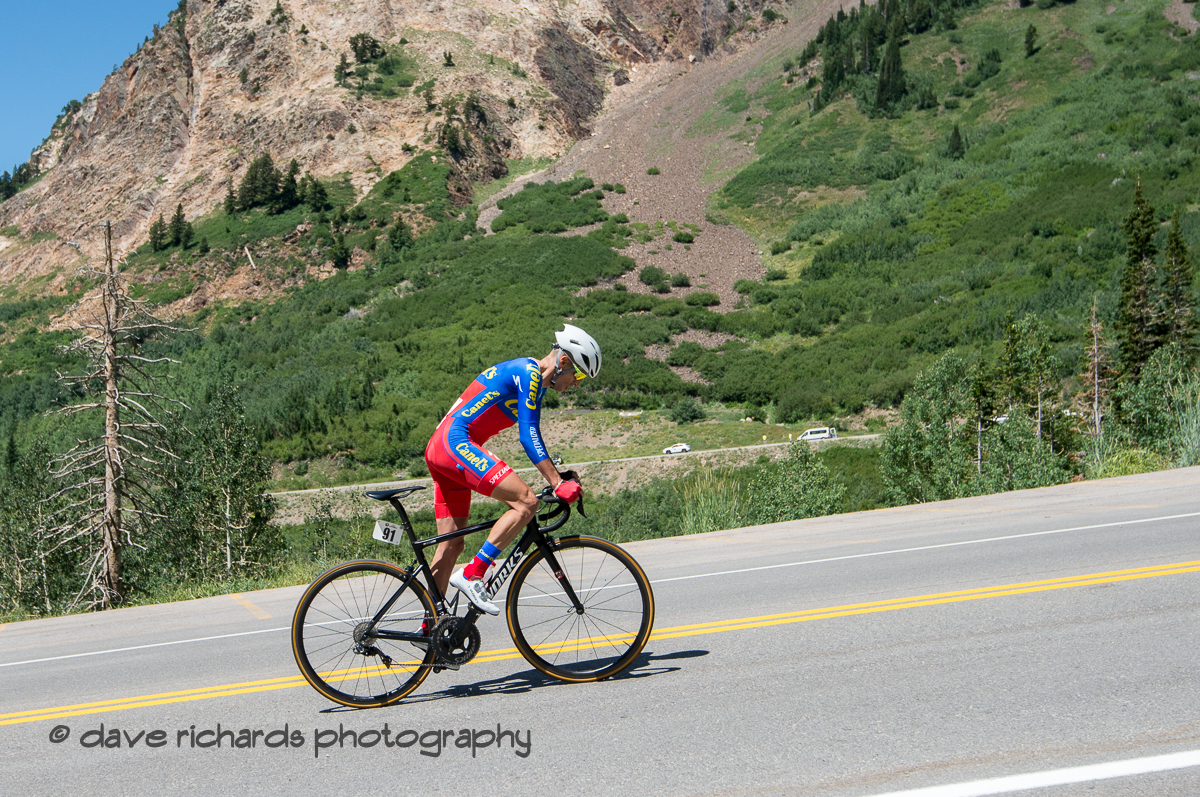
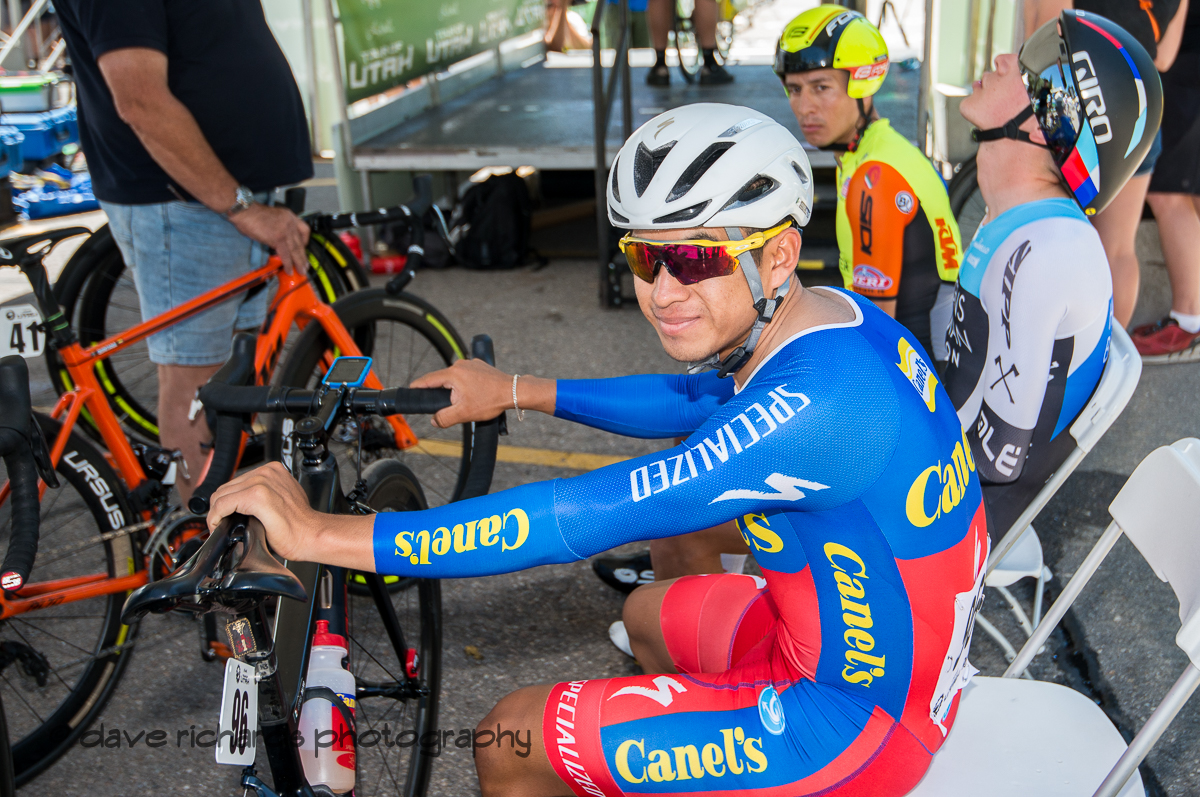
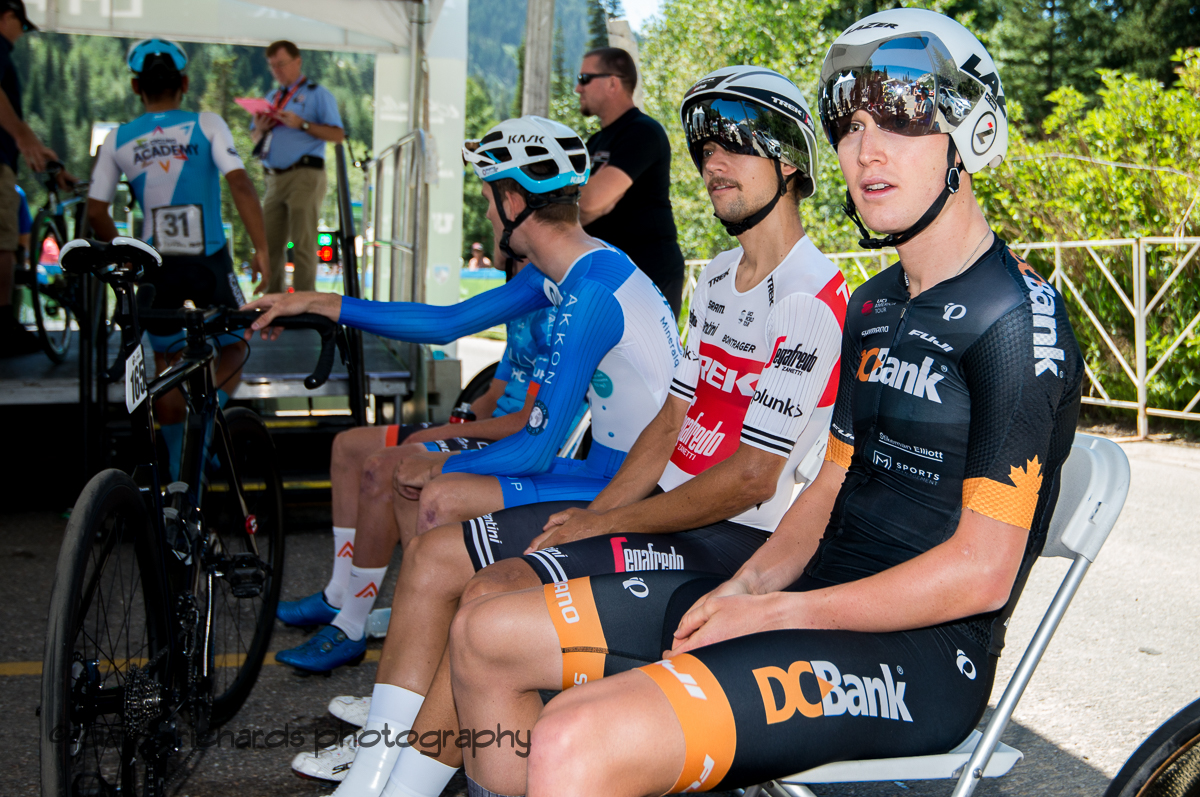
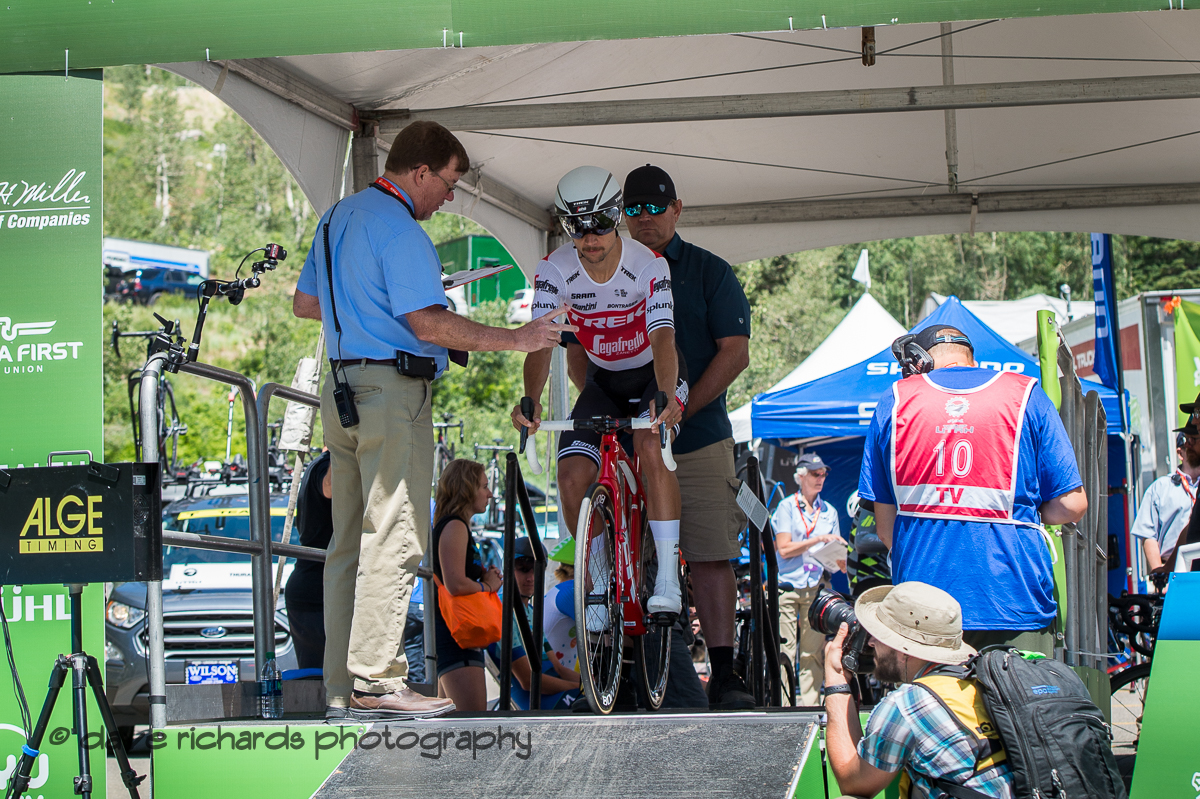
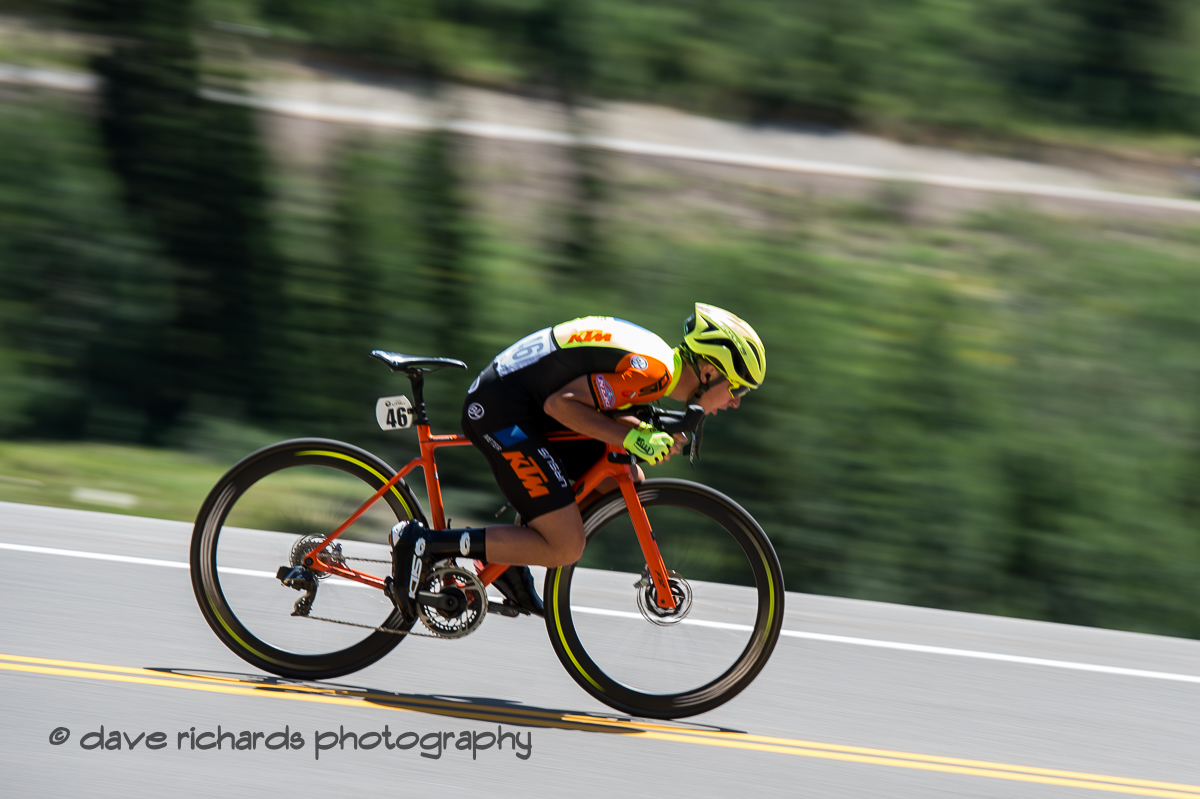
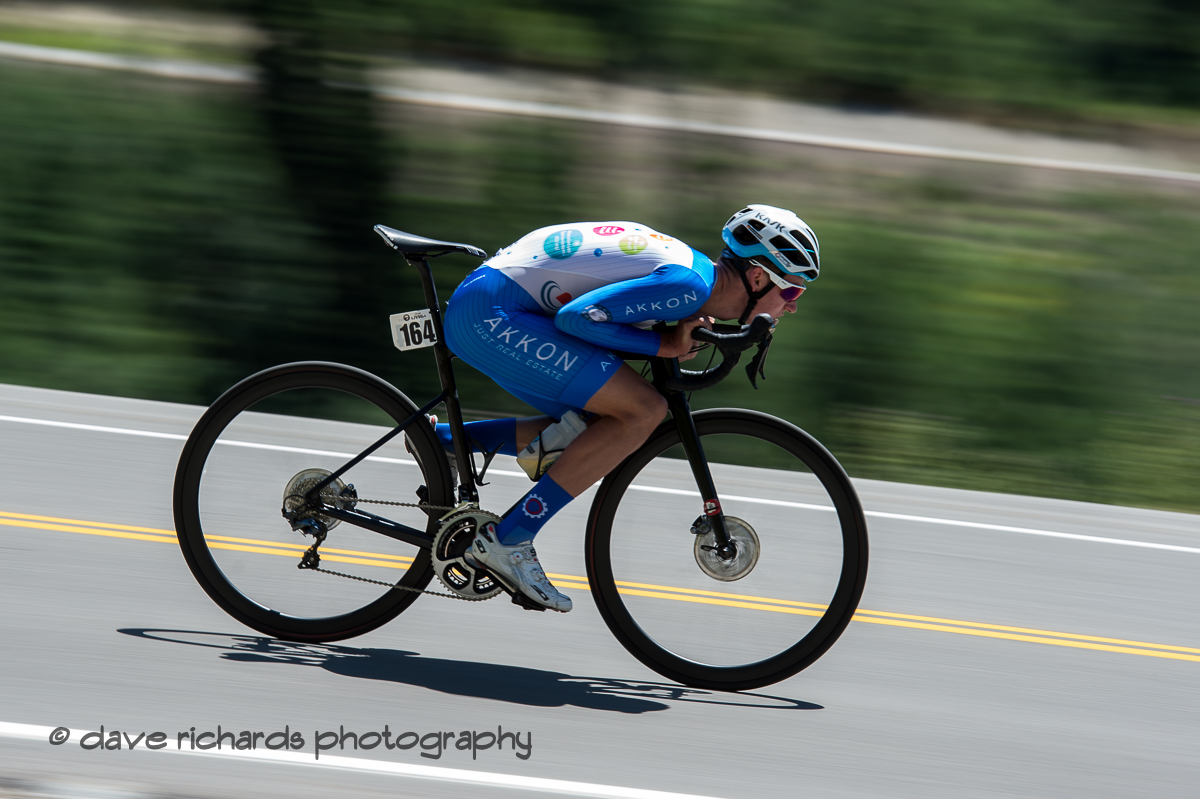
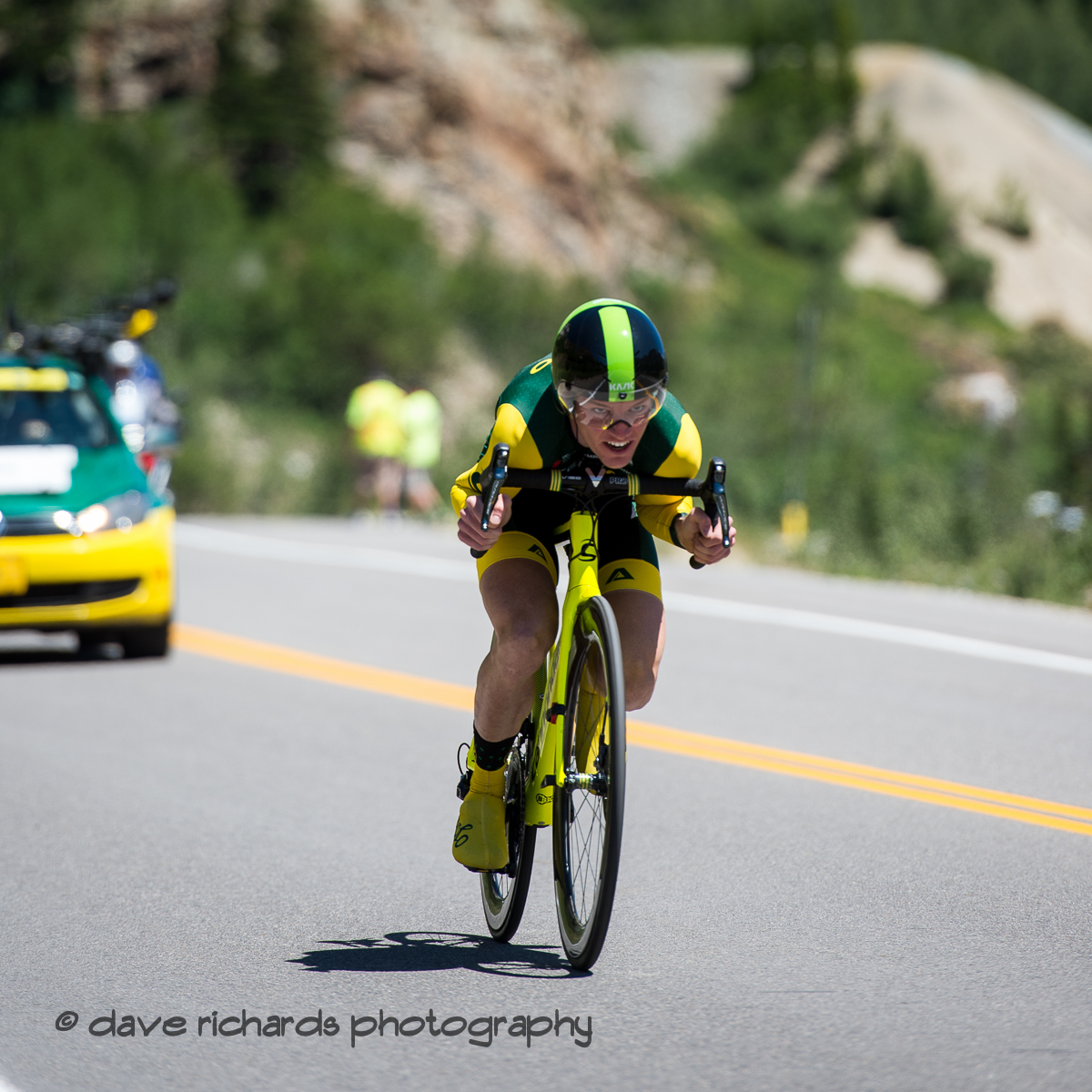
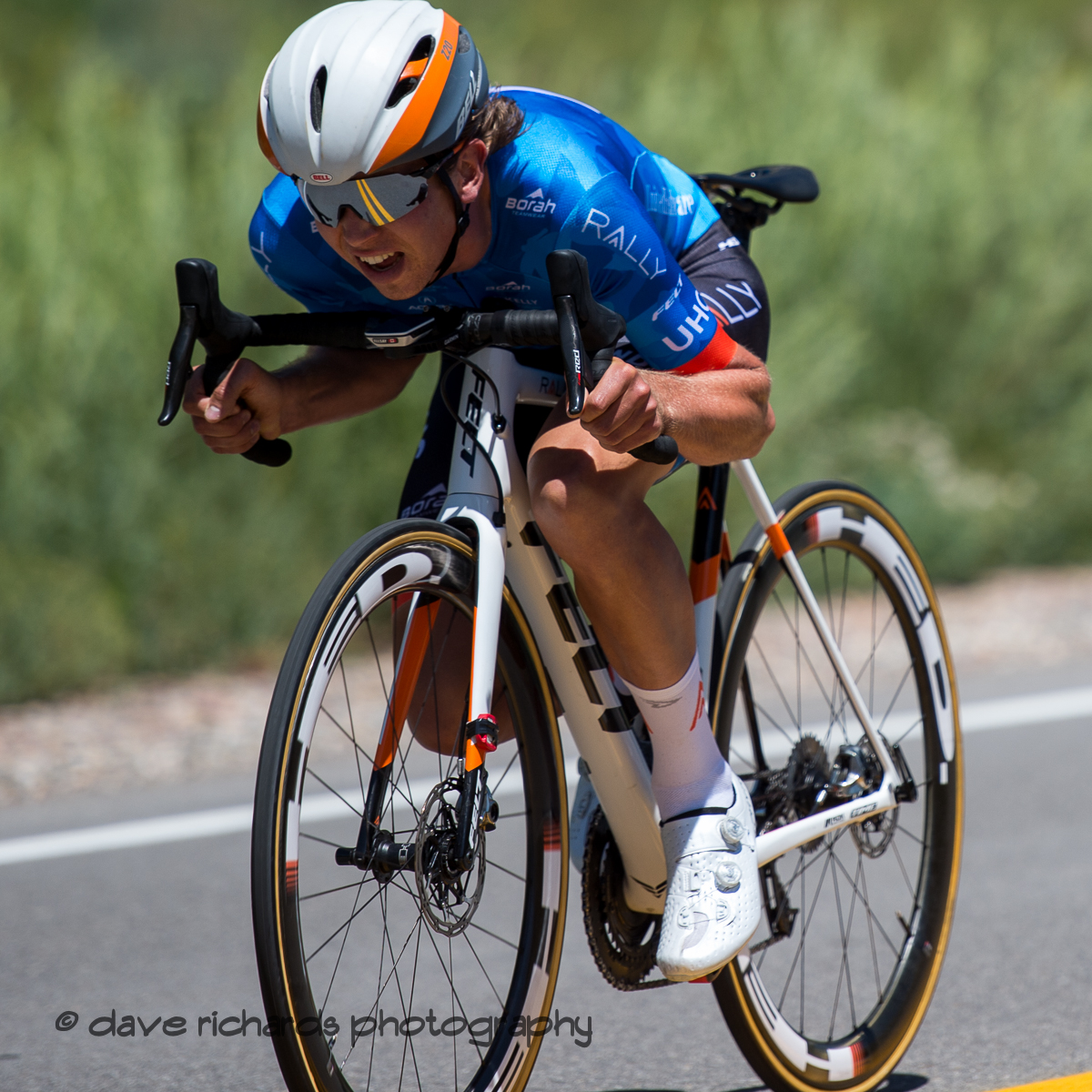
The 2019 Larry H. Miller Tour of Utah is underway. Dave Richards (https://www.daverphoto.com) brings us his view of the Prologue time trial at the Snowbird Ski & Summer Resort in Little Cottonwood Canyon on Monday, August 12, 2019.
By Lyne Lamoureux – SNOWBIRD, Utah (August 12, 2019) – Canadian James Piccoli of Elevate-KHS Pro Cycling was the fastest man at Snowbird Resort in Monday’s opening day for the 2019 Larry H. Miller Tour of Utah. Piccoli won the 3.2-mile (5.3-kilometer) Prologue presented by Zions Bank in a time of 8 minutes, 37 seconds.
“We’re really happy that we came away with the first stage of the Larry H. Miller Tour of Utah. It’s a great confidence boost going into the week. For sure, seven seconds is not going to be the difference this week between winning and losing with some of the climbs coming up, which are quite beautiful, but also quite hard. But it’s a great way to start the week,” said Piccoli. He will wear the Larry H. Miller Group of Companies Overall Leader’s jersey on Tuesday.
James Piccoli (Elevate KHS) on his way to winning the Prologue time trial stage of the 2019 Larry H. Miller Tour of Utah on August 12, 2019. Photo by Dave Iltis
The Tour of Utah was instrumental in Piccoli’s cycling career, after all, he wouldn’t still be racing if it wasn’t for his results at the 2017 event.
“I’d like to personally thank everyone from Larry H. Miller Sports and Entertainment for putting their faith in us two years ago. What they don’t know is that they saved my cycling career,” added Piccoli, who finished 10th overall at the 2017 Tour of Utah. “I was probably going to stop cycling and then the team, Elevate-KHS, got an invite here (in Utah), and they signed me for this race specifically. If Elevate-KHS wasn’t invited to this race, I probably wouldn’t be a cyclist right now.”
American Lawson Craddock of EF Education First finished six seconds back in second place. Romanian time trial champion Serghei Tvetcov of Worthy Pro Cycling, who was third overall in 2017, finished in third, half a second behind Craddock.
Lawson Craddock (EF) finished 2nd in the Prologue time trial stage of the 2019 Larry H. Miller Tour of Utah on August 12, 2019. Photo by Dave IltisSerghei Tvetcov (Worthy Cycling) took 3rd in the Prologue time trial stage of the 2019 Larry H. Miller Tour of Utah on August 12, 2019. Photo by Dave Iltis
The 27th rider out of the gate, Kyle Murphy (Rally Cycling) set the early fast time of 8.49.50 which put him in the hot seat for over 50 minutes, as he watched 53 riders finish slower than his time. Craddock, the 80th rider to start set the new fast time until Piccoli flew around the course, averaging a speed of 22.9 mph.
Pacing was key on the out-and-back course, half of it climbing on the steep pitches in Little Cottonwood Canyon. The course followed Bypass Road to snake around The Cliff Lodge. Once back on Little Cottonwood Creek Road, racers put on the afterburners for the 1.5-mile descent to the finish line, located at Entry 2 behind The Lodge at Snowbird.
“It was a really tough prologue. I came to see it with our team Elevate-KHS a couple of days ago and since then I’ve ridden it a couple of times, trying to refine my pacing strategy,” Piccoli explained. “It was quite complicated with the altitude here at Snowbird and the corners, and the tricky up and down pacing strategy so I rode it a couple of times, a couple of times hard, and every time I got closer to what I wanted to do and today it ended up working out.”
Tvetcov noted that the final sharp left turn on the downhill stretch to the finish was tricky. “You come from really steep downhill and you need to brake all the way to zero miles per hour and then start again. That’s what happened, I tried to keep as fast as possible,” he said. “It’s a great course.”
Craddock agreed that it was a “tough course” and that altitude also made it even more difficult.
“You have to really take that into account when you’re preparing for a race like this, preparing your equipment and your pacing strategy,” Craddock said of the altitude. “For me, I knew that it was better to be a little bit conservative on the first little climb, then really lay down over the last kilometer and a half of climbing and that’s what I did. I think I paced it pretty well, it took me about an hour and a half to not feel like I wanted to vomit. Unfortunately it just wasn’t enough to win but congrats to James.”
On a picture-perfect day with a backdrop of Mount Superior in the Wasatch Mountains, Piccoli bested 112 other riders on the opening day of racing for the weeklong stage race. He had no idea he was on his way to victory.
“I was just riding really hard,” Piccoli stated. “You don’t have too much time to think of stuff like that, it’s such a short prologue. I mean if it’s longer then you can do splits to pace yourself. Today was really short and intense so I wasn’t really aiming for splits with people and I didn’t have a radio today. I just wanted to ride and execute our strategy and we did.”
A total of 25 riders are now separated by 30 seconds at the top of the standings, making for an exciting opening to the 15th edition of the Larry H. Miller Tour of Utah.
Joe Dombrowski of EF Education First, the overall winner of the 2015 Tour of Utah, is 15 seconds back in seventh place. The 2017 Tour of Utah champion, Canadian time trial champion Rob Britton of Rally Cycling, is in 14th place, 18 seconds down. Lachlan Morton of EF Education First, the 2016 winner, sits in 16th place, 21 seconds back.
Finishing fourth, Portugal under-23 national champion João Almeida of Hagens Berman Axeon claimed the WCF Insurance Best Young Rider jersey, and the Larry H. Miller Dealerships Most Aggressive Rider jersey. 303 Project’s Antonio Baca of Mexico was voted the America First Credit Union Fan Favorite, in the category of International Rider. Tvetcov claimed the Utah Sports Commission Sprint jersey and Craddock was awarded the Utah Office of Tourism King of the Mountain jersey.
True to its nickname as “America’s Toughest Stage Race,” the 2019 Tour of Utah will provide 37,882 feet of elevation gain over 477 miles of racing on Aug. 12-18. Racing continues Tuesday with Stage 1 presented by Larry H. Miller Group of Companies, taking place in North Logan City. Stage 1 features a completely new 86.9-mile (139.9-km) course that traverses the western slopes of the Bear River Mountains for 4,310 feet of elevation gain. The peloton will make two circuits around Little Mountain, passing less than 10 miles south of the Idaho state line before returning to North Logan City for five fast and furious finishing laps.
RESULTS AND STANDINGS
Prologue presented by Zions Bank – Top 10
PICCOLI James (CAN) ELEVATE-KHS PRO CYCLING 0:08:37.590
CRADDOCK Lawson (USA) EF EDUCATION FIRST 0:08:43.140 +0:00:06
TVETCOV Serghei (ROU) WORTHY PRO CYCLING 0:08:43.590
ALMEIDA João (POR) HAGENS BERMAN AXEON 0:08:43.860
Mark Deterline, our friend and former assistant editor for Cycling Utah and Cycling West, died on July 13th, 2019 at age 52 in Germany. We are incredibly saddened by Mark’s passing and miss him tremendously already. Mark was a part of the evolution of the magazine, and wrote or co-authored over forty articles for Cycling Utah from 2011 to 2016 on coaching, health, and technical topics. Each article was written with great care, and Mark fretted over every detail and word choice in order to make the story perfect.
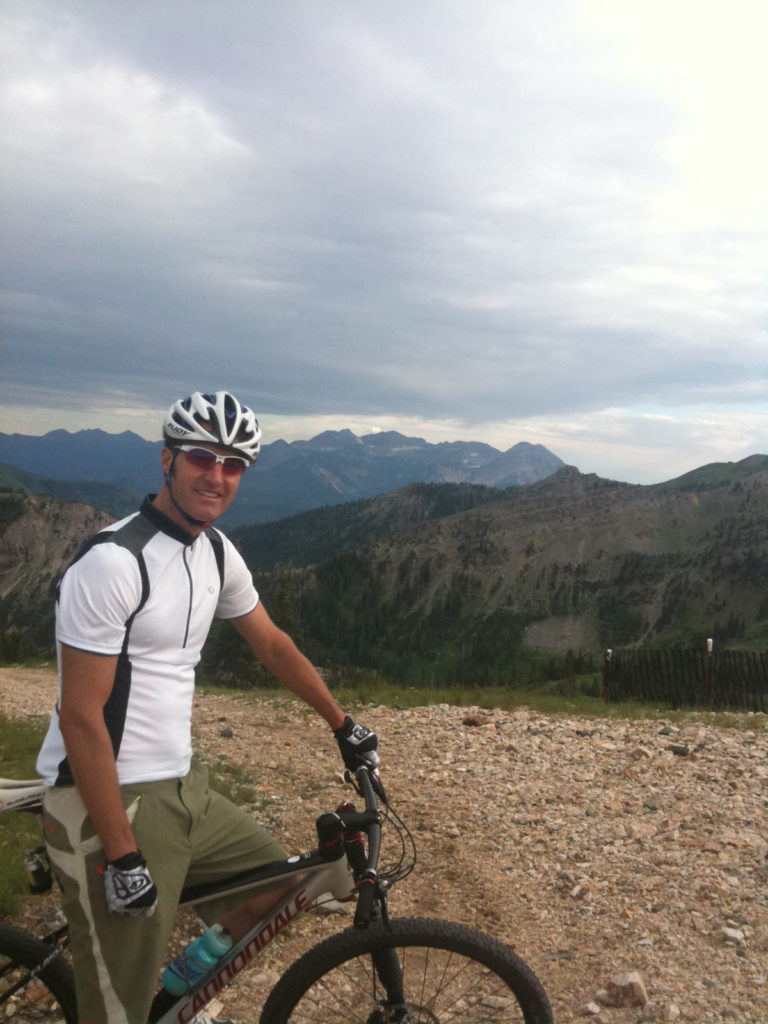
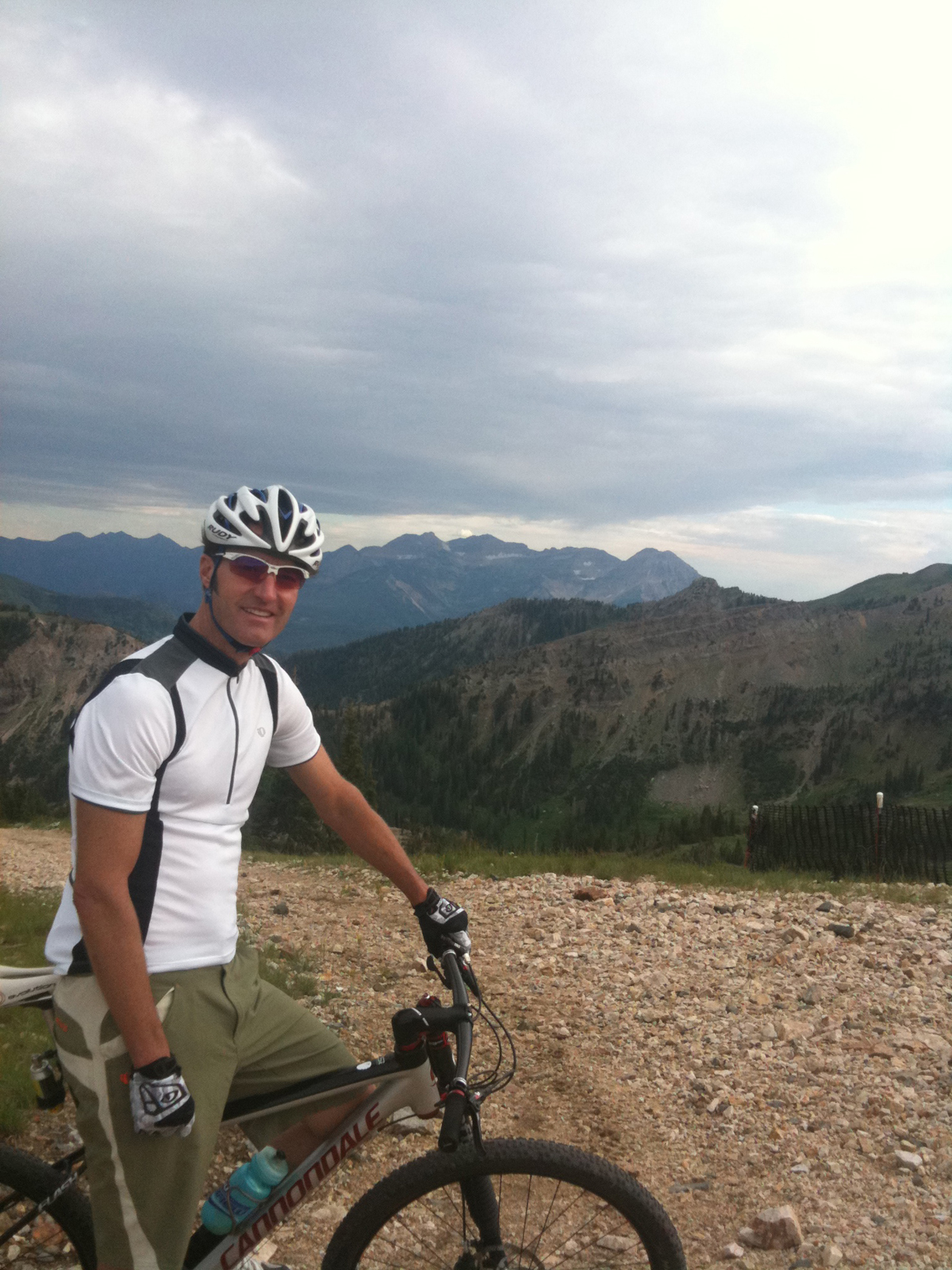
Mark Deterline (1966-2019) in Alta, Utah in 2012 doing what he loved – riding bicycles. Photo by Dave Iltis
Mark always wanted everyone to be their best and to take part in the greater whole. In his article “Teamwork Matters“, he concludes with, “Hopefully this summary not only piques your interest and serves as motivation to get better educated about racing. It should also serve as a call to arms, as an affirmation of the exalted you role that you can play as an individual and as a member of a squad in our collective goal to elevate cycling in Utah and the West at every level, in women’s, men’s and junior racing.”
He was a good friend, and provided advice and guidance to me during the changes in Cycling Utah and Cycling West over the years. Rest in Peace Mark. Mark’s obituary (from his family) is below:
Mark Stedman Deterline, 52, passed away on July 13th, 2019, after a prolonged illness. He left peacefully, able to say a gentle good-bye to his wife, who was with him. Mark was born in Palo Alto, CA on September 15th, 1966. He grew up in Palo Alto where he graduated from Palo Alto High School and was voted the most valuable player on the golf team. A gifted and diligent student and athlete, Mark was offered a golf scholarship at Brigham Young University. He opted not to play so he could focus on his studies. He majored in languages and received a master’s degree in language education. He loved languages and loved to travel. After graduation he lived and worked in Switzerland, Germany, and Italy, studying German at the University of Constance. He spoke five languages, mastering some on his own.
He met a wonderful woman, Nunzia Palmieri, in Italy and they were married on February 13, 1993. They lived in Salt Lake City and had two children, Alessio, born in Montebelluna, Italy, and Donatella, born in Provo, Utah. A loving father, Mark was supportive of their initiatives and projects. He was a great mimic and entertained the family constantly with imitations (of us others), foreign accents and anecdotal stories. After an amicable divorce Mark and Nunzia stayed fast friends.
More recently, Mark married again in Germany, to a lovely woman, Kathy David, who was with him when he died.
Mark was also a gifted cyclist and cycling coach (“2TheFront”), mentoring his students with care and a deep knowledge of bicycles and cycling strategy. He was a category two racer, the top category for amateurs. As a racer, he was the consummate teammate and a strong domestique, and helped fellow teammates win many races. He was often able to single-handedly control the peloton, allowing teammates up the road to excel and take the win. In his coaching career, he coached cyclists, triathletes, distance runners, cross-country skiers, motocross racers and boxers. He helped people with training, bike fit, biomechanics, and performance testing. His interests in the sport ranged from tactics to fitness, tech to cross training (of which he was a huge proponent, especially in the winter).
He designed a people’s racing bicycle when he worked for CMB, the well-known bicycle frame-maker in Italy. He also worked in Italy for Campagnolo, the famous bicycle components manufacturer, doing international marketing, and in San Mateo for Ritchey, again in marketing. In Salt Lake City, Utah, he did marketing for Lineo, focusing on high-tech operating systems for mobile devices.
He founded the Fremont Bank Cycling Team in Northern California in 2010, and directed other teams as well. He was a cross country skier and raced twice in the American Birkebeiner in the wave 1 level.
Mark wrote over forty articles for Cycling Utah and Cycling West. Additionally, over the years, he wrote for triathlon magazines Lava and Triathlete, and for the national cycling magazine VeloNews.
Mark was the beloved son of Bill Deterline, now deceased, and Lynne and Austin Henderson, the beloved brother of Brooke and Kimberly Deterline, and half-brother of Charlie Deterline. He was beloved by his family and friends, known for his sensitivity, empathy, generosity of spirit, and knack for making people laugh and feel loved. The family has been deeply touched and nearly overwhelmed by the outpouring of love from friends across his life.
Memorial Service:
A memorial service for Mark Deterline will be held on Sunday, the 18th of August, at the Unitarian Universal Church of Berkeley at 1 Lawton Ave. in Kensington from 2:00 to 4:00 p.m. A reception will follow at the home of Lynne and Austin Henderson, Mark’s parents, at 644 Cragmont Ave. in Berkeley, 94708.
Remembrances:
Please email remembrances or photos that you have taken of Mark to [email protected], and we will add them to this page.
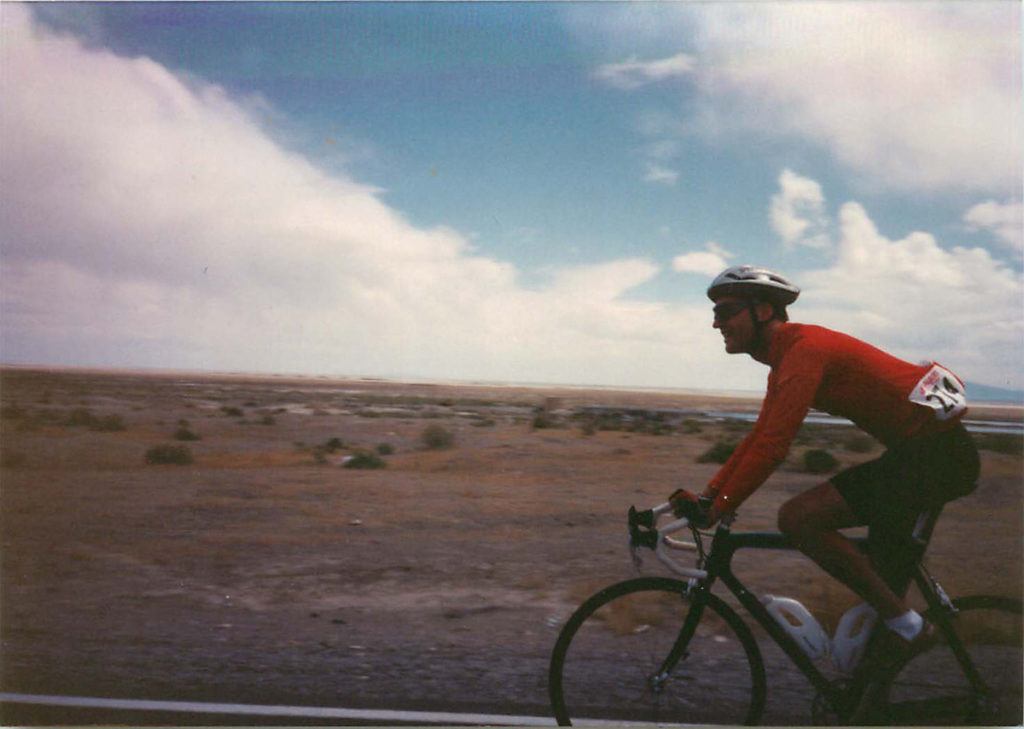
Mark Deterline loved to ride. Photo by Austin Henderson
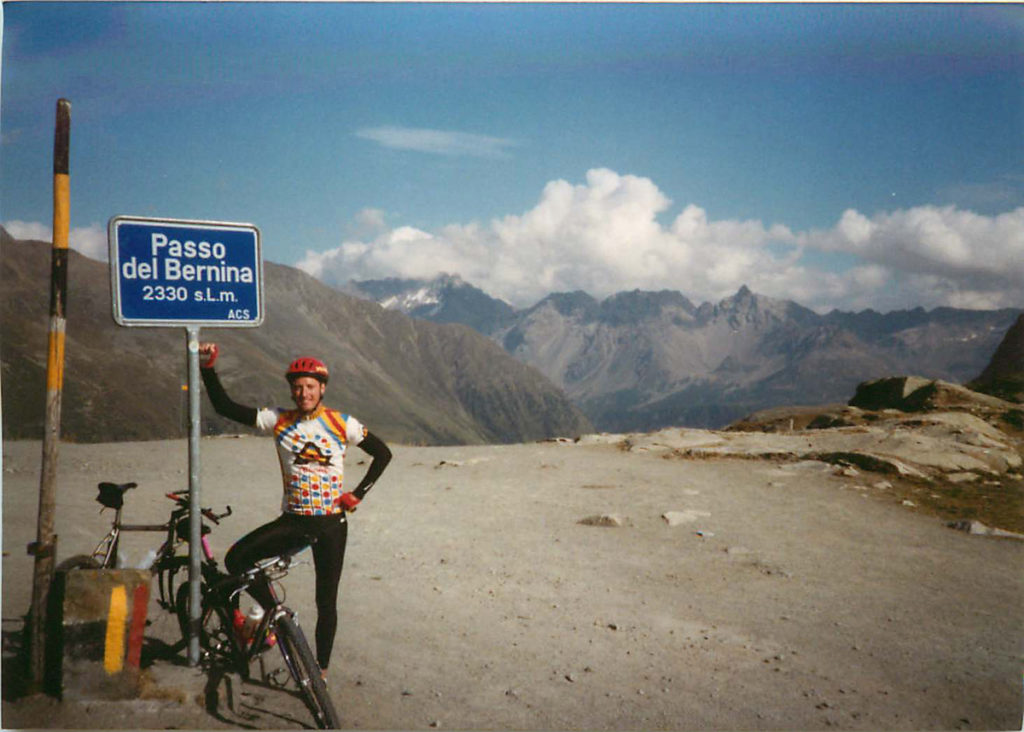
Mark Deterline at the top of Passo del Bernina in Switzerland. Photo by Nunzia Shannon
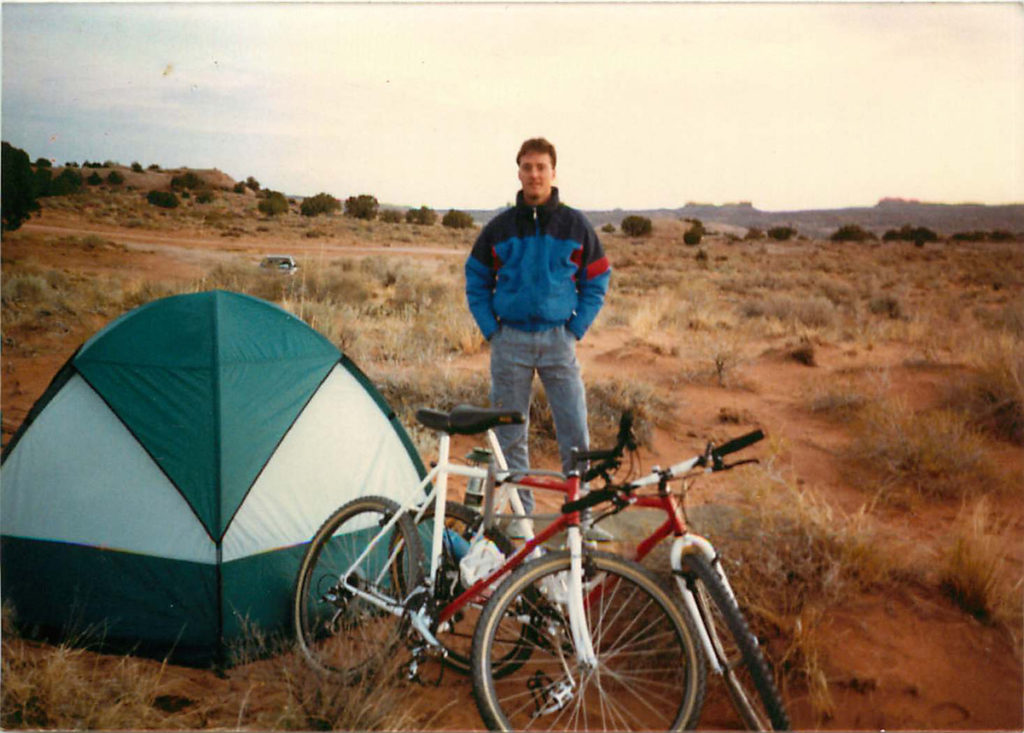
Mark Deterline, camping with bicycles. Photo by Nunzia Shannon
On the evening of Saturday June 28, 1969, a young Belgian cyclist just 24 years of age, dressed in the white and red colors of the Faema squad and wearing dossard #51, took his place on the start-line of the 56th Tour de France in the northern town of Roubaix on the border between France and Belgium; his first appearance. He would not win the Prologue time-trial that day, finishing second to Rudi Altig of the Salvarani team.
22 days later, on Sunday July 20, 1969, Edouard Louis Joseph Merckx—commonly known as “Eddy”—would step onto the top step of the final podium in Paris as the General Classification winner of the Tour de France in his first attempt, wearing the maillot jaune for a total of 19 of those days and winning 6 individual stages in the process, as well as being part of the Stage 1b team time trial winning squad.
Merckx would also finish in Paris as the winner of the Points Classification, the King of the Mountains Classification, the Combination Classification and the overall Combativity Prize. This was the first and only time that a single rider won all of the major classifications at the Tour de France. If it had been an official classification at the time, he would have also won the Best Young Rider award for those riders under the age of 26.
Fifty years later, Merckx’s Tour de France record is well-known, becoming the second rider to win the Tour a total of 5 times—a feat which had only been accomplished by Jacques Anquetil prior to Merckx’s career—collecting a total of 34 stage wins and wearing the maillot jaune a total of 96 days in the process, both of which are records which have yet to be broken. He also amassed 5 wins in the Giro d’Italia and 1 win in the Vuelta, giving him 11 total victories in the Grand Tours, another record which has yet to be broken.
And yet, Merckx almost didn’t start the Tour that late June evening in 1969, and who knows what his career would have looked like had he not.
In 1967, while riding for the Peugeot-BP-Michelin squad, Merckx raced in the Giro d’Italia, finishing 9th overall, with two stage wins.
Later that summer, his Peugeot teammate Tom Simpson died on Mont Ventoux at the 1967 Tour de France, due to heat exhaustion exacerbated by amphetamines and alcohol. While Merckx was not at that Tour, when the news flashed across his television set during the evening news, Merckx became distraught. Simpson had been a friend and mentor to the young Belgian, unlike the hostility that Merckx had faced from his previous team leader Rik van Looy. He immediately decided to attend the funeral in England, the only rider from the European continent to do so. To this day Merckx is saddened that Simpson’s name is so closely associated with doping, rather than for the Briton’s accomplishments while alive.
After Simpson’s death, the Union Cycliste Internationale (UCI), which is the governing body of the sport of cycling, implemented mandatory doping controls for the 1968 season. The 1968 Giro d’Italia would be the first major Tour to have regular testing, with results to be announced 15 days after the conclusion of the race.
After switching to the Faema team from Peugeot in the off-season, Merckx won the Giro d’Italia—his first of 11 total Grand Tour victories—taking another 3 stage wins. On June 15, 1968, the Italian Cycling Federation announced that 9 riders returned positive tests during the race. Merckx was not one of the offending riders.
Riders testing positive included Italian stars Felice Gimondi and Gianni Motta, along with Franco Balmamion, Franco Bodrero, Raymond Delise, Peter Abt, Victor van Schil, Mariano Diaz, and Joaquin Galera. Balmamion’s result was thrown out, as the substance he tested positive for had yet to be officially banned.
Gimondi’s ban was overturned on July 15, because he claimed he had just used Reactivan, an over-the-counter stimulant appetite suppressant containing fencamfamine, which has similar properties to amphetamines but at about half the strength. At that time, Reactivan was still in the grey area between legal and illegal drugs. With the exception of Balmamion, all of the riders with positive tests served a ban of at least 30 days.
In 1969, Merckx started the Giro d’Italia as the overwhelming favorite, and by the rest day on May 31, he had won an additional 4 stages and wore the maglia rosa—the pink jersey—as the General Classification leader. Then his world fell apart.
On Sunday June 1, after the 16th stage from Parma to Savona won by Roberto Ballini, Merckx was called to Doping Control as the leader of the race. The following morning, Monday June 2, 1969, it was announced that Merckx’s test came back positive for fencamfamine, the same substance that Gimondi had used in 1968. Giro organizer Vincenzo Torriani was forced to exclude him from the remainder of the race, with no right to appeal.
Controversially, the results of the test were announced to the press even before Merckx himself had been informed; the Faema team director Vincenzo Giacotto and Vincenzo Torriani were accompanied by RAI Television crew, along with two reporters—Bruno Raschi from La Gazzetta dello Sport and Théo Mathy, from the Belgian RTBF television.
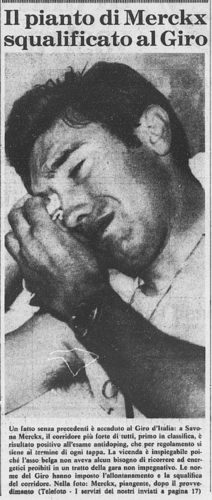
Merckx Disqualified: a requiem for cycling. Image from page 17 of La Stampa, 3 June 1969 under Creative Commons License.
Immediately after the announcement, Merckx was interviewed by RAI’s Sergio Zavoli in a state of collapse, lying on his bed in Room 11 of the Hotel Excelsior in Albisola Marina, sobbing in French, “I don’t know what to say. I am sure I took nothing. I’m sure of it. I don’t understand anything.” It was the first time that a race leader had been found positive and kicked out of any of the major stage races.
A distraught Eddy Merckx sobs in his hotel room after being informed of a positive doping test at the 1969 Giro d’Italia. Image from page 1 of La Stampa, 3 June 1969 under Creative Commons License. The caption reads “An unprecedented event happened at the Giro d’Italia: at Savonna Merckx, the strongest rider of all, first in the standings, he was positive in the anti-doping test, which by regulation is held at the end of each stage. The story is inexplicable because the Belgian ace had no need to go to energy banned in a non-binding section of the race. The rules of the Giro imposed the elimination and disqualification of the runner. In the picture: Merckx, crying, after the inspection (Telefoto – The services of our correspondents on page 17).”
The offense also came with an automatic 30-day suspension, which in this case would not expire until July 2, 4 days after the Tour de France was due to start in Roubaix, meaning he would not be allowed to start. It was a crushing blow. Merckx was convinced that it meant the end of his career, and that he was going to be sacked by his Faema squad.
Almost immediately thereafter, Merckx’s supporters began a campaign to have his ban overturned; even much of the Italian media felt that Merckx was the victim of some sort of conspiracy to keep him from winning the Giro d’Italia for a second straight year. The Italian newspaper La Stampa went so far as to call the scandal a “requiem for cycling,” while the headline in the Corriere dello Sport said that “Il ciclismo si sta suicidando (cycling is commiting suicide).” Bruno Raschi’s report for La Gazzetta dello Sport concluded “I can believe that they’ve found Merckx drugged, but I’m sure that someone put the dope in his broth.”
Two days previously, an unnamed support rider on Felice Gimondi’s Salvarani team allegedly knocked on Merckx’s hotel room and offered him a briefcase full of money to throw the Giro, and allow Gimondi to win, which Merckx declined.
Because of this, suspicions were tossed around that Merckx had been intentionally drugged by someone spiking his food or drink with fencamfamine, or that his test samples had been tampered with, in order to get him thrown out of the Giro.
While situations like this seem less plausible in the modern era, in the early days of drug-testing, this was entirely possible. Riders would often accept hand-ups of food or drink from spectators on the side of the road. Teams did not travel with their own chefs or food supplies, and thus had less control over what they ate and drank at meals.
In fact, the entire drug-testing process was still in its infancy; it had been less than two years since Tom Simpson died at the 1967 Tour de France. Despite Simpson’s death, many still questioned whether testing was necessary at all. No real standards had yet to be implemented; not even something as basic as establishing a set list of banned substances, nor guidelines for counter-analysis of B-samples after a positive result.
At the 1969 Giro, testing was done in a mobile lab which followed the race from stage to stage; test equipment was not always well secured and could be knocked out of calibration by jostling and shocks from poor roads. Samples were also not sealed and secured in the same manner as they are today, so it is entirely possible that the samples were indeed tampered with.
Merckx also had the support of the Belgian government, which issued a statement stating the that accusations “were without foundation” and that he was the “sacrificial victim of a criminal plot.” Merckx’s wife Claudine later estimated that her husband received over 10,000 letters of support, which took until the end of the Tour de France to answer them all, after enlisting the help of friends, family, and neighbors.
On June 14, 1969, the Fédération Internationale du Cyclisme Professionnel (FICP), which governed the sport of professional cycling under the auspices of the UCI, convened an extraordinary meeting in Brussels, after which they released a communiqué stating that they:
Accepted the results of the tests carried out by the Italian doctors
Granted that the Italian Pro Cycling Union (UICP) had the right to suspend Merckx based on the test results
Considered the “irreproachable record of the incriminated rider” and the negative results of tests that he had undergone in the past
Doubted that Merckx voluntarily intended to dope, and
Gave him the “bénéfice du doute” or “benefit of the doubt” and lifted his sanctions effective immediately.
This meant that Merckx would indeed be able to start the Tour de France just 2 weeks later, but also triggered many protests that he was being given preferential treatment because he was Eddy Merckx, not because he was innocent. At the Tour of Luxembourg, riders staged a mini-strike to express their discontent. 1968 Tour de France winner Jan Janssen declared that “the decision was an injustice towards … lots of little riders who were punished without being able to defend themselves.”
Merckx was also not entirely happy about the wording of the communiqué, as he felt that those 3 words (“bénéfice du doute”) were vague. They didn’t establish guilt or innocence, which meant that Merckx would always have that positive test hanging over his head.
Walter Godefroot, one of Merckx’s friends and rivals on the Flandria squad, knew that Merckx was never more dangerous than when he was down. “When everyone else is hurting, they slow down. When Merckx is in trouble, he attacks,” says Godefroot and so it was.
Merckx had been deeply wounded by the scandal and by the controversy surrounding its outcome, and threw himself into training over the next 14 days after being cleared to race; even riding à bloc for 40 kilometers on the morning of the Tour prologue, tranquille for another 40 kilometers in the afternoon, and then preparing for the prologue time trial that evening in Roubaix.
Merckx was always a prolific winner, but before the Savona affair, he raced with joy. He loved being on the bike, and he loved winning. But afterwards, Merckx lost his innocence and trust in people and the system around him. From that point forward, he always raced as if he had something to prove, which in a sense he did. Every time he won a race and was tested for doping, in his mind each negative test was another piece of evidence that he didn’t need to dope in order to win.
It was during the 1969 Tour after one of Merckx’s 6 stage wins, that Brigitte Raymond, the young daughter of Merckx’s former teammate Christian Raymond, asked her father why Merckx always had to win. When the elder Raymond said that it was because Merckx was the best, Brigitte replied, “well, he’s a real cannibal then.” Her father found this amusing and relayed the story to a couple of journalists. The nickname stuck. From 1969 forward, Merckx was known as “The Cannibal”.
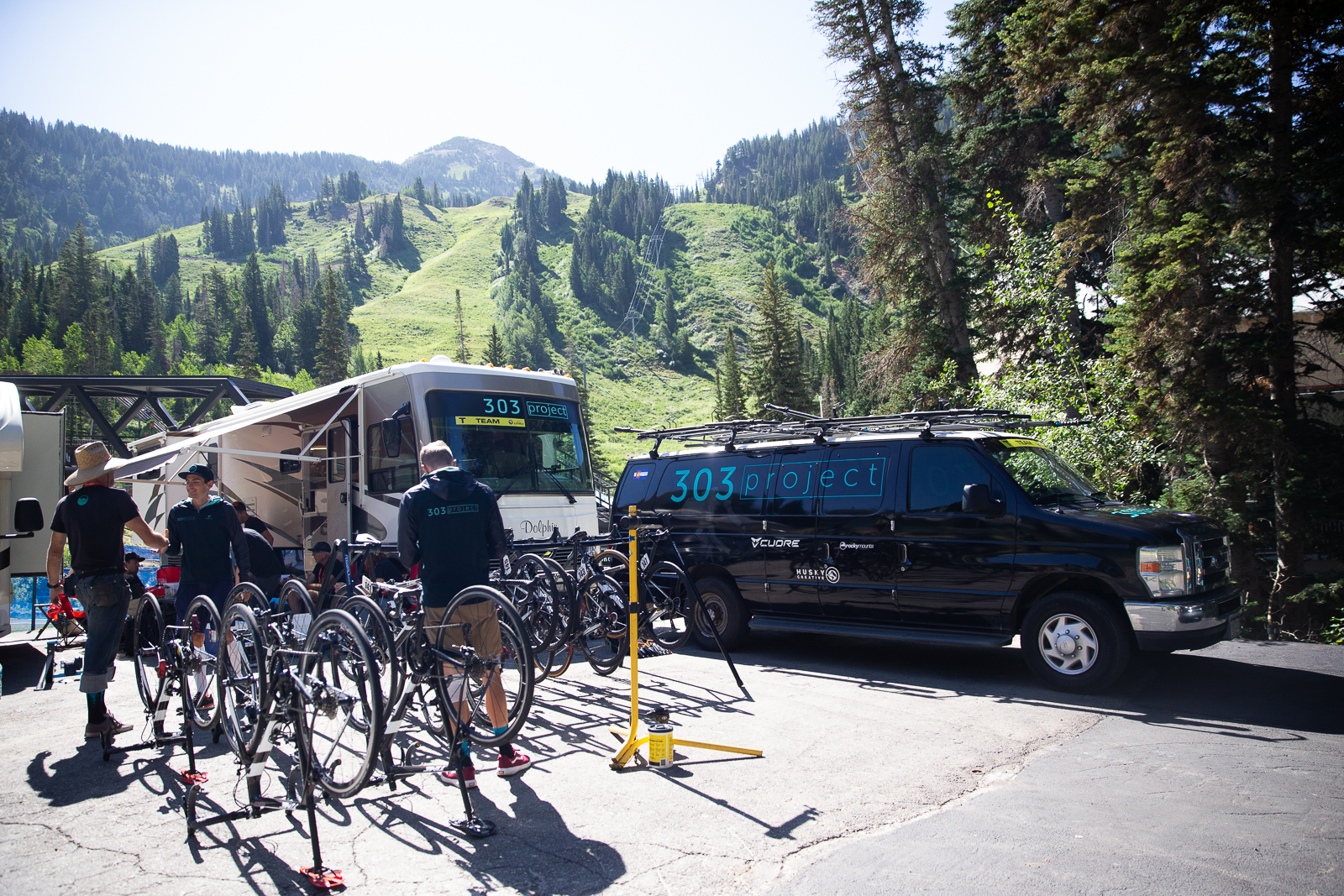
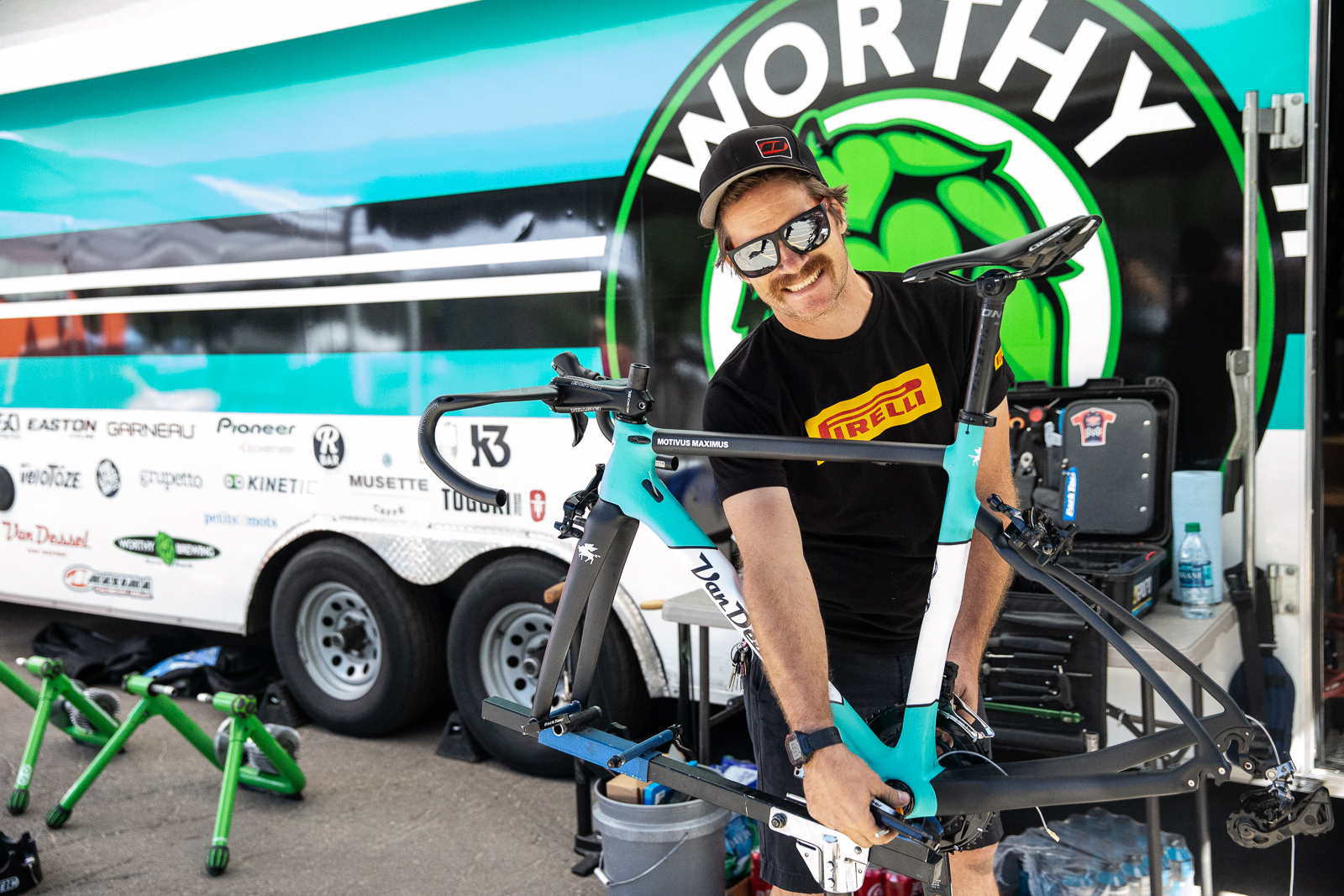
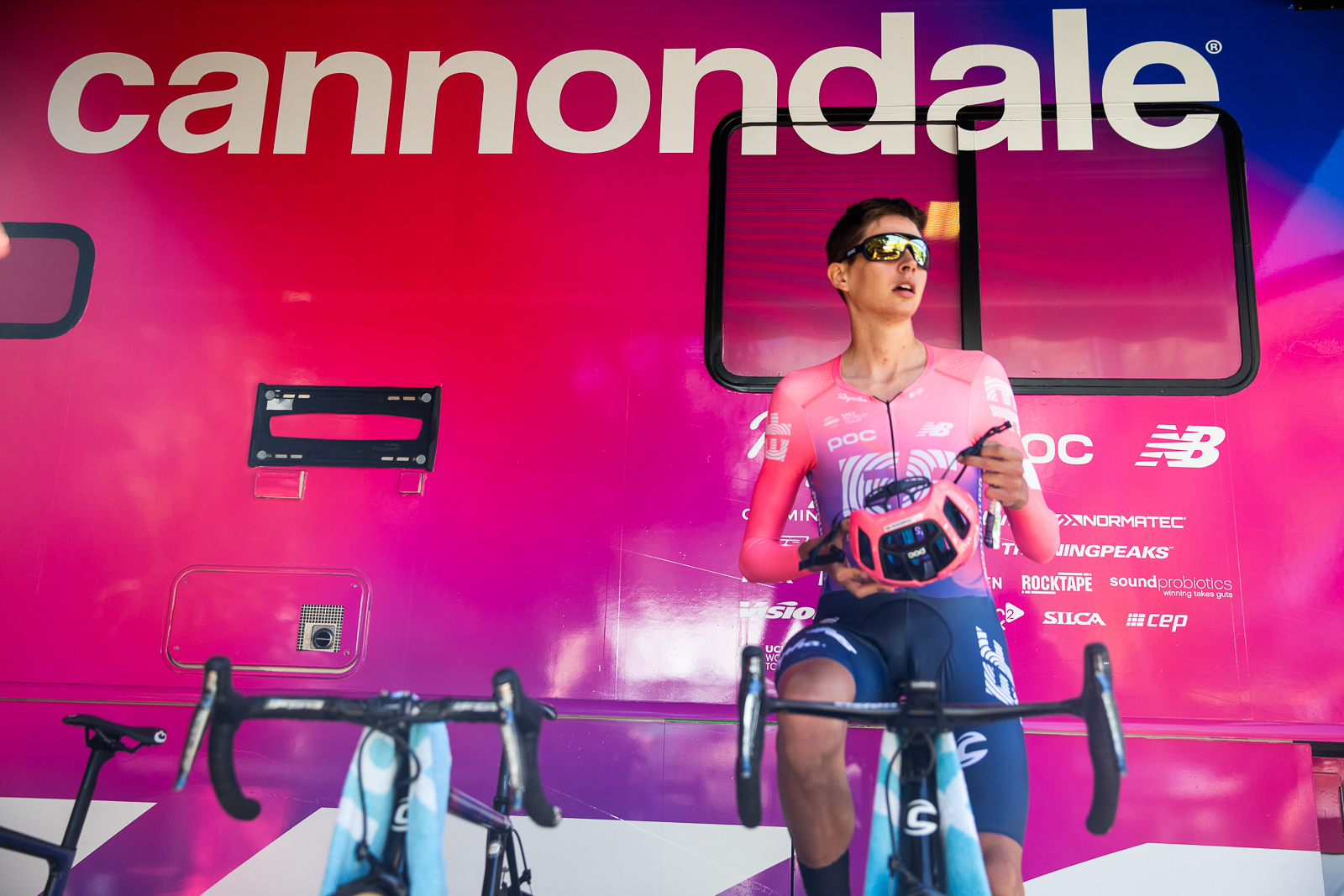
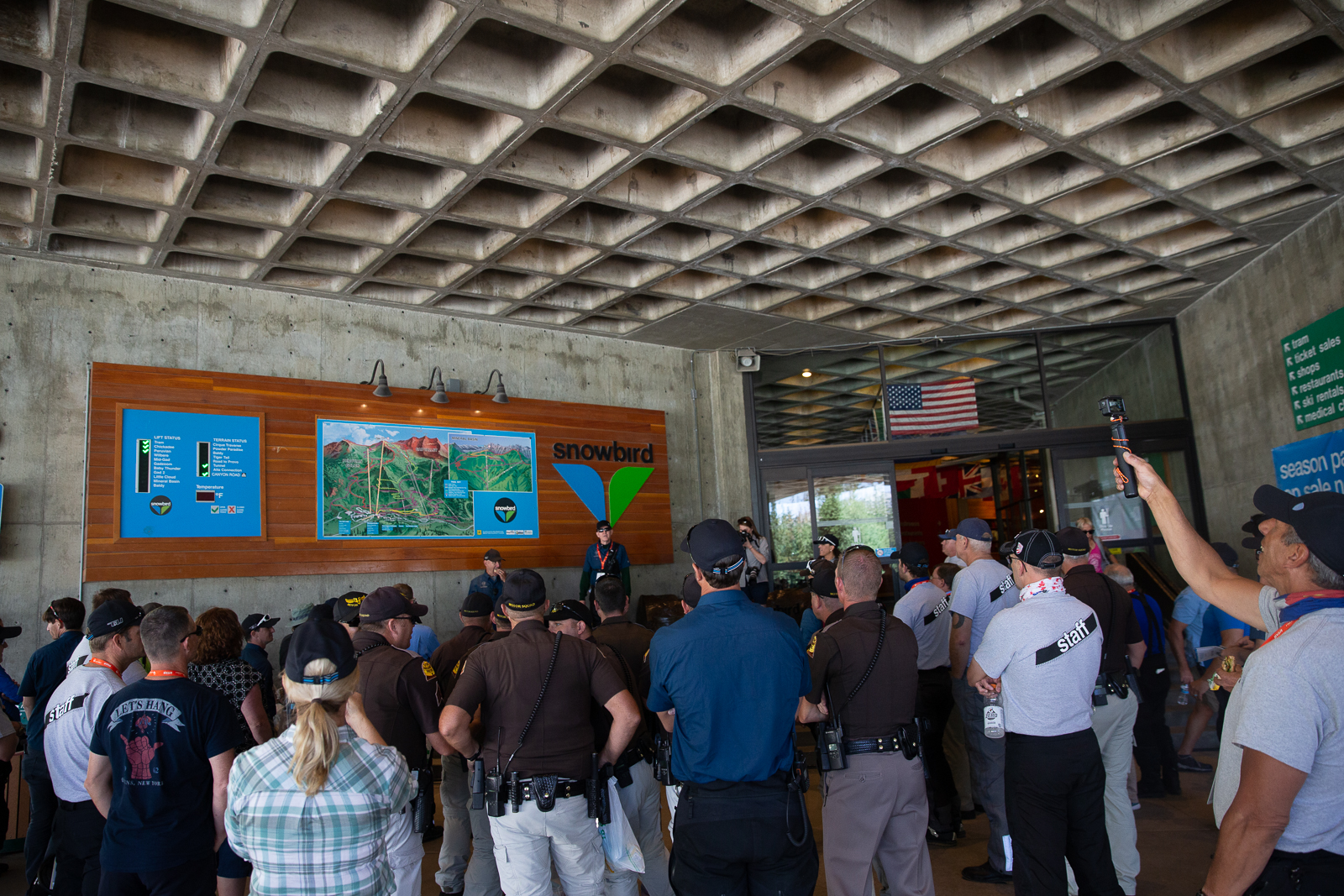
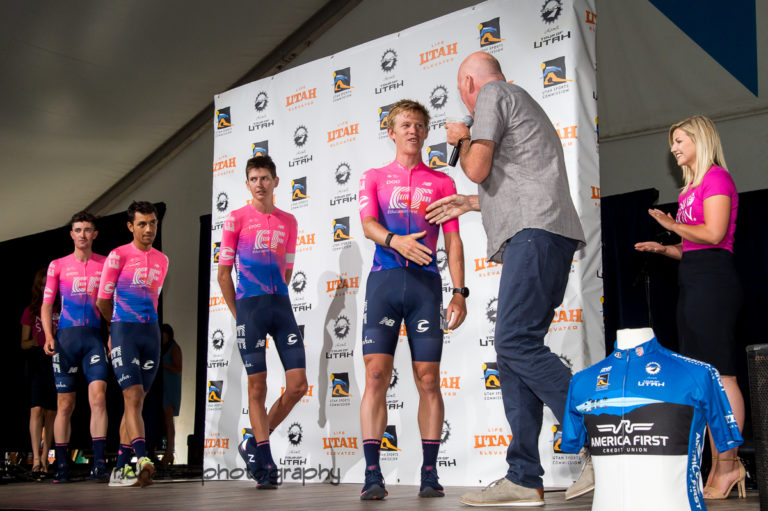
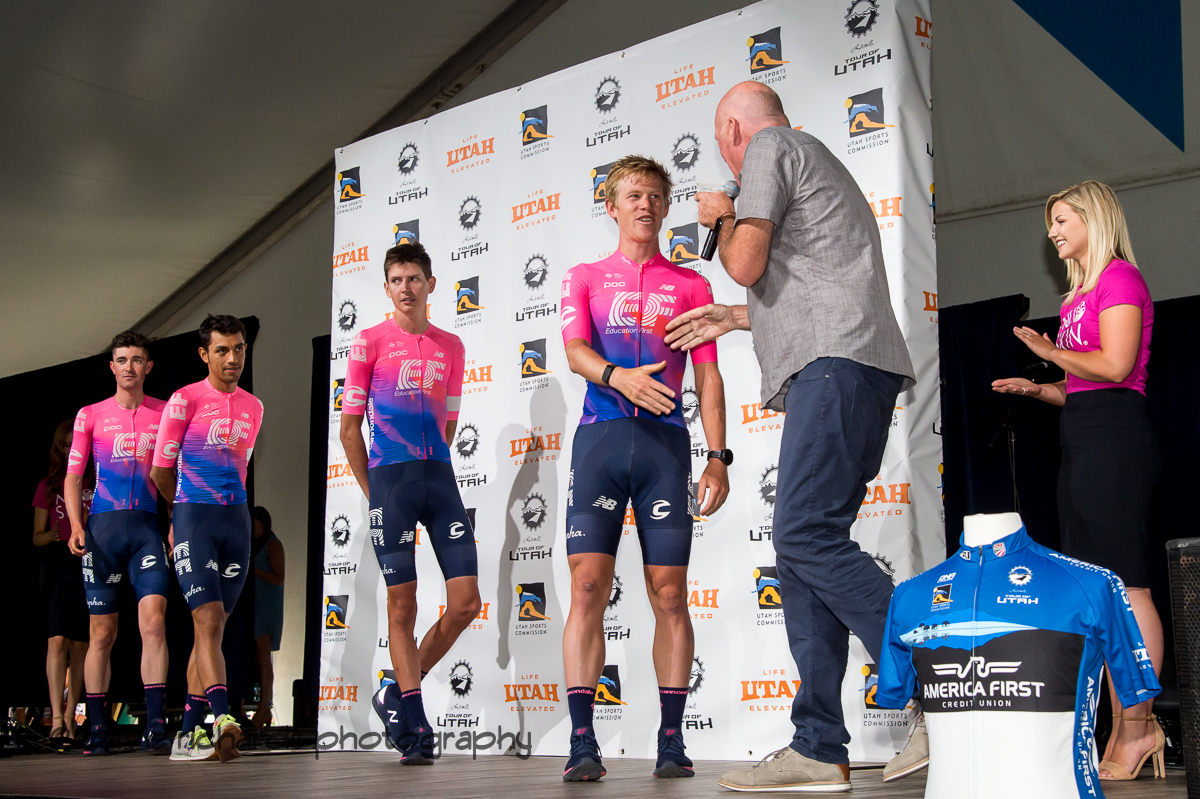
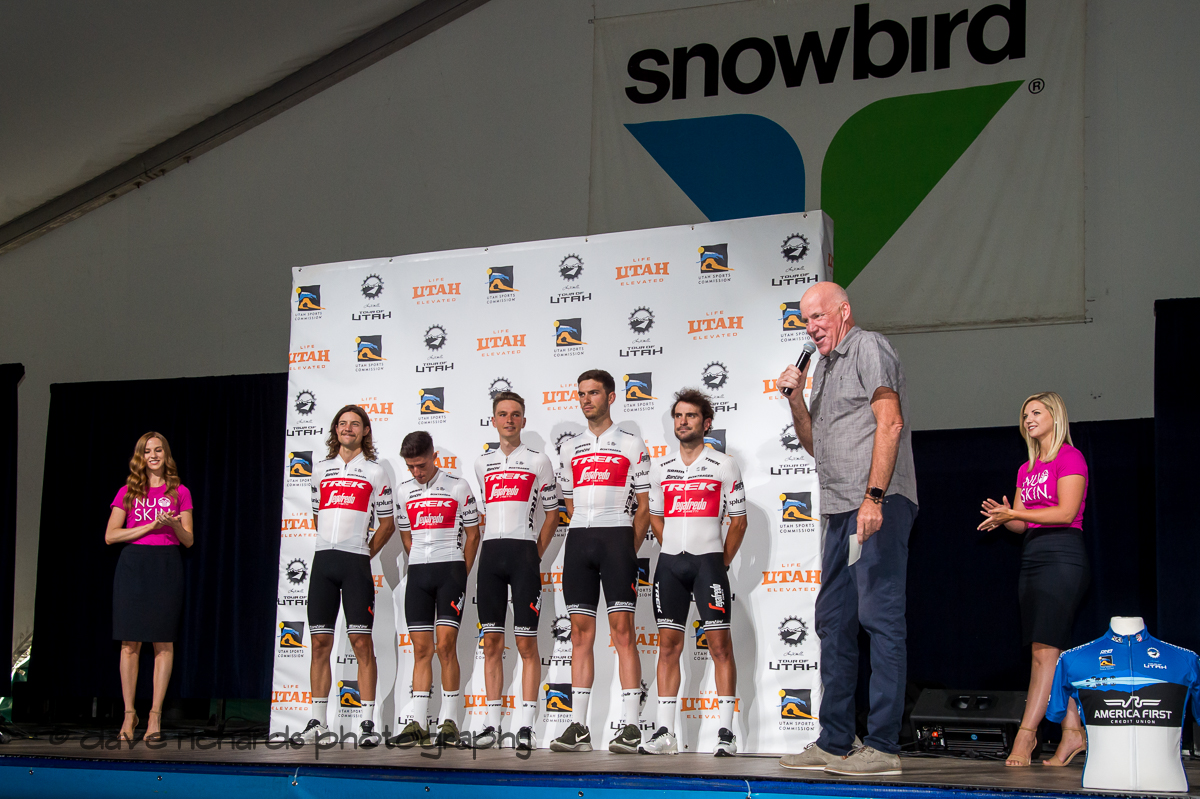
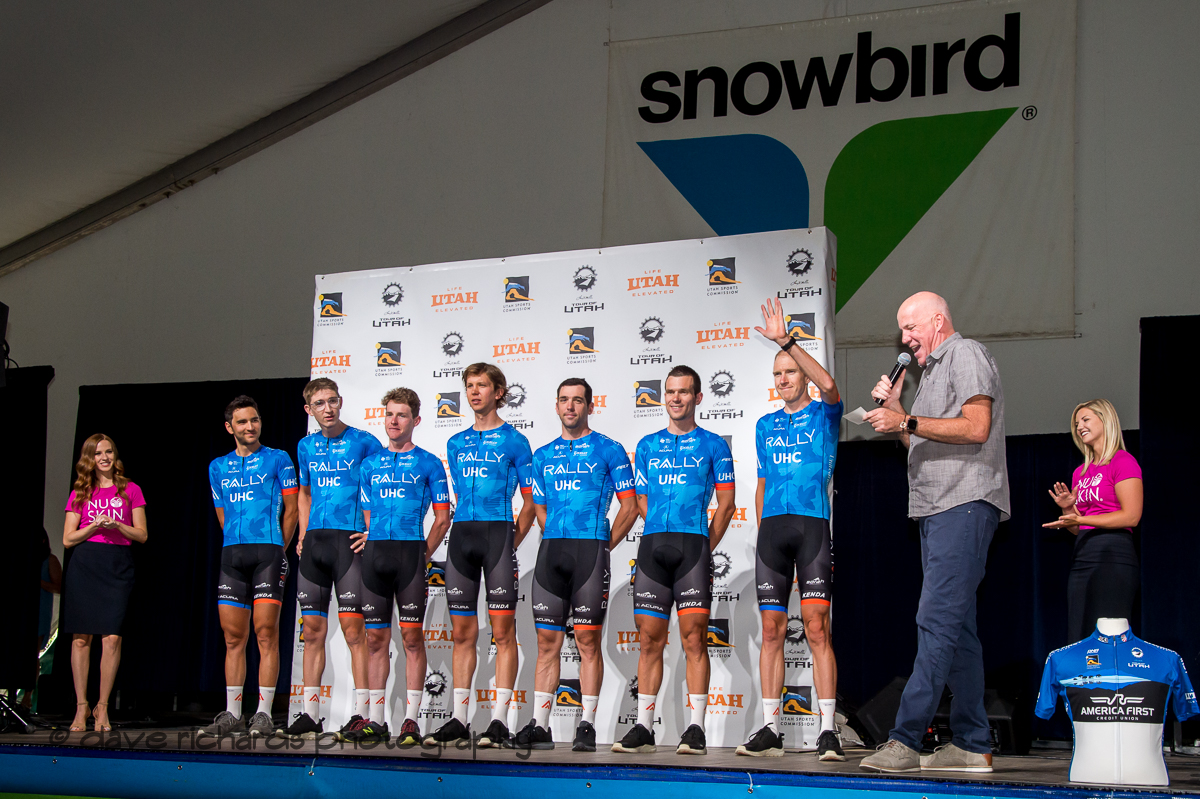
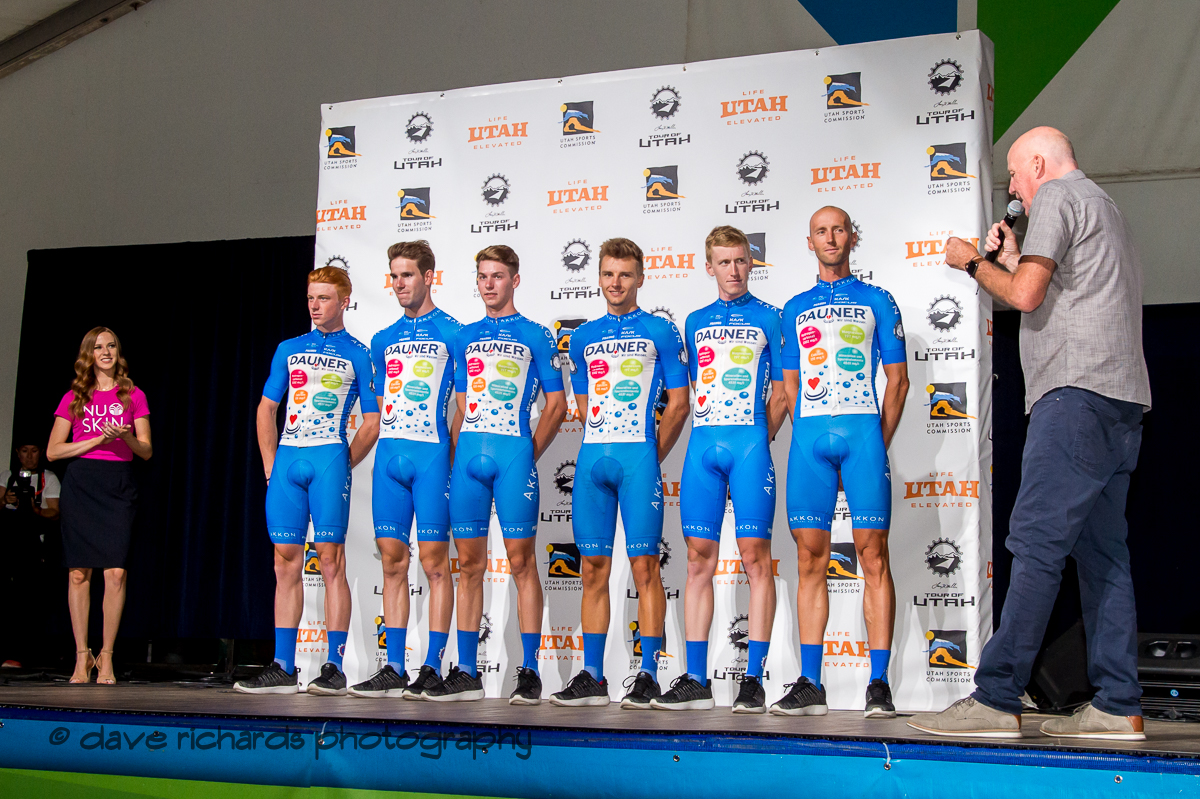
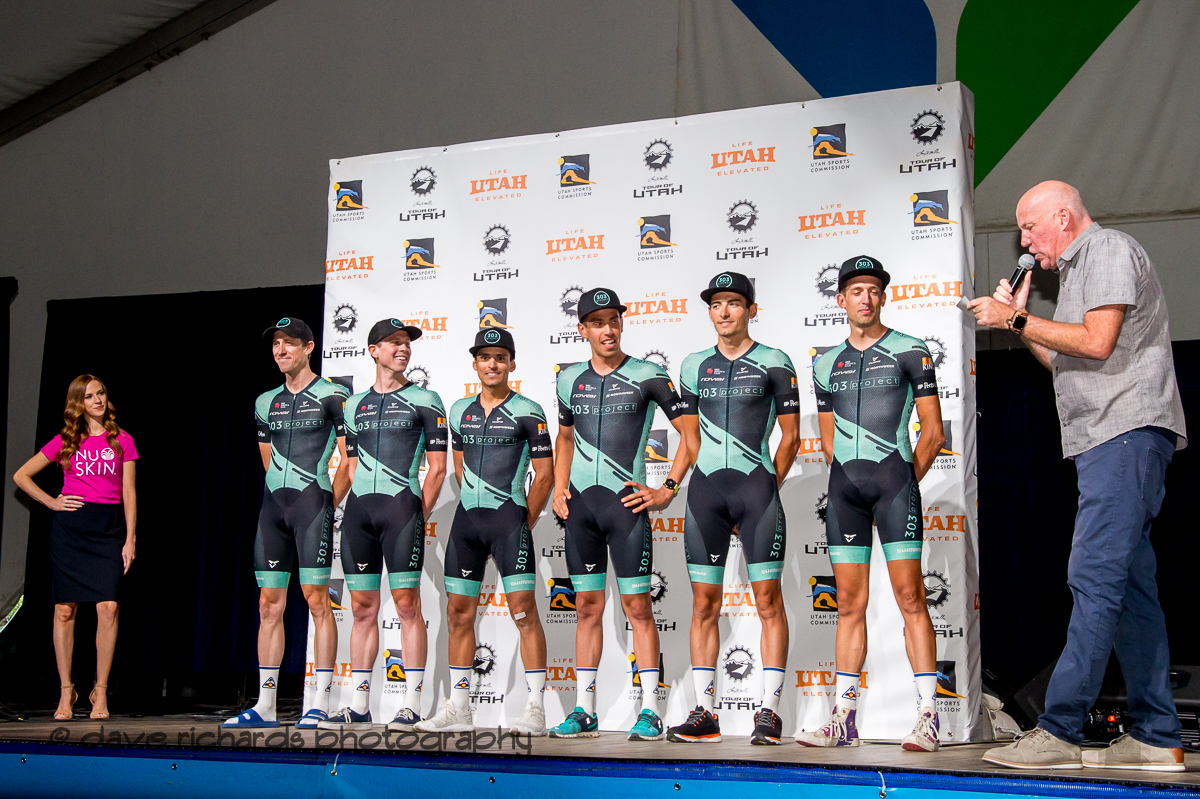
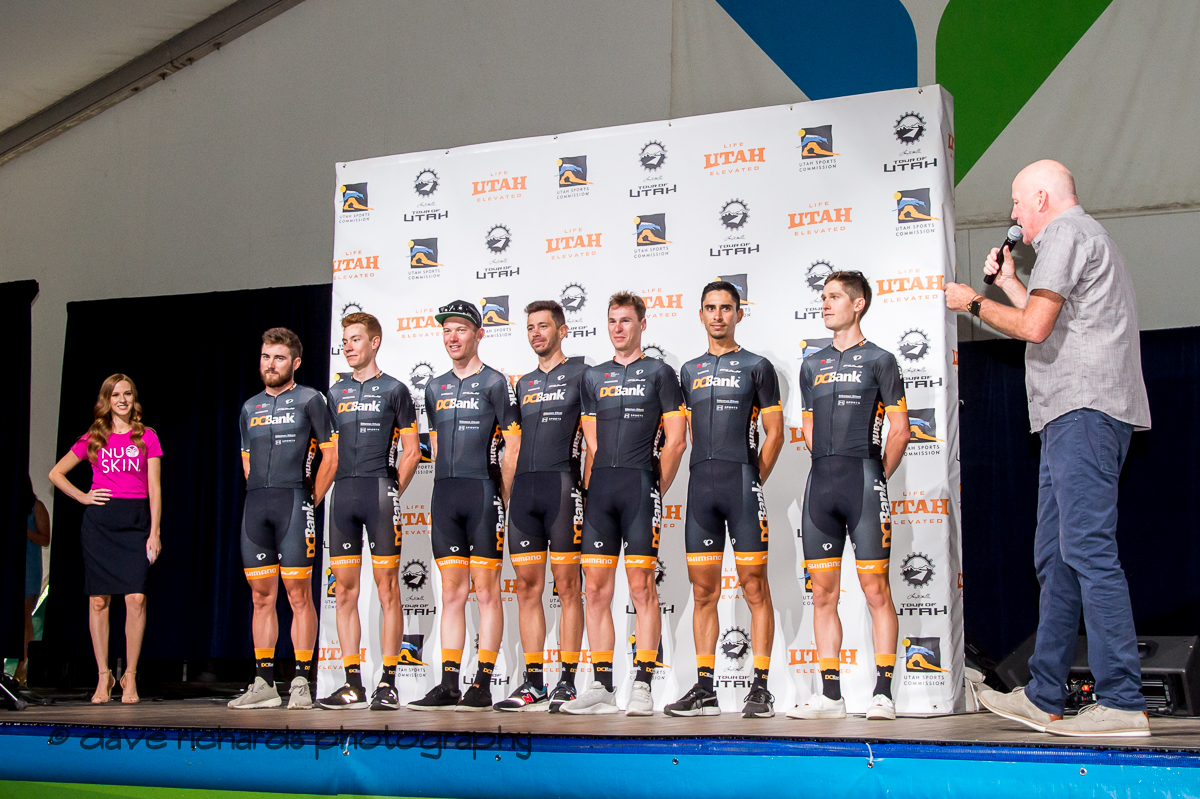
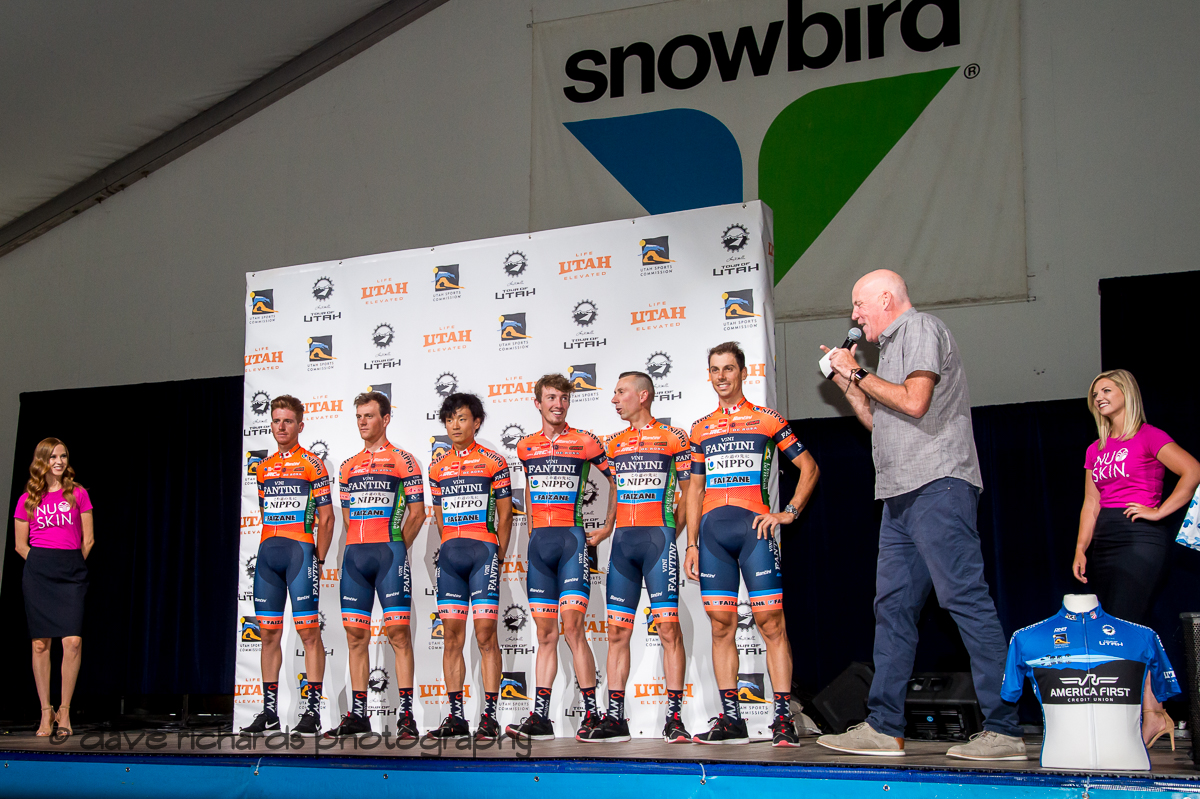
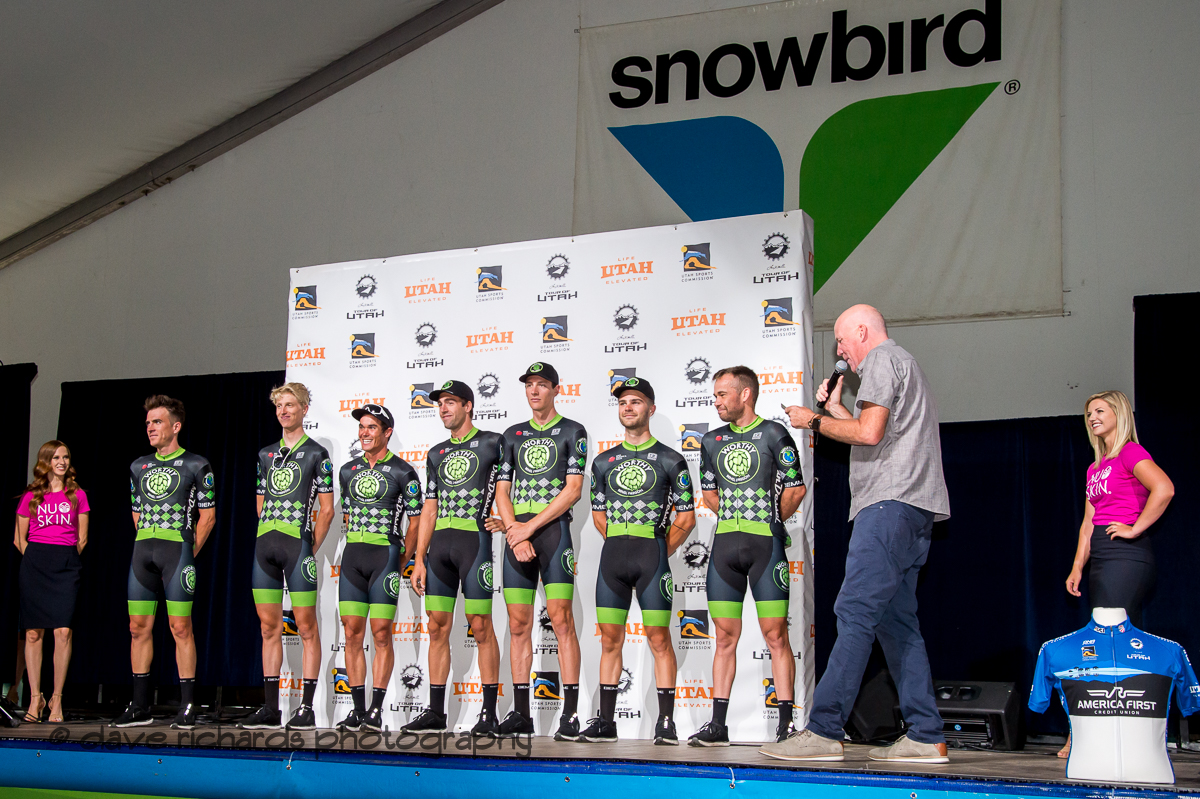
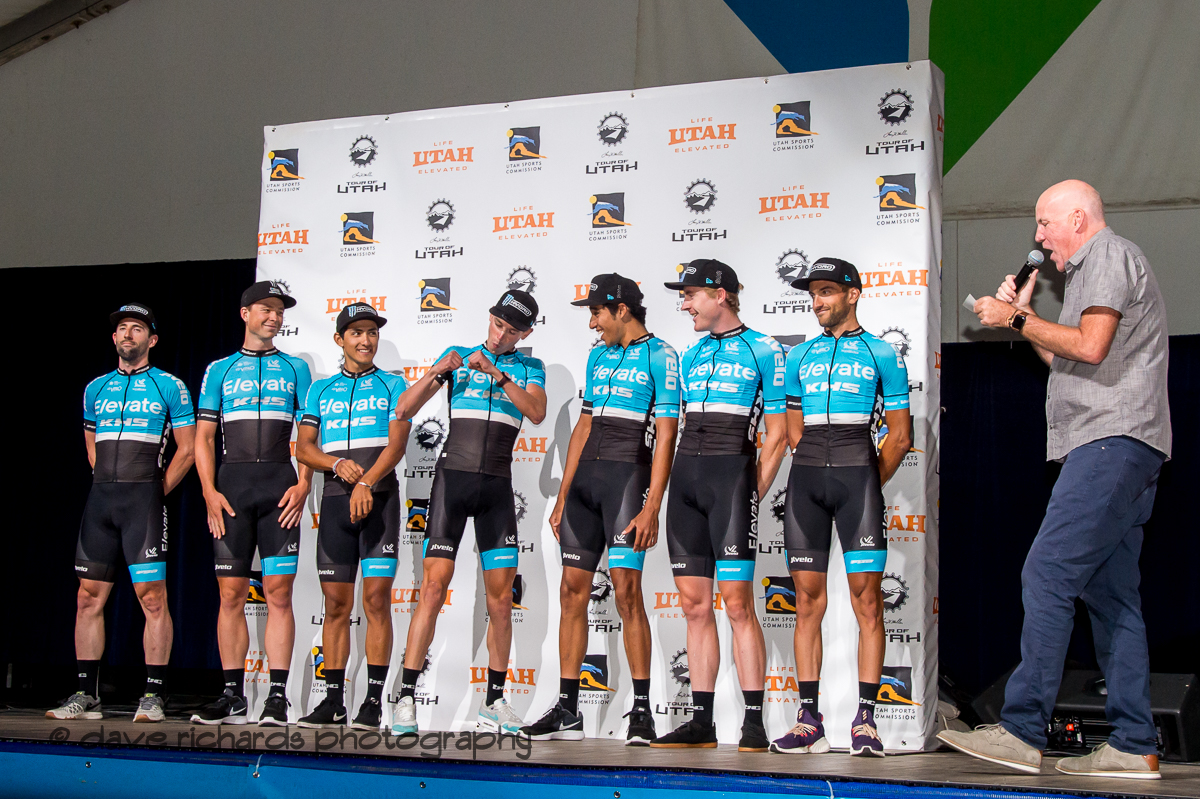
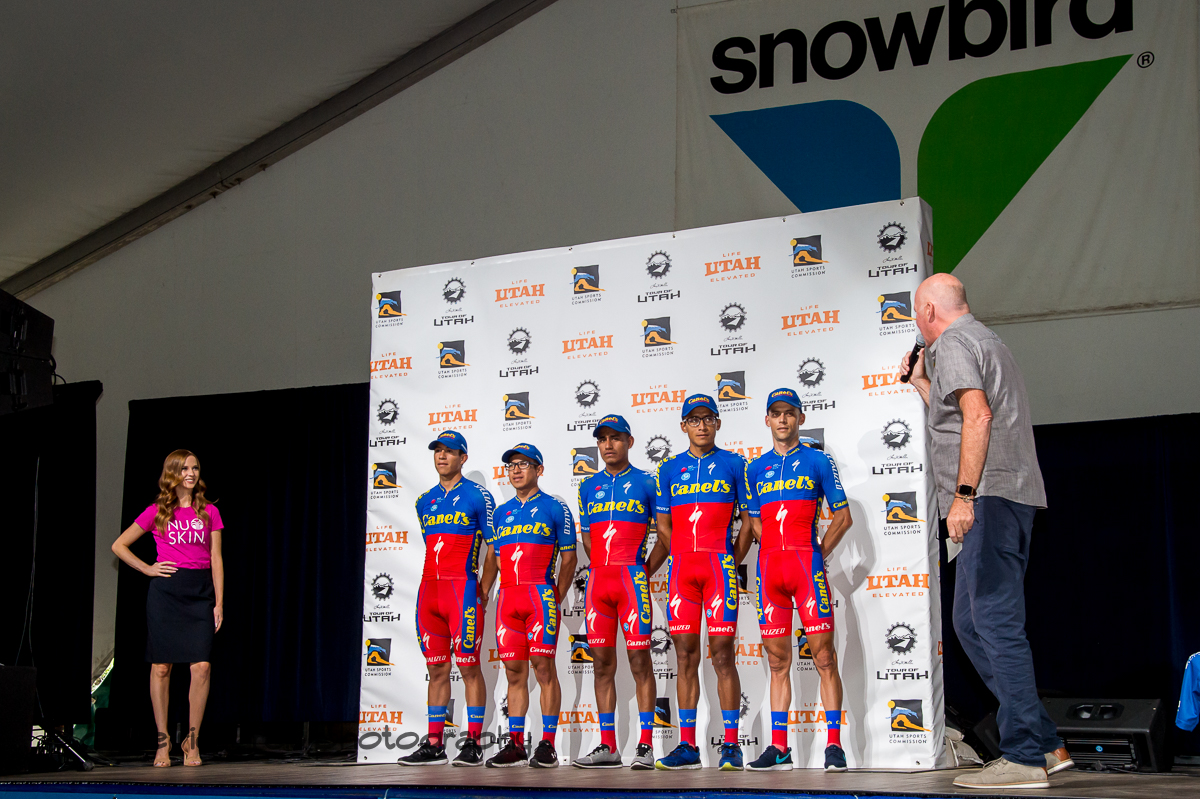
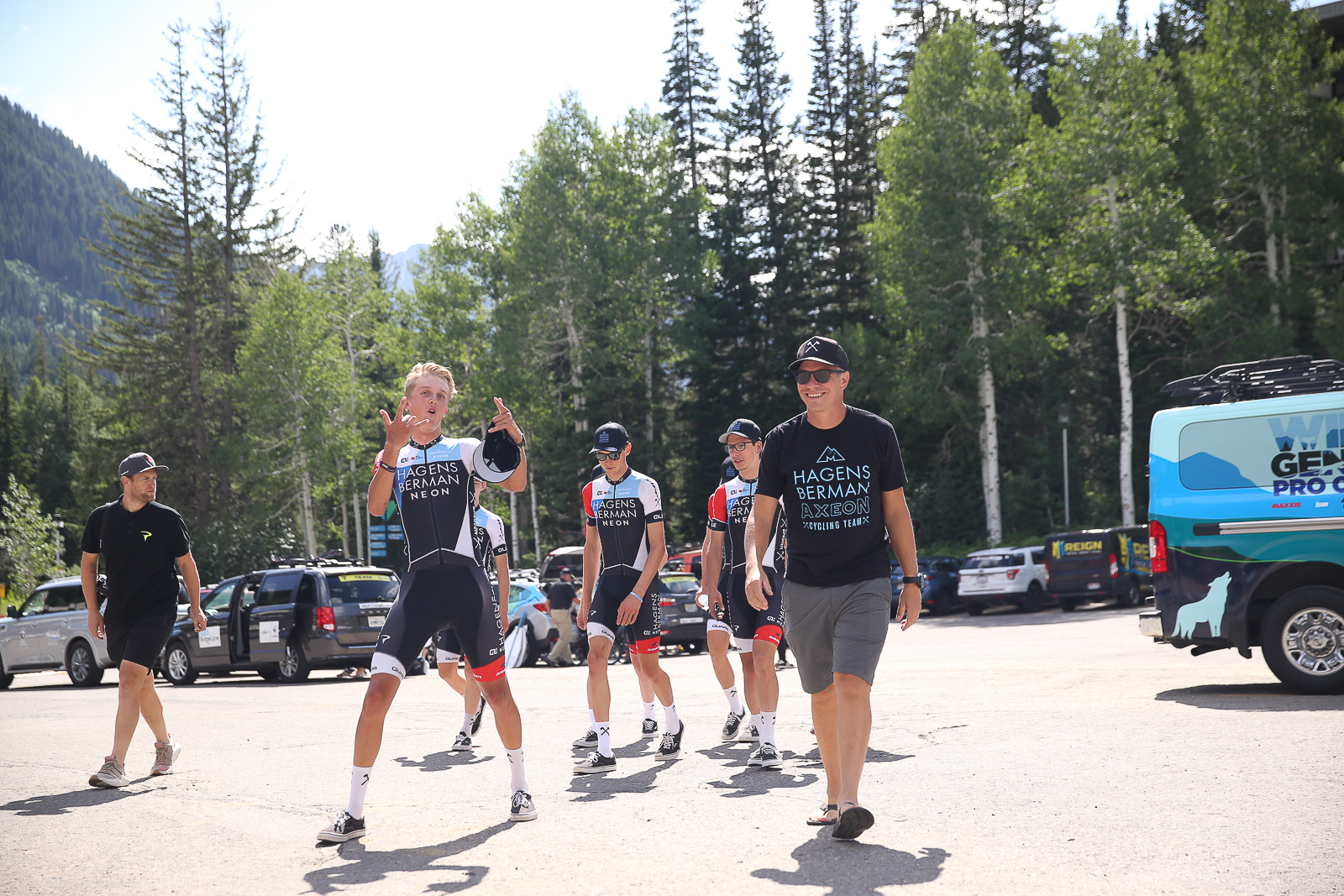
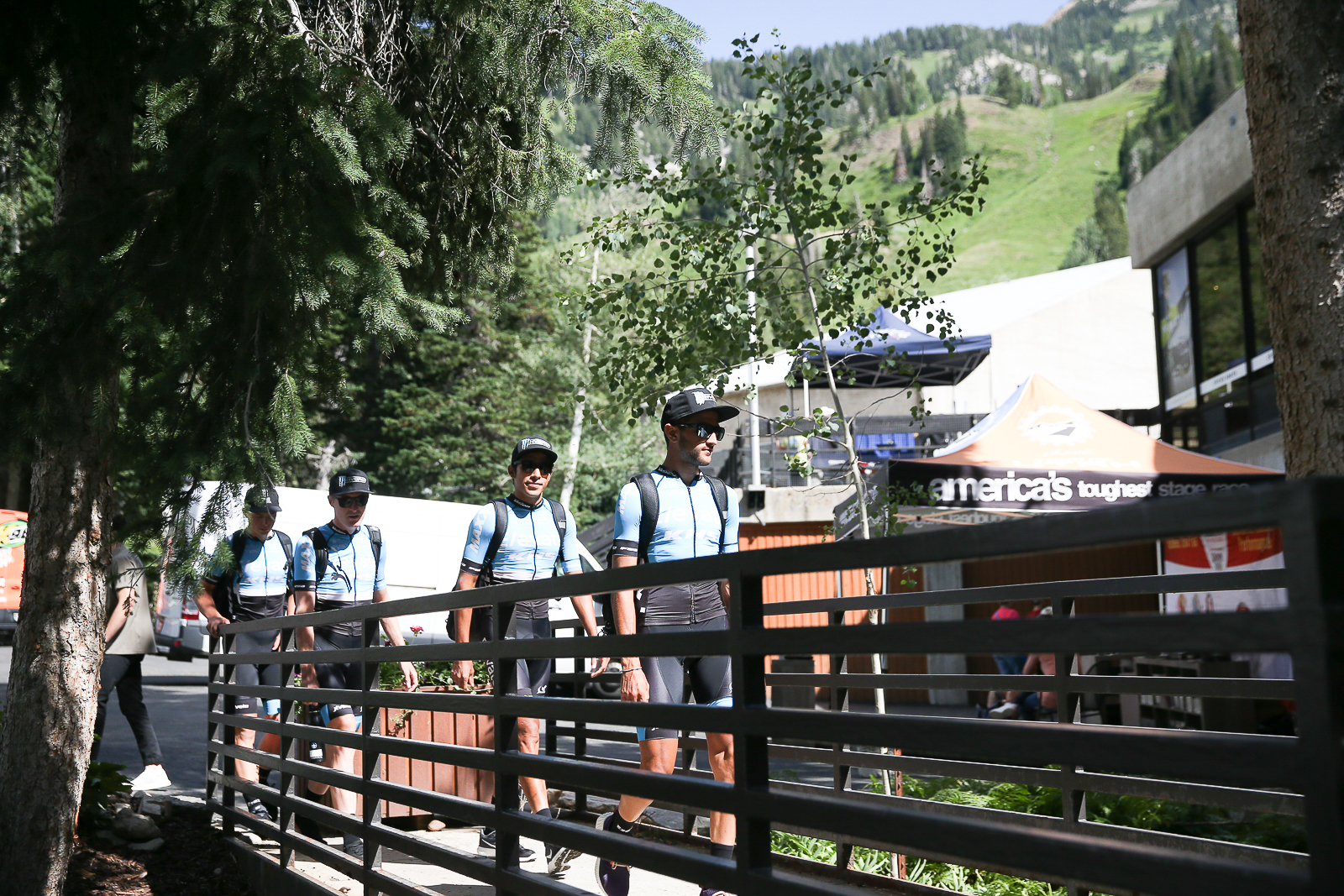
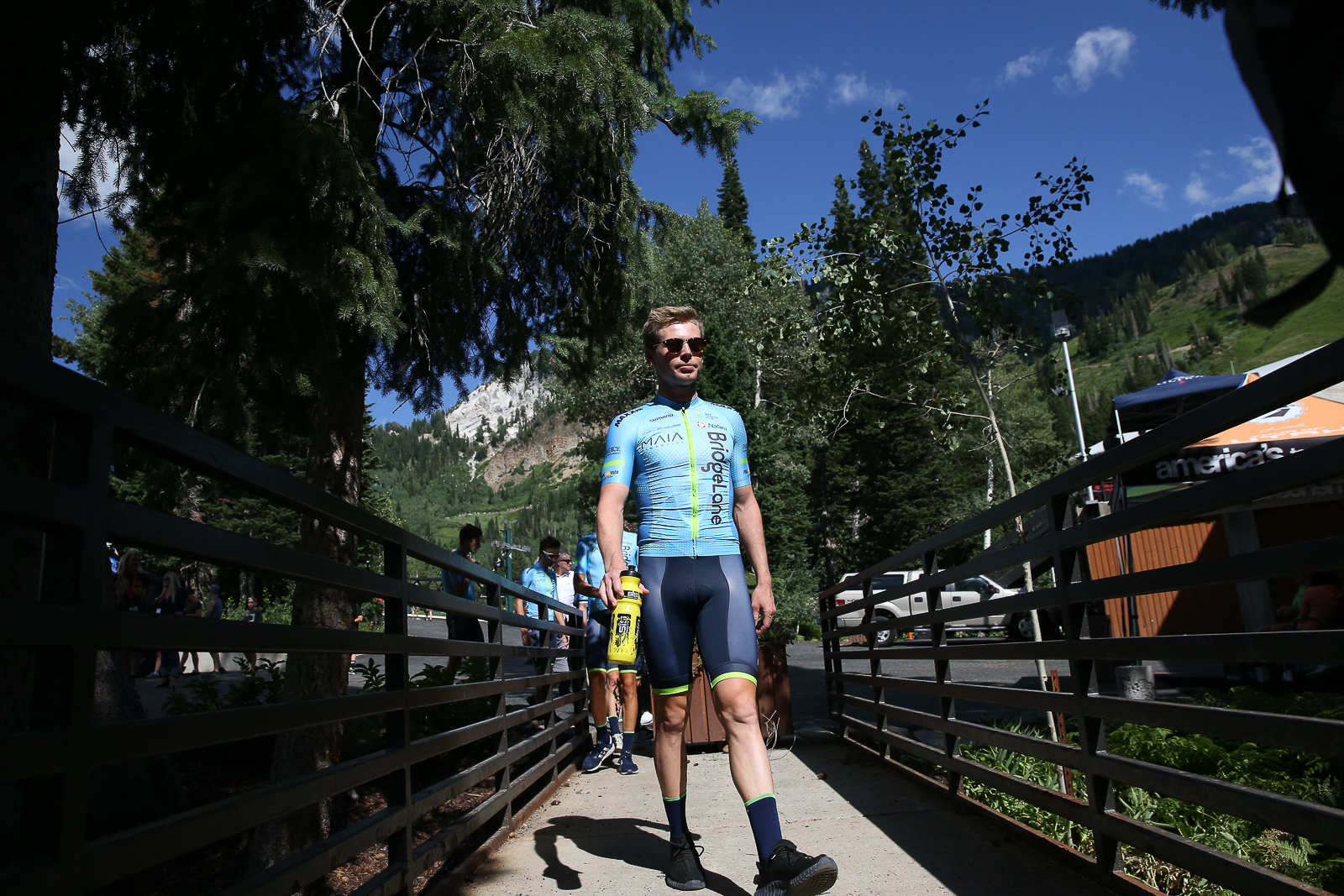
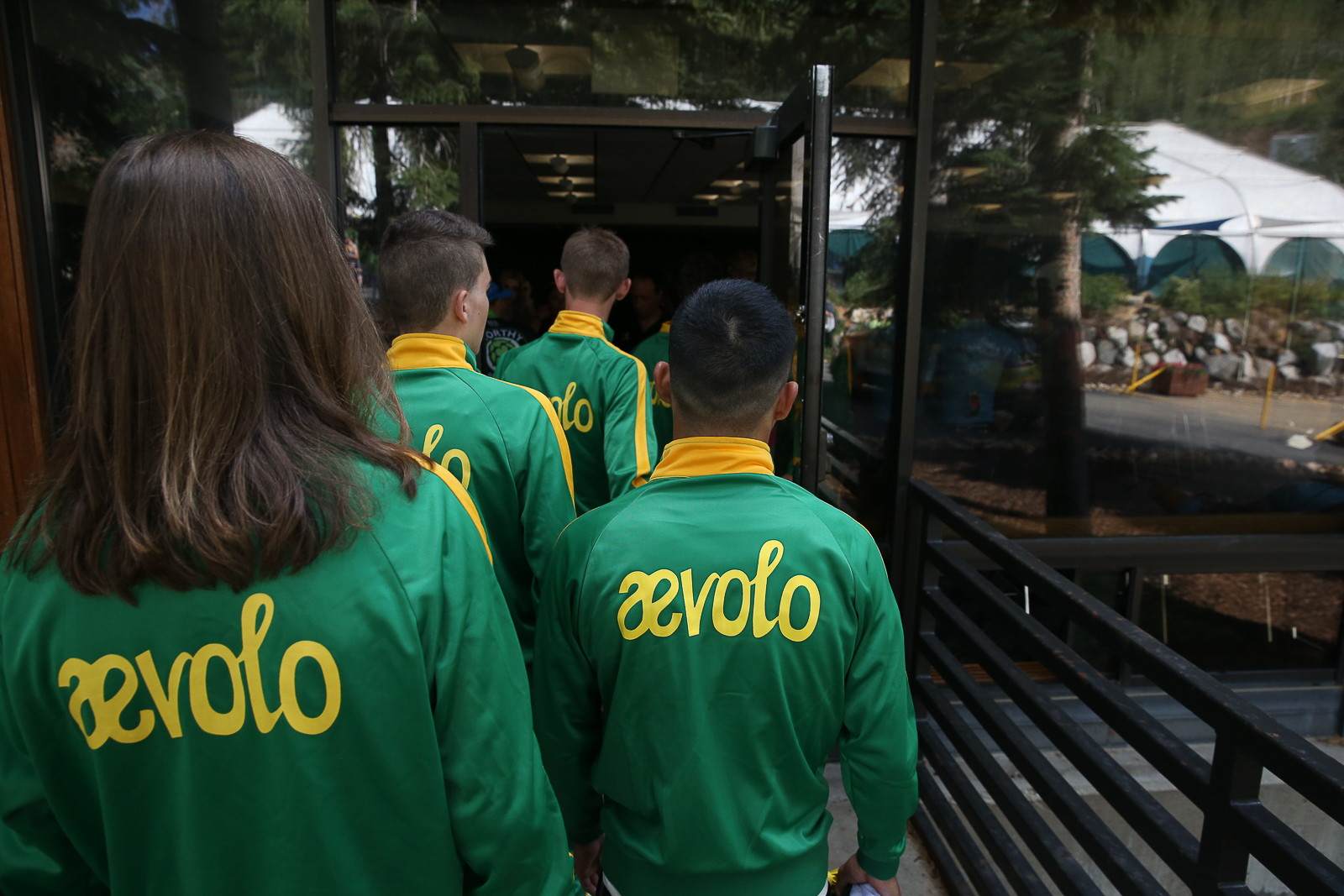
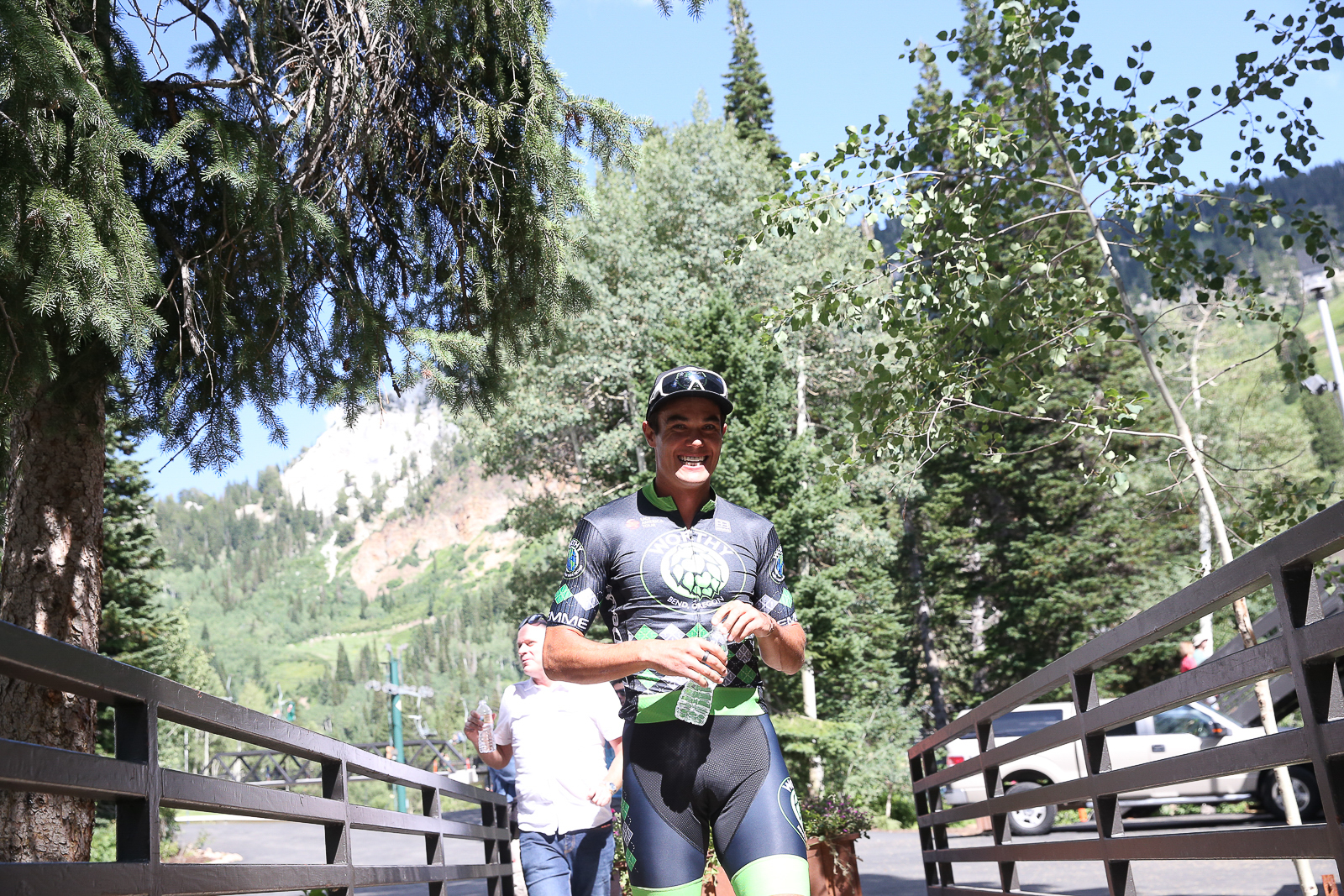
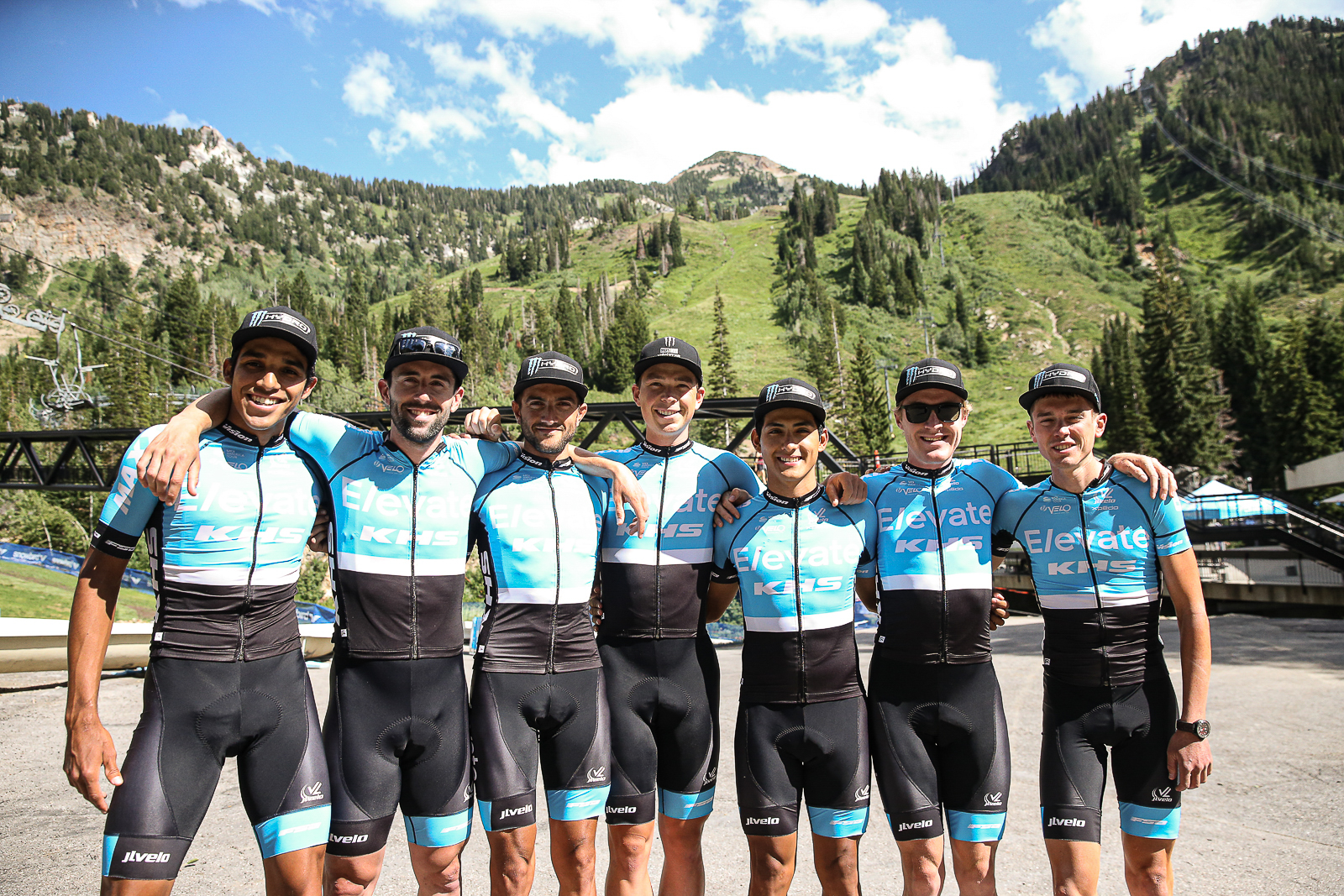
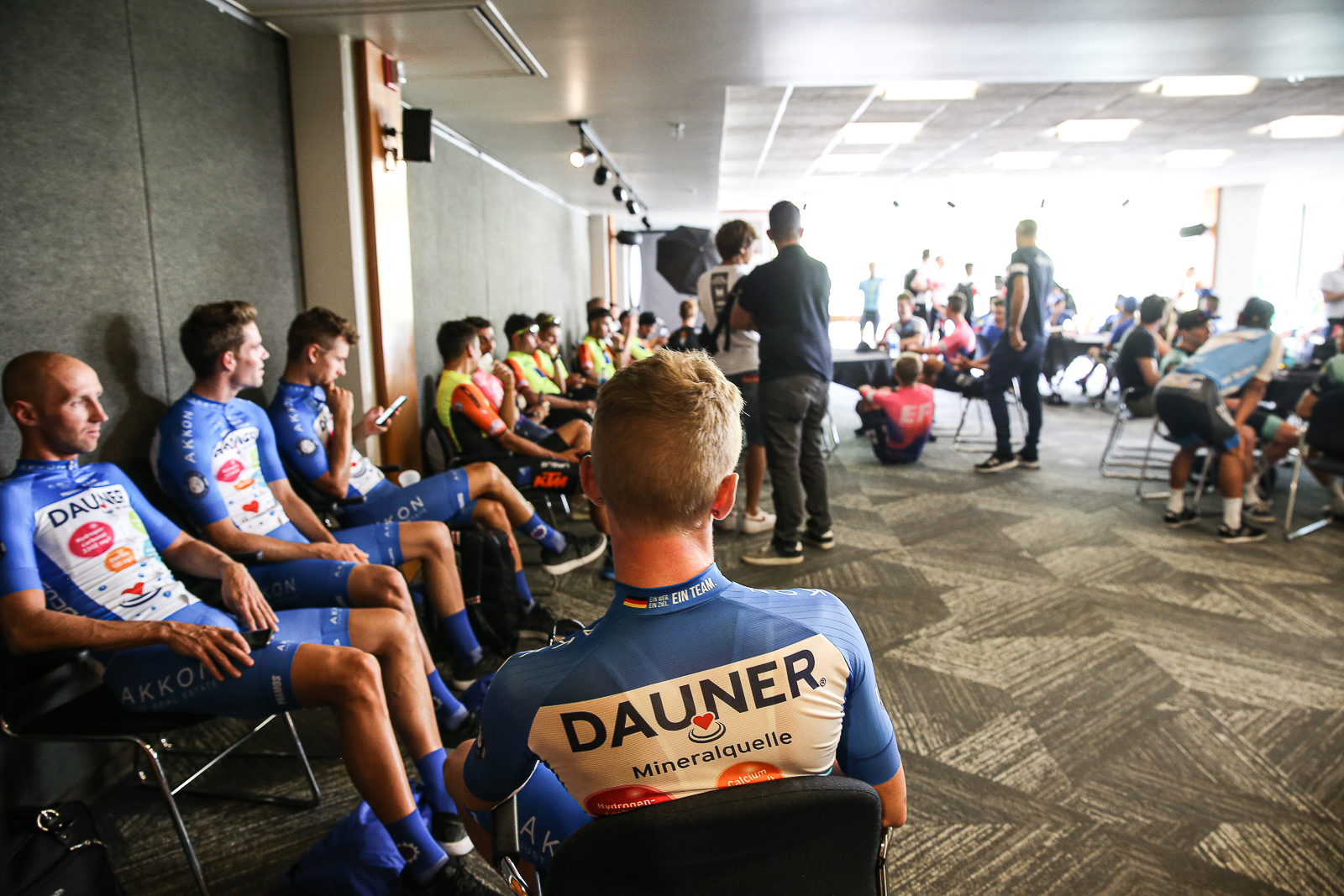
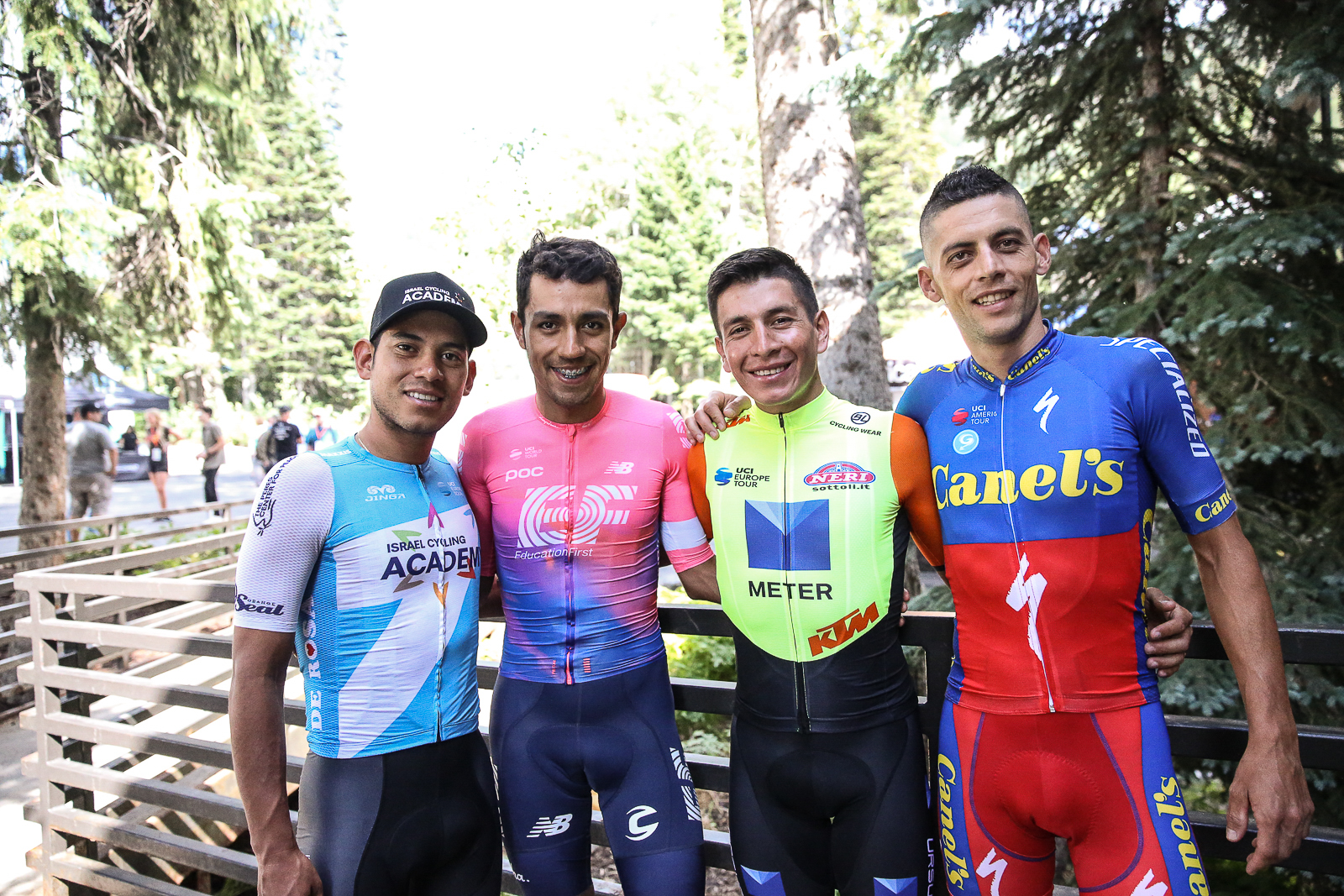
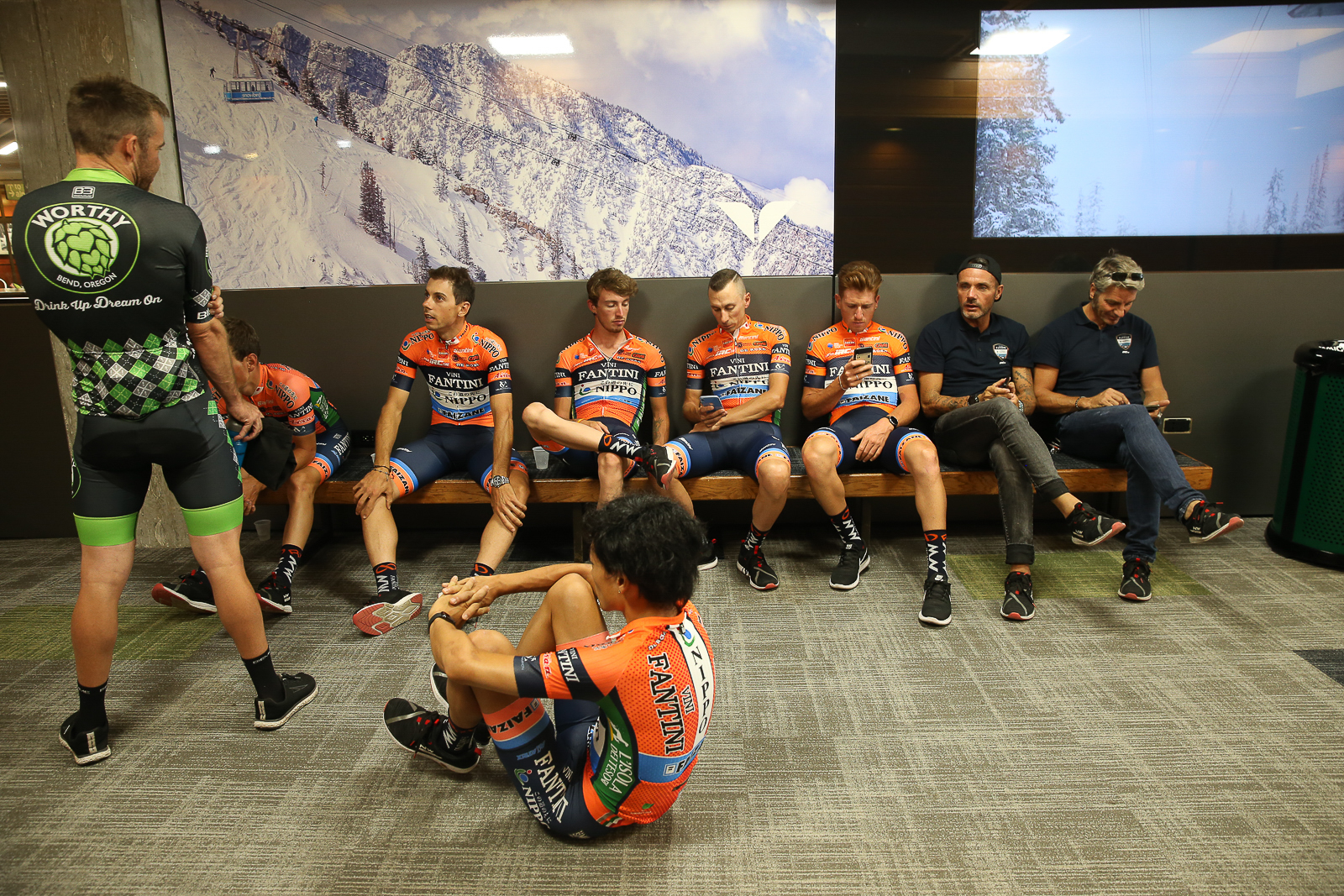
The 2019 Larry H. Miller Tour of Utah is almost underway. Dave Richards (https://www.daverphoto.com) brings us his view of the Team Presentation on August 10, 2019 at the Snowbird Ski & Summer Resort in Little Cottonwood Canyon. Snowbird will also be hosting the Prologue on Monday, August 12, 2019.
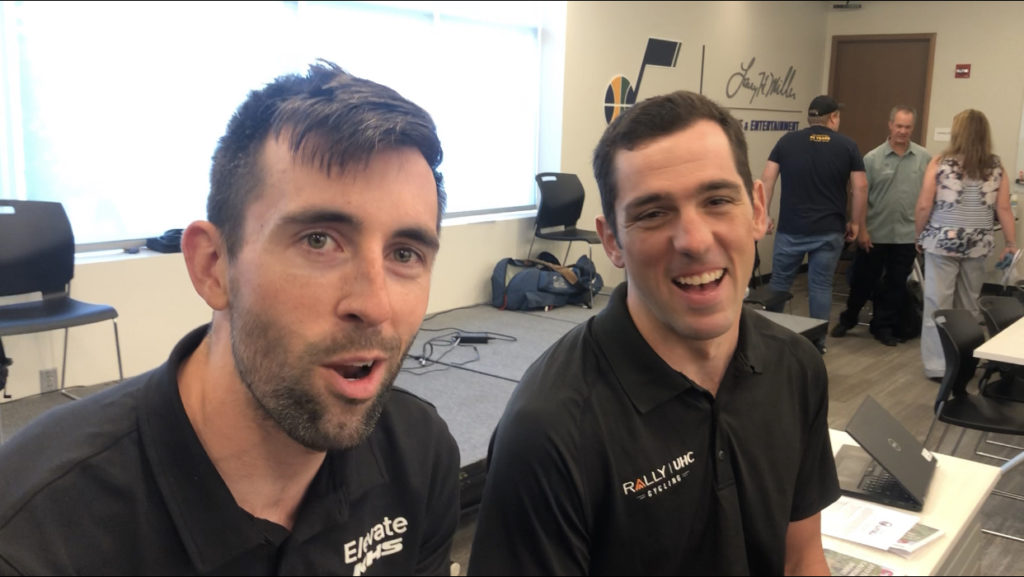
Cycling West interviewed sprinters Ty Magner (Rally UHC) and Eric Young (Elevate KHS) before the Tour of Utah gets underway to ask them about their chances at a stage win, their role for the 2019 Tour of Utah, and their impressions of the Powder Mountain climb, and the overall race.
Check out the video:
Eric Young and Ty Magner talk about the upcoming 2019 Tour of Utah. Photo by Dave Iltis
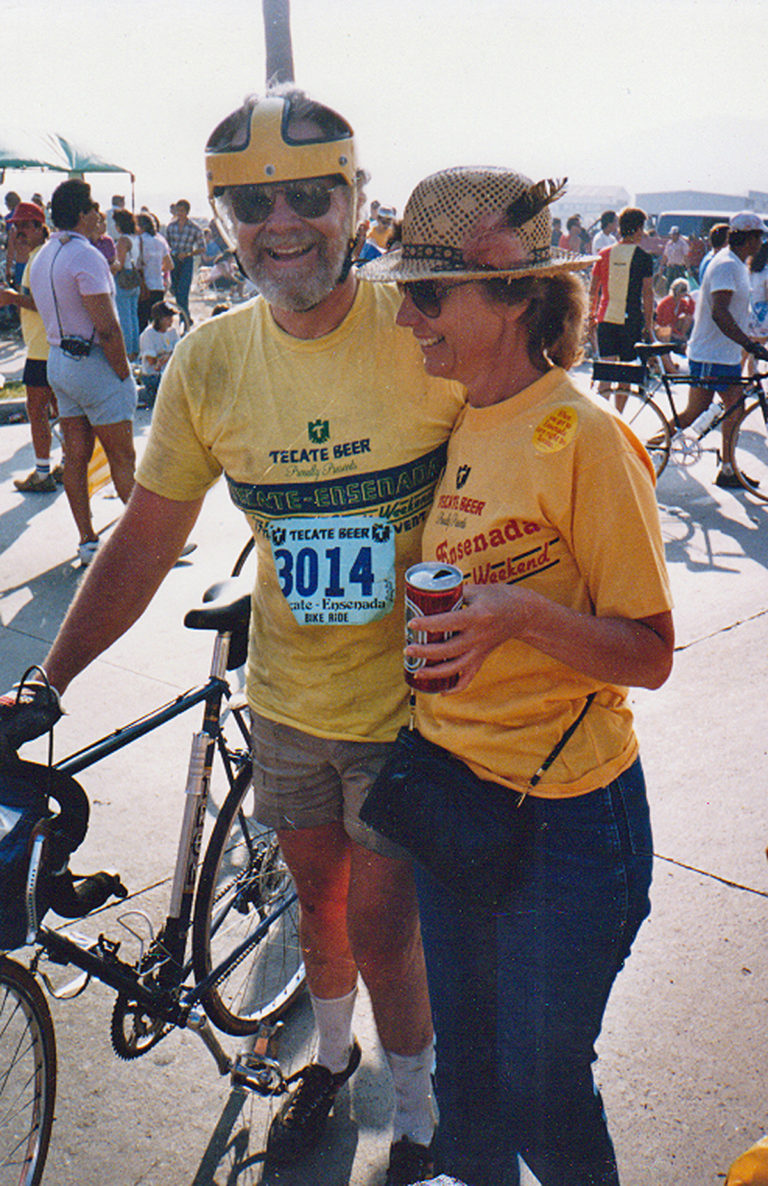
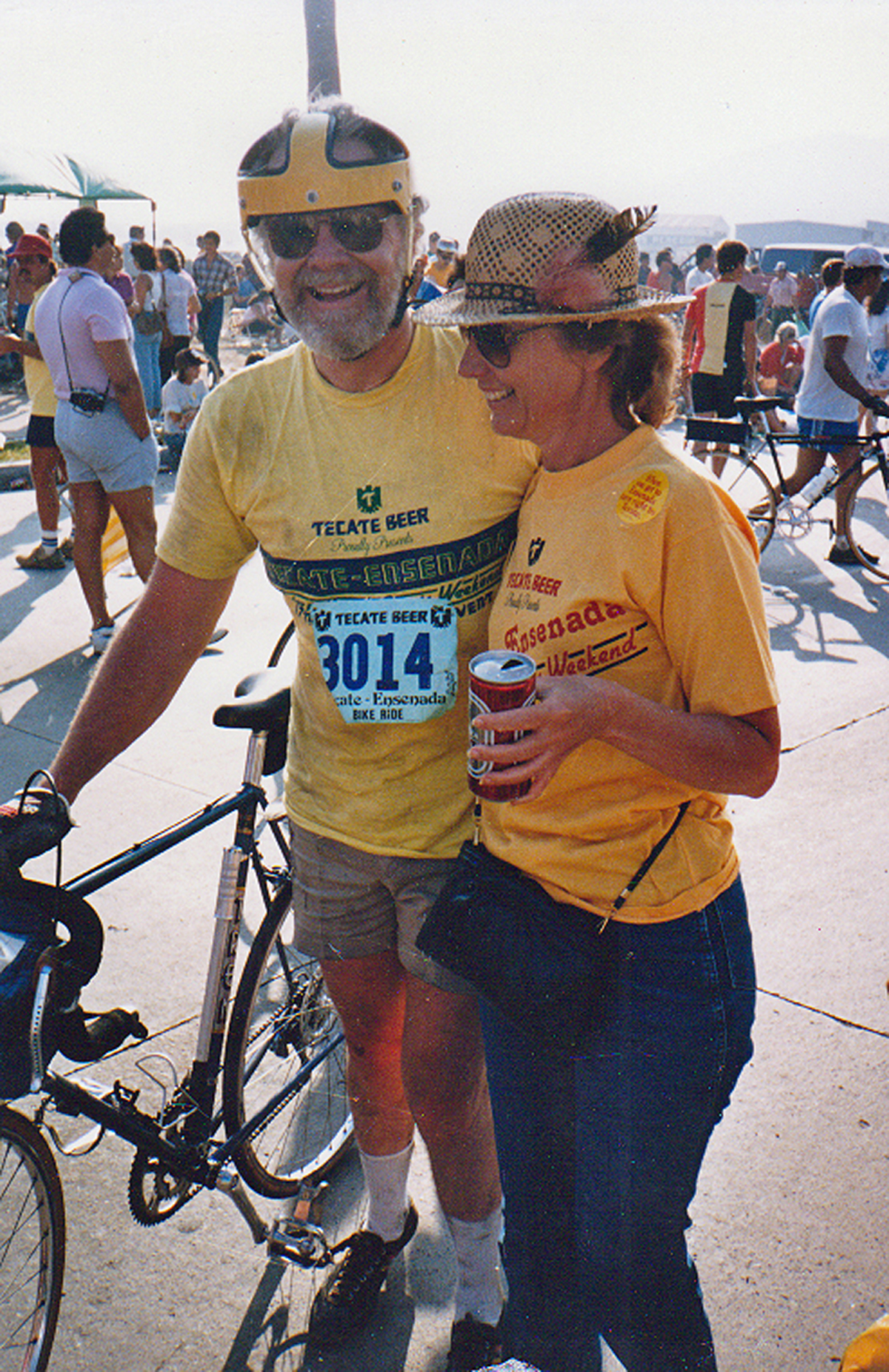
By Jay Hudson – All six thousand, plus, of us, had bicycles. That’s where the similarity ended. We were jammed together in the center of Tecate, Mexico just down the street from the sponsoring Tecate brewery in May, 1986. We were waiting for the gun to sound sending us pedaling seventy five miles on our way south to Ensenada. They issued us a map and “suggestions” to take two water bottles for drinking and for “sprinkling on head.” I carried fruit, a tire pump, patches, tire irons, wrench, a spare spoke, helmet and sun screen. It was May and the weather promised to be over 90 F and a road with many long climbs. Some of us were in shape and some not. We were sartorially correct and most of us were no more than a 7 on a scale of 1-10 in our riding experience. We were almost all white, tanned, tall and short, gloved and bare handed. Some of us were excited, others restrained. Some were out to break records. I was out to survive to the finish. Relatives waited in Ensenada for me and I was convinced that while I was sweltering on the upgrades, they were sitting in the shade sipping cool ones.
Jay Hudson with his sister Deena after the Tecate – Ensenada Bike Ride in 1986. Photo courtesy Jay Hudson
We were told that there would be plenty of water at the top of the first and substantial small mountain. Our map showed an additional ten watering stations along the route. We were told that there would be first-aid vehicles patrolling the road and trucks to scoop up those who gave out, for whatever reason. We felt strong, confident and convinced that with all the support, we should complete the route in about five hours. Gonzo riders would be much faster. We were not told that by the end of the day, first-aid personnel would be overwhelmed by riders who went down and suffered road rash, heat exhaustion, broken bones, torn muscles, dislocations. We were not told that more than half the starters would be piled into trucks because of equipment failures, fatigue, defeatism, and injury.
The gun sounded in a morning getting hotter by the minute. My buddy Mike Woolman, and I were in the second half of the pack and as we picked up speed to hit the hill, the crowd was so close together that even here, bikes got tangled and riders went down. The first hill was long and as the pack unwound, the line was shoulder to shoulder with the more powerful riders working their way to the left to pass the slow but steady masses. We fell into a rhythm using every gear we had. When Mike and I reached the first water station, all 5,000 gallons of support water was gone. It was obvious that riders guzzled and poured water over their hot heads without regard to the masses still working their way up the mountain. Five thousand gallons simply disappeared. Thousands of us were forced to continue with little reserves in our bottles hoping that a resupply was available at the next station.
We left the summit hot and a bit angry but knowing it would be rolling hills for a couple of hours and then a long downhill into a valley for the next water station. The downhill would be a chance to relax, let the wind cool us and enjoy the scenery. What we found on the downhill was scattered broken bike parts and water bottles strewn on the road making fast riding all the more hazardous. Riders were sitting and lying beside the road next to broken bikes nursing wounds and waiting to be scooped up by the trucks. Mike and I stopped to assist one fellow who was covered with road rash and in pain. Mike, being a physician, diagnosed the fellow with a broken collar bone but he could provide no medical assistance. We resumed our downhill plunge dodging debris and broken bodies most of who got themselves in trouble simply by letting it all hang out on the downhill.
At the top of the next hill, I broke a spoke and Mike was forced to say goodbye. I spent some time replacing the spoke and resumed the ride not looking forward to at least fifty miles of hot effort without a buddy and knowing I was probably now accident prone. At the next station I found no water and the only shade thrown by the one tree taken by stretched out riders. I crawled under an old rusted truck and stared up at the worn out radiator. At least it was shade and a couple of minutes rest would do me well. When I crawled out, I found I had a flat tire and the tire rim so hot I burned my hands fixing the tube. I pulled up my socks and hit the road a very discouraged rider. I passed another truck full of defeated bikers heading back to Tecate and this energized me. Mile after mile I was getting closer to Guadalupe where many years before, Barbara and I used to visit the Russians who moved there to escape the revolution in 1917. It was there that we joined in Sunday services in the flat roofed rectangular building they used as their Russian Orthodox Church. It was there that I was asked to talk to the congregation not knowing Russian or Spanish and the audience not knowing English. It was there that we ate borscht in a private home and enjoyed Sunday with resting farmers. It was there that I hoped I would find water and it was there that I should be able to smell the ocean and enjoy its cooling breeze so many miles from its Pacific shore.
It was getting late when I went through Guadalupe where I filled my water bottles and wondered what my sister was thinking as so many riders had already passed the finish line. Would she think that I was one of the defeated that had been scooped up with the thousands and returned to Tecate? After another half hour, I could feel the breeze from the ocean and smell the salt. It both lifted my sprit and put some spunk in my legs. I was going to make it. I came up on another rider and we talked which lifted my spirits even further. I picked up the pace the closer I got to the ocean and when the road met the ocean highway to Ensenada I felt like I could roar into town; almost. I crossed the finish line in a bit over 7 hours which was slow but I felt I could justifiably chalk it up to some problems. I had finished, avoiding the sweeper, the lumbering truck that returned so many to Tecate in ignominious defeat. My sister Deena was still waiting at the finish line and she hugged me as though I had just ridden around the world. I found Mike and his wife Marsha in a restaurant and we all ordered Mexican with a race sponsored Tecate beer chaser while reliving the race with stories and laughter.
There was a hiatus in the race shortly after my experience, but it is back and as adventurous as ever. I do wish that hydration packs and evaporative cooling bandanas were available in 1986. They would have made a significant difference.
I still have the map with all the water stops listed. All the water stops without the promised water.
For more information on the ride, now called the Baja Bike Race, visit: bajabikerace.com
The 2019 Larry H. Miller Tour of Utah is almost underway. Cathy Fegan-Kim (cottonsoxphotography.com) brings us her view of the Team Presentation on August 10, 2019 at the Snowbird Ski & Summer Resort in Little Cottonwood Canyon. Snowbird will also be hosting the Prologue on Monday, August 12, 2019.

 Howard Grotts wins his third consecutive Leadville 100. Photo courtesy Life Time/Leadville 100
 Rose Grant wins the Leadville 100 on her first attempt. Photo courtesy Life Time/Leadville 100