Seven-time Tour de France winner Lance Armstrong will race at the XTERRA USA Championship triathlon on Saturday, Sept. 24 at Snowbasin Resort near Ogden, Utah – his first Tri in more than 20 years.
Armstrong tweeted his intentions this morning and an Associated Press article confirmed the wide-spread speculation shortly after, setting off a flurry of action on social media sites around the world.
“I’m going out 2 have a good time, enjoy the course, & support the event,” said Armstrong.
While the buzz hit frenetic levels with today’s news, the “rumors” of a possible Armstrong appearance started slowly in the jungles of Japan when XTERRA World Champ Conrad “the Caveman” Stoltz was in Marunuma for XTERRA in late August.
“I got a tweet from Armstrong about training and at first I thought it was a joke because I’d never talked to him before,” said Stoltz, who embraced the news saying “I think it’ll be great for the sport and I’m really excited to race against him” in an interview with Triathlete Magazine today.
The hype intensified when Armstrong posted a profile to his twitter account last Wednesday of a pre-ride he did on the XTERRA USA Championship course at Snowbasin, a brand new route that had just been approved for use by the US Forest Service.
“We had literally just got clearance and made the decision to use the Sardine Peak trail for the USA course the day before Armstrong,” said Steve Andrus, the Snowbasin Resort sport event operations director who was tasked with showing Armstrong around.
“That was a cool experience. He was very inquisitive, wanted to know everything from tire choices to weather possibilities, elevation, trail conditions, other competitors, everything you could think of,” said Mortensen, who got to pre-ride with Armstrong, Caldwell, and 1996 XTERRA World Champion Jimmy Riccitello that day. “It was pretty humbling to have one of the best cyclists to ever walk the planet ask me questions like that, and then he would just take off … man can he haul.”
Now the big question is, “How will he do?”
“Lance coming to XTERRA is huge,” said XTERRA Managing Director Dave Nicholas. “In our kinds of sports he is an icon. We’re flattered he chose us, but if he thinks it will be easy pickin’s, he is in for a surprise. Our guys will not go silently into the night.”
HONOLULU, HI – Snowbasin Resort and Ogden, Utah transform into XTERRA Title Town USA September 24-25 as all 140 of XTERRA’s U.S. off-road triathlon and trail running events culminate at Nationals in one magical weekend on the mountain.
Lance Armstrong will be racing his first triathlon in over 20 years. The 7 time Tour de France winner is no stranger to triathlon, having won the national sprint championships at age 18 and 19.
The two events will bring more than 1,200 of the nation’s very best amateur and professional triathletes and trail runners to battle for the title of XTERRA National Champion.
The off-road tri Nationals is Saturday, Sept. 24, along with full and half-distance XTERRA Utah races open to everyone.
The XTERRA Trail Run Nationals half-marathon is Sunday, Sept. 25, accompanied by 5K and 10K trail runs. Both events will be filmed for nationally syndicated TV programs exposing the beauty of Utah to millions.
In addition to the races, XTERRA will host an expo in downtown Ogden with free kids races, vendor booths, a Paul Mitchell hair cut-a-thon for charity, and evening dinner parties. Simultaneously, Ogden hosts its 10th annual Harvest Moon Festival with more than 25 family-friendly activities planned for all ages including live music, kid’s activities, and downtown criterium races.
“We are excited to bring our entire XTERRA Tribe together in Utah this September, the energy level is going to be off-the-charts,” said Janet Clark, president of XTERRA. “Ogden and Snowbasin are proven winners – between the facilities at Snowbasin, the great restaurants and atmosphere along Historic 25th Street in Ogden, the Harvest Moon Festival, and the unbelievably supportive community – we couldn’t have asked for a better situation.”
While the USA Championship off-road triathlon is an invite only race, the XTERRA Trail Run National Championship is open to the public, so one and all can challenge the best-of-the-best trail runners and race for a national championship.
Both events finish at Snowbasin Resort – a world-class ski resort that hosted the downhill and super G races for the 2002 Winter Olympics, and most recently served as the final stop of the Winter Dew Tour. Located just 35 miles north of Salt Lake City, and just up the road from the adventure capitol of Ogden, Snowbasin is an easy get to and increasingly popular adventure travel destination. It has an incredible collection of trails, which are nothing short of spectacular in late September as the fall colors start bursting in an array of red, pink, orange, and yellow.
For more information and links to registration visit xterrautah.com, or call toll-free to 877-XTERRA-1.
The XTERRA USA Championship weekend is sponsored by the Utah Sports Commission, and Paul Mitchell. Sponsors include GU, Gatorade, Zorrel, Snowbasin Resort, GOAL Foundation, MediaOne of Utah, U.S. Forest Service, KSL TV, and the XTERRA Alliance – Wetsuits, Vitality, Cycling, Fitness, Flex, and Footwear.
Salt Lake City joins partners in community service project on Mormon Trail
SALT LAKE CITY – Mayor Ralph Becker is pleased to join the U.S. Forest Service, Salt Lake County and non-profit groups Save Our Canyons and the Cottonwood Canyons Foundation in issuing a call for volunteers to celebrate National Public Lands Day with a local trail restoration project on Saturday, September 24 from 8:30 a.m. to 1 p.m.
Volunteers will help refurbish sections of the Mormon Pioneer Trail by repairing treads and clearing out vegetation overgrowth. The popular pathway is not only historically significant but also crosses through several critical Salt Lake City watershed areas – areas the Wasatch Water Legacy Partnership, made up of representatives from Salt Lake City, Salt Lake County, the U.S. Forest Service, Save Our Canyons and the Cottonwood Canyons Foundation, is working to preserve and protect.
The Partnership’s mission is to “undertake creative and effective actions that conserve and sustain critical resources, create resilient ecosystems and enrich the quality of life for the region, its residents, businesses and canyon visitors.”
Mayor Becker’s Chief of Staff David Everitt said the goals of the new group are of critical value not just to Salt Lake City residents, but the entire Salt Lake Valley.
“We are extremely fortunate to benefit from the natural resources and recreation our nearby mountains and canyon lands provide,” Everitt said. “It is imperative that we continue, as partners, a strong stewardship ethic to protect our watershed for future generations.”
Volunteers must be 16 years of age or older and should register for the project through the Public Lands Information center at 801-466-6411 or at [email protected].
EVENT: 2011 National Public Lands Day Trail Project
WHERE: Mormon Pioneer Trail
(Volunteers should meet at Affleck Park in Dell Canyon. To access Dell Canyon, volunteers should exit 134 on I-80 and travel north on State Highway 65 for six miles. Travelers coming from Emigration Canyon follow the road to Highway 65 and then turn north. Carpooling is encouraged.)
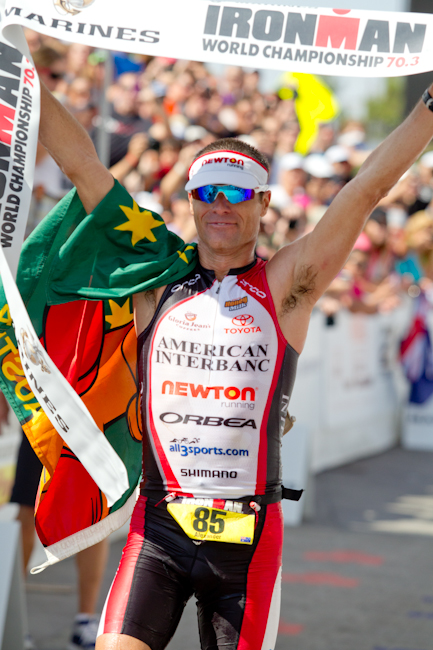
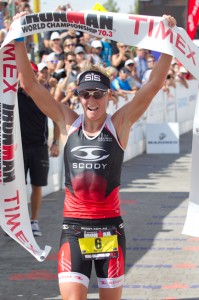
Lake Las Vegas and Henderson, Nev. (Sept. 11, 2011) – Approximately 1,700 athletes plunged into the water of Lake Las Vegas in the Marine Corps Ironman World Championship 70.3. Top professionals Craig Alexander (AUS) and Melissa Rollison (AUS) celebrated victories in Henderson, crossing the finish line in 3:54:48 and 4:20:55, respectively.
Favorable swim conditions kept competitors close, but Andy Potts (USA) emerged first from the water with a 22-second lead. Potts exited T1 first, followed by Kevin Collington (USA) and Paul Matthews (AUS). Cycling on a challenging bike course that covered varying terrain and elevation through the Lake Mead National Recreation Area, Potts saw his lead diminish as a number of competitors closed the gap. The group included a solid performance from Chris Lieto (USA), who was first out of T2. Ultimately, it came down to Alexander, who flew through the run course, overtaking Lieto and capturing his second World Championship 70.3 title. Jeff Symonds (CAN) ran an amazing race to take third place.
1. Craig Alexander AUS 3:54:48
2. Chris Lieto USA 3:58:03
3. Jeff Symonds CAN 3:58:42
4. Michael Weiss AUT 3:59:11
5. Joe Gambles AUS 4:00:00
Melissa Rollison - photo by Larry Rosa - EnduraPix
The professional women saw strong swim performances with Leanda Cave (GBR) exiting the water first with veteran Julie Dibens (GBR) close behind. Cave held the lead early into the bike until Dibens, 2009 Ironman 70.3 World Champion, made the move to the front of the pack. Dibens led through the majority of the bike course, but was followed closely by Rollison and Karin Thuerig (CHE). The race came down to the tough run course, where just as in the men’s race, the leader was overtaken by the competition. Rollison held a strong run throughout and captured her first Ironman World Championship 70.3 title with a time of 4:20:55.
Top five professional women’s results are below:
1. Melissa Rollison AUS 4:20:55
2. Karin Thuerig CHE 4:26:52
3. Linsey Corbin USA 4:29:25
4. Heather Jackson USA 4:30:21
5. Joanna Lawn NZL 4:33:08
One of more than 50 Ironman 70.3 events worldwide, Marine Corps Ironman World Championship 70.3 featured a swim held in Lake Las Vegas and a bike course that lead athletes through the Lake Mead National Recreation Area and back toward the city of Henderson. The run consisted of three laps through some of Henderson’s beautiful residential areas with a finish line celebration at Henderson Pavilion.
Visit www.ironmanvegas.com for event information and official results.
West Jordan, UT – Reynolds Cycling, a worldwide leader in the design and manufacture of high performance bicycle wheels, has announced that Len Cabaltera of Racine, WI has joined the company.
Cabaltera, an industry veteran, has joined Reynolds Cycling in the role of International Sales and Marketing Manager. In this position, Cabaltera will manage International sales, coordinate marketing with Reynolds Cycling’s new agency, LiFT Promotions, and oversee the Taiwan sales office.
“We are excited to bring Len on board our team at Reynolds Cycling,” says Dean Gestal, CEO of Reynolds Cycling. “With Len’s extensive marketing and sales experience and industry expertise, we have confidence he will be a tremendous asset to our company,” Gestal added.
Cabaltera began his cycling career in retail in 1984 and is an avid cyclist. In the last 25 years he has won multiple state championships in Road, MTB and BMX as well as national medals on Track.
With his start in racing and retail, Cabaltera joined the corporate world as a product/marketing manager at Roadmaster Bicycles. In 1996 he joined Hayes Performance Systems where he was instrumental in launching hydraulic disc brakes to the market – now an industry standard on most OEM mountain bikes. While at Hayes, Cabaltera served in vital roles such as Sales and Marketing Manager, Sr. OEM Sales Manager. His last role was Global Sales Manager before leaving to join Reynolds Cycling.
“I am happy to join the Reynolds Cycling team. I look forward to utilizing my many years of industry experience in sales, marketing, and product development to help Reynolds Cycling continue its strong growth path. The design and manufacturing team has proven it can build world class products such as the RZR wheelsets, I am excited to promote and sell these products,” said Cabaltera.
Reynolds Cycling‘s main objective is to pursue technology and offer a complete line of performance wheels to appeal to the most demanding cyclists delivering quality, ultra-light products that offer comfort, strength and reliability. The company is focused on hiring experienced talent, such as Cabaltera, with a passion for all things bicycling.
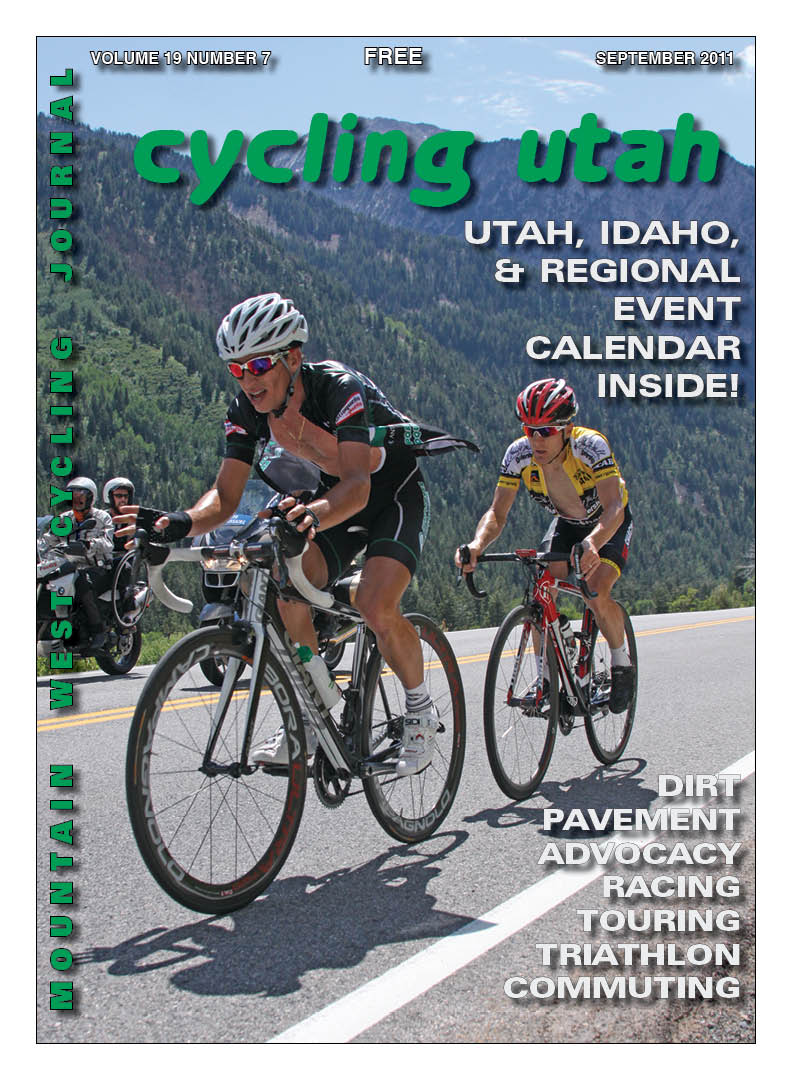
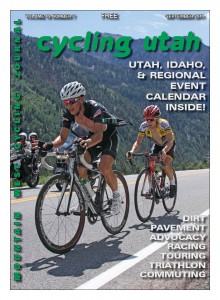
Cover: Columbia’s Sergio Henao just above Tanner’s Flat in Little Cottonwood Canyon on his way to winning Stage 5 of the 2011 Larry H. Miller Tour of Utah. Overall race winner and former Utah resident Levi Leipheimer is on his wheel. For a complete gallery, visit gallery.cyclingwest.com. Photo: Dave Iltis
Our September 2011 Issue is now available as a PDF (5.4 mb download), Pick up a copy at your favorite Intermountain bike shop or other location!
Featuring:
The Ultimate Challenge page – 2
Levi Leipheimer Wins Second Straight Larry H. Miller Tour of Utah Against Top International Field page – 3
Three Park City Bike Trails page – 4
Utah High School Cycling League to Debut in 2012 page – 5
Sheldon Smith Sets an Example page – 6
Mirrors: What You Need to Know page – 6
Utah May Lose its ‘Share The Road’ License Plate page – 9
Night Riding page – 9
Grant and Carey Roll in Mt. Ogden 100k/50k page – 9
Epic Bozeman to Bountiful Ride Raises Money To Build Homes for Charity page – 10
Utah Makes Good Use of Transportation Enhancements Funding; Idaho Does Not – page – 11
New Federal Rule May Help Bike Infrastructure page – 11
USDOT Awards Grants for Bicycle Accomodations in Big and Little Cottonwood Canyons page – 11
PRATT Trail Moves Forward page – 11
Clinger Receives Sanction of Lifetime Ineligibility For Second Doping Offense page – 11
Pedal Driven to Show in Southern Utah page – 11
Grant and Carey Win Point 2 Point page – 12
Tips for Cyclocross page – 13
SBR Mid-Week Cyclocross Series Launches page – 13
Tour of Utah to Return in 2012 page – 16
Louder Takes Best Utah Rider Jersey page – 17
Do I Need Cycling Specific Shoes? page – 23
USA Cycling Collegiate Road National Championships coming to Ogden in 2012 and 2013 page – 23
Sabrosa Cycles – page – 24
Hand Made in Utah page – 24
Just Charge It – Cornering on a Mountain Bike page – 24
Medical Team Report from the Tour of Utah page – 25
Cache Valley North Cruise page – 25
A Short Bicycle Tour of Southwestern Utah and Southeastern Nevada page – 26
Mountain Trails Foundation News page – 27
Heather Holmes Wins Singlespeed World Championships page – 27
At 206 miles, LoToJa is the longest one-day sanctioned bicycle race in America from Logan, UT to Jackson, Wyo
Layton, Utah — Over 1,000 bicyclists from across the U.S. and two countries will depart Logan, UT at dawn on Saturday, Sept. 10, 2011 to compete in the 29th Annual LoToJa Classic. Before sunset and over 200 miles later, they’ll cross the finish line in Wyoming at Jackson Hole Mountain Resort with the magnificent Grand Teton in view.
The popular race again features 206 grueling, yet scenic miles across northeastern Utah, southeastern Idaho and western Wyoming—all of which are ridden in one day. In addition there are three mountain passes with over 10,000 vertical feet of climbing. The cyclists include racers who are competing for fame and prizes, to riders who just want to cross the finish line and live to tell the tale. The age of participants range from 13 to 74. They burn up to 15,000 calories on race day.
The current course record is 9:01:44 set in 2010 by Al Thresher of Las Vegas, NV. His average speed was nearly 23 mph. The current women’s course record of 9:44:57 is held by Jenn Halladay of Kuna, ID. She also set that record last year, and her average speed was approximately 21 mph.
“The excitement level is high and we’re looking forward to another great year for the race,” said LoToJa Race Director Brent Chambers of Epic Events. “We have cyclists coming from 36 states, some as far away as Hawaii and Massachusetts. From outside the U.S., we have riders coming from Canada and the United Kingdom.”
The LoToJa began in 1983 by two cyclists in Logan who wanted to create a bicycle race that resembled the difficulty of a one-day European spring classic like Paris-Roubaix and the Tour of Flanders. In that first year, nine cyclists competed and finished. Since then, LoToJa has grown into one of the nation’s premier amateur cycling races. It has also become a major fund-raiser for the Huntsman Cancer Foundation, Autism Spectrum Disorder Connections, and other medical research foundations. To date, LoToJa sponsors and participants have raised over $600,000 for these causes. In addition, the LoToJa also sponsors local fund-raising groups that assist the event.
This year’s LoToJa will feature 34 different categorized races and a non-competitive, fun ride or Gran Fondo class. Most LoToJa finishers are on their bike 10 to 12 hours—more than twice as long as a typical amateur bike race in the U.S. The LoToJa is the longest one-day bicycle race in America that is sanctioned by USA Cycling, the sport’s governing body.
The LoToJa’s 206-mile course passes through three states, plus dozens of counties, cities and towns, the largest being Logan, UT., Preston, ID., Montpelier, ID., Afton, Wyo., Alpine Junction, Wyo., and Jackson, Wyo. The event would not be possible without the cooperation and assistance it receives from businesses, civic leaders, public safety officials and community volunteers. This year’s race expects to have over 450 volunteers. Due to the mountainous and remote terrain, volunteer ham radio operators from the Bridgerland Amateur Radio Club provide race communication.
The LoToJa’s top goal is to provide a safe and competitive race for all participants, support crews and volunteers. All motorists traveling LoToJa’s route on Saturday, Sept. 10 are asked to use caution when approaching cyclists. Groups consisting of up to dozens of riders may be encountered. Motorists are asked to pass carefully and to leave a safe distance between their vehicle, cyclists and other traffic.
The 1,000-plus cyclists who compete in the event, plus their support crews, well wishers, event staff and volunteers, result in an entourage of approximately 5,000 people. Several of the communities through which the LoToJa passes organize roadside fund-raisers to capitalize on the influx of visitors. The host cities of Logan and Jackson, primarily restaurants and lodging, also enjoy a welcomed economic boost from the race.
The route of this year’s LoToJa, plus additional information about the race, are available at www.lotojaclassic.com.
Transportation Enhancements (TE) took a major hit last year as states were forced to return to the federal treasury $2.2 billion in surface transportation money in August 2010. But Utah protected its funding, unlike most other states. The figures are reported in the annual Transportation Enhancements Spending Report: Analysis of the States’ Use of Federal Funding put out by the National Transportation Enhancements Clearinghouse.
States returned almost $580 million from Enhancements. And states also were scared to commit to new projects considering that the program’s future is uncertain as it is up for reauthorization and House Republicans have indicated they may want to kill the earmark, cut transportation funding, and just let states decide what to do with their federal highway money – which may mean they spend none on bike-related projects.
Since its inception in 1992, TE has been the largest source of federal aid for bicycle projects.
Utah proved kinder to the program than most states last year. Faced with returning federal money, Utah can count itself as one only 12 states that didn’t cut its TE, which amounted to slightly less than $8 million, Nationally, states rescinded 21 percent of TE funds, which amounted to 26 percent of what they returned. Idaho, on the other hand, sent back about $7.5 million in TE, 44 percent of what it cut and 31 percent of its TE allotment.
Historically, Utah has done better than most states in terms of getting the money obligated quickly. (Unlike most other federal grant programs, TE grantees must spend their own money first, then get reimbursed for it.) Still, at the end of the year, the Utah Department of Transportation retained about $2.3 million in TE funds left to obligate. Nationally, states still had almost $1.2 billion unobligated. Idaho had committed all its available cash that it didn’t return.
Since the program’s inception, Utah as funded 196 TE projects averaging $422,000 in federal funds, while Idaho has funded 160, averaging almost $53,000.
Both states, however, have trailed the national average match rate of 29 percent, with Utah only putting up 10 percent and Idaho 19 percent. Utah is allowed a lower match rate than most states because of the large federal land ownership – but there’s nothing in the law that would prevent the state, localities and the private sector from contributing more than they do.
For details, see http://www.enhancements.org/download/Spending_Report/TE_Spending_Report_FY10.pdf.
Note: the clearinghouse is partially funded by the Rails-to-Trails Conservancy, of which I am a member.
The Draw at Sugar House will soon allow pedestrian and bicyclists to travel safely between Sugar House Park and Hidden Hollow at Sugar House Commons. This is a keystone project for the Parley’s Trail and the next step in establishing a class 1 trail from the mouth of Parley’s Canyon and the Bonneville Shoreline Trail to the Provo/Jordan River Parkway. However, “Soon” in this case is a relative term. This project has seen numerous hurdles and unforeseeable circumstances rear their heads and cause additional delays and expenses. Still, Salt Lake County and the PRATT coalition continue in their commitments to build an artistic and functional landmark project in the community. Completion is anticipated for fall of 2012 or spring of 2013. For additional information on the Draw project, to participate with PRATT, or to contribute financially to the trail or to PRATT visit parleystrail.org.
It’s official: improvements to bicycle infrastructure within three miles of a train station or bus depot can get federal as part of a public transportation project. The Federal Transit Administration (FTA) announced that radius in its new rules governing Eligibility of Pedestrian and Bicycle Improvements Under Federal Transit Law.
FTA announced the final rule in August, a year after proposing the idea and receiving public comment. Most commentators favored the proposed three-mile radius.
The rules will allow funding for bike parking, bike lanes, signals, bike racks for buses and trains, and related bike infrastructure in a variety of federal grant programs, including some bicycle advocates may not be familiar with – so the rule could be a new impetus for using federal money to improve bicycle infrastructure, at least as it coordinates with public transit. While bike facilities within the radius are automatically eligible, ones further away can be if the grant proposal shows they will help people get to and from public transit.
Affected programs include the following:
Urbanized Area Formula Program
New Starts and Small Starts Major Capital Investment Programs
Fixed Guideway Modernization Program
Bus and Bus Facilities Discretionary Program
Elderly Individuals and Individuals with Disabilities Formula Program
Non-Urbanized Area Formula Program
Public Transportation on Indian Reservations
Job Access and Reverse Commute Formula Program
New Freedom Program
Paul S. Sarbanes Alternative Transportation in Parks and Public Lands.
Note: the rules allow use of federal funds for infrastructure for bike-sharing programs but federal law prohibits buying bicycles for it.
For details, see the August 19 Federal Register.
Editor’s Note: Projects that might benefit from the new rule include the PRATT Trail and improvements at the Intermodal Hub in downtown Salt Lake City.
The Larry H. Miller Tour of Utah, after making the jump to the UCI calendar a year or two earlier than plans called for, has no intention of losing its spot.
With the recently completed USA Pro Cycling Challenge in Colorado having just wrapped up what is arguably the best three-week span of professional cycling the country has ever seen, Tour of Utah organizers are not content to pat themselves on the back too much, though.
“Before we even had the first stage (this year) we were already thinking about 2012,” Tour of Utah president Steve Miller said. “We’re excited about what the future holds for the race.”
The 2011 version of the race featured six days of racing and, after partnering with Medalist Sports to make the event as professional as possible, the Tour of Utah sees room for improvement – albeit in steps not quite as large as the one it took this year.
With the step up to a UCI 2.1 rating, the Tour of Utah was forced to make certain changes from years past. The mountain-top finish at Mount Nebo, for example, was not possible for a few reasons. Among those reasons: the lack of power and parking to accommodate a UCI-sufficient finish-line area, the caravan and thousands of fans.
Instead, the race – much like the USA Pro Cycling Challenge – needed to focus its start and finish lines in locations capable of large crowds and the massive rolling race caravan.
The future of the Tour of Utah, accordingly, will likely focus on familiar stage routes with occasional variations, Miller said.
With Utah’s unique geographic and population characteristics in mind, the Tour of Utah prefers – for now, at least – to operate with a Hub and Spoke approach. This keeps Salt Lake City at the center of all the action with each stage within an hour or two drive. That approach allows organizers to reduce travel time and costs. It also allows teams to set up a basecamp for daily preparation.
That means the Tour of Utah is less likely to embrace a ‘tour’ approach that takes the race from one end of the state to another.
Still, Miller said the race is considering numerous options to keep the stages from getting too familiar.
“We’re trying to keep the stages fresh,” Miller said. “We’d like to take a stage up to Cache Valley and Logan. Or maybe to Moab and St. George.”
In fact, though nothing was formally announced, St. George visitor and convention bureau personnel were riding in Tour of Utah VIP cars during at least one stage while Logan-based ProForm was a visible sponsor at each finish line podium.
Miller said eventually he would like to see the race grow to as many as eight stages and cover two weekends. But for now, the Tour of Utah is comfortable staying at six days. Any tweaks to the course, Miller said, would be minimal.
“Next year, if we were to go farther distant,” Miller said, explaining there is no rush to add another stage, “we’d have to replace a stage.”
Keeping sponsors – both current and future — rewarded and happy, of course, will factor into any course-change decisions.
Even with 2012 already an active item on the planning agenda, Miller acknowledged the recently completed Tour of Utah was a huge success.
“It was a 10,” he said. “It was absolutely a 10 … It was beyond our wildest dreams and we’re very happy.”
The Dixie Mountain Bike Trail Association (DMBTA) along with DocUtah would like to invite everyone to Southern Utah to enjoy a showing of the bikeumentary, Pedal Driven. The showing will take place September 16th at 8 p.m.
There will be a Pre-Show celebration starting at 6 pm and consists of live music, raffle drawings, and an expo of bike related awesomeness. It will definitely be the place to be that Friday for everything bike.
The screening of Pedal Driven will be proceeded by a sampling of local bike film talent. If you have a film you would like to submit for consideration please email [email protected]. After the screening of Pedal Driven the film makers will be available for a Q & A.
And then the fun continues.
After the show, there will be a group night ride on some of our local trails. The exact route hasn’t been determined yet but will be fun for the advanced and rideable for the novice. Bike parking will be provided at the theater. After the ride, everyone is invited for a social at the Red Rock Service Center to help you wind down and let everyone tell their stories of how awesome the ride was.
Tickets are available for purchase at Over the Edge Sports in Hurricane or at Red Rock Bicycle Co. in St. George. Tickets purchased early are $10, four of those bucks will go directly to the DMBTA to help support the growing bicycle community in Southern Utah.
The happenings will all start at 6 pm at the Electric Theater in St. George. The theater is located at 68 East Tabernacle in downtown St. George.
Former Utahn and International Pro Cycling star Levi Leipheimer (Radio Shack) took over the yellow jersey in the stage 3 time trial and held it to the end for his second consecutive Tour of Utah win. Photo by: Dave Iltis
By Jared Eborn
Bigger, deeper, tougher and better than ever.
After jumping up to claim a spot in the UCI racing calendar the Larry H. Miller Tour of Utah delivered its best race yet with Levi Leipheimer returning to his former stomping grounds and, with the much-needed help of his Radio Shack teammates, captured his second straight overall title in the race.
Leipheimer, who followed his Tour of Utah victory with a win at the inaugural USA Pro Cycling Challenge in Colorado two weeks later, fought of relentless challenges and attacks from a surprising threat out of Colombia as the Gobernacion de Antioquia team animated the race from the very moment they hopped on their bikes.
Prologue: Utah Olympic Park Prologue
Even with the prologue being a short little race, everyone expected lots of pain and suffering as 118 riders emptied themselves riding up the road at the Utah Olympic Park.
What people didn’t expect, was to see the Colombian team Gobernacion de Antioquia assert itself so strongly.
Lead by Sergio Luis Henao, Gobernacion displayed its climbing prowess in a big way by claiming the yellow jersey and raising all sorts of eyebrows as they flew up the mountain.
“Sergio Henao won the 2km uphill prologue by a convincing margin,” Leipheimer wrote on his blog. “Myself and the other World Tour teams were stunned; it was clear that we had a real race on our hands.”
Henao posted the fastest time as he climbed the brutally-tough 1.25 mile hill at just 4:05. RealCyclist.com’s Francisco Mancebo was second at two seconds back and Gobernacion’s Oscar Sevilla rounded out the podium only five seconds off the pace.
Lurking in the background, though, were a quartet of American heavyhitters with HTC-Highroad’s Tejay Van Garderen, Radio Shack’s Levi Leipheimer and Garmin-Cervelo’s Tom Danielsen and Christian Vandevelde.
Gobernacion placed seven of its eight riders inside the Top 47 riders and none of the eight were more than 35 seconds back – setting the stage for what became a week of fireworks provided by the Colombians.
“We are a modest team and we are in competition with really great teams,” Henao said. “But we are here to have a really great showing and we will fight every day.”
Stage 1: Ogden Road Race
Utah’s Chase Pinkham crushing the prologue. Photo by: Dave Iltis
The three-loop course was already challenging enough with three trips up the North Ogden Pass and at 116 miles, was certain to wake up the peloton as it traveled around Pineview reservoir and down Ogden Canyon three times before hitting the start/finish line
on Historic 25th Street. However, it didn’t seem like it would be the deciding stage in the race – especially not with four more days of racing left on the schedule.
But when Leipheimer, Henao, Sevilla and Janez Brajkovic (Radio Shack) managed to sneak away from the peloton on the third ascent of the pass, everything changed.
With Kelly Benefit-Optum Health’s Jesse Anthony in a breakaway ahead, Leipheimer looked to his side and decided to see who still had some legs after chasing an early breakaway down.
“It was just a spur of the moment attack,” Leipheimer said of his acceleration up the North Ogden Pass the third time. “I noticed people were really hurting. So I asked myself why not try a little bit.”
Leipheimer’s move, which Brajcovic followed, surprised all but Henao and Sevilla.
As the foursome crested the summit, they had a sizeable lead over what was left of the peloton and charged down the hill hard. Anthony, tired after his solo attack on the early break, tucked in behind the foursome and caught his breath while expecting the peloton to regroup and chase them down after the climb.
A funny thing happened, though. The chase never got organized and with the Leipheimer group working as cooperatively as a team time trial, the gap grew to nearly three minutes as they headed around the reservoir and into Ogden.
Sergio Henao won the prologue to don the leader’s yellow jersey. Henao fought for the lead throughout the race. Photo by: Dave Iltis
Anthony, refreshed after sitting on for the final 20 miles of the stage and not viewed as a strong threat to the overall title, easily sprinted past his four breakaway riders for the stage win on 25th Street in Ogden.
Henao retained his yellow jersey by finishing second while Leipheimer, Sevilla and Brajkovic were all awarded the same time.
The rest of the contenders, however, didn’t cross the finish line for another 2:35.
That result created a sense of relief among the five breakaway riders while shattering the rest of the field.
“It’s pretty much a four man race now, no offense to Jesse Anthony,” Leipheimer said after the stage. “I’m not sure why, but they never got organized and didn’t chase us down. We worked perfectly together once we got away.”
The handful of riders expected to challenge for the overall win — including Van Garderen, Danielson, Mancebo and others – knew they’re race in Utah had changed dramatically. A shot at the final GC podium was all but gone and stage victories were now the focus for most of that group.
Stage 2: Lehi – Provo Road Race
A relatively easy day of racing in Utah County saw ‘just’ 100 miles of action. After starting in Lehi, the peloton sailed past Utah Lake and then took in the mild climb through Goshen Canyon to Mona. From
there, it was a mostly flat run into Provo with several long sections of false-flat roads leading into the technical sprint finish at the Shops at Riverwood.
The GC effectively neutralized already, Stage 2’s mostly-flat roll promised to be one for the sprinters.
But, as any racing fan knows, even sprint stages can pack some surprises in.
Tyler Wren wore the best Utah rider jersey early in the race. Photo by: Dave Iltis
The first came after the mild, but still noticeable, climb through Goshen Canyon. With no breakaway established after an intermediate sprint was absorbed, the peloton approached the feedzone just north of Mona.
A couple of riders quickly tried to escape after rolling through, however, and created some tense moments of attacks and counter-attacks for the next several miles and the attention level was sky high for the rest of the stage.
Heading into the final intermediate sprint, a breakaway including Endura Racing’s John Anderson and Kelly Benefit’s Michael Creed got away. They were allowed to dangle off the front for a while before the charge into Provo set the stage for some dramatic moments over the final few miles.
With hundreds of fans lining the streets as the race roared through the south end of Provo, the teams with strong sprinters began a bit of gamesmanship lining things up.
As teams lined up, youngster Tejay Van Garderen launched himself in a solo attack with about four miles remaining in the race. The peloton allowed him to dangle off the front as the course had a slight uphill approach to a technical finish. That technical finish, however, created some problems for several riders after HTC-Highroad’s Van Garderen was caught.
“When I went, it was on a bit of a rise and people were going backwards. It looked like people were getting tired,” Van Garderen said. “The sprinters’ teams got organized and poured it on. When it’s one guy against nine it’s hard to succeed.”
Leipheimer and Henao put the hammer down the third time up North Ogden Pass in the decisive move of the race on the thrid time up N. Ogden Pass. Photo by: Dave Iltis
First, a couple of riders anticipated the first sharp right-hand turn a few miles early and caused a crash at the front of the chase. Because the crashed happened far enough out, those hitting the asphalt were outside the ‘safe zone’ that would have given them the same time as the lead group. Included in the crash was Henao.
The Gobernacion team rallied around the yellow jersey, however, and safely rejoined the peloton in time to retain possession of the overall lead.
Leipheiemer, also riding near the front, was able to avoid the crash but suffered a flat tire with less than a kilometer to go. He kept himself upright through both 90-degree turns heading into the finish and held
Escaping the chaos behind them, Endura Racing took advantage of its position at the front of the pack set up a solid leadout train for its sprinter. Jack Bauer was out front as the group hit the turns and was able to hold a straighter line than most others. As he looked behind him to assess the situation with 300 meters to go, he saw a much larger gap than he anticipated and finished off the sprint himself, easily rolling across the line ahead of Liquigas’ Elia Viviani.
Jesse Anthonhy won the sprint to take Stage 1 after being in the break most of the day. Photo by: Dave Iltis. See more at gallery.cyclingwest.com.
“It wasn’t really a sprint finish,” Bauer said. “We tried to set (the team sprinter) up, but going into the final corner we had a bit of a gap. I looked around and no one was on my wheel so I decided to go.”
Henao stayed in yellow but Leipheimer ended the stage licking his lips in anticipation of the Stage 3 time trial that lay ahead.
Stage 3: Miller Motorsports Park Time Trial
By now, it was clear the Gobernacion de Antioquia team was not to be taken lightly in the mountains. What wasn’t known by most was how they would fare in a race against the clock.
Also know was Leipheimer’s ability to throw out some serious wattage in the Race of Truth.
At just less than 10 miles in length and on virtually flawless pavement, the Stage 3 time trial figured to shake up the race for the yellow jersey. In fact, after Stage 2 wrapped up, Henao admitted he expected to cede the overall lead to Leipheimer but try to limit his losses.
After Tom Zirbel set the mark early in the day at 18:03, racers battled the heat and wind trying to climb up the overall standings.
Van Garderen, celebrating his 23rd birthday, had the ultimate reason to celebrate in the end as he nailed his ride with a 17:33 time and found himself in the hotseat with a handful of riders still on the course.
Leipheimer was the only threat remaining and as Van Garderen watched the seconds tick off the finish line clock, he cracked a big smile and pumped his fists in victory as the Radio Shack veteran tripped the clock six seconds slower than the newcomer.
It was Van Garderen’s first race victory as a professional.
“I’ve been waiting for a win for the last two years,” Van Garderen said just seconds after he watched Leipheimer’s clock tick past the magic number needed to give him the stage win. “It’s my birthday and it’s one of my last races with my team … So this is really a gift to them because they have been there and supported me so much all this time.”
Leipheimer’s time, though, was 1:09 faster than that posted by Henao and handed the yellow jersey to the former Utahn with two stages left to race.
Radioshack rode very hard at the front in Stage 4 to keep Leipheimer in yellow. Photo: Dave Iltis
Stage 4: Salt Lake City Circuit Race
If the Tour of Utah hadn’t dished out enough punishment already, it went into pain overload Saturday afternoon.
Starting and finishing in the shadows of the Utah State Capitol building, the 7.4 mile course through the Avenues and University neighborhoods unloaded wave after wave of hurt with its nasty climb from downtown Salt Lake City up State Street and the relentless attacks from teams hoping to shatter the field.
The day began with a bit of bad news as Jesse Anthony, fifth overall in the standings thanks to his impressive win in Stage 1, withdrew from the race because of flu-like symptoms. He was not the only rider to pull out of the race that day, though.
The wicked-fast pace – the peloton covered the 80-mile course at an average speed of 27.3 miles per hour – split the field into several groups and a trio of riders called it quits before the finish while four more missed the time cut after emptying themselves in an effort to help their team leaders.
As expected, the Gobernacion team sent shockwaves through the field with a series of stinging attacks. A group of 18 riders got off the front and built a gap large enough to threaten Leipheimer’s overall lead.
The Radio Shack squad was forced to organize a chase group at the front and do a lot of work as they tried to close the gap over the final few laps. But that effort came at a cost as Leipheimer found himself with only Brajkovic by his side for the final couple of laps. The gap was never fully closed and Gobernacion’s Janier Acevedo charged away from the field on the final ascent of State Street to pick up a five-second win over Team Type 1’s Javier Megio and Rubens Bertogliati .
“I am extremely happy,” Acevedo said through a translater. “It is hard to win a stage anywhere in the world, but today it was especially difficult.”
Mancebo, a former Tour of Utah winner and the runner up ion 2010, finished fourth in the stage to climb back up the overall standings a bit.
Henao attacked Leipheimer’s chase group on the final lap and managed to pull away, chopping 33 seconds off the time he had to make up heading into the final stage – just 23 seconds away from the overall lead.
Janier Acevedo (Gobernacion) won Stage 4 on the final sprint up State Street. He also took home the Best Young Rider Jersey. Photo: Dave Iltis
Leipheimer was gasping for air and in a world of hurt as he crossed the finish line – still wearing yellow but 1:38 behind the stage winners.
“It was difficult,” Leipheimer said after the stage. “We were under pressure the entire time and with the finish the way it was, I had to leave something in reserve for that last lap and climb.”
Stage 5: Park City – Snowbird Road Race
The scene was set. Levi Leipheimer wore yellow and the unknown team from Colombia was going to make him work his tail off to keep it.
Starting in Park City, the race rolled through the rural farmlands of Oakley and Kamas.
Already seen as the hardest day of racing in the Tour of Utah, Stage 5 added a few extra miles because of road construction near Kamas. Instead of hitting the moderate, but uncategorized climbs near Jordanelle, the Peloton was rewarded with a lightning fast descent through Browns Canyon. The detour through Oakley and Peoa added six miles to the day, making the stage 106 miles in length, but probably neutralized some attacks in the early miles.
Several attempts to form a break were launched, but none stuck as the watchful eyes of the GC contending teams quickly neutralized each attempt.
After the PureBlack team from New Zealand wrapped up the sprint points competition for Roman Van Uden – he started the day second in points to Acevedo but was not contested on either of the Sunday sprint lines – the tension in the peloton kicked up significantly as the riders turned down Provo Canyon with the first monstrous climb of the day in front of them.
What was a large peloton immediately shattered as the field headed up the Alpine Loop. By the time the leaders reached Sundance, there were small groups of riders falling off the back.
Gobernacion’s Acevedo soloed off the front to cross the summit ahead of Leipheimer and Henao on the first climb and GEOX-TMC’s Gian Paulo Cheula launched his own solo attack heading up Suncrest to claim those KOM points.
The developing story, however, was how in the world Leipheimer would handle the attacks from Gobernacion. Shortly after the second KOM point, the lead group contained Leipheimer and Brajkovic from Radio Shack and an overwhelming seven members of the Gobernacion team.
As expected, Gobernacion sent rider after rider up the road. Leipheimer had no choice but to match those attacks to make sure no one, especially not Henao or Oscar Sevilla, was able to get away up Little Cottonwood Canyon.
“As we started the final climb up Little Cottonwood I marked Henao and waited for his inevitable attack. He didn’t waste any time and made a huge acceleration that saw my SRM Powermeter spike over 800 watts. I made my way back to his wheel just in time for him to accelerate a second time,” Leipheimer wrote. “It felt like I was trying to match Alberto Contador; he demonstrated a lot of “punch,” as we call it. Again I made my way back to his wheel and again he attacked! I figured he couldn’t keep this up much longer so I dug in and his fourth attack was finally less violent. This is when I knew I had the race won and saw an opportunity to make a friend. I made it clear I was only interested in winning the GC and the stage was his for the taking.”
With Brajkovic as his lieutenant, Leipheimer stuck close to the wheel of Henao and never let him out of his sight.
Surge after surge, Henao tried to shed Leipheimer and build a gap. But each attack was quickly matched and by the time the duo passed Tanners Flat – where a rambunctious crowd cheered them on and showered them with sprays of water – Henao realized he would not be able to pull away.
“The strategy today,” Henao said through a translator after his stage 5 victory, “was to get ahead as much as we could. I felt good, I felt strong. But Levi was just as strong.”
Leipheimer, much as he did a year earlier, matched the pace set by his final stage riding partner and rolled across the finish line at Snowbird in second place for the day, but comfortably in first place overall.
Final Overall General Classification Presented by Larry H. Miller Dealerships
For stage results and complete overall General Classification, see page 9. For Complete Results and more photos, see cyclingwest.com.
Final Jersey Competitions
In addition to the prized yellow leader’s jersey won by Leipheimer and the sprinter’s jersey taken by Roman Van Uden, several other within race competitions were awarded.
Typically, the Tour of Utah is a climber’s paradise. But the 2011 edition of the race featured only two stages with King of the Mountain points available and that made the North Ogden Pass climb extremely important. With three chances to earn points during Stage 1, the early breakaway jumped on those and Team Type 1’s Rubens Bertogliati seized the moment.
By cresting the summit the first two times, Bertogliati earned the Ski Utah KOM jersey and – without any points to be earned for another few days – held it until he was popped off the back during the first climb of Stage 5. Leipheimer tacked on enough points to win the KOM race as he finished at Snowbird with 29 points. Gobernacion’s Janier Acevedo – who was first to the top in the Alpine Loop – was second with 28 points.
The best young rider had plenty of competition and HTC-Highroad’s Tejay Van Garderen looked like the man to beat for most of the race. But with the overall title out of reach and the road tipping upward on the last day, Van Garderen fell off the pace a little bit. Gobernacion’s Cristian Montoya, however, was in the middle of the action throughout the race and soared up the mountain on the final day to claim the light blue Subaru Best Young Rider jersey by 46 seconds over BMC’s Chris Butler. Utah’s Chase Pinkham finished fifth in that race, 13:52 back.
Gobernacion, fueled by their amazing ability to stay together throughout the race with few riders off the back on any stage, was easily the winner of the best team race and showered the crowd at Snowbird with celebratory champagne. The Colombian squad, which had seven riders all together as the lead group reached the base of Little Cottonwood Canyon, had an advantage of 4:58 over Garmin-Cervelo and 5:53 over RadioShack.
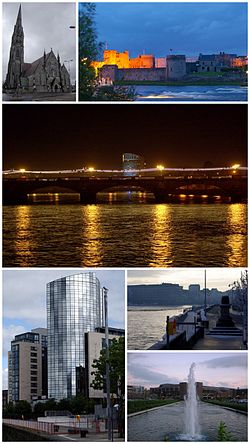
Limerick, Ireland: the location of the singlespeed world championships for 2011.
Utah’s Heather Holmes won the Singlespeed World Championship mountain bike race in Kilfinane, Co. Limerick, Ireland, on August 27, 2011.
She topped the women’s field on a cool day in Ireland, and promptly received the prized winner’s tatoo following the race. Following a good start, Holmes noted in a blog post, “My second lap was again enjoyable, with awesome single track and perfectly flowing trails. I was a bit anxious by now though, as no one was passing me. I started to think ‘Hum, I might be getting a tattoo today.’ “ She finished strongly to win, stating, “After I crossed the line I was taken to an area for a photo, and then placed in front of a table with a tattoo gun and ink. After much discussion I finally decided that my left arm would be a good place for the prize, and I was very happy with the design.”
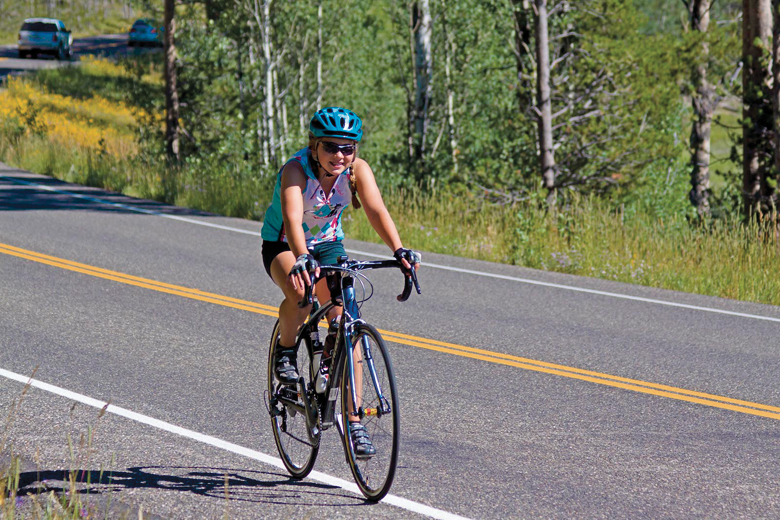
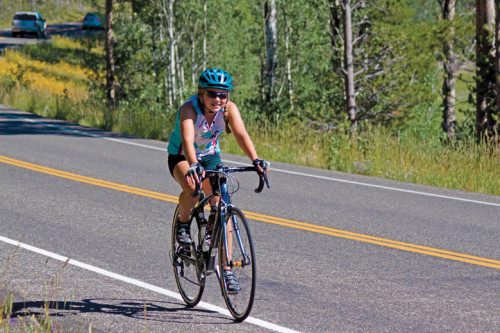
Jessica Orvis, age 12, on her Epic Ride, cycling nearly 500 miles in five days. Photo by: Preston and Colleen Norris.
By Jayson Orvis
All it took was a glance. I just wanted to make sure that dude pulling for us hadn’t blown up our pace line with his murderous, 24 mph pace through Yellowstone Park. I looked back to the road just in time to see my front wheel suck into a little channel in the asphalt that poured over into a four-inch drop right into the worst boulder-filled shoulder I’d seen in a hundred miles.
“Oh, fuuuuu…”
I braced myself in a futile effort to “ride it out” and an instant later I was flying.
And, just like that, I ended my shot at “riding Epic” in 2011. After piling my tattered body into a SAG car, the other twenty-five riders continued on to Old Faithful, eager to complete the first stage of BoToBo – Bozeman to Bountiful. That’s Bozeman, as in “Bozeman, Montana” and Bountiful as in “Bountiful, Utah.” In five days, these cyclists would each pedal five hundred miles. That’s an “Epic Ride”: five hundred miles in five days.
For the past two years, Hearts and Bikes has staged Epic Rides. In 2010, it was from Salt Lake to Las Vegas (565 miles) in six days. In 2011, it was BoToBo from Bozeman to Bountiful. And, yes, every rider rides every mile. This isn’t a relay. It’s an Epic Ride: five centuries over five days.
An event this unreasonable could only come from the mind of a teenager. In 2009, Alex Orvis, my then-fifteen-year-old daughter, asked me, “Can you ride a bike from Salt Lake to Las Vegas.” That next summer, she and thirteen of our friends attempted that very ride, and Alex pedaled every one of the 565 miles, despite the fact that she’d never been on a road bike prior to
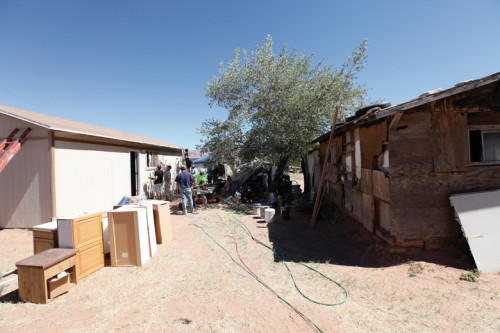
The home that cycling built: on right is Grandma Virginia’s former home, on the left is the home built with funds raised from the 2010 Epic Ride. Photo by: Preston and Colleen Norris.
that year.
Earlier in the summer of that first year, as interest in the ride grew, Alex began to feel like the ride had potential to make a difference in the world. Lots of people were signing on to ride the 565 miles and it seemed like the event was begging for a cause. Alex
approached Hearts and Hands in Action, a non-profit that builds homes in the impoverished Navajo Nation. Alex learned that, not far from where her SLC to LV route coursed through Arizona, Navajo people were living in tar-paper shacks. Hearts and Hands had built over 20 homes on the reservation and was looking to raise money and raise its profile. Alex’s ride could do both.
Hearts and Bikes became an arm of the Hearts and Hands charity, and that year the intrepid cyclists burned up their Facebook pages raising money while they rode. Armed with enough cash to build one home, many of those same cyclists trekked down to the Navajo Nation that next spring and built a home for Grandma Virginia in the Lukachukai Village.
And so a strange marriage was born. Ride a bike 500 miles. Become an Epic Cyclist. Champion the cause of the Native American. It doesn’t necessarily make sense, but it works.
In mid-August of summer 2011, the cycle began anew. This time, we’d learned to ride in the more-temperate mountains of the Rocky Mountain west, instead of the scorching deserts. On the final day of our ride, twenty-five cyclists lined up in front of the Mountain Haven RV Park in Mantua, Utah. This would be the final push of this year’s Epic Ride. Many of the cyclists had ridden over four hundred miles in the previous four days and their burned-out quads paid homage to their commitment. Other cyclists had dropped in or dropped out. Some were riding fifty miles a day while they dreamed of riding the full, Epic Ride in 2012. One rider, me, was laid up in the RV with his arm in a sling and his brain full of Lortab.
While the riders pedaled out toward the highway in the dawn light, a giant support crew marshaled themselves for the day. Our “Kitchen Vixens” broke down the breakfast “fixens.” Chuck,
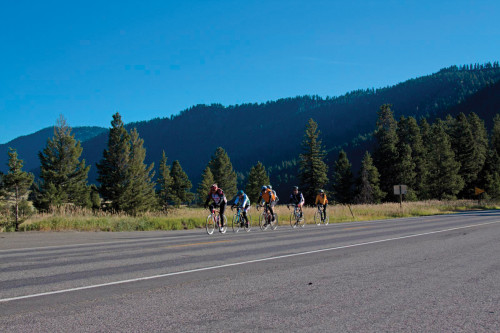
With a variety of experienced levels, BoToBo breaks up into pockets of like-experience riders. Photo by: Preston and Colleen Norris.
the Camp Master, pulled up tent stakes and helped RVs back out of their stalls. A train of six SAG vehicles hurried out of the park like motorized sheepdogs, eager to catch up with their cyclists.
Each of the last four days had begun much the same: eat oatmeal, check bikes, grab the day’s map and “wheels up” for the next century ride. And, each of the last four days our four Lotoja-veteran riders were joined by a cadre of new cyclists; men and women who had labored mightily since the beginning of summer to get their bodies ready for the Epic challenge – or as much of it as they could complete. These neophytes included a couple of redeemed mountain bikers, a pack of brand-spanking-new road bikers and one twelve-year-old girl.
Everyone was having a blast watching her go. She’d already “chicked” a whole bunch of grown men – leaving them in the dust. At the summit of Sardine Canyon, the last climb of the ride, she laid down on her handlebars, completely exhausted. She was our ride mascot and our tear-jerking inspiration, all rolled into one. As the days of the ride progressed, more mature riders would alternate taking her under their wing, pulling for her, encouraging her and coaching her. And despite a crash on Day One, she got stronger each day.
Every cycling event has it heroes. The Epic Ride seems to grow them in bunches. Where most rides are championed by the fastest, lightest, most-professional riders, the Hearts and Bikes Epic Rides are dominated by men and women with hearts of tempered gold. On this ride, everyone pulls for everyone to finish. And when you’re talking about 500 miles in five days, finishing together is the only victory that matters.
For more information about Hearts and Bikes and the Epic Ride coming up in August of 2012, visit HeartsAndBikes.com or jump on the Hearts and Bikes Facebook group.
This year, 60 riders have raised around $7000 so far, enough for about half a house. More donations are expected to bring the total higher.