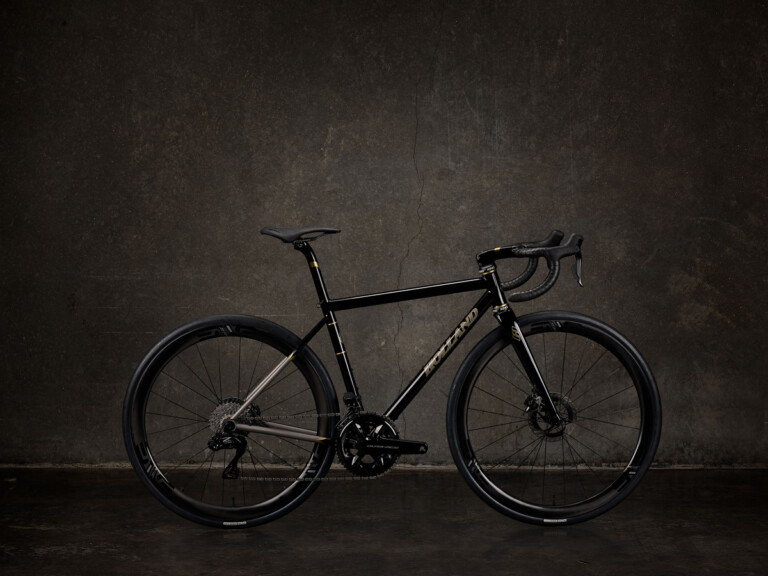
ANYWRE JPS
Presented at the 2024 ENVE Builder Round-up
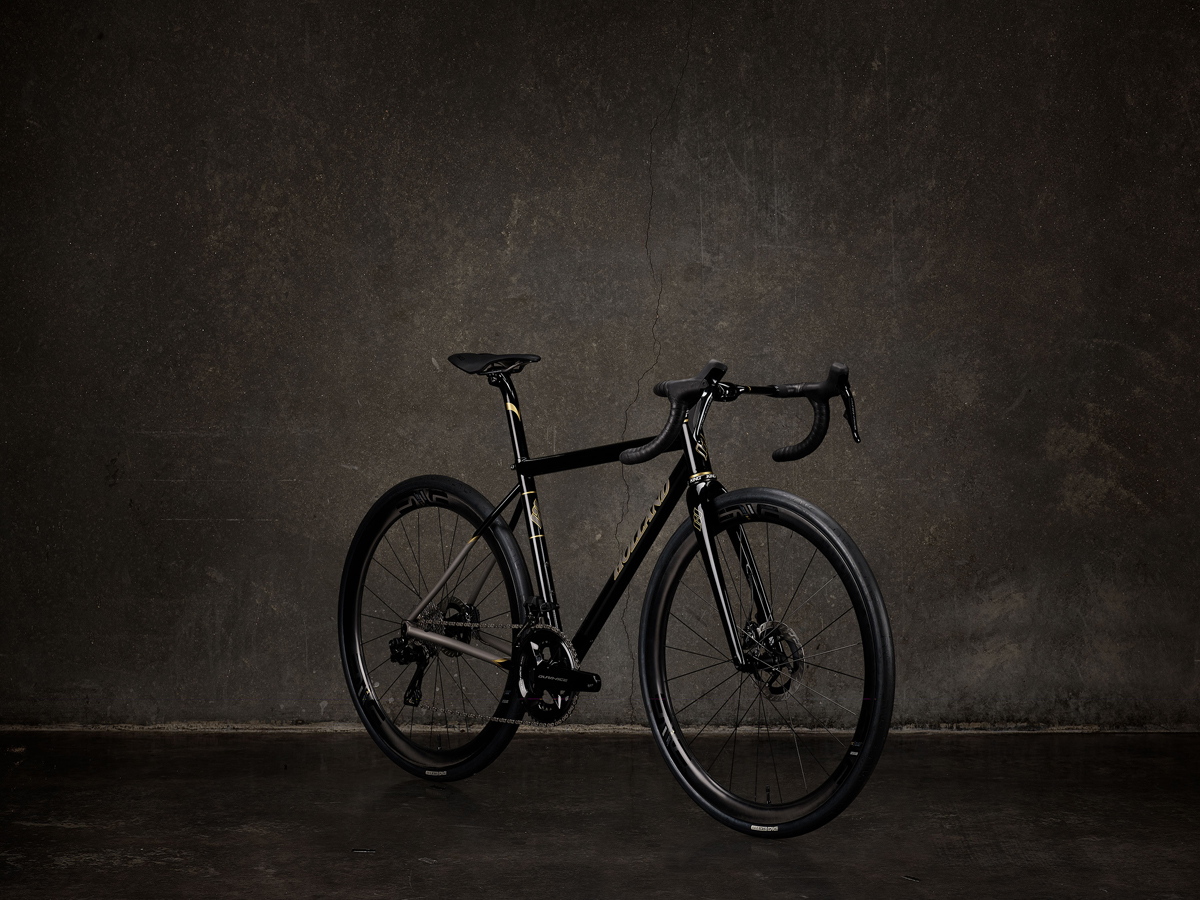
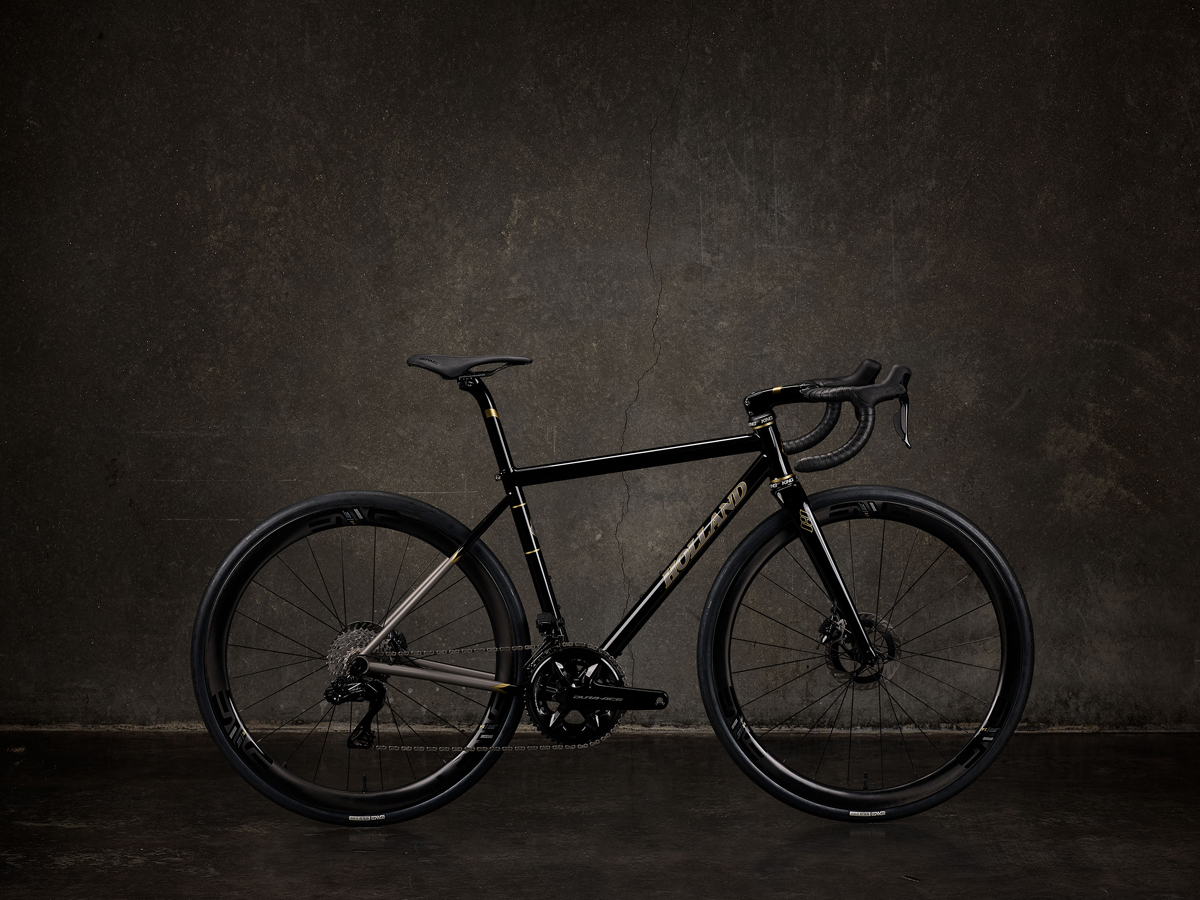
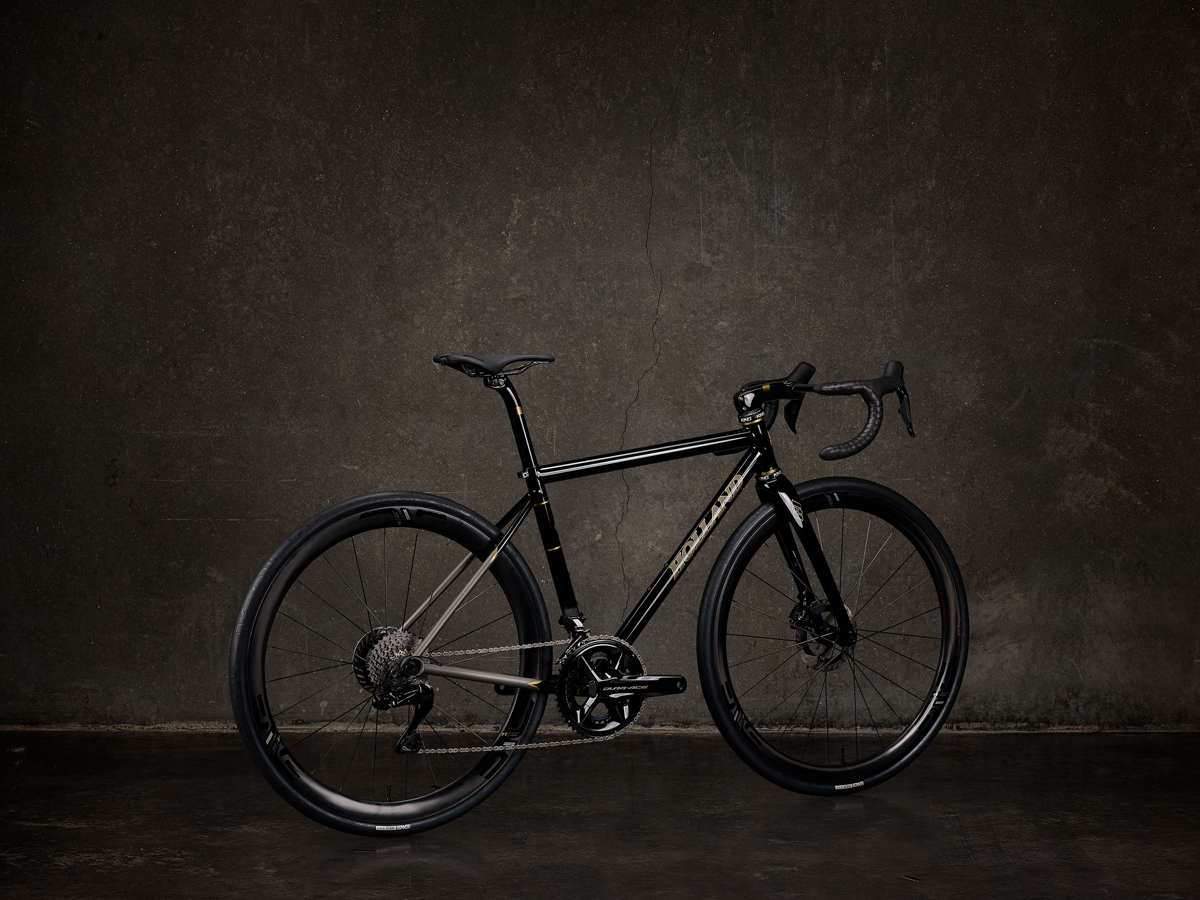
The titanium ANYWRE is designed as an all-road quiver killer (not that we condone 1 bike, of course) with optimal clearance from 30-40mm it is designed to take you anywhere, all terrain, gravel trails to local group rides. With the growing interest in F1 and our long love of all motorsport, we are building 10 of these with your favorite car racing livery, this one on display being the Mario Andretti John Player Special black and gold. hollandcycles.com
By Heather Casey — As wildfires become more frequent and severe, cyclists and outdoor enthusiasts often find themselves exposed to smoke and poor air quality. This exposure can lead to respiratory issues, decreased performance, and overall health concerns. Fortunately, certain foods can help our bodies filter and process the harmful particles found in wildfire smoke. Here’s how to optimize your diet to support your health during wildfire season.
The Science Behind Smoke Exposure
Wildfire smoke contains a mixture of harmful pollutants, including particulate matter (PM2.5), carbon monoxide, and volatile organic compounds (VOCs). These substances can cause oxidative stress and inflammation in the body, particularly affecting the respiratory system.
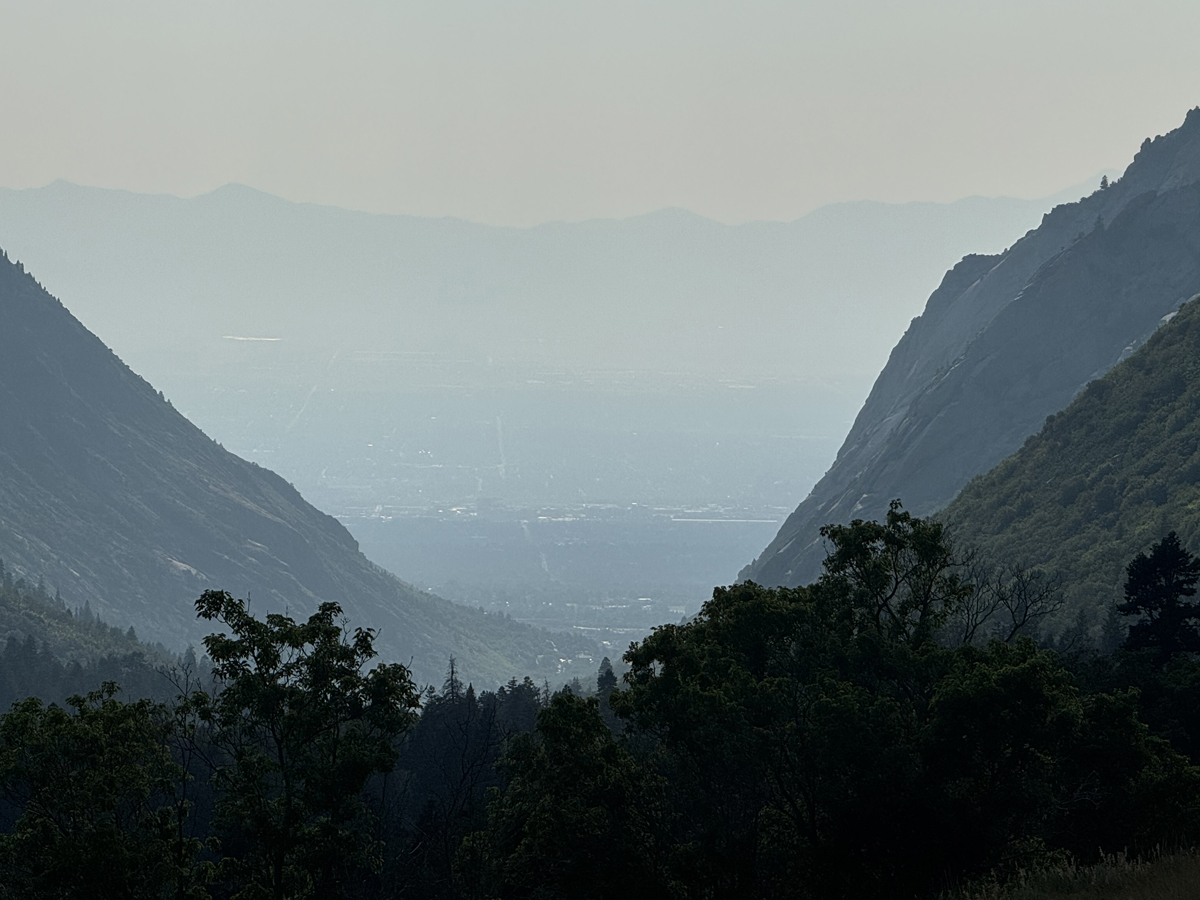
Wildfire smoke haze seen from Little Cottonwood Canyon, Utah – a popular cycling climb. Photo by Dave Iltis
Nutrients That Help Combat Smoke Exposure
One of the most effective ways to counteract the negative impacts of wildfire smoke is through a diet rich in specific nutrients known for their antioxidant and anti-inflammatory properties.
Antioxidants are your first line of defense. Vitamin C, for example, is a potent antioxidant that helps neutralize free radicals generated by smoke exposure. Citrus fruits, berries, bell peppers, and broccoli are excellent sources of vitamin C. A morning smoothie packed with these ingredients can be a refreshing way to start your day with a health boost.
Vitamin E is another crucial antioxidant that protects cells from oxidative damage. This fat-soluble vitamin is abundant in nuts, seeds, spinach, and avocados. Imagine a vibrant spinach salad topped with avocado slices and a sprinkle of sunflower seeds – a simple yet powerful meal to support your body’s defenses.
Omega-3 Fatty Acids are renowned for their anti-inflammatory properties. These healthy fats, found in fatty fish like salmon and mackerel, as well as in flaxseeds and walnuts, can help reduce inflammation caused by smoke inhalation. Consider adding a serving of grilled salmon or a handful of walnuts to your daily diet to harness these benefits.
Flavonoids are compounds found in foods such as berries, apples, onions, and dark chocolate. They offer strong antioxidant and anti-inflammatory effects. Incorporating a variety of these foods into your meals can provide a delightful way to boost your intake of these beneficial compounds. Think of a delicious berry parfait or a savory dish with caramelized onions – both tasty and healthful!
Cruciferous Vegetables like broccoli, cauliflower, and Brussels sprouts contain compounds that help detoxify the body and reduce inflammation. These veggies can be easily integrated into your diet through stir-fries, roasted vegetable medleys, or even as a crunchy snack.
Practical Dietary Tips
To make the most of these powerful nutrients, aim for a diverse and colorful diet. Here are some practical tips to help you integrate these foods into your daily routine:
Increase Your Fruit and Vegetable Intake: Aim for a colorful plate filled with a variety of fruits and vegetables to ensure a wide range of antioxidants and nutrients. Try to incorporate at least one serving of fruits or vegetables in every meal and snack.
Include Omega-3 Rich Foods: Incorporate fatty fish into your diet at least twice a week. For plant-based options, add flaxseeds or chia seeds to your smoothies or oatmeal. These tiny seeds pack a big nutritional punch and are easy to add to many dishes.
Snack on Nuts and Seeds: Almonds, walnuts, and sunflower seeds are great snacks that provide vitamin E and healthy fats. Keep a small container of mixed nuts with you for a convenient, nutrient-dense snack.
Stay Hydrated: Water helps to flush out toxins from your body. Aim to drink at least eight glasses of water a day, and consider herbal teas like green tea, which can provide additional antioxidants. Proper hydration is key to maintaining overall health, especially when dealing with smoke exposure.
Sample Day of Eating
To give you an idea of how to incorporate these foods into your daily diet, here’s a sample meal plan:
Breakfast: Smoothie with spinach, berries, flaxseeds, and almond milk.
Lunch: Salad with mixed greens, bell peppers, broccoli, and a salmon filet.
Snack: An apple with a handful of walnuts.
Dinner: Stir-fry with tofu, cauliflower, and Brussels sprouts, served with brown rice.
Hydration: Throughout the day, drink plenty of water and green tea.
Conclusion
By incorporating these nutrient-dense foods into your diet, you can help your body better filter and process the harmful pollutants from wildfire smoke. As cyclists and outdoor enthusiasts, maintaining our health and performance during wildfire season is crucial. Stay safe, eat well, and continue to enjoy the great outdoors!
References
Harvard Health Publishing on Omega-3s and Heart Health: Omega-3 fats and your heart
The Nutrition Source – Harvard T.H. Chan School of Public Health: Omega-3 Fatty Acids: An Essential Contribution
Harvard Health Publishing on Omega-3 Rich Foods: Omega-3-rich foods: Good for your heart
The 68-mile Marathon MTB World Championships were held in the United States for the first time in Snowshoe, West Virginia
SNOWSHOE, West Virginia. (September 22, 2024) – The 2024 UCI Marathon Mountain Bike World Championships came to the United States for the first time this weekend, with the races held in West Virginia. Over 100 racers lined up at Snowshoe Mountain Resort to tackle 65 miles of dirt roads and technical singletrack, climbing more than 6,000 feet. Americans are familiar with the magic of Snowshoe, as several marquee events have been held at the mountain resort in West Virginia – including the U.S. MTB National Championships, Cross-Country Mountain Bike World Cups, and now the Marathon MTB World Championships.
Elite Men
Christopher Blevins (Durango, Colo.; Specialized Factory Racing) was one of the top names on the start list, joining several other XCO superstars from around the world. Since Blevins did not have Marathon Mountain Bike UCI points, he unfortunately had a poor call-up to the line. With 84 starters, Blevins and fellow XCO racer Simon Andreassen (DEN) began at the very back of the pack. However, with 68 miles of racing ahead, there was time for them to work their way to the front.
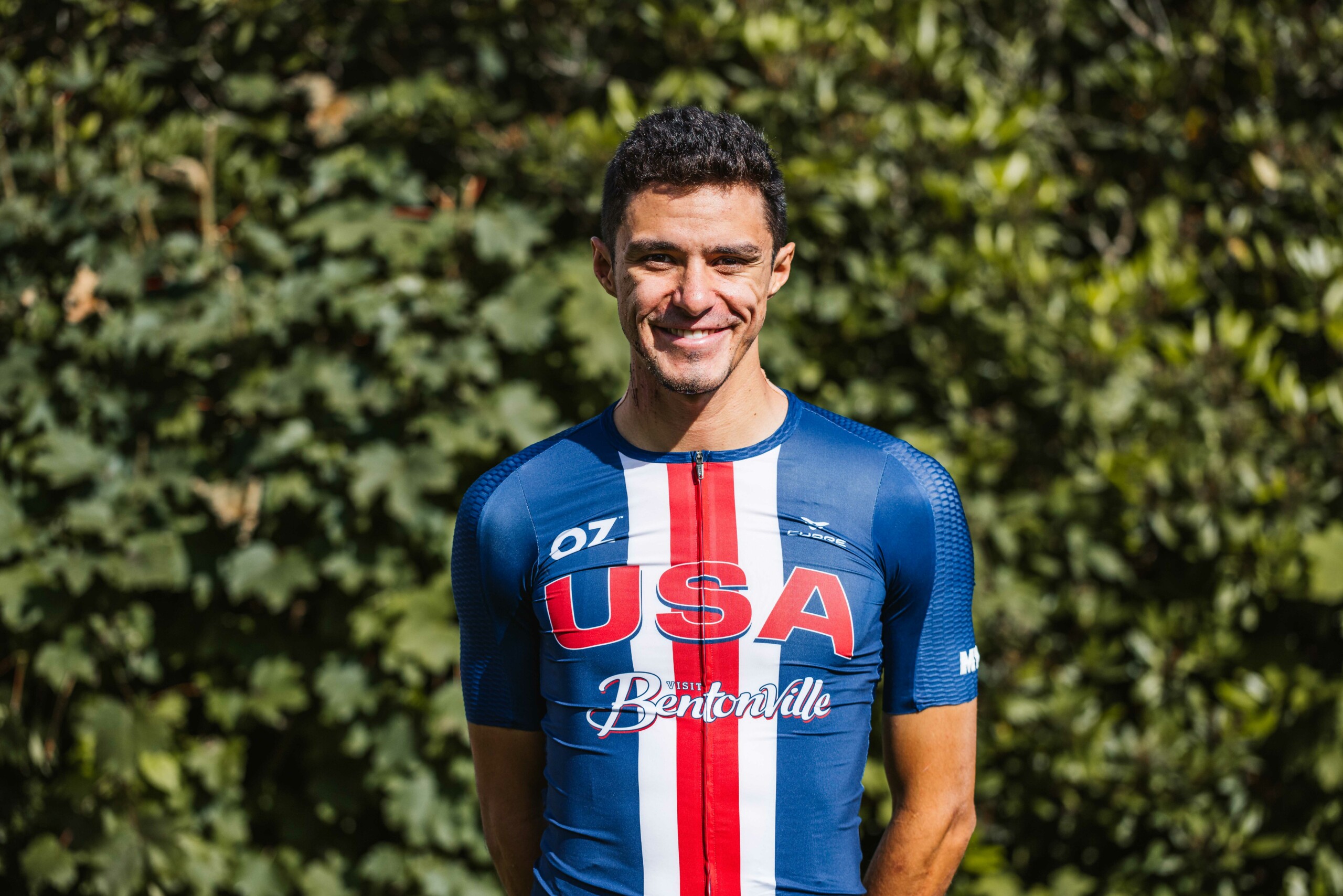
Christopher Blevins. Photo courtesy USA Cycling
By the first checkpoint at 32 miles, Blevins had moved up to a group of about 15 riders, two hours into the race. Victor Koretzky (FRA) was leading with a small gap ahead of the chase group. Two more hours into the race at the second checkpoint, 57 miles in, Blevins remained strong at the front alongside Andreassen, Koretzky, and a group of about seven other riders. After 4.5 hours of racing, Andreassen launched an attack, entering the village solo to claim the World Title. Blevins, just 10 seconds behind, battled with David Valero Serrano (ESP) and ultimately out-sprinted him to secure the silver medal with a time of 4:33.18.
Cole Paton (Durango, Colo.; Giant Bicycles) was the next placing American finishing in a time of 4:37.42 to round out the top ten.
Results:
1. Simon Andreassen (DEN)
2. Christopher Blevins (Durango, Colo.; Specialized Factory Racing)
3. David Valero Serrano (ESP)
9. Cole Paton (Durango, Colo.; Giant Bicycles)
26. Bradyn Lange (Fairfax, Calif.; Scott Bicycles)
31. Zachary Calton (Ogden, Utah; Yeti/ Shimano)
35. Alex Wild (San Jose, Calif.; DNA Cycling)
48. Carson Beckett (Brevard, N.C.; Dirt Camp Racing)
50. Griffin Hoppin (Mill Valley, Calif.; Flow Formulas)
51. Danny Van Wagoner (Fruit Heights, Utah; DNA Cycling)
59. Christopher Mehlman (Manchester, Mass.; Pivot Cycles)
60. Noah Warren (Birmingham, Ala.)
61. Jerry Dufour (Birmingham, Ala.; Dirt Camp Racing)
64. Eli Kranefuss (Mill Valley, Calif.; Dirt Camp Devo)
65. Gordon Wadsworth (Shawsville, Va.; Revel Bikes)
66. Ryan Johnson (Brookville, Penn.; Dirt Camp Racing)
68. Cory Peterson (Annapolis, Md.)
74. Maxwell Abner (Greenville, S.C.)
75. Jonas Woodruff (Redlands, Calif.; Trek Race Shop)
76. Mark Kransz (Cave Springs, Va.; Broken Spoke Bike Studio)
77. Levi Cole (Auburn, Ala.)
Elite Women
Forty-five women lined up to battle the relentless roots, rocks, and punchy climbs of Snowshoe. Hannah Otto (Millcreek, Utah; Pivot Cycles/DT Swiss) had the best call-up among the Americans after securing a podium result in the Marathon Mountain Bike World Cup earlier this year. Her second-row start gave her an advantage heading into the woods, but with a long race ahead, it was still anyone’s game. Paris 2024 Olympian Haley Batten (Santa Cruz, Calif.; Specialized Factory Racing) started at the back of the pack, but like Blevins, had time to work her way up through the field.
By the first checkpoint at 31 miles, a lead group of about five riders had formed, with Batten not far behind. Marathon Mountain Bike National Champion Alexis Skarda (Grand Junction, Colo.; Santa Cruz Bicycles) was with a few riders in the next group back. Crystal Anthony (Bentonville, Ark.; Liv Racing Collective) and Otto were sitting comfortably in the top 20 at this point as well.
At 57 miles, the top three riders — Mona Mitterwallner (AUT), Sina Frei (SUI), and Candice Lill (RSA) — had a sizeable gap as they fought for the podium. By this time, Batten had crashed and decided not to finish the race. Skarda continued to battle within a group for a top-10 finish, ultimately placing ninth with a time of 5:36.07. Otto finished 16th, Anthony 17th, and the final American, Britt Mason (Ellicott City, Md.; Salsa Cycles), finished 29th.
Results:
1. Mona Mitterwallner (AUT)
2. Sina Frei (SUI)
3. Candice Lill (RSA)
9. Alexis Skarda (Grand Junction, Colo.; Santa Cruz Bicycles)
16. Hannah Otto (Millcreek, Utah; Pivot Cycles/DT Swiss)
17. Crystal Anthony (Bentonville, Ark.; Liv Racing Collective)
29. Britt Mason (Ellicott City, Md.; Salsa Cycles)
By Sarah Kaufmann — Group rides on the road are unique and special because the dynamics of drafting means riders of varied fitness can ride together and everyone gets what they need. There are inherent risks with this type of ride, but a few simple tricks keep everyone safe and happy.
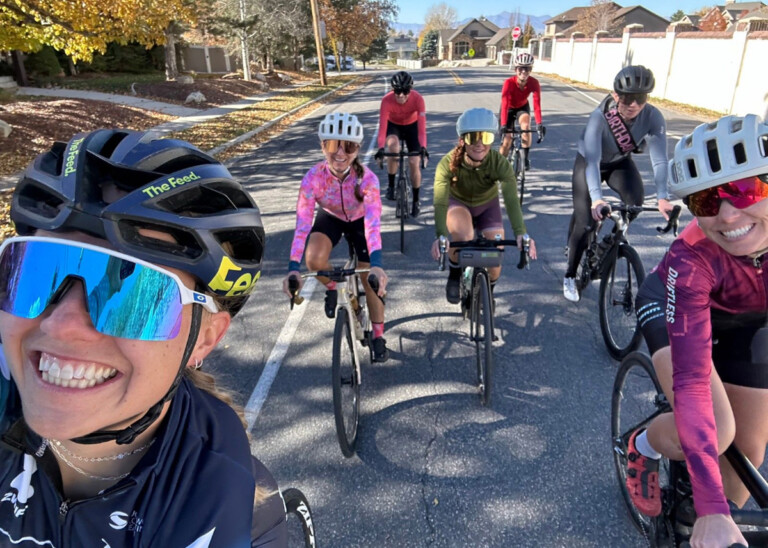
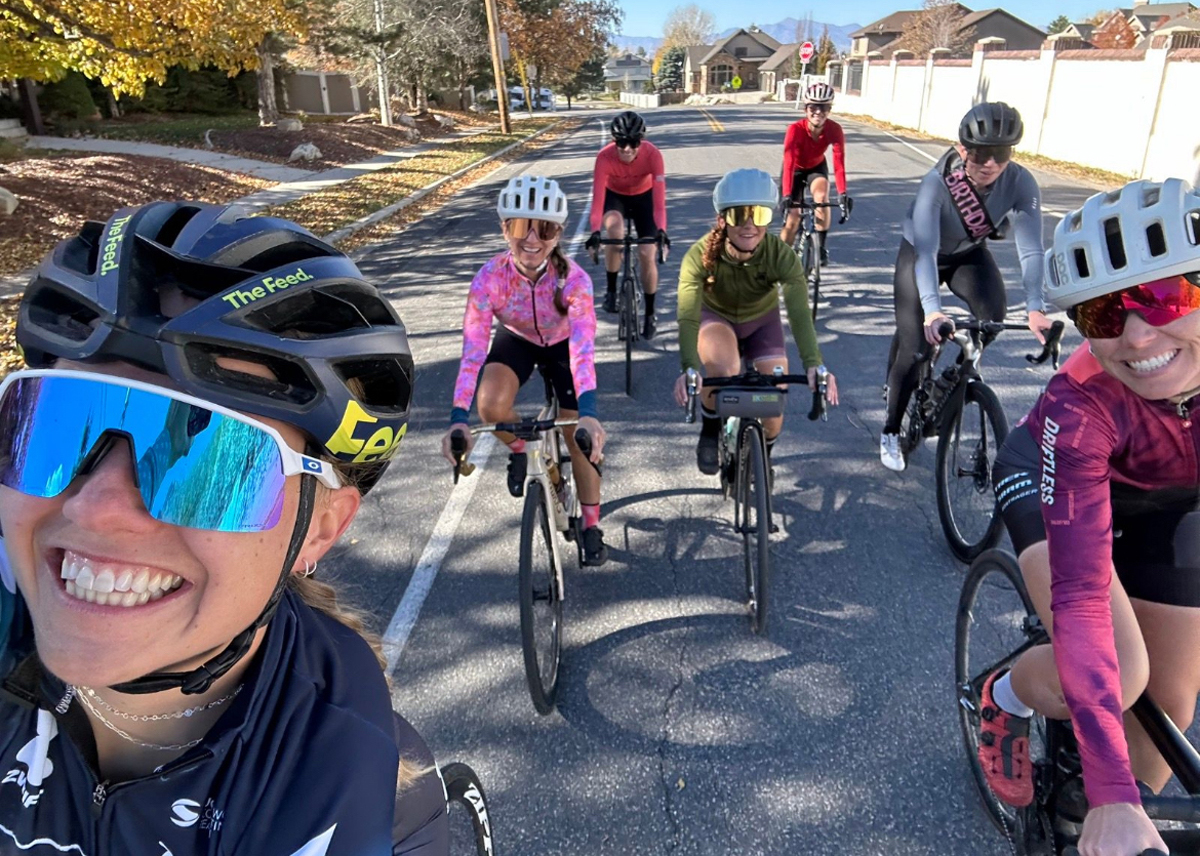
Cyclists on a K Cycling Coaching group ride. Photo courtesy Caitlin Howell
Look up. Follow close behind the rider in front of you but look ahead, over their shoulders, through their arms, and toward the front of the group. This way you can anticipate changes in speed or direction as you see riders react.
No sudden movements. The accordion effect is pronounced in groups. When you are riding on the front, keep your pace steady to avoid rubber banding riders further back.
No brakes! Stay off your brakes except for an emergency. Control your speed by slipping out into the wind or lightly feathering your brakes. When other riders are inches behind you, sudden movements or changes in speed are exaggerated and risky. Use the wind to control your speed.
No hero pulls. When you pull through to the front of the group, avoid surging. If you are not sure how hard you should pull, try this: When you are in the draft, slide out into the wind and observe the wattage you do to be in the wind at that intensity. That way, you will know how hard to pull on the front. If you do not have a power meter, you can use the same strategy and make a note of your RPE (Rate of Perceived Effort) in the wind.
Be everyone’s eyes. Point out hazards in the road that may be difficult for riders further back to see. This can be rocks, cracks, or debris in the road. Vehicles or people in the shoulder or railroad tracks should also be pointed out. The standard gestures for vehicles or people to the right or left is to sweep your hand in that direction behind you. For railroad tracks, wave your hand across your back. Pay attention to the signals others use and continue to pass them back through the group.
Fall back. When you are ready to pull off the front, flick your elbow on the side you will pull off. Gently move over and maintain speed while safely drifting back. Anticipate the last rider and accelerate smoothly into the draft. Pull off before you are blown. Remember to budget some energy for the acceleration you will do to get onto the back of the group.
Standing. When you stand to pedal, your bike lurches slightly back, which is risky for riders following closely. Flick your elbows slightly to indicate that you are about to stand.
Find the protected pocket. The best spot might not be directly behind the wheel in front of you. Try just to the right or left to feel where the wind is blocked.
But avoid overlapping wheels. As you find the protected pocket from the wind. If you are slightly left or right of the rider ahead, be sure you don’t overlap wheels to avoid a crash if they move side to side.
Last couple bonus points, not universal but encouraged on the group rides hosted by my coaching business, K Cycling Coaching.
Pull only as you can or want. If you think taking a pull may limit your ability to hang with the group, there is no pressure to be on the front. Likewise, pull only as long as you like. Riders who want to pull ride in the front half of the group and rotate through from there. Riders who don’t, stay further back. The group stays together, and everyone gets what they need.
Don’t shatter the group. If you are lucky enough to be one of the stronger riders, spend more time on the front, watch for dropped riders and pull them back to the group. If you get to the tops of climbs first, descend and ride up with riders still coming. There are many ways to do more work without blowing up the group.
SALT LAKE CITY, Utah (September 2024) — Salt Lake City has been awarded an Accelerated Mobility Playbook (AMP) Technical Assistance Grant from City Thread, a national nonprofit organization that helps better connect communities through transportation.
The program aims to help Salt Lake City reach its broader transportation goals quicker through City Thread’s wide network of support, which includes convening elected and community leaders, funders, and engaged residents.
“We are excited to welcome Salt Lake City into our cohort of cities prioritizing mobility projects,” said Sara Studdard, City Thread partner. “We look forward to providing Salt Lake City with the guidance and strategies needed to achieve its transportation goals faster than thought possible.”
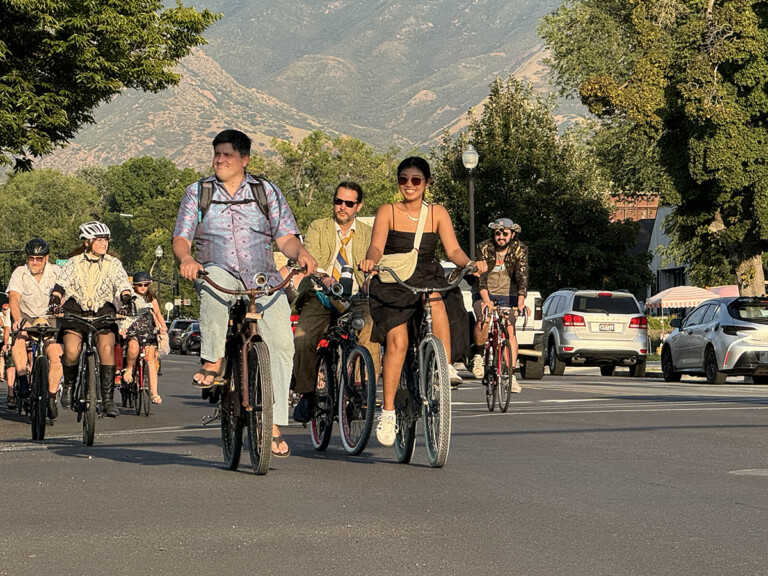
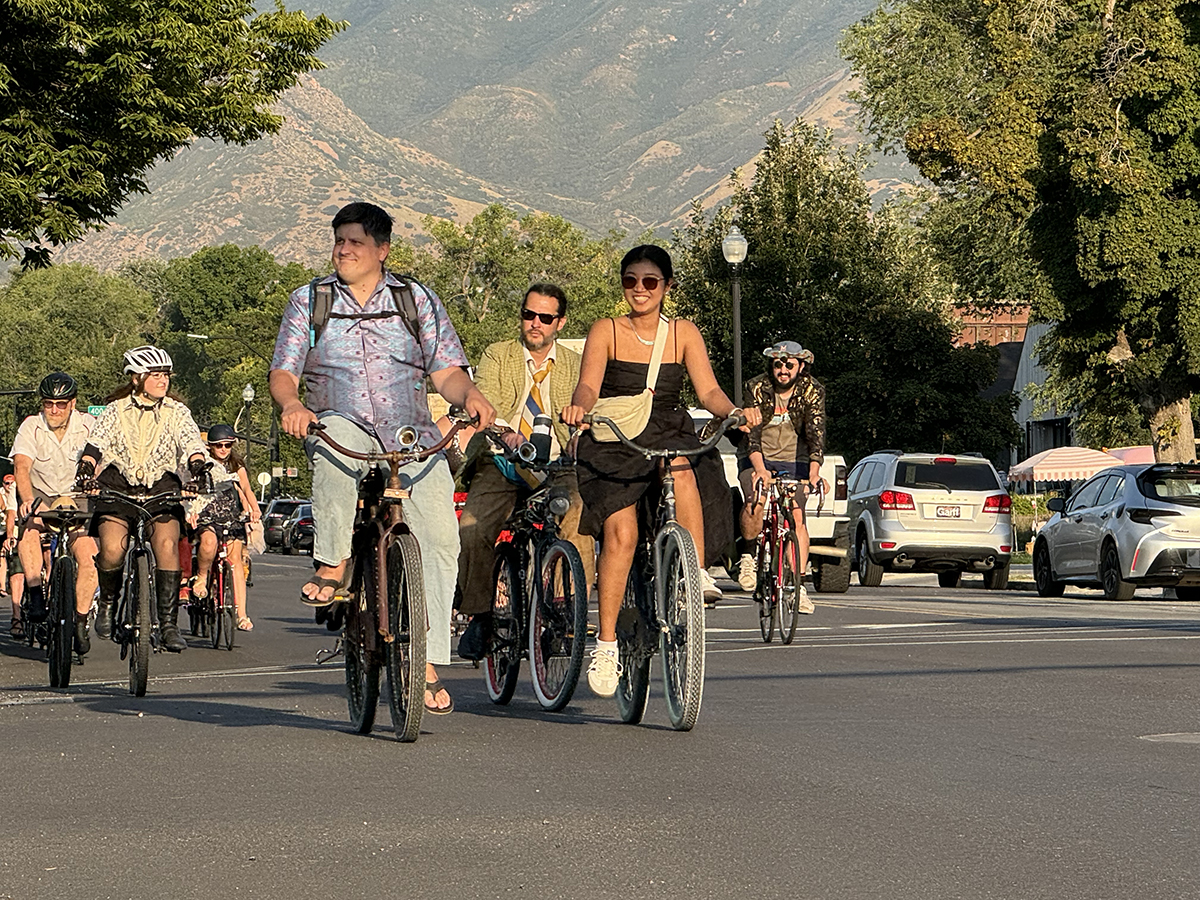
Accelerated Mobility Playbook (AMP) Technical Assistance Grant from City Thread intends to make the bicycle network in Salt Lake City more complete so that cyclists like these participants in Bike Prom will be able to ride more easily through the city. Photo by Dave Iltis
The City will use the AMP grant to help accelerate the development of safer roadways for all users, in accordance with its Vision Zero plans. This will be done by implementing an all-ages-and-abilities transportation network that reaches all neighborhoods and ensures travel times comparable to those of motor vehicles.
“As the urban center of Utah, we’re determined to achieve our ambitious mobility goals of safer streets for everyone,” said Salt Lake City Mayor Erin Mendenhall. “With the support of AMP, we’ll align City departments and external advocates in a more unified effort to accelerate implementing a comprehensive bike network into Salt Lake City’s increasingly transit-rich neighborhoods and business districts.”
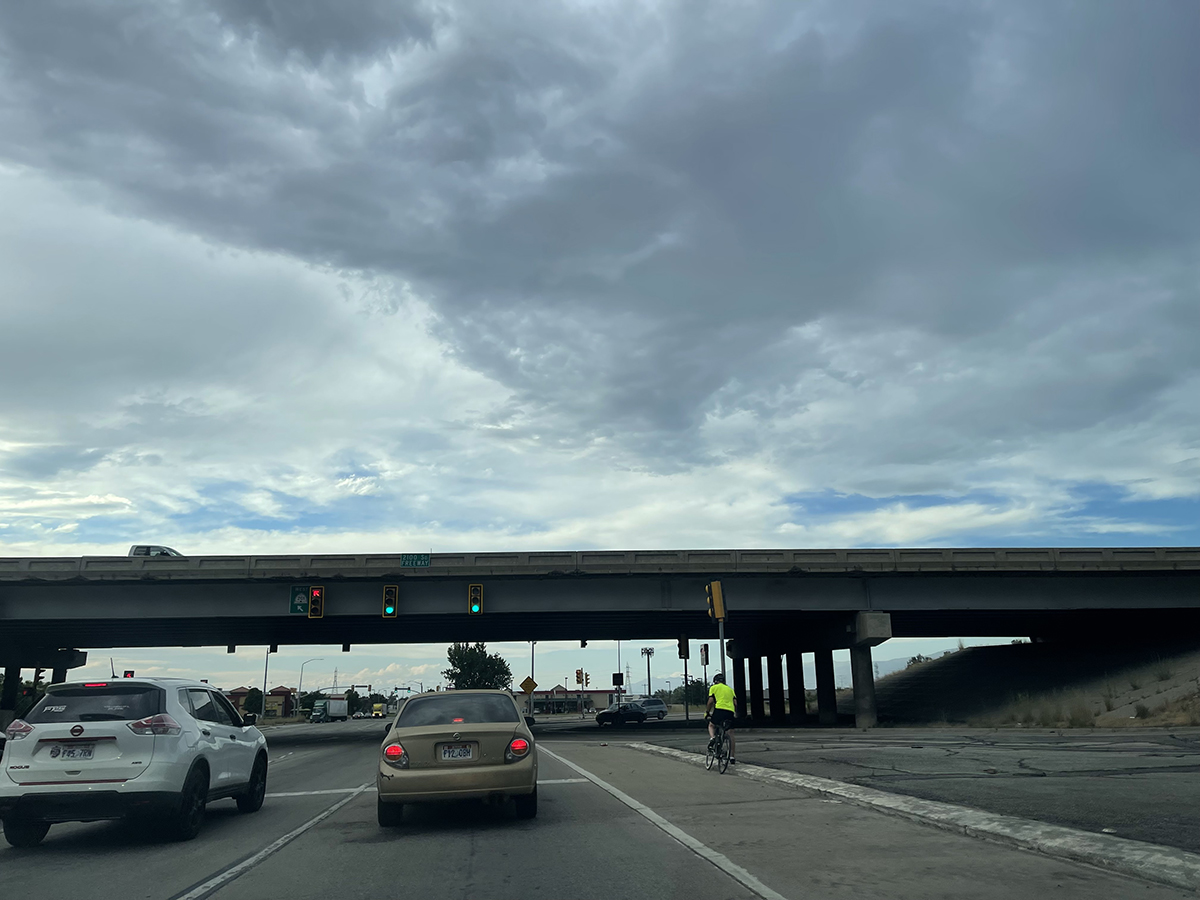
The Accelerated Mobility Playbook (AMP) Technical Assistance Grant from City Thread will hopefully help close gaps in Salt Lake City’s bicycle network like this one on 3200 W and SR-201. Photo by Dave Iltis
In line with Salt Lake City’s Complete Streets ordinance, the grant will also speed up the implementation of the Pedestrian and Bicycle Master Plan, which aims to establish over 50 miles of neighborhood byways by 2035.
Dave Iltis, editor and publisher of Cycling Utah and a prominent bicycle advocate in Salt Lake City, has been actively involved in efforts to improve cycling infrastructure and also participated in discussions, saying “Salt Lake City has made significant strides in developing its bicycle network, but there are still gaps that need to be addressed. The Accelerated Mobility Playbook grant should help the city prioritize closing those gaps and create a more connected, comprehensive system.”
“Salt Lake City is facing housing and sustainability challenges, both of which the ongoing efforts in multimodal infrastructure seek to mitigate,” said Jon Larsen, Salt Lake City Transportation Division Director. “This AMP grant will greatly enhance our efforts to accelerate the construction of an all-ages-and-abilities network.”
One of the cornerstones of City Thread’s expertise is bridging the gaps between government, residents, and industry advocates. The program works because of passionate advocates like Chris Wiltsie from Bike Utah.
“Bike Utah and Salt Lake City have worked closely throughout the years on projects including major tactical urbanism projects, 4th and 5th-grade bicycling education, bicycle maintenance for the unsheltered, and building up the capacity of community transportation advocates,” said Chris Wiltsie, Co-Executive of Bike Utah. “We look forward to partnering with the City and the Salt Lake community on this initiative.”
City Thread‘s AMP grant requires a local $15,000 match. This contribution offsets the total $50,000 value of the grant program and deliverables.
Along with Salt Lake City, the second cohort of AMP Technical Assistance Grant recipients includes Tampa, FL, Baltimore, MD, and Spokane, WA.
Villafañe was the first rider over the finish line in the women’s race after breaking away with Alexis Skarda and Savilia Blunk on the descent of the infamous Firetower climb. That trio continued to build their lead as they raced back into Cable, with Villafane proving the fastest finisher in a three-up sprint which saw Skarda take second and Blunk round out the podium.
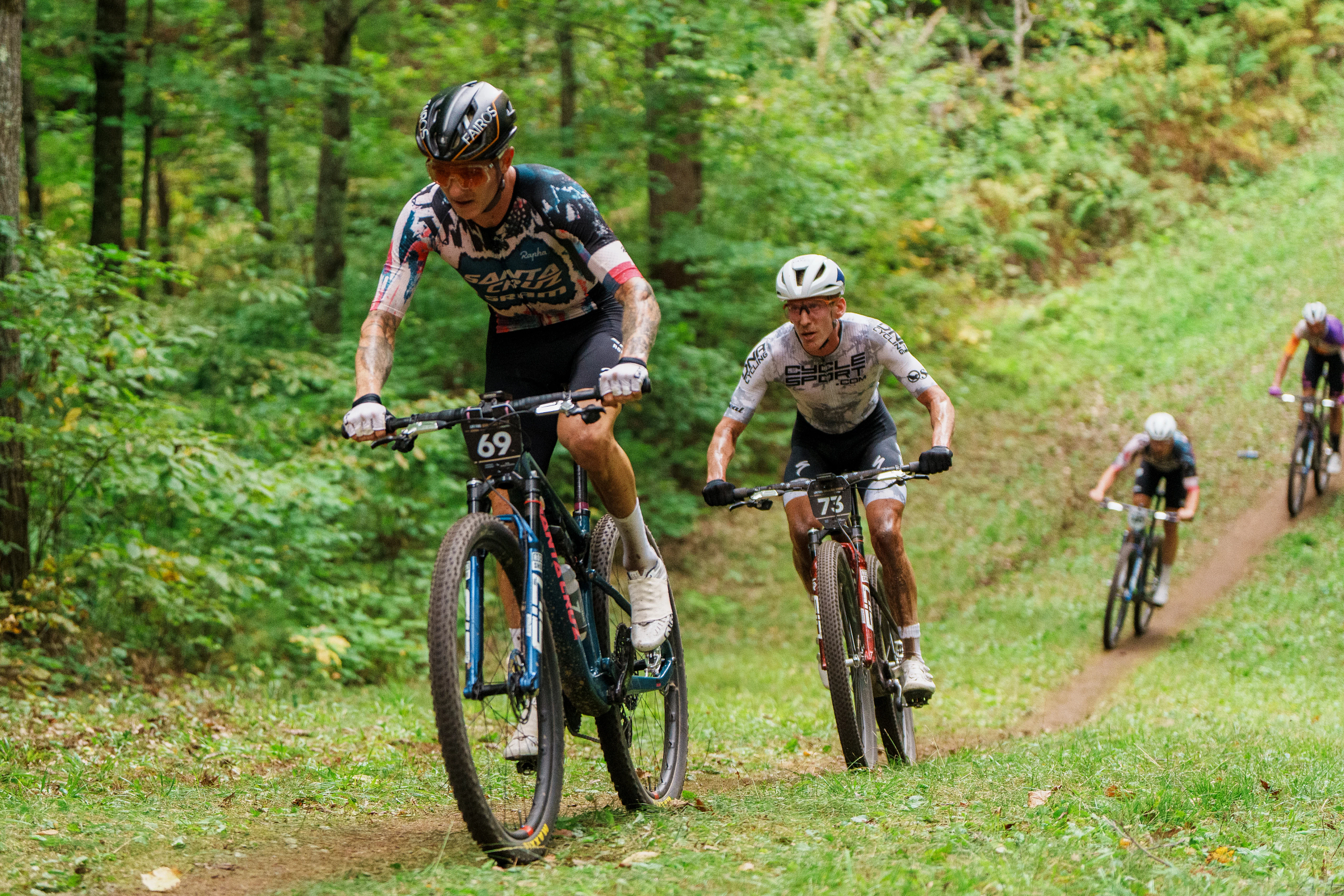
Only minutes later, the men’s race reached an equally gripping conclusion. Swenson had been able to sit on the wheels of a five-man chase group for most of the 39.1-mile contest as his Santa Cruz team-mate Tobin Ortenblad launched an early solo attack, and even when Ortenblad was eventually brought back in the closing stages, the Californian had enough left in the tank to lead Swenson out in what proved to be another lightning-fast finale.
Swenson repaid that faith by powering to the line ahead of runner-up Alex Wild and the third-placed Sean Fincham.
With the Life Time Crusher in the Tushar cancelled due to wild fires, Chequamegon is the first event of the series where dropped results have been taken into account on the overall standings – i.e. each riders’s two lowest scores or missed races have been removed from their rankings, leaving only their top two results.
That means Villafañe now sits four points ahead of Paige Onweller (who was the third highest-ranked Life Time Grand Prix rider at Chequamegon, finishing the race in sixth place) on 70 points, and eight points ahead of the third-placed Haley Smith (who did not compete in this race).
Swenson meanwhile, is four points ahead of Lachlan Morton (who also didn’t compete at Chequamegon) on 70 points, with Cole Paton (who’s ninth-placed finish has been dropped) and Payson McElveen (who finished today in fourth) both tied in third, four points further adrift.
Reaction from the Life Time Chequamegon Mountain Bke Festival presented by Trek:
Women’s winner Sofia Gomez Villafañe said: “I’m stoked to finally pull this one off. On paper, I’ve always thought this is one of the races that suits me the most, but up until today I’ve never been able to get things together here. I always thought ‘I’ve won Sea Otter, Unbound, Leadville and Crusher, and not Chequamegon’, so I’m very excited to have ticked this one off the list.
“This summer I’ve kept things a little more chilled in order to have more freshness coming into the last third of 2024, and today was a really good sign that I’m fit and motivated. I’m really excited for the rest of the season.”
2024 Chequamegon MTB Festival winner Sofia Gomez Villafañe prior to the start. Photo courtesy Life Time
Men’s winner Keegan Swenson said: “This win feels good. I was fourth a couple of years ago after crashing right before the finish, and last year came second to Alexey [Vermuelen], so I had my sights on the win this time around. Tobin [Ortenblad] set me up with a nice lead-out and I was able to pull it together.
“It was one of our plans for him to slip away and the other guys hesitated a bit, allowing him to build up a lead of around two minutes at one point. That was a good place for me to be in as it meant I could sit in, and if the other guys wanted to chase, I’d let them chase, or if not, he’d win. That was a great situation for us to be in, and while it doesn’t always work out that way, if you keep trying, and keep pushing, eventually it works.
“I didn’t know I was going to win until I came off Tobin’s wheel. I knew, with the 38-10 gearing I had, it was going to be hard for anyone to come around me, but you never know, and I had to keep my foot on the gas. It’s a fast and tricky finish here with a downhill false flat on grass. The line comes up quick and it was great to get this result.”
Keegan Swenson on his way to winning the 2024 Chequamegon MTB Festival. Photo courtesy of Life Time
Click HERE (men) and HERE (women) for the full race results, HERE for the overall standings.
RTC’s Trail Grants have provided nearly $3.4 million over 15 years to organizations, municipalities and public agencies to build community participation and fill critical gaps in trail, walking and biking infrastructure
WASHINGTON, D.C. (September 19, 2024) — Rails to Trails Conservancy today announced it has awarded $421,500 in grants fueling programs working to develop and activate local and regional trail networks. According to RTC, these projects create meaningful quality-of-life opportunities and equitable access to safe spaces where people can walk, bike and be active outside in the communities where they live.
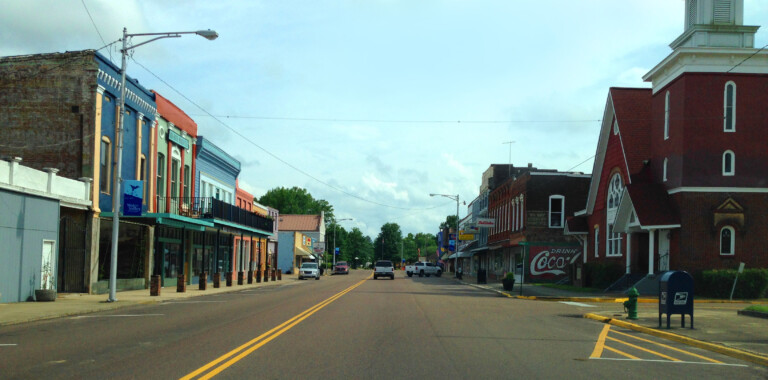
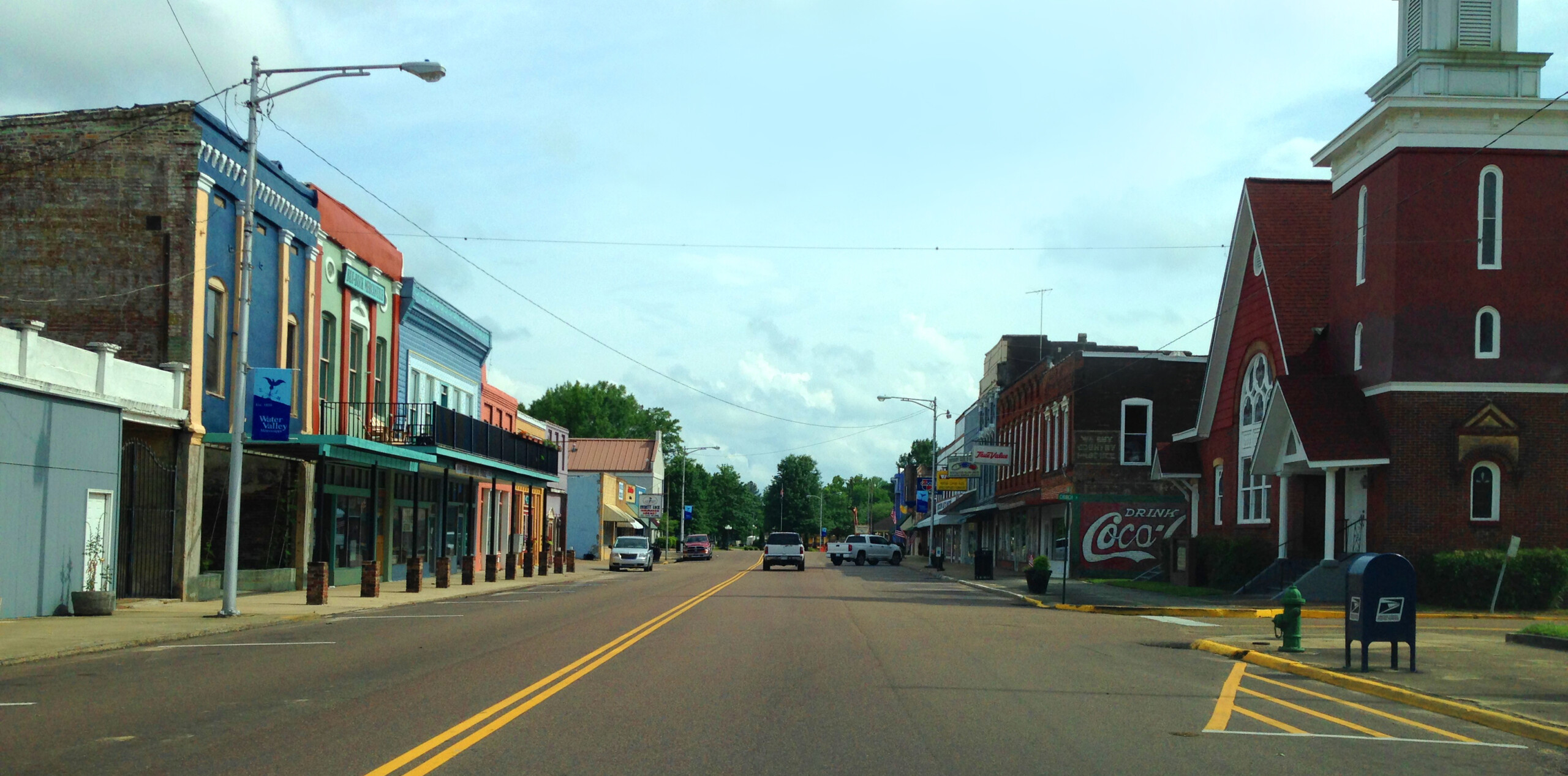
Looking south on Main Street in Water Valley, Mississippi. Water Valley’s grant will be used to conduct a feasibility study to map and plan the future Water Valley Rail-Trail. Photo by Fredlyfish4, CC BY-SA 4.0, ATTRIBUTION-SHAREALIKE 4.0 INTERNATIONAL
“By investing in innovative infrastructure development and programming that invites communities to come together on trails, RTC’s grant program is helping more communities bring this essential infrastructure to the people they serve,” said Liz Thorstensen, vice president of trail development at RTC. “These grants help organizations and public agencies move forward with their trail network plans, while supporting community-based organizations working to connect more people to these spaces in neighborhoods across the country.”
RTC’s 2024 grantees are leading the charge within their communities to provide opportunities for people to experience and engage with the outdoors, and for trails and trail networks to generate equitable access to transportation and recreation for millions nationwide.
“The work to build, connect and activate these trails is incredibly important—this infrastructure is essential to the well-being of people in every community in America,” said Thorstensen. “We’re thrilled to support 41 organizations this year, but we know we need significant public and private investment to meet the rising demand for safe outdoor spaces and realize the potential of trail networks. This year we received requests from more than 150 organizations totaling over $3.2 million. As a nonprofit, we can’t bridge this gap on our own, but our investment of $421,500 is being leveraged 35 times over, helping drive more than $14 million in projects. That’s significant impact.”
RTC’s Trail Grants program is making a nationwide impact by bringing more people closer to the economic, health and quality-of-life opportunities that trails and trail networks provide. Grant recipients include organizations and public agencies at the national, regional, state and local levels serving a range of rural, urban and suburban areas. Many of the grantees represent Justice40 Initiative communities, which are defined by the federal government as experiencing decades of underinvestment while also being most impacted by climate change, pollution and environmental hazards.
For example, Water Valley Main Street Association is establishing the Yalobusha Greenways Alliance to conduct a feasibility study to map and plan the future Water Valley Rail-Trail, which will serve as the 3.4-mile spine of the emerging trail network in rural Yalobusha County, Miss., where more than 27% of residents live below the poverty line.
The Arizona Trail Association’s Seeds of Stewardship program provides meaningful outdoor environmental education in Tucson using the Arizona Trail as an experiential learning classroom to foster a connection between youth and their surrounding public lands.
Clinton County Trails Coalitionis purchasing adaptive bikes to create an outdoor experience for people of all ages and abilities in their Ohio county.
National awardees include Latino Outdoors’ Vamos Outdoors program, which provides members of the Latinx and other underrepresented communities with transformative outdoor experiences; and HBCUs Outside, which is working with six Historically Black Colleges and Universities to develop outdoor experiences and engage with the outdoor industry.
The 2024 Trail Grants are part of RTC’s longstanding program, which has distributed nearly $3.4 million across more than 420 grants to 260+ organizations since 2008. Learn more about RTC’s Trail Grants program at railstotrails.org/grants.
COLORADO SPRINGS, Colorado – Bowie State University in Maryland, Langston University in Oklahoma, and Clinton College in South Carolina have each been awarded grants to establish and support their collegiate cycling programs by USA Cycling supported by EF Pro Cycling and Cannondale. This initiative aims to foster growth within the sport of cycling within the Historically Black Colleges and Universities (HBCUs) and Tribal Colleges and Universities (TCUs) communities.
“We are excited to support these universities in their efforts to promote cycling and provide opportunities for students. This grant program is a significant step towards inclusivity and expanding access to cycling at the collegiate level,” said Suzy Sanchez, Director of DEI and Membership Programs at USA Cycling.
“Everyone should have access to cycling. Our aim is to increase diversity and grow participation in the sport. The goal is to build long-lasting programs for the students at these HBCUs and TCUs to experience the benefits of cycling as well as foster inclusivity, community, and adventure,” said Jonathan Geran, Director of Sports Marketing at Cannondale.
Each institution will be supported over a period of three years with a total of $30,000 in grant support.
In addition to the grant support, schools will have the opportunity to participate in a virtual race series hosted by the Cyclone Racing League. This series is specifically designed to bring together HBCU students and alumni, fostering a sense of community and competition. The virtual format allows for broad participation, enabling racers to gain experience and improve fitness in an inclusive and accessible environment.
“We believe that indoor virtual cycling and the latest technology platforms offer a great way to bring new HBCU and TCU racers to the sport. Cycling experience and fitness can be gained without the inhibitions or anxiety associated with what can be often perceived as a very exclusive sport,” said Dr. Mark Janas, Chief Technology Officer at Cyclone Racing League.
“The creation of the CRL establishes a powerful engine of opportunity for greater HBCU involvement in the sport of cycling. In time, this will grow where we will be not only racing indoors but fielding teams across multiple HBCUs outdoors and across cycling disciplines. Our efforts will help to start to move the needle on diversity and inclusion in cycling,” added Milt Sharp, Race Director at Cyclone Racing League.
“We are excited about expanding our biking program and developing the Langston University Cycling Club. The support from USA Cycling, Cannondale, and EF Pro Cycling will position our team to not only compete but excel in races. Moreover, this provides another avenue for our students to maintain active lifestyles. We are grateful for this opportunity. See you at the finish line!” stated LUCC coach Desmond Delk.
“We are excited to bring this innovative program to Bowie State University and to join forces with Saint Augustine’s University to create lasting opportunities for our students. Our cycling team will serve as a model for other HBCUs looking to expand their athletic programs. The cycling team will also participate in local and national events, showcasing the talent and dedication of HBCU student athletes via Bowie State University,” said Finote Girmay Weldemariam, Bowie State University Cycling Team President.
“To be part of a program that gives students the opportunity to ride and race bikes is something we’re immensely proud of. Our hope is that riding will become part of their daily routines – not just while they’re in school but for the rest of their lives. These students are ambassadors for cycling. They are planting the seeds to promote growth of cycling for years to come,” said Jonathan Vaughters, CEO of EF Pro Cycling.
For more information about the HBCU/TCU Grant Program, visit USA Cycling.
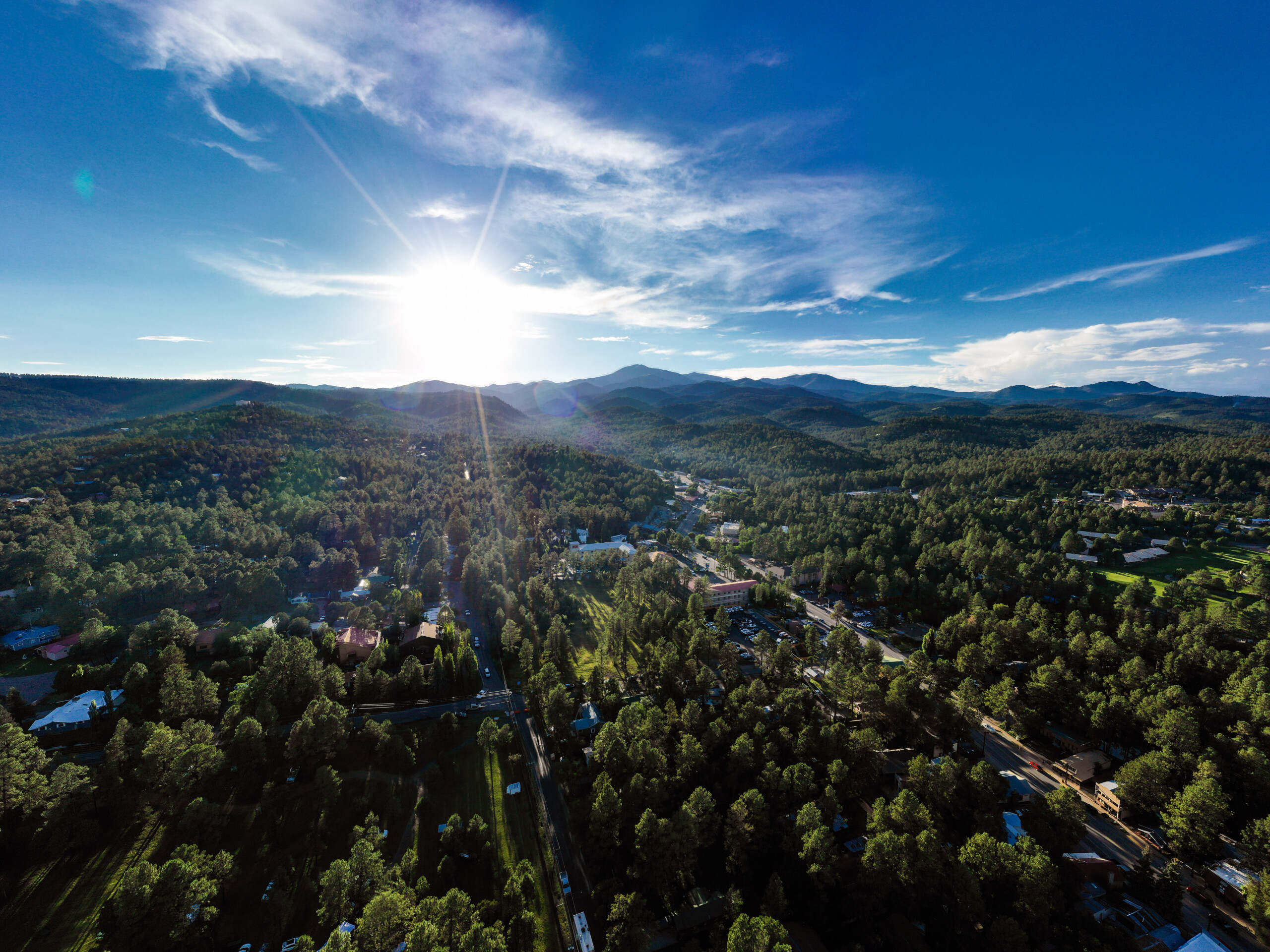
RUIDOSO, New Mexico — The inaugural XTERRA event in Lincoln National Forest, nestled in the Sierra Blanca mountain range, will take place from August 15-17, 2025, marking a significant addition to the XTERRA Americas Tour. Off-road triathletes, trail runners, and their families are invited to Grindstone Lake Park in Ruidoso, a village celebrated for its diverse outdoor recreation and welcoming community spirit.
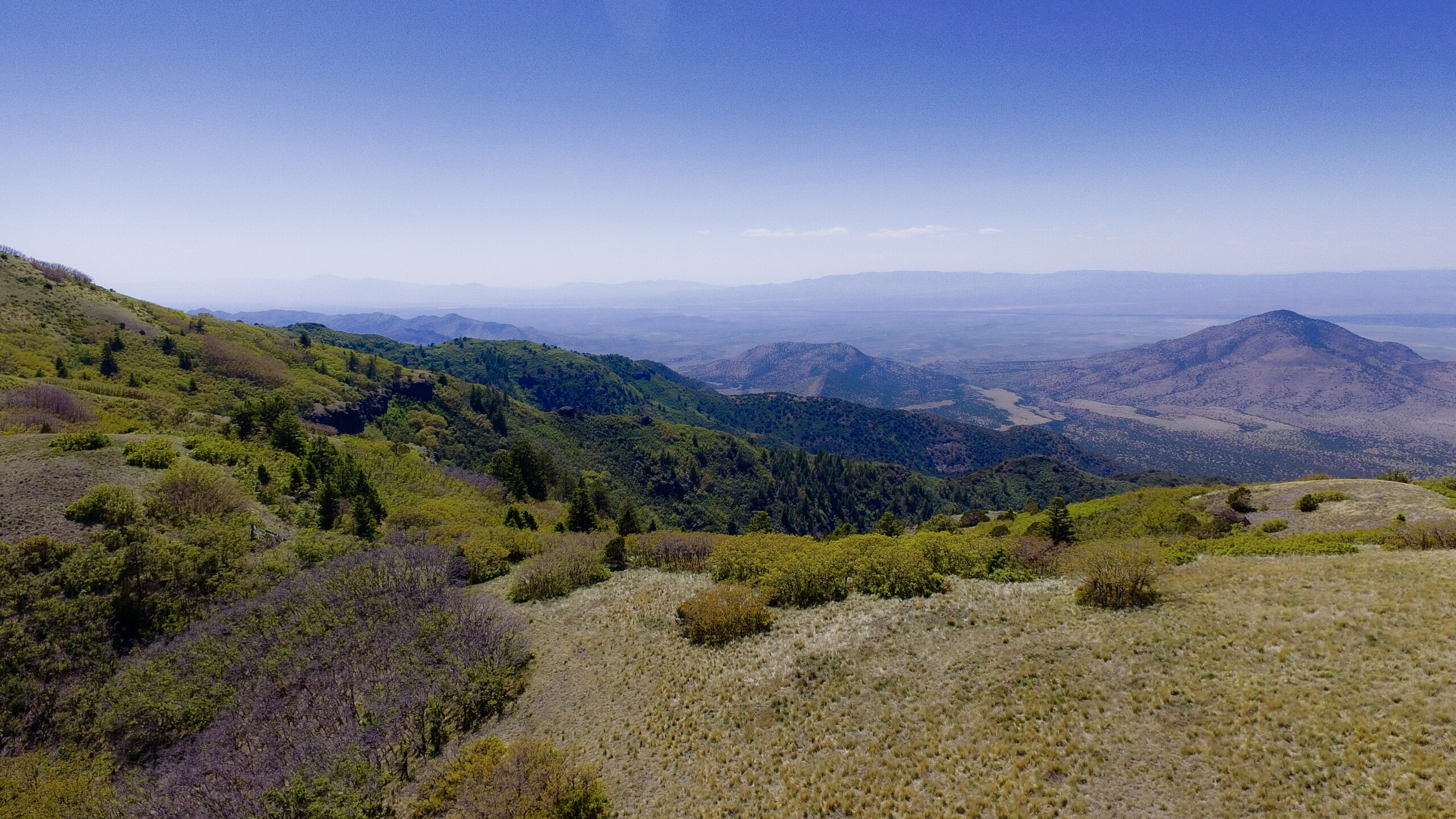
Sierra Blanca. Photo courtesy XTERRA
The highlight of the weekend is the Full Distance Triathlon on August 16, offering 58 qualifying slots for the 2025 XTERRA World Championship in Trentino, Italy, and a $15,000 Elite Prize Purse. The event lineup also includes a 10K Trail Run, Kids Race, and Sprint Distance Triathlon, which serves as a key Youth Qualifier for the 2025 XTERRA Youth World Championship, giving young athletes a shot at competing on the world stage.
Lincoln National Forest. Photo courtesy XTERRA
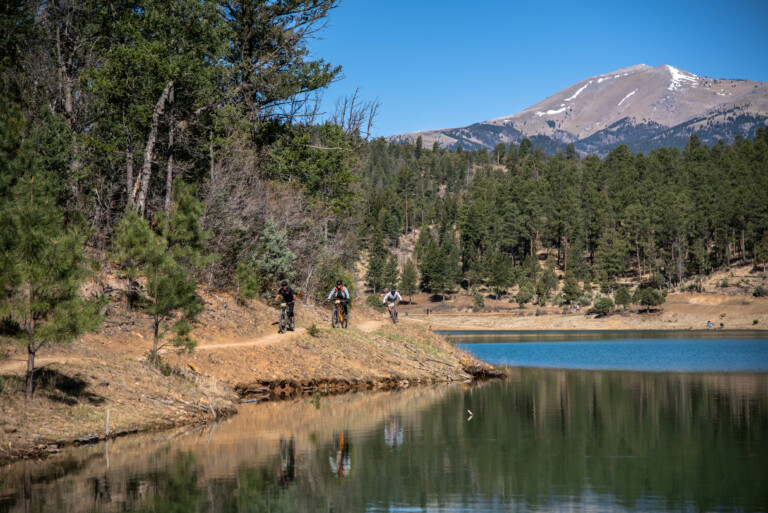
With trails that wind through pine forests and the crystal-clear waters of Grindstone Lake, Ruidoso, often called “Living in Nature’s Playground,” is more than just a race destination. It’s a family-friendly hub where the XTERRA community comes together with the warm hospitality of Lincoln County for a weekend of adventure and fun.
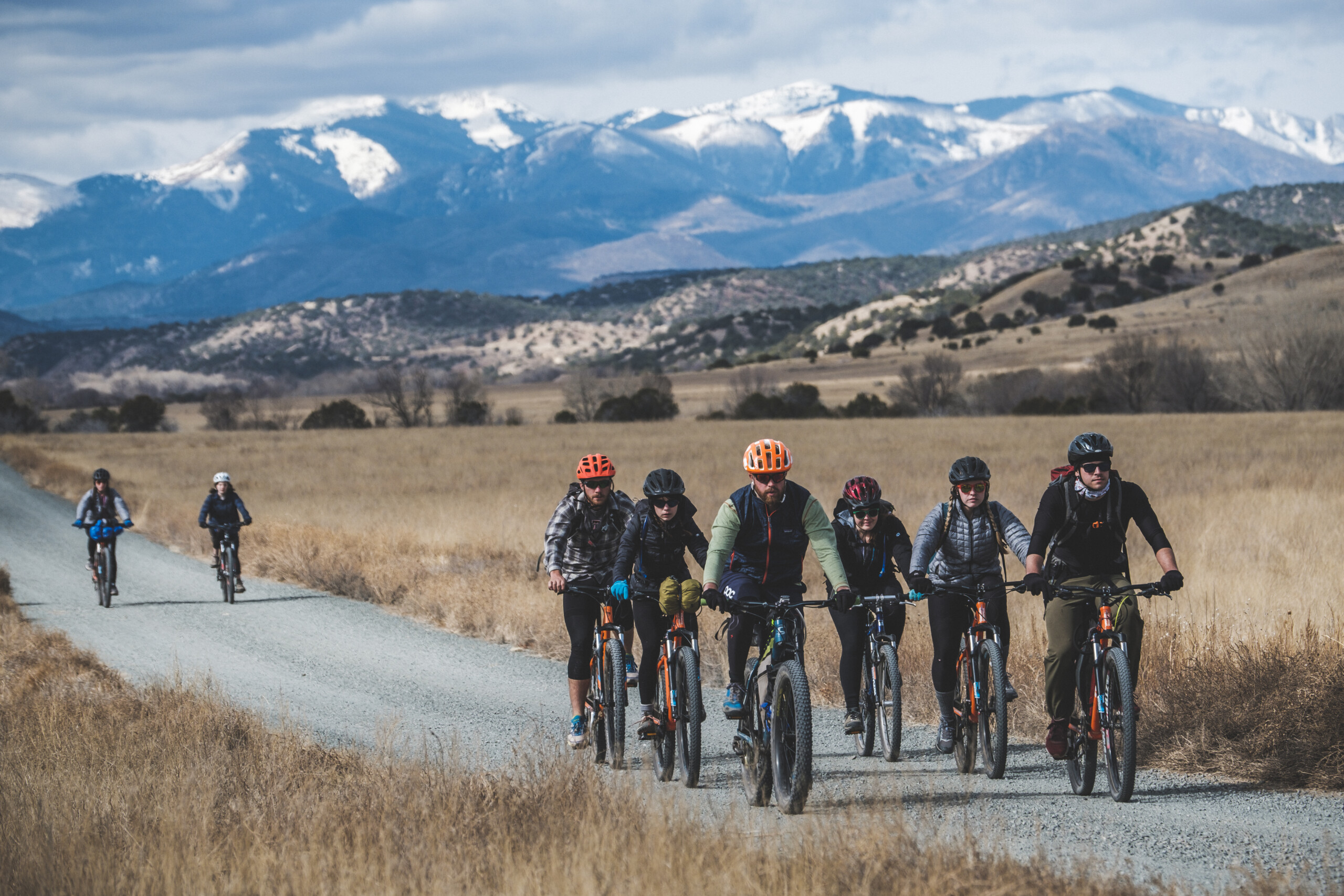
Mountain Biking Ruidoso. Photo courtesy XTERRA
Event Highlights
Full Distance Triathlon (August 16, 2025): Athletes will face a 1.5K swim, 30K mountain bike ride, and 10K trail run. This classic XTERRA race offers age-group competitors the chance to qualify for the XTERRA World Championship, while elite athletes battle for a share of the prize purse. The course offers the challenge of rugged terrain combined with breathtaking vistas.
Sprint Distance Triathlon: Ideal for beginners or those seeking a less technical race, the Sprint Triathlon includes a 750-meter swim, 15K mountain bike ride, and 5K trail run. This event also serves as a qualifier for young athletes aiming to compete in the 2025 XTERRA Youth World Championship.
10K Trail Run (August 17, 2025): A perfect race for trail runners looking for a shorter distance, this race offers participants a chance to explore the scenic beauty of Ruidoso while sharing the experience with friends and family.
XTERRA Ruidoso Kids Sprint: Future XTERRA stars can get a taste of trail sports in this free 1K kids’ race, providing a fun and safe environment for young participants to enjoy the outdoors and get their first experience in off-road racing.
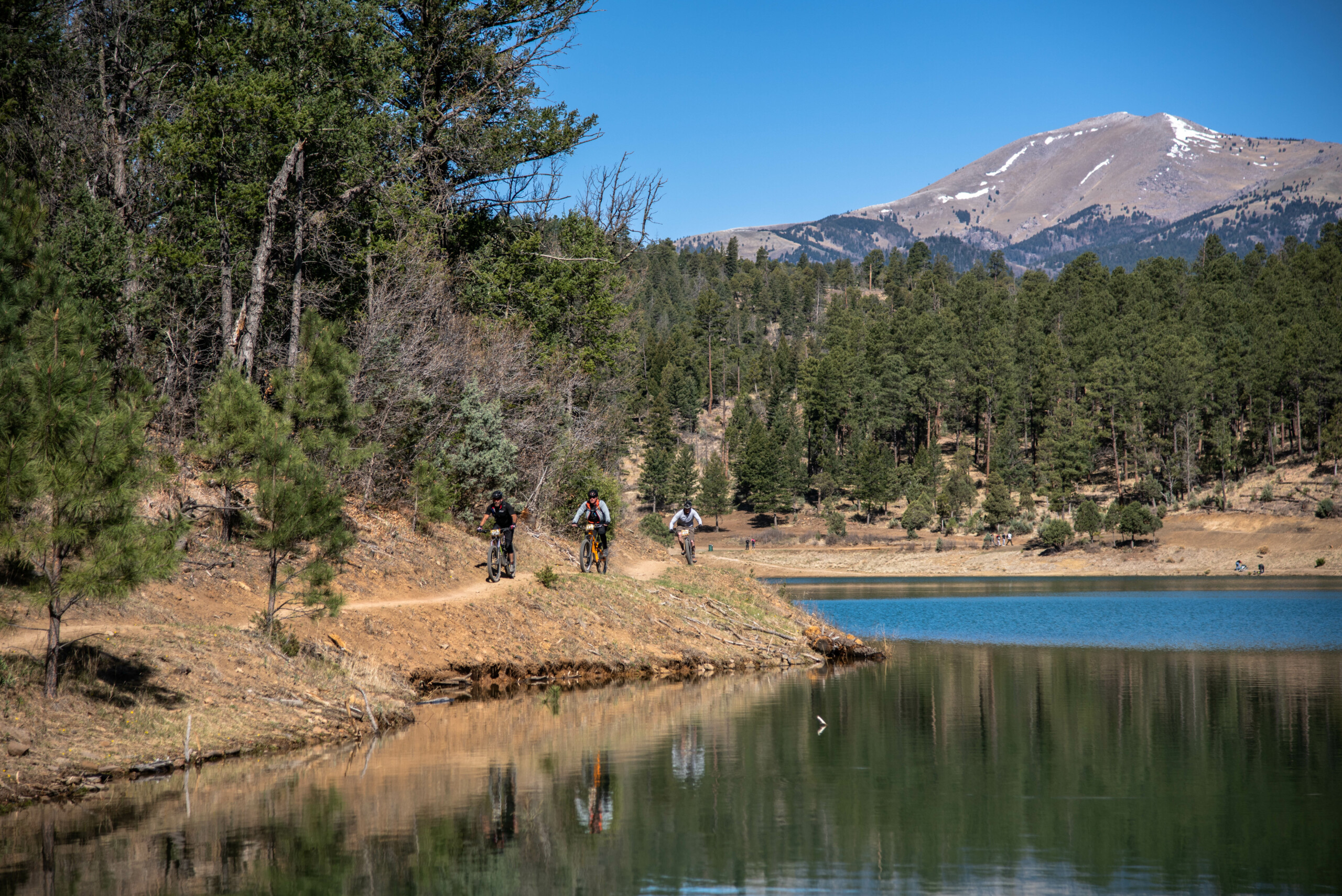
Grindstone Lake. Photo courtesy XTERRA.
Ruidoso Leaders Welcome XTERRA
Ruidoso’s leadership is enthusiastic about hosting XTERRA. Lynn Crawford, Mayor of the Village of Ruidoso, expressed how this event aligns with the town’s vision for growth as an outdoor destination:
“Bringing XTERRA to Ruidoso is a game-changer for our community. This partnership aligns perfectly with our vision to position Ruidoso as a premier destination for outdoor recreation and adventure sports. Lincoln National Forest and the stunning vistas of Sierra Blanca provide an ideal setting for XTERRA’s challenging off-road triathlon. We anticipate this event will not only attract elite athletes but will also showcase our town’s unique charm to a global audience. The economic impact will be substantial, benefiting our local businesses and potentially spurring further investment in our outdoor recreation infrastructure. We’re committed to making this a long-term, mutually beneficial relationship that will put Ruidoso on the map for extreme sports enthusiasts worldwide.”
Eddie Ryan, Manager of Events & Strategic Partnerships, shared his excitement about the event’s potential:
“We are thrilled to welcome XTERRA to Ruidoso. Our beautiful mountain trails and vibrant community make the perfect backdrop for this world-class event. We’re excited to showcase our natural beauty and hospitality to athletes and spectators from around the globe. We look forward to hosting an unforgettable experience for everyone involved.”
Steve Andrus, XTERRA Americas Tour Manager, highlighted the community’s role in making this event happen:
“Ruidoso has shown remarkable support in making this event a reality. The combination of excellent trails, the unique experience of swimming in Grindstone Lake, and the welcoming energy from the local community will make this a memorable event for all participants. Athletes can expect to feel the enthusiasm of the region while racing through one of the most exciting XTERRA courses in the Americas.”
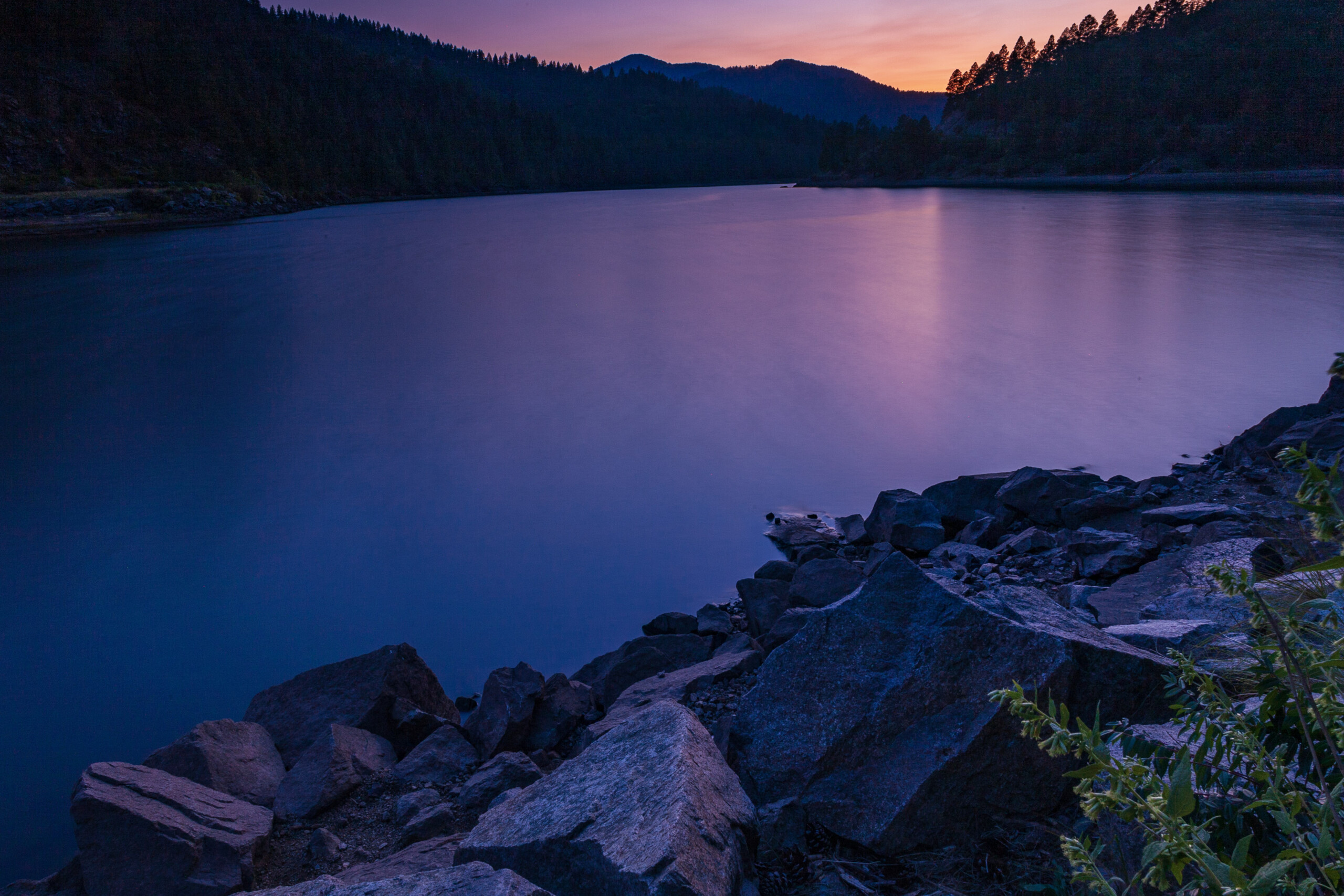
Grindstone Lake. Photo courtesy XTERRA
Experience and Explore
In addition to the races, visitors can explore the region’s rich cultural heritage, from the legendary stories of Billy the Kid to the ancient traditions of Native American tribes. Beyond the competition, there are plenty of activities for families and adventure-seekers, including hiking trails in Lincoln National Forest, visits to historic sites like Fort Stanton, and modern attractions like the Wibit Water Park at Grindstone Lake.
XTERRA Ruidoso promises not only a chance to compete for spots in the 2025 XTERRA World Championship but also an opportunity to explore one of New Mexico’s most scenic and inviting regions.
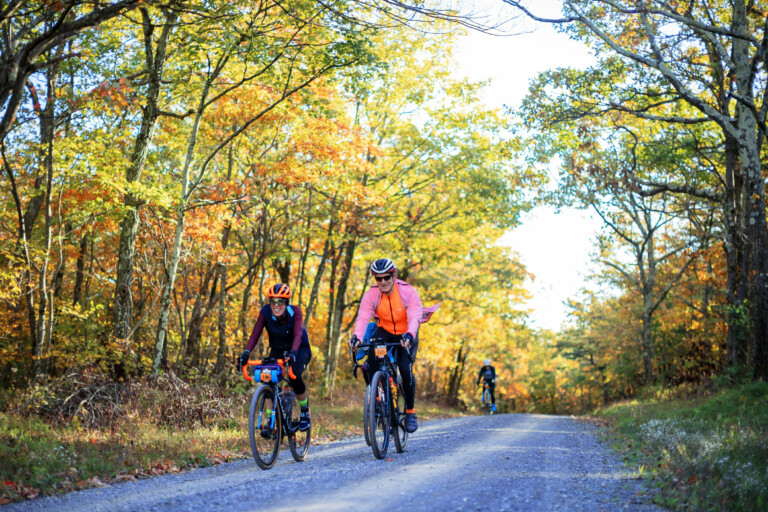
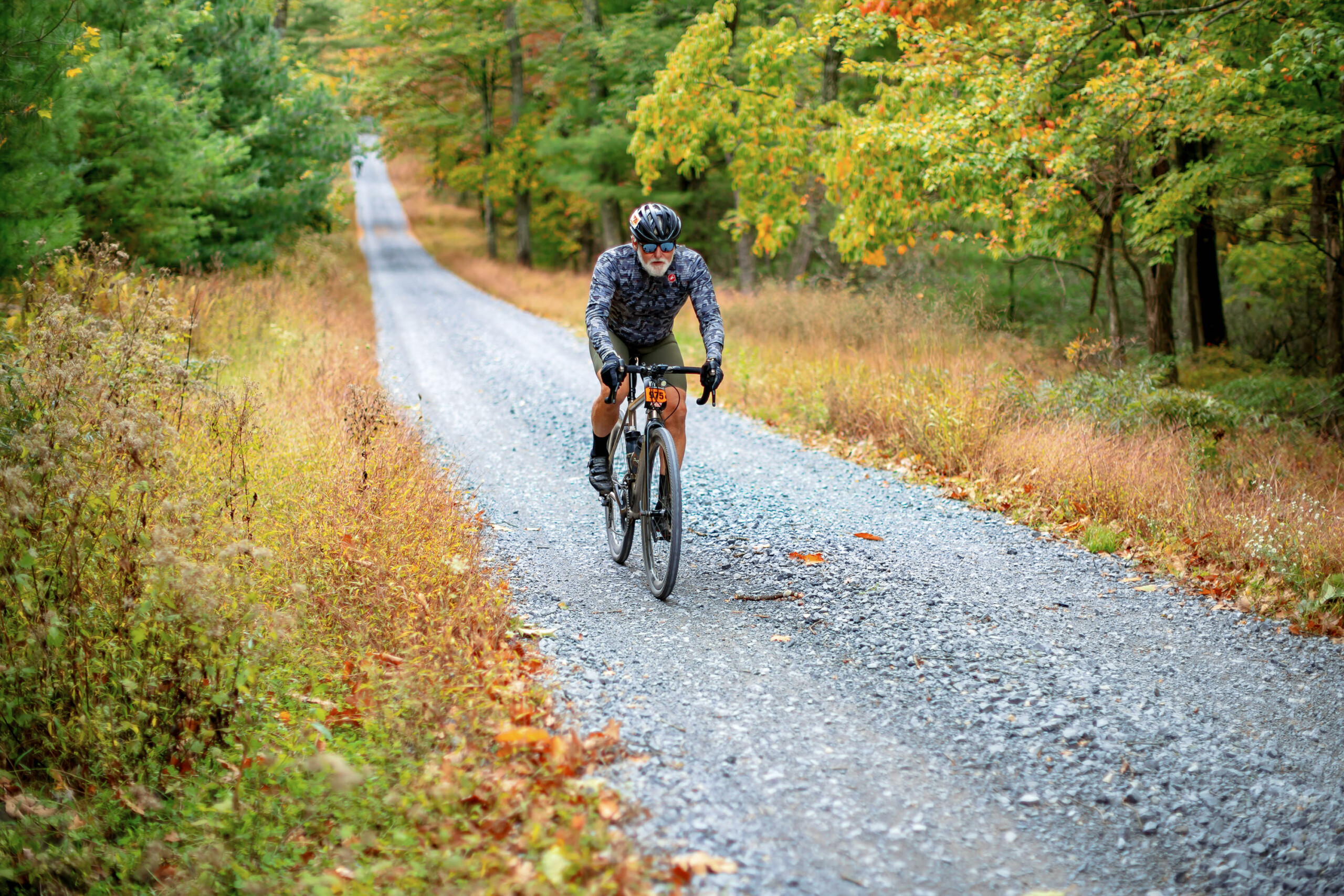
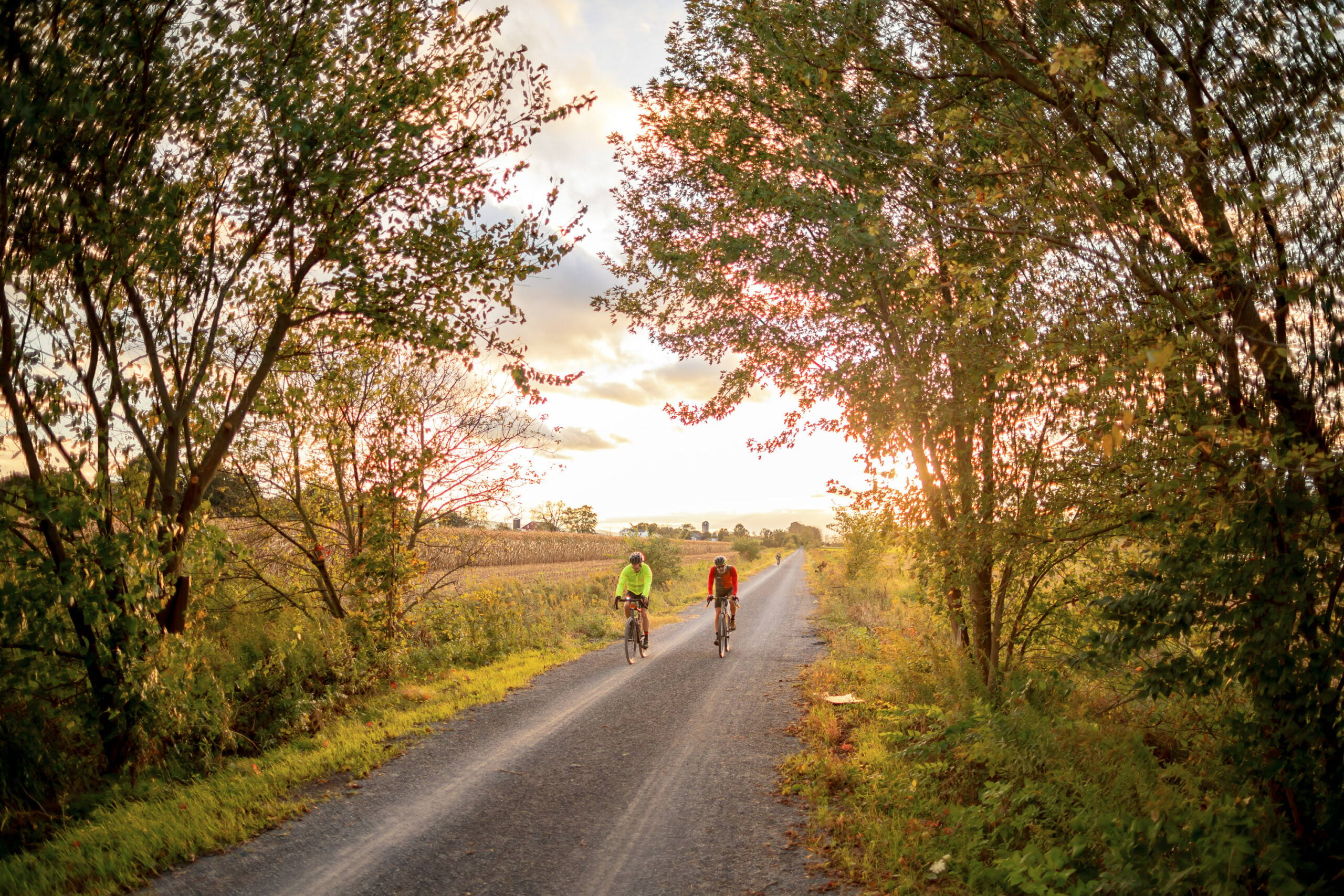
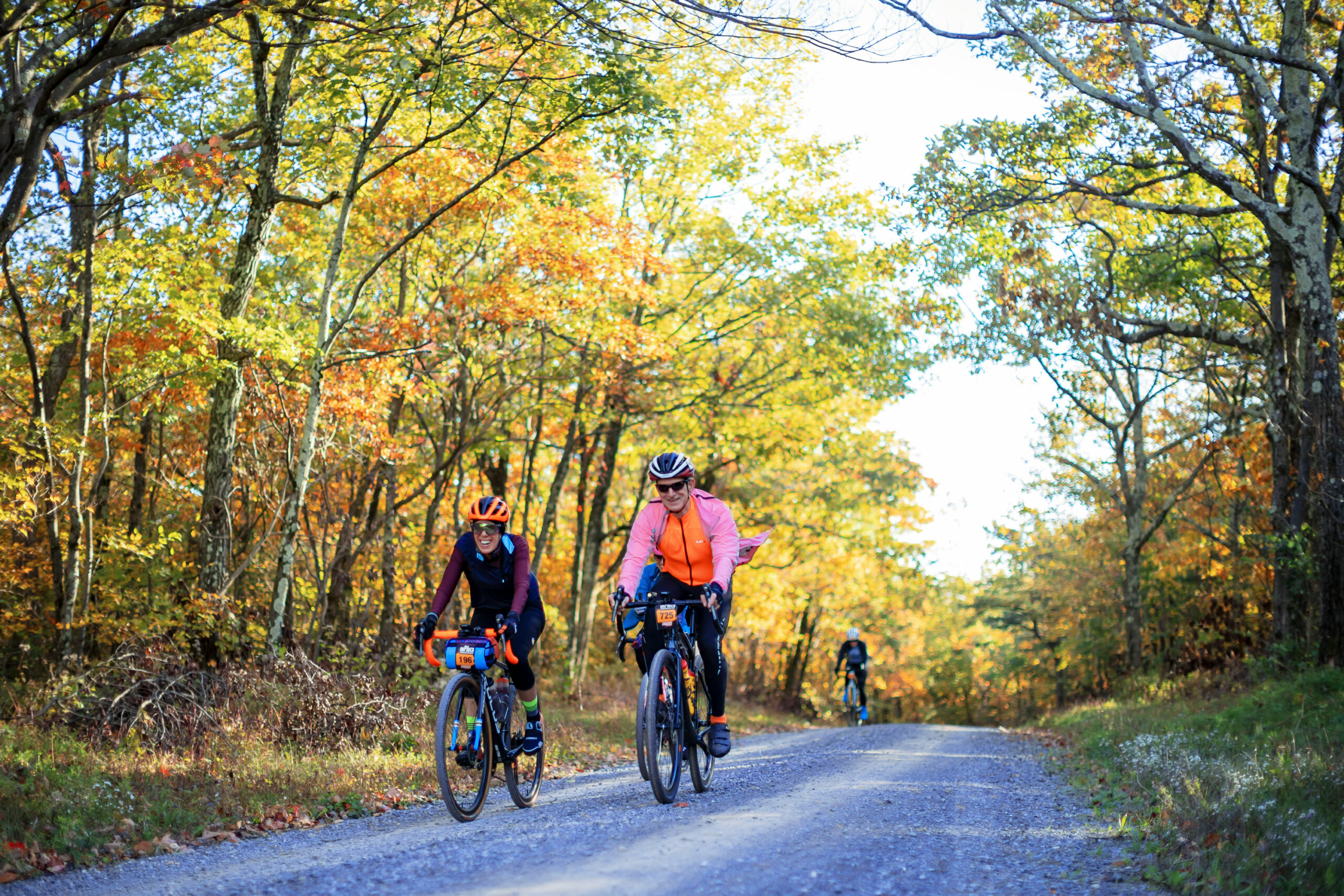
Pennsylvania’s premier gravel gathering — unPAved of the Susquehanna River Valley — returns for its seventh edition celebrating the joy of bikes and beauty of IPAGravel (Incredible PA Gravel) in the heart of central Pennsylvania. Growing from a single day event to a full 3-day weekend, unPAved embraces the motto of ‘more smiles per mile’ to satisfy everyone from racers and bikepackers, to party-pacers and new entrants to the world of gravel.
“unPAved is a community focused event that has something to offer everyone,” says Kelly Catale, a four-time whoopie pie champion who represents Team KellCat. “In years past, I raced the full 120-mile course with friends and was able to make many new friends while riding all the non-timed sections of the course. Last year, I was recovering from an injury, so instead of racing the full 120-mile option I volunteered at one of the many fun aid stations, was a sweeper for the 30-mile course with a friend, and handed out whoopie pies to race finishers. My experience was quite different compared to years past, but just as fun and perhaps more meaningful to the race community.”
unPAved will take place October 11-13, 2024 starting with the “Get un(G)ravelled” pub crawl and bar games throughout Lewisburg. Saturday’s schedule includes the Lewisburg Fall Festival with food, drink, crafters, and kids activities; FUNpaved social rides; a Gravel Film Festival in the historic Campus Theater; and the riders racing on the Big Lick 200 (the new extra-large distance) or heading out for the SlumberPArty (the much-loved overnighter category) will start on Saturday as well.
unPAved 2023. Lewisburg, PA. Photo by Firespire Photography: https://www.firespirephotography.com/unPAved 2023. Lewisburg, PA. Photo by Firespire Photography: https://www.firespirephotography.com/
On Sunday morning, the Full-120, Plenty-90, and Proper-50 will head out from Lewisburg along the Buffalo Valley Rail Trail for their gravelly adventures through the rolling farmlands and hilly forest roads. The Full-120 riders will be timed over four segments (adding up to roughly 40 miles) to determine the Champions of the Whoopie Pies. Meanwhile, the Burly-30 riders will start and finish at R.B. Winter State Park to challenge themselves on the hilly unpaved roads in the northeastern corner of the Bald Eagle State Forest.
All riders will be welcomed back to the DONEpaved Party on Sunday night for prizes, food, beer, birch beer, and delicious local whoopie pies!
By Savannah Cottam — Deep insight into inspiring people’s lives that have used two wheels to take them across the country. Untrained, yet able to use their bikes and go on beautiful adventures.
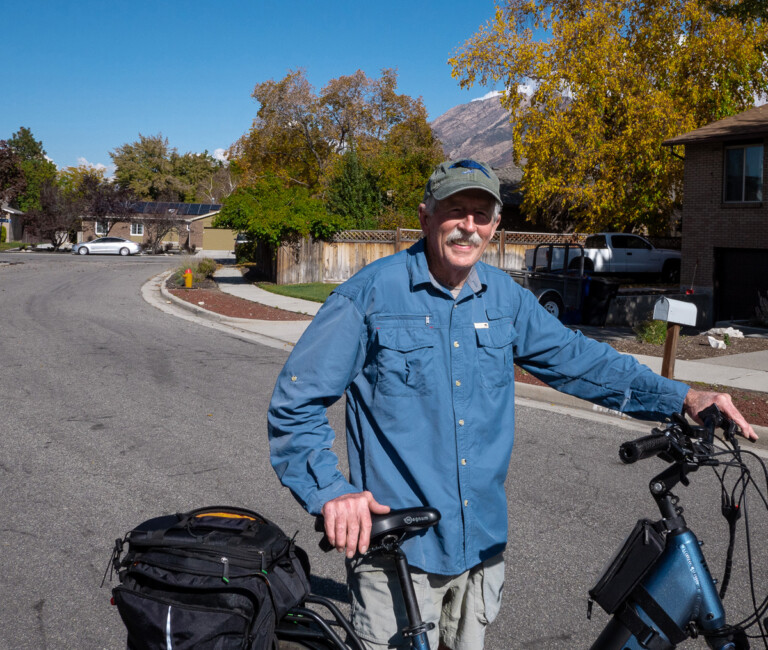
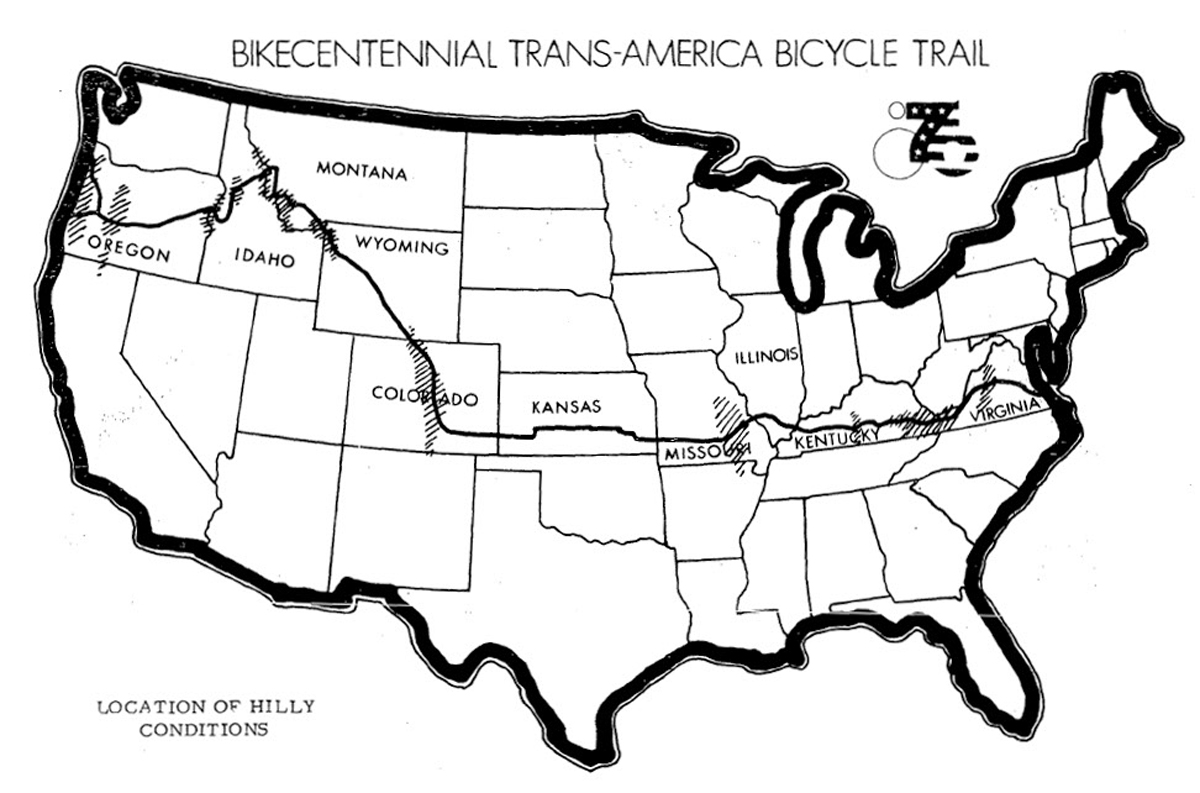
John Kennington is an extraordinary man that I have known for a very long time yet had never heard about his great expedition until I recently pried it out of him. Don’t let his humbleness fool you. In 1976 John rode 4,280 miles on an 82-day trip through the TransAmerica Bicycle Trail in commemoration of the bicentennial of America’s Declaration of Independence. See map below.
John Kennington’s Story
“When my roommate asked me to go on this trip I thought, are you crazy? I was risking my job and the life I had built. I was working as an engineer in LA but in the long term it was the best thing that could happen to me. Otherwise, I would still live in LA and be miserable. I went back to my boss months later without a haircut and they wouldn’t let me have my job back but that was fine.
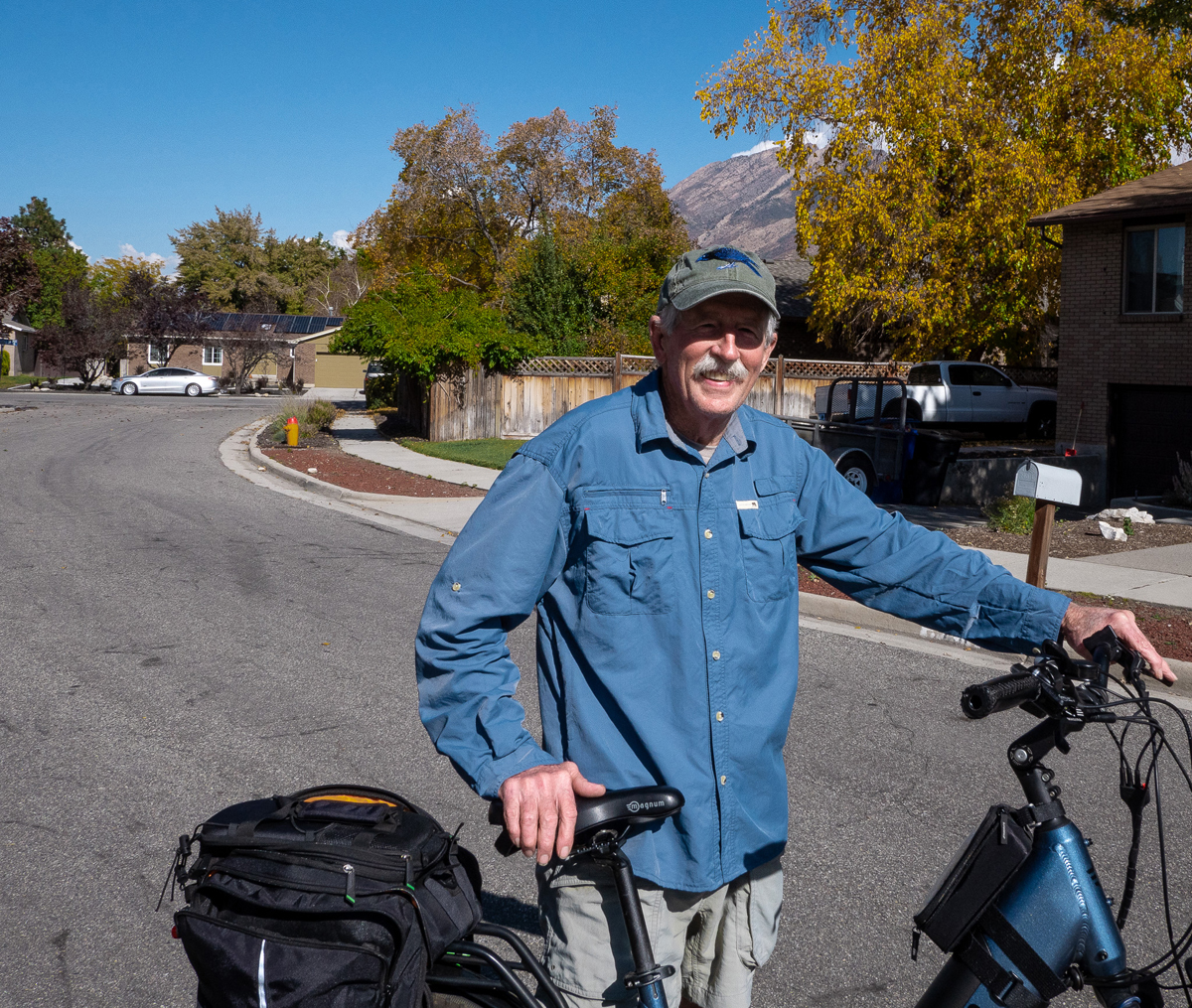
50 years later and John still loves to bike. Photo by Savannah Cottam
“I never regretted my decision because I enjoyed the other people; I realized what it would take to do the trip, so I was willing to do whatever the group did.
“The trip was organized through students at the University of Montana, assigning me with a group and date to leave. I took the train from LA to Oregon where I met the people I was going to be spending the next 3 months with. We dipped our back tire in the Pacific Ocean and hit the road.
Bikecentennial ’76 TransAmerica Bicycle Trail across the United States. Map by Bruce Burgess and Dan Burdeno.
“We stayed at schools or parks along the way as well as camped. My group used no sag wagons to carry all of our gear adding an extra 30-40 pounds of weight to my old ten speed, rickety bike. Everybody had regular ten speeds, we didn’t go real fast. I remember when we went across Kansas, there were no hills but there was a lot of head wind so we would go on small highways and have big pace lines. In Kansas, we had a big pace line going and somebody got too close to the other guy in front of him, catching his wheel and causing a domino effect of around 9 people crashing. There was a farmer in his field cutting hay and he thought that was really funny to see this big crash of these spoiled kids on vacation.”
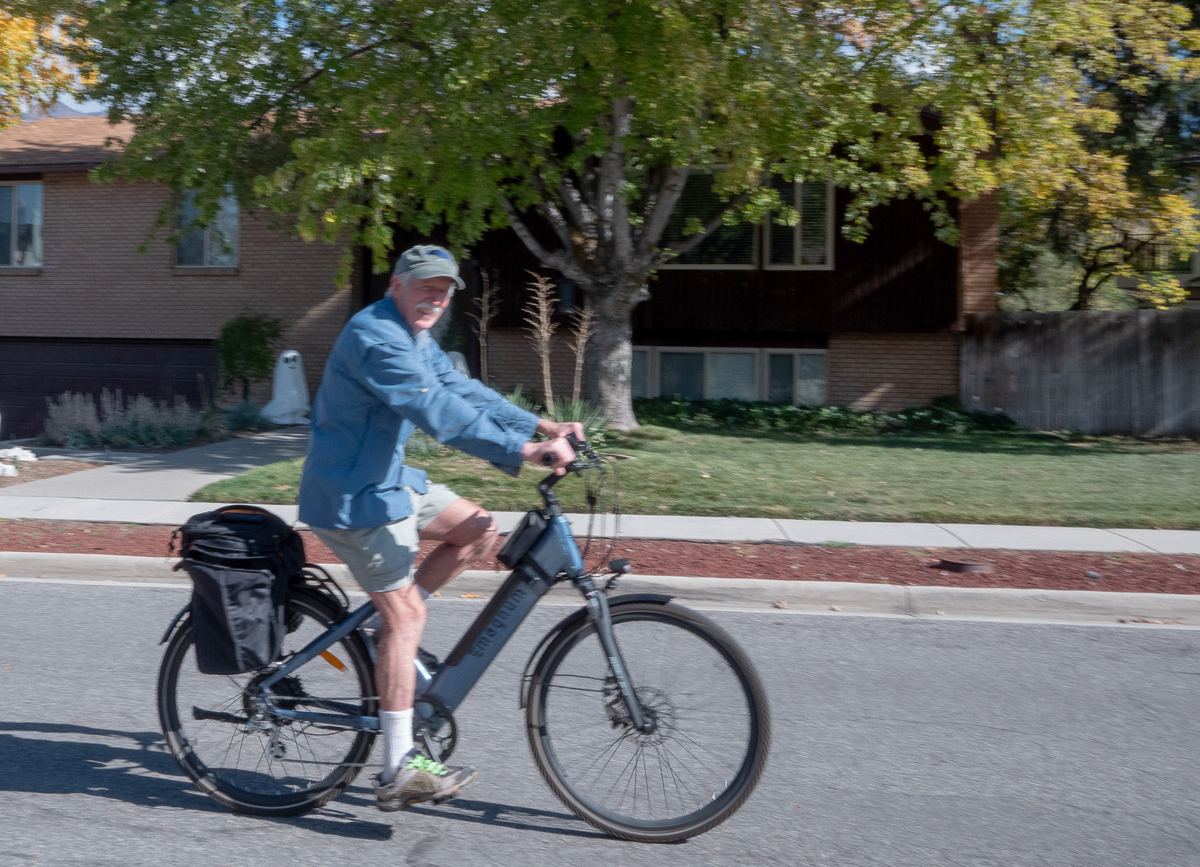
John Pennington, the not so Ordinary, Ordinary Cyclist. Photo by Savannah Cottam
Savannah Cottam: What was your least favorite part of the trip?
JK: As we biked, we were warned about a treacherous hill going onto the Blue Ridge, we were Eastbound going onto the Blue Ridge but started hearing about this trail in Colorado from the Westbound groups. They talked about the wheels and the brakes getting so hot that the tires would come off the wheels. Since we had ridden across three fourths of the country, by the time we got there going Eastbound, we were in good enough shape, and we didn’t have the problems of brakes. The reason I remember it so vividly is because it was this mysterious thing that we had a month to think about, and it really ended up being no big thing.
SC: What was your favorite part of the trip?
JK: Biking across the Rocky Mountains in Colorado but even more so meeting new groups of people and being fully immersed with people and nature. In this modern world, we have access to phones, but I was completely disconnected from the world that I had left behind. I couldn’t and didn’t care to know what others were doing because I was occupied with the present. There are studies related to phones really having an effect on your generation and your mental health. It’s so important for us to put our phones away and be present so time doesn’t pass without us ever really being there.
SC: Did you have a lot of experience biking before the trip? How did you train?
JK: I had ridden a bike quite a bit when I lived in Central America, I increased my riding prior to the trip, and I remember I had to adjust my seat height exactly right because it would cause knee problems if it was too low or underneath problems if it was too high. I rode maybe two or three times a week before the trip.
SC: How many miles were you riding per day?
JK: There was a fast tour that took only 55 days and ours took 82 days. So, we went about 40 miles a day and they went 55 miles a day. We used to joke that the only thing they saw was their front wheel. Since we were the slower group, we would arrive at our destination earlier and would have time to look around and see what was local. We had time to go to local spots that were famous like the state parks in the West. We ended our tour officially at the Yorktown Victory Monument that overlooked the Chesapeake Bay. I remember we took a detour going through one of the Eastern states 6 miles to catch another state up to Tennessee.
SC: What has changed in the biking world since you went on this trip
JK: I think that biking has become more popular. People are trying to not use their cars as much, E-Bikes have made a big difference. I think it has gotten more popular as climate change has started to have an effect.
SC: Were there any riders who quit midway through or regretted going?
JK: I don’t know of anybody that hated it, everybody enjoyed it and had a good time. I don’t know of anybody that quit.
SC: Would you say this experience changed your life outlook and values?”
JK: Definitely, it opened my eyes and exposed me to other opinions and people. It was good in that respect. I also become more aware of environmental stuff.
SC: Would you recommend that people do something similar to this?
JK: I think it would be way more difficult to do it on your own, but it truly was an amazing experience that lasts a lifetime.
Questions that have to be answered with one word or sentence
SC: What is the best advice you have ever received?
JK: Go for it!
SC: What is the worst advice you have ever received?
JK: Vote Republican
“I still love biking because of the amazing opportunities Utah offers, the exercise, environmental purpose, and the more realistic impression of your surroundings that you get as opposed to driving”.
By Dave Campbell — From September 21 through 27, Zurich, Switzerland will host the World Road Cycling Championships. It is the first time Switzerland has hosted the event since 2008 and the circuit, held in the foothills of the Alps will be very demanding. The women will race nearly 96 miles and climb over 8000 feet…a very serious test. The men will race 170 miles and climb nearly 15,000 feet…similar to a mountain stage in the Tour de France! These are not long and gradual climbs, however, but rather favor punchy riders. The first climb on the finishing circuit, the Zurichbergstrasse, averages 8% for 1.1 km and peaks at 15%! Just prior to entering the circuit the riders will climb the Kyburg, a 1.2 km beast that averages 12% and peaks at 16! Let’s test some of your knowledge of the Worlds as we eagerly anticipate a great battle at the end of a long, difficult, and extremely exciting year of bicycle racing.
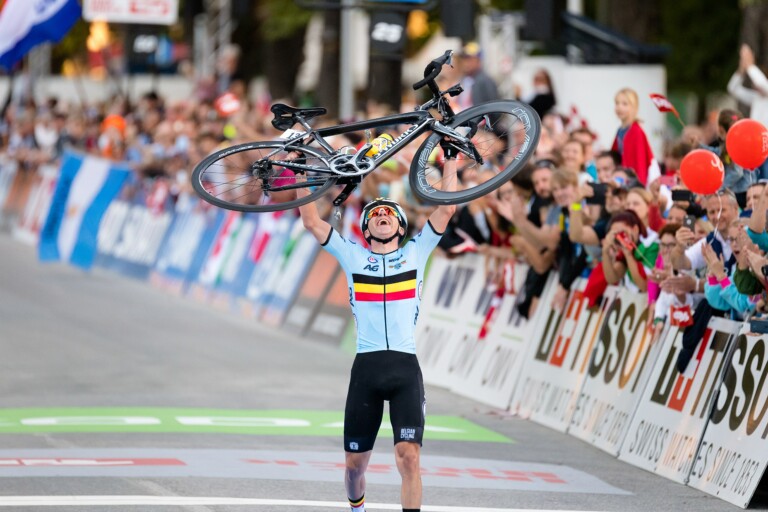
Remco Evenepoel of Belgium wins the 2018 UCI Road World Championships Innsbruck/Tirol Men Juniors Road Race. Photo by Julia Engel, CC BY-SA 4.0 <https://creativecommons.org/licenses/by-sa/4.0>, via Wikimedia Commons
Q1. Can you name the last time a rider won the Professional Men’s Road Race World title, and it was his FIRST win as a professional in an open road race?
Q2. Belgium’s Remco Evenepoel was spectacularly successful at the Olympics, winning both the Time Trial and Road Race, a feat that had never been accomplished before. He will now try to win the same events at the World Championships in Switzerland. Has any rider ever won a road or time trial Olympic title AND a road or time trial World title in the same year?
Q3. When is the last time a rider, man or woman, won both the World Road and Time Trial Championship in the same year?
Q4. Many see the road course as made for Slovenian Tadej Pogačar, already a winner of this year’s Tour and Giro. When was the last time a rider won the Tour de France and the World Road title in the same year? An easy bonus for astute cycling fans: Has any male rider ever won the Giro, the Tour, and the Worlds all in the one season?
Q5. American Chloe Dygert, fresh off an Olympic Bronze (TT), and Gold (Team Pursuit) has a great chance of defending her time trial world title won last year in Glasgow and previously in 2019. If so, she could claim her third World TT title. What is the record for most World time trial titles?
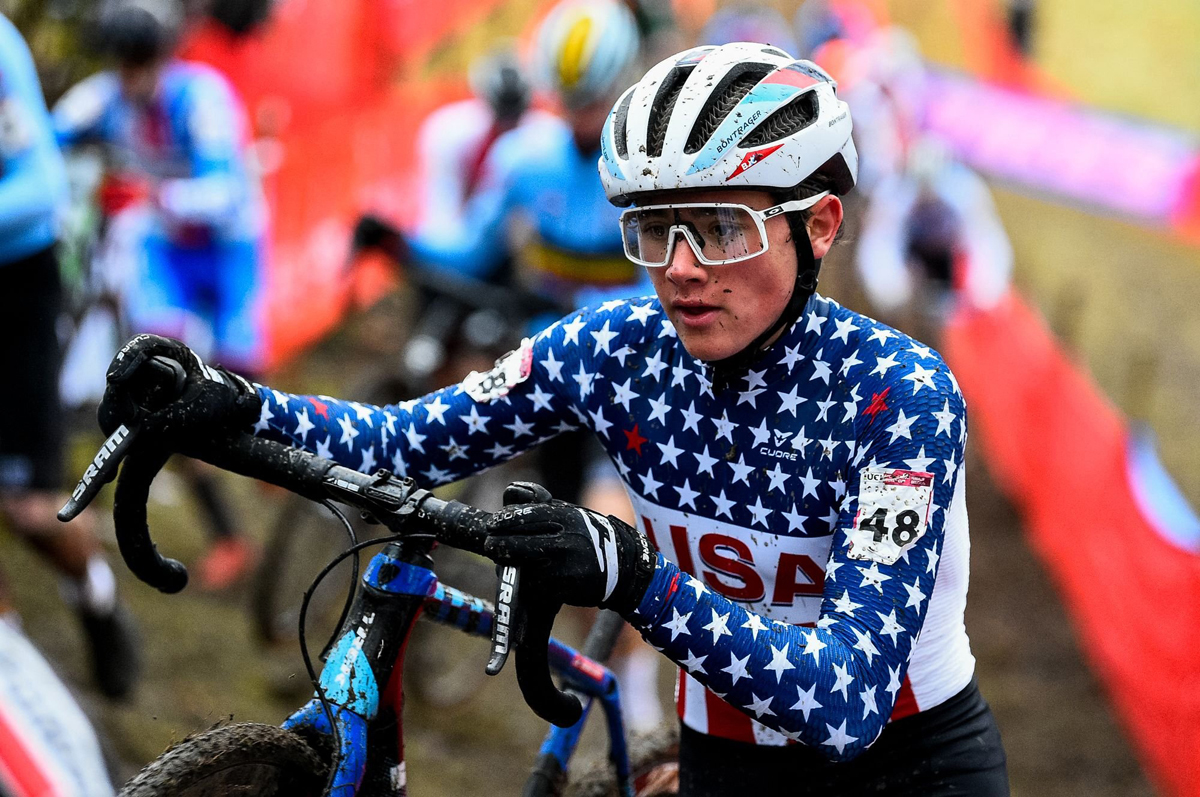
By Dave Iltis — On July 29, 2023, Magnus White, an aspiring bike racer training for the Junior World Championships in Mountain Biking was struck and killed by a driver on the Diagonal Highway in Boulder, Colorado. The White Line website describes Magnus as, “American teen, who was on the verge of becoming a world-class cyclist. He excelled across multiple disciplines – cyclocross, mountain biking, and road racing. He was an inspiration to so many people through how he lived his life and raced his bikes. Magnus was a loving and cherished brother, son and grandson. Many remember him for his vibrant energy, his infectious smile, and his ability to make any room come alive. His friends often said Magnus wasn’t just a friend; he was their best friend. He brought laughter, leadership, and an undying spirit of living life to the fullest. His infectious laughter and bright demeanor made him the life of any gathering. He didn’t just enjoy the moment; he made it memorable. Beyond his fun-loving nature, Magnus was a blend of kindness, drive, wit, and a touch of mischief — he simply made people smile.”
Magnus White. Photo courtesy The White Line
In a statement released in 2023, USA Cycling noted, “White was focused on his final preparations before leaving for Glasgow, Scotland to compete in the Junior Men’s Mountain Bike Cross-Country World Championships on August 10, 2023.
White fell in love with cycling at an early age through Boulder Junior Cycling. He was a rising star in the off-road cycling scene and his passion for cycling was evident through his racing and camaraderie with his teammates and local community. He won the 2021 Junior 17-18 Cyclocross National Championships, then went on to compete with the USA Cycling National Team for a full season of European Cyclocross racing and closed out the year at the 2022 UCI Cyclocross World Championship in Fayetteville, Arkansas. He proudly represented the U.S. and the Boulder community at another Cyclocross World Championships in January of 2023 in Hoogerheide. The summer of 2023 marked a new chapter for White, where he earned a spot on the Mountain Bike World Championships team.”
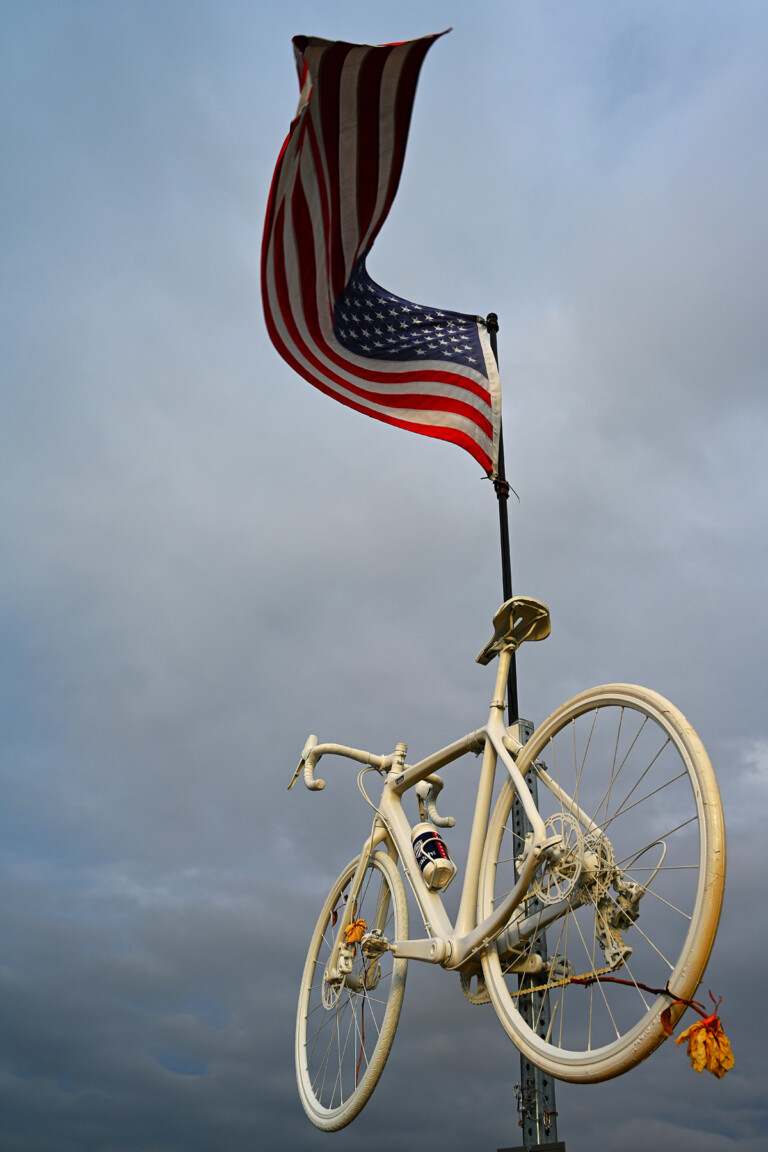
In memory of Magnus, his family started the White Line, a non-profit foundation, with the mission, “To preserve and honor the legacy of Magnus White, using his memory to inspire cyclists around the world and to pay tribute to lives taken too soon. We are dedicated to advocating for the safety of all vulnerable road users and to be a new voice towards creating safer road environments.”
The foundation has initiatives in place to improve vulnerable road user infrastructure, to increase accountability for negligent drivers, to ask the US Department of Transportation to protect all people, and a Lives Worth Remembering Film Series to honor victims of road violence. They plan on working locally on infrastructure and nationally on Automatic Emergency Braking.
Additionally, in support of the family and the White Line, a Go Fund Me is in place, “In memory of Magnus White.” (Find it here: https://www.gofundme.com/f/magnus-white)
‘We closed the Diagonal and filled it with cyclists. I think we did something special.’
By Por Jaijongkit, Boulder Reporting Lab — BOULDER, Colorado (August 11, 2024) — More than four thousand cyclists and advocates for safer roads from across the world gathered Sunday, August 11, at Colorado University – Boulder to honor the life and legacy of young cycling champion Magnus White. Tragically, White was killed at age 17 by a driver during a training ride on the Diagonal Highway, just before the UCI World Cycling Championships. The driver was most likely asleep at the wheel at the time she struck and killed White, according to the arrest affidavit.
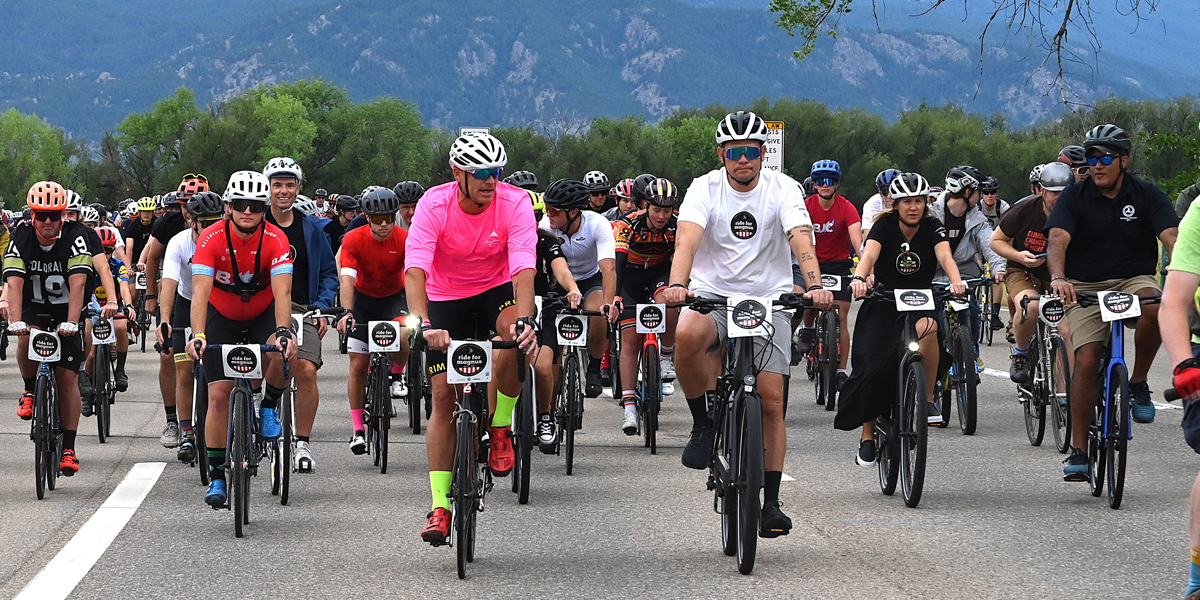
Cyclists took to the street together for the Ride for Magnus: Ride for Your Life event, following a path along the car-free Diagonal Highway past the site where White was killed one year ago.
Michael White (center, in white) leads the ride for his late son, Magnus White on the Ride for Magnus: Ride for Your Life. Photo by Ryan Muncy
The ride ended at Farrand Field on the CU campus for a rally led by White’s parents, elected officials and others to demand safer roads for cyclists and pedestrians. According to Daniel Langenkamp, a U.S. State Department diplomat who started the Ride for Your Life movement after his wife was killed by a driver, 3,000 cyclists and 200 walkers from 50 states and 20 countries signed up to participate, and more virtually, making the event one of the largest advocacy rides in the nation.
Dan Langenkamp, founder of Ride for Your Life, and Triny Willerton, founder of It Could be Me, speak at the Ride for Magnus: Ride for Your Life. Photo by Ryan Muncy
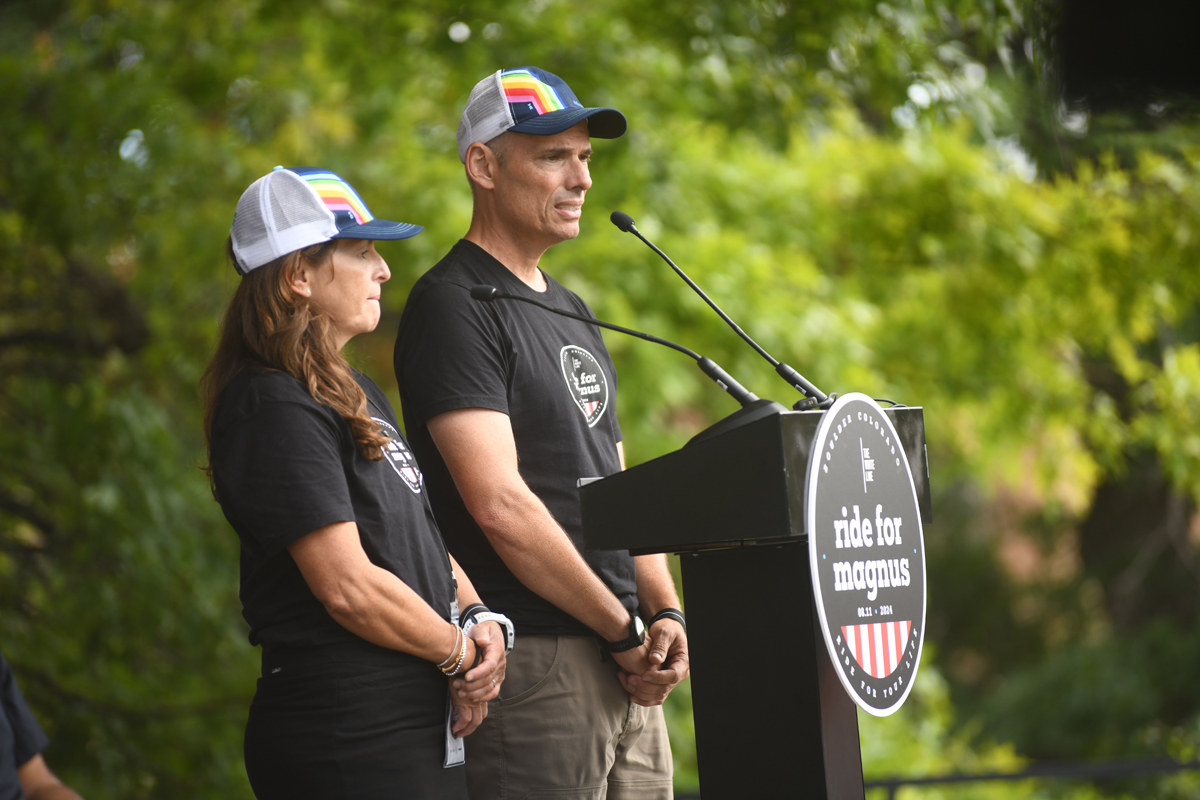
The crowd spread out on Farrand Field as Michael and Jill White spoke about their son’s life that ended too soon.
“We did not lose Magnus; his life was stolen,” Michael White told the crowd while holding the sunglasses Magnus wore on the fateful training ride. Michael described Magnus in the ER, dirt still stuck to his face, blood from his skull fractures, and his head being so swollen that his father almost couldn’t recognize him.
“Sanitizing what really happens to those in road violence death only contributes to it happening again and again.”
“Magnus shouldn’t have died. His bright future was cut short by preventable tragedy,” Jill White said. “And that’s why we’re here today: not just to remember but to ask. We know what killed Magnus, and we know the solutions.”
Michael White outlined three major changes they are seeking at the local, state and federal levels. He urged fast-tracking bike infrastructure in the region, starting with the North Foothills Bikeway project connecting Boulder to Lyons along U.S. 36. He also advocated for increasing penalties for vehicular homicide and requiring automatic emergency braking (AEB) sensitive to cyclists in all U.S. vehicles to prevent collisions. These proposals were met with raucous applause at the rally.
At the start and end of Jill and Michael’s speeches, the crowd rose from the grass to deliver standing ovations.
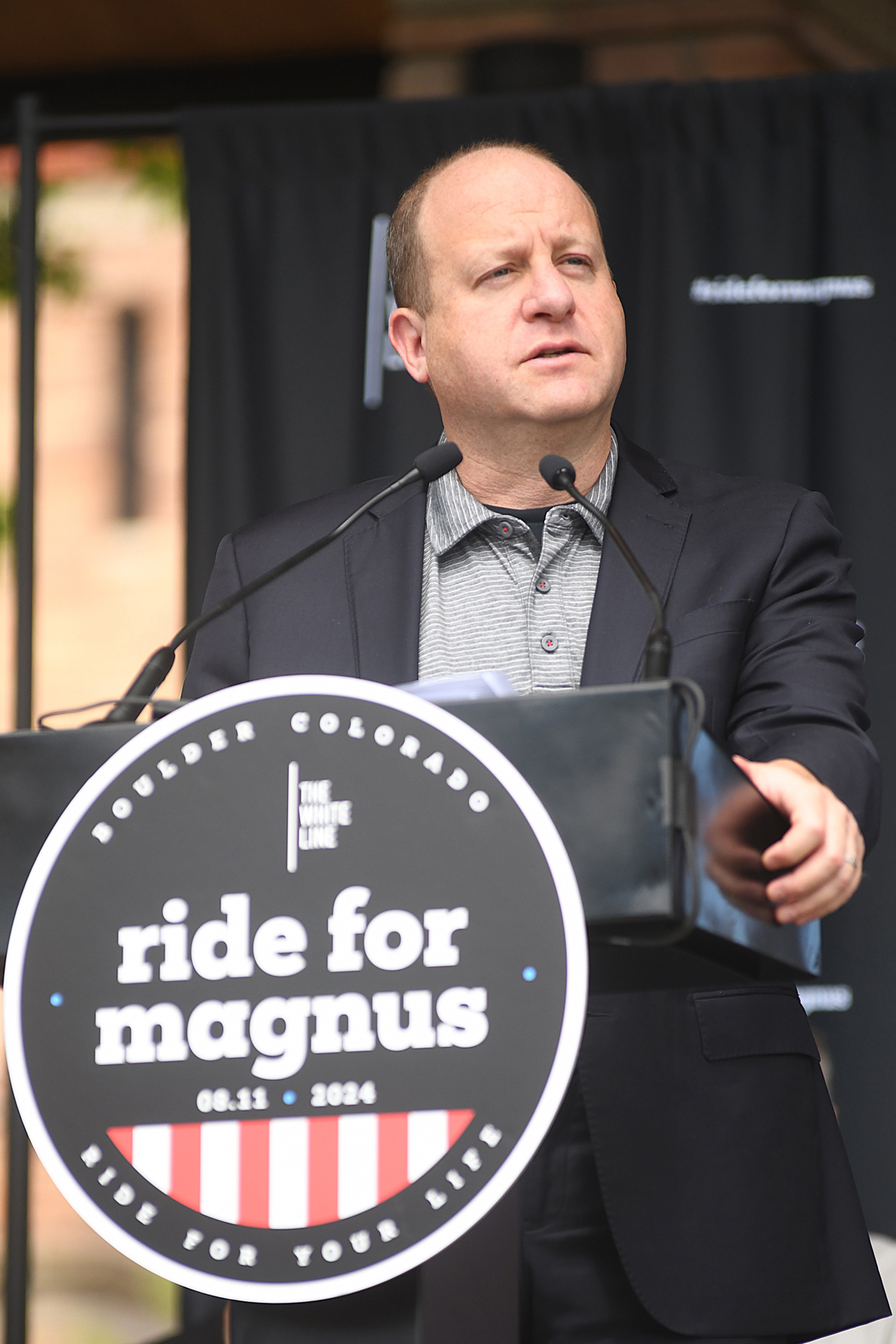
Colorado Governor Jared Polis addresses the crowd at the Ride for Magnus: Ride for Your Life. Photo by Ryan Muncy
Gov. Jared Polis also spoke at the rally, promising investments in and improvements to road safety for cyclists and pedestrians. “As we continue to keep people safe, we want to do so by proudly honoring Magnus’ legacy so that fewer families and fewer communities ever have to suffer the unthinkable tragedy that the White family has endured that the entire community has endured,” he said.
U.S. Rep. Joe Neguse, who lives in Lafayette, said that federal legislation will be in memory of Magnus and other cyclists and pedestrians in Colorado who have lost their lives in traffic crashes.
“To Michael and to Jill, I will simply say that we hear you, and that I hear you and that we look forward to introducing legislation to make automatic braking technology for bicyclists and motorcyclists a reality in the United States,” Neguse said. “You have my commitment that we will do that.”
Boulder Mayor Aaron Brockett, alongside Boulder City Councilmembers Tara Winer, Tina Marquis and Ryan Schuchard, participated in the ride.
“Let’s ride for the future where we never need a ride like this again,” Brockett said to the crowd before the cyclists took off.
Other speakers at the ride included Bicycle Colorado Executive Director Pete Piccolo, CU Boulder’s new chancellor, Justin Schwartz, triathlete and clinical psychologist Gina LaFrazza, and Boulder District Attorney Michael Dougherty.
Scenes from the Ride for Magnus: Ride for Your Life. Photo by Ryan Muncy
As the ride neared, cyclists lined up around the block, creating a sea of colors marked by splashes of neon yellow and pink to ensure they stood out on the road. The ride began with the clamor of bicycle bells as the riders moved in unison onto the streets.
Ride for Magnus is the fifth Ride for Your Life event. Langenkamp organized the first in 2022, after his wife, Sarah, was crushed by a truck riding home from their son’s elementary school in Bethesda, Maryland. The couple had been evacuated from Ukraine for their safety.
“Only to see her get killed on one of America’s roads,” Langenkamp told Boulder Reporting Lab. “To me, it was indicative that we need to do a lot of work to make our roads safer.” He began working with Michael and Jill White to organize Ride for Magnus in March 2024.
Vehicular homicide by reckless driving is considered a class 4 felony, carrying a sentence of two to six years in prison and/or a fine ranging from $2,000 to $500,000.
“So that sends a message, that if you want to kill someone, do it in a car. You’ll get away with it,” Langenkamp said.
Amadeo Claudia met Magnus during their freshman year of high school, and the two became fast friends. Magnus’ death completely changed how Claudia viewed drivers and cyclists and the uneven power between the two. “I felt invincible before, but I never was. Only recently do I understand how vulnerable I was.”
Claudia described feeling upset earlier in the day, but seeing the strong support for the ride helped lift his spirits.
“We closed the Diagonal and filled it with cyclists,” he said. “I think we did something special.”
According to county data, Highway 119, known as the Diagonal, between Boulder and Longmont, has the second-highest number of bike crashes in unincorporated Boulder County, trailing only U.S. 36 between Boulder and Lyons. The combination of high-speed vehicle traffic at 55 miles per hour and an unprotected shoulder creates a dangerous environment for cyclists. Although the county is planning a 12-foot-wide concrete bike path down the center of Highway 119, its completion is still years away. A project update webinar will be held on Zoom on Tuesday, August 13, and the county’s survey for public input on the path overpass’s visual design is open until August 15.
Just months after Magnus White’s death, Michael and Jill White started the nonprofit The White Line with the help of a GoFundMe campaign. “We decided to open ourselves up to grief; that’s how the White Line started,” Michael told Boulder Reporting Lab.
The organization aims to honor Magnus’ legacy by supporting cyclists worldwide and advocating for cycling-safe infrastructure through advertising campaigns and policy advocacy. The group encourages more children to take up cycling and participate in racing. It also produces the “Lives Worth Remembering” film series to honor fallen riders and their contributions to their communities. Michael said that the friends and families of fallen cyclists and pedestrians “wanted justice and accountability.”
“We’re not advocates or lobbyists,” he said. “We’re parents who have lost our son. We want to be a new voice for change.”
Last December, after nearly five months of investigation by the Colorado State Patrol, the driver who killed White was charged with the felony of vehicular homicide. The driver, 23-year-old Yeva Smilianska, had been in Colorado for a year after fleeing Ukraine at the time of the crash. Smilianska has pleaded not guilty, and a jury trial is scheduled for December 2024.
Article republished with permission from Boulder Reporting Lab (boulderreportinglab.org), a nonprofit news organization serving Boulder, Colorado.
Por Jaijongkit is a 2024 Summer Community Reporting Fellow for Boulder Reporting Lab. She recently graduated from CU Boulder with a master’s degree in journalism and is interested in writing about the environment and exploring local stories.